

Programmierung

Maschinelles Lernen - Grundlagen und Anwendungen
In diesem Fachbuch werden vorwiegend die Grundlagen des Maschinellen Lernens erläutert. Die Hauptthemen sind die mathematischen Grundlagen, Optimierungsmethoden und die ML-Algorithmen. Es wird zu jedem Kapitel mindestens eine Beispiel-Übung durchgeführt. Die Übungen könnten durch Python-Code ergänzt werden. Zusätzlich werden Aufgabenstellungen definiert, dies dient der Festigung des in dem jeweiligen Kapitel gelernten. Spezielle Anwendungen sollen ebenfalls dargestellt werden. Die Zielgruppe sind hauptsächlich Studierende, welche sich in dieses Themengebiet einarbeiten möchten. Ingenieure können allerdings ebenfalls von diesem Fachbuch profitieren, da ein großer Schwerpunkt bei der Anwendung von ML liegt. Besonders die Verwendung in interdisziplinären Fachrichtungen wie der Regelungstechnik, Bildverarbeitung und der Chemie werden aufgezeigt.Mein Name ist Benny Botsch und studierte Maschinenbau an der Technischen Universität in Berlin. Ich arbeite seit einigen Jahren als wissenschaftlicher Mitarbeiter bei der Gesellschaft zur Förderung angewandter Informatik e.V. (GFaI e.V.) im Bereich der Bildverarbeitung / Industrielle Anwendungen. Dabei entwickle ich Software zur Auswertung von 2D-Materialbildern durch klassische Bildverarbeitung (Objekterkennung, Kantenerkennung), aber auch durch neuronale Netze, um Materialkennwerte zu ermitteln.Inhaltsverzeichnis1 Einführung1.1 Was ist maschinelles Lernen1.2 Überwachtes Lernen1.2.1 Klassifikation und Regression1.2.2 Generalisierung, Überanpassung und Unteranpassung1.3 Unüberwachtes Lernen1.4 Bestärkendes Lernen1.5 Teilüberwachte Lernen1.6 Herausforderungen des maschinellen Lernens1.6.1 Unzureichende Menge an Trainingsdaten1.6.2 Nicht repräsentative Trainingsdaten1.6.3 Daten von schlechter Qualität1.6.4 Irrelevante Merkmale1.6.5 Explainable Artificial Intelligence1.7 Bewertung und Vergleich von Algorithmen1.7.1 Kreuzvalidierung1.7.2 Messfehler1.7.3 Intervallschätzung1.7.4 Hypothesenprüfung1.8 Werkzeuge und Ressourcen1.8.1 Installation von Python mit Anaconda1.8.2 Entwicklungsumgebungen1.8.3 Python Bibliotheken1.8.4 Grundlagen in Python2 Lineare Algebra2.1 Skalare, Vektoren und Matrizen2.1.1 Operationen mit Skalaren und Vektoren 2.1.2 Operationen mit Vektoren und Matrizen2.1.3 Die Inverse einer Matrix2.2 Lineare Gleichungssysteme2.2.1 Gauß-Algorithmus2.2.2 Numerische Lösungsmethoden linearer Gleichungssysteme3 Wahrscheinlichkeit und Statistik3.1 Grundbegriffe der Wahrscheinlichkeit3.2 Zufallsgrößen und Verteilungsfunktionen3.3 Momente einer Verteilung3.3.1 Erwartungswert und Streuung3.3.2 Schiefe und Exzess3.4 Bedingte Wahrscheinlichkeiten3.5 Deskriptive Statistik3.6 Einfache statistische Tests3.6.1 Ablauf eines statistischen Tests3.6.2 Parametertests bei normalverteilter Grundgesamtheit3.6.3 Mittelwerttest3.6.4 ����2 Streuungstest4 Optimierung4.1 Grundlagen der Optimierung4.1.1 Univariate Optimierung4.1.2 Bivariate Optimierung4.1.3 Multivariate Optimierung4.2 Gradient Descent4.2.1 Momentum-Based Learning4.2.2 AdaGrad4.2.3 Adam4.3 Newton Methode5 Parametrische Methoden5.1 Regressionsanalyse5.1.1 Lineare Regression5.1.2 Logistische Regression5.2 Lineare Support Vector Machines5.2.1 Die optimale Trennebene5.2.2 Soft-Margin5.2.3 Kernfunktionen5.3 Der Bayessche Schätzer5.3.1 Stochastische Unabhängigkeit5.3.2 Bayessche Netze5.4 Neuronale Netze5.4.1 Das künstliche Neuron5.4.2 Mehrschichtige Neuronale Netze5.4.3 Lernvorgang5.5 Deep Learning5.5.1 Convolutional Neural Networks5.5.2 Rekurrent Neural Networks5.5.3 Generative Modelle6 Nichtparametrische Methoden6.1 Nichtparametrische Dichteschätzung6.1.1 Histogrammschätzer6.1.2 Kernschätzer6.1.3 ����-Nächste-Nachbarn-Schätzer6.2 Entscheidungsbäume6.2.1 Univariate Bäume6.2.2 Multivariate Bäume6.2.3 Pruning6.2.4 Random Forest7 Bestärkendes Lernen7.1 Was ist bestärkendes Lernen7.1.1 Belohnung7.1.2 Der Agent7.1.3 Die Umgebung7.1.4 Aktionen7.1.5 Beobachtungen7.2 Theoretische Grundlagen7.2.1 Markov Entscheidungsprozesse7.2.2 Markov Prozess7.2.3 Markov Belohnungsprozess7.2.4 Policy7.3 Wertebasierte Verfahren7.3.1 Grundlagen der Wertefunktion und der Bellman-Gleichung7.3.2 Q-Learning7.3.3 SARSA7.3.4 Deep Q-Networks (DQN)7.4 Policybasierte Verfahren7.4.1 Policy Gradien7.4.2 Actor-Critic-Verfahren7.4.3 Soft Actor-Critic (SAC)8 Custeranalyse8.1 ����-Means-Clustermethode8.2 Hierarchisches Clustermethode 8.3 Gaußsche Mischmodelle9 Anwendungen9.1 Regelungstechnik9.1.1 Systemidentifikation9.1.2 Neuronaler Regler9.1.3 Regelung eines inversen Pendels9.2 Bildverarbeitung9.2.1 Klassifikation von Zahlen9.2.2 Segmentierung von Bruchflächen9.2.3 Objekterkennung mit Vision Transformers9.2.4 Künstliche Generierung von Bildern9.2.5 Interpretierbarkeit von Vision-Modellen mit Grad-CAM9.3 Chemie9.3.1 Klassifizierung von Wein9.3.2 Vorhersage von Eigenschaften organischer Moleküle9.4 Physik9.4.1 Statistische Versuchsplanung optimieren9.4.2 Vorhersage von RANS-Strömungen9.5 Generierung von Text9.5.1 Textgenerierung mit einem Miniatur-GPT9.5.2 Englisch-Spanisch-Übersetzung mit TensorFlow9.6 Audiodatenverarbeitung9.6.1 Automatische Spracherkennung mit CTC9.6.2 Klassifizierung von Sprechern mit FFTLiteraturverzeichnis

Flutter & Dart Kochbuch
Flutter & Dart Kochbuch. Cross-Platform-Apps für die Cloud entwickeln. November 2023.Lernen Sie die Grundlagen der App-Entwicklung mit Flutter und Dart kennen, um Cross-Platform-Apps zu erstellen, die den modernen Anforderungen einer Cloud-gesteuerten Welt gerecht werden. Flutter ist ideal für die Frontend-Entwicklung und hilft Ihnen, plattformübergreifende Anwendungen für die Betriebssysteme Android, iOS, Linux, macOS, Windows und Google Fuchsia zu entwickeln.Das Dart-SDK bietet nativen Zugriff auf Lösungen von Drittanbietern, einschließlich APIs, Datenbanken und Authentifizierung. Zusammen bilden Flutter und Dart eine optimale Lösung für die Entwicklung von plattformübergreifenden Anwendungen. Die Rezepte in diesem Kochbuch zeigen Ihnen anhand von konkreten, praxisnahen und unterhaltsamen Beispielen, wie Sie diese starke Kombination erfolgreich einsetzen – egal ob Sie gerade erst in die Entwicklung mit Flutter einsteigen oder schnell etwas nachschlagen wollen.Aus dem Inhalt:Effektiven Dart-Code mithilfe von Variablen und Datenstrukturen schreibenAnwendungen mit Widgets und Datenverarbeitung erstellen Lösungen von verschiedenen Cloud-Anbietern mit Flutter integrieren Daten über APIs mit Google Cloud Serverless verwaltenMit Firebase-Lösungen wie der Cloud-Firestore-Datenbank arbeiten Webanwendungen, die mit mobilen und Desktop-Plattformen funktionieren, erstellenRichard Rose liebt es, Dinge in der Cloud zu bauen und mit verschiedenen Technologien zu basteln. Er nimmt gerne an technischen Konferenzen teil, um mit anderen Leuten über neue Technologien zu sprechen. Seine Steckenpferde sind Kubernetes und Serverless.Leseprobe (PDF-Link)
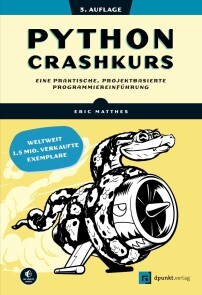
Python Crashkurs (3. Auflg.)
Python Crashkurs. Eine praktische, projektbasierte Programmiereinführung. 3., überarbeitete und aktualisierte Auflage.Der Schnellkurs für angehende Python-Profis»Python Crashkurs« zählt zu den weltweiten Bestsellern unter den Einführungen in die Programmiersprache Python. Mit dieser kompakten und gründlichen Anleitung werden Sie in kürzester Zeit Programme schreiben, Probleme lösen und funktionierende Anwendungen entwickeln.Zu Beginn führt Sie Autor Eric Matthes in grundlegende Programmierkonzepte wie Variablen, Listen, Klassen und Schleifen ein. Sie werden Ihr neues Wissen in die Praxis umsetzen, indem Sie ein von »Space Invaders« inspiriertes Arcade-Spiel konzipieren und eine Reihe von Datenvisualisierungen mit den praktischen Python-Bibliotheken programmieren.Mit den Übungen des Buches lernen Sieleistungsfähige Python-Bibliotheken und -Werkzeuge zu verwenden, darunter pytest, Pygame, Matplotlib, Plotly und Djangoimmer komplexere 2D-Spiele zu erstellen, die auf Tastendruck und Mausklicks reagieren Anwendungen zu bauen, mit denen Benutzer Konten erstellen und ihre Daten verwalten können. Stellen Sie Anwendungen online bereit.interaktive Datenvisualisierungen mit einer Vielzahl von Datensätzen zu generierenProgrammierfehler zu beheben und klassische Programmierprobleme zu lösenNeu in dieser Auflage: Diese 3. Auflage wurde komplett auf den jüngsten Stand des Python-Codes gebracht. Zu den neuen und aktualisierten Themen gehören VS Code für die Textbearbeitung, das pathlib-Modul für die Dateiverwaltung, pytest für das Testen Ihres Codes sowie die neuesten Funktionen von Matplotlib, Plotly und Django.Wenn Sie in die Programmierung einsteigen wollen, wird Ihnen »Python Crashkurs« die Fähigkeiten vermitteln, schnell echte Programme zu schreiben.Rezensionen:»Der Autor bietet wieder einen didaktisch überzeugenden, fundierten Python-Schnellkurs, der schon bei den allgemeinen, grundlegenden Programmierkonzepten ansetzt und damit auch schon für Programmieranfänger geeignet ist. Viele Übungsaufgaben (Lösungen online) und Zusammenfassungen erleichtern das Nachvollziehen des Stoffes und die Lernkontrolle.« (ekz-Informationsdienst, Januar 2024)Zielgruppe: Programmiereinsteiger*innen – StudierendeLeseprobe (PDF-Link)Zusatzinformationen hierÜber den Autor:Eric Matthes ist High-School-Lehrer für Naturwissenschaften und Mathematik in Alaska und gibt dort auch Einführungskurse in Python. Programme schreibt er seit dem Alter von fünf Jahren. Zurzeit konzentriert er sich darauf, Software zu entwickeln, die Lernverfahren effizienter machen soll und die Vorteile von Open-Source-Programmen auf den Bildungsbereich überträgt. Seine Freizeit verbringt er mit Klettern und mit seiner Familie.

Python Crashkurs
Der Schnellkurs für angehende Python-Profis - Verwenden Sie Python-Bibliotheken und -Werkzeuge, darunter pytest, Pygame, Matplotlib, Plotly und Django - Behebung von Programmierfehlern und Lösung gängiger Programmierprobleme - Neu in dieser Ausgabe: u.a. VS Code für die Textbearbeitung und das pathlib-Modul für die Dateiverwaltung »Python Crashkurs« zählt zu den weltweiten Bestsellern unter den Einführungen in die Programmiersprache Python. Mit dieser kompakten und gründlichen Anleitung werden Sie in kürzester Zeit Programme schreiben, Probleme lösen und funktionierende Anwendungen entwickeln. Zu Beginn führt Sie Autor Eric Matthes in grundlegende Programmierkonzepte wie Variablen, Listen, Klassen und Schleifen ein. Sie werden Ihr neues Wissen in die Praxis umsetzen, indem Sie ein von »Space Invaders« inspiriertes Arcade-Spiel konzipieren und eine Reihe von Datenvisualisierungen mit den praktischen Python-Bibliotheken programmieren. Mit den Übungen des Buches lernen Sie - leistungsfähige Python-Bibliotheken und -Werkzeuge zu verwenden, darunter pytest, Pygame, Matplotlib, Plotly und Django - immer komplexere 2D-Spiele zu erstellen, die auf Tastendruck und Mausklicks reagieren - Anwendungen zu bauen, mit denen Benutzer Konten erstellen und ihre Daten verwalten können. Stellen Sie Anwendungen online bereit. - interaktive Datenvisualisierungen mit einer Vielzahl von Datensätzen zu generieren - Programmierfehler zu beheben und klassische Programmierprobleme zu lösen Neu in dieser Auflage: Diese 3. Auflage wurde komplett auf den jüngsten Stand des Python-Codes gebracht. Zu den neuen und aktualisierten Themen gehören VS Code für die Textbearbeitung, das pathlib-Modul für die Dateiverwaltung, pytest für das Testen Ihres Codes sowie die neuesten Funktionen von Matplotlib, Plotly und Django. Wenn Sie in die Programmierung einsteigen wollen, wird Ihnen »Python Crashkurs« die Fähigkeiten vermitteln, schnell echte Programme zu schreiben.

The Composable Enterprise: Agile, Flexible, Innovative
The benefits of digitalisation do not lie in the use of new technologies for existing processes, but in organisational changes and new business models. The book highlights the composable enterprise as the guiding principle for successful digital transformation and associated cost reductions and revenue increases. What does it mean? A composable enterprise is organised in a decentralised process-oriented way. This allows the enterprise to react quickly to new situations, develop or change processes and business models. The information systems are based on platform architectures. A paradigm shift to monolithic applications.Sector concepts for industry, consulting and universities show how organisation and application architectures interlock in the composable enterprise.The reader receives inspiration, a foundation and a compass for the digital transformation of a company to the composable enterprise.PROF. DR. DR. H.C. MULT. AUGUST-WILHELM SCHEER is one of the most influential figures and entrepreneurs in German computing. The ARIS method he developed for enterprise architecture and process management is used internationally.His books on business informatics have been highly influential and have been translated into several languages. His research focuses on information, innovation and business process management. In addition, Scheer is the publisher of the trade journal IM+io.He has founded several successful IT companies. He has been the sole shareholder of IDS Scheer Holding GmbH since 2010. The company network with over 1,300 employees includes the larger companies Scheer GmbH, imc AG and Scheer PAS GmbH. The company network also has holdings in several start-up companies. In 2014, he founded the non-profit research institute August-Wilhelm Scheer Institute for digital products and processes gGmbH (AWSi).He was a member of the SAP AG supervisory board for 20 years. From 2007 to 2011, he was President of Bitkom e. V. As an IT innovator and entrepreneur, he also works as an independent political consultant.Scheer is also an experienced and respected jazz baritone saxophonist and promotes culture and science with the help of the August-Wilhelm Scheer Foundation for Science and Art, which he founded in 2001. He is the holder of numerous national and international accolades. In 2017, he was inducted into the Hall of Fame of German Research.His interpretation of the composable enterprise is his vision for designing future-oriented digitised companies, one which he also implements in his own companies.
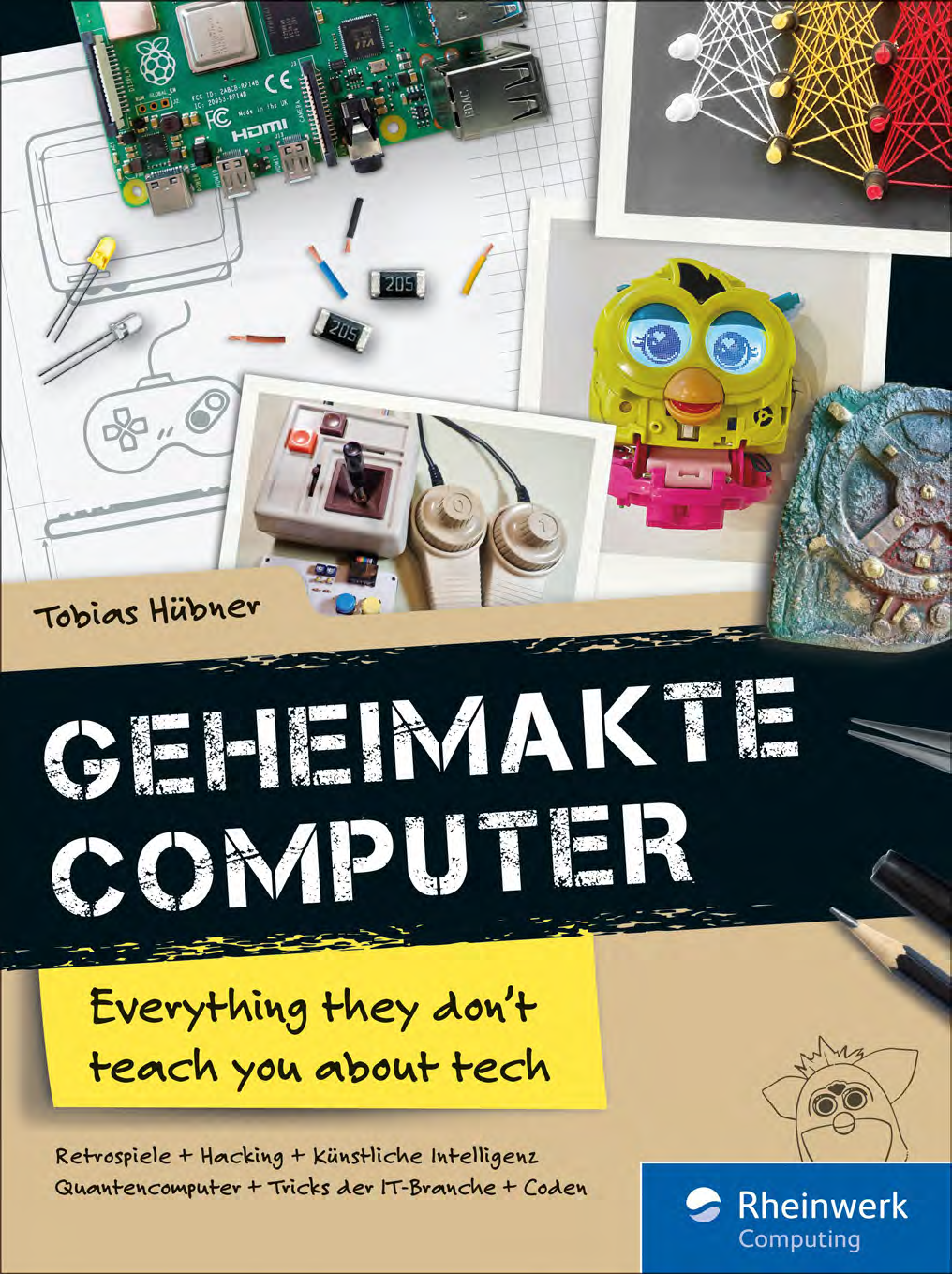
Geheimakte Computer
Spiel, Spaß und ... IT-Wissen?! Ein Computerbuch zum Schmökern.Der Informatikunterricht ist dir zu trocken? Du bist auf der Suche nach den wirklich spannenden Themen? Halt! Psssst! Dann wirf doch einen Blick in die »Geheimakte Computer«. Sie ist dein Einstieg in die große weite IT-Welt. Hier erfährst du alles, was dich rund um den Computer wirklich interessiert: Bastelprojekte, Computerspiele, Programmierung und nützliches Wissen zu spannenden Themen wie Hacking, Digitalisierung und Sicherheit, künstliche Intelligenz und interessante Persönlichkeiten der Branche.Genau nach deinem GeschmackDu magst Computer und Spielekonsolen? Aber zocken allein reicht dir nicht aus? Dann wage einen Blick in die »Geheimakte Computer« und erfahre mehr über die faszinierende IT-Welt. Durch spannende Projekte, Geschichten und Aufgaben lernst du Dinge, die dich wirklich interessieren.IT-Themen – unterhaltsam erklärtHacking, künstliche Intelligenz, Computerspiele, Digitalisierung oder die miesen Tricks der Tech-Industrie: hier erfährst du über alle Themen, was dir die Schule nicht vermitteln kann. Das Buch weckt deine Neugier und ermöglicht eine intensive Beschäftigung mit der digitalen Welt.Mehr als ein LesebuchHier wird dir nicht nur wichtiges Wissen rund um den Computer vermittelt. Tobias Hübner gibt dir mit kreativen Maker-Projekten, Programmier-Challenges und unterhaltsamen Hintergrundgeschichten Einblicke in die Welt der Informatik, die dir Programmiereinführungen und der Informatikunterricht nicht bieten können.Aus dem Inhalt:Das kreativste Werkzeug der WeltSo funktioniert ein ComputerAlte Technik neu entdeckenGames – besser als ihr RufEine Spielkonsole mit dem Raspberry PiWie schützt du dich vor Hackertricks?Ist künstliche Intelligenz gefährlich?Digitalisierung – Pro und ContraDie fiesen Tricks der Tech-IndustrieVision: Die Zukunft des ComputersLeseprobe (PDF-Link)Über den Autor:Tobias Hübner setzt sich seit über 15 Jahren als Lehrer, Autor, Dozent und IT-Trainer für digitale Bildung ein und wurde für seine kreativen Ideen mehrfach ausgezeichnet, u. a. vom Bundesfamilienministerium und auf der Frankfurter Buchmesse.

Cloud Connector für SAP
In diesem Buch erfahren Sie, wie Sie Ihr On-Premise-System mithilfe des Cloud Connectors ganz einfach mit Ihren Cloud-Systemen verbinden und konfigurieren. Verknüpfen Sie On-Premise-SAP-Produkte mit den SAP-BTP-Services. In diesem Leitfaden finden Sie zuverlässige Informationen zum Erstellen sicherer Verbindungen sowie zur Verwaltung und zur Überwachung des Cloud Connectors. Aus dem Inhalt: SAP Business Technology Platform (SAP BTP)SAP Connectivity ServiceSAP Web IDESAP Business Application StudioCloud-Integration-Service der SAP Integration SuiteAPI ManagementSAP Build Work Zone, Standard EditionInstallation und KonfigurationSecurityAdministrationMonitoringPrinciple Propagation Einleitung ... 13 Teil I. Grundlagen und Einrichtung ... 19 1. Einführung in die SAP Business Technology Platform ... 21 1.1 ... Positionierung von SAP BTP ... 22 1.2 ... Umgebungen ... 30 1.3 ... Architektur ... 39 1.4 ... Zusammenfassung ... 52 2. Sicherheitsgrundlagen ... 55 2.1 ... Protokolle ... 57 2.2 ... Authentifizierung ... 68 2.3 ... Zusammenfassung ... 76 3. Einrichtung des Cloud Connectors ... 77 3.1 ... Dimensionierung ... 77 3.2 ... Netzwerkzonen ... 83 3.3 ... Installation ... 85 3.4 ... Konfiguration ... 93 3.5 ... Hochverfügbarkeit ... 109 3.6 ... Zusammenfassung ... 118 4. Connectivity mit SAP Business Technology Platform ... 119 4.1 ... SAP-Destination-Service im SAP BTP, Neo Environment ... 121 4.2 ... SAP-Destination-Service im SAP BTP, Cloud Foundry Environment ... 126 4.3 ... SAP-Connectivity-Service ... 133 4.4 ... Zusammenfassung ... 137 Teil II. Arbeiten mit dem Cloud Connector ... 139 5. SAP Web IDE ... 141 5.1 ... Aktivierung und Konfiguration ... 142 5.2 ... OData-Services von einem On-Premise-ABAP-System konsumieren ... 145 5.3 ... Verbindung zu einem On-Premise-Git-Repository herstellen ... 159 5.4 ... Einen OData-Service aus einem Cloud-System konsumieren ... 167 5.5 ... Zusammenfassung ... 172 6. SAP Business Application Studio ... 173 6.1 ... Aktivierung und Konfiguration ... 174 6.2 ... Integration mit On-Premise-ABAP-Systemen ... 177 6.3 ... Verbindung zu einem On-Premise-Git-Repository herstellen ... 196 6.4 ... Einen OData-Service aus einem Cloud-System konsumieren ... 206 6.5 ... Zusammenfassung ... 211 7. SAP Integration Suite ... 213 7.1 ... Die Evolution der SAP Integration Suite ... 213 7.2 ... Cloud Integration ... 215 7.3 ... API Management ... 249 7.4 ... Zusammenfassung ... 254 8. SAP Build Work Zone, Standard Edition ... 255 8.1 ... Backend-Konfiguration in SAP S/4HANA ... 256 8.2 ... Konfiguration des Cloud Connectors ... 258 8.3 ... Konfiguration des SAP-BTP-Subaccounts ... 263 8.4 ... Konfiguration von SAP Build Work Zone, Standard Edition ... 266 8.5 ... Zusammenfassung ... 272 Teil III. Administration und Betrieb ... 273 9. Sichere Konfiguration ... 275 9.1 ... UI-Zertifikate ersetzen ... 275 9.2 ... Benutzer gegenüber dem LDAP-Service authentifizieren ... 279 9.3 ... Trust Store pflegen ... 282 9.4 ... HTTPS Mutual Authentication ... 286 9.5 ... Secure Network Communication ... 292 9.6 ... Zusammenfassung ... 299 10. Administration ... 301 10.1 ... Rollen ... 301 10.2 ... Verwaltung der Subaccounts ... 302 10.3 ... Sicherung und Wiederherstellung ... 310 10.4 ... Upgrade ... 313 10.5 ... APIs für die Verwaltung ... 315 10.6 ... Zusammenfassung ... 321 11. Monitoring ... 323 11.1 ... Hardware-Monitoring ... 324 11.2 ... Monitoring des Subaccounts ... 326 11.3 ... Monitoring-APIs ... 330 11.4 ... Alerting ... 340 11.5 ... Audit-Protokollierung ... 342 11.6 ... Zusammenfassung ... 343 12. Principal Propagation ... 345 12.1 ... Ausgangskonfiguration für die Principal Propagation ... 345 12.2 ... SAP BTP, Neo Environment zu On-Premise-ABAP-System ... 365 12.3 ... SAP BTP, Cloud Foundry Environment zu On-Premise-ABAP-System ... 367 12.4 ... Zusammenfassung ... 370 Die Autoren ... 373 Index ... 375

Künstliche Intelligenz verstehen
Neugierig auf KI? Lust, zu experimentieren? Dann sind Sie hier richtig. Es erwartet Sie mehr als ein Buch: Mit den im Web bereitgestellten Beispielen können Sie zuschauen und ausprobieren, wie verschiedene KI-Verfahren Texte ergänzen, Spiele gewinnen (oder auch verlieren – das hängt ganz von Ihnen ab ...), Daten sortieren und vieles mehr. Sie können Parameter wie Textlänge oder Anzahl der Versuche verändern oder auch direkt Hand an den Code anlegen und sehen, was passiert. Dank der Web-Umgebung p5js genügt einfaches JavaScript, um die visuellen Programme zu erstellen. So können Sie sich ganz auf die Logik konzentrieren. Pit Noack zeigt Ihnen im Buch Schritt für Schritt und Verfahren für Verfahren, was dahinter steckt. Mit handgezeichneten Lerngrafiken und Cartoons von Sophia Sanner. Alle Projekte zum Nachprogrammieren, Herunterladen oder online Bearbeiten. Experimente erwünscht! Aus dem Inhalt: Grundlagen aus der InformatikWörter und Sätze vervollständigenSchreibfehler automatisch korrigierenZusammenhänge erkennen und Daten ordnenSelbstlernende AlgorithmenNeuronale NetzeTransformer und Large Language ModelsAuch für Kultur- und Medieninteressierte geeignet Materialien zum Buch ... 16 Vorwort zur zweiten Auflage ... 17 1. Einleitung ... 19 1.1 ... Worum es uns in diesem Buch geht ... 20 1.2 ... Für wen wir dieses Buch geschrieben haben ... 21 1.3 ... Aufbau der einzelnen Kapitel ... 22 1.4 ... Ein Wort an die Programmierunkundigen ... 22 1.5 ... Beispielprogramme und die Webseite zum Buch ... 23 1.6 ... Warum wir JavaScript und p5.js verwendet haben ... 25 1.7 ... Begriffliche Abgrenzung und Fachbegriffe ... 26 1.8 ... Inhalte, Themen, Kapitel ... 27 1.9 ... Dank ... 30 2. Texte bauen mit Markow ... 31 2.1 ... Das Beispielprogramm Nonsense-Texter ... 35 2.2 ... Der Code des Nonsense-Texters unter der Lupe ... 37 2.3 ... Das Beispielprogramm Wörter vorschlagen ... 43 2.4 ... Wörter vorschlagen ... 47 2.5 ... Gewichteter Zufall ... 48 2.6 ... Ideen zum Weitermachen ... 50 2.7 ... Zusammenfassung und Ausblick ... 51 3. Schreibfehler automatisch korrigieren ... 53 3.1 ... Das Beispielprogramm Wortvergleich ... 54 3.2 ... Die Matrix befüllen ... 57 3.3 ... Die Umsetzung im Beispielprogramm ... 62 3.4 ... Das Beispielprogramm Korrekturvorschläge ... 65 3.5 ... Ideen zum Weitermachen ... 67 3.6 ... Zusammenfassung und Ausblick ... 68 4. Wörter gruppieren ... 69 4.1 ... Items und Transaktionen ... 71 4.2 ... Kenngrößen der Assoziationsanalyse ... 72 4.3 ... Ein Beispiel von Hand gerechnet ... 76 4.4 ... Das Beispielprogramm Begriffsnetz ... 79 4.5 ... Eine Tour durch den Code ... 82 4.6 ... Ideen zum Weitermachen ... 88 4.7 ... Zusammenfassung und Ausblick ... 90 5. Spiele für eine Person lösen ... 93 5.1 ... Das Spiel Fruchtkräsch ... 93 5.2 ... Wie findet die KI den besten Zug? ... 95 5.3 ... Eine vielseitig einsetzbare Spiel-KI ... 98 5.4 ... Die Klasse Spielzustand ... 99 5.5 ... Die Klasse KI ... 102 5.6 ... Ideen zum Weitermachen ... 107 5.7 ... Zusammenfassung und Ausblick ... 108 6. Spiele für zwei Personen gewinnen ... 109 6.1 ... Das Spiel Reversi ... 110 6.2 ... Das Beispielprogramm Reversi KI ... 111 6.3 ... Der Minimax-Algorithmus ... 112 6.4 ... Tiefensuche und Rekursion ... 115 6.5 ... Die Klasse Spielzustand ... 123 6.6 ... Die Klasse KI ... 126 6.7 ... Beschleunigung mit Alpha-Beta-Pruning ... 130 6.8 ... Ideen zum Weitermachen ... 131 6.9 ... Zusammenfassung und Ausblick ... 132 7. Q-Learning ... 133 7.1 ... Das Eichhörnchen und das Nussversteck ... 134 7.2 ... Umwelt, Agent, Aktion und Belohnung ... 139 7.3 ... Die Q-Tabelle ... 141 7.4 ... Das Beispielprogramm Q-Lerner ... 142 7.5 ... Die Q-Tabelle befüllen ... 147 7.6 ... Der Code unter der Lupe ... 150 7.7 ... Gamma bestimmt die Weitsicht ... 152 7.8 ... Epsilon: Erforschung oder Anwendung ... 154 7.9 ... Ein zweiter Blick auf den Code ... 156 7.10 ... Alpha ... 158 7.11 ... Was wir weggelassen haben ... 159 7.12 ... Ideen zum Weitermachen ... 161 7.13 ... Zusammenfassung und Ausblick ... 163 8. K-nächste-Nachbarn ... 167 8.1 ... Häschen, Igel, Vogelspinne oder Hai? ... 168 8.2 ... Das Beispielprogramm Tiere erkennen ... 169 8.3 ... Entfernungen bestimmen mit Pythagoras ... 172 8.4 ... Der Code im Detail ... 175 8.5 ... Ideen zum Weitermachen ... 178 8.6 ... Zusammenfassung und Ausblick ... 179 9. K-means-Clustering ... 181 9.1 ... Clusterbildung in Aktion ... 183 9.2 ... Das Beispielprogramm Wetterdaten gruppieren ... 186 9.3 ... Der Code ... 188 9.4 ... Grenzen des Verfahrens ... 191 9.5 ... Ideen zum Weitermachen ... 195 9.6 ... Zusammenfassung und Ausblick ... 195 10. Neuronale Netze I: Das Häschenproblem ... 197 10.1 ... Bilderkennung: ein klassisches Problem ... 198 10.2 ... Was ist ein Modell? ... 199 10.3 ... Der Aufbau eines neuronalen Netzes ... 201 10.4 ... Das Häschenneuron und seine Kollegen ... 204 10.5 ... Das Beispielprogramm Tiere erkennen II ... 209 10.6 ... Der Code ... 211 10.7 ... Ideen zum Weitermachen ... 211 10.8 ... Zusammenfassung und Ausblick ... 212 11. Neuronale Netze II: Auf dem Weg ins Tal ... 213 11.1 ... Das überwachte Lernen ... 214 11.2 ... Die schrittweise Justierung des Modells ... 216 11.3 ... Das Beispielprogramm Gradientenabstieg ... 223 11.4 ... Der Code ... 225 11.5 ... Tipps zum Weitermachen ... 226 11.6 ... Zusammenfassung und Ausblick ... 226 12. Neuronale Netze III: Fehler zurückverfolgen mit dem Neuronentrainer ... 229 12.1 ... Was ist Backpropagation? ... 230 12.2 ... Das Beispielprogramm Neuronentrainer ... 231 12.3 ... Validierungsdaten, Überanpassung, Generatoren ... 237 12.4 ... Weitere Beispielaufgaben ... 240 12.5 ... Die Anzahlen der verdeckten Schichten und der Neuronen ... 244 12.6 ... Was wir weggelassen haben ... 245 12.7 ... Ideen zum Weitermachen ... 246 12.8 ... Zusammenfassung und Ausblick ... 248 13. Neuronale Netze IV: Faltungsnetze, Autoencoder, GANs und DQL ... 249 13.1 ... Faltungsnetze ... 249 13.2 ... Modelle, die Bilder erzeugen ... 258 13.3 ... Autoencoder ... 260 13.4 ... Generative Adversarial Networks ... 261 13.5 ... Deep Q-Learning ... 264 13.6 ... Zusammenfassung und Ausblick ... 265 14. Transformer verstehen ... 267 14.1 ... Ein Sprachmodell von außen betrachtet ... 267 14.2 ... Wörter in Zahlen codieren für Fortgeschrittene ... 269 14.3 ... Worteinbettungen ... 270 14.4 ... Das Beispielprogramm Wort-Navigator ... 276 14.5 ... Vom Text zur Worteinbettung ... 282 14.6 ... Vom Wort zum Satz zum Text: Sequenzeinbettungen ... 290 14.7 ... Das Beispielprogramm Sequenz-Navigator ... 292 14.8 ... Transformer am Horizont ... 297 14.9 ... Zusammenfassung und Ausblick ... 301 14.10 ... Ideen zum Weitermachen ... 304 Nachwort: Auf der Suche nach Trurls Elektrobarden ... 305 Anhang ... 313 A ... Eine kurze Einführung in JavaScript und p5.js ... 315 B ... Glossar ... 359 C ... Quellen und weiterführende Literatur ... 369 D ... Abbildungsverzeichnis ... 373 Index ... 377

Enterprise Social for the Java Platform
Learn everything you need to know about frameworks that help developers to integrate their solutions with social networks or APIs, from general purpose (Facebook, Twitter, Google, Mastodon) to specialized (LinkedIn, Xing, WhatsApp, YouTube, Instagram, Flickr, TikTok) to vertical (eToro, Fitbit, Strava). This book will teach you how to add social media features to web applications or services developed using Java, Jakarta EE, or generally running on a Java Virtual Machine (JVM).Jam-packed with practical examples of social integration into enterprise applications, you’ll learn how to address common requirements such as social login, identity federation, single sign-on via social accounts, OpenID Connect, and mashups. You’ll also see how to leverage Java social frameworks like Facebook Business SDK, Twitter4J, Agorava, Keycloak, and Spring Security.Enterprise Social for the Java Platform is an excellent companion to books covering Jakarta EE Security, Spring Security, portals, and related frameworks. Upon completing it, you’ll be armed with the expertise you need to integrate your own Java enterprise applications with social media networks.WHAT YOU WILL LEARN* Harness the reach and power of social media platforms by integrating your enterprise Java applications with them* Understand social media standards for different platforms* Address common security issuesWHO THIS BOOK IS FORDevelopers, architects, and managers of projects involving the use of APIs or Social Networks.WERNER KEIL is a cloud architect, Eclipse RCP, and a microservice expert for a large bank. He helps Global 500 Enterprises across industries and leading IT vendors. He worked for over 30 years as an IT manager, PM, coach, and SW architect and consultant for the finance, mobile, media, transport, and public sectors. Werner develops enterprise systems using Java, Java/Jakarta EE, Oracle, IBM, Spring or Microsoft technologies, JavaScript, Node, Angular, and dynamic or functional languages. He is a Committer at Apache Foundation, and Eclipse Foundation, a Babel Language Champion, UOMo Project Lead, and active member of the Java Community Process in JSRs such as 321 (Trusted Java), 344 (JSF 2.2), 354 (Money, also Maintenance Lead), 358/364 (JCP.next), 362 (Portlet 3), 363 (Unit-API 1), 365 (CDI 2), 366 (Java EE 8), 375 (Java EE Security), 380 (Bean Validation 2), and 385 (Unit-API 2, also Spec Lead), and was the longest serving Individual Member of the Executive Committee for nine years in a row until 2017. Werner is currently the Community representative in the Jakarta EE Specification Committee. He was among the first five Jakarta EE Ambassadors when it was founded as Java EE Guardians, and is a member of its Leadership Council.Chapter 1: Introduction.- Chapter 2: SocialUse Cases.- Chapter 3: Standardization.- Chapter 4: Social Security.- Chapter 5: Security Frameworks.- Chapter 6: Social Frameworks.- Chapter 7: Social Portals.- Appendix A: References.

Go Crazy
Go beyond the basics of Go and build complete applications using open-source libraries or the Go programming language by Google. This book will take you deep into the memory lane of the Go language with crunchy details straight from outer space.The applications in this book include the framework for a 2D Go-based game, an image random generator Rest API, financial time series handling for trading, a Kubernetes operator, a Blockchain coding and more. You'll also get refreshers on Go constructs and useful code tricks to build performant projects, and develop an HTTP based cloud ready image generator.Each chapter will be organized in the following format: what the particular application looks like; requirements and user stories of our example program; an introduction to the Go libraries or frameworks used; and the actual implementation of the example program, including common pitfalls and their solutions.Go Crazy will open your eyes to a new world of practical applications for Go. After reading the book, you will be able to apply your Golang knowledge to build your own crazy projects. Free source code will be available on this book's Apress GitHub page.WHAT YOU'LL LEARN* Compile and inline other programming languages, including GPU coding.* Handle Kubernetes clusters via your own operator* Write Go to code against Ethereum based block chains. * Write intelligent bot code to get you rich and famous.WHO THIS BOOK IS FORGo programmers both experienced and novice.Nicolas Modrzyk is the technical guru of Karabiner Software a successful consulting company located in the ever-dynamic Tokyo, Japan, with its mix of ancestral culture, and its future-oriented movement. He is also an active contributor to the Open-Source community in various projects for Imaging, AI and Cloud Computing. As both an engineer and a consultant, Nico has been involved in both sides of selling and designing large scale applications, managing enormous clusters of databases through handwritten middleware, enabling Japanese leaders and pushing international boundaries. Nico is an ardent advocate of Agile methods and is focused on getting the job done right to satisfy clients. He also knows how to say no to customer, and discuss requests to make the product less robust, and convoluted. At the same time, he loves to push both team members, and friends, to challenge themselves and define and reach their clearly goals. To gather culture, and different point of views, he has been meeting people and living in various countries such as France, Ireland, Japan, China, Korea and India as well as the US of A. Nico is the author of a few programming books, available on Amazon. You can talk to Nico in French, English and Japanese, and you can get along with him in Spanish and Chinese. He recently picked up a saxophone to honor his grand-father and his uncle, in the hope to match their skill with a brass instrument. He will be ready for a jazz session together whenever you are.

Procedural Programming with PostgreSQL PL/pgSQL
Learn the fundamentals of PL/PGSQL, the programming language of PostgreSQL which is most robust Open Source Relational Database. This book provides practical insights into developing database code objects such as functions and procedures, with a focus on effectively handling strings, numbers, and arrays to achieve desired outcomes, and transaction management.The unique approach to handling Triggers in PostgreSQL ensures that both functionality and performance are maintained without compromise. You'll gain proficiency in writing inline/anonymous server-side code within the limitations, along with learning essential debugging and profiling techniques. Additionally, the book delves into statistical analysis of PL/PGSQL code and offers valuable knowledge on managing exceptions while writing code blocks.Finally, you'll explore the installation and configuration of extensions to enhance the performance of stored procedures and functions.WHAT YOU'LL LEARN* Understand the PL/PGSQL concepts* Learn to debug, profile, and optimize PL/PGSQL code* Study linting PL/PGSQL code* Review transaction management within PL/PGSQL code* Work with developer friendly features like operators, casts, and aggregatorsWHO IS THIS BOOK FORApp developers, database migration consultants, and database administrators.BAJI SHAIK is a Senior Database Consultant with AWS Professional Services. He was introduced to databases in 2011 and over the years have worked with Oracle, PostgreSQL, Postgres Advance Server, RedShift, and Greenplum. His background spans a wide depth and breadth of expertise and experience in SQL/NoSQL database technologies. He is a Database Migration Expert and has developed many successful database solutions addressing challenging business requirements for moving databases from on-premises to Amazon RDS and Aurora PostgreSQL/MySQL and worked on tuning the RDS/Aurora PostgreSQL/MySQL databases to perform up to the mark. He is an author, having written several books on PostgreSQL. A few of his recent works include “PostgreSQL Configuration”, “Beginning PostgreSQL on the Cloud”, and “PostgreSQL Development Essentials“. Furthermore, he has delivered several conferences, and workshop sessions and published many blogs within the AWS blog community.DINESH CHEMUDURU is working as Principal Architect (OSS). He also worked at AWS as a database consultant and he has done many database migrations successfully. He contributed to a few Open Source solutions and built extensions around PostgreSQL. He loves to code in Flutter/Golang/C++ and deploys them into Kubernetes.PART ONE:Chapter 1: Introduction to PostgreSQL procedural languagesChapter 2 Introduction to PL/PGSQLChapter 3 Introduction to variablesChapter 4 Variable’s data typesChapter 5 Dealing with StringsChapter 6 Dealing with NumbersChapter 7 Dealing with ArraysChapter 8 Control StatementsChapter 9 ExpressionsChapter 10 SQL ExecutionPART TWO:Chapter 11 Writing FUNCTIONS/PROCEDURESChapter 12 Defining own OPERATORSChapter 13 Writing own CastingChapter 14 AggregatorsChapter 15 Handling ExceptionsChapter 16 TriggersChapter 17 Writing anonymous code blocksChapter 18 Return ValuesChapter 19 ParametersChapter 20 CURSORSPART THREE:Chapter 21 PL/PGSQL essential extensionsChapter 22 plpgsql_check extensionChapter 23 orafce extensionChapter 24 pldbgapi extensionChapter 25 plprofiler extension

Master React in 5 Days
Do you dream of learning React without spending months in endless tutorials? Then this book is for you! In just five days, you will acquire the fundamental skills to start developing exceptional applications using this revolutionary technology. Whether you prefer to follow the book independently or alongside other online resources, it will provide you with a solid foundation to harness the full potential of React.Immerse yourself in an accelerated learning method that will allow you to make giant strides. Chapters are carefully designed to teach you the essential concepts of React, such as components, props, state, events, lifecycle, and hooks, without wasting time on complex explanations. Thanks to a clear and accessible writing style, you'll be able to dive into the intricacies of React from the first page. Code examples are accompanied by detailed explanations, enabling you to quickly grasp the subtleties of this technology. You don't need to be an expert in programming; the book is suitable for all levels, from beginners to more experienced developers looking to get up and running with React.You'll create React applications, reinforcing your understanding and consolidating your skills. You will be amazed at how quickly you progress with this hands-on approach that includes practical exercises to apply what you learn immediately. Don't wait any longer and dive into this exciting adventure right now. Master React in 5 Days will open the doors to a world of endless possibilities in web development.WHAT YOU'LL LEARN* Create React components* Study JavaScript XML (JSX) syntax and handling events* Understand React hooks* Manage lists and states WHO THIS BOOK IS FORProgrammers and web developer students with knowledge of JavaScriptERIC SARRION is a trainer, web developer, and an independent consultant. He has been involved in all kinds of IT projects for over 30 years. He is also a long-time author of web development technologies and is renowned for the clarity of his explanations and examples. He resides in Paris, France.

AVR-Mikrocontroller
Dieses Buch bietet einen eingehenden Blick auf die 8-Bit-AVR-Architektur in ATtiny- und ATmega-Mikrocontrollern, hauptsächlich aus der Sicht der Software und der Programmierung. Erforschen Sie die AVR-Architektur unter Verwendung von C und Assembler in Microchip Studio (früher Atmel Studio) mit ATtiny-Mikrocontrollern.> Lernen Sie die Details der internen Funktionsweise von AVR-Mikrocontrollern kennen, einschließlich der internen Register und des Speicherplans von ATtiny-Bausteinen.> Programmieren Sie ATtiny-Mikrocontroller mit einem Atmel-ICEProgrammiergerät/ Debugger oder verwenden Sie ein preiswertes Hobby-Programmiergerät oder sogar einen Arduino Uno als Programmiergerät.> Die meisten Code-Beispiele können mit dem Microchip Studio AVR-Simulator ausgeführt werden.> Lernen Sie, Programme für ATtiny-Mikrocontroller in Assembler zu schreiben.> Erfahren Sie, wie Assemblersprache in Maschinencodebefehle umgewandelt wird.> Finden Sie heraus, wie Programme, die in der Programmiersprache C geschrieben wurden, in Assemblersprache und schließlich in Maschinencode umgewandelt werden.> Verwenden Sie den Microchip Studio Debugger in Kombination mit einem Hardware-USB-Programmierer/Debugger, um Assemblerund C-Programme zu testen oder verwenden Sie den Microchip Studio AVR-Simulator.> ATtiny-Mikrocontroller im DIP-Gehäuse werden verwendet, um eine einfache Nutzung auf Breadboards zu ermöglichen.> Erfahren Sie mehr über Timing und Taktimpuls in AVR-Mikrocontrollern mit ATtiny-Bausteinen.> Werden Sie zu einem AVR-Experten mit fortgeschrittenen Debugging- und Programmierfähigkeiten.Warwick A. Smith ist ein Elektronikingenieur und Embedded-Programmierer aus Südafrika mit Erfahrung in der Industrie, im Handel und in der Luft- und Raumfahrttechnik. Warwick hat großes Interesse an verschiedenen Technologiethemen, darunter Hardware für eingebettete Systeme, Software und Informationstechnologie.

Programmieren lernen mit Kotlin
Programmieren lernen mit Kotlin. Grundlagen, Objektorientierung und fortgeschrittene Konzepte. 2., aktualisierte Auflage, Oktober 2023.Fundierter Einstieg in die objektorientierte Programmierung mit Kotlin:Zahlreiche Praxisbeispiele, Erklärbilder und anschauliche AlltagsmetaphernDurchstarten ohne Vorkenntnisse und eigene Apps entwickelnVermittelt Hintergrundwissen und wie man guten Code gestaltetQuellcode und Zusatzmaterial unter plus.hanser-fachbuch.deIhr exklusiver Vorteil: E-Book inside beim Kauf des gedruckten BuchesSteigen Sie ein in die funktionale und objektorientierte Programmierung mit Kotlin. Das Buch richtet sich an Studierende und Quereinsteiger, die erstmalig eine Programmiersprache lernen. Kotlin eignet sich sehr gut als Anfängersprache: Erste Erfolge werden schnell erzielt und der Code ist kurz, präzise, leicht verständlich und robust. Gleichzeitig erlaubt Kotlin die professionelle Entwicklung und die Umsetzung umfangreicher Software-Architekturen.Das Buch erklärt anschaulich die Grundlagen des Programmierens, z. B. Variablen, Ausdrücke, Kontrollstrukturen und Funktionen. Objektorientierte Konzepte wie Abstraktion, Vererbung, Polymorphie, Kapselung und Komposition werden anhand von praktischen Beispielen eingeführt. In den vertiefenden Abschnitten lernen Sie Android-Apps umzusetzen, Algorithmen und Datenstrukturen selber zu implementieren, z. B. verkettete Listen, und das Entwickeln mit Coroutinen. Anhand eines durchgehenden Beispiels entwickeln Sie ein Simulationsspiel für Android. Prof . Dr. Christian Kohls beschäftigt sich seit vielen Jahren mit den Einsatzmöglichkeiten interaktiver Whiteboards und hat sein Praxiswissen in diesem Handbuch zusammengetragen. Eingeflossen sind dabei sowohl seine Erfahrungen als Anwender als auch die wissenschaftliche Auseinandersetzung mit den pädagogisch-didaktischen Vorteilen dieser Systeme. Er lehrt an der TH Köln.Alexander Dobrynin (M.Sc.) lehrt an der TH Köln in den Bereichen Programmierung, Entwurfsmuster und App-Design. Er hat frühzeitig auf Kotlin als Einstiegssprache gesetzt, damit Studierende produktiver und eleganter Software entwickeln.

Programmieren trainieren (3. Auflg.)
Programmieren trainieren. Mit über 150 Workout in Java und Python. 3. Auflage, Oktober 2023.Der Programmier-Trainingsplan für alle, die weiter kommen wollen.In diesem Übungsbuch trainierst du anhand von kurzweiligen und praxisnahen Aufgaben deine Programmierfähigkeiten. Jedes Kapitel beginnt mit einem kurzen Warmup zum behandelten Programmierkonzept; die Umsetzung übst du dann anhand von zahlreichen Workout-Aufgaben. Du startest mit einfachen Aufgaben und steigerst dich hin zu komplexeren Fragestellungen. Damit dir nicht langweilig wird, gibt es über 150 praxisnahe Übungen. So lernst du z. B. einen BMI-Rechner oder einen PIN-Generator zu programmieren oder wie du eine Zeitangabe mit einer analogen Uhr anzeigen kannst.Solltest du mal nicht selbstständig vorankommen, dann werden dir in jedem Workout Lösungshinweise als Hilfestellung angeboten. Die kommentierten Lösungen liegen für Dich in den Programmiersprachen Java und Python in GitHub oder auf der Hanser-Plus-Seite zum Download bereit. Für ein möglichst ballastfreies Training wird für die elementaren Programmierkonzepte die Entwicklungsumgebung Processing eingesetzt. Für fortgeschrittenere Anwender wird auch der Einsatz von Eclipse und PyCharm gezeigt. Die Installation und Verwendung der Tools ist im Buch beschrieben.Ihr exklusiver Vorteil: E-Book inside beim Kauf des gedruckten Buches Prof. Dr. Luigi Lo Iacono ist lehrt und forscht am Fachbereich Informatik der Hochschule Bonn-Rhein-Sieg und leitet dort das Institut für Cyber Security & Privacy. Seine Forschungs- und Entwicklungsinteressen liegen im Bereich sicherer verteilter Softwaresysteme.Dr. Stephan Wiefling forscht am Institut für Cyber Security & Privacy der Hochschule Bonn-Rhein-Sieg. Seine Expertise hat er bereits in mehrere der 500 weltweit größten Unternehmen eingebracht.Michael Schneider ist Softwarearchitekt hochflexibler und komplexer Softwaresysteme für die Fondsindustrie in Frankfurt/Main und zertifizierter Enterprise Application Developer für das .NET-Framework.Leseprobe (PDF-Link)
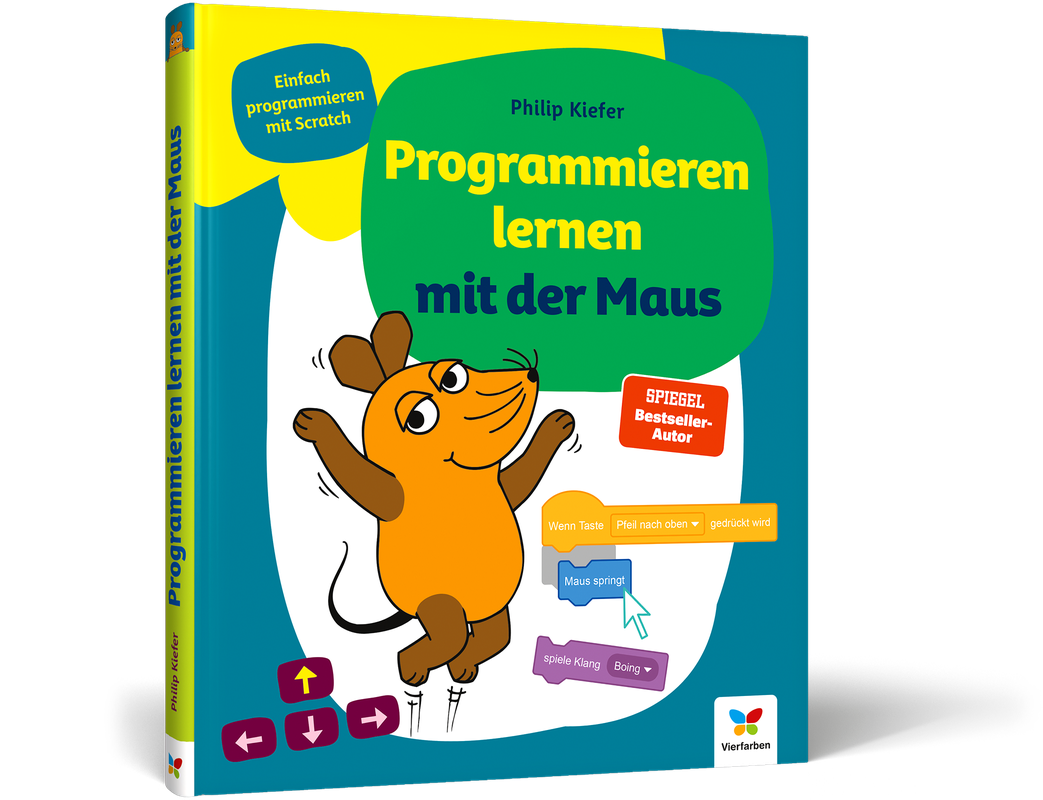
Programmieren lernen mit der Maus (2. Auflg.)
Einfach programmieren mit Scratch! In komplett aktualisierter 2. Auflage aus Oktober 2023.Programmieren lernen und Spaß haben? Geht das überhaupt? Klar! Mit der Maus und der Programmiersprache Scratch. Lass' Figuren einfach laufen, hüpfen und Geräusche machen. Zieh' ihnen Kostüme an und drehe deinen eigenen Zeichentrickfilm. Scratch wurde extra für Kinder entwickelt und ist spielend leicht zu lernen. Du kannst sofort loslegen, im Internet oder lokal auf deinem Computer. Dabei lernst du die ersten Grundlagen, die ein echter Programmierer kennen muss. Viele aufregende Projekte warten auf dich – natürlich mit Deinem Lieblingsstar, der Maus!Dein kinderleichter Start in die Programmierung:Lerne Scratch kennen, die Sprache für deinen ProgrammiereinstiegWichtige Tasten und Wörter – damit du wie eine echter Programmierer redestLass die Katze sprechen: dein erstes Programm mit ScratchHier kommt die Maus: bring eine zweite Figur ins SpielDank Schleifen: deinen ersten abendfüllenden Zeichentrickfilm drehenMit Operatoren einen cleveren Rechentrainer programmierenTolle Funktionen für FortgeschritteneLeseprobe (PDF-Link)Zum Autor:Philip Kiefer zählt zu den bekanntesten Computer-Fachbuchautoren in Deutschland. Doch nicht nur Erwachsene profitieren von seiner Kunst, komplexe Sachverhalte anschaulich und verständlich darzustellen.
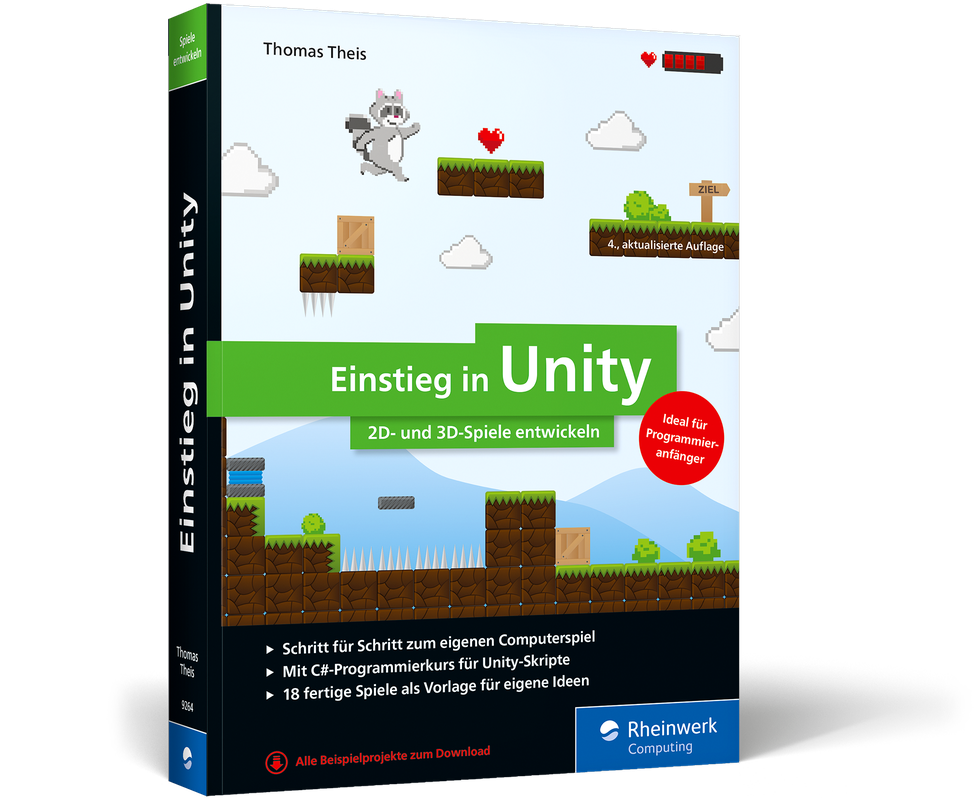
Einstieg in Unity (4. Auflage)
Einstieg in Unity - 2D- und 3D-Spiele entwickeln. 4. aktualisierte Auflage, 2023. Eigene Spiele entwickeln – mit diesem Buch und der genialen Game Engine Unity ist das kein Problem! Von der ersten Scene bis zum komplexen Multiplayer-Spiel zeigt Ihnen Erfolgsautor Thomas Theis, wie es geht. Sie brauchen keine Vorkenntnisse mitzubringen: Dank dem integrierten C#-Programmierkurs lernen Sie alle Objekte und Befehle direkt so kennen, wie Sie in Unity-Skripten aussehen. Ob es um Zusammenstöße, Flugkurven, Explosionen oder die richtige Perspektive geht: Lernen Sie mit 2D- und 3D-Spielen, wie Sie die mächtigen Werkzeuge nutzen und Ihre eigenen Ideen umsetzen.Aus dem Inhalt Unity installierenProjekte, Scenes und Assets verwaltenFlummi oder Stahlkugel? Objekteigenschaften festlegenFertige Bausteine entdecken und einsetzenSkripte schreiben und gut strukturierenSound und Animation hinzufügenMit Kameras und Perspektiven umgehenJump&Run, Breakout, Multiplayer, Shooter, Geschicklichkeitsspiel, Gedächtnistraining, Rennen, Adventure u. v. m.Leseprobe (PDF-Link)

Core Data Services für ABAP
Welche Rolle spielt das virtuelle Datenmodell von SAP S/4HANA für Sie in der Entwicklung? In diesem Buch erfahren Sie, wie Sie CDS-Views anlegen und in analytischen oder transaktionalen ABAP-Anwendungen verwenden. Von der Syntax über Annotationen bis hin zu Zugriffskontrollen lernen Sie alles, was Sie für die Datenmodellierung mit Core Data Services wissen müssen. Die 3. Auflage dieses Bestsellers wurde vollständig aktualisiert und an die Neuerungen des Release 2023 angepasst. Aus dem Inhalt: CDS und SAP HANACDS-Syntax und -SprachelementeABAP Editor in EclipseHierarchienAnnotationenAssoziationenSuchfunktionenABAP-Managed Database ProceduresAnalytische QueriesZugriffskontrollenTestautomatisierung für CDS-ViewsProblembehandlungen Einleitung ... 17 1. Schritt für Schritt zu Ihren ersten CDS-Views ... 23 1.1 ... Datenmodell der Anwendung definieren ... 24 1.2 ... Datenmodell der Anwendung implementieren ... 27 2. Grundlagen der CDS-Datenmodellierung ... 59 2.1 ... Überblick über die CDS-Modelle ... 60 2.2 ... Überblick über die CDS-View-Syntax ... 65 2.3 ... Schlüsselfelder ... 68 2.4 ... Cast-Anweisungen ... 70 2.5 ... Typisierte Literale ... 72 2.6 ... CDS-Simple-Types ... 74 2.7 ... Case-Anweisungen ... 76 2.8 ... CDS-Sitzungsvariablen ... 78 2.9 ... Mandantenbehandlung ... 79 2.10 ... Select-Distinct-Anweisungen ... 81 2.11 ... Union-Views ... 82 2.12 ... Intersect- und Except-Anweisungen ... 89 2.13 ... Join-Verknüpfungen ... 91 2.14 ... SQL-Aggregationsfunktionen ... 97 2.15 ... Projektionsfelder ... 100 2.16 ... Parameter ... 102 2.17 ... Referenzfelder ... 108 2.18 ... Konvertierungsfunktionen für Währungen und Mengeneinheiten ... 110 2.19 ... CDS-Provider-Kontrakte ... 114 2.20 ... Entitätspufferdefinitionen ... 116 3. CDS-Assoziationen ... 119 3.1 ... Assoziationsdefinitionen ... 120 3.2 ... Exponierung von Assoziationen ... 123 3.3 ... Modellierung von Kompositionsbeziehungen ... 124 3.4 ... Modellierung von m:n-Beziehungen ... 127 3.5 ... Projizierte Assoziationen ... 130 3.6 ... Verwendung von Assoziationen in CDS-Views ... 131 3.7 ... Verwendung von Assoziationen in ABAPImplementierungen ... 143 4. CDS-Annotationen ... 145 4.1 ... Annotationsdefinitionen ... 146 4.2 ... Auswirkungen der Annotationen ... 159 4.3 ... Propagationslogik für Annotationen ... 161 4.4 ... CDS-Metadatenerweiterungen ... 172 4.5 ... Aktive Annotationen ... 176 5. CDS-Zugriffskontrollen ... 179 5.1 ... Grundlagen der CDS-Zugriffskontrollen ... 180 5.2 ... Wirkungsweise der CDS-Zugriffskontrollen ... 185 5.3 ... Implementierungsmuster für CDS-Zugriffskontrollen ... 190 5.4 ... CDS-Zugriffskontrollen testen ... 230 6. Business-Services ... 235 6.1 ... Projektions-Views definieren ... 236 6.2 ... Servicedefinitionen erstellen ... 241 6.3 ... Service-Bindings festlegen ... 247 6.4 ... Business-Services testen ... 257 7. Native SAP-HANA-Funktionen in CDS ... 261 7.1 ... Implementierung einer CDS-Tabellenfunktion ... 262 7.2 ... Anwendungsszenarien ... 271 7.3 ... Performance verbessern und Fehler vermeiden ... 272 8. CDS-Modelle für Anwendungsdaten ... 275 8.1 ... Anwendungsarchitektur in SAP S/4HANA ... 276 8.2 ... Feldbezeichner ... 280 8.3 ... Semantik von Feldern ... 284 8.4 ... Fremdschlüsselbeziehungen ... 291 8.5 ... Textbeziehungen ... 297 8.6 ... Kompositionsbeziehungen ... 299 8.7 ... Zeitabhängige Daten ... 302 9. Das virtuelle Datenmodell von SAP S/4HANA ... 305 9.1 ... Warum ein virtuelles Datenmodell? ... 307 9.2 ... SAP-Objekttypen und SAP-Objektknotentypen ... 308 9.3 ... Kategorien von CDS-Entitäten im VDM ... 311 9.4 ... Namensgebung im virtuellen Datenmodell ... 318 9.5 ... Der Basic-Interface-View für den Kundenauftrag ... 321 9.6 ... Tipps zum Finden von VDM-Views ... 329 10. Modellierung analytischer Anwendungen ... 337 10.1 ... Analysen in SAP S/4HANA ... 338 10.2 ... Analytische Views ... 339 10.3 ... Analytische Queries ... 361 10.4 ... Analytische Infrastruktur ... 395 11. Modellierung transaktionaler Anwendungen ... 399 11.1 ... Transaktionale Anwendungen ... 400 11.2 ... Transaktionale Infrastruktur in SAP S/4HANA ... 402 11.3 ... Transaktionale Objektmodelle ... 405 11.4 ... Verhaltensdefinitionen ... 411 11.5 ... Transaktionale Projektionsobjektmodelle ... 517 11.6 ... Interface-Verhaltensdefinitionen ... 528 11.7 ... Projektionsverhaltensdefinitionen ... 536 11.8 ... Laufzeitorchestrierung ... 545 11.9 ... SAP Fiori und Verwendung über OData ... 551 11.10 ... SAP Event Mesh und lokale Event-Handler ... 564 12. Hierarchien in CDS ... 569 12.1 ... Grundbegriffe und Typen von Hierarchien ... 570 12.2 ... Annotationsbasierte Vater-Kind-Hierarchien ... 572 12.3 ... CDS-Hierarchien ... 581 13. CDS-basierte Suchfunktionen ... 605 13.1 ... Wertehilfen ... 606 13.2 ... Freitext-Suchfunktionen in OData-Services ... 629 13.3 ... Enterprise-Search-Funktion ... 637 14. Lebenszyklus und Stabilität von Core Data Services ... 643 14.1 ... Stabilitätskontrakte ... 644 14.2 ... Lebenszyklus von Entwicklungsobjekten ... 649 14.3 ... Abkündigung von Entwicklungsobjekten ... 651 14.4 ... Verwendung von CDS-Modellen und unterstützte Funktionen ... 654 15. Erweiterungen von CDS-Views und weiteren Entitäten ... 659 15.1 ... Produkte und Sprachversionen ... 660 15.2 ... Stabile CDS-Erweiterungen ... 662 15.3 ... Erweiterungen von transaktionalen Modellen ... 677 16. Testautomatisierung ... 693 16.1 ... Selektionslogik der Anwendungen testen ... 694 16.2 ... Transaktionale Applikationslogik testen ... 721 17. Problembehandlung ... 735 17.1 ... Performance-Aspekte ... 736 17.2 ... Mögliche Fallstricke ... 753 17.3 ... CDS-Implementierungsprobleme behandeln ... 765 17.4 ... CDS-Aktivierungsprobleme behandeln ... 774 17.5 ... Anwendungen des ABAP RESTful Application Programming Model analysieren ... 779 Anhang ... 783 A ... CDS-Annotationsreferenz ... 783 B ... Migration vom ABAP Programming Model for SAP Fiori zum ABAP RESTful Application Programming Model ... 797 Die Autoren ... 805 Index ... 807

Power Apps und Power Automate
Die richtigen Werkzeuge machen die Anwendungsentwicklung einfacher und treiben die Digitalisierung Ihrer Prozesse voran. Mit Power Apps und Power Automate erstellen Sie dazu Apps, die Ihren Arbeitsalltag erleichtern und Abläufe vereinfachen. Microsoft-MVP Stefan Riedel zeigt Ihnen in diesem Handbuch die Möglichkeiten der Power Platform. Von den ersten Schritten der Planung bis zur Umsetzung im PowerApps Studio begleitet er Sie auf dem Weg zur fertigen Anwendung. Aus dem Inhalt: Digitalisierung mit der Power PlatformDie Power Platform im ÜberblickGrundlagen für Power AppsLizenzierungCanvas Apps erstellenShare Point anbindenDataVerse for TeamsSharePoint-Formulare erstellenPower Automate FlowUmgebungsstrategien und Adoption Materialien zum Buch ... 17 1. Digitalisierung mit der Power Platform ... 19 1.1 ... Der Low-Code-Ansatz ... 20 1.2 ... Aufgabenbereiche: Wer ist wofür zuständig? ... 25 1.3 ... Geschichten aus dem Projektalltag ... 27 1.4 ... Von der Idee zur App ... 37 2. Die Power Platform im Überblick ... 45 2.1 ... Die Power Platform vorgestellt ... 45 2.2 ... Die wichtigsten Begriffe neben Apps und Flows ... 54 2.3 ... Power Apps und Power Automate im mobilen Einsatz ... 60 2.4 ... Lizenzierung der Power Platform ... 66 3. Grundlagen für die Power-Apps-Entwicklung ... 81 3.1 ... Einrichtung einer Entwicklungsumgebung ... 81 3.2 ... Das Power Apps Maker Portal ... 86 3.3 ... Canvas Apps erstellen ... 90 3.4 ... Konnektoren integrieren ... 111 3.5 ... Apps verwalten ... 117 3.6 ... Wechseln der Umgebung ... 136 3.7 ... Einstellungen ... 136 3.8 ... Hilfe ... 142 4. Die ersten Schritte mit dem Power Apps Studio ... 143 4.1 ... Aufbau des Power Apps Studios ... 143 4.2 ... Einstellungen ... 180 5. Apps entwickeln ... 189 5.1 ... Power Fx: Programmierung in Power Apps ... 189 5.2 ... Gestaltungselemente einer Canvas App ... 245 5.3 ... Komponenten ... 336 5.4 ... Fehlerbehandlung ... 357 5.5 ... Benannte Formeln (Named Formulas) ... 364 5.6 ... Das App-Objekt und der Lebenszyklus einer App ... 366 5.7 ... Sensorik ... 373 5.8 ... Offline-Betrieb ... 375 5.9 ... Programmierrichtlinien ... 380 5.10 ... Ausgewählte einfache Anwendungsfälle ... 384 6. Erweiterte Tools ... 397 6.1 ... Power Apps Test Studio ... 397 6.2 ... Power Apps Monitor ... 408 7. Eine App für Dataverse for Teams entwickeln ... 421 7.1 ... Die Power Apps App einrichten ... 421 7.2 ... Der Startbereich ... 422 7.3 ... Eine App erstellen ... 423 7.4 ... Datenstruktur aufbauen ... 427 7.5 ... Beziehungen ... 430 7.6 ... App-Verwaltung ... 431 7.7 ... Berechtigungen ... 433 7.8 ... Die App teilen ... 435 7.9 ... Limitierungen ... 436 8. SharePoint-Formulare mit Power Apps designen ... 437 8.1 ... Voraussetzungen und Einschränkungen ... 438 8.2 ... Architekturentscheidung ... 439 8.3 ... Die Vorbereitung ... 440 8.4 ... Die Entwicklungsumgebung ... 441 8.5 ... Aufbau einer SharePoint-Formular-App ... 443 8.6 ... Das Formular veröffentlichen ... 449 8.7 ... SharePoint-Formular wiederherstellen ... 450 8.8 ... Formular-App verwalten ... 451 9. Power Automate Cloud-Flows verwalten ... 455 9.1 ... Das Maker Portal der Cloud-Flows ... 455 9.2 ... Grundlegende Architektur ... 457 9.3 ... Der Flow-Designer ... 461 9.4 ... Einen Flow auf Basis einer Vorlage erstellen ... 475 9.5 ... Einsatz der KI: Einen Flow beschreiben und entwerfen lassen ... 476 9.6 ... Flows verwalten ... 479 9.7 ... Genehmigungen ... 489 9.8 ... Benachrichtigungen und Monitoring ... 494 9.9 ... Einstellungen ... 496 10. Die ersten Schritte mit Power Automate Cloud-Flows ... 497 10.1 ... Aufbau eines Flows ... 497 10.2 ... Trigger konfigurieren ... 519 10.3 ... Programmieren mit Flows ... 550 10.4 ... Fehlerbehandlung (Debugging) ... 595 10.5 ... Erweiterte Einstellungen von Triggern ... 607 10.6 ... Erweiterte Einstellungen von Aktionen ... 613 11. Ausgewählte Konnektoren in Cloud-Flows ... 617 11.1 ... Datenvorgang ... 617 11.2 ... Datum und Uhrzeit ... 625 11.3 ... Der SharePoint-Konnektor (OneDrive) ... 629 11.4 ... Der Outlook-Konnektor ... 648 11.5 ... Der Teams-Konnektor ... 659 11.6 ... Genehmigungen (Approvals) ... 673 11.7 ... Flows aufrufen ... 680 12. Anwendungsbeispiele aus dem Projektalltag ... 687 12.1 ... Wer bin ich? Der Office 365-Benutzer-Konnektor ... 687 12.2 ... In welcher Gruppe bin ich? Der Office 365-Gruppen-Konnektor ... 695 12.3 ... Reiterleiste ... 700 12.4 ... Buchstabenfilter ... 703 12.5 ... Tabellen-Kopfzeile ... 707 12.6 ... Suche ... 709 12.7 ... Deeplinks in Ihrer Power App ... 711 12.8 ... Dateien hochladen ... 715 12.9 ... Dokumentenerstellung ... 719 13. Umgebungen ... 745 13.1 ... Was sind Umgebungen ... 745 13.2 ... Umgebungsarten ... 746 13.3 ... Verwaltungsoberfläche für Umgebungen: das Power Platform Admin Center ... 747 13.4 ... Zugriff und Rollen ... 748 13.5 ... Verwaltung von Umgebungen ... 750 13.6 ... Richtlinien gegen Datenverlust ... 753 14. Lösungen ... 757 14.1 ... Apps als Lösungen verteilen ... 757 14.2 ... Lösung erstellen ... 761 14.3 ... Lösungen verteilen ... 764 15. Community ... 775 15.1 ... Was sind Microsoft MVPs? ... 776 15.2 ... Wie organisiert sich die Community? ... 777 15.3 ... Wie werde ich Mitglied der Community? ... 777 15.4 ... Meetups, Online-Communities, Projekte und Hashtags ... 777 Index ... 781

Beginning C++23
Begin your programming journey with C++ , starting with the basics and progressing through step-by-step examples that will help you become a proficient C++ programmer. This book includes new features from the C++23 standard. All you need are Beginning C++23 and any recent C++ compiler and you'll soon be writing real C++ programs.There is no assumption of prior programming knowledge. All language concepts that are explained in the book are illustrated with working program examples, and all chapters include exercises for you to test and practice your knowledge. Free source code downloads are provided for all examples from the text and solutions to the exercises.This latest edition has been fully updated to the latest version of the language, C++23, and to all conventions and best practices of modern C++. This book also introduces elements of the C++ Standard Library that provide essential support for C++23. After completing this book, you will have the knowledge and skills needed to build your first C++ applications.WHAT YOU WILL LEARN* Begin programming with the C++23 standard* Carry out modular programming in C++* Work with arrays and loops, pointers and references, strings, and more* Write your own functions, types, and operators* Discover the essentials of object-oriented programming* Use overloading, inheritance, virtual functions, and polymorphism* Write generic function and class templates, and make them safer using concepts * Learn the ins and outs of containers, algorithms, and ranges* Use auto type declarations, exceptions, move semantics, lambda expressions, and much moreWHO THIS BOOK IS FORProgrammers new to C++ and those who may be looking for a refresh primer on C++ in general. IVOR HORTON is self-employed in consultancy and writes programming tutorials. He is the author of many programming books. Ivor worked for IBM for many years and holds a bachelor's degree, with honors, in mathematics. Horton's experience at IBM includes programming in most languages (including assembler and high-level languages on a variety of machines), real-time programming, and designing and implementing real-time closed loop industrial control systems. He has extensive experience teaching programming to engineers and scientists (Fortran, PL/1, APL, etc.). Horton is an expert in mechanical, process, and electronic CAD systems; mechanical CAM systems; and DNC/CNC systems.PETER VAN WEERT works for Danaher in its R&D unit for digital dentistry software, developing software for the dental practice of tomorrow. In his spare time, he has co-authored two books on C++ and two award-winning Windows 8 apps and is a regular expert speaker at, and board member of, the Belgian C++ Users Group. He is a software engineer whose main interests and expertise are application software development, programming languages, algorithms, and data structures.He received his master of science degree in computer science summa cum laude with congratulations of the Board of Examiners from the University of Leuven. In 2010, he completed his PhD thesis there on the design and efficient compilation of rule-based programming languages at the research group for declarative programming languages and artificial intelligence. During his doctoral studies, he was a teaching assistant for object-oriented programming (Java), software analysis and design, and declarative programming. After graduating, Peter worked at Nikon Metrology for more than six years on large-scale, industrial application software in the area of 3D laser scanning and point cloud inspection. He learned to master C++ and refactoring and debugging of very large code bases, and he gained further proficiency in all aspects of the software development process, including the analysis of functional and technical requirements, and agile and scrum-based project and team management.1. Basic Ideas2. Introducing Fundamental Types of Data3. Working Fundamental Types4. Making Decisions5. Arrays and Loops6. Pointers and References7. Working with Strings8. Defining Functions9. Vocabulary Types10. Function Templates11. Modules and Namespaces12. Defining your own Data Types13. Operator Overloading14. Inheritance15. Polymorphism16. Runtime Errors and Exceptions17. Class Templates18. Move Semantics19. First-Class Functions20. Containers and Algorithms21. Constrained Templates and ConceptsAppendix A (online only; to be offered as part of source code download)

Python for Data Science For Dummies
LET PYTHON DO THE HEAVY LIFTING FOR YOU AS YOU ANALYZE LARGE DATASETSPython for Data Science For Dummies lets you get your hands dirty with data using one of the top programming languages. This beginner’s guide takes you step by step through getting started, performing data analysis, understanding datasets and example code, working with Google Colab, sampling data, and beyond. Coding your data analysis tasks will make your life easier, make you more in-demand as an employee, and open the door to valuable knowledge and insights. This new edition is updated for the latest version of Python and includes current, relevant data examples.* Get a firm background in the basics of Python coding for data analysis* Learn about data science careers you can pursue with Python coding skills* Integrate data analysis with multimedia and graphics * Manage and organize data with cloud-based relational databasesPython careers are on the rise. Grab this user-friendly Dummies guide and gain the programming skills you need to become a data pro. JOHN PAUL MUELLER is a freelance author and technical editor who has written 124 books on topics ranging like networking, home security, database management, and heads-down programming. LUCA MASSARON is a data scientist specialized in solving real-world problems with AI, machine learning, and algorithms. He is also a Kaggle Grandmaster and a Google Developer Expert.

Künstliche Intelligenz kapieren & programmieren
Visuell lernen & verstehen mit Illustrationen und Projekten zum Experimentieren. In Erstauflage aus September 2023.Du möchtest wissen, was hinter künstlicher Intelligenz und neuronalen Netzen steckt und deine eigenen selbstlernenden Programme schreiben?In diesem Buch erfährst du mit anschaulichen Erklärungen und vielen Bildern, wie KI funktioniert und wie du neuronale Netze ganz einfach selbst programmieren kannst. Dafür brauchst du keine Vorkenntnisse. Alle notwendigen mathematischen Konzepte werden von Grund auf und sehr anschaulich erklärt. Ganz nebenbei erhältst du eine Einführung in die Programmiersprache Python.In jedem Kapitel erwarten dich spannende Projekte von ersten kleinen Programmen wie einem selbstlernenden Währungsrechner bis hin zu praxistauglicher Bilderkennung.Denkaufgaben und Programmierübungen mit Lösungen zum Download helfen dir, dein Wissen zu testen und zu vertiefen. So lernst du Schritt für Schritt, wie du mit einfachen Programmiertechniken deine eigenen künstlichen neuronalen Netze entwickelst und trainierst.Aus dem Inhalt:EntscheidungsbäumeÜberwachtes und nicht überwachtes LernenClusteringPerzeptronVorhersagen treffenDatenvisualisierung mit matplotlibNeuronale Netze programmieren und trainierenAktivierungsfunktionenVerborgene SchichtenBerechnungen mit NumPyBilderkennungPython Imaging Library (PIL)Computer VisionMathematisches GlossarInhalt & Leseprobe (PDF-Link) | Downloads (ZIP-Link)Über den Autor:Michael Weigend war mehr als 30 Jahre lang als Lehrer tätig und hält an der Universität Münster Vorlesungen zur Python-Programmierung. Er hat bereits mehrere Bücher zu den Themen Programmierung, Web Development und visuelle Modellierung geschrieben.

x64 Assembly Language Step-by-Step
THE LONG-AWAITED X64 EDITION OF THE BESTSELLING INTRODUCTION TO INTEL ASSEMBLY LANGUAGEIn the newly revised fourth edition of x64 Assembly Language Step-by-Step: Programming with Linux, author Jeff Duntemann delivers an extensively rewritten introduction to assembly language with a strong focus on 64-bit long-mode Linux assembler. The book offers a lighthearted, robust, and accessible approach to a challenging technical discipline, giving you a step-by-step path to learning assembly code that’s engaging and easy to read. x64 Assembly Language Step-by-Step makes quick work of programmable computing basics, the concepts of binary and hexadecimal number systems, the Intel x86/x64 computer architecture, and the process of Linux software development to dive deep into the x64 instruction set, memory addressing, procedures, macros, and interface to the C-language code libraries on which Linux is built. You’ll also find:* A set of free and open-source development and debugging tools you can download and put to use immediately* Numerous examples woven throughout the book to illustrate the practical implementation of the ideas discussed within* Practical tips on software design, coding, testing, and debuggingA one-stop resource for aspiring and practicing Intel assembly programmers, the latest edition of this celebrated text provides readers with an authoritative tutorial approach to x64 technology that’s ideal for self-paced instruction. JEFF DUNTEMANN is an accomplished author of both science fiction and technical nonfiction. He has published dozens of technical articles in magazines, co-founded The Coriolis Group, a large publishing house in Arizona, and works as a technical publishing consultant. He owns Copperwood Press, a POD imprint hosted on amazon.com.

Objektorientiertes Programmieren (2. Auflg.)
Dieses Lehrbuch bietet einen kompakten Überblick über die modernen Konzepte und Methoden der objektorientierten Programmierung speziell für Ingenieur:innen.Anhand von ingenieurwissenschaftlichen Beispielen werden die grundlegenden Konzepte der objektorientierten Programmierung (OOP) nachvollziehbar erläutert. Ausgewählte Diagramme aus dem Vorrat der UML illustrieren die Entwicklungsmethoden. Anhand von Entwurfsmustern werden problemorientierte Lösungsansätze erklärt und an Beispielen dargestellt. Die Leistungsfähigkeit moderner Entwicklungswerkzeuge wird aufgezeigt.Für die Neuauflage haben in Kapitel 5 Multi-Threading/Tasking-Anwendungen mit den zugehörigen Herausforderungen (Verklemmungen etc.) und den entsprechenden Lösungsstrategien wie u. a. Mutex Eingang gefunden. Ebenso wurde das Themengebiet Entwurfsmuster um das wichtige Model-View-Controller-Muster in Kapitel 6 erweitert und mit Beispielen und Übungen versehen.Aus dem Inhalt: Entwurf von komplexen Softwaresystemen, Einführung in die OOP, Grundlagen der Softwareentwicklung, Sinn und Zweck der UML, GUI, Entwicklungswerkzeuge und ihr Leistungsumfang, FehlerbehandlungsstrategienIm Internet finden Sie zu diesem Titel alle Beispielprogramme sowie Lösungsvorschläge für die Programmierübungen und weitere ergänzende Inhalte. Prof. Dr.-Ing. Uwe Probst lehrt Leistungselektronik und Antriebstechnik am Fachbereich Elektro- und Informationstechnik der Technischen Hochschule Mittelhessen.