

Programmierung

Pro Spring 6 with Kotlin
Master the fundamentals of Spring Framework 6 while learning from the real-world experiences of Spring experts. Over the course of this book, you'll learn how to leverage Spring 6 in tandem with the Kotlin programming language to build complex enterprise applications from top to bottom. From monoliths to cloud native apps for streaming microservices, you’ll gain insight into every aspect of the process, including transactions, data access, persistence, and web and presentation tiers.As you progress through the book, the authors demonstrate how to run Kotlin with a single command, deploy new utility methods in String class, use Local-Variable Syntax for Lambda Parameters Nested Based Access Control, read/write strings to and from files, and using Flight Recorder. Also, a whole new generation of dependencies are available, and you’ll see exactly how to make optimal use of them. A full sample application will show you how to apply Spring 6’s new tools and techniques and see how they work together.After reading this comprehensive book, you'll be ready to build your own Spring applications using Kotlin.WHAT YOU WILL LEARN* Explore what's new in Spring Framework 6 and the Kotlin APIs it supports* Leverage a new generation of dependencies* Build complex enterprise monoliths, cloud-native applications, and microservices* Master data access, persistence, and transactions* Use with Spring Batch, Integration, and other key Spring modules* Integrate Spring 6 with Hibernate and other third party APIs and packagesWHO THIS BOOK IS FORExperienced Kotlin and Java software developers and programmers. Some previous experience with Spring is highly recommended.PETER SPÄTH graduated in 2002 as a physicist and soon afterward became an IT consultant, mainly for Java-related projects. In 2016, he decided to concentrate on writing books on various aspects, but with a main focus on software development. With two books about graphics and sound processing, three books on Android app development, and several books on Kotlin, Java and Jakarta EE development, the author continues his effort in writing software development-related literature.IULIANA COSMINA is a Spring Certified Web Developer and a Spring Certified Core Spring Professional. She is a Spring certified expert, as defined by Pivotal, the makers of Spring Framework, Boot and other tools. She has authored books with Apress on Core Spring certification and Spring Certified web development. She is a Lead Engineer at Cloudsoft, Edinburgh and is an active coder and software contributor on Apache Brooklyn, GitHub, StackOverflow and more.ROB HARROP is a software consultant specializing in delivering high-performance, highly-scalable enterprise applications. He is an experienced architect with a particular flair for understanding and solving complex design issues. With a thorough knowledge of both Java and .NET, Harrop has successfully deployed projects across both platforms. He also has extensive experience across a variety of sectors, retail and government in particular. Harrop is the author of five books, including Pro Spring, a widely-acclaimed, comprehensive resource on the Spring Framework.CHRIS SCHAEFER is a Principle Software Developer for Spring project at Pivotal, the makers of Spring Framework, Boot and other Spring tools.CLARENCE HO is the Senior Java Architect of a HK-based software consultancy firm, SkywideSoft Technology Limited. Having been worked in the IT field for over 20 years, Clarence had been the team leader of many in-house application development projects, as well as providing consultancy services on enterprise solutions to clients.Chapter 01 Introducing Spring Framework 6Chapter 02 Getting Started with Spring and KotlinChapter 03 Introducing IoCChapter 04 Spring Configuration In Detail and Spring BootChapter 05 Introducing Spring AOPChapter 06 Using Spring Data JPA with KotlinChapter 07 Using Spring Data JDBC with KotlinChapter 08 Using other Spring Data and Integrating with HibernateChapter 09 Transaction ManagementChapter 10 Validation Conversion FormattingChapter 11 Task SchedulingChapter 12 Using Spring RemotingChapter 13 Spring TestingChapter 14 Scripting Support In SpringChapter 15 Application MonitoringChapter 16 Web Applications and Microservices with Spring MVC and WebFluxChapter 17 WebSocketsChapter 18 Spring Projects Batch, Integration and moreChapter 19. Spring Cloud for Cloud-Native AppsAppendix A Setting Up Your Development Environment
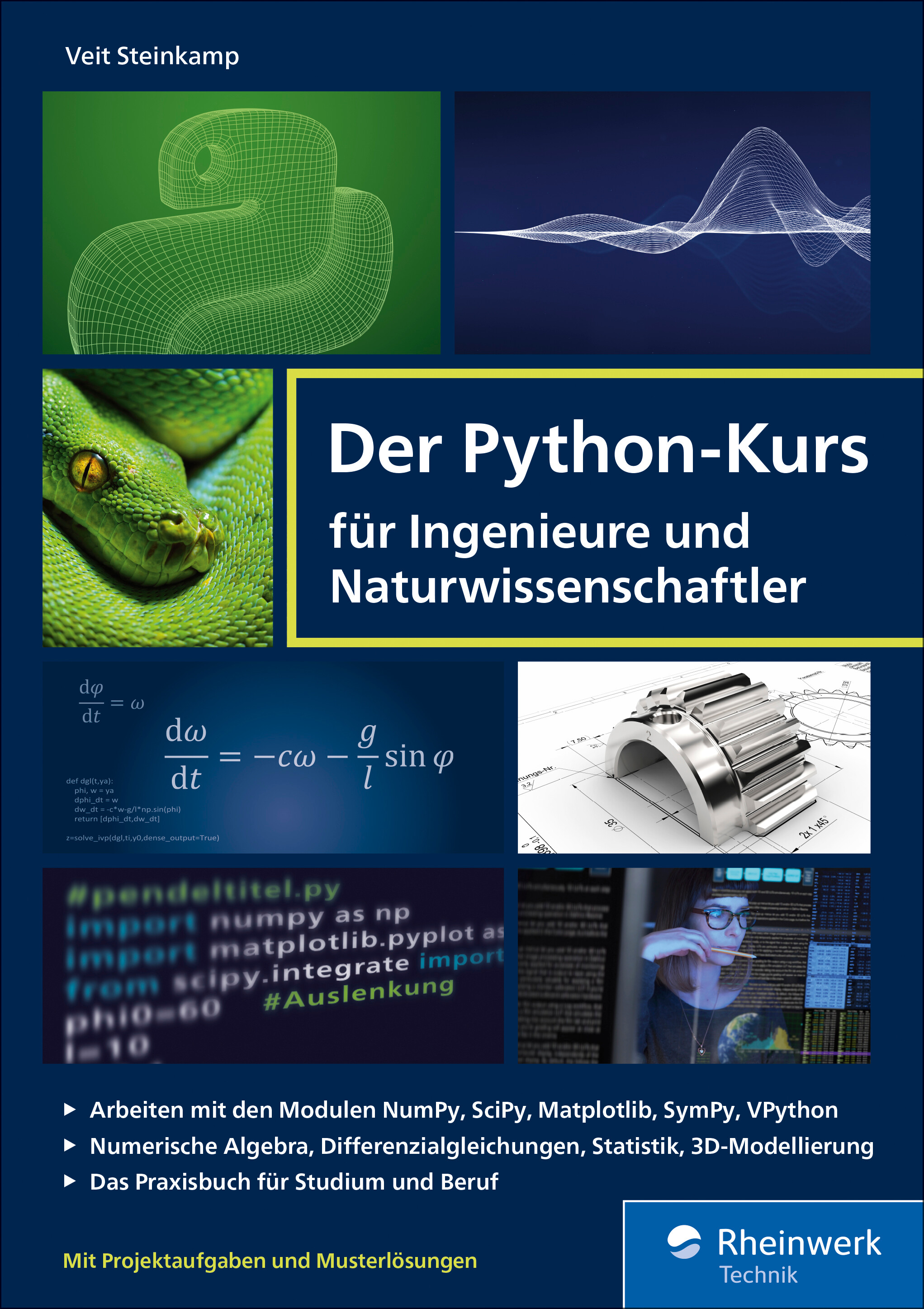
Der Python-Kurs für Ingenieure und Naturwissenschaftler
Wissenschaftliches Programmieren mit Python - das umfangreiche Handbuch.Dieses Handbuch bietet Ingenieuren und Wissenschaftlern einen praxisnahen Einstieg in die Programmierung mit Python. Python ist die ideale Sprache für schnelle, unkomplizierte Lösungen von klar umrissenen Problemen.Grenzwerte bestimmen, Differenzialgleichungen lösen, Testreihen visualisieren: Die Ingenieurs- und Naturwissenschaften stecken voller Aufgaben, die Sie elegant mit Python lösen können. Python-Code hat viele Vorteile, er lässt sich einfach schreiben und erlaubt eine direkte Herangehensweise. Zudem steht für Python eine Vielzahl an Modulen und Librarys bereit, mit denen Sie mathematische Berechnungen automatisieren, Simulationen erstellen und Daten grafisch aufbereiten.Wie das geht, zeigt Ihnen Dr. Veit Steinkamp in übersichtlich strukturierten Kapiteln mit vielen Codebeispielen und Musterlösungen. Nach dem Buch werden Sie sagen: Python rocks for research!Leseprobe (PDF-Link)

Oracle PL/SQL
Mit PL/SQL, der prozeduralen Erweiterung von SQL, verfügen Sie über eine faszinierende Technologie, um Oracles Datenbank mächtige Funktionen abzugewinnen. Egal, ob Sie bereits mit Datenbanken zu tun haben und jetzt die Fähigkeiten mit PL/SQL erweitern möchten, sich als Administrator beispielsweise in die Programmierung von Triggern einarbeiten wollen oder als Anwendungsentwickler einen näheren Blick auf Datenbankinterna werfen müssen: In diesem umfassenden Handbuch finden Sie alles, was Sie benötigen, um mit PL/SQL den maximalen Nutzen für Ihren Anwendungsfall zu finden. Dafür sorgen die gründliche Einführung in Aufbau und Syntax von PL/SQL, hilfreiche Anregungen zum Einsatz und der Verbesserung Ihres Codes sowie ausführliche Workshops mit Praxisbezug. Im Vordergrund des Buchs stehen die Strategien, die Sie benötigen, um performante, sichere und skalierbare Applikationen zu entwickeln. Neben der umfassenden Einführung in PL/SQL geht es daher um Fragen wie beispielsweise: Auf welche Weise können Sie große Datenmengen effizient verarbeiten? Welche Vor- und Nachteile haben Datenbanktrigger, wann sind sie richtig, wann nicht? Wann sollten Sie PL/SQL einsetzen, wann SQL? Wie schützen Sie die Datenbank vor unberechtigtem Zugriff? Die Kombination von strategischer Denkweise zur Datenbankprogrammierung und Workshops sowie Codebeispielen hilft Ihnen bei der korrekten und hochwertigen Datenbankprogrammierung. Aktuell zu Oracle 19c. Aus dem Inhalt: Für Programmierer und AdminsGrundlagen von Oracle-DatenbankenWerkzeuge und RessourcenDatenbankobjekte und SQLDatensicherheit, Konsistenz, TransaktionenErweiterung von DatenbankfunktionalitätenSyntax von PL/SQLDatentypen und KontrollstrukturenDynamisches SQLPluggable DatabasesDebugging, Monitoring und PerformancetuningPL/ScopeLargeObjects, XML, OOPWorkshops aus der Praxisu. v. m. Materialien zum Buch ... 21 1. Einführung ... 23 1.1 ... Für wen ist dieses Buch geschrieben? ... 23 1.2 ... Der Aufbau des Buches ... 26 1.3 ... Vorwort zur vierten Auflage ... 34 2. Verwendete Werkzeuge und Ressourcen ... 35 2.1 ... Oracles Online-Dokumentation ... 35 2.2 ... Aufsetzen einer Beispieldatenbank ... 40 2.3 ... SQL*Plus ... 41 2.4 ... SQLCL ... 42 2.5 ... SQL Developer ... 43 2.6 ... »explain plan« ... 44 2.7 ... Autotrace ... 46 2.8 ... Runstats ... 48 2.9 ... Trace und tkprof ... 49 2.10 ... Debugger ... 52 2.11 ... Weitere Werkzeuge ... 53 2.12 ... Die Beispielskripte ... 53 TEIL I. Grundlagen ... 55 3. Aufbau der Datenbank aus Sicht eines Programmierers ... 57 3.1 ... Grundlegende Arbeitsweise der Datenbank ... 57 3.2 ... Logischer Aufbau: Schema, Tablespace und Co. ... 69 3.3 ... Die physikalische Datenbank ... 79 3.4 ... Instanz und Speicherstrukturen ... 84 3.5 ... Containerdatenbank ... 94 3.6 ... Start der Datenbank ... 95 3.7 ... Verbindungsaufbau zur Datenbank ... 96 4. Datenbankobjekte und SQL ... 113 4.1 ... Tabellen ... 113 4.2 ... Index ... 120 4.3 ... Views und Materialized Views ... 129 4.4 ... PL/SQL-Programm ... 132 4.5 ... Sonstige Datenbankobjekte ... 133 4.6 ... Exkurs: Zeichensatzcodierung ... 139 4.7 ... Mächtigkeit von SQL ... 145 5. Datensicherheit, -konsistenz und Transaktion ... 159 5.1 ... Lese- und Schreibkonsistenz ... 160 5.2 ... Transaktion ... 164 5.3 ... Datenkonsistenz und referenzielle Integrität ... 168 5.4 ... Explizites Sperren von Daten durch die Anwendung ... 183 5.5 ... Verarbeitung einer SQL-Anweisung ... 190 5.6 ... Die Sperrmechanismen von Oracle ... 196 5.7 ... Datensicherheit ... 197 5.8 ... Workshop: Einfluss der Programmierung ... 200 6. Programmierung der Datenbank ... 213 6.1 ... Erweiterung der Datenbankfunktionalität ... 213 6.2 ... Programmierung der Datenkonsistenz ... 215 6.3 ... Programmierung der Datensicherheit ... 223 6.4 ... Anwendungsprogrammierung mit PL/SQL ... 226 6.5 ... Unterstützung der Administration durch PL/SQL ... 227 TEIL II. Die Sprache PL/SQL ... 231 7. Die Blockstruktur und Syntax von PL/SQL ... 233 7.1 ... Das Grundgerüst: der PL/SQL-Block ... 234 7.2 ... Prozeduren ... 241 7.3 ... Funktionen ... 257 7.4 ... Datenbanktrigger ... 261 7.5 ... Packages ... 262 7.6 ... Ausführungsrechte von PL/SQL-Blöcken ... 267 7.7 ... Compiler-Anweisungen (Pragma) ... 270 7.8 ... Best Practices ... 272 8. Kontrollstrukturen ... 275 8.1 ... Auswertende Anweisung 1 (»if then else«-Anweisung) ... 275 8.2 ... Auswertende Anweisung 2 (»case«-Anweisung) ... 277 8.3 ... Einfache Schleifen ... 281 8.4 ... Konditionale Kompilierung ... 292 8.5 ... Aus der Mottenkiste: Konzepte, die Sie nicht verwenden sollten ... 297 9. Datentypen in PL/SQL ... 303 9.1 ... Skalare Datentypen ... 303 9.2 ... Kollektionen in PL/SQL ... 314 9.3 ... Cursor ... 340 10. Cursor ... 341 10.1 ... Lebenszyklus eines Cursors ... 341 10.2 ... Cursor-Attribute ... 344 10.3 ... Parametrisierte Cursor ... 347 10.4 ... Mengenverarbeitung mit »bulk collect« ... 349 10.5 ... Kurzform: die »cursor for«-Schleife ... 351 10.6 ... Implizite versus explizite Cursor ... 353 10.7 ... Cursor-Variablen (»ref«-Cursor) ... 359 10.8 ... Cursor-Ausdrücke ... 366 10.9 ... Gemeinsamer Zugriff auf Daten über verteilte Cursor ... 371 10.10 ... Tabellenfunktionen ... 373 11. Events in der Datenbank: Programmierung von Triggern ... 385 11.1 ... DML-Trigger ... 385 11.2 ... »instead of«-Trigger ... 406 11.3 ... Einsatzbereiche von DML-Triggern ... 409 11.4 ... Wann Sie DML-Trigger nicht verwenden sollten ... 429 11.5 ... Datenbanktrigger ... 433 11.6 ... Zusammenfassung ... 445 12. Packages ... 449 12.1 ... Trennung von öffentlicher und privater Logik ... 449 12.2 ... Überladung in Packages ... 465 12.3 ... Ausführungsrechte von Packages ... 471 12.4 ... Packages und die Dependency Chain ... 476 12.5 ... Verschlüsselung von Package-Code ... 483 12.6 ... Oracle-Packages ... 488 12.7 ... Workshop: Verwaltung von Anwendungsparametern ... 501 13. Erweiterung von SQL ... 521 13.1 ... Wann SQL erweitert werden sollte ... 521 13.2 ... SQL durch eigene Funktionen erweitern ... 527 13.3 ... Workshop: Berechnung der Fakultät ... 537 13.4 ... Gruppenfunktionen selbst erstellen ... 547 13.5 ... Workshop: Code-Generator für Gruppenfunktionen ... 558 14. Dynamisches SQL ... 571 14.1 ... Dynamisches SQL mittels »execute immediate« ... 572 14.2 ... Dynamisches SQL mit Cursor-Variablen ... 576 14.3 ... Workshop: Erstellung einer Prozedur als Schnittstelle zu einem externen Programm ... 576 14.4 ... DBMS_SQL-Package ... 581 14.5 ... Sicherheit bei dynamischem SQL ... 597 14.6 ... SQL-Makros ... 601 14.7 ... Polymorphe Tabellenfunktionen ... 615 15. Exception ... 631 15.1 ... Oracle-Fehler ... 631 15.2 ... Applikationsfehler erstellen und bearbeiten ... 647 15.3 ... Workshop: zentralisierter Fehler-Handler mit einem Trigger ... 657 15.4 ... Zusammenfassung ... 662 TEIL III. PL/SQL im Einsatz ... 665 16. Arbeiten mit LOBs (Large Objects) ... 667 16.1 ... Technische Struktur ... 668 16.2 ... Die Datentypen »CLOB«, »NCLOB«, »BLOB« und »BFILE« ... 683 16.3 ... Das Package »DBMS_LOB« ... 686 16.4 ... Workshop: Hilfsfunktionen zum Arbeiten mit LOBs ... 692 17. Arbeiten mit XML ... 701 17.1 ... Der Datentyp »XMLType« ... 701 17.2 ... Die Speicherung von XML-Daten in der Datenbank ... 710 17.3 ... XML aus relationalen Daten erzeugen ... 713 17.4 ... Relationale Daten aus XML extrahieren ... 726 17.5 ... XML mit PL/SQL verarbeiten ... 731 17.6 ... Die XML-Datenbank ... 743 18. Arbeiten mit JSON ... 769 18.1 ... JSON ... 769 18.2 ... Programmierung von JSON mit PL/SQL ... 780 18.3 ... SODA (Simple Oracle Document Access) ... 789 19. Objektorientierung ... 801 19.1 ... Einführung in die Objektorientierung ... 803 19.2 ... Objektorientierte Datentypen ... 815 19.3 ... Objektorientierte Datenmodelle ... 826 19.4 ... Workshop: der Datentyp »MoneyType« ... 830 19.5 ... Objektorientierte Anwendungsentwicklung und relationale Datenbanken ... 851 20. Integration von Oracle in Applikationen ... 881 20.1 ... Sperrung von Daten bei der Datenänderung ... 882 20.2 ... Speicherung von Session-Informationen ... 901 20.3 ... Zugriff auf Daten über PL/SQL-Packages ... 920 20.4 ... Workshop: Keimzelle einer sicheren Datenbankanwendung ... 924 21. Performance-Tuning und Codeanalyse ... 945 21.1 ... Regeln zur Performance-Optimierung ... 946 21.2 ... Optimierungsmöglichkeiten von PL/SQL ... 955 21.3 ... Compiler-Warnungen ... 969 21.4 ... PL/Scope ... 973 21.5 ... PL/SQL Hierarchical Profiler ... 980 21.6 ... Den Speicherverbrauch von PL/SQL überwachen ... 999 22. Workshop: PL/SQL Instrumentation Toolkit (PIT) ... 1003 22.1 ... Überblick: die Idee und die Architektur ... 1003 22.2 ... Beschreibung der einzelnen Komponenten ... 1012 22.3 ... Implementierung des PIT-Administrations-Packages ... 1047 22.4 ... Weitere Ausgabemodule ... 1055 Index ... 1071

Python Data Analytics
Explore the latest Python tools and techniques to help you tackle the world of data acquisition and analysis. You'll review scientific computing with NumPy, visualization with matplotlib, and machine learning with scikit-learn.This third edition is fully updated for the latest version of Python and its related libraries, and includes coverage of social media data analysis, image analysis with OpenCV, and deep learning libraries. Each chapter includes multiple examples demonstrating how to work with each library. At its heart lies the coverage of pandas, for high-performance, easy-to-use data structures and tools for data manipulationAuthor Fabio Nelli expertly demonstrates using Python for data processing, management, and information retrieval. Later chapters apply what you've learned to handwriting recognition and extending graphical capabilities with the JavaScript D3 library. Whether you are dealing with sales data, investment data, medical data, web page usage, or other data sets, Python Data Analytics, Third Edition is an invaluable reference with its examples of storing, accessing, and analyzing data.WHAT YOU'LL LEARN* Understand the core concepts of data analysis and the Python ecosystem* Go in depth with pandas for reading, writing, and processing data* Use tools and techniques for data visualization and image analysis* Examine popular deep learning libraries Keras, Theano,TensorFlow, and PyTorchWHO THIS BOOK IS FORExperienced Python developers who need to learn about Pythonic tools for data analysis Fabio Nelli is an IT Scientific Application Specialist at IRBM Science Park, a private research center in Pomezia, Roma, Italy. He has been a computer consultant for many years at IBM, EDS, Merck Sharp, and Dohme, along with several banks and insurance companies. He has an Organic Chemistry degree and many years of experience in Information technologies and Automation systems applied to Life Sciences (Tech Specialist at Beckman Coulter Italy and Spain). He is currently developing Java applications that interface Oracle databases with scientific instrumentation generating data and web server applications providing analysis of the results to researchers in real time.PYTHON DATA ANALYTICS1. An Introduction to Data Analysis2. Introduction to the Python's World3. The NumPy Library4. The pandas Library-- An Introduction5. pandas: Reading and Writing Data6. pandas in Depth: Data Manipulation7. Data Visualization with matplotlib8. Machine Learning with scikit-learn9. Deep Learning with TensorFlow10. An Example - Meteorological Data11. Embedding the JavaScript D3 Library in IPython Notebook12. Recognizing Handwritten Digits13. Textual data Analysis with NLTK14. Image Analysis and Computer Vision with OpenCVAppendix AAppendix B

Composable Enterprise: agil, flexibel, innovativ
Der Nutzen der Digitalisierung liegt nicht im Einsatz neuer Technologien für bestehende Prozesse, sondern in organisatorischen Änderungen und neuen Geschäftsmodellen. Das Buch stellt das Composable Enterprise als Leitbild für eine erfolgreiche digitale Transformation und damit verbundene Kostenreduktionen und Umsatzsteigerungen heraus. Was bedeutet das? Ein Composable Enterprise ist dezentral prozessorientiert organisiert. Dadurch kann das Unternehmen schnell auf neue Situationen reagieren, Prozesse und Geschäftsmodelle entwickeln oder verändern. Die Informationssysteme basieren auf Plattformarchitekturen. Ein Paradigmenwechsel zu monolithischen Anwendungen.Branchenkonzepte für Industrie, Consulting und Hochschulen zeigen, wie Organisation und Anwendungsarchitekturen im Composable Enterprise ineinandergreifen.Der Leser erhält Inspiration, Fundament und einen Kompass für die digitale Transformation eines Unternehmens zum Composable Enterprise.PROF. DR. DR. H.C. MULT. AUGUST-WILHELM SCHEER ist einer der prägendsten Wissenschaftler und Unternehmer der deutschen Informationstechnik. Seine Bücher zur Wirtschaftsinformatik sind Standardwerke und in mehrere Sprachen übersetzt. Die von ihm entwickelte Methode ARIS zur Geschäftsprozessmodellierung und -optimierung wird von unübersehbar vielen Unternehmen international eingesetzt. Scheer hat mehrere erfolgreiche Unternehmen gegründet, darunter die IDS Scheer AG, die er vom Start-up zum börsennotierten internationalen Player entwickelt hat. Heute steuert er mit Unternehmen wie Scheer GmbH, imc AG sowie Scheer PAS ein Netzwerk von IT-Unternehmen mit rund 1.300 Mitarbeitern sowie das gemeinnützige August-Wilhelm Scheer Institut. Scheer erhielt für seine Forschungs- und unternehmerischen Leistungen zahlreiche Ehrungen. Einführung - Erfolgstreiber digitaler Geschäftsmodelle - Digitale Branchenkonzepte -Geschäftsprozesse als zentraler Fokus der Digitalisierung - Vom Prozessmodell zum Anwendungssystem - Process Mining - Operational Performance Support - Robotic Process Automation (RPA) - Einfluss der IT-Infrastruktur auf die Prozessautomation - Innovationsnetzwerk zur Digitalisierung

Praxiseinstieg Machine Learning mit Scikit-Learn, Keras und TensorFlow
Aktualisierte und erweiterte 3. Auflage des Bestsellers zu TensorFlow und Deep Learning.Behandelt jetzt viele neue Features von Scikit-Learn sowie die Keras-Tuner-Bibliothek und die NLP-Bibliothek Transformers von Hugging FaceFührt Sie methodisch geschickt in die Basics des Machine Learning mit Scikit-Learn ein und vermittelt darauf aufbauend Deep-Learning-Techniken mit Keras und TensorFlow Mit zahlreiche Übungen und LösungenMaschinelles Lernen und insbesondere Deep Learning haben in den letzten Jahren eindrucksvolle Durchbrüche erlebt. Inzwischen können sogar Programmierer, die kaum etwas über diese Technologie wissen, mit einfachen, effizienten Werkzeugen Machine-Learning-Programme implementieren. Dieses Standardwerk verwendet konkrete Beispiele, ein Minimum an Theorie und unmittelbar einsetzbare Python-Frameworks (Scikit-Learn, Keras und TensorFlow), um Ihnen ein intuitives Verständnis der Konzepte und Tools für das Entwickeln intelligenter Systeme zu vermitteln.In dieser aktualisierten 3. Auflage behandelt Aurélien Géron eine große Bandbreite von Techniken: von der einfachen linearen Regression bis hin zu Deep Neural Networks. Zahlreiche Codebeispiele und Übungen helfen Ihnen, das Gelernte praktisch umzusetzen. Sie benötigen lediglich etwas Programmiererfahrung, um direkt zu starten.Lernen Sie die Grundlagen des Machine Learning anhand eines umfangreichen Beispielprojekts mit Scikit-LearnErkunden Sie zahlreiche Modelle, einschließlich Support Vector Machines, Entscheidungsbäume, Random Forests und Ensemble-MethodenNutzen Sie unüberwachtes Lernen wie Dimensionsreduktion, Clustering und AnomalieerkennungErstellen Sie neuronale Netzarchitekturen wie Convolutional Neural Networks, Recurrent Neural Networks, Generative Adversarial Networks, Autoencoder, Diffusionsmodelle und TransformerVerwenden Sie TensorFlow und Keras zum Erstellen und Trainieren neuronaler Netze für Computer Vision, Natural Language Processing, Deep Reinforcement Learning und generative ModelleLeseprobe (PDF-Link)

Modernes Software Engineering
Bessere Software schneller und effektiver entwickeln.In diesem Buch gibt Ihnen der Continuous-Delivery-Pionier David Farley Strategien an die Hand, mit denen Sie Software-Projekte effektiver umsetzen, erfolgreicher managen und die Qualität Ihrer Programme grundlegend verbessern können – und damit auch Ihr Leben und das Ihrer Kollegen.David Farley richtet sich an Programmierer, Manager und technische Leiter unabhängig von ihrer Erfahrung. Er beleuchtet langlebige Prinzipien, die das Herzstück der effektiven Softwareentwicklung bilden. Dabei unterscheidet er zwischen zwei Kerndisziplinen: Exploration und Lernen sowie Umgang mit Komplexität. Für jede der beiden definiert er Konzepte und Prinzipien, die Ihnen helfen, den gesamten Entwicklungsprozess zu verbessern, von Ihrer Denkweise bis hin zur Qualität Ihres Codes, und beschreibt dabei Ansätze, die nachweislich zum Erfolg führen.Farleys Konzepte und Techniken bilden einen einheitlichen, wissenschaftlichen und fundierten Ansatz zur Lösung praktischer Probleme bei der Softwareentwicklung unter realistischen wirtschaftlichen Bedingungen. Dieser allgemeingültige und langlebige Ansatz kann Ihnen helfen, selbst Probleme zu lösen, die Ihnen bisher nicht begegnet sind. Er bietet Ihnen einen tiefen Einblick in Ihre eigene tägliche Arbeit und unterstützt sie dabei, bessere Software schneller, effektiver und mit mehr Freude zu entwickeln.Besprechung des Buches von Tam Hanna am 13.09.2023 auf iX.de:»Der mitp-Verlag liefert mit "Modernes Software Engineering" ein nach Ansicht des Rezensenten rundum gelungenes Werk, das die Rolle der Softwarearchitektur in einem modernen Unternehmen als Ganzes behandelt – auch die Übersetzung aus dem Englischen ist vorbildlich gelungen. Von der Lektüre profitieren insbesondere Entwicklerinnen und Entwickler, die erst seit wenigen Jahren programmieren, aber auch "alte Hasen" mit mehr als zehn Jahren Erfahrung können noch einiges darüber lernen, wie ihr Code als Teil eines Werte-schöpfenden Ganzen anzusehen ist. Der Rezensent empfiehlt das Buch daher nicht nur Programmiererinnen und Programmierern in seinem eigenen Unternehmen.«Über den Autor:David Farley ist Gründer und Consultant von Continuous Delivery Ltd und verfügt über jahrelange Erfahrung als Programmierer, Software Engineer und Systemarchitekt. Seine bahnbrechenden Ansätze haben die Arbeit von Entwicklern und Teams revolutioniert. Als Head of Software Development für London Multi Asset Exchange (LMAX) hat er eines der schnellsten Finanzsysteme der Welt aufgebaut. Er war einer der ersten, der agile Methoden wie Continuous Integration und automatisierte Tests angewendet hat und ist Betreiber des erfolgreichen Youtube-Kanals »Continuous Delivery«.

Test-Driven Development with React and TypeScript
Apply test-driven principles to create scalable and maintainable React applications. This book covers a wide range of topics, including setting up a testing environment and utilizing popular testing frameworks like Cypress, Jest, and the React Testing Library. It also delves into valuable refactoring techniques, as well as enhancing code maintainability and readability. What sets this comprehensive guide apart is its end-to-end project simulation, showcasing how TDD can be employed to build a complete application called "Bookish."Test-Driven Development with React and TypeScript elevates its code examples by leveraging TypeScript, the predominant language in modern frontend development, offering you a deeper understanding of how TDD principles can be applied to React projects. Furthermore, all code examples have been carefully revised and updated for this edition, incorporating reader feedback and reflecting current industry standards.After completing this book, you have the knowledge and skills necessary to develop high quality and scalable React applications.WHAT YOU WILL LEARN* Master essential refactoring techniques to enhance code quality* Employ modern practices for writing maintainable React code, including testing and product implementation* Gain practical experience applying test-driven development (TDD) principles to real-world projects * Craft high quality, scalable, and maintainable React applications using TDD principles and techniquesWHO THIS BOOK IS FORWeb application developers who wants to learn how to write high quality code using test-driven development. JUNTAO QIU is an accomplished software developer renowned for his expertise in producing high-quality and easily maintainable code. He is committed to helping individuals improve their code-writing abilities, and generously shares his vast knowledge and experience through multiple platforms, including books such as this one and Maintainable React (Leanpub, 2022). In addition, Juntao hosts a YouTube channel where he provides valuable insights, tips, and best practices for writing clean code and performing refactoring. Juntao's goal is to empower developers, enabling them to reach their full potential and have a positive impact on the software development industry. Chapter 1. A Very Brief History of Test-Driven Development.-Chapter 2. Get Started with Jest.-Chapter 3. Test-Driven Development 101.-Chapter 4. Project Setup.-Chapter 5. Implementing the Book List.-Chapter 6. Implementing the Book Detail View.-Chapter 7. Searching by Keyword.-Chapter 8. State Management.-Chapter 9. Managing Book Reviews.-Chapter 10. Behavior-Driven Development.-Chapter 11: Refactoring TechniquesAppendix A: Design the State Data Shape of Your Application.-Appendix B: Background of Testing Strategies.-Appendix C: Typescript

OpenLDAP in der Praxis
- Dieses Buch unterstützt Sie beim Einsatz von OpenLDAP in Ihrem Netzwerk – egal, ob Sie OpenLDAP das erste Mal einrichten oder von einer älteren Version migrieren. - Alle Kapitel bauen aufeinander auf, so dass Sie in der Lage sind, eine komplette OpenLDAP-Umgebung mit Kerberos einzurichten. Sie können aber auch einzelne Kapitel nutzen, um Ihre bestehende LDAP-Infrastruktur zu erweitern. - Besonders zu den Themen ACLs, Replikation und Kerberos finden Sie neben den Grundlagen auch Beispiele zu den Vorgehensweisen. - Neben der klassischen Installation wird auf die Einrichtung von OpenLDAP in Docker-Containern eingegangen. Zudem finden Sie einen Ausblick auf Kubernetes. - Mit allen Listings und Skripten zum Download. - basierend auf Version 2.6 - Ihr exklusiver Vorteil: E-Book inside beim Kauf des gedruckten Buches Dieses Buch bietet eine ausführliche Beschreibung von der Installation eines einzelnen OpenLDAP-Servers bis hin zu einer Multi-Provider-Replikation und der Einbindung von Kerberos, und Sie erfahren, wie Sie den Funktionsumfang Ihres LDAP-Servers durch Overlays erweitern und performanter gestalten können. Alle Schritte auf dem Weg zu einer redundanten OpenLDAP-Struktur werden genau beschrieben. Das Hauptaugenmerk bei der Verwaltung liegt auf der Kommandozeile. Zusätzlich wird der LDAP Account Manager (LAM) als grafisches Werkzeug vorgestellt. Das Buch unterstützt Sie auch bei der Umstellung von OpenLDAP 2.4 auf OpenLDAP 2.6. In einem eigenen Kapitel gehen wir auf das Thema Monitoring ein, denn ein Dienst wie LDAP sollte nie ohne Überwachung bleiben. In dieser Auflage wird nur noch die Konfiguration über cn=config beschrieben. Die folgenden Inhalte sind komplett neu in dieser Auflage: - Einrichtung von Referrals - Zwei Faktoren Authentifizierung - Das Overlay autoca zur automatischen Erstellung von Clientzertifikaten - Einrichtung des OpenLDAP via Ansible AUS DEM INHALT - Installation der benötigten Pakete - Verwaltung des OpenLDAP über cn=config - Erstellen eigener Schemata - Einstieg nach der Installation der Pakete - Erste Objekte im LDAP-Baum - Verschlüsselung der Verbindung über TLS und LDAPS - Einrichtung des sssd als LDAP-Client - Einsatz von Filtern - Absichern des Baums durch ACLs - Verwendung von Overlays zur Funktionserweiterung - Replikation des LDAP-Baums - Einsatz von Referrals - OpenLDAP mit Docker und Kubernetes - OpenLDAP als LDAP-Proxy

C++ programmieren (7. Auflg.)
C++ lernen - professionell anwenden - Lösungen nutzen. In 7., überarbeiteter Auflage, August 2023. Egal, ob Sie C++ lernen wollen oder Ihre Kenntnisse in der Softwareentwicklung mit C++ vertiefen – in diesem Buch finden Sie, was Sie brauchen. C++-Neulinge erhalten eine motivierende Einführung in die Sprache C++. Die vielen Beispiele sind leicht nachzuvollziehen, Klassen und Objekte, Templates, STL und Exceptions sind bald keine Fremdwörter mehr für Sie. Fortgeschrittene finden in diesem Buch kurze Einführungen zu Themen wie Thread-Programmierung, Netzwerk-Programmierung, grafische Benutzungsoberflächen und Zugriff auf die KI ChatGPT per Programm. Weil Softwareentwicklung nicht nur Schreiben von Programmcode ist, finden Sie hier auch diese Themen: guter Programmierstil, Testen von Programmen und automatisierte Übersetzung von Programmen. Das integrierte »C++-Rezeptbuch« mit mehr als 150 praktischen Lösungen, das detaillierte Inhaltsverzeichnis und ein sehr umfangreiches Register machen das Buch zum unverzichtbaren Nachschlagewerk für alle, die sich im Studium oder professionell mit der Softwareentwicklung in C++ beschäftigen.Aus dem Inhalt:Datentypen und Kontrollstrukturen: strukturierte und selbstdefinierte Datentypen, Ein- und Ausgabe von DatenProgramme strukturieren, einfache Funktionen schreiben, Templates kennenlernenObjektorientierung: Klassen und Objekte, Konzepte zum Klassenentwurf, generische KlassenVererbung: Beziehung zwischen Ober- und Unterklassen, Überschreiben von Funktionen, MehrfachvererbungFehlerbehandlung, Überladen von Operatoren, sicheres Speichermanagement, Lambda-Funktionen, Template-MetaprogrammierungOptimierung der Performance mit R-Wert-ReferenzenLeseprobe (PDF-Link)

OpenLDAP in der Praxis (2. Auflg.)
- Dieses Buch unterstützt Sie beim Einsatz von OpenLDAP in Ihrem Netzwerk – egal, ob Sie OpenLDAP das erste Mal einrichten oder von einer älteren Version migrieren.- Alle Kapitel bauen aufeinander auf, so dass Sie in der Lage sind, eine komplette OpenLDAP-Umgebung mit Kerberos einzurichten. Sie können aber auch einzelne Kapitel nutzen, um Ihre bestehende LDAP-Infrastruktur zu erweitern.- Besonders zu den Themen ACLs, Replikation und Kerberos finden Sie neben den Grundlagen auch Beispiele zu den Vorgehensweisen.- Neben der klassischen Installation wird auf die Einrichtung von OpenLDAP in Docker-Containern eingegangen. Zudem finden Sie einen Ausblick auf Kubernetes.- Mit allen Listings und Skripten zum Download.- basierend auf Version 2.6Dieses Buch bietet eine ausführliche Beschreibung von der Installation eines einzelnen OpenLDAP-Servers bis hin zu einer Multi-Provider-Replikation und der Einbindung von Kerberos, und Sie erfahren, wie Sie den Funktionsumfang Ihres LDAP-Servers durch Overlays erweitern und performanter gestalten können.Alle Schritte auf dem Weg zu einer redundanten OpenLDAP-Struktur werden genau beschrieben. Das Hauptaugenmerk bei der Verwaltung liegt auf der Kommandozeile. Zusätzlich wird der LDAP Account Manager (LAM) als grafisches Werkzeug vorgestellt.Das Buch unterstützt Sie auch bei der Umstellung von OpenLDAP 2.4 auf OpenLDAP 2.6.In einem eigenen Kapitel gehen wir auf das Thema Monitoring ein, denn ein Dienst wie LDAP sollte nie ohne Überwachung bleiben.In dieser Auflage wird nur noch die Konfiguration über cn=config beschrieben.Die folgenden Inhalte sind komplett neu in dieser Auflage:- Einrichtung von Referrals- Zwei Faktoren Authentifizierung- Das Overlay autoca zur automatischen Erstellung von Clientzertifikaten- Einrichtung des OpenLDAP via AnsibleAUS DEM INHALT- Installation der benötigten Pakete- Verwaltung des OpenLDAP über cn=config- Erstellen eigener Schemata- Einstieg nach der Installation der Pakete- Erste Objekte im LDAP-Baum- Verschlüsselung der Verbindung über TLS und LDAPS- Einrichtung des sssd als LDAP-Client- Einsatz von Filtern- Absichern des Baums durch ACLs- Verwendung von Overlays zur Funktionserweiterung- Replikation des LDAP-Baums- Einsatz von Referrals- OpenLDAP mit Docker und Kubernetes- OpenLDAP als LDAP-Proxy Stefan Kania ist seit über 20 Jahren freiberuflich als Trainer und Consultant tätig. Seine Schwerpunkte liegen bei den Themen Samba, LDAP und Kerberos. Sowohl in Schulungen als auch in verschiedenen Projekten konnte er vielfältige Erfahrungen sammeln, die er in seinen Büchern zusammengetragen hat.Andreas Ollenburg ist seit über zwei Jahrzehnten als Trainer, Berater und Administrator in den Bereichen Linux, Novell und Microsoft unterwegs. Durch die Arbeit in heterogenen Netzen ergaben sich seine Schwerpunkte Standardisierung, IT-Sicherheit und Verzeichnisdienste mit ihren Standards X.500 und LDAP.
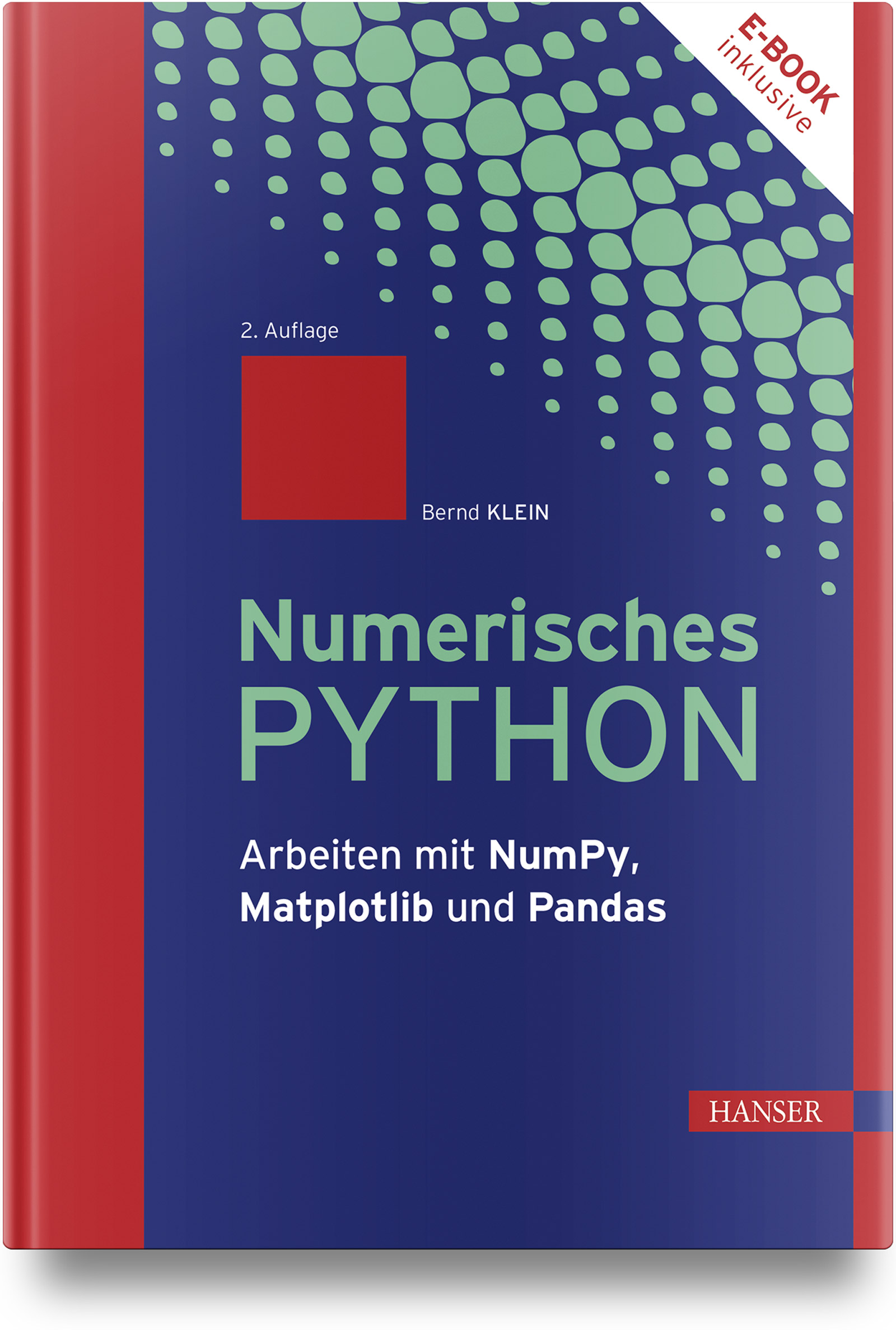
Numerisches Python (2. Auflg.)
Arbeiten mit NumPy, Matplotlib und Pandas. In 2. aktualisierter Auflage, August 2023.Dieses Buch vermittelt die Python-Grundlagen zur Lösung numerischer Probleme aus den Gebieten »Data Science« und »Maschinelles Lernen«.Im ersten Teil geht es um NumPy als Basis der numerischen Programmierung mit Python. Eingehend behandelt werden Arrays als zentraler Datentyp für alles, Numerische Operationen, Broadcasting und Ufuncs. Statistik und Wahrscheinlichkeitsrechnung ist ein eigenes Kapitel gewidmet, ebenso wie Boolscher Maskierung und File-Handling.Die Datenvisualisierung mit Matplotlib bildet den Schwerpunkt des zweiten Teils. Zunächst geht es um die Begrif ichkeit von Matplotlib. Behandelt werden Linien-, Balkendiagramme, Histogramme und Konturplots.Der dritte Teil dreht sich um Pandas mit seinen Series und DataFrames. Behandelt wird auch der Umgang mit verschiedensten Dateiformaten wie Excel, CSV und JSON sowie mit unvollständigen Daten und NaN. Aufgezeigt werden die Möglichkeiten der Datenvisualisierung direkt mit Pandas.Der vierte Teil bietet Beispielanwendungen des erlernten Stoffes, wie z.B. ein Haushaltsbuch und eine praxistaugliche Einnahmeüberschussrechnung. Auch findet sich hier eine Einführung in Bildverarbeitungstechniken.Fast jedes der 32 Kapitel enthält zusätzliche Übungen zum Erproben und Vertiefen des Erlernten, die zugehörigen Lösungen sind im fünften Teil zusammengefasst.Aus dem Inhalt:NumPy:- Numerische Operationen auf mehrdimensionalen Arrays- Broadcasting und UfuncsMatplotlib:- Diskrete und kontinuierliche Graphen- Balken- und Säulendiagramme, Histogramme, KonturplotsPandas:- Series und DataFrames- Arbeiten mit Excel-, csv- und JSON-Dateien- Unvollständige Daten (NaN)- DatenvisualisierungPraxisbeispiele:- Bildverarbeitung- Haushaltsbuch und EinnahmeüberschussrechnungLeseprobe (PDF-Link)

Code - Wie Computer funktionieren
Die Sprache von Hardware und Software verstehen. Die Erstauflage von Charles Petzold aus August 2023.Computer sind überall, am sichtbarsten in PCs und Smartphones, aber sie finden sich auch in Autos, Fernsehern, Mikrowellen, Staubsaugerrobotern und anderen smarten Geräten. Haben Sie sich jemals gefragt, was in diesen Geräten vor sich geht?Charles Petzold begeistert seine Leserinnen und Leser seit mehr als 20 Jahren mit seinem Buch und lüftet das Geheimnis über das verborgene Innenleben und die grundlegende Funktionsweise von Computern – von der Hardware bis zur Software. Nun hat er sein beliebtes Standardwerk für das neue Computerzeitalter überarbeitet. Alle Erläuterungen sind anschaulich illustriert und werden am Beispiel von alltäglichen Gegenständen wie Taschenlampen und bekannten Systemen wie Morsecode oder Brailleschrift leicht verständlich beschrieben.Dieses Buch schafft eine tiefe Ebene des Verständnisses für die Funktionsweise von Computern, die weit über den Code von höheren Programmiersprachen hinausgeht. Jeder, der sich für Informatik interessiert, sollte dieses Buch gelesen haben."Für mich war Code eine Offenbarung. Es war das erste Buch, das wirklich zu mir sprach. Es begann mit einer Geschichte und baute Schicht für Schicht, Analogie für Analogie darauf auf, bis ich nicht nur den Code, sondern auch das System dahinter verstand. Code ist ein Buch, in dem es in gleichem Maße um Systemisches Denken und Abstraktionen geht wie um Code und Programmierung. Code zeigt uns, wie viele unsichtbare Schichten zwischen den Computersystemen, die wir als Benutzer täglich zu Gesicht bekommen, und den magischen Siliziumkristallen liegen, denen wir mit Blitzenergie beigebracht haben zu denken."- Scott Hanselman, Partner Program Director bei Microsoft und Moderator von HanselminutesLeseprobe (PDF-Link)

MLOps Lifecycle Toolkit
This book is aimed at practitioners of data science, with consideration for bespoke problems, standards, and tech stacks between industries. It will guide you through the fundamentals of technical decision making, including planning, building, optimizing, packaging, and deploying end-to-end, reliable, and robust stochastic workflows using the language of data science.MLOps Lifecycle Toolkit walks you through the principles of software engineering, assuming no prior experience. It addresses the perennial “why” of MLOps early, along with insight into the unique challenges of engineering stochastic systems. Next, you’ll discover resources to learn software craftsmanship, data-driven testing frameworks, and computer science. Additionally, you will see how to transition from Jupyter notebooks to code editors, and leverage infrastructure and cloud services to take control of the entire machine learning lifecycle. You’ll gain insight into the technical and architectural decisions you’re likely to encounter, as well as best practices for deploying accurate, extensible, scalable, and reliable models. Through hands-on labs, you will build your own MLOps “toolkit” that you can use to accelerate your own projects. In later chapters, author Dayne Sorvisto takes a thoughtful, bottom-up approach to machine learning engineering by considering the hard problems unique to industries such as high finance, energy, healthcare, and tech as case studies, along with the ethical and technical constraints that shape decision making.After reading this book, whether you are a data scientist, product manager, or industry decision maker, you will be equipped to deploy models to production, understand the nuances of MLOps in the domain language of your industry, and have the resources for continuous delivery and learning.WHAT YOU WILL LEARN* Understand the principles of software engineering and MLOps* Design an end-to-end machine learning system* Balance technical decisions and architectural trade-offs* Gain insight into the fundamental problems unique to each industry and how to solve themWHO THIS BOOK IS FORData scientists, machine learning engineers, and software professionals.DAYNE SORVISTO has a Master of Science degree in Mathematics and Statistics and became an expert in MLOps. He started his career in data science before becoming a software engineer. He has worked for tech start-ups and has consulted for Fortune 500 companies in diverse industries including energy and finance. Dayne has previously won awards for his research including Industry Track Best Paper Award. Dayne has also written about security in MLOps systems for Dell EMC’s Proven Professional Knowledge Sharing platform and has contributed to many of the open-source projects he uses regularly.Chapter 1: Introduction to Machine Learning Engineering.- Chapter 2: Developing Stochastic Systems.- Chapter 3: Tools for Data Science Developers.- Chapter 4: Infrastructure for MLOps.- Chapter 5, Building Training Pipelines.- Chapter 6: Building Inference Pipelines.- Chapter 7: Deploying Stochastic Systems.- Chapter 8: Data Ethics.- Chapter 9: Case Studies By Industry.

Practical Rust Projects
Go beyond the basics and build complete applications using the Rust programming language, updated for Rust 2021 edition. The applications you'll build over the course of this book include a high-performance web client, an embedded computer (for a robot, for example), a game, a serverless web app, and an application that incorporates AI and machine learning.Each chapter is organized in the following format: what the kind of should application look like; requirements and user stories of our example program; an introduction to the Rust libraries used; the actual implementation of the example program, including common pitfalls and their solutions; and a brief comparison of libraries for building each application, if there is no clear preference.Practical Rust Projects, Second Edition will open your eyes to how Rust can be put to practical, real-world use. After reading this book, you will be able to use Rust to build a variety of your own projects.WHAT YOU WILL LEARN* Explore practical Rust programming language-based projects, examples and case studies* Create a GUI* Build a high performance web Front-end using WebAssembly* Develop REST APIs using Rust* Go serverless to develop a cloud application using the Amazon AWS Rust SDK* Create a game using Rust, along with AI and machine learning appsWHO THIS BOOK IS FORThose with basic Rust knowledge who want to learn more about how to apply Rust in real-world scenarios.SHING LYU is a software engineer who is passionate about open source software. He's worked on Rust professionally at Mozilla, on the Firefox (Gecko) and Servo browser engine project. Currently he works at AWS as a Solutions Architect. Previously Shing worked at DAZN, a sports streaming platform as a backend developer, with a focus on AWS and serverless technology. Shing has worked for other world famous brands such as Intel. He is also active in the open source community. Being one of the founders of the Taiwan Rust community, he loves to share his enthusiasm for Rust with people.ANDREW RZEZNIK is a Software Development Engineer at AWS Cryptography with interests in distributed systems, languages, tooling, IoT, and low-level programming. His primary working language is Rust but he considers himself a polyglot, having worked in C, C++, Python, Java, C#, and many others. Before AWS Andrew worked in various software positions, with a primary focus in factory automation. He developed robust yet accessible distributed machine control frameworks to bring advanced software patterns and techniques to manufacturing. He also served as a consultant where he debugged manufacturing issues at various firms. Andrew received his PhD in Mathematics from MIT, where he wrote simulations for ocean mining plumes and tested them aboard a research vessel at sea.1. Welcome to the World of Rust2. Building a Command-Line Program3. Creating Graphical User Interfaces (GUIs)4. High-performance Web Frontend using WebAssembly5. Building REST APIs6. Going Serverless with Amazon AWS Rust SDK7. Building a Game8. Physical Computing in Rust9. Artificial Intelligence and Machine Learning10. What else can you do with Rust?---------------------------------------------------------1. Welcome to the World of Rust* Add a note on what's changed in the 2nd edition. * Add a note on Rust 20212. Building a Command-Line Program3. Creating Graphical User Interfaces (GUIs) * Upgrade to GTK 4?4. High-performance Web Frontend using WebAssembly5. Building REST APIs 6. 6. Going Serverless with Amazon AWS Rust SDK* Using the new AWS SDK for Rust and Rust runtime for AWS Lambda7. Building a Game * Use a different game engine because the one used in the 1st edition seized development8. Physical Computing in Rust* Maybe add a section on using WebAssembly on RPi9. Artificial Intelligence and Machine Learning* Maybe add a section on deep learning10. What else can you do with Rust? * Remove the web part that is included in 2nd edition

R Alles-in-einem-Band für Dummies
Wenn Sie R von Grund auf kennenlernen und auch die fortgeschrittenen Techniken zur Lösung gängiger Aufgaben bei der Datenanalyse mit R beherrschen möchten, dann liegen Sie mit diesem Buch goldrichtig. Es bietet Ihnen nicht nur einen Überblick über die Programmierung in R und die Arbeit mit der Sprache, sondern geht auch auf die Arten von Projekten und Anwendungen ein, die R-Entwicklerinnen und -Entwickler häufig in Angriff nehmen müssen. Statistische Analysen, Datenvisualisierungen, maschinelles Lernen und Datenmanagement mit R: All das lernen Sie mit diesem Buch intensiv kennen.Joseph Schmuller forscht an der Universität North Florida und hat Statistik auf ganz verschiedenen Niveaus unterrichtet. Er war Mitglied der American Statistical Association und hat mehr als 25 Jahre Erfahrung in der Informatik. Er ist Autor verschiedener erfolgreicher Computerbücher, unter anderem von "Statistik mit Excel für Dummies" und "Statistik mit R für Dummies".

Beginning Helidon
Learn how to build cloud-native microservices with Helidon - an open-source Java framework from Oracle. This book will show you how to take full advantage of the cloud by optimizing applications with fast start times, low memory consumption, and a small disk footprint.The open-source Helidon framework provides all that, and more. It’s based on Java 17, giving you full access to new code features. This book reveals how Helidon also supports modern enterprise Java standards such as MicroProfile. Plus, you'll see how Helidon lets you use GraalVM to build lightning-fast native executables, and its unique reactive layer allows you to develop efficient low-level APIs.Each chapter in the book teaches a new Helidon concept through practical examples based on real-life use-cases. You’ll learn how to add observability and security to your microservices, how to work with databases, and call other services. You'll also look at all MicroProfile 5.0 platform specifications as well as some stand-alone specs such as Messaging and Long Running Actions. Best of all, everything covered in this book makes it a great study guide for the upcoming Oracle Helidon certification - the perfect way to prove your new skills to a prospective employer!WHAT YOU'LL LEARN* Package microservices using JLink and GraalVM* Deploy microservices to Kubernetes * Review MicroProfile 5.0 specifications in detail* Understand the basics of Helidon Reactive APIsWHO THIS BOOK IS FORDevelopers and architects who want to start developing cloud-native applications; developers who already use different Java framework and want to learn about Helidon; those interested in developing portable applications using MicroProfile and Jakarta EEDMITRY KORNILOV is the Director of Software Development at Oracle. He is leading the project Helidon and actively participating in Jakarta EE and MicroProfile communities. Dmitry is an open-source enthusiast and speaker who has earned the "Star Spec Lead" and "Outstanding Spec Lead" awards.DANIEL KEC is a Java Developer at Oracle working on the Helidon project.DMITRY ALEKSANDROV is a software developer at Oracle, Java Champion, and Oracle Groundbreaker. He is currently working on Project Helidon. He is a co-lead of the Bulgarian Java User Group and co-organizer of jPrime Conf.1:Introduction.- 2: Your First Application.- 3: Configuration.- 4: Observability.- 5: Communicating with other Services.- 6: Accessing Data.- 7: Resiliency.- 8:Security.- 9: Using Open API.- 10: Testing Your Application.- 11: Scheduling Tasks.- 12: Integration with other Technologies.- 13: Going Reactive.- 14: Long Running Actions.- 15: Helidon SE.

Datenbankentwicklung lernen mit SQL Server 2022
Alles, was ein gutes Lehrbuch bieten sollte: Klar definierte Lernziele, gute Beispiele und viele praktische Übungsaufgaben- Aktualisierte Neuauflage der bewährten Einführung in die Datenbankentwicklung- Basiert auf der kostenlos erhältlichen Version SQL Server 2022 Express- Jetzt komplett überarbeitet und an alle Neuerungen der SQL-Server-Version von 2022 angepasstSQL Server 2022 und die kostenlose Version SQL Server 2022 Express sind ideal, um in die professionelle Datenbankentwicklung einzusteigen. Sie können mit ihnen komplexe Datenbankprojekte verwirklichen, die die Funktionalität einer Desktop-Datenbank wie Microsoft Access deutlich übersteigen.Wenn Sie tiefer in die Datenbankentwicklung mit einem professionellen Datenbankserver einsteigen wollen, ist dieses Buch genau das Richtige für Sie. Es vermittelt leicht verständlich sowohl die Datenbankgrundlagen als auch das Programmierwissen, das Sie benötigen, um die umfangreichen Möglichkeiten von SQL Server 2022 zu nutzen. Aufgrund des didaktisch durchdachten Konzepts mit vielen Übungen und Praxistipps ermöglicht dieses Buch Ihnen eine fundierte Einarbeitung in die Entwicklung von Datenbanken. Das Buch basiert auf der kostenfrei erhältlichen Version SQL Server 2022 Express, eignet sich aber auch für größere SQL-Server-Editionen.Robert Panther ist Diplom-Informatiker (FH), er beschäftigt sich mittlerweile seit über 20 Jahren intensiv mit dem Microsoft SQL Server. Als Executive Consultant für CGI in Deutschland hat er als Entwickler, Administrator und Datenbank-Architekt zahlreiche Projekte erfolgreich mitgestaltet. Darüber hinaus schreibt er Fachartikel und Bücher rund um sein Spezialgebiet, ist regelmäßiger Sprecher auf Fachkonferenzen (Deutsche SQL Server Konferenz, BASTA!, SQLCON, Frankfurter Datenbanktage/IT-Tage) und in der Microsoft Data Platform Community (PASS) aktiv.
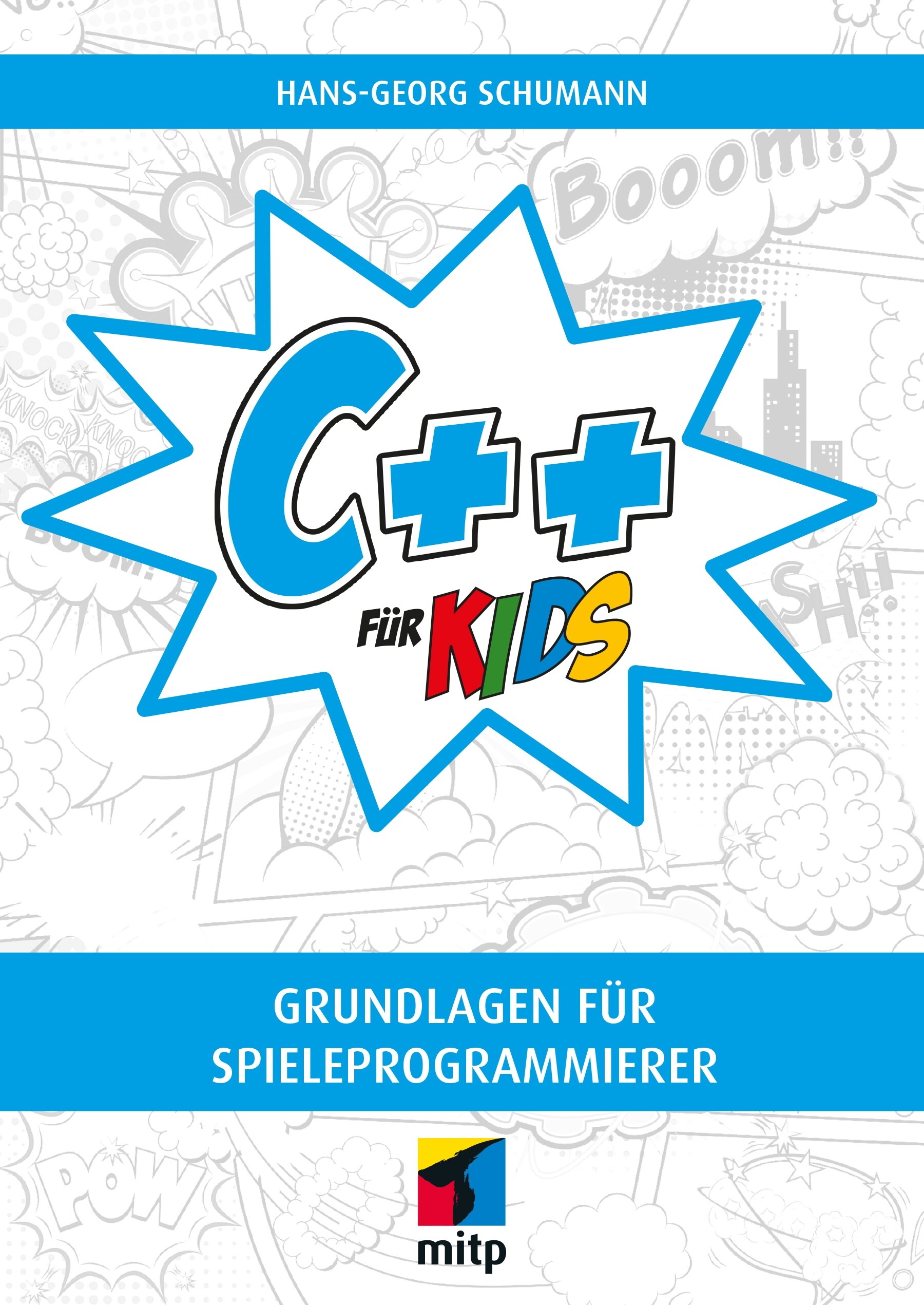
C++ für Kids
Um wie ein Profi Spiele zu programmieren, brauchst du erst einmal Grundlagen. Am besten dazu geeignet ist C++, das dir in diesem Buch Schritt für Schritt und leicht verständlich beigebracht wird. Dabei wirst du vertraut mit Konstanten und Variablen, Zweigen und Schleifen, Klassen und Objekten und vielem mehr. Der Spaß kommt dabei nicht zu kurz! Du bleibst stets nah am Thema Spiele, denn alle Projekte nutzen Beispiele aus der Spieleprogrammierung. So entwickelst du schnell erste kleine Spiele wie Zahlenraten oder du navigierst Objekte auf einem Spielfeld. Neben fundierten C++-Grundlagen bekommst du im Verlauf des Buches auch Profiwissen serviert: über Arrays, Zeiger, die objektorientierte Programmierung und das Wichtigste der Grafik-Programmierung, z.B. Figuren zu animieren und laufen oder springen zu lassen. Am Ende hast du drei komplette Spiele selbstständig programmiert! Alle Projektdateien sowie die Lösungen zu den Fragen und Aufgaben gibt es zum Download• C++ ganz einfach lernen und objektorientiert programmieren• Schritt für Schritt drei komplette Spiele entwickeln• Zahlreiche Übungsfragen und Aufgaben am Ende der Kapitel

Programmieren mit MATLAB
Die Grundkenntnisse des Programmierens mit MATLAB erlernenDieses Lehrbuch vermittelt die wichtigsten Grundlagen zur Programmierung mit MATLAB für Studierende der Ingenieurwissenschaften. Es beginnt mit der Vorstellung der elementaren Prinzipien der Datenverarbeitung und vermittelt darauf aufbauend die Grundkenntnisse des Programmierens anschaulich mithilfe der in MATLAB integrierten Programmiersprache.Zahlreiche Anwendungen vertiefen das Wissen und führen zusätzlich in numerische Verfahren in MATLAB ein. Wo für spezielle Probleme das Basismodul von MATLAB nicht mehr ausreicht, wird für eine intensivere Nutzung auf die MATLAB-Toolboxen verwiesen, deren Installation zum Verständnis dieses Buches jedoch nicht notwendig ist.Die 7. Auflage wurde komplett überarbeitet, alle Beispiele und Anwendungen sind auf die neueste MATLB-Version R2022b ausgerichtet.Umfangreiches Zusatzmaterial finden Sie online auf der Website zum Buch: www.Stein-Ulrich.de/Matlab und unter plus.hanser-fachbuch.de. Dr. Ulrich Stein ist Professor für Maschinenbauinformatik/Physik/Mathematik im Heinrich Blasius-Institut am Department Maschinenbau und Produktion der HAW Hamburg.
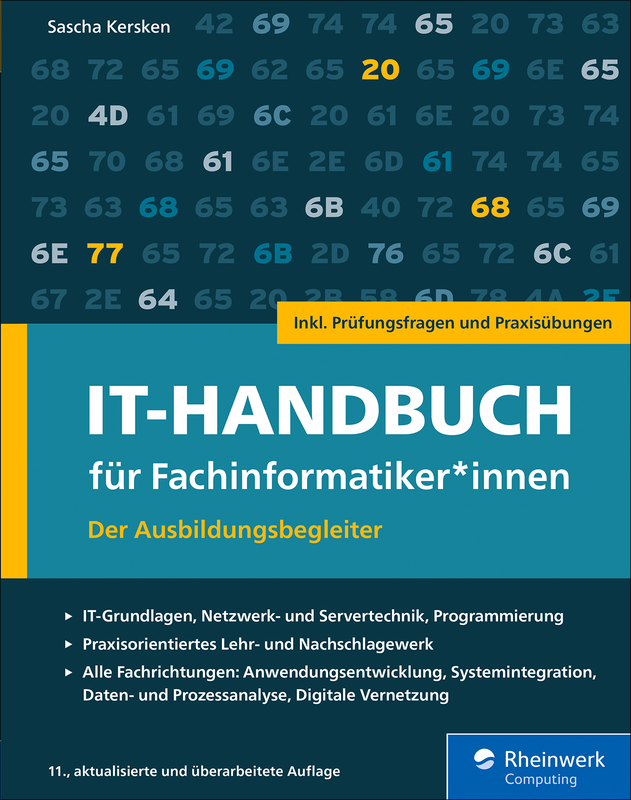
IT-Handbuch für Fachinformatiker*innen (11. Auflg.)
Der Ausbildungsbegleiter. Standardwerk für die Ausbildung in 11. Auflage.Mit diesem bewährtem Klassiker in elfter Auflage haben Sie das ganze Wissen zur Hand, das Fachinformatikerinnen und Fachinformatiker in ihrer Ausbildung benötigen: Hardware, Betriebssysteme, Programmiergrundlagen, Daten- und Prozessanalyse, Netzwerke, Datenbanken und Multimedia. Aktuell und mit neuen Themen zur Neuordnung der IT-Berufe. Die zahlreichen Prüfungsfragen und Praxisübungen unterstützen Sie beim Lernen und bei der Vorbereitung auf die Abschluss- oder Zwischenprüfung.IT-Grundlagen von A bis ZGrundlagen von IT und Betriebssystemen verstehen:Alles, was Sie über die mathematischen und technischen Voraussetzungen von Computern, Dateiformate und -verwaltung sowie Theorie und Praxis der Betriebssysteme wissen müssen.Programmieren lernen und Datenbanken einsetzen:Legen Sie die theoretischen Grundlagen für die Programmierung eigener Anwendungen und lernen Sie, was es auf sich hat mit Algorithmen, Datenstrukturen, Objektorientierung und Datenbanken.Netzwerktechnik in Theorie und Praxis:Mit der vollständigen Einführung in die Begriffswelt der Netzwerke und TCP/IP, die Einrichtung von Servern unter Windows und Linux sowie den Einsatz von Serverdiensten sind Sie für alle Anwendungsfälle gerüstet.Big Data, Machine Learning und Prozessanalyse:Lernen Sie die Themen Datenanalyse, Machine Learning und Künstliche Intelligenz kennen – nicht nur für den Ausbildungsgang FIDP unverzichtbar. Für die Implementierung kommen praxiserprobte Python-Bibliotheken wie NumPy und Scikit-Learn zum Einsatz.Erstellen und gestalten Sie Websites:Lernen Sie die Grundlagen der Website-Programmierung mit HTML5, CSS3, PHP und JavaScript kennen und erstellen Sie eine REST-API und -Clients. Inklusive Node.js und React.Aus dem InhaltÜberblick IT-AusbildungMathematische und technische GrundlagenHardware und Betriebssysteme, DatenbankenWindows, Linux, macOS – Grundlagen und PraxisNetzwerktechnik und -praxis, IT-SicherheitDatenanalyse, Machine Learning, KIProgrammierung in Java, Python, JavaScript und PHPAlgorithmen und DatenstrukturenProzessanalyseSoftware-EngineeringInternet- und WebtechnologienÜber den Autor:Sascha Kersken arbeitet seit vielen Jahren als Softwareentwickler sowie als Trainer für EDV-Schulungen in den Themengebieten Netzwerke und Internet, interaktive Medien und Programmierung.
Schrödinger lernt HTML5, CSS und JavaScript (4. Auflg.)
Drei Sprachen in einem Schrödinger-Band! Das etwas andere Fachbuch - 4. aktualisierte Auflage 2023.Eine runde Sache: Schrödinger wird Webentwickler! Zum Glück hat er einen Kumpel, der auf jede Frage eine Antwort weiß, wenn er nur genug Kaffee bekommt. Zusammen lernt ihr HTML, CSS und JavaScript und erstellt die Webauftritte für seine Firma und einen Verein. Mit viel Witz, allen nötigen Erklärungen, Unmengen an Code, Tipps, Übungen und der verdienten Erholung. Von "Hallo Webwelt" über AJAX bis zu Geolocation und TouchScreens: alles auf dem neuesten Stand und, wenn du willst, mit deinem eigenen Webserver. Umwerfende Beispiele, fantastisch illustriert.1. Gründlicher EinstiegSchrödinger ist zwar pfiffig, fängt aber ganz von vorn an zu lernen – und du bist dabei. HTML-Seiten aufbauen, ersten JavaScript-Code schreiben, grafische Gestaltung umsetzen: Alles wird Schritt für Schritt erklärt und ausprobiert.2. Voller Durchblick durch moderne WebstandardsFür Einsteiger und Umsteiger perfekt. Unmengen an Beispielen und Übungen. HTML, CSS und JavaScript von Anfang an – alles in einem Buch und mit farbigem Syntax-Highlighting. Aktuelle Profi-Praxis mit Sinn für guten Code.3. Lernen – Anwenden – WiederholenMit Schrödinger wird immer Hand angelegt. Neue Konzepte und Sprachelemente werden in Ruhe vorgestellt (grün). Dann geht es ab in die Werkstatt (violett), wo ihr Code schreibt oder verbessert. In Schrödingers Wohnzimmer (orange) könnt ihr üben, wiederholen und euch auch etwas Erholung gönnen.Aus dem Inhalt:Ausführlicher Einstieg in HTML, CSS und JavaScriptDesigns umsetzen und gute GUIs erstellenEreignisse behandeln und Funktionen einsetzenServerkommunikation, AJAX und Websockets nutzenMit oder ohne HTML5 und CSS3Karten einbinden und GPS-Daten auswertenZeichnen mit CanvasResponsive Webdesign und ToucheventsWebseiten für einfach alles, was einen Bildschirm hatVideo- und Audiomaterial einbindenÜber den Autor: Kai Günster ist Web- und Softwareentwickler und hat Spaß an immer neuen Details. Er hält HTML5 für die beste Erfindung seit der Laugenbrezel und JavaScript für die Zukunft der GUI-Entwicklung.Leseprobe (PDF-Link)

Pro Spring 6
Master the Spring Framework, its fundamentals and core topics, and share the authors’ insights and real-world experiences. This book goes well beyond the basics: you'll learn how to leverage the latest Spring Framework 6 to build the various tiers and parts of today's modern, complex enterprise Java applications systems, top to bottom, including data access, SQL generation with jOOQ, persistence with Hibernate, transactions, set up security, classic web and presentation tiers and adding in some reactivity. Spring 6 will be based on the latest available Long Term Support (LTS) release, Java 17. So, you will be able to do the following in your Spring applications: use records, use new utility methods in String class; utilize Local-Variable Syntax for Lambda Parameters; Nested Based Access Control, and more. Integrating Spring with the most used frameworks and libraries is covered in this book, such as Testcontainers, Hibernate, jOOQ, Kafka and many others.A full sample application allows you to apply many of the technologies and techniques covered in Pro Spring 6 and see how they work together. This book updates the perennial bestseller with the latest that Spring Framework 6 has to offer. Now in its sixth edition, this popular title is by far the most comprehensive and definitive treatment of Spring available. After reading this book, you'll be armed with the power of Spring to build complex applications, top to bottom. The agile, lightweight, open-source Spring Framework continues to be the de facto leading enterprise Java application development framework for today's Java programmers and developers.WHAT YOU WILL LEARN* What’s new in Spring Framework 6 and how to use it with the latest LTS version of Java, Java 17* How to integrate Spring with the most renowned and practical frameworks and dependencies* How to build complex enterprise cloud-native applications using Spring 6* How to master data access, persistence and transactions* How to use with Spring Batch, Integration and other key Spring projectsTHIS BOOK IS FORExperienced Java and enterprise Java developers and programmers. Some experience with Spring highly recommended.IULIANA COSMINA is a Spring Certified Web Developer and is also Spring Certified Core Spring Professional. She is a Spring certified expert, as defined by Pivotal, the makers of Spring Framework, Boot and other tools. She has authored books with Apress on Core Spring certification and Spring Certified web development. She is a Lead Engineer at Cloudsoft, Edinburgh and is an active coder and software contributor on Apache Brooklyn, GitHub, StackOverflow and more.ROB HARROP is a software consultant specializing in delivering high-performance, highly-scalable enterprise applications. He is an experienced architect with a particular flair for understanding and solving complex design issues. With a thorough knowledge of both Java and .NET, Harrop has successfully deployed projects across both platforms. He also has extensive experience across a variety of sectors, retail and government in particular. Harrop is the author of five books, including Pro Spring, a widely-acclaimed, comprehensive resource on the Spring Framework.CHRIS SCHAEFER is a Principle Software Developer for Spring project at Pivotal, the makers of Spring Framework, Boot and other Spring tools.CLARENCE HO is the Senior Java Architect of a HK-based software consultancy firm, SkywideSoft Technology Limited. Having been worked in the IT field for over 20 years, Clarence had been the team leader of many in-house application development projects, as well as providing consultancy services on enterprise solutions to clients.Chapter 1: Introducing SpringChapter 2: Getting StartedChapter 3: Introducing IoC and DI in SpringChapter 4: Advanced Spring Configuration and Spring BootChapter 5: Spring AOPChapter 6: Spring JDBCChapter 7: Spring with HibernateChapter 8: Spring with JPAChapter 9: Spring Transaction ManagementChapter 10: Spring Data with SQL and NoSQL databasesChapter 11: Validation, Formatting and Type ConversionChapter 12: Task Scheduling - some new things might be needed here.Chapter 13: Spring RemotingChapter 14: Spring Native and Other GoodiesChapter 15: Spring MVCChapter 16: Spring REST SupportChapter 17: Securing Spring Web ApplicationsChapter 18: Monitoring Spring ApplicationsChapter 19: Spring WebSocket SupportChapter 20: Reactive Spring

TypeScript - Ein praktischer Einstieg
Ein großartiger Ausgangspunkt für alle, die neu in TypeScript einsteigen!* Vermittelt JavaScript-Entwicklerinnen und -Entwicklern, die keine Vorkenntnisse zu Typisierung und Typsystemen mitbringen, die Grundlagen von TypeScript.* Mit verständlichen, jeweils eigenständigen Codebeispielen, wertvollen Hilfestellungen und Tipps nach dem Motto: aus alt und unsicher (JS) mach neu und sicher (TS).* Gut lesbar, mit viel Humor geschrieben.JavaScript lässt Entwicklerinnen und Entwicklern viele Freiheiten, was im Programmieralltag – insbesondere bei umfangreicher Codebasis – häufig zu Problemen führt. TypeScript wurde entwickelt, um hier Abhilfe zu schaffen, und hat in den letzten Jahren erfolgreich die JavaScript-Welt erobert. Mit einem durchdachten Typsystem unterstützt es ein strukturiertes Programmieren, das Refaktorieren von Code und das Entwickeln skalierender Webanwendungen.Josh Goldberg orientiert sich in seiner Einführung immer am Programmieralltag. Kompakt beschreibt er, wie das Typsystem beschaffen ist, wie es mit JavaScript interagiert und wie Entwicklerinnen und Entwickler ihren Code lesbarer und wartbarer gestalten können. Für Goldberg ist das Typsystem von TypeScript nicht nur ein Mittel, um Fehler zu beseitigen, sondern ein wunderschönes System, mit dem Entwickler festlegen, wie ihr JavaScript funktionieren soll, und das ihnen dabei hilft, sich an diese Vorgaben zu halten.Josh Goldberg ist Softwareberater und Open-Source-Maintainer. Er trägt aktiv zu TypeScript und den Projekten dieses Ökosystems wie typescript-eslint und TypeStat bei. Zuvor war Josh Frontend-Entwickler im Web-Platform-Team von Codecademy, wo er die Verwendung von TypeScript im Unternehmen vorantrieb und half, ein TypeScript-Tutorial zu entwickeln.