

Computer und IT

Introducing Blockchain Applications
Deepen your understanding of blockchain technology and develop your own blockchain applications. This book provides a thorough review of distribution-based systems on blockchain technology, starting from the fundamental concepts that underlie it, all the way through the implementation of a blockchain network for business purposes.Author JOSEPH THACHIL GEORGE begins by introducing you to blockchain and some basic concepts of technology, including distributed systems, systems of systems, cyber-physical systems, the Byzantine Consensus, the CAP theorem, and cryptographic techniques. Next, he analyzes the structure of blocks and smart contracts and the mother of all blockchain platforms, Bitcoin. That sets the stage for an examination of transaction structure, validation, and flow, from creation to registration in the ledger and structure of the blocks, the Nakamoto consensus, and finally forks. From there, you’ll experience a deep dive into Ethereum; including the concepts of Gas and Message, smart contracts and the Ethereum virtual machine. From there, you’ll learn about the Ethereum consensus protocol, Ethereum Casper, and the Ethereum Proof-of-Stake algorithm. You’ll then see how blockchain can be connected to a distributed system, followed by a demonstration of how you can model a distributed system using Blockly4SoS and Kilobots. The concluding chapters offer a practical example that combines distributed systems with blockchain technology.After reading this book, you will understand how to implement blockchain technology in a distributed system and be able to leverage this knowledge in your own projects.WHAT YOU WILL LEARN* Learn the concept of blockchains by way of a practical example * Grasp the connection between distributed systems and blockchain technology* Learn the design of blockchain with hyperledger fabric* Learn the design of cyber-physical systems in a distributed environment WHO IS THIS BOOK FORDevelopers who are enthusiastic about the design and implementation of distributed systems.Joseph Thachil George is a Technical Consultant for International Game Technology (IGT), Rome, Italy. Additionally, Joseph is pursuing doctorate (PhD) in Computer Science and Engineering at the University of Lisbon, Portugal. He has completed M.S. in Cyber Security from the Università degli Studi di Firenze, Italy. In addition, he is also part of the research group (DISIA) of the University of Florence, Italy, and the research group (INESC-ID Lisbon) of the University of Lisbon, Portugal. His research interests cover dynamic malware analysis, Blockchain technology - hyperledger fabric, and cyber security. In IGT, he has been a part of various project related to game configuration and integration in various platform. Specialized in Java and spring boot-based projects. He has also worked in various companies in India, Angola, Portugal, and UK; he has seven years of experience in various IT companies.1: INTRODUCING BLOCKCHAIN APPLICATIONS THROUGH DISTRIBUTED SYSTEMS2: INTRODUCTION TO BLOCKCHAIN3: BITCOIN4: ETHEREUM5: PROOF OF STAKE: CONSENSUS OF THE FUTURE6: HYPERLEDGER FABRIC7: CONSENSUS ALGORITHMS FOR BLOCKCHAINS8: SAMPLE PROJECT EXERCISE: CONSENSUS ALGORITHMS FOR BLOCKCHAINS9: REAL-TIME SYSTEMS10: SCHEDULING IN REAL-TIME SYSTEMS11: ENGINEERING BASED ON MODELS12: BLOCKLY 4 SOS13: PROJECT: CYBER PHYSICAL SYSTEMS14: PROJECT USING MATLAB: SMART FARM15: PLATOON PROJECT16: BLOCKCHAIN TECHNOLOGY AND DISTRIBUTED SYSTEMS FUTURE SCOPE AND B-COIN PROJECT17: AI AND BLOCKCHAIN: MONITORING AUTONOMOUS VEHICLES MANAGEMENT PROJECT18: SUMMARY

Participatory Design
THIS BOOK INTRODUCES PARTICIPATORY DESIGN TO RESEARCHERS AND STUDENTS IN HUMAN–COMPUTER INTERACTION (HCI). Grounded in four strong commitments, the book discusses why and how Participatory Design is important today. The book aims to provide readers with a practical resource, introducing them to the central practices of Participatory Design research as well as to key references. This is done from the perspective of Scandinavian Participatory Design. The book is meant for students, researchers, and practitioners who are interested in Participatory Design for research studies, assignments in HCI classes, or as part of an industry project. It is structured around 11 questions arranged in 3 main parts that provide the knowledge needed to get started with practicing Participatory Design. Each chapter responds to a question about defining, conducting, or the results of carrying out Participatory Design. The authors share their extensive experience of Participatory Design processes and thinking by combining historical accounts, cases, how-to process descriptions, and reading lists to guide further readings so as to grasp the many nuances of Participatory Design as it is practiced across sectors, countries, and industries.* Preface* Part I: Participatory Design: Definition and History* Can You Define Participatory Design for Me?* What is Participatory Design?* What Can We Learn from the History of Participatory Design?* When and Where Is Participatory Design Done?* Part II: The Participatory Design Toolbox* What Are the Activities and Methods of Participatory Design?* What Are the Tools nd Materials of Participatory Design?* How Is Participatory Design Organized* How Does One Get Started on Participatory Design and Stay on Track?* Part III: Participatory DesignResults* What Are the Results of Participatory Design?* How Does One Sustain Participatory Design Initiatives?* Why Is Participatory Design Important Today?* Bibliography* Authors' Biographies
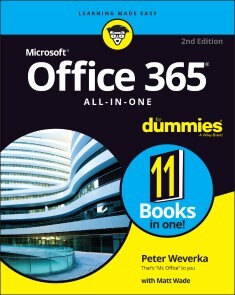
Office 365 All-in-One For Dummies
MULTIPLY YOUR PRODUCTIVITY WITH THE WORLD'S MOST STRAIGHTFORWARD GUIDE TO THE WORLD'S MOST POPULAR OFFICE SOFTWAREMicrosoft Office 365 contains straightforward tools for virtually every office task you could possibly think of. And learning how to use this powerful software is much easier than you might expect! With the latest edition of Office 365 All-in-One For Dummies, you'll get a grip on some of the most popular and effective office software on the planet, including Word, Excel, PowerPoint, Outlook, Access, Publisher, and Teams. This expanded handbook walks you through the ins and outs of reviewing and composing documents with Word, hosting and joining meetings with Teams, crunching numbers with Excel, and answering emails with Outlook. And it's ideal for anyone who's brand new to Office and those who just need a quick refresher on the latest useful updates from Microsoft. In this one-stop reference, you'll find:* Step-by-step instructions on the installation, maintenance, and navigation of all the critical components of Office 365* Guidance for using Office 365's built-in online and cloud functionality* Complete explanations of what every part of Office 365 is used for and how to apply them to your lifeOffice 365 All-in-One For Dummies is the last handbook you'll ever need to apply Microsoft's world-famous software suite to countless everyday tasks. PETER WEVERKA is a veteran tech writer who has written dozens of Dummies titles, including the first edition of Office 365 All-in-One For Dummies. He has also authored books on PowerPoint, OneNote, Word, and Quicken.Introduction 1BOOK 1: COMMON OFFICE TASKS 5Chapter 1: Office Nuts and Bolts 7Chapter 2: Wrestling with the Text 29Chapter 3: Speed Techniques Worth Knowing About 49BOOK 2: WORD 365 57Chapter 1: Speed Techniques for Using Word 59Chapter 2: Laying Out Text and Pages 79Chapter 3: Word Styles 105Chapter 4: Constructing the Perfect Table 123Chapter 5: Taking Advantage of the Proofing Tools 147Chapter 6: Desktop Publishing with Word 167Chapter 7: Getting Word’s Help with Office Chores 185Chapter 8: Tools for Reports and Scholarly Papers 205BOOK 3: EXCEL 365 229Chapter 1: Up and Running with Excel 231Chapter 2: Refining Your Worksheet 249Chapter 3: Formulas and Functions for Crunching Numbers 265Chapter 4: Making a Worksheet Easier to Read and Understand 299Chapter 5: Advanced Techniques for Analyzing Data 317BOOK 4: POWERPOINT 365 337Chapter 1: Getting Started in PowerPoint 339Chapter 2: Fashioning a Look for Your Presentation 361Chapter 3: Entering the Text 377Chapter 4: Making Your Presentations Livelier 393Chapter 5: Delivering a Presentation 409BOOK 5: OUTLOOK 365 431Chapter 1: Outlook Basics. 433Chapter 2: Maintaining the People App 445Chapter 3: Handling Your Email 457Chapter 4: Managing Your Time and Schedule 479BOOK 6: ACCESS 365 491Chapter 1: Introducing Access 493Chapter 2: Building Your Database Tables 509Chapter 3: Entering the Data 537Chapter 4: Sorting, Querying, and Filtering for Data 547Chapter 5: Presenting Data in a Report 567BOOK 7: PUBLISHER 365 573Chapter 1: Introducing Publisher 575Chapter 2: Refining a Publication 587Chapter 3: Putting on the Finishing Touches 599BOOK 8: WORKING WITH CHARTS AND GRAPHICS 609Chapter 1: Creating a Chart 611Chapter 2: Making a SmartArt Diagram 631Chapter 3: Handling Graphics and Photos 651Chapter 4: Drawing and Manipulating Lines, Shapes, and Other Objects 667BOOK 9: OFFICE 365: ONE STEP BEYOND 701Chapter 1: Customizing an Office Program 703Chapter 2: Ways of Distributing Your Work 717BOOK 10: MICROSOFT TEAMS 725Chapter 1: Getting around in Teams 727Chapter 2: Getting Up to Speed with Teams and Channels 753Chapter 3: Communicating through Channels and Private Chat 769Chapter 4: Organizing Your Files in Teams 793Chapter 5: Getting Together for Online Meetings 809BOOK 11: FILE SHARING AND COLLABORATING 835Chapter 1: File Sharing and Collaborating 837Chapter 2: Making the Most of OneDrive 851Chapter 3: Collaborating in SharePoint 865Index 895
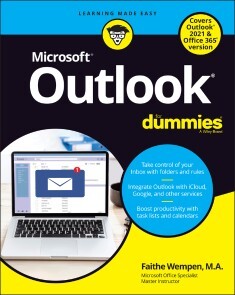
Outlook For Dummies
LEARN ALL ABOUT THE BEST APPLICATION FOR EMAILING, SCHEDULING, COLLABORATING, AND JUST PLAIN GETTING STUFF DONEDid you know that Microsoft Outlook can do everything, including cook your dinner? Okay, it can’t cook your dinner. But it can deliver your email, filter out the junk, help you organize your life, sync data to the cloud, integrate with iOS and Android, and about a zillion other things. Outlook For Dummies shows you how to work all the basic and advanced features of the Office 2021 version.Outlook is loaded with interesting productivity tools that most people—even in business environments—don’t know about. Did you know you can create automated mail-handling rules? Translate messages into other languages? Share your calendar with other people? It’s true, and when people start wondering how you suddenly got to be so productive, you can tell them: Outlook For Dummies.* Take a stroll around the basic interface and emailing capabilities of Outlook for Office 2021 * Use Outlook to create daily and monthly schedules, manage a to-do list, organize messages into folders, and make notes for later reference * Discover advanced and little-known features that will help you get organized and stay on top of things * Sync email across your devices and access Outlook from any computer, tablet, or phone For users who are brand-new to Outlook and those upgrading to the latest version, this book makes it simple to get going.FAITHE WEMPEN, M.A., is a Microsoft Office Specialist Master Instructor and the author of over 150 books on Windows, Office, and computer technology.Introduction 1PART 1: GETTING STARTED WITH OUTLOOK 9Chapter 1: A First Look at Outlook 11Chapter 2: Taking a Tour of the Outlook Interface 25Chapter 3: Getting on the Fast Track with Handy Shortcuts 43PART 2: TAMING THE EMAIL BEAST 57Chapter 4: Email Essentials 59Chapter 5: Taking Email to the Next Level 81Chapter 6: Conquering Your Mountain of Messages 103Chapter 7: Managing Multiple Email Accounts and Data Files 143PART 3: KEEPING TRACK OF CONTACTS, DATES, TASKS, AND MORE 165Chapter 8: Your Little Black Book: Managing Your Contacts 167Chapter 9: Organizing Your Schedule with the Calendar 191Chapter 10: Staying on Task: To-Do Lists and More 219PART 4: TAKING OUTLOOK TO THE NEXT LEVEL 245Chapter 11: Merging Mail From Outlook to Microsoft Word 247Chapter 12: Integrating Outlook with Google and iCloud 261Chapter 13: Outlook for iOS and Android Devices 273Chapter 14: Seeing It Your Way: Customizing Outlook 285PART 5: OUTLOOK AT WORK 305Chapter 15: Outlook on the Job 307Chapter 16: Using Outlook on the Web: Your Outlook Away From Outlook 329PART 6: THE PART OF TENS 347Chapter 17: Ten Shortcuts Worth Taking 349Chapter 18: Ten Things You Can’t Do with Outlook 359Chapter 19: Ten Things You Can Do After You’re Comfy 365Index 371
Machine Learning Techniques and Analytics for Cloud Security
MACHINE LEARNING TECHNIQUES AND ANALYTICS FOR CLOUD SECURITYTHIS BOOK COVERS NEW METHODS, SURVEYS, CASE STUDIES, AND POLICY WITH ALMOST ALL MACHINE LEARNING TECHNIQUES AND ANALYTICS FOR CLOUD SECURITY SOLUTIONSThe aim of Machine Learning Techniques and Analytics for Cloud Security is to integrate machine learning approaches to meet various analytical issues in cloud security. Cloud security with ML has long-standing challenges that require methodological and theoretical handling. The conventional cryptography approach is less applied in resource-constrained devices. To solve these issues, the machine learning approach may be effectively used in providing security to the vast growing cloud environment. Machine learning algorithms can also be used to meet various cloud security issues, such as effective intrusion detection systems, zero-knowledge authentication systems, measures for passive attacks, protocols design, privacy system designs, applications, and many more. The book also contains case studies/projects outlining how to implement various security features using machine learning algorithms and analytics on existing cloud-based products in public, private and hybrid cloud respectively. AUDIENCEResearch scholars and industry engineers in computer sciences, electrical and electronics engineering, machine learning, computer security, information technology, and cryptography. RAJDEEP CHAKRABORTY obtained his PhD in CSE from the University of Kalyani. He is currently an assistant professor in the Department of Computer Science and Engineering, Netaji Subhash Engineering College, Garia, Kolkata, India. He has several publications in reputed international journals and conferences and has authored a book on hardware cryptography. His field of interest is mainly in cryptography and computer security.ANUPAM GHOSH obtained his PhD in Engineering from Jadavpur University. He is currently a professor in the Department of Computer Science and Engineering, Netaji Subhash Engineering College, Kolkata. He has published more than 80 papers in reputed international journals and conferences. His field of interest is mainly in AI, machine learning, deep learning, image processing, soft computing, bioinformatics, IoT, data mining. JYOTSNA KUMAR MANDAL obtained his PhD in CSE from Jadavpur University He has more than 450 publications in reputed international journals and conferences. His field of interest is mainly in coding theory, data and network security, remote sensing & GIS-based applications, data compression error corrections, information security, watermarking, steganography and document authentication, image processing, visual cryptography, MANET, wireless and mobile computing/security, unify computing, chaos theory, and applications. ContentsPrefacePART I: CONCEPTUAL ASPECTS ON CLOUD AND APPLICATIONS OF MACHINE LEARNING 11 HYBRID CLOUD: A NEW PARADIGM IN CLOUD COMPUTING 3Moumita Deb and Abantika Choudhury1.1 Introduction 31.2 Hybrid Cloud 51.2.1 Architecture 61.2.2 Why Hybrid Cloud is Required? 61.2.3 Business and Hybrid Cloud 71.2.4 Things to Remember When Deploying Hybrid Cloud 81.3 Comparison Among Different Hybrid Cloud Providers 91.3.1 Cloud Storage and Backup Benefits 111.3.2 Pros and Cons of Different Service Providers 111.3.2.1 AWS Outpost 121.3.2.2 Microsoft Azure Stack 121.3.2.3 Google Cloud Anthos 121.3.3 Review on Storage of the Providers 131.3.3.1 AWS Outpost Storage 131.3.3.2 Google Cloud Anthos Storage 131.3.4 Pricing 151.4 Hybrid Cloud in Education 151.5 Significance of Hybrid Cloud Post-Pandemic 151.6 Security in Hybrid Cloud 161.6.1 Role of Human Error in Cloud Security 181.6.2 Handling Security Challenges 181.7 Use of AI in Hybrid Cloud 191.8 Future Research Direction 211.9 Conclusion 22References 22xixv2 RECOGNITION OF DIFFERENTIALLY EXPRESSED GLYCAN STRUCTURE OF H1N1 VIRUS USING UNSUPERVISED LEARNING FRAMEWORK 25Shillpi Mishrra2.1 Introduction 252.2 Proposed Methodology 272.3 Result 282.3.1 Description of Datasets 292.3.2 Analysis of Result 292.3.3 Validation of Results 312.3.3.1 T-Test (Statistical Validation) 312.3.3.2 Statistical Validation 332.3.4 Glycan Cloud 372.4 Conclusions and Future Work 38References 393 SELECTION OF CERTAIN CANCER MEDIATING GENES USING A HYBRID MODEL LOGISTIC REGRESSION SUPPORTED BY PRINCIPAL COMPONENT ANALYSIS (PC-LR) 41Subir Hazra, Alia Nikhat Khurshid and Akriti3.1 Introduction 413.2 Related Methods 443.3 Methodology 463.3.1 Description 473.3.2 Flowchart 493.3.3 Algorithm 493.3.4 Interpretation of the Algorithm 503.3.5 Illustration 503.4 Result 513.4.1 Description of the Dataset 513.4.2 Result Analysis 513.4.3 Result Set Validation 523.5 Application in Cloud Domain 563.6 Conclusion 58References 59PART II: CLOUD SECURITY SYSTEMS USING MACHINE LEARNING TECHNIQUES 614 COST-EFFECTIVE VOICE-CONTROLLED REAL-TIME SMART INFORMATIVE INTERFACE DESIGN WITH GOOGLE ASSISTANCE TECHNOLOGY 63Soumen Santra, Partha Mukherjee and Arpan Deyasi4.1 Introduction 644.2 Home Automation System 654.2.1 Sensors 654.2.2 Protocols 664.2.3 Technologies 664.2.4 Advantages 674.2.5 Disadvantages 674.3 Literature Review 674.4 Role of Sensors and Microcontrollers in Smart Home Design 684.5 Motivation of the Project 704.6 Smart Informative and Command Accepting Interface 704.7 Data Flow Diagram 714.8 Components of Informative Interface 724.9 Results 734.9.1 Circuit Design 734.9.2 LDR Data 764.9.3 API Data 764.10 Conclusion 784.11 Future Scope 78References 785 SYMMETRIC KEY AND ARTIFICIAL NEURAL NETWORK WITH MEALY MACHINE: A NEOTERIC MODEL OF CRYPTOSYSTEM FOR CLOUD SECURITY 81Anirban Bhowmik, Sunil Karforma and Joydeep Dey5.1 Introduction 815.2 Literature Review 855.3 The Problem 865.4 Objectives and Contributions 865.5 Methodology 875.6 Results and Discussions 915.6.1 Statistical Analysis 935.6.2 Randomness Test of Key 945.6.3 Key Sensitivity Analysis 955.6.4 Security Analysis 965.6.5 Dataset Used on ANN 965.6.6 Comparisons 985.7 Conclusions 99References 996 AN EFFICIENT INTRUSION DETECTION SYSTEM ON VARIOUS DATASETS USING MACHINE LEARNING TECHNIQUES 103Debraj Chatterjee6.1 Introduction 1036.2 Motivation and Justification of the Proposed Work 1046.3 Terminology Related to IDS 1056.3.1 Network 1056.3.2 Network Traffic 1056.3.3 Intrusion 1066.3.4 Intrusion Detection System 1066.3.4.1 Various Types of IDS 1086.3.4.2 Working Methodology of IDS 1086.3.4.3 Characteristics of IDS 1096.3.4.4 Advantages of IDS 1106.3.4.5 Disadvantages of IDS 1116.3.5 Intrusion Prevention System (IPS) 1116.3.5.1 Network-Based Intrusion Prevention System (NIPS) 1116.3.5.2 Wireless Intrusion Prevention System (WIPS) 1126.3.5.3 Network Behavior Analysis (NBA) 1126.3.5.4 Host-Based Intrusion Prevention System (HIPS) 1126.3.6 Comparison of IPS With IDS/Relation Between IDS and IPS 1126.3.7 Different Methods of Evasion in Networks 1136.4 Intrusion Attacks on Cloud Environment 1146.5 Comparative Studies 1166.6 Proposed Methodology 1216.7 Result 1226.8 Conclusion and Future Scope 125References 1267 YOU ARE KNOWN BY YOUR MOOD: A TEXT-BASED SENTIMENT ANALYSIS FOR CLOUD SECURITY 129Abhijit Roy and Parthajit Roy7.1 Introduction 1297.2 Literature Review 1317.3 Essential Prerequisites 1337.3.1 Security Aspects 1337.3.2 Machine Learning Tools 1357.3.2.1 Naïve Bayes Classifier 1357.3.2.2 Artificial Neural Network 1367.4 Proposed Model 1367.5 Experimental Setup 1387.6 Results and Discussions 1397.7 Application in Cloud Security 1427.7.1 Ask an Intelligent Security Question 1427.7.2 Homomorphic Data Storage 1427.7.3 Information Diffusion 1447.8 Conclusion and Future Scope 144References 1458 THE STATE-OF-THE-ART IN ZERO-KNOWLEDGE AUTHENTICATION PROOF FOR CLOUD 149Priyanka Ghosh8.1 Introduction 1498.2 Attacks and Countermeasures 1538.2.1 Malware and Ransomware Breaches 1548.2.2 Prevention of Distributing Denial of Service 1548.2.3 Threat Detection 1548.3 Zero-Knowledge Proof 1548.4 Machine Learning for Cloud Computing 1568.4.1 Types of Learning Algorithms 1568.4.1.1 Supervised Learning 1568.4.1.2 Supervised Learning Approach 1568.4.1.3 Unsupervised Learning 1578.4.2 Application on Machine Learning for Cloud Computing 1578.4.2.1 Image Recognition 1578.4.2.2 Speech Recognition 1578.4.2.3 Medical Diagnosis 1588.4.2.4 Learning Associations 1588.4.2.5 Classification 1588.4.2.6 Prediction 1588.4.2.7 Extraction 1588.4.2.8 Regression 1588.4.2.9 Financial Services 1598.5 Zero-Knowledge Proof: Details 1598.5.1 Comparative Study 1598.5.1.1 Fiat-Shamir ZKP Protocol 1598.5.2 Diffie-Hellman Key Exchange Algorithm 1618.5.2.1 Discrete Logarithm Attack 1618.5.2.2 Man-in-the-Middle Attack 1628.5.3 ZKP Version 1 1628.5.4 ZKP Version 2 1628.5.5 Analysis 1648.5.6 Cloud Security Architecture 1668.5.7 Existing Cloud Computing Architectures 1678.5.8 Issues With Current Clouds 1678.6 Conclusion 168References 1699 A ROBUST APPROACH FOR EFFECTIVE SPAM DETECTION USING SUPERVISED LEARNING TECHNIQUES 171Amartya Chakraborty, Suvendu Chattaraj, Sangita Karmakar and Shillpi Mishrra9.1 Introduction 1719.2 Literature Review 1739.3 Motivation 1749.4 System Overview 1759.5 Data Description 1769.6 Data Processing 1769.7 Feature Extraction 1789.8 Learning Techniques Used 1799.8.1 Support Vector Machine 1799.8.2 k-Nearest Neighbors 1809.8.3 Decision Tree 1809.8.4 Convolutional Neural Network 1809.9 Experimental Setup 1829.10 Evaluation Metrics 1839.11 Experimental Results 1859.11.1 Observations in Comparison With State-of-the-Art 1879.12 Application in Cloud Architecture 1889.13 Conclusion 189References 19010 AN INTELLIGENT SYSTEM FOR SECURING NETWORK FROM INTRUSION DETECTION AND PREVENTION OF PHISHING ATTACK USING MACHINE LEARNING APPROACHES 193Sumit Banik, Sagar Banik and Anupam Mukherjee10.1 Introduction 19310.1.1 Types of Phishing 19510.1.1.1 Spear Phishing 19510.1.1.2 Whaling 19510.1.1.3 Catphishing and Catfishing 19510.1.1.4 Clone Phishing 19610.1.1.5 Voice Phishing 19610.1.2 Techniques of Phishing 19610.1.2.1 Link Manipulation 19610.1.2.2 Filter Evasion 19610.1.2.3 Website Forgery 19610.1.2.4 Covert Redirect 19710.2 Literature Review 19710.3 Materials and Methods 19910.3.1 Dataset and Attributes 19910.3.2 Proposed Methodology 19910.3.2.1 Logistic Regression 20210.3.2.2 Naïve Bayes 20210.3.2.3 Support Vector Machine 20310.3.2.4 Voting Classification 20310.4 Result Analysis 20410.4.1 Analysis of Different Parameters for ML Models 20410.4.2 Predictive Outcome Analysis in Phishing URLs Dataset 20510.4.3 Analysis of Performance Metrics 20610.4.4 Statistical Analysis of Results 2100.4.4. 1 ANOVA: Two-Factor Without Replication 21010.4.4.2 ANOVA: Single Factor 21010.5 Conclusion 210References 211PART III: CLOUD SECURITY ANALYSIS USING MACHINE LEARNING TECHNIQUES 21311 CLOUD SECURITY USING HONEYPOT NETWORK AND BLOCKCHAIN: A REVIEW 215Smarta Sangui * and Swarup Kr Ghosh11.1 Introduction 21511.2 Cloud Computing Overview 21611.2.1 Types of Cloud Computing Services 21611.2.1.1 Software as a Service 21611.2.1.2 Infrastructure as a Service 21811.2.1.3 Platform as a Service 21811.2.2 Deployment Models of Cloud Computing 21811.2.2.1 Public Cloud 21811.2.2.2 Private Cloud 21811.2.2.3 Community Cloud 21911.2.2.4 Hybrid Cloud 21911.2.3 Security Concerns in Cloud Computing 21911.2.3.1 Data Breaches 21911.2.3.2 Insufficient Change Control and Misconfiguration 21911.2.3.3 Lack of Strategy and Security Architecture 22011.2.3.4 Insufficient Identity, Credential, Access, and Key Management 22011.2.3.5 Account Hijacking 22011.2.3.6 Insider Threat 22011.2.3.7 Insecure Interfaces and APIs 22011.2.3.8 Weak Control Plane 22111.3 Honeypot System 22111.3.1 VM (Virtual Machine) as Honeypot in the Cloud 22111.3.2 Attack Sensing and Analyzing Framework 22211.3.3 A Fuzzy Technique Against Fingerprinting Attacks 22311.3.4 Detecting and Classifying Malicious Access 22411.3.5 A Bayesian Defense Model for Deceptive Attack 22411.3.6 Strategic Game Model for DDoS Attacks in Smart Grid 22611.4 Blockchain 22711.4.1 Blockchain-Based Encrypted Cloud Storage 22811.4.2 Cloud-Assisted EHR Sharing via Consortium Blockchain 22911.4.3 Blockchain-Secured Cloud Storage 23011.4.4 Blockchain and Edge Computing–Based Security Architecture 23011.4.5 Data Provenance Architecture in Cloud Ecosystem Using Blockchain 23111.6 Comparative Analysis 23311.7 Conclusion 233References 23412 MACHINE LEARNING–BASED SECURITY IN CLOUD DATABASE—A SURVEY 239Utsav Vora, Jayleena Mahato, Hrishav Dasgupta, Anand Kumar and Swarup Kr Ghosh12.1 Introduction 23912.2 Security Threats and Attacks 24112.3 Dataset Description 24412.3.1 NSL-KDD Dataset 24412.3.2 UNSW-NB15 Dataset 24412.4 Machine Learning for Cloud Security 24512.4.1 Supervised Learning Techniques 24512.4.1.1 Support Vector Machine 24512.4.1.2 Artificial Neural Network 24712.4.1.3 Deep Learning 24912.4.1.4 Random Forest 25012.4.2 Unsupervised Learning Techniques 25112.4.2.1 K-Means Clustering 25212.4.2.2 Fuzzy C-Means Clustering 25312.4.2.3 Expectation-Maximization Clustering 25312.4.2.4 Cuckoo Search With Particle Swarm Optimization (PSO) 25412.4.3 Hybrid Learning Techniques 25612.4.3.1 HIDCC: Hybrid Intrusion Detection Approach in Cloud Computing 25612.4.3.2 Clustering-Based Hybrid Model in Deep Learning Framework 25712.4.3.3 K-Nearest Neighbor–Based Fuzzy C-Means Mechanism 25812.4.3.4 K-Means Clustering Using Support Vector Machine 26012.4.3.5 K-Nearest Neighbor–Based Artificial Neural Network Mechanism 26012.4.3.6 Artificial Neural Network Fused With Support Vector Machine 26112.4.3.7 Particle Swarm Optimization–Based Probabilistic Neural Network 26112.5 Comparative Analysis 26212.6 Conclusion 264References 26713 MACHINE LEARNING ADVERSARIAL ATTACKS: A SURVEY BEYOND 271Chandni Magoo and Puneet Garg13.1 Introduction 27113.2 Adversarial Learning 27213.2.1 Concept 27213.3 Taxonomy of Adversarial Attacks 27313.3.1 Attacks Based on Knowledge 27313.3.1.1 Black Box Attack (Transferable Attack) 27313.3.1.2 White Box Attack 27413.3.2 Attacks Based on Goals 27513.3.2.1 Target Attacks 27513.3.2.2 Non-Target Attacks 27513.3.3 Attacks Based on Strategies 27513.3.3.1 Poisoning Attacks 27513.3.3.2 Evasion Attacks 27613.3.4 Textual-Based Attacks (NLP) 27613.3.4.1 Character Level Attacks 27613.3.4.2 Word-Level Attacks 27613.3.4.3 Sentence-Level Attacks 27613.4 Review of Adversarial Attack Methods 27613.4.1 L-bfgs 27713.4.2 Feedforward Derivation Attack (Jacobian Attack) 27713.4.3 Fast Gradient Sign Method 27813.4.4 Methods of Different Text-Based Adversarial Attacks 27813.4.5 Adversarial Attacks Methods Based on Language Models 28413.4.6 Adversarial Attacks on Recommender Systems 28413.4.6.1 Random Attack 28413.4.6.2 Average Attack 28613.4.6.3 Bandwagon Attack 28613.4.6.4 Reverse Bandwagon Attack 28613.5 Adversarial Attacks on Cloud-Based Platforms 28713.6 Conclusion 288References 28814 PROTOCOLS FOR CLOUD SECURITY 293Weijing You and Bo Chen14.1 Introduction 29314.2 System and Adversarial Model 29514.2.1 System Model 29514.2.2 Adversarial Model 29514.3 Protocols for Data Protection in Secure Cloud Computing 29614.3.1 Homomorphic Encryption 29714.3.2 Searchable Encryption 29814.3.3 Attribute-Based Encryption 29914.3.4 Secure Multi-Party Computation 30014.4 Protocols for Data Protection in Secure Cloud Storage 30114.4.1 Proofs of Encryption 30114.4.2 Secure Message-Locked Encryption 30314.4.3 Proofs of Storage 30314.4.4 Proofs of Ownership 30514.4.5 Proofs of Reliability 30614.5 Protocols for Secure Cloud Systems 30914.6 Protocols for Cloud Security in the Future 30914.7 Conclusion 310References 311PART IV: CASE STUDIES FOCUSED ON CLOUD SECURITY 31315 A STUDY ON GOOGLE CLOUD PLATFORM (GCP) AND ITS SECURITY 315Agniswar Roy, Abhik Banerjee and Navneet Bhardwaj15.1 Introduction 31515.1.1 Google Cloud Platform Current Market Holding 31615.1.1.1 The Forrester Wave 31715.1.1.2 Gartner Magic Quadrant 31715.1.2 Google Cloud Platform Work Distribution 31715.1.2.1 SaaS 31815.1.2.2 PaaS 31815.1.2.3 IaaS 31815.1.2.4 On-Premise 31815.2 Google Cloud Platform’s Security Features Basic Overview 31815.2.1 Physical Premises Security 31915.2.2 Hardware Security 31915.2.3 Inter-Service Security 31915.2.4 Data Security 32015.2.5 Internet Security 32015.2.6 In-Software Security 32015.2.7 End User Access Security 32115.3 Google Cloud Platform’s Architecture 32115.3.1 Geographic Zone 32115.3.2 Resource Management 32215.3.2.1 Iam 32215.3.2.2 Roles 32315.3.2.3 Billing 32315.4 Key Security Features 32415.4.1 Iap 32415.4.2 Compliance 32515.4.3 Policy Analyzer 32615.4.4 Security Command Center 32615.4.4.1 Standard Tier 32615.4.4.2 Premium Tier 32615.4.5 Data Loss Protection 32915.4.6 Key Management 32915.4.7 Secret Manager 33015.4.8 Monitoring 33015.5 Key Application Features 33015.5.1 Stackdriver (Currently Operations) 33015.5.1.1 Profiler 33015.5.1.2 Cloud Debugger 33015.5.1.3 Trace 33115.5.2 Network 33115.5.3 Virtual Machine Specifications 33215.5.4 Preemptible VMs 33215.6 Computation in Google Cloud Platform 33215.6.1 Compute Engine 33215.6.2 App Engine 33315.6.3 Container Engine 33315.6.4 Cloud Functions 33315.7 Storage in Google Cloud Platform 33315.8 Network in Google Cloud Platform 33415.9 Data in Google Cloud Platform 33415.10 Machine Learning in Google Cloud Platform 33515.11 Conclusion 335References 33716 CASE STUDY OF AZURE AND AZURE SECURITY PRACTICES 339Navneet Bhardwaj, Abhik Banerjee and Agniswar Roy16.1 Introduction 33916.1.1 Azure Current Market Holding 34016.1.2 The Forrester Wave 34016.1.3 Gartner Magic Quadrant 34016.2 Microsoft Azure—The Security Infrastructure 34116.2.1 Azure Security Features and Tools 34116.2.2 Network Security 34216.3 Data Encryption 34216.3.1 Data Encryption at Rest 34216.3.2 Data Encryption at Transit 34216.3.3 Asset and Inventory Management 34316.3.4 Azure Marketplace 34316.4 Azure Cloud Security Architecture 34416.4.1 Working 34416.4.2 Design Principles 34416.4.2.1 Alignment of Security Policies 34416.4.2.2 Building a Comprehensive Strategy 34516.4.2.3 Simplicity Driven 34516.4.2.4 Leveraging Native Controls 34516.4.2.5 Identification-Based Authentication 34516.4.2.6 Accountability 34516.4.2.7 Embracing Automation 34516.4.2.8 Stress on Information Protection 34516.4.2.9 Continuous Evaluation 34616.4.2.10 Skilled Workforce 34616.5 Azure Architecture 34616.5.1 Components 34616.5.1.1 Azure Api Gateway 34616.5.1.2 Azure Functions 34616.5.2 Services 34716.5.2.1 Azure Virtual Machine 34716.5.2.2 Blob Storage 34716.5.2.3 Azure Virtual Network 34816.5.2.4 Content Delivery Network 34816.5.2.5 Azure SQL Database 34916.6 Features of Azure 35016.6.1 Key Features 35016.6.1.1 Data Resiliency 35016.6.1.2 Data Security 35016.6.1.3 BCDR Integration 35016.6.1.4 Storage Management 35116.6.1.5 Single Pane View 35116.7 Common Azure Security Features 35116.7.1 Security Center 35116.7.2 Key Vault 35116.7.3 Azure Active Directory 35216.7.3.1 Application Management 35216.7.3.2 Conditional Access 35216.7.3.3 Device Identity Management 35216.7.3. 4 Identity Protection 35316.7.3.5 Azure Sentinel 35316.7.3.6 Privileged Identity Management 35416.7.3.7 Multifactor Authentication 35416.7.3.8 Single Sign On 35416.8 Conclusion 355References 35517 NUTANIX HYBRID CLOUD FROM SECURITY PERSPECTIVE 357Abhik Banerjee, Agniswar Roy, Amar Kalvikatte and Navneet Bhardwaj17.1 Introduction 35717.2 Growth of Nutanix 35817.2.1 Gartner Magic Quadrant 35817.2.2 The Forrester Wave 35817.2.3 Consumer Acquisition 35917.2.4 Revenue 35917.3 Introductory Concepts 36117.3.1 Plane Concepts 36117.3.1.1 Control Plane 36117.3.1.2 Data Plane 36117.3.2 Security Technical Implementation Guides 36217.3.3 SaltStack and SCMA 36217.4 Nutanix Hybrid Cloud 36217.4.1 Prism 36217.4.1.1 Prism Element 36317.4.1.2 Prism Central 36417.4.2 Acropolis 36517.4.2.1 Distributed Storage Fabric 36517.4.2.2 Ahv 36717.5 Reinforcing AHV and Controller VM 36717.6 Disaster Management and Recovery 36817.6.1 Protection Domains and Consistent Groups 36817.6.2 Nutanix DSF Replication of OpLog 36917.6.3 DSF Snapshots and VmQueisced Snapshot Service 37017.6.4 Nutanix Cerebro 37017.7 Security and Policy Management on Nutanix Hybrid Cloud 37117.7.1 Authentication on Nutanix 37217.7.2 Nutanix Data Encryption 37217.7.3 Security Policy Management 37317.7.3.1 Enforcing a Policy 37417.7.3.2 Priority of a Policy 37417.7.3.3 Automated Enforcement 37417.8 Network Security and Log Management 37417.8.1 Segmented and Unsegmented Network 37517.9 Conclusion 376References 376PART V: POLICY ASPECTS 37918 A DATA SCIENCE APPROACH BASED ON USER INTERACTIONS TO GENERATE ACCESS CONTROL POLICIES FOR LARGE COLLECTIONS OF DOCUMENTS 381Jedidiah Yanez-Sierra, Arturo Diaz-Perez and Victor Sosa-Sosa18.1 Introduction 38118.2 Related Work 38318.3 Network Science Theory 38418.4 Approach to Spread Policies Using Networks Science 38718.4.1 Finding the Most Relevant Spreaders 38818.4.1.1 Weighting Users 38918.4.1.2 Selecting the Top � Spreaders 39018.4.2 Assign and Spread the Access Control Policies 39018.4.2.1 Access Control Policies 39118.4.2.2 Horizontal Spreading 39118.4.2.3 Vertical Spreading (Bottom-Up) 39218.4.2.4 Policies Refinement 39518.4.3 Structural Complexity Analysis of CP-ABE Policies 39518.4.3.1 Assessing the WSC for ABE Policies 39618.4.3.2 Assessing the Policies Generated in the Spreading Process 39718.4.4 Effectiveness Analysis 39818.4.4.1 Evaluation Metrics 39918.4.4.2 Adjusting the Interaction Graph to Assess Policy Effectiveness 40018.4.4.3 Method to Complement the User Interactions (Synthetic Edges Generation) 40018.4.5 Measuring Policy Effectiveness in the User Interaction Graph 40318.4.5.1 Simple Node-Based Strategy 40318.4.5.2 Weighted Node-Based Strategy 40418.5 Evaluation 40518.5.1 Dataset Description 40518.5.2 Results of the Complexity Evaluation 40618.5.3 Effectiveness Results From the Real Edges 40718.5.4 Effectiveness Results Using Real and Synthetic Edges 40818.5.4.1 Results of the Effectiveness Metrics for the Enhanced G + Graph 41018.6 Conclusions 413References 41419 AI, ML, & ROBOTICS IN ISCHOOLS: AN ACADEMIC ANALYSIS FOR AN INTELLIGENT SOCIETAL SYSTEMS 417P. K. Paul19.1 Introduction 41719.2 Objective 41919.3 Methodology 42019.3.1 iSchools, Technologies, and Artificial Intelligence, ML, and Robotics 42019.4 Artificial Intelligence, ML, and Robotics: An Overview 42719.5 Artificial Intelligence, ML, and Robotics as an Academic Program: A Case on iSchools—North American Region 42819.6 Suggestions 43119.7 Motivation and Future Works 43519.8 Conclusion 435References 436Index 439
Customer Experience visualisieren und verstehen
Mit Mapping-Techniken zu einer erfolgreichen Kundenausrichtung* Für alle, die an Planung, Design und Entwicklung von Produkten und Dienstleistungen beteiligt sind wie Designer, Produktmanager, Markenmanager, Marketing-Manager, Unternehmer und Geschäftsinhaber* US-Bestseller und Grundlagenwerk zu Mapping-Techniken* Starker Praxisbezug durch kommentierte Beispiele, Case Studies und PraxistippsMapping-Techniken unterstützen Unternehmen dabei, den Status quo, wichtige Zusammenhänge, aber vor allem Sicht und Bedürfnisse ihrer Kund:innen zu verstehen und zu dokumentieren. So entsteht ein teamübergreifendes Verständnis - beispielsweise auch von Multi-Channel-Plattformen oder Produkt-Ökosystemen.James Kalbach vermittelt in diesem Standardwerk die Grundlagen dieser Mapping-Techniken – z.B. welche Aspekte und Dimensionen visualisiert werden können – und beschreibt den Praxiseinsatz von Service Blueprints, Customer Journey Maps, Experience Maps, Mentalen Modellen oder Ökosystem-Modellen.Jim Kalbach ist Head of Customer Experience bei MURAL, einem führenden visuellen Online-Workspace für Remote-Zusammenarbeit. Er ist ein bekannter Autor, Redner und Dozent für User Experience Design, Informationsarchitektur und Strategie und hat mit Unternehmen wie eBay, Audi, Sony, Elsevier Science, LexisNexis und Citrix zusammengearbeitet. Jim ist der Autor von "Designing Web Navigation" (O'Reilly) und "The Jobs to Be Done Playbook" (Rosenfeld).
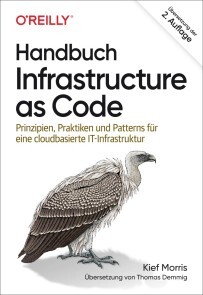
Handbuch Infrastructure as Code
CLOUD-INFRASTRUKTUREN ERFOLGREICH AUTOMATISIEREN: STRATEGIEN FÜR DIE PRAXIS * Mithilfe von Patterns und Antipatterns Automatisierung verstehen und erfolgreich umsetzen * Pseudocode-Beispiele veranschaulichen die konkrete Umsetzung * Diese Auflage beschreibt neben dem Managen von Servern jetzt auch komplexe Container-Plattformen Kief Morris von ThoughtWorks zeigt in diesem Praxisbuch, wie Sie die von DevOps-Teams entwickelte Prinzipien, Praktiken und Patterns effektiv verwenden, um in der Cloud sicher und flexibel Infrastruktur zu managen. Es vermittelt, wie nicht nur Server, sondern auch komplexe Container-Plattformen (Stacks) aufgesetzt werden. Sie erfahren, wie sie mithilfe von Cloud- und Automatisierungstechnologien Änderungen einfach, sicher und schnell vornehmen. Sie lernen, wie Sie nahezu alles als Code definieren und setzen Praktiken aus dem Softwaredesign ein, um ein System aus kleinen, lose gekoppelten Elementen aufzubauen. Zielgruppen sind Mitarbeiterinnen und Mitarbeiter in der Systemadministration, Infrastruktur-Entwicklung, Softwareentwicklung und Architektur.

Beginning Java 17 Fundamentals
Learn the fundamentals of the Java 17 LTS or Java Standard Edition version 17 Long Term Support release, including basic programming concepts and the object-oriented fundamentals necessary at all levels of Java development. Authors Kishori Sharan and Adam L. Davis walk you through writing your first Java program step-by-step. Armed with that practical experience, you'll be ready to learn the core of the Java language. Beginning Java 17 Fundamentals provides over 90 diagrams and 240 complete programs to help you learn the topics faster.While this book teaches you the basics, it also has been revised to include the latest from Java 17 including the following: value types (records), immutable objects with an efficient memory layout; local variable type inference (var); pattern matching, a mechanism for testing and deconstructing values; sealed types, a mechanism for declaring all possible subclasses of a class; multiline text values; and switch expressions.The book continues with a series of foundation topics, including using data types, working with operators, and writing statements in Java. These basics lead onto the heart of the Java language: object-oriented programming. By learning topics such as classes, objects, interfaces, and inheritance you'll have a good understanding of Java's object-oriented model. The final collection of topics takes what you've learned and turns you into a real Java programmer.You'll see how to take the power of object-oriented programming and write programs that can handle errors and exceptions, process strings and dates, format data, and work with arrays to manipulate data.WHAT YOU WILL LEARN* Write your first Java programs with emphasis on learning object-oriented programming* How to work with switch expressions, value types (records), local variable type inference, pattern matching switch and more from Java 17* Handle exceptions, assertions, strings and dates, and object formatting* Learn about how to define and use modules* Dive in depth into classes, interfaces, and inheritance in Java* Use regular expressions* Take advantage of the JShell REPL toolWHO THIS BOOK IS FORThose who are new to Java programming, who may have some or even no prior programming experience.KISHORI SHARAN has earned a Master of Science in Computer Information Systems degree from Troy State University, Alabama. He is a Sun Certified Java 2 programmer. He has vast experience in providing training to professional developers in Java, JSP, EJB, and Web technology. He possesses over ten years of experience in implementing enterprise level Java application.ADAM L. DAVIS makes software. He’s spent many years developing in Java (since Java 1.2) and has enjoyed using Spring and Hibernate for more than a decade. Since 2006 he’s been using Groovy, Grails, HTML, CSS, and JavaScript, in addition to Java, to create SaaS web applications that help track finances for large institutions (among other things). Adam has a master’s and a bachelor’s degree in Computer Science from Georgia Tech. He is also the author of Reactive Streams in Java (Apress, 2019), Learning Groovy 3, Second Edition (Apress, 2019) and Modern Programming Made Easy, Second Edition (Apress, 2020).1. Programming Concepts2. Setting Up the Environment3. Writing Java Programs4. Data Types5. Operators6. Statements7. Classes and Objects8. Methods9. Constructors10. Modules11. Object and Objects Classes12. Wrapper Classes13. Execution Handling14. Assertions15. Strings16. Dates and Times17. Formatting Data18. Regular Expressions19. Arrays20. Inheritance21. Interfaces22. Enum Types23. Java ShellAppendix A: Character EncodingsAppendix B: Documentation Comments

Hands-on Matplotlib
Learn the core aspects of NumPy, Matplotlib, and Pandas, and use them to write programs with Python 3. This book focuses heavily on various data visualization techniques and will help you acquire expert-level knowledge of working with Matplotlib, a MATLAB-style plotting library for Python programming language that provides an object-oriented API for embedding plots into applications.You'll begin with an introduction to Python 3 and the scientific Python ecosystem. Next, you'll explore NumPy and ndarray data structures, creation routines, and data visualization. You'll examine useful concepts related to style sheets, legends, and layouts, followed by line, bar, and scatter plots. Chapters then cover recipes of histograms, contours, streamplots, and heatmaps, and how to visualize images and audio with pie and polar charts.Moving forward, you'll learn how to visualize with pcolor, pcolormesh, and colorbar, and how to visualize in 3D in Matplotlib, create simple animations, and embed Matplotlib with different frameworks. The concluding chapters cover how to visualize data with Pandas and Matplotlib, Seaborn, and how to work with the real-life data and visualize it. After reading Hands-on Matplotlib you'll be proficient with Matplotlib and able to comfortably work with ndarrays in NumPy and data frames in Pandas.WHAT YOU'LL LEARN* Understand Data Visualization and Python using Matplotlib* Review the fundamental data structures in NumPy and Pandas * Work with 3D plotting, visualizations, and animations* Visualize images and audio dataWHO THIS BOOK IS FORData scientists, machine learning engineers and software professionals with basic programming skills.Ashwin Pajankar holds a Master of Technology from IIIT Hyderabad, and has over 25 years of programming experience. He started his journey in programming and electronics with BASIC programming language and is now proficient in Assembly programming, C, C++, Java, Shell Scripting, and Python. Other technical experience includes single board computers such as Raspberry Pi and Banana Pro, and Arduino.Chapter 1: Getting Started with Python and Jupyter NotebookChapter Goal: Introduce the reader to the basics of Python programming language, philosophy, and installation. We will also learn how to install it on various platforms. This chapter also introduces the readers to Python programming with Jupyter notebook. In the end, we will also have a brief overview of the constituent libraries of SciPy stack.No of pages - 26Sub -Topics• Python Programming Language• Installing Python on various platforms• Python Modes• Python IDEs• Scientific Python Ecosystem• Overview of Jupyter Notebook• Setting up Jupyter Notebook• Running Code in Jupyter NotebookChapter 2: Getting Started with NumPyChapter Goal: Get started with NumPy Ndarrays and basics of NumPy library. The chapter covers the instructions for installation and basic usage of NumPy.No of pages: 9Sub - Topics:· Introduction to the NumPy Ndarrays· Ndarray Properties· NumPy ConstantsChapter 3 : NumPy Routines and Getting started with MatplotlibChapter goal – In this chapter, we will discuss the various Ndarray creation routines available in NumPy. We will also get started with visualizations with Matplotlib. We will learn how to visualize the various numerical ranges with Matplotlib.No of pages: 15Sub - Topics:· Routines for creating Ndarrays· Matplotlib· Visualization with NumPy and MatplotlibChapter 4 : Revisiting Matplotlib VisualizationsChapter goal – This chapter is focused on learning the details of Matplotlib styles for visualizing NumPy Ndarrays.No of pages: 24Sub - Topics:• Single Line Plots• Multiline plots• Grid, Axes, and Labels• Colors, Lines, and Markers• Subplots• Object Oriented Style• Working with the textChapter 5 : Styles and LayoutsChapter goal – This chapter is focused on learning the details of Matplotlib styles and layouts.No of pages: 12Sub - Topics:1. Styles2. layoutsChapter 6 : Line, Bar, and Scatter PlotsChapter goal – In this chapter, we will learn how to create nice visualizations with lines, bars, and scatter.No of pages: 14Sub - Topics:· Lines and Logs· Errorbar· Bar Graphs· Scatter PlotChapter 7 : Histograms, Contours, and StreamplotsChapter goal – In this chapter, we will learn how to create nice visualizations histograms, contours, and streamplots.No of pages: 15Sub - Topics:• Histograms• Contours• Plot vector entities with streamplotsChapter 8 : Image and Audio VisualizationChapter goal – Learn to work with Image Processing using NumPy and Matplotlib. Also learn how to process and visualize audio data as waveforms.No of pages: 15Sub - Topics:• Visualizing images• Interpolation Methods• Audio Visualization• Audio ProcessingChapter 9 : Pie and Polar ChartsChapter goal – Learn to work with Pie and Polar charts.No of pages: 12Sub - Topics:1. Pie charts2. Polar chartsChapter 10 : PColor, Pcolormesh, and ColorbarChapter goal – In this chapter, we will learn Pcolor, Pcolormesh, and colorbar.No of pages: 10Sub - Topics:1. PColor2. Pcolormesh3. ColorbarChapter 11 : 3D Visualizations in MatplotlibChapter goal – In this chapter, we will learn how to create 3D visualizations.No of pages: 17Sub - Topics:• Getting Ready• Plotting 3D Line• 3D Scatter plot• 3D Contours• Wireframe, Surface, and Sample Data• Bar graphs• Quiver and Stemplot• 3D VolumesChapter 12 : Animations with MatplotlibChapter goal – In this chapter, we will learn how to create simple animations with Matplotlib.No of pages: 8Sub - Topics:• Animation Basics• Celluloid libraryChapter 13 : More Recipes of Visualizations with MatplotlibChapter goal – In this chapter, we will learn more types of visualizations with Matplotlib.No of pages: 14Sub - Topics:· Visualizing Function as an image and a contour· 3D Vignette· Decorated Scatter Plots· Time plots and Signals· Filled Plots· Step Plots· Hexbins· XKCD StyleChapter 14 : Introduction to PandasChapter goal – Get started with Pandas data structuresNo of pages: 10Sub - Topics:• Introduction to Pandas• Series in Pandas• Dataframe in PandasChapter 15 : Data AcquisitionChapter goal – Read the data from various sourcesNo of pages: 18Sub - Topics:• Plain Text File Handling• Handling CSV with Python• Python and Excel• Writing and reading files with NumPy• Reading the data from a CSV file with NumPy• Matplotlib CBook• Reading data from a CSV• Reading data from an Excel• Reading data from JSON• Reading data from Pickle• Reading data from Web• Reading data from Relation databases• Reading Data from the clipboardChapter 16 : Visualizing Data with Pandas and MatplotlibChapter goal – Get started with Data Visualization with MatplotlibNo of pages: 25• Simple Plots• Bar Graphs• Histogram• Box Plot• Area Plots• Scatter Plot• Hexagonal Bin Plot• Pie ChartsChapter 17 : Introduction to Data Visualization with SeabornChapter goal – Get started with Pandas and seabornNo of pages: 20Sub - Topics:• What is Seaborn?• Plotting statistical Relationships• Plotting Lines• Visualizing the distribution of dataChapter 18 : Visualizing real-life Data with Matplotlib and SeabornChapter goal – Get started with COVID and Animal disease datasets and Visualize themNo of pages: 20Sub - Topics:• COVID-19 Pandemic Data• Fetching the Pandemic Data Programmatically• Preparing the data for visualization• Visualization with Matplotlib and Seaborn• Visualization of Animal Disease Data

Spring REST
Design and develop Java-based RESTful APIs using the latest versions of the Spring MVC and Spring Boot frameworks. This book walks you through the process of designing and building a REST application while delving into design principles and best practices for versioning, security, documentation, error handling, paging, and sorting.Spring REST provides a brief introduction to REST, HTTP, and web infrastructure. You will learn about several Spring projects such as Spring Boot, Spring MVC, Spring Data JPA, and Spring Security, and the role they play in simplifying REST application development. You will learn how to build clients that consume REST services. Finally, you will learn how to use the Spring MVC test framework to unit test and integration test your REST API.After reading this book, you will come away with all the skills to build sophisticated REST applications using Spring technologies.WHAT YOU WILL LEARN* Build Java-based microservices, native cloud, or any applications using Spring REST* Employ Spring MVC and RESTful Spring* Build a QuickPoll application example* Document REST services, as well as versioning, paging, and sorting* Test, handle errors and secure your applicationWHO THIS BOOK IS FORIntermediate Java programmers with at least some prior experience with Spring and web/cloud application development.BALAJI VARANASI is a software development manager and technology entrepreneur. He has over 13 years of experience architecting and developing Java/.Net applications and, more recently, iPhone apps. During this period he has worked in the areas of security, web accessibility, search, and enterprise portals. He has a Master s Degree in Computer Science and serves as adjunct faculty, teaching programming and information system courses. When not programming, he enjoys spending time with his lovely wife in Salt Lake City, Utah.MAXIM BARTKOV is a staff engineer with more than seven years of commercial experience in Java. Maxim specializes in building architecture for high-load systems. He is skilled in the development of Distributed High-Load Systems, Microservice architecture, Spring Framework, System Architecture, and In-Memory Data Grid (IMDG). In his spare time, he writes articles for the Java community.1. Introduction to REST2. Spring MVC & Spring Boot Primer3. RESTful Spring4. Beginning the QuickPoll Application5. Error Handling6. Documenting REST Services7. Versioning, Paging, and Sorting8. Security9. Clients and Testing10. HATEOASA. Installing cURL on Windows

Practical Docker with Python
Learn the fundamentals of containerization and get acquainted with Docker. This second edition builds upon the foundation of the first book by revising all the chapters, updating the commands, code, and examples to meet the changes in Docker. It also introduces a new chapter on setting up your application for production deployment and breaks down terminologies like Dockerfile and Docker volumes while taking you on a guided tour of building a telegram bot using Python.You'll start with a brief history of how containerization has changed over the years. Next, we look at how to install (including using the new WSL2 mode) and get started with Docker. The next couple of chapters will focus on understanding the Dockerfile, including the structure and the core instructions used in building a Docker image. You'll also see how to distribute Docker images using Docker hub and other private registries. From there, you'll look at using Docker volumes for persisting data. Then learn how to run multi-container applications with Docker compose and learn inter-container networking works with Docker networks. Finally, you'll look at how to prepare a containerized application for production deployments.Throughout the book you'll apply the techniques learned through the chapters by building a Telegram messenger Chatbot and see how much easier Docker makes it possible to build, release, contribute and distribute an application. In addition, the book shows how optimize the Docker images for production servers by using multi-stage builds and improve the reliability of your services by using health checks and restart policies. Practical Docker with Python will break down terminologies like Dockerfile and Docker volumes, and take you on a guided tour of building a telegram bot using Python.WHAT YOU'LL LEARN* Compare the difference between containerization and virtualization* Understand the Dockerfile and converting your application to Docker image* Define and run multi-container applications with Docker compose* Review data persistency with Docker volumesWHO THIS BOOK IS FORBeginner and intermediate developers, DevOps practitioners who are looking improving their build and release workflow by containerizing applications as well as system administrators learning to implement DevOps principles.Sathyajith Bhat is a seasoned DevOps/SRE professional currently working as a DevOps Engineer on Adobe I/O, which is Adobe’s developer ecosystem and community. Prior to this, he was the lead Ops/SRE at Styletag.com. He transitioned to Ops/SRE after being a lead analyst at CGI, working primarily on Oracle Fusion stack (Oracle DB/PL/SQL/Oracle Forms and other related middleware) designing, architecting, and implementing complete end-to-end solutions for a major insurance provider in the Nordics.In his free time, Sathya is part of the Barcamp Bangalore planning team, handling DevOps and Social Media for BCB. He is also a volunteer Community Moderator at Super User and Web Apps Stack Exchange, keeps the servers for Indian Video Gamer forums up and running, and was previously a Moderator for Chip-India and Tech 2 forums.Chapter 1: Introduction to Containerization & DockerChapter Goal: Brief intro into containerization, how they compare to virtual machines, Intro to Docker and getting the reader ready for the practical aspects of the bookNo of pagesSub -Topics1. What are containers2. Containers vs Virtual machines3. Introduction to Docker4. CONTAINER RUNTIMES (OCI, CRI-O, CONTAINERD)Chapter 2: Docker 101Chapter Goal: Getting started with Docker, running a sample containerNo of pages:Sub - Topics:1. INSTALLING DOCKER (INCLUDING CHANGES FOR INSTALLING DOCKER FOR WINDOWS USING THE WSL2 ENGINE)2. Checking if Docker is ready3. Docker client4. Understanding Jargon around Docker (INCLUDING DOCKER REGISTRIES, REPOSITORIES, TAGS)5. Running/stopping/ connecting a docker container6. Dockerfile brief7. Practical: Running a simple container, hands-on some common Docker commandsChapter 3: Building the Python AppChapter Goal: Getting to understand the project, APIs involved, pre-requisitesNo of pages:Sub - Topics:1. Project description (delivering latest content from Reddit to Telegram messenger)2. Setting up the Python workspace (installing the required libraries, setting up virtualenv)3. Creating a Telegram bot4. Running the Python application and confirming bot worksChapter 4: Understanding DockerfileChapter Goal: Getting to know Dockerfile, the different constructs and conceptsNo of pages:Sub - Topics:1. Dockerfile, dockerignore2. Base image & using them with “from …”3. RUN/CMD/Environment variables4. HOW AND WHY TO TAG DOCKER IMAGES5. WHY TO AVOID THE ‘LATEST’ TAG6. Practical: Modifying sample Dockerfile to run our ProjectChapter 5: Understanding Docker VolumesChapter Goal: Containers are meant for stateless applications. Chapter explains steps needed to persist data1. Problem of stateful applications in containers2. Docker volumes3. Practical: Show how data in containers is lost when container is killed and how Docker volumes avoid this4. Practical: Modifying our project Dockerfile to add Docker volumesChapter 6: Docker NetworkingChapter Goal: Overview of Docker networking, linking containers1. Docker bridged network2. User defined networks3. Practical: Create a Database container and link it with our project application server containerChapter 7: Multi Container ApplicationsChapter Goal: Building multi-container applications with Docker compose1. A LOOK AT DOCKER-COMPOSE VERSUS DOCKER COMPOSE2. Docker Compose file reference3. Linking/establishing dependencies across containers4. Environment variables across linked containers5. Practical: Moving our project from separate linked containers to Docker Compose projectCHAPTER 8: PREPARING FOR PRODUCTION DEPLOYMENTS1. WHAT IS ORCHESTRATION AND WHY DO WE NEED ORCHESTRATION2. SETTING UP CI WITH GITHUB ACTIONS TO BUILD A NEW IMAGE ON EVERY COMMIT3. TIPS TO SETUP YOUR PRODUCTION DOCKER HOSTS AND CONTAINERS4. DEPLOYING YOUR CONTAINER IMAGE TO KUBERNETES

Mastering Excel Through Projects
Master Excel in less than two weeks with this unique project-based book! Let’s face it, we all master skills in our own way, but building a soup-to-nuts project is one of the best ways to make learning stick and get up to speed quickly. Whether you are just getting started with Excel or are an experienced user, this book will elevate your knowledge and skills. For a beginner, the micro examples in each chapter will warm you up before you dive into the projects. For experienced users, the projects, especially those with table setup considerations, will help you become more creative in your interactions with Excel.Readers will benefit from building eight unique projects, each covering a different topic, including a word game, a food nutrition ranking, a payroll (tax withholding) calculation, an encryption, a two-way table, a Kaplan-Meier analysis, a data analysis via a pivot table and the K-means Clustering data mining method. Through these projects, you will experience firsthand how Excel skills are organized together to accomplish tasks that sound complex and daunting when first described.Get started with a word game which asks users to find English words that amount to exactly 100 points, with each letter of the alphabet assigned a point 1, 2, 3, … 26, respectively. You will disassemble a word into letters and then sum up their points, and then take it one step further, contemplating how to make the completed Excel worksheet more user friendly and completely automated. Increasingly challenging tasks like this example build on what you have learned and increase your confidence along the way, ensuring your mastery of Excel.WHAT YOU WILL LEARN* Gain confidence to tackle a challenging Excel-related mission, even those that seem impossible* Become skilled in the creative uses of Excel formulas and functions and other built-in features* Appreciate the art of refining worksheets to maximize automation* Understand the value of treating each worksheet as a unique productWHO THIS BOOK IS FORPeople who are interested in learning Excel as quickly and efficiently as possible. While Excel beginners and intermediate users are the primary audience, experienced Excel users might also discover new skills and ways of working with Excel.HONG ZHOU is a professor of computer science and mathematics at the University of Saint Joseph in Connecticut. Before returning to school for his doctoral degree, Dr. Zhou worked as a Java developer in Silicon Valley. Since 2004, Dr. Zhou has been teaching various courses in computer science, data science, mathematics, statistics, and informatics. His major research interests include data mining, bioinformatics, software agents, and blockchain. Dr. Zhou became interested in Excel through teaching computer skills and using them for research purposes; for example, applying Excel in teaching data mining, encryption, and health informatics. He also enjoys applying his Excel skills to help colleagues in their research projects.Chapter 1: Master Excel through ProjectsChapter 2: Food Nutrition RankingChapter 3: Payroll CalculationChapter 4: Public and Private Key CryptographyChapter 5: Two-Way Table and Chi-Square TestChapter 6: Kaplan-Meier AnalysisChapter 7: PivotTable Data AnalysisChapter 8: K-means Clustering and Iterative Calculation

Heimautomation mit KNX, Dali, 1-Wire und Co. (3. Auflage)
Der Begleiter für Ihr Smart-Home-Vorhaben In diesem großen Standardwerk zur Heimautomation begleitet Sie KNX-Integrator Stefan Heinle auf dem Weg zu Ihrem smarten Zuhause. Sie finden darin nützliche Planungshilfen und Einkaufslisten, Checklisten zur Abnahme sowie unzählige Praxistipps. Von der Planung Ihrer Installation über die Auswahl der Komponenten bis hin zu Einbau, Parametrierung, Vernetzung und Absicherung wird kein Schritt ausgelassen. Selbstverständlich mit dabei: zentrale Grundlagen der Elektrik, der intelligenten Gebäudetechnik und der Programmierung. Aus dem Inhalt: Alle Grundlagen: Elektrik, intelligente Gebäudetechnik, Bus-Systeme, Vernetzung, Programmierung, Linux-AdministrationKonzepte, Standards, Vorgehensweisen und PlanungKomplette Ausstattung: Sensoren, Aktoren, Antriebe, Schnittstelle, Gateways, Logik-Maschinen, Visualisierung u. v. m.Zentrale Software: ETS, Home Server Experte, Kodi, MPD u. v. m.Multi-Room-Audio, Heimkino und Netzwerk aufbauenModerne LED-Beleuchtung, biorythmisches LichtKostenlos automatisieren: eibd, linknx, OWFS, OpenHAB, FHEM, SmartHome.pyVisualisierung/Steuerung: per Raum-Controller, Touch-Panel PC, Sprachsteuerung, Smartphone oder Web-BrowserHeimsicherheit mit Alarmanlage, Kameras und ZutrittskontrolleFunkbasierte Lösungen für den Bestandsbau nachrüstenTelefon, Türkommunikation, intelligente Haushaltsgeräte, Smart Metering u. v. m. einbindenGeldwerte Einkaufstipps und sofort einsetzbare Praxislösungen Autor: Stefan Heinle (Dipl-Ing.) plant individuelle Heimautomationslösungen und setzt Smart-Home-Projekte professionell in die Praxis um. Leseprobe (PDF-Link)
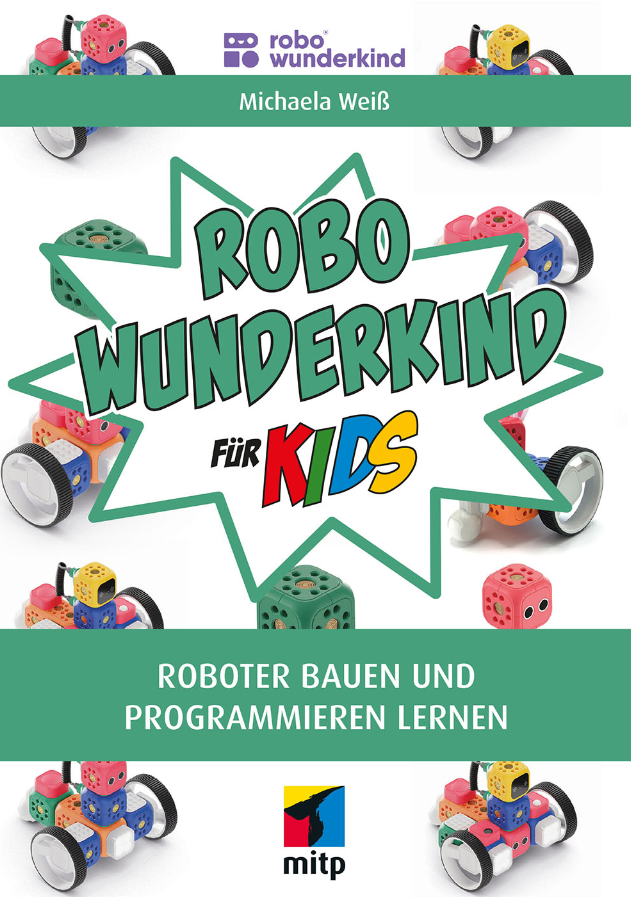
Robo Wunderkind für Kids
Roboter bauen und programmieren lernen - die spannende Erstauflage.Ein Roboter, der Nachrichten überbringen kann? Oder ein Roboter-Tier, das man selbst steuert und das genau das macht, was man möchte? Mit Robo Wunderkind und diesem Buch kannst man in die spannende Welt der Robotik eintauchen und selbst entworfenen Roboter nach eigenen Vorstellungen programmieren. Die Autorin führt einen Schritt für Schritt in die Welt von Robo ein. Egal, ob man die ersten Schritte in der Programmierung macht oder etwas komplexere Aufgaben programmieren möchte, in diesem Buch findet man für jedes Level Ideen und Anleitungen. Im ersten Teil des Buchs stellt die Autorin die einzelnen Robo-Sets und Blöcke vor: Manche Blöcke können Sounds abspielen, andere senden Lichtsignale oder schreiben Textnachrichten. Man kann die Blöcke beliebig kombinieren und so der eigenen Fantasie freien Lauf lassen.Im zweiten Teil lernst man die Coding-App kennen. Für jedes der drei Level »Robo Live«, »Robo Code« oder »Robo Blockly« findest man Ideen für die verschiedenen Sets: zum Beispiel die Musikmaschine für Robo Live, den Postboten-Robo für Robo Code und den Mondforscher-Robo für Robo Blockly. Die Autorin erklärt leicht verständlich die Befehle und verschiedenen Optionen der Coding-App – und man findet im Buch ganz viele tolle Robo-Projekte, mit denen man sich austoben und alles ausprobieren kann.Aus dem Inhalt:Die verschiedenen Blöcke und SetsVorstellung der drei Programmierlevels: Robo Live, Robo Code, Robo BlocklyProjekte für jedes Set und Level:Mars-RoverAngst-Hasen-RoboLichtweckerPostboteLinienfolgeru.v.m.Erklärungen zu allen Befehlen:den Robo flitzen oder sein LED-Licht leuchten lassenHupen- oder Lasergeräusche erzeugenHindernisse erkennen und ausweichenNachrichten in einem Display anzeigenOft verwendete Begriffe in der ProgrammierungAnregungen zu eigenen IdeenFragen und Antworten in jedem KapitelInhalt & Leseprobe (PDF-Link)

Tableau for Business Users
Learn Tableau by working through concrete examples and issues that you are likely to face in your day-to-day work.Author Shankar Arul starts by teaching you the fundamentals of data analytics before moving on to the core concepts of Tableau. You will learn how to create calculated fields, and about the currently available calculation functionalities in Tableau, including Basic Expressions, Level of Detail (LOD) Expressions, and Table Calculations. As the book progresses, you’ll be walked through comparisons and trend calculations using tables. A concluding chapter on dashboarding will show you how to build actionable dashboards to communicate analysis and visualizations. You’ll also see how Tableau can complement and communicate with Excel.After completing this book, you will be ready to tackle the challenges of data analytics using Tableau without getting bogged down by the technicalities of the tool.WHAT WILL YOU LEARNMaster the core concepts of Tableau * Automate and simplify dashboards to help business users* Understand the basics of data visualization techniques* Leverage powerful features such as parameters, table calculations, level of detail expressions, and more WHO IS THIS BOOK FORBusiness analysts, data analysts, as well as financial analysts.Shankar Arul holds a Masters in industrial engineering from Virginia Tech, USA and an MBA in Finance from ESSEC, France. He has more than 15 years of hands-on experience in the field of Data Visualization and data science. Having faced the frustrations of Business users in data-driven decision making, in companies such as BNP, Apple, Groupon and Kering, he decided to enable the Business users with the power of data visualization and Tableau through this book. Chapter 1: IntroductionCHAPTER GOAL: THE NEED FOR DATA VISUALIZATION TOOLS SUCH AS TABLEAU FOR BUSINESS USERSNO OF PAGES 4SUB -TOPICS1. Why visualize data2. Who is this book for3. How is this book differentChapter 2: Installation and SetupChapter Goal: Onboard readers with the setup of tableau.NO OF PAGES: 3SUB - TOPICS1. Installation of tableau2. Data sources required for the exercisesChapter 3: Fundamentals of DataCHAPTER GOAL: GENTLE INTRODUCTION TO THE FUNDAMENTALS OF DATANo of pages : 6SUB - TOPICS:1. Data types2. Data sources3. Data preparation4. Converting business questions to the language of dataChapter 4: The Crux of TableauCHAPTER GOAL: DISTILLATION OF THE CORE CONCEPTS OF TABLEAUNO OF PAGES: 17SUB - TOPICS:1. 4 Building pillars2. Putting it all together3. Show me3. Sheets & DashboardsChapter 5: CalculationsCHAPTER GOAL: ENRICH THE DATA BY CREATING CALCULATED FIELDSNo of pages: 16SUB - TOPICS:1. Grouping Values2. Calculated Fields3. Row level, Aggreation & Dis-Aggregation4. Bringin more data5. Importance of Cardinality6. Data ModelingChapter 6: Tables & Table CalculationsChapter Goal: Comparisons and trend calculations through tablesNO OF PAGES: 15SUB - TOPICS:1. Show me or start from scratch ?2. Table totals3. Table calculations4. SortingChapter 7: Advanced TipsCHAPTER GOAL: ADVANCED FUNCTIONALITIES OF TABLEAUNo of pages: 15SUB - TOPICS:1. Dynamic Inputs - Parameters2. Top 10/20/50 filters3. Dual Axis4. Shapes & Icons5. Level of detail calculations6. Reference lines & forecast7. Order of operationsChapter 8: DashboardsCHAPTER GOAL: BRING IT ALL TOGETHER BY ENABLING USERS TO BUILD INTERACTIVE DASHBOARDSNO OF PAGES: 9SUB - TOPICS:1. Less I more2. Dashboards: A view from 10000ft3. Fit & Layout4. Filters & Interaction

Beginning React and Firebase
Use React with Firebase to build four beginner-friendly apps. A lot of React tutorials out there today only cover basic web apps, but with additional features the web apps included in this book can be converted into fully scaled startups.You will start with the basics: learn to deploy a React app with Firebase hosting. Next, you will learn to create a fully functional "ToDo" app that will use Firebase database to store a list action items. You will also learn to create a "Stories" app, in which you can show short vertical videos, and a document storage app. Here, we will be able to log in using Google Authentication, and will learn to store files in the app using Firebase storage. Lastly, you will create a career social media app. Your users will be able to log in using email and password authentication. You will learn to use Redux in this project.While creating these web apps, you will employ multiple concepts, including React hooks, React components, and how to use Material UI. You will learn to use Firebase to host your database, as well as hosting your app. With these projects in your portfolio you'll be ready to take your developer skills to the next level.WHAT YOU'LL LEARN* Use Firebase’s powerful services, and how to connect Firebase with React* Explore the React ecosystem, including Redux and React hooks* Work with MaterialUI, the popular React UI framework* Understand how to use Google Authentication techniques in your sites* Deploy all sites using simple Firebase hostingWHO THIS BOOK IS FORDevelopers at the beginning of their career, or anyone who wants to take their React skills to the next level.Nabendu Biswas is a full stack JavaScript developer who has been working in the IT industry for the past 16 years and has worked for some of the world’s top development firms and investment banks. He is a passionate tech blogger who publishes on dev.to and medium.com and on thewebdev.tech. He is an all-round nerd, passionate about everything JavaScript, React and Gatsby. You can find him on Twitter @nabendu82.Chapter One: Getting Started with React and Firebase· Introduction to firebase· Creating an account in firebase· Setting up hosting from firebase console· Deploying a simple ReactJS project from terminalChapter Two: TODO App· Firebase initial setup· React basic setup· Code to show local Todo list· Using Material UI in project· Setting up firebase database· Integrating firebase database with React· Implementing Edit and Delete feature· Deploying and hosting through firebaseChapter Three: Stories App· Firebase initial setup· React basic setup· Adding Short videos to site· Adding snap feature to video· Setting up firebase database· Integrating firebase database with React· Deploying and hosting through firebaseChapter Four: Storage App· Firebase initial setup· React basic setup· Creating Header and Sidebar component· Setting up firebase database· Integrating firebase database with React· Using firebase storage to upload files· Adding Google Authentication· Deploying and hosting through firebaseChapter Five: Social Media App· Firebase initial setup· React basic setup· Create the Header· Create the Sidebar· Create the Feed component· Setting up firebase database· Integrating firebase database with React· Adding Redux to project· Adding email/password authentication· Deploying and hosting through firebase
Robotic Process Automation mit SAP
Wiederkehrende Routineaufgaben? Mit SAP Intelligent Robotic Process Automation können Sie diese von intelligenten Bots ausführen lassen! In diesem umfassenden Handbuch erfahren Sie, für welche Geschäftsabläufe sich RPA eignet, wie Sie mit der SAP-Lösung passende Bots entwickeln und wie Sie Ihre automatisierten Prozesse verwalten. Auch die Möglichkeiten, die Ihnen die Integration von künstlicher Intelligenz bietet, stellt Ihnen das erfahrene Autorenteam vor. Aus dem Inhalt: Einsatzgebiete von RPAProjektmanagementDeklaration und Capturing von AnwendungenWorkflows designenBenutzeroberflächen erstellenTest und DebuggingDeployment und Ausführung von BotsIntegration in SAP-AnwendungenDesktop Studio und Cloud StudioCloud Factory und Desktop AgentKonfiguration und Administration automatisierter ProzesseRPA und KI Einleitung ... 15 TEIL I. Einführung ... 19 1. Robotic Process Automation ... 21 1.1 ... Rahmenbedingungen und Grundlagen ... 21 1.2 ... Formen der Automatisierung ... 23 1.3 ... Robotic Process Automation und Projektmanagement ... 25 1.4 ... Zusammenfassung ... 42 2. Technologische Grundlagen ... 43 2.1 ... Abgrenzung zwischen RPA und Business Process Management ... 43 2.2 ... Abgrenzung zwischen RPA und Process Mining ... 46 2.3 ... Abgrenzung zwischen RPA und Workflow Management ... 47 2.4 ... Abgrenzung zwischen RPA und Business Rules Management ... 49 2.5 ... Technologische Grundstruktur von RPA-Systemen ... 50 2.6 ... Zusammenfassung ... 51 3. Einführung in SAP Intelligent Robotic Process Automation ... 53 3.1 ... Überblick ... 53 3.2 ... Desktop Studio ... 56 3.3 ... Cloud Studio ... 59 3.4 ... Desktop Agent ... 61 3.5 ... Cloud Factory ... 62 3.6 ... Zusammenwirken der Komponenten ... 64 3.7 ... Zusammenfassung ... 68 TEIL II. Entwicklung eines Bots ... 69 4. Capturing und Deklaration von Anwendungen ... 71 4.1 ... Technologien für die Integration in den Automatisierungsprozess ... 72 4.2 ... Beispiel: Automatisierter Zielprozess der Maschinenbau GmbH ... 73 4.3 ... RPA-Projekt anlegen ... 74 4.4 ... Deklaration ... 76 4.5 ... Erweiterte Deklaration ... 91 4.6 ... Zusammenfassung ... 102 5. Workflows designen ... 103 5.1 ... Workflows ... 104 5.2 ... Aktivitäten ... 110 5.3 ... Wiederverwendbarkeit ... 117 5.4 ... Codegenerierung und -manipulation ... 119 5.5 ... Gesamtaufbau des Workflows für die Maschinenbau GmbH ... 125 5.6 ... Zusammenfassung ... 144 6. Workflows erweitern ... 145 6.1 ... Editor und Coding-Assistenten ... 146 6.2 ... Einbindung von benutzerdefiniertem Code ... 155 6.3 ... Integrierte Bibliotheken ... 164 6.4 ... Zusammenfassung ... 170 7. Benutzeroberflächen erstellen ... 171 7.1 ... Die Komponenten des UI Designer ... 172 7.2 ... Gestaltung eines Popup-Fensters für die Automatisierung der Maschinenbau GmbH ... 180 7.3 ... Zusammenfassung ... 186 8. Testen und Debugging ... 187 8.1 ... Einführung in den Desktop Debugger ... 187 8.2 ... Kompilieren und Debuggen ... 199 8.3 ... Zusammenfassung ... 210 TEIL III. Anpassung und Verwaltung automatisierter Prozesse ... 211 9. Deployment und Ausführung von Bots ... 213 9.1 ... Import des Bots in die Cloud Factory ... 213 9.2 ... Ausführung des automatisierten Prozesses ... 219 9.3 ... Zusammenfassung ... 233 10. Konfiguration und Administration automatisierter Prozesse ... 235 10.1 ... Management von RPA-Projekten ... 235 10.2 ... Monitoring ... 250 10.3 ... Zusammenfassung ... 262 TEIL IV. Weiterführende Themen ... 263 11. Integration der Unternehmensanwendungen ... 265 11.1 ... Integration von SAP-GUI-Anwendungen ... 265 11.2 ... Integration von SAP-Fiori-Anwendungen ... 293 11.3 ... Integration von Microsoft-Anwendungen ... 298 11.4 ... Integration des Dateisystems ... 309 11.5 ... Zusammenfassung ... 312 12. Modellierung im Cloud Studio ... 315 12.1 ... Das Cloud Studio im Überblick ... 315 12.2 ... Entwicklung eines Bots unter Verwendung einer Excel-Datei ... 317 12.3 ... Entwicklung eines Bots zum Lesen von E-Mails in Outlook ... 343 12.4 ... Zusammenfassung ... 362 13. Robotic Process Automation und künstliche Intelligenz ... 363 13.1 ... Grenzen von Robotic Process Automation und Chancen durch künstliche Intelligenz ... 365 13.2 ... Einsatzoptionen von künstlicher Intelligenz in RPA-Szenarien ... 371 13.3 ... Hyperautomation ... 377 13.4 ... Prozessuales Wissensmanagement ... 378 13.5 ... Zusammenfassung ... 381 14. Ausblick ... 383 14.1 ... SAP Intelligent RPA 2.0 ... 383 14.2 ... Zusammenfassung ... 389 Anhang ... 391 A ... Nützliche Befehle und Tastenkombinationen ... 391 Das Autorenteam ... 403 Index ... 405

Local Marketing
Führen Sie neue Kundschaft aus der »digitalen Welt« in Ihr lokales Geschäft. Kim Weinand zeigt Ihnen, wie Sie Ihre Produkte und Dienstleitungen im Netz so präsentieren, dass Sie bei lokalen Online-Recherchen gefunden werden. Hier erfahren Sie, wie Sie Ihre Zielgruppe verstehen und die richtigen Online-Maßnahmen finden. So stärken Sie mithilfe von Google My Business, Facebook Ads, Social Media Marketing und Suchmaschinen-Optimierung Ihre Marke. Mit klaren und praktischen Anleitungen finden Sie einen sicheren Weg in die Welt des lokalen Marketings. Der richtige Mix beschert Ihnen spürbar mehr Sichtbarkeit, mehr Reichweite und am Ende mehr Umsatz. Aus dem Inhalt: Wie Sie lokal sichtbar werdenDie Customer Journey meiner Kundschaft verstehenDie eigene WebsiteDie erste Anlaufstelle: Google My BusinessGoogle Ads richtig nutzenWeitere Möglichkeiten: Facebook und YouTubeWebanalyse und ErfolgsmessungSoll ich Social Media nutzen?Mit den Kunden auch digital richtig sprechenBeispielszenarien aus der Praxis Vorwort ... 11 1. Was Sie mit lokalem Marketing erreichen können ... 13 1.1 ... Digitale Werbekanäle und Online-Marketing ... 14 1.2 ... Klassische und digitale Werbung -- Unterschiede und Stärken ... 15 1.3 ... Location-based Advertising und Targeting ... 17 1.4 ... Klasse statt Masse -- Mediakosten nur, wenn Werbung wirkt ... 19 1.5 ... Welches Werbemedium zu welchem Zweck? ... 20 2. Wie Sie lokal sichtbar werden ... 23 2.1 ... Es kommen schwere Zeiten? Nehmen Sie es locker! ... 26 2.2 ... Warum Ihre Kundschaft die Spielregeln bestimmt ... 27 2.3 ... Nachhaltiges Marketing im lokalen Wirkungsgebiet ... 29 3. Die Customer Journey meiner Kundschaft verstehen ... 35 3.1 ... Was ist eine Customer Journey? ... 36 3.2 ... Wie sieht eine lokale Customer Journey aus? ... 40 3.3 ... Gestalten Sie die Reise Ihrer Kunden ... 50 4. Es geht nicht ohne eigene Website ... 63 4.1 ... Nicht immer notwendig, aber eine gute Basis ... 65 4.2 ... Wo stehen Sie -- neue Website oder Relaunch? ... 68 4.3 ... Website und Unternehmensstrategie ... 69 4.4 ... Eine Website mit WordPress einrichten ... 72 4.5 ... Website-Design anpassen -- WordPress-Themes ... 78 4.6 ... Kundenansprache und messbare Erfolgskriterien ... 83 5. So werden Sie bei Google von Ihren Kunden gefunden ... 89 5.1 ... Wie suchen Kunden nach Ihrem Produkt oder Ihrer Dienstleistung? ... 90 5.2 ... Was ist Suchmaschinenoptimierung? ... 91 5.3 ... Websitebesuche messen -- Google Analytics ... 108 5.4 ... Website-Ziele einrichten -- Google Analytics Conversion ... 111 5.5 ... Die eigene Sichtbarkeit in Suchergebnissen prüfen -- Google Search Console ... 113 5.6 ... Es geht nicht ohne -- Datenschutz-Hinweise ... 114 5.7 ... Wo finde ich professionelle Unterstützung? ... 116 6. Sichtbar sein mit Google Ads ... 119 6.1 ... Was sind Google Ads? ... 120 6.2 ... So gewinnen Sie mit Google Ads potenzielle Kunden ... 128 6.3 ... Google Ads mit anderen Google-Diensten verknüpfen ... 142 7. Die erste Anlaufstelle -- Google My Business ... 145 7.1 ... Voraussetzung: Ihr Google-Konto anlegen ... 147 7.2 ... So pflegen Sie Ihr Google-My-Business-Profil ... 149 7.3 ... Wichtige Faktoren für das lokale Google-Ranking ... 149 7.4 ... Alle Features optimal nutzen ... 151 7.5 ... Es geht noch besser -- analysieren, monitoren, optimieren ... 160 8. Noch mehr Werbung -- weitere Möglichkeiten ... 167 8.1 ... Was sind Ads, und warum sind sie sinnvoll? ... 167 8.2 ... Wie kommt meine Werbung auf andere Webseiten? ... 168 8.3 ... Wo kann ich Ads schalten? ... 170 8.4 ... Wie kontrolliere und steuere ich die Ausspielung? ... 171 8.5 ... Wie gestalte ich ein ansprechendes Werbemittel? ... 174 8.6 ... Verschiedene Werbeformen kombinieren -- Multichannel-Kampagnen ... 180 8.7 ... Was kostet das? ... 181 8.8 ... Praxisanleitungen ... 183 9. Funktioniert meine Werbung? ... 201 9.1 ... So bewerten Sie das Kosten-Nutzen-Verhältnis Ihrer Werbung ... 202 9.2 ... Klicks und Webseitenbesuche vs. Anruf und Kaufbestätigung ... 205 9.3 ... Wann macht Online-Marketing Spaß? Return on Investment als Indikator nutzen ... 221 10. Soll ich auch in Social Media präsent sein? ... 225 10.1 ... Die Vorteile von Social Media ... 225 10.2 ... Die Macht der Community -- Empfehlungen sind Gold wert ... 226 10.3 ... Was kann und soll ich von mir erzählen? ... 231 10.4 ... Wie kann ich Kunden gewinnen? ... 233 10.5 ... Wie aktiv muss ich sein? ... 238 10.6 ... Wer betreut meine Kanäle? ... 240 10.7 ... Die wichtigsten Plattformen ... 243 11. Wir müssen reden -- mit den Kunden digital richtig kommunizieren ... 249 11.1 ... Bilder und Videos sind unerlässlich ... 251 11.2 ... Kennen Sie das Potenzial von persönlichen Mailings und Messaging? ... 252 11.3 ... Tue Gutes und rede drüber -- Unternehmensblog, News und weitere Kunden-Mehrwerte ... 253 11.4 ... Lassen Sie Ihre Website für sich arbeiten -- Formulare und Chatbots ... 264 11.5 ... Mit Newsletter und E-Mail-Marketing für zusätzlichen Umsatz sorgen ... 267 12. Online-Marketing-Strategien ... 273 12.1 ... Digitales Buchungssystem und Onlineshop im Friseurhandwerk ... 276 12.2 ... Digitalisierung im Klavierhaus ... 287 12.3 ... Google Ads für Unternehmensberatung ... 291 12.4 ... Der Mehrwert für Systemhaus-Kunden ist mehr wert für den Unternehmenserfolg ... 294 12.5 ... Ihr Start ins Online-Marketing -- ein Leitfaden für den Schnelleinstieg ... 296 13. War es das jetzt? -- Wie geht es weiter? ... 299 13.1 ... Voice matters ... 299 13.2 ... SMART-Dienste -- vernetzte Welten ... 301 13.3 ... Customer Centricity ... 302 13.4 ... Förderprogramme für Digitalisierung ... 304 Danksagung ... 307 Index ... 309

iPad in Schule und Unterricht
Ihre Schule ist endlich mit Apple-Tablets ausgestattet worden! Doch wie integrieren Sie diese nun sinnvoll in Ihren Unterricht und Schulalltag? In diesem Praxis-Handbuch lernen Sie auch als Einsteiger auf dem iPad alles dafür Notwendige von einem erfahrenen Kollegen und Apple-Experten. Felix Kolewe vermittelt Ihnen das technische und methodische Know-how, hilft Ihnen bei der Einrichtung und Organisation auf dem iPad und zeigt Ihnen an zahlreichen Beispielen, wie auch Sie Ihren Unterricht mit den Apps und digitalen Möglichkeiten Schritt für Schritt gestalten und bereichern. Aus dem Inhalt: iPad-Gerätemodelle und wichtiges Zubehör für den UnterrichtVerwaltungsmöglichkeiten in der Schule: Classroom, JAMF Teacher, SchoolworkGeräte der Schüler*innen während des Unterrichts verwalten und steuernDas Schul-iPad mit Apple-ID und Cloud-Speicher in Betrieb nehmenNützliche Einstellungen und Hilfsmittel für den SchulalltagAirDrop, Split Screen und Suchfunktion richtig nutzenDateienmanagement und Freigaben auf dem iPadKeynote als Präsentationstool, Aufgabenportfolio und WhiteboardVideos im Unterricht produzierenUnterrichtsmaterial und Arbeitsblätter mit PagesExplain Everything für die interaktive ZusammenarbeitTipps zum Troubleshooting und mehr 1. Der didaktische Mehrwert des Unterrichts mit dem iPad ... 11 1.1 ... Welchen Effekt haben digitale Lerngeräte auf den Lernerfolg? ... 12 1.2 ... Einsatzmöglichkeiten des iPads im Unterricht ... 14 1.3 ... Projektbasiertes Lernen mit dem iPad ... 15 1.4 ... Vorbereitung auf ein digitales Arbeitsleben ... 16 2. Das passende iPad-Modell und Zubehör auswählen ... 19 2.1 ... Welche Modelle gibt es? ... 19 2.2 ... Welches Modell eignet sich für den Unterricht? ... 22 2.3 ... Betriebssystem und Apps auf dem neusten Stand ... 23 2.4 ... Ihr iPad aufladen ... 25 2.5 ... Nützliches iPad-Zubehör ... 26 3. Verwaltung des iPads in der Schule ... 31 3.1 ... Private Verwaltung ... 31 3.2 ... Zentrale Verwaltung ... 32 3.3 ... Wenn möglich, zentral verwalten ... 46 4. Apple-ID und iCloud - Das Schul-iPad in Betrieb nehmen ... 47 4.1 ... Was ist eine Apple-ID? ... 47 4.2 ... Über den Webbrowser auf die iCloud zugreifen ... 58 4.3 ... Das bietet Ihnen die Apple-ID ... 61 5. Die iPad-Oberfläche kennenlernen und richtig nutzen ... 63 5.1 ... Das iPad sperren und entsperren ... 63 5.2 ... Der Home-Bildschirm ... 64 5.3 ... Das Dock ... 71 5.4 ... Das Kontrollzentrum ... 77 5.5 ... Dateien senden mit AirDrop ... 80 5.6 ... Bildschirmsynchronisation über AirPlay ... 82 5.7 ... Der Split View ... 84 5.8 ... Mitteilungen auf dem iPad ... 89 5.9 ... Apps herunterladen ... 95 5.10 ... Quick Notes ... 98 6. Einstellungen und Hilfsmittel für den Schulalltag ... 101 6.1 ... Der Apple Pencil ... 101 6.2 ... Externe Tastaturen anschließen ... 102 6.3 ... Interne Tastaturen hinzufügen ... 103 6.4 ... Die Vorlesefunktion des iPads ... 108 6.5 ... Einen Timer stellen ... 109 6.6 ... Erinnerungen ... 111 6.7 ... Der Kalender ... 116 7. Das Dateimanagement auf dem iPad ... 123 7.1 ... Die Dateien-App ... 123 7.2 ... Aufbau der App ... 123 7.3 ... Funktionen der Seitenleiste ... 125 7.4 ... Eine Ordner- und Dateistruktur anlegen ... 130 7.5 ... Unterrichtsmaterialien digitalisieren ... 133 8. Multimedial unterrichten und Medienkompetenz vermitteln ... 139 8.1 ... Die Funktionsweise der Kamera ... 139 8.2 ... Die Fotos-App ... 146 8.3 ... Ein Erklärvideo schnell und einfach erstellen ... 155 9. Keynote als Allrounder für den Unterricht ... 163 9.1 ... Wie funktioniert Keynote? ... 163 9.2 ... Vorteile von Keynote im Unterricht ... 171 9.3 ... Eine Präsentation für den Unterricht vorbereiten ... 174 9.4 ... Keynote als Whiteboard ... 188 10. Videos mit iMovie erstellen ... 195 10.1 ... Die iMovie-Benutzeroberfläche und ihre Funktionen ... 195 10.2 ... Eine Aufnahme schneiden ... 200 10.3 ... Medien hinzufügen ... 202 10.4 ... Einen Titel hinzufügen ... 204 10.5 ... Die Geschwindigkeit des Clips ändern ... 206 10.6 ... Das Video exportieren ... 206 10.7 ... Praxisbeispiel: Ein Nachrichtenvideo erstellen ... 209 11. Arbeitsmaterialien mit Pages erstellen ... 215 11.1 ... Die Benutzeroberfläche ... 215 11.2 ... Ein Arbeitsblatt erstellen ... 222 12. Das digitale Whiteboard »Explain Everything« ... 229 12.1 ... Die zwei Versionen von Explain Everything ... 229 12.2 ... Ein neues Projekt anlegen ... 231 12.3 ... Ein Video mit Explain Everything aufnehmen ... 237 12.4 ... Ein Tafelbild mit Explain Everything erstellen ... 239 12.5 ... Lehrertipps für den Einsatz von Explain Everything ... 243 13. Hilfreiche Apps für den Schulunterricht ... 247 13.1 ... Notizen verfassen mit Notability ... 247 13.2 ... Karteikarten erstellen mit Quizlet ... 256 13.3 ... Zeichnen mit Sketches School ... 261 13.4 ... Spielerisch lernen mit Kahoot ... 263 13.5 ... App-Ideen für Ihr Unterrichtsfach ... 266 14. Troubleshooting ... 277 14.1 ... Flugmodus ein- und ausschalten ... 277 14.2 ... Das iPad neu starten ... 278 14.3 ... Der Soft Reset ... 280 14.4 ... Der Hard Reset ... 280 Index ... 283

Heimautomation mit KNX, DALI, 1-Wire und Co.
Wenn Sie Ihr Zuhause teilweise oder vollständig professionell mit KNX automatisieren möchten, dann ist das Ihr Buch: Es begleitet Sie bei allen Schritten von der Planung über die Auswahl der Komponenten bis hin zu Einbau, Parametrierung, Vernetzung und Absicherung – stets unterstützt von nützlichen Planungshilfen, Einkaufslisten und zahllosen Praxistipps! Selbstverständlich mit dabei: Zentrale Grundlagen der Elektrik, der intelligenten Gebäudetechnik und Programmierung. • Grundlagen, Technologien, Planung, Hardware, Software und technische Umsetzung • Gewerkeübergreifende Vernetzung: Beleuchtung, Beschattung, Heizung, Sicherheit, Türkommunikation, Multimedia usw. • Inkl. Automation mit HomeServer, Raspberry Pi, Cubietruck und vollständigem Praxisszenario • Der Blog zum Buch von Stefan Heinle http://www.heimautomation-buch.de/

Excel 2021
Plötzlich wird Excel ganz leicht. Was immer Sie tun wollen, in diesem Buch finden Sie die passende Anleitung. Rechnen, Tabellen gestalten, Daten sortieren, Diagramme erstellen, Formeln und Funktionen nutzen, Tabellen ausdrucken und vieles andere mehr. Sie sehen Bild für Bild, was zu tun ist. Zusätzlich gibt es eine Menge Vorlagen und Beispiele, die Sie direkt für Ihre Arbeit übernehmen können. So erreichen Sie Ihr Ziel. Garantiert. Aus dem Inhalt: Mit Tabellen arbeitenBereiche kopieren, verschieben, löschenTabellen professionell gestaltenSchnelles Arbeiten mit DesignsZahlen formatierenBedingte FormatierungSchriftarten, -größen und -farben ändernDruckenSeitenumbrüche festlegen und löschenFormeln und FunktionenSumme, Mittelwert, Datum und UhrzeitDiagramme und GrafikenSparklines oder Mini-DiagrammeGrafiken einfügenArbeitsblätter einfügen, umbenennen, verschieben, kopierenListen gekonnt auswertenFenster, Zeilen, Spalten fixierenPDFs erstellen und Daten aus Excel in Word einfügenSerienbriefe auf Basis von Excel-ListenNützliche Vorlagen: Sparplan, Fahrtenbuch, Musterrechnung u.v.m. Vorwort ... 4 Vorlagen und Beispieldateien ... 5 1. Ein erster Überblick ... 12 Excel starten und beenden ... 14 Was ist wo in Excel 2021? ... 16 Das Anwendungsfenster ... 18 Was möchten Sie suchen? ... 20 Befehle über das Menüband aufrufen ... 22 Kontextmenüs nutzen ... 24 Effektiv mit Smarttags arbeiten ... 26 Tastenkombinationen gezielt einsetzen ... 28 Excel auf dem Touchdisplay bedienen ... 30 Die Registerkarte »Zeichnen« ... 32 2. Mit Tabellen arbeiten ... 34 Im Tabellenblatt bewegen ... 36 Daten eingeben, ändern, löschen ... 38 Excel als Taschenrechner ... 42 Einfache Formeln eingeben ... 44 Tipparbeit durch Zeigen reduzieren ... 46 Arbeitsergebnisse speichern ... 48 Eine Arbeitsmappe öffnen ... 50 Eine neue Arbeitsmappe erzeugen ... 52 3. Es geht noch viel schneller! ... 56 Weniger Aufwand durch Autoausfüllen ... 58 Benutzerdefinierte Datenreihen ... 60 Blitzvorschau (Flash Fill) ... 64 Bereiche markieren ... 66 Bereiche kopieren, ausschneiden und löschen ... 68 Drag & Drop ... 70 Zeilen und Spalten einfügen ... 72 Zeilen und Spalten löschen ... 74 Spaltenbreite und Zeilenhöhe ändern ... 76 Überblick: Excel-Cursor ... 80 4. Tabellen professionell gestalten ... 82 Zellen formatieren ... 84 Zellinhalte ausrichten ... 86 Zellen verbinden und Textumbrüche vornehmen ... 88 Zahlen formatieren ... 90 Schriftart, -größe und -farbe von Text ändern ... 94 Rahmenlinien verwenden ... 98 Hintergrundfarbe von Zellen festlegen ... 102 Die Zellformatierung übertragen ... 104 Tabelle drehen ... 106 Einheitliche Gestaltung mit Zellenformatvorlagen ... 108 Intelligente Tabellen mit »Als Tabelle formatieren« ... 110 Mit Designs die gesamte Arbeitsmappe gestalten ... 112 Highlights setzen mit der bedingten Formatierung ... 114 Eigene Regel für die bedingte Formatierung erstellen ... 120 Verbesserung der Barrierefreiheit ... 122 5. Drucken ... 126 Ein erster Druckversuch ... 128 Die Arbeitsmappen-Ansichten ... 130 Die Seitenansicht kontrollieren ... 132 Die Ausrichtung -- hoch oder quer? ... 134 Seitenränder einstellen ... 136 Kopf- und Fußzeilen einfügen ... 138 Seitenumbrüche festlegen und löschen ... 144 Zeilen oder Spalten wiederholen ... 148 6. Formeln und Funktionen ... 150 Formeln als Text wiedergeben mit FORMELTEXT ... 152 Formeln per Ausfüllfunktion erzeugen ... 154 Relative und absolute Adressierung ... 156 Die Funktionsbibliothek ... 160 Sich vom Funktionsassistenten helfen lassen ... 162 Summe, Mittelwert und Co. ... 164 Statistik mit ZÄHLENWENN ... 172 Jahre, Monate, Tage ... 174 Arbeitstage ... 180 Mit dem Datum rechnen ... 182 Eine Geburtstagsliste erstellen ... 186 Mit Zeitangaben rechnen ... 190 Die WENN-Funktion am Beispiel erklärt ... 194 Funktionen verschachteln ... 198 Die Funktionen SVERWEIS und XVERWEIS ... 200 Finanzmathematik? RMZ hilft! ... 206 Einsatz von Variablen für Formeln ... 210 Übersicht über weitere Funktionen ... 214 7. Diagramme und Grafiken ... 224 Diagramme erstellen ... 226 Diagrammelemente bearbeiten und ergänzen ... 232 Den richtigen Diagrammtyp wählen ... 236 Diagramme für besondere Anlässe ... 240 Sparklines oder Minidiagramme ... 242 Der Einsatz von Grafiken ... 246 Einen Screenshot einfügen ... 252 Ein Piktogramm einfügen ... 256 Ein 3D-Modell einfügen und drehen ... 258 Analoge Tabellen per Foto digitalisieren ... 260 8. Arbeitsmappen umfangreich nutzen ... 262 Mehrere Arbeitsmappen verwenden ... 264 Mit Tabellenblättern umgehen ... 266 Der Gruppenmodus ... 272 Tabellenblattübergreifende Formeln ... 276 Arbeitsblätter und Zellen schützen ... 280 Excel im Team nutzen ... 286 9. Listen gekonnt auswerten ... 288 Daten sortieren ... 290 Den AutoFilter anwenden ... 292 Listen gekonnt aufbereiten ... 294 Fenster fixieren -- Zeilen und Spalten feststellen ... 298 Statistik ohne Formeln mithilfe der Pivot-Tabelle ... 300 Daten in der Pivot-Tabelle neu anordnen ... 304 Auswertung nach Jahren und Monaten ... 306 Pivot-Tabellen schnell formatieren ... 308 PivotCharts anlegen ... 310 Automatisch erstellte Pivot-Tabellen ... 314 Einen Datenschnitt einfügen ... 316 Neue Datentypen ... 320 10. Zusammenarbeit mit anderen Apps ... 322 Eine PDF der Arbeitsmappe erstellen ... 324 Intelligente Tabellen in Word ... 326 Serienbriefe auf Basis von Excel-Listen ... 330 11. Nützliche Vorlagen ... 336 Persönlicher Jahreskalender ... 338 Sparplan ... 340 Taschengeldverwaltung ... 342 Nordic-Walking-Laufkalender ... 344 Fahrtenbuch ... 346 Turniertabelle ... 348 Musterrechnung allgemein ... 350 Gemischte Musterrechnung mit 7 % und 19 % MwSt. ... 352 Musterrechnung für Kleinunternehmer*innen ... 354 Musterrechnung für Kleinbeträge bis 150 Euro ... 356 Arbeitszeitentabelle ... 358 Stundenplan ... 360 Wichtige Tasten und Tastenkombinationen ... 362 Stichwortverzeichnis ... 377

Schrift. Wahl und Mischung
Und immer wieder die gleiche Frage: Welche Schrift ist die richtige für mein Projekt? Oliver Linke und Kai Büschl, beide Schriftexperten und Schriftdesigner, haben hier ein umfassendes Werk geschaffen, das sich systematisch den Themen Schriftwahl und Schriftmischung nähert und fundierte Hilfestellungen bietet. Wie Sie ästhetische, funktionale, technische, aber auch rechtliche Aspekte richtig einschätzen und damit Schriften professionell auswählen und kombinieren, wird Ihnen in diesem Buch erstmals ausführlich und mit vielen Beispielen erläutert. Aus dem Inhalt: Schrift formal beleuchtenStilgeschichte, Wesensmerkmale von Schriftformen, Klassifikationsmöglichkeiten, Anmutung und CharakterSchrift technisch verstehenFontformate, Schriftsysteme, Glyphensätze, OpenType Features, Variable FontsSchrift funktional einordnenLeserlichkeit, Rhythmus, Grauwert, Textarten, BildschirmschriftSchrift auswählenWelche Schrift eignet sich für welchen Anwendungsbereich (Roman, Zeitung, CD, Magazin, Plakat, Verpackung, Leitsystem, Website, Leichte Sprache, Kartografie ...)Schrift mischenMethoden der Schriftmischung, Schriftmischung in der AnwendungSchrift einrichtenMengensatz, Wortmarken, Schrift modifizieren, Custom FontsSchrift suchen und findenFoundries, Websites, Apps, Free Fonts, Testfonts, LizenzierungAnhangVerzeichnis von Schriften und Foundries, Glossar mit Fachbegriffen 1.. Schrift formal betrachten ... 8 1.1. ... Stilgeschichte der Schriftformen ... 10 1.2. ... Grundlegende Eigenschaften ... 26 1.3. ... Der Schnittausbau ... 36 1.4. ... Wesensmerkmale von Schriftformen ... 46 1.5. ... Klassifikationsmöglichkeiten ... 54 1.6. ... Anmutung und Charakter ... 60 1.7. ... Was ist eigentlich »modern«? ... 82 2.. Schrift technisch verstehen ... 86 2.1. ... Fontformate und Standards ... 88 2.2. ... Umformatierung von Schriftensoftware ... 92 2.3. ... Der Inhalt einer Schriftdatei ... 94 2.4. ... Schriftsysteme ... 96 2.5. ... Der Glyphensatz ... 98 2.6. ... OpenType-Features ... 112 2.7. ... Rasterung und Hinting ... 116 2.8. ... Variable Fonts ... 118 2.9. ... Responsive Schriften ... 122 3.. Schrift funktional beleuchten ... 124 3.1. ... Optische Eigentümlichkeiten ... 126 3.2. ... Lesbarkeit und Leserlichkeit ... 128 3.3. ... Kriterien der Schriftbeurteilung ... 136 3.4. ... Fair Fonts ... 156 4.. Schrift beurteilen ... 158 4.1. ... Schriftprofile erstellen ... 160 4.2. ... Beispiel für ein Schriftprofil ... 166 5.. Schrift auswählen ... 168 5.1. ... Anwendungsbereiche ... 170 5.2. ... Entwicklung eigener Anforderungsprofile ... 262 6.. Schrift mischen ... 264 6.1. ... Methoden der Schriftmischung ... 266 6.2. ... Schriftmischung in der Anwendung ... 286 7.. Schrift einrichten ... 306 7.1. ... Mengensatz einrichten ... 308 7.2. ... Wortmarken ... 316 7.3. ... Schrift modifizieren ... 320 7.4. ... Custom Fonts ... 324 7.5. ... Checkliste für Custom Fonts ... 333 8.. Schrift suchen und finden ... 334 8.1. ... Foundries groß und klein ... 336 8.2. ... Schriften finden ... 340 8.3. ... Freefonts ... 346 8.4. ... Fonts vor dem Kauf testen ... 350 8.5. ... Schriftlizenzierung ... 352 8.6. ... Schrift- und Lizenzverwaltung ... 357 ANHANG. Schrift- und Lizenzverwaltung ... 360 A ... Bibliografie ... 362 B ... Bildnachweis ... 364 C ... Schriftenverzeichnis ... 370 D ... Die Anatomie der Buchstaben ... 382 E ... Stichwortverzeichnis ... 384

Implementing Always On VPN
Implement and support Windows 10 Always On VPN, the successor to Microsoft's popular DirectAccess. This book teaches you everything you need to know to test and adopt the technology at your organization that is widely deployed around the world.The book starts with an introduction to Always On VPN and discusses fundamental concepts and use cases to compare and contrast it with DirectAccess. You will learn the prerequisites required for implementation and deployment scenarios. The book presents the details of recommended VPN protocols, client IP address assignment, and firewall requirements. Also covered is how to configure Routing and Remote Access Service (RRAS) along with security and performance optimizations. The Configuration Service Provider (CSP) is discussed, and you will go through provisioning Always On VPN to Windows 10 clients using PowerShell and XML as well as Microsoft Intune. Details about advanced client configuration and integration with Azure security services are included. You will know how to implement Always On VPN infrastructure in a redundant and highly available (HA) configuration, and guidance for ongoing system maintenance and operational support for the VPN and NPS infrastructure is provided. And you will know how to diagnose and troubleshoot common issues with Always On VPN.After reading this book, you will be able to plan, design, and implement a Windows 10 Always On VPN solution to meet your specific requirements.WHAT WILL YOU LEARN* Prepare your infrastructure to support Windows 10 Always On VPN on premises or in the cloud* Provision and manage Always On VPN clients using modern management methods such as Intune* Understand advanced integration concepts for extending functionality with Microsoft Azure* Troubleshoot and resolve common configuration and operational errors for your VPNWHO THIS BOOK IS FORIT professionals and technology administrators for organizations of all sizesRICHARD HICKS is the founder and principal consultant at Richard M. Hicks Consulting, Inc. He is a widely recognized enterprise mobility and security infrastructure expert with more than 25 years of experience implementing secure remote access and Public Key Infrastructure (PKI) solutions for organizations around the world. Richard is a former Microsoft Most Valuable Professional (MVP 2009-2019) and is active in the online community, sharing his knowledge and experience with IT professionals on his blog and through various social media channels. Visit his web site https://www.richardhicks.com/ or connect with him on Twitter @richardhicks. CHAPTER 1 – ALWAYS ON VPN OVERVIEWo This chapter will introduce Always On VPN as a technology and cover the concepts and underlying technologies used by the solution. We will discuss the high-level use cases and compare with its predecessor, DirectAccess.CHAPTER 2 – PLAN AN ALWAYS ON VPN DEPLOYMENTo In this chapter we will dive more deeply into the implementation prerequisites. We will identify infrastructure requirements, discuss networking and authentication requirements, and learn about various deployment scenarios. Guidance will be provided for certificate services configuration and networking models will be covered. Details about VPN protocols, client IP address assignment, and firewall requirements will also be covered.CHAPTER 3 – CONFIGURE WINDOWS SERVER FOR ALWAYS ON VPNIn this chapter, configuring Windows Server Routing and Remote Access Service (RRAS) will be covered in detail. In addition, we will cover Remote Access Service (RRAS) configuration and perform server security and performance optimizations.CHAPTER 4 – PROVISION ALWAYS ON VPN CLIENTSThis chapter will provide guidance for provisioning Always On VPN to Windows 10 clients. The Configuration Service Provider (CSP) mode will be discussed, and readers will learn to create a configuration XML file and provision it locally using PowerShell. In addition, Intune deployment using custom XML and native VPN profiles will be covered.CHAPTER 5 – CLOUD DEPLOYMENTSo For those organizations deploying infrastructure in a public cloud, this chapter will outline how to deploy an Always On VPN infrastructure in Microsoft Azure. Deploying RRAS in Azure and leveraging native cloud VPN infrastructure such as Azure Virtual Network Gateway and Azure Virtual WAN will be discussed.CHAPTER 6 – AZURE INTEGRATIONo This chapter will provide guidance for advanced client configuration and integration with Azure security services. Azure MFA integration with on-premises NPS will be covered in detail. Also, Azure Conditional Access will be covered.CHAPTER 7 – HIGH AVAILABILITYo This chapter will describe in detail how to implement an Always On VPN infrastructure in a redundant and highly available configuration. Locally redundancy NPS and VPN servers will be covered. Guidance for multisite deployment with geographic redundancy for VPN servers will be included.CHAPTER 8 – MONITOR AND REPORTo This chapter will cover ongoing system maintenance and operational support for the VPN and NPS infrastructure. It will include guidance for ensuring automatic certificate management, how to renew certificates that cannot be managed automatically, how to find logging details, and which monitoring tools can be effective for daily operation.CHAPTER 9 – TROUBLESHOOTINGo This chapter will provide detailed guidance for troubleshooting and resolving common configuration and operational errors for the VPN and authentication infrastructure, from both the client and server perspective. Common failure scenarios will be covered, and detailed resolution steps will be provided.CHAPTER 10 – MIGRATE FROM DIRECTACCESS TO ALWAYS ON VPNo Always On VPN is most commonly deployed to replace existing DirectAccess infrastructure. In this chapter I’ll provide guidance and share experience for migrating from DirectAccess to Always On VPN seamlessly and without disruption.

PowerShell Fast Track
Create complex scripts in PowerShell and learn how to connect them to cloud services like Azure and Azure AD. This book will help you learn PowerShell by providing small “cheat” snippets that you can combine to write efficient and effective scripts.PowerShell Fast Track starts with the basics of PowerShell before moving on to discuss functions like date and logs, along with concepts such as inputs for your scripts. Author Vikas Sukhija then walks you through interactive input and Snapins modules, where you will learn GUI button prompts and how to import sessions. He’ll then show you how to report errors through email and log errors to a text file. Reporting CSV (Comma Separate Value) is discussed next, followed by a demonstration of miscellaneous functions, including how to connect your PowerShell scripts with Azure, SharePoint, Teams and other services. As you progress further, you’ll see how PowerShell provides powerful features for automation that can be leveraged for managing your Teams workload. Finally, using practical examples, you will learn how to implement and create scripts for day-to-day usage.After reading this book, you will be able to hit the ground running and use PowerShell’s powerful features in your own work.WHAT WILL YOU LEARN:* Utilize code Snippets to perform practical tasks* Combine the code to create more complex scripts.* Logging and reporting* Connect to various products such as Exchange, SharePoint, Teams, and AzureADWHO IS THIS BOOK FOR:System administratorsVikas Sukhija has over a decade of IT infrastructure experience with expertise in Messaging, Collaboration & IT automations utilizing PowerShell, PowerApps , Power Automate and other tools. He is currently working as a Global Director at Golden Five Consulting in Canada. He is also a Blogger, Architect, Microsoft MVP and is known by the name TechWizard. As an experienced professional he is assisting small to large enterprises in architecting, implementing, and automating Microsoft 365 and Azure. CHAPTER 1. POWERSHELL BASICSVariables & Printing If Else/ switch Conditional / Logical Operators Loops For –Loop While –Loop FunctionsCHAPTER 2. DATE & LOGSDefine LogsFirst day & Last day of MonthMidnight Create Folders based on Date Recycle Logs Progress barCHAPTER 3. INPUT TO YOUR SCRIPTSImport CSV Import from text file Input from ArrayCHAPTER 4. INTERACTIVE INPUTRead-host Parameters GUI Button PromptCHAPTER 5. ADDING SNAP INS/ MODULESPowerShell Snapins Modules Import Session Example:CHAPTER 6. SENDING EMAILCHAPTER 7. ERROR REPORTINGReporting Error thru EmailLogging Everything including Error Logging error to Text fileCHAPTER 8. REPORTING CSVReport HTML ReportingCHAPTER 9. MISCELLANEOUS KEYWORDSSplit ReplaceSelect-StringCompare-ObjectCHAPTER 10. PRODUCT EXAMPLES (DAILY USE)Microsoft Exchange Clean Database so that mailboxes appear in disconnected stateFind Disconnected Mailboxes Clustered Mailbox Status (2007)Extract Message accept from Active Sync Stats Message Tracking Search mailbox / Delete Messages Exchange Quota Report Set Quota Active Directory Export Group members Set values for Ad attributes Export Active Directory attributes Add members to the group from text file Remove members to the group from text file Office 365 Exchange Online Mailbox Report Exchange Online Message Tracking Searching Unified Log11. Appendix