

Computer und IT

Einführung in die Softwaretechnik
Das Buch führt in die Grundlagen der Softwaretechnik ein. Dabei liegt sein Fokus auf der systematischen und modellbasierten Software- und Systementwicklung aber auch auf dem Einsatz agiler Methoden. Die Autoren legen besonderen Wert auf die gleichwertige Behandlung praktischer Aspekte und zugrundeliegender Theorien, was das Buch als Fach- und Lehrbuch gleichermaßen geeignet macht. Die Softwaretechnik wird im Rahmen eines systematischen Frameworks umfassend beschrieben. Ausgewählte und aufeinander abgestimmte Konzepte und Methoden werden durchgängig und integriert dargestellt.DIE AUTORENPROF. DR. DR. H.C. MANFRED BROY war Inhaber des Lehrstuhls für Software & Systems Engineering an der Technischen Universität München. Seine Schwerpunkte in Forschung und Lehre waren und sind die Entwicklung sicherheitskritischer eingebetteter Systeme, mobile und kontextadaptive Softwaresysteme, und Entwicklungsmethoden für leistungsfähige, industriell einsetzbare Softwaresysteme. In zahlreichen Industriekooperationen konnte die Arbeiten des Lehrstuhls angewendet und evaluiert werden. Für seine Arbeit wurde Manfred Broy vielfach ausgezeichnet.PROF. DR. MARCO KUHRMANN vertritt den Lehrstuhl Software Engineering I an der Universität Passau. Seine Schwerpunkte in Forschung und Lehre sind die Methodik des Software Engineering mit dem Fokus auf agile/hybride Software- und Produktentwicklung sowie das Prozess- und Qualitätsmanagement. Er ist einer der Entwickler des V-Modell® XT, dessen Anpassung und Einführung in Organisationen und Projekten er bereits vielfach begleitet hat.PROF. DR. DR. H.C. MANFRED BROY war Inhaber des Lehrstuhls für Software & Systems Engineering an der Technischen Universität München. Seine Schwerpunkte in Forschung und Lehre waren und sind die Entwicklung sicherheitskritischer eingebetteter Systeme, mobile und kontextadaptive Softwaresysteme, und Entwicklungsmethoden für leistungsfähige, industriell einsetzbare Softwaresysteme. In zahlreichen Industriekooperationen konnte die Arbeiten des Lehrstuhls angewendet und evaluiert werden. Für seine Arbeit wurde Manfred Broy vielfach ausgezeichnet.PROF. DR. MARCO KUHRMANN vertritt den Lehrstuhl Software Engineering I an der Universität Passau. Seine Schwerpunkte in Forschung und Lehre sind die Methodik des Software Engineering mit dem Fokus auf agile/hybride Software- und Produktentwicklung sowie das Prozess- und Qualitätsmanagement. Er ist einer der Entwickler des V-Modell® XT, dessen Anpassung und Einführung in Organisationen und Projekten er bereits vielfach begleitet hat.Grundlegende Einführung in die Methoden des Software Engineering - Qualität von Software - Vorgehen im Software Engineering - Anforderungsanalyse - Entwurf softwareintensiver Systeme - Implementierung, Test und Integration - Evolution softwareintensiver Systemen

Consistent Distributed Storage
THIS IS A PRESENTATION OF SEVERAL APPROACHES FOR EMPLOYING SHARED MEMORY ABSTRACTION IN DISTRIBUTED SYSTEMS, A POWERFUL TOOL FOR SIMPLIFYING THE DESIGN AND IMPLEMENTATION OF SOFTWARE SYSTEMS FOR NETWORKED PLATFORMS.These approaches enable system designers to work with abstract readable and writable objects without the need to deal with the complexity and dynamism of the underlying platform. The key property of shared memory implementations is the consistency guarantee that it provides under concurrent access to the shared objects. The most intuitive memory consistency model is atomicity because of its equivalence with a memory system where accesses occur serially, one at a time. Emulations of shared atomic memory in distributed systems is an active area of research and development. The problem proves to be challenging, and especially so in distributed message passing settings with unreliable components, as is often the case in networked systems. Several examples are provided for implementing shared memory services with the help of replication on top of message-passing distributed platforms subject to a variety of perturbations in the computing medium.* Acknowledgments* Outline* Introduction* Model of Computation* The Static Environment* The Single-Writer Setting* The Multiple-Writer Setting* The Dynamic Environment* RAMBO: Reconfigurable Dynamic Memory* RDS: Integrated Reconfigurations* DynaStore: Incremental Reconfigurations* Concluding Remarks and Looking Ahead* Bibliography* Authors' Biographies* Index

Robotic Computing on FPGAs
THIS BOOK PROVIDES A THOROUGH OVERVIEW OF THE STATE-OF-THE-ART FIELD-PROGRAMMABLE GATE ARRAY (FPGA)-BASED ROBOTIC COMPUTING ACCELERATOR DESIGNS AND SUMMARIZES THEIR ADOPTED OPTIMIZED TECHNIQUES. This book consists of ten chapters, delving into the details of how FPGAs have been utilized in robotic perception, localization, planning, and multi-robot collaboration tasks. In addition to individual robotic tasks, this book provides detailed descriptions of how FPGAs have been used in robotic products, including commercial autonomous vehicles and space exploration robots.* Preface* Introduction and Overview* FPGA Technologies* Perception on FPGAs -- Deep Learning* Perception on FPGAs -- Stereo Vision* Localization on FPGAs* Planning on FPGAs* Multi-Robot Collaboration on FPGAs* Autonomous Vehicles Powered by FPGAs* Space Robots Powered by FPGAs* Conclusion* Bibliography* Authors' Biographies

Wiko VIEW5 / VIEW5 Plus
Die verständliche Anleitung für Ihr Smartphone:- Alle Funktionen & Einstellungen auf einen Blick- Schritt für Schritt erklärt – mit praktischen TippsMit diesem smarten Praxisbuch gelingt Ihnen der schnelle und sichere Einstieg in Ihr Smartphone. Lernen Sie das Wiko VIEW5 / VIEW5 Plus von Grund auf kennen und beherrschen! Anschauliche Anleitungen, Beispiele und Bilder zeigen Ihnen gut nachvollziehbar, wie Sie Ihr mobiles Gerät optimal handhaben – von der Ersteinrichtung und Personalisierung über die große Funktionsvielfalt bis zu den wichtigsten Anwendungen. Nutzen Sie darüber hinaus die übersichtlichen Spicker-Darstellungen: Damit können Sie jene Bedienungsschritte, die man am häufigsten braucht, aber immer wieder vergisst, auf einen Blick finden und umsetzen. Freuen Sie sich auf viele hilfreiche Tipps und legen Sie ganz einfach los!Aus dem Inhalt:- Alle Bedienelemente des Wiko VIEW5 / VIEW5 Plus auf einen Blick- Ersteinrichtung und Tipps zum Umzug- Google-Konto erstellen und verwalten- Die Benutzeroberfläche Ihres Smartphones personalisieren- Apps aus dem Play Store herunterladen- Kontakte anlegen und im Adressbuch verwalten- Anrufe tätigen und SMS austauschen - Nachrichten über Mail und WhatsApp versenden und empfangen- Uhr, Kalender, Maps und andere praktische Apps nutzen - Fotos sowie Videos aufnehmen, verwalten und teilen- Ins Internet gehen über WLAN und mobile Daten - Updates, Datenschutz und Sicherheit
SQL Data Warehousing mit SAP HANA
Die Standardlösung SAP BW/4HANA passt nicht für Ihr Unternehmen? Dieses umfassende Handbuch zeigt Ihnen, wie Sie ein SQL Data Warehouse auf SAP HANA aufbauen. Von der Entwicklung einer geeigneten Architektur über die Datenmodellierung bis hin zur Beladung des Data Warehouse erfahren Sie anhand zahlreicher Beispiele, wie Sie vorgehen sollten. Auch die Anbindung an SAP Data Warehouse Cloud erläutert das erfahrene Autorenteam Ihnen. Aus dem Inhalt: Data-Warehousing-Ansätze von SAP im VergleichEinsatzgebiete von SQL Data WarehousingArchitektur- und DatenmodellierungskonzepteDevOps-AnsatzPhysisches, logisches und konzeptionelles DatenmodellEntwicklung auf der SAP-HANA-PlattformDatenspeicherung und -analyseDatenbeschaffung und BetriebWerkzeuge der SAP HANA Data Warehousing Foundation Einleitung ... 17 TEIL I. Einführung ... 23 1. Ziele und Einsatzgebiete von Data Warehousing ... 25 1.1 ... Neue Anforderungen an das Data Warehousing ... 27 1.2 ... Data-Warehousing-Ansätze von SAP im Vergleich ... 33 1.3 ... Warum SAP SQL Data Warehousing? ... 47 1.4 ... Zusammenfassung ... 53 2. Einführung in SAP HANA als Plattform ... 55 2.1 ... Architektur der SAP-HANA-Plattform ... 55 2.2 ... Die Funktionen der SAP-HANA-Plattform ... 63 2.3 ... Werkzeuge der SAP-HANA-Plattform ... 77 2.4 ... Zusammenfassung ... 83 TEIL II. Architektur- und Datenmodellierungskonzepte eines SQL Data Warehouse ... 85 3. Referenzarchitektur eines modernen Data Warehouse ... 87 3.1 ... Data-Warehouse-Architektur ... 87 3.2 ... Zweck der Referenzarchitektur ... 96 3.3 ... Konzeption und Vorteile der Referenzarchitektur ... 97 3.4 ... Bestandteile der Referenzarchitektur ... 98 3.5 ... Business-Intelligence-Tools ... 108 3.6 ... Zusammenfassung ... 109 4. Entwicklungsansatz für das SAP SQL DWH ... 111 4.1 ... Unterschiedliche Entwicklungsansätze im Vergleich ... 111 4.2 ... DevOps-Ansatz für SAP SQL Data Warehousing ... 126 4.3 ... Zusammenfassung ... 139 5. Methodische Grundlagen für das Data Warehousing ... 141 5.1 ... Modellierungsprozess ... 142 5.2 ... Modellierungsarten ... 154 5.3 ... Prozessorganisation ... 178 5.4 ... Teamarbeit und Prozessautomatisierung ... 181 5.5 ... Zusammenfassung ... 187 6. Technische Grundlagen ... 189 6.1 ... Infrastruktur ... 190 6.2 ... Core Data Services ... 201 6.3 ... Persistenztypen ... 211 6.4 ... Datenzugriff ... 214 6.5 ... Datentransformation und Orchestrierung ... 236 6.6 ... Analyseobjekte ... 245 6.7 ... Sonstige Datenbankobjekte ... 255 6.8 ... Zusammenfassung ... 258 TEIL III. Modellierung und Implementierung eines SQL Data Warehouse ... 259 7. Modellierung des konzeptionellen Datenmodells ... 261 7.1 ... Issue Tracking ... 262 7.2 ... Anforderungsaufnahme ... 266 7.3 ... Zusammenfassung ... 279 8. Modellierung der physischen Datenmodelle ... 281 8.1 ... Erstellen des Datenmodells der Quellsysteme ... 283 8.2 ... Erstellen des quellgetriebenen Datenmodells ... 292 8.3 ... Erstellen des Core-Datenmodells ... 303 8.4 ... Erstellen der analytischen Datenmodelle ... 321 8.5 ... Export der Datenmodelle ... 331 8.6 ... Zusammenfassung ... 334 9. Entwicklung des SQL Data Warehouse ... 337 9.1 ... Initialisierung von Git und SAP Web IDE ... 338 9.2 ... Import der SAP-PowerDesigner-Datenmodelle ... 342 9.3 ... Datenzugriff ... 346 9.4 ... Datentransformation ... 357 9.5 ... Implementierung von Calculation Views im Virtual Analytical Layer ... 378 9.6 ... Implementierung von Calculation Views in Data Marts ... 387 9.7 ... Berechtigungskonzept für analytische Sichten ... 391 9.8 ... Zusammenfassung ... 393 10. Deployment des SAP SQL Data Warehouse ... 395 10.1 ... Manuelles Deployment ... 396 10.2 ... Automatisches Deployment ... 400 10.3 ... Testautomation ... 404 10.4 ... Zusammenfassung ... 408 11. Beladung und Betrieb des SQL Data Warehouse ... 409 11.1 ... Beladung und Orchestrierung ... 410 11.2 ... Data Lifecycle Manager ... 415 11.3 ... Data Distribution Optimizer ... 419 11.4 ... Data Warehouse Monitoring ... 425 11.5 ... Zusammenfassung ... 426 TEIL IV. Ergänzende Werkzeuge ... 429 12. SAP Analytics Cloud ... 431 12.1 ... SAP Analytics Cloud im Überblick ... 432 12.2 ... Anbinden von Datenquellen ... 436 12.3 ... Datenmodellierung ... 441 12.4 ... Erstellen von Storys ... 446 12.5 ... Zusammenfassung ... 452 13. SAP Data Warehouse Cloud ... 453 13.1 ... SAP Data Warehouse Cloud im Überblick ... 454 13.2 ... SAP Data Warehouse Cloud und SAP SQL DWH ... 474 13.3 ... Zusammenfassung ... 483 14. SAP Data Intelligence ... 485 14.1 ... Architektur von SAP Data Intelligence ... 486 14.2 ... Datenmanagement und Datenorchestrierung ... 494 14.3 ... Machine Learning ... 504 14.4 ... Anwendungsbeispiel für SAP Data Intelligence ... 514 14.5 ... SAP Data Intelligence und SAP SQL DWH ... 532 14.6 ... Zusammenfassung ... 540 Abkürzungsverzeichnis ... 543 Literaturverzeichnis ... 549 Die Autoren ... 553 Index ... 555

SAP Cloud Integration
Sie möchten SAP-Cloud-Services zusammen mit Ihren On-Premise-Anwendungen einsetzen? Dann lesen Sie in diesem Buch, wie Sie Integration Flows modellieren und überwachen, um Daten zwischen diesen beiden Welten auszutauschen. Sie werden durch alle Bereiche von SAP Cloud Integration (vormals SAP Cloud Platform Integration) geführt und lernen dabei die Verwendung der verschiedenen Komponenten wie Events und Routing sowie die Anwendung der unterschiedlichen Connectivity-Adapter. Aus dem Inhalt: Architektur und VersionenNeo- und Cloud-Foundry-UmgebungKonfiguration und EinrichtungIntegrationskomponenten und AdapterMonitoring und SicherheitIntegrationsflüsse modellieren und ausführenMit Mappings- und XML-Daten arbeitenCloud Connector und API-ZugriffeTransport von Integrationen Einleitung ... 15 1. Grundlagen ... 21 1.1 ... Cloud Computing ... 21 1.2 ... SAP Business Technology Platform ... 26 1.3 ... Einführung in SAP Cloud Integration ... 37 1.4 ... SAP Integration Suite ... 41 1.5 ... Zusammenfassung ... 51 2. Einrichtung von SAP Cloud Integration ... 53 2.1 ... Einen Trial Account für SAP Cloud Integration einrichten ... 53 2.2 ... SAP Cloud Integration in der Neo-Umgebung einrichten ... 67 2.3 ... Ihre erste Integration erstellen ... 70 2.4 ... Zusatzinformationen und Dokumentation verwenden ... 74 2.5 ... Zusammenfassung ... 78 3. Discover-Oberfläche ... 79 3.1 ... Einführung in die Discover-Oberfläche ... 79 3.2 ... Beispiele für vordefinierte Integrationsszenarien ... 91 3.3 ... Prozessinformationen mit dem SAP Best Practices Explorer abrufen ... 96 3.4 ... Zusammenfassung ... 100 4. Design-Oberfläche ... 101 4.1 ... Pakete und Artefakte ... 101 4.2 ... Versionierung ... 121 4.3 ... Grundlagen zur Erstellung einer Integration ... 123 4.4 ... Zusammenfassung ... 138 5. Monitor-Oberfläche ... 139 5.1 ... Startseite der Monitor-Oberfläche im Überblick ... 139 5.2 ... Integration Flows überwachen ... 143 5.3 ... Veröffentlichte Artefakte überwachen ... 155 5.4 ... Sicherheitseinstellungen ... 160 5.5 ... Datenspeicherung verwalten ... 185 5.6 ... Log-Einträge ... 191 5.7 ... Gesperrte Objekte verwalten ... 194 5.8 ... Zusammenfassung ... 195 6. Settings-Oberfläche ... 197 6.1 ... Produktprofile ... 198 6.2 ... Transporteinstellungen ... 202 6.3 ... ES Repository ... 203 6.4 ... Custom Tags ... 207 6.5 ... Zusammenfassung ... 213 7. Komponenten und Adapter ... 215 7.1 ... Integrationskomponenten ... 215 7.2 ... Adapter ... 282 7.3 ... Zusammenfassung ... 311 8. Wichtige Grundfunktionen ... 313 8.1 ... Apache Camel und Expressions ... 314 8.2 ... Bedingungen mit Vergleichsoperatoren definieren ... 317 8.3 ... XML und XPath ... 319 8.4 ... Parametrisierung mit der Funktion »Externalize« ... 322 8.5 ... Migration von Komponenten ... 327 8.6 ... Erweiterungskonzept für Integrationsszenarien ... 329 8.7 ... Aufbau von Nachrichten ... 334 8.8 ... Dokumentation der Header- und Property-Variablen ... 335 8.9 ... Partner Directory ... 336 8.10 ... Verfügbarkeit von Services und Rechenzentren prüfen ... 340 8.11 ... Zusammenfassung ... 343 9. Ergänzende Werkzeuge ... 345 9.1 ... HTTP-Anfragen mit Postman verschicken ... 345 9.2 ... WSDL-Dateien mit SoapUI öffnen ... 354 9.3 ... Große Dateien mit Notepad++ bearbeiten ... 357 9.4 ... Groovy-Skripte mit Atom entwickeln ... 360 9.5 ... Weitere Werkzeuge der SAP Community ... 363 9.6 ... Zusammenfassung ... 370 10. Design Guidelines zur Anwendung der Komponenten ... 371 10.1 ... Enterprise Integration Patterns ... 372 10.2 ... Fehlerbehandlung ... 389 10.3 ... Skripte erweitern ... 401 10.4 ... Sicherheit ... 415 10.5 ... Mit dem Partner Directory arbeiten ... 424 10.6 ... Zusammenfassung ... 429 11. Prüfen, Testen und Debugging ... 431 11.1 ... Simulation ... 431 11.2 ... Debugging und Tracing ... 438 11.3 ... Debugging-Skripte ... 444 11.4 ... Zusammenfassung ... 449 12. Konnektivität ... 451 12.1 ... Transport von Integrationen ... 451 12.2 ... Cloud Connector ... 466 12.3 ... API-Zugriff auf SAP Cloud Integration ... 489 12.4 ... SAP Cloud Integration im Zusammenspiel mit anderen Services der SAP BTP ... 501 12.5 ... Zusammenfassung ... 504 13. Beispiele für Integrationsszenarien ... 505 13.1 ... Einen Lead in SAP Sales Cloud anlegen ... 506 13.2 ... Serviceabruf in SAP Field Service Management ... 530 13.3 ... Lieferantenrechnung in SAP S/4HANA Cloud anlegen ... 547 13.4 ... Zusammenfassung ... 575 14. Ausblick und weiterführende Informationen ... 577 14.1 ... Weiterführende Informationen ... 577 14.2 ... Geplante Funktionen ... 592 14.3 ... Zusammenfassung ... 596 Der Autor ... 597 Index ... 598

Pinterest-Marketing
Pinterest ist der versteckte Stern am Marketing-Himmel. Nutze die Stärken von Pinterest und leite so mehr Traffic auf deine Website. Die Nutzerinnen und Nutzer lassen sich auf der Plattform inspirieren und verwenden sie als visuelle Suchmaschine. Das Gute daran? Marken-Content ist hier gern gesehen. Mit diesem Praxisbuch erhältst du das nötige Know-how, um erfolgreiches Pinterest-Marketing zu betreiben. Die beiden Autorinnen zeigen dir, wie die Plattform funktioniert und welche Möglichkeiten sich für dich bieten.Sie geben dir das Gesamtpaket in die Hand: vom verständlichen Einstieg, der Optimierung deiner Inhalte und Pins, der richtigen strategischen Planung bis zum Einsatz von Werbeanzeigen und der Auswertung der Zahlen mit Pinterest Analytics. So setzt du Pinterest gewinnbringend für deine Zwecke ein! Aus dem Inhalt: Die Einsatzmöglichkeiten von PinterestRundgang durch die PlattformOptimierung deiner Inhalte und PinsPinterest-SEODie unterschiedlichen Pin-FormateDie richtige Strategie für dein BusinessWebsite, Bilder und Videos optimierenWerbeanzeigen mit dem Ads ManagerPinterest Analytics: die Zahlen auswertenCommunity Management und Monitoring Geleitwort ... 13 1. Einführung in das Pinterest-Marketing ... 15 2. Über Pinterest ... 23 2.1 ... Eine Reise durch die Benutzeroberfläche von Pinterest ... 24 2.2 ... Die Customer Journey auf Pinterest ... 27 2.3 ... Warum Pinterest die ideale Plattform für Blogger, Unternehmerinnen und E-Commerce ist ... 32 2.4 ... Für welche Branchen ist Pinterest interessant? ... 38 2.5 ... Was du vor deinem Start über Pinterest wissen solltest ... 39 3. Mit strategischer Planung zum erfolgreichen Pinterest-Auftritt ... 45 3.1 ... Lerne die Zielgruppe auf Pinterest kennen ... 46 3.2 ... Erstelle deine Persona ... 55 3.3 ... Zieldefinition: Was möchtest du auf Pinterest erreichen? ... 60 3.4 ... Finde die passende Themenwolke für dein Unternehmen und deine Zielgruppe ... 61 4. Deine ersten Schritte auf Pinterest: die Profileinrichtung, Teil 1 ... 71 4.1 ... Unternehmenskonto einrichten ... 71 4.2 ... Rich Pins ... 82 5. SEO: Optimiere deine Inhalte für die visuelle Suchmaschine ... 87 5.1 ... Was sind die Ranking-Faktoren auf Pinterest? ... 87 5.2 ... So funktioniert die Keyword-Recherche auf Pinterest ... 89 5.3 ... Strategische Nutzung von Keywords auf Pinterest ... 95 5.4 ... Formulierungstipps für klickstarke Pin-Überschriften ... 101 6. Der perfekte Pin: Pin-Formate und Designtipps für klickstarke Pins ... 111 6.1 ... Pin-Formate im Überblick: Standard-Pin, Karussell-Pin, Video-Pin, Idea-Pin ... 113 6.2 ... Wie fallen deine Pins im Feed auf? ... 120 6.3 ... Best Practice: Designregeln, die auf jedem deiner Pins umgesetzt werden sollten ... 121 6.4 ... Designregeln für weitere Pin-Formate ... 136 6.5 ... 85 % mobil: Optimiere für mobile Endgeräte ... 160 7. Deine ersten Schritte auf Pinterest: die Profileinrichtung, Teil 2 ... 163 7.1 ... Funktionen und Einrichtung von Pinnwänden ... 163 7.2 ... So lädst du deine ersten Pins hoch ... 174 8. Pin-Strategie: So holst du das Bestmögliche aus deinen Inhalten heraus ... 191 8.1 ... Content Upcycling -- erstelle zeitsparend viel Content auf einmal ... 191 8.2 ... Strategische Verteilung der Pins auf deine Pinnwände ... 202 8.3 ... Scheduling auf Pinterest ... 210 8.4 ... Zeitsparend mit Planungstools: im Vergleich ... 212 9. Optimiere deine Website und deinen Blog für Pinterest ... 215 9.1 ... Pinterest-Nutzerinnen und -Nutzer da abholen, wo sie ankommen ... 216 9.2 ... Optimiere deine Website, um auf Pinterest aufmerksam zu machen ... 226 10. Pinterest Analytics: Werte deine Zahlen richtig aus ... 243 10.1 ... Was ist Pinterest Analytics? ... 244 10.2 ... Einfach erklärt: die Analytics-Metriken ... 244 10.3 ... Rundgang: die Analytics-Navigation ... 247 10.4 ... Gewusst wie: So wertest du deine Pinterest-Analytics-Zahlen aus ... 262 10.5 ... So erstellst du aus deinen Zahlen ein Reporting ... 269 10.6 ... Zusätzliche Erkenntnisse in Tailwind Insights ... 270 11. Werbeanzeigen ... 273 11.1 ... Kampagnen erstellen -- eine Anleitung für den Ads Manager ... 276 11.2 ... Werbekampagnen planen ... 289 11.3 ... Pinterest Ads: So erstellst du zielführende Werbeanzeigen ... 294 11.4 ... Kampagnen verwalten und optimieren ... 309 11.5 ... Praxistipps ... 318 12. Community-Management und -Monitoring ... 323 12.1 ... Die Entwicklungen im Community-Management ... 323 12.2 ... Community-Management ... 325 12.3 ... Community-Monitoring ... 333 13. Bonus: Hilfreiche Tipps und Tricks ... 335 13.1 ... Weitere Einsatzmöglichkeiten von Pinterest ... 335 13.2 ... Hilfreiche Tools und ihre Einsatzgebiete ... 342 13.3 ... Pinterest-Workflow -- alle wichtigen Aufgaben auf einen Blick ... 347 13.4 ... Pinterest und Recht -- was sollte ich wissen? ... 357 13.5 ... E-Commerce auf Pinterest ... 362 Index ... 373
SAP Fieldglass
Sparen Sie Ressourcen und sichern Sie die Compliance Ihres Unternehmens! Dieses praktische Handbuch stellt Ihnen alle wichtigen Module von SAP Fieldglass und ihren Einsatz bei der Personalbeschaffung vor. Sie lernen, wie Sie Fieldglass implementieren und konfigurieren, wie Sie die einzelnen Module verwenden und welche übergreifenden Funktionen es z. B. für das Reporting bietet. Auch die Integration mit SAP S/4HANA und Cloud-Produkten wie SuccessFactors und Ariba wird beschrieben. Aus dem Inhalt: Beschaffungsprozesse und ModuleManaged Service Provider (MSP)Fremdpersonal und LeistungsbeschreibungenDienst- und WerkverträgeProfilmitarbeiter*innenTarife und RatenTätigkeits- und AusgabennachweiseOnboarding und OffboardingDatenaufbewahrungReportingStandard- und produktisierte Integrationen Danksagungen ... 19 Vorwort ... 23 Foreword ... 25 Über dieses Buch ... 27 TEIL I. SAP Fieldglass - Übersicht und Prozesse ... 31 1. Einführung in SAP Fieldglass ... 33 1.1 ... Einsatzfelder ... 34 1.2 ... Positionierung im Intelligent Enterprise ... 37 1.3 ... Programmorganisation ... 39 1.4 ... Implementierung und Lifecycle Management ... 42 1.5 ... Benutzeroberfläche ... 47 1.6 ... Zusammenfassung ... 52 2. Architektur: Beschaffungsprozesse und Module ... 53 2.1 ... Zugang und Module ... 53 2.2 ... Beschaffungsprozesse ... 55 2.3 ... Periphere Module ... 66 2.4 ... Zusammenfassung ... 82 3. Fremdpersonal: Prozesse und Funktionen ... 83 3.1 ... Beschaffungsprozess ... 83 3.2 ... Prozessdetails ... 87 3.3 ... Typ des Fremdpersonals und Tätigkeitsprofilvorlagen ... 107 3.4 ... Qualifikationen ... 113 3.5 ... Bewerbungsgespräch ... 115 3.6 ... Arbeitnehmerüberlassung in Deutschland ... 118 3.7 ... Zusammenfassung ... 119 4. Ausschreibungen und Leistungsbeschreibungen: Prozesse und Funktionen ... 121 4.1 ... Ausschreibungen und Leistungsbeschreibungen ... 123 4.2 ... Funktionen, Einstellungen und Prozesse ... 136 4.3 ... Klassifizierung der Ausschreibungen und Leistungsbeschreibungen ... 138 4.4 ... Leistungsbeschreibungstyp ... 142 4.5 ... Leistungsbeschreibungsvorlagen ... 148 4.6 ... Weitere Konfigurationen und Überlegungen ... 155 4.7 ... Einzelposten und Bibliotheken ... 159 4.8 ... Anwendungsfälle und Beispiele ... 190 4.9 ... Zusammenfassung ... 192 TEIL II. Modulübergreifende Funktionen ... 193 5. Unternehmensstruktur ... 195 5.1 ... Implementierung ... 196 5.2 ... Master Data: Einsatzort und Ort ... 198 5.3 ... Master Data: Geschäftsbereich ... 204 5.4 ... Master Data: Kostenstelle ... 207 5.5 ... Master Data: Rechtseinheit ... 213 5.6 ... Art der Arbeit ... 217 5.7 ... Benutzer ... 218 5.8 ... Benutzerrolle ... 226 5.9 ... Lieferanten ... 228 5.10 ... Externe Mitarbeiter*innen ... 236 5.11 ... Zusammenfassung ... 249 6. Tarife und Raten ... 251 6.1 ... Raten im Beschaffungsprozess ... 251 6.2 ... Grundkenntnisse ... 259 6.3 ... Ratengestaltung ... 265 6.4 ... Komplexe Ratenstrukturen ... 285 6.5 ... Anwendungsfälle und Überlegungen ... 300 6.6 ... Zusammenfassung ... 305 7. Tätigkeitsnachweise, Ausgabennachweise und Rechnungsstellung ... 307 7.1 ... Tätigkeitsnachweise ... 308 7.2 ... Ausgabennachweis ... 327 7.3 ... Rechnung für Sonstiges ... 334 7.4 ... Rechnungsstellung ... 337 7.5 ... Zusammenfassung ... 347 8. Andere Einstellungen ... 349 8.1 ... Kundenspezifische Felder ... 350 8.2 ... Kundenspezifisches Lookup ... 361 8.3 ... Stellencodes ... 362 8.4 ... Kategorien ... 363 8.5 ... Gründe ... 363 8.6 ... Genehmigungen ... 364 8.7 ... Messaging und Benachrichtigungen ... 373 8.8 ... Systemnotifikationen ... 380 8.9 ... Social Enterprise ... 386 8.10 ... Zusammenfassung ... 392 9. Compliance ... 393 9.1 ... Aktivitätsposten und Aktivitäten-Checklisten ... 393 9.2 ... Meilensteine ... 404 9.3 ... Vermögensgegenstandstypen ... 406 9.4 ... Elektronische Signatur mit DocuSign ... 407 9.5 ... Zusammenfassung ... 411 10. Berichte und Analysen ... 413 10.1 ... Voreinstellungen und Voraussetzungen ... 414 10.2 ... Berichtsfelder und Formeln ... 418 10.3 ... Berichterstellung ... 421 10.4 ... Analysewerkzeuge und Analysefunktionen ... 428 10.5 ... Empfehlungen zur effektiven Verwendung der Reporting-Funktion ... 436 10.6 ... Zusammenfassung ... 438 11. Datenaufbewahrung ... 439 11.1 ... Datenhaltungsrichtlinien verwalten ... 439 11.2 ... Löschen von Benutzerinformationen ... 447 11.3 ... Zusammenfassung ... 449 TEIL III. Integrationen und Zusammenspiel mit anderen SAP-Produkten ... 451 12. Standardintegrationen ... 453 12.1 ... Übersicht ... 454 12.2 ... Standard-Konnektoren ... 459 12.3 ... Configuration Manager ... 469 12.4 ... Single Sign-On ... 481 12.5 ... Produktisierte Integrationen ... 484 12.6 ... SAP Fieldglass Integrations Add-on 1.0 ... 485 12.7 ... Zusammenfassung ... 488 13. Integration mit SAP SuccessFactors ... 489 13.1 ... Produktisierte Integrationen: Übersicht ... 490 13.2 ... Master-Data-Integration ... 493 13.3 ... Position-Management-Integration ... 499 13.4 ... Mitarbeiterdaten-Integration ... 506 13.5 ... Zusammenfassung ... 512 14. Integration mit SAP Ariba ... 513 14.1 ... Produktisierte Integrationen: Übersicht ... 514 14.2 ... Master-Data-Integration ... 519 14.3 ... Transaktionale Integrationen: Übersicht ... 524 14.4 ... SAP Ariba Sourcing und SAP Ariba Contracts ... 527 14.5 ... Beschaffungsintegration: Bestellanforderung/Bestellung ... 531 14.6 ... Rechnungsintegration ... 540 14.7 ... Zusammenfassung ... 547 15. Integration mit SAP S/4HANA ... 549 15.1 ... Produktisierte Integrationen: Übersicht ... 550 15.2 ... Replikation der Master Data von SAP S/4HANA nach SAP Fieldglass ... 555 15.3 ... Geschäftspartner-Replikation von SAP S/4HANA nach SAP Fieldglass ... 564 15.4 ... Transaktionsintegrationen ... 567 15.5 ... Beschaffungsintegration mit Bestellanforderung und Bestellung ... 571 15.6 ... Integration von Leistungserfassungsblättern ... 578 15.7 ... Rechnungsintegration ... 583 15.8 ... Zusammenfassung ... 588 Anhang ... 589 A ... Begriffserklärungen ... 591 B ... Reihenfolge der Implementierung ... 599 C ... Übersichten ... 605 Das Autorenteam ... 615 Index ... 619

SAP Business Technology Platform - Sicherheit und Berechtigungen
SAP in der Cloud? Aber sicher! Dieses Buch führt Sie in die Sicherheitsmechanismen der SAP Business Technology Platform (vormals SAP Cloud Platform) ein. Sie lernen, Benutzer und Berechtigungen für Ihre Szenarien einzurichten, sichere Verbindungen zu Cloud- und On-Premise-Systemen zu konfigurieren und mit den Administrationstools der Plattform zu arbeiten. Die Sicherheitsfunktionen sowohl der Neo- als auch der Cloud-Foundry-Umgebung werden umfassend vorgestellt. Aus dem Inhalt: Accounts und SpacesSichere KommunikationIdentity ProviderSAP Cloud Identity ServicesBenutzer, Rollen und BerechtigungenCloud ConnectorAPIs absichernAdministration per KommandozeileChecklisten und Praxisbeispiele Einleitung ... 13 1. Einführung in die SAP Business Technology Platform ... 17 1.1 ... Positionierung der SAP Business Technology Platform innerhalb der SAP-Strategie ... 18 1.2 ... Umgebungen der SAP Business Technology Platform ... 27 1.3 ... Architektur der SAP BTP ... 37 2. Sicherheit auf der SAP Business Technology Platform im Überblick ... 53 2.1 ... Sichere Kommunikation ... 53 2.2 ... Authentifizierung ... 63 2.3 ... Autorisierung ... 76 2.4 ... SAP Cloud Identity Services ... 79 2.5 ... SAP Cloud Identity Access Governance ... 120 2.6 ... Checkliste zur allgemeinen Sicherheit der SAP Business Technology Platform ... 122 3. Sicherheit und Berechtigungen in der Neo-Umgebung konfigurieren ... 125 3.1 ... Kommandozeile für die Neo-Umgebung einrichten ... 126 3.2 ... Benutzerverwaltung ... 129 3.3 ... Trust-Konfiguration ... 137 3.4 ... Berechtigungsverwaltung ... 148 3.5 ... Checkliste zu Sicherheit und Berechtigungen in der Neo-Umgebung ... 167 3.6 ... Beispiele für die Benutzer- und Berechtigungsverwaltung aus der Praxis ... 168 4. Sicherheit und Berechtigungen in der Cloud-Foundry-Umgebung konfigurieren ... 191 4.1 ... Kommandozeile für die Cloud-Foundry-Umgebung einrichten ... 193 4.2 ... Benutzerverwaltung ... 195 4.3 ... Trust-Konfiguration ... 198 4.4 ... Berechtigungsverwaltung ... 203 4.5 ... Checkliste zu Sicherheit und Berechtigungen in der Cloud-Foundry-Umgebung ... 217 4.6 ... Beispiele für die Benutzer- und Berechtigungsverwaltung aus der Praxis ... 219 5. Cloud Connector ... 239 5.1 ... Architektur ... 240 5.2 ... Installation und Konfiguration des Cloud Connectors ... 244 5.3 ... Authentifizierungsmethoden ... 256 5.4 ... Cloud-zu-on-Premise-Verbindungen ... 258 5.5 ... Einrichtung des SAP Destination Service ... 276 5.6 ... Checkliste für die Konfiguration des Cloud Connectors ... 281 5.7 ... Beispiele zur sicheren Konfiguration des Cloud Connectors in der Praxis ... 282 6. Administrationswerkzeuge der SAP Business Technology Platform ... 299 6.1 ... Administration der Neo-Umgebung über die Kommandozeile ... 300 6.2 ... Verwaltung des Global Accounts mit dem SAP BTP Command Line Interface ... 303 6.3 ... Administration über APIs ... 305 6.4 ... Checkliste zur Arbeit mit der Kommandozeile und APIs ... 331 6.5 ... Beispiele zur sicheren Verwendung der Kommandozeile ... 331 7. Sicherheitsaspekte wichtiger Cloud-Services ... 339 7.1 ... SAP Web IDE und SAP Business Application Studio ... 341 7.2 ... SAP Cloud Integration ... 348 7.3 ... SAP API Management ... 362 7.4 ... SAP Cloud Portal Service und SAP Launchpad Service ... 366 7.5 ... SAP Internet of Things ... 371 7.6 ... SAP BTP, ABAP Environment ... 375 7.7 ... Corporate User Store ... 380 7.8 ... Checkliste zur Absicherung von Cloud-Services ... 383 Das Autorenteam ... 385 Index ... 387
Mastering Linux System Administration
ACHIEVE LINUX SYSTEM ADMINISTRATION MASTERY WITH TIME-TESTED AND PROVEN TECHNIQUESIn Mastering Linux System Administration, Linux experts and system administrators Christine Bresnahan and Richard Blum deliver a comprehensive roadmap to go from Linux beginner to expert Linux system administrator with a learning-by-doing approach. Organized by do-it-yourself tasks, the book includes instructor materials like a sample syllabus, additional review questions, and slide decks.Amongst the practical applications of the Linux operating system included within, you'll find detailed and easy-to-follow instruction on:* Installing Linux servers, understanding the boot and initialization processes, managing hardware, and working with networks* Accessing the Linux command line, working with the virtual directory structure, and creating shell scripts to automate administrative tasks* Managing Linux user accounts, system security, web and database servers, and virtualization environmentsPerfect for entry-level Linux system administrators, as well as system administrators familiar with Windows, Mac, NetWare, or other UNIX systems, Mastering Linux System Administration is a must-read guide to manage and secure Linux servers.CHRISTINE BRESNAHAN has over thirty years of experience working in the IT industry. She is an Adjunct Professor at Ivy Tech Community College where she teaches Linux certification and Python programming classes. She is co-author with Richard Blum of CompTIA Linux+ Study Guide, Linux Essentials, and the Linux Command Line and Scripting Bible. RICHARD BLUM has over thirty years of experience working as a system and network administrator. He teaches online courses in Linux and Web programming and is co-author with Christine Bresnahan of several Linux titles, including CompTIA Linux+ Study Guide, Linux Essentials, and the Linux Command Line and Scripting Bible.Introduction xxvPART 1 BASIC ADMIN FUNCTIONS 1CHAPTER 1 UNDERSTANDING THE BASICS 3What is Linux? 3Looking into the Linux Kernel 4The GNU Utilities 12Linux User Interfaces 12Linux Distributions 18Core Linux Distributions 19Specialized Linux Distributions 19The Bottom Line 20CHAPTER 2 INSTALLING AN UBUNTU SERVER 23Pre-Installation Requirements 23Hardware Requirements 24Virtual Server Requirements 25Finding the Software 26Oracle VirtualBox 26Ubuntu Server 26Running the Installation 29Oracle VirtualBox 29Ubuntu Server 33Checking the Installation 49The Bottom Line 50CHAPTER 3 INSTALLING AND MAINTAINING SOFTWARE IN UBUNTU 53Exploring Package Management 53Inspecting the Debian-Based Systems 54Managing Packages with apt 54Installing Software Packages with apt 56Upgrading Software with apt 59Uninstalling Software with apt 60The apt Repositories 61Using Snap Containers 62Installing from Source Code 64The Bottom Line 66CHAPTER 4 INSTALLING A RED HAT SERVER 69Pre-Installation Requirements 69Hardware Requirements 70Virtual Server Requirements 71Finding the Software 72Oracle VirtualBox 72CentOS 73Running the Installation 76Oracle VirtualBox 77CentOS 77Checking the Installation 96The Bottom Line 97CHAPTER 5 INSTALLING AND MAINTAINING SOFTWARE IN RED HAT 99Exploring Red Hat Packages 99Automated Package Management 100Listing Installed Packages 100Installing Software with dnf 102Upgrading Software with dnf 104Uninstalling Software with dnf 104Handling Broken Dependencies 105Working with RPM Repositories 106Working Directly with Packages 107Finding Package Files 107Inspecting Package Files 108Installing Package Files 109Removing Package Files 110Using Flatpak Containers 111The Bottom Line 113CHAPTER 6 WORKING WITH THE SHELL 115Exploring the Shell 115The Shell Prompt 116The Shell Manual 117Working with Commands 121Entering Commands 121Retrieving Past Commands 123Redirecting Commands 125Environment Variables 129Global Environment Variables 129User-Defined Environment Variables 131The Bottom Line 133CHAPTER 7 EXPLORING LINUX FILE MANAGEMENT 135Filesystem Navigation 135The Linux Filesystem 135Traversing Directories 138Linux Files 139Determining File Types 139Filenames 140Hidden Files 140File Inodes 141File and Directory Listing 142Basic Listing 142Modifying Listing Information 143The Complete Parameter List 143Directory Handling 146Creating Directories 146Deleting Directories 146File Handling 147Creating Files 147Copying Files 148Linking Files 150Renaming Files 152Deleting Files 152File Features 154Using Wildcards 154Quoting 155Case Sensitivity 156Finding Files 156The which Command 156The locate Command 156The whereis Command 157The find Command 157Archiving Files 159Compressing Files 159Creating Archive Files 160Archiving Scenarios 161The Bottom Line 163CHAPTER 8 WORKING WITH TEXT FILES 165The vim Editor 165Checking Your vim Editor Program 166Using the vim Editor 167The nano Editor 170Working with Data Files 172Sorting 172Searching 175Compressing 181Archiving 182The Bottom Line 187PART 2 INTERMEDIATE ADMIN FUNCTIONS 189CHAPTER 9 MANAGING HARDWARE 191Device Driver Modules 191Listing Installed Modules 192Installing New Modules 193Removing Modules 196Communicating with Devices 196Device Interfaces 196The /dev Directory 198The /proc Directory 199The /sys Directory 202Working with Devices 203Finding Devices 203Working with PCI Cards 205Working with USB Devices 206Using Hot Pluggable Devices 207Detecting Dynamic Devices 208Working with Dynamic Devices 208The Bottom Line 209CHAPTER 10 BOOTING LINUX 211Understanding the Boot Process 211Overview of the Boot Process 211Watching the Boot Process 212The Firmware Startup 212The GRUB2 Bootloader 214Configuring the GRUB2 Bootloader 215Exploring the GRUB2 Configuration 215Interacting with GRUB2 217The systemd Initialization Process 219Exploring Unit Files 220Focusing on Service Unit Files 221Focusing on Target Unit Files 225Changing a Unit Configuration File 226Changing the systemd Configuration File 227Looking at systemctl 227Jumping Targets 230Analyzing with systemd 232The Bottom Line 234CHAPTER 11 WORKING WITH STORAGE DEVICES 235Storage Basics 235Drive Connections 235Partitioning Drives 236Automatic Drive Detection 236Partitioning Tools 237Working with fdisk 237Working with gdisk 239The GNU parted Command 241Formatting Filesystems 243Common Filesystem Types 243Creating Filesystems 245Mounting Filesystems 246Manually Mounting Devices 246Automatically Mounting Devices 247Managing Filesystems 249Retrieving Filesystem Stats 249Filesystem Tools 250Storage Alternatives 251Multipath 251Logical Volume Manager 251Using RAID Technology 253The Bottom Line 254CHAPTER 12 CONFIGURING NETWORK SETTINGS 255Network Settings 255Ubuntu Servers 256Red Hat Servers 258Using Network Command-Line Tools 260NetworkManager Tools 260Other Tools 262Basic Network Troubleshooting 269Sending Test Packets 269Finding Host Information 271Advanced Network Troubleshooting 273The netstat Command 273Examining Sockets 276The Bottom Line 277CHAPTER 13 MANAGING USERS AND GROUPS 279Understanding Linux Permissions 279Understanding Ownership 280Controlling Access Permissions 282Exploring Special Permissions 284Managing Default Permissions 285Using Access Control Lists 288Managing User Accounts 290Adding Accounts 290Maintaining Accounts 298Removing Accounts 301Maintaining the Environment 302Setting Environment Variables 302Exploring User Entries 302Exploring Global Entries 303Managing Groups 304Adding Groups 305Removing Groups 306The Bottom Line 307CHAPTER 14 WORKING WITH PROCESSES AND JOBS 309Looking at Processes 309Monitoring Processes in Real Time 311Managing Processes 314Setting Priorities 314Stopping Processes 315Running Programs in Background Mode 317Running in the Background 317Running Multiple Background Jobs 318Running Programs Without a Console 319Job Control 320Viewing Jobs 320Restarting Stopped Jobs 322Scheduling Jobs 323Scheduling a Job Using the at Command 323Scheduling Recurring Programs 326The Bottom Line 328CHAPTER 15 MANAGING LOG FILES 329The systemd Journaling System 329Configuring systemd-journald 330Looking at Journal Files 331Making the Journal Persistent 332Viewing Journal Entries 332Maintaining the Journal 335Viewing Different Journal Files 337Protecting Journal Files 337Making Journal Entries 337The rsyslog Legacy System 338The syslog Protocol 338Basic Logging Using rsyslogd 340Layering Your Logging 342Making Log Entries 343Finding Event Messages 344The Bottom Line 344CHAPTER 16 MANAGING PRINTERS 347The Common Unix Printing System 347Printer Drivers 347Web Interface 348Command-Line Commands 348Printer Sharing 349Printer Classes 350Installing and Configuring CUPS 350Installing CUPS 351Preparing the Server to Use CUPS 354Using CUPS 356Administration Functions 356Managing Printers and Jobs in CUPS 360The Bottom Line 361PART 3 ADVANCED ADMIN FUNCTIONS 363CHAPTER 17 EXPLORING UBUNTU SECURITY 365Locking Down Root 365Looking at Linux Account Types 366Gaining Super User Privileges 367Using OpenSSH on Ubuntu 369Exploring Basic SSH Concepts 370Configuring SSH 372Generating SSH Keys 373Authenticating with SSH Keys 374The AppArmor System 376Network Security Using Firewalls 380Understanding UFW 380Configuring UFW 381The Bottom Line 385CHAPTER 18 EXPLORING RED HAT SECURITY 387Working with Root Access 387Keeping Track of Root Logins 388Disabling Root Access from SSH 388Enabling Automatic Logout 389Blocking Root Access 390Using SELinux 391Enabling SELinux 391Understanding Security Context 392Using Policies 393Network Security Using Firewalls 395Red Hat Firewall Concepts 395Checking the Firewall Status 397Working with Zones 398Working with Firewall Rules 399The Bottom Line 401CHAPTER 19 WRITING SCRIPTS 403Beginning a Shell Script 403Creating a Script File 403Displaying Messages 405Using Variables 407Environment Variables 407User Variables 408Command Substitution 409Exiting the Script with Status 410Passing Parameters 411Adding Conditional Expressions 414Working with the if-then Statement 414Using Compound Tests 417Working with the if-then-else Statement 418Trying the case Statement 419Using Loops 420Looking at the for Command 420Working with the while Format 423Using the until Command 424Using Functions 427Creating Functions 427Calling Functions 427The Bottom Line 430CHAPTER 20 MANAGING WEB SERVERS 433Linux Web Servers 433Apache 433nginx 434The Apache Web Server 435Installing an Apache Server 435Configuring the Apache Server 437Hosting Dynamic Web Applications 445Creating a Secure Web Server 447The nginx Server 448Installing nginx 448Configuring nginx 449The Bottom Line 451CHAPTER 21 MANAGING DATABASE SERVERS 453Linux Database Servers 453Organizing the Data 454Querying the Data 455Controlling the Data 456Installing and Using MySQL/MariaDB 457Conducting a MariaDB Installation 458Accessing a MariaDB Database 462Populating and Using MariaDB Database 466Installing and Using PostgreSQL 471Conducting a PostgreSQL Installation 471Accessing a PostgreSQL Database 474Populating and Using a PostgreSQL Database 477The Bottom Line 478CHAPTER 22 EXPLORING THE VIRTUALIZATION ENVIRONMENT 481Hypervisors 481Managing VMs 481Creating a Virtual Machine 483Integrating via Linux Extensions 485Containers 486Exploring Container Types 487Looking at Container Software 487Organizing Containers 489Software Packaging 491Looking at Ubuntu Snap 491Looking at Flatpak 499The Bottom Line 503APPENDIX THE BOTTOM LINE 505Chapter 1: Understanding the Basics 505Chapter 2: Installing an Ubuntu Server 506Chapter 3: Installing and Maintaining Software in Ubuntu 507Chapter 4: Installing a Red Hat Server 509Chapter 5: Installing and Maintaining Software in Red Hat 510Chapter 6: Working with the Shell 512Chapter 7: Exploring Linux File Management 513Chapter 8: Working with Text Files 515Chapter 9: Managing Hardware 516Chapter 10: Booting Linux 517Chapter 11: Working with Storage Devices 519Chapter 12: Configuring Network Settings 520Chapter 13: Managing Users and Groups 521Chapter 14: Working with Processes and Jobs 523Chapter 15: Managing Log Files 524Chapter 16: Managing Printers 526Chapter 17: Exploring Ubuntu Security 527Chapter 18: Exploring Red Hat Security 528Chapter 19: Writing Scripts 529Chapter 20: Managing Web Servers 532Chapter 21: Managing Database Servers 533Chapter 22: Exploring the Virtualization Environment 535Index 537
Growth Hacking für Dummies
Growth Hacking hilft Ihnen, schnell erfolgreich zu sein und dabei wenig Geld zu investieren. Dieses Buch hilft Ihnen, schnell erfolgreich im Growth Hacking zu sein.Wer will das nicht: Marketing betreiben und dafür weniger Geld ausgeben? Growth Hacking wurde genau dafür entwickelt, es sollte Startups helfen, ohne viel Geld zu wachsen. Dieses Buch gibt Ihnen einen Einblick in die Grundlagen des Growth-Hacking-Prozesses. Der Autor erläutert außerdem, wie Sie Kommunikationslinien mit Ihren Kunden eröffnen, wie Sie Testmodelle etablieren und wie Sie sich die nötigen Werkzeuge aneignen, um erfolgreich kostengünstiges Marketing zu betreiben. Zudem geht er noch darauf ein, wie Sie sich das richtige Team zusammenstellen und eine passende Firmenkultur einführen. So ist dieses Buch der verständliche und übersichtliche Start zu Ihrem schnellen Erfolg.Anuj Adhiya ist Growth Hacker, war Director of Engagement and Analytics bei GrowthHacker, einer Organisation, die vom Growth-Hacker-Erfinder Sean Ellis gegründet wurde.
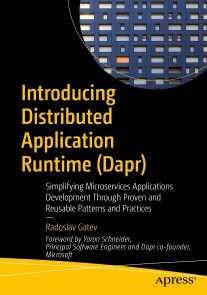
Introducing Distributed Application Runtime (Dapr)
Use this book to learn the Distributed Application Runtime (Dapr), a new event-driven runtime from Microsoft designed to help developers build microservices applications, using a palette of languages and frameworks that run everywhere: on-premises, in any cloud, and even on the edge.One of the most popular architectural patterns for implementing large, complex, distributed solutions is the microservices architectural style. Because solutions are composed of services based on various languages, frameworks, and platforms, the more complex and compartmentalized an application becomes, the more considerations a developer has to keep in mind. Much of the time this proves to be difficult.INTRODUCING DISTRIBUTED APPLICATION RUNTIME (DAPR) is your guide to achieving more with less through patterns. Part I of the book is about understanding microservices and getting up and running with Dapr, either on your machine or in any Kubernetes cluster. From there you are guided through the concepts of Dapr, how it works, and what it can do for you. You will wrap up with various ways to debug Dapr applications using Visual Studio Code locally, inside a container or Kubernetes. In Part II you will jump into the reusable patterns and practices, the building blocks of Dapr. You will go from service invocation, publish and subscribe, state management, resource bindings, and the Actor model to secrets; each building block is covered in detail in its own dedicated chapter. You will learn what Dapr offers from a functional perspective and also how you can leverage the three pillars of observability (logs, metrics, and traces) in order to gain insight into your applications. In Part III you will explore advanced concepts, including using middleware pipelines, integrating Dapr into web frameworks such as ASP.NET Core, or the runtimes of Azure Logic Apps and Azure Functions.The book features a multi-versed set of examples that cover not only the plain API of Dapr, but also the .NET SDK. Hence, most of the examples are in .NET 5, with a small number in JavaScript to exemplify the use of multiple languages. Examples show you how to securely use Dapr to leverage a variety of services in Microsoft Azure, including Azure Kubernetes Service, Azure Storage, Azure Service Bus, Azure Event Grid, Azure Key Vault, Azure Monitor, and Azure Active Directory among others.WHAT YOU WILL LEARN* Recognize the challenges and boundaries of microservices architecture* Host Dapr inside a Kubernetes cluster or as a standalone process* Leverage and use Dapr’s ready-to-use patterns and practices* Utilize its HTTP/gRPC APIs* Use Dapr with ASP.NET Core and in .NET applications (with or without the SDK)* Implement observability for Dapr applications* Secure Dapr applications* Integrate Dapr with the runtime of Azure Logic Apps and Azure Functions* Realize the full potential of Visual Studio Code by using the right extensions that will contribute to a better development experienceWHO THIS BOOK IS FORDevelopers and architects who want to utilize a proven set of patterns to help easily implement microservices applicationsRADOSLAV GATEV is a software architect and consultant who specializes in designing and building complex and vast solutions in Microsoft Azure. He helps companies all over the world, ranging from startups to big enterprises, to have high-performant and resilient applications that utilize the cloud in the best and most efficient way possible. Radoslav has been awarded a Microsoft Most Valuable Professional (MVP) for Microsoft Azure for his ongoing contributions to the community in this area. He strives for excellence and enjoyment when working on the bleeding edge of technology and is excited to work with Dapr. He frequently speaks and presents at various conferences and participates in organizing multiple technical conferences in Bulgaria. PART I: GETTING STARTEDChapter 1: Introduction to MicroservicesChapter 2: Introduction to DaprChapter 3: Getting up to speed with KubernetesChapter 4: Running Dapr in Kubernates ModePART II: BUILDING BLOCKS OVERVIEWChapter 5: Debugging Dapr ApplicationsChapter 6: Service InvocationChapter 7: Publish and subscribeChapter 8: State ManagementChapter 9: Resource BindingsChapter 10: The Actor ModelChapter 11: SecretsChapter 12: Observability: Logs, Metrics, and TracesPART III: USING DAPRChapter 13: Plugging middlewarePART IV: INTEGRATIONSChapter 14: Using Dapr in ASP.NET CoreChapter 15: Using Dapr with Azure FunctionsChapter 16: Using Dapr with the Azure Logic Apps Runtime

Suchmaschinen verstehen
Suchmaschinen dienen heute selbstverständlich als Werkzeuge, um Informationen zu recherchieren. Doch wie funktionieren sie genau? Das Buch betrachtet Suchmaschinen aus vier Perspektiven: Technik, Nutzung, Recherche und gesellschaftliche Bedeutung. Es bietet eine klar strukturierte und verständliche Einführung in die Thematik. Zahlreiche Abbildungen erlauben eine schnelle Erfassung des Stoffs.Rankingverfahren und Nutzerverhalten werden dargestellt. Dazu kommen grundlegende Betrachtungen des Suchmaschinenmarkts, der Suchmaschinenoptimierung, der Suchmaschinenwerbung und der Rolle der Suchmaschinen als technische Informationsvermittler. Das Buch richtet sich an alle, die ein umfassendes Verständnis dieser Suchwerkzeuge erlangen wollen, u.a. Suchmaschinenoptimierer*innen, Entwickler*innen, Informationswissenschaftler*innen, Bibliothekarinnen und Bibliothekare sowie Verantwortliche im Online Marketing.Für die dritte Auflage wurde der Text vollständig überarbeitet, ergänzt sowie alle Statistiken und Quellen auf den neuesten Stand gebracht.DIRK LEWANDOWSKI ist Professor für Information Research und Information Retrieval an der Hochschule für Angewandte Wissenschaften Hamburg. Er ist einer der führenden Experten zum Thema Suchmaschinen und hat neben mehreren Büchern zahlreiche wissenschaftliche Aufsätze in internationalen Fachzeitschriften veröffentlicht.Einführung.- Einstieg.- Wie Suchmaschinen funktionieren.- Wie Suchmaschinen genutzt werden.- Das Ranking der Suchergebnisse.- Die Inhalte der Suchmaschinen und wie sie uns präsentiert werden.- Der Suchmaschinenmarkt.- Suchmaschinenoptimierung.- Alternativen zu Google.- Genaue Suchanfragen stellen mit der erweiterten Suche und Operatoren.- Quellen prüfen.- Das unsichtbare Web.- Recherche in sozialen Netzwerken, Frage-Antwort-Diensten und Operatoren.- Suchmaschinen und ihre Rolle als Vermittler von Informationen.- Ausblick.- Glossar.

AI for Healthcare with Keras and Tensorflow 2.0
Learn how AI impacts the healthcare ecosystem through real-life case studies with TensorFlow 2.0 and other machine learning (ML) libraries.This book begins by explaining the dynamics of the healthcare market, including the role of stakeholders such as healthcare professionals, patients, and payers. Then it moves into the case studies. The case studies start with EHR data and how you can account for sub-populations using a multi-task setup when you are working on any downstream task. You also will try to predict ICD-9 codes using the same data. You will study transformer models. And you will be exposed to the challenges of applying modern ML techniques to highly sensitive data in healthcare using federated learning. You will look at semi-supervised approaches that are used in a low training data setting, a case very often observed in specialized domains such as healthcare. You will be introduced to applications of advanced topics such as the graph convolutional network and how you can develop and optimize image analysis pipelines when using 2D and 3D medical images. The concluding section shows you how to build and design a closed-domain Q&A system with paraphrasing, re-ranking, and strong QnA setup. And, lastly, after discussing how web and server technologies have come to make scaling and deploying easy, an ML app is deployed for the world to see with Docker using Flask.By the end of this book, you will have a clear understanding of how the healthcare system works and how to apply ML and deep learning tools and techniques to the healthcare industry.WHAT YOU WILL LEARN* Get complete, clear, and comprehensive coverage of algorithms and techniques related to case studies * Look at different problem areas within the healthcare industry and solve them in a code-first approach* Explore and understand advanced topics such as multi-task learning, transformers, and graph convolutional networks* Understand the industry and learn MLWHO THIS BOOK IS FORData scientists and software developers interested in machine learning and its application in the healthcare industryANSHIK has a deep passion for building and shipping data science solutions that create great business value. He is currently working as a senior data scientist at ZS Associates and is a key member on the team developing core unstructured data science capabilities and products. He has worked across industries such as pharma, finance, and retail, with a focus on advanced analytics. Besides his day-to-day activities, which involve researching and developing AI solutions for client impact, he works with startups as a data science strategy consultant. Anshik holds a bachelor’s degree from Birla Institute of Technology & Science, Pilani. He is a regular speaker at AI and machine learning conferences. He enjoys trekking and cycling.Chapter 1: Healthcare Market: A PrimerChapter Goal: Know how sub-markets like pharmaceutical, medicaltechnology, and hospital come together to form the healthcare ecosystem. Learn on how digital and mobile are shaping and reforming traditional health. With technology available and permissible to large masses via internet things like telehealth have become a norm. Also, what kind ofproblems are being solved at industry level and at various startups.Sub Topics:Healthcare Marketplace Overview● Map of how different stakeholder comes together to form the system● Medicare Overview● Paying Doctors● Healthcare CostsEmerging Trends● Changing role of consumer in healthcare● Future of Healthcare Payments● Quality of Healthcare DeliveryIndustry 4.0 and HealthcareChapter 2: Multi Task Deep Learning To Predict HospitalRe-admissionsChapter Goal: A real world case study showing how re-admissions whichcosts billions of dollars to the US healthcare system can be addressed. We will be using EHR data to cluster patients on their baseline characteristics and clinical factors and correlate with their readmission rates.Sub Topics:● Introduction to EHR data.● Exploring MIMIC III datasets● Establishing a baseline model to assess re-admission rates usingensemble of classification models with handling class imbalance.● Using auto-encoder to create a distributed representation of features.● Clustering patients● Analyzing readmission rate based on clusters.● Comparative analysis between baseline and deep learning basedmodel.Chapter 3: Predict Medical Billing Codes from Clinical NotesChapter Goal: Clinical notes contain information on prescribed proceduresand diagnosis from doctors and are used for accurate billings in the current medical system, but these are not readily available. One has to extract them manually for the process to be carried out seamlessly. We are attempting to solve this problem using a classification model using the MIMIC III datasets introduced above.Sub Topics:● Introduction to case study data.● Learn about transfer learning in NLP by fine-tuning the BERT modelfor your task.● Using various attention based sequence modelling architectures likeLSTM and transformers to predict medical billing codes.Chapter 4: Extracting Structured Data from Receipt ImagesChapter Goal: Just like any other sales job, the sales rep of a Pharma firm isalways on the field. While being on the field lots of receipts get generated for reimbursement on food and travel. It becomes difficult to keep track of bills which don’t follow company guidelines. In this case study we will explore how to extract information from receipt images and structure various information from it.Sub Topics:● Introduction to information extraction through Images.● Exploring receipt data● Using graph CNN to extract information○ What is a graph convolutional architecture○ How is it different from traditional convolutional layers○ Applications○ Hands on example to demonstrate training of a graph CNN● Exploring recent trends in extracting information from templatedocuments.Chapter 5: Handle Availability of Low-Training Data in HealthcareChapter Goal: Availability of training data has limited the use of advancedmodels and general interest for problems in the healthcaredomain. Get introduced to weak supervision techniques that canbe used to handle low training data. Also learn about upcominglibraries (like Snorkel and Astron) and research in this field.Sub Topics:● Explore weak supervision learning using Snorkel and Astron● Learn to create label functions● Hands on experimentation with a simple classification problem onapplication of concepts from weak supervised learningChapter 6: Federated Learning and HealthcareChapter Goal: Federated learning enables distributed machine learning inwhich machine learning models train on decentralized data.This is deemed as the future of ML models as sharing patientlevel data becomes more difficult for organizations due toprivacy and security concerns.Sub Topics:● Introduction to federated learning and what it means for healthcare● Hands on example on how to use the concepts of federated learningin one of your project○ Load and prepare an example decentralized datasets○ Design a federated learning architecture to predict diagnosisof inflammation in bladder.● Learn about TensorFlow federatedChapter 7: Medical ImagingChapter Goal: Complete end to end analysis of how to develop a deep -learning based medical diagnosis system using images. Learn about different kinds of image scans available like (cellular images, X-Ray scans etc.) . Also learn about the challenges such as accessibility of data, difference in image quality and how to address it, explainability etc. in disease detection via images.Sub Topics:● What is medical imaging● Different kinds of image analysis● Deep learning based methods for image analysis● Understanding how to deal with 2-D and 3-D images● Solve image classification and segmentation problem● Understand challenges like accessibility of data, image quality issues,explainability etc.Chapter 8: Machine has all the Answers, Except What’s the Purpose of Life.Chapter Goal: Introduction to concepts of a Question & Answering system.Comparative analysis of different Question and Answering architectures. Hands-on-Example of building your own Q&A system to ask and query questions over published medical papers on pubmed.Sub Topics:● Review and understand various Question & Answering Techniques.● Comparative analysis of different Question and Answeringarchitectures● What is BERT architecture ?● Using Bio-Bert architecture to train your own Q&A SystemChapter 9: You Need an Audience NowChapter Goal: Learned something from the book, excited to show it to theworld. In this chapter we are going to do exactly that, we are going to learn how to bring your models live and let the world interact with it. We will be building a Django app taking the Question Answering case study in point and also learning the basics of using docker for deployment.Sub Topics:● Understand technologies like Streamlit, Flask and Django that can helpyou deploy your model depending upon the use case.● What is docker and why should we dockerize our solutions.● Building a production grade docker application.● Django basics● Using services like Heroku or Github SPAs to deploy your DjangoApp and bring it live.

Entwickeln Sie Ihre eigene Blockchain
Dieses Buch bietet eine umfassende Einführung in die Blockchain- und Distributed-Ledger-Technologie. Es ist ein Leitfaden für Praktiker und enthält detaillierte Beispiele und Erklärungen, wie sich eine Blockchain von Grund auf neu aufbauen und betreiben lässt. Durch seinen konzeptionellen Hintergrund und praktische Übungen ermöglicht dieses Buch Studenten, Lehrern und Krypto-Enthusiasten, ihre erste Blockkette zu starten, wobei Vorkenntnisse der zugrunde liegenden Technologie vorausgesetzt werden. Wie baue ich eine Blockchain auf? Wie präge ich eine Kryptowährung? Wie schreibe ich einen Smart Contract? Wie starte ich ein Initial Coin Offering (ICO)? Dies sind einige der Fragen, die dieses Buch beantwortet. Ausgehend von den Anfängen und der Entwicklung früher Kryptowährungen werden die konzeptionellen Grundlagen für die Entwicklung sicherer Software beschrieben. Die Themen umfassen u. a. Konsens-Algorithmen, Mining und Dezentralisierung. „Dies ist ein einzigartiges Buch über die Blockchain-Technologie. Die Autoren haben die perfekte Balance zwischen Breite der Themen und Tiefe der technischen Diskussion gefunden. Aber das wahre Juwel ist die Sammlung sorgfältig kuratierter praktischer Übungen, die den Leser schon ab Kapitel 1 durch den Prozess des Aufbaus einer Blockchain führen.“ Volodymyr Babich, Professor für Betriebs- und Informationsmanagement, McDonough School of Business, Georgetown University „Eine ausgezeichnete Einführung in die DLT-Technologie für ein nicht-technisches Publikum. Das Buch ist vollgepackt mit Beispielen und Übungen, die das Erlernen der zugrunde liegenden Prozesse der Blockchain-Technologie für alle, vom Studenten bis zum Unternehmer, erheblich erleichtern.“ Serguei Netessine, Dhirubhai Ambani Professor für Innovation und Entrepreneurship, The Wharton School, University of Pennsylvania
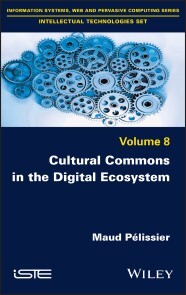
Cultural Commons in the Digital Ecosystem
INTELLECTUAL TECHNOLOGIES SET COORDINATED BY JEAN-MAX NOYER AND MARYSE CARMESThe dynamics of production, circulation and dissemination of knowledge that are currently developing in the digital ecosystem testify to a profound change in capitalism. On the margins of the traditional duo of knowledge markets and exclusive property rights, the emerging notion of cultural commons is opening the door to new modes of production based on hybrid market arrangements and an inclusive understanding of property.This book studies the political economy of cultural commons in the digital ecosystem, outlining the contexts and areas of thought in which this concept has emerged and identifying the socio-economic, technical and political issues associated with it. It also analyzes the specific physical conditions that enable the implementation of the economy of cultural commons in a specific digital ecosystem, that of books, by studying the effects of digital libraries and self-publishing platforms. MAUD PÉLISSIER is an Associate Professor and Research Director. She carries out her research at the Mediterranean Institute for Information and Communication Sciences of the University of Toulon, France.Introduction ixPART 1. THE INTELLECTUAL MOVEMENT OF THE CULTURAL COMMONS 1INTRODUCTION TO PART 1 3CHAPTER 1. THE PIONEERING APPROACH OF JURISTS FROM THE BERKMAN CENTER FOR INTERNET AND SOCIETY 71.1. A critique of the maximalist doctrine of intellectual property 71.1.1. The enclosure of the intangible commons of the mind 91.1.2. The threat of disappearance of free culture in cyberspace 121.2. The political economy of information commons 171.2.1. Shared ownership and individual freedom 181.2.2. A new mode of information production 221.3. The creative commons in the field of works of the mind 281.3.1. Incarnation of free culture practices 281.3.2. Institutionalization of free culture: Creative Commons licenses 311.3.3. The modalities of cohabitation with the commercial cultural economy 341.4. Propagation in the intellectual and militant sphere in France 421.4.1. The challenge of legalizing non-market sharing 431.4.2. The challenge of legal recognition of the information commons 491.5. Recent extensions of the BCIS approach 541.5.1. The digital public domain: the perimeter of cultural commons 551.5.2. Network infrastructure as a commons 601.5.3. Remuneration of volunteer contributors 63CHAPTER 2. THE OSTROMIAN APPROACH TO THE KNOWLEDGE COMMONS 692.1. Ostrom’s original theory of the land commons 712.1.1. An institutional definition of the commons 712.1.2. A questioning of the “tragedy of the commons” 722.1.3. Communal property as a bundle of rights 752.1.4. An institutional approach to the self-organization of common resources 782.2. The knowledge commons: Hess and Ostrom’s approach 802.2.1. The singularity of information common pool resources (CPR) 802.2.2. Digital libraries as information CPRs 842.2.3. Institutional analysis and development framework (IAD) 872.3. Open access platforms as scientific commons? 902.3.1. Open access: a major transformation of the editorial ecosystem 912.3.2. Open access platforms: which bundles of user rights? 992.3.3. Enrichment and sustainability of the scientific commons 1072.4. Cooperative platforms as social commons? 1182.4.1. A rapprochement with the social and solidarity economy 1182.4.2. Conditions for exploiting the social value created 1222.4.3. Governance of cooperative platforms 1262.4.4. Commoners’ remuneration: a right to contribute 133PART 2. THE COMMONS IN THE DIGITAL BOOK ECOSYSTEM 137INTRODUCTION TO PART 2 139CHAPTER 3. DIGITAL LIBRARIES AS HERITAGE COMMONS 1413.1. A favorable context 1423.1.1. A new documentary order 1423.1.2. Cultural public data as a public good 1443.2. The production methods of heritage commons 1493.2.1. The Google challenge 1493.2.2. Public/private partnerships: threat or opportunity? 1523.2.3. On-demand digitization and citizen contribution 1563.2.4. The heritage commons: a plasticity of forms 1573.3. Governance issue: enriching our common heritage 1613.3.1. The construction of a shared heritage infrastructure 1613.3.2. Content editorialization and digital mediation 164CHAPTER 4. THE WRITTEN COMMONS IN THE PUBLISHING INDUSTRY 1694.1. The transformations of the editorial ecosystem 1704.1.1. Digital textuality and new uses 1704.1.2. The digital book immersed in an attention economy 1724.1.3. The digital book and the growth of self-publishing 1764.2. Wattpad: a common narrative of the misguided written word 1784.2.1. The use of CC licenses: a hidden reality 1794.2.2. A progressive attraction to the attention economy 1804.2.3. Strengthened cohabitation with publishers: the announced end of free culture 1824.3. Self-publishing and free culture: a multifaceted face 1844.3.1. The Lulu platform: open source for the book market? 1844.3.2. In Libro Veritas and Framabook: free book editions 187Conclusion 193References 199Index 207
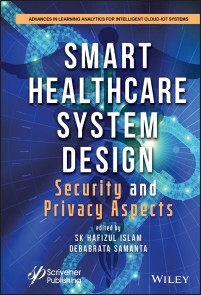
Smart Healthcare System Design
SMART HEALTHCARE SYSTEM DESIGNTHIS BOOK DEEPLY DISCUSSES THE MAJOR CHALLENGES AND ISSUES FOR SECURITY AND PRIVACY ASPECTS OF SMART HEALTH-CARE SYSTEMS.The Internet-of-Things (IoT) has emerged as a powerful and promising technology, and though it has significant technological, social, and economic impacts, it also poses new security and privacy challenges. Compared with the traditional internet, the IoT has various embedded devices, mobile devices, a server, and the cloud, with different capabilities to support multiple services. The pervasiveness of these devices represents a huge attack surface and, since the IoT connects cyberspace to physical space, known as a cyber-physical system, IoT attacks not only have an impact on information systems, but also affect physical infrastructure, the environment, and even human security. The purpose of this book is to help achieve a better integration between the work of researchers and practitioners in a single medium for capturing state-of-the-art IoT solutions in healthcare applications, and to address how to improve the proficiency of wireless sensor networks (WSNs) in healthcare. It explores possible automated solutions in everyday life, including the structures of healthcare systems built to handle large amounts of data, thereby improving clinical decisions. The 14 separate chapters address various aspects of the IoT system, such as design challenges, theory, various protocols, implementation issues, as well as several case studies. Smart Healthcare System Design covers the introduction, development, and applications of smart healthcare models that represent the current state-of-the-art of various domains. The primary focus is on theory, algorithms, and their implementation targeted at real-world problems. It will deal with different applications to give the practitioner a flavor of how IoT architectures are designed and introduced into various situations. AUDIENCE: Researchers and industry engineers in information technology, artificial intelligence, cyber security, as well as designers of healthcare systems, will find this book very valuable. SK HAFIZUL ISLAM received his PhD degree in Computer Science and Engineering in 2013 from the Indian Institute of Technology [IIT (ISM)] Dhanbad, Jharkhand, India. He is an assistant professor in the Department of Computer Science and Engineering, Indian Institute of Information Technology Kalyani (IIIT Kalyani), West Bengal, India. He has authored or coauthored 110 research papers in journals and conference proceedings.DEBABRATA SAMANTA is an assistant professor in the Department of Computer Science, CHRIST (Deemed to be University), Bangalore, India. He obtained his PhD in Computer Science and Engg. from the National Institute of Technology, Durgapur, India, in the area of SAR Image Processing. He is the owner of 17 Indian patents and has authored and coauthored more than 135 research papers in international journals. Preface xviiAcknowledgments xxiii1 MACHINE LEARNING TECHNOLOGIES IN IOT EEG-BASED HEALTHCARE PREDICTION 1Karthikeyan M.P., Krishnaveni K. and Muthumani N.1.1 Introduction 21.1.1 Descriptive Analytics 31.1.2 Analytical Methods 31.1.3 Predictive Analysis 41.1.4 Behavioral Analysis 41.1.5 Data Interpretation 41.1.6 Classification 41.2 Related Works 71.3 Problem Definition 91.4 Research Methodology 91.4.1 Components Used 101.4.2 Specifications and Description About Components 101.4.2.1 Arduino 101.4.2.2 EEG Sensor—Mindwave Mobile Headset 111.4.2.3 Raspberry pi 121.4.2.4 Working 131.4.3 Cloud Feature Extraction 131.4.4 Feature Optimization 141.4.5 Classification and Validation 151.5 Result and Discussion 161.5.1 Result 161.5.2 Discussion 231.6 Conclusion 271.6.1 Future Scope 27References 282 SMART HEALTH APPLICATION FOR REMOTE TRACKING OF AMBULATORY PATIENTS 33Shariq Aziz Butt, Muhammad Waqas Anjum, Syed Areeb Hassan, Arindam Garai and Edeh Michael Onyema2.1 Introduction 342.2 Literature Work 342.3 Smart Computing for Smart Health for Ambulatory Patients 352.4 Challenges With Smart Health 362.4.1 Emergency Support 362.4.2 The Issue With Chronic Disease Monitoring 382.4.3 An Issue With the Tele-Medication 382.4.4 Mobility of Doctor 402.4.5 Application User Interface Issue 402.5 Security Threats 412.5.1 Identity Privacy 412.5.2 Query Privacy 422.5.3 Location of Privacy 422.5.4 Footprint Privacy and Owner Privacy 432.6 Applications of Fuzzy Set Theory in Healthcare and Medical Problems 432.7 Conclusion 51References 513 DATA-DRIVEN DECISION MAKING IN IOT HEALTHCARE SYSTEMS—COVID-19: A CASE STUDY 57Saroja S., Haseena S. and Blessa Binolin Pepsi M.3.1 Introduction 583.1.1 Pre-Processing 593.1.2 Classification Algorithms 603.1.2.1 Dummy Classifier 603.1.2.2 Support Vector Machine (SVM) 603.1.2.3 Gradient Boosting 613.1.2.4 Random Forest 623.1.2.5 Ada Boost 633.2 Experimental Analysis 633.3 Multi-Criteria Decision Making (MCDM) Procedure 633.3.1 Simple Multi Attribute Rating Technique (SMART) 643.3.1.1 COVID-19 Disease Classification Using SMART 643.3.2 Weighted Product Model (WPM) 663.3.2.1 COVID-19 Disease Classification Using WPM 663.3.3 Method for Order Preference by Similarity to the Ideal Solution (TOPSIS) 673.3.3.1 COVID-19 Disease Classification Using TOPSIS 683.4 Conclusion 69References 694 TOUCH AND VOICE-ASSISTED MULTILINGUAL COMMUNICATION PROTOTYPE FOR ICU PATIENTS SPECIFIC TO COVID-19 71B. Rajesh Kanna and C.Vijayalakshmi4.1 Introduction and Motivation 724.1.1 Existing Interaction Approaches and Technology 734.1.2 Challenges and Gaps 744.2 Proposed Prototype of Touch and Voice-Assisted Multilingual Communication 754.3 A Sample Case Study 824.4 Conclusion 82References 845 CLOUD-ASSISTED IOT SYSTEM FOR EPIDEMIC DISEASE DETECTION AND SPREAD MONITORING 87Himadri Nath Saha, Reek Roy and Sumanta Chakraborty5.1 Introduction 885.2 Background & Related Works 925.3 Proposed Model 985.3.1 ThinkSpeak 1005.3.2 Blood Oxygen Saturation (SpO2) 1005.3.3 Blood Pressure (BP) 1015.3.4 Electrocardiogram (ECG) 1015.3.5 Body Temperature (BT) 1025.3.6 Respiration Rate (RR) 1025.3.7 Environmental Parameters 1035.4 Methodology 1035.5 Performance Analysis 1105.6 Future Research Direction 1115.7 Conclusion 112References 1136 IMPACT OF HEALTHCARE 4.0 TECHNOLOGIES FOR FUTURE CAPACITY BUILDING TO CONTROL EPIDEMIC DISEASES 115Himadri Nath Saha, Sumanta Chakraborty, Sourav Paul, Rajdeep Ghosh and Dipanwita Chakraborty Bhattacharya6.1 Introduction 1166.2 Background and Related Works 1206.3 System Design and Architecture 1286.4 Methodology 1316.5 Performance Analysis 1386.6 Future Research Direction 1386.7 Conclusion 139References 1397 SECURITY AND PRIVACY OF IOT DEVICES IN HEALTHCARE SYSTEMS 143Himadri Nath Saha and Subhradip Debnath7.1 Introduction 1447.2 Background and Related Works 1457.3 Proposed System Design and Architecture 1477.3.1 Modules 1487.3.1.1 Wireless Body Area Network 1487.3.1.2 Centralized Network Coordinator 1497.3.1.3 Local Server 1497.3.1.4 Cloud Server 1507.3.1.5 Dedicated Network Connection 1517.4 Methodology 1517.5 Performance Analysis 1607.6 Future Research Direction 1617.7 Conclusion 163References 1648 AN IOT-BASED DIET MONITORING HEALTHCARE SYSTEM FOR WOMEN 167Suganyadevi S., Shamia D. and Balasamy K.8.1 Introduction 1688.2 Background 1778.2.1 Food Consumption 1778.2.2 Food Consumption Monitoring 1788.2.3 Health Monitoring Methods Using Physical Methodology 1798.2.3.1 Traditional Form of Self-Report 1798.2.3.2 Self-Reporting Methodology Through Smart Phones 1798.2.3.3 Food Frequency Questionnaire 1798.2.4 Methods for Health Tracking Using Automated Approach 1808.2.4.1 Pressure Process 1808.2.4.2 Surveillance Video Method 1808.2.4.3 Method of Doppler Sensing 1808.3 Necessity of Wearable Approach? 1818.4 Different Approaches for Wearable Sensing 1818.4.1 Approach of Acoustics 1828.4.1.1 Detection of Chewing 1828.4.1.2 Detection of Swallowing 1838.4.1.3 Shared Chewing/Swallowing Discovery 1838.5 Description of the Methodology 1848.6 Description of Various Components Used 1858.6.1 Sensors 1858.6.1.1 Sensors for Cardio-Vascular Monitoring 1858.6.1.2 Sensors for Activity Monitoring 1868.6.1.3 Sensors for Body Temperature Monitoring 1878.6.1.4 Sensor for Galvanic Skin Response (GSR) Monitoring 1888.6.1.5 Sensor for Monitoring the Blood Oxygen Saturation (SpO2 ) 1898.7 Strategy of Communication for Wearable Systems 1898.8 Conclusion 192References 1949 A SECURE FRAMEWORK FOR PROTECTING CLINICAL DATA IN MEDICAL IOT ENVIRONMENT 203Balasamy K., Krishnaraj N., Ramprasath J. and Ramprakash P.9.1 Introduction 2039.1.1 Medical IoT Background & Perspective 2049.1.1.1 Medical IoT Communication Network 2049.2 Medical IoT Application Domains 2099.2.1 Smart Doctor 2099.2.2 Smart Medical Practitioner 2099.2.3 Smart Technology 2099.2.4 Smart Receptionist 2109.2.5 Disaster Response Systems (DRS) 2109.3 Medical IoT Concerns 2109.3.1 Security Concerns 2119.3.2 Privacy Concerns 2129.3.3 Trust Concerns 2129.4 Need for Security in Medical IoT 2129.5 Components for Enhancing Data Security in Medical IoT 2149.5.1 Confidentiality 2149.5.2 Integrity 2149.5.3 Authentication 2159.5.4 Non-Repudiation 2159.5.5 Privacy 2159.6 Vulnerabilities in Medical IoT Environment 2159.6.1 Patient Privacy Protection 2159.6.2 Patient Safety 2169.6.3 Unauthorized Access 2169.6.4 Medical IoT Security Constraints 2179.7 Solutions for IoT Healthcare Cyber-Security 2189.7.1 Architecture of the Smart Healthcare System 2189.7.1.1 Data Perception Layer 2189.7.1.2 Data Communication Layer 2199.7.1.3 Data Storage Layer 2199.7.1.4 Data Application Layer 2199.8 Execution of Trusted Environment 2209.8.1 Root of Trust Security Services 2209.8.2 Chain of Trust Security Services 2229.9 Patient Registration Using Medical IoT Devices 2239.9.1 Encryption 2249.9.2 Key Generation 2259.9.3 Security by Isolation 2259.9.4 Virtualization 2259.10 Trusted Communication Using Block Chain 2299.10.1 Record Creation Using IoT Gateways 2299.10.2 Accessibility to Patient Medical History 2309.10.3 Patient Enquiry With Hospital Authority 2309.10.4 Block Chain Based IoT System Architecture 2319.10.4.1 First Layer 2319.10.4.2 Second Layer 2319.10.4.3 Third Layer 2329.11 Conclusion 232References 23310 EFFICIENT DATA TRANSMISSION AND REMOTE MONITORING SYSTEM FOR IOT APPLICATIONS 235Laith Farhan, Firas MaanAbdulsattar, Laith Alzubaidi, Mohammed A. Fadhel, Banu ÇalışUslu and Muthana Al-Amidie10.1 Introduction 23610.2 Network Configuration 23610.2.1 Message Queuing Telemetry Transport (MQTT) Protocol 23810.2.2 Embedded Database SQLite 24210.2.3 Eclipse Paho Library 24210.2.4 Raspberry Pi Single Board Computer 24210.2.5 Custard Pi Add-On Board 24310.2.6 Pressure Transmitter (Type 663) 24410.3 Data Filtering and Predicting Processes 24510.3.1 Filtering Process 24510.3.2 Predicting Process 24610.3.3 Remote Monitoring Systems 24810.4 Experimental Setup 24910.4.1 Implementation Using Python 25110.4.1.1 Prerequisites 25110.4.2 Monitoring Data 25110.4.3 Experimental Results 25510.4.3.1 IoT Device Results 25510.4.3.2 Traditional Network Results 25710.5 Conclusion 261References 26111 IOT IN CURRENT TIMES AND ITS PROSPECTIVE ADVANCEMENTS 265T. Venkat Narayana Rao, Abhishek Duggirala, Muralidhar Kurni and Syed Tabassum Sultana11.1 Introduction 26611.1.1 Introduction to Industry 4.0 26611.1.2 Introduction to IoT 26611.1.3 Introduction to IIoT 26711.2 How IIoT Advances Industrial Engineering in Industry 4.0 Era 26711.3 IoT and its Current Applications 26811.3.1 Home Automation 26811.3.2 Wearables 26911.3.3 Connected Cars 26911.3.4 Smart Grid 26911.4 Application Areas of IIoT 27011.4.1 IIoT in Healthcare 27011.4.2 IIoT in Mining 27011.4.3 IIoT in Agriculture 27111.4.4 IIoT in Aerospace 27111.4.5 IIoT in Smart Cities 27211.4.6 IIoT in Supply Chain Management 27211.5 Challenges of Existing Systems 27211.5.1 Security 27211.5.2 Integration 27311.5.3 Connectivity Issues 27311.6 Future Advancements 27311.6.1 Data Analytics in IoT 27411.6.2 Edge Computing 27411.6.3 Secured IoT Through Blockchain 27411.6.4 A Fusion of AR and IoT 27511.6.5 Accelerating IoT Through 5G 27511.7 Case Study of DeWalt 27511.8 Conclusion 276References 27612 RELIANCE ON ARTIFICIAL INTELLIGENCE, MACHINE LEARNING AND DEEP LEARNING IN THE ERA OF INDUSTRY 4.0 281T. Venkat Narayana Rao, Akhila Gaddam, Muralidhar Kurni and K. Saritha12.1 Introduction to Artificial Intelligence 28212.1.1 History of AI 28212.1.2 Views of AI 28212.1.3 Types of AI 28312.1.4 Intelligent Agents 28412.2 AI and its Related Fields 28612.3 What is Industry 4.0? 28912.4 Industrial Revolutions 28912.4.1 First Industrial Revolution (1765) 29012.4.2 Second Industrial Revolution (1870) 29012.4.3 Third Industrial Revolution (1969) 29012.4.4 Fourth Industrial Revolution 29112.5 Reasons for Shifting Towards Industry 4.0 29112.6 Role of AI in Industry 4.0 29212.7 Role of ML in Industry 4.0 29212.8 Role of Deep Learning in Industry 4.0 29312.9 Applications of AI, ML, and DL in Industry 4.0 29412.10 Challenges 29512.11 Top Companies That Use AI to Augment Manufacturing Processes in the Era of Industry 4.0 29612.12 Conclusion 297References 29713 THE IMPLEMENTATION OF AI AND AI-EMPOWERED IMAGING SYSTEM TO FIGHT AGAINST COVID-19—A REVIEW 301Sanjay Chakraborty and Lopamudra Dey13.1 Introduction 30213.2 AI-Assisted Methods 30413.2.1 AI-Driven Tools to Diagnose COVID-19 and Drug Discovery 30413.2.2 AI-Empowered Image Processing to Diagnosis 30613.3 Optimistic Treatments and Cures 30713.4 Challenges and Future Research Issues 30813.5 Conclusion 308References 30914 IMPLEMENTATION OF MACHINE LEARNING TECHNIQUES FOR THE ANALYSIS OF TRANSMISSION DYNAMICS OF COVID-19 313C. Vijayalakshmi and S. Bangusha Devi14.1 Introduction 31414.2 Data Analysis 31514.3 Methodology 31514.3.1 Linear Regression Model 31514.3.2 Time Series Model 31814.4 Results and Discussions 32014.4.1 Model Estimation and Studying its Adequacy 32314.4.2 Regression Model for Daily New Cases and New Deaths 33014.5 Conclusions 348References 348Index 351

Data Science with Raspberry Pi
Implement real-time data processing applications on the Raspberry Pi. This book uniquely helps you work with data science concepts as part of real-time applications using the Raspberry Pi as a localized cloud.You’ll start with a brief introduction to data science followed by a dedicated look at the fundamental concepts of Python programming. Here you’ll install the software needed for Python programming on the Pi, and then review the various data types and modules available. The next steps are to set up your Pis for gathering real-time data and incorporate the basic operations of data science related to real-time applications. You’ll then combine all these new skills to work with machine learning concepts that will enable your Raspberry Pi to learn from the data it gathers. Case studies round out the book to give you an idea of the range of domains where these concepts can be applied.By the end of Data Science with the Raspberry Pi, you’ll understand that many applications are now dependent upon cloud computing. As Raspberry Pis are cheap, it is easy to use a number of them closer to the sensors gathering the data and restrict the analytics closer to the edge. You’ll find that not only is the Pi an easy entry point to data science, it also provides an elegant solution to cloud computing limitations through localized deployment.WHAT YOU WILL LEARN* Interface the Raspberry Pi with sensors* Set up the Raspberry Pi as a localized cloudTackle data science concepts with Python on the PiWHO THIS BOOK IS FORData scientists who are looking to implement real-time applications using the Raspberry Pi as an edge device and localized cloud. Readers should have a basic knowledge in mathematics, computers, and statistics. A working knowledge of Python and the Raspberry Pi is an added advantage.DR. K. MOHAIDEEN ABDUL KADHAR has an undergraduate degree in electronics and communication engineering and an MTech with a specialization in control and instrumentation. In 2015, he obtained his PhD in control system design using evolutionary algorithms. He has more than 14 years of experience in teaching and research. His area of interest is implementing signal processing and control system concepts with Python programming on the Raspberry Pi. He has conducted many courses and delivered workshops in data science with Python programming. He has also acted as consultant for many industries in developing machine vision systems for industrial applications.MR. G ANAND obtained his BE degree in electronics and communication engineering in 2008, and his ME in communication systems in the year 2011. He has more than nine years of teaching experience with specialization in signal and image processing. He has handled courses and acted as the primary resource person in workshops related to Python programming. His current research focuses on artificial intelligence and machine learning. Chapter 1: Introduction to Data science- What is data?- Data Science: An overview- Recent trends in data scienceChapter 2: Basics of Python Programming- Why Python?- Python versions and installation- Python IDEs- Python data types- Functions- Python modules- Exceptions- Python packages for data scienceChapter 3: Introduction to Raspberry Pi- Raspberry Pi Hardware- Raspberry Pi Versions- Setting up the Raspberry Pi- Interfacing Raspberry Pi with sensors- Raspberry Pi as an edge device- Raspberry Pi as localized cloudChapter 4: Gathering Real-Time Data Using the Raspberry Pi- Sensors and signals- Data acquisition- Data transfer- Time series data- Memory requirementsCase study: Gathering real-time industry dataChapter 5: Preparing the Data- Structuring the real-time data into CSV format- Structuring the real-time data into XML format- Pandas data structures- Series- Data Frame- Panel- Cleaning the data- Handling missing values- Handling outliers- Filtering inappropriate values- Removing duplicatesCase study: Preparing the industry dataChapter 6: Visualizing the Data-The matplotlib package- Types of plots- Line plots- Scatter plots- Bar plots- Histogram plots- Contour plots- Plotting with PandasCase study: Visualizing the industry dataChapter 7: Analysing the Data- Exploratory analysis- Statistical analysis- Automating the data analysis in Raspberry PiCase study: Exploratory analysis of the industry dataChapter 8: Learning Models From Data- Forecasting from data using Regression- Outlier detection using k-means clustering- Modeling using Neural Networks- Dimensionality reduction using PCAChapter 9: Case Studies1. Industry 4.0 with Raspberry Pi2. Health monitoring with Raspberry Pi

The Definitive Guide to Conversational AI with Dialogflow and Google Cloud
Build enterprise chatbots for web, social media, voice assistants, IoT, and telephony contact centers with Google's Dialogflow conversational AI technology. This book will explain how to get started with conversational AI using Google and how enterprise users can use Dialogflow as part of Google Cloud. It will cover the core concepts such as Dialogflow essentials, deploying chatbots on web and social media channels, and building voice agents including advanced tips and tricks such as intents, entities, and working with context.The Definitive Guide to Conversational AI with Dialogflow and Google Cloud also explains how to build multilingual chatbots, orchestrate sub chatbots into a bigger conversational platform, use virtual agent analytics with popular tools, such as BigQuery or Chatbase, and build voice bots. It concludes with coverage of more advanced use cases, such as building fulfillment functionality, building your own integrations, securing your chatbots, and building your own voice platform with the Dialogflow SDK and other Google Cloud machine learning APIs.After reading this book, you will understand how to build cross-channel enterprise bots with popular Google tools such as Dialogflow, Google Cloud AI, Cloud Run, Cloud Functions, and Chatbase.WHAT YOU WILL LEARN* Discover Dialogflow, Dialogflow Essentials, Dialogflow CX, and how machine learning is used* Create Dialogflow projects for individuals and enterprise usage* Work with Dialogflow essential concepts such as intents, entities, custom entities, system entities, composites, and how to track context* Build bots quickly using prebuilt agents, small talk modules, and FAQ knowledge bases* Use Dialogflow for an out-of-the-box agent review* Deploy text conversational UIs for web and social media channels* Build voice agents for voice assistants, phone gateways, and contact centers* Create multilingual chatbots* Orchestrate many sub-chatbots to build a bigger conversational platform* Use chatbot analytics and test the quality of your Dialogflow agent* See the new Dialogflow CX concepts, how Dialogflow CX fits in, and what’s different in Dialogflow CXWHO THIS BOOK IS FOREveryone interested in building chatbots for web, social media, voice assistants, or contact centers using Google’s conversational AI/cloud technology.Lee Boonstra is a senior developer advocate at Google working with conversational AI. In this role she focuses on Dialogflow, Contact Center AI and speech technology. Lee is based in Amsterdam, the Netherlands, where she has been working with different technologies over the past 15 years, ranging from web/mobile, Ext JS, Sencha Touch, and Node.js, to conversational AI, Dialogflow, Actions on Google and Contact Centers.Over the years she has helped many brands and enterprises to build and deploy conversational AI solutions (chatbots and voice assistants) at enterprise scale. She’s worn different hats from engineer to technical trainer to sales engineer to developer advocate. Prior to Google, Lee worked at Sencha Inc.You can find Lee on online via the Twitter handle: @ladysign.CHAPTER 1: INTRODUCTION TO CONVERSATIONAL AIWhy do some chatbots fail?Machine learning simply explainedChatbots and machine learningMachine learning and GoogleAbout DialogflowDialogflow essentials & Dialogflow CXAbout Google CloudAbout Contact Center AIOther Google conversational AI productsActions on Google / Action BuilderAdLingoChatbaseDuplexMeenaSummaryReferenceCHAPTER 2: GETTING STARTED WITH DIALOGFLOW ESSENTIALSCreating a Dialogflow agentCreating Dialogflow agents for enterprisesConfiguring your Dialogflow projectSummaryReferenceCHAPTER 3: DIALOGFLOW ESSENTIALS CONCEPTSSetting up intentsCreating custom entitiesCreating intents with entities in training phrasesKeeping contextTesting in the simulatorSummaryReferenceCHAPTER 4: BUILDING CHATBOTS WITH TEMPLATESCreating prebuilt agentsEnabling small talk modulesCreating a FAQ knowledge baseSummaryReferenceCHAPTER 5: REVIEWING YOUR AGENTValidating your Dialogflow agentSummaryReferenceCHAPTER 6: DEPLOYING YOUR CHATBOT TO WEB & SOCIAL MEDIA CHANNELSIntegrating your agent with Google ChatIntegrating your agent with a web demoIntegrating your agent with a Dialogflow MessengerSummaryReferenceCHAPTER 7: BUILDING VOICE AGENTSBuilding a voice AI for a virtual assistant like the Google AssistantBuilding a callbot with a phone gatewayBuilding bots for contact centers with Contact Center AIImproving speech qualityFine tuning voice bots with SSMLSummaryReferenceCHAPTER 8: CREATING A MULTILINGUAL CHATBOTBuilding multilingual chatbotsSummaryReferenceCHAPTER 9: ORCHESTRATE MULTIPLE SUB CHATBOTS FROM ONE CHAT INTERFACECreating a mega agentSummaryReferenceCHAPTER 10: CREATING FULFILLMENT WEBHOOKSBuilding a fulfillment with the built-in editorBuilding webhook fulfillmentsBuilding multilingual webhook fulfillmentsUsing local webhooksSecuring webhooksSummaryReferenceCHAPTER 11: CREATING A CUSTOM INTEGRATION WITH THE DIALOGFLOW SDKImplementing a custom chatbot in your website front-endCreating rich responses in your chatbot integrationUsing markdown syntax & conditional templates in in your Dialogflow responsesSummaryReferenceCHAPTER 12: IMPLEMENTING A DIALOGFLOW VOICE AGENT IN YOUR WEBSITE OR APP USING THE SDKBuilding a client-side web application which streams audio from a browser microphone to a serverBuilding a web server which receives a browser microphone stream to detect intentsRetrieving audio results from Dialogflow and play it in your browserSummaryReferenceCHAPTER 13: COLLECTING & MONITORING ADVANCED AGENT INSIGHTSCapturing conversation related metrics to store in BigQuerySession IdDate / time stampSentiment scoreLanguage & keywordPlatformIntent detectionBuilding a platform for capturing conversation related metrics and redact sensitive informationDetecting user sentimentMonitoring chat session & funnel metrics with Dialogflow , Chatbase or Actions on GoogleTotal UsageThe number of requests the intent was matched to and the percentage of all users that matched the intent.Completion Rate & Drop off Rate / Drop off PlaceUser retentionEndpoint healthDiscoveryDialogflow Built-in AnalyticsMonitoring metrics with ChatbaseAnalytics on Actions on GoogleCapturing chatbot model health metrics for testing the underlying NLU model qualityTrue positive - A correctly matched intentFalse positive - A misunderstood requestTrue negative - An unsupported requestFalse negative - A missed requestAccuracyPrecisionRecall & falloutF1 scoreConfusion matrixROC curveImprove the Dialogflow NLU model with built-in trainingSummaryReference

Embracing Risk
THIS BOOK PROVIDES AN INTRODUCTION TO THE THEORY AND PRACTICE OF CYBER INSURANCE. Insurance as an economic instrument designed for risk management through risk spreading has existed for centuries. Cyber insurance is one of the newest sub-categories of this old instrument. It emerged in the 1990s in response to an increasing impact that information security started to have on business operations. For much of its existence, the practice of cyber insurance has been on how to obtain accurate actuarial information to inform specifics of a cyber insurance contract. As the cybersecurity threat landscape continues to bring about novel forms of attacks and losses, ransomware insurance being the latest example, the insurance practice is also evolving in terms of what types of losses are covered, what are excluded, and how cyber insurance intersects with traditional casualty and property insurance. The central focus, however, has continued to be risk management through risk transfer, the key functionality of insurance.The goal of this book is to shift the focus from this conventional view of using insurance as primarily a risk management mechanism to one of risk control and reduction by looking for ways to re-align the incentives. On this front we have encouraging results that suggest the validity of using insurance as an effective economic and incentive tool to control cyber risk. This book is intended for someone interested in obtaining a quantitative understanding of cyber insurance and how innovation is possible around this centuries-old financial instrument.* Preface* Acknowledgments* Introduction: What is Insurance and What is Cyber Insurance?* A Basic Cyber Insurance Contract Model* Insuring Clients with Dependent Risks* A Practical Underwriting Process* How to Pre-Screen: Risk Assessment Using Data Analytics* Open Problems and Closing Thoughts* Bibliography* Author's Biography

Mit Arduino die elektronische Welt entdecken
Der Arduino-Mikrocontroller ist aus der Elektronikwelt nicht mehr wegzudenken, er hat sich zu einem Standard im Hobbybereich entwickelt. In unzahligen Projekten kommt das Arduino-Board zum Einsatz, Hunderttausende von ausgereiften Softwarelosungen stehen fur jeden zuganglich und unter freier Lizenz zur Verfugung. Der Arduino ist leicht zu programmieren. Preiswerte elektronische Bauteile wie LCDs, Sensoren und Motoren konnen an das Arduino-Board angeschlossen und damit gesteuert werden. Mit "e;Arduino die elektronische Welt entdecken"e; fhrt den Leser in die faszinierende Welt der Elektronik und Programmierung ein. Die Hardware wird leicht verstndlich dargestellt und die Programmierung des Mikrocontrollers Schritt fr Schritt grundstzlich erklrt. Herzstck des Buches sind 48 detailliert beschriebene Arduino-Bastelprojekte, wobei sich die Komplexitt von Projekt zu Projekt steigert. In jedem Bastelprojekt wird ein neues Grundlagenthema behandelt, neue Hardware wird eingefhrt und neue Programmierkniffeund -werkzeuge werden vorgestellt. Jedes Bastelprojekt ist mit zahlreichen Fotos und Abbildungen illustriert und kann Schritt fr Schritt nachgebaut werden. Alle verwendeten Bauteile werden genau erklrt und in ihrer prinzipiellen Funktionsweise vorgestellt. Die Bastelprojekte knnen beliebig erweitert und fr andere Zwecke angepasst werden. Generationen von Hobbybastlern haben mit Erik Bartmanns Bestsellerbuch bereits die Arduino-Programmierung gelernt. In der komplett berarbeiteten 4. Neuauflage des Arduino-Standardwerkes wurden neue Bauteile wie der ESP32 oder LoRaWAN aufgenommen und neue Entwicklerwerkzeuge wie Node-RED, KiCad und MQTT behandelt.

Stability Analysis and Controller Design of Local Model Networks
This book treats various methods for stability analysis and controller design of local model networks (LMNs). LMNs have proved to be a powerful tool in nonlinear dynamic system identification. Their system architecture is more suitable for controller design compared to alternative approximation methods. The main advantage is that linear controller design methods can be, at least locally, applied and combined with nonlinear optimization to calibrate stable state feedback as well as PID controller. The calibration of stable state-feedback controllers is based on the closed loop stability analysis methods. Here, global LMIs (Linear Matrix Inequalities) can be derived and numerically solved. For LMN based nonlinear PID controllers deriving global LMIs is not possible. Thus, two approaches are treated in this book. The first approach works iteratively to get LMIs in each iteration step. The second approach uses a genetic algorithm to determine the PID controller parameters where for each individual the stability is checked. It allows simultaneous enhancement of (competing) optimization criteria. CHRISTIAN MAYR received the M.S. degree in mechanical engineering, the Ph.D. degree in technical sciences from TU Wien, Vienna, Austria, in 2009 and 2013, respectively. Since 2013 he is with AVL List GmbH, Graz, Austria. First as Development Engineer, from 2017 as Project Manager, in 2020 as Team Leader and since 2021 Department Manager for Virtualization Application. Dynamic Local Model Networks.- Open Loop Stability Analysis.- Closed-Loop Stability Analysis and Controller Design.- PID Controller Design.

Systematische Entwicklung von Dienstleistungsinnovationen
Dieser Sammelband zum Projekt „Augmented Reality in flexiblen Dienstleistungsprozessen" (ARinFLEX) zeigt Anwendungsfälle für Dienstleistungsinnovationen in Pflege und industrieller Wartung auf. Die Autoren entwickeln Ideen, Konzepte und Prototypen für innovative Dienstleistungen mittels Augmented Reality und evaluieren diese in verschiedenen Kontexten. Der Sammelband bietet Grundlagen, Kontext und methodische Unterstützung zur Digitalisierung von Dienstleistungen in Pflege und industrieller Wartung.
Die Oracle Datenbank 19c
Diese Einführung in die Oracle Datenbankadministration bietet einen schnellen Einstieg in die Installation, den Betrieb und das Backup einer Oracle 19c Datenbank. Dabei liegt der Fokus auf Datenbanken, die nicht in der Cloud, sondern auf eigenen Servern (on premise) betrieben werden. Es wird gezeigt, wie eine Einzelinstanz als herkömmliche Non-CDB oder als Multitenant-Containerdatenbank aufgesetzt werden kann und wie beim Aufbau eines Real Application Clusters vorgegangen werden muss. Erläutert werden die Komponenten, aus denen eine Datenbank und ihre Instanz bestehen, die Bedeutung von Speicherbereichen und Schemaobjekten. Die Besonderheiten einer Containerdatenbank gegenüber der älteren Non-CDB Architektur werden beschrieben. Hinweise werden gegeben, welche Initialisierungsparameter besser auf ihren Vorgabewerten belassen und welche unbedingt angepasst werden sollten. Besonderen Raum wurde dem Thema Backup und Recovery eingeräumt. Es wird gezeigt, welche Befehle in einem Sicherungsskript nicht fehlen sollten und wie Schäden an einer Oracle Datenbank erkannt und repariert werden können. Nach der Lektüre sollten sich Leserinnen und Leser nicht mehr orientierungslos gegenüber einer Oracle Datenbank fühlen.Thorsten Grebe berät und betreut seit über 15 Jahren Organisationen aus Wirtschaft und öffentlichem Dienst zur Oracle Datenbank. Er ist Oracle Certified Master (OCM) und hat auf der DOAG Jahreskonferenz in Nürnberg, Europas größter Oracle Anwenderkonferenz, mehrere Vorträge zu Kernthemen der Oracle Datenbank gehalten. Einführung - Installation - Oracle Datenbank Grundlagen - Backup und Recovery