

Computer und IT

WhatsApp - optimal nutzen - 3. Auflage - neueste Version 2020 mit allen Funktionen anschaulich erklärt
WhatsApp optimal nutzen - 3. aktualisierte Auflage mit allen Neuheiten von 2020Dieses Buch zum Thema WhatsApp richtet sich an alle WhatsApp-Nutzer und die, die es werden wollen, unabhängig davon, ob sie ein iPhone oder Android-Smartphone nutzen. Autor Christian Immler berücksichtigt die Apps für beide Betriebssysteme. Dabei erfahren Sie alles, was Sie über die beliebteste Chat-App wissen müssen. Von der Installation und der Warnung vor Fake-Apps über das eigene Profil, das Senden von Nachrichten, Daten und Bildern bis zu Gruppen, Sprachnachrichten und Telefonieren. Die aktuellen Änderungen von WhatsApp werden ebenfalls vermittelt, sodass Sie auf dem allerneusten Stand in Sachen WhatsApp sind.Aus dem Inhalt:- neueste Funktionen anschaulich erklärt- WhatsApp installieren- Videochat und Video Telefonie- Nachrichten schreiben, Bilder und Daten versenden- WhatsApp mit Android und iOS sicher nutzen- Wichtige Einstellungen und eigenes Profil- Nützliche Tipps und Tricks- Gruppen- Sprachnachrichten und Telefonieren

Chance, Calculation and Life
Chance, Calculation and Life brings together 16 original papers from the colloquium of the same name, organized by the International Cultural Center of Cerisy in 2019. From mathematics to the humanities and biology, there are many concepts and questions related to chance. What are the different types of chance? Does chance correspond to a lack of knowledge about the causes of events, or is there a truly intrinsic and irreducible chance? Does chance preside over our decisions? Does it govern evolution? Is it at the origin of life? What part do chance and necessity play in biology? This book answers these fundamental questions by bringing together the clear and richly documented contributions of mathematicians, physicists, biologists and philosophers who make this book an incomparable tool for work and reflection. THIERRY GAUDIN is an engineer at MINES ParisTech and holds a doctorate in Information Sciences and Communication from Paris Nanterre University, France. He is a widely renowned expert in innovation policy and has worked with the OECD, the European Commission and the World Bank. MARIE-CHRISTINE MAUREL is Professor at Sorbonne University and a researcher at the Institute of Systematics, Evolution, Biodiversity, MNHN, Paris, France. JEAN-CHARLES POMEROL is Professor Emeritus at Sorbonne University, France. He is a specialist in Decision Support Systems and former project leader for information technology in the Engineering Sciences Department at the CNRS. He was formerly in charge of the Artificial Intelligence laboratory at UPMC, Paris, as well as the President of UPMC between 2006 and 2011. Preface xiThierry GAUDIN, Marie-Christine MAUREL, Jean-Charles POMEROLIntroduction xvThierry GAUDIN, Marie-Christine MAUREL, Jean-Charles POMEROLPART 1. RANDOMNESS IN ALL OF ITS ASPECTS 1CHAPTER 1. CLASSICAL, QUANTUM AND BIOLOGICAL RANDOMNESS AS RELATIVE UNPREDICTABILITY 3Cristian S. CALUDE and Giuseppe LONGO1.1. Introduction 31.1.1. Brief historical overview 41.1.2. Preliminary remarks 51.2. Randomness in classical dynamics 61.3. Quantum randomness 81.4. Randomness in biology 151.5. Random sequences: a theory invariant approach 211.6. Classical and quantum randomness revisited 241.6.1. Classical versus algorithmic randomness 241.6.2. Quantum versus algorithmic randomness 261.7. Conclusion and opening: toward a proper biological randomness 271.8. Acknowledgments 301.9. References 30CHAPTER 2. IN THE NAME OF CHANCE 37Gilles PAGÈS2.1. The birth of probabilities and games of chance 372.1.1. Solutions 382.1.2. To what end? 402.2. A very brief history of probabilities 412.3. Chance? What chance? 422.4. Prospective possibility 452.4.1. LLN + CLT + ENIAC = MC 452.4.2. Generating chance through numbers 462.4.3. Going back the other way 482.4.4. Prospective possibility as master of the world? 502.5. Appendix: Congruent generators, can prospective chance be periodic? 532.5.1. A little modulo n arithmetic 532.5.2. From erratic arithmetic to algorithmic randomness 562.5.3. And, the winner is... Mersenne Twister 623.. 602.6. References 61CHAPTER 3. CHANCE IN A FEW LANGUAGES 63Clarisse HERRENSCHMIDT3.1. Classical Sanskrit 643.2. Persian and Arabic 653.3. Ancient Greek 663.4. Russian 673.5. Latin 673.6. French 693.7. English 713.8. Dice, chance and the symbolic world 723.9. References 77CHAPTER 4. THE COLLECTIVE DETERMINISM OF QUANTUM RANDOMNESS 79François VANNUCCI4.1. True or false chance 794.2. Chance sneaks into uncertainty 814.3. The world of the infinitely small 824.4. A more figurative example 844.5. Einstein’s act of resistance 864.6. Schrödinger’s cat to neutrino oscillations 874.7. Chance versus the anthropic principle 904.8. And luck in life? 924.9. Chance and freedom 94CHAPTER 5. WAVE-PARTICLE CHAOS TO THE STABILITY OF LIVING 97Stéphane DOUADY5.1. Introduction 975.2. The chaos of the wave-particle 975.3. The stability of living things 1045.4. Conclusion 1075.5. Acknowledgments 1085.6. References 108CHAPTER 6. CHANCE IN COSMOLOGY: RANDOM AND TURBULENT CREATION OF MULTIPLE COSMOS 109Michel CASSÉ6.1. Is quantum cosmology oxymoronic? 1096.2. Between two realities – at the entrance and exit – is virtuality 1206.3. Who will sing the metamorphoses of this high vacuum? 1206.4. Loop lament 1216.5. The quantum vacuum exists, Casimir has met it 1226.6. The generosity of the quantum vacuum 1226.7. Landscapes 1266.8. The good works of Inflation 1286.9. Sub species aeternitatis 1296.10. The smiling vacuum 130CHAPTER 7. THE CHANCE IN DECISION: WHEN NEURONS FLIP A COIN 133Mathias PESSIGLIONE7.1. A very subjective utility 1337.2. A minimum rationality 1347.3. There is noise in the choices 1357.4. On the volatility of parameters 1377.5. When the brain wears rose-tinted glasses 1387.6. The neurons that take a vote 1407.7. The will to move an index finger 1427.8. Free will in debate 1437.9. The virtue of chance 1447.10. References 145CHAPTER 8. TO HAVE A SENSE OF LIFE: A POETIC RECONNAISSANCE 147Georges AMAR8.1. References 157CHAPTER 9. DIVINE CHANCE 159Bertrand VERGELY9.1. Thinking by chance 1599.2. Chance, need: why choose? 1609.3. When chance is not chance 1629.4. When chance comes from elsewhere 166CHAPTER 10. CHANCE AND THE CREATIVE PROCESS 169Ivan MAGRIN-CHAGNOLLEAU10.1. Introduction 16910.2. Chance 17010.3. Creation 17310.4. Chance in the artistic creative process 17610.5. An art of the present moment 17910.6. Conclusion 18110.7. References 182PART 2. RANDOMNESS, BIOLOGY AND EVOLUTION 185CHAPTER 11. EPIGENETICS, DNA AND CHROMATIN DYNAMICS: WHERE IS THE CHANCE AND WHERE IS THE NECESSITY? 187David SITBON and Jonathan B. WEITZMAN11.1. Introduction 18711.2. Random combinations 18711.3. Random alterations 18811.4. Beyond the gene 18911.5. Epigenetic variation 19011.6. Concluding remarks 19211.7. Acknowledgments 19311.8. References 193CHAPTER 12. WHEN ACQUIRED CHARACTERISTICS BECOME HERITABLE: THE LESSON OF GENOMES 197Bernard DUJON12.1. Introduction 19712.2. Horizontal genetic exchange in prokaryotes 19912.3. Two specificities of eukaryotes theoretically oppose horizontal gene transfer 20012.4. Criteria for genomic analysis 20112.5. Abundance of horizontal transfers in unicellular eukaryotes 20212.6. Remarkable horizontal genetic transfers in pluricellular eukaryotes 20312.7. Main mechanisms of horizontal genetic transfers 20412.8. Introgressions and limits to the concept of species 20712.9. Conclusion 20812.10. References 208CHAPTER 13. THE EVOLUTIONARY TRAJECTORIES OF ORGANISMS ARE NOT STOCHASTIC213Philippe GRANDCOLAS13.1. Evolution and stochasticity: a few metaphors 21313.2. The Gouldian metaphor of the “replay” of evolution 21413.3. The replay of evolution: what happened 21513.4. Evolutionary replay experiments 21713.5. Phylogenies versus experiments 21813.6. Stochasticity, evolution and extinction 21913.7. Conclusion 21913.8. References 220CHAPTER 14. EVOLUTION IN THE FACE OF CHANCE 221Amaury LAMBERT14.1. Introduction 22114.2. Waddington and the concept of canalization 22414.3. A stochastic model of Darwinian evolution 22814.3.1. Redundancy and neutral networks 22814.3.2. A toy model 22914.3.3. Mutation-selection algorithm 23114.4. Numerical results 23114.4.1. Canalization 23114.4.2. Target selection 23414.4.3. Neighborhood selection 23514.5. Discussion 23814.6. Acknowledgments 239CHAPTER 15. CHANCE, CONTINGENCY AND THE ORIGINS OF LIFE: SOME HISTORICAL ISSUES 241Antonio LAZCANO15.1. Acknowledgments 24615.2. References 246CHAPTER 16. CHANCE, COMPLEXITY AND THE IDEA OF A UNIVERSAL ETHICS 249Jean-Paul DELAHAYE16.1. Cosmic evolution and advances in computation 25016.2. Two notions of complexity 25116.3. Biological computations 25216.4. Energy and emergy 25316.5. What we hold onto 25416.6. Noah knew this already! 25416.7. Create, protect and collect 25516.8. An ethics of organized complexity 25516.9. Not so easy 25616.10. References 258List of Authors 261Index 265

PostgreSQL Query Optimization
Write optimized queries. This book helps you write queries that perform fast and deliver results on time. You will learn that query optimization is not a dark art practiced by a small, secretive cabal of sorcerers. Any motivated professional can learn to write efficient queries from the get-go and capably optimize existing queries. You will learn to look at the process of writing a query from the database engine’s point of view, and know how to think like the database optimizer.The book begins with a discussion of what a performant system is and progresses to measuring performance and setting performance goals. It introduces different classes of queries and optimization techniques suitable to each, such as the use of indexes and specific join algorithms. You will learn to read and understand query execution plans along with techniques for influencing those plans for better performance. The book also covers advanced topics such as the use of functions and procedures, dynamic SQL, and generated queries. All of these techniques are then used together to produce performant applications, avoiding the pitfalls of object-relational mappers.WHAT YOU WILL LEARN* Identify optimization goals in OLTP and OLAP systems* Read and understand PostgreSQL execution plans* Distinguish between short queries and long queries* Choose the right optimization technique for each query type* Identify indexes that will improve query performance* Optimize full table scans* Avoid the pitfalls of object-relational mapping systems* Optimize the entire application rather than just database queriesWHO THIS BOOK IS FORIT professionals working in PostgreSQL who want to develop performant and scalable applications, anyone whose job title contains the words “database developer” or “database administrator" or who is a backend developer charged with programming database calls, and system architects involved in the overall design of application systems running against a PostgreSQL databaseHENRIETTA DOMBROVSKAYA is a database researcher and developer with over 35 years of academic and industrial experience. She holds a PhD in computer science from the University of Saint Petersburg, Russia. At present, she is Associate Director of Databases at Braviant Holdings, Chicago, Illinois. She is an active member of the PostgreSQL community, a frequent speaker at the PostgreSQL conference, and a local organizer of the Chicago PostgreSQL User Group. Her research interests are tightly coupled with practice and are focused on developing efficient interactions between applications and databases. She is a winner of the “Technologist of the Year” 2019 award of the Illinois Technology Association.BORIS NOVIKOV is currently a professor in the Department of Informatics at National Research University Higher School of Economics in Saint Petersburg, Russia. He graduated from Leningrad University’s School of Mathematics and Mechanics. He has worked for Saint Petersburg University for a number of years and moved to his current position in January, 2019. His research interests are in a broad area of information management and include several aspects of design, development, and tuning of databases, applications, and database management systems. He also has interests in distributed scalable systems for stream processing and analytics.ANNA BAILLIEKOVA is Senior Data Engineer at Zendesk. Previously, she built ETL pipelines, data warehouse resources, and reporting tools as a team lead on the Division Operations team at Epic. She has also held analyst roles on a variety of political campaigns and at Greenberg Quinlan Rosner Research. She received her undergraduate degree cum laude with College Honors in political science and computer science from Knox College in Galesburg, Illinois. 1. Why Optimize?2. Theory - Yes, We Need It!3. Even More Theory Algorithms4. Understanding Execution Plans5. Short Queries and Indexes6. Long Queries and Full Scans7. Long Queries: Additional Techniques8. Optimizing Data Modification9. Design Matters10. Application Development and Performance11. Functions12. Dynamic SQL13. Avoiding the Pitfalls of Object-Relational Mapping14. More Complex Filtering and Search15. Ultimate Optimization Algorithm16. Conclusion

Pointers in C Programming
Gain a better understanding of pointers, from the basics of how pointers function at the machine level, to using them for a variety of common and advanced scenarios. This short contemporary guide book on pointers in C programming provides a resource for professionals and advanced students needing in-depth hands-on coverage of pointer basics and advanced features. It includes the latest versions of the C language, C20, C17, and C14.You’ll see how pointers are used to provide vital C features, such as strings, arrays, higher-order functions and polymorphic data structures. Along the way, you’ll cover how pointers can optimize a program to run faster or use less memory than it would otherwise.There are plenty of code examples in the book to emulate and adapt to meet your specific needs.WHAT YOU WILL LEARN* Work effectively with pointers in your C programming* Learn how to effectively manage dynamic memory* Program with strings and arrays* Create recursive data structures* Implement function pointersWHO THIS BOOK IS FORIntermediate to advanced level professional programmers, software developers, and advanced students or researchers. Prior experience with C programming is expected.Thomas Mailund is an associate professor in bioinformatics at Aarhus University, Denmark. He has a background in math and computer science, including experience programming and teaching in the C and R programming languages. For the last decade, his main focus has been on genetics and evolutionary studies, particularly comparative genomics, speciation, and gene flow between emerging species.1. Pointers and the random access memory model2. Memory management3. Strings and arrays4. Recursive data structures5. Function pointers

JavaScript - Das Handbuch für die Praxis
Seit 25 Jahren das begleitende Grundlagenwerk zu JavaScript - Durchgehend überarbeiteter Bestseller in der 7. Auflage - Deckt die Version ES2020 inkl. Tools/Extensions & Node.js ab < - Vermittelt umfassendes und tiefgehendes JavaScript-Know-how JavaScript ist die Programmiersprache des Webs und der Bestseller "JavaScript: Das Handbuch für die Praxis" seit fast 25 Jahren und über sieben Auflagen ein geschätztes Grundlagenwerk für diese Sprache. Umfassend und detailliert dokumentiert Flanagan die wichtigsten client- und serverseitigen APIs. Die 7. Auflage wurde vollständig aktualisiert und deckt die Version 2020 von JavaScript ab. Freuen Sie sich auf spannende und inspirierende Codebeispiele und neue Kapitel über Klassen, Module, Iteratoren, Generatoren, Promises und async/await. Das Buch wendet sich an JavaScript-Neulinge mit Programmierkenntnissen sowie JavaScript-Programmierende, die ihr Verständnis vertiefen wollen. Die Zeit, die Sie in die Lektüre investieren, wird sich durch eine deutlich gesteigerte Produktivität garantiert rasch auszahlen.
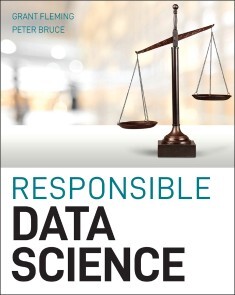
Responsible Data Science
EXPLORE THE MOST SERIOUS PREVALENT ETHICAL ISSUES IN DATA SCIENCE WITH THIS INSIGHTFUL NEW RESOURCEThe increasing popularity of data science has resulted in numerous well-publicized cases of bias, injustice, and discrimination. The widespread deployment of “Black box” algorithms that are difficult or impossible to understand and explain, even for their developers, is a primary source of these unanticipated harms, making modern techniques and methods for manipulating large data sets seem sinister, even dangerous. When put in the hands of authoritarian governments, these algorithms have enabled suppression of political dissent and persecution of minorities. To prevent these harms, data scientists everywhere must come to understand how the algorithms that they build and deploy may harm certain groups or be unfair.Responsible Data Science delivers a comprehensive, practical treatment of how to implement data science solutions in an even-handed and ethical manner that minimizes the risk of undue harm to vulnerable members of society. Both data science practitioners and managers of analytics teams will learn how to:* Improve model transparency, even for black box models* Diagnose bias and unfairness within models using multiple metrics* Audit projects to ensure fairness and minimize the possibility of unintended harmPerfect for data science practitioners, Responsible Data Science will also earn a spot on the bookshelves of technically inclined managers, software developers, and statisticians.GRANT FLEMING is a Data Scientist at Elder Research Inc. His professional focus is on machine learning for social science applications, model interpretability, civic technology, and building software tools for reproducible data science.PETER BRUCE is the Senior Learning Officer at Elder Research, Inc., author of several best-selling texts on data science, and Founder of the Institute for Statistics Education at Statistics.com, an Elder Research Company.Introduction xixPART I MOTIVATION FOR ETHICAL DATA SCIENCE AND BACKGROUND KNOWLEDGE 1CHAPTER 1 RESPONSIBLE DATA SCIENCE 3The Optum Disaster 4Jekyll and Hyde 5Eugenics 7Galton, Pearson, and Fisher 7Ties between Eugenics and Statistics 7Ethical Problems in Data Science Today 9Predictive Models 10From Explaining to Predicting 10Predictive Modeling 11Setting the Stage for Ethical Issues to Arise 12Classic Statistical Models 12Black-Box Methods 14Important Concepts in Predictive Modeling 19Feature Selection 19Model-Centric vs. Data-Centric Models 20Holdout Sample and Cross-Validation 20Overfitting 21Unsupervised Learning 22The Ethical Challenge of Black Boxes 23Two Opposing Forces 24Pressure for More Powerful AI 24Public Resistance and Anxiety 24Summary 25CHAPTER 2 BACKGROUND: MODELING AND THE BLACK-BOX ALGORITHM 27Assessing Model Performance 27Predicting Class Membership 28The Rare Class Problem 28Lift and Gains 28Area Under the Curve 29AUC vs. Lift (Gains) 31Predicting Numeric Values 32Goodness-of-Fit 32Holdout Sets and Cross-Validation 33Optimization and Loss Functions 34Intrinsically Interpretable Models vs. Black-Box Models 35Ethical Challenges with Interpretable Models 38Black-Box Models 39Ensembles 39Nearest Neighbors 41Clustering 41Association Rules 42Collaborative Filters 42Artificial Neural Nets and Deep Neural Nets 43Problems with Black-Box Predictive Models 45Problems with Unsupervised Algorithms 47Summary 48CHAPTER 3 THE WAYS AI GOES WRONG, AND THE LEGAL IMPLICATIONS 49AI and Intentional Consequences by Design 50Deepfakes 50Supporting State Surveillance and Suppression 51Behavioral Manipulation 52Automated Testing to Fine-Tune Targeting 53AI and Unintended Consequences 55Healthcare 56Finance 57Law Enforcement 58Technology 60The Legal and Regulatory Landscape around AI 61Ignorance Is No Defense: AI in the Context of Existing Law and Policy 63A Finger in the Dam: Data Rights, Data Privacy, and Consumer Protection Regulations 64Trends in Emerging Law and Policy Related to AI 66Summary 69PART II THE ETHICAL DATA SCIENCE PROCESS 71CHAPTER 4 THE RESPONSIBLE DATA SCIENCE FRAMEWORK 73Why We Keep Building Harmful AI 74Misguided Need for Cutting-Edge Models 74Excessive Focus on Predictive Performance 74Ease of Access and the Curse of Simplicity 76The Common Cause 76The Face Thieves 78An Anatomy of Modeling Harms 79The World: Context Matters for Modeling 80The Data: Representation Is Everything 83The Model: Garbage In, Danger Out 85Model Interpretability: Human Understanding for Superhuman Models 86Efforts Toward a More Responsible Data Science 89Principles Are the Focus 90Nonmaleficence 90Fairness 90Transparency 91Accountability 91Privacy 92Bridging the Gap Between Principles and Practice with the Responsible Data Science (RDS) Framework 92Justification 94Compilation 94Preparation 95Modeling 96Auditing 96Summary 97CHAPTER 5 MODEL INTERPRETABILITY: THE WHAT AND THE WHY 99The Sexist Résumé Screener 99The Necessity of Model Interpretability 101Connections Between Predictive Performance and Interpretability 103Uniting (High) Model Performance and Model Interpretability 105Categories of Interpretability Methods 107Global Methods 107Local Methods 113Real-World Successes of Interpretability Methods 113Facilitating Debugging and Audit 114Leveraging the Improved Performance of Black-Box Models 116Acquiring New Knowledge 116Addressing Critiques of Interpretability Methods 117Explanations Generated by Interpretability Methods Are Not Robust 118Explanations Generated by Interpretability Methods Are Low Fidelity 120The Forking Paths of Model Interpretability 121The Four-Measure Baseline 122Building Our Own Credit Scoring Model 124Using Train-Test Splits 125Feature Selection and Feature Engineering 125Baseline Models 127The Importance of Making Your Code Work for Everyone 129Execution Variability 129Addressing Execution Variability with Functionalized Code 130Stochastic Variability 130Addressing Stochastic Variability via Resampling 130Summary 133PART III EDS IN PRACTICE 135CHAPTER 6 BEGINNING A RESPONSIBLE DATA SCIENCE PROJECT 137How the Responsible Data Science Framework Addresses the Common Cause 138Datasets Used 140Regression Datasets—Communities and Crime 140Classification Datasets—COMPAS 140Common Elements Across Our Analyses 141Project Structure and Documentation 141Project Structure for the Responsible DataScience Framework: Everything in Its Place 142Documentation: The Responsible Thing to Do 145Beginning a Responsible Data Science Project 151Communities and Crime (Regression) 151Justification 151Compilation 154Identifying Protected Classes 157Preparation—Data Splitting and Feature Engineering 159Datasheets 161COMPAS (Classification) 164Justification 164Compilation 166Identifying Protected Classes 168Preparation 169Summary 172CHAPTER 7 AUDITING A RESPONSIBLE DATA SCIENCE PROJECT 173Fairness and Data Science in Practice 175The Many Different Conceptions of Fairness 175Different Forms of Fairness Are Trade-Offs with Each Other 177Quantifying Predictive Fairness Within a Data Science Project 179Mitigating Bias to Improve Fairness 185Preprocessing 185In-processing 186Postprocessing 186Classification Example: COMPAS 187Prework: Code Practices, Modeling, and Auditing 187Justification, Compilation, and Preparation Review 189Modeling 191Auditing 200Per-Group Metrics: Overall 200Per-Group Metrics: Error 202Fairness Metrics 204Interpreting Our Models: Why Are They Unfair? 207Analysis for Different Groups 209Bias Mitigation 214Preprocessing: Oversampling 214Postprocessing: Optimizing ThresholdsAutomatically 218Postprocessing: Optimizing Thresholds Manually 219Summary 223CHAPTER 8 AUDITING FOR NEURAL NETWORKS 225Why Neural Networks Merit Their Own Chapter 227Neural Networks Vary Greatly in Structure 227Neural Networks Treat Features Differently 229Neural Networks Repeat Themselves 231A More Impenetrable Black Box 232Baseline Methods 233Representation Methods 233Distillation Methods 234Intrinsic Methods 235Beginning a Responsible Neural Network Project 236Justification 236Moving Forward 239Compilation 239Tracking Experiments 241Preparation 244Modeling 245Auditing 247Per-Group Metrics: Overall 247Per-Group Metrics: Unusual Definitions of “False Positive” 248Fairness Metrics 249Interpreting Our Models: Why Are They Unfair? 252Bias Mitigation 253Wrap-Up 255Auditing Neural Networks for Natural Language Processing 258Identifying and Addressing Sources of Bias in NLP 258The Real World 259Data 260Models 261Model Interpretability 262Summary 262CHAPTER 9 CONCLUSION 265How Can We Do Better? 267The Responsible Data Science Framework 267Doing Better As Managers 269Doing Better As Practitioners 270A Better Future If We Can Keep It 271Index 273

Overview of Some Voice Over IP Calls and SMS Verifications Services Providers
This book provides brief survey of the some Voice Over IP (VOIP) providers, including the providers that offers free calls to some countries. Then, I will mention some websites that offer virtual phone numbers from around the world to receive activation codes and SMS confirmations online..The report consists from the following parts:1. How does VOIP work?2. Getting free phone number in US or Canada and other countries3. Betamax (Dellmont sarl) VOIP Service Provider.4. Some free websites that can be used to receive SMS online using numbers from some countries.5. Best websites that offer SMS verification, sending SMS and renting number services.6. Inphonex VOIP Provider.7. eFax8. VOIP Frequently asked questions.I am Dr. Hidaia Mahmoud Mohamed Alassouli. I completed my PhD degree in Electrical Engineering from Czech Technical University by February 2003, and my M. Sc. degree in Electrical Engineering from Bahrain University by June 1995. I completed also one study year of most important courses in telecommunication and computer engineering courses in Islamic university in Gaza. So, I covered most important subjects in Electrical Engineering, Computer Engineering and Telecommunications Engineering during my study. My nationality is Palestinian from gaza strip.I obtained a lot of certified courses in MCSE, SPSS, Cisco (CCNA), A+, Linux.I worked as Electrical, Telecommunicating and Computer Engineer in a lot of institutions. I worked also as a computer networking administrator.I had considerable undergraduate teaching experience in several types of courses in many universities. I handled teaching the most important subjects in Electrical and Telecommunication and Computer Engineering.I could publish a lot of papers a top-tier journals and conference proceedings, besides I published a lot of books in Publishing and Distribution houses.I wrote a lot of important Arabic articles on online news websites. I also have my own magazine website that I publish on it all my articles: http:// www.anticorruption.000space.comMy personal website: www.hidaia-alassouli.000space.comEmail: hidaia_alassouli@hotmail.com
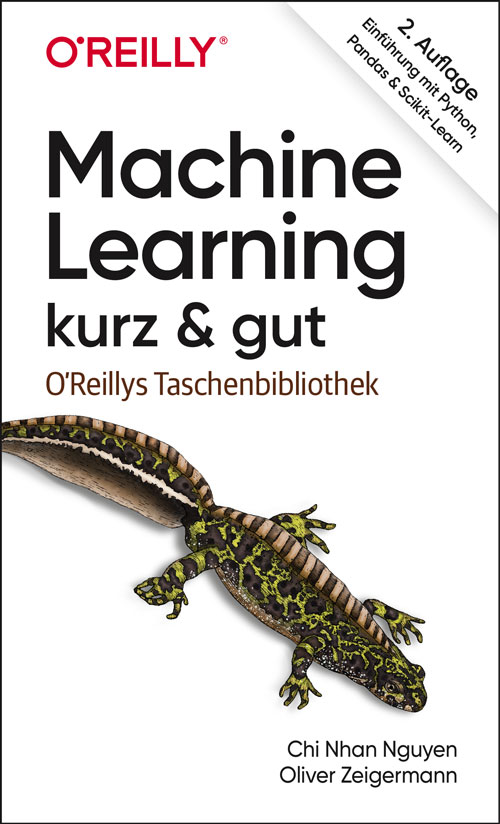
Machine Learning - kurz & gut (2. Auflg.)
Der kompakte Schnelleinstieg in Machine Learning und Deep Learning in der neuen 2. Auflage 04/2021!Machine Learning beeinflusst heute beinahe alle Bereiche der Technik und der Gesellschaft. Dieses Buch bietet Interessierten, die einen technischen Hintergrund haben, die schnellstmögliche Einführung in das umfangreiche Themengebiet des maschinellen Lernens und der statistischen Datenanalyse. Dabei werden folgende Themen behandelt und mit praktischen Beispielen veranschaulicht:Datenimport und -vorbereitungSupervised LearningFeature-Auswahl, ModellvalidierungNeuronale Netze und Deep LearningUnsupervised LearningReinforcement LearningAnhand konkreter Datensätze lernen Sie einen typischen Workflow kennen: vom Datenimport über Datenbereinigung, Datenanalyse bis hin zur Datenvisualisierung. Die Codebeispiele basieren auf Python und den Bibliotheken Scikit-Learn, Pandas, NumPy, TensorFlow und Keras.Nach der Lektüre dieses Buchs haben Sie einen Überblick über das gesamte Thema und können Ansätze einordnen und bewerten. Das Buch vermittelt Ihnen eine solide Grundlage, um Ihre ersten eigenen Machine-Learning-Modelle zu trainieren und vertiefende Literatur zu verstehen.
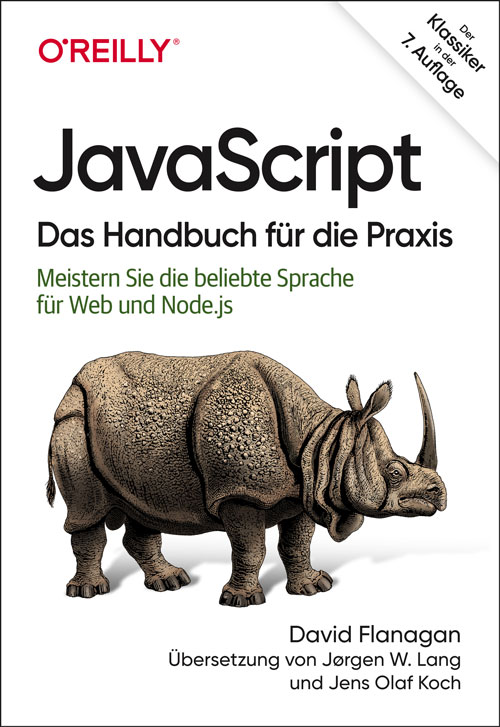
JavaScript - Das Handbuch für die Praxis (7. Auflg.)
Seit 25 Jahren das begleitende Grundlagenwerk zu JavaScript, in 7. Auflage 04/2021JavaScript ist die Programmiersprache des Web und wird heute von mehr Softwareentwicklerinnen und -entwicklern eingesetzt als jede andere Sprache. Seit fast 25 Jahren dient ihnen dieser Bestseller als Praxishandbuch und zuverlässiger Begleiter. Die vorliegende siebte Auflage wurde vollständig aktualisiert und deckt die Version 2020 von JavaScript ab.Sie finden in diesem Buch spannende und aufschlussreiche Codebeispiele sowie neue und erweiterte Kapitel zu Klassen, Modulen, Iteratoren, Generatoren, Promises und async/await. Es richtet sich an Programmiererinnen und Programmierer, die JavaScript lernen möchten, und an alle in der Webentwicklung, die ein tieferes Verständnis für die Sprache entwickeln und sie noch besser beherrschen wollen.Unter anderem werden folgende Themen behandelt:Typen, Variablen, Operatoren, Anweisungen, Objekte und ArraysFunktionen, Klassen, Module, Iteratoren, Generatoren, Promises und async/awaitDie Standardbibliothek von JavaScript: Datenstrukturen, reguläre Ausdrücke, JSON, Internationalisierung und URLsDie Webplattform: Dokumente, Komponenten, Grafiken, Netzwerkoptionen, Speicher und ThreadsNode.js: Puffer, Dateien, Streams, Threads, Kindprozesse, Webclients und WebserverWerkzeuge und Spracherweiterungen für professionelle JavaScript-Entwickler

SAP SuccessFactors Talent: Volume 1
Take an in-depth look at SAP SuccessFactors talent modules with this complete guide to configuration, administration, and best practices. This two-volume series follows a logical progression of SAP SuccessFactors modules that should be configured to complete a comprehensive talent management solution. The authors walk you through fully functional simple implementations in the primary chapters for each module before diving into advanced topics in subsequent chapters.In volume 1, we start with a brief introduction. The next two chapters jump into the Talent Profile and Job Profile Builder. These chapters lay the structures and data that will be utilized across the remaining chapters which detail each module. The following eight chapters walk you through building, administering, and using a goal plan in the Goal Management module as well as performance forms in the Performance Management module. The book also expands on performance topics with the 360 form and continuous performance management in two additional chapters. We then dive into configuring the calibration tool and how to set up calibration sessions in the next two chapters before providing a brief conclusion.Within each topic, the book touches on the integration points with other modules as well as internationalization. The authors also provide recommendations and insights from real world experience. Having finished the book, you will have an understanding of what comprises a complete SAP SuccessFactors talent management solution and how to configure, administer, and use each module within it.You will:· Develop custom talent profile portlets· Integrate Job Profile Builder with SAP SuccessFactors talent modules· Set up security, group goals, and team goals in goals management with sample XML· Configure and launch performance forms including rating scales and route maps· Configure and administrate the calibration module and its best practicesSUSAN TRAYNOR is an SAP SuccessFactors Certified Professional with more than 21 years of progressive experience in SAP HCM and SuccessFactors implementations. You can follow her on LinkedIn.MICHAEL A. WELLENS, M.S. is a certified SAP SuccessFactors consultant with over 15 years of human resources information systems implementation experience. He has successfully launched a variety of core HR and talent management solutions across a variety of fortune 500 companies around the world. You can follow him on LinkedIn or on Twitter at @mike_wellens.VENKI KRISHNAMOORTHY is an SAP SuccessFactors consultant. Venki has over 15 years of experience as a functional lead, project manager, and program manager in HCM transformation projects. Venki has completed over 35 full lifecycle implementations of SuccessFactors projects across multiple modules. You can follow Venki on LinkedIn or on Twitter at @venki_sap.Chapter 1: An Introduction to SAP SuccessFactors Talent ModulesChapter 2: Talent ProfileChapter 3: Job Profile BuilderChapter 4: Basic Goal ManagementChapter 5: Alternate Goal Management Concepts and FunctionalityChapter 6: Introduction to Performance ManagementChapter 7: Performance Form Template SectionsChapter 8: Administering Performance Management FormsChapter 9: Using Performance Management FormsChapter 10: Performance Management XML and TranslationsChapter 11: Ask for Feedback, Get Feedback, Add Modifier, and Add SignerChapter 12: 360Chapter 13: Continuous Performance ManagementChapter 14: Calibration ConfigurationChapter 15: Calibration SessionsChapter 16: Conclusion

Microsoft OneNote
* WIE SIE MIT DEM DIGITALEN NOTIZBUCH KOMFORTABEL UND EFFEKTIV ARBEITEN* WERTVOLLE TIPPS ZUM FLEXIBLEN EINSATZ: IDEEN NOTIEREN, INFORMATIONEN STRUKTURIEREN, MITSCHRIFTEN ERSTELLEN* FÜR ALLE ONENOTE-ANWENDUNGEN: SOWOHL AUF DEM COMPUTER ALS AUCH MOBIL MIT DER ONENOTE-APPOneNote ist als Teil des Microsoft-Office-Pakets auf vielen PCs schon vorinstalliert und auch als kostenlose Online-Version sowie als mobile App verfügbar.Winfried Seimert zeigt Ihnen in diesem praxisnahen Buch, wie Sie mit dem vielseitigen digitalen Notizbuch komfortabel Ordnung und Struktur in Ihr digitales Leben bringen: Sie lernen, Informationen jeglicher Art zu sammeln und zu Ihren persönlichen Notizbüchern zusammenzufassen. Sie erfassen Informationen in Form von Texten oder Tabellen, speichern Links von interessanten Webseiten, integrieren Fotos, Audioaufzeichnungen und Videos - und Dateien können Sie ebenfalls hinzufügen. Außerdem lassen sich Ihre Notizen auch handschriftlich festhalten. Viele praktische Tipps helfen Ihnen dabei, die Möglichkeiten von OneNote flexibel für sich zu nutzen, Ihr gesammeltes Wissen zu strukturieren, gezielt wieder abzurufen und mit anderen zu teilen.Sie lernen außerdem, wie Sie OneNote in Zusammenarbeit mit anderen Office-Programmen wie Outlook oder Word einsetzen, und erfahren, welche fortgeschrittenen Möglichkeiten Ihnen das Add-in Onetastic bietet. So wird OneNote zu einem effektiven Helfer für Ihre Selbstorganisation sowie Ihr Wissens- und Informationsmanagement.AUS DEM INHALT:* Einsatz von Universal-, Web- und Desktop-App* Basiswissen: die Struktur von OneNote verstehen* Notizbücher erstellen und individuell gestalten* Inhalte erfassen: Texte, Tabellen, Bilder, Zeichnungen, Audio und Video* Inhalte verwalten: Sicherungsordner anlegen, Such-optionen nutzen, Dokumente teilen* OneNote für Fortgeschrittene: Mit Onetastic zusätzliche Features verwendenWinfried Seimert ist EDV-Dozent, Consultant und Autor zahlreicher Fachbücher insbesondere zu den Themen Software und Betriebssysteme. Dabei hat er immer den Komfort des Anwenders im Blick und erklärt entsprechend praxisnah. So erfreuen sich seine Bücher aufgrund ihrer durchdachten Strukturierung bereits seit Mitte der neunziger Jahre großer Beliebtheit.

Das Medium aus der Maschine
»Die Informatik entwirft drei sehr unterschiedliche Bilder von Computer: Maschine – Werkzeug – Medium. Wie können so gegensätzliche Vorstellungen im gleichen Artefakt einen technologischen Ausdruck finden? Zu welchen Widersprüchen führen so differierende Sichtweisen in der Forschungspraxis der Informatik? Welches sind die Konzepte, über die sie sich verbinden lassen? Und wie verändert sich das Gewicht der Bilder von Maschine, Werkzeug und Medium in der Entwicklungsgeschichte des Computers und der Informatik?«Aus der EinleitungUnveränderter NachdruckHeidi Schelhowe, Prof. Dr., ist Professorin für Digitale Medien in der Bildung in der Informatik an der Universität Bremen und leitet dort die Arbeitsgruppe "Digitale Medien in der Bildung" (dimeb).
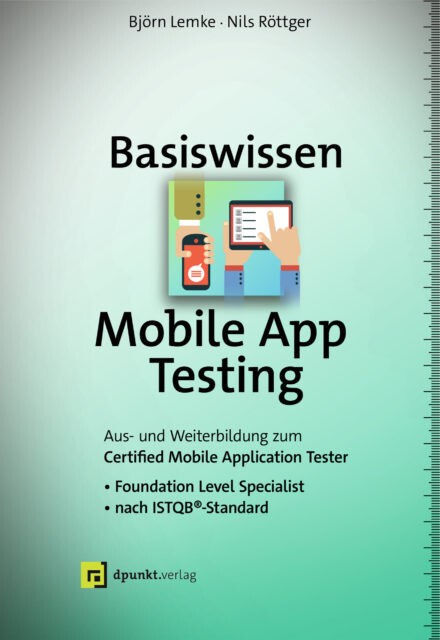
Basiswissen Mobile App Testing
Grundlegende Methoden, Verfahren und Werkzeuge zum Testen von mobilen Applikationen.»Basiswissen Mobile App Testing« vermittelt die Grundlagen des Testens mobiler Apps und gibt einen fundierten Überblick über geeignete Testarten, Testmethoden, den Testprozess und das Testkonzept für mobile Anwendungen. Auch auf Qualitätskriterien, mobile App-Plattformen, Werkzeuge und die Automatisierung der Testausführung wird eingegangen. Viele Beispiele aus realen Kundenprojekten erleichtern die Umsetzung des Gelernten in die Praxis.Die Themen im Einzelnen:Geschäftliche & technische Faktoren, Herausforderungen & Risiken, Teststrategien für mobile AppsTests mit Bezug zur mobilen PlattformÜbliche Testarten und der Testprozess für mobile AppsMobile App-Plattformen, Werkzeuge und UmgebungenAutomatisierung der TestausführungDas Buch ist konform zum ISTQB®-Lehrplan »Certified Mobile Application Tester« und eignet sich mit vielen Beispielen und Übungen nicht nur bestens für die Prüfungsvorbereitung, sondern dient gleichzeitig als kompaktes Basiswerk zum Thema in der Praxis und an Hochschulen.Über die Autoren:Björn Lemke ist Managing Consultant bei der trendig technology services GmbH. Die Schwerpunkte seiner Arbeit sind Softwarequalitätssicherung, Integrated Technology and Operations (ITOps), IT-Service-Management (ITIL), Testmanagement, Testdatenmanagement, Testinfrastrukturmanagement sowie Mobile Application Testing in kleinen bis hin zu sehr grossen Projekten.Nils Röttger arbeitet bei der imbus AG in Möhrendorf als Berater, Projektleiter und Speaker und ist u. a. verantwortlich für die Ausbildung und den Bereich Mobile Testing. In seinen Vorträgen beschäftigt er sich immer wieder mit Themen wie exploratives Testen, Usability oder Ethik im Softwaretest.

Introducing .NET for Apache Spark
Get started using Apache Spark via C# or F# and the .NET for Apache Spark bindings. This book is an introduction to both Apache Spark and the .NET bindings. Readers new to Apache Spark will get up to speed quickly using Spark for data processing tasks performed against large and very large datasets. You will learn how to combine your knowledge of .NET with Apache Spark to bring massive computing power to bear by distributed processing of extremely large datasets across multiple servers.This book covers how to get a local instance of Apache Spark running on your developer machine and shows you how to create your first .NET program that uses the Microsoft .NET bindings for Apache Spark. Techniques shown in the book allow you to use Apache Spark to distribute your data processing tasks over multiple compute nodes. You will learn to process data using both batch mode and streaming mode so you can make the right choice depending on whether you are processing an existing dataset or are working against new records in micro-batches as they arrive. The goal of the book is leave you comfortable in bringing the power of Apache Spark to your favorite .NET language.WHAT YOU WILL LEARN* Install and configure Spark .NET on Windows, Linux, and macOS * Write Apache Spark programs in C# and F# using the .NET bindings* Access and invoke the Apache Spark APIs from .NET with the same high performance as Python, Scala, and R* Encapsulate functionality in user-defined functions* Transform and aggregate large datasets * Execute SQL queries against files through Apache Hive* Distribute processing of large datasets across multiple servers* Create your own batch, streaming, and machine learning programsWHO THIS BOOK IS FOR.NET developers who want to perform big data processing without having to migrate to Python, Scala, or R; and Apache Spark developers who want to run natively on .NET and take advantage of the C# and F# ecosystemsED ELLIOTT is a data engineer who has been working in IT for 20 years and has focused on data for the last 15 years. He uses Apache Spark at work and has been contributing to the Microsoft .NET for Apache Spark open source project since it was released in 2019. Ed has been blogging and writing since 2014 at his own blog as well as for SQL Server Central and Redgate. He has spoken at a number of events such as SQLBits, SQL Saturday, and the GroupBy conference.IntroductionPART I. GETTING STARTED1. Understanding Apache Spark2. Setting up Spark3. Programming with .NET for Apache SparkPART II. THE APIS4. User-Defined Functions5. The DataFrame API6. Spark SQL and Hive Tables7. Spark Machine Learning APIPART III. EXAMPLES8. Batch Mode Processing9. Structured Streaming10. Troubleshooting11. Delta LakePART IV. APPENDICESAppendix A. Running in the CloudAppendix B. Implementing .Net for Apache Spark Code

Samsung Galaxy A12
Die verständliche Anleitung für Ihr Smartphone:- Alle Funktionen & Einstellungen auf einen Blick- Schritt für Schritt erklärt – mit praktischen TippsMit diesem smarten Praxisbuch gelingt Ihnen der schnelle und sichere Einstieg in Ihr Smartphone. Lernen Sie Ihr Galaxy A12 von Grund auf kennen und beherrschen! Anschauliche Anleitungen, Beispiele und Bilder zeigen Ihnen gut nachvollziehbar, wie Sie Ihr mobiles Gerät optimal handhaben – von der Ersteinrichtung und Personalisierung über die große Funktionsvielfalt bis zu den wichtigsten Anwendungen. Nutzen Sie darüber hinaus die übersichtlichen Spicker-Darstellungen: Damit können Sie jene Bedienungsschritte, die man am häufigsten braucht, aber immer wieder vergisst, auf einen Blick finden und umsetzen. Freuen Sie sich auf viele hilfreiche Tipps und legen Sie ganz einfach los!Aus dem Inhalt:- Alle Bedienelemente des Smartphones auf einen Blick- Ersteinrichtung und Tipps zum Umzug- Google-Konto erstellen und verwalten- Die Benutzeroberfläche Ihres Smartphones personalisieren- Apps aus dem Play Store herunterladen- Kontakte anlegen und im Adressbuch verwalten- Anrufe tätigen und SMS austauschen - Nachrichten über Mail und WhatsApp versenden und empfangen- Uhr, Kalender, Maps und andere praktische Apps nutzen - Fotos sowie Videos aufnehmen, verwalten und teilen- Ins Internet gehen über WLAN und mobile Daten - Updates, Datenschutz und Sicherheit

Die Erstellung eines digitalen Zwillings
Die Erstellung der ersten digitalen Zwillinge sollte intuitiv sein. In diesem Buch werden Zwillinge aus unterschiedlichen Bereichen vorgestellt, die ohne große Vorkenntnisse aufgebaut werden können. Dem Leser wird durch Praxisbeispiele ein Verständnis für die Handhabung von Simcenter Amesim vermittelt. Ohne tiefgreifende mathematische Fähigkeiten werden beispielsweise Lüftungs- und Tankanlagen, Sonnenkollektoren oder ein einfacher Wagenheber nachgebaut. Jedes Rechenbeispiel schließt mit Arbeitsvorschlägen, um den Umgang mit dem Zwilling zu schulen. Einleitung.- Signale und Mathematik.- Der mechanische Zwilling.- Der thermische Zwilling.- Der hydraulische Zwilling.- Der pneumatische Zwilling.- Fazit.- Haftungsausschluss
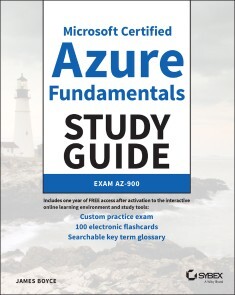
Microsoft Certified Azure Fundamentals Study Guide
QUICKLY PREPS TECHNICAL AND NON-TECHNICAL READERS TO PASS THE MICROSOFT AZ-900 CERTIFICATION EXAMMicrosoft Certified Azure Fundamentals Study Guide: Exam AZ-900 is your complete resource for preparing for the AZ-900 exam. Microsoft Azure is a major component of Microsoft’s cloud computing model, enabling organizations to host their applications and related services in Microsoft’s data centers, eliminating the need for those organizations to purchase and manage their own computer hardware. In addition, serverless computing enables organizations to quickly and easily deploy data services without the need for servers, operating systems, and supporting systems. This book is targeted at anyone who is seeking AZ-900 certification or simply wants to understand the fundamentals of Microsoft Azure. Whatever your role in business or education, you will benefit from an understanding of Microsoft Azure fundamentals.Readers will also get one year of FREE access to Sybex’s superior online interactive learning environment and test bank, including hundreds of questions, a practice exam, electronic flashcards, and a glossary of key terms. This book will help you master the following topics covered in the AZ-900 certification exam:* Cloud concepts* Cloud types (Public, Private, Hybrid)* Azure service types (IaaS, SaaS, PaaS)* Core Azure services* Security, compliance, privacy, and trust* Azure pricing levels* Legacy and modern lifecyclesGrowth in the cloud market continues to be very strong, and Microsoft is poised to see rapid and sustained growth in its cloud share. Written by a long-time Microsoft insider who helps customers move their workloads to and manage them in Azure on a daily basis, this book will help you break into the growing Azure space to take advantage of cloud technologies. JAMES BOYCE is a Sr. Technical Account Manager for Microsoft. He has authored more than 60 books on computer technology, covering topics from Windows Server and client, Microsoft Office, networking, programming, and hardware to AutoCAD and UNIX. A former Contributing Editor for Windows Magazine, he has written for numerous print and online publications and has managed globally dispersed teams supporting Windows Server, SharePoint, and other systems. Jim has also been a college instructor.Introduction xixAssessment Test xxxiiCHAPTER 1 CLOUD CONCEPTS 1Understanding Cloud Computing 2Benefits of Cloud Computing 4Economic Benefits 4Scalability and Elasticity 5High Availability 7Fault Tolerance 7Disaster Recovery 8Human Resources 9Financial Models 9Cloud Computing Models and Responsibilities 10Software-as-a-Service 10Infrastructure-as-a-Service 12Platform-as-a-Service 13Shared Responsibility 15Public, Private, and Hybrid Cloud Models 16Public Cloud 16Private Cloud 17Hybrid Cloud 17Summary 18Exam Essentials 18Review Questions 21CHAPTER 2 AZURE CORE SERVICES 25Core Azure Architectural Components 26Geographies and Regions 26Availability Zones 28Bringing It All Together 30Resources and Resource Groups 31Azure Resource Manager 33Azure Subscriptions and Billing Scope 33Azure Subscriptions 33Azure Billing Accounts 34Billing Scope 35Azure Tenants 37Core Azure Services 37Virtual Machines 38Virtual Machine Scale Sets 39Availability Sets 40Azure App Service 42Azure Container Instances 42Azure Kubernetes Service 43Windows Virtual Desktop 44Core Azure Storage 44Blob Storage 44Blob Storage Tiers 45Disk Storage 45File Storage 46Storage Accounts 46Core Data Services 47Structured and Unstructured Data 47Azure SQL Database 47SQL Managed Instance 48Cosmos DB 48Azure Database for MySQL 49Azure Database for PostgreSQL 49Azure Database Migration Service 49Microsoft Marketplace 50Summary 50Exam Essentials 51Review Questions 53CHAPTER 3 AZURE CORE NETWORKING SERVICES 59Networking Concepts 60Client-Server and Serverless Computing 60Network Addressing 61Domain Name System 61Routing 63Virtual Networks 63Load Balancers 64VPN Gateway 66Azure VPN Gateway 67ExpressRoute 68Content Delivery Networks 69Summary 70Exam Essentials 71Review Questions 72CHAPTER 4 SECURITY, COMPLIANCE, PRIVACY, AND TRUST 75Network Security 77Defense in Depth 77Azure Firewall 78Web Application Firewall 80Network Security Groups 81Application Security Groups 83User-Defined Routes 83Azure DDoS Protection 84Authentication and Authorization 84Azure Active Directory 84Authentication and Authorization 86Azure Multifactor Authentication 87Conditional Access 87Single Sign-On (SSO) 88Security Tools and Features 88Azure Security Center 88Azure Key Vault 90Azure Information Protection 91Azure Advanced Threat Protection 91Azure Sentinel 92Azure Dedicated Hosts 92Azure Governance Methodologies 93Azure Policies 93Azure Initiatives 94Role-Based Access Control 94Resource Locks 97Azure Blueprints 97Microsoft Cloud Adoption Framework for Azure 99Azure Monitoring and Reporting Options 100Azure Monitor 100Azure Service Health 102Azure Advisor 103Compliance and Data ProtectionStandards 105Industry Compliance Standards and Terms 105Microsoft Privacy Statement 106Online Service Terms 107Data Protection Addendum 107Trust Center 107Service Trust Portal 107Compliance Manager 108Azure Government 109Azure China 109Summary 110Exam Essentials 111Review Questions 114CHAPTER 5 AZURE SOLUTIONS 123Internet of Things (IoT) 124Azure IoT Hub 124Azure IoT Central 125Azure Sphere 126Artificial Intelligence 126Azure Machine Learning 127Azure Cognitive Services 128Azure Bot Service 128Serverless Computing 128Azure Functions 129Azure Logic Apps 129DevOps 130Azure DevOps Services 130GitHub and GitHub Actions 130Azure DevTest Labs 131Summary 131Exam Essentials 131Review Questions 133CHAPTER 6 AZURE PRICING, SERVICE LEVELS, AND LIFECYCLE 137Purchasing Azure Services 138Azure Subscriptions 138Purchasing Services 139Factors Affecting Cost 139Billing Zones 141Planning and Managing Azure Costs 141TCO Calculator 141Pricing Calculator 143Managing and Minimizing Azure Cost 144Azure Cost Management + Billing 148Service Level Agreements 149Composite SLAs 150Availability Zones 150Service Lifecycles 151Preview 151General Availability 151Summary 152Exam Essentials 152Review Questions 154CHAPTER 7 CREATING AND MANAGING AZURE RESOURCES 157Azure Management Tools 158Azure Portal 158Azure PowerShell 160Azure CLI 161Azure Cloud Shell 161Azure Mobile App 162Using ARM Templates 163Bringing It All Together 163Creating and Managing Resources 163Creating a Free Subscription 164Creating Resource Groups 165Creating Azure Resources and Services 166Deleting Resources and Services 174Summary 175Exam Essentials 175Review Questions 177Appendix Answers to Review Questions 179Chapter 1: Cloud Concepts 180Chapter 2: Azure Core Services 181Chapter 3: Azure Core Networking Services 184Chapter 4: Security, Compliance, Privacy, and Trust 185Chapter 5: Azure Solutions 189Chapter 6: Azure Pricing, Service Levels, and Lifecycle 190Chapter 7: Creating and Managing Azure Resources 192Index 193
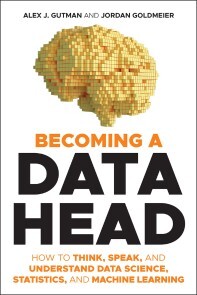
Becoming a Data Head
"TURN YOURSELF INTO A DATA HEAD. YOU'LL BECOME A MORE VALUABLE EMPLOYEE AND MAKE YOUR ORGANIZATION MORE SUCCESSFUL."Thomas H. Davenport, Research Fellow, Author of Competing on Analytics, Big Data @ Work, and The AI AdvantageYOU'VE HEARD THE HYPE AROUND DATA—NOW GET THE FACTS.In Becoming a Data Head: How to Think, Speak, and Understand Data Science, Statistics, and Machine Learning, award-winning data scientists Alex Gutman and Jordan Goldmeier pull back the curtain on data science and give you the language and tools necessary to talk and think critically about it.You'll learn how to:* Think statistically and understand the role variation plays in your life and decision making* Speak intelligently and ask the right questions about the statistics and results you encounter in the workplace* Understand what's really going on with machine learning, text analytics, deep learning, and artificial intelligence* Avoid common pitfalls when working with and interpreting dataBecoming a Data Head is a complete guide for data science in the workplace: covering everything from the personalities you’ll work with to the math behind the algorithms. The authors have spent years in data trenches and sought to create a fun, approachable, and eminently readable book. Anyone can become a Data Head—an active participant in data science, statistics, and machine learning. Whether you're a business professional, engineer, executive, or aspiring data scientist, this book is for you.ALEX J. GUTMAN, PHD, is a Data Scientist, Corporate Trainer, and Accredited Professional Statistician. His professional focus is on statistical and machine learning and he has extensive experience working as a Data Scientist for the Department of Defense and two Fortune 50 companies.JORDAN GOLDMEIER is a Data Scientist, author, speaker, and community leader. He is a seven-time recipient of the Microsoft Most Valuable Professional Award and he has taught analytics to members of the Pentagon and Fortune 500 companies.Acknowledgments xiiiForeword xxiiiIntroduction xxviiPART ONE THINKING LIKE A DATA HEADCHAPTER 1 WHAT IS THE PROBLEM? 3Questions a Data Head Should Ask 4Why Is This Problem Important? 4Who Does This Problem Affect? 6What If We Don’t Have the Right Data? 6When Is the Project Over? 7What If We Don’t Like the Results? 7Understanding Why Data Projects Fail 8Customer Perception 8Discussion 10Working on Problems That Matter 11Chapter Summary 11CHAPTER 2 WHAT IS DATA? 13Data vs. Information 13An Example Dataset 14Data Types 15How Data Is Collected and Structured 16Observational vs. Experimental Data 16Structured vs. Unstructured Data 17Basic Summary Statistics 18Chapter Summary 19CHAPTER 3 PREPARE TO THINK STATISTICALLY 21Ask Questions 22There Is Variation in All Things 23Scenario: Customer Perception (The Sequel) 24Case Study: Kidney-Cancer Rates 26Probabilities and Statistics 28Probability vs. Intuition 29Discovery with Statistics 31Chapter Summary 33PART TWO SPEAKING LIKE A DATA HEADCHAPTER 4 ARGUE WITH THE DATA 37What Would You Do? 38Missing Data Disaster 39Tell Me the Data Origin Story 43Who Collected the Data? 44How Was the Data Collected? 44Is the Data Representative? 45Is There Sampling Bias? 46What Did You Do with Outliers? 46What Data Am I Not Seeing? 47How Did You Deal with Missing Values? 47Can the Data Measure What You Want It to Measure? 48Argue with Data of All Sizes 48Chapter Summary 49CHAPTER 5 EXPLORE THE DATA 51Exploratory Data Analysis and You 52Embracing the Exploratory Mindset 52Questions to Guide You 53The Setup 53Can the Data Answer the Question? 54Set Expectations and Use Common Sense 54Do the Values Make Intuitive Sense? 54Watch Out: Outliers and Missing Values 58Did You Discover Any Relationships? 59Understanding Correlation 59Watch Out: Misinterpreting Correlation 60Watch Out: Correlation Does Not Imply Causation 62Did You Find New Opportunities in the Data? 63Chapter Summary 63CHAPTER 6 EXAMINE THE PROBABILITIES 65Take a Guess 66The Rules of the Game 66Notation 67Conditional Probability and Independent Events 69The Probability of Multiple Events 69Two Things That Happen Together 69One Thing or the Other 70Probability Thought Exercise 72Next Steps 73Be Careful Assuming Independence 74Don’t Fall for the Gambler’s Fallacy 74All Probabilities Are Conditional 75Don’t Swap Dependencies 76Bayes’ Theorem 76Ensure the Probabilities Have Meaning 79Calibration 80Rare Events Can, and Do, Happen 80Chapter Summary 81CHAPTER 7 CHALLENGE THE STATISTICS 83Quick Lessons on Inference 83Give Yourself Some Wiggle Room 84More Data, More Evidence 84Challenge the Status Quo 85Evidence to the Contrary 86Balance Decision Errors 88The Process of Statistical Inference 89The Questions You Should Ask to Challenge the Statistics 90What Is the Context for These Statistics? 90What Is the Sample Size? 91What Are You Testing? 92What Is the Null Hypothesis? 92Assuming Equivalence 93What Is the Significance Level? 93How Many Tests Are You Doing? 94Can I See the Confidence Intervals? 95Is This Practically Significant? 96Are You Assuming Causality? 96Chapter Summary 97PART THREE UNDERSTANDING THE DATA SCIENTIST’S TOOLBOXCHAPTER 8 SEARCH FOR HIDDEN GROUPS 101Unsupervised Learning 102Dimensionality Reduction 102Creating Composite Features 103Principal Component Analysis 105Principal Components in Athletic Ability 105PCA Summary 108Potential Traps 109Clustering 110k-Means Clustering 111Clustering Retail Locations 111Potential Traps 113Chapter Summary 114CHAPTER 9 UNDERSTAND THE REGRESSION MODEL 117Supervised Learning 117Linear Regression: What It Does 119Least Squares Regression: Not Just a Clever Name 120Linear Regression: What It Gives You 123Extending to Many Features 124Linear Regression: What Confusion It Causes 125Omitted Variables 125Multicollinearity 126Data Leakage 127Extrapolation Failures 128Many Relationships Aren’t Linear 128Are You Explaining or Predicting? 128Regression Performance 130Other Regression Models 131Chapter Summary 131CHAPTER 10 UNDERSTAND THE CLASSIFICATION MODEL 133Introduction to Classification 133What You’ll Learn 134Classification Problem Setup 135Logistic Regression 135Logistic Regression: So What? 138Decision Trees 139Ensemble Methods 142Random Forests 143Gradient Boosted Trees 143Interpretability of Ensemble Models 145Watch Out for Pitfalls 145Misapplication of the Problem 146Data Leakage 146Not Splitting Your Data 146Choosing the Right Decision Threshold 147Misunderstanding Accuracy 147Confusion Matrices 148Chapter Summary 150CHAPTER 11 UNDERSTAND TEXT ANALYTICS 151Expectations of Text Analytics 151How Text Becomes Numbers 153A Big Bag of Words 153N-Grams 157Word Embeddings 158Topic Modeling 160Text Classification 163Naïve Bayes 164Sentiment Analysis 166Practical Considerations When Working with Text 167Big Tech Has the Upper Hand 168Chapter Summary 169CHAPTER 12 CONCEPTUALIZE DEEP LEARNING 171Neural Networks 172How Are Neural Networks Like the Brain? 172A Simple Neural Network 173How a Neural Network Learns 174A Slightly More Complex Neural Network 175Applications of Deep Learning 178The Benefits of Deep Learning 179How Computers “See” Images 180Convolutional Neural Networks 182Deep Learning on Language and Sequences 183Deep Learning in Practice 185Do You Have Data? 185Is Your Data Structured? 186What Will the Network Look Like? 186Artificial Intelligence and You 187Big Tech Has the Upper Hand 188Ethics in Deep Learning 189Chapter Summary 190PART FOUR ENSURING SUCCESSCHAPTER 13 WATCH OUT FOR PITFALLS 193Biases and Weird Phenomena in Data 194Survivorship Bias 194Regression to the Mean 195Simpson’s Paradox 195Confirmation Bias 197Effort Bias (aka the “Sunk Cost Fallacy”) 197Algorithmic Bias 198Uncategorized Bias 198The Big List of Pitfalls 199Statistical and Machine Learning Pitfalls 199Project Pitfalls 200Chapter Summary 202CHAPTER 14 KNOW THE PEOPLE AND PERSONALITIES 203Seven Scenes of Communication Breakdowns 204The Postmortem 204Storytime 205The Telephone Game 206Into the Weeds 206The Reality Check 207The Takeover 207The Blowhard 208Data Personalities 208Data Enthusiasts 209Data Cynics 209Data Heads 209Chapter Summary 210CHAPTER 15 WHAT’S NEXT? 211Index 215

Teach Yourself VISUALLY Google Workspace
MASTER THE INS AND OUTS OF GOOGLE'S FREE-TO-USE OFFICE AND PRODUCTIVITY SOFTWARETeach Yourself VISUALLY Google Workspace delivers the ultimate guide to getting the most out of Google's Workspace cloud software. Accomplished author Guy Hart-Davis offers readers the ability to tackle a huge number of everyday productivity problems with Google's intuitive collection of online tools. With over 700 full-color screenshots included to help you learn, you'll discover how to:* Manage your online Google Calendar* Master the files and folders in your Google Drive storage* Customize your folders and navigate your Gmail account* Create perfect spreadsheets, presentations, and documents in Google Sheets, Slides, and DocsPerfect for anyone who hopes to make sense of Google's highly practical and free online suite of tools, Teach Yourself VISUALLY Google Workspace also belongs on the bookshelves of those who already find themselves using Workspace and just want to get more out of it.GUY HART-DAVIS is the author of more than 100 computing books, including Teach Yourself VISUALLY Chromebook, Teach Yourself VISUALLY MacBook Pro and MacBook Air, and Teach Yourself VISUALLY iPhone.Chapter 1: Getting Started with G SuiteChapter 2: Managing Files and Folders in DriveChapter 3: Performing Common Tasks in Docs, Sheets, and SlidesChapter 4: Inserting Objects in Docs, Sheets, and SlidesChapter 5: Working in DocsChapter 6: Share and Collaborate on FilesChapter 7: Working in SheetsChapter 8: Learning Advanced Sheets FeaturesChapter 9: Working in SlidesChapter 10: Sending and Receiving E-MailChapter 11: Organizing Your LifeChapter 12: Creating Forms

Beginning HCL Programming
Get started with programming and using the Hashicorp Language (HCL). This book introduces you to the HCL syntax and its ecosystem then it shows you how to integrate it as part of an overall DevOps approach.Next, you’ll learn how to implement infrastructure as code, specifically, using the Terraform template, a set of cloud infrastructure automation tools. As part of this discussion, you’ll cover Consul, a service mesh solution providing a full-featured control plane with service discovery, configuration, and segmentation functionality. You’ll integrate these with Vault to build HCL-based infrastructure as code solutions.Finally, you’ll use Jenkins and HCL to provision and maintain the infrastructure as code system. After reading and using Beginning HCL Programming, you'll have the know-how and source code to get started with flexible HCL for all your cloud and DevOps needs.WHAT YOU WILL LEARN* Get started with programming and using HCL* Use Vault, Consul, and Terraform * Apply HCL to infrastructure as codeDefine the Terraform template with HCL * Configure Consul using HCL* Use HCL to configure Vault* Provision and maintain infrastructure as code using Jenkins and HCLWHO THIS BOOK IS FORAnyone new to HCL but who does have at least some prior programming experience as well as knowledge of DevOps in general.PIERLUIGI RITI is a senior DevOps engineer at Coupa Software and Sunchronoss Technologies. Prior to that, he was a senior software engineer at Ericsson and Tata. His experience includes implementing DevOps in the cloud using Google Cloud Platform as well as AWS and Azure. Also, he has over ten years of extensive experience in more general design and development of different scale applications particularly in the telco and financial industries. He has quality development skills using the latest technologies including Java, J2EE, C#, F#, .NET, Spring .NET, EF, WPF, WF, WinForm, WebAPI, MVC, Nunit, Scala, Spring, JSP, EJB, Struts, Struts2, SOAP, REST, C, C++, Hibernate, NHibernate, Weblogic, XML, XSLT, Unix script, Ruby, and Python.DAVID FLYNN is an Associate Analyst in Employee Access Business Operations at Mastercard. He is an Electronic Engineer with experience in telecommunications, networks, software, security and Financial Systems. David started out as a Telecommunications Engineer working on Voice, data and wireless systems for Energis and later Nortel Networks supporting systems such as Lucent G3r, Alcatel E10 & Nortel Passport. He then did some time in Transport and Private security abroad before retraining in Computing, Cyber Security and Cloud Systems plus doing Cyber Security & Telecomm research for the Civil Service. He has completed separate Diplomas in Computing and Cloud focusing on Windows, C# , Google, AWS and Powershell amongst other technologies. David also has worked as a C# Engineer. More recently David has worked for various fintech companies including Bank Of America Merril Lynch focusing on technical & Application Support encompassing such technologies as Rsa Igl, Rsa SecurID, IBM Tam/Isam, Postgres/Oracle databases, Mainframe, Tandem, CyberArk, MaxPro and Active Directory.1 Introduction to HCLDefine the history of HCL, the basic syntax and, show the basic configuration syntax and the basic usage of the HCL2 The Hashicorp ecosystemShow the different software create by Hashicorpt like Vault, Consul, Terraform3 Introduction to GoA small introduction on the Go language, we use Go to define the configuration template described in the book4 Infrastructure As CodeDefine what is the Infrastructure as Code and how we can do that5 Introduction to the Cloud and DevOpsIn this chapter, we have a short introduction to the Cloud and the DevOps6 Use HCL for TerraformWe start to use the HCL for define Terraform template7 Consul HCLIn this chapter we introduce the HCL for Consul, we learn how to configure Consul using the HCL8 Vault HCLUse the HCL for configure Vault9 Infrastructure as Code with HCLDesign the Infrastructure as Code use the Hashicorp language, in particular, we use Terraform, Vault and Consul10 Provisioning and Maintain the Infrastructure as CodeIn this chapter, we see how to use Jenkins and the HCL for provisioning and maintain the infrastructure as code

Practical Internet Server Configuration
Learn the skills to complete the full installation, configuration, and maintenance of an enterprise class internet server, no matter what Unix-like operating system you prefer. This book will rapidly guide you towards real system administration, with clear explanations along the way.After a chapter explaining the most important Unix basics, you will start with a vanilla server as delivered by a hosting provider and by the end of the book, you will have a fully functional and well-secured enterprise class internet server. You will also be equipped with the expertise needed to keep your server secured and up to date. All configuration examples are given for FreeBSD, Debian and CentOS, so you are free to choose your operating system.No single blueprint exists for an internet server, and an important part of the work of a system administrator consists of analyzing, interpreting and implementing specific wishes, demands and restrictions from different departments and viewpoints within an organization. Practical Internet Server Configuration provides the information you need to succeed as a sysadmin.WHAT YOU'LL LEARN* Configure DNS using Bind 9* Set up Apache and Nginx* Customize a mail server: IMAP (Dovecot) and SMTP (Postfix), spam filtering included* Authenticate mail users using LDAP* Install and maintain MariaDB and PostgreSQL databases* Prepare SSL/TLS certificates for the encryption of web, mail and LDAP traffic* Synchronize files, calendars and address books between devices* Build a firewall: PF for FreeBSD and nftables for LinuxWHO THIS BOOK IS FORThis book can be used by aspiring and beginning system administrators who are working on personal servers, or more experienced system administrators who may know Unix well but need a reference book for the more specialized work that falls outside the daily routine. Basic understanding of Unix and working on the command line is necessary.Robert La Lau has been active on the internet since the mid-90s. What started as a hobby – playing around with Linux, and developing small games and applications using Perl, HTML and JavaScript – turned into a job when he became a full-time freelance web developer in 1999. Shortly thereafter, a web hosting server and freelance Linux and FreeBSD administration were added. In the years that followed, new programming languages were learned, and software development was added to the range of services offered. In his spare time, Rob was involved in several smaller and larger open source projects; among other things, he was the initiator and first administrator for the official online KDE forums. After 15 years of freelance IT work, Rob thought he'd had enough of IT work, finished his running affairs, and left the Netherlands to discover the world. However, the IT kept calling him, and once installed in his new home country France, he decided to return to his old métier. Only this time, it was not to get his own hands dirty in the field, executing orders for clients, but to transfer his knowledge and experience onto the next generations of system administrators and developers. He rebooted his IT career translating and narrating educational books and videos, taught some Unix classes, and seems to have found his destination publishing books now.1. Introduction and Preparations2. Unix and POSIX in a Few Words3. Software management4. Network (Base) and Firewall5. User Management and Permissions6. Domain Name System (DNS)7. Secure shell (SSH)8. Task Scheduling9. Web Server Part 1: Apache/Nginx Basics10. Traffic Encryption: SSL/TLS11. Databases12. Email Basics13. Web Server Part 2: Advanced Apache/Nginx14. Advanced Email15. Backup and Monitoring16. Taking it Further

Essential TypeScript 4
Learn the essentials and more of TypeScript, a popular superset of the JavaScript language that adds support for static typing. TypeScript combines the typing features of C# or Java with the flexibility of JavaScript, reducing typing errors and providing an easier path to JavaScript development.Author ADAM FREEMAN explains how to get the most from TypeScript 4 in this second edition of his best-selling book.He begins by describing the TypeScript language and the benefits it offers and then shows you how to use TypeScript in real-world scenarios, including development with the DOM API, and popular frameworks such as Angular and React. He starts from the nuts-and-bolts and builds up to the most advanced and sophisticated features.Each topic is covered clearly and concisely, and is packed with the details you need to be effective. The most important features are given a no-nonsense, in-depth treatment and chapters include common problems and teach you how to avoid them.WHAT YOU WILL LEARN* Gain a solid understanding of the TypeScript language and tools* Use TypeScript for client- and server-side development* Extend and customize TypeScript* Test your TypeScript code* Apply TypeScript with the DOM API, Angular, React, and Vue.js WHO THIS BOOK IS FORJavaScript developers who want to use TypeScript to create client-side or server-side applicationsADAM FREEMAN is an experienced IT professional who has held senior positions at a range of companies, most recently serving as chief technology officer and chief operating officer of a global bank. Now retired, he spends his time writing and long-distance running.PART 1 - GETTING STARTED WITH TYPESCRIPT1. Your First TypeScript Application2. Understanding TypeScript3. JavaScript Types Primer, Part 14. JavaScript Types Primer, Part 25. Using the TypeScript Compiler6. Testing and Debugging TypeScriptPART 2 - WORKING WITH TYPESCRIPT7. Understanding Status Types8. Using Functions9. Using Arrays, Tuples and Enums10. Working with Objects11. Working with Classes and Interfaces12. Using Generic Types13. Advanced Generic Types14. Working with JavaScriptPART 3 - CREATING WEB APPLICATIONS15. Creating a Stand-Alone Web App, Part 116. Creating a Stand-Alone Web App, Part 217. Creating an Angular App, Part 118. Creating an Angular App, Part 219. Creating a React App, Part 120. Creating a React App, Part 221. Creating a Vue.js App, Part 122. Creating a Vue.js App, Part 2

Deep Learning with Python
Master the practical aspects of implementing deep learning solutions with PyTorch, using a hands-on approach to understanding both theory and practice. This updated edition will prepare you for applying deep learning to real world problems with a sound theoretical foundation and practical know-how with PyTorch, a platform developed by Facebook’s Artificial Intelligence Research Group.You'll start with a perspective on how and why deep learning with PyTorch has emerged as an path-breaking framework with a set of tools and techniques to solve real-world problems. Next, the book will ground you with the mathematical fundamentals of linear algebra, vector calculus, probability and optimization. Having established this foundation, you'll move on to key components and functionality of PyTorch including layers, loss functions and optimization algorithms.You'll also gain an understanding of Graphical Processing Unit (GPU) based computation, which is essential for training deep learning models. All the key architectures in deep learning are covered, including feedforward networks, convolution neural networks, recurrent neural networks, long short-term memory networks, autoencoders and generative adversarial networks. Backed by a number of tricks of the trade for training and optimizing deep learning models, this edition of Deep Learning with Python explains the best practices in taking these models to production with PyTorch.WHAT YOU'LL LEARN* Review machine learning fundamentals such as overfitting, underfitting, and regularization.* Understand deep learning fundamentals such as feed-forward networks, convolution neural networks, recurrent neural networks, automatic differentiation, and stochastic gradient descent.* Apply in-depth linear algebra with PyTorch* Explore PyTorch fundamentals and its building blocks* Work with tuning and optimizing models WHO THIS BOOK IS FORBeginners with a working knowledge of Python who want to understand Deep Learning in a practical, hands-on manner.Nikhil S. Ketkar currently leads the Machine Learning Platform team at Flipkart, India’s largest e-commerce company. He received his Ph.D. from Washington State University. Following that he conducted postdoctoral research at University of North Carolina at Charlotte, which was followed by a brief stint in high frequency trading at Transmaket in Chicago. More recently he led the data mining team in Guavus, a startup doing big data analytics in the telecom domain and Indix, a startup doing data science in the e-commerce domain. His research interests include machine learning and graph theory.Jojo Moolayil is an artificial intelligence, deep learning, machine learning, and decision science professional with over five years of industrial experience and is a published author of the book Smarter Decisions – The Intersection of IoT and Decision Science. He has worked with several industry leaders on high-impact and critical data science and machine learning projects across multiple verticals. He is currently associated with Amazon Web Services as a research scientist. He was born and raised in Pune, India and graduated from the University of Pune with a major in Information Technology Engineering. He started his career with Mu Sigma Inc., the world’s largest pure-play analytics provider and worked with the leaders of many Fortune 50 clients. He later worked with Flutura – an IoT analytics startup and GE. He currently resides in Vancouver, BC. Apart from writing books on decision science and IoT, Jojo has also been a technical reviewer for various books on machine learning, deep learning and business analytics with Apress and Packt publications. He is an active data science tutor and maintains a blog at http://blog.jojomoolayil.com.CHAPTER 1 – INTRODUCTION DEEP LEARNINGA brief introduction to Machine Learning and Deep Learning. We explore foundational topics within the subject that provide us the building blocks for several topics within the subject.CHAPTER 2 – INTRODUCTION TO PYTORCHA quick-start guide to PyTorch and a comprehensive introduction to tensors, linear algebra and mathematical operations for Tensors. The chapter provides the required PyTorch foundations for readers to meaningfully implement practical Deep Learning solutions for various topics within the book. Advanced PyTorch topics are explored as and when touch-based during the course of exercises in later chapter.CHAPTER 3- FEED FORWARD NETWORKS (30 PAGES)In this chapter, we explore the building blocks of a neural network and build an intuition on training and evaluating networks. We briefly explore loss functions, activation functions, optimizers, backpropagation, that could be used for training. Finally, we would stitch together each of these smaller components into a full-fledged feed-forward neural network with PyTorch.CHAPTER 4-AUTOMATIC DIFFERENTIATION IN DEEP LEARNINGIn this chapter we open this black box topic within backpropagation that enables training of neural networks i.e. automatic differentiation. We cover a brief history of other techniques that were ruled out in favor of automatic differentiation and study the topic with a practical example and implement the same using PyTorchs Autograd module.CHAPTER 5 – TRAINING DEEP NEURAL NETWORKSIn this chapter we explore few additional important topics around deep learning and implement them into a practical example. We will delve into specifics of model performance and study in detail about overfitting and underfitting, hyperparameter tuning and regularization. Finally, we will leverage a real dataset and combined our learnings from the beginning of this book into a practical example using PyTorch.CHAPTER 6 – CONVOLUTIONAL NEURAL NETWORKS (35 PAGES)Introduction to Convolutional Neural Networks for Computer Vision. We explore the core components with CNNs with examples to understand the internals of the network, build an intuition around the automated feature extraction, parameter sharing and thus understand the holistic process of training CNNs with incremental building blocks. We also leverage hands-on exercises to study the practical implementation of CNNs for a simple dataset i.e. MNIST (classification of handwritten digits), and later extend the exercise for a binary classification use-case with the popular cats and dogs’ dataset.CHAPTER 7 – RECURRENT NEURAL NETWORKSIntroduction to Recurrent Neural Networks and its variants (viz. Bidirectional RNNs and LSTMs). We explore the construction of a recurrent unit, study the mathematical background and build intuition around how RNNs are trained by exploring a simple four step unrolled network. We then explore hands-on exercises in natural language processing that leverages vanilla RNNs and later improve their performance by using Bidirectional RNNS combined with LSTM layers.CHAPTER 8 – RECENT ADVANCES IN DEEP LEARNINGA brief note of the cutting-edge advancements in the field will be added. We explore important inventions within the field with no implementation details, however focus on the applications and the path forward.

Pro ASP.NET Core Identity
Get the most from ASP.NET Core Identity. Best-selling author ADAM FREEMAN teaches developers common authentication and user management scenarios and explains how they are implemented in applications. He covers each topic clearly and concisely, and the book is packed with the essential details you need to be effective.The book takes a deep dive into the Identity framework and explains how the most important and useful features work in detail, creating custom implementations of key components to reveal the inner workings of ASP.NET Core Identity. ASP.NET Core Identity provides authentication and user management for ASP.NET Core applications. Identity is a complex framework in its own right, with support for a wide range of features, including authenticating users with services provided by Google, Facebook, and Twitter.WHAT YOU WILL LEARN* Gain a solid understanding of how Identity provides authentication and authorization for ASP.NET Core applications* Configure ASP.NET Core Identity for common application scenarios, including self-service registration, user management, and authentication with services provided by popular social media platforms* Create robust and reliable user management tools* Understand how Identity works in detailWHO THIS BOOK IS FORDevelopers with advanced knowledge of ASP.NET Core who are introducing Identity into their projects. Prior experience and knowledge of C#, ASP.NET Core is required, along with a basic understanding of authentication and authorization concepts.ADAM FREEMAN is an experienced IT professional who has held senior positions in a range of companies, most recently serving as chief technology officer and chief operating officer of a global bank. Now retired, he spends his time writing and long-distance running. Part 1 - Using ASP.NET Core Identity1. Getting Ready2. Your First Identity Application3. Creating the Example Project4. Using the Identity UI5. Configuring Identity6. Adapting Identity UI7. Using the Identity API8. Signing In and Out and Managing Passwords9. Creating and Deleting Accounts10. Using Roles and Claims11. Two-Factor and External Authentication12. Authenticating API ClientsPart 2 - Understanding ASP.NET Core Identity13. Creating the Example Project14. Working with ASP.NET Core15. Authorizing Requests16. Creating a User Store17. Claims, Roles, and Confirmations18. Signing In with Identity19. Creating a Role Store20. Lockouts and Two-Factor Sign Ins21. Authenticators and Recovery Codes22. External Authentication - Part 123. External Authentication - Part 2