

Computer und IT

Anleitung zum Unkreativsein
Neue Wege zur Kreativität! Dieses ironisch-faszinierende Buch hilft dir dabei, dahin vorzudringen, wo neue Perspektiven und bessere Ideen auf dich warten. Wo das ist? Die Kreativität ist in dir, du musst sie nur entfesseln. Dazu bietet Dirk von Gehlen überraschende Insights und Analysen, praktische Beispiele und konkrete Übungen, um dir die Augen zu öffnen und den Weg frei machen für die nächste gute Idee. Aus dem Inhalt: Die ironische Sichtweise:Schon in der Vorbereitung lässt sich Kreativität im Keim ersticken Wie die Problemlösung nachhaltig gestört werden kann Geistesblitze absichtlich verhindern Die Ausarbeitung der Ideen kann oft deren Ende seinWas wir daraus lernen:Das Buch ist eine Übung darin, immer und überall die Perspektive zu ändern, sich damit das Leben zu erleichtern und neue Ideen aufzuspüren.Durch die Schilderung persönlicher Erfahrungen, Studienergebnisse sowie konkrete Übungen und praktische Beispiele erhältst du wieder Zugang zu den Grundlagen der Kreativität und zu eigenen Ideen.Mit Ideentagebuch: Um neue Ideen loszuwerden, sollte man sie täglich aufschreiben ...Von Insidern: Gestalter*innen und Illustrator*innen verraten ihre persönlichen Kreativitätskiller. Sehr geehrte Leserschaft! ... 8 Einleitende Überlegungen ... 11 Übung: Gib deinem kreativen Ich einen Namen ... 14 Kreativität trainieren und das Gegenteil denken ... 16 1. Präparation/Vorbereitung ... 21 Schon in der Vorbereitung lässt sich Kreativität unterdrücken ... 22 Das Creative Mindset ... 24 Das Selbstbild des Kreativen: Growth Mindset ... 28 Warum soll mich Kreativität finden? ... 32 Ikigai -- bestimme deine Motivation ... 34 Fehlerfreundlichkeit ... 39 Ziellose Inspiration ... 40 Schreibe deine Ideen auf -- täglich ... 41 Der kreative Imperativ ... 47 Zusammenfassungs-Akronym Präparation ... 50 2. Inkubation/Entstehung ... 53 Wie die unbewusste Problemlösung nachhaltig gestört werden kann ... 54 Das Loslassen ... 56 Der Prozess des Fragens ... 58 Fragen nach dem Rahmen für die Lösung stellen ... 60 Fragen nach der Lösung selbst ... 64 Das Harakiri-Mindset ... 67 Eine kreative Atmosphäre ... 67 Lösung ohne Problem ... 70 Gib dich nicht zu früh zufrieden! ... 73 Perfektes Erwartungsmanagement ist messy ... 74 Offene und geschlossene Fragen ... 76 Pausen verhelfen zu Kreativität ... 78 Andere Problemperspektiven suchen ... 79 Fragen stellen wie ein Anfänger ... 80 Fragen stellen wie ein Experte ... 82 Fragen mit der Gegenteilmethode ... 84 Umdeutung -- Reframing ... 86 In Bildern denken ... 91 Beispiele für das Reframing ... 94 Zusammenfassungs-Akronym Inkubation ... 98 3. Illumination/Erleuchtung ... 101 Geistesblitze entstehen zufällig -- lassen sich aber absichtlich verhindern ... 102 Verirre dich oder: die Badewanne ... 104 Den Muskel trainieren ... 107 Kreativität geschehen lassen ... 109 Das Default Mode Network ... 112 Design Thinking ... 119 Empathie: Warum es richtig sein kann, ins tiefe Loch zu klettern ... 121 Experimente: Wer kein Risiko eingeht, findet keine Lösungen ... 123 Entwickeln: Wir hören nicht auf, uns zu korrigieren ... 126 Erfinden, um davon zu erzählen: Über die Kraft des Storytellings im Design Thinking ... 129 Beispiel »Minutenmarathon« ... 133 Zusammenfassungs-Akronym Illumination ... 137 4. Verifikation/Umsetzung ... 139 Die Ausarbeitung von Ideen kann oft deren Ende sein ... 140 Idee und Kontext ... 143 Bauen, Messen, Lernen ... 145 Ideen minimieren ... 147 Bedingungen für das Gelingen der Idee herausfinden ... 148 Die Modifikation einer Idee ... 150 Die Bedeutung von Mut für die Ideenfindung ... 152 Ideen präsentieren ... 156 Kreativität in der Gruppe: Kooperation und Austausch ... 160 Hybrides Denken ... 163 Kreativität mit System ... 166 Hybrides Denken in der Gruppe ... 167 Bewertung von Ideen ... 169 Zusammenfassungs-Akronym Verifikation ... 174 Nachbemerkung ... 175 Anhang: Anfangen ... 177 Wie machen es andere? Unkreative Ratschläge von Kreativen aus verschiedenen Branchen ... 179 Ideentagebuch: »Jeden Tag eine gute Idee« ... 187 Danksagung -- in Form von Buchtipps ... 201 Die Links des Buchs ... 203 Index ... 211

MacBook For Dummies
LEARN HOW TO DRIVE THE COOLEST LAPTOP ON THE PLANETYou took the plunge, paid extra, and—even though it looks and feels like perfection—have that fleeting doubt: is my MacBook really worth the investment? You'll be pleased to know that the answer is totally yes, and MacBook For Dummies is the ultimate way to learn the thousand and one reasons why the MacBook Pro or Air you now own is a modern masterpiece—as well as the ten thousand and one (and counting) things you can do with it. With its super-smooth performance, top-shelf LED screen, rugged reliability, and powerful, trouble-free operating system, you're going to have a lot of fun.Keeping jargon to a minimum, Mark L. Chambers—prolific tech author and all-round Mac whiz—gives you a friendly, step-by-step welcome to everything MacBook, from reviewing the hardware and powering up for the first time to getting familiar with files, security settings, launching apps, and entering the digital netherworld of iCloud. Then, with the basics reassuringly in place, you can begin your journey to power-user mastery in whatever areas of MacBook-ing you're most interested in, from doing the accounts in Numbers to perfecting that soon-to-be-released cinematic classic (with original score) using iMovie and GarageBand.* Get familiar with the latest macOS, Big Sur* Communicate with Messages and FaceTime* Stream music, movies, and TV shows* Manage and edit photos and video clipsWhether you're a PC convert, Mac veteran, or completely new to the astonishing potential of the MacBook world, you'll find everything you need to get the most out of the technical marvel that's now at your command.MARK L. CHAMBERS has written more than thirty computer books. His recent titles include Macs For Seniors For Dummies, 4th Edition and iMac For Dummies, 10th Edition. Mark is currently a full-time author and tech editor—and an unabashed Mac fan.INTRODUCTION 1Foolish Assumptions 1About This Book 2Icons Used in This Book 3Beyond the Book 4Where to Go from Here 4PART 1: TIE MYSELF DOWN WITH A DESKTOP? PREPOSTEROUS! 5CHAPTER 1: HEY, IT REALLY DOES HAVE EVERYTHING I NEED 7An Overview of Your Mac Laptop 8The parts you probably recognize 9The holes called ports 11Don’t forget the parts you can’t see 13Meet the MacBooks 14Comparing the MacBooks 15Look, Ma, no moving parts! 17Whoa! Where’s my familiar USB port? 18Sharing a CD or DVD drive 19Location, Location, Location! 20Unpacking and Connecting Your Laptop 21Unpacking for the road warrior 21Connecting Cables 101 22Great — a Lecture about Handling My Laptop 23An Overview of Mac Software Goodness 23What comes with my laptop? 24Connecting to the Internet from your lap 24Applications that rock 25Boot Camp For Dummies 25Other Stuff That Nearly Everyone Wants 26CHAPTER 2: TURNING ON YOUR PORTABLE POWERHOUSE 29Tales of the On Button 30Mark’s Favorite Signs of a Healthy Laptop 30You Won’t Lecture Me about Batteries, Will You? 31Setting Up and Registering Your Laptop 34Your iCloud account is your friend 34Setting up macOS Big Sur 35Registering your MacBook 36Importing Stuff from Another Mac 37Importing Stuff from Windows (If You Must) 39CHAPTER 3: THE MACBOOK OWNER’S INTRODUCTION TO MACOS BIG SUR 41Your Own Personal Operating System 42The Big Sur Desktop 43Meet me at the Dock 43Check out that Control Center 44Dig those crazy icons 45There’s no food on this menu 45The Finder menu bar is your friend 47There’s always room for one more window 47Wait a Second: Where the Heck Are the Mouse Buttons? 48Launching and Quitting Applications with Aplomb 51Performing Tricks with Finder Windows 55Scrolling in and resizing windows 55Minimizing and restoring windows 56Moving and zooming windows 57Closing windows 58Juggling Folders and Icons 59A field observer’s guide to icons 59Selecting items 61Copying items 62Moving things from place to place 63Duplicating in a jiffy 63Using Finder Tabs 64Keys and Keyboard Shortcuts to Fame and Fortune 65Special keys on the keyboard 65Using the Finder and application keyboard shortcuts 66Home, Sweet Home Folder 67Working with Mission Control 69Switching Desktops with Spaces 70Personalizing Your Desktop 72Taking Control of Your MacBook 73Customizing the Dock 74Adding applications and extras to the Dock 75Keeping track with Stacks 76Resizing the Dock 77What’s with the Trash? 78All You Really Need to Know about Printing 79And Just in Case You Need Help 81The Big Sur built-in Help system 81The Apple web-based support center 81Magazines 81Local Mac user groups 82PART 2: SHAKING HANDS WITH MACOS BIG SUR 83CHAPTER 4: WHAT’S NEW IN MACOS BIG SUR? 85Introducing the Control Center 85The Return of the Widgets 86Your Guide to the Perfect Trip 87Safari Covers New Ground 87Messages Adds Effects, Images, and Pins? 87Becoming One with Your Battery 88CHAPTER 5: A NERD’S GUIDE TO SYSTEM PREFERENCES 89An Explanation — without Jargon, No Less 90Locating That Certain Special Setting 92Popular Preferences Panes Explained 93The Displays pane 94The Desktop & Screen Saver pane 95Mission Control preferences 97The General pane 99The Battery pane 101The Dock & Menu Bar pane 102The Sharing pane 104The Time Machine pane 105Apple ID preferences 107Notifications preferences 108CHAPTER 6: SIFTING THROUGH YOUR STUFF 111Doing a Basic Search 112How Cool is That? Discovering What Spotlight Can Do 115Expanding Your Search Horizons 116Customizing Spotlight to Your Taste 118CHAPTER 7: USING REMINDERS, NOTES, NOTIFICATIONS, AND MAPS 121Remind Me to Use Reminders 122Taking Notes the Big Sur Way 125Staying Current with Notification Center 127Introducing the Maps Application 128Switching Views in Maps 130Getting Directions Over Yonder 131Creating and Using Guides 133PART 3: CONNECTING AND COMMUNICATING 135CHAPTER 8: LET’S GO ON SAFARI! 137Pretend You’ve Never Used This Thing 137Visiting Websites 139Navigating the Web 141Configuring Your Home Page and Start Page 144Adding and Using Bookmarks 145Working with the Reading List 148Downloading Files 149Using History 150Tabs Are Your Browsing Friends 150Printing Web Pages 152Protecting Your Privacy 153Yes, there are such things as bad cookies 154Banishing pesky iCloud Keychain passwords 155Handling ancient history 155Setting notifications 156Avoiding those @*!^%$ pop-up ads 156CHAPTER 9: ICLOUD IS MADE FOR MACBOOKS 157So How Does iCloud Work, Anyway? 158Moving, Saving, and Opening iCloud Documents 159Putting Handoff to Work 160Expanding Your Horizons with Sidecar 161Configuring iCloud 161Managing Your iCloud Storage 163CHAPTER 10: YOUR LAPTOP GOES MULTIUSER 165Once Upon a Time (an Access Fairy Tale) 166Big-Shot Administrator Stuff 167Deciding who needs what access 167Adding users 168Modifying user accounts 170I banish thee, mischievous user! 172Setting up login items and managing access 174Tackling Mundane Chores for the Multiuser Laptop 178Logging in and out of Big Sur For Dummies 179Interesting stuff about sharing stuff 182Encrypting your Home folder can be fun 182CHAPTER 11: WORKING WELL WITH NETWORKS 185What Exactly is the Network Advantage? 186Should You Go Wired or Wireless? 187Be a Pal: Share Your Internet! 189Using your MacBook as a sharing device 189Using a dedicated Internet-sharing device 189What Do I Need to Connect? 190Wireless connections 190Wired connections 194Connecting to the Network 198Sharing stuff nicely with others 199USE YOUR FIREWALL! 201Playing Buck Rogers with FaceTime 203Sending Instant Messages Across the Network 203PART 4: LIVING THE ILIFE 205CHAPTER 12: THE MULTIMEDIA JOYS OF MUSIC AND TV 207What Can I Play in Music? 208Playing Digital Audio Files 209Finding songs in your Music library 213Removing old music from the library 213Keeping Slim Whitman and Slim Shady Apart: Organizing with Playlists 214Know Your Songs 216Setting the song information automatically 217Setting or changing the song information manually 217Ripping Audio Files 219Tweaking the Audio for Your Ears 220A New Kind of Radio Station 220Tuning in your own stations 221Radio stations in your playlists 222Creating a custom Music Radio station 222iSending iStuff to iPhone and iPad 223Burning Music to Shiny Plastic Circles 224Feasting on Music Visuals 225Exercising Parental Authority 225Watching Video with TV 227Buying Digital Media the Apple Way 228CHAPTER 13: FOCUSING ON PHOTOS 231Delving into Photos 231Working with Images in Photos 234Import images 101 234Organize mode: Organizing and sorting your images 236Edit mode: Removing and fixing stuff the right way 242Exploring iCloud Photos 247Putting My Photo Stream and iCloud Photo Sharing to Work 248CHAPTER 14: MAKING FILM HISTORY WITH IMOVIE 251Shaking Hands with the iMovie Window 252A Bird’s-Eye View of Moviemaking 255Importing the Building Blocks 256Pulling in video clips 256Making use of still images 258Importing and adding audio from all sorts of places 258Building the Cinematic Basics 261Adding clips to your movie 261Marking clips 262Removing clips from your movie 263Reordering clips in your movie 263Editing clips in iMovie 264Transitions for the masses 265Even Gone with the Wind had titles 266Adding maps and backgrounds 267Creating an Honest-to-Goodness Movie Trailer 267Browsing Your Video Library 269Sharing Your Finished Classic 270CHAPTER 15: RECORDING YOUR HITS WITH GARAGEBAND 271Shaking Hands with Your Band 272Composing Made Easy 274Adding tracks 275Choosing loops 277Resizing, repeating, and moving loops 280Using the Arrangement track 282Tweaking the settings for a track 283Sharing Your Songs 285Creating song files in Music 286Exporting a project 287Burning an audio CD 288PART 5: GETTING PRODUCTIVE AND MAINTAINING YOUR MACBOOK 289CHAPTER 16: DESKTOP PUBLISHING WITH PAGES 291Creating a New Pages Document 292Opening an Existing Pages Document 293Saving Your Work 294Touring the Pages Window 294Entering and Editing Text 295Using Text, Shapes, and Graphics Boxes 296The Three Amigos: Cut, Copy, and Paste 296Cutting stuff 296Copying text and images 297Pasting from the Clipboard 297Formatting Text the Easy Way 297Adding a Spiffy Table 298Adding Alluring Photos 299Adding a Background Shape 300Are You Sure about That Spelling? 301Set Your Font Defaults and Speed Things Up 302Printing Your Pages Documents 302Sharing That Poster with Others 303CHAPTER 17: CREATING SPREADSHEETS WITH NUMBERS 305Before You Launch Numbers 306Creating a New Numbers Document 306Opening an Existing Spreadsheet File 307Save Those Spreadsheets! 308Exploring the Numbers Window 309Navigating and Selecting Cells in a Spreadsheet 310Entering and Editing Data in a Spreadsheet 311Selecting the Correct Number Format 312Aligning Cell Text Just So 313Formatting with Shading 314Inserting and Deleting Rows and Columns 315The Formula is Your Friend 316Adding Visual Punch with a Chart 318Printing Your Spreadsheet 319CHAPTER 18: BUILDING PRESENTATIONS WITH KEYNOTE 321Creating a New Keynote Project 322Opening a Keynote Presentation 323Saving Your Presentation 324Putting Keynote to Work 324Adding Slides 326Working with Text, Shapes, and Graphics Boxes 326Adding and Editing Slide Text 327Formatting Slide Text for the Perfect Look 328Using Presenter’s Notes in Your Project 328Every Good Presentation Needs Media 329Adding a Background Shape 330Creating Your Keynote Slideshow 330Printing Your Slides and Notes 332CHAPTER 19: WHEN GOOD MAC LAPTOPS GO BAD 335Repeat after Me: Yes, I Am a Tech! 336Step-by-Step Laptop Troubleshooting 337The number-one rule: Reboot! 337Special keys that can come in handy 339All hail Disk Utility, the troubleshooter’s friend 339Disk repair made easy 341Using Mark’s MacBook Troubleshooting Tree 343Step 1: Investigate recent changes 343Step 2: Run Disk Utility 344Step 3: Check your cables 344Step 4: Check your Internet and network connections 345Step 5: Check your Trash 345Step 6: Think virus 345Step 7: Check your login items 346Step 8: Turn off your screen saver 347Step 9: Run System Information 347Okay, I Kicked It, and It Still Won’t Work 348Local service, at your service 348The Apple Help Center 348Apple Help online 348And Now Windows? 349Figuring out how Boot Camp works 349Configuring Boot Camp 350Switching to Windows 352CHAPTER 20: ADDING NEW STUFF TO YOUR LAPTOP 355More Memory Will Help 356Figuring out how much memory you have 356Installing memory modules 357Considering an Internal Drive Upgrade? 361Ponder your external options 361Gotta have internal 364A List of Dreamy Laptop Add-Ons 364Game controllers 364Video controllers 365Music hardware 365CHAPTER 21: TACKLING THE HOUSEKEEPING 367Cleaning Unseemly Data Deposits 368Getting dirty (cleaning things the manual way) 368Using a commercial cleanup tool 371Backing Up Your Treasure 372Saving files 372Putting things right with Time Machine 374Maintaining Drive Health 376Automating Those Mundane Chores 377Updating macOS Automatically 379PART 6: THE PART OF TENS 381CHAPTER 22: TEN LAPTOP RULES TO FOLLOW 383Keep Your Laptop in a Bag 383Maximize Your RAM 384Keep Tabs on Your MacBook 385Keepeth Thy Drive Encrypted 385Brand Your MacBook 386Disable Your Wireless 386Take a Surge Protector with You 387Use Power-Saving Features 388Use an External Keyboard and Mouse 388Not Again! What is It with You and Backing Up? 389CHAPTER 23: TEN THINGS TO AVOID LIKE THE PLAGUE 391USB 2.0 Storage Devices 392Phishing Operations 392The Twin Terrors: Viruses and Malware 393Submerged Keyboards 394Antiquated Utility Software 394Software Piracy 394The Forbidden Account 395Unsecured Wireless Connections 395Refurbished Hardware 396Dirty Laptops 397Index 399

Python 3 Schnelleinstieg
* PROGRAMMIEREN LERNEN OHNE VORKENNTNISSE* IN 14 KAPITELN SCHRITT FÜR SCHRITT ZUM PROFI* EINFACHE PRAXISBEISPIELE UND ÜBUNGSAUFGABENMit diesem Buch gelingt Ihnen der Einstieg in die Python-Programmierung ohne Mühe. Sie benötigen keinerlei Vorkenntnisse.Alle Grundlagen werden anschaulich und einfach nachvollziehbar anhand von Codebeispielen erklärt. Übungsaufgaben in unterschiedlichen Schwierigkeitsstufen am Ende der Kapitel helfen Ihnen, das neu gewonnene Wissen praktisch anzuwenden und zu vertiefen.Der Autor führt Sie Schritt für Schritt in die Welt der Programmierung ein: von den Grundlagen über Objektorientierung bis zur Entwicklung von Anwendungen mit grafischer Benutzungsoberfläche. Dabei lernen Sie ebenfalls, was guten Programmierstil ausmacht und wie man Fehler in Programmtexten finden und von vornherein vermeiden kann.So gelingt es Ihnen in Kürze, Python effektiv in der Praxis einzusetzen.* Alle Grundlagen einfach erläutert* Verarbeitung von Texten und Bildern* Objektorientierte Programmierung* Grafische Benutzungsoberflächen mit tkinter* Testen, Debugging und Performance-Analyse* Übungsaufgaben in drei verschiedenen Schwierigkeitsstufen* Programmcode, Lösungen und Glossar zum DownloadMichael Weigend war mehr als 30 Jahre lang als Lehrer tätig und hält an der Universität Münster Vorlesungen zur Python-Programmierung. Er hat bereits mehrere Bücher zu den Themen Programmierung, Web Development und visuelle Modellierung geschrieben.

Oppo A72
Die verständliche Anleitung für Ihr Smartphone:- Alle Funktionen & Einstellungen auf einen Blick- Schritt für Schritt erklärt – mit praktischen TippsMit diesem smarten Praxisbuch gelingt Ihnen der schnelle und sichere Einstieg in Ihr Smartphone. Lernen Sie Ihr Handymodell von Grund auf kennen und beherrschen! Anschauliche Anleitungen, Beispiele und Bilder zeigen Ihnen gut nachvollziehbar, wie Sie Ihr mobiles Gerät optimal handhaben – von der Ersteinrichtung und Personalisierung über die große Funktionsvielfalt bis zu den wichtigsten Anwendungen. Nutzen Sie darüber hinaus die übersichtlichen Spicker-Darstellungen: Damit können Sie jene Bedienungsschritte, die man am häufigsten braucht, aber immer wieder vergisst, auf einen Blick finden und umsetzen. Freuen Sie sich auf viele hilfreiche Tipps und legen Sie ganz einfach los!Aus dem Inhalt:- Alle Bedienelemente des Smartphones auf einen Blick- Ersteinrichtung und Tipps zum Umzug- Google-Konto erstellen und verwalten- Die Benutzeroberfläche Ihres Smartphones personalisieren- Apps aus dem Play Store herunterladen- Kontakte anlegen und im Adressbuch verwalten- Anrufe tätigen und SMS austauschen - Nachrichten über Mail und WhatsApp versenden und empfangen- Uhr, Kalender, Maps und andere praktische Apps nutzen - Fotos sowie Videos aufnehmen, verwalten und teilen- Ins Internet gehen über WLAN und mobile Daten - Updates, Datenschutz und Sicherheit
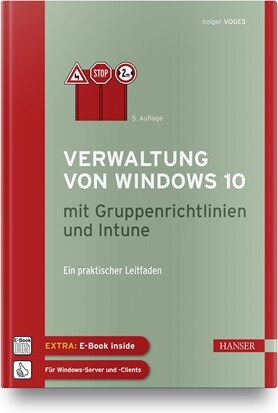
Verwaltung von Windows 10 mit Gruppenrichtlinien und Intune (5. Auflg.)
Ein praktischer Leitfaden in 5. Auflage, 03/2021.Die 5. Auflage des Gruppenrichtlinien-Bestsellers wurde für das aktuelle Feature Release von Windows überarbeitet und um Themen wie die Windows-10-Verwaltung über Microsoft Intune und Auditing ergänzt. Das Buch ist Grundlagen-, Praxis- und Nachschlagewerk in einem. Berücksichtigt werden sowohl die Gruppenrichtlinien-Einstellungen in Windows 10 als auch die Windows Server-Versionen 2019, 2016, 2012 und 2008 R2.Gruppenrichtlinien-Know-how für Einsteiger und Profis:Einsteiger führt das Buch von der Basisverwaltung von Gruppenrichtlinien bis hin zur Entwicklung eigener Vorlagen durch alle wichtigen Themen.Profis finden in diesem Buch Informationen zur Planung von Gruppenrichtlinien, zur Verwaltung (PowerShell und AGMP), zur Erweiterung (per Fremdhersteller-Tools) sowie zur Automatisierung mit PowerShell.Eine Fülle von Beispielen aus der administrativen Praxis zeigt Ihnen, wo Sie welche Einstellungen vornehmen können, wie sich diese auswirken und wie Sie in Ihrer täglichen Arbeit dadurch Zeit sparen können. Zahlreiche Tipps und Hinweise helfen Ihnen bei der Fehlersuche und Problembehebung und warnen Sie vor typischen Fallen.
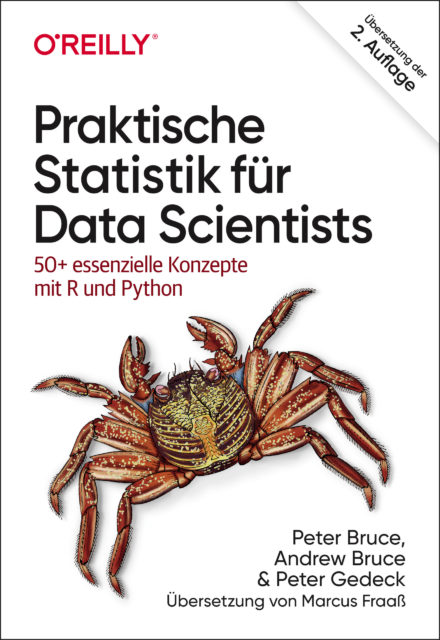
Praktische Statistik für Data Scientists (2. Auflg.)
50+ essenzielle statistische Konzepte mit R und Python aus der Perspektive von Data Scientists erläutert.Statistische Methoden sind ein zentraler Bestandteil der Arbeit mit Daten, doch nur wenige Data Scientists haben eine formale statistische Ausbildung. In Kursen und Büchern über die Grundlagen der Statistik wird das Thema aber selten aus der Sicht von Data Scientists behandelt. Viele stellen daher fest, dass ihnen eine tiefere statistische Perspektive auf ihre Daten fehlt.Dieses praxisorientierte Handbuch mit zahlreichen Beispielen in Python und R erklärt Ihnen, wie Sie verschiedene statistische Methoden speziell in den Datenwissenschaften anwenden. Es zeigt Ihnen auch, wie Sie den falschen Gebrauch von statistischen Methoden vermeiden können, und gibt Ratschläge, welche statistischen Konzepte für die Datenwissenschaften besonders relevant sind. Wenn Sie mit R oder Python vertraut sind, ermöglicht diese zugängliche, gut lesbare Referenz es Ihnen, Ihr statistisches Wissen für die Praxis deutlich auszubauen.
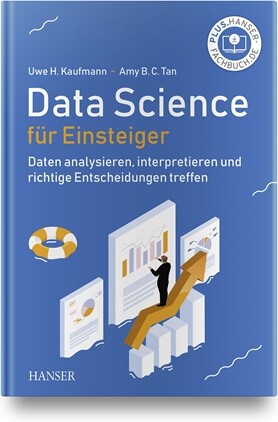
Data Science für Einsteiger
Die Datenflut beherrschbar machen: Schnell und sicher navigieren, Potenziale erkennen.Kein Unternehmen kann es sich leisten, Datenanalyse zu ignorieren! Dieses Werk zeigt, wie Daten analysiert werden können und wie daraus Schlussfolgerungen für die Unternehmensstrategie abgeleitet werden können.In jedem Unternehmen werden heute in großem Umfang Daten generiert, die die Grundlage für wichtige Entscheidungen bilden können. Bevor aus den Daten Schlussfolgerungen abgeleitet werden können, sind die Daten in zuverlässiger und reproduzierbarer Weise zu erfassen, auf Fehler und grobe Abweichungen zu prüfen und zu säubern sowie statistisch zu analysieren und für Managementpräsentationen vorzubereiten. Der Leser erhält hierfür eine Schritt-für-Schritt-Anleitung und er erfährt, wie aus rohen Daten zuverlässige Informationen werden. Leseprobe (PDF-Link)

Python One-Liners
Python in seiner raffiniertesten FormPython Tipps und Tricks mit fortgeschrittenem NiveauProblemlösungen für den ProgrammieralltagNumPy-GrundlagenPython One-Liners zeigt Ihnen, wie man "One Liners", Einzeiler, liest und schreibt: prägnante Ausdrücke zu nützlicher Funktionalität, verpackt in einer einzigen Codezeile. Sie lernen systematisch jede Zeile von Python-Code zu entschlüsseln und zu verstehen, und werden wie ein Experte eloquentes, stark komprimiertes Python schreiben.In den fünf Kapiteln des Buches werden Tipps und Tricks, reguläre Ausdrücke, Machine Learning, Kernthemen der Datenwissenschaft und hilfreiche Algorithmen behandelt. Die ausführlichen Erläuterungen von Einzeilern führen in wichtige Konzepte der Informatik ein und fördern Ihre Programmier- und Analysefähigkeiten.Sie lernen fortgeschrittene Python-Funktionen wie Listenverständnis, Slicing, Lambda-Funktionen, reguläre Ausdrücke, Map- und Reduce-Funktionen und Slice-Zuweisungen kennen.Sie erwerben darüber hinaus Kenntnisse in diesen Bereichen:- Nutzung von Datenstrukturen zur Lösung von Problemen aus der realen Welt, wie z. B. die Verwendung boolescher Indizierung zum Auffinden von Städten mit überdurchschnittlicher Umweltverschmutzung.- Verwendung der NumPy-Grundlagen wie Array, Form, Achse, Typ, Broadcasting, fortgeschrittene Indizierung, Slicing, Sortierung, Suche, Aggregation und Statistik.- Berechnen Sie grundlegende Statistiken von mehrdimensionalen Datenfeldern und die K-Means-Algorithmen für unsupervised Learning.- Erstellen Sie fortgeschrittenere reguläre Ausdrücke unter Verwendung von Gruppierungs- und benannten Gruppen, negativen Lookaheads, maskierten Zeichen, Leerzeichen, Zeichensätzen (und negativen Zeichensätzen) und greedy/non greedy Operatoren.- Ein breites Spektrum von Informatik-Themen verstehen, einschließlich Anagramme, Palindrome, Obermengen, Permutationen, Fakultäten, Primzahlen, Fibonacci-Zahlen, Obfuszierung, Suche und algorithmische Sortierung.Am Ende des Buches werden Sie wissen, wie man Python in seiner raffiniertesten Form schreibt und prägnante, schöne Python-Kunstwerke in nur einer einzigen Zeile schafft.Christian Mayer hat einen Doktortitel in Informatik und ist der Gründer der beliebten Python-Site Finxter (https:blog.finxter.com). Mayer ist außerdem der Autor der Coffee Break Python-Reihe.

Big Data Analytics for Internet of Things
BIG DATA ANALYTICS FOR INTERNET OF THINGSDISCOVER THE LATEST DEVELOPMENTS IN IOT BIG DATA WITH A NEW RESOURCE FROM ESTABLISHED AND EMERGING LEADERS IN THE FIELDBig Data Analytics for Internet of Things delivers a comprehensive overview of all aspects of big data analytics in Internet of Things (IoT) systems. The book includes discussions of the enabling technologies of IoT data analytics, types of IoT data analytics, challenges in IoT data analytics, demand for IoT data analytics, computing platforms, analytical tools, privacy, and security.The distinguished editors have included resources that address key techniques in the analysis of IoT data. The book demonstrates how to select the appropriate techniques to unearth valuable insights from IoT data and offers novel designs for IoT systems.With an abiding focus on practical strategies with concrete applications for data analysts and IoT professionals, Big Data Analytics for Internet of Things also offers readers:* A thorough introduction to the Internet of Things, including IoT architectures, enabling technologies, and applications* An exploration of the intersection between the Internet of Things and Big Data, including IoT as a source of Big Data, the unique characteristics of IoT data, etc.* A discussion of the IoT data analytics, including the data analytical requirements of IoT data and the types of IoT analytics, including predictive, descriptive, and prescriptive analytics* A treatment of machine learning techniques for IoT data analyticsPerfect for professionals, industry practitioners, and researchers engaged in big data analytics related to IoT systems, Big Data Analytics for Internet of Things will also earn a place in the libraries of IoT designers and manufacturers interested in facilitating the efficient implementation of data analytics strategies. TAUSIFA JAN SALEEM is currently pursuing her Doctor of Philosophy (Ph.D) from National Institute of Technology Srinagar, India. She has received the Bachelor of Technology (B. Tech.) degree in Information Technology (IT) from National Institute of Technology Srinagar, India and the M.Tech. degree in Computer Science from University of Jammu, India. She has published more than 10 research articles in reputed journals (indexed by Scopus and SCI) and conferences (indexed by Scopus). Her research areas of interest include Internet of Things, Data Analytics, Machine Learning, and Deep Learning.MOHAMMAD AHSAN CHISHTI, PH.D, is Dean at the School of Engineering & Technology and Associate Professor in the Department of Information Technology at the Central University of Kashmir. He has published over 100 scholarly papers and holds 12 patents. He is the recipient of “Young Engineers Award 2015-2016” from IEI and “Young Scientist Award 2009-2010” from the government of Jammu and Kashmir. He is a Senior Member of the IEEE, MIEI, MCSI & MIETE.List of Contributors xvList of Abbreviations xix1 BIG DATA ANALYTICS FOR THE INTERNET OF THINGS: AN OVERVIEW 1Tausifa Jan Saleem and Mohammad Ahsan Chishti2 DATA, ANALYTICS AND INTEROPERABILITY BETWEEN SYSTEMS (IOT) IS INCONGRUOUS WITH THE ECONOMICS OF TECHNOLOGY: EVOLUTION OF POROUS PARETO PARTITION (P3) 7Shoumen Palit Austin Datta, Tausifa Jan Saleem, Molood Barati, María Victoria López López, Marie-Laure Furgala, Diana C. Vanegas, Gérald Santucci, Pramod P. Khargonekar, and Eric S. McLamore2.1 Context 82.2 Models in the Background 122.3 Problem Space: Are We Asking the Correct Questions? 142.4 Solutions Approach: The Elusive Quest to Build Bridges Between Data and Decisions 152.5 Avoid This Space: The Deception Space 172.6 Explore the Solution Space: Necessary to Ask Questions That May Not Have Answers, Yet 172.7 Solution Economy: Will We Ever Get There? 192.8 Is This Faux Naïveté in Its Purest Distillate? 212.9 Reality Check: Data Fusion 222.10 “Double A” Perspective of Data and Tools vs. The Hypothetical Porous Pareto (80/20) Partition 282.11 Conundrums 292.12 Stigma of Partition vs. Astigmatism of Vision 382.13 The Illusion of Data, Delusion of Big Data, and the Absence of Intelligence in AI 402.14 In Service of Society 502.15 Data Science in Service of Society: Knowledge and Performance from PEAS 522.16 Temporary Conclusion 60Acknowledgements 63References 633 MACHINE LEARNING TECHNIQUES FOR IOT DATA ANALYTICS 89Nailah Afshan and Ranjeet Kumar Rout3.1 Introduction 893.2 Taxonomy of Machine Learning Techniques 943.2.1 Supervised ML Algorithm 953.2.1.1 Classification 963.2.1.2 Regression Analysis 983.2.1.3 Classification and Regression Tasks 993.2.2 Unsupervised Machine Learning Algorithms 1033.2.2.1 Clustering 1033.2.2.2 Feature Extraction 1063.2.3 Conclusion 107References 1074 IOT DATA ANALYTICS USING CLOUD COMPUTING 115Anjum Sheikh, Sunil Kumar, and Asha Ambhaikar4.1 Introduction 1154.2 IoT Data Analytics 1174.2.1 Process of IoT Analytics 1174.2.2 Types of Analytics 1184.3 Cloud Computing for IoT 1184.3.1 Deployment Models for Cloud 1204.3.1.1 Private Cloud 1204.3.1.2 Public Cloud 1204.3.1.3 Hybrid Cloud 1214.3.1.4 Community Cloud 1214.3.2 Service Models for Cloud Computing 1224.3.2.1 Software as a Service (SaaS) 1224.3.2.2 Platform as a Service (PaaS) 1224.3.2.3 Infrastructure as a Service (IaaS) 1224.3.3 Data Analytics on Cloud 1234.4 Cloud-Based IoT Data Analytics Platform 1234.4.1 Atos Codex 1254.4.2 AWS IoT 1254.4.3 IBM Watson IoT 1264.4.4 Hitachi Vantara Pentaho, Lumada 1274.4.5 Microsoft Azure IoT 1284.4.6 Oracle IoT Cloud Services 1294.5 Machine Learning for IoT Analytics in Cloud 1324.5.1 ML Algorithms for Data Analytics 1324.5.2 Types of Predictions Supported by ML and Cloud 1364.6 Challenges for Analytics Using Cloud 1374.7 Conclusion 139References 1395 DEEP LEARNING ARCHITECTURES FOR IOT DATA ANALYTICS 143Snowber Mushtaq and Omkar Singh5.1 Introduction 1435.1.1 Types of Learning Algorithms 1465.1.1.1 Supervised Learning 1465.1.1.2 Unsupervised Learning 1465.1.1.3 Semi-Supervised Learning 1465.1.1.4 Reinforcement Learning 1465.1.2 Steps Involved in Solving a Problem 1465.1.2.1 Basic Terminology 1475.1.2.2 Training Process 1475.1.3 Modeling in Data Science 1475.1.3.1 Generative 1485.1.3.2 Discriminative 1485.1.4 Why DL and IoT? 1485.2 DL Architectures 1495.2.1 Restricted Boltzmann Machine 1495.2.1.1 Training Boltzmann Machine 1505.2.1.2 Applications of RBM 1515.2.2 Deep Belief Networks (DBN) 1515.2.2.1 Training DBN 1525.2.2.2 Applications of DBN 1535.2.3 Autoencoders 1535.2.3.1 Training of AE 1535.2.3.2 Applications of AE 1545.2.4 Convolutional Neural Networks (CNN) 1545.2.4.1 Layers of CNN 1555.2.4.2 Activation Functions Used in CNN 1565.2.4.3 Applications of CNN 1585.2.5 Generative Adversarial Network (GANs) 1585.2.5.1 Training of GANs 1585.2.5.2 Variants of GANs 1595.2.5.3 Applications of GANs 1595.2.6 Recurrent Neural Networks (RNN) 1595.2.6.1 Training of RNN 1605.2.6.2 Applications of RNN 1615.2.7 Long Short-Term Memory (LSTM) 1615.2.7.1 Training of LSTM 1615.2.7.2 Applications of LSTM 1625.3 Conclusion 162References 1636 ADDING PERSONAL TOUCHES TO IOT: A USER-CENTRIC IOT ARCHITECTURE 167Sarabjeet Kaur Kochhar6.1 Introduction 1676.2 Enabling Technologies for BDA of IoT Systems 1696.3 Personalizing the IoT 1716.3.1 Personalization for Business 1726.3.2 Personalization for Marketing 1726.3.3 Personalization for Product Improvement and Service Optimization 1736.3.4 Personalization for Automated Recommendations 1746.3.5 Personalization for Improved User Experience 1746.4 Related Work 1756.5 User Sensitized IoT Architecture 1766.6 The Tweaked Data Layer 1786.7 The Personalization Layer 1806.7.1 The Characterization Engine 1806.7.2 The Sentiment Analyzer 1826.8 Concerns and Future Directions 1836.9 Conclusions 184References 1857 SMART CITIES AND THE INTERNET OF THINGS 187Hemant Garg, Sushil Gupta, and Basant Garg7.1 Introduction 1877.2 Development of Smart Cities and the IoT 1887.3 The Combination of the IoT with Development of City Architecture to Form Smart Cities 1897.3.1 Unification of the IoT 1907.3.2 Security of Smart Cities 1907.3.3 Management of Water and Related Amenities 1907.3.4 Power Distribution and Management 1917.3.5 Revenue Collection and Administration 1917.3.6 Management of City Assets and Human Resources 1927.3.7 Environmental Pollution Management 1927.4 How Future Smart Cities Can Improve Their Utilization of the Internet of All Things, with Examples 1937.5 Conclusion 194References 1958 A ROADMAP FOR APPLICATION OF IOT-GENERATED BIG DATA IN ENVIRONMENTAL SUSTAINABILITY 197Ankur Kashyap8.1 Background and Motivation 1978.2 Execution of the Study 1988.2.1 Role of Big Data in Sustainability 1988.2.2 Present Status and Future Possibilities of IoT in Environmental Sustainability 1998.3 Proposed Roadmap 2028.4 Identification and Prioritizing the Barriers in the Process 2048.4.1 Internet Infrastructure 2048.4.2 High Hardware and Software Cost 2048.4.3 Less Qualified Workforce 2048.5 Conclusion and Discussion 205References 2059 APPLICATION OF HIGH-PERFORMANCE COMPUTING IN SYNCHROPHASOR DATA MANAGEMENT AND ANALYSIS FOR POWER GRIDS 209C.M. Thasnimol and R. Rajathy9.1 Introduction 2099.2 Applications of Synchrophasor Data 2109.2.1 Voltage Stability Analysis 2119.2.2 Transient Stability 2129.2.3 Out of Step Splitting Protection 2139.2.4 Multiple Event Detection 2139.2.5 State Estimation 2139.2.6 Fault Detection 2149.2.7 Loss of Main (LOM) Detection 2149.2.8 Topology Update Detection 2149.2.9 Oscillation Detection 2159.3 Utility Big Data Issues Related to PMU-Driven Applications 2159.3.1 Heterogeneous Measurement Integration 2159.3.2 Variety and Interoperability 2169.3.3 Volume and Velocity 2169.3.4 Data Quality and Security 2169.3.5 Utilization and Analytics 2179.3.6 Visualization of Data 2189.4 Big Data Analytics Platforms for PMU Data Processing 2199.4.1 Hadoop 2209.4.2 Apache Spark 2219.4.3 Apache HBase 2229.4.4 Apache Storm 2229.4.5 Cloud-Based Platforms 2239.5 Conclusions 224References 22410 INTELLIGENT ENTERPRISE-LEVEL BIG DATA ANALYTICS FOR MODELING AND MANAGEMENT IN SMART INTERNET OF ROADS 231Amin Fadaeddini, Babak Majidi, and Mohammad Eshghi10.1 Introduction 23110.2 Fully Convolutional Deep Neural Network for Autonomous Vehicle Identification 23310.2.1 Detection of the Bounding Box of the License Plate 23310.2.2 Segmentation Objective 23410.2.3 Spatial Invariances 23410.2.4 Model Framework 23410.2.4.1 Increasing the Layer of Transformation 23410.2.4.2 Data Format of Sample Images 23510.2.4.3 Applying Batch Normalization 23610.2.4.4 Network Architecture 23610.2.5 Role of Data 23610.2.6 Synthesizing Samples 23610.2.7 Invariances 23710.2.8 Reducing Number of Features 23710.2.9 Choosing Number of Classes 23810.3 Experimental Setup and Results 23910.3.1 Sparse Softmax Loss 23910.3.2 Mean Intersection Over Union 24010.4 Practical Implementation of Enterprise-Level Big Data Analytics for Smart City 24010.5 Conclusion 244References 24411 PREDICTIVE ANALYSIS OF INTELLIGENT SENSING AND CLOUD-BASED INTEGRATED WATER MANAGEMENT SYSTEM 247Tanuja Patgar and Ripal Patel11.1 Introduction 24711.2 Literature Survey 24811.3 Proposed Six-Tier Data Framework 25011.3.1 Primary Components 25111.3.2 Contact Unit (FC-37) 25311.3.3 Internet of Things Communicator (ESP8266) 25311.3.4 GSM-Based ARM and Control System 25311.3.5 Methodology 25311.3.6 Proposed Algorithm 25611.4 Implementation and Result Analysis 25711.4.1 Water Report for Home 1 and Home 2 Modules 26311.5 Conclusion 263References 26312 DATA SECURITY IN THE INTERNET OF THINGS: CHALLENGES AND OPPORTUNITIES 265Shashwati Banerjea, Shashank Srivastava, and Sachin Kumar12.1 Introduction 26512.2 IoT: Brief Introduction 26612.2.1 Challenges in a Secure IoT 26712.2.2 Security Requirements in IoT Architecture 26812.2.2.1 Sensing Layer 26812.2.2.2 Network Layer 26912.2.2.3 Interface Layer 27112.2.3 Common Attacks in IoT 27112.3 IoT Security Classification 27212.3.1 Application Domain 27212.3.1.1 Authentication 27212.3.1.2 Authorization 27412.3.1.3 Depletion of Resources 27412.3.1.4 Establishment of Trust 27512.3.2 Architectural Domain 27512.3.2.1 Authentication in IoT Architecture 27512.3.2.2 Authorization in IoT Architecture 27612.3.3 Communication Channel 27612.4 Security in IoT Data 27712.4.1 IoT Data Security: Requirements 27712.4.1.1 Data: Confidentiality, Integrity, and Authentication 27812.4.1.2 Data Privacy 27912.4.2 IoT Data Security: Research Directions 28012.5 Conclusion 280References 28113 DDOS ATTACKS: TOOLS, MITIGATION APPROACHES, AND PROBABLE IMPACT ON PRIVATE CLOUD ENVIRONMENT 285R. K. Deka, D. K. Bhattacharyya, and J. K. Kalita13.1 Introduction 28513.1.1 State of the Art 28713.1.2 Contribution 28813.1.3 Organization 29013.2 Cloud and DDoS Attack 29013.2.1 Cloud Deployment Models 29013.2.1.1 Differences Between Private Cloud and Public Cloud 29313.2.2 DDoS Attacks 29413.2.2.1 Attacks on Infrastructure Level 29413.2.2.2 Attacks on Application Level 29613.2.3 DoS/DDoS Attack on Cloud: Probable Impact 29713.3 Mitigation Approaches 29813.3.1 Discussion 30913.4 Challenges and Issues with Recommendations 30913.5 A Generic Framework 31013.6 Conclusion and Future Work 312References 31214 SECURING THE DEFENSE DATA FOR MAKING BETTER DECISIONS USING DATA FUSION 321Syed Rameem Zahra14.1 Introduction 32114.2 Analysis of Big Data 32214.2.1 Existing IoT Big Data Analytics Systems 32214.2.2 Big Data Analytical Methods 32414.2.3 Challenges in IoT Big Data Analytics 32414.3 Data Fusion 32514.3.1 Opportunities Provided by Data Fusion 32614.3.2 Data Fusion Challenges 32614.3.3 Stages at Which Data Fusion Can Happen 32614.3.4 Mathematical Methods for Data Fusion 32614.4 Data Fusion for IoT Security 32714.4.1 Defense Use Case 32914.5 Conclusion 329References 33015 NEW AGE JOURNALISM AND BIG DATA (UNDERSTANDING BIG DATA AND ITS INFLUENCE ON JOURNALISM) 333Asif Khan and Heeba Din15.1 Introduction 33315.1.1 Big Data Journalism: The Next Big Thing 33415.1.2 All About Data 33615.1.3 Accessing Data for Journalism 33715.1.4 Data Analytics: Tools for Journalists 33815.1.5 Case Studies – Big Data 34015.1.5.1 BBC Big Data 34015.1.5.2 The Guardian Data Blog 34215.1.5.3 Wikileaks 34415.1.5.4 World Economic Forum 34415.1.6 Big Data – Indian Scenario 34515.1.7 Internet of Things and Journalism 34615.1.8 Impact on Media/Journalism 347References 34816 TWO DECADES OF BIG DATA IN FINANCE: SYSTEMATIC LITERATURE REVIEW AND FUTURE RESEARCH AGENDA 351Nufazil Altaf16.1 Introduction 35116.2 Methodology 35316.3 Article Identification and Selection 35316.4 Description and Classification of Literature 35416.4.1 Research Method Employed 35416.4.2 Articles Published Year Wise 35516.4.3 Journal of Publication 35616.5 Content and Citation Analysis of Articles 35616.5.1 Citation Analysis 35616.5.2 Content Analysis 35716.5.2.1 Big Data in Financial Markets 35816.5.2.2 Big Data in Internet Finance 35916.5.2.3 Big Data in Financial Services 35916.5.2.4 Big Data and Other Financial Issues 36016.6 Reporting of Findings and Research Gaps 36016.6.1 Findings from the Literature Review 36116.6.1.1 Lack of Symmetry 36116.6.1.2 Dominance of Research on Financial Markets, Internet Finance, and Financial Services 36116.6.1.3 Dominance of Empirical Research 36116.6.2 Directions for Future Research 362References 362Index 367

Samsung Galaxy S21 For Dummies
FEELING HAMSTRUNG BY YOUR NEW SAMSUNG? FIGURE OUT HOW TO NAVIGATE YOUR NEW PHONE IN NO TIMEYour Samsung Galaxy comes packed with features you’ll use every day, and Samsung Galaxy S21 For Dummies is your guide to exploring them. What do you want to do first? Send a text or email? Take photos and videos? Make a basic call? Play games? Shop? This handy guide can help you do all that and so much more.* Get an overview of the buttons, screens, and apps that are essential to operating your new phone * Manage your contacts so you can stay connected with calls, emails, or texts * Surf the web and find new games and apps in the Google Play Store * Customize your phone with ringtones, wallpaper, and awesome accessories * Watch videos and movies, shoot your own videos, and take photos * Boost your productivity with calendar, GPS, and productivity apps * Secure your Samsung Galaxy with your face ID, thumbprint, and Screen Lock Not only does Samsung Galaxy S21 For Dummies describe features and walk you through steps to use your new phone, it also shows you what the screens look like and where to tap to make things happen. It’s like having a Samsung expert at your elbow. So pick up your copy today to make the most of your Samsung smartphone.BILL HUGHES is a marketing strategy executive with more than three decades of experience at several leading corporations. He graduated with honors with an MBA degree from the Kellogg School of Management at Northwestern University. He is the author of all previous editions of Samsung Galaxy S For Dummies.INTRODUCTION 1About This Book 3Foolish Assumptions 3Icons Used in This Book 3Beyond the Book 4Where to Go from Here 4PART 1: GETTING STARTED WITH THE SAMSUNG GALAXY S21 7CHAPTER 1: EXPLORING WHAT YOU CAN DO WITH YOUR PHONE 9Discovering the Basics of Your Phone 9Taking Your Phone to the Next Level: The Smartphone Features 10Internet access 11Photos 12Wireless email 13Multimedia 13Customizing Your Phone with Games and Applications 13Downloading games 13Downloading applications 14What’s cool about the Android platform 14Surviving Unboxing Day 15CHAPTER 2: BEGINNING AT THE BEGINNING 19First Things First: Turning On Your Phone 19Charging Your Phone and Managing Battery Life 21Navigating the Galaxy S21 26The phone’s hardware buttons 26The touchscreen 29The extended Home screen 34The notification area and screen 38The Device Function keys 39The keyboard 41The orientation of the phone 42Going to Sleep Mode/Turning Off the Phone 43PART 2: COMMUNICATING WITH OTHER PEOPLE 45CHAPTER 3: CALLING PEOPLE 47Making Calls 47Answering Calls 51Keeping Track of Your Calls: The Recents 54Making an Emergency Call: The 411 on 911 55Syncing a Bluetooth Headset 56Options Other than Headsets 59CHAPTER 4: DISCOVERING THE JOY OF TEXT 61Sending the First Text Message 61Carrying on a Conversation via Texting 66Sending an Attachment with a Text 68Receiving Text Messages 69Managing Your Text History 69CHAPTER 5: SENDING AND RECEIVING EMAIL 71Setting Up Your Email 71Getting ready 72Setting up your existing Gmail account 73Setting up a new Gmail account 75Working with non-Gmail email accounts 76Setting up a corporate email account 82Reading Email on Your Phone 84Writing and Sending Email 85Replying to and Forwarding Email 87CHAPTER 6: MANAGING YOUR CONTACTS 89Using the Galaxy S21 Contacts App 90Learning the Contacts App on your phone 90Deciding where to store your contacts 92Linking Contacts on your phone 96Creating Contacts within Your Database 99Adding contacts as you dial 99Adding contacts manually 101How Contacts Make Life Easy 102Playing Favorites 104PART 3: LIVING ON THE INTERNET 105CHAPTER 7: YOU’VE GOT THE WHOLE (WEB) WORLD IN YOUR HANDS 107Starting the Browser 108Accessing Mobile (or Not) Websites 109Choosing Your Search Engine 111Deciding between Mobile Browsing and Mobile Apps 114CHAPTER 8: PLAYING IN GOOGLE’S PLAY STORE 115Exploring the Play Store: The Mall for Your Phone 116Getting to the Store 116Seeing What’s Available: Shopping for Android Apps 118Navigating the Google Play apps offerings 119Installing and Managing an Android App 122Rating or Uninstalling Your Apps 128PART 4: HAVING FUN WITH YOUR PHONE 131CHAPTER 9: SHARING PICTURES 133Say Cheese! Taking a Picture with Your Phone 135Getting a Little Fancier with Your Camera 144Using the Photo mode settings 144Settings options on the viewfinder 146Photo Effects options 148Visualizing What You Can Do with Bixby Vision 148Managing Your Photo Images 150Using Images on Your Phone 151Deleting Images on Your Phone 152CHAPTER 10: CREATING VIDEOS 153Ready Action! Taking a Video with Your Phone 154Taking Videography to the Next Level 158The Video mode settings 158Settings options on the viewfinder 159Messing with the AR Doodle option 160CHAPTER 11: PLAYING GAMES 163The Play Store Games Category 164The Games Home screen 165The Games Categories tab 166Leaving Feedback on Games 169CHAPTER 12: PLAYING MUSIC AND VIDEOS 173Getting Ready to Be Entertained 174Choosing your headset 174Wired headsets 175Choosing your Bluetooth speaker 177Connecting to your stereo 178Licensing Your Multimedia Files 179Listening up on licensing 179Licensing for videos 180Using the Full Capacity of the Memory in Your Phone 180Enjoying Basic Multimedia Capabilities 182Grooving with the YouTube Music app 182Playing downloaded music 187Jamming to Internet Radio 190Looking at your video options 192PART 5: GETTING DOWN TO BUSINESS 199CHAPTER 13: USING THE CALENDAR 201Syncing Calendars 201Setting Calendar Display Preferences 203Setting Other Display Options 206Creating an Event on the Right Calendar 208Creating, editing, and deleting an event 208Keeping events separate and private 211CHAPTER 14: MAPPING OUT WHERE YOU WANT TO BE 215GPS 101: First Things First 216Practically Speaking: Using Maps 217Changing map scale 218Finding nearby services 221Getting and Using Directions 224Upgrading Your Navigation 226CHAPTER 15: PAYING WITH SAMSUNG PAY 229How Mobile Payment Works 230Getting Started with Samsung Pay 232Setting Up Samsung Pay 234Using Samsung Pay 238Managing Samsung Pay 240Adding Loyalty Cards 241PART 6: THE PART OF TENS 245CHAPTER 16: TEN WAYS TO MAKE YOUR PHONE TOTALLY YOURS 247Using a Bluetooth Speaker 248Cruising in the Car 249Considering Wireless Charging Mats 251Making a Statement with Wraps 252You Look Wonderful: Custom Screen Images 253Empowering Power Savings 255Controlling Your Home Electronics 256Wearing Wearables 257Using Your Phone as a PC 259Creating Your Own AR Emoji in the AR Zone 259CHAPTER 17: TEN (OR SO) WAYS TO MAKE YOUR PHONE SECURE 263Using a Good Case 264Putting It on Lockdown 266Preparing for your Screen Lock option 269Selecting among the Screen Lock options 269Entering your face 271Entering your fingerprints 273Creating a Secure Folder 274Using Knox to Make Your Phone as Secure as Fort Knox 277Being Careful with Bluetooth 278Protecting against Malware 279Downloading Apps Only from Reputable Sources 280Rescuing Your Phone When It Gets Lost 280Wiping Your Device Clean 282CHAPTER 18: TEN FEATURES TO LOOK FOR DOWN THE ROAD 283Your Medical Information Hub 283Better 911 Services 284Home Internet of Things Services to Differentiate Real Estate 285New Delivery Concepts 285Smarter Customer Care for Your Phone 286Smartphone as Entertainment Hub 287Driving in Your Car 288Serving You Better 288Placing You Indoors 289Reducing Your Carbon Footprint 290Index 291
Basiswissen Requirements Engineering
KOMPAKTES GRUNDLAGENWERK FÜR DEN REQUIREMENTS ENGINEER * Standardwerk in 5. Auflage * konform zum IREB-Lehrplan Version 3.0 * mit interaktiven Elementen: animierte Grafiken, Videos Dieses Lehrbuch umfasst den erforderlichen Stoff zum Ablegen der Prüfung "Certified Professional for Requirements Engineering (Foundation Level)" nach IREB-Standard. Es vermittelt das Grundlagenwissen und behandelt die wesentlichen Prinzipien und Praktiken sowie wichtige Begriffe und Konzepte. Die Themen im Einzelnen: - Grundlegende Prinzipien des Requirements Engineering - Arbeitsprodukte und Dokumentationspraktiken - Praktiken für die Erarbeitung von Anforderungen - Prozess und Arbeitsstruktur - Praktiken für das Requirements Management - Werkzeugunterstützung Das Buch eignet sich gleichermaßen für das Selbststudium, zur Vorbereitung auf die Zertifizierung sowie als kompaktes Basiswerk zum Thema in der Praxis und an Hochschulen. Die 5. Auflage wurde komplett überarbeitet, ist konform zum IREB-Lehrplan Foundation Level Version 3.0 und wurde angereichert mit interaktiven Elementen wie animierte Grafiken und Videos.
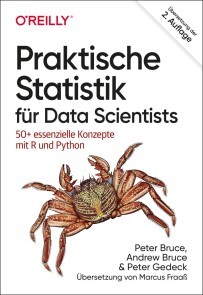
Praktische Statistik für Data Scientists
Statistische Konzepte aus der Perspektive von Data Scientists erläutert* Das Buch stellt die Verbindung zwischen nützlichen statistischen Prinzipien und der heutigen Datenanalyse-Praxis her* Ermöglicht Data Scientists, ihr Wissen über Statistik auf ein neues Level zu bringen* Übersetzung der 2. Auflage des US-Bestsellers mit Beispielen in Python und RStatistische Methoden sind ein zentraler Bestandteil der Arbeit mit Daten, doch nur wenige Data Scientists haben eine formale statistische Ausbildung. In Kursen und Büchern über die Grundlagen der Statistik wird das Thema aber selten aus der Sicht von Data Scientists behandelt. Viele stellen daher fest, dass ihnen eine tiefere statistische Perspektive auf ihre Daten fehlt.Dieses praxisorientierte Handbuch mit zahlreichen Beispielen in Python und R erklärt Ihnen, wie Sie verschiedene statistische Methoden speziell in den Datenwissenschaften anwenden. Es zeigt Ihnen auch, wie Sie den falschen Gebrauch von statistischen Methoden vermeiden können, und gibt Ratschläge, welche statistischen Konzepte für die Datenwissenschaften besonders relevant sind. Wenn Sie mit R oder Python vertraut sind, ermöglicht diese zugängliche, gut lesbare Referenz es Ihnen, Ihr statistisches Wissen für die Praxis deutlich auszubauen.Peter Bruce ist Gründer des Institute for Statistics Education bei Statistics.com. Andrew Bruce ist Principal Research Scientist bei Amazon und verfügt über mehr als 30 Jahre Erfahrung in Statistik und Data Science. Peter Gedeck ist Senior Data Scientist bei Collaborative Drug Discovery, er entwickelt Machine-Learning-Algorithmen für die Vorhersage von Eigenschaften von Arzneimittelkandidaten.

Marketing für Fotograf*innen
Geschäftlicher Erfolg beginnt mit dem richtigen Marketing* erklärt klare & aktuelle Strategien für Instagram und Google (SEO)* stellt Kundenorientierung in den Mittelpunkt* bietet viele wertvolle Tipps zu Angebots- und PreisgestaltungMit der eigenen Arbeit sichtbar zu sein, Kunden zu finden und zu binden ist für freischaffende Fotograf*innen das A und O des geschäftlichen Erfolgs. Wie Ihnen das mit der richtigen Online-Strategie (Instagram, Google, Live-Videos) gelingt, wie Sie Preise gestalten und erfolgreiche Kundengespräche führen, lernen Sie mit diesem Buch. Der international bekannte Hochzeitsfotograf und Buchautor Roberto Valenzuela teilt darin sein Wissen und seine Erfahrungen aus vielen Jahren erfolgreicher Arbeit mit einer sehr anspruchsvollen Klientel.Das Gefunden-Werden steht am Anfang: Valenzuela zeigt, wie Sie Ihren Instagram-Feed und Ihr Google-Ranking so optimieren, dass Sie wirklich die richtigen Kunden akquirieren. Dann lernen Sie, deren Sichtweise auf Sie und Ihr Angebot besser zu verstehen: was wünschen sich Ihre Kunden, wie präsentieren Sie sich, was können Sie anbieten? Welche Chancen liegen für Sie in einem Auftrag – kurz-, mittel- und langfristig? Zudem lernen Sie, wie Sie mit Upselling Mehrwert für Ihre Kunden erzeugen, und wie Sie Ihr Angebotsportfolio kundenorientiert strukturieren und bepreisen.Aus dem Inhalt:- Erprobte Praktiken und Strategien für Instagram, YouTube und Facebook- Wie Sie dank besserem SEO gefunden werden- Welche Rolle Testimonials und Rezensionen für Ihren Erfolg spielen (und wie Sie Kunden um diese bitten)- Wie Sie langfristige Kundenbeziehungen schaffen- Wie Sie mit Promo-Videos persönliche Beziehungen zu künftigen Klienten aufbauen- Warum Sie Ihre Arbeit in Zeitschriften und Büchern veröffentlichen sollten- Wie Sie die Preise für Ihre Arbeit gestalten- Die sanfte Kunst des Upsellings- Warum der Verkauf von Drucken so wichtig für Ihr Geschäft istRoberto Valenzuela arbeitet als vielgebuchter Hochzeitsfotograf in den USA sowie als erfolgreicher Autor, Sprecher und Trainer rund um den Erdball. Er vermag dank seines systematischen und praxisorientierten Ansatzes auch komplexe Konzepte und Inhalte so zu vermitteln, dass Fotografen jeden Wissensstandes sie sofort mit Gewinn für ihre eigene Arbeit anwenden können. Canon machte ihn zu einem ihrer "Canon Explorers of Light". Auf Deutsch erschienen im dpunkt.verlag bislang seine Bücher "Perfektes Posing mit System", "Perfektes Licht mit System" und "Perfekte Hochzeitsreportagen mit System".

Data Science
KNOW-HOW FÜR DATA SCIENTISTS * übersichtliche und anwendungsbezogene Einführung * zahlreiche Anwendungsfälle und Praxisbeispiele aus unterschiedlichen Branchen * Potenziale, aber auch mögliche Fallstricke werden aufgezeigt Data Science steht derzeit wie kein anderer Begriff für die Auswertung großer Datenmengen mit analytischen Konzepten des Machine Learning oder der künstlichen Intelligenz. Nach der bewussten Wahrnehmung der Big Data und dabei insbesondere der Verfügbarmachung in Unternehmen sind Technologien und Methoden zur Auswertung dort gefordert, wo klassische Business Intelligence an ihre Grenzen stößt. Dieses Buch bietet eine umfassende Einführung in Data Science und deren praktische Relevanz für Unternehmen. Dabei wird auch die Integration von Data Science in ein bereits bestehendes Business-Intelligence-Ökosystem thematisiert. In verschiedenen Beiträgen werden sowohl Aufgabenfelder und Methoden als auch Rollen- und Organisationsmodelle erläutert, die im Zusammenspiel mit Konzepten und Architekturen auf Data Science wirken. Diese 2., überarbeitete Auflage wurde um neue Themen wie Feature Selection und Deep Reinforcement Learning sowie eine neue Fallstudie erweitert.

Design and Development of Efficient Energy Systems
There is not a single industry which will not be transformed by machine learning and Internet of Things (IoT). IoT and machine learning have altogether changed the technological scenario by letting the user monitor and control things based on the prediction made by machine learning algorithms. There has been substantial progress in the usage of platforms, technologies and applications that are based on these technologies. These breakthrough technologies affect not just the software perspective of the industry, but they cut across areas like smart cities, smart healthcare, smart retail, smart monitoring, control, and others. Because of these “game changers,” governments, along with top companies around the world, are investing heavily in its research and development. Keeping pace with the latest trends, endless research, and new developments is paramount to innovate systems that are not only user-friendly but also speak to the growing needs and demands of society.This volume is focused on saving energy at different levels of design and automation including the concept of machine learning automation and prediction modeling. It also deals with the design and analysis for IoT-enabled systems including energy saving aspects at different level of operation.The editors and contributors also cover the fundamental concepts of IoT and machine learning, including the latest research, technological developments, and practical applications. Valuable as a learning tool for beginners in this area as well as a daily reference for engineers and scientists working in the area of IoT and machine technology, this is a must-have for any library.SUMAN LATA TRIPATHI, PHD, is a professor at Lovely Professional with more than seventeen years of experience in academics. She has published more than 45 research papers in refereed journals and conferences. She has organized several workshops, summer internships, and expert lectures for students, and she has worked as a session chair, conference steering committee member, editorial board member, and reviewer for IEEE journals and conferences. She has published one edited book and currently has multiple volumes scheduled for publication, including volumes available from Wiley-Scrivener.DUSHYANT KUMAR SINGH, is an assistant professor and Head of Embedded Systems Domain at Lovely Professional University. With a masters degree from Punjab Engineering College, University of Technology, Chandigarh, he has several years of industrial experience and more than ten years of teaching experience.SANJEEVIKUMAR PADMANABAN, PHD, is a faculty member with the Department of Energy Technology, Aalborg University, Esbjerg, Denmark. He has almost ten years of teaching, research and industrial experience and is an associate editor on a number of international scientific refereed journals. He has published more than 300 research papers and has won numerous awards for his research and teaching.P. RAJA is currently working as an assistant professor at Lovely Professional University. His expertise is in VLSI and embedded systems. He has more than 14 years of experience with 5 years in embedded industry. He has 14 publications in UGC-approved and other reputable journals. He also has 10 patents to his credit.Preface xv1 DESIGN OF LOW POWER JUNCTION-LESS DOUBLE-GATE MOSFET 1Namrata Mendiratta and Suman Lata Tripathi1.1 Introduction 11.2 MOSFET Performance Parameters 21.3 Comparison of Existing MOSFET Architectures 31.4 Proposed Heavily Doped Junction-Less Double Gate MOSFET (AJ-DGMOSFET) 31.5 Heavily Doped JL-DG MOSFET for Biomedical Application 81.6 Conclusion 9References 102 VLSI IMPLEMENTATION OF VEDIC MULTIPLIER 13Abhishek Kumar2.1 Introduction 132.2 8x8 Vedic Multiplier 142.3 The Architecture of 8x8 Vedic Multiplier (VM) 162.3.1 Compressor Architecture 172.3.1.1 3:2 Compressor 182.3.1.2 4:3 Compressor 182.3.1.3 5:3 Compressor 182.3.1.4 8:4 Compressor 192.3.1.5 10:4 Compressor 192.3.1.6 12:5 Compressor 202.3.1.7 15:5 Compressor 212.3.1.8 20:5 Compressor 212.4 Results and Discussion 232.4.1 Instance Power 232.4.2 Net Power 242.4.3 8-Bit Multiplier 252.4.4 16-Bit Multiplier 262.4.5 Applications of Multiplier 272.5 Conclusion 28References 283 GAS LEAKAGE DETECTION FROM DRAINAGE TO OFFER SAFETY FOR SANITARY WORKERS 31Dr. D. Jeyabharathi, Dr. D. Kesavaraja and D. Sasireka3.1 Introduction 313.1.1 IOT-Based Sewer Gas Detection 313.1.1.1 IoT Sensors 323.1.2 Objective 323.1.3 Contribution of this Chapter 333.1.4 Outline of the Chapter 333.2 Related Works 333.2.1 Sewer Gas Leakage Detection 333.2.2 Crack Detection 343.3 Methodology 343.3.1 Sewer Gas Detection 343.3.1.1 Proposed Tristate Pattern 353.3.2 Crack Detection 363.3.3 Experimental Setup 373.4 Experimental Results 393.5 Conclusion 40References 404 MACHINE LEARNING FOR SMART HEALTHCARE ENERGY-EFFICIENT SYSTEM 43S. Porkodi, Dr. D. Kesavaraja and Dr. Sivanthi Aditanar4.1 Introduction 434.1.1 IoT in the Digital Age 434.1.2 Using IoT to Enhance Healthcare Services 444.1.3 Edge Computing 444.1.4 Machine Learning 444.1.5 Application in Healthcare 454.2 Related Works 454.3 Edge Computing 474.3.1 Architecture 474.3.2 Advantages of Edge Computing over Cloud Computing 474.3.3 Applications of Edge Computing in Healthcare 484.3.4 Edge Computing Advantages 494.3.5 Challenges 504.4 Smart Healthcare System 504.4.1 Methodology 504.4.2 Data Acquisition and IoT End Device 514.4.3 IoT End Device and Backend Server 514.5 Conclusion and Future Directions 52References 525 REVIEW OF MACHINE LEARNING TECHNIQUES USED FOR INTRUSION AND MALWARE DETECTION IN WSNS AND IOT DEVICES 57Dr. Jeyabharathi, Dr. A. Sherly Alphonse, Ms. E.L. Dhivya Priya and Dr. M. Kowsigan5.1 Introduction 575.2 Types of Attacks 585.3 Some Countermeasures for the Attacks 595.4 Machine Learning Solutions 595.5 Machine Learning Algorithms 595.6 Authentication Process Based on Machine Learning 605.7 Internet of Things (IoT) 625.8 IoT-Based Attacks 625.8.1 Botnets 625.8.2 Man-in-the-Middle 625.9 Information and Identity Theft 625.10 Social Engineering 635.11 Denial of Service 635.12 Concerns 635.13 Conclusion 64References 646 SMART ENERGY-EFFICIENT TECHNIQUES FOR LARGE-SCALE PROCESS INDUSTRIES 67B Koti Reddy and N V Raghavaiah6.1 Pumps Operation 676.1.1 Parts in a Centrifugal Pump 686.1.2 Pump Efficiency 686.1.3 VFD 706.1.4 VFD and Pump Motor 726.1.5 Large HT Motors 736.1.6 Smart Pumps 736.2 Vapour Absorption Refrigeration System 746.2.1 Vapour Compression Refrigeration 746.2.2 Vapour Absorption Refrigeration 756.3 Heat Recovery Equipment 776.3.1 Case Study 776.3.2 Advantages of Heat Recovery 786.4 Lighting System 786.4.1 Technical Terms 786.4.2 Introduction 786.4.3 LED Lighting 796.4.4 Energy-Efficiency Techniques 796.4.5 Light Control with IoT 806.4.5.1 Wipro Scheme 806.4.5.2 Tata Scheme 806.4.6 EU Practices 816.5 Air Conditioners 826.5.1 Technical Terms 826.5.2 Types of Air Conditioners 826.5.3 Star Rating of BEE 836.5.4 EU Practices 836.5.5 Energy-Efficiency Tips 836.5.6 Inverter Air Conditioners 856.5.7 IoT-Based Air Conditioners 856.6 Fans and Other Smart Appliances 866.6.1 BLDC Fan Motors 876.6.2 Star Ratings 876.6.3 Group Drive of Fans 886.6.4 Other Smart Appliances 886.7 Motors 926.7.1 Motor Efficiency 926.7.2 Underrated Operation 936.7.3 Energy-Efficient Motors 946.7.3.1 Energy-Efficiency Ratings of BEE 946.7.3.2 Energy-Efficiency Ratings of IEC 946.7.4 Retrofit of Standard Motors with Energy-Efficient Motors 966.7.5 Other Salient Points 976.7.6 Use of Star-Delta Starter Motor 976.8 Energy-Efficient Transformers 986.8.1 IEC Recommendation 986.8.2 Super Conducting Transformers 99References 997 LINK RESTORATION AND RELAY NODE PLACEMENT IN PARTITIONED WIRELESS SENSOR NETWORK 101Manwinder Singh and Anudeep Gandam7.1 Introduction 1017.2 Related Work 1037.2.1 Existing Techniques 1057.3 Proposed K-Means Clustering Algorithm 1057.3.1 Homogenous and Heterogeneous Network Clustering Algorithms 1057.3.2 Dynamic and Static Clustering 1057.3.2.1 Routing 1067.3.3 Flow Diagram 1067.3.4 Objective Function 1067.4 System Model and Assumption 1087.4.1 Simulation Parameters 1087.4.1.1 Residual Energy 1087.4.1.2 End-to-End Delay 1097.4.1.3 Number of Hops or Hop Count in the Network 1097.5 Results and Discussion 1097.6 Conclusions 114References 1158 FREQUENCY MODULATED PV POWERED MLI FED INDUCTION MOTOR DRIVE FOR WATER PUMPING APPLICATIONS 119Arunkumar S, Mohana Sundaram N and K. Malarvizhi8.1 Introduction 1198.2 PV Panel as Energy Source 1208.2.1 Solar Cell 1208.3 Multi-Level Inverter Topologies 1218.3.1 Types of Inverters Used for Drives 1218.3.2 Multi-Level Inverters 1218.4 Experimental Results and Discussion 1228.4.1 PV Powered H Bridge Inverter-Fed Drive 1238.4.2 PV Powered DCMLI Fed Drive 1268.5 Conclusion and Future Scope 128References 1299 ANALYSIS AND DESIGN OF BIDIRECTIONAL CIRCUITS FOR ENERGY STORAGE APPLICATION 131Suresh K, Sanjeevikumar Padmanaban and S Vivek9.1 Introduction 1319.2 Modes of Operation Based on Main Converters 1339.2.1 Single-Stage Rectification 1349.2.2 Single-Stage Inversion 1359.2.3 Double-Stage Rectification 1379.2.3.1 Duty Mode - Interval -I 1379.2.3.2 Freewheeling Mode - Interval -II 1389.2.4 Double-Stage Inversion 1399.2.4.1 Charging Mode - Interval -I 1409.2.4.2 Duty Mode - Interval -II 1419.3 Proposed Methodology for Three-Phase System 1419.3.1 Control Block of Overall System 1439.3.2 Proposed Carrier-Based PWM Strategy 1449.3.3 Experiment Results 1459.4 Conclusion 148References 14810 LOW-POWER IOT-ENABLED ENERGY SYSTEMS 151Yogini Dilip Borole and Dr. C. G. Dethe10.1 Overview 15110.1.1 Conceptions 15110.1.2 Motivation 15210.1.3 Methodology 15410.2 Empowering Tools 15610.2.1 Sensing Components 15610.2.2 Movers 15910.2.3 Telecommunication Technology 16010.2.4 Internet of Things Information and Evaluation 16610.2.4.1 Distributed Evaluation 16610.2.4.2 Fog Computing (Edge Computing) 16710.3 Internet of Things within Power Region 16710.3.1 Internet of Things along with Vitality Production 16810.3.2 Smart Metropolises 16810.3.3 Intelligent Lattice Network 17110.3.4 Smart Buildings Structures 17210.3.5 Powerful Usage of Vitality in Production 17310.3.6 Insightful Transport 17410.4 Difficulties - Relating Internet of Things 17410.4.1 Vitality Ingestion 17810.4.2 Synchronization via Internet of Things through Sub-Units 17810.4.3 Client Confidentiality 18010.4.4 Safety Challenges 18010.4.5 IoT Standardization and Architectural Concept 18110.5 Upcoming Developments 18210.5.1 IoT and Block Chain 18210.5.2 Artificial Intelligence and IoT 18410.5.3 Green IoT 18510.6 Conclusion 187References 18811 EFFICIENT RENEWABLE ENERGY SYSTEMS 199Prabhansu and Nayan KumarIntroduction 19911.1 Renewable-Based Available Technologies 20011.1.1 Wind Power 20111.1.1.1 Modeling of the Wind Turbine Generator (WTG) 20111.1.1.2 Categorization of Wind Turbine 20211.1.2 Solar Power 20211.1.2.1 PV System 20211.1.2.2 Network-Linked Photovoltaic Grid-Connected PV Set-Up 20311.1.3 Tidal Energy 20311.1.4 Battery Storage System 20411.1.5 Solid Oxide Energy Units for Enhancing Power Life 20411.1.5.1 Common Utility of SOFC 20411.1.5.2 Integrated Solid Oxide Energy Components and Sustainable Power Life 20511.2 Adaptability Frameworks 20611.2.1 Distributed Energy Resources (DER) 20611.2.2 New Age Grid Connection 20911.3 Conclusion 210References 21112 EFFICIENT RENEWABLE ENERGY SYSTEMS 215Dr. Arvind Dhingra12.1 Introduction 21512.1.1 World Energy Scenario 21512.2 Sources of Energy: Classification 21712.3 Renewable Energy Systems 21712.3.1 Solar Energy 21812.3.2 Wind 21812.3.3 Geothermal 21812.3.4 Biomass 21812.3.5 Ocean 21812.3.6 Hydrogen 21812.4 Solar Energy 21812.5 Wind Energy 22312.6 Geothermal Energy 22512.7 Biomass 22612.7.1 Forms of Biomass 22612.8 Ocean Power 22712.9 Hydrogen 22712.10 Hydro Power 22712.11 Conclusion 227References 22713 AGRICULTURE-IOT-BASED SPRINKLER SYSTEM FOR WATER AND FERTILIZER CONSERVATION AND MANAGEMENT 229Dilip Kumar and Ujala Choudhury13.1 Introduction 22913.1.1 Novelty of the Work 23213.1.2 Benefit to Society 23213.2 Development of the Proposed System 23313.3 System Description 23313.3.1 Study of the Crop Under Experiment 23313.3.2 Hardware of the System 23513.3.3 Software of the System 23513.4 Layers of the System Architecture 23613.4.1 Application Layer 23613.4.2 Cloud Layer 23713.4.3 Network Layer 23713.4.4 Physical Layer 23713.5 Calibration 23713.6 Layout of the Sprinkler System 23913.7 Testing 23913.8 Results and Discussion 24113.9 Conclusion 242References 24214 A BEHAVIOUR-BASED AUTHENTICATION TO INTERNET OF THINGS USING MACHINE LEARNING 245Mohit Goyal and Durgesh Srivastava14.1 Introduction 24614.2 Basics of Internet of Things (IoT) 24614.2.1 The IoT Reference Model 24814.2.2 Working of IoT 24914.2.2.1 Device 24914.2.2.2 Connectivity to Cloud 25014.2.2.3 Data Analysis 25014.2.2.4 User Interface 25014.2.3 Utilization of Internet of Things (IoT) 25014.3 Authentication in IoT 25114.3.1 Methods of Authentication 25114.3.1.1 Authentication Based on Knowledge 25214.3.1.2 Authentication Based on Possession 25214.3.1.3 Authentication Based on Biometric 25314.4 User Authentication Based on Behavioral-Biometric 25514.4.1 Machine Learning 25614.4.1.1 Supervised Machine Learning 25614.4.1.2 Unsupervised Machine Learning 25614.4.2 Machine Learning Algorithms 25714.4.2.1 RIPPER 25714.4.2.2 Multilayer Perceptron 25714.4.2.3 Decision Tree 25714.4.2.4 Random Forest 25814.4.2.5 Instance-Based Learning 25814.4.2.6 Bootstrap Aggregating 25814.4.2.7 Naïve Bayes 25814.5 Threats and Challenges in the Current Security Solution for IoT 25814.6 Proposed Methodology 25914.6.1 Collection of Gait Dataset 25914.6.2 Gait Data Preprocessing 25914.6.3 Reduction in Data Size 26014.6.4 Gaits Feature 26014.6.5 Classification 26014.7 Conclusion and Future Work 261References 26115 A FUZZY GOAL PROGRAMMING MODEL FOR QUALITY MONITORING OF FRUITS DURING SHIPMENT OVERSEAS 265Pushan Kr. Dutta, Somsubhra Gupta, Simran Kumari and Akshay Vinayak15.1 Introduction 26515.2 Proposed System 26615.2.1 Problem Statement 26615.2.2 Overview 26615.2.3 System Components 26815.3 Work Process 27115.3.1 System Hardware 27115.3.2 Connections and Circuitry 27115.4 Optimization Framework 27115.4.1 Fuzzy Goal Description 27115.4.2 Characterizing Fuzzy Membership Function 27215.4.3 Construction of FGP Model 27215.4.4 Definition of Variables and Parameters 27315.4.5 Fuzzy Goal Description 27415.5 Creation of Database and Website 27515.5.1 Hosting PHP Application and Creation of MySQL Database 27515.5.2 Creation of API (Application Programming Interfaces) Key 27515.5.2.1 $api_key_value = “3mM44UaC2DjFcV_63GZ14aWJcRDNmYBMsxceu”; 27515.5.2.2 Preparing Mysql Database 27515.5.2.3 Structured Query Language (SQL) 27515.5.2.4 Use of HTTP (Hypertext Transfer Protocol) in Posting Request 27615.5.2.5 Adding a Dynamic Map to the Website 27715.5.2.6 Adding Dynamic Graph to the Website 27715.5.2.7 Adding the Download Option of the Data Set 27815.6 Libraries Used and Code Snipped 27815.7 Mode of Communication 28015.8 Conclusion 280Abbreviations 282References 28216 INTERNET OF THINGS – DEFINITION, ARCHITECTURE, APPLICATIONS, REQUIREMENTS AND KEY RESEARCH CHALLENGES 285Dushyant Kumar Singh, Himani Jerath and P. Raja16.1 Introduction 28516.2 Defining the Term Internet of Things (IoT) 28616.3 IoT Architecture 28716.4 Applications of Internet of Things (IoT) 28916.5 Requirement for Internet of Things (IoT) Implementation 29016.6 Key Research Challenges in Internet of Things (IoT) 29116.6.1 Computing, Communication and Identification 29116.6.2 Network Technology 29216.6.3 Greening of Internet of Things (IoT) 29216.6.4 Security 29316.6.5 Diversity 29316.6.6 Object Safety and Security 29316.6.7 Data Confidentiality and Unauthorized Access 29316.6.8 Architecture 29316.6.9 Network and Routing Information Security 293References 29417 FINFET TECHNOLOGY FOR LOW-POWER APPLICATIONS 297Bindu Madhavi, Suman Lata Tripathi and Bhagwan Shree Ram17.1 Introduction 29717.2 Exiting Multiple-Gate MOSFET Architectures 29917.3 FinFET Design and Analysis 30117.4 Low-Power Applications 30417.4.1 FinFET-Based Digital Circuit Design 30417.4.2 FinFET-Based Memory Design 30417.4.3 FinFET-Based Biosensors 30417.5 Conclusion 305References 30518 AN ENHANCED POWER QUALITY SINGLE-SOURCE LARGE STEP-UP SWITCHED-CAPACITOR BASED MULTI-LEVEL INVERTER CONFIGURATION WITH NATURAL VOLTAGE BALANCING OF CAPACITORS 307Mahdi Karimi, Paria Kargar, Kazem Varesi and Sanjeevikumar Padmanaban18.1 Introduction 30718.2 Suggested Topology 30918.2.1 Circuit Configuration 30918.2.2 Generation of Output Voltage Steps 31018.2.3 Voltage Stress of Switches 32018.3 Cascaded Configuration of Suggested Topology 32018.4 Modulation Technique 32118.5 Power Loss Analysis 32418.5.1 Conduction Losses 32418.5.2 Switching Losses 32618.5.3 Capacitor Losses 32718.6 Design of Capacitors 32818.7 Comparative Analysis 33018.8 Simulation Results 33318.9 Conclusions 336References 336Index 339

Chance, Calculation and Life
Chance, Calculation and Life brings together 16 original papers from the colloquium of the same name, organized by the International Cultural Center of Cerisy in 2019. From mathematics to the humanities and biology, there are many concepts and questions related to chance. What are the different types of chance? Does chance correspond to a lack of knowledge about the causes of events, or is there a truly intrinsic and irreducible chance? Does chance preside over our decisions? Does it govern evolution? Is it at the origin of life? What part do chance and necessity play in biology? This book answers these fundamental questions by bringing together the clear and richly documented contributions of mathematicians, physicists, biologists and philosophers who make this book an incomparable tool for work and reflection. THIERRY GAUDIN is an engineer at MINES ParisTech and holds a doctorate in Information Sciences and Communication from Paris Nanterre University, France. He is a widely renowned expert in innovation policy and has worked with the OECD, the European Commission and the World Bank. MARIE-CHRISTINE MAUREL is Professor at Sorbonne University and a researcher at the Institute of Systematics, Evolution, Biodiversity, MNHN, Paris, France. JEAN-CHARLES POMEROL is Professor Emeritus at Sorbonne University, France. He is a specialist in Decision Support Systems and former project leader for information technology in the Engineering Sciences Department at the CNRS. He was formerly in charge of the Artificial Intelligence laboratory at UPMC, Paris, as well as the President of UPMC between 2006 and 2011. Preface xiThierry GAUDIN, Marie-Christine MAUREL, Jean-Charles POMEROLIntroduction xvThierry GAUDIN, Marie-Christine MAUREL, Jean-Charles POMEROLPART 1. RANDOMNESS IN ALL OF ITS ASPECTS 1CHAPTER 1. CLASSICAL, QUANTUM AND BIOLOGICAL RANDOMNESS AS RELATIVE UNPREDICTABILITY 3Cristian S. CALUDE and Giuseppe LONGO1.1. Introduction 31.1.1. Brief historical overview 41.1.2. Preliminary remarks 51.2. Randomness in classical dynamics 61.3. Quantum randomness 81.4. Randomness in biology 151.5. Random sequences: a theory invariant approach 211.6. Classical and quantum randomness revisited 241.6.1. Classical versus algorithmic randomness 241.6.2. Quantum versus algorithmic randomness 261.7. Conclusion and opening: toward a proper biological randomness 271.8. Acknowledgments 301.9. References 30CHAPTER 2. IN THE NAME OF CHANCE 37Gilles PAGÈS2.1. The birth of probabilities and games of chance 372.1.1. Solutions 382.1.2. To what end? 402.2. A very brief history of probabilities 412.3. Chance? What chance? 422.4. Prospective possibility 452.4.1. LLN + CLT + ENIAC = MC 452.4.2. Generating chance through numbers 462.4.3. Going back the other way 482.4.4. Prospective possibility as master of the world? 502.5. Appendix: Congruent generators, can prospective chance be periodic? 532.5.1. A little modulo n arithmetic 532.5.2. From erratic arithmetic to algorithmic randomness 562.5.3. And, the winner is... Mersenne Twister 623.. 602.6. References 61CHAPTER 3. CHANCE IN A FEW LANGUAGES 63Clarisse HERRENSCHMIDT3.1. Classical Sanskrit 643.2. Persian and Arabic 653.3. Ancient Greek 663.4. Russian 673.5. Latin 673.6. French 693.7. English 713.8. Dice, chance and the symbolic world 723.9. References 77CHAPTER 4. THE COLLECTIVE DETERMINISM OF QUANTUM RANDOMNESS 79François VANNUCCI4.1. True or false chance 794.2. Chance sneaks into uncertainty 814.3. The world of the infinitely small 824.4. A more figurative example 844.5. Einstein’s act of resistance 864.6. Schrödinger’s cat to neutrino oscillations 874.7. Chance versus the anthropic principle 904.8. And luck in life? 924.9. Chance and freedom 94CHAPTER 5. WAVE-PARTICLE CHAOS TO THE STABILITY OF LIVING 97Stéphane DOUADY5.1. Introduction 975.2. The chaos of the wave-particle 975.3. The stability of living things 1045.4. Conclusion 1075.5. Acknowledgments 1085.6. References 108CHAPTER 6. CHANCE IN COSMOLOGY: RANDOM AND TURBULENT CREATION OF MULTIPLE COSMOS 109Michel CASSÉ6.1. Is quantum cosmology oxymoronic? 1096.2. Between two realities – at the entrance and exit – is virtuality 1206.3. Who will sing the metamorphoses of this high vacuum? 1206.4. Loop lament 1216.5. The quantum vacuum exists, Casimir has met it 1226.6. The generosity of the quantum vacuum 1226.7. Landscapes 1266.8. The good works of Inflation 1286.9. Sub species aeternitatis 1296.10. The smiling vacuum 130CHAPTER 7. THE CHANCE IN DECISION: WHEN NEURONS FLIP A COIN 133Mathias PESSIGLIONE7.1. A very subjective utility 1337.2. A minimum rationality 1347.3. There is noise in the choices 1357.4. On the volatility of parameters 1377.5. When the brain wears rose-tinted glasses 1387.6. The neurons that take a vote 1407.7. The will to move an index finger 1427.8. Free will in debate 1437.9. The virtue of chance 1447.10. References 145CHAPTER 8. TO HAVE A SENSE OF LIFE: A POETIC RECONNAISSANCE 147Georges AMAR8.1. References 157CHAPTER 9. DIVINE CHANCE 159Bertrand VERGELY9.1. Thinking by chance 1599.2. Chance, need: why choose? 1609.3. When chance is not chance 1629.4. When chance comes from elsewhere 166CHAPTER 10. CHANCE AND THE CREATIVE PROCESS 169Ivan MAGRIN-CHAGNOLLEAU10.1. Introduction 16910.2. Chance 17010.3. Creation 17310.4. Chance in the artistic creative process 17610.5. An art of the present moment 17910.6. Conclusion 18110.7. References 182PART 2. RANDOMNESS, BIOLOGY AND EVOLUTION 185CHAPTER 11. EPIGENETICS, DNA AND CHROMATIN DYNAMICS: WHERE IS THE CHANCE AND WHERE IS THE NECESSITY? 187David SITBON and Jonathan B. WEITZMAN11.1. Introduction 18711.2. Random combinations 18711.3. Random alterations 18811.4. Beyond the gene 18911.5. Epigenetic variation 19011.6. Concluding remarks 19211.7. Acknowledgments 19311.8. References 193CHAPTER 12. WHEN ACQUIRED CHARACTERISTICS BECOME HERITABLE: THE LESSON OF GENOMES 197Bernard DUJON12.1. Introduction 19712.2. Horizontal genetic exchange in prokaryotes 19912.3. Two specificities of eukaryotes theoretically oppose horizontal gene transfer 20012.4. Criteria for genomic analysis 20112.5. Abundance of horizontal transfers in unicellular eukaryotes 20212.6. Remarkable horizontal genetic transfers in pluricellular eukaryotes 20312.7. Main mechanisms of horizontal genetic transfers 20412.8. Introgressions and limits to the concept of species 20712.9. Conclusion 20812.10. References 208CHAPTER 13. THE EVOLUTIONARY TRAJECTORIES OF ORGANISMS ARE NOT STOCHASTIC213Philippe GRANDCOLAS13.1. Evolution and stochasticity: a few metaphors 21313.2. The Gouldian metaphor of the “replay” of evolution 21413.3. The replay of evolution: what happened 21513.4. Evolutionary replay experiments 21713.5. Phylogenies versus experiments 21813.6. Stochasticity, evolution and extinction 21913.7. Conclusion 21913.8. References 220CHAPTER 14. EVOLUTION IN THE FACE OF CHANCE 221Amaury LAMBERT14.1. Introduction 22114.2. Waddington and the concept of canalization 22414.3. A stochastic model of Darwinian evolution 22814.3.1. Redundancy and neutral networks 22814.3.2. A toy model 22914.3.3. Mutation-selection algorithm 23114.4. Numerical results 23114.4.1. Canalization 23114.4.2. Target selection 23414.4.3. Neighborhood selection 23514.5. Discussion 23814.6. Acknowledgments 239CHAPTER 15. CHANCE, CONTINGENCY AND THE ORIGINS OF LIFE: SOME HISTORICAL ISSUES 241Antonio LAZCANO15.1. Acknowledgments 24615.2. References 246CHAPTER 16. CHANCE, COMPLEXITY AND THE IDEA OF A UNIVERSAL ETHICS 249Jean-Paul DELAHAYE16.1. Cosmic evolution and advances in computation 25016.2. Two notions of complexity 25116.3. Biological computations 25216.4. Energy and emergy 25316.5. What we hold onto 25416.6. Noah knew this already! 25416.7. Create, protect and collect 25516.8. An ethics of organized complexity 25516.9. Not so easy 25616.10. References 258List of Authors 261Index 265
Microsoft Teams For Dummies
WORK SEAMLESSLY TOGETHER WITH MICROSOFT TEAMSIt was only a matter of time before Microsoft 365 built an actual virtual office. And Microsoft Teams is it, rocketing from 13 to 75 million daily users in a single year. The new edition of Microsoft Teams For Dummies gives you an in-depth introductory tour through the latest version of the app, exploring the many different ways you can chat, call, meet, work remotely, and collaborate with others in real time—whether you're using it as an all-in-one tool for working from home or as an extension to your brick-and-mortar office. Available as a stand-alone app or as part of Microsoft 365, it allows you to work seamlessly with almost any other Microsoft app.The friendly onboarding provided by this book takes you from the basics of file-sharing, organizing teams, and using video to must-have insights into less obvious functionality, such as posting the same message to multiple channels, muffling background noise (useful if you're working from home!), and choosing more than one feed to concentrate on when video-conferencing (allowing you to pay attention to the speaker and your team members at the same time). As well as clueing you in on how things work, you'll also find advice on the most effective ways of using them, with best-practices recommendations and tips on integrating Microsoft Teams into your existing workflows.* Set up the interface* Communicate on chat and video, inside and outside your org* Integrate Microsoft Teams with your other Office apps* Optimize your approach to meetings, working across large teams, and more!Whether you're using Microsoft Teams for work, within your family, or for a collaborative hobby, you'll find everything you need to get everyone on the same page in the same virtual room.ROSEMARIE WITHEE is a technology professional and the author of the latest editions of Office 365 For Dummies and Sharepoint For Dummies, as well as the first edition of Microsoft Teams For Dummies.INTRODUCTION 1About This Book 1Foolish Assumptions 2Icons Used in This Book 2Beyond the Book 3Where to Go from Here 3PART 1: GETTING STARTED WITH MICROSOFT TEAMS 5CHAPTER 1: GETTING UP AND RUNNING WITH MICROSOFT TEAMS 7Wrapping Your Head Around Microsoft Teams 8Getting Familiar with Teams Terminology 10Getting Started with the Teams App 11Getting Teams for free 11Getting Teams through Microsoft 365 14CHAPTER 2: NAVIGATING MICROSOFT TEAMS 17Downloading, Installing, and Opening Teams 17Taking a Quick Spin Around Teams 22Activity 22Chat 23Teams 23Calendar 24Calls 24Files 26Using Teams Across Many Devices and Platforms 26Using Teams to Organize Your Life 27CHAPTER 3: STARTING YOUR FIRST TEAM AND MANAGING SETTINGS 29Creating a New Team 29Inviting People to Your Team 35Managing Your Team Settings 37Managing User Settings 40General 42Privacy 43Notifications 43Devices 44Permissions 44Calls 44PART 2: EXPLORING CHAT, TEAMS, CHANNELS, AND APPS 45CHAPTER 4: STAYING CONNECTED TO OTHERS WITH CHANNELS AND CHAT 47Instant Messaging in Teams 48Sending Messages in Channels 49Creating a New Channel 51Configuring a Channel 54Adding Moderators 57Moving from a Channel to a Chat 58Starting a private chat 59Adding multiple people to a chat 60Giving a chat a title 61Pinning a chat to the top of the list 62Sending More than Text When Chatting 62Adding emojis, GIFs, and stickers 63Adding a file 64Reacting to chat messages 66CHAPTER 5: EXTENDING TEAMS WITH APPS, BOTS, AND CONNECTORS 67Discovering Apps Already Installed 68The Files tab 68The Wiki tab 69Browsing and Adding Apps 70Exploring Popular Apps 74Popular apps from Microsoft 74Popular apps from third-party companies 78Integrating Teams with Microsoft Power Platform 80Power BI 81Power Apps 81Power Automate 82Power Virtual Agents 82Setting Permissions for Apps 83Getting Chatty with Bots 84CHAPTER 6: UNSHACKLING YOURSELF WITH THE TEAMS MOBILE APP 85Installing the Teams Mobile App 86Installing on iOS 86Installing on Android 86Finding Your Way Around the Teams Mobile App 89Tapping Your Way through Teams 92Interacting with messages 93Getting used to navigation 94Organizing Your Home Life 95Using the mobile app for chatting 96Using the mobile app for calling 97Sharing files with contacts or groups 98Planning events 99Sharing your location 100CHAPTER 7: WORKING WITH PEOPLE OUTSIDE YOUR ORGANIZATION 103Understanding How Teams Works with People Outside Your Organization 104Working with Guest Users 105Enabling guest access 105Configuring guest settings 106Inviting guests to the team 108Understanding the guest user experience 112Setting permissions for guest users at the team level 112Interacting with External Users 114CHAPTER 8: TAMING THE NOISE AND STAYING FOCUSED. 117Embracing the Activity Feed 118Hiding and Showing Teams and Channels 119Filtering by Team or Channel 121Changing the Order of Teams in Your List 122Muting Channels to Decrease Notifications 122Tracking Important Activity with Custom Notifications 124Searching for Past Conversations 124Getting Creative with Search and Hashtags 125PART 3: STAYING IN SYNC WITH MEETINGS AND CONFERENCING 127CHAPTER 9: WORKING REMOTELY: EMBRACING TEAMS TO MAKE MEETINGS BETTER 129Getting Up to Speed with Teams Meetings 130Viewing Your Calendar in Teams 131Creating a New Meeting and Inviting People 132Joining an Existing Meeting 136Using Teams for Conference Calls 137Connecting with Video 138Breaking Out into Breakout Rooms 141Getting Together with Together Mode 146Enabling Together Mode 147Using Together Mode in your meetings 147What Are Live Events? 148CHAPTER 10: BRINGING TEAMS INTO THE PHYSICAL WORLD 151Discovering How Teams Is More Than Software 152Going Hands Free with Teams 153Getting Visual with Cameras 154Using Desktop Phones for Teams 155Turning a Conference Room into a Teams Room 156PART 4: TAKING COMMUNICATION TO THE NEXT LEVEL WITH VOICE 159CHAPTER 11: MAKING AND RECEIVING CALLS 161Making Phone Calls in Teams 161Calling another Teams user 162Finding the Calls dashboard 163Receiving a Call in Teams 165Using Teams with Phone Numbers 165Adding Phone Numbers to Teams 167Obtaining a license and dial plan 167Signing up for a new phone number 169Assigning a phone number to a Teams user 172Bringing an existing phone number to Teams 173Unassigning or changing the phone number assigned to a user 175Setting Up a Teams Phone 176CHAPTER 12: LETTING TEAMS BE YOUR PERSONAL OPERATOR 177Setting Up Audio Devices in Teams 178Customizing How You Receive Calls 181Restricting Calls with Do Not Disturb 182Delegating Access to Others 183Digging into Modern Voicemail 185Understanding Phone Number Types 187Taking calls in an orderly fashion with call queues 188Routing callers with auto attendants 190PART 5: BECOMING A MICROSOFT TEAMS ADMINISTRATOR 193CHAPTER 13: GETTING TO KNOW THE TEAMS ADMIN CENTER 195Finding and Signing In to the Teams Admin Center 196Getting Familiar with the Teams Admin Center 198Adding New Users to Microsoft 365 and Teams 202Managing Teams Users 204CHAPTER 14: DIGGING INTO TEAMS ADMINISTRATION 207Configuring Teams 208Making Configuration Changes for Meetings 209Conference bridges 210Meeting policies 210Meeting settings 211Live events policies 211Live events settings 212Adjusting Settings for the Entire Organization 212Identifying Locations of Offices and Buildings 213Adding Default Teams Apps 214Setting Policies for Chat and Channels 217Managing Devices for Your Organization 218PART 6: MOLDING TEAMS TO FIT YOUR UNIQUE ORGANIZATION 219CHAPTER 15: USING TEAMS IN SMALL AND MEDIUM-SIZED ORGANIZATIONS 221Focusing on the Internet 222Understanding How Teams Fits Your Organization 223Keeping it simple (1 or 2 people) 224Taking your organization to the next level (2 to 25 people) 226Growing large (25 to 250 people) 227CHAPTER 16: UNLEASHING FEATURES DESIGNED FOR LARGE ENTERPRISES 229Managing Large Numbers of Teams 230Archiving a team 232Deleting a team 235Bringing in the Network Engineers 235Dividing and Conquering with Fine-Tuned Admin Roles 237Creating a Policy to Retain or Delete Content 238Exploring Enterprise Voice Features 240Reporting and Analytics 241Upgrading from Skype for Business to Teams 243Getting Help from the Experts 243CHAPTER 17: LEARNING HOW TEAMS EMBRACES INDUSTRY-SPECIFIC NEEDS 245Getting the Most from Teams for Education 246Creating a team from a class list 246Using Insights to assess student engagement 247Using FlipGrid 248Using Teams in Government Agencies 249Leveraging Teams for Consulting and Service-Based Companies 250Empowering Healthcare Providers 250Modernizing Retail Stores 251Tapping into Teams for Firstline Workers 252PART 7: THE PART OF TENS 255CHAPTER 18: TEN TIPS FOR BETTER TEAMS MEETINGS 257Chatting During a Meeting 257Capturing a Meeting with a Recording 258Keeping Noise Under Control with Mute 260Blurring Your Background 261Taking Notes 263Using a Whiteboard 265Sharing Your Screen 267Taking Control of Someone Else’s Screen 268Organizing Teams to Fit Your Meeting Needs 269Using Teams While a Meeting Is in Progress 269CHAPTER 19: TEN TEAMS APPS WORTH DISCOVERING 271Microsoft Office 271Task Management 272Design 273Customer Service 274Development 275Education 276Social Media 277Survey 277Marketing 278Miscellaneous 278CHAPTER 20: TEN WAYS TO LEARN MORE ABOUT TEAMS 281Get Information Directly from Microsoft 281Enroll in an Online Class 283Keep Up with Experts 284Attend User Groups and Meetups 285Get Certified 286Subscribe to the Microsoft Teams Podcast 286Attend the Microsoft Ignite Conference 287Get Updates in Your Inbox 288Discover the Microsoft Teams Roadmap 289Continue Learning with Rosemarie (Your Author) 290Index 293

Equity of Cybersecurity in the Education System
Every organization faces cyberthreats, cyberattacks, and technology breaches. Schools are no different.But professors, instructors, educators, and school systems have mostly failed to promote cybersecurity, leaving themselves—and their students—at risk.Joseph O. Esin highlights the serious nature of the problem in this book. He answers questions such as:• What does a well-structured plan to prevent cyber-threats look like?• How can we promote equity of cybersecurity in education system?• Where do cyber threats rank compared with other dangers?• How can high schools, colleges, and universities promote cybersecurity endeavors?The best way to prevent cyberattacks is to create a professional education alliance that promotes meaningful change. High school, colleges, universities, professors, educators, and support personnel must come to the table to make prevention a priority.Get a clear understanding of the problem and respond with meaningful measures with the insights and information in The Equity of Cybersecurity in the Education System.
Multi-Processor System-on-Chip 1
A Multi-Processor System-on-Chip (MPSoC) is the key component for complex applications. These applications put huge pressure on memory, communication devices and computing units. This book, presented in two volumes – Architectures and Applications – therefore celebrates the 20th anniversary of MPSoC, an interdisciplinary forum that focuses on multi-core and multi-processor hardware and software systems. It is this interdisciplinarity which has led to MPSoC bringing together experts in these fields from around the world, over the last two decades.Multi-Processor System-on-Chip 1 covers the key components of MPSoC: processors, memory, interconnect and interfaces. It describes advance features of these components and technologies to build efficient MPSoC architectures. All the main components are detailed: use of memory and their technology, communication support and consistency, and specific processor architectures for general purposes or for dedicated applications. LILIANA ANDRADE is Associate Professor at TIMA Lab, Universite Grenoble Alpes in France. She received her PhD in Computer Science, Telecommunications and Electronics from Universite Pierre et Marie Curie in 2016. Her research interests include system-level modeling/validation of systems-on-chips, and the acceleration of heterogeneous systems simulation. FREDERIC ROUSSEAU is Full Professor at TIMA Lab, Universite Grenoble Alpes in France. His research interests concern Multi-Processor Systems-on-Chip design and architecture, prototyping of hardware/software systems including reconfigurable systems and highlevel synthesis for embedded systems. Foreword xiiiAhmed JERRAYAAcknowledgments xvLiliana ANDRADE and Frédéric ROUSSEAUPART 1. PROCESSORS 1CHAPTER 1. PROCESSORS FOR THE INTERNET OF THINGS 3Pieter VAN DER WOLF and Yankin TANURHAN1.1. Introduction 31.2. Versatile processors for low-power IoT edge devices 41.2.1. Control processing, DSP and machine learning 41.2.2. Configurability and extensibility 61.3. Machine learning inference 81.3.1. Requirements for low/mid-end machine learning inference 101.3.2. Processor capabilities for low-power machine learning inference 141.3.3. A software library for machine learning inference 171.3.4. Example machine learning applications and benchmarks 201.4. Conclusion 231.5. References 24CHAPTER 2. A QUALITATIVE APPROACH TO MANY-CORE ARCHITECTURE 27Benoît DUPONT DE DINECHIN2.1. Introduction 282.2. Motivations and context 292.2.1. Many-core processors 292.2.2. Machine learning inference 302.2.3. Application requirements 322.3. The MPPA3 many-core processor 342.3.1. Global architecture 342.3.2. Compute cluster 362.3.3. VLIW core 382.3.4. Coprocessor 392.4. The MPPA3 software environments 422.4.1. High-performance computing 422.4.2. KaNN code generator 432.4.3. High-integrity computing 462.5. Conclusion 472.6. References 48CHAPTER 3. THE PLURAL MANY-CORE ARCHITECTURE – HIGH PERFORMANCE AT LOW POWER 53Ran GINOSAR3.1. Introduction 543.2. Related works 553.3. Plural many-core architecture 553.4. Plural programming model 563.5. Plural hardware scheduler/synchronizer 583.6. Plural networks-on-chip 613.6.1. Schedule rNoC 613.6.2. Shared memory NoC 613.7. Hardware and software accelerators for the Plural architecture 623.8. Plural system software 633.9. Plural software development tools 653.10. Matrix multiplication algorithm on the Plural architecture 653.11. Conclusion 673.12. References 67CHAPTER 4. ASIP-BASED MULTI-PROCESSOR SYSTEMS FOR AN EFFICIENT IMPLEMENTATION OF CNNS 69Andreas BYTYN, René AHLSDORF and Gerd ASCHEID4.1. Introduction 704.2. Related works 714.3. ASIP architecture 744.4. Single-core scaling 754.5. MPSoC overview 784.6. NoC parameter exploration 794.7. Summary and conclusion 824.8. References 83PART 2. MEMORY 85CHAPTER 5. TACKLING THE MPSOC DATA LOCALITY CHALLENGE 87Sven RHEINDT, Akshay SRIVATSA, Oliver LENKE, Lars NOLTE, Thomas WILD and Andreas HERKERSDORF5.1. Motivation 885.2. MPSoC target platform 905.3. Related work 915.4. Coherence-on-demand: region-based cache coherence 925.4.1. RBCC versus global coherence 935.4.2. OS extensions for coherence-on-demand 945.4.3. Coherency region manager 945.4.4. Experimental evaluations 975.4.5. RBCC and data placement 995.5. Near-memory acceleration 1005.5.1. Near-memory synchronization accelerator 1025.5.2. Near-memory queue management accelerator 1045.5.3. Near-memory graph copy accelerator 1075.5.4. Near-cache accelerator 1105.6. The big picture 1115.7. Conclusion 1135.8. Acknowledgments 1145.9. References 114CHAPTER 6. MMPU: BUILDING A MEMRISTOR-BASED GENERAL-PURPOSE IN-MEMORY COMPUTATION ARCHITECTURE 119Adi ELIAHU, Rotem BEN HUR, Ameer HAJ ALI and Shahar KVATINSKY6.1. Introduction 1206.2. MAGIC NOR gate 1216.3. In-memory algorithms for latency reduction 1226.4. Synthesis and in-memory mapping methods 1236.4.1. SIMPLE 1246.4.2. SIMPLER 1266.5. Designing the memory controller 1276.6. Conclusion 1296.7. References 130CHAPTER 7. REMOVING LOAD/STORE HELPERS IN DYNAMIC BINARY TRANSLATION 133Antoine FARAVELON, Olivier GRUBER and Frédéric PÉTROT7.1. Introduction 1347.2. Emulating memory accesses 1367.3. Design of our solution 1407.4. Implementation 1437.4.1. Kernel module 1437.4.2. Dynamic binary translation 1457.4.3. Optimizing our slow path 1477.5. Evaluation 1497.5.1. QEMU emulation performance analysis 1507.5.2. Our performance overview 1517.5.3. Optimized slow path 1537.6. Related works 1557.7. Conclusion 1577.8. References 158CHAPTER 8. STUDY AND COMPARISON OF HARDWARE METHODS FOR DISTRIBUTING MEMORY BANK ACCESSES IN MANY-CORE ARCHITECTURES 161Arthur VIANES and Frédéric ROUSSEAU8.1. Introduction 1628.1.1. Context 1628.1.2. MPSoC architecture 1638.1.3. Interconnect 1648.2. Basics on banked memory 1658.2.1. Banked memory 1658.2.2. Memory bank conflict and granularity 1668.2.3. Efficient use of memory banks: interleaving 1688.3. Overview of software approaches 1708.3.1. Padding 1708.3.2. Static scheduling of memory accesses 1728.3.3. The need for hardware approaches 1728.4. Hardware approaches 1728.4.1. Prime modulus indexing 1728.4.2. Interleaving schemes using hash functions 1748.5. Modeling and experimenting 1818.5.1. Simulator implementation 1828.5.2. Implementation of the Kalray MPPA cluster interconnect 1828.5.3. Objectives and method 1848.5.4. Results and discussion 1858.6. Conclusion 1918.7. References 192PART 3. INTERCONNECT AND INTERFACES 195CHAPTER 9. NETWORK-ON-CHIP (NOC): THE TECHNOLOGY THAT ENABLED MULTI-PROCESSOR SYSTEMS-ON-CHIP (MPSOCS) 197K. Charles JANAC9.1. History: transition from buses and crossbars to NoCs 1989.1.1.NoC architecture 2029.1.2. Extending the bus comparison to crossbars 2079.1.3. Bus, crossbar and NoC comparison summary and conclusion 2079.2. NoC configurability 2089.2.1. Human-guided design flow 2089.2.2. Physical placement awareness and NoC architecture design 2099.3. System-level services 2119.3.1. Quality-of-service (QoS) and arbitration 2119.3.2. Hardware debug and performance analysis 2129.3.3. Functional safety and security 2129.4. Hardware cache coherence 2159.4.1. NoC protocols, semantics and messaging 2169.5. Future NoC technology developments 2179.5.1. Topology synthesis and floorplan awareness 2179.5.2. Advanced resilience and functional safety for autonomous vehicles 2189.5.3. Alternatives to von Neumann architectures for SoCs 2199.5.4. Chiplets and multi-die NoC connectivity 2219.5.5. Runtime software automation 2229.5.6. Instrumentation, diagnostics and analytics for performance, safety and security 2239.6. Summary and conclusion 2249.7. References 224CHAPTER 10. MINIMUM ENERGY COMPUTING VIA SUPPLY AND THRESHOLD VOLTAGE SCALING 227Jun SHIOMI and Tohru ISHIHARA10.1. Introduction 22810.2. Standard-cell-based memory for minimum energy computing 23010.2.1. Overview of low-voltage on-chip memories 23010.2.2. Design strategy for area- and energy-efficient SCMs 23410.2.3. Hybrid memory design towards energy- and area-efficient memory systems 23610.2.4. Body biasing as an alternative to power gating 23710.3. Minimum energy point tracking 23810.3.1. Basic theory 23810.3.2. Algorithms and implementation 24410.3.3. OS-based approach to minimum energy point tracking 24610.4. Conclusion 24910.5. Acknowledgments 24910.6. References 250CHAPTER 11. MAINTAINING COMMUNICATION CONSISTENCY DURING TASK MIGRATIONS IN HETEROGENEOUS RECONFIGURABLE DEVICES 255Arief WICAKSANA, OlivierMULLER, Frédéric ROUSSEAU and Arif SASONGKO11.1. Introduction 25611.1.1. Reconfigurable architectures 25611.1.2. Contribution 25711.2. Background 25711.2.1. Definitions 25811.2.2. Problem scenario and technical challenges 25911.3. Related works 26111.3.1. Hardware context switch 26111.3.2. Communication management 26211.4. Proposed communication methodology in hardware context switching 26311.5. Implementation of the communication management on reconfigurable computing architectures 26611.5.1. Reconfigurable channels in FIFO 26711.5.2. Communication infrastructure 26811.6. Experimental results 26911.6.1. Setup 26911.6.2. Experiment scenario 27011.6.3. Resource overhead 27111.6.4. Impact on the total execution time 27311.6.5. Impact on the context extract and restore time 27511.6.6. System responsiveness to context switch requests 27611.6.7. Hardware task migration between heterogeneous FPGAs 28011.7. Conclusion 28211.8. References 283List of Authors 287Authors Biographies 291Index 299

Smart and Sustainable Intelligent Systems
The world is experiencing an unprecedented period of change and growth through all the electronic and technilogical developments and everyone on the planet has been impacted. What was once ‘science fiction’, today it is a reality.This book explores the world of many of once unthinkable advancements by explaining current technologies in great detail. Each chapter focuses on a different aspect - Machine Vision, Pattern Analysis and Image Processing - Advanced Trends in Computational Intelligence and Data Analytics - Futuristic Communication Technologies - Disruptive Technologies for Future Sustainability. The chapters include the list of topics that spans all the areas of smart intelligent systems and computing such as: Data Mining with Soft Computing, Evolutionary Computing, Quantum Computing, Expert Systems, Next Generation Communication, Blockchain and Trust Management, Intelligent Biometrics, Multi-Valued Logical Systems, Cloud Computing and security etc. An extensive list of bibliographic references at the end of each chapter guides the reader to probe further into application area of interest to him/her.NAMITA GUPTA is the Head of Computer Science and Engineering Department at Maharaja Agrasen Institute of Technology, GGSIP University, Delhi, India. She has more than 20 years of teaching experience and has played active role in research and project development. Her current areas of interest and research includes data mining, databases and machine learning.PRASENJIT CHATTERJEE is an associate professor in the Mechanical Engineering Department at MCKV Institute of Engineering, India. He has more than 80 research papers in various international SCI journals. Dr. Chatterjee is one of the developers of a new multiple-criteria decision-making method called Measurement of Alternatives and Ranking according to Compromise Solution (MARCOS).TANUPRIYA CHOUDHURY received his PhD degree in the year 2016 and is an associate professor in Dept. of Computer Science and Engineering at UPES Dehradun, India. His areas of interests include human computing, soft computing, cloud computing, and data mining. He has filed 14 patents till date and received 16 copyrights from MHRD for his own software. He has authored more than 85 research papers.

Building Secure Cars
BUILDING SECURE CARSEXPLORES HOW THE AUTOMOTIVE INDUSTRY CAN ADDRESS THE INCREASED RISKS OF CYBERATTACKS AND INCORPORATE SECURITY INTO THE SOFTWARE DEVELOPMENT LIFECYCLEWhile increased connectivity and advanced software-based automotive systems provide tremendous benefits and improved user experiences, they also make the modern vehicle highly susceptible to cybersecurity attacks. In response, the automotive industry is investing heavily in establishing cybersecurity engineering processes. Written by a seasoned automotive security expert with abundant international industry expertise, Building Secure Cars: Assuring the Automotive Software Development Lifecycle introduces readers to various types of cybersecurity activities, measures, and solutions that can be applied at each stage in the typical automotive development process.This book aims to assist auto industry insiders build more secure cars by incorporating key security measures into their software development lifecycle. Readers will learn to better understand common problems and pitfalls in the development process that lead to security vulnerabilities. To overcome such challenges, this book details how to apply and optimize various automated solutions, which allow software development and test teams to identify and fix vulnerabilities in their products quickly and efficiently. This book balances technical solutions with automotive technologies, making implementation practical. Building Secure Cars is:* One of the first books to explain how the automotive industry can address the increased risks of cyberattacks, and how to incorporate security into the software development lifecycle* An optimal resource to help improve software security with relevant organizational workflows and technical solutions* A complete guide that covers introductory information to more advanced and practical topics* Written by an established professional working at the heart of the automotive industry* Fully illustrated with tables and visuals, plus real-life problems and suggested solutions to enhance the learning experienceThis book is written for software development process owners, security policy owners, software developers and engineers, and cybersecurity teams in the automotive industry. All readers will be empowered to improve their organizations’ security postures by understanding and applying the practical technologies and solutions inside. DR. DENNIS KENGO OKA is an automotive cybersecurity expert with more than 15 years of global experience in the automotive industry. He received his Ph.D. in Computer Science and Engineering, with a focus on automotive security, from Chalmers University of Technology in Sweden. In the past, Dennis has worked with Volvo Car Corporation in Sweden where he bootstrapped automotive security research for remote diagnostics and over-the-air updates on vehicles. He has also worked for the Bosch Group in Japan serving both Japanese and global customers. Specifically, Dennis co-launched the automotive security practice (ESCRYPT) in Japan and was the Head of Engineering and Consulting Asia-Pacific. Dennis has also been involved in several automotive standardization activities, including the development of fuzz testing guidelines and cybersecurity testing frameworks. He has over 60 publications consisting of conference papers, journal articles, and book chapters, and is a frequent public speaker at international automotive and cybersecurity conferences and events.Preface xiAbout the Author xiii1 OVERVIEW OF THE CURRENT STATE OF CYBERSECURITY IN THE AUTOMOTIVE INDUSTRY 11.1 Cybersecurity Standards, Guidelines, and Activities 31.2 Process Changes, Organizational Changes, and New Solutions 61.3 Results from a Survey on Cybersecurity Practices in the Automotive Industry 81.3.1 Survey Methods 81.3.2 Report Results 91.3.2.1 Organizational Challenges 91.3.2.2 Technical Challenges 101.3.2.3 Product Development and Security Testing Challenges 111.3.2.4 Supply Chain and Third-Party Components Challenges 111.3.3 How to Address the Challenges 121.3.3.1 Organizational Takeaways 121.3.3.2 Technical Takeaways 131.3.3.3 Product Development and Security Testing Takeaways 131.3.3.4 Supply Chain and Third-Party Components Takeaways 131.3.3.5 Getting Started 141.3.3.6 Practical Examples of Organizations Who Have Started 151.4 Examples of Vulnerabilities in the Automotive Industry 161.5 Chapter Summary 18References 192 INTRODUCTION TO SECURITY IN THE AUTOMOTIVE SOFTWARE DEVELOPMENT LIFECYCLE 232.1 V-Model Software Development Process 242.2 Challenges in Automotive Software Development 252.3 Security Solutions at each Step in the V-Model 262.3.1 Cybersecurity Requirements Review 272.3.2 Security Design Review 272.3.3 Threat Analysis and Risk Assessment 272.3.4 Source Code Review 282.3.5 Static Code Analysis 282.3.6 Software Composition Analysis 292.3.7 Security Functional Testing 292.3.8 Vulnerability Scanning 292.3.9 Fuzz Testing 302.3.10 Penetration Testing 302.3.11 Incident Response and Updates 312.3.12 Continuous Cybersecurity Activities 322.3.13 Overall Cybersecurity Management 322.4 New Technical Challenges 322.5 Chapter Summary 34References 353 AUTOMOTIVE-GRADE SECURE HARDWARE 373.1 Need for Automotive Secure Hardware 393.2 Different Types of HSMs 413.3 Root of Trust: Security Features Provided by Automotive HSM 433.3.1 Secure Boot 443.3.2 Secure In-Vehicle Communication 453.3.3 Secure Host Flashing 463.3.4 Secure Debug Access 473.3.5 Secure Logging 473.4 Chapter Summary 48References 484 NEED FOR AUTOMATED SECURITY SOLUTIONS IN THE AUTOMOTIVE SOFTWARE DEVELOPMENT LIFECYCLE 514.1 Main Challenges in the Automotive Industry 534.2 Automated Security Solutions During the Product Development Phases 554.2.1 Static Code Analysis 554.2.2 Software Composition Analysis 574.2.3 Security Testing 584.2.4 Automation and Traceability During Software Development 594.3 Solutions During Operations and Maintenance Phases 594.3.1 Cybersecurity Monitoring, Vulnerability Management, Incident Response, and OTA Updates 594.4 Chapter Summary 61References 615 STATIC CODE ANALYSIS FOR AUTOMOTIVE SOFTWARE 635.1 Introduction to MISRA and AUTOSAR Coding Guidelines 685.2 Problem Statement: MISRA and AUTOSAR Challenges 755.3 Solution: Workflow for Code Segmentation, Guideline Policies, and Deviation Management 795.3.1 Step 1: Segment the Codebase into Different Categories/Components Based on Risk 805.3.2 Step 2: Specify Guideline Policies (Set of Guidelines to Apply) Depending on Risk Categories 815.3.3 Step 3: Perform the Scan and Plan the Approach for Prioritization of Findings 825.3.4 Step 4: Prioritize Findings Based on the Risk Categories and Guideline Policies and Determine How to Handle Each Finding, e.g. Fix or Leave as Deviation 835.3.5 Step 5: Follow a Defined Deviation Management Process, Including Approval Steps 845.3.6 Step 6: Report on MISRA or AUTOSAR Coding Guidelines Compliance Including Deviations 865.4 Chapter Summary 87References 886 SOFTWARE COMPOSITION ANALYSIS IN THE AUTOMOTIVE INDUSTRY 916.1 Software Composition Analysis: Benefits and Usage Scenarios 956.2 Problem Statement: Analysis of Automotive Software Open-Source Software Risks 986.2.1 Analysis Results 986.2.1.1 zlib 996.2.1.2 libpng 996.2.1.3 OpenSSL 996.2.1.4 curl 996.2.1.5 Linux Kernel 1006.2.2 Discussion 1006.3 Solution: Countermeasures on Process and Technical Levels 1016.3.1 Fully Inventory Open-Source Software 1016.3.2 Use Appropriate Software Composition Analysis Approaches 1026.3.3 Map Open-Source Software to Known Security Vulnerabilities 1026.3.4 Identify License, Quality, and Security Risks 1036.3.5 Create and Enforce Open-Source Software Risk Policies 1046.3.6 Continuously Monitor for New Security Threats and Vulnerabilities 1046.3.7 Define and Follow Processes for Addressing Vulnerabilities in Open-Source Software 1056.3.8 How to Get Started 1066.4 Chapter Summary 107References 1087 OVERVIEW OF AUTOMOTIVE SECURITY TESTING APPROACHES 1117.1 Practical Security Testing 1157.1.1 Security Functional Testing 1177.1.2 Vulnerability Scanning 1197.1.3 Fuzz Testing 1217.1.4 Penetration Testing 1227.2 Frameworks for Security Testing 1257.3 Focus on Fuzz Testing 1297.3.1 Fuzz Engine 1307.3.2 Injector 1347.3.3 Monitor 1367.4 Chapter Summary 140References 1418 AUTOMATING FUZZ TESTING OF IN-VEHICLE SYSTEMS BY INTEGRATING WITH AUTOMOTIVE TEST TOOLS 1458.1 Overview of HIL Systems 1478.2 Problem Statement: SUT Requires External Input and Monitoring 1508.3 Solution: Integrating Fuzz Testing Tools with HIL Systems 1528.3.1 White-Box Approach for Fuzz Testing Using HIL System 1578.3.1.1 Example Test Setup Using an Engine ECU 1598.3.1.2 Fuzz Testing Setup for the Engine ECU 1618.3.1.3 Fuzz Testing Setup Considerations 1658.3.2 Black-Box Approach for Fuzz Testing Using HIL System 1668.3.2.1 Example Target System Setup Using Engine and Body Control Modules 1688.3.2.2 Fuzz Testing Setup Using Duplicate Engine and Body Control Modules 1718.3.2.3 Fuzz Testing Setup Considerations 1758.4 Chapter Summary 176References 1779 IMPROVING FUZZ TESTING COVERAGE BY USING AGENT INSTRUMENTATION 1799.1 Introduction to Agent Instrumentation 1829.2 Problem Statement: Undetectable Vulnerabilities 1839.2.1 Memory Leaks 1849.2.2 Core Dumps and Zombie Processes 1859.2.3 Considerations for Addressing Undetectable Vulnerabilities 1879.3 Solution: Using Agents to Detect Undetectable Vulnerabilities 1879.3.1 Overview of the Test Environment 1889.3.2 Modes of Operation 1899.3.2.1 Synchronous Mode 1909.3.2.2 Asynchronous Mode 1919.3.2.3 Hybrid Approach 1929.3.3 Examples of Agents 1939.3.3.1 Agent Core Dump 1939.3.3.2 Agent Log Tailer 1949.3.3.3 Agent Process Monitor 1949.3.3.4 Agent PID 1949.3.3.5 Agent Address Sanitizer 1959.3.3.6 Agent Valgrind 1959.3.3.7 An Example config.json Configuration File 1969.3.4 Example Results from Agent Instrumentation 1979.3.4.1 Bluetooth Fuzz Testing 1989.3.4.2 Wi-Fi Fuzz Testing 1999.3.4.3 MQTT Fuzz Testing 2019.3.4.4 File Format Fuzz Testing 2039.3.5 Applicability and Automation 2069.4 Chapter Summary 207References 20810 AUTOMATING FILE FUZZING OVER USB FOR AUTOMOTIVE SYSTEMS 21110.1 Need for File Format Fuzzing 21310.2 Problem Statement: Manual Process for File Format Fuzzing 21510.3 Solution: Emulated Filesystems to Automate File Format Fuzzing 21610.3.1 System Architecture Overview 21710.3.2 Phase One Implementation Example: Prepare Fuzzed Files 21910.3.3 Phase Two Implementation Example: Automatically Emulate Filesystems 22310.3.4 Automating User Input 22810.3.5 Monitor for Exceptions 23110.4 Chapter Summary 236References 23711 AUTOMATION AND TRACEABILITY BY INTEGRATING APPLICATION SECURITY TESTING TOOLS INTO ALM SYSTEMS 24111.1 Introduction to ALM Systems 24211.2 Problem Statement: Tracing Secure Software Development Activities and Results to Requirements and Automating Application Security Testing 24511.3 Solution: Integrating Application Security Testing Tools with ALM Systems 24811.3.1 Concept 24911.3.1.1 Static Code Analysis – Example 24911.3.1.2 Software Composition Analysis – Example 25011.3.1.3 Vulnerability Scanning – Example 25011.3.1.4 Fuzz Testing – Example 25011.3.1.5 Concept Overview 25111.3.2 Example Implementation 25211.3.2.1 Defensics 25211.3.2.2 code Beamer ALM 25211.3.2.3 Jenkins 25211.3.2.4 SUT 25311.3.2.5 Implementation Overview 25311.3.3 Considerations 25811.4 Chapter Summary 262References 26412 CONTINUOUS CYBERSECURITY MONITORING, VULNERABILITY MANAGEMENT, INCIDENT RESPONSE, AND SECURE OTA UPDATES 26712.1 Need for Cybersecurity Monitoring and Secure OTA Updates 26812.2 Problem Statement: Software Inventory, Monitoring Vulnerabilities, and Vulnerable Vehicles 27112.3 Solution: Release Management, Monitoring and Tracking, and Secure OTA Updates 27212.3.1 Release Management 27312.3.2 Monitoring and Tracking 27612.3.2.1 Solutions in Other Industries 27612.3.2.2 Solutions in the Automotive Industry 27712.3.2.3 Example Automotive SOC Overview 27712.3.2.4 Example Automotive SOC Workflow 27912.3.2.5 Newly Detected Vulnerabilities in Open-Source Software – Example 27912.3.3 Secure OTA Updates 28012.3.3.1 Identify Vulnerable Vehicles Targeted for OTA Updates 28112.3.3.2 Perform Secure OTA Updates 28112.3.3.3 Target Systems for OTA Updates 28212.3.3.4 Overview of Secure OTA Update Process for ECUs 28312.3.3.5 Standardization and Frameworks for OTA Updates 28412.4 Chapter Summary 285References 28613 SUMMARY AND NEXT STEPS 289Index 293
LinkedIn For Dummies
BRAND YOURSELF LIKE A PRO ON LINKEDINLinkedIn multiplies what you know by the power of who you know to deliver the number one social platform for business professionals and new job seekers. LinkedIn For Dummies shows LinkedIn newcomers the best ways to discover new opportunities, enhance their personal brand, network with other professionals, and give an exponential boost to their career. Consider this book a passport to help you connect more successfully with many of LinkedIn’s 660+ million members in over 200 countries, as well as an expert guide to the platform’s tools and features and the proven tactics that get you noticed.In this friendly, all-access introduction to the LinkedIn scene, entrepreneurship guru Joel Elad clues you in on the essentials. Get the latest insight on how to create an attractive profile that will make employers give you a second glance as well as techniques for making useful connections across the globe. In no time at all you’ll also be right at home with the profile user interface and getting busy with adding content, searching for career opportunities, and, if you’re looking to hire for your company, recruiting top candidates.* Build your personal brand and market it * Sell yourself by highlighting skills, awards, and endorsements * Get connected with LinkedIn groups * Manage and make introductions via InMail Relationships matter: LinkedIn For Dummies gives you the online social skills to turn six degrees of separation into the colleagues, mentors, and friends who will transform your career—and your life.JOEL ELAD is a social networking, Internet, and ecommerce guru with a software development background and a yearning for entrepreneurship. He is the author or coauthor of several books, including Facebook Advertising For Dummies and Starting an Online Business All-in-One For Dummies as well as previous editions of LinkedIn For Dummies.INTRODUCTION 1About This Book 2Foolish Assumptions 2Icons Used in This Book 3Beyond the Book 3Where to Go from Here 3PART 1: UNDERSTANDING LINKEDIN BASICS 5CHAPTER 1: LOOKING INTO LINKEDIN 7Understanding Your New Contact Management and Networking Toolkit 8Keeping track of your contacts 9Understanding the different degrees of network connections 10Discovering What You Can Do with LinkedIn 13Building your brand and profile 13Looking for a job now or later 14Finding out all kinds of valuable information 16Expanding your network 16Navigating LinkedIn 17Touring the top navigation bar 18Looking at the Settings & Privacy page 19Understanding LinkedIn Costs and Benefits 20Weighing free versus paid accounts 20Comparing the paid accounts 21Upgrading to a premium account 24CHAPTER 2: SIGNING UP AND CREATING YOUR ACCOUNT 27Joining LinkedIn 27Joining with an invitation 28Joining without an invitation 29Completing the sign-up process 30Building Your Network 39CHAPTER 3: COMPLETING YOUR PROFILE 43Adding a Summary and Basic Information 43Updating the basic information sections 45Writing your summary first 52Completing Your Summary 54Adding More Profile Sections 55Adding a Position 57Reporting Your Education 60Setting Your Profile URL and Public View 63PART 2: FINDING OTHERS AND GETTING CONNECTED 67CHAPTER 4: DISCOVERING AND BUILDING YOUR NETWORK 69Searching Your First-Degree Connections 69Searching the LinkedIn Network 72Starting with basic search options 73Advanced searching with filters 76Performing advanced searches 78Saving searches for future use 79CHAPTER 5: GROWING YOUR NETWORK 83Building a Meaningful Network 84Importing Contacts into LinkedIn 87Importing a contacts list from your email system 87Checking for members 91Finding classmates 91Using the People You May Know feature 93Browsing your connections’ networks 94Sending Connection Requests 97Sending requests to existing members 98Understanding why you shouldn’t use canned invitations 99Sending requests to nonmembers 100Communicating the value of joining LinkedIn 102Removing people from your network 103Accepting (or Gracefully Declining) Invitations 105CHAPTER 6: MANAGING MESSAGES AND INMAIL 107Using InMail versus Using LinkedIn Messages 108Understanding LinkedIn messages 108Understanding your inbox 110Getting to know InMail 112Sending InMail 113Managing Invitations 115Tracking sent invitations 115Tracking received invitations 116Setting Up an Introduction 118Planning your approach to each person 119Sending an introduction request message 120Managing Introduction Requests 122Accepting requests and forwarding the introduction 123Gracefully declining requests 126CHAPTER 7: INTERACTING WITH AND ENDORSING YOUR NETWORK 127Interacting with Your Network 128Creating a status update to stay connected 129Interacting with status updates 132Giving and Receiving Endorsements on LinkedIn 136Endorsing someone on LinkedIn 138Accepting endorsements on LinkedIn 139Managing your skills and endorsements 141PART 3: GROWING AND MANAGING YOUR NETWORK 145CHAPTER 8: UNDERSTANDING YOUR NEWS FEED 147Understanding the News Feed 148Configuring Your News Feed 151Setting Up Digest Notifications 153Writing an Article on LinkedIn 155Managing Post Interactions 158CHAPTER 9: EXPLORING THE POWER OF RECOMMENDATIONS 161Understanding Recommendations 162Writing Recommendations 164Choose wisely, grasshopper: Deciding whom to recommend 164Look right here: Making your recommendation stand out 165Creating a recommendation 166Requesting Recommendations 168Choosing whom to ask 168Creating a polite recommendation request 169Gracefully Declining a Recommendation (or a Request for One) 171Managing Recommendations 172Editing or removing recommendations you’ve made 172Handling new recommendations you’ve received 174Removing or requesting to revise a recommendation 175CHAPTER 10: ACCESSING LINKEDIN WITH A MOBILE DEVICE 179Surveying the LinkedIn Mobile App 180Installing Any LinkedIn Mobile App 182Breaking Down the Sections of the LinkedIn Mobile App 184Connecting Your App Usage with Website Usage 189CHAPTER 11: CONFIGURING SETTINGS LIKE A PRO 191Using the Settings & Privacy Page as a Command Console 192Starting with Basic Account Changes 194Controlling Visibility and Privacy Settings 199Finalizing Your LinkedIn Communications Settings 206CHAPTER 12: USING LINKEDIN WITH YOUR INTERNET ACTIVITIES 211Exporting LinkedIn Connections to Your Email Application 212Creating your contacts export file in LinkedIn 212Exporting contacts to Office 365 214Exporting contacts to Outlook (non-Office-Suite version) 215Exporting contacts to Gmail 215Exporting Your Profile and Badge 217Exporting your profile to a PDF file 217Creating a public profile badge for other websites 219PART 4: FINDING EMPLOYEES, JOBS, AND COMPANIES 223CHAPTER 13: FINDING EMPLOYEES 225Managing Your Job Listings 226Posting a job listing 227Advertising your job listing to your network 231Reviewing applicants 234Screening Candidates with LinkedIn 237Using Strategies to Find Active or Passive Job Seekers 238CHAPTER 14: FINDING A JOB 241Searching for an Open Position 242Tuning Up Your Profile and Network to Make a Good Impression 246Preparing Your Profile and Account Settings for Job Searches 247Checking your profile’s visibility 247Optimizing your profile 249Involving LinkedIn in Job Search Strategies 250Leveraging connections 251Finding people with the same or similar job 252Taking advantage of your alma mater 252Finding target company referrals 253CHAPTER 15: FOLLOWING COMPANIES 255Searching for Companies 256Putting Your Company on LinkedIn 259Adding a Company page to LinkedIn 260PART 5: USING LINKEDIN FOR EVERYDAY BUSINESS 267CHAPTER 16: GETTING CONNECTED WITH GROUPS 269Reaping the Benefits of Groups 269Understanding the Two Types of Groups 271Joining a Group 272Starting and participating in group discussions 274Viewing a group’s membership list 279Creating a Group 280Setting Up the Group and Inviting Members 282Building and managing your member list 283Crafting your invitation email 284Approving members to your group 285CHAPTER 17: IMPLEMENTING SALES AND MARKETING TECHNIQUES 289Marketing Yourself through LinkedIn 290Optimizing your profile 290Marketing yourself to your network 293Marketing Your Business through LinkedIn 295Using online marketing tactics with LinkedIn 295Mining for Clients 296Generating leads with the Advanced People search 297Finding the decision-maker 299Closing the Deal 301Preparing for the client meeting 301Reporting a positive sale 303CHAPTER 18: USING LINKEDIN ADS 305Understanding LinkedIn Ads 305Finding Out about Filtering Options 307Creating an Ad Campaign 309Managing Your Ad Campaign 317CHAPTER 19: DISCOVERING CREATIVE USES OF LINKEDIN 321Mashing LinkedIn with Other Services 321LinkedIn and Google Alerts 322LinkedIn Archives and Data Syncing 323LinkedIn and WordPress work together 325Building Your Focus Group 326Using Location-Based LinkedIn Ideas 328Building your network before moving to a new city 328Arranging face-to-face meetings when traveling 330Networking with LinkedIn in person! 331PART 6: THE PART OF TENS 335CHAPTER 20: TEN LINKEDIN DO’S AND DON’TS 337Do Keep Your Profile Complete and Current 337Don’t Use Canned Invitations 338Don’t Expect Everyone to Network as You Do 339Do Your Homework 340Do Give LinkedIn Messages Equal Importance 341Don’t Spam 343Do Make New Connections 344Do Cross-Promote 345Do Add Value to the Process 345Don’t Confuse Quantity with Quality 346CHAPTER 21: TEN LINKEDIN RESOURCES 347The Official LinkedIn Blog 347LinkedIn Integrations with Zapier 348LinkedIn Marketing Solutions 348LinkedIn YouTube Channel 349Linked Intelligence 350LinkedIn Speaker Series Podcast 350LinkedIn Plugins 351Social Media Examiner 351TextExpander 351Buffer 352Index 353

Samsung Galaxy M21
Die verständliche Anleitung für Ihr Smartphone:- Alle Funktionen & Einstellungen auf einen Blick- Schritt für Schritt erklärt – mit praktischen TippsMit diesem smarten Praxisbuch gelingt Ihnen der schnelle und sichere Einstieg in Ihr Smartphone. Lernen Sie Ihr Handymodell von Grund auf kennen und beherrschen! Anschauliche Anleitungen, Beispiele und Bilder zeigen Ihnen gut nachvollziehbar, wie Sie Ihr mobiles Gerät optimal handhaben – von der Ersteinrichtung und Personalisierung über die große Funktionsvielfalt bis zu den wichtigsten Anwendungen. Nutzen Sie darüber hinaus die übersichtlichen Spicker-Darstellungen: Damit können Sie jene Bedienungsschritte, die man am häufigsten braucht, aber immer wieder vergisst, auf einen Blick finden und umsetzen. Freuen Sie sich auf viele hilfreiche Tipps und legen Sie ganz einfach los!Aus dem Inhalt:- Alle Bedienelemente des Smartphones auf einen Blick- Ersteinrichtung und Tipps zum Umzug- Google-Konto erstellen und verwalten- Die Benutzeroberfläche Ihres Smartphones personalisieren- Apps aus dem Play Store herunterladen- Kontakte anlegen und im Adressbuch verwalten- Anrufe tätigen und SMS austauschen - Nachrichten über Mail und WhatsApp versenden und empfangen- Uhr, Kalender, Maps und andere praktische Apps nutzen - Fotos sowie Videos aufnehmen, verwalten und teilen- Ins Internet gehen über WLAN und mobile Daten - Updates, Datenschutz und Sicherheit

Augmented Exploitation
Artificial Intelligence is a seemingly neutral technology, but it is increasingly used to manage workforces and make decisions to hire and fire employees. Its proliferation in the workplace gives the impression of a fairer, more efficient system of management. A machine can't discriminate, after all._Augmented Exploitation_ explores the reality of the impact of AI on workers' lives. While the consensus is that AI is a completely new way of managing a workplace, the authors show that, on the contrary, AI is used as most technologies are used under capitalism: as a smokescreen that hides the deep exploitation of workers.Going beyond platform work and the gig economy, the authors explore emerging forms of algorithmic governance and AI-augmented apps that have been developed to utilise innovative ways to collect data about workers and consumers, as well as to keep wages and worker representation under control. They also show that workers are not taking this lying down, providing case studies of new and exciting form of resistance that are springing up across the globe.FiguresSeries PrefaceAcknowledgementsIntroduction: AI: Making it, Faking it, Breaking it - Phoebe V. Moore and Jamie WoodcockPART I - MAKING IT1. AI Trainers: Who is the Smart Worker Today? - Phoebe V. Moore2. Work Now, Profit Later: AI Between Capital, Labour and Regulation - Toni Prug and Paško Bilić3. Delivering Food on Bikes: Between Machinic Subordination and Autonomy in the Algorithmic Workplace - Benjamin Herr4. Putting the Habitus to Work: Digital Prosumption, Surveillance and Distinction - Eduard Müller5. The Power of Prediction: People Analytics at Work - Uwe Vormbusch and Peter KelsPART II - FAKING IT6. Manufacturing Consent in the Gig Economy - Luca Perrig7. Automated and Autonomous? Technologies Mediating the Exertion and Perception of Labour Control - Beatriz Casas González8. Can Robots Produce Customer Confidence? Contradictions Among Automation, New Mechanisms of Control and Resistances in the Banking Labour Process - Giorgio BoccardoPART III - BREAKING IT9. It Gets Better With Age: AI and the Labour Process in Old and New Gig-Economy Firms - Adam Badger10. Self-Tracking and Sousveillance at Work: Insights from Human-Computer Interaction and Social Science - Marta E. Cecchinato, Sandy J. J. Gould and Frederick Harry Pitts11. Breaking Digital Atomisation: Resistant Cultures of Solidarity in Platform-Based Courier Work - Heiner Heiland and Simon Schaupp12. Resisting the Algorithmic Boss: Guessing, Gaming, Reframing and Contesting Rules in App-Based Management - Joanna Bronowicka and Mirela IvanovaNotes on ContributorsIndex