

Computer und IT

Beginning Entity Framework Core 5
Use the code-driven approach of Entity Framework Core 5 to build a functional web application that accesses a database on the backend server. This book covers the common use cases of Entity Framework that a developer needs to master in order to begin building applications that run against a database. Throughout the book you will be shown how to use Entity Framework Core 5 by implementing a simple ASP.NET Core Razor Pages line-of-business application. This example application will be similar to those you might write yourself and deploy to your users on a web or intranet site via a browser.This book takes a code-first approach in which your database will be created and seeded programmatically. You won’t need to create the database through your database engine’s interface. Instead, you will be shown how to define your data model in Entity Framework, and then let Entity Framework do the work of creating your database and schema for you. From there you will learn how to seed your database with example data, then to implement the common, so-called CRUD operations consisting of creating, retrieving, updating, and deleting rows of data. By the end of the book you will have built a well-designed application that you can use as the basis for future applications that you create in your job.WHAT YOU WILL LEARN* Download and install Entity Framework Core 5* Perform create, read, update, and delete (CRUD) operations* Create and seed a database with example data using Entity Framework Core 5* Incrementally add new database functionality through Entity Framework Core 5 migrations* Recognize when to take advantage of new features introduced in Entity Framework Core 5* Deliver line-of-business applications using ASP.NET Core that run in a browserWHO THIS BOOKS IS FORDevelopers who are familiar with C# and the .NET Framework who want to learn database access using Entity Framework Core 5. For developers creating web-based, line-of-business applications who want to create those applications more quickly and efficiently when databases are involved.ERIC VOGEL is a seasoned contributor to Visual Studio Magazine and Senior Software Developer at Red Cedar Solutions Group. He has been developing .NET framework web and desktop solutions for 13 years. He holds a bachelor of science degree in computer science from Michigan State University. He is Acting President of the Greater Lansing User Group for .NET. IntroductionPART I. GETTING STARTED1. Installation2. Project StructurePART II. CORE FEATURES3. Entities4. Database Context5. Creating a Database from Code6. Seeding Data7. Getting Data8. Inserting Data9. Updating Data10. Deleting Data11. Navigation PropertiesPART III. ADVANCED FEATURES12. Aggregations13. Stored Procedures14. MigrationsPART IV. A MODEL WEB APPLICATION15. Authentication on the Web16. Displaying Data on the Web17. Inserting Data on the Web18. Updating Data on the Web19. Deleting Data on the Web20. Reporting on the Web21. Authorization on the WebPART V. LEARNING MORE22 Delving Deeper23 Conclusion

Die ultimative QNAP NAS Bibel - Das Praxisbuch - mit vielen Insider Tipps und Tricks - komplett in Farbe
Die ultimative QNAP NAS BibelDieses Praxisbuch zu den hochwertigen NAS-Systemen des Anbieters QNAP bietet einen umfassenden Einblick in das Thema der Network-Attached-Storage-Geräte. Dieses Buch begleitet Sie von Anfang an durch das Abenteuer NAS: Falls Sie noch kein Gerät haben, bekommen Sie Entscheidungshilfen für den Kauf, und eine anschauliche Schrittanleitung führt Sie durch den Installationsvorgang. Wenn Sie Ihr NAS schon eingerichtet haben, finden Sie viele praktische Hinweise für die optimale und sichere Konfiguration, die Einrichtung eines eigenen Mailservers, die Verwendung als Fotospeicher, Musikarchiv und weitere spannende Funktionen.Aus dem Inhalt:- Kaufberatun - die richtige Hardware für Ihre Ansprüche- Installation des QNAP NAS- Benutzer- und Zugriffsrechte einrichten- Lokaler und mobiler Zugriff auf Ihre Daten- Musik und Filme mit dem NAS speichern und abspielen- Sicherheit und Systemwartung- Benutzer- und Zugriffsrechte einrichten- Zugriff aus dem lokalen Netzwerk- Mobiler Zugriff von unterwegs- Musik mit dem NAS speichern und abspielen- Filme und TV mit Video Station streamen- Backup-Zentrale für Ihre Geräte- NAS und Geräte per Cloud synchronisieren- Den eigenen Mailserver auf dem NAS einrichtenDer AutorWolfram Gieseke ist langjähriger Sachbuchautor zu IT-Themen. Seine Anfang der 1990er Jahre gestartete Autorentätigkeit umfasst mit über 100 Werken das gesamte Spektrum von Einstiegsliteratur zu den Themen Betriebssysteme und Anwendungen bis hin zu Fachliteratur in den Bereichen Netzwerksicherheit und Programmierung.
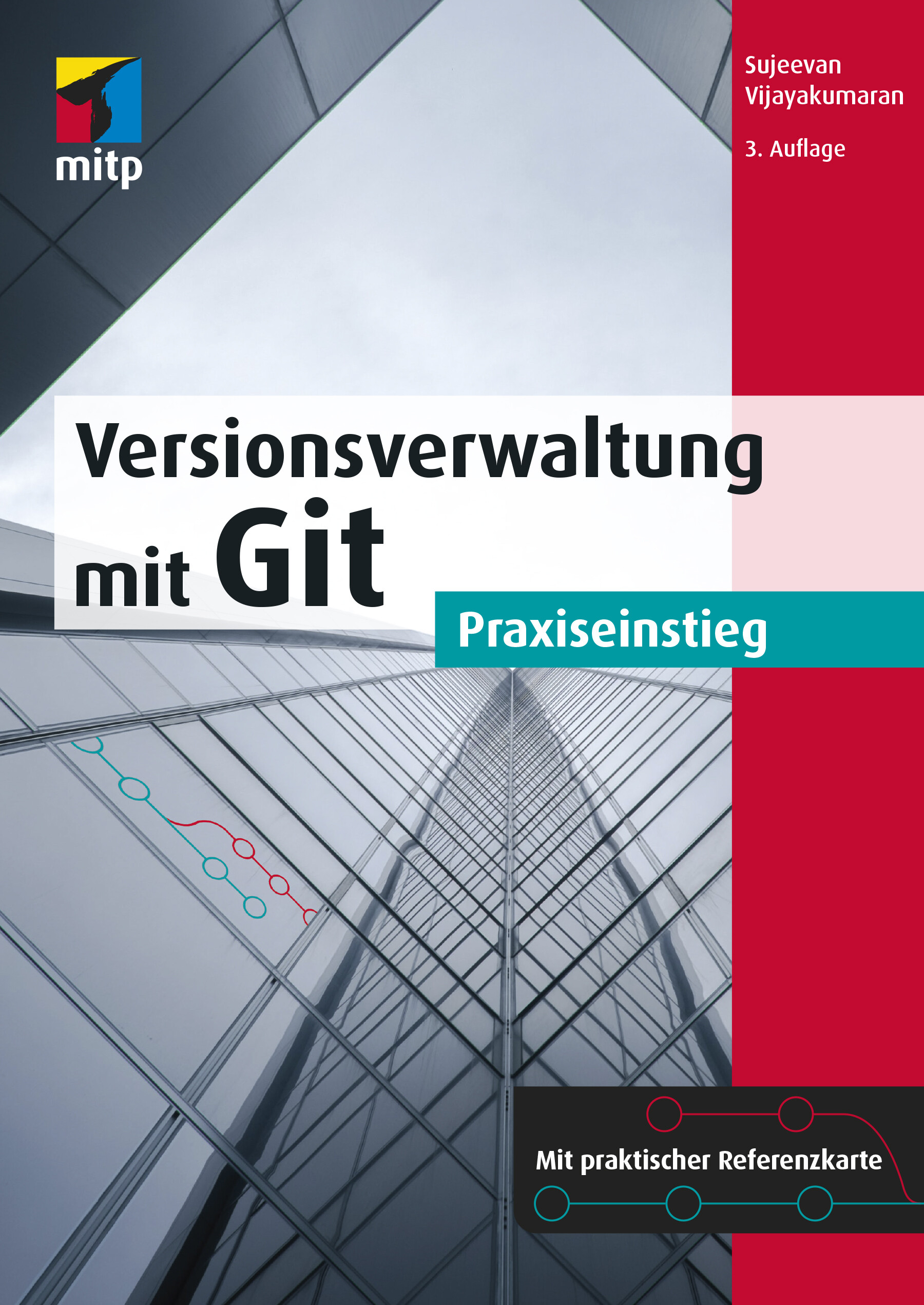
Versionsverwaltung mit Git (3. Auflg.)
Der Praxiseinstieg mit praktischer Referenzkarte in aktualisierter 3. Auflage 03/2021.Git ist in der Softwareentwicklung bereits weit verbreitet – sowohl in Firmen als auch in Open-Source-Projekten. Zum Einstieg lernen Anfänger häufig nur die wichtigsten Befehle, die schnell nicht mehr ausreichen, vor allem wenn die ersten Fehler auftreten.Dieses Buch behandelt einerseits die gängigen Befehle, die Sie beim täglichen Arbeiten mit Git brauchen. Andererseits geht es dem Autor auch darum, dass Sie Git als Ganzes verstehen, um es effektiv im Entwicklungsprozess einsetzen zu können.Der Fokus des Buchs liegt auf dem praktischen Arbeiten mit Git. Sie lernen anhand eines Projekts, welche Befehle es gibt, wie diese arbeiten und wie Sie auftretende Probleme lösen können. Neben alltäglichen Funktionen finden Sie auch seltener gebrauchte Kommandos, die aber ebenfalls wichtig sind. Dabei legt der Autor großen Wert auf die Einbindung und Anpassung des Entwicklungsprozesses.Im zweiten Teil des Buchs werden fortgeschrittene Themen behandelt. Der Schwerpunkt liegt auf dem Einsatz von Git in Teams. Darunter etwa das Hosten verteilter Repositories mit GitHub und GitLab. Ein weiteres Kapitel behandelt die Workflows, die je nach Anzahl der beteiligten Personen, Branches und Repositories eines Projekts variieren.Darüber hinaus gibt Ihnen der Autor hilfreiche Informationen für den Umstieg von Subversion, einen Überblick über grafische Git-Programme, Hinweise für eine langfristig nachvollziehbare Git-Historie sowie eine Einführung in DevOps, wofür Git die technische Grundlage bildet. Ein Kapitel zu häufig gestellten Fragen rundet diesen Praxiseinstieg ab.Das Buch richtet sich sowohl an blutige Einsteiger als auch an erfahrene Leser.Inhalt & Leseprobe (PDF-Link)
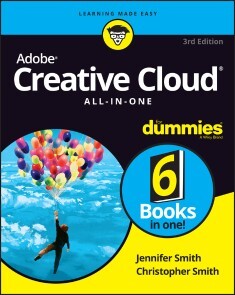
Adobe Creative Cloud All-in-One For Dummies
FLY HIGHER IN YOUR CREATIVE CLOUDAdobe Creative Cloud makes the most popular tools used by designers, photographers, and other creative professionals accessible in a single place. Adobe Creative Cloud All-in-One For Dummies is the ultimate one-stop reference guide for how to use them all. Whatever gets your creative juices flowing, you'll find the in-depth guidance required to deliver the results you want, from polishing-up photos and images to creating illustrations and designs. And once your assets are just how you want them, you can pick up best practices for managing and publishing via the amazing Adobe Bridge.Written by pro designers for those getting started with this powerful set of tools, this book gives you an overview of Creative Cloud and step-by-step coverage of the major applications—InDesign, Illustrator, Photoshop, Acrobat Pro, and Adobe XD, and Adobe Bridge—in seven mini-books that take you from the basics to more advanced topics. You'll also discover how to get your work noticed by building personal galleries and displaying your creative wares.* Find the essentials on the top tools in Adobe Creative Cloud* Build and enhance your design skills* Protect your documents with Acrobat Pro* Get the most out of each program with insider tipsWhatever your skill level and project needs, you'll find the essentials you need to demystify these complex programs and the knowledge to make your work shine even more brightly through the Cloud!JENNIFER SMITH is the director of user experience design practice at the American Graphics Institute. She is also a designer, consultant, educator, mentor, and author of over a dozen books on digital imaging and web publishing.CHRISTOPHER SMITH is president of the American Graphics Institute. He is author of more than ten books on digital publishing, including many of the Adobe official training guides.INTRODUCTION 1Why is It Important? 2About This Book 2Foolish Assumptions 4Icons Used in This Book 4Beyond the Book 4Where to Go from Here 5BOOK 1: GETTING STARTED WITH THE CREATIVE CLOUD SUITE 7CHAPTER 1: THE CREATIVE CLOUD 9Applications Covered in This Book 10Crossing the Adobe Bridge 11Getting started with Photoshop CC 11Introducing InDesign CC 11Using Illustrator CC 12Working with Acrobat DC 13Prototyping your apps with Adobe XD 14Integrating software 15Acquiring assets for this book 15CHAPTER 2: CREATIVE CLOUD APPLICATION MANAGEMENT 17Downloading Your First App 17Checking for updates 19Getting started 20CHAPTER 3: CREATIVE CLOUD EXTRAS FOR YOU 21Launching the Creative Cloud App 22Apps 22Categories 23Managing Your Fonts 24Resource Links 24Your Work 25Libraries 25Show Cloud Documents 29Discovering Design Opportunities with New Fonts 32Finding Images with Adobe Stock 33Promoting Yourself with Behance 34Creating a Cover 36Bonus! Adobe Portfolio 37It’s Not Just Apps! 38CHAPTER 4: USING COMMON MENUS AND COMMANDS 39Discovering Common Menus 39Using Dialog Boxes 41Encountering Alerts 43Discovering Common Menu Options 44About Contextual Menus 45Using Common Keyboard Shortcuts 46Changing Your Preferences 48CHAPTER 5: EXPLORING COMMON PANELS 51Understanding the Common Workspace 51Using Panels in the Workspace 53Moving panels 54Looking at common panels 55BOOK 2: ADOBE BRIDGE 57CHAPTER 1: ORGANIZING AND MANAGING YOUR FILES WITH ADOBE BRIDGE 59Getting to Know the Adobe Bridge Workspace 60Practice makes perfect 62Finding and using your folders within Adobe Bridge 62The default workspace 64Looking for a better view 65Creating a new folder 66Moving a file to another folder 67Making a favorite 68Investigating the Application bar 69Developing a Bridge habit 69CHAPTER 2: TAKING ADVANTAGE OF METADATA IN ADOBE BRIDGE 71Locating Your Files 71Using Keywords 74Creating a Metadata Template 75Searching for Files Using Adobe Bridge 77Searching by name or keyword 77Using the Filter panel 78Saving a Collection 79CHAPTER 3: USING AUTOMATION TOOLS IN ADOBE BRIDGE 81Getting Files from Your Camera 81Automation Tools in Adobe Bridge 83Batch renaming your files 83Exporting your files from Bridge 85Loading files as layers 85Building a contact sheet 86BOOK 3: PHOTOSHOP CC 89CHAPTER 1: GETTING INTO PHOTOSHOP CC BASICS 91The Start Screen 91The New Document Window 92Sample Images Can Help You Investigate More Features 93Opening an Image 94Getting to Know the Tools 94Navigating the Work Area 97Changing your workspace 97Resetting your workspace 99Docking and saving panels 99Saving your workspace 100Taking advantage of workspace features 100Zooming in to get a better look 100Choosing Your Screen Mode 102Getting Started with Basic Tasks in Photoshop CC 102Cropping an image 102Using grids as you crop 105Using the Frame tool to create cropped images 106Saving images 109CHAPTER 2: MESSING WITH MODE MATTERS 111Working with Bitmap Images 111Choosing the Correct Photoshop Mode 113Bitmap 113Grayscale 113Duotone 114Index color 117RGB 117CMYK 118LAB color 118Multichannel 119Bit depth 119CHAPTER 3: MAKING SELECTIVE CHANGES 121Getting to Know the Selection Tools 121The Marquee tool 122The Lasso tool 125The Object Selection tool 126The Quick Selection tool 127The Magic Wand tool 128Painting a selection with the Quick Mask tool 129Manipulating Selections with Refine Selection 132Transforming selections 132Transforming selections 132Feathering 135Tweaking the edges of a selection in the Select and Mask workspace 138Selecting the Subject 143Saving Selections 144CHAPTER 4: USING THE PHOTOSHOP PEN TOOL 145Selecting the Right Pen Tool for the Task 146Using a Path as a Selection 146Creating Curved Paths 148Clipping Paths 150Using Shape Layers 152Creating and using a custom shape 153Changing the color of the shape 155Changing the color fill of a custom shape 156Changing the stroke on a live vector shape 157Creating a stroke on a custom shape 158Removing a shape layer 159CHAPTER 5: CREATING IMAGES IN THE RIGHT RESOLUTION FOR PRINT AND THE WEB 161Creating Images for Print 161The resolution formula 163Changing the resolution 163Determining the Resolution for Web Images 166Applying the Unsharp Mask Filter to an Image 167CHAPTER 6: CREATING A GOOD IMAGE 169Reading a Histogram 169Breaking into key types 172Starting the process to improve your image 174Creating a Good Tone Curve 174Finding the highlight and the shadow 176Setting the highlight and shadow values 180Adjusting the midtone 181Finding a neutral 182Editing an Adjustment Layer 184Testing a Printer 185CHAPTER 7: WORKING WITH PAINTING AND RETOUCHING TOOLS 187Using the Swatches Panel 187Choosing Foreground and Background Colors 188The Painting and Retouching Tools 189Changing the brush 190The Spot Healing Brush tool and the Content-Aware feature 191The Healing Brush tool 193The Patch tool 194The Red Eye tool 195The Brush tool 195The Clone Stamp tool 198The History Brush tool 200The Eraser tool 201The Gradient tool 201Blending Modes 204Painting with color 206Filling selections 207Saving Presets 208CHAPTER 8: USING LAYERS 209Creating and Working with Layers 209Duplicating a Layer 212Selecting a Layer 212Controlling the visibility of a layer 213Rearranging the stacking order 213Creating a Text Layer 213Warping text 214Fine-tuning text 214Check that spelling! 215Using Layer Masks 215Creating a layer mask from a selection 216Creating a vector mask from a pen path 218Organizing Your Layers 220Activating multiple layers simultaneously 220Layer groups 220Duplicating a layer group 221Filter Capabilities in the Layers Panel 222Merging and Flattening Images 222Merging 223Flattening 223CHAPTER 9: GOING BEYOND THE BASICS WITH LAYERS 225Using Layer Styles 225Applying a style 225Creating and saving a style 227Thinking about opacity versus fill 228Smart, Really Smart! Smart Objects 229Finding Tools and Features That Are Hidden 230Using the Frame Tool 231Working with Artboards in Photoshop 232Adding additional artboards 234Adding content to the second artboard 234Experimenting with 3D Files 237Preserving Corrective Perspective with the Vanishing Point Feature 238CHAPTER 10: SAVING PHOTOSHOP IMAGES FOR PRINT AND THE WEB 243Backing Up with a Save 244Choosing a File Format for Saving 244Wonderful and easy Photoshop PSD 245Photoshop EPS 245Photoshop PDF 245TIFF 246DCS 246Saving Images for the Web 246PNG 247JPEG 248GIF 250Matte 254Saving Settings 254BOOK 4: INDESIGN CC 257CHAPTER 1: INTRODUCING INDESIGN CC 259Getting Started with InDesign CC 259Creating a new publication 260Opening an existing publication 263Touring the Workspace 263Tools 265Menus 266Panels 267Contextual menus 270Setting Up the Workspace 271Showing and hiding grids and guides 271Snapping to a grid or a guide 272Using Smart Guides 273Customizing menus 274Customizing the interface appearance 275Saving a custom workspace 275Working with Documents 276Importing new content 277Viewing content 278Saving your publication 278CHAPTER 2: WORKING WITH TEXT AND TEXT FRAMES 281Understanding Text, Font, and Frames 282Creating and Using Text Frames 282Creating text frames with the Type tool 283Creating text frames with the Frame tool 284Creating text frames from a shape 284Adding Text to Your Publication 284Importing text 285Controlling text flow 285Adding placeholder text 286Copying and pasting text 287Looking at Text Frame Options 287Changing text frame options 288Using and modifying columns 289Modifying and Connecting Text Frames on a Page 290Resizing and moving the text frame 291Threading text frames 292Adding a page jump number 295Understanding Paragraph Settings 297Indenting your text 297Text alignment and justification 298Saving a paragraph style 299Editing Stories 300Using the story editor 300Checking for correct spelling 302Using custom spelling dictionaries 302Using Tables 303Creating tables 303Editing table settings 305Creating table styles 306Looking at Text on a Path 307CHAPTER 3: UNDERSTANDING PAGE LAYOUT 309Importing Images 309Importing PDFs 311Importing other InDesign documents 311Linking and Embedding Images 312Setting Image Quality and Display 314Selecting Images 315Manipulating Text and Graphics in a Layout 316Page orientation and size 316Margins, columns, and gutters 317Using guides and snapping 317Locking objects and guides 319Merging Text and Graphics 320Wrapping objects with text 320Modifying a text wrap 322Working with Pages and the Pages Panel 323Selecting and moving pages 324Adding and deleting pages 325Numbering your pages 325Using Master Spreads in Page Layout 326Creating a master spread 327Applying, removing, and deleting master pages 327Changing individual page sizes 328CHAPTER 4: DRAWING IN INDESIGN 329Getting Started with Drawing 329Paths and shapes 330Points and segments 332Getting to Know the Tools of the Trade 332The Pencil tool 333The Pen tool 333Basic shapes and frame shapes 333Drawing Shapes 334Creating a shape with exact dimensions 334Using the Polygon tool 335Editing Basic Shapes 336Changing the size with the Transform panel 336Changing the size with the Free Transform tool 337Creating your own custom shapes 337Changing the stroke of a shape 339Changing the shear value 340Rotating a shape 340Drawing Freeform Paths 340Using the Pencil tool 340Using the Pen tool 341Editing Freeform Paths 342Modifying Frame Corners 343Using Fills 344Creating basic fills 344Making transparent fills 345Filling with gradients 346Removing fills 348Adding Layers 349Creating QR Codes 350CHAPTER 5: UNDERSTANDING COLOR 351Selecting Color with Color Controls 351Understanding Color Models 352Using Color Swatches and Libraries 353The Swatches panel 353Swatch libraries 354CHAPTER 6: CLIPPING PATHS, ALIGNMENT, AND OBJECT TRANSFORMATION 357Working with Transformations 358Looking at the Transform panel 358Using the Free Transform tool 360Rotating objects 361Scaling objects 363Shearing objects 363Reflecting objects 364Understanding Clipping Paths 365Arranging Objects on the Page 366Aligning objects 366Distributing objects 367CHAPTER 7: EXPORTING TO PDF AND PRINTING 369Preflight: Preparing Your Documents for Printing 369Packaging Your Documents 371Understanding File Formats 372Exporting Publications 374Exporting PDF documents for printing 374Exporting EPS files 376Exporting JPEG and PNG files 377Exporting text files 378Printing Your Work 379Understanding bleed 379Doing it yourself: Printing and proofing at home or the office 380CHAPTER 8: CREATING DIGITAL DOCUMENTS USING EPUB AND PUBLISH ONLINE 383Choosing the Right Digital Format 384Planning Layouts for Digital Distribution 384Adapting Print Documents to Share Digitally 385Creating liquid layout rules for alternative layouts 386Creating alternate layouts 387Adding interactivity to digital documents 389Exporting Digital Books as EPUB 390Preparing EPUB (Reflowable) Books 390Exporting EPUB (Reflowable) Books 391Exporting EPUB (Fixed-Layout) 393Publish Online 394Share for Review 396BOOK 5: ILLUSTRATOR CC 399CHAPTER 1: DISCOVERING ILLUSTRATOR CC 401Deciding When to Use Illustrator CC 401Creating a New Document 403Try a Template 407Opening an Existing Document 407Taking a Look at the Document Window 407Navigating the Work Area with Zoom Controls 410Taking Advantage of Artboards 411Creating multiple artboards 412Using the Artboard Panel 413Printing a document with multiple artboards 414Checking Out the Panels 415Getting to Know Your Workspace 416Becoming Familiar with the Tools 417Changing Views 420CHAPTER 2: USING THE SELECTION TOOLS 423Getting to Know the Selection Tools 423Giving selections a try 424Anchor points 425Bounding boxes 426Introducing all the selection tools 427Working with Selections 428More practice with selections 428Selecting an anchor point 429Using a marquee to select an object 430Selecting multiple objects 431Saving a selection 431Grouping and Ungrouping 432Creating a group 432Using Isolation mode 433Manipulating Selected Objects 433CHAPTER 3: CREATING BASIC SHAPES AND BEYOND 437The Basic Shape Tools 437Creating rectangles and ellipses 438Working with the Live corners feature 439The Rounded Rectangle tool 440Using the Polygon tool 441Using the Star tool 441Resizing Shapes 442Tips for Creating Shapes 444Making some pies 444Creating advanced shapes 445Using the Pathfinders 446Using the Shape Builder tool 447CHAPTER 4: USING THE PEN TOOL AND INTEGRATING IMAGES 449Pen Tool Fundamentals 450Creating a straight line 451Creating a constrained straight line 453Creating a curve 453Reconnecting to an existing path 454Controlling curves 455Creating a corner point 456Additional Pen Tools 457Adding tools to help make paths 458Using the Eraser tool 458Tracing Artwork 460Creating a template layer 460Using Image Trace 461Changing the view 463Other Details You Should Know about Placing Images 463CHAPTER 5: USING TYPE IN ILLUSTRATOR 465Working with Type 465Creating text areas 466Creating a line of text 466Flowing text into an area 467Dealing with text overflow 467Creating columns of text with the Area Type tool 467Threading text into shapes 470Wrapping text 471Outlining text 472Putting text on a path, in a closed shape, or on the path of a shape 474Assigning Font Styles 476Using the Character Panel 478Using the Paragraph Panel 480Alignment 481Indentation 481Text Utilities: Your Key to Efficiency 482Find and Replace 482Spell checker 482The Hyphenation feature 483The Find Font feature 484The Change Case feature 485Text styles 485CHAPTER 6: ORGANIZING YOUR ILLUSTRATIONS 491Setting Ruler Increments 491Using Guides 492Creating a ruler guide 492Creating a custom guide 493Using the Properties Panel for Placement 493Changing the Ruler Origin 494What You Need to Know about Object Arrangement 494Hiding Objects 496Locking Objects 497Creating a Clipping Mask 498Creating a Mask of Illustrator Objects Using the Blend Tool 500Creating a Clipping Path Using the Draw Inside Button 502CHAPTER 7: USING LAYERS 505Creating New Layers 506Using Layers for Selections 510Changing the Layer Stacking Order 511Moving and Cloning Objects 512Hiding Layers 512Locking Layers 513CHAPTER 8: LIVENING UP ILLUSTRATIONS WITH COLOR 515Choosing a Document Profile 516Using the Swatches Panel 517Applying Color to the Fill and Stroke 519Changing the Width and Type of a Stroke 519Adding Arrowheads 522Using the Color Panel 523Saving Colors 524Building and using custom libraries 524Using the Color Guide and color groups 525Editing or Applying Colors 526Adding Pantone colors 527Editing Colors 529Building and Editing Patterns 530Advanced Pattern Editing 532Working with Gradients 534Using the Gradient tool 537Apply a gradient to a stroke 538Using transparency in gradient meshes 538Copying Color Attributes 540Painting Made Easy: The Live Paint Feature 541CHAPTER 9: USING THE TRANSFORM AND DISTORTION TOOLS 543Working with Transformations 543Transforming an object 544Using the Transform tools 547Creating Distortions 550The Liquify tools 550Using the Envelope Distort command 552CHAPTER 10: WORKING WITH TRANSPARENCY AND SPECIAL EFFECTS TOOLS 557The Mesh Tool 557The Blend Tool 561Creating a blend 561Setting Blend options 562The Symbol Sprayer Tool 563Exploring the symbol tools 563Creating and spraying symbols on the artboard 565Transparency 566Blend modes 567Opacity masks 568CHAPTER 11: USING FILTERS AND EFFECTS 571Working with Effects 571Understanding the Appearance panel 572Applying an effect 572Adding a Drop Shadow effect 573Saving your combination of effects as a graphic style 575Saving Graphic Styles 576Creating 3D Artwork 577Adding Multiple Fills and Strokes 580Using the Perspective Grid 583CHAPTER 12: USING YOUR ILLUSTRATOR IMAGES 587Saving and Exporting Illustrator Files 587The native Adobe Illustrator file format 588Saving Illustrator files back to previous versions 590The PDF file format 590The EPS file format 592The SVG file format 593Saving Your Artwork for the Web 594Saving Multiple Assets out of Illustrator 597Flattening Transparency 599Flattening a file 599Using the Flattener Preview panel 601Printing from Illustrator 602BOOK 6: ADOBE XD 605CHAPTER 1: INTRODUCING THE XD WORKSPACE 607Understanding the Modern User Interface 607Creating a new artboard 608Using the tools 610Relating Objects to the Property Inspector 610Centering an object on the screen 610Using transform features 611Fixing position when scrolling 612Laying it all out 612Changing the appearance of your object 614A Little Bit about Artboards 616Saving your file 617Cloning your text objects to the first artboard 618Duplicating your artboard 619Creating a third artboard by cloning 620Editing your text to fit the screens 621Experimenting with artboard properties 621Adding an image 621Keyboard Shortcuts for Navigating the Workspace 623Design View versus Prototype Mode 624Creating your links 624Testing your prototype 625CHAPTER 2: WORKING WITH ARTBOARDS 627Starting Your Document and Adding an Artboard 627Creating New Artboards 628Resizing an Artboard 629Adding a New Artboard 629Using the Layers Panel 630Adding Objects to Your Artboards 631Arranging Artboards in Your Pasteboard Area 632Aligning and Distributing Your Artboards 632Adding Scrolling Capability to an Artboard 633Adding Guides to Your Artboard 635CHAPTER 3: CREATING YOUR USER INTERFACE (UI) WITH SHAPES, PATHS, AND CUSTOM SHAPES 637Working with the Basic Shapes 637What’s included in XD 638Determining the size 638Using a Shape to Create a Button 639Creating a border 640Sampling a color using the eyedropper 641Adding text to your button 641Creating a gradient 642Changing the Direction and Angle of Your Gradient 644Using the Pen Tool 645Editing shapes 646Creating Custom Shapes 647Adding lines 648Importing from Illustrator 648CHAPTER 4: BUILDING YOUR UI 649Layers and the Objects They Contain 649Artboards and layers 650What can you do with your artboards inside the Layers panel? 651Transforming Objects 658Aligning and Distributing 658Be smart about your guides 658Using the Align and Distribute feature 659CHAPTER 5: WORKING WITH TEXT IN YOUR XD PROJECT 661Using the Text Tool 661Adjusting Text Properties 662About readability and font selections 663Selecting your font family 664Saving Your Properties as an Asset 666Using the Spellchecker 668Importing Text 668Using the Repeat Grid Feature 668Importing updated images into your repeated grid 670Updating your text in your repeated grid 671CHAPTER 6: WORKING WITH IMAGERY IN XD 673Importing Artwork into Your Prototype 673Working with Images in XD 674Masking your images 675Masking multiple objects 676Importing Vector Images into XD 677Exporting Selected Artwork from XD 678Exporting multiple items 679Exporting your artboards 680CHAPTER 7: CREATING DESIGN LIBRARIES 681Saving Reusable Objects as Components 681Making edits to your component 683Unlinking a component 684Saving colors in your libraries 684Saving Character Styles 685Discovering Libraries 686Using shared libraries 687Updating a published library 687Editing a component 688Taking Advantage of UI Kits 688CHAPTER 8: ADDING INTERACTIVITY TO YOUR XD PROJECT 691Entering Prototype Mode 691Discovering the many ways to link your artboards 693Creating animations 696Creating a Drag Trigger 698Creating an Overlay 699Adding States and Rollovers 701CHAPTER 9: SHARING YOUR XD PROJECT 705Viewing Your App/Website on Your Desktop 705Creating a Movie for Your User Story 707Using the Device Preview Feature 707Sharing Your XD File with Others 709Sharing a specific user flow 709Selecting a View setting 710Adding collaborators to your XD document 713Index 715

Beginning Power Apps
Transform the way your business works with easy-to-build apps. With this updated and expanded second edition, you can build business apps that work with your company's systems and databases, without having to enlist the expertise of costly, professionally trained software developers.In this new edition, business applications expert Tim Leung offers step-by-step guidance on how you can improve all areas of your business. He shows how you can replace manual or paper processes with modern apps that run on phone or tablet devices. For administrative and back-office operations, he covers how to build apps with workflow and dashboard capabilities. To facilitate collaboration with customers and clients, you’ll learn how to build secure web portals with data entry capabilities, including how to customize those portals with code.This hands-on new edition has 10 new chapters—including coverage on model-driven and portal apps, artificial intelligence, building components using the Power Apps Component Framework, using PowerShell for administration, and more—complete with context, explanatory screenshots, and non-technical terminology.WHAT YOU WILL LEARN* Create offline capable mobile apps and responsive web apps* Carry out logic, data access, and data entry through formulas* Embellish apps with charting, file handling, photo, barcode, and location features* Set up Common Data Service, SharePoint, and SQL data sources* Use AI to predict outcomes, recognize images, and analyze sentiment * Integrate apps with external web services and automate tasks with Power Automate * Build reusable code and canvas components, make customizations with JavaScript* Transfer apps and data, and secure, administer, and monitor Power Apps environmentsWHO THIS BOOK IS FORBeginners and non-developers, and assumes no prior knowledge of Power AppsTIM LEUNG is a software developer with more than 10 years of experience in designing and building large-scale commercial applications. He is a recognized expert in the field of rapid application development and his previous publication with Apress, Visual Studio LightSwitch, covers this topic in depth. Tim is a Microsoft certified developer, a chartered member of the British Computer Society, and holds a degree in information technology.PART I: POWER APP FUNDAMENTALSChapter 1: Introducing Power AppsChapter 2: Subscribing to Power AppsChapter 3: Creating Your First AppChapter 4: Sharing AppsChapter 5: Using FormulasPART II: WORKING WITH DATAChapter 6: Setting Up SharePoint, SQL, and moreChapter 7: Working with Tables and RowsChapter 8: Searching and Retrieving DataPART III: DEVELOPING CANVAS APPSChapter 9: Canvas App DesignChapter 10: Using Simple ControlsChapter 11: Using Table/Record Data ControlsPART IV: DEVELOPING MODEL DRIVEN AND PORTAL APPSChapter 12: Building a Dataverse DatabaseChapter 13:Developing Model-Driven AppsChapter 14: Building Portal AppsChapter 15: Retrieving Data from Portal Apps.PART V: ENHANCING APPSChapter 16: Working with Images and MediaChapter 17: Storing and Retrieving FilesChapter 18: Integrating Maps and Location ServicesChapter 19: Charting DataChapter 20: Adding Artificial Intelligence to AppsPART VI: REUSABILITYChapter 21: Building Reusable Canvas ComponentsChapter 22: Building Reusable Code ComponentsPART VII: OFFLINE AND INTEGRATIONChapter 23: Working OfflineChapter 24: Creating Custom Data ConnectorsPART VIII: ADMINISTRATIONChapter 25: Using Power AutomateChapter 26: Transferring Apps and DataChapter 27: Administering SecurityAppendix A - Sample App Data Structure

Quantum Machine Learning with Python
Quickly scale up to Quantum computing and Quantum machine learning foundations and related mathematics and expose them to different use cases that can be solved through Quantum based algorithms.This book explains Quantum Computing, which leverages the Quantum mechanical properties sub-atomic particles. It also examines Quantum machine learning, which can help solve some of the most challenging problems in forecasting, financial modeling, genomics, cybersecurity, supply chain logistics, cryptography among others.You'll start by reviewing the fundamental concepts of Quantum Computing, such as Dirac Notations, Qubits, and Bell state, followed by postulates and mathematical foundations of Quantum Computing. Once the foundation base is set, you'll delve deep into Quantum based algorithms including Quantum Fourier transform, phase estimation, and HHL (Harrow-Hassidim-Lloyd) among others.You'll then be introduced to Quantum machine learning and Quantum deep learning-based algorithms, along with advanced topics of Quantum adiabatic processes and Quantum based optimization. Throughout the book, there are Python implementations of different Quantum machine learning and Quantum computing algorithms using the Qiskit toolkit from IBM and Cirq from Google Research.WHAT YOU'LL LEARN* Understand Quantum computing and Quantum machine learning* Explore varied domains and the scenarios where Quantum machine learning solutions can be applied* Develop expertise in algorithm development in varied Quantum computing frameworks* Review the major challenges of building large scale Quantum computers and applying its various techniquesWHO THIS BOOK IS FORMachine Learning enthusiasts and engineers who want to quickly scale up to Quantum Machine LearningSantanu Pattanayak works as a staff machine learning specialist at Qualcomm Corp R&D and is an author of the book “Pro Deep Learning with TensorFlow” published by Apress. He has around 12 years of work experience and has worked at GE, Capgemini, and IBM before joining Qualcomm. He graduated with a degree in electrical engineering from Jadavpur University, Kolkata and is an avid math enthusiast. Santanu has a master’s degree in data science from Indian Institute of Technology (IIT), Hyderabad. He also participates in Kaggle competitions in his spare time where he ranks in top 500. Currently, he resides in Bangalore with his wife.QUANTUM MACHINE LEARNING WITH PYTHONChapter 1: Introduction to Quantum Mechanics and Quantum ComputingChapter Goal: Introduce the concept of Quantum mechanics and Quantum computing to the readersNo of pages 50-60Sub-Topics1. Introduction to Quantum computing2. Quantum bit and its realization3. Quantum superposition and Quantum entanglement4. Bloch Sphere representation of Qubit5. Stern Gerlach Experiment6. Bell State7. Dirac Notations8. Single Qubit Gates9. Multiple Qubit Gates10. Quantum No Cloning Theorem11. Measurement in different basis12. Quantum Teleportation13. Quantum parallelism with Deuth Jozsa14. Reversibility of quantum computingChapter 2: Mathematical Foundations and Postulates of Quantum ComputingChapter Goal: Lays the mathematical foundation along with the postulates of Quantum computingNo of pages 50-60Sub -Topics1. Topics from Linear algebra2. Pauli Operators3. Linear Operators and their properties4. Hermitian Operators5. Normal Operators6. Unitary Operators7. Spectral Decomposition8. Linear Operators on Tensor Product of Vectors9. Exponential Operator10. Commutator Anti commutator Operator11. Postulates of Quantum Mechanics12. Measurement Operators13. Heisenberg Uncertainty Principle14. Density Operators and Mixed States15. Solovay-Kitaev Theorem and Universality of Quantum gatesChapter 3: Introduction to Quantum AlgorithmsChapter Goal: Introduce to the readers Quantum algorithms to express the Quantum computing supremacy over classical computationNo of pages: 70-80Sub - Topics:1. Introduction to Cirq and Qiskit2. Bell State creation and measurement in Cirq and qiskit3. Quantum teleportation Implementation4. Quantum Random Number generator5. Deutsch Jozsa Implementation8. Hadamard Sampling6. Bernstein Vajirani Algorithm Implementation7. Bell’s Inequality Implementation8. Simon’s Algorithm of secret string search Implementation9 Grover’s Algorithm Implementation10. Algorithmic complexity in Quantum and Classical computing paradigmChapter 4: Quantum Fourier Transform Related AlgorithmsGoal: Introduce to the readers Quantum Fourier related algorithmsNo of pages: 60-70Sub - Topics:1. Fourier Series2. Fourier Transform3. Discrete Fourier Transform4. Quantum Fourier Transform(QFT)5. QFT implementation6. Hadamard Transform as Fourier Transform7. Quantum Phase Estimation(QPE)8. Quantum Phase Estimation Implementation9. Error Analysis in Quantum Phase Estimation10. Shor’s Period Finding Algorithm and Factoring11. Period Finding Implementation12. Prime Factoring and ImplementationPART 2Chapter 5: Introduction to Quantum Machine LearningGoal: Introduce to the readers Quantum machine learning paradigmNo of pages: 60-70Sub - Topics:1. Harrow, Hassidim and Lloyd Algorithm (HHL) for solving Linear Equation2. HHL algorithm Implementation3. Quantum Linear Regression and Implementation4. Quantum SWAP Test for dot product Computation5. Quantum SWAP Test Implementation6. Quantum Amplitude Scaling7. Quantum Euclidean Distance Computation8. Quantum Euclidean Distance Implementation9. Quantum K means10. Quantum K means Implementation11. Quantum Random Access Memory(QRAM)12. Quantum Principle Component Analysis13. Quantum Support Vector Machines14. Quantum Least Square Support Vector Machines(LS -SVM)15. Least Square SVM ImplementationChapter 6: Quantum Deep Learning and Quantum Optimization Based AlgorithmsGoal: Introduce to the readers Quantum deep learning algorithms and Quantum Optimization Based AlgorithmsNo of pages: 40-50Sub - Topics:1. Quantum Neural network and Implementation2. Quantum Convolutional Neural Network and Implementation3. Variational Quantum Eigen solvers(VQE)4. Graph Coloring Problem using VQE5. Travelling Salesman problem using VQEChapter 7: Quantum Adiabatic Processes and Quantum based Optimization.

Developing Web Components with TypeScript
Create professional and progressive web apps with the native HTML API on the latest technology stack. This book describes the basics of web components and how to create them using plain JavaScript as well as how to make professional applications based on web components using TypeScript.Developing Web Components with TypeScript looks at APIs using examples, techniques, and tricks. You will start with a brief introduction to web components, including slots and templates, handling custom events, and styling components with or without shadow DOM. Then, it introduces TypeScript as part of the tool set. It shows the internal construction of a professional thin library. It also helps you learn how to deal with web components in real-life projects; this includes techniques such as creating a single-page app without framework code. All code samples used here are supported by all modern browsers for you to follow along. Library code and examples are available on GitHub.WHAT YOU WILL LEARN* Create isolated web components using shadow DOM, slots, and templates* Understand the advantage of an enhanced toolset, especially TypeScript* Pick up styles and customizations* Master professional web apps using native APIs* Understand the life cycle of a componentWHO THIS BOOK IS FORProfessional developers who want to move from desktop to web and away from fat frameworks to achieve their goal.JÖRG KRAUSE has been working with software and software technology since the early 1980s, beginning with a ZX 81 and taking his first steps as a programmer in BASIC and assembly language. He studied information technology at Humboldt University, Berlin, but left early, in the 1990s, to start his own company. He has worked with Internet technology and software development since the early days when CompuServe and FidoNet dominated. He has worked with Microsoft technologies and software since Windows 95. In 1998, he worked on one of the first commercial e-commerce solutions and wrote his first book. Due to its wide success, he started working as a freelance consultant and author in order to share his experience and knowledge with others. He has written several books for Apress, Hanser, Addison Wesley, and other major publishers along with several self-published books—a total of over 60 titles. He also publishes articles in magazines and speaks at major conferences in Germany. Currently, Jörg works as an independent consultant, software developer, and author in Berlin, Germany.In his occasional spare time, Jörg enjoys reading thrillers and science fiction novels and going on a round of golf.Follow him on Twitter at @JOERGISGEEK for updates and insights.CHAPTER 1: IntroductionCHAPTER 2: Making Web ComponentsCHAPTER 3: Shadow DOMCHAPTER 4: EventsCHAPTER 5: TemplatesCHAPTER 6: SlotsCHAPTER 7: Components and StylesCHAPTER 8: Making Single Page AppsCHAPTER 9: Professional Web ComponentsAPPENDIX A - Component Library Documentation

Red Hat Certified Engineer (RHCE) Study Guide
Study the material in this book to prepare for the RHCE exam EX294 and to learn how using Ansible within your own environment improves system administration productivity.This book covers all of the objectives of the exam and extends further, ensuring that you know how to use Ansible to manage Linux. The book uses CentOS, a Red Hat-based distribution, and Ubuntu instead of using a single Red Hat distribution. By using the two distributions, you will understand the power of Ansible and how easily you can deal with multiple platforms, which is crucial for your understanding of Ansible in the real world.The book assumes no previous knowledge of Ansible but some knowledge of Linux system administration from the command line. You will learn how to manage Linux systems that are installed with different distributions, including CentOS Enterprise Linux 8 and Ubuntu 18.04. You will be able to manage these systems using ad hoc commands from the command line as well as creating Ansible playbooks that can be replayed reliably many times. To save on the code that you have to create, you will learn how to use Ansible Galaxy to search for and download roles and collections that are pre-written to manage elements of your Linux installations. By the end of this book, you will be able to write efficient and effective YAML playbooks to manage your entire estate.WHAT YOU WILL LEARN* Prepare systems so that password-less access can be used with Ansible remotely* Use ad hoc commands to quickly configure systems* Use and format YAML files correctly* Create playbooks that grow in their complexity as your experience develops* Ensure that services are restarted on configuration changesWHO THIS BOOK IS FORThose who want to prepare for the RHCE exam EX294 and readers who want to learn how to use Ansible to improve the productivity of their system administration. This book will help you prepare yourself for the exam as well as your real-life administration needs.ANDREW MALLETT is a well-known Linux consultant and trainer, and his YouTube Channel has over 65K subscribers and more than 1,000 videos. Working mainly online now, he has authored courses on both Pluralsight and Udemy, and regularly teaches classes online to a worldwide audience. Andrew is familiar with Linux and UNIX and has worked with them for over 20 years. Scripting and automation is one of his passions as he is inherently lazy and will always seek the most effective way of getting the job done. The Urban Penguin, his alter ego, is a UK-based company where he creates his work and currently employs five people.Chapter 1: Understanding Ansible and the Red Hat RHCECHAPTER GOAL: HELP THE READER IDENTIFY THE COURSE OF THE BOOK AND WHAT THEY NEED TO FOLLOW ALONGNO OF PAGES 10SUB -TOPICS1. Ansible and Red Hat2. Red Hat Certifications3. Lab systems used in the book4. Investigating the Lab Systems5. Installing Ansible on CentOS 86. Installing Ansible on Ubuntu 18.04Chapter 2: Working with the Ansible ConfigurationCHAPTER GOAL: GAIN AND UNDERSTANDING A CREATE ANSIBLE CONFIGURATION FILE AND ENFORCE THEIR USE WITH READ ONLY VARIABLESNO OF PAGES: 10SUB - TOPICS1. Identify the version of Ansible and the location of the configuration file used2. Understanding the Ansible configuration hierarchy3. Configuring read-only variables4. Printing Ansible configurations5. Creating basic configurationChapter 3: Creating an Ansible InventoryCHAPTER GOAL: THE INVENTORY IS A LIST OF HOSTS THAT WILL BE MANAGED FOR THAT PROJECT. THE READER WILL LEARN TO CREATE THE INVENTORY BOTH MANAUALYY AND AUTOMATED SEARCHES. INVENTORY GROUPS ALLOW FOR MORE DIRECTED TARGETING OF TASKS.No of pages : 10SUB - TOPICS:1. Adding hosts to the inventory2. Using NMAP to discover SSH hosts and add to inventory3. Creating inventory groups4. Printing inventory entries5. Implementing host and group variablesChapter 4: Using ad-hoc commands and Ansible preparationChapter Goal: Allow the reader to start using ansible and prepare for more automated useNO OF PAGES: 10SUB - TOPICS:1. Generating a local ssh key pair2. Testing Ansible connections3. Using Ansible to distribute the user’s public key4. Enabling password-less access to sudo5. Gaining invaluable help on Ansible modules6. Creating and removing users with AnsibleChapter 5: Writing YAML and Basic PlaybooksChapter Goal: Playbooks are written n YAML so it is important to understand how to write YAML files and basic playbooksNO OF PAGES: 10SUB - TOPICS:1. Understanding YAML files2. Configuring the VIM text editor for YAML3. Using Microsoft Visual Code to edit YAML files4. Creating a simple Ansible playbook5. Using facts in playbooksChapter 6: Managing Users in Ansible PlaybooksChapter Goal: Something that is to understand and user is to create and manage users with Ansible. The user password needs to be encrypted and we can generate encrypted passwords in many ways including Python and CNO OF PAGES: 15SUB - TOPICS:1. Using playbooks to create and remove users2. Creating multiple users with loops3. Using variables in playbooks4. Using logic in the playbook5. Using Python the generate passwords6. Creating a C program to generate passwords7. Managing user passwords in Ansible8. Creating a dedicated Ansible user accountChapter 7: Working with Variables and FactsChapter Goal: Playbooks can be more useful when we make use of system facts and variables. This is especially important when working with different OS familiesNO OF PAGES: 10SUB - TOPICS:1. Linux distribution differences2. Catering for Red Hat and Debian families3. Deploying Apache to CentOS and Ubuntu4. Creating administrators in both CentOS and UbuntuChapter 8: Working with Files and TemplatesCHAPTER GOAL: BEING ABLE TO DELIVER COMPLETE FILES OR EDIT FILES OR REALLY NEEDED TO MAKE ANSIBLE USABLE. WE CAN ALSO USE TEMPLATE FOR GREAT CUSTOMIZATIONS.NO OF PAGES: 10SUB - TOPICS:1. Copying files using the copy module2. Editing files using the lineinfile module3. Creating Jinja2 templates4. Deploying customized message of the day files in LinuxChapter 9: Managing Services using AnsibleCHAPTER GOAL: THE SERVICE MODULE IS QUITE SIMPLE BUT THIS MAKES A GREAT PLACE TO INTRODUCE HANDLERS TO RESTART SERVICES AS FILES CHANGENO OF PAGES: 10SUB - TOPICS:1. The service module and the systemd module2. Using handlers to restart services3. Securing the SSH Server in CentOS and Ubuntu4. Deploying customized message of the day files in LinuxChapter 10: Securing Sensitive Data with Ansible VaultChapter Goal: Sensitive data, such as passwords should not be stored in clear text. Ansible vault is the solutionNO OF PAGES: 10SUB - TOPICS:1. Obscuring clear text data2. Creating encrypted files with Ansible vault3. Creating users with vault dataChapter 11: Implementing a Full Apache DeploymentCHAPTER GOAL: DEPLOYING APACHE IS MORE THAN SIMPLY INSTALLING THE WEB SERVER AND STARTING THE SERVER. THIS IS WHERE ANSIBLE REALLY COMES INTO ITS OWN. THE PLAYBOOK CAN EASILY BE WRITTEN TO BOTH DOCUMENT AND EXECUTE EACH AND EVERY ELEMENT OF THE DEPLOYMENT WITHOUT ANYTHING BEING MISSED.No of pages: 15SUB - TOPICS:1. Identifying the tasks required in installing and configuring Apache2. Create inventory groups and variables3. Create handler to restart service4. Install Apache5. Configure ServerName directive6. Secure the DocumentRoot7. Create web page8. Open firewalld and ufw ports9. Enable the Apache serviceChapter 12: Simplifying Playbooks Using RolesCHAPTER GOAL: A SINGLE PLAYBOOK CAN BECOME A HEFTY DOCUMENT, CRATING ROLES GIVES YOU A MORE MODULAR APPROACH TO LARGER DEPLOYMENTSNO OF PAGES: 10SUB - TOPICS:1. Centralizing code in roles2. Using Ansible Galaxy to Create Roles3. Migrating the Apache playbook to a role4. Deploying the roleChapter 13: Downloading RolesCHAPTER GOAL: AS WELL AS ROLES THAT WE CAN CREATE WE CAN MAKE USE OF PRE-CREATED ROLES AND COLLECTIONS THAT WE CAN INSTALLNO OF PAGES: 10SUB - TOPICS:1. Understanding Roles and Collections2. Searching roles from the command line and the web3. Downloading the PHP collections4. Deploying the PHP role to webserver5. Downloading the MySQL collection6. Deploying the MySQL roleChapter 14: Configuring Storage with AnsibleCHAPTER GOAL: A MAIN CONFIGURATION TASK IN LINUX IS TO CREATE AND MANAGE STORAGE, WE SHOW HOW WE CAN AUTOMATE THIS WITH ANSIBLENo of pages: 10SUB - TOPICS:1. Partitioning disks2. Managing LVM volume groups3. Managing LVM volumes4. Creating file-systems5. Mounting filesystems6. Managing VDO in CentOS 8 with AnsibleChapter 15: Managing Scheduled Tasks with AnsibleCHAPTER GOAL: ANOTHER FEATURE OF ADMINISTRATION AND THE EX294 EXAM IS TO BE ABLE TO MANAGE SCHEDULED TASKS WITH ANSIBLENO OF PAGES: 5SUB - TOPICS:1. Scheduled tasks in Linux2. Creating cron entries using Ansible3. Creating irregular tasks with using at and Ansible

Trends In Cybersecurity
Cyber security is the practice of defending computers, servers, mobile devices, electronic systems, networks, and data from malicious attacks. It's also known as information technology security or electronic information security. The term applies in a variety of contexts, from business to mobile computing, and can be divided into a few common categories.

Xiaomi Redmi Note 9 / 9 Pro / 9S
Die verständliche Anleitung für Ihr Smartphone:- Alle Funktionen & Einstellungen auf einen Blick- Schritt für Schritt erklärt – mit praktischen TippsMit diesem smarten Praxisbuch gelingt Ihnen der schnelle und sichere Einstieg in Ihr Smartphone. Lernen Sie die Modelle Redmi Note 9 / 9 Pro / 9S von Grund auf kennen und beherrschen!Anschauliche Anleitungen, Beispiele und Bilder zeigen Ihnen gut nachvollziehbar, wie Sie Ihr mobiles Gerät optimal handhaben – von der Ersteinrichtung und Personalisierung über die große Funktionsvielfalt bis zu den wichtigsten Anwendungen. Nutzen Sie darüber hinaus die übersichtlichen Spicker-Darstellungen: Damit können Sie jene Bedienungsschritte, die man am häufigsten braucht, aber immer wieder vergisst, auf einen Blick finden und umsetzen. Freuen Sie sich auf viele hilfreiche Tipps und legen Sie ganz einfach los!Aus dem Inhalt:- Alle Bedienelemente der Modelle Redmi Note 9 / 9 Pro / 9S auf einen Blick- Ersteinrichtung und Tipps zum Umzug- Google-Konto erstellen und verwalten- Die Benutzeroberfläche Ihres Smartphones personalisieren- Apps aus dem Play Store herunterladen- Kontakte anlegen und im Adressbuch verwalten- Anrufe tätigen und SMS austauschen - Nachrichten über Mail und WhatsApp versenden und empfangen- Uhr, Kalender, Maps und andere praktische Apps nutzen - Fotos sowie Videos aufnehmen, verwalten und teilen- Ins Internet gehen über WLAN und mobile Daten - Updates, Datenschutz und Sicherheit

Clubhouse
In ist, wer drin ist. Und wer drin ist, der kann mitreden: Kommen Sie ins angesagte Clubhouse und seien Sie von Anfang an dabei! Der Clubhouse-Talkmaster Bernd Schmitt zeigt in diesem Buch, was Sie bei Ihrem Start in der neuen App beachten sollten, wie Sie die Clubhouse-Werkzeuge optimal einsetzen und Fallstricke umgehen. Sie erfahren, wie Sie sich Zutritt zum Clubhouse verschaffen, Talks finden und daran teilnehmen sowie erfolgreich eigene Talks veranstalten. Moderieren Sie alleine oder im Team, bauen Sie mithilfe der Profitipps Ihre Reichweite aus und vergrößern Sie Ihre Fanbase. Zehn praktische Kapitel mit Knigge sowie ein Glossar machen Sie fit für Ihren Auftritt im Clubhouse!Aus dem Inhalt:-Reinkommen: Einladungen erhalten und versenden-Name wählen und Profil einrichten-Talks finden und teilnehmen-Zuhören und sprechen-Eigene Talks veranstalten-Talks ankündigen und bekannt machen-Zuhörerinnen und Zuhörer gewinnen-Moderation und Co-Moderation-Reichweite erhöhen und Follower gewinnen-Talks über Instagram und Twitter bewerben-Rechtliche Aspekte und Datenschutz-Der kleine Clubhouse-Knigge-Glossar: die 100 wichtigsten Clubhouse-Begriffe

Microgrid Technologies
Microgrid technology is an emerging area, and it has numerous advantages over the conventional power grid. A microgrid is defined as Distributed Energy Resources (DER) and interconnected loads with clearly defined electrical boundaries that act as a single controllable entity concerning the grid. Microgrid technology enables the connection and disconnection of the system from the grid. That is, the microgrid can operate both in grid-connected and islanded modes of operation. Microgrid technologies are an important part of the evolving landscape of energy and power systems.Many aspects of microgrids are discussed in this volume, including, in the early chapters of the book, the various types of energy storage systems, power and energy management for microgrids, power electronics interface for AC & DC microgrids, battery management systems for microgrid applications, power system analysis for microgrids, and many others.The middle section of the book presents the power quality problems in microgrid systems and its mitigations, gives an overview of various power quality problems and its solutions, describes the PSO algorithm based UPQC controller for power quality enhancement, describes the power quality enhancement and grid support through a solar energy conversion system, presents the fuzzy logic-based power quality assessments, and covers various power quality indices.The final chapters in the book present the recent advancements in the microgrids, applications of Internet of Things (IoT) for microgrids, the application of artificial intelligent techniques, modeling of green energy smart meter for microgrids, communication networks for microgrids, and other aspects of microgrid technologies.Valuable as a learning tool for beginners in this area as well as a daily reference for engineers and scientists working in the area of microgrids, this is a must-have for any library.C. SHARMEELA, PhD, is an associate professor in the Department of EEE, CEG campus, Anna University, Chennai, India. She has 20 years of teaching experience at both the undergraduate and postgraduate levels and has done a number of research projects and consultancy work in renewable energy, power quality and design of power quality compensators for various industries. She is currently working on future books for the Wiley-Scrivener imprint.P. SIVARAMAN has an M.E. in power systems engineering from Anna University, Chennai and is an assistant engineering manager at a leading engineering firm in India He has more than six years of experience in the field of power system studies and related areas and is an expert in many power systems simulation software programs. He is also currently working on other projects to be published under the Wiley-Scrivener imprint.P. SANJEEVIKUMAR, PhD, is a faculty member with the Department of Energy Technology, Aalborg University, Esbjerg, Denmark. He is a fellow in multiple professional societies and associations and is an editor and contributor for multiple science and technical journals in this field. Like his co-editors, he is also currently working on other projects for Wiley-Scrivener.JENS BO HOLM-NIELSEN currently works at the Department of Energy Technology, Aalborg University and is Head of the Esbjerg Energy Section. Through his research, he helped establish the Center for Bioenergy and Green Engineering in 2009 and serves as the head of the research group. He has vast experience in the field of bio-refineries and biogas production and has served as the technical advisory for many industries in this field.Foreword xxiAcknowledgements xxiii1 A COMPREHENSIVE REVIEW ON ENERGY MANAGEMENT IN MICRO-GRID SYSTEM 1Sanjay Kumar, R. K. Saket, P. Sanjeevikumar and Jens Bo Holm-Nielsen1.1 Introduction 21.2 Generation and Storage System in MicroGrid 61.2.1 Distributed Generation of Electrical Power 61.2.2 Incorporation of Electric Car in Micro-Grid as a Device for Backup 71.2.3 Power and Heat Integration in Management System 81.2.4 Combination of Heat and Electrical Power System 91.3 System of Energy Management 101.3.1 Classification of MSE 101.3.1.1 MSE Based on Conventional Sources 101.3.1.2 MSE Based on SSE 101.3.1.3 MSE Based on DSM 111.3.1.4 MSE Based on Hybrid System 111.3.2 Steps of MSE During Problem Solving 111.3.2.1 Prediction of Uncertain Parameters 121.3.2.2 Uncertainty Modeling 121.3.2.3 Mathematical Formulation 121.3.2.4 Optimization 131.3.3 Micro-Grid in Islanded Mode 131.3.3.1 Objective Functions and Constraints of System 131.3.4 Micro-Grid Operation in Grid-Connected Mode 141.3.4.1 Objective Functions and Constraints of the Systems 141.4 Algorithms Used in Optimizing Energy Management System 161.5 Conclusion 19References 202 POWER AND ENERGY MANAGEMENT IN MICROGRID 25Jayesh J. Joglekar2.1 Introduction 252.2 Microgrid Structure 262.2.1 Selection of Source for DG 272.2.1.1 Phosphoric Acid Fuel Cell (PAFC) 272.2.1.2 Mathematical Modeling of PAFC Fuel Cell 272.3 Power Flow Management in Microgrid 312.4 Generalized Unified Power Flow Controller (GUPFC) 332.4.1 Mathematical Modeling of GUPFC 342.5 Active GUPFC 382.5.1 Active GUPFC Control System 392.5.1.1 Series Converter 402.5.1.2 Shunt Converter 422.5.2 Simulation of Active GUPFC With General Test System 432.5.3 Simulation of Active GUPFC With IEEE 9 Bus Test System 432.5.3.1 Test Case: 1—Without GUPFC and Without Fuel Cell 452.5.3.2 Test Case: 2—Without GUPFC and With Fuel Cell 472.5.3.3 Test Case: 3—With GUPFC and Without Fuel Cell 482.5.3.4 Test Case: 4—With GUPFC and With Fuel Cell 492.5.3.5 Test Case: 5—With Active GUPFC 492.5.4 Summary 522.6 Appendix General Test System 532.6.1 IEEE 9 Bus Test System 53References 553 REVIEW OF ENERGY STORAGE SYSTEM FOR MICROGRID 57G.V. Brahmendra Kumar and K. Palanisamy3.1 Introduction 583.2 Detailed View of ESS 603.2.1 Configuration of ESS 603.2.2 Structure of ESS With Other Devices 603.2.3 ESS Classifications 623.3 Types of ESS 623.3.1 Mechanical ESS 623.3.2 Flywheel ESS 633.3.3 CAES System 643.3.4 PHS System 653.3.5 CES Systems 663.3.6 Hydrogen Energy Storage (HES) 673.3.7 Battery-Based ESS 683.3.8 Electrical Energy Storage (EES) System 713.3.8.1 Capacitors 713.3.8.2 Supercapacitors (SCs) 723.3.9 SMES 733.3.10 Thermal Energy Storage Systems (TESS) 743.3.10.1 SHS 753.3.10.2 Latent 753.3.10.3 Absorption 753.3.10.4 Hybrid ESS 763.4 Comparison of Current ESS on Large Scale 773.5 Importance of Storage in Modern Power Systems 773.5.1 Generation Balance and Fluctuation in Demand 773.5.2 Intermediate Penetration of Renewable Energy 773.5.3 Use of the Grid 803.5.4 Operations on the Market 803.5.5 Flexibility in Scheduling 803.5.6 Peak Shaving Support 803.5.7 Improve the Quality of Power 813.5.8 Carbon Emission Control 813.5.9 Improvement of Service Efficiency 813.5.10 Emergency Assistance and Support for Black Start 813.6 ESS Issues and Challenges 813.6.1 Selection of Materials 823.6.2 ESS Size and Cost 823.6.3 Energy Management System 833.6.4 Impact on the Environment 833.6.5 Issues of Safety 833.7 Conclusion 84Acknowledgment 85References 854 SINGLE PHASE INVERTER FUZZY LOGIC PHASE LOCKED LOOP 91Maxwell Sibanyoni, S.P. Daniel Chowdhury and L.J. Ngoma4.1 Introduction 914.2 PLL Synchronization Techniques 924.2.1 T/4 Transport Delay PLL 954.2.2 Inverse Park Transform PLL 964.2.3 Enhanced PLL 974.2.4 Second Order Generalized Integrator Orthogonal Signal Generator Synchronous Reference Frame (SOGI-OSG SRF) PLL 984.2.5 Cascaded Generalized Integrator PLL (CGI-PLL) 994.2.6 Cascaded Delayed Signal Cancellation PLL 1004.3 Fuzzy Logic Control 1014.4 Fuzzy Logic PLL Model 1034.4.1 Fuzzification 1034.4.2 Inference Engine 1054.4.3 Defuzzification 1084.5 Simulation and Analysis of Results 1104.5.1 Test Signal Generator 1104.5.2 Proposed SOGI FLC PLL Performance Under Fault Conditions 1134.5.2.1 Test Case 1 1134.5.2.2 Test Case 2 1144.5.2.3 Test Case 3 1154.5.2.4 Test Case 4 1154.5.2.5 Test Case 5 1164.5.2.6 Test Case 6 1174.6 Conclusion 118Acknowledgment 118References 1195 POWER ELECTRONICS INTERFACES IN MICROGRID APPLICATIONS 121Indrajit Sarkar5.1 Introduction 1225.2 Microgrid Classification 1225.2.1 AC Microgrid 1225.2.2 DC Microgrids 1245.2.3 Hybrid Microgrid 1265.3 Role of Power Electronics in Microgrid Application 1275.4 Power Converters 1285.4.1 DC/DC Converters 1285.4.2 Non-Isolated DC/DC Converters 1295.4.2.1 Maximum Power Point Tracking (MPPT) 1305.4.3 Isolated DC/DC Converters 1355.4.4 AC to DC Converters 1375.4.5 DC to AC Converters 1395.5 Conclusion 143References 1436 RECONFIGURABLE BATTERY MANAGEMENT SYSTEM FOR MICROGRID APPLICATION 145Saravanan, S., Pandiyan, P., Chinnadurai, T., Ramji, Tiwari., Prabaharan, N., Senthil Kumar, R. and Lenin Pugalhanthi, P.6.1 Introduction 1466.2 Individual Cell Properties 1476.2.1 Modeling of Cell 1476.2.1.1 Second Order Model 1476.2.2 Simplified Non-Linear Model 1486.3 State of Charge 1496.4 State of Health 1506.5 Battery Life 1506.6 Rate Discharge Effect 1516.7 Recovery Effect 1526.8 Conventional Methods and its Issues 1526.8.1 Series Connected 1526.8.2 Parallel Connected 1546.9 Series-Parallel Connections 1546.10 Evolution of Battery Management System 1556.10.1 Necessity for Reconfigurable BMS 1566.10.2 Conventional R-BMS Methods 1566.10.2.1 First Design 1576.10.2.2 Series Topology 1586.10.2.3 Self X Topology 1586.10.2.4 Dependable Efficient Scalable Architecture Method 1596.10.2.5 Genetic Algorithm-Based Method 1606.10.2.6 Graph-Based Technique 1616.10.2.7 Power Tree-Based Technique 1626.11 Modeling of Reconfigurable-BMS 1636.12 Real Time Design Aspects 1646.12.1 Sensing Module Stage 1656.12.2 Control Module Stage 1656.12.2.1 Health Factor of Reconfiguration 1666.12.2.2 Reconfiguration Time Delay and Transient Load Supply 1666.12.3 Actuation Module 1676.12.3.1 Order of Switching 1676.12.3.2 Stress and Faults of Switches 1696.12.3.3 Determining Number of Cells in a Module 1706.13 Opportunities and Challenges 1716.13.1 Modeling and Simulation 1716.13.2 Hardware Design 1716.13.3 Granularity 1716.13.4 Hardware Overhead 1726.13.5 Intelligent Algorithms 1726.13.6 Distributed Reconfigurable Battery Systems 1726.14 Conclusion 173References 1737 LOAD FLOW ANALYSIS FOR MICRO GRID 177P. Sivaraman, Dr. C. Sharmeela and Dr. S. Elango7.1 Introduction 1777.1.1 Islanded Mode of Operation 1787.1.2 Grid Connected Mode of Operation 1787.2 Load Flow Analysis for Micro Grid 1797.3 Example 1797.3.1 Power Source 1807.4 Energy Storage System 1807.5 Connected Loads 1827.6 Reactive Power Compensation 1827.7 Modeling and Simulation 1827.7.1 Case 1 1827.7.2 Case 2 1847.7.3 Case 3 1877.7.4 Case 4 1897.7.5 Case 5 1917.8 Conclusion 193References 1958 AC MICROGRID PROTECTION COORDINATION 197Ali M. Eltamaly, Yehia Sayed Mohamed, Abou-Hashema M. El-Sayed and Amer Nasr A. Elghaffar8.1 Introduction 1978.2 Fault Analysis 2008.2.1 Symmetrical Fault Analysis 2018.2.2 Single Line to Ground Fault 2028.2.3 Line-to-Line Fault 2048.2.4 Double Line-to-Ground Fault 2068.3 Protection Coordination 2088.3.1 Overcurrent Protection 2098.3.2 Directional Overcurrent/Earth Fault Function 2118.3.3 Distance Protection Function 2148.3.4 Distance Acceleration Scheme 2178.3.5 Under/Over Voltage/Frequency Protection 2198.4 Conclusion 221Acknowledgment 224References 2249 A NUMERICAL APPROACH FOR ESTIMATING EMULATED INERTIA WITH DECENTRALIZED FREQUENCY CONTROL OF ENERGY STORAGE UNITS FOR HYBRID RENEWABLE ENERGY MICROGRID SYSTEM 227Shubham Tiwari, Jai Govind Singh and Weerakorn Ongsakul9.1 Introduction 2289.2 Proposed Methodology 2319.2.1 Response in Conventional Grids 2319.2.2 Strategy for Digital Inertia Emulation in Hybrid Renewable Energy Microgrids 2329.2.3 Proposed Mathematical Formulation for Estimation of Digital Inertia Constant for Static Renewable Energy Sources 2359.3 Results and Discussions 2389.3.1 Test System 2389.3.2 Simulation and Study of Case 1 2419.3.2.1 Investigation of Scenario A 2419.3.2.2 Investigation of Scenario B 2439.3.2.3 Discussion for Case 1 2459.3.3 Simulation and Study of Case 2 2469.3.3.1 Investigation of Scenario A 2469.3.3.2 Investigation of Scenario B 2489.3.3.3 Discussion for Case 2 2509.3.4 Simulation and Study for Case 3 2509.3.4.1 Discussion for Case 3 2519.4 Conclusion 252References 25310 POWER QUALITY ISSUES IN MICROGRID AND ITS SOLUTIONS 255R. Zahira, D. Lakshmi and C.N. Ravi10.1 Introduction 25610.1.1 Benefits of Microgrid 25710.1.2 Microgrid Architecture 25710.1.3 Main Components of Microgrid 25810.2 Classification of Microgrids 25810.2.1 Other Classifications 25910.2.2 Based on Function Demand 25910.2.3 By AC/DC Type 25910.3 DC Microgrid 26010.3.1 Purpose of the DC Microgrid System 26010.4 AC Microgrid 26110.5 AC/DC Microgrid 26210.6 Enhancement of Voltage Profile by the Inclusion of RES 26310.6.1 Sample Microgrid 26310.7 Power Quality in Microgrid 26710.8 Power Quality Disturbances 27010.9 International Standards for Power Quality 27010.10 Power Quality Disturbances in Microgrid 27110.10.1 Modeling of Microgrid 27110.11 Shunt Active Power Filter (SAPF) Design 27210.11.1 Reference Current Generation 27410.12 Control Techniques of SAPF 27610.13 SPWM Controller 27710.14 Sliding Mode Controller 27710.15 Fuzzy-PI Controller 27810.16 GWO-PI Controller 27910.17 Metaphysical Description of Optimization Problems With GWO 28110.18 Conclusion 284References 28511 POWER QUALITY IMPROVEMENT IN MICROGRID SYSTEM USING PSO-BASED UPQC CONTROLLER 287T. Eswara Rao, Krishna Mohan Tatikonda, S. Elango and J. Charan Kumar11.1 Introduction 28811.2 Microgrid System 28911.2.1 Wind Energy System 29011.2.1.1 Modeling of Wind Turbine System 29011.2.2 Perturb and Observe MPPT Algorithm 29111.2.3 MPPT Converter 29111.3 Unified Power Quality Conditioner 29311.3.1 UPQC Series Converter 29311.3.2 UPQC Shunt APF Controller 29511.4 Particle Swarm Optimization 29711.4.1 Velocity Function 29711.4.2 Analysis of PSO Technique 29811.5 Simulation and Results 29911.5.1 Case 1: With PI Controller 30011.5.2 Case 2: With PSO Technique 30111.6 Conclusion 304References 30512 POWER QUALITY ENHANCEMENT AND GRID SUPPORT USING SOLAR ENERGY CONVERSION SYSTEM 309CH. S. Balasubrahmanyam, Om Hari Gupta and Vijay K. Sood12.1 Introduction 30912.2 Renewable Energy and its Conversion Into Useful Form 31212.3 Power System Harmonics and Their Cause 31312.4 Power Factor (p.f.) and its Effects 31612.5 Solar Energy System With Power Quality Enhancement (SEPQ) 31712.6 Results and Discussions 32012.6.1 Mode-1 (SEPQ as STATCOM) 32012.6.2 Mode-2 (SEPQ as Shunt APF) 32012.6.3 Mode-3 (SEPQ as D-STATCOM) 32212.7 Conclusion 326References 32713 POWER QUALITY IMPROVEMENT OF A 3-PHASE-3-WIRE GRID-TIED PV-FUEL CELL SYSTEM BY 3-PHASE ACTIVE FILTER EMPLOYING SINUSOIDAL CURRENT CONTROL STRATEGY 329Rudranarayan Senapati, Sthita Prajna Mishra, Rajendra Narayan Senapati and Priyansha Sharma13.1 Introduction 33013.2 Active Power Filter (APF) 33313.2.1 Shunt Active Power Filter (ShPF) 33413.2.1.1 Configuration of ShPF 33413.2.2 Series Active Power Filter (SAF) 33513.2.2.1 Configuration of SAF 33613.3 Sinusoidal Current Control Strategy (SCCS) for APFs 33713.4 Sinusoidal Current Control Strategy for ShPF 34213.5 Sinusoidal Current Control Strategy for SAF 34913.6 Solid Oxide Fuel Cell (SOFC) 35313.6.1 Operation 35413.6.2 Anode 35513.6.3 Electrolyte 35513.6.4 Cathode 35613.6.5 Comparative Analysis of Various Fuel Cells 35613.7 Simulation Analysis 35613.7.1 Shunt Active Power Filter 35813.7.1.1 ShPF for a 3-φ 3-Wire (3P3W) System With Non-Linear Loading 35813.7.1.2 For a PV-Grid System (Constant Irradiance Condition) 36013.7.1.3 For a PV-SOFC Integrated System 36413.7.2 Series Active Power Filter 36613.7.2.1 SAF for a 3-φ 3-Wire (3P3W) System With Non-Linear Load Condition 36613.7.2.2 For a PV-Grid System (Constant Irradiance Condition) 36813.7.2.3 For a PV-SOFC Integrated System 37013.8 Conclusion 373References 37314 APPLICATION OF FUZZY LOGIC IN POWER QUALITY ASSESSMENT OF MODERN POWER SYSTEMS 377V. Vignesh Kumar and C.K. Babulal14.1 Introduction 37814.2 Power Quality Indices 37914.2.1 Total Harmonic Distortion 37914.2.2 Total Demand Distortion 38014.2.3 Power and Power Factor Indices 38014.2.4 Transmission Efficiency Power Factor (TEPF) 38114.2.5 Oscillation Power Factor (OSCPF) 38214.2.6 Displacement Power Factor (DPF) 38314.3 Fuzzy Logic Systems 38314.4 Development of Fuzzy Based Power Quality Evaluation Modules 38414.4.1 Stage I: Fuzzy Logic Based Total Demand Distortion 38514.4.1.1 Performance of FTDDF Under Sinusoidal Situations 38814.4.1.2 Performance of FTDDF Under Nonsinusoidal Situations 38914.4.2 Stage II—Fuzzy Representative Quality Power Factor (FRQPF) 39014.4.2.1 Performance of FRQPF Under Sinusoidal and Nonsinusoidal Situations 39314.4.3 Stage III—Fuzzy Power Quality Index (FPQI) Module 39514.4.3.1 Performance of FPQI Under Sinusoidal and Nonsinusoidal Situations 39714.5 Conclusion 401References 40115 APPLICATIONS OF INTERNET OF THINGS FOR MICROGRID 405Vikram Kulkarni, Sarat Kumar Sahoo and Rejo Mathew15.1 Introduction 40515.2 Internet of Things 40815.2.1 Architecture and Design 40915.2.2 Analysis of Data Science 41015.3 Smart Micro Grid: An IoT Perspective 41015.4 Literature Survey on the IoT for SMG 41115.4.1 Advanced Metering Infrastructure Based on IoT for SMG 41415.4.2 Sub-Systems of AMI 41415.4.3 Every Smart Meter Based on IoT has to Provide the Following Functionalities 41615.4.4 Communication 41715.4.5 Cloud Computing Applications for SMG 41815.5 Cyber Security Challenges for SMG 41915.6 Conclusion 421References 42316 APPLICATION OF ARTIFICIAL INTELLIGENT TECHNIQUES IN MICROGRID 429S. Anbarasi, S. Ramesh, S. Sivakumar and S. Manimaran16.1 Introduction 43016.2 Main Problems Faced in Microgrid 43116.3 Application of AI Techniques in Microgrid 43116.3.1 Power Quality Issues and Control 43216.3.1.1 Preamble of Power Quality Problem 43216.3.1.2 Issues with Control and Operation of MicroGrid Systems 43316.3.1.3 AI Techniques for Improving Power Quality Issues 43416.3.2 Energy Storage System With Economic Power Dispatch 43816.3.2.1 Energy Storage System in Microgrid 43816.3.2.2 Need for Intelligent Approaches in Energy Storage System 44016.3.2.3 Intelligent Methodologies for ESS Integrated in Microgrid 44116.3.3 Energy Management System 44416.3.3.1 Description of Energy Management System 44416.3.3.2 EMS and Distributed Energy Resources 44516.3.3.3 Intelligent Energy Management for a Microgrid 44616.4 Conclusion 448References 44917 MATHEMATICAL MODELING FOR GREEN ENERGY SMART METER FOR MICROGRIDS 451Moloko Joseph Sebake and Meera K. Joseph17.1 Introduction 45117.1.1 Smart Meter 45217.1.2 Green Energy 45317.1.3 Microgrid 45317.1.4 MPPT Solar Charge Controller 45417.2 Related Work 45417.3 Proposed Technical Architecture 45617.3.1 Green Energy Smart Meter Architecture 45617.3.2 Solar Panel 45617.3.3 MPPT Controller 45617.3.4 Battery 45717.3.5 Solid-State Switch 45717.3.6 Electrical Load 45717.3.7 Solar Voltage Sensor 45717.3.8 Batter Voltage Sensor 45817.3.9 Current Sensor 45817.3.10 Microcontroller 45817.3.11 Wi-Fi Module 45817.3.12 GSM/3G/LTE Module 45917.3.13 LCD Display 45917.4 Proposed Mathematical Model 45917.5 Results 462Conclusion 468References 46918 MICROGRID COMMUNICATION 471R. Sandhya and C. Sharmeela18.1 Introduction 47118.2 Reasons for Microgrids 47318.3 Microgrid Control 47418.4 Control Including Communication 47418.5 Control with No Communication 47518.6 Requirements 47818.7 Reliability 47818.8 Microgrid Communication 47918.9 Microgrid Communication Networks 48118.9.1 Wi-Fi 48118.9.2 WiMAX-Based Network 48218.9.3 Wired and Wireless-Based Integrated Network 48218.9.4 Smart Grids 48218.10 Key Aspects of Communication Networks in Smart Grids 48318.11 Customer Premises Network (CPN) 48318.12 Architectures and Technologies Utilized in Communication Networks Within the Transmission Grid 485References 48719 PLACEMENT OF ENERGY EXCHANGE CENTERS AND BIDDING STRATEGIES FOR SMARTGRID ENVIRONMENT 491Balaji, S. and Ayush, T.19.1 Introduction 49119.1.1 Overview 49119.1.2 Energy Exchange Centers 49219.1.3 Energy Markets 49319.2 Local Energy Centers and Optimal Placement 49519.2.1 Problem Formulation (Clustering of Local Energy Market) 49619.2.2 Clustering Algorithm 49619.2.3 Test Cases 49719.2.4 Results and Discussions 49819.2.5 Conclusions for Simulations Based on Modified K Means Clustering for Optimal Location of EEC 50119.3 Local Energy Markets and Bidding Strategies 50319.3.1 Prosumer Centric Retail Electricity Market 50419.3.2 System Modeling 50519.3.2.1 Prosumer Centric Framework 50519.3.2.2 Electricity Prosumers 50519.3.2.3 Modeling of Utility Companies 50719.3.2.4 Modeling of Distribution System Operator (DSO) 50719.3.2.5 Supply Function Equilibrium 50719.3.2.6 Constraints 50819.3.3 Solution Methodology 50919.3.3.1 Game Theory Approach 50919.3.3.2 Relaxation Algorithm 51119.3.3.3 Bi-Level Algorithm 51119.3.3.4 Simulation Results 51219.3.3.5 Nikaido-Isoda Formulation 51319.3.4 Case Study 51319.3.4.1 Plots 51419.3.4.2 Anti-Dumping 51419.3.4.3 Macro-Control 51419.3.4.4 Sensitivity Analysis 514Conclusion 517References 518Index 521

Advanced Gatsby Projects
Roll your sleeves up and master advanced topics in Gatsby development by building two production-ready websites. This project-focused book teaches you how to use Gatsby alongside the latest technologies including Snipcart, and Firebase. It builds off of Foundation Gatsby Projects and it's recommended that you complete that first if you are new to Gatsby.In the first project, you will create a fully functional e-commerce site for a restaurant using Snipcart. Lastly, you’ll learn to build a recipe site using the Firebase database.Many Gatsby tutorials out there today only cover how to create a simple blog site – get ahead of the crowd using this book today.WHAT YOU'LL LEARN* Create an e-commerce site in no time using Snipcart with Gatsby* Work with the Firebase database from Google in a Gatsby site* Deploy all sites in Netlify* Add functionalities with the powerful Gatsby plugin ecosystemWHO THIS BOOK IS FORAnyone who wants to create a site using Gatsby, though knowledge of React and Gatsby is expected. You will need to be familiar with JavaScript concepts and be confident with basic web development. It is advisable to complete Foundation Gatsby Projects first if you have no Gatsby experience.NABENDU BISWAS is a full stack JavaScript developer who has been working in the IT industry for the past 15 years and has worked for some of the world’s top development firms and investment banks. He is a passionate tech blogger who publishes on dev.to and medium.com and on thewebdev.tech. He is an all-round nerd, passionate about everything JavaScript, React and Gatsby. You can find him on Twitter @nabendu82.PART 1: CREATING AN ECOMMERCE WEB SITE WITH SNIPCART:Chapter 1: Setting up the eCommerce SiteChapter 2: Adding Core Features to the SiteChapter 3: Setting Up ContentfulChapter 4: Using Webhooks at the SiteChapter 5: Making the Site Dynamic with SnipcartPART 2: CREATING A RECIPE WEBSITE WITH FIREBASEChapter 6: Setting up the Recipe SiteChapter 7: Displaying Recipes from FirebaseChapter 8: Displaying Images from FirebaseChapter 9: Deploying the Recipe Site in NetlifyChapter 10: Adding a Disqus Commenting System

Gatsby E-Commerce
Leverage the power of Gatsby to quickly produce e-commerce sites that are efficient, fast, and secure. This project-oriented book simplifies the process of setting up a Gatsby e-commerce site from start to finish, providing a starting toolset that you can use to develop future projects and incorporate into your existing workflows.You'll learn to reduce reliance on tools that are bloated, prone to being hacked, and not the most efficient, and move over to the newest framework on the block. You'll also see how to use the Gatsby framework to rapidly create and deploy e-commerce sites that are performant and secure, with the minimum of fuss.Understand how to source data, build a catalog, add a blog, finesse your site (including performance), implement the checkout and payment processes with the help of third-party tools such as Stripe, and deploy to production. Finally, you'll learn how to migrate existing WooCommerce sites to Gatsby, and adapt for mobile.Gatsby is fast and does away with the need for databases, thereby removing one of the biggest weak spots in any e-commerce site. It is based on Node.js and JavaScript, making it easy to extend and customize as requirements dictate. Learn to make your customers’ lives easier and simpler using this book today.WHAT YOU'LL LEARN* Implement e-commerce sites using Gatsby* Explore some of the options for architecting an e-commerce site using this framework* Gain an appreciation of pointers around maintenance requirements and ancillary needs (such as SEO)* Compare your site to others that use different tools* Work through a project from start to finish, understanding what can be achieved using Gatsby, and where other tools may need to be brought into playWHO THIS BOOK IS FOR* Developers already familiar with JavaScript, who are keen to learn how to leverage the Gatsby framework to quickly create the basis of an e-commerce offer (from scratch, or using data tools such as WooCommerce to support a transition), with little more than a text editor. * Developers who want to focus on simplicity, to produce efficient and properly optimized e-commerce sites in modern browsers using tools already in their possession.* Those in agile development teams, where time is of the essence, and the pressure is on to deliver results quickly. ALEX LIBBY is a front-end engineer and seasoned computer book author, who hails from England. His passion for all things Open Source dates back to the days of his degree studies, where he first came across web development, and has been hooked ever since. His daily work involves extensive use of JavaScript, HTML and CSS to manipulate existing website content; Alex enjoys tinkering with different open source libraries to see how they work. He has spent a stint maintaining the jQuery Tools library, and enjoys writing about Open Source technologies, principally for front end UI development.PART 1Chapter 1. Getting StartedChapter 2. Laying the FoundationsPART 2Chapter 3. Styling the ShopChapter 4. Sourcing DataChapter 5. Building the CatalogChapter 6. Checkout and Order ProcessingPART 3Chapter 7. Adding a BlogChapter 8. Finessing our siteChapter 9. Testing and OptimizationChapter 10. Deployment into ProductionPART 4Chapter 11. Migrating from WooCommerceChapter 12. Adapting for MobileChapter 13. Updating the Payment Process
Android Software Internals Quick Reference
Use this handy field guide as a quick reference book and cheat sheet for all of the techniques you use or reference day to day. Covering up to Android 11, this Android Java programming reference guide focuses on non-UI elements with a security focus. You won’t see Android UI development, nor will you see low-level C or kernel techniques. Instead, this book focuses on easily digestible, useful, and interesting techniques in Java and the Android system.This reference guide was created out of the need for myself to jot down all the useful techniques I commonly reached for, and so I’m now sharing these techniques with you, whether you are an Android internals software engineer or security researcher.WHAT YOU WILL LEARN* Discover the differences between and how to access application names, package names, IDs, and unique identifiers in Android* Quickly reference common techniques such as storage, the activity lifecycle, and permissions* Debug using the Android shell* Work with Android's obfuscation and encryption capabilities* Extract and decompile Android applications* Carry out Android reflection and dex class loadingWHO THIS BOOK IS FORProgrammers, developers, and admins with at least prior Android and Java experience.JAMES STEVENSON has been working in the programming and computer security industry for over 4 years, and for most of that has been working as an Android software engineer. Prior to this, James graduated with a BSc in Computer Security in 2017.James has featured articles on both personal websites as well as industry platforms such as InfoSecurity Magazine - covering topics from security principles, android programming and security, and cyber terrorism.At the time of writing James is a full-time security researcher, part-time Ph.D. student, and occasional conference speaker. Outside of Android internals James’ research has also focused on offender profiling and cybercrime detection capabilities. For more information and contact details visit https://JamesStevenson.me.Introduction 1What is this book 1What this book is not 2About the author: 2Special Thanks: 3Contents 4Android Versions 9Fundamentals 13Android Sandbox 13Activities 13Services 14Broadcast Receivers 14Content providers 15Manifest 15Permissions 16Context 16The Activity Lifecycle 184 of 153Android Users 20Application Names, Android Package Name, and ID23Summary 23Java Package Name 24Package ID 25Application ID 26Application Name 30Storage 32Partitions 32External and Internal Storage 36General Files 43Databases 46Shared Preferences 54File Providers 57Assets Folder 60Resources 62Android Unique Identifiers 63Phone Number 63SIM Serial Number 64International Mobile Subscriber Identity (IMSI) 66IMEI and MEID: 67Device Serial Number 68MAC Address 69Android ID (Secure Settings Android ID - SSAID) 705 of 153The Android Shell 71Running commands programmatically 76Obfuscation and Encryption 78Logging 78ProGuard 83Public Key / Certificate Pinning 89AES Encryption 93Applications and Services 95Creating an application without a UI and Launcher95Long-Running Services 101Creating an Android Launcher 129Reflection and Dex Class Loading 136Reflection 136Dex Class Loading 146

Machtwechsel der Intelligenzen
Das Buch führt dem am gesellschaftlichen Leben interessierten Leser allgemein verständlich vor Augen, wie KI funktioniert und wie sie alle Lebensräume dramatisch verändern wird. Von der Geschichte der KI über ihre Techniken und ihre vielfältigen Anwendungsfelder bis zu ihren ethisch-philosophischen Implikationen werden alle relevanten Aspekte ausführlich dargestellt. Der Autor bleibt dabei nicht im Deskriptiven, sondern nimmt auch mit klaren Worten kritisch Stellung zur KI-Entwicklung. Für den Leser sind die Ausführungen als fachliches Stützkorsett angelegt, um gegenüber den KI-Experten als kundiger Counterpart auftreten zu können. Die letzten beiden Kapitel entführen den Leser in die Zukunft des Lebens mit der Super-KI. Mit gewagten Szenarien alarmiert der Autor den Leser auf vergnügliche Weise, welch atemberaubende und gesellschaftlich hochexplosive Perspektiven sich mit der KI verbinden und welche ethischen und philosophischen Fragestellungen sich daraus ergeben. PROF. DR. GÜNTER CISEK, der große Organisationen wie IMF und Weltbank berät und regelmäßig Gastprofessuren in Asien übernimmt, thematisiert mit Sprachwitz gesellschaftskritische Themen stets mit großer kosmopolitischer Erfahrung und interdisziplinärem Ansatz. Der Leser kann sich stets darauf verlassen, dass er nicht nur beschreibt und analysiert, sondern gesellschaftskritisch auch stets wertend Stellung bezieht. Wie viel und was für künstliche Intelligenz verträgt der Mensch?.-Weißt Du, wie es ward? - Die Geschichte der KI.-Wie funktioniert KI? - Techniken der KI.-Wie realisiert sich KI? - KI bestimmt unser Leben.-Kaufst Du noch oder „influenzt“ Du schon? – Handel 4.0.-Wohin mit der „Sozialbrache“? – Industrie 4.0.-Wie verändert sich unser Miteinander? - Gesellschaftliche Implikationen der KI.-Paradiesische Zeiten oder das Ende der Welt? - Die Zukunft mit KI.

Practical WebDriverIO
Learn how to quickly set up the test automation tool WebdriverIO, one of the major Node.js-based test frameworks. Software testing is here to stay, and an integral part of this is test automation. Dive into the amazing possibilities that WebDriverIO offers to automate browser interactions for a user of any web application.You will learn to automate a vast range of actions that a user takes to interact with the browser. From a simple click to more complex user actions such as frame switches, selecting from drop-downs, and file downloads using WebDriverIO APIs. You will also learn about assertions, timeouts, waits, parallel testing frameworks, and the general pros and cons of WebDriverIO.With over 150 working code samples demonstrating various test scenarios that you require in your day-to-day automation testing, this book is your practical handbook to WebDriverIO.WHAT YOU'LL LEARN* Set up and install WebdriverIO efficiently* Run parallel execution using WebdriverIO* Review the pros, cons and challenges you may face with WebdriverIO* Ensure optimum usage and avoid common mistakesWHO THIS BOOK IS FORThis book is ideal for test engineers who have a basic understanding of test automation with Selenium, developers who want to implement this testing tool for internal testing, Test Managers/IT Project Managers who want to get some general understanding of this tool and its advantage, and students who want to pursue career in test automation.SHASHANK SHUKLA has been working in software testing for over a decade and is passionate about tools and technology that can be leveraged to enrich the testing experience and optimize the quality of delivery. This is his first book.1. Getting Started2. Web Locators3. Browser APIs4. Element APIs and WebdriverIO Assertions5. Additional WebDriverIO Methods6. Other Useful APIs7. Waits8. Timeouts9. Framework Options and Design Pattern10. Assertions11. Configuration File12. Conclusion

IT und IT-Sicherheit in Begriffen und Zusammenhängen
Verloren im Dschungel der vielen Begriffe und Modewörter in der IT und der IT-Sicherheit? Genervt von ausschweifenden Internet-Texten, unverständlichen Insider-Beiträgen und fragwürdigen Darstellungen? Dieses Kompendium informiert zweckdienlich, präzise und objektiv. Die Begriffe werden leicht verständlich erklärt. Die thematische Sortierung lädt zum Weiterlesen ein, sodass Sie sich mühelos ein kleines oder größeres Teilgebiet erschließen können. Mit Hilfe alphabetischer Verzeichnisse für Fachbegriffe und kommentierte Abkürzungen finden Sie schnell den gesuchten Begriff. Die Texte versuchen niemals zu überzeugen oder gar etwas anzubieten oder zu verkaufen, wie man es häufig im Internet findet. Das Buch ist ein Kompendium, das Sie nicht komplett lesen müssen und doch alles bietet.Umfang und Themenwahl sind einzigartig: IT-Sicherheit, Informationstechnik und Netze, marktgängige IT-Services, Produktionsprozesse, Sicherheitsprodukte, etwas Kryptografie sowie vieles über Verträge und Geschäfte.PROF. DR. EBERHARD VON FABER arbeitet als Chief Security Advisor, IT Services, bei T-Systems. Er verfügt über fast 30 Jahre Industrieerfahrung auf dem Gebiet der IT-Sicherheit und lehrt als Professor für IT-Sicherheit an der Technischen Hochschule Brandenburg. Seine Spezialthemen sind Sicherheitsarchitekturen und die Interaktion in industriellen Liefernetzwerken für mehr und bessere Informationssicherheit. Allgemeine IT-Sicherheit - Identitäts- und Zugriffsmanagement (IAM) - IT/TK-Services und Informationstechnologie - IT-Verfahren, Abläufe und Prozesse - Produkte und Produktgruppen der IT-Sicherheit - Kunden, Verträge und Geschäfte - Kryptografie.

Simulation und Modellierung mit Scilab
Das vorlesungsbegleitende Buch führt zielgerichtet, kompetenzorientiert und fachübergreifend durch die Grundlagen der Numerischen Mathematik, Algorithmik, Programmierung, Modellierung sowie Simulation und erklärt diese mithilfe des Softwarepakets Scilab/Xcos detailliert an zahlreichen Anwendungen aus verschiedenen praxisrelevanten Gebieten des Ingenieurwesens.Neben detailliert dargestellten Beispielen dienen mehr als 300 Aufgaben zum Selbststudium mit ausführlichen Lösungen und Programmcodes zum Download der Lernzielkontrolle und der Prüfungsvorbereitung.Eingesetzt wird das frei verfügbare Softwarepaket Scilab/Xcos, das weitgehend zu MATLAB/Simulink kompatibel ist, um die wichtigsten Algorithmen der Numerischen Mathematik aus den Bereichen- Nichtlineare Gleichungen- Lineare Gleichungen- Numerische Integration- Lineare und nichtlineare Regression- Interpolation- Gewöhnliche und partielle Differenzialgleichungenzu implementieren und konkrete Fragestellungen aus der Mathematik, Physik, Bauphysik, Vermessung, Statik, Dynamik, Strömungsmechanik, Thermodynamik, Wärmeübertragung, Elektrotechnik und Regelungstechnik erfolgreich zu lösen.Als Zusatzmaterial zum Buch gibt es unter plus.hanser-fachbuch.de Lösungen der nummerischen Aufgaben und Downloadlinks rund um Scilab/Xcos. Prof. Dr.-Ing. Rudi Marek, Hochschule Deggendorf, Fakultät Bauingenieurwesen und Umwelttechnik, macht Lehrveranstaltungen in Ingenieurmathematik, Computernumerik, Numerischer Mathematik und Programmierung, insbesondere Vorlesungen in Ingenieuranalyse und Modellierung. Er war mehrere Jahre bei der HL-Technik AG München im Bereich der Gebäudesimulation und Bauphysik tätig.

Creating and Managing Virtual Machines and Networks Through Microsoft Azure Services for Remote Access Connection
Microsoft Azure, commonly referred to as Azureis a cloud computing service created by Microsoft for building, testing, deploying, and managing applications and services through Microsoft-managed data centers. It provides software as a service (SaaS), platform as a service (PaaS) and infrastructure as a service (IaaS) and supports many different programming languages, tools, and frameworks, including both Microsoft-specific and third-party software and systems. The major benefit of a remote desktop connection is being able to connect to your data from anywhere in the world. Your data is in one place that is easy to see and you no longer have to have software installed on your own computer.Azure is one of the best virtual computers and networks providers for remote desktop (RDP) connections. When you create Azure account, you pay as you go. You purchase Azure services with pay-as-you-go pricing. You pay only for what you use each month, with no upfront commitment, and cancel anytime. You must add your credit/debit card for billing to use pay as you go subscription.But I was looking for totally free subscription where I dont need to add my credit card for billing. I found there are two possible options for that:1) A sandbox gives you access to Azure resources. Your Azure subscription will not be charged. The sandbox may only be used to complete training on Microsoft Learn. Creating the Azure Virtual machines using sandbox which is learning subscription, you can connect to the VM via RDP port but you cannot access to Internet through the Internet Explorer. 2) Alternatively Microsoft Azure provides a free $100 credit for students accounts registered through university emails (free student subscription for around one year). There is internet access in the VM machine under this type of subscription.Azure documentations is too deep and it is hard to be understand creating and managing virtual computers and networks in Auzre for remote access connection by any beginner. So, I tried to outline in this report the most important topics as reference guide to assist the user to create and manage virtual computers and networks in Azure for remote access connection in simplified and clear way. This report will include the following parts:1.Getting free Azure subscription through Sandbox Microsoft Learn subscription (No credit card needed)2.Free 12 months, then pay-as-you-go Azure account subscription (Credit card needed) 3.Student subscription (No debit/credit cards needed)4.How to get university email5.Virtual networks and virtual machines in Azure6.Quick start for PowerShell in Azure Cloud Shell7.Quick start with Azure PowerShell8.Installing Azure CLI on Windows and creating virtual machine9.Creating a Windows virtual machine in Azure10.Quick start to create a Linux virtual machine in the Azure portal11.Tutorial to create a NAT Gateway using the Azure portal and test the NAT service12.What is Azure Network Watcher?13.Network Watcher Agent14.Troubleshoot connections with Azure Network Watcher using the Azure portal15.Troubleshoot Azure VM connectivity problems16.Quick start to configure Load Balancer17.Quick start to configure VPN Gateway using Azure portal18.Tutorial to connect to a virtual machine using Azure Bastion19.Exercise to create Window Virtual Machine 20.Exercise to create Ubuntu Virtual MachineI am Dr. Hidaia Mahmoud Mohamed Alassouli. I completed my PhD degree in Electrical Engineering from Czech Technical University by February 2003, and my M. Sc. degree in Electrical Engineering from Bahrain University by June 1995. I completed also one study year of most important courses in telecommunication and computer engineering courses in Islamic university in Gaza. So, I covered most important subjects in Electrical Engineering, Computer Engineering and Telecommunications Engineering during my study. My nationality is Palestinian from gaza strip.I obtained a lot of certified courses in MCSE, SPSS, Cisco (CCNA), A+, Linux.I worked as Electrical, Telecommunicating and Computer Engineer in a lot of institutions. I worked also as a computer networking administrator. I had considerable undergraduate teaching experience in several types of courses in many universities. I handled teaching the most important subjects in Electrical and Telecommunication and Computer Engineering. I could publish a lot of papers a top-tier journals and conference proceedings, besides I published a lot of books in Publishing and Distribution houses.I wrote a lot of important Arabic articles on online news websites. I also have my own magazine website that I publish on it all my articles: http:// www.anticorruption.000space.comMy personal website: www.hidaia-alassouli.000space.comEmail: hidaia_alassouli@hotmail.com
Integration of Cloud Computing with Internet of Things
The book aims to integrate the aspects of IoT, Cloud computing and data analytics from diversified perspectives. The book also plans to discuss the recent research trends and advanced topics in the field which will be of interest to academicians and researchers working in this area. Thus, the book intends to help its readers to understand and explore the spectrum of applications of IoT, cloud computing and data analytics.Here, it is also worth mentioning that the book is believed to draw attention on the applications of said technology in various disciplines in order to obtain enhanced understanding of the readers. Also, this book focuses on the researches and challenges in the domain of IoT, Cloud computing and Data analytics from perspectives of various stakeholders.MONIKA MANGLA PhD is an Assistant Professor in the Department of Computer Engineering at Lokmanya Tilak College of Engineering (LTCoE), Mumbai, India. Her research areas include IoT, cloud computing, algorithms and optimization, location modelling and machine learning.SUNEETA SATPATHY PhD is an Associate Professor in the Department of Computer Science & Engineering at College of Engineering Bhubaneswar (CoEB), Bhubaneswar. Her research interests include computer forensics, cybersecurity, data fusion, data mining, big data analysis, and decision mining.BHAGIRATHI NAYAK has 25 years of experience in the areas of computer science and engineering and database designing. Prof. Nayak earned his PhD in Computer Science from IIT Kharagpur. He is currently associated with Sri Sri University, Cuttack as head of the Department of Information & Communication Technology. He has obtained five patents in the area of computer science and engineering and his areas of interest are data mining, big data analytics, artificial intelligence and machine learning.SACHI NANDAN MOHANTY obtained his PhD from IIT Kharagpur in 2015 and is now an Associate Professor in the Department of Computer Science & Engineering at ICFAI Foundation for Higher Education Hyderabad. Dr. Mohanty’s research areas include data mining, big data analysis, cognitive science, fuzzy decision making, brain-computer interface, and computational intelligence.Preface xvAcknowledgement xvii1 INTERNET OF THINGS: A KEY TO UNFASTEN MUNDANE REPETITIVE TASKS 1Hemanta Kumar Palo and Limali Sahoo1.1 Introduction 11.2 The IoT Scenario 21.3 The IoT Domains 31.3.1 The IoT Policy Domain 31.3.2 The IoT Software Domain 51.3.2.1 IoT in Cloud Computing (CC) 51.3.2.2 IoT in Edge Computing (EC) 61.3.2.3 IoT in Fog Computing (FC) 101.3.2.4 IoT in Telecommuting 111.3.2.5 IoT in Data-Center 121.3.2.6 Virtualization-Based IoT (VBIoT) 121.4 Green Computing (GC) in IoT Framework 121.5 Semantic IoT (SIoT) 131.5.1 Standardization Using oneM2M 151.5.2 Semantic Interoperability (SI) 181.5.3 Semantic Interoperability (SI) 191.5.4 Semantic IoT vs Machine Learning 201.6 Conclusions 21References 212 MEASURES FOR IMPROVING IOT SECURITY 25Richa Goel, Seema Sahai, Gurinder Singh and Saurav Lall2.1 Introduction 252.2 Perceiving IoT Security 262.3 The IoT Safety Term 272.4 Objectives 282.4.1 Enhancing Personal Data Access in Public Repositories 282.4.2 Develop and Sustain Ethicality 282.4.3 Maximize the Power of IoT Access 292.4.4 Understanding Importance of Firewalls 292.5 Research Methodology 302.6 Security Challenges 312.6.1 Challenge of Data Management 322.7 Securing IoT 332.7.1 Ensure User Authentication 332.7.2 Increase User Autonomy 332.7.3 Use of Firewalls 342.7.4 Firewall Features 352.7.5 Mode of Camouflage 352.7.6 Protection of Data 352.7.7 Integrity in Service 362.7.8 Sensing of Infringement 362.8 Monitoring of Firewalls and Good Management 362.8.1 Surveillance 362.8.2 Forensics 372.8.3 Secure Firewalls for Private 372.8.4 Business Firewalls for Personal 372.8.5 IoT Security Weaknesses 372.9 Conclusion 37References 383 AN EFFICIENT FOG-BASED MODEL FOR SECURED DATA COMMUNICATION 41V. Lakshman Narayana and R. S. M. Lakshmi Patibandla3.1 Introduction 413.1.1 Fog Computing Model 423.1.2 Correspondence in IoT Devices 433.2 Attacks in IoT 453.2.1 Botnets 453.2.2 Man-In-The-Middle Concept 453.2.3 Data and Misrepresentation 463.2.4 Social Engineering 463.2.5 Denial of Service 463.2.6 Concerns 473.3 Literature Survey 483.4 Proposed Model for Attack Identification Using Fog Computing 493.5 Performance Analysis 523.6 Conclusion 54References 544 AN EXPERT SYSTEM TO IMPLEMENT SYMPTOM ANALYSIS IN HEALTHCARE 57Subhasish Mohapatra and Kunal Anand4.1 Introduction 574.2 Related Work 594.3 Proposed Model Description and Flow Chart 604.3.1 Flowchart of the Model 604.3.1.1 Value of Symptoms 604.3.1.2 User Interaction Web Module 604.3.1.3 Knowledge-Base 604.3.1.4 Convolution Neural Network 604.3.1.5 CNN-Fuzzy Inference Engine 614.4 UML Analysis of Expert Model 624.4.1 Expert Module Activity Diagram 634.4.2 Ontology Class Collaboration Diagram 654.5 Ontology Model of Expert Systems 664.6 Conclusion and Future Scope 67References 685 AN IOT-BASED GADGET FOR VISUALLY IMPAIRED PEOPLE 71Prakash, N., Udayakumar, E., Kumareshan, N., Srihari, K. and Sachi Nandan Mohanty5.1 Introduction 715.2 Related Work 735.3 System Design 745.4 Results and Discussion 825.5 Conclusion 845.6 Future Work 84References 846 IOT PROTOCOL FOR INFERNO CALAMITY IN PUBLIC TRANSPORT 87Ravi Babu Devareddi, R. Shiva Shankar and Gadiraju Mahesh6.1 Introduction 876.2 Literature Survey 896.3 Methodology 946.3.1 IoT Message Exchange With Cloud MQTT Broker Based on MQTT Protocol 986.3.2 Hardware Requirement 986.4 Implementation 1036.4.1 Interfacing Diagram 1056.5 Results 1066.6 Conclusion and Future Work 108References 1097 TRAFFIC PREDICTION USING MACHINE LEARNING AND IOT 111Daksh Pratap Singh and Dolly Sharma7.1 Introduction 1117.1.1 Real Time Traffic 1117.1.2 Traffic Simulation 1127.2 Literature Review 1127.3 Methodology 1137.4 Architecture 1167.4.1 API Architecture 1177.4.2 File Structure 1177.4.3 Simulator Architecture 1187.4.4 Workflow in Application 1227.4.5 Workflow of Google APIs in the Application 1227.5 Results 1227.5.1 Traffic Scenario 1227.5.1.1 Low Traffic 1247.5.1.2 Moderate Traffic 1247.5.1.3 High Traffic 1257.5.2 Speed Viewer 1257.5.3 Traffic Simulator 1267.5.3.1 1st View 1267.5.3.2 2nd View 1287.5.3.3 3rd View 1287.6 Conclusion and Future Scope 128References 1298 APPLICATION OF MACHINE LEARNING IN PRECISION AGRICULTURE 131Ravi Sharma and Nonita Sharma8.1 Introduction 1318.2 Machine Learning 1328.2.1 Supervised Learning 1338.2.2 Unsupervised Learning 1338.2.3 Reinforcement Learning 1348.3 Agriculture 1348.4 ML Techniques Used in Agriculture 1358.4.1 Soil Mapping 1358.4.2 Seed Selection 1408.4.3 Irrigation/Water Management 1418.4.4 Crop Quality 1438.4.5 Disease Detection 1448.4.6 Weed Detection 1458.4.7 Yield Prediction 1478.5 Conclusion 148References 1499 AN IOT-BASED MULTI ACCESS CONTROL AND SURVEILLANCE FOR HOME SECURITY 153Yogeshwaran, K., Ramesh, C., Udayakumar, E., Srihari, K. and Sachi Nandan Mohanty9.1 Introduction 1539.2 Related Work 1559.3 Hardware Description 1569.3.1 Float Sensor 1589.3.2 Map Matching 1589.3.3 USART Cable 1599.4 Software Design 1619.5 Conclusion 162References 16210 APPLICATION OF IOT IN INDUSTRY 4.0 FOR PREDICTIVE ANALYTICS 165Ahin Banerjee, Debanshee Datta and Sanjay K. Gupta10.1 Introduction 16510.2 Past Literary Works 16810.2.1 Maintenance-Based Monitoring 16810.2.2 Data Driven Approach to RUL Finding in Industry 16910.2.3 Philosophy of Industrial-IoT Systems and its Advantages in Different Domain 17310.3 Methodology and Results 17610.4 Conclusion 179References 18011 IOT AND ITS ROLE IN PERFORMANCE ENHANCEMENT IN BUSINESS ORGANIZATIONS 183Seema Sahai, Richa Goel, Parul Bajaj and Gurinder Singh11.1 Introduction 18311.1.1 Scientific Issues in IoT 18411.1.2 IoT in Organizations 18511.1.3 Technology and Business 18711.1.4 Rewards of Technology in Business 18711.1.5 Shortcomings of Technology in Business 18811.1.6 Effect of IoT on Work and Organization 18811.2 Technology and Productivity 19011.3 Technology and Future of Human Work 19311.4 Technology and Employment 19411.5 Conclusion 195References 19512 AN ANALYSIS OF CLOUD COMPUTING BASED ON INTERNET OF THINGS 197Farhana Ajaz, Mohd Naseem, Ghulfam Ahamad, Sparsh Sharma and Ehtesham Abbasi12.1 Introduction 19712.1.1 Generic Architecture 19912.2 Challenges in IoT 20212.3 Technologies Used in IoT 20312.4 Cloud Computing 20312.4.1 Service Models of Cloud Computing 20412.5 Cloud Computing Characteristics 20512.6 Applications of Cloud Computing 20612.7 Cloud IoT 20712.8 Necessity for Fusing IoT and Cloud Computing 20712.9 Cloud-Based IoT Architecture 20812.10 Applications of Cloud-Based IoT 20812.11 Conclusion 209References 20913 IMPORTANCE OF FOG COMPUTING IN EMERGING TECHNOLOGIES-IOT 211Aarti Sahitya13.1 Introduction 21113.2 IoT Core 21213.3 Need of Fog Computing 227References 23014 CONVERGENCE OF BIG DATA AND CLOUD COMPUTING ENVIRONMENT 233Ranjan Ganguli14.1 Introduction 23314.2 Big Data: Historical View 23414.2.1 Big Data: Definition 23514.2.2 Big Data Classification 23614.2.3 Big Data Analytics 23614.3 Big Data Challenges 23714.4 The Architecture 23814.4.1 Storage or Collection System 24014.4.2 Data Care 24014.4.3 Analysis 24014.5 Cloud Computing: History in a Nutshell 24114.5.1 View on Cloud Computing and Big Data 24114.6 Insight of Big Data and Cloud Computing 24114.6.1 Cloud-Based Services 24214.6.2 At a Glance: Cloud Services 24414.7 Cloud Framework 24514.7.1 Hadoop 24514.7.2 Cassandra 24614.7.2.1 Features of Cassandra 24614.7.3 Voldemort 24714.7.3.1 A Comparison With Relational Databases and Benefits 24714.8 Conclusions 24814.9 Future Perspective 248References 24815 DATA ANALYTICS FRAMEWORK BASED ON CLOUD ENVIRONMENT 251K. Kanagaraj and S. Geetha15.1 Introduction 25115.2 Focus Areas of the Chapter 25215.3 Cloud Computing 25215.3.1 Cloud Service Models 25315.3.1.1 Software as a Service (SaaS) 25315.3.1.2 Platform as a Service (PaaS) 25415.3.1.3 Infrastructure as a Service (IaaS) 25515.3.1.4 Desktop as a Service (DaaS) 25615.3.1.5 Analytics as a Service (AaaS) 25715.3.1.6 Artificial Intelligence as a Service (AIaaS) 25815.3.2 Cloud Deployment Models 25915.3.3 Virtualization of Resources 26015.3.4 Cloud Data Centers 26115.4 Data Analytics 26315.4.1 Data Analytics Types 26315.4.1.1 Descriptive Analytics 26315.4.1.2 Diagnostic Analytics 26415.4.1.3 Predictive Analytics 26515.4.1.4 Prescriptive Analytics 26515.4.1.5 Big Data Analytics 26515.4.1.6 Augmented Analytics 26615.4.1.7 Cloud Analytics 26615.4.1.8 Streaming Analytics 26615.4.2 Data Analytics Tools 26615.5 Real-Time Data Analytics Support in Cloud 26615.6 Framework for Data Analytics in Cloud 26815.6.1 Data Analysis Software as a Service (DASaaS) 26815.6.2 Data Analysis Platform as a Service (DAPaaS) 26815.6.3 Data Analysis Infrastructure as a Service (DAIaaS) 26915.7 Data Analytics Work-Flow 26915.8 Cloud-Based Data Analytics Tools 27015.8.1 Amazon Kinesis Services 27115.8.2 Amazon Kinesis Data Firehose 27115.8.3 Amazon Kinesis Data Streams 27115.8.4 Amazon Textract 27115.8.5 Azure Stream Analytics 27115.9 Experiment Results 27215.10 Conclusion 272References 27416 NEURAL NETWORKS FOR BIG DATA ANALYTICS 277Bithika Bishesh16.1 Introduction 27716.2 Neural Networks—An Overview 27816.3 Why Study Neural Networks? 27916.4 Working of Artificial Neural Networks 27916.4.1 Single-Layer Perceptron 27916.4.2 Multi-Layer Perceptron 28016.4.3 Training a Neural Network 28116.4.4 Gradient Descent Algorithm 28216.4.5 Activation Functions 28416.5 Innovations in Neural Networks 28816.5.1 Convolutional Neural Network (ConvNet) 28816.5.2 Recurrent Neural Network 28916.5.3 LSTM 29116.6 Applications of Deep Learning Neural Networks 29216.7 Practical Application of Neural Networks Using Computer Codes 29316.8 Opportunities and Challenges of Using Neural Networks 29316.9 Conclusion 296References 29617 META-HEURISTIC ALGORITHMS FOR BEST IOT CLOUD SERVICE PLATFORM SELECTION 299Sudhansu Shekhar Patra, Sudarson Jena, G.B. Mund, Mahendra Kumar Gourisaria and Jugal Kishor Gupta17.1 Introduction 29917.2 Selection of a Cloud Provider in Federated Cloud 30117.3 Algorithmic Solution 30717.3.1 TLBO Algorithm (Teaching-Learning-Based Optimization Algorithm) 30717.3.1.1 Teacher Phase: Generation of a New Solution 30817.3.1.2 Learner Phase: Generation of New Solution 30917.3.1.3 Representation of the Solution 30917.3.2 JAYA Algorithm 30917.3.2.1 Representation of the Solution 31117.3.3 Bird Swarm Algorithm 31117.3.3.1 Forging Behavior 31317.3.3.2 Vigilance Behavior 31317.3.3.3 Flight Behavior 31317.3.3.4 Representation of the Solution 31317.4 Analyzing the Algorithms 31417.5 Conclusion 316References 31618 LEGAL ENTANGLEMENTS OF CLOUD COMPUTING IN INDIA 319Sambhabi Patnaik and Lipsa Dash18.1 Cloud Computing Technology 31918.2 Cyber Security in Cloud Computing 32218.3 Security Threats in Cloud Computing 32318.3.1 Data Breaches 32318.3.2 Denial of Service (DoS) 32318.3.3 Botnets 32318.3.4 Crypto Jacking 32418.3.5 Insider Threats 32418.3.6 Hijacking Accounts 32418.3.7 Insecure Applications 32418.3.8 Inadequate Training 32518.3.9 General Vulnerabilities 32518.4 Cloud Security Probable Solutions 32518.4.1 Appropriate Cloud Model for Business 32518.4.2 Dedicated Security Policies Plan 32518.4.3 Multifactor Authentication 32518.4.4 Data Accessibility 32618.4.5 Secure Data Destruction 32618.4.6 Encryption of Backups 32618.4.7 Regulatory Compliance 32618.4.8 External Third-Party Contracts and Agreements 32718.5 Cloud Security Standards 32718.6 Cyber Security Legal Framework in India 32718.7 Privacy in Cloud Computing—Data Protection Standards 32918.8 Recognition of Right to Privacy 33018.9 Government Surveillance Power vs Privacy of Individuals 33218.10 Data Ownership and Intellectual Property Rights 33318.11 Cloud Service Provider as an Intermediary 33518.12 Challenges in Cloud Computing 33718.12.1 Classification of Data 33718.12.2 Jurisdictional Issues 33718.12.3 Interoperability of the Cloud 33818.12.4 Vendor Agreements 33918.13 Conclusion 339References 34119 SECURING THE PHARMA SUPPLY CHAIN USING BLOCKCHAIN 343Pulkit Arora, Chetna Sachdeva and Dolly Sharma19.1 Introduction 34319.2 Literature Review 34519.2.1 Current Scenario 34619.2.2 Proposal 34719.3 Methodology 34919.4 Results 35419.5 Conclusion and Future Scope 358References 358Index 361

Verwaltung von Windows 10 mit Gruppenrichtlinien und Intune
• Der kompakte Leitfaden für die praktische Arbeit mit Gruppenrichtlinien • Eigene Gruppenrichtlinienvorlagen erstellen • Für Profis: AGPM, PowerShell und DSC • Zahlreiche Beispiele aus der administrativen Praxis Die 5. Auflage des Gruppenrichtlinien-Bestsellers wurde für das aktuelle Feature Release von Windows überarbeitet und um Themen wie die Windows-10-Verwaltung über Microsoft Intune und Auditing ergänzt. Das Buch ist Grundlagen-, Praxis- und Nachschlagewerk in einem. Berücksichtigt werden sowohl die Gruppenrichtlinien-Einstellungen in Windows 10 als auch die Windows Server-Versionen 2019, 2016, 2012 und 2008 R2. Gruppenrichtlinien-Know-how für Einsteiger und Profis - Einsteiger führt das Buch von der Basisverwaltung von Gruppenrichtlinien bis hin zur Entwicklung eigener Vorlagen durch alle wichtigen Themen. - Profis finden in diesem Buch Informationen zur Planung von Gruppenrichtlinien, zur Verwaltung (PowerShell und AGMP), zur Erweiterung (per Fremdhersteller-Tools) sowie zur Automatisierung mit PowerShell. Eine Fülle von Beispielen aus der administrativen Praxis zeigt Ihnen, wo Sie welche Einstellungen vornehmen können, wie sich diese auswirken und wie Sie in Ihrer täglichen Arbeit dadurch Zeit sparen können. Zahlreiche Tipps und Hinweise helfen Ihnen bei der Fehlersuche und Problembehebung und warnen Sie vor typischen Fallen.

MCA Microsoft Office Specialist (Office 365 and Office 2019) Study Guide
MCA MICROSOFT OFFICE SPECIALIST (OFFICE 365 AND OFFICE 2019)STUDY GUIDEYOUR COMPLETE GUIDE TO PREPARING FOR THE MICROSOFT OFFICE SPECIALIST EXCEL EXAMThe MCA Microsoft Office Specialist (Office 365 and Office 2019) Study Guide: Excel Associate Exam MO-200 is your one-stop resource for preparing you to earn the Excel Associate certification. The exam measures your competencies in the fundamentals of Excel. This guide starts you off with an assessment test to measure what you already know and what you still need to learn. Then you move into professional scenarios and examples, practical exercises, and challenging chapter review questions. Finally, you can reinforce and retain what you’ve learned with the Sybex online learning environment and test bank. Get prepared for the Excel Associate Exam with Sybex.COVERAGE OF 100% OF ALL EXAM OBJECTIVES IN THIS STUDY GUIDE MEANS YOU’LL BE READY TO:* Create and manage worksheets and workbooks* Apply formulas and functions* Populate tables with data* Create and edit a workbook with multiple sheets* Add a graphic element to represent data visuallyINTERACTIVE LEARNING ENVIRONMENTTake your exam prep to the next level with Sybex’s superior interactive online study tools. To access our learning environment, simply visit WWW.WILEY.COM/GO/SYBEXTESTPREP, register your book to receive your unique PIN, and instantly gain one year of FREE access after activation to:* INTERACTIVE TEST BANK with a practice exam to help you identify areas where further review is needed. Get more than 90% of the answers correct, and you’re ready to take the certification exam.* 100 ELECTRONIC FLASHCARDS to reinforce learning and last-minute prep before the exam.* COMPREHENSIVE GLOSSARY in PDF format gives you instant access to the key terms so you are fully prepared.ERIC BUTOW has developed and taught networking, computing, and usability courses for Ed2Go, Virtual Training Company, California State University, Sacramento, and Udemy. Eric has also been a professional technical writer and started using Word, Excel, and PowerPoint professionally in 1994. He is the owner of Butow Communications Group (https://www.butow.net). BCG offers website development, online marketing, and technical writing services.Introduction xvAssessment Test xixCHAPTER 1 MANAGING WORKSHEETS AND WORKBOOKS 1Importing Data into Workbooks 2Bringing in Data from TXT Files 3Importing Data from CSV Files 4Navigating Within Workbooks 8Searching for Data Within a Workbook 8Navigating to Named Cells, Ranges, or Workbook Elements 10Inserting and Removing Hyperlinks 12Formatting Worksheets and Workbooks 20Modifying Page Settings 20Adjusting Row Height and Column Width 22Customizing Headers and Footers 30Customizing Options and Views 36Customizing the Quick Access Toolbar 37Displaying and Modifying Workbook Content in Different Views 41Freezing Worksheet Rows and Columns 44Changing Window Views 46Modifying Basic Workbook Properties 48Displaying Formulas 49Configuring Content for Collaboration 52Setting a Print Area 52Saving Workbooks in Other File Formats 54Configuring Print Settings 54Inspecting Workbooks for Issues 55Summary 59Key Terms 59Exam Essentials 59Review Questions 61CHAPTER 2 USING DATA CELLS AND RANGES 63Manipulating Data in Worksheets 64Pasting Data by Using Special Paste Options 64Filling Cells by Using Auto Filling 68Inserting and Deleting Multiple Columns or Rows 70Adding and Removing Cells 72Formatting Cells and Ranges 75Merging and Unmerging Cells 75Modifying Cell Alignment, Orientation, and Indentation 76Formatting Cells by Using Format Painter 79Wrapping Text Within Cells 80Using Number Formatting 82Applying Cell Formatting from the Format Cells Dialog Box 83Working with Cell Styles 84Clearing Cell Formatting 86Defining and Referencing Named Ranges 88Defining a Named Range 88Naming a Table 93Summarizing Data Visually 95Inserting Sparklines 95Applying Built-In Conditional Formatting 99Removing Conditional Formatting 101Summary 105Key Terms 105Exam Essentials 105Review Questions 107CHAPTER 3 WORKING WITH TABLES AND TABLE DATA 109Creating and Formatting Tables 110Creating Excel Tables from Cell Ranges 110Applying Table Styles 112Converting Tables to Cell Ranges 113Modifying Tables 115Adding or Remove Table Rows and Columns 115Configuring Table Style Options 118Inserting and Configuring Total Rows 119Filtering and Sorting Table Data 122Filtering Records 122Sorting Data by Multiple Columns 126Summary 128Key Terms 129Exam Essentials 129Review Questions 130CHAPTER 4 PERFORMING OPERATIONS BY USING FORMULAS AND FUNCTIONS 133Inserting References 134Inserting Relative, Absolute, and Mixed References 135Referencing Named Ranges and Named Tables in Formulas 137Calculating and Transforming Datas 140Performing Calculations Using the AVERAGE(), MAX(), MIN(), and SUM() Functions 140Perform Conditional Operations by Using the IF() Function 151Formatting and Modifying Text 155Formatting Text Using the RIGHT(), LEFT(), and MID() Functions 155Formatting Text Using the UPPER(), LOWER(), and LEN() Functions 159Formatting Text Using the CONCAT() and TEXTJOIN() Functions 163Summary 166Key Terms 167Exam Essentials 167Review Questions 168CHAPTER 5 MANAGING CHARTS 171Creating Charts 172Building Charts 172Working with Chart Sheets 174Modifying Charts 178Adding Data Series to Charts 178Switching Between Rows and Columns in Source Data 181Adding and Modifying Chart Elements 182Formatting Charts 185Using Chart Layouts 186Applying Chart Styles 194Adding Alternative Text to Charts for Accessibility 196Summary 198Key Terms 198Exam Essentials 199Review Questions 200APPENDIX: ANSWERS TO REVIEW QUESTIONS 203Chapter 1: Managing Worksheets and Workbooks 204Chapter 2: Using Data Cells and Ranges 204Chapter 3: Working with Tables and Table Data 205Chapter 4: Performing Operations by Using Formulas and Functions 206Chapter 5: Managing Charts 206Index 209

Data Science Revealed
Get insight into data science techniques such as data engineering and visualization, statistical modeling, machine learning, and deep learning. This book teaches you how to select variables, optimize hyper parameters, develop pipelines, and train, test, and validate machine and deep learning models. Each chapter includes a set of examples allowing you to understand the concepts, assumptions, and procedures behind each model.The book covers parametric methods or linear models that combat under- or over-fitting using techniques such as Lasso and Ridge. It includes complex regression analysis with time series smoothing, decomposition, and forecasting. It takes a fresh look at non-parametric models for binary classification (logistic regression analysis) and ensemble methods such as decision trees, support vector machines, and naive Bayes. It covers the most popular non-parametric method for time-event data (the Kaplan-Meier estimator). It also covers ways of solving classification problems using artificial neural networks such as restricted Boltzmann machines, multi-layer perceptrons, and deep belief networks. The book discusses unsupervised learning clustering techniques such as the K-means method, agglomerative and Dbscan approaches, and dimension reduction techniques such as Feature Importance, Principal Component Analysis, and Linear Discriminant Analysis. And it introduces driverless artificial intelligence using H2O.After reading this book, you will be able to develop, test, validate, and optimize statistical machine learning and deep learning models, and engineer, visualize, and interpret sets of data.WHAT YOU WILL LEARN* Design, develop, train, and validate machine learning and deep learning models* Find optimal hyper parameters for superior model performance* Improve model performance using techniques such as dimension reduction and regularization* Extract meaningful insights for decision making using data visualizationWHO THIS BOOK IS FORBeginning and intermediate level data scientists and machine learning engineersTSHEOP CHRIS NOKERI harnesses advanced analytics and artificial intelligence to foster innovation and optimize business performance. He has delivered complex solutions to companies in the mining, petroleum, and manufacturing industries. He completed a bachelor’s degree in information management and graduated with an honors degree in business science at the University of the Witwatersrand on a TATA Prestigious Scholarship and a Wits Postgraduate Merit Award. He also was awarded the Oxford University Press Prize. Section 1: Parametric MethodsChapter 1: An Introduction to Simple Linear RegressionChapter goal: Introduces the reader to parametric and understand the underlying assumptions of regression.Subtopics• Regression assumptions.• Detecting missing values.• Descriptive analysis.• Understand correlation.o Plot Pearson correlation matrix.• Determine covariance.o Plot covariance matrix.• Create and reshape arrays.• Split data into training and test data.• Normalize data.• Find best hyper-parameters for a model.• Build your own model.• Review model performance.o Mean Absolute Error.o Mean Squared Error.o Root Mean Squared Error.o R-squared.o Plotting Actual Values vs. Predicted Values.• Residual diagnosis.o Normal Q-Q Plot.o Cook’s D Influence Plot.o Plotting predicted values vs. residual values.o Plotting Fitted Values vs. Residual Values.o Plotting Leverage Values vs. Residual Values.o Plotting Fitted Values vs. Studentized Residual Values.o Plotting Leverage Values vs. Studentized Residual Values.Chapter 2: Advanced Parametric MethodsChapter goal: Highlights methods of dealing with the problem of under-fitting and over-fitting.Subtopics• Issue of multi-collinearity.• Explore methods of dealing with the problem under-fitting and over-fitting.• Understand Ridge, RidgeCV and Lasso regression models.• Find best hyper-parameters for a model.• Build regularized models.• Compare performance of different regression methods.o Mean Absolute Error.o Mean Squared Error.o Root Mean Squared Error.o R-squared.o Plotting actual values vs. predicted values.Chapter 3: Time Series AnalysisChapter goal: Covers a model for identifying trends and patterns in sequential data and how to forecast a series.• What is time series analysis?• Underlying assumptions of time series analysis.• Different types of time series analysis models.• The ARIMA model.• Test of stationary.o Conduct an ADF Fuller Test.• Test of white noise.• Test of correlation.o Plot Lag Plot.o Plot Lag vs Autocorrelation Plot.o Plot ACF.o Plot PACF.• Understand trends, seasonality and trends.o Plot seasonal components.• Smoothen a time series using Moving Average, Standard Deviation and Exponential techniques.o Plot smoothened time series.• Determine rate of return and rolling rate of return.• Determine parameters of ARIMA model.• Build ARIMA model.• Forecast ARIMA.o Plot forecast.• Residual diagnosisChapter 4: High Quality Time SeriesChapter goal: Explores Prophet for better series forecast.• Difference between statsmodel and Prophet.• Understand components in Prophet.• Data preprocessing.• Develop a model using Prophet.• Forecast a series.o Plot forecasted.o Plot seasonal components.• Evaluate model performance using Prophet.Chapter 4: Logistic RegressionChapter goal: Introduces reader to logistic regression – a powerful classification model.Subtopics• Find missing values• Understand correlation.o Plotting Pearson correlation matrix.• Determine covariance.o Plotting covariance matrix.• PCA for dimension reduction.o Plotting scree plot.• Normalize data.• Hyper-parameter tuning.• Create a pipeline.• Develop a Logit model.• Model evaluation.o Tabulate classification report.o Tabulate confusion matrix.o Plot ROC Curveo Find AUC.o Plot Precision Recall Curve.o Find APS.o Plot learning curve.Chapter 5: Dimension Reduction and Multivariate Analysis using Linear DiscriminantChapter goal: Discusses the difference between linear discriminant analysis and logistic regression and how linear discriminant analysis can be used for other purposes other than classification.Subtopics• Difference between logistic regression and discriminant analysis.• Purpose of discriminant analysis.• Model fitting.• Model evaluation.o Tabulate classification report.o Tabulate confusion matrix.o Plot ROC Curveo Find AUC.o Plot Precision Recall Curve.o Find APS.o Plot learning curve.Section 2: Ensemble methodsChapter 6: Finding Hyper Lanes Using Support Vector MachineChapter goal: Highlights ways of finding hyper lanes using Linear Support Vector Chain including its pros and cons.• Understand support vector machine.• Find hyper lanes using SVM.• Scenarios in which SVM performs better.• Disadvantages of SVM. • Model fitting.• Model evaluation.o Tabulate classification report.o Tabulate confusion matrix.o Plot ROC curveo Find AUC.o Plot Precision Recall curve.o Find APS.o Plot learning curve.Chapter 7: Classification Using Decision TreeChapter goal: Explores how decision trees are formed and visualized them.Subtopics• Discussing entropy.• Information gain• Structure of decision trees• Visualizing decision trees• Modelling fitting• Model evaluation.o Tabulating classification report.o Tabulating confusion matrix.o Plotting ROC curveo Finding AUC.o Plotting Precision Recall curve.o Finding APS.o Plotting learning curve.Chapter 8: Back to the ClassicChapter goal: Gives an overview of this classical algorithm and explain why it is still relevant up to this date.Subtopics• The Naïve Bayes theorem.• Unpacking Gaussian Naïve Bayes.• Model fitting.• Hyper-parameter tuning.• Create a pipeline.• Model evaluation.o Tabulate classification report.o Tabulate confusion matrix.o Plot ROC Curveo Find AUC.o Plot Precision Recall Curve.o Find APS.o Plot learning curve.Section 3: Non-Parametric MethodsChapter 9: Finding Similarities and Dissimilarities Using Cluster AnalysisChapter goal: Explain clustering and explore three main clustering algorithms (K-Means, Agglomerative and DBSCAN).• An introduction to cluster analysis.• Types of clustering algorithms.• Normalize data.• Dimension reduction using PCA.o Finding number of components• Find number of clusters.o Elbow curve.• Clustering K-Means.• Fit K-Means model.• Plot K-Means clusters.• Clustering using Agglomerative algorithm.o Techniques of calculating similarities/dissimilarities• Fit Agglomerative.• Plot Agglomerative clusters.• Clustering using Density-Based Spatial Clustering Algorithm with Noise (DBSCAN)• Fit DBSCAN.• Plot DBSCAN clusters.Chapter 10: Survival AnalysisChapter: Provides an overview of survival analysis (a model used commonly used in medical and insurance industries) by detailing the commonly used estimator – Kaplan Meier Fitter.Subtopics• Create a survival table.• The survival function.• An introduction to the Kaplan Meier Estimator.• Finding confidence intervals.• Tabulating cumulative density estimates.• Tabulating survival function estimates.• Plotting survival curve.• Plotting cumulative density.• Model evaluation.Chapter 11: Neural NetworksChapter goal: Discusses the fundamentals of neural networks and ways of optimizing networks for better accuracy.Subtopics• Forward propagation.• Backward propagation.• Forward pass.• Backward pass.• Cost function.• Gradient.• The vanishing gradient problem.• Other functions.• Optimizing networks.• Bernoulli Restricted Boltzmann Machine.• Multi-Layer Perceptron.• Regularizing networks.• Dropping layers.• Model evaluation.• Model evaluation.o Tabulate classification report.o Tabulate confusion matrix.o Plot ROC Curveo Find AUC.o Plot Precision Recall Curve.o Find APS.o Plot training and validation loss across epochs.o Plot training and validation accuracy across epochs.Chapter 12: Driverless AI Using H2OChapter goal: Covers a new library that helps organizations accelerate their adoption of AI.• How H2O works.• Data processing.• Model training.• Model evaluation.• AutoML.