

Computer und IT

Produktionsplanung mit SAP S/4HANA in der Prozessindustrie
Effektiv planen in der Prozessindustrie! Mit diesem Buch lernen Sie alle Funktionen von PP-PI in SAP S/4HANA detailliert kennen und erfahren, wie Sie Ihre Prozesse im System abbilden. Viele Beispiele und Tipps aus der Pharma-, Chemie- und Lebensmittelindustrie unterstützen Sie bei der Auftragsabwicklung, dem Reporting sowie der Koordination und Dokumentation Ihrer Prozesse. Auch der Einsatz von SAP Digital Manufacturing Cloud und die Integration mit anderen SAP-Komponenten und Drittanbietersystemen werden ausführlich erklärt. Aus dem Inhalt: StammdatenProzessauftragsabwicklungProzesskoordinationProduktionsprozesse mit PP-PIReportingProzessdatendokumentationIntegration in andere SAP-KomponentenSchnittstellen und Anbindung von FremdsystemenSAP Digital Manufacturing Cloud (DMC)SAP Extended Warehouse Management (EWM)Embedded Production Planning/Detailed Scheduling (ePP/DS) Einleitung ... 15 1. Einführung in die Produktionsplanung und -steuerung in der Prozessindustrie ... 19 1.1 ... Abgrenzung zwischen PP und PP-PI ... 20 1.2 ... Integration von PP-PI in andere SAP S/4HANA-Komponenten ... 29 1.3 ... Integration von PP-PI in andere SAP-Lösungen ... 31 1.4 ... Zusammenfassung ... 32 2. Stammdaten ... 33 2.1 ... Materialien ... 34 2.2 ... Ressourcen ... 39 2.3 ... Integrierte Stammdatenpflege über Fertigungsversionen ... 55 2.4 ... Struktur und Pflege von Planungsrezepten ... 62 2.5 ... Zusammenfassung ... 96 3. Produktionssteuerung über Prozessaufträge ... 97 3.1 ... Struktur eines Prozessauftrags ... 97 3.2 ... Lebenszyklus eines Prozessauftrags ... 101 3.3 ... Erforderliche Customizing-Objekte einrichten ... 104 3.4 ... Eröffnung eines Prozessauftrags ... 115 3.5 ... Prozessplanung und Auftragsfreigabe ... 131 3.6 ... Materialbereitstellung mit MM und WM ... 152 3.7 ... Materialbereitstellung mit EWM ... 166 3.8 ... Rückmeldung von Prozessaufträgen ... 171 3.9 ... Warenbewegungen zum Prozessauftrag ... 194 3.10 ... Auftragspapiere drucken ... 202 3.11 ... Prozessauftragsabschluss und Archivierung ... 212 3.12 ... Zusammenfassung ... 217 4. Erweiterte Funktionen für die Produktionsabwicklung ... 219 4.1 ... Berücksichtigung von Schichten ... 219 4.2 ... Verteilung von Materialdifferenzen aus der Produktion ... 230 4.3 ... Zusammenfassung ... 236 5. Prozesskoordination ... 237 5.1 ... Elemente und Funktionsweise der Prozesskoordination ... 238 5.2 ... Steuerrezepte ... 242 5.3 ... Prozessmeldungen ... 256 5.4 ... Prozessvorgaben ... 278 5.5 ... XSteps ... 289 5.6 ... SAP-Herstellanweisungen ... 320 5.7 ... Zusammenfassung ... 341 6. Produktionsprozesse mit PP-PI ... 343 6.1 ... Zweistufige prozessindustriespezifische Herstellung ... 343 6.2 ... Kuppel- und Nebenprodukte ... 350 6.3 ... Regulierte Produktion ... 355 6.4 ... Zusammenfassung ... 363 7. Reporting ... 365 7.1 ... Prozessauftragsinformationssystem ... 365 7.2 ... Massenbearbeitung ... 378 7.3 ... Weitere Berichte aus dem Produktionsumfeld ... 394 7.4 ... Zusammenfassung ... 402 8. Integration ... 403 8.1 ... Integration mit QM ... 404 8.2 ... Integration mit SAP APO und ePP/DS ... 429 8.3 ... Integration mit SAP MII ... 453 8.4 ... Anbindung von Fremdsystemen mit der PI-PCS-Schnittstelle ... 476 8.5 ... Integration mit der SAP Rezeptentwicklung ... 485 8.6 ... SAP Digital Manufacturing Cloud ... 499 8.7 ... Zusammenfassung ... 514 9. Prozessdatendokumentation ... 517 9.1 ... Auftragsprotokoll ... 517 9.2 ... Elektronisches Chargenprotokoll ... 521 9.3 ... Zusammenfassung ... 527 Anhang ... 529 A ... Transaktionsverzeichnis ... 529 B ... Das Autorenteam ... 541 Index ... 545

Unternehmensplanung mit SAP Analytics Cloud
Nutzen Sie integrierte Daten für eine fundierte Entscheidungsfindung! Mit diesem Buch lernen Sie, die Planungsfunktionen von SAP Analytics Cloud einzusetzen. Sie werden Schritt für Schritt durch die Datenmodellierung und den Umgang mit Storys geführt: Ein durchgängiges, mit Screenshots illustriertes Beispiel veranschaulicht die praktische Arbeit mit SAP Analytics Cloud. Dazu gehören die Berechtigungen genauso wie der von SAP zur Verfügung gestellte vordefinierte Planungs-Content. Sie lernen auch, wie Sie alle an der Planung Beteiligten mit Kollaborationstools ins Boot holen und Machine-Learning-Werkzeuge für eine vorausschauende Planung verwenden. Aus dem Inhalt: DatenmodellierungErstellung einer StoryBerechtigungs- und SperrkonzeptPlanungskalender und KollaborationAnalytics DesignerSAP Analytics Cloud Add-in für Microsoft 365Planungs-Content Einleitung ... 13 1. Planung mit SAP Analytics Cloud ... 19 1.1 ... SAP Analytics Cloud im Überblick ... 20 1.2 ... Integrierte Unternehmensplanung ... 31 1.3 ... Weitere Produkte im Umfeld der Planung ... 35 1.4 ... Beispiel: Umsatzplanung ... 40 1.5 ... Zusammenfassung ... 43 2. Datenmodellierung ... 45 2.1 ... Einführung ... 46 2.2 ... Die Modellierungsumgebung ... 49 2.3 ... Merkmalsbeziehungen ... 74 2.4 ... Datenintegration ... 77 2.5 ... Zusammenfassung ... 90 3. Planungsintegration in die Story ... 93 3.1 ... Die Story als Umgebung zur Plandatenerfassung ... 94 3.2 ... Die Versionsverwaltung ... 101 3.3 ... Das Planungs-Panel ... 108 3.4 ... Mit der Tabelle arbeiten ... 113 3.5 ... Zusammenfassung ... 151 4. Fortgeschrittene Planungsfunktionen ... 153 4.1 ... Werttreiberbäume ... 154 4.2 ... Datenaktionen ... 168 4.3 ... Kopierschritt ... 180 4.4 ... Modellübergreifender Kopierschritt ... 186 4.5 ... Allokation ... 194 4.6 ... Erweiterte Formeln ... 205 4.7 ... Eingebettete Datenaktionsschritte ... 241 4.8 ... Zusammenfassung ... 245 5. Predictive Planning ... 247 5.1 ... Einführung ... 248 5.2 ... Smart Predict ... 249 5.3 ... Zeitreihenanalyse ... 254 5.4 ... Klassifikation ... 265 5.5 ... Regressionsanalyse ... 273 5.6 ... Zusammenfassung ... 279 6. Steuerung von Planungsprozessen ... 281 6.1 ... Berechtigungskonzept ... 282 6.2 ... Datensperren ... 314 6.3 ... Planungskalender ... 321 6.4 ... Kollaboration ... 351 6.5 ... Auditierfunktionen ... 353 6.6 ... Zusammenfassung ... 359 7. Kundenindividuelle Planungsanwendungen ... 361 7.1 ... Analytics Designer ... 362 7.2 ... Benutzerdefinierte Widgets ... 397 7.3 ... SAP Analytics Cloud, Add-in für Microsoft Office ... 407 7.4 ... Zusammenfassung ... 420 8. Vordefinierter Planungs-Content ... 423 8.1 ... Die Business-Content-Bibliothek ... 424 8.2 ... Integrierte Finanzplanung für SAP S/4HANA ... 431 8.3 ... Zusammenfassung ... 457 Anhang ... 459 A ... Glossar ... 459 B ... Der Autor ... 465 Index ... 467

Objektorientierte Programmierung
Komplexe Projekte solide strukturieren, tragfähige Designs erstellen, guten Code schreiben und wartbare Software liefern: Dafür brauchen Entwickler ein Repertoire, aus dem Objektorientierung nicht wegzudenken ist. In diesem Buch finden Sie alles, was Sie brauchen, um sich gründlich einzuarbeiten und die Prinzipien der OOP zur Basis Ihrer eigenen Arbeit zu machen. Die Autoren erläutern alle Themen anschaulich und verständlich anhand einer Vielzahl typischer Beispiele. Mit UML-Diagrammen und gut kommentierten Codebeispielen in den gängigsten objektorientierten Sprachen bringen sie Ihnen die Umsetzung nahe. Da so manches lehrreiche Detail erst auftaucht, wenn Sie konkrete Probleme lösen, ziehen sie viele praktische Anwendungsfälle heran und geben immer wieder Tipps, wie Sie bad smells vermeiden und sauberen Code schreiben. Anhand eines größeren Projekts bekommen Sie zudem einmal von Anfang bis Ende gezeigt, wie Sie objektorientierte Programmierung konsequent realisieren können. So profitieren Sie von der langjährigen Erfahrung der Autoren mit allen Aspekten der Entwicklung komplexer Software. Aus dem Inhalt: Prinzipien des objektorientierten EntwurfsKapselung von DatenPolymorphieStruktur objektorientierter SoftwareKlassen und PrototypenKonkrete und abstrakte DatentypenBeziehungen zwischen ObjektenKlassen von Werten und ObjektenVererbungsbeziehungenMehrfachvererbungStatische und dynamische KlassifizierungPersistenzErzeugung und Zerstörung von ObjektenObjekte in Aktion und in InteraktionObjekte als VertragspartnerModule als konfigurierbare und änderbare KomponentenMVCAspekte und ObjektorientierungBeispielprojektGlossar Materialien zum Buch ... 12 1. Einleitung ... 13 1.1 ... Was ist Objektorientierung? ... 13 1.2 ... Hallo liebe Zielgruppe ... 14 1.3 ... Was bietet dieses Buch (und was nicht)? ... 16 1.4 ... Warum überhaupt Objektorientierung? ... 22 2. Die Basis der Objektorientierung ... 27 2.1 ... Die strukturierte Programmierung als Vorläufer der Objektorientierung ... 28 2.2 ... Die Kapselung von Daten ... 31 2.3 ... Polymorphie ... 33 2.4 ... Die Vererbung ... 34 3. Die Prinzipien des objektorientierten Entwurfs ... 39 3.1 ... Prinzip 1: Prinzip einer einzigen Verantwortung ... 40 3.2 ... Prinzip 2: Trennung der Anliegen ... 46 3.3 ... Prinzip 3: Wiederholungen vermeiden ... 48 3.4 ... Prinzip 4: offen für Erweiterung, geschlossen für Änderung ... 51 3.5 ... Prinzip 5: Trennung der Schnittstelle von der Implementierung ... 54 3.6 ... Prinzip 6: Umkehr der Abhängigkeiten ... 57 3.7 ... Prinzip 7: mach es testbar ... 63 4. Die Struktur objektorientierter Software ... 65 4.1 ... Die Basis von allem: das Objekt ... 65 4.2 ... Klassen: Objekte haben Gemeinsamkeiten ... 85 4.3 ... Beziehungen zwischen Objekten ... 120 4.4 ... Klassen von Werten und Klassen von Objekten ... 137 5. Vererbung und Polymorphie ... 155 5.1 ... Die Vererbung der Spezifikation ... 155 5.2 ... Polymorphie und ihre Anwendungen ... 195 5.3 ... Die Vererbung der Implementierung ... 242 5.4 ... Mehrfachvererbung ... 265 5.5 ... Statische und dynamische Klassifizierung ... 295 6. Persistenz ... 305 6.1 ... Serialisierung von Objekten ... 305 6.2 ... Speicherung in Datenbanken ... 306 6.3 ... Abbildung auf relationale Datenbanken ... 313 6.4 ... Normalisierung und Denormalisierung ... 326 7. Abläufe in einem objektorientierten System ... 343 7.1 ... Erzeugung von Objekten mit Konstruktoren und Prototypen ... 344 7.2 ... Fabriken als Abstraktionsebene für die Objekterzeugung ... 355 7.3 ... Objekte löschen ... 404 7.4 ... Objekte in Aktion und in Interaktion ... 419 7.5 ... Kontrakte: Objekte als Vertragspartner ... 463 7.6 ... Exceptions: wenn der Kontrakt nicht eingehalten werden kann ... 480 8. Module und Architektur ... 511 8.1 ... Module als konfigurierbare und änderbare Komponenten ... 511 8.2 ... Die Präsentationsschicht: Model, View, Controller (MVC) ... 520 9. Aspekte und Objektorientierung ... 533 9.1 ... Trennung der Anliegen ... 533 9.2 ... Aspektorientiertes Programmieren ... 545 9.3 ... Anwendungen der Aspektorientierung ... 556 9.4 ... Annotations ... 569 10. Objektorientierung am Beispiel: eine Webapplikation in JavaScript ... 579 10.1 ... OOP in JavaScript ... 581 10.2 ... Die Anwendung im Überblick ... 589 10.3 ... Das Framework ... 594 10.4 ... Die Applikation ... 612 10.5 ... Ein Fazit -- und was noch übrig bleibt ... 636 Anhang ... 639 A. Verwendete Programmiersprachen ... 641 B. Glossar ... 661 C. Die Autoren ... 675 Index ... 677

Der eigene Webshop mit Shopify
So gelingt Ihr Start in den Onlinehandel. Egal, ob Sie bereits ein Ladenlokal besitzen oder erst Ihr eigenes Business starten wollen – mit diesem Ratgeber erhalten Sie schnelle und verständliche Lösungen. Sie erfahren, wie Sie selbst hergestellte Produkte verkaufen oder Ihre Dienstleistungen anbieten können. Jens Jacobsen zeigt Ihnen alles, was Sie für einen erfolgreich laufenden Webshop benötigen. Sie erhalten das Wissen, den Shop mit Shopify richtig einzurichten und zu gestalten, Sie lernen die grundlegenden Marketingstricks und SEO-Maßnahmen kennen. Inklusive wichtiger Hinweise zu den rechtlichen Voraussetzungen. Aus dem Inhalt: Onlineshopping – Trends & MöglichkeitenDer schnelle Weg zum eigenen ShopIhre Geschäftsidee – Grundlage Ihres ErfolgsDie Startseite als SchaufensterDie ProduktdetailseiteSuche & NavigationWarenkorb & Check-outVersand, Kontakt & ServiceAGB, Datenschutz, ImpressumDie KundendatenbankWarenwirtschaft richtig nutzenSEO, Marketing & Werbung Vorwort ... 13 1. Onlineshopping -- Trends und Möglichkeiten ... 17 1.1 ... Der Handel geht online -- die Vorteile ... 18 1.2 ... Was möchten/können Sie erreichen? ... 20 1.3 ... Chancen für neue Anbieter ... 21 1.4 ... Möglichkeiten für etablierte Geschäfte ... 22 1.5 ... Warum Shopify? ... 23 1.6 ... Weshalb ein Online-Marktplatz nicht reicht ... 28 1.7 ... Fazit ... 30 1.8 ... Interview mit Nina Danelon und Ingrid Hottner -- Ina Bonheur ... 30 2. Für Ungeduldige -- in nur einem Tag zum eigenen Shop ... 35 2.1 ... Anmelden bei Shopify ... 35 2.2 ... Das erste Produkt einstellen ... 38 2.3 ... Den Shop kundenfertig machen ... 43 2.4 ... Geld entgegennehmen ... 55 2.5 ... Interview mit Stefan Matte, Geschäftsführer Paper & Tea GmbH ... 65 3. Ihre Geschäftsidee -- Grundlage Ihres Erfolgs ... 69 3.1 ... Was wollen Sie verkaufen? ... 69 3.2 ... Von der Konkurrenz lernen ... 71 3.3 ... Das können nur Sie -- Ihre USP ... 71 3.4 ... Ihre Kunden kennenlernen ... 74 3.5 ... Kunden greifbar machen mit Personas ... 80 3.6 ... Kalkulation -- jetzt wird Geld verdient ... 83 4. Der erste Eindruck entscheidet -- die Startseite als Schaufenster ... 91 4.1 ... Besucher mit der richtigen Domain locken ... 91 4.2 ... Was erwartet der Besucher auf der Startseite? ... 96 4.3 ... Die Startseite für Käufe(r) optimieren ... 100 4.4 ... Gut aussehen auf Smartphone und Tablet ... 116 4.5 ... Interview mit Izar Carazo, Unai Rollan, Sergio Errandonea, Iñigo Echeverria -- Indigraph ... 120 5. Produktdetailseite -- Umkleide, Showroom und Verkaufsgespräch ... 123 5.1 ... Die vielen Aufgaben der Produktdetailseite (PDS) ... 123 5.2 ... Produkte vorbereiten ... 124 5.3 ... Produkte einstellen ... 132 5.4 ... Bewertungen und Rezensionen ... 150 6. Kategorieseiten, Suche, Navigation -- vom Stöbern und Finden ... 159 6.1 ... Fundament jedes Shops: Informationsarchitektur ... 159 6.2 ... Kategorieseiten einstellen ... 162 6.3 ... Kategorien anlegen ... 164 6.4 ... Menüs organisieren ... 168 6.5 ... Besuchern beim Suchen helfen ... 174 6.6 ... Suchfunktion und Suchergebnisseite -- finden und inspirieren ... 176 7. Warenkorb und Checkout -- jetzt rollt der Rubel ... 181 7.1 ... Die meisten Bestellungen werden abgebrochen ... 182 7.2 ... Zahlungsmethoden auswählen ... 183 7.3 ... Zahlung testen ... 190 7.4 ... Stolpersteine auf dem Weg zur Kasse ausräumen ... 193 7.5 ... Umsatzsteuer korrekt erheben ... 196 8. Die Ware verschicken -- das müssen Sie beim Versand beachten ... 201 8.1 ... Versandkostenfrei verschicken? ... 202 8.2 ... Den richtigen Versanddienstleister aussuchen ... 202 8.3 ... Versandkosten korrekt angeben ... 204 8.4 ... Versandkosten im Shop richtig angeben ... 210 8.5 ... Rechnungen stellen ... 214 8.6 ... Das Paket packen ... 219 8.7 ... Und ab die Post ... 223 8.8 ... Lokale Zustellung und Abholung vor Ort ... 224 9. Kontakt und Service -- Ihr Kunde ist König ... 229 9.1 ... Das erwarten Ihre Kunden ... 229 9.2 ... Kontakt via E-Mail ... 231 9.3 ... Kontakt via Telefon und Messenger ... 233 9.4 ... Kontakt per Chat und sozialen Medien ... 234 9.5 ... Arbeitserleichterung mit der Shopify-App ... 236 9.6 ... Professionelle Support-Systeme ... 237 9.7 ... Anfragen reduzieren mit Selbstbedienung ... 237 10. AGB, Datenschutzhinweis, Impressum -- lästig, aber notwendig ... 245 10.1 ... Was ist überhaupt eine Abmahnung? ... 246 10.2 ... Brauche ich AGB? ... 247 10.3 ... Wer hilft beim Erstellen der AGB? ... 248 10.4 ... Welche Rechtstexte Sie unbedingt brauchen ... 249 10.5 ... Die Rechtstexte bei Shopify einbauen ... 250 10.6 ... Keine Angst vor der DSGVO ... 251 10.7 ... Cookie-Banner hinzufügen ... 254 10.8 ... Weitere Abmahngründe ... 256 10.9 ... Auch Rechtstexte sind für Menschen ... 259 10.10 ... Buttons richtig beschriften ... 261 10.11 ... Interview mit Michael Rohrlich, Rechtsanwalt ... 261 11. Ihre Kundendatenbank -- ein ungehobener Schatz ... 265 11.1 ... Kundendaten pflegen ... 265 11.2 ... E-Mails an Kundengruppen schicken ... 267 11.3 ... Rabattcodes erstellen ... 268 11.4 ... Geschenkgutscheine ... 272 11.5 ... Abgebrochene Bestellungen ansehen ... 274 11.6 ... Aus abgebrochenen Bestellungen lernen ... 282 11.7 ... Conversion Tracking/Analytics ... 283 12. Die Warenwirtschaft richtig nutzen ... 285 12.1 ... Inventarverwaltung mit Shopify ... 286 12.2 ... Mehr Ordnung mit SKUs ... 293 12.3 ... Bestellungen vor Ort und per Telefon aufnehmen ... 295 12.4 ... Warenwirtschaft professionalisieren ... 297 13. Marketing und Werbung -- gut fürs Geschäft ... 299 13.1 ... Pflicht: Über-uns-Seite ... 300 13.2 ... Das eigene Blog ... 304 13.3 ... Wenn's denn sein muss: Logo und Briefpapier ... 309 13.4 ... Der eigene Newsletter ... 310 13.5 ... Social-Media-Marketing ... 316 13.6 ... Links zu Social Media einbauen ... 321 13.7 ... Werbung bei Google, Facebook, Instagram und Co. ... 325 13.8 ... Altmodisch, aber wirkungsvoll: Werbung offline ... 331 14. Suchmaschinen-Optimierung -- entspannt zu noch mehr Kunden ... 333 14.1 ... Die gelassene Suchmaschinen-Strategie ... 334 14.2 ... Linkaufbau -- Off-Page-Optimierung ... 350 14.3 ... Performance -- wichtig für SEO und Kunden ... 350 Stichwortverzeichnis ... 355

GitHub - Eine praktische Einführung
GitHub - praktisch und anschaulich erklärt. Von den ersten Schritten bis zu eigenen GitHub Actions.GitHub ist derzeit die größte Internetplattform für Open-Source-Entwicklungsprojekte und bietet ein grafisches Webinterface mit vielen Funktionen für die gemeinsame Arbeit sowie interessante Community-Features. Technisch setzt es auf der bekannten Versionsverwaltung Git auf.Aber was ist ein Repository, Branch, Commit, Pull-Request oder Fork? Wie lege ich ein eigenes Projekt an? Was muss ich beim Mergen beachten und wann sind »etwas Git« oder Actions und Apps ein guter nächster Schritt?Einsteiger*innen lernen alle wichtigen Werkzeuge und Begriffe kennen, spielen typische Arbeitsschritte durch und erhalten über die Funktionalität der Plattform hinaus viele Infos und Praxistipps. Mit diesem verständlichen und humorvollen Leitfaden gelingt der unfallfreie Einstieg in die Open-Source-Welt – garantiert.GitHub – die Plattform kennenlernen Die Oberfläche erkunden und einen eigenen Account anlegenDas erste GitHub-Projekt Mit Repositories, Issues und Branches arbeiten, Pull-Requests erstellen und mergenOpen-Source-Lizenzen Unterschiede verstehen und eine passende Lizenz auswählenAuf eigenen und fremden Projekten zusammenarbeiten Projekte für Mitstreiter attraktiver machen, Maintainer einsetzen, Pull-Requests einreichen und Projekte forkenEinstieg in Git Git installieren und wichtige Befehle ausprobierenGit und GitHub im Zusammenspiel Projekte mit GitHub und Git bearbeiten und synchron halten, Repositories forken und Merge-Konflikte lösenMit Actions und Apps effizienter arbeiten Apps und Actions aus dem Marketplace installieren und eine eigene Action programmieren

Big Breaches
The cybersecurity industry has seen an investment of over $45 billion in the past 15 years. Hundreds of thousands of jobs in the field remain unfilled amid breach after breach, and the problem has come to a head. It is time for everyone—not just techies—to become informed and empowered on the subject of cybersecurity.In engaging and exciting fashion, Big Breaches covers some of the largest security breaches and the technical topics behind them such as phishing, malware, third-party compromise, software vulnerabilities, unencrypted data, and more. Cybersecurity affects daily life for all of us, and the area has never been more accessible than with this book.You will obtain a confident grasp on industry insider knowledge such as effective prevention and detection countermeasures, the meta-level causes of breaches, the seven crucial habits for optimal security in your organization, and much more. These valuable lessons are applied to real-world cases, helping you deduce just how high-profile mega-breaches at Target, JPMorgan Chase, Equifax, Marriott, and more were able to occur.Whether you are seeking to implement a stronger foundation of cybersecurity within your organization or you are an individual who wants to learn the basics, Big Breaches ensures that everybody comes away with essential knowledge to move forward successfully. Arm yourself with this book’s expert insights and be prepared for the future of cybersecurity.WHO THIS BOOK IS FORThose interested in understanding what cybersecurity is all about, the failures have taken place in the field to date, and how they could have been avoided. For existing leadership and management in enterprises and government organizations, existing professionals in the field, and for those who are considering entering the field, this book covers everything from how to create a culture of security to the technologies and processes you can employ to achieve security based on lessons that can be learned from past breaches.DR. NEIL DASWANI is Co-Director of the Stanford Advanced Security Certification program, and is President of Daswani Enterprises, his security consulting and training firm. He has served in a variety of research, development, teaching, and executive management roles at Symantec, LifeLock, Twitter, Dasient, Google, Stanford University, NTT DoCoMo USA Labs, Yodlee, and Telcordia Technologies (formerly Bellcore). At Symantec, he was Chief Information Security Officer (CISO) for the Consumer Business Unit, and at LifeLock he was the company-wide CISO. Neil has served as Executive-in-Residence at Trinity Ventures (funders of Auth0, New Relic, Aruba, Starbucks, and Bulletproof). He is an investor in and advisor to several cybersecurity startup companies and venture capital funds, including Benhamou Global Ventures, Firebolt, Gravity Ranch Ventures, Security Leadership Capital, and Swift VC. Neil is also co-author of Foundations of Security: What Every Programmer Needs to Know (Apress).Neil's DNA is deeply rooted in security research and development. He has dozens of technical articles published in top academic and industry conferences (ACM, IEEE, USENIX, RSA, BlackHat, and OWASP), and he has been granted over a dozen US patents. He frequently gives talks at industry and academic conferences, and has been quoted by publications such as The New York Times, USA Today, and CSO Magazine. He earned PhD and MS degrees in computer science at Stanford University, and he holds a BS in computer science with honors with distinction from Columbia University.DR. MOUDY ELBAYADI has more than 20 years of experience and has worked with a number of high-growth companies and across a variety of industries, including mobile and SaaS consumer services, and security and financial services. Having held C-level positions for leading solution providers, Dr. Elbayadi has a unique 360-degree view of consumer and enterprise SaaS businesses. He has a consistent track record of defining technology and product strategies that accelerate growth.As CTO of Shutterfly, Dr. Elbayadi oversees all technology functions including product development, cybersecurity, DevOps, and machine learning/AI R&D functions. In this capacity he is leading the technology platform transformation. Prior to Shutterfly, Dr. Elbayadi held the position of SVP, Product & Technology for Brain Corp, a San Diego-based AI company creating transformative core technology for the robotics industry.As advisor, Dr. Elbayadi has been engaged by CEOs and senior executives of companies ranging from $10M to $2B in revenues. Representative engagements include public cloud strategy, platform integration and M&A strategy. He has advised numerous VC firms on technology and prospective investments.Dr. Elbayadi earned a doctorate in leadership and change from Antioch University, a master’s degree in organizational leadership from Chapman University, and a master’s degree in business administration from the University of Redlands.PART I: THE BIGGEST BREACHESThe goal of this part is to explain, in plain English, the biggest breaches in recent years, focusing on what has resulted in everything from exposure of the majority of American consumers’ financial identities to a foreign power more than significantly “influencing” the election of our most recent President. The breaches will be covered in reverse chronological order of the years in which the breaches were made public (even though some of them occurred prior), and in the summary section, I’ll also comment on the relevance and implications of the actual years in which the breaches took place.CHAPTER 1: THE FIVE KEY ROOT CAUSESThis chapter reviews the five basic root causes that we’ll see in all the mega-breaches that will be reviewed in subsequent chapters.* Phishing* Malware* Third-party compromise (suppliers, customers, and partners, as well as acquisitions)* Software Vulnerabilities (application security as well as third-party vulnerabilities)* Inadvertent employee mistakesCHAPTER 2: THE CAPITAL ONE BREACH IN 2019On July 29, 2019, court documents were released regarding a security breach at Capital One that exposed data for over 105 million people. A lone hacker gained access to highly sensitive data including names, social security numbers, addresses, and dates of birth. This hack is just one example in which over a hundred million customer records have been exposed to the entire Internet.* The Modern Day Datacenter: The Cloud and Hybrid Clouds* Erratic: Former Amazon Web Services employee* The Firewall Hack* The Ex-Filtration* The Simple Mistakes* The Charges & The FalloutCHAPTER 3: CAMBRIDGE ANALYTICA & FACEBOOKThe goal of this chapter is to cover two issues that both involved Facebook. The first issue is how Cambridge Analytica, a data analytics firm that assisted President Trump's presidential campaign, abused Facebook to harvest data on 70 million U.S. consumers to create psychographic profiles of them and target ads to influence voting. The second issue is how a vulnerability in Facebook’s “View As” feature (that allows users to see how their profiles look to the public) was exploited to allow for the take over of approximately 50 million Facebook accounts. The sections in this chapter will also set the groundwork for the Facebook hacking of the 2016 election by the Russians.* How Facebook Works* How Facebook Makes Money Through Ads* Political Ads* Security Challenges with Ads: Abusive Targeting, Bad Ads, Malvertising, and Click Fraud* Facebook’s Third-Party Apps and APIs* Cambridge Analytica Harvesting* Bungled Remediation of Harvested Data* The “View As…” Vulnerability * Remediation of the “View As…” VulnerabilityCHAPTER 4: THE MARRIOTT HACK IN 2018The Marriott hack disclosed in 2018 has been the second largest breach of all time as it involved 383 million records, and is only second to Yahoo’s hack of 3 billion email accounts which we’ll describe in see Chapter 8. Passport numbers, and the location history of hundreds of millions of people was amongst the data stolen in the breach. Combined with stolen data from the US Government’s Office of Personnel Management breach (described in Chapter 7), one can even derive the location histories or potentially even impersonate some CIA agents and spies.* Marriott and Starwood* DBA Account Takeover* Malware: Remote Access Trojan and Mimikatz* Starwood Guest Reservation Database ExfiltrationCHAPTER 5: THE EQUIFAX HACK IN 2017The credit histories of 145M+ American consumers were stolen in 2017 in the largest breach of financial identity in history.* Vulnerability Management Problems* Apache Struts and CVE-2017-5638* The Overall State of Information Security at Equifax* The Hack* The Blundered Response* The ImpactCHAPTER 6: THE FACEBOOK HACK IN THE 2016 PRESIDENTIAL ELECTIONThis chapter describes the organized Russian disinformation campaign in which Facebook was weaponized to distribute over 5 million paid ads that focused on dividing the American public and influencing votes in the 2016 Presidential election.Dezinformatsiya: Inherently Russian * Lack of Regulatory Oversight for Social Media (as compared to TV advertising)* Russian Facebook Ads* The Internet Research Agency: Kremlin-backed Online Troll Farm (amongst 228 groups)Weaponization of Ad Targeting: Swing States (Pennsylvania, Virginia, and Wisconsin) * Suspicious Advertisers: Over 9,500* Fancy Bear: Indictments of 13 Russian IndividualsCHAPTER 7: THE DEMOCRATIC NATIONAL COMMITTEE HACK IN 2016Just as significant as the disinformation advertising campaign was the infiltration and subsequent leaks of over 150,000 emails from the Democratic National Committee.* Trump’s Request* Massive Phishing Campaign* How John Podesta Got Phished: 60,000 Emails Stolen* Additional Phishing Emails: 150,000 Emails Stolen* Guccifer 2.0* WikiLeaks* Key Emails and Information Leaked* ImpactCHAPTER 8: THE OFFICE OF PERSONNEL MANAGEMENT HACK IN 2015The SF-86 background check files of over 20 million government employees (including CIA, NSA, FBI, and other agents) which also included information about their friends, family, and neighbors, as well as over 5 million fingerprints were stolen and exfiltrated by a foreing nation state.* What was stolen* Impact* Root causes* How it could have been preventedCHAPTER 9: THE YAHOO HACK IN 2013 AND 2014 (MADE PUBLIC IN 2016)The largest breach in the history of the Internet and the world occured in 2013 and 2014 when attackers compromised Yahoo’s email and other systems.* Spear phishing * Malware to grow footprint* Cookie minting* Yahoo Account Management Tool Compromise* Targeting of Politicians and Diplomats* Financial Impact and Verizon Acquisition* Former KGB Agents and IndictmentsCHAPTER 10: HOLISTIC IMPLICATIONS* Political Impact* Financial Impact* Regulatory Impact* Technology ImpactPART II: HOW TO RECOVERFor each of the root causes of breaches, we’ll suggest countermeasures for each going forward. Phishing attacks can be successfully combated with better preventative countermeasures. Malware can unfortunately only be detected better, as no one can altogether stop adversaries from authoring malicious software. Existing software vulnerabilities also cannot be prevented, but their detection, containment, and recovery can be managed much more reliably or automated. Vulnerabilities in new applications, as well as other types of software, can be prevented through the introduction of building codes for software, as well as tools to support the development of software that meets those building codes. Finally, vulnerabilities in third-party suppliers can be recursively managed using the approaches that we’ve outlined here.In this second part of the book, technologies that are critical to the roadmap to recovery are explained in plain English. In addition, the contributions that people in various roles need to make and the processes that need to be put in place by those people will also be covered.CHAPTER 11: BETTER PREVENTATIVE COUNTERMEASURESPassword Managers, Multi-factor Authentication, and Yubico-like Hardware Tokens * Authentication Providers (Current as well as potential future e.g. FIDO Alliance)* Automated Patching: Endpoints, Servers, and IoT. Browsers (e.g., Chrome) are a great example of how this can be done right. Mac OS X updates are also a great example, even if a bit inconvenient sometimes. Servers and IoT need help. Mirai botnet from 2016 exhibits the urgency. IoT Guidelines.* Building Codes for SoftwareCHAPTER 12: DETECTION: IDENTITY MONITORING* Difference between credit monitoring and identity monitoring* Dark Web Monitoring* New Account Creation Vs. Account TakeoverCHAPTER 13: DETECTION: BAD ADS, FAKE NEWS, AND ANTI-MALVERTISINGThe goal of this chapter is to focus on detection of bad ads, fake news, and malware that attempt to enter and distribute itself through the online advertising ecosystem.* Bad Ads* Fake News* Malicious software: cannot be prevented, only detection. Not to mention Turing undecidability.CHAPTER 14: CONTAINMENT AND RECOVERY: HOW TO MAKE THE STOLEN DATA USELESSFor any and all information that has been stolen to date, we should attempt to make the stolen data useless. While that can’t be done for all data, and time will be required for some data (perhaps even a generation or two) to become fully obsolete, as in the case of stolen background information, it is will worth the effort to render certain data to be ineffective. For instance, SSNs are currently treated as secrets and are used for authentication of users. However, since most of the SSNs in the country have been stolen, they should not be treated as secrets, and alternative methods for actual authentication should be used. SSNs can still be used as identifiers, but knowledge of someone’s SSN should not allow you to transact as then. A similar argument can be made for the typical questions asked in KBA (knowledge based answer) quizzes. On the other hard, in addition to something a user knows, something that a user has (the user’s cell phone), or something that the user “is” (such as a biometric fingerprint authentication) should be used to authenticate a user. Apple Touch ID, for instance, is a step in the right direction.CHAPTER 15: CYBERSECURITY INVESTMENTS: MADE TO-DATEOver $45 billion has been invested in cybersecurity companies to date, yet the mega-breaches continue. This chapter covers where all this money has been going, and what defenses have been invested in thus far. The chapter also addresses which of the root causes have received what amounts of investment thus far, and whether or not we’ve seen any reductions in those breaches and why or why not.CHAPTER 16: CYBERSECURITY INVESTMENTS: WHAT’S NEED GOING FORWARDThis chapter analyzes what areas of cybersecurity are ripe for further investment. Areas such as cloud security, and artificial intelligence applications to security have received less private equity and public IPO investment as compared to, say, network security and probably warrant more investment going forward.CHAPTER 17: ADVICE TO LEADERSHIPToday, the most security-savvy organizations have their CSO report directly to the CEO, and have regular reporting on security topics to the board of directors. Some CSOs, for instance, report out the state of the information security program to the audit committee once per quarter, and to the full board of directors once per year. This section provides advice to such leaders on how to explain security either to a board of directors or any level of management in between such that the return on investment for security initiatives can be measured, and explained in English in an understandable fashion, often using analogies where necessary.CHAPTER 18: APPLYING YOUR SKILLS TO THE FIELD OF CYBERSECURITYThis section discusses how professionals in various roles (people managers, project managers, product managers, software developers, IT administrators) can get into the field, as well as apply their skills to make contributions to cybersecurity. There are many opportunities for them to strategically apply their skills but also provide critical tactical support when required.This section provides people managers, project managers, software developers, IT administrators, in addition to product managers advice on how they can best leverage their skill sets to achieve security.CONCLUSION / SUMMARY
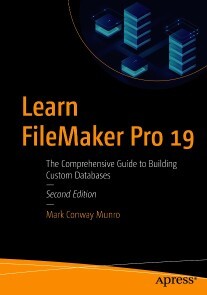
Learn FileMaker Pro 19
Discover how easy it is to create multi-user, cross-platform custom solutions with FileMaker Pro, the relational database platform published by Apple subsidiary Claris International, Inc. Meticulously rewritten with clearer lessons, more real-world examples and updated to include feature changes introduced in recent versions, this book makes it easier to get started planning, building and deploying a custom database solution.The material is presented in an easy to follow manner with each chapter building on the last. After an initial review of the user environment and application basics, it begins a deep exploration of the integrated development environment that seamlessly combines the full stack of data table schema, business logic and interface layers into one visual programming experience. This book includes everything needed to get started building custom databases and contains advanced material that seasoned professionals will appreciate.Written by a professional developer with decades of real-world experience, Learn FileMaker Pro 19 is your comprehensive learning and reference guide. Join millions of users and developers worldwide in achieving a new level of workflow efficiency with FileMaker Pro.WHAT YOU’LL LEARN* Discover interface and feature changes in FileMaker 17-19* Create and maintain healthy files* Plan and create custom tables, fields, relationships* Write calculations using built-in and custom functions* Build recursive and repeating formulas* Discover advanced features using cURL, JSON, SQL, ODBC and FM URL* Manipulate data files in the computer directory with scripts* Deploy solutions to a server and share with desktop, iOS and web clients WHO THIS BOOK IS FORCasual programmers, full time consultants, and IT professionalsMark Conway Munro is a software developer and the author of AppleScript: Developer Reference (2010, Wiley) and Learn FileMaker Pro 16 (2017, Apress). After a 1988 introduction to FileMaker, Mark began using AppleScript and FileMaker for information management and process automation tasks. In 1994, Mark founded Write Track Media, a computer consultancy firm that develops custom database and workflow automation solutions. Mark builds time-saving custom systems for a diverse list of clients across industries, including education, entertainment, finance, news, publishing, and manufacturing, and more. Understanding the virtue of using technology to free human focus from repetitive tasks so they can pursue a higher level of productivity, Mark is unwavering in his commitment to developing the highest quality workflow management solutions.PART I USING FILEMAKERPages01 Introducing FileMakerProduct family changesApp now includes version numberMention file compatibility across recent versions and how to convert older formatsMaybe combine with Chapter 2 if I can compress the two enough1602 Exploring the ApplicationLaunch window changes2603 Exploring a Database Window1604 Working with Records3805 Transferring DataNew Import Dailog20PART II DEFINING DATABASE STRUCTURES006 Working with Database Files3607 Working with TablesMention Add-on tables (refer to layout/portals)1608 Defining FieldsDefault Fields3209 Connecting Tables with Relationships3010 Managing Containers1011 Managing Value ListsFix typo on conditional value list and clarify greatly16PART III — WRITING FORMULAS AND FUNCTIONS012 Writing Formulas3413 Exploring Built in FunctionsOne chapter to replace the previous function reference chaptersFocus on specific examplesAccessing machine/enviorment values (Get Functions)Using Logical Functions (Case, Choose, Let, Self, GetNth, While, etc.)Using Aggregate Functions (Count, List, Sum,Manipulating Text (Filter, FilterValues, Left, Right, Middle, GetValues, Length, Substitute, Sort, unique, etc.)Formatting Text in formulas (mention layout vs formula)Manipulating DatesNumeric (Rounding, Fomratting (layout vs formula)4014 Manipulating JSON ObjectsExpand examples1515 Creating Custom FunctionsExpand examplesSet RecursionChanges to limits for non-tail recursion2016 Introducing ExecuteSQLFix three typos from last book22PART IV — DESIGNING INTERFACES017 Introducing Layout Mode1818 Getting Started with Layouts4019 Exploring Layout PalettesIntegrated PaletteField Palette changesObject Palette changes3020 Creating Layout ObjectsPortals, add on tablesPortals, master-detail layout7221 Manipulating ObjectsSelect objects in groupMove objects with shift+arrow key (10+ larger increment)2022 Using Themes and Styles1223 Customizing MenusMenus can now be copy-pasted within and between files24PART V — AUTOMATING TASKS WITH SCRIPTS024 Introduction to Scripting2825 Common Scripting TasksMaybe expand examples and mention new script stepsCreate directoriesCreate-Delete-Read-Write-Rename-Etc Files4426 Debugging Scripts827 Using Script Triggers1428 Extending Features with Plug-ins4PART VI — SHARING DATABASES ON A NETWORK029 Introducing Network SharingFileMakerURL now version specific3030 Securing Database AccessNew Interface, features2831 Advanced Sharing and Analysis16ESTIMATE PAGE TOTAL775

Extending Gatsby
Expand your Gatsby development skills by building a production-ready blog website. This book teaches you how to use Gatsby alongside the latest technologies including MDX, CDN, and Netlify.In this project, you will create a very complex and large blog site with just MDX files and learn to optimize images using CDN for faster website loading. You will also learn to continuously deploy to Netlify enabling you to provide daily site updates easily. To get the most out of this book you should be comfortable with the basics of React and familiar with Gatsby fundamentals as covered in Foundation Gatsby Projects, which provides several stepping stone projects.Rather than cover how to create a simple blog site, Extending Gatsby goes beyond the basics to extend your blogging skills.WHAT YOU'LL LEARN* Develop a production-ready, complex, blogging system site with MDX* Learn to make a complete mobile site* Continuously deploy your site using Netlify* Add functionalities with the powerful Gatsby plugin ecosystemWHO THIS BOOK IS FORThis book is for developers who are familiar with Gatsby and are looking to create an extended blog site. Knowledge of React is expected. You will also need to be familiar with JavaScript concepts and be confident with basic web development.Nabendu Biswas is a full stack JavaScript developer who has been working in the IT industry for the past 15 years and has worked for some of the world’s top development firms and investment banks. He is a passionate tech blogger who publishes on dev.to and medium.com and on thewebdev.tech. He is an all-round nerd, passionate about everything JavaScript, React and Gatsby. You can find him on Twitter @nabendu82.Chapter 1: Setting Up the Blog SiteChapter 2: Adding Gatsby-plugin-mdx to the SiteChapter 3: Adding Author Details to the SiteChapter 4: Adding Functionality to the SiteChapter 5: Adding a Series FeatureChapter 6: Deploying the Site in NetlifyChapter 7: Adding Gatsby Plugins to the SiteChapter 8: New Features and Fixes

Aerodynamic Study on the Vehicle Shape Parameters with Respect to Ground Simulation
Chenyi Zhang analyzes the influences of moving ground simulation technique in wind tunnel tests. In his work, the classical investigations on vehicle shape parameters with fixed ground conditions are reviewed with modern moving ground simulation technique. The investigations are performed by means of CFD simulations and model scale wind tunnel tests at IFS, University of Stuttgart. The shape parameters of two reference vehicles – the DrivAer and the AeroSUV model with notchback, fastback and estate back – are varied and investigated. The author presents different results in drag and lift for the varied geometry parameters. The classical results of the parametric study on the vehicle basic shapes for vehicle aerodynamics could be complemented with the findings of the present research. Basic Theories and State of the Art.- Results of the DrivAer Model.- Statistical Analysis of the Parameters.- Transferability Study on the SUV Model.
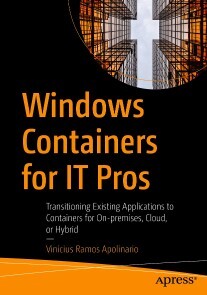
Windows Containers for IT Pros
This book has everything you need to know about Windows Containers, from an IT pro and ops perspective.Containers are the next big thing in IT infrastructure. More and more, we see companies relying on Kubernetes implementations to run their workloads on-premises, in the cloud, or even in hybrid deployments. IT pros and ops teams are now faced with the challenge of getting up to speed on container architecture, knowing how it differs from virtual machines (VMs), and the best means and practices for managing their applications in containers.WINDOWS CONTAINERS FOR IT PROS explores all of that, from the IT pro experience. You will approach learning about containers through the optics of an author who is accustomed to deploying virtual machines (VMs). You will learn about differences, parallel practices, use cases, and how to get started and go deep into day 2 operations.WHAT YOU WILL LEARN* Architect and deploy Windows Containers leveraging existing skills* Containerize existing applications* Know best practices for managing resources in Windows Containers* Get comfortable moving containers to the cloud with Azure* Understand the options for using containers on AzureWHO THIS BOOK IS FORWindows IT pros and technical professionals deploying Windows Server and server applications today, such as .NET, ASP.NET, IIS, and more. This book assumes little to no experience with scripting as readers deploy their workloads via one of the Windows UIs (Hyper-V, Server Manager, Windows Admin Center, etc.). Knowledge of VMs and infrastructure, such as clustered operating systems, is recommended but not required.VINICIUS RAMOS APOLINARIO is Senior Program Manager on the Windows Container Platform team at Microsoft that builds the container platform that runs on Windows Server and Azure. He has been a Microsoft professional for most of his career and holds multiple certifications from Microsoft, VMware, Exin, and others. Vinicius is passionate about passing on his knowledge and contributes to the community via blogs, events, and articles. He is a published author who is regularly seen out in the community or at trade events presenting on various topics.Chapter 1: Introduction to ContainersChapter 2: Getting Started with Windows Containers and DockerChapter 3: Containerizing Existing ApplicationsChapter 4: Managing Resources in Windows ContainersChapter 5: Container Management with Windows Admin CenterChapter 6: Moving Your Containers to the Cloud with Microsoft Azure

How to avoid mistakes
Nobody intends to make mistakes. Still, they happen. Sometimes users may not be aware of requirements or make typos. What begins as a small error, later leads to unnecessary work that costs time, money, and nerves. Here, you’ll learn how to guide users in a way that makes errors less likely or even impossible. Or to inform them on input what’s required. In other cases, you may want to prepare data for decision making in a way that one does not need actual typing anymore. And of course, there are the new cloud functionalities of Excel 365 opening new dimensions of co-operations. All of this is explained here.Ina Koys is an experienced instructor for Microsoft Office. Many questions are frequently asked in trainings, but seldom covered in books. Now she answers some of them in her originally German "short & spicy" series. A little accent will add to the fun :-)
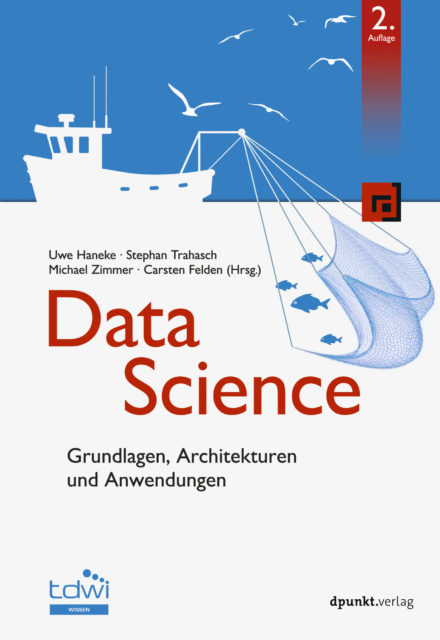
Data Science (2. Auflg.)
Know-how für Data Scientists. Grundlagen, Architekturen und Anwendungen in 2. Auflage 02/2021Data Science steht derzeit wie kein anderer Begriff für die Auswertung großer Datenmengen mit analytischen Konzepten des Machine Learning oder der künstlichen Intelligenz. Nach der bewussten Wahrnehmung der Big Data und dabei insbesondere der Verfügbarmachung in Unternehmen sind Technologien und Methoden zur Auswertung dort gefordert, wo klassische Businss Intelligence an ihre Grenzen stößt.Dieses Buch bietet eine umfassende Einführung in Data Science und deren praktische Relevanz für Unternehmen. Dabei wird auch die Integration von Data Science in ein bereits bestehendes Business-Intelligence-Ökosystem thematisiert. In verschiedenen Beiträgen werden sowohl Aufgabenfelder und Methoden als auch Rollen- und Organisationsmodelle erläutert, die im Zusammenspiel mit Konzepten und Architekturen auf Data Science wirken.Diese 2., überarbeitete Auflage wurde um neue Themen wie Feature Selection und Deep Reinforcement Learning sowie eine neue Fallstudie erweitert.

Hands-on GitHub Actions
Implement continuous integration/continuous delivery (CI/CD) workflows for any application you develop through GitHub Actions. This book will give you an in-depth idea of implementation patterns, solutions for different technology builds, guidelines to implement your own custom components as actions, and usage of features available with GitHub Actions workflows, to set up CI/CD for your repositories.Hands-on GitHub Actions starts with an introduction to GitHub actions that gives an overview on CI/CD followed by an introduction to its workflows. Next, you will learn how to use variables in a GitHub workflow along with tokens via a REST API. Further, you will explore artifacts and caching dependencies in GitHub and use artifacts in subsequent jobs. Using self-hosted runners is discussed next where you will set up your own hardware and software to run GitHub actions. You will go through publishing packages and migrate to Azure DevOps Pipelines. Along the way, you will use Redis service and PostgreSQL service containers and create custom actions. Finally, you will work with GitHub apps and understand the syntax reference for GitHub Actions and workflows.WHAT YOU WILL LEARN* Create workflows for any platform and any language with GitHub Actions* Develop custom GitHub actions to enhance features and usage of database and service containersUse hosted runners and create self-hosted runners for GitHub workflows * Use GitHub Package registry with GitHub Actions to share and use packagesWHO THIS BOOK IS FORDevOps teams who want to build quality CI/CD workflows.CHAMINDA CHANDRASEKARA is a Microsoft Most Valuable Professional (MVP) for Visual Studio ALM and Scrum Alliance Certified ScrumMaster®, and focuses on and believes in continuous improvement of the software development life cycle. He is the Cloud Development and DevOps Architect at eKriegers (Pvt) Ltd. Chaminda is an active Microsoft Community Contributor (MCC) who is well recognized for his contributions in Microsoft forums, TechNet galleries, wikis, and Stack Overflow and he contributes extensions to Azure DevOps Server and Services (former VSTS/TFS) in the Microsoft Visual Studio Marketplace. He also contributes to other open source projects in GitHub. Chaminda has published six books with Apress.PUSHPA HERATH is a Microsoft Most Valuable Professional (MVP) working as a Senior DevOps Engineer at 99x. She has many years of experience in Azure DevOps Server and Services (formerly VSTS/TFS), Azure cloud platform and QA Automation. She is an expert in DevOps currently leading Sri Lanka DevOps community, and she has shown in depth knowledge in Azure cloud platform tools in her community activities. She has published four books with Apress and spoken in community evets as well as in the youtube channel of her Sri Lanka DevOps community. Pushpa blogs on technology at DevOps Adventure.CHAPTER 1: INTRODUCTION TO GITHUB ACTIONSCHAPTER GOAL: Give conceptual overview on CI CD while elaborating on the need of software delivery automation and basic concepts of GitHub Actions.NO OF PAGES: 15SUB -TOPICS1. Introducing Concepts (CI/CD)2. Why we need SW Delivery Automation?3. What are GitHub Actions?4. Identifying core concepts in GitHub Actions5. GitHub hosted runners.CHAPTER 2: GETTING STARTED WITH GITHUB ACTIONS WORKFLOWSCHAPTER GOAL: Introduction to GitHub Actions workflows.NO OF PAGES: 25SUB - TOPICS1. Using preconfigured workflow templates2. Using Marketplace Actions to create workflows3. Building a .NET Core Web App with GitHub Actions4. Understanding the structure of a Workflow (jobs, actions, set job dependencies etc.)5. Setting up continuous integration using GitHub actionsCHAPTER 3: VARIABLES AND SECRETS WITH GITHUB ACTIONSCHAPTER GOAL: Lessons to provide hands-on guidance using variables and secrets in a GitHib workflow.NO OF PAGES : 15SUB - TOPICS:1. Defining and using variables2. Understanding the default variables usage3. Naming conventions for variables4. Defining and using secretsCHAPTER 4: USING TOKENSCHAPTER GOAL: Understanding the use of system token and the personal access tokens to work with GitHub repos and issues via the REST API in GitHub Actions workflow.NO OF PAGES: 15SUB - TOPICS:1. Using GITHUB_TOKEN2. Creating a Personal Access Token3. Using Personal Access Token in workflowCHAPTER 5: ARTIFACTS AND CACHING DEPENDENCIESNO OF PAGES: 20SUB - TOPICS:1. Storing content in Artifacts2. Using artifacts in subsequent jobs3. Uploading to external artifact store and using them in other workflows4. Deleting artifacts5. Caching workflow dependencies (compare caching and artifacts, using cache action and matching cache keys)6. Limitations and eviction policy in cachingCHAPTER 6: USING SELF-HOSTED RUNNERSCHAPTER GOAL: Setting up your own hardware and software to run GitHub actions..NO OF PAGES: 30SUB - TOPICS:1. Understanding self-hosted runners2. Configuring and adding/removing self-hosted runners GitHub.3. Self-hosted runners with proxy4. Using labels to organize self-hosted runners5. Using self-hosted runners in workflows6. Monitoring and access control for self-hosted runnersCHAPTER 7: PUBLISHING PACKAGES AND MIGRATING FROM AZURE DEVOPS PIPELINESCHAPTER GOAL: How to create and publish packages in GitHub actions and migrating pipelines from Azure DevOps pipelines.NO OF PAGES: 20SUB - TOPICS:1. Creating and publishing build artifacts as nuget2. Using custom packages in workflows3. Using GitHub Packages4. Migrating Azure PipelinesCHAPTER 8: USING DATABASE AND SERVICE CONTAINERSCHAPTER GOAL: Hands on lessons on using Redis service containers and PostgreSQL service containers.NO OF PAGES: 20SUB - TOPICS:1. Running Redis jobs on containers2. Running Redis jobs on runner machine3. Using Redis service container4. Running PostgreSQL jobs on containers5. Running PostgreSQL jobs on runner machine6. Using PostgreSQL service containerCHAPTER 9: CREATING CUSTOM ACTIONSCHAPTER GOAL: Step by step guidance to create your own GitHub actions.NO OF PAGES: 20SUB - TOPICS:1. Understanding action types2. Steps to create a simple action3. Creating Docker container action4. Publishing actions to marketplaceCHAPTER 10: GITHUB APPSCHAPTER GOAL: Using and creating GitHub Apps in workflows.NO OF PAGES: 30SUB - TOPICS:1. Understanding GitHub Actions and Apps2. Creating GitHub Apps3. Using GitHub AppsCHAPTER 11: SYNTAX REFERENCE FOR GITHUB ACTIONS AND WORKFLOWSCHAPTER GOAL: Syntax guide for GitHub Actions and Workflows.NO OF PAGES: 15SUB - TOPICS:1. Understanding Workflow Syntax2. Triggers for Workflows3. Using context and expressions4. Workflow commands

.NET Developer's Guide to Augmented Reality in iOS
Attention .NET developers, here is your starting point for learning how to create and publish augmented reality (AR) apps for iOS devices.This book introduces and explores iOS augmented reality mobile app development specifically for .NET developers. The continued adoption and popularity of Xamarin, a tool that allows cross-platform mobile application development, opens up many app publishing opportunities to .NET developers that were never before possible, including AR development.You will use Xamarin to target Apple’s augmented reality framework, ARKit, to develop augmented reality apps in the language you prefer—C#. Begin your journey with a foundational introduction to augmented reality, ARKit, Xamarin, and .NET. You will learn how this remarkable collaboration of technologies can produce fantastic experiences, many of them never before tried by .NET developers. From there you will dive into the fundamentals and then explore various topics and AR features. Throughout your learning, proof of concepts will be demonstrated to reinforce learning.After reading this book you will have the fundamentals you need, as well as an understanding of the overarching concepts that combine them. You will come away with an understanding of the wide range of augmented reality features available for developers, including the newest features included in the latest versions of ARKit.WHAT YOU WILL LEARN* Create rich commercial and personal augmented reality mobile apps* Explore the latest capabilities of ARKit* Extend and customize chapter examples for building your own amazing apps* Graduate from traditional 2D UI app interfaces to immersive 3D AR interfacesWHO THIS BOOK IS FORDevelopers who want to learn how to use .NET and C# to create augmented reality apps for iOS devices. It is recommended that developers have some Xamarin experience and are aware of the cross-platform options available to .NET. A paid Apple developer account is not needed to experiment with the AR code samples on your devices.LEE ENGLESTONE is an innovative, hands-on software development manager and technical lead, based in Stockport, England. He has been a .NET developer for many years, writing code for Windows, web, mobile, cloud, and augmented reality applications in his spare time. He believes that there are many new exciting opportunities for developers in the area of augmented reality and is excited to share them with his fellow .NET developers. In recognition of his community contributions, he has been awarded a Microsoft MVP in Developer Technologies.CHAPTER 1 - SETTING UP YOUR ENVIRONMENTCHAPTER 2 - BASIC CONCEPTSCHAPTER 3 - NODES, GEOMETRIES, MATERIALS, AND ANCHORSCHAPTER 4 - BUILT IN AR GUIDESCHAPTER 5 - ANIMATIONSCHAPTER 6 - CONSTRAINTSCHAPTER 7 - LIGHTINGCHAPTER 8 - VIDEO AND SOUNDCHAPTER 9 - PLANE DETECTIONCHAPTER 10 - IMAGE DETECTIONCHAPTER 11 - FACE TRACKING AND EXPRESSION DETECTIONCHAPTER 12 - TOUCH GESTURES AND INTERACTIONCHAPTER 13 - 3D MODELSCHAPTER 14 - PHYSICSCHAPTER 15 - OBJECT DETECTIONCHAPTER 16 - BODY TRACKINGCHAPTER 17 - PUBLISHING TO THE APP STORE

Getting Inside Java - Beginners Guide
ABOUT THE BOOK:This textbook was written with two primary objectives. The first is to introduce the Java programming language. Java is a practical and still-current software tool; it remains one of the most popular programming languages in existence, particularly in areas such as embedded systems. Java facilitates writing code that is very efficient and powerful and, given the ubiquity of Java compilers, can be easily ported to many different platforms. Also, there is an enormous code-base of Java programs developed, and many systems that will need to be maintained and extended for many years to come. The second key objective is to introduce the basic concepts of OOPs.Hope, It will be helpful. All the Best!-Prem KumarABOUT THE AUTHOR:Destiny drew Prem Kumar towards computers when the IT industry was just making a big evolution in India. Having completed his education from Silli Polytechnic in Computer Science Engineering. He moved on with his higher studies from Gandhi Institute for Technology, Bhubaneshwar.Prem has a passion for exploring IT knowledge and is founder of well-growing, a startup company "F5 Developers". He is a much sought after speaker on various technology subjects and is a regular columnist for Open Source and OSE Hub. His current affiliations include being a Founder of F5 Developers, a multi-service provider company including the subsidiary companies of F5, i.e, THOR, F5 Initiative and OSE Hub. In recognition to his contribution Microsoft awarded him the prestigious “Microsoft Technology Associate” award in 2019 for Java Programming. He can be reached at premkmr1611@gmail.com.
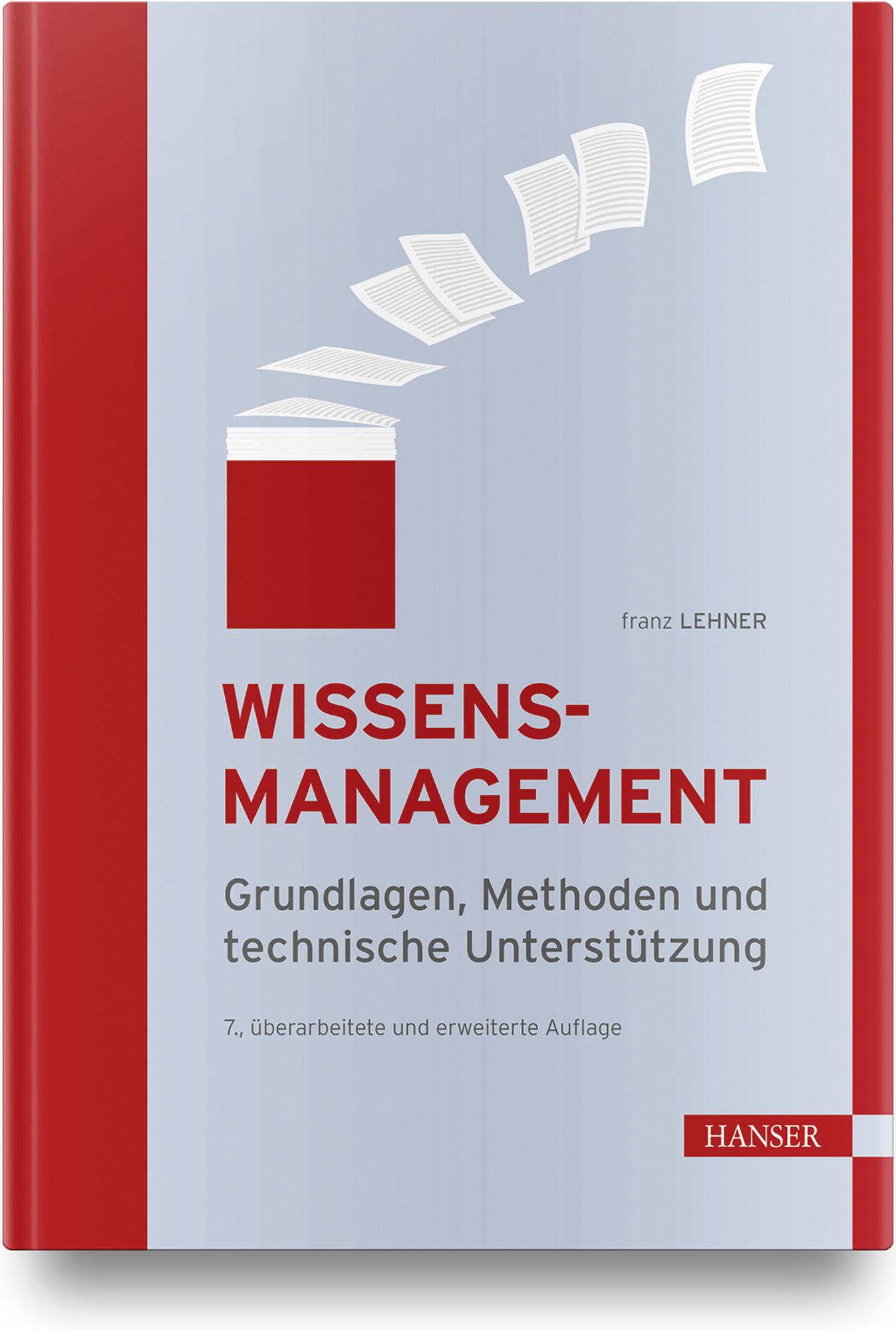
Wissensmanagement (7. Auflg.)
Grundlagen, Methoden und technische Unterstützung - ein aktueller und umfassender Überblick über das Thema Wissensmanagement.Die Entwicklung der letzten zehn Jahre zeigt, dass in Organisationen das Interesse am Wissensmanagement wächst. Dennoch ist festzustellen, dass der Nutzen des Wissensmanagements von einem tieferen Verständnis der verfügbaren Konzepte abhängt und nicht von der Unternehmensgröße.Das Themenfeld des Wissensmanagements wird in diesem Buch systematisch geordnet und in Verbindung mit den aktuellen Entwicklungen auf einem anspruchsvollen Niveau aufbereitet. Ziele sind eine umfassende Einführung und ein ganzheitlicher Überblick. Der Fokus wird dabei auch auf die praktische Umsetzung und auf ungelöste Probleme und Herausforderungen gelenkt. Damit bietet das Buch Orientierung in einem innovativen und zukunftsorientierten Anwendungsfeld, das mittlerweile in der Wissenschaft und in der Praxis gleichermaßen akzeptiert ist. Neu in der 7. Auflage ist das Thema KI in Verbindung mit Wissensmanagement und Fallbeispiele zu Wissensmanagement in Coronazeiten.AUS DEM INHALT:Die Herausforderung: Wandel und Bewältigung von Wandel in Unternehmen // Grundlagen des Wissensmanagements // Referenzdisziplinen des Wissensmanagements // Methodische und softwaretechnische Unterstützung des Wissensmanagements // Wissensmanagement in der Praxis

Integration von Sensitivitätsanalysemethoden in den Entwicklungsprozess für Fahrwerkregelsysteme
Die zunehmende Komplexität mechatronischer Systeme steht im Zielkonflikt mit kürzeren Entwicklungszyklen, der mithilfe skalierbarer, digitaler Untersuchungsmethoden teilweise aufzulösen ist. Dies erfordert eine durchgängig anwendbare, digitale Entwicklungsplattform einschließlich geeigneter Untersuchungsmethoden, sodass datenbasierte Entscheidungen getroffen werden können. Die digitalen Analyseschritte sind in den Entwicklungsprozess zu integrieren. Christopher Braunholz zeigt diese Aktualisierungen der konventionellen Entwicklung am Beispiel der Fahrwerkregelsystementwicklung. Varianzbasierte Sensitivitätsanalysen einer Gesamtfahrzeugsimulation offenbaren Zielkonflikte und Wechselwirkungen der Funktionen und Systeme in der Entwurfs- und Integrationsphase. Auslegungsmethodik und Aktualisierung des Entwicklungsprozesses.- Virtuelle Entwicklungsumgebung.- Integration der Sensitivitätsanalysemethode.- Anwendung der Entwicklungsmethode.

AWS for Solutions Architects
One of the most popular cloud platforms in the world, Amazon Web Services (AWS) offers hundreds of services with thousands of features to help you build scalable cloud solutions; however, it can be overwhelming to navigate the vast number of services and decide which ones best suit your requirements. Whether you are an application architect, enterprise architect, developer, or operations engineer, this book will take you through AWS architectural patterns and guide you in selecting the most appropriate services for your projects. AWS for Solutions Architects is a comprehensive guide that covers the essential concepts that you need to know for designing well-architected AWS solutions that solve the challenges organizations face daily. You'll get to grips with AWS architectural principles and patterns by implementing best practices and recommended techniques for real-world use cases. The book will show you how to enhance operational efficiency, security, reliability, performance, and cost-effectiveness using real-world examples. By the end of this AWS book, you'll have gained a clear understanding of how to design AWS architectures using the most appropriate services to meet your organization's technological and business requirements.

Versionsverwaltung mit Git
* Von grundlegenden Funktionen über die Handhabung von Branches und Remote-Repositorys bis zu Tipps und Tricks für (nicht nur) alltägliche Funktionen * Auswahl sinnvoller Workflows und Einsatz in Teams * Git-Repositorys hosten mit GitHub und GitLab Git ist in der Softwareentwicklung bereits weit verbreitet – sowohl in Firmen als auch in Open-Source-Projekten. Zum Einstieg lernen Anfänger häufig nur die wichtigsten Befehle, die schnell nicht mehr ausreichen, vor allem wenn die ersten Fehler auftreten. Dieses Buch behandelt einerseits die gängigen Befehle, die Sie beim täglichen Arbeiten mit Git brauchen. Andererseits geht es dem Autor auch darum, dass Sie Git als Ganzes verstehen, um es effektiv im Entwicklungsprozess einsetzen zu können. Der Fokus des Buchs liegt auf dem praktischen Arbeiten mit Git. Sie lernen anhand eines Projekts, welche Befehle es gibt, wie diese arbeiten und wie Sie auftretende Probleme lösen können. Neben alltäglichen Funktionen finden Sie auch seltener gebrauchte Kommandos, die aber ebenfalls wichtig sind. Dabei legt der Autor großen Wert auf die Einbindung und Anpassung des Entwicklungsprozesses. Im zweiten Teil des Buchs werden fortgeschrittene Themen behandelt. Der Schwerpunkt liegt auf dem Einsatz von Git in Teams. Darunter etwa das Hosten verteilter Repositorys mit GitHub und GitLab. Ein weiteres Kapitel behandelt die Workflows, die je nach Anzahl der beteiligten Personen, Branches und Repositorys eines Projekts variieren. Darüber hinaus gibt Ihnen der Autor hilfreiche Informationen für den Umstieg von Subversion, einen Überblick über grafische Git-Programme, Hinweise für eine langfristig nachvollziehbare Git-Historie sowie eine Einführung in DevOps, wofür Git die technische Grundlage bildet. Ein Kapitel zu häufig gestellten Fragen rundet diesen Praxiseinstieg ab. Das Buch richtet sich sowohl an blutige Einsteiger als auch an erfahrene Leser. Aus dem Inhalt: * Konfiguration * Arbeiten mit Branches * Verteilte Repositorys * Hosting mit GitHub und GitLab * Workflows * Hooks * Umstieg von Subversion * Zahlreiche Tipps für die tägliche Arbeit * Grafische Clients * Tipps für nachvollziehbare Git-Historien * Frequently Asked Questions * Einstieg in DevOps * Befehlsreferenz

Building Custom Tasks for SQL Server Integration Services
Build custom SQL Server Integration Services (SSIS) tasks using Visual Studio Community Edition and C#. Bring all the power of Microsoft .NET to bear on your data integration and ETL processes, and for no added cost over what you’ve already spent on licensing SQL Server. New in this edition is a demonstration deploying a custom SSIS task to the Azure Data Factory (ADF) Azure-SSIS Integration Runtime (IR).All examples in this new edition are implemented in C#. Custom task developers are shown how to implement custom tasks using the widely accepted and default language for .NET development.Why are custom components necessary? Because even though the SSIS catalog of built-in tasks and components is a marvel of engineering, gaps remain in the available functionality. One such gap is a constraint of the built-in SSIS Execute Package Task, which does not allow SSIS developers to select SSIS packages from other projects in the SSIS Catalog. Examples in this book show how to create a custom Execute Catalog Package task that allows SSIS developers to execute tasks from other projects in the SSIS Catalog. Building on the examples and patterns in this book, SSIS developers may create any task to which they aspire, custom tailored to their specific data integration and ETL needs.WHAT YOU WILL LEARN* Configure and execute Visual Studio in the way that best supports SSIS task development* Create a class library as the basis for an SSIS task, and reference the needed SSIS assemblies* Properly sign assemblies that you create in order to invoke them from your task* Implement source code control via Azure DevOps, or your own favorite tool set* Troubleshoot and execute custom tasks as part of your own projects* Create deployment projects (MSIs) for distributing code-complete tasks* Deploy custom tasks to Azure Data Factory Azure-SSIS IRs in the cloud* Create advanced editors for custom task parametersWHO THIS BOOK IS FORFor database administrators and developers who are involved in ETL projects built around SQL Server Integration Services (SSIS). Readers do not need a background in software development with C#. Most important is a desire to optimize ETL efforts by creating custom-tailored tasks for execution in SSIS packages, on-premises or in ADF Azure-SSIS IRs.ANDY LEONARD is Chief Data Engineer at Enterprise Data & Analytics, an SSIS trainer, consultant, developer of the Data Integration Lifecycle Management (DILM) Suite, a Business Intelligence Markup Language (Biml) developer, and BimlHero. He is a SQL Server database and data warehouse developer, community mentor, engineer, and occasional farmer. He is co-author of Apress books SQL Server Integration Services Design Patterns and The Biml Book, and author of the Apress book Data Integration Life Cycle Management with SSIS and the Stairway to Integration Services series at SQLServerCentral.com.1. The Story of This Book2. Preparing the Environment3. Creating the Assembly Project4. Check-In the Project Code5. Signing the Assembly6. Preparing to Build7. Coding the Task8. Coding a Simple Task Editor9. Signing and Binding10. Expanding Editor Functionality11. Minimal Coding for the Complex Editor12. Editor Integration13. Implement Views and Properties14. Implement New Connection15. Implement Use32bit, Synchronized, and LoggingLevel SettingsView Properties16. Refactoring SourceConnection17. Refactoring the SSIS Package Hierarchy18. Instrumentation and Validation19. Crushing Bugs20. Adding Synchronous Execution Properties21. Testing the Task22. Building the Setup Project23. Using the Execute Catalog Package Task in an SSIS Framework24. Deploying to Azure-SSIS25. Test the Task in Azure Data Factory26. Notes from my Experience

Der Computer erscheint im Holozän
Die sieben Weltwunder wurden bereits in der Antike beschrieben, etwa zur selben Zeit wie die mechanische Rechenhilfe Abacus, ein Zählrahmen mit Holz- oder Glasperlen. Dieses Buch beschreibt und diskutiert die sieben Weltwunder der IT, ohne die unsere digitale Wirtschaft und Gesellschaft kaum überlebensfähig scheint: Computermaus, Datenbanken, Kryptografie, Graphgrammatiken, Internet, Blockchain und Soft Computing.Jedes Weltwunder der IT wird kurz charakterisiert, bevor Anwendungsoptionen für Wirtschaft und Gesellschaft exemplarisch aufgezeigt und gewürdigt werden.Das Werk richtet sich an alle, die sich mit der digitalen Transformation auseinandersetzen. Es soll helfen, digitale Entwicklungen im eigenen Unternehmen, in der Verwaltung oder im öffentlichen wie im privaten Leben zu positionieren und zu reflektieren.ANDREAS MEIER hat Musik an der Musikakademie in Wien und Mathematik an der ETH in Zürich studiert, wo er doktorierte und habilitierte. Er arbeitete in internationalen Forschungsinstitutionen und Organisationen und war an der Universität Fribourg, Schweiz für eBusiness und eCommerce verantwortlich. Er gründete und leitete das Forschungszentrum Fuzzy Management Methods (FMsquare.org).FABRICE TSCHUDI hat Kommunikationswissenschaften an der Universität Fribourg und Wirtschaftsinformatik an der Universität Bern studiert. Er setzt sich für eine Vision von digitalen Systemen ein, die zu einer lebensdienlichen Wirtschaft und Gesellschaft im Sinne von nachhaltigem Wohlergehen beitragen. Er begleitet Organisationen auf dem Weg zu „wertvoller Digitalisierung“ und ist überzeugt, dass partizipative Lern- und Arbeitsformate hierfür ein zentraler Erfolgsfaktor sind.De septem mundi miraculis - Vom Abacus zur digitalen Rechenmaschine - Die 7 Weltwunder der IT - Wo führt die Reise hin? - Literatur

Microsoft Conversational AI Platform for Developers
Build a chatbot using the Microsoft Conversational AI platform. This book will teach you, step by step, how to save time and money by including chatbots in your enterprise's strategy. You will learn how to be proficient at every phase of development, from collaboration on a chatbot in an end-to-end scenario, to the first mock-up phase, and on through to the deployment and evaluation phases.Microsoft built a cloud service ecosystem for running artificial intelligence workloads in public cloud scenarios and a robust AI platform that offers a broad range of services targeting conversational artificial intelligence solutions such as chatbots.Building a chatbot requires not just developer coding skills but special considerations, including input from business stakeholders such as domain matter experts and power users. You will learn by example how to use a great set of tools and services to bridge the gap between business and engineering.You will learn how to successfully morph business requirements into actionable IT and engineering requirements. You will learn about Bot Framework Composer, which allows power users to initiate the building of a chatbot that can then be handed over to the development team to add capabilities through code. Coverage is given to the process of sharing implementation tasks and workloads between power users, who are using a low-code or no-code approach, and developers, who are building out the enhanced features for the chatbot.WHAT YOU WILL LEARN* Understand Microsoft’s comprehensive AI ecosystem and its services and solutions* Recognize which solutions and services should be applied in each business scenario* Discover no-code/low-code approaches for building chatbots* Develop chatbots using the conversational AI stack* Align business and development for improved chatbot outcomes and reduced time-to-marketWHO THIS BOOK IS FORDevelopers and power users who want to build chatbots. An understanding of the core principles of writing code (.NET or JavaScript) for modern web applications is expected.STEPHAN BISSER is a technical lead at Solvion and a Microsoft MVP for artificial intelligence based in Austria. In his current role, he focuses on conversational AI, Microsoft 365, and Azure. He is passionate about the conversational AI platform and the entire Microsoft Bot Framework and Azure Cognitive Services ecosystem. Stephan and several other MVPs founded the Bot Builder Community, which is a community initiative helping Bot Framework developers with code samples and extensions. Together with Thomy Gölles, Rick Van Rousselt, and Albert-Jan Schot, Stephan is hosting SelectedTech, where they publish webinars and videos on social media around SharePoint, Office365 and the Microsoft AI ecosystem. In addition, he blogs regularly and is a contributing author to Microsoft AI MVP Book.Chapter 1: Introduction to the Microsoft Conversational AI PlatformChapter 2: Introduction to the Microsoft Bot FrameworkChapter 3: Introduction to Azure Cognitive ServicesChapter 4: Design Principles of a ChatbotChapter 5: Building a ChatbotChapter 6: Testing a ChatbotChapter 7: Publishing a ChatbotChapter 8: Connecting a Chatbot with Channels

Trends im Cloud Computing. Wie sich mit Competitive Intelligence Prognosen zur Zukunft der Cloud stellen lassen
Der Aufstieg von Cloud Computing hat zu einem fundamentalen Wandel innerhalb der Informations- und Kommunikationsbranche geführt und stellt ein neues Paradigma für die Verwaltung und Bereitstellung von Services über das Internet dar. Aufgrund seines hohen Potenzials ist der Cloud-Computing-Markt von einem enormen Wettbewerb geprägt. Um in einem solchen Markt wettbewerbsfähig zu bleiben, ist es wichtig, die Wettbewerber und die eigene Organisation zu analysieren. Man nennt diesen Prozess der Wissensgenerierung auch Competitive Intelligence.Welche Ziele verfolgt Competitive Intelligence und wie läuft der Prozess ab? Welche Servicemodelle gibt es im Bereich des Cloud Computing? Wie entwickeln sich der Markt und die Kundenanforderungen?Matteo Sihorsch untersucht die Trends des Cloud-Computing-Marktes und die Vorlieben der Cloud-Nutzer. Mit Hilfe von Competitive Intelligence leitet er daraus Handlungsempfehlungen für IT-Anbieter hinsichtlich weiterer Produktentwicklungen ab.Aus dem Inhalt:- Cloud Services;- Digitalisierung;- Software-as-a-Service;- Private Cloud;- Public Cloud;- Hybrid Cloud
Beginning Rust Programming
QUICKLY LEARN THE ROPES WITH THE RUST PROGRAMMING LANGUAGE USING THIS PRACTICAL, STEP-BY-STEP GUIDEIn Beginning Rust Programming, accomplished programmer and author Ric Messier delivers a highly practical, real-world guide to coding with Rust. Avoiding dry, theoretical content and “Hello, world”-type tutorials of questionable utility, the book dives immediately into functional Rust programming that takes advantage of the language’s blazing speed and memory efficiency.Designed from the ground up to give you a running start to using the multiparadigm system programming language, this book will teach you to:* Solve real-world computer science problems of practical importance * Use Rust’s rich type system and ownership model to guarantee memory-safety and thread-safety * Integrate Rust with other programming languages and use it for embedded devices Perfect for programmers with some experience in other languages, like C or C++, Beginning Rust Programming is also a great pick for students new to programming and seeking a user-friendly and robust language with which to start their coding career.ABOUT THE AUTHORRIC MESSIER is Senior Information Security Consultant with FireEye Mandiant. He is an author, consultant, and educator who holds GCIH, GSEC, CEH, and CISSP certifications and has published several books on information security and digital forensics. He is familiar with a wide variety of languages, including BASIC, Pascal, C, C++, C#, Rexx, Perl, Python, Java, Go, Swift, and Objective-C. VISIT US AT WROX.COM FOR FREE CODE SAMPLES.Introduction xixCHAPTER 1: GAME OF LIFE: THE BASICS 1Game of Life: The Program 2Starting with Cargo 4Putting the Pieces Together 5Bringing In External Functionality 5Namespaces 6Generating the Game Grid 7Dissecting Main 8Defining Functions 8Defining Variables 9Datatypes 11Arrays 12Control Structures 14Looking at More Function Functions 16Returning Values 16Passing Parameters 18Scope 21Compiling Programs 22Summary 24Exercises 25Additional Resources 25CHAPTER 2: EXTENDED LIFE 27Understanding Ownership 28Extending Life 30Adding Modules 32Working with Command-Line Arguments 34Option Types 36Reading from Files 39Extracting Values 41Populating from the Vector 42Outputting to the Terminal 43Using Colors 44Printing Generations 44Summary 46Exercises 48Additional Resources 48CHAPTER 3: BUILDING A LIBRARY 49References 50First Pass 53Traits and Implementations 56Self-Identification 60The Rest 60Second Pass 62The Driver 65Summary 67Exercises 69Additional Resources 69CHAPTER 4: HANGMAN 71Our Data 74The Traits 77Implementations 79Using the Option Enum 82Finishing Up the Implementation 83Reading Files and Selecting Words 84Handling Errors Concisely 85Generics and Bounds 87A Vector of Lines 88The Rest of the Story 90Initialization 91Playing the Game 92Summary 94Exercises 95Additional Resources 95CHAPTER 5: IN CONCURRENCE 97The Dining Philosophers 98Mutexes and Semaphores 101Interprocess Communications 103The Main Event 106Unix Sockets 107File and Directory Handling 109Closures 112Threading in the Main 114Creating Streams 115Cryptographic Hashing 116Creating Threads 117Summary 118Exercises 119Additional Resources 119CHAPTER 6: CLIENTS AND SERVERS 121Planning 123Network Programming 125Programming Sockets 128Rust TCP Server 131Handling Requests 134Operating System Calls 137Summary 139Exercises 140Additional Resources 140CHAPTER 7: CLIENT-SIDE APPLICATIONS 141Encryption 142Encryption Algorithms 144Going Hybrid 145Encryption Algorithms 147Transport Layer Security (TLS) 147TLS Server 151Remote Access Client 154Creating the Connection 156Validating Input 157Regular Expressions 157The Final Function 159Summary 163Exercises 164Additional Resources 164CHAPTER 8: GOING RELATIONAL 165Application Architectures 166n-Tier Applications 167Microservices 169Model-View-Controller 171Databases 172Structured Query Language 172Server or Embedded 175Accessing Databases 176Writing a Database Program 177Main and Modules 178Database Functions 183Adding Records 184Listing Records 186Summary 189Exercises 190Additional Resources 190CHAPTER 9: NO(SQL) GOING 191Assertions 192Design by Contract 195NoSQL 198Working with MongoDB 202Inserting Data 202Reading in Data from a File 206Populating the Database 207Retrieving Values 209Summary 213Exercises 214Additional Resources 214CHAPTER 10: WEB COMMUNICATIONS 215Style Guides 216Hypertext Transfer Protocol 219Programmatic Communication 222Web Communication Over TLS 227Client Communication 229Jumping Ahead 232Jumping Back 237Summary 238Exercises 239Additional Resources 240CHAPTER 11: WEB SERVER 241Offensive vs. Defensive Programming 242Web Application Communications 245Web Application Parameters 245Asynchronous JavaScript and XML 248Representational State Transfer 249APIs in Node.js and Python 250API Server in Rust 252Rust Rocket 255Summary 262Exercises 262Additional Resources 263CHAPTER 12: GETTING TO THE SYSTEM 265Extending Functionality 266Windows Registry 272Programmatic Access to the Registry 275Using Rust to Access the Registry 277System Information with Rust 282Persistence (for Fun) 287Summary 289Exercises 290Additional Resources 290CHAPTER 13: DEVICE PROGRAMMING 291Logging 292Using syslog 292Using Windows Event Logs 299Working with Raspberry Pi 305Lighting Lights 310Reading GPIO 315Summary 318Exercises 319Additional Resources 319CHAPTER 14: COLLECTING STUFF 321Arrays and Vectors 322Linked Lists 329Stacks 333Queues 336Sorting 337Search Trees 340Summary 345Exercises 346Additional Resources 346CHAPTER 15: ODDS AND SODS 347Unit Testing 348Testing Types 350Test Plans 351Unit Tests 353Recursion 360Machine Learning 364Chatbots 366Neural Networks 369Summary 371Exercises 373Additional Resources 373Index 375