

Allgemein
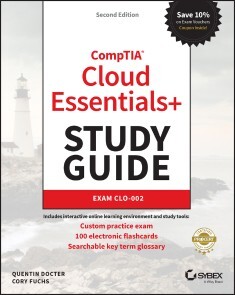
CompTIA Cloud Essentials+ Study Guide
PREPARE FOR SUCCESS ON THE NEW CLOUD ESSENTIALS+ EXAM (CLO-002)The latest title in the popular Sybex Study Guide series, CompTIA Cloud Essentials+ Study Guide helps candidates prepare for taking the NEW CompTIA Cloud Essentials+ Exam (CLO-002). Ideal for non-technical professionals in IT environments, such as marketers, sales people, and business analysts, this guide introduces cloud technologies at a foundational level. This book is also an excellent resource for those with little previous knowledge of cloud computing who are looking to start their careers as cloud administrators.The book covers all the topics needed to succeed on the Cloud Essentials+ exam and provides knowledge and skills that any cloud computing professional will need to be familiar with. This skill set is in high demand, and excellent careers await in the field of cloud computing.* Gets you up to speed on fundamental cloud computing concepts and technologies* Prepares IT professionals and those new to the cloud for the CompTIA Cloud Essentials+ exam objectives* Provides practical information on making decisions about cloud technologies and their business impact* Helps candidates evaluate business use cases, financial impacts, cloud technologies, and deployment models* Examines various models for cloud computing implementation, including public and private clouds* Identifies strategies for implementation on tight budgetsInside is everything candidates need to know about cloud concepts, the business principles of cloud environments, management and technical operations, cloud security, and more. Readers will also have access to Sybex's superior online interactive learning environment and test bank, including chapter tests, practice exams, electronic flashcards, and a glossary of key terms.ABOUT THE AUTHORS QUENTIN DOCTER, CLOUD ESSENTIALS+, A+, NETWORK+, IT FUNDAMENTALS+, MCSE, CNE, CCNA, SCSA, is an IT consultant and author who started in the industry in 1994. Since then, he's worked as a tech and network support specialist, trainer, consultant, and web developer. CORY FUCHS, CLOUD ESSENTIALS+, A+, NETWORK+, MCSE, CCNA, RHNA, AWS CP, AWS SAA, AWS SAPRO, is a Cloud Architect working for several Fortune 500 companies. He has worked in IT for over 25 years as a systems administrator, network engineer, trainer, and consultant.Introduction xixAssessment Test xxvCHAPTER 1 CLOUD PRINCIPLES AND DESIGN 1Understanding Cloud Principles 2Virtualization 5Service Models 9Deployment Models 16Cloud Characteristics 17Shared Responsibility Model 19Exploring Cloud Design 21Redundancy and High Availability 22Disaster Recovery 25Summary 27Exam Essentials 27Written Lab 29Review Questions 30CHAPTER 2 CLOUD NETWORKING AND STORAGE 35Understanding Cloud Networking Concepts 36Networking: A Quick Primer 37Connecting to the Cloud 39Cloud Networking Services 47Understanding Cloud Storage Technologies 57How Cloud Storage Works 57Cloud-Based Storage Providers 59Cloud Storage Terminology 59Content Delivery Networks 68Summary 70Exam Essentials 70Written Lab 72Review Questions 73CHAPTER 3 ASSESSING CLOUD NEEDS 77Using Cloud Assessments 79Gathering Current and Future Requirements 80Using Baselines 85Running a Feasibility Study 86Conducting a Gap Analysis 86Using Reporting 88Understanding Benchmarks 88Creating Documentation and Diagrams 89Understanding Cloud Services 91Identity Access Management 91Cloud-Native Applications 95Data Analytics 97Digital Marketing 100Autonomous Environments 103Internet of Things 104Blockchain 110Subscription Services 113Collaboration 114VDI 115Self-Service 117Summary 118Exam Essentials 118Written Lab 121Review Questions 122CHAPTER 4 ENGAGING CLOUD VENDORS 127Understanding Business and Financial Concepts 129Expenditures and Costs 129Licensing Models 132Human Capital 135Professional Services 136Finding and Evaluating Cloud Vendors 138Gathering Information 138Performing Evaluations 144Negotiating Contracts and Billing 146Choosing a Migration Approach 150Migration Principles 150Lift and Shift 152Rip and Replace 153Hybrid and Phased Migrations 153Summary 154Exam Essentials 155Written Lab 156Review Questions 158CHAPTER 5 MANAGEMENT AND TECHNICAL OPERATIONS 163Explain Aspects of Operating within the Cloud 166Data Management 166Availability 169Disposable Resources 173Monitoring and Visibility 175Optimization 176Explain DevOps in Cloud Environments 180Provisioning 182Continuous Integration/Continuous Delivery 185Testing in QA Environments 186Configuration Management 188API Integration 193Financial Planning of Cloud Resources 194Storage 194Network 197Compute 198Chargebacks 199Maintenance 200Instances 201Licensing Types 204License Quantity 206Summary 207Exam Essentials 207Written Lab 210Review Questions 211CHAPTER 6 GOVERNANCE AND RISK 215Recognize Risk Management Concepts Related to Cloud Services 217Risk Assessment 219Risk Response 225Documentation 227Vendor Lock-in 230Data Portability 231Explain Policies or Procedures 233Standard Operating Procedures 234Change Management 235Resource Management 237Security Policies 238Access and Control Policies 240Department-Specific Policies 242Communication Policies 243Summary 244Exam Essentials 245Written Lab 246Review Questions 248CHAPTER 7 COMPLIANCE AND SECURITY IN THE CLOUD 253Identify the Importance and Impacts of Compliance in the Cloud 255Data Sovereignty 256Regulatory Concerns 258Industry-Based Requirements 260International Standards 265Certifications 269Explain Security Concerns, Measures, or Concepts of Cloud Operations 270Threat 270Vulnerability 272Security Assessments 273Data Security 278Application and Infrastructure Security 290Summary 293Exam Essentials 294Written Lab 296Review Questions 298APPENDIX A ANSWERS TO WRITTEN LABS 303Chapter 1: Cloud Principles and Design 304Chapter 2: Cloud Networking and Storage 304Chapter 3: Assessing Cloud Needs 304Chapter 4: Engaging Cloud Vendors 305Chapter 5: Management and Technical Operations 305Chapter 6: Governance and Risk 306Chapter 7: Compliance and Security in the Cloud 306APPENDIX B ANSWERS TO REVIEW QUESTIONS 307Chapter 1: Cloud Principles and Design 308Chapter 2: Cloud Networking and Storage 310Chapter 3: Assessing Cloud Needs 312Chapter 4: Engaging Cloud Vendors 315Chapter 5: Management and Technical Operations 317Chapter 6: Governance and Risk 319Chapter 7: Compliance and Security in the Cloud 321Index 323
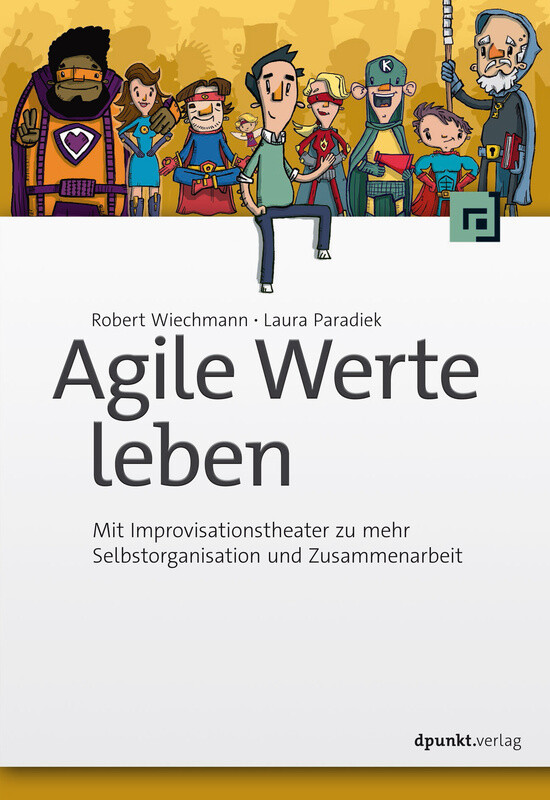
Agile Werte leben
Mit Improvisationstheater zu mehr Selbstorganisation und ZusammenarbeitWas hat Improvisationstheater mit Agilität zu tun? Eine ganze Menge! Denn Agilität ist mehr als Kanban-Kärtchen durch die Gegend schieben, Planning Poker spielen und einen Scrum-Sprint zu planen.Agile Werte und die aus ihnen abgeleiteten Prinzipien in der täglichen Arbeit von Teams oder gar ganzen Organisationen zu verankern, ist keine einfache Aufgabe. Denn oft scheinen diese zu abstrakt und wenig alltagsnah. Und gerade bei verteilten Teams ist es schwierig diese umzusetzen.Robert Wiechmann und Laura Paradiek zeigen Übungen und Techniken aus dem Improvisationstheater, die helfen diese Werte greifbar und erfahrbar zu machen. Hollywoodreife Schauspielkünste sind dafür nicht nötig. Denn im Impro geht es darum, gemeinsam Ideen zu entwickeln, aufeinander zu achten, zusammenzuarbeiten, miteinander zu kommunizieren und aufeinander zu zählen. Auch wenn man sich nur per Kamera sieht.Die Spanne reicht von ganz einfachen bis zu komplizierteren Übungen, damit sich jeder zutraut, mitzumachen. Aha-Momente und ein besseres Verständnis der agilen Werte sind vorprogrammiert.Dieses Buch ...führt in agile Werte ein und erklärt, warum diese so wichtig sind.zeigt, was Improtheater eigentlich ist und warum es agilen Teams und Organisationen helfen kann.gibt übersichtlich und strukturiert Improübungen an die Hand.Über den Autor:Diplom-Kaufmann Robert Wiechmann unterstützt mit Herzblut Organisationen bei ihrer agilen Transition. Neben dem Aufbau und der Beratung von Scrum- und Kanban-Teams in der Softwareentwicklung lässt er auch alle weiteren Unternehmensbereiche nicht aus dem Auge. Er hat Freude daran, Teams jeglicher Fasson zu einer Einheit zusammenzuschweißen und sich dabei ständig weiterzuentwickeln. Die Basis seiner Arbeit baut auf Respekt, Vertrauen sowie Wertschätzung auf. Wichtig ist ihm das Zusammenspiel von Zielorientierung, Klarheit, Einfachheit, Selbstverantwortung, Kreativität und Spaß. Sein Mut, offen auch unbequeme Dinge anzusprechen, lässt die Arbeit mit ihm praxisorientiert und auf Augenhöhe sein. Seine Arbeit als Agiler Coach ist von Kreativität geprägt und scheut auch nicht die Beschreitung neuer Wege.Laura Paradiek ist Kommunikationsfachfrau, Schauspielerin und ausgebildete Business-Trainerin. Nach ihrem Studium der Gesellschafts- und Wirtschaftskommunikation in Berlin führte sie ihr Weg in viele kleine und große Unternehmen. Ob in der Kommunikationsplanung, Veranstaltungsorganisation oder dem Management von Webprojekten – agile Projektmanagementmethoden sind ihr A und O. Neben Scrum und Kanban setzt sie auf Methoden aus dem Improvisationstheater und der Visualisierung. Seit sie 12 Jahre alt ist, steht sie auf der Bühne, u. a. mit der Theater Jugend Hamburg, dem Maxim Gorki Theater in Berlin oder der Hamburger Improvisationstheatergruppe SchillerKiller.

Mit grünen Informationssystemen ineffektive Datentransfers vermeiden. Ein Ansatz zur Nachhaltigkeit in Unternehmen
Um heute wettbewerbsfähig zu bleiben, müssen Unternehmen ihren Mitarbeitern eine Vielzahl von Informationen zur Verfügung stellen. Häufig werden dabei auch viele irrelevante oder veraltete Daten übermittelt, sodass die Mitarbeiter die Suche nach den wichtigen Informationen als ineffektiv empfinden. Gleichzeitig kostet jeder Datentransfer Energie.Welche ökologischen Auswirkungen haben der Abruf und die Übertragung von unnützen Daten? Wie kann eine benutzerzentrierte Ausrichtung der Informationsbereitstellung Energie einsparen? Inwiefern unterscheidet sich ein „Green Knowledge Managementsystem“ von einem „traditionellen“ Wissensmanagementsystem?Nathalie Serban stellt ein „grünes“ Informationssystem vor. Hiermit können Unternehmen mehr Transparenz über Ansprechpartner, Zuständigkeiten, Informationen und Projekte im Aufgabenbereich des jeweiligen Mitarbeiters schaffen und somit irrelevante Datentransfers vermeiden. Ihr Buch richtet sich an Manager, Führungskräfte und IT-Beauftragte.Aus dem Inhalt:- Wissensmanagement;- Umwelt;- CO2;- Ökologie;- E-Mail;- Wettbewerb
Advances in Data Science
PART 1. SYMBOLIC DATA 1CHAPTER 1. EXPLANATORY TOOLS FOR MACHINE LEARNING IN THE SYMBOLIC DATA ANALYSIS FRAMEWORK 3Edwin DIDAY1.1. Introduction 41.2. Introduction to Symbolic Data Analysis 61.2.1. What are complex data? 61.2.2. What are “classes” and “class of complex data”? 71.2.3. Which kind of class variability? 71.2.4. What are “symbolic variables” and “symbolic data tables”? 71.2.5. Symbolic Data Analysis (SDA) 91.3. Symbolic data tables from Dynamic Clustering Method and EM 101.3.1. The “dynamical clustering method” (DCM) 101.3.2. Examples of DCM applications 101.3.3. Clustering methods by mixture decomposition 121.3.4. Symbolic data tables from clustering 131.3.5. A general way to compare results of clustering methods by the “explanatory power” of their associated symbolic data table 151.3.6. Quality criteria of classes and variables based on the cells of the symbolic data table containing intervals or inferred distributions 151.4. Criteria for ranking individuals, classes and their bar chart descriptive symbolic variables 161.4.1. A theoretical framework for SDA 161.4.2. Characterization of a category and a class by a measure of discordance 181.4.3. Link between a characterization by the criteria W and the standard Tf-Idf 191.4.4. Ranking the individuals, the symbolic variables and the classes of a bar chart symbolic data table 211.5. Two directions of research 231.5.1. Parametrization of concordance and discordance criteria 231.5.2. Improving the explanatory power of any machine learning tool by a filtering process 251.6. Conclusion 271.7. References 28CHAPTER 2. LIKELIHOOD IN THE SYMBOLIC CONTEXT 31Richard EMILION and Edwin DIDAY2.1. Introduction 312.2. Probabilistic setting 322.2.1. Description variable and class variable 322.2.2. Conditional distributions 332.2.3. Symbolic variables 332.2.4. Examples 352.2.5. Probability measures on (ℂ, C), likelihood 372.3. Parametric models for p = 1 382.3.1. LDA model 382.3.2. BLS method 412.3.3. Interval-valued variables 422.3.4. Probability vectors and histogram-valued variables 422.4. Nonparametric estimation for p = 1 452.4.1. Multihistograms and multivariate polygons 452.4.2. Dirichlet kernel mixtures 452.4.3. Dirichlet Process Mixture (DPM) 452.5. Density models for p ≥ 2 462.6. Conclusion 462.7. References 47CHAPTER 3. DIMENSION REDUCTION AND VISUALIZATION OF SYMBOLIC INTERVAL-VALUED DATA USING SLICED INVERSE REGRESSION 49Han-Ming WU, Chiun-How KAO and Chun-houh CHEN3.1. Introduction 493.2. PCA for interval-valued data and the sliced inverse regression 513.2.1. PCA for interval-valued data 513.2.2. Classic SIR 523.3. SIR for interval-valued data 533.3.1. Quantification approaches 543.3.2. Distributional approaches 563.4. Projections and visualization in DR subspace 583.4.1. Linear combinations of intervals 583.4.2. The graphical representation of the projected intervals in the 2D DR subspace 593.5. Some computational issues 613.5.1. Standardization of interval-valued data 613.5.2. The slicing schemes for iSIR 623.5.3. The evaluation of DR components 623.6. Simulation studies 633.6.1. Scenario 1: aggregated data 633.6.2. Scenario 2: data based on interval arithmetic 633.6.3. Results 643.7. A real data example: face recognition data 653.8. Conclusion and discussion 733.9. References 74CHAPTER 4. ON THE “COMPLEXITY” OF SOCIAL REALITY. SOME REFLECTIONS ABOUT THE USE OF SYMBOLIC DATA ANALYSIS IN SOCIAL SCIENCES 79Frédéric LEBARON4.1. Introduction 794.2. Social sciences facing “complexity” 804.2.1. The total social fact, a designation of “complexity” in social sciences 804.2.2. Two families of answers 804.2.3. The contemporary deepening of the two approaches, “reductionist” and “encompassing” 814.2.4. Issues of scale and heterogeneity 824.3. Symbolic data analysis in the social sciences: an example 834.3.1. Symbolic data analysis 834.3.2. An exploratory case study on European data 834.3.3. A sociological interpretation 944.4. Conclusion 954.5. References 96PART 2. COMPLEX DATA 99CHAPTER 5. A SPATIAL DEPENDENCE MEASURE AND PREDICTION OF GEOREFERENCED DATA STREAMS SUMMARIZED BY HISTOGRAMS 101Rosanna VERDE and Antonio BALZANELLA5.1. Introduction 1015.2. Processing setup 1035.3. Main definitions 1045.4. Online summarization of a data stream through CluStream for Histogram data 1065.5. Spatial dependence monitoring: a variogram for histogram data 1075.6. Ordinary kriging for histogram data 1105.7. Experimental results on real data 1125.8. Conclusion 1165.9. References 116CHAPTER 6. INCREMENTAL CALCULATION FRAMEWORK FOR COMPLEX DATA 119Huiwen WANG, Yuan WEI and Siyang WANG6.1. Introduction 1196.2. Basic data 1226.2.1. The basic data space 1226.2.2. Sample covariance matrix 1236.3. Incremental calculation of complex data 1246.3.1. Transformation of complex data 1246.3.2. Online decomposition of covariance matrix 1256.3.3. Adopted algorithms 1286.4. Simulation studies 1316.4.1. Functional linear regression 1316.4.2. Compositional PCA 1336.5. Conclusion 1356.6. Acknowledgment 1356.7. References 135PART 3. NETWORK DATA 139CHAPTER 7. RECOMMENDER SYSTEMS AND ATTRIBUTED NETWORKS 141Françoise FOGELMAN-SOULIÉ, Lanxiang MEI, Jianyu ZHANG, Yiming LI, Wen GE, Yinglan LI and Qiaofei YE7.1. Introduction 1417.2. Recommender systems 1427.2.1. Data used 1437.2.2. Model-based collaborative filtering 1457.2.3. Neighborhood-based collaborative filtering 1457.2.4. Hybrid models 1487.3. Social networks 1507.3.1. Non-independence 1507.3.2. Definition of a social network 1507.3.3. Properties of social networks 1517.3.4. Bipartite networks 1527.3.5. Multilayer networks 1537.4. Using social networks for recommendation 1547.4.1. Social filtering 1547.4.2. Extension to use attributes 1557.4.3. Remarks 1567.5. Experiments 1567.5.1. Performance evaluation 1567.5.2. Datasets 1577.5.3. Analysis of one-mode projected networks 1587.5.4. Models evaluated 1607.5.5. Results 1607.6. Perspectives 1637.7. References 163CHAPTER 8. ATTRIBUTED NETWORKS PARTITIONING BASED ON MODULARITY OPTIMIZATION 169David COMBE, Christine LARGERON, Baptiste JEUDY, Françoise FOGELMAN-SOULIÉ and Jing WANG8.1. Introduction 1698.2. Related work 1718.3. Inertia based modularity 1728.4. I-Louvain 1748.5. Incremental computation of the modularity gain 1768.6. Evaluation of I-Louvain method 1798.6.1. Performance of I-Louvain on artificial datasets 1798.6.2. Run-time of I-Louvain 1808.7. Conclusion 1818.8. References 182PART 4. CLUSTERING 187CHAPTER 9. A NOVEL CLUSTERING METHOD WITH AUTOMATIC WEIGHTING OF TABLES AND VARIABLES 189Rodrigo C. DE ARAÚJO, Francisco DE ASSIS TENORIO DE CARVALHO and Yves LECHEVALLIER9.1. Introduction 1899.2. Related Work 1909.3. Definitions, notations and objective 1919.3.1. Choice of distances 1929.3.2. Criterion W measures the homogeneity of the partition P on the set of tables 1939.3.3. Optimization of the criterion W 1959.4. Hard clustering with automated weighting of tables and variables 1969.4.1. Clustering algorithms MND–W and MND–WT 1969.5. Applications: UCI data sets 2019.5.1. Application I: Iris plant 2019.5.2. Application II: multi-features dataset 2049.6. Conclusion 2069.7. References 206CHAPTER 10. CLUSTERING AND GENERALIZED ANOVA FOR SYMBOLIC DATA CONSTRUCTED FROM OPEN DATA 209Simona KORENJAK-ČERNE, Nataša KEJ?AR and Vladimir BATAGELJ10.1. Introduction 20910.2. Data description based on discrete (membership) distributions 21010.3. Clustering 21210.3.1. TIMSS – study of teaching approaches 21510.3.2. Clustering countries based on age–sex distributions of their populations 21710.4. Generalized ANOVA 22110.5. Conclusion 22510.6. References 226List of Authors 229Index 233
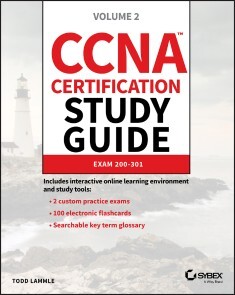
CCNA Certification Study Guide, Volume 2
CISCO EXPERT TODD LAMMLE PREPARES YOU FOR THE NEW CISCO CCNA CERTIFICATION EXAM!Cisco, the world leader in network technologies, has released the new Cisco Certified Network Associate (CCNA) exam. This consolidated certification exam tests a candidate’s ability to implement and administer a wide range of modern IT networking technologies. The CCNA Certification Study Guide: Volume 2 Exam 200-301 covers every exam objective, including network components, IP connectivity and routing, network security, virtual networking, and much more. Clear and accurate chapters provide you with real-world examples, hands-on activities, in-depth explanations, and numerous review questions to ensure that you’re fully prepared on exam day.Written by the leading expert on Cisco technologies and certifications, this comprehensive exam guide includes access to the acclaimed Sybex online learning system—an interactive environment featuring practice exams, electronic flashcards, a searchable glossary, a self-assessment test, and video tutorials on critical Cisco networking concepts and technologies.* Covers 100% of all CCNA Exam 200-301 objectives* Provides accurate and up-to-date information on core network fundamentals* Explains a broad range of Cisco networking and IT infrastructure* Features learning objectives, chapter summaries, ‘Exam Essentials’ and figures, tables, and illustrationsThe CCNA Certification Study Guide: Volume 2 Exam 200-301 is the ideal resource for those preparing for the new CCNA certification, as well as IT professionals looking to learn more about Cisco networking concepts and technologies.TODD LAMMLE, Cisco certified in almost every category, is the authority on Cisco networking and certification. His three decades of real-world experience is prevalent in his writing. He is an experienced networking engineer with very practical experience working on the largest bounded and unbounded networks in the world at such companies as Xerox, Hughes Aircraft, Texaco, AAA, Cisco, and Toshiba, among many others. Todd has published over 60 books, including the very popular and bestselling CCNA Cisco Certified Network Associate Study Guide and Cisco Firepower NGIPS. Todd runs an international training company from Texas, and a large-scale consulting business out of Colorado. You can reach Todd through his forum and blog at www.lammle.com/ccna.Introduction xxvAssessment Test xlCHAPTER 1 NETWORK FUNDAMENTALS 1Network Components 2Next-Generation Firewalls and IPS 6Network Topology Architectures 10Physical Interfaces and Cables 17Ethernet Cabling 19Summary 24Exam Essentials 24Review Questions 26CHAPTER 2 TCP/IP 29Introducing TCP/IP 30TCP/IP and the DoD Model 31IP Addressing 60IPv4 Address Types 67Summary 71Exam Essentials 71Review Questions 73CHAPTER 3 EASY SUBNETTING 75Subnetting Basics 76Summary 102Exam Essentials 102Review Questions 103CHAPTER 4 TROUBLESHOOTING IP ADDRESSING 105Cisco’s Way of Troubleshooting IP 106Summary 114Exam Essentials 114Review Questions 115CHAPTER 5 IP ROUTING 117Routing Basics 119The IP Routing Process 121Configuring IP Routing 132Configuring IP Routing in Our Network 141Dynamic Routing 150Routing Information Protocol (RIP) 152Summary 159Exam Essentials 159Review Questions 161CHAPTER 6 OPEN SHORTEST PATH FIRST (OSPF) 163Open Shortest Path First (OSPF) Basics 164Configuring OSPF 171OSPF and Loopback Interfaces 179Verifying OSPF Configuration 182Summary 188Exam Essentials 188Review Questions 189CHAPTER 7 LAYER 2 SWITCHING 193Switching Services 194Configuring Catalyst Switches 204Summary 215Exam Essentials 215Review Questions 216CHAPTER 8 VLANS AND INTER-VLAN ROUTING 219VLAN Basics 220Identifying VLANs 224Routing Between VLANs 229Configuring VLANs 231Summary 247Exam Essentials 247Review Questions 248CHAPTER 9 ENHANCED SWITCHED TECHNOLOGIES 251Spanning Tree Protocol (STP) 252Types of Spanning-Tree Protocols 259Modifying and Verifying the Bridge ID 267Spanning-Tree Failure Consequences 273PortFast and BPDU Guard 275EtherChannel 278Summary 284Exam Essentials 284Review Questions 285CHAPTER 10 ACCESS LISTS 289Perimeter, Firewall, and Internal Routers 290Introduction to Access Lists 291Standard Access Lists 295Extended Access Lists 303Monitoring Access Lists 313Summary 316Exam Essentials 316Review Questions 317CHAPTER 11 NETWORK ADDRESS TRANSLATION (NAT) 319When Do We Use NAT? 320Types of Network Address Translation 322NAT Names 322How NAT Works 323Testing and Troubleshooting NAT 328Summary 333Exam Essentials 333Review Questions 334CHAPTER 12 IP SERVICES 337Exploring Connected Devices Using CDP and LLDP 338Network Time Protocol (NTP) 347SNMP 348Syslog 352Secure Shell (SSH) 357Summary 358Exam Essentials 358Review Questions 360CHAPTER 13 SECURITY 363Network Security Threats 365Three Primary Network Attacks 365Network Attacks 366Security Program Elements 374Layer 2 Security Features 378Authentication Methods 381Managing User Accounts 386Security Password Policy Elements 389User-Authentication Methods 398Setting Passwords 400Summary 407Exam Essentials 407Review Questions 408CHAPTER 14 FIRST HOP REDUNDANCY PROTOCOL (HSRP) 411Client Redundancy Issues 412Introducing First Hop Redundancy Protocol (FHRP) 414Hot Standby Router Protocol (HSRP) 416Summary 429Exam Essentials 429Review Questions 430CHAPTER 15 VIRTUAL PRIVATE NETWORKS (VPNS) 433Virtual Private Networks 434GRE Tunnels 441Summary 447Exam Essentials 447Review Questions 448CHAPTER 16 QUALITY OF SERVICE (QOS) 451Quality of Service 452Trust Boundary 454QoS Mechanisms 455Summary 461Exam Essentials 461Review Questions 462CHAPTER 17 INTERNET PROTOCOL VERSION 6 (IPV6) 465Why Do We Need IPv6? 467The Benefits and Uses of IPv6 467IPv6 Addressing and Expressions 469How IPv6 Works in an Internetwork 473IPv6 Routing Protocols 483Configuring IPv6 on Our Internetwork 484Configuring Routing on Our Internetwork 487Summary 490Exam Essentials 490Review Questions 492CHAPTER 18 TROUBLESHOOTING IP, IPV6, AND VLANS 495Endpoints 496Servers 497IP Config 498Troubleshooting IP Network Connectivity 507Troubleshooting IPv6 Network Connectivity 522Troubleshooting VLAN Connectivity 531Summary 544Exam Essentials 545Review Questions 546CHAPTER 19 WIRELESS TECHNOLOGIES 549Wireless Networks 551Basic Wireless Devices 553Wireless Principles 556Nonoverlapping Wi-Fi channels 565Radio Frequency (RF) 569Wireless Security 581Summary 588Exam Essentials 588Review Question 590CHAPTER 20 CONFIGURING WIRELESS TECHNOLOGIES 595WLAN Deployment Models 596Setting Up a Wireless LAN Controller (WLC) 602Joining Access Points (APs) 607Wireless LAN Controllers (WLC) 610WLC Port Types 611WLC Interface Types 614AP Modes 629AP and WLC Management Access Connections 633Summary 655Exam Essentials 655Review Questions 657CHAPTER 21 VIRTUALIZATION, AUTOMATION, AND PROGRAMMABILITY 661Virtual Machine Fundamentals 662Virtualization Components 665Virtualization Features 666Virtualization Types 668Virtualization Solutions 669Automation Components 670Summary 684Exam Essentials 684Review Questions 685CHAPTER 22 SDN CONTROLLERS 689Traditional Network Monitoring Systems (NMS) 690Traditional Network Configuration Managers (NCM) 699Traditional Networking 702Introduction to SDN 706Separating the Control Plane 709Controller-Based Architectures 710SDN Network Components 712DNA Center Overview 718Summary 736Exam Essentials 737Review Questions 738CHAPTER 23 CONFIGURATION MANAGEMENT 743Team Silos 744DevOps 748Infrastructure as Code (IaC) 748Ansible 750Ansible Tower/AWX 763Puppet 764Chef 772Summary 781Exam Essentials 782Review Questions 783APPENDIX ANSWER TO REVIEW QUESTIONS 787Chapter 1: Network Fundamentals 788Chapter 2: TCP/IP 788Chapter 3: Easy Subnetting 789Chapter 4: Troubleshooting IP Addressing 790Chapter 5: IP Routing 791Chapter 6: Open Shortest Path First (OSPF) 792Chapter 7: Layer 2 Switching 792Chapter 8: VLANs and Inter-VLAN Routing 794Chapter 9: Enhanced Switched Technologies 795Chapter 10: Access Lists 796Chapter 11: Network Address Translation (NAT) 797Chapter 12: IP Services 797Chapter 13: Security 798Chapter 14: First Hop Redundancy Protocol (HSRP) 799Chapter 15: Virtual Private Networks (VPNs) 800Chapter 16: Quality of Service (QoS) 801Chapter 17: Internet Protocol Version 6 (IPv6) 802Chapter 18: Troubleshooting IP, IPv6, and VLANs 803Chapter 19: Wireless Technologies 803Chapter 20: Configuring Wireless Technologies 805Chapter 21: Virtualization, Automation, and Programmability 806Chapter 22: SDN Controllers 806Chapter 23: Configuration Management 808Index 809

Produkt-Entwicklung
PRODUKTENTWICKLUNG LEAN & AGILE //- Hier erfahren Sie, wie Sie agile Ansätze erfolgreich bei der Entwicklung von physischen Produkten einsetzen können.- Sie lernen die Grundlagen des Lean Development kennen, mit dem Sie Ihren eigenen Weg zur Verbesserung Ihrer Abläufe finden.- Sie profitieren von der Praxiserfahrung des Autors und vielen Beispielen aus der agilen Entwicklung von Mechanik- und Elektronikprodukten.- Zusätzlich: Impulse für Lean / Agil in der Organisationsentwicklung- Sonderkapitel: Compliance am Beispiel ISO26262 und Automotive SPICE®Scrum, Kanban und Co sind längst aus der Welt der Softwareentwicklung ausgebrochen: Von Nockenwellen über Maschinen und Halbleiter bis hin zu Flugzeugen – immer mehr Unternehmen profitieren von Konzepten wie Lean Development oder agile Produktentwicklung.Dieses Buch stellt dar, wie Lean Development und agile Ansätze zur Entwicklung von physischen Produkten erfolgreich eingesetzt werden können.Aus Sicht des Engineering liegt dabei der Fokus auf der Definition des Produkt-Inkrements, agilen Systemarchitekturen und neuen Technologien. Als Praxishandbuch zeigt es Vorgehen und Beispiele für die ersten Schritte: Welche Trainings und Workshops bereiten die Organisation für den Start vor? Wie läuft ein agiles Entwicklungsvorhaben ab?Verschiedene Ansätze zur Umsetzung über die Team-Ebene hinaus sowie viele Praxistipps runden dieses Werk ab.AUS DEM INHALT //- Teil I: GrundlagenMotivation für Lean/Agil // Lean Production // Engpasstheorie // Lean Development // Scrum // Kanban // Menschen und Teams- Teil II: HerausforderungenDefinition des Produkt- Inkrements // Vergleich zu Inkrementen bei der Software // Reduzierung von Zykluszeiten // Management und Leadership // PEP und Unterstützungsprozesse // Prozessreifegradmodelle / Funktionale Sicherheit- Teil III: UmsetzungAuswahl des Konzepts // Scrum-Teams // Kanban- Teams // Umsetzung auf Wertstromebene // Planen und Verfolgen // Schnittstellen zu Kunden und Lieferanten // Lernen auf Team und Organisationsebene // Portfolio Management // Einladungsbasierte Organisationsentwicklung Joachim Pfeffer ist Unternehmensberater und agiler Coach. Nach über zehn Jahren in der Produktentwicklung (Software, Elektronik, Mechanik) und sechs Jahren Beratungspraxis in Entwicklungs- und Dienstleistungsprozessen beschäftigt sich Joachim Pfeffer heute hauptsächlich mit der Einführung von Lean/Agile in der Embedded- und Mechanik-Entwicklung sowie in administrativen Prozessen. Sein besonderes Augenmerk liegt dabei auf der ökonomischen Optimierung von Entwicklungsprojekten. Als Inhaber einer Berufspilotenlizenz überträgt Joachim Pfeffer Teamkonzepte aus der Luftfahrt auf Management und Entwicklungsteams. Er kommt aus Wangen im Allgäu.
Architecting Enterprise Blockchain Solutions
DEMYSTIFY ARCHITECTING COMPLEX BLOCKCHAIN APPLICATIONS IN ENTERPRISE ENVIRONMENTSArchitecting Enterprise Blockchain Solutions helps engineers and IT administrators understand how to architect complex blockchain applications in enterprise environments. The book takes a deep dive into the intricacies of supporting and securing blockchain technology, creating and implementing decentralized applications, and incorporating blockchain into an existing enterprise IT infrastructure.Blockchain is a technology that is experiencing massive growth in many facets of business and the enterprise. Most books around blockchain primarily deal with how blockchains are related to cryptocurrency or focus on pure blockchain development. This book teaches what blockchain technology is and offers insights into its current and future uses in high performance networks and complex ecosystems.* Provides a practical, hands-on approach* Demonstrates the power and flexibility of enterprise blockchains such as Hyperledger and R3 Corda* Explores how blockchain can be used to solve complex IT support and infrastructure problems* Offers numerous hands-on examples and diagramsGet ready to learn how to harness the power and flexibility of enterprise blockchains!JOSEPH HOLBROOK is an expert on enterprise cloud and blockchain architectures, a widely published course author, and owner of the online learning platform myblockchainexperts.com. Joe is a Certified Bitcoin Professional (CBP), Certified Blockchain Solutions Architect (CBSA), and holds industry certifications from Amazon Web Services, Google Cloud Platform, Brocade, CompTIA, Blockchain Training Alliance, and numerous others. He has worked for companies such as HDS, 3PAR Data, Brocade, Northrup Grumman, Siemens Nixdorf, and Hitachi Data Systems. Foreword xxiIntroduction xxiiiCHAPTER 1 INTRODUCTION TO BLOCKCHAIN TECHNOLOGIES 1What is a Blockchain? 2My Approach to the Definition3Technical Audience 3Business Audience 3Legal Audience 5Three Definitions of Blockchain 5History of Blockchains 5Blockchain vs Traditional Database 9Distribution of Trust 10Consensus and Trust 10Summary of Differences Between Ledgers and Traditional Databases 10Cap Theorem 12Common Properties of Permissionless Blockchains 13Why the Blockchain is Considered Revolutionary 15Blockchain Principles 15Trust or Trustless 16Transparency and Blockchain 18Blockchain Transaction Basics 20Consensus 20Blocks 20Types of Blockchains 21Public, Private, and Hybrid Blockchains 21Summary 27CHAPTER 2 ENTERPRISE BLOCKCHAINS: HYPERLEDGER, R3 CORDA, QUORUM, AND ETHEREUM 29Comparing Enterprise Blockchains 29Introducing the Hyperledger Project 31Hyperledger Frameworks 32Introducing Hyperledger Fabric 35Hyperledger Fabric Ledger 37Hyperledger Fabric Consensus 38Hyperledger Fabric Transactions 38Hyperledger Fabric Nodes 40Hyperledger Fabric Business Networks 40Hyperledger Fabric Chaincode (Smart Contracts) 41Hyperledger Fabric Development Tools 41Hyperledger Fabric Governance 43Introducing R3 Corda 43R3 Corda Blockchain Fundamentals 46R3 Corda Network 46R3 Corda Ledger 47R3 Corda Consensus 48R3 Corda Nodes 49R3 Corda States 49R3 Corda Transactions 50R3 Corda Client Applications 50R3 Corda Smart Contracts 51R3 Corda Development Tools 52R3 Corda Governance 53Introducing Quorum 54Quorum Blockchain Fundamentals 55Quorum Ledger 56Quorum Consensus 56Quorum Smart Contracts 56Quorum Tools and Utilities 57Quorum Governance 58Introducing Ethereum 58Ethereum Blockchain Fundamentals 60Ethereum Ledger 61Ethereum Node EVM 61Ethereum Client Apps 63Ethereum Transactions 64Ethereum Smart Contracts 64Ethereum Wallets 66Ethereum Tools and Utilities 66Ethereum Governance 68Summary 68CHAPTER 3 ARCHITECTING YOUR ENTERPRISE BLOCKCHAIN 69Blockchain Technology Focus Areas 69Blockchain Success Areas 70Blockchain Compliance 71Architecting a Blockchain Solution 71Blockchain Design Workflow 72Use Case Potential 72Blockchain Structure and Components 77Blockchain Structure 77Blockchain Core Components 79Enterprise Blockchain Architectures 81TOGAF Domains 81What, Who, and How of Enterprise Architecture 82Tenets 82Blockchain Design 83Enterprise Blockchain Adoption Challenges 84Risk Management 84Blockchain as a Hammer 85Enterprise Blockchain Design Principles 85Enterprise Blockchain Design Requirements 86Other Concerns—Deployment Model 90Hyperledger Fabric 90Hyperledger Fabric’s Main Selling Points 91Hyperledger Fabric’s Blockchain Design Considerations 91Hyperledger Fabric’s Advantages 91Hyperledger Fabric’s Design Example Architectures 96R3 Corda 98R3 Corda’s Main Selling Points 98R3 Corda’s Design Considerations 98R3 Corda’s Design Example Architectures 102Ethereum 104Ethereum’s Selling Points 104Ethereum’s Blockchain Design 105Ethereum’s Design Example Architectures 107Quorum 109Quorum’s Selling Points 109Quorum’s Blockchain Design Principles 111Quorum’s Design Example Architectures 113Summary 114CHAPTER 4 UNDERSTANDING ENTERPRISE BLOCKCHAIN CONSENSUS 117Blockchain Consensus Methods from a Historical Perspective 118The Importance of Consensus 118Byzantine Generals Problem 119Byzantine Fault Tolerance 121Comparing Enterprise Blockchain Consensus Methods 121Proof-of-Work Consensus 122Proof-of-Stake Consensus 124Comparing Proof of Work and Proof of Stake 125Proof of Elapsed Time 126Delegated Proof of Stake 128Delegated Byzantine Fault Tolerance 129Practical Byzantine Fault Tolerance 130Istanbul Byzantine Fault Tolerance 130Raft Consensus 131Directed Acyclic Graph 132Blockchain Consensus Evaluation 134Summary 135CHAPTER 5 ENTERPRISE BLOCKCHAIN SALES AND SOLUTIONS ENGINEERING 137Enterprise Blockchain Sales Cycle 137Blockchain Roles (Stakeholders) 139IT-Based Sales Cycles 141Presales Tasks 143Selling Enterprise Blockchain Solutions 152Sales Engineering Success 159Summary 162CHAPTER 6 ENTERPRISE BLOCKCHAIN ECONOMICS 163Introduction to Enterprise Blockchain Economics 163Enterprise Ecommerce Business Models 163Value Creation 164Blockchain Payment Gateways 164Stablecoins 165Blockchain Funding and Costs 166CAPEX and OPEX 166Cost Considerations 168Enterprise Blockchain Cost Models 173Return on Investment 174Total Cost of Ownership 176ROI vs TCO 177Potential Cost Efficiencies 177Reducing Burdened Labor Costs 177Using OPEX over CAPEX 179Lower Transaction Costs 179Costless Verification 179Intermediary Roles and Blockchain 179Summary 181CHAPTER 7 DEPLOYING YOUR BLOCKCHAIN ON BAAS 183Blockchain as a Service Overview 183Why Use a Blockchain as a Service? 184Benefits of Using a Blockchain as a Service 184Negatives of Using a Blockchain as a Service 185Blockchain as a Service for Sales Teams 186Blockchain as a Service Providers 186Amazon Web Services Options 187AWS Blockchain templates Deployment High-Level Steps 189Understanding AWS Regions and Availability Zones 189Deploying Hyperledger on AWS 191Deploying AWS Managed Blockchain 221IBM Cloud Blockchain Platforms 231Blockchain Platform 2.0 231Summary 239CHAPTER 8 ENTERPRISE BLOCKCHAIN USE CASES 241Merits of Blockchain Acceptance 241Technical Merits of Blockchain 242Business Merits of Blockchain 243Common Elements of Blockchain Adoption 244Financial Sector Use Cases 244Cross-Border Payments 245Know Your Customer 247Peer-to-Peer Lending 248Security Tokenization 248Logistics Use Cases 249Supply Chain 250Internet of Things 250Farm to Table 251Government Use Cases 252City/State of Dubai 252Country of Georgia 252Healthcare Use Cases 253Other Potential Use Cases 254Zero-Knowledge Proofs 254Social Impact, Charity, and Fundraising 255Distributed Cloud Storage 255Identity Management 255Summary 256CHAPTER 9 BLOCKCHAIN GOVERNANCE, RISK, AND COMPLIANCE (GRC), PRIVACY, AND LEGAL CONCERNS 257Governance, Risk, and Compliance 257Compliance Benefits 258Regulatory Oversight 259Common Compliance Requirements 261Smart Contract Legal Concerns 271Smart Contract Enforcement 272Smart Contract Adaptability 273Legal Jurisdiction 274Liability of Services 274Financial Sector Compliance 275Handling Customer Data 275Intellectual Property 275Auditing and Logging 276Summary 277CHAPTER 10 BLOCKCHAIN DEVELOPMENT 279Common Programming Languages 279Most Common Development Languages 280Less Widely Used Development Languages 282Summary of Blockchain Platforms 283Ethereum Development 284Smart Contracts 284Ethereum Ecosystem 288Ethereum Networks 291Ethereum Nodes 295Solidity Programming Language 296Ethereum APIs 297Ethereum Testing 299Hyperledger Development 303Chaincode 303Hyperledger Fabric Consensus Options 305Hyperledger Fabric Database Options 305Client Applications 306Fabric REST Services 307Service Discovery 307Hyperledger Composer 307R3 Corda Development 310Corda Consensus Model 311CorDapps 311Corda Network and Nodes 312Corda Service Hub 312Corda Doorman 313Corda Flows 313Client RPC 313Oracles 313Corda DemoBench 313Quorum Development 315Quorum vs Ethereum 315Quorum Cakeshop 315Blockchain Performance 316Permission or Permissionless Performance 318Performance Testing 319Blockchain Integration and Interoperability 320Data Exchange Methods 321Hash Timed Locks 321Relays and Gateways 321Summary 322CHAPTER 11 BLOCKCHAIN SECURITY AND THREAT LANDSCAPE 323Blockchain Security Basics 323Confidentiality, Integrity, and Availability 324Blockchain Best Practices 325Blockchain Security Audits 327Blockchain Security Assumptions 328Blockchain Cryptography 328Blockchain Risks 332Risk Assessment 332Risk Mitigation 333Blockchain Threat Landscape 33551 Percent Attacks 335Phishing Attacks 336DDOS Attacks 336DNS Hijacking Attacks 337Eclipse Attacks 337Insider Attacks 338Replay Attacks 338Routing Attacks 339Sybil Attacks 339Smart Contract Security 339Smart Contract Legal Prose 339Smart Contract Vulnerabilities 340Blockchain-Specific Features 340Ethereum 341Hyperledger Fabric 343R3 Corda Blockchain 344Quorum 345Summary 347CHAPTER 12 BLOCKCHAIN MARKETPLACE OUTLOOK 349Technology Investments 349Investments in Blockchain350Blockchain Market Patents 350Blockchain Market Growth 352Complementary and Adverse Blockchain Acceptance Drivers 352Blockchain Expertise Demand 353Blockchain Market Expertise Expansion 353Blockchain Certifications 354Blockchain Institute of Technology 355Blockchain Council 355Blockchain Training Alliance 356Summary 357Index 359

Topics in Multiphase Transport Phenomena
Chapter 1 A Fluid-Porous Solid Reaction Model With Structural Changes, supplies details on modeling reactions with porous catalysts. The unique feature of this chapter is the pore closing, pore opening condition. This analysis is particularly useful for improving the design of storage batteries. Until the publication of “A Model for Discharge of Storage Batteries” by Dimitri Gidaspow and Bernard S. Baker, Journal of the Electrochemical Society,120, 1005-1010 (1973) the discharge of batteries was described by a purely empirical equation as a function of time. Chapter 2 Kinetics of the Reaction of CO2 With Solid K2CO3, complements U.S. patent No. 3,865,924 (February 11,1975) by Dimitri Gidaspow and Michael Onischak, on rates of carbon dioxide (CO2) capture. These rates of reaction were measured in a parallel plate channel at several laminar flow velocities. An integral equation flow analysis was used to obtain diffusion independent rates of reactions. Chapter 3 Silicon Deposition Reactor Using High Voltage Heating, describes an internally heated fluidized bed with no size limitations and with no bubble formation and its simulation. Chapter 4 Alternative Methods of Deriving Multiphase Field Equations, constitutes a literature review of approaches that have been used and/or proposed in the literature to derive multiphase flow equations which could form the basis of the theory and computation of dense suspensions of particulates such as coal-water slurries or blood flow.

Introduction to Oracle Database Administration
This book is not Oracle theory or database management system theory book. It is not Oracle programming book either. It is an Oracle DBA (Database Administrator) practice process and scripts and documentations based on author’s working experiences. The readers can be people who are interested in learning knowledge on Oracle database administrations like developers working on Oracle database, Oracle DBA beginners who wants to know how to manage their Oracle database, IT managers who wants to have some concepts and knowledge on Oracle DBA jobs etc. In this book, the author provides process, scripts, tools and methods to do Oracle DBA jobs like backup/recover methods and scripts, database clone scripts, regular database maintenance like index defragmentation scripts etc in Oracle 11g and 12C and Windows Server environments.

Protektion 4.0: Das Digitalisierungsdilemma
Das Buch beschreibt Datenschutz erstmals als Offenheit (Transparenz) statt Datensparsamkeit. Der Autor beschreibt als Voraussetzung dazu einen Besitztitel auf Daten. Die Umsetzung erfolgt über Big Data, deren Techniken so ausgelegt sind, dass Daten zur „handelbaren“ Ware werden können, indem dokumentierbar wird, wie von wem wozu Daten verwendet worden sind. Transparente Verwendung auch in Hinsicht auf den Nutzen oder die Notwendigkeit statt Verbergen wird als neues Privatheitsmodell vorgeschlagen. Die Synchronisation der Entwicklung von Technik und Gesellschaft steht dabei im Vordergrund. Zahlreiche Fallstudien erhöhen den praktischen Nutzen des Buches.PROFESSOR GÜNTER MÜLLER hat als Direktor der IBM Forschung Europa mit der Entwicklung zu Datennetzen die Digitalisierung gefördert.Sicherheit und Privatheit als Kontrollelement der Innovation war sein Thema an der Universität Freiburg und am von ihm gegründeten Institut für Informatik und Gesellschaft. Er konnte dazu internationale Netzwerke etablieren; insbesondere das Daimler-Benz-Kolleg, den Schwerpunkt „Sicherheit“ in der DFG, die Mitgliedschaft im Feldafinger Kreis, die bis heute anhaltende Kooperationen mit den Universitäten Wien, Tokio und Harvard und nicht zuletzt die richtungsweisende ACTECH-Studie zu Privatheit und die Zusammenarbeit mit Fraunhofer Darmstadt. Eine algorithmische Ordnung der Plattformen gefährdet das Gemeinwohl und reduziert die Potentiale der Informationstechnik zur Lösung der wichtigen Probleme der Menschheit. Für sein Wirken wurde ihm die Ehrendoktorwürde der TU Darmstadt und das Ehrenkreuz der Republik Österreich verliehen.
Digitalization of Society and Socio-political Issues 2
Introduction xiiiÉric GEORGEPART 1. THE DIGITAL AND INFORMATION 1CHAPTER 1. NEW NEWS FORMATS ON/BY DIGITAL SOCIAL NETWORKS 3Valérie CROISSANT and Annelise TOUBOUL1.1. Framework for the exploratory analysis 41.2. Media temporalities 61.2.1. Signifying time 61.2.2. The media agenda 71.3. Media territories 101.3.1. Broadcasting tactics on Konbini 101.3.2. Tactics and dependencies for Brut and Le Monde 111.4. Conclusion 121.5. References 13CHAPTER 2. NEW INFORMATION PRACTICES AND AUDIENCES IN THE DIGITAL AGE 15Pascal RICAUD2.1. Understanding the reality of media change in a context of digital transition 152.2. A new media contract 172.2.1. Redefining the problematic figure of an audience 182.2.2. What is the real place and involvement of the audience? 202.3. The new intermediate figures of information (the partition of participation) 212.4. Conclusion 232.5. References 23CHAPTER 3. THE EFFECTS OF INNOVATION ON THE CAREERS OF JOURNALISTS 27Fábio Henrique PEREIRA3.1. Theoretical framework 273.1.1. Profession and segments 273.1.2. A transnational identity for online journalists? 283.2. Methodology 303.3. Results 313.3.1. Ideological injunctions to innovation 313.3.2. Innovation discourses found in careers 343.3.3. An international circulation of discourses on innovation? 373.4. Conclusion 373.5. References 38CHAPTER 4. VIRTUAL REALITY AND ALTERNATIVE FACTS: THE SUBJECTIVE REALITIES OF DIGITAL COMMUNITIES 41Louis-Philippe RONDEAU4.1. Social media and alternative facts 414.2. VR: a surrogate reality 424.3. Convergence of social and virtual realities 454.4. Virtual reality as a vector of empathy 464.5. Conclusion 474.6. References 48CHAPTER 5. PROFESSIONAL STRUCTURING OF POLITICAL CONTENT CREATORS ON YOUTUBE 51Alexis CLOT5.1. Being political on the Internet 535.1.1. Algorithms and buzz 535.1.2. Moderation and openness 535.1.3. To take on or not to take on politics 555.2. New grammars and old practices 565.2.1. Doing politics differently (Interview 7, 2018) 565.2.2. Journalists and videographers: “rival partners”? 575.3. Conclusion 595.4. References 59CHAPTER 6. WHEN VLOGGING EDUCATES IN POLITICS: THE FRENCH CASE OF “OSONS CAUSER” 61Christelle COMBE6.1. Theoretical anchoring 626.1.1. Computer-mediated multimodal communication and digital discourse analysis 626.1.2. Multimodal interactive platforms and participatory culture 636.2. Purpose of the research and methodological approach 646.2.1. The vlog “Osons Causer” 646.2.2. The methodological approach 646.3. Analyses 656.3.1. Digital writing and building an ethos 656.3.2. Educating for politics: digital rhetoric and elements of didacticity 676.3.3. Relationality of native digital discourse 706.4. Conclusion 756.5. References 76PART 2. DIGITAL AND MOBILIZATIONS 79CHAPTER 7. EL DIA DE LA MÙSICA: THE DIGITAL ORGANIZATION OF THE 2017 CATALAN REFERENDUM 81Philippe-Antoine LUPIEN7.1. Context: the organization of Catalan civil society 827.2. The alternative organization of the Catalan referendum 857.2.1. Broadcast: IPFS protocol to bypass censorship 867.2.2. Mobilization and tactical communication: Telegram Messenger, official ANC channel 887.2.3. Voting: the “computer heroes” of October 1 897.3. Conclusion 917.4. References 92CHAPTER 8. DIGITALIZATION AND CIVIC ENGAGEMENT FOR THE ENVIRONMENT: NEW TRENDS 93Ghada TOUIR8.1. Case study and methodology 958.2. Results and analyses 978.2.1. News/monitoring 988.2.2. Contact/networking 988.2.3. Mobilization/action 988.2.4. Sharing of know-how and knowledge 988.3. Conclusion 1008.4. References 101CHAPTER 9. ONLINE ANTIFEMINIST DISCOURSE AND THE REPUBLICAN LEFT 103Sklaerenn LE GALLO9.1. Republican feminism, universalist feminism 1049.1.1. Liberty, equality, fraternity 1049.1.2. Thinking about secularism 1059.1.3. A differentiated citizenship? 1069.2. The case of Jean-Luc Mélenchon 1089.2.1. On communitarianism 1089.2.2. About Jeuxvideo.com’s forum 18-25 1099.3. Conclusion 1109.4. References 111CHAPTER 10. DIGITAL SOCIAL MEDIA AND ACCESS TO PUBLIC SPHERE 113Raymond CORRIVEAU and France AUBIN10.1. Research question 11410.2. Public space and its challenges 11410.3. Methodological design 11510.4. Demonstration of evidence 11610.5. Results 11810.5.1. Visibility and consultation 11910.5.2. The interaction 11910.5.3. The follow-up 11910.6. Reminder of the approach 12010.7. Discussion 12110.8. Conclusion 12210.9. References 122CHAPTER 11. CIVIL SOCIETY AND ONLINE EXCHANGES: SOME DIGITAL CONTINGENCIES 123Martin BONNARD11.1. Materialistic approach and transindividual communication milieu 12311.2. Apparatuses and mediation through technology 12411.3. Three digital contingencies 12611.4. Conclusion 12811.5. References 129PART 3. DIGITAL: SOME MAJOR ISSUES TO CONCLUDE 133CHAPTER 12. TRANSPARENCY, THE PUBLIC’S RIGHT TO INFORMATION VERSUS SECURITY AND STATE SECRECY IN THE DIGITAL AGE 135Ndiaga LOUM12.1. Relationships of power and domination between fields: research questions 13712.2. Illustrative case studies of power relationships 13912.2.1. The sponsorship scandal: a Canadian case study 13912.2.2. The unique and specific case of WikiLeaks: freedom of information versus the need for state security 14312.3. Conclusion 14512.4. References 146CHAPTER 13. INFORMATION COMMONS AND THE NEOLIBERAL STATE 149Lisiane LOMAZZI13.1. The history and evolution of the commons 15013.1.1. Legal and economic concepts of common goods 15013.1.2. Political economy of the commons: the commons as institutional arrangements 15113.1.3. The socio-politics of the common: the common as a political principle 15213.2. The relationship between the commons and the neoliberal state 15313.2.1. Article 8 of the Digital Republic Bill 15313.2.2. The European Digital Summit 15413.3. Conclusion 15613.4. References 157CHAPTER 14. DIGITALIZATION OF SOCIETY: ELEMENTS FOR AN ECOLOGY OF SOLICITATION? 159Dominique CARRÉ14.1. Social computerization, digitalization of society: two different processes or a new step in the same rationalization process? 16014.2. Relevance of communication studies to understand the process of social computerization (digitalization) 16014.3. Outline of a new research orientation: moving towards an ecology of solicitation? 16214.4. Which approach should be adopted? 16414.5. Conclusion 16514.6. References 165CHAPTER 15. WHAT IS THE CONCEPT OF HUMANITIES IN FRANCOPHONE DIGITAL HUMANITIES? 169Christophe MAGIS15.1. The emergence of Francophone digital humanities 16915.2. Digital humanities in the changing world of universities and HSS 17115.3. Towards a critical theory of the humanities in the digital age: experience, interpretation and speculative thinking 17415.4. Conclusion 17815.5. References 178CHAPTER 16. THE DIGITAL HUMANITIES AS A SIGN OF THEIR TIME 181Luiz C. MARTINO16.1. Breaking down the barriers between digital humanities 18316.2. Actuality 18416.3. Theory and practices 18616.4. Conclusion 18916.5. References 190Conclusion 193Michel SÉNÉCALList of Authors 205Index 207
Refactoring Legacy T-SQL for Improved Performance
Breathe new life into older applications by refactoring T-SQL queries and code using modern techniques. This book shows you how to significantly improve the performance of older applications by finding common anti-patterns in T-SQL code, then rewriting those anti-patterns using new functionality that is supported in current versions of SQL Server, including SQL Server 2019. The focus moves through the different types of database objects and the code used to create them, discussing the limitations and anti-patterns commonly found for each object type in your database.Legacy code isn’t just found in queries and external applications. It’s also found in the definitions of underlying database objects such as views and tables. This book helps you quickly find problematic code throughout the database and points out where and how modern solutions can replace older code, thereby making your legacy applications run faster and extending their lifetimes. Author Lisa Bohm explains the logic behind each anti-pattern, helping you understand why each pattern is a problem and showing how it can be avoided. Good coding habits are discussed, including guidance on topics such as readability and maintainability.WHAT YOU WILL LEARN* Find specific areas in code to target for performance gains* Identify pain points quickly and understand why they are problematic* Rewrite legacy T-SQL to reduce or eliminate hidden performance issues* Write modern code with an awareness of readability and maintainability* Recognize and correlate T-SQL anti-patterns with techniques for better solutions* Make a positive impact on application user experience in your organizationWHO THIS BOOK IS FORDatabase administrators or developers who maintain older code, those frustrated with complaints about slow code when there is so much of it to fix, and those who want a head start in making a positive impact on application user experience in their organizationLISA BOHM leads a team of database administrators for a software development company. Her history with legacy database code began early in her career with a summer project to rewrite the chemical inventory database for the research division of a local VA hospital. From there, she went on to building front-end web applications. When the web calls timed out, Lisa dug in to learn what databases can do. She has since transitioned into database administration, inheriting and improving legacy applications along the way. Her personal focus remains on solid database architecture and writing well-performing T-SQL.PART I. EVERYTHING IS SLOW1. T-SQL Triage2. DocumentationPART II. DATABASE STRUCTURE3. Database Tables4. Database ViewsPART III. CRUD OBJECTS5. Triggers6. Stored Procedures7. FunctionsPART IV. THE BAD AND THE UGLY8. Agent Jobs9. External Influences

Maschinen der Kommunikation
EIN BUCH ÜBER MENSCHEN, MASCHINEN UND IHRE VERBINDUNGENDigitale Endgeräte sind längst zu einem festen Bestandteil unserer Gesellschaft geworden. Aber wie wirkt sich der technische Fortschritt auf unser tägliches Zusammenleben aus? Antworten auf diese Frage liefert das neue Buch über die wechselseitigen Beziehungen zwischen Mensch und Maschine.DIGITALISIERUNG ALS KULTURELLE REVOLUTIONDass neue Technologien industrielle und wirtschaftliche Prozesse verändern, lässt sich leicht anhand von Portalen wie eBay oder Amazon belegen. Das Internet setzt aber auch weniger sichtbare Veränderungen in Gang. So nehmen technische Innovationen Einfluss darauf, wie wir Menschen Informationen vermitteln, aufnehmen und verarbeiten. Zu solchen Innovationen zählen:* Chatbots* Humanoide Roboter* Digitale AgentenDer Wandel kultureller Praktiken bedeutet jedoch nicht, dass menschliches Miteinander auf Kosten eines automatisierten Überwachungsapparates verloren geht. Die Herausgeber Klimczak, Petersen und Schilling rufen in ihrem Buch zu einem fachübergreifenden Austausch über die Kommunikationsweisen zwischen Mensch und Maschine auf.POSTHUMANISMUS AUS INTERDISZIPLINÄRER SICHTDie Herausgeber dieses Buchs über Mensch, Maschine und Gesellschaft arbeiten an der Technischen Universität in Brandenburg in den Bereichen Medienforschung und Kognitive Systeme. Ihre Kollaboration basiert auf einer engen Vernetzung von kulturwissenschaftlichen und informationstechnologischen Disziplinen. Konkret bedeutet das:* Geisteswissenschaftler müssen die maschinellen Grundlagen ihrer digitalen Untersuchungsobjekte verstehen.* Technische Entwickler müssen verstehen, wie ihre Erfindungen kulturelle Verhältnisse verändern. Auch wenn die Herausgeber für ihr Buch über die komplexen Zusammenhänge zwischen Mensch und Maschine eine Vielzahl an Perspektiven heranziehen, werden immer wieder Überschneidungen deutlich. Deshalb richtet sich dieses Werk an Forscher und Praktiker aus verschiedensten Fachgebieten, darunter:* Informatik* Nachrichtentechnik* Kulturwissenschaft* Soziologie* PhilosophieNur, wenn all diese Disziplinen an einem Strang ziehen, kann unsere Gesellschaft die Herausforderungen meistern, die Neue Medien und Künstliche Intelligenz mit sich bringen.PETER KLIMCZAK, Dr. phil. et Dr. rer. nat. habil., ist Privatdozent an der MINT-Fakultät der Brandenburgischen Technischen Universität.CHRISTER PETERSEN, Dr. phil., ist Professor für Angewandte Medienwissenschaften an der Brandenburgischen Technischen Universität.SAMUEL SCHILLING, M.A., ist Projektmitarbeiter am Forschungscluster Kognitive Systeme der Brandenburgischen Technischen Universität.Metadaten.- Wissen und Suchmaschinen.- Personalisierung.- Mensch, Maschine, Gesellschaft.- Maschinenlernen.- Normativität.

Intelligent Notification Systems
NOTIFICATIONS PROVIDE A UNIQUE MECHANISM FOR INCREASING THE EFFECTIVENESS OF REAL-TIME INFORMATION DELIVERY SYSTEMS. HOWEVER, NOTIFICATIONS THAT DEMAND USERS' ATTENTION AT INOPPORTUNE MOMENTS ARE MORE LIKELY TO HAVE ADVERSE EFFECTS AND MIGHT BECOME A CAUSE OF POTENTIAL DISRUPTION RATHER THAN PROVING BENEFICIAL TO USERS.In order to address these challenges a variety of intelligent notification mechanisms based on monitoring and learning users' behavior have been proposed. The goal of such mechanisms is maximizing users' receptivity to the delivered information by automatically inferring the right time and the right context for sending a certain type of information. This book presents an overview of the current state of the art in the area of intelligent notification mechanisms that rely on the awareness of users' context and preferences. We first present a survey of studies focusing on understanding and modeling users' interruptibility and receptivity to notifications from desktops and mobile devices. Then, we discuss the existing challenges and opportunities in developing mechanisms for intelligent notification systems in a variety of application scenarios.* Preface* Acknowledgments* Introduction* Interruptions* Cost of Interruption* An Overview of Interruptibility Management* Interruptibility Management in Desktop Environments* Interruptibility Management in Mobile Environments* Limitations of the State of the Art and Open Challenges* Summary* Bibliography* Authors' Biographies

Informationssicherheit und Datenschutz systematisch und nachhaltig gestalten
In diesem Buch werden die Anforderungen der EU-Datenschutz-Grundverordnung (EU-DSGVO) und des Informationssicherheitsmanagements eingeführt. Es wird aufgezeigt, welche wesentlichen Bestandteile für ein integriertes, einfaches und effektives Management-Instrumentarium erforderlich sind. Durch die Kombination mit Enterprise Architecture Management, IT-Servicemanagement und weiteren Disziplinen in ein integriertes Managementsystem kann die Wirksamkeit noch erhöht werden. Neben einer Einführung erhält der Leser Tipps und Tricks für die typischen Fallstricke in der Praxis sowie unmittelbar anwendbare Leitfäden und Empfehlungen – und dies kurz und prägnant. In der 2. Auflage wurden kleinere Fehler korrigiert.Inge Hanschke verfügt über Erfahrung aus 31 Berufsjahren als CIO und IT-Managerin bei Anwenderunternehmen, in einem ERP-Produkthaus und bei verschiedenen IT-Dienstleistern. Sie ist eine anerkannte Autorin von Fachbüchern über EAM, BPM, Business-Analyse, Lean IT-Management sowie Informationssicherheit und Datenschutz.Einleitung.- Herausforderungen in der Informationssicherheit und im Datenschutz.- Integriertes Managementsystem für Datenschutz und Informationssicherheit.- EAM & CMDB als Erfolgsfaktor für ein wirksames ISMS.

Rückblick auf die Anfänge der Münchner Informatik
Jura lernt man von Juristen und Medizin bei Medizinern. Von wem aber haben die beginnenden Informatiker aus den 1960er Jahren gelernt? Grenzüberschreitend natürlich von Pionieren unter Mathematikern, Physikern und Elektroingenieuren, doch auch von gänzlich anderen unerwartet zum Fach gewechselten. Das macht es so spannend, die Anfänge der Informatik zu verfolgen.Dieses Buch präsentiert eine einmalige Sammlung von Dokumenten, Fotos und vielgestaltigen Informationen. Es illustriert damit, wie sich die Münchner Informatik aus dem Nichts heraus entwickeln konnte.GUNTHER SCHMIDT begleitete die entstehende Informatik in München seit 1962. Er vertrat vielfach Vorlesungen, wenn deren frühe Protagonisten Robert Sauer, F. L. Bauer und Klaus Samelson sich Numerik, Informatik und organisatorischem zu widmen hatten; er wickelte nebenher jahrelang die vielen anstehenden Personalmaßnahmen der Aufbauphase ab. Über größere eigene graphen- und relationentheoretische Projekte wurde er daneben selbst zum mehrfachen Buchautor und Herausgeber. Mathematik der 1950/60er Jahre an der TH München.- Ingenieure beginnen den Bau der PERM.- Entstehung der Informatik und der Numerik.- Publikationen: Visualisierung erster Bücher, Zeitschriften.- Ausgründungen: Fachgesellschaft GI und mehrere Fakultäten.- Ehrungen/Würdigungen für Robert Sauer, F. L. Bauer und Klaus Samelson.

Die Computerwerkstatt
Klaus Dembowski geht gleichermaßen auf PCs, Notebooks, Tablets und Smartphones (die unter dem Begriff Computer zusammengefasst werden) ein. Unterschiede und Gemeinsamkeiten der Gerätetypen erläutert er im ersten Teil des Buchs, »Geräteaufbau und Komponenten«, und liefert viel Hintergrundwissen zur Entstehungsgeschichte der Techniken. Im zweiten Teil widmet sich der Autor dem BIOS sowie den verschiedenen Betriebssystemen und beantwortet Fragen zu ihrer Installation, Einrichtung und Wartung. Die Anleitungen, darunter ein besonderer Abschnitt zur Vernetzung, sind so gehalten, dass der Leser sie versionsunabhängig anwenden kann. »Reparieren und Aufrüsten«, der dritte Teil des Buchs, wendet die im ersten Teil vermittelten Informationen in der Praxis an, und gibt darüber hinaus unverzichtbare Tipps zur Erweiterung bestehender Konfigurationen. Auf einem herausnehmbaren Poster sind Fehlersuchbäume für die häufigsten Problemfälle zusammengestellt, die Sie mit den Anleitungen im Buch effizient lösen können. Im letzten Teil werden Selbstbauvorschläge gezeigt, damit sich Hardware, die zu schade zum Wegwerfen ist, neu einsetzen lässt. Zu den Bauprojekten zählt der Umbau von Handys zum Fernschalter, die Konstruktion eines Netzwerktesters oder der Aufbau und die Programmierung von Interfaces für eigene Mess- und Steuerschaltungen. Inklusive großem Farbposter: Fehlersuchbäume mit Lösungen für die häufigsten Hardware-Probleme Zielgruppe: Engagierte Bastler Entwickler und Studenten Computer-Anwender Techniker Autor / Autorin: Klaus Dembowski hat Nachrichtentechnik studiert und ist an der Technischen Universität Hamburg-Harburg tätig. Seine Schwerpunkte liegen in den Bereichen Mikrocontrollerentwicklung, Hard- und Software für Mikrosysteme sowie Energy Harvesting. Bei der Vermittlung aktueller Inhalte aus den Bereichen der Elektronik sowie der Informations- und Netzwerktechnik kann er auf eine langjährige Erfahrung als Autor und Dozent zurückgreifen. Die mittlerweile über 40 erschienenen Buchtitel zeichnen sich ebenso wie die regelmäßig erscheinenden Zeitschriftveröffentlichungen, Seminare und Vorträge durch eine verständliche und praxisorientierte Darstellung auch komplexer Sachverhalte aus.