

Computer und IT

SAP Solution Manager
Mit diesem Buch lernen Sie alle Funktionen von SAP Solution Manager 7.2 SPS11 in praktischen Anleitungen kennen. Das Autorenteam zeigt Ihnen, wie Sie die verschiedenen Werkzeuge einrichten und anwenden, z.B. Change Request Management, Projektmanagement, Focused Build und die Test-Suite. Nicht zuletzt erfahren Sie, wie der SAP Solution Manager Sie in allen Phasen eines SAP-S/4HANA-Projekts unterstützt. Aus dem Inhalt: GrundkonfigurationNeue FunktionenProzessmanagement und LösungsdokumentationIT-ServicemanagementProjektmanagementAnforderungsmanagementChange Control ManagementTest-SuiteTechnischer und fachlicher BetriebCustom Code ManagementFocused Build, Focused Run und Focused InsightsMigration nach SAP S/4HANA Vorwort ... 19 Einleitung ... 21 1. SAP Solution Manager 7.2 - Funktionsüberblick ... 27 1.1 ... Einsatzmöglichkeiten des SAP Solution Managers ... 27 1.2 ... ITIL mit dem SAP Solution Manager ... 28 1.3 ... Die wichtigsten Neuerungen in SAP Solution Manager 7.2 SPS05 bis SPS11 ... 32 1.4 ... Erste Schritte mit SAP Solution Manager 7.2 in der SAP Cloud Appliance Library ... 36 1.5 ... Einführungsmethode der nächsten Generation - SAP Activate ... 40 1.6 ... Offen für alles - neue APIs ... 40 1.7 ... Nutzungsrechte für Kunden ... 41 2. Grundkonfiguration ... 43 2.1 ... Wichtige Informationen und SAP-Hinweise zur Grundkonfiguration ... 44 2.2 ... Obligatorische Konfigurationsaufgaben ... 45 2.3 ... Verwaltete Systeme konfigurieren ... 66 2.4 ... Grundkonfiguration der Embedded Search ... 76 2.5 ... Benutzer mit der Benutzerverwaltung anlegen ... 78 3. Prozessmanagement ... 81 3.1 ... Grundlegende Begriffe und Konzepte ... 83 3.2 ... Voraussetzungen für die Nutzung des Prozessmanagements ... 91 3.3 ... Lösungsverwaltung ... 96 3.4 ... Lösungsdokumentation ... 116 3.5 ... Deployments ... 152 3.6 ... Integration in andere Bereiche des SAP Solution Managers ... 156 3.7 ... SAP Best Practices für die Lösungsdokumentation ... 162 4. IT-Servicemanagement ... 165 4.1 ... Benutzeroberflächen des IT-Servicemanagements ... 165 4.2 ... Grundvoraussetzungen für den Einsatz des IT-Servicemanagements ... 181 4.3 ... Zentrale Funktionen des IT-Servicemanagements ... 197 4.4 ... Prozesse im IT-Servicemanagement ... 232 4.5 ... Focused-Build-Erweiterung »einfache IT-Anforderung« ... 257 4.6 ... Kundenbericht: Erweiterungen für das ITSM und ChaRM bei der bonprix Handelsgesellschaft mbH ... 265 5. Projektmanagement ... 271 5.1 ... Einführung in das IT-Portfolio- und Projektmanagement ... 272 5.2 ... Voraussetzungen für den Einsatz des IT-Projektmanagements ... 274 5.3 ... Projektarten ... 281 5.4 ... Projekte verwalten ... 282 5.5 ... Projektanalyse und Dashboards ... 304 5.6 ... Integration von IT-PPM und SAP Solution Manager ... 308 5.7 ... SAP-Roadmaps ... 313 6. Anforderungsmanagement ... 315 6.1 ... Wichtige Begriffe im Kontext des Anforderungsmanagements ... 315 6.2 ... Grundkonfiguration des Anforderungsmanagements ... 317 6.3 ... Funktionen des Anforderungsmanagements ... 327 6.4 ... SAP-Fiori-Applikation »Meine Geschäftsanforderungen« ... 346 7. Change Control Management ... 351 7.1 ... Einordnung von Change Request Management und Quality Gate Management ... 352 7.2 ... Grundvoraussetzungen für den Einsatz von Change Request Management und Quality Gate Management ... 354 7.3 ... Quality Gate Management ... 381 7.4 ... Verfügbare Transportmanagementinfrastruktur ... 389 7.5 ... Transportbezogene Prüfungen ... 396 7.6 ... Nützliche Funktionen für duale Systemlandschaften ... 413 7.7 ... Transportanalyse und Änderungsdiagnose ... 422 8. Change Request Management ... 429 8.1 ... Architektur des Change Request Managements ... 429 8.2 ... Änderungszyklen ... 434 8.3 ... Aufgabenpläne ... 448 8.4 ... Änderungsantrag ... 450 8.5 ... Änderungsdokumente ... 456 8.6 ... Nützliche Funktionen im Change Request Management ... 489 8.7 ... Integration des Change Request Managements mit anderen SAP-Solution-Manager-Szenarien ... 503 9. Test-Suite ... 511 9.1 ... Die Test-Suite im Überblick ... 512 9.2 ... Grundkonfiguration der Test-Suite ... 514 9.3 ... Der Testprozess ... 526 9.4 ... Testautomatisierung ... 557 9.5 ... Änderungseinflussanalyse ... 571 10. Technischer Betrieb ... 591 10.1 ... Einheitliche User Experience für das Monitoring ... 592 10.2 ... Berechtigungen im Umfeld des technischen Betriebs ... 595 10.3 ... Architektur der Monitoring and Alerting Infrastructure ... 596 10.4 ... Technisches Monitoring ... 606 10.5 ... Integrations-Monitoring ... 636 10.6 ... Monitoring von SAP HANA und Business-Intelligence-Lösungen ... 645 10.7 ... Ausnahmenverwaltung ... 647 10.8 ... SAP EarlyWatch Alert ... 650 10.9 ... Technische Administration ... 652 10.10 ... Konfigurationsvalidierung ... 665 10.11 ... Ursachenanalyse ... 673 10.12 ... Monitoring-Dashboards ... 675 10.13 ... Kundenbericht: System Monitoring bei der s.Oliver Bernd Freier GmbH & Co.KG ... 678 11. Fachlicher Betrieb ... 683 11.1 ... Was wir unter dem Begriff »Business Process Operations« verstehen ... 684 11.2 ... Voraussetzungen für die Nutzung von Business-Process-Operations-Anwendungen ... 685 11.3 ... Geschäftsprozess-Monitoring ... 689 11.4 ... Geschäftsprozessoptimierung ... 704 11.5 ... Jobverwaltung ... 715 11.6 ... Datenkonsistenzmanagement ... 724 11.7 ... Perfomanceoptimierung für Geschäftsprozesse ... 733 11.8 ... Anwendungsbeispiel: IDoc-Monitoring ... 734 11.9 ... Kundenbericht: Geschäftsprozess-Monitoring bei der Otto Group ... 736 12. Verwaltung kundeneigener Entwicklungen ... 745 12.1 ... Einführung in das Custom Code Lifecycle Management ... 745 12.2 ... Grundvoraussetzungen für den Einsatz des Custom Code Lifecycle Managements ... 747 12.3 ... Stadtmodell ... 754 12.4 ... Bibliothek für kundeneigene Entwicklungen ... 756 12.5 ... Qualitäts-Cockpit ... 760 12.6 ... Stilllegungs-Cockpit ... 765 12.7 ... SAP-BW-Reporting ... 772 12.8 ... Dashboard für die Verwaltung kundeneigener Entwicklungen ... 774 12.9 ... Custom Code Analytics ... 776 12.10 ... Kundenbericht: Vorbereitung auf SAP S/4HANA bei den Wuppertaler Stadtwerken ... 778 13. Focused Solutions ... 783 13.1 ... Focused Build ... 783 13.2 ... Focused Insights ... 841 13.3 ... SAP Focused Run ... 863 14. SAP Solution Manager und SAP S/4HANA ... 871 14.1 ... Phase »Discover« ... 873 14.2 ... Phase »Prepare« ... 876 14.3 ... Phase »Explore« ... 878 14.4 ... Phasen »Realize« und »Deploy« ... 880 14.5 ... Phase »Run« ... 882 15. Weitere Funktionen ... 885 15.1 ... Datenvolumenmanagement ... 885 15.2 ... SAP-Engagement und Servicelieferung ... 896 15.3 ... Systemempfehlungen ... 899 15.4 ... TREX ... 902 Das Autorenteam ... 905 Index ... 909

Social Storytelling
Auch für Social Media gilt: Mehr Aufmerksamkeit und Reichweite gewinnen Sie mit gutem Storytelling! Doch in den sozialen Netzen ticken die Uhren etwas anders, und oft schneller. In diesem Buch gibt Ihnen das erfahrene Autorenteam einen umfassenden Überblick über die Möglichkeiten, Anforderungen und Methoden des Social Storytellings. Sie erfahren, wie Sie gute Geschichten und wertvollen Content für Social Media erstellen, verarbeiten und für die eigene PR-Arbeit nutzen können. Mit einfachen (aber effektiven!) und kostenlosen Mitteln werden Sie zum professionellen Storyteller und begeistern mit Ihren Stories auf Facebook, Instagram, TikTok und Co. Aus dem Inhalt: Wozu kann ich Storytelling nutzen?Der Baukasten fürs Social StorytellingProfessionelles Storytelling mit dem SmartphoneSo finden Sie die richtige StrategieDie Umsetzung mobiler Story-GenresFühren Sie Ihr „Story-Tagebuch“!Haben Daten ein Gesicht?Kampagnen messen - es geht nicht ohne MonitoringWie geht’s weiter mit Storytelling? Geleitwort des Fachgutachters ... 9 Vorwort ... 11 1. Wozu kann ich Storytelling nutzen? ... 17 1.1 ... Facts tell, Stories sell ... 21 1.2 ... Was ist Social Storytelling? ... 23 1.3 ... Warum ist Storytelling so wirkungsvoll? ... 39 1.4 ... So funktioniert es -- lassen Sie sich inspirieren ... 44 2. Ein radikal neuer Baukasten für Social Storyteller ... 57 2.1 ... Story-Anatomie statt Heldenreise ... 58 2.2 ... Story-Beats finden ... 73 2.3 ... Gesichter und Stimmen zeigen ... 77 2.4 ... Mikro-Storys entwickeln ... 80 2.5 ... Arbeiten Sie mit Multimedia-Schichten ... 87 2.6 ... Nutzen Sie Crossplattform-Methoden effektiv ... 93 2.7 ... Die Zusammenarbeit mit Influencern lohnt sich ... 97 3. Professionelles Storytelling mit dem Smartphone in einer Mobile-first-Welt ... 105 3.1 ... Visual, Mobile, Social ... 117 3.2 ... Gestalten Sie Ihre narrative Strategie ... 121 3.3 ... Was ist guter Content? ... 129 3.4 ... Das kleine Multimedia-ABC für Social Storyteller am Smartphone ... 140 3.5 ... In fünf Schritten zur Mobile Story ... 162 4. Die Umsetzung mobiler Story-Genres ... 175 4.1 ... Alles neu macht das Smartphone ... 175 4.2 ... Mikro-Storytelling ... 177 4.3 ... Integrierte Storytelling-Werkzeuge und Besonderheiten gängiger Plattformen ... 198 4.4 ... Erklärvideos (Explainer Videos) ... 246 4.5 ... Social Audio ... 248 4.6 ... Live-Social-TV ... 253 5. So finden Sie die richtige Strategie ... 259 5.1 ... Integriertes, konvergentes Storytelling ... 261 5.2 ... Wie finde ich gute Storys? ... 261 5.3 ... Wie bereite ich mich vor? ... 268 5.4 ... Ein gutes Konzept ist Pflicht ... 274 6. Kampagnen messen -- es geht nicht ohne Monitoring ... 281 6.1 ... Wofür nutze ich digitales Monitoring? ... 282 6.2 ... Was sind relevante Kennzahlen? ... 291 6.3 ... Wann ist eine Kampagne erfolgreich? ... 310 7. Alles bleibt anders -- wie geht es weiter mit Storytelling? ... 317 7.1 ... Bereiten Sie sich auf diese Trends in Technologie und Storytelling vor ... 319 7.2 ... Was sollten Sie im Blick behalten? Unsere Experten-Tipps ... 321 Autoren und Experten in diesem Buch ... 327 Index ... 332

SAP S/4HANA
Lernen Sie Ihr SAP-System kennen! Dieses Buch begleitet Sie von Anfang an und zeigt Ihnen, wie Sie die Funktionen von SAP S/4HANA in Ihrer täglichen Arbeit nutzen. Anhand anschaulicher Praxisbeispiele erklären Ihnen die Autoren die wichtigsten Module und den Einsatz der Benutzeroberflächen SAP Fiori und SAP GUI. Dieses Buch ist nicht zuletzt dank der zugehörigen Video-Tutorials zu den wichtigsten Arbeitsschritten bestens für den sicheren Einstieg in SAP geeignet. Aus dem Inhalt: Stammdaten und Belege im SAP-SystemSAP Fiori und SAP GUI – Grundlagen der BedienungAn- und abmeldenDaten anzeigen, erfassen und pflegenReportingDie Benutzeroberfläche personalisierenLayouts anpassenFallbeispiele aus der MaterialwirtschaftFallbeispiele aus dem VertriebFallbeispiele aus dem Finanzwesen Video-Anleitungen zum Buch ... 17 Geleitwort ... 23 Über dieses Buch ... 25 1. Einleitung ... 31 1.1 ... Welche Möglichkeiten bietet SAP S/4HANA? ... 31 1.2 ... Die Benutzeroberflächen SAP GUI und SAP Fiori ... 37 1.3 ... Aufbau eines Unternehmens im SAP-System ... 40 1.4 ... Stammdaten und Belege im SAP-System ... 44 Teil I. SAP GUI und SAP Fiori -- Grundlagen der Bedienung ... 47 2. Erste Schritte mit dem SAP GUI ... 49 2.1 ... An- und abmelden am SAP GUI ... 50 2.2 ... Theme und Farben für die Anzeige auswählen ... 60 2.3 ... Die Elemente des SAP-GUI-Bildschirms kennenlernen ... 64 2.4 ... Transaktionscodes anzeigen ... 72 2.5 ... Ein Favoritenmenü anlegen ... 76 2.6 ... Benutzerdaten passend einstellen ... 80 3. Und so begrüßt Sie SAP Fiori ... 83 3.1 ... An- und abmelden mit SAP Fiori ... 83 3.2 ... Das Erscheinungsbild anpassen ... 88 3.3 ... Ihre neue Heimat: das SAP Fiori Launchpad ... 91 3.4 ... SAP-Fiori-Apps finden und ausführen ... 98 3.5 ... SAP-Fiori-Apps hinzufügen und entfernen ... 102 4. Daten in SAP-GUI-Transaktionen anzeigen und pflegen ... 107 4.1 ... Eine Transaktion starten ... 108 4.2 ... Von Bild zu Bild: in einer Transaktion navigieren ... 112 4.3 ... Daten erfassen ... 117 4.4 ... Mit Wertehilfen Eingabemöglichkeiten zeigen ... 123 4.5 ... Mit Suchhilfen Belege und Stammdaten finden ... 127 4.6 ... Die Feldhilfe nutzen ... 133 4.7 ... Mit mehreren Fenstern arbeiten ... 136 5. SAP-Fiori-Apps für die Datenanzeige und -pflege nutzen ... 141 5.1 ... Legacy-Apps und »echte« SAP-Fiori-Apps ... 141 5.2 ... Eine SAP-Fiori-App schneller starten ... 145 5.3 ... Navigation in einer transaktionalen SAP-Fiori-App ... 148 5.4 ... Eine Änderung durchführen ... 156 5.5 ... Daten erfassen ... 159 5.6 ... Mit Eingabehilfen Feldwerte finden ... 160 5.7 ... Stammdaten und Belege finden ... 163 5.8 ... Enterprise Search für die globale Suche ... 168 5.9 ... Hilfe zur Selbsthilfe ... 173 5.10 ... Optimal mit dem Browser arbeiten ... 176 6. Reporting im SAP GUI ... 179 6.1 ... Reports finden und aufrufen ... 179 6.2 ... Per Selektion die richtigen Daten finden ... 183 6.3 ... Mit Listen arbeiten: Daten suchen und filtern ... 190 6.4 ... Listen drucken oder als PDF-Datei speichern ... 194 6.5 ... Listen herunterladen ... 197 7. Auswertungen in SAP Fiori erstellen ... 205 7.1 ... SAP-Fiori-Apps mit Tabellen finden und starten ... 205 7.2 ... Tabellen im Header filtern ... 208 7.3 ... Tabellen drucken oder als PDF-Dateien speichern ... 215 7.4 ... Tabellen herunterladen ... 216 7.5 ... Daten visualisieren mit analytischen SAP-Fiori-Apps ... 219 Teil II. Die Benutzeroberflächen personalisieren ... 231 8. Das SAP GUI personalisieren und optimieren ... 233 8.1 ... Das Favoritenmenü optimieren ... 234 8.2 ... Mit Vorschlagswerten Tipparbeit sparen (Benutzerparameter) ... 240 8.3 ... Persönliche Wertelisten ... 247 9. SAP Fiori individuell einrichten ... 253 9.1 ... Die Startseite mit Kachelgruppen optimieren ... 253 9.2 ... Kacheln bearbeiten ... 261 9.3 ... Standardwerte für »echte« SAP-Fiori-Apps einstellen ... 269 9.4 ... Einstellungen für Legacy-Apps ... 272 10. SAP-GUI-Reports passend ändern ... 275 10.1 ... Vorschlagswerte in einer Reportvariante speichern ... 275 10.2 ... Eine Reportvariante aufrufen ... 280 10.3 ... Reportvarianten pflegen ... 282 10.4 ... Werden Sie kreativ: das Layout gestalten ... 285 10.5 ... Ein Layout speichern ... 292 10.6 ... Ein Layout aufrufen ... 296 10.7 ... Layouts pflegen ... 297 11. SAP-Fiori-Reports an Ihre Bedürfnisse anpassen ... 305 11.1 ... Ansichten für Filter ... 305 11.2 ... Tabellen in transaktionalen Apps anpassen ... 315 11.3 ... Tabellen in analytischen SAP-Fiori-Apps anpassen ... 325 11.4 ... Eigene SAP-Fiori-Apps erstellen ... 329 Teil III. Fallbeispiele aus der Praxis ... 333 12. Materialwirtschaft: Die Beschaffung koordinieren ... 335 12.1 ... Der Prozess »Purchase-to-Pay« ... 336 12.2 ... Organisationseinheiten für die Beschaffung ... 337 12.3 ... Voreinstellungen und Trainingsdaten ... 339 12.4 ... Der Lieferant als Geschäftspartner ... 341 12.5 ... Einkaufsdaten im Materialstamm anzeigen ... 351 12.6 ... Den Materialbestand anzeigen ... 358 12.7 ... Eine Bestellung anlegen ... 360 12.8 ... Die Bestellung anzeigen und als PDF ausgeben ... 365 12.9 ... Einen Wareneingang erfassen ... 367 12.10 ... Eine Lieferantenrechnung erfassen ... 371 12.11 ... Eine Lieferantenrechnung anzeigen ... 375 13. Vertrieb: Vom Auftrag bis zur Faktura ... 379 13.1 ... Der Prozess »Order-to-Cash« ... 379 13.2 ... Organisationseinheiten ... 381 13.3 ... Voreinstellungen ... 383 13.4 ... Der Kunde als Geschäftspartner ... 386 13.5 ... Vertriebsdaten im Materialstamm anzeigen ... 394 13.6 ... Einen Kundenauftrag anlegen ... 397 13.7 ... Auftragsliste und Auftragsbestätigung anzeigen ... 400 13.8 ... Eine Auslieferung anlegen ... 404 13.9 ... Kommissionierung bestätigen und Warenausgang buchen ... 408 13.10 ... Faktura: Die Ausgangsrechnung erstellen ... 410 13.11 ... Die Rechnung anzeigen und als PDF ausgeben ... 413 14. Finanzwesen: Geschäftsvorfälle buchen und auswerten ... 417 14.1 ... Organisationseinheiten ... 418 14.2 ... Komponenten des Finanzwesens ... 419 14.3 ... Voreinstellungen für Finanzwesen und Controlling ... 421 14.4 ... Hauptbuchhaltung ... 422 14.5 ... Geschäftspartner im Finanzwesen ... 429 14.6 ... Debitorenbuchhaltung ... 433 14.7 ... Kreditorenbuchhaltung ... 446 Die Autoren ... 453 Index ... 455

Cash Management mit SAP S/4HANA
Cash is King! Mit diesem Buch können Sie Ihre Geldflüsse mit SAP S/4HANA zielgerichtet steuern und optimieren. Es zeigt Ihnen z.B., wie Sie Ihren Liquiditätsstatus ermitteln, die Liquidität sicherstellen und Bankkonten verwalten. Sie erfahren, wie „One Exposure from Operations“ verschiedene Datenquellen in einer zentralen Tabelle zusammenführt. Auch die Funktionen von SAP Bank Account Management werden anschaulich dargestellt. Das erfahrene Autorenteam illustriert mit zahlreichen Abbildungen und praktischen Hinweisen die notwendigen Schritte zur Migration auf SAP S/4HANA für das Cash Management. Aus dem Inhalt: BankbeziehungsmanagementZahlungsprozesse und Cash PoolingSAP-Fiori-Apps und WorkflowsLiquiditätsstatus und -vorschau‚Cashflow-Analyse‚SAP Bank Communication Management‚Integration von Unternehmensprozessen‚Liquiditätsplanung mit SAP Analytics Cloud‚One Exposure from Operations‚Customizing, Migration und Erweiterung Vorwort ... 17 Einleitung ... 19 1. SAP S/4HANA im Überblick ... 25 1.1 ... Die Datenbank SAP HANA ... 26 1.2 ... Single Source of Truth ... 26 1.3 ... Softwarevarianten und Betriebsmodelle: On-Premise und Cloud ... 28 1.4 ... Lizenzen und Gebühren für SAP S/4HANA ... 29 1.5 ... Die Benutzeroberfläche SAP Fiori ... 31 1.6 ... Fazit ... 61 2. SAP-Lösungen für das Cash Management ... 63 2.1 ... Aufgaben und Ziele des Cash Managements ... 64 2.2 ... SAP Cash and Liquidity Management ... 68 2.3 ... SAP Bank Communication Management ... 73 2.4 ... SAP Multi-Bank Connectivity ... 75 2.5 ... Payment Medium Workbench ... 76 2.6 ... Advanced Payment Management ... 77 2.7 ... SAP In-House Cash ... 78 2.8 ... SAP Treasury and Risk Management ... 80 2.9 ... Architektur eines integrierten Cash-Management-Systems in SAP S/4HANA ... 81 2.10 ... Fazit ... 83 3. Grundlegende Konzepte im Cash Management in SAP S/4HANA ... 85 3.1 ... Datenflüsse und zentrale Datenspeicherung im Überblick ... 85 3.2 ... Zentrale Konzepte von SAP Cash Management ... 89 3.3 ... Reporting-Felder ... 90 3.4 ... Fazit ... 97 4. Liquiditätsstatus ermitteln ... 99 4.1 ... Überblick über den Tagesfinanzstatus ... 100 4.2 ... Elektronische Kontoauszüge einlesen ... 102 4.3 ... Buchungslogik des elektronischen Kontoauszugs ... 106 4.4 ... Kontoauszugsverarbeitung überwachen ... 109 4.5 ... SAP-Fiori-Apps zum Liquiditätsstatus ... 117 4.6 ... Übersicht über SAP-Fiori-Apps und Transaktionen für den Liquiditätsstatus ... 142 4.7 ... Fazit ... 145 5. Kurzfristige Liquiditätsvorschau erzeugen ... 147 5.1 ... Überblick über die Liquiditätsvorschau ... 148 5.2 ... Qualität und Sichtweite der Liquiditätsvorschau ... 149 5.3 ... Zentrale Felder in der Liquiditätsvorschau ... 152 5.4 ... Einzelsätze bearbeiten ... 153 5.5 ... SAP-Fiori-Apps für die Liquiditätsvorschau ... 161 5.6 ... SAP-GUI-Transaktion FF7BN für die Liquiditätsvorschau ... 177 5.7 ... Übersicht über SAP-Fiori-Apps und Transaktionen für die Liquiditätsvorschau ... 180 5.8 ... Fazit ... 182 6. Kurzfristige Liquidität steuern und disponieren ... 185 6.1 ... Überblick über die Disposition liquider Mittel ... 186 6.2 ... Zahllauf abwickeln und freigeben ... 190 6.3 ... Kontenüberträge und Einzelzahlungen im SAP-System ... 202 6.4 ... Cash Pooling und Kontenclearing im SAP-System ... 223 6.5 ... Übersicht über SAP-Fiori-Apps und Transaktionen für die Liquiditätsdisposition ... 256 6.6 ... Fazit ... 260 7. Stammdaten für Banken und Bankkonten pflegen ... 261 7.1 ... Überblick über die Bankkontenverwaltung ... 262 7.2 ... Die SAP-Fiori-App »Banken verwalten« ... 265 7.3 ... Die SAP-Fiori-App »Bankkonten verwalten« ... 290 7.4 ... Freigabeverfahren für Bankkontenstammdaten ... 313 7.5 ... Review-Prozess für Bankkonten ... 332 7.6 ... Bankgebühren überwachen ... 338 7.7 ... Übersicht über SAP-Fiori Apps und Transaktionen für die Bankkontenverwaltung ... 341 7.8 ... Fazit ... 343 8. Liquidität langfristig planen ... 345 8.1 ... Systemunabhängiger Überblick über die Liquiditätsplanung ... 346 8.2 ... SAP-Lösungen für die Liquiditätsplanung ... 356 8.3 ... Überblick über SAP Analytics Cloud ... 357 8.4 ... Planungsmodell erstellen mit SAP Analytics Cloud ... 376 8.5 ... Liquidität operativ planen mit SAP Analytics Cloud ... 395 8.6 ... Integration von SAP Analytics Cloud in das SAP Fiori Launchpad ... 421 8.7 ... Fazit ... 422 9. Cashflow-Informationen im One Exposure from Operations zusammenführen ... 423 9.1 ... One Exposure im Überblick ... 424 9.2 ... Datenquellen für das One Exposure ... 425 9.3 ... Ableitungslogiken im One Exposure ... 427 9.4 ... Integration von internen Datenquellen im Detail ... 444 9.5 ... Integration von externen Datenquellen im Detail ... 463 9.6 ... Hilfsprogramme für das One Exposure ... 470 9.7 ... Die Snapshot-Funktion ... 482 9.8 ... Fazit ... 484 10. SAP Cash Management implementieren ... 485 10.1 ... Die Implementierung vorbereiten ... 486 10.2 ... Allgemeine Einstellungen einrichten ... 489 10.3 ... Bankkontenverwaltung einrichten ... 492 10.4 ... Cash Operations einrichten ... 507 10.5 ... Verteiltes Cash Management einrichten ... 540 10.6 ... Berechtigungen ausprägen ... 543 10.7 ... Stammdaten aufbauen ... 544 10.8 ... Datenaufbau im One Exposure durchführen ... 547 10.9 ... Fazit ... 557 11. Von SAP ERP nach SAP S/4HANA migrieren ... 559 11.1 ... Migration planen ... 561 11.2 ... Altdaten bereinigen ... 565 11.3 ... Customizing durchführen ... 566 11.4 ... Stammdaten migrieren ... 569 11.5 ... Initiale Banksalden importieren ... 574 11.6 ... Bewegungsdaten im One Exposure aufbauen ... 577 11.7 ... Migration prüfen und abschließen ... 579 11.8 ... Fazit ... 579 Die Autoren ... 581 Index ... 583

SAP - Der technische Einstieg
Mit diesem Buch steigen Sie direkt in die Konzepte und Technologien der SAP-Software ein! Schritt für Schritt zeigen die Autoren Ihnen die wichtigsten technischen Aufgaben in verschiedenen SAP-Systemen und die Zusammenhänge zwischen den Objekten. Dank vieler Beispiele und Abbildungen finden Sie sich schnell im SAP-Umfeld zurecht. In diesem Buch lernen Sie: Die Systemarchitektur verstehenMandanten einrichtenBerechtigungen vergebenTabellen anlegenMit ABAP-Dictionary-Objekten arbeitenEine Customizingstruktur aufbauenErweiterungspunkte nutzenWorkflows einrichtenReports erstellenUser-Exits und BAdIsTransporte zwischen SAP-SystemenBatch-ProzesseVersionsverwaltung Einleitung ... 15 1. Die Welt von SAP ... 21 1.1 ... Die Kernprodukte von SAP ... 21 1.2 ... Architektur eines SAP-Systems ... 30 1.3 ... Die Rolle der Datenbank ... 36 1.4 ... SAP-Systemlandschaften ... 38 2. Der Einstieg ins System ... 43 2.1 ... SAP GUI ... 43 2.2 ... Anmeldung am System ... 49 2.3 ... SAP Easy Access ... 51 2.4 ... SAP Fiori ... 73 3. Mandanten ... 79 3.1 ... SAP-Standardmandanten ... 81 3.2 ... Mandantenrollen und Systemlandschaften ... 83 4. SAP-Berechtigungen ... 91 4.1 ... Rollen und Berechtigungen ... 91 4.2 ... Benutzerverwaltung ... 97 4.3 ... Berechtigungen für SAP Fiori ... 100 5. ABAP-Dictionary-Objekte ... 103 5.1 ... Domänen ... 104 5.2 ... Datentypen ... 111 5.3 ... Datenbanktabellen ... 124 5.4 ... Views ... 146 5.5 ... Indizes ... 151 5.6 ... Suchhilfen ... 154 5.7 ... Sperrobjekte ... 165 6. SAP-Entwicklungsobjekte ... 169 6.1 ... Pakete ... 171 6.2 ... Programme ... 183 6.3 ... Includes ... 188 6.4 ... Funktionsgruppen und -bausteine ... 190 6.5 ... Class-Pool und Klassen ... 195 6.6 ... Nachrichtenklassen ... 200 6.7 ... Besonderheiten der ABAP-Entwicklung ... 203 6.8 ... ABAP in Eclipse und in der SAP Business Technology Platform ... 216 7. Transporte zwischen SAP-Systemen ... 225 7.1 ... Transporttypen ... 229 7.2 ... Der Transportvorgang ... 237 7.3 ... Transportverwaltung ... 238 7.4 ... Achtung: »Überholer« ... 245 7.5 ... GitHub ... 246 8. Versionsverwaltung ... 249 8.1 ... Protokollierung fachlicher Änderungen ... 249 8.2 ... Protokollierung technischer Änderungen ... 252 9. Programme starten ... 259 9.1 ... Programme im Dialog starten ... 259 9.2 ... Programme im Hintergrund starten ... 260 9.3 ... Variante erzeugen ... 276 9.4 ... Tabelle TVARVC ... 279 9.5 ... Programme, Funktionsbausteine und Methoden testen ... 286 9.6 ... Prozessketten ... 291 9.7 ... Fehleranalyse bei Programmabbruch ... 296 10. Prozesse ... 309 10.1 ... Prozesstypen ... 309 10.2 ... Parallelverarbeitung ... 316 11. Customizing ... 325 11.1 ... SAP-Einführungsleitfaden ... 326 11.2 ... Eigene Customizing-Struktur erstellen ... 330 11.3 ... Customizing-Inhalte vergleichen ... 350 12. Kundeneigene Erweiterungen ... 353 12.1 ... User-Exits ... 354 12.2 ... Business Transaction Events ... 362 12.3 ... Business Add-Ins ... 366 12.4 ... Erweiterungen mit der SAP Business Technology Platform ... 382 13. Business Application Programming Interface ... 385 13.1 ... BAPI Explorer ... 386 13.2 ... BAPIs verwenden ... 392 14. SAP Business Warehouse und Data Warehousing Workbench ... 397 14.1 ... SAP BW, SAP BW powered by SAP HANA und SAP BW/4HANA ... 399 14.2 ... InfoObjects ... 403 14.3 ... DataStore-Objekte (classic) und erweiterte DataStore-Objekte ... 412 14.4 ... InfoCubes ... 417 14.5 ... InfoSets ... 418 14.6 ... MultiProvider ... 421 15. Daten auswerten ... 425 15.1 ... Daten importieren und exportieren ... 425 15.2 ... Analyseprozesse modellieren ... 427 15.3 ... Ad-hoc-Berichte ... 433 15.4 ... Daten mit SAP Analytics Cloud auswerten ... 444 16. SAP Business Workflow ... 453 16.1 ... Das Konzept von SAP Business Workflow ... 454 16.2 ... Nutzung von SAP-Workflows ... 464 17. SAP HANA - eine nähere Betrachtung ... 469 17.1 ... Was SAP HANA bietet ... 472 17.2 ... Was ändert sich im Berufsumfeld durch SAP HANA? ... 493 17.3 ... CDS Views und das Programmiermodell für SAP S/4HANA ... 497 18. SAP Support Portal ... 501 18.1 ... SAP-Hinweise und -Korrekturen ... 502 18.2 ... SAP Help Portal ... 505 Anhang ... 507 A ... Glossar ... 509 B ... Abkürzungen ... 517 C ... Weiterführende Literatur ... 521 Die Autoren ... 523 Index ... 525

Apple One For Dummies
A BUNDLE OF APPLE SERVICES, ALL IN ONE PLACEAll your favorite Apple services are available in one convenient bundle, and Apple One For Dummies helps you get the full value out of your subscription. What's in this Apple barrel? Everything you need to stream music and TV, keep up with the news, play games, store files online, and even stay in shape. This book gives you a bundle of insight on how to choose the subscription level that's right for you, access and link all the services across your Apple and non-Apple devices, and use all the fun features of each service.This book takes you inside Apple Music, Apple TV+, Apple News+, Apple Arcade, iCloud, and Apple Fitness+, showing you how to make the most of each one. Apple One For Dummies also shows you how to make changes at any time, so you get all the juice out of your subscription!* Get access to 50 million songs on Apple Plus* Discover how the all-new Apple Fitness+ can transform your workout routine* Use iCloud to store your photos and videos* Understand Apple One's subscription options and get the biggest bang for your buckFor Dummies welcomes you to the Apple One-stop-shop that will make your digital life that much simpler.DWIGHT SPIVEY is the Educational Technology Administrator at Spring Hill College in Mobile, Alabama. He is the author of iPhone® For Seniors For Dummies, iPad For Seniors For Dummies, and several other books covering Apple technology.INTRODUCTION 1About This Book 2Foolish Assumptions 3Icons Used in This Book 4Beyond the Book 4Where to Go from Here 5PART 1: SERVICES, PLEASE! 7CHAPTER 1: GETTING A HANDLE ON APPLE SERVICES 9What Are Apple Services? 10Apple Services in a Nutshell 11Apple Music 11Apple TV+ 12Apple Arcade 13Apple News+ 14Apple Fitness+ 15iCloud 16Apple One Plans and Pricing 18CHAPTER 2: COOL DEVICES FOR COOL SERVICES 19Finding Devices Ready for Apple One 19iPhone 20iPad 22Mac 23Apple TV 25Apple Watch 26PCs 28Android 29Apple One on the WWW 30PART 2: ARE YOU NOT ENTERTAINED? 33Chapter 3: Get Yo Groove On 35Access Apple Music 36iPhone and iPad 36Mac 37Windows 37Android 38Website 39Groovin’ with Your Tunes 39iPhone, iPad, and Android 40Mac, Windows, and Website 43CHAPTER 4: NOT JUST TV — TV+! 45Access Apple TV+ 46iPhone and iPad 46Mac 47Apple TV 47Smart TVs and gaming consoles 48Non-Apple streaming devices 49Website 49Watching Your Apple Gogglebox 50iPhone and iPad 50Mac 51Other devices and platforms 52CHAPTER 5: GET YOUR HEAD IN THE GAME! 53Access Apple Arcade 54iPhone and iPad 54Mac 55Apple TV 55Finding and Downloading Games 57iPhone and iPad 57Mac 58Apple TV 59PART 3: LIFESTYLES OF THE FIT AND INFORMED 61CHAPTER 6: STAYING INFORMED WITH APPLE NEWS+ 63Access News and News+ 64iPhone and iPad 64Mac 65All the News That’s Fit to Print (or View) 66Perusing the magazine rack 66CHAPTER 7: FITNESS FANATICS + 73Access Fitness+ 74Supported devices 74iPhone and iPad 74Apple TV 75Finding and Starting Workouts 75Finding a workout 76Starting and tracking a workout 78PART 4: EVERY ICLOUD HAS A SILVER LINING 81CHAPTER 8: WALKING ON ICLOUD NINE 83What Is iCloud? 84The Storage Conundrum 86Signing In and Accessing iCloud 87Signing in to iCloud 87Accessing iCloud 90CHAPTER 9: BUCKLE UP AND DRIVE! 93Accessing iCloud Drive on Your Devices 94iPhone and iPad 94Mac 95Windows-based PC 97iCloud.com 98Organizing Your Stuff 99Creating folders 100Managing folders and files 102CHAPTER 10: PICTURE THIS! 107Enable and Access iCloud Photos 108iCloud.com 108Apple devices 108Windows-based PC 109Working with iCloud Photos 110iCloud.com 110iOS 111macOS and iPadOS 114Windows-based PC 115CHAPTER 11: YOU’VE GOT (ICLOUD) MAIL 117Setting Up iCloud Email 118Creating an iCloud email address 118Accessing your iCloud email 120Sending and Receiving Email 123Creating and sending emails 123Formatting emails 124Receiving and replying to email 127Organizing Email 128Deleting and marking emails 128Utilizing folders and rules 129CHAPTER 12: TYING A DIGITAL STRING ON YOUR FINGER 133The Dating Game: Getting to Know Calendar 134Accessing Calendar 134Working with Calendar in iCloud.com 136Remind Me, Again, Please! 141Access Reminders 142Working with Reminders 144CHAPTER 13: NOTING NOTES AND CONTACTING CONTACTS 153Note to Self 154Access Notes 154Working with Notes 1553 2 1 Contact! 161Access Contacts 161Working with Contacts 162CHAPTER 14: DOCS AND SPREADSHEETS AND PRESENTATIONS, OH MY! 167Accessing and Working with iWork Apps 168Using and Saving Files 170Supported file types 170Creating and Editing Pages Docs in iCloud 172Managing documents 172Working in documents 173Working with Spreadsheets in Numbers 175Managing spreadsheets 176Working in spreadsheets 177Creating Presentations in Keynote 179Managing presentations 180Working in presentations 181CHAPTER 15: DIGITAL LOST-AND-FOUND185Enable and Access Find My 186iCloud.com 186Apple devices 186On the Hunt! 187iCloud.com 188macOS 190iOS and iPadOS 190PART 5: THE PART OF TENS 193CHAPTER 16: TEN ALTERNATIVE APPS 195CHAPTER 17: TEN TIPS AND TRICKS 199Index 203

Starting Guide for Postfix Mail Server Configuration Supporting Anti Spam and Anti Virus
This work provides starting guide for simple Postfix mail server configuration. Then I configured the Postfix mail server to support Anti-Spam and Anti-Virus, using two methods.• Method 1: With Postfix, SpamAssassin, ClamAV and Amavis-new• Method 2: With Postfix, SpamAssassin, ClamAV and ProcmailThe report includes the following sections1. How Postfix receives mail:2. How Postfix delivers mail3. Starting guide for quick Postfix configuration4. Postfix mail server and Dovecot configuration5. Installing ClamAV and SpamAssassin6. Installing and configuring Squirrelmail:7. Method 1 to support Antivirus and Antispam: Using Postfix, Amavis-new, ClamAV, SpamAssassin8. Method 2 to support Antivirus and Antispam: Using Postfix, Procmail, ClamAV, SpamAssassinI am Dr. Hidaia Mahmoud Mohamed Alassouli. I completed my PhD degree in Electrical Engineering from Czech Technical University by February 2003, and my M. Sc. degree in Electrical Engineering from Bahrain University by June 1995. I completed also one study year of most important courses in telecommunication and computer engineering courses in Islamic university in Gaza. So, I covered most important subjects in Electrical Engineering, Computer Engineering and Telecommunications Engineering during my study. My nationality is Palestinian from gaza strip.I obtained a lot of certified courses in MCSE, SPSS, Cisco (CCNA), A+, Linux.I worked as Electrical, Telecommunicating and Computer Engineer in a lot of institutions. I worked also as a computer networking administrator.I had considerable undergraduate teaching experience in several types of courses in many universities. I handled teaching the most important subjects in Electrical and Telecommunication and Computer Engineering.I could publish a lot of papers a top-tier journals and conference proceedings, besides I published a lot of books in Publishing and Distribution houses.I wrote a lot of important Arabic articles on online news websites. I also have my own magazine website that I publish on it all my articles: http:// www.anticorruption.000space.comMy personal website: www.hidaia-alassouli.000space.comEmail: hidaia_alassouli@hotmail.com

WhatsApp - optimal nutzen - 4. Auflage - neueste Version 2021 mit allen Funktionen erklärt
WhatsApp optimal nutzen mit allen Neuheiten von 2021Die inzwischen 4. Auflage des erfolgreichen Titels zum beliebten Thema WhatsApp richtet sich wiederum an alle WhatsApp-Nutzer und die, die es noch werden wollen, egal, ob sie ein iPhone oder Android-Smartphone nutzen, denn es werden die Apps für beide Betriebssysteme berücksichtigt.Sie erfahren alles, was Sie über die beliebteste Chat-App wissen müssen: vom eigenen Profil über das Senden von Nachrichten, Daten und Bildern bis zu Gruppen, dem Blockieren von Kontakten und dem Übertragen von WhatsApp auf ein neues Mobilgerät.Darüber hinaus bekommen Sie hilfreiche Tipps zu Themen wie selbstlöschenden Nachrichten, dem Senden eines Fotos als Status und Gruppeneinladungen per QR-Code.Die aktuellen Änderungen von WhatsApp werden ebenfalls thematisiert, sodass Sie auf dem allerneusten Stand in Sachen WhatsApp-Nutzung sind.Aus dem Inhalt:- WhatsApp installieren- Nachrichten schreiben- Bilder und andere Daten versenden- Sprachnachrichten und Telefonieren- WhatsApp-Kontakte- Eigenes Profil und Status- Gruppen- Wichtige Einstellungen- Nützliche Tipps und Tricks- Zusatz Tipps als Download verfügbar

C für Dummies (3. Auflg.)
Der Programmiersprachenklassiker C ist beliebt wie eh und je: denn mit C bringt man Computer zum Laufen. C steckt in der Software vieler Betriebssysteme. Dan Gookin bietet in diesem Buch eine wunderbar anschauliche und humorvolle Einführung.C erfreut sich als Klassiker unter den Programmiersprachen großer Beliebtheit, denn es steckt nach wie vor in vielen Betriebssystemen, Schnittstellen und Treibern, aber auch in Compilern und neueren eingebetteten Systemen. Wer C lernen und dabei auch noch Spaß haben möchte, sollte zu diesem Buch vom Urvater der Dummies, Dan Gookin, greifen. Mit viel Humor und vielen anschaulichen Beispielen macht er die Programmiersprache C lebendig.Dan Gookin schrieb das erste "... für Dummies"-Buch "DOS für Dummies" und hat seitdem unzählige Bücher für die Reihe verfasst. Er versteht es besonders gut, anschaulich und humorvoll zu erklären.

Datenschutzgrundverordnung für Dummies
Diese leicht verständliche Einführung mit vielen Praxisbeispielen erläutert die Anforderungen, die die Datenschutzgrundverordnung (DSVGO) mit sich bringt, und unterstützt Sie bei der Entwicklung und Umsetzung eines sinnvollen Datenschutzmanagements.Der Datenschutz hat mit dem Erlass der Datenschutzgrundverordnung noch an Bedeutung gewonnen. Bei Verstößen drohen inzwischen hohe Bußgelder. Dieses Buch bietet einen einfachen, verständlichen und - gemessen an der Materie - unterhaltsamen Einstieg in das Thema. Es richtet sich an Nicht-Juristen ohne Vorwissen. Zahlreiche Praxiserfahrungen des Autors veranschaulichen die Fallstricke und Probleme des Datenschutzes und machen das Thema besser verständlich und das Buch gut lesbar. Ein eigener Teil mit Hinweisen und Tipps für ein praktikables Datenschutzmanagement rundet das Angebot ab. Dieses Buch schützt nicht nur Ihre Daten, sondern auch Ihr Unternehmen.Dr. Christian Szidzek ist Rechtsanwalt und tätig als externer Datenschutzbeauftragter und Projektmanager. Er betreibt in Würzburg die Kanzlei THALES (www.thales-datenschutz.de), die sich ausschließlich auf Datenschutz spezialisiert hat.
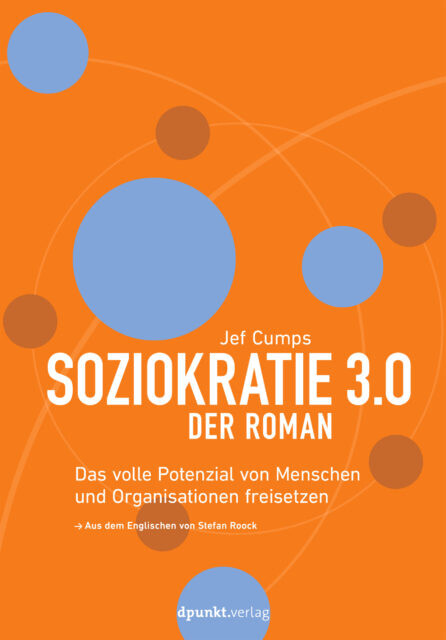
Soziokratie 3.0 - Der Roman
Soziokratie 3.0 verstehen und erfolgreich einführen.Das volle Potenzial von Menschen und Organisationen freisetzen. Dieser Businessroman stellt Soziokratie 3.0 als ein praktisches Modell für agile, widerstandsfähige und sinnstiftende Organisationen vor. Auf der Grundlage von Gleichstellung, kollektiver Intelligenz und einer anpassungsfähigen Organisationsstruktur bietet S3 eine Reihe bewährter Muster, um Komplexität zu beherrschen und effektiver zusammenzuarbeiten.Erzählt wird die Geschichte der Transformation eines typischen Technologieunternehmens, das aufgrund seines starken Wachstums in Schwierigkeiten gekommen ist. Entscheidungen werden zu langsam getroffen, es mangelt an Kommunikation und der Teamgeist geht verloren – es ist zu einer schwerfälligen Organisation geworden. Als neuer Geschäftsführer steht Chris vor der Aufgabe, das Unternehmen zu retten und wieder zu Erfolg zu führen.Der Leser erfährt auf eindrucksvolle und unterhaltsame Art, wie eine Organisation so aufgebaut wird, dass sie nicht nur überlebt, sondern als humanes, innovatives und widerstandsfähiges Unternehmen auch gedeiht und für die Zukunft gerüstet ist.Zum AutorJef Cumps ist Gründer von iLean und ein Experte, Business-Coach und Ausbilder für moderne Managementtheorien. Er unterstützt Führungskräfte und Organisationen in ihrem Wachstum hin zu mehr Beweglichkeit, Menschlichkeit und Ergebnissen.ÜbersetzerStefan Roock ist Gründungsmitglied der it-agile GmbH. Ihm ist es in seiner Beratungstätigkeit wichtig, dass sich wirklich etwas ändert – hin zu erfolgreichen Unternehmen mit zufriedenen Mitarbeitern, die sich immer neuen Herausforderungen stellen. Stefan hat seit 1999 die Verbreitung agiler Ansätze in Deutschland maßgeblich mit beeinflusst. Er ist regelmäßiger Sprecher zu agilen Themen auf Konferenzen, schreibt Zeitschriftenartikel und hat mehrere Bücher veröffentlicht.

SAP SuccessFactors Talent: Volume 2
Take an in-depth look at SAP SuccessFactors talent modules with this complete guide to configuration, administration, and best practices. This two-volume series follows a logical progression of SAP SuccessFactors modules that should be configured to complete a comprehensive talent management solution. The authors walk you through fully functional simple implementations in the primary chapters for each module before diving into advanced topics in subsequent chapters.In volume 2, you will explore the development module in three more chapters by learning to configure and use development plans, career worksheets, and mentoring. Then, the book examines succession management, covering topics such as configuring, administering, and using the 9-box, the Talent Review form, nominations, succession org charts, talent pools, and succession presentations. The authors then sum up with a review of what you learned and final conclusions.Within each topic, the book touches on the integration points with other modules as well as internationalization. The authors also provide recommendations and insights from real world experience. Having finished the book, you will have an understanding of what comprises a complete SAP SuccessFactors talent management solution and how to configure, administer, and use each module within it.WHAT YOU WILL LEARN* Work with the career worksheet* Build mentoring into your SAP SuccessFactors solution* Display and update relevant talent data in a succession org chartWHO THIS BOOK IS FORImplementation partners and customers who are project managers, configuration specialists, analysts, or system administrators.SUSAN TRAYNOR is an SAP SuccessFactors Certified Professional with more than 21 years of progressive experience in SAP HCM and SuccessFactors implementations. You can follow her on LinkedIn.MICHAEL A. WELLENS, M.S. is a certified SAP SuccessFactors consultant with over 15 years of human resources information systems implementation experience. He has successfully launched a variety of core HR and talent management solutions across a variety of fortune 500 companies around the world. You can follow him on LinkedIn or on Twitter at @mike_wellens.VENKI KRISHNAMOORTHY is an SAP SuccessFactors consultant. Venki has over 15 years of experience as a functional lead, project manager, and program manager in HCM transformation projects. Venki has completed over 35 full lifecycle implementations of SuccessFactors projects across multiple modules. You can follow Venki on LinkedIn or on Twitter at @venki_sap.CHAPTER 1: DEVELOPMENT PLANS (~50 PAGES)1. What is a Career Development Plan?2. Best Practices3. Career Development Set Up in Provisioning4. Configuring the Career Development Plan5. Role-Based Permissions for the Career Development Plan6. Career Development Plan Integration with Succession7. Career Development Plan Integration with Calibration8. Career Development Plan Integration with Employee Profile9. Career Development Plan Integration with Continuous Performance Management (CPM)10. Career Development Plan Integration with Learning Management System (LMS)11. Importing Development Goals12. Using the Career Development Plan from the employee perspective13. Using the Career Development from the manager perspective14. Career Development Goal Plan ReportingCHAPTER 2: CONFIGURING CAREER WORKSHEET (~50 PAGES)* Career Worksheet* Career Worksheet Set up in Provisioning * Career Worksheet Template XML* Role Competency Expected Ratings* Readiness Meter * Gap GraphRole-Based Permissions for the Career Worksheet* Career Paths* Managing Career Paths* Role-Based Permissions for Career Paths* Import Career Paths* Suggested Roles* Configure Suggested RolesRole-Based Permissions for Suggested Roles* Role Readiness Assessment Form* Role Readiness Assessment within the Career WorksheetRole-Based Permissions for Role Readiness Assessment Form * Walkthrough of the Career Worksheet by an employee* Walkthrough of the Career Worksheet by a manager * Career Worksheet Ad hoc Reporting * Deep link to My Current Roles on the Career Worksheet * Career Worksheet Integration with Suggested Successors in Succession Org Chart Career Worksheet Integration with Employee Profile * Career ExplorerCHAPTER 3: USING CAREER WORKSHEET (~30 PAGES)1. 1. Same as above but walk through as end userCHAPTER 4: MENTORING (~40 PAGES)Mentoring Set up In Provisioning* Role-Based Permissions * Managing Mentoring Programs* Creating Open Enrollment Mentoring Programs* Creating Supervised Mentoring Programs* Creating Unsupervised Mentoring Programs* Mentee and Mentor MatchingReview Mentoring Preferences* Using Mentoring* Accessing Mentoring Programs* Mentoring Program Sign Up* Review Mentoring Requests* Set Mentor Availability* Ending Mentoring Relationships* Email Notifications* Ad hoc ReportingCHAPTER 5: SUCCESSION MANAGEMENT INTRO, 9-BOX, AND TALENT REVIEW FORM (~30 PAGES)1. What is Succession Management2. Basic Settings3. 9-Box or Matrix Grid4. Talent Review FormCHAPTER 6: CORE SUCCESSION MANAGEMENT (~50 PAGES)1. Talent Cards2. Nomination Configuration3. Succession Org ChartCHAPTER 7: SUCCESSION MANAGEMENT ADDITIONAL FEATURES ( ~25 PAGES)Talent Search1. Talent Pools2. Position Tile View3. Lineage Chart4. Succession PresentationsCHAPTER 8: CONCLUSION (~5 PAGES)1. Review of concepts across chapters2. Realizing business value and next steps

Ultimate Arduino Uno Hardware Manual
A manual providing up-to-date hardware information for the popular Arduino Uno, the easy to use open-source electronics platform used by hobbyists, makers, hackers, experimenters, educators and professionals.Get all the information that you need on the hardware and firmware found on Arduino Uno boards in this handy reference and user guide.- ldeal for the workbench or desktop- Contains all of the Arduino Uno hardware information in one place- Covers Arduino / Genuino Uno revision 3 and earlier boards- Easily find hardware technical specifications with explanations- Pin reference chapter with interfacing examples- Diagrams and illustrations for easy reference to alternate pin functions and hardware connections- Learn to back up and restore firmware on the board, or load new firmware- Basic fault finding and repair procedures for Arduino Uno boards- Power supply circuits simplified and explained- Mechanical dimensions split into five easy to reference diagrams- Contains circuit diagrams, parts list and board layout reference to easily locate componentsWarwick A. Smith is an electronics engineer and embedded programmer from South Africa with experience in industrial, commercial, and aerospace-related industries.Warwick has a wide interest in various fields of technology, including embedded systems hardware, software, and information technology. His writing style has been described as "clear and concise" as well as "conversational and friendly".

Inside the World of Computing
Computers and the Internet are an undeniable and inextricable part of our daily lives. This book is for those who wish to better understand how this came to be. It explores the technological bases of computers, networks, software and data management, leading to the development of four �pillars� on which the essential applications that have a strong impact on individuals and society are based: embedded systems, Artificial Intelligence, the Internet, image processing and vision.We will travel to the heart of major application areas: robotics, virtual reality, health, mobility, energy, the factory of the future, not forgetting the major questions that this �digitization� can raise. This book is the author�s testimony after fifty years spent in environments that are very open to new technologies. It offers perspectives on the evolution of the digital world that we live in. JEAN-LOIC DELHAYE has a PhD in Artificial Intelligence. He directed the Centre National Universitaire Sud de Calcul, France, before piloting partnerships and the valorization of research at the Centre Inria Rennes?Bretagne Altlantique, France. He has also been very active in national and European collaborations on high performance computing. Foreword xiJean-Pierre BANÂTREPreface xvAcknowledgments xxiCHAPTER 1. FROM THE CALCULATOR TO THE SUPERCOMPUTER 11.1. Introduction 11.2. Some important concepts 11.2.1. Information and data 11.2.2. Binary system 31.2.3. Coding 31.2.4. Algorithm 51.2.5. Program 71.3. Towards automation of calculations 71.3.1. Slide rule 71.3.2. The Pascaline 81.3.3. The Jacquard loom 91.3.4. Babbage’s machine 91.3.5. The first desktop calculators 101.3.6. Hollerith’s machine 111.4. The first programmable computers 121.4.1. Konrad Zuse’s machines 121.4.2. Colossus 131.4.3. ENIAC 131.5. Generations of computers 141.5.1. First generation: the transition to electronics 151.5.2. Second generation: the era of the transistor 171.5.3. Third generation: the era of integrated circuits 201.5.4. Fourth generation: the era of microprocessors 241.6. Supercomputers 281.6.1. Some fields of use 281.6.2. History of supercomputers 291.6.3. Towards exaflops 331.7. What about the future? 351.7.1. An energy and ecological challenge 351.7.2. Revolutions in sight? 36CHAPTER 2. COMPUTER NETWORKS AND THEIR APPLICATIONS 372.1. Introduction 372.2. A long history 382.3. Computer network infrastructure 422.3.1. Geographic coverage: from PAN to WAN 432.3.2. Communication media 442.3.3. Interconnection equipment and topologies 482.3.4. Two other characteristics of computer networks 522.3.5. Quality of service 542.4. Communication protocols and the Internet 552.4.1. The first protocols 552.4.2. The OSI model 562.4.3. The history of the Internet 572.4.4. The TCP/IP protocol 582.4.5. IP addressing 592.4.6. Management and use of the Internet 602.4.7. Evolving technologies 612.4.8. What future? 622.5. Applications 632.5.1. The World Wide Web 642.5.2. Cloud computing 672.5.3. The Internet of Things 682.5.4. Ubiquitous computing and spontaneous networks 722.6. Networks and security 742.6.1. Vulnerabilities 742.6.2. The protection of a network 762.6.3. Message encryption 762.6.4. Checking its security 77CHAPTER 3. SOFTWARE 793.1. Introduction 793.2. From algorithm to computer program 803.2.1. Programs and subprograms 823.2.2. Programming languages 833.3. Basic languages and operating systems 853.3.1. Basic languages 853.3.2. Operating system functions 863.3.3. A bit of history 883.3.4. Universal operating systems 913.3.5. Targeted operating systems 933.4. “High-level” programming and applications 963.4.1. Imperative languages 963.4.2. Functional languages 983.4.3. Object programming 993.4.4. Other programming languages 1003.4.5. The most used languages 1013.5. Software development 1023.5.1. Software categories 1023.5.2. Software quality 1033.5.3. Development methods 1043.5.4. Software engineering 1073.6. Software verification and validation 1073.6.1. Errors with sometimes tragic consequences 1073.6.2. Software testing 1093.6.3. Formal methods 1113.6.4. Software certification 1143.7. Legal protection and distribution of software 1153.7.1. Legal protection of software 1153.7.2. Licenses 1163.7.3. Free software and open source 1173.8. The software market 118CHAPTER 4. DATA: FROM BINARY ELEMENT TO INTELLIGENCE 1214.1. Introduction 1214.2. Data and information 1224.2.1. Digitization of data 1224.2.2. Data compression 1254.3. The structuring of data towards information 1254.3.1. Structured data 1264.3.2. Semi-structured data and the Web 1274.4. Files and their formats 1284.5. Databases 1294.5.1. The main characteristics 1294.5.2. DBMS models 1314.5.3. Database design 1334.5.4. Enterprise resource planning (ERP) systems 1334.5.5. Other types of databases 1344.5.6. Data protection in a DB 1374.6. Intelligence and Big Data 1374.7. Data ownership and Open Data 1414.7.1. Personal data 1414.7.2. Opening up public data: Open Data 142CHAPTER 5. TECHNOLOGY BUILDING BLOCKS 1455.1. Embedded systems 1455.1.1. Specific architectures 1465.1.2. Some fields of use 1475.2. Artificial intelligence (AI) 1505.2.1. A bit of history 1505.2.2. Intelligence or statistics? 1525.2.3. Important work around automatic learning 1525.2.4. A multiplication of applications 1545.2.5. The challenges of AI 1555.2.6. What about intelligence? 1565.3. The Internet 1575.3.1. Mobility 1575.3.2. Social networks 1585.3.3. The Internet of Things 1595.3.4. The Cloud 1595.3.5. Blockchain 1595.3.6. Vulnerabilities 1605.4. Image processing and vision 1605.4.1. A bit of history 1605.4.2. Image sources and their uses 1615.4.3. The digital image 1625.4.4. Image storage and compression 1635.4.5. Computing and images 1645.4.6. Some applications 1655.5. Conclusion 166CHAPTER 6. SOME AREAS OF APPLICATION 1676.1. Robots 1676.1.1. A bit of history 1686.1.2. Fields of use regarding robots today 1696.1.3. Communication in the world of robots 1736.1.4. Fear of robots 1746.1.5. Challenges for researchers 1756.2. Virtual reality and augmented reality 1756.2.1. A bit of history 1766.2.2. Hardware configurations of virtual reality 1776.2.3. Fields of use of virtual reality 1796.2.4. Augmented reality 1806.3. Health 1816.3.1. Health informatics 1826.3.2. Information technology at the service of our health 1846.4. The connected (and soon autonomous?) car 1856.4.1. Levels of autonomy 1866.4.2. Challenges associated with the autonomous car 1876.4.3. Advantages and disadvantages of the autonomous car 1886.5. The smart city 1896.5.1. Smart energy 1906.5.2. Smart buildings 1906.5.3. Smart infrastructure 1916.5.4. Smart governance 1926.5.5. Dangers 1936.6. Smart mobility 1936.7. The factory of the future 1956.7.1. Technologies 1956.7.2. Issues 1976.7.3. The place of the human 198CHAPTER 7. SOCIETAL ISSUES 1997.1. Security 1997.1.1. Specific characteristics 2007.1.2. Some great threats 2007.1.3. Acting to protect oneself 2027.2. The respect of private life 2027.2.1. Our personal data 2027.2.2. Uses of our data 2047.2.3. What about the future? 205x Inside the World of Computing7.3. Influence on social life 2067.3.1. The development of social ties 2067.3.2. Citizen participation 2077.3.3. The socialization of knowledge 2077.4. Dangers to democracy 2087.4.1. The liberation of speech 2087.4.2. Private life under surveillance 2087.4.3. Job insecurity 2097.4.4. The power of the big Internet firms 2097.5. The digital divide 2107.5.1. From division to exclusion 2107.5.2. Digital technology and education 2117.6. Mastering the use of artificial intelligence 2127.7. The intelligent prosthesis and the bionic man 2137.8. Transhumanism 2147.9. What kind of society for tomorrow? 215Bibliography 217Index 219

WhatsApp - optimal nutzen - 3. Auflage - neueste Version 2020 mit allen Funktionen anschaulich erklärt
WhatsApp optimal nutzen - 3. aktualisierte Auflage mit allen Neuheiten von 2020Dieses Buch zum Thema WhatsApp richtet sich an alle WhatsApp-Nutzer und die, die es werden wollen, unabhängig davon, ob sie ein iPhone oder Android-Smartphone nutzen. Autor Christian Immler berücksichtigt die Apps für beide Betriebssysteme. Dabei erfahren Sie alles, was Sie über die beliebteste Chat-App wissen müssen. Von der Installation und der Warnung vor Fake-Apps über das eigene Profil, das Senden von Nachrichten, Daten und Bildern bis zu Gruppen, Sprachnachrichten und Telefonieren. Die aktuellen Änderungen von WhatsApp werden ebenfalls vermittelt, sodass Sie auf dem allerneusten Stand in Sachen WhatsApp sind.Aus dem Inhalt:- neueste Funktionen anschaulich erklärt- WhatsApp installieren- Videochat und Video Telefonie- Nachrichten schreiben, Bilder und Daten versenden- WhatsApp mit Android und iOS sicher nutzen- Wichtige Einstellungen und eigenes Profil- Nützliche Tipps und Tricks- Gruppen- Sprachnachrichten und Telefonieren

Pointers in C Programming
Gain a better understanding of pointers, from the basics of how pointers function at the machine level, to using them for a variety of common and advanced scenarios. This short contemporary guide book on pointers in C programming provides a resource for professionals and advanced students needing in-depth hands-on coverage of pointer basics and advanced features. It includes the latest versions of the C language, C20, C17, and C14.You’ll see how pointers are used to provide vital C features, such as strings, arrays, higher-order functions and polymorphic data structures. Along the way, you’ll cover how pointers can optimize a program to run faster or use less memory than it would otherwise.There are plenty of code examples in the book to emulate and adapt to meet your specific needs.WHAT YOU WILL LEARN* Work effectively with pointers in your C programming* Learn how to effectively manage dynamic memory* Program with strings and arrays* Create recursive data structures* Implement function pointersWHO THIS BOOK IS FORIntermediate to advanced level professional programmers, software developers, and advanced students or researchers. Prior experience with C programming is expected.Thomas Mailund is an associate professor in bioinformatics at Aarhus University, Denmark. He has a background in math and computer science, including experience programming and teaching in the C and R programming languages. For the last decade, his main focus has been on genetics and evolutionary studies, particularly comparative genomics, speciation, and gene flow between emerging species.1. Pointers and the random access memory model2. Memory management3. Strings and arrays4. Recursive data structures5. Function pointers

JavaScript - Das Handbuch für die Praxis
Seit 25 Jahren das begleitende Grundlagenwerk zu JavaScript - Durchgehend überarbeiteter Bestseller in der 7. Auflage - Deckt die Version ES2020 inkl. Tools/Extensions & Node.js ab < - Vermittelt umfassendes und tiefgehendes JavaScript-Know-how JavaScript ist die Programmiersprache des Webs und der Bestseller "JavaScript: Das Handbuch für die Praxis" seit fast 25 Jahren und über sieben Auflagen ein geschätztes Grundlagenwerk für diese Sprache. Umfassend und detailliert dokumentiert Flanagan die wichtigsten client- und serverseitigen APIs. Die 7. Auflage wurde vollständig aktualisiert und deckt die Version 2020 von JavaScript ab. Freuen Sie sich auf spannende und inspirierende Codebeispiele und neue Kapitel über Klassen, Module, Iteratoren, Generatoren, Promises und async/await. Das Buch wendet sich an JavaScript-Neulinge mit Programmierkenntnissen sowie JavaScript-Programmierende, die ihr Verständnis vertiefen wollen. Die Zeit, die Sie in die Lektüre investieren, wird sich durch eine deutlich gesteigerte Produktivität garantiert rasch auszahlen.

Kali Linux Penetration Testing Bible
YOUR ULTIMATE GUIDE TO PENTESTING WITH KALI LINUXKali is a popular and powerful Linux distribution used by cybersecurity professionals around the world. Penetration testers must master Kali’s varied library of tools to be effective at their work. The Kali Linux Penetration Testing Bible is the hands-on and methodology guide for pentesting with Kali.You’ll discover everything you need to know about the tools and techniques hackers use to gain access to systems like yours so you can erect reliable defenses for your virtual assets. Whether you’re new to the field or an established pentester, you’ll find what you need in this comprehensive guide.* Build a modern dockerized environment* Discover the fundamentals of the bash language in Linux* Use a variety of effective techniques to find vulnerabilities (OSINT, Network Scan, and more)* Analyze your findings and identify false positives and uncover advanced subjects, like buffer overflow, lateral movement, and privilege escalation* Apply practical and efficient pentesting workflows* Learn about Modern Web Application Security Secure SDLC* Automate your penetration testing with PythonGUS KHAWAJA is an expert in application security and penetration testing. He is a cybersecurity consultant in Montreal, Canada and has a depth of experience working with organizations to protect their assets from cyberattacks. He is a published author and online educator in the field of cybersecurity.Introduction xxCHAPTER 1 MASTERING THE TERMINAL WINDOW 1Kali Linux File System 2Terminal Window Basic Commands 3Tmux Terminal Window 6Starting Tmux 6Tmux Key Bindings 7Tmux Session Management 7Navigating Inside Tmux 9Tmux Commands Reference 9Managing Users and Groups in Kali 10Users Commands 10Groups Commands 14Managing Passwords in Kali 14Files and Folders Management in Kali Linux 15Displaying Files and Folders 15Permissions 16Manipulating Files in Kali 19Searching for Files 20Files Compression 21Manipulating Directories in Kali 23Mounting a Directory 23Managing Text Files in Kali Linux 24Vim vs. Nano 26Searching and Filtering Text 27Remote Connections in Kali 29Remote Desktop Protocol 29Secure Shell 30SSH with Credentials 30Passwordless SSH 32Kali Linux System Management 34Linux Host Information 36Linux OS Information 36Linux Hardware Information 36Managing Running Services 38Package Management 39Process Management 41Networking in Kali Linux 42Network Interface 42IPv4 Private Address Ranges 42Static IP Addressing 43DNS 45Established Connections 46File Transfers 47Summary 48CHAPTER 2 BASH SCRIPTING 49Basic Bash Scripting 50Printing to the Screen in Bash 50Variables 52Commands Variable 54Script Parameters 54User Input 56Functions 56Conditions and Loops 57Conditions 58Loops 60File Iteration 61Summary 63CHAPTER 3 NETWORK HOSTS SCANNING 65Basics of Networking 65Networking Protocols 66TCP 66UDP 67Other Networking Protocols 67IP Addressing 69IPv4 69Subnets and CIDR 69IPv6 70Port Numbers 71Network Scanning 72Identifying Live Hosts 72Ping 73ARP 73Nmap 73Port Scanning and Services Enumeration 74TCP Port SYN Scan 75UDP 75Basics of Using Nmap Scans 76Services Enumeration 77Operating System Fingerprinting 79Nmap Scripting Engine 80NSE Category Scan 82NSE Arguments 84DNS Enumeration 84DNS Brute-Force 85DNS Zone Transfer 86DNS Subdomains Tools 87Fierce 87Summary 88CHAPTER 4 INTERNET INFORMATION GATHERING 89Passive Footprinting and Reconnaissance 90Internet Search Engines 90Shodan 91Google Queries 92Information Gathering Using Kali Linux 94Whois Database 95TheHarvester 97DMitry 99Maltego 99Summary 103CHAPTER 5 SOCIAL ENGINEERING ATTACKS 105Spear Phishing Attacks 105Sending an E-mail 106The Social Engineer Toolkit 106Sending an E-mail Using Python 108Stealing Credentials 109Payloads and Listeners 110Bind Shell vs. Reverse Shell 111Bind Shell 111Reverse Shell 112Reverse Shell Using SET 113Social Engineering with the USB Rubber Ducky 115A Practical Reverse Shell Using USB Rubber Ducky and PowerShell 117Generating a PowerShell Script 118Starting a Listener 118Hosting the PowerShell Script 119Running PowerShell 120Download and Execute the PS Script 120Reverse Shell 121Replicating the Attack Using the USB Rubber Ducky 122Summary 122CHAPTER 6 ADVANCED ENUMERATION PHASE 125Transfer Protocols 126FTP (Port 21) 126Exploitation Scenarios for an FTP Server 126Enumeration Workflow 127Service Scan 127Advanced Scripting Scan with Nmap 128More Brute-Forcing Techniques 129SSH (Port 22) 130Exploitation Scenarios for an SSH Server 130Advanced Scripting Scan with Nmap 131Brute-Forcing SSH with Hydra 132Advanced Brute-Forcing Techniques 133Telnet (Port 23) 134Exploitation Scenarios for Telnet Server 135Enumeration Workflow 135Service Scan 135Advanced Scripting Scan 136Brute-Forcing with Hydra 136E-mail Protocols 136SMTP (Port 25) 137Nmap Basic Enumeration 137Nmap Advanced Enumeration 137Enumerating Users 138POP3 (Port 110) and IMAP4 (Port 143) 141Brute-Forcing POP3 E-mail Accounts 141Database Protocols 142Microsoft SQL Server (Port 1433) 142Oracle Database Server (Port 1521) 143MySQL (Port 3306) 143CI/CD Protocols 143Docker (Port 2375) 144Jenkins (Port 8080/50000) 145Brute-Forcing a Web Portal Using Hydra 147Step 1: Enable a Proxy 148Step 2: Intercept the Form Request 149Step 3: Extracting Form Data and Brute-Forcing with Hydra 150Web Protocols 80/443 151Graphical Remoting Protocols 152RDP (Port 3389) 152RDP Brute-Force 152VNC (Port 5900) 153File Sharing Protocols 154SMB (Port 445) 154Brute-Forcing SMB 156SNMP (Port UDP 161) 157SNMP Enumeration 157Summary 159CHAPTER 7 EXPLOITATION PHASE 161Vulnerabilities Assessment 162Vulnerability Assessment Workflow 162Vulnerability Scanning with OpenVAS 164Installing OpenVAS 164Scanning with OpenVAS 165Exploits Research 169SearchSploit 171Services Exploitation 173Exploiting FTP Service 173FTP Login 173Remote Code Execution 174Spawning a Shell 177Exploiting SSH Service 178SSH Login 178Telnet Service Exploitation 179Telnet Login 179Sniffing for Cleartext Information 180E-mail Server Exploitation 183Docker Exploitation 185Testing the Docker Connection 185Creating a New Remote Kali Container 186Getting a Shell into the Kali Container 187Docker Host Exploitation 188Exploiting Jenkins 190Reverse Shells 193Using Shells with Metasploit 194Exploiting the SMB Protocol 196Connecting to SMB Shares 196SMB Eternal Blue Exploit 197Summary 198CHAPTER 8 WEB APPLICATION VULNERABILITIES 199Web Application Vulnerabilities 200Mutillidae Installation 200Apache Web Server Installation 200Firewall Setup 201Installing PHP 201Database Installation and Setup 201Mutillidae Installation 202Cross-Site Scripting 203Reflected XSS 203Stored XSS 204Exploiting XSS Using the Header 205Bypassing JavaScript Validation 207SQL Injection 208Querying the Database 208Bypassing the Login Page 211Execute Database Commands Using SQLi 211SQL Injection Automation with SQLMap 215Testing for SQL Injection 216Command Injection 217File Inclusion 217Local File Inclusion 218Remote File Inclusion 219Cross-Site Request Forgery 220The Attacker Scenario 221The Victim Scenario 222File Upload 223Simple File Upload 223Bypassing Validation 225Encoding 227OWASP Top 10 228Summary 229CHAPTER 9 WEB PENETRATION TESTING AND SECURE SOFTWARE DEVELOPMENT LIFECYCLE 231Web Enumeration and Exploitation 231Burp Suite Pro 232Web Pentest Using Burp Suite 232More Enumeration 245Nmap 246Crawling 246Vulnerability Assessment 247Manual Web Penetration Testing Checklist 247Common Checklist 248Special Pages Checklist 248Secure Software Development Lifecycle 250Analysis/Architecture Phase 251Application Threat Modeling 251Assets 251Entry Points 252Third Parties 252Trust Levels 252Data Flow Diagram 252Development Phase 252Testing Phase 255Production Environment (Final Deployment) 255Summary 255CHAPTER 10 LINUX PRIVILEGE ESCALATION 257Introduction to Kernel Exploits and Missing Configurations 258Kernel Exploits 258Kernel Exploit: Dirty Cow 258SUID Exploitation 261Overriding the Passwd Users File 263CRON Jobs Privilege Escalation 264CRON Basics 265Crontab 265Anacrontab 266Enumerating and Exploiting CRON 266sudoers 268sudo Privilege Escalation 268Exploiting the Find Command 268Editing the sudoers File 269Exploiting Running Services 270Automated Scripts 270Summary 271CHAPTER 11 WINDOWS PRIVILEGE ESCALATION 273Windows System Enumeration 273System Information 274Windows Architecture 275Listing the Disk Drives 276Installed Patches 276Who Am I? 276List Users and Groups 277Networking Information 279Showing Weak Permissions 282Listing Installed Programs 283Listing Tasks and Processes 283File Transfers 284Windows Host Destination 284Linux Host Destination 285Windows System Exploitation 286Windows Kernel Exploits 287Getting the OS Version 287Find a Matching Exploit 288Executing the Payload and Getting a Root Shell 289The Metasploit PrivEsc Magic 289Exploiting Windows Applications 293Running As in Windows 295PSExec Tool 296Exploiting Services in Windows 297Interacting with Windows Services 297Misconfigured Service Permissions 297Overriding the Service Executable 299Unquoted Service Path 299Weak Registry Permissions 301Exploiting the Scheduled Tasks 302Windows PrivEsc Automated Tools 302PowerUp 302WinPEAS 303Summary 304CHAPTER 12 PIVOTING AND LATERAL MOVEMENT 305Dumping Windows Hashes 306Windows NTLM Hashes 306SAM File and Hash Dump 307Using the Hash 308Mimikatz 308Dumping Active Directory Hashes 310Reusing Passwords and Hashes 310Pass the Hash 311Pivoting with Port Redirection 312Port Forwarding Concepts 312SSH Tunneling and Local Port Forwarding 314Remote Port Forwarding Using SSH 315Dynamic Port Forwarding 316Dynamic Port Forwarding Using SSH 316Summary 317CHAPTER 13 CRYPTOGRAPHY AND HASH CRACKING 319Basics of Cryptography 319Hashing Basics 320One-Way Hash Function 320Hashing Scenarios 321Hashing Algorithms 321Message Digest 5 321Secure Hash Algorithm 323Hashing Passwords 323Securing Passwords with Hash 324Hash-Based Message Authenticated Code 325Encryption Basics 326Symmetric Encryption 326Advanced Encryption Standard 326Asymmetric Encryption 328Rivest Shamir Adleman 329Cracking Secrets with Hashcat 331Benchmark Testing 332Cracking Hashes in Action 334Attack Modes 336Straight Mode 336Combinator 337Mask and Brute-Force Attacks 339Brute-Force Attack 342Hybrid Attacks 342Cracking Workflow 343Summary 344CHAPTER 14 REPORTING 345Overview of Reports in Penetration Testing 345Scoring Severities 346Common Vulnerability Scoring System Version 3.1 346Report Presentation 349Cover Page 350History Logs 350Report Summary 350Vulnerabilities Section 350Summary 351CHAPTER 15 ASSEMBLY LANGUAGE AND REVERSE ENGINEERING 353CPU Registers 353General CPU Registers 354Index Registers 355Pointer Registers 355Segment Registers 355Flag Registers 357Assembly Instructions 358Little Endian 360Data Types 360Memory Segments 361Addressing Modes 361Reverse Engineering Example 361Visual Studio Code for C/C++ 362Immunity Debugger for Reverse Engineering 363Summary 368CHAPTER 16 BUFFER/STACK OVERFLOW 369Basics of Stack Overflow 369Stack Overview 370PUSH Instruction 370POP Instruction 371C Program Example 371Buffer Analysis with Immunity Debugger 372Stack Overflow 376Stack Overflow Mechanism 377Stack Overflow Exploitation 378Lab Overview 379Vulnerable Application 379Phase 1: Testing 379Testing the Happy Path 379Testing the Crash 381Phase 2: Buffer Size 382Pattern Creation 382Offset Location 382Phase 3: Controlling EIP 383Adding the JMP Instruction 384Phase 4: Injecting the Payload and Getting a Remote Shell 386Payload Generation 386Bad Characters 386Shellcode Python Script 387Summary 388CHAPTER 17 PROGRAMMING WITH PYTHON 389Basics of Python 389Running Python Scripts 390Debugging Python Scripts 391Installing VS Code on Kali 391Practicing Python 392Python Basic Syntaxes 393Python Shebang 393Comments in Python 393Line Indentation and Importing Modules 394Input and Output 394Printing CLI Arguments 395Variables 395Numbers 395Arithmetic Operators 397Strings 397String Formatting 397String Functions 398Lists 399Reading Values in a List 399Updating List Items 399Removing a list item 400Tuples 400Dictionary 400More Techniques in Python 400Functions 400Returning Values 401Optional Arguments 401Global Variables 402Changing Global Variables 402Conditions 403if/else Statement 403Comparison Operators 403Loop Iterations 404while Loop 404for Loop 405Managing Files 406Exception Handling 407Text Escape Characters 407Custom Objects in Python 408Summary 409CHAPTER 18 PENTEST AUTOMATION WITH PYTHON 411Penetration Test Robot 411Application Workflow 412Python Packages 414Application Start 414Input Validation 415Code Refactoring 417Scanning for Live Hosts 418Ports and Services Scanning 420Attacking Credentials and Saving the Results 423Summary 426APPENDIX A KALI LINUX DESKTOP AT A GLANCE 427Downloading and Running a VM of Kali Linux 428Virtual Machine First Boot 428Kali Xfce Desktop 429Kali Xfce Menu 430Search Bar 430Favorites Menu Item 430Usual Applications 432Other Menu Items 433Kali Xfce Settings Manager 433Advanced Network Configuration 435Appearance 436Desktop 439Display 441File Manager 442Keyboard 445MIME Type Editor 447Mouse and Touchpad 448Panel 449Workspaces 450Window Manager 451Practical Example of Desktop Customization 454Edit the Top Panel 454Adding a New Bottom Panel 454Changing the Desktop Look 457Installing Kali Linux from Scratch 458Summary 466APPENDIX B BUILDING A LAB ENVIRONMENT USING DOCKER 467Docker Technology 468Docker Basics 468Docker Installation 468Images and Registries 469Containers 470Dockerfile 472Volumes 472Networking 473Mutillidae Docker Container 474Summary 475Index 477

Overview of Some Voice Over IP Calls and SMS Verifications Services Providers
This book provides brief survey of the some Voice Over IP (VOIP) providers, including the providers that offers free calls to some countries. Then, I will mention some websites that offer virtual phone numbers from around the world to receive activation codes and SMS confirmations online..The report consists from the following parts:1. How does VOIP work?2. Getting free phone number in US or Canada and other countries3. Betamax (Dellmont sarl) VOIP Service Provider.4. Some free websites that can be used to receive SMS online using numbers from some countries.5. Best websites that offer SMS verification, sending SMS and renting number services.6. Inphonex VOIP Provider.7. eFax8. VOIP Frequently asked questions.I am Dr. Hidaia Mahmoud Mohamed Alassouli. I completed my PhD degree in Electrical Engineering from Czech Technical University by February 2003, and my M. Sc. degree in Electrical Engineering from Bahrain University by June 1995. I completed also one study year of most important courses in telecommunication and computer engineering courses in Islamic university in Gaza. So, I covered most important subjects in Electrical Engineering, Computer Engineering and Telecommunications Engineering during my study. My nationality is Palestinian from gaza strip.I obtained a lot of certified courses in MCSE, SPSS, Cisco (CCNA), A+, Linux.I worked as Electrical, Telecommunicating and Computer Engineer in a lot of institutions. I worked also as a computer networking administrator.I had considerable undergraduate teaching experience in several types of courses in many universities. I handled teaching the most important subjects in Electrical and Telecommunication and Computer Engineering.I could publish a lot of papers a top-tier journals and conference proceedings, besides I published a lot of books in Publishing and Distribution houses.I wrote a lot of important Arabic articles on online news websites. I also have my own magazine website that I publish on it all my articles: http:// www.anticorruption.000space.comMy personal website: www.hidaia-alassouli.000space.comEmail: hidaia_alassouli@hotmail.com

Machine Learning - kurz & gut (2. Auflg.)
Der kompakte Schnelleinstieg in Machine Learning und Deep Learning in der neuen 2. Auflage 04/2021!Machine Learning beeinflusst heute beinahe alle Bereiche der Technik und der Gesellschaft. Dieses Buch bietet Interessierten, die einen technischen Hintergrund haben, die schnellstmögliche Einführung in das umfangreiche Themengebiet des maschinellen Lernens und der statistischen Datenanalyse. Dabei werden folgende Themen behandelt und mit praktischen Beispielen veranschaulicht:Datenimport und -vorbereitungSupervised LearningFeature-Auswahl, ModellvalidierungNeuronale Netze und Deep LearningUnsupervised LearningReinforcement LearningAnhand konkreter Datensätze lernen Sie einen typischen Workflow kennen: vom Datenimport über Datenbereinigung, Datenanalyse bis hin zur Datenvisualisierung. Die Codebeispiele basieren auf Python und den Bibliotheken Scikit-Learn, Pandas, NumPy, TensorFlow und Keras.Nach der Lektüre dieses Buchs haben Sie einen Überblick über das gesamte Thema und können Ansätze einordnen und bewerten. Das Buch vermittelt Ihnen eine solide Grundlage, um Ihre ersten eigenen Machine-Learning-Modelle zu trainieren und vertiefende Literatur zu verstehen.

JavaScript - Das Handbuch für die Praxis (7. Auflg.)
Seit 25 Jahren das begleitende Grundlagenwerk zu JavaScript, in 7. Auflage 04/2021JavaScript ist die Programmiersprache des Web und wird heute von mehr Softwareentwicklerinnen und -entwicklern eingesetzt als jede andere Sprache. Seit fast 25 Jahren dient ihnen dieser Bestseller als Praxishandbuch und zuverlässiger Begleiter. Die vorliegende siebte Auflage wurde vollständig aktualisiert und deckt die Version 2020 von JavaScript ab.Sie finden in diesem Buch spannende und aufschlussreiche Codebeispiele sowie neue und erweiterte Kapitel zu Klassen, Modulen, Iteratoren, Generatoren, Promises und async/await. Es richtet sich an Programmiererinnen und Programmierer, die JavaScript lernen möchten, und an alle in der Webentwicklung, die ein tieferes Verständnis für die Sprache entwickeln und sie noch besser beherrschen wollen.Unter anderem werden folgende Themen behandelt:Typen, Variablen, Operatoren, Anweisungen, Objekte und ArraysFunktionen, Klassen, Module, Iteratoren, Generatoren, Promises und async/awaitDie Standardbibliothek von JavaScript: Datenstrukturen, reguläre Ausdrücke, JSON, Internationalisierung und URLsDie Webplattform: Dokumente, Komponenten, Grafiken, Netzwerkoptionen, Speicher und ThreadsNode.js: Puffer, Dateien, Streams, Threads, Kindprozesse, Webclients und WebserverWerkzeuge und Spracherweiterungen für professionelle JavaScript-Entwickler
Mastering Microsoft Dynamics 365 Implementations
CONFIDENTLY SHEPHERD YOUR ORGANIZATION’S IMPLEMENTATION OF MICROSOFT DYNAMICS 365 TO A SUCCESSFUL CONCLUSIONIn Mastering Microsoft Dynamics 365 Implementations, accomplished executive, project manager, and author Eric Newell delivers a holistic, step-by-step reference to implementing Microsoft’s cloud-based ERP and CRM business applications. You’ll find the detailed and concrete instructions you need to take your implementation project all the way to the finish line, on-time, and on-budget.You’ll learn:* The precise steps to take, in the correct order, to bring your Dynamics 365 implementation to life * What to do before you begin the project, including identifying stakeholders and building your business case * How to deal with a change management throughout the lifecycle of your project * How to manage conference room pilots (CRPs) and what to expect during the sessions Perfect for CIOs, technology VPs, CFOs, Operations leaders, application directors, business analysts, ERP/CRM specialists, and project managers, Mastering Microsoft Dynamics 365 Implementations is an indispensable and practical reference for guiding your real-world Dynamics 365 implementation from planning to completion.ERIC NEWELL is the Co-Founder and CEO of Stoneridge Software, a Microsoft Gold Partner, focused on Dynamics. Prior to founding Stoneridge, he worked at Microsoft for 13 years in Dynamics-related roles including support engineer, IT lead for support systems, Technical Account Manager and as a Premier Field Engineering team leader. He frequently presents on topics related to implementing Microsoft Dynamics 365, and has spoken at Microsoft conferences over a dozen times. He has served as a project management trainer at Microsoft as well as local universities.Introduction xxviiCHAPTER 1 • STAGES OF AN IMPLEMENTATION OVERVIEW 1What Is Microsoft Dynamics? 1The Client Journey 2Implementation Methodologies 5Waterfall and Sure Step 5Agile and Scrum 7Triple Constraints 8The Bottom Line 9CHAPTER 2 • WHAT TO DO BEFORE YOU BEGIN A PROJECT 11Identify Your Project Team and Stakeholders 11Executive Sponsor 12Project Owner 12Business Process Owner(s) 13Project Manager 13Core Team and a Core Team Lead 14Subject Matter Experts 14IT Resources 15Time Commitment by Role 17Identify Your Processes in Scope 18Clean Up Your Data 19Identify Your “Master” Data 19Develop Naming Conventions 20Identify System Owners 20Find and Resolve Duplicates and Incorrect Data 20Define Your Success Metrics 21Possible Benefits 22Building Your Business Case and Securing Funding 23How Much Should an ERP Project Cost? 24Costs to Include in Your Calculations 24Capitalizing Costs 25Contingency 27Return on Investment (ROI) 27Gaining Approval 28The Bottom Line 29CHAPTER 3 • FOUR KEYS TO CONSIDER WHEN BUYING AN ERP OR CRM SOLUTION 31Selection Process 31Selection Consultant 32Decision Maker 33The Four Keys 33Fit 34Platform 35Implementer 39Cost 41Building Your Scorecard 44The Bottom Line 45CHAPTER 4 • HOW TO EVALUATE AND BUY BUSINESS APPLICATION SOFTWARE 47Buying Process Steps 47Qualification Stage 48Discovery and Demonstration Stage 49Selecting Your Vendor 51Leadership or Board Approval 54Moving Forward 54The Bottom Line 54CHAPTER 5 • ORGANIZING YOUR TEAM FOR SUCCESS AND PROJECT GOVERNANCE 57RACI 57Your Project Team 58Your Partner’s Implementation Team 59Executive Sponsor 60Engagement Manager 60Project Manager 60Solution Architect or Solution Delivery Manager 60Functional Consultant or Consultants 61Technical Consultant 61Development Lead and Developers 61Integration Architect 61Data Migration Specialist 62Project Governance 62Project Communication 62Resource Loading 62Project Schedule 66Document Repository 67Budget Tracking 68Change Requests 68Project Management Plan 68The Bottom Line 69CHAPTER 6 • SPRINTS AND TOOLS NEEDED TO RUN YOUR PROJECT 73Definition of a Sprint 73Length of a Sprint 74Start and End of a Sprint 74Delivering Value in a Sprint 74Backlog 75Project Backlog 75Sprint Backlog 76Allocating Work to Team Members 76Sprint Success Rate 76Sprint Meetings 77Sprint Planning 77Sprint Review 77Sprint Retrospective 78Stand-up Meetings 78Work Definitions 79Epic 79Feature 79User Story 80Requirement 80Research Task 80Design Task 80Development Task 81Test Task 81Other Task 81Test Case 81Test 81Bug (Defect) 81Risk 81Issue 82Change Request 82Code and Changesets 82Azure DevOps 82DevOps Fields 82Progress Reporting 83Analytical Views 83The Bottom Line 84CHAPTER 7 • CHANGE MANAGEMENT THROUGHOUT YOUR PROJECT 87Success Criteria 88Use of Satisfaction Surveys 89Nine Steps to Change Management 90Leadership Alignment 90Organization Evaluation 91Outline Your Business Process Change Steps 92Develop a System Vision that Provides Benefits to All Stakeholders 92Communicate Effectively 92Maximize the Team’s Time in the New System 94Train Effectively 94Set Realistic Expectations for the System Just After Go-Live 94Support Your Team Members After Go-Live 95Steps to Business Process Change 95Importance of Adoption 96The Bottom Line 96CHAPTER 8 • ORGANIZING YOUR BUSINESS BY PROCESSES 99Common Language Businesses Speak 99Operations 100Sales 100Finance and Administration 100Standard Processes 100Process Hierarchy 102Process Category 102Process Group 103Process 103Sub-processes, Tasks, Activities, and Requirements 104Discovering Your Processes 104SIPOC 104Core Team Members 106Rounding Out Your Scope 106The Bottom Line 106CHAPTER 9 • INDEPENDENT SOFTWARE VENDORS—FILLING GAPS AND MANAGING PARTNERSHIPS 109The Purpose of ISVs 109Hosting Providers 110Private Hosting 111SaaS-Style Hosting 111Industry ISVs 111Deciding If You Need an Industry ISV 112Functional ISVs 113Missing Functionality 113Advanced Features 113Missing Connector 113Automation 114Reporting Extensions 114Deciding If You Need a Functional ISV 114Working with ISVs 114Budgeting for ISV Solutions 115Implementation Partner or Customer Managed 115Buying the ISV License or Subscription 115Implementation of ISV Products 116Manage Your ISV Projects Closely 116Microsoft’s AppSource Marketplace 117Product Listing 118Services Listing 118The Bottom Line 119CHAPTER 10 • FACTORS FOR A SUCCESSFUL PROJECT KICKOFF 121Pre-Kickoff Meeting Activities 121Checklist 121Expectations for the Meeting 124Outing 124Kickoff Meeting Content 124Executive Overview 125Introductions and Role Review 125Expectations for Team Members 126Project Management and Communication Plan 126Project Schedule 126Resources 126Navigation Overview [OPTIONAL] 127Wrapping Up 127Executive Message 127Expectations for the Project Team 128Time Commitment 128Decision-Making 129Power of Positivity 129The Bottom Line 130CHAPTER 11 • DESIGNING THE SOFTWARE COLLABORATIVELY 133Joint Application Design Concept 133Joint Process Design and Other Design-Related Definitions 134What Is a Joint Process Design (JPD) Session? 134Happy Path 136“As-Is” vs “To Be” 136Joint Process Design Iterations 137JPD1 137JPD2 139JPD3 140JPD4 140Keys to Successful JPDs 140JPD Output 141SIPOC 142The Bottom Line 143CHAPTER 12 • REQUIREMENTS GATHERING AND STAYING “IN THE BOX” 145Staying in the Box 145Customization vs In-the-Box Examples 146Requirements 147Out-of-the-Box Fields as Requirements 147Requirements Link to Processes 148Functional vs Non-functional Requirements 149Verifying Requirements 150Writing Good Requirements 150Requirements Tips 150Fit/Gap Analysis 151Fit/Gap Spreadsheet 152Trade-Offs 153The Cost of Customizations 154Cloud vs On-Premise Software 155The Bottom Line 155CHAPTER 13 • CONFERENCE ROOM PILOTS 157The Purpose of a Conference Room Pilot 157How to Organize CRPs 158Common Elements of CRPs 159CRP Agenda 159Logistics 160Issues and Questions 160CRP Roles and Responsibilities 161Session Leader 161Helper/Expert 162Business Process Owner 162Users/Students 162Who Not to Invite 163CRP Place in the Overall Schedule 163Can You Do a CRP on One Process Group at the Same TimeThat You Do a JPD? 164Entrance Criteria 164CRP vs UAT 166How They Are Similar 166How They Are Different 166What to Do Between CRP and the End of the Create Stage 167CRP Goals 168The Bottom Line 168CHAPTER 14 • DEALING WITH CHALLENGES MID-PROJECT 171Managing the Project Status 172Status Report 172Colors on a Status Report 173Managing Your Budget 175Project Pulse 177Risks and Issues 177Risk Register 178Issues vs Bugs 179Common Project Challenges 179The Bottom Line 183CHAPTER 15 • CUSTOMIZATIONS VS CONFIGURATIONS AND HOW YOU MANAGE THEM 185Customizations vs Configurations 185Customization 185Configuration 186Integration 186Master Data 187Metadata 187Personalization 187Reference Data 187When to Customize vs Configure 188Why Choose to Customize 188Tracking Configurations 188Configuration Tracker 189Gold Environment 189Lifecycle Services 189Functional Design Documents 190Overview 190Modification 190Testing 190Development Quotation 191Revision and Sign-off 191Updates 191Design Complete 191The Development Process 192Develop the Solution 192Unit Test 192Code Review 193Functional Testing (Part 1) 193Finishing Up 194After Code Complete 194Deploying the Code 194Functional Testing (Part 2) 194Preparing for CRP and UAT 195The Lifecycle of a Customization 195Managing These Tasks 195Wrap-Up 196The Bottom Line 197CHAPTER 16 • DATA MIGRATION—EARLY AND OFTEN 199Data Migration Plan 200Proactive Cleaning 200Before the Kickoff 201Data Migration Tool 202Iterations 203Extract 206Finding the Data 206Extraction Tools 206Transform 208Mapping the Data 208Mapping Tools 208Transforming Mapped Data 209Load 210Order of Operation 210Load Time 210Validating the Data 210Technical Validation 211Business Validation 211Functional Validation 212Go-Live Iteration 212The Bottom Line 213CHAPTER 17 • ENVIRONMENT MANAGEMENT AND DEPLOYMENTS 215Types of Environments 216Developer Environments 216Build 217Test 217Sandbox 218Production 219Environment Plan 220Types of Releases 220Frequency of Code Moves 222Populating Configurations and Master Data 222Deploying Code 223Application Lifecycle Management 223Environment Flow Using DevOps 224Rollback 224Security 225Definitions 225How Best to Manage 226The Bottom Line 227CHAPTER 18 • TESTING 229Definitions 229Types of Testing 230Common Testing Terms 231Pre-Deploy Stage Activities 232Testing Strategy 232Unit Test and Regression Tests 233Developing Test Cases 234UAT Entrance Criteria 235UAT Exit Criteria 236UAT Sessions 236Purpose 236Additional Benefits of UAT Sessions 237UAT Roles and Responsibilities 237Executing Your Test Plans 238Tips for the Sessions 239Post UAT Testing 240Issues List 241Process Sign-Offs 241Scenario Recaps 241The Bottom Line 242CHAPTER 19 • TRAINING FOR ALL 245Learning During Interactive Sessions 246JPDs 246CRPs 246UAT 247Learning Modalities 247In-Person, Classroom Style 248Remote, Synchronous Training 249Asynchronous 251Building Your Training Content 251End User Training Content 251Product Help Content 252Microsoft Learn 253Recording Sessions 253Task Recorder 253How Much to Document 254How to Manage and Distribute Your Content 254Learning Management Systems 255Building Your End User Training Schedule 255Pre-Training Learning 256Train the Trainer 256Synchronous Sessions 257Advanced Concepts 257Testing Users’ Knowledge 257Office Hours 258The Bottom Line 259CHAPTER 20 • GOING LIVE 261Go-Live Criteria 261Cutover Plan 262Bug Criteria 262Data Migration and Security Criteria 263Support Readiness 264Training Review 264Communication Plan 265Go-Live Scorecard 265Mock Cutover and Final Week Activities 266Disaster Recovery 267System Setup Before Cutover 267Go/No-Go Meetings 268When to Have It 268Voting Criteria 268Meeting Agenda 269Order and Outcome of the Votes 269Next Steps 270Live Cutover 270Impact of the Cutover Start Timing 271Completing Cutover Activities 271Rollback Plan 272Acknowledge the Team 272The Bottom Line 272CHAPTER 21 • HYPERCARE 275Go-Live Support 275Day 1 276Week 1 276Project Change Champions 277Prioritizing Issues 277Weeks 2–4 278First Month End 278Duration of Hypercare 279Role of HelpDesk 279Sample SLA 280Project Team Support 280Support Levels 281Refer Users to Training 283Making the Transition to HelpDesk Later 283Post Go-Live Releases 284Planning for Future Releases 285Hotfix Release 285Scheduled Releases 286Project Team Transition 287Rolling Off the Project Team 287Documentation 288Expectations of Support 288After the Transition 289The Bottom Line 289CHAPTER 22 • SUPPORT AND ENHANCE YOUR PROJECT 291Support After Hypercare 291Extending the Transition from Consulting to Support 292Engaging Your Partner for Support 292Microsoft and ISV Support Plans 294After Action Review 295Who to Invite 295How to Run the Meeting 296What to Do with the Feedback 297Ongoing Releases 297Microsoft Dynamics 365 Release Cadence 297Release Testing 297When to Schedule Your Releases 298What to Include in Releases 299Future Enhancements 299New Functionality 299Usability 300Guardrails 301Business Intelligence 301Incorporating Dynamics Data into Your Daily Business 302Integrations 302Machine Learning and Artificial Intelligence 302Calculating Return on Investment 303ROI Checkpoints 304The Bottom Line 305CHAPTER 23 • BRINGING IT ALL TOGETHER 307Align Stage 307Define Stage 308Create Stage 311Deploy Stage 313Empower Stage 314Additional Resources 315The Bottom Line 315APPENDIX • THE BOTTOM LINE 317Chapter 1: Stages of an Implementation Overview 317Chapter 2: What to Do Before You Begin a Project 318Chapter 3: Four Keys to Consider When Buying an ERP or CRM Solution 320Chapter 4: How to Evaluate and Buy Business Application Software 322Chapter 5: Organizing Your Team for Success and Project Governance 323Chapter 6: Sprints and Tools Needed to Run Your Project 325Chapter 7: Change Management Throughout Your Project 326Chapter 8: Organizing Your Business by Processes 328Chapter 9: Independent Software Vendors—Filling Gaps and Managing Partnerships 329Chapter 10: Factors for a Successful Project Kickoff 331Chapter 11: Designing the Software Collaboratively 332Chapter 12: Requirements Gathering and Staying “In the Box” 334Chapter 13: Conference Room Pilots 335Chapter 14: Dealing with Challenges Mid-Project 337Chapter 15: Customizations vs Configurations and How You Manage Them 338Chapter 16: Data Migration—Early and Often 340Chapter 17: Environment Management and Deployments 341Chapter 18: Testing 343Chapter 19: Training for All 344Chapter 20: Going Live 346Chapter 21: Hypercare 347Chapter 22: Support and Enhance Your Project 349Chapter 23: Bringing It All Together 350Glossary 353Index 369

SAP SuccessFactors Talent: Volume 1
Take an in-depth look at SAP SuccessFactors talent modules with this complete guide to configuration, administration, and best practices. This two-volume series follows a logical progression of SAP SuccessFactors modules that should be configured to complete a comprehensive talent management solution. The authors walk you through fully functional simple implementations in the primary chapters for each module before diving into advanced topics in subsequent chapters.In volume 1, we start with a brief introduction. The next two chapters jump into the Talent Profile and Job Profile Builder. These chapters lay the structures and data that will be utilized across the remaining chapters which detail each module. The following eight chapters walk you through building, administering, and using a goal plan in the Goal Management module as well as performance forms in the Performance Management module. The book also expands on performance topics with the 360 form and continuous performance management in two additional chapters. We then dive into configuring the calibration tool and how to set up calibration sessions in the next two chapters before providing a brief conclusion.Within each topic, the book touches on the integration points with other modules as well as internationalization. The authors also provide recommendations and insights from real world experience. Having finished the book, you will have an understanding of what comprises a complete SAP SuccessFactors talent management solution and how to configure, administer, and use each module within it.You will:· Develop custom talent profile portlets· Integrate Job Profile Builder with SAP SuccessFactors talent modules· Set up security, group goals, and team goals in goals management with sample XML· Configure and launch performance forms including rating scales and route maps· Configure and administrate the calibration module and its best practicesSUSAN TRAYNOR is an SAP SuccessFactors Certified Professional with more than 21 years of progressive experience in SAP HCM and SuccessFactors implementations. You can follow her on LinkedIn.MICHAEL A. WELLENS, M.S. is a certified SAP SuccessFactors consultant with over 15 years of human resources information systems implementation experience. He has successfully launched a variety of core HR and talent management solutions across a variety of fortune 500 companies around the world. You can follow him on LinkedIn or on Twitter at @mike_wellens.VENKI KRISHNAMOORTHY is an SAP SuccessFactors consultant. Venki has over 15 years of experience as a functional lead, project manager, and program manager in HCM transformation projects. Venki has completed over 35 full lifecycle implementations of SuccessFactors projects across multiple modules. You can follow Venki on LinkedIn or on Twitter at @venki_sap.Chapter 1: An Introduction to SAP SuccessFactors Talent ModulesChapter 2: Talent ProfileChapter 3: Job Profile BuilderChapter 4: Basic Goal ManagementChapter 5: Alternate Goal Management Concepts and FunctionalityChapter 6: Introduction to Performance ManagementChapter 7: Performance Form Template SectionsChapter 8: Administering Performance Management FormsChapter 9: Using Performance Management FormsChapter 10: Performance Management XML and TranslationsChapter 11: Ask for Feedback, Get Feedback, Add Modifier, and Add SignerChapter 12: 360Chapter 13: Continuous Performance ManagementChapter 14: Calibration ConfigurationChapter 15: Calibration SessionsChapter 16: Conclusion

Microsoft OneNote
* WIE SIE MIT DEM DIGITALEN NOTIZBUCH KOMFORTABEL UND EFFEKTIV ARBEITEN* WERTVOLLE TIPPS ZUM FLEXIBLEN EINSATZ: IDEEN NOTIEREN, INFORMATIONEN STRUKTURIEREN, MITSCHRIFTEN ERSTELLEN* FÜR ALLE ONENOTE-ANWENDUNGEN: SOWOHL AUF DEM COMPUTER ALS AUCH MOBIL MIT DER ONENOTE-APPOneNote ist als Teil des Microsoft-Office-Pakets auf vielen PCs schon vorinstalliert und auch als kostenlose Online-Version sowie als mobile App verfügbar.Winfried Seimert zeigt Ihnen in diesem praxisnahen Buch, wie Sie mit dem vielseitigen digitalen Notizbuch komfortabel Ordnung und Struktur in Ihr digitales Leben bringen: Sie lernen, Informationen jeglicher Art zu sammeln und zu Ihren persönlichen Notizbüchern zusammenzufassen. Sie erfassen Informationen in Form von Texten oder Tabellen, speichern Links von interessanten Webseiten, integrieren Fotos, Audioaufzeichnungen und Videos - und Dateien können Sie ebenfalls hinzufügen. Außerdem lassen sich Ihre Notizen auch handschriftlich festhalten. Viele praktische Tipps helfen Ihnen dabei, die Möglichkeiten von OneNote flexibel für sich zu nutzen, Ihr gesammeltes Wissen zu strukturieren, gezielt wieder abzurufen und mit anderen zu teilen.Sie lernen außerdem, wie Sie OneNote in Zusammenarbeit mit anderen Office-Programmen wie Outlook oder Word einsetzen, und erfahren, welche fortgeschrittenen Möglichkeiten Ihnen das Add-in Onetastic bietet. So wird OneNote zu einem effektiven Helfer für Ihre Selbstorganisation sowie Ihr Wissens- und Informationsmanagement.AUS DEM INHALT:* Einsatz von Universal-, Web- und Desktop-App* Basiswissen: die Struktur von OneNote verstehen* Notizbücher erstellen und individuell gestalten* Inhalte erfassen: Texte, Tabellen, Bilder, Zeichnungen, Audio und Video* Inhalte verwalten: Sicherungsordner anlegen, Such-optionen nutzen, Dokumente teilen* OneNote für Fortgeschrittene: Mit Onetastic zusätzliche Features verwendenWinfried Seimert ist EDV-Dozent, Consultant und Autor zahlreicher Fachbücher insbesondere zu den Themen Software und Betriebssysteme. Dabei hat er immer den Komfort des Anwenders im Blick und erklärt entsprechend praxisnah. So erfreuen sich seine Bücher aufgrund ihrer durchdachten Strukturierung bereits seit Mitte der neunziger Jahre großer Beliebtheit.