

Allgemein

Von Data Mining bis Big Data
Von Datensalat zu DatenschatzEine wichtige Säule von Industrie 4.0 ist Big Data. Hierbei geht es um die intelligente Verwertung riesiger Datenmengen mit dem Ziel Prozesse besser zu beherrschen oder neue Geschäftsfelder zu finden. Big Data für sich zu erschließen bedeutet nichts anderes als einen Schatz zu heben, der in der Fülle von Informationen, die Sie in Ihrem Unternehmen anhäufen, verborgen liegt. Dieses Buch enthält die Schatzkarte. Hier erfahren Sie- wie mit Hilfe von Data Mining-Techniken unbekannte Zusammenhänge und Strukturen über den datenliefernden Prozess entdeckt werden können- wie mit den gewonnenen Erkenntnissen detaillierte Vorhersagen über das zukünftige Prozessverhalten und Strategien zur Optimierung ganzer Fabriken abgeleitet werden- welche Tools und Plattformen es gibt, um Big Data wirtschaftlich sinnvoll in Ihr Unternehmen einzuführen- wie andere Firmen aus verschiedensten Branchen mit Big Data erfolgreiche Effizienzsteigerungen erreicht habenWenn Sie sich im Rahmen der aktuell laufenden Digitalisierungswelle fragen, welche der modernen Techniken wofür genutzt werden können oder müssen, um den Anschluss nicht zu verpassen, dann ist dieses Buch genau das richtige für Sie. Der Autor hat über 20 JahreErfahrung bei der Entwicklung von Data Mining-Technologien und bei ihrem Einsatz in der Industrie. Prof. Dr. Otte leitet die Lehre im Bereich Künstliche Intelligenz im Masterstudium an der Hochschule Ulm

Komplexität von Algorithmen
Dieses Lehrbuch, entstanden aus einer Anfängervorlesung aus dem Informatik-Studiengang an der Leibniz Universität Hannover, bietet einen ersten Einstieg in den Bereich der Komplexitätstheorie.Der Leser wird mit den wichtigsten Begriffen und Resultaten aus diesem Bereich vertraut gemacht: Komplexitätsklassen, vollständige („schwierigste“) Probleme in einer Komplexitätsklasse – detailliert am Begriff der NP-Vollständigkeit und an vielen Beispielen ausgeführt – sowie Approximationsalgorithmen als Lösungsmöglichkeit für viele NP-vollständige Probleme.Außerdem enthält das Buch eine große Anzahl an Übungsaufgaben (mit vielen Lösungen) wie auch abschließend die Möglichkeit, sein erarbeitetes Wissen in zwei exemplarischen Klausuren zu prüfen.
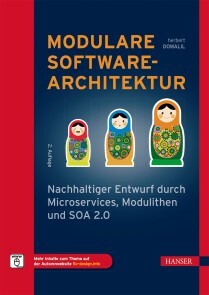
Modulare Softwarearchitektur
MODULARE SOFTWAREARCHITEKTUR //- Lesen Sie Grundlegendes über die neue Schule der Softwarearchitektur- Nutzen Sie die konkreten Empfehlungen zum Bau langlebiger, weil modularer Enterprise- bzw. Makro-Architektur- Erfahren Sie, wie Sie Schritt für Schritt Ihr System zu einer modularen Architektur hin umbauen können- Lernen Sie die Prinzipien nachhaltiger und modularer Architektur anhand eines 16-teiligen Code-Tutorials kennen- Das 5C-Modell stellt eine Alternative zum Microservice-Hype dar und ist auch bei komplexen Architekturen anwendbarDie Softwarekrise hält die IT-Branche seit den 1960er-Jahren in Atem. Damals wurde heftig darüber debattiert, ob man nicht lieber auf die Verwendung des GOTO-Schlüsselworts und x-beliebiger Sprünge im Code verzichten sollte. Mit der zunehmenden Leistungsfähigkeit der Hardware wurde auch die darauf laufende Software immer komplexer, und man suchte nach Rezepten, um deren Wartbarkeit zu verbessern.Diese Entwicklung ist bis heute nicht abgeschlossen. Die digitale Transformation der Gesellschaft bringt für bestehende IT-Landschaften neue Herausforderungen mit sich. Enterprise-Architekturen, die sich oft durch ungeplant entstandene Komplexität auszeichnen, sollen plötzlich weiterwachsen. Da die klassischen Muster der Enterprise-Architektur dabei oft versagen, werden zurzeit neue Prinzipien und Muster entwickelt, welche genau diese Komplexität in geordnete Bahnen lenken sollen.Dieses Buch behandelt diese Themen und stellt den Bezug zu den guten alten Mustern und Prinzipien des Softwaredesigns her.AUS DEM INHALT //Über Softwarearchitektur/Migration von Legacy-Systemen/Domain Driven Design/Muster modularer Mikro-Architektur/Muster modularer Makro-Architektur bzw. langlebige Enterprise-Architektur/Monolithen, Microservices und Alternativen/Antipattern und Pitfalls modularer Architektur und wie man diese vermeidet/Umsetzung modularer Architektur in komplexen Organisationen Herbert Dowalil ist seit vielen Jahren als Softwareentwickler, -architekt, Trainer und inzwischen auch als Autor tätig. Dabei beschäftigt er sich mit der Frage, wie man durch den Entwurf effizienter Strukturen langfristig Produktivität und Flexibilität sicherstellt. Sein Hauptaugenmerk gilt dabei einer der Schwachstellen der IT-Branche, nämlich der modularen Enterprise- bzw. Makro-Architektur.

Visual Studio Extensibility Development
Learn the extensibility model of Visual Studio to enhance the Visual Studio integrated development environment (IDE). This book will cover every aspect, starting from developing an extension to publishing it and making it available to the end user.The book begins with an introduction to the basic concepts of Visual Studio including data structures and design patterns and moves forward with the fundamentals of the VS extensibility model. Here you will learn how to work on Roslyn - the .NET compiler platform - and load extensions in VS. Next, you will go through the extensibility model and see how various extensions, such as menus, commands, and tool windows, can be plugged into VS. Moving forward, you’ll cover developing VS extensions and configuring them, along with demonstrations on customizing extension by developing option pages. Further, you will learn to create custom code snippets and use a debugger visualizer. Next, you will go through creation of project and item templates including deployment of VS extensions using continuous integration (CI). Finally, you will learn tips and tricks for Visual Studio and its extensibility and integration with Azure DevOps.After reading Visual Studio Extensibility Development you will be able to develop, deploy, and customize extensions in Visual Studio IDE.WHAT YOU WILL LEARN* Discover the Visual Studio extensibility and automation model* Code Visual Studio extensions from scratch* Customize extensions by developing a tools option page for them* Create project templates, item templates, and code snippets.* Work with code generation using T4 templates* Code analysis and refactoring using Roslyn analyzers* Create and deploy a private extension gallery and upload the extensions* Upload a VS extension using CI* Ship your extension to Visual Studio MarketplaceWHO THIS BOOK IS FORDevelopers in Visual Studio IDE covering C#, Visual Basic (VB), JavaScript, and CSS.RISHABH VERMA is a Microsoft certified professional and works at Microsoft as a senior development consultant, helping the customers to design, develop, and deploy enterprise-level applications. An electronic engineer by education, he has 12+ years of hardcore development experience on the .NET technology stack. He is passionate about creating tools, Visual Studio extensions, and utilities to increase developer productivity. His interests are .NET Compiler Platform (Roslyn), Visual Studio extensibility, code generation and .NET Core. He is a member of .NET foundation (https://www.dotnetfoundation.org). He occasionally blogs at https://rishabhverma.net/. He has authored books on .NET Core 2.0 and .NET Core 3.1 prior to this title.His twitter id is @VermaRishabh and his linkedIn page is https://www.linkedin.com/in/rishabhverma/CHAPTER 1: BASICS PRIMERCHAPTER GOAL: The objective of this chapter is to introduce the basic concepts to the reader that would be required through-out this book, so that he gets comfortable in this learning journey.NO OF PAGES :50-60SUB -TOPICS1. What is a compiler?2. What is an SDK (Software Development Kit)?3. Recap of Tree Data structure1. Tree traversal,2. Abstract Syntax trees4. MEF (Managed Extensibility Framework) Basics.5. Visual Studio & its history6. XML & JSON7. Serialization & Deserialization.8. Revisiting Visitor, Abstract Factory and Factory design patterns.9. MSBuild basics10. Async-await.CHAPTER 2: GETTING STARTEDCHAPTER GOAL: With the fundamentals strongly in place, we are now good to get started with Visual Studio (VS) Extensibility model. We will do our setup in this chapter. This chapter would introduce the VS Extensibility, Roslyn to the reader. The reader would also learn to write and debug a VS extension.NO OF PAGES: 40SUB - TOPICS1. Prerequisites and installation of VS2. Anatomy of a VSIX3. How Visual Studio discovers and loads extensions.4. VSPackage5. Async Loading6. Writing your first simple templatized Visual Studio Extension.7. Roslyn - .NET Compiler platform fundamentalsCHAPTER 3: EXTENDING VISUAL STUDIOCHAPTER GOAL: This chapter would introduce the extensibility model and how various extensions can be plugged in VSas menus, commands, tool window, code window, solution explorer etcNO OF PAGES: 40-50SUB - TOPICS:1. The Visual Studio Extensibility model2. Tool Window extension3. Menus & commands,4. Code Window extension5. Solution explorer item extensionCHAPTER 4: DEVELOPING REAL WORLD EXTENSIONS - ICHAPTER GOAL: This chapter dives into developing useful real-world VS Extensions and shows how they can be made configurable by customizing UI and options page.We would also learn how to write to output window and manipulate documents and projects in this chapter.NO OF PAGES: 40-50SUB - TOPICS:1. VS Extension to search on MSDN/Bing/Google.2. VS Extension to generate HTTP Client proxy class for HTTP Web API using T4 templates.3. VS Extension to generate test data.4. Customizing extension by developing Tools option page.5. Customizing UI of extension.CHAPTER 5: DEVELOPING REAL WORLD EXTENSIONS - IICHAPTER GOAL: This chapter is the continuation of last chapter and continues the development of useful real-world VS extensions but this time using the .NET Compiler platform – Roslyn.NO OF PAGES: 40-50SUB - TOPICS:1. Rewrite VS Extension to generate HTTP Client proxy class for HTTP Web API using Roslyn.2. Developing a custom code analysis Visual Studio Extension.3. Developing a light bulb style code refactoring.4. Developing Roslyn based extension to generate unit tests using T4 template.CHAPTER 6: DO MORE WITH VS SDKCHAPTER GOAL: This chapter introduces the reader with famous Visual Studio Isolated and integrated Shell to develop applications that looks like Visual Studio and also develops handy productivity boosters like custom code snippets, debugger visualizers, modifying intellisense, debugging experience for developersNO OF PAGES: 40-50SUB - TOPICS:1. VS Isolated and Integrated Shell2. Developing applications that look like Visual Studio.3. Extending the debugger.4. Create custom code snippets.5. Create Debugger Visualizer for view data while debugging.6. Modifying intellisense.CHAPTER 7: TEMPLATES, DEBUGGING VS EXTENSIONSCHAPTER GOAL: This chapter explains how to create project and item templates. The chapter also shows a sample code lens extension then dives into debugging the extensionNO OF PAGES: 40-50SUB - TOPICS:6. Code lens sample extension.7. Creating Project and Item template.8. Debugging VS Extensions.CHAPTER 8: DEPLOYING VS EXTENSIONSCHAPTER GOAL: This chapter explains how to deploy VS extensions using continuous integration (CI). The chapter also explains how the extension can be made available to the world by uploading in marketplace. We also discuss how to make a private extension gallery and host your extension there.NO OF PAGES: 40-50SUB - TOPICS:9. Deploying a VS Extension using CI.10. Creating a private extension gallery/ Atom feed11. Hosting extension in private gallery.12. Sharing extension with the world using marketplace.CHAPTER 9: TIPS, TRICKS, EXTENSIONS AND WORDSCHAPTER GOAL: This chapter discusses few of the coolest tips and tricks for Visual Studio and its extensibility and shares few highly useful extensions. The chapter and book conclude with closing remarks on extensibility of Visual Studio Code and integration with Visual Studio Team Services (VSTS) or Azure DevOps.NO OF PAGES: 30-40SUB - TOPICS:1. Cool Tips and tricks2. Useful Extensions for C#, VB, JS, TS and CSS developers.3. A word on Visual Studio Code Extensibility4. Integration with VSTS or Azure DevOpsUseful Resources – 1 pageMore Reading – 1 pageCode Samples – Link to code samples from GitHub.
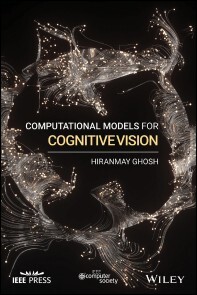
Computational Models for Cognitive Vision
LEARN HOW TO APPLY COGNITIVE PRINCIPLES TO THE PROBLEMS OF COMPUTER VISIONComputational Models for Cognitive Vision formulates the computational models for the cognitive principles found in biological vision, and applies those models to computer vision tasks. Such principles include perceptual grouping, attention, visual quality and aesthetics, knowledge-based interpretation and learning, to name a few. The author’s ultimate goal is to provide a framework for creation of a machine vision system with the capability and versatility of the human vision.Written by Dr. Hiranmay Ghosh, the book takes readers through the basic principles and the computational models for cognitive vision, Bayesian reasoning for perception and cognition, and other related topics, before establishing the relationship of cognitive vision with the multi-disciplinary field broadly referred to as “artificial intelligence”. The principles are illustrated with diverse application examples in computer vision, such as computational photography, digital heritage and social robots. The author concludes with suggestions for future research and salient observations about the state of the field of cognitive vision.Other topics covered in the book include:· knowledge representation techniques· evolution of cognitive architectures· deep learning approaches for visual cognitionUndergraduate students, graduate students, engineers, and researchers interested in cognitive vision will consider this an indispensable and practical resource in the development and study of computer vision.HIRANMAY GHOSH, PHD, was a Research Advisor to TATA Consultancy Services and an Adjunct Faculty Member with the National Institute of Technology Karnataka. During his long professional career, he has served several reputed organizations, including CMC, ECIL and C-DOT and TCS. He was an Adjunct Faculty Member with IIT Delhi, and with the National Institute of Technology Karnataka. He is a Senior Member of IEEE, Life Member of IUPRAI, and a Member of ACM. About the Author ixAcknowledgments xiPreface xiiiAcronyms xv1 INTRODUCTION 11.1 What Is Cognitive Vision 21.2 Computational Approaches for Cognitive Vision 31.3 A Brief Review of Human Vision System 41.4 Perception and Cognition 61.5 Organization of the Book 72 EARLY VISION92.1 Feature Integration Theory 92.2 Structure of Human Eye 102.3 Lateral Inhibition 132.4 Convolution: Detection of Edges and Orientations 142.5 Color and Texture Perception 172.6 Motion Perception 192.6.1 Intensity-Based Approach 192.6.2 Token-Based Approach 202.7 Peripheral Vision 212.8 Conclusion 243 BAYESIAN REASONING FOR PERCEPTION AND COGNITION 253.1 Reasoning Paradigms 263.2 Natural Scene Statistics 273.3 Bayesian Framework of Reasoning 283.4 Bayesian Networks 323.5 Dynamic Bayesian Networks 343.6 Parameter Estimation 363.7 On Complexity of Models and Bayesian Inference 383.8 Hierarchical Bayesian Models 393.9 Inductive Reasoning with Bayesian Framework 413.9.1 Inductive Generalization 413.9.2 Taxonomy Learning 453.9.3 Feature Selection 463.10 Conclusion 474 LATE VISION 514.1 Stereopsis and Depth Perception 514.2 Perception of Visual Quality 534.3 Perceptual Grouping 554.4 Foreground–Background Separation 594.5 Multi-stability 604.6 Object Recognition 614.6.1 In-Context Object Recognition 624.6.2 Synthesis of Bottom-Up and Top-Down Knowledge 644.6.3 Hierarchical Modeling 654.6.4 One-Shot Learning 664.7 Visual Aesthetics 674.8 Conclusion 695 VISUAL ATTENTION 715.1 Modeling of Visual Attention 725.2 Models for Visual Attention 755.2.1 Cognitive Models 755.2.2 Information-Theoretic Models 775.2.3 Bayesian Models 785.2.4 Context-Based Models 795.2.5 Object-Based Models 815.3 Evaluation 825.4 Conclusion 846 Cognitive Architectures 876.1 Cognitive Modeling 886.1.1 Paradigms for Modeling Cognition 886.1.2 Levels of Abstraction 916.2 Desiderata for Cognitive Architectures 926.3 Memory Architecture 946.4 Taxonomies of Cognitive Architectures 976.5 Review of Cognitive Architectures 996.5.1 STAR: Selective Tuning Attentive Reference 1006.5.2 LIDA: Learning Intelligent Distribution Agent 1026.6 Biologically Inspired Cognitive Architectures 1056.7 Conclusions 1067 KNOWLEDGE REPRESENTATION FOR COGNITIVE VISION 1097.1 Classicist Approach to Knowledge Representation 1097.1.1 First Order Logic 1117.1.2 Semantic Networks 1137.1.3 Frame-Based Representation 1147.2 Symbol Grounding Problem 1177.3 Perceptual Knowledge 1187.3.1 Representing Perceptual Knowledge 1197.3.2 Structural Description of Scenes 1207.3.3 Qualitative Spatial and Temporal Relations 1227.3.4 Inexact Spatiotemporal Relations 1247.4 Unifying Conceptual and Perceptual Knowledge 1277.5 Knowledge-Based Visual Data Processing 1287.6 Conclusion 1298 DEEP LEARNING FOR VISUAL COGNITION 1318.1 A Brief Introduction to Deep Neural Networks 1328.1.1 Fully Connected Networks 1328.1.2 Convolutional Neural Networks 1348.1.3 Recurrent Neural Networks 1378.1.4 Siamese Networks 1408.1.5 Graph Neural Networks 1408.2 Modes of Learning with DNN 1428.2.1 Supervised Learning 1428.2.1.1 Image Segmentation 1428.2.1.2 Object Detection 1448.2.2 Unsupervised Learning with Generative Networks 1448.2.3 Meta-Learning: Learning to Learn 1468.2.3.1 Reinforcement Learning 1488.2.3.2 One-Shot and Few-Shot Learning 1488.2.3.3 Zero-Shot Learning 1508.2.3.4 Incremental Learning 1508.2.4 Multi-task Learning 1528.3 Visual Attention 1548.3.1 Recurrent Attention Models 1558.3.2 Recurrent Attention Model for Video 1588.4 Bayesian Inferencing with Neural Networks 1598.5 Conclusion 1609 APPLICATIONS OF VISUAL COGNITION 1639.1 Computational Photography 1639.1.1 Color Enhancement 1649.1.2 Intelligent Cropping 1669.1.3 Face Beautification 1679.2 Digital Heritage 1689.2.1 Digital Restoration of Images 1689.2.2 Curating Dance Archives 1709.3 Social Robots 1729.3.1 Dynamic and Shared Spaces 1739.3.2 Recognition of Visual Cues 1749.3.3 Attention to Socially Relevant Signals 1759.4 Content Re-purposing 1779.5 Conclusion 17910 CONCLUSION 18110.1 “What Is Cognitive Vision” Revisited 18110.2 Divergence of Approaches 18310.3 Convergence on the Anvil? 185References 187Index 215

Practical R 4
Get started with an accelerated introduction to the R ecosystem, programming language, and tools including R script and RStudio. Utilizing many examples and projects, this book teaches you how to get data into R and how to work with that data using R. Once grounded in the fundamentals, the rest of Practical R 4 dives into specific projects and examples starting with running and analyzing a survey using R and LimeSurvey. Next, you'll carry out advanced statistical analysis using R and MouselabWeb. Then, you’ll see how R can work for you without statistics, including how R can be used to automate data formatting, manipulation, reporting, and custom functions.The final part of this book discusses using R on a server; you’ll build a script with R that can run an RStudio Server and monitor a report source for changes to alert the user when something has changed. This project includes both regular email alerting and push notification. And, finally, you’ll use R to create a customized daily rundown report of a person's most important information such as a weather report, daily calendar, to-do's and more. This demonstrates how to automate such a process so that every morning, the user navigates to the same web page and gets the updated report.WHAT YOU WILL LEARN* Set up and run an R script, including installation on a new machine and downloading and configuring R* Turn any machine into a powerful data analytics platform accessible from anywhere with RStudio Server* Write basic R scripts and modify existing scripts to suit your own needs* Create basic HTML reports in R, inserting information as needed* Build a basic R package and distribute itWHO THIS BOOK IS FORSome prior exposure to statistics, programming, and maybe SAS is recommended but not required.JON WESTFALL is an award-winning professor, published author, and practicing cognitive scientist. He teaches a variety of courses in psychology, from introduction to psychology to upper-level seminars. His current research focuses on the variables that influence economic and consumer finance decisions, and the retention of college students. With applications to both psychology and marketing, his work finds an intersection between basic and applied science. His current appointment is as an assistant professor of psychology, coordinator of the first year seminar program, and coordinator of the Okra Scholars program at Delta State University. Previously he was a visiting assistant professor at Centenary College of Louisiana, and the associate director for research and technology at the Center for Decision Sciences, a center within Columbia Business School at Columbia University in New York City. He now maintains a role with Columbia as a research affiliate and technology consultant.In addition to his research, Dr. Westfall also has career ties in information technology, where he has worked as a consultant since 1997, founding his own firm, Bug Jr. Systems. As a consultant he has developed custom software solutions (including native Windows 32 applications, Windows .NET applications, Windows Phone 7 and Android mobile applications, as well as ASP, ASP.NET, and PHP web applications). He has also served as a senior network and systems architect and administrator (on both Windows and Unix networks, and hybrids) and has also been recognized as a Microsoft Most Valuable Professional (MVP) 2008 – 2012. He has authored several books, and presented at academic as well as technology conferences and gatherings.Chapter 1: Getting Up and Running with RChapter 2: Getting Data into RChapter 3: Project 1: Launching, Analyzing, and Reporting a Survey using R and LimeSurveyChapter 4: Project 2: Advanced Statistical Analysis using R and Mouselab WebChapter 5: R in Everyday LifeChapter 6: Project 3: The R Form MailerChapter 7: Project 4: The R Powered PresentationChapter 8: R AnywhereChapter 9: Project 5: The Change Alert!Chapter 10: Project 6: The R Personal AssistantDETAILED VIEW BELOWChapter 1: Getting Up and Running with RChapter Goal:• Explain what R is, and what R isn’t• Explain the R landscape – it’s open source nature and the various ways people use it.• Explain how R is installed, what types of systems it runs on, and how the user interacts with it.• Explain the basic R script, running basic commands in R (e.g., a “Hello World”) and basic computations.Chapter 2: Feed the Beast: Getting Data into R• Explain the different types of data that R can work with, and how that data is stored.• Explain the basics of connecting R to flat files, database files, database servers, and published data on the internet.• Give examples for downloading data directly from Google Sheets, websites, and more directly from R.• Give examples of basic data scraping with R.• Explain writing of data objects to native RData format as well as other formats for interchangeable use.Chapter 3: Recipe 1: Launching, Analyzing, and Reporting a Survey using R and LimeSurvey• Explain a real-world scenario: A survey project applicable to market research.• Discuss an open-source tool, LimeSurvey, that can be used to create a survey, collect responses, and download those responses into R.• Bring the data into R and run basic summary statistics on the data.• Take those analyses farther into inferential statistics (Linear Regression).Chapter 4: Recipe 2: Advanced Statistical Analysis using R and Mouselab Web• A deeper data scenario than Chapter 3 discussing how Mouselab Web (an open source tool) can be used to track how people view products and services and make decisions.• Introduces advanced statistical design using Linear Mixed-methods regressions.• Also introduces the idea of R packages, and the perils of using packages (e.g., concerns over future-proofing). This chapter is a very deep concept that will be presented accessibly, so that readers learn the takeaways regarding how R works and how to futureproof your R projects, but also get a bit of a unique project applicable to psychology and market research.Chapter 5: R in Everyday Life• Perhaps you’re not a statistician, you just want R to be useful to you in your job. This chapter discusses how R can be used to automate…o Data formattingo Data manipulationo Data reporting• This chapter also talks about how users can write custom functions in R to speed up their workflows.• Finally this chapter talks about how to export results from R into common desktop software such as Microsoft Office.Chapter 6: Recipe 3: The R Form Mailer• Mail Merge is a great tool in Microsoft Office, but it’s entirely graphically driven – point and click, drag and drop. What if you could script it?• This recipe discusses scripting a Mail Merge type activity – sending custom emails with report information directly from R through an email server.• Along the way we learn a bit more about data manipulation by taking long format data (sales figures) and calculating salesmen commissions, then providing a report to each salesperson in their email.Chapter 7: Recipe 4: The R Powered Presentation• Discusses a real-world scenario where a presentation must be given that includes real-time data collection.• Participants during the presentation can take a quick survey (Using Google Forms), which will then be analyzed during the presentation and reported by the speaker.• Discusses how R can create and export results nearly instantly, right on a speaker’s laptop during the presentation.Chapter 8: R Anywhere• Final part of the book discusses using R on a server for always-on analytics, using open source software (RStudio Server).• The computing requirements for such a system, and how one sets it up either on a spare machine or on a dedicated Virtual Private Server.• Potential uses for such a setup, from analysis from devices that don’t support R (e.g., an iPad), or analysis for long-running tasks.Chapter 9: Recipe 5: The Change Alert!• Often work life requires one to check reports or other items to see if something has changed – perhaps a new person has been added to a team, or a new student added to a class.• This recipe demonstrates how to build a script with R that can run on an RStudio Server and monitor a report source for changes, and alert the user when something has changed.• This recipe demonstrates not only regular email alerting, but also push notification alerting through the service Pushover, an ultra low-cost ($4.99, one time) option for customized push notifications.Chapter 10: Recipe 6: The R Personal Assistant• Demonstrates how to use R to create a customized daily rundown report of a person’s most important information, such as the weather report, daily calendar, to-dos, and more.• Demonstrates how to automate such a process so that every morning the user navigates to the same webpage and gets the updated report.• Demonstrates how to build a simple skill in Amazon Alexa that will read the report daily as the user’s command.

Automation and Collaborative Robotics
Understand the current and future research into technologies that underpin the increasing capabilities of automation technologies and their impact on the working world of the future.Rapid advances in automation and robotics technologies are often reported in the trade and general media, often relying on scary headlines such as “Jobs Lost to Robots.” It is certainly true that work will change with the advent of smarter and faster automated workers; however, the scope and scale of the changes is still unknown. Automation may seem to be here already, but we are only at the early stages.AUTOMATION AND COLLABORATIVE ROBOTICS explores the output of current research projects that are improving the building blocks of an automated world. Research into collaborative robotics (cobotics) is merging digital, audio, and visual data to generate a commonly held view between cobots and their human collaborators. Low-power machine learning at the edge of the network can deliver decision making on cobots or to their manipulations. Topics covered in this book include:* Robotic process automation, chatbots, and their impact in the near future* The hype of automation and headlines leading to concerns over the future of work* Component technologies that are still in the research labs* Foundational technologies and collaboration that will enable many tasks to be automated with human workers being re-skilled and displaced rather than replacedWHAT YOU WILL LEARN* Be aware of the technologies currently being researched to improve or deliver automation* Understand the impact of robotics, other automation technologies, and the impact of AI on automation* Get an idea of how far we are from implementation of an automated future* Know what work will look like in the future with the deployment of these technologiesWHO THIS BOOK IS FORTechnical and business managers interested in the future of automation and robotics, and the impact it will have on their organizations, customers, and the business world in generalPETER MATTHEWS, based in the UK, is a writer and research scientist. Peter has more than 40 years of IT experience ranging from mainframe/Unix programming, development and relational databases to secure cloud computing, DevOps and cobotics. Peter’s research work has been concerned with leading edge technology for a major proportion of that time. Projects have included machine learning algorithms for soccer clubs, multi-level secure database systems and object-oriented application infrastructures. He has also led groups investigating the influence of macro social, political and economic trends on future technology.Peter’s current research is focused on automation and robotics. Past research has covered Internet of Things, cloud computing, data curation, smart buildings and cobotics. Peter has been the CA project lead on cobotics under the auspices of the Centre for Visual and Decision Informatics, a USA National Science Foundation initiative.Peter has authored and co-authored academic papers including “Data Is the New Currency” in the proceedings of New Security Paradigms Workshop. Other writing includes books on “Ingres Visual Programming”, co-authoring of “The Innovative CIO: How IT Leaders Can Drive Business Innovation” and co-editor/contributor to “MOdel-Driven Approach for design and execution of applications on multiple Clouds”STEVEN GREENSPAN, PhD is an innovator of information and communications technology (ICT), with over 50 publications in peer-reviewed journals and 79 US patents, including the first patent to describe two-factor and two-device authentication and authorization. This invention is widely used throughout the world to ensure secure access to web services and it showcased the value of keeping the human-in-the-loop. His current research interests include user experience and collaboration in complex systems, differential privacy, ethical decision-making, and innovative approaches for integrating scientific research into socially responsible applications and services. Outside of his professional work, he devotes much of his time to community groups that focus on environmental, economic and social justice. He also serves on the advisory boards of the AABGU/ Philadelphia Academic Bridge, and several startups.Steve has a PhD in Cognitive Psychology from the State University of New York at Buffalo and conducted postdoctoral research at the University of California at San Diego and Indiana University. During the writing of this book, he was a Visiting Scholar at the University of Virginia. Previously, he was a Research Scientist and Vice President of Strategic Research at CA Technologies managing an international team of information technology scientists. He has also consulted to Avaya on the UX design of mobile phones, and was a Distinguished Member of the Technical Staff at AT&T Bell Laboratories.

Beginning Unity Android Game Development
Master the art of programming games for Android using the Unity3D game engine. This book will help you understand basic concepts of game development in Unity. By the end of Beginning Unity Android Game Development, you will have the knowledge to confidently build an Android game.The book starts by explaining simple programming concepts to make beginners comfortable with the jargon. You will then learn to navigate around the Unity interface and use basic tools (hand, move, rotate, scale, and rect). You will also be acquainted with the creation of basic 3D objects in the game while understanding the purpose of several of Unity’s windows.In the last chapters, you will learn to create a simple game for Android using the concepts studied in the previous chapters. Scripts will be written to handle the behaviors of the player and enemies as well as to handle other aspects of the game. The author shares tips along the way to help improve in-game performance, such as switching to the universal rendering pipeline when targeting mobile platforms.At the end of the book, you will have a solid knowledge in making basic Android games that can be upgraded later to make more complex games.WHAT YOU WILL LEARN* Explore basic Unity and C# programming concepts and scripting for Android games* Navigate around the Unity interface and use its basic tools* Make the most of popular components and features of Unity* Write an Android game with optimizationsWHO THIS BOOK IS FORAbsolute beginners learning to program games for the Android platform using Unity3D. Basic knowledge of programming would be beneficial for the reader but is not required.Kishan started out by learning programming at a young age with Python. Finding a bigger interest in game development, he has been developing games using the Unity game engine for over four years now. He is also a Linux lover and has worked on his own distribution. Currently, he resides in his home country, Mauritius, where he often participates in major technical events and hackathons with Cyberstorm.mu while developing quality games and improving his portfolio with new skills.CHAPTER 1: PROGRAMMING CONCEPTSChapter Goal: This chapter is intended to make the reader feel comfortable with basic programming concepts and operations. It will make further topics about game dev scripting more accessible to those with no past programming experience.Sub -Topics:1. Fundamentals of programming2. Variables, constants, and types3. Arithmetic operations4. Boolean expressions5. Selection6. Iteration7. FunctionsCHAPTER 2: INTRODUCTION TO UNITYChapter Goal: This chapter provides an introduction to the Unity game engine and IDE. It shows how to navigate around, create basic objects and using transform tools to move, scale and rotate. The purpose of the Scene, Game, Hierarchy, Inspector, Project and Asset Store windows are also discussed.Sub -Topics:1. Creating a Unity account2. Downloading Unity and required add-ons3. Scene view4. Game view5. Hierarchy window6. Inspector window7. Using the transform tools8. Project window9. Asset store windowCHAPTER 3: GAMEOBJECTS, PREFABS, MATERIALS, AND COMPONENTSChapter Goal: We learn more about GameObjects, the benefits of making prefabs, and the use of several components. A small overview of the need to use materials is also provided.Sub -Topics:1. What are GameObjects and Prefabs2. Transform component3. Camera component4. Lighting component5. Renderer component6. Collider component7. Rigidbody component8. Audio source component9. Particle emitter component10. Trail renderer component11. MaterialsCHAPTER 4: USER INTERFACEChapter Goal: The Canvas component is introduced and the reader will learn about making a game more interactive using touch input.Sub -Topics:1. The Canvas component2. Text3. Image/RawImage4. Slider5. Input field6. Button7. Introduction to input axesCHAPTER 5: BUILDING OUR FIRST ANDROID GAME - SPHERE SHOOTERChapter Goal: After creating a new project, we learn about switching to a more lightweight rendering pipeline. The reader will learn how to create the game environment, first enemy, player tank and bullets. Scripts will also need to be written to handle player movement, shooting, enemy instantiation and behavior.Sub -Topics:1. The lightweight rendering pipeline2. Creating game terrain and adjusting lighting3. Making prefabs for the player, first enemy, and bullets4. Player movement5. Player shooting6. Spawning enemies7. Enemy movement8. Enemy destruction9. Game overCHAPTER 6: IMPROVING THE GAME - SPHERE SHOOTERChapter Goal: We will learn how to make the game more interesting by creating simple but elegant canvas elements, introduce concepts such as health and score, make two more types of enemies, introduce pickups, add more sound effects to the game along with particle systems, implement mobile controls and exporting a build ready to be played.Sub -Topics1. Fancy Menu when starting the game and dying2. Adding the concept of score3. Adding the concept of health4. Implementing particle systems5. Making a new faster enemy6. Making a new bigger enemy7. Creating a health pickup8. Adding sound effects9. Mobile joysticks10. Editing player settings and exporting11. What next?

Practical hapi
Understand the core concepts of hapi and learn to build RESTful APIs that are quick, useful, and productive. Created by the mobile team at Walmart Labs, hapi is a light Node.js framework that is perfect for building API servers, websites, and HTTP proxy applications.With this quick guide, you'll learn the basics of hapi and use those skills to build an application and a REST API with MySQL. You'll then wrap up with a Capstone project of industry relevance, understanding solution design, and how hapi fits into industry relevant projects for data driven apps.Used by companies such as PayPal and Mozilla, hapi is a key framework for anyone serious about enterprise web development. Practical hapi will ensure you focus your time on critical project tasks instead of building infrastructure.WHAT YOU'LL LEARN* Utilize the power of RESTful APIs and Node.js* Build your first hapi application based on its core concepts* Work with promises and asynchronous programming effectively* Use Sequelize for database connectivityWHO THIS BOOK IS FORAnyone with basic knowledge of JavaScript or Node.js who wants to learn to work with hapi. A primer for the relevant Node.js and JavaScript is provided so those with general programming experience can also use this book.KANIKA SUD has been working on the web for over 10 years now. Her work spans enterprise CMSes in JAVA, backend technologies in the LAMP stack and MEAN stack. She has also worked on open source e-commerce CMSes and UX strategy.1. Understanding RESTful APIs2. Beginning Node.js3. Asynchronous JavaScript4. Your First hapi Application5. Building on the Basics: Validation, Authentication, and Plugins6. Database Connectivity7. Capstone Project- REST API for Polling App8. Appendix

Webpack for Beginners
Learn how to use Webpack from installation to configuration without the hassle of complex examples. Webpack has become one of the most popular module bundlers in recent years; it’s widely used by developers, companies, and organizations of all sizes, and many web frameworks use it for the management of their assets. If you are serious about web development these days then you must learn and understand Webpack.You will begin by installing and configuring Webpack, and learn how to write modular code. You’ll then move onto understanding the usage of loaders and plugins with practical use cases, how to make aliases and resolve folders, cache busting, and installing third-party libraries such as jQuery, Bootstrap, QuillJS, and more. By the end of this book you will feel confident and ready to start using Webpack in your projects.Free from complex examples and intended to be as easy-to-follow as possible, this book is ideal for anyone who knows basic HTML, JavaScript, and how to work on the command line. Upgrade your developer skillset using Webpack for Beginners today.WHAT YOU WILL LEARN* Install and configure Webpack beyond the default settings* Efficiently work with plugins and loaders* Optimize Webpack for production* Use instant refreshing with the Webpack dev server and hot module replacement* Explore how to install some common JavaScript librariesWHO THIS BOOK IS FORThis book is conceived for beginners and newcomers to Webpack, and assumes you have some very basic knowledge in JavaScript, HTML and working on the command line. This step-by-step guide will help you understand and clarify everything you need to know to bundle your JavaScript hassle-free.Mohamed Bouzid has over 11 years' experience in technology and web development. From humble beginnings as a global freelancer, he has transitioned to the entrepreneurial world making products that people love and use every day. When not coding he can be found at the gym or at the coffee shop where he talks with friends about life, startups, and tech. 1. Webpack: First Steps2. Write Modular Code3. Loaders and Plugins4. Cache5. Resolving Folders6. Webpack DevServer7. Installing Third Party Libraries8. Conclusion

Dynamics 365 Essentials
Discover what the Common Data Service is and how Dynamics 365 fits in the Power Platform. Learn how to set up core Dynamics 365 Customer Engagement functionality and build more customized processes using model-driven apps. This book covers the Dynamics 365 Online system for sales, customer service, marketing, field service, and Outlook integration.In this second edition, core platform changes from the Common Data Service are included and you will know what this means for Dynamics 365. Updated features include processes, the latest form and view designer, and Business Process Flows. The book also includes new chapters on portals and power virtual agents.After reading DYNAMICS 365 ESSENTIALS, you will have mastered the core functionality available in Dynamics 365 CE and model-driven applications, and will be able to set it up for a range of different business scenarios.WHAT YOU WILL LEARN* Set up the core standard features of Dynamics 365 CE* Create model-driven apps within Dynamics 365 customized to specific business needs* Customize Dynamics 365 CE and leverage process automation functionality through the UI* Study the Common Data Service for AppsWHO THIS BOOK IS FORConsultants, business analysts, administrators, and project managers who are looking for more information about Dynamics 365SARAH CRITCHLEY is a Microsoft Dynamics Business Applications MVP, published author, and an experienced technical consultant who has worked on numerous business system implementations, now working as Lead Architect for Customer Service at Hitachi Solutions NA. She manages the strategy around all customer service technology, including Dynamics 365 Customer Service, Omni Channel Engagement, Forms Pro, Power Virtual Agent, and more. Having led software projects in numerous industries, including healthcare and the public sector, she works across all areas of the project life cycle: demonstrations, design, architecture, documentation, customization, and development. Sarah is heavily involved in community projects where she led and grew the Dynamics 365 & Power Platform UG in the UK for over three years, running technical events, and presenting on a variety of topics at conferences around the world.INTRODUCTION – PAGES - 5CHAPTER GOAL: Discuss what Dynamics 365 CE is, the latest news e.g. version 9.0 and the unified client (mention web refresh) , what the sections will cover. This book will be split into two – ‘Setup’ and ‘Configuration’ – the fact that you should be looking at best ways to do it and less technical debt.PART I - SETUPCHAPTER 1: CUSTOMER MANAGEMENTCHAPTER GOAL: For the reader to learn about how customers are used within Dynamics 365 CE, what they link to and how they operate in the context of Activities and Microsoft OutlookNO OF PAGES 20SUB -TOPICS1. Account and Contacts1. Outlook Integration for Dynamics 365 CE Online2. Timeline and Activity ManagementCHAPTER 2: CUSTOMER SERVICECHAPTER GOAL: For the reader to learn how to deliver a more omni channel customer service experience using the standard features of Dynamics 365 CENO OF PAGES: 40SUB - TOPICS1. Case Management (including Categories)2. Routing and Queues3. Knowledge Base Implementation and Feedback4. Microsoft Portals Configuration for Self-Service5. SLAs and Entitlements6. Social Engagement7. Setting up Cognitive Services for Knowledge Article SuggestionsCHAPTER 3: SALESCHAPTER GOAL: For the reader to learn what the standard sales lifecycle is, common customization points and how-to setup the standard Product CatalogNO OF PAGES : 25SUB - TOPICS:1. Product Catalog Setup and Management2. Leads to Invoice Sales Lifecycle with Product Catalog Integration2. Setting up Product Suggestion Model using Cognitive Services3. Creating Microsoft Word Templates for Quotes, Orders and InvoicesCHAPTER 4: SECURITY MODELCHAPTER GOAL: For readers to understand how the Dynamics 365 CE Security Model works and operatesNO OF PAGES:10SUB - TOPICS:1. 1.Security Model Overview2. Business Units, Teams and Users3. Access Teams4. Hierarchal and Positional SecurityCHAPTER 5: FIELD SERVICE AND RESOURCE SCHEDULINGCHAPTER GOAL: For readers to understand the basics of Field Service and Resourcing Capability which comes as standardNO OF PAGES: 15TBC. This is changing and will need to be updatedCHAPTER 6: MOBILE APPLICATIONCHAPTER GOAL: For readers to learn how to setup Dynamics 365 CE for MobileNO OF PAGES: 201. Setup3. Task Flows4. OfflineCHAPTER 7: REPORTINGCHAPTER GOAL: For readers to understand the capabilities of Dynamics 365 CE ReportingNO OF PAGES: 205. Views6. Dashboards7. Reports in Dynamics 365 Online8. ChartsPART II - CONFIGURATIONCHAPTER 8: PROCESSESCHAPTER GOAL: For readers to understand the capabilities for configuring Dynamics 365 CE through custom processesNO OF PAGES: 301. Business Process Flows2. Business Rules3. Workflows4. ActionsCHAPTER 9: UI CUSTOMIZATION AND RELATIONSHIPSCHAPTER GOAL: For readers to learn how to customize the user interface of Dynamics 365 and the relationshipsNO OF PAGES: 151. Forms2. Relationships3. Custom Controls4. MobileCHAPTER 10: APP FRAMEWORKCHAPTER GOAL: For readers to understand what the App Framework is and how to create ‘Apps’ within Dynamics 365NO OF PAGES: 151. App Framework Overview2. App Designer3. Site Map Designer4. ConfigurationCHAPTER 11: POWER AUTOMATIONCHAPTER GOAL: For readers to understand Microsoft Flow’s basic capabilitiesNO OF PAGES: 20This is changing and will need to be updatedCHAPTER 12: MANAGED VS UNMANAGED SOLUTIONSCHAPTER GOAL: Discussion on solutions design and layeringCHAPTER 13: COMMON DATA SERVICE FOR APPSCHAPTER GOAL: For readers to understand what the Common Data Service is and how to get started with integrations through the UI.NO OF PAGES: 20CHAPTER 14: GETTING STARTED WITH CDS PORTALSCHAPTER GOAL: To connect a portal to a CDS for Apps environment that does not have any Dynamics 365 applications (Sales, Service, or Marketing) preinstalledCHAPTER 15: DYNAMICS 365 FOR MARKETING

Getting Started with Advanced C#
Understand and work with the most important features of advanced C# in different programming environments. This book teaches you the fundamental features of advanced C# and how to incorporate them in different programming techniques using Visual Studio 2019.The book is divided into two parts. Part I covers the fundamentals and essentials of advanced programming in C#. You will be introduced to delegates and events and then move on to lambda expressions. Part II teaches you how to implement these features in different programming techniques, starting with generic programming. After that, you will learn about thread programming and asynchronous programming, to benefit from a multi-threaded environment. Finally, you will learn database programming using ADO.NET to connect to a MySQL database and you will know how to exercise SQL statements and stored procedures through your C# applications.WHAT YOU WILL LEARN* Use delegates, events, and lambda expressions in advanced programming* Make your application flexible by utilizing generics* Create a fast application with multi-threading and asynchronous programming* Work in Visual Studio Community Edition, which is the most common IDE for using C#* Understand alternative implementations along with their pros and consWho This Book Is ForDevelopers and programmers who are already working in C#VASKARAN SARCAR obtained his Master of Engineering in software engineering from Jadavpur University, Kolkata (India) and an MCA from Vidyasagar University, Midnapore (India). He was a National Gate Scholar (2007-2009) and has more than 12 years of experience in education and the IT industry. Vaskaran devoted his early years (2005-2007) to teaching at various engineering colleges and later he joined HP India PPS R&D Hub Bangalore and worked there until August, 2019. At the time of his retirement from the IT industry, he was a senior software engineer and a team lead at HP. To follow his dream and passion, Vaskaran is now a full-time author. Other Apress books by Vaskaran include: Interactive Object-Oriented Programming in Java (second edition), Java Design Patterns (second edition), Design Patterns in C#, Interactive C#, Interactive Object-Oriented Programming in Java, and Java Design Patterns.INTRODUCTIONPART-ICHAPTER 1: DELEGATESSubtopics:· What is a delegate?· How to create and use delegates?· What is a multicast delegate (Chaining of Delegates) and its uses?· Adding and removing methods from a multicast delegate.· Covariance and contravariance in non-generic delegates.CHAPTER 2: EVENTSSubtopics:· Events overview* Creation of events and example of simple events* Subscribing single and multiple events* Passing data to events* Discussion on event accessorsCHAPTER 3: ANONYMOUS FUNCTION AND LAMBDA EXP.Subtopics:· A quick introduction to anonymous function and lambda expression.* Lambda’s with and without parameters* Types and scopes of a lambda expressionExpression syntaxes with exampleCHAPTER 4: LINQSubtopics:* LINQ overview* Different case studies with simple and complicated query expressions* Retrieving customized data from a query expression* Comparing a method call syntax and a query syntax. PART-IICHAPTER 5: GENERIC PROGRAMMINGSubtopics:* Generics overviewComparing a generic program with its counterpart-a non-generic program * Self-referenced generics* Use of ‘default’ in a generic programHow to put constraints in a generic program * Covariance and contravariance in the context of a generic programCHAPTER 6: DATABASE PROGRAMMINGSubtopics:· How to connect to a database· Exercise simple queries to database and retrieving results from the database.CHAPTER 7: THREAD PROGRAMMINGSubtopics:Threads overview * Different case studies with multithreaded programs* Use of ParameterizedThreadStart delegate in a multithreaded environment * Passing multiple parameters to a thread* Discussion on Synchronization and deadlock with examplesCHAPTER 8: ASYNCHRONOUS PROGRAMMINGSubtopics:Brief overview * Different techniques to implement an asynchronous program(e.g. using async/await, thread, thread pool etc)CHAPTER 9: DYNAMIC PROGRAMMINGSubtopics:* DLR overview* Dynamic type and its uses* Dynamic type checking* Runtime look up etc.

Efficient Processing of Deep Neural Networks
This book provides a structured treatment of the key principles and techniques for enabling efficient processing of deep neural networks (DNNs). DNNs are currently widely used for many artificial intelligence (AI) applications, including computer vision, speech recognition, and robotics. While DNNs deliver state-of-the-art accuracy on many AI tasks, it comes at the cost of high computational complexity. Therefore, techniques that enable efficient processing of deep neural networks to improve key metrics—such as energy-efficiency, throughput, and latency—without sacrificing accuracy or increasing hardware costs are critical to enabling the wide deployment of DNNs in AI systems. The book includes background on DNN processing; a description and taxonomy of hardware architectural approaches for designing DNN accelerators; key metrics for evaluating and comparing different designs; features of DNN processing that are amenable to hardware/algorithm co-design to improve energy efficiency and throughput; and opportunities for applying new technologies. Readers will find a structured introduction to the field as well as formalization and organization of key concepts from contemporary work that provide insights that may spark new ideas. * Preface * Acknowledgments * Introduction * Overview of Deep Neural Networks * Key Metrics and Design Objectives * Kernel Computation * Designing DNN Accelerators * Operation Mapping on Specialized Hardware * Reducing Precision * Exploiting Sparsity * Designing Efficient DNN Models * Advanced Technologies * Conclusion * Bibliography * Authors' Biographies

Introducing Disaster Recovery with Microsoft Azure
Explore and learn the key building blocks of Microsoft Azure services and tools for implementing a disaster-recovery solution of any on-premises or cloud-based application. In this book, you will go through various aspects of planning, designing, and configuring a robust recovery solution on Azure.Introducing Disaster Recovery with Microsoft Azure starts by explaining the disaster-recovery landscape and how Azure disaster recovery is different from the traditional approach. You will learn how to leverage Azure site recovery and various Azure-based services to design and implement a recovery solution and much more. Moving forward, you will design and implement various scenarios such as on-premises to Azure, Azure to Azure, and on-premises to on-premises disaster recovery. You will also learn common considerations and technicalities of implementing recovery solutions for various multi-tier, monolithic, and modern micro-services enterprise applications. Finally, you will go through real-life examples, scenarios, and exercises.After reading this book, you will be able to design and implement disaster recovery on Azure in different scenarios. You will also look at a few real-world scenarios that will provide more practical insights.WHAT YOU WILL LEARN* Discover the fundamental building blocks of disaster recovery on Azure* Examine various application-specific considerations for disaster recovery* Leverage various PaaS capabilities to achieve maximum benefit* Design and implement a multi-regional Azure to Azure disaster recovery planWHO THIS BOOK IS FORConsultants, architects, and Azure administrators.BAPI CHAKRABORTY has over 14 years of IT experience in the field of on-premises and cloud infrastructure architecture, solution design, migration, deployment, and support practices. He has worked with customers and partners from various industries and understands their unique demands and requirements to achieve business goals. Bapi holds various industry and product certification including Microsoft, AWS, and IASA.YASHAJEET CHOWDHURY has over 17 years of IT experience in the field of On-premises and Cloud infrastructure architecture, solution design, migration, deployment, and support practices. He has deep technical hands-on experience on various Infrastructure services including Datacenter consolidation/migration, Virtualization, Cloud Computing & other Infrastructure offerings for various small and enterprise customers.Yash holds strong knowledge in Architecting, Designing, Implementation and many professional technical certifications including Microsoft and IBM.CHAPTER 1: DISASTER RECOVERY AND CLOUDCHAPTER GOAL: How cloud has changed the DR landscapeNO OF PAGES 20SUB -TOPICS1. How cloud has changed the DR landscape2. cost, security, storage, archival, maintenance, accessibility3. How traditional DR is different from new age DR4. Why Azure as a DR site5. options, storage, capabilities, pricing, integrated monitoring, tools, platform capability, competitive advantages6. benefits for existing customers, end to end orchestrationCHAPTER 2: INTRODUCING AZURE SITE RECOVERYCHAPTER GOAL: Understand Disaster recovery with Azure site recovery and Azure MigrateNO OF PAGES: 20SUB - TOPICS1. Supported scenarios including migration, supportability matrix,2. DR dependencies on Azure3. Storage, network, etc.4. Concepts of ASR for each scenarionetworking ER, Migration , tools, recovery plans, roles and RBAC, sites, config & process server etc.CHAPTER 3: DESIGNING AND IMPLEMENTING SIMPLE AZURE TO AZURE DR - SCENARIOCHAPTER GOAL: Understand Disaster recovery scenario for Azure to Azure scenarioNO OF PAGES : 20SUB - TOPICS:1. Questions to ask, decisions to make, data to collect, assess, Planning and designing the DR2. High level configurations3. Backup as a strategy4. Design and implement a multi regional A2A DR - scenario (5)5. High level configurations6. Common challenges and how to remediate themCHAPTER 4: ON-PREMISES TO AZURE DRCHAPTER GOAL: Understand Disaster recovery scenario for On-premises to Azure DR scenarioNO OF PAGES: 40SUB - TOPICS:1. Hyper-V (with SCVMM) to Azure2. Hyper-V (without SCVMM) to Azure3. Physical systems to Azure4. Azure Stack to Azure5. Planning6. Designing7. Configuring8. Common challenges and how to remediate themCHAPTER 5: ON-PREMISES TO ON-PREM USING ASRNO OF PAGES: 10CHAPTER GOAL: understand On-premises only scenario1. On-premises to On-prem using ASR2. Planning3. Designing4. Configuring5. Common challenges and how to remediate themCHAPTER 6: APP SPECIFIC DR SCENARIOSNO OF PAGES: 20CHAPTER GOAL: understand application specific DR scenario1. ADDS2. SQL3. Oracle4. RDS etc.CHAPTER 7: AUTOMATION AND MONITORINGNO OF PAGES: 10CHAPTER GOAL: understand automation and monitoring for Disaster recovery solution Common Automation and Monitoring scenarios for DR on AzureCHAPTER 8: SUMMARY, BEST PRACTICES AND EXERCISESNO OF PAGES: 10CHAPTER GOAL: Summary, Best Practices and Exercises for executing Azure Disaster Recovery1. Summary2. Best Practices3. Exercises

Overview of Some Windows and Linux Intrusion Detection Tools
The paper evaluates some the security tools. Top security tools can be found in http://sectools.org/. Most important vulnerabilities in Windows and Linux can be found in www.sans.org/top20/. The paper covers the installation and configuration of the following security tools:LANguardNessusSnortBASEACIDRmanSnortCenter.OSSECSguilI am Dr. Hidaia Mahmoud Mohamed Alassouli. I completed my PhD degree in Electrical Engineering from Czech Technical University by February 2003, and my M. Sc. degree in Electrical Engineering from Bahrain University by June 1995. I completed also one study year of most important courses in telecommunication and computer engineering courses in Islamic university in Gaza. So, I covered most important subjects in Electrical Engineering, Computer Engineering and Telecommunications Engineering during my study. My nationality is Palestinian from gaza strip.I obtained a lot of certified courses in MCSE, SPSS, Cisco (CCNA), A+, Linux.I worked as Electrical, Telecommunicating and Computer Engineer in a lot of institutions. I worked also as a computer networking administrator. I had considerable undergraduate teaching experience in several types of courses in many universities. I handled teaching the most important subjects in Electrical and Telecommunication and Computer Engineering. I could publish a lot of papers a top-tier journals and conference proceedings, besides I published a lot of books in Publishing and Distribution houses.I wrote a lot of important Arabic articles on online news websites. I also have my own magazine website that I publish on it all my articles: http:// www.anticorruption.000space.comMy personal website: www.hidaia-alassouli.000space.comEmail: hidaia_alassouli@hotmail.com
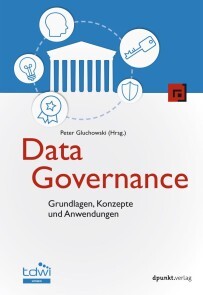
Data Governance
Know-how für eine erfolgreiche Data Governance* umfassendes, anwendungsbezogenes Handbuch* den Fokus nicht nur auf fachliche und technische, sondern auch organisatorische Aspekte legen* mit vielen Fallbeispielen, die Inhalte und Umsetzung, Potenziale und mögliche Fallstricke verdeutlichenVor dem Hintergrund zunehmender regulatorischer Anforderungen sowie wachsender Komplexität der eingesetzten IT-Landschaften erlangt das Themengebiet "Data Governance" immer größere Bedeutung in den Unternehmen.Dieses Buch greift nach einer Einordnung und Abgrenzung des Themas die unterschiedlichen Kernaspekte der Data Governance umfassend auf. Anschließend werden spezielle Facetten und -Toolkategorien mit hoher praktischer Relevanz präsentiert, bevor die Darstellung spezifischer Unternehmenslösungen erfolgt.Prof. Dr. Peter Gluchowski leitet den Lehrstuhl für Wirtschaftsinformatik, insb. Systementwicklung und Anwendungssysteme, an der Technischen Universität in Chemnitz und konzentriert sich dort mit seinen Forschungsaktivitäten auf das Themengebiet Business Intelligence & Analytics. Er beschäftigt sich seit mehr als 25 Jahren mit Fragestellungen, die den praktischen Aufbau dispositiver bzw. analytischer Systeme zur Entscheidungsunterstützung betreffen. Seine Erfahrungen aus unterschiedlichsten Praxisprojekten sind in zahlreichen Veröffentlichungen zu diesem Themenkreis dokumentiert.
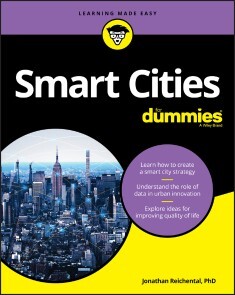
Smart Cities For Dummies
BECOME EMPOWERED TO BUILD AND MAINTAIN SMARTER CITIESAt its core, a smart city is a collection of technological responses to the growing demands, challenges, and complexities of improving the quality of life for billions of people now living in urban centers across the world.The movement to create smarter cities is still in its infancy, but ambitious and creative projects in all types of cities—big and small—around the globe are beginning to make a big difference. New ideas, powered by technology, are positively changing how we move humans and products from one place to another; create and distribute energy; manage waste; combat the climate crisis; build more energy efficient buildings; and improve basic city services through digitalization and the smart use of data.Inside this book you’ll find out:* What it really means to create smarter cities* How our urban environments are being transformed* Big ideas for improving the quality of life for communities* Guidance on how to create a smart city strategy* The essential role of data in building better cities* The major new technologies ready to make a difference in every communitySmart Cities For Dummies will give you the knowledge to understand this important topic in depth and be ready to be an agent of change in your community.DR. JONATHAN REICHENTAL is a multiple-award-winning technology and business leader whose career has spanned both the private and public sectors. He's been a senior software engineering manager, a director of technology innovation, and has served as chief information officer at both O'Reilly Media and the city of Palo Alto, California. He also creates online education for LinkedIn Learning and others. INTRODUCTION 1About This Book 2Foolish Assumptions 3Icons Used in This Book 3How This Book Is Organized 4Part 1: Making Cities Our Home 4Part 2: Building a Smarter City 4Part 3: Using Smart City Technologies 5Part 4: Planning for an Urban Future 5Part 5: The Part of Tens 5Part 6: Appendixes 6Beyond the Book 6Where to Go from Here 7PART 1: MAKING CITIES OUR HOME 9CHAPTER 1: COMPREHENDING THE PAST, PRESENT, AND FUTURE OF CITIES 11Discovering the Origin of Cities 11What is a city? 12Building the first cities 14Comprehending the Impact of the Industrial Revolutions 16The first industrial revolution 16The second industrial revolution 17The third industrial revolution 17The fourth industrial revolution 19Responding to population growth 19Urbanizing the Planet 21Changing landscapes resulting from urbanization 23Building megacities 23CHAPTER 2: DEFINING SMART CITIES 27Identifying Smart Cities 27What a smart city is 28What a smart city is not 32Working with digital infrastructures 34Building the Case for Smarter Cities 35Small cities versus large cities 36Smart nations and other smart things 37United Nations’ Sustainable Development Goals (SDGs) 39Examining Examples of Smart Cities 42Amsterdam, The Netherlands 42Konza Technopolis, Kenya 43CHAPTER 3: RESPONDING TO THE NEEDS AND CHALLENGES OF CITIES 45Mapping the Evolving Needs and Challenges of Cities 45Economic shifts 47Increasingly complex city requirements 47Interdependencies between systems 48Population changes 49Aging infrastructure 52Lifestyle choices 54Environment 55Health 56Water management 58Housing crisis 59Expecting Different Results 62Changing community behaviors and expectations 63Expanding community engagement 64Engaging in participatory design 65Transforming Urbanization 66Transportation 67Energy 70Buildings 71Telecommunications 73Sustainability 74PART 2: BUILDING A SMARTER CITY 77CHAPTER 4: STARTING FROM ZERO 79Establishing a Vision 79Identifying the role of city leadership 80Creating a vision 83Building a Smart City Team 85Identifying team members 85Creating a RACI chart 88Getting the team on the same page 89CHAPTER 5: CREATING A SMART CITY STRATEGY 91Building the Plan 92Developing a strategic plan 93Envisioning the envisioning process 95Converting your vision to action 98Codifying the Plan 100Identifying metrics 100Communicating the plan 102CHAPTER 6: ENABLING A SMART CITY STRATEGY 107Putting the Building Blocks in Place 108Developing policy 108Getting started 110Examining a few examples of smart city policies 111Establishing regulations 112Evaluating funding models 114Handling procurement issues 118Managing projects and carrying out business analyses 121Governing the Strategy 125Defining strategic governance 125Managing projects with project governance 126Regularly updating and reporting 128PART 3: USING SMART CITY TECHNOLOGIES 131CHAPTER 7: EMBRACING URBAN INNOVATION 133Defining Urban Innovation 134Relying on urban innovation networks 136Creating urban innovation labs 137Implementing Urban Innovation 139Examining the discovery process 141Running pilots and experiments 143Setting up living labs 144Engaging in hackathons 145Participating in urban challenges 149Open innovation versus closed innovation 151Sharing urban innovation 152Converting ideas into projects 153CHAPTER 8: ENABLING CHANGE THROUGH TECHNOLOGY 155Recognizing Technological Change in Modern Cities 156From analog to digital 157The fourth industrial revolution 160The fourth industrial revolution and cities 162The Internet of Things (IoT) 163Exploring a Variety of Urban Technologies 166Social media and communication tools 166Artificial intelligence (AI) 169Blockchain technology 171Autonomous vehicles (AVs) 175Drones 178Wireless communications 181Smart street lighting 184Smart grids and microgrids 189Smart water 192Digital twins 193Digital signage 196Application programming interfaces (APIs) 198CHAPTER 9: UNLEASHING THE POWER OF CITY DATA 205Becoming City-Data-Savvy 205Enabling data-driven decision-making 207Managing data 208Developing a data strategy 209Implementing data governance 211Working with City Data 214Securing data 214Opening data 215Making sense of data through analytics 218Using geographic information systems (GIS) 220Hiring a city chief data officer 223PART 4: PLANNING FOR AN URBAN FUTURE 225CHAPTER 10: BUILDING A SECURE FOUNDATION 227Securing Your Smart City 228Urban resilience 228Public safety 233Addressing Digital Security and Privacy 238Cybersecurity 239Privacy 241CHAPTER 11: IMAGINING THE CITY OF THE FUTURE 245Recognizing That the Best Is Yet to Come 246Green cities 247Inclusive cities 251Healthy cities 253Regenerative cities 256Envisioning Big Ideas 259Hyperloop 260Flying cars 262Cities without cars 264CHAPTER 12: ENGAGING IN YOUR CITY’S FUTURE 267Embracing an Urban Future 268An increase in civic engagement 270Continuous improvement in urban quality of life 274The difference between quality of life and standard of living 275Making a Better Tomorrow 278It’s your community — get involved 280Five things you can do tomorrow 281PART 5: THE PART OF TENS 283CHAPTER 13: TEN SMART CITY PITFALLS TO AVOID 285Making Your Smart City Project a Tech Program and Putting IT in Charge 286Garnering Insufficient Support and Engagement from Stakeholders 287Limiting Efforts to Your City Boundaries 288Paying Insufficient Attention to Inclusiveness Issues 289Moving Forward with Inadequate Governance 289Working with No Clear Vision for the Program 290Downplaying the Essential Roles of Security and Privacy 291Sharing Successes and Failures Too Narrowly 292Sticking Stubbornly to the Old Ways of Doing Things 293Thinking Too Short-Term 294CHAPTER 14: TEN WAYS CITIES WILL DEFINE OUR HUMAN FUTURE 295Most People Will Live, Work, and Play Their Entire Lives in Cities 296The Increasing Demands of Sustainability Will Shape Human Behavior 297City Interactions Will Increasingly Be Digital 298City Data Will Drive Community Decision-Making 299People Will Have Expanded Opportunities to Co-Create and Collaborate on Urban Solutions 300Crime May Be Reduced Significantly 301More Diversity Will Show Up in What Humans Do and How They Work 302The Way People and Goods Move Will Continue to Evolve 303The Delivery of Healthcare Will Be Transformed 305Everything Will Be Delivered 307PART 6: APPENDIXES 309APPENDIX A: SMART CITY STRATEGIES 311Africa 311Asia 312Australia 313Europe 315Middle East 317North America 319South America 321APPENDIX B: SMART CITY ORGANIZATIONS 323APPENDIX C: OPEN DATA PORTALS 333Africa 333Asia 334Australia and New Zealand 335Eastern Europe and Russia 336Western Europe 337Middle East 339North America 340South America 343APPENDIX D: SOLUTIONS BUILT ON OPEN DATA 345APPENDIX E: CITY PERFORMANCE DASHBOARDS 351Asia 351Australia and New Zealand 352Europe 353Middle East 354North America 354South America 356Index 357
Homeoffice und mobiles Arbeiten im Team effektiv umsetzen
Produktives Arbeiten im Homeoffice erfordert neben richtiger Ausstattung, guter Sprach- und Datenkommunikation und Zugriff auf Daten auch die – durch IT-Tools unterstützten – passenden Führungs- und Arbeitsmethoden. Dieser Ratgeber bietet konkrete Anleitungen, um ohne IT-Fachkenntnisse das weltweite Arbeiten im Team schnell und pragmatisch möglich zu machen.Peter Bruhn ist Diplom-Wirtschaftsinformatiker (TU Darmstadt) und zweifacher Master of Science (Computer Science, University of Illinois (USA) und Informationswissenschaft, Hochschule Darmstadt). Bereits 2000 spezialisierte er sich als Berater bei McKinsey & Company auf die Digitale Transformation. Anschließend baute er als Senior Manager im Innovationsbereich der Deutschen Telekom AG neue Geschäftsmodelle u.a. für die Digital Business Unit auf. Als Vice President Group Digital Transformation übernahm Bruhn 2016 die Verantwortung für die Digitale Agenda der TAKKT AG in Europa und den USA.Peter Bruhn ist ein Vorreiter für mobiles Arbeiten und hat als Führungskraft jahrelange Erfahrung in der Führung verteilter Teams auf Distanz. Einleitung.- Hardware.- Konnektivität.- Software.- Anwendungen für die Team-Zusammenarbeit.- IT-Sicherheit und Datenschutz.- Fazit und Empfehlung

Signal, Audio and Image Processing
This project shows some selected signal techniques, including image and audio processing, using the Matlab digital signal processing and image processing toolboxes. The project is divided to 3 parts.Part I includes design and implementation of different types of filters for filtering signal that has different sinusoidal frequency components or noise. The comparison was made between FIR low pass flter, butterworth filter, Chebycheve Type I low pass filter and Chebycheve Type II low pass filter. Then different types of IIR Butterworth filters were designed and implemented to filter a signal that has many harmonics components, including low pass filter, high pass filter, stop band filter and band pass filter.Part II examined audio filtering in the sense of specific frequency suppression and extraction. There are many different types of filters available for the construction of filters. We will specifically use the Butterworth filter. An audio signal was read and different types of filters, including low pass filter, high pass filter, stop band filter and band pass filter, were designed and implemented in order to filter the audio signal from some frequency bands. Then the discrete cosine transform compression examined on the audio signal at different compression rates: 50%, 75% , 87.5% Part III deals with image processing; the project shows examples in smoothing, sharpening, and edge detection. Other useful operations on the image were tested, including image cropping, image resizing, image, histogram equalization and altering image brightnessI am Dr. Hidaia Mahmoud Mohamed Alassouli. I completed my PhD degree in Electrical Engineering from Czech Technical University by February 2003, and my M. Sc. degree in Electrical Engineering from Bahrain University by June 1995. I completed also one study year of most important courses in telecommunication and computer engineering courses in Islamic university in Gaza. So, I covered most important subjects in Electrical Engineering, Computer Engineering and Telecommunications Engineering during my study. My nationality is Palestinian from gaza strip.I obtained a lot of certified courses in MCSE, SPSS, Cisco (CCNA), A+, Linux.I worked as Electrical, Telecommunicating and Computer Engineer in a lot of institutions. I worked also as a computer networking administrator. I had considerable undergraduate teaching experience in several types of courses in many universities. I handled teaching the most important subjects in Electrical and Telecommunication and Computer Engineering. I could publish a lot of papers a top-tier journals and conference proceedings, besides I published a lot of books in Publishing and Distribution houses.I wrote a lot of important Arabic articles on online news websites. I also have my own magazine website that I publish on it all my articles: http:// www.anticorruption.000space.comMy personal website: www.hidaia-alassouli.000space.comEmail: hidaia_alassouli@hotmail.com
Deep Reinforcement Learning
* ALLE WICHTIGEN METHODEN UND ALGORITHMEN PRAXISNAH ERLÄUTERT MIT CODEBEISPIELEN IN PYTHON* SELBSTSTÄNDIG LERNENDE AGENTEN PROGRAMMIEREN FÜR DIE STEUERUNG VON ROBOTERN, NLP IN INTERAKTIVEN SPIELEN, CHATBOTS UND MEHR* DEEP Q-NETWORKS, WERTITERATION, POLICY GRADIENTS, TRUST REGION POLICY OPTIMIZATION (TRPO), GENETISCHE ALGORITHMEN, MODERNE EXPLORATIONSVERFAHREN U.V.M.Reinforcement Learning ist ein Teilgebiet des Machine Learnings. Hierbei werden selbstständig lernende Agenten programmiert, deren Lernvorgang ausschließlich durch ein Belohnungssystem und die Beobachtung der Umgebung gesteuert wird.In diesem umfassenden Praxis-Handbuch zeigt Ihnen Maxim Lapan, wie Sie diese zukunftsweisende Technologie in der Praxis einsetzen. Sie lernen, wie Sie passende RL-Methoden für Ihre Problemstellung auswählen und mithilfe von Deep-Learning-Methoden Agenten für verschiedene Aufgaben trainieren wie zum Beispiel für das Lösen eines Zauberwürfels, für Natural Language Processing in Microsofts TextWorld-Umgebung oder zur Realisierung moderner Chatbots.Alle Beispiele sind so gewählt, dass sie leicht verständlich sind und Sie diese auch ohne Zugang zu sehr großer Rechenleistung umsetzen können. Unter Einsatz von Python und der Bibliothek PyTorch ermöglicht Ihnen der Autor so einen einfachen und praktischen Einstieg in die Konzepte und Methoden des Reinforcement Learnings wie Deep Q-Networks, Wertiteration, Policy Gradients, Trust Region Policy Optimization (TRPO), genetische Algorithmen und viele mehr.Es werden grundlegende Kenntnisse in Machine Learning und Deep Learning sowie ein sicherer Umgang mit Python vorausgesetzt.AUS DEM INHALT:* Implementierung komplexer Deep-Learning-Modelle mit RL in tiefen neuronalen Netzen* Ermitteln der passenden RL-Methoden für verschiedene Problemstellungen, darunter DQN, Advantage Actor Critic, PPO, TRPO, DDPG, D4PG und mehr* Bauen und Trainieren eines kostengünstigen Hardware-Roboters* NLP in Microsofts TextWorld-Umgebung für interaktive Spiele* Diskrete Optimierung für das Lösen von Zauberwürfeln* Trainieren von Agenten für Vier Gewinnt mittels AlphaGo Zero* Die neuesten Deep-RL-Methoden für Chatbots* Moderne Explorationsverfahren wie verrauschte Netze und Netz-DestillationMaxim Lapan ist Deep-Learning-Enthusiast und unabhängiger Forscher. Er hat langjährige Berufserfahrung mit Big Data und Machine Learning und beschäftigt sich derzeit insbesondere mit praktischen Anwendungen des Deep Learnings wie NLP und Deep Reinforcement Learning.

Ensemble Learning for AI Developers
Use ensemble learning techniques and models to improve your machine learning results.ENSEMBLE LEARNING FOR AI DEVELOPERS starts you at the beginning with an historical overview and explains key ensemble techniques and why they are needed. You then will learn how to change training data using bagging, bootstrap aggregating, random forest models, and cross-validation methods. Authors Kumar and Jain provide best practices to guide you in combining models and using tools to boost performance of your machine learning projects. They teach you how to effectively implement ensemble concepts such as stacking and boosting and to utilize popular libraries such as Keras, Scikit Learn, TensorFlow, PyTorch, and Microsoft LightGBM. Tips are presented to apply ensemble learning in different data science problems, including time series data, imaging data, and NLP. Recent advances in ensemble learning are discussed. Sample code is provided in the form of scripts and the IPython notebook.WHAT YOU WILL LEARN* Understand the techniques and methods utilized in ensemble learning* Use bagging, stacking, and boosting to improve performance of your machine learning projects by combining models to decrease variance, improve predictions, and reduce bias* Enhance your machine learning architecture with ensemble learningWHO THIS BOOK IS FORData scientists and machine learning engineers keen on exploring ensemble learningALOK KUMAR is an AI practitioner and innovation lead at Publicis Sapient. He has extensiveexperience in leading strategic initiatives and driving cutting-edge, fast-paced innovations. He won several awards and he is passionate about democratizing AI knowledge. He manages multiple non- profit learning and creative groups in NCR.MAYANK JAIN currently works as Manager Technology at the Publicis Sapient Innovation Lab Kepler as an AI/ML expert. He has more than 10 years of industry experience working on cutting-edge projects to make computers see and think using techniques such as deep learning, machine learning, and computer vision. He has written several international publications, holds patents in his name, and has been awarded multiple times for his contributions. Chapter 1: An Introduction to Ensemble LearningChapter Goal: This chapter will give you a brief overview of ensemble learningNo of pages - 10Sub -Topics Need for ensemble techniques in machine learning Historical overview of ensemble learning A brief overview of various ensemble techniquesChapter 2: Varying Training DataChapter Goal: In this chapter we will talk in detail about ensemble techniques where trainingdata is changed.No of pages: 30Sub – Topics: Use of bagging or bootstrap aggregating for making ensemble model Code samples Popular libraries support for bagging and best practices Introduction to random forests models Hands-on code examples for using random forest models Introduction to cross validation methods in machine learning Intro to K-Fold cross validation ensembles with code samples Other examples of varying data ensemble techniquesChapter 3: Varying CombinationsChapter Goal : In this chapter we will talk about in detail about techniques where models areused in combination with one another to getting an ensemble learning boost.No of pages: 40Sub – Topics: Boosting : We will talk in detail about various boosting techniques with historical examples Introduction to adaboost , with code examples , Industry best practices and useful state of the art libraries for adaboost Introduction to gradient boosting , with hands on code examples with useful libraries and industry best practices for gradient boosting Introduction to XGboost with hands on code examples with useful libraries and industry best practices for XGboost Stacking : We will talk in detail about various stacking techniques are used in machine learning world Stacking in practice: How stacking is used by Kagglers for improving for winning entries.Chapter 4: Varying ModelsChapter Goal: In this chapter we will talk about how ensemble learning models couldlead to better performance of your machine learning projectNo of pages: 30Sub - Topics: Training multiple model ensembles with code examples Hyperparameter tuning ensembles with code examples Horizontal voting ensembles Snapshot ensembles and its variants, Introduction to the cyclic learning rate. Code examples Use of ensembles in the deep learning world.Chapter 5: Ensemble Learning Libraries and How to Use ThemChapter Goal: In this chapter we will go into details about some very popular libraries used bydata science practitioners and Kagglers for ensemble learningNo of pages: 25Sub - Topics: Ensembles in Scikit-Learn Learning how to use ensembles in TensorFlow Implementing and using ensembles in PyTorch Using Boosting using Microsoft LightGBM Boosting using XGBoost Stacking using H2O library Ensembles in RChapter 6: Tips and Best PracticesChapter Goal: In this chapter we will learn what are the best practices around ensemble learning with real world examplesNo of pages: 25Sub - Topics: How to build a state of the art Image classifier using ensembles How to use ensembles in NLP with real-world examples Use of ensembles for structured data analysis Using ensembles for time series data Useful tips and pitfalls How to leverage ensemble learning in Kaggle competitions Useful examples and case studiesChapter 7 : The Path ForwardChapter goal – In this section we will cover recent advances in ensemble learningNo of pages: 10Sub - Topics: Recent trends and research in ensembles Use of ensembles in memory-constrained environments Use of ensembles in keeping eye of efficiency Useful resources

Quantum Computer Systems: Research for Noisy Intermediate-Scale Quantum Computers
THIS BOOK TARGETS COMPUTER SCIENTISTS AND ENGINEERS WHO ARE FAMILIAR WITH CONCEPTS IN CLASSICAL COMPUTER SYSTEMS BUT ARE CURIOUS TO LEARN THE GENERAL ARCHITECTURE OF QUANTUM COMPUTING SYSTEMS. It gives a concise presentation of this new paradigm of computing from a computer systems' point of view without assuming any background in quantum mechanics. As such, it is divided into two parts. The first part of the book provides a gentle overview on the fundamental principles of the quantum theory and their implications for computing. The second part is devoted to state-of-the-art research in designing practical quantum programs, building a scalable software systems stack, and controlling quantum hardware components. Most chapters end with a summary and an outlook for future directions. This book celebrates the remarkable progress that scientists across disciplines have made in the past decades and reveals what roles computer scientists and engineers can play to enable practical-scale quantum computing.* Preface* Acknowledgments* List of Notations* Introduction* Think Quantumly About Computing* Quantum Application Design* Optimizing Quantum Systems--An Overview* Quantum Programming Languages* Circuit Synthesis and Compilation* Microarchitecture and Pulse Compilation* Noise Mitigation and Error Correction* Classical Simulation of Quantum Computation* Concluding Remarks* Bibliography* Authors' Biographies

The Modern Data Warehouse in Azure
Build a modern data warehouse on Microsoft's Azure Platform that is flexible, adaptable, and fast—fast to snap together, reconfigure, and fast at delivering results to drive good decision making in your business.Gone are the days when data warehousing projects were lumbering dinosaur-style projects that took forever, drained budgets, and produced business intelligence (BI) just in time to tell you what to do 10 years ago. This book will show you how to assemble a data warehouse solution like a jigsaw puzzle by connecting specific Azure technologies that address your own needs and bring value to your business. You will see how to implement a range of architectural patterns using batches, events, and streams for both data lake technology and SQL databases. You will discover how to manage metadata and automation to accelerate the development of your warehouse while establishing resilience at every level. And you will know how to feed downstream analytic solutions such as Power BI and Azure Analysis Services to empower data-driven decision making that drives your business forward toward a pattern of success.This book teaches you how to employ the Azure platform in a strategy to dramatically improve implementation speed and flexibility of data warehousing systems. You will know how to make correct decisions in design, architecture, and infrastructure such as choosing which type of SQL engine (from at least three options) best meets the needs of your organization. You also will learn about ETL/ELT structure and the vast number of accelerators and patterns that can be used to aid implementation and ensure resilience. Data warehouse developers and architects will find this book a tremendous resource for moving their skills into the future through cloud-based implementations.WHAT YOU WILL LEARN* Choose the appropriate Azure SQL engine for implementing a given data warehouse* Develop smart, reusable ETL/ELT processes that are resilient and easily maintained* Automate mundane development tasks through tools such as PowerShell* Ensure consistency of data by creating and enforcing data contracts* Explore streaming and event-driven architectures for data ingestion* Create advanced staging layers using Azure Data Lake Gen 2 to feed your data warehouseWHO THIS BOOK IS FORData warehouse or ETL/ELT developers who wish to implement a data warehouse project in the Azure cloud, and developers currently working in on-premise environments who want to move to the cloud, and for developers with Azure experience looking to tighten up their implementation and consolidate their knowledgeMATT HOW is a professional consultant and international conference speaker who is passionate about data, analytics, and automation. Having spoken at several large conferences across the world, he is committed to sharing knowledge and insight with the wider community. Specializing in the design and delivery of modern data warehouse solutions using the Microsoft Azure Platform, Matt focuses on simplicity and resilience above all when designing cloud solutions. With a growing focus on data science, he is now researching techniques to integrate artificial intelligence capabilities into the modern data warehouse at scale.1. The Rise of the Modern Data Warehouse2. The SQL Engine3. The Integration Engine4. The Ingestion Architecture5. The Role of the Data Lake6. The Role of the Data Contract7. Logging, Auditing, and Resilience8. Using Scripting & Automation9. Beyond the Modern Data Warehouse
Künstliche Intelligenz für Business Analytics
Waren Methoden der Künstlichen Intelligenz (KI) bis vor wenigen Jahren noch ausschließlich ein Thema von wissenschaftlichen Diskussionen, so finden sie heute zunehmend Eingang in Produkte des täglichen Lebens. Gleichzeitig wächst die Menge der produzierten und verfügbaren Daten aufgrund der zunehmenden Digitalisierung, der Integration digitaler Mess- und Regelsysteme und des automatischen Austausches zwischen Geräten (Internet of Things). Dabei wird zukünftig der Einsatz von Business Intelligence (BI) und ein Blick in die Vergangenheit für die meisten Unternehmen nicht mehr ausreichen.Um in Zukunft im Wettbewerb bestehen zu können, wird vielmehr Business Analytics benötigt, also vorausschauende und prädiktive Analysen und automatisierte Entscheidungen. Die Nutzung der wachsenden Datenmengen ist dabei eine bedeutende Herausforderung und einen der wichtigsten Bereiche der Datenanalyse stellen Methoden der Künstliche Intelligenz dar.Das Buch führt in komprimierter Form in die essenziellen Aspekte des Einsatzes von Methoden der Künstlichen Intelligenz für Business Analytics ein, stellt das Maschinelle Lernen und die wichtigsten Algorithmen in verständlicher Form anhand des Business Analytics Technologieframeworks vor und zeigt Anwendungsszenarien aus verschiedenen Branchen. Dazu liefert es mit dem Business Analytics Model for Artificial Intelligence ein Referenzvorgehensmodell zur Strukturierung von BA- und KI-Projekten im Unternehmen.FELIX WEBER ist Wissenschaftler an der Universität Duisburg-Essen mit den Forschungsschwerpunkten Digitalisierung, Künstliche Intelligenz, Preis-, Promotion- und Sortiments-Management und Transformationsmanagement. Am Lehrstuhl für Wirtschaftsinformatik und integrierte Informationssysteme ist er Gründer des Retail Artificial Intelligence Lab (retAIL) und gleichzeitig Senior Berater für SAP Systeme im Groß- und Einzelhandel. Er verbindet somit die aktuelle Praxis mit der wissenschaftlichen Forschung in diesem Teilbereich.Business Analytics - Künstliche Intelligenz - KI- und BA-Plattformen - Technologieframework und Vorgehensmodell als Referenz - Fallstudien zum Einsatz von KI-basierter Business Analytics