

Allgemein
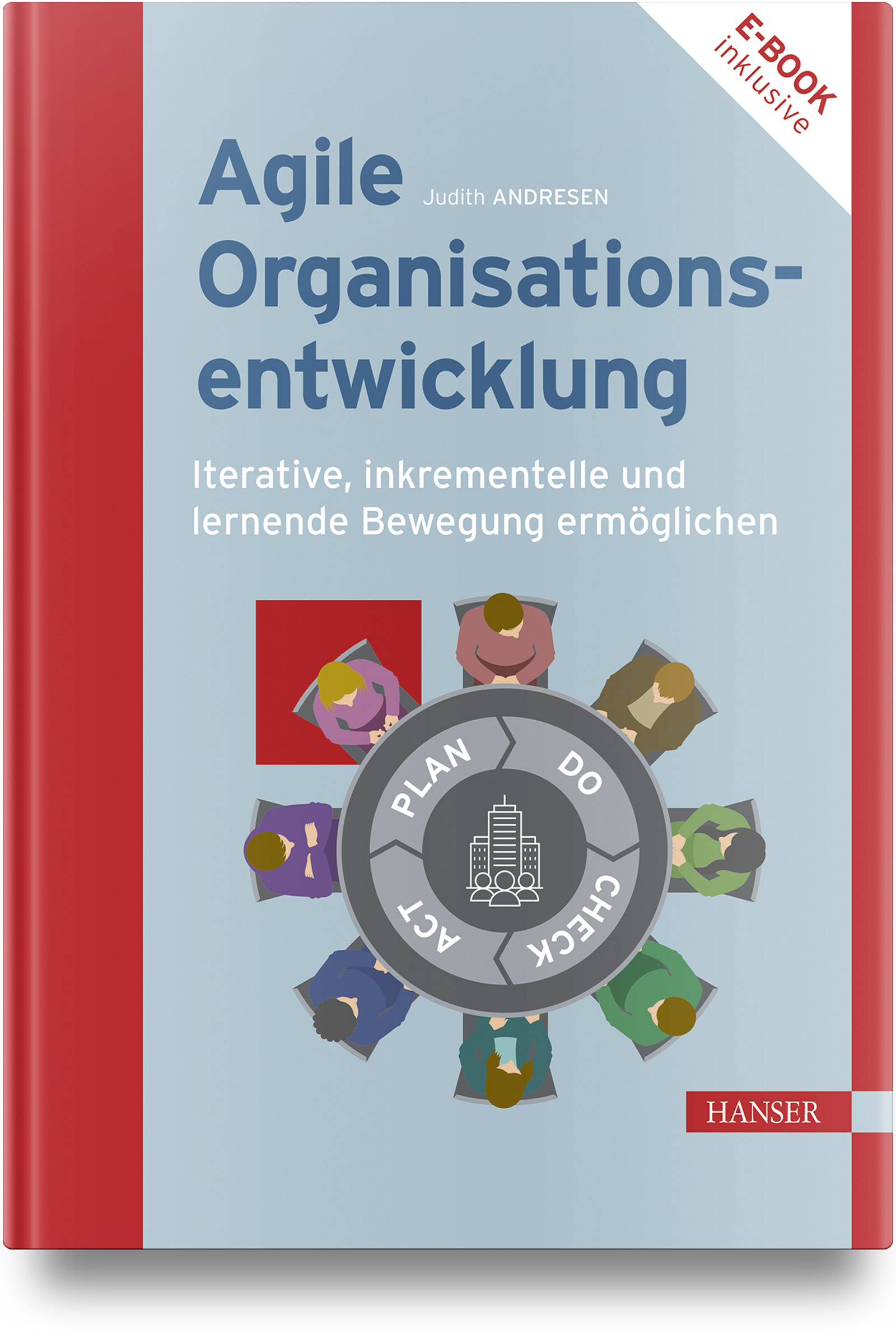
Agile Organisationsentwicklung
Agile Organisationsentwicklung. Iterative, inkrementelle und lernende Bewegung ermöglichen.(Klassische wie systemische) Organisationsentwickler: innen beschreiben Veränderungen mit der Veränderungskurve nach Kübler-Ross und/oder Kotter. Diese beschreiben Veränderungen als unabänderliche Impulse, die mittels geeigneter Kommunikationsmaßnahmen besser „verdaubar“ sind. Wenn aber der Zielraum zu groß und der eigentliche Organisationshebel noch zu unklar sind, helfen Changes nicht. Sie werden scheitern.Erfolgreiche agile Transitionen verändern Werte, Verhalten und Arbeitsumfelder der Beteiligten. Im Sinne Everett Rogers nehmen die Beteiligten also eine Innovation an – oder sie verwerfen diese. Veränderungsprozesse sind zu modellieren, sodass die Organisationen sie gehen können. Stimmt das Veränderungsvorgehen, wird es funktionieren: Neue Prozesse, neue Strukturen und Produktinnovationen werden möglich.Leseprobe (PDF-Link)Über die AutorinJudith Andresen ist agile Coachin und Organisationsentwicklerin, die Teams und Organisationen bei der Einführung agilen Arbeitens, agilen Denkens und Führens unterstützt. Schwerpunktmäßig begleitet sie als agile Organisationsentwicklerin Unternehmen in ihren agilen Transitionen. Sie hält regelmäßig Vorträge über Projektmethoden und Unternehmenskultur und berichtet darüber in ihrem Blog judithandresen.com/blog.Aus dem Inhalt:Agile Organisationen entwickelnAgiles Manifest verstehenDen Veränderungsdruck positiv für sich nutzenChanges, agile Transitionen und organisationelle Experimente aufsetzenErfolgreiche agile Transitionen aufsetzend steuernOrganisationsmuster erkennen und überwindenErfolgreiche Strukturen und Führungssysteme aufsetzenStolperfallen agiler Organisationsentwicklung vermeiden

Generative AI For Dummies
GENERATE A PERSONAL ASSISTANT WITH GENERATIVE AIGenerative AI tools capable of creating text, images, and even ideas seemingly out of thin air have exploded in popularity and sophistication. This valuable technology can assist in authoring short and long-form content, producing audio and video, serving as a research assistant, and tons of other professional and personal tasks. Generative AI For Dummies is your roadmap to using the world of artificial intelligence to enhance your personal and professional lives. You'll learn how to identify the best platforms for your needs and write the prompts that coax out the content you want. Written by the best-selling author of ChatGPT For Dummies, this book is the ideal place to start when you're ready to fully dive into the world of generative AI.* Discover the best generative AI tools and learn how to use them for writing, designing, and beyond* Write strong AI prompts so you can generate valuable output and save time * Create AI-generated audio, video, and imagery* Incorporate AI into your everyday tasks for enhanced productivityThis book offers an easy-to-follow overview of the capabilities of generative AI and how to incorporate them into any job. It's perfect for anyone who wants to add AI know-how into their work. PAM BAKER is an award-winning freelance journalist, analyst, and author. Her previous book, ChatGPT For Dummies, was one of the first how-to guides for effective use of the ChatGPT platform. She writes for several media outlets, including The New York Times, CNN, Ars Technica, InformationWeek, and CSO. Baker is also an instructor on GenAI for LinkedIn Learning. Introduction 1 PART 1: DIVING INTO GENERATIVE AI FUNDAMENTALS 5CHAPTER 1: Mapping the Lay of the Generative AI Land 7CHAPTER 2: Introducing the Art of Prompt Engineering 23CHAPTER 3: Collaborating Creatively with GenAI 35CHAPTER 4: Navigating the Evolving Landscape of GenAI 49CHAPTER 5: Applying GenAI in Practical Scenarios 63PART 2: MASTERING CREATIVE CONTENT WITH GENERATIVE AI 75CHAPTER 6: Manipulating the GenAI Model to Milk It for More or Better Content 77CHAPTER 7: Producing Long-Form Content 97CHAPTER 8: Customizing Content for Niche Topics 119CHAPTER 9: Creating Short-Form Content 133CHAPTER 10: Luring Images, Music, and Video Out of GenAI 157CHAPTER 11: Speeding, Improving, and Checking Your and GenAI’s Work 171PART 3: EXPLORING ADVANCED GENAI MODELS AND TECHNIQUES 191CHAPTER 12: Leaning on Advanced Tactics to Move Your Content to Another Level 193CHAPTER 13: Delving into Specialized GenAI Tools 203CHAPTER 14: Enhancing Creativity and Productivity with GenAI 217PART 4: NAVIGATING THE INTERSECTION OF ETHICS, QUALITY, AND HUMANITY 239CHAPTER 15: Upholding Responsible AI Standards in GenAI Use 241CHAPTER 16: Unveiling the Human Element in GenAI 255PART 5: THE PART OF TENS 267CHAPTER 17: Ten Ways GenAI Can Boost Your Creativity 269CHAPTER 18: Ten Tips for Advanced Prompting 277INDEX 283

Artificial Integrity
NAVIGATING THE TRANSITIONS TO THE FUTURE OF AI—INTEGRITY OVER INTELLIGENCEEnvision a world where artificial intelligence can deliver integrity-led outcomes seamlessly, adapting to diverse cultural context, value models, and situational nuances, countering subconscious biases, all while operating in an advanced human-centered manner. This is the promise of Artificial Integrity.In Artificial Integrity, digital strategist, technologist, doctoral researcher, acclaimed management thinker, and seasoned business executive Hamilton Mann emphasizes that the challenge of AI is in ensuring systems that exhibit integrity-led capabilities over the pursuit of mere general or super intelligence. Mann tackles the inadequacies of traditional ethical frameworks in handling the complexities of new AI technologies to make them trustworthy and reliable as they profoundly impact human lives. Introducing the transformative concept of “artificial integrity,” Mann proposes a paradigm shift, defining a “code of design” to ensure AI systems align with, amplify, and sustain human values and societal norms, maximizing integrity-led AI outcomes. Artificial Integrity discusses practical insights into driving a future where AI enhances, without replacing, human capabilities while being inclusive and reflective of diverse human experiences, emphasizing human agency. The book offers:* Guiding posts and step-by-step solutions for designing, implementing and continuously aligning AI development to responsibly advance human and artificial co-intelligence* Strategies and actionable advice for integrating AI into business and societal structures* Practical paths toward managing the transition to the future of AI for human productivity and decision-making while maintaining sustainable trustworthinessArtificial Integrity is essential for anyone involved in AI development, from executives, business leaders, and managers to entrepreneurs, tech enthusiasts and policymakers. It's also perfect for laypeople interested in how AI intersects with society. Dive into this compelling and thought provoking read to ensure you are prepared for the challenges and opportunities that lie ahead in a human-centered AI-driven future. HAMILTON MANN is a Tech Executive, Digital and AI for Good Pioneer, Keynote Speaker, and the originator of the concept of Artificial Integrity. He serves as Group Vice President at Thales, where he co-leads the AI initiative and Digital Transformation while also overseeing global Digital Marketing activities. He also serves as a Senior Lecturer at INSEAD and HEC Paris as well as a mentor at the MIT Priscilla King Gray (PKG) Center. He is a doctoral researcher in AI at École Nationale des Ponts et Chaussées - Institut Polytechnique de Paris. He writes regularly for Forbes as an AI columnist and has published articles about AI and its technological and societal implications in prominent academic, business, and policy outlets such as Stanford Social Innovation Review (SSIR), Knowledge at Wharton, Leader to Leader (Wiley), Dialogue Duke Corporate Education, INSEAD Knowledge, the Harvard Business Review France and the European Business Review. He hosts The Hamilton Mann Conversation, a podcast on Digital and AI for Good, ranked in the Top 10 for technology thought leadership by Technology Magazine. He was inducted into the Thinkers50 Radar as one of the 30 most prominent rising business thinkers globally. Preface xvIntroduction xxiChapter 1 The Stakes for Building Artificial Integrity 1Chapter 2 Unpacking What Artificial Integrity Is 23Chapter 3 What It Takes to Envision Human and Artificial Co-intelligence 43Chapter 4 What Navigating Artificial Integrity Transitions Implies 79Chapter 5 How to Thrive Through Navigating Algorithmic Boost 99Chapter 6 How to Thrive Through Navigating for Humanistic Reinforcement 141Chapter 7 How to Thrive Through Navigating Algorithmic Recalibration 183Chapter 8 What Change to Envision in Economic AIquity and Societal Values 225References 247Glossary 253Acknowledgments 259About the Author 265Index 267
Zephyr RTOS Embedded C Programming
These days the term Real-Time Operating System (RTOS) is used when referring to an operating system designed for use in embedded microprocessors or controllers. The “Real Time” part refers to the ability to implement applications that can rapidly responding to external events in a deterministic and predictable manner. RTOS-based applications have to meet strict deadline constraints while meeting the requirements of the application. One way of ensuring that urgent operations are handled reliably is to set task priorities on each task and to assign higher priorities to those tasks that need to respond in a more timely manner.Another feature of real-time applications is the careful design and implementation of the communication and synchronization between the various tasks. The Zephyr RTOS was developed by Wind River Systems, and subsequently open sourced. Its design and implementation are oriented towards the development of time critical IoT (Internet of Things) and IIoT (Industrial Internet of Things) applications, and, consequently it has a rich feature set for building both wireless and wired networking applications. However, with a rich feature set comes a fairly steep learning curve.This book covers the foundations of programming embedded systems applications using Zephyr's Kernel services. After introducing the Zephyr architecture as well as the Zephyr build and configuration processes, the book will focus on multi-tasking and inter-process communication using the Zephyr Kernel Services API. By analogy with embedded Linux programming books, this book will be akin a Linux course that focuses on application development using the Posix API. In this case, however, it will be the Zephyr Kernel Services API that will be the API being used as well as the Posix API features supported by Zephyr.WHAT YOU’LL LEARN* An Overview of the Cortex-M Architecture.* Advanced data structures and algorithms programming (linked lists, circular buffers and lists).* How to build Zephyr Applications, including setting up a Command Line Zephyr Development Environment on Linux.* Task scheduling and pre-emption patterns used in Real Time Operating Systems.* Scheduling, Interrupts and Synchronization, including threads, scheduling, and system threads.* Overview of Symmetric Multiprocessing (SMP) and Zephyr support for SMP. * Memory management, including memory heaps, memory slabs, and memory pools.WHO THIS BOOK IS FOREmbedded Systems programmers, IoT and IIoT developers, researchers, BLE application developers (Industrial Control Systems, Smart Sensors, Medical Devices, Smart Watches, Manufacturing, Robotics). Also of use to undergraduate and masters in computer science and digital electronics courses.Andrew Eliasz is the Founder and Head at Croydon Tutorial College as well as the Director of First Technology Transfer Ltd. First Technology Transfer runs advanced training courses and consults on advanced projects in IT, real time and embedded systems. Most courses are tailored to customers’ needs. Croydon Tutorial College evolved from Carshalton Tutorial College which was established to provide classes, distance level teaching, workshops and personal tuition in computer science, maths, and science subjects at GCSE, A Level, BTEC, undergraduate and masters levels. It has now changed its name and location to Croydon Tutorial College at Weatherill House Croydon. As well as teaching and tutoring they also provide mentoring and help for students having difficulties with assignments and projects (e.g., by suggesting how to add to a project to obtain a better grade, as well as reviewing project content and writing styles).1. Introduction.- 2. A Review of RTOS Fundamentals.- 3. Zephyr RTOS Application Development Environments and Zephyr Application Building Principles.- 4. Zephyr RTOS Multithreading.- 5. Message Queues, Pipes, Mailboxes and Workqueues.- 6. Using Filesystems in Zephyr Applications.- 7. Developing Zephyr BLE Applications.- 8. Zephyr RTOS and Ethernet, WiFi, and TCP/IP.- 9. Understanding and Working with the Device Tree, in general, and SPI and I2C in particular.- 10. Building Zephyr RTOS Applications Using Renode.- 11. Understanding and Using the Zephyr ZBus in Application Development.- 12. Zephyr Wi-Fi.

Digital Electronics for Musicians
Dive into the world of computer music and physical computing and stay ahead of the melodic curve. This book is aimed at adventurous musicians who want to learn about music programming with Arduino, sensors, and Pure Data, and how to make new interfaces and instruments with that knowledge.In this updated version, you can expect a wave of updates that bring the content in sync with the latest tech trends. The book now features revamped code and visuals throughout, all tailored to match the cutting-edge versions of Pure Data, Arduino IDE, and the powerful Raspberry Pi 5. What's even more thrilling is the integration of the Bela platform for audio enthusiasts, alongside an expanded wireless toolkit that includes both Wi-Fi and the trusty XBee. To ensure a smoother journey, there are more project-enhancing images to guide you, and a brand-new chapter dedicated to AI, based on the author's innovative neuralnet object for Pure Data, as showcased in the AIMC conference proceedings.You’ll start with the basics of the Pure Data and Arduino languages, how to incorporate sensors into your musical projects, and how to use embedded computers, like the Raspberry Pi, to create stand-alone projects. Along the way, you’ll learn how to create a variety of innovative musical projects, including an interactive glove that can be used bystringed instrumentalists or other musicians, an interactive drum set, a patch-bay matrix synthesizer, a guitar looper, a DIY theremin, and even DIY instruments that incorporate AI.If you are a musician or tinkerer who wants to explore the world of electronic and electroacoustic music, then _Digital Electronics for Musicians_, _Second Edition_ is the book for you.WHAT YOU WILL LEARN* Incorporate sensors into your musical projects.* Combine Arduino and Pure Data to bring the physical world to computers.* Use additional libraries that extend the capabilities of the Arduino.* Work with external objects in Pure Data and create your own patches from scratch.* Write your own sketches with Arduino.WHO THIS BOOK IS FORMusicians who want to explore the world of electronic and electroacoustic music.ALEXANDROS DRYMONITIS is a sound and new media artist. He has a PhD from the Royal Birmingham Conservatoire, Birmingham City University, on the creation of musical works with Python. His previous studies were on the classical guitar at the Conservatorium van Amsterdam, where he got his first stimuli on music technology. Ever since, he has been making electronic music using opensource software and hardware, such as Pure Data, Arduino, and Python. He has also used Pure Data and Arduino to develop the modular synthesizer system 3dPdModular, and is currently doing postdoc research at the Cyprus University of Technology on instant synthesis for computer controlled acoustic instruments with live coding and AI.Chapter 1: Introduction to Pure Data.- Chapter 2: Introduction to Arduino.- Chapter 3: Embedded Computers.- Chapter 4: Going Wireless.- Chapter 5: Getting Started with Musical Applications.- Chapter 6: An Interactive Glove.- Chapter 7: An Interactive Drum Set.- Chapter 8: A DIY Theremin.- Chapter 9: Making a Looper.- Chapter 10: A Patch-Bay Matrix Synthesizer.- Chapter 10: Interactive Projects with AI.

Microsoft Copilot for Windows 11
Discover and learn how to use Copilot with Windows 11. This book will help you understand the AI-driven functionalities within Copilot and how they can elevate both your productivity and creativity.The book begins with the evolution of Generative AI and Microsoft Copilot, including steps to work with the AI chatbot using Windows 11, Microsoft Edge, and Skype, in addition to the web. The book provides a detailed understanding of plugins, including the creation of AI songs. You will also learn the process involved with Image creation and the working of Microsoft Designer.You will master the use of the Copilot Windows app, followed by coverage of devices with Copilot key and trending Copilot+ PCs. You also will learn about important terms associated with AI and Copilot and additional resources. After reading this book, you will be able to work with Copilot features in Windows 11 and make the most of them.WHAT YOU WILL LEARN* Explore various ways to work with Copilot in Windows* Work with GPTs and plugins in Copilot* Understand image generation* Use Microsoft Designer* Use devices with Copilot key* Use Copilot+ PCsWHO THIS BOOK IS FORWindows administrators and Copilot enthusiastsANAND NARAYANASWAMY works as an author, reviewer, and blogger based in Thiruvananthapuram, India. He was recognized as a Microsoft MVP from 2002 to 2011, Windows Insider MVP from 2019 to 2023, and is currently a Microsoft MVP in the Windows & Devices category. Anand contributes articles to leading online and print publications, including Manorama Year Book. He runs his blog (netans.com) and actively helps the community on Quora. In his spare time, Anand loves to dig the old Gadgets such as Microsoft Zune, iPod, and iPod Classic. He can be reached via X @visualanand.Chapter 1: Evolution of Microsoft Copilot.- Chapter 2: Working with Copilot in Windows 11 - Part 1.- Chapter 3: Working with Copilot in Windows 11 - Part 2.- Chapter 4: Working with Copilot using Microsoft Edge.- Chapter 5: Working with Copilot using Bing.- Chapter 6: Working with Copilot using Skype.- Chapter 7: Working with Copilot Web.- Chapter 8: Working with Image Creator.- Chapter 9: Working with Microsoft Designer.- Chapter 10: Using Copilot in Microsoft 365.- Chapter 11: Learning Microsoft Copilot with Windows app.- Chapter 12: Devices with Copilot Key.- Chapter 13: Introducing Copilot+ PCs.- Appendix 1: Glossary.- Appendix 2: Additional Resources.

CompTIA Tech+ CertMike: Prepare. Practice. Pass the Test! Get Certified!
PREPARE FOR, PRACTICE, AND PASS THE COMPTIA TECH+ CERTIFICATION EXAM ON YOUR FIRST TRYIn the newly updated second edition of CompTIA Tech+ CertMike: Prepare. Practice. Pass the Test! Get Certified! for exam FC0-U71, veteran IT expert and IT educator, Mike Chapple, skips the fluff and dives straight into exactly what you need to ace the entry-level CompTIA Tech+ certification exam on your first try. Filled with the kind of no-nonsense, straight-to-business info you're looking for, the book includes coverage of every relevant exam domain, a full practice exam, and additional multiple choice practice questions with detailed answer explanations. You'll learn all about IT infrastructure, software development, database use, software installation, network connectivity, and more, as well as how all this valuable knowledge applies to common on-the-job scenarios. You'll also find:* Complimentary links to audio recordings of the book's Exam Essentials sections to help you review for the test* Access to additional online study tools* The information you need to reduce test anxiety and boost your confidence when you walk into the testing room on exam dayPrepare smarter and faster for the Tech+ certification exam with proven strategies created by the bestselling Mike Chapple and his team at CertMike. This book's perfect for people just getting interested in information technology and working towards a more advanced certification, like the CompTIA A+ or Security+ credentials. It's also a can't-miss resource for anyone who wants to learn basic computer literacy skills. Grab your copy today! MIKE CHAPPLE, PHD, SECURITY+, CYSA+, CISSP, is Senior Director for IT Service Delivery at Notre Dame. He oversees information security, data governance, IT architecture, project management, strategic planning, and product management functions. He also teaches courses on information security. He is the author of several bestselling Sybex Study Guides, including the CompTIA Security+ Study Guide. Introduction xiiiPART I DOMAIN 1.0: IT CONCEPTS AND TERMINOLOGY 1Chapter 1 Computing Basics: Objective 1.1 3Chapter 2 Notational Systems: Objective 1.2 9Chapter 3 Units of Measure: Objective 1.3 17Chapter 4 Troubleshooting: Objective 1.4 25PART II DOMAIN 2.0: INFRASTRUCTURE 33Chapter 5 Computing Devices: Objective 2.1 35Chapter 6 Internal Computing Components: Objective 2.2 47Chapter 7 Storage: Objective 2.3 57Chapter 8 Installing Peripherals: Objective 2.4 67Chapter 9 Input/Output Device Interfaces: Objective 2.5 77Chapter 10 Virtualization and Cloud Technologies: Objective 2.6 89Chapter 11 Internet Service Types: Objective 2.7 97Chapter 12 TCP/IP Networking: Objective 2.8 103Chapter 13 Application Protocols: Objective 2.8 115Chapter 14 Network Devices: Objective 2.8 121Chapter 15 Wireless Networks: Objective 2.9 129PART III DOMAIN 3.0: APPLICATIONS AND SOFTWARE 137Chapter 16 Filesystems: Objective 3.1 139Chapter 17 Services and Processes: Objective 3.1 149Chapter 18 Drivers, Utilities, and Interfaces: Objective 3.1 155Chapter 19 Operating Systems: Objective 3.2 163Chapter 20 Software Types: Objective 3.3 171Chapter 21 Web Browsers: Objective 3.4 181Chapter 22 Artificial Intelligence: Objective 3.5 193PART IV DOMAIN 4.0: SOFTWARE DEVELOPMENT CONCEPTS 201Chapter 23 Programming Languages: Objective 4.1 203Chapter 24 Data Types: Objective 4.2 211Chapter 25 Programming Concepts: Objective 4.3 219Chapter 26 Programming Organizational Techniques: Objective 4.4 229Chapter 27 Logic Components: Objective 4.4 237PART V DOMAIN 5.0: DATA AND DATABASE FUNDAMENTALS 243Chapter 28 The Value of Data: Objective 5.1 245Chapter 29 Database Concepts: Objective 5.2 253Chapter 30 Database Structures: Objective 5.3 261Chapter 31 Backups: Objective 5.4 271PART VI DOMAIN 6.0: SECURITY 277Chapter 32 Confidentiality, Integrity, and Availability: Objective 6.1 279Chapter 33 Privacy: Objective 6.1 287Chapter 34 Authentication, Authorization, Accounting, and Nonrepudiation: Objective 6.1 295Chapter 35 Security Awareness: Objective 6.2 305Chapter 36 Securing Devices: Objective 6.2 313Chapter 37 Software Licensing: Objective 6.2 321Chapter 38 Password Best Practices: Objective 6.3 327Chapter 39 Encryption: Objective 6.4 335Chapter 40 Securing Wireless Networks: Objective 6.5 341Index 347

Reshaping Intelligent Business and Industry
THE CONVERGENCE OF ARTIF ICIAL INTELLIGENCE (AI) AND INTERNET OF THINGS (IOT) IS RESHAPING THE WAY INDUSTRIES, BUSINESSES, AND ECONOMIES FUNCTION; THE 34 CHAPTERS IN THIS COLLECTION SHOW HOW THE FULL POTENTIAL OF THESE TECHNOLOGIES IS BEING ENABLED TO CREATE INTELLIGENT MACHINES THAT SIMULATE SMART BEHAVIOR AND SUPPORT DECISION-MAKING WITH LITTLE OR NO HUMAN INTERFERENCE, THEREBY PROVIDING STARTLING ORGANIZATIONAL EFFICIENCIES.Readers will discover that in Reshaping Intelligent Business and Industry:* The book unpacks the two superpowers of innovation, AI and IoT, and explains how they connect to better communicate and exchange information about online activities;* How the center and the network's edge generate predictive analytics or anomaly alerts;* The meaning of AI at the edge and IoT networks.* How bandwidth is reduced and privacy and security are enhanced;* How AI applications increase operating efficiency, spawn new products and services, and enhance risk management;* How AI and IoT create 'intelligent' devices and how new AI technology enables IoT to reach its full potential;* Analyzes AIOT platforms and the handling of personal information for shared frameworks that remain sensitive to customers’ privacy while effectively utilizing data.AUDIENCEThis book will appeal to all business and organization leaders, entrepreneurs, policymakers, and economists, as well as scientists, engineers, and students working in artificial intelligence, software engineering, and information technology.SURJEET DALAL, PHD, is an associate professor in the Depar tment of Computer Science & Engineering at SR M Universit y, Har yana, India. His cur rent research areas are ar tif icial intelligence, cloud computing, and IoT. He has published t wo cloud computing books and published 20+ papers in inter national jour nals. NEERAJ DAHIYA, PHD, is an assistant professor in the Depar tment of Computer Science & Engineering, SR M University, Har yana, India. His research areas include artificial intelligence, machine learning, speech processing, etc. Along with publishing research papers, Dahiya has four patents in artif icial intelligence and machine lear ning. VIVEK JAGLAN, PHD, is a professor at the DPG Institute of Technology and Management, Haryana, India. His research areas include artificial intelligence, neural networks & fuzzy logic, and IoT. Jaglan has published one book on cloud computing, 30+ papers in national/international journals, and 40+ papers for national and international conferences. DEEPIKA KOUNDAL, PHD, is an assistant professor at the University of Petroleum and Energy St udies,Dehradun, India. Her areas of interest are ar tif icial intelligence, biomedical imaging and signals, image processing, etc. She has published two books and 40+ research papers in inter national jour nals. DAC-NHUONG LE, PHD, obtained his doctorate in computer science from Vietnam National University, Vietnam in 2015. He is deputy head of the Faculty of Information Technology, Haiphong University, Vietnam. His area of research includes evaluation computing and approximate algorithms, network communication, security and vulnerability, network performance analysis and simulation, cloud computing, IoT, and image processing in biomedicine. He has over 50 publications and edited/authored many computer science books with the Wiley-Scrivener imprint. List of Figures xxiiiList of Tables xxxiForeword xxxiiiPreface xxxvAcknowledgments xliAcronyms xliiiPART I: ARTIFICIAL INTELLIGENCE APPLICATIONS1 ARTIFICIAL INTELLIGENCE OVERVIEW: ARCHITECTURE, APPLICATIONS AND CHALLENGES 3Geet Kiran Kaur, Nandita Malik, Sharad Chauhan, Mankiran Kaur1.1 Introduction 41.2 Artificial Intelligence Agents 71.3 Artificial Intelligence Algorithms 91.4 Applications of Artificial Intelligence 111.5 Conclusion 16References 162 VIDEO ANALYTICS USING DEEP LEARNING MODELS 19Sanjeev Kumar Bhatt, S. Srinivasan2.1 Introduction 202.2 Video Analytics 272.3 Object Detection and Object Tracking 292.4 Industrial Application 442.5 Conclusion 46References 463 OPTIMIZING SEARCH ENGINE FOR ENHANCING COMPUTING AND COMMUNICATION IN REAL-TIME SYSTEMS 49Meeta Singh, Poonam Nandal, Deepa Bura3.1 Introduction 503.2 Literature Review 533.3 Requirement Specification 543.4 Testing and Validation 573.5 Result 643.6 Conclusion and Future Work 66References 664 THE NEED FOR XAI: CHALLENGES AND ITS APPLICATIONS 69Swati, Menu Vijarania, Vivek Jaglan, Dac-Nhuong Le4.1 Introduction 704.2 Literature Review 714.3 The Need for Exploring XAI 724.4 Scope of Explanation 744.5 Differences in Research Methodology 754.6 Conclusion 78References 785 WHY LAW FIRMS NEED TO EMBRACE ARTIFICIAL INTELLIGENCE TO TRANSFORM THE INDIAN LEGAL INDUSTRY 81B. Dharneesh, S. Thenisha, S. S. Srithick, A. Abirami5.1 Introduction 825.2 What Is Artificial Intelligence? 835.3 The Law and Policy Relating to AI in India 885.4 The Morality Debate: The Ethicality of AI in Law 915.5 Conclusion 92References 926 A COMPARATIVE STUDY OF SUPERVISED AND UNSUPERVISED MACHINE LEARNING ALGORITHMS FOR PREDICTIVE ANALYTICS 97V. Belsini Gladshiya, Sharmila6.1 Introduction 986.2 Predictive Analytics 986.3 Machine Learning 1006.4 Applications of Supervised and Unsupervised Learning 1046.5 Conclusion 104References 1057 MACHINE LEARNING APPROACH FOR PREDICTING THE PRICE OF USED CARS 107Swati, Meenu Vijarania, Akshat Agarwal, Dac-Nhuong Le7.1 Introduction 1087.2 Related Work 1087.3 Research Methodology 1107.4 Model Description 1137.5 Conclusion 114References 115PART II: INTERNET OF THINGS APPLICATIONS8 RECENT INDUSTRY-DEFINED AND DOMAIN-SPECIFIC IOT ARCHITECTURES 119Sharad Chauhan, Ritika Arora, Geetkiran Kaur8.1 Introduction 1208.2 Literature Review 1218.3 Benefits and Major Components of IoT 1238.4 IoT Implementation and Building Blocks 1258.5 IoT Architecture 1268.6 Conclusion 138References 1389 IOT DEVICES 141Mukesh Choubisa9.1 Introduction 1429.2 Application of IoT 1449.3 IoT Devices 1489.4 Conclusion 156References 15610 IOT SECURITIES: APPLICATIONS, SECURITY ISSUES AND SOLUTIONS USING DIVERSE TECHNOLOGIES 157Lovanya Bajaj, Nikhil Sharma, Prashant Giridhar Shambharkar10.1 Introduction 15810.2 Related Work 15910.3 Overview of Internet of Things (IoT) 16010.4 Security Issues Addressed Using Diverse Technologies 16410.5 Open Challenges and Future Research Directions 16810.6 Conclusion 169References 16911 FAMOS: SMART FARM AUTOMATIC MONITORING SYSTEM 179J. Dakshana, P. Balasubramaniam, A. Abirami, S. TamilSelvan11.1 Introduction 18011.2 Related Work 18111.3 Methodologies Proposed 18311.4 Software Elements 18411.5 Project Cost Estimation 19311.6 Conclusion 195References 19512 IOT-BASED MODULE TO CONTROL ELECTRONIC DEVICES THROUGH WI-FI AND BLUETOOTH 197Ritu Shrivastava, Amit Shrivastava, Kapil Chaturvedi12.1 Introduction 19812.2 Literature Review 19812.3 Proposed Wi-Fi Communication Module 19812.4 IR (Infrared) Remote and Arduino Nano 20312.5 Conclusion 206References 20613 AN INSIGHT INTO THE IOT BUILDING BLOCKS: ARCHITECTURE, FRAMEWORK, PRINCIPLES, APPLICATIONS AND CHALLENGES 207Priyanka, Anoop Kumar, Keziah Nagaraj13.1 Introduction 20813.2 Related Work 20813.3 Traditional and New Architecture of IoT 20913.4 Design Principles and Decision Framework of IoT 21313.5 Applications and Challenges 21613.6 Conclusion 220References 22114 INTEROPERABILITY: A CONCEPTUAL FRAMEWORK 223Soni Chaurasia, Kamal Kumar14.1 Introduction 22414.2 Inclusions in IoT Network 22514.3 IoT Interoperability Protocols 22614.4 Interoperability Conceptual Framework Proposed 22814.5 Conclusion 233References 23415 SECURING IOT DEVICES AGAINST MITM AND DOS ATTACKS: AN ANALYSIS 237Vicky Tyagi, Amar Saraswat, Ashwani Kumar, Shalini Gambhir15.1 Introduction 23815.2 Architecture of IoT 23815.3 Attacks on IoT 24015.4 Some Possible Solutions to Avoid/Prevent Cyberattacks 24615.5 Conclusions 247References 247PART III: ARTIFICIAL INTELLIGENCE OF THINGS: SMART CITY AND SOCIAL APPLICATIONS16 AIOT-BASED SMART CITIES 253Shelly Garg, Namitan16.1 What Are Smart Cities? 25416.2 Internet of Things 25516.3 Introduction to Artificial Intelligence 25816.4 AIoT in Smart Cities 26316.5 Conclusion 265References 26517 INTEGRATING ARTIFICIAL INTELLIGENCE AND IOT FOR SMART CITIES: APPLICATIONS AND CHALLENGES 267Varsha Bhatia, Vivek Jaglan17.1 Introduction 26817.2 Overview of Smart Cities 27017.3 AIoT in Smart Cities 27317.4 Open Issues and Challenges 27617.5 Conclusion 276References 27618 A COMPREHENSIVE REVIEW OF THE CONVERGENCE OF BLOCKCHAIN, AI AND IOT FOR IMPROVING SOCIAL INTERACTIONS 279Priya Sachdeva18.1 Introduction 28018.2 Research Methodology 28218.3 The Risks and Challenges of Convergence in the Making of Smart Cities 28718.4 Results and Findings 28918.5 Future Research Directions for the Convergence of Blockchain, AI and IoT 29018.6 Conclusion 291References 29219 AIOT-BASED SMART BIN FOR REAL-TIME MONITORING AND MANAGEMENT OF SOLID WASTE 295Ritik Agarwal19.1 Introduction 29619.2 Literature Review 29719.3 Proposed Methodology 29919.4 Conclusion 30219.5 Challenges and Future Work 302References 30220 AIOT IN THE EDUCATION SECTOR 305Zhumaniyaz Mamatnabiyev, Meirambek Zhaparov20.1 Introduction 30620.2 AIoT Applications in the Education Sector 30720.3 IoT Development Stages 30920.4 Conclusion 313References 31321 ARTIFICIAL INTELLIGENCE OF THINGS (AIOT)-ENABLED PERSONALIZED BANKING: INVESTIGATING INTENTION TO ADOPT 315Ashok Singh Malhi, Raj K Kovid, Thipendra P Singh21.1 Introduction 31621.2 Literature Review and Hypotheses 31721.3 Methodology 31921.4 Results and Discussion 32021.5 Conclusion 323References 323PART IV: ARTIFICIAL INTELLIGENCE OF THINGS: APPLICATIONS IN HEALTHCARE22 AI- AND IOT-ENABLED HEALTHCARE APPLICATIONS: A REVIEW 327N. Krishna Chaitanya, Mangesh M. Ghonge, G. Vimala Kumari, S.Leela Lakshmi22.1 Introduction 32822.2 Literature Review 32922.3 IoT in Healthcare 32922.4 Role of Artificial Intelligence in Healthcare 33622.5 Challenges of IoT in Healthcare 34022.6 Conclusion 340References 34123 AN EXTENSIVE SURVEY OF AIOT IN HEALTHCARE: APPLICATIONS, CHALLENGES AND FUTURE OPPORTUNITIES 343Gunjan, Ishwari Singh Rajput, Aditya Gupta, Soni Chaurasia23.1 Introduction 34423.2 Background 34423.3 AIoT in Healthcare 35123.4 AIoT Challenges and Opportunities 35223.5 Conclusion 355References 35624 AI- AND IOT-BASED FACE RECOGNITION MODEL FOR IDENTIFICATION OF HUMAN DISEASES 359Pushan Kumar Dutta, Susanta Mitra24.1 Introduction 36024.2 Problem Identification 36224.3 Proposed Methodology 36424.4 Findings and Discussion 36824.5 Conclusion 370References 37025 IOT IN THE MEDICAL FIELD 373S. Sasikala, K. Sharmila25.1 Introduction 37425.2 Security Matters for IoT in Healthcare 37925.3 Cholesterol Control Levels 38025.4 IoR Device for Cholesterol Test: CURO L 7 38425.5 Challenges, Limitations, and Future Scope 38525.6 Conclusion 386References 38726 USING DEEP LEARNING TO CHARACTERIZE PERSISTENT PHYSIOLOGICAL PARAMETERS IN PATIENT MONITORING SYSTEMS 391Dhyanendra Jain, Anjani Gupta, Amit Kumar Pandey, Prashant Vats26.1 Introduction 39226.2 Using Deep Learning and AI for Surveillance 39326.3 Other Ways that Do Not Rely on Machine Learning Knowledge 39326.4 The Present Position of Learning Algorithms and Patient Monitoring 39426.5 Possible Uses for Machine Learning Surveillance 39726.6 Concerns and Future Objectives 39926.7 Conclusions 400References 400PART V: ARTIFICIAL INTELLIGENCE OF THINGS: APPLICATIONS IN AGRICULTURE AND INDUSTRIES27 SMART AGRICULTURE SYSTEM USING ARTIFICIAL INTELLIGENCE AND INTERNET OF THINGS 405Meenakshi Yadav, Preety, Esha Saxena, Akhilesh Das27.1 Introduction 40627.2 Artificial Intelligence and IoT in Agriculture 40727.3 Components of AI and IoT for Agriculture 41027.4 Application of IoT and AI in Agricultural Automation 41227.5 Challenges and Opportunities 41427.6 Conclusion and Future Trends 416References 41728 APPLICATION OF AI AND IOT IN AGRICULTURE 419Rashmi Singh28.1 Agricultural Process 42028.2 The Use of Artificial Intelligence in Agricultural Applications 42128.3 Predictive Analytics and Precision Agriculture 42228.4 Agricultural Robotics (Agrobots) 42628.5 AI-Enabled System for Pest Control and Disease Diagnosis 43328.6 Adopting AI: A Challenge for Farmers 43528.7 Conclusion 436References 43629 TRAFFIC MANAGEMENT SYSTEM USING AIOT 439Pallavi Choudekar, Rashmi Singh29.1 Introduction 44029.2 Smart Road Traffic Management System (SRTMS) 44429.3 Smart Traffic Information System (TIS) 44529.4 Smart Parking Management System 44929.5 Smart Pavement Management System 45229.6 Conclusion 454References 45530 AUTONOMOUS VEHICLES: A CONVERGENCE APPLICATION OF AI AND IOT 459Neha Gehlot, Amritpal Kuar30.1 Introduction 46030.2 Technical Challenges in Self-Driving Cars 46530.3 Other Very Critical Areas 46730.4 Blind Spots in Autonomous Vehicles 46930.5 Potential Cyberattacks on Automated Vehicles 47130.6 Conclusion 472References 47331 CONVERGENCE OF ARTIFICIAL INTELLIGENCE AND INTERNET OF THINGS FOR SOFTWARE-DEFINED RADIOS 475Shilpa Mehta, Xue Jun Li, Surjeet Dalal31.1 Introduction 47631.2 Review of SDR Receiver Architectures 47731.3 Integration of SDR and IoT 48231.4 Artificial Intelligence 48431.5 Proposed AI-Based Receiver Architecture 49231.6 AI Optimization 49831.7 Results and Discussion 49831.8 Conclusion 501References 50132 ARTIFICIAL INTELLIGENCE OF THINGS (AIOT) FOR INTELLIGENT DATA DESIGN 507Parul Gandhi, Raj Kumar32.1 Introduction 50832.2 AI, IoT, and Big Data Analytics 51132.3 AIoT-Based Data Analytics and Decision-Making 51232.4 Challenges 51432.5 Role of AIoT in the Context of COVID- 19 51532.6 Future Direction and Conclusion 516References 51633 A STUDY OF IMPLEMENTATION OF BLOCKCHAIN TECHNOLOGY IN LAND REGISTRATION: A SWOT ANALYSIS 519Ankita Goyal, Upendra Singh33.1 Introduction 52033.2 Literature Review 52133.3 Research Methodology 52333.4 Discussion, Analysis, Limitation and Future Work 52333.5 Conclusion 527References 52834 SMART MASK DISINFECTION SYSTEM (SMDS) 531N. Swetha Sridevi, N. C. Preethika, T. Subiksha34.1 Introduction 53234.2 Related Work 53334.3 Smart Mask Disinfection System 53434.4 Results and Discussion 54434.5 Conclusion 545References 546Editors 547Index 551

Angular Reactive Forms
Welcome to the book “Angular Reactive Forms”. In this book, I explain everything you need to know about reactive forms. With reactive forms, you define the form model directly in the component class. This is an elegant way to deal with form fields that gives you full control over all aspects of reading and updating values and performing all kinds of validations. This way you can easily create and edit dynamic forms from your component class. In this book, I will show you how to create forms, update values, perform validations, display error messages, work with hierarchical groups and form arrays, upload files, preview images, and much more. By the end of this book, you will be confident working with forms in your Angular application and be able to handle all kinds of scenarios. Let us get started. Hello, I am Abdelfattah Ragab, a professional software developer with more than 20 years of experience. I am an expert in Angular, CSS, graphic design and all web related technologies. I have published numerous books on modern CSS layouts and Angular as well as complete business solutions for e-commerce and the like. I hope you enjoy my books. With kind regards.

Handbuch Automotive SPICE® 4.0
Handbuch Automotive SPICE® 4.0. Grundlagen und Know-how für die Praxis. Das Standardwerk zu Automotive SPICEDieses Buch bietet einen strukturierten Einstieg in die praktische Anwendung der vierten Generation des Prozessreferenz- und -assessmentmodells Automotive SPICE®. Es gibt einen tiefen Einblick sowohl in die Zusammenhänge von Automotive SPICE® im Kontext der Entwicklung von Automobilelektronik als auch in die Verknüpfung mit mechatronischen Disziplinen und neuen Vorgehensweisen. Ein besonderer Fokus liegt auf den neu hinzugekommenen Prozessen des Machine Learning.Im Einzelnen werden behandelt:Automotive SPICE® im Lebenszyklus, Struktur und Elemente, Plug-in-Konzept, Guidelines des VDAProzessdimension und Prozesse im DetailCapability-Dimension und Capability Levels 1 bis 5Modellerweiterung innerhalb und ergänzend zu Automotive SPICE® (Hardware- und Mechanikenentwicklung, Machine Learning Engineering, Agilität)Assessments (Vorbereitung, Durchführung, Rollen, Bericht)Synergieeffekte (z.B. zu funktionaler Sicherheit, Cybersecurity)Das Buch richtet sich in erster Linie an Praktiker, die einen verständlichen Einstieg in Automotive SPICE® suchen, und dient als Hilfestellung bei der Umsetzung von Automotive SPICE®-konformen Prozessen sowie als Wissensbasis für Assessoren.Zielgruppe: Projektleiter, Qualitätsmanager*innen, Prozessmanager*innen, Softwareentwickler*innen, Systemingenieur*innen, ASPICE-AssessorenÜber die Autoren:Alexander Levin ist seit mehr als zwei Jahrzehnten in der Automobil- und Nutzfahrzeugindustrie tätig, mit Abstechern in die Luftfahrtindustrie. Neben seinen Automotive SPICE®-Assessments bei OEMs und Zulieferern ist er als Leiter von Verbesserungsprojekten, Trainer und Coach tätig. Seine Expertise umfasst ein breites Themenspektrum von funktionaler Sicherheit über Systems Engineering bis hin zu Organisationsentwicklung und Fahrzeugdiagnose. Ein besonderes Anliegen ist ihm die Entwicklung von integrierten Lösungen, die auch Cybersecurity beinhalten. Er leitete mehrere Jahre lang die Expert Area SPICE bei Kugler Maag Cie by UL Solutions und wirkt in der INTACS-Arbeitsgruppe Functional Safety mit.Christina Stathatou ist Lead Consultant bei UL Solutions. Sie verfügt über mehr als 10 Jahre Erfahrung in der Beratung und Leitung von Prozessverbesserungsprogrammen und hat das Plug-in „Machine Learning for Automotive SPICE®“ mitentwickelt. Sie hat Automotive SPICE®-Assessments als Co-Assessorin und inoffizielle Automotive SPICE®- Assessments (Gap-Analysen) als Lead Assessor in durchgeführt und liebt es, ihr Fachwissen in neuen und aufregenden Bereichen wie künstliche Intelligenz, Datenmanagement und Cybersecurity weiterzuentwickeln.Volker Lehmann leitet als Principal Consultant eines der Consulting-Teams bei UL Solutions. Sein Fokus - Thema: das in der Automobilbranche gängige Prozess Modell Automotive SPICE®. Dafür bringt er Führungsgeschick und langjährige Erfahrung im Prozessmanagement und Assessment im Systems Engineering mit. Er ist Mitglied des INTACS® Advisory Board und der Arbeitsgruppe zur Entwicklung der Trainingsarchitektur für die Assessorenausbildung sowie in tacs® certified Principal Assessorund INTACS™ certified Instructor. Weiter schreibt er Fachartikel und hält Vorträge zu seinem Lieblingsthema – der Optimierungssoftwarebasierter Systeme.Josefin A. Benning ist Lead Consultant und People Lead bei UL Solutions und seit vielen Jahren Projektleiter in von komplexen und innovativen Prozessverbesserungs-Initiativen in der Automobilindustrie. Die Entwicklung von Produkten mithilfe von künstlicher Intelligenz bei Erfüllung der Regularien wie Automotive SPICE®, Functional Safety und Cybersecurity ist ein Teil davon. Sie ist INTACS®-zertifizierte Competent Assessorin sowie Functional Safety und Cybersecurity Engineer. Josefin Benning ist ehrenamtlich bei iNTACS tätig und leitet die Arbeitsgruppe „New Training Courses and Coordination“.

Virtual Threads, Structured Concurrency, and Scoped Values
Discover the exciting new APIs introduced by Java’s Project Loom. This quick guide covers all the essential concepts the Java developer needs in order to understand virtual threads, structured concurrency, and scoped values. Authors Ron Veen and David Vlijmincx clearly explain the superiority of virtual threads, introduced in Java 21, over the traditional Java threads of the past 25 years. Then they dive into how structured concurrency streamlines interactions by treating related threads as a unified unit of work, akin to the impact of structured programming on regular programming. From there, the authors explore the third Project Loom API and scoped values, clarifying their advantages over regular ThreadLocals and providing efficient usage insights. The book concludes with an exploration of common scheduling strategies. By the end of this book, you will have a solid understanding of the concepts behind Project Loom and will be able to immediately apply this knowledge to your own code. You Will * Discover what virtual threads are, why they were created, and how to use them in your code * Gain insight into how concurrency improves the observability of code * Write your own StructuredTaskScopes tailored to your needs * Understand why you should replace ThreadLocals with Scoped Values * Know the different strategies for multithreaded computer programs Who This Book is For Java developers of any level. This knowledge is so fundamental to staying relevant in the Java job market that every developer needs to understand it for their career development. Chapter 1: Virtual Threads.- Chapter 2: Structured Concurrency.- Chapter 3: Scoped Values.- Chapter 4: Concurrency Patterns.

Handbuch Automotive SPICE 4.0
Das Standardwerk zu Automotive SPICE - umfassende Darstellung - inkl. Modellerweiterungen wie Plug-ins und Add-ons - mit praxisnahen Beispielen und konkreten Hinweisen Dieses Buch bietet einen strukturierten Einstieg in die praktische Anwendung der vierten Generation des Prozessreferenz- und -assessmentmodells Automotive SPICE®. Es gibt einen tiefen Einblick sowohl in die Zusammenhänge von Automotive SPICE® im Kontext der Entwicklung von Automobilelektronik als auch in die Verknüpfung mit mechatronischen Disziplinen und neuen Vorgehensweisen. Ein besonderer Fokus liegt auf den neu hinzugekommenen Prozessen des Machine Learning. Im Einzelnen werden behandelt: - Automotive SPICE® im Lebenszyklus, Struktur und Elemente, Plug-in-Konzept, Guidelines des VDA - Prozessdimension und Prozesse im Detail - Capability-Dimension und Capability Levels 1 bis 5 - Modellerweiterung innerhalb und ergänzend zu Automotive SPICE® (Hardware- und Mechanikenentwicklung, Machine Learning Engineering, Agilität) - Assessments (Vorbereitung, Durchführung, Rollen, Bericht) - Synergieeffekte (z.B. zu funktionaler Sicherheit, Cybersecurity) Das Buch richtet sich in erster Linie an Praktiker, die einen verständlichen Einstieg in Automotive SPICE® suchen, und dient als Hilfestellung bei der Umsetzung von Automotive SPICE®-konformen Prozessen sowie als Wissensbasis für Assessoren.
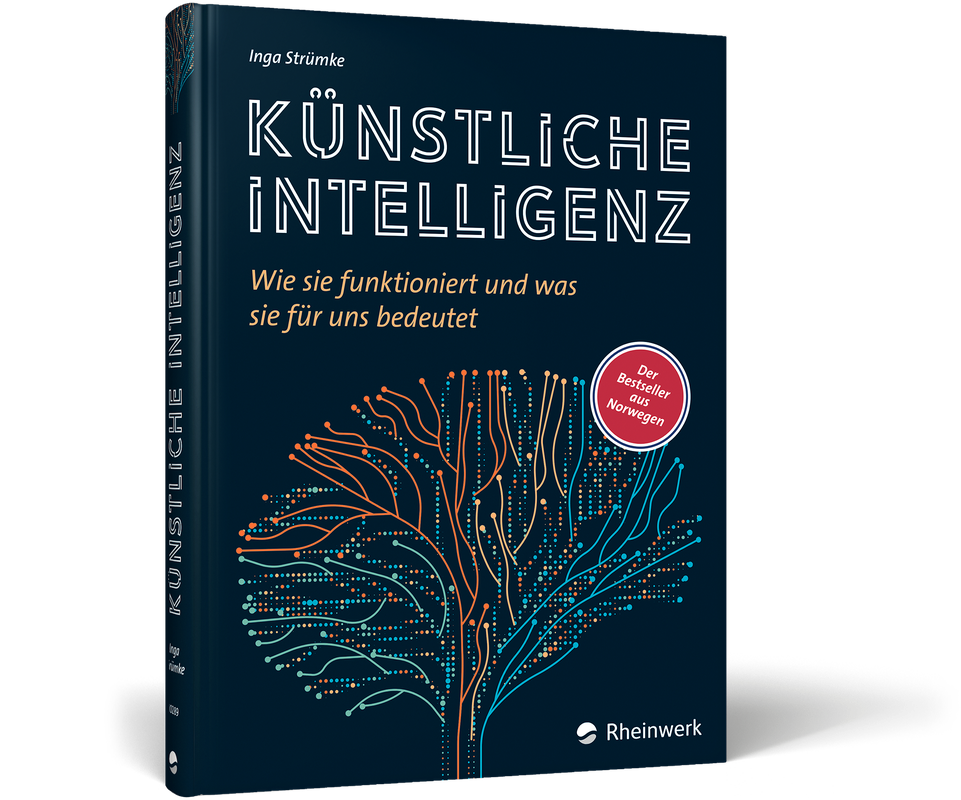
Künstliche Intelligenz
Künstliche Intelligenz. Wie sie funktioniert und was sie für uns bedeutet. In übersetzter deutscher Erstauflage aus dem September 2024, ein Bestseller in Norwegen.Entdecken Sie die Grundlagen und Schlüsselkonzepte der Künstlichen Intelligenz in diesem bahnbrechenden Buch und finden Sie Antworten auf die großen Fragen, die uns derzeit alle beschäftigen: Wie funktioniert diese Technologie eigentlich? Welche Auswirkungen hat sie auf Gesellschaft, Ethik und Philosophie? Wie schnell entwickelt sie sich und wie wird sie unser Leben in Zukunft beeinflussen?Der norwegische Bestseller hat in ganz Skandinavien den Nerv der Zeit getroffen. Denn es gelingt der Wissenschaftlerin Inga Strümke, die komplexen Themen rund um KI und maschinelles Lernen auf eine Weise zu erklären, die sowohl für Fachleute als auch für Laien verständlich ist. Können Menschen mit ihrem Versuch, Künstliche Intelligenz zu erschaffen, überhaupt Erfolg haben? Und erfassen sie die Konsequenzen der Technologie?Mit ihrem Fachwissen als Physikerin und KI-Expertin an der NTNU in Trondheim und am Simula Metropolitan Center for Digital Engineering in Oslo bringt sie Licht in das oft missverstandene Feld der Künstlichen Intelligenz. Sie zeigt, wie maschinelles Lernen funktioniert, diskutiert die ethischen Herausforderungen und entmystifiziert die Ängste, die viele Menschen gegenüber dieser Technologie haben. Ob Tech-Neuling oder erfahrener Entwickler, dieses Buch wird Ihr Verständnis von Künstlicher Intelligenz vertiefen und erweitern. Aus dem Norwegischen von Christel Hildebrandt.Was KI ist, wo sie herkommt und was sie für uns bedeutet1. Wie KI-Systeme entworfen werden und aus Daten lernenDieses Buch bietet einen umfassenden Überblick von den frühen theoretischen Konzepten bis hin zu modernen Anwendungen. Lernen Sie die grundlegenden Prinzipien des maschinellen Lernens und der neuronalen Netze kennen. Auch ohne technisches Hintergrundwissen verständlich.2. Wie ein verantwortungsvoller Umgang mit KI möglich istVielen potenziellen Vorteilen durch KI stehen Risiken und Herausforderungen wie Datenschutz, Voreingenommenheit oder Verdrängung von Arbeitsplätzen gegenüber. Nur im differenzierten Dialog ist eine verantwortungsvolle Entwicklung möglich.3. Die Zukunft der Mensch-KI-Interaktion gestaltenKI kann für die menschliche Gesellschaft unkontrollierbar werden. Erkunden Sie die potenziellen Szenarien, damit wir auch vorbereitet sind auf Fortschritte und Gefährdungen.Aus dem InhaltGrundlagen der Künstlichen IntelligenzMaschinelle Lernen und dessen UnterartenNeuronale Netze und Deep LearningBewusstsein und IntelligenzEthik in der Künstlichen IntelligenzBias und Fairness in KI-SystemenRegulierung und GovernanceEntwicklung nachhaltiger KI-SystemeDatenschutz und Datensicherheit bei KI-AnwendungenAnwendung von KI in verschiedenen BranchenGesellschaftliche AuswirkungenDie Zukunft der Mensch-KI-InteraktionLeseprobe (PDF-Link)Über die Autorin:Inga Strümke ist eine norwegische Physikerin, spezialisiert auf Künstliche Intelligenz und Maschinenlernen. Sie wurde 1989 in Gummersbach, Deutschland, geboren und wuchs in Narvik, Norwegen auf. Strümke absolvierte ein Masterstudium in theoretischer Physik an der NTNU und promovierte in Teilchenphysik an der Universität Bergen. Sie arbeitet an der NTNU und am Simula Metropolitan Center for Digital Engineering. Strümke ist auch für ihre Arbeit in der Ethik der KI bekannt und hat einen Preis für Wissenschaftskommunikation erhalten. Sie veröffentlichte 2023 das Buch »Maskiner som tenker«, welches den Brageprisen erhielt.
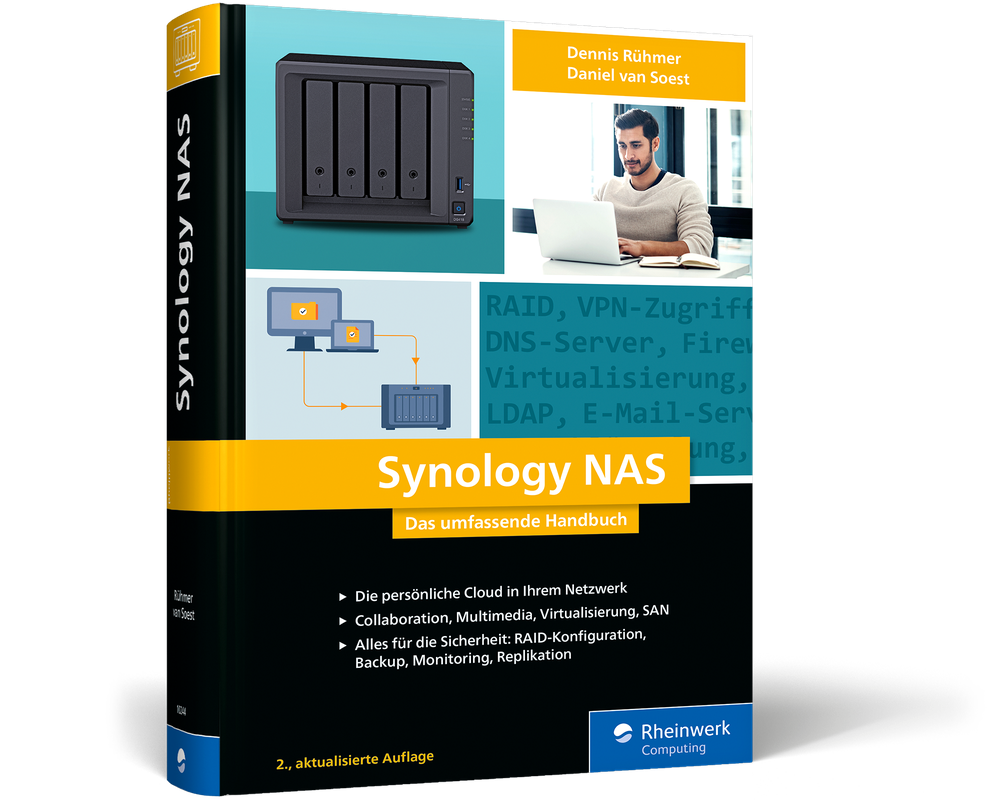
Synology NAS (2. Auflage)
Synology-Wissen für Profis: Das umfassende Handbuch aus dem September 2024 in 2. Auflage.Moderne NAS-Systeme können viel mehr als nur Daten speichern. Dennis Rühmer und Daniel van Soest zeigen Ihnen in diesem umfassenden Begleiter, wie Sie die Synology DiskStation zur Schaltzentrale Ihres Netzwerks machen. Zusammen mit den Netzwerkprofis richten Sie automatisierte Backups ein, geben Daten über Ihre persönliche Cloud frei, konfigurieren detaillierte Benutzersteuerungen, nutzen Collaboration-Dienste und integrieren die DiskStation in Ihre Domain.Aus dem Inhalt:DSM 7 installieren, Benutzer verwaltenFunktionen mit Zusatzpaketen erweiternDas NAS als MultimediazentraleDie DiskStation als private CloudVPN-Konfiguration, SSH-Zugriff und fortgeschrittene AdministrationRAID-Konfigurationen einrichtenSmarte Collaboration: Kalender, Dokumente, Mails austauschenAlles für die Sicherheit: Firewalls, Verschlüsselung, FreigabenZusatzhardware: SSD-Cache, Festplatten, USVDocker-Container auf der DiskStationDas NAS im UnternehmensnetzwerkIntegration ins AD & Domain ControllerLeseprobe (PDF-Link)Über die Autoren:Dr. Dennis Rühmer ist promovierter Ingenieur der Elektrotechnik und arbeitet als wissenschaftlicher Mitarbeiter an der TU Braunschweig.Daniel van Soest arbeitet beim Kommunalen Rechenzentrum Niederrhein in Kamp-Lintfort; die Themenschwerpunkte seiner Tätigkeit als Senior Consultant liegen in der IT-Security, Compliance und Weiterentwicklung.
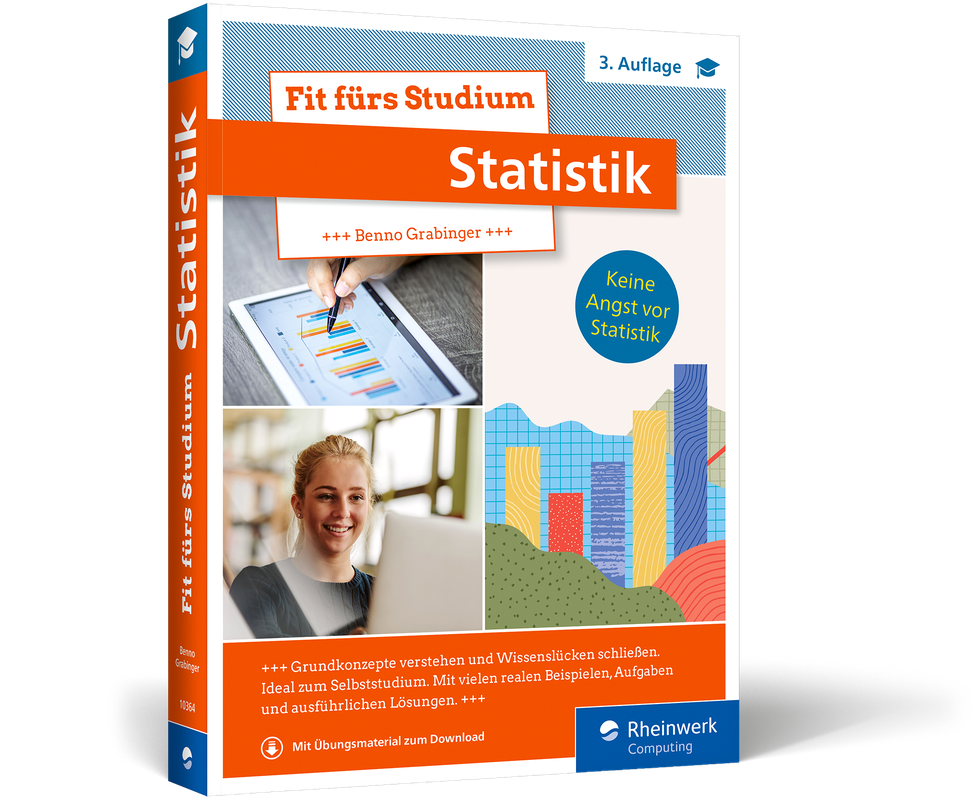
Fit fürs Studium - Statistik (3. Auflg.)
Fit fürs Studium – Statistik. 3., aktualisierte Auflage aus August 2024Statistik gehört in vielen Studiengängen zum unverzichtbaren Handwerkszeug. Die Crux dabei: Nur weil Sie sich für Psychologie, Ernährung, Wirtschaft oder Soziales interessieren, haben Sie nicht unbedingt die passende Schulmathematik parat. Kein Problem: Dieses Buch knüpft an intuitives Denken an. Es führt Sie mit vielen Beispielen durch die Grundbegriffe der Statistik, sodass sich der Sinn von Mittelwerten, Hypothesentests und Co. ganz einfach erschließt.Sie lernen nicht nur, die jeweiligen Berechnungen durchzuführen, sondern auch, mit Datenmaterial eigenständig umzugehen, die richtigen Fragen zu stellen und Ergebnisse sinnvoll und anschaulich grafisch darzustellen. So sind Sie auf Ihre Aufgaben im Studium gut vorbereitet: sowohl auf die erste Hausarbeit mit echten Daten, als auch auf die manchmal gefürchtete Statistik-Vorlesung. Geeignet für alle Studiengänge.Vom Würfel zur Wissenschaft1. Statistik – und zwar ganz von vornFreuen Sie sich auf Beispiele, die sich ohne Vorkenntnisse erschließen und Sie in Wahrscheinlichkeitsrechnung und Statistik einführen. Vom Würfelglück und der Frage, wie man Daten sinnvoll darstellt, geht es Schritt für Schritt sicher in komplexere Themen hinein. Dabei werden mathematische Symbole und Konzepte allgemeinverständlich erklärt.2. Der Reihe nach: beschreibende, schließende & beurteilende StatistikWissen Sie, warum das arithmetische Mittel nicht immer ein sinnvoller »Durchschnitt« ist oder wie mit Statistik am häufigsten »gelogen« wird? Nach den ersten Kapiteln bestimmt – und Sie sind fit in beschreibender Statistik. Erst danach geht es darum, aus Daten Schlüsse zu ziehen und wissenschaftliche Hypothesen zu beurteilen.3. So macht Wissenschaft richtig Spaß!Für die beurteilende Statistik kommt das Rechnen mit Wahrscheinlichkeiten hinzu. Und das kann richtig Spaß machen! Lassen Sie sich darauf ein, »P(E)« neu zu entdecken und Ihre eigene Intuition ins Spiel zu bringen. Nach und nach bekommen Sie für die Methoden realer Forschung ein solides Gespür.Aus dem InhaltGrundbegriffe der StatistikHäufigkeitsverteilungenLagemaßzahlenStreuungsmaßzahlenKovarianz und KorrelationGrundlagen der WahrscheinlichkeitsrechnungBedingte WahrscheinlichkeitenKombinatorikZufallsgrößen und ErwartungswerteNormalverteilung, Binomialverteilung und Co.Wie man Hypothesen richtig testetStichproben und ihre FallstrickeÜber den Autor: Benno Grabinger ist Gymnasiallehrer und Fachberater Mathematik i. R. sowie langjähriger Autor zu mathematikdidaktischen Themen. Seine Schwerpunkte sind die Didaktik der Wahrscheinlichkeitsrechnung und Statistik sowie IT-gestützter Mathematikunterricht.Leseprobe (PDF-Link)

Angular HTTP
In this book, I explain everything you need to know about connecting to backend Rest APIs from your Angular application. In this book, I will show you how to invoke different methods like GET, POST, and the like, how to use interceptors to inject an authentication token into every outgoing request, and much more. We will cover all areas of calling Rest APIs with Angular. By the end of this book, you will be able to call Rest APIs from your Angular application in any scenario. Let us get started. Hello, I am Abdelfattah Ragab, a professional software developer with more than 20 years of experience. I am an expert in Angular, CSS, graphic design and all web related technologies. I have published numerous books on modern CSS layouts and Angular as well as complete business solutions for e-commerce and the like. I hope you enjoy my books. With kind regards.

Engage, Excel, and Elevate with Microsoft Viva Engage
Empower yourself with the knowledge, insights, and practical tools required to successfully implement and leverage Viva Engage to drive organizational success. You will learn how to use Viva Engage to foster unity throughout your organization, facilitating connections among leaders, colleagues, and communities. It offers a platform where individuals can collaborate to generate solutions and innovations, showcase their expertise, and cultivate a sense of belonging in the workplace. As a component of the Microsoft Viva employee experience platform integrated within Microsoft 365, Viva Engage empowers you to enhance connectivity, understanding, purpose, and development within your organization, leveraging your current infrastructure.The book begins by introducing Viva Engage, highlighting its various use cases and how it fits into the broader Microsoft 365 ecosystem. You will learn steps and best practices for implementing Viva Engage within your organization. You will also learn how Viva Engage can be leveraged to improve communication and engagement between leaders and employees. Integrating Viva Engage with other Microsoft 365 tools is discussed, followed by utilizing it for remote work environments. You will be guided with ethical considerations and compliance while working with Viva Engage.After reading this book, you will have the skills to effectively implement and utilize Viva Engage, optimizing its capabilities for enhanced performance.WHAT YOU WILL LEARN* Discover strategies for driving user adoption and engagement with Viva Engage among employees at all levels of the organization* Integrate Viva Engage with other Microsoft 365 tools and services, such as Microsoft Teams, SharePoint, and Yammer, to create a seamless digital workplace experience* Understand various compliance regulations and standards that may apply to organizations using Viva Engage, such as GDPR, HIPAA, and SOC 2* Explore the security features and controls available within Viva EngageWHO THIS IS BOOK FORLeaders and managers interested in leveraging Viva Engage to enhance employee engagement, communication, and collaboration within their organizationsCHARLES DAVID WAGHMARE is a distinguished DBA (Doctor of Business Administration) scholar at the prestigious SP Jain School of Global Management, where he also earned his MBA. With over 17 years of experience in the IT, engineering, and energy sectors, he has built a robust career in information management.Since 2019, Charles has been an Information Management Consultant in the Microsoft 365 space for a global energy leader. Previously, he spent eight years at Capgemini in various roles, including Viva Engage Community Manager and Manager of the Drupal-based Enterprise Knowledge Management system. At Capgemini, he also developed a SharePoint Online knowledge management platform for the Digital Customer Experience (DCX) organization and adopted Microsoft Azure Chatbots to enhance customer communication.Charles's career includes a five-year tenure at ATOS (formerly SIEMENS Information Systems Limited), where he managed SAP-based communities using Technoweb 2.0 and on-premises SharePoint. He also served as the global rollout manager for a structured document-management system.An accomplished author, Charles has written several books on Microsoft 365 technologies, including Viva Engage, SharePoint Online, Azure Chatbots, and ChatGPT. In his spare time, he enjoys reading motivational books, with "The Monk Who Sold His Ferrari" being his favorite.Chapter 1: Introduction to Viva Engage: Understanding the Platform.- Chapter 2: Strategies for Driving User Adoption of Viva Engage.- Chapter 3: Leadership Engagement: Empowering Leaders with Viva Engage.- Chapter 4: Integration of Viva Engage with Microsoft 365.- Chapter 5: Remote working using Viva Engage.- Chapter 6: Ensuring Accessibility and Inclusivity & Security and Compliance considerations for Viva Engage.

Angular Performance Optimization
Welcome to the book Angular Performance Optimization. In this book, I will show you all the ways you can optimize the performance of your Angular application. You already know about changeDetection and lazyLoading, but there's more to do. Let us get started. Hello, I am Abdelfattah Ragab, a professional software developer with more than 20 years of experience. I am an expert in Angular, CSS, graphic design and all web related technologies. I have published numerous books on modern CSS layouts and Angular as well as complete business solutions for e-commerce and the like. I hope you enjoy my books. With kind regards.

Innovation Empowerment in Construction 4.0 by the CDR-Approach
This is a publication-based dissertation. The book examines the promotion of innovation in construction 4.0 through the CDR approach. This opens up a new scientific research field for digital breakthroughs. It raises awareness, explains and enables access to innovative technologies such as digitalization and AI in the construction industry and highlights the associated ethical aspects. This research comes to the conclusion that the human factor forms the basis for designing a socially sustainable digital transformation. The new findings show how innovative technology can support people more efficiently, productively, safely and meaningfully. It specifically addresses responsibility in the corporate environment and develops the key factors for success without neglecting the necessary legal, political, social and educational framework. The aim of this book is to improve and strengthen the transfer of knowledge between research and practice on the basis of scientific communication without language barriers. In this way, the book offers broader access for readers, not only for experts, researchers, designers, implementers, doers and visionaries. The book encourages an interdisciplinary, integrative and constructive dialogue in order to avoid disciplinary silo thinking. The diversity of potential and innovations in the industry is offset by the industry's enormous responsibility to use sustainable, human-controlled AI to achieve the 17 UN SDGs and climate goals and to increase its global competitiveness on the basis of a European quality seal. Surprise and aha effects are inevitable. The book invites key players, everyone involved and everyone who sets new standards, to help shape the digital change in the construction industry and become innovative. The book promotes a new culture of thinking and learning and strengthens the entrepreneurial will to innovate. Opening a new gap in scientific knowledge with this book ultimately leads to a new discipline. In addition, it expands the interdisciplinary dialogue around the globe to find new ways to assume corporate digital responsibility and adapt the framework conditions. The book provides new ideas for defining individual digital corporate strategies. 1. Introduction.- 2. Scientific approach.- 3. Calls for Action.- 4. Cumulative Part of Dissertation.- 5. Discussion.- 6. Results - Digitization and AI need new Culture of Thinking in Construction 4.0.- 7. Limitations and Future work.- 8. Conclusion.- 9. Literature References.

Geography of Order and Chaos in Mechanics
Introductory Survey.- Analytical Mechanics and Integrable Systems.- Perturbation Theory.- Numerical Tools I.- Numerical Tools II.- The Kepler Problem.- The KEPLER Program.- Some Perturbed Keplerian Systems.- The Multi Body Gravitational Problem.- But to What Extent is a Solar System Stable.- Final Remarks and Perspectives.

Building Intelligent Apps with .NET and Azure AI Services
This comprehensive book equips you with the knowledge and skills you need to develop intelligent solutions by leveraging the capabilities of Azure AI Services. The book adopts a practical and example-based approach to help you easily grasp the subject matter and apply it effectively.The book begins by covering essential topics that lay the foundation for understanding Azure AI Services. You will know how to provision Azure AI Services and seamlessly integrate them into your .NET applications. Through detailed and illustrative examples, you will be guided step-by-step in building intelligent solutions that target a range of platforms. In addition to the core concepts, the book delves into various AI services, offering practical guidance on building solutions for a wide array of scenarios. From text translation to image classification, you will learn how to harness the power of Azure AI Services to solve complex problems.The book presents near-production scenarios and includes carefully crafted lab exercises to provide you with a hands-on learning experience.WHAT YOU WILL LEARN* Understand various Azure AI services required to build intelligent apps* Perform language-based document classification with Azure AI Language Service* Build a multi-language text translator app with .NET MAUI* Integrate GenAI capabilities to your applications by leveraging Azure OpenAIWHO THIS BOOK IS FORDevelopers, cloud architects, and tech enthusiasts looking forward to building scalable and intelligent solutions using Azure AI Services and .NETASHIRWAD SATAPATHI works as a software engineer at Microsoft and has expertise in building scalable applications with .NET Core. He has a deep understanding of building full-stack applications using .NET and Azure PaaS and Serverless offerings. And he is an active blogger in the C# developer community. He has been awarded the C# Corner Most Valuable Professional (MVP) - September 2020, and September 2021, for his remarkable contributions to the developer community.Ashirwad is an active speaker and delivers sessions on Blazor and Microsoft Azure. He has spoken for multiple communities such as Microsoft Reactor Bangalore, UTF, Konfhub Tech Conferences, and Serverless Days Amsterdam. And he is an active community organizer and member of Utkal Techies Forum (UTF), a developer community based out of Odisha, India, and helps organize events for the community. He is a member of the Outreach Committee of .NET Foundation. And he has started Serverless Days Bhubaneswar and hosts virtual sessions to build awareness among the developer community in the region about Serverless technologies and making them proficient enough to build highly scalable and efficient serverless applications.Chapter 1: Introduction.- Chapter 2: Build a language-based document classifier with Azure Functions.- Chapter 3: Build a multi-language text translator app with Azure Functions.- Chapter 4: Build a desktop app with .NET MAUI to generate texts from audio files.- Chapter 5: Build a desktop app with .NET MAUI to extract text from images.- Chapter 6: Build a web app to extract data from invoices using Azure AI Document Intelligence.- Chapter 7: Build a Content flagging app with Azure AI Content Safety.- Chapter 8: Build a text summarizer with Azure OpenAI.

Copilot for Microsoft 365
Become a master of productivity with Copilot for Microsoft 365! Copilot and the technology behind it are _so new_ that you’ll need a thorough walkthrough from start to finish or you’ll be left behind. If it feels overwhelming now, it’s only going to get worse as more companies race to compete in releasing their generative AI apps. It doesn’t matter if you are young or old, fresh from the university or an industry veteran—generative AI is here to stay, and managers will expect their employees to know how to use it. Beginners wondering what Microsoft Copilot is will walk away with a thorough understanding of what it does, what it will cost, how to access and use it, and what enterprise-grade security it offers.This book contains a brief introduction to generative AI for readers who are unfamiliar with the overall concept or have little to no experience chatting with AI. It discusses large language models, responsible AI, and how Copilot integrates with Microsoft Graph and enterprise data such as email, calendar, chats, meetings, contacts, and documents. You will learn what subscriptions are covered and enjoy chapters on how to make use of Copilot in Word, Excel, PowerPoint, Outlook, Teams, and Microsoft Graph-grounded chat to increase productivity that’s specific to data within your organization.Author Jess Stratton’s practical examples are clear and will reassure you that Copilot and generative AI is a tool to help you be the best professional you can be, instead of replacing you. Written by a professional trainer who makes learning fun with clear step-by-step examples and screenshots, you will enjoy this book and discover how Copilot for Microsoft 365 can help you solve problems, accomplish tasks faster, and communicate better.WHAT YOU WILL LEARN* Understand what Generative AI is and how to write a prompt* See how Copilot is safely integrated with your enterprise data* Gain insight into how companies are working to remove bias and create AI responsibly* Dive into each way Copilot can help you in Word, Excel, PowerPoint, Outlook, Teams, and Microsoft Graph-grounded chatWHO THIS BOOK IS FOREnd users, managers, stakeholders, decisions makers, Microsoft 365 users who get overwhelmed starting projects or who would like to gain more time back in their day, and _anyone_ who would like to learn some Internet history and discover what all the fuss is about over generative AIJESS STRATTON, aka Nerd Girl Jess, is a tech trainer, productivity expert, and former Senior Staff Instructor with lynda.com/LinkedIn Learning. With over 50 published courses in the LinkedIn Learning library and thousands of hours of live teaching and webinars, she specializes in Microsoft 365, productivity, and the Google Workspace suite of products. Her courses on Excel have over one million views on LinkedIn Learning and some have even been featured on Delta’s in-flight entertainment systems. She has owned and operated a successful brick-and-mortar boutique style computer learning facility, and currently has a podcast titled Nerd Girl Jess Untangles Tech. You can find her at nerdgirljess.com.Chapter 1: An Introduction to Chat and Generative AI.- Chapter 2: An Introduction to Microsoft Copilot.- Chapter 3: A (Brief) Introduction to Responsible AI.- Chapter 4: Accessing Copilot.- Chapter 5: Copilot in Word.- Chapter 6: Copilot in Excel.- Chapter 7: Copilot in PowerPoint.- Chapter 8: Copilot in Outlook.- Chapter 9: Copilot in Teams.- Chapter 10: Copilot in Microsoft Graph-Grounded Chat.- Chapter 11: A (Brief) Talk About Copilot in the Microsoft Ecosystem.

KI ist Chefsache!
Wettbewerbsvorteil KI - die besten Strategien und Impulse für Unternehmer und Unternehmen!Die Künstliche Intelligenz verstehen und im Unternehmen richtig nutzen ist Chefsache: Unternehmer stehen vor wichtigen Entscheidungen, denn KI wird die Grundlage für das Business der Zukunft und ein entscheidender Wettbewerbsfaktor.Die KI-Experten Oliver Schwartz und Michael Gebert haben den Unternehmerblick auf die digitale Transformation und liefern Strategien und Impulse für den Weg in die Zukunft - mit Mut zur Innovation.Sie vermitteln relevantes Grundlagenwissen, erweitern mit vielen Praxisbeispielen den Blick auf den Business-Einsatz von Künstlicher Intelligenz und blicken in die Zukunft der Geschäfts- und Arbeitswelt.Mit diesem Buch für Unternehmer, Selbständige und Führungskräfte lernen Sie die Künstliche Intelligenz verstehen und können Chancen und Risiken sicher bewerten. Sie erfahren Wissenswertes über die sich verändernden rechtlichen Rahmenbedingungen und die entscheidenden ethischen Aspekte. Damit schaffen Sie zukunftsfähige Strukturen für die KI-Nutzung in Ihrem Team und Unternehmen.Oliver Schwartz ist Experte für strategische Kommunikation mit mehr als 25 Jahren Erfahrung als Manager in internationalen Technologieunternehmen. Seine Expertise bringt er heute in Beratungsmandate mit Unternehmen, Vorständen und GeschäftsführerInnen und als Interimsmanager ein. Wissen und Impulse rund um KI in Business und Gesellschaft teilt er in Veröffentlichungen, als Autor, Vortrags-Redner und als Podcaster.Dr. Michael Gebert ist visionärer Unternehmer und international gefragter Keynote-Sprecher. Er blickt auf 30 Jahre strategisches Denken und innovatives Handeln zurück. Als Positivist mit solidem betriebswirtschaftlichen Hintergrund und einer Promotion in Schwarmintelligenz, beschäftigt er sich leidenschaftlich mit dem ethisch akzeptablen Einsatz von KI-Innovationen und dezentralen Strukturen im Unternehmensumfeld.Vorwort der Autoren: Wie positiv stehen Sie der Künstlichen Intelligenz und der damit verbundenen Revolution in der Geschäftswelt gegenüber? 9IMPULS- VORWORT ZUM TEIL 1Werden Sie zum KI- Profiteur, nicht zum Opfer 15Von Julien BackhausTEIL 1 KÜNSTLICHE INTELLIGENZ VERSTEHEN1 Grundlagen-Wissen 232 Die (echte) Geschichte der KI 313 Maschinelles Lernen und Sprachmodelle 394 General AI und Super-Intelligenz 475 Integrationsfähigkeit und Resilienz 556 Die ethische und rechtliche Debatte 637 Grundlagen der unternehmensrelevanten Regulierung 71IMPULS-VORWORT ZUM TEIL 2Emergenz von menschinduzierter Intelligenz 83Von Dr Joachim SchwerinTEIL 2 KI IM UNTERNEHMEN RICHTIG NUTZEN8 KI ist Chefsache! 939 Mit Strategie und Zielen an die KI rangehen 10110 Chancen und Risiken bewerten 10911 Interne Kommunikation: KI-Policy im Unternehmen 11712 Mut zur Innovation und zu Visionen 12513 Ein Blick in die Welt: Impulse und Blaupausen 13314 KI im Mittelstand und in kleinen Unternehmen 141IMPULS- VORWORT ZUM TEIL 3Die Revolution jenseits der Trends 153von Prof Tim BruystenTEIL 3 BLICK IN DIE ZUKUNFT15 Wie die KI sich weiterentwickelt 16516 Datenknappheit vs Datenexplosion 17317 Veränderung der rechtlichen Rahmenbedingungen 18118 Die Rolle von KI im Unternehmen 2030 (und danach) 18919 KI-Arbeitswelten der Zukunft aus Mitarbeitenden-Sicht 19720 Transformationsschleusen für Schlüsselindustrien 20521 Als Unternehmer zukunftssichere Strukturen schaffen 213Schlusswort der Autoren: Auf den Fokus kommt es an! 225ANHANGKI Expertenforum 229Die Autoren 230Von den Autoren empfohlene Literatur und weitere Informationsquellen 233Stichwortverzeichnis 237

Zero Trust Sicherheit
Verstehen Sie, wie Zero-Trust-Sicherheit in Ihr Unternehmen integriert werden kann und sollte.Dieses Buch deckt die Komplexität von Unternehmensumgebungen ab und liefert die realistischen Anleitungen und Anforderungen, die Ihr Sicherheitsteam benötigt, um eine Reise zu Zero Trust erfolgreich zu planen und auszuführen und gleichzeitig mehr Wert aus Ihrer bestehenden Unternehmenssicherheitsarchitektur zu ziehen.Nach der Lektüre dieses Buches werden Sie in der Lage sein, eine glaubwürdige und vertretbare Zero-Trust-Sicherheitsarchitektur für Ihr Unternehmen zu entwerfen und eine schrittweise Umstellung zu implementieren, die zu deutlich verbesserter Sicherheit und optimierten Abläufen führt.Zero Trust Sicherheit hat sich zu einem wichtigen Branchentrend entwickelt, und dennoch herrscht immer noch Unsicherheit darüber, was es bedeutet.Bei Zero Trust geht es darum, die zugrundeliegende Philosophie und den Ansatz für die Unternehmenssicherheit grundlegend zu ändern - weg von veralteten und nachweislich ineffektiven perimeterzentrierten Ansätzen hin zu einem dynamischen, identitätszentrierten und richtlinienbasierten Ansatz.Diese Art von Umstellung kann eine Herausforderung sein. Ihr Unternehmen hat bereits Sicherheitsressourcen wie Verzeichnisse, IAM-Systeme, IDS/IPS und SIEM implementiert und in Betrieb genommen, und es kann schwierig sein, dies zu ändern. Zero Trust Sicherheit deckt die gesamte Bandbreite der Unternehmenssicherheit und IT-Architekturen ab und bietet fundierte architektonische Anleitungen und technische Analysen mit dem Ziel, den Weg Ihres Unternehmens zu Zero Trust zu beschleunigen.WAS SIE LERNEN WERDEN* Sie verstehen die Sicherheitsprinzipien von Zero Trust und warum es wichtig ist, diese zu übernehmen* Erkennen der Sicherheits- und Betriebsvorteile von Zero Trust* Treffen Sie fundierte Entscheidungen darüber, wo, wann und wie Sie Zero Trust Sicherheitsarchitekturen einsetzen* Entdecken Sie, wie sich der Weg zu Zero Trust auf Ihr Unternehmen und Ihre Sicherheitsarchitektur auswirken wird* Sie sind in der Lage, Ihre Reise in Richtung Zero Trust zu planen und gleichzeitig Projekte zu identifizieren, die Ihrem Unternehmen unmittelbare Sicherheitsvorteile bringen können.FÜR WEN IST DIESES BUCH GEDACHT?Sicherheitsverantwortliche, -architekten und -praktiker sowie CISOs, Sicherheitsarchitekten in Unternehmen, Sicherheitsingenieure, Netzwerksicherheitsarchitekten, Lösungsarchitekten und Zero-Trust-StrategenJASON GARBIS ist Gründer und Leiter von Numberline Security, einem Beratungsunternehmen, das Unternehmen bei der Vorbereitung, Definition und Umsetzung von effektiven Zero Trust-Sicherheitsstrategien unterstützt. Jason hat mehrere Bücher verfasst, darunter Zero Trust Security: An Enterprise Guide und Getting Started With Zero Trust. Er ist Co-Vorsitzender der Zero Trust Working Group bei der Cloud Security Alliance und tritt häufig als Redner bei Branchenkonferenzen auf. Jason ist CISSP-zertifiziert, hat einen BS in Computerwissenschaften von der Cornell University und einen MBA von Northeastern. Beruflich hat er Erfahrung in den Bereichen Identitätsmanagement, Unternehmenssicherheitsarchitekturen, Netzwerksicherheit und Sicherheitsstrategie. Zuvor war er als Chief Product Officer bei Appgate tätig und hatte Positionen bei Sicherheitsunternehmen wie RSA und Aveksa inne.JERRY W. CHAPMAN ist Cybersicherheitsexperte mit dem Schwerpunkt Identität. Mit mehr als 25 Jahren Branchenerfahrung hat Jerry W. Chapman zahlreiche Kunden erfolgreich bei der Entwicklung und Implementierung ihrer IAM-Strategien für Unternehmen beraten, die sowohl den Sicherheits- als auch den Geschäftszielen entsprechen.Als IAM-Branchenexperte bietet Jerry Anleitung, Unterstützung und Vordenkerdienste in mehreren Cybersicherheitsbereichen, wobei er sich auf die Positionierung von Identität als Kernkomponente in der Sicherheitsarchitektur von Unternehmen konzentriert.Jerry ist in der technischen Arbeitsgruppe der Identity Defined Security Alliance (IDSA) aktiv, wo er der ursprüngliche technische Architekt der Gruppe war.Jerry ist ein zertifizierter Forrester Zero Trust Strategist, hat einen BS in Computer Information Systems von der DeVry University und macht derzeit einen Abschluss in angewandter Mathematik von der Southern New Hampshire University.Teil I: Überblick.- Kapitel 1: Einführung.- Kapitel 2: Was ist Zero Trust?.- Kapitel 3: Zero-Trust-Architekturen.- Kapitel 4: Zero Trust in der Praxis.- Teil II: Zero Trust und Komponenten der Unternehmensarchitektur.- Kapitel 5: Identitäts- und Zugriffsmanagement.- Kapitel 6: Netzwerkinfrastruktur.- Kapitel 7: Netzwerkzugangskontrolle.- Kapitel 8: Intrusion Detection and Prevention Systems.- Kapitel 9: Virtual Private Networks.- Kapitel 10: Firewalls der nächsten Generation.- Kapitel 11: Security Operations.- Kapitel 12: Privileged Access Management.- Kapitel 13: Data Protection.- Kapitel 14: Infrastructure and Platform as a Service.- Kapitel 15: Software as a Service.- Kapitel 16: IoT Devices and "Things".- Teil III: Putting It All Together.- Kapitel 17: A Zero Trust Policy Model.- Kapitel 18: Zero Trust Scenarios.- Kapitel 19: Making Zero Trust Successful.- Kapitel 20: Conclusion.- Kapitel 21: Afterword.- Appendix A: Further Reading.-