

Computer und IT

Hands-on GitHub Actions
Implement continuous integration/continuous delivery (CI/CD) workflows for any application you develop through GitHub Actions. This book will give you an in-depth idea of implementation patterns, solutions for different technology builds, guidelines to implement your own custom components as actions, and usage of features available with GitHub Actions workflows, to set up CI/CD for your repositories.Hands-on GitHub Actions starts with an introduction to GitHub actions that gives an overview on CI/CD followed by an introduction to its workflows. Next, you will learn how to use variables in a GitHub workflow along with tokens via a REST API. Further, you will explore artifacts and caching dependencies in GitHub and use artifacts in subsequent jobs. Using self-hosted runners is discussed next where you will set up your own hardware and software to run GitHub actions. You will go through publishing packages and migrate to Azure DevOps Pipelines. Along the way, you will use Redis service and PostgreSQL service containers and create custom actions. Finally, you will work with GitHub apps and understand the syntax reference for GitHub Actions and workflows.WHAT YOU WILL LEARN* Create workflows for any platform and any language with GitHub Actions* Develop custom GitHub actions to enhance features and usage of database and service containersUse hosted runners and create self-hosted runners for GitHub workflows * Use GitHub Package registry with GitHub Actions to share and use packagesWHO THIS BOOK IS FORDevOps teams who want to build quality CI/CD workflows.CHAMINDA CHANDRASEKARA is a Microsoft Most Valuable Professional (MVP) for Visual Studio ALM and Scrum Alliance Certified ScrumMaster®, and focuses on and believes in continuous improvement of the software development life cycle. He is the Cloud Development and DevOps Architect at eKriegers (Pvt) Ltd. Chaminda is an active Microsoft Community Contributor (MCC) who is well recognized for his contributions in Microsoft forums, TechNet galleries, wikis, and Stack Overflow and he contributes extensions to Azure DevOps Server and Services (former VSTS/TFS) in the Microsoft Visual Studio Marketplace. He also contributes to other open source projects in GitHub. Chaminda has published six books with Apress.PUSHPA HERATH is a Microsoft Most Valuable Professional (MVP) working as a Senior DevOps Engineer at 99x. She has many years of experience in Azure DevOps Server and Services (formerly VSTS/TFS), Azure cloud platform and QA Automation. She is an expert in DevOps currently leading Sri Lanka DevOps community, and she has shown in depth knowledge in Azure cloud platform tools in her community activities. She has published four books with Apress and spoken in community evets as well as in the youtube channel of her Sri Lanka DevOps community. Pushpa blogs on technology at DevOps Adventure.CHAPTER 1: INTRODUCTION TO GITHUB ACTIONSCHAPTER GOAL: Give conceptual overview on CI CD while elaborating on the need of software delivery automation and basic concepts of GitHub Actions.NO OF PAGES: 15SUB -TOPICS1. Introducing Concepts (CI/CD)2. Why we need SW Delivery Automation?3. What are GitHub Actions?4. Identifying core concepts in GitHub Actions5. GitHub hosted runners.CHAPTER 2: GETTING STARTED WITH GITHUB ACTIONS WORKFLOWSCHAPTER GOAL: Introduction to GitHub Actions workflows.NO OF PAGES: 25SUB - TOPICS1. Using preconfigured workflow templates2. Using Marketplace Actions to create workflows3. Building a .NET Core Web App with GitHub Actions4. Understanding the structure of a Workflow (jobs, actions, set job dependencies etc.)5. Setting up continuous integration using GitHub actionsCHAPTER 3: VARIABLES AND SECRETS WITH GITHUB ACTIONSCHAPTER GOAL: Lessons to provide hands-on guidance using variables and secrets in a GitHib workflow.NO OF PAGES : 15SUB - TOPICS:1. Defining and using variables2. Understanding the default variables usage3. Naming conventions for variables4. Defining and using secretsCHAPTER 4: USING TOKENSCHAPTER GOAL: Understanding the use of system token and the personal access tokens to work with GitHub repos and issues via the REST API in GitHub Actions workflow.NO OF PAGES: 15SUB - TOPICS:1. Using GITHUB_TOKEN2. Creating a Personal Access Token3. Using Personal Access Token in workflowCHAPTER 5: ARTIFACTS AND CACHING DEPENDENCIESNO OF PAGES: 20SUB - TOPICS:1. Storing content in Artifacts2. Using artifacts in subsequent jobs3. Uploading to external artifact store and using them in other workflows4. Deleting artifacts5. Caching workflow dependencies (compare caching and artifacts, using cache action and matching cache keys)6. Limitations and eviction policy in cachingCHAPTER 6: USING SELF-HOSTED RUNNERSCHAPTER GOAL: Setting up your own hardware and software to run GitHub actions..NO OF PAGES: 30SUB - TOPICS:1. Understanding self-hosted runners2. Configuring and adding/removing self-hosted runners GitHub.3. Self-hosted runners with proxy4. Using labels to organize self-hosted runners5. Using self-hosted runners in workflows6. Monitoring and access control for self-hosted runnersCHAPTER 7: PUBLISHING PACKAGES AND MIGRATING FROM AZURE DEVOPS PIPELINESCHAPTER GOAL: How to create and publish packages in GitHub actions and migrating pipelines from Azure DevOps pipelines.NO OF PAGES: 20SUB - TOPICS:1. Creating and publishing build artifacts as nuget2. Using custom packages in workflows3. Using GitHub Packages4. Migrating Azure PipelinesCHAPTER 8: USING DATABASE AND SERVICE CONTAINERSCHAPTER GOAL: Hands on lessons on using Redis service containers and PostgreSQL service containers.NO OF PAGES: 20SUB - TOPICS:1. Running Redis jobs on containers2. Running Redis jobs on runner machine3. Using Redis service container4. Running PostgreSQL jobs on containers5. Running PostgreSQL jobs on runner machine6. Using PostgreSQL service containerCHAPTER 9: CREATING CUSTOM ACTIONSCHAPTER GOAL: Step by step guidance to create your own GitHub actions.NO OF PAGES: 20SUB - TOPICS:1. Understanding action types2. Steps to create a simple action3. Creating Docker container action4. Publishing actions to marketplaceCHAPTER 10: GITHUB APPSCHAPTER GOAL: Using and creating GitHub Apps in workflows.NO OF PAGES: 30SUB - TOPICS:1. Understanding GitHub Actions and Apps2. Creating GitHub Apps3. Using GitHub AppsCHAPTER 11: SYNTAX REFERENCE FOR GITHUB ACTIONS AND WORKFLOWSCHAPTER GOAL: Syntax guide for GitHub Actions and Workflows.NO OF PAGES: 15SUB - TOPICS:1. Understanding Workflow Syntax2. Triggers for Workflows3. Using context and expressions4. Workflow commands

.NET Developer's Guide to Augmented Reality in iOS
Attention .NET developers, here is your starting point for learning how to create and publish augmented reality (AR) apps for iOS devices.This book introduces and explores iOS augmented reality mobile app development specifically for .NET developers. The continued adoption and popularity of Xamarin, a tool that allows cross-platform mobile application development, opens up many app publishing opportunities to .NET developers that were never before possible, including AR development.You will use Xamarin to target Apple’s augmented reality framework, ARKit, to develop augmented reality apps in the language you prefer—C#. Begin your journey with a foundational introduction to augmented reality, ARKit, Xamarin, and .NET. You will learn how this remarkable collaboration of technologies can produce fantastic experiences, many of them never before tried by .NET developers. From there you will dive into the fundamentals and then explore various topics and AR features. Throughout your learning, proof of concepts will be demonstrated to reinforce learning.After reading this book you will have the fundamentals you need, as well as an understanding of the overarching concepts that combine them. You will come away with an understanding of the wide range of augmented reality features available for developers, including the newest features included in the latest versions of ARKit.WHAT YOU WILL LEARN* Create rich commercial and personal augmented reality mobile apps* Explore the latest capabilities of ARKit* Extend and customize chapter examples for building your own amazing apps* Graduate from traditional 2D UI app interfaces to immersive 3D AR interfacesWHO THIS BOOK IS FORDevelopers who want to learn how to use .NET and C# to create augmented reality apps for iOS devices. It is recommended that developers have some Xamarin experience and are aware of the cross-platform options available to .NET. A paid Apple developer account is not needed to experiment with the AR code samples on your devices.LEE ENGLESTONE is an innovative, hands-on software development manager and technical lead, based in Stockport, England. He has been a .NET developer for many years, writing code for Windows, web, mobile, cloud, and augmented reality applications in his spare time. He believes that there are many new exciting opportunities for developers in the area of augmented reality and is excited to share them with his fellow .NET developers. In recognition of his community contributions, he has been awarded a Microsoft MVP in Developer Technologies.CHAPTER 1 - SETTING UP YOUR ENVIRONMENTCHAPTER 2 - BASIC CONCEPTSCHAPTER 3 - NODES, GEOMETRIES, MATERIALS, AND ANCHORSCHAPTER 4 - BUILT IN AR GUIDESCHAPTER 5 - ANIMATIONSCHAPTER 6 - CONSTRAINTSCHAPTER 7 - LIGHTINGCHAPTER 8 - VIDEO AND SOUNDCHAPTER 9 - PLANE DETECTIONCHAPTER 10 - IMAGE DETECTIONCHAPTER 11 - FACE TRACKING AND EXPRESSION DETECTIONCHAPTER 12 - TOUCH GESTURES AND INTERACTIONCHAPTER 13 - 3D MODELSCHAPTER 14 - PHYSICSCHAPTER 15 - OBJECT DETECTIONCHAPTER 16 - BODY TRACKINGCHAPTER 17 - PUBLISHING TO THE APP STORE

Getting Inside Java - Beginners Guide
ABOUT THE BOOK:This textbook was written with two primary objectives. The first is to introduce the Java programming language. Java is a practical and still-current software tool; it remains one of the most popular programming languages in existence, particularly in areas such as embedded systems. Java facilitates writing code that is very efficient and powerful and, given the ubiquity of Java compilers, can be easily ported to many different platforms. Also, there is an enormous code-base of Java programs developed, and many systems that will need to be maintained and extended for many years to come. The second key objective is to introduce the basic concepts of OOPs.Hope, It will be helpful. All the Best!-Prem KumarABOUT THE AUTHOR:Destiny drew Prem Kumar towards computers when the IT industry was just making a big evolution in India. Having completed his education from Silli Polytechnic in Computer Science Engineering. He moved on with his higher studies from Gandhi Institute for Technology, Bhubaneshwar.Prem has a passion for exploring IT knowledge and is founder of well-growing, a startup company "F5 Developers". He is a much sought after speaker on various technology subjects and is a regular columnist for Open Source and OSE Hub. His current affiliations include being a Founder of F5 Developers, a multi-service provider company including the subsidiary companies of F5, i.e, THOR, F5 Initiative and OSE Hub. In recognition to his contribution Microsoft awarded him the prestigious “Microsoft Technology Associate” award in 2019 for Java Programming. He can be reached at premkmr1611@gmail.com.

AWS for Solutions Architects
One of the most popular cloud platforms in the world, Amazon Web Services (AWS) offers hundreds of services with thousands of features to help you build scalable cloud solutions; however, it can be overwhelming to navigate the vast number of services and decide which ones best suit your requirements. Whether you are an application architect, enterprise architect, developer, or operations engineer, this book will take you through AWS architectural patterns and guide you in selecting the most appropriate services for your projects. AWS for Solutions Architects is a comprehensive guide that covers the essential concepts that you need to know for designing well-architected AWS solutions that solve the challenges organizations face daily. You'll get to grips with AWS architectural principles and patterns by implementing best practices and recommended techniques for real-world use cases. The book will show you how to enhance operational efficiency, security, reliability, performance, and cost-effectiveness using real-world examples. By the end of this AWS book, you'll have gained a clear understanding of how to design AWS architectures using the most appropriate services to meet your organization's technological and business requirements.
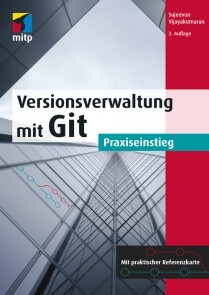
Versionsverwaltung mit Git
* Von grundlegenden Funktionen über die Handhabung von Branches und Remote-Repositorys bis zu Tipps und Tricks für (nicht nur) alltägliche Funktionen * Auswahl sinnvoller Workflows und Einsatz in Teams * Git-Repositorys hosten mit GitHub und GitLab Git ist in der Softwareentwicklung bereits weit verbreitet – sowohl in Firmen als auch in Open-Source-Projekten. Zum Einstieg lernen Anfänger häufig nur die wichtigsten Befehle, die schnell nicht mehr ausreichen, vor allem wenn die ersten Fehler auftreten. Dieses Buch behandelt einerseits die gängigen Befehle, die Sie beim täglichen Arbeiten mit Git brauchen. Andererseits geht es dem Autor auch darum, dass Sie Git als Ganzes verstehen, um es effektiv im Entwicklungsprozess einsetzen zu können. Der Fokus des Buchs liegt auf dem praktischen Arbeiten mit Git. Sie lernen anhand eines Projekts, welche Befehle es gibt, wie diese arbeiten und wie Sie auftretende Probleme lösen können. Neben alltäglichen Funktionen finden Sie auch seltener gebrauchte Kommandos, die aber ebenfalls wichtig sind. Dabei legt der Autor großen Wert auf die Einbindung und Anpassung des Entwicklungsprozesses. Im zweiten Teil des Buchs werden fortgeschrittene Themen behandelt. Der Schwerpunkt liegt auf dem Einsatz von Git in Teams. Darunter etwa das Hosten verteilter Repositorys mit GitHub und GitLab. Ein weiteres Kapitel behandelt die Workflows, die je nach Anzahl der beteiligten Personen, Branches und Repositorys eines Projekts variieren. Darüber hinaus gibt Ihnen der Autor hilfreiche Informationen für den Umstieg von Subversion, einen Überblick über grafische Git-Programme, Hinweise für eine langfristig nachvollziehbare Git-Historie sowie eine Einführung in DevOps, wofür Git die technische Grundlage bildet. Ein Kapitel zu häufig gestellten Fragen rundet diesen Praxiseinstieg ab. Das Buch richtet sich sowohl an blutige Einsteiger als auch an erfahrene Leser. Aus dem Inhalt: * Konfiguration * Arbeiten mit Branches * Verteilte Repositorys * Hosting mit GitHub und GitLab * Workflows * Hooks * Umstieg von Subversion * Zahlreiche Tipps für die tägliche Arbeit * Grafische Clients * Tipps für nachvollziehbare Git-Historien * Frequently Asked Questions * Einstieg in DevOps * Befehlsreferenz

Building Custom Tasks for SQL Server Integration Services
Build custom SQL Server Integration Services (SSIS) tasks using Visual Studio Community Edition and C#. Bring all the power of Microsoft .NET to bear on your data integration and ETL processes, and for no added cost over what you’ve already spent on licensing SQL Server. New in this edition is a demonstration deploying a custom SSIS task to the Azure Data Factory (ADF) Azure-SSIS Integration Runtime (IR).All examples in this new edition are implemented in C#. Custom task developers are shown how to implement custom tasks using the widely accepted and default language for .NET development.Why are custom components necessary? Because even though the SSIS catalog of built-in tasks and components is a marvel of engineering, gaps remain in the available functionality. One such gap is a constraint of the built-in SSIS Execute Package Task, which does not allow SSIS developers to select SSIS packages from other projects in the SSIS Catalog. Examples in this book show how to create a custom Execute Catalog Package task that allows SSIS developers to execute tasks from other projects in the SSIS Catalog. Building on the examples and patterns in this book, SSIS developers may create any task to which they aspire, custom tailored to their specific data integration and ETL needs.WHAT YOU WILL LEARN* Configure and execute Visual Studio in the way that best supports SSIS task development* Create a class library as the basis for an SSIS task, and reference the needed SSIS assemblies* Properly sign assemblies that you create in order to invoke them from your task* Implement source code control via Azure DevOps, or your own favorite tool set* Troubleshoot and execute custom tasks as part of your own projects* Create deployment projects (MSIs) for distributing code-complete tasks* Deploy custom tasks to Azure Data Factory Azure-SSIS IRs in the cloud* Create advanced editors for custom task parametersWHO THIS BOOK IS FORFor database administrators and developers who are involved in ETL projects built around SQL Server Integration Services (SSIS). Readers do not need a background in software development with C#. Most important is a desire to optimize ETL efforts by creating custom-tailored tasks for execution in SSIS packages, on-premises or in ADF Azure-SSIS IRs.ANDY LEONARD is Chief Data Engineer at Enterprise Data & Analytics, an SSIS trainer, consultant, developer of the Data Integration Lifecycle Management (DILM) Suite, a Business Intelligence Markup Language (Biml) developer, and BimlHero. He is a SQL Server database and data warehouse developer, community mentor, engineer, and occasional farmer. He is co-author of Apress books SQL Server Integration Services Design Patterns and The Biml Book, and author of the Apress book Data Integration Life Cycle Management with SSIS and the Stairway to Integration Services series at SQLServerCentral.com.1. The Story of This Book2. Preparing the Environment3. Creating the Assembly Project4. Check-In the Project Code5. Signing the Assembly6. Preparing to Build7. Coding the Task8. Coding a Simple Task Editor9. Signing and Binding10. Expanding Editor Functionality11. Minimal Coding for the Complex Editor12. Editor Integration13. Implement Views and Properties14. Implement New Connection15. Implement Use32bit, Synchronized, and LoggingLevel SettingsView Properties16. Refactoring SourceConnection17. Refactoring the SSIS Package Hierarchy18. Instrumentation and Validation19. Crushing Bugs20. Adding Synchronous Execution Properties21. Testing the Task22. Building the Setup Project23. Using the Execute Catalog Package Task in an SSIS Framework24. Deploying to Azure-SSIS25. Test the Task in Azure Data Factory26. Notes from my Experience

Der Computer erscheint im Holozän
Die sieben Weltwunder wurden bereits in der Antike beschrieben, etwa zur selben Zeit wie die mechanische Rechenhilfe Abacus, ein Zählrahmen mit Holz- oder Glasperlen. Dieses Buch beschreibt und diskutiert die sieben Weltwunder der IT, ohne die unsere digitale Wirtschaft und Gesellschaft kaum überlebensfähig scheint: Computermaus, Datenbanken, Kryptografie, Graphgrammatiken, Internet, Blockchain und Soft Computing.Jedes Weltwunder der IT wird kurz charakterisiert, bevor Anwendungsoptionen für Wirtschaft und Gesellschaft exemplarisch aufgezeigt und gewürdigt werden.Das Werk richtet sich an alle, die sich mit der digitalen Transformation auseinandersetzen. Es soll helfen, digitale Entwicklungen im eigenen Unternehmen, in der Verwaltung oder im öffentlichen wie im privaten Leben zu positionieren und zu reflektieren.ANDREAS MEIER hat Musik an der Musikakademie in Wien und Mathematik an der ETH in Zürich studiert, wo er doktorierte und habilitierte. Er arbeitete in internationalen Forschungsinstitutionen und Organisationen und war an der Universität Fribourg, Schweiz für eBusiness und eCommerce verantwortlich. Er gründete und leitete das Forschungszentrum Fuzzy Management Methods (FMsquare.org).FABRICE TSCHUDI hat Kommunikationswissenschaften an der Universität Fribourg und Wirtschaftsinformatik an der Universität Bern studiert. Er setzt sich für eine Vision von digitalen Systemen ein, die zu einer lebensdienlichen Wirtschaft und Gesellschaft im Sinne von nachhaltigem Wohlergehen beitragen. Er begleitet Organisationen auf dem Weg zu „wertvoller Digitalisierung“ und ist überzeugt, dass partizipative Lern- und Arbeitsformate hierfür ein zentraler Erfolgsfaktor sind.De septem mundi miraculis - Vom Abacus zur digitalen Rechenmaschine - Die 7 Weltwunder der IT - Wo führt die Reise hin? - Literatur

Microsoft Conversational AI Platform for Developers
Build a chatbot using the Microsoft Conversational AI platform. This book will teach you, step by step, how to save time and money by including chatbots in your enterprise's strategy. You will learn how to be proficient at every phase of development, from collaboration on a chatbot in an end-to-end scenario, to the first mock-up phase, and on through to the deployment and evaluation phases.Microsoft built a cloud service ecosystem for running artificial intelligence workloads in public cloud scenarios and a robust AI platform that offers a broad range of services targeting conversational artificial intelligence solutions such as chatbots.Building a chatbot requires not just developer coding skills but special considerations, including input from business stakeholders such as domain matter experts and power users. You will learn by example how to use a great set of tools and services to bridge the gap between business and engineering.You will learn how to successfully morph business requirements into actionable IT and engineering requirements. You will learn about Bot Framework Composer, which allows power users to initiate the building of a chatbot that can then be handed over to the development team to add capabilities through code. Coverage is given to the process of sharing implementation tasks and workloads between power users, who are using a low-code or no-code approach, and developers, who are building out the enhanced features for the chatbot.WHAT YOU WILL LEARN* Understand Microsoft’s comprehensive AI ecosystem and its services and solutions* Recognize which solutions and services should be applied in each business scenario* Discover no-code/low-code approaches for building chatbots* Develop chatbots using the conversational AI stack* Align business and development for improved chatbot outcomes and reduced time-to-marketWHO THIS BOOK IS FORDevelopers and power users who want to build chatbots. An understanding of the core principles of writing code (.NET or JavaScript) for modern web applications is expected.STEPHAN BISSER is a technical lead at Solvion and a Microsoft MVP for artificial intelligence based in Austria. In his current role, he focuses on conversational AI, Microsoft 365, and Azure. He is passionate about the conversational AI platform and the entire Microsoft Bot Framework and Azure Cognitive Services ecosystem. Stephan and several other MVPs founded the Bot Builder Community, which is a community initiative helping Bot Framework developers with code samples and extensions. Together with Thomy Gölles, Rick Van Rousselt, and Albert-Jan Schot, Stephan is hosting SelectedTech, where they publish webinars and videos on social media around SharePoint, Office365 and the Microsoft AI ecosystem. In addition, he blogs regularly and is a contributing author to Microsoft AI MVP Book.Chapter 1: Introduction to the Microsoft Conversational AI PlatformChapter 2: Introduction to the Microsoft Bot FrameworkChapter 3: Introduction to Azure Cognitive ServicesChapter 4: Design Principles of a ChatbotChapter 5: Building a ChatbotChapter 6: Testing a ChatbotChapter 7: Publishing a ChatbotChapter 8: Connecting a Chatbot with Channels
Trends im Cloud Computing. Wie sich mit Competitive Intelligence Prognosen zur Zukunft der Cloud stellen lassen
Der Aufstieg von Cloud Computing hat zu einem fundamentalen Wandel innerhalb der Informations- und Kommunikationsbranche geführt und stellt ein neues Paradigma für die Verwaltung und Bereitstellung von Services über das Internet dar. Aufgrund seines hohen Potenzials ist der Cloud-Computing-Markt von einem enormen Wettbewerb geprägt. Um in einem solchen Markt wettbewerbsfähig zu bleiben, ist es wichtig, die Wettbewerber und die eigene Organisation zu analysieren. Man nennt diesen Prozess der Wissensgenerierung auch Competitive Intelligence.Welche Ziele verfolgt Competitive Intelligence und wie läuft der Prozess ab? Welche Servicemodelle gibt es im Bereich des Cloud Computing? Wie entwickeln sich der Markt und die Kundenanforderungen?Matteo Sihorsch untersucht die Trends des Cloud-Computing-Marktes und die Vorlieben der Cloud-Nutzer. Mit Hilfe von Competitive Intelligence leitet er daraus Handlungsempfehlungen für IT-Anbieter hinsichtlich weiterer Produktentwicklungen ab.Aus dem Inhalt:- Cloud Services;- Digitalisierung;- Software-as-a-Service;- Private Cloud;- Public Cloud;- Hybrid Cloud
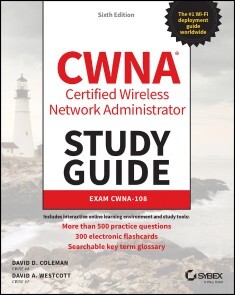
CWNA Certified Wireless Network Administrator Study Guide
THE #1 SELLING WI-FI NETWORKING REFERENCE GUIDE IN THE WORLDThe CWNA: Certified Wireless Network Administrator Study Guide is the ultimate preparation resource for the CWNA exam. Fully updated to align with the latest version of the exam, this book features expert coverage of all exam objectives to help you pass the exam. But passing the exam is just a first step. For over 16 years, the CWNA Study Guide has helped individuals jump-start their wireless networking careers. Wireless networking professionals across the globe use this book as their workplace reference guide for enterprise Wi-Fi technology.Owning this book provides you with a foundation of knowledge for important Wi-Fi networking topics, including:* Radio frequency (RF) fundamentals* 802.11 MAC and medium access* Wireless LAN topologies and architecture* WLAN design, troubleshooting and validation* Wi-Fi networking security The book authors have over 40 years of combined Wi-Fi networking expertise and provide real-world insights that you can leverage in your wireless networking career. Each of the book’s 20 chapters breaks down complex topics into easy to understand nuggets of useful information. Each chapter has review questions that help you gauge your progress along the way. Additionally, hands-on exercises allow you to practice applying CWNA concepts to real-world scenarios. You also get a year of free access to the Sybex online interactive learning environment, which features additional resources and study aids, including bonus practice exam questions.The CWNA certification is a de facto standard for anyone working with wireless technology. It shows employers that you have demonstrated competence in critical areas, and have the knowledge and skills to perform essential duties that keep their wireless networks functioning and safe. The CWNA: Certified Wireless Network Administrator Study Guide gives you everything you need to pass the exam with flying colors.DAVID D. COLEMAN, CWNE #4, David D. Coleman, CWNE #4, is a technology evangelist and public speaker who specializes in Wi-Fi and cloud technologies. David is also Director of Product Marketing for Extreme Networks. He is the author of numerous books, white papers and videos about Wi-Fi technology. DAVID A. WESTCOTT, CWNE #7, is an independent consultant and WLAN technical trainer of thirty years. He provides vendor and custom wireless training to government agencies, corporations and universities around the world.Foreword xxxvIntroduction xxxviiAssessment Test lviCHAPTER 1 OVERVIEW OF WIRELESS STANDARDS, ORGANIZATIONS, AND FUNDAMENTALS 1History of Wireless Local Area Networks 3Standards Organizations 5Federal Communications Commission 5International Telecommunication Union Radiocommunication Sector 6Institute of Electrical and Electronics Engineers 8Internet Engineering Task Force 9Wi-Fi Alliance 11International Organization for Standardization 21Core, Distribution, and Access 22Communications Fundamentals 24Communication Terminology 24Understanding Carrier Signals 25Understanding Keying Methods 27Summary 33Exam Essentials 33Review Questions 34CHAPTER 2 IEEE 802.11 STANDARD AND AMENDMENTS 39Original IEEE 802.11 Standard 42IEEE 802.11-2020 Ratified Amendments 44802.11a-1999 45802.11b-1999 46802.11d-2001 47802.11e-2005 47802.11g-2003 48802.11h-2003 50802.11i-2004 52802.11j-2004 53802.11k-2008 53802.11n-2009 54802.11p-2010 55802.11r-2008 55802.11s-2011 56802.11u-2011 57802.11v-2011 58802.11w-2009 58802.11y-2008 59802.11z-2010 59802.11aa-2012 59802.11ac-2013 59802.11ad-2012 60802.11ae-2012 61802.11af-2014 61802.11ah-2016 62802.11ai-2016 63802.11aj-2018 63802.11ak-2018 63802.11aq-2018 63IEEE 802.11 Draft Amendments 63802.11ax (High Efficiency) 64802.11ay (Next-Generation 60 GHz) 65802.11az (Next-Generation Positioning) 65802.11ba (Wake-Up Radio) 65802.11bb (Light Communications) 65802.11bc (Enhanced Broadcast Service) 65802.11bd (Enhancements for Next-Generation V2X) 65802.11be (Extremely High Throughput) 66Defunct Amendments 66802.11F 66802.11T 67IEEE Task Group m 68Summary 69Exam Essentials 69Review Questions 70CHAPTER 3 RADIO FREQUENCY FUNDAMENTALS 75What is a Radio Frequency Signal? 77Radio Frequency Characteristics 78Wavelength 78Frequency 83Amplitude 85Phase 86Radio Frequency Behaviors 87Wave Propagation 87Absorption 88Reflection 89Scattering 91Refraction 91Diffraction 92Loss (Attenuation) 94Free Space Path Loss 96Multipath 98Gain (Amplification) 101RF Analysis Tools 102Summary 103Exam Essentials 103Review Questions 104CHAPTER 4 RADIO FREQUENCY COMPONENTS, MEASUREMENTS, AND MATHEMATICS 109Components of RF Communications 112Transmitter 112Antenna 113Receiver 114Intentional Radiator 114Equivalent Isotropically Radiated Power 114Units of Power and Comparison 115Watt 116Milliwatt 117Decibel 117Decibels Relative to an Isotropic Radiator (dBi) 120Decibels Relative to a Half-Wave Dipole Antenna (dBd) 120Decibels Relative to 1 Milliwatt (dBm) 121Inverse Square Law 122RF Mathematics 123Rule of 10s and 3s 124RF Math Summary 129Noise Floor 130Signal-to-Noise Ratio 130Signal-to-Interference-Plus-Noise Ratio 131Received Signal Strength Indicator 131Link Budget 135Fade Margin/System Operating Margin 138Summary 140Exam Essentials 142Review Questions 143CHAPTER 5 RADIO FREQUENCY SIGNAL AND ANTENNA CONCEPTS 147Azimuth and Elevation Charts (Antenna Radiation Envelopes) 150Interpreting Polar Charts 152Beamwidth 155Antenna Types 157Omnidirectional Antennas 158Downtilt Omnidirectional Antennas 161Semidirectional Antennas 162Highly Directional Antennas 164Sector Antennas 166Antenna Arrays 167Visual Line of Sight 169RF Line of Sight 169Fresnel Zone 170Earth Bulge 174Antenna Polarization 175Antenna Diversity 176Multiple-Input, Multiple-Output 177MIMO Antennas 178Antenna Connection and Installation 179Voltage Standing Wave Ratio 179Signal Loss 181Antenna Mounting 181Antenna Accessories 187Cables 188Connectors 188Splitters 189Amplifiers 189Attenuators 190Lightning Arrestors 191Grounding Rods and Wires 192Regulatory Compliance 192Summary 194Exam Essentials 194Review Questions 195CHAPTER 6 WIRELESS NETWORKS AND SPREAD SPECTRUM TECHNOLOGIES 199Throughput vs. Bandwidth 201Narrowband and Spread Spectrum 202Multipath Interference 204Frequency-Hopping Spread Spectrum 205Hopping Sequence 206Dwell Time 207Hop Time 207Modulation 207Direct-Sequence Spread Spectrum 208DSSS Data Encoding 208Modulation 209Transmit Spectrum Mask 210Orthogonal Frequency-Division Multiplexing 211Convolutional Coding 212Modulation 213Transmit Spectrum Mask 215Orthogonal Frequency-Division Multiple Access 217Industrial, Scientific, and Medical Bands 218900 MHz ISM Band 2182.4 GHz ISM Band 2195.8 GHz ISM Band 2195 GHz Unlicensed National Information Infrastructure Bands 220U-NII-1 220U-NII-2A 221U-NII-2C 221U-NII-3 222U-NII-4 22260 GHz for Wi-Fi 223Below 1 GHz 2242.4 GHz Channels 2245 GHz Channels 227Long-Term Evolution in 5 GHz 2316 GHz Channels 2326 GHz Incumbents 235Automated Frequency Coordination 2366 GHz Worldwide 2376 GHz Wi-Fi Considerations 238Summary 239Exam Essentials 239Review Questions 240CHAPTER 7 WIRELESS LAN TOPOLOGIES 245Wireless Networking Topologies 247Wireless Wide Area Network 248Wireless Metropolitan Area Network 248Wireless Personal Area Network 249Wireless Local Area Network 250802.11 Stations 251Client Station 252Access Point Station 252Integration Service 252Distribution System 253Wireless Distribution System 254802.11 Service Sets 255Service Set Identifier 256Basic Service Set 256Basic Service Area 257Basic Service Set Identifier 258Multiple Basic Service Set Identifiers 259Extended Service Set 261Independent Basic Service Set 262Personal Basic Service Set 264Mesh Basic Service Set 264QoS Basic Service Set 266802.11 Configuration Modes 267Access Point Modes 267Client Station Modes 268Summary 269Exam Essentials 269Review Questions 271CHAPTER 8 802.11 MEDIUM ACCESS 275CSMA/CA vs. CSMA/CD 276Collision Detection 277Distributed Coordination Function 278Physical Carrier Sense 279Virtual Carrier Sense 280Pseudo-Random Backoff Timer 283Interframe Space 285Hybrid Coordination Function 286Enhanced Distributed Channel Access 287HCF Controlled Channel Access 288Wi-Fi Multimedia 288Airtime Fairness 290Summary 292Exam Essentials 292Review Questions 293CHAPTER 9 802.11 MAC 297Packets, Frames, and Bits 299Data-Link Layer 300MAC Service Data Unit 300MAC Protocol Data Unit 300Physical Layer 301PLCP Service Data Unit 301PLCP Protocol Data Unit 302802.11 and 802.3 Interoperability 302802.11 MAC Header 303Frame Control Field 304Duration/ID Field 306MAC Layer Addressing 307Sequence Control Field 314QoS Control Field 315HT Control Field 315802.11 Frame Body 315802.11 Trailer 316802.11 State Machine 317Management Frames 318Beacon 318Authentication 325Association 326Reassociation 329Disassociation 331Deauthentication 331Action Frame 331Control Frames 333ACK Frame 333Block Acknowledgment 335PS-Poll 336RTS/CTS 336CTS-to-Self 338Protection Mechanisms 338Data Frames 341QoS and Non-QoS Data Frames 342Non-Data Carrying Frames 343Power Management 344Legacy Power Management 345WMM-Power Save and U-APSD 347MIMO Power Management 349802.11ax Power Management 349Summary 350Exam Essentials 350Review Questions 352CHAPTER 10 MIMO TECHNOLOGY: HT AND VHT 357MIMO 360Radio Chains 362Spatial Multiplexing 363MIMO versus SISO diversity 366Maximal Ratio Combining 366Space-Time Block Coding 367Cyclic Shift Diversity 368Transmit Beamforming 368Explicit Beamforming 370Multi-User MIMO 371Multi-User Beamforming 373Channels 37620 MHz Channels 37640 MHz Channels 377Forty MHz Intolerant 37980 MHz and 160 MHz Channels 380Guard Interval 382256-QAM Modulation 384802.11n/ac PPDUs 388Non-HT 388HT Mixed 388VHT 389802.11n/ac MAC 390A-MSDU 390A-MPDU 391Block Acknowledgment 392Power Management 392Modulation and Coding Scheme 394802.11ac Data Rates 397HT/VHT Protection Mechanisms 399HT Protection Modes (0–3) 399Wi-Fi Alliance Certification 400Summary 403Exam Essentials 403Review Questions 405CHAPTER 11 WLAN ARCHITECTURE 409WLAN Client Devices 411802.11 Radio Form Factors 412802.11 Radio Chipsets 418Client Utilities 418Management, Control, and Data Planes 421Management Plane 422Control Plane 422Data Plane 423WLAN Architecture 423Autonomous WLAN Architecture 423Centralized Network Management Systems 425Centralized WLAN Architecture 427Distributed WLAN Architecture 434Hybrid WLAN Architecture 436Specialty WLAN Infrastructure 437Enterprise WLAN Branch Routers 437WLAN Mesh Access Points 438WLAN Bridges 439Real-Time Location Systems 441VoWiFi 443Cloud Networking 445Application Programming Interface 448Transport and Data Formats 449WLAN APIs 450Common Applications 450Infrastructure Management 451Protocols for Management 452Summary 456Exam Essentials 457Review Questions 458CHAPTER 12 POWER OVER ETHERNET (POE) 463History of PoE 464Nonstandard PoE 465IEEE 802.3af 465IEEE Std 802.3-2005, Clause 33 465IEEE 802.3at-2009 465IEEE Std 802.3-2018, Clause 33 466IEEE 802.3bt-2018 466PoE Devices 467Powered Device 467Power-Sourcing Equipment 469Endpoint PSE 470Midspan PSE 476Planning and Deploying PoE 484Power Planning 484Redundancy 487Downgrade PoE Capabilities 488802.3bt Power Considerations 488Summary 490Exam Essentials 491Review Questions 492CHAPTER 13 WLAN DESIGN CONCEPTS 497WLAN Coverage Design 499Received Signal 500Signal-to-Noise Ratio 501Dynamic Rate Switching 503Transmit Power 504Roaming Design 505Primary and Secondary Coverage 508Fast Secure Roaming 509Layer 3 Roaming 510Channel Design 512Adjacent Channel Interference 5122.4 GHz Channel Reuse 513Co-Channel Interference 5165 GHz Channel Reuse 519DFS Channels 52140 MHz Channel Design 527Static Channels and Transmit Power vs. Adaptive RF 529Single-Channel Architecture 531Capacity Design 534High-Density 535Band Steering 539Load Balancing 542Airtime Consumption 543Voice vs. Data 546Dual 5 GHz and Software-Defined Radios 5486 GHz WLAN Design 551Client Considerations 552Coverage Considerations 5536 GHz Channel Reuse 5536 GHz AP Discovery 5546 GHz Wi-Fi Security 556Physical Environment 557Antennas 558Outdoor Design 562Summary 563Exam Essentials 564Review Questions 565CHAPTER 14 SITE SURVEY AND VALIDATION 569WLAN Site Survey and Design Interview 572Customer Briefing 572Business Requirements 573Capacity and Coverage Requirements 574Existing Wireless Network 576Upgrading an Existing WLAN 577Infrastructure Connectivity 578Security Expectations 580Guest Access 581Aesthetics 581Outdoor Surveys 582Vertical Market Considerations 582Government 583Education 583Healthcare 583Retail 584Warehouses and Manufacturing 584Multi-Tenant Buildings 585Legacy AP-on-a-Stick Survey 585Spectrum Analysis 586Coverage Analysis 590Hybrid Survey 595Initial Site Visit 595Predictive Design 597Validation Survey 599Capacity and Throughput 601Roaming 602Delay and Jitter 603Connectivity 603Aesthetics 603Site Survey Tools 604Indoor Site Survey Tools 604Outdoor Site Survey Tools 607Documents and Reports 609Forms and Customer Documentation 610Deliverables 612Additional Reports 613Summary 614Exam Essentials 615Review Questions 616CHAPTER 15 WLAN TROUBLESHOOTING 621Five Tenets of WLAN Troubleshooting 623Troubleshooting Best Practices 623Troubleshoot the OSI Model 625Most Wi-Fi Problems Are Client Issues 627Proper WLAN Design Reduces Problems 628WLAN Always Gets the Blame 629Layer 1 Troubleshooting 629WLAN Design 629Transmit Power 630RF Interference 630Drivers 634PoE 635Firmware Bugs 635Layer 2 Troubleshooting 636Layer 2 Retransmissions 636RF Interference 639Low SNR 639Adjacent Channel Interference 640Hidden Node 641Mismatched Power 646Multipath 648Security Troubleshooting 648PSK Troubleshooting 649802.1X/EAP Troubleshooting 651VPN Troubleshooting 659Roaming Troubleshooting 661Channel Utilization 665Layers 3–7 Troubleshooting 667WLAN Troubleshooting Tools 671WLAN Discovery Applications 671Spectrum Analyzers 672Protocol Analyzers 673Throughput Test Tools 675Standard IP Network Test Commands 677Secure Shell 678Summary 679Exam Essentials 679Review Questions 680CHAPTER 16 WIRELESS ATTACKS, INTRUSION MONITORING, AND POLICY 687Wireless Attacks 688Rogue Wireless Devices 689Peer-to-Peer Attacks 692Eavesdropping 693Encryption Cracking 697KRACK Attack 698Kr00k Vulnerability 698Authentication Attacks 699MAC Spoofing 701Management Interface Exploits 701Wireless Hijacking 702Denial-of-Service Attacks 703Vendor-Specific Attacks 705Social Engineering 706Intrusion Monitoring 706Wireless Intrusion Prevention System 706Rogue Detection and Mitigation 709Spectrum Analyzers 712Wireless Security Policies 712General Security Policies 713Functional Security Policies 713Legislative Compliance 714802.11 Wireless Policy Recommendations 715Summary 716Exam Essentials 717Review Questions 718CHAPTER 17 802.11 NETWORK SECURITY ARCHITECTURE 723802.11 Security Basics 725Data Privacy and Integrity 726Authentication, Authorization, and Accounting 728Segmentation 728Monitoring and Policy 729Legacy 802.11 Security 729Legacy Authentication 730Static WEP Encryption 731MAC Filters 735SSID Cloaking 735Robust Security 736Robust Security Network 737Authentication and Authorization 738PSK Authentication 738Proprietary PSK Authentication 741Simultaneous Authentication of Equals 743802.1X/EAP Framework 746EAP Types 749Dynamic Encryption-Key Generation 7514-Way Handshake 752WLAN Encryption 754TKIP Encryption 755CCMP Encryption 756GCMP Encryption 756Management Frame Protection 757WPA2 757WPA3 758WPA3-Personal 758WPA3-Enterprise 759Enhanced Open 7616 GHz Wi-Fi Security 762Traffic Segmentation 763VLANs 763RBAC 765VPN Wireless Security 766VPN 101 767Layer 3 VPNs 768SSL VPNs 768VPN Deployment 768Summary 770Exam Essentials 770Review Questions 772CHAPTER 18 BRING YOUR OWN DEVICE (BYOD) AND GUEST ACCESS 777Mobile Device Management 780Company-Issued Devices vs. Personal Devices 781MDM Architecture 782MDM Enrollment 784MDM Profiles 788MDM Agent Software 790Over-the-Air Management 791Application Management 793Self-Service Device Onboarding for Employees 795Dual-SSID Onboarding 796Single-SSID Onboarding 796MDM vs. Self-Service Onboarding 797Guest WLAN Access 798Guest SSID 798Guest VLAN 799Guest Firewall Policy 800Captive Web Portals 801Client Isolation, Rate Limiting, and Web Content Filtering 804Guest Management 805Guest Self-Registration 806Employee Sponsorship 808Social Login 809Encrypted Guest Access 810Hotspot 2.0 and Passpoint 811Access Network Query Protocol 811Hotspot 2.0 Architecture 813802.1X/EAP and Hotspot 2.0 814Online Sign-Up 815Roaming Agreements 816Network Access Control 816Posture 817OS Fingerprinting 818AAA 820RADIUS Change of Authorization 821Single Sign-On 822Summary 824Exam Essentials 825Review Questions 826CHAPTER 19 802.11AX: HIGH EFFICIENCY (HE) 831802.11ax = Wi-Fi 6 833Wi-Fi Traffic Congestion 834HE Overview 836Multi-User 837OFDMA 838Subcarriers 839Resource Units 840Trigger Frames 844Downlink OFDMA 847Uplink OFDMA 848Buffer Status Reports 849Operating Mode Indication 850MU-MIMO 851BSS Color and Spatial Reuse 855OBSS 855BSS Color 857Spatial Reuse Operation 858Target Wake Time 861Additional 802.11ax PHY and MAC Capabilities 8621024-QAM 862Long Symbol Time and Guard Intervals 863802.11ax PHY headers 86420 MHz-Only 865Multi-TID AMPDU 867Wi-Fi 6 Key Questions 867Clients 867Multi-Gig Ethernet 868Power over Ethernet 8704×4:4 vs. 8×8:8 87180 MHz and 160 MHz Channels 872Wi-Fi CERTIFIED 6 873Summary 874Review Questions 875CHAPTER 20 WLAN DEPLOYMENT AND VERTICAL MARKETS 879Deployment Considerations for Commonly Supported WLAN Applications and Devices 881Data 881Voice 882Video 882Real-Time Location Services 883iBeacon Proximity 883Mobile Devices 885Corporate Data Access and End-User Mobility 885Network Extension to Remote Areas 886Bridging: Building-to-Building Connectivity 887Wireless ISP: Last-Mile Data Delivery 888Small Office/Home Office 888Temporary Office Networking 889Branch Offices 890Teleworker Wi-Fi 890Educational/Classroom Use 891Industrial: Warehousing and Manufacturing 892Retail 892Healthcare 894Municipal Networks 895Hotspots: Public Network Access 895Stadium Networks 897Transportation Networks 897Law Enforcement Networks 898First-Responder Networks 899Managed Service Providers 900Fixed Mobile Convergence 900WLAN and Health 901Internet of Things 901WLAN Vendors 902Summary 904Exam Essentials 904Review Questions 905APPENDIX A ANSWERS TO REVIEW QUESTIONS 909Chapter 1: Overview of Wireless Standards, Organizations, and Fundamentals 910Chapter 2: IEEE 802.11 Standard and Amendments 911Chapter 3: Radio Frequency Fundamentals 914Chapter 4: Radio Frequency Components, Measurements, and Mathematics 915Chapter 5: Radio Frequency Signal and Antenna Concepts 918Chapter 6: Wireless Networks and Spread Spectrum Technologies 919Chapter 7: Wireless LAN Topologies 922Chapter 8: 802.11 Medium Access 924Chapter 9: 802.11 MAC 926Chapter 10: MIMO Technology: HT and VHT 929Chapter 11: WLAN Architecture 932Chapter 12: Power over Ethernet (PoE) 934Chapter 13: WLAN Design Concepts 937Chapter 14: Site Survey and Validation 940Chapter 15: WLAN Troubleshooting 943Chapter 16: Wireless Attacks, Intrusion Monitoring, and Policy 946Chapter 17: 802.11 Network Security Architecture 948Chapter 18: Bring Your Own Device (BYOD) and Guest Access 951Chapter 19: 802.11ax: High Efficiency (HE) 954Chapter 20: WLAN Deployment and Vertical Markets 957APPENDIX B ABBREVIATIONS AND ACRONYMS 961Certifications 962Organizations and Regulations 962Measurements 963Technical Terms 964Index 981

Computer Vision Using Deep Learning
Organizations spend huge resources in developing software that can perform the way a human does. Image classification, object detection and tracking, pose estimation, facial recognition, and sentiment estimation all play a major role in solving computer vision problems.This book will bring into focus these and other deep learning architectures and techniques to help you create solutions using Keras and the TensorFlow library. You'll also review mutliple neural network architectures, including LeNet, AlexNet, VGG, Inception, R-CNN, Fast R-CNN, Faster R-CNN, Mask R-CNN, YOLO, and SqueezeNet and see how they work alongside Python code via best practices, tips, tricks, shortcuts, and pitfalls. All code snippets will be broken down and discussed thoroughly so you can implement the same principles in your respective environments.Computer Vision Using Deep Learning offers a comprehensive yet succinct guide that stitches DL and CV together to automate operations, reduce human intervention, increase capability, and cut the costs.WHAT YOU'LL LEARN* Examine deep learning code and concepts to apply guiding principals to your own projects* Classify and evaluate various architectures to better understand your options in various use cases* Go behind the scenes of basic deep learning functions to find out how they workWHO THIS BOOK IS FORProfessional practitioners working in the fields of software engineering and data science. A working knowledge of Python is strongly recommended. Students and innovators working on advanced degrees in areas related to computer vision and Deep Learning.VAIBHAV VERDHAN is a seasoned data science professional with rich experience spanning across geographies and retail, telecom, manufacturing, health-care and utilities domain. He is a hands-on technical expert and has led multiple engagements in Machine Learning and Artificial Intelligence. He is a leading industry expert, is a regular speaker at conferences and meet-ups and mentors students and professionals. Currently he resides in Ireland and is working as a Principal Data Scientist.Chapter 1 Introduction to Computer Vision and Deep Learning.- Chapter 2 Nuts and Bolts of Deep Learning for Computer Vision.- Chapter 3 Image Classification using LeNet.- Chapter 4 VGGNet and AlexNext Networks.- Chapter 5 Object Detection Using Deep Learning.- Chapter 6 Facial Recognition and Gesture Recognition.- Chapter 7 Video Analytics Using Deep Learning.- Chapter 8 End-to-end Model Development.- Appendix.

Künstliche Intelligenz
Künstliche Intelligenz (KI) ist heute schon in unserem Alltag präsent und wird uns zukünftig in nahezu allen Lebensbereichen begegnen – von der bildgestützten Diagnose in der Medizin über das autonome Fahren und die intelligente Maschinenwartung in der Industrie bis hin zur Sprachsteuerung im smarten Zuhause. Die Potenziale der KI sind enorm, gleichzeitig kursieren viele Mythen, Ungewissheiten und Herausforderungen, die es zu meistern gilt.Dieses Buch adressiert daher die breite Öffentlichkeit – von interessierten Bürgerinnen und Bürgern bis hin zur Leitungsebene in Unternehmen, die ein besseres und tieferes technisches Verständnis von KI-Technologien aufbauen und deren Folgen abschätzen möchten.In verständlicher Sprache werden mathematische Grundlagen, Begriffe und Methoden erläutert. Eine abschließende Diskussion der Chancen und Herausforderungen hilft den Leserinnen und Lesern, die Entwicklungen zu bewerten, sie zu entmystifizieren und ihre Relevanz für die Zukunft zu erkennen.DR. GERHARD PAAẞ ist Diplom-Mathematiker mit Promotion in Makroökonomie an der Uni Bonn. Seine Forschungsschwerpunkte liegen im Bereich der neuronalen Netze, des Textmining und der Statistik. Als Wissenschaftler in der Gesellschaft für Mathematik und Datenverarbeitung und Gruppenleiter im Fraunhofer-Institut für Intelligente Analyse- und Informationssysteme IAIS war er an zahlreichen Forschungs- und Industrieprojekten zum Maschinellen Lernen beteiligt. In den letzten Jahren ist er v. a. als Dozent in Schulungen für KI und Tiefe Neuronale Netzwerke tätig.DR. DIRK HECKER ist stellvertretender Institutsleiter des Fraunhofer IAIS. Er studierte und promovierte im Bereich Geo-Informatik an den Universitäten Köln und Bonn. Seit vielen Jahren beschäftigt sich Dirk Hecker mit Aspekten der Digitalisierung und deren Einfluss auf Wirtschaft und Gesellschaft. Er ist in zahlreichen Direktorien sowie Leitungskreisen diverser bundesweiter KI-Initiativen tätig.Was ist intelligent an Künstlicher Intelligenz und was kann sie? - Grundbegriffe und Methoden des Maschinellen Lernens - Wie Tiefe Neuronale Netze Zusammenhänge erfassen und Strategien lernen - Wie KI Bilder erkennt, Texte analysiert und gesprochene Sprache versteht - Kann KI kreativ sein und Emotionen lernen? - Chancen, Herausforderungen und Risiken für Wirtschaft und Gesellschaft

Security by Design
Der Softwareingenieur von heute muss die grundlegende Disziplin der Entwicklung sicherer informationstechnischer Systeme verstehen. Nicht, weil es eine ein „gute Idee“ ist, sondern weil unsere Arbeits- und Lebenswelten zunehmend auf die Funktionsfähigkeit und die Sicherheit hochkomplexer und dynamischer informationstechnischer Infrastrukturen angewiesen sind. Die Vorstellung, dass die Sicherheit informationstechnischer Systeme etwas Besonderes ist, ist ein Trugschluss. Tatsächlich ist Sicherheit nur ein Aspekt der Zuverlässigkeit. Wir können keine zuverlässigen Anwendungen und Systeme haben, wenn diese nicht sicher sind.Vor diesem Hintergrund gehen die Autoren der Frage nach, ob und in welchem Ausmaß die mit dem Einsatz der Artefakte der digitalen Revolution einhergehenden Risiken beherrschbar bleiben, und welche Möglichkeiten wir bereits heute haben, die Eindämmung von Risiken und Gefahren schon beim Entwurf informationstechnischer Systeme zu berücksichtigen. Die Antwort ist ein systematischer praxis- und modellbasierter Ansatz für das Security-Engineering von Informationssystemen.DR. ARMIN LUNKEIT ist Informatiker und widmet sich seit mehr als 20 Jahren der Entwicklung und dem Einsatz sicherheitskritischer Anwendungen und Systeme. Er hat sich in diesem Zeitraum intensiv mit der Integration des Security Engineerings in die Systementwicklung auseinandergesetzt und dazu mehrere Artikel veröffentlicht.DR. WOLF ZIMMER ist Physiker und war mehr als 25 Jahre in der Softwareentwicklung und Strategieberatung eines weltweit agierenden IT-Unternehmens tätig. Er hat in diesem Umfeld bereits mehrere Bücher und Artikel veröffentlicht.Was ist das Problem? - Der IT-Sicherheitsstack - Systems Engineering ist Security Engineering - Modell-basiertes Design - Die SmartFit AG - Fragile Kryptografie - The Proof of the Pudding is in the eating - Die Vermessung der (Un-)Sicherheit - Ausblick

How to get Instant Overview
Often, Excel is used to evaluate given data. Which values are critical? Can I see at a glance what the development was like? Can I highlight a whole row if one column has important content? Or ask for the content of two cells, simultaneously? How do I get overview in a thick workbook? How do I get a clear and telling chart? Can I ask Excel in natural language without any formula? All these questions are answered here.Ina Koys is an experienced instructor for Microsoft Office. Many questions are frequently asked in trainings, but seldom covered in books. Now she answers some of them in her originally German "short & spicy" series. A little accent will add to the fun :-)

Drones to Go
Learn the five key skills needed to become a quadcopter developer: design, modeling, control, simulation, and implementation. This book provides a crash course on drone development for beginners and can also serve as a comprehensive reference for those who want a detailed guide for future projects.You'll review key features often missed in other books: a deeper review of controls, step by step modeling, and methods for simulating and designing drones. Although the quadcopter is used as the main example throughout the book, you'll also see how to apply the development knowledge to other aircrafts or aerial systems.Highly visual and easy to understand, this book features Simulink and Matlab tools, but the skills covered can be used in other environments such as Scilab or other programming languages. Drones To Go merges maker knowledge and technical information with scientific knowledge and design essentials.WHAT YOU’LL LEARN* Review the main families of control: geometric, linear, and common dynamic feedback control* Understand the mathematics of a quadcopter* Follow step-by-step instructions on modeling and control equations* Focus on pedagogical development to answer any doubts in the design processWHO THIS BOOK IS FORMakers to scientistsJULIO ALBERTO MENDOZA-MENDOZA is a Mechatronic Engineer with a Master in Advanced Technology from UPIITA IPN and PhD in Computer Sciences from CIC IPN, he is currently a visiting researcher at UNAM, his areas of interest and research are robotics in general (manipulators, aerial and terrestrial vehicles, humanoids, haptics, exoskeletons and teleoperation), programming, analytical and intelligent control, electronics and mechanical design. His most recent line of development is aerial robotic manipulators, he holds 5 patents and a books on Apress.VICTOR JAVIER GONZALEZ-VILLELA received the B.Eng. degree in Mechanical and Electrical Engineering and the M.Eng. degree in Electrical Engineering in 1987 and 1993, respectively, from the National Autonomous University of Mexico (UNAM), Mexico City, Mexico, and the Ph.D. degree in Kinematics, Dynamics, and Nonlinear Systems applied to Mobile Robot Modelling and Control from Loughborough University, Loughborough, UK, in 2006. He is currently a Titular Professor in the Department of Mechatronics Engineering, UNAM. Since 2013 he belongs to the National System of Researchers (SNI) of Mexico. His research focuses on Mobile, Hybrid and Adaptive Robots, and Artificial Intuition.CARLOS AGUILAR-IBAÑEZ graduated in Physics at the Higher School of Physics and Mathematics of the National Polytechnic Institute (IPN), Mexico City 1990. From the Research Center and Advanced Studies of the IPN (Cinvestav IPN) he received the M.S. degree in Electrical Engineering in 1994, and a Ph.D. in Automatic Control in 1999. Ever since he has been a researcher at the Center of Computing Research of the IPN (CIC IPN). As of 2000 he belongs to the National System of Researchers (SNI) of Mexico. His research focuses in nonlinear systems, system identification, observers, automatic control, and chaos theory.LEONARDO FONSECA-RUIZ holds a bachelor’s degree in Mechanical and Electrical Engineering from the National Autonomous University of Mexico (U.N.A.M.) in 2002, and M.S. degree from the Department of Electrical Engineering with the Specialty of Bio-Electronics by the Center for Research and Advanced Studies of the National Polytechnic Institute (CINVESTAV-IPN) in 2006. Currently He works as a full-time ResearchProfessor at UPIITA-IPN. Is author and co-author of 16 works published in magazines and congresses. His areas of interest are PLC, DSP, Microcontrollers, Automation, design and development of PCBs, and CNC systems. Chapter 1: Drone Design Concepts.- Chapter 2: Modeling.- Chapter 3: Control of Drones.- Chapter 4: Simulation.- Chapter 5: Implementation.- Appendix: Additional Resources.

Computer Vision with Maker Tech
Harness the untapped potential of combining a decentralized Internet of Things (IoT) with the ability to make predictions on real-world fuzzy data. This book covers the theory behind machine learning models and shows you how to program and assemble a voice-controlled security.You’ll learn the differences between supervised and unsupervised learning and how the nuts-and-bolts of a neural network actually work. You’ll also learn to identify and measure the metrics that tell how well your classifier is doing. An overview of other types of machine learning techniques, such as genetic algorithms, reinforcement learning, support vector machines, and anomaly detectors will get you up and running with a familiarity of basic machine learning concepts. Chapters focus on the best practices to build models that can actually scale and are flexible enough to be embedded in multiple applications and easily reusable.With those concepts covered, you’ll dive into the tools for setting up a network to collect and process the data points to be fed to our models by using some of the ubiquitous and cheap pieces of hardware that make up today's home automation and IoT industry, such as the RaspberryPi, Arduino, ESP8266, etc. Finally, you’ll put things together and work through a couple of practical examples. You’ll deploy models for detecting the presence of people in your house, and anomaly detectors that inform you if some sensors have measured something unusual. And you’ll add a voice assistant that uses your own model to recognize your voice.WHAT YOU'LL LEARN* Develop a voice assistant to control your IoT devices* Implement Computer Vision to detect changes in an environment* Go beyond simple projects to also gain a grounding machine learning in general* See how IoT can become "smarter" with the inception of machine learning techniques* Build machine learning models using TensorFlow and OpenCVWHO THIS BOOK IS FORMakers and amateur programmers interested in taking simple IoT projects to the next level using TensorFlow and machine learning. Also more advanced programmers wanting an easy on ramp to machine learning concepts.FABIO MANGANIELLO is a 15 year veteran in machine learning and dynamic programming techniques. In his career, he has worked on natural language processing with a focus on automatically labelling and generating definitions for unknown terms in big corpora of unstructured documents; on an early voice assistant (Voxifera) developed back in 2008; on machine learning techniques for clustering, inferring correlations, and preventing the next step in complex attacks by analysing the alerts of an intrusion detection system; and several libraries to make model design and training easier. In the recent years, he has combined his passion for machine learning with IoT and distributed systems. From self-driving robots, to people detection, to anomaly detection, to data forecasting, he likes to combine the flexibility and affordability of tools such as RaspberryPi, Arduino, ESP8266, MQTT, and cheap sensors with the power of machine learning models. He's an active IEEE member and open source enthusiast, and has contributed to hundreds of open source projects over the years. Chapter 1: Introduction to Machine Learning.- Chapter 2: Neural Networks.- Chapter 3: Computer Vision on Raspberry Pi.
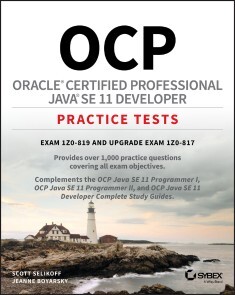
OCP Oracle Certified Professional Java SE 11 Developer Practice Tests
NOTE: The OCP Java SE 11 Programmer I Exam 1Z0-815 and Programmer II Exam 1Z0-816 have been retired (as of October 1, 2020), and Oracle has released a new Developer Exam 1Z0-819 to replace the previous exams. The Upgrade Exam 1Z0-817 remains the same.IMPROVE YOUR PREPARATION FOR THE OCP JAVA SE 11 DEVELOPER EXAM WITH THESE COMPREHENSIVE PRACTICE TESTSOCP Oracle Certified Professional Java SE 11 Developer Practice Tests: Exam 1Z0-819 and Upgrade Exam 1Z0-817 offers readers over 1000 practice questions to help them hone their skills for the challenging 1Z0-819 exam as well as the 1Z0-817 upgrade exam.Covering all the objective domains that help readers master the crucial subject areas covered by the exam, OCP Oracle Certified Professional Java SE 11 Developer Practice Tests provides domain-by-domain questions as well as additional bonus practice exams to further solidify the reader’s mastery of its subjects. This book covers topics like:* Understanding Java Technology and Environment * Working with Java Operators, Primitives, and Strings * Creating Methods and Lambda Expressions * Designing Classes, Interfaces, Enums, and Annotations * Writing Functional Interfaces and Streams * Building Modules and Migrating Applications to Modules * Applying I/O, NIO.2, JDBC, Threads, and Concurrency * Secure Coding in Java SE Application * And much more Perfect for anyone studying for the OCP Java SE 11 Developer and Upgrade exams, as well as all those who wish to brush up on their Java programming skills, OCP Oracle Certified Professional Java SE 11 Developer Practice Tests: Exam 1Z0-819 and Upgade Exam 1Z0-817 is an indispensable resource that has a place on the bookshelf of every Java enthusiast, professional, and student.ABOUT THE AUTHORSSCOTT SELIKOFF, OCA/OCP 8 AND OCP 11, has been a professional Java Enterprise architect for over 20 years. He is founder of Selikoff Solutions, LLC, specializing in building custom mobile and server solutions for businesses in the tri-state New York City area. JEANNE BOYARSKY, OCA/OCP 8 AND OCP 11, is a Java Champion and has worked as a Java developer for a major bank for more than 18 years. She is a senior moderator at CodeRanch, and trains and mentors students of all levels, including the programming division of a FIRST robotics team. Introduction xvChapter 1 Working with Java Data Types 1Chapter 2 Controlling Program Flow 13Chapter 3 Java Object-Oriented Approach 27Chapter 4 Exception Handling 125Chapter 5 Working with Arrays and Collections 157Chapter 6 Working with Streams and Lambda Expressions 187Chapter 7 Java Platform Module System 243Chapter 8 Concurrency 271Chapter 9 Java I/O API 289Chapter 10 Secure Coding in Java SE Application 309Chapter 11 Database Applications with JDBC 329Chapter 12 Localization 341Chapter 13 Annotations 353Chapter 14 Practice Exam 1 365Chapter 15 Practice Exam 2 391Chapter 16 Practice Exam 3 415Appendix Answers and Explanations 441Index 565

How Open Source Ate Software
Learn how free software became open source and how you can sell open source software. This book provides a historical context of how open source has thoroughly transformed how we write software, how we cooperate, how we communicate, how we organize, and, ultimately, how we think about business values.This fully updated second edition includes an entire chapter on legal considerations such as trademarks and the latest happenings in open source licensing. It also expands on open hardware trends such as RISC-V, open governance, and the difference between community projects and commercial products, especially as seen through the lens of security.You’ll look at project and community examples including Linux, BSD, Apache, and Kubernetes, understand the open source development model, and how open source has influenced approaches more broadly, even within proprietary software, such as open betas. You'll also examine the flipside, the "Second Machine Age," and the challenges of open source-based business models.Today, open source serves as shorthand for much broader trends and behaviors. It’s not just about a free (in all senses of the word) alternative to commercial software. It increasingly is the new commercial software. How Open Source Ate Software, second edition reveals how open source has much in common, and is often closely allied, with many other trends in business and society. You'll see how it enables projects that go beyond any individual company. That makes open source not just a story about software, but a story about almost everything.WHAT YOU'LL LEARN* The opportunities that open source creates and the challenges that come with them* The ways in which companies can create business models to successfully sell "free" software* How the open source development model works from creating communities to selling commercial products* The important issues associated with open source project and product governance and licensing* How open source principles can apply more broadly to DevOps and other organizational practicesWHO THIS BOOK IS FORAnyone who is contemplating building a community and a business around open source software.GORDON HAFF is Red Hat technology evangelist, is a frequent and highly acclaimed speaker at customer and industry events, and helps develop strategy across Red Hat’s full portfolio of cloud solutions. He is the co-author of Pots and Vats to Computers and Apps: How Software Learned to Package Itself in addition to numerous other publications. Prior to Red Hat, Gordon wrote hundreds of research notes, was frequently quoted in publications like The New York Times on a wide range of IT topics, and advised clients on product and marketing strategies. Earlier in his career, he was responsible for bringing a wide range of computer systems, from minicomputers to large UNIX servers, to market while at Data General. Gordon has engineering degrees from MIT and Dartmouth and an MBA from Cornell’s Johnson School. Follow him on Twitter @ghaff.1. The Beginnings of Free and Open Source Software2. From "Free" to "Open Source" to Products3. The Open Source Development Model4. What's the Law?5. Open Source’s Connection to the Past6. Business Models and Accelerated Development7. The Challenges Facing Open Source Today8. Open Source Opportunities and Challenges

Getting Started with NSX-T: Logical Routing and Switching
This primer on NSX-T helps you understand the capabilities and features of NSX-T, how to configure and manage NSX-T, and integrate NSX-T with other software. The book is the first in a series that will teach you the basics of NSX-T, which is an update of VMware's original software-defined networking (SDN) architecture aimed at making networks agile and flexible.You will become familiar with VMware's software-defined data center (SDDC) ecosystem and how NSX-T fits in. You will understand NSX-T components such as NSX-T Manager, NSX-T Edge Transport Nodes, and NSX-T Host Transport Nodes. And you will learn how to install and configure network services such as East/West and North/South routing capabilities, layer two switching, VRF, EVPN, multicast, and layer two bridging.The book provides best practices on how to configure routing and switching features, and teaches you how to get the required visibility of not only your NSX-T platform but also your NSX-T-enabled network infrastructure.The book explains security, advanced network features, and multi-site capabilities and demonstrates how network and security services can be offered across multiple on-premise locations with a single pane of glass for networking and security policy management. The interface with public cloud services is discussed and the book explains NSX-T operation in an on-premise private cloud and positioning and integrating NSX-T on a public cloud (off premises).WHAT YOU WILL LEARN* Understand how NSX-T fits in the VMware SDDC ecosystem* Know what NSX-T is, its components, and the terminology used* Install NSX-T* Configure NSX-T network services* Manage the NSX-T networkWHO THIS BOOK IS FORVirtualization administrators, system integrators, and network administratorsIWAN HOOGENDOORN started his IT career in 1999 as a help desk agent. He began learning Microsoft products and obtained MCP, MCSA, MCDBA, and MCSE certifications.While working as a Microsoft Systems Engineer, he developed additional skills and knowledge in computer networking with Cisco products. He dreamed of working for Cisco but first needed to finish his bachelor's degree in ICT, which he completed in 2009.In 2010, Iwan began working for his dream company, Cisco. After finishing his master's degree in computer science at the University of Amsterdam and becoming a CCIE (#13084) in six different technology areas, he wanted to learn something new and network virtualization was the next logical step.Iwan decided to learn VMware NSX and got the opportunity to work for VMware in 2016 as a Senior NSX PSO Consultant. In his time at VMware, he gained more knowledge on private and public clouds and the related products that VMware developed to build the Software-Defined Data Center (SDDC).After working for four years as a Senior NSX PSO Consultant (primarily with VMware NSX-v and NSX-T), Iwan was promoted to Staff SDDC Consultant focusing on the full SDDC stack, including Hyperscaler offerings on public clouds such as AWS (VMC on AWS), Microsoft (Azure VMware Solution), and Google (Google Cloud VMware Engine).Iwan is certified on multiple VMware products, including NSX, and is actively working with VMware certification to develop network-related exams for VMware. He is also AWS and TOGAF certified.· CHAPTER 1o Title: NSX-T AND THE VMWARE SDDC ECOSYSTEMo Chapter Goal: Provide information on the SDDC and what the position is of NSX-T.o Number of Pages: 5o Subtopics:§ The VMware’s SDDC ecosystem§ Compute§ Storage§ Software Defined Networking· CHAPTER 2o Title: AN INTRODUCTION TO NSX-To Chapter Goal: Provide information on the product, the problem that can be solved and use-cases that can be satisfied.o Number of Pages: 10o Subtopics:§ NSX-T Components§ NSX-T Use Cases· CHAPTER 3o Title: THE NSX-T INSTALLATION ON A VSPHERE ENVIRONMENTo Chapter Goal: Explain the components of NSX-T and how these are deployed including the prerequisites.o Number of Pages: 20o Subtopics:§ NSX-T Installation Planning & Prerequisites§ NSX-T Manager Installation§ Edge Transport Installation (VM)§ Edge Transport Installation (BM)§ Host Transport Node Installation (ESXi)· CHAPTER 4o Title: TIER-0 GATEWAYSo Chapter Goal: Configure North/South Routing using the T0 Gateway with different kind of features.o Number of Pages: 20o Subtopics:§ Deploy a T0 Gateway§ Configure Routing§ Configure Multicast§ IPv6 Routing§ T0 High Availability§ VRF Deployment§ EVPN Deployment· CHAPTER 5o Title: TIER-1 GATEWAYSo Chapter Goal: Create and Configure T1 Gateways.o Number of Pages: 5o Subtopics:§ Deploy a T0 Gateway§ Configure Routing· CHAPTER 6o Title: SEGMENTSo Chapter Goal: Create and Configure L2 Segments with various service capabilities.o Number of Pages: 10o Subtopics:§ Attach segments§ DHCP & DHCP Static Binds§ L2 Bridging§ Add a Metadata Proxy Server· CHAPTER 7o Title: HOST SWITCHESo Chapter Goal: Explanation on the interrogability with the vSphere Distributed Switch and the defense between the N-VDS.o Number of Pages: 5o Subtopics:§ NSX-T with the vSphere Distributed Switch§ NSX-T N-VDS§ Enhanced Networking StackCHAPTER 8o Title: VIRTUAL PRIVATE NETWORK (VPN)o Chapter Goal: Know the differ types of VPN and how to configure and monitor them.o Number of Pages: 10o Subtopics:§ IPSEC (L3 VPN)§ L2 VPN§ Configuration of VPN· L3· L4§ Monitoring of VPN sessions· CHAPTER 9o Title: NETWORK ADDRESS TRANSLATION (NAT)o Chapter Goal: Know the difference between SNAT and DNAT and explanation on how to configure NAT.o Number of Pages: 5o Subtopics:§ SNAT§ DNAT§ Configure NAT Services· CHAPTER 10o Title: LOAD BALANCING (LB)o Chapter Goal: Discuss Load Balancing capabilities and configuration.o Number of Pages: 10o Subtopics:§ Load Balancing Concepts§ Distributed Load Balancer§ Setting up the Load Balancer Components· CHAPTER 11o Title: IP ADDRESS MANAGEMENT (IPAM)o Chapter Goal: DNS and DHCP IP address Management using the internal NSX-T Tools.o Number of Pages: 5o Subtopics:§ DNS Zone§ DNS Forwarding Zone§ DHCP Profile§ IP Address Pool§ IP Address Block· CHAPTER 12o Title: NETWORK SETTINGSo Chapter Goal: Getting to know the Network setting that can be configured to finetune your network services.o Number of Pages: 10o Subtopics:§ Multicast§ VNI Pools§ Gateway Settings§ Gateway QoS Profile§ BFD Profile§ IP Discovery Profiles§ MAC Discovery Profiles· CHAPTER 13o Title: SECURITYo Chapter Goal: The theory about the Security Services offered by NSX-T followed by the deployment’s details and steps with proper verification.o Number of Pages: 35o Subtopics:§ Identity based Firewall§ Layer-7 Context Profiles§ Gateway Firewalls§ Distributed Firewall§ Distributed IDS§ East/West Third-party service insertion§ North/South Third-party service insertion§ Security Profiles§ Time-Based Firewall Policy§ Network Introspection Settings§ End-Point Protection§ Bare Metal Server Security· CHAPTER 14o Title: MULTI-SITEo Chapter Goal: Design Principles regarding Multi Site routingo Number of Pages: 30o Subtopics:§ Multi-Site Capabilities§ NSX-T Federation overview§ Networking with Federation§ Security with Federation§ Backup & Restore with Federation· CHAPTER 15o Title: SYSTEM OPERATIONSo Chapter Goal: Monitoring of the NSX-T Fabric using different VMware related tools.o Number of Pages: 15o Subtopics:§ Monitoring / Events and Alarms§ Logging§ vRealize Log insight integration§ vRealize Operations integration§ Other Operation Tools Integration· CHAPTER 16o Title: NETWORK OPERATIONSo Chapter Goal: Tools to verify the Routing and Routing performance.o Number of Pages: 10o Subtopics:§ Network Monitoring§ Logging§ vRealize Network insight integration§ IPFIX§ Network Performance Testing using IPERF Tools· CHAPTER 17o Title: AUTHENTICATION AND AUTHORIZATIONo Chapter Goal: Information on how to integrate NSX-T with an external LDAP server and create user (groups) with different roles and rights (RBAC).o Number of Pages: 5o Subtopics:§ vIDM Integration & LDAP Integration§ LDAP only integration§ RBAC· CHAPTER 18o Title: PUBLIC CLOUD INTEGRATIONo Chapter Goal: NSX-T is also used in all major Public Clouds. This chapter gives you an overview on what is deployed there and how NSX-T can be consumed in these Public Clouds.o Number of Pages: 10o Subtopics:§ Forwarding Policies§ VMC on AWS§ Azure VMware Solution (AVS)§ Google Cloud VMware Engine· CHAPTER 19o Title: AUTOMATIONo Chapter Goal: Get familiar on the out-of-the-box automation capabilities and vRO extensibility.o Number of Pages: 20o Subtopics:§ vCloud Director· Allowing Tenants to Create / Use NSX-T Related automated network and security Services§ vRealize Automation / vRealize Orchestration· Allowing Tenants to Create / Use NSX-T Related automated network and security Services§ NSX-T API Capabilities

Modern Front-end Architecture
Learn how to build front-end applications that can help you ship applications faster with fewer defects. Many software projects fail because they are not planned well, or lack organization. Applying strategies from other industries can help you create better software. This book explores the “mise en place” technique from cooking and reveals how you can apply it to the art of creating software.In many professional kitchens, the work of preparing a meal is divided and performed in workstations to help create the whole. You'll review the philosophy behind this and see how to leverage this approach in your code. You'll also learn to visualize your applications as a series of components and build parts of your application in isolation - just like a professional chef crafting each part of the meal.The book describes to how to structure your code base for reuse, and how to communicate the code’s intent to other developers. You’ll develop your components in isolation and test these building blocks for quality at a granular level. Then compose these components as building blocks in increasingly complicated features. Finally, you’ll apply some strategies not directly related to code to ensure maximum quality and efficiency.With Modern Front-end Architecture, developers of all levels will learn strategies that they and their teams can leverage to be more productive.WHAT YOU'LL LEARN* Structure an application as a series of components* Build a component library that others in an organization can leverage* Ensure quality and accessibility at a component level rather than a page or app level* Test code in a way that gives the maximum amount of confidence while providing an excellent developer experience* Automate repeatable tasksWHO THIS BOOK IS FORFront end developers looking to maximize their code for reuse, quality, and shipping features quickly. Experienced developers will pick up new techniques that they can apply to their code base. Less experienced developers will be able to start applications off on the right foot.RYAN LANCIAUX is an independent software developer based out of Ann Arbor, Michigan. Concentrating on front-end development, Ryan helps organizations build scalable applications with a focus on efficiency and reusability. He regularly speaks at conferences and meet-ups and writes articles on the web. You can find him on Twitter @ryanlanciaux.1. The Mise en Place Philosophy2. Configuring Our Workspace3. Our First Storybook Stories4. Creating Reusable Components5. Styling6. Ensuring the Quality of Our Components7. Interacting with API Data8. Building Our Application9. Automating Repetitive Tasks10. Communicating Our Components
Troubleshooting & Maintaining PCs All-in-One For Dummies
SHOW YOUR PC WHO'S BOSSNothing's more annoying than a tech malfunction, especially when it’s your PC—with the exception of perhaps wading through reams of random, unreliable theories online looking for a solution, or paying an expensive tech geek to show up to perform a five-minute fix. The latest edition of Troubleshooting & Maintaining Your PC All-in-One For Dummies puts all this frustration behind you and gets you straight to work solving the problem yourself!In his straightforward, friendly style, Dan Gookin—bestselling tech author and all-round Mr. Fixit—packs everything you need to know into 5-books-in-1, giving you the knowledge and process to hit on the right solution, fast. From identifying common problems to methodically narrowing down to the correct fix, you’ll save hours of frustrating research—and experience the sweet, righteous satisfaction of having achieved it all yourself.* Pick up quick fixes* Understand and reconnect networks* Restore memory* Boost your PC's performanceEvery problem has a solution and PCs are no different: get this book and you'll never catch yourself shouting at your monitor or frustrated with the motherboard again—well, maybe not quite so often.DAN GOOKIN wrote the very first For Dummies book in 1991. The author of several bestsellers, Dan’s books have been translated into 32 languages and have more than 11 million copies in print. Dan is the bestselling author of all editions of PCs For Dummies and Laptops For Dummies.INTRODUCTION 1About This Book 1How This Book Works 2Icons Used in This Book 3Beyond the Book 3Where to Go from Here 4BOOK 1: SOLVE MY PROBLEM NOW! 5CHAPTER 1: TROUBLE COMES HITHER 7The Root of All PC Trouble 7What’s Changed? 8Installing software 8Adding or removing hardware 9Changing settings 10Hardware-versus-Software Problems 11Dealing with software issues 11Solving hardware issues 12Addressing firmware issues 12When to Give Up 13CHAPTER 2: QUICK FIXES 15Things to Try First 15Checking the Settings app 16Restarting the PC 16Restarting a stubborn PC or laptop 18Running a troubleshooter 18Repairing a program 19Fixing Windows 20Restoring the system 21Help! 21Locating Internet support 22Downloading drivers 24Perusing forums 25Contacting tech support 26Being wary of remote desktop access! 27BOOK 2: O, WE GOT TROUBLE! 29CHAPTER 1: STARTUP PROBLEMS 31The Onset of PC Heartbreak 31Phase I: Power On 32What happens 32What could go wrong 32Troubleshooting steps 32Phase II: The POST 35What happens 35What could go wrong 35Troubleshooting steps 36Phase III: Startup Options 37What happens 37What could go wrong 38Troubleshooting steps 39Phase IV: The Search for an Operating System 42What happens 42What could go wrong 43Troubleshooting steps 43Phase V: Operating System Initialization 44What happens 44What could go wrong 44Troubleshooting steps 45Phase VI: Sign In to Windows 45What happens 45What could go wrong 46Troubleshooting steps 46The Last Thing You Do 46CHAPTER 2: DISK DISASTER 47PC Storage Overview 47Understanding computer storage 48Exploring mass storage devices 48Finding mass storage in Windows 50Adding another mass storage device 52Adding media 52Replacing drive C 53Assigning drive letters 54Resolving AutoPlay issues 55Removing media and mass storage 57Mass Storage Tools and Utilities 59Opening the Disk Management console 60Finding mere mortal storage media tools 61Drive Management and Maintenance 62Understanding fragmentation 62Defragmenting a hard drive 64Checking storage media for errors 65Formatting media 67Changing drive letters 71Joining storage media to a folder 73Fun with Partitions 74Examining disk partitions 75Shrinking a volume 77Creating a new volume in unallocated space 78Extending a partition 81Deleting a partition 82CHAPTER 3: MONITOR MAYHEM 83The PC Graphics System 83Using the proper monitor terms 84Exploring the PC’s graphics system 84Connecting the display adapter and monitor 85Discovering your PC’s display adapter 87Exploring the monitor 88Adjusting the monitor 90Saving your eyeballs 91Orienting a monitor vertically 93Connecting a second monitor 94Configuring the second monitor 94Captain Video Troubleshooter 96Seeing nothing 96Seeing only the mouse pointer 97Swapping monitors 97Saving the screen 98Saving power 100Adjusting the resolution 102Updating the video driver 104Disabling the video driver 106CHAPTER 4: INTERNAL ISSUES 107Deep Inside the Case 107Opening the PC case 108Exploring the motherboard 109Closing the PC case 114Things to Upgrade, Fix, or Repair Inside the Case 115Upgrading the power supply 115Replacing the clock battery 118Expanding memory 118Adding an expansion card 122Adding or replacing an internal drive 124Power Management Issues 128Locating power management controls 129Setting power management options for specific devices 132Recovering from a PC coma 134Updating power drivers 134CHAPTER 5: PRINTER PROBLEMS 137Between the Computer and Printer 137Configuring the printer in Windows 138Connecting a printer 138Controlling the printer 140Disconnecting a printer 141Keeping the printer stocked 142Feeding envelopes 143The Windows Side of Printing 144Printing in Windows 144Using the Page Setup dialog box 146Setting the default printer 148Working with print jobs 149Canceling a print job 150Printer Problems and Solutions 151“It printed on the wrong side of the page!” 151“Print preview lied!” 152“What’s this extra page?” 152“What are these wrong colors and streaks?” 152“I just loaded paper, but the printer says the tray is empty!” 153“The paper keeps jamming!” 153Using the Printing Troubleshooter 154CHAPTER 6: PERIPHERAL PERILS 155Hardware Troubleshooting 156Checking the Device Manager 156Diagnosing USB issues 157Doing the hardware swap 159Running a hardware troubleshooter 160Audio Anxieties 160Testing the speakers 161Connecting speakers 162Fixing silence 164Testing the microphone 165Running the audio troubleshooter 166Updating audio device drivers 167Keyboard and Mouse Woes 167Troubleshooting basic input dilemmas 168Taming a wild mouse 169Making the mouse pointer move faster or slower 170Improving mouse pointer visibility 171Using a left-handed mouse 172Honing the keyboard 173Vacuuming a keyboard 174Cleaning the mouse 175CHAPTER 7: SOFTWARE SITUATIONS 177Installation Issues 177Adding software 177Downloading software 179Dealing with installation issues 180Banish the Unwanted 181Uninstalling software 181Removing bloatware 183Cleaning up the uninstall leftovers 183The Good and Evil of File Association 184Understanding file association 184Hiding or showing file extensions 185Changing the file association 186Dealing with unknown file types 188Common Software Problems and Solutions 189“How can I stop this program from starting automatically?” 189“I need to run this older program” 192“This program is broken!” 193“How can I purge the recently opened file list?” 194CHAPTER 8: NETWORK NONSENSE 197The Network Big Picture 197Understanding networking 198Reviewing network hardware 198Network Hardware Connection and Configuration 201Plugging in the network 201Connecting the gateway and modem 202Configuring a gateway 203Connecting to a wireless network 206Managing wireless connections 208Checking network privacy 209The Software Side of Networking 210Looking at the network 210Checking the Internet connection 211Enabling sharing options 213Sharing a folder 215Accessing shared folders on the network 216Mapping a network folder to a drive letter 216Network Troubleshooting 217Checking the Device Manager 217Resetting the network software 218Upgrading the NIC’s driver 218Resetting the broadband modem 219Restarting the entire network’s hardware 220Network Problems and Solutions 221“What’s this firewall warning?” 221“Where did that network PC go?” 221“I can’t get a wireless connection!” 221“The Wi-Fi password has changed!” 222“What’s a metered connection?” 222“The hotel network keeps forgetting my laptop!” 223CHAPTER 9: SHUTDOWN ISSUES 225Such a Turn-Off 225Walking through the Windows shutdown process 226Reviewing shutdown options 228Problems with Restarting 230Experiencing a random restart 230Restarting automatically 232Shutdown Malaise 233Upgrading software to fix shutdown issues 234Turning off a stubborn PC 234Waiting for an update to install 234Discovering that another user is signed in! 235Dealing with the Restart Anyway prompt 235BOOK 3: TOOLS TO USE 237CHAPTER 1: WINDOWS RECOVERY ENVIRONMENT 239Startup Keys and Recovery Options 239Reviewing the startup keys 240Locating recovery options in Windows 241Resetting Windows 242Using Advanced Startup 244The Sacred Recovery Volume 244Checking to see whether the PC has a Recovery volume 244Creating a repair disk 245Windows Recovery Environment Duties 247Starting the Windows Recovery Environment from Windows 248Starting the Windows Recovery Environment from a repair disk or thumb drive 248Running the Windows Recovery Environment 250Performing startup repair 251Changing startup settings 252Using the command prompt 252Uninstalling updates 254Accessing the UEFI 255Choosing System Restore 255Recovering a system image 256CHAPTER 2: THE DEVICE MANAGER 257Your Pal, the Device Manager 257Opening the Device Manager 257Looking for hardware in the Settings app 259Device Manager Duties 261Dealing with errant hardware 261Updating driver software 261Disabling a device 264CHAPTER 3: MSCONFIG AND THE TASK MANAGER 265The System Configuration Utility 265Exploring MSCONFIG 266Reviewing the troubleshooting tools 270MSCONFIG Startup Options 277Examining the startup services 277Disabling a startup service 278CHAPTER 4: SAFE MODE 279The Mode is Safe 279Safe Mode to the Rescue 280Understanding Safe mode modes 280Entering Diagnostic mode 281Using safe boot for Safe mode 282Getting into Safe mode at boot-time 284Entering Safe mode unexpectedly 285Exploring safe boot options 285Leaving safe boot Safe mode 287Safe Mode Duties 288Checking for problems in Safe mode 288Running the System File Checker (SFC) 289Reviewing the CBS.log file 291Not Safe Mode Duties 292CHAPTER 5: SYSTEM RESTORE 293The System Restore Philosophy 293Understanding System Restore 294Accepting System Restore’s limitations 295Activating System Restore 295Restore the System, Restore Your Sanity 296Running System Restore 297Getting to System Restore from the Windows Recovery Environment 299Choosing an older restore point 299Setting a restore point 300Undoing a system restore 300System Restore on Schedule 301CHAPTER 6: THE TASK MANAGER 305Task Control Central 305Summoning the Task Manager 306Switching tasks 307Exploring the Task Manager window 308Connecting programs to processes 309Examining all the processes 310Enjoying the services 311Here a Task, There a Task 312Ending a stuck program 313Halting a process on the Details tab 314Disabling startup programs 314CHAPTER 7: THE WINDOWS REGISTRY 317Behold the Registry 317Understanding the Registry 318Using the Registry Editor 320Backing up the Registry 321Modifying the Registry 322Making specific Registry changes 323Finding stuff in the Registry 325Registry Cleaning 326CHAPTER 8: EVENTS AND DIAGNOSTICS 329What Has Gone On Here? 329Reviewing events 330Understanding events 331Filtering and searching events 332Diagnostics to the Rescue 333Understanding diagnostics 334Viewing system information 334Diagnosing DirectX 335Running the Windows Memory Diagnostic tool 337Using other diagnostic tools 338BOOK 4: PC PRIVACY AND SECURITY 341CHAPTER 1: PC PRIVACY 343App Permissions 344Setting general privacy options 344Reviewing the permissions 344Allowing camera and microphone access 345Disclosing your location 347Disabling Cortana 349On the Interwebs 350Dealing with activity history 350Guarding against web page tracking IDs 350CHAPTER 2: KEEPING SOFTWARE CURRENT 353Windows Updates, Doesn’t It? 353Understanding Windows Update 354Configuring Windows Update 355Reviewing updates 356Updating drivers 357Other Software Updates 357Installing a program update 357Updating the firmware (BIOS) 359Update Hiccups 359Undoing an update 360Fixing a stuck Windows update 361CHAPTER 3: KEEP MR PC SAFE 363Malicious + Software = Malware 363Protecting your PC 363Obtaining malware (accidentally) 365Surviving the malware scourge 366Defending Against Viruses and Malware 367Understanding malware protection 367Scanning for malware 368Dealing with an infection 368Life Behind the Firewall 369Understanding the firewall 370Using the Windows Firewall 371Dealing with a firewall alert 372Reviewing firewall rules 373CHAPTER 4: BACKUP AND RESTORE 375An Emergency Copy 375Prepare for Backup! 376Getting external storage 377Using network storage 378Configuring File History 378Selecting folders for backup 379Modifying the backup routine 380Making an immediate backup 381Confirming that the backup worked 381File Time-Travel 382Recovering an older version of a file 382Browsing File History 383Restoring all your personal files 385The System Image 385Creating the system image 386Restoring a system image 387BOOK 5: THIS OLD PC 389CHAPTER 1: PERFORMANCE AND RESOURCES 391The Relationship Between Performance and Resources 392How Ya Doin’, PC? 393Viewing the Performance Monitor 393Checking the Performance tab 394Monitoring system resources 396Using the monitors as troubleshooting tools 397CHAPTER 2: MORE MASS STORAGE 399The Mass Storage Pie 399Looking at the storage situation 400Measuring bulky things 402Get Yourself More Mass Storage Capacity 403Dealing with large files 403Using Disk Cleanup 405Uninstalling programs 407Compressing single files 409Compressing every dang doodle file on a drive 410Even More Storage 412Adding mass storage 412Relocating programs 412Getting a larger Drive C 413CHAPTER 3: BOOST PC PERFORMANCE 415Man, Your PC is Slow! 415Understanding slow 416Unclogging the spyware 417Finding a memory leak 417Speed Up Your PC 417Performing regular maintenance 418Upgrading the hard drive 418Adding more RAM 419Putting ReadyBoost to work 420Setting the number of processors 421Disabling background services 423Index 427
Basiswissen ITIL 4
Das umfassende Lern- und Nachschlagewerk zu ITIL 4 in deutscher Sprache* Alle wichtigen Grundlagen zum IT Service Management, ITIL und ITIL 4* Vorstellung der neuen Modelle und Prinzipien von ITIL 4 entsprechend dem offiziellen Lehrplan* Mehr als 40 Seiten Übungsfragen für die ITIL-4-Foundation-ZertifizierungsprüfungDieses Lern- und Nachschlagewerk bietet Ihnen einen umfassenden Einstieg in die aktuelle Version von ITIL und vermittelt das notwendige Wissen für die ITIL-4-Basis-Zertifizierung. Es wendet sich damit an drei Zielgruppen:- Einsteiger ins IT Service Management mit ITIL finden hier Grundlagenwissen und Beispiele. Sie werden mit den Neuerungen von ITIL 4 vertraut gemacht.- Leser mit ITIL-Erfahrung können das Buch zum Vertiefen von Details und als Nachschlagewerk bei der täglichen Arbeit nutzen.- Praktiker, die die ITIL-4-Foundation-Zertifizierung ablegen wollen, bereiten sich mithilfe von Übungsfragen auf die Prüfung vor. Zudem liefert das Buch Hintergrundinformationen zu zahlreichen Aspekten, die die neue ITIL-Version aufgegriffen hat.Im Mittelpunkt stehen sowohl Grundlagenkenntnisse zum IT Service Management als auch konkretes Wissen rund um die ITIL-4-Konzepte, die vier Dimensionen im IT Service Management und das Service-Wertsystem (Service Value System). Schritt für Schritt erläutert ITIL-Exeprtin Nadin Ebel die Bestandteile der Modelle im ITIL-Framework und beschreibt anschaulich die Grundprinzipien, die Service Value Chain, die Practices und die weiteren Bestandteile sowie deren Zusammenspiel.Außerdem geht die Autorin darauf ein, in welchem Zusammenhang ITIL 4 zu aktuellen Begriffen und Ansätzen wie Agilität, Cloud, Design Thinking, DevOps oder Lean Management steht.Zahlreiche Fragen mit Antworten und Erläuterungen zu allen Aspekten des ITIL-4-Frameworks ermöglichen Ihnen eine effektive Lernkontrolle sowie eine praxisnahe Vorbereitung auf die ITIL-4-Foundation-Prüfung. Die Inhalte und Vorbereitungsfragen decken den offiziellen ITIL-4-Lehrplan ab. Darüber hinaus helfen die umfangreichen Erläuterungen auch bei der Vorbereitung auf die weitergehenden ITIL-Zertifizierungen.Nadin Ebel arbeitet als IT-Projektleiterin, Beraterin für IT Service Management und akkreditierte ITIL-Trainerin bei der Materna Information & Communications SE im Bereich IT Factory. Sie verfügt über langjährige Erfahrungen, u.a. zu den Themen ITIL, ISO-20000-Zertifizierung, Rollout-Management, IT-Infrastruktur, Managed Services und Security. Dazu zählen Betrieb, Beratung und Projektleitung im In- und Ausland.
MATLAB Recipes
Learn from state-of-the-art examples in robotics, motors, detection filters, chemical processes, aircraft, and spacecraft. With this book you will review contemporary MATLAB coding including the latest MATLAB language features and use MATLAB as a software development environment including code organization, GUI development, and algorithm design and testing.Features now covered include the new graph and digraph classes for charts and networks; interactive documents that combine text, code, and output; a new development environment for building apps; locally defined functions in scripts; automatic expansion of dimensions; tall arrays for big data; the new string type; new functions to encode/decode JSON; handling non-English languages; the new class architecture; the Mocking framework; an engine API for Java; the cloud-based MATLAB desktop; the memoize function; and heatmap charts._MATLAB Recipes: A Problem-Solution Approach, Second Edition__ _provides practical, hands-on code snippets and guidance for using MATLAB to build a body of code you can turn to time and again for solving technical problems in your work. Develop algorithms, test them, visualize the results, and pass the code along to others to create a functional code base for your firm.WHAT YOU WILL LEARN* Get up to date with the latest MATLAB up to and including MATLAB 2020b* Code in MATLAB* Write applications in MATLAB* Build your own toolbox of MATLAB code to increase your efficiency and effectivenessWHO THIS BOOK IS FOREngineers, data scientists, and students wanting a book rich in examples using MATLAB.MICHAEL PALUSZEK is the co-author of MATLAB Recipes published by Apress. He is President of Princeton Satellite Systems, Inc. (PSS) in Plainsboro, New Jersey. Mr. Paluszek founded PSS in 1992 to provide aerospace consulting services. He used MATLAB to develop the control system and simulation for the Indostar-1 geosynschronous communications satellite, resulting in the launch of PSS's first commercial MATLAB toolbox, the Spacecraft Control Toolbox, in 1995. Since then he has developed toolboxes and software packages for aircraft, submarines, robotics, and fusion propulsion, resulting in PSS's current extensive product line. He is currently leading a US Army research contract for precision attitude control of small satellites and working with the Princeton Plasma Physics Laboratory on a compact nuclear fusion reactor for energy generation and propulsion.Prior to founding PSS, Mr. Paluszek was an engineer at GE Astro Space in East Windsor, NJ. At GE he designed the Global Geospace Science Polar despun platform control system and led the design of the GPS IIR attitude control system, the Inmarsat-3 attitude control systems and the Mars Observer delta-V control system, leveraging MATLAB for control design. Mr. Paluszek also worked on the attitude determination system for the DMSP meteorological satellites. Mr. Paluszek flew communication satellites on over twelve satellite launches, including the GSTAR III recovery, the first transfer of a satellite to an operational orbit using electric thrusters. At Draper Laboratory Mr. Paluszek worked on the Space Shuttle, space station and submarine navigation. His space station work included designing of control moment gyro based control systems for attitude control. Mr. Paluszek received his bachelors in electrical engineering, and master's and engineer’s degrees in aeronautics and astronautics from the Massachusetts Institute of Technology. He is author of numerous papers and has over a dozen US patents.STEPHANIE THOMAS is the co-author of MATLAB Recipes, published by Apress. She received her bachelor's and master's degrees in aeronautics and astronautics from the Massachusetts Institute of Technology in 1999 and 2001. Ms. Thomas was introduced to PSS's Spacecraft Control Toolbox for MATLAB during a summer internship in 1996 and has been using MATLAB for aerospace analysis ever since. She built a simulation of a lunar transfer vehicle in C++, LunarPilot, during the same internship. In her nearly 20 years of MATLAB experience, she has developed many software tools including the Solar Sail Module for the Spacecraft Control Toolbox; a proximity satellite operations toolbox for the US Air Force; collision monitoring Simulink blocks for the Prisma satellite mission; and launch vehicle analysis tools in MATLAB and Java, to name a few. She has developed novel methods for space situation assessment such as a numeric approach to assessing the general rendezvous problem between any two satellites implemented in both MATLAB and C++. Ms. Thomas has contributed to PSS's Attitude and Orbit Control textbook, featuring examples using the Spacecraft Control Toolbox, and written many software user guides. She has conducted SCT training for engineers from diverse locales such as Australia, Canada, Brazil, and Thailand and has performed MATLAB consulting for NASA, the US Air Force, and the European Space Agency.PART I CODING IN MATLAB1 CODING HANDBOOK2 MATLAB STYLE3 VISUALIZATION4 INTERACTIVE GRAPHICS5 TESTING AND DEBUGGING6 CLASSESPART II APPLICATIONS7 THE DOUBLE INTEGRATOR8 ROBOTICS9 ELECTRIC MOTORS10 FAULT DETECTION11 CHEMICAL PROCESSES12 AIRCRAFT13 SPACECRAFT14 AUTOMOBILES

Künstliche Intelligenz in der Anwendung
Das Buch zeigt Anwendungspotenziale von Künstlicher Intelligenz in verschiedenen Branchen und stellt Einsatzszenarien vor, wie eine praktische Umsetzung erfolgen kann. Ausgangsbasis ist die Beschreibung rechtlicher Aspekte, die eine europäische Regelung für Künstliche Intelligenz umfasst und die Frage nach der Zulässigkeit automatisierter Entscheidungen zum Gegenstand hat.Die Beschreibung verschiedener meist branchenbezogener Anwendungspotenziale und die Vorstellung einiger Einsatzszenarien bilden den Schwerpunkt des Themenbandes.Das Buch basiert auf der Fragestellung, wie Künstliche Intelligenz in der unternehmerischen Praxis eingesetzt werden kann. Es bietet wichtige Informationen, die für Praktiker ebenso relevant sind wie für Studierende und Lehrende.PROF. DR. THOMAS BARTON ist Professor an der Hochschule Worms. Seine Schwerpunkte liegen in den Bereichen Entwicklung betrieblicher Anwendungen, E-Business, Cloud Computing und Data Science.PROF. DR. CHRISTIAN MÜLLER ist Professor an der Technischen Hochschule Wildau. Seine Schwerpunkte liegen in den Bereichen Operations Research, Simulation von Geschäftsprozessen und Internet-Technologien.Künstliche Intelligenz - rechtliche Aspekte - Anwendungspotenziale - Branchen - Einsatzszenarien