

Computer und IT

Unleashing The Power of ChatGPT
Explore the role ChatGPT can play in business, including operations, marketing, sales, and delivery. This concise book illustrates how ChatGPT is changing the way individuals interact with machines and how you can take advantage of its capabilities for business.The book starts with an overview of ChatGPT and its impact in the realm of of conversational AI. You will then dive into the technical aspects of ChatGPT and gain an understanding of how machine learning algorithms and natural language processing work in the background. Various business applications of ChatGPT are then discussed, followed by how it can get integrated into your business operations. To wrap things up, you will gain insight into the data and privacy elements that need to be considered while using ChatGPT, and how to maintain its integrity.After completing this book, you will understand the ChatGPT framework and how to integrate it into your own ventures.WHAT YOU WILL LEARN* Understand the various technologies and techniques utilized in ChatGPT* Gain insight into the future of human-machine interaction* Analyze the advantages and disadvantages of ChatGPT for your industry* Explore the ethical implications of using AI WHO THIS BOOK IS FORTech enthusiasts who are passionate about artificial intelligence (AI), machine learning, and human-machine interaction.CHARLES WAGHMARE has worked for a global energy leader since 2019 as a Business Analyst in the Microsoft 365 space. Before that, he worked at Capgemini for eight years in various roles, including Yammer Community Manager and manager of the Drupal-based Enterprise Knowledge Management system. He also developed a knowledge management platform for the Digital Customer Experience (DCX) organization using SharePoint Online to manage Client references and knowledge assets related to Artificial Intelligence and customer experience (CX), using Microsoft Azure Chatbots to automate processes, develop proactive conversations with users, and create new use cases.Charles also worked for ATOS (erstwhile SIEMENS Information Systems limited) for five years. During his tenure there, he was Community Manager of SAP-based communities, where he utilized Technoweb 2.0 – a Yammer-like platform and on-premises SharePoint. Also, Charles was global rollout manager for a structured document-management system built in on-premises SharePoint.Charles loves reading motivational books in his spare time, his favorite being The Monk who sold his Ferrari.Chapter 1: Introduction to ChatGPT.- Chapter 2: Understand ChatGPT’s Underlying Technology. - Chapter 3: Real World Applications for ChatGPT.-Chapter 4: Enhancing Business Communication with ChatGPT.- Chapter 5: Implementing AI Conversation in Business.- Chapter 6: Security and Ethical Considerations When Using ChatGPT.

Pro Spring Security
Build and deploy secure Spring Framework and Spring Boot-based enterprise Java applications with the Spring Security Framework. This book explores a comprehensive set of functionalities to implement industry-standard authentication and authorization mechanisms for Java applications.Pro Spring Security, Third Edition has been updated to incorporate the changes in Spring Framework 6 and Spring Boot 3. It is an advanced tutorial and reference that guides you through the implementation of the security features for a Java web application by presenting consistent examples built from the ground up.This book also provides you with a broader look into Spring security by including up-to-date use cases such as building a security layer for RESTful web services and JSON Web Token applications.WHAT YOU WILL LEARN* Explore the scope of security and how to use the Spring Security Framework* Master Spring security architecture and design * Secure the web tier in Spring * Work with alternative authentication providers* Take advantage of business objects and logic security* Extend Spring security with other frameworks and languages* Secure the service layer* Secure the application with JSON Web TokenWHO THIS BOOK IS FORExperienced Spring and Java developers with prior experience in building Spring Framework or Boot-based applicationsMASSIMO NARDONE has more than 27 years of experience in information and cybersecurity for IT/OT/IoT/IIoT, web/mobile development, cloud, and IT architecture. His true IT passions are security and Android. He has been programming and teaching how to program with Android, Perl, PHP, Java, VB, Python, C/C++, and MySQL for more than 27 years. He holds an M.Sc. degree in computing science from the University of Salerno, Italy. Throughout his working career, he has held various positions starting as programming developer, then security teacher, PCI QSA, Auditor, Assessor, Lead IT/OT/SCADA/SCADA/Cloud Architect, CISO, BISO, Executive, Program Director, OT/IoT/IIoT Security Competence Leader, etc.In his last working engagement, he worked as a seasoned Cyber and Information Security Executive, CISO and OT, IoT and IIoT Security competence Leader helping many clients to develop and implement Cyber, Information, OT, IoT Security activities.His technical skills include Security, OT/IoT/IIoT, Android, Cloud, Java, MySQL, Drupal, Cobol, Perl, web and mobile development, MongoDB, D3, Joomla!, Couchbase, C/C++, WebGL, Python, Pro Rails, Django CMS, Jekyll, and Scratch. He has served as a visiting lecturer and supervisor for exercises at the Networking Laboratory of the Helsinki University of Technology (Aalto University).He stays current to industry and security trends, attending events, being part of a board such as the ISACA Finland Chapter Board, ISF, Nordic CISO Forum, Android Global Forum, etc.He holds four international patents (PKI, SIP, SAML, and Proxy areas). He currently works as a Cyber Security Freelancer for IT/OT and IoT. He has reviewed more than 55 IT books for different publishers and has coauthored Pro JPA 2 in Java EE 8 (Apress, 2018), Beginning EJB in Java EE 8 (Apress, 2018), and Pro Android Games (Apress, 2015).CARLO SCARIONI is a passionate software developer, motivated by learning and applying innovative and interesting software development tools, techniques, and methodologies. He has worked for more than 18 years in the field and moved across multiple languages, paradigms, and subject areas. He also has many years of experience working with Java and its ecosystem. He has been in love with Spring since the beginning and he is fascinated by how Spring allows building complex applications out of discrete, focused modules and by the clever use of decorators to add cross-cutting functionalities. In the last few years he has been working mostly with data engineering solutions. He has been creating solutions around the use of modern data stack components in cloud environments, while at the same time developing software using technologies such as Spark, Python, and others.

Symmetric Cryptography, Volume 1
Symmetric cryptology is one of the two main branches of cryptology. Its applications are essential and vital in the Information Age, due to the efficiency of its constructions.The scope of this book in two volumes is two-fold. First, it presents the most important ideas that have been used in the design of symmetric primitives, their inner components and their most relevant constructions. Second, it describes and provides insights on the most popular cryptanalysis and proof techniques for analyzing the security of the above algorithms. A selected number of future directions, such as post-quantum security or design of ciphers for modern needs and particular applications, are also discussed.We believe that the two volumes of this work will be of interest to researchers, to master’s and PhD students studying or working in the field of cryptography, as well as to all professionals working in the field of cybersecurity.CHRISTINA BOURA is an associate professor at the University of Versailles, France, who works on symmetric cryptography. She is a well-recognized member of the cryptographic community, having served on many program committees and as editor-in-chief of the ToSC IACR journal.MARÍA NAYA-PLASENCIA is a research director at Inria, France, who also works on symmetric cryptography. She obtained an ERC grant in 2016 and the Young Researcher Prize from Inria-Académie des Sciences in 2019, and has given several invited keynote talks.Preface xiChristina BOURA and María NAYA-PLASENCIAPART 1 DESIGN OF SYMMETRIC-KEY ALGORITHMS 1CHAPTER 1 INTRODUCTION TO DESIGN IN SYMMETRIC CRYPTOGRAPHY 3Joan DAEMEN1.1 Introduction 31.2 Cryptographic building blocks 31.2.1 The block cipher and its variants 41.3 Differentially uniform functions 51.4 Arbitrary-length schemes 51.4.1 Modes and constructions 61.4.2 Dedicated schemes 71.4.3 Modes and constructions versus primitives 71.5 Iterated (tweakable) block ciphers and permutations 81.5.1 Cryptanalysis and safety margin 81.5.2 Designing the round function of primitives 91.6 A short history 101.6.1 The data encryption standard 101.6.2 The block cipher FEAL 111.6.3 Differential and linear cryptanalysis 111.6.4 The block cipher IDEA 121.6.5 The advanced encryption standard 121.6.6 Cache attacks 131.6.7 KECCAK 141.6.8 Lightweight cryptography 151.7 Acknowledgments 151.8 References 15CHAPTER 2 THE DESIGN OF STREAM CIPHERS 21Chaoyun LI and Bart PRENEEL2.1 Introduction 212.1.1 What is a synchronous additive stream cipher? 212.1.2 Generic construction 232.1.3 Generic attacks 242.1.4 Open competitions 252.1.5 Standards 262.2 Constructions based on FSRs 272.2.1 LFSR-based constructions 272.2.2 NFSR-based constructions 282.3 Table-based constructions 292.4 Block ciphers and permutations in stream cipher mode 292.4.1 Block cipher modes OFB and CTR 302.4.2 Permutations in stream cipher mode 302.5 Authenticated encryption (AE) 312.5.1 Block ciphers and permutations in stream cipher modes 322.6 Emerging low-complexity stream ciphers 332.7 References 34CHAPTER 3 BLOCK CIPHERS 39Orr DUNKELMAN3.1 General purpose block ciphers 413.1.1 Feistel block ciphers 423.1.2 Substitution permutation networks 433.2 Key schedule algorithms 443.3 Generic attacks 463.4 Tweakable block ciphers 483.5 Some positive results concerning security 493.6 The case of algebraic ciphers 513.7 References 53CHAPTER 4 HASH FUNCTIONS 55Gilles VAN ASSCHE4.1 Definitions and requirements 554.1.1 An ideal model: the random oracle 574.1.2 Expressing security claims 584.2 Design of hash functions 604.2.1 The Merkle-Damgård construction 604.2.2 Fixing the Merkle-Damgård construction 614.2.3 Building a compression function 624.2.4 Indifferentiability 644.2.5 The sponge construction 654.2.6 KECCAK, SHA-3 and beyond 674.3 Tree hashing 684.4 References 69CHAPTER 5 MODES OF OPERATION 73Gaëtan LEURENT5.1 Encryption schemes 735.1.1 Cipher block chaining 745.1.2 Counter mode 755.2 Message authentication codes 755.2.1 CBC-MAC 765.2.2 PMAC 775.2.3 Hash-based MACs 775.2.4 Wegman-Carter MACs and GMAC 785.3 Security of modes: generic attacks 785.3.1 The birthday bound 795.3.2 Generic attack against iterated MACs 795.3.3 Generic attack against Wegman-Carter MACs 805.3.4 Generic attack against CBC 805.3.5 Generic attack against CTR 805.3.6 Small block sizes 815.3.7 Misuse 815.3.8 Limitations of encryption 825.4 References 83CHAPTER 6 AUTHENTICATED ENCRYPTION SCHEMES 87Maria EICHLSEDER6.1 Introduction 876.2 Security notions 886.3 Design strategies for authenticated encryption 896.3.1 Generic composition 916.3.2 Dedicated primitive-based designs 926.3.3 Fully dedicated designs 946.3.4 Standards and competitions 956.4 References 96CHAPTER 7 MDS MATRICES 99Gaëtan LEURENT7.1 Definition 997.1.1 Differential and linear properties 1007.1.2 Near-MDS matrices 1017.2 Constructions 1017.3 Implementation cost 1027.3.1 Optimizing the implementation of a matrix 1037.3.2 Implementation of the inverse matrix 1047.4 Construction of lightweight MDS matrices 1047.4.1 Choice of the field or ring 1057.4.2 MDS matrices with the lowest XOR count 1057.4.3 Iterative MDS matrices 1067.4.4 Involutory MDS matrices 1077.5 References 108CHAPTER 8 S-BOXES 111Christina BOURA8.1 Important design criteria 1138.1.1 Differential properties 1138.1.2 Linear properties 1158.1.3 Algebraic properties 1168.1.4 Other properties 1178.2 Popular S-boxes for different dimensions 1178.2.1 S-boxes with an odd number of variables 1188.2.2 4-bit S-boxes 1188.2.3 8-bit S-boxes 1198.3 Further reading 1198.4 References 119CHAPTER 9 RATIONALE, BACKDOORS AND TRUST 123Léo PERRIN9.1 Lifecycle of a cryptographic primitive 1249.1.1 Design phase 1249.1.2 Public cryptanalysis 1259.1.3 Deployment? 1259.1.4 The limits of this process 1269.2 When a selection process fails 1269.2.1 Under-engineered algorithms 1279.2.2 Primitives with hidden properties 1289.3 Can we trust modern algorithms? 1319.3.1 Standardization and normalization 1319.3.2 Some rules of thumb 1329.4 References 133PART 2 SECURITY PROOFS FOR SYMMETRIC-KEY ALGORITHMS 135CHAPTER 10 MODELING SECURITY 137Bart MENNINK10.1 Different types of adversary models 13710.2 When is an attack considered successful? 13810.3 Random oracle 13810.4 Distinguishing advantage 13910.5 Understanding the distinguishing advantage 14110.5.1 Adversarial complexity 14110.5.2 Claiming security 14210.5.3 Breaking claims 14310.6 Adaptation to block ciphers 14310.6.1 Distinguishing advantage 14410.6.2 Security of AES 14510.7 Acknowledgments 14610.8 References 146CHAPTER 11 ENCRYPTION AND SECURITY OF COUNTER MODE 147Bart MENNINK11.1 Block encryption 14711.1.1 Padding 14811.1.2 Cipher block chaining 14911.2 Stream encryption 15011.2.1 Output feedback mode 15111.2.2 Counter mode 15211.3 Provable security of modes: the case of counter mode 15311.4 Acknowledgments 15611.5 References 156CHAPTER 12 MESSAGE AUTHENTICATION AND AUTHENTICATED ENCRYPTION 159Tetsu IWATA12.1 Message authentication 15912.1.1 WCS construction 16012.1.2 Provable security 16112.2 Authenticated encryption 16412.2.1 GCM, Galois/counter mode 16412.2.2 Provable security 16612.3 References 169CHAPTER 13 H-COEFFICIENTS TECHNIQUE 171Yannick SEURIN13.1 The H-Coefficients technique 17113.2 A worked out example: the three-round Feistel construction 17613.3 The Even-Mansour construction 17813.3.1 H-coefficients security proof 17913.3.2 Extension to multiple rounds 18113.4 References 182CHAPTER 14 CHI-SQUARE METHOD 183Mridul NANDI14.1 Introduction 18314.2 Preliminaries 18514.2.1 PRF-security definition 18514.2.2 Hypergeometric distribution 18614.3 Truncation of random permutation 18714.3.1 PRF-security of truncation 18814.4 XOR of random permutations 19014.5 Other applications of the chi-squared method 19214.6 Acknowledgments 19314.7 References 193PART 3 APPENDICES 195Appendix 1 Data Encryption Standard (DES) 197Christina BOURAAppendix 2 Advanced Encryption Standard (AES) 205Christina BOURA and Orr DUNKELMANAppendix 3 PRESENT 217Christina BOURAAppendix 4 KECCAK 223Christina BOURAList of Authors 231Index 233Summary of Volume 2 239

Hands-on Test-Driven Development
Learn to properly test Ruby and Ruby on Rails applications by first writing failing tests, and then by implementing application code to make the failing tests pass. This book will teach you how to employ test-driven development (TDD) using RSpec while building a blog from start to finish. By the end of the book, you will be ready to deploy their fully tested blog to their own production web server using the latest versions of Ruby 3 and Ruby on Rails 7.The biggest challenge with learning and becoming comfortable with test-driven development is that software engineers often cannot imagine what writing a failing test looks like in practice. They write their implementation code first, and only then think about writing tests around their implementation code. This leads to tests that pass by accident, or tests that do not actually test anything. This book will give you the confidence to write tests in the RSpec domain-specific language. You will see your tests fail "properly" before proceeding with writing any implementation code to get them to pass.This book covers the latest techniques for writing RSpec tests, including "system" specs, and the often overlooked "view" specs, and how to integrate RSpec with other tools like Capybara, headless Chrome, and the new web driver gem. It also covers FactoryBot for mock test data and offers experienced advice on how to avoid creating tests that fail randomly.WHAT YOU WILL LEARN* Build a blog application from start to finish using test driven development* Install and explore popular tools used in professional Ruby software engineering* Evaluate the benefits of effective testing in RSpec* Explore Capistrano for advanced user interface testingWHO IS THIS BOOK FORBeginner to intermediate Ruby software engineers who are interested in learning to use TDD with RSpec to test and build web applications using Ruby on Rails. Readers should have some basic experience with Ruby and Ruby on Rails and have read the "Getting Started with Rails" guide, or something similar. GREG DONALD has been a professional software engineer since 1996 and has worked with Ruby on Rails since 2006. Prior to that, he worked on many Perl and PHP projects, often finding the lack of tests made them hard to maintain and extend. After having seen the results of software written using different testing methods, he became a test driven development enthusiast and practitioner, determining no other method would ever be more successful in producing quality software than TDD. He decided to write this book to promote TDD and share his positive experiences using it.Chapter 1: Intro.- Chapter 2: What is Test-Driven Development?.- Chapter 3: Getting started with Ruby.- Chapter 4: Getting started with Ruby on Rails.- Chapter 5: Setting up RSpec and FactoryBot.- Chapter 6: Adding Initial Models.- Chapter 7: Creating Pages.- Chapter 8: Build Homepage Contents.- Chapter 9: Side Bar Contents.- Chapter 10: Page Tags.- Chapter 11: Images.- Chapter 12: User Authentication.- Chapter 13: Administration.- Chapter 14: Odds and Ends.- Chapter 15: Deploy to Production.

ISO 27001: 2022/2023
Ein qualifiziertes Management der Informationssicherheit ist heutzutage für jede Organisation unverzichtbar. Die Normenreihe ISO 27000 ist dabei ein anerkannter „Wegweiser“ zu diesem Ziel. Im internationalen Kontext ist ihre Erfüllung für viele Organisationen ein wichtiger Wettbewerbsfaktor. Auch in Deutschland hat diese Normenreihe Eingang in Vorgaben, Regelungen und Gesetze zum Thema Informationssicherheit gefunden.Das vorliegende Buch kommentiert vor diesem Hintergrund die aktuellen Normen ISO 27001 und ISO 27002 (Ausgabe 2022/2023): Nach einer Einführung in die Normenreihe und ihren Fachbegriffen werden die Anforderungen an das Managementsystem für Informationssicherheit (ISMS) detailliert erklärt und mit zahlreichen Hinweise zur Umsetzung versehen. Im Anhang der ISO 27001 sind die sog. Controls aufgeführt, die in der neuen Normfassung komplett umstrukturiert und an vielen Stellen geändert wurden. Das Buch behandelt ausführlich alle Controls und gibt viele Beispiele für ihre Anwendung.Mit dem Erscheinen der neuen Normfassungen müssen sich viele Organisationen entsprechend umstellen – nicht zuletzt auch im Zusammenhang mit Zertifizierungen. Das Buch bietet hier einen ausführlichen Fahrplan zur Migration auf die neuen Normen.DR. HEINRICH KERSTEN ist IT-Sicherheitsexperte, Auditor und Zertifizierer (u.a. beim BSI und bei der Telekom) sowie Seminarleiter und Fachbuchautor.KLAUS-WERNER SCHRÖDER ist freiberuflicher IT-Sicherheitsberater mit Erfahrungen als ISO-27001-Auditor und als Zertifizierer, Evaluator und Berater für Common Criteria.Die Anforderungen an ein Informationssicherheits-Managementsystem (ISMS).- Die Controls der neuen Normen und ihre Systematik.- Praxis: Übergang von den alten zu den neuen Normfassungen.- Audits zielorientiert vorbereiten und durchführen.

Arduino Interrupts
Improve your projects by leveraging the power of interrupts. This comprehensive guide makes it easy to understand and use interrupts with the ATmega328P microcontroller found on Arduino boards.With over 20 interrupts available, this book covers almost all of them and provides background information on how they work. You’ll work through the steps and code examples required to configure each of the covered interrupts. You'll also learn how to use them with Arduino, AVR C++ and with other development systems, like PlatformIO.Interrupts can be intimidating, but by the end of this book, you will have the knowledge and skills to take full advantage of them and improve the performance and efficiency of your Arduino projects.WHAT YOU’LL LEARN* * Understand interrupts and how they work* Make interrupts easier to use in code* Use interrupts in their Arduino sketches or AVR C++ applications* See how to use interrupts in the Arduino Language and in AVR C++* Avoid common pitfalls when working with interruptsWHO THIS BOOK IS FORIntermediate to advanced-level programmers who want to learn how to use interrupts in their Arduino sketches or AVR C++ applications..Norman Dunbar is a retired Oracle Database Administrator. Norman has had a long-running relationship with Electronics since childhood and computers since the late 1970s, and the Arduino was a perfect marriage of the two interests. With a love of learning new things, and finding out how things work, examining and explaining the Arduino Language and the hardware became a bit of a hobby. As piles of notes expanded, and after the publication of his first book, Arduino Software Internals, he collected some more of his notes into another book.Chapter 1: Code Listings.- Chapter 2:Arduino and AVR Code.- Chapter 3: Admonitions.- Chapter 4: Reset.- Chapter 5: External Interrupts INTO/INT1.- Chapter 6: Pin Change Interrupts.- Chapter 7: Contents.- Chapter 8: Timer/Counter Interrupts.- Chapter 9: SPI Interrupt.- Chapter 10 USART Interrupts.- Chapter 12: Reading from the EEPROM.- Chapter 13: Analog Comparator Interrupt.- Chapter 14: TWI Interrupt.- Chapter 15:A Real World Example.
Machine Learning Applications
MACHINE LEARNING APPLICATIONSPRACTICAL RESOURCE ON THE IMPORTANCE OF MACHINE LEARNING AND DEEP LEARNING APPLICATIONS IN VARIOUS TECHNOLOGIES AND REAL-WORLD SITUATIONSMachine Learning Applications discusses methodological advancements of machine learning and deep learning, presents applications in image processing, including face and vehicle detection, image classification, object detection, image segmentation, and delivers real-world applications in healthcare to identify diseases and diagnosis, such as creating smart health records and medical imaging diagnosis, and provides real-world examples, case studies, use cases, and techniques to enable the reader’s active learning. Composed of 13 chapters, this book also introduces real-world applications of machine and deep learning in blockchain technology, cyber security, and climate change. An explanation of AI and robotic applications in mechanical design is also discussed, including robot-assisted surgeries, security, and space exploration. The book describes the importance of each subject area and detail why they are so important to us from a societal and human perspective. Edited by two highly qualified academics and contributed to by established thought leaders in their respective fields, Machine Learning Applications includes information on:* Content based medical image retrieval (CBMIR), covering face and vehicle detection, multi-resolution and multisource analysis, manifold and image processing, and morphological processing* Smart medicine, including machine learning and artificial intelligence in medicine, risk identification, tailored interventions, and association rules* AI and robotics application for transportation and infrastructure (e.g., autonomous cars and smart cities), along with global warming and climate change* Identifying diseases and diagnosis, drug discovery and manufacturing, medical imaging diagnosis, personalized medicine, and smart health recordsWith its practical approach to the subject, Machine Learning Applications is an ideal resource for professionals working with smart technologies such as machine and deep learning, AI, IoT, and other wireless communications; it is also highly suitable for professionals working in robotics, computer vision, cyber security and more. INDRANATH CHATTERJEE is a Professor in the Department of Computer Engineering, at Tongmyong University, South Korea. He received his PhD from University of Delhi, India and has authored several books and numerous, research papers. His areas of research are AI, computer vision, computation neuroscience and medical imaging. SHEETAL ZALTE is an Assistant Professor in the Department of Computer Science at Shivaji University, India. She earned her PhD from Shivaji University, India, and has published many research papers. Her research area is mobile adhoc networks.* Statistical similarity in machine learning* Development of machine learning-based methodologies for adaptive intelligent e-learning systems and time series analysis techniques* Time-series forecasting for stock market using convolutional neural networks.* Comparative study for applicability of color histograms for CBIR used for crop leaf disease detection.* Stock Index Forecasting Using RNN-Long Short Term Memory* Study and analysis of machine learning models for detection of phishing URLs* Real-world applications of blockchain technology in internet of things* Advanced persistent threat: Korean cyber security knack model impost and applicability* Integration of Blockchain Technology and Internet of Things: Challenges and its Solutions10. Machine learning techniques for swot analysis of online education system11. Crop yield and soil moisture prediction using machine learning algorithms.12. Multi-rate signal processing in WSN for channel capacity and energy efficiency using machine learning.13. Introduction to mechanical design of AI-based robotic system

Machine Learning Applications
MACHINE LEARNING APPLICATIONSPRACTICAL RESOURCE ON THE IMPORTANCE OF MACHINE LEARNING AND DEEP LEARNING APPLICATIONS IN VARIOUS TECHNOLOGIES AND REAL-WORLD SITUATIONSMachine Learning Applications discusses methodological advancements of machine learning and deep learning, presents applications in image processing, including face and vehicle detection, image classification, object detection, image segmentation, and delivers real-world applications in healthcare to identify diseases and diagnosis, such as creating smart health records and medical imaging diagnosis, and provides real-world examples, case studies, use cases, and techniques to enable the reader’s active learning. Composed of 13 chapters, this book also introduces real-world applications of machine and deep learning in blockchain technology, cyber security, and climate change. An explanation of AI and robotic applications in mechanical design is also discussed, including robot-assisted surgeries, security, and space exploration. The book describes the importance of each subject area and detail why they are so important to us from a societal and human perspective. Edited by two highly qualified academics and contributed to by established thought leaders in their respective fields, Machine Learning Applications includes information on:* Content based medical image retrieval (CBMIR), covering face and vehicle detection, multi-resolution and multisource analysis, manifold and image processing, and morphological processing* Smart medicine, including machine learning and artificial intelligence in medicine, risk identification, tailored interventions, and association rules* AI and robotics application for transportation and infrastructure (e.g., autonomous cars and smart cities), along with global warming and climate change* Identifying diseases and diagnosis, drug discovery and manufacturing, medical imaging diagnosis, personalized medicine, and smart health recordsWith its practical approach to the subject, Machine Learning Applications is an ideal resource for professionals working with smart technologies such as machine and deep learning, AI, IoT, and other wireless communications; it is also highly suitable for professionals working in robotics, computer vision, cyber security and more. INDRANATH CHATTERJEE is a Professor in the Department of Computer Engineering, at Tongmyong University, South Korea. He received his PhD from University of Delhi, India and has authored several books and numerous, research papers. His areas of research are AI, computer vision, computation neuroscience and medical imaging. SHEETAL ZALTE is an Assistant Professor in the Department of Computer Science at Shivaji University, India. She earned her PhD from Shivaji University, India, and has published many research papers. Her research area is mobile adhoc networks.* Statistical similarity in machine learning* Development of machine learning-based methodologies for adaptive intelligent e-learning systems and time series analysis techniques* Time-series forecasting for stock market using convolutional neural networks.* Comparative study for applicability of color histograms for CBIR used for crop leaf disease detection.* Stock Index Forecasting Using RNN-Long Short Term Memory* Study and analysis of machine learning models for detection of phishing URLs* Real-world applications of blockchain technology in internet of things* Advanced persistent threat: Korean cyber security knack model impost and applicability* Integration of Blockchain Technology and Internet of Things: Challenges and its Solutions10. Machine learning techniques for swot analysis of online education system11. Crop yield and soil moisture prediction using machine learning algorithms.12. Multi-rate signal processing in WSN for channel capacity and energy efficiency using machine learning.13. Introduction to mechanical design of AI-based robotic system

Deploy Container Applications Using Kubernetes
Navigate through the Kubernetes landscape to create and deploy container-based applications. This book will show you how to choose between the various available container-based operating systems, and how to design a better continuous integration pipeline for your container images, where to store them, and how to scan and secure them.In the first half of the book, you'll learn the practical tips on how to setup the system for visibility and troubleshooting, how to reduce the attack vector and reduce risks. The second half of the book focuses on Kubernetes, the popular container orchestration system. You'll see how to setup your Kubernetes for practical applications such as show/chargeback using tagging, efficient use of namespaces and pods, various isolation layers. It also shows you how to integrate with popular implementations of K8S such as AWS EKS (Elastic Container Service), GCP Google Kubernetes Engine (GKE) in touch points such as authentication and authorization, optimization, logging and troubleshooting tools, etc.By practicing the scenarios given in this book, you will be able to make better design choices that are appropriate for the constraints you are working with. Deploy Container Applications Using Kubernetes is your go-to resource for an optimal deployment of workloads using containers and Kubernetes in both public and private cloud settings.WHAT YOU'LL LEARN* Understand the various design choices, their pros and cons* Build a better CI/CD pipeline for your containers and Kubernetes* Deploy your first container application in a public cloud K8S engine* Improve your existing K8S deployment for efficiency and eleganceWHO THIS BOOK IS FORIT Platform Architects, System Engineers/, and System AdministratorsShiva Subramanian is a servant leader (lead by example) with focus on business software engineering gained though 20 plus years of progressive roles in Atari (PacMan Champ!), Basic/Pascal/Fortran, dBase/FoxPro, VisualBasic/VisualC++, Infrastructure (Windows NT/Linux), Software Development, Information Security, Architecture, Team leadership, Management, Business Partnerships, Contributing to P&L, Launching new business, Creating & Leading global SW Dev Teams to Containers, Docker, CGroups, Kubernetes (K8S), Jenkins, Cloud (AWS/GCP/Azure), Java, SpringBoot, Redis, MongoDB, JSON, Scala.He has 20 years experience in the BFSI sector in areas such as core banking solutions, payment networks, electronic billpay/bill presentment solutions, Anti-Money Laundering solutions, loan origination platforms, credit-union platforms, teller/customer/branch management systems, investment banking platforms (APL), mobile commerce (SMS banking) and bank intelligence platforms (BI/BW) just to name a few knowledge domains. Chapter 1. Running your first container applicationChapter 2.Introducing KubernetesChapter 3.A Closer Look at KubernetesChapter 4. Scaling the deployment.- Chapter 5.Node management and RBACChapter 6. Artifact Repository and Container Registry.- Chapter 7. AWS EKSChapter 8.Installing and configuring command line tools to work with AWS EKS service.-Chapter 9. Data-PersistenceChapter 10.Networking and IngressChapter 11. Kubernetes Tools

Discovering Cybersecurity
The contemporary IT landscape is littered with various technologies that vendors claim will “solve” an organization’s cybersecurity challenges. These technologies are powerful and, in the right context, can be very effective. But misunderstood and misused, they either do not provide effective protection or do not protect the right things. This results in unnecessary expenditures, false beliefs of security, and interference with an organization’s mission.This book introduces major technologies that are employed in today’s cybersecurity landscape and the fundamental principles and philosophies behind them. By grasping these core concepts, professionals in every organization are better equipped to know what kind of technology they need, ask the right questions of vendors, and better interface with their CISO and security organization. The book is largely directed at beginners, including non-technical professionals such as policy makers, compliance teams, and business executives.WHAT YOU WILL LEARN* Authentication technologies, including secure password storage and how hackers “crack” password lists* Access control technology, such as BLP, BIBA, and more recent models such as RBAC and ABAC* Core cryptography technology, including AES encryption and public key signatures* Classical host security technologies that protect against malware (viruses, trojans, ransomware)* Classical network security technologies, such as border security (gateways, firewalls, proxies), network IDS and IPS, and modern deception systems* Web security technologies, including cookies, state, and session defenses, and threats that try to subvert them* Email and social media security threats such as spam, phishing, social media, and other email threatsWHO THIS BOOK IS FORProfessionals with no technical training in engineering, computers, or other technology; those who want to know things at a technical level but have no previous background; professionals with a background in policy, compliance, and management; technical professionals without a background in computer security who seek an introduction to security topics; those with a security background who are not familiar with this breadth of technology.SETH JAMES NIELSON, PHD is the founder and chief scientist of Crimson Vista, a cybersecurity engineering company. He advises clients from startups to Fortune 50 companies on security matters. Dr. Nielson also teaches cybersecurity courses at the University of Texas at Austin. He has authored or co-authored papers on topics such as IoT security, hacking portable chemical manufacturing systems, and methods for teaching computer security to students. Dr. Nielson also co-authored the Apress book, Practical Cryptography in Python. CHAPTER 1: THE PSYCHOLOGY OF CYBERSECURITY TECHNOLOGYCHAPTER 2: AUTHENTICATION TECHFoundations of AuthenticationThe Big Three – Something You Know, Have, or AreSecure Password StorageHow Hackers “Crack” Password ListsCHAPTER 3: ACCESS CONTROL TECHFoundations of Access ControlsMandatory vs Discretionary Access ControlsBLP, BIBA, and Other ModelsRBAC and ABACCHAPTER 4: CORE CRYPTOGRAPHY TECHFoundations of CryptographySymmetric CryptographyAsymmetric CryptographyCertificates and PKICHAPTER 5: CRYPTOGRAPHY APPLICATION TECHFoundations of Cryptographic ApplicationsSecuring Data-At-RestSecuring Data-In-MotionSecuring Data-In-UseSecuring Composite StatesCHAPTER 6: CLASSICAL HOST SECURITY TECHFoundations of Host SecurityMalware: Viruses, Trojans, RansomwareHost HardeningHost IDSTechnological LimitsCHAPTER 7: CLASSICAL NETWORK SECURITY TECHFoundations of Network SecurityBorder Security: Gateways, Firewalls, ProxiesVirtual Private Network (VPN)Network IDS and IPSPhysical SecurityTechnological LimitsCHAPTER 8: WEB SECURITY TECHFoundations of Web SecurityTLSCookies, State, and Session DefensesAPI SecurityDomain Name SecurityCHAPTER 9: EMAIL AND SOCIAL MEDIA SECURITY TECHFoundations of Overlay SecurityEmail-borne MalwareSpam, Phishing, and Other Email ThreatsSocial Media ThreatsCHAPTER 10: CLOUD SECURITY TECHFoundations of Cloud SecurityAuthenticating and Authorizing Across DomainsMultitenancy Security for Storage and OperationsAvailabilityIncident ResponseCHAPTER 11: MODERN SECURITY TECHFoundations of Classic Security LimitationsAdvanced Persistent ThreatsZero-trust NetworkingDeception TechnologiesData Privacy TechniquesCHAPTER 12: BLOCKCHAIN TECHFoundations of Blockchain TechnologyPeer-to-Peer TechnologyDistributed LedgersPublic and Private LedgersLimitations of the TechnologyCryptocurrenciesCHAPTER 13: CURRENT EVENTS AND FUTURE TRENDSTODO: Decided closer to end-of-bookAPPENDIX A: REVIEW OF COMPUTER BASICSAPPENDIX B: REVIEW OF NETWORKING BASICS

The Art of Reinforcement Learning
Unlock the full potential of reinforcement learning (RL), a crucial subfield of Artificial Intelligence, with this comprehensive guide. This book provides a deep dive into RL's core concepts, mathematics, and practical algorithms, helping you to develop a thorough understanding of this cutting-edge technology.Beginning with an overview of fundamental concepts such as Markov decision processes, dynamic programming, Monte Carlo methods, and temporal difference learning, this book uses clear and concise examples to explain the basics of RL theory. The following section covers value function approximation, a critical technique in RL, and explores various policy approximations such as policy gradient methods and advanced algorithms like Proximal Policy Optimization (PPO).This book also delves into advanced topics, including distributed reinforcement learning, curiosity-driven exploration, and the famous AlphaZero algorithm, providing readers with a detailed account of these cutting-edge techniques.With a focus on explaining algorithms and the intuition behind them, The Art of Reinforcement Learning includes practical source code examples that you can use to implement RL algorithms. Upon completing this book, you will have a deep understanding of the concepts, mathematics, and algorithms behind reinforcement learning, making it an essential resource for AI practitioners, researchers, and students.WHAT YOU WILL LEARN* Grasp fundamental concepts and distinguishing features of reinforcement learning, including how it differs from other AI and non-interactive machine learning approaches* Model problems as Markov decision processes, and how to evaluate and optimize policies using dynamic programming, Monte Carlo methods, and temporal difference learning* Utilize techniques for approximating value functions and policies, including linear and nonlinear value function approximation and policy gradient methods* Understand the architecture and advantages of distributed reinforcement learning* Master the concept of curiosity-driven exploration and how it can be leveraged to improve reinforcement learning agents* Explore the AlphaZero algorithm and how it was able to beat professional Go playersWHO THIS BOOK IS FORMachine learning engineers, data scientists, software engineers, and developers who want to incorporate reinforcement learning algorithms into their projects and applications.MICHAEL HU is a skilled software engineer with over a decade of experience in designing and implementing enterprise-level applications. He's a passionate coder who loves to delve into the world of mathematics and has a keen interest in cutting-edge technologies like machine learning and deep learning, with a particular interest in deep reinforcement learning. He has build various open-source projects on Github, which closely mimic the state-of-the-art reinforcement learning algorithms developed by DeepMind, such as AlphaZero, MuZero, and Agent57. Fluent in both English and Chinese, Michael currently resides in the bustling city of Shanghai, China.I Foundation 11 Introduction 31.1 AI Breakthrough in Games . . . . . . . . . . . . . . . . . . . . . . . . 41.2 What is Reinforcement Learning . . . . . . . . . . . . . . . . . . . . . 91.3 Agent-Environment in Reinforcement Learning . . . . . . . . . . . . . 101.4 Examples of Reinforcement Learning . . . . . . . . . . . . . . . . . . 151.5 Common terms in Reinforcement Learning . . . . . . . . . . . . . . . 171.6 Why study Reinforcement Learning . . . . . . . . . . . . . . . . . . . 201.7 The Challenges in Reinforcement Learning . . . . . . . . . . . . . . . 232 Markov Decision Processes 292.1 Overview of MDP . . . . . . . . . . . . . . . . . . . . . . . . . . . . . 292.2 Model Reinforcement Learning Problem using MDP . . . . . . . . . . 312.3 Markov Process . . . . . . . . . . . . . . . . . . . . . . . . . . . . . . 352.4 Markov Reward Process . . . . . . . . . . . . . . . . . . . . . . . . . 372.5 Markov Decision Process . . . . . . . . . . . . . . . . . . . . . . . . . 432.6 Alternative Bellman Equations for Value Functions . . . . . . . . . . 542.7 Optimal Policy and Optimal Value Functions . . . . . . . . . . . . . 563 Dynamic Programming 613.1 Policy Evaluation . . . . . . . . . . . . . . . . . . . . . . . . . . . . . 623.2 Policy Improvement . . . . . . . . . . . . . . . . . . . . . . . . . . . . 673.3 Policy Iteration . . . . . . . . . . . . . . . . . . . . . . . . . . . . . . 703.4 General Policy Iteration . . . . . . . . . . . . . . . . . . . . . . . . . 743.5 Value Iteration . . . . . . . . . . . . . . . . . . . . . . . . . . . . . . 744 Monte Carlo Methods 794.1 Monte Carlo Policy Evaluation . . . . . . . . . . . . . . . . . . . . . 804.2 Incremental Update . . . . . . . . . . . . . . . . . . . . . . . . . . . . 86iiiContents iv4.3 Exploration vs. Exploitation . . . . . . . . . . . . . . . . . . . . . . . 894.4 Monte Carlo Control (Policy Improvement) . . . . . . . . . . . . . . . 935 Temporal Di↵erence Learning 995.1 Temporal Di↵erence Learning . . . . . . . . . . . . . . . . . . . . . . 995.2 Temporal Di↵erence Policy Evaluation . . . . . . . . . . . . . . . . . 1005.3 Simplified ✏-greedy policy for Exploration . . . . . . . . . . . . . . . . 1075.4 TD Control - SARSA . . . . . . . . . . . . . . . . . . . . . . . . . . . 1095.5 On-policy vs. O↵-policy . . . . . . . . . . . . . . . . . . . . . . . . . 1115.6 Q-learning . . . . . . . . . . . . . . . . . . . . . . . . . . . . . . . . . 1195.7 Double Q-learning . . . . . . . . . . . . . . . . . . . . . . . . . . . . 1255.8 N-step Bootstrapping . . . . . . . . . . . . . . . . . . . . . . . . . . . 130II Value Function Approximation 1436 Linear Value Function Approximation 1456.1 The Challenge of Large-scale MDPs . . . . . . . . . . . . . . . . . . . 1456.2 Value Function Approximation . . . . . . . . . . . . . . . . . . . . . . 1486.3 Stochastic Gradient Descent . . . . . . . . . . . . . . . . . . . . . . . 1526.4 Linear Value Function Approximation . . . . . . . . . . . . . . . . . . 1597 Nonlinear Value Function Approximation 1717.1 Neural Networks . . . . . . . . . . . . . . . . . . . . . . . . . . . . . 1727.2 Training Neural Networks . . . . . . . . . . . . . . . . . . . . . . . . 1837.3 Policy Evaluation with Neural Networks . . . . . . . . . . . . . . . . 1887.4 Naive Deep Q-learning . . . . . . . . . . . . . . . . . . . . . . . . . . 1907.5 Deep Q-learning with Experience Replay and Target Network . . . . 1917.6 DQN for Atari Games . . . . . . . . . . . . . . . . . . . . . . . . . . 2008 Improvement to DQN 2118.1 DQN with Double Q-learning . . . . . . . . . . . . . . . . . . . . . . 2118.2 Prioritized Experience Replay . . . . . . . . . . . . . . . . . . . . . . 2148.3 Advantage function and Dueling Network Architecture . . . . . . . . 219III Policy Approximation 2259 Policy Gradient Methods 2279.1 Policy-based methods . . . . . . . . . . . . . . . . . . . . . . . . . . . 2289.2 Policy Gradient . . . . . . . . . . . . . . . . . . . . . . . . . . . . . . 2319.3 REINFORCE . . . . . . . . . . . . . . . . . . . . . . . . . . . . . . . 2379.4 REINFORCE with Baseline . . . . . . . . . . . . . . . . . . . . . . . 2399.5 Actor-Critic . . . . . . . . . . . . . . . . . . . . . . . . . . . . . . . . 2439.6 Using Entropy to Encourage Exploration . . . . . . . . . . . . . . . . 24910 Problems with Continuous Action Space 25510.1 The Challenges of Problems with Action Space Problems . . . . . . . 25610.2 MuJoCo Environments . . . . . . . . . . . . . . . . . . . . . . . . . . 25710.3 Policy Gradient for Problems with Continuous Action Space . . . . . 26011 Advanced Policy Gradient Methods 26711.1 Problems with the standard Policy Gradients methods . . . . . . . . 26711.2 Policy Performance Bounds . . . . . . . . . . . . . . . . . . . . . . . 27011.3 Proximal Policy Optimization . . . . . . . . . . . . . . . . . . . . . . 277IV Advanced Topics 28712 Distributed Reinforcement Learning 28912.1 Why use Distributed Reinforcement Learning . . . . . . . . . . . . . 28912.2 General Distributed Reinforcement Learning Architecture . . . . . . . 29012.3 Data Parallelism for Distributed Reinforcement Learning . . . . . . . 29813 Curiosity-Driven Exploration 30113.1 Hard-to-explore problems vs. Sparse Reward problems . . . . . . . . 30213.2 Curiosity-Driven Exploration . . . . . . . . . . . . . . . . . . . . . . . 30313.3 Random Network Distillation . . . . . . . . . . . . . . . . . . . . . . 30514 Planning with a Model - AlphaZero 31714.1 Why We Need to Plan in Reinforcement Learning . . . . . . . . . . . 31714.2 Monte Carlo Tree Search . . . . . . . . . . . . . . . . . . . . . . . . . 32014.3 AlphaZero . . . . . . . . . . . . . . . . . . . . . . . . . . . . . . . . . 330

Frontend Development with JavaFX and Kotlin
Build elegant, responsive, and stable Java Virtual Machine-based client applications (Fat Clients) with modern user interfaces. This book introduces JavaFX as a frontend technology and utilizes Kotlin instead of Java for coding program artifacts to boost code expressiveness and maintainability. Author Peter Späth employs a hands-on approach, providing practical examples and code to demonstrate each concept. Mid-level Java programming knowledge and a basic understanding of Kotlin are the only prerequisites; experience with JavaFX and frontend coding is not essential.JavaFX is a modern frontend programming toolkit equipped with containers, menus, buttons, sliders, text fields, and various other controls necessary for communicating with your users, all of which are covered here. Despite its name, JavaFX applications can be coded with programming languages other than Java. The central requirement is that any language targeting JavaFX compiles to artifacts runnable on a Java Virtual Machine. Over the course of this book, you’ll learn firsthand why Kotlin, with its elegant and concise syntax, is a perfect match.After completing Frontend Development With JavaFX and Kotlin, you will be able to build frontends of mid-to-high level complexity, depending on present Java skills, and use Kotlin as a language for addressing GUI programming needs and accessing the JavaFX API.WHAT YOU WILL LEARN* Create a JavaFX + Kotlin development pipeline for Gradle, Eclipse and IntelliJ* Use JavaFX scenes, stages, and nodes/controls* Master JavaFX event handling, effects, and animation using Kotlin* Understand the JavaFX Concurrency Framework and Kotlin Coroutines for JavaFXWHO THIS BOOK IS FORLow- to mid-level Java or Kotlin developers with or without JavaFX experience who wish to learn how to build JavaFX applications with Kotlin.Peter Späth graduated in 2002 as a physicist and soon afterward became an IT consultant, mainly for Java-related projects. In 2016, he decided to concentrate on writing books on various aspects, but with the main focus on software development. With two books about graphics and sound processing, three books on Android app development, and a beginner’s book on Jakarta EE development, the author continues his effort in writing software development-related literature.Chapter 1: Getting started.- Chapter 2: Properties, Bindings, and Observable Collections.- Chapter 3: Stages and Scenes.- Chapter 4 : Nodes and Controls.- Chapter 5 : Lists and Tables.- Chapter 6 : Event Handling.- Chapter 7: Effects and Animation.- Chapter 8: Concurrency.

ChatGPT for Beginners
If you’re a complete newbie who’s wondering exactly what ChatGPT is, what is does, and how it can be a valuable resource for non-coders, this is the book for you. With a comprehensive exploration of ChatGPT’s features, foundations, and applications, this guide will serve as a valuable resource for beginners venturing into the world of conversational AI.ChatGPT for Beginners has four parts. Part one provides a step-by-step introduction to using ChatGPT, from accessing the OpenAI website and creating an account to starting conversations, changing responses, and getting conversation summaries. Part two delves into the foundations of the large language model that powers ChatGPT. It covers topics such as the definition of ChatGPT, its knowledge domains, the basics of natural language processing, machine learning techniques applied to language processing, and the role of neural networks in ChatGPT’s operation. Part three covers a wide range of practical applications, from letter writing to business content creation, text translation, language learning, recruitment processes, artistic content creation, and fostering innovation and creativity. Part four examines the strengths and limitations of ChatGPT, addressing ethical considerations related to data security, bias, and partiality. It also delves into the future advancements and challenges that lie ahead for ChatGPT, providing insights into the developing landscape of conversational AI.After completing this book, you will be able to harness the full potential of ChatGPT. Whether you are a student, professional, or are just curious about the capabilities of this AI technology, this book will serve as your essential companion in unlocking the possibilities of ChatGPT.WHAT YOU WILL LEARN* Access ChatGPT, create an account, and initiate conversations* Understand what ChatGPT is, its knowledge domains, and how it works through natural language processing, machine learning, and neural networks* Ask relevant questions to ChatGPT, and obtain quality responses* Manage the degree of randomness in the responses using parameters such as temperature, frequency, and presenceWHO THIS BOOK IS FORStudents, professionals, and anyone else curious about the capabilities of ChatGPT.ERIC SARRION is a trainer, a developer, and an independent consultant. He has been involved in all kinds of IT projects for over 30 years. He is also a long-time author of web development technologies and is renowned for the clarity of his explanations and examples. He resides in Paris, France.

AWS IoT With Edge ML and Cybersecurity
In an era where the fusion of connectivity and technology is redefining industries, this book is a must-have guide for aspiring technologists and seasoned professionals alike. This meticulously crafted handbook guides you through every aspect of AWS IoT, touching upon vital spheres such as edge computing, machine learning, and industrial IoT, with a distinct spotlight on cybersecurity.Over the course of this book, industry veteran Syed Rehad unveils the secrets to setting up your AWS IoT environment and walks you through advanced concepts such as leveraging MQTT, mastering Digital Twin implementation, and plumbing the depths of edge machine learning. Whether you're experimenting with virtual devices or hands-on with Raspberry Pi setups, this book will steer you towards innovation and a transformative journey where technology meets intelligence and security, all under the expansive umbrella of AWS IoT.WHAT YOU WILL LEARN* AWS MASTERY: Dive deep into AWS IoT essentials, from setup to hands-on SDK tools* ADVANCED CONNECTIVITY: Explore advanced MQTT features and the potential of AWS IoT Core MQTT clients* DEVICE INTEGRATION: Master AWS IoT device creation, connection, and deployment, blending the digital and physical* DIGITAL TWIN: Unleash IoT's future with AWS IoT device shadow, capitalizing on digital twin technology* DEVICE MANAGEMENT: Transform remote oversight using secure IoT tunnelling and innovative actions* EDGE DEVELOPMENT: Merge IoT and Machine Learning via AWS IoT Greengrass, spotlighting image classification* DATA TO INSIGHTS: Swiftly move from raw data to actionable insights leveraging Amazon Timestream* IOT CYBERSECURITY: Strengthen your defenses using AWS IoT Device Defender, Zero Trust principles, and Machine Learning (ML) Detect to prepare for and counter threatsWHO THIS BOOK IS FORIoT developers and enthusiasts, professionals who want to implement IoT solutions in industrial scenarios, system architects and designers interested in edge machine learning, business intelligence analysts, and cybersecurity professionals.SYED REHAN has established himself as a luminary in the world of cloud technologies over the course of a career spanning 18+ years in the fields of development, IoT, and cybersecurity. Having joined AWS in 2017, Syed has been at the forefront of their initiatives, consistently driving innovation and contributing to the platform's evolution. His rich portfolio includes numerous insightful blogs, workshops and authoritative whitepapers for AWS, showcasing his deep expertise and thought leadership in the industry.Syed has graced the main stage as a speaker at AWS re:Invent and numerous global conferences, shedding light on the rapidly evolving landscapes of cybersecurity, IoT, and cloud technologies.Presently, Syed serves as a Senior Global Cybersecurity Specialist in the AWS IoT Core Security Foundation team. His collaborative spirit has been reflected in his instrumental role with the product teams in launching pivotal services like AWS IoT Device Defender and AWS IoT Greengrass.Syed's trailblazing journey is marked with several firsts. He was among the initial cohort of specialist solution architects for AWS IoT in EMEA, and he also earned the honor of being the first specialist Solution Architect for Amazon Connect.Syed's legacy in AWS and the cloud domain is a blend of vast experience, innovation, unwavering passion and leadership, a legacy that continues to inspire and guide the next generation of tech enthusiasts.

CompTIA Security+ Practice Tests
PREPARE FOR THE SECURITY+ CERTIFICATION EXAM CONFIDENTLY AND QUICKLYCompTIA Security+ Practice Tests: Exam SY0-701, Third Edition, prepares you for the newly updated CompTIA Security+ exam. You’ll focus on challenging areas and get ready to ace the exam and earn your Security+ certification. This essential collection of practice tests contains study questions covering every single objective domain included on the SY0-701. Comprehensive coverage of every essential exam topic guarantees that you’ll know what to expect on exam day, minimize test anxiety, and maximize your chances of success.You’ll find 1000 practice questions on topics like general security concepts, threats, vulnerabilities, mitigations, security architecture, security operations, and security program oversight. You’ll also find:* Complimentary access to the Sybex test bank and interactive learning environment* Clear and accurate answers, complete with explanations and discussions of exam objectives* Material that integrates with the CompTIA Security+ Study Guide: Exam SY0-701, Ninth EditionThe questions contained in CompTIA Security+ Practice Tests increase comprehension, strengthen your retention, and measure overall knowledge. It’s an indispensable part of any complete study plan for Security+ certification.
Cloud-native Computing (2. Auflage)
Cloud-native Computing. Software Engineering von Diensten und Applikationen für die Cloud. In 2., aktualisierter Auflage. Dezember 2023. Märkte verändern sich immer schneller, Kundenwünsche stehen im Mittelpunkt – viele Unternehmen sehen sich Herausforderungen gegenüber, die nur digital beherrschbar sind. Um diese Anforderungen zu bewältigen, bietet sich der Einsatz von Cloud-native-Technologien an. Dabei reicht es jedoch nicht aus, einen Account bei einem Cloud-Anbieter anzulegen. Es geht auch darum, die unterschiedlichen Faktoren zu verstehen, die den Erfolg von Cloud-native-Projekten beeinflussen.Das Buch beleuchtet den Cloud-native-Wandel aus unterschiedlichen Perspektiven: von der Unternehmenskultur, der Cloud-Ökonomie und der Einbeziehung der Kunden (Co-Creation) über das Projektmanagement (Agilität) und die Softwarearchitektur bis hin zu Qualitätssicherung (Continuous Delivery), Betrieb (DevOps) und Sicherheit. Anhand von realen Praxisbeispielen wird gezeigt, was bei der Umsetzung in unterschiedlichen Branchen gut und was schlecht gelaufen ist und welche Best Practices sich daraus ableiten lassen. Dabei wird auch die Migration von Legacy-Code berücksichtigt.IT-Architekten vermittelt dieses Buch zudem das grundlegende Wissen, um Cloud-native-Technologien und die DevOps-Kultur in ihrem Projekt oder im gesamten Unternehmen einzuführen. Nane Kratzke ist Professor für Informatik an der Technischen Hochschule Lübeck und befasst sich seit mehr als 10 Jahren in Forschung, Beratung und Lehre mit Cloud-nativen Technologien.Leseprobe (PDF-Link)
Business Intelligence mit Excel (3. Auflage)
Business Intelligence mit Excel. Datenanalyse und Reporting mit Power Query, Power Pivot und Power BI Desktop. In 3., aktualisierter Auflage. Dezember 2023.Die benutzerfreundlichen BI-Tools von Microsoft Excel sind die erste Wahl im Management und Controlling, Sie helfen, Trends und Risiken zu erkennen, Zusammenhänge zu begreifen und Entscheidungsgrundlagen zu verbessern. Bereiten Sie Unternehmensdaten auf verbunden mit intelligentem Reporting und Visualisierung. Dabei können Sie die Analysen ständig, sofort und auf allen Medien verfügbar halten.Dieses Praxisbuch vermittelt die Grundlagen für den Einstieg in Business Intelligence. Es erklärt Begriffe und Methoden und zeigt, wie Daten aus unterschiedlichen Quellen mit Microsoft Excel importiert, transformiert und visualisiert werden. Lernen Sie, mit Power Query und der Skriptsprache M Daten aufzubereiten und üben Sie den Aufbau von Datenmodellen mit Power Pivot und DAX. Anschauliche Visualisierungen, Berichte und Dashboards erstellen Sie mit PivotTables, PivotCharts und Power BI. Ignatz Schels ist Technik-Informatiker, zertifizierter Projektfachmann (GPM / IPMA) und Excel-Experte der Spitzenklasse. Er programmiert Praxislösungen mit VBA und erstellt Access-Datenbanken. Viele seiner zahlreichen Fachbücher für Controller und Projektmanager sind Bestseller.
IT-Dokumentation im Wandel
Jedes Unternehmen muss sich heute mit Digitalisierung und digitalem Wandel beschäftigen. Diese Entwicklungen haben zwangsläufig auch Einfluss auf die Ausgestaltung der IT-Dokumentation. Sie muss zum einen an den Anforderungen zunehmender Digitalisierung ausgerichtet werden und diese wirkungsvoll unterstützen. Zum anderen ist die IT-Dokumentation nach wie vor ein wichtiges Management- und Compliance-Werkzeug. Dieses Buch unterstützt Sie bei der Anpassung Ihrer IT-Dokumentation an die Erfordernisse der digitalen Transformation. Hierbei werden die Anforderungen betrachtet, die sich aus veränderten Prozessen und Methoden sowie steigende regulatorische Vorgaben ergeben. Ausgehend von der traditionellen IT-Dokumentation wird auf die aktuellen Entwicklungen eingegangen. Im Fokus steht hierbei die Dokumentation für ausgewählte Aufgabenbereiche der IT-Organisationen wie • Sicherheitsmanagement, • Notfallmanagement, • System- und Architekturbetrieb, • Softwareentwicklung, • Dienstleistersteuerung. Darüber hinaus werden die Einsatzmöglichkeiten geeigneter Dokumentationswerkzeuge beleuchtet. Ihr exklusiver Vorteil: E-Book inside beim Kauf des gedruckten Buches
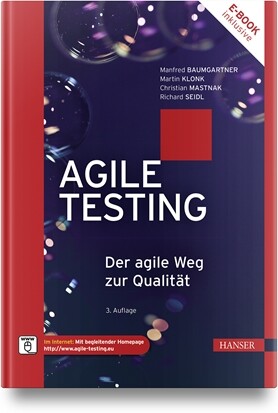
Agile Testing (3. Auflage)
Agile Testing. Der agile Weg zur Qualität. In 3., überarbeiteter Auflage. Dezember 2023.Der Trend zu agilen Vorgehen ist ungebrochenDieser Trend geht auch am Softwaretest nicht spurlos vorüber. Nachdem die Bedeutung des Tests in agilen Projekten unumstritten ist, treten jetzt vor allem die Professionalisierung und die Integration der einzelnen Mitarbeiter in den rollenübergreifenden Tätigkeiten des agilen Vorgehens in den Vordergrund.Die klassischen Rollenbilder des Tests verschwimmen und gehen ineinander über. Die Eigenverantwortung der Tester steigt. Für den klassischen Tester bedeutet dies eine Bereicherung und Aufwertung seiner Rolle, da er auch Aufgaben und Tätigkeiten anderer Professionen übernimmt.Der Stellenwert des TeamsDie Crux mit den Werkzeugen in agilen ProjektenDie sieben schlechtesten Ideen für die TestautomatisierungTestmethoden im agilen UmfeldTester: Generalist vs. Spezialist?Welches sind nun aber die Aufgaben des Softwaretests in agilen Projekten? Wie sind diese in unterschiedlichen agilen Vorgehensweisen – wie etwa Scrum oder Kanban – zu organisieren? Welche Bedeutung haben Testwerkzeuge in diesem Kontext? Wie grenzen sich die Verantwortlichkeiten gegeneinander ab oder wirken synergetisch zusammen?Auf diese sehr konkreten Fragen, die sich im operativen Projektgeschehen immer wieder stellen, liefert dieses Buch mögliche Antworten, ergänzt durch bewährte Ansätze aus der Praxis.Manfred Baumgartner, Martin Klonk, Helmut Pichler, Richard Seidl und Siegfried Tanczos sind seit langer Zeit im Bereich des Software-Tests tätig. In den letzten Jahren hatten sie die Chance, immer mehr agile Projekte aus den unterschiedlichsten Branchen kennenzulernen und zu begleiten. So treffen hier Erfahrungen aus der Telekommunikations-, Medizintechnik-, Banken-, Energieversorger- und Luftfahrtbranche aufeinander.Ihr exklusiver Vorteil: E-Book inside beim Kauf des gedruckten Buches Manfred Baumgartner ist seit Beginn seiner beruflichen Laufbahn im Bereich der Software-Qualitätssicherung tätig und arbeitet als Berater bei der Nagarro GmbH in Wien.Christian Mastnak leitet die globale „Agile Testing Practice“ von Nagarro und implementiert innovative QA-Lösungen für internationale Kunden mit besonderen Ansprüchen an Agilität und Effizienz.Richard Seidl ist seit über 20 Jahren als Softwaretest-Experte und Agile Quality Coach in Deutschland und Österreich tätig.Leseprobe (PDF-Link)

Angular for Business
Written from author Michael D. Callaghan's personal experience teaching Angular to web development teams, this book will serve as a practical guide to help you adopt Angular for your organization.This book consists of a series of essays related to Angular development, adoption, and the wider eco-system designed to appeal to experienced web developers and managers who have some experience with Angular and are looking to adopt and integrate it into their business for their web development projects.You'll begin with an introduction to Angular15, along with associated frameworks and tools such as Typescript, Firebase RxJS and Docker. You'll then explore Angular components, progressive Web Apps (PWA’s) APIs, Test-driven development, testing, security and the basics of agile project management. This includes how to train your team and effectively communicate with management and key stake-holders within your organization while transitioning onto an Angular workflow.WHAT YOU'LL LEARN* Advocate for Angular from within your organization * Create a simple "no-code" Angular component* Keep up with Angular releases for enterprise projects * Understand service APIs from both the producer and consumer point of view* Test APIs quickly and using Firebase* Implement the basics of agile project managementWHO THIS BOOK IS FORExperienced web developers and managers with some knowledge of Angular and the related JavaScript eco-system who are looking at adopting Angular for enterprise projects and those who need to get co-workers up to speed with an Angular-based workflow.MICHAEL D. CALLAGHAN is a software developer and tech lead with more than twenty years’ experience, primarily in Microsoft and Linux environments, the past 10 years of which has been spent assembling, mentoring, and leading development teams. Most recently specialized in designing and leading the development of web-based and mobile applications, utilizing light-weight components and open frameworks, using Agile, test-driven methodologies.PART I:CORE CONCEPTS.- 1: A Gentle Introduction to Angular.- 2: A Brief Introduction to Typescript.- 3: Angular CLI Quick Reference.- 4: Making a Simple Angular Component.- 5: Offline Networks.- 6: Custom Angular Checkboxes with [(ngModel)] Support.- 7: Error Handling Strategies for Handling Data 8: Upgrading Angular.- 9: Understanding Service API’s.- 10: Deploy with Azure with ng Deploy.- 11: Hosting an API.- 12: Progressive Web Applications (PWAs).- 13: RxJS: To Use or Not to Use?.- PART II: TESTING AND DEBUGGING.- 14: Test-Driven Development with Angular.- 15: Unit Testing Strategies.- 16: Debugging with Docker Containers.- PART III: THE COMMAND LINE.- 17: What Do All Those Symbols Mean?.- PART IV: SOURCE CONTROL.- 18: Fixing Broken Git Commits.- 19: Archiving Your Git Repositories.- PART V: COMMUNICATION AND TRAINING.- 20: How We Learn and Teach.- 21: Slow Down to be Noticed.- 22: Watch Your Language.- 23: Agile Planning and Management with Trello.- PART VI: OTHER TOPICS.- 24: Automate Screenshots with Protractor.- 25: Image Repositories.

Deep Dive into Power Automate
Understand the basics of flow and learn how to implement guidelines in real-life scenarios, including Robotic Process Automation (RPA) capabilities. This book covers the evolution of flow and how it is transformed to a full-fledged RPA (such as Power Automate).The book starts with an introduction to flow and its transformation to Process Automation. You will learn how to create a Power Automate environment and demonstrate different types of flows within it. Author Goloknath Mishra takes you through various types of cloud flows and their best practices. Desktop Flows (RPA) or Power Automate Desktop (PAD) is discussed and the author teaches you its architecture, installation steps, and how to manage, schedule, and share a desktop. You will learn about Business Process Flow, Process Advisors, and AI Builder. You also will go through licensing considerations in Power Automate and AI Builder, and demonstrate all of your learnings through a mini project.After reading the book, you will have gained expertise in Power Automate and be able to implement its guidelines and solve problems at your organization.WHAT WILL YOU LEARN* Know the difference between Intelligent Process Automation (IPA) and Robotic Process Automation (RPA)* Understand the different types of flows in Power Automate* Create various types of cloud flows, Desktop flows, Business Process flows, and AI Builder models* Study common use cases and be aware of Power Automate best practicesWHO THIS BOOK IS FORBusiness executives, citizen developers, IT professionals, and computer scientists who wish to efficiently automate monotonous workGOLOKNATH MISHRA is a Microsoft Most Valuable Professional (MVP), Microsoft Certified Trainer (MCT), and a Power Platform Solution Architect Expert with over 14 years of experience in digital transformation using Microsoft Tech Stack as an enabler. He has worked with various organizations in different domains and is currently associated with NCS Group, Singapore as Senior IT Architect.During his tenure of work, he was involved in enterprise solution architecture and design, delivery management (Scaled Agile, Agile and Waterfall), pre-sales, project management, client consulting and business analysis.He is active in the tech community and participates in different Microsoft programs. He is an instructor, speaker, blogger, and YouTuber. He runs the Microsoft User Group in Singapore and Odisha focusing on Microsoft Dynamics 365 and Power Platform. He is also one of the founding members of #PowerPlatformClassmates.

Hardware and Software Projects Troubleshooting
Learn how to create good requirements when designing hardware and software systems. While this book emphasizes writing traditional “shall” statements, it also provides guidance on use case design and creating user stories in support of agile methodologies. The book surveys modelling techniques and various tools that support requirements collection and analysis. You’ll learn to manage requirements, including discussions of document types and digital approaches using spreadsheets, generic databases, and dedicated requirements tools. Good, clear examples are presented, many related to real-world work the author has performed during his career. More importantly, you will learn how these techniques can prevent the problems that occur during requirements development. Most of all, you will learn how good requirements governance will greatly increase the success of development projects by getting all people involved to eliminate the adverse impacts to requirements throughout the development lifecycle.Hardware and Software Projects Troubleshooting covers techniques for defining user needs, so you can determine which combination of approaches to use for your projects. You’ll also learn how to analyze the different development methodologies so that you can determine the advantages and disadvantages of different requirements approaches and implement them correctly as your needs evolve. Unlike most requirements books, this one teaches writing both hardware and software requirements because many projects include both areas. To exemplify this approach, two example projects are developed throughout the book, one focusing on hardware, and the other on software.WHAT YOU WILL LEARN* Focus on how to eliminate or mitigate requirements problems* Understand the 14 techniques for capturing all requirements* Address software and hardware needs; because most projects involve both* Ensure all statements meet the 16 attributes of a good requirement* Differentiate the 19 different functional types of requirements, and the 31 non-functional types* Write requirements properly based on extensive examples of good ‘shall’ statements, user stories, and use cases* Employ modelling techniques to mitigate the imprecision of words* Install requirements governance to significantly improve project successWHO THIS BOOK IS FORRequirements engineers who want to improve and master their craft, as well as students and those employed in government or other organizations at all levels. GEORGE KOELSCH was a systems engineer who retired to West Virginia. He started writing requirements 47 years ago while in the US Army and had continued that work for his last 33 years as a contractor for the Federal Government. He became an efficiency expert during a five-year stint as an Industrial Engineer at Michelin Tire Corporation, and he then applied that new skill to system engineering to tailor the lifecycle development process. He was among the first requirement engineers in the DC metro area to employ such a technique. Koelsch has authored more than ten non-fiction articles on computers, coin collecting, stamp collecting, and high-energy physics. This is the second time he has combined his two passions, system engineering and writing.

Wärmepumpen - Grundlagen, Planung, Betrieb
Modernes Heizen für die Zukunft. Jetzt erhältlich im heise shop, Dezember 2023.Muss Ihre Gas- oder Öl-Heizung ersetzt werden? Was tun bei einem Neubau? Und brauchen Sie unbedingt eine PV-Anlage auf dem Dach, die den nötigen Strom produziert? Wenn Sie ein Haus besitzen oder einen Neubau planen, müssen Sie sich mit diesen Fragen beschäftigen – oder der nächste Winter wird ziemlich kalt. Fachleute sind sich einig: der Wärmepumpe gehört die Zukunft. Michael Kofler und Tobias Otta geben Ihnen einen Überblick zu allen Fragen rund um das Heizen mit einer Wärmepumpe. Sie erläutern verständlich, worauf Sie bei der Planung achten müssen. So verstehen Sie die Technik und können anhand von zahlreichen Beispielszenarien die richtige Entscheidung für Ihr Zuhause treffen. Aus dem Inhalt:Von der fossilen Heizung zur WärmepumpeGrundlagen und FunktionsweiseIntegration in die HeizungsanlageBrauchwasserwärmepumpenKühlen mit der WärmepumpeFörderungen, Gesetze, BetriebPhotovoltaikBeispielszenarien mit Kosten-/NutzenrechnungenDie Autoren:Michael Kofler hat Elektrotechnik studiert und beschäftigt sich seit Jahren intensiv mit allen Themen rund um die private Energie- und Wärmewende.Ob privat mit dem Lastenrad zum Kindergarten oder seit 15 Jahren als Ingenieur in der Heizungsbranche: Tobias Otta steht für die Energiewende und einen nachhaltigen Lebensstil.

KI 2.023 Die Evolution des Denkens
Künstliche Intelligenz hält immer mehr Einzug in unser tägliches Leben. Dabei ist es ein viel diskutiertes Thema mit den unterschiedlichsten Ansichten und Prognosen. Doch was steckt hinter all dem? Was ist Künstliche Intelligenz? Warum gibt es so viele Anhänger, die eine wundervolle Zukunft erwarten während andere grosse Gefahren sehen?Dieses Buch vertieft die Thematik, zeigt Zusammenhänge auf, liefert die technisch und wissenschaftlichen Hintergründe. Es zeigt einen Überblick über die gegenwärtige Situation und gibt Prognosen für die künftige Entwicklung. Welche Auswirkungen sind für die Gesellschaft zu erwarten und wie ändert sich unser Alltag? Und es zeigt auf, wie mittels der Künstlichen Intelligenz eine Veränderung, die Evolution des Denkens stattfindet.Dipl. Ing Uwe Irmer:Dipl. Ing. Uwe Irmer studierte Elektrotechnik und Wirtschaftsingenieur mit den Schwerpunkten Energietechnik, Informatik und Projektmanagement. Seit 1990 in vielen nationalen und internationalen Projekten der Fachbereiche Energieverteilung, Informationssicherheit und IT Architektur tätig, befasst er sich seit 1992 mit dem Thema Informationssicherheit und forscht auf den Gebieten Projektmanagement, Informationssicherheit, IT Forensics, Künstliche Intelligenz und Cloud Technologie.