

Computer und IT

PyTorch Recipes
Learn how to use PyTorch to build neural network models using code snippets updated for this second edition. This book includes new chapters covering topics such as distributed PyTorch modeling, deploying PyTorch models in production, and developments around PyTorch with updated code.You'll start by learning how to use tensors to develop and fine-tune neural network models and implement deep learning models such as LSTMs, and RNNs. Next, you'll explore probability distribution concepts using PyTorch, as well as supervised and unsupervised algorithms with PyTorch. This is followed by a deep dive on building models with convolutional neural networks, deep neural networks, and recurrent neural networks using PyTorch. This new edition covers also topics such as Scorch, a compatible module equivalent to the Scikit machine learning library, model quantization to reduce parameter size, and preparing a model for deployment within a production system. Distributed parallel processing for balancing PyTorch workloads, using PyTorch for image processing, audio analysis, and model interpretation are also covered in detail. Each chapter includes recipe code snippets to perform specific activities.By the end of this book, you will be able to confidently build neural network models using PyTorch.WHAT YOU WILL LEARN* Utilize new code snippets and models to train machine learning models using PyTorch* Train deep learning models with fewer and smarter implementations* Explore the PyTorch framework for model explainability and to bring transparency to model interpretation* Build, train, and deploy neural network models designed to scale with PyTorch* Understand best practices for evaluating and fine-tuning models using PyTorch* Use advanced torch features in training deep neural networks* Explore various neural network models using PyTorch* Discover functions compatible with sci-kit learn compatible models* Perform distributed PyTorch training and executionWHO THIS BOOK IS FORMachine learning engineers, data scientists and Python programmers and software developers interested in learning the PyTorch framework.PRADEEPTA MISHRA is the Director of AI, Fosfor at L&T Infotech (LTI), leading a large group of Data Scientists, computational linguistics experts, Machine Learning and Deep Learning experts in building the next-generation product, ‘Leni,’ the world’s first virtual data scientist. He has expertise across core branches of Artificial Intelligence including Autonomous ML and Deep Learning pipelines, ML Ops, Image Processing, Audio Processing, Natural Language Processing (NLP), Natural Language Generation (NLG), design and implementation of expert systems, and personal digital assistants. In 2019 and 2020, he was named one of "India's Top "40Under40DataScientists" by Analytics India Magazine. Two of his books are translated into Chinese and Spanish based on popular demand.He delivered a keynote session at the Global Data Science conference 2018, USA. He has delivered a TEDx talk on "Can Machines Think?", available on the official TEDx YouTube channel. He has mentored more than 2000 data scientists globally. He has delivered 200+ tech talks on data science, ML, DL, NLP, and AI in various Universities, meetups, technical institutions, and community-arranged forums. He is a visiting faculty member to more than 10 universities, where he teaches deep learning and machine learning to professionals, and mentors them in pursuing a rewarding career in Artificial Intelligence.Chapter 1: Introduction to PyTorch, Tensors, and Tensor OperationsChapter Goal: This chapter is to understand what is PyTorch and its basic building blocks.Chapter 2: Probability Distributions Using PyTorchChapter Goal: This chapter aims at covering different distributions compatible with PyTorch for data analysis.Chapter 3: Neural Networks Using PyTorchChapter Goal: This chapter explains the use of PyTorch to develop a neural network model and optimize the model.Chapter 4: Deep Learning (CNN and RNN) Using PyTorchChapter Goal: This chapter explains the use of PyTorch to train deep neural networks for complex datasets.Chapter 5: Language Modeling Using PyTorchChapter Goal: In this chapter, we are going to use torch text for natural language processing, pre-processing, and feature engineering.Chapter 6: Supervised Learning Using PyTorchGoal: This chapter explains how supervised learning algorithms implementation with PyTorch.Chapter 7: Fine Tuning Deep Learning Models using PyTorchGoal: This chapter explains how to Fine Tuning Deep Learning Models using the PyTorch framework.Chapter 8: Distributed PyTorch ModelingChapter Goal: This chapter explains the use of parallel processing using the PyTorch framework.Chapter 9: Model Optimization Using Quantization MethodsChapter Goal: This chapter explains the use of quantization methods to optimize the PyTorch models and hyperparameter tuning with ray tune.Chapter 10: Deploying PyTorch Models in ProductionChapter Goal: In this chapter we are going to use torch serve, to deploy the PyTorch models into production.Chapter 11: PyTorch for AudioChapter Goal: In this chapter torch audio will be used for audio resampling, data augmentation, features extractions, model training, and pipeline development.Chapter 12: PyTorch for ImageChapter Goal: This chapter aims at using Torchvision for image transformations, pre-processing, feature engineering, and model training.Chapter 13: Model Explainability using CaptumChapter Goal: In this chapter, we are going to use the captum library for model interpretability to explain the model as if you are explaining the model to a 5-year-old.Chapter 14: Scikit Learn Model compatibility using SkorchChapter Goal: In this chapter, we are going to use skorch which is a high-level library for PyTorch that provides full sci-kit learn compatibility.
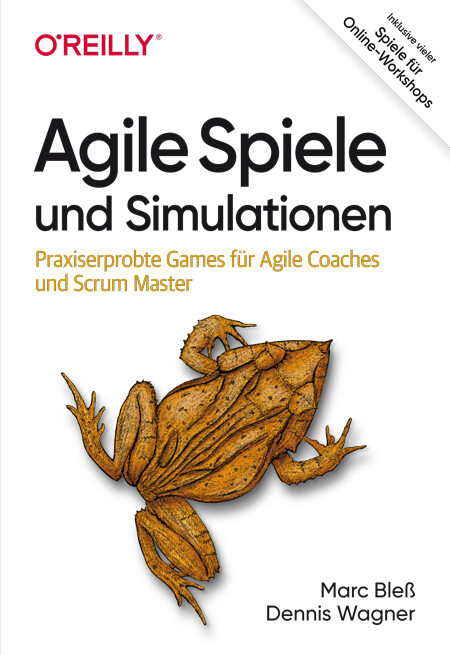
Agile Spiele und Simulationen
Praxiserprobte Games für Agile Coaches und Scrum Master. Inklusive vieler Spiele für Online-WorkshopsDer umfassende Spiele-Werkzeugkoffer für alle, die Workshops zu agilen Methoden moderieren.Spiele und Simulationen unterstützen Agile Coaches und Scrum Master optimal dabei, agile Prinzipien und Praktiken in Workshops und Trainings zu veranschaulichen – und sie machen Spaß! Mittlerweile sind sie fester Bestandteil des Werkzeugkoffers von agilen Moderatorinnen und Moderatoren. Dieses Buch beschreibt über 70 Spiele, die sich in der Praxis besonders bewährt haben.Marc Bleß und Dennis Wagner – beide seit vielen Jahren als Agile Coaches tätig – erläutern zunächst, was bei der Moderation von agilen Spielen zu beachten ist und wann welches Spiel eingesetzt werden kann. Sie zeigen außerdem, wie die meisten dieser Spiele auch in Online-Workshops genutzt werden können und was dabei grundsätzlich zu beachten ist.Vorgestellt werden Spiele aus diesen Kategorien:Vermittlung von agilen PrinzipienSimulationen von agilen PraktikenKommunikation und Social DynamicsEröffnung und Abschluss eines TrainingsEnergizer und Auflockerungen für zwischendurchNeu: Technical Skills – Spiele für die Vermittlung agiler EntwicklungspraktikenDas Buch ist eine Erweiterung des beliebten Taschenbuchs »Agile Spiele – kurz & gut«. Es enthält zahlreiche neue spannende Games und jetzt auch viele farbige Abbildungen. Alle Spielanleitungen wurden überarbeitet und ergänzt. Die Autoren beschreiben Vorbereitung, benötigtes Material, Ablauf und Nachbereitung jedes Spiels sowie mögliche Stolperfallen. Die vielen konkreten Tipps und Beispiele aus der Praxis garantieren, dass Spielfreude aufkommt und du erfolgreiche Workshops und Trainings durchführst.Autoren:Marc Bleß, Dennis WagnerMarc Bleß hat über 20 Jahre Erfahrung als Agile Coach, Scrum Master, Softwareentwickler und Führungskraft. Seine Leidenschaft ist die schnelle und nachhaltige Verbesserung von Teams und Organisationen. Als ausgebildeter Solution-Focused Coach und Certified Enterprise Coach (CEC) begleitet Marc Unternehmen auf allen Ebenen – vom Top-Level-Management bis zu einzelnen Teams – bei der Einführung agiler Entwicklungsmethoden und der Umsetzung agiler Werte, Prinzipien und Praktiken.Dennis Wagner ist, seit er mit 17 Jahren sein erstes eigenes Softwareprodukt verkauft hat, der Entwicklung verschrieben. In so unterschiedlichen Rollen wie Architekt, Team Lead, Entwickler oder Product Manager zeigte er viele Jahre erfolgreich Wege auf, wie man Software besser entwickelt. Seit er vor mehr als zehn Jahren XP und Scrum kennenlernte, ist er Agilist aus Überzeugung. Heute hilft er Teams, Führungskräften und Organisationen als Full Stack Agile Coach, ihr Potential zu entdecken und zu entwickeln.Zielgruppe:Scrum MasterAgile CoachesFührungskräfte, die Workshops zu agilen Methoden moderieren

Getting Started with Visual Studio 2022
Learn how to use the features of Visual Studio 2022 and utilize the IDE correctly to make it your one-stop solution for creating quality code. Learn what's new in VS 2022 and explore the existing features of Visual Studio so you can become a more efficient programmer.This revised edition covers the latest features of Visual Studio 2022 and how to use them. The book includes new topics like Subword Navigation, Multi-caret Editing, how to enable Code Cleanup on Save, using breakpoints, and new debugging features such as temporary breakpoints and dependent breakpoints. The book also looks at some of the new Git features such as Multi-repo Support, Comparing Branches, Checkout Commit, and line Staging.Getting Started with Visual Studio 2022 begins with an overview of Visual Studio and explores features such as Visual Studio Live Share, Visual Studio Search, Solution Filters, and Intellicode. The author also provides a look at the different Visual Studio project templates and shows you how to create code snippets, as well as how to manage NuGet and nmp packages. You will also see how to create a cross-platform MAUI application as well as how to use SQLite in an MAUI application. Moving ahead, you will learn how to debug your code using breakpoints to step into specific methods, use data tips, and utilize the Debugger Display attribute. You will then move on to learn unit testing and explore the tools provided by Visual Studio to create and run unit tests. The book also covers source control integration in Visual Studio and how to use GitHub to implement a source control strategy for your projects.WHAT YOU WILL LEARN* Create and use code snippets in Visual Studio 2022* Use the new debugging features in Visual Studio* Utilize diagnostic tools and the Immediate window for code debugging* Generate unit tests with IntelliTest* Harness the new Git features in Visual Studio to make managing source code easier* Work with MAUI appsWHO THIS BOOK IS FORBeginners and software developers working on the .NET stack.DIRK STRAUSS has over 17 years of experience programming with C# and Visual Studio. Working for various companies throughout his career, he has been privileged to work with and learn from some of the most brilliant developers in the industry. He has authored several books on topics ranging from Visual Studio and C# to ASP.NET Core. Passionate about writing code, he loves learning new tech and imparting what he learns to others.CHAPTER 1: GETTING TO KNOW VISUAL STUDIO 2022- Installing Visual Studio- Visual Studio 2022 System Requirements- Visual Studio is 64-bit- Full .NET 6.0 Support- Using Workloads- Exploring the IDE- The Solution Explorer- Toolbox- The Code Editor- New Razor Editor- Hot Reload- Navigating Code- Navigate Forward and Backward Commands- Navigation Bar- Find All References- Find Files Faster- Reference Highlighting- Go To Commands- Go To Definition- Peek Definition- Subword Navigation- Features and Productivity Tips- Track Active Item in Solution Explorer- Hidden Editor Context Menu- Open in File Explorer- Finding Keyboard Shortcut Mappings- Clipboard History- Go To Window- Navigate to Last Edit Location- Multi-caret Editing- Sync Namespaces to Match Your Folder Structure- Paste JSON as Classes- Enable Code Cleanup on Save- Add Missing Using on Paste- Features in Visual Studio 2022- Visual Studio Search- Solution Filters- Visual Studio IntelliCode- Whole Line Completions- Quick Actions- Visual Studio Live ShareCHAPTER 2: WORKING WITH VISUAL STUDIO 2022- Visual Studio Project Types- Various Project Templates - MAUI- Creating a MAUI Application- Consuming REST Services in MAUI- Using SQLite in a MAUI app- Managing NuGet Packages- Using NuGet in Visual Studio- Hosting Your Own NuGet Feeds- Managing nmp Packages- Creating Project Templates- Creating and Using Code Snippets- Creating Code Snippets- Using Bookmarks and Code Shortcuts- Bookmarks- Code Shortcuts- Adding Custom Tokens- The Server Explorer- Running SQL Queries- Visual Studio Windows- C# Interactive- Code Metrics Results- Send Feedback- Personalising Visual Studio- Document Management Customisations- Visual Studio ThemesCHAPTER 3: DEBUGGING YOUR CODE- Working with Breakpoints- Setting a Breakpoint- Conditional Breakpoints and Actions- Temporary Breakpoints- Dependant Breakpoints- Dragging Breakpoints- Force Run to Cursor- Manage Breakpoints with Labels- Exporting Breakpoints- Using DataTips- Visualizing Complex Data Types- Using the Watch Window- The DebuggerDisplay Attribute- Evaluate Functions Without Side Effects- Format Specifiers- Diagnostic Tools- CPU Usage- Memory Usage- The Events View- The Right Tool for the Right Project Type- Immediate Window- Attaching to a Running Process- Attach to a Remote Process- Reattaching to a Process- Remote Debugging- System Requirements- Download and Install Remote Tools- Running Remote Tools- Start Remote DebuggingCHAPTER 4: UNIT TESTING- Creating and Running Unit Tests- Create and Run a Test Playlist- Testing Timeouts- Using Live Unit Tests- Using IntelliTest to Generate Unit Tests- Focus IntelliTest Code Exploration- How to Measure Code Coverage in Visual StudioCHAPTER 5: SOURCE CONTROL- Create a GitHub Account- Create and Clone a Repository- Cloning a Repository- Create a Branch from Your Code- Creating and Handling Pull Requests- Working with Stashes- Multi-repo Support- Git Commit Graph- Compare Branches- Checkout Commit- Multi-repo Branching- Line Staging
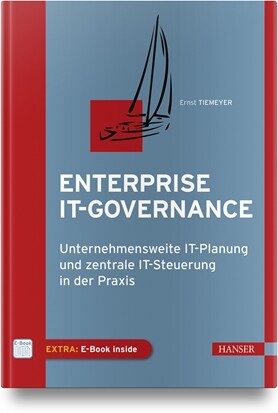
Enterprise IT-Governance
Unternehmensweite IT-Planung und zentrale IT-Steuerung in der PraxisDieses Buch gibt Ihnen eine ganzheitliche und praxisnahe Orientierung zu den vielfältigen aktuellen Herausforderungen und Handlungsfeldern von Enterprise IT-Governance.Einleitend finden Sie eine Einordnung zur Bedeutung von IT-Governance, indem die Anlässe, Herausforderungen und Zielsetzungen angesprochen werden. Weitere Themen sind die Bereitstellung und Nutzung von Frameworks (insbesondere COBIT ) sowie die Organisation und Einführung von IT-Governance in die betriebliche Praxis.Außerdem wird auf wesentliche Handlungsfelder von Enterprise IT-Governance eingegangen:Unternehmensweite IT-StrategieentwicklungEnterprise Architecture ManagementEnterprise IT-PortfoliomanagementIT-Investitions- und -InnovationsmanagementEnterprise IT-Risiko- und Compliance ManagementInsgesamt sind Sie mit Unterstützung der Ausführungen in diesem Buch in der Lage, Strukturen, Verfahren,Projekte und Prozesse zur erfolgreichen Umsetzung von Enterprise IT-Governance zu identifizieren und Roadmaps für Ihre Praxis zu entwickeln. Dabei erschließen Sie wichtige Management- und Governance-Aufgaben und erwerben umfassende Methoden- und Managementkompetenzen zur Gestaltung ganzheitlicher Enterprise IT-Governance-Lösungen.Inhalt:Enterprise IT-Governance – Einordnung, Handlungsfelder, PositionierungOrganisation und Rahmenwerke für die Enterprise IT-GovernanceEnterprise IT-Planungen (Strategien) vereinbaren und erfolgreich umsetzenEnterprise Architecture – EA-Organisation, Planungen und EA-GovernanceDigitale Transformationen planen, umsetzen und steuern IT-Portfoliomanagement und Enterprise IT-Governance – Konzepte und LösungenIT-Investitionsmanagement und wertorientiertes Controlling (Valuemanagement)Enterprise IT-Risiko- und Compliance Management – Prozesse, Anwendungsformen, EinführungAutor:Ernst TiemeyerDipl.-Hdl. Ernst Tiemeyer ist seit mehr als 25 Jahren in leitenden Projektfunktionen sowie als IT-Consultant und im Bildungsbereich bzw. Managementtraining tätig. Schwerpunktmäßig befasst er sich in der Praxis mit Projektmanagement, strategischem IT-Management, Enterprise IT-Architekturmanagement, Enterprise IT-Governance, IT-Controlling sowie BPM. Seine Lehrtätigkeit führt er unter anderem an der EU-FH in Hamburg, am FH Joanneum Kapfenberg/Graz sowie an der FOM (Hochschule für Berufstätige) in verschiedenen Bachelor- und Masterstudiengängen aus.
Intelligent Decision Support Systems for Smart City Applications
INTELLIGENT DECISION SUPPORT SYSTEMS FOR SMART CITY APPLICATIONSTHIS BOOK PROVIDES SMART CITY FRAMEWORKS TO ADDRESS NEW DIFFICULTIES BY ADDING NEW FEATURES AND ALLOWING THE CITY ENVIRONMENT TO REACT TO COLLECTED DATA AND INFORMATION TO INCREASE THE EFFICIENCY AND SUSTAINABILITY OF SERVICES FOR INHABITANTS.Making a smart city is an emerging strategy to mitigate the problems generated by urban population growth and rapid urbanization. This book aims to provide a better understanding of the concept of smart cities and the application of an intelligent decision support system. Based on the analysis of existing information there are eight critical factors of smart city initiatives: management and organization, technology, governance, policy context, people and communities, economy, built infrastructure, and natural environment. This book will focus on the application of the decision support system in managing these eight crucial aspects of smart cities. The intent in writing this book was also to provide a source that covers the stage-by-stage integration of the four key areas involving planning, physical infrastructure, ICT infrastructure, and deploying the smart solutions necessary for city transformation. With this as the motivation, “Decision Support Systems for Smart City Applications” provides the application of an intelligent decision support system for effectively and efficiently managing the transformation process, which can aid various supply chain stakeholders, academic researchers, and related professionals in building smart cities. Various chapters of this book are expected to support practicing managers during the implementation of smart solutions for city transformation. AUDIENCEThis book is aimed at both academics and practitioners alike in the fields of intelligent computing, decision support systems, the manufacturing industry, supply chain managers, stakeholders, policymakers, and other technical and administrative personnel. LOVELEEN GAUR, PHD, a full professor at Amity International Business School, Amity University, Noida is an established researcher and has filed many patents and copyrights in the area of AI/ML/IoT. She has been honored with prestigious national and international awards such as the “Senior Women Educator & Scholar Award” by National Foundation for Entrepreneurship Development on Women’s Day, “Sri Ram Award” by Delhi Management Association (DMA), and “Distinguished Research Award” by Allied Academies, Jacksonville, Florida. VERNIKA AGARWAL, PHD, is an assistant professor (operations research) at Amity International Business School, Amity University, Noida. She has published extensively in international journals. PRASENJIT CHATTERJEE, PHD, is the Dean (Research and Consultancy) at MCKV Institute of Engineering, West Bengal, India. He has over 120 research papers in various international journals and peer-reviewed conferences. He has authored and edited more than 15 books on intelligent decision-making, supply chain management, optimization techniques, risk, and sustainability modeling. He has received numerous awards including Best Track Paper Award, Outstanding Reviewer Award, Best Paper Award, Outstanding Researcher Award, and University Gold Medal. Dr. Chatterjee is the Editor-in-Chief of the Journal of Decision Analytics and Intelligent Computing. Preface xvAcknowledgement xxi1 TECHNO AGRI FOR NEW CITIES BY SMART IRRIGATION 1Rohit Rastogi, Sunil Kumar Prajapati, Shiv Kumar and Satyam Verma1.1 Introduction 21.2 Literature Review 41.3 Components Used 61.4 Proposed System 81.5 Android Mobile Application for Smart Irrigation 111.5.1 Main Page 111.5.2 Snapshot of Working Model (ICs and Working Model) 131.6 Novelty 141.7 Future Research Work 141.8 Limitations 141.9 Conclusions 15References 152 A CASE STUDY OF COMMAND-AND-CONTROL CENTER— A DSS PERSPECTIVE 17Prakash B.R. and Dattasmita H.V.2.1 Introduction 182.1.1 Smart City 182.1.1.1 Characteristics of a Decision Support System 202.1.2 The Critical System 202.1.2.1 Safety Critical System 202.2 Command and Control Center—A Critical System 212.3 Conclusion 31References 323 INVERSE TREE INTERLEAVERS IN UAV COMMUNICATIONS FOR INTERFERENCE MITIGATION 35Manish Yadav, Prateek Raj Gautam and Pramod Kumar Singhal3.1 Introduction 353.2 Background 363.3 The Problem 383.4 Motivation 393.5 Interference Mitigation Using ITI 393.6 Interleavers for Interference Mitigation in UAV Communications 403.7 Inverse Tree Interleavers in UAV Communications 423.8 Decision Support System (DSS) in ITI Allocation 433.9 ITI-Based Clustered Interleaving and DSS for Smart City Framework 443.10 Conclusion 47References 474 INTRODUCTION TO DSS SYSTEM FOR SMART CITIES 53Kuldeep Singh Kaswan, Ravinder Gautam and Jagjit Singh Dhatterwal4.1 Introduction 544.2 Smart City System Architecture 554.2.1 Sensing Plane 554.2.2 Communication Plane 554.2.3 Data Plane 564.2.4 Security Plane 564.3 Types of Network Sensors 574.3.1 Electronic Sensors 574.3.2 Chemical Sensors 574.3.3 Biosensors 574.3.4 Smart Grid Sensors 584.4 Role of Sensors in Smart Cities 584.4.1 Safety and Security Management 584.4.2 Service Delivery and Optimization 584.4.3 Traffic Control and Parking 584.4.4 Smart Building 594.4.5 Public Transport 594.4.6 Environment 594.4.7 Ethical Implications 604.5 Implications of Smart Sensors 604.6 Decision Modeling 604.7 Decision Support Systems (DSS) 634.7.1 Decision Support System Components 634.7.2 DSS Merits and Demerits 634.8 Chandigarh: Becoming a Smart City 644.8.1 Chandigarh City’s SWOT Analysis 644.8.2 Challenges to Become the Smart City for Chandigarh 664.9 A Topology of Smart City Functions 674.9.1 Smart Economy (Competitiveness) 674.9.2 Smart People (Social and Human Capital) 684.9.3 Smart Governance (Participation) 684.9.4 Smart Mobility (Transport and ICT) 694.9.5 Smart Environment (Natural Resources) 704.9.6 Smart Living (Quality of Life) 714.10 Challenges for India’s Smart Cities 714.11 The Government Should Focus on the Following Main Areas for the Country’s Creation of Smart Cities 734.12 Conclusion 74References 755 EVALUATING SOLUTIONS TO OVERCOME BLOCKCHAIN TECHNOLOGY IMPLEMENTATION IN SMART CITY USING A HYBRID FUZZY SWARA-FUZZY WASPAS APPROACH 77Shivam Goyal, Vernika Agarwal and Sanskriti Goel5.1 Introduction 785.2 Research Methodology 795.2.1 Stepwise Weight Assessment Ratio Analysis (SWARA) Method 795.2.2 Weighted Aggregated Sum Product Assessment (WASPAS) Method 815.3 Research Design 845.4 Application of Proposed Methodology 875.5 Conclusion 95References 966 IDENTIFICATION AND ANALYSIS OF CHALLENGES AND THEIR SOLUTION IN IMPLEMENTATION OF DECISION SUPPORT SYSTEM (DSS) IN SMART CITIES 99Shreya Gupta, Shubhanshi Mittal and Vernika Agarwal6.1 Introduction 1006.2 Review of Literature 1016.3 Research Methodology 1046.3.1 Identification of Challengers and Their Solution 1046.3.2 Fuzzy TOPSIS Methodology 1076.4 Case Background 1116.5 Case Description 1126.6 Result Discussion 1136.7 Conclusion 114References 1157 EVALUATION OF CRITERIA FOR IMPLEMENTATION OF CAPABILITIES IN A SMART CITY’S SERVICE SUPPLY CHAIN: A TEACHER TRAINER’S PERSPECTIVE 119Vasundhara Kaul and Arshia Kaul7.1 Introduction 1207.2 Literature Review 1227.2.1 Service Supply Chain 1227.2.2 Education as a Service Supply Chain 1237.2.3 Evaluation of Educational Supply Chain 1237.2.4 Research Gap and Motivation 1247.3 Objectives 1247.4 Problem Definition 1247.5 Numerical Illustration 1267.6 Conclusion 133References 1338 INDUSTRY 5.0: COEXISTENCE OF HUMANS AND MACHINES 137Sandesh Kumar Srivastava, Pallavi Goel, Anisha and Savita Sindhu8.1 Introduction 1388.1.1 Industrial Revolutions 1408.2 Literature Review 1408.2.1 Industry 4.0 Characterization 1408.2.2 Definition of Digitalization 1428.3 Requirement of Fifth Industrial Revolution 1428.4 Journey of Industry 4.0 to Industry 5.0 1448.4.1 Industry 4.0 1458.4.2 Industry 5.0 1468.5 Industrial Revolution: Changes and Advancements 1478.5.1 Big Data 1478.5.2 Changes the Fifth Industry Revolution Might Bring 1488.5.3 Working with Robots 1488.5.4 Impact of Fifth Industrial Revolution on Education 1498.5.5 Problems which the Fifth Industry Revolution Might Generate 1498.5.6 What Might Help to Solve the Problems 1498.5.7 The Role of Ethics in Industry 5.0 1508.6 Conclusion 150References 1519 SMART CHILD SAFETY FRAMEWORK USING INTERNET OF THINGS 153Afzal Hussain, Anisha , Pallavi Murghai Goel and Sudeshna Chakraborty9.1 Introduction 1549.1.1 Literature Background 1549.2 Technology and Sensors Used 1569.2.1 Proposed System Model and Working 1589.2.2 Implementation Phases 1609.3 Advantages 1639.4 Conclusion 1639.5 Future Scope 164References 16410 WATER CONTENT PREDICTION IN SMART AGRICULTURE OF RURAL INDIA USING CNN AND TRANSFER LEARNING APPROACH 167Rohit Prasan Mandal, Deepanshu Dutta, Saranya Bhattacharjee and Subhalaxmi Chakraborty10.1 Introduction 16810.2 Proposed Method 16910.2.1 Corpus Creation 16910.2.2 Data Pre-Processing 17010.2.3 Data Augmentation 17010.2.4 CNN 17110.2.5 Transfer Learning Algorithms 17110.2.5.1 VGG- 16 17210.2.5.2 VGG- 19 17210.2.5.3 Inception V 3 17310.2.5.4 Xception 17410.2.5.5 ResNet 50 17410.3 Results and Discussion 17510.3.1 Comparison of Classifiers 17510.4 Conclusion 186References 18711 COGNITIVENESS OF 5G TECHNOLOGY TOWARD SUSTAINABLE DEVELOPMENT OF SMART CITIES 189Kumari Priyanka, Gnapika Mallavaram, Archit Raj, Devasis Pradhan and Rajeswari11.1 Introduction 18911.2 Literature Review 19011.3 5G: Overview 19111.4 Smart Cities 19211.5 Cognitiveness of 5G Network 19311.5.1 Advancement of Society 19311.5.2 Industry Transformation 19411.5.3 Amalgam of Education and Entertainment 19411.6 Key Features for 5G Toward Sustainable Development of Smart Cities 19411.7 Application Enabled by 5G 19511.8 Sustainable 5G-Green Network 19711.9 Electricity Harvesting for Smart Cities 19811.10 Economic Impact of 5G Toward Sustainable Smart Cities 19911.11 5G Challenges 20011.12 Conclusion 200References 20112 SOCIETY 5.0 AND AUTHENTICITY: LOOKING TO THE FUTURE 205F.-E. Ouboutaib, A. Aitheda and S. Mekkaoui12.1 Introduction 20612.2 Theoretical Framework 20712.2.1 A Brief History of Industry 4.0 20712.2.2 Marketing Authenticity in the Society 5.0 Era: Beyond Industry 4.0 20812.3 Research Design and Methodology 21012.4 Results 21112.4.1 Measurement Model 21112.5 Conclusion 214References 216Appendix 21813 IOT-BASED SMART CITY APPLICATIONS: INFRASTRUCTURE, RESEARCH AND DEVELOPMENT 219Tarush Gupta, Princy Randhawa and Nikhil Vivek Shrivas13.1 Introduction 21913.2 Different Phases of Development 22113.2.1 Investments, Research, and Planning 22113.2.2 Execution and Deployment 22213.2.3 Globalization of IoT-Based Technologies 22313.2.4 Pilot Projects and City Designs 22313.3 Current Scenario 22813.3.1 Achievements and Milestones 22813.3.2 IoT in Smart Cities 23013.4 Conclusion and Future Work 231References 231Index 235

Ansible for VMware by Examples
Learn to use the Ansible open source IT automation tool to automate your VMware infrastructure. This book contains all of the obvious and not-so-obvious best practices of Ansible automation. Each lesson summarizes a specific use case for the modern VMware infrastructure and is focused on a single module from the most important parameter, including live demo of code and real-life usage.You'll configure the Ansible Controller to interact with VMware infrastructure using the “community.VMware” Ansible documentation collection and the appropriate Python libraries. Next, learn how to automate the creation of a virtual machine manually and from a template, start and stop using the shutdown and forced-power off a Virtual Machine, take and delete and snapshot, add a new hard disk and expand a currently attached hard disk, as well as gather information for data centers, clusters, host systems, and virtual machines.By the end of this book, you'll be well-versed in efficiently maintaining a VMware infrastructure with Ansible Automation. You'll also be able to save time and reduce manual errors using simple human-readable automation technology.WHAT YOU'LL LEARN* Automate your VMware infrastructure using Ansible code* Install Ansible in operating systems such as RedHat, Ubuntu, Fedora, etc.* Write and execute your first Ansible Playbook code * Troubleshoot the most common error messagesWHO THIS BOOK IS FORIT professionals of every industry who would like a jargon-free understanding of Ansible technology, including VMware, Linux, and Windows Systems Administrators, DevOps professionals, thought leaders, and infrastructure-as-code enthusiasts.Luca Berton is an Ansible Automation Engineer of Red Hat, based in Brno - Czech Republic. With more than 15 years of experience as a System Administrator, he has strong expertise in Infrastructure Hardening and Automation. Enthusiast of the Open Source supports the community sharing his knowledge in different events of public access. Geek by nature, Linux by choice, Fedora of course.Chapter 1: Ansible For Beginners With ExamplesCHAPTER GOAL: Description of the Ansible Technology and how to write and execute your first Ansible Playbook code.NO OF PAGES: 5 0SUB - TOPICS* What is AnsibleGetting Started * Inventory* Playbook* Variables, Fact and Magic Variables* Vault* Conditional and LoopHandler * Role* Ansible Best PracticesChapter 2: Install AnsibleCHAPTER GOAL: How to install Ansible in the most common Operating System step by stepNO OF PAGES : 20SUB - TOPICS:* ansible community vs ansible-core packages * Ansible installation in RedHat Enterprise Linux (RHEL) 8 * Ansible installation in Ubuntu 22.04 LTS * Ansible installation in Fedora 36 * Ansible installation in CentOS 9 Stream * Ansible installation in Windows * Ansible installation in SUSE SLES (Linux Enterprise Server) 15 Ansible installation with PIPAnsible installation in RedHat Enterprise Linux (RHEL) 9* Ansible installation in Amazon Linux 2 (AWS EC2) * Ansible installation in Debian 11 Chapter 3: Ansible For VMwareCHAPTER GOAL: How to automate your VMware infrastructure using Ansible code and troubleshoot the most common error messagesNO OF PAGES: 70SUB - TOPICS:* Configure Ansible For VMware Configure a Python Virtual Environment for Ansible VMwareAnsible troubleshooting - VMware f ailed to Import PyVmomi * Ansible troubleshooting - VMware Unknown error while connecting to vCenter or ESXi * Ansible troubleshooting - VMware certificate verify failed connecting to vCenter or ESXi* Create a VMware virtual machine * Deploy a VMware virtual machine from a template * Start a VMware virtual machine * Stop a VMware virtual machine * Take a VMware virtual machine snapshot * Delete a VMware virtual machine snapshot * Add a new hard disk to VMware virtual machine * Expand a virtual disk in VMware virtual machine * Gather VMware Hosts information of a cluster* Get VMware virtual machine UUID* Ansible Dynamic Inventory For VMware* Get VMware vSphere Virtual Machine Running Host* Get VMware datastore status* Upload a file to the VMware datastore* Get VMware Guest Tools status* Upgrade VMware Guest Tools* Live Migration of a VMware Virtual Machine using vMotion* Change the boot devices order of a VMware virtual machineChapter 4: Conclusion
Asymmetric Cryptography
Public key cryptography was introduced by Diffie and Hellman in 1976, and it was soon followed by concrete instantiations of public-key encryption and signatures; these led to an entirely new field of research with formal definitions and security models. Since then, impressive tools have been developed with seemingly magical properties, including those that exploit the rich structure of pairings on elliptic curves.Asymmetric Cryptography starts by presenting encryption and signatures, the basic primitives in public-key cryptography. It goes on to explain the notion of provable security, which formally defines what "secure" means in terms of a cryptographic scheme. A selection of famous families of protocols are then described, including zero-knowledge proofs, multi-party computation and key exchange.After a general introduction to pairing-based cryptography, this book presents advanced cryptographic schemes for confidentiality and authentication with additional properties such as anonymous signatures and multi-recipient encryption schemes. Finally, it details the more recent topic of verifiable computation.DAVID POINTCHEVAL obtained a PhD in Computer Science and has since worked on the Cryptography Team at the École Normale Supérieure in France. His research focuses on provable security of cryptographic primitives and protocols.Foreword xiDavid POINTCHEVALCHAPTER 1 PUBLIC-KEY ENCRYPTION AND SECURITY NOTIONS 1Nuttapong ATTRAPADUNG and Takahiro MATSUDA1.1. Basic definitions for PKE 21.1.1. Basic notation 21.1.2. Public-key encryption 21.1.3. IND-CPA and IND-CCA security 21.1.4. Other basic security notions and relations 41.2. Basic PKE schemes 51.2.1. Game-based proofs 51.2.2. ElGamal encryption 61.2.3. Simplified CS encryption 81.2.4. Cramer–Shoup encryption 111.2.5. Other specific PKE schemes 141.3. Generic constructions for IND-CCA secure PKE 161.3.1. Hybrid encryption 171.3.2. Naor–Yung construction and extensions 191.3.3. Fujisaki–Okamoto and other transforms in the RO model 211.3.4. Other generic constructions for IND-CCA secure PKE 231.4. Advanced topics 251.4.1. Intermediate notions related to CCA 251.4.2. IND-CCA security in multi-user setting and tight security 261.4.3. Key-dependent message security 281.4.4. More topics on PKE 301.5. References 31CHAPTER 2 SIGNATURES AND SECURITY NOTIONS 47Marc FISCHLIN2.1. Signature schemes 472.1.1. Definition 472.1.2. Examples of practical schemes 492.2. Unforgeability 512.2.1. Discussion 512.2.2. Existential unforgeability under chosen-message attacks 532.2.3. Unforgeability of practical schemes 542.3. Strong unforgeability 562.3.1. Discussion 562.3.2. Strong existential unforgeability under chosen-message attacks 572.3.3. Strong unforgeability of practical schemes 582.3.4. Building strongly unforgeable schemes 592.4. Summary 602.5. References 60CHAPTER 3 ZERO-KNOWLEDGE PROOFS 63Ivan VISCONTI3.1. Introduction 633.2. Notation 643.3. Classical zero-knowledge proofs 643.3.1. Zero knowledge 653.4. How to build a zero-knowledge proof system 683.4.1 ZK proofs for all NP 703.4.2. Round complexity 713.5. Relaxed security in proof systems 723.5.1. Honest-verifier ZK 723.5.2. Witness hiding/indistinguishability 733.5.3. Σ-Protocols 743.6. Non-black-box zero knowledge 753.7. Advanced notions 753.7.1. Publicly verifiable zero knowledge 763.7.2. Concurrent ZK and more 773.7.3. ZK with stateless players 783.7.4. Delayed-input proof systems 793.8. Conclusion 803.9. References 80CHAPTER 4 SECURE MULTIPARTY COMPUTATION 85Yehuda LINDELL4.1. Introduction 854.1.1. A note on terminology 874.2. Security of MPC 874.2.1. The definitional paradigm 874.2.2. Additional definitional parameters 894.2.3. Adversarial power 894.2.4. Modular sequential and concurrent composition 914.2.5. Important definitional implications 924.2.6. The ideal model and using MPC in practice 924.2.7. Any inputs are allowed 924.2.8. MPC secures the process, but not the output 924.3. Feasibility of MPC 934.4. Techniques 944.4.1. Shamir secret sharing 944.4.2. Honest-majority MPC with secret sharing 954.4.3. Private set intersection 974.4.4. Threshold cryptography 994.4.5. Dishonest-majority MPC 1004.4.6. Efficient and practical MPC 1004.5. MPC use cases 1014.5.1. Boston wage gap (Lapets et al. 2018) 1014.5.2. Advertising conversion (Ion et al. 2017) 1014.5.3. MPC for cryptographic key protection (Unbound Security; Sepior; Curv) 1014.5.4. Government collaboration (Sharemind) 1024.5.5. Privacy-preserving analytics (Duality) 1024.6. Discussion 1024.7. References 103CHAPTER 5 PAIRING-BASED CRYPTOGRAPHY 107Olivier BLAZY5.1. Introduction 1085.1.1. Notations 1085.1.2. Generalities 1085.2. One small step for man, one giant leap for cryptography 1095.2.1. Opening Pandora’s box, demystifying the magic 1105.2.2. A new world of assumptions 1125.3. A new world of cryptographic protocols at your fingertips 1165.3.1. Identity-based encryption made easy 1175.3.2. Efficient deterministic compact signature 1185.4. References 119CHAPTER 6 BROADCAST ENCRYPTION AND TRAITOR TRACING 121Duong HIEU PHAN6.1. Introduction 1216.2. Security notions for broadcast encryption and TT 1236.3. Overview of broadcast encryption and TT 1256.4. Tree-based methods 1296.5. Code-based TT 1326.6. Algebraic schemes 1356.7. Lattice-based approach with post-quantum security 1426.8. References 143CHAPTER 7 ATTRIBUTE-BASED ENCRYPTION 151Romain GAY7.1. Introduction 1517.2. Pairing groups 1527.2.1. Cyclic groups 1527.2.2. Pairing groups 1527.3. Predicate encodings 1537.3.1. Definition 1537.3.2. Constructions 1547.4. Attribute-based encryption 1567.4.1. Definition 1567.4.2. A modular construction 1587.5. References 165CHAPTER 8 ADVANCED SIGNATURES 167Olivier SANDERS8.1. Introduction 1678.2. Some constructions 1698.2.1. The case of scalar messages 1698.2.2. The case of non-scalar messages 1718.3. Applications 1738.3.1. Anonymous credentials 1738.3.2. Group signatures 1768.3.3. Direct anonymous attestations 1808.4. References 184CHAPTER 9 KEY EXCHANGE 187Colin BOYD9.1. Key exchange fundamentals 1879.1.1. Key exchange parties 1889.1.2. Key exchange messages 1899.1.3. Key derivation functions 1899.2. Unauthenticated key exchange 1919.2.1. Formal definitions and security models 1919.2.2. Constructions and examples 1929.3. Authenticated key exchange 1949.3.1. Non-interactive key exchange 1959.3.2. AKE security models 1969.3.3. Constructions and examples 2009.4. Conclusion 2069.5. References 207CHAPTER 10 PASSWORD AUTHENTICATED KEY EXCHANGE: PROTOCOLS AND SECURITY MODELS 213Stanislaw JARECKI10.1. Introduction 21310.2. First PAKE: EKE 21510.3. Game-based model of PAKE security 21810.3.1. The BPR security model 21810.3.2. Implicit versus explicit authentication 22110.3.3. Limitations of the BPR model 22110.3.4. EKE instantiated with Diffie–Hellman KE 22310.3.5. Implementing ideal cipher on arbitrary groups 22410.4. Simulation-based model of PAKE security 22510.4.1. The BMP security model 22510.4.2. Advantages of BMP definition: arbitrary passwords, tight security 22910.4.3. EKE using RO-derived one-time pad encryption 23010.4.4. BMP model for PAKE with explicit authentication (pake-ea) 23110.5. Universally composable model of PAKE security 23210.6. PAKE protocols in the standard model 23610.7. PAKE efficiency optimizations 23910.8. Asymmetric PAKE: PAKE for the client-server setting 24210.9. Threshold PAKE 24410.10. References 246CHAPTER 11 VERIFIABLE COMPUTATION AND SUCCINCT ARGUMENTS FOR NP 257Dario FIORE11.1. Introduction 25711.1.1. Background 25811.2. Preliminaries 25911.3. Verifiable computation 26011.4. Constructing VC 26111.4.1. VC for circuits in three steps 26111.4.2. Succinct non-interactive arguments for non-deterministic computation 26311.4.3. Verifiable computation from SNARG 26411.5. A modular construction of SNARGs 26411.5.1. Algebraic non-interactive linear proofs 26511.5.2. Bilinear groups 26711.5.3. SNARGs from algebraic NILPs with degree-2 verifiers using bilinear groups 26911.6. Constructing algebraic NILPs for arithmetic circuits 27111.6.1. Arithmetic circuits 27111.6.2. Quadratic arithmetic programs 27111.6.3. Algebraic NILP for QAPs 27411.7. Conclusion 27911.8. References 279List of Authors 283Index 285

Sofortiger Überblick in Excel
Häufig dient Excel als Auswertungswerkzeug vorhandener Daten. Wo werden kritische Werte erreicht? Kann man mit einem Blick überschauen, wie Zahlen sich in der Vergangenheit entwickelt haben? Welche Zellen müssen noch ausgefüllt werden? Kann man eine ganze Zeile hervorheben, wenn eine Spalte irgendwo einen wichtigen Inhalt hat? Geht das auch, wenn ich in zwei verschiedenen Zellen nachsehen muss? Wie behalte ich gleichzeitig Anfang und Ende eines Blattes im Blick? Und wie schaffe ich optische Ordnung in einer dicken Arbeitsmappe? Alles Fragen, die hier beantwortet werden.Ina Koys ist langjährige Trainerin für MS-Office-Produkte. Viele Fragen werden in den Kursen immer wieder gestellt, aber selten in Fachbüchern behandelt. Einige davon beantwortet sie jetzt in der Reihe "kurz & knackig".

A Roadmap for Enabling Industry 4.0 by Artificial Intelligence
A ROADMAP FOR ENABLING INDUSTRY 4.0 BY ARTIFICAIAL INTELLIGENCETHE BOOK PRESENTS COMPREHENSIVE AND UP-TO-DATE TECHNOLOGICAL SOLUTIONS TO THE MAIN ASPECTS REGARDING THE APPLICATIONS OF ARTIFICIAL INTELLIGENCE TO INDUSTRY 4.0. The industry 4.0 vision has been discussed for quite a while and the enabling technologies are now mature enough to turn this vision into a grand reality sooner rather than later. The fourth industrial revolution, or Industry 4.0, involves the infusion of technology-enabled deeper and decisive automation into manufacturing processes and activities. Several information and communication technologies (ICT) are being integrated and used towards attaining manufacturing process acceleration and augmentation. This book explores and educates the recent advancements in blockchain technology, artificial intelligence, supply chains in manufacturing, cryptocurrencies, and their crucial impact on realizing the Industry 4.0 goals. The book thus provides a conceptual framework and roadmap for decision-makers for implementing this transformation. AUDIENCEComputer and artificial intelligence scientists, information and communication technology specialists, and engineers in electronics and industrial manufacturing will find this book very useful. JYOTIR MOY CHATTERJEE is an assistant professor in the Information Technology department at Lord Buddha Education Foundation (LBEF), Kathmandu, Nepal. He has published more than 60 research papers in international publications, three conference papers, three authored books, 10 edited books, 16 book chapters, two Master’s theses converted into books, and one patent. HARISH GARG, PHD, is an associate professor at Thapar Institute of Engineering & Technology, Deemed University, Patiala, Punjab, India. His research interests include soft computing, decision-making, aggregation operators, evolutionary algorithm, expert systems, and decision support systems. He has published more than 300 papers published in refereed international journals. Dr. Garg is the Editor-in-Chief of Annals of Optimization Theory and Practice.R N THAKUR, PHD, is a senior lecturer in the Information Technology Department, Lord Buddha Education Foundation (LBEF), Kathmandu, Nepal. He has published about 20 research articles in various journals. Preface xv1 ARTIFICIAL INTELLIGENCE—THE DRIVING FORCE OF INDUSTRY 4.0 1Hesham Magd, Henry Jonathan, Shad Ahmad Khan and Mohamed El Geddawy1.1 Introduction 21.2 Methodology 21.3 Scope of AI in Global Economy and Industry 4.0 31.3.1 Artificial Intelligence—Evolution and Implications 41.3.2 Artificial Intelligence and Industry 4.0—Investments and Returns on Economy 51.3.3 The Driving Forces for Industry 4.0 71.4 Artificial Intelligence—Manufacturing Sector 81.4.1 AI Diversity—Applications to Manufacturing Sector 91.4.2 Future Roadmap of AI—Prospects to Manufacturing Sector in Industry 4.0 121.5 Conclusion 13References 142 INDUSTRY 4.0, INTELLIGENT MANUFACTURING, INTERNET OF THINGS, CLOUD COMPUTING: AN OVERVIEW 17Sachi Pandey, Vijay Laxmi and Rajendra Prasad Mahapatra2.1 Introduction 172.2 Industrial Transformation/Value Chain Transformation 182.2.1 First Scenario: Reducing Waste and Increasing Productivity Using IIoT 192.2.2 Second Scenario: Selling Outcome (User Demand)– Based Services Using IIoT 202.3 IIoT Reference Architecture 202.4 IIoT Technical Concepts 222.5 IIoT and Cloud Computing 262.6 IIoT and Security 27References 293 ARTIFICIAL INTELLIGENCE OF THINGS (AIOT) AND INDUSTRY 4.0– BASED SUPPLY CHAIN (FMCG INDUSTRY) 31Seyyed Esmaeil Najafi, Hamed Nozari and S. A. Edalatpanah3.1 Introduction 323.2 Concepts 333.2.1 Internet of Things 333.2.2 The Industrial Internet of Things (IIoT) 343.2.3 Artificial Intelligence of Things (AIoT) 353.3 AIoT-Based Supply Chain 363.4 Conclusion 40References 404 APPLICATION OF ARTIFICIAL INTELLIGENCE IN FORECASTING THE DEMAND FOR SUPPLY CHAINS CONSIDERING INDUSTRY 4.0 43Alireza Goli, Amir-Mohammad Golmohammadi and S. A. Edalatpanah4.1 Introduction 444.2 Literature Review 454.2.1 Summary of the First Three Industrial Revolutions 454.2.2 Emergence of Industry 4.0 454.2.3 Some of the Challenges of Industry 4.0 474.3 Application of Artificial Intelligence in Supply Chain Demand Forecasting 484.4 Proposed Approach 504.4.1 Mathematical Model 504.4.2 Advantages of the Proposed Model 514.5 Discussion and Conclusion 52References 535 INTEGRATING IOT AND DEEP LEARNING—THE DRIVING FORCE OF INDUSTRY 4.0 57Muhammad Farrukh Shahid, Tariq Jamil Saifullah Khanzada and Muhammad Hassan Tanveer5.1 Motivation and Background 585.2 Bringing Intelligence Into IoT Devices 605.3 The Foundation of CR-IoT Network 625.3.1 Various AI Technique in CR-IoT Network 635.3.2 Artificial Neural Network (ANN) 635.3.3 Metaheuristic Technique 645.3.4 Rule-Based System 645.3.5 Ontology-Based System 655.3.6 Probabilistic Models 655.4 The Principles of Deep Learning and Its Implementation in CR-IoT Network 655.5 Realization of CR-IoT Network in Daily Life Examples 695.6 AI-Enabled Agriculture and Smart Irrigation System—Case Study 705.7 Conclusion 75References 756 A SYSTEMATIC REVIEW ON BLOCKCHAIN SECURITY TECHNOLOGY AND BIG DATA EMPLOYED IN CLOUD ENVIRONMENT 79Mahendra Prasad Nath, Sushree Bibhuprada B. Priyadarshini, Debahuti Mishra and Brojo Kishore Mishra6.1 Introduction 806.2 Overview of Blockchain 836.3 Components of Blockchain 856.3.1 Data Block 856.3.2 Smart Contracts 876.3.3 Consensus Algorithms 876.4 Safety Issues in Blockchain Technology 886.5 Usage of Big Data Framework in Dynamic Supply Chain System 916.6 Machine Learning and Big Data 946.6.1 Overview of Shallow Models 956.6.1.1 Support Vector Machine (SVM) 956.6.1.2 Artificial Neural Network (ANN) 956.6.1.3 K-Nearest Neighbor (KNN) 956.6.1.4 Clustering 966.6.1.5 Decision Tree 966.7 Advantages of Using Big Data for Supply Chain and Blockchain Systems 966.7.1 Replenishment Planning 966.7.2 Optimizing Orders 976.7.3 Arranging and Organizing 976.7.4 Enhanced Demand Structuring 976.7.5 Real-Time Management of the Supply Chain 976.7.6 Enhanced Reaction 986.7.7 Planning and Growth of Inventories 986.8 IoT-Enabled Blockchains 986.8.1 Securing IoT Applications by Utilizing Blockchain 996.8.2 Blockchain Based on Permission 1016.8.3 Blockchain Improvements in IoT 1016.8.3.1 Blockchain Can Store Information Coming from IoT Devices 1016.8.3.2 Secure Data Storage with Blockchain Distribution 1016.8.3.3 Data Encryption via Hash Key and Tested by the Miners 1026.8.3.4 Spoofing Attacks and Data Loss Prevention 1026.8.3.5 Unauthorized Access Prevention Using Blockchain 1036.8.3.6 Exclusion of Centralized Cloud Servers 1036.9 Conclusions 103References 1047 DEEP LEARNING APPROACH TO INDUSTRIAL ENERGY SECTOR AND ENERGY FORECASTING WITH PROPHET 111Yash Gupta, Shilpi Sharma, Naveen Rajan P. and Nadia Mohamed Kunhi7.1 Introduction 1127.2 Related Work 1137.3 Methodology 1147.3.1 Splitting of Data (Test/Train) 1167.3.2 Prophet Model 1167.3.3 Data Cleaning 1197.3.4 Model Implementation 1197.4 Results 1207.4.1 Comparing Forecast to Actuals 1217.4.2 Adding Holidays 1227.4.3 Comparing Forecast to Actuals with the Cleaned Data 1227.5 Conclusion and Future Scope 122References 1258 APPLICATION OF NOVEL AI MECHANISM FOR MINIMIZING PRIVATE DATA RELEASE IN CYBER-PHYSICAL SYSTEMS 127Manas Kumar Yogi and A.S.N. Chakravarthy8.1 Introduction 1288.2 Related Work 1318.3 Proposed Mechanism 1338.4 Experimental Results 1358.5 Future Directions 1378.6 Conclusion 138References 1389 ENVIRONMENTAL AND INDUSTRIAL APPLICATIONS USING INTERNET OF THINGS (IOT) 141Manal Fawzy, Alaa El Din Mahmoud and Ahmed M. Abdelfatah9.1 Introduction 1429.2 IoT-Based Environmental Applications 1469.3 Smart Environmental Monitoring 1479.3.1 Air Quality Assessment 1479.3.2 Water Quality Assessment 1489.3.3 Soil Quality Assessment 1509.3.4 Environmental Health-Related to COVID- 19Monitoring 1509.4 Applications of Sensors Network in Agro-Industrial System 1519.5 Applications of IoT in Industry 1539.5.1 Application of IoT in the Autonomous Field 1539.5.2 Applications of IoT in Software Industries 1559.5.3 Sensors in Industry 1569.6 Challenges of IoT Applications in Environmental and Industrial Applications 1579.7 Conclusions and Recommendations 159Acknowledgments 159References 15910 AN INTRODUCTION TO SECURITY IN INTERNET OF THINGS (IOT) AND BIG DATA 169Sushree Bibhuprada B. Priyadarshini, Suraj Kumar Dash, Amrit Sahani, Brojo Kishore Mishra and Mahendra Prasad Nath10.1 Introduction 17010.2 Allusion Design of IoT 17210.2.1 Stage 1—Edge Tool 17210.2.2 Stage 2—Connectivity 17210.2.3 Stage 3—Fog Computing 17310.2.4 Stage 4—Data Collection 17310.2.5 Stage 5—Data Abstraction 17310.2.6 Stage 6—Applications 17310.2.7 Stage 7—Cooperation and Processes 17410.3 Vulnerabilities of IoT 17410.3.1 The Properties and Relationships of Various IoT Networks 17410.3.2 Device Attacks 17510.3.3 Attacks on Network 17510.3.4 Some Other Issues 17510.3.4.1 Customer Delivery Value 17510.3.4.2 Compatibility Problems With Equipment 17610.3.4.3 Compatibility and Maintenance 17610.3.4.4 Connectivity Issues in the Field of Data 17610.3.4.5 Incorrect Data Collection and Difficulties 17710.3.4.6 Security Concern 17710.3.4.7 Problems in Computer Confidentiality 17710.4 Challenges in Technology 17810.4.1 Skepticism of Consumers 17810.5 Analysis of IoT Security 17910.5.1 Sensing Layer Security Threats 18010.5.1.1 Node Capturing 18010.5.1.2 Malicious Attack by Code Injection 18010.5.1.3 Attack by Fake Data Injection 18010.5.1.4 Sidelines Assaults 18110.5.1.5 Attacks During Booting Process 18110.5.2 Network Layer Safety Issues 18110.5.2.1 Attack on Phishing Page 18110.5.2.2 Attacks on Access 18210.5.2.3 Attacks on Data Transmission 18210.5.2.4 Attacks on Routing 18210.5.3 Middleware Layer Safety Issues 18210.5.3.1 Attack by SQL Injection 18310.5.3.2 Attack by Signature Wrapping 18310.5.3.3 Cloud Attack Injection with Malware 18310.5.3.4 Cloud Flooding Attack 18310.5.4 Gateways Safety Issues 18410.5.4.1 On-Boarding Safely 18410.5.4.2 Additional Interfaces 18410.5.4.3 Encrypting End-to-End 18410.5.5 Application Layer Safety Issues 18510.5.5.1 Theft of Data 18510.5.5.2 Attacks at Interruption in Service 18510.5.5.3 Malicious Code Injection Attack 18510.6 Improvements and Enhancements Needed for IoT Applications in the Future 18610.7 Upcoming Future Research Challenges with Intrusion Detection Systems (IDS) 18910.8 Conclusion 192References 19311 POTENTIAL, SCOPE, AND CHALLENGES OF INDUSTRY 4.0 201Roshan Raman and Aayush Kumar11.1 Introduction 20211.2 Key Aspects for a Successful Production 20211.3 Opportunities with Industry 4.0 20411.4 Issues in Implementation of Industry 4.0 20611.5 Potential Tools Utilized in Industry 4.0 20711.6 Conclusion 210References 21012 INDUSTRY 4.0 AND MANUFACTURING TECHNIQUES: OPPORTUNITIES AND CHALLENGES 215Roshan Raman and Aditya Ranjan12.1 Introduction 21612.2 Changing Market Demands 21712.2.1 Individualization 21812.2.2 Volatility 21812.2.3 Efficiency in Terms of Energy Resources 21812.3 Recent Technological Advancements 21912.4 Industrial Revolution 4.0 22112.5 Challenges to Industry 4.0 22412.6 Conclusion 225References 22613 THE ROLE OF MULTIAGENT SYSTEM IN INDUSTRY 4.0 227Jagjit Singh Dhatterwal, Kuldeep Singh Kaswan and Rudra Pratap Ojha13.1 Introduction 22813.2 Characteristics and Goals of Industry 4.0 Conception 22813.3 Artificial Intelligence 23113.3.1 Knowledge-Based Systems 23213.4 Multiagent Systems 23413.4.1 Agent Architectures 23413.4.2 Jade 23813.4.3 System Requirements Definition 23913.4.4 HMI Development 24013.5 Developing Software of Controllers Multiagent Environment Behavior Patterns 24013.5.1 Agent Supervision 24013.5.2 Documents Dispatching Agents 24113.5.3 Agent Rescheduling 24213.5.4 Agent of Executive 24213.5.5 Primary Roles of High-Availability Agent 24313.6 Conclusion 244References 24414 AN OVERVIEW OF ENHANCING ENCRYPTION STANDARDS FOR MULTIMEDIA IN EXPLAINABLE ARTIFICIAL INTELLIGENCE USING RESIDUE NUMBER SYSTEMS FOR SECURITY 247Akeem Femi Kadri, Micheal Olaolu Arowolo, Ayisat Wuraola Yusuf-Asaju, Kafayat Odunayo Tajudeen and Kazeem Alagbe Gbolagade14.1 Introduction 24814.2 Reviews of Related Works 25014.3 Materials and Methods 25814.3.1 Multimedia 25814.3.2 Artificial Intelligence and Explainable Artificial Intelligence 26114.3.3 Cryptography 26214.3.4 Encryption and Decryption 26514.3.5 Residue Number System 26614.4 Discussion and Conclusion 268References 26815 MARKET TRENDS WITH CRYPTOCURRENCY TRADING IN INDUSTRY 4.0 275Varun Khemka, Sagar Bafna, Ayush Gupta, Somya Goyal and Vivek Kumar Verma15.1 Introduction 27615.2 Industry Overview 27615.2.1 History (From Barter to Cryptocurrency) 27615.2.2 In the Beginning Was Bitcoin 27815.3 Cryptocurrency Market 27915.3.1 Blockchain 27915.3.1.1 Introduction to Blockchain Technology 27915.3.1.2 Mining 28015.3.1.3 From Blockchain to Cryptocurrency 28115.3.2 Introduction to Cryptocurrency Market 28115.3.2.1 What is a Cryptocurrency? 28115.3.2.2 Cryptocurrency Exchanges 28315.4 Cryptocurrency Trading 28315.4.1 Definition 28315.4.2 Advantages 28315.4.3 Disadvantages 28415.5 In-Depth Analysis of Fee Structures and Carbon Footprint in Blockchain 28515.5.1 Need for a Fee-Driven System 28515.5.2 Ethereum Structure 28615.5.3 How is the Gas Fee Calculated? 28715.5.3.1 Why are Ethereum Gas Prices so High? 28715.5.3.2 Carbon Neutrality 28715.6 Conclusion 291References 29216 BLOCKCHAIN AND ITS APPLICATIONS IN INDUSTRY 4.0 295Ajay Sudhir Bale, Tarun Praveen Purohit, Muhammed Furqaan Hashim and Suyog Navale16.1 Introduction 29616.2 About Cryptocurrency 29616.3 History of Blockchain and Cryptocurrency 29816.4 Background of Industrial Revolution 30016.4.1 The First Industrial Revolution 30116.4.2 The Second Industrial Revolution 30116.4.3 The Third Industrial Revolution 30216.4.4 The Fourth Industrial Revolution 30216.5 Trends of Blockchain 30316.6 Applications of Blockchain in Industry 4.0 30416.6.1 Blockchain and the Government 30416.6.2 Blockchain in the Healthcare Sector 30416.6.3 Blockchain in Logistics and Supply Chain 30616.6.4 Blockchain in the Automotive Sector 30716.6.5 Blockchain in the Education Sector 30816.7 Conclusion 309References 310Index 315

Beyond Accessibility Compliance
Take a deep look at accessibility as it applies to mobile and wearables. This book covers topics within the accessibility domain that are rarely covered or understood, despite the fact that nearly half of the world’s population uses smartphones. Moreover, by 2025, 72% of smartphone users are expected to only use smartphones to access the internet. And yet, accessibility is often an afterthought instead of a core principle of product development. This book changes that.You will begin by exploring the current landscape and policy frameworks, looking at the software product lifecycle and how to embed inclusion from the start. You’ll learn the nuances of mobile accessibility as it applies to mobile devices, wearables, and IoT. From there you’ll move onto automated testing, accessibility and inclusion, and the next frontiers of emerging technology including AR and VR. There will be notes at the end of programming examples to help those in orthogonal roles, such as project management, understand the basics and the language to better communicate with their engineering counterparts.Over 1 billion people in the world live with some form of disability so it's imperative you devise a comprehensive game plan to make your digital products accessible for all. Beyond Accessibility Compliance is your guide to understanding the current landscape of assistive technology and how emerging techniques are changing the way we think about personalization and accessibility.WHAT YOU'LL LEARN* See how people with the most common forms of disabilities use digital products* Review the basics of the product development lifecycle and how to embed accessibility * Explore tangible answers as to how accessibility pertains to unique roles* Understand the difference between compliance and usability* Make data visualizations accessible for blind users* Implement code-level changes to address gaps in accessibility * Build a campus programs and course material inclusive for people with disabilitiesWHO THIS BOOK IS FORCurrent developers, designers, and others building technology products with basic knowledge of front-end development. This book is also suitable for students in computer science, engineering, HCI, and related fields. Sections that are not engineering-specific are applicable to design, user research, communication, and business students who are looking to pursue careers in technology.Sukriti Chadha is a mobile developer turned product manager who currently works at Spotify. She is the only product manager responsible for accessibility across all platforms. Additionally, she works on scalable mobile infrastructure to enable reliable shipping of Spotify’s mobile apps to its over 300 million users globally.Sukriti started as a mobile developer at Yahoo Finance in 2016. When her father lost vision in one of his eyes due to complications from diabetes, it inspired her to patent, launch and open source technology that allows people with visual impairments to use charts and interpret data using music, haptics, and voice synthesis. She also developed a system for haptic navigation for people with hearing impairments.Sukriti is an invited expert at W3C with WCAG (Web Content Accessibility Guidelines), as well as the Mobile Accessibility Task Force, the industry working group that sets the guidelines that are the ISO standard for accessibility and the basis for the Americans with Disabilities Act (ADA). Her work has been presented at several conferences including CSUN (the largest annual accessibility conference), A Future Date Conference, Product-Led Festival, Mobile Growth by Branch.io, and MProduct Con. Her project on automated mobile testing for accessibility also won the Product-Led Alliance award for the most impactful project.Sukriti is an active member of Teach Access, a collaboration of accessibility experts, industry leaders and academics with companies such as Google, Microsoft, Facebook and Wal-Mart to further the understanding of inclusion and accessibility among high-school and college students. As part of this initiative, she regularly collaborates with university professors who have expressed a desire to have a book like this as foundation for their design and CS courses.She has been invited as a judge for innovation awards at CES (Consumer Electronics Show); Remarkable Accelerator, Australia; and Pursuit Hackathon. She also regularly peer reviews academic papers for HCI and accessibility journals including ICETM, Web4All and the 32nd Annual Australian HCI Conference.Sukriti has a Bachelor of Science degree in Electrical Engineering and certificate in Finance from Princeton University. She is also a private pilot and certified yoga instructor.Chapter 1: Introduction - The Billion People Question Motivation, terminology, current landscape and laying the groundwork for positive action 1.1 Motivation 1.2 What is a disability 1.3 What is accessibility? What is inclusion? What is the difference? 1.4 Power in numbers 1.5 The rich history of innovation because of people with disabilities 1.6 Policy and Regulations 1.7 Challenges and Opportunities Chapter 2: Measuring Impact How can we measure the impact of something we haven’t built and vice versa? 2.1 Measuring impact 2.2 Functional needs by type of disability and examples of assistive technologiesChapter 3: Roles and Responsibilities Understanding roles and responsibilities and nuances of non-web platforms 3.1 The Software Product Lifecycle: Embedding inclusion from the start (WIP) ○ User Experience ○ Design ○ Engineering ○ Product Management ○ Customer Experience ○ Data Science ○ Quality Assurance ○ Business stakeholders ○ Legal, Privacy and Security 3.2 Nuances of mobile accessibility 3.2.2 Mobile devices 3.2.3 Wearables 3.2.4 IoT 3.3 The IDE experience 3.4 Incorporation in code reviews 3.5 Web implementation resources Chapter 4: Automated and Manual Testing How automated and manual testing closes the loop on sustainable accessibility efforts ○ 4.1 Automated testing on mobile ○ 4.2 Automated testing on web ○ 4.3 Manual testing checklists and frameworks ○ 4.4 Customer service: How to help customers and escalate critical issues ○ 4.5 Marketing, social media and inclusion Chapter 5: Compliance vs Inclusion Compliance vs inclusion 5.1 Unpacking WCAG guidelines 5.2 When it is okay to deviate from guidelines 5.3 Case study: Accessible Data Visualization for Blind Users Chapter 6: Emerging Technologies ○ 6.1 AI and personalization for accessibility ○ 6.3 Multimodal, multisensory I/O case studies ○ 6.2 How XR (AR, VR and MR) can solve some of the biggest challenges ○ 6.4 Conferences, open source projects and other avenues for innovation Chapter 7 Teaching Accessibility and Inclusion ○ 7.1 Building inclusive course content: leading by example ○ 7.2 UDL (Universal Design for Learning) and applications ○ 7.3 VPATs and what should one look for ○ 7.4 Remote learning practices

Sybex's Study Guide for Snowflake SnowPro Core Certification
PREPARE SMARTER, FASTER, AND BETTER WITH THE PREMIER STUDY GUIDE FOR SNOWFLAKE SNOWPRO CORE CERTIFICATIONSnowflake, a cloud-based data warehousing platform, has steadily gained popularity since its 2014 launch. Snowflake offers several certification exams, of which the SnowPro Core certification is the foundational exam. The SnowPro Core Certification validates an individual's grasp of Snowflake as a cloud data warehouse, its architectural fundamentals, and the ability to design, implement, and maintain secure, scalable Snowflake systems.Sybex’s Study Guide for Snowflake SnowPro Certification delivers comprehensive coverage of every relevant exam topic on the Snowflake SnowPro Core Certification test. Prepare efficiently and effectively for the exam with online practice tests and flashcards, a digital glossary, and concise and easy-to-follow instruction from the subject-matter experts at Sybex. You'll gain the necessary knowledge to help you succeed in the exam and will be able to apply the acquired practical skills to real-world Snowflake solutions.This Study Guide includes:* Comprehensive understanding of Snowflake's unique shared data, multi-cluster architecture* Guidance on loading structured and semi-structured data into Snowflake* Utilizing data sharing, cloning, and time travel features* Managing performance through clustering keys, scaling compute up, down & across* Steps to account management and security configuration including RBAC & MFA* All the info you need to obtain a highly valued credential for a rapidly growing new database software solution* Access to the Sybex online learning center, with chapter review questions, full-length practice exams, hundreds of electronic flashcards, and a glossary of key termsPerfect for anyone considering a new career in cloud-based data warehouse solutions and related fields, Sybex’sStudy Guide for Snowflake SnowPro Certification is also a must-read for veteran database professionals seeking an understanding of one of the newest and fastest-growing niches in data.HAMID MAHMOOD QURESHI is a Senior Cloud and Datawarehouse Professional with two decades of experience architecting, designing, and leading the deployment of many data warehouses and business intelligence solutions. He has substantial experience and qualifications in various data analytics systems, including Teradata, Oracle, Hadoop, and modern cloud-based tools like Snowflake. Having worked extensively with traditional technologies combined with his knowledge of modern platforms, he has accumulated substantial practical expertise in data warehousing and analytics on Snowflake, which he has captured in his publications. Introduction xxiAssessment Test xxxiiiAnswers to Assessment Test xxxviiiCHAPTER 1: INTRODUCTION AND OVERVIEW 1Introducing Snowflake 2Snowflake Journey 3Snowflake Certifications 3Signing Up for a Snowflake Trial 5Summary 13Exam Essentials 14Review Questions 15CHAPTER 2: SNOWFLAKE ARCHITECTURE 17Traditional Database Architectures 18Snowflake’s Hybrid Architecture 19The Three Layers of Snowflake Architecture 20The Database Storage Layer: Micro-Partitions and Clustering 22The Query Processing Layer: The Concept of a VirtualWarehouse 26Configuring a Virtual Warehouse 30Summary 32Exam Essentials 33Review Questions 34CHAPTER 3: INTERFACES AND CONNECTIVITY 39Snowflake Web UI 40Web Interface Components 41Snowflake Partners 46Snowflake Connectors and Drivers 46User Defined Functions 47SnowSQL 47New Snowflake Web Interface 50Summary 53Exam Essentials 53Review Questions 54CHAPTER 4: LOADING DATA 57Data Loading in Snowflake 59Supported File Formats for Loading Data 60Compression 60Encryption 60What Is a Stage? 61External Stage 62Internal Stages 62Data Loading via Internal Stages 64Loading On-premises Data via the Table Stage 64Loading On-premises Data via the User Stage 67Loading On-premises Data via the Named Internal Stage 70Data Ingestion Using the Named External Stage 73Loading Data from Cloud Storage via the External Stage 74Loading Data via the Snowflake Web UI 75Basic Data Transformations While Ingesting 77External Tables 79Semi-Structured Data 81The VARIANT Data Type and Semi-Structured Data 81Loading NDJSON Data 82Loading JSON Data 85Unloading Data from Snowflake 88File Formats Supported for Unloading 89Compression 89Encryption 90Unload Data to an On-premises System via an Internal Stage 90Load Near-Real- Time Streaming Data 91How Snowpipe Works 92Optimizing Data Loading and Unloading 93Bulk Load Optimization 93Optimizing Snowpipe Loads 93Optimizing Data Unloading 93Summary 94Exam Essentials 94Review Questions 95CHAPTER 5 DATA PIPELINES 99Introducing Tasks 100Scheduling a Task 100Connecting Multiple Tasks in a Task Tree 104User-Managed and Serverless Tasks 107Introducing Streams 110Capture Changes Using Streams 110Summary 114Exam Essentials 114Review Questions 115CHAPTER 6 CONTINUOUS DATA PROTECTION 117Components of Continuous Data Protection 118Data Encryption 118Access Control 118Network Policies 119Time Travel 119Fail-safe 119Time Travel and Fail-safe 119Time Travel in Action 122Undrop Using Time Travel 127Time Travel and Fail-Safe Storage Costs 128Temporary Tables 129Transient Tables 129Summary 129Exam Essentials 130Review Questions 131CHAPTER 7 CLONING AND DATA SHARING 133Zero-Copy Cloning 134How Zero-Copy Cloning Works 135Database, Schema, and Table Cloning 138Cloning with Time Travel 142Secure Data Sharing in Snowflake 143Direct Sharing 144Snowflake Data Marketplace 150Data Exchange 151Summary 152Exam Essentials 152Review Questions 154CHAPTER 8 PERFORMANCE 157Snowflake Performance Considerations 158Virtual Warehouse Configuration 160Virtual Warehouse Scaling Up and Down 160Scaling Out Using Multi-cluster Virtual Warehouses 161Caching in Snowflake 164Metadata Cache 165Query Result Cache 166Virtual Warehouse Cache 167Micro-partition Pruning 168Micro-partitions and Data Clustering 169What Happens Behind the Scenes 169Clustering Keys 170Search Optimization 171Materialized Views 171Summary 172Exam Essentials 173Review Questions 175CHAPTER 9 SECURITY 179Data Encryption at Rest 180Key Rotation and Rekeying 181Tri-Secret Secure 181Authentication 181Multifactor Authentication (MFA) 181Key Pair Authentication 183SSO via SAML 2.0 Federated Authentication 183Password Policies 183User Provisioning Through SCIM 184Authorization 184Access Control in Snowflake 185Column-Level Security 188Row-Level Security 188Secure Views and Secure UDFs 189User Access Audit Log 189Network 189Network Policies 189Support for Private Connectivity 190Encryption for All Communication 190Compliance with Standards 190Summary 191Exam Essentials 192Review Questions 194CHAPTER 10 ACCOUNT AND RESOURCE MANAGEMENT 197Resource Monitors 198System Usage and Billing 205The ACCOUNT_USAGE Schema 206The INFORMATION_SCHEMA Schema 209Snowflake Releases 214Phased Release Process for Full Releases 214Summary 214Exam Essentials 215Review Questions 216APPENDIX ANSWERS TO THE REVIEW QUESTIONS 219Chapter 1: Introduction and Overview 220Chapter 2: Snowflake Architecture 220Chapter 3: Interfaces and Connectivity 222Chapter 4: Loading Data 224Chapter 5: Data Pipelines 226Chapter 6: Continuous Data Protection 226Chapter 7: Cloning and Data Sharing 227Chapter 8: Performance 229Chapter 9: Security 231Chapter 10: Account and Resource Management 232Index 235

Winning the National Security AI Competition
In introducing the National Security Commission on AI’s final report, Eric Schmidt, former Google CEO, and Robert Work, former Deputy Secretary of Defense, wrote: “The human talent deficit is the government’s most conspicuous AI deficit and the single greatest inhibitor to buying, building, and fielding AI-enabled technologies for national security purposes.” Drawing upon three decades of leading hundreds of advanced analytics and AI programs and projects in government and industry, Chris Whitlock and Frank Strickland address in this book the primary variable in the talent deficit, i.e., large numbers of qualified AI leaders.The book quickly moves from a case for action to leadership principles and practices for effectively integrating AI into programs and driving results in AI projects. The chapters convey 37 axioms – enduring truths for developing and deploying AI – and over 100 leader practices set among 50 cases and examples, 40 of which focus on AI in national security. Emphasizing its impact and practical nature, LTG (ret.) Ken Tovo, former commander of U.S. Army special forces, characterized the book as “the Ranger Handbook for AI implementation!”Whether you are a senior or mid-level leader who lacks hands-on experience with AI, or an AI practitioner who lacks leadership experience, this book will equip you to lead AI programs, projects, people, and technology. As the Honorable Robert Work wrote in the foreword: “This book is not the last word on leading AI in the national security enterprise, but I believe it is an essential starting point.”YOU WILL:* Review axioms or enduring truths at work in six dimensions of AI: program, budget, project, data science, people, and technology* Apply best practices—such as decision frameworks, processes, checklists—for leading work in each of the six dimensions.* See how the axioms and best practices are contextualized to national security missions.CHRIS WHITLOCK is the co-founder of aiLeaders LLC, a firm dedicated to equipping national security leaders to win the global AI competition. He spent the majority of his 40-year career providing advanced analytics, AI, and management consulting services primarily to national security clients in the Department of Defense, Intelligence Community, and Department of State. Chris helped pioneer the rapid prototyping and integration of advanced algorithms with software applications starting in the early 1990s. In the past 10 years Chris' work has emphasized machine learning and artificial intelligence applications. He led a large market offering in Deloitte Consulting focused on Mission Analytics and AI in addition to leading large programs for cabinet level departments and agencies.Chris co-founded an analytics company, Edge Consulting, personally leading the development of algorithmic approaches to quantify the value of intelligence. After an acquisition by IBM, he served as a Partner in IBM. Chris also was a leader in Booz Allen Hamilton, emphasizing analytics and strategic change. Prior to consulting, Chris served as a military analyst with the Central Intelligence Agency and an Army infantry officer.FRANK STRICKLAND is the co-founder of aiLeaders LLC, a firm dedicated to equipping national security leaders to win the global AI competition. During 22 years of government service, Frank helped lead innovations including: evaluating and transitioning to production the nation’s first long endurance unmanned aerial system; delivering intelligence to the tactical edge using narrow and wide-brand technologies; and agile prototyping of big data analytics. The Director of Central Intelligence awarded Frank the National Intelligence Medal of Achievement in recognition of these accomplishments. Frank was also the National Reconnaissance Office’s (NRO) Legislative Director, and a member of CIA’s Senior Intelligence Service, where he received the NRO’s Medals of Distinguished and Superior Service.In the private sector Frank co-founded Edge Consulting and helped lead Edge's growth resulting in an acquisition by IBM. As a partner in IBM and subsequently Deloitte, Frank led large practices providing AI and analytics solutions and services to national security clients including innovations in massive scale property graphs and agent-based simulation. Frank began his career as a U.S. Marine.FOREWORDINTRODUCTIONCHAPTER 1. THE THREE IMPERATIVES TO DEVELOP AI LEADERSCHAPTER 2. HOW LEADERS SHOULD THINK AND TALK ABOUT AICHAPTER 3. LEADING THE PROGRAMCHAPTER 4. GOVERNMENT PROGRAMMING AND BUDGETING FOR AI LEADERSCHAPTER 5. LEADING THE PROJECTCHAPTER 6. DATA SCIENCE FOR AI LEADERSCHAPTER 7. LEADING THE PEOPLECHAPTER 8. LEADING THE TECHNOLOGYENDNOTESABOUT AI LEADERS

Emerging Metaverse XR and Video Multimedia Technologies
Improve the video multimedia services you work on or develop using tools from video service technologies such as Netflix, Disney+, YouTube, and Skype. This book introduces you to the core technologies that enable Metaverse XR (eXtended Reality) services and advanced video multimedia streaming services.First, you’ll find out about the current and future trends in Metaverse and video streaming services. XR is a combination of technologies that include MR, AR, VR, voice recognition systems, haptic and 3D-motion UIs, as well as head mounted displays) like Microsoft Hololens 2 and Oculus Quest 2. You'll review metaverse services XR applications and learn more about the core XR feature extraction technologies.With XR capabilities mastered, you can move into the main technologies for video streaming services like Netflix, Disney+, and YouTube. You’ll also about video formats, such as H.264, MPEG-4 AVC, H.265, MPEG-5, and MPEG-DASH. As well as online hosting services like content delivery network (CDN), mobile CDN, and Amazon Web Services (AWS). Additional details on content aging and updating operations along with CDN popularity predictions and contents update techniques, such as, Least Recently Used (LRU) and east Frequently Used (LFU) strategies are introduced.All these technologies enable fast, efficient, reliable, and adaptable video streaming services. They also allow for video conferencing services like Zoom, Skype and WebEx. By the time you’ve finished reading, you’ll understand how these technologies converge into the Metaverse and and offer a wide variety of development opportunities for video streaming.WHAT YOU'LL LEARN* Incorporate core AI techniques and extraction XR algorithms* Enable fast, efficient, and reliable video streaming in your product, service, or app* Update content with CDN popularity predictions* Explore the Netflix Open Connect CDN model and characteristics* Understand the operations of modern video and multimedia systems* Become a leader in metaverse and video multimedia services and products.WHO THIS BOOK IS FORDevelopers, product managers, hobbyists, and students interested in learning how Metaverse XR and video streaming work and can be developed.JONG-MOON CHUNG leads the development of South Korea’s largest Metaverse eXtended Reality (XR) flagship project, which is one of the World’s first XR deep digital twin (DT) based emergency training metaverse systems. Before this, he developed South Korea’s first mixed reality (MR) artificial intelligent (AI) disaster training system, which was awarded two of the highest government national awards in 2019 and 2021. He is an expert on real-time video streaming technologies. He is also an expert on cloud technology and edge computing optimization. In addition, he has developed many advanced Metaverse and XR supportive autonomous driving technologies for Hyundai automobiles and smartphone technologies for Samsung (Galaxy), LG (Optimus, V) and Google (Nexus). He is currently the Vice President of the IEEE Consumer Technology Society (CTSoc) and the IEEE Product Safety Engineering Society (PSES), Senior Editor of the IEEE Transactions on Consumer Electronics, Section Editor of the Wiley ETRI Journal, and former Editor (from 2011 to 2021) of the IEEE Transactions on Vehicular Technology.CHAPTER 1. INTRODUCTION TO METAVERSE AND VIDEO STREAMING TECHNOLOGY AND SERVICESŸ Metaverse XR (eXtended Reality) Technology IntroductionŸ Metaverse XR Products and BusinessŸ Video Streaming Technology IntroductionŸ Video Streaming Services and BusinessPART-1: METAVERSE XR TECHNOLOGIESCHAPTER 2. METAVERSE XR COMPONENTSŸ XR, MR (Mixed Reality), AR (Augmented Reality) & VR (Virtual Reality)Ÿ XR System Components & WorkflowŸ STT (Speech to Text) voice recognition technologyŸ Haptic & 3D-Motion UIs (User Interfaces)Ÿ HMDs (Head Mounted Displays)Ÿ Unity and Lua Programming LanguagesŸ XR cloud cooperative computation and offloadingCHAPTER 3. XR FEATURE EXTRACTION TECHNOLOGIES (SIFT, SURF, FAST, BRIEF, ORB, BRISK & AI)Ÿ XR Feature Detection & Description TechnologyŸ XR System Processing & Feature ExtractionŸ SIFT (Scale Invariant Feature Transform)Ÿ SURF (Speed-Up Robust Feature)Ÿ FAST (Features from Accelerated Segment Test)Ÿ BRIEF (Binary Robust Independent Elementary Features)Ÿ ORB (Oriented FAST and Rotated BRIEF)Ÿ BRISK (Binary Robust Invariant Scalable Keypoints)Ÿ AI (Artificial Intelligence) TechnologiesPART-2: VIDEO STREAMING TECHNOLOGIESCHAPTER 4. NETFLIX, DISNEY+, YOUTUBE, AND SKYPE VIDEO TECHNOLOGIESŸ NetflixŸ Disney+Ÿ YouTubeŸ SkypeŸ H.264/MPEG-4 AVCŸ H.265/MPEG-5Ÿ H.266 Future StandardsŸ Futuristic Holography Technologies and Products (WayRay, SeeReal, RealView Imaging)CHAPTER 5. VIDEO STREAMING AND MPEG-DASHŸ Streaming Video Network TechnologyŸ Push vs. Pull Media StreamingŸ Video Frames (I, P, B Frames) & GOP (Group of Pictures)Ÿ HTTP (Hypertext Transfer Protocol)Ÿ MDP (Multimedia Presentation Description)Ÿ MPEG-DASH (Moving Picture Experts Group - Dynamic Adaptive Streaming over HTTP)CHAPTER 6. CDN VIDEO STREAMING TECHNOLOGYŸ CDN (Content Delivery Network) IntroductionŸ CDN MarketŸ CDN Technologies & Hierarchical Content Delivery & Mobile CDNŸ Disney+ CDN StructureŸ Netflix Open Connect CDNŸ CDN AWS (Amazon Web Services) Cloud SupportCHAPTER 7. EMERGING TECHNOLOGIESŸ What’s NextŸ How to Future Proof Your EffortsAudience: Intermediate

Simple and Efficient Programming with C#
Apply skills and approaches to your programming to build a real-world application in C# 11 using the latest editions of Visual Studio, C#, and Microsoft .NET.This revised edition is updated with C#11 and places more emphasis on the newly introduced top-level statements. Additionally, you will find useful techniques and an explanation of the differences between writing code in two different styles. It also covers the new templates introduced in .NET 6, along with usage of .NET 7 in Windows 10 to write code and generate output.Each chapter opens with an introduction and original application written in C# 11 so that you can jump right into coding. From there, you are guided through an expected output and taught best practices along the way. Author Vaskaran Sarcar emphasizes extending and maintaining the same program and he demonstrates examples for different scenarios to make your program more efficient and effective.This book is divided into five parts. The first part starts with a detailed discussion of polymorphism. It then shows you how to make proper use of abstract classes and interfaces, and teaches you to discern which technique to use for a specific scenario. Discussions on code comments teach you how to use them effectively, and why you need to be careful with code comments.In the second part you will learn six design principles, including SOLID and DRY principles. These are the foundation of well-known design patterns, and they establish practices for developing software with considerations for maintaining and extending as a project grows.The third part walks you through methods to make efficient applications. You will learn the common use of factories to separate code from its opposite and the alternative of inheritance using object composition and wrappers. This part also demonstrates the use of template methods, hooks, and facades in programming.Hints show you how professional coders develop an enterprise application.Better handling of exceptions and null values is another integral part of professional programming, which the fourth part explores in detail. This will help you become a more professional programmer.In the final part of the book, you will learn about effective memory management techniques and the use and misuse of design patterns. This part also briefly discusses how to decide between a static method and an instance method and other techniques.After reading this book, you will be able to implement best practices to make your programs more effective and reliable.WHAT WILL YOU LEARN* Analyze alternative solutions before implementation by comparing pros and cons* Make polymorphic code perform better* Know the side effects of bad/redundant comments* Understand the significance of the SOLID and DRY principles* Add features using wrappers* Redefine steps without altering the calling sequence of an algorithm* Use hooks in your application* Convert a complex system into a user-friendly system using facades* Run your application in .NET 6WHO IS THIS BOOK FORDevelopers with a basic knowledge of C#.VASKARAN SARCAR obtained his Master of Engineering degree in software engineering from Jadavpur University, Kolkata (India) and an MCA from Vidyasagar University, Midnapore (India). He was a National Gate Scholar (2007-2009) and has more than 12 years of experience in education and the IT industry. Vaskaran devoted his early years (2005-2007) to teaching at various engineering colleges, and later he joined HP India PPS R&D Hub Bangalore .He worked there until August, 2019. At the time of his retirement from the IT industry, he was Senior Software Engineer and Team Lead at HP. To follow his dream and passion, Vaskaran is now an independent full-time author. Other Apress books written by Vaskaran include: Design Patterns in C# second edition, Getting Started with Advanced C#, Interactive Object-Oriented Programming in Java second edition, Java Design Patterns second edition, Interactive C#, Interactive Object-Oriented Programming inJava, and Java Design Patterns. And other books he authored include: Python Bookcamp (Amazon, 2021), and Operating System: Computer Science Interview Series (Createspace, 2014).Part I: Fundamentals.- Chapter 1: Flexible Code Using Polymorphism.- Chapter 2: Abstract Class or Interface?.- Chapter 3: Wise Use of Code Comments.- Part II: Important Principles.- Chapter 4: Know SOLID Principles.- Chapter 5: Use the DRY Principle.- Part III: Make Efficient Applications.- Chapter 6: Separate Changeable Code Using Factories.- Chapter 7: Add Features Using Wrappers.- Chapter 8: Efficient Templates Using Hooks.- Chapter 9: Simplify Complex Systems Using Facades.- Part IV: Handling Surprises in a Better Way.- Chapter 10: Organizing Exceptions.- Chapter 11: Special Attention to Null Values.- Part V: The Road Ahead.- Chapter 12: Memory Management.- Chapter 13: Analyzing Memory Leaks.- Chapter 14: More Tips.- Appendix A: Winning Notes.- Appendix B: Resources.

A Friendly Guide to Software Development
Software is everywhere, but despite being so common and useful, it remains magical and mysterious to many. Still, more and more people are finding themselves working for tech companies, or with an array of software products, services, and tools. This can segregate those who understand tech from those that don’t. But it doesn’t have to be this way.This book aims to bring these two worlds closer together, allowing people to learn basic concepts of software development in a casual and straight-forward way. Assuming no previous technical knowledge, you’ll embark on a journey where you can understand and build a new software project from scratch until it is an advanced product with multiple users.A Friendly Guide to Software Development makes technical concepts broadly available and easy to understand. Imagine moving from a “traditional” company and suddenly finding yourself in one where software is the main product or is a foundational component to it. One is often left to wade through the infinite concepts while still doing their actual jobs. This book closes that gap. In doing so, you’ll be able to achieve better communication, which will undoubtedly lead to better working relationships, a better working environment, and ultimately better software.WHAT YOU'LL LEARN* See how a new software project is created* Examine the basics of software development and architecture* Know which questions to ask to avoid potential problems and pitfalls* Start using and building software projectsWHO THIS BOOK IS FOR* Those without a traditional technical background people like business and project managers who need to work closely with software developers and teams* People who are interested in building a software system but don’t know where to start.* Programmers who want to jump to development but have no experience in the industry and its common conceptsLETICIA PORTELLA is currently a Software Engineer at Stripe. With a background in Oceanography and having taught herself to code after falling in love with software development Leticia deeply understands how hard it can be for those transitioning into the tech industry without a traditional computer science-background. Since 2017 she has hosted Pizza de Dados, the first data science podcast in Brazil, which educates its listeners through light and upbeat interviews with top Brazilian researchers based all around the world. In her spare time, she teaches online courses and writes articles relating to Software Development, Open Source topics as well as her professional experiences. PART I: GETTING TO KNOW THIS FAMILIAR, UNKNOWN WORLD!CHAPTER 1. INTRODUCTIONCHAPTER 2. THE BIRTH OF A SOFTWARE PROJECTCHAPTER 3. YOU ARE SURROUNDED BY THIS WORLD!PART II: LET’S GET TECHNICAL!CHAPTER 4. WHAT HAPPENS WHEN YOU OPEN A WEBSITECHAPTER 5. FRONT-END -THE TIP OF THE ICEBERGCHAPTER 6. BACK-END – WHAT'S UNDER WATERPART III: WORKING ON SOFTWARE PROJECTSCHAPTER 7. THE BIG QUESTIONS WHILE STARTING A PROJECTCHAPTER 8. HOW DO WE BUILD SOFTWARE?PART IV: WHAT SHOULD YOU CONSIDER WHEN BUILDING SOFTWARECHAPTER 9. BUILDING TODAY, THINKING OF TOMORROWCHAPTER 10. GUARANTEEING SOFTWARE QUALITYCHAPTER 11. WORKING 24/7: MAKING SOFTWARE AVAILABLE AT ALL TIMESCHAPTER 12. A MONSTER BEHIND THE DOOR: TECHNICAL DEBT AND LEGACY CODEPART V: HUMAN ASPECTS OF BUILDING SOFTWARECHAPTER 13. A DEEPER LOOK TO WHAT INFLUENCES SOFTWARE TEAMSCHAPTER 14. THE ROLE OF THE DEVELOPERCHAPTER 15. BUILDING SOFTWARE IS MORE THAN DEVELOPERSGLOSSARYACRONYMS

Pro SQL Server 2022 Administration
Get your daily work done efficiently using this comprehensive guide for SQL Server DBAs that covers all that a practicing database administrator needs to know. Updated for SQL Server 2022, this edition includes coverage of new features, such as Ledger, which provides an immutable record of table history to protect you against malicious data tampering, and integration with cloud providers to support hybrid cloud scenarios. You’ll also find new content on performance optimizations, such as query pan feedback, and security controls, such as new database roles, which are restructured for modern ways of working. Coverage also includes Query Store, installation on Linux, and the use of containerized SQL.PRO SQL SERVER 2022 ADMINISTRATION takes DBAs on a journey that begins with planning their SQL Server deployment and runs through installing and configuring the instance, administering and optimizing database objects, and ensuring that data is secure and highly available. Readers will learn how to perform advanced maintenance and tuning techniques, and discover SQL Server's hybrid cloud functionality.This book teaches you how to make the most of new SQL Server 2022 functionality, including integration for hybrid cloud scenarios. The book promotes best-practice installation, shows how to configure for scalability and high availability, and demonstrates the gamut of database-level maintenance tasks, such as index maintenance, database consistency checks, and table optimizations.WHAT YOU WILL LEARN* Integrate SQL Server with Azure for hybrid cloud scenarios* Audit changes and prevent malicious data changes with SQL Server’s Ledger* Secure and encrypt data to protect against embarrassing data breaches* Ensure 24 x 7 x 365 access through high availability and disaster recovery features in today’s hybrid world* Use Azure tooling, including Arc, to gain insight into and manage your SQL Server enterprise* Install and configure SQL Server on Windows, Linux, and in containers * Perform routine maintenance tasks, such as backups and database consistency checks * Optimize performance and undertake troubleshooting in the Database EngineWHO THIS BOOK IS FORSQL Server DBAs who manage on-premise installations of SQL Server. This book is also useful for DBAs who wish to learn advanced features, such as integration with Azure, Query Store, Extended Events, and Policy-Based Management, or those who need to install SQL Server in a variety of environments.PETER CARTER is a SQL Server expert with over 15 years of experience in developing, administering, and architecting SQL Server platforms and data-tier applications. He was awarded an MCC by Microsoft in 2011 to sit alongside his array of MCTS, MCITP, MCSA, and MCSE certifications in SQL Server from version 2005 onward. Peter has written a number of books across a variety of SQL Server topics, including security, high availability, and automation. PART I: INSTALLATION AND CONFIGURATION1. Planning the Deployment2. GUI Installation3. Server Core Installation4. Installation on Heterogeneous Operating Systems5. Configuring the InstancePART II: DATABASE ADMINISTRATION6. Database Configuration7. Table Optimizations8. Indexes and Statistics9. Database ConsistencyPART III: SECURITY, RESILIENCE, AND SCALING WORKLOADS10. SQL Server Security Model11. Auditing & Ledger12. Encryption13. Backups and Restores14. High Availability and Disaster Recovery Concepts15. Implementing AlwaysOn Availability Groups16. Implementing Log Shipping17. Scaling WorkloadsPART IV: PERFORMANCE AND MAINTENANCE18. SQL Server Metadata19. Locking and Blocking20. Extended Events21. Monitoring & Managing a Hybrid Environment22. Query Store23. Automating Maintenance Routines24. Policy-Based Management25. Resource Governor
Transparency and Interpretability for Learned Representations of Artificial Neural Networks
Artificial intelligence (AI) is a concept, whose meaning and perception has changed considerably over the last decades. Starting off with individual and purely theoretical research efforts in the 1950s, AI has grown into a fully developed research field of modern times and may arguably emerge as one of the most important technological advancements of mankind. Despite these rapid technological advancements, some key questions revolving around the matter of transparency, interpretability and explainability of an AI’s decision-making remain unanswered. Thus, a young research field coined with the general term Explainable AI (XAI) has emerged from increasingly strict requirements for AI to be used in safety critical or ethically sensitive domains. An important research branch of XAI is to develop methods that help to facilitate a deeper understanding for the learned knowledge of artificial neural systems. In this book, a series of scientific studies are presented that shed light on how to adopt an empirical neuroscience inspired approach to investigate a neural network’s learned representation in the same spirit as neuroscientific studies of the brain.RICHARD MEYES is head of the research group “Interpretable Learning Models” at the institute of Technologies and Management of Digital Transformation at the University of Wuppertal. His current research focusses on transparency and interpretability of decision-making processes of artificial neural networks. Introduction.- Background & Foundations.- Methods and Terminology.- Related Work.- Research Studies.- Transfer Studies.- Critical Reflection & Outlook.- Summary.

Neue Möglichkeiten!
Sie arbeiten schon lange mit Excel, könnten aber ein paar frische Inspirationen gebrauchen? Sie hatten vielleicht vor 15 Jahren mal einen Excel-Kurs, fragen sich aber, was diese ganzen neuen Buttons zu bieten haben? Dann ist dieses Buch für Sie! Wir sehen uns hier alle Themen an, die seit 2007 neu dazugekommen sind: Mehrfachoperationen, Blitzvorschau, Bedingte Formatierungen, Sparklines, neue Funktionen und vieles mehr. Alles erklärt an übersichtlichen Beispielen, passend für Durchschnittsnutzer und Kenner.Ina Koys ist langjährige Trainerin für MS-Office-Produkte. Viele Fragen werden in den Kursen immer wieder gestellt, aber selten in Fachbüchern behandelt. Einige davon beantwortet sie jetzt in der Reihe "kurz & knackig".

Advanced Data Analytics Using Python
Understand advanced data analytics concepts such as time series and principal component analysis with ETL, supervised learning, and PySpark using Python. This book covers architectural patterns in data analytics, text and image classification, optimization techniques, natural language processing, and computer vision in the cloud environment.Generic design patterns in Python programming is clearly explained, emphasizing architectural practices such as hot potato anti-patterns. You'll review recent advances in databases such as Neo4j, Elasticsearch, and MongoDB. You'll then study feature engineering in images and texts with implementing business logic and see how to build machine learning and deep learning models using transfer learning.Advanced Analytics with Python, 2nd edition features a chapter on clustering with a neural network, regularization techniques, and algorithmic design patterns in data analytics with reinforcement learning. Finally, the recommender system in PySpark explains how to optimize models for a specific application.WHAT YOU'LL LEARN* Build intelligent systems for enterprise* Review time series analysis, classifications, regression, and clustering* Explore supervised learning, unsupervised learning, reinforcement learning, and transfer learning * Use cloud platforms like GCP and AWS in data analytics* Understand Covers design patterns in PythonWHO THIS BOOK IS FORData scientists and software developers interested in the field of data analytics.SAYAN MUKHOPADHYAY is a data scientist with more than 13 years of experience. He has been associated with companies such as Credit-Suisse, PayPal, CA Technology, CSC, and Mphasis. He has a deep understanding of data analysis applications in domains such as investment banking, online payments, online advertising, IT infrastructure, and retail. His area of expertise is applied high-performance computing in distributed and data-driven environments such as real-time analysis and high-frequency trading.PRATIP SAMANTA is a Principal AI engineer/researcher having more than 11 years of experience. He worked in different software companies and research institutions. He has published conference papers and granted patents in AI and Natural Language Processing. He is also passionate about gardening and teaching.CHAPTER 1: Overview of Python Language1.1 Philosophy of Python programming1.2 Comparison with other languages1.4 Design patterns in Python1.4.1 Structural patterns1.4.2 Behavioral patterns1.4.3 Creational patterns1.5 Why Python is so popular?1.6 Use-case where Python does not fit well1.7 Interfacing Python with other languages1.7.1 Running Stanford NLP Java library in Python1.7.2 Running time series Holt- Winter R module in Python1.7.3 Expose your Python program as service in 2 minutes1.8 Essential architectural pattern in data analytics1. Hot Potato anti pattern2. Data collector as a service3. Bridge & proxy patterns.4. Application layeringCHAPTER 2: ETL with Python2.1 Introduction2.2 Python &Mysql2.3 Python & Neo4j2.4 Python & Elastic Search2.5 Crawling with Beautiful Soup2.6 Crawling using selenium2.7 Regular expressions2.8 Panda framework2.9 Cloud Storages2.9.1 AWS storage2.10.1 GCP storages2.9 Topical crawling2.9.1 Find potential activists for a political party from webCHAPTER 3: Supervised Learning and Unsupervised Learning with Python3.1. Introduction3.2 Correlation analysis3.2.1 Measures of correlation3.2.2 Threshold for correlation3.2.3 Dealing uneven cordiality of features3.3 Principle component analysis3.3.1 Singular value decomposition algorithm3. 3.2 Factor analysis3.3.3 Use case: Measuring impact of change in organization3.4 Mutual information & dealing with categorical data3.4.1 Use case: Measuring most significant features in ad price prediction3.5 Feature engineering in texts and images3.5.1 Classification3. 5.2 Decision tree & entropy gain3. 5.3 Random forest classifier3. 5.4 Naïve bay’s classifier3. 5.5 Support vector machine3. 5.6 Text classification using Python3. 5.7 Image classification using Python3. 5.8 Supervised & unsupervised learning3. 5.9. Semi supervised learning3. 6.1 Regression3. 6.2 Least-square estimation3. 6.3 Logistic regression3. 6.4 Classification using regression3.6.5 Feature scaling3.6.6 Intentionally bias the model to over fit or under fitCHAPTER 4: Clustering with Python4.1 Introduction4.2 Distance measures4.3 Hierarchical clustering4.3.1 Top to bottom algorithm4.3.2 Bottom to top algorithm4.3.3 Dendrogram to cluster4.3.4 Choosing the threshold4.4 K-Mean clustering4.4.1 Algorithm4.4.2 Choosing K4.5 Graph theoretic approach4.6 Measure for good clustering4.7 Find summary of a paragraph4.8 Find faces in imagesCHAPTER 5: Deep Learning & Neural Networks5.1 History5.2 Architecture5.3 Use-case where NN fit well5.4 Back propagation algorithm5.5 Quick tour to other NN algorithms5.6 Regularization techniques5.7 Recurrent neural network5.8 Goal oriented dialog system5. 9.1 Convolution neural network5. 9.2 Fake image detectionIntroduction to reinforcement learning1. Dancing Floor on GCP2. Dialectic LearningCHAPTER 6: Time Series Analysis6.1 Introduction6.2 Smoothing techniques6.3 Autoregressive model6.4 Moving average model6.5 ARMA model6.6 ARIMA model6.7. SARIMA model6.8 Historical practice6.9 Frequency domain analysis in time seriesCHAPTER 7: Analytics in Scale7.1 Introduction7.2 Hadoop architecture7.3 Popular design pattern in MapReduce7.4 Introduction to cloud7.5. Analytics on cloud7.6 Introduction to Spark7.7. Spark architecture- Memory optimization- Problem with memory optimization- Essential parameter in Spark- Naïve Bayes classifier in Spark7.8 A recommendation system in Spark

Pro DAX and Data Modeling in Power BI
Develop powerful data models that bind data from disparate sources into a coherent whole. Then extend your data models using DAX–the query language that underpins Power BI–to create reusable measures to deliver finely-crafted custom calculations in your dashboards.This book starts off teaching you how to define and enhance the core structures of your data model to make it a true semantic layer that transforms complex data into familiar business terms. You’ll learn how to create calculated columns to solve basic analytical challenges. Then you’ll move up to mastering DAX measures to finely slice and dice your data.The book also shows how to handle temporal analysis in Power BI using a Date dimension. You will see how DAX Time Intelligence functions can simplify your analysis of data over time. Finally, the book shows how to extend DAX to filter and calculate datasets and develop DAX table functions and variables to handle complex queries.WHAT YOU WILL LEARN* Create clear and efficient data models that support in-depth analytics* Define core attributes such as data types and standardized formatting consistently throughout a data model* Define cross-filtering settings to enhance the data model* Make use of DAX to create calculated columns and custom tables* Extend your data model with custom calculations and reusable measures using DAX* Perform time-based analysis using a Date dimension and Time Intelligence functionsWHO THIS BOOK IS FOREveryone from the CEO to the Business Intelligence developer and from BI and Data architects and analysts to power users and IT managers can use this book to outshine the competition and create the data framework that they need and interactive dashboards using Power BIADAM ASPIN is an independent Business Intelligence consultant based in the United Kingdom. He has worked with SQL Server for 17 years. During this time, he has developed several dozen reporting and analytical systems based on the Microsoft data and analytics product suite.A graduate of Oxford University, Adam began his career in publishing before moving into IT. Databases soon became a passion, and his experience in this arena ranges from dBase to Oracle, and Access to MySQL, with occasional sorties into the world of DB2. He is, however, most at home in the Microsoft universe when using the Microsoft data and analytics stack–both in Azure and on-premises.Business Intelligence has been Adam's principal focus for the last 20 years. He has applied his skills for a range of clients in the areas of finance, banking, utilities, leisure, luxury goods, and pharmaceuticals.Adam has been a frequent contributor to SQLServerCentral.com and Simple-Talk for several years. He is a regular speaker at events such as SQL Saturdays and SQLBits. A fluent French speaker, Adam has worked in France and Switzerland for many years.Adam is the author of popular Apress books: SQL Server Data Integration Recipes; Business Intelligence with SQL Server Reporting Services; High Impact Data Visualization in Excel with Power View, 3D Maps, Get & Transform, and Power BI; Data Mashup with Microsoft Excel Using Power Query and M; and Pro Power BI Theme Creation.1. Using Power BI Desktop to Create a Data Model2. Extending The Data Model3. The Semantic Layer4. Calculated Columns5. Calculating Across Tables6. DAX Logical Function7. Date and Time Calculations in Columns8. Introduction to Measures9. Filtering Measures10. CALCULATE() Modifiers11. The Filter() Function12. Iterators13. Creating and Applying a Date Dimension14. Time Intelligence15. DAX Variables16. Table Functions17. Extending the Data Model18. Evaluation ContextAppendix A: Sample Data

Introduction to Java Through Game Development
Interested in learning how to program with Java? Let’s face it, the best way to learn to program is by writing programs. This can be a daunting proposition with the specter of hours of simple command line example programs hanging over your head. Fear not! Now you can learn to program in Java in a fun way by working on video games.With this book, you’ll get to work with three Java game projects and have access to the complete game code for each project, including a full Java game engine. After completing Introduction to Java through Game Development, you’ll be proficient in Java programming, having worked with the language’s fundamental aspects throughout the text, and will be ready to further your Java and game programming expertise with confidence.WHAT YOU'LL* Master the fundamentals of the Java programming language* Use different data structures like arrays, lists, stacks, and queues* Understand game programming basics including the main game loop* Gain experience working with three different game projects via the book’s coding challenges* Work with the 2D game engine that powers the book's included games and learn to create your own new game projects* Understand advanced Java topics like classes, encapsulation, inheritance, and polymorphism* Work with exceptions and how to use debugging techniques to trace through code* Sharpen your skills with over a dozen coding challenges that test your abilities with a development task on a real game projectWHO THIS BOOK IS FORThis book requires little to no programming experience to understand and benefit from the text.VICTOR BRUSCA is an experienced software developer specializing in building cross-platform applications and APIs. He regards himself as a self-starter with a keen eye for detail, an obsessive protection of systems/data, and a desire to write well-documented, well-encapsulated code. With over 14 years' software development experience, he has been involved in game and game engine projects on J2ME, T-Mobile SideKick, WebOS, Windows Phone, Xbox 360, Android, iOS, and web platforms. Chapter 1: IntroductionSub –topics• Introductiono About this texto Notes on formattingo Notes on conventions• The book’s objectiveso Java fundamental topicso Java advanced topicso Game projects included• Setting up your environmento Checking your Java versiono Installing the latest JDKo Installing the NetBeans IDE o Getting the game projects setup• Checking out the gameso Running pong cloneo Running memory matcho Running the duel• Conclusiono Talking pointso What we coveredChapter 2: What is Java ProgrammingSub – topics• Computers and programmingo Programming computerso Programming languageso Types of programs/programming• The Java programming languageo A very brief historyo The JREo The JDKo Syntax and semantics• Game programmingo Program structureo The game loopo General structure of included games• Conclusiono Talking pointso What we coveredChapter 3: VariablesSub - topics:• Data typeso Basico Advancedo Customo Enumerations• Using variableso Declaring variableso Assigning values to variableso Objects, classes, instanceso Enumerationso Casting• Conclusiono Talking pointso What we coveredChapter 4: Expressions and Flow ControlSub - topics:• Expressionso Numerico Booleano Operator precedence• Flow controlo If, else, else if statementso Switch statementso Try-catch statements• Conclusiono Talking pointso What we coveredChapter 5: Arrays and Data StructuresSub - topics:• Arrayso Declaring arrayso Initializing arrayso Using arrays• Data structureso Listso Dictionarieso Generic vs specialized data structures• Conclusiono Talking pointso What we coveredChapter 6: Looping and IterationSub - topics:• For loopso Basic for loop o For each loop• While loopso Basic while loopo Infinite loopo Main game loop• Conclusiono Talking pointso What we coveredChapter 7: Objects, Classes, and OOPSub - topics:• Introduction to OOPo Classeso Fieldso Methodso Constructorso Static members• Advanced class topicso Accesso Class designo Main game loop• Conclusiono Talking pointso What we coveredChapter 8: Encapsulation, Polymorphism, and InheritanceSub - topics:• Encapsulation• Polymorphism• Inheritance• Importing class libraries• Project structure• Conclusiono Talking pointso What we coveredChapter 9: Debugging TechniquesSub - topics:• Basic debugging o CLI output trace• Advanced debuggingo IDE debugging features• Exceptionso Handling exceptionso Defining your own exceptionso Getting familiar with a stack trace• Conclusiono Talking pointso What we coveredChapter 10: ConclusionSub - topics:• Final thoughts• High level topic review/takeaways/what we covered• Where to go from here• Saying bye

Introducing Cisco Unified Computing System
The Cisco Unified Computing System (UCS) can be found in the majority of data centers across the world. However, getting hands-on practice to learn this infrastructure can be difficult, as many companies will push to have it production-ready as soon as possible. Home-labs are also cost-prohibitive, cumbersome, electricity-hungry, and noisy.So, how do you get hands-on experience? With Unified Computing System Platform Emulator (UCSPE) and this book. UCSPE is free and can run on a laptop. Using it along with this book, you will learn how to set up, manage and troubleshoot a UCS, including the fabric interconnects, chassis and IOMs, and servers through the GUI and the CLI. All from the comfort of your own home. Introducing Cisco Unified Computing System will show you how to set up a UCS (comparing the UCSPE to a real-world deployment), customize the hardware, configure the UCS system, and secure it.You'll start by creating an organization and then the policies to control storage, networking, boot options, maintenance policies, and server pools. Once you have the required policies you'll use them to create service profiles (using the policies) and templates and assign these to the blade and rack-mount servers in the virtual environment. You'll also be looking at real-life scenarios such as upgrades (and downgrades), northbound networking, and Storage Area Networking (SAN) connectivity. Using the GUI and the CLI you'll look at real-world examples that data center engineers may encounter.WHAT YOU'LL LEARN* Set up the Cisco UCSPE on VMWare* Create UCS service profiles* Secure the UCS system* Troubleshoot the UCSWHO THIS BOOK IS FORDatacenter and network engineers and individuals studying for the CCNA and CCNP Cisco data center qualification.STUART FORDHAM, CCIE 49337, is the Network Manager and Infrastructure Team Leader for SmartCommunications SC Ltd, which is the only provider of a cloud-based, next-generation customer communications platform. Stuart has written a series of books on SD-WAN, BGP, MPLS, VPNs, and NAT, as well as a CCNA study guide and a Cisco ACI Cookbook. He lives in the UK with his wife and twin sons.Chapter 1: Setting up UCSPE ( Cisco UCS Platform Emulator)CHAPTER GOAL: TO SET UP UCSPENO OF PAGES 20SUB -TOPICS1. Downloading UCSPE2. Importing UCSPE into VMWare3. Starting UCSPE4. Real-world UCS setupChapter 2: The hardware chapterCHAPTER GOAL: AN EXPLANATION OF THE DIFFERENT HARDWARE THAT MAKES UP A UCS (Cisco Unified Computing System)NO OF PAGES: 20SUB - TOPICS1. The Fabric Interconnect2. Chassis and IOMs3. FEX4. Blade servers5. Rackmount serversChapter 3: Northbound Networking and SANCHAPTER GOAL: TO UNDERSTAND THE UCS IN RELATION TO THE REST OF THE NETWORKNO OF PAGES: 10SUB - TOPICS1. Physical connectivity and port-channels2. VLANsChapter 4: PoliciesCHAPTER GOAL: TO CREATE THE POLICIES WE NEED FOR CHAPTER 4NO OF PAGES : 20SUB - TOPICS:1. Policies2. Storage Policies3. Dynamic vNIC connection policies3. vNIC/vHBA Placementpolicies4. vMedia policies5. Server boot policies6. Maintenance Policies7. Server Pool policies8. Operation policiesChapter 5: Service Profiles and TemplatesCHAPTER GOAL: TO USE THE POLICIES WE HAVE TO CREATE SERVICE PROFILES AND ASSIGN THEM TO OUR SERVERSNO OF PAGES: 30SUB - TOPICS:1. Creating an Organization2. Creating a Service Profile Template3. Creating a Service Profile from a template4. Assigning templatesChapter 6: UCS SecurityCHAPTER GOAL: TO SECURE OUR UCS ENVIRONMENTNO OF PAGES: 20SUB - TOPICS1. AAA2. Hardening the web interface3. Hardening SSHChapter 7: TroubleshootingCHAPTER GOAL: TO SECURE OUR UCS ENVIRONMENTNO OF PAGES: 20SUB - TOPICS1. Error messages2. SNMP3. Call-home

Ambient Intelligence and Internet of Things
AMBIENT INTELLIGENCE AND INTERNET OF THINGSTHE BOOK EXPLORES LONG-TERM IMPLEMENTATION TECHNIQUES AND RESEARCH PATHS OF AMBIENT INTELLIGENCE AND THE INTERNET OF THINGS THAT MEET THE DESIGN AND APPLICATION REQUIREMENTS OF A VARIETY OF MODERN AND REAL-TIME APPLICATIONS.Working environments based on the emerging technologies of ambient intelligence (AmI) and the Internet of Things (IoT) are available for current and future use in the diverse field of applications. The AmI and IoT paradigms aim to help people achieve their daily goals by augmenting physical environments using networks of distributed devices, including sensors, actuators, and computational resources. Because AmI-IoT is the convergence of numerous technologies and associated research fields, it takes significant effort to integrate them to make our lives easier. It is asserted that Am I can successfully analyze the vast amounts of contextual data obtained from such embedded sensors by employing a variety of artificial intelligence (AI) techniques and that it will transparently and proactively change the environment to conform to the requirements of the user. Over time, the long-term research goals and implementation strategies could meet the design and application needs of a wide range of modern and real-time applications.The 13 chapters in Ambient Intelligence and Internet of Things: Convergent Technologies provide a comprehensive knowledge of the fundamental structure of innovative cutting-edge AmI and IoT technologies as well as practical applications.AUDIENCEThe book will appeal to researchers, industry engineers, and students in artificial and ambient intelligence, the Internet of Things, intelligent systems, electronics and communication, electronics instrumentations, and computer science.MD RASHID MAHMOOD, PHD, is a professor in the Department of Electronics and Communication Engineering, Guru Nanak Institutions Technical Campus, Hyderabad, India. He has published 50 research papers in international/national journals as well as 10 patents. ROHIT RAJA, PHD, is an associate professor & Head, IT Department, Guru Ghasidas, Vishwavidyalaya, Bilaspur, (CG), India. He has published 80 research papers in international/national journals as well as 13 patents. HARPREET KAUR, PHD, is an associate professor in the Department of Electronics and Communication Engineering, Guru Nanak Institutions Technical Campus, Hyderabad, India. Her research interests include vehicle detection and tracking in autonomous vehicles, and image processing. SANDEEP KUMAR, PHD, is a professor in the Department of Computer Science and Engineering, Koneru Lakshmaiah Education Foundation, Vaddeswaram, AP, India. He has published 85 research papers in international/national journals as well as 9 patents. KAPIL KUMAR NAGWANSHI, PHD, is an associate professor at SoS E&T, Guru Ghasidas Vishwavidyalaya, Bilaspur, India. He has published more the 25 articles in SCI and Scopus-indexed Journals, and six patents were granted. His area of interest includes AI-ML, computer vision, and IoT. Preface xv1 AMBIENT INTELLIGENCE AND INTERNET OF THINGS: AN OVERVIEW 1Md Rashid Mahmood, Harpreet Kaur, Manpreet Kaur, Rohit Raja and Imran Ahmed Khan1.1 Introduction 21.2 Ambient Intelligent System 51.3 Characteristics of AmI Systems 61.4 Driving Force for Ambient Computing 91.5 Ambient Intelligence Contributing Technologies 91.6 Architecture Overview 111.7 The Internet of Things 141.8 IoT as the New Revolution 141.9 IoT Challenges 161.10 Role of Artificial Intelligence in the Internet of Things (IoT) 181.11 IoT in Various Domains 191.12 Healthcare 201.13 Home Automation 201.14 Smart City 211.15 Security 211.16 Industry 221.17 Education 231.18 Agriculture 241.19 Tourism 261.20 Environment Monitoring 271.21 Manufacturing and Retail 281.22 Logistics 281.23 Conclusion 29References 292 AN OVERVIEW OF INTERNET OF THINGS RELATED PROTOCOLS, TECHNOLOGIES, CHALLENGES AND APPLICATION 33Deevesh Chaudhary and Prakash Chandra Sharma2.1 Introduction 342.1.1 History of IoT 352.1.2 Definition of IoT 362.1.3 Characteristics of IoT 362.2 Messaging Protocols 372.2.1 Constrained Application Protocol 382.2.2 Message Queue Telemetry Transport 392.2.3 Extensible Messaging and Presence Protocol 412.2.4 Advance Message Queuing Protocol (AMQP) 412.3 Enabling Technologies 412.3.1 Wireless Sensor Network 412.3.2 Cloud Computing 422.3.3 Big Data Analytics 432.3.4 Embedded System 432.4 IoT Architecture 442.5 Applications Area 462.6 Challenges and Security Issues 492.7 Conclusion 50References 513 AMBIENT INTELLIGENCE HEALTH SERVICES USING IOT 53Pawan Whig, Ketan Gupta, Nasmin Jiwani and Arun Velu3.1 Introduction 543.2 Background of AML 553.2.1 What is AML? 553.3 AmI Future 583.4 Applications of Ambient Intelligence 603.4.1 Transforming Hospitals and Enhancing Patient Care With the Help of Ambient Intelligence 603.4.2 With Technology, Life After the COVID-19 Pandemic 613.5 Covid-19 633.5.1 Prevention 643.5.2 Symptoms 643.6 Coronavirus Worldwide 653.7 Proposed Framework for COVID- 19 673.8 Hardware and Software 693.8.1 Hardware 693.8.2 Heartbeat Sensor 703.8.3 Principle 703.8.4 Working 703.8.5 Temperature Sensor 713.8.6 Principle 713.8.7 Working 713.8.8 BP Sensor 723.8.9 Principle 723.8.10 Working 723.9 Mini Breadboard 733.10 Node MCU 733.11 Advantages 763.12 Conclusion 76References 764 SECURITY IN AMBIENT INTELLIGENCE AND INTERNET OF THINGS 81Salman Arafath Mohammed and Md Rashid Mahmood4.1 Introduction 824.2 Research Areas 844.3 Security Threats and Requirements 844.3.1 Ad Hoc Network Security Threats and Requirements 854.3.1.1 Availability 864.3.1.2 Confidentiality 864.3.1.3 Integrity 864.3.1.4 Key Management and Authorization 864.3.2 Security Threats and Requirements Due to Sensing Capability in the Network 874.3.2.1 Availability 874.3.2.2 Confidentiality 874.3.2.3 Integrity 874.3.2.4 Key Distribution and Management 874.3.2.5 Resilience to Node Capture 884.3.3 Security Threats and Requirements in AmI and IoT Based on Sensor Network 884.3.3.1 Availability 884.3.3.2 Confidentiality 894.3.3.3 Confidentiality of Location 894.3.3.4 Integrity 894.3.3.5 Nonrepudiation 904.3.3.6 Fabrication 904.3.3.7 Intrusion Detection 904.3.3.8 Confidentiality 914.3.3.9 Trust Management 924.4 Security Threats in Existing Routing Protocols that are Designed With No Focus on Security in AmI and IoT Based on Sensor Networks 924.4.1 Infrastructureless 944.4.1.1 Dissemination-Based Routing 944.4.1.2 Context-Based Routing 984.4.2 Infrastructure-Based 994.4.2.1 Network with Fixed Infrastructure 1004.4.2.2 New Routing Strategy for Wireless Sensor Networks to Ensure Source Location Privacy 1004.5 Protocols Designed for Security Keeping Focus on Security at Design Time for AmI and IoT Based on Sensor Network 1014.5.1 Secure Routing Algorithms 1014.5.1.1 Identity-Based Encryption (I.B.E.) Scheme 1014.5.1.2 Policy-Based Cryptography and Public Encryption with Keyword Search 1024.5.1.3 Secure Content-Based Routing 1024.5.1.4 Secure Content-Based Routing Using Local Key Management Scheme 1034.5.1.5 Trust Framework Using Mobile Traces 1034.5.1.6 Policy-Based Authority Evaluation Scheme 1034.5.1.7 Optimized Millionaire’s Problem 1044.5.1.8 Security in Military Operations 1044.5.1.9 A Security Framework Application Based on Wireless Sensor Networks 1044.5.1.10 Trust Evaluation Using Multifactor Method 1054.5.1.11 Prevention of Spoofing Attacks 1054.5.1.12 QoS Routing Protocol 1064.5.1.13 Network Security Virtualization 1064.5.2 Comparison of Routing Algorithms and Impact on Security 1064.5.3 Inducing Intelligence in IoT Networks Using Artificial Intelligence 1114.5.3.1 Fuzzy Logic- 1 1114.5.3.2 Fuzzy Logic- 2 1124.6 Introducing Hybrid Model in Military Application for Enhanced Security 1134.6.1 Overall System Architecture 1144.6.2 Best Candidate Selection 1144.6.3 Simulation Results in Omnet++ 1154.6 Conclusion 117References 1185 FUTURISTIC AI CONVERGENCE OF MEGATRENDS: IOT AND CLOUD COMPUTING 125Chanki Pandey, Yogesh Kumar Sahu, Nithiyananthan Kannan, Md Rashid Mahmood, Prabira Kumar Sethy and Santi Kumari Behera5.1 Introduction 1265.1.1 Our Contribution 1285.2 Methodology 1295.2.1 Statistical Information 1305.3 Artificial Intelligence of Things 1315.3.1 Application Areas of IoT Technologies 1325.3.1.1 Energy Management 1325.3.1.2 5G/Wireless Systems 1345.3.1.3 Risk Assessment 1365.3.1.4 Smart City 1385.3.1.5 Health Sectors 1395.4 AI Transforming Cloud Computing 1405.4.1 Application Areas of Cloud Computing 1525.4.2 Energy/Resource Management 1545.4.3 Edge Computing 1555.4.4 Distributed Edge Computing and Edge-of-Things (EoT) 1585.4.5 Fog Computing in Cloud Computing 1585.4.6 Soft Computing and Others 1615.5 Conclusion 174References 1746 ANALYSIS OF INTERNET OF THINGS ACCEPTANCE DIMENSIONS IN HOSPITALS 189Subhodeep Mukherjee, Manish Mohan Baral, Venkataiah Chittipaka and Sharad Chandra Srivastava6.1 Introduction 1906.2 Literature Review 1916.2.1 Overview of Internet of Things 1916.2.2 Internet of Things in Healthcare 1916.2.3 Research Hypothesis 1936.2.3.1 Technological Context (TC) 1936.2.3.2 Organizational Context (OC) 1946.2.3.3 Environmental Concerns (EC) 1956.3 Research Methodology 1956.3.1 Demographics of the Respondents 1966.4 Data Analysis 1966.4.1 Reliability and Validity 1966.4.1.1 Cronbach’s Alpha 1966.4.1.2 Composite Reliability 2016.4.2 Exploratory Factor Analysis (EFA) 2016.4.3 Confirmatory Factor Analysis Results 2016.4.3.1 Divergent or Discriminant Validity 2046.4.4 Structural Equation Modeling 2056.5 Discussion 2066.5.1 Technological Context 2066.5.2 Organizational Context 2076.5.3 Environmental Context 2086.6 Conclusion 209References 2097 ROLE OF IOT IN SUSTAINABLE HEALTHCARE SYSTEMS 215Amrita Rai, Ritesh Pratap Singh and Neha Jain7.1 Introduction 2167.2 Basic Structure of IoT Implementation in the Healthcare Field 2177.3 Different Technologies of IoT for the Healthcare Systems 2217.3.1 On the Basis of the Node Identification 2237.3.2 On the Basis of the Communication Method 2237.3.3 Depending on the Location of the Object 2247.4 Applications and Examples of IoT in the Healthcare Systems 2257.4.1 IoT-Based Healthcare System to Encounter COVID-19 Pandemic Situations 2257.4.2 Wearable Devices 2267.4.3 IoT-Enabled Patient Monitoring Devices From Remote Locations 2277.4.3.1 Pulse Rate Sensor 2277.4.3.2 Respiratory Rate Sensors 2297.4.3.3 Body Temperature Sensors 2317.4.3.4 Blood Pressure Sensing 2327.4.3.5 Pulse Oximetry Sensors 2337.5 Companies Associated With IoT and Healthcare Sector Worldwide 2347.6 Conclusion and Future Enhancement in the Healthcare System With IoT 237References 2388 FOG COMPUTING PARADIGM FOR INTERNET OF THINGS APPLICATIONS 243Upendra Verma and Diwakar Bhardwaj8.1 Introduction 2438.2 Challenges 2478.3 Fog Computing: The Emerging Era of Computing Paradigm 2488.3.1 Definition of Fog Computing 2488.3.2 Fog Computing Characteristic 2498.3.3 Comparison Between Cloud and Fog Computing Paradigm 2508.3.4 When to Use Fog Computing 2508.3.5 Fog Computing Architecture for Internet of Things 2518.3.6 Fog Assistance to Address the New IoT Challenges 2528.3.7 Devices Play a Role of Fog Computing Node 2538.4 Related Work 2548.5 Fog Computing Challenges 2548.6 Fog Supported IoT Applications 2628.7 Summary and Conclusion 265References 2659 APPLICATION OF INTERNET OF THINGS IN MARKETING MANAGEMENT 273Arshi Naim, Anandhavalli Muniasamy and Hamed Alqahtani9.1 Introduction 2739.2 Literature Review 2759.2.1 Customer Relationship Management 2769.2.2 Product Life Cycle (PLC) 2779.2.3 Business Process Management (BPM) 2789.2.4 Ambient Intelligence (AmI) 2799.2.5 IoT and CRM Integration 2809.2.6 IoT and BPM Integration 2809.2.7 IoT and Product Life Cycle 2829.2.8 IoT in MMgnt 2829.2.9 Impacts of AmI on Marketing Paradigms 2839.3 Research Methodology 2849.4 Discussion 2849.4.1 Research Proposition 1 2889.4.2 Research Proposition 2 2909.4.3 Research Proposition 3 2919.4.4 Research Proposition 4 2949.4.5 Research Proposition 5 2949.5 Results 2959.4 Conclusions 296References 29710 HEALTHCARE INTERNET OF THINGS: A NEW REVOLUTION 301Manpreet Kaur, M. Sugadev, Harpreet Kaur, Md Rashid Mahmood and Vikas Maheshwari10.1 Introduction 30210.2 Healthcare IoT Architecture (IoT) 30310.3 Healthcare IoT Technologies 30410.3.1 Technology for Identification 30510.3.2 Location Technology 30610.3.2.1 Mobile-Based IoT 30610.3.2.2 Wearable Devices 30810.3.2.3 Ambient-Assisted Living (AAL) 31410.3.3 Communicative Systems 31510.3.3.1 Radiofrequency Identification 31610.3.3.2 Bluetooth 31610.3.3.3 Zigbee 31710.3.3.4 Near Field Communication 31710.3.3.5 Wireless Fidelity (Wi-Fi) 31810.3.3.6 Satellite Communication 31810.4 Community-Based Healthcare Services 31910.5 Cognitive Computation 32110.6 Adverse Drug Reaction 32310.7 Blockchain 32510.8 Child Health Information 32710.9 Growth in Healthcare IoT 32810.10 Benefits of IoT in Healthcare 32810.11 Conclusion 329References 33011 DETECTION-BASED VISUAL OBJECT TRACKING BASED ON ENHANCED YOLO-LITE AND LSTM 339Aayushi Gautam and Sukhwinder Singh11.1 Introduction 34011.2 Related Work 34111.3 Proposed Approach 34311.3.1 Enhanced YOLO-Lite 34411.3.2 Long Short-Term Memory 34611.3.3 Working of Proposed Framework 34711.4 Evaluation Metrics 34911.5 Experimental Results and Discussion 35011.5.1 Implementation Details 35011.5.2 Performance on OTB-2015 35011.5.3 Performance on VOT-2016 35311.5.4 Performance on UAV-123 35411.6 Conclusion 356References 35612 INTRODUCTION TO AMI AND IOT 361Dolly Thankachan12.1 Introduction 36212.1.1 AmI and IoT Characteristics and Definition of Overlaps 36212.1.1.1 Perceptions of “AmI” and the “IoT” 36312.1.2 Prospects and Perils of AmI and the IoT 36412.1.2.1 Assistances and Claim Areas 36412.1.2.2 Intimidations and Contests Relating to AmI and the IoT 36512.2 AmI and the IoT and Environmental and Societal Sustainability: Dangers, Challenges, and Underpinnings 36612.3 Role of AmI and the IoT as New I.C.T.s to Conservational and Social Sustainability 36712.3.1 AmI and the IoT for Environmental Sustainability: Issues, Discernment, and Favoritisms in Tactical Innovation Pursuits 36812.4 The Environmental Influences of AmI and the IoT Technology 36912.4.1 Fundamental Properties 37012.4.2 Boom Properties 37012.4.3 Oblique Outcomes 37112.4.4 Straight Outcome 37212.5 Conclusion 374References 37913 DESIGN OF OPTIMUM CONSTRUCTION SITE MANAGEMENT ARCHITECTURE: A QUALITY PERSPECTIVE USING MACHINE LEARNING APPROACH 383Kundan Meshram13.1 Introduction 38413.2 Literature Review 38613.3 Proposed Construction Management Model Based on Machine Learning 39013.4 Comparative Analysis 39313.5 Conclusion 395References 396Index 399

Net Zeros and Ones
DESIGN, IMPLEMENT, AND INTEGRATE A COMPLETE DATA SANITIZATION PROGRAMIn Net Zeros and Ones: How Data Erasure Promotes Sustainability, Privacy, and Security, a well-rounded team of accomplished industry veterans delivers a comprehensive guide to managing permanent and sustainable data erasure while complying with regulatory, legal, and industry requirements. In the book, you’ll discover the why, how, and when of data sanitization, including why it is a crucial component in achieving circularity within IT operations. You will also learn about future-proofing yourself against security breaches and data leaks involving your most sensitive information—all while being served entertaining industry anecdotes and commentary from leading industry personalities. The authors also discuss: Several new standards on data erasure, including the soon-to-be published standards by the IEEE and ISO How data sanitization strengthens a sustainability or Environmental, Social, and Governance (ESG) program How to adhere to data retention policies, litigation holds, and regulatory frameworks that require certain data to be retained for specific timeframes An ideal resource for ESG, data protection, and privacy professionals, Net Zeros and Ones will also earn a place in the libraries of application developers and IT asset managers seeking a one-stop explanation of how data erasure fits into their data and asset management programs. RICHARD STIENNON is a renowned cybersecurity industry analyst. He has held executive roles with Gartner, Webroot Software, Fortinet, and Blancco Technology Group. He was a member of the Technical Advisory Committee of the Responsible Recycling standard. RUSS B. ERNST has over twenty years’ experience in product strategy and management and is frequently sought for comment on issues related to data security in the circular economy. As Chief Technology Officer at Blancco Technology Group, he is responsible for defining, driving and executing the product strategy across the entire Blancco data erasure and device diagnostics product suite. FREDRIK FORSLUND has over 20 years’ experience in the data sanitization industry. He is the Director of the International Data Sanitization Consortium (IDSC) and is a sought-after speaker on topics related to IT security and data protection. ForewordxvIntroductionxixCHAPTER 1 END OF LIFE FOR DATA 11.1 Growth of Data 31.2 Managing Data 41.2.1 Discovery 41.2.2 Classification 51.2.3 Risk 61.3 Data Loss 61.3.1 Accidental 71.3.2 Theft 71.3.3 Dumpster Diving 91.4 Encryption 91.5 Data Discovery 91.6 Regulations 101.7 Security 101.8 Legal Discovery 111.9 Data Sanitization 121.10 Ecological and Economic Considerations 131.10.1 Ecological 131.10.2 Economic 131.11 Summary: Proactive Risk Reduction and Reactive End of Life 14CHAPTER 2 WHERE ARE WE, AND HOW DID WE GET HERE? 152.1 Digital Data Storage 162.2 Erasing Magnetic Media 172.3 History of Data Erasure 172.3.1 The Beginnings of Commercial Data Erasure 192.3.2 Darik’s Boot and Nuke (DBAN) 192.4 Summary 21CHAPTER 3 DATA SANITIZATION TECHNOLOGY 233.1 Shredding 243.2 Degaussing 243.3 Overwriting 253.4 Crypto- Erase 273.5 Erasing Solid- State Drives 283.6 Bad Blocks 293.7 Data Forensics 293.8 Summary 31CHAPTER 4 INFORMATION LIFECYCLE MANAGEMENT 334.1 Information Lifecycle Management vs. Data Lifecycle Management 334.2 Information Lifecycle Management 344.2.1 Lifecycle Stages 344.3 Data Security Lifecycle 354.3.1 Stages for Data Security Lifecycle 364.4 Data Hygiene 364.5 Data Sanitization 374.5.1 Physical Destruction 374.5.2 Cryptographic Erasure 374.5.3 Data Erasure 384.6 Summary 39CHAPTER 5 REGULATORY REQUIREMENTS 415.1 Frameworks 425.1.1 NIST Cybersecurity Framework Applied to Data 425.2 Regulations 435.2.1 GDPR 445.2.1.1 The Right to Erasure 455.2.1.2 Data Retention 515.2.2 HIPAA Security Rule Subpart c 535.2.3 PCI DSS V3.2 Payment Card Industry Requirements 565.2.4 Sarbanes–Oxley 585.2.5 Saudi Arabian Monetary Authority Payment Services Regulations 595.2.6 New York State Cybersecurity Requirements of Financial Services Companies 23 NYCRR 500 595.2.7 Philippines Data Privacy Act 2012 605.2.8 Singapore Personal Data Protection Act 2012 615.2.9 Gramm–Leach–Bliley Act 615.3 Standards 625.3.1 ISO 27000 and Family 625.3.2 NIST SP 800- 88 635.4 Summary 65CHAPTER 6 NEW STANDARDS 676.1 IEEE P2883 Draft Standard for Sanitizing Storage 686.1.1 Data Sanitization 686.1.2 Storage Sanitization 686.1.3 Media Sanitization 686.1.4 Clear 696.1.5 Purge 696.1.6 Destruct 696.2 Updated ISO/IEC CD 27040 Information Technology Security Techniques— Storage Security 706.3 Summary 71CHAPTER 7 ASSET LIFECYCLE MANAGEMENT 737.1 Data Sanitization Program 737.2 Laptops and Desktops 747.3 Servers and Network Gear 767.3.1 Edge Computing 787.4 Mobile Devices 797.4.1 Crypto- Erase 807.4.2 Mobile Phone Processing 807.4.3 Enterprise Data Erasure for Mobile Devices 817.4.3.1 Bring Your Own Device 817.4.3.2 Corporate- Issued Devices 817.5 Internet of Things: Unconventional Computing Devices 827.5.1 Printers and Scanners 827.5.2 Landline Phones 827.5.3 Industrial Control Systems 827.5.4 HVAC Controls 837.5.5 Medical Devices 837.6 Automobiles 837.6.1 Off- Lease Vehicles 847.6.2 Used Vehicle Market 857.6.3 Sanitization of Automobiles 857.7 Summary 86CHAPTER 8 ASSET DISPOSITION 878.1 Contracting and Managing Your ITAD 888.2 ITAD Operations 898.3 Sustainability and Green Tech 918.4 Contribution from R2 918.4.1 Tracking Throughput 918.4.2 Data Security 928.5 e- Stewards Standard for Responsible Recycling and Reuse of Electronic Equipment 928.6 i- SIGMA 938.7 FACTA 938.8 Summary 95CHAPTER 9 STORIES FROM THE FIELD 979.1 3stepIT 989.2 TES – IT Lifecycle Solutions 1019.2.1 Scale of Operations 1039.2.2 Compliance 1049.2.3 Conclusion 1049.3 Ingram Micro 1049.4 Summary 106CHAPTER 10 DATA CENTER OPERATIONS 10910.1 Return Material Allowances 11010.2 NAS 11010.3 Logical Drives 11010.4 Rack- Mounted Hard Drives 11110.5 Summary 112CHAPTER 11 SANITIZING FILES 11311.1 Avoid Confusion with CDR 11311.2 Erasing Files 11411.3 When to Sanitize Files 11511.4 Sanitizing Files 11611.5 Summary 116CHAPTER 12 CLOUD DATA SANITIZATION 11712.1 User Responsibility vs. Cloud Provider Responsibility 11712.2 Attacks Against Cloud Data 11912.3 Cloud Encryption 11912.4 Data Sanitization for the Cloud 12012.5 Summary 121CHAPTER 13 DATA SANITIZATION AND INFORMATION LIFECYCLE MANAGEMENT 12313.1 The Data Sanitization Team 12413.2 Identifying Data 12413.3 Data Sanitization Policy 12413.3.1 Deploy Technology 12513.3.2 Working with DevOps 12513.3.3 Working with Data Security 12513.3.4 Working with the Legal Team 12513.3.5 Changes 12613.4 Summary 126CHAPTER 14 HOW NOT TO DESTROY DATA 12714.1 Drilling 12714.1.1 Nail Gun 12814.1.2 Gun 12814.2 Acids and Other Solvents 12814.3 Heating 12814.4 Incineration 12914.5 Street Rollers 12914.6 Ice Shaving Machines 129CHAPTER 15 THE FUTURE OF DATA SANITIZATION 13115.1 Advances in Solid- State Drives 13215.2 Shingled Magnetic Recording 13315.3 Thermally Assisted Magnetic Recording, Also Known as Heat- Assisted Magnetic Recording 13315.4 Microwave- Assisted Magnetic Recording 13415.5 DNA Data Storage 13515.6 Holographic Storage 13515.7 Quantum Storage 13615.8 NVIDMM 13715.9 Summary 138CHAPTER 16 CONCLUSION 139Appendix Enterprise Data Sanitization Policy 143Introduction 143Intended Audience 143Purpose of Policy 144General Data Hygiene and Data Retention 144Data Spillage 144Handling Files Classified as Confidential 144Data Migration 144End of Life for Classified Virtual Machines 145On Customer’s Demand 145Seven Steps to Creating a Data Sanitization Process 145Step 1: Prioritize and Scope 146Step 2: Orient 146Step 3: Create a Current Profile 146Step 4: Conduct a Risk Assessment 147Step 5: Create a Target Profile 147Step 6: Determine, Analyze, and Prioritize Gaps 147Step 7: Implement Action Plan 147Data Sanitization Defined 147Physical Destruction 148Degaussing 148Pros and Cons of Physical Destruction 148Cryptographic Erasure (Crypto- Erase) 148Pros and Cons of Cryptographic Erasure 149Data Erasure 149Pros and Cons of Data Erasure 150Equipment Details 150Asset Lifecycle Procedures 151Suggested Process, In Short 152Create Contract Language for Third Parties 152Data Erasure Procedures 152Responsibility 152Validation of Data Erasure Software and Equipment 153Personal Computers 153Servers and Server Storage Systems 154Photocopiers, Network Printers, and Fax Machines 154Mobile Phones, Smartphones, and Tablets 154Point- of- Sale Equipment 155Virtual Machines 155Removable Solid- State Memory Devices (USB Flash Drives, SD Cards) 155CDs, DVDs, and Optical Discs 155Backup Tape 155General Requirements for Full Implementation 155Procedure for Partners and Suppliers 155Audit Trail Requirement 156Policy Ownership 156Mandatory Revisions 156Roles and Responsibilities 157CEO 157Board of Directors 157Index 159