

Allgemein

Android Apps Security
Gain the information you need to design secure, useful, high-performing apps that expose end-users to as little risk as possible. This book shows you how to best design and develop Android apps with security in mind: explore concepts that you can use to secure apps and how you can use and incorporate these security features into your apps.WHAT YOU WILL LEARN* Identify data that should be secured* Use the Android APIs to ensure confidentiality and integrity of data* Build secure apps for the enterprise* Implement Public Key Infrastructure and encryption APIs in apps* Master owners, access control lists, and permissions to allow user control over app properties* Manage authentication, transport layer encryption, and server-side securityWHO THIS BOOK IS FORExperienced Android app developers.Sheran Gunasekera is a security researcher and software developer with more than 13 years of information security experience. He is director of research and development for ZenConsult Pte. Ltd., where he oversees security research in both the personal computer and mobile device platforms. Sheran has been very active in BlackBerry and mobile Java security research and was the author of the whitepaper that revealed the inner workings of the first corporate-sanctioned malware application deployed to its subscribers by the UAE telecommunications operator Etisalat. He has spoken at many security conferences in the Middle East, Europe and Asia Pacific regions and also provides training on malware analysis for mobile devices and secure software development for both web and mobile devices. He also writes articles and publishes research on his security-related blog.1. Introduction.- 2. Recap of Secure Development Principles.- 3. Changes in Security Architecture.- 4. Security when Building Apps to Scale.- 5. Testing the Security of Your App (this covers pentesting and bug bounties).- 6. The Toolbag.- 7. Rooting an Android phone. 8. Looking at your App's Data through a Root shell.- Bypassing SSL Pinning (the holy grail of hacking apps).- 10. Reverse Engineering Android Apps.- 11. Incident Response.

Practical Bootstrap
Learn to use one of the most popular CSS frameworks and build mobile-friendly web pages. Used for numerous websites and applications, Bootstrap is a key tool for modern web development.You will explore the grid system and then be introduced to the power of Bootstrap in practical projects. You’ll make navigation bars, use themes and styling, create and manipulate cover pages, admin dashboards, forms, and modal dialogs. You’ll learn to use Scrollspy and create tooltips and popovers.Today's web is responsive and Bootstrap continues to be at the forefront with web professionals. Learn by doing with Practical Bootstrap today.WHAT YOU WILL LEARN* Review how the grid system applies to Bootstrap* Create stunning cover pages that encompass a large background image* Build an admin dashboard page that changes its layout according to a device’s display width* Work with the modal HTML markup and its main parts* Customize modal behavior by setting various options using JavaScript* Integrate Bootstrap JavaScript libraries with your own HTML page* Add scroll spying functionality to your long-content pages* Adjust the offset and activation point of the scroll sectionsWHO THIS BOOK IS FORAnyone who wants to learn how to use Bootstrap. You should have knowledge of HTML, CSS and basic JavaScript.PANOS MATSINOPOULOS loves developing programs, both for web browsers and for mobile apps. He has been doing that for the last 25 years and has developed numerous applications. He also loves writing books, blogging and teaching computer programming. He has organized a lot of programming classes for kids, adults and elderly people.PRACTICAL BOOTSTRAP1. Getting Started2. Advanced Grid Techniques3. Target Project 14. Theme Reference: Part 15. Theme Reference: Part 26. Cover Page Project7. Admin Dashboard8. Forms9. Modal Dialogs10. ScrollSpy11. Tooltips and Popovers
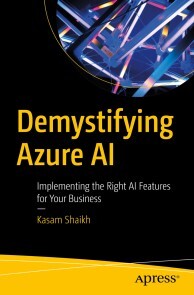
Demystifying Azure AI
Explore artificial intelligence offerings by Microsoft Azure, along with its other services. This book will help you implement AI features in various Azure services to help build your organization and customers.The book starts by introducing you to the Azure Cognitive Search service to create and use an application. You then will learn the built-in automatic tuning intelligence mechanism in Azure SQL Database. This is an important feature you can use to enable Azure SQL Database to optimize the performance of your queries. Next, you will go through AI services with Azure Integration Platform service and Azure Logic Apps to build a modern intelligent workflow in your application. Azure functions are discussed as a part of its server-less feature. The book concludes by teaching you how to work with Power Automate to analyze your business workflow.After reading this book, you will be able to understand and work with different Azure Cognitive Services in AI.WHAT YOU WILL LEARN* Get started with Azure Cognitive Search service* Use AI services with Low Code – Power Automate* Use AI services with Azure Integration services* Use AI services with Azure Server-less offerings* Use automatic tuning in Azure SQL databaseWHO THIS BOOK IS FORAspiring Azure and AI professionalsKASAM SHAIKH, Cloud advocate, is a seasoned professional having 13 years of demonstrated industry experience working as Cloud Architect with one of the leading IT companies in Mumbai, INDIA. He is recognized as MVP by an online Tech community, also a Global AzureAI Speaker, and author of two best-selling books on Microsoft Azure and AI. He is the founder of Azure INDIA (az-INDIA) community, DearAzure, which is an online community for learning AzureAI. He owns a YouTube channel and shares his experience over his website www.kasamshaikh.comCHAPTER 1: AZURE SEARCH WITH AICHAPTER GOALS: In this chapter reader will learn about the only AI powered Cloud search offering by Microsoft, Azure Cognitive Search service. Using Cognitive Services with Azure Search with your web apps. Skip hiring search experts who know what an inverted index is. Don't worry about distributed systems expertise to scale your service to handle large amount of data. And forget about setting up, owning and managing the infrastructure. Let Azure Search do it all for you. When and How to use with step by step Demo creating an application.CHAPTER 2: AI AND BACKEND SERVICE OFFERINGCHAPTER GOALS: In this Chapter reader will learn the built-in automatic tuning intelligence mechanism in Azure SQL Database. Automatic tuning is a fully managed intelligent performance service that uses built-in intelligence to continuously monitor queries executed on a database, and it automatically improves their performance. Automatic tuning in Azure SQL Database might be one of the most important features that one can enable on Azure SQL Database to optimize the performance of your queries.CHAPTER 3: AI SERVICES WITH AZURE IPAASCHAPTER GOALS: In this Chapter, readers will explore the Azure Cognitive services, that can be leverage with Azure Integration Platform service, Azure Logic Apps. This gives developer a power to infuse an intelligent workflow in application. Will have a step by step demo to create a workflow with business use-case.CHAPTER 4: AI SERVICES WITH SERVERLESS OFFERINGCHAPTER GOALS: In this Chapter, readers will explore the Azure Cognitive services offerings, that can be leverage with Azure Serverless Offerings, Azure Functions. This gives developer a power to extend the scalable Functions with a smart and intelligent functional implementation in application. Will have a step by step demo on how to work with Cognitive extensions.CHAPTER 5: AI WITH NO CODECHAPTER GOALS: In this Chapter, readers will explore the Azure Cognitive services offerings, that can be leverage with No Code – PowerAutomate. This gives business an easy hand to present with a smart analysis in business workflow. Will have a step by step demo to create a workflow.

Understanding Hybrid Environments in SharePoint 2019
Design and develop hybrid scenarios with SharePoint Online and SharePoint Server 2019. This book will help you build hybrid environments from scratch, and covers basic to advanced scenarios.The book takes you through the setup and configuration of SharePoint 2019 on virtual machines in Microsoft Azure. It gives you an overview of the features of the SharePoint Server 2019 User Experience. Integration of SP 2019 with PowerApps and Microsoft Flow is covered, along with Power BI reporting. You will learn to manage the data gateway and understand how to publish the Power BI Report. Configuration of the SP 2019 home page is explained and you learn how to enable a hybrid experience via the SP Office 365 link setting. You will know how to register a public domain in Office 365 and configure it for SP hybrid. Cloud hybrid search with the PowerShell script approach is discussed as well as SP 2019 hybrid Self-Service Site Creation. Configuration of the hybrid taxonomy, content types, and SharePoint framework development with SP 2019 are covered. And the book ends on using the office online server for SharePoint Server 2019 along with SP Server 2019 upgrade scenarios.After reading this book, you will be able to build and manage different hybrid environments with SharePoint Online and SharePoint Server 2019.WHAT WILL YOU LEARN* Enlarge your hybrid terminology* Get familiar with the new and improved features of SharePoint Server 2019* Develop a hybrid experience with SharePoint Server 2019* Enable hybrid search* Understand the on-premises data gateway* Configure and integrate SharePoint Server 2019 with Power Platform, including Power BI, Power Apps, and Power AutomateWHO IS THIS BOOK FORSharePoint professionals who want to configure hybrid solutions in SharePointNANDDEEP SADANAND NACHAN is a Microsoft MVP (Office Apps and Services) and technology architect with experience in Microsoft technologies, including SharePoint, MS Azure, and .NET. He has been working with SharePoint for the last 15+ years and has worked with SharePoint versions starting with SharePoint 2007 (MOSS). He wrote the book Mastering SharePoint Framework. He organizes and speaks at industry seminars, conferences, and community events, including SPS, Global Microsoft 365 Developer Bootcamp, and Global Power Platform Bootcamp. He is an active contributor to Office 365 Dev Patterns and Practices on GitHub and writes articles on his blog. He is also a creative and technically sound photographer with experience in custom and specialized photography.SMITA SADANAND NACHAN is a SharePoint professional with 12+ years of experience in design, implementation, configuration, and maintenance of large-scale projects. She focuses on architectural design and implementation, website design and development, and complete application development cycles, with an intense focus on SharePoint and Office 365. She is a frequent speaker at various community events, including SPS, Global Microsoft 365 Developer Bootcamp, and Global Power Platform Bootcamp. She is a travel, fashion, and food blogger.CHAPTER 1, SETUP SHAREPOINT 2019 DEVELOPER VM IN MS AZUREChapter Goal:· Hardware and Software Requirements· Microsoft Azure VM Setup Options· Setup Server 2019 Trial VM in MS AzureCHAPTER 2, CONFIGURE SHAREPOINT SERVER 2019Chapter Goal:· Setup Active Directory· Setup AD Users· Configure SharePoint 2019 with AutoSPInstaller· Convert SharePoint Trial to RTM LicenseCHAPTER 3, SHAREPOINT SERVER 2019 USER EXPERIENCEChapter Goal:· SharePoint 2019 User Experience· Modern User ExperienceCHAPTER 4, SHAREPOINT SERVER 2019 FEATURES OVERVIEWChapter Goal:· SharePoint 2019 Focus Areas· Improved Features· Features Leaving Behind / Does Not make to On-PremiseCHAPTER 5, SHAREPOINT 2019 POWERAPPS INTEGRATIONChapter Goal:· PowerApps Overview· Install Gateway· Build PowerApps Canvas App· Gateway Windows Service· Publish the PowerApps AppCHAPTER 6, SHAREPOINT 2019 MS FLOW INTEGRATIONChapter Goal:· MS Flow Overview· On-premises Data Gateway· Configure MS Flow Connection· Create Microsoft Flow· Test the MS FlowCHAPTER 7, SHAREPOINT 2019 - POWER BI REPORTINGChapter Goal:· Power BI Overview· On-premises Data Gateway· Manage Gateway· Create Data Source· Install Personal Gateway· Power BI Reports· Publish the Power BI Report· Scheduled Refresh of DatasetsCHAPTER 8, SHAREPOINT 2019 - CONFIGURE HOME PAGEChapter Goal:· SharePoint Home· Features of Home Page· Supporting ServicesCHAPTER 9, SHAREPOINT 2019 - ENABLE HYBRID EXPERIENCEChapter Goal:· SharePoint Hybrid· Enable Hybrid Experience· SPO365 Link Settings Overview· Re-run SharePoint Hybrid Configuration Wizard· Configuration SummaryCHAPTER 10. REGISTER PUBLIC DOMAIN WITH OFFICE 365Chapter Goal:· Need for Public Domain· Buy a new domain· Use an existing domain· Set Default Office 365 Domain· Edit Active UsersCHAPTER 11, CONFIGURE OFFICE 365 FOR SHAREPOINT HYBRID· Prerequisites· Add UPN suffix to the Local AD· Manage Office 365 Directory from Azure Active Directory· Verify User Sync· Assign Licenses to UsersCHAPTER 12, SHAREPOINT 2019 - CLOUD HYBRID SEARCHChapter Goal:· Cloud Hybrid Search Overview· Enable Hybrid Search Experience· PowerShell Script Approach· On-Premises Cloud Search Service Application Configuration· Verify Hybrid SearchCHAPTER 13, SHAREPOINT 2019 HYBRID SELF-SERVICE SITE CREATIONChapter Goal:· Hybrid Self-Service Site Creation· Enable Hybrid Experience· Create Site Collection Page· Enable Hybrid Self-Service Site Creation from SharePoint Hybrid Configuration Wizard· Manage hybrid self-service site creation· Test Hybrid Self-Service Site CreationCHAPTER 14, SHAREPOINT 2019 CONFIGURE HYBRID TAXONOMY· SharePoint Hybrid Taxonomy· Copy SharePoint Server Taxonomy to SharePoint Online· Configure hybrid SharePoint taxonomy· Timer Job· Verify Taxonomy Groups ReplicationCHAPTER 15, SHAREPOINT 2019 CONFIGURE HYBRID CONTENT TYPESChapter Goal:· SharePoint Hybrid Content Types· Content Type Hub in SharePoint Online· Copy SharePoint Server Content Types to SharePoint Online· Configure hybrid SharePoint Content Types· Timer Job· Verify Content Types ReplicationCHAPTER 16, SHAREPOINT FRAMEWORK DEVELOPMENT WITH SHAREPOINT 2019· Decide Upon SharePoint Framework Version· Get SharePoint Server 2019 Ready for SPFx· Develop SharePoint Framework Web Part· Run the SPFx WebPart· TroubleshootingCHAPTER 17, OFFICE ONLINE SERVER FOR SHAREPOINT SERVER 2019Chapter Goal:· Introduction to Office Online Server· Download and Install Office Online Server· Install Office Online Server· Setup Office Online Farm· Verify the Office Online Server working· Connecting to SharePoint 2019 FarmCHAPTER 18, SHAREPOINT SERVER 2019 UPGRADE SCENARIOSChapter Goal:· Upgrade Scenarios· High Level Upgrade Scenarios
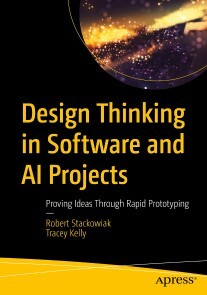
Design Thinking in Software and AI Projects
Learn the fundamentals of Design Thinking and how to apply Design Thinking techniques in defining software development and AI solutions. Design Thinking is an approach to innovation which identifies problems and generates solution ideas that can be rapidly proven through prototyping.This book provides a brief history of Design Thinking and an overview of the process. It then drills down into more detail regarding methods and tools used in a Design Thinking workshops leading to useful prototypes. Guidance is provided on:* Preparing for a Design Thinking Workshop * Uncovering potential business problems that might be solved* Prioritizing potential solutions* Identifying and characterizing stakeholders* Choosing the right prototypes for development* Limiting scope and best practices in prototype buildingThe book concludes with a discussion of best practices in operationalizing successful prototypes, and describes change management techniques critical for successful adoption. You can use the knowledge gained from reading this book to incorporate Design Thinking techniques in your software development and AI projects, and assure timely and successful delivery of solutions.WHAT YOU WILL LEARN* Gain foundational knowledge of what Design Thinking is and when to apply the technique* Discover preparation and facilitation techniques used in workshops* Know how ideas are generated and then validated through prototyping* Understand implementation best practices, including change management considerationsWHO THIS BOOK IS FORBusiness decision makers and project stakeholders as well as IT project owners who seek a method leading to fast development of successful software and AI prototypes demonstrating real business value. Also for data scientists, developers, and systems integrators who are interested in facilitating or utilizing Design Thinking workshops to drive momentum behind potential software development and AI projects.ROBERT STACKOWIAK works as an independent consultant, advisor, and author. He is a former data & artificial intelligence architect and technology business strategist at the Microsoft Technology Center in Chicago, and previously worked in similar roles at Oracle and IBM. He has conducted business discovery workshops, ideation workshops, and technology architecture sessions with many of North America’s leading-edge companies across a variety of industries and with government agencies. Bob has also spoken at numerous industry conferences internationally, served as a guest instructor at various universities, and is an author of several books. You can follow him on Twitter @rstackow and read his articles and posts on LinkedIn.TRACEY KELLY is Envisioning Lead with the Catalyst team at Microsoft. She has been leading the design thinking training through North America and Europe to help Microsoft technology-focused architects and business leadership transition and transform to customer-centric and business outcome solutions. Tracey is also on the board of the Women’s Technology Coalition and a former Women in Technology Director in Dallas. She leads design workshops and customer strategy sessions and has a long 20-year history of technology and design leadership at Fortune 500 companies to drive innovation.Chapter 1: Design Thinking Overview and History.- Chapter 2: Preparing for a Workshop.- Chapter 3: Problem Definition.- Chapter 4: Solution Definition.- Chapter 5: Prototype Creation.- Chapter 6: Production Development.- Chapter 7: Production Rollout.- Chapter 8. Appendix A: Sources.

Exploring C++20
Discover everything you need to know about C++ in a logical progression of small lessons that you can work through as quickly or as slowly as you need. This book divides C++ up into bite-sized chunks that will help you learn the language one step at a time. Fully updated to include C++20, it assumes no familiarity with C++ or any other C-based language.Exploring C++20 acknowledges that C++ can be a complicated language, so rather than baffle you with complex chapters explaining functions, classes, and statements in isolation you’ll focus on how to achieve results. By learning a little bit of this and a little of that you’ll soon have amassed enough knowledge to be writing non-trivial programs and will have built a solid foundation of experience that puts those previously baffling concepts into context.In this fully-revised third edition of Exploring C++, you’ll learn how to use the standard library early in the book. Next, you’ll work with operators, objects, and data-sources in increasingly realistic situations. Finally, you’ll start putting the pieces together to create sophisticated programs of your own design confident that you’ve built a firm base of experience from which to grow.WHAT YOU WILL LEARN* Grasp the basics, including compound statements, modules, and moreWork with custom types and see how to use them * Write useful algorithms, functions, and more* Discover the latest C++ 20 features, including concepts, modules, and ranges* Apply your skills to projects that include a fixed-point numbers and body-mass index applicationsCarry out generic programming and apply it in a practical project * Exploit multiple inheritance, traits/policies, overloaded functions, and metaprogrammingWHO THIS BOOK IS FORExperienced programmers who may have little or no experience with C++ who want an accelerated learning guide to C++20 so they can hit the ground running.Ray Lischner has a bachelor's degree in computer science from Caltech and a master's in computer science from Oregon State University. He worked as a software developer for a dozen years, at big and small companies across the US, using PL/I, C, C++, Delphi, Smalltalk, and various assembly languages on both large and small systems. He has been self-employed as a consultant, trainer, and author for the last ten years. Ray taught computer science at Oregon State University for several years and specialized in teaching introductory computer programming. He taught courses in C and C++ and software engineering.Part I: The Basics.-1. Honing your tools.-2. Reading C++ Code.-3. Integer Expressions.-4. Strings.-5. Simple Input.-6. Error Messages.-7. For Loops.-8. Formatted Output.-9. Arrays and Vectors.-10. Algorithms and Ranges.-11. Increment and Decrement.-12. Conditions and Logic.-13. Compound Statements.-14. Introduction to File I/O.-15. The Map Data Structure.-16. Type Synonyms.-17. Characters.-18. Character Categories.-19. Case-Folding.-20. Writing Functions.-21. Function Arguments.-22. Using Ranges.-23. Using Iterators.-24. Unnamed Functioins.-25. Overloading Function Names.-26. Big and Little Numbers.-27. Very Big and Very Little Numbers.-28. Documentation.- 29. Project 1: Body-Mass IndexPart II: Custom Types.-30. Custom Types.-31. Overloading Operators.-32. Custom I/O Operators.-33. Assignment and Initialization.-34. Writing Classes.- 35. More About Member Functions.-36. Access Levels.-37. Understanding Object-Oriented Programming.-38. Inheritance.-39. Virtual Functions.-40. Classes and Types.-41. Declarations and Definitions.- 42. Modules.-43. Old-Fashioned "Modules".-44. Function Objects.-45. Useful Algorithms.-46. More About Iterators.-47. Ranges, Views and Adaptors.-48. Exceptions.-49. More Operators.-50. Project 2: Fixed-Point Numbers.-Part III: Generic Programming.-51. Function Templates.-52. Class Templates.-53. Template Specialization.-54. Partial Template Specialization.-55. Template Constraints.-56. Names and Namespaces.-57. Containers.-58. Locales and Facets.-59. International Characters.-60. TextI/O.-61. Project3: Currency Type.-Part IV: Real Programming.-62. Pointers.-63. Regular Expressions.-64. Moving Data with Rvalue References.-65. Smart Pointers.-66. Files and File Names.-67. Working with Bits.-68. Enumerations.-69. Multiple Inheritance.-70. Concepts, Traits and Policies.-71. Names, Namespaces, and Templates.-72. Overloaded Functions and Operators.-73. Programming at Compile Time.-74. Project 4: Calculator.

Practical Numerical C Programming
Master the C code appropriate for numerical methods and computational modeling, including syntax, loops, subroutines, and files. Then, this hands-on book dives into financial applications using regression models, product moment correlation coefficients, and asset pricing.Next, Practical Numerical C Programming covers applications for engineering/business such as supermarket stock reordering simulation as well as flight information boards at airports and controlling a power plant. Finally, the book concludes with some physics including building simulation models for energy and pendulum motion. Along the way, you’ll learn center-of-mass calculations, Brownian motion, and more.After reading and using this book, you'll come away with pragmatic case studies of actual applications using C code at work. Source code is freely available and includes the latest C20 standard release.WHAT YOU WILL LEARN* Apply regression techniques to find the pattern for depreciation of the value of cars over a period of years* Work with the product moment correlation coefficient technique to illustrate the accuracy (or otherwise) of regression techniques* Use the past stock values of an asset to predict what its future values may be using Monte Carlo methods* Simulate the buying of supermarket stock by shoppers and check the remaining stock: if it is too low print a message to reorder the stock* Create a file of arrivals for an airport and send data to the airport’s display boards to show the current situation for the incoming flights* Simulate the patterns of particles moving in gases or solids WHO THIS BOOK IS FORProgrammers and computational modelers with at least some prior experience with programming in C as well as programming in general.Philip Joyce has 28 years experience as a software engineer – working on control of steel production, control of oil refineries, communications software (pre-Internet), office products (server software), and computer control of airports. Programming in Assembler, COBOL, Coral66, C, and C++. Mentor to new graduates in the company. He also has a MSc in computational physics (including augmented matrix techniques and Monte Carlo techniques using Fortran) - Salford University 1996. Chartered scientist, chartered physicist, member of the Institute of Physics (member of the higher education group).Chapter 1 Review of CReview of C and SDK with reference to the topics in this book.Reminds the reader of C syntax.Use loops, subroutines, file access.Create typical programs in C using SDK ExercisesPART 1 – FINANCIAL APPLICATIONSChapter 2 Regression:Use regression techniques to find the pattern for depreciation of the value of cars over a period of years.Program written will create graphical displays to illustrate the topic.ExercisesChapter 3 Product Moment Correlation Coefficient (PMCC):Use this technique to illustrate the accuracy (or otherwise) of regression techniques.ExercisesChapter 4 : Asset PricingUse the past stock values of an Asset to predict what its future values may be using Monte Carlo methods.Graphics displays to illustrate the topic.ExercisesPART 2 – ENGINEERING/INDUSTRIAL/COMMERCIAL APPLICATIONSChapter 5: Supermarket Stock Reordering SimulationCreate a file of stock for a supermarket. Simulate the buying of stock by shoppers. Check the remaining stock. If it is too low print a message to reorder the stock.ExercisesChapter 6: Flight Information Boards at AirportsCreate a file of arrivals for an airport. Send data to the airport’s display boards to show the current situation for the incoming flights. Update a flight and refresh the information to the display boards.ExercisesChapter 6 : Power Plant ControlProgram receives messages about pressures, temperatures, flow rates etc for a power plant. The program checks for values outside safety ranges and acts upon any problem values by sending messages to both the gauges and the managers responsible for them.ExercisesPART 3 – PHYSICS APPLICATIONSChapter 8 Potential Energy and Kinetic Energy SimulationUse formulas for Potential Energy and Kinetic Energy to show how one falls at the same rate as the other rises.ExercisesChapter 9 Pendulum Simulation Use formulas for the motion of a pendulum to create a graph to illustrate the mathematical relationship on a graph .ExercisesChapter 10: Centre of Mass CalculationCalculate the centre of mass of unusually-shaped objects.ExercisesChapter 11 : Brownian MotionSimulate the patterns of particles moving in gases or solids.Graphical displays to illustrate the topic.ExercisesChapter 12 Vacancy Model of Atoms Moving in SolidsDemonstrate the Vacancy Model of atoms moving in solids where they can move into empty sites within the solid. Graphical displays will show the movement of the atoms within a 2D site.ExercisesAPPENDICESA. C Programming Code GuideB. Answers to exercisesThese could be contained in an included CD which could also contain some data files the students could use in their examples

Hands-on Time Series Analysis with Python
Learn the concepts of time series from traditional to bleeding-edge techniques. This book uses comprehensive examples to clearly illustrate statistical approaches and methods of analyzing time series data and its utilization in the real world. All the code is available in Jupyter notebooks.You'll begin by reviewing time series fundamentals, the structure of time series data, pre-processing, and how to craft the features through data wrangling. Next, you'll look at traditional time series techniques like ARMA, SARIMAX, VAR, and VARMA using trending framework like StatsModels and pmdarima.The book also explains building classification models using sktime, and covers advanced deep learning-based techniques like ANN, CNN, RNN, LSTM, GRU and Autoencoder to solve time series problem using Tensorflow. It concludes by explaining the popular framework fbprophet for modeling time series analysis. After reading Hands -On Time Series Analysis with Python, you'll be able to apply these new techniques in industries, such as oil and gas, robotics, manufacturing, government, banking, retail, healthcare, and more.WHAT YOU'LL LEARN:· Explains basics to advanced concepts of time series· How to design, develop, train, and validate time-series methodologies· What are smoothing, ARMA, ARIMA, SARIMA,SRIMAX, VAR, VARMA techniques in time series and how to optimally tune parameters to yield best results· Learn how to leverage bleeding-edge techniques such as ANN, CNN, RNN, LSTM, GRU, Autoencoder to solve both Univariate and multivariate problems by using two types of data preparation methods for time series.· Univariate and multivariate problem solving using fbprophet.WHO THIS BOOK IS FORData scientists, data analysts, financial analysts, and stock market researchersVISHWAS B V is a Data Scientist, AI researcher and Sr. AI Consultant, Currently living in Bengaluru(INDIA). His highest qualification is Master of Technology in Software Engineering from Birla Institute of Technology & Science, Pilani, and his primary focus and inspiration is Data Warehousing, Big Data, Data Science (Machine Learning, Deep Learning, Timeseries, Natural Language Processing, Reinforcement Learning, and Operation Research). He has over seven years of IT experience currently working at Infosys as Data Scientist & Sr. AI Consultant. He has also worked on Data Migration, Data Profiling, ETL & ELT, OWB, Python, PL/SQL, Unix Shell Scripting, Azure ML Studio, Azure Cognitive Services, and AWS.ASHISH PATEL is a Senior Data Scientist, AI researcher, and AI Consultant with over seven years of experience in the field of AI, Currently living in Ahmedabad(INDIA). He has a Master of Engineering Degree from Gujarat Technological University and his keen interest and ambition to research in the following domains such as (Machine Learning, Deep Learning, Time series, Natural Language Processing, Reinforcement Learning, Audio Analytics, Signal Processing, Sensor Technology, IoT, Computer Vision). He is currently working as Senior Data Scientist for Cynet infotech Pvt Ltd. He has published more than 15 + Research papers in the field of Data Science with Reputed Publications such as IEEE. He holds Rank 3 as a kernel master in Kaggle. Ashish has immense experience working on cross-domain projects involving a wide variety of data, platforms, and technologiesChapter 1: Time Series and its CharacteristicsChapter 2: Data Wrangling and Preparation for Time SeriesChapter 3: Smoothing MethodsChapter 4: Regression Extension Techniques for Time SeriesChapter 5: Bleeding Edge TechniquesChapter 6: Bleeding Edge Techniques for Univariate Time SeriesChapter 7: Bleeding Edge Techniques for Multivariate Time SeriesChapter 8: Prophet

Practical Test Automation
Learn the principles behind test-driven development (TDD) and behavior-driven development (BDD) and see how Jasmine, RSpec and Cucumber can be used to your advantage. This book examines some of the leading technologies used for testing.You'll see how to use Jasmine’s features to work with a JavaScript application. You will learn how to use Mini Test and RSpec with Ruby and Rubymine. Finally, you’ll use Cucumber to develop your software using a BDD approach.Understanding test automation is a vital skill for any web developer. Practical Test Automation breaks down for you some of the important TDD and BDD technologies on the modern web.WHAT YOU'LL LEARN* Test an example JavaScript application with Jasmine* Use Jasmine with JS Bin* Work with Minitest for test-driven development* Test an example Ruby project with RSpec* Use Cucumber and Gherkin for behavior-driven development* Integrate Cucumber with RSpec WHO THIS BOOK IS FORThis book is for anyone who wants to learn test automation and more about test-driven development and behavior-driven development.PANOS MATSINOPOULOS loves developing programs, both for web browsers and for mobile apps. He has been doing that for the past 25 years and has developed numerous applications. He also loves writing books, blogging and teaching computer programming. He has organized a lot of programming classes for kids, adults and elderly people. You can read find him on Twitter @pmatsino.PRACTICAL TEST AUTOMATIONChapter 1. Introduction to JasmineChapter 2. Advanced JasmineChapter 3. Using MinitestChapter 4. Introduction to RSpecChapter 5. Useful RSpec ToolsChapter 6. Introduction to CucumberChapter 7. Advanced Cucumber

Hacking of Computer Networks
The objective of the book is to summarize to the user with main topics in computer networking hacking.The book consists of the following parts:Part 1: Lab SetupPart2: Foot printing and ReconnaissancePart 3: Scanning MethodologyPart 4: EnumerationPart 5:System HackingPart 6: Trojans and Backdoors and VirusesPart 7: Sniffer and Phishing HackingPart 8: Hacking Web ServersPart 9:Hacking Windows and Linux SystemsPart 10: Wireless HackingPart 11: Hacking Mobile ApplicationsI am Dr. Hidaia Mahmoud Mohamed Alassouli. I completed my PhD degree in Electrical Engineering from Czech Technical University by February 2003, and my M. Sc. degree in Electrical Engineering from Bahrain University by June 1995. I completed also one study year of most important courses in telecommunication and computer engineering courses in Islamic university in Gaza. So, I covered most important subjects in Electrical Engineering, Computer Engineering and Telecommunications Engineering during my study. My nationality is Palestinian from gaza strip.I obtained a lot of certified courses in MCSE, SPSS, Cisco (CCNA), A+, Linux.I worked as Electrical, Telecommunicating and Computer Engineer in a lot of institutions. I worked also as a computer networking administrator. I had considerable undergraduate teaching experience in several types of courses in many universities. I handled teaching the most important subjects in Electrical and Telecommunication and Computer Engineering. I could publish a lot of papers a top-tier journals and conference proceedings, besides I published a lot of books in Publishing and Distribution houses.I wrote a lot of important Arabic articles on online news websites. I also have my own magazine website that I publish on it all my articles: http:// www.anticorruption.000space.comMy personal website: www.hidaia-alassouli.000space.comEmail: hidaia_alassouli@hotmail.com

Digitale Transformation und neue Führungspositionen. Wie Chief Digital Officers die digitale Transformation von Unternehmen erfolgreich steuern
Die fortschreitende Digitalisierung verändert Wirtschaft und Unternehmen enorm. Durch technologische Innovationen und den damit verbundenen Konkurrenzdruck müssen Unternehmen neue Führungsmodelle und Geschäftsstrukturen entwickeln. Eine Möglichkeit, die digitale Transformation von Unternehmen zu steuern, ist der Einsatz eines Chief Digital Officers. Was sind die Aufgaben eines Chief Digital Officers? Über welche Kompetenzen sollte dieser verfügen? Und welche Rolle spielt ein Chief Digital Officer bei der digitalen Transformation eines Unternehmens? Die Autorin Vivien Wika klärt die wichtigsten Fragen zur Führungsposition des Chief Digital Officers und hebt dessen Bedeutung für die digitale Transformation eines Unternehmens hervor. Wika erläutert die weltweite Verteilung von Chief Digital Officers und wirft einen Blick in die Zukunft dieser Führungskräfte. Aus dem Inhalt: - Big Data; - Künstliche Intelligenz; - Design-Thinking; - Digitalisierungsstrategie; - Change-Management
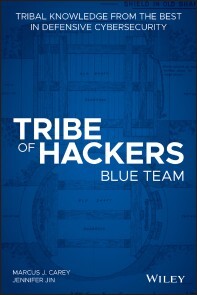
Tribe of Hackers Blue Team
BLUE TEAM DEFENSIVE ADVICE FROM THE BIGGEST NAMES IN CYBERSECURITYThe Tribe of Hackers team is back. This new guide is packed with insights on blue team issues from the biggest names in cybersecurity. Inside, dozens of the world’s leading Blue Team security specialists show you how to harden systems against real and simulated breaches and attacks. You’ll discover the latest strategies for blocking even the most advanced red-team attacks and preventing costly losses. The experts share their hard-earned wisdom, revealing what works and what doesn’t in the real world of cybersecurity.Tribe of Hackers Blue Team goes beyond the bestselling, original Tribe of Hackers book and delves into detail on defensive and preventative techniques. Learn how to grapple with the issues that hands-on security experts and security managers are sure to build into their blue team exercises.* Discover what it takes to get started building blue team skills* Learn how you can defend against physical and technical penetration testing* Understand the techniques that advanced red teamers use against high-value targets* Identify the most important tools to master as a blue teamer* Explore ways to harden systems against red team attacks* Stand out from the competition as you work to advance your cybersecurity careerAuthored by leaders in cybersecurity attack and breach simulations, the Tribe of Hackers series is perfect for those new to blue team security, experienced practitioners, and cybersecurity team leaders. Tribe of Hackers Blue Team has the real-world advice and practical guidance you need to advance your information security career and ready yourself for the blue team defense.MARCUS J. CAREY is a cybersecurity researcher and inventor with patents in cryptography and cybersecurity and more than 25 years of experience in protecting the public, private, and government sectors. He was the Founder and CEO of Threatcare, which was acquired by ReliaQuest. Follow Marcus on Twitter at @marcusjcarey. JENNIFER JIN graduated from the University of Texas at Austin in 2017 and started her first job at Threatcare soon after. She became Threatcare's Head of Communications and Marketing before Threatcare was acquired by ReliaQuest. Jennifer helped host the very first Tribe of Hackers Summit and is the co-author of Tribe of Hackers. Follow Jennifer on Twitter at @jen_jin. Acknowledgments viiForeword ixIntroduction xi01 Marcus J. Carey 102 Danny Akacki 603 Ricky Banda 904 William Bengtson 1405 Amanda Berlin 2006 O’Shea Bowens 2707 John Breth 3108 Lee Brotherston 3809 Ronald Bushar 4710 Christopher Caruso 5611 Eddie Clark 6612 Mark Clayton 7413 Ayman Elsawah 8014 Sahan Fernando 9115 Stephen Hilt 9616 Bea Hughes 10117 Terence Jackson 10918 Tanya Janca 11319 Ruth Juma 11920 Brendon Kelley 12321 Shawn Kirkland 12922 Sami Laiho 13923 Kat Maddox 14324 Jeffrey Man 14725 April Mardock 15426 Bright Gameli Mawudor 15927 Duncan McAlynn 16428 Frank McGovern 17029 Donald McFarlane 17230 Nathan McNulty 18031 James Medlock 18732 Daniel Miessler 19233 Alyssa Miller 19634 Maggie Morganti 20535 Justin Moss 21136 Mark Orlando 21837 Mitch Parker 22438 Stuart Peck 23139 Carlos Perez 23640 Quiessence Phillips 24241 Lauren Proehl 24842 Josh Rickard 25543 Megan Roddie 26644 Jason Schorr 27045 Chris Sistrunk 27446 Jayson E. Street 28047 Michael Tanji 28648 Ronnie Tokazowski 29449 Ashley Tolbert 29850 Ismael Valenzuela 30451 Dave Venable 32152 Robert "TProphet" Walker 32653 Jake Williams 33454 Robert Willis 340

Practical Entity Framework
Determine your object relational mapper (ORM) of choice for enterprise applications using .NET Framework, and especially .NET Framework Core 3.1 and higher. Real-world examples and considerations are presented in this book to help you create robust and efficient database solutions. Throughout the text, actual problems, questions, and common pitfalls are provided to help you recognize optimal solutions for maximum success in the different application scenarios you might encounter.PRACTICAL ENTITY FRAMEWORK begins with a simple overview of the two most common approaches to working with databases—database first and code first—and then focuses on working in a code first manner. Taking the code first approach allows the entire database to be built and maintained in code so there is never a situation in which you cannot restore the database schema. Additionally, the code first approach creates an entirely transparent record of changes to the database that is easily tracked in source control. Emphasis throughout the book is on leaving you well positioned to architect and lead data development efforts for your organization.WHAT YOU WILL LEARN* Build robust and maintainable databases using a code first approach* Create and execute stored procedures, triggers, and functions* Analyze and optimize performance of database queries* Ensure data integrity through keys, constraints, and relationshipsWHO THIS BOOK IS FOR.NET developers who work with enterprise-level applications and need to interact with data structures and data within the back end data store, developers who want to take a code first approach to building database applications to prevent conflicts and optimize efficiency, and those who are moving into full-stack roles, or into senior and architectural roles, and will be responsible for database design and implementationBRIAN GORMAN is a developer, computer science instructor, and trainer, and has been working in .NET technologies as long as they have existed. He was originally MCSD certified in .NET 1 and has recently re-certified with MCSA: Web Apps and MCSD: App Builder certifications. Additionally, he became an MCT as of April 2019, and is focusing in on developing and training developers with full-stack web solutions with .NET Core and Azure. In addition to working with .NET technologies, Brian also teaches computer science for Franklin University, where his courses taught have included data structures, algorithms, design patterns, and, more recently, full-stack solutions in the capstone practicum course. IntroductionPART I. GETTING STARTED1. Introduction to Entity Framework2. Working with an Existing Database3. Entity Framework: Code FirstPART II. BUILDING THE DATA SOLUTION4. Models and the Data Context5. Constraints, Keys, and Relationships6. Data Access (Create, Read, Update, Delete)7. Stored Procedures, Views, and Functions8. Sorting, Filtering, and PagingPART III. ENHANCING THE DATA SOLUTION9. LINQ for Queries and Projections10. Encryption of Data11. Repository and Unit of Work Patterns12. Unit Testing, Integration Testing, and Mocking13. Alternatives to Entity Framework: Dapper14. Asynchronous Data Operations and Multiple Database ContextsPART IV. RECIPES FOR SUCCESS15. .NET 5 and Entity Framework16. Appendix A: Troubleshooting

Decoding Blockchain for Business
Business professionals looking to understand the impact, future, and limitations of blockchain need look no further. This revolutionary technology has impacted business and the economy in unprecedented ways within the past decade, and it is only continuing to grow. As a leader in your organization, it is vital that you decode blockchain and optimize all the ways in which it can improve your business.Author of Decoding Blockchain for Business, Stijn Van Hijfte, expertly emphasizes the imperative of professionals in any sector of industry to understand the core concepts and implications of blockchain technology. Cryptocurrencies, cryptotrading, and constantly-changing tax structures for financial systems using blockchain technologies are covered in detail. The lasting effects of blockchain across specific industries such as media, real estate, finance, and regulatory bodies are addressed with an insightful eye from Van Hijfte.If not properly implemented with care and a foundation of knowledge, blockchain brings risks and uncertainties to a company. Know your technology to be ready for the present and the future, and stay ahead of the curve. Blockchain is here to stay, and Decoding Blockchain for Business is your professional roadmap.WHAT YOU WILL LEARN* Discover the risks associated with blockchain if not properly implemented* Gain insights on how blockchain technology affects other booming topics such as AI, IoT, and RPA* Look at the regulations surrounding Blockchain in different countriesWHO THIS BOOK IS FORBusiness professionals looking to understand the impact, future, and limitations of Blockchain and how individuals and companies should prepare for this technology.Stijn Van Hijfte has experience as a consultant, lecturer, and an innovation officer and has worked over the years with cloud, AI, automation, and blockchain technology. Since 2015 he has been experimenting and exploring the blockchain space, gaining deeper insight into the entire ecosystem. This insight ranges from setting up nodes and writing smart contracts, to the legal implications of GDPR, ICOs, and cryptocurrencies. Among others, he holds degrees in economics, IT, and data science. He currently works at Deloitte as a senior consultant.

Ganzheitliche Businessmodell-Transformation
In diesem Buch wird der regelkreisorientierte Changemanagementprozess zur Implementierung eines digitalen Businessmodells über das ganzheitliche Organisation 4.0-MITO-Konfigurationsmanagement beschrieben. Die inhaltliche Kapitelstruktur dieses MITO-Buches mit der Beschreibung der unterschiedlichen Transformations-Gestaltungssichten orientiert sich an dem übergeordneten betrieblichen Regelkreisprinzip innerhalb der in Abbildung 1 gezeigten MITO-Modellsegmente. Wobei das Managementsegment (M) noch vorgabeseitig in das prozessbezogene Führungssegment und rückmeldeseitig in das sachbezogene Leitungssegment unterteilt ist. Das darauf aufsetzende MITO-Businessmodell ergänzt die 5 Modellsegmente um das nachgelagerte Kunden- und vorgelagerte Lieferantensegment und integriert in die MITO-Modelldarstellung das hierarchische Prozessebenenmodell für die Konzeption des prozessorientierten Ziel-, Führungs- und Leitungssystems.Hartmut F. Binner war von 1978 - 2009 hauptamtlicher Professor an der Hochschule Hannover im Fachbereich Maschinenbau. Im Rahmen seiner Doktorarbeit entwickelte er die Swimlane-Darstellung, heute wesentliches BPMN 2.0-Strukturelement.Von 1999 - 2003 war er Präsident des REFA e.V., von 2007-2017 Vorstandsvorsitzender der Gesellschaft für Organisation.Innerhalb der letzten 20 Jahre schrieb er Beiträge in über 500 Zeitschriften und mehr als 18 Grundlagenwerke zum Thema Organisations- und Prozessgestaltung. Seit Dezember 2015 ist er der Vice Chairman der iTA (IT Automotive Service Partner e.V.).
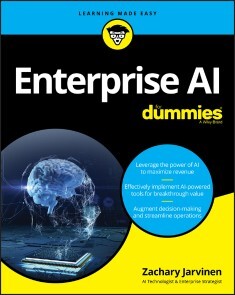
Enterprise AI For Dummies
MASTER THE APPLICATION OF ARTIFICIAL INTELLIGENCE IN YOUR ENTERPRISE WITH THE BOOK SERIES TRUSTED BY MILLIONSIn Enterprise AI For Dummies, author Zachary Jarvinen simplifies and explains to readers the complicated world of artificial intelligence for business. Using practical examples, concrete applications, and straightforward prose, the author breaks down the fundamental and advanced topics that form the core of business AI.Written for executives, managers, employees, consultants, and students with an interest in the business applications of artificial intelligence, Enterprise AI For Dummies demystifies the sometimes confusing topic of artificial intelligence. No longer will you lag behind your colleagues and friends when discussing the benefits of AI and business.The book includes discussions of AI applications, including:* Streamlining business operations* Improving decision making* Increasing automation* Maximizing revenueThe For Dummies series makes topics understandable, and as such, this book is written in an easily understood style that's perfect for anyone who seeks an introduction to a usually unforgiving topic.ZACHARY JARVINEN, MBA/MSC is a product & marketing executive and sought-after author and speaker in the Enterprise AI space. Over the course of his career, he's headed up Technology Strategy for Artificial Intelligence and Analytics at OpenText, expanded markets for Epson, worked at the U.S. State Department, and was a member of the 2008 Obama Campaign Digital Team. Presently, Zachary is focused on helping organizations get tangible benefits from AI. INTRODUCTION 1About This Book 2Strong, Weak, General, and Narrow 2Foolish Assumptions 3Icons Used in This Book 4Beyond the Book 4Where to Go from Here 5PART 1: EXPLORING PRACTICAL AI AND HOW IT WORKS 7CHAPTER 1: DEMYSTIFYING ARTIFICIAL INTELLIGENCE 9Understanding the Demand for AI 11Converting big data into actionable information 11Relieving global cost pressure 13Accelerating product development and delivery 14Facilitating mass customization 14Identifying the Enabling Technology 14Processing 15Algorithms 15Data 16Storage18Discovering How It Works 18Semantic networks and symbolic reasoning 19Text and data mining 20Machine learning 22Auto-classification 24Predictive analysis 25Deep learning 26Sentiment analysis 27CHAPTER 2: LOOKING AT USES FOR PRACTICAL AI 29Recognizing AI When You See It 30ELIZA 30Grammar check 30Virtual assistants 30Chatbots 31Recommendations 31Medical diagnosis 32Network intrusion detection and prevention 33Fraud protection and prevention 34Benefits of AI for Your Enterprise 34Healthcare 35Manufacturing 36Energy 36Banking and investments 37Insurance 37Retail 38Legal 39Human resources 39Supply chain 40Transportation and travel 40Telecom 41Public sector 41Professional services 42Marketing 43Media and entertainment 43CHAPTER 3: PREPARING FOR PRACTICAL AI 45Democratizing AI 46Visualizing Results 46Comparison 46Composition 47Distribution 48Relationship 48Digesting Data 50Identifying data sources 52Cleaning the data 52Defining Use Cases 54A → B 55Good use cases 55Bad use cases 56Reducing bias 58Choosing a Model 59Unsupervised learning 59Supervised learning 60Deep learning 60Reinforcement learning 61CHAPTER 4: IMPLEMENTING PRACTICAL AI 63The AI Competency Hierarchy 63Data collection 63Data flow 64Explore and transform 64Business intelligence and analytics 64Machine learning and benchmarking 65Artificial intelligence 65Scoping, Setting Up, and Running an Enterprise AI Project 65Define the task 67Collect the data 68Prepare the data 69Build the model 70Test and evaluate the model 72Deploy and integrate the model 72Maintain the model 72Creating a High-Performing Data Science Team 73The Critical Role of Internal and External Partnerships 74Internal partnerships 74External partnerships 75The importance of executive buy-in 75Weighing Your Options: Build versus Buy 75When you should do it yourself 75When you should partner with a provider 77Hosting in the Cloud versus On Premises 77What the cloud providers say 78What the hardware vendors say 78The truth in the middle 78PART 2: EXPLORING VERTICAL MARKET APPLICATIONS 81CHAPTER 5: HEALTHCARE/HMOS: STREAMLINING OPERATIONS 83Surfing the Data Tsunami 84Breaking the Iron Triangle with Data 84Matching Algorithms to Benefits 86Examining the Use Cases 87Delivering lab documents electronically 87Taming fax 88Automating redaction 88Improving patient outcomes 89Optimizing for a consumer mindset 89CHAPTER 6: BIOTECH/PHARMA: TAMING THE COMPLEXITY 91Navigating the Compliance Minefield 92Weaponizing the Medical, Legal, and Regulatory Review 93MLR review for product development 93MLR review for sales and marketing 94Enlisting Algorithms for the Cause 95Examining the Use Cases 96Product discovery 96Clinical trials 96Product development 96Quality control 97Predictive maintenance 97Manufacturing logistics 97Regulatory compliance 98Product commercialization 98Accounting and finance 98CHAPTER 7: MANUFACTURING: MAXIMIZING VISIBILITY 99Peering through the Data Fog 100Finding ways to reduce costs 100Handling zettabytes of data 101Clearing the Fog 101Connected supply chain 102Proactive replenishment103Predictive maintenance 104Pervasive visibility 104Clarifying the Connection to the Code 106Optimize inventory 106Optimize maintenance 106Optimize supply chain106Improve quality 106Automate repetitive tasks 107Examining the Use Cases 107Minimize risk 107Maintain product quality107Streamline database queries 108Outsource predictive maintenance 108Customize products 109Expand revenue streams 109Save the planet 109Delegate design 110CHAPTER 8: OIL AND GAS: FINDING OPPORTUNITY IN CHAOS 111Wrestling with Volatility 111Pouring Data on Troubled Waters 112Deriving meaningful insights 113Regaining control over your data 113Wrangling Algorithms for Fun and Profit 114Examining the Use Cases 115Achieving predictive maintenance 115Enhancing maintenance instructions 115Optimizing asset performance 116Exploring new projects 116CHAPTER 9: GOVERNMENT AND NONPROFITS: DOING WELL BY DOING GOOD 119Battling the Budget 120Government 120Nonprofit 122Fraud 122Optimizing Past the Obstacles 123Digital transformation 123The future of work 124Data security 125Operational costs 125Fraud 125Engagement 126Connecting the Tools to the Job 128Examining the Use Cases 129Enhance citizen services 129Provide a global voice of the citizen 130Make your city smarter 130Boost employee productivity and engagement 131Find the right employees (and volunteers) 131Improve cybersecurity 132CHAPTER 10: UTILITIES: RENEWING THE BUSINESS 133Coping with the Consumer Mindset 134Utilizing Big Data 135The smart grid 135Empowering the organization 136Connecting Algorithms to Goals 136Examining the Use Cases 137Optimizing equipment performance and maintenance 137Enhancing the customer experience 137Providing better support 138Streamlining back-office operations 138Managing demand 139CHAPTER 11: BANKING AND FINANCIAL SERVICES: MAKING IT PERSONAL 141Finding the Bottom Line in the Data 142Moving to “open banking” 142Dealing with regulation and privacy 143Offering speedier service 144Leveraging Big Data 144Restructuring with Algorithms 145Examining the Use Cases 146Improving personalization 146Enhancing customer service 146Strengthening compliance and security 147CHAPTER 12: RETAIL: READING THE CUSTOMER’S MIND 149Looking for a Crystal Ball 150Omnichanneling 150Personalizing 151Reading the Customer’s Mail 152A fluid omnichannel experience 153Enhanced personalization 153Accurate forecasting 153Looking Behind the Curtain 154Examining the Use Cases 155Voice of the customer 155Personalized recommendations 155AI-powered inventory 156CHAPTER 13: TRANSPORTATION AND TRAVEL: TUNING UP YOUR RIDE 157Avoiding the Bumps in the Road 158Planning the Route 159Checking Your Tools 161Examining the Use Cases 162Autonomous vehicles 162Predictive maintenance 162Asset performance optimization 163Enhanced driver and passenger experiences 164CHAPTER 14: TELECOMMUNICATIONS: CONNECTING WITH YOUR CUSTOMERS 167Listening Past the Static 168Finding the Signal in the Noise 168Looking Inside the Box 169Examining the Use Cases 170Achieve predictive maintenance and network optimization 170Enhance customer service with chatbots 170Improve business decisions 171CHAPTER 15: LEGAL SERVICES: CUTTING THROUGH THE RED TAPE 173Climbing the Paper Mountain 173Reading and writing 174And arithmetic 175Foot in mouth disease 175Planting Your Flag at the Summit 175Linking Algorithms with Results 177Examining the Use Cases 178Discovery and review 178Predicting cost and fit 179Analyzing data to support litigation 180Automating patent and trademark searches 180Analyzing costs for competitive billing 180CHAPTER 16: PROFESSIONAL SERVICES: INCREASING VALUE TO THE CUSTOMER 181Exploring the AI Pyramid 182Climbing the AI Pyramid 183Unearthing the Algorithmic Treasures 184Healthcare 184Content management 184Compliance 185Law 185Manufacturing 186Oil and gas 186Utilities 186Examining the Use Cases 187Document intake, acceptance, digitization, maintenance, and management 187Auditing, fraud detection, and prevention187Risk analysis and mitigation 187Regulatory compliance management 188Claims processing 188Inventory management 188Resume processing and candidate evaluation 188CHAPTER 17: MEDIA AND ENTERTAINMENT: BEATING THE GOLD RUSH 189Mining for Content 190Asset management 190Metadata 191Distribution 191Silos 192Content compliance 192Striking It Rich 193Metadata 193Digital distribution 193Digital asset management 194Assaying the Algorithms 194Examining the Use Cases 195Search optimization 195Workflow optimization 196Globalization 196PART 3: EXPLORING HORIZONTAL MARKET APPLICATIONS 197CHAPTER 18: VOICE OF THE CUSTOMER/CITIZEN: FINDING COHERENCE IN THE CACOPHONY 199Hearing the Message in the Media 200Delivering What They Really Want 201Answering the Right Questions 203Examining Key Industries 204Consumer packaged goods 205Public and nonprofit organizations 205CHAPTER 19: ASSET PERFORMANCE OPTIMIZATION: INCREASING VALUE BY EXTENDING LIFESPANS 207Spying on Your Machines 208Fixing It Before It Breaks 209Learning from the Future 210Data collection 210Analysis 211Putting insights to use 212Examining the Use Cases 212Production automation and quality control 213Preventive maintenance 213Process optimization 215CHAPTER 20: INTELLIGENT RECOMMENDATIONS: GETTING PERSONAL 217Making Friends by the Millions 218Listening to social media 218Mining data exhaust 219Reading Minds 219Knowing Which Buttons to Push 219Popular product recommendation 220Market-basket analysis 220Propensity modelling 220Data and text mining 222Collaborative filtering (CF) 223Content-based filtering (CBF) 224Cross-validation 224Data visualization 225Examining Key Industries 226Finance 226Credit card offers 227Retail 228CHAPTER 21: CONTENT MANAGEMENT: FINDING WHAT YOU WANT, WHEN YOU WANT IT 231Introducing the Square Peg to the Round Hole 232Categorizing and organizing content 232Automating with AI 233Finding Content at the Speed of AI 233Expanding Your Toolbox 235Access the content 235Extract concepts and entities 235Categorize and classify content 236Automate or recommend next best actions 236Examining the Use Cases 236Legal discovery process 237Content migration 237PII detection 237CHAPTER 22: AI-ENHANCED CONTENT CAPTURE: GATHERING ALL YOUR EGGS INTO THE SAME BASKET 239Counting All the Chickens, Hatched and Otherwise 240Tracing the history of capture technology 240Moving capture technology forward 241Monetizing All the Piggies, Little and Otherwise 241Streamline back-office operations 242Improve compliance 242Reduce risk of human error 243Support business transformation 243Improve operational knowledge 243Getting All Your Ducks in a Row 244Capture 244Digitize where needed 244Process, classify, and extract 244Validate edge cases 245Manage 246Visualize 246Examining Key Industries 246Financial services 246State government 247Healthcare 247CHAPTER 23: REGULATORY COMPLIANCE AND LEGAL RISK REDUCTION: HITTING THE BULLSEYE ON A MOVING TARGET 249Dodging Bullets 250Fines 250Increasing regulation 252Data privacy 254Strategy 254Shooting Back 255Make better decisions 255Increase customer confidence 256Win more business 257Boost the bottom line 257Building an Arsenal 258Examining the Use Cases 259Manage third-party risk 259Manage operational risk 259Monitor compliance risk 260Monitor changes in regulations 261Maintain data privacy 261Maintain data security 262Detect fraud and money laundering 262Optimize workflow 263CHAPTER 24: KNOWLEDGE ASSISTANTS AND CHATBOTS: MONETIZING THE NEEDLE IN THE HAYSTACK 265Missing the Trees for the Forest 266Recognizing the problem 266Defining terms 267Hearing the Tree Fall 268Making Trees from Acorns 269Examining the Use Cases 270Customer support 270Legal practice 271Enterprise search 272Compliance management 272Academic research 272Fact checking 273CHAPTER 25: AI-ENHANCED SECURITY: STAYING AHEAD BY WATCHING YOUR BACK 275Closing the Barn Door 276The story in the statistics 276The state of current solutions 278Locking the Barn Door 279Knowing Which Key to Use 281Examining the Use Cases 283Detecting threats by matching a known threat marker 284Detecting breaches by identifying suspicious behaviour 284Remediating attacks 286PART 4: THE PART OF TENS 287CHAPTER 26: TEN WAYS AI WILL INFLUENCE THE NEXT DECADE 289Proliferation of AI in the Enterprise 290AI Will Reach Across Functions 291AI R&D Will Span the Globe 291The Data Privacy Iceberg Will Emerge 292More Transparency in AI Applications 292Augmented Analytics Will Make It Easier 293Rise of Intelligent Text Mining 293Chatbots for Everyone 294Ethics Will Emerge for the AI Generation 294Rise of Smart Cities through AI 294CHAPTER 27: TEN REASONS WHY AI IS NOT A PANACEA 297AI is Not Human 298Pattern Recognition is Not the Same As Understanding 299AI Cannot Anticipate Black Swan Events 300AI Might Be Democratized, but Data is Not 302AI is Susceptible to Inherent Bias in the Data 302#RacialBias 303#GenderBias 303#EthnicBias 303Collection bias 304Proxy bias 304AI is Susceptible to Poor Problem Framing 305AI is Blind to Data Ambiguity 306AI Will Not, or Cannot, Explain Its Own Results 307AI sends you to jail 307AI cuts your medical benefits 308AI and the black box 308AI diagnoses your latent schizophrenia309AI can be fooled 310AI is Not Immune to the Law of Unintended Consequences 311Index

Rational Cybersecurity for Business
Use the guidance in this comprehensive field guide to gain the support of your top executives for aligning a rational cybersecurity plan with your business. You will learn how to improve working relationships with stakeholders in complex digital businesses, IT, and development environments. You will know how to prioritize your security program, and motivate and retain your team.Misalignment between security and your business can start at the top at the C-suite or happen at the line of business, IT, development, or user level. It has a corrosive effect on any security project it touches. But it does not have to be like this.Author Dan Blum presents valuable lessons learned from interviews with over 70 security and business leaders. You will discover how to successfully solve issues related to: risk management, operational security, privacy protection, hybrid cloud management, security culture and user awareness, and communication challenges.This open access book presents six priority areas to focus on to maximize the effectiveness of your cybersecurity program: risk management, control baseline, security culture, IT rationalization, access control, and cyber-resilience. Common challenges and good practices are provided for businesses of different types and sizes. And more than 50 specific keys to alignment are included.WHAT YOU WILL LEARN* Improve your security culture: clarify security-related roles, communicate effectively to businesspeople, and hire, motivate, or retain outstanding security staff by creating a sense of efficacy* Develop a consistent accountability model, information risk taxonomy, and risk management framework* Adopt a security and risk governance model consistent with your business structure or culture, manage policy, and optimize security budgeting within the larger business unit and CIO organization IT spend* Tailor a control baseline to your organization’s maturity level, regulatory requirements, scale, circumstances, and critical assets* Help CIOs, Chief Digital Officers, and other executives to develop an IT strategy for curating cloud solutions and reducing shadow IT, building up DevSecOps and Disciplined Agile, and more* Balance access control and accountability approaches, leverage modern digital identity standards to improve digital relationships, and provide data governance and privacy-enhancing capabilities* Plan for cyber-resilience: work with the SOC, IT, business groups, and external sources to coordinate incident response and to recover from outages and come back stronger* Integrate your learnings from this book into a quick-hitting rational cybersecurity success planWHO THIS BOOK IS FORChief Information Security Officers (CISOs) and other heads of security, security directors and managers, security architects and project leads, and other team members providing security leadership to your businessDan Blum is an internationally recognized cybersecurity and risk management strategist. He is a former Golden Quill Award-winning VP, Distinguished Analyst at Gartner, Inc., and has served as the de facto head of security for startups and consulting companies. He's advised hundreds of corporations, universities, and government organizations, and currently partners with top media, analyst firms, and clients to produce cybersecurity thought leadership research and to deliver cybersecurity workshops and coaching for security leaders.INTRODUCTIONExplain the book’s focus, audience, organization, and contents.CHAPTER 1: RATIONALIZE CYBERSECURITY FOR YOUR BUSINESS LANDSCAPEDescribes the six cybersecurity priority focus areas.CHAPTER 2: IDENTIFY AND EMPOWER SECURITY-RELATED ROLESExplains how the people in the business each contribute to the secure operation of the business and its digital systems.CHAPTER 3: ESTABLISH A CONTROL BASELINECombs through control frameworks such as ISO 27001 and the NIST Cybersecurity Framework to select controls providing a minimum viable program (MVP) for many businesses. It also details how to align people, process, and technology for these controls; how to scale the implementation for different types of businesses; and how to sure share responsibility for delivering the controls with third parties.CHAPTER 4: SIMPLIFY AND RATIONALIZE IT AND SECURITYArgues that security leaders have a stake in developing an effective IT strategy, what that strategy might look like, and how security leaders – who don’t own IT - can still engage IT functions to help develop and deliver on the strategy.CHAPTER 5: MANAGE RISK IN THE LANGUAGE OF BUSINESSClarifies why risk management literally must be the brains of the security program. It must analyze, monitor, and communicate what potential losses or circumstances constitute the business’s top risk scenarios. An effective tiered risk analysis process can efficiently address the myriad secondary risk issues that arise through processes and prioritize controls or other risk treatments.CHAPTER 6: CREATE A STRONG SECURITY CULTUREBrings the cultural subtext that can make or break a cybersecurity environment into the foreground. It analyzes the components of security culture and provides guidance on how to devise a security culture improvement process and measure its effectiveness. User awareness, training, and appropriate day to day engagement with the business can all play a part in forging a constructive security culture.CHAPTER 7: PUT THE RIGHT GOVERNANCE MODEL IN PLACEContrasts basic security governance structures that businesses can use, and provides guidance on how to select one and make it work. It describes core elements of the security program such as steering committees and security policy life cycle management. It also offers guidance on where the CISO should report in an organization.CHAPTER 8: CONTROL ACCESS WITH MINIMAL DRAG ON THE BUSINESSExplains why access is the critical balance beam for the business, compliance mandates, and the security program. It addresses the need for information classification, data protection, and identity and access management (IAM) controls to implement access restrictions as required to reduce risk or attain regulatory compliance but do so in a way that enables appropriate digital relationships and data sharing with internal and external users.CHAPTER 9: INSTITUTE RESILIENCE, DETECTION, AND RESPONSEGuides readers on how to formulate contingency plans and strategies for detection, response, and recovery which together comprise cyber-resilience.CHAPTER 10: PUTTING THE PIECES TOGETHERSummarizes guidance given throughout the book in the “keys” for aligning with the business. It reiterates guidance on how to scale security programs and the way they align to the business based on business size, complexity, and other factors.

KI-Kompass für Entscheider
So setzen Sie Künstliche Intelligenz gewinnbringend in Ihrem Unternehmen einEndlich ist die Künstliche Intelligenz reif für die Nutzung in industriellen Prozessen, Produkten und Diensten. Die Potenziale sind enorm, doch eine erfolgreiche Integration von KI-Anwendungen kann nur gelingen, wenn man das Thema zur Chefsache macht. Dieser Leitfaden wendet sich an Entscheidungsträger, die ihr Unternehmen fit für den Einsatz industrieller KI machen wollen.Folgende Themen erwarten Sie:- Kompakter Einstieg in die KI-Technik: Data Science, Machine Learning, Künstliche Neuronale Netze- Das Zusammenspiel von KI, Industrie 4.0 und IoT- KI in der Industrie: Einsatzszenarien in Produktentwicklung und Produktion sowie für produktbasierende Dienste, KI in der (Edge-)Cloud und auf dem Chip- Die Rolle der Industrieplattformen: B2B-Angebote für KI-Apps, Managed Services, Cloud Infrastructure as a Service- Fragen der Datensicherheit und EthikWertvolle Einblicke in die Strategien, Angebote und Use Cases führender Unternehmen und Forschungseinrichtungen auf dem Gebiet der industriellen KI, wie ABB, Dassault Systèmes, Siemens, it’s OWL und das Werkzeugmaschinenlabor der RWTH Aachen, runden den Inhalt ab.Systemvoraussetzungen für E-Book inside: Internet-Verbindung und Adobe-Reader oder Ebook-Reader bzw. Adobe Digital Editions Dipl.-Ing. (FH) Ulrich Sendler (www.ulrichsendler.de) ist Feinwerktechnik-Ingenieur, Werkzeugmacher und NC-Programmierer. Seit Ende der Achtzigerjahre ist er als freier Fachjournalist, Buchautor, Technologieanalyst, Redner und Moderator im Umfeld der virtuellen Produktentwicklung und Digitalisierung tätig. Er ist Gründer und Organisator des sendler\circle, einer Interessengemeinschaft der Anbieter von Software und Services für die Industrie, und betreibt ein Nachrichtenportal zu Digitalisierung, Industrie 4.0 und PLM (www.plmportal.org).

Letters to a New Developer
Learn what you need to succeed as a developer beyond the code. The lessons in this book will supercharge your career by sharing lessons and mistakes from real developers.Wouldn’t it be nice to learn from others’ career mistakes? “Soft” skills are crucial to success, but are haphazardly picked up on the job or, worse, never learned. Understanding these competencies and how to improve them will make you a more effective team member and a more attractive hire.This book will teach you the key skills you need, including how to ask questions, how and when to use common tools, and how to interact with other team members. Each will be presented in context and from multiple perspectives so you’ll be able to integrate them and apply them to your own career quickly.WHAT YOU'LL LEARN* Know when the best code is no code* Understand what to do in the first month of your job* See the surprising number of developers who can’t program* Avoid the pitfalls of working aloneWHO THIS BOOK IS FORAnyone who is curious about software development as a career choice. You have zero to five years of software development experience and want to learn non-technical skills that can help your career. It is also suitable for teachers and mentors who want to provide guidance to their students and/or mentees.DAN MOORE has over 20 years of experience as a developer. His roles have included employee, contractor, community member, engineering manager, and CTO. He currently leads developer advocacy at FusionAuth, a Denver company, building software to handle authentication, authorization, and user management for any app. In 2018, Dan started a blog exclusively focused on helping new developers “level up” and has published over 150 posts to help them improve their skills and avoid common mistakes. He resides in Boulder, CO. You can find him on Twitter at @mooreds.1. Your First Month2. Questions3. Writing4. Tools to Learn5. Practices6. Understanding the Business7. Learning8. Mistakes9. Your Career10. Community
Datengetriebenes Marketing
Wir leben in einer Zeit, in der Daten immer mehr Relevanz besitzen, und zwar sowohl für die Geschäftsmodelle von Unternehmen im Gesamten als auch für einzelne Funktionsbereiche. Insbesondere im Marketing besitzen Daten eine hohe Relevanz, denn sie helfen, den Kunden zu verstehen und geeignete Maßnahmen abzuleiten. Doch viele Unternehmen tun sich schwer, einen Einstieg in das datengetriebene Marketing zu finden. Jonas Rashedi stellt mit diesem Buch einen Orientierungs- und Handlungsrahmen vor, der Unternehmen bei der Umsetzung und organisatorischen Verankerung eines datengetriebenen Marketings unterstützt. Der vorgestellte Prozess ist unabhängig von aktuell vorhandenen technologischen Lösungen gestaltet, sodass er für Unternehmen längerfristig Gültigkeit besitzt.

Basic Linux Terminal Tips and Tricks
Learn command line tricks, programs, and hacks you can use day to day as a Linux user, programmer, and system administrator. When you interact with the digital world, you can’t go far without interacting with Linux systems. This book shows you how to leverage its power to serve your needs.Many users know "top" is installed on almost all Linux machines, but did you know with a few keystrokes you can customize it specifically for your needs? Stuck using `cd` and `ls` commands for navigating file systems? This book looks at how you can use Ranger to quickly navigate through multiple levels of folders, and quickly run bash commands without ever leaving the terminal. We also suggest programs that can be used for common tasks such as finding which programs are using the most processing, data download/upload, and file space.You’ll know how to quickly connect to remote machines and run your commonly needed jobs in a keystroke or even on auto-pilot. With Basic Linux Terminal Tips and Tricks you'll be equipped with a wide range of tools that can be used for daily work and maintenance on all sorts of Linux systems including servers, desktops, and even embedded devices.WHAT YOU WILL LEARN* Work with common tools on your local network.* Techniques for efficient use of command line.* Easily manipulate text files for processing.* Monitor the state of a system with a handful of popular programs.* Combine programs to create useful processes.WHO THIS BOOK IS FORAnyone who is interested in Linux and Unix based operating systems as a hobby or for work.PHILIP KIRKBRIDE has been developing software for over 10 years. After college he worked as a contractor developing websites and mobile apps in Southern Ontario, Canada. He has since worked at several software and hardware startups, and contributed to open-source projects. He is currently maintaining applications for a handful of clients while completing his masters. When he is not working on tech, he enjoys spending time being outdoors. He can be reached at kirkins@gmail.com.1. Linux Primer2. File/Folder Navigation3. History and Shortcuts4. Scripts and Pipes5. Using SSH6. File Transfer7. Network Scanning8. System Monitoring9. Hardware Details and /dev10. Parsing Text11. systemd12. Vim13. Emacs14. Configure Bash15. Tmux Workflow16. Work with Images and Video17. Extras17. Cheat Sheets

Gut gepackt - Kein Bit zu viel
Bei der heutigen Datenflut, die auf Speichermedien und im Internet kursiert, ist die Kompression digitaler Daten nach wie vor ein immens wichtiger Aspekt bei Datenübertragung und -speicherung. Dieses essential erläutert ohne theoretischen Überbau und mit elementaren mathematischen und informatischen Methoden die wichtigsten Kompressionsverfahren, so unter anderem die Entropiecodierungen von Shannon-Fano und von Huffman, sowie die Wörterbuchcodierungen der Lempel-Ziv-Familie. Ausführlich eingegangen wird auch auf Irrelevanzreduktion und die Quantisierung bei optischen und akustischen Signalen, die die Unzulänglichkeiten des menschlichen Auges und Ohres zur Datenkompression ausnutzen. Illustriert wird das Ganze anhand gängiger Praxisanwendungen aus dem alltäglichen Umfeld. Die Aufbereitung erlaubt den Einsatz beispielsweise in Arbeitsgruppen an MINT-Schulen, bei Einführungskursen an Hochschulen und ist auch für interessierte Laien geeignet.

Datensicherheit
Anhand vieler Praxisbeispiele und Merksätze bietet das Buch einen leicht verständlichen Einstieg in die technische und organisatorische Datensicherheit. Es liefert einen Einblick in das für Datenschutzbeauftragte obligatorische technische Wissen. Datensicherheit ist ein untrennbarer Teil des Datenschutzes, der mehr und mehr in unserer Gesellschaft an Bedeutung gewinnt. Er kann nur dann wirksam umgesetzt werden, wenn ein Verständnis für technische Zusammenhänge und Gefährdungen gegeben ist. Dabei erstreckt sich die Datensicherheit auf weit mehr Informationen als nur auf Daten mit Personenbezug. Sie sichert sämtliche Daten und damit den Fortbestand von Unternehmen und Organisationen.DR. THOMAS H. LENHARD ist international anerkannter Experte für Informationstechnologie und Datenschutz. Er greift auf einen umfangreichen Erfahrungsschatz aus drei Jahrzehnten Datenschutz und Datensicherheit zurück.Datenschutz und Datensicherheit – Wie Computer miteinander kommunizieren – Was Datenbeständen zustoßen kann – Technische Bedrohungen – Gefährliche Software – Gefahren durch mobile Datenträger und Geräte – Telefonanlage als Gefahrenquelle – Zerstörung von Daten – Sicherung von Daten – Verschlüsselung – Sicherheit von Webseiten – Häufige Bedrohungen der IT-Sicherheit – Identifikation von Computern und IP-Adressen – Firewalls – Router – Konfiguration von Schutzsystemen – Die Demilitarisierte Zone – Organisatorischer Datenschutz

Big Data und Data Science in der strategischen Beschaffung
Big Data und Data Science sind Trends, die sowohl in der Wissenschaft als auch in Unternehmen auf großes Interesse stoßen. Dieses essential zeigt einen konzeptionellen Rahmen auf, um die Grundlagen von Big Data und Data Science besser zu verstehen. Einkaufsentscheider und Einkaufsorganisationen können dann aufbauend auf der Beschaffungsdigitalisierung sowie weiteren Datenquellen ein Big Data Warehouse konzipieren, welches die Voraussetzung schafft, um wichtige Beschaffungsprobleme zu lösen. Analytische Methoden werden genauso beleuchtet, wie neue Fähigkeiten in bereichsübergreifenden Teams. Abschließend werden 30 konkrete Anwendungsfälle von Big Data für die strategische Beschaffung vorgestellt.