

Allgemein
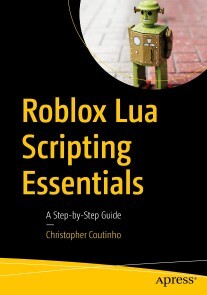
Roblox Lua Scripting Essentials
Embark on a transformative journey through the exciting world of Roblox Lua scripting with this comprehensive hands-on guide. Tailored to game developers, both seasoned and new, this book serves as your roadmap to mastering the art and science of Lua scripting within the dynamic Roblox Studio environment.You'll explore a wide spectrum of foundational concepts, including variables, functions, loops, tables, arrays, and more. Delve into advanced topics like raycasting, object-oriented programming with humanoids, and intricate leaderboard systems. Each chapter is crafted with real-world examples and step-by-step tutorials, empowering you to create engaging and interactive gameplay experiences.You'll gain profound insights into modularization, efficient coding practices, and techniques to optimize your scripts, paving the way to elevate your game development to an entirely new plane of creativity and complexity. You'll also discover sophisticated scripting concepts, such as custom events, and client-server communication.Invest in your future as a Roblox developer today, and let this book be your guide to crafting extraordinary gaming experiences. Roblox Lua Scripting Essentials provides the insight, tools, and guidance needed to shape your unique path in this thrilling domain of game development.WHAT YOU'LL LEARN* Wield variables, functions, loops, conditionals, arrays, and more to create dynamic gameplay elements* Explore the principles of object-oriented programming, and modularization techniques to develop clean, efficient, and organized code* Understand the complex client-server relationships, custom events, and multiplayer functionalities that bring games to life* Discover the power of modular coding, enabling you to create more organized and maintainable code bases* Lay down a robust foundation in Lua scripting for RobloxWHO THIS BOOK IS FORThis book is meticulously crafted to serve a diverse array of readers, ranging from complete beginners to intermediate developers. CHRISTOPHER COUTINHO is a game developer with an impressive 7-year track record in the domain of Virtual Reality (VR) development. As the visionary founder of Game Works, a cutting-edge game development studio based in Mumbai, he has honed his expertise in creating immersive Virtual Reality experiences. Coutinho's contributions extend beyond the commercial sphere; he has also played a pivotal role in shaping the next generation of game developers. He has been an instrumental educator, sharing his knowledge and insights in Video Game Development through platforms like iDTech, a division of Emeritus. His teachings span popular game engines such as Unity and Roblox. Additionally, Christopher has taught a specialized program on Augmented/Virtual Reality (AR/VR) Design created by the NYU – Tandon School of Engineering, for iDTech. His blend of hands-on experience and pedagogical prowess positions him as a leading figure in the contemporary gaming landscape.

Symmetric Cryptography, Volume 2
Symmetric cryptology is one of the two main branches of cryptology. Its applications are essential and vital in the Information Age, due to the efficiency of its constructions.The scope of this book in two volumes is two-fold. First, it presents the most important ideas that have been used in the design of symmetric primitives, their inner components and their most relevant constructions. Second, it describes and provides insights on the most popular cryptanalysis and proof techniques for analyzing the security of the above algorithms. A selected number of future directions, such as post-quantum security or design of ciphers for modern needs and particular applications, are also discussed.We believe that the two volumes of this work will be of interest to researchers, to master’s and PhD students studying or working in the field of cryptography, as well as to all professionals working in the field of cybersecurity. Christina Boura is an associate professor at the University of Versailles, France, who works on symmetric cryptography. She is a well-recognized member of the cryptographic community, having served on many program committees and as editor-in-chief of the ToSC IACR journal.María Naya-Plasencia is a research director at Inria, France, who also works on symmetric cryptography. She obtained an ERC grant in 2016 and the Young Researcher Prize from Inria-Académie des Sciences in 2019, and has given several invited keynote talks.

Applied Generative AI for Beginners
This book provides a deep dive into the world of generative AI, covering everything from the basics of neural networks to the intricacies of large language models like ChatGPT and Google Bard. It serves as a one-stop resource for anyone interested in understanding and applying this transformative technology and is particularly aimed at those just getting started with generative AI.Applied Generative AI for Beginners is structured around detailed chapters that will guide you from foundational knowledge to practical implementation. It starts with an introduction to generative AI and its current landscape, followed by an exploration of how the evolution of neural networks led to the development of large language models. The book then delves into specific architectures like ChatGPT and Google Bard, offering hands-on demonstrations for implementation using tools like Sklearn. You’ll also gain insight into the strategic aspects of implementing generative AI in an enterprise setting, with the authors covering crucial topics such as LLMOps, technology stack selection, and in-context learning. The latter part of the book explores generative AI for images and provides industry-specific use cases, making it a comprehensive guide for practical application in various domains.Whether you're a data scientist looking to implement advanced models, a business leader aiming to leverage AI for enterprise growth, or an academic interested in cutting-edge advancements, this book offers a concise yet thorough guide to mastering generative AI, balancing theoretical knowledge with practical insights.WHAT YOU WILL LEARN* Gain a solid understanding of generative AI, starting from the basics of neural networks and progressing to complex architectures like ChatGPT and Google Bard* Implement large language models using Sklearn, complete with code examples and best practices for real-world application* Learn how to integrate LLM’s in enterprises, including aspects like LLMOps and technology stack selection* Understand how generative AI can be applied across various industries, from healthcare and marketing to legal compliance through detailed use cases and actionable insightsWHO THIS BOOK IS FORData scientists, AI practitioners, Researchers and software engineers interested in generative AI and LLMs.AKSHAY KULKARNI is an AI and machine learning evangelist and IT leader. He has assisted numerous Fortune 500 and global firms in advancing strategic transformations using AI and data science. He is a Google Developer Expert, author, and regular speaker at major AI and data science conferences (including Strata, O’Reilly AI Conf, and GIDS). He is also a visiting faculty member for some of the top graduate institutes in India. In 2019, he was featured as one of the top 40 under-40 Data Scientists in India. He enjoys reading, writing, coding, and building next-gen AI products.ADARSHA S is a data science and ML Ops leader. Presently, he is focused on creating world-class ML Ops capabilities to ensure continuous value delivery using AI. He aims to build a pool of exceptional data scientists within and outside the organization to solve problems through training programs, and always wants to stay ahead of the curve. He has worked in the pharma, healthcare, CPG, retail, and marketing industries. He lives in Bangalore and loves to read and teach data science.ANOOSH KULKARNI is a data scientist and ML Ops engineer. He has worked with various global enterprises across multiple domains solving their business problems using machine learning and AI. He has worked at Awok-dot-com, one of the leading e-commerce giants in UAE, where he focused on building state of art recommender systems and deep learning-based search engines. He is passionate about guiding and mentoring people in their data science journey. He often leads data sciences/machine learning meetups, helping aspiring data scientists carve their career road map.DILIP GUDIVADA is a seasoned senior data architect with 13 years of experience in cloud services, big data, and data engineering. Dilip has a strong background in designing and developing ETL solutions, focusing specifically on building robust data lakes on the Azure cloud platform. Leveraging technologies such as Azure Databricks, Data Factory, Data Lake Storage, PySpark, Synapse, and Log Analytics, Dilip has helped organizations establish scalable and efficient data lake solutions on Azure. He has a deep understanding of cloud services and a track record of delivering successful data engineering projects.

Maschinelles Lernen - Grundlagen und Anwendungen
In diesem Fachbuch werden vorwiegend die Grundlagen des Maschinellen Lernens erläutert. Die Hauptthemen sind die mathematischen Grundlagen, Optimierungsmethoden und die ML-Algorithmen. Es wird zu jedem Kapitel mindestens eine Beispiel-Übung durchgeführt. Die Übungen könnten durch Python-Code ergänzt werden. Zusätzlich werden Aufgabenstellungen definiert, dies dient der Festigung des in dem jeweiligen Kapitel gelernten. Spezielle Anwendungen sollen ebenfalls dargestellt werden. Die Zielgruppe sind hauptsächlich Studierende, welche sich in dieses Themengebiet einarbeiten möchten. Ingenieure können allerdings ebenfalls von diesem Fachbuch profitieren, da ein großer Schwerpunkt bei der Anwendung von ML liegt. Besonders die Verwendung in interdisziplinären Fachrichtungen wie der Regelungstechnik, Bildverarbeitung und der Chemie werden aufgezeigt.Mein Name ist Benny Botsch und studierte Maschinenbau an der Technischen Universität in Berlin. Ich arbeite seit einigen Jahren als wissenschaftlicher Mitarbeiter bei der Gesellschaft zur Förderung angewandter Informatik e.V. (GFaI e.V.) im Bereich der Bildverarbeitung / Industrielle Anwendungen. Dabei entwickle ich Software zur Auswertung von 2D-Materialbildern durch klassische Bildverarbeitung (Objekterkennung, Kantenerkennung), aber auch durch neuronale Netze, um Materialkennwerte zu ermitteln.Inhaltsverzeichnis1 Einführung1.1 Was ist maschinelles Lernen1.2 Überwachtes Lernen1.2.1 Klassifikation und Regression1.2.2 Generalisierung, Überanpassung und Unteranpassung1.3 Unüberwachtes Lernen1.4 Bestärkendes Lernen1.5 Teilüberwachte Lernen1.6 Herausforderungen des maschinellen Lernens1.6.1 Unzureichende Menge an Trainingsdaten1.6.2 Nicht repräsentative Trainingsdaten1.6.3 Daten von schlechter Qualität1.6.4 Irrelevante Merkmale1.6.5 Explainable Artificial Intelligence1.7 Bewertung und Vergleich von Algorithmen1.7.1 Kreuzvalidierung1.7.2 Messfehler1.7.3 Intervallschätzung1.7.4 Hypothesenprüfung1.8 Werkzeuge und Ressourcen1.8.1 Installation von Python mit Anaconda1.8.2 Entwicklungsumgebungen1.8.3 Python Bibliotheken1.8.4 Grundlagen in Python2 Lineare Algebra2.1 Skalare, Vektoren und Matrizen2.1.1 Operationen mit Skalaren und Vektoren 2.1.2 Operationen mit Vektoren und Matrizen2.1.3 Die Inverse einer Matrix2.2 Lineare Gleichungssysteme2.2.1 Gauß-Algorithmus2.2.2 Numerische Lösungsmethoden linearer Gleichungssysteme3 Wahrscheinlichkeit und Statistik3.1 Grundbegriffe der Wahrscheinlichkeit3.2 Zufallsgrößen und Verteilungsfunktionen3.3 Momente einer Verteilung3.3.1 Erwartungswert und Streuung3.3.2 Schiefe und Exzess3.4 Bedingte Wahrscheinlichkeiten3.5 Deskriptive Statistik3.6 Einfache statistische Tests3.6.1 Ablauf eines statistischen Tests3.6.2 Parametertests bei normalverteilter Grundgesamtheit3.6.3 Mittelwerttest3.6.4 ����2 Streuungstest4 Optimierung4.1 Grundlagen der Optimierung4.1.1 Univariate Optimierung4.1.2 Bivariate Optimierung4.1.3 Multivariate Optimierung4.2 Gradient Descent4.2.1 Momentum-Based Learning4.2.2 AdaGrad4.2.3 Adam4.3 Newton Methode5 Parametrische Methoden5.1 Regressionsanalyse5.1.1 Lineare Regression5.1.2 Logistische Regression5.2 Lineare Support Vector Machines5.2.1 Die optimale Trennebene5.2.2 Soft-Margin5.2.3 Kernfunktionen5.3 Der Bayessche Schätzer5.3.1 Stochastische Unabhängigkeit5.3.2 Bayessche Netze5.4 Neuronale Netze5.4.1 Das künstliche Neuron5.4.2 Mehrschichtige Neuronale Netze5.4.3 Lernvorgang5.5 Deep Learning5.5.1 Convolutional Neural Networks5.5.2 Rekurrent Neural Networks5.5.3 Generative Modelle6 Nichtparametrische Methoden6.1 Nichtparametrische Dichteschätzung6.1.1 Histogrammschätzer6.1.2 Kernschätzer6.1.3 ����-Nächste-Nachbarn-Schätzer6.2 Entscheidungsbäume6.2.1 Univariate Bäume6.2.2 Multivariate Bäume6.2.3 Pruning6.2.4 Random Forest7 Bestärkendes Lernen7.1 Was ist bestärkendes Lernen7.1.1 Belohnung7.1.2 Der Agent7.1.3 Die Umgebung7.1.4 Aktionen7.1.5 Beobachtungen7.2 Theoretische Grundlagen7.2.1 Markov Entscheidungsprozesse7.2.2 Markov Prozess7.2.3 Markov Belohnungsprozess7.2.4 Policy7.3 Wertebasierte Verfahren7.3.1 Grundlagen der Wertefunktion und der Bellman-Gleichung7.3.2 Q-Learning7.3.3 SARSA7.3.4 Deep Q-Networks (DQN)7.4 Policybasierte Verfahren7.4.1 Policy Gradien7.4.2 Actor-Critic-Verfahren7.4.3 Soft Actor-Critic (SAC)8 Custeranalyse8.1 ����-Means-Clustermethode8.2 Hierarchisches Clustermethode 8.3 Gaußsche Mischmodelle9 Anwendungen9.1 Regelungstechnik9.1.1 Systemidentifikation9.1.2 Neuronaler Regler9.1.3 Regelung eines inversen Pendels9.2 Bildverarbeitung9.2.1 Klassifikation von Zahlen9.2.2 Segmentierung von Bruchflächen9.2.3 Objekterkennung mit Vision Transformers9.2.4 Künstliche Generierung von Bildern9.2.5 Interpretierbarkeit von Vision-Modellen mit Grad-CAM9.3 Chemie9.3.1 Klassifizierung von Wein9.3.2 Vorhersage von Eigenschaften organischer Moleküle9.4 Physik9.4.1 Statistische Versuchsplanung optimieren9.4.2 Vorhersage von RANS-Strömungen9.5 Generierung von Text9.5.1 Textgenerierung mit einem Miniatur-GPT9.5.2 Englisch-Spanisch-Übersetzung mit TensorFlow9.6 Audiodatenverarbeitung9.6.1 Automatische Spracherkennung mit CTC9.6.2 Klassifizierung von Sprechern mit FFTLiteraturverzeichnis

Google Cloud Platform for Data Science
This book is your practical and comprehensive guide to learning Google Cloud Platform (GCP) for data science, using only the free tier services offered by the platform.Data science and machine learning are increasingly becoming critical to businesses of all sizes, and the cloud provides a powerful platform for these applications. GCP offers a range of data science services that can be used to store, process, and analyze large datasets, and train and deploy machine learning models.The book is organized into seven chapters covering various topics such as GCP account setup, Google Colaboratory, Big Data and Machine Learning, Data Visualization and Business Intelligence, Data Processing and Transformation, Data Analytics and Storage, and Advanced Topics. Each chapter provides step-by-step instructions and examples illustrating how to use GCP services for data science and big data projects.Readers will learn how to set up a Google Colaboratory account and run Jupyter notebooks, access GCP services and data from Colaboratory, use BigQuery for data analytics, and deploy machine learning models using Vertex AI. The book also covers how to visualize data using Looker Data Studio, run data processing pipelines using Google Cloud Dataflow and Dataprep, and store data using Google Cloud Storage and SQL.WHAT YOU WILL LEARN* Set up a GCP account and project* Explore BigQuery and its use cases, including machine learning* Understand Google Cloud AI Platform and its capabilities * Use Vertex AI for training and deploying machine learning models* Explore Google Cloud Dataproc and its use cases for big data processing* Create and share data visualizations and reports with Looker Data Studio* Explore Google Cloud Dataflow and its use cases for batch and stream data processing * Run data processing pipelines on Cloud Dataflow* Explore Google Cloud Storage and its use cases for data storage * Get an introduction to Google Cloud SQL and its use cases for relational databases * Get an introduction to Google Cloud Pub/Sub and its use cases for real-time data streamingWHO THIS BOOK IS FORData scientists, machine learning engineers, and analysts who want to learn how to use Google Cloud Platform (GCP) for their data science and big data projectsSHITALKUMAR R. SUKHDEVE is an experienced senior data scientist with a strong track record of developing and deploying transformative data science and machine learning solutions to solve complex business problems in the telecom industry. He has notable achievements in developing a machine learning-driven customer churn prediction and root cause exploration solution, a customer credit scoring system, and a product recommendation engine.Shitalkumar is skilled in enterprise data science and research ecosystem development, dedicated to optimizing key business indicators, and adding revenue streams for companies. He is pursuing a doctorate in business administration from SSBM, Switzerland, and an M.Tech in computer science and engineering from VNIT Nagpur.Shitalkumar has authored a book titled Step Up for Leadership in Enterprise Data Science and Artificial Intelligence with Big Data: Illustrations with R and Python and co-authored a book titled Web Application Development with R Using Shiny, 3rd edition. He is a speaker at various technology and business events such as WorldAI Show Jakarta 2021, 2022, and 2023, NXT CX Jakarta 2022, Global Cloud Native Open Source Summit 2022, Cyber Security Summit 2022, and ASEAN Conversational Automation Webinar. You can find him on LinkedIn.SANDIKA S. SUKHDEVE is an expert in Data Visualization and Google-certified Project Management. She previously served as Assistant Professor in a Mechanical Engineering Department and has authored Amazon bestseller titles across diverse markets such as the USA, Germany, Canada, and more. She has a background in Human Resources and a wealth of experience in Branding.As an Assistant Professor, she successfully guided more than 2,000 students and delivered 1,000+ lectures, and mentored numerous projects (including Computational Fluid Dynamics). She excels in managing both people and multiple projects, ensuring timely completion. Her areas of specialization encompass Thermodynamics, Applied Thermodynamics, Industrial Engineering, Product Design and Development, Theory of Machine, Numerical Methods and Optimization, and Fluid Mechanics. She holds a master's degree in Technology (with a Specialization in Heat-Power), and she possesses exceptional skills in visualizing, analyzing, and constructing classification and prediction models using R and MATLAB. You can find her on LinkedIn.Chapter 1: Introduction to GCP.- Chapter 2: Google Colaboratory.- Chapter 3: Big Data and Machine Learning.- Chapter 4: Data Visualization and Business Intelligence.- Chapter 5: Data Processing and Transformation.- Chapter 6: Data Analytics and Storage.- Chapter 7: Advanced Topics.

Building Computer Vision Applications Using Artificial Neural Networks
Computer vision is constantly evolving, and this book has been updated to reflect new topics that have emerged in the field since the first edition’s publication. All code used in the book has also been fully updated.This second edition features new material covering image manipulation practices, image segmentation, feature extraction, and object identification using real-life scenarios to help reinforce each concept. These topics are essential for building advanced computer vision applications, and you’ll gain a thorough understanding of them. The book’s source code has been updated from TensorFlow 1.x to 2.x, and includes step-by-step examples using both OpenCV and TensorFlow with Python.Upon completing this book, you’ll have the knowledge and skills to build your own computer vision applications using neural networksWHAT YOU WILL LEARN* Understand image processing, manipulation techniques, and feature extraction methods* Work with convolutional neural networks (CNN), single-shot detector (SSD), and YOLO* Utilize large scale model development and cloud infrastructure deployment* Gain an overview of FaceNet neural network architecture and develop a facial recognition systemWHO THIS BOOK IS FORThose who possess a solid understanding of Python programming and wish to gain an understanding of computer vision and machine learning. It will prove beneficial to data scientists, deep learning experts, and students.SHAMSHAD (SAM) ANSARI is an author, inventor, and thought leader in the fields of computer vision, machine learning, artificial intelligence, and cognitive science. He has extensive experience in high scale, distributed, and parallel computing. Sam currently serves as an Adjunct Professor at George Mason University, teaching graduate- level programs within the Data Analytics Engineering department of the Volgenau School of Engineering. His areas of instruction encompass machine learning, natural language processing, and computer vision, where he imparts his knowledge and expertise to aspiring professionals.Having authored multiple publications on topics such as machine learning, RFID, and high-scale enterprise computing, Sam’s contributions extend beyond academia. He holds four US patents related to healthcare AI, showcasing his innovative mindset and practical application of technology.Throughout his extensive 20+ years of experience in enterprise software development, Sam has been involved with several tech startups and early-stage companies. He has played pivotal roles in building and expanding tech teams from the ground up, contributing to their eventual acquisition by larger organizations. At the beginning of his career, he worked with esteemed institutions such as the US Department of Defense (DOD) and IBM, honing his skills and knowledge in the industry.Currently, Sam serves as the President and CEO of Accure, Inc., an AI company that he founded. He is the creator, architect, and a significant contributor to Momentum AI, a no-code platform that encompasses data engineering, machine learning, AI, MLOps, data warehousing, and business intelligence. Throughout his career, Sam has made notable contributions in various domains including healthcare, retail, supply chain, banking and finance, and manufacturing. Demonstrating his leadership skills, he has successfully managed teams of software engineers, data scientists, and DevSecOps professionals, leading them to deliver exceptional results. Sam earned his bachelor’s degree in engineering from Birsa Institute of Technology (BIT) Sindri and subsequently a Master’s degree from the prestigious Indian Institute of Information Technology and Management Kerala (IIITM-K).

Blockchain and Deep Learning for Smart Healthcare
BLOCKCHAIN AND DEEP LEARNING FOR SMART HEALTHCARETHE BOOK DISCUSSES THE POPULAR USE CASES AND APPLICATIONS OF BLOCKCHAIN TECHNOLOGY AND DEEP LEARNING IN BUILDING SMART HEALTHCARE.The book covers the integration of blockchain technology and deep learning for making smart healthcare systems. Blockchain is used for health record-keeping, clinical trials, patient monitoring, improving safety, displaying information, and transparency. Deep learning is also showing vast potential in the healthcare domain. With the collection of large quantities of patient records and data, and a trend toward personalized treatments. there is a great need for automated and reliable processing and analysis of health information. This book covers the popular use cases and applications of both the above-mentioned technologies in making smart healthcare. AUDIENCEComprises professionals and researchers working in the fields of deep learning, blockchain technology, healthcare & medical informatics. In addition, as the book provides insights into the convergence of deep learning and blockchain technology in healthcare systems and services, medical practitioners as well as healthcare professionals will find this essential reading. AKANSHA SINGH, PHD, is an associate professor in the School of Computer Science Engineering and Technology, Bennett University, Greater Noida, India. Dr. Singh has acquired a BTech, MTech, and PhD (IIT Roorkee) in the area of neural networks and remote sensing. She has to her credit more than 70 research papers, 20 books, and numerous conference papers. She has also national and international patents in the field of machine learning. Her area of interest includes mobile computing, artificial intelligence, machine learning, and digital image processing.ANURADHA DHULL, PHD, is an assistant professor in the Department of Computer Science Engineering, The NorthCap University, Gurugram, India. She has published more than 30 research papers in the area of data mining and machine learning. Dr. Anuradha has acquired a BTech, MTech, and PhD in the area of medical diagnosis and machine learning. KRISHNA KANT SINGH, PHD, is a professor at the Delhi Technical Campus, Greater Noida, India. Dr. Singh has acquired a BTech, MTech, and PhD (IIT Roorkee) in the area of deep learning and remote sensing. He has authored more than 80 technical books and research papers in international conferences and SCIE journals of repute.

Privacy Preservation of Genomic and Medical Data
PRIVACY PRESERVATION OF GENOMIC AND MEDICAL DATADISCUSSES TOPICS CONCERNING THE PRIVACY PRESERVATION OF GENOMIC DATA IN THE DIGITAL ERA, INCLUDING DATA SECURITY, DATA STANDARDS, AND PRIVACY LAWS SO THAT RESEARCHERS IN BIOMEDICAL INFORMATICS, COMPUTER PRIVACY AND ELSI CAN ASSESS THE LATEST ADVANCES IN PRIVACY-PRESERVING TECHNIQUES FOR THE PROTECTION OF HUMAN GENOMIC DATA.Privacy Preservation of Genomic and Medical Data focuses on genomic data sources, analytical tools, and the importance of privacy preservation. Topics discussed include tensor flow and Bio-Weka, privacy laws, HIPAA, and other emerging technologies like Internet of Things, IoT-based cloud environments, cloud computing, edge computing, and blockchain technology for smart applications. The book starts with an introduction to genomes, genomics, genetics, transcriptomes, proteomes, and other basic concepts of modern molecular biology. DNA sequencing methodology, DNA-binding proteins, and other related terms concerning genomes and genetics, and the privacy issues are discussed in detail. The book also focuses on genomic data sources, analyzing tools, and the importance of privacy preservation. It concludes with future predictions for genomic and genomic privacy, emerging technologies, and applications. AUDIENCEResearchers in information technology, data mining, health informatics and health technologies, clinical informatics, bioinformatics, security and privacy in healthcare, as well as health policy developers in public and private health departments and public health. AMIT KUMAR TYAGI, PHD, is an assistant professor, at the National Institute of Fashion Technology, New Delhi, India. He has published more than 100 papers in refereed international journals, conferences, and books. He has filed more than 20 national and international patents in the areas of deep learning, Internet of Things, cyber-physical systems, and computer vision. His current research focuses on smart and secure computing and privacy amongst other interests.

Automated Secure Computing for Next-Generation Systems
AUTOMATED SECURE COMPUTING FOR NEXT-GENERATION SYSTEMSTHIS BOOK PROVIDES CUTTING-EDGE CHAPTERS ON MACHINE-EMPOWERED SOLUTIONS FOR NEXT-GENERATION SYSTEMS FOR TODAY’S SOCIETY.Security is always a primary concern for each application and sector. In the last decade, many techniques and frameworks have been suggested to improve security (data, information, and network). Due to rapid improvements in industry automation, however, systems need to be secured more quickly and efficiently. It is important to explore the best ways to incorporate the suggested solutions to improve their accuracy while reducing their learning cost. During implementation, the most difficult challenge is determining how to exploit AI and ML algorithms for improved safe service computation while maintaining the user’s privacy. The robustness of AI and deep learning, as well as the reliability and privacy of data, is an important part of modern computing. It is essential to determine the security issues of using AI to protect systems or ML-based automated intelligent systems. To enforce them in reality, privacy would have to be maintained throughout the implementation process. This book presents groundbreaking applications related to artificial intelligence and machine learning for more stable and privacy-focused computing. By reflecting on the role of machine learning in information, cyber, and data security, Automated Secure Computing for Next-Generation Systems outlines recent developments in the security domain with artificial intelligence, machine learning, and privacy-preserving methods and strategies. To make computation more secure and confidential, the book provides ways to experiment, conceptualize, and theorize about issues that include AI and machine learning for improved security and preserve privacy in next-generation-based automated and intelligent systems. Hence, this book provides a detailed description of the role of AI, ML, etc., in automated and intelligent systems used for solving critical issues in various sectors of modern society. AUDIENCEResearchers in information technology, robotics, security, privacy preservation, and data mining. The book is also suitable for postgraduate and upper-level undergraduate students. AMIT KUMAR TYAGI, PHD, is an assistant professor, at the National Institute of Fashion Technology, New Delhi, India. He has published more than 100 papers in refereed international journals, conferences, and books. He has filed more than 20 national and international patents in the areas of deep learning, Internet of Things, cyber-physical systems, and computer vision. His current research focuses on smart and secure computing and privacy, amongst other interests.

Automated Secure Computing for Next-Generation Systems
AUTOMATED SECURE COMPUTING FOR NEXT-GENERATION SYSTEMSTHIS BOOK PROVIDES CUTTING-EDGE CHAPTERS ON MACHINE-EMPOWERED SOLUTIONS FOR NEXT-GENERATION SYSTEMS FOR TODAY’S SOCIETY.Security is always a primary concern for each application and sector. In the last decade, many techniques and frameworks have been suggested to improve security (data, information, and network). Due to rapid improvements in industry automation, however, systems need to be secured more quickly and efficiently. It is important to explore the best ways to incorporate the suggested solutions to improve their accuracy while reducing their learning cost. During implementation, the most difficult challenge is determining how to exploit AI and ML algorithms for improved safe service computation while maintaining the user’s privacy. The robustness of AI and deep learning, as well as the reliability and privacy of data, is an important part of modern computing. It is essential to determine the security issues of using AI to protect systems or ML-based automated intelligent systems. To enforce them in reality, privacy would have to be maintained throughout the implementation process. This book presents groundbreaking applications related to artificial intelligence and machine learning for more stable and privacy-focused computing. By reflecting on the role of machine learning in information, cyber, and data security, Automated Secure Computing for Next-Generation Systems outlines recent developments in the security domain with artificial intelligence, machine learning, and privacy-preserving methods and strategies. To make computation more secure and confidential, the book provides ways to experiment, conceptualize, and theorize about issues that include AI and machine learning for improved security and preserve privacy in next-generation-based automated and intelligent systems. Hence, this book provides a detailed description of the role of AI, ML, etc., in automated and intelligent systems used for solving critical issues in various sectors of modern society. AUDIENCEResearchers in information technology, robotics, security, privacy preservation, and data mining. The book is also suitable for postgraduate and upper-level undergraduate students. AMIT KUMAR TYAGI, PHD, is an assistant professor, at the National Institute of Fashion Technology, New Delhi, India. He has published more than 100 papers in refereed international journals, conferences, and books. He has filed more than 20 national and international patents in the areas of deep learning, Internet of Things, cyber-physical systems, and computer vision. His current research focuses on smart and secure computing and privacy, amongst other interests. Preface xviiAcknowledgements xixPART 1: FUNDAMENTALS 11 DIGITAL TWIN TECHNOLOGY: NECESSITY OF THE FUTURE IN EDUCATION AND BEYOND 3Robertas Damasevicius and Ligita Zailskaite-Jakste1.1 Introduction 31.2 Digital Twins in Education 51.3 Examples and Case Studies 81.4 Discussion 121.5 Challenges and Limitations 131.6 Conclusion 172 AN INTERSECTION BETWEEN MACHINE LEARNING, SECURITY, AND PRIVACY 23Hareharan P.K., Kanishka J. and Subaasri D.2.1 Introduction 232.2 Machine Learning 242.3 Threat Model 272.4 Training in a Differential Environment 302.5 Inferring in Adversarial Attack 332.6 Machine Learning Methods That Are Sustainable, Private, and Accountable 362.7 Conclusion 403 DECENTRALIZED, DISTRIBUTED COMPUTING FOR INTERNET OF THINGS-BASED CLOUD APPLICATIONS 43Roopa Devi E.M., Shanthakumari R., Rajadevi R., Kayethri D. and Aparna V.3.1 Introduction to Volunteer Edge Cloud for Internet of Things Utilising Blockchain 443.2 Significance of Volunteer Edge Cloud Concept 453.3 Proposed System 463.4 Implementation of Volunteer Edge Control 493.5 Result Analysis of Volunteer Edge Cloud 523.6 Introducing Blockchain-Enabled Internet of Things Systems Using the Serverless Cloud Platform 533.7 Introducing Serverless Cloud Platforms 543.8 Serverless Cloud Platform System Design 553.9 Evaluation of HCloud 603.10 HCloud-Related Works 613.11 Conclusion 624 ARTIFICIAL INTELLIGENCE–BLOCKCHAIN-ENABLED–INTERNET OF THINGS-BASED CLOUD APPLICATIONS FOR NEXT-GENERATION SOCIETY 65V. Hemamalini, Anand Kumar Mishra, Amit Kumar Tyagi and Vijayalakshmi Kakulapati4.1 Introduction 654.2 Background Work 694.3 Motivation 714.4 Existing Innovations in the Current Society 724.5 Expected Innovations in the Next-Generation Society 724.6 An Environment with Artificial Intelligence–Blockchain-Enabled–Internet of Things-Based Cloud Applications 734.7 Open Issues in Artificial Intelligence–Blockchain-Enabled–Internet of Things-Based Cloud Applications 744.8 Research Challenges in Artificial Intelligence–Blockchain-Enabled–Internet of Things-Based Cloud Applications 754.9 Legal Challenges in Artificial Intelligence–Blockchain-Enabled–Internet of Things-Based Cloud Applications 764.10 Future Research Opportunities Towards Artificial Intelligence–Blockchain-Enabled–Internet of Things-Based Cloud Applications 774.11 An Open Discussion 784.12 Conclusion 795 ARTIFICIAL INTELLIGENCE FOR CYBER SECURITY: CURRENT TRENDS AND FUTURE CHALLENGES 83Meghna Manoj Nair, Atharva Deshmukh and Amit Kumar Tyagi5.1 Introduction: Security and Its Types 835.2 Network and Information Security for Industry 4.0 and Society 5.0 865.3 Internet Monitoring, Espionage, and Surveillance 895.4 Cyber Forensics with Artificial Intelligence and without Artificial Intelligence 915.5 Intrusion Detection and Prevention Systems Using Artificial Intelligence 925.6 Homomorphic Encryption and Cryptographic Obfuscation 945.7 Artificial Intelligence Security as Adversarial Machine Learning 955.8 Post-Quantum Cryptography 965.9 Security and Privacy in Online Social Networks and Other Sectors 985.10 Security and Privacy Using Artificial Intelligence in Future Applications/Smart Applications 995.11 Security Management and Security Operations Using Artificial Intelligence for Society 5.0 and Industry 4.0 1015.12 Digital Trust and Reputation Using Artificial Intelligence 1035.13 Human-Centric Cyber Security Solutions 1045.14 Artificial Intelligence-Based Cyber Security Technologies and Solutions 1065.15 Open Issues, Challenges, and New Horizons Towards Artificial Intelligence and Cyber Security 1075.16 Future Research with Artificial Intelligence and Cyber Security 1095.17 Conclusion 110PART 2: METHODS AND TECHNIQUES 1156 AN AUTOMATIC ARTIFICIAL INTELLIGENCE SYSTEM FOR MALWARE DETECTION 117Ahmad Moawad, Ahmed Ismail Ebada, A.A. El-Harby and Aya M. Al-Zoghby6.1 Introduction 1176.2 Malware Types 1196.3 Structure Format of Binary Executable Files 1216.4 Malware Analysis and Detection 1246.5 Malware Techniques to Evade Analysis and Detection 1286.6 Malware Detection With Applying AI 1306.7 Open Issues and Challenges 1346.8 Discussion and Conclusion 1357 EARLY DETECTION OF DARKNET TRAFFIC IN INTERNET OF THINGS APPLICATIONS 139Ambika N.7.1 Introduction 1397.2 Literature Survey 1437.3 Proposed Work 1477.4 Analysis of the Work 1497.5 Future Work 1507.6 Conclusion 1518 A NOVEL AND EFFICIENT APPROACH TO DETECT VEHICLE INSURANCE CLAIM FRAUD USING MACHINE LEARNING TECHNIQUES 155Anand Kumar Mishra, V. Hemamalini, Amit Kumar Tyagi, Piyali Saha and Abirami A.8.1 Introduction 1558.2 Literature Survey 1568.3 Implementation and Analysis 1578.4 Conclusion 1749 AUTOMATED SECURE COMPUTING FOR FRAUD DETECTION IN FINANCIAL TRANSACTIONS 177Kuldeep Singh, Prasanna Kolar, Rebecca Abraham, Vedantam Seetharam, Sireesha Nanduri and Divyesh Kumar9.1 Introduction 1779.2 Historical Perspective 1809.3 Previous Models for Fraud Detection in Financial Transactions 1819.4 Proposed Model Based on Automated Secure Computing 1829.5 Discussion 1849.6 Conclusion 18510 DATA ANONYMIZATION ON BIOMETRIC SECURITY USING IRIS RECOGNITION TECHNOLOGY 191Aparna D. K., Malarkodi M., Lakshmanaprakash S., Priya R. L. and Ajay Nair10.1 Introduction 19110.2 Problems Faced in Facial Recognition 19410.3 Face Recognition 19710.4 The Important Aspects of Facial Recognition 19910.5 Proposed Methodology 20110.6 Results and Discussion 20210.7 Conclusion 20211 ANALYSIS OF DATA ANONYMIZATION TECHNIQUES IN BIOMETRIC AUTHENTICATION SYSTEM 205Harini S., Dharshini R., Agalya N., Priya R. L. and Ajay Nair11.1 Introduction 20511.2 Literature Survey 20711.3 Existing Survey 20911.4 Proposed System 21211.5 Implementation of AI 21911.6 Limitations and Future Works 22011.7 Conclusion 221PART 3: APPLICATIONS 22312 DETECTION OF BANK FRAUD USING MACHINE LEARNING TECHNIQUES 225Kalyani G., Anand Kumar Mishra, Diya Harish, Amit Kumar Tyagi, Sajidha S. A. and Shashank Pandey12.1 Introduction 22512.2 Literature Review 22612.3 Problem Description 22712.4 Implementation and Analysis 22812.5 Results 23812.6 Conclusion 23812.7 Future Works 24013 AN INTERNET OF THINGS-INTEGRATED HOME AUTOMATION WITH SMART SECURITY SYSTEM 243Md. Sayeduzzaman, Touhidul Hasan, Adel A. Nasser and Akashdeep Negi13.1 Introduction 24413.2 Literature Review 24613.3 Methodology and Working Procedure with Diagrams 24913.4 Research Analysis 25213.5 Establishment of the Prototype 25613.6 Results and Discussions 26513.7 Conclusions 27014 AN AUTOMATED HOME SECURITY SYSTEM USING SECURE MESSAGE QUEUE TELEMETRY TRANSPORT PROTOCOL 275P. Rukmani, S. Graceline Jasmine, M. Vergin Raja Sarobin, L. Jani Anbarasi and Soumitro Datta14.1 Introduction 27514.2 Related Works 27714.3 Proposed Solution 27814.4 Implementation 28514.5 Results 29014.6 Conclusion and Future Work 29215 MACHINE LEARNING-BASED SOLUTIONS FOR INTERNET OF THINGS-BASED APPLICATIONS 295Varsha Bhatia and Bhavesh Bhatia15.1 Introduction 29515.2 IoT Ecosystem 29615.3 Importance of Data in IoT Applications 29815.4 Machine Learning 29915.5 Machine Learning Algorithms 30215.6 Applications of Machine Learning in IoT 30415.7 Challenges of Implementing ML for IoT Solutions 31315.8 Emerging Trends in IoT 31415.9 Conclusion 31516 MACHINE LEARNING-BASED INTELLIGENT POWER SYSTEMS 319Kusumika Krori Dutta, S. Poornima, R. Subha, Lipika Deka and Archit Kamath16.1 Introduction 31916.2 Machine Learning Techniques 32116.3 Implementation of ML Techniques in Smart Power Systems 33416.4 Case Study 34016.5 Conclusion 341PART 4: FUTURE RESEARCH OPPORTUNITIES 34517 QUANTUM COMPUTATION, QUANTUM INFORMATION, AND QUANTUM KEY DISTRIBUTION 347Mohanaprabhu D., Monish Kanna S. P., Jayasuriya J., Lakshmanaprakash S., Abirami A. and Amit Kumar Tyagi17.1 Introduction 34717.2 Literature Work 35217.3 Motivation Behind this Study 35317.4 Existing Players in the Market 35417.5 Quantum Key Distribution 35617.6 Proposed Models for Quantum Computing 35617.7 Simulation/Result 36117.8 Conclusion 36518 QUANTUM COMPUTING, QUBITS WITH ARTIFICIAL INTELLIGENCE, AND BLOCKCHAIN TECHNOLOGIES: A ROADMAP FOR THE FUTURE 367Amit Kumar Tyagi, Anand Kumar Mishra, Aswathy S. U. and Shabnam Kumari18.1 Introduction to Quantum Computing and Its Related Terms 36818.2 How Quantum Computing is Different from Security? 37418.3 Artificial Intelligence—Blockchain-Based Quantum Computing? 37518.4 Process to Build a Quantum Computer 37818.5 Popular Issues with Quantum Computing in this Smart Era 37918.6 Problems Faced with Artificial Intelligence–Blockchain-Based Quantum Computing 37918.7 Challenges with the Implementation of Quantum Computers in Today's Smart Era 38018.8 Future Research Opportunities with Quantum Computing 38118.9 Future Opportunities with Artificial Intelligence–Blockchain-Based Quantum Computing 38218.10 Conclusion 38319 QUBITS, QUANTUM BITS, AND QUANTUM COMPUTING: THE FUTURE OF COMPUTER SECURITY SYSTEM 385Harini S., Dharshini R., Praveen R., Abirami A., Lakshmanaprakash S. and Amit Kumar Tyagi19.1 Introduction 38519.2 Importance of Quantum Computing 38719.3 Literature Survey 38819.4 Quantum Computing Features 39019.5 Quantum Algorithms 39419.6 Experimental Results 39919.7 Conclusion 40020 FUTURE TECHNOLOGIES FOR INDUSTRY 5.0 AND SOCIETY 5.0 403Mani Deepak Choudhry, S. Jeevanandham, M. Sundarrajan, Akshya Jothi, K. Prashanthini and V. Saravanan20.1 Introduction 40420.2 Related Work 40720.3 Comparative Analysis of I4.0 to I5.0 and S4.0 to S5.0 40920.4 Risks and Prospects 41220.5 Conclusion 41221 FUTURISTIC TECHNOLOGIES FOR SMART MANUFACTURING: RESEARCH STATEMENT AND VISION FOR THE FUTURE 415Amit Kumar Tyagi, Anand Kumar Mishra, Nalla Vedavathi, Vijayalakshmi Kakulapati and Sajidha S. A.21.1 Introduction About Futuristic Technologies 41521.2 Related Work Towards Futuristic Technologies 41821.3 Related Work Towards Smart Manufacturing 41921.4 Literature Review Towards Futuristic Technology 42021.5 Motivation 42121.6 Smart Applications 42221.7 Popular Issues with Futuristic Technologies for Emerging Applications 42421.8 Legal Issues Towards Futuristic Technologies 42721.9 Critical Challenges with Futuristic Technology for Emerging Applications 42821.10 Research Opportunities for Futuristic Technologies Towards Emerging Applications 43021.11 Lesson Learned 43321.12 Conclusion 434References 434Index 443

The Human Firewall
Nicht nur im privaten Umfeld, auch im beruflichen sind Computer, Smartphones und das Internet Begleiter unseres täglichen Lebens. Dabei spielt der Schutz von Informationen eine wichtige Rolle. Über 70% aller Cyber-Angriffe zielen auf den Nutzer ab, lediglich ein kleiner Teil auf die tatsächlichen Systeme. Daher sind geschulte und aufmerksame Mitarbeiter ein unabdingbarer Bestandteil der allgemeinen Sicherheitsstrategie zum Schutz der Informationen. Das Ziel ist dabei der Aufbau einer Kultur der Cyber-Sicherheit, einer sogenannten human firewall.Florian Jörgens ist Chief Information Security Officer der Vorwerk Gruppe. Zusätzlich ist er als Keynote-Speaker, Dozent, Autor und wissenschaftlicher Mitarbeiter an verschiedenen Hochschulen tätig. Darüber hinaus hält er Fachvorträge zu den Themen Informationssicherheit, Awareness und Cybersicherheit.Florian Jörgens wurde im September 2020 vom CIO Magazin mit dem Digital Leader Award in der Kategorie "Cyber-Security" ausgezeichnet.Einführung.- Aufmerksame Mitarbeiter: der beste Schutz.- Pre-Phase.- Durchführung.- Post-Phase.- Kennzahlen und dauerhafte Implementierung.- Fazit.
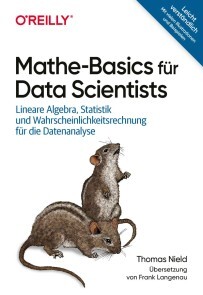
Mathe-Basics für Data Scientists
Um als Data Scientist erfolgreich zu sein, müssen Sie über ein solides mathematisches Grundwissen verfügen. Dieses Buch bietet einen leicht verständlichen Überblick über die Mathematik, die Sie in der Data Science benötigen. Thomas Nield führt Sie Schritt für Schritt durch Bereiche wie Infinitesimalrechnung, Wahrscheinlichkeit, lineare Algebra, Statistik und Hypothesentests und zeigt Ihnen, wie diese Mathe-Basics beispielsweise in der linearen und logistischen Regression und in neuronalen Netzen eingesetzt werden. Zusätzlich erhalten Sie Einblicke in den aktuellen Stand der Data Science und erfahren, wie Sie dieses Wissen für Ihre Karriere als Data Scientist nutzen.- Verwenden Sie Python-Code und Bibliotheken wie SymPy, NumPy und scikit-learn, um grundlegende mathematische Konzepte wie Infinitesimalrechnung, lineare Algebra, Statistik und maschinelles Lernen zu erkunden- Verstehen Sie Techniken wie lineare und logistische Regression und neuronale Netze durch gut nachvollziehbare Erklärungen und ein Minimum an mathematischer Terminologie- Wenden Sie deskriptive Statistik und Hypothesentests auf einen Datensatz an, um p-Werte und statistische Signifikanz zu interpretieren- Manipulieren Sie Vektoren und Matrizen und führen Sie Matrixzerlegung durch- Vertiefen Sie Ihre Kenntnisse in Infinitesimal- und Wahrscheinlichkeitsrechnung, Statistik und linearer Algebra und wenden Sie sie auf Regressionsmodelle einschließlich neuronaler Netze an- Erfahren Sie, wie Sie Ihre Kenntnisse und Fähigkeiten in der Datenanalyse optimieren und gängige Fehler vermeiden, um auf dem Data-Science-Arbeitsmarkt zu überzeugenThomas Nield ist der Gründer der Nield Consulting Group sowie Dozent bei O'Reilly Media und an der University of Southern California. Er hat Freude daran, technische Inhalte für diejenigen verständlich und gut nutzbar zu machen, die mit ihnen nicht vertraut sind oder sich von ihnen abgeschreckt fühlen. Thomas Nield unterrichtet regelmäßig Kurse zu Datenanalyse, Machine Learning, mathematischer Optimierung, KI-Systemsicherheit und praktischer künstlicher Intelligenz. Er ist Autor von zwei Büchern, Getting Started with SQL (O'Reilly) und Learning RxJava (Packt). Außerdem ist er der Gründer und Erfinder von Yawman Flight, einem Unternehmen, das Handsteuerungen für Flugsimulatoren und unbemannte Luftfahrzeuge entwickelt.

Privacy Preservation of Genomic and Medical Data
PRIVACY PRESERVATION OF GENOMIC AND MEDICAL DATADISCUSSES TOPICS CONCERNING THE PRIVACY PRESERVATION OF GENOMIC DATA IN THE DIGITAL ERA, INCLUDING DATA SECURITY, DATA STANDARDS, AND PRIVACY LAWS SO THAT RESEARCHERS IN BIOMEDICAL INFORMATICS, COMPUTER PRIVACY AND ELSI CAN ASSESS THE LATEST ADVANCES IN PRIVACY-PRESERVING TECHNIQUES FOR THE PROTECTION OF HUMAN GENOMIC DATA.Privacy Preservation of Genomic and Medical Data focuses on genomic data sources, analytical tools, and the importance of privacy preservation. Topics discussed include tensor flow and Bio-Weka, privacy laws, HIPAA, and other emerging technologies like Internet of Things, IoT-based cloud environments, cloud computing, edge computing, and blockchain technology for smart applications. The book starts with an introduction to genomes, genomics, genetics, transcriptomes, proteomes, and other basic concepts of modern molecular biology. DNA sequencing methodology, DNA-binding proteins, and other related terms concerning genomes and genetics, and the privacy issues are discussed in detail. The book also focuses on genomic data sources, analyzing tools, and the importance of privacy preservation. It concludes with future predictions for genomic and genomic privacy, emerging technologies, and applications. AUDIENCEResearchers in information technology, data mining, health informatics and health technologies, clinical informatics, bioinformatics, security and privacy in healthcare, as well as health policy developers in public and private health departments and public health. AMIT KUMAR TYAGI, PHD, is an assistant professor, at the National Institute of Fashion Technology, New Delhi, India. He has published more than 100 papers in refereed international journals, conferences, and books. He has filed more than 20 national and international patents in the areas of deep learning, Internet of Things, cyber-physical systems, and computer vision. His current research focuses on smart and secure computing and privacy amongst other interests.
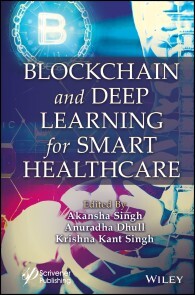
Blockchain and Deep Learning for Smart Healthcare
BLOCKCHAIN AND DEEP LEARNING FOR SMART HEALTHCARETHE BOOK DISCUSSES THE POPULAR USE CASES AND APPLICATIONS OF BLOCKCHAIN TECHNOLOGY AND DEEP LEARNING IN BUILDING SMART HEALTHCARE.The book covers the integration of blockchain technology and deep learning for making smart healthcare systems. Blockchain is used for health record-keeping, clinical trials, patient monitoring, improving safety, displaying information, and transparency. Deep learning is also showing vast potential in the healthcare domain. With the collection of large quantities of patient records and data, and a trend toward personalized treatments. there is a great need for automated and reliable processing and analysis of health information. This book covers the popular use cases and applications of both the above-mentioned technologies in making smart healthcare. AUDIENCEComprises professionals and researchers working in the fields of deep learning, blockchain technology, healthcare & medical informatics. In addition, as the book provides insights into the convergence of deep learning and blockchain technology in healthcare systems and services, medical practitioners as well as healthcare professionals will find this essential reading. AKANSHA SINGH, PHD, is an associate professor in the School of Computer Science Engineering and Technology, Bennett University, Greater Noida, India. Dr. Singh has acquired a BTech, MTech, and PhD (IIT Roorkee) in the area of neural networks and remote sensing. She has to her credit more than 70 research papers, 20 books, and numerous conference papers. She has also national and international patents in the field of machine learning. Her area of interest includes mobile computing, artificial intelligence, machine learning, and digital image processing.ANURADHA DHULL, PHD, is an assistant professor in the Department of Computer Science Engineering, The NorthCap University, Gurugram, India. She has published more than 30 research papers in the area of data mining and machine learning. Dr. Anuradha has acquired a BTech, MTech, and PhD in the area of medical diagnosis and machine learning. KRISHNA KANT SINGH, PHD, is a professor at the Delhi Technical Campus, Greater Noida, India. Dr. Singh has acquired a BTech, MTech, and PhD (IIT Roorkee) in the area of deep learning and remote sensing. He has authored more than 80 technical books and research papers in international conferences and SCIE journals of repute. Preface xvPART 1: BLOCKCHAIN FUNDAMENTALS AND APPLICATIONS 11 BLOCKCHAIN TECHNOLOGY: CONCEPTS AND APPLICATIONS 3Hermehar Pal Singh Bedi, Valentina E. Balas, Sukhpreet Kaur and Rubal Jeet1.1 Introduction 31.2 Blockchain Types 41.3 Consensus 81.4 How Does Blockchain Work? 101.5 Need of Blockchain 121.6 Uses of Blockchain 121.7 Evolution of Blockchain 141.8 Blockchain in Ethereum 171.9 Advantages of Smart Contracts 211.10 Use Cases of Smart Contracts 211.11 Real-Life Example of Smart Contracts 221.12 Blockchain in Decentralized Applications 221.13 Decentraland 251.14 Challenges Faced by Blockchain 271.15 Weaknesses of Blockchain 291.16 Future of Blockchain 301.17 Conclusion 312 BLOCKCHAIN WITH FEDERATED LEARNING FOR SECURE HEALTHCARE APPLICATIONS 35Akansha Singh and Krishna Kant Singh2.1 Introduction 362.2 Federated Learning 362.3 Motivation 372.4 Federated Machine Learning 382.5 Federated Learning Frameworks 392.6 FL Perspective for Blockchain and IoT 392.7 Federated Learning Applications 412.8 Limitations 423 FUTURISTIC CHALLENGES IN BLOCKCHAIN TECHNOLOGIES 45Arun Kumar Singh, Sandeep Saxena, Ashish Tripathi, Arjun Singh and Shrikant Tiwari3.1 Introduction 463.2 Blockchain 473.3 Issues and Challenges with Blockchain 533.4 Internet of Things (IoT) 583.5 Background of IoT 593.6 Conclusion 674 AIML-BASED BLOCKCHAIN SOLUTIONS FOR IOMT 73Rishita Khurana, Manika Choudhary, Akansha Singh and Krishna Kant Singh4.1 Introduction 744.2 Objective and Contribution 754.3 Security Challenges in Different Domains 764.4 Healthcare 774.5 Agriculture 774.6 Transportation 784.7 Smart Grid 784.8 Smart City 784.9 Smart Home 794.10 Communication 794.11 Security Attacks in IoT 814.12 Solutions for Addressing Security Using Machine Learning 834.13 Solutions for Addressing Security Using Artificial Intelligence 834.14 Solutions for Addressing Security Using Blockchain 864.15 Summary 884.16 Critical Analysis 894.17 Conclusion 895 A BLOCKCHAIN-BASED SOLUTION FOR ENHANCING SECURITY AND PRIVACY IN THE INTERNET OF MEDICAL THINGS (IOMT) USED IN E-HEALTHCARE 95Meenakshi and Preeti Sharma5.1 Introduction: E-Health and Medical Services 965.2 Literature Review 985.3 Architecture of Blockchain-Enabled IoMT 1015.4 Proposed Methodology 1045.5 Conclusion and Future Work 1086 A REVIEW ON THE ROLE OF BLOCKCHAIN TECHNOLOGY IN THE HEALTHCARE DOMAIN 113Aryan Dahiya, Anuradha, Shilpa Mahajan and Swati Gupta6.1 Introduction 1136.2 Systematic Literature Methodology 1196.3 Applications of Blockchain in the Healthcare Domain 1226.4 Blockchain Challenges 1366.5 Future Research Directions and Perspectives 1396.6 Implications and Conclusion 1407 BLOCKCHAIN IN HEALTHCARE: USE CASES 147Utsav Sharma, Aditi Ganapathi, Akansha Singh and Krishna Kant Singh7.1 Introduction 1477.2 Challenges Faced in the Healthcare Sector 1497.3 Use Cases of Blockchains in the Healthcare Sector 1507.4 What is Medicalchain? 1597.5 Implementing Blockchain in SCM 1657.6 Why Use Blockchain in SCM 167PART 2: SMART HEALTHCARE 1718 POTENTIAL OF BLOCKCHAIN TECHNOLOGY IN HEALTHCARE, FINANCE, AND IOT: PAST, PRESENT, AND FUTURE 173Chetna Tiwari and Anuradha8.1 Introduction 1738.2 Types of Blockchain 1758.3 Literature Review 1778.4 Methodology and Data Sources 1888.5 The Application of Blockchain Technology Across Various Industries 1898.6 Conclusion 1999 AI-ENABLED TECHNIQUES FOR INTELLIGENT TRANSPORTATION SYSTEM FOR SMARTER USE OF THE TRANSPORT NETWORK FOR HEALTHCARE SERVICES 205Meenakshi and Preeti Sharma9.1 Introduction 2069.2 Artificial Intelligence 2089.3 Artificial Intelligence: Transport System and Healthcare 2099.4 Artificial Intelligence Algorithms 2119.5 AI Workflow 2159.6 AI for ITS and e-Healthcare Tasks 2169.7 Intelligent Transportation, Healthcare, and IoT 2189.8 AI Techniques Used in ITS and e-Healthcare 2219.9 Challenges of AI and ML in ITS and e-Healthcare 2239.10 Conclusions 22510 CLASSIFICATION OF DEMENTIA USING STATISTICAL FIRST-ORDER AND SECOND-ORDER FEATURES 235Deepika Bansal and Rita Chhikara10.1 Introduction 23610.2 Materials and Methods 23810.3 Proposed Framework 23910.4 Experimental Results and Discussion 24710.5 Conclusion 25111 PULMONARY EMBOLISM DETECTION USING MACHINE AND DEEP LEARNING TECHNIQUES 257Renu Vadhera, Meghna Sharma and Priyanka Vashisht11.1 Introduction 25711.2 The State-of-the-Art of PE Detection Models 26011.3 Literature Survey 26111.4 Publications Analysis 27011.5 Conclusion 27012 COMPUTER VISION TECHNIQUES FOR SMART HEALTHCARE INFRASTRUCTURE 277Reshu Agarwal12.1 Introduction 27812.2 Literature Survey 28012.3 Proposed Idea 30812.4 Results 31612.5 Conclusion 31713 ENERGY-EFFICIENT FOG-ASSISTED SYSTEM FOR MONITORING DIABETIC PATIENTS WITH CARDIOVASCULAR DISEASE 323Rishita Khurana, Manika Choudhary, Akansha Singh and Krishna Kant Singh13.1 Introduction 32413.2 Literature Review 32613.3 Architectural Design of the Proposed Framework 32813.4 Fog Services 33013.5 Smart Gateway and Fog Services Implementation 33713.6 Cloud Servers 33813.7 Experimental Results 33913.8 Future Directions 34513.9 Conclusion 35014 MEDICAL APPLIANCES ENERGY CONSUMPTION PREDICTION USING VARIOUS MACHINE LEARNING ALGORITHMS 353Kaustubh Pagar, Tarun Jain, Horesh Kumar, Aditya Bhardwaj and Rohit Handa14.1 Introduction 35414.2 Literature Review 35514.3 Methodology 35614.4 Machine Learning Algorithms Used 36414.5 Results and Analysis 36814.6 Model Analysis 36914.7 Conclusion and Future Work 374PART 3: FUTURE OF BLOCKCHAIN AND DEEP LEARNING 37915 DEEP LEARNING-BASED SMART E-HEALTHCARE FOR CRITICAL BABIES IN HOSPITALS 381Ritam Dutta15.1 Introduction 38215.2 Literature Survey 38315.3 Evaluation Criteria 39215.4 Results 39315.5 Conclusion and Future Scope 39416 AN IMPROVED RANDOM FOREST FEATURE SELECTION METHOD FOR PREDICTING THE PATIENT’S CHARACTERISTICS 399K. Indhumathi and K. Sathesh Kumar16.1 Introduction 40016.2 Literature Survey 40216.3 Dataset 40316.4 Data Analysis 40616.5 Data Pre-Processing 40716.6 Feature Selection Methods 40816.7 Variable Importance by Machine Learning Methods 41416.8 Random Forest Feature Selection 41516.9 Proposed Methodology 41816.10 Results and Discussion 42016.11 Conclusion 42117 BLOCKCHAIN AND DEEP LEARNING: RESEARCH CHALLENGES, OPEN PROBLEMS, AND FUTURE 425Akansha Singh and Krishna Kant Singh17.1 Introduction 42617.2 Research Challenges 42717.3 Open Problems 42817.4 Future Possibilities 42917.5 Conclusion 430References 431Index 433

The Composable Enterprise: Agile, Flexible, Innovative
The benefits of digitalisation do not lie in the use of new technologies for existing processes, but in organisational changes and new business models. The book highlights the composable enterprise as the guiding principle for successful digital transformation and associated cost reductions and revenue increases. What does it mean? A composable enterprise is organised in a decentralised process-oriented way. This allows the enterprise to react quickly to new situations, develop or change processes and business models. The information systems are based on platform architectures. A paradigm shift to monolithic applications.Sector concepts for industry, consulting and universities show how organisation and application architectures interlock in the composable enterprise.The reader receives inspiration, a foundation and a compass for the digital transformation of a company to the composable enterprise.PROF. DR. DR. H.C. MULT. AUGUST-WILHELM SCHEER is one of the most influential figures and entrepreneurs in German computing. The ARIS method he developed for enterprise architecture and process management is used internationally.His books on business informatics have been highly influential and have been translated into several languages. His research focuses on information, innovation and business process management. In addition, Scheer is the publisher of the trade journal IM+io.He has founded several successful IT companies. He has been the sole shareholder of IDS Scheer Holding GmbH since 2010. The company network with over 1,300 employees includes the larger companies Scheer GmbH, imc AG and Scheer PAS GmbH. The company network also has holdings in several start-up companies. In 2014, he founded the non-profit research institute August-Wilhelm Scheer Institute for digital products and processes gGmbH (AWSi).He was a member of the SAP AG supervisory board for 20 years. From 2007 to 2011, he was President of Bitkom e. V. As an IT innovator and entrepreneur, he also works as an independent political consultant.Scheer is also an experienced and respected jazz baritone saxophonist and promotes culture and science with the help of the August-Wilhelm Scheer Foundation for Science and Art, which he founded in 2001. He is the holder of numerous national and international accolades. In 2017, he was inducted into the Hall of Fame of German Research.His interpretation of the composable enterprise is his vision for designing future-oriented digitised companies, one which he also implements in his own companies.

AI Applications to Communications and Information Technologies
AI APPLICATIONS TO COMMUNICATIONS AND INFORMATION TECHNOLOGIESAPPLY THE TECHNOLOGY OF THE FUTURE TO NETWORKING AND COMMUNICATIONS.Artificial intelligence, which enables computers or computer-controlled systems to perform tasks which ordinarily require human-like intelligence and decision-making, has revolutionized computing and digital industries like few other developments in recent history. Tools like artificial neural networks, large language models, and deep learning have quickly become integral aspects of modern life. With research and development into AI technologies proceeding at lightning speeds, the potential applications of these new technologies are all but limitless. AI Applications to Communications and Information Technologies offers a cutting-edge introduction to AI applications in one particular set of disciplines. Beginning with an overview of foundational concepts in AI, it then moves through numerous possible extensions of this technology into networking and telecommunications. The result is an essential introduction for researchers and for technology undergrad/grad student alike. AI Applications to Communications and Information Technologies readers will also find:* In-depth analysis of both current and evolving applications* Detailed discussion of topics including generative AI, chatbots, automatic speech recognition, image classification and recognition, IoT, smart buildings, network management, network security, and more* An authorial team with immense experience in both research and industryAI Applications to Communications and Information Technologies is ideal for researchers, industry observers, investors, and advanced students of network communications and related fields. DANIEL MINOLI is Principal Consultant for DVI Communications, New York, USA, and a longtime Expert Witness and Testifying Expert in networking, wireless, video, IoT, and VoIP. In addition to working as Director of Engineering for gamut of premiere high-tech firms, he has acted as Adjunct Instructor at New York University and Stevens Institute of Technology, USA for twenty years. He has published extensively on networks, IP/IPv6, video, wireless communications, and related subjects. BENEDICT OCCHIOGROSSO is Co-Founder of DVI Communications, New York, USA, with extensive experience as a technology engineer, manager and executive. He is a subject matter expert in several disciplines now enhanced by artificial intelligence including telecommunications networking, speech recognition, image processing and building management systems. He has also served as a testifying expert witness and advisor on patent portfolios. Ch 1: Overview1.1 Introduction and Basic Concepts1.1.1 Machine Learning1.1.2 Deep Learning1.1.3 Activation Functions1.1.4 MLPs1.1.5 RNNs1.1.6 CNNs1.1.7 Comparison1.2 Learning Methods1.3 Areas of applicability1.4 Scope of this textReferencesGlossaryCh 2: Current and evolving applications to Natural Language Processing2.1 Scope2.2 Introduction2.3 Overview of Natural Language Processing and Speech Processing2.3.1 Feed-forward NN2.3.2 RNNs2.3.3 LSTM2.3.4 Attention2.3.5 Transformer2.4 NLP/NLU Basics2.4.1 Pre-training2.4.2 NLP/NLG Architectures2.4.3 Encoder-Decoder Methods2.4.4 Application of Transformer2.4.5 Other Approaches2.5 NLG Basics2.6 ChatbotsReferencesGlossaryChapter 3: Current and evolving applications to Speech Processing3.1 Scope3.2 Overview3.2.1 Traditional Approaches3.2.2 DNN-based feature extraction3.3 Noise Cancellation3.3.1 Approaches3.3.2 Example of a system supporting noise cancellation3.4 Training3.5 Applications to voice interfaces used to control home devices & Digital Assistant Applications3.6 Attention-based models3.7 Sentiment Extraction3.8 End-to-end learning3.9 Speech Synthesis3.10 Zero-shot TTS3.11 VALL-E: Unseen speaker as an acoustic promptReferencesGlossaryCh 4: Current and evolving applications to Video and Imaging4.1 Overview4.2 Convolution process4.3 CNNs4.3.1 Nomenclature4.3.2 Basic Formulation of the CNN layers4.3.3 Fully convolutional networks (FCN)4.3.4 Convolutional Autoencoders4.3.5 R-CNNs, Fast R-CNN, Faster R-CNN4.4 Imaging Applications4.4.1 Basic Image Management4.4.2 Image segmentation and classification4.4.3 Illustrative examples of a DNN/CNN4.4.4 Well-known Image classification networks4.5 Specific application Examples4.5.1 Semantic segmentation and semantic edge detection4.5.2 CNN Filtering Process For Video Coding4.5.3 Virtual clothing4.5.5 Object Detection Applications4.5.6 Classifying video data4.5.7 Example of Training4.5.8 Example: Image reconstruction is used to remove artifacts4.5.9 Example: Video Transcoding/Resolution-enhancement4.5.10 Facial expression recognition4.5.11 Transformer Architecture for image processing4.5.12 Example: A GAN Approach/Synthetic Photo4.5.13 Situational Awareness4.6 Other models: Diffusion and Consistency ModelsReferencesGlossaryCh 5: Current and evolving applications to IoT and applications to Smart buildings and energy management5.1 Introduction5.1.1 IoT Applications5.1.2 Smart Cities5.2 Smart Building ML Applications5.2.1 Basic Building Elements5.2.2 Particle Swarm Optimization5.2.3 Specific ML Example – Qin Model5.2.3.1 EnergyPlus™5.3.3.2 Modeling and Simulation5.2.3.3 Energy Audit Stage5.2.3.4 Optimization Stage5.2.3.5 Model Construction5.2.3.6 EnergyPlus Models5.2.3.7 Real-Time Control Parameters5.2.3.8 Neural Networks in the Qin Model (DNN, RNN, CNN)5.2.3.9 Finding Inefficiency Measures5.2.3.10 Particle Swarm Optimizer5.2.3.11 Integration of Particle Swarm Optimization with Neural Networks5.2.3.12 Deep Reinforcement Learning5.2.3.13 Deployments5.3 Example of a Commercial Product – BrainBox5.3.1 Overview5.3.2 LSTM Application - technical background5.3.3 BrainBox Energy Optimization systemReferencesGlossaryCh 6: Current and evolving applications to Network Cybersecurity6.1 Overview6.2 General Security Requirements6.3 Corporate resources/intranet Security Requirements6.3.1 Network And Endsystem Security Testing6.3.2 Application Security Testing6.3.3 Compliance Testing6.4 IoT Security (IoTSec)6.5 Blockchains6.6 Zero Trust Environments6.7 Areas of ML applicability6.7.1 Example of cyberintrusion detector6.7.2 Example of Hidden Markov Model (HMM) for intrusion detection6.7.3 Anomaly Detection Example6.7.4 Phishing Detection Emails Using Feature Extraction6.7.5 Example of classifier engine to identify phishing websites6.7.6 Example of system for data protection6.7.7 Example of an integrated cybersecurity threat management6.7.8 Example of a Vulnerability Lifecycle Management SystemReferencesGlossaryCh 7: Current and evolving applications to Network Management7.1 Overview7.2 Examples of Neural Network-Assisted Network Management7.2.1 Example of NN-based Network Management system (FM)7.2.2 Example of a model for predictions related to the operation of a telecommunication network (FM)7.2.3 Prioritizing Network Monitoring Alerts (FM, PM)7.2.4 System for Recognizing And Addressing Network Alarms (FM)7.2.5 Load Control Of An Enterprise Network (PM)7.2.6 Data Reduction To Accelerate Machine Learning For Networking (FM, PM)7.2.7 Compressing Network Data (PM)7.2.8 ML Predictor For A Remote Network Management Platform (FM, PM, CM, AM)7.2.9 Cable Television (CATV) Performance Management system (PM)ReferencesGlossary

AI Applications to Communications and Information Technologies
AI APPLICATIONS TO COMMUNICATIONS AND INFORMATION TECHNOLOGIESAPPLY THE TECHNOLOGY OF THE FUTURE TO NETWORKING AND COMMUNICATIONS.Artificial intelligence, which enables computers or computer-controlled systems to perform tasks which ordinarily require human-like intelligence and decision-making, has revolutionized computing and digital industries like few other developments in recent history. Tools like artificial neural networks, large language models, and deep learning have quickly become integral aspects of modern life. With research and development into AI technologies proceeding at lightning speeds, the potential applications of these new technologies are all but limitless. AI Applications to Communications and Information Technologies offers a cutting-edge introduction to AI applications in one particular set of disciplines. Beginning with an overview of foundational concepts in AI, it then moves through numerous possible extensions of this technology into networking and telecommunications. The result is an essential introduction for researchers and for technology undergrad/grad student alike. AI Applications to Communications and Information Technologies readers will also find:* In-depth analysis of both current and evolving applications* Detailed discussion of topics including generative AI, chatbots, automatic speech recognition, image classification and recognition, IoT, smart buildings, network management, network security, and more* An authorial team with immense experience in both research and industryAI Applications to Communications and Information Technologies is ideal for researchers, industry observers, investors, and advanced students of network communications and related fields. DANIEL MINOLI is Principal Consultant for DVI Communications, New York, USA, and a longtime Expert Witness and Testifying Expert in networking, wireless, video, IoT, and VoIP. In addition to working as Director of Engineering for gamut of premiere high-tech firms, he has acted as Adjunct Instructor at New York University and Stevens Institute of Technology, USA for twenty years. He has published extensively on networks, IP/IPv6, video, wireless communications, and related subjects. BENEDICT OCCHIOGROSSO is Co-Founder of DVI Communications, New York, USA, with extensive experience as a technology engineer, manager and executive. He is a subject matter expert in several disciplines now enhanced by artificial intelligence including telecommunications networking, speech recognition, image processing and building management systems. He has also served as a testifying expert witness and advisor on patent portfolios. About the Authors xiPreface xiii1 OVERVIEW 11.1 Introduction and Basic Concepts 11.1.1 Machine Learning 51.1.2 Deep Learning 61.1.3 Activation Functions 131.1.4 Multi-layer Perceptrons 171.1.5 Recurrent Neural Networks 211.1.6 Convolutional Neural Networks 211.1.7 Comparison 261.2 Learning Methods 261.3 Areas of Applicability 391.4 Scope of this Text 41A. Basic Glossary of Key AI Terms and Concepts 44References 572 CURRENT AND EVOLVING APPLICATIONS TO NATURAL LANGUAGE PROCESSING 652.1 Scope 652.2 Introduction 662.3 Overview of Natural Language Processing and Speech Processing 722.3.1 Feed-forward NNs 742.3.2 Recurrent Neural Networks 742.3.3 Long Short-Term Memory 752.3.4 Attention 772.3.5 Transformer 782.4 Natural Language Processing/Natural Language Understanding Basics 812.4.1 Pre-training 822.4.2 Natural Language Processing/Natural Language Generation Architectures 852.4.3 Encoder-Decoder Methods 882.4.4 Application of Transformer 892.4.5 Other Approaches 902.5 Natural Language Generation Basics 912.6 Chatbots 952.7 Generative AI 101A. Basic Glossary of Key AI Terms and Concepts Related to Natural Language Processing 103References 1093 CURRENT AND EVOLVING APPLICATIONS TO SPEECH PROCESSING 1173.1 Scope 1173.2 Overview 1193.2.1 Traditional Approaches 1193.2.2 DNN-based Feature Extraction 1233.3 Noise Cancellation 1263.3.1 Approaches 1283.3.1.1 Delay-and-Sum Beamforming (DSB) 1293.3.1.2 Minimum Variance Distortionless Response (MVDR) Beamformer 1303.3.1.3 Non- adaptive Beamformer 1313.3.1.4 Multichannel Linear Prediction (MCLP) 1323.3.1.5 ML-based Approaches 1323.3.1.6 Neural Network Beamforming 1353.3.2 Specific Example of a System Supporting Noise Cancellation 1383.4 Training 1413.5 Applications to Voice Interfaces Used to Control Home Devices and Digital Assistant Applications 1423.6 Attention-based Models 1463.7 Sentiment Extraction 1483.8 End-to-End Learning 1483.9 Speech Synthesis 1503.10 Zero-shot TTS 1523.11 VALL- E: Unseen Speaker as an Acoustic Prompt 152A. Basic Glossary of Key AI Terms and Concepts 156References 1664 CURRENT AND EVOLVING APPLICATIONS TO VIDEO AND IMAGING 1734.1 Overview and Background 1734.2 Convolution Process 1764.3 CNNs 1814.3.1 Nomenclature 1814.3.2 Basic Formulation of the CNN Layers and Operation 1814.3.2.1 Layers 1814.3.2.2 Operations 1884.3.3 Fully Convolutional Networks (FCN) 1904.3.4 Convolutional Autoencoders 1904.3.5 R-CNNs, Fast R-CNN, Faster R-CNN 1934.4 Imaging Applications 1954.4.1 Basic Image Management 1954.4.2 Image Segmentation and Image Classification 1994.4.3 Illustrative Examples of a Classification DNN/CNN 2024.4.4 Well-Known Image Classification Networks 2044.5 Specific Application Examples 2134.5.1 Semantic Segmentation and Semantic Edge Detection 2134.5.2 CNN Filtering Process for Video Coding 2154.5.3 Virtual Clothing 2164.5.4 Example of Unmanned Underwater Vehicles/Unmanned Aerial Vehicles 2184.5.5 Object Detection Applications 2184.5.6 Classifying Video Data 2224.5.7 Example of Training 2244.5.8 Example: Image Reconstruction is Used to Remove Artifacts 2254.5.9 Example: Video Transcoding/Resolution-enhancement 2284.5.10 Facial Expression Recognition 2284.5.11 Transformer Architecture for Image Processing 2304.5.12 Example: A GAN Approach/Synthetic Photo 2304.5.13 Situational Awareness 2314.6 Other Models: Diffusion and Consistency Models 236A. Basic Glossary of Key AI Terms and Concepts 238B. Examples of Convolutions 246References 2505 CURRENT AND EVOLVING APPLICATIONS TO IOT AND APPLICATIONS TO SMART BUILDINGS AND ENERGY MANAGEMENT 2575.1 Introduction 2575.1.1 IoT Applications 2575.1.2 Smart Cities 2585.2 Smart Building ML Applications 2755.2.1 Basic Building Elements 2755.2.2 Particle Swarm Optimization 2765.2.3 Specific ML Example – Qin Model 2795.2.3.1 EnergyPlus™ 2815.2.3.2 Modeling and Simulation 2825.2.3.3 Energy Audit Stage 2865.2.3.4 Optimization Stage 2875.2.3.5 Model Construction 2895.2.3.6 EnergyPlus Models 2895.2.3.7 Real- Time Control Parameters 2905.2.3.8 Neural Networks in the Qin Model (DNN, RNN, CNN) 2905.2.3.9 Finding Inefficiency Measures 2945.2.3.10 Particle Swarm Optimizer 2945.2.3.11 Integration of Particle Swarm Optimization with Neural Networks 2965.2.3.12 Deep Reinforcement Learning 2985.2.3.13 Deployments 2985.3 Example of a Commercial Product – BrainBox AI 3015.3.1 Overview 3015.3.2 LSTM Application – Technical Background 3025.3.3 BrainBox AI Commercial Energy Optimization System 305A. Basic Glossary of Key IoT (Smart Building) Terms and Concepts 314References 3396 CURRENT AND EVOLVING APPLICATIONS TO NETWORK CYBERSECURITY 3476.1 Overview 3476.2 General Security Requirements 3496.3 Corporate Resources/Intranet Security Requirements 3536.3.1 Network and End System Security Testing 3586.3.2 Application Security Testing 3606.3.3 Compliance Testing 3626.4 IoT Security (IoTSec) 3636.5 Blockchains 3656.6 Zero Trust Environments 3696.7 Areas of ML Applicability 3706.7.1 Example of Cyberintrusion Detector 3736.7.2 Example of Hidden Markov Model (HMM) for Intrusion Detection 3746.7.3 Anomaly Detection Example 3786.7.4 Phishing Detection Emails Using Feature Extraction 3836.7.5 Example of Classifier Engine to Identify Phishing Websites 3866.7.6 Example of System for Data Protection 3886.7.7 Example of an Integrated Cybersecurity Threat Management 3906.7.8 Example of a Vulnerability Lifecycle Management System 392A. Basic Glossary of Key Security Terms and Concepts 396References 4007 CURRENT AND EVOLVING APPLICATIONS TO NETWORK MANAGEMENT 4077.1 Overview 4077.2 Examples of Neural Network- Assisted Network Management 4087.2.1 Example of NN-Based Network Management System (Case of FM) 4137.2.2 Example of a Model for Predictions Related to the Operation of a Telecommunication Network (Case of FM) 4167.2.3 Prioritizing Network Monitoring Alerts (Case of FM and PM) 4197.2.4 System for Recognizing and Addressing Network Alarms (Case of FM) 4247.2.5 Load Control of an Enterprise Network (Case of PM) 4287.2.6 Data Reduction to Accelerate Machine Learning for Networking (Case of FM and PM) 4317.2.7 Compressing Network Data (Case of PM) 4357.2.8 ML Predictor for a Remote Network Management Platform (Case of FM, PM, CM, AM) 4377.2.9 Cable Television (CATV) Performance Management System (Case of PM) 441A. Short Glossary of Network Management Concepts 446References 447Super Glossary 449Index 467
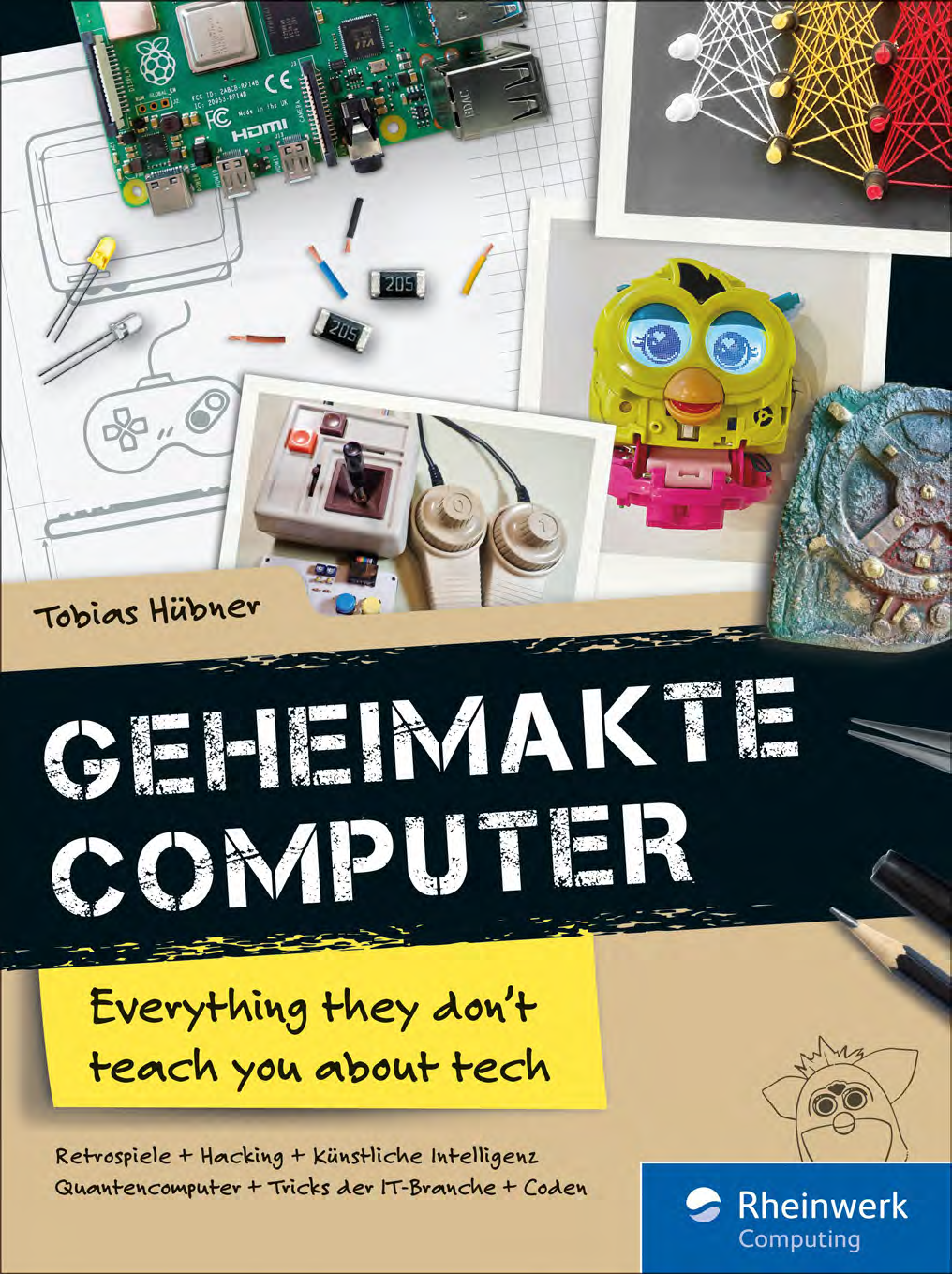
Geheimakte Computer
Spiel, Spaß und ... IT-Wissen?! Ein Computerbuch zum Schmökern.Der Informatikunterricht ist dir zu trocken? Du bist auf der Suche nach den wirklich spannenden Themen? Halt! Psssst! Dann wirf doch einen Blick in die »Geheimakte Computer«. Sie ist dein Einstieg in die große weite IT-Welt. Hier erfährst du alles, was dich rund um den Computer wirklich interessiert: Bastelprojekte, Computerspiele, Programmierung und nützliches Wissen zu spannenden Themen wie Hacking, Digitalisierung und Sicherheit, künstliche Intelligenz und interessante Persönlichkeiten der Branche.Genau nach deinem GeschmackDu magst Computer und Spielekonsolen? Aber zocken allein reicht dir nicht aus? Dann wage einen Blick in die »Geheimakte Computer« und erfahre mehr über die faszinierende IT-Welt. Durch spannende Projekte, Geschichten und Aufgaben lernst du Dinge, die dich wirklich interessieren.IT-Themen – unterhaltsam erklärtHacking, künstliche Intelligenz, Computerspiele, Digitalisierung oder die miesen Tricks der Tech-Industrie: hier erfährst du über alle Themen, was dir die Schule nicht vermitteln kann. Das Buch weckt deine Neugier und ermöglicht eine intensive Beschäftigung mit der digitalen Welt.Mehr als ein LesebuchHier wird dir nicht nur wichtiges Wissen rund um den Computer vermittelt. Tobias Hübner gibt dir mit kreativen Maker-Projekten, Programmier-Challenges und unterhaltsamen Hintergrundgeschichten Einblicke in die Welt der Informatik, die dir Programmiereinführungen und der Informatikunterricht nicht bieten können.Aus dem Inhalt:Das kreativste Werkzeug der WeltSo funktioniert ein ComputerAlte Technik neu entdeckenGames – besser als ihr RufEine Spielkonsole mit dem Raspberry PiWie schützt du dich vor Hackertricks?Ist künstliche Intelligenz gefährlich?Digitalisierung – Pro und ContraDie fiesen Tricks der Tech-IndustrieVision: Die Zukunft des ComputersLeseprobe (PDF-Link)Über den Autor:Tobias Hübner setzt sich seit über 15 Jahren als Lehrer, Autor, Dozent und IT-Trainer für digitale Bildung ein und wurde für seine kreativen Ideen mehrfach ausgezeichnet, u. a. vom Bundesfamilienministerium und auf der Frankfurter Buchmesse.

Pro Bash
Learn how to effectively utilize the Bash shell in your programming. This refreshed and expanded third edition has been updated to Bash 5.2, and many scripts have been rewritten to make them more idiomatically Bash, taking better advantage of features specific to Bash. It is easy to read, understand, and will teach you how to get to grips with Bash programming without drowning you in pages and pages of syntax.Using this book you will be able to use the shell efficiently, make scripts run faster using expansion and external commands, and understand how to overcome many common mistakes that cause scripts to fail. This book is perfect for all beginning Linux and Unix system administrators who want to be in full control of their systems, and really get to grips with Bash programming.The Bash shell is a complete programming language, not merely a glue to combine external Linux commands. By taking full advantage of Shell internals, Shell programs can perform as snappily as utilities written in C or other compiled languages. And you will see how, without assuming UNIX lore, you can write professional Bash programs through standard programming techniques.WHAT YOU'LL LEARN* Use the Bash shell to write utilities and accomplish most programming tasks* Replace many external commands with shell parameter expansion making scripts very fast* Avoid many common mistakes that cause scripts to fail* See how Bash’s read line and history libraries can save typing when getting user input* Build shell scripts that get information from the WebWHO THIS BOOK IS FORDevelopers, programmers, and open source enthusiasts who want to write scripts using Bash on multiple platformsJAYANT VARMA is the founder of OZ Apps (www.oz-apps.com), a consulting and development company providing IT solutions. He is an experienced developer with more than 30 years of industry experience spread across several countries. As well as being a university lecturer in Australia where he currently resides, he is the author of a number of books topics like SwiftUI Lua and Xcode as well as Open Source topics like Linux, Bash and Shell Scripting . He loves to travel and finds Europe to be his favorite destination.Chris F.A. Johnson was introduced to Unix in 1990 and learned shell scripting because there was no C compiler on the system. His first major project was a menu-driven, user-extensible database system with report generator. Chris is now retired and currently resides in Toronto, Canada. 1. Hello, World: Your First Shell Program.- 2. Input, Output and Throughput.- 3. Looping and Branching.- 4. Command-Line parsing and Expansion.- 5. Parameters and Variables.- 6. Shell Functions.- 7. String Manipulation.- 8. File Operations and Commands.- 9. Reserved Words and Built-in Commands.- 10. Writing Bug-Free Scripts and Debugging the Rest.- 11. Programming for the Command Line.- 12. Runtime Configuration.- 13. Data Processing.-14. Scripting the Screen.- 15. Entry Level Programming.

Practical GraphQL
Master the query language that is revolutionizing how websites are developed and built. This book is a hands-on guide to GraphQL, and will teach you how to use this open source tool to develop and deploy applications quickly and with minimal fuss.Using a project-based approach, you'll learn how to use GraphQL from the ground up. You'll start with the basics, including set up and key details regarding queries and mutations, before moving on to more advanced topics and projects. Over the course of the book, you will gain a thorough understanding of the web development ecosystem from frontend to backend by building React applications using Prisma Apollo Client and MongoDB.After completing this book, you'll be equipped with the knowledge and skills needed to turbo charge your own enterprise projects.WHAT YOU'LL LEARN* Understand what GraphQL is and how to use it* Distinguish between queries and mutations, and how to leverage them* Gain a greater knowledge of full-stack applications with React, Apollo Server, and Apollo Client* Create a full stack application with React and PrismaWHO THIS BOOK IS FORDevelopers and engineers who want to learn about GraphQL so that they can implement in their enterprise React projects. This book is aimed at both backend developers and full stack developers who want to learn to create backend queries using GraphQL.NABENDU BISWAS is a Full Stack JavaScript developer, who has been working in the IT industry for the past 16 years for some of world's top development firms and investment banks. He is a passionate tech blogger, YouTuber, and currently runs an EdTech company, specializing in teaching students about web-app development and the JavaScript ecosystem. He is also the author of five Apress books focusing on topics such as Gatsby, MERN, and React Firebase, all of which can be found on Amazon.1.Getting Started. - 2. Queries.- 3. Mutations.- 4. Full Stack GraphQL.- 5 App with Prisma.- 6. Connecting with the Frontend.

Kubernetes Fundamentals
Explore the world of Kubernetes and learn the concepts needed to develop, deploy, and manage applications on this container orchestrator. This step-by-step development guide is designed for application developers and support members aiming to learn Kubernetes and/or prepare for interviews. All the concepts in the book are presented in Q&A format, with questions framed exactly the way they are asked in an interview, giving you a distinctive edge in interviews.You’ll start by understanding how application development and deployment have evolved over the decades leading up to containerization. You’ll then dive deep into core Kubernetes concepts, learning Kubernetes architecture, Kubernetes objects and workload resources, and how to exploit them to their full potential. You’ll also learn Kubernetes deployment strategies and concepts related to rollout and rollback.Moving on, you’ll look at two very important aspects of any computing ecosystem: networking and storage. You will gain an understanding of access control in Kubernetes and how to manage a Kubernetes cluster using probes, resource quotas, taints, and tolerations. You will also get an overview of Docker and review Docker and Kubernetes best practices. Finally, you will learn about the kubectl command line tool.WHAT YOU WILL LEARN* Learn about basic and advanced Kubernetes objects and workload resources* Master important concepts such as namespaces, selectors, annotations, and access control* Understand the Kubernetes networking and storage system* Manage a Kubernetes cluster with the help of probes, resource quotas, limits, and taintsWHO THIS BOOK IS FORApplication developers and technical managers—both on the development and support sides, beginner and intermediate Kubernetes practitioners and aspirants, and those preparing for Kubernetes interviews.HIMANSHU AGRAWAL is a distinguished IT professional with 13+ years of experience in designing and implementing solutions in JEE technologies. He is currently working as Associate Consultant with CGI, for 13+ years. Himanshu specializes in some niche technical areas like JVM, Multithreading, TLS, Apache, and Kubernetes to name a few, and is a Technical Reviewer of published books. Himanshu has earned certifications from some of the top universities like Harvard and MIT. He is an Oracle Certified Java Dev, Oracle Certified Web Component Dev, and certified by Google Cloud in Architecting with Google Kubernetes Engine. Apart from technical areas, he is a Certified SAFe 5 Practitioner. Himanshu extends his technical expertise to teams primarily in BFSI and Telecom sectors.Chapter 1: Welcome to the World of Containers.- Chapter 2: Kubernetes- Deep Dive Begins.- Chapter 3: Essential Objects in Kubernetes Cluster.- CHAPTER 4: Objects Important for Secure Kubernetes Cluster.- CHAPTER 5: Networking in Kubernetes.- CHAPTER 6: Kubernetes Storage System.- CHAPTER 7: Manage Your Kubernetes Cluster Efficiently.- CHAPTER 8: Best Practices – Kubernetes and Docker.- CHAPTER 9: kubectl – The Command Line Tool

Modern Data Architecture on Azure
This book is an exhaustive guide to designing and implementing data solutions on Azure. It covers the process of managing data from end to end, starting from data collection all the way through transformation, distribution, and consumption.Modern Data Architecture on Azure begins with an introduction to the fundaments of data management, followed by a demonstration of how to build relational and non-relational data solutions on Azure. Here, you will learn data processing for complex analysis and how to work with CSV and JSON files. Moving forward, you will learn the foundational concepts of big data architecture, along with data management patterns and technology options offered by Azure. From there, you’ll be walked through the data architecture process, including data consortium on Azure, enterprise data governance, and much more. The book culminates with a deep dive into data architecture frameworks with data modeling.After reading this book, you will have a thorough understanding of data design and analytics using Azure, allowing you to collect and analyze massive amounts of data to optimize business performance, forecast future results, and more.WHAT WILL YOU LEARN* Understand the fundamentals of data architecture including data management, data handling ethics, data governance, and metadata management* Analyze and understand business needs to choose the right Azure services and make informed business decisions* Understand Azure Cloud Data design patterns for relational and non-relational data, batch real-time processing, and ETL/ELT pipelines* Modernize data architecture using Azure to leverage data and AI to enable digital transformation by securing and optimizing overall data lifecycle managementWHO IS THIS BOOK FOR:Data solution architects, data engineers, and IT consultants who want to gain a better understanding of modern data architecture design and implementation on Azure.SAGAR LAD is an Azure Data Solution Architect working with a leading multinational software company who has deep expertise in implementing data management and analytics solutions for large enterprises using cloud and artificial intelligence. He is an experienced Azure cloud evangelist with a strong focus on driving cloud adoption for enterprise organizations using Microsoft Cloud Solutions with more than ten years of IT experience. He loves blogging and is an active blogger on Medium, LinkedIn, and the C# Corner developer community. He was awarded the C# Corner MVP in September 2021 for his contributions to the developer community.Chapter 1: Introduction: Fundamentals of Data Management.- Chapter 2: Build Relational & Non-Relational Data Solutions on Azure.- Chapter 3: Building a Big Data Architecture.- Chapter 4: Data Management Patterns & Technology Choices with Azure.- Chapter 5: Data Architecture Process.- Chapter 6: Data Architecture Framework Explained.

Enterprise Social for the Java Platform
Learn everything you need to know about frameworks that help developers to integrate their solutions with social networks or APIs, from general purpose (Facebook, Twitter, Google, Mastodon) to specialized (LinkedIn, Xing, WhatsApp, YouTube, Instagram, Flickr, TikTok) to vertical (eToro, Fitbit, Strava). This book will teach you how to add social media features to web applications or services developed using Java, Jakarta EE, or generally running on a Java Virtual Machine (JVM).Jam-packed with practical examples of social integration into enterprise applications, you’ll learn how to address common requirements such as social login, identity federation, single sign-on via social accounts, OpenID Connect, and mashups. You’ll also see how to leverage Java social frameworks like Facebook Business SDK, Twitter4J, Agorava, Keycloak, and Spring Security.Enterprise Social for the Java Platform is an excellent companion to books covering Jakarta EE Security, Spring Security, portals, and related frameworks. Upon completing it, you’ll be armed with the expertise you need to integrate your own Java enterprise applications with social media networks.WHAT YOU WILL LEARN* Harness the reach and power of social media platforms by integrating your enterprise Java applications with them* Understand social media standards for different platforms* Address common security issuesWHO THIS BOOK IS FORDevelopers, architects, and managers of projects involving the use of APIs or Social Networks.WERNER KEIL is a cloud architect, Eclipse RCP, and a microservice expert for a large bank. He helps Global 500 Enterprises across industries and leading IT vendors. He worked for over 30 years as an IT manager, PM, coach, and SW architect and consultant for the finance, mobile, media, transport, and public sectors. Werner develops enterprise systems using Java, Java/Jakarta EE, Oracle, IBM, Spring or Microsoft technologies, JavaScript, Node, Angular, and dynamic or functional languages. He is a Committer at Apache Foundation, and Eclipse Foundation, a Babel Language Champion, UOMo Project Lead, and active member of the Java Community Process in JSRs such as 321 (Trusted Java), 344 (JSF 2.2), 354 (Money, also Maintenance Lead), 358/364 (JCP.next), 362 (Portlet 3), 363 (Unit-API 1), 365 (CDI 2), 366 (Java EE 8), 375 (Java EE Security), 380 (Bean Validation 2), and 385 (Unit-API 2, also Spec Lead), and was the longest serving Individual Member of the Executive Committee for nine years in a row until 2017. Werner is currently the Community representative in the Jakarta EE Specification Committee. He was among the first five Jakarta EE Ambassadors when it was founded as Java EE Guardians, and is a member of its Leadership Council.Chapter 1: Introduction.- Chapter 2: SocialUse Cases.- Chapter 3: Standardization.- Chapter 4: Social Security.- Chapter 5: Security Frameworks.- Chapter 6: Social Frameworks.- Chapter 7: Social Portals.- Appendix A: References.
Self-Service BI & Analytics
Self-Service BI & Analytics. Planung, Implementierung und Organisation. November 2023.Self-Service im BI- und Analytics-Kontext bedeutet, dass BI-Anwender selbst aktiv werden, um auf bestimmte Daten und Informationsprodukte zuzugreifen. Dabei hängt die Möglichkeit des Self-Service von Umgebungsfaktoren ab, nicht von einzelnen Werkzeugen. Um die Daten nutzen zu können, ist Datenkompetenz bei den Beteiligten erforderlich. Self-Service ist somit als strategischer Prozess zu verstehen, der als Teil der Datenstrategie immer der Unternehmensstrategie folgt und eine Kultur der Transparenz und offenen Kommunikation erfordert.Dieses Buch bietet eine umfassende Einführung in die grundlegenden Konzepte von Self-Service BI & Analytics. Es beschreibt die derzeit gängigen Ansätze mit Fokus auf die Konzeption und Governance von Self-Service. Darüber hinaus werden Lösungen für konkrete Anwendungsfälle vorgestellt. Im Einzelnen werden behandelt:Planung von Self-Service: Was ist vor der Einführung von Self-Service im Kontext einer gesamtheitlichen Datenstrategie, der Organisation und der Unternehmensarchitektur zu beachten? Welche Governance-Anforderungen müssen berücksichtigt werden?Implementierung von Self-Service: Die Entwicklung und der Betrieb von Self-Service-Lösungen werden ebenso aufgezeigt wie die Positionierung gegenüber einer Schatten-IT und die Vermeidung von technischen Schulden.Organisation von Self-Service: BI-Communitys, die Mitarbeiterausbildung und die Etablierung einer Self-Service-Kultur im Unternehmen spielen hier eine wichtige Rolle.Das Buch liefert wertvolle Einblicke und hilfreiche Anregungen für die erfolgreiche Einführung und Realisierung von Self-Service-Initiativen in der Unternehmenspraxis.Michael Kalke implementiert BI-Lösungen seit mehr als zehn Jahren. Zurzeit arbeitet er für die Vaillant Group und etabliert u.a. Self-Service BI.Artur König verantwortet bei der reportingimpulse GmbH die ganzheitliche Umsetzung von Datenprodukten von der Datenquelle bis zum fertigen Datenprodukt im Microsoft-Umfeld. Philipp Baron Freytag von Loringhoven ist ein versierter Marketingexperte und Datenanalyst, der sich seit mehr als 15 Jahren auf die Kombination von Daten, Marketing und Technologie spezialisiert hat.Lars Schreiber arbeitet als Abteilungsleiter für Business Intelligence Services in der Global IT der Pepperl + Fuchs SE. Dr. Thomas Zachrau ist seit über 30 Jahren leidenschaftlich im Bereich Analytics unterwegs. Die Analytik der kundenzentrierten Prozesse liegt ihm besonders am Herzen.Leseprobe (PDF-Link)