

Allgemein

Software Testing Foundations
FUNDAMENTAL KNOWLEDGE AND BASIC EXPERIENCE – BROUGHT THROUGH PRACTICAL EXAMPLES * Thoroughly revised and updated 5th edition, following upon the success of four previous editions * Updated according to the most recent ISTQB® Syllabus for the Certified Tester Foundations Level (2018) * Authors are among the founders of the Certified Tester Syllabus Professional testing of software is an essential task that requires a profound knowledge of testing techniques. The International Software Testing Qualifications Board (ISTQB®) has developed a universally accepted, international qualification scheme aimed at software and system testing professionals, and has created the Syllabi and Tests for the Certified Tester. Today about 673,000 people have taken the ISTQB® certification exams. The authors of Software Testing Foundations, 5th Edition, are among the creators of the Certified Tester Syllabus and are currently active in the ISTQB®. This thoroughly revised and updated fifth edition covers the Foundation Level (entry level) and teaches the most important methods of software testing. It is designed for self-study and provides the information necessary to pass the Certified Tester-Foundations Level exam, version 2018, as defined by the ISTQB®. Topics covered: - Fundamentals of Testing - Testing and the Software Lifecycle - Static and Dynamic Testing Techniques - Test Management - Test Tools
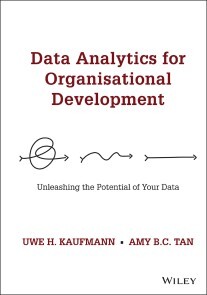
Data Analytics for Organisational Development
A PRACTICAL GUIDE FOR ANYONE WHO ASPIRES TO BECOME DATA ANALYTICS–SAVVYData analytics has become central to the operation of most businesses, making it an increasingly necessary skill for every manager and for all functions across an organisation. Data Analytics for Organisational Development: Unleashing the Potential of Your Data introduces a methodical process for gathering, screening, transforming, and analysing the correct datasets to ensure that they are reliable tools for business decision-making. Written by a Six Sigma Master Black Belt and a Lean Six Sigma Black Belt, this accessible guide explains and illustrates the application of data analytics for organizational development and design, with particular focus on Customer and Strategy Analytics, Operations Analytics and Workforce Analytics.Designed as both a handbook and workbook, Data Analytics for Organisational Development presents the application of data analytics for organizational design and development using case studies and practical examples. It aims to help build a bridge between data scientists, who have less exposure to actual business issues, and the "non-data scientists." With this guide, anyone can learn to perform data analytics tasks from translating a business question into a data science hypothesis to understanding the data science results and making the appropriate decisions. From data acquisition, cleaning, and transformation to analysis and decision making, this book covers it all. It also helps you avoid the pitfalls of unsound decision making, no matter where in the value chain you work.* Follow the “Five Steps of a Data Analytics Case” to arrive at the correct business decision based on sound data analysis* Become more proficient in effectively communicating and working with the data experts, even if you have no background in data science* Learn from cases and practical examples that demonstrate a systematic method for gathering and processing data accurately* Work through end-of-chapter exercises to review key concepts and apply methods using sample data setsData Analytics for Organisational Development includes downloadable tools for learning enrichment, including spreadsheets, Power BI slides, datasets, R analysis steps and more. Regardless of your level in your organisation, this book will help you become savvy with data analytics, one of today’s top business tools.UWE H. KAUFMANN, PHD, is the founder of the Centre for Organisational Effectiveness, a business advisory firm based in Singapore. He is Adjunct Senior Fellow at the Singapore University of Technology and Design and Affiliate Faculty at Singapore Management University Academy.AMY B.C. TAN is Director and Partner at the Centre for Organisational Effectiveness and Affiliate Faculty at Singapore Management University Academy. She has over 20 years of experience in strategic HR management, organisational development, succession planning, performance management, and leadership development.ForewordPrefaceIntroduction: Why Data Analytics is ImportantChapter 1: Introduction to Data Analytics and Data ScienceChapter 2: Customer Domain – Customer AnalyticsChapter 3: Process Domain – Operations AnalyticsChapter 4: Workforce Domain – Workforce AnalyticsChapter 5: Implementing Data Analytics for Organisational DevelopmentMaterials for DownloadIndex

External Labeling
THIS BOOK FOCUSES ON TECHNIQUES FOR AUTOMATING THE PROCEDURE OF CREATING EXTERNAL LABELINGS, ALSO KNOWN AS CALLOUT LABELINGS. In this labeling type, the features within an illustration are connected by thin leader lines (called leaders) with their labels, which are placed in the empty space surrounding the image.In general, textual labels describing graphical features in maps, technical illustrations (such as assembly instructions or cutaway illustrations), or anatomy drawings are an important aspect of visualization that convey information on the objects of the visualization and help the reader understand what is being displayed.Most labeling techniques can be classified into two main categories depending on the "distance" of the labels to their associated features. Internal labels are placed inside or in the direct neighborhood of features, while external labels, which form the topic of this book, are placed in the margins outside the illustration, where they do not occlude the illustration itself. Both approaches form well-studied topics in diverse areas of computer science with several important milestones.The goal of this book is twofold. The first is to serve as an entry point for the interested reader who wants to get familiar with the basic concepts of external labeling, as it introduces a unified and extensible taxonomy of labeling models suitable for a wide range of applications. The second is to serve as a point of reference for more experienced people in the field, as it brings forth a comprehensive overview of a wide range of approaches to produce external labelings that are efficient either in terms of different algorithmic optimization criteria or in terms of their usability in specific application domains. The book mostly concentrates on algorithmic aspects of external labeling, but it also presents various visual aspects that affect the aesthetic quality and usability of external labeling.* Bibliography* Preface* Acknowledgments* Figure Credits* Introduction* A Unified Taxonomy* Visual Aspects of External Labeling* Labeling Techniques* External Labelings with Straight-Line Leaders* External Labelings with Polyline Leaders* Conclusions and Outlook* Bibliography* Authors' Biographies* Index

Beginning Unity Editor Scripting
Learn about editor scripting in Unity, including different possible methods of editor customization to fit your custom game workflow or even to create assets that could be published on the Asset Store to earn a passive income. The knowledge of editor scripting, although rarely covered in books, gives a game developer insight into how things work in Unity under the hood, which you can leverage to create custom tools that empower your unique game idea.This book starts with the very basics of editor scripting in Unity, such as using built-in attributes to customize your component’s editor and creating custom editors and windows with IMGUI and UI Toolkit. Next, we move to a general use case example by creating an object spawner EditorTool for the scene view. Later, we dive straight to in-depth stats and detailed case studies of two Unity assets: ProArray and Rhythm Game Starter. Here you’ll get more context on how editor scripting is used in published assets.You will also learn how to set up a better workflow for editor scripting, asset publishing, maintenance, and iterative updates. You will leverage the power of modern web technology to build a documentation site with GitBook and DocFX. Finally, you will see some tips and tricks for automating asset versioning and changelogs.WHAT YOU WILL LEARN* Get started with Editor scripting in Unity * Work with advanced editor topics such as custom EditorWindows and EditorTool* Structure your C# code with namespaces and asmdef * Use IMGUI and UI Toolkit for creating editor GUIs* Master packaging and selling your own editor tools* Set up a better workflow for asset publishing, maintenance, and iterative updatesWHO THIS BOOK IS FORReaders who want to learn about editor scripting to improve their game-development process and create tools for themselves. Moderate experience with C# and a fundamental knowledge of Unity is expected.BennyKok is primarily a Unity asset publisher, indie game developer, and music producer. He is a creative individual who loves creating tools for Unity and published ProArray and Rhythm Game Starter on the Unity Asset Store. He also dedicates his time to sharing open-source Unity tools on GitHub for the community.Chapter 1: IntroductionChapter 2: Customize Editor with Attributes and CallbacksChapter 3: Custom Editor with IMGUIChapter 4: Custom Editor with UI ToolkitChapter 5: Object Spawner Tool Using EditorTool and ScriptableObject- Chapter 6: Case Study: ProArrayChapter 7: . Case Study: Rhythm Game StarterChapter 8: Asset Workflow for PublishingChapter 9: Package Distribution and PublishingChapter 10: Conclusion.
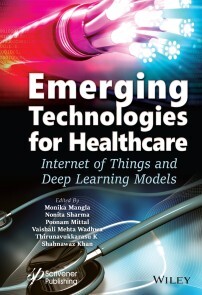
Emerging Technologies for Healthcare
“Emerging Technologies for Healthcare” begins with an IoT-based solution for the automated healthcare sector which is enhanced to provide solutions with advanced deep learning techniques.The book provides feasible solutions through various machine learning approaches and applies them to disease analysis and prediction. An example of this is employing a three-dimensional matrix approach for treating chronic kidney disease, the diagnosis and prognostication of acquired demyelinating syndrome (ADS) and autism spectrum disorder, and the detection of pneumonia. In addition, it provides healthcare solutions for post COVID-19 outbreaks through various suitable approaches, Moreover, a detailed detection mechanism is discussed which is used to devise solutions for predicting personality through handwriting recognition; and novel approaches for sentiment analysis are also discussed with sufficient data and its dimensions.This book not only covers theoretical approaches and algorithms, but also contains the sequence of steps used to analyze problems with data, processes, reports, and optimization techniques. It will serve as a single source for solving various problems via machine learning algorithms.MONIKA MANGLA, received her PhD from Thapar Institute of Engineering & Technology, Patiala, Punjab, in 2019. Currently, she is working as an assistant professor in the Department of Computer Engineering at Lokmanya Tilak College of Engineering (LTCoE), Navi Mumbai.NONITA SHARMA is working as assistant professor, National Institute of Technology, Jalandhar. She received the B. Tech degree in Computer Science Engineering in 2002, the M. Tech degree in Computer Science engineering in 2004, and her PhD degree in Wireless Sensor Network from the National Institute of Technology, Jalandhar, India in 2017. POONAM MITTAL received her PhD from J.C Bose University of Science and Technology YMCA, Faridabad, India, in 2019. Currently, she is working as an assistant professor in the Department of Computer Engineering at J.C Bose University of Science and Technology YMCA, Faridabad, India. VAISHALI MEHTA WADHWA obtained her PhD in Facility Location Problems from Thapar University. Her research interests include approximation algorithms, location modeling, IoT, cloud computing and machine learning. She has multiple articles and 2 patents to her name. THIRUNAVAKKARASU K. is a distinguished academician with over twenty-two years of experience in teaching and working in the software industry. Curently, he is heading the Department of BCA and Specialization at Galgotias University. He has done Bachelor in computer science from the University of Madras in 1994 and received 3 master’s degrees in computer science. SHAHNAWAZ KHAN is an assistant professor and serving as Secretary-General of Scientific Research Council at University College of Bahrain. He holds a PhD (Computer Science) from the Indian Institute of Technology (BHU), India. Preface xviiPART I: BASICS OF SMART HEALTHCARE 11 AN OVERVIEW OF IOT IN HEALTH SECTORS 3Sheeba P. S.1.1 Introduction 31.2 Influence of IoT in Healthcare Systems 61.2.1 Health Monitoring 61.2.2 Smart Hospitals 71.2.3 Tracking Patients 71.2.4 Transparent Insurance Claims 81.2.5 Healthier Cities 81.2.6 Research in Health Sector 81.3 Popular IoT Healthcare Devices 91.3.1 Hearables 91.3.2 Moodables 91.3.3 Ingestible Sensors 91.3.4 Computer Vision 101.3.5 Charting in Healthcare 101.4 Benefits of IoT 101.4.1 Reduction in Cost 101.4.2 Quick Diagnosis and Improved Treatment 101.4.3 Management of Equipment and Medicines 111.4.4 Error Reduction 111.4.5 Data Assortment and Analysis 111.4.6 Tracking and Alerts 111.4.7 Remote Medical Assistance 111.5 Challenges of IoT 121.5.1 Privacy and Data Security 121.5.2 Multiple Devices and Protocols Integration 121.5.3 Huge Data and Accuracy 121.5.4 Underdeveloped 121.5.5 Updating the Software Regularly 121.5.6 Global Healthcare Regulations 131.5.7 Cost 131.6 Disadvantages of IoT 131.6.1 Privacy 131.6.2 Access by Unauthorized Persons 131.7 Applications of IoT 131.7.1 Monitoring of Patients Remotely 131.7.2 Management of Hospital Operations 141.7.3 Monitoring of Glucose 141.7.4 Sensor Connected Inhaler 151.7.5 Interoperability 151.7.6 Connected Contact Lens 151.7.7 Hearing Aid 161.7.8 Coagulation of Blood 161.7.9 Depression Detection 161.7.10 Detection of Cancer 171.7.11 Monitoring Parkinson Patient 171.7.12 Ingestible Sensors 181.7.13 Surgery by Robotic Devices 181.7.14 Hand Sanitizing 181.7.15 Efficient Drug Management 191.7.16 Smart Sole 191.7.17 Body Scanning 191.7.18 Medical Waste Management 201.7.19 Monitoring the Heart Rate 201.7.20 Robot Nurse 201.8 Global Smart Healthcare Market 211.9 Recent Trends and Discussions 221.10 Conclusion 23References 232 IOT-BASED SOLUTIONS FOR SMART HEALTHCARE 25Pankaj Jain, Sonia F Panesar, Bableen Flora Talwar and Mahesh Kumar Sah2.1 Introduction 262.1.1 Process Flow of Smart Healthcare System 262.1.1.1 Data Source 262.1.1.2 Data Acquisition 272.1.1.3 Data Pre-Processing 272.1.1.4 Data Segmentation 282.1.1.5 Feature Extraction 282.1.1.6 Data Analytics 282.2 IoT Smart Healthcare System 292.2.1 System Architecture 302.2.1.1 Stage 1: Perception Layer 302.2.1.2 Stage 2: Network Layer 322.2.1.3 Stage 3: Data Processing Layer 322.2.1.4 Stage 4: Application Layer 332.3 Locally and Cloud-Based IoT Architecture 332.3.1 System Architecture 332.3.1.1 Body Area Network (BAN) 342.3.1.2 Smart Server 342.3.1.3 Care Unit 352.4 Cloud Computing 352.4.1 Infrastructure as a Service (IaaS) 372.4.2 Platform as a Service (PaaS) 372.4.3 Software as a Service (SaaS) 372.4.4 Types of Cloud Computing 372.4.4.1 Public Cloud 372.4.4.2 Private Cloud 382.4.4.3 Hybrid Cloud 382.4.4.4 Community Cloud 382.5 Outbreak of Arduino Board 382.6 Applications of Smart Healthcare System 392.6.1 Disease Diagnosis and Treatment 412.6.2 Health Risk Monitoring 422.6.3 Voice Assistants 422.6.4 Smart Hospital 422.6.5 Assist in Research and Development 432.7 Smart Wearables and Apps 432.8 Deep Learning in Biomedical 442.8.1 Deep Learning 462.8.2 Deep Neural Network Architecture 472.8.3 Deep Learning in Bioinformatic 492.8.4 Deep Learning in Bioimaging 492.8.5 Deep Learning in Medical Imaging 502.8.6 Deep Learning in Human-Machine Interface 532.8.7 Deep Learning in Health Service Management 532.9 Conclusion 55References 553 QLATTICE ENVIRONMENT AND FEYN QGRAPH MODELS—A NEW PERSPECTIVE TOWARD DEEP LEARNING 69Vinayak Bharadi3.1 Introduction 703.1.1 Machine Learning Models 703.2 Machine Learning Model Lifecycle 713.2.1 Steps in Machine Learning Lifecycle 713.2.1.1 Data Preparation 723.2.1.2 Building the Machine Learning Model 723.2.1.3 Model Training 723.2.1.4 Parameter Selection 723.2.1.5 Transfer Learning 733.2.1.6 Model Verification 733.2.1.7 Model Deployment 743.2.1.8 Monitoring 743.3 A Model Deployment in Keras 753.3.1 Pima Indian Diabetes Dataset 753.3.2 Multi-Layered Perceptron Implementation in Keras 763.3.3 Multi-Layered Perceptron Implementation With Dropout and Added Noise 773.4 QLattice Environment 803.4.1 Feyn Models 803.4.1.1 Semantic Types 823.4.1.2 Interactions 833.4.1.3 Generating QLattice 833.4.2 QLattice Workflow 833.4.2.1 Preparing the Data 843.4.2.2 Connecting to QLattice 843.4.2.3 Generating QGraphs 843.4.2.4 Fitting, Sorting, and Updating QGraphs 853.4.2.5 Model Evaluation 863.5 Using QLattice Environment and QGraph Models for COVID-19 Impact Prediction 87References 914 SENSITIVE HEALTHCARE DATA: PRIVACY AND SECURITY ISSUES AND PROPOSED SOLUTIONS 93Abhishek Vyas, Satheesh Abimannan and Ren-Hung Hwang4.1 Introduction 944.1.1 Types of Technologies Used in Healthcare Industry 944.1.2 Technical Differences Between Security and Privacy 954.1.3 HIPAA Compliance 954.2 Medical Sensor Networks/Medical Internet of Things/Body Area Networks/WBANs 974.2.1 Security and Privacy Issues in WBANs/WMSNs/WMIOTs 1014.3 Cloud Storage and Computing on Sensitive Healthcare Data 1124.3.1 Security and Privacy in Cloud Computing and Storage for Sensitive Healthcare Data 1144.4 Blockchain for Security and Privacy Enhancement in Sensitive Healthcare Data 1194.5 Artificial Intelligence, Machine Learning, and Big Data in Healthcare and Its Efficacy in Security and Privacy of Sensitive Healthcare Data 1224.5.1 Differential Privacy for Preserving Privacy of Big Medical Healthcare Data and for Its Analytics 1244.6 Conclusion 124References 125PART II: EMPLOYMENT OF MACHINE LEARNING IN DISEASE DETECTION 1295 DIABETES PREDICTION MODEL BASED ON MACHINE LEARNING 131Ayush Kumar Gupta, Sourabh Yadav, Priyanka Bhartiya and Divesh Gupta5.1 Introduction 1315.2 Literature Review 1335.3 Proposed Methodology 1355.3.1 Data Accommodation 1355.3.1.1 Data Collection 1355.3.1.2 Data Preparation 1365.3.2 Model Training 1385.3.2.1 K Nearest Neighbor Classification Technique 1395.3.2.2 Support Vector Machine 1405.3.2.3 Random Forest Algorithm 1425.3.2.4 Logistic Regression 1445.3.3 Model Evaluation 1455.3.4 User Interaction 1455.3.4.1 User Inputs 1465.3.4.2 Validation Using Classifier Model 1465.3.4.3 Truth Probability 1465.4 System Implementation 1475.5 Conclusion 153References 1536 LUNG CANCER DETECTION USING 3D CNN BASED ON DEEP LEARNING 157Siddhant Panda, Vasudha Chhetri, Vikas Kumar Jaiswal and Sourabh Yadav6.1 Introduction 1576.2 Literature Review 1596.3 Proposed Methodology 1616.3.1 Data Handling 1616.3.1.1 Data Gathering 1616.3.1.2 Data Pre-Processing 1626.3.2 Data Visualization and Data Split 1626.3.2.1 Data Visualization 1626.3.2.2 Data Split 1626.3.3 Model Training 1636.3.3.1 Training Neural Network 1636.3.3.2 Model Optimization 1666.4 Results and Discussion 1686.4.1 Gathering and Pre-Processing of Data 1696.4.1.1 Gathering and Handling Data 1696.4.1.2 Pre-Processing of Data 1706.4.2 Data Visualization 1716.4.2.1 Resampling 1736.4.2.2 3D Plotting Scan 1736.4.2.3 Lung Segmentation 1736.4.3 Training and Testing of Data in 3D Architecture 1756.5 Conclusion 178References 1787 PNEUMONIA DETECTION USING CNN AND ANN BASED ON DEEP LEARNING APPROACH 181Priyanka Bhartiya, Sourabh Yadav, Ayush Gupta and Divesh Gupta7.1 Introduction 1827.2 Literature Review 1837.3 Proposed Methodology 1857.3.1 Data Gathering 1857.3.1.1 Data Collection 1857.3.1.2 Data Pre-Processing 1867.3.1.3 Data Split 1867.3.2 Model Training 1877.3.2.1 Training of Convolutional Neural Network 1897.3.2.2 Training of Artificial Neural Network 1917.3.3 Model Fitting 1937.3.3.1 Fit Generator 1937.3.3.2 Validation of Accuracy and Loss Plot 1937.3.3.3 Testing and Prediction 1937.4 System Implementation 1947.4.1 Data Gathering, Pre-Processing, and Split 1947.4.1.1 Data Gathering 1947.4.1.2 Data Pre-Processing 1957.4.1.3 Data Split 1967.4.2 Model Building 1967.4.3 Model Fitting 1977.4.3.1 Fit Generator 1977.4.3.2 Validation of Accuracy and Loss Plot 1977.4.3.3 Testing and Prediction 1987.5 Conclusion 199References 1998 PERSONALITY PREDICTION AND HANDWRITING RECOGNITION USING MACHINE LEARNING 203Vishal Patil and Harsh Mathur8.1 Introduction to the System 2048.1.1 Assumptions and Limitations 2068.1.1.1 Assumptions 2068.1.1.2 Limitations 2068.1.2 Practical Needs 2068.1.3 Non-Functional Needs 2068.1.4 Specifications for Hardware 2078.1.5 Specifications for Applications 2078.1.6 Targets 2078.1.7 Outcomes 2078.2 Literature Survey 2088.2.1 Computerized Human Behavior Identification Through Handwriting Samples 2088.2.2 Behavior Prediction Through Handwriting Analysis 2098.2.3 Handwriting Sample Analysis for a Finding of Personality Using Machine Learning Algorithms 2098.2.4 Personality Detection Using Handwriting Analysis 2108.2.5 Automatic Predict Personality Based on Structure of Handwriting 2108.2.6 Personality Identification Through Handwriting Analysis: A Review 2108.2.7 Text Independent Writer Identification Using Convolutional Neural Network 2108.2.8 Writer Identification Using Machine Learning Approaches 2118.2.9 Writer Identification from HandwrittenText Lines 2118.3 Theory 2128.3.1 Pre-Processing 2128.3.2 Personality Analysis 2158.3.3 Personality Characteristics 2168.3.4 Writer Identification 2178.3.5 Features Used 2198.4 Algorithm To Be Used 2208.5 Proposed Methodology 2248.5.1 System Flow 2258.6 Algorithms vs. Accuracy 2268.6.1 Implementation 2288.7 Experimental Results 2318.8 Conclusion 2328.9 Conclusion and Future Scope 232Acknowledgment 232References 2339 RISK MITIGATION IN CHILDREN WITH AUTISM SPECTRUM DISORDER USING BRAIN SOURCE LOCALIZATION 237Joy Karan Singh, Deepti Kakkar and Tanu Wadhera9.1 Introduction 2389.2 Risk Factors Related to Autism 2399.2.1 Assistive Technologies for Autism 2409.2.2 Functional Connectivity as a Biomarker for Autism 2419.2.3 Early Intervention and Diagnosis 2429.3 Materials and Methodology 2439.3.1 Subjects 2439.3.2 Methods 2439.3.3 Data Acquisition and Processing 2439.3.4 sLORETA as a Diagnostic Tool 2449.4 Results and Discussion 2459.5 Conclusion and Future Scope 247References 24710 PREDICTING CHRONIC KIDNEY DISEASE USING MACHINE LEARNING 251Monika Gupta and Parul Gupta10.1 Introduction 25210.2 Machine Learning Techniques for Prediction of Kidney Failure 25310.2.1 Analysis and Empirical Learning 25410.2.2 Supervised Learning 25510.2.3 Unsupervised Learning 25610.2.3.1 Understanding and Visualization 25710.2.3.2 Odd Detection 25710.2.3.3 Object Completion 25810.2.3.4 Information Acquisition 25810.2.3.5 Data Compression 25810.2.3.6 Capital Market 25810.2.4 Classification 25910.2.4.1 Training Process 26010.2.4.2 Testing Process 26010.2.5 Decision Tree 26110.2.6 Regression Analysis 26310.2.6.1 Logistic Regression 26310.2.6.2 Ordinal Logistic Regression 26510.2.6.3 Estimating Parameters 26610.2.6.4 Multivariate Regression 26810.3 Data Sources 26910.4 Data Analysis 27210.5 Conclusion 27410.6 Future Scope 274References 274PART III: ADVANCED APPLICATIONS OF MACHINE LEARNING IN HEALTHCARE 27911 BEHAVIORAL MODELING USING DEEP NEURAL NETWORK FRAMEWORK FOR ASD DIAGNOSIS AND PROGNOSIS 281Tanu Wadhera, Deepti Kakkar and Rajneesh Rani11.1 Introduction 28211.2 Automated Diagnosis of ASD 28411.2.1 Deep Learning 28911.2.2 Deep Learning in ASD 29011.2.3 Transfer Learning Approach 29011.3 Purpose of the Chapter 29211.4 Proposed Diagnosis System 29311.5 Conclusion 294References 29512 RANDOM FOREST APPLICATION OF TWITTER DATA SENTIMENT ANALYSIS IN ONLINE SOCIAL NETWORK PREDICTION 299Arnav Munshi, M. Arvindhan and Thirunavukkarasu K.12.1 Introduction 30012.1.1 Motivation 30012.1.2 Domain Introduction 30012.2 Literature Survey 30212.3 Proposed Methodology 30412.4 Implementation 31112.5 Conclusion 311References 31113 REMEDY TO COVID-19: SOCIAL DISTANCING ANALYZER 315Sourabh Yadav13.1 Introduction 31513.2 Literature Review 31813.3 Proposed Methodology 32113.3.1 Person Detection 32113.3.1.1 Frame Creation 32413.3.1.2 Contour Detection 32513.3.1.3 Matching with COCO Model 32613.3.2 Distance Calculation 32613.3.2.1 Calculation of Centroid 32613.3.2.2 Distance Among Adjacent Centroids 32713.4 System Implementation 32813.5 Conclusion 333References 33414 IOT-ENABLED VEHICLE ASSISTANCE SYSTEM OF HIGHWAY RESOURCING FOR SMART HEALTHCARE AND SUSTAINABILITY 337Shubham Joshi and Radha Krishna Rambola14.1 Introduction 33814.2 Related Work 34014.2.1 Adoption of IoT in Vehicle to Ensure Driver Safety 34114.2.2 IoT in Healthcare System 34114.2.3 The Technology Used in Assistance Systems 34314.2.3.1 Adaptive Cruise Control (ACC) 34314.2.3.2 Lane Departure Warning 34314.2.3.3 Parking Assistance 34314.2.3.4 Collision Avoidance System 34314.2.3.5 Driver Drowsiness Detection 34414.2.3.6 Automotive Night Vision 34414.3 Objectives, Context, and Ethical Approval 34414.4 Technical Background 34514.4.1 IoT With Health 34514.4.2 Machine-to-Machine (M2M) Communication 34514.4.3 Device-to-Device (D2D) Communication 34514.4.4 Wireless Sensor Network 34614.4.5 Crowdsensing 34614.5 IoT Infrastructural Components for Vehicle Assistance System 34614.5.1 Communication Technology 34614.5.2 Sensor Network 34714.5.3 Infrastructural Component 34814.5.4 Human Health Detection by Sensors 34814.6 IoT-Enabled Vehicle Assistance System of Highway Resourcing for Smart Healthcare and Sustainability 34914.7 Challenges in Implementation 35314.8 Conclusion 353References 35415 AIDS OF MACHINE LEARNING FOR ADDITIVELY MANUFACTURED BONE SCAFFOLD 359Nimisha Rahul Shirbhate and Sanjay Bokade15.1 Introduction 36015.1.1 Bone Scaffold 36015.1.2 Bone Grafting 36215.1.3 Comparison Bone Grafting and Bone Scaffold 36315.2 Research Background 36415.3 Statement of Problem 36415.4 Research Gap 36515.5 Significance of Research 36615.6 Outline of Research Methodology 36615.6.1 Customized Design of Bone Scaffold 36615.6.2 Manufacturing Methods and Biocompatible Material 36715.6.2.1 Conventional Scaffold Fabrication 36815.6.2.2 Additive Manufacturing 36915.6.2.3 Application of Additive Manufacturing/3D Printing in Healthcare 37015.6.2.4 Automated Process Monitoring in 3D Printing Using Supervised Machine Learning 37615.7 Conclusion 377References 377Index 381

Introduction to Computational Thinking
Learn approaches of computational thinking and the art of designing algorithms. Most of the algorithms you will see in this book are used in almost all software that runs on your computer.Learning how to program can be very rewarding. It is a special feeling to seeing a computer translate your thoughts into actions and see it solve your problems for you. To get to that point, however, you must learn to think about computations in a new way—you must learn computational thinking.This book begins by discussing models of the world and how to formalize problems. This leads onto a definition of computational thinking and putting computational thinking in a broader context. The practical coding in the book is carried out in Python; you’ll get an introduction to Python programming, including how to set up your development environment.WHAT YOU WILL LEARN* Think in a computational way* Acquire general techniques for problem solving* See general and concrete algorithmic techniques* Program solutions that are both computationally efficient and maintainableWHO THIS BOOK IS FORThose new to programming and computer science who are interested in learning how to program algorithms and working with other computational aspects of programming.Thomas Mailund, PhD is an associate professor in bioinformatics at Aarhus University, Denmark. He has a background in math and computer science, including experience programming and teaching in the C, Python and R programming languages. For the last decade, his main focus has been on genetics and evolutionary studies, particularly comparative genomics, speciation, and gene flow between emerging species.1 Introduction 1Models of the world and formalising problems . . 4What is computational thinking? . . . . . . . . . 6Computational thinking in a broader context . . . 12What is to come . . . . . . . . . . . . . . . . . . 152 Introducing Python programming 19Obtaining Python . . . . . . . . . . . . . . . . . 20Running Python . . . . . . . . . . . . . . . . . . 22Expressions in Python . . . . . . . . . . . . . . . 22Logical (or boolean) expressions . . . . . . . . . . 26Variables . . . . . . . . . . . . . . . . . . . . . . 30Working with strings . . . . . . . . . . . . . . . . 32Lists . . . . . . . . . . . . . . . . . . . . . . . . 36Tuples . . . . . . . . . . . . . . . . . . . . . . . 41iiiSets and dictionaries . . . . . . . . . . . . . . . . 42Input and output . . . . . . . . . . . . . . . . . . 44Conditional statements (if statements) . . . . . . 47Loops (for and while) . . . . . . . . . . . . . . . 50Using modules . . . . . . . . . . . . . . . . . . . 543 Introduction to algorithms 57Designing algorithms . . . . . . . . . . . . . . . 62Exercises for sequential algorithms . . . . . . . . 81Exercises on lists . . . . . . . . . . . . . . . . . . 874 Algorithmic eciency 95The RAM model of a computer and its primitiveoperations . . . . . . . . . . . . . . . . . . 97Types of eciency . . . . . . . . . . . . . . . . . 107Asymptotic running time and big-Oh notation . . 116Empirically validating an algorithms running time 1355 Searching and sorting 141Searching . . . . . . . . . . . . . . . . . . . . . . 142Sorting . . . . . . . . . . . . . . . . . . . . . . . 147Generalising searching and sorting . . . . . . . . 182How computers represent numbers . . . . . . . . 1866 Functions 197Parameters and local and global variables . . . . . 203Side eects . . . . . . . . . . . . . . . . . . . . . 210Returning from a function . . . . . . . . . . . . . 215Higher order functions . . . . . . . . . . . . . . . 221Functions vs function instances . . . . . . . . . . 227Default parameters and keyword arguments . . . 230Generalising parameters . . . . . . . . . . . . . . 234Exceptions . . . . . . . . . . . . . . . . . . . . . 239Writing your own Python modules . . . . . . . . 2517 Inner functions 253A comparison function for a search algorithm . . 256Counter function . . . . . . . . . . . . . . . . . . 261Apply . . . . . . . . . . . . . . . . . . . . . . . . 265Currying functions . . . . . . . . . . . . . . . . . 269Function composition . . . . . . . . . . . . . . . 274Thunks and lazy evaluation . . . . . . . . . . . . 276Decorators . . . . . . . . . . . . . . . . . . . . . 281Eciency . . . . . . . . . . . . . . . . . . . . . . 2888 Recursion 291Denitions of recursion . . . . . . . . . . . . . . 291Recursive functions . . . . . . . . . . . . . . . . 293Recursion stacks . . . . . . . . . . . . . . . . . . 297Recursion and iteration . . . . . . . . . . . . . . 307Tail-calls . . . . . . . . . . . . . . . . . . . . . . 316Continuations . . . . . . . . . . . . . . . . . . . 324Continuations, thunks and trampolines . . . . . . 3359 Divide and conquer and dynamic programming 343Divide and conquer running times . . . . . . . . 355Dynamic programming . . . . . . . . . . . . . . 371Representing oating point numbers . . . . . . . 39210 Hidden Markov models 399Probabilities . . . . . . . . . . . . . . . . . . . . 399Conditional probabilities and dependency graphs . 410Markov models . . . . . . . . . . . . . . . . . . . 412Hidden Markov models . . . . . . . . . . . . . . 421Forward algorithm . . . . . . . . . . . . . . . . . 425Viterbi algorithm . . . . . . . . . . . . . . . . . . 43311 Data structures, objects and classes 439Classes . . . . . . . . . . . . . . . . . . . . . . . 441Exceptions and classes . . . . . . . . . . . . . . . 448Methods . . . . . . . . . . . . . . . . . . . . . . 453Magical methods . . . . . . . . . . . . . . . . . . 460Class variables . . . . . . . . . . . . . . . . . . . 464Objects, classes, meta-classes, and attributes . . . 471Return of the decorator . . . . . . . . . . . . . . 494Polymorphism . . . . . . . . . . . . . . . . . . . 500Abstract data structures . . . . . . . . . . . . . . 50412 Class hierarchies and inheritance 507Inheritance and code reuse . . . . . . . . . . . . 516Multiple inheritance . . . . . . . . . . . . . . . . 524Mixins . . . . . . . . . . . . . . . . . . . . . . . 53213 Sequences 537Sequences . . . . . . . . . . . . . . . . . . . . . 538Linked lists sequences . . . . . . . . . . . . . . . 540Doubly linked lists . . . . . . . . . . . . . . . . . 560A word on garbage collection . . . . . . . . . . . 579Iterators . . . . . . . . . . . . . . . . . . . . . . 587Python iterators and other interfaces . . . . . . . 590Generators . . . . . . . . . . . . . . . . . . . . . 59814 Sets 607Sets with builtin lists . . . . . . . . . . . . . . . . 612Linked lists sets . . . . . . . . . . . . . . . . . . . 618Search trees . . . . . . . . . . . . . . . . . . . . 620Hash table . . . . . . . . . . . . . . . . . . . . . 648Dictionaries . . . . . . . . . . . . . . . . . . . . 66315 Red-black search trees 669A persistent recursive solution . . . . . . . . . . . 670An iterative solution . . . . . . . . . . . . . . . . 71216 Stacks and queues 739Building stacks and queues from scratch . . . . . 745Expression stacks and stack machines . . . . . . . 748Quick-sort and the call stack . . . . . . . . . . . . 761Writing an iterator for a search tree . . . . . . . . 763Merge sort with an explicit stack . . . . . . . . . . 768Breadth-rst tree traversal and queues . . . . . . 77517 Priority queues 779A tree representation for a heap . . . . . . . . . . 782Leftist heaps . . . . . . . . . . . . . . . . . . . . 786Binomial heaps . . . . . . . . . . . . . . . . . . . 794Binary heaps . . . . . . . . . . . . . . . . . . . . 814Adding keys and values . . . . . . . . . . . . . . 825Comparisons . . . . . . . . . . . . . . . . . . . . 842Human encoding . . . . . . . . . . . . . . . . . 84618 Conclusions 853Where to go from here . . . . . . . . . . . . . . 855

Advanced Analytics with Transact-SQL
Learn about business intelligence (BI) features in T-SQL and how they can help you with data science and analytics efforts without the need to bring in other languages such as R and Python. This book shows you how to compute statistical measures using your existing skills in T-SQL. You will learn how to calculate descriptive statistics, including centers, spreads, skewness, and kurtosis of distributions. You will also learn to find associations between pairs of variables, including calculating linear regression formulas and confidence levels with definite integration.No analysis is good without data quality. ADVANCED ANALYTICS WITH TRANSACT-SQL introduces data quality issues and shows you how to check for completeness and accuracy, and measure improvements in data quality over time. The book also explains how to optimize queries involving temporal data, such as when you search for overlapping intervals. More advanced time-oriented information in the book includes hazard and survival analysis. Forecasting with exponential moving averages and autoregression is covered as well.Every web/retail shop wants to know the products customers tend to buy together. Trying to predict the target discrete or continuous variable with few input variables is important for practically every type of business. This book helps you understand data science and the advanced algorithms use to analyze data, and terms such as data mining, machine learning, and text mining.Key to many of the solutions in this book are T-SQL window functions. Author Dejan Sarka demonstrates efficient statistical queries that are based on window functions and optimized through algorithms built using mathematical knowledge and creativity. The formulas and usage of those statistical procedures are explained so you can understand and modify the techniques presented.T-SQL is supported in SQL Server,Azure SQL Database, and in Azure Synapse Analytics. There are so many BI features in T-SQL that it might become your primary analytic database language. If you want to learn how to get information from your data with the T-SQL language that you already are familiar with, then this is the book for you.WHAT YOU WILL LEARN* Describe distribution of variables with statistical measures* Find associations between pairs of variables* Evaluate the quality of the data you are analyzing* Perform time-series analysis on your data* Forecast values of a continuous variable* Perform market-basket analysis to predict customer purchasing patterns* Predict target variable outcomes from one or more input variables* Categorize passages of text by extracting and analyzing keywordsWHO THIS BOOK IS FORDatabase developers and database administrators who want to translate their T-SQL skills into the world of business intelligence (BI) and data science. For readers who want to analyze large amounts of data efficiently by using their existing knowledge of T-SQL and Microsoft’s various database platforms such as SQL Server and Azure SQL Database. Also for readers who want to improve their querying by learning new and original optimization techniques.DEJAN SARKA, MCT and Data Platform MVP, is an independent trainer and consultant with more than 30 years of experience who focuses on development of database and business intelligence (BI) applications. He works on projects, and spends about half of his time on training and mentoring. He is the founder of the Slovenian SQL Server and .NET Users Group. Dejan Sarka is the main author or co-author of 19 books about databases and SQL Server, and has developed many courses and seminars for Microsoft, Radacad, SolidQ, and Pluralsight. PART I. STATISTICS.- 1. Descriptive Statistics.-2. Associations Between Pairs of Variables.- PART II. DATA PREPARATION AND QUALITY.- 3. Data Preparation.- 4. Data Quality and Information.- PART III. DEALING WITH TIME.- 5. Time-Oriented Data.- 6. Time-Oriented Analyses.- PART IV. DATA SCIENCE.- 7. Data Mining.- 8. Text Mining.
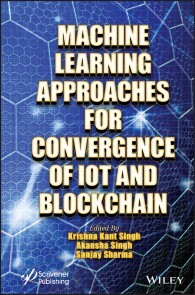
Machine Learning Approaches for Convergence of IoT and Blockchain
MACHINE LEARNING APPROACHES FOR CONVERGENCE OF IOT AND BLOCKCHAINTHE UNIQUE ASPECT OF THIS BOOK IS THAT ITS FOCUS IS THE CONVERGENCE OF MACHINE LEARNING, IOT, AND BLOCKCHAIN IN A SINGLE PUBLICATION.Blockchain technology and the Internet of Things (IoT) are two of the most impactful trends to have emerged in the field of machine learning. Although there are a number of books available solely on the subjects of machine learning, IoT and blockchain technology, no such book has been available which focuses on machine learning techniques for IoT and blockchain convergence until now. Thus, this book is unique in terms of the topics it covers. Designed as an essential guide for all academicians, researchers, and those in industry who are working in related fields, this book will provide insights into the convergence of blockchain technology and the IoT with machine learning. Highlights of the book include:* Examines many industries such as agriculture, manufacturing, food production, healthcare, the military, and IT* Security of the Internet of Things using blockchain and AI* Developing smart cities and transportation systems using machine learning and IoTAUDIENCEThe target audience of this book is professionals and researchers (artificial intelligence specialists, systems engineers, information technologists) in the fields of machine learning, IoT, and blockchain technology. KRISHNA KANT SINGH is an associate professor in the Faculty of Engineering & Technology, Jain (Deemed-to-be University), Bengaluru, India. Dr. Singh has acquired BTech, MTech, and PhD (IIT Roorkee) in the area of machine learning and remote sensing. He has authored more than 50 technical books and research papers in international conferences and SCIE journals.AKANSHA SINGH is an associate professor in the Department of Computer Science Engineering in Amity University, Noida, India. Dr. Singh has acquired BTech, MTech, and PhD (IIT Roorkee) in the area of neural networks and remote sensing. She has authored more than 40 technical books and research papers in international conferences and SCIE journals. Her area of interest includes mobile computing, artificial intelligence, machine learning, digital image processing. SANJAY KUMAR SHARMA PhD is professor and Head in the Department of Electronics and Communication Engineering at KIET Group of Institutions. Dr. Sanjay Sharma has a total of 24 years of teaching and research experience. He has more than 45 publications in journals and international conferences. Preface xi1 BLOCKCHAIN AND INTERNET OF THINGS ACROSS INDUSTRIES 1Ananya Rakhra, Raghav Gupta and Akansha Singh1.1 Introduction 11.2 Insight About Industry 31.2.1 Agriculture Industry 51.2.2 Manufacturing Industry 51.2.3 Food Production Industry 61.2.4 Healthcare Industry 71.2.5 Military 71.2.6 IT Industry 81.3 What is Blockchain? 81.4 What is IoT? 111.5 Combining IoT and Blockchain 141.5.1 Agriculture Industry 151.5.2 Manufacturing Industry 171.5.3 Food Processing Industry 181.5.4 Healthcare Industry 201.5.5 Military 211.5.6 Information Technology Industry 241.6 Observing Economic Growth and Technology’s Impact 251.7 Applications of IoT and Blockchain Beyond Industries 281.8 Conclusion 32References 332 LAYERED SAFETY MODEL FOR IOT SERVICES THROUGH BLOCKCHAIN 35Anju Malik and Bharti Sharma2.1 Introduction 362.1.1 IoT Factors Impacting Security 382.2 IoT Applications 392.3 IoT Model With Communication Parameters 402.3.1 RFID (Radio Frequency Identification) 402.3.2 WSH (Wireless Sensor Network) 402.3.3 Middleware (Software and Hardware) 402.3.4 Computing Service (Cloud) 412.3.5 IoT Software 412.4 Security and Privacy in IoT Services 412.5 Blockchain Usages in IoT 442.6 Blockchain Model With Cryptography 442.6.1 Variations of Blockchain 452.7 Solution to IoT Through Blockchain 462.8 Conclusion 50References 513 INTERNET OF THINGS SECURITY USING AI AND BLOCKCHAIN 57Raghav Gupta, Ananya Rakhra and Akansha Singh3.1 Introduction 583.2 IoT and Its Application 593.3 Most Popular IoT and Their Uses 613.4 Use of IoT in Security 633.5 What is AI? 643.6 Applications of AI 653.7 AI and Security 663.8 Advantages of AI 683.9 Timeline of Blockchain 693.10 Types of Blockchain 703.11 Working of Blockchain 723.12 Advantages of Blockchain Technology 743.13 Using Blockchain Technology With IoT 743.14 IoT Security Using AI and Blockchain 763.15 AI Integrated IoT Home Monitoring System 783.16 Smart Homes With the Concept of Blockchain and AI 793.17 Smart Sensors 813.18 Authentication Using Blockchain 823.19 Banking Transactions Using Blockchain 833.20 Security Camera 843.21 Other Ways to Fight Cyber Attacks 853.22 Statistics on Cyber Attacks 883.23 Conclusion 90References 904 AMALGAMATION OF IOT, ML, AND BLOCKCHAIN IN THE HEALTHCARE REGIME 93Pratik Kumar, Piyush Yadav, Rajeev Agrawal and Krishna Kant Singh4.1 Introduction 934.2 What is Internet of Things? 954.2.1 Internet of Medical Things 974.2.2 Challenges of the IoMT 974.2.3 Use of IoT in Alzheimer Disease 994.3 Machine Learning 1004.3.1 Case 1: Multilayer Perceptron Network 1014.3.2 Case 2: Vector Support Machine 1024.3.3 Applications of the Deep Learning in the Healthcare Sector 1034.4 Role of the Blockchain in the Healthcare Field 1044.4.1 What is Blockchain Technology? 1044.4.2 Paradigm Shift in the Security of Healthcare Data Through Blockchain 1054.5 Conclusion 106References 1065 APPLICATION OF MACHINE LEARNING AND IOT FOR SMART CITIES 109Nilanjana Pradhan, Ajay Shankar Singh, Shrddha Sagar, Akansha Singh and Ahmed A. Elngar5.1 Functionality of Image Analytics 1105.2 Issues Related to Security and Privacy in IoT 1125.3 Machine Learning Algorithms and Blockchain Methodologies 1145.3.1 Intrusion Detection System 1165.3.2 Deep Learning and Machine Learning Models 1185.3.3 Artificial Neural Networks 1185.3.4 Hybrid Approaches 1195.3.5 Review and Taxonomy of Machine Learning 1205.4 Machine Learning Open Source Tools for Big Data 1215.5 Approaches and Challenges of Machine Learning Algorithms in Big Data 1235.6 Conclusion 127References 1276 MACHINE LEARNING APPLICATIONS FOR IOT HEALTHCARE 129Neha Agarwal, Pushpa Singh, Narendra Singh, Krishna Kant Singh and Rohit Jain6.1 Introduction 1306.2 Machine Learning 1306.2.1 Types of Machine Learning Techniques 1316.2.1.1 Unsupervised Learning 1316.2.1.2 Supervised Learning 1316.2.1.3 Semi-Supervised Learning 1326.2.1.4 Reinforcement Learning 1326.2.2 Applications of Machine Learning 1326.2.2.1 Prognosis 1326.2.2.2 Diagnosis 1346.3 IoT in Healthcare 1356.3.1 IoT Architecture for Healthcare System 1356.3.1.1 Physical and Data Link Layer 1366.3.1.2 Network Layer 1376.3.1.3 Transport Layer 1376.3.1.4 Application Layer 1376.4 Machine Learning and IoT 1386.4.1 Application of ML and IoT in Healthcare 1386.4.1.1 Smart Diagnostic Care 1386.4.1.2 Medical Staff and Inventory Tracking 1396.4.1.3 Personal Care 1396.4.1.4 Healthcare Monitoring Device 1396.4.1.5 Chronic Disease Management 1396.5 Conclusion 140References 1407 BLOCKCHAIN FOR VEHICULAR AD HOC NETWORK AND INTELLIGENT TRANSPORTATION SYSTEM: A COMPREHENSIVE STUDY 145Raghav Sharma, Anirudhi Thanvi, Shatakshi Singh, Manish Kumar and Sunil Kumar Jangir7.1 Introduction 1467.2 Related Work 1497.3 Connected Vehicles and Intelligent Transportation System 1527.3.1 VANET 1537.3.2 Blockchain Technology and VANET 1537.4 An ITS-Oriented Blockchain Model 1557.5 Need of Blockchain 1567.5.1 Food Track and Trace 1597.5.2 Electric Vehicle Recharging 1607.5.3 Smart City and Smart Vehicles 1617.6 Implementation of Blockchain Supported Intelligent Vehicles 1647.7 Conclusion 1657.8 Future Scope 166References 1678 APPLICATIONS OF IMAGE PROCESSING IN TELERADIOLOGY FOR THE MEDICAL DATA ANALYSIS AND TRANSFER BASED ON IOT 175S. N. Kumar, A. Lenin Fred, L. R. Jonisha Miriam, Parasuraman Padmanabhan, Balázs Gulyás and Ajay Kumar H.8.1 Introduction 1768.2 Pre-Processing 1788.2.1 Principle of Diffusion Filtering 1788.3 Improved FCM Based on Crow Search Optimization 1838.4 Prediction-Based Lossless Compression Model 1848.5 Results and Discussion 1888.6 Conclusion 202Acknowledgment 202References 2039 INNOVATIVE IDEAS TO BUILD SMART CITIES WITH THE HELP OF MACHINE AND DEEP LEARNING AND IOT 205ShylajaVinaykumar Karatangi, Reshu Agarwal, Krishna Kant Singh and Ivan Izonin9.1 Introduction 2069.2 Related Work 2079.3 What Makes Smart Cities Smart? 2089.3.1 Intense Traffic Management 2089.3.2 Smart Parking 2099.3.3 Smart Waste Administration 2109.3.4 Smart Policing 2119.3.5 Shrewd Lighting 2119.3.6 Smart Power 2119.4 In Healthcare System 2129.5 In Homes 2139.6 In Aviation 2139.7 In Solving Social Problems 2139.8 Uses of AI-People 2149.8.1 Google Maps 2149.8.2 Ridesharing 2149.8.3 Voice-to-Text 2159.8.4 Individual Assistant 2159.9 Difficulties and Profit 2159.10 Innovations in Smart Cities 2169.11 Beyond Humans Focus 2179.12 Illustrative Arrangement 2179.13 Smart Cities with No Differentiation 2189.14 Smart City and AI 2199.15 Further Associated Technologies 2219.15.1 Model Identification 2219.15.2 Picture Recognition 2219.15.3 IoT 2229.15.4 Big Data 2239.15.5 Deep Learning 2239.16 Challenges and Issues 2249.16.1 Profound Learning Models 2249.16.2 Deep Learning Paradigms 2259.16.3 Confidentiality 2269.16.4 Information Synthesis 2269.16.5 Distributed Intelligence 2279.16.6 Restrictions of Deep Learning 2289.17 Conclusion and Future Scope 228References 229Index 233

Generating a New Reality
The emergence of artificial intelligence (AI) has brought us to the precipice of a new age where we struggle to understand what is real, from advanced CGI in movies to even faking the news. AI that was developed to understand our reality is now being used to create its own reality.In this book we look at the many AI techniques capable of generating new realities. We start with the basics of deep learning. Then we move on to autoencoders and generative adversarial networks (GANs). We explore variations of GAN to generate content. The book ends with an in-depth look at the most popular generator projects.By the end of this book you will understand the AI techniques used to generate different forms of content. You will be able to use these techniques for your own amusement or professional career to both impress and educate others around you and give you the ability to transform your own reality into something new.WHAT YOU WILL LEARN* Know the fundamentals of content generation from autoencoders to generative adversarial networks (GANs)* Explore variations of GAN* Understand the basics of other forms of content generation* Use advanced projects such as Faceswap, deepfakes, DeOldify, and StyleGAN2WHO THIS BOOK IS FORMachine learning developers and AI enthusiasts who want to understand AI content generation techniquesMICHEAL LANHAM is a proven software and tech innovator with more than 20 years of experience. During that time, he has developed a broad range of software applications in areas including games, graphics, web, desktop, engineering, artificial intelligence (AI), GIS, and machine learning (ML) applications for a variety of industries as an R&D developer. At the turn of the millennium, Micheal began working with neural networks and evolutionary algorithms in game development. He is an avid educator, has written more than eight books covering game development, extended reality, and AI, and teaches at meetups and other events. Micheal also likes to cook for his large family in his hometown of Calgary, Canada. Chapter 1: Deep Learning PerceptronChapter Goal: In this chapter we introduce the basics of deep learning from the perceptron to multi-layer perceptron.No of pages: 30Sub -Topics1. Understanding deep learning and supervised learning.1. Using the perceptron for supervised learning.2. Constructing a multilayer perceptron.3. Discover the basics of activation, loss, optimization and back propagation for problems of regression and classification.Chapter 2: Unleashing Autoencoders and Generative Adversarial NetworksChapter Goal: This chapter introduces the autoencoder and GAN for simple content generation. Along the way we also learn about using convolutional network layers for better feature extraction.No of pages: 30Sub - Topics1. Why we need autoencoders and how they function.2. Improving on the autoencoder with convolutional network layers.3. Generating content with the GAN.4. Explore methods for improving on the vanilla GAN.Chapter 3: Exploring the Latent SpaceChapter Goal: In this chapter we discover the latent space in AI. What it means to move through the AI latent space using variational autoencoders and conditional GANs.No of pages : 30Sub - Topics:1. Understanding variation and the variational autoencoder.2. Exploring the latent space with a VAE.3. Extending a GAN to be conditional.4. Generate interesting foods using a conditional GAN.Chapter 4: GANs, GANs and More GANsChapter Goal: In this chapter we begin uncovering the vast variations in GANs and their applications. We start with basics like the double convolution GAN and work up to the Stack and Progressive GANs.No of pages: 30Sub - Topics:1. Look at samples from the many variations of GANs.2. Setup and use a DCGAN.3. Understand how a StackGAN works.4. Work with and use a ProGAN.Chapter 5: Image to Image Translation with GANsCovers: Pix2Pix and DualGAN, side projects for understanding with ResNET and UNET, advanced network architectures for image classification/generationChapter 6: Translating Images with Cycle ConsistencyCovers: Cycle consistency loss and the CycleGAN, BiCycleGAN and StarGANChapter 7: Styling with GANsCovers: StyleGAN, Attention and the Self-attention GAN with a look at DeOldifyChapter 8: Developing DeepFakesChapter Goal: DeepFakes are taking the world by storm and in this chapter, we explore how to use a DeepFakes project. No of pages: 301. Learn how to isolate faces or other points of interest in images or video.2. Extract and replace faces from images or video.3. Use DeepFakes GAN to generate facial images based on input image.4. Put it all together and allow the user to generate their own DeepFake video.Chapter 9: Uncovering Adversarial Latent AutoencodersChapter Goal: GANs are not the only technique that allows for content manipulation and generations. In this chapter we look at the ALAE method for generating content.No of pages:1. Look at how to extend autoencoders for adversarial learning.2. Understanding how AE can be used to explore the latent space in data.3. Use ALAE to generate conditional content.4. Revisit our previous foods example and see what new foods we can generate.Chapter 10: Video Content with First Order Model MotionChapter Goal: In this chapter we explore a new technique for animating static images called First Order Model Motion. At the end of this chapter we will use this technique to create avatars for Skype or Zoom.No of pages: 301. Discover the basic of First Order Model Motion, what it is and how it works.2. Be able to apply FOMM to a number of static image datasets for various applications.3. Use the project Avatarify for generating real-time avatars from static avatars.4. Use Avatarify real-time in applications like Zoom or Skype.

How Algorithms Create and Prevent Fake News
"It's a joy to read a book by a mathematician who knows how to write. [...] There is no better guide to the strategies and stakes of this battle for the future." ---Paul Romer, Nobel Laureate, University Professor in Economics at NYU, and former Chief Economist at the World Bank. “By explaining the flaws and foibles of everything from Google search to QAnon—and by providing level-headed evaluations of efforts to fix them—Noah Giansiracusa offers the perfect starting point for anyone entering the maze of modern digital media.” —Jonathan Rauch, senior fellow at the Brookings Institute and contributing editor of The Atlantic From deepfakes to GPT-3, deep learning is now powering a new assault on our ability to tell what’s real and what’s not, bringing a whole new algorithmic side to fake news. On the other hand, remarkable methods are being developed to help automate fact-checking and the detection of fake news and doctored media. Success in the modern business world requires you to understand these algorithmic currents, and to recognize the strengths, limits, and impacts of deep learning---especially when it comes to discerning the truth and differentiating fact from fiction. This book tells the stories of this algorithmic battle for the truth and how it impacts individuals and society at large. In doing so, it weaves together the human stories and what’s at stake here, a simplified technical background on how these algorithms work, and an accessible survey of the research literature exploring these various topics. How Algorithms Create and Prevent Fake News is an accessible, broad account of the various ways that data-driven algorithms have been distorting reality and rendering the truth harder to grasp. From news aggregators to Google searches to YouTube recommendations to Facebook news feeds, the way we obtain information todayis filtered through the lens of tech giant algorithms. The way data is collected, labelled, and stored has a big impact on the machine learning algorithms that are trained on it, and this is a main source of algorithmic bias – which gets amplified in harmful data feedback loops. Don’t be afraid: with this book you’ll see the remedies and technical solutions that are being applied to oppose these harmful trends. There is hope. What You Will Learn The ways that data labeling and storage impact machine learning and how feedback loops can occurThe history and inner-workings of YouTube’s recommendation algorithmThe state-of-the-art capabilities of AI-powered text generation (GPT-3) and video synthesis/doctoring (deepfakes) and how these technologies have been used so farThe algorithmic tools available to help with automated fact-checking and truth-detection Who This Book is For People who don’t have a technical background (in data, computers, etc.) but who would like to learn how algorithms impact society; business leaders who want to know the powers and perils of relying on artificial intelligence. A secondary audience is people with a technical background who want to explore the larger social and societal impact of their work. 1. Perils of Pageview.- 2. Crafted by Computer.- 3. Deepfake Deception.- 4. Autoplay the Autocrats.- 5. Prevarication and the Polygraph.- 6. Gravitating to Google.- 7. Avarice of Advertising.- 8. Social Spread.- 9. Tools for Truth.
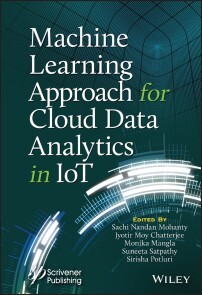
Machine Learning Approach for Cloud Data Analytics in IoT
Researchers and industry engineers in computer science and artificial intelligence, IT professionals, network administrators, cybersecurity experts. SACHI NANDAN MOHANTY received his PhD from IIT Kharagpur 2015 and he is now an associate professor in the Department of Computer Science & Engineering at ICFAI Foundation for Higher Education, Hyderabad, India. JYOTIR MOY CHATTERJEE is an assistant professor in the IT Department at Lord Buddha Education Foundation (Asia Pacific University of Technology & Innovation), Kathmandu, Nepal. MONIKA MANGLA received her PhD from Thapar Institute of Engineering & Technology, Patiala, Punjab in 2019, and is now an assistant professor in the Department of Computer Engineering at Lokmanya Tilak College of Engineering (LTCoE), Navi Mumbai, India. SUNEETA SATPATHY received her PhD from Utkal University, Bhubaneswar, Odisha in 2015, and is now an associate professor in the Department of Computer Science & Engineering at College of Engineering Bhubaneswar (CoEB), Bhubaneswar, India. MS. SIRISHA POTLURI is an assistant professor in the Department of Computer Science & Engineering at ICFAI Foundation for Higher Education, Hyderabad, India. Preface xixAcknowledgment xxiii1 MACHINE LEARNING–BASED DATA ANALYSIS 1M. Deepika and K. Kalaiselvi1.1 Introduction 11.2 Machine Learning for the Internet of Things Using Data Analysis 41.2.1 Computing Framework 61.2.2 Fog Computing 61.2.3 Edge Computing 61.2.4 Cloud Computing 71.2.5 Distributed Computing 71.3 Machine Learning Applied to Data Analysis 71.3.1 Supervised Learning Systems 81.3.2 Decision Trees 91.3.3 Decision Tree Types 91.3.4 Unsupervised Machine Learning 101.3.5 Association Rule Learning 101.3.6 Reinforcement Learning 101.4 Practical Issues in Machine Learning 111.5 Data Acquisition 121.6 Understanding the Data Formats Used in Data Analysis Applications 131.7 Data Cleaning 141.8 Data Visualization 151.9 Understanding the Data Analysis Problem-Solving Approach 151.10 Visualizing Data to Enhance Understanding and Using Neural Networks in Data Analysis 161.11 Statistical Data Analysis Techniques 171.11.1 Hypothesis Testing 181.11.2 Regression Analysis 181.12 Text Analysis and Visual and Audio Analysis 181.13 Mathematical and Parallel Techniques for Data Analysis 191.13.1 Using Map-Reduce 201.13.2 Leaning Analysis 201.13.3 Market Basket Analysis 211.14 Conclusion 21References 222 MACHINE LEARNING FOR CYBER-IMMUNE IOT APPLICATIONS 25Suchismita Sahoo and Sushree Sangita Sahoo2.1 Introduction 252.2 Some Associated Impactful Terms 272.2.1 IoT 272.2.2 IoT Device 282.2.3 IoT Service 292.2.4 Internet Security 292.2.5 Data Security 302.2.6 Cyberthreats 312.2.7 Cyber Attack 312.2.8 Malware 322.2.9 Phishing 322.2.10 Ransomware 332.2.11 Spear-Phishing 332.2.12 Spyware 342.2.13 Cybercrime 342.2.14 IoT Cyber Security 352.2.15 IP Address 362.3 Cloud Rationality Representation 362.3.1 Cloud 362.3.2 Cloud Data 372.3.3 Cloud Security 382.3.4 Cloud Computing 382.4 Integration of IoT With Cloud 402.5 The Concepts That Rules Over 412.5.1 Artificial Intelligent 412.5.2 Overview of Machine Learning 412.5.2.1 Supervised Learning 412.5.2.2 Unsupervised Learning 422.5.3 Applications of Machine Learning in Cyber Security 432.5.4 Applications of Machine Learning in Cybercrime 432.5.5 Adherence of Machine Learning With Cyber Security in Relevance to IoT 432.5.6 Distributed Denial-of-Service 442.6 Related Work 452.7 Methodology 462.8 Discussions and Implications 482.9 Conclusion 49References 493 EMPLOYING MACHINE LEARNING APPROACHES FOR PREDICTIVE DATA ANALYTICS IN RETAIL INDUSTRY 53Rakhi Akhare, Sanjivani Deokar, Monika Mangla and Hardik Deshmukh3.1 Introduction 533.2 Related Work 553.3 Predictive Data Analytics in Retail 563.3.1 ML for Predictive Data Analytics 583.3.2 Use Cases 593.3.3 Limitations and Challenges 613.4 Proposed Model 613.4.1 Case Study 633.5 Conclusion and Future Scope 68References 694 EMERGING CLOUD COMPUTING TRENDS FOR BUSINESS TRANSFORMATION 71Prasanta Kumar Mahapatra, Alok Ranjan Tripathy and Alakananda Tripathy4.1 Introduction 714.1.1 Computing Definition Cloud 724.1.2 Advantages of Cloud Computing Over On-Premises IT Operation 734.1.3 Limitations of Cloud Computing 744.2 History of Cloud Computing 744.3 Core Attributes of Cloud Computing 754.4 Cloud Computing Models 774.4.1 Cloud Deployment Model 774.4.2 Cloud Service Model 794.5 Core Components of Cloud Computing Architecture: Hardware and Software 834.6 Factors Need to Consider for Cloud Adoption 844.6.1 Evaluating Cloud Infrastructure 844.6.2 Evaluating Cloud Provider 854.6.3 Evaluating Cloud Security 864.6.4 Evaluating Cloud Services 864.6.5 Evaluating Cloud Service Level Agreements (SLA) 874.6.6 Limitations to Cloud Adoption 874.7 Transforming Business Through Cloud 884.8 Key Emerging Trends in Cloud Computing 894.8.1 Technology Trends 904.8.2 Business Models 924.8.3 Product Transformation 924.8.4 Customer Engagement 924.8.5 Employee Empowerment 934.8.6 Data Management and Assurance 934.8.7 Digitalization 934.8.8 Building Intelligence Cloud System 934.8.9 Creating Hyper-Converged Infrastructure 944.9 Case Study: Moving Data Warehouse to Cloud Boosts Performance for Johnson & Johnson 944.10 Conclusion 95References 965 SECURITY OF SENSITIVE DATA IN CLOUD COMPUTING 99Kirti Wanjale, Monika Mangla and Paritosh Marathe5.1 Introduction 1005.1.1 Characteristics of Cloud Computing 1005.1.2 Deployment Models for Cloud Services 1015.1.3 Types of Cloud Delivery Models 1025.2 Data in Cloud 1025.2.1 Data Life Cycle 1035.3 Security Challenges in Cloud Computing for Data 1055.3.1 Security Challenges Related to Data at Rest 1065.3.2 Security Challenges Related to Data in Use 1075.3.3 Security Challenges Related to Data in Transit 1075.4 Cross-Cutting Issues Related to Network in Cloud 1085.5 Protection of Data 1095.6 Tighter IAM Controls 1145.7 Conclusion and Future Scope 117References 1176 CLOUD CRYPTOGRAPHY FOR CLOUD DATA ANALYTICS IN IOT 119N. Jayashri and K. Kalaiselvi6.1 Introduction 1206.2 Cloud Computing Software Security Fundamentals 1206.3 Security Management 1226.4 Cryptography Algorithms 1236.4.1 Types of Cryptography 1236.5 Secure Communications 1276.6 Identity Management and Access Control 1336.7 Autonomic Security 1376.8 Conclusion 139References 1397 ISSUES AND CHALLENGES OF CLASSICAL CRYPTOGRAPHY IN CLOUD COMPUTING 143Amrutanshu Panigrahi, Ajit Kumar Nayak and Rourab Paul7.1 Introduction 1447.1.1 Problem Statement and Motivation 1457.1.2 Contribution 1467.2 Cryptography 1467.2.1 Cryptography Classification 1477.2.1.1 Classical Cryptography 1477.2.1.2 Homomorphic Encryption 1497.3 Security in Cloud Computing 1507.3.1 The Need for Security in Cloud Computing 1517.3.2 Challenges in Cloud Computing Security 1527.3.3 Benefits of Cloud Computing Security 1537.3.4 Literature Survey 1547.4 Classical Cryptography for Cloud Computing 1577.4.1 RSA 1577.4.2 AES 1577.4.3 DES 1587.4.4 Blowfish 1587.5 Homomorphic Cryptosystem 1587.5.1 Paillier Cryptosystem 1597.5.1.1 Additive Homomorphic Property 1597.5.2 RSA Homomorphic Cryptosystem 1607.5.2.1 Multiplicative Homomorphic Property 1607.6 Implementation 1607.7 Conclusion and Future Scope 162References 1628 CLOUD-BASED DATA ANALYTICS FOR MONITORING SMART ENVIRONMENTS 167D. Karthika8.1 Introduction 1678.2 Environmental Monitoring for Smart Buildings 1698.2.1 Smart Environments 1698.3 Smart Health 1718.3.1 Description of Solutions in General 1718.3.2 Detection of Distress 1728.3.3 Green Protection 1738.3.4 Medical Preventive/Help 1748.4 Digital Network 5G and Broadband Networks 1748.4.1 IoT-Based Smart Grid Technologies 1748.5 Emergent Smart Cities Communication Networks 1758.5.1 RFID Technologies 1778.5.2 Identifier Schemes 1778.6 Smart City IoT Platforms Analysis System 1778.7 Smart Management of Car Parking in Smart Cities 1788.8 Smart City Systems and Services Securing: A Risk-Based Analytical Approach 1788.9 Virtual Integrated Storage System 1798.10 Convolutional Neural Network (CNN) 1818.10.1 IEEE 802.15.4 1828.10.2 BLE 1828.10.3 ITU-T G.9959 (Z-Wave) 1838.10.4 NFC 1838.10.5 LoRaWAN 1848.10.6 Sigfox 1848.10.7 NB-IoT 1848.10.8 PLC 1848.10.9 MS/TP 1848.11 Challenges and Issues 1858.11.1 Interoperability and Standardization 1858.11.2 Customization and Adaptation 1868.11.3 Entity Identification and Virtualization 1878.11.4 Big Data Issue in Smart Environments 1878.12 Future Trends and Research Directions in Big Data Platforms for the Internet of Things 1888.13 Case Study 1898.14 Conclusion 191References 1919 PERFORMANCE METRICS FOR COMPARISON OF HEURISTICS TASK SCHEDULING ALGORITHMS IN CLOUD COMPUTING PLATFORM 195Nidhi Rajak and Ranjit Rajak9.1 Introduction 1959.2 Workflow Model 1979.3 System Computing Model 1989.4 Major Objective of Scheduling 1989.5 Task Computational Attributes for Scheduling 1989.6 Performance Metrics 2009.7 Heuristic Task Scheduling Algorithms 2019.7.1 Heterogeneous Earliest Finish Time (HEFT) Algorithm 2029.7.2 Critical-Path-on-a-Processor (CPOP) Algorithm 2089.7.3 As Late As Possible (ALAP) Algorithm 2139.7.4 Performance Effective Task Scheduling (PETS) Algorithm 2179.8 Performance Analysis and Results 2209.9 Conclusion 224References 22410 SMART ENVIRONMENT MONITORING MODELS USING CLOUD-BASED DATA ANALYTICS: A COMPREHENSIVE STUDY 227Pradnya S. Borkar and Reena Thakur10.1 Introduction 22810.1.1 Internet of Things 22910.1.2 Cloud Computing 23010.1.3 Environmental Monitoring 23210.2 Background and Motivation 23410.2.1 Challenges and Issues 23410.2.2 Technologies Used for Designing Cloud-Based Data Analytics 24010.2.2.1 Communication Technologies 24110.2.3 Cloud-Based Data Analysis Techniques and Models 24310.2.3.1 MapReduce for Data Analysis 24310.2.3.2 Data Analysis Workflows 24610.2.3.3 NoSQL Models 24710.2.4 Data Mining Techniques 24810.2.5 Machine Learning 25110.2.5.1 Significant Importance of Machine Learning and Its Algorithms 25310.2.6 Applications 25310.3 Conclusion 261References 26211 ADVANCEMENT OF MACHINE LEARNING AND CLOUD COMPUTING IN THE FIELD OF SMART HEALTH CARE 273Aradhana Behura, Shibani Sahu and Manas Ranjan Kabat11.1 Introduction 27411.2 Survey on Architectural WBAN 27811.3 Suggested Strategies 28011.3.1 System Overview 28011.3.2 Motivation 28111.3.3 DSCB Protocol 28111.3.3.1 Network Topology 28211.3.3.2 Starting Stage 28211.3.3.3 Cluster Evolution 28211.3.3.4 Sensed Information Stage 28311.3.3.5 Choice of Forwarder Stage 28311.3.3.6 Energy Consumption as Well as Routing Stage 28511.4 CNN-Based Image Segmentation (UNet Model) 28711.5 Emerging Trends in IoT Healthcare 29011.6 Tier Health IoT Model 29411.7 Role of IoT in Big Data Analytics 29411.8 Tier Wireless Body Area Network Architecture 29611.9 Conclusion 303References 30312 STUDY ON GREEN CLOUD COMPUTING—A REVIEW 307Meenal Agrawal and Ankita Jain12.1 Introduction 30712.2 Cloud Computing 30812.2.1 Cloud Computing: On-Request Outsourcing-Pay-as-You-Go 30812.3 Features of Cloud Computing 30912.4 Green Computing 30912.5 Green Cloud Computing 30912.6 Models of Cloud Computing 31012.7 Models of Cloud Services 31012.8 Cloud Deployment Models 31112.9 Green Cloud Architecture 31212.10 Cloud Service Providers 31212.11 Features of Green Cloud Computing 31312.12 Advantages of Green Cloud Computing 31312.13 Limitations of Green Cloud Computing 31412.14 Cloud and Sustainability Environmental 31512.15 Statistics Related to Cloud Data Centers 31512.16 The Impact of Data Centers on Environment 31512.17 Virtualization Technologies 31612.18 Literature Review 31612.19 The Main Objective 31812.20 Research Gap 31912.21 Research Methodology 31912.22 Conclusion and Suggestions 32012.23 Scope for Further Research 320References 32113 INTELLIGENT RECLAMATION OF PLANTAE AFFLICTION DISEASE 323Reshma Banu, G.F Ali Ahammed and Ayesha Taranum13.1 Introduction 32413.2 Existing System 32713.3 Proposed System 32713.4 Objectives of the Concept 32813.5 Operational Requirements 32813.6 Non-Operational Requirements 32913.7 Depiction Design Description 33013.8 System Architecture 33013.8.1 Module Characteristics 33113.8.2 Convolutional Neural System 33213.8.3 User Application 33213.9 Design Diagrams 33313.9.1 High-Level Design 33313.9.2 Low-Level Design 33313.9.3 Test Cases 33513.10 Comparison and Screenshot 33513.11 Conclusion 342References 34214 PREDICTION OF STOCK MARKET USING MACHINE LEARNING–BASED DATA ANALYTICS 347Maheswari P. and Jaya A.14.1 Introduction of Stock Market 34814.1.1 Impact of Stock Prices 34914.2 Related Works 35014.3 Financial Prediction Systems Framework 35214.3.1 Conceptual Financial Prediction Systems 35214.3.2 Framework of Financial Prediction Systems Using Machine Learning 35314.3.2.1 Algorithm to Predicting the Closing Price of the Given Stock Data Using Linear Regression 35514.3.3 Framework of Financial Prediction Systems Using Deep Learning 35514.3.3.1 Algorithm to Predict the Closing Price of the Given Stock Using Long Short-Term Memory 35614.4 Implementation and Discussion of Result 35714.4.1 Pharmaceutical Sector 35714.4.1.1 Cipla Limited 35714.4.1.2 Torrent Pharmaceuticals Limited 35914.4.2 Banking Sector 35914.4.2.1 ICICI Bank 35914.4.2.2 State Bank of India 35914.4.3 Fast-Moving Consumer Goods Sector 36214.4.3.1 ITC 36314.4.3.2 Hindustan Unilever Limited 36314.4.4 Power Sector 36314.4.4.1 Adani Power Limited 36314.4.4.2 Power Grid Corporation of India Limited 36414.4.5 Automobiles Sector 36814.4.5.1 Mahindra & Mahindra Limited 36814.4.5.2 Maruti Suzuki India Limited 36814.4.6 Comparison of Prediction Using Linear Regression Model and Long-Short-Term Memory Model 36814.5 Conclusion 37114.5.1 Future Enhancement 372References 372Web Citations 37315 PEHCHAAN: ANALYSIS OF THE ‘AADHAR DATASET’ TO FACILITATE A SMOOTH AND EFFICIENT CONDUCT OF THE UPCOMING NPR 375Soumyadev Mukherjee, Harshit Anand, Nishan Acharya, Subham Char, Pritam Ghosh and MinakhiRout15.1 Introduction 37615.2 Basic Concepts 37715.3 Study of Literature Survey and Technology 38015.4 Proposed Model 38115.5 Implementation and Results 38315.6 Conclusion 389References 38916 DEEP LEARNING APPROACH FOR RESOURCE OPTIMIZATION IN BLOCKCHAIN, CELLULAR NETWORKS, AND IOT: OPEN CHALLENGES AND CURRENT SOLUTIONS 391Upinder Kaur and Shalu16.1 Introduction 39216.1.1 Aim 39316.1.2 Research Contribution 39516.1.3 Organization 39616.2 Background 39616.2.1 Blockchain 39716.2.2 Internet of Things (IoT) 39816.2.3 5G Future Generation Cellular Networks 39816.2.4 Machine Learning and Deep Learning Techniques 39916.2.5 Deep Reinforcement Learning 39916.3 Deep Learning for Resource Management in Blockchain, Cellular, and IoT Networks 40116.3.1 Resource Management in Blockchain for 5G Cellular Networks 40216.3.2 Deep Learning Blockchain Application for Resource Management in IoT Networks 40216.4 Future Research Challenges 41316.4.1 Blockchain Technology 41316.4.1.1 Scalability 41416.4.1.2 Efficient Consensus Protocols 41516.4.1.3 Lack of Skills and Experts 41516.4.2 IoT Networks 41616.4.2.1 Heterogeneity of IoT and 5G Data 41616.4.2.2 Scalability Issues 41616.4.2.3 Security and Privacy Issues 41616.4.3 5G Future Generation Networks 41616.4.3.1 Heterogeneity 41616.4.3.2 Security and Privacy 41716.4.3.3 Resource Utilization 41716.4.4 Machine Learning and Deep Learning 41716.4.4.1 Interpretability 41816.4.4.2 Training Cost for ML and DRL Techniques 41816.4.4.3 Lack of Availability of Data Sets 41816.4.4.4 Avalanche Effect for DRL Approach 41916.4.5 General Issues 41916.4.5.1 Security and Privacy Issues 41916.4.5.2 Storage 41916.4.5.3 Reliability 42016.4.5.4 Multitasking Approach 42016.5 Conclusion and Discussion 420References 42217 UNSUPERVISED LEARNING IN ACCORDANCE WITH NEW ASPECTS OF ARTIFICIAL INTELLIGENCE 429Riya Sharma, Komal Saxena and Ajay Rana17.1 Introduction 43017.2 Applications of Machine Learning in Data Management Possibilities 43117.2.1 Terminology of Basic Machine Learning 43217.2.2 Rules Based on Machine Learning 43417.2.3 Unsupervised vs. Supervised Methodology 43417.3 Solutions to Improve Unsupervised Learning Using Machine Learning 43617.3.1 Insufficiency of Labeled Data 43617.3.2 Overfitting 43717.3.3 A Closer Look Into Unsupervised Algorithms 43717.3.3.1 Reducing Dimensionally 43717.3.3.2 Principal Component Analysis 43817.3.4 Singular Value Decomposition (SVD) 43917.3.4.1 Random Projection 43917.3.4.2 Isomax 43917.3.5 Dictionary Learning 43917.3.6 The Latent Dirichlet Allocation 44017.4 Open Source Platform for Cutting Edge Unsupervised Machine Learning 44017.4.1 TensorFlow 44117.4.2 Keras 44117.4.3 Scikit-Learn 44117.4.4 Microsoft Cognitive Toolkit 44217.4.5 Theano 44217.4.6 Caffe 44217.4.7 Torch 44217.5 Applications of Unsupervised Learning 44317.5.1 Regulation of Digital Data 44317.5.2 Machine Learning in Voice Assistance 44317.5.3 For Effective Marketing 44417.5.4 Advancement of Cyber Security 44417.5.5 Faster Computing Power 44417.5.6 The Endnote 44517.6 Applications Using Machine Learning Algos 44517.6.1 Linear Regression 44517.6.2 Logistic Regression 44617.6.3 Decision Tree 44617.6.4 Support Vector Machine (SVM) 44617.6.5 Naive Bayes 44617.6.6 K-Nearest Neighbors 44717.6.7 K-Means 44717.6.8 Random Forest 44717.6.9 Dimensionality Reduction Algorithms 44817.6.10 Gradient Boosting Algorithms 448References 44918 PREDICTIVE MODELING OF ANTHROPOMORPHIC GAMIFYING BLOCKCHAIN-ENABLED TRANSITIONAL HEALTHCARE SYSTEM 461Deepa Kumari, B.S.A.S. Rajita, Medindrao Raja Sekhar, Ritika Garg and Subhrakanta Panda18.1 Introduction 46218.1.1 Transitional Healthcare Services and Their Challenges 46218.2 Gamification in Transitional Healthcare: A New Model 46318.2.1 Anthropomorphic Interface With Gamification 46418.2.2 Gamification in Blockchain 46518.2.3 Anthropomorphic Gamification in Blockchain: Motivational Factors 46618.3 Existing Related Work 46818.4 The Framework 47818.4.1 Health Player 47918.4.2 Data Collection 48018.4.3 Anthropomorphic Gamification Layers 48018.4.4 Ethereum 48018.4.4.1 Ethereum-Based Smart Contracts for Healthcare 48118.4.4.2 Installation of Ethereum Smart Contract 48118.4.5 Reward Model 48218.4.6 Predictive Models 48218.5 Implementation 48318.5.1 Methodology 48318.5.2 Result Analysis 48418.5.3 Threats to the Validity 48618.6 Conclusion 487References 487Index 491

Raspberry Pi Kinderleicht
Das Buch "Raspberry Pi Kinderleicht" zeigt, wie der Einplatinencomputer Raspberry Pi 4 Mod. B eingerichtet und genutzt werden kann. Die neue Version des Raspberry Pi ist benutzerfreundlicher und leistungsfähiger als je zuvor. Das kleine Gerät lässt sich einfacher als bisher wie ein Desktop Computer zum Surfen im Internet, als Dateiserver im Netzwerk, sowie als Medienplayer einsetzen. Der für Einsteiger geeignete Technik Ratgeber erklärt anschaulich Grundlagen und zeigt mehrere Möglichkeiten auf.

Kostenoptimierte Anwendungsentwicklung
Das Buch soll keine wissenschaftliche Abhandlungen über Theorien der Informatik oder der Organisationslehre liefern, sondern einen praxiserprobten Weg aufzeigen, wie man durch eine stufenweise, kostenoptimierte und risikoarme Erneuerung der bisherigen Anwendungen eine reaktionsfähige und kontinuierlich erneuerbare Anwendungslandschaft aufbauen und dadurch zu einer hochflexiblen und effizienten Anwendungslandschaft kommen kann.Mit den beschriebenen Methoden können die Kosten der Anwendungsentwicklung um die Hälfte reduziert werden, wenn alle Datenverwaltungsfunktionen in anwendungsneutrale Datentabellen ausgelagert und die Fachfunktionen als selbstständig ablauffähige Geschäftsfall-Apps mit vorgefertigten Softwarekomponenten bedarfsgerecht konfiguriert werden.Dadurch kann eine flexible IT-Unterstützung für die Abarbeitung aller Arbeitsvorgänge entlang den bereichs- und unternehmensübergreifenden Geschäftsprozessen sichergestellt werden, die schnell an die kurzfristigen Veränderungen des dynamischen und komplexen Geschäftsumfelds angepasst werden können. HEINZ APPENZELLER wurde in Esslingen geboren. Nach der Ausbildung zum Industriekaufmann hat er praktische Erfahrungen bei der Prozess- und Systemgestaltung in allen Unternehmensbereichen eines Industrieunternehmens erworben. 1968 wurde er von einem Konzern für den Aufbau und die Leitung des Bereichs Organisation und Datenverarbeitung eines großen Industrieunternehmens mit einem breiten in- und ausländischen Vertriebsnetz und mehreren Tochterfirmen in Brasilien berufen. In dieser Zeit war er zusätzlich auch für den Aufbau und die Leitung einer IT-Tochterfirma mit zuletzt ca. 1000 Beschäftigten verantwortlich.

The Art of Attack
TAKE ON THE PERSPECTIVE OF AN ATTACKER WITH THIS INSIGHTFUL NEW RESOURCE FOR ETHICAL HACKERS, PENTESTERS, AND SOCIAL ENGINEERSIn The Art of Attack: Attacker Mindset for Security Professionals, experienced physical pentester and social engineer Maxie Reynolds untangles the threads of a useful, sometimes dangerous, mentality. The book shows ethical hackers, social engineers, and pentesters what an attacker mindset is and how to use it to their advantage. Adopting this mindset will result in the improvement of security, offensively and defensively, by allowing you to see your environment objectively through the eyes of an attacker.The book shows you the laws of the mindset and the techniques attackers use, from persistence to "start with the end" strategies and non-linear thinking, that make them so dangerous. You'll discover:* A variety of attacker strategies, including approaches, processes, reconnaissance, privilege escalation, redundant access, and escape techniques* The unique tells and signs of an attack and how to avoid becoming a victim of one* What the science of psychology tells us about amygdala hijacking and other tendencies that you need to protect againstPerfect for red teams, social engineers, pentesters, and ethical hackers seeking to fortify and harden their systems and the systems of their clients, The Art of Attack is an invaluable resource for anyone in the technology security space seeking a one-stop resource that puts them in the mind of an attacker.About the Author vAcknowledgments viiIntroduction xvPART I: THE ATTACKER MINDSET 1CHAPTER 1: WHAT IS THE ATTACKER MINDSET? 3Using the Mindset 6The Attacker and the Mindset 9AMs Is a Needed Set of Skills 11A Quick Note on Scope 13Summary 16Key Message 16CHAPTER 2: OFFENSIVE VS. DEFENSIVE ATTACKER MINDSET 17The Offensive Attacker Mindset 20Comfort and Risk 22Planning Pressure and Mental Agility 23Emergency Conditioning 26Defensive Attacker Mindset 31Consistency and Regulation 31Anxiety Control 32Recovery, Distraction, and Maintenance 34OAMs and DAMs Come Together 35Summary 35Key Message 36CHAPTER 3: THE ATTACKER MINDSET FRAMEWORK 37Development 39Phase 1 43Phase 2 47Application 48Preloading 51“Right Time, Right Place” Preload 51Ethics 52Intellectual Ethics 53Reactionary Ethics 53Social Engineering and Security 57Social Engineering vs. AMs 59Summary 60Key Message 60PART II: THE LAWS AND SKILLS 63CHAPTER 4: THE LAWS 65Law 1: Start with the End in Mind 65End to Start Questions 66Robbing a Bank 68Bringing It All together 70The Start of the End 71Clarity 71Efficiency 72The Objective 72How to Begin with the End in Mind 73Law 2: Gather, Weaponize, and Leverage Information 75Law 3: Never Break Pretext 77Law 4: Every Move Made Benefits the Objective 80Summary 81Key Message 82CHAPTER 5: CURIOSITY, PERSISTENCE, AND AGILITY 83Curiosity 86The Exercise: Part 1 87The Exercise: Part 2 89Persistence 92Skills and Common Sense 95Professional Common Sense 95Summary 98Key Message 98CHAPTER 6: INFORMATION PROCESSING: OBSERVATION AND THINKING TECHNIQUES 99Your Brain vs. Your Observation 102Observation vs. Heuristics 107Heuristics 107Behold Linda 108Observation vs. Intuition 109Using Reasoning and Logic 112Observing People 114Observation Exercise 116AMs and Observation 122Tying It All Together 123Critical and Nonlinear Thinking 124Vector vs. Arc 127Education and Critical Thinking 128Workplace Critical Thinking 128Critical Thinking and Other Psychological Constructs 129Critical Thinking Skills 130Nonlinear Thinking 131Tying Them Together 132Summary 133Key Message 134CHAPTER 7: INFORMATION PROCESSING IN PRACTICE 135Reconnaissance 136Recon: Passive 145Recon: Active 149Osint 150OSINT Over the Years 150Intel Types 153Alternative Data in OSINT 154Signal vs. Noise 155Weaponizing of Information 158Tying Back to the Objective 160Summary 170Key Message 170PART III: TOOLS AND ANATOMY 171CHAPTER 8: ATTACK STRATEGY 173Attacks in Action 175Strategic Environment 177The Necessity of Engagement and Winning 179The Attack Surface 183Vulnerabilities 183AMs Applied to the Attack Vectors 184Phishing 184Mass Phish 185Spearphish 186Whaling 187Vishing 190Smishing/Smshing 195Impersonation 196Physical 199Back to the Manhattan Bank 200Summary 203Key Message 203CHAPTER 9: PSYCHOLOGY IN ATTACKS 205Setting The Scene: Why Psychology Matters 205Ego Suspension, Humility & Asking for Help 210Humility 215Asking for Help 216Introducing the Target- Attacker Window Model 217Four TAWM Regions 218Target Psychology 221Optimism Bias 225Confirmation Bias and Motivated Reasoning 228Framing Effect 231Thin- Slice Assessments 233Default to Truth 236Summary 239Key Message 239PART IV: AFTER AMS 241CHAPTER 10: STAYING PROTECTED— THE INDIVIDUAL 243Attacker Mindset for Ordinary People 243Behavioral Security 246Amygdala Hijacking 250Analyze Your Attack Surface 252Summary 256Key Message 256CHAPTER 11: STAYING PROTECTED— THE BUSINESS 257Indicators of Attack 258Nontechnical Measures 258Testing and Red Teams 261Survivorship Bias 261The Complex Policy 263Protection 264Antifragile 264The Full Spectrum of Crises 266AMs on the Spectrum 268Final Thoughts 269Summary 270Key Message 271Index 273
Datenvisualisierung mit Tableau
* VISUELLE DATENANALYSE LEICHT GEMACHT: VON DEN ERSTEN BALKENDIAGRAMMEN ÜBER CLUSTER UND TRENDLINIEN BIS ZU GEOGRAFISCHEN ANALYSEN AUF LANDKARTEN* ERHALTEN SIE AUSSAGEFÄHIGE PROGNOSEN DURCH VORAUSSCHAUENDE ZUKUNFTSANALYSEN* ERSTELLEN UND TEILEN SIE INTERAKTIVE DASHBOARDS UND ÜBERSICHTLICHE INFOGRAFIKENAlexander Loth zeigt Ihnen in diesem Buch, wie Sie Ihre Daten ganz einfach visuell darstellen und analysieren. So können Sie selbst komplexe Datenstrukturen besser verstehen und daraus gewonnene Erkenntnisse effektiv kommunizieren.Der Autor erläutert Schritt für Schritt die grundlegenden Funktionen von Tableau. Anhand von Fallbeispielen lernen Sie praxisnah, welche Visualisierungsmöglichkeiten wann sinnvoll sind. Ferner zeigt er Anwendungen, die weit über gängige Standardanalysen hinausreichen, und geht auf Funktionen ein, die selbst erfahrenen Nutzern oft nicht hinlänglich bekannt sind. Sie erhalten außerdem zahlreiche Hinweise und Tipps, die Ihnen das Arbeiten mit Tableau merklich erleichtern. So können Sie zukünftig Ihre eigenen Daten bestmöglich visualisieren und analysieren.Das Buch richtet sich an:* alle, die Zugang zu Daten haben und diese verstehen möchten,* Führungskräfte, die Entscheidungen auf der Grundlage von Daten treffen,* Analysten und Entwickler, die Visualisierungen und Dashboards erstellen,* angehende Data ScientistsSie brauchen weder Tableau-Kenntnisse noch besondere mathematische Fähigkeiten oder Programmiererfahrung, um mit diesem Buch effektiv arbeiten zu können. Es eignet sich daher auch für Einsteiger und Anwender, die sich dem Thema Datenvisualisierung und -analyse praxisbezogen nähern möchten.AUS DEM INHALT:* Einführung und erste Schritte in Tableau* Datenquellen in Tableau anlegen* Visualisierungen erstellen* Aggregationen, Berechnungen und Parameter* Tabellenberechnungen und Detailgenauigkeitsausdrücke* Mit Karten zu weitreichenden Erkenntnissen* Tiefgehende Analysen mit Trends, Prognosen, Clustern und Verteilungen* Interaktive Dashboards* Teilen Sie Ihre Analysen mit Ihrem Unternehmen oder der ganzen Welt* Daten integrieren und vorbereiten mit Tableau Prep BuilderZUR NEUAUFLAGE:Die zweite Auflage wurde erheblich überarbeitet und erweitert. Sie enthält zusätzliche Unterkapitel (z.B. zum neuen Datenmodell mit logischer und physischer Ebene, zu Schaltflächen, Dashboard Starter und zu fortgeschrittenen Strategien zur Datenakquisition) sowie viele Erweiterungen, Tipps und Aktualisierungen. Viele Kapitel schließen nun zudem mit vertiefenden Links zu häufig gestellten Fragen ab. Die zugrunde liegende Version von Tableau Desktop ist 2021.2.Alexander Loth kommt aus der datenintensiven Kernforschung und arbeitet seit 2015 für Tableau. Er hat unter anderem einen MBA von der Frankfurt School of Finance & Management und war als Data Scientist am CERN, sowie in der Software-Entwicklung bei SAP tätig. In den letzten Jahren hat er sich auf die Bereiche Digital Transformation, Big Data, Machine Learning und Business Analytics im Umfeld Finanzen und Crypto Assets spezialisiert und berät Unternehmen beim Aufbau von datenzentrischen Strategien. Alexander Loth wurde von der BNN als 'der Daten-Verarbeiter' bezeichnet. Er gehört laut Brandwatch zu den einflussreichsten Autoren 'rund um das Thema Digitale Transformation'.

Advanced Forecasting with Python
Cover all the machine learning techniques relevant for forecasting problems, ranging from univariate and multivariate time series to supervised learning, to state-of-the-art deep forecasting models such as LSTMs, recurrent neural networks, Facebook’s open-source Prophet model, and Amazon’s DeepAR model.Rather than focus on a specific set of models, this book presents an exhaustive overview of all the techniques relevant to practitioners of forecasting. It begins by explaining the different categories of models that are relevant for forecasting in a high-level language. Next, it covers univariate and multivariate time series models followed by advanced machine learning and deep learning models. It concludes with reflections on model selection such as benchmark scores vs. understandability of models vs. compute time, and automated retraining and updating of models.Each of the models presented in this book is covered in depth, with an intuitive simple explanation of the model, a mathematical transcription of the idea, and Python code that applies the model to an example data set.Reading this book will add a competitive edge to your current forecasting skillset. The book is also adapted to those who have recently started working on forecasting tasks and are looking for an exhaustive book that allows them to start with traditional models and gradually move into more and more advanced models.WHAT YOU WILL LEARN* Carry out forecasting with Python* Mathematically and intuitively understand traditional forecasting models and state-of-the-art machine learning techniques* Gain the basics of forecasting and machine learning, including evaluation of models, cross-validation, and back testing* Select the right model for the right use caseWho This Book Is ForThe advanced nature of the later chapters makes the book relevant for applied experts working in the domain of forecasting, as the models covered have been published only recently. Experts working in the domain will want to update their skills as traditional models are regularly being outperformed by newer models.Joos is a data scientist, with over five years of industry experience in developing machine learning tools, of which a large part is forecasting models. He currently works at Disneyland Paris where he develops machine learning for a variety of tools. His experience in writing and teaching have motivated him to make this book on advanced forecasting with Python.PART I: Machine Learning for ForecastingChapter 1: Models for ForecastingChapter Goal: Explains the different categories of models that are relevant for forecasting in high level languageNo pages: 10Sub -Topics1. Time series models2. Supervised vs unsupervised models3. Classification vs regression models4. Univariate vs multivariate modelsChapter 2: Model Evaluation for ForecastingChapter Goal: Explains model evaluation with specific adaptations to keep in mind for forecastingNo pages: 15Sub -Topics1. Train test split2. Cross validation for forecasting3. BacktestingPART II: Univariate Time Series ModelsChapter 3: The AR ModelChapter Goal: explain the AR model (intuitively, mathematically and give python application with code and data set)No pages: 8Sub -Topics1. Understanding AR model2. Mathematical explanation of the AR model3. Worked out Python forecasting example with the AR modelChapter 4: The MA modelChapter Goal: explain the MA model (intuitively, mathematically and give python application with code and data set)No pages: 8Sub -Topics1. Understanding MA model2. Mathematical explanation of the MA model3. Worked out Python forecasting example with the MA modelChapter 5: The ARMA modelChapter Goal: explain the ARMA model (intuitively, mathematically and give python application with code and data set)No pages: 8Sub -Topics1. Understanding ARMA model2. Mathematical explanation of the ARMA model3. Worked out Python forecasting example with the ARMA modelChapter 6: The ARIMA modelChapter Goal: Explains the ARIMA model (intuitively, mathematically and give python application with code and data set)No pages: 8Sub -Topics1. Understanding ARIMA model2. Mathematical explanation of the ARIMA model3. Worked out Python forecasting example with the ARIMA modelChapter 7: The SARIMA ModelChapter Goal: Explains the SARIMA model (intuitively, mathematically and give python application with code and data set)No pages: 8Sub -Topics1. Understanding SARIMA model2. Mathematical explanation of the SARIMA model3. Worked out Python forecasting example with the SARIMA modelPART III: Multivariate Time Series ModelsChapter 8: The VAR modelChapter Goal: Explains the VAR model (intuitively, mathematically and give python application with code and data set)No pages: 8Sub -Topics1. Understanding VAR model2. Mathematical explanation of the VAR model3. Worked out Python forecasting example with the VAR modelChapter 9: The Bayesian VAR modelChapter Goal: Explains the Bayesian VAR model (intuitively, mathematically and give python application with code and data set)No pages: 8Sub -Topics1. Understanding Bayesian VAR model2. Mathematical explanation of the Bayesian VAR model3. Worked out Python forecasting example with the Bayesian VAR modelPART IV: Supervised Machine Learning ModelsChapter 10: The Linear Regression modelChapter Goal: Explains the Linear Regression model (intuitively, mathematically and give python application with code and data set)No pages: 8Sub -Topics1. Understanding Linear Regression model2. Mathematical explanation of the Linear Regression model3. Worked out Python forecasting example with the Linear Regression modelChapter 11: The Decision Tree modelChapter Goal: Explains the Decision Tree model (intuitively, mathematically and give Python application with code and data set)No pages: 8Sub -Topics1. Understanding Decision Tree model2. Mathematical explanation of the Decision Tree model3. Worked out Python forecasting example with the Decision Tree modelChapter 12: The k-Nearest Neighbors VAR modelChapter Goal: explain the k-Nearest Neighbors (intuitively, mathematically and give python application with code and data set)No pages: 8Sub -Topics1. Understanding k-Nearest neighbors model2. Mathematical explanation of the k-Nearest neighbors model3. Worked out Python forecasting example with the k-Nearest neighbors modelChapter 13: The Random Forest ModelChapter Goal: explain the Random Forest (intuitively, mathematically and give python application with code and data set)No pages: 8Sub -Topics1. Understanding Random Forest model2. Mathematical explanation of the Random Forest model3. Worked out Python forecasting example with the Random Forest modelChapter 14: The XGBoost modelChapter Goal: Explains the XGBoost model (intuitively, mathematically and give python application with code and data set)No pages: 10Sub -Topics1. Understanding XGBoost model2. Mathematical explanation of the XGBoost model3. Worked out Python forecasting example with the XGBoost modelChapter 15: The Neural Network modelChapter Goal: Explains the Neural Network model (intuitively, mathematically and give python application with code and data set)No pages: 10Sub -Topics1. Understanding Neural Network model2. Mathematical explanation of the Neural Network model3. Worked out Python forecasting example with the Neural Network modelPart V: Advanced Machine and Deep Learning ModelsChapter 16: Recurrent Neural NetworksChapter Goal: Explains Recurrent Neural Networks (intuitively, mathematically and give python application with code and data set)No pages: 10Sub -Topics1. Understanding Recurrent Neural Networks2. Mathematical explanation of Recurrent Neural Networks3. Worked out Python forecasting example with Recurrent Neural NetworksChapter 17: LSTMsChapter Goal: Explains LSTMs (intuitively, mathematically and give python application with code and data set)No pages: 10Sub -Topics1. Understanding LSTMs2. Mathematical explanation of LSTMs3. Worked out Python forecasting example with LSTMsChapter 18: Facebook’s Prophet modelChapter Goal: Explains Facebook’s Prophet model (intuitively, mathematically and give Python application with code and data set)No pages: 10Sub -Topics1. Understanding Facebook’s Prophet model2. Mathematical explanation of Facebook’s Prophet model3. Worked out Python forecasting example with Facebook’s Prophet modelChapter 19: Amazon’s DeepAR ModelChapter Goal: Explains Amazon’s DeepAR model (intuitively, mathematically and give python application with code and data set)No pages: 10Sub -Topics1. Understanding Amazon’s DeepAR model2. Mathematical explanation of Amazon’s DeepAR model3. Worked out Python forecasting example with Amazon’s DeepAR modelChapter 20: Deep State Space ModelsChapter Goal: Explains Deep State Space models (intuitively, mathematically and give Python application with code and data set)No pages: 10Sub -Topics1. Understanding Deep State Space models2. Mathematical explanation of Deep State Space models3. Worked out Python forecasting example with Deep State Space modelsChapter 21: Model selectionChapter Goal: Give elements to select the best model for a specific situationNo pages: 16Sub -Topics1. Benchmark scores vs understandability of models vs compute time2. Black swan outlier problems3. Automated retraining and updating of models4. Conclusion
Building the Modern Workplace with SharePoint Online
Build a digital workplace solution from scratch using SharePoint Online, Teams, and the Power Platform. The book will help you implement all the modern capabilities of the SharePoint Framework, Teams, and Power Platform into a SharePoint Online solution.You will begin your journey with a short overview of the basics of SharePoint Online. You will then work through a case study with a solutions approach to implement various business requirements using SharePoint Online. Further, you will learn how to provision sites using PnP and build SharePoint forms using out-of-the-box forms. The next section covers Power Apps and Power Automate, followed by a discussion on SharePoint Framework where you will learn to customize SharePoint Online sites using SPFx. Moving forward you will go through configuration and customization of PnP modern search. Wrapping up, you will integrate Microsoft Teams, MS Graph, and Power Virtual Agents with SharePoint Online.After reading Building the Modern Workplace with SharePoint Online you will be able to build SharePoint Online sites according to your business requirements and integrate SharePoint Online with other services for a modern workplace experience.WHAT YOU WILL LEARN* Build modern workplace solutions using SharePoint Online out-of-the-box features* Use Power App forms, SPFx web parts, SPFx extensions, and modern search* Create Power Automate workflows* Develop Teams solutions and chatbots* Use Microsoft Graph and PnP JS with SharePoint* Customize search capabilitiesWHO THIS BOOK IS FORAll SharePoint developers and power users.HARINARAYANAN is a seasoned SharePoint professional with 10+ years of experience in the design and development of applications using Microsoft 365, SharePoint, Azure, Teams, Power Platform, .NET, and React. He built SharePoint solutions for various clients across the world. He is a Microsoft Certified Azure Solutions Architect, Microsoft 365 Developer, and Power Platform Developer. He is based in Melbourne, Australia, and works as a SharePoint Specialist in Victorian Public Service. Email: harivpau@gmail.comCHAPTER 1: GET STARED WITH SHAREPOINT ONLINECHAPTER GOAL: This chapter covers the evolution of SharePoint and what experiences SharePoint Online can bring in.No of pages 20SUBTOPICS1. Evolution of SharePoint in the cloud.2. Experiences SharePoint can bring.3. Integration with Microsoft suite4. Integration with Third party solutionsCHAPTER 2: CASE STUDY: INTRANETCHAPTER GOAL: This chapter puts an example of an intranet and mentions about various requirementsNO OF PAGES: 30SUB - TOPICS1. Business requirements of the intranet2. How SharePoint Online is the right choice3. Value-adds.4. Approach of solving various business needsCHAPTER 3: BUILDING THE UI – SHAREPOINT FORMSCHAPTER GOAL: Covers the out of box form capabilities of SharePoint to bring the best possible user experience.NO OF PAGES: 30SUB - TOPICS:1. SharePoint forms.2. JSON formatting with examples.3. The pros and cons.4. Performance glitches and user experience.CHAPTER 4: POWER APPSCHAPTER GOAL: Covers the user experience that Power Apps forms can bring in.NO OF PAGES:30SUB - TOPICS:1. Introduction to Power Apps.2. Develop your first Power Apps List form3. Form validations4. Deploy Power AppsCHAPTER 5: POWER AUTOMATECHAPTER GOAL: Covers how to automate business processes using power automate and how to trigger eventsNo of pages:50SUB - TOPICS:1. Introduction to Power Automate2. Business Process workflows3. Power Automate tips4. Deploy Power Automate flowsCHAPTER 6: SHAREPOINT FRAMEWORK (SPFX)CHAPTER GOAL: Covers customization of SharePoint Online sites using SPFxNO OF PAGES:60SUB - TOPICS:1. Introduction to modern JavaScript2. Quick start on Typescript and React JS3. Build SPFx Web Parts4. SPFx Extensions with examples.5. SPFx Deployment6. SPFx Interesting factsCHAPTER 7: MODERN SEARCHCHAPTER GOAL: Covers SharePoint Online search capabilities.NO OF PAGES:30SUB - TOPICS:1. Configuring PnP Modern Search Webpart2. Customizing the Search Web part3. Different Search experiences.CHAPTER 8: MICROSOFT TEAMS AND POWER VIRTUAL AGENTSCHAPTER GOAL: Covers Teams development, Microsoft Graph and Power Virtual AgentsNO OF PAGES:50SUB - TOPICS:1. Introduction to Microsoft Graph2. Microsoft Teams development3. Integrating teams with SharePoint Online4. Power Virtual Agents chatbot with Teams

Handbook on Interactive Storytelling
HANDBOOK ON INTERACTIVE STORYTELLINGDISCOVER THE LATEST RESEARCH ON CRAFTING COMPELLING NARRATIVES IN INTERACTIVE ENTERTAINMENTElectronic games are no longer considered “mere fluff” alongside the “real” forms of entertainment, like film, music, and television. Instead, many games have evolved into an art form in their own right, including carefully constructed stories and engaging narratives enjoyed by millions of people around the world. In Handbook on Interactive Storytelling, readers will find a comprehensive discussion of the latest research covering the creation of interactive narratives that allow users to experience a dramatically compelling story that responds directly to their actions and choices. Systematically organized, with extensive bibliographies and academic exercises included in each chapter, the book offers readers new perspectives on existing research and fresh avenues ripe for further study. In-depth case studies explore the challenges involved in crafting a narrative that comprises one of the main features of the gaming experience, regardless of the technical aspects of a game’s production. Readers will also enjoy:* A thorough introduction to interactive storytelling, including discussions of narrative, plot, story, interaction, and a history of the phenomenon, from improvisational theory to role-playing games* A rigorous discussion of the background of storytelling, from Aristotle’s Poetics to Joseph Campbell and the hero’s journey* Compelling explorations of different perspectives in the interactive storytelling space, including different platforms, designers, and interactors, as well as an explanation of storyworldsPerfect for game designers, developers, game and narrative researchers, academics, undergraduate and graduate students studying storytelling, game design, gamification, and multimedia systems, Handbook on Interactive Storytelling is an indispensable resource for anyone interested in the deployment of compelling narratives in an interactive context. JOUNI SMED, PHD, holds his doctorate in Computer Science. He has twenty years of experience in the game development, from algorithms and networking in multiplayer games to game software construction, design, and interactive storytelling.TOMI 'BGT' SUOVUO focuses on the virtual barrier in mediated interaction, particularly between multiple users. He has taught Principles of Interaction Design for four years.NATASHA SKULT is an active member of the Finnish and international game developers community as the Chairperson of IGDA and founder of Hive – Turku Game Hub.PETTER SKULT, PHD, obtained his doctorate in 2019 in English language and literature from Åbo Akademi University. He is a game designer and writer.List of Figures ixList of Tables xiiiPreface xvAcknowledgements xvii1 INTRODUCTION 11.1 Interactive Storytelling 31.1.1 Partakers 51.1.2 Narrative, Plot, and Story 61.1.3 Interaction 81.2 History of Interactive Storytelling 101.2.1 Theatre 111.2.2 Multicursal Literature 121.3 Role-playing Games 131.3.1 Hypertext Fiction 141.3.2 Webisodics 141.3.3 Interactive Cinema 151.3.4 Television 171.3.5 Games 171.3.5.1 Interactive Fiction 181.3.5.2 Digital Games 191.4 Summary 21Exercises 222 BACKGROUND 252.1 Analysis of Storytelling 252.1.1 Aristotle's Poetics 252.1.1.1 Elements of Tragedy 262.1.1.2 Narrative Forms 272.1.1.3 Dramatic Arc 272.1.2 Visual Storytelling 292.1.2.1 Semiotics 302.1.2.2 Work of Art 312.1.2.3 Video Games as Visual Art 312.1.3 Structuralism 332.1.3.1 Propp's Morphology of Russian Folktales 332.1.3.2 Colby's Grammar of Alaska Natives' Folktales 352.1.3.3 Story Grammars 372.1.4 Joseph Campbell and the Hero's Journey 412.1.5 Kernels and Satellites 422.2 Research on Interactive Storytelling 442.2.1 Brenda Laurel and Interactive Drama 462.2.2 Janet Murray and the Cyberbard 472.2.3 Models for Interactive Storytelling 482.2.4 Narrative Paradox and Other Research Challenges 492.2.4.1 Platform 522.2.4.2 Designer 522.2.4.3 Interactors 532.2.4.4 Storyworld 532.2.4.5 Terminology 532.3 Summary 54Exercises 543 PLATFORM 573.1 Software Development 583.1.1 Model-View-Controller 593.1.2 Interactor's Interface 613.1.3 Designer's Interface 633.1.4 Modding 633.2 Solving the Narrative Paradox 653.2.1 Author-centric Approach 663.2.2 Character-centric Approach 683.2.3 Hybrid Approach 693.3 Implementations 713.3.1 Pioneering Storytelling Systems 713.3.2 Crawford's IDS Systems 733.3.3 Stern's and Mateas's Façade 743.3.4 Experimental Systems 753.3.5 Other Systems 763.4 Summary 77Exercises 784 DESIGNER 814.1 Storyworld Types 824.1.1 Linear Storyworlds 834.1.2 Branching Storyworlds 844.1.3 Open Storyworlds 874.2 Design Process and Tools 894.2.1 Concepting the Storyworld 904.2.1.1 Character Design 924.2.1.2 Plot Composition 934.2.1.3 Adapting Material from Other Media 944.2.1.4 Transmedia Design 954.2.1.5 Adams' Template for Requirements Specifications 964.2.2 Iterative Design Process 974.2.3 Evaluating Interactive Stories 984.3 Relationship with the Interactor 1004.3.1 Focalization 1004.3.2 Story as Message 1014.4 Summary 103Exercises 1035 INTERACTOR 1075.1 Experiencing an Interactive Story 1085.1.1 Onboarding -- From Amnesia to Awareness 1095.1.2 Supporting the Journey 1105.1.3 Is There an End? 1115.1.4 Re-experiencing an Interactive Story 1125.2 Agency 1135.2.1 Theoretical and Perceived Agency 1145.2.2 Local and Global Agency 1155.2.3 Invisible Agency 1155.2.4 Limited Agency and No Agency 1165.2.5 Illusion of Agency 1165.3 Immersion 1175.3.1 Immersion Types 1175.3.2 Models for Immersion 1185.3.3 Flow 1195.4 Transformation 1205.5 Interactor Types 1215.5.1 Top-down Analysis 1225.5.2 Bottom-up Analysis 1245.5.3 Discussion 1255.6 Summary 126Exercises 1266 STORYWORLD 1316.1 Characters 1326.1.1 Perception 1336.1.2 Memory 1336.1.3 Personality 1356.1.4 Decision-making 1386.2 Elemental Building Blocks 1416.2.1 Props 1416.2.1.1 Schrödinger's Gun 1426.2.1.2 Internal Economy 1436.2.2 Scenes 1446.2.3 Events 1446.3 Representation 1456.3.1 Visual 1476.3.2 Audio 1486.3.2.1 Diegetic 1486.3.2.2 Non-diegetic 1496.4 Summary 150Exercises 1517 PERSPECTIVES 1537.1 Multiple Interactors 1537.1.1 Multiple Focus 1537.1.2 Persistence 1547.2 Extended Reality 1557.2.1 Visual Considerations 1557.2.2 Developing a Language of Expression 1577.3 Streaming Media 1577.3.1 Problems 1577.3.2 Solution Proposals 1597.4 Other Technological Prospects 1607.4.1 Voice Recognition 1607.4.2 Locating 1607.4.3 Artificial Intelligence 1617.5 Ethical Considerations 1627.5.1 Platform 1637.5.2 Designer 1637.5.3 Interactor 1647.5.4 Storyworld 1647.6 Summary 165Exercises 165Bibliography 169Ludography 187Index 191

Einführung in die Softwaretechnik
Das Buch führt in die Grundlagen der Softwaretechnik ein. Dabei liegt sein Fokus auf der systematischen und modellbasierten Software- und Systementwicklung aber auch auf dem Einsatz agiler Methoden. Die Autoren legen besonderen Wert auf die gleichwertige Behandlung praktischer Aspekte und zugrundeliegender Theorien, was das Buch als Fach- und Lehrbuch gleichermaßen geeignet macht. Die Softwaretechnik wird im Rahmen eines systematischen Frameworks umfassend beschrieben. Ausgewählte und aufeinander abgestimmte Konzepte und Methoden werden durchgängig und integriert dargestellt.DIE AUTORENPROF. DR. DR. H.C. MANFRED BROY war Inhaber des Lehrstuhls für Software & Systems Engineering an der Technischen Universität München. Seine Schwerpunkte in Forschung und Lehre waren und sind die Entwicklung sicherheitskritischer eingebetteter Systeme, mobile und kontextadaptive Softwaresysteme, und Entwicklungsmethoden für leistungsfähige, industriell einsetzbare Softwaresysteme. In zahlreichen Industriekooperationen konnte die Arbeiten des Lehrstuhls angewendet und evaluiert werden. Für seine Arbeit wurde Manfred Broy vielfach ausgezeichnet.PROF. DR. MARCO KUHRMANN vertritt den Lehrstuhl Software Engineering I an der Universität Passau. Seine Schwerpunkte in Forschung und Lehre sind die Methodik des Software Engineering mit dem Fokus auf agile/hybride Software- und Produktentwicklung sowie das Prozess- und Qualitätsmanagement. Er ist einer der Entwickler des V-Modell® XT, dessen Anpassung und Einführung in Organisationen und Projekten er bereits vielfach begleitet hat.PROF. DR. DR. H.C. MANFRED BROY war Inhaber des Lehrstuhls für Software & Systems Engineering an der Technischen Universität München. Seine Schwerpunkte in Forschung und Lehre waren und sind die Entwicklung sicherheitskritischer eingebetteter Systeme, mobile und kontextadaptive Softwaresysteme, und Entwicklungsmethoden für leistungsfähige, industriell einsetzbare Softwaresysteme. In zahlreichen Industriekooperationen konnte die Arbeiten des Lehrstuhls angewendet und evaluiert werden. Für seine Arbeit wurde Manfred Broy vielfach ausgezeichnet.PROF. DR. MARCO KUHRMANN vertritt den Lehrstuhl Software Engineering I an der Universität Passau. Seine Schwerpunkte in Forschung und Lehre sind die Methodik des Software Engineering mit dem Fokus auf agile/hybride Software- und Produktentwicklung sowie das Prozess- und Qualitätsmanagement. Er ist einer der Entwickler des V-Modell® XT, dessen Anpassung und Einführung in Organisationen und Projekten er bereits vielfach begleitet hat.Grundlegende Einführung in die Methoden des Software Engineering - Qualität von Software - Vorgehen im Software Engineering - Anforderungsanalyse - Entwurf softwareintensiver Systeme - Implementierung, Test und Integration - Evolution softwareintensiver Systemen

Consistent Distributed Storage
THIS IS A PRESENTATION OF SEVERAL APPROACHES FOR EMPLOYING SHARED MEMORY ABSTRACTION IN DISTRIBUTED SYSTEMS, A POWERFUL TOOL FOR SIMPLIFYING THE DESIGN AND IMPLEMENTATION OF SOFTWARE SYSTEMS FOR NETWORKED PLATFORMS.These approaches enable system designers to work with abstract readable and writable objects without the need to deal with the complexity and dynamism of the underlying platform. The key property of shared memory implementations is the consistency guarantee that it provides under concurrent access to the shared objects. The most intuitive memory consistency model is atomicity because of its equivalence with a memory system where accesses occur serially, one at a time. Emulations of shared atomic memory in distributed systems is an active area of research and development. The problem proves to be challenging, and especially so in distributed message passing settings with unreliable components, as is often the case in networked systems. Several examples are provided for implementing shared memory services with the help of replication on top of message-passing distributed platforms subject to a variety of perturbations in the computing medium.* Acknowledgments* Outline* Introduction* Model of Computation* The Static Environment* The Single-Writer Setting* The Multiple-Writer Setting* The Dynamic Environment* RAMBO: Reconfigurable Dynamic Memory* RDS: Integrated Reconfigurations* DynaStore: Incremental Reconfigurations* Concluding Remarks and Looking Ahead* Bibliography* Authors' Biographies* Index

Robotic Computing on FPGAs
THIS BOOK PROVIDES A THOROUGH OVERVIEW OF THE STATE-OF-THE-ART FIELD-PROGRAMMABLE GATE ARRAY (FPGA)-BASED ROBOTIC COMPUTING ACCELERATOR DESIGNS AND SUMMARIZES THEIR ADOPTED OPTIMIZED TECHNIQUES. This book consists of ten chapters, delving into the details of how FPGAs have been utilized in robotic perception, localization, planning, and multi-robot collaboration tasks. In addition to individual robotic tasks, this book provides detailed descriptions of how FPGAs have been used in robotic products, including commercial autonomous vehicles and space exploration robots.* Preface* Introduction and Overview* FPGA Technologies* Perception on FPGAs -- Deep Learning* Perception on FPGAs -- Stereo Vision* Localization on FPGAs* Planning on FPGAs* Multi-Robot Collaboration on FPGAs* Autonomous Vehicles Powered by FPGAs* Space Robots Powered by FPGAs* Conclusion* Bibliography* Authors' Biographies
Introducing Distributed Application Runtime (Dapr)
Use this book to learn the Distributed Application Runtime (Dapr), a new event-driven runtime from Microsoft designed to help developers build microservices applications, using a palette of languages and frameworks that run everywhere: on-premises, in any cloud, and even on the edge.One of the most popular architectural patterns for implementing large, complex, distributed solutions is the microservices architectural style. Because solutions are composed of services based on various languages, frameworks, and platforms, the more complex and compartmentalized an application becomes, the more considerations a developer has to keep in mind. Much of the time this proves to be difficult.INTRODUCING DISTRIBUTED APPLICATION RUNTIME (DAPR) is your guide to achieving more with less through patterns. Part I of the book is about understanding microservices and getting up and running with Dapr, either on your machine or in any Kubernetes cluster. From there you are guided through the concepts of Dapr, how it works, and what it can do for you. You will wrap up with various ways to debug Dapr applications using Visual Studio Code locally, inside a container or Kubernetes. In Part II you will jump into the reusable patterns and practices, the building blocks of Dapr. You will go from service invocation, publish and subscribe, state management, resource bindings, and the Actor model to secrets; each building block is covered in detail in its own dedicated chapter. You will learn what Dapr offers from a functional perspective and also how you can leverage the three pillars of observability (logs, metrics, and traces) in order to gain insight into your applications. In Part III you will explore advanced concepts, including using middleware pipelines, integrating Dapr into web frameworks such as ASP.NET Core, or the runtimes of Azure Logic Apps and Azure Functions.The book features a multi-versed set of examples that cover not only the plain API of Dapr, but also the .NET SDK. Hence, most of the examples are in .NET 5, with a small number in JavaScript to exemplify the use of multiple languages. Examples show you how to securely use Dapr to leverage a variety of services in Microsoft Azure, including Azure Kubernetes Service, Azure Storage, Azure Service Bus, Azure Event Grid, Azure Key Vault, Azure Monitor, and Azure Active Directory among others.WHAT YOU WILL LEARN* Recognize the challenges and boundaries of microservices architecture* Host Dapr inside a Kubernetes cluster or as a standalone process* Leverage and use Dapr’s ready-to-use patterns and practices* Utilize its HTTP/gRPC APIs* Use Dapr with ASP.NET Core and in .NET applications (with or without the SDK)* Implement observability for Dapr applications* Secure Dapr applications* Integrate Dapr with the runtime of Azure Logic Apps and Azure Functions* Realize the full potential of Visual Studio Code by using the right extensions that will contribute to a better development experienceWHO THIS BOOK IS FORDevelopers and architects who want to utilize a proven set of patterns to help easily implement microservices applicationsRADOSLAV GATEV is a software architect and consultant who specializes in designing and building complex and vast solutions in Microsoft Azure. He helps companies all over the world, ranging from startups to big enterprises, to have high-performant and resilient applications that utilize the cloud in the best and most efficient way possible. Radoslav has been awarded a Microsoft Most Valuable Professional (MVP) for Microsoft Azure for his ongoing contributions to the community in this area. He strives for excellence and enjoyment when working on the bleeding edge of technology and is excited to work with Dapr. He frequently speaks and presents at various conferences and participates in organizing multiple technical conferences in Bulgaria. PART I: GETTING STARTEDChapter 1: Introduction to MicroservicesChapter 2: Introduction to DaprChapter 3: Getting up to speed with KubernetesChapter 4: Running Dapr in Kubernates ModePART II: BUILDING BLOCKS OVERVIEWChapter 5: Debugging Dapr ApplicationsChapter 6: Service InvocationChapter 7: Publish and subscribeChapter 8: State ManagementChapter 9: Resource BindingsChapter 10: The Actor ModelChapter 11: SecretsChapter 12: Observability: Logs, Metrics, and TracesPART III: USING DAPRChapter 13: Plugging middlewarePART IV: INTEGRATIONSChapter 14: Using Dapr in ASP.NET CoreChapter 15: Using Dapr with Azure FunctionsChapter 16: Using Dapr with the Azure Logic Apps Runtime

Suchmaschinen verstehen
Suchmaschinen dienen heute selbstverständlich als Werkzeuge, um Informationen zu recherchieren. Doch wie funktionieren sie genau? Das Buch betrachtet Suchmaschinen aus vier Perspektiven: Technik, Nutzung, Recherche und gesellschaftliche Bedeutung. Es bietet eine klar strukturierte und verständliche Einführung in die Thematik. Zahlreiche Abbildungen erlauben eine schnelle Erfassung des Stoffs.Rankingverfahren und Nutzerverhalten werden dargestellt. Dazu kommen grundlegende Betrachtungen des Suchmaschinenmarkts, der Suchmaschinenoptimierung, der Suchmaschinenwerbung und der Rolle der Suchmaschinen als technische Informationsvermittler. Das Buch richtet sich an alle, die ein umfassendes Verständnis dieser Suchwerkzeuge erlangen wollen, u.a. Suchmaschinenoptimierer*innen, Entwickler*innen, Informationswissenschaftler*innen, Bibliothekarinnen und Bibliothekare sowie Verantwortliche im Online Marketing.Für die dritte Auflage wurde der Text vollständig überarbeitet, ergänzt sowie alle Statistiken und Quellen auf den neuesten Stand gebracht.DIRK LEWANDOWSKI ist Professor für Information Research und Information Retrieval an der Hochschule für Angewandte Wissenschaften Hamburg. Er ist einer der führenden Experten zum Thema Suchmaschinen und hat neben mehreren Büchern zahlreiche wissenschaftliche Aufsätze in internationalen Fachzeitschriften veröffentlicht.Einführung.- Einstieg.- Wie Suchmaschinen funktionieren.- Wie Suchmaschinen genutzt werden.- Das Ranking der Suchergebnisse.- Die Inhalte der Suchmaschinen und wie sie uns präsentiert werden.- Der Suchmaschinenmarkt.- Suchmaschinenoptimierung.- Alternativen zu Google.- Genaue Suchanfragen stellen mit der erweiterten Suche und Operatoren.- Quellen prüfen.- Das unsichtbare Web.- Recherche in sozialen Netzwerken, Frage-Antwort-Diensten und Operatoren.- Suchmaschinen und ihre Rolle als Vermittler von Informationen.- Ausblick.- Glossar.

AI for Healthcare with Keras and Tensorflow 2.0
Learn how AI impacts the healthcare ecosystem through real-life case studies with TensorFlow 2.0 and other machine learning (ML) libraries.This book begins by explaining the dynamics of the healthcare market, including the role of stakeholders such as healthcare professionals, patients, and payers. Then it moves into the case studies. The case studies start with EHR data and how you can account for sub-populations using a multi-task setup when you are working on any downstream task. You also will try to predict ICD-9 codes using the same data. You will study transformer models. And you will be exposed to the challenges of applying modern ML techniques to highly sensitive data in healthcare using federated learning. You will look at semi-supervised approaches that are used in a low training data setting, a case very often observed in specialized domains such as healthcare. You will be introduced to applications of advanced topics such as the graph convolutional network and how you can develop and optimize image analysis pipelines when using 2D and 3D medical images. The concluding section shows you how to build and design a closed-domain Q&A system with paraphrasing, re-ranking, and strong QnA setup. And, lastly, after discussing how web and server technologies have come to make scaling and deploying easy, an ML app is deployed for the world to see with Docker using Flask.By the end of this book, you will have a clear understanding of how the healthcare system works and how to apply ML and deep learning tools and techniques to the healthcare industry.WHAT YOU WILL LEARN* Get complete, clear, and comprehensive coverage of algorithms and techniques related to case studies * Look at different problem areas within the healthcare industry and solve them in a code-first approach* Explore and understand advanced topics such as multi-task learning, transformers, and graph convolutional networks* Understand the industry and learn MLWHO THIS BOOK IS FORData scientists and software developers interested in machine learning and its application in the healthcare industryANSHIK has a deep passion for building and shipping data science solutions that create great business value. He is currently working as a senior data scientist at ZS Associates and is a key member on the team developing core unstructured data science capabilities and products. He has worked across industries such as pharma, finance, and retail, with a focus on advanced analytics. Besides his day-to-day activities, which involve researching and developing AI solutions for client impact, he works with startups as a data science strategy consultant. Anshik holds a bachelor’s degree from Birla Institute of Technology & Science, Pilani. He is a regular speaker at AI and machine learning conferences. He enjoys trekking and cycling.Chapter 1: Healthcare Market: A PrimerChapter Goal: Know how sub-markets like pharmaceutical, medicaltechnology, and hospital come together to form the healthcare ecosystem. Learn on how digital and mobile are shaping and reforming traditional health. With technology available and permissible to large masses via internet things like telehealth have become a norm. Also, what kind ofproblems are being solved at industry level and at various startups.Sub Topics:Healthcare Marketplace Overview● Map of how different stakeholder comes together to form the system● Medicare Overview● Paying Doctors● Healthcare CostsEmerging Trends● Changing role of consumer in healthcare● Future of Healthcare Payments● Quality of Healthcare DeliveryIndustry 4.0 and HealthcareChapter 2: Multi Task Deep Learning To Predict HospitalRe-admissionsChapter Goal: A real world case study showing how re-admissions whichcosts billions of dollars to the US healthcare system can be addressed. We will be using EHR data to cluster patients on their baseline characteristics and clinical factors and correlate with their readmission rates.Sub Topics:● Introduction to EHR data.● Exploring MIMIC III datasets● Establishing a baseline model to assess re-admission rates usingensemble of classification models with handling class imbalance.● Using auto-encoder to create a distributed representation of features.● Clustering patients● Analyzing readmission rate based on clusters.● Comparative analysis between baseline and deep learning basedmodel.Chapter 3: Predict Medical Billing Codes from Clinical NotesChapter Goal: Clinical notes contain information on prescribed proceduresand diagnosis from doctors and are used for accurate billings in the current medical system, but these are not readily available. One has to extract them manually for the process to be carried out seamlessly. We are attempting to solve this problem using a classification model using the MIMIC III datasets introduced above.Sub Topics:● Introduction to case study data.● Learn about transfer learning in NLP by fine-tuning the BERT modelfor your task.● Using various attention based sequence modelling architectures likeLSTM and transformers to predict medical billing codes.Chapter 4: Extracting Structured Data from Receipt ImagesChapter Goal: Just like any other sales job, the sales rep of a Pharma firm isalways on the field. While being on the field lots of receipts get generated for reimbursement on food and travel. It becomes difficult to keep track of bills which don’t follow company guidelines. In this case study we will explore how to extract information from receipt images and structure various information from it.Sub Topics:● Introduction to information extraction through Images.● Exploring receipt data● Using graph CNN to extract information○ What is a graph convolutional architecture○ How is it different from traditional convolutional layers○ Applications○ Hands on example to demonstrate training of a graph CNN● Exploring recent trends in extracting information from templatedocuments.Chapter 5: Handle Availability of Low-Training Data in HealthcareChapter Goal: Availability of training data has limited the use of advancedmodels and general interest for problems in the healthcaredomain. Get introduced to weak supervision techniques that canbe used to handle low training data. Also learn about upcominglibraries (like Snorkel and Astron) and research in this field.Sub Topics:● Explore weak supervision learning using Snorkel and Astron● Learn to create label functions● Hands on experimentation with a simple classification problem onapplication of concepts from weak supervised learningChapter 6: Federated Learning and HealthcareChapter Goal: Federated learning enables distributed machine learning inwhich machine learning models train on decentralized data.This is deemed as the future of ML models as sharing patientlevel data becomes more difficult for organizations due toprivacy and security concerns.Sub Topics:● Introduction to federated learning and what it means for healthcare● Hands on example on how to use the concepts of federated learningin one of your project○ Load and prepare an example decentralized datasets○ Design a federated learning architecture to predict diagnosisof inflammation in bladder.● Learn about TensorFlow federatedChapter 7: Medical ImagingChapter Goal: Complete end to end analysis of how to develop a deep -learning based medical diagnosis system using images. Learn about different kinds of image scans available like (cellular images, X-Ray scans etc.) . Also learn about the challenges such as accessibility of data, difference in image quality and how to address it, explainability etc. in disease detection via images.Sub Topics:● What is medical imaging● Different kinds of image analysis● Deep learning based methods for image analysis● Understanding how to deal with 2-D and 3-D images● Solve image classification and segmentation problem● Understand challenges like accessibility of data, image quality issues,explainability etc.Chapter 8: Machine has all the Answers, Except What’s the Purpose of Life.Chapter Goal: Introduction to concepts of a Question & Answering system.Comparative analysis of different Question and Answering architectures. Hands-on-Example of building your own Q&A system to ask and query questions over published medical papers on pubmed.Sub Topics:● Review and understand various Question & Answering Techniques.● Comparative analysis of different Question and Answeringarchitectures● What is BERT architecture ?● Using Bio-Bert architecture to train your own Q&A SystemChapter 9: You Need an Audience NowChapter Goal: Learned something from the book, excited to show it to theworld. In this chapter we are going to do exactly that, we are going to learn how to bring your models live and let the world interact with it. We will be building a Django app taking the Question Answering case study in point and also learning the basics of using docker for deployment.Sub Topics:● Understand technologies like Streamlit, Flask and Django that can helpyou deploy your model depending upon the use case.● What is docker and why should we dockerize our solutions.● Building a production grade docker application.● Django basics● Using services like Heroku or Github SPAs to deploy your DjangoApp and bring it live.