

Computer und IT

Essential Excel 2019
Create, edit, sort, analyze, summarize, and format data as well as graph it in Excel 2019. Chock full of visuals, user-friendly instructions, and reader exercises, this in-depth guide makes it easy for you to get on the bandwagon taking advantage of this powerful software and what it can do. ESSENTIAL EXCEL 2019 doesn’t mess around. It provides the most clear and concise, but complete, information you need to successfully use the expansive features of Excel in your work environment.The second edition of this soup-to-nuts book delivers essential how-to and reference information for users who are new to Excel, those who want to continue building their Excel skills, or anyone who wants to get up to speed on the latest changes and features in Excel 2019. It is heavy on the practical examples and light on the theory, providing a step-by-step process of what you need to do when you are working with Excel. You will begin with the basics, advancing as each chapter builds on knowledge from previous chapters. You will appreciate real-life examples and exercises that reinforce what you have learned, and upon finishing the book, you will have the confidence to use much more than the typical 10% that most people use in Excel.WHAT YOU WILL LEARN* Create amazing visualizations of your data* Get up to speed on easy and accurate methods for entering data* Extract the information you want from imported data; manipulate and format it to meet your needs* Export your results to other programs or share with others in the cloud* Organize, summarize, filter, and consolidate your data in multiple ways* Audit, validate, and protect your dataWHO THIS BOOK IS FORAnyone new to Excel or looking to take better advantage of the advanced features of the platformDAVID SLAGER has been a computer programmer for four decades, with a focus on Excel. He also was head of the computer department of a college for many years. He is currently a software manager. David has worked with spreadsheets since their introduction. As a consultant, he developed major e-learning training projects for agriculture and steel businesses and designed a simulation program that trained feed market managers to use analytics to improve their market position. He enjoys working with analytics and solving problems and has taught learners of all ages and levels. David holds an MS in Education, specializing in Instructional Media Development, a BA in Organizational Management, and an associate’s degree in Accounting, as well as many certifications.ANNETTE SLAGER has been involved in data management and employee training in the non-profit and higher education sectors. She has been responsible for coordinating donor stewardship events and processes, and in overseeing information entered into the donor/alumni data system. She has transitioned systems from manual accounting and processing to shared databases, and created learning manuals and training for employees. Annette has a bachelor’s degree in English Literature and a post-baccalaureate certificate in Technical Writing.Chapter 1 – Becoming Acquainted with ExcelChapter 2 – Navigating and Working with WorksheetsChapter 3 – Best Ways to Enter Data and Edit DataChapter 4: Formatting and Aligning DataChapter 5: Different Ways of Viewing and Printing Your WorkbookChapter 6: Understanding BackstageChapter 7: Creating and Using FormulasChapter 8: Excel’s Pre-existing FunctionsChapter 9: Auditing, Validating, and Protecting Your DataChapter 10: Using Hyperlinks, Combining Text, and Working with theStatus BarChapter 11: Transferring and Duplicating Data to Other LocationsChapter 12: Working with TablesChapter 13: Working with ChartsChapter 14: Importing DataChapter 15: Using PivotTables and PivotChartsChapter 16: Geography and Stock Data TypesChapter 17: Enhancing Workbooks with MultimediaChapter 18: Icons, 3D Images and Object GroupingChapter 19: Automating Tasks with Macros

Software-Prüfung
Die Prüfung der Software – nicht nur des Codes, sondern auch aller Dokumente – ist nach der systematischen Entwicklung die wichtigste Voraussetzung, um gute Software-Produkte zu schaffen. Daran hat sich seit der ersten Auflage dieses Buches im Jahre 1991 nichts geändert, seit der gründlichen Überarbeitung für die fünfte Auflage im Jahre 2003 erst recht nicht.Unser Thema hat durch die Lancierung des Zertifizierungsschemas für Software-Tester in den letzten Jahren eine grössere Öffentlichkeit erhalten. In Deutschland vom German Testing Board e.V. (GTB) und in der Schweiz vom SAQ Swiss Testing Board (STB) erteilte Zertifikate basieren auf dem innerhalb des International Software Testing Qualifications Board (ISTQB) abgestimmten Schema. Mit der Überarbeitung für diese Auflage haben wir die wenigen Lücken gegenüber dem Lehrplan des Basiszertifikats (Foundation Level), die wir finden konnten, geschlossen. Was über den Lehrplan hinaus geht, haben wir, soweit wir es weiterhin für gut und gültig halten, nicht gestrichen.Die grundlegenden Aussagen zur Software-Prüfung haben Bestand. Das Buch wendet sich an die Praktiker. Wenn sie die Inhalte erlernen, können sie sich zertifizieren lassen. Wenn sie die Inhalte beherzigen, können sie ihren Unternehmen mehr Nutzen bringen und haben auch selbst mehr von der Arbeit: Kompetent verrichtete Arbeit führt zum Erfolg, und der macht Spass.

Building Better PowerShell Code
Learn to write better PowerShell code via short, example-driven tips. This book covers tips to make your PowerShell scripts faster and easier to read all while following proven best practices. Written by a six-time Microsoft MVP and one of the first Microsoft PowerShell MVPs with over a decade of PowerShell experience, Building Better PowerShell Code gives you easily digestible tips you can begin using immediately.The book starts with an overview of some of the most important tips the author can muster which segues into a deeper dive with dozens of examples throughout the book. It takes you through tips such as using community modules, writing better comments, thinking of PowerShell functions as building blocks, and more. You will also see how to use parameters the right way and how to create simple logging code to easily record script activity.You will learn not only how to write better code, but also how to implement some mindset tricks, such as being explicit and specific with code and how to write code that reads well. You’ll get into error handling and also how to make your scripts more secure. Finally, you’ll examine the concept of building PowerShell tools and how to build scripts for speed.Other tips and best practices include:* Building Pester tests* Improving performance through parallel processing * Writing cross-platform scripts* Using filtering properly After reading this book and applying these tips, you will have an expert coding mindset and be able to build PowerShell code that’s efficient, readable, and compliant with many best practices.WHAT YOU WILL LEARN* Implement error handling* Create a logging function* Use regular expressions to search stringsImplement parallel processingWHO THIS BOOK IS FORPowerShell script developers.Adam Bertram is a 20+ year veteran of IT and an experienced online business professional. He’s a consultant, Microsoft MVP, blogger, trainer, published author and content marketer for multiple technology companies.INTRODUCTIONCHAPTER 1. DO THE BASICSPlan Before you CodeDon’t Reinvent the WheelBuild Functions as Building BlocksBuild Re-usable ToolsDon’t Focus Purely on PerformanceBuild Pester testsImplement Error handlingBuild Manageable CodeDon’t Skimp on SecurityLog Script ActivityParameterize EverythingLimit Script and Function InputMaintain Coding StandardsCode in ContextReturn Informative OutputUnderstand Your CodeUse Version ControlWrite for Cross PlatformWrite for the Next PersonUse a Code EditorCHAPTER 2. DON’T REINVENT THE WHEELUse Community ModulesLeverage Others’ workCHAPTER 3: USE VISUAL STUDIO CODEPowerShell Integrated Scripting EnvironmentUsing Visual studio over PowerShell ISECHAPTER 4. PLAN BEFORE YOU CODEWrite Comments Before CodingUse your Code as a Todo ListCHAPTER 5. CREATE BUILDING BLOCKS WITH FUNCTIONSWrite Functions with One, Single GoalBuild Functions with Pipeline SupportSave Commonly-Used, Interactive Functions to Your ProfileCHAPTER 6. PARAMETERIZE EVERYTHINGDon’t Hardcode. Always Use ParametersUse Parameter Sets When All Parameters Should Not be Used at OnceUse a PSCredential Object Rather than a Separate Username and PasswordCHAPTER 7. LOG SCRIPT ACTIVITYUse a Logging FunctionClean up Verbose MessagesCHAPTER 8. BUILD WITH MANAGEABILITY IN MINDDRY: Don’t Repeat YourselfDon’t Store Configuration Items in CodeAlways Remove Dead CodeCHAPTER 9. BE SPECIFICUse Strict ModeDon’t Ignore ErrorsValidate Input ParametersExplicitly Define Parameter TypesEnforce Mandatory ParametersUse the #requires Statement .CHAPTER 10. WRITE FOR THE NEXT PERSONGive your Variables Meaningful NamesString SubstitutionDon’t use Aliases in a ScriptPut functions in Alphabetical Order in a ModuleExplain Regular Expressions with CommentsWrite Comment-Based HelpWeigh the Difference Between Performance and ReadabilityCHAPTER 11. HANDLE ERRORS GRACEFULLYForce Hard-Terminating ErrorsAvoid Using $?Copy $Error[0] to your Own VariableCHAPTER 12. DON’T SKIMP ON SECURITYSign ScriptsUse Scriptblock LoggingNever Store Sensitive Information in Clear Text in CodeDon’t use Invoke-ExpressionUse PowerShell Constrained Language ModeCHAPTER 13. STICK TO POWERSHELLUse Native PowerShell Where PossibleUse PowerShell standard cmdlet namingCHAPTER 14. BUILD TOOLSCode for PortablityWrap Command-Line Utilities in Functions .Force Functions to Return Common Object TypesEnsure Module Functions Cover all the VerbsCHAPTER 15. RETURN STANDARDIZED, INFORMATIVE OUTPUTUse Progress Bars WiselyLeave the Format Cmdlets to the ConsoleUse Write-VerboseUse Write-InformationEnsure a Command Returns One Type of ObjectOnly Return Necessary Information to the PipelineCHAPTER 16. BUILD SCRIPTS FOR SPEEDUse an ArrayList or GenericList .NET Class when Elements Need to be Added to an ArrayUse a Regular Expression to Search Multiple String ValuesDon’t use Write-Host in BulkDon’t use the PipelineUse the .foreach() and .where() Methods .Use Parallel Processing .Use the .NET StreamReader Class When Reading Large Text FilesCHAPTER 17: USE VERSION CONTROLCreate repositories based on a purposeCommit Code changes based on small goalsCreate a branch based on the futureCHAPTER 18. BUILD TESTSLearn the Pester BasicsLeverage Infrastructure TestsAutomate Pester TestsUse PSScriptAnalyzerCHAPTER 19. MISCELLANEOUS TIPSWrite for Cross Platform .Don’t Query the Win32_Product CIM ClassCreate a Shortcut to run PowerShell as Administrator . .Store ‘Formatable’ Strings for Use LaterUse Out-GridView for GUI-based Sorting and FilteringDon’t Make Automation Scripts InteractiveCHAPTER 20. SUMMARY

Beginning R 4
Learn how to use R 4, write and save R scripts, read in and write out data files, use built-in functions, and understand common statistical methods. This in-depth tutorial includes key R 4 features including a new color palette for charts, an enhanced reference counting system (useful for big data), and new data import settings for text (as well as the statistical methods to model text-based, categorical data).Each chapter starts with a list of learning outcomes and concludes with a summary of any R functions introduced in that chapter, along with exercises to test your new knowledge. The text opens with a hands-on installation of R and CRAN packages for both Windows and macOS. The bulk of the book is an introduction to statistical methods (non-proof-based, applied statistics) that relies heavily on R (and R visualizations) to understand, motivate, and conduct statistical tests and modeling.Beginning R 4 shows the use of R in specific cases such as ANOVA analysis, multiple and moderated regression, data visualization, hypothesis testing, and more. It takes a hands-on, example-based approach incorporating best practices with clear explanations of the statistics being done.You will:* Acquire and install R and RStudio* Import and export data from multiple file formats* Analyze data and generate graphics (including confidence intervals)* Interactively conduct hypothesis testing* Code multiple and moderated regression solutionsWHO THIS BOOK IS FORProgrammers and data analysts who are new to R. Some prior experience in programming is recommended.MATT WILEY is a tenured, associate professor of mathematics with awards in both mathematics education and honor student engagement. He earned degrees in pure mathematics, computer science, and business administration through the University of California and Texas A&M systems. He serves as director for Victoria College’s quality enhancement plan and managing partner at Elkhart Group Limited, a statistical consultancy. With programming experience in R, C++, Ruby, Fortran, and JavaScript, he has always found ways to meld his passion for writing with his joy of logical problem solving and data science. From the boardroom to the classroom, Matt enjoys finding dynamic ways to partner with interdisciplinary and diverse teams to make complex ideas and projects understandable and solvable.JOSHUA F. WILEY is a lecturer in the Monash Institute for Cognitive and Clinical Neurosciences and School of Psychological Sciences at Monash University and a senior partner at Elkhart Group Limited, a statistical consultancy. He earned his PhD from the University of California, Los Angeles, and his research focuses on using advanced quantitative methods to understand the complex interplays of psychological, social, and physiological processes in relation to psychological and physical health. In statistics and data science, Joshua focuses on biostatistics and is interested in reproducible research and graphical displays of data and statistical models. Through consulting at Elkhart Group Limited and former work at the UCLA Statistical Consulting Group, he has supported a wide array of clients ranging from graduate students, to experienced researchers, and biotechnology companies. He also develops or co-develops a number of R packages including varian, a package to conduct Bayesian scale-location structural equation models, and MplusAutomation, a popular package that links R to the commercial Mplus software.1: Installing R2: Installing Packages and Using Libraries3: Data Input and Output4: Working with Data5: Data and Samples6: Descriptive Statistics7: Understanding Probability and Distribution8: Correlation and Regression9: Confidence Intervals10: Hypothesis Testing11: Multiple Regression12: Moderated Regression13: Analysts of VarianceBibliography

SQL Server Data Automation Through Frameworks
Learn to automate SQL Server operations using frameworks built from metadata-driven stored procedures and SQL Server Integration Services (SSIS). Bring all the power of Transact-SQL (T-SQL) and Microsoft .NET to bear on your repetitive data, data integration, and ETL processes. Do this for no added cost over what you’ve already spent on licensing SQL Server. The tools and methods from this book may be applied to on-premises and Azure SQL Server instances. The SSIS framework from this book works in Azure Data Factory (ADF) and provides DevOps personnel the ability to execute child packages outside a project—functionality not natively available in SSIS.Frameworks not only reduce the time required to deliver enterprise functionality, but can also accelerate troubleshooting and problem resolution. You'll learn in this book how frameworks also improve code quality by using metadata to drive processes. Much of the work performed by data professionals can be classified as “drudge work”—tasks that are repetitive and template-based. The frameworks-based approach shown in this book helps you to avoid that drudgery by turning repetitive tasks into "one and done" operations. Frameworks as described in this book also support enterprise DevOps with built-in logging functionality.WHAT YOU WILL LEARN* Create a stored procedure framework to automate SQL process execution* Base your framework on a working system of stored procedures and execution logging* Create an SSIS framework to reduce the complexity of executing multiple SSIS packages* Deploy stored procedure and SSIS frameworks to Azure Data Factory environments in the cloudWHO THIS BOOK IS FORDatabase administrators and developers who are involved in enterprise data projects built around stored procedures and SQL Server Integration Services (SSIS). Readers should have a background in programming along with a desire to optimize their data efforts by implementing repeatable processes that support enterprise DevOps.ANDY LEONARD is Chief Data Engineer at Enterprise Data & Analytics, creator and Data Philosopher at DILM (Data Integration Lifecycle Management) Suite, an Azure Data Factory and SQL Server Integration Services trainer and consultant, and a BimlHero. He is a SQL Server database and data warehouse developer, community mentor, engineer, and farmer. Andy is co-author of SQL Server Integration Services Design Patterns, Data Integration Life Cycle Management with SSIS, and The Biml Book.KENT BRADSHAW is the founder or Tudor Data Solutions, LLC. With over 40 years of IT experience, he is a SQL Server database/ETL developer and database architect with a background is in Medicaid claims, public schools, government, retail, and insurance systems. In 2011, Kent founded Tudor Data Solutions, LLC to pursue new development opportunities which led to his association with Andy Leonard and Enterprise Data & Analytics. In 2017, Kent received the MPP certification for Data Science.PART I: STORED PROCEDURE-BASED DATABASE FRAMEWORKS1. Stored Procedures 1012. Automation with Stored Procedures3. Stored Procedure Orchestrators4. A Stored Procedure-Base Metadata-Driven FrameworkPART II: SSIS FRAMEWORKS5. A Simple Custom File-Based SSIS Framework6. Framework Execution Engine7. Framework Logging8. Azure-SSIS Integration Runtime9. Deploy A Simple Custom File-Based Azure-SSIS Framework10. Framework Logging in ADF11. Fault Tolerance in the ADF Framework
Learn Blockchain by Building One
As cryptocurrencies and their underlying data structure, blockchains, become further intertwined in our daily lives, a full understanding of them is essential to anyone who wants to keep up and remain informed of the future of finance. There is no better learning method than a hands-on one, and Learn Blockchain by Building One offers just that.Develop your own blockchain using Python with step-by-step instructions from author Daniel van Flymen, an expert in the field. You will come away with a confident working knowledge of popular cryptocurrencies such as Bitcoin and Ethereum and which foundations make them work. Through helpful exercises and real-world examples, you will understand the core concepts of peer-to-peer networking, proof of work, hashing, encryption, and digital signatures.Learn Blockchain by Building One gives you timely, real-world lessons in blockchain and cryptocurrencies that you will need as our modern society becomes increasingly digitally sophisticated. The lasting implications of such technology, including the security of personal transactions and the role of government regulation, are not to be underestimated. Stay ahead of the curve and become a confident blockchain builder now!WHAT YOU WILL LEARN* Develop a fully-fledged blockchain in Python* Obtain a ground-up understanding of of Proof of Work* Grasp core cryptographic concepts, such as hashing, encryption, and digital signatures* Understand how gossip protocols and peer-to-peer networking works by implementing a TCP client-server* Realize the differences and trade-offs between popular blockchains such as Bitcoin and EthereumWHO THIS BOOK IS FORThis book is aimed at intermediate programmers in any area from finance to academia. Readers should be comfortable reading and writing basic Python.Daniel van Flymen is currently a Director of Engineering at Candid in New York City. As a seasoned Python veteran, he’s a regular code contributor to popular open source projects, and is a guest on the Software Engineering Daily podcast, having been on popular episodes such as Understanding Bitcoin Transactions and Blockchain Engineering. He frequently writes on Medium and has a number of popular articles, such as “Learn Blockchains by Building One” and “Learn Blockchains using Spreadsheets.” He is passionate about making Bitcoin accessible to everyone through education.
AI and UX
As venture capital and industrial resources are increasingly poured into rapid advances in artificial intelligence, the actual usage and success of AI depends on a satisfactory experience for the user. UX will play a significant role in the adoption of AI technologies across markets, and AI and UX explores just what these demands will entail.Great effort has been put forth to continuously make AI “smarter.” But, will smarter always equal more successful AI? It is not just about getting a product to market, but about getting the product into a user’s hands in a form that will be embraced. This demands examining the product from the perspective of the user. Authors Gavin Lew and Robert Schumacher have written AI and UX to examine just how product managers and designers can best strike this balance. From exploring the history of the parallel journeys of AI and UX, to investigating past product examples and failures, to practical expert knowledge on how to best execute a positive user experience, AI and UX examines all angles of how AI can best be developed within a UX framework.The new world of AI necessitates an equally new UX lens through which to see all potential products. While massive inroads have created strides in AI technology, it must be accessible and easy to use for the consumer. Innovators in the field need to shift thinking from “it works” to “it works well,” which makes all the difference in increasing adoption. Let your users enhance your data, and let the UX of your product do the selling for you. AI and UX is your roadmap for the future.WHAT YOU'LL LEARN* Understand how the usage and success of AI depends on a great user experience * Discover how technology can advance beyond “it works” to “it works well,” which subsequently increases its adoption* Determine what ways can we let the users enhance the data to make AI better attuned to their needs* Realize how you can make humans smarter in their interactions with AIWHO THIS BOOK IS FORThose interested in AI and future implications; these can be futurists, technophiles, or product designers and product managers working on AI productsGAVIN LEW has 25 years of experience in the corporate and academic environment. He founded User Centric and grew the company to be the largest private UX consultancy in the United States. After selling the company, he continued to lead a North American UX team to become one of the most profitable business units of the parent organization. He is a frequent presenter at national and international conferences and the inventor of several patents. He is an adjunct professor at DePaul and Northwestern Universities. Gavin has a Masters in Experimental Psychology from Loyola University, and is currently the Managing Partner of Bold Insight, part of ReSight Global, a globally funded UX consulting practice across North America, Europe and Asia.ROBERT M. SCHUMACHER, JR. has more than 30 years of experience in academic, agency and corporate worlds. He co-owned User Centric with Gavin from its early stages until it was sold to GfK in 2012. While at User Centric, Bob helped found the User Experience Alliance, a global alliance of UX agencies. As well he founded User Experience Ltd, a UX agency in Beijing. He is Co-founder, co-owner, and Managing Partner of Bold Insight, part of ReSight Global, a global UX company. He has several patents and dozens of technical publications, including user interface standards for health records for the US government. He also is an Adjunct Professor at Northwestern University. Bob has a Ph.D. in Cognitive and Experimental Psychology from the University of Illinois at Urbana-Champaign.1. Introduction to AI and UX2. AI and UX: Parallel Journeys3. AI-Enabled Products are Emerging All around Us4. Garbage In; Garbage Out5. Applying a UX Framework

Creating Game Environments in Blender 3D
Discover how to create a simple game environment in Blender 3D, from modeling and texturing game assets, to placing them in a scene. You’ll export and import game assets as well as look at open-source game engines that will work with your game assets. Creating Game Environments in Blender 3D introduces the power of Blender 3D when creating a low poly game environment.The book starts by discussing the basics of game terminology, such as knowing the difference between low poly and high poly assets and the types of game you’re likely to work on. You’ll also take a brief look at Blender's background and installation. The following chapters talk about the process for creating a simple game environment. This is discussed in detail along with a sample project. These chapters discuss the common tools for starting a game environment and the methods for enhancing your game environment, such as color fundamentals. The final chapter shows how you can export the game assets you created in Blender, how you can import game assets in Blender, and how to evaluate the different game engines available.This book shows you the exciting side of creating a game environment while showing the power of Blender. After reading it, you will feel confident about creating a game environment.WHAT YOU WILL LEARN* Use Blender to create low poly game environments* Work with the common Blender tools for game environment design and developmentDiscover how to use Blender features in depth * Compare the Eevee and Cycles game engines WHO THIS BOOK IS FORGame environment artists who want to use Blender 3D to create a game environment. Some previous exposure to game design and development would be helpful, but not required.Ezra Thess Mendoza Guevarra graduated with a bachelor of science in information technology from STI College, the Philippines. Though she graduated with knowledge in web development, her passion for the arts that started in her childhood never faded away. In 2016, she got interested in 3D modeling.Despite being epileptic, she continues to pursue her dreams and “break the walls”. A researcher and a passionate artist, Ezra is currently using her skills as both freelance writer and artist.CHAPTER 1: GETTING STARTEDChapter Goal: The goal of this chapter is to introduce the readers to some of the fundamentals that will help them to create a game environment they desire.Sub-Topics* What is a game environment?* What does a game environment artist do?* What is game asset?* Skills and tools that can help you in creating a game environment* Types of games* Low poly vs high poly* About Blender and its installationCHAPTER 2: LET’S CREATE!Chapter Goal: The goal of this chapter is to introduce readers to the features of Blender for modeling game assets together with a sample project.Sub-Topics* In-depth learning of modeling workspace* Common tools for modeling a game environmentCHAPTER 3: COLOR IT!Chapter Goal: The goal of this chapter is to introduce readers to texturing a low poly asset along with a sample project.Sub-Topics* Color fundamentals* In-depth learning of UV workspace* In-depth learning of Texture Paint workspace* Common tools for texturing a game environmentCHAPTER 4: TEXTURE IT!CHAPTER 5: THE FINALEChapter Goal: This chapter shows the reader how to export and import game assets from Blender as well as introduces the different game engines where the reader can use their created game environment.Sub-Topics:* Process of exporting game assets* Types of file format* Game engines* Importing game assets for modification

The Common Lisp Condition System
Discover the functioning and example uses of the Common Lisp condition system. This book supplements already existing material for studying Common Lisp as a language by providing detailed information about the Lisp condition system and its control flow mechanisms; it also describes an example ANSI-conformant implementation of the condition system.In part 1 of The Common Lisp Condition System, the author introduces the condition system using a bottom-up approach, constructing it piece by piece. He uses a storytelling approach to convey the foundation of the condition system, dynamically providing code to alter the behavior of an existing program. Later, in part 2, you’ll implement a full and complete ANSI-conformant condition system while examining and testing each piece of code that you write.Throughout, the author demonstrates how to extend Lisp using Lisp itself by using the condition system as an example. This is done while paying proper attention to the CL restart subsystem, giving it attention on a par with the handler subsystem. After reading and using this book, you'll have learned about the inner functioning of the condition system, how to use it in your own Common Lisp coding and applications, and how to implement it from scratch, should such a need arise.WHAT YOU WILL LEARN* Examine the condition system and see why it is important in Common Lisp* Construct the condition system from scratch using foundational mechanisms provided by Common Lisp* Program the condition system and its control flow mechanisms to achieve practical results* Implement all parts of a condition system: conditions, restarts, handler- and restart-binding macros, signalling mechanisms, assertions, a debugger, and moreWHO THIS BOOK IS FORBeginning and intermediate Lisp programmers, as well as intermediate programmers of other programming languages.MICHAŁ "PHOE" HERDA is a programmer with contributions to multiple parts of the Common Lisp ecosystem: CL implementations, existing and widely-used CL utilities, documentation, and some of the new library ideas that he slowly pushes forwards and works on. The book The Common Lisp Condition System is his first work -- an attempt to create a tutorial on the condition system that was missing, even all the years after which ANSI Common Lisp was standardized.1: Basic Concepts2: Introducing the Condition System3: Implementing the Common Lisp Condition System4: Wrapping UpAppendix A: Implementation of Dynamic Variables in CAppendix B: Additional Utilities for Working with Common Lisp ConditionsAppendix C: Lisp Macros 101Appendix D: Condition System Reference


Ist das intelligent oder kann das weg?
Alle reden über Künstliche Intelligenz, aber was ist das eigentlich? Und soll man vielleicht Angst haben, wenn Siri, Alexa & Co. unser Leben mit ungebetenen Ratschlägen durcheinanderbringen? Wir brauchen Aufklärung, und zwar humorvolle mit Tiefgang! Dafür gibt es keinen besseren als Jaromir Konecny. Er zeigt, wie wichtig KI-Programme sind und wo sie bereits jetzt eingesetzt werden. Und er stellt klar, was an KI völlig harmlos ist und wo die eigentlichen Probleme liegen. Ein informatives und zugleich unterhaltsames Buch mit vielen Anekdoten aus Forschung und Anwendung und garantiert ohne Formeln und Gleichungen.
Vom Monolithen zu Microservices
Bestehende Systeme erfolgreich in eine Microservices-Architektur umgestaltenUnerlässliches Expertenwissen für Organisationen, die ihre Codebasis modernisieren wollen Autor des geschätzten Grundlagenwerks »Building Microservices« Orientierung und Anleitung für den anspruchsvollen Migrationsprozess Wie entflechtet man ein monolithisches System und überführt es in eine Microservices-Architektur? Und wie erhält man gleichzeitig den normalen Betrieb aufrecht? Sam Newman, Autor des viel beachteten Titels »Building Microservices«, beschreibt Szenarien und erprobte Strategien, um bestehende Systeme erfolgreich zu migrieren: von der ersten Planung bis zum Zerlegen von Anwendung und Datenbank. Newman greift hierbei auf viele anschauliche Beispiele zurück, stellt aufschlussreiche Pattern für die Migration vor und gibt praktische Ratschläge. Für Organisationen, die ihre Codebasis in Richtung einer Microservices-Architektur überführen und nicht komplett neu aufbauen wollen Unterstützt Unternehmen bei der Frage, ob und wann sie migrieren und wo sie konkret beginnen sollten Befasst sich mit der Integration und Migration von Legacy-Systemen und der Kommunikation mit diesen Systemen Stellt Migrationspattern vor und beschreibt, wo und wie sie am besten eingesetzt werden Bietet Beispiele für die Datenbankmigration und begleitende Synchronisationsstrategien Beschreibt das Zerlegen von Anwendungen einschließlich einer Reihe von Refaktorisierungspattern
Linux Containers and Virtualization
Get a novel perspective on Linux containers and understand the world of virtualization. This book takes you down the rabbit hole to discover what lies below the API. You’ll go on a journey of virtualization and see how containers are realized in the Linux world. Linux Containers and Virtualization details the data structures within the Linux kernel which make up Linux containers.You will start with the fundamentals of virtualization including how different resources such as memory, CPU, network, and storage are virtualized. Then you will move on to hypervisors and virtualization using the Kernel virtual Machine (KVM) and Quick Emulator (QEMU). Next, you will learn about Linux namespace, cgroups, and layered file systems, which are the essential building blocks of Linux containers. The explanation traverses the Linux kernel codebase to show how these are realized in the Linux kernel. In the final chapter, you will code your own container by applying the concepts learnt in the previous chapters.On completion of the book, you will have the knowledge to start coding a Linux container.WHAT YOU WILL LEARN* Understand the basics of virtualization* Discover how the Linux kernel supports virtualization * See how the evolution of the Linux kernel and CPUs led to the creation of containerization technologies* Develop the ability to create your own container frameworkWHO THIS BOOK IS FORDevelopers working on virtualized software deployment and containers. Architects designing platforms based on a container runtime as well as DevOps professionals who want to get a microscopic view on how containers and virtualization work would find the book useful.SHASHANK MOHAN JAIN has been working in the IT industry for around 20 years mainly in the areas of cloud computing and distributed systems. He has keen interests in virtualization techniques, security, and complex systems. Shashank has 25 software patents (many yet to be published) to his name in the area of cloud computing, IoT, and machine learning. He is a speaker at multiple reputed cloud conferences. Shashank holds Sun, Microsoft, and Linux kernel certifications.CHAPTER 1: VIRTUALIZATION BASICSVM Based VirtualizationContainer Based VirtualizationHypervisorMemory VirtualizationCPU VirtualizationIO VirtualizationCHAPTER 2: HYPERVISORVt-xQEMUSteps to Create VM Using KVM ModuleVhost Base Data communicationA Small Detour on What is an EventfdAlternative Virtualization MechanismsSummary of Alternate Virtualization ApproachesCHAPTER 3: NAMESPACESNamespace TypesAdd a Device to a NamespaceCHAPTER 4: CGROUPSCreate a Sample CgroupCgroup TypesCHAPTER 5: LAYERED FILE SYSTEMSUnion File SystemCHAPTER 6: CREATING A CONTAINER YOURSELF UTS NamespaceGoLang InstallationContainer with NamespaceAdding More NamespacesGetting Shell With-In ContainerProviding Root File SystemMount Proc File SystemEnabling Networking for the ContainerEnabling Cgroups for Container
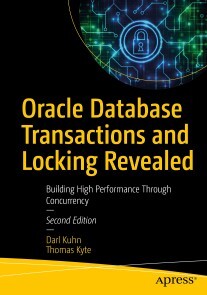
Oracle Database Transactions and Locking Revealed
Access much-needed information for building scalable, high-concurrency applications and deploying them against the Oracle Database. This new edition is updated to be current with Oracle Database 19. It includes a new chapter with troubleshooting recipes to help you quickly diagnose and resolve locking problems that are urgent and block production.Good transaction design is an important facet of highly-concurrent applications that are run by hundreds, even thousands, of users who are executing transactions at the same time. Transaction design, in turn, relies on a good understanding of how the database engine manages the locking of resources to prevent access conflicts and data loss that might otherwise result from concurrent access to data in the database. This book provides a solid and accurate explanation of how locking and concurrency are dealt with by Oracle Database. You will learn how the Oracle Database architecture accommodates user transactions, and how you can write code to mesh with the way in which Oracle Database is designed to operate.ORACLE DATABASE TRANSACTIONS AND LOCKING REVEALED covers in detail the various lock types, and also different locking schemes such as pessimistic and optimistic locking. Then you will learn about transaction isolation and multi-version concurrency, and how the various lock types support Oracle Database’s transactional features. You will learn tips for transaction design, as well as some bad practices and habits to avoid. Coverage is also given to redo and undo, and their role in concurrency. The book is loaded with insightful code examples that drive home each concept. This is an important book that anyone developing highly-concurrent applications will want to have handy on their shelf.WHAT YOU WILL LEARN* Avoid application lockups due to conflicts over accessing the same resource* Understand how Oracle prevents one application from overwriting another’s modifications* Create transaction designs that mesh with how Oracle Database is designed* Build high-throughput applications supporting thousands of concurrent users* Design applications to take full advantage of Oracle’s powerful database engine* Gain a fundamental knowledge of Oracle’s transaction and locking architecture* Develop techniques to quickly diagnose and resolve common locking issuesWHO THIS BOOK IS FOROracle developers and database administrators faced with troubleshooting and solving deadlocks, locking contention, and similar problems that are encountered in high-concurrency environments; and application developers wanting to design their applications to excel at multi-user concurrency by taking full advantage of Oracle Database’s multi-versioning and concurrency supportDARL KUHN is a senior-level database administrator with decades of experience. He handles all facets of database administration from design and development to production support. He enjoys documenting and sharing knowledge and has authored several books on Oracle technology.THOMAS KYTE is a former vice president of the Core Technologies Group at Oracle Corporation. He is the same Tom who created the "Ask Tom" website and the Oracle Magazine column of the same name. He has a long history of answering questions about the Oracle database and tools that developers and database administrators struggle with every day.1. Getting Started2. Locking and Blocking3. Locks, Latches, and Mutexes4. Concurrency and Multiversioning5. Transactions6. Redo and Undo7. Investigating Redo8. Investigating Undo9. Troubleshooting
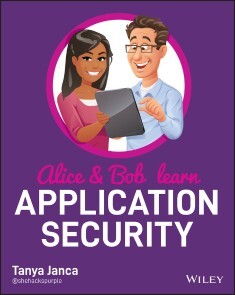
Alice and Bob Learn Application Security
LEARN APPLICATION SECURITY FROM THE VERY START, WITH THIS COMPREHENSIVE AND APPROACHABLE GUIDE!Alice and Bob Learn Application Security is an accessible and thorough resource for anyone seeking to incorporate, from the beginning of the System Development Life Cycle, best security practices in software development. This book covers all the basic subjects such as threat modeling and security testing, but also dives deep into more complex and advanced topics for securing modern software systems and architectures. Throughout, the book offers analogies, stories of the characters Alice and Bob, real-life examples, technical explanations and diagrams to ensure maximum clarity of the many abstract and complicated subjects.Topics include:* Secure requirements, design, coding, and deployment* Security Testing (all forms)* Common Pitfalls* Application Security Programs* Securing Modern Applications* Software Developer Security HygieneAlice and Bob Learn Application Security is perfect for aspiring application security engineers and practicing software developers, as well as software project managers, penetration testers, and chief information security officers who seek to build or improve their application security programs.Alice and Bob Learn Application Security illustrates all the included concepts with easy-to-understand examples and concrete practical applications, furthering the reader's ability to grasp and retain the foundational and advanced topics contained within.TANYA JANCA, also known as SheHacksPurple, is the founder of We Hack Purple, an online learning academy dedicated to teaching everyone how to create secure software. With over twenty years of IT and coding experience, she has won numerous awards and worked as a developer, pentester, and AppSec Engineer. She was named Hacker of the Year by the Cybersecurity Woman of the Year 2019 Awards and is the Founder of WoSEC International, #CyberMentoringMonday, and OWASP DevSlop.Foreword xxiIntroduction xxiiiPART I WHAT YOU MUST KNOW TO WRITE CODE SAFE ENOUGH TO PUT ON THE INTERNET 1CHAPTER 1 SECURITY FUNDAMENTALS 3The Security Mandate: CIA 3Confidentiality 4Integrity 5Availability 5Assume Breach 7Insider Threats 8Defense in Depth 9Least Privilege 11Supply Chain Security 11Security by Obscurity 13Attack Surface Reduction 14Hard Coding 15Never Trust, Always Verify 15Usable Security 17Factors of Authentication 18Exercises 20CHAPTER 2 SECURITY REQUIREMENTS 21Requirements 22Encryption 23Never Trust System Input 24Encoding and Escaping 28Third-Party Components 29Security Headers: Seatbelts for Web Apps 31Security Headers in Action 32X-XSS-Protection 32Content-Security-Policy (CSP) 32X-Frame-Options 35X-Content-Type-Options 36Referrer-Policy 36Strict-Transport-Security (HSTS) 37Feature-Policy 38X-Permitted-Cross-Domain-Policies 39Expect-CT 39Public Key Pinning Extension for HTTP (HPKP) 41Securing Your Cookies 42The Secure Flag 42The HttpOnly Flag 42Persistence 43Domain 43Path 44Same-Site 44Cookie Prefixes 45Data Privacy 45Data Classification 45Passwords, Storage, and Other Important Decisions 46HTTPS Everywhere 52TLS Settings 53Comments 54Backup and Rollback 54Framework Security Features 54Technical Debt = Security Debt 55File Uploads 56Errors and Logging 57Input Validation and Sanitization 58Authorization and Authentication 59Parameterized Queries 59URL Parameters 60Least Privilege 60Requirements Checklist 61Exercises 63CHAPTER 3 SECURE DESIGN 65Design Flaw vs. Security Bug 66Discovering a Flaw Late 67Pushing Left 68Secure Design Concepts 68Protecting Sensitive Data 68Never Trust, Always Verify/Zero Trust/Assume Breach 70Backup and Rollback 71Server-Side Security Validation 73Framework Security Features 74Security Function Isolation 74Application Partitioning 75Secret Management 76Re-authentication for Transactions (Avoiding CSRF) 76Segregation of Production Data 77Protection of Source Code 77Threat Modeling 78Exercises 82CHAPTER 4 SECURE CODE 83Selecting Your Framework and Programming Language 83Example #1 85Example #2 85Example #3 86Programming Languages and Frameworks: The Rule 87Untrusted Data 87HTTP Verbs 89Identity 90Session Management 91Bounds Checking 93Authentication (AuthN) 94Authorization (AuthZ) 96Error Handling, Logging, and Monitoring 99Rules for Errors 100Logging 100Monitoring 101Exercises 103CHAPTER 5 COMMON PITFALLS 105OWASP 105Defenses and Vulnerabilities Not Previously Covered 109Cross-Site Request Forgery 110Server-Side Request Forgery 112Deserialization 114Race Conditions 115Closing Comments 117Exercises 117PART II WHAT YOU SHOULD DO TO CREATE VERY GOOD CODE 119CHAPTER 6 TESTING AND DEPLOYMENT 121Testing Your Code 121Code Review 122Static Application Security Testing (SAST) 123Software Composition Analysis (SCA) 125Unit Tests 126Infrastructure as Code (IaC) and Security as Code (SaC) 128Testing Your Application 129Manual Testing 130Browsers 131Developer Tools 131Web Proxies 132Fuzzing 133Dynamic Application Security Testing (DAST) 133VA/Security Assessment/PenTest 135Testing Your Infrastructure 141Testing Your Database 141Testing Your APIs and Web Services 142Testing Your Integrations 143Testing Your Network 144Deployment 145Editing Code Live on a Server 146Publishing from an IDE 146“Homemade” Deployment Systems 147Run Books 148Contiguous Integration/Continuous Delivery/Continuous Deployment 148Exercises 149CHAPTER 7 AN APPSEC PROGRAM 151Application Security Program Goals 152Creating and Maintaining an Application Inventory 153Capability to Find Vulnerabilities in Written, Running, and Third-Party Code 153Knowledge and Resources to Fix the Vulnerabilities 154Education and Reference Materials 155Providing Developers with Security Tools 155Having One or More Security Activities During Each Phase of Your SDLC 156Implementing Useful and Effective Tooling 157An Incident Response Team That Knows When to Call You 157Continuously Improve Your Program Based on Metrics, Experimentation, and Feedback 159Metrics 159Experimentation 161Feedback from Any and All Stakeholders 161A Special Note on DevOps and Agile 162Application Security Activities 162Application Security Tools 164Your Application Security Program 165Exercises 166CHAPTER 8 SECURING MODERN APPLICATIONS AND SYSTEMS 167APIs and Microservices 168Online Storage 171Containers and Orchestration 172Serverless 174Infrastructure as Code (IaC) 175Security as Code (SaC) 177Platform as a Service (PaaS) 178Infrastructure as a Service (IaaS) 179Continuous Integration/Delivery/Deployment 180Dev(Sec)Ops 180DevSecOps 182The Cloud 183Cloud Computing 183Cloud Native 184Cloud Native Security 185Cloud Workflows 185Modern Tooling 186IAST Interactive Application Security Testing 186Runtime Application Security Protection 187File Integrity Monitoring 187Application Control Tools (Approved Software Lists) 187Security Tools Created for DevOps Pipelines 188Application Inventory Tools 188Least Privilege and Other Policy Automation 189Modern Tactics 189Summary 191Exercises 191PART III HELPFUL INFORMATION ON HOW TO CONTINUE TO CREATE VERY GOOD CODE 193CHAPTER 9 GOOD HABITS 195Password Management 196Remove Password Complexity Rules 196Use a Password Manager 197Passphrases 198Don’t Reuse Passwords 198Do Not Implement Password Rotation 199Multi-Factor Authentication 199Incident Response 200Fire Drills 201Continuous Scanning 202Technical Debt 202Inventory 203Other Good Habits 204Policies 204Downloads and Devices 204Lock Your Machine 204Privacy 205Summary 206Exercises 206CHAPTER 10 CONTINUOUS LEARNING 207What to Learn 208Offensive = Defensive 208Don’t Forget Soft Skills 208Leadership != Management 209Learning Options 209Accountability 212Create Your Plan 213Take Action 214Exercises 214Learning Plan 216CHAPTER 11 CLOSING THOUGHTS 217Lingering Questions 218When Have You Done Enough? 218How Do You Get Management on Board? 220How Do You Get Developers on Board? 221Where Do You Start? 222Where Do You Get Help? 223Conclusion 223APPENDIX A RESOURCES 225Introduction 225Chapter 1: Security Fundamentals 225Chapter 2: Security Requirements 226Chapter 3: Secure Design 227Chapter 4: Secure Code 228Chapter 5: Common Pitfalls 228Chapter 6: Testing and Deployment 229Chapter 7: An AppSec Program 229Chapter 8: Securing Modern Applications and Systems 230Chapter 9: Good Habits 231Chapter 10: Continuous Learning 231APPENDIX B ANSWER KEY 233Chapter 1: Security Fundamentals 233Chapter 2: Security Requirements 235Chapter 3: Secure Design 236Chapter 4: Secure Code 238Chapter 5: Common Pitfalls 241Chapter 6: Testing and Deployment 242Chapter 7: An AppSec Program 244Chapter 8: Securing Modern Applications and Systems 245Chapter 9: Good Habits 247Chapter 10: Continuous Learning 248Index 249

Advanced Analytics in Power BI with R and Python
This easy-to-follow guide provides R and Python recipes to help you learn and apply the top languages in the field of data analytics to your work in Microsoft Power BI. Data analytics expert and author Ryan Wade shows you how to use R and Python to perform tasks that are extremely hard, if not impossible, to do using native Power BI tools. For example, you will learn to score Power BI data using custom data science models and powerful models from Microsoft Cognitive Services.The R and Python languages are powerful complements to Power BI. They enable advanced data transformation techniques that are difficult to perform in Power BI in its default configuration but become easier by leveraging the capabilities of R and Python. If you are a business analyst, data analyst, or a data scientist who wants to push Power BI and transform it from being just a business intelligence tool into an advanced data analytics tool, then this is the book to help you do that.WHAT YOU WILL LEARN* Create advanced data visualizations via R using the ggplot2 package* Ingest data using R and Python to overcome some limitations of Power Query* Apply machine learning models to your data using R and Python without the need of Power BI premium capacity* Incorporate advanced AI in Power BI without the need of Power BI premium capacity via Microsoft Cognitive Services, IBM Watson Natural Language Understanding, and pre-trained models in SQL Server Machine Learning Services * Perform advanced string manipulations not otherwise possible in Power BI using R and PythonWHO THIS BOOK IS FORPower users, data analysts, and data scientists who want to go beyond Power BI’s built-in functionality to create advanced visualizations, transform data in ways not otherwise supported, and automate data ingestion from sources such as SQL Server and Excel in a more concise wayRYAN WADE is a data analytic professional with over 20 years of experience. His education and work experience enable him to have a holistic view of analytics from a technical and business viewpoint. He has an MCSE with an emphasis on BI reporting and Microsoft R. He has an advanced understanding of R, Python, DAX, T-SQL, M, and VBA. He knows how to leverage those programming languages for on-premise and cloud-based data analytics solutions using the Microsoft Data Platform.Ryan is a data analytics enthusiast and has spoken at R meetups, Python meetups, SQLSaturdays, TDWI Conference, and PASS Summit about various data analytics topics. He is the developer of a comprehensive online course for ExcelTv showing how to implement R in Power BI for advanced data analytics and data visualization.PART I. CREATING CUSTOM DATA VISUALIZATIONS USING R1. The Grammar of Graphics2. Creating R custom visuals in Power BI using ggplot2PART II. INGESTING DATA INTO THE POWER BI DATA MODEL USING R AND PYTHON3. Reading CSV Files4. Reading Excel Files5. Reading SQL Server Data6. Reading Data into the Power BI Data Model via an APIPART III. TRANSFORMING DATA USING R AND PYTHON7. Advanced String Manipulation and Pattern Matching8. Calculated Columns using R and PythonPART IV. MACHINE LEARNING & AI IN POWER BI USING R AND PYTHON9. Applying Machine Learning and AI to your Power BI Data Models10. Productionizing Data Science Models and Data Wrangling Scripts.
Big Data
Manipulating and processing masses of digital data is never a purely technical activity. It requires an interpretative and exploratory outlook - already well known in the social sciences and the humanities - to convey intelligible results from data analysis algorithms and create new knowledge.Big Data is based on an inquiry of several years within Proxem, a software publisher specializing in big data processing. The book examines how data scientists explore, interpret and visualize our digital traces to make sense of them, and to produce new knowledge. Grounded in epistemology and science and technology studies, Big Data offers a reflection on data in general, and on how they help us to better understand reality and decide on our daily actions.ÉGLANTINE SCHMITT holds a PhD in Philosophy of Science from the University of Technology of Compiègne (Sorbonne Universités), France. After 7 years at Proxem, she has devoted her career to building bridges between humans and technology through product management and design, in a start-up environment.Introduction viiCHAPTER 1. FROM TRACE TO WEB DATA: AN ONTOLOGY OF THE DIGITAL FOOTPRINT 11.1. The epistemology of the cultural sciences 71.2. The footprint in evidential sciences 91.3. The log or activity history 141.4. The digital footprint as a web log 181.5. The intentionality of digital footprints 201.6. Data as theoretically-loaded footprints 24CHAPTER 2. TOWARD AN EPISTEMIC CONTINUITY ANCHORED IN THE CULTURAL SCIENCES 292.1. Digital technology in the cultural sciences 312.2. Field and corpus: two modes of access to reality 342.3. Virtual methods, a reconstruction of access to the field 382.4. The challenges of the technical revolution of the text 482.5. From the web as an object to the web as a corpus 592.6. Conclusion 69CHAPTER 3. THE STATUS OF COMPUTATION IN DATA SCIENCES 713.1. Making data computable 733.2. The field of computability 773.3. Computational thinking 813.4. Computation in the natural sciences 873.5. From exploratory analysis to data mining 983.6. The institutional and theoretical melting pot of data science 1073.7. The contribution of artificial intelligence 1153.8. Conclusion 122CHAPTER 4. A PRACTICAL BIG DATA USE CASE 1254.1. Presentation of the case study 1264.2. Customer experience and coding of feedback1314.3. From the representative approach to the “big data” project 1344.4. Data preparation 1374.5. Design of the coding plan 1404.6. The constitution of linguistic resources 1434.7. Constituting the coding plan 1484.8. Visibility of the language activity 1534.9. Storytelling and interpretation of the data 1554.10. Conclusion 161CHAPTER 5. FROM NARRATIVES TO SYSTEMS: HOW TO SHAPE AND SHARE DATA ANALYSIS 1655.1. Two epistemic configurations 1665.2. The genesis of systems 1725.3. Conclusion 183CHAPTER 6. THE ART OF DATA VISUALIZATION 1876.1. Graphic semiology 1876.2. Data cartography 1986.3. Representation as evidence 2036.4. The visual language of design in system configuration 2076.5. Materialization and interpretation of recommendations 214CHAPTER 7. KNOWLEDGE AND DECISION 2197.1. Big data, a pragmatic epistemology? 2207.2. Toward gradual validity of knowledge 2277.3. Deciding, knowing and measuring 233Conclusion 239References 243Index 257

Patientenorientierte Digitalisierung im Krankenhaus
Dieses Buch dient Ihnen als Leitfaden für die Digitalisierung im Krankenhaus Gesundheitsbetriebe wie Spitäler stehen in einem Spannungsfeld zwischen steigenden Qualitätsansprüchen und Kosteneffizienz. Deshalb geben Ihnen die Autoren dieses Buchs einen aktuellen Überblick zu den Herausforderungen und den Möglichkeiten der Digitalisierung im Umfeld von Krankenhäusern. Anhand eines fiktiven Beispieles verdeutlichen Ihnen die Verfasser sowohl die Möglichkeiten als auch die Schwierigkeiten dieses Prozesses. Ziel dieses Werks ist es, die Grundlagen der Digitalisierung einer Klinik verständlich für alle Beteiligten darzustellen. Dazu führen die Autoren ein Modell ein, das den Patienten ins Zentrum rückt und das IT-Architekturmanagement mit dem Weg des Patienten durch die Behandlung verknüpft. Zudem erfahren Sie in diesem Buch, wie eine optimale IT-Struktur als Entscheidungs- und Erklärungsgrundlage in einem Krankenhaus dienen kann, um so den Kulturwandel herbeizuführen, der mit einer umfassenden Digitalisierung einhergeht. So schaffen Sie die optimale Basis für zukünftige Prozesse Zu Beginn dieses Buchs erläutern die Autoren, was Digitalisierung überhaupt ist und welche Rolle sie in Krankenhäusern spielt. Markus Mangiapane und Matthias Bender klären Sie über die Fähigkeiten und Voraussetzungen auf, die Sie im Zuge einer erfolgreichen digitalen Transformation benötigen. Die anschließenden Kapitel stellen schwerpunktmäßig folgende Aspekte in den Mittelpunkt: Die vier Pfeiler der digitalen TransformationRechtliche RahmenbedingungenProzessmanagement und -sicherheitEMR Adoption Model (EMRAM)Praktische Umsetzung des Enterprise Architektur Management (EAM)Informationssicherheit und -archivierung Zusätzliche Beispiele aus dem Alltag der Krankenhausinformation schlagen Brücken von der Theorie zur praktischen Anwendung und verdeutlichen die Schwierigkeiten bei der realen Umsetzung der Digitalisierung im Krankenhaus. Mit diesem Werk als Leitfaden sind Sie in der Lage, eine gemeinsame Wissensbasis für die erfolgreiche digitale Transformation von Geschäftsprozessen zu bilden. Das Buch „Patientenorientierte Digitalisierung im Krankenhaus“ ist daher eine Leseempfehlung für: Direktoren und Entscheidungsträger aus den Bereichen CIO, IT oder dem KrankenhausmanagementMedizininformatiker, Ärzte und medizinisches PersonalStudierende der Informatik, Medizininformatik und angrenzender Fächer Einleitung.- Was ist eigentlich Digitalisierung?.- Die vier Pfeiler der digitalen Transformation.- Rechtliche Rahmenbedingungen.- EMR Adoption Model (EMRAM).- Kunden und Patienten.- Grundmodell EAM.- Schichten-Modell.- Implementierung einer Digitalisierungsstrategie mittels EAM.- Fazit.- Literatur.

Welche KI?
Künstliche Intelligenz hat das Potenzial, viele Bereiche unseres Lebens grundlegend zu verändern. Dies betrifft unter anderem Veränderungen der Arbeitswelt, autonome Fahrzeuge oder sogar Waffen, das Gesundheitssystem, demokratische Gesellschaftsstrukturen und die gesamte Lebenswelt. Daraus erwachsen große Chancen für die Gesellschaft, aber auch große Gefahren.In der Analyse solcher Szenarien zeigt sich, dass die Auswirkungen von KI in einer ethischen Detailbetrachtung nicht ausreichend erfasst werden können. Vielmehr müssen sie aus einem umfassenden gesellschaftlichen und menschlichen Zusammenhang beurteilt werden. In diesem Buch wird daher eine Perspektive auf KI gezeigt, die ethische Detailfragen zu den Anwendungen von KI aus der größeren Perspektive philosophischer Reflexion betrachtet.Diese umfasst philosophische Überlegungen zur Auswirkung der Technik und die Betrachtung von Szenarien der Technikentwicklung. Weiterhin werden Veränderungen des Menschenbildes analysiert, die mit der Entwicklung von KI verbunden sind. Damit hängt die Frage zusammen, ob KI Bewusstsein entwickeln kann und ob einer fortgeschrittenen KI ein Rechtsstatus einer elektronischen Persönlichkeit zugeordnet werden soll.Die betrachteten Entwicklungsszenarien umfassen die Veränderung der Arbeitswelt zwischen einer Hoffnung auf eine Entlastung von monotonen und gefährlichen Tätigkeiten einerseits und der Gefahr von Massenarbeitslosigkeit andererseits. Weiterhin werden neben den bekannten Problemen des autonomen Fahrens die Auswirkungen auf Szenarien der Mobilität betrachtet. In Bezug auf den Einsatz von autonomen Waffen und auf die Steuerung der Kriegsführung durch KI wird das Szenario eines neuen Wettrüstens und einer Entgrenzung der Kriegsführung vorgestellt, das eine Ächtung dieser Techniken nahelegt.Für das Gesundheitssystem und die Altenpflege wird das Szenarium einer weiteren Entmenschlichung dieser Bereiche mit einem Konzept kontrastiert, das dem menschlichen Faktor gerade durch die Entlastung von technischen Aufgaben einen neuen Stellenwert gibt. Entsprechende Szenarien werden für die Auswirkungen von KI auf die Demokratie und die Durchdringung der Lebenswelt vorgestellt. Prof. Dr. Stefan Bauberger hat Philosophie, Theologie und Physik studiert. Er hat ein Diplom in Theologie, eine Promotion in theoretischer Physik und eine Habilitation in Philosophie erworben. Er ist an der Hochschule für Philosophie in München als Professor für Naturphilosophie und Wissenschaftstheorie tätig. Seit einigen Jahren liegt sein Schwerpunkt auf der Technikphilosophie, mit besonderer Ausrichtung auf die Künstliche Intelligenz.
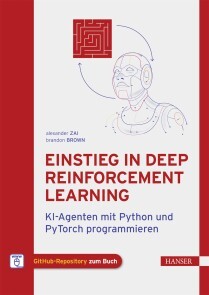
Einstieg in Deep Reinforcement Learning
- Grundlegende Konzepte und Terminologie- Praktischer Einsatz mit PyTorch- Projekte umsetzenDieses Buch zeigt Ihnen, wie Sie Agenten programmieren, die basierend auf direktem Feedback aus ihrer Umgebung selbstständig lernen und sich dabei verbessern. Sie werden Netzwerke mit dem beliebten PyTorch-Deep-Learning-Framework aufbauen, um bestärkende Lernalgorithmen zu erforschen. Diese reichen von Deep-Q-Networks über Methoden zur Gradientenmethode bis hin zu evolutionären Algorithmen.Im weiteren Verlauf des Buches wenden Sie Ihre Kenntnisse in praktischen Projekten wie der Steuerung simulierter Roboter, der Automatisierung von Börsengeschäften oder dem Aufbau eines Spiel-Bots an.Aus dem Inhalt:- Strukturierungsprobleme als Markov-Entscheidungsprozesse- Beliebte Algorithmen wie Deep Q-Networks, Policy Gradient-Methode und Evolutionäre Algorithmen und die Intuitionen, die sie antreiben- Anwendung von Verstärkungslernalgorithmen auf reale Probleme Alexander Zai ist Machine Learning Engineer bei Amazon AI und arbeitet an MXNet, das eine Reihe von AWS-Maschinenlernprodukten unterstützt. Er ist auch Mitbegründer von Codesmith, einem Bootcamp für Softwareentwicklung mit Niederlassungen in Los Angeles und New York.Brandon Brown ist Medizinstudent und Data Scientist an der UCLA. Er hat in den letzten drei Jahren ausführlich über maschinelles Lernen auf outlace.com gebloggt.
Visualizing Health and Healthcare Data
THE ONLY DATA VISUALIZATION BOOK WRITTEN BY AND FOR HEALTH AND HEALTHCARE PROFESSIONALS.In health and healthcare, data and information are coming at organizations faster than they can consume and interpret it. Health providers, payers, public health departments, researchers, and health information technology groups know the ability to analyze and communicate this vast array of data in a clear and compelling manner is paramount to success. However, they simply cannot find experienced people with the necessary qualifications. The quickest (and often the only) route to meeting this challenge is to hire smart people and train them.Visualizing Health and Healthcare Data: Creating Clear and Compelling Visualizations to "See how You're Doing" is a one-of-a-kind book for health and healthcare professionals to learn the best practices of data visualization specific to their field. It provides a high-level summary of health and healthcare data, an overview of relevant visual intelligence research, strategies and techniques to gather requirements, and how to build strong teams with the expertise required to create dashboards and reports that people love to use. Clear and detailed explanations of data visualization best practices will help you understand the how and the why.* Learn how to build beautiful and useful data products that deliver powerful insights for the end user* Follow along with examples of data visualization best practices, including table and graph design for health and healthcare data* Learn the difference between dashboards, reports, multidimensional exploratory displays and infographics (and why it matters)* Avoid common mistakes in data visualization by learning why they do not work and better ways to display the dataWritten by a top leader in the field of health and healthcare data visualization, this book is an excellent resource for top management in healthcare, as well as entry-level to experienced data analysts in any health-related organization.KATHY ROWELL is a nationally recognized health, healthcare, and data visualization expert, lecturer, and author specializing in helping leading organizations analyze, design, and present visual displays of data to inform their decisions and stimulate effective action. She is the co-author of the Best Boring Book Ever (BBBE) of Healthcare Classification Systems and Databases, and BBBE of Tableau for Healthcare Professionals, which are used by numerous colleges and universities and professional organizations to teach and train students and professionals.Kathy is the Co-founder and Principal of HealthDataViz (HDV) where she has led innovative and ground-breaking projects and data visualization training initiatives for leading organizations such as Memorial Sloan Kettering Cancer Center, the Centers for Medicare and Medicaid Services, and the Children’s Hospital Association. A graduate of the University of NH and Dartmouth Medical School, Kathy lives in Maine and loves being on the water and cruising the coast with her family on their boat "Visualize."With seven years wholly immersed in healthcare data visualization, following ten years as a licensed marriage and family therapist, Lindsay brings a wealth of direct care experience and an unbridled passion and nationally recognized expertise for visualizing health and healthcare data. A Tableau Zen Master and member of the HealthDataViz (HDV) team, LINDSAY is an enthusiastic creator of effective, intuitive, and beautiful dashboards that people love to use and make the story and opportunities buried in the data clear. Her passion for health and healthcare data knows no bounds evidenced by her establishment of #ProjectHealthViz, a community of passionate data visualizers that create displays of health and healthcare data each month to tell our health stories.Lindsay has a B.A. from Bucknell University and an M.A. from the University of Connecticut. She currently lives in Pennsylvania with her husband and two boys.CAMBRIA BROWN has over ten years of experience analyzing and visualizing health and healthcare data, and is a Tableau Desktop Certified Professional. With a background in public health, survey design, advanced biostatistics, and quality improvement, Cambria understands the full data use cycle and is passionate about helping organizations use data to improve health.As a member of the HealthDataViz team, she has developed beautiful, user-friendly, and high impact dashboards for a variety of clients including the New York City Dept. of Health and Mental Hygiene, the Colorado Dept. of Public Health and Environment, and the Urban Indian Health Institute. Cambria holds a Master of Public Health in Epidemiology and Biostatistics from Oregon Health & Science University. She lives in Colorado where, when not data vizzing, she enjoys going on adventures with her husband and two children.Preface xiiiSECTION I ESTABLISHING A FRAMEWORK AND PROCESS 1CHAPTER 1 HEALTH AND HEALTHCARE DATA VISUALIZATIONS OF HISTORICAL IMPORTANCE 3CHAPTER 2 STOP HUNTING UNICORNS AND START BUILDING TEAMS AND KNOW THE DATA 9Search for Characteristics and Core Competencies 10Get to Know the Data 11Classifications, Intent, Purpose, and Lineage 12Two Types of Data 14Qualitative/Categorical Data 14Quantitative/Numerical Data 14Scales/Levels of Measure 15Nominal 15Ordinal 16Interval 17Ratio 18Summary 19CHAPTER 3 REQUIREMENTS-GATHERING AND DESIGN METHODS 21Design Thinking Foundational Concepts 22Design Methods 23Contextual Inquiry 23Mental Models 24Personas 26Persona Creation Guide 27Graphic Organizers 29Guided Analytics Framework 29Summary Overview Dashboard 30Supporting Focused Reports 30Details 31Multidimensional Exploratory Displays (MEDs™) 31Sketching 32Prototyping 33Testing 34Summary 36SECTION II PERCEIVING THE BEST PRACTICES OF DATA VISUALIZATION 37CHAPTER 4 THE RESEARCH 39Research Informs Data Visualization Best Practices 39Preattentive Attributes 41Preattentive Attributes at Work 43Gestalt Principles 46Color Theory 48The Power of White Space 53Where People Look 54Summary 54CHAPTER 5 TABLE DESIGN CHECKLIST 55Fundamentals of Table Design 55Organization/Categorization 55Non-Data Ink 56Fonts 56Number Alignment and Formatting 56Labels 58Summary 58CHAPTER 6 POWERFUL VISUALIZATIONS IN FOUR SHAPES 59Bars, Lines, Points, and Boxes 59Shape One: Bars 61Bar Basics 61Using Bars To: See How You’re Doing 63Distributions 63Histograms 63Population Pyramid (Paired Bars) 65Ranking 67Change over Time 68Comparing Multiple Data Points 70Proportions | Part-to-Whole 71Challenging the 100% Myth 73Deviation (Difference, Variation) 73Ranges and Comparative Values 74Displaying the Vital Few: Pareto Charts 77Bars Are Not Boring 78Shape Two: Lines 79Line Basics 79Using Lines To: See How You’re Doing 83As a Reference | Comparison 83Change over Time 84Change over Time | Sparklines 86Change over Time | Deviation Graphs 87Distributions 88Distributions | The Empirical Rule and Control Charts 88Statistical Process Control Charts (SPCs) and Geometric (G) Charts 90Relationships | Correlations 91Shape Three: Points 92Point Basics 92Using Points To: See How You’re Doing 94Distributions 94Revealing Details 95Change over Time 96Correlation 96Hierarchy Quadrant 97Location Details 98Shape Four: Boxes 98Box Basics 99Using Boxes To: See How You’re Doing 99Distribution 99Multiple Values 100Change over Time and Utilization Rates 101Hierarchical Data 101Other Shapes 102Summary 103CHAPTER 7 MAPS 105Using Maps to Gain Insights 105Geographic Maps 105Choropleth Maps 106Hex-Tile Maps 109Symbol/Dot-Density Maps 110Proportional Symbol Maps 112When Not to Use a Map 113Summary 114CHAPTER 8 GRAPHS AND CHARTS TO NEVER USE OR USE WITH CAUTION 115When “Cool Displays” Are Anything But 115Pie and Donut Charts 117Why People Use Them 117Characteristics 118Challenges 118Best Practice Alternative 119Multiples of Several-Part Stacked Bar Charts (MSPSBCs) 121Why People Use Them 121Characteristics 121Challenges 121Best Practice Alternative 124Bubble Charts 124Why People Use Them 124Characteristics 125Challenges 125Best Practice Alternative 126Treemaps 128Why People Use Them 128Characteristics 129Challenges 129Best Practice Alternative 130Marimekko (Mekko or Mosaic) Charts 132Why People Use Them 132Characteristics 132Challenges 134Best Practice Alternative 134Radial Bar and Petal Charts 134Why People Use Them 134Characteristics 135Challenges 135Best Practice Alternative 136Radar Charts 138Why People Use Them 138Characteristics 138Challenges 138Best Practice Alternative 139Sankey Diagrams 141Why People Use Them 141Characteristics 141Challenges 142Best Practice Alternative 144One More Thing: 3-D 145Summary 146CHAPTER 9 MAKING ACCESSIBLE VISUALIZATIONS 149Accessible Design is Good Design 149Accessibility in Data Visualization 150Ways to Make Accessible Data Visualizations 151Summary 158SECTION III CREATING COMPELLING DATA DISPLAYS 159CHAPTER 10 DASHBOARDS, REPORTS, AND MULTIDIMENSIONAL EXPLORATORY DISPLAYS (MEDS™) 161Definitions Matter 161Dashboards 162Dashboards Defined 162Purpose/Objective 162Data/Information 163Design 164Example Dashboards 165Dashboard Summary 169Reports 170Reports Defined 170Purpose/Objective 170Design 170Example Reports 171Report Summary 176Multidimensional Exploratory Displays (MEDs™) 176MEDs™ Defined 177Purpose/Objective 177Design 177Example MED™ 177MEDs™ Summary 184Summary 184CHAPTER 11 INFOGRAPHICS 185"No Tobacco Day" Infographic 186Measles and Vaccinations Infographic 188Infographic vs. Infoposter 191Summary 194SECTION IV CLOSING THOUGHTS AND RECOMMENDED READING AND RESOURCES 195Closing Thoughts 197Fluency and Mastery 197Bitten by the Viz Bug | Recommended Reading and Resources 199Recommended Reading 199Resources 201Accessibility Resources 202Author Bios 203References 207Index 211

Advanced ASP.NET Core 3 Security
Incorporate security best practices into ASP.NET Core. This book covers security-related features available within the framework, explains where these feature may fall short, and delves into security topics rarely covered elsewhere. Get ready to dive deep into ASP.NET Core 3.1 source code, clarifying how particular features work and addressing how to fix problems.For straightforward use cases, the ASP.NET Core framework does a good job in preventing certain types of attacks from happening. But for some types of attacks, or situations that are not straightforward, there is very little guidance available on how to safely implement solutions. And worse, there is a lot of bad advice online on how to implement functionality, be it encrypting unsafely hard-coded parameters that need to be generated at runtime, or articles which advocate for certain solutions that are vulnerable to obvious injection attacks. Even more concerning is the functions in ASP.NET Core that are not as secure as they should be by default.ADVANCED ASP.NET CORE 3 SECURITY is designed to train developers to avoid these problems. Unlike the vast majority of security books that are targeted to network administrators, system administrators, or managers, this book is targeted specifically to ASP.NET developers. Author Scott Norberg begins by teaching developers how ASP.NET Core works behind the scenes by going directly into the framework's source code. Then he talks about how various attacks are performed using the very tools that penetration testers would use to hack into an application. He shows developers how to prevent these attacks. Finally, he covers the concepts developers need to know to do some testing on their own, without the help of a security professional.WHAT YOU WILL LEARN* Discern which attacks are easy to prevent, and which are more challenging, in the framework* Dig into ASP.NET Core 3.1 source code to understand how the security services work* Establish a baseline for understanding how to design more secure software* Properly apply cryptography in software development* Take a deep dive into web security concepts* Validate input in a way that allows legitimate traffic but blocks malicious traffic * Understand parameterized queries and why they are so important to ASP.NET Core* Fix issues in a well-implemented solution * Know how the new logging system in ASP.NET Core falls short of security needs* Incorporate security into your software development processWHO THIS BOOK IS FORSoftware developers who have experience creating websites in ASP.NET and want to know how to make their websites secure from hackers and security professionals who work with a development team that uses ASP.NET Core. A basic understanding of web technologies such as HTML, JavaScript, and CSS is assumed, as is knowledge of how to create a website, and how to read and write C#. You do not need knowledge of security concepts, even those that are often covered in ASP.NET Core documentation.SCOTT NORBERG is a web security specialist with almost 15 years of experience in various technology and programming roles, focusing on developing and securing websites built with ASP.NET. As a security consultant, he specializes on blue team (defensive) techniques such as Dynamic Application Security Testing (DAST), code reviews, and manual penetration testing. He also has an interest in building plug-and-play software libraries that developers can use to secure their sites with little-to-no extra effort. As a developer, Scott has primarily built websites with C# and various versions of ASP.NET, and he has also built several tools and components using F#, VB.NET, Python, R, Java, and Pascal.Scott holds several certifications, including Microsoft Certified Technology Specialist (MCTS), certifications for ASP.NET and SQL Server, and a Certified Information Systems Security Professional (CISSP) certification. He also has an MBA from Indiana University.Scott is currently working as a contractor and consultant through his business, Norberg Consulting Group, LLC. You can see his latest ideas and projects at scottnorberg.com.CHAPTER 1 – INTRODUCING ASP.NET CORECHAPTER 2 – GENERAL SECURITY CONCEPTSCHAPTER 3 – CRYPTOGRAPHYCHAPTER 4 – WEB SECURITY CONCEPTSCHAPTER 5 – UNDERSTANDING COMMON ATTACKSCHAPTER 6 – PROCESSING USER INPUTCHAPTER 7 – AUTHENTICATION AND AUTHORIZATIONCHAPTER 8 – DATA ACCESS AND STORAGECHAPTER 9 - LOGGING AND ERROR HANDLINGCHAPTER 10 – SETUP AND CONFIGURATIONCHAPTER 11 – SECURE APPLICATION LIFECYCLE MANAGEMENT

Foundation Dynamic Web Pages with Python
Discover the concepts of creating dynamic web pages (HTML) with Python. This book reviews several methods available to serve up dynamic HTML including CGI, SSI, Django, and Flask.You will start by covering HTML pages and CSS in general and then move on to creating pages via CGI. It is easy to use and can serve as a foundation for the more advanced services available for launching dynamic web pages. Next you'll explore the SSI (Server Side Interface) method. This is a slightly more advanced interface included in mots web servers that adds functionality to modify static HTML pages to add such things as the current date or time, include additional HTML, and other features to a static web page before it is delivered to the user.The book also covers some of the key the Django module features, which must be added to the web server. These features include creating dynamic web pages and calling a database to provide additional information to the web page. Lastly you will explore the Flask module. While it has limited functionality on its own, it provides a very flexible environment to create a self designed system for delivery of dynamic web pages.By the time you finish this book, you will be able to choose the appropriate methodology for delivering dynamic information using fast HTML creation services.WHAT YOU'LL LEARN* Use HTML pages and CSS together to control the style of your web site.* Install and configure SSI, Django, and Flask for Apache.* Create dynamic web pages using CGI and creating a library of partial HTML pages to use in this task.* Build dynamic web pages using SSI and auxiliary Python programs to enhance the SSI functionality.* Develop dynamic web pages using Django.WHO THIS BOOK IS FORSoftware Developers with basic Python programming skills interested in learning Web DevelopmentW. David Ashley is a technical writer for SkillSoft where he specializes in open source, particularly Linux. As a member of the Linux Fedora documentation team he recently led the Libvert project documentation, and wrote the Python programs included with it. He has developed in 20 different programming languages during his 30 years as a software developer and IT consultant, including more than 18 years at IBM and 12 years with American Airlines. Chapter 1: Introduction to Web ServersChapter Goal: An introduction to web servers – specifically the Apache web server.No. of Pages: 5Sub-Topics:Glossary of termsIntroduction to the Apache web serverIntroduction to other web serversConfiguring your web serverOrganizing your web serverChapter 2: HTML Pages and CSSChapter Goal: Describes the main principles of web pages and style sheetsNo. of Pages: 20Sub-Topics:HTML tagsOrganizing HTML sectionsLinking HTML pages to a style sheetCreating a library of partial HTML pagesEnsuring coordination between the HTML page, the CSS stylesheet, and you libraryChapter 3: Using CGI and PythonChapter Goal: Using Python to create an HTML pageNo. of Pages: 25Sub-Topics:Configure CGI for use by PythonCreate a dummy page just for creating the layout of the page major elementsHTML sectionsUsing Python to create a dynamic HTML pageWhere to split a web page into multiple partsTechniques for managing the web page for use by PythonThe good and the bad of using CGIChapter 4: Using SSI and PythonChapter Goal: Configure Apache for use by SSI and PythonNo. of Pages: 45Sub-Topics:Configure SSI for use by PythonCreate a dummy page just for creating the layout of the page major elementsHTML sectionsUsing SSI and Python to create a dynamic HTML pageWhere to split a web page into multiple partsTechniques for managing the web page for use by SSI and PythonThe good and the bad of using SSIChapter 5: Using Django and PythonChapter Goal: Using Django and Python to create an HTML pageNo. of Pages: 40Sub-Topics:Configure Apache for use by Django and PythonCreate a dummy page just for creating the layout of the page major elementsHTML sectionsUsing Django and Python to create a dynamic HTML pageWhere to split a web page into multiple partsTechniques for managing the web page for use by Django and PythonThe good and the bad of using DjangoChapter 6: Using Flask and JinjaChapter Goal: Using Flask and Python to create an HTML pageNo. of Pages: 40Sub-Topics:Configure Apache for use by Flask and PythonCreate a dummy page just for creating the layout of the page major elementsHTML sectionsUsing Flask and Python to create a dynamic HTML pageWhere to split a web page into multiple partsTechniques for managing the web page for use by Flask and PythonThe good and the bad of using FlaskChapter 7: Comparing CGI, SSI, Django, and Flask Chapter Goal: Choosing the correct dynamic page creation systemNo. of Pages: 50Sub-Topics:List the advantages of each systemList the disadvantages of each systemChapter 8: Usage Options - CGI, SSI, Django, and FlaskChapter Goal: Choosing the correct dynamic page creation systemNo. of Pages: 50Sub-Topics:Discuss options for using multiple systemsSome things to remember

Cybersecurity in Humanities and Social Sciences
The humanities and social sciences are interested in the cybersecurity object since its emergence in the security debates, at the beginning of the 2000s. This scientific production is thus still relatively young, but diversified, mobilizing at the same time political science, international relations, sociology , law, information science, security studies, surveillance studies, strategic studies, polemology. There is, however, no actual cybersecurity studies. After two decades of scientific production on this subject, we thought it essential to take stock of the research methods that could be mobilized, imagined and invented by the researchers. The research methodology on the subject "cybersecurity" has, paradoxically, been the subject of relatively few publications to date. This dimension is essential. It is the initial phase by which any researcher, seasoned or young doctoral student, must pass, to define his subject of study, delimit the contours, ask the research questions, and choose the methods of treatment. It is this methodological dimension that our book proposes to treat. The questions the authors were asked to answer were: how can cybersecurity be defined? What disciplines in the humanities and social sciences are studying, and how, cybersecurity? What is the place of pluralism or interdisciplinarity? How are the research topics chosen, the questions defined? How, concretely, to study cybersecurity: tools, methods, theories, organization of research, research fields, data ...? How are discipline-specific theories useful for understanding and studying cybersecurity? Has cybersecurity had an impact on scientific theories? Hartmut Aden, Prof. University of Berlin Hugo Loiseau, Prof. University of Sherbrooke Daniel Ventre, CNRS, researcher at CESDIPIntroduction ixDaniel VENTRE, Hugo LOISEAU and Hartmut ADENCHAPTER 1 THE “SCIENCE” OF CYBERSECURITY IN THE HUMAN AND SOCIAL SCIENCES: ISSUES AND REFLECTIONS 1Hugo LOISEAU1.1 Introduction 11.2 A method? 41.3 Data? 111.4 One or more definition(s)? 161.5 Conclusion 201.6 References 21CHAPTER 2 DEFINITIONS, TYPOLOGIES, TAXONOMIES AND ONTOLOGIES OF CYBERSECURITY 25Daniel VENTRE2.1 Introduction 252.2 Definition 272.2.1 What is a definition? 272.2.2 Usefulness of definitions 292.2.3 Rules for constructing definitions 292.2.4 Definitions of cybersecurity 322.3 Typology 432.3.1 What is a typology? 442.3.2 Usefulness of typologies 442.3.3 Rules for the construction of typologies 452.3.4 Cybersecurity typologies 462.4 Taxonomy 482.4.1 What is a taxonomy? 482.4.2 Usefulness of taxonomy 492.4.3 Rules for the construction of taxonomies 492.4.4 Taxonomies of cybersecurity 502.5 Ontologies 512.5.1 What is ontology? 522.5.2 Usefulness of ontologies 532.5.3 Rules for construction of ontologies 532.5.4 Cybersecurity ontologies 542.6 Conclusion 562.7 References 57CHAPTER 3 CYBERSECURITY AND DATA PROTECTION – RESEARCH STRATEGIES AND LIMITATIONS IN A LEGAL AND PUBLIC POLICY PERSPECTIVE 67Hartmut ADEN3.1 Introduction 673.2 Studying the complex relationship between cybersecurity and data protection: endangering privacy by combating cybercrime? 683.2.1 Potential tensions between cybersecurity and data protection 693.2.2 Potential synergies between cybersecurity and data protection 723.3 Methodological approaches and challenges for the study of cybersecurity – legal and public policy perspectives 743.3.1 Legal interpretation and comparison as methodological approaches to the study of cybersecurity 743.3.2 Public policy approaches to the study of cybersecurity 773.3.3 Transdisciplinary synergies between legal and public policy perspectives 783.4 Conclusion and outlook 803.5 References 81CHAPTER 4 RESEARCHING STATE-SPONSORED CYBER-ESPIONAGE 85Joseph FITSANAKIS4.1 Defining cybersecurity and cyber-espionage 854.2 Taxonomies of cyber-threats 874.3 The structure of this chapter 884.4 The significance of state-sponsored cyber-espionage 904.5 Research themes in state-sponsored cyber-espionage 944.6 Theorizing state-sponsored cyber-espionage in the social sciences 984.7 Research methodologies into state-sponsored cyber-espionage 1044.8 Intellectual precision and objectivity in state-sponsored cyber-espionage research 1064.9 Detecting state actors in cyber-espionage research 1104.10 Identifying specific state actors in cyber-espionage research 1124.11 Conclusion: researching a transformational subject 1164.12 References 118CHAPTER 5 MOVING FROM UNCERTAINTY TO RISK: THE CASE OF CYBER RISK 123Michel DACOROGNA and Marie KRATZ5.1 Introduction 1235.2 The scientific approach to move from uncertainty to risk 1245.3 Learning about the data: the exploratory phase 1265.4 Data cleansing 1285.5 Statistical exploration on the various variables of the dataset 1305.6 Univariate modeling for the relevant variables 1345.7 Multivariate and dynamic modeling 1395.7.1 A fast-changing environment: time dependency 1405.7.2 Causal relations 1435.7.3 Models for prediction 1475.8 Conclusion 1495.9 Acknowledgments 1515.10 References 151CHAPTER 6 QUALITATIVE DOCUMENT ANALYSIS FOR CYBERSECURITY AND INFORMATION WARFARE RESEARCH 153Brett VAN NIEKERK and Trishana RAMLUCKAN6.1 Introduction 1536.1.1 Previous research 1546.2 Information warfare and cybersecurity 1546.3 Researching information warfare and cybersecurity 1566.4 Qualitative research methodologies for information warfare and cybersecurity 1576.4.1 Clustering of documents 1596.4.2 Clustering of words 1596.4.3 Word frequencies and word clouds 1596.4.4 Text search and word trees 1596.4.5 Example use cases of qualitative document analysis 1606.5 An analysis of national cybersecurity strategies 1616.5.1 Selection process for the documents 1616.5.2 Analysis 1626.5.3 Discussion 1676.6 An analysis of the alignment of South Africa’s Cybercrimes Bill to international legislation 1696.6.1 Background to the documents 1696.6.2 Analysis 1706.6.3 Discussion 1746.7 An analysis of the influence of classical military philosophy on seminal information warfare texts 1766.8 Reflections on qualitative document analysis for information warfare and cybersecurity research 1776.9 Conclusion 1796.10 References 180CHAPTER 7 ANTI-FEMINIST CYBER-VIOLENCE AS A RISK FACTOR: ANALYSIS OF CYBERSECURITY ISSUES FOR FEMINIST ACTIVISTS IN FRANCE 185Elena WALDISPUEHL7.1 Introduction 1857.2 Localization of an online field 1877.2.1 Online ethnographic work and empathy 1927.2.2 Cybersecurity issues of an online field 1937.3 Online–offline continuum 1947.4 Continuum between security and insecurity 1997.5 Conclusion 2047.6 References 205List of Authors 211Index 213