

Computer und IT

Green Office Buch
In Ihrem Privatleben treffen Sie bereits bewusste Entscheidungen, um das Klima zu schützen, und möchten nun auch in Ihrem Büro etwas positiv verändern? Dann lernen Sie in diesem Buch Schritt für Schritt, auf welche Weise Sie Ihr Büro »grüner« gestalten können.Zunächst gibt die Autorin ausführliche Hintergrundinformationen zu Klima und Nachhaltigkeit und Sie lernen Aspekte über den Klimawandel kennen, die Sie vielleicht noch nicht kannten.Anschließend zeigt Ihnen die Autorin, wie Sie den Status Quo Ihres Büros zunächst grundlegend analysieren können, um Ihnen anschließend mithilfe vieler Praxisbeispiele zu zeigen, in welchen Bereichen Sie bereits mit kleinen Veränderungen etwas bewirken können.Gleichzeitig weist die Autorin auch auf Fallstricke hin, denn insbesondere wenn Sie im Marketing mit Nachhaltigkeit werben, können Greenwashing-Vorwürfe und andere Fehler auch schnell dem Unternehmen schaden. Sie erhalten hilfreiche Tipps, wie Sie diese Fehler vermeiden können und wie eine nachhaltige Kommunikation gelingt.Im Anhang des Buches finden Sie darüber hinaus viele nützliche Checklisten und weiterführende Informationen zu Ökosiegeln, Saisonkalendern und Tipps zum richtigen Mülltrennen.Dies ist ein praktischer Leitfaden für alle, die mit kleinen und größeren Veränderungen ihren Teil zur Rettung unseres Klimas beitragen möchten.Inhalt:Was ist ein Green Office?HintergrundwissenErste SchritteWas jeder tun kannLangfristige ZieleNachhaltige Kommunikation und MarketingWas Unternehmen zusätzlich tun könnenBürogebäude der ZukunftTipps, Checklisten, GütesiegelAutor:Rebecca Sommer ist Redakteurin, Unternehmerin und Umweltaktivistin. Als Geschäftsführerin leitet sie die nachhaltige Werbeagentur between, die 2019 einen ersten Platz beim bundesweiten Wettbewerb »Büro & Umwelt« belegt und 2021 erneut eine Auszeichnung erhalten hat. Gemeinsam mit ihrem Team erarbeitet sie Print- und Onlinemarketing-Lösungen für Unternehmen in der D-A-CH-Region und darüber hinaus. Rebecca Sommer ist außerdem Gründerin und Chefredakteurin des Familienmagazins »Naturkind«, das sich an naturverbundene Familien richtet.

Penetration Testing of Computer Networks Using Burpsuite and Various Penetration Testing Tools
Burp Suite is an integrated platform/graphical tool for performing security testing of web applications. Burp suite is a java application that can be used to secure or crack web applications. The suite consists of different tools, like a proxy server, a web spider an intruder and a so-called repeater, with which requests can be automated. You can use Burp's automated and manual tools to obtain detailed information about your target applications.Damn Vulnerable Web App (DVWA) is a PHP/MySQL web application that is damn vulnerable. Its main goals are to be an aid for security professionals to test their skills and tools in a legal environment, help web developers better understand the processes of securing web applications and aid teachers/students to teach/learn web application security in a class room environment.In this report I am using a combination of Burp tools to detect and exploit vulnerabilities in Damn Vulnerable Web App (DVWA) with low security. By default, Burp Scanner scans all requests and responses that pass through the proxy. Burp lists any issues that it identifies under Issue activity on the Dashboard. You can also use Burp Scanner to actively audit for vulnerabilities. Scanner sends additional requests and analyzes the application's traffic and behavior to identify issues.Various examples are outlined in this report for different types of vulnerabilities such as: SQL injection, Cross Site Request Forgery (CSRF), Cross-site scripting, File upload, Local and Remote File Inclusion. I tested various types of penetration testing tools in order to exploit different types of vulnerabilities. The report consists from the following parts:1. Installing and Configuring BurpSuite2. BurpSuite Intruder.3. Installing XMAPP and DVWA App in Windows System.4. Installing PHP, MySQL, Apache2, Python and DVWA App in Kali Linux.5. Scanning Kali-Linux and Windows Using .6. Understanding Netcat, Reverse Shells and Bind Shells.7. Adding Burps Certificate to Browser.8. Setting up Target Scope in BurpSuite.9. Scanning Using BurpSuite.10. Scan results for SQL Injection Vulnerability with BurpSuite and Using SQLMAP to Exploit the SQL injection.11. Scan Results for Operating System Command Injection Vulnerability with BurpSuite and Using Commix to Exploit the OS Command Injection.12. Scan Results for Cross Side Scripting (XSS) Vulnerability with BurpSuite, Using Xserve to exploit XSS Injection and Stealing Web Login Session Cookies through the XSS Injection.13. Exploiting File Upload Vulnerability.14: Exploiting Cross Site Request Forgery (CSRF) Vulnerability.15. Exploiting File Inclusion Vulnerability.16. References.I am Dr. Hidaia Mahmood Mohamed Alassouli. I completed my PhD degree in Electrical Engineering from Czech Technical University by February 2003, and my M. Sc. degree in Electrical Engineering from Bahrain University by June 1995. I completed also one study year of most important courses in telecommunication and computer engineering courses in Islamic university in Gaza. So, I covered most important subjects in Electrical Engineering, Computer Engineering and Telecommunications Engineering during my study. My nationality is Palestinian from Gaza Strip.I obtained a lot of certified courses in MCSE, SPSS, Cisco (CCNA), A+, Linux.I worked as Electrical, Telecommunicating and Computer Engineer in a lot of institutions. I worked also as a computer networking administrator.I had considerable undergraduate teaching experience in several types of courses in many universities. I handled teaching the most important subjects in Electrical and Telecommunication and Computer Engineering.I could publish a lot of papers a top-tier journals and conference proceedings, besides I published a lot of books in Publishing and Distribution houses.I wrote a lot of important Arabic articles on online news websites. I also have my own magazine website that I publish on it all my articles: http://www.anticorruption.000space.comI am an Author publishing books on kdp.amazon.comand many other book stores such as Google, Apple.com, writinglife.kobo.com, Lulu.com, feiyr.com, blurb.com, bookrix.com, barnesandnoble.com, notionpress.com, ingramspark.com and others .My personal website: http://www.hidaia-alassouli.000space.comMy Amazon Author Central: https://www.amazon.com/-/e/B07BH5HS7LEmail: hidaia_alassouli@hotmail.com

KI für das Gute
Während die Technologie im Zeitalter des maschinellen Lernens rasant voranschreitet, mangelt es an klaren Absichten und der Formulierung akzeptabler ethischer Standards. Dieses Buch fasst das komplexe Thema der "guten" Technologie bereichsübergreifend zusammen und wechselt zwischen Theorie und Praxis. Die Autoren gehen auf die sich ständig ausweitende Diskussion über Künstliche Intelligenz (KI) und Ethik ein und geben eine Orientierung. Dabei werden insbesondere pragmatische und aktuelle Fragestellungen berücksichtigt, wie z.B. die Kollateralwirkungen der COVID19-Pandemie. Ein aktueller Überblick über die Digitalisierung - an sich schon ein sehr weites Feld - wird ebenso vorgestellt wie eine Analyse der Ansätze von KI aus ethischer Perspektive. Darüber hinaus werden konkrete Ansätze zur Berücksichtigung angemessener ethischer Prinzipien in KI-basierten Lösungen angeboten. Das Buch richtet sich sowohl an Wissenschaftler aus geistes- und wirtschaftswissenschaftlichen oder technischen Disziplinen als auch an Praktiker, die eine Einführung in das Thema und eine Orientierung mit konkreten Fragen und Hilfestellungen suchen.
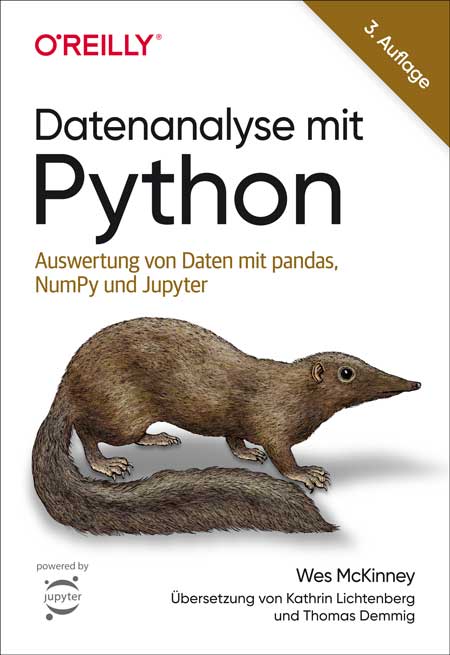
Datenanalyse mit Python (3. Auflage)
Auswertung von Daten mit pandas, NumPy und JupyterErfahren Sie alles über das Manipulieren, Bereinigen, Verarbeiten und Aufbereiten von Datensätzen mit Python: Aktualisiert auf Python 3.10, zeigt Ihnen dieses konsequent praxisbezogene Buch anhand konkreter Fallbeispiele, wie Sie eine Vielzahl von typischen Datenanalyse-Problemen effektiv lösen. Gleichzeitig lernen Sie die neuesten Versionen von pandas, NumPy, IPython und Jupyter kennen.Geschrieben von Wes McKinney, dem Begründer des pandas-Projekts, bietet »Datenanalyse mit Python« einen praktischen Einstieg in die Data-Science-Tools von Python. Das Buch eignet sich sowohl für Datenanalysten, für die Python Neuland ist, als auch für Python-Programmierer, die sich in Data Science und Scientific Computing einarbeiten wollen. Daten und zugehöriges Material des Buchs sind auf GitHub verfügbar.Autor:Wes McKinney, Mitbegründer und Chief Technology Officer von Voltron Data, ist ein aktives Mitglied der Python-Daten-Community und Verfechter der Verwendung von Python in der Datenanalyse, im Finanzwesen und bei statistischen Berechnungen. Der MIT-Absolvent ist außerdem Mitglied des Projektmanagements für Apache Arrow und Apache Parquet in der Apache Software Foundation.Zielgruppe: Datenanalyst*innen in Forschung, Wirtschaft, Marketing oder Marktforschung
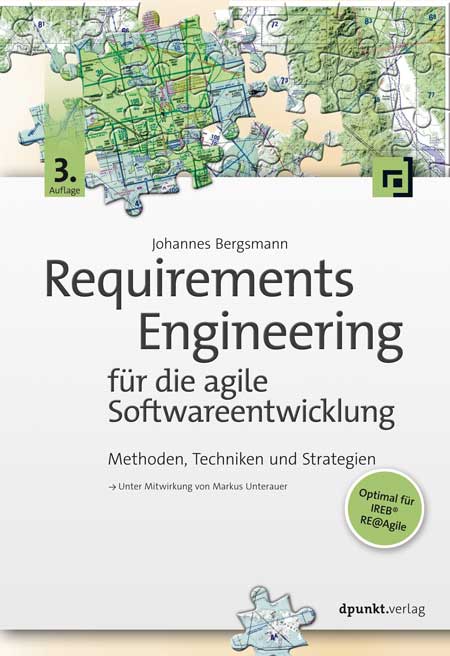
Requirements Engineering für die agile Softwareentwicklung (3. Auflg.)
Methoden, Techniken und StrategienDieses Buch gibt einen praxisorientierten Überblick über die am weitesten verbreiteten Techniken für die Anforderungsspezifikation und das Requirements Management in agilen Projekten. Es beschreibt sowohl sinnvolle Anwendungsmöglichkeiten als auch Fallstricke der einzelnen Techniken.Behandelt werden im Einzelnen:Grundlagen und die fünf Grundprinzipien des Requirements Engineering in der agilen SoftwareentwicklungRequirements-Ermittlung und -DokumentationRequirements-Validierung und -AbstimmungQualität im Requirements EngineeringRequirements ManagementOrganisatorische AspekteRollen im Requirements EngineeringDarüber hinaus werden rechtliche und wirtschaftliche Themen erläutert sowie auf die Herausforderungen in größeren Organisationen eingegangen.Das Buch ist Hilfestellung und Nachschlagewerk, um in der täglichen Praxis der agilen Projekte Requirements Engineering und Requirements Management professionell und mit nachhaltigem Nutzen umzusetzen.Autor:Johannes BergsmannJohannes Bergsmann hat technische Informatik studiert und arbeitete ca. 11 Jahre als Softwareentwickler, Projektleiter, Technischer Leiter, Architekt, Produktmanager und Berater in einem internationalen Systemhaus und als selbstständiger Unternehmer. Im März 2003 gründete er „Software Quality Lab“ und begleitet seither als Berater und Trainer viele Unternehmen im Bereich Requirements Engineering und Prozessgestaltung.Johannes Bergsmann ist zertifizierter Scrum Master, Sachverständiger für Informatik bei Gerichten, als Lehrbeauftragter an Fachhochschulen im Bereich Softwarequalitätsmanagement tätig, ist Autor vieler Fachartikel und hält Fachvorträge bei verschiedenen Veranstaltungen und Konferenzen.Unter Mitwirkung von Markus Unterauer:Markus Unterauer hat Wirtschaftsinformatik studiert. In seiner Berufspraxis war er in vielen Bereichen der Softwareentwicklung wie Architektur, Entwurf, Entwicklung, Testen, Testautomatisierung bis zu Deployment tätig. Er lernte dabei sowohl klassische als auch agile Projekte und Methoden intensiv kennen.Seit 2012 arbeitet Markus Unterauer bei Software Quality Lab als Berater und Trainer. Er ist zertifizierter Scrum Master und hat sich auf die Bereiche Softwareprozesse und Anforderungsmanagement spezialisiert. Markus Unterauer ist auch als Vortragender in diesen Themenbereichen immer wieder auf Konferenzen tätig.Zielgruppe:Requirements EngineersBusiness AnalystsProjektmanager*innenEntwickler*innenQualitätsverantwortlicheProduct OwnerScrum Master

Pro RESTful APIs with Micronaut
Discover the RESTful technologies, including REST, JSON, XML, JAX-RS web services, SOAP and more, for building today's Java-based microservices, big data applications, and web service applications using the Micronaut framework. This book is based on a course the Oracle-based author is teaching for UC Santa Cruz Silicon Valley which covers architecture, design best practices and coding labs.Pro RESTful APIs with Micronaut (Second Edition) gives you all the fundamentals from the top down: from the top (architecture) through the middle (design) to the bottom (coding). This book is a must have for any microservices or web services application programmer or developer building applications and services for today's enterprises.After reading and using this book, you'll be competent in using Micronaut and RESTful APIs for building today's microservices. Source code for the examples and case studies are free and available on Apress' GitHub page for this book.WHAT YOU'LL LEARN* Discover the key RESTful APIs, including REST, JSON, XML, JAX, SOAP and more* Explore the Micronaut framework* Use these for microservices for today's modern web services and data exchanges* Harness Java, XML, JSON, REST, and JAX-RS in examples and case studies* Apply best practices to your solutions’ architecture and moreWHO THIS BOOK IS FORExperienced Java and web programmers and developers who may be new to microservices and even cloud-native applications development.Sanjay Patni is a software applications and web services engineer. He develops, programs Java web applications, services, and microservices. He works with Micronaut and other frameworks as well. Sanjay is also a Technical Instructor for UC Santa Cruz in Silicon Valley. He is a former applications engineer with Oracle, Inc. He currently is located in/around the SF Bay Area.1. Fundamentals of RESTful APIs2. Introducing Micronaut Framework3. API Design and Modeling4. Introduction to XML and JSON5. Introduction to JAX-RS6. API Portfolio and Framework - Services7. API Platform and Data Handler8. API Management and API Client9. API Security and Caching.

Build Your Own Test Framework
Learn to write better automated tests that will dramatically increase your productivity and have fun while doing so. This book is a build-your-own adventure designed for individual reading and for collaborative workshops.You will build an xUnit automated test framework using JavaScript: initially a clone of Jest, but adding a couple of neat features borrowed from RSpec, the genre-defining tool for behavior-driven development (BDD). Along the way, you will explore the philosophy behind automated testing best practices. The automated test runner is one of the most important innovations within software engineering. But for many programmers, automated testing remains a mystery, and knowing how to write good tests is akin to sorcery.As the chapters of this book unfold, you will see how the humble test runner is an elegant and simple piece of software. Each chapter picks a single feature to build, like the "it" function or the "beforeEach" block. It picks apart the theory of why the feature needs to exist, and how to use it effectively in your own test suites. Every chapter ends with a set of ideas for extension points should you wish to explore further, alone or in groups. The book culminates in an implementation of test doubles and mocks—one of the most difficult and misunderstood concepts within automated testing.By the end of the book, you will have gained a solid understanding of automated testing principles that you can immediately apply to your work projects.WHAT YOU'LL LEARN* Build an xUnit automated test framework* See how an automated test runner works* Understand the best practices for automated unit testing* Effectively use test doubles and mocksWHO THIS BOOK IS FORSoftware developers with JavaScript experience who are seeking to master the art of automated testing.Daniel Irvine is a freelance software developer based in London. He works with a variety of languages including C#, Clojure, JavaScript, and Ruby. When he’s not working, he spends time cooking, gardening and practicing yoga. He co-founded the Queer Code London meetup and is an active member of the European software craft community. PART 1: BUILDING THE CORE OF A TEST FRAMEWORKIn this part we build a barebones implementation of a test runner.CHAPTER 1: CREATING AN NPM PACKAGE OF MY VERY OWN,You will create a new NPM package for concise-test, including an entry-point for the test runner.CHAPTER 2: BUILDING IT TO DEFINE A TESTwe’ll implement the it function for defining tests, and start printing out some useful test run information on screen.CHAPTER 3: GROUPING TESTS WITH DESCRIBE,we’ll add support for grouping tests with the describe function, and we’ll continue to build out test reporting on screen.CHAPTER 4: PROMOTING CONCISENESS WITH BEFOREEACH AND AFTEREACHWe continue our quest for concise testing facilities with the addition of beforeEach and afterEach functions.CHAPTER 5: IMPROVING LEGIBILITY WITH EXPECT,We finish off the core of our API by building an abstraction over throw new Error.PART 2: CONSTRUCTING A USABLE FRAMEWORKIn this part we add features that you’ll use on a daily basis.CHAPTER 6: FORMATTING EXPECTATION ERRORSWe write a formatter for stack traces to help pinpoint failures quickly.CHAPTER 7. AUTOMATICALLY DISCOVERING TEST FILESWe’ll add test file discovery to our test runner, and add support for running a single file through a command line argument.CHAPTER 8: FOCUSING ON TESTS WITH IT.ONLY AND DESCRIBE.ONLY,We split out runner into two phases: a discovery phase and an execution phase. In between them, we insert a filter phase to support running only a subset of phases.CHAPTER 9: SUPPORTING ASYNCHRONOUS TESTS,We add the ability to wait on tests that return Promise objects, and timing out tests with it.timesOutAfter.CHAPTER 10: REPORTINGwe use a pub-sub model to build a plug-in system for reporters.PART 3: EXTENDING FOR POWER USERSIn this part we continue to add advanced features.CHAPTER 11: SHARING BEHAVIOR WITH IT.BEHAVESLIKE,We borrow an important feature from Ruby: inheritance for describe blocks, which gives us a flexible mechanism for removing duplication between test groups.CHAPTER 12: TAGGING TESTSWe create a mechanism for running a group of tests based on their tag.CHAPTER 13 : SKIPPING TESTSwe introduce a number of ways to skip tests, including tests without bodies, and it.skip plus describe.skip functions.CHAPTER 14 : RANDOMIZING TESTSWe add a runtime flag for randomizing the order of tests, which is a useful technique for catching invisible dependencies between tests.PART 4: TEST DOUBLES AND MOCKSChapter 15. Understanding test doubleswe create a function that can be used as a test spy and stub.CHAPTER 16. MODULE MOCKSWe create a system for mocking out entire modules, which is a useful technique when creating component doubles when testing React.

Samsung Galaxy S23/ S23+
Die verständliche Anleitung für Ihr Smartphone:- Alle Funktionen & Einstellungen auf einen Blick- Schritt für Schritt erklärt – mit praktischen TippsMit diesem smarten Praxisbuch gelingt Ihnen der schnelle und sichere Einstieg in Ihr Smartphone. Lernen Sie die Samsung Galaxy S23-Modelle kennen und beherrschen! Anschauliche Anleitungen, Beispiele und Bilder zeigen Ihnen gut nachvollziehbar, wie Sie Ihr mobiles Gerät optimal handhaben – von der Ersteinrichtung und Personalisierung über die große Funktionsvielfalt bis zu den wichtigsten Anwendungen. Nutzen Sie darüber hinaus die übersichtlichen Spicker-Darstellungen: Damit können Sie jene Bedienungsschritte, die man am häufigsten braucht, aber immer wieder vergisst, auf einen Blick finden und umsetzen. Freuen Sie sich auf viele hilfreiche Tipps und legen Sie ganz einfach los!Aus dem Inhalt:- Alle Bedienelemente der Samsung Galaxy S23-Modelle auf einen Blick- Ersteinrichtung und Tipps zum Umzug- Google-Konto erstellen und verwalten- Die Benutzeroberfläche Ihres Smartphones personalisieren- Apps aus dem Play Store herunterladen- Kontakte anlegen und im Adressbuch verwalten- Anrufe tätigen und SMS austauschen - Nachrichten über Mail und WhatsApp versenden und empfangen- Uhr, Kalender, Maps und andere praktische Apps nutzen - Fotos sowie Videos aufnehmen, verwalten und teilen- Ins Internet gehen über WLAN und mobile Daten - Updates, Datenschutz und Sicherheit
Zeitwirtschaft mit SAP
Erfassen Sie die Arbeitszeit Ihrer Mitarbeitenden schnell und rechtssicher in Ihrem SAP-System! Dieses Buch zeigt Ihnen, wie Sie das Customizing und die einzelnen Prozessschritte der Zeitwirtschaft in SAP ERP und SAP S/4HANA am besten durchlaufen. Mit vielen Beispielen, Anleitungen und Tipps für die Anpassung an Ihr Unternehmen. Aus dem Inhalt: Arbeitszeitpläne und InfotypenZeitbindung und KollisionsprüfungZeitereignissePaarbildung und TageszuordnungToleranzen und FehlerprüfungenZeitlohnarten und ZeitkontenSoll- und MehrarbeitszeitZeitnachweisSelf-Services mit SAP FioriSystem Landscape Optimization (SLO)SAP SuccessFactors Employee Central Time Management (inkl. Time Tracking)User-Exits und BAdIs Einleitung ... 19 1. Customizing der Arbeitszeitpläne ... 25 1.1 ... Grundlagen ... 25 1.2 ... Personalteilbereiche gruppieren ... 29 1.3 ... Arbeitspausenpläne ... 29 1.4 ... Tagesarbeitszeitpläne ... 32 1.5 ... Periodenarbeitszeitpläne ... 38 1.6 ... Regeln für Tagestypen ... 41 1.7 ... Arbeitszeitplanregeln ... 42 1.8 ... Arbeitszeitplanregeln generieren ... 46 1.9 ... Fazit ... 48 2. Customizing der Infotypen der Zeitwirtschaft ... 49 2.1 ... Infotyp 2001 (Abwesenheiten) ... 49 2.2 ... Infotyp 2002 (Anwesenheiten) ... 64 2.3 ... Infotyp 2003 (Vertretungen) ... 67 2.4 ... Infotyp 2004 (Bereitschaften) ... 71 2.5 ... Infotyp 2005 (Mehrarbeiten) ... 75 2.6 ... Infotyp 2006 (Abwesenheitskontingente) ... 77 2.7 ... Infotyp 2007 (Anwesenheitskontingente) ... 97 2.8 ... Infotyp 2010 (Entgeltbelege) ... 102 2.9 ... Infotyp 2011 (Zeitereignisse) ... 106 2.10 ... Infotyp 2012 (Zeitumbuchungsvorgaben) ... 106 2.11 ... Infotyp 2013 (Kontingentkorrekturen) ... 112 2.12 ... Fazit ... 113 3. Zeitbindung und Kollisionsprüfungen ... 115 3.1 ... Einführung ... 115 3.2 ... Beispiel: Zeitbindung in der Zeitwirtschaft ... 117 3.3 ... Customizing der Zeitbindungsklassen der Abwesenheiten ... 119 3.4 ... Customizing der Zeitbindungsklassen bei Vertretungsarten ... 121 3.5 ... Customizing der Zeitbindungsklassen bei Anwesenheiten ... 123 3.6 ... Customizing der Zeitbindungsklassen bei Abwesenheitskontingenten ... 124 3.7 ... Customizing der Zeitbindungsklassen bei Bereitschaftsarten ... 125 3.8 ... Customizing der Zeitbindungsklassen bei Anwesenheitskontingenten ... 126 3.9 ... Zeitbindungsreaktionen ... 127 3.10 ... Fazit ... 128 4. Customizing der Personalzeitereignisse ... 131 4.1 ... Personalzeitereignisarten ... 131 4.2 ... Gruppierungen für Personalzeitereignisarten ... 134 4.3 ... Schnittstellen ... 135 4.4 ... Die Tabelle TEVEN und ihre Besonderheiten ... 147 4.5 ... Weitere Funktionen der HR-PDC-Schnittstelle ... 148 4.6 ... Fazit ... 151 5. User Interfaces ... 153 5.1 ... Arbeitsvorrat ... 154 5.2 ... Time Manager's Workplace ... 157 5.3 ... Kundeneigene User Interfaces ... 163 5.4 ... Zeiterfassung mit FLOW ... 172 5.5 ... Fazit ... 177 6. Schemen der Zeitwirtschaft ... 179 6.1 ... Schema TM00 ... 179 6.2 ... Schema TM01 ... 181 6.3 ... Schema TM02 ... 181 6.4 ... Schema TM04 ... 182 6.5 ... Der Schemeneditor ... 183 6.6 ... Arbeiten mit dem Schemeneditor ... 184 6.7 ... Fazit ... 198 7. Initialisierung der Zeitauswertung ... 201 7.1 ... Der Initialisierungsblock ... 202 7.2 ... Die Personalrechenregel MODT ... 203 7.3 ... Verarbeitung des Initialisierungsblocks ... 206 7.4 ... Fazit ... 207 8. Paarbildung, Tageszuordnung und Verarbeitungszustände ... 209 8.1 ... Verarbeitungszustände ... 210 8.2 ... Fehler aus der Paarbildung/Tageszuordnung ... 222 8.3 ... Fazit ... 224 9. Zeitdaten bereitstellen ... 225 9.1 ... Arbeitszeitplan und Zeitereignisse ... 225 9.2 ... Abwesenheiten ... 236 9.3 ... Anwesenheiten ... 239 9.4 ... Kurzarbeit ... 241 9.5 ... Zeitdaten prüfen ... 244 9.6 ... Fazit ... 246 10. Toleranzen und Fehlerprüfungen ... 247 10.1 ... Abwesenheiten ausrichten ... 247 10.2 ... Auf fehlerhaften Tag prüfen ... 250 10.3 ... Paare auf Fehler überprüfen ... 251 10.4 ... Toleranzen aus dem Tagesarbeitszeitplan verarbeiten ... 253 10.5 ... Fazit ... 253 11. Sollarbeitszeiten ermitteln ... 255 11.1 ... Tabelle TZP (Tageszeitpunkte) ... 255 11.2 ... Zeitpaare runden ... 257 11.3 ... Funktion DYNBR (Bestimme dynamische Pausen) ... 260 11.4 ... Funktion TIMTP (Zuordnung der Zeitarten) ... 264 11.5 ... Funktion PBRKS (Pausen einbauen) ... 266 11.6 ... Funktion DEFTP (Sollpaarermittlung) ... 267 11.7 ... Abwesenheiten kürzen ... 270 11.8 ... Abwesenheiten mit Zeitkompensation ... 274 11.9 ... Dienstgänge kürzen ... 275 11.10 ... Fallbeispiele ... 278 11.11 ... Fazit ... 288 12. Mehrarbeitszeiten ermitteln ... 291 12.1 ... Mehrarbeitsermittlung im Schema TM00 ... 292 12.2 ... Mehrarbeitsberechnung mit Kontingenten ... 293 12.3 ... Mehrarbeitsberechnung nach dem Infotyp 0050 (Zeiterfassungsinformationen) ... 299 12.4 ... Mehrarbeitsberechnung mit Genehmigung TAZP ... 300 12.5 ... Mehrarbeitsberechnung ohne Genehmigung ... 301 12.6 ... Mehrarbeitsermittlung mit Rundung ... 301 12.7 ... Mehrarbeitsermittlung auf Wochenbasis ... 305 12.8 ... Sonderanforderungen ... 320 12.9 ... Vereinfachtes Genehmigungsverfahren im Time Manager's Workplace ... 324 12.10 ... Bestimmung der Kernnachtarbeitskennzeichen ... 327 12.11 ... Fazit ... 330 13. Zeitlohnartengenerierung ... 333 13.1 ... Organisatorische Voraussetzungen ... 333 13.2 ... Einfluss von Bewertungsklassen ... 335 13.3 ... Einstieg in die Lohnartengenerierung ... 337 13.4 ... Fazit ... 351 14. Zeitkonten führen ... 353 14.1 ... Tagessalden bilden ... 354 14.2 ... Zeitzuschläge/Zeitabzüge gewähren ... 356 14.3 ... Gleitzeitsaldo, Mehrarbeits- und Produktivstunden ... 359 14.4 ... Zeitsalden durch Abwesenheiten abbauen ... 360 14.5 ... Abwesenheitskontingente führen ... 361 14.6 ... Kumulierte Salden fortschreiben ... 363 14.7 ... Fazit ... 366 15. Endeverarbeitung ... 367 15.1 ... Der Block »Endeverarbeitung« ... 367 15.2 ... Gleitzeitsaldoüberschuss in Mehrarbeit ... 369 15.3 ... Funktion LIMIT (Grenzwerte für Zeitsalden) ... 370 15.4 ... Funktion EXPRT (Export der Abrechnungsergebnisse) ... 381 15.5 ... Fazit ... 381 16. Funktionen der Zeitauswertung ... 383 16.1 ... Einführung ... 383 16.2 ... Verzeichnis der Funktionen in der Zeitauswertung ... 387 16.3 ... Beschreibung der wichtigsten Funktionen in der Zeitauswertung ... 394 16.4 ... Fazit ... 402 17. Operationen der Zeitwirtschaft ... 403 17.1 ... Entscheidungsoperationen ... 403 17.2 ... Operationen, die eine oder mehrere Aktionen einleiten ... 418 17.3 ... Verzweigungsoperationen ... 436 17.4 ... Zusammenhang von Funktionen, Operationen und Tabellen ... 439 17.5 ... Fazit ... 439 18. Kundeneigene Funktionen und Operationen ... 441 18.1 ... Kundeneigene Operationen anlegen ... 441 18.2 ... Kundeneigene Funktionen anlegen ... 448 18.3 ... Fazit ... 454 19. Integration in die Personalabrechnung ... 455 19.1 ... Zeitauswertung im Rahmen der Personalabrechnung ... 455 19.2 ... Verarbeitung der Zeitlohnarten ... 461 19.3 ... Verarbeitung von Kurzarbeit aus Zeitwirtschaftssicht ... 462 19.4 ... Entgeltumwandlung in ein Zeitkonto ... 463 19.5 ... Fazit ... 464 20. Zeitnachweis ... 465 20.1 ... Übersicht der Technologien ... 465 20.2 ... Neuen Zeitnachweis einrichten ... 469 20.3 ... Erweiterungen und Use Cases ... 472 20.4 ... Fazit ... 478 21. SAP-Fiori-Self-Services in der Zeitwirtschaft ... 479 21.1 ... Einführung in SAP Fiori ... 479 21.2 ... Übersicht der SAP-Fiori-Self-Services ... 481 21.3 ... Technische Einrichtung und Konfiguration ... 482 21.4 ... Erweiterungen und Use Cases ... 496 21.5 ... Fazit ... 500 22. Zeitwirtschaft in SAP SuccessFactors ... 501 22.1 ... Unterschiede zwischen SAP ERP HCM und SAP SuccessFactors Employee Central -- Time Management ... 502 22.2 ... SAP SuccessFactors Employee Central Time Management ... 503 22.3 ... Objekte in SAP SuccessFactors Employee Central Time Management ... 509 22.4 ... SAP SuccessFactors Employee Central Time Tracking ... 511 22.5 ... Geplante Funktionserweiterungen ... 516 22.6 ... Fazit ... 517 Anhang ... 519 A ... User-Exits und BAdIs ... 521 B ... Tabellen ... 635 C ... Personalrechenregeln ... 643 D ... Operationen ... 661 E ... Funktionen ... 683 F ... Merkmale ... 705 G ... Schemen ... 707 H ... Transaktionen ... 711 Die Autoren ... 715 Index ... 717

Das Computerlexikon für Einsteiger
Ihr Computer oder Mobiltelefon meldet sich ständig mit unverständlichen Forderungen zu Wort, der Besuch im Elektronikfachmarkt ist regelrechter Stress, und die Gespräche der Kinder und Enkelkinder klingen oft nach Kauderwelsch? Wenn Sie endlich wissen möchten, ob Sie wirklich einen 4.0-GHz-Quad-Core-Prozessor benötigen, ein Add-on im Internet installieren sollen, oder einfach neugierig sind, was hinter Bitcoin, Streaming, Smart Home & Co. steckt – dieses Wörterbuch spricht Ihre Sprache und hilft Ihnen über alle Verständnishürden im digitalen Alltag hinweg. Aus dem Inhalt:- Über 1.800 Fachbegriffe aus dem digitalen Alltag- Neu mit ausführlichen Infos zu Smart Home, Künstliche Intelligenz, Bitcoin u.v.m.- Alle Abkürzungen zum schnellen Nachschlagen- Über 600 Abbildungen zu Geräten, Anschlüssen und Programmen- Basiswissen: Tastatur, Maus und Touchscreen- Grundwortschatz und Computerbedienung Englisch-Deutsch- Tipps zum Computer- und Tabletkauf- Mit Aussprachehinweisen für Fachbegriffe und Fremdwörter im Anhang

Interaction Design
A DELIGHTFUL, ENGAGING, AND COMPREHENSIVE OVERVIEW OF INTERACTION DESIGNEffective and engaging design is a critical component of any digital product, from virtual reality software to chatbots, smartphone apps, and more. In the newly updated sixth edition of Interaction Design: Beyond Human-Computer Interaction, a team of accomplished technology, design, and computing professors delivers an intuitive and instructive discussion of the principles underlying the design of effective interactive technologies. The authors discuss how to design and apply digital technologies in the real world, illustrated with numerous examples. The book explores the interdisciplinary foundations of interaction design, including skills from product design, computer science, human and social psychology, and others. The book builds on the highly successful fifth edition and draws on extensive new research and interviews with accomplished professionals and researchers in the field that reflect a rapidly-changing landscape. It is supported by a website hosting digital resources that add to and complement the material contained within. Readers will also find:* Explorations of the social and emotional components of interacting with apps, digital devices and computers* Descriptions about how to design, prototype, evaluate and construct technologies that support human-computer interaction* Discussions of the cognitive aspects of interaction design, as well as design and evaluation, including usability testing and expert reviews. An essential text for undergraduate and graduate students of human-computer interaction, interaction design, software engineering, web design, and information studies, Interaction Design will also prove to be indispensable for interaction design and user experience professionals. YVONNE ROGERS is the Director of the Interaction Centre at University College London as well as a Professor of Interaction Design. HELEN SHARP is Professor of Software Engineering at the Open University, UK. JENNIFER PREECE is Professor and Dean Emerita in the College of Information, Maryland’s iSchool – at the University of Maryland.

Practical OpenTelemetry
Learn the value that OpenTelemetry can bring to organizations that aim to implement observability best practices, and gain a deeper understanding of how different building blocks interact with each other to bring out-of-the-box, vendor-neutral instrumentation to your stack. With examples in Java, this book shows how to use OpenTelemetry APIs and configure plugins and SDKs to instrument services and produce valuable telemetry data. You’ll learn how to maximize adoption of OpenTelemetry and encourage the change needed in debugging workflows to reduce cognitive load for engineers troubleshooting production workloads.Adopting observability best practices across an organization is challenging. This book begins with a discussion of how operational monitoring processes widely followed for decades fall short at providing the insights needed for debugging cloud-native, distributed systems in production. The book goes on to show how the Cloud Native Computing Foundation’s OpenTelemetry project helps you standardize instrumentation and transport of telemetry signals, providing a common language for all observability tooling.YOU WILL LEARN* Why observability is a necessity in modern distributed systems* The value of OpenTelemetry for engineers and organizations * OpenTelemetry component specification and general design* Tracing, metrics, and logs APIs and SDKs, with examples in Java* OpenTelemetry Collectors and recommended transport and processing pipelines* How to adopt observability standards across an organizationWHO THIS BOOK IS FORSoftware engineers familiar with cloud-native technologies and operational monitoring who want to instrument and export telemetry data from their services; observability leads who want to roll out OpenTelemetry standards and best practices across their organizations; and Java developers who want a book with OpenTelemetry examples in that languageDANIEL GOMEZ BLANCO is a Principal Engineer at Skyscanner, leading their observability transformation across hundreds of services to ensure that travelers get a reliable and performant experience when booking their next holiday. He is an advocate of open standards and CNCF projects such as OpenTelemetry to back the instrumentation and collection of operational data. Daniel has experience working in organizations of all sizes, from international institutions such as CERN in Geneva, to London startups such as SKIPJAQ. His main focus has always been building software and adopting solutions to minimize the cognitive load required for engineers to support and operate production services. PART I. THE NEED FOR OBSERVABILITY WITH OPENTELEMETRY1. The Need for Observabilitya. Why Observability Mattersb. Context and Correlation2. How OpenTelemetry Enables Observabilitya. OpenTelemetry’s Missionb. The Power of Open Standardsc. The Shift In Vendor Added ValuePART II. OPENTELEMETRY COMPONENTS AND BEST PRACTICES3. OpenTelemetry Fundamentalsa. OpenTelemetry Specificationb. Semantic Conventions4. Auto-Instrumentationa. Resource SDKb. Instrumentation Libraries5. Context, Baggage, and Propagatorsa. Telemetry Context and the Context APIb. Baggage APIc. Cross-Service Context and the Propagators API6. Tracinga. What is a Distributed Trace?b. Tracing APIc. Tracing SDKd. Trace Context Propagation7. Metricsa. Measurements, Metrics and Time Seriesb. Metrics APIc. Metrics SDK8. Logginga. The Purpose of Logs for Observabilityb. Logging APIc. Logging SDKd. Integrations with Logging Frameworks9. Protocol and Collectora. Protocolb. Collector10. Sampling and Common Deployment Modelsa. Common Deployment Modelsb. Trace SamplingPART III. ROLLING OUT OPENTELEMETRY ACROSS YOUR ORGANISATION11. Maximizing Adoption by Minimizing Frictiona. Investing in Telemetry Enablementb. Adopting OpenTelemetry12. Adopting Observabilitya. Shifting Debugging Workflowsb. Expanding Contextc. Keeping Telemetry Valuable
Machine Learning for Business Analytics
MACHINE LEARNING FOR BUSINESS ANALYTICSMACHINE LEARNING—ALSO KNOWN AS DATA MINING OR DATA ANALYTICS—IS A FUNDAMENTAL PART OF DATA SCIENCE. IT IS USED BY ORGANIZATIONS IN A WIDE VARIETY OF ARENAS TO TURN RAW DATA INTO ACTIONABLE INFORMATION.Machine Learning for Business Analytics: Concepts, Techniques and Applications in RapidMiner provides a comprehensive introduction and an overview of this methodology. This best-selling textbook covers both statistical and machine learning algorithms for prediction, classification, visualization, dimension reduction, rule mining, recommendations, clustering, text mining, experimentation and network analytics. Along with hands-on exercises and real-life case studies, it also discusses managerial and ethical issues for responsible use of machine learning techniques. This is the seventh edition of Machine Learning for Business Analytics, and the first using RapidMiner software. This edition also includes:* A new co-author, Amit Deokar, who brings experience teaching business analytics courses using RapidMiner* Integrated use of RapidMiner, an open-source machine learning platform that has become commercially popular in recent years* An expanded chapter focused on discussion of deep learning techniques* A new chapter on experimental feedback techniques including A/B testing, uplift modeling, and reinforcement learning* A new chapter on responsible data science* Updates and new material based on feedback from instructors teaching MBA, Masters in Business Analytics and related programs, undergraduate, diploma and executive courses, and from their students* A full chapter devoted to relevant case studies with more than a dozen cases demonstrating applications for the machine learning techniques * End-of-chapter exercises that help readers gauge and expand their comprehension and competency of the material presented* A companion website with more than two dozen data sets, and instructor materials including exercise solutions, slides, and case solutions This textbook is an ideal resource for upper-level undergraduate and graduate level courses in data science, predictive analytics, and business analytics. It is also an excellent reference for analysts, researchers, and data science practitioners working with quantitative data in management, finance, marketing, operations management, information systems, computer science, and information technology. GALIT SHMUELI, PHD, is Distinguished Professor at National Tsing Hua University’s Institute of Service Science, College of Technology Management. She has designed and instructed business analytics courses since 2004 at University of Maryland, Statistics.com, The Indian School of Business, and National Tsing Hua University, Taiwan. PETER C. BRUCE, is Founder of the Institute for Statistics Education at Statistics.com, and Chief Learning Officer at Elder Research, Inc. AMIT V. DEOKAR, PHD, is Associate Dean of Undergraduate Programs and an Associate Professor of Management Information Systems at the Manning School of Business at University of Massachusetts Lowell. Since 2006, he has developed and taught courses in business analytics, with expertise in using the RapidMiner platform. He is an Association for Information Systems Distinguished Member Cum Laude. NITIN R. PATEL, PHD, is cofounder and lead researcher at Cytel Inc. He was also a co-founder of Tata Consultancy Services. A Fellow of the American Statistical Association, Dr. Patel has served as a visiting professor at the Massachusetts Institute of Technology and at Harvard University. He is a Fellow of the Computer Society of India and was a professor at the Indian Institute of Management, Ahmedabad, for 15 years. Foreword by Ravi Bapna xxiPreface to the RapidMiner Edition xxiiiAcknowledgments xxviiPART I PRELIMINARIESCHAPTER 1INTRODUCTION 31.1 What Is Business Analytics? 31.2 What Is Machine Learning? 51.3 Machine Learning, AI, and Related Terms 51.4 Big Data 71.5 Data Science 81.6 Why Are There So Many Different Methods? 91.7 Terminology and Notation 91.8 Road Maps to This Book 121.9 Using RapidMiner Studio 14CHAPTER 2OVERVIEW OF THE MACHINE LEARNING PROCESS 192.1 Introduction 192.2 Core Ideas in Machine Learning 202.3 The Steps in a Machine Learning Project 232.4 Preliminary Steps 252.5 Predictive Power and Overfitting 322.6 Building a Predictive Model with RapidMiner 372.7 Using RapidMiner for Machine Learning 452.8 Automating Machine Learning Solutions 472.9 Ethical Practice in Machine Learning 52PART II DATA EXPLORATION AND DIMENSION REDUCTIONCHAPTER 3DATA VISUALIZATION 633.1 Introduction 633.2 Data Examples 653.3 Basic Charts: Bar Charts, Line Charts, and Scatter Plots 663.4 Multidimensional Visualization 753.5 Specialized Visualizations 873.6 Summary: Major Visualizations and Operations, by Machine Learning Goal 92CHAPTER 4DIMENSION REDUCTION 974.1 Introduction 974.2 Curse of Dimensionality 984.3 Practical Considerations 984.4 Data Summaries 1004.5 Correlation Analysis 1034.6 Reducing the Number of Categories in Categorical Attributes 1054.7 Converting a Categorical Attribute to a Numerical Attribute 1074.8 Principal Component Analysis 1074.9 Dimension Reduction Using Regression Models 1174.10 Dimension Reduction Using Classification and Regression Trees 119PART III PERFORMANCE EVALUATIONCHAPTER 5EVALUATING PREDICTIVE PERFORMANCE 1255.1 Introduction 1255.2 Evaluating Predictive Performance 1265.3 Judging Classifier Performance 1315.4 Judging Ranking Performance 1465.5 Oversampling 151PART IV PREDICTION AND CLASSIFICATION METHODSCHAPTER 6MULTIPLE LINEAR REGRESSION 1636.1 Introduction 1636.2 Explanatory vs. Predictive Modeling 1646.3 Estimating the Regression Equation and Prediction 1666.4 Variable Selection in Linear Regression 171CHAPTER 7K-NEAREST NEIGHBORS (K-NN) 1897.1 The k-NN Classifier (Categorical Label) 1897.2 K-NN for a Numerical Label 2007.3 Advantages and Shortcomings of K-NN Algorithms 202CHAPTER 8THE NAIVE BAYES CLASSIFIER 2098.1 Introduction 2098.2 Applying the Full (Exact) Bayesian Classifier 2118.3 Solution: Naive Bayes 2138.4 Advantages and Shortcomings of the Naive Bayes Classifier 223CHAPTER 9CLASSIFICATION AND REGRESSION TREES 2299.1 Introduction 2299.2 Classification Trees 2329.3 Evaluating the Performance of a Classification Tree 2409.4 Avoiding Overfitting 2459.5 Classification Rules from Trees 2559.6 Classification Trees for More Than Two Classes 2569.7 Regression Trees 2569.8 Improving Prediction: Random Forests and Boosted Trees 2599.9 Advantages and Weaknesses of a Tree 261CHAPTER 10 LOGISTIC REGRESSION 26910.1 Introduction 26910.2 The Logistic Regression Model 27110.3 Example: Acceptance of Personal Loan 27210.4 Logistic Regression for Multi-class Classification 28310.5 Example of Complete Analysis: Predicting Delayed Flights 286CHAPTER 11 NEURAL NETWORKS 30511.1 Introduction 30611.2 Concept and Structure of a Neural Network 30611.3 Fitting a Network to Data 30711.4 Required User Input 32111.5 Exploring the Relationship Between Predictors and Target Attribute 32211.6 Deep Learning 32311.7 Advantages and Weaknesses of Neural Networks 334CHAPTER 12 DISCRIMINANT ANALYSIS 33712.1 Introduction 33712.2 Distance of a Record from a Class 34012.3 Fisher’s Linear Classification Functions 34112.4 Classification Performance of Discriminant Analysis 34612.5 Prior Probabilities 34812.6 Unequal Misclassification Costs 34812.7 Classifying More Than Two Classes 34912.8 Advantages and Weaknesses 351CHAPTER 13 GENERATING, COMPARING, AND COMBINING MULTIPLE MODELS 35913.1 Automated Machine Learning (AutoML) 35913.2 Explaining Model Predictions 36713.3 Ensembles 37313.4 Summary 381PART V INTERVENTION AND USER FEEDBACKCHAPTER 14 INTERVENTIONS: EXPERIMENTS, UPLIFT MODELS, AND REINFORCEMENT LEARNING 38714.1 A/B Testing 38714.2 Uplift (Persuasion) Modeling 39314.3 Reinforcement Learning 40014.4 Summary 405PART VI MINING RELATIONSHIPS AMONG RECORDSCHAPTER 15 ASSOCIATION RULES AND COLLABORATIVE FILTERING 40915.1 Association Rules 40915.2 Collaborative Filtering 42415.3 Summary 438CHAPTER 16 CLUSTER ANALYSIS 44516.1 Introduction 44516.2 Measuring Distance Between Two Records 44916.3 Measuring Distance Between Two Clusters 45516.4 Hierarchical (Agglomerative) Clustering 45716.5 Non-Hierarchical Clustering: The k-Means Algorithm 466PART VII FORECASTING TIME SERIESCHAPTER 17 HANDLING TIME SERIES 47917.1 Introduction 48017.2 Descriptive vs. Predictive Modeling 48117.3 Popular Forecasting Methods in Business 48117.4 Time Series Components 48217.5 Data Partitioning and Performance Evaluation 486CHAPTER 18 REGRESSION-BASED FORECASTING 49718.1 A Model with Trend 49818.2 A Model with Seasonality 50418.3 A Model with Trend and Seasonality 50818.4 Autocorrelation and ARIMA Models 509CHAPTER 19 SMOOTHING AND DEEP LEARNING METHODS FOR FORECASTING 53319.1 Smoothing Methods: Introduction 53419.2 Moving Average 53419.3 Simple Exponential Smoothing 54119.4 Advanced Exponential Smoothing 54519.5 Deep Learning for Forecasting 549PART VIII DATA ANALYTICSCHAPTER 20 SOCIAL NETWORK ANALYTICS 56320.1 Introduction 56320.2 Directed vs. Undirected Networks 56420.3 Visualizing and Analyzing Networks 56720.4 Social Data Metrics and Taxonomy 57120.5 Using Network Metrics in Prediction and Classification 57720.6 Collecting Social Network Data with RapidMiner 58420.7 Advantages and Disadvantages 584CHAPTER 21 TEXT MINING 58921.1 Introduction 58921.2 The Tabular Representation of Text: Term–Document Matrix and “Bag-of-Words’’ 59021.3 Bag-of-Words vs. Meaning Extraction at Document Level 59221.4 Preprocessing the Text 59321.5 Implementing Machine Learning Methods 60221.6 Example: Online Discussions on Autos and Electronics 60221.7 Example: Sentiment Analysis of Movie Reviews 60721.8 Summary 614CHAPTER 22 RESPONSIBLE DATA SCIENCE 61722.1 Introduction 61722.2 Unintentional Harm 61822.3 Legal Considerations 62022.4 Principles of Responsible Data Science 62122.5 A Responsible Data Science Framework 62422.6 Documentation Tools 62822.7 Example: Applying the RDS Framework to the COMPAS Example 63122.8 Summary 641PART IX CASESCHAPTER 23 CASES 64723.1 Charles Book Club 64723.2 German Credit 65323.3 Tayko Software Cataloger 65823.4 Political Persuasion 66223.5 Taxi Cancellations 66523.6 Segmenting Consumers of Bath Soap 66723.7 Direct-Mail Fundraising 67023.8 Catalog Cross-Selling 67223.9 Time Series Case: Forecasting Public Transportation Demand 67323.10 Loan Approval 675Index 685

Coding und Making mit Scratch und MakeyMakey
Scratch ist eine visuelle Programmiersprache, sie wurde von der Lifelong Kindergarten Group am MIT entwickelt. Viele neuere erziehungsorientierte Programmiersprachen nehmen sich das Design von Scratch als Vorbild (Snap!, Ozoblockly, Touchdevelop).Scratch ist so einfach in der Bedienung, dass bereits Volksschulkinder damit erste Erfahrungen im Programmieren machen können. Scratch läuft ab Version 2 im Browser, eine Installation ist nicht nötig. Die einzelnen Befehle werden per Drag & Drop zu Sequenzen verbunden, eine kindgerechte Bedienung steht im Vordergrund. Die Projekte werden online gespeichert und können veröffentlicht werden, so sind erste Ergebnisse schnell online verfügbar, aber auch ein lokales Speichern ist möglich.Mit Beiträgen von Bernhard Abfalter, Sabine Apfler, Moritz Brinnich, Elieser Grill, Duy Ho David Tran, Natalie Traxler und Andreas Weiner.Gerhard Brandhofer:HS-Prof. Mag. Dr. Gerhard Brandhofer, BEd hat eine Hochschulprofessur für Mediendidaktik und informatische Bildung an der PH Niederösterreich inne. Zu den Arbeitsschwerpunkten gehören die Planung, Lehre und Forschung im Bereich des Einsatzes von digitalen Medien im Unterricht der Primar- und Sekundarstufe Forschungsaktivitäten und Veröffentlichungen umfassen die Themenfelder der Nutzung digitaler Medien in der Schule wie auch in der Hochschule, die Bedingungen für gelingende informatische Bildung, die Implementierung visueller Programmiersprachen in der Schulbildung.

Blogging All-in-One For Dummies
BLOG WITH THE BEST OF ‘EM!If you’re looking for a complete guide to creating and solidifying your place in the blogosphere, you’ve come to the right place! With 8 books in one, Blogging All-in-One For Dummies is the only resource you’ll need to get started or to improve your existing blog. Learn about the most popular blogging platforms, creating content worth reading, and methods for driving traffic to your blog. Cut through the confusion and find the facts about monetizing your blog, using the best blogging tools for you, and increasing reader engagement to become an active, successful member of the blogging community. You're ready to start blogging, so let Dummies show you the way!* Perfect your blog idea and choose the best platform for you* Get people to read your blog through search engine optimization and social media promotion* Learn about the latest trends in the blogosphere* Make money from your blog with creative monetization ideasBloggers of all skill and experience levels will find valuable information in Blogging All-in-One For Dummies. AMY LUPOLD BAIR is the founder of Resourceful Mommy Media, LLC, and the author of the parenting and lifestyle blog, Resourceful Mommy. She is the author of Blogging For Dummies, 7th Edition. Introduction 1BOOK 1: ENTERING THE BLOGOSPHERE 7Chapter 1: Joining the Blogosphere 9Chapter 2: Preparing to Start and Write a Blog 27Chapter 3: Blogging Basics 43Chapter 4: Blogging Best Practices 67BOOK 2: NICHE BLOGGING 81Chapter 1: Understanding Niche Blogging 83Chapter 2: Benefiting from a Niche Blog Approach 99Chapter 3: Choosing Your Niche 111Chapter 4: Writing for Your Niche 127BOOK 3: CORPORATE AND NON-PROFIT BLOGGING 149Chapter 1: Starting a Business Blog 151Chapter 2: Developing a Blog Plan 177Chapter 3: Choosing Bloggers 199Chapter 4: Writing an Organization’s Blog 215Chapter 5: Keeping Yourself and Your Organization Out of Trouble 227BOOK 4: FIGURING OUT BLOGGING PLATFORMS 241Chapter 1: Choosing a Blogging Platform 243Chapter 2: Finding the Right Blogging Platform 253Chapter 3: Taking a Look at WordPress 269Chapter 4: Using Google Blogger 301Chapter 5: Understanding Medium 331Chapter 6: Blogging with Wix 365BOOK 5: BLOGGING TOOLS 401Chapter 1: Optimizing for Search Engines 403Chapter 2: Measuring Blog Performance 419Chapter 3: Enhancing Content 435Chapter 4: Staying Organized 455BOOK 6: PROMOTING AND GROWING YOUR BLOG 479Chapter 1: Secrets to Blogging Success 481Chapter 2: Building Community 491Chapter 3: Social Networking 499Chapter 4: Distributing Content 515Chapter 5: Inviting or Being a Guest Blogger 529BOOK 7: MAKING MONEY FROM YOUR BLOG 539Chapter 1: Blog Advertising 101 541Chapter 2: Publishing Advertising 549Chapter 3: Making Money with Affiliate Marketing 575Chapter 4: Publishing Sponsored Posts 589Chapter 5: Monetizing with Social Commerce 603Chapter 6: Selling Ad Space Directly 623Chapter 7: Benefiting from Indirect Monetization Opportunities 633BOOK 8: MOVING BEYOND WRITING BLOG POSTS 641Chapter 1: Painting a Picture with Visual Content 643Chapter 2: Reaching Your Audience with Video Content 665Chapter 3: Getting Social with Social Media 683Chapter 4: Creating a Podcast 711Index 727
TCP/IP - Grundlagen und Praxis (3. Auflg.)
Seit vielen Jahren das unverzichtbare Standardwerk. Jetzt in 3., aktualisierter und überarbeiteter Auflage aus Februar 2023. TCP/IP gilt als Standard für die Kommunikation in Netzwerken – sowohl im lokalen Bereich als auch im weltumspannenden Internet. Wie jede Protokollfamilie so setzt sich auch TCP/IP aus verschiedenen Komponenten zusammen. Sie werden im Rahmen dieses Buches mit folgenden Schwerpunktthemen umfassend erläutert:Entwicklung und Funktion von NetzwerkenSwitching und RoutingProtokolle der TCP/IP-FamilieAdressierung im Netzwerk (statisch, dynamisch per DHCP)Namensauflösung im IP-Netzwerk (Domain Name Service)Routing-Protokolle im IP-Netzwerk und deren FunktionSpezielle Dienste auf Basis von TCP/IPTCP/IP in kabellosen Netzwerken (WLAN, Bluetooth, DSL-Vectoring usw.)Sicherheit im IP-Netzwerk (IPsec, VPN, SSL)Weiterentwicklungen auf Basis von IPv6Internet der Dinge (IoT)Implementierung von TCP/IP in BetriebssystemenNeben den Grundlagen werden auch praktische Aspekte beleuchtet, die für die tägliche Arbeit von Relevanz sein können. So wird beispielsweise der Analyse von Netzwerkstörungen ein ganzes Kapitel gewidmet. Außerdem wird beispielhaft im Anhang die TCP/IP-Konfiguration auf verschiedenen Betriebssystemplattformen dargestellt oder zum Thema »Sicherheit« ein datenzentrisch abgesicherter »Sicherheitsschild« vorgestellt.Zum Autor:Gerhard Lienemann arbeitete ab 1991 für etwa 12 Jahre als Netzwerkadministrator in einem produzierenden Betrieb, bevor er ins technische Management wechselte. Seitdem war er zunächst zuständig für operative Kommunikationssicherheit und übernahm dann zusätzlich die Betreuung eines europäischen Netzwerkteams. Nur kurze Zeit später erweiterte er seine Verantwortung auf ein globales Netzwerkteam in Asien, Nord- und Südamerika. Seiner Leidenschaft „IT-Kommunikation“ ist er auch nach dem Ausscheiden aus dem aktiven Berufsleben treu geblieben.

Angular (4. Auflg.)
Grundlagen, fortgeschrittene Themen und Best Practices. Inkl. RxJS, NgRx und a11y in aktueller 4. Auflage aus Februar 2023.Das große Praxisbuch zu Angular!Mit einem anspruchsvollen Beispielprojekt führen die Autoren Sie durch die Welt von Angular. Entwickeln Sie Schritt für Schritt eine umfangreiche modulare Single-Page-Anwendung und üben Sie Angular im praktischen Einsatz. Mit seinen umfangreichen Theorieteilen ist dieses Buch außerdem Ihr praktischer Begleiter im Entwicklungsalltag.Die Autoren sind erfahrene Workshopleiter, Entwickler und internationale Konferenzsprecher. In dieser vollständig überarbeiteten Auflage vermitteln sie die Best Practices aus ihrer täglichen Arbeit mit Angular. Aufgrund ihres Engagements rund um das Buch und Angular wurden Ferdinand und Johannes als Google Developer Experts (GDE) ausgezeichnet.Aus dem Inhalt:Reaktive Programmierung mit RxJSState Management mit Redux und NgRxTesting mit Jasmine, Karma, Jest und CypressModule und Standalone ComponentsRouting und GuardsHTTP und InterceptorsFormularverarbeitungDependency Injection und ServicesBarrierefreiheit (a11y)Internationalisierung (i18n)Progressive Web Apps (PWA)Erste Kenntnisse in JavaScript und HTML sind von Vorteil, aber keine Voraussetzung. Wer nicht mit TypeScript vertraut ist, findet im Buch eine fundierte Einführung.Auf der Website zum Buch werden außerdem regelmäßig Aktualisierungen und Neuigkeiten rund um Angular veröffentlicht.Über die Autoren:Ferdinand Malcher ist Google Developer Expert (GDE) und arbeitet als selbständiger Entwickler, Berater und Mediengestalter mit Schwerpunkt auf Angular, RxJS und TypeScript. Gemeinsam mit Johannes Hoppe hat er die Angular.Schule gegründet und bietet Schulungen zu Angular an.Danny Koppenhagen arbeitet als Softwarearchitekt und Entwickler. Sein Schwerpunkt liegt in der Frontend-Architektur und der Entwicklung von Enterprise Webanwendungen auf Basis von Node.js, TypeScript, Angular und Vue. Neben der beruflichen Tätigkeit ist Danny als Autor mehrerer Open-Source-Projekte aktiv.Johannes Hoppe ist Google Developer Expert (GDE) und arbeitet als selbständiger Trainer und Berater für Angular, .NET und Node.js. Zusammen mit Ferdinand Malcher hat er die Angular.Schule gegründet und bietet Workshops und Beratung zu Angular an. Johannes ist Organisator des Angular Heidelberg Meetup.Sie erreichen das Autorenteam auf Twitter unter @angular_buch.Mehr Infos und Kontaktmöglichkeiten finden Sie unter https://angular-buch.com/autoren.Zielgruppe: Webentwickler*innenJavaScript-Entwickler*innenApp-Entwickler*innen

Reinventing ITIL® and DevOps with Digital Transformation
The second edition of this book has been fully updated to show how the DevOps way of working has continued to adapt to changing technologies. The ITIL processes which were an integral part of the DevOps world have been merged with the DevOps framework, reflecting the current emphasis on product models rather than viewing project and support models separately.This book starts with the basics of digital transformation before exploring how this works in practice: that is, people, processes and technology, and org structures. It delves into value streams that are the basis for ITIL and DevOps, highlighting the differences between the methods of the past and new methodologies needed to ensure products to meet contemporary expectations. This updated edition includes new chapters that discuss digital transformation for business success, introduce the battle tank framework, leading people in the digital world, managing work in a remote working model, and the product-led transformation model. These new chapters provide the guidance necessary to move beyond DevOps into a holistic digital transformation exercise.The ideas, recommendations, and solutions you'll learn over the course of this book can be applied to develop solutions or create proposals for clients, and to deliver seamless services for DevOps projects.WHAT YOU WILL LEARN* Understand digital transformation* Leverage the battle tank framework for digital transformation* Gain insight into the confluence of DevOps and ITIL* Adapt ITIL processes in DevOps projects* Move organizations from a project to a product-led model * Lead teams in a digital world* Manage the work of remote teamsWHO THIS BOOK IS FORIT consultants and IT professionals who are looking for guidance to strategize, plan and implement digital transformation initiatives; design and redesign ITIL processes to adapt to the digital ways of working; moving organizations to product-led business; and leading people and managing work in the digital age.ABHINAV KRISHNA KAISER works as a consulting partner in a leading consulting firm. He has led several digital transformation programmes across customers from various sectors. He consults with clients on various transformation initiatives that can be undertaken to come ahead of the curve.Abhinav has worked in past as DevOps architect, Agile coach, service architect and programme manager among other roles. He has conducted several trainings in multiple geographies on DevOps, Agile and ITIL in classroom and remote setting. His achievements include successfully transforming customers into digital ways of working, modernizing applications, implementing DevOps and automation, developing customized service frameworks for specific customer needs among others.In 2004, Abhinav started to write technical blogs and was one of the few leading bloggers at the time. He has written on several leading blogs such as Tech Republic, Train Signal and Plural Sight. He has written four books on ITIL and DevOps topics - Become ITIL Foundation Certified in 7 Days, Become ITIL 4 Foundation Certified in 7 Days, Reinventing ITIL® in the Age of DevOps, and Workshop in a Box: Communication Skills for IT Professionals.CHAPTER 1: DIGITAL TRANSFORMATION: THE DRIVER FOR BUSINESS SUCCESSChapter Goal: Introduction chapter where I bring in a common understanding of digital transformation, and some of the big pieces that make it upNo of pages : 25 pagesSub -Topics• Disrupting Business Models• Connected Systems• Digital Competition• Digital Principles• Rethinking Value• Voice of the CustomerCHAPTER 2: ITIL 4, VALUE STREAMS AND ITS EVOLUTION FROM ITIL 2011Chapter Goal: ITIL 4 is introduced from the perspective of value streams. The importance of looking from a value stream perspective is brought forth and compared against the previous versions of ITILNo of pages : 30 pagesSub -Topics• ITIL 4 in a Snippet• ITIL 2011 vs ITIL 4• Value Streams• Measuring and Assessing Value StreamsCHAPTER 3: DEVOPS OVERVIEWChapter Goal: A DevOps 101 for context settingNo of pages : 25 pagesSub -Topics• What is DevOps?• DevOps Benefits• Principles and MethodologiesCHAPTER 4: DEVOPS TEAMSChapter Goal: A look at the DevOps teams and the inclusion of ITIL rolesNo of pages: 20Sub – Topics:• Introduction to DevOps teams• Role definitions• DevOps, ITIL and Other Roles• Finding synergyChapter 5: DEVOPS VS ITILChapter Goal: Current setting of ITIL in DevOps projectsNo of pages : 25 pagesSub -Topics• DevOps vs ITIL Conflicts• Misalignment of goals and objectives• How DevOps is assumed to have replaced ITIL• Obsolete Processes• Future of ITILChapter 6: MANAGING INCIDENTS AND OTHER SUPPORT RELATED PROCESSESChapter Goal: The objectives around incident resolution remains the same, however, in the age of digital transformation, going about resolving incidents is a different game altogether.No of pages : 35 pagesSub - Topics:• Incident management objectives• Lean version of incident management• Incident management tools• DevOps fitmentChapter 7: THE FUTURE OF CHANGE AND RELEASE MANAGEMENTChapter Goal: Change management was once a bureaucratic process involving multiple approvals. The chapter discusses the modifications required for this process to be effectiveNo of pages: 40Sub – Topics:• Continuous Delivery vs Continuous Deployment• Change and Release Management Scope• Release cycles• change and release toolsCHAPTER 8: CONFIGURATION MANAGEMENT ADAPTATIONChapter Goal: Adapt the ITIL configuration management process to fit into a DevOps modelNo of pages: 35Sub - Topics:• Comprehensive configuration management• Management of CCM• Configuration management tools• DevOps fitmentCHAPTER 9: PRODUCT MODELChapter Goal: In the new ways of working, we move away from working on projects and start to center around a product. This chapter delves into how this is done and why this is required.No of pages: 25 pagesSub - Topics• Project to Product Model Shift• Operating models• Leveraging CrowdCHAPTER 10: PEOPLE AND LEADERSHIPChapter Goal: This chapter is on people and how people drive digital transformation more than the technology. I further talk about the leadership aspects of the digital ageNo of pages : 25 pagesSub -Topics• Digital Transformation is from People• Digital Leadership• People and Talent
Software Engineering
Das Handbuch fürs Selbststudium, für den Job oder vorlesungsbegleitend* erfahrungsbasierter Über- und Einblick ins Software Engineering, der sowohl die Theorie als auch die Praxis abdeckt* umfassend, verständlich und praxiserprobtDas Buch vermittelt die Grundlagen, Erfahrungen und Techniken, die den Kern des Software Engineerings bilden. Es ist als Material zu Vorlesungen über Software Engineering konzipiert. Auch für Praktiker, die mit der Softwareentwicklung und -bearbeitung und den dabei auftretenden Problemen vertraut sind, ist das Buch sehr gut geeignet, um die Kenntnisse im Selbststudium zu ergänzen und zu vertiefen. Der Inhalt des Buches ist in fünf Hauptteile gegliedert:- Grundlagen- Menschen und Prozesse- Daueraufgaben im Softwareprojekt- Techniken der Softwarebearbeitung- Verwaltung und Erhaltung von SoftwareAuch auf die Ausbildung zukünftiger Software Engineers wird eingegangen. Ergänzende Informationen sind auf der Webseite der Autoren verfügbar: https://se-buch.de.Prof. Dr. rer. nat. Jochen Ludewig geboren 1947 in Hannover. Studium der Elektrotechnik (TU Hannover) und Informatik (TU München); Promotion 1981. 1975 bis 1980 Gesellschaft für Kernforschung, Karlsruhe, dann Brown Boveri Forschungszentrum in Baden/Schweiz. 1986 Assistenzprofessor an der ETH Zürich, 1988 Ruf auf den neuen Lehrstuhl Software Engineering an der Universität Stuttgart. Arbeitsgebiete: Softwareprojekt-Management, Software-Prüfung und Software-Qualität, Software-Wartung. Ab 1996 Konzeption und Aufbau des Diplomstudiengangs Softwaretechnik, der inzwischen in einen Bachelor- und einen Masterstudiengang umgewandelt wurde. Seit 2009 Fellow der Gesellschaft für Informatik (GI). Prof. Dr. rer. nat. Horst Lichter geboren 1960 in Trier. Studium der Informatik und Betriebswirtschaftslehr (TU Kaiserslautern). Wissenschaftlicher Mitarbeiter (ETH Zürich und Universität Stuttgart), Promotion 1993. Anschließend Schweizerische Bankgesellschaft Zürich und ABB Forschungszentrum Heidelberg. 1998 Ruf an die RWTH Aachen University, Leiter des Lehr- und Forschungsgebiets Software-Konstruktion. Arbeitsgebiete: Software-Architektur, Qualitätssicherung, Software-Evolution. Seit 2005 Lecturer an der Thai German Graduate School of Engineering (TGGS) in Bangkok. Von 2018-2021 Adjunct Lecturer an der Universiti Teknologi Petronas (UTP) Malaysia.
IT-Governance
Ordnungsrahmen und Handlungsfelder für eine erfolgreiche Steuerung der Unternehmens-ITDas Werk behandelt sowohl Grundsätzliches zu IT-Governance als auch die einzelnen Handlungsfelder der IT-Governance im Detail. Dabei geht die Darstellung insbesondere über die weit verbreitete GRC-Fokussierung hinaus. Dies führt dazu, dass die Gebiete der IT-Governance integriert dargestellt werden, so wie dies in der Praxis auch erforderlich ist. Insofern befasst sich das Buch neben der grundlegenden Darstellung der IT-Governance mit den Stakeholdern der IT-Governance und der Governance-Verantwortung in den Bereichen der Organisation der Unternehmens-IT, der IT-Risiken, der IT-Compliance, der Data Governance, des Wertbeitrags der IT, dem Business/IT-Alignment und der IT-Sicherheit. Auch auf für IT-Governance relevante Normen und Standards (ISO 38500, COBIT etc.) wird kontinuierlich Bezug genommen. Vor allem wird immer wieder die Schnittstelle zwischen IT-Governance und IT-Management dargestellt, sodass klar zwischen Governance- und Managementverantwortung unterschieden wird.Autoren:Prof. Dr. Michael Klotz ist seit 1999 Professor für Betriebswirtschaftslehre, insb. Informationsmanagement, Organisation und Datenverarbeitung an der Hochschule Stralsund. Davor war er 15 Jahre in der IT-Branche als Berater, Projektmanager und Geschäftsführer tätig. Seine fachliche Arbeit dokumentiert sich in über 100 Publikationen zu IT-Governance, IT-Compliance und Projektmanagement.Prof. Dr. Matthias Goeken ist Professor für Wirtschaftsinformatik an der Hochschule der Deutschen Bundesbank. Zuvor war er Juniorprofessor an der Frankfurt School of Finance & Management und dort Mitbegründer und Leiter einer Forschungsgruppe zum Themengebiet IT-Governance. Zu seinen weiteren Forschungsgebieten zählen Business Intelligence und Machine Learning. Im ISACA Germany Chapter ist er Vizepräsident für Publikationen.Dr. Martin Fröhlich ist selbstständiger IT-Berater mit den Schwerpunkten Strategie-, IKS-Beratung und IT-Compliance. Davor war er 30 Jahre bei einer Big-Four-Wirtschaftsprüfungsgesellschaft tätig, davon knapp 20 Jahre als Partner verantwortlich für IT-Prüfung und Beratung im Finanzdienstleistungssektor. Dr. Fröhlich ist Mitglied des FAIT beim IDW und Vizepräsident des ISACA Germany Chapter.Die Autoren sind Mitherausgeber der Zeitschrift „IT-Governance“.Zielgruppe:IT-Governance-VerantwortlicheIT-Compliance-OfficerRisk-Manager*innenIT-Manager*innen, CIOsIT-Berater*innenIT-Auditor*innenStudierende

Excel Power Pivot und Power Query für Dummies
Wie Sie mit Microsoft Power Pivot und Power Query große Datenmengen in Excel zusammenführen, untersuchen und weiterführende Erkenntnisse daraus gewinnen, zeigt Ihnen dieses Buch. Angefangen bei der Anbindung an Datenbanken bis hin zur Verwendung eigener Formeln und Funktionen: Sie erfahren, wie Sie Daten aus verschiedenen Datenquellen in einem einheitlichen Datenmodell verarbeiten, interpretieren und übersichtlich in Berichten darstellen. Schritt-für-Schritt-Anleitungen und wertvolle Praxistipps unterstützen Sie dabei, Analysen und Geschäftsprozesse weiter zu optimieren. Michael Alexander ist Microsoft Certified Application Developer und hat mehrere Bücher zu Access und Excel geschrieben.Über den Autor 9Einführung 19TEIL I: FORTGESCHRITTENES REPORTING MIT POWER PIVOT 23Kapitel 1: Denken wie eine Datenbank 25Kapitel 2: Einführung in Power Pivot 35Kapitel 3: Die grundlegende Pivot- Tabelle 49Kapitel 4: Verwendung externer Daten mit Power Pivot 85Kapitel 5: Direkt mit dem internen Datenmodell arbeiten 113Kapitel 6: Hinzufügen von Formeln zu Power Pivot 127Kapitel 7: Dax 147TEIL II: DATEN MIT POWER QUERY VERARBEITEN 165Kapitel 8: Einführung in Power Query 167Kapitel 9: Power- Query- Verbindungstypen 185Kapitel 10: Bessere Daten durch Transformation 201Kapitel 11: Abfragen miteinander verknüpfen 233Kapitel 12: Power Query mit benutzerdefinierten Funktionen erweitern 251TEIL III: DER TOP-TEN-TEIL 271Kapitel 13: Zehn Wege zur Verbesserung der Power- Pivot- Leistung 273Kapitel 14: Zehn Tipps für die Arbeit mit Power Query 281Abbildungsverzeichnis 293Stichwortverzeichnis 303
Nextcloud Schnelleinstieg
Ein Überblick über die wichtigsten Einstellungen wie das Erstellen von Benutzern und Gruppen, ein Kapitel zum Thema Sicherheit sowie praktische Tipps für die optimale Strukturierung der eigenen Cloud runden diesen praktischen Einstieg ab. So sind Sie bestens vorbereitet, das Potenzial Ihrer Cloud voll auszuschöpfen.Ein Kapitel über die optimale Strukturierung der eigenen Cloud rundet diesen praktischen Einstieg ab. So sind Sie bestens vorbereitet, das Potenzial Ihrer Cloud voll auszuschöpfen.Herbert Hertramph publiziert neben seiner Tätigkeit als Sozialwissenschaftler an der Universität Ulm Artikel zu Themen der Selbstorganisation und des digitalen Informationsmanagements. Im mitp-Verlag sind von ihm mehrere Bücher zu Evernote, Raspberry Pi und zur Dateiorganisation erschienen.

AutoCAD 2023 und AutoCAD LT 2023 für Architekten und Ingenieure
* Einführung in die wichtigsten Bedienelemente * Konstruktionsbeispiele aus Architektur, Handwerk und Technik * Zahlreiche Praxisbeispiele und Übungen Dieses Grundlagen- und Lehrbuch zeigt Ihnen anhand konkreter Praxisbeispiele aus Architektur, Handwerk und Technik die Möglichkeiten von AutoCAD 2023 und AutoCAD LT 2023 und bietet insbesondere AutoCAD-Neulingen einen gründlichen und praxisnahen Einstieg in CAD. Mit dem Buch und der 30-Tage-Testversion von der Autodesk-Webseite können Sie sofort beginnen und Ihre ersten Zeichnungen erstellen. Sie arbeiten von Anfang an mit typischen Konstruktionsaufgaben aus Studium und Praxis. Zu jedem Kapitel finden Sie Übungsaufgaben, Testfragen und Lösungen. Zahlreiche Befehle werden detailliert erläutert, wie zum Beispiel: * Zeichnen mit LINIE, KREIS, BOGEN, Polylinie, Schraffur und weitere * Bearbeiten (VERSETZ, STUTZEN, DEHNEN, STRECKEN, Skalieren und weitere), Anordnungen rechteckig, polar oder entlang Pfaden, Griffe, Eigenschaften-Manager * Komplexe Objekte: BLOCK, Palette, Editor, Attribute, externe Referenzen * Einführung in 3D-Volumenkörper, Netzkörper und NURBS-Flächen (Freiformmodellierung) * Vergleichsfunktion für Zeichnungen und externe Referenzen * Benutzeroberfläche anpassen, Makro-Aufzeichnung * Deutsche Beschreibung der englischen Expresstools Aus dem Inhalt: * Allgemeine Bedienung mit Multifunktionsleisten, Registern und Paletten * Schnelleinstieg ins Zeichnen mit Rasterfang * Exaktes Zeichnen mit Koordinaten, Objektfang und Spurlinien * Zeichnungsorganisation mit Layern, Vorlagen und Standards * Texte, Schriftfelder und Tabellen, Verbindung zu Excel * Bemaßungsbefehle und Bemaßungsstile, Spezialfälle * Parametrische Variantenkonstruktionen, dynamische Blöcke * Zusammenarbeit über Web- und Mobil-App, Ablaufverfolgung mit BAND-Funktion * Maßstäbliches Plotten, auch bei verschiedenen Einheiten (mm, cm, m) * Neue Funktionen für Web und Mobile * Zahlreiche Übungsfragen mit Antworten Zum Download: * Alle Beispiele * zusätzliche Übungen, 3D-Beispiele und AutoLISP-Anleitung * Video-Tutorials * Vorlagen * Mac-spezifische Bedienung Für PC und Mac: Alle Funktionen werden anhand der PC-Versionen ausführlich beschrieben. Auch die grundlegenden Abweichungen in der Benutzeroberfläche der Mac-Versionen werden vorgestellt. Detlef Ridder hat bereits zahlreiche Bücher zu AutoCAD, Inventor, Revit und ArchiCAD veröffentlicht und gibt Schulungen zu diesen Programmen und im Bereich CNC.

Blogging All-in-One For Dummies
BLOG WITH THE BEST OF ‘EM!If you’re looking for a complete guide to creating and solidifying your place in the blogosphere, you’ve come to the right place! With 8 books in one, Blogging All-in-One For Dummies is the only resource you’ll need to get started or to improve your existing blog. Learn about the most popular blogging platforms, creating content worth reading, and methods for driving traffic to your blog. Cut through the confusion and find the facts about monetizing your blog, using the best blogging tools for you, and increasing reader engagement to become an active, successful member of the blogging community. You're ready to start blogging, so let Dummies show you the way!* Perfect your blog idea and choose the best platform for you* Get people to read your blog through search engine optimization and social media promotion* Learn about the latest trends in the blogosphere* Make money from your blog with creative monetization ideasBloggers of all skill and experience levels will find valuable information in Blogging All-in-One For Dummies. AMY LUPOLD BAIR is the founder of Resourceful Mommy Media, LLC, and the author of the parenting and lifestyle blog, Resourceful Mommy. She is the author of Blogging For Dummies, 7th Edition. Introduction 1BOOK 1: ENTERING THE BLOGOSPHERE 7Chapter 1: Joining the Blogosphere 9Chapter 2: Preparing to Start and Write a Blog 27Chapter 3: Blogging Basics 43Chapter 4: Blogging Best Practices 67BOOK 2: NICHE BLOGGING 81Chapter 1: Understanding Niche Blogging 83Chapter 2: Benefiting from a Niche Blog Approach 99Chapter 3: Choosing Your Niche 111Chapter 4: Writing for Your Niche 127BOOK 3: CORPORATE AND NON-PROFIT BLOGGING 149Chapter 1: Starting a Business Blog 151Chapter 2: Developing a Blog Plan 177Chapter 3: Choosing Bloggers 199Chapter 4: Writing an Organization’s Blog 215Chapter 5: Keeping Yourself and Your Organization Out of Trouble 227BOOK 4: FIGURING OUT BLOGGING PLATFORMS 241Chapter 1: Choosing a Blogging Platform 243Chapter 2: Finding the Right Blogging Platform 253Chapter 3: Taking a Look at WordPress 269Chapter 4: Using Google Blogger 301Chapter 5: Understanding Medium 331Chapter 6: Blogging with Wix 365BOOK 5: BLOGGING TOOLS 401Chapter 1: Optimizing for Search Engines 403Chapter 2: Measuring Blog Performance 419Chapter 3: Enhancing Content 435Chapter 4: Staying Organized 455BOOK 6: PROMOTING AND GROWING YOUR BLOG 479Chapter 1: Secrets to Blogging Success 481Chapter 2: Building Community 491Chapter 3: Social Networking 499Chapter 4: Distributing Content 515Chapter 5: Inviting or Being a Guest Blogger 529BOOK 7: MAKING MONEY FROM YOUR BLOG 539Chapter 1: Blog Advertising 101 541Chapter 2: Publishing Advertising 549Chapter 3: Making Money with Affiliate Marketing 575Chapter 4: Publishing Sponsored Posts 589Chapter 5: Monetizing with Social Commerce 603Chapter 6: Selling Ad Space Directly 623Chapter 7: Benefiting from Indirect Monetization Opportunities 633BOOK 8: MOVING BEYOND WRITING BLOG POSTS 641Chapter 1: Painting a Picture with Visual Content 643Chapter 2: Reaching Your Audience with Video Content 665Chapter 3: Getting Social with Social Media 683Chapter 4: Creating a Podcast 711Index 727