

Computer und IT

Apps entwickeln mit SAP Build Apps
Apps bauen kann ganz leicht sein – das verspricht die neue No-Code-Plattform SAP Build Apps. Mit diesem Praxishandbuch steigen Sie ohne Vorkenntnisse in die Appentwicklung ein und lernen Schritt für Schritt, wie Sie Anwendungen erstellen, die Ihre Kolleginnen und Kollegen begeistern. Im Handumdrehen werden Sie für Ihre Abteilung Apps aufbauen, gestalten, mit Daten versorgen und veröffentlichen. Aus dem Inhalt: No-Code und Low-CodeEntwicklungsumgebung Composer ProAppGyver-PlattformDatenhaltungBenutzeroberfläche gestaltenControlsREST und ODataMobile Apps und Web-AppsBeispielapps für häufige Anforderungen Vorwort des Autorenteams ... 17 Einleitung ... 19 1. Employee Central -- Überblick und Implementierung ... 25 1.1 ... Employee Central auf einen Blick ... 26 1.2 ... Employee Central in die Systemlandschaft einbinden ... 34 1.3 ... Implementierung vorbereiten ... 37 2. Grundlagen der Arbeit in Employee Central ... 51 2.1 ... Mitarbeiterstatus ... 51 2.2 ... Ereignisse und Ereignisgründe ... 54 2.3 ... Workflows nutzen ... 66 2.4 ... Geschäftsregeln ... 101 3. Grundlagenobjekte ... 115 3.1 ... Was sind Grundlagenobjekte? ... 115 3.2 ... Kategorien von Grundlagenobjekten ... 117 3.3 ... Verknüpfungen und Vererbung bei Grundlagenobjekten ... 123 3.4 ... Grundlagenobjekte konfigurieren ... 125 3.5 ... Daten für Grundlagenobjekte erstellen ... 134 4. Planstellenmanagement ... 141 4.1 ... Mit Planstellen arbeiten ... 142 4.2 ... Planstellenmanagement einrichten ... 155 4.3 ... Planstellenmanagement im Zusammenspiel mit weiteren SAP-SuccessFactors-Modulen ... 164 4.4 ... Übersicht über die Firmenstruktur ... 166 5. Mitarbeiterdaten ... 171 5.1 ... Zeitscheiben und Historie nutzen ... 172 5.2 ... Ansichten auf Mitarbeiterdaten ... 174 5.3 ... Self-Services für Mitarbeitende und Vorgesetzte ... 198 5.4 ... Transaktionen zur Pflege des Mitarbeiterlebenszyklus ... 203 5.5 ... Konfiguration ... 209 6. Zusatzleistungen ... 213 6.1 ... Globale Zusatzleistungen ... 213 6.2 ... Grundlagen der Konfiguration ... 214 6.3 ... Globale Zusatzleistungen in ESS ... 218 6.4 ... Länderspezifische Zusatzleistungen ... 222 6.5 ... US-spezifische Zusatzleistungen ... 224 7. Zeitmanagement ... 227 7.1 ... Übersicht über das Zeitmanagement ... 227 7.2 ... Abwesenheit ... 238 7.3 ... Arbeitszeiterfassungsbogen ... 259 7.4 ... Employee Central Time Tracking ... 261 8. Weitere Beschäftigungsarten abbilden ... 271 8.1 ... Grundlegende Konzepte ... 272 8.2 ... Auslandseinsatz ... 272 8.3 ... Mehrfachbeschäftigung ... 285 8.4 ... Auswirkungen von mehreren Beschäftigungsverhältnissen auf andere Module und Prozesse ... 290 8.5 ... Kontingentarbeitende ... 296 9. Dokumentgenerierung ... 301 9.1 ... Dokumentgenerierungsvorlage erstellen ... 302 9.2 ... E-Mail-Einstellungen für eine Dokumentgenerierungsvorlage erstellen ... 305 9.3 ... Inhalte von Feldern in der Dokumentvorlage zuordnen ... 306 9.4 ... Ein Dokument generieren ... 309 10. Reporting ... 317 10.1 ... Bericht-Center ... 318 10.2 ... Überblick verfügbarer Reporttypen im Bericht-Center ... 319 11. Rollenbasierte Berechtigungen ... 355 11.1 ... Einführung in rollenbasierte Berechtigungen ... 356 11.2 ... Berechtigungsgruppen verwalten ... 362 11.3 ... Berechtigungsrollen verwalten ... 366 11.4 ... Berechtigungspflege für MDF-Objekte ... 374 11.5 ... Berechtigungen im Kontext von Employee Central ... 376 11.6 ... Best Practice: Einfachheit, Klarheit und Skalierbarkeit ... 382 12. Erweiterbarkeit ... 387 12.1 ... Metadata Framework ... 388 12.2 ... MDF-Erweiterungen ... 391 12.3 ... Eine Erweiterung erstellen ... 394 12.4 ... Daten mit einer Standarderweiterung pflegen ... 418 12.5 ... Erweiterung einer Standard-MDF-Erweiterung ... 420 12.6 ... SAP Business Technology Platform ... 422 13. Daten und Schnittstellen für Employee Central ... 427 13.1 ... Vorüberlegungen zu Datenimporten für die Migration ... 428 13.2 ... Daten importieren ... 432 13.3 ... Daten exportieren ... 465 13.4 ... Berechtigungen für Importe und Exporte pflegen ... 472 13.5 ... Daten aus SAP ERP Human Capital Management migrieren ... 476 14. Employee Central mit anderen SAP-SuccessFactors-Modulen integrieren ... 477 14.1 ... Benutzerdatendatei ... 479 14.2 ... SAP SuccessFactors Recruiting ... 481 14.3 ... SAP SuccessFactors Onboarding ... 484 14.4 ... SAP SuccessFactors Succession ... 485 14.5 ... SAP-SuccessFactors-Stellenprofile ... 485 14.6 ... SAP SuccessFactors Learning ... 487 14.7 ... SAP SuccessFactors Compensation/Variable Pay ... 487 14.8 ... SAP SuccessFactors Workforce Analytics ... 489 14.9 ... SAP SuccessFactors Employee Central Payroll ... 490 15. Employee Central Payroll ... 493 15.1 ... Vorabüberlegungen zur Einbindung von Employee Central Payroll ... 494 15.2 ... Daten aus Employee Central zur Nutzung in Employee Central Payroll ... 504 15.3 ... Kerndaten von Employee Central Payroll ... 518 15.4 ... Abrechnungsaufgaben in Employee Central zur Pflege von Daten in Employee Central Payroll verwenden ... 533 15.5 ... Gehaltsabrechnung über das Payroll Control Center verwalten ... 537 15.6 ... Besonderheiten beim Einsatz von Employee Central Payroll ... 550 16. Tipps für den Betrieb und Ausblick ... 557 16.1 ... Tipps für den Betrieb ... 557 16.2 ... Aktueller Einsatz und Ausblick ... 562 Das Autorenteam ... 567 Index ... 569

React
Erfahren Sie in diesem umfassenden Handbuch des JavaScipt-Experten Sebastian Springer, wie Sie performante Oberflächen gestalten können. Mit einfachen und leicht verständlichen Beispielen erlernen Sie die Grundlagen von React, React Native und Redux. Und auch als fortgeschrittener JavaScript-Entwickler profitieren Sie von den vielen Profithemen wie Tests, Animationen, Material Design Components, Server-Side Renderung über Debugging bis hin zur Entwicklung von vollständigen mobilen Anwendungen. Aus dem Inhalt: Erste Schritte mit ReactTypsicherheit in React mit TypeScriptStyling von KomponentenAbsicherung durch automatisierte TestsInteraktion über FormulareAnimationenMaterial Design ComponentsArbeit mit dem React RouterZentrales Statemanagement mit ReduxAsynchronität und Seiteneffekte in ReduxInternationalisierung, Server Side RenderingServerkommunikation mit GraphQL und dem Apollo Client Materialien zum Buch ... 18 Geleitwort des Fachgutachters ... 19 Vorwort ... 21 1. Die ersten Schritte mit React ... 25 1.1 ... Was ist React? ... 25 1.2 ... Warum React? ... 32 1.3 ... Die wichtigsten Begriffe und Konzepte der React-Welt ... 33 1.4 ... Ein Blick in das React-Universum ... 40 1.5 ... Thinking in React ... 41 1.6 ... Codebeispiele ... 43 1.7 ... Zusammenfassung ... 44 2. Die ersten Schritte im Entwicklungsprozess ... 45 2.1 ... Schnellstart ... 45 2.2 ... Playgrounds für React ... 46 2.3 ... Lokale Entwicklung ... 50 2.4 ... Der Einstieg in die Entwicklung mit React ... 53 2.5 ... Die Struktur der Applikation ... 69 2.6 ... Fehlersuche in einer React-Applikation ... 70 2.7 ... Die Applikation bauen ... 73 2.8 ... Zusammenfassung ... 74 3. Die Grundlagen von React ... 75 3.1 ... Vorbereitung ... 75 3.2 ... Einstieg in die Applikation ... 76 3.3 ... Funktionskomponenten ... 80 3.4 ... JSX -- Strukturen in React definieren ... 88 3.5 ... Props -- Informationsfluss in einer Applikation ... 99 3.6 ... Lokaler State ... 105 3.7 ... Event-Binding -- Reaktion auf Benutzerinteraktionen ... 107 3.8 ... Immutability ... 116 3.9 ... Zusammenfassung ... 119 4. Ein Blick hinter die Kulissen -- weiterführende Themen ... 121 4.1 ... Der Lebenszyklus einer Komponente ... 121 4.2 ... Der Lebenszyklus einer Funktionskomponente mit dem Effect-Hook ... 122 4.3 ... Serverkommunikation ... 133 4.4 ... Container Components ... 145 4.5 ... Higher-Order Components ... 151 4.6 ... Render Props ... 155 4.7 ... Kontext ... 160 4.8 ... Fragments ... 168 4.9 ... Zusammenfassung ... 170 5. Klassenkomponenten ... 171 5.1 ... Klassenkomponenten in React ... 171 5.2 ... Grundlegende Struktur einer Klassenkomponente ... 172 5.3 ... Props in einer Klassenkomponente ... 173 5.4 ... State -- der Zustand der Klassenkomponente ... 176 5.5 ... Der Komponenten-Lifecycle ... 179 5.6 ... Error Boundaries ... 191 5.7 ... Die Context-API in einer Klassenkomponente verwenden ... 196 5.8 ... Unterschiede zwischen Funktions- und Klassenkomponenten ... 198 5.9 ... Zusammenfassung ... 198 6. Die Hooks-API von React ... 201 6.1 ... Ein erster Überblick ... 202 6.2 ... »useReducer« -- der Reducer Hook ... 204 6.3 ... »useCallback« -- Memoisieren von Funktionen ... 212 6.4 ... »useMemo« -- Memoisieren von Objekten ... 213 6.5 ... »useRef« -- Referenzen und immutable Values ... 215 6.6 ... »useImperativeHandle« -- Steuerung von ForwardRefs ... 218 6.7 ... »useLayoutEffect« -- die synchrone Alternative zu useEffect ... 221 6.8 ... »useDebugValue« -- Debugging-Informationen in den React Developer Tools ... 222 6.9 ... »useDeferredValue« -- Updates nach Priorität durchführen ... 223 6.10 ... »useTransition« -- die Priorität von Operationen heruntersetzen ... 226 6.11 ... »useId« -- Eindeutige Identifier erzeugen ... 228 6.12 ... Bibliotheks-Hooks ... 229 6.13 ... Custom Hooks ... 230 6.14 ... Rules of Hooks -- was Sie beachten sollten ... 232 6.15 ... Umstieg auf Hooks ... 234 6.16 ... Zusammenfassung ... 235 7. Typsicherheit in React-Applikationen mit TypeScript ... 237 7.1 ... Was bringt ein Typsystem? ... 237 7.2 ... Die verschiedenen Typsysteme ... 238 7.3 ... Typsicherheit in einer React-Applikation mit Flow ... 239 7.4 ... TypeScript in einer React-Applikation einsetzen ... 244 7.5 ... TypeScript und React ... 250 7.6 ... Zusammenfassung ... 263 8. Styling von React-Komponenten ... 265 8.1 ... CSS-Import ... 265 8.2 ... Inline-Styling ... 274 8.3 ... CSS-Module ... 277 8.4 ... CSS in JavaScript mit Emotion ... 279 8.5 ... Tailwind ... 288 8.6 ... Zusammenfassung ... 291 9. Eine React-Applikation durch Tests absichern ... 293 9.1 ... Die ersten Schritte mit Jest ... 295 9.2 ... Testen von Hilfsfunktionen ... 311 9.3 ... Snapshot-Testing ... 313 9.4 ... Komponenten testen ... 318 9.5 ... Umgang mit Serverabhängigkeiten ... 323 9.6 ... Zusammenfassung ... 328 10. Formulare in React ... 331 10.1 ... Uncontrolled Components ... 331 10.2 ... Controlled Components ... 345 10.3 ... Der Upload von Dateien ... 356 10.4 ... Formularvalidierung mit React Hook Form ... 363 10.5 ... Zusammenfassung ... 374 11. Komponentenbibliotheken in einer React-Applikation ... 377 11.1 ... Installation und Integration von Material-UI ... 377 11.2 ... Listendarstellung mit der »Table«-Komponente ... 379 11.3 ... Grids und Breakpoints ... 389 11.4 ... Icons ... 392 11.5 ... Datensätze löschen ... 395 11.6 ... Neue Datensätze erzeugen ... 401 11.7 ... Datensätze editieren ... 408 11.8 ... Zusammenfassung ... 413 12. Navigation innerhalb einer Applikation -- der Router ... 415 12.1 ... Installation und Einbindung ... 416 12.2 ... Navigation in der Applikation ... 417 12.3 ... »Not found« ... 423 12.4 ... Testen des Routings ... 425 12.5 ... Bedingte Umleitungen ... 430 12.6 ... Dynamische Routen ... 433 12.7 ... Zusammenfassung ... 440 13. Eigene React-Bibliotheken erzeugen ... 441 13.1 ... Eine eigene Komponentenbibliothek erzeugen ... 441 13.2 ... Einbinden der Bibliothek ... 451 13.3 ... Testen der Bibliothek ... 454 13.4 ... Storybook ... 458 13.5 ... Zusammenfassung ... 461 14. Zentrales State-Management mit Redux ... 463 14.1 ... Die Flux-Architektur ... 464 14.2 ... Installation von Redux ... 467 14.3 ... Den zentralen Store konfigurieren ... 468 14.4 ... Der Umgang mit Änderungen am Store mit Reducern ... 472 14.5 ... Komponenten und den Store verknüpfen ... 476 14.6 ... Änderungen mit Actions beschreiben ... 482 14.7 ... Datensätze erstellen und bearbeiten ... 486 14.8 ... Zusammenfassung ... 492 15. Umgang mit Asynchronität und Seiteneffekten in Redux ... 495 15.1 ... Middleware in Redux ... 495 15.2 ... Redux mit Redux Thunk ... 497 15.3 ... Generators -- Redux Saga ... 515 15.4 ... State-Management mit RxJS -- Redux Observable ... 535 15.5 ... JWT zur Authentifizierung ... 542 15.6 ... Zusammenfassung ... 551 16. Serverkommunikation mit GraphQL und dem Apollo-Client ... 553 16.1 ... Einführung in GraphQL ... 553 16.2 ... Apollo, ein GraphQL-Client für React ... 559 16.3 ... Die Apollo Client Devtools ... 571 16.4 ... Lokales State-Management mit Apollo ... 573 16.5 ... Authentifizierung ... 578 16.6 ... Zusammenfassung ... 580 17. Internationalisierung ... 583 17.1 ... Einsatz von react-i18next ... 584 17.2 ... Platzhalter verwenden ... 593 17.3 ... Werte formatieren ... 596 17.4 ... Singular und Plural ... 600 17.5 ... Zusammenfassung ... 603 18. Universal React Apps mit Server-Side Rendering ... 605 18.1 ... Wie funktioniert Server-Side Rendering? ... 606 18.2 ... Umsetzung von Server-Side Rendering ... 607 18.3 ... Server-Side Rendering mit Next.js ... 620 18.4 ... Zusammenfassung ... 626 19. Performance ... 629 19.1 ... Der Callback-Hook ... 630 19.2 ... Pure Components ... 632 19.3 ... React.memo ... 634 19.4 ... »React.lazy« -- Suspense for Code Splitting ... 637 19.5 ... Suspense for Data Fetching ... 645 19.6 ... Virtuelle Tabellen ... 653 19.7 ... Zusammenfassung ... 658 20. Progressive Web Apps ... 659 20.1 ... Merkmale einer Progressive Web App ... 659 20.2 ... Initialisieren der Applikation ... 660 20.3 ... Installierbarkeit ... 661 20.4 ... Offlinefähigkeit ... 674 20.5 ... Werkzeuge für die Entwicklung ... 685 20.6 ... Zusammenfassung ... 686 21. Native Apps mit React Native ... 689 21.1 ... Der Aufbau von React Native ... 689 21.2 ... Die Installation von React Native ... 690 21.3 ... Anzeige einer Übersichtsliste ... 694 21.4 ... Debugging in der simulierten React-Native-Umgebung ... 707 21.5 ... Bearbeiten von Datensätzen ... 710 21.6 ... Publizieren ... 717 21.7 ... Zusammenfassung ... 718 Index ... 721

Einstieg in PHP 8 und MySQL
Mit diesem Buch lernen Sie schnell und praxisnah, wie Sie dynamische Webseiten mit PHP und MySQL (oder mit MariaDB) entwickeln. Schritt für Schritt zeigt Ihnen unser Autor Thomas Theis anhand leicht nachvollziehbarer und sofort einsetzbarer Beispiele, wie Sie mit PHP programmieren und auf Datenbanken zugreifen. Es werden alle Themen behandelt, die Sie zum Erstellen von Blogs, Webshops, Chats, Foren u. Ä. benötigen. Ein Programmierkurs am Anfang des Buches stellt sicher, dass auch Programmieranfänger problemlos einsteigen können. Aus dem Inhalt: GrundlagenPHP-ProgrammierkursDaten senden und auswertenDatenbanken anlegenObjektorientiert programmierenFortgeschrittene TechnikenPrepared StatementsConstructor Property PromotionCallbacksMultibyte-FunktionenXML und AjaxSicherheit erhöhen VerschlüsselungenHilfenInstallation des lokalen WebserversHinweise für Windows-, Mac- und Ubuntu-Nutzer Materialien zum Buch ... 18 Einführung ... 19 1. PHP-Programmierkurs ... 23 1.1 ... Einbettung von PHP ... 23 1.2 ... Variablen, Datentypen und Operatoren ... 27 1.3 ... Einfache Formularauswertungen ... 38 1.4 ... Verzweigungen ... 47 1.5 ... Mehr über Verzweigungen ... 62 1.6 ... Schleifen ... 72 1.7 ... Funktionen ... 83 1.8 ... Behandlung von Fehlern ... 98 1.9 ... Felder ... 103 1.10 ... Mehr über Funktionen ... 109 1.11 ... Beispiele ... 131 2. Daten senden und auswerten ... 139 2.1 ... Textelemente ... 139 2.2 ... Auswahlelemente ... 147 2.3 ... Aktionselemente ... 155 2.4 ... Weitere Möglichkeiten ... 159 2.5 ... Beispiele ... 172 2.6 ... PHP-Programme publizieren ... 176 3. Datenbanken mit MySQL ... 177 3.1 ... Einführung ... 177 3.2 ... Verwaltung mit phpMyAdmin ... 179 3.3 ... Datensätze anzeigen ... 185 3.4 ... Datensätze auswählen ... 190 3.5 ... Ausgabe in Tabellenform ... 194 3.6 ... Auswahl über Formulare ... 196 3.7 ... Prepared Statements ... 200 3.8 ... Datensätze erzeugen ... 208 3.9 ... Datensätze ändern ... 215 3.10 ... Datensätze löschen ... 223 3.11 ... SQL-Funktionen für Zeichenketten ... 225 3.12 ... Aggregatfunktionen ... 227 3.13 ... Gruppierung ... 230 3.14 ... Benutzeroberfläche mit JavaScript und CSS ... 231 3.15 ... Beispiel Eventplanung ... 232 3.16 ... Eine Datenbank mit mehreren Tabellen ... 232 3.17 ... Ein Datenbankbrowser ... 237 3.18 ... Datenbanken publizieren ... 238 4. Objektorientierung in PHP ... 243 4.1 ... Was ist objektorientierte Programmierung? ... 243 4.2 ... Klassen und Objekte ... 244 4.3 ... Konstruktor und Ausgabe ... 249 4.4 ... Destruktor ... 252 4.5 ... Schreibgeschützte Eigenschaften ... 253 4.6 ... Optionale und benannte Parameter ... 255 4.7 ... Konstanten und statische Elemente ... 258 4.8 ... Kopie und Referenz ... 261 4.9 ... Typhinweise ... 264 4.10 ... Objekte und Felder ... 266 4.11 ... Vererbung ... 271 4.12 ... Schnittstellen ... 275 4.13 ... Enumerationen ... 279 4.14 ... Serialisierung ... 281 4.15 ... Beispiel »Scheck« ... 284 4.16 ... Kopfrechnen, objektorientiert ... 285 5. Fehler behandeln, Sicherheit erhöhen ... 287 5.1 ... Anzeige von Fehlern ... 287 5.2 ... Dauerhafte Konfiguration der Anzeige von Fehlern ... 287 5.3 ... Änderung der Anzeige ... 290 5.4 ... Angriffe und Sicherheit ... 291 6. Zeichenketten ... 295 6.1 ... Eigenschaften und Umwandlungen ... 295 6.2 ... Suchen und Ersetzen ... 297 6.3 ... Positionen und Teilzeichenketten ... 299 6.4 ... Zeichenketten und Felder ... 301 6.5 ... Zeichen und Codenummern ... 302 6.6 ... Verschlüsselung ... 303 7. Dateien und Verzeichnisse ... 309 7.1 ... Eine Textdatei schreiben ... 309 7.2 ... Eine Textdatei lesen ... 311 7.3 ... Ein einfacher Webcounter ... 314 7.4 ... Eine CSV-Datei schreiben ... 315 7.5 ... Eine CSV-Datei lesen ... 317 7.6 ... Informationen über Dateien ... 318 7.7 ... Informationen über ein Verzeichnis ... 319 7.8 ... Informationen über einen Verzeichnisbaum ... 322 8. Felder ... 325 8.1 ... Ein Feld entpacken ... 325 8.2 ... Ein Feld kopieren ... 326 8.3 ... Ein Feld als Parameter ... 327 8.4 ... Ein Feld als Rückgabewert ... 328 8.5 ... Zufällige Werte aus einem Feld ... 329 8.6 ... Typhinweise ... 331 8.7 ... foreach-Schleife, Kopie und Referenz ... 331 8.8 ... Operationen für numerisch indizierte Felder ... 333 8.9 ... Sortierung eines assoziativen Feldes ... 341 8.10 ... Zweidimensionale Felder ... 343 8.11 ... Callback-Funktionen ... 352 8.12 ... Benutzerdefinierte Sortierung ... 354 8.13 ... Dekonstruktion ... 357 8.14 ... Mengenlehre ... 360 9. Datum und Zeit ... 365 9.1 ... Zeit ermitteln und ausgeben ... 365 9.2 ... Zeit formatiert ausgeben ... 366 9.3 ... Zeitangabe prüfen ... 369 9.4 ... Absolute Zeitangabe erzeugen ... 370 9.5 ... Relative Zeitangabe erzeugen ... 372 9.6 ... Mit Zeitangaben rechnen ... 373 9.7 ... Zeitstempel in Datenbanken ... 377 9.8 ... SQL-Funktionen für Zeitangaben ... 379 9.9 ... Ermittlung von Feiertagen ... 382 9.10 ... Kopfrechnen mit Zeitmessung ... 383 10. Mathematische Funktionen ... 385 10.1 ... Ganze Zahlen und Fließkommazahlen ... 385 10.2 ... Exponentialoperator ** ... 387 10.3 ... PHP als Taschenrechner ... 388 10.4 ... Ganze Zahlen, Runden ... 390 10.5 ... Ganzzahlige Division und Modulo ... 392 10.6 ... Extremwerte ... 393 10.7 ... Winkelfunktionen ... 394 10.8 ... Mischen ... 395 10.9 ... Stellenwertsysteme ... 397 10.10 ... Bit-Operatoren ... 399 11. Sessions und Cookies ... 403 11.1 ... Session-Management ... 404 11.2 ... Zugriffszähler mit Sessions ... 404 11.3 ... Geschützte Website mit Sessions ... 406 11.4 ... Webshop mit Sessions ... 411 11.5 ... Cookies ... 419 11.6 ... Die Existenz von Cookies prüfen ... 419 11.7 ... Daten speichern mit Cookies ... 421 12. Datenbanken mit SQLite3 und PDO ... 425 12.1 ... SQLite3 ... 425 12.2 ... PDO ... 435 13. XML ... 439 13.1 ... Einlesen eines einzelnen Objekts ... 439 13.2 ... Sammlung von gleichartigen Objekten ... 442 13.3 ... Zugriff auf Attribute ... 444 13.4 ... Interne XML-Daten ... 446 13.5 ... Speicherung von Objekten ... 447 14. Ajax ... 449 14.1 ... Hallo Ajax ... 449 14.2 ... Parameter senden ... 452 14.3 ... XML-Dateien lesen ... 455 14.4 ... JSON-Dateien lesen ... 459 14.5 ... Zugriff auf eine MySQL-Datenbank ... 465 14.6 ... Weitere Ereignisse ... 468 15. Grafiken programmieren ... 471 15.1 ... Installation testen ... 471 15.2 ... Grafik anzeigen ... 472 15.3 ... Texte anzeigen ... 476 15.4 ... Bilder anzeigen ... 479 15.5 ... Zeichnungen erzeugen ... 485 15.6 ... Beispielanwendungen ... 492 16. PDF-Dateien erstellen ... 495 16.1 ... Installation ... 495 16.2 ... PDF-Dokument erzeugen ... 495 16.3 ... Text in Zelle ... 497 16.4 ... Fließtext, Schriftparameter ... 499 16.5 ... Tabellen ... 501 16.6 ... Kopf- und Fußzeile ... 503 16.7 ... Ein Bild aus einer Datei laden ... 506 16.8 ... Hyperlinks ... 507 16.9 ... Linie, Rechteck, Position ... 510 17. Automatisierter E-Mail-Versand ... 513 17.1 ... Eine erste E-Mail ... 513 17.2 ... Weitere Header ... 514 17.3 ... Ein E-Mail-Formular ... 515 17.4 ... E-Mails mit PHPMailer ... 517 18. Beispielanwendungen ... 519 18.1 ... Die Anwendung »Chat« ... 519 18.2 ... Die Anwendung »Blog« ... 520 18.3 ... Die Anwendung »Forum« ... 521 18.4 ... Die Anwendung »Multiplayer« ... 523 18.5 ... Die Anwendung »Steganografie« ... 527 Anhang ... 531 A ... Installationen und Hilfestellungen ... 531 Index ... 545

Präsentieren können
Sie möchten mit einer ansprechenden Präsentation und klarer Kommunikation überzeugen. Doch worauf kommt es dabei an? Wie können Sie eine positive Wirkung erzielen? Welche technischen und gestalterischen Merkmale gilt es zu beachten? Sara-Isabell Buch gibt Ihnen alles an die Hand: Sie erfahren, wie Sie sich gezielt auf Ihren Vortrag vorbereiten und eine moderne Präsentation erstellen. Sie lernen, wie Sie Ihre Inhalte spannend aufbereiten und authentisch mit Ihren Zuhörerinnen und Zuhörern kommunizieren. Auch für digitale Meetings geeignet! Aus dem Inhalt: PräsentationsartenGrundprinzipien der WahrnehmungGutes PräsentationsdesignFarbe, Typografie und LayoutElemente des StorytellingsEine Präsentation erstellenVor Publikum sicher sprechenAufmerksamkeit erzeugenOnline-Präsentationen meisternDie richtige Nachbereitung (Diskussion und Resümee) Wie alles begann ... ... 15 1. Wofür brauchen wir Präsentationen? ... 21 1.1 ... Woher kommen Präsentationen und warum präsentieren wir? ... 21 1.2 ... Dos and Don'ts einer guten Präsentation ... 25 1.3 ... Die Präsentationsarten ... 32 1.4 ... Die Bedeutung einer guten Präsentation ... 32 2. Die Grundprinzipien unserer Wahrnehmung ... 35 2.1 ... Wie nehmen wir Informationen wahr? ... 36 2.2 ... Warum brauchen wir Bilder und visuelle Inhalte? ... 41 2.3 ... Prinzipien der visuellen Hierarchie ... 43 3. Storytelling -- die Würze deiner Präsentation ... 47 3.1 ... Warum nutzen wir Storytelling? ... 47 3.2 ... Das Erfolgsrezept für spannende Geschichten ... 62 3.3 ... Fünf Bausteine für ein Halleluja ... 64 3.4 ... Baustein 1: Jede Geschichte hat einen Grund, erzählt zu werden ... 65 3.5 ... Baustein 2: Jede Geschichte hat einen Helden ... 73 3.6 ... Baustein 3: Jede Geschichte beginnt mit einem Konflikt ... 81 3.7 ... Baustein 4: Jede Geschichte weckt Emotionen ... 86 3.8 ... Baustein 5: Jede Geschichte ist viral ... 88 3.9 ... Story-Workshop: So entwickelst du Geschichten ... 92 4. Erwecke deine Präsentation zum Leben ... 99 4.1 ... Die Basics kennen -- Designprinzipien ... 100 4.2 ... Inhalt und Erzählung ... 119 4.3 ... Das richtige Programm nutzen ... 132 4.4 ... Die Präsentation erstellen ... 144 5. Vereinfache komplexe Geschichten mithilfe von Visuals ... 187 5.1 ... Was sind Visuals? ... 187 5.2 ... Der kreative Prozess -- entwickle deine eigenen Visuals ... 200 5.3 ... Grundlagen des visuellen Denkens ... 207 6. Vor Publikum sprechen -- finde deinen Flow ... 223 6.1 ... Die richtigen Worte finden ... 225 6.2 ... Erzähle deine Geschichte ... 235 7. Vor der Präsentation ... 249 7.1 ... Die richtige Einstellung macht's ... 249 7.2 ... Ton und Technik prüfen ... 251 7.3 ... Bekomme ein Gefühl für deine Bühne ... 253 7.4 ... Die letzten Minuten vor der Präsentation: Wie du deine Nerven im Zaum hältst ... 254 8. Kommunikationstechniken für eine kreative Präsentation ... 257 8.1 ... Kommunikationspsychologie und -wissenschaft ... 258 8.2 ... Die Psychologie der Zuhörer -- verstehe die Perspektive der anderen ... 266 8.3 ... Dominanz, Initiative, Stetigkeit und Gewissenhaftigkeit -- lerne das DISG-Modell kennen ... 278 8.4 ... Kenne die Macht deiner Kommunikation ... 284 9. Aufmerksamkeit erzeugen ... 305 9.1 ... Aufmerksamkeit mittels Sprache ... 306 9.2 ... Aufmerksamkeit mittels Schauspiel ... 310 9.3 ... Aufmerksamkeit mittels Emotionen ... 318 9.4 ... AIDA, KISS und PAS ... 323 10. Der große Onlineauftritt -- überzeuge im digitalen Showdown ... 329 10.1 ... Die richtige Vorbereitung ... 331 10.2 ... Showdown: Präsentiere dich deinem Publikum ... 346 11. Nach der Präsentation ... 361 11.1 ... Diskussions- und Fragerunde ... 363 11.2 ... To-dos im Office ... 375 11.3 ... Ein Resümee ziehen ... 380 12. Präsentationen von Brand-Projekten ... 383 12.1 ... Kreatives Konzept ... 384 12.2 ... Grafische Umsetzung ... 396 12.3 ... Abschlusspräsentation ... 404 13. Präsentieren wie die Profis ... 411 13.1 ... Schüler, Lehrer, Studenten und Co. ... 412 13.2 ... Coaches, Trainer und Berater ... 420 13.3 ... Coaching und Gamification ... 430 13.4 ... Manager und andere Zahlenmenschen ... 433 14. Tipps und Tricks für die Zukunft ... 447 14.1 ... Organisation ist alles -- Arbeiten mit Trello ... 448 14.2 ... PowerPoint-Shortcuts ... 451 14.3 ... Häufige Fehler -- und wie man auf sie reagiert ... 455 14.4 ... Nützliche Gesten während der Präsentation ... 458 14.5 ... Das Gehirn auf Erfolg einstimmen -- Powerposen und Ausstrahlung ... 464 14.6 ... Elevator Pitch ... 470 14.7 ... Das Oreo-Prinzip -- die Präsentation deines Angebots ... 475 Abbildungsnachweis ... 486 Index ... 487

Recht im Online-Marketing
Online-Marketing ist ein wichtiger Kommunikationskanal der PR- und Marketingarbeit. Bei der Umsetzung müssen Sie eine Vielzahl rechtlicher Aspekte beachten. Mit diesem Buch sind Sie auf der sicheren Seite. Die beiden erfahrenen Juristen Christian Solmecke und Sibel Kocatepe begleiten Sie von Anfang an bei der rechtssicheren Planung Ihrer Marketingmaßnahmen und bei der Lösung der wichtigsten Rechtsfragen. Die Autoren verzichten dabei auf Juristendeutsch und erklären alles in verständlicher Sprache. Inklusive neuer EU-Datenschutz-Grundverordnung (DSGVO) und Rechtshinweisen zum Influencer-Marketing. Aus dem Inhalt: Urheber- und VertragsrechtPersönlichkeits- und WettbewerbsrechtDatenschutzrechtE-Mail-MarketingMobile- und App-MarketingVideo-MarketingSocial Media MarketingContent MarketingWebanalyse, SEA, SEOOnlineshop und Website aus rechtlicher SichtAbwehr und Durchsetzung von AnsprüchenBeispiele und Mustertexte Geleitwort ... 23 1. Einführung ... 25 1.1 ... An wen richtet sich dieses Buch? ... 26 1.2 ... Warum ist rechtliche Hilfe im Online-Marketing unverzichtbar? ... 28 1.3 ... Welche rechtlichen Fallstricke gibt es im Online-Marketing? ... 33 1.4 ... Wie können Sie sich immer auf dem neuesten Stand halten? ... 44 2. Instrumente des Online-Marketings ... 47 2.1 ... E-Mail- und Newsletter-Marketing ... 47 2.2 ... Mobile und App-Marketing ... 49 2.3 ... Social-Media- und Influencer-Marketing ... 52 2.4 ... Content-Marketing ... 55 2.5 ... Gewinnspiel-Marketing ... 56 2.6 ... Werbeflächen im Internet und Affiliate-Marketing ... 57 2.7 ... Video-Marketing ... 60 2.8 ... Webanalyse ... 61 2.9 ... Suchmaschinenmarketing: SEO und SEA ... 62 2.10 ... Website und Onlineshop ... 65 3. E-Mail- und Newsletter-Marketing ... 69 3.1 ... Welche Art von E-Mail hat rechtliche Relevanz? ... 70 3.2 ... Welche Rechtsbereiche können durch unerwünschte E-Mails tangiert werden? ... 71 3.3 ... Wie erhält man eine rechtskonforme Einwilligung zur Versendung von Werbe-E-Mails? ... 76 3.4 ... Wie gestaltet man einen Newsletter rechtssicher? ... 96 3.5 ... Was ist beim Einsatz von Newsletter-Dienstleistern aus Drittstaaten zu beachten? ... 115 3.6 ... Darf man Werbe-E-Mails an Bestandskunden senden? ... 121 3.7 ... Darf man Werbe-E-Mails an Kontakte aus sozialen Netzwerken senden? ... 133 3.8 ... Ist der E-Mail-Adresskauf zulässig? ... 134 3.9 ... Checkliste E-Mail-Marketing: Alles beachtet? ... 139 4. Mobile Marketing ... 141 4.1 ... Welche Informationspflichten bestehen für mobile Werbung? ... 141 4.2 ... Gibt es Beschränkungen beim Einsatz mobiler Werbung? ... 152 4.3 ... Wie erfolgt der rechtskonforme Versand von Direktnachrichten auf mobile Endgeräte? ... 157 4.4 ... Wie erfolgt die rechtlich erlaubte mobile Kontaktaufnahme? ... 160 4.5 ... Wie sieht es mit der Zulässigkeit besonderer mobiler Marketingmaßnahmen aus? ... 167 4.6 ... Checkliste Mobile Marketing: Alles beachtet? ... 175 5. App-Marketing ... 177 5.1 ... Was ist bei der Vertragsgestaltung für die Entwicklung von Apps zu beachten? ... 179 5.2 ... Darf man im Inhalt der App fremde Marken verwenden? ... 204 5.3 ... Inwiefern muss man beim Inhalt der App das Urheberrecht beachten? ... 212 5.4 ... Welche datenschutzrechtlichen Rahmenbedingungen gelten bei der Verwendung von Apps? ... 218 5.5 ... Vermarktung der App mit gefälschten Bewertungen? ... 240 5.6 ... Checkliste App-Marketing: Alles beachtet? ... 247 6. Video-Marketing ... 249 6.1 ... Welche Möglichkeiten gibt es bei der Produktion von Videos? ... 251 6.2 ... Wie beachtet man die Bildrechte der Darsteller? ... 262 6.3 ... Was ist bei Musikrechten zu beachten? ... 265 6.4 ... Wie kann man Werbung und Produktplatzierungen in Videos einbauen? ... 270 6.5 ... Was muss man bei Live-Videos beachten? ... 276 6.6 ... Was ist beim Hosting auf der Unternehmenswebsite zu beachten? ... 284 6.7 ... Was ist beim Hosting auf Videokanälen zu beachten? ... 285 6.8 ... Wie kann man Multi-Channel-Netzwerke rechtssicher verwenden? ... 291 6.9 ... Checkliste Video-Marketing: Alles beachtet? ... 299 7. Social-Media-Marketing ... 301 7.1 ... Wie bereitet man einen rechtssicheren Social-Media-Auftritt vor? ... 302 7.2 ... Muss man Nutzungsbedingungen der Social-Media-Plattformen kontrollieren? ... 313 7.3 ... Kann man den Nutzernamen frei auswählen? ... 334 7.4 ... Wie gestaltet man ein Impressum? ... 342 7.5 ... Wie funktioniert der rechtssichere Betrieb eines Social-Media-Accounts? ... 346 7.6 ... Sind Social Media Guidelines notwendig? ... 372 7.7 ... Ist Direktmarketing in sozialen Netzwerken zulässig? ... 375 7.8 ... Ist Cross-Device-Marketing mit »Facebook Custom Audiences« zulässig? ... 386 7.9 ... Manipuliertes Nutzerverhalten im Social Web ... 397 7.10 ... Wie ist die Haftung im Rahmen von sozialen Netzwerken geregelt? ... 404 7.11 ... Checkliste Social-Media-Marketing: Alles beachtet? ... 417 8. Influencer-Marketing ... 419 8.1 ... Wie kann man den Unternehmer-Influencer-Vertrag rechtskonform gestalten? ... 423 8.2 ... Wann müssen Influencer ihre Beiträge kennzeichnen? ... 426 8.3 ... Wie können Produkte in Videos und Podcasts rechtssicher platziert werden? ... 439 8.4 ... Wie können Beiträge richtig gekennzeichnet werden? ... 444 8.5 ... Welche inhaltlichen Beschränkungen gelten für Influencer-Beiträge? ... 459 8.6 ... Wie können Impressum und Datenschutzerklärung auf Social Media eingebunden werden? ... 460 8.7 ... Checkliste Influencer-Marketing: Alles beachtet? ... 470 9. Content-Marketing ... 471 9.1 ... Wann ist Content-Marketing Schleichwerbung? ... 474 9.2 ... Wie gestaltet man ein Corporate Blog rechtssicher? ... 478 9.3 ... Gekaufte Blogbeiträge: Hot or not? ... 480 9.4 ... Advertorial: Werbung oder Beitrag? ... 482 9.5 ... Native Advertising: Schleichwerbung in neuem Gewand? ... 483 9.6 ... Virales Marketing: Was ist zu beachten? ... 486 9.7 ... Wie können Sie sich vor Content-Diebstahl schützen? ... 490 9.8 ... Wie ist eine rechtskonforme Verbreitung des Contents über Social-Media-Kanäle möglich? ... 492 9.9 ... Checkliste Content-Marketing: Alles beachtet? ... 503 10. Gewinnspiel-Marketing ... 505 10.1 ... Was sind die Merkmale eines Gewinnspiels? ... 508 10.2 ... Wie sind Teilnahmebedingungen zu formulieren? ... 509 10.3 ... Wie kann das Gewinnspiel rechtssicher abgewickelt werden? ... 514 10.4 ... Das Koppelungsverbot: Welche Kombinationen mit einem Gewinnspiel sind zulässig? ... 525 10.5 ... Welche Besonderheiten gelten bei Gewinnspielen in sozialen Netzwerken? ... 531 10.6 ... Ist künftige Werbung auf Basis von Gewinnspieldaten zulässig? ... 536 10.7 ... Checkliste Gewinnspiel-Marketing: Alles beachtet? ... 542 11. Werbeflächen im Internet ... 543 11.1 ... Wie können Werbebanner legal eingesetzt werden? ... 544 11.2 ... Welche Anforderungen bestehen an Pop-up-Advertising? ... 547 11.3 ... Promoted Posts in sozialen Netzwerken: zulässig? ... 551 11.4 ... Ambush-Marketing: Fremde Kundendialoge als eigene Werbefläche? ... 555 11.5 ... Gekaufte Rankings in Bewertungsportalen: Hot or not? ... 558 11.6 ... Was muss bei Vorschaltwerbung beachtet werden? ... 560 11.7 ... Werbeflächen in Suchmaschinen: Wie kann Keyword-Advertising rechtskonform betrieben werden? ... 562 11.8 ... Wie schaltet man rechtssichere In-App-Werbung? ... 565 11.9 ... Wie können eigene Werbeinhalte geschützt werden? ... 567 11.10 ... Werbeblocker: Fluch oder Segen? ... 572 11.11 ... Checkliste Werbeflächen im Internet: Alles beachtet? ... 579 12. Affiliate-Marketing ... 581 12.1 ... Ein sicherer Start: Mit wem schließt man einen Vertrag? ... 583 12.2 ... Was ist bei der Vertragsgestaltung zu beachten? ... 590 12.3 ... Manipulationen durch den Affiliate: Drohen Konsequenzen? ... 596 12.4 ... Haftung: Ist der Advertiser für Rechtsverstöße des Affiliates verantwortlich? ... 604 12.5 ... Checkliste Affiliate-Marketing: Alles beachtet? ... 609 13. Webanalyse ... 611 13.1 ... Online-Targeting, Retargeting und Remarketing: Ist es erlaubt, die Zielgruppe mittels Tracking-Technologien (wieder) zu finden? ... 613 13.2 ... Big Data: Dürfen die ermittelten Datenmengen analysiert und verwendet werden? ... 645 13.3 ... Ort der Datenspeicherung: Wo können Daten rechtmäßig gesichert werden? ... 652 13.4 ... Checkliste Webanalyse: Alles beachtet? ... 664 14. Suchmaschinenwerbung (SEA) ... 665 14.1 ... Wie sollte die Vertragsgestaltung erfolgen? ... 667 14.2 ... Dürfen fremde Marken beim Keyword-Advertising verwendet werden? ... 668 14.3 ... Welche Pflichtangaben bestehen in Werbeanzeigen? ... 677 14.4 ... Wie kann man irreführende Werbeanzeigen vermeiden? ... 681 14.5 ... Welche Haftungsaspekte sind zu beachten? ... 684 14.6 ... Checkliste SEA: Alles beachtet? ... 689 15. Suchmaschinenoptimierung (SEO) ... 691 15.1 ... Wie erfolgt die vertragliche Gestaltung der SEO? ... 693 15.2 ... Ist der SEO-Vertrag ein Werkvertrag oder ein Dienstvertrag? ... 694 15.3 ... Woraus besteht ein SEO-Vertrag? ... 697 15.4 ... Was gilt im Hinblick auf das Urheberrecht an suchmaschinenoptimierten Inhalten? ... 707 15.5 ... Wann ist die Verwendung fremder Kennzeichen und Marken markenrechtlich zulässig -- und wann nicht? ... 713 15.6 ... Spam-Links, Cloaking, Doorway-Pages, Backlinks und Co.: Was ist wettbewerbsrechtlich unlauter? ... 719 15.7 ... Wie funktioniert eine datenschutzkonforme Webanalyse mit »Google Analytics«? ... 727 15.8 ... Welche rechtliche Relevanz haben die Google-Richtlinien? ... 732 15.9 ... Haftung: Wer haftet wann und wofür? ... 734 15.10 ... Checkliste SEO: Alles beachtet? ... 737 16. Der Onlineshop ... 739 16.1 ... Die Basis des Online-Handels: Was ist beim Vertragsschluss im Internet zu beachten? ... 741 16.2 ... Wie formuliert man Allgemeine Geschäftsbedingungen richtig? ... 764 16.3 ... Welche Anforderungen werden an die Datenschutzerklärung gestellt? ... 771 16.4 ... Müssen Online-Händler ein Verarbeitungsverzeichnis führen? ... 777 16.5 ... Wie stellt man eine rechtskonforme Abwicklung des Online-Geschäfts sicher? ... 783 16.6 ... Rechtskonforme Rückabwicklung des Online-Geschäfts: Rücktritt oder Widerruf? ... 793 16.7 ... Bedeutet ein grenzüberschreitender Onlineshop grenzüberschreitende rechtliche Probleme? ... 800 16.8 ... Checkliste Onlineshop: Alles beachtet? ... 804 17. Die Website ... 805 17.1 ... Wie erfolgt die Vergabe und Registrierung der Domain? ... 806 17.2 ... Die Wahl des Domainnamens -- ein juristisches Schlachtfeld? ... 811 17.3 ... Was ist bei der Verwendung von Bildern, Tönen, Texten und dergleichen auf der Website zu beachten? ... 824 17.4 ... Die Datenschutzerklärung: Was gilt es zu beachten? ... 850 17.5 ... Die Datenschutz-Folgenabschätzung: Auch für Websites? ... 856 17.6 ... Hackerangriffe und Datenpannen: Was muss man melden und wer muss informiert werden? ... 860 17.7 ... Die Impressumspflicht: Was gehört alles rein? ... 862 17.8 ... Haftungsfallen: Wer haftet wann und wofür? ... 867 17.9 ... Checkliste Website: Alles beachtet? ... 874 18. Der Rechtsweg: Abwehr und Durchsetzung von Ansprüchen bei Rechtsverletzungen ... 875 18.1 ... Die Zuziehung eines Rechtsbeistands -- unverzichtbar? ... 876 18.2 ... Welche Ansprüche kann ich geltend machen, wenn das Online-Marketing eines Dritten meine Rechte verletzt? ... 881 18.3 ... Wie kann ich diese Ansprüche in der Praxis geltend machen? ... 888 18.4 ... Wie kann ich mich verteidigen, wenn ein Dritter mir vorwirft, mein Online-Marketing verletze ihn in seinen Rechten? ... 898 19. Mustertexte ... 917 19.1 ... Impressum ... 917 19.2 ... Muster-Einwilligungserklärung in die Zusendung von Werbung per E-Mail ... 919 19.3 ... Social Media Guidelines ... 921 19.4 ... Gewinnspielbedingungen ... 925 19.5 ... Widerrufsbelehrung für einen Onlineshop ... 928 19.6 ... Allgemeine Geschäftsbedingungen für einen Onlineshop ... 930 19.7 ... Muster für Datenschutzerklärungen ... 934 19.8 ... Muster eines Verarbeitungsverzeichnisses für Verantwortliche ... 979 19.9 ... Muster eines Vertrags zur Auftragsverarbeitung ... 989 19.10 ... Aufbau eines Datenschutzkonzepts ... 995 19.11 ... Leitfaden zur Erstellung eines Datensicherheitskonzepts ... 1000 20. Fazit und Ausblick ... 1005 Index ... 1011

Grundkurs Gutes Webdesign
Eine gute Website? Klar, die ist vor allem informativ, schnell und funktional. Aber was macht aus einer einfachen Website einen echten Hingucker? Einen, der im Gedächtnis bleibt, weil er einfach richtig gut gestaltet wurde? In diesem Buch erfahren Sie es, denn hier erlernen Sie alle Gestaltungsgrundlagen für gutes Webdesign – vom perfekten Layout über die richtigen Farben und die passende Schrift bis hin zum Design von Grafiken, Bildern und Icons. Das Besondere dabei: Der Autor zeigt Ihnen in einem Beispielprojekt und in vielen zusätzlichen Praxisbeispielen, wie Sie diese Gestaltungsprinzipien im Web anwenden und sie konkret umsetzen. Dass dabei mit HTML5 und CSS3 gearbeitet wird, versteht sich von selbst. Auch Barrierefreiheit, Usability und Responsive Webdesign werden groß geschrieben. So entstehen moderne und attraktive Websites, die jeder gerne besucht! Aus dem Inhalt: Website-KonzeptionResponsive WebdesignIdeen finden und bewertenTypografie, WebfontsFarblehre, Farbe im WebGrafiken, Bilder, Icons, Buttons, Links, NavigationInformationsarchitekturCSS-Layouts, RasterHTML5 und CSS3Usability, BarrierefreiheitNachhaltiges WebdesignTesten und optimieren, Suchmaschinenoptimierung Vorwort ... 15 1. Die richtige Ausrüstung ... 17 1.1 ... Was Sie brauchen ... 18 1.2 ... Denken Sie wie eine Webdesignerin oder ein Webdesigner! ... 21 1.3 ... Die wichtigsten Technologien ... 28 1.4 ... Zusammenfassung ... 33 2. Grundlagen von gutem Webdesign ... 35 2.1 ... Usability und User Experience ... 36 2.2 ... Accessibility -- Zugänglichkeit und Barrierefreiheit ... 46 2.3 ... Responsive Webdesign ... 53 2.4 ... Nachhaltigkeit ... 58 2.5 ... Ethik im Webdesign ... 61 2.6 ... Die Entstehung einer Website ... 63 3. Konzeption und Design ... 69 3.1 ... Phasen von Konzeption und Kreation ... 70 3.2 ... Zielgruppe definieren und kennenlernen ... 71 3.3 ... Grobkonzept entwickeln ... 77 3.4 ... Der Weg zur richtigen Idee -- Kreativitätstechniken ... 88 3.5 ... Content-Strategie ... 91 3.6 ... Ideen ausarbeiten und visualisieren ... 104 3.7 ... Ideen bewerten ... 107 3.8 ... Umsetzung und Ausarbeitung ... 119 4. Layout und Komposition ... 121 4.1 ... Die Grundlagen moderner Gestaltung ... 122 4.2 ... Gestaltungsregeln für das Web ... 136 4.3 ... Das Box Model in CSS ... 150 4.4 ... Layouts mit CSS ... 159 4.5 ... Raster -- Inhalte im Layout anordnen ... 166 4.6 ... Layout im Responsive Web ... 168 4.7 ... Raster in CSS ... 180 5. Typografie im Web ... 207 5.1 ... Was ist Typografie? ... 208 5.2 ... Websichere Schriften ... 216 5.3 ... Webfonts ... 219 5.4 ... Die richtige Schrift auswählen ... 228 5.5 ... Texte in HTML und CSS gestalten ... 236 5.6 ... Variable Fonts ... 251 5.7 ... Typografische Details ... 255 6. Navigationen und Interaktionen ... 263 6.1 ... Grundlagen nutzungsfreundlicher Interaktionen ... 264 6.2 ... Links: Usability und Accessibility ... 271 6.3 ... Buttons ... 272 6.4 ... Navigationen ... 279 6.5 ... Responsive Navigationen ... 295 6.6 ... Formulare ... 307 6.7 ... Animationen ... 313 7. Farbe im Web ... 325 7.1 ... Kleine Farblehre ... 326 7.2 ... Farben und Farbschemata für Websites ... 346 7.3 ... Farben am Monitor und im Web ... 360 7.4 ... Barrierefreiheit und Usability -- auch bei der Farbwahl ... 371 8. Grafiken, Bilder und Multimedia ... 373 8.1 ... Tipps für Bildwahl und Bildgestaltung ... 374 8.2 ... Grafiken und Bilder: frei oder lizenziert? ... 387 8.3 ... Bilder für das Web vorbereiten ... 392 8.4 ... Bilder in Websites einbauen ... 399 8.5 ... Ein Pixel ist ein Pixel ... Oder? ... 404 8.6 ... Lösungen für responsive Bilder in der Praxis ... 406 8.7 ... Icons einsetzen und gestalten ... 414 8.8 ... Nachhaltigkeit durch weniger Bilder ... 426 8.9 ... Video und Audio in HTML einbinden ... 427 9. Testen und optimieren ... 435 9.1 ... Funktionalitäten sicherstellen ... 436 9.2 ... Usability, User Experience und Accessibility testen ... 442 9.3 ... Performance: Lade- und Renderingzeiten im Griff ... 448 9.4 ... Nachhaltigkeit bei der Webentwicklung ... 466 9.5 ... Nachhaltigkeit beim Webhosting ... 470 Index ... 473
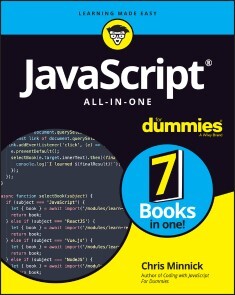
JavaScript All-in-One For Dummies
A DEVELOPER’S RESOURCE TO LEARNING ONE OF THE MOST-USED SCRIPTING LANGUAGESJavaScript All-in-One For Dummies saves you shelf space by offering a complete introduction to JavaScript and how it’s used in the real world. This book serves up JavaScript coding basics before diving into the tools, libraries, frameworks, and runtime environments new and experienced coders need to know. Start by learning the basics of JavaScript and progress through the techniques and tools used by professional JavaScript developers, even if you’ve never written code before. You also get the details of today’s hottest libraries and frameworks—React.js, Vue.js, Svelte, and Node.js.* Learn the basics of web and application development with the JavaScript language* Grasp the similarities and differences between React.js, Vue.js, and Svelte* Discover how to write server-side JavaScript and how to access databases with Node.js* Gain a highly marketable skill, with one of the most popular coding languages* Launch or further your career as a coder with easy-to-follow instruction* This is the go-to Dummies guide for future and current coders who need an all-inclusive guide JavaScript.This is the go-to Dummies guide for future and current coders who need an all-inclusive guide to the world of JavaScript.CHRIS MINNICK is a programmer, coding educator, course creator, and writer. He is the author of Beginning React.js Foundations, Coding with JavaScript For Dummies, JavaScript For Kids For Dummies, and more than a dozen other books about coding. He has taught web and mobile development, React, and JavaScript to thousands of programmers worldwide.
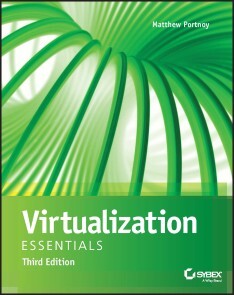
Virtualization Essentials
LEARN THE FUNDAMENTAL CONCEPTS AND SKILLS BY BUILDING YOUR OWN VIRTUAL MACHINEVirtualization is more important than ever, it's how the Cloud works! As virtualization continues to expand, millions of companies all over the world are leveraging virtualization. IT professionals need a solid understanding of virtualization concepts and software to compete in today's job market. The updated new edition of Virtualization Essentials teaches you the core concepts and skills necessary to work with virtualization environments. Designed for new and aspiring IT professionals alike, this practical guide offers an applied, real-world approach to help you develop the necessary skill set to work in Cloud computing, the DevOps space, and the rest of the virtual world. Virtualization Essentials simplifies complex concepts to ensure that you fully understand what virtualization is and how it works within the computing environment. Step by step, you’ll learn how to build your own virtual machine, both by scratch and by migrating from physical to virtual. Each user-friendly chapter contains an overview of the topic, a discussion of key concepts, hands-on tutorials, end-of-chapter exercises, review questions, and more.* Configure and manage a virtual machine’s CPU, memory, storage, and networking * Distinguish between Type 1 and Type 2 hypervisors* Compare the leading hypervisor products in today’s market * Configure additional devices for a virtual machine * Make considerations for availability* Understand how cloud computing leverages virtualizationVirtualization Essentials is an invaluable ‘learn-by-doing’ resource for new and aspiring IT professionals looking to gain a solid foundation in virtualization. It is also an excellent reference for more experienced IT admins responsible for managing on-premise and remote computers and workstations. ABOUT THE AUTHORMATTHEW PORTNOY is an information technology professional and Sales Engineering Manager at Splunk. He specializes in data management and virtualization. He has over 30 years’ experience in the IT industry and is a former Staff System Engineer at VMware.
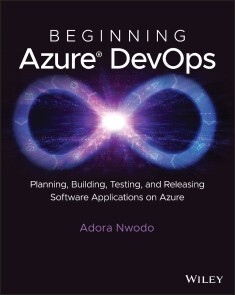
Beginning Azure DevOps
THE PERFECT DEVOPS GUIDE FOR BEGINNING AZURE USERSIn Beginning Azure DevOps: Planning, Building, Testing and Releasing Software Applications on Azure, award-winning software engineer Adora Nwodo delivers a beginner's guide to DevOps on the Microsoft-powered Azure cloud platform. In the book, you'll learn to deploy Azure's built-in DevOps tools required to plan, build, test, and ship applications.The author explains how to use Azure's functionality for project management, version control, code testing, and continuous integration and continuous delivery (CI/CD). She discusses how to plan software development projects from start to finish using Agile and Scrum techniques. Readers will also find:* Updated source code repositories on GitHub with instructive practice exercises* Strategies for improving collaboration and automating your code-to-cloud workflows* Techniques for securing your code with advanced capabilitiesAn essential resource for Azure novices who hope to learn about the myriad possibilities unlocked by Azure DevOps tools, Beginning Azure DevOps will also earn a place in the libraries of software professionals familiar with other cloud platforms who hope to gain a foothold in the Azure cloud environment.ADORA NWODO is an award-winning software engineer who develops mixed-reality products on the Azure cloud at Microsoft. She regularly publishes tech and career content on her blog and YouTube channel, where she teaches her community about software, infrastructure, and cloud engineering. She is a sought-after public speaker, tech community leader, and is the author of the self-published, Cloud Engineering for Beginners.

Programmieren lernen mit Python und Minecraft (4. Auflg.)
Minecraft-Plugins erstellen ohne Vorkenntnisse in aktueller 4. Auflage aus März 2023. Im heise Shop verfügbar als gedruckte oder digitale Version.Du spielst schon lange Minecraft und denkst, du hast schon alles gesehen? Kennst du schon das Feuerschwert, den Enderbogen oder den Spielmodus »Schneeballschlacht«? Du willst auf Knopfdruck Türme, Mauern oder sogar ganze Häuser bauen? Vollautomatisch auf Geschehnisse in der Spielwelt reagieren? Mit eigenen Plugins kannst du all das und noch viel mehr entdecken und ganz nebenbei auch noch programmieren lernen.Python ist für Programmiereinsteiger besonders leicht zu lernen. Daniel Braun zeigt dir, wie du mit Python und Bukkit oder Spigot Erweiterungen für Minecraft programmierst, sogenannte Plugins, die du dann zusammen mit deinen Freunden auf deinem eigenen Minecraft-Server ausprobieren kannst. Dafür sind keine Vorkenntnisse erforderlich, du lernst alles von Anfang an.Nach dem Programmieren einfacher Chat-Befehle wirst du coole Plugins zum Bauen erstellen, so dass mit einem einzigen Befehl sofort z.B. ein fertiges Haus oder eine Kugel vor dir steht.Außerdem erfährst du, wie deine Plugins automatisch auf Geschehnisse in der Spielwelt reagieren können.Du kannst auch eigene Crafting-Rezepte entwerfen, um z.B. mächtige neue Waffen zu kreieren wie das Feuerschwert, das alles in Brand setzt, worauf es trifft.Am Ende lernst du sogar, wie du eigene Spielmodi entwickeln kannst, also ein Spiel im Spiel. Ob eine Schneeballschlacht mit Highscore-Liste oder ein Wettsammeln mit Belohnung für den Sieger, hier ist jede Menge Spaß garantiert.Für das alles brauchst du keine Vorkenntnisse, nur Spaß am Programmieren. Es beginnt mit ganz einfachen Beispielen, aber mit jedem Kapitel lernst du mehr Möglichkeiten kennen, um Minecraft nach deinen Wünschen anzupassen. Am Ende kannst du richtig in Python programmieren und deiner Kreativität sind keine Grenzen mehr gesetzt, um deine eigene Minecraft-Welt zu erschaffen.Geeignet für Windows, Linux und macOSAus dem Inhalt:Bukkit und Spigot installieren und einrichtenEigene Befehle definieren und Chat-Nachrichten versendenPython-Grundlagen: Variablen, Schleifen, Verzweigungen, Funktionen, Klassen und ObjekteHäuser, Kreise und Kugeln bauenSchilder errichten und beliebig beschriftenPlugins programmieren, die auf Veränderungen in der Welt reagierenEigene Crafting-Rezepte erstellenInformationen dauerhaft speichernEigene Spielmodi entwickeln wie z.B. eine Schneeballschlacht oder ein SammelspielUmfangreiche Referenz zu allen ProgrammierbefehlenLeseprobe (PDF-Link)

Programmieren lernen mit Python - So einfach!
Spielend lernen anhand von anschaulichen Bildern. Mit einfachen Schritt-für-Schritt-Anleitungen. Für Kinder und Erwachsene - ab 10 Jahren.Kinderleicht programmieren lernen? Kein Problem! Mit diesem Buch lernst du Schritt für Schritt und anhand zahlreicher Beispiele die Grundlagen der Programmiersprache Python. Viele Bilder und kurze anschauliche Texte erleichtern dir das Verständnis. Alle Beispielprogramme werden ganz genau erklärt.Dich erwarten spannende Projekte wie zum Beispiel das Programmieren eines digitalen Assistenten zum Gedichteschreiben, ein Planeten-Ratespiel oder ein Programm zum Verwalten deiner Notizen. Du lernst, wie du Benutzungsoberflächen mit Bildern und Schaltflächen erstellst und wie du mit Daten aus dem Internet das Wetter vorhersagen kannst.Challenges mit Lösungen testen dein Wissen und fordern dich heraus, selbst kreativ zu werden. Damit hast du alles, was du brauchst, um deine eigenen Ideen mit Python umzusetzen und in der Welt der Programmierung durchzustarten.Die ersten Programme:Python als Taschenrechner, Begrüßungsautomat und ZahlenratenFunktionen im Einsatz:Computerkunst und BriefassistentDaten clever verarbeiten:Planeten aufzählen, Notizen verwalten und das Wetter vorhersagenProgramme mit grafischer Oberfläche:Farbmischer, digitaler Würfel, Dichten mit Goethe und QuizÜber den Autor:Michael Weigend war mehr als 30 Jahre lang als Lehrer tätig und hält an der Universität Münster im Rahmen eines Lehrauftrags Vorlesungen zur Python-Programmierung. Er engagiert sich in mehreren nationalen und internationalen Communities für den Computer-Einsatz in der Bildung, darunter Constructionism, IFIP TC3 (Computers in Education) und der Informatik-Biber-Wettbewerb. Leseprobe (PDF-Link)

Computer Science for Kids
A KID-FRIENDLY AND RIGOROUS NEW WAY TO TEACH YOUNG READERS THE FUNDAMENTALS OF COMPUTER SCIENCEIn Computer Science for Kids: A Storytelling Approach, AWS Head of Academic Advocacy and Google Developer Expert Dr. Jen Looper delivers a colorful, fun, and exciting demonstration for young readers who want to learn the basics of computer science. Using a variety of technologies, the book covers the elements of computer science in concise detail and illustrates how to build projects to learn foundational concepts behind the technology powering the internet. In the book, you’ll find projects to build using both basic and emerging technologies—like SQL, game development, storytelling software, and 3D augmented reality—as well as:* Chapter projects aligned to K-12 curriculum standards for grades 6-8 and a GitHub repo featuring open-source projects* Lesson plans for teachers* An online space for classrooms to showcase and discuss their workAn easy-to-follow and kid-friendly new resource for technology-curious middle school students, Computer Science for Kids is the fun and interesting web development resource that classroom teachers, parents, and homeschooling families have been waiting for. JEN LOOPER is the Head of Academic Advocacy at AWS with over 22 years’ experience as a web and mobile developer, specializing in creating cross-platform mobile and web apps. She’s a multilingual multiculturalist with a passion for web technologies, applied machine learning and discovering new things every day. With a PhD in medieval French literature, Jen’s area of focus is curriculum development and the application of sound pedagogy to technical topics. Visit Jen’s personal site at www.jenlooper.com, or connect via Twitter @jenlooper.

Affinity Publisher 2 (2. Auflg.)
Ihr verlässlicher Begleiter zu Affinity Publisher 2: Das umfassende Handbuch in 2. aktualisierten und erweiterten Auflage 2023.Dieses Handbuch zu Affinity Publisher 2 beantwortet alle Fragen, die Sie als Einsteiger in die Layoutbearbeitung oder als Umsteigerin von Adobe InDesign haben. Christian Denzler stellt Ihnen alle Funktionen und Werkzeuge vor, die Sie kennen sollten. Von den Grundlagen über die klassischen Themen Text, Typografie, Tabellen, Farbbearbeitung und Bilder bis hin zur Arbeit mit Effekten und Vektoren und der perfekten Ausgabe arbeiten Sie sich in die Software ein. Und mit den verständlichen Schritt-für-Schritt-Anleitungen setzen Sie das Gelernte direkt in die Praxis um. Topaktuell mit einem Kapitel zu Affinity Publisher auf dem iPad!Ergänzend zum Buch können Sie hier kostenlos einen Artikel auf der Rheinwerk-Website zu den Neuerungen in Affinity Publisher 2.1 lesen.Aus dem Inhalt:Arbeitsoberfläche und Bedienung: Panels und Werkzeuge, Studio Link und die PersonasDokumente anlegen, Seiten und Master-SeitenPraktische Hilfsmittel:Ebenen, Lineale, Raster, AssetsFormen und Farben:Formwerkzeuge, Zeichenwerkzeuge, Farbfelder, Verläufe und Farbdesigns, KonturenDie Arbeit mit Text und Typografie:Textarten, Textumfluss, Textstile, ListenMengensatz gekonnt organisieren:Ein Layout anlegen; die neue Buchfunktion; Fußnoten, Inhaltsverzeichnis und Index; Hyperlinks, Sektionsassistent, Felder, Anpinnen-FunktionTabellenMit Bildern arbeiten:Bilder platzieren, verlinken, einbetten, Ressourcenverwaltung, Anpassungsebenen, Maskierungsebenen, Effekte, Stile, Arbeiten mit der Photo-PersonaDateien prüfen und ausgeben:Reinzeichnung, Farbverwaltung, Transparenzreduzierung, Separation, Checkliste, Proof, PaketDrucken und Exportieren, DatenzusammenführungAffinity Publisher auf dem iPadLeseprobe (PDF-Link)

High-Performance Web Apps with FastAPI
Build APIs and web apps based on Asynchronous Server Gateway Interface (ASGI). This book provides a comprehensive explanation of using Pydantic models to construct the request/response objects in a FASTAPI path operation.You’ll start by reviewing type hints in Python and the asynchronous processing concepts. One of the highlights of FastAPI is its auto generation of API docs. Pydantic library is the main pillar on top of which FastAPI is built. You’ll see that ASGI has a far better performance compared to most of the other popular Python frameworks as they implement Web server Gateway Interface (WSGI), which is synchronous in nature and hence having slower response time.This book thoroughly explains how FastAPI interacts asynchronously with relational as well as NOSQL databases. Modern web apps use template engines to interact with the front-end. In this book, you will learn to use jinja2 templates and static assets. Swagger UI and OpenAPI standards are also covered in detail. Finally, different options of deployment of FastAPI app have been explored in this book.This book uses practical examples to empower you to build high performance APIsWHAT YOU'LL LEARN* Develop robust and high-performance web apps* Deploy the FastAPI app for public availability using cloud services such as Deta and Docker container* Understand the important building blocks of a web app such as form handling, templating and database interactionWHO THIS BOOK IS FORAspiring and the experienced Python developers looking to leverage the flexibility of Python and the powerful features introduced in Modern Python. Computer science Engineering students at graduate and postgraduate level will also benefit immensely from the practical approach adapted in the book.Malhar Lathkar is an independent developer, trainer, technical writer and author with over 30 years of experience. He holds a postgraduate degree in Electronics. After a brief stint as a degree college lecturer, he started his own software training and development institute. Over the years, he has gained proficiency in various programming technologies and imparted training to thousands of students and professionals from India and different countries around the world. Malhar also offers software training services to corporates. He has been associated with many EdTech companies as a freelance Subject Matter Expert. He has written a few books that have been published by well-known publishing houses.BUILD HIGH PERFORMANCE WEB APPS WITH FASTAPIChapter 1. Introduction to FastAPIChapter 2. Installation of FastAPIChapter 3. Request BodyChapter 4. TemplatesChapter 5. ResponseChapter 6. Using DatabasesChapter 7. MiddlewareChapter 8. Testing and DebuggingChapter 9. Deployment Build High Performance Web Apps with FastAPIChapter 10. Advanced Features

Android Smartphones für Dummies (5. Auflg.)
Sie haben ein Android-Smartphone und möchten wissen, was damit alles möglich ist? Dieses Buch bietet Ihnen einen Crash-Kurs in der Nutzung von Android, ganz egal, welches Gerät Sie besitzen. Dabei lernen Sie mehr als nur die Grundlagen des Chattens und Fotografierens. Jerome F. DiMarzio gibt Ihnen Profi-Tipps und -Tricks, an die Hand, wie Sie Ihr Telefon anpassen, Einstellungen optimieren, soziale Medien sicher nutzen und das Beste aus Apps und Widgets herausholen. Mit vielen Schritt-für-Schritt-Anleitungen ist dieses Buch Ihr freundlicher Ratgeber für das Betriebssystem Android.Jerome F. DiMarzio hat fast 30 Jahre Erfahrung in der Entwicklung von Spielen und Anwendungen in verschiedenen Programmiersprachen und für eine Vielzahl von Betriebssystemen. Er ist ein erfahrener Android-Entwickler, der Autor von 15 Büchern und hat mit Organisationen wie der Walt Disney Company und dem US-Verteidigungsministerium zusammengearbeitet.

Praxisbuch Infografik
* DIAGRAMME, PROZESSE, VERGLEICHE ODER KARTEN KORREKT UND GUT VERSTÄNDLICH DARSTELLEN* ÜBER 100 DOS UND DON'TS, DIE SIE BEIM ERSTELLEN VON INFOGRAFIKEN BEACHTEN SOLLTEN* PRAKTISCHES NACHSCHLAGEN VON DESIGN-ELEMENTEN, INFOGRAFIK-TYPEN, INHALTLICHEN UND FORMALEN KRITERIEN SOWIE GÄNGIGEN DARSTELLUNGSPROBLEMEN UND DEREN LÖSUNGSANSÄTZEN* SCHRITT-FÜR-SCHRITT-VORGEHEN FÜR DAS ERSTELLEN VON INFOGRAFIKENDer Übersetzungsprozess von Daten in passende Visualisierungen unterliegt vielen Herausforderungen. Dabei geht es nicht nur darum, Informationen übersichtlich und gut verständlich zu visualisieren, sondern auch darum, dass sie korrekt und unverfälscht dargestellt werden.Dieses Buch zeigt Ihnen Schritt für Schritt, wie Sie bei der Erstellung von Infografiken vorgehen. Dazu hat der Autor eine leicht verständliche grafische Bildsprache entwickelt, um Probleme und Lösungsmöglichkeiten anhand zahlreicher Grafikbeispiele visuell zu erläutern.Der Autor behandelt alle Aspekte, die beim Erstellen von guten Infografiken zu beachten sind:* Der Einsatz und die Verwendung von Design-Elementen wie Flächen, Pfeile, Piktogramme oder Farben* Die Auswahlkriterien unterschiedlicher Infografik-Typen wie Diagramme, Vergleiche oder Abläufe* Die Inhaltlichen Kriterien zur richtigen Interpretation der Daten und Ausgangsinformationen* Wie formale Kriterien wie Diagramme und Visualisierungen richtig und vollständig angewendet werden müssen* Die Vermeidung gängiger Darstellungsfehler, durch die Daten visuell falsch kommuniziert werden* Eine Anleitung zum strukturierten Vorgehen bei der Erstellung von Infografiken von der Ideenfindung bis zum EinsatzDas Buch ist als praktische Arbeitshilfe gedacht und in Doppelseiten organisiert, die jeweils eine einzelne Aufgabenstellung übersichtlich abdecken.Stefan Fichtel hat Illustration studiert und ist Gründer und Kreativdirektor der Agentur ixtract, die sich auf visuelle Wissensvermittlung spezialisiert hat. Daneben vermittelt er sein Wissen auch mit Lehrtätigkeiten und Workshops und war bereits Mitherausgeber eines Buches über animierte Infografiken. Seine Agentur hat einige internationale Auszeichnungen mit verschiedensten Visualisierungen gewonnen, u.a. auch Goldmedaillen durch die Society for News Design (SND) für die Mitwirkung an herausragenden journalistischen Arbeiten für das National Geographic Magazine und das Investigativportal Pro Publica.

A11Y Unraveled
Make designing and developing accessible websites fun and straightforward by deciphering information that is often confusing. This book examines how web professionals can ensure a website is as accessible as it can be, meeting the needs of its audience.The main focus is on web accessibility and, WCAG 2.1 and 2.2 guidelines: what they are, who they are for, and what can be done from a design point of view to make the lives of the users easier. In reviewing the fundamentals, emphasis will be given on what disabilities could potentially prevent users from getting the information they need and what can be done to help them. This is achieved by breaking down web design and development terms and practices, such as web accessibility, color contrast, typography, how to design specific components like carousels, forms, and so on.Each chapter features design examples presented in a clear and concise manner. Each design element is divided into different components, highlighting exactly what helps with what, showing how a website needs to be designed for the benefit of its people. A11Y Unraveled also reviews the current laws and legislations that govern web accessibility in different parts of the world.WHAT YOU'LL LEARN* Discover how people perceive information on the web, and how that might create barriers in communication.* Review different disabilities or limitations that prevent users from accessing web information and how to address them.* Design an accessible website for specific disabilities through practical examples.* Understand how different web design components affect the user.* Study current web accessibility legislation, avoiding difficult to understand lingo.WHO THIS BOOK IS FORMain audience would be digital and web professionals (mainly designers but developers can benefit as well). It can also help business owners who want to ensure their websites are adhere to accessibility standards.Dimitris is originally from Greece and has been living in the UK for about 8 years now. He started working as a graphic designer around 2004 doing mostly print work, had his own business along the way and he is now working as a senior designer on web and digital products. He considers himself a hobbyist designer, since he has not been formally educated in the subject (he holds a degree in Geography and now finishing a degree in Biology). However, Dimitri does love all things about design and has managed to make his hobby into a profession, so he considers that a win.Dimitris likes to think that the fact he is interested in multiple subjects allows for a more spherical, multivariate-variate approach to solving (design) problems, and natural curiosity is one of the main reasons he decided to write this book. While working as a designer he always thought to himself “why do I do this”, “does it matter”, “how will this/that affect usage” so when he started learning about web accessibility, he naturally went in there 100% ready to make sense of it all. Combine that with the fact that he was appointed as the main accessibility contact in the company he works for, he had to educate himself on the subject. Now, Dimitris would like to share what he has learnt and make digital professionals see that it’s actually pretty easy to make something accessible.A11Y UNRAVELEDChapter 1: When the amazon was nothing but a riverChapter 2: Be a designer they said. It'll be fun they saidChapter 3: One standard at a timeChapter 4: How do people perceive content?Chapter 5: Tell me what to do! Designing for users with disabilitiesChapter 6: How do I know I'm doing it right?Chapter 7: But do I have to?Chapter 8: What is usability?Chapter 9: Accessibility and usability. A love affairChapter 10: Who are we designing for?Chapter 11: You can't tell me what to do. I'm an adult!Chapter 12: Now you see me, now you don'tChapter 13: Click me like you mean it

Modern C++ for Absolute Beginners
Learn the C++ programming language in a structured, straightforward, and friendly manner. This book teaches the basics of the modern C++ programming language, the C++ Standard Library, and modern C++ standards, including C++23. No previous programming experience is required.C++ is a language like no other, surprising in its complexity, yet wonderfully sleek and elegant in so many ways. It is also a language that cannot be learned by guessing, one that is easy to get wrong and challenging to get right. To overcome this, each section is filled with real-world examples that gradually increase in complexity. Modern C++ for Absolute Beginners, Second Edition teaches more than just programming in C++23. It provides a solid C++ foundation to build upon.The author takes you through the C++ programming language, the Standard Library, and C++11 to C++23 standard basics. Each chapter is accompanied by the right amount of theory and plenty of source code examples. You will work with C++23 features and standards, yet you will also compare and take a look into previous versions of C++.After reading this book, you'll be able to start programming in modern C++ standards. You will do so with plenty of relevant source code examples, freely available via a dedicated GitHub repository.WHAT YOU WILL LEARN* Get Introduced to modern C++ in a friendly but effective way* Work with the basics of C++: types, operators, variables, constants, expressions, references, functions, classes, I/O, smart pointers, polymorphism, and more* Set up the Visual Studio environment on Windows and GCC on Linux, where you can write your own code* Declare and define functions, classes, and objects, and organize code into namespaces* Discover object-oriented programming: classes and objects, encapsulation, inheritance, polymorphism, and more using the most advanced C++ features* Employ best practices in organizing source code and controlling program workflow* Get familiar with C++ language do's and don'ts, and more* Manage the basics of lambdas, inheritance, polymorphism, smart pointers, templates, modules, contracts, concepts, and moreWHO THIS BOOK IS FORBeginner or novice programmers who wish to learn C++ programming. No prior programming experience is required.SLOBODAN DMITROVIĆ is a software consultant, trainer, and author of several programming books. He is a professional R&D software developer with two decades of experience in the industry. Slobodan provides C++ training courses for corporate clients and academic institutions.1. Introduction2. What is C++?3. C++ Compilers4. Our First Program5. Types6. Exercises7. Operators8. Standard Input9. Exercises10. Arrays11. Pointers12. References13. Introduction to Strings14. Automatic Type Deduction15. Exercises16. Statements17. Constants18. Exercises19. Functions20. Exercises21. Scope and Lifetime22. Exercises23. Classes - Introduction24. Exercises25. Classes – Inheritance and Polymorphism26. Exercises27. The static Specifier28. Templates29. Enumerations30. Exercises31. Organizing code32. Exercises33. Conversions34. Exceptions35. Smart Pointers36. Exercises37. Input/Output Streams38. C++ Standard Library and Friends39. Exercises40. C++ Standards41. Projects

The Service-Oriented Enterprise
A service-oriented architecture is fundamental to many new IT applications, from web development to social software and cloud computing. The same principles can be applied to every aspect of the service-oriented enterprise – not just in IT. In this book, you’ll explore how an enterprise architecture and viable services can link together to create a simpler yet far more powerful view of the enterprise, as a dynamic, unified whole.You can use the ideas, principles and methods described here in business transformation, workflow mapping, system design and much else besides, in every type of enterprise - including those in which there may be little or no IT at all. Step by step, you’ll walk through the basics of service-oriented architectures, the four key categories of services and how they connect, and how all of this comes together in real-world service design, implementation and operations.From this, you’ll discover how to identify and describe the different types of services that you need for your enterprise, and how to distinguish between the services that you can safely outsource, versus those that you do need to keep in-house. By the end of this book, you’ll learn how to construct function models and service models of your enterprise as a base for service-mapping, and how to pinpoint and map the information flows you need for service-management and service-performance, to keep everything on-track to purpose.WHAT YOU'LL LEARN* See how an enterprise architecture can work as a literal architecture * Understand Stafford Beer’s "Viable System Model" and adapt it as a robust model* Study how a Viable Services Model provides a template for service design that covers functionals, non-functionals and operational governance for servicesWHO THIS BOOK IS FOREnterprise architects, Business architects, Service designers, Workflow designersTom Graves has been an independent consultant for more than four decades, in business transformation, enterprise architecture and knowledge management. His clients in Europe, Australasia and the Americas cover a broad range of industries including small-business, banking, utilities, manufacturing, logistics, engineering, media, telecoms, research, defence and government. He has a special interest in whole-enterprise architectures for non-profit, social, government and commercial enterprises.Introduction:CHAPTER GOAL: Introduce the book as a whole, summarising purpose, audience, book structure and contentNO OF PAGES 2Chapter 1: Basics – An overviewCHAPTER GOAL: Provide an outline and summary for the ‘Basics’ section, which covers background themes needed before we get into the detail about services and service-design.NO OF PAGES 2This brief chapter provides a quick overview for the role and purpose of each chapter in the ‘Basics’ section. These include the nature and business-purpose of enterprise architecture; the definition and role of a service-oriented architecture, particularly in context of enterprise architecture; and the importance of metaphor in making sense of architectures and services.Chapter 2: Basics – Enterprise ArchitectureCHAPTER GOAL: Explain the business role of enterprise-architectureNO OF PAGES: 8This chapter answers key questions about enterprise architecture, including: what it is, and where it fits within the business context; the scope of enterprise architecture, whether centred around IT, or further, towards a literal ‘the architecture of the enterprise’; and its business purpose, particularly in relation to a service-oriented view of the organization and its businessChapter 3: Basics – Service-Oriented ArchitectureCHAPTER GOAL: Summarise what ‘service-oriented’ means, for enterprise architecture practiceNO OF PAGES : 12This chapter takes us through the usual IT-oriented view of ‘service-oriented architecture’, then opens up the perspective to include all types of services, whether IT-based, machine-based or people-based. Ee build upward from a set of key definitional criteria: loosely-coupled, contract-based, discoverable, abstractions, reusable and composable, and interchangeable. Topics also include security, service-management, and the core principle of ‘everything is a service’.Chapter 4: Basics – A Matter Of MetaphorCHAPTER GOAL: Introduce the importance of metaphor in architectures – particular the contrast between ‘organisation as machine’ versus ‘organisation as organism’.NO OF PAGES: 10This chapter takes us through the practical implications of the common metaphor of ‘organisation as machine’, contrasted with the metaphor of ‘organisation as living organism’. We explore why the latter metaphor is essential for making sense of services, particularly for any services that engage with people.Chapter 5: Principles – An OverviewCHAPTER GOAL: Provide an overview and summary for the ‘’Principles’ section, which describes the structural detail underpinning a service-oriented architecture and enterprise.NO OF PAGES: 2This brief chapter provides a quick overview for the role and purpose of each chapter in the ‘Principles’ section. The chapters cover topics such as the key conceptual structure for ‘viable services’; services that deliver the core value; linked services that provide management support for delivery; services that guide end-to-end coordination; linked services that support governance and other non-functionals; and also properties and patterns from systems-theory to use in service-design.Chapter 6: Principles – The Structure Of ServicesCHAPTER GOAL: Introduce Stafford Beer’s ‘Viable System Model’, and show how it provides a consistent pattern for service-design as ‘viable services’.NO OF PAGES: 15This chapter links the Viable System Model to the machine-metaphor, and then re-forms it to align with the living-organisam metaphor as ‘viable services. Themes include the ‘brain versus brawn’ concept in the machine-metaphor; the service-relationships – both human and technical – for the living-organisam metaphor; and a new perspective on services as ‘viable systems’.Chapter 7: Principles – Delivery ServicesCHAPTER GOAL: Explore the nature and role of ‘delivery services’ – those that directly delivery value for the enterprise.NO OF PAGES: 9This chapter describes the ‘delivery services’ elements in the viable-services model. It presents the various sub-types, such as value-chain, internal support-services and infrastructure, and the interfaces that each service will need to provide.Chapter 8: Principles – Management ServicesCHAPTER GOAL: Explore the nature and role of ‘management services’ – those that provide strategy and guidance for other services.NO OF PAGES: 17This chapter describes the ‘management service’ (or ‘guidance service’) elements in the viable-services model. It presents the various sub-types, such as identity, policy and purpose; strategy-services; and tactical and run-time direction; and also the interactions and interfaces for each of these service-types.Chapter 9: Principles – Coordination ServicesCHAPTER GOAL: Explore the nature and role of ‘coordination services’ – those that guide connection and choreography between other servicesNO OF PAGES: 11This chapter describes the ‘coordination-service’ elements in the viable-services model that bridge across the silos and support the choreography of end-to-end value-chains. It present the various sub-types, in roles such as ‘develop the business’, ‘change the business’ and ‘run the business’, and the interfaces that connect between them.Chapter 10: Principles – Pervasive ServicesCHAPTER GOAL: Explore the nature and role of of ‘pervasive-services’ – those that carry the qualitative non-functionals for which every in the enterprise is responsible.NO OF PAGES: 9This chapter describes the ‘pervasive-service’ element in the viable-services model that connect to and extend the topmost policy, vision and values through to every part of the extended enterprise. It presents the various sub-types, such as awareness, skills and competency development, and verificiation and audit, and the interfaces that connect these to other services.Chapter 11: Principles – Properties And PatternsCHAPTER GOAL: Introduce the core concept of ‘service as a system’, and the properties and patterns that make this possible to implement in practiceNO OF PAGES: 18This chapter describes the key connections between service-design and systems-theory. It also explores core concerns such as service-quality, service-interdependence and service-completeness.Chapter 12: Practice – An OverviewCHAPTER GOAL: Provide an overview and summary for the ‘Practice’ section of the book, which shows how all the various elements will fit together as a unified wholeNO OF PAGES: 3This brief chapter provides and overview for the role and purpose of each chapter in the ‘Practice’ section. The chapters show how services need to link together and support each other as a five-part network, connecting purpose, people, preparation, process and performance.Chapter 13: Practice – Service PurposeCHAPTER GOAL: Show why a clear definition of service purpose is essential as an anchor for design, and how to identify that purposeNO OF PAGES: 10This chapter describes what a service purpose is, why it’s important, how to derive it, and how to use it in design and operation. To support practice, the chapter includes detailed checklists for themes such as enterprise as service, stakeholders, stakeholder-imbalance, vision and values, policies and constraints, mission and service, mission and metrics, and staying on-purpose.Chapter 14: Practice – Services And FunctionsCHAPTER GOAL: Show how to create and use a Function Model to identify and define the roles of services, the relationships between them and the people they serve.NO OF PAGES: 15This chapter describes what a Function Model is, and how to create and use it in whole-of-enterprise service design. To support practice, the chapter includes real-world examples and full step-by-step instructions and guidance on how to create and verify the model.Chapter 15: Practice – The Knowledge Of ServicesCHAPTER GOAL: Show to use the Function Model with overlays and crossmaps to guide change and verify service value and viability.NO OF PAGES: 11This chapter describes a suite of overlays for the Function Model, such as activity-based costing, single-source-of-truth, service-overlaps and more. It also provides checklists to assist in verifying viability.Chapter 16: Practice – Services In ActionCHAPTER GOAL: EXPLORE HOW TO SET UP SERVICE-CHOREOGRAPHY, PARTICULARLY PEOPLE ARE DOING DELIVERY OF THE SERVICE.NO OF PAGES: 14This chapter provides guidance, checklists and worked examples on how to tackle process-choreography for services, whether IT-based or human-based. It also provides guidance on why an over-focus on IT can be problematic in many business contexts, and what to do to break out of the IT-centric box.Chapter 17: Practice – Optimising ServicesCHAPTER GOAL: Show how to guide continual-improvement for services, and to audit and verify the continuing viability of those services.NO OF PAGES: 8This chapter shows how to use audits, after-action reviews and stakeholder-engagement to guide continual improvement and optimization of service. It includes checklists and guidance on each of those themes.Appendix A: GlossaryCHAPTER GOAL: Provide a glossary of terms used in the books.NO OF PAGES: 4Appendix B: ResourcesCHAPTER GOAL: Provide a list of books, websites and other resources referenced in the book.NO OF PAGES: 4

Word 2021 - Stufe 2: Aufbauwissen
Sie arbeiten im Beruf oder Studium mit Word? Dann sind Sie bereits mit den wichtigsten Grundlagen vertraut. Doch Word kann noch mehr! Wie Sie die großen sowie kleinen und manchmal auch versteckten Helfer im Alltag nutzen und wie Sie damit Ihre Arbeitsweise effizienter gestalten, das erfahren Sie in diesem Handbuch – Ihrem persönlichen Trainer und praktischen Nachschlagewerk!Von A wie Alternativtext bis Z wie Zitate: Lernen Sie, wie Sie Format- und Dokumentvorlagen sowie den Seriendruck nutzen, Überschriften nummerieren, ein Inhaltsverzeichnis erstellen, Ihre Dokumente für den beidseitigen Druck einrichten oder mathematische Ausdrücke und Symbole einfügen. Zudem zeigt Ihnen die Autorin, welche Möglichkeiten in Feldern und Formularsteuerelementen stecken. Profitieren Sie von Inge Baumeisters langjähriger Erfahrung als Dozentin in der Erwachsenenbildung und freuen Sie sich auf praktische Anleitungen, Beispiele und Tipps, die Ihnen viel Zeit sparen!Aus dem Inhalt:- Korrektur- und Sprachhilfen sowie Querverweise - Seitenlayouts für große Dokumente - Formatvorlagen zur effizienten Textformatierung - Bilder und Objekte im Text positionieren- Dokumente mit Feldern automatisieren- Inhalts-, Abbildungs-, Literatur- und Stichwortverzeichnis- Workshop: große Dokumente und wissenschaftliche Arbeiten erstellen- Seriendruck für Briefe, E-Mails, Etiketten und Umschläge - Formulare erstellen, schützen und weitergeben- Mathematische Formeln und Symbole im Word-Dokument- Workshop: Dokumentvorlage für Geschäftsbriefe

Ermittlung geeigneter industrieller Anwendungen von Augmented Reality
In diesem Buch wird eine anwendungsübergreifende Methodik zur Identifikation und Bewertung geeigneter Einsatzmöglichkeiten kontext-sensitiver Augmented Reality (AR) entwickelt und validiert. Bestehende Ansätze, eine Querschnittsstudie und reale Anwendungen aus der Automobilindustrie werden genutzt, um ein Modell des Task-Technology Fit von AR und ein Auswahlverfahren bezüglich technologischer Alternativen zu entwickeln. Außerdem erfolgt eine Bewertung verschiedener Anwendungsfelder entlang der Wertschöpfungskette und konkrete Inhalte zum ökonomischen, ökologischen und sozialen Nutzen und Aufwand werden strukturiert zusammengeführt.Einführung.- Grundlagen.- Bestehende Ansätze.- Theoriebildung.- Methodik.- Validierung.- Fazit.- Literaturverzeichnis.

Introduction to Dependent Types with Idris
Dependent types are a concept that allows developers to write proof-carrying code. Idris is a programming language that supports dependent types. This book will teach you the mathematical foundations of Idris as well as how to use it to write software and mathematically prove properties.The first part of the book serves as an introduction to the language's underlying theories. It starts by reviewing formal systems and mathematical logical systems as foundational building blocks, then gradually builds up to dependent types. Next, you'll learn type theory for dependent types. Following this, you'll explore the Idris programming language and conclude by exploring the depths of formal systems and type checkers by implementing them.Introduction to Dependent Types with Idris will walk you through simple examples through more advanced techniques, stepping up the difficulty as you gain more knowledge. Every chapter includes a set of exercises based on what it covered to further cement your learning. No specialized knowledge of mathematics is expected beyond the basics, so it is perfect for novices.WHAT YOU WILL LEARNUnderstand Lambda calculus and dependent types* Gain insight into functional programming* Write mathematical proofs with IdrisWHO THIS BOOK IS FORProgrammers, mathematicians, academics, and anyone else interested learning dependent types and lambda calculus.BORO SITNIKOVSKI has over ten years of experience working professionally as a software engineer. He started programming with assembly on an Intel x86 at the age of ten. While in high school, he won several prizes in competitive programming, varying from 4th, 3rd, and 1st place. He is an informatics graduate - his bachelor’s thesis was titled “Programming in Haskell using algebraic data structures”, and his master’s thesis was titled “Formal verification of Instruction Sets in Virtual Machines”. He has also published a few papers on software verification. Other research interests of his include programming languages, mathematics, logic, algorithms, and writing correct software. He is a strong believer in the open-source philosophy and contributes to various open-source projects. In his spare time, he enjoys some time off with his family.Chapter 1: Formal Systems.- Chapter 2: Classical Mathematical Logic.- Chapter 3: Type Theory.- Chapter 4: Programming in Idris.- Chapter 5: Proving in Idris.

Handbuch IT-Management (8. Auflg.)
Konzepte, Methoden, Lösungen und Arbeitshilfen für die PraxisIT-Management ist einer der wichtigsten Erfolgsfaktoren für alle Unternehmen und Dienstleistungsorganisationen. Deshalb nehmen IT-Verantwortliche eine zunehmend zentrale Rolle ein. Gestützt durch leistungsfähige Technologien wie Big Data und Data Analytics, Cloud Computing, durch mobile Endgeräte und neue Formen der Vernetzung (IoT u. a.) sowie weitere digitale Innovationen (KI, AR u. a.) werden völlig neue Geschäftsmodelle, Produkte und Prozesse entwickelt und erfolgreich realisiert bzw. implementiert.Damit Sie als IT-Manager für die Praxis gerüstet sind, bietet Ihnen dieses Handbuch umfassendes und unverzichtbares Wissen zu allen wichtigen Handlungsfeldern der IT sowie Unterstützung für die erfolgreiche Nutzung bewährter Methoden und Instrumente.Diese Auflage wurde umfassend aktualisiert und durch innovative Managementthemen, wie z.B. IT-Sourcing, IT-Relationship-Management oder Digitale Transformation erweitert.Mit Beiträgen von Robert Bergmann, Matthias Farwick, Vanessa Greger, Torsten Groll, Norbert Gronau, Christiana Klingenberg, Michael Klotz, Dietmar Kopperger, Helmut Krcmar, Jörg Kunsmann, Klaus Schmidt, Tobias Schmidt, Ernst Tiemeyer, Thomas Trojer, Kristin Weber, Anette Weisbecker, Walter Wintersteiger und Helmut ZsifkovitsInhalt:Strategisches IT-ManagementDigitalisierung managenEnterprise Architecture ManagementDaten- und InformationsmanagementGeschäftsprozessorientierte SoftwaresystemeCloud ComputingIT-SourcingIT-AnforderungsmanagementIT-System- und IT-ServicemanagementDigital Workplace ManagementIT-OrganisationPersonalmanagement im IT-BereichIT-ControllingLizenzmanagement in der ITEnterprise IT-GovernanceInformation Security ManagementIT-CompliancePartnermanagement in der ITEnterprise IT-ProjektmanagementDigitale TransformationAutor:Dipl.-Hdl. Ernst Tiemeyer ist seit mehr als 25 Jahren in leitenden Projektfunktionen sowie als IT-Consultant und im Bildungsbereich bzw. Managementtraining tätig. Schwerpunktmäßig befasst er sich in der Praxis mit Projektmanagement, strategischem IT-Management, Enterprise IT-Architekturmanagement, Enterprise IT-Governance, IT-Controlling sowie BPM. Seine Lehrtätigkeit führt er unter anderem an der EU-FH in Hamburg, am FH Joanneum Kapfenberg/Graz sowie an der FOM (Hochschule für Berufstätige) in verschiedenen Bachelor- und Masterstudiengängen aus.

Einführung in Qt (2. Auflage)
Entwicklung von GUIs für verschiedene BetriebssystemeQt ist ein mächtiges Entwicklungsframework, mit dem u. a. User Interfaces für Desktop-, Mobile-, Embedded- und IoT-Plattformen programmiert werden können. Es kommt in der Wissenschaft und in zahlreichen Branchen wie z. B. in der Medizintechnik und der automobilbranche zum Einsatz.Dieses Buch bietet Ihnen eine strukturierte Einführung in die GUI-Programmierung mit Qt. Vom grundlegenden Aufbau der Qt-Bibliothek über die im Qt Framework enthaltenen Programme bis zu ihrem praktischen Einsatz lernen Sie alle für den Einstieg wichtigen Bereiche kennen. Dabei reicht das Themenspektrum von den Grundlagen über die Einbindung von Datenbanken und dem Aufbau von Web-Engines bis hin zur Einbindung in Netzwerke und der Nutzung von Charts.Das Buch vermittelt Einsteigern mit Vorkenntnissen in C++ das Fundament, um eigene Qt-Anwendungen zu programmieren und fortgeschrittene Techniken, wie sie in der Industrie benötigt werden, zu erlernen.Autor:Dr. Achim Lingott studierte Physik, Mathematik und Pädagogik und promovierte auf dem Gebiet der Erziehungstheorie.Er war viele Jahre Geschäftsführer eines Bildungsunternehmens, arbeitete als Projektleiter für verschiedene Unternehmen und ist bis heute als freiberuflicher Dozent für Programmiersprachen wie Java, C# und C++ tätig. Er arbeitet heute u.a. in Berlin und wohnt in Parchim.