

Allgemein

Coding with AI For Dummies
BOOST YOUR CODING OUTPUT AND ACCURACY WITH ARTIFICIAL INTELLIGENCE TOOLSCoding with AI For Dummies introduces you to the many ways that artificial intelligence can make your life as a coder easier. Even if you’re brand new to using AI, this book will show you around the new tools that can produce, examine, and fix code for you. With AI, you can automate processes like code documentation, debugging, updating, and optimization. The time saved thanks to AI lets you focus on the core development tasks that make you even more valuable. Learn the secrets behind coding assistant platforms and get step-by-step instructions on how to implement them to make coding a smoother process. Thanks to AI and this Dummies guide, you’ll be coding faster and better in no time.* Discover all the core coding tasks boosted by artificial intelligence* Meet the top AI coding assistance platforms currently on the market* Learn how to generate documentation with AI and use AI to keep your code up to date* Use predictive tools to help speed up the coding process and eliminate bugsThis is a great Dummies guide for new and experienced programmers alike. Get started with AI coding and expand your programming toolkit with Coding with AI For Dummies.CHRIS MINNICK is an accomplished author, teacher, and programmer. Minnick authored or co-authored over 20 books, including titles in the For Dummies series. He has developed video courses for top online training platforms and he teaches programming and machine learning to professional developers at some of the largest global companies.

Geographical Data Imperfection 2
Geographical data often contains imperfections associated with insufficient precision, errors or incompleteness. If these imperfections are not identified, taken into account and controlled when using the data, the potential for errors may arise, leading to significant consequences with unforeseeable effects, particularly in a decisionmaking context. It is then necessary to characterize and model this imperfection, and take it into account throughout the process.In the previous volume, we introduced different approaches for defining, representing and processing imperfections in geographic data. Volume 2 will now present a number of concrete applications in a variety of fields, demonstrating the practical application of the methodology to use cases such as agriculture, natural disaster management, mountain hazards, land management and assistance for the visually impaired.François Pinet is a researcher at the French National Research Institute for Agriculture, Food and the Environment.Mireille Batton-Hubert is a professor at the École Nationale Supérieure des Mines de Saint- Étienne, France.Eric Desjardin is a lecturer at the University of Reims ChampagneArdenne within the STIC Research Center (CReSTIC), France.

Nutzung der Fahrzeug-Schnittstelle zur Datenerfassung im dynamischen Fahrzeug-Betrieb
Andreas Heinz führt im Fahrzeugumfeld erstmalig ein Verfahren ein, um ein Messvorhaben mittels ereignisorientierter Datenübertragung zu konzipieren und dessen Durchführbarkeit abzuschätzen. Darüber hinaus zeigt er, wie Messungen effizienter gestaltet bzw. qualitativ hinsichtlich Auflösung und Zeitverhalten optimiert werden können. Dabei werden gegebene Sicherheitsanforderungen und normative Vorgaben stets eingehalten und eine Buslastberechnung für den CAN eingeführt, die zusätzliche Buslasten für Messzwecke berücksichtigen kann. Dies ermöglicht dem Autor, im Vorfeld der Messung eine Aussage treffen zu können, ob diese Messaufgabe für einen sicheren Einsatz im realen Fahrbetrieb realisierbar ist oder nicht. Einleitung.- Potentialabschätzung aktuell geltender Standards.- Methode für die Messdatenerfassung im dynamischen Fahrzeugbetrieb.- Anwendung und praktischer Nachweis.

AI Investing For Dummies
WINNING STRATEGIES FOR INVESTORS LOOKING TO BOOST GAINS WITH ARTIFICIAL INTELLIGENCEAI is one of the hottest investment trends on Wall Street. AI Investing For Dummies gives you all the must-know details on how artificial intelligence can benefit investors. You’ll learn how powerful AI can be in helping you make better decisions, identify hidden opportunities, and build wealth in stocks, bonds, commodities, and real estate. This easy-to-understand Dummies guide also covers budgeting, taxes, estates, and planning for college and retirement—all with AI-specific tactics that can improve efficiency, mitigate risk, and level up your portfolio’s performance. You’ll also find all the info you need to sift through and implement the right resources and solutions for you.* Understand the benefits and drawbacks of AI investing * Debunk the biggest myths about AI investing * Get an in-depth analysis of the top AI stocks to watch* Learn how to avoid common pitfalls in AI investing * Take a peek at the role of AI in shaping the future of finance This is the ideal Dummies resource for consumers and investors who are new to AI and want to wrap their heads around this emerging technology. PAUL MLADJENOVIC is a financial, business, and investment educator and national speaker with 40-plus years of experience. He has authored numerous Dummies guides, including the bestselling Stock Investing For Dummies, Currency Trading For Dummies, Investing in Gold & Silver For Dummies, High-Level Investing For Dummies, and others. Introduction 1PART 1: ARTIFICIAL INTELLIGENCE BASICS 5Chapter 1: Artificial Intelligence 101 7Chapter 2: A Primer on ChatGPT 13Chapter 3: Spanning the AI Landscape: Different Inputs and Outputs 23PART 2: AI STOCK INVESTING 29Chapter 4: Large-Cap AI Stocks 31Chapter 5: Small-Cap AI Stocks and IPOs 43Chapter 6: Diversifying with ETFs and Mutual Funds 51Chapter 7: Robo-Advisors 65Chapter 8: Fundamental and Technical Analysis 75PART 3: AI STOCK INVESTING ALTERNATIVES 85Chapter 9: Hard Assets and Commodities 87Chapter 10: Bonds, Bank Investments, and Digital Currencies 109Chapter 11: Real Estate Investing 123Chapter 12: Business and Career Ventures 139PART 4: SMART INVESTMENT TACTICS 159Chapter 13: Using AI for Economic Analysis 161Chapter 14: Financial Planning and Other Money Matters 181Chapter 15: Retirement and Estate Planning 193Chapter 16: Tax Considerations 209PART 5: THE PART OF TENS 227Chapter 17: Ten Cautions about Artificial Intelligence 229Chapter 18: Ten or So Types of Prompts You Can Use for AI Investing 235Chapter 19: Ten Tools and Resources That AI Beginners Should Consider 243Chapter 20: Ten Strategies to Complement Your AI Investing Pursuits 249PART 6: APPENDIXES 257Appendix A: AI Resources 259Appendix B: AI Tools 265Appendix C: General Investing Resources 271Index 275
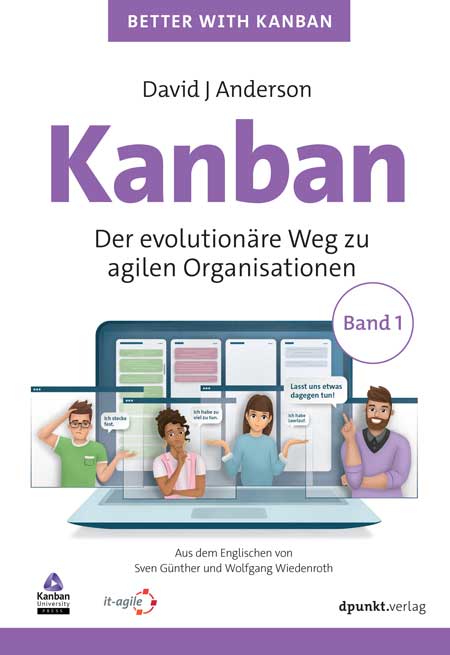
Kanban (Band 1, Better with Kanban)
Kanban. Der evolutionäre Weg zu agilen Organisationen. (Februar 2024)»Kanban – der evolutionäre Weg zur agilen Organisation« beschreibt die Ursprünge und den Grundgedanken der Kanban-Methode und wie die Konzepte aus der physischen Industrie für die moderne Wissensarbeit des 21. Jahrhunderts angepasst und übernommen wurden. Darüber hinaus erläutert und illustriert das Buch die Praktiken, Prinzipien und Werte der Kanban-Methode anhand realer Fallstudien von Microsoft und zwei weiteren Technologieunternehmen aus Seattle und San Francisco. Es umfasst die kritischen Elemente eines erfolgreichen organisatorischen Wandels und stellt das Kanban-Reifegradmodell vor.Die hier vorgestellten Konzepte bilden die Grundlage für die gesamte Kanban-Methode und die neue Buchreihe »Better with Kanban«. Das Buch ist ein Muss für alle Wissensarbeiter, ganz gleich, ob Sie ein erfahrener Kanban-Praktiker sind, ob Sie bereits nach der Kanban-Methode zertifiziert sind und nach weiteren Anleitungen suchen, oder ob Sie ein Neueinsteiger, der sich ein solides Verständnis der Kanban-Methode aneignen möchte.David J Anderson ist ein Innovator von Managementkonzepten für die Geschäftswelt des 21. Jahrhunderts. Er ist Vorsitzender von Lean Kanban Inc., einem Unternehmen für Trainings, Beratung, Veranstaltungen und Veröffentlichungen, das Führungskräften weltweit neue Ideen zugänglich macht. David verfugt über mehr als 30 Jahre Erfahrung in der Hightechindustrie, wo er in den frühen 80er-Jahren im Umfeld der Spieleentwicklung begann. Er arbeitete für IBM, Sprint, Motorola und Microsoft sowie für eine Reihe von Start-up-Unternehmen. David ist der Begründer sowohl der Kanban-Methode als auch von Enterprise Services Planning, ist regelmäßiger Sprecher auf intern. Konferenzen und hat mehrere Bücher veröffentlicht.Übersetzer: Sven Günther ist Berater bei der it-agile GmbH in Hamburg. Seit 1997 entwickelt er in Java und C-Sprachen sowohl im Enterprise- Umfeld als auch für mobile Geräte. Agile Entwicklungsmethoden hat er 2007 für sich entdeckt und ist seitdem begeistert von ihnen. Sein besonderes Interesse gilt der Verbesserung von Arbeitsabläufen mit Kanban. Wolfgang Wiedenroth ist ausgebildeter Fachinformatiker der Fachrichtung Anwendungsentwicklung . Von 2007 an arbeitete er als Scrum Master in verschiedenen Unternehmen. Seit 2010 liegt sein Schwerpunkt auf der Kanban-Methode. Heute arbeitet er bei it-agile als Berater. Wolfgang ist akkreditierter Kanban Trainer (AKT) und Kanban Coaching Professional (KCP). Er bloggt auf agilemanic.com und twittert als @wwiedenroth.Leseprobe (PDF-Link)

Cryptography
CRYPTOGRAPHYAN INTRODUCTION TO ONE OF THE BACKBONES OF THE DIGITAL WORLDCryptography is one of the most important aspects of information technology security, central to the protection of digital assets and the mitigation of risks that come with increased global connectivity. The digital world is wholly reliant on secure algorithms and protocols for establishing identity, protecting user data, and more. Groundbreaking recent developments in network communication and a changing digital landscape have been accompanied by similar advances in cryptography, which is more central to digital life than ever before. This book constitutes a comprehensive yet accessible introduction to the algorithms, protocols, and standards which protect the modern internet. Built around both foundational theories and hundreds of specific algorithms, it also incorporates the required skills in complex mathematics. The result is an indispensable introduction to the protocols and systems which should define cryptography for decades to come. Readers will also find:* Over 450 problems with accompanying solutions to reinforce key concepts and test retention* Detailed discussion of topics including symmetric and asymmetric algorithms, random number generation, user authentication, and many more* Over 200 figures and tables that provide rich detail to the contentCryptography: Algorithms, Protocols, and Standards for Computer Security is ideal for undergraduate and graduate students in cryptography and information technology subjects, as well as for researchers looking for a working reference on existing cryptographic algorithms and protocols. ZOUBIR MAMMERI, PHD, is a Full Professor at Paul Sabatier University in Toulouse, France. He teaches a variety of computer science subjects. He has published extensively on cybersecurity and related subjects, and has served as expert and evaluator in research programs of the European Commission and the French National Research Agency on communication networks and their security.

Artificial Intelligence in Health
Undeniable, inescapable, exhilarating and breaking free from the exclusive domain of science, artificial intelligence has become our main preoccupation.A major generator of new mathematical thinking, AI is the result of easy access to information and data, as facilitated by computer technology. Big Data has come to be seen as an unlimited source of knowledge, the use of which is still being fully explored, but its industrialization has swiftly followed in the footsteps of mathematicians; today's tools are increasingly designed to replace human beings, which comes with social and philosophical consequences.Drawing on examples of scientific work and the insights of experts, this book offers food for thought on the consequences and future of AI technology in education, health, the workplace and aging.MARIANNE SARAZIN is a public health doctor with a doctorate in Life Sciences from the Engineering and Health Center (CIS) of the École nationale supérieure des mines de Saint-Étienne, France. She is the Head of the Medical Information department of the Mutualiste Sanitary Group of Saint-Étienne (Aesio group) and a CIS collaborator in the Optimization of Healthcare Systems department as well as UMRS 1136 Inserm, specializing in the modeling of epidemics.

Programming for Game Design
Create video game elements using the Godot game engine, gaining practical experience in programming and video game development. The Godot game engine uses a simplified programming language called GDScript, which closely resembles Python. By learning GDScript, you can focus more on learning the basics of programming.You’ll explore concepts such as variables and data structures variables used to store information about video game objects that can be manipulated using a keyboard or a mouse. You’ll also learn about user interface design, branching statements, and looping statements, enabling you to actively engage in programming and create your own interactive games.By the end of the book, you’ll have a solid understanding of how video game elements work and how the basic principles of programming work as well. By programming simple video game elements in the Godot game engine, you’ll learn both programming and the principles of 2D video game design.WHAT YOU WILL LEARN* Understand the basics of programming by creating simple video game elements in the Godot game engine.* Explore variables and data structures to actively store and modify information about video game objects.* Gain a deeper understanding of user interface design.* Master simplified programming languages like GDScript.WHO THIS BOOK IS FORAspiring programmers and game enthusiasts seeking an engaging introduction to programming through video game creation.WALLACE WANG has been writing computer books for over 30 years, including Steal This Computer Book, Microsoft Office for Dummies, Beginning Programming for Dummies, Beginning iPhone Development with SwiftUI, and The Structure of Game Design” to name just a few. He created the board game, “Orbit War,” for Steve Jackson Games, which simulated satellite warfare in the near future. He also writes screenplays and won first place in Scriptapalooza’s 2023 screenwriting competition.TONNETTA WALCOTT is a writer, podcaster, gamer, and programmer who is passionate about video games and technology. She graduated from San Diego State University with a English Bachelor’s and has a certificate in Computer Programming. After being offered an internship at Sony Online Entertainment, Tonnetta learned computer programming (C++, Java), web development, and game design using the Unity and Godot game engines. Tonnetta has programmed a simulation to chess, Battleship, and a matching concentration game, and is currently working on a game called NinChibi, where tiny chibi ninjas play tag in a single player and multiplayer mode. The NinChibi game is built with the Godot game engine.Chapter 1: Why learn programming with the Godot game engineChapter 2: Getting to know GodotChapter 3: Writing scriptsChapter 4: Storing data in variablesChapter 5: Mathematical operationsChapter 6: Branching statementsChapter 7: Looping statementsChapter 8: Understanding arraysChapter 9: Understanding dictionariesChapter 10: FunctionsChapter 11: Object-oriented programmingChapter 12: Getting input from the userChapter 13: Shooting projectilesChapter 14: Adding projectiles to a playerChapter 15: Hitting enemies with projectilesChapter 16: Displaying a user interfaceChapter 17: Adding physicsChapter 18: Playing audioChapter 19: Creating and using scenesChapter 20: Using SignalsChapter 21: Creating a Simple Tic-Tac-Toe Game

Computer für Kids (9. Auflg.)
So funktionieren PCs, Laptops, Smartphones & Co.Was haben Desktop-PCs, Laptops, Tablets, Smartphones, Playstations und sogar Taschenrechner gemeinsam? Sie sind alle Computer! Aber weißt du eigentlich, wie so ein Gerät aufgebaut ist und was man alles Spannendes mit ihm anstellen kann? Dieses Buch zeigt dir von Grund auf, wie Computer funktionieren. Vorkenntnisse brauchst du keine.Zunächst erforschst du Windows in seiner neuesten Version. Du erfährst, wie du mit Dateien, Ordnern und Fenstern umgehst und wie du speicherst und druckst. Dann lernst du unterschiedliche Teile des Computers und die angeschlossenen Geräte kennen. Auch zur Software erfährst du eine Menge, zum Beispiel wie du Word benutzt oder was Open-Source-Programme sind.Danach geht es ins Internet und du lernst, wie du mit einer Cloud umgehst und wie du zum Beispiel dein Smartphone mit deinem PC abgleichst.Mit einer Pannenhilfe und einem Lexikon am Ende des Buches kannst du dich bei offenen Fragen und kleineren Problemen mit deinem Computer jederzeit schlaumachen.Aus dem Inhalt:Klicken, Tippen, Ziehen: Ein System in BetriebMit Schere und Kleber: TextbearbeitungJede Menge Speicherplatz: Harddisk, Flash, CD und mehrJetzt wird aufgeräumt: Kopieren, verschieben, löschenNeue »Möbel« im System: Dateien und OrdnerNicht nur für Technikfreaks: die HardwareOhne sie läuft nichts: die SoftwareÜber den Autor:Hans-Georg Schumann war Informatik- und Mathematiklehrer an einer Gesamtschule. Er hat bereits viele erfolgreiche Bücher in der Reihe „... für Kids“ geschrieben.Leseprobe (PDF-Link)

AI Investing For Dummies
WINNING STRATEGIES FOR INVESTORS LOOKING TO BOOST GAINS WITH ARTIFICIAL INTELLIGENCEAI is one of the hottest investment trends on Wall Street. AI Investing For Dummies gives you all the must-know details on how artificial intelligence can benefit investors. You’ll learn how powerful AI can be in helping you make better decisions, identify hidden opportunities, and build wealth in stocks, bonds, commodities, and real estate. This easy-to-understand Dummies guide also covers budgeting, taxes, estates, and planning for college and retirement—all with AI-specific tactics that can improve efficiency, mitigate risk, and level up your portfolio’s performance. You’ll also find all the info you need to sift through and implement the right resources and solutions for you.* Understand the benefits and drawbacks of AI investing * Debunk the biggest myths about AI investing * Get an in-depth analysis of the top AI stocks to watch* Learn how to avoid common pitfalls in AI investing * Take a peek at the role of AI in shaping the future of finance This is the ideal Dummies resource for consumers and investors who are new to AI and want to wrap their heads around this emerging technology. PAUL MLADJENOVIC is a financial, business, and investment educator and national speaker with 40-plus years of experience. He has authored numerous Dummies guides, including the bestselling Stock Investing For Dummies, Currency Trading For Dummies, Investing in Gold & Silver For Dummies, High-Level Investing For Dummies, and others.

Künstliche Intelligenz: Brücke zwischen Psychoanalyse und Neurologie
Die Psyche mit dem neuronalen System verschmelzen zu können, ist ein lang angestrebtes Ziel. Wissenschaftler brauchen oft Jahre, um die Hürden auf dem Weg dahin zu begreifen. Ist das unumgänglich? Welche naturwissenschaftlichen Prinzipien liegen dem vorliegenden Modell zugrunde? Kann es ohne mathematischen Formalismus verstanden werden? Wie kann ein simuliertes Modell dieser Zusammenführung von Psyche und Neurologie – nennen wir es das Psi-Organ – aus heutiger Sicht aussehen?Mit Hilfe von Simulationsexperimenten können damit psychologische und soziale Theorien auf naturwissenschaftlicher Basis überprüft werden. Das Modell kann als Grundlage für KI-Systeme dienen, die Menschenleben retten, Energie sparen, für Sicherheit auf Flughäfen sorgen, bei der Pflege älterer Menschen unterstützen und vieles mehr. Dieses Psi-Organ-Modell geht weit über die heutigen, hauptsächlich verhaltensbasierten KI-Systeme hinaus.Das Manuskript ist als Einführung zum Verständnis und der Modellierung des menschlichen Geistes und der künstlichen, humanoiden "Intelligenz" zu verstehen.DIETMAR DIETRICH ist Elektroniker. Mit Hilfe der Studienstiftung des Deutschen Volkes studierte er Elektrotechnik in Karlsruhe. Nach seiner Promotion arbeitete er in der Luftfahrttechnik und später in der Nachrichtentechnik. Seine Hauptthemen als Professor für Computertechnik (in Bielefeld und Wien) waren nach Tätigkeiten in der Industrie vor allem Automatisierungsprozesse, Flugsicherung und zunehmend Probleme der künstlichen Intelligenz. Er war Organisator und Mitorganisator vieler nationaler und internationaler wissenschaftlicher Konferenzen und jahrzehntelang weltweit in industriellen und wissenschaftlichen Gremien tätig. Er war Herausgeber des Buches "Simulating the Mind - A Technical Neuropsychoanalytical Approach" (Springer, 2009). Er ist Autor von weit über 200 Publikationen und 19 Büchern in den Bereichen Automatisierung, Flugsicherung, Feldbustechnik, Informationstechnik, Kommunikationstechnik oder Computertechnik.Prinzipien der Beschreibung - Funktionen und ihr Verhalten - Erweiterte Mealy-Theorie - Informationssysteme - Die Welt der Hardware / Neurowissenschaft und mehr - Die Welt der Information / Psychoanalyse und mehr - Das Ψ-Organ / das SiMA-Modell - Turing, Intelligenz und das Selbst - Modellierung des Bewusstseins

Cryptography
CRYPTOGRAPHYAN INTRODUCTION TO ONE OF THE BACKBONES OF THE DIGITAL WORLDCryptography is one of the most important aspects of information technology security, central to the protection of digital assets and the mitigation of risks that come with increased global connectivity. The digital world is wholly reliant on secure algorithms and protocols for establishing identity, protecting user data, and more. Groundbreaking recent developments in network communication and a changing digital landscape have been accompanied by similar advances in cryptography, which is more central to digital life than ever before. This book constitutes a comprehensive yet accessible introduction to the algorithms, protocols, and standards which protect the modern internet. Built around both foundational theories and hundreds of specific algorithms, it also incorporates the required skills in complex mathematics. The result is an indispensable introduction to the protocols and systems which should define cryptography for decades to come. Readers will also find:* Over 450 problems with accompanying solutions to reinforce key concepts and test retention* Detailed discussion of topics including symmetric and asymmetric algorithms, random number generation, user authentication, and many more* Over 200 figures and tables that provide rich detail to the contentCryptography: Algorithms, Protocols, and Standards for Computer Security is ideal for undergraduate and graduate students in cryptography and information technology subjects, as well as for researchers looking for a working reference on existing cryptographic algorithms and protocols. ZOUBIR MAMMERI, PHD, is a Full Professor at Paul Sabatier University in Toulouse, France. He teaches a variety of computer science subjects. He has published extensively on cybersecurity and related subjects, and has served as expert and evaluator in research programs of the European Commission and the French National Research Agency on communication networks and their security.

Next Generation Internet
Die Entwicklung des Internets, insbesondere des WWW, stößt aktuell an ihre Grenzen – sowohl technisch als auch sozio-kulturell und ökonomisch. Als Lösung wird ein neues Internet versprochen, das die Grenzen der realen und der virtuellen Welt überwinden und Realität und Digitalität verschmelzen soll – das Metaversum. Technische, semantische und organisatorische Details greifen hierzu eng ineinander. Was aber bedeutet dies bei genauerer Betrachtung? Welche technisch-technologischen Herausforderungen müssen bewältigt werden, um ein solches Verschmelzen zu erreichen? Welche ökonomischen Möglichkeiten eröffnen sich– und welche verbieten sich möglicherweise? Wie kann erreicht werden, dass ein offenes und für jeden benutzbares Metaversum entsteht? Und wie kann vermieden werden, dass auch in diesem neuen Metaversum wenige große Anbieter ihre proprietären Ideen durchsetzen? Für diese Fragen soll dieses Buch Antworten aufzeigen.DR. PETER HOFFMANN, einerseits Hochschullehrer für Wirtschaftsinformatik, andererseits Medieninformatiker mit Herz und Seele, beschäftigt sich seit mittlerweile mehr als 20 Jahren mit den Fragen danach, was „digitale Medien“ und „virtuelle Welten“ eigentlich sind und wie der Benutzer mit ihnen interagieren kann.Metaversum?.- Woher … wohin … oder: was überhaupt.- Das Verschmelzen von Welten und …versen.- Eine andere Dimension: Ökonomisches Verschmelzen.- Was nicht fehlen darf: Kritik.- Die wirkliche Vision.- Jetzt ist die Zeit zum Bauen!.- Nachtrag 1 - Weil es so aktuell ist: Künstliche Intelligenz im Metaversum?.

Internet Corporation for Assigned Names and Numbers im internationalen Rechtssystem
Für den stabilen und sicheren Betrieb des Internets ist die US-amerikanische gemeinnützige Organisation Internet Corporation for Assigned Names and Numbers (ICANN) verantwortlich, wozu die Koordination der Vergabe von Domain-Namen gehört. Die Europäische Datenschutz-Grundverordnung (EU-DSGVO) dient der Vereinheitlichung des Datenschutzrechts und schützt die Verarbeitung von personenbezogenen Daten. Dies hat einen Einfluss auf die öffentlich zugänglichen Informationen von registrierten Domain-Namen, deren Veröffentlichung die ICANN in ihren Richtlinien vorschreibt. Diese Informationen umfassen personenbezogene Daten wie den Namen, die Postanschrift und die E-Mail-Adresse der Domain-innehabenden Person. Die ICANN änderte ihre Richtlinien, jedoch ist weiterhin die Veröffentlichung dieser Angaben möglich. In dem vorliegenden Buch werden die Auswirkungen der EU-DSGVO auf das E-Mail-Marketing und die Verwendung von E-Mail-Adressen für E-Mail-Kampagnen untersucht, insbesondere in Bezug auf unerwünschte E-Mail-Werbung. Dazu wird die folgende Forschungsfrage gestellt: Welchen Effekt hat die Veröffentlichung der E-Mail-Adresse der Domain-innehabenden Person in den WHOIS-Datenbanken auf die Anzahl eingehender unerwünschter Marketing-E-Mails?TOBIAS SATTLER ist freiberuflicher Unternehmensberater und Vorstand eines führenden Online-Immobilienmarktplatzes in Deutschland. Parallel absolvierte er sein berufsbegleitendes Masterstudium an der Fachhochschule Burgenland.Einleitung.- Konzeptionelle Grundlagen.- Empirische Forschung.- Schlussfolgerung und Diskussion.- Literaturverzeichnis.- Glossar.- Anhang.

Data Engineering with Scala and Spark
Most data engineers know that performance issues in a distributed computing environment can easily lead to issues impacting the overall efficiency and effectiveness of data engineering tasks. While Python remains a popular choice for data engineering due to its ease of use, Scala shines in scenarios where the performance of distributed data processing is paramount.This book will teach you how to leverage the Scala programming language on the Spark framework and use the latest cloud technologies to build continuous and triggered data pipelines. You’ll do this by setting up a data engineering environment for local development and scalable distributed cloud deployments using data engineering best practices, test-driven development, and CI/CD. You’ll also get to grips with DataFrame API, Dataset API, and Spark SQL API and its use. Data profiling and quality in Scala will also be covered, alongside techniques for orchestrating and performance tuning your end-to-end pipelines to deliver data to your end users.By the end of this book, you will be able to build streaming and batch data pipelines using Scala while following software engineering best practices.

Angular for Enterprise Applications
If you’re looking to upskill and build sophisticated, minimalist web applications suited for enterprise use, Angular for Enterprise Applications is your guide to the next level of engineering mastery.In its third edition, this Angular book distils hard-earned lessons into a lucid roadmap for success. Adopting a pragmatic approach founded on a robust technical base, you'll utilize both JavaScript and TypeScript fundamentals. You'll also embrace agile engineering coding principles and learn to architect optimally sized enterprise solutions employing the freshest concepts in Angular.You’ll gradually build upon this foundation through insightful recipes, sample apps, and crystal-clear explanations. You’ll master authentication and authorization and achieve optimal performance through reactive programming and lazy loading, build complex yet flexible UIs with Router-first principles, and then integrate with backend systems using REST and GraphQL APIs.You’ll cover modern tools like RxAngular, Qwik, and Signals. You’ll construct master/detail views using data tables and NgRx for state management. You’ll explore DevOps using Docker and build CI/CD pipelines necessary for high-performance teams.By the end of this book, you’ll be proficient in leveraging Angular in enterprise and design robust systems that scale effortlessly.

Kubernetes Secrets Handbook
Securing Secrets in containerized apps poses a significant challenge for Kubernetes IT professionals. This book tackles the critical task of safeguarding sensitive data, addressing the limitations of Kubernetes encryption, and establishing a robust Secrets management system for heightened security for Kubernetes.Starting with the fundamental Kubernetes architecture principles and how they apply to the design of Secrets management, this book delves into advanced Kubernetes concepts such as hands-on security, compliance, risk mitigation, disaster recovery, and backup strategies. With the help of practical, real-world guidance, you’ll learn how to mitigate risks and establish robust Secrets management as you explore different types of external secret stores, configure them in Kubernetes, and integrate them with existing Secrets management solutions.Further, you'll design, implement, and operate a secure method of managing sensitive payload by leveraging real use cases in an iterative process to enhance skills, practices, and analytical thinking, progressively strengthening the security posture with each solution.By the end of this book, you'll have a rock-solid Secrets management solution to run your business-critical applications in a hybrid multi-cloud scenario, addressing operational risks, compliance, and controls.

Learning Continuous Integration with Jenkins
This updated edition of Learning Continuous Integration with Jenkins is your one-stop guide to implementing CI/CD with Jenkins, addressing crucial technologies such as cloud computing, containerization, Infrastructure as Code, and GitOps. Tailored to both beginners and seasoned developers, the book provides a practical path to mastering a production-grade, secure, resilient, and cost-effective CI/CD setup.Starting with a detailed introduction to the fundamental principles of CI, this book systematically takes you through setting up a CI environment using Jenkins and other pivotal DevOps tools within the CI/CD ecosystem. You’ll learn to write pipeline code with AI assistance and craft your own CI pipeline. With the help of hands-on tutorials, you’ll gain a profound understanding of the CI process and Jenkins’ robust capabilities. Additionally, the book teaches you how to expand your CI pipeline with automated testing and deployment, setting the stage for continuous deployment. To help you through the complete software delivery process, this book also covers methods to ensure that your CI/CD setup is maintainable across teams, secure, and performs optimally.By the end of the book, you’ll have become an expert in implementing and optimizing CI/CD setups across diverse teams.

Hands-On Unity Game Development
Take your game development skills to the next level. Dive into the world of game creation confidently by elevating your game development skills. This book is your definitive and practical guide to unlocking the full potential of Unity 2023. Every chapter is designed to empower you to customize your own game, not just replicate what's in the book. This new edition includes immersive Augmented Reality (AR) experiences and performance optimization with Data-Oriented Technology Stack (DOTS).From Scene Creation to seamless Assert Integration, dive into C# programming and Visual Scripting with step-by-step guidance for beginners. Implement dynamic gameplay elements, including movement, spawning, physics, and health systems. Delve deeper into the magic of Game AI through sensor-driven decision-making with Finite State Machines (FSMs). Elevate your visuals with materials, shaders, textures, and particle systems. Optimize performance with Profiler insights and debug your game for a polished final product.Whether you're a beginner or a seasoned pro, this book will equip you with the skills needed to bring your game ideas to life.

Mastering Cloud Security Posture Management (CSPM)
This book will help you secure your cloud infrastructure confidently with cloud security posture management (CSPM) through expert guidance that’ll enable you to implement CSPM effectively, ensuring an optimal security posture across multi-cloud infrastructures.The book begins by unraveling the fundamentals of cloud security, debunking myths about the shared responsibility model, and introducing key concepts such as defense-in-depth, the Zero Trust model, and compliance. Next, you’ll explore CSPM's core components, tools, selection criteria, deployment strategies, and environment settings, which will be followed by chapters on onboarding cloud accounts, dashboard customization, cloud assets inventory, configuration risks, and cyber threat hunting.As you progress, you’ll get to grips with operational practices, vulnerability and patch management, compliance benchmarks, and security alerts. You’ll also gain insights into cloud workload protection platforms (CWPPs). The concluding chapters focus on Infrastructure as Code (IaC) scanning, DevSecOps, and workflow automation, providing a thorough understanding of securing multi-cloud environments.By the end of this book, you’ll have honed the skills to make informed decisions and contribute effectively at every level, from strategic planning to day-to-day operations.

Machine Learning Infrastructure and Best Practices for Software Engineers
Although creating a machine learning pipeline or developing a working prototype of a software system from that pipeline is easy and straightforward nowadays, the journey toward a professional software system is still extensive. This book will help you get to grips with various best practices and recipes that will help software engineers transform prototype pipelines into complete software products.The book begins by introducing the main concepts of professional software systems that leverage machine learning at their core. As you progress, you’ll explore the differences between traditional, non-ML software, and machine learning software. The initial best practices will guide you in determining the type of software you need for your product. Subsequently, you will delve into algorithms, covering their selection, development, and testing before exploring the intricacies of the infrastructure for machine learning systems by defining best practices for identifying the right data source and ensuring its quality.Towards the end, you’ll address the most challenging aspect of large-scale machine learning systems – ethics. By exploring and defining best practices for assessing ethical risks and strategies for mitigation, you will conclude the book where it all began – large-scale machine learning software.

MATLAB for Machine Learning
Discover why the MATLAB programming environment is highly favored by researchers and math experts for machine learning with this guide which is designed to enhance your proficiency in both machine learning and deep learning using MATLAB, paving the way for advanced applications.By navigating the versatile machine learning tools in the MATLAB environment, you’ll learn how to seamlessly interact with the workspace. You’ll then move on to data cleansing, data mining, and analyzing various types of data in machine learning, and visualize data values on a graph. As you progress, you’ll explore various classification and regression techniques, skillfully applying them with MATLAB functions.This book teaches you the essentials of neural networks, guiding you through data fitting, pattern recognition, and cluster analysis. You’ll also explore feature selection and extraction techniques for performance improvement through dimensionality reduction. Finally, you’ll leverage MATLAB tools for deep learning and managing convolutional neural networks.By the end of the book, you’ll be able to put it all together by applying major machine learning algorithms in real-world scenarios.
Conversational Artificial Intelligence
Conversational AI combines natural language processing (NLP) with traditional software like chatbots, voice assistants, or an interactive voice recognition system to help customers through either a spoken or typed interface. Conversational chatbots that respond to questions promptly and accurately to help customers are a fascinating development since they make the customer service industry somewhat self-sufficient. A well-automated chatbot can decimate staffing needs, but creating one is a time-consuming process. Voice recognition technologies are becoming more critical as AI assistants like Alexa become more popular. Chatbots in the corporate world have advanced technical connections with clients thanks to improvements in artificial intelligence. However, these chatbots’ increased access to sensitive information has raised serious security concerns. Threats are one-time events such as malware and DDOS (Distributed Denial of Service) assaults. Targeted strikes on companies are familiar and frequently lock workers out. User privacy violations are becoming more common, emphasizing the dangers of employing chatbots. Vulnerabilities are systemic problems that enable thieves to break in. Vulnerabilities allow threats to enter the system, hence they are inextricably linked. Malicious chatbots are widely used to spam and advertise in chat rooms by imitating human behavior and discussions, or to trick individuals into disclosing personal information like bank account details.ROMIL RAWAT, PHD, is an assistant professor at Shri Vaishnav Vidyapeeth Vishwavidyalaya, Indore. With over 12 years of teaching experience, he has published numerous papers in scholarly journals and conferences. He has also published book chapters and is a board member on two scientific journals. He has received several research grants and has hosted research events, workshops, and training programs. He also has several patents to his credit.RAJESH KUMAR CHAKRAWARTI, PHD, is a professor and the Dean of the Department of Computer Science & Engineering, Sushila Devi Bansal College, Bansal Group of Institutions, India. He has over 20 years of industry and academic experience and has published over 100 research papers and chapters in books.SANJAYA KUMAR SARANGI, PHD, is an adjunct professor and coordinator at Utkal University, Coordinator and Adjunct Professor, Utkal University, Bhubaneswar, India. He has over 23 years of academic experience and has authored textbooks, book chapters, and papers for journals and conferences. He has been a visiting doctoral fellow at the University of California, USA, and he has more than 30 patents to his credit.PIYUSH VYAS, PHD, is an assistant professor of computer information systems at Texas A&M University Central-Texas, USA. He has published numerous journal and conference articles in scholarly journals and conferences.MARY SOWJANYA ALAMANDA, PHD, is an associate professor in the Department of Computer Science and Systems Engineering at Andhra University College of Engineering, Visakhapatnam, India. She has four patents to her credit and has published more than 80 research publications in scholarly journals and conferences.KOTAGIRI SRIVIDYA, PHD, is an associate professor and Head of the Department of Computer Science at the GMR Institute of Technology, Rajam, India. He has 18 years of teaching experience.K. SAKTHIDASAN SANKARAN is a professor in the Department of Electronics and Communication Engineering at Hindustan Institute of Technology and Science, India. He is a reviewer and an editorial board member for several scholarly journals, and he has published more than 70 papers. He also has three books to his credit.Preface xxiii1 A Glance View on Cloud Infrastructures Security and Solutions 1Srinivasa Rao Gundu, Charanarur Panem and J. Vijaylaxmi2 Artificial Intelligence Effectiveness for Conversational Agents in Healthcare Security 17Ahmad Mateen Buttar and Abdul Hyee3 Conversational AI: Security Features, Applications, and Future Scope at Cloud Platform 31Ahmad Mateen Buttar, Faisal Shahzad and Uzma Jamil4 Unsupervised BERT-Based Granular Sentiment Analysis of Literary Work 59N. Shyamala Devi and K. Sharmila5 Extracting and Analyzing Factors to Identify the Malicious Conversational AI Bots on Twitter 71Gitika Vyas, Piyush Vyas, Prathamesh Muzumdar, Anitha Chennamaneni, Anand Rajavat and Romil Rawat6 Evolution and Adoption of Conversational Artificial Intelligence in the Banking Industry 85Neha Aggarwal and Kriti Bhaswar Singh7 Chatbots: Meaning, History, Vulnerabilities, and Possible Defense 95Divya Nair8 Conversational Chatbot-Based Security Threats for Business and Educational Platforms and Their Counter Measures 107Hriakumar Pallathadka, Domenic T. Sanchez, Larry B. Peconcillo, Jr., Malik Jawarneh, Julie Anne T. Godinez and John V. De Vera9 Identification of User Preference Using Human–Computer Interaction Technologies and Design of Customized Reporting for Business Analytics Using Ranking Consistency Index 127Martin Aruldoss, Miranda Lakshmi Travis and Prasanna Venkatesan Venkatasamy10 Machine Learning for Automatic Speech Recognition 147Hrishitva Patel, Ramakrishnan Raman, Malik Jawarneh, Arshiya S. Ansari, Hriakumar Pallathadka and Domenic T. Sanchez11 Conversational Artificial Intelligence at Industrial Internet of Things 169Dhirendra Siddharth, DilipKumar Jang Bahadur Saini, Mummadi Ramchandra and Summathi Loganathan12 Performance Analysis of Cloud Hypervisor Using Network Package Workloads in Virtualization 185J. Mary Ramya Poovizhi and R. Devi13 Evaluation of Chabot Text Classification Using Machine Learning 199P. Kumaraguru Diderot, K. Sakthidasan Sankaran, Malik Jawarneh, Hriakumar Pallathadka, José Luis Arias-Gonzáles and Domenic T. Sanchez14 Enhanced Security in Chatbot 219Ambika N.15 Heart Disease Prediction Using Ensemble Feature Selection Method and Machine Learning Classification Algorithms 237A. Lakshmi and R. Devi16 Conversational AI: Dialoguing Most Humanly With Non-Humans 249Rehan Khan, Shadab Pasha Khan and Syed Adnan Ali17 Counterfeit Pharmaceutical Drug Identification 269Sajidha S. A., Aakif Mairaj, Amit Kumar Tyagi, A. Vijayalakshmi, Nisha V. M., Siddharth Nair, C.K.M. Ganesan, Ram Gunasekaran and Hitarth Menon18 Advanced Security Solutions for Conversational AI 287Ranjana Sikarwar, Harish Kumar Shakya, Ajay Kumar and Anjali Rawat19 Security Threats and Security Testing for Chatbots 303Domenic T. Sanchez and Rodel S. Sartagoda20 ChatBot-Based Next-Generation Intrusion Detection System 319Tzu-Chia Chen21 Conversational Chatbot With Object Recognition Using Deep Learning and Machine Learning 335A. Mahesh Babu, Malik Jawarneh, José Luis Arias-Gonzáles, Meenakshi, Kishori Kasat and K.P. Yuvaraj22 Automatic Speech Recognition Design Modeling 353Babu Rao.K, Bhargavi Mopuru, Malik Jawarneh, José Luis Arias-Gonzáles, Samuel-Soma M. Ajibade and P. Prabhu23 The Future of Modern Transportation for Smart Cities Using Trackless Tram Networks 369Samson Arun Raj A. and Yogesh P.24 Evaluating the Performance of Conversational AI Tools: A Comparative Analysis 385Deepika Chauhan, Chaitanya Singh, Romil Rawat and Manoj Dhawan25 Conversational AI Applications in Ed-Tech Industry: An Analysis of Its Impact and Potential in Education 411Deepika Chauhan, Chaitanya Singh, Romil Rawat and Mukesh Chouhan26 Conversational AI: Introduction to Chatbot's Security Risks, Their Probable Solutions, and the Best Practices to Follow 435Vivek Bhardwaj, Balwinder Kaur Dhaliwal, Sanjaya Kumar Sarangi, T.M. Thiyagu, Aruna Patidar and Divyam Pithawa27 Recent Trends in Pattern Recognition, Challenges and Opportunities 459S. Kannadhasan and R. Nagarajan28 A Review of Renewable Energy Efficiency Technologies Toward Conversational AI 477S. Kannadhasan and R. Nagarajan29 Messaging Apps Vulnerability Assessment Using Conversational AI 495Tzu-Chia Chen30 Conversational AI Threat Identification at Industrial Internet of Things 513Boussaadi Smail, Meenakshi, José Luis Arias-Gonzáles, Malik Jawarneh, P. Venkata Hari Prasad and Harikumar Pallathadka31 Conversational AI—A State-of-the-Art Review 533Vivek Bhardwaj, Mukesh Kumar, Divyani Joshi, Ankita Chourasia, Bhushan Bawaskar and Shashank Sharma32 Risks for Conversational AI Security 557Vivek Bhardwaj, Safdar Sardar Khan, Gurpreet Singh, Sunil Patil, Devendra Kuril and Sarthak Nahar33 Artificial Intelligence for Financial Inclusion in India 589Samir Xavier Bhawnra and K.B. Singh34 Revolutionizing Government Operations: The Impact of Artificial Intelligence in Public Administration 607Aman Kumar Mishra, Amit Kumar Tyagi, Sathian Dananjayan, Anand Rajavat, Hitesh Rawat and Anjali Rawat35 Conversational AI and Cloud Platform: An Investigation of Security and Privacy 635V. Durga Prasad Jasti, Devabalan Pounraj, Malik Jawarneh, Meenakshi, P. Venkata Hari Prasad and Samrat Ray36 Chatbot vs Intelligent Virtual Assistance (IVA) 655Ajit Noonia, Rijvan Beg, Aruna Patidar, Bhushan Bawaskar, Shashank Sharma and Hitesh Rawat37 Digital Forensics with Emerging Technologies: Vision and Research Potential for Future 675Anand Kumar Mishra, V. Hemamalini and Amit Kumar Tyagi38 Leveraging Natural Language Processing in Conversational AI Agents to Improve Healthcare Security 699Jami Venkata Suman, Farooq Sunar Mahammad, M. Sunil Kumar, B. Sai Chandana and Sankararao Majji39 NLP-Driven Chatbots: Applications and Implications in Conversational AI 713A. Mary Sowjanya and Kotagiri SrividyaReferences 724About the Editors 727Index 729

Grundlagenwissen der Software-Entwicklung
Das Buch erklärt wichtige Begriffe der modernen Software-Entwicklung. Sämtliche Ausführungen betrachten das jeweilige Thema aus Sicht eines Managers mit Fokus auf die Bedeutung im unternehmerischen Prozess der Entwicklung einer Software und weniger aus der Perspektive eines Programmierers. Die vermittelten Kenntnisse dienen als Basis, um technologische Probleme in ihrer Schwere und Komplexität erfassen und Entscheidungen in ihrer Auswirkung einschätzen zu können. Zudem ermöglicht das dargebotene Grundwissen eine unmissverständliche und reibungslose Kommunikation zwischen IT-Fachkräften und der Zielgruppe der Manager. Das Werk beschränkt sich nicht nur auf eine Zusammenfassung aller wichtigen Fakten zu einem Thema, sondern vermittelt auch den Umgang in der Praxis und damit verbundene Vor- und Nachteile bzw. potentielle Gefahren.PHILIPP WINNIEWSKI absolvierte 2016 sein Masterstudium im Fach Informatik an der Julius-Maximilians-Universität Würzburg. Anschließend war er als Entwickler in einem mittelständischen Software-Unternehmen tätig. Dort sammelte er nicht nur Erfahrung in Sachen Programmierung, sondern war für interne und externe Projekte verantwortlich, leitete Teams und entwickelte Lösungen in enger Zusammenarbeit mit Großkunden. 2019 gründete er nebenberuflich sein eigenes Unternehmen Frequture, dem er sich inzwischen ganz widmet und über welches er Software-Lösungen und diverse IT-Dienstleistungen wie Consulting anbietet.Agile Software-Entwicklung - API - Architektur - Automation - Betriebssystem - Breaking-Change - Bugs - Bus - Bus-Faktor - Clean Coding - Cloud - Code-Monkey - Code-Review - Compiling - Computer - Cookies - Daten und Informationen - Datenbank - Deadlock - Deployment - Einrichtungszeit und Kontextwechsel - Entwicklungs-Team - Entwurfsmuster - Exception - Framework - Frontend und Backend - GUI - Hacking und Attacken - IDE - IP und Ports - ISO/OSI - JSON - Kodierung - Komplexität - LaTeX - Laufzeit - Logik - Machine-Learning - Methoden und Funktionen - Pair-Programming - Performanz gegen Persistenz - Programmieren nach Vertrag - Programmiersprache - Redundanz - Refaktorierung - Server - Stack Overflow - Technische Schulden - Technischer Overhead - Technologie-Stack - Testen - Threads - UML - UUID und GUID - Verschlüsselung - Versionskontrolle - Virtualisierung - Warteschlange - WYSIWYG - XML