

Allgemein

Cloud Defense Strategies with Azure Sentinel
Use various defense strategies with Azure Sentinel to enhance your cloud security. This book will help you get hands-on experience, including threat hunting inside Azure cloud logs and metrics from services such as Azure Platform, Azure Active Directory, Azure Monitor, Azure Security Center, and others such as Azure Defender's many security layers.This book is divided into three parts. Part I helps you gain a clear understanding of Azure Sentinel and its features along with Azure Security Services, including Azure Monitor, Azure Security Center, and Azure Defender. Part II covers integration with third-party security appliances and you learn configuration support, including AWS. You will go through multi-Azure Tenant deployment best practices and its challenges. In Part III you learn how to improve cyber security threat hunting skills while increasing your ability to defend against attacks, stop data loss, prevent business disruption, and expose hidden malware. You will get an overview of the MITRE Attack Matrix and its usage, followed by Azure Sentinel operations and how to continue Azure Sentinel skill improvement.After reading this book, you will be able to protect Azure resources from cyberattacks and support XDR (Extend, Detect, Respond), an industry threat strategy through Azure Sentinel.WHAT YOU WILL LEARN* Understand Azure Sentinel technical benefits and functionality* Configure to support incident response* Integrate with Azure Security standards* Be aware of challenges and costs for the Azure log analytics workspaceWHO THIS BOOK IS FORSecurity consultants, solution architects, cloud security architects, and IT security engineersMARSHALL COPELAND is a Senior Consultant focused on Cyber Security in Azure public cloud defensive deployments using Azure cloud native and third-party cyber solutions. His work focuses on security in customers hybrid cloud deployments, Secure DevOps and security partner cloud integrations that enhance “blue team hunting” efficiencies. Marshall currently works at Microsoft Corporation supporting enterprise customers security teams using Azure security services for hybrid network security management and data protection. He previously worked in cloud security roles at Optiv Security, and Salesforce. PART I (PAGE COUNT 100)GOALS: Introduction to Azure Sentinel es with technical featurthat benefit the business. Initial configuration using Azure subscription data connectors, discuss 3rd party integration and alignment with other Azure Security Services. XDR introduction, why it is an industry standard and how to use it in Sentinel.SUB-TOPICS1. Overview of Technical Features2. Benefit and cost support for the business, initial configuration3. Azure Defender support into Azure Sentinel4. Azure Security Center support into Azure SentinelCHAPTER 1 AZURE SENTINEL OVERVIEWPlatform benefits, SOC security reference, alignment to Cyber framework, Log Analytics planning, cost structureCHAPTER 2 OTHER AZURE SECURITY SERVICESAzure Monitor, Azure Security Center, Azure Defender, working together to support Azure SentinelCHAPTER 3 AZURE SENTINEL XDR CAPABILITIESIntegration with Azure Security standards, protection for additional Azure workloads, guidance for XDR and how it should be used to modernize security operations.PART II (PAGE COUNT 100)GOALS: Deployment best practices, platform integration and support for AWSSUB - TOPICS1. Enable integration with 3rd party security appliances2. Configure support for AWS3. Multi-Azure Tenant deployment best practicesCHAPTER 4 DATA CONNECTIONSingle Tenant: Data connectors native, Log Analytics storage options, 3rd party data, KQL validation processes, AWS connection, Service NOW integrationCHAPTER 5 THREAT INTELLIGENCE (TI)TI connectors and feeds, Sentinel Workbooks introduction, Sentinel Notebook usage, Python integrationCHAPTER 6 MULTI-TENANT ARCHITECTUREChallenges and cost of Azure log analytics workspace, KQL modification requirements, SOC alignment neededPART III (PAGE COUNT 100)GOALS: Improve Cyber Security Threat Hunting TechniquesSUB - TOPICS:1. Threat Hunting with KQL Language deep dive with examples2. Integration with MITRE attack Matrix and support for TAXII3. Data flow examples: User logon, track and validate. Stop network connection to China, etc.4. Configuration changes needed for multiple Sentinel deploymentsCHAPTER 7 THREAT HUNTING WITH AZURE SENTINELKQL Hunting introduction, custom queries, Sentinel bookmarks, Sentinel notebooksCHAPTER 8 INTRODUCTION TO MITRE MATRIXMITRE Attack Matrix overview and usage, STIX defined, TAXII defined, free TI -vs- service SLACHAPTER 9 AZURE SENTINEL OPERATIONSDaily, Weekly, Monthly tasks, SOC engineer alignment, Continued SOC operations support from official Microsoft supported forumCHAPTER APPENDIX:CHAPTER GOAL: WHERE TO GAIN ADDITIONAL KNOWLEDGE FOR AZURE SENTINELNO OF PAGES: 20SUB - TOPICS:1. Guidance to continue Azure Sentinel skill improvement2. Relating information to Cyber Security standards

A Greater Foundation for Machine Learning Engineering
This research scholarly illustrated book has more than 250 illustrations. The simple models of supervised machine learning with Gaussian Naïve Bayes, Naïve Bayes, decision trees, classification rule learners, linear regression, logistic regression, local polynomial regression, regression trees, model trees, K-nearest neighbors, and support vector machines lay a more excellent foundation for statistics. The author of the book Dr. Ganapathi Pulipaka, a top influencer of machine learning in the US, has created this as a reference book for universities. This book contains an incredible foundation for machine learning and engineering beyond a compact manual. The author goes to extraordinary lengths to make academic machine learning and deep learning literature comprehensible to create a new body of knowledge. The book aims at readership from university students, enterprises, data science beginners, machine learning and deep learning engineers at scale for high-performance computing environments. A Greater Foundation of Machine Learning Engineering covers a broad range of classical linear algebra and calculus with program implementations in PyTorch, TensorFlow, R, and Python with in-depth coverage. The author does not hesitate to go into math equations for each algorithm at length that usually many foundational machine learning books lack leveraging the JupyterLab environment. Newcomers can leverage the book from University or people from all walks of data science or software lives to the advanced practitioners of machine learning and deep learning. Though the book title suggests machine learning, there are several implementations of deep learning algorithms, including deep reinforcement learning.The book's mission is to help build a strong foundation for machine learning and deep learning engineers with all the algorithms, processors to train and deploy into production for enterprise-wide machine learning implementations. This book also introduces all the concepts of natural language processing required for machine learning algorithms in Python. The book covers Bayesian statistics without assuming high-level mathematics or statistics experience from the readers. It delivers the core concepts and implementations required with R code with open datasets. The book also covers unsupervised machine learning algorithms with association rules and k-means clustering, metal-learning algorithms, bagging, boosting, random forests, and ensemble methods.The book delves into the origins of deep learning in a scholarly way covering neural networks, restricted Boltzmann machines, deep belief networks, autoencoders, deep Boltzmann machines, LSTM, and natural language processing techniques with deep learning algorithms and math equations. It leverages the NLTK library of Python with PyTorch, Python, and TensorFlow's installation steps, then demonstrates how to build neural networks with TensorFlow. Deploying machine learning algorithms require a blend of cloud computing platforms, SQL databases, and NoSQL databases. Any data scientist with a statistics background that looks to transition into a machine learning engineer role requires an in-depth understanding of machine learning project implementations on Amazon, Google, or Microsoft Azure cloud computing platforms. The book provides real-world client projects for understanding the complete implementation of machine learning algorithms.This book is a marvel that does not leave any application of machine learning and deep learning algorithms. It sets a more excellent foundation for newcomers and expands the horizons for experienced deep learning practitioners. It is almost inevitable that there will be a series of more advanced algorithms follow-up books from the author in some shape or form after setting such a perfect foundation for machine learning engineering.

Beginning IoT Projects
Experiment with building IoT projects without the demanding time or patience required to learn about electronics. This book thoroughly introduces readers of all ages to the world of IoT devices and electronics without getting bogged down by the overly technical aspects or being tied to a specific platform. You'll learn IoT, Arduino, Raspberry Pi from the ground up using the Qwiic and Grove components systems.The book begins with a brief overview of IoT followed by primers for the two most popular platforms; Arduino and Raspberry Pi. There is also a short tutorial on programming each host; Arduino C-like sketches and Python scripts respectfully. Thus, the book also helps you get started with your choice of platform. Next, you’ll learn the basics for the Qwiic and Grove component systems.The rest of the book presents a number of projects organized into easy-to-follow chapters that details the goal for the project, the components used, a walk-through of the code, and a challenge section that provides suggestions on how to improve or augment the project. Projects are presented for both the Arduino and Raspberry Pi where possible making each project as versatile as possible.WHAT YOU'LL LEARN* Write Arduino sketches* Create Python scripts for the Raspberry Pi* Build IoT projects with Arduino and Raspberry Pi* Use the Qwiic and Grove component systems* Join the electronics and IoT hobby world with almost no experience* Host projects data in the cloud using ThingSpeakWHO THIS BOOK IS FORThose interested in building or experimenting with IoT solutions but have little or no experience working with electronics. This includes those with little or no programming experience. A secondary target would include readers interested in teaching the basics of working with Arduino and Raspberry Pi to others.Charles Bell conducts research in emerging technologies. He is a member of the Oracle MySQL Development team and is a Principal Developer for the MySQL Cloud Services team. He lives in a small town in rural Virginia with his loving wife. He received his Doctor of Philosophy in Engineering from Virginia Commonwealth University in 2005. Dr. Bell is an expert in the database field and has extensive knowledge and experience in software development and systems engineering. His research interests include 3D printers, microcontrollers, three-dimensional printing, database systems, software engineering, and sensor networks. He spends his limited free time as a practicing Maker focusing on microcontroller projects and refinement of three-dimensional printers.Part 1 - Getting Started with IoT.- Chapter 1. Introduction to IoT.- Chapter 2. Introducing the Arduino.- Chapter 3. Arduino Programming .- Chapter 4. Introducing the Raspberry Pi.- Chapter 5. Python Programming for the Raspberry Pi.- Part 2 - The Qwiic Component System.- Chapter 6. Introducing Qwiic, STEMMA, and QT.- Chapter 7. Qwiic Example: Keep your distance!.- Chapter 8. Qwiic Example: Weather Station.- Chapter 9. Qwiic Example: Digital Compass.- Chapter 10. STEMMA and Qwiic Example: Plant Monitoring.- Chapter 11. STEMMA and Qwiic Example: Balancing Act.- Part 3 - The Grove Component System.- Chapter 12. Introducing Grove.- Chapter 13. Example: Knock-Knock!.- Chapter 14. Example: Mood Lighting.- Chapter 15. Example: Monitoring your Environment.- Chapter 16. Example: Simon Game.- Part 4: Going Further: IoT and the Cloud.- Chapter 17. Introducing IoT for the Cloud.- Chapter 18. Using ThingSpeak.- Appendix.
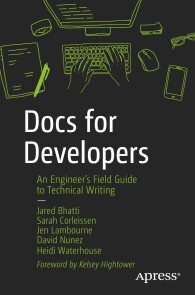
Docs for Developers
Learn to integrate programming with good documentation. This book teaches you the craft of documentation for each step in the software development lifecycle, from understanding your users’ needs to publishing, measuring, and maintaining useful developer documentation.Well-documented projects save time for both developers on the project and users of the software. Projects without adequate documentation suffer from poor developer productivity, project scalability, user adoption, and accessibility. In short: bad documentation kills projects.Docs for Developers demystifies the process of creating great developer documentation, following a team of software developers as they work to launch a new product. At each step along the way, you learn through examples, templates, and principles how to create, measure, and maintain documentation—tools you can adapt to the needs of your own organization.WHAT YOU'LL LEARN* Create friction logs and perform user research to understand your users’ frustrations* Research, draft, and write different kinds of documentation, including READMEs, API documentation, tutorials, conceptual content, and release notes* Publish and maintain documentation alongside regular code releases* Measure the success of the content you create through analytics and user feedback* Organize larger sets of documentation to help users find the right information at the right timeWHO THIS BOOK IS FORIdeal for software developers who need to create documentation alongside code, or for technical writers, developer advocates, product managers, and other technical roles that create and contribute to documentation for their products and services.Jared BhattiJared is a Staff Technical Writer at Alphabet, and the co-founder of Google’s Cloud documentation team. He’s worked for the past 14 years documenting an array of projects at Alphabet, including Kubernetes, App Engine, Adsense, Google’s data centers, and Google’s environmental sustainability efforts. He currently leads technical documentation at Waymo and mentors several junior writers in the industry.Zachary Sarah CorleissenZach began this book as the Lead Technical Writer for the Linux Foundation and ended it as Stripe’s first Staff Technical Writer. Zach served as co-chair for Kubernetes documentation from 2017 until 2021, and has worked on developer docs previously at GitHub, Rackspace, and several startups. They enjoy speaking at conferences and love to mentor writers and speakers of all abilities and backgrounds.Heidi WaterhouseHeidi spent a couple decades at Microsoft, Dell Software, and many, many startups learning to communicate with and for developers. She currently works as a principal developer advocate at LaunchDarkly, but was reassured to find that technical communication is universal across all roles.David NunezDavid heads up the technical writing organization at Stripe, where he founded the internal documentation team and wrote for Increment magazine. Before Stripe, he founded and led the technical writing organization at Uber and held a documentation leadership role at Salesforce. Having led teams that have written about cloud, homegrown infrastructure, self-driving trucks, and economic infrastructure, he’s studied the many ways that technical documentation can shape the user experience. David also acts as an advisor for several startups in the knowledge platform space.Jen LambourneJen leads the technical writing and knowledge management discipline at Monzo Bank. Before her foray into fintech, she led a community of documentarians across the UK government as Head of Technical Writing at the Government Digital Service (GDS). Having moved from government to finance, she recognizes she’s drawn to creating inclusive and user-centred content in traditionally unfriendly industries. She likes using developer tools to manage docs, demystifying the writing process for engineers, mentoring junior writers, and presenting her adventures in documentation at conferences.* Getting Started* Researching documentation* Understanding your users* Cultivating empathy* Understanding user desires, user needs, and company needs* Recruiting users for research* Research methods* Reading code comments* Trying it outFriction logs* Running diverse and inclusive focus groups and interviews* User journey mapping* Identifying and working with stakeholders* Finding your experts* Collaborative documentation development* Learning from existing content* The value of design documents* Finding examples in industry* Designing documentation* Defining your initial set of content* Deciding your minimum viable documentation* Drafting test and acceptance criteria* Understanding content types* Concepts, tutorials and reference documentation* Code comments* API specificationsREADMEs* Guides* Release notes* Drafting documentation* Setting yourself up for writing success* Who is this for? Personas, requirements, content types* Definition of done* How to iterateTools and tips for writing rough drafts* Understanding your needs* Choosing your writing tools (handwriting, text-only, productivity/measurement writing tools)* “Hacks” to get started drafting content* Mechanics* Headings* Paragraphs* ListsNotes and warnings* Conclusions/tests* Using templates to form drafts* Purpose of a template* How to derive a template from existing docsHow to take templates into text* Gathering initial feedback* Feedback methods* Integrating feedback* Getting feedback from difficult contributorsEditing content for publication* Determine destination* Editing tools (Grammarly, linters, etc)* Declaring good enough* Recap, strategies, and reassuranceStructuring sets of documentation* Where content types live* Concepts, tutorials and reference documentation* Code comments* API specificationsREADMEs* Guides* Release notes* Designing your information architecture* Content information architecture styles* Designing for search* Creating clear, well-lit paths through content* User testing and maintenance* Planning for document automation* Integrating code samples and visual content* Integrating code samples* When and why to use code samples* Creating concise, usable, maintainable samples* Standardising your samples* Using visual content: Screenshots, diagrams, and videos* When your documentation may need visual content* Making your visual content accessible* Integrating screenshots, diagrams* Videos* Measuring documentation success* How documentation succeeds* Measuring different types of documentation quality* Structural Quality* Functional Quality* Process Quality* Measuring what you want to changeDrawing conclusions from document metrics* Working with contributors* Defining how decisions are made* Deciding on a governance structure* Writing an effective Code of Conduct* Choosing a content licence* Code licenses* Content licencesBuilding and enforcing a style guide* Editing submitted content and giving feedback* Setting acceptability criteria* Editing for accessibility and inclusion* Editing for internationalization and translation* Giving actionable feedback* Planning and running a document sprint* Maintaining documentation* Creating a content review processes* Assigning document owners* Performing freshness checks on contentResponding to documentation issues* Separating documentation issues from product issues* Responding to users* Automating document maintenance* Automating API and reference content* Using doc linters* Deleting and archiving content* Wrapping up

Cloud Native Architecture and Design
Build enterprise-grade cloud-native systems and learn all about cloud-native architecture and design. This book provides extensive in-depth details of patterns, tools, techniques, and processes with plenty of examples.Cloud Native Architecture and Design begins by explaining the fundamentals of cloud-native architecture and services, what cloud principles and patterns to use, and details of designing a cloud-native element.The book progresses to cover the details of how IT systems can modernize to embrace cloud-native architecture, and also provides details of various enterprise assessment techniques to decide what systems can move and cannot move into the cloud.Architecting and designing a cloud-native system isn’t possible without modernized software engineering principles, the culture of automation, and the culture of innovation. As such, this book covers the details of cloud-native software engineering methodologies, and process, and how to adopt an automated governance approach across enterprises with the adoption of artificial intelligence.Finally, you need your cloud-native applications to run efficiently; this section covers the details of containerization, orchestration, and virtualization in the public, private, and hybrid clouds.After reading this book, you will have familiarity with the many concepts related to cloud-native and understand how to design and develop a successful cloud-native application. Technologies and practices may change over time, but the book lays a strong foundation on which you can build successful cloud-native systems.WHAT YOU WILL LEARNDiscover cloud-native principles and patterns, and how you can leverage them to solve your business problems * Gain the techniques and concepts you need to adapt to design a cloud-native applicationUse assessment techniques and tools for IT modernization * Apply cloud-native engineering principles to the culture of automation and culture of innovationHarness the techniques and tools to run your cloud-native applications and automate infrastructure* Operate your cloud-native applications by using AI techniques and zero operation techniques WHO THIS BOOK IS FORSoftware architects, leaders, developers, engineers, project managers, and students.SHIVAKUMAR R GONIWADA is an enterprise architect, technology leader, and inventor with more than 23 years of experience in architecting enterprise architecture with cloud-native, event-driven systems. He currently works at Accenture and leads a highly experienced technology enterprise and cloud architects. In his 23 years of experience, he led many highly complex projects across industries and the globe. He has ten software patents to his name in the areas of cloud, polyglot and polylithic architecture, software engineering, and IoT. He is a speaker at multiple global and in-house conferences. He holds Master Technology Architecture Accenture, Google Professional, AWS, and data science certifications. He completed an executive MBA at MIT Sloan School of Management.PART I: CLOUD NATIVE JOURNEY, PRINCIPLES & PATTERNS1. Introduction to Cloud Native Architecture2. Cloud Native Services3. Cloud Native Architecture Principles4. Cloud Native Architecture & Design PatternsPART II: ELEMENTS OF CLOUD NATIVE ARCHITECTURE & DESIGN5. Microservices Architecture & Design6. Event Driven Architecture7. Serverless Architecture8. Cloud Native Data Architecture9. Designing for “-ilities”PART III: MODERNIZING AN ENTERPRISE IT SYSTEMS10. Modernize Monolithic Application to Cloud Native11. Enterprise IT Systems Assessment to Decide Cloud Native Journey12. Cloud Native Architecture Fitness CheckPART IV: CLOUD NATIVE SOFTWARE ENGINEERING13. Developing an Enterprise Systems for Cloud Native14. Automation in an Enterprise Cloud-Native Journey15. AI Driven DevelopmentPART V: CLOUD NATIVE INFRASTRUCTURE16. Containerization and Virtualization17. Automation in InfrastructurePART VI: CLOUD NATIVE OPERATION18. Intelligent Operation19. ObservabilityPART VII: CLOUD NATIVE FEATURE20. Cloud Native Supported Future Technologies

Pro Exchange 2019 and 2016 Administration
__Use this one-stop resource for both basic and advanced administration of Exchange Server 2019 and 2016. It will help you in running an Exchange environment, whether it be 100% on-premises or a hybrid configuration with Exchange Online (as part of Office 365).This revised version is divided into four parts, describing Exchange infrastructure, upgrading Exchange server, integration with Office 365, and security and compliance. In the first part, you will go through a short introduction of Exchange server followed by its installation and configuration. You will learn client access along with Exchange mailbox and managing Exchange recipients. In the second part, you will learn how to upgrade from Exchange 2010 to 2016 and from 2013 to Exchange 2019. The third part is dedicated to the Exchange integration with Office 365, followed by the last part that teaches you how to secure your Exchange environment and its compliance.After reading this book, you will understand best practices, do’s and don’ts, and notes from the field to migrate and work on Exchange 2016 and 2019.WHAT YOU WILL LEARN* Create a highly available and redundant Exchange environment* Understand security, message hygiene (CEO fraud, for example), and compliance* Know the infrastructure changes in Exchange 2019* Integrate and manage hybrid recipientsWHO THIS BOOK IS FORIT pros who are responsible for building and maintaining an Exchange environment, both on-premises and in a hybrid configuration with Exchange OnlineMICHEL DE ROOIJ is a consultant and Microsoft MVP since 2013. He lives in The Netherlands, and has been working in the IT industry for over 20 years. Michel helps customers with their journeys related to Microsoft 365, with a focus on Exchange and Identity, but also related technologies such as Microsoft Teams or e-mail in general. Michel has a developer background, but after some long-term dedicated Exchange-related work for a large multinational switched to Exchange and never looked back. Michel is also a big fan of automating processes and procedures related to infrastructure, being either supporting projects or automating administrator tasks. Michel is also active in online communities, such as Tech Community, or on social media such as Twitter (@mderooij). He runs an Exchange-related blog at eightwone.com, guest authors for several other sites, and speaks at international events.JAAP WESSELIUS is an independent consultant based in The Netherlands. As a consultant, Jaap has been working with Exchange server since Exchange 5.0 in 1997. After working for Microsoft, he became an independent consultant in 2006. For his work in the (Exchange) community, Jaap has received a Microsoft MVP award 2007, an award he still holds in 2021. The first MVP category was Exchange server, but over the years that has changed to Office Apps and Services. Besides working with Exchange, Jaap also works with Office 365, identity management, privacy, and security. Jaap is 54 years old, married, has three (almost) grown-up sons, and likes to ride his motorcycle, when possible.SECTION 1 - EXCHANGE INFRASTRUCTURE1. INTRODUCTION1.1. History of Exchange server1.2. Exchange 2016 or Exchange 2019?1.3. Exchange Admin Center1.4. PowerShell1.5. Exchange and Active Directory2. INSTALLING AND CONFIGURING EXCHANGE2.1. Designing the Exchange environment2.2. Testing the Exchange environment2.3. Building the Exchange environment2.4. Exchange Edge Transport Server2.5. Cumulative Updates3. EXCHANGE AND CLIENT ACCESS3.1. Clients3.2. Outlook on the Web3.3. Outlook3.4. Autodiscover3.5. Exchange Web Services3.6. ActiveSync3.7. Namespaces3.8. Virtual Directories3.9. Certificates3.10. Client Access High Availability4. EXCHANGE MAILBOX AND MAILBOX SERVER4.1. Mailbox databases4.2. Backup and Restore4.3. High Availability4.4. Mailbox database High Availability5. MANAGING EXCHANGE RECIPIENTS5.1. Managing Recipients5.2. Mailboxes5.3. Distribution Groups5.4. Contacts5.5. Public Folders5.6. Address Lists5.7. Global Address List5.8. Custom Address List5.9. Offline Address Books5.10. Address Book Policies6. Exchange Transport6.1. Transport pipeline6.2. Send and Receive Connectors6.3. SMTP Relay6.4. Edge Transport server6.5. Load balancing transportSECTION 2 - UPGRADING EXCHANGE SERVER7. Upgrading from Exchange 2010 to Exchange 20167.1. Preparing Active Directory7.2. Installing the Exchange servers7.3. Change client access7.4. Move Mailboxes7.5. Move Public Folders7.6. Decommission Exchange 20108. Upgrading from Exchange 2013 to Exchange 20198.1. Preparing AD en Installing Exchange is identical to 7.1 and 7.28.2. Client access in 2013/2019 coexistence8.3. Move Mailboxes and Public Folders8.4. Decommission Exchange 2013SECTION 3 - INTEGRATION WITH OFFICE 3659. Exchange Hybrid9.1. Identities and source of authority9.2. Managing Hybrid Recipients9.3. Federation9.4. Federation with other organizations9.5. Organizational relationships9.6. Sharing policies9.7. Directory Synchronization9.8. Exchange Hybrid Configuration Wizard9.9. Autodiscover continued9.10. Mailflow in coexistence9.11. Exchange Online Protection9.12. Modern Authentication9.13. Bulk EmailSECTION 4 - SECURITY AND COMPLIANCE10. Securing your Exchange environment10.1. Hybrid Modern Authentication10.2. Message hygiene10.3. Multi Factor Authentication10.4. Role Based Access Control11. Compliance11.1. Archiving11.2. Journaling11.3. In-place hold11.4. In-place eDiscovery11.5. Messaging Records management11.6. Data Loss Prevention11.7. Auditing11.8. Reporting

Person Re-Identification with Limited Supervision
PERSON RE-IDENTIFICATION IS THE PROBLEM OF ASSOCIATING OBSERVATIONS OF TARGETS IN DIFFERENT NON-OVERLAPPING CAMERAS. Most of the existing learning-based methods have resulted in improved performance on standard re-identification benchmarks, but at the cost of time-consuming and tediously labeled data. Motivated by this, learning person re-identification models with limited to no supervision has drawn a great deal of attention in recent years.In this book, we provide an overview of some of the literature in person re-identification, and then move on to focus on some specific problems in the context of person re-identification with limited supervision in multi-camera environments. We expect this to lead to interesting problems for researchers to consider in the future, beyond the conventional fully supervised setup that has been the framework for a lot of work in person re-identification.Chapter 1 starts with an overview of the problems in person re-identification and the major research directions. We provide an overview of the prior works that align most closely with the limited supervision theme of this book. Chapter 2 demonstrates how global camera network constraints in the form of consistency can be utilized for improving the accuracy of camera pair-wise person re-identification models and also selecting a minimal subset of image pairs for labeling without compromising accuracy. Chapter 3 presents two methods that hold the potential for developing highly scalable systems for video person re-identification with limited supervision. In the one-shot setting where only one tracklet per identity is labeled, the objective is to utilize this small labeled set along with a larger unlabeled set of tracklets to obtain a re-identification model. Another setting is completely unsupervised without requiring any identity labels. The temporal consistency in the videos allows us to infer about matching objects across the cameras with higher confidence, even with limited to no supervision. Chapter 4 investigates person re-identification in dynamic camera networks. Specifically, we consider a novel problem that has received very little attention in the community but is critically important for many applications where a new camera is added to an existing group observing a set of targets. We propose two possible solutions for on-boarding new camera(s) dynamically to an existing network using transfer learning with limited additional supervision. Finally, Chapter 5 concludes the book by highlighting the major directions for future research.* Preface* Person Re-identification: An Overview* Supervised Re-identification: Optimizing the Annotation Effort* Towards Unsupervised Person Re-identification* Re-identification in Dynamic Camera Networks* Future Research Directions* Bibliography* Authors' Biographies

Setup of a Graphical User Interface Desktop for Linux Virtual Machine on Cloud Platforms
Cloud Platforms provide VM images in the Linux OS as well. Linux has always been operated via terminal or shell through a keyboard and a terminal. Even with GUIs around, Linux continues to be operated from the shell.Linux VMs are also operated from the command line of your desktop via an SSH (secure shell) connection. They do not have a desktop environment or GUI installed by default. For Windows users migrating to Linux, a desktop environment would be more convenient to operate. Hence, various desktop environments can be set up on a Linux VM.Mostly we need to have Graphical User Interface GUI on the Linux Virtual Machine instance and to use Internet browser on it.This report will talk about the steps to install minimum required User Interface on VM (virtual machine) with Web Browser. We will work on installing a desktop environment on a Linux Virtual Machine on different Cloud Platforms. The book consists from the following sections:1. Generating SSH key for auto log in to Linux server2. Creating Google Cloud Linux Virtual Machine3. Logon to the Linux Virtual Machine4. Installing VNC server5. Installing XRDP server6. Installing a Graphical User Interface (GUI) for Linux Google Cloud instance and connecting to the server through VNC or RDP connection7. Quick guide to create a Linux virtual machine in Cloudsigma8. Quick guide to create a Linux Virtual Machine in the Microsoft Azure portal9. Quick guide to create a Linux Virtual Machine in Amazon AWSI am Dr. Hidaia Mahmoud Mohamed Alassouli. I completed my PhD degree in Electrical Engineering from Czech Technical University by February 2003, and my M. Sc. degree in Electrical Engineering from Bahrain University by June 1995. I completed also one study year of most important courses in telecommunication and computer engineering courses in Islamic university in Gaza. So, I covered most important subjects in Electrical Engineering, Computer Engineering and Telecommunications Engineering during my study. My nationality is Palestinian from gaza strip.I obtained a lot of certified courses in MCSE, SPSS, Cisco (CCNA), A+, Linux.I worked as Electrical, Telecommunicating and Computer Engineer in a lot of institutions. I worked also as a computer networking administrator.I had considerable undergraduate teaching experience in several types of courses in many universities. I handled teaching the most important subjects in Electrical and Telecommunication and Computer Engineering.I could publish a lot of papers a top-tier journals and conference proceedings, besides I published a lot of books in Publishing and Distribution houses.I wrote a lot of important Arabic articles on online news websites. I also have my own magazine website that I publish on it all my articles: http:// www.anticorruption.000space.comMy personal website: www.hidaia-alassouli.000space.comEmail: hidaia_alassouli@hotmail.com

Text as Data
Combine the best of qualitative and quantitative techniques within the SAS system for superior results Text analytics has become an indispensable part of fields as diverse as pharmaceutical research and development and social media marketing. Organizations around the world are implementing comprehensive, text-inclusive analytics strategies. In Text as Data: Computational Methods of Understanding Written Expression Using SAS, you’ll discover how and why the SAS platform delivers exceptional text analytics results by combining linguistic and quantitative algorithms and treating text as qualitative data from within a quantitative analytics framework. The accomplished authors offer a thorough introduction to the principles and dynamics of text analytics, along with a comprehensive overview of an effective framework for common use cases. Readers will learn about the interplay between qualitative-linguistic and quantitative data analysis and gain a deep understanding of techniques like expression parsing and detection, text parsing, theme and topic detection, and more. They’ll also discover why SAS is the ideal platform for deploying a text analytics solution. Ideal for SAS users and data scientists in any industry, Text as Data provides readers with a rich and insightful exploration of text analytics with SAS, creating a foundation for practical and effective applications. Text As Data: Combining qualitative and quantitative algorithms within the SAS system for accurate, effective and understandable text analytics The need for powerful, accurate and increasingly automatic text analysis software in modern information technology has dramatically increased. Fields as diverse as financial management, fraud and cybercrime prevention, Pharmaceutical R&D, social media marketing, customer care, and health services are implementing more comprehensive text-inclusive, analytics strategies. Text as Data: Computational Methods of Understanding Written Expression Using SAS presents an overview of text analytics and the critical role SAS software plays in combining linguistic and quantitative algorithms in the evolution of this dynamic field. Drawing on over two decades of experience in text analytics, authors Barry deVille and Gurpreet Singh Bawa examine the evolution of text mining and cloud-based solutions, and the development of SAS Visual Text Analytics. By integrating quantitative data and textual analysis with advanced computer learning principles, the authors demonstrate the combined advantages of SAS compared to standard approaches, and show how approaching text as qualitative data within a quantitative analytics framework produces more detailed, accurate, and explanatory results. * Understand the role of linguistics, machine learning, and multiple data sources in the text analytics workflow * Understand how a range of quantitative algorithms and data representations reflect contextual effects to shape meaning and understanding * Access online data and code repositories, videos, tutorials, and case studies * Learn how SAS extends quantitative algorithms to produce expanded text analytics capabilities * Redefine text in terms of data for more accurate analysis This book offers a thorough introduction to the framework and dynamics of text analytics—and the underlying principles at work—and provides an in-depth examination of the interplay between qualitative-linguistic and quantitative, data-driven aspects of data analysis. The treatment begins with a discussion on expression parsing and detection and provides insight into the core principles and practices of text parsing, theme, and topic detection. It includes advanced topics such as contextual effects in numeric and textual data manipulation, fine-tuning text meaning and disambiguation. As the first resource to leverage the power of SAS for text analytics, Text as Data is an essential resource for SAS users and data scientists in any industry or academic application. BARRY DEVILLE is a Data Scientist and Solutions Architect with 18 years of experience working at SAS. He led the development of the KnowledgeSEEKER decision tree package and has given workshops and tutorials on decision trees for Statistics Canada, the American Marketing Association, the IEEE, and the Direct Marketing Association. GURPREET SINGH BAWA is the Data Science Senior Manager at Accenture PLC in India. He delivers advanced analytics solutions for global clients in a variety of corporate sectors. Preface xi Acknowledgments xiii About the Authors xv Introduction 1 Chapter 1 Text Mining and Text Analytics 3 Chapter 2 Text Analytics Process Overview 15 Chapter 3 Text Data Source Capture 33 Chapter 4 Document Content and Characterization 43 Chapter 5 Textual Abstraction: Latent Structure, Dimension Reduction 73 Chapter 6 Classification and Prediction 103 Chapter 7 Boolean Methods of Classification and Prediction 125 Chapter 8 Speech to Text 139 Appendix A Mood State Identification in Text 157 Appendix B A Design Approach to Characterizing Users Based on Audio Interactions on a Conversational AI Platform 175 Appendix C SAS Patents in Text Analytics 189 Glossary 197 Index 203

Practical Paint.NET
Learn to use the most up-to-date version of Paint.NET, the free, Windows-based program for image editing. This book is ideal for PC users who find Microsoft Paint too lacking, and Photoshop or GIMP too overwhelming. Paint.NET is a lightweight yet capable program that’s easy to navigate and is regularly updated.You’ll quickly become acquainted with this powerful, yet easy-to-learn program’s features; tools, layers, adjustments, and effects. See how to correct exposure, digitally retouch and repair damaged photos, and handle a broad spectrum of photo editing tasks—even how to colorize a black-and-white image. You’ll also learn how to create digital art using the Paint.NET drawing tools and effects. Practice files are provided with step-by-step instructions to jump into photo editing and art creation.Practical Paint.NET highlights this powerful program's rich set of features and capabilities providing you the pathway for just about any kind of image editing. Join the large community behind it today!WHAT YOU'LL LEARN* Use layers, which are essential in any professional quality image editing program* Acquire and install plugins to maximize Paint.NET’s capabilities* Enhance, retouch, and modify digital images* Create compelling digital artwork using the drawing tools and applying artistic filtersWHO THIS BOOK IS FORWindows-based PC users who require the ability to edit digital images without the ongoing cost of subscription-based software, or complex open-source software. This group includes art or photography instructors (especially those in schools systems with limited budgets), small business owners, casual photographers, aspiring graphic designers, or anyone requiring a solid, basic editing program.Phillip Whitt has a passion for images, and has been involved with digital image editing and graphic design since the 1990's. As a freelance photo editing/restoration and graphic design professional, he has retouched and restored countless photographs.Mr. Whitt holds a number of certifications, which include one for Adobe Photoshop CS from Expert Rating, as well as a number of others for demonstrating proficiency in Desktop Publishing, Scribus Basics, GIMP 2.6, and Photo Impact. Mr. Whitt is the author of several Apress titles such as Beginning Photo Retouching and Restoration Using GIMP, Pro Freeware and Open Source Solutions for Business, and Pro Colorizing With GIMP.Introduction* Paint.NET―Quite Possibly the Perfect Solution* What can Paint.NET Do?* What You’ll Learn from this BookPart I: Acquiring, Installing, and Getting to Know Paint.NETChapter 1: An Overview of Paint.NET* Chapter Overview* Acquiring Paint.NET* Downloading and Installing Paint.NET* Overview of the User Interface* Changing The User Interface Color Scheme* Supported File Formats* Installing Plugin Pack* The Main Window* The Title Bar * The Menu Bar* The Tool Bar* The Image List* The Canvas* The Tools Window* The Layers Window* The History Window* The Colors Windows* The Status Bar* Chapter ConclusionChapter 2: Layers* Chapter Overview* Understanding Layers* How Layers Work* Why Layers are Important* Layer Blend Modes* A Closer Look at the Layers Window* Chapter ConclusionChapter 3: An Overview of the Tools* Chapter Overview* The Brush Tools* The Selection Tools* Other Tools* Chapter ConclusionPart II: Working with Digital PhotosChapter 4: Correcting Tonality, Contrast and Exposure* Chapter Overview* An Overview of Image Tonality * Tutorial 1: Correcting Exposure Using the Auto-Level Adjustment * Tutorial 2: Correcting Exposure Using the Brightness/Contrast Adjustment * Understanding the Curves Adjustment* Tutorial 3: Correcting Dull Contrast Using Curves Adjustment * Understanding the Levels Adjustment* Tutorial 4: Correcting Underexposure Using the Levels Adjustment* The Curves Dialog* Tutorial 5: Improving Tonality Using Curves* Tutorial 6: Correcting Local Tonality (Darkening a Light Area) * Tutorial 7: Correcting Local Tonality (Lightening a Dark Area)* Chapter ConclusionChapter 5: Enhancing, Correcting, and Working with Color* Chapter Overview* Tutorial 6: Correcting Color Using the Auto-Level Adjustment * Tutorial 8: Reviving a Faded Color Photo Using Levels * Tutorial 9: Correcting Color Balance (Color Balance Plugin Required) * Tutorial 10: Turning a Color Image to Black and White (Black and White + Plugin Required)* Tutorial 11: Using The Sepia Adjustment* Tutorial 12: Colorizing a Black and White Photo* Chapter ConclusionChapter 6: Modifying, Retouching and Restoring Photos* Chapter Overview* Tutorial 13: Removing Unwanted Objects* Tutorial 14: Straightening An Image * Tutorial 15: Brightening Teeth * Tutorial 16: Removing Blemishes* Tutorial 17 Repairing Scratches and Damage * Chapter ConclusionChapter 7: Compositing Images* Chapter Overview* Tutorial 18: Adding an Element to an Image* Tutorial 19: Simple Background Replacement* Chapter ConclusionPart III: Creating Digital ArtChapter 8: Drawing Basics* Chapter Overview* Using the Pencil and Paint Brush Tools* Tutorial 20: Drawing a Simple Sketch* Tutorial 21: Drawing a Shamrock* Tutorial 22: Drawing a Ladybug* Chapter ConclusionChapter 9: Creating Digital Artwork* Chapter Overview* Tutorial 23: Creating a Scenic Sunset* Tutorial 24: Creating a Starry Night* Tutorial 25: Drawing a Smart Phone* Chapter ConclusionChapter 10: Applying Effects* Chapter Overview* Tutorial 26: Applying a Dream Effect (Dream Plugin Required)* Tutorial 27: Applying an Ink Sketch Effect* Tutorial 28: Applying an Oil Painting Effect (Oil Painting + Plugin Required)* Tutorial 29: Applying a Pastel Effect (Pastel Plugin Required)* Tutorial 30: Applying a Pencil Sketch Effect* Chapter ConclusionAppendix: More About Paint.NET Plugins
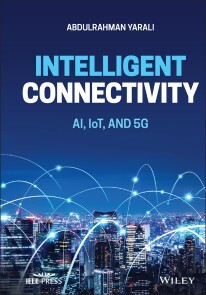
Intelligent Connectivity
INTELLIGENT CONNECTIVITY AI, IOT, AND 5GEXPLORE THE ECONOMICS AND TECHNOLOGY OF AI, IOT, AND 5G INTEGRATION Intelligent Connectivity: AI, IoT, and 5G delivers a comprehensive technological and economic analysis of intelligent connectivity and the integration of artificial intelligence, Internet of Things (IoT), and 5G. It covers a broad range of topics, including Machine-to-Machine (M2M) architectures, edge computing, cybersecurity, privacy, risk management, IoT architectures, and more. The book offers readers robust statistical data in the form of tables, schematic diagrams, and figures that provide a clear understanding of the topic, along with real-world examples of applications and services of intelligent connectivity in different sectors of the economy. Intelligent Connectivity describes key aspects of the digital transformation coming with the 4th industrial revolution that will touch on industries as disparate as transportation, education, healthcare, logistics, entertainment, security, and manufacturing. Readers will also get access to:* A thorough introduction to technology adoption and emerging trends in technology, including business trends and disruptive new applications* Comprehensive explorations of telecommunications transformation and intelligent connectivity, including learning algorithms, machine learning, and deep learning* Practical discussions of the Internet of Things, including its potential for disruption and future trends for technological development* In-depth examinations of 5G wireless technology, including discussions of the first five generations of wireless techIdeal for telecom and information technology managers, directors, and engineers, Intelligent Connectivity: AI, IoT, and 5G is also an indispensable resource for senior undergraduate and graduate students in telecom and computer science programs. ABDULRAHMAN YARALI, PHD is Professor of Cybersecurity and Network Management at Murray State University, Kentucky, USA. He also has extensive industry experience in wireless communications, with his research teams completing contracts for AT&T, Nortel, Spring PCS, and more.PrefaceAcknowledgementIntroduction1 Technology Adoption and Emerging Trends1.1 Introduction1.2 Trends in Business technology1.3 AI-Fueled Organizations1.4 Connectivity of Tomorrow1.5 Moving Beyond Marketing1.6 Cloud Computing1.7 Cybersecurity, Privacy, and Risk Management1.8 Conclusion2 Telecommunication Transformation and Intelligent Connectivity2.1 Introduction2.2 Cybersecurity Concerns in the 5G World2.3 Positive Effects of Addressing Cybersecurity Challenges in 5G2.4 Intelligent Connectivity Use-Cases2.5 Industrial and Manufacturing Operations2.6 Healthcare2.7 Public Safety and Security2.8 Conclusion3 The Internet of Things (IoT): Potentials and the Future Trends3.1 Introduction3.2 Achieving the Future of IoT3.3 Commercial Opportunities for IoT3.4 The Industrial Internet of Things3.5 Future Impact of IoT in Our Industry3.6 Data Sharing in the IoT Environment3.7 IoT Devises Environment Operation3.8 Interoperability Issues of IoT3.9 IoT-Cloud –Application3.10 Regulation and Security Issues of IoT3.11 Achieving IoT Innovations While Tackling Security and Regulation Issues3.12 Future of IoT3.13 Conclusion4 The Wild Wonders of 5G Wireless Technology4.1 Introduction4.2 5G Architecture4.3 5G Applications4.4 5G Network Architecture4.5 Security and Issues of 5G4.6 IoT Devices in 5G Wireless4.7 Big Data Analytics in 5G4.8 AI Empowers a Wide Scope of Use Cases4.9 Conclusion5 Artificial Intelligence Technology5.1 Introduction5.2 Core Concepts of Artificial Intelligence5.3 Machine Learning and Applications5.4 Deep Learning5.5 Neural Networks Follow a Natural Model5.6 Classifications of Artificial Intelligence5.7 Trends in Artificial Intelligence5.8 Challenges of Artificial Intelligence5.9 Funding Trends in Artificial Intelligence5.10 Conclusion6 AI, 5G, & IoT: Driving Forces Towards the Industry Technology Trends6.1 Introduction6.2 Fifth Generation of Network Technology6.3 Internet of Things (IoT)6.4 Industrial Internet of Things6.5 IoT in Automotive6.6 IoT in Agriculture6.7 AI, IoT, and 5G Security6.8 Conclusion7 Intelligent Connectivity: A New Capabilities to Bring Complex Use Cases7.1 Introduction7.2 Machine-to-Machine Communication and the Internet of Things7.3 Convergence of Internet of Things, Artificial Intelligence and 5G7.4 Intelligent Connectivity Applications7.5 Challenges and Risks of Intelligent Connectivity7.6 Recommendations7.7 Conclusion8 IoT: Laws, Policies and Regulations8.1 Introduction8.2 Recently Published laws and Regulations8.3 Developing Innovation and Growing the Internet of Things (DIGIT) Act8.4 General View8.5 Relaxation of laws by the Federal Aviation Administration's (FAA)8.6 Supporting Innovation of Self Driving Cars by Allowing Policies8.7 Recommendations8.8 Conclusion9 Artificial Intelligence and Blockchain9.1 Introduction9.2 Decentralized Intelligence9.3 Applications9.4 How Artificial Intelligence and Blockchain will Affect Society9.5 How Augmented Reality Works9.6 Mixed Reality9.7 Virtual Reality9.8 Key Components in a Virtual Reality System9.9 Augmented Reality Uses9.10 Applications of Virtual Reality in Business9.11 The Future of Blockchain9.12 Blockchain Applications9.13 Blockchain and the Internet of Things9.14 Law Coordination9.15 Collaboration for Blockchain Success10 Digital Twin Technology10.1 Introduction10.2 The Timeline and History of Digital Twin Technology10.3 Technologies Employed in Digital Twin Models10.4 The Dimension of Digital Twins Models10.5 Digital Twin and Other Technologies10.6 Digital Twin Technology Implementation10.7 Benefits of Digital Twin10.8 Application of Digital Twins10.9 Challenges of Digital Twins11 Artificial Intelligence, Big Data Analytics, and IoT11.1 Introduction11.2 Analytic11.3 AI Technology in Big Data and IoT11.4 AI Technology Applications and Use Cases11.5 AI Technology Impact on the Vertical Market11.6 AI in Big Data and IoT Market Analysis and Forecasts11.7 Conclusion12 Digital Transformation Trends in the Automotive Industry12.1 Introduction12.2 Evolution of Automotive Industry12.3 Data-Driven Business Model and data monetization12.4 Services of Data-Driven Business Model12.5 Values of New Services in the New Automotive Industry12.6 Conclusion13 Wireless Sensors/IoT and Artificial Intelligence for Smart Grid and Smart Home13.1 Introduction13.2 Wireless Sensor Networks13.3 Power Grid Impact13.4 Benefits of Smart Grid13.5 Internet of Things13.6 Internet of Things on Smart Grid13.7 Smart Grid and Artificial Intelligence13.8 Smart Grid Programming13.9 Conclusion14 Artificial Intelligence, 5G and IoT: Security14.1 Introduction14.2 Understanding IoT14.3 Artificial Intelligence14.4 5G Network14.5 Emerging Partnership of Artificial Intelligence, IoT, 5G, and Cybersecurity14.6 Conclusion15 Intelligent Connectivity and Agriculture15.1 Introduction15.2 The Potential of Wireless Sensors and IoT in Agriculture15.3 IoT Sensory Technology with Traditional Farming15.4 IoT Devices and Communication Techniques15.5 IoT and all Crop Stages15.6 Drone in Farming Applications15.7 Conclusion16 Applications of Artificial Intelligence, ML, and DL16.1 Introduction16.2 Building Artificial Intelligence Capabilities16.3 What is Machine Learning?16.4 Deep Learning16.5 Machine Learning vs. Deep Learning Comparison16.6 Feature Engineering16.7 Application of Machine Learning16.8 Applications of Deep learning16.9 Future Trends17 Big Data and Artificial Intelligence: Strategies for Leading Business Transformation17.1 Introduction17.2 Big Data17.2 Machine Learning-Based Medical Systems17.3 Artificial Intelligence for Stock Market Prediction17.3.1 Application of Artificial Intelligence by Investors17.4 Trends in AI and Big Data Technologies Drive Business Innovation17.5 Driving Innovation Through Big Data17.6 The Convergence of AI and Big Data17.7 How AI and Big Data Will Combine to Create Business Innovation17.8 AI and Big Data for Technological Innovation17.9 AI and Production17.10 AI and ML Operations Research17.11 Collaboration Between Machines and Human17.12 Generative Designs17.13 Adapting to a Changing Market17.14 ConclusionIndex
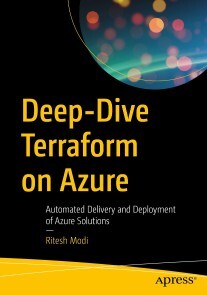
Deep-Dive Terraform on Azure
Get started with the foundations of Infrastructure as Code and learn how Terraform can automate the deployment and management of resources on Azure. This book covers all of the software engineering practices related to Terraform and Infrastructure as Code with Azure as a cloud provider.The book starts with an introduction to Infrastructure as Code and covers basic concepts, principles, and tools, followed by an overview of Azure and Terraform that shows you how Terraform can be used to provision and manage Azure resources. You will get started writing multiple Terraform scripts and explore its various concepts. Author Ritesh Modi takes a deep dive into Terraform and teaches you about deployment and multiple resource creation using loops. Writing a reusable script using modules is discussed as well as management and administration of secrets, sensitive data, and passwords within Terraform code. You will learn to store and version Terraform scripts and know how Terraform is used in Azure DevOps pipelines. And you will write unit and integration tests for Terraform and learn its best practices. The book also highlights and walks through the Terraform Azure Provider and shows you a simple way to create a new Terraform provider.After reading this book, you will be able to write quality Terraform scripts that are secure by design, modular, and reusable in Azure.WHAT WILL YOU LEARN* Understand implementation within infrastructure and application deployments* Provision resources in Azure using Terraform* Use unit and integration testing* Explore concepts such as local vs remote, importing state, workspaces, and backends WHO THIS BOOK IS FORSoftware engineers, DevOps professionals, and technology architectsRITESH MODI works with Microsoft as Senior Engineer on the Commercial Engineering team. He has served as Microsoft Regional Director as well as Regional Lead for Microsoft certified trainers.Ritesh is an architect, a senior evangelist, cloud architect, published author, speaker, and a known leader for his contributions in Blockchain, Ethereum, Datacenter, Azure, bots, cognitive services, DevOps, artificial intelligence, and automation. He has more than a decade of experience in building and deploying enterprise solutions for customers. He has contributed to AzureRM provider multiple times as an open source contribution. CHAPTER 1: INTRODUCTION TO INFRASTRUCTURE AS CODECHAPTER GOAL: UNDERSTAND THE BASICS ON INFRASTRUCTURE AS CODE PARADIGM AND KNOWN ABOUT ITS ADVANTAGES, PRINCIPLES AND TOOLS. UNDERSTAND THE NEED TO CONVERT INFRASTRUCTURE INTO CODE.NO OF PAGES: 5SUB -TOPICS1. Understanding Configuration Management2. Understanding Infrastructure as code3. Principles of Infrastructure as code4. Benefits and applicability for cloud environmentsCHAPTER 2: AZURE AND TERRAFORMCHAPTER GOAL: GET AN OVERVIEW OF AZURE AS ENTERPRISE CLOUD PROVIDER WITH DIFFERENT PARADIGM LIKE IAAS, PAAS. DIFFERENT WAYS TO PROVISION RESOURCES IN AZURE. HOW TERRAFORM FITS WITHIN THE AZURE LANDSCAPE AND HOW IT CAN BE USED TO PROVISION AZURE RESOURCES. UNDERSTAND THE HIGH-LEVEL ARCHITECTURE AND WORKFLOW USING TERRAFORMNO OF PAGES: 15SUB - TOPICS1. Overview of Azure cloud2. Overview of Terraform configuration management3. Terraform workflow for provisioning and de-provisioning of resources4. Terraform architecture – providers, plugins, resources, repositoriesCHAPTER 3: GETTING STARTED WITH TERRAFORMCHAPTER GOAL: GETTING HAND DIRTY WITH TERRAFORM, WRITING MULTIPLE TERRAFORM SCRIPTS EXPLORING DIFFERENT CONCEPTS OF TERRAFORM.NO OF PAGES: 45SUB - TOPICS:1. Understand Terraform CLI and using various options2. State Management in Terraform3. using Resources, providers, outputs4. Terraform Data types5. Dependency graphs in Terraform scriptsCHAPTER 4: DEEP DIVE INTO TERRAFORMChapter Goal: Understanding the advance features of Terraform both from component as well at script level. Write advance Terraform scripts for conditional deployments, multiple resource creation using loops.NO OF PAGES: 45SUB - TOPICS:1. Backend, state and workspace management in Terraform2. dynamic provisioning of resources3. loops, conditional statements – for, for-each, if4. using Terraform functions – string, collection, encoding, fileCHAPTER 5: WRITING REUSABLE MODULES IN TERRAFORMChapter Goal: Writing reusable Terraform scripts using modules, storing modules in repositories and consuming them in multiple scripts.NO OF PAGES: 251. Basic of Modules, child and parent modules2. Passing parameters and getting output from modules3. Using modules from multiple scripts.CHAPTER 6: WRITING SECURE SCRIPTS WITH TERRAFORMCHAPTER GOAL: MANAGEMENT AND ADMINISTRATION OF SENSITIVE DATA, SECRETS AND PASSWORDS WITHIN TERRAFORM CODE. USAGE OF KEY VAULTS FOR STORING OF SECRETS.NO OF PAGES: 201. Secure storage of credentials and sensitive information2. Usage of Managed Identities, certificates, service principles to connect to Azure3. Storing secrets in Azure Key vaultCHAPTER 7: REPOS, VERSIONING, CI/CD PIPELINES FOR TERRAFORMCHAPTER GOAL: OVERVIEW OF STORING AND VERSIONING OF TERRAFORM SCRIPTS SUCH THAT EACH VERSION CAN BE USED IN ISOLATION WITHOUT CONFLICTING WITH OTHERS. USING TERRAFORM CLI IN AZURE DEVOPS PIPELINES TO AUTOMATE THE PROCESS OF DEPLOYMENT OF AZURE RESOURCES.NO OF PAGES: 201. Storing Terraform scripts in Azure DevOps2. Versioning of Terraform modules3. CICD pipelines for deploying resources on Azure using TerraformCHAPTER 8: WRITING UNIT AND INTEGRATION TESTS FOR TERRAFORMCHAPTER GOAL: TESTING OF TERRAFORM SCRIPTS USING TERRATEST UTILITY. UNDERSTANDING PRINCIPLES OF UNIT AND INTEGRATING TESTING ALONGSIDE IMPLEMENTING THEMNO OF PAGES: 201. Exploring TerraTest and terra-lint2. Understanding Unit testing and writing unit tests for Terraform scripts3. Understanding Integration testing and writing Integration tests for Terraform scriptsCHAPTER 9: TERRAFORM BEST PRACTICESCHAPTER GOAL: UNDERSTANDING THE BEST PRACTICES OF AUTHORING, DEPLOYING AND MANAGING TERRAFORM SCRIPTS IN GENERAL AND IN AZURENO OF PAGES: 101. Understanding Terraform Folder structure and deployment structure2. Writing testable Terraform scripts3. Writing Maintainable code – usage of variables, no hard-coding etc

Konstruierte Wahrheiten
In einer Welt, in der immer mehr Fake News verbreitet werden, wird es zunehmend schwieriger, Wahrheit und Lüge, Wissen und Meinung auseinanderzuhalten. Desinformationskampagnen werden nicht nur als ein politisches Problem wahrgenommen, vielmehr geht es in der Fake-News-Debatte auch um fundamentale philosophische Fragen: Was ist Wahrheit? Wie können wir sie erkennen? Gibt es so etwas wie objektive Fakten oder ist alles sozial konstruiert? Dieses Buch erklärt, wie Echokammern und alternative Weltbilder entstehen, es macht das postfaktische Denken für die gegenwärtige Wahrheitskrise verantwortlich und zeigt, wie wir einem drohenden Wahrheitsrelativismus entgehen können.THOMAS ZOGLAUER (Dr. phil. habil.) lehrt Philosophie an der Brandenburgischen Technischen Universität Cottbus-Senftenberg und an der Graduierten-Akademie der Universität Stuttgart und ist Autor zahlreicher Bücher zur Technikphilosophie und angewandten Ethik.Filterblasen und Echokammern.- Verschwörungstheorien.- Fake News.- Epistemologie des Postfaktischen.- Wahrheitstheorien.- Information und Wissen.
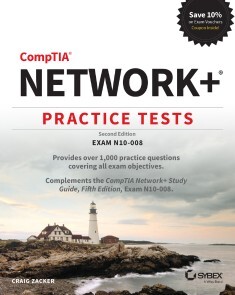
CompTIA Network+ Practice Tests
ASSESS AND IMPROVE YOUR NETWORKING SKILLSET WITH PROVEN SYBEX PRACTICE TESTSIn the freshly revised Second Edition of CompTIA Network+ Practice Tests Exam N10-008, IT expert and author Craig Zacker delivers a set of accessible and useful practice tests for the updated Network+ Exam N10-008. You’ll prepare for the exam, learn the information you need in an industry interview, and get ready to excel in your first networking role.These practice tests will gauge your skills in deploying wired and wireless devices; understanding network documentation and the purpose of network services; work with datacenter, cloud, and virtual networking concepts; monitor network activity; and more.Further, this book offers:* Comprehensive coverage of all five domain areas of the updated Network+ exam, including networking fundamentals, implementations, operations, security, and troubleshooting * Practical and efficient preparation for the Network+ exam with hundreds of domain-by-domain questions * Access to the Sybex interactive learning environment and online test bank Perfect for anyone preparing for the CompTIA Network+ Exam N10-008, the CompTIA Network+ Practice Tests Exam N10-008 is also an indispensable resource for network administrators seeking to enhance their skillset with new, foundational skills in a certification endorsed by industry leaders around the world.ABOUT THE AUTHORCRAIG ZACKER, is the author or co-author of dozens of books, manuals, articles, and web sites on computer and networking topics. Introduction xiChapter 1 Networking Fundamentals 1Chapter 2 Network Implementations 69Chapter 3 Network Operations 111Chapter 4 Network Security 147Chapter 5 Network Troubleshooting 191Chapter 6 Practice Exam 1 255Chapter 7 Practice Exam 2 283APPENDIX ANSWERS TO REVIEW QUESTIONS 311Chapter 1: Networking Fundamentals 312Chapter 2: Network Implementations 346Chapter 3: Network Operations 371Chapter 4: Network Security 391Chapter 5: Network Troubleshooting 418Chapter 6: Practice Exam 1 448Chapter 7: Practice Exam 2 462Index 477

Social Business Transformation
Die Zukunft der Arbeit verlagert sich zunehmend in den digitalen Raum. Deutsche Unternehmen positionieren sich in der Gestaltung dieses Raumes bislang häufig in der Rolle der Nachzügler, weil sie die Bedeutung des Einsatzes sozialer Technologien (z.B. Enterprise Social Networks) für das Unternehmen unterschätzen. Das resultierende Risiko im globalen Wettbewerb unterzugehen, ist gerade für den Mittelstand erheblich.Um zukunftsfähige Wege einzuschlagen, braucht es neue Gestaltungsansätze. Einer davon ist Social Business. Social Business wird im vorliegenden Werk als ganzheitliches Konzept beschrieben, welches durch den systematischen Einsatz digitaler und kollaborativer Werkzeuge neue Möglichkeiten der Innovation und Wertschöpfung schafft. Soziale Technologien ermöglichen eine proaktive Gestaltung unternehmensinterner und -übergreifender Prozesse und bieten insbesondere im Wissensmanagement, in der Kommunikation sowie der Zusammenarbeit produktionssteigernde Potenziale.Im Rahmen dieses Werkes werden praktische Anwendungen, Konzepte zur Umsetzung von Social Business und Leitlinien für den Transformationsprozess wissenschaftlich fundiert und praxisnah präsentiert.DR. CHRISTIAN ZINKE-WEHLMANN arbeitet als Leiter der Service and Knowledge Management Gruppe am Institut für Angewandte Informatik (InfAI) der Universität Leipzig im Bereich sozio-technischer Unterstützungssysteme. Er arbeitet an der Schnittstelle zwischen Technologie, Arbeit und Dienstleistungssystemen und hat 2017 promoviert. Seine Forschung konzentriert sich auf Digitale Zusammenarbeit, Linked Data, Service Engineering und Management sowie Wissensmanagement. Diese Expertise ist in mehr als 40 weiteren Veröffentlichungen zu finden.JULIA FRIEDRICH ist Wissenschaftlerin in der Forschungsgruppe „Service und Knowledge Management“ mit langjähriger Erfahrung in den Bereichen Wissensmanagement und Gamification.Einführung.- Was ist Social Business?.- Wozu braucht es Leitlinien?.- Der Weg zum Social Business.- Darstellung des Transformationsprozesses.- Ein Blick in die Praxis.- Allgemeine Leitlinien und Empfehlungen.
Intelligent Security Systems
INTELLIGENT SECURITY SYSTEMSDRAMATICALLY IMPROVE YOUR CYBERSECURITY USING AI AND MACHINE LEARNINGIn Intelligent Security Systems, distinguished professor and computer scientist Dr. Leon Reznik delivers an expert synthesis of artificial intelligence, machine learning and data science techniques, applied to computer security to assist readers in hardening their computer systems against threats. Emphasizing practical and actionable strategies that can be immediately implemented by industry professionals and computer device’s owners, the author explains how to install and harden firewalls, intrusion detection systems, attack recognition tools, and malware protection systems. He also explains how to recognize and counter common hacking activities. This book bridges the gap between cybersecurity education and new data science programs, discussing how cutting-edge artificial intelligence and machine learning techniques can work for and against cybersecurity efforts. Intelligent Security Systems includes supplementary resources on an author-hosted website, such as classroom presentation slides, sample review, test and exam questions, and practice exercises to make the material contained practical and useful. The book also offers:* A thorough introduction to computer security, artificial intelligence, and machine learning, including basic definitions and concepts like threats, vulnerabilities, risks, attacks, protection, and tools * An exploration of firewall design and implementation, including firewall types and models, typical designs and configurations, and their limitations and problems * Discussions of intrusion detection systems (IDS), including architecture topologies, components, and operational ranges, classification approaches, and machine learning techniques in IDS design * A treatment of malware and vulnerabilities detection and protection, including malware classes, history, and development trends Perfect for undergraduate and graduate students in computer security, computer science and engineering, Intelligent Security Systems will also earn a place in the libraries of students and educators in information technology and data science, as well as professionals working in those fields. LEON REZNIK, PHD, is Professor in the Department of Computer Science at Rochester Institute of Technology, USA. He received his doctorate in Information and Measurement Systems in 1983 at the St. Petersburg State Polytechnic University. He has published four books and numerous book chapters, conference papers, and journal articles.Acknowledgments ixIntroduction xi1 COMPUTER SECURITY WITH ARTIFICIAL INTELLIGENCE, MACHINE LEARNING, AND DATA SCIENCE COMBINATION: WHAT? HOW? WHY? AND WHY NOW AND TOGETHER? 11.1 The Current Security Landscape 11.2 Computer Security Basic Concepts 71.3 Sources of Security Threats 91.4 Attacks Against IoT and Wireless Sensor Networks 131.5 Introduction into Artificial Intelligence, Machine Learning, and Data Science 181.6 Fuzzy Logic and Systems 311.7 Machine Learning 351.8 Artificial Neural Networks (ANN) 431.9 Genetic Algorithms (GA) 501.10 Hybrid Intelligent Systems 51Review Questions 52Exercises 53References 542 FIREWALL DESIGN AND IMPLEMENTATION: HOW TO CONFIGURE KNOWLEDGE FOR THE FIRST LINE OF DEFENSE? 572.1 Firewall Definition, History, and Functions: What Is It? And Where Does It Come From? 572.2 Firewall Operational Models or How Do They Work? 652.3 Basic Firewall Architectures or How Are They Built Up? 702.4 Process of Firewall Design, Implementation, and Maintenance or What Is the Right Way to Put All Things Together? 752.5 Firewall Policy Formalization with Rules or How Is the Knowledge Presented? 822.6 Firewalls Evaluation and Current Developments or How Are They Getting More and More Intelligent? 96Review Questions 104Exercises 106References 1073 INTRUSION DETECTION SYSTEMS: WHAT DO THEY DO BEYOND THE FIRST LINE OF DEFENSE? 1093.1 Definition, Goals, and Primary Functions 1093.2 IDS from a Historical Perspective 1133.3 Typical IDS Architecture Topologies, Components, and Operational Ranges 1163.4 IDS Types: Classification Approaches 1213.5 IDS Performance Evaluation 1313.6 Artificial Intelligence and Machine Learning Techniques in IDS Design 1363.7 Intrusion Detection Challenges and Their Mitigation in IDS Design and Deployment 1593.8 Intrusion Detection Tools 163Review Questions 172Exercises 174References 1754 MALWARE AND VULNERABILITIES DETECTION AND PROTECTION: WHAT ARE WE LOOKING FOR AND HOW? 1774.1 Malware Definition, History, and Trends in Development 1774.2 Malware Classification 1824.3 Spam 2144.4 Software Vulnerabilities 2164.5 Principles of Malware Detection and Anti-malware Protection 2194.6 Malware Detection Algorithms 2294.7 Anti-malware Tools 237Review Questions 240Exercises 242References 2435 HACKERS VERSUS NORMAL USERS: WHO IS OUR ENEMY AND HOW TO DIFFERENTIATE THEM FROM US? 2475.1 Hacker’s Activities and Protection Against 2475.2 Data Science Investigation of Ordinary Users’ Practice 2735.3 User’s Authentication 2885.4 User’s Anonymity, Attacks Against It, and Protection 301Review Questions 309Exercises 310References 3116 ADVERSARIAL MACHINE LEARNING: WHO IS MACHINE LEARNING WORKING FOR? 3156.1 Adversarial Machine Learning Definition 3156.2 Adversarial Attack Taxonomy 3166.3 Defense Strategies 3206.4 Investigation of the Adversarial Attacks Influence on the Classifier Performance Use Case 3226.5 Generative Adversarial Networks 327Review Questions 333Exercises 334References 335Index 337

2030 - Strategieentwicklung für Innovation Leaders
Seit der Relativitätstheorie wissen wir, dass massereiche Objekte durch ihre Gravitation Dinge anziehen. Je größer die Masse desto größer ist auch die Anziehungskraft. Genauso verhält es sich auch in Strategieprojekten. Jeder Projektteilnehmer ist dabei ein massereicher Teilnehmer und hat Auswirkungen auf das Zusammenspiel. Was sich gravierend geändert hat ist der Einfluss der Daten auf diesen Prozess. Wer dies nicht berücksichtigt, wird in Zukunft enorme Einbußen hinnehmen müssen. Da sich durch diese Veränderung ein neues Gleichgewicht einstellt, ändern sich auch die Erfolgsaussichten der angewandten Methoden und Verhaltensweisen. Wie Sie diesen Wandel meistern können und was Sie dazu benötigen erfahren Sie in diesem Buch.PHILIPP FUTTERKNECHT UND TOBIAS HERTFELDER erkannten schon früh, dass man sich immer wieder neu erfinden muss, um besser zu sein als alle anderen. Seit ihren Firmengründungen perfektionieren beide ihre Methoden. Diese Erfahrungen vereinen sie nun als Digitalisierung- und Vernetzungsexperten mit hohem Managementwissen, welches sie begeistert an Menschen und Unternehmen weitergeben.Das H&F- Highspeed- und Efficiency-Konzept.-Praxisbeispiele zur Vorbeugung bekannter Stolperfallen.-Deep-Diving der Strategieerarbeitung.-Technologische Katalysatoren der Strategieumsetzung.

Beginning Windows Mixed Reality Programming
Develop applications and experiences for Microsoft’s HoloLens 2 and other Windows mixed reality devices. This easy-to-follow guide removes the mystery behind creating amazing augmented reality and virtual reality experiences. Mixed reality development tools and resources are provided.BEGINNING WINDOWS MIXED REALITY PROGRAMMING, 2ND EDITION clearly explains all the nuances of mixed reality software development. You will learn how to create 3D objects and holograms, interact with holograms using voice commands and hand gestures, use spatial mapping and 3D spatial sound, build with toolkits such as Microsoft's Mixed Reality Toolkit and Unity’s AR Foundation and XR Platform, create intuitive user interfaces, and make truly awe-inspiring mixed reality experiences. This newly revised edition also includes updated content for HoloLens 2 development, including tutorials for new interactions such as hand tracking and eye tracking.WHAT YOU WILL LEARN* Prototype ideas quickly for the HoloLens 2 and Windows mixed reality devices* Get started with Unity, the preferred tool for developing 3D experiences* Locate and import 3D models for your project, or make your own* Use spatial sound, voice commands, gestures, hand tracking, and eye tracking* Build with Microsoft's Mixed Reality Toolkit and other toolkits to make apps the easy way* Publish to the Windows Store and make money from your appWHO THIS BOOK IS FORProgrammers looking to quickly learn how to create experiences for HoloLens 2. Also for programmers interested in building applications for the growing crop of virtual reality devices that support the Windows Mixed Reality platform.SEAN ONG is an author, engineer, entrepreneur, and tech influencer who has written on topics ranging from renewable energy to augmented reality. Sean and his wife Neisha Ong founded the mixed reality development company, Ong Innovations, in 2014. Sean and his team at Ong Innovations actively work with clients and partners around the globe to push the boundaries of mixed reality and spatial computing. Sean is also co-founder of the VR telepresence robotics platform company, Laborbot, founder of the AR/VR venue-based entertainment company, Manuvr Entertainment Inc., co-founder of the AR/VR app creation platform company, Inflexion Point Inc., and serves as partner and shareholder at numerous other AR/VR startup companies around the globe. He resides in Seattle, WA with his wife and three kids, where he and his family relentlessly build the holographic future of tomorrow using today’s XR devices.PART I: GETTING STARTED1. Gear Up: The Necessary Hardware and Software Tools2. Unity Crash CoursePART II: BUILDING HOLOGRAPHIC EXPERIENCES3. Creating Your First Hologram4. Introduction to the Mixed Reality Toolkit5. Interacting with Holograms6. Using Spatial Awareness7. Spatial SoundPART III: GROWING AS A HOLOGRAPHIC DEVELOPER8. Azure Spatial Anchors9. Shared Experiences10. Awe Inspiring Experiences11. Turning Holograms into Money12. Community Resources

Explainable Natural Language Processing
THIS BOOK PRESENTS A TAXONOMY FRAMEWORK AND SURVEY OF METHODS RELEVANT TO EXPLAINING THE DECISIONS AND ANALYZING THE INNER WORKINGS OF NATURAL LANGUAGE PROCESSING (NLP) MODELS. The book is intended to provide a snapshot of Explainable NLP, though the field continues to rapidly grow. The book is intended to be both readable by first-year M.Sc. students and interesting to an expert audience. The book opens by motivating a focus on providing a consistent taxonomy, pointing out inconsistencies and redundancies in previous taxonomies. It goes on to present (i) a taxonomy or framework for thinking about how approaches to explainable NLP relate to one another; (ii) brief surveys of each of the classes in the taxonomy, with a focus on methods that are relevant for NLP; and (iii) a discussion of the inherent limitations of some classes of methods, as well as how to best evaluate them. Finally, the book closes by providing a list of resources for further research on explainability.* Introduction* A Framework for Explainable NLP* Local-Backward Explanations* Global-Backward Explanations* Local-Forward Explanations of Intermediate Representations* Global-Forward Explanations of Intermediate Representations* Local-Forward Explanations of Continuous Output* Global-Forward Explanations of Continuous Output* Local-Forward Explanations of Discrete Output* Global-Forward Explanations of Discrete Output Evaluating Explanations* Perspectives* Resources* Bibliography* Author's Biography
Basiswissen Abnahmetest
Grundlagen des Abnahmetests für Product Owner, Business-Analysten und TesterMit Abnahmetests – Acceptance Testing – wird überprüft, ob eine Software aus Sicht des Benutzers wie beabsichtigt funktioniert und dieser die Software akzeptiert.Das Buch »Basiswissen Abnahmetest« verbindet die Business-Analyse und Softwaretesten mit Blick auf die Konzepte, Methoden und Praktiken der Zusammenarbeit zwischen Business-Analysten und Testern beim Abnahmetest.Business-Analysten und Projektleiter lernen, wie sie durch die Unterstützung bei der Ausrichtung des Produkts an den Geschäftsanforderungen zu den Abnahmetestaktivitäten in einer Organisation beitragen.Tester erfahren, wie sie effizient mit Business-Analysten und anderen Stakeholdern während allen Abnahmetestaktivitäten zusammenarbeiten.Dieses Buch umfasst das erforderliche Wissen als Vorbereitung auf die Prüfung zum »Certified Tester (Foundation Level) – Acceptance Testing« nach ISTQB®-Standard. Ein durchgängiges Fallbeispiel verbindet das theoretische Wissen des Lehrplans mit dessen praktischer Anwendung beim Abnahmetest. Das Buch eignet sich damit nicht nur bestens für die Prüfungsvorbereitung, sondern dient gleichzeitig als kompaktes Basiswerk zu diesen Themen in der Praxis und an Hochschulen.Über die Autoren:Florian Fieber ist Gründer und Geschäftsführer der QualityDojo IT-Consulting GmbH in Berlin und seit knapp 15 Jahren als Berater und Trainer im Bereich der Qualitätssicherung von Softwaresystemen tätig. Seine Schwerpunkte liegen im Testmanagement, der Verbesserung von Testprozessen sowie der Businessanalyse von Enterprise-Anwendungen. Er ist Leiter der Arbeitsgruppe Acceptance Testing beim GTB (German Testing Board e.V.).Marc-Florian Wendland ist wissenschaftlicher Mitarbeiter des Geschäftsbereichs SQC (System Quality Center) im Fraunhofer Institut FOKUS in Berlin. Seine Interessen umfassen die modellgetriebene Softwareentwicklung, den automatisierten Testentwurf und Testautomatisierungsstrategien. Er ist im GTB aktiv in den Arbeitsgruppen „Testautomatisierungsentwickler“ und „Acceptance Testing“. Bei der OMG leitet er die Weiterentwicklung des UML Testing Profile (UTP).

Systematic Cloud Migration
This book is your systematic cloud migration guide. Experiences shared by the author are drawn from real-life migration projects and contain practical advice, as well as step-by-step architecture, design, and technical implementation instructions using sample application code on GitLab. Following the guidance in this book will provide much needed support to your teams, and help you successfully complete the application cloud migration journey.SYSTEMATIC CLOUD MIGRATION consists of four major parts. Part one starts with a fundamental introduction of cloud computing to establish the context for migration, including paradigm changes in five important areas: software application, DevSecOps, operations, infrastructure, and security. And these are the areas that the book follows throughout. Next, it introduces a real-life migration process that your team can follow.Part two presents the migration process for the application code, including architecture diagrams and presented by demo application code and supporting infrastructure in AWS cloud. Part three dives into DevSecOps and automation. In addition to concepts, a real-life migration diagram and sample pipeline code implemented with GitLab are include. Part four deals with efficient cloud operations.Each chapter has a practical structure: objectives, roles, inputs, process/activities, outputs/deliverables, best practices, and summary. There is a wealth of cloud production-grade template style artifacts that can be used as is.WHAT YOU WILL LEARN* Design applications in the cloud, including determining the design criteria (e.g., solution cost is a design criterion, same as security, and is not an afterthought)* Understand the major migration areas: software development (application code, data, integration, and configuration), software delivery (pipeline and automation), and software operations (observability)* Migrate each application element: client and business components code, data, integration and services, logging, monitoring, alerting, as well as configurations* Understand cloud-critical static application security testing (SAST), dynamic application security testing (DAST), containers compliance and security scanning, and open source dependency testing* Know the directions and implementation details on cost-efficient, automated, cloud-native software operationsWHO THIS BOOK IS FORPrimarily designed with software developers, team leads, development managers, DevOps engineers, and software architects in mind. Their day-to-day activities include architecting, designing, developing, delivering, and operating software in the cloud environment. In addition, this book will benefit infrastructure, network, security, and operations engineers, who in turn, can provide better support for the software development product teams.TARAS GLEB is a pragmatic and hands-on cloud solutions architect focused on software delivery, strategy, and innovation. He has been leading software development and digital transformation projects in business applications, big data, reporting, machine learning, DevSecOps, and automation. He has 25+ years of experience in design and implementation of mission-critical, customer-oriented, software solutions for institutional investors, governments, insurance companies, banks, capital markets, and power utilities. While delivering these solutions, he is applying advanced software architecture and development methodologies. His focus is on building cloud-native, secure, innovative, and cost-efficient solutions that deliver business value in an agile manner. Taras is a life-long learner who holds degrees in engineering, business administration and various industry certifications. He is continuously searching for ways to proactively apply the latest technologies and methodologies to software architecture and development.PROLOGUETARGET AUDIENCEHOW THIS BOOK IS STRUCTUREDPART I INTRODUCTION TO CLOUD COMPUTINGCHAPTER 1 TITLE: CLOUD COMPUTING PRIMER1.1 Section Title: What is Cloud Computing?1.2 Section Title: Cloud Advantages and Drawbacks1.3 Section Title: Cloud Paradigm Shifts1.4 Section Title: SummaryCHAPTER 2 TITLE: CLOUD MIGRATION FUNDAMENTALS2.1 Section Title: Cloud Organizational Structure (People)2.2 Section Title: Cloud Migration Framework (Technology)2.3 Section Title Cloud Migration Process (Process)2.4 Section Title: SummaryPART II SOFTWARE DEVELOPMENT MIGRATIONCHAPTER 3 TITLE: DEVELOP TARGET ARCHITECTURE3.1 Section Title: Input3.2 Section Title: Process & Activities3.3 Section Title: Output & Deliverables3.4 Section Title: Tools, Techniques & Best Practices3.5 Section Title: SummaryCHAPTER 4 TITLE: BUILD & SECURE CLOUD ENVIRONMENT4.1 Section Title: Input4.2 Section Title: Process & Activities4.3 Section Title: Outputs & Deliverables4.4 Best Practices, Tools & Techniques4.5 Section Title: SummaryCHAPTER 5 TITLE: MIGRATE SOFTWARE APPLICATION5.1 Section Title: Input5.2 Section Title: Process & Activities5.4 Section Title: Outputs & Deliverables5.5 Section Title: Tools, Techniques & Best PracticesBest Practices5.5 Section Title: SummaryCHAPTER 6 TITLE: ADD LOGGING MONITORING & ALERTING6.1 Section Title: Input6.2 Section Title: Process & Activities6.3 Section Title: Outputs & Deliverables6.4 Section Title: Tools, Techniques & Best PracticesBest Practices6.5 Section Title: SummaryPART III SOFTWARE DELIVERY MIGRATIONCHAPTER 7 TITLE: PROCURE SOFTWARE DELIVERY ENVIRONMENT7.1 Section Title: Input7.2 Section Title: Process & Activities7.3 Section Title: Outputs & Deliverables7.4 Section Title: Tools, Techniques & Best Practices7.5 Section Title: SummaryCHAPTER 8 TITLE: BUILD AUTOMATED PIPELINE8.1 Section Title: Input8.2 Section Title: Process & Activities8.3 Section Title: Outputs & Deliverables8.4 Section Title: Tools, Techniques & Best Practices8.5 Section Title: SummaryPART IV SOFTWARE OPERATIONS MIGRATIONCHAPTER 9 TITLE: EXECUTE FOR OPERATIONAL EXCELLENCE9.1 Section Title: Inputs9.2 Section Title: Process & Activities9.3 Section Title: Outputs & Deliverables9.4 Section Title: Tools, Techniques & Best Practices9.5 Section Title: SummaryCHAPTER 10 TITLE: TRANSITION WITH RUNBOOK & DISASTER RECOVERY10.1 Section Title: Inputs10.2 Section Title: Process & Activities10.3 Section Title: Outputs & Deliverables10.4 Section Title: Tools, Techniques & Best Practices10.5 Section Title: SummaryEPILOGUEREFERENCESAPPENDIX
Scrum-Training
Der Praxisleitfaden für Agile CoachesImmer mehr Firmen wollen zu agilen Unternehmen werden und eine »New Work«-Kultur etablieren. Das beliebte agile Rahmenwerk Scrum ist dazu oft ein wichtiger Baustein, um selbstverwaltete Teams zu etablieren. Erfolgreiche Scrum-Trainings helfen, eine agile Transformation wirksam anzustoßen, durchzuführen und insgesamt zu erleichtern.Dieses Buch bietet Ihnen als Agile Coach, Scrum Master, Trainer oder Berater einen bewährten Praxisleitfaden, um die Essenz aus Scrum interaktiv z.B. in Workshops zu vermitteln. Vielfach erprobte Übungen bieten den idealen Rahmen, damit die teilnehmenden Personen selbst zu zentralen Erkenntnissen gelangen. Der klare Tagesplan liefert dabei stets Orientierung.Doch Seminare bergen immer auch Herausforderungen. Daher werden auch der Umgang mit eher skeptischen Menschen, die Gestaltung von Lernreisen und die Steuerung von Gruppendynamik thematisiert. Durch persönliche Beispiele lebt das Autorenteam nahbar vor, wie sich eine persönliche Haltung von Agilität positiv auf das Geschehen und den Fortgang auswirkt.Nach der Lektüre des Buches wissen Sie, wie Sie ein zweitägiges Scrum-Training so aufbauen, dass dieses eine intensive und auch nachhaltige Wirkung auf alle Beteiligten entfaltet.

Optimizing Visual Studio Code for Python Development
Learn Visual Studio Code and implement its features in Python coding, debugging, linting, and overall project management. This book addresses custom scenarios for writing programs in Python frameworks, such as Django and Flask.The book starts with an introduction to Visual Studio Code followed by code editing in Python. Here, you will learn about the required extensions of Visual Studio Code to perform various functions such as linting and debugging in Python. Next, you will set up the environment and run your projects along with the support for Jupyter. You will also work with Python frameworks such as Django and go through data science specific-information and tutorials. Finally, you will learn how to integrate Azure for Python and how to use containers in Visual Studio Code.Optimizing Visual Studio Code for Python Development is your ticket to writing Python scripts with this versatile code editor.WHAT YOU'LL LEARN* Execute Flask development in Visual Studio Code for control over libraries used in an application* Optimize Visual Studio Code to code faster and better* Understand linting and debugging Python code in Visual Studio Code* Work with Jupyter Notebooks in Visual Studio CodeWHO THIS BOOK IS FORPython developers, beginners, and experts looking to master Visual Studio CodeSufyan bin Uzayr is a web developer with over 10 years of experience in the industry. He specializes in a wide variety of technologies, including JavaScript, WordPress, Drupal, PHP, and UNIX/Linux shell and server management, and is the author of four previous books. Sufyan is the Director of Parakozm, Kazakistan a design and development consultancy firm that offers customized solutions to a global clientele. He is also the CTO at Samurai Servers, a server management and security company catering mainly to enterprise-scale audience. He takes a keen interest in technology, politics, literature, history and sports, and in his spare time he enjoys teaching coding and English to students.OPTIMIZING VISUAL STUDIO CODE FOR PYTHON DEVELOPMENTCHAPTER ONE – INTRODUCTION TO VISUAL STUDIO CODEo Basic introduction to Visual Studio CodeCHAPTER TWO – GETTING STARTED WITH PYTHON PROGRAMS IN VS CODEo Getting started with code editingo Required extensionso Lintingo DebuggingCHAPTER THREE – SETTING UP THE ENVIRONMENT AND TESTINGo Setting up your environmento Running your projectso Support for JupyterCHAPTER FOUR – WORKING WITH PYTHON FRAMEWORKSo Django Developmento Flask Developmento Data Science specific information and tutorialsCHAPTER FIVE – WORKING WITH CONTAINERS AND MS AZUREo Integrating Azure for your Python projectso Using containers in VS Codeo Conclusion

CompTIA Network+ Study Guide
The only resource you need to prepare for the CompTIA Network+ exam CompTIA® Network+® Study Guide Fifth Edition, is your one-stop resource for the ultimate in exam preparation. Featuring 100 percent coverage of Exam N10-008 objectives, this book walks you through the essentials of network technologies, installation, configuration, media, topologies, security, and more. Networking guru Todd Lammle draws from over 30 years of networking experience to explain key topics, backed by practical examples and real-world insights relevant to what you’ll face on the job. Thanks to Sybex, you can study smarter, with well organized content, practice questions, and test-taking tips. Examples and hands-on exercises bring Network+ topics to life, so you’re confident and ready on test day! Coverage of 100% of all exam objectives in this Study Guide means you’ll be ready for: Establishing network connectivity by deploying wired and wireless devicesUnderstanding and maintaining network documentationUnderstanding the purpose of network servicesUnderstanding basic datacenter, cloud, and virtual networking conceptsMonitoring network activity, and identifying performance and availability issuesImplementing network hardening techniquesManaging, configuring, and troubleshooting network infrastructure ABOUT THE CompTIA NETWORK+ CERTIFICATION CompTIA’s Network+ is a vendor-neutral networking certification that validates the knowledge and skills to troubleshoot, configure and manage common wired and wireless networks. CompTIA Network+ is accredited by ANSI as meeting the ISO/IEC 17024 standard, and is approved by U.S. Department of Defense (DoD) to fulfill Directive 8570.01-M requirements. It is compliant with government regulations under the Federal Information Security Management Act (FISMA). Visit www.certification.comptia.org for more information. Interactive learning environment Take your exam prep to the next level with Sybex???s superior interactive online study tools. To access our learning environment, simply visit www.wiley.com/go/sybextestprep, register your book to receive your unique PIN, and instantly gain one year of FREE access after activation to: Interactive test bank with 6 practice exams help you to identify areas where further review is needed. Get more than 90% of the answers correct, and you???re ready to take the certification exam.Over 300 electronic flashcards reinforce learning and last-minute prep before the examComprehensive glossary in PDF format gives you instant access to the key terms so you are fully preparedOver 2 hours of recorded audio instruction from the author helps you study for the certification exam with confidence Prepare for the Network+ certification and a new career in network installation and administration In the newly revised Fifth Edition of CompTIA Network+ Study Guide Exam N10-008, bestselling author and network expert Todd Lammle delivers thorough coverage of how to install, configure, and troubleshoot today's basic networking hardware peripherals and protocols. This book will prepare you to succeed on the sought-after CompTIA Network+ certification exam, impress interviewers in the network industry, and excel in your first role as a junior network administrator, support technician, or related position. The accomplished author draws on his 30 years of networking experience to walk you through the ins and outs of the five functional domains covered by the Network+ Exam N10-008: Networking fundamentals, implementations, operations, security, and troubleshooting. You'll also get: Complete, domain-specific coverage of the updated Network+ Exam N10-008Preparation to obtain a leading network certification enjoyed by over 350,000 networking professionalsAccess to Sybex's superior set of online study tools, including practice exams, flashcards, and glossary of key terms, all supported by Wiley's support agents who are available 24x7 via email or live chat to assist with access and login questions Perfect for anyone preparing for the latest version of the CompTIA Network+ Exam N10-008, the Fifth Edition of CompTIA Network+ Study Guide Exam N10-008 is a must-have resource for network administrators seeking to enhance their skillset with foundational skills endorsed by industry and thought leaders from around the world. Introduction xxxi Assessment Test xli Chapter 1 Introduction to Networks 1 First Things First: What’s a Network? 3 The Local Area Network 4 Common Network Components 6 Metropolitan Area Network 9 Wide Area Network 9 Personal Area Network 10 Campus Area Network 10 Storage Area Network 10 Software-Defined Wide Area Network 11 Multiprotocol Label Switching 11 Multipoint Generic Routing Encapsulation 12 Network Architecture: Peer-to-Peer or Client-Server? 12 Physical Network Topologies 14 Bus Topology 14 Star Topology 15 Ring Topology 17 Mesh Topology 17 Point-to-Point Topology 18 Point-to-Multipoint Topology 19 Hybrid Topology 20 Topology Selection, Backbones, and Segments 21 Selecting the Right Topology 22 The Network Backbone 22 Network Segments 23 Service-Related Entry Points 23 Service Provider Links 23 Virtual Networking 24 Summary 24 Exam Essentials 25 Written Lab 25 Review Questions 26 Chapter 2 The Open Systems Interconnection Specifications 31 Internetworking Models 32 The Layered Approach 33 Advantages of Reference Models 33 The OSI Reference Model 34 The Application Layer 36 The Presentation Layer 37 The Session Layer 37 The Transport Layer 37 The Network Layer 43 The Data Link Layer 46 The Physical Layer 48 Introduction to Encapsulation 49 Modulation Techniques 50 Summary 51 Exam Essentials 51 Written Lab 52 Review Questions 53 Chapter 3 Networking Connectors and Wiring Standards 57 Physical Media 59 Coaxial Cable 60 Twisted-Pair Cable 62 Twinaxial Cable 62 Fiber-Optic Cable 66 Transceivers 71 Media Converters 72 Serial Cables 74 Cable Properties 76 Transmission Speeds 76 Distance 76 Duplex 77 Noise Immunity (Security, EMI) 77 Frequency 77 Wiring Standards 78 T568A vs. T568B 78 Straight-Through Cable 80 Crossover Cable 81 Rolled/Rollover Cable 83 T1 Crossover Cable 83 Installing Wiring Distributions 85 MDF/IDF 85 Summary 87 Exam Essentials 88 Written Lab 88 Review Questions 89 Chapter 4 The Current Ethernet Specifications 93 Network Basics 94 Ethernet Basics 96 Collision Domain 96 Broadcast Domain 97 CSMA/CD 97 Broadband/Baseband 99 Bit Rates vs. Baud Rate 99 Wavelength 99 Half-and Full-Duplex Ethernet 100 Ethernet at the Data Link Layer 102 Binary to Decimal and Hexadecimal Conversion 102 Ethernet Addressing 106 Ethernet Frames 107 Ethernet at the Physical Layer 109 Ethernet over Other Standards (IEEE 1905.1-2013) 115 Ethernet over Power Line 115 Ethernet over HDMI 117 Bidirectional Wavelength-Division Multiplexing (WDM) 117 Course Wavelength-Division Multiplexing (CWDM) 117 Dense Wavelength-Division Multiplexing (DWDM) 117 Summary 118 Exam Essentials 119 Written Lab 119 Review Questions 124 Chapter 5 Networking Devices 129 Common Network Connectivity Devices 132 Network Interface Card 133 Hub 135 Bridge 135 Switch 136 Router 137 Firewall 141 IDS/IPS 142 HIDS 142 Access Point 142 Wireless Range Extender 143 Wireless LAN Controller 143 Load Balancer 144 Contention Methods 144 Dynamic Host Configuration Protocol Server 147 IPAM 152 Other Specialized Devices 152 Multilayer Switch 153 Domain Name Service Server 153 Network Time Protocol 160 Proxy Server 160 Encryption and Content Filtering 162 Analog Modem 163 Packet Shaper 164 VPN Concentrator/Headend 164 Media Converter 165 VoIP PBX 165 VoIP Endpoint 166 NGFW/Layer 7 Firewall 166 VoIP Gateway 166 Cable Modem 166 DSL Modem 166 Networked Devices 167 VoIP Phones 167 Printers 167 Physical Access Control Devices 167 Cameras 167 Heating Ventilation, and Air Conditioning (HVAC) Sensors 167 Internet of Things (IoT) 168 Industrial Control Systems 168 Planning and Implementing a Basic SOHO Network Using Network Segmentation 168 Determining Requirements 169 Switches and Bridges at the Data Link Layer 175 Hubs at the Physical Layer 177 Environmental Considerations 178 Summary 178 Exam Essentials 179 Written Lab 180 Review Questions 181 Chapter 6 Introduction to the Internet Protocol 185 Introducing TCP/IP 188 A Brief History of TCP/IP 188 TCP/IP and the DoD Model 189 The Process/Application Layer Protocols 191 The Host-to-Host Layer Protocols 204 The Internet Layer Protocols 210 Data Encapsulation 220 Summary 224 Exam Essentials 224 Written Lab 225 Review Questions 226 Chapter 7 IP Addressing 231 IP Terminology 233 The Hierarchical IP Addressing Scheme 234 Network Addressing 235 Private IP Addresses (RFC 1918) 239 IPv4 Address Types 241 Layer 2 Broadcasts 242 Layer 3 Broadcasts 242 Unicast Address 243 Multicast Address (Class D) 243 Internet Protocol Version 6 (IPv6) 243 Why Do We Need IPv6? 244 The Benefits of and Uses for IPv6 244 IPv6 Addressing and Expressions 246 Shortened Expression 246 Address Types 247 Special Addresses 248 Stateless Address Autoconfiguration (SLAAC) 249 DHCPv6 (Stateful) 251 Migrating to IPv6 251 Summary 253 Exam Essentials 254 Written Labs 255 Written Lab 7.1 255 Written Lab 7.2 255 Review Questions 257 Chapter 8 IP Subnetting, Troubleshooting IP, and Introduction to NAT 261 Subnetting Basics 263 How to Create Subnets 264 Subnet Masks 265 Classless Inter-Domain Routing (CIDR) 266 Subnetting Class C Addresses 268 Subnetting Class B Addresses 278 Troubleshooting IP Addressing 286 Determining IP Address Problems 289 Introduction to Network Address Translation (NAT) 294 Types of Network Address Translation 295 NAT Names 295 How NAT Works 296 Summary 298 Exam Essentials 298 Written Lab 299 Review Questions 300 Chapter 9 Introduction to IP Routing 305 Routing Basics 306 The IP Routing Process 309 Testing Your IP Routing Understanding 315 Static and Dynamic Routing 316 Summary 319 Exam Essentials 319 Written Lab 320 Review Questions 321 Chapter 10 Routing Protocols 325 Routing Protocol Basics 326 Administrative Distances 327 Classes of Routing Protocols 329 Distance-Vector Routing Protocols 330 Routing Information Protocol (RIP) 332 RIP Version 2 (RIPv2) 332 VLSMs and Discontiguous Networks 333 EIGRP 336 Border Gateway Protocol (BGP) 338 Link-State Routing Protocols 340 Open Shortest Path First (OSPF) 340 Intermediate System-to-Intermediate System (IS-IS) 343 High Availability 344 Hot Standby Router Protocol (HSRP) 346 Virtual Router Redundancy Protocol 350 Advanced IPv6 Concepts 351 Router Advertisement 351 Neighbor Discovery Protocol 353 Tunneling 354 Dual Stack 357 IPv6 Routing Protocols 357 RIPng 358 EIGRPv6 358 OSPFv3 359 Summary 359 Exam Essentials 359 Written Lab 360 Review Questions 361 Chapter 11 Switching and Virtual LANs 365 Networking Before Layer 2 Switching 367 Switching Services 370 Limitations of Layer 2 Switching 371 Bridging vs. LAN Switching 372 Three Switch Functions at Layer 2 372 Distributed Switching 378 Spanning Tree Protocol 378 Spanning Tree Port States 379 STP Convergence 380 Rapid Spanning Tree Protocol 802.1w 381 Virtual LANs 382 VLAN Basics 383 Quality of Service 386 VLAN Memberships 387 Static VLANs 387 Dynamic VLANs 388 Identifying VLANs 388 VLAN Identification Methods 390 VLAN Trunking Protocol 392 VTP Modes of Operation 393 Do We Really Need to Put an IP Address on a Switch? 394 Switch Port Protection 396 Port Bonding 399 Device Hardening 401 Two Additional Advanced Features of Switches 401 Power over Ethernet (802.3af, 802.3at) 401 Port Mirroring/Spanning (SPAN/RSPAN) 404 Summary 405 Exam Essentials 406 Written Lab 406 Review Questions 408 Chapter 12 Wireless Networking 413 Introduction to Wireless Technology 415 Cellular Technologies 418 The 802.11 Standards (Regulatory Impacts) 419 2.4 GHz (802.11b) 421 2.4 GHz (802.11g) 422 5 GHz (802.11a) 423 5 GHz (802.11h) 424 2.4 GHz/5 GHz (802.11n) 425 5 GHz (802.11ac) 426 WiFi 6 (802.11ax) 426 Comparing 802.11 Standards 427 Range and Speed Comparisons 428 Wireless Network Components 428 Wireless Access Points 429 Wireless Network Interface Card 430 Wireless Antennas 431 Installing a Wireless Network 432 Ad Hoc Mode: Independent Basic Service Set 432 Infrastructure Mode: Basic Service Set 433 Wireless Controllers 434 Mobile Hot Spots 436 Signal Degradation 438 Other Network Infrastructure Implementations 438 Technologies That Facilitate the Internet of Things (IoT) 440 Installing and Configuring WLAN Hardware 441 Site Survey 447 Providing Capacity 448 Multiple Floors 449 Location-Based WLAN 450 Site Survey Tools 450 Wireless Security 451 Wireless Threats 451 Open Access 455 Service Set Identifiers, Wired Equivalent Privacy, and Media Access Control Address Authentication 455 Remote Authentication Dial-In User Service (802.1X) 457 Temporal Key Integrity Protocol 458 Wi-Fi Protected Access or WPA2 Pre-Shared Key 459 Summary 462 Exam Essentials 462 Written Lab 464 Review Questions 465 Chapter 13 Using Statistics and Sensors to Ensure Network Availability 469 Performance Metrics/Sensors 471 Device/Chassis 471 Network Metrics 473 SNMP 474 Traps 475 Object Identifiers (OIDs) 476 Management Information Bases (MIBs) 476 Network Device Logs 476 Log Reviews 476 Logging Levels/Severity Levels 480 Interface Statistics/Status 482 Link State (Up/Down) 482 Speed/Duplex 483 Send/Receive Traffic 484 Cyclic Redundancy Checks (CRCs) 485 Protocol Packet and Byte Counts 486 Interface Errors or Alerts 486 CRC Errors 487 Giants and Runts 488 Encapsulation Errors 488 Environmental Factors and Sensors 489 Temperature 489 Humidity 489 Electrical 490 Flooding 495 Baselines 495 NetFlow Data 496 NetFlow Overview and Flows 496 Uptime/Downtime 498 Summary 498 Exam Essentials 498 Written Lab 499 Review Questions 501 Chapter 14 Organizational Documents and Policies 505 Plans and Procedures 507 Change Management 508 Incident Response Plan 510 Disaster Recovery Plan 510 Business Continuity Plan 510 System Life Cycle 511 Standard Operating Procedures 511 Hardening and Security Policies 511 Acceptable Use Policy 512 Password Policy 512 Bring Your Own Device (BYOD) Policy 513 Remote Access Policy 513 Onboarding and Offboarding Policy 513 Security Policy 514 Data Loss Prevention 519 Common Documentation 519 Physical Network Diagram 520 Logical Network Diagram 524 Wiring Diagram 525 Site Survey Report 526 Audit and Assessment Report 526 Baseline Configurations 527 Common Agreements 528 Nondisclosure Agreement (NDA) 528 Service-Level Agreement (SLA) 529 Memorandum of Understanding (MOU) 529 Summary 529 Exam Essentials 529 Written Lab 530 Review Questions 531 Chapter 15 High Availability and Disaster Recovery 533 Load Balancing 535 Multipathing 536 Network Interface Card (NIC) Teaming 537 Redundant Hardware/Clusters 538 Switches 538 Routers 540 Firewalls 542 Facilities and Infrastructure Support 542 Uninterruptible Power Supply (UPS) 542 Power Distribution Units (PDUs) 543 Generator 543 HVAC 544 Fire Suppression 544 Redundancy and High Availability (HA) Concepts 545 Recovery Sites 545 Cold Site 545 Warm Site 545 Hot Site 546 Cloud Site 546 Active/Active vs. Active/Passive 546 Mean Time to Repair (MTTR) 553 Mean Time Between Failure (MTBF) 554 Recovery Time Objective (RTO) 554 Recovery Point Objective (RPO) 554 Network Device Backup/Restore 554 State/Configuration 554 Summary 555 Exam Essentials 555 Written Lab 556 Review Questions 557 Chapter 16 Common Security Concepts 559 Confidentiality, Integrity, and Availability (CIA) 561 Confidentiality 561 Integrity 561 Availability 562 Threats 562 Internal 562 External 562 Vulnerabilities 562 Common Vulnerabilities and Exposures (CVE) 563 Zero-Day 563 Exploits 563 Least Privilege 563 Role-Based Access 564 Zero Trust 564 Defense in Depth 564 Network Segmentation Enforcement 564 Screened Subnet (aka Demilitarized Zone) 565 Separation of Duties 565 Network Access Control 566 Honeypot 567 Authentication Methods 567 Multifactor 567 Authentication, Authorization, and Accounting (AAA) 568 Remote Authentication Dial-In User Service (RADIUS) 568 Terminal Access Controller Access Control System Plus (TACACS+) 568 Single Sign-On (SSO) 570 LDAP 570 Kerberos 570 Local Authentication 571 802.1X 571 Extensible Authentication Protocol (EAP) 572 Security Risk Assessments 573 Threat Assessment 573 Vulnerability Assessment 574 Penetration Testing 575 Business Risk Assessments 575 Security Information and Event Management (SIEM) 576 Notifications 576 Summary 576 Exam Essentials 577 Written Lab 577 Review Questions 578 Chapter 17 Common Types of Attacks 581 Technology-Based Attacks 582 Denial of Service (DoS)/Distributed Denial of Service (DDoS) 583 On-Path Attack (Previously Known as Man-in-the-Middle Attack) 588 DNS Poisoning 589 VLAN Hopping 589 ARP Spoofing 590 Rogue DHCP 590 Rogue Access Point (AP) 591 Evil Twin 592 Ransomware 593 Password Attacks 593 MAC Spoofing 594 IP Spoofing 594 Deauthentication 594 Malware 594 Human and Environmental 598 Social Engineering 598 Phishing 599 Environmental 599 Summary 600 Exam Essentials 600 Written Lab 601 Review Questions 602 Chapter 18 Network Hardening Techniques 605 Best Practices 607 Secure SNMP 608 Router Advertisement (RA) Guard 608 Port Security 608 Dynamic ARP Inspection 609 Control Plane Policing 609 Private VLANs 609 Disable Unneeded Switchports 610 Disable Unneeded Network Services 610 Change Default Passwords 610 Password Complexity/Length 610 Enable DHCP Snooping 613 Change Default VLAN 613 Patch and Firmware Management 614 Access Control List 615 Role-Based Access 616 Firewall Rules 617 Wireless Security 618 MAC Filtering 618 Antenna Placement 618 Power Levels 619 Wireless Client Isolation 619 Guest Network Isolation 620 Preshared Keys (PSKs) 620 EAP 620 Geofencing 620 Captive Portal 621 IoT Access Considerations 621 Summary 621 Exam Essentials 621 Written Lab 622 Review Questions 623 Chapter 19 Remote Access Security 625 Site-to-Site VPN 626 Client-to-Site VPN 626 Clientless VPN 627 Split Tunnel vs. Full Tunnel 628 Remote Desktop Connection 628 Remote Desktop Gateway 629 SSH 630 Virtual Network Computing (VNC) 630 Virtual Desktop 631 Authentication and Authorization Considerations 631 In-Band vs. Out-of-Band Management 631 Summary 632 Exam Essentials 632 Written Lab 632 Review Questions 634 Chapter 20 Physical Security 637 Detection Methods 639 Cameras 639 Motion Detection 640 Asset Tags 641 Tamper Detection 641 Prevention Methods 642 Employee Training 642 Access Control Hardware 643 Locking Racks 643 Locking Cabinets 644 Access Control Vestibule (Previously Known as a Mantrap) 644 Smart Lockers 645 Asset Disposal 646 Factory Reset/Wipe Configuration 646 Sanitize Devices for Disposal 646 Summary 647 Exam Essentials 647 Written Lab 648 Review Questions 649 Chapter 21 Data Center Architecture and Cloud Concepts 651 Data Center Network Architectures 654 Access/Edge Layer 654 Distribution Layer 655 Core Layer 655 Software-Defined Networking 655 Application Layer 656 Control Layer 656 Infrastructure Layer 656 Management Plane 656 Spine-Leaf–Based Two-Tier Networks 657 Top-of-Rack Switching 658 Backbone 658 Traffic Flows 658 North-South 659 East-West 659 Branch Office vs. On-premises Data Center vs. Colocation 660 Cloud Computing and Its Effect on the Enterprise Network 661 Service Models 663 Overview of Network Programmability in Enterprise Network 665 Software-Defined Networking 666 Application Programming Interfaces (APIs) 666 Southbound APIs 667 Northbound APIs 669 Managing Network Documentation 670 Using SNMP 670 Schematics and Diagrams 671 Network Monitoring 676 Baselines 676 Processes 676 Onboarding and Offboarding of Mobile Devices 677 NAC 677 Policies, Procedures, and Regulations 677 Safety Practices 681 Implementing Network Segmentation 686 Network Optimization 689 Reasons to Optimize Your Network’s Performance 689 How to Optimize Performance 691 Unified Communications 694 Traffic Shaping 694 Load Balancing 695 High Availability 695 Caching Engines 695 Fault Tolerance 696 Archives/Backups 696 Common Address Redundancy Protocol 697 Virtual Networking 697 Locating and Installing Equipment 708 Change Management Procedures 715 Summary 717 Exam Essentials 719 Written Lab 720 Review Questions 721 Chapter 22 Ensuring Network Availability 725 Performance Metrics/Sensors 727 Network Metrics 728 SNMP 729 Network Device Logs 731 Interface Statistics/Status 733 Interface Errors 734 Environmental Factors and Sensors 735 Baseline 736 NetFlow 737 Uptime 738 Downtime 738 Summary 739 Exam Essentials 739 Written Lab 740 Review Questions 741 Chapter 23 Cable Connectivity Issues and Tools 745 Specifications and Limitations 747 Cable Considerations 747 Cable Applications 748 Common Issues 749 Identifying Hardware Tools 751 Cable Testers 752 Protocol Analyzer 755 Certifiers 755 Time-Domain Reflectometer 756 Optical Time-Domain Reflectometer 756 Multimeter 757 Spectrum Analyzer 758 Toner Generator (Probe) 759 Tap 760 Metrics 760 Butt Set 761 Punch-Down Tool 761 Cable Snips/Cutters 763 Voltage Event Recorder (Power) 763 Fiber Light Meter 764 Fiber Fusion Splicer 764 Summary 765 Exam Essentials 765 Written Lab 766 Review Questions 767 Chapter 24 Network Troubleshooting Methodology 771 Narrowing Down the Problem 775 Did You Check the Super Simple Stuff? 776 Is Hardware or Software Causing the Problem? 780 Is It a Workstation or a Server Problem? 781 Which Segments of the Network Are Affected? 781 Is It Bad Cabling? 782 Troubleshooting Steps 791 Step 1: Identify the Problem 792 Step 2: Establish a Theory of Probable Cause 796 Step 3: Test the Theory to Determine Cause 806 Step 4: Establish a Plan of Action to Resolve the Problem and Identify Potential Effects 809 Step 5: Implement the Solution or Escalate as Necessary 810 Step 6: Verify Full System Functionality, and If Applicable, Implement Preventative Measures 813 Step 7: Document Findings, Actions, Outcomes, and Lessons Learned 814 Troubleshooting Tips 815 Don’t Overlook the Small Stuff 815 Prioritize Your Problems 815 Check the Software Configuration 816 Don’t Overlook Physical Conditions 817 Don’t Overlook Cable Problems 817 Check for Viruses 818 Summary 818 Exam Essentials 818 Written Lab 819 Review Questions 821 Chapter 25 Network Software Tools and Commands 825 Software Tools 827 Wi-Fi Analyzers 827 Protocol Analyzer/Packet Capture 828 Bandwidth Speed Testers 829 Port Scanners 830 NetFlow Analyzers 830 Trivial File Transfer Protocol (TFTP) Server 831 Connectivity Software 831 IP Scanner 832 Using traceroute 833 Using ipconfig, ifconfig, and ip 836 Using the ipconfig Utility 836 Using the ifconfig Utility 840 Using the ip Utility 840 Using the iptables Utility 841 Examples of iptables 841 Using the ping Utility 841 Using the Address Resolution Protocol 845 The Windows ARP Table 845 Using the arp Utility 846 Using the nslookup Utility 849 Resolving Names with the Hosts File 850 Using the Mtr Command (pathping) 852 Using the Nmap Utility 853 Using the route Command 854 Using the route Command Options 854 Some Examples of the route Command 857 Using the nbtstat Utility 857 The –a Switch 858 The –A Switch 860 The –c Switch 860 The –n Switch 860 The –r Switch 861 The –R Switch 862 The –S Switch 862 The –s Switch 863 Using the netstat Utility 863 The –a Switch 866 The –e Switch 866 The –r Switch 867 The –s Switch 867 The –p Switch 868 The –n Switch 869 Using tcpdump 871 Examples of Using tcpdump 871 Using the File Transfer Protocol 871 Starting FTP and Logging In to an FTP Server 872 Downloading Files 874 Uploading Files 876 Using the Telnet Utility 876 How to Enable Telnet in Windows 877 Don’t Use Telnet, Use Secure Shell 878 Summary 878 Exam Essentials 879 Written Lab 880 Review Questions 881 Appendix A Answers to Written Labs 887 Chapter 1: Introduction to Networks 888 Chapter 2: The Open Systems Interconnection Specifications 888 Chapter 3: Networking Connectors and Wiring Standards 889 Chapter 4: The Current Ethernet Specifications 889 Chapter 5: Networking Devices 891 Chapter 6: Introduction to the Internet Protocol 892 Chapter 7: IP Addressing 893 Written Lab 7.1 893 Written Lab 7.2 893 Chapter 8: IP Subnetting, Troubleshooting IP, and Introduction to NAT 894 Chapter 9: Introduction to IP Routing 895 Chapter 10: Routing Protocols 895 Chapter 11: Switching and Virtual LANs 895 Chapter 12: Wireless Networking 896 Chapter 13: Using Statistics and Sensors to Ensure Network Availability 896 Chapter 14: Organizational Documents and Policies 897 Chapter 15: High Availability and Disaster Recovery 898 Chapter 16: Common Security Concepts 898 Chapter 17: Common Types of Attacks 899 Chapter 18: Network Hardening Techniques 899 Chapter 19: Remote Access Security 900 Chapter 20: Physical Security 900 Chapter 21: Data Center Architecture and Cloud Concepts 901 Chapter 22: Ensuring Network Availability 901 Chapter 23: Cable Connectivity Issues and Tools 902 Chapter 24: Network Troubleshooting Methodology 902 Chapter 25: Network Software Tools and Commands 903 Appendix B Answers to Review Questions 905 Chapter 1: Introduction to Networks 906 Chapter 2: The Open Systems Interconnection Specifications 907 Chapter 3: Networking Connectors and Wiring Standards 909 Chapter 4: The Current Ethernet Specifications 910 Chapter 5: Networking Devices 911 Chapter 6: Introduction to the Internet Protocol 913 Chapter 7: IP Addressing 914 Chapter 8: IP Subnetting, Troubleshooting IP, and Introduction to NAT 916 Chapter 9: Introduction to IP Routing 918 Chapter 10: Routing Protocols 919 Chapter 11: Switching and Virtual LANs 921 Chapter 12: Wireless Networking 922 Chapter 13: Using Statistics and Sensors to Ensure Network Availability 924 Chapter 14: Organizational Documents and Policies 925 Chapter 15: High Availability and Disaster Recovery 926 Chapter 16: Common Security Concepts 927 Chapter 17: Common Types of Attacks 927 Chapter 18: Network Hardening Techniques 928 Chapter 19: Remote Access Security 929 Chapter 20: Physical Security 930 Chapter 21: Data Center Architecture and Cloud Concepts 931 Chapter 22: Ensuring Network Availability 933 Chapter 23: Cable Connectivity Issues and Tools 934 Chapter 24: Network Troubleshooting Methodology 935 Chapter 25: Network Software Tools and Commands 937 Appendix C Subnetting Class A 939 Subnetting Practice Examples: Class A Addresses 940 Practice Example #1A: 255.255.0.0 (/16) 941 Practice Example #2A: 255.255.240.0 (/20) 941 Practice Example #3A: 255.255.255.192 (/26) 942 Subnetting in Your Head: Class A Addresses 942 Written Lab 1 943 Written Lab 2 944 Answers to Written Lab 1 944 Answers to Written Lab 2 945 Index 947 Todd Lammle, Network+, CCSI, CCNA, CCNP, is the networking authority. He has been involved in computers and networking with Fortune 500 companies for over 30 years. Todd is President of GlobalNet System Solutions, Inc., a networking integration and training firm. He is the bestselling author of numerous titles, with over 900,000 copies of his books in print. He can be reached through his website at www.lammle.com.