

Allgemein

Certified Ethical Hacker (CEH) Preparation Guide
Know the basic principles of ethical hacking. This book is designed to provide you with the knowledge, tactics, and tools needed to prepare for the Certified Ethical Hacker(CEH) exam—a qualification that tests the cybersecurity professional’s baseline knowledge of security threats, risks, and countermeasures through lectures and hands-on labs.You will review the organized certified hacking mechanism along with: stealthy network re-con; passive traffic detection; privilege escalation, vulnerability recognition, remote access, spoofing; impersonation, brute force threats, and cross-site scripting. The book covers policies for penetration testing and requirements for documentation.This book uses a unique “lesson” format with objectives and instruction to succinctly review each major topic, including: footprinting and reconnaissance and scanning networks, system hacking, sniffers and social engineering, session hijacking, Trojans and backdoor viruses and worms, hacking webservers, SQL injection, buffer overflow, evading IDS, firewalls, and honeypots, and much more.WHAT YOU WILL LEARN* Understand the concepts associated with Footprinting* Perform active and passive reconnaissance* Identify enumeration countermeasures* Be familiar with virus types, virus detection methods, and virus countermeasures* Know the proper order of steps used to conduct a session hijacking attack* Identify defensive strategies against SQL injection attacks* Analyze internal and external network traffic using an intrusion detection systemWHO THIS BOOK IS FORSecurity professionals looking to get this credential, including systems administrators, network administrators, security administrators, junior IT auditors/penetration testers, security specialists, security consultants, security engineers, and moreAHMED SHEIKH is a Fulbright alumnus and has earned a master's degree in electrical engineering from Kansas State University, USA. He is a seasoned IT expert with a specialty in network security planning and skills in cloud computing. Currently, he is working as an IT Expert Engineer at a leading IT electrical company.CHAPTER 1. INTRODUCTION TO ETHICAL HACKINGIdentify the five phase of ethical hacking.Identify the different types of hacker attacks.CHAPTER 2. FOOTPRINTING AND RECONNAISSANCE & SCANNING NETWORKSIdentify the specific concepts associated with Footprinting.Describe information gathering tools and methodology.Explain DNS enumeration.Perform active and passive reconnaissance.Recognize the differences between port scanning, network scanning and vulnerability scanning.Identify TCP flag types.Identify types of port scans.Identify scanning countermeasuresCHAPTER 3. ENUMERATIONExplain enumeration techniques.Recognize how to establish sessions.Identify enumeration countermeasures.Perform active and passive enumeration.CHAPTER 4. SYSTEM HACKINGIdentify different types of password attacks.Use a password cracking tool.Identify various password cracking countermeasures.Identify different ways to hide files.Recognize how to detect a rootkit.Identify tools that can be used to cover attacker tracks.CHAPTER 5. TROJANS AND BACKDOOR VIRUSES AND WORMSExplain how a Trojan infects a system.Identify ports used by Trojans and Trojan countermeasures.Identify the symptoms of a virus.Describe how a virus works.Identify virus types, virus detection methods, and virus countermeasures.CHAPTER 6. SNIFFERS AND SOCIAL ENGINEERINGIdentify types of sniffing, and protocols vulnerable to sniffing.Recognize types of sniffing attacks.Identify methods for detecting sniffing.Identify countermeasures for sniffing.Identify different types of social engineering, and social engineering countermeasures.CHAPTER 7. DENIAL OF SERVICEIdentify characteristics of a DoS attack.Analyze symptoms of a DoS attack.Recognize DoS attack techniques.Identify detection techniques, and countermeasure strategies.CHAPTER 8. SESSION HIJACKINGIdentify the proper order of steps used to conduct a session hijacking attack.Recognize different types of session hijacking.Identify TCP/IP hijacking.Describe countermeasures to protect against session hijacking.CHAPTER 9. HACKING WEBSERVERSDefine Web Server architecture.Explain Web server vulnerabilities.Explore various Web Server attacks.CHAPTER 10. HACKING WEB APPLICATIONSIdentify Web application components.Describe Web application attacks.Identify countermeasures.CHAPTER 11. SQL INJECTIONExamine SQL Injection Attacks.Identify defensive strategies against SQL injection attacks.CHAPTER 12. HACKING WIRELESS NETWORKSIdentify various types of wireless networks.Identify authentication methods, and types of wireless encryption.Explain the methodology of wireless hacking.Apply wireless commands and tools.Examine plain text wireless traffic, wired equivalent privacy (WEP)CHAPTER 13. EVADING IDS, FIREWALLS, AND HONEYPOTSIdentify intrusion detection systems, and techniques.Identify the classes of firewalls.Define a honeypot.Analyze internal and external network traffic using an intrusion detection system.CHAPTER 14. BUFFER OVERFLOWDefine a buffer overflow.Identify a buffer overflow.Identify buffer overflow countermeasures.CHAPTER 15. CRYPTOGRAPHYRecognize public key cryptography.Identify a digital signature.Define a message digest.Define secure sockets layer (SSL).Analyze encrypted email.CHAPTER 16. PENETRATION TESTINGIdentify types of security assessments.Identify steps of penetration testing.Examine risk management.Identify various penetration testing tools.

Pro Azure Administration and Automation
Learn best practices and the proper use of Azure management tools, such as Azure Portal, Azure PowerShell, Azure CLI, and ARM templates, which are time-saving tools that support daily administration tasks such as monitoring, alerting, backups, security, and more. This book explores common Azure services, including Azure networking, virtual machines, app services, backup, monitoring, and other tools of the trade that IT professionals use on a regular basis. And you will come away with a strong understanding of these services and how to use them.While Microsoft Azure is no longer “the new cloud on the block,” it continues to be one of the fastest-growing platforms with regard to features, integrations, and capabilities. Over the last decade, it has undergone significant changes and amassed a large following, but many of its users, especially those who transitioned from traditional admin tasks to modern cloud computing, are not reaping its full benefits.Management in the cloud, while seemingly simpler in some ways, is not without its own set of complexities and headaches. Admins want to streamline it where it makes sense and allocate the right resources to the right job in order to keeps cost in check, but where does one begin?PRO AZURE ADMINISTRATION AND AUTOMATION is a comprehensive guide that is chock full of time-saving recipes and scripts you can rely on to learn about day-to-day Azure administration and automation.WHAT YOU WILL LEARN* Attain theoretical and practical knowledge on deploying and managing Azure* Gain an understanding of services, their relationship with other services, and their configuration parameters* Adopt a modern mindset, transitioning from a traditional IT admin mindset to a cloud admin pro* Understand how everything in the cloud is billable and learn how to factor it into choices* Apply in-chapter PowerShell scripts and ARM templates which can be re-purposed* Know when it makes sense to be more involved in tasks (for example, automation and scripting)WHO THIS BOOK IS FORIT professionals who are responsible for the day-to-day tasks in Azure as well as cloud management and planningVLADIMIR STEFANOVIC is a Microsoft Azure MVP and Cloud Solution Architect with more than 15 years of experience in the IT industry. He is also a Microsoft Certified Trainer (MCT) and the MCT Regional Lead for the Serbian chapter. Over the course of his career as a Solution Architect, he has designed and delivered numerous projects in Microsoft Azure and on-premises environments, helping companies across industries customize their infrastructures to meet their specific needs. As a technical trainer, he has delivered hundreds of courses and has successfully mentored many, from students and enthusiasts, to IT professionals.MILOS KATINSKI is an Azure Solutions Engineer with more than 12 years of IT experience spanning from on-premises to cloud-native solutions. Over the last few years, he has focused on cloud technologies and DevOps culture and has helped companies make a smooth transition to Microsoft Azure. Milos enjoys sharing his cloud knowledge and is an active blogger and a regular speaker. He is an active leader of one of the Azure Serbia user groups, and an organizer at Azure Saturday-Belgrade edition conference organizers.CHAPTER 01: FOUNDATIONS IN CLOUD COMPUTINGCHAPTER 02: AZURE ADMINISTRATIONCHAPTER 03: VIRTUAL NETWORKS IN AZURECHAPTER 04: VIRTUAL MACHINE: VIRTUAL MACHINE SCALE SETS IN AZURE COMPUTECHAPTER 05: APP SERVICES AND CONTAINERS IN AZURE COMPUTECHAPTER 06: AZURE STORAGECHAPTER 07: ADVANCED AZURE NETWORKINGCHAPTER 08: MONITORING AND DATA PROTECTIONCHAPTER 09: NETWORK TRAFFIC MANAGEMENTCHAPTER 10: AZURE SECURITY AND COMPLIANCE
Cloud Native Integration with Apache Camel
Address the most common integration challenges, by understanding the ins and outs of the choices and exemplifying the solutions with practical examples on how to create cloud native applications using Apache Camel. Camel will be our main tool, but we will also see some complementary tools and plugins that can make our development and testing easier, such as Quarkus, and tools for more specific use cases, such as Apache Kafka and Keycloak.You will learn to connect with databases, create REST APIs, transform data, connect with message oriented software (MOMs), secure your services, and test using Camel. You will also learn software architecture patterns for integration and how to leverage container platforms, such as Kubernetes. This book is suitable for those who are eager to learn an integration tool that fits the Kubernetes world, and who want to explore the integration challenges that can be solved using containers.WHAT YOU WILL LEARN* Focus on how to solve integration challenges* Understand the basics of the Quarkus as it’s the foundation for the application* Acquire a comprehensive view on Apache Camel* Deploy an application in Kubernetes * Follow good practices WHO THIS BOOK IS FORJava developers looking to learn Apache Camel; Apache Camel developers looking to learn more about Kubernetes deployments; software architects looking to study integration patterns for Kubernetes based systems; system administrators (operations teams) looking to get a better understand of how technologies are integrated.GUILHERME CAMPOSO is a solution architect. He started to use open source projects and completely fell in love with the OSS philosophy and potential, leading him to start working with an open source company in 2018. Throughout his more than 12-year career, starting as a Java developer, becoming a consultant and then an architect, Guilherme was able to acquire a vast experience helping customers from a great variety of business sectors, giving him a broad view on how integration and good software practices can help businesses to grow. Chapter 1: Welcome to Apache CamelCHAPTER GOAL: Introduce readers to Apache Camel, it's basic concepts and contextualize everything with integration patterns. Also introduce other base tools as Quarkus and Maven.NO OF PAGES Approximately 30 pagesSUB -TOPICS1. Apache Camel basics2. Quarkus basics3. Introduction to Enterprise Integration Patterns4. Hello World application (First Application)Chapter 2: Developing REST IntegrationsCHAPTER GOAL: Introduces the conversation on web services applications using REST, how to expose and how to consume those services. Also gives the first examples of unit testing.NO OF PAGES: Approximately 35 pagesSUB - TOPICS1. Web Services with REST2. Camel REST DSL3. Camel HTTP components4. Unit test with QuarkusChapter 3: Securing Web Services with KeycloakCHAPTER GOAL: Introduces the reader to Keycloak, an Open Source product that provides IAM(Identity and Access Management). Focus on OpenID Connect protocol and how important security isNO OF PAGES : Approximately 35 pagesSUB - TOPICS:1. Keycloak basics2. OpenId Connect Protocol3. Quarkus and Camel securityChapter 4: Access Databases with Apache CamelCHAPTER GOAL: Approaches a very common need in programming: access databases. Here we are going to show how to use two of the most used open source databases: H2 and PostgreSQL.NO OF PAGES: Approximately 40 pagesSUB - TOPICS:1. Camel database components2. Database integration patterns3. In-memory database with H24. Transaction controlChapter 5: Messaging with Apache KafkaCHAPTER GOAL: Introduces the reader to Message Oriented Middleware(MOM), which is a very common integration used. We dive into the architecture aspect of this kind of implementation, getting practical examples using Apache Kafka, another very popular Open Source project.NO OF PAGES: Approximately 40 pagesSUB - TOPICS:1. Message Oriented Middleware2. Apache Kafka3. Asynchronous integrationChapter 6: Deploying application into KubernetesCHAPTER GOAL: Here we discuss the architectural aspects of deploying applications into Kubernetes, discussing micro services architecture, scalability, configuration and patterns as The Twelve-Factor Apps. We also learn how to configure the application and plugins to allow us to test and deploy the application in Kubernetes.NO OF PAGES: Approximately 50 pagesSUB - TOPICS:1. The Twelve-Factor Apps2. Quarkus and Camel properties configuration3. Quarkus plugins for Kubernetes Deployments4. The main Kubernetes aspects to take into consideration for your architecture

Natural Language Processing Recipes
Focus on implementing end-to-end projects using Python and leverage state-of-the-art algorithms. This book teaches you to efficiently use a wide range of natural language processing (NLP) packages to: implement text classification, identify parts of speech, utilize topic modeling, text summarization, sentiment analysis, information retrieval, and many more applications of NLP.The book begins with text data collection, web scraping, and the different types of data sources. It explains how to clean and pre-process text data, and offers ways to analyze data with advanced algorithms. You then explore semantic and syntactic analysis of the text. Complex NLP solutions that involve text normalization are covered along with advanced pre-processing methods, POS tagging, parsing, text summarization, sentiment analysis, word2vec, seq2seq, and much more. The book presents the fundamentals necessary for applications of machine learning and deep learning in NLP. This second edition goes over advanced techniques to convert text to features such as Glove, Elmo, Bert, etc. It also includes an understanding of how transformers work, taking sentence BERT and GPT as examples. The final chapters explain advanced industrial applications of NLP with solution implementation and leveraging the power of deep learning techniques for NLP problems. It also employs state-of-the-art advanced RNNs, such as long short-term memory, to solve complex text generation tasks.After reading this book, you will have a clear understanding of the challenges faced by different industries and you will have worked on multiple examples of implementing NLP in the real world.WHAT YOU WILL LEARN* Know the core concepts of implementing NLP and various approaches to natural language processing (NLP), including NLP using Python libraries such as NLTK, textblob, SpaCy, Standford CoreNLP, and more* Implement text pre-processing and feature engineering in NLP, including advanced methods of feature engineering* Understand and implement the concepts of information retrieval, text summarization, sentiment analysis, text classification, and other advanced NLP techniques leveraging machine learning and deep learningWHO THIS BOOK IS FORData scientists who want to refresh and learn various concepts of natural language processing (NLP) through coding exercisesAKSHAY KULKARNI is an AI and machine learning evangelist and thought leader. He has consulted with Fortune 500 and global enterprises to drive AI and data science-led strategic transformations. He has a rich experience of building and scaling AI and machine learning businesses and creating significant client impact. Akshay is currently Manager-Data Science & AI at Publicis Sapient where he is part of strategy and transformation interventions through AI. He manages high-priority growth initiatives around data science, works on AI engagements, and applies state-of-the-art techniques. Akshay is a Google Developers Expert-Machine Learning, and is a published author of books on NLP and deep learning. He is a regular speaker at major AI and data science conferences, including Strata, O'Reilly AI Conf, and GIDS. In 2019, he was featured as one of the Top "40 under 40 Data Scientists" in India. In his spare time, he enjoys reading, writing, coding, and helping aspiring data scientists. He lives in Bangalore with his family.ADARSHA SHIVANANDA is Lead Data Scientist at Indegene's Product and Technology team where he leads a group of analysts who enable predictive analytics and AI features for all of their healthcare software products. They handle multi-channel activities for pharma products and solve real-time problems encountered by pharma sales reps. Adarsha aims to build a pool of exceptional data scientists within the organization and to solve greater health care problems through training programs and staying ahead of the curve. His core expertise involves machine learning, deep learning, recommendation systems, and statistics. Adarsha has worked on data science projects across multiple domains using different technologies and methodologies. Previously, he was part of Tredence Analytics and IQVIA. He lives in Bangalore and loves to read and teach data science.Chapter 1: Extracting the DataChapter Goal: Understanding the potential data sources to build NLP applications for business benefits and ways to extract the text data with examplesNo of pages: 23Sub - Topics:1. Data extraction through API2. Reading HTML page, HTML parsing3. Reading pdf file in python4. Reading word document5. Regular expressions using python6. Handling strings using python7. Web scrapingChapter 2: Exploring and Processing the Text DataChapter Goal: Data is never clean. This chapter will give in depth knowledge about how to clean and process the text data. It covers topics like cleaning, tokenizing and normalizing text data.No of pages: 22Sub - Topics1 Text preprocessing methods2 Data cleaning – punctuation removal, stopwords removal, spelling correction3 Lexicon normalization – stemming and lemmatization4 Tokenization5 DEALING WITH EMOTICONS AND EMOJIS6 Exploratory data analysis7 End to end text processing pipeline implementationChapter 3: Text to FeaturesChapter Goal: One of the important task with text data is to transform text data into machines or algorithms understandable form, by using different feature engineering methods (basic to advanced).No of pages: 40Sub - Topics1 One hot encoding2 Count vectorizer3 N grams4 Co-occurrence matrix5 Hashing vectorizer6 TF-IDF7 Word Embedding - Word2vec, fasttext8 GLOVE EMBEDDINGS9 ELMO10 UNIVERSAL SENTENCE ENCODER11 UNDERSTANDING TRANSFORMERS LIKE BERT, GPT12 OPEN AISChapter 4: Implementing Advanced NLPChapter Goal: Understanding and building advanced NLP techniques to solve the business problems starting from text similarity to speech recognition and language translation.No of pages: 25Sub - Topics:1. Noun phrase extraction2. Text similarity3. Parts of speech tagging4. Information extraction – NER – entity recognition5. Topic modeling6. Machine learning for NLP –a. Text classification7. Sentiment analysis8. Word sense disambiguation9. Speech recognition and speech to text10. Text to speech11. Language detection and translationChapter 5: Deep Learning for NLPChapter Goal: Unlocking the power of deep learning on text data. Solving few real-time applications of deep learning in NLP.No of pages: 55Sub - Topics:1. Fundamentals of deep learning2. Information retrieval using word embedding’s3. Text classification using deep learning approaches (CNN, RNN, LSTM, Bi-directional LSTM)4. Natural language generation – prediction next word/ sequence of words using LSTM.5. Text summarization using LSTM encoder and decoder.6. SENTENCE COMPARISON USING SENTENCEBERT7. UNDERSTANDING GPT8. COMPARISON BETWEEN BERT, ROBERTA, DISTILBERT, XLNETChapter 6: Industrial Application with End to End ImplementationChapter Goal: Solving real time NLP applications with end to end implementation using python. Right from framing and understanding the business problem to deploying the model.No of pages: 90Sub - Topics:1. Consumer complaint classification2. Customer reviews sentiment prediction3. Data stitching using text similarity and record linkage4. Text summarization for subject notes5. Document clustering6. PRODUCT360 - SENTIMENT, EMOTION & TREND CAPTURING SYSTEM7. TED TALKS SEGMENTATION & TOPICS EXTRACTION USING MACHINE LEARNING8. FAKE NEWS DETECTION SYSTEM USING DEEP NEURAL NETWORKS9. E-COMMERCE SEARCH ENGINE & RECOMMENDATION SYSTEMS USING DEEP LEARNING10. MOVIE GENRE TAGGING USING MULTI-LABEL CLASSIFICATION11. E-COMMERCE PRODUCT CATEGORIZATION USING DEEP LEARNING12. SARCASM DETECTION MODEL USING CNN13. BUILDING CHATBOT USING TRANSFER LEARNING14. SUMMARIZATION SYSTEM USING RNN AND REINFORCEMENT LEARNINGChapter 7: Conclusion - Next Gen NLP & AIChapter Goal: So far, we learnt how NLP when coupled with machine learning and deep learning helps us solve some of the complex business problems across industries and domains. In this chapter let us uncover how some of the next generation algorithms that would potentially play important roles in the future NLP era.
From AI to Autonomous and Connected Vehicles
The main topic of this book is the recent development of on-board advanced driver-assistance systems (ADAS), which we can already tell will eventually contribute to the autonomous and connected vehicles of tomorrow.With the development of automated mobility, it becomes necessary to design a series of modules which, from the data produced by on-board or remote information sources, will enable the construction of a completely automated driving system. These modules are perception, decision and action. State-of-the-art AI techniques and their potential applications in the field of autonomous vehicles are described.Perception systems, focusing on visual sensors, the decision module and the prototyping, testing and evaluation of ADAS systems are all presented for effective implementation on autonomous and connected vehicles.This book also addresses cooperative systems, such as pedestrian detection, as well as the legal issues in the use of autonomous vehicles in open environments. ABDELAZIZ BENSRHAIR is a Professor at the INSA Rouen Normandie, France. He is the Founding Manager of the pedagogical chair of excellence in autonomous and connected vehicles (INSA Rouen Normandie and the ADAS Group of the NextMove cluster) and is an expert in the automotive and mobility R&D cluster NextMove. His research in focused on the field of Intelligent Transport Systems.THIERRY BAPIN has a scientific and legal background and is currently deputy general manager at NextMove, the French competitiveness cluster for automotive and mobility industry. He also coordinates the ADAS Group, manages programs for the creation and development of services for NextMove members (SMEs, higher education and research institutions and local authorities) and is in charge of the sector in the Normandy region.Foreword 1 xiThierry BAPINForeword 2 xiiiDominique GRUYERForeword 3 xixAlberto BROGGIPreface xxiAbdelaziz BENSRHAIRCHAPTER 1. ARTIFICIAL INTELLIGENCE FOR VEHICLES 1Gérard YAHIAOUI1.1. What is AI? 11.2. The main methods of AI 31.2.1. Deep Learning 31.2.2. Machine Learning 41.2.3. Clustering 51.2.4. Reinforcement learning 61.2.5. Case-based reasoning 81.2.6. Logical reasoning 81.2.7. Multi-agent systems 81.2.8. PAC learning 91.3. Modern AI challenges for the industry 91.3.1. Explainability: XAI (eXplainable Artificial Intelligence) 91.3.2. The design of so-called “hybrid” AI systems 101.4. What is an “intelligent” vehicle? 101.4.1. ADAS 111.4.2. The autonomous vehicle 141.4.2. The construction of the intelligent vehicle’s basic building blocks employing AI methods 181.5. References 21CHAPTER 2. CONVENTIONAL VISION OR NOT: A SELECTION OF LOW-LEVEL ALGORITHMS 25Fabien BONARDI, Samia BOUCHAFA, Hicham HADJ-ABDELKADER and Désiré SIDIBÉ2.1. Introduction 252.2. Vision sensors 262.2.1. Conventional cameras 272.2.2. Emerging sensors 302.3. Vision algorithms 332.3.1. Choosing the type of information to be retrieved from the images 342.3.2. Estimation of ego-movement and localization 392.3.3. Detection of the navigable space by a dense approach 442.3.4. From the detection of 3D plans to visual odometry 582.3.5. Detection of obstacles through the compensation of ego-movement 622.3.6. Visual odometry 662.4. Conclusion 712.5. References 72CHAPTER 3. AUTOMATED DRIVING, A QUESTION OF TRAJECTORY PLANNING 79Olivier ORFILA, Dominique GRUYER and Rémi SAINCT3.1. Definition of planning 793.2. Trajectory planning: general characteristics 813.2.1. Variables 833.2.2. Constraints 833.2.3. Cost functions 833.2.4. Planning methodology 833.2.5. Co-pilot respecting legal traffic rules 883.2.6. Trajectory prediction for “ghost” objects and vehicles 923.2.7. Trajectory evaluation 1003.2.8. Results on real vehicles and on simulators 1013.3. Multi-objective trajectory planning 1043.3.1. Linear scalarization 1073.3.2. Nonlinear scalarization 1143.3.3. Ideal methods 1163.3.4. Summary of multi-objective planning methods 1193.3.5. High level information 1193.4. Conclusion on multi-agent planning for a fleet of vehicles: the future of planning 1213.5. References 122CHAPTER 4. FROM VIRTUAL TO REAL, HOW TO PROTOTYPE, TEST, EVALUATE AND VALIDATE ADAS FOR THE AUTOMATED AND CONNECTED VEHICLE? 125Dominique GRUYER, Serge LAVERDURE, Jean-Sébastien BERTHY, Philippe DESOUZA and Mokrane HADJ-BACHIR4.1. Context and goals 1254.2. Generic dynamic and distributed architecture 1284.2.1. Introduction 1284.2.2. An interoperable platform 1294.3. Environment and climatic conditions 1324.3.1. Introduction 1324.3.2. Environmental modeling: lights, shadows, materials and textures 1324.3.3. Degraded, adverse and climatic conditions 1364.3.4. Visibility layers and ground truths 1404.4. Modeling of perception sensors 1434.4.1. Typology of sensor technologies 1434.4.2. From a functional model to a physical model 1454.4.3. Optical sensors 1454.4.4. LIght Detection And Ranging (LIDAR) 1494.4.5. RAdio Detection And Ranging (RADAR) 1514.4.6. Global Navigation Satellite System (GNSS) 1534.5. Connectivity and means of communication 1574.5.1. State of the art 1574.5.2. Statistical model of the propagation channel 1584.5.3. Multi-platform physico-realistic model 1594.6. Some relevant use cases 1614.6.1. Graphic resources 1614.6.2. Communication and overall risk 1614.6.3. Automated parking maneuver 1664.6.4. Co-pilot and automated driving 1694.6.5. Eco-mobility and eco-responsible driving profile 1714.7. Conclusion and perspectives 1744.8. References 176CHAPTER 5. STANDARDS FOR COOPERATIVE INTELLIGENT TRANSPORT SYSTEMS (C-ITS) 181Thierry ERNST5.1. Context and goals 1825.1.1. Intelligent transport systems (ITS) 1825.1.2. The connected and cooperative vehicle 1845.1.3. Silos communication systems 1855.1.4. Cooperative Intelligent Transport Systems (C-ITS) 1865.1.5. Diversity of Cooperative ITS services 1865.1.6. Standardization bodies 1895.1.7. Genesis of the “Cooperative ITS” standards 1905.2. “ITS station” architecture 1925.2.1. General description 1925.2.2. ITS station communication units 1955.2.3. Types of ITS stations 1955.3. Features of the ITS station architecture 1975.3.1. Combination of communication technologies 1975.3.2. Centralized communications 1985.3.3. Localized communications (V2X) 1985.3.4. Hybrid communications 2005.3.5. Extensive communications 2025.3.6. Communications management 2035.3.7. Messaging 2045.3.8. Data organization and identification 2065.3.9. Secure communications and access to data 2075.3.10. Evolution of standards 2085.4. Features of the ITS station architecture 2085.5. Deployment of Cooperative ITS services 2095.6. References 213CHAPTER 6. THE INTEGRATION OF PEDESTRIAN ORIENTATION FOR THE BENEFIT OF ADAS: A MOROCCAN CASE STUDY 215Aouatif AMINE, Abdelaziz BENSRHAIR, Safaa DAFRALLAH and Stéphane MOUSSET6.1. Introduction 2156.2. Advanced Driver Assistance System (ADAS) 2186.3. Proposal for an applicable system to the Moroccan case 2196.4. General conclusion 2306.5. References 231CHAPTER 7. AUTONOMOUS VEHICLE: WHAT LEGAL ISSUES? 233Axelle OFFROY7.1. Introduction 2337.2. The definition of the so-called “autonomous” vehicle 2347.3. Legal framework and experiments 2367.4. The notion of the “driver” 2377.5. The notion of the “custodian” 2387.6. What liability regime? 2387.7. Self-driving vehicle insurance? 2407.8. Personal data and the autonomous vehicle 2427.9. The need for uniform regulation 245List of Authors 247Index 249
Hyperdocumentation
The term "hyperdocumentation" is a hyperbole that seems to characterize a paradox. The leading discussions on this topic bring in diverse ideas such as that of data, the fantasy of Big Data, cloud computing, artificial intelligence, algorithmic processing, the flow of information and the outstanding successes of disinformation.The purpose of this book is to show that the current context of documentation is just another step in human construction that has been ongoing for not centuries but millennia and which, since the end of the 19th century, has been accelerating. Coined by Paul Otlet in 1934 in his Traite de Documentation, "hyperdocumentation" refers to the concept of documentation that is constantly being expanded and extended in its functionalities and prerogatives.While, according to Otlet, everything could potentially be documented in this way, increasingly we find that it is our lives that are being hyperdocumented. Hyperdocumentation manifests as an increase not only in the quantity of information that is processed but also in its scope, as information is progressively integrated across areas that were previously poorly documented or even undocumented. OLIVIER LE DEUFF is a lecturer in Information Science and Communication Studies at Bordeaux Montaigne University, France. He is the author of several books, essays and short stories, including Digital Humanities: History and Development, also published by ISTE-WileyAcknowledgements ixForeword xiMichael BUCKLANDIntroduction xvCHAPTER 1 HYPERDOCUMENTATION ACCORDING TO PAUL OTLET 11.1 The different levels of hyper in hyperdocumentation 31.1.1 Hyperdocumentation as an extension 41.1.2 Hyperdocumentation as accumulation 101.1.3 Hyperdocumentation as an increase in documentary forms 121.2 Hyperdocumentation as reduction 131.3 Hyperdocumentation as hypertext 161.4 Hyperdocumentation as a new world order 181.4.1 A hyperdocumentation between utopia and dystopia 211.4.2 Between classification and synthesis 231.5 The ultimate perspective of the documentation 25CHAPTER 2 HYPERDOCUMENTATION AS A TRIUMPH OF DOCUMENTALITY 292.1 A documentary theory of humanity 302.1.1 A philosophical theory of humanity 302.1.2 Homo documentator 312.2 Documentality or social ontology 322.3 Documentality and memory 352.4 Documentation and authority 372.5 A hyperdocumentary era 392.6 A document theory 41CHAPTER 3 HYPERHUMAN OR HYPERMACHINE? 453.1 Desiring machines? 473.2 Typology of hyperdocumentary machines 503.3 Towards hyperdocumentality? 57CHAPTER 4 TOWARDS HYPERDOCUMENTARY REGIMES 594.1 The documentary regime of Otlet’s time 604.2 Changes in documentary regimes 674.2.1 Between memory and knowledge carriers 684.2.2 Hypermediation 694.2.3 Probability regimes 714.2.4 Regimes of confession and conversion 724.2.5 Regimes of monumentality 744.3 Post-Otlet documentation regimes 78CHAPTER 5 BETWEEN KNOWLEDGE INDEXING AND EXISTENCE INDEXING 855.1 An index question 875.2 The two faces of indexing 905.3 The need for an indexing ethic 925.4 A long history of indexing 955.4.1 Tension among those involved in documentation 975.5 Between documentarity and monumentality 1025.6 Which indexation regime? 1045.7 Should we stop indexing? 105CHAPTER 6 PERSONAL DOCUMENTATION: BETWEEN “THE SELF” AND “MYSELF” 1116.1 Renewal of personal documentary practices 1156.2 Self-documentation 1186.3 Self-demonstration or self-documentation 1226.4 Documentary freedom under constraints 1286.5 Hypodocumentation or the concept of sousveillance 132CHAPTER 7 THE HYPERDOCUMENTALISTS OF OUR LIVES 1357.1 The hyperdocumentalists of self 1387.2 From the found friend to the “caring” lover 1417.3 Computing centers or archive centers 1437.4 Post-mortem hyperdocumentation 1477.5 Post-human hyperdocumentation? 149CHAPTER 8 DOCUMENTATION OF ALL THE SENSES 1558.1 Hyperdocumentation as documentation of all the senses 1558.2 Beyond the senses? 1588.3 Paranormal hyperdocumentation 1628.3.1 The hyperdocumentation of the sixth sense 1628.3.2 Charles Fort 1678.4 Political meaning? 1698.5 Indexation of desires 173CHAPTER 9 FREE (OR OPEN?) HYPERDOCUMENTATION 1779.1 Which hyperdocumentary forms are “open”? 1789.2 Documentation as resistance 1819.3 Hyperleaks? 1849.4 Hyperdocumentary convergence: the OSINT 1869.5 Utopia or dystopia? 188CHAPTER 10 CONCLUSION: IS IT NECESSARY TO GO TO SAN JUNIPERO? 19110.1 A continuous confrontation between ancient and modern? 19210.2 Between documents and monuments: Promethean vertigo 19410.3 Towards an ethical hyperdocumentation, the challenge of moderation 19610.4 Preserving the links, nexialism against hyperseparatism 197Postface – Beyond Otlet: Fragmented Encyclopedism 201Jean-Max NOYERReferences 235Index 247

Pro Java Microservices with Quarkus and Kubernetes
Build and design microservices using Java and the Red Hat Quarkus Framework. This book will help you quickly get started with the features and concerns of a microservices architecture. It will introduce Docker and Kubernetes to help you deploy your microservices.You will be guided on how to install the appropriate tools to work properly. For those who are new to enterprise development using Quarkus, you will be introduced to its core principles and main features through a deep step-by-step tutorial. For experts, this book offers some recipes that illustrate how to split monoliths and implement microservices and deploy them as containers to Kubernetes.By the end of reading this book, you will have practical hands-on experience of building microservices using Quarkus and you will master deploying them to Kubernetes.WHAT YOU WILL LEARN* Work with Quarkus and GraalVM* Split a monolith using the domain-driven design approach* Implement the cloud and microservices patterns* Rethink the deployment process* Introduce containerization, Docker, and Kubernetes to your toolkit* Boost microservices efficiency and performance with Azure* Play with Quarkus and distributed application runtimesWHO THIS BOOK IS FORJava developers who want to build microservices using Red Hat Quarkus and who want to deploy them in Kubernetes.Nebrass Lamouchi is a senior software engineer at Microsoft, addicted to Java and cloud technologies. He was a NetBeans Dream Team member until December 2017. Nebrass was one of the happy four winners of the Oracle Groundbreaker Awards in May 2019. Since March 2013 he has also worked as a project leader at the OWASP Foundation on the Barbarus Project.Table of ContentsDedication . . . . . . . . . . . . . . . . . . . . . . . . . . . . . . . . . . . . . . . . . . . . . . . . . . . . . . . . . . . . . . . . . . . . . . . . . . . . . . . . . . . . . . . . . . 2Acknowledgements . . . . . . . . . . . . . . . . . . . . . . . . . . . . . . . . . . . . . . . . . . . . . . . . . . . . . . . . . . . . . . . . . . . . . . . . . . . . . . . . . . 3Preface . . . . . . . . . . . . . . . . . . . . . . . . . . . . . . . . . . . . . . . . . . . . . . . . . . . . . . . . . . . . . . . . . . . . . . . . . . . . . . . . . . . . . . . . . . . . . 4What this book covers. . . . . . . . . . . . . . . . . . . . . . . . . . . . . . . . . . . . . . . . . . . . . . . . . . . . . . . . . . . . . . . . . . . . . . . . . . . . . . 5Reader feedback . . . . . . . . . . . . . . . . . . . . . . . . . . . . . . . . . . . . . . . . . . . . . . . . . . . . . . . . . . . . . . . . . . . . . . . . . . . . . . . . . . 6Introduction . . . . . . . . . . . . . . . . . . . . . . . . . . . . . . . . . . . . . . . . . . . . . . . . . . . . . . . . . . . . . . . . . . . . . . . . . . . . . . . . . . . . . . . . . 7Getting started with Containerization. . . . . . . . . . . . . . . . . . . . . . . . . . . . . . . . . . . . . . . . . . . . . . . . . . . . . . . . . . . . . . . . . . 9Introduction to containerization . . . . . . . . . . . . . . . . . . . . . . . . . . . . . . . . . . . . . . . . . . . . . . . . . . . . . . . . . . . . . . . . . . . 10Introducing Docker . . . . . . . . . . . . . . . . . . . . . . . . . . . . . . . . . . . . . . . . . . . . . . . . . . . . . . . . . . . . . . . . . . . . . . . . . . . . . . . 11Installation and first hands-on . . . . . . . . . . . . . . . . . . . . . . . . . . . . . . . . . . . . . . . . . . . . . . . . . . . . . . . . . . . . . . . . . . . . 12Docker Architecture . . . . . . . . . . . . . . . . . . . . . . . . . . . . . . . . . . . . . . . . . . . . . . . . . . . . . . . . . . . . . . . . . . . . . . . . . . . . . . 16Diving into Docker Containers . . . . . . . . . . . . . . . . . . . . . . . . . . . . . . . . . . . . . . . . . . . . . . . . . . . . . . . . . . . . . . . . . . . . . 19Meeting the Docker Services . . . . . . . . . . . . . . . . . . . . . . . . . . . . . . . . . . . . . . . . . . . . . . . . . . . . . . . . . . . . . . . . . . . . . . 31Achieving more with Docker . . . . . . . . . . . . . . . . . . . . . . . . . . . . . . . . . . . . . . . . . . . . . . . . . . . . . . . . . . . . . . . . . . . . . . . 34Containerization is not Docker only . . . . . . . . . . . . . . . . . . . . . . . . . . . . . . . . . . . . . . . . . . . . . . . . . . . . . . . . . . . . . . . . 39Conclusion. . . . . . . . . . . . . . . . . . . . . . . . . . . . . . . . . . . . . . . . . . . . . . . . . . . . . . . . . . . . . . . . . . . . . . . . . . . . . . . . . . . . . . . 42Introduction to the Monolithic architecture . . . . . . . . . . . . . . . . . . . . . . . . . . . . . . . . . . . . . . . . . . . . . . . . . . . . . . . . . . . 43Introduction to an actual situation . . . . . . . . . . . . . . . . . . . . . . . . . . . . . . . . . . . . . . . . . . . . . . . . . . . . . . . . . . . . . . . . . 44Presenting the context. . . . . . . . . . . . . . . . . . . . . . . . . . . . . . . . . . . . . . . . . . . . . . . . . . . . . . . . . . . . . . . . . . . . . . . . . . . . 45How to solve these issues ? . . . . . . . . . . . . . . . . . . . . . . . . . . . . . . . . . . . . . . . . . . . . . . . . . . . . . . . . . . . . . . . . . . . . . . . 45Coding the Monolithic application. . . . . . . . . . . . . . . . . . . . . . . . . . . . . . . . . . . . . . . . . . . . . . . . . . . . . . . . . . . . . . . . . . . . 46Presenting our domain. . . . . . . . . . . . . . . . . . . . . . . . . . . . . . . . . . . . . . . . . . . . . . . . . . . . . . . . . . . . . . . . . . . . . . . . . . . . 47Coding the application . . . . . . . . . . . . . . . . . . . . . . . . . . . . . . . . . . . . . . . . . . . . . . . . . . . . . . . . . . . . . . . . . . . . . . . . . . . . 49Conclusion . . . . . . . . . . . . . . . . . . . . . . . . . . . . . . . . . . . . . . . . . . . . . . . . . . . . . . . . . . . . . . . . . . . . . . . . . . . . . . . . . . . . . 106Upgrading the Monolithic application . . . . . . . . . . . . . . . . . . . . . . . . . . . . . . . . . . . . . . . . . . . . . . . . . . . . . . . . . . . . . . . 107Implementing QuarkuShop Tests . . . . . . . . . . . . . . . . . . . . . . . . . . . . . . . . . . . . . . . . . . . . . . . . . . . . . . . . . . . . . . . . . 108Building and Running QuarkuShop . . . . . . . . . . . . . . . . . . . . . . . . . . . . . . . . . . . . . . . . . . . . . . . . . . . . . . . . . . . . . . . 130Conclusion . . . . . . . . . . . . . . . . . . . . . . . . . . . . . . . . . . . . . . . . . . . . . . . . . . . . . . . . . . . . . . . . . . . . . . . . . . . . . . . . . . . . . 145Building & Deploying the Monolithic application. . . . . . . . . . . . . . . . . . . . . . . . . . . . . . . . . . . . . . . . . . . . . . . . . . . . . . 146Introduction . . . . . . . . . . . . . . . . . . . . . . . . . . . . . . . . . . . . . . . . . . . . . . . . . . . . . . . . . . . . . . . . . . . . . . . . . . . . . . . . . . . . 147Importing the Project in Azure DevOps . . . . . . . . . . . . . . . . . . . . . . . . . . . . . . . . . . . . . . . . . . . . . . . . . . . . . . . . . . . . 147Creating the CI/CD pipelines . . . . . . . . . . . . . . . . . . . . . . . . . . . . . . . . . . . . . . . . . . . . . . . . . . . . . . . . . . . . . . . . . . . . . 150Conclusion . . . . . . . . . . . . . . . . . . . . . . . . . . . . . . . . . . . . . . . . . . . . . . . . . . . . . . . . . . . . . . . . . . . . . . . . . . . . . . . . . . . . . 171Adding the anti-disasters layers . . . . . . . . . . . . . . . . . . . . . . . . . . . . . . . . . . . . . . . . . . . . . . . . . . . . . . . . . . . . . . . . . . . . 172Introduction . . . . . . . . . . . . . . . . . . . . . . . . . . . . . . . . . . . . . . . . . . . . . . . . . . . . . . . . . . . . . . . . . . . . . . . . . . . . . . . . . . . . 173Implementing the Security Layer . . . . . . . . . . . . . . . . . . . . . . . . . . . . . . . . . . . . . . . . . . . . . . . . . . . . . . . . . . . . . . . . . 173Implementing the Monitoring Layer. . . . . . . . . . . . . . . . . . . . . . . . . . . . . . . . . . . . . . . . . . . . . . . . . . . . . . . . . . . . . . . 216Conclusion . . . . . . . . . . . . . . . . . . . . . . . . . . . . . . . . . . . . . . . . . . . . . . . . . . . . . . . . . . . . . . . . . . . . . . . . . . . . . . . . . . . . . 226Microservices Architecture Pattern . . . . . . . . . . . . . . . . . . . . . . . . . . . . . . . . . . . . . . . . . . . . . . . . . . . . . . . . . . . . . . . . . 227Introduction . . . . . . . . . . . . . . . . . . . . . . . . . . . . . . . . . . . . . . . . . . . . . . . . . . . . . . . . . . . . . . . . . . . . . . . . . . . . . . . . . . . . 228Microservices Architecture. . . . . . . . . . . . . . . . . . . . . . . . . . . . . . . . . . . . . . . . . . . . . . . . . . . . . . . . . . . . . . . . . . . . . . . 229Making the Switch . . . . . . . . . . . . . . . . . . . . . . . . . . . . . . . . . . . . . . . . . . . . . . . . . . . . . . . . . . . . . . . . . . . . . . . . . . . . . . 230Splitting the Monolith: Bombarding the domain . . . . . . . . . . . . . . . . . . . . . . . . . . . . . . . . . . . . . . . . . . . . . . . . . . . . . . 231Introduction . . . . . . . . . . . . . . . . . . . . . . . . . . . . . . . . . . . . . . . . . . . . . . . . . . . . . . . . . . . . . . . . . . . . . . . . . . . . . . . . . . . . 232What is Domain-Driven Design ? . . . . . . . . . . . . . . . . . . . . . . . . . . . . . . . . . . . . . . . . . . . . . . . . . . . . . . . . . . . . . . . . . . 232Bombarding QuarkuShop . . . . . . . . . . . . . . . . . . . . . . . . . . . . . . . . . . . . . . . . . . . . . . . . . . . . . . . . . . . . . . . . . . . . . . . . 234Dependencies and Commons . . . . . . . . . . . . . . . . . . . . . . . . . . . . . . . . . . . . . . . . . . . . . . . . . . . . . . . . . . . . . . . . . . . . 234Entities. . . . . . . . . . . . . . . . . . . . . . . . . . . . . . . . . . . . . . . . . . . . . . . . . . . . . . . . . . . . . . . . . . . . . . . . . . . . . . . . . . . . . . . . . 234Refactoring Databases . . . . . . . . . . . . . . . . . . . . . . . . . . . . . . . . . . . . . . . . . . . . . . . . . . . . . . . . . . . . . . . . . . . . . . . . . . 236Transactional Boundaries. . . . . . . . . . . . . . . . . . . . . . . . . . . . . . . . . . . . . . . . . . . . . . . . . . . . . . . . . . . . . . . . . . . . . . . . 236Summary . . . . . . . . . . . . . . . . . . . . . . . . . . . . . . . . . . . . . . . . . . . . . . . . . . . . . . . . . . . . . . . . . . . . . . . . . . . . . . . . . . . . . . . 238Applying DDD to the code. . . . . . . . . . . . . . . . . . . . . . . . . . . . . . . . . . . . . . . . . . . . . . . . . . . . . . . . . . . . . . . . . . . . . . . . . . . 239Introduction . . . . . . . . . . . . . . . . . . . . . . . . . . . . . . . . . . . . . . . . . . . . . . . . . . . . . . . . . . . . . . . . . . . . . . . . . . . . . . . . . . . . 240Applying Bounded Contexts to Java Packages . . . . . . . . . . . . . . . . . . . . . . . . . . . . . . . . . . . . . . . . . . . . . . . . . . . . . 240Locating & breaking the BC Relationships . . . . . . . . . . . . . . . . . . . . . . . . . . . . . . . . . . . . . . . . . . . . . . . . . . . . . . . . . 242Meeting the microservices concerns and patterns. . . . . . . . . . . . . . . . . . . . . . . . . . . . . . . . . . . . . . . . . . . . . . . . . . . . 249Introduction . . . . . . . . . . . . . . . . . . . . . . . . . . . . . . . . . . . . . . . . . . . . . . . . . . . . . . . . . . . . . . . . . . . . . . . . . . . . . . . . . . . . 250Cloud Patterns . . . . . . . . . . . . . . . . . . . . . . . . . . . . . . . . . . . . . . . . . . . . . . . . . . . . . . . . . . . . . . . . . . . . . . . . . . . . . . . . . . 250What’s next? . . . . . . . . . . . . . . . . . . . . . . . . . . . . . . . . . . . . . . . . . . . . . . . . . . . . . . . . . . . . . . . . . . . . . . . . . . . . . . . . . . . . 257Getting started with Kubernetes . . . . . . . . . . . . . . . . . . . . . . . . . . . . . . . . . . . . . . . . . . . . . . . . . . . . . . . . . . . . . . . . . . . . 258Introduction . . . . . . . . . . . . . . . . . . . . . . . . . . . . . . . . . . . . . . . . . . . . . . . . . . . . . . . . . . . . . . . . . . . . . . . . . . . . . . . . . . . . 259What is Kubernetes ? . . . . . . . . . . . . . . . . . . . . . . . . . . . . . . . . . . . . . . . . . . . . . . . . . . . . . . . . . . . . . . . . . . . . . . . . . . . . 259Run Kubernetes locally . . . . . . . . . . . . . . . . . . . . . . . . . . . . . . . . . . . . . . . . . . . . . . . . . . . . . . . . . . . . . . . . . . . . . . . . . . 269Practical Summary & Conclusion . . . . . . . . . . . . . . . . . . . . . . . . . . . . . . . . . . . . . . . . . . . . . . . . . . . . . . . . . . . . . . . . . 271Additional reading. . . . . . . . . . . . . . . . . . . . . . . . . . . . . . . . . . . . . . . . . . . . . . . . . . . . . . . . . . . . . . . . . . . . . . . . . . . . . . . 272Implementing the Cloud Patterns . . . . . . . . . . . . . . . . . . . . . . . . . . . . . . . . . . . . . . . . . . . . . . . . . . . . . . . . . . . . . . . . . . . 274Introduction . . . . . . . . . . . . . . . . . . . . . . . . . . . . . . . . . . . . . . . . . . . . . . . . . . . . . . . . . . . . . . . . . . . . . . . . . . . . . . . . . . . . 275Bringing the Monolithic Universe to Kubernetes . . . . . . . . . . . . . . . . . . . . . . . . . . . . . . . . . . . . . . . . . . . . . . . . . . . 275Conclusion . . . . . . . . . . . . . . . . . . . . . . . . . . . . . . . . . . . . . . . . . . . . . . . . . . . . . . . . . . . . . . . . . . . . . . . . . . . . . . . . . . . . . 293Building the Kubernetized Microservices . . . . . . . . . . . . . . . . . . . . . . . . . . . . . . . . . . . . . . . . . . . . . . . . . . . . . . . . . . . . 294Introduction . . . . . . . . . . . . . . . . . . . . . . . . . . . . . . . . . . . . . . . . . . . . . . . . . . . . . . . . . . . . . . . . . . . . . . . . . . . . . . . . . . . . 295Creating the Commons Library . . . . . . . . . . . . . . . . . . . . . . . . . . . . . . . . . . . . . . . . . . . . . . . . . . . . . . . . . . . . . . . . . . . 295Implementing the Product µservice . . . . . . . . . . . . . . . . . . . . . . . . . . . . . . . . . . . . . . . . . . . . . . . . . . . . . . . . . . . . . . . 299Implementing the Order µservice . . . . . . . . . . . . . . . . . . . . . . . . . . . . . . . . . . . . . . . . . . . . . . . . . . . . . . . . . . . . . . . . . 306Implementing the Customer µservice . . . . . . . . . . . . . . . . . . . . . . . . . . . . . . . . . . . . . . . . . . . . . . . . . . . . . . . . . . . . . 315Implementing the User µservice . . . . . . . . . . . . . . . . . . . . . . . . . . . . . . . . . . . . . . . . . . . . . . . . . . . . . . . . . . . . . . . . . . 317Conclusion . . . . . . . . . . . . . . . . . . . . . . . . . . . . . . . . . . . . . . . . . . . . . . . . . . . . . . . . . . . . . . . . . . . . . . . . . . . . . . . . . . . . . 318Flying all over the Sky with Quarkus and Kubernetes . . . . . . . . . . . . . . . . . . . . . . . . . . . . . . . . . . . . . . . . . . . . . . . . . 319Introduction . . . . . . . . . . . . . . . . . . . . . . . . . . . . . . . . . . . . . . . . . . . . . . . . . . . . . . . . . . . . . . . . . . . . . . . . . . . . . . . . . . . . 320Implementing the Circuit Breaker pattern . . . . . . . . . . . . . . . . . . . . . . . . . . . . . . . . . . . . . . . . . . . . . . . . . . . . . . . . . 320Implementing the Log Aggregation pattern . . . . . . . . . . . . . . . . . . . . . . . . . . . . . . . . . . . . . . . . . . . . . . . . . . . . . . . . 324Implementing the Distributed Tracing pattern . . . . . . . . . . . . . . . . . . . . . . . . . . . . . . . . . . . . . . . . . . . . . . . . . . . . . 334Implementing the API Gateway pattern . . . . . . . . . . . . . . . . . . . . . . . . . . . . . . . . . . . . . . . . . . . . . . . . . . . . . . . . . . . 343Conclusion . . . . . . . . . . . . . . . . . . . . . . . . . . . . . . . . . . . . . . . . . . . . . . . . . . . . . . . . . . . . . . . . . . . . . . . . . . . . . . . . . . . . . 346Playing with Quarkus in Azure . . . . . . . . . . . . . . . . . . . . . . . . . . . . . . . . . . . . . . . . . . . . . . . . . . . . . . . . . . . . . . . . . . . . . . 347Bringing Dapr into the game . . . . . . . . . . . . . . . . . . . . . . . . . . . . . . . . . . . . . . . . . . . . . . . . . . . . . . . . . . . . . . . . . . . . . . . . 349Final words & thoughts . . . . . . . . . . . . . . . . . . . . . . . . . . . . . . . . . . . . . . . . . . . . . . . . . . . . . . . . . . . . . . . . . . . . . . . . . . . . 351About the author . . . . . . . . . . . . . . . . . . . . . . . . . . . . . . . . . . . . . . . . . . . . . . . . . . . . . . . . . . . . . . . . . . . . . . . . . . . . . . . . . . 352
State-of-the-Art Deep Learning Models in TensorFlow
Use TensorFlow 2.x in the Google Colab ecosystem to create state-of-the-art deep learning models guided by hands-on examples. The Colab ecosystem provides a free cloud service with easy access to on-demand GPU (and TPU) hardware acceleration for fast execution of the models you learn to build. This book teaches you state-of-the-art deep learning models in an applied manner with the only requirement being an Internet connection. The Colab ecosystem provides everything else that you need, including Python, TensorFlow 2.x, GPU and TPU support, and Jupyter Notebooks.The book begins with an example-driven approach to building input pipelines that feed all machine learning models. You will learn how to provision a workspace on the Colab ecosystem to enable construction of effective input pipelines in a step-by-step manner. From there, you will progress into data augmentation techniques and TensorFlow datasets to gain a deeper understanding of how to work with complex datasets. You will find coverage of Tensor Processing Units (TPUs) and transfer learning followed by state-of-the-art deep learning models, including autoencoders, generative adversarial networks, fast style transfer, object detection, and reinforcement learning.Author Dr. Paper provides all the applied math, programming, and concepts you need to master the content. Examples range from relatively simple to very complex when necessary. Examples are carefully explained, concise, accurate, and complete. Care is taken to walk you through each topic through clear examples written in Python that you can try out and experiment with in the Google Colab ecosystem in the comfort of your own home or office.WHAT YOU WILL LEARN* Take advantage of the built-in support of the Google Colab ecosystem* Work with TensorFlow data sets* Create input pipelines to feed state-of-the-art deep learning models* Create pipelined state-of-the-art deep learning models with clean and reliable Python code* Leverage pre-trained deep learning models to solve complex machine learning tasks* Create a simple environment to teach an intelligent agent to make automated decisionsWHO THIS BOOK IS FORReaders who want to learn the highly popular TensorFlow deep learning platform, those who wish to master the basics of state-of-the-art deep learning models, and those looking to build competency with a modern cloud service tool such as Google ColabDR. PAPER is a retired academic from the Utah State University (USU) Data Analytics and Management Information Systems department in the Huntsman School of Business. He has over 30 years of higher education teaching experience. At USU, he taught for 27 years in the classroom and distance education over satellite. He taught a variety of classes at the undergraduate, graduate, and doctorate levels, but he specializes in applied technology education.Dr. Paper has competency in several programming languages, but his focus is currently on deep learning with Python in the TensorFlow-Colab Ecosystem. He has published extensively on machine learning, including Apress books: Data Science Fundamentals for Python and MongoDB, Hands-on Scikit-Learn for Machine Learning Applications: Data Science Fundamentals with Python, and TensorFlow 2.x in the Colaboratory Cloud: An Introduction to Deep Learning on Google’s Cloud Service. He has also published more than 100 academic articles.Besides growing up in family businesses, Dr. Paper has worked for Texas Instruments, DLS, Inc., and the Phoenix Small Business Administration. He has performed IS consulting work for IBM, AT&T, Octel, the Utah Department of Transportation, and the Space Dynamics Laboratory. He has worked on research projects with several corporations, including Caterpillar, Fannie Mae, Comdisco, IBM, RayChem, Ralston Purina, and Monsanto. He maintains contacts in corporations such as Google, Micron, Oracle, and Goldman Sachs.1. Build TensorFlow Input Pipelines2. Increase the Diversity of your Dataset with Data Augmentation3. TensorFlow Datasets4. Deep Learning with TensorFlow Datasets5. Introduction to Tensor Processing Units6. Simple Transfer Learning with TensorFlow Hub7. Advanced Transfer Learning8. Stacked Autoencoders9. Convolutional and Variational Autoencoders10. Generative Adversarial Networks11. Progressive Growing Generative Adversarial Networks12. Fast Style Transfer13. Object Detection14. An Introduction to Reinforcement Learning

Artificial Intelligence Hardware Design
ARTIFICIAL INTELLIGENCE HARDWARE DESIGNLEARN FOUNDATIONAL AND ADVANCED TOPICS IN NEURAL PROCESSING UNIT DESIGN WITH REAL-WORLD EXAMPLES FROM LEADING VOICES IN THE FIELDIn Artificial Intelligence Hardware Design: Challenges and Solutions, distinguished researchers and authors Drs. Albert Chun Chen Liu and Oscar Ming Kin Law deliver a rigorous and practical treatment of the design applications of specific circuits and systems for accelerating neural network processing. Beginning with a discussion and explanation of neural networks and their developmental history, the book goes on to describe parallel architectures, streaming graphs for massive parallel computation, and convolution optimization. The authors offer readers an illustration of in-memory computation through Georgia Tech’s Neurocube and Stanford’s Tetris accelerator using the Hybrid Memory Cube, as well as near-memory architecture through the embedded eDRAM of the Institute of Computing Technology, the Chinese Academy of Science, and other institutions. Readers will also find a discussion of 3D neural processing techniques to support multiple layer neural networks, as well as information like:* A thorough introduction to neural networks and neural network development history, as well as Convolutional Neural Network (CNN) models* Explorations of various parallel architectures, including the Intel CPU, Nvidia GPU, Google TPU, and Microsoft NPU, emphasizing hardware and software integration for performance improvement* Discussions of streaming graph for massive parallel computation with the Blaize GSP and Graphcore IPU* An examination of how to optimize convolution with UCLA Deep Convolutional Neural Network accelerator filter decompositionPerfect for hardware and software engineers and firmware developers, Artificial Intelligence Hardware Design is an indispensable resource for anyone working with Neural Processing Units in either a hardware or software capacity. ALBERT CHUN CHEN LIU, PHD, is Chief Executive Officer of Kneron. He is Adjunct Associate Professor at National Tsing Hua University, National Chiao Tung University, and National Cheng Kung University. He has published over 15 IEEE papers and is an IEEE Senior Member. He is a recipient of the IBM Problem Solving Award based on the use of the EIP tool suite in 2007 and IEEE TCAS Darlington award in 2021.OSCAR MING KIN LAW, PHD, is the Director of Engineering at Kneron. He works on smart robot development and in-memory architecture for neural networks. He has over twenty years of experience in the semiconductor industry working with CPU, GPU, and mobile design. He has also published over 60 patents in various areas. Author Biographies xiPreface xiiiAcknowledgments xvTable of Figures xvii1 INTRODUCTION 11.1 Development History 21.2 Neural Network Models 41.3 Neural Network Classification 41.3.1 Supervised Learning 41.3.2 Semi-supervised Learning 51.3.3 Unsupervised Learning 61.4 Neural Network Framework 61.5 Neural Network Comparison 10Exercise 11References 122 DEEP LEARNING 132.1 Neural Network Layer 132.1.1 Convolutional Layer 132.1.2 Activation Layer 172.1.3 Pooling Layer 182.1.4 Normalization Layer 192.1.5 Dropout Layer 202.1.6 Fully Connected Layer 202.2 Deep Learning Challenges 22Exercise 22References 243 PARALLEL ARCHITECTURE 253.1 Intel Central Processing Unit (CPU) 253.1.1 Skylake Mesh Architecture 273.1.2 Intel Ultra Path Interconnect (UPI) 283.1.3 Sub Non-unified Memory Access Clustering (SNC) 293.1.4 Cache Hierarchy Changes 313.1.5 Single/Multiple Socket Parallel Processing 323.1.6 Advanced Vector Software Extension 333.1.7 Math Kernel Library for Deep Neural Network (MKL-DNN) 343.2 NVIDIA Graphics Processing Unit (GPU) 393.2.1 Tensor Core Architecture 413.2.2 Winograd Transform 443.2.3 Simultaneous Multithreading (SMT) 453.2.4 High Bandwidth Memory (HBM2) 463.2.5 NVLink2 Configuration 473.3 NVIDIA Deep Learning Accelerator (NVDLA) 493.3.1 Convolution Operation 503.3.2 Single Data Point Operation 503.3.3 Planar Data Operation 503.3.4 Multiplane Operation 503.3.5 Data Memory and Reshape Operations 513.3.6 System Configuration 513.3.7 External Interface 523.3.8 Software Design 523.4 Google Tensor Processing Unit (TPU) 533.4.1 System Architecture 533.4.2 Multiply–Accumulate (MAC) Systolic Array 553.4.3 New Brain Floating-Point Format 553.4.4 Performance Comparison 573.4.5 Cloud TPU Configuration 583.4.6 Cloud Software Architecture 603.5 Microsoft Catapult Fabric Accelerator 613.5.1 System Configuration 643.5.2 Catapult Fabric Architecture 653.5.3 Matrix-Vector Multiplier 653.5.4 Hierarchical Decode and Dispatch (HDD) 673.5.5 Sparse Matrix-Vector Multiplication 68Exercise 70References 714 STREAMING GRAPH THEORY 734.1 Blaize Graph Streaming Processor 734.1.1 Stream Graph Model 734.1.2 Depth First Scheduling Approach 754.1.3 Graph Streaming Processor Architecture 764.2 Graphcore Intelligence Processing Unit 794.2.1 Intelligence Processor Unit Architecture 794.2.2 Accumulating Matrix Product (AMP) Unit 794.2.3 Memory Architecture 794.2.4 Interconnect Architecture 794.2.5 Bulk Synchronous Parallel Model 81Exercise 83References 845 CONVOLUTION OPTIMIZATION 855.1 Deep Convolutional Neural Network Accelerator 855.1.1 System Architecture 865.1.2 Filter Decomposition 875.1.3 Streaming Architecture 905.1.3.1 Filter Weights Reuse 905.1.3.2 Input Channel Reuse 925.1.4 Pooling 925.1.4.1 Average Pooling 925.1.4.2 Max Pooling 935.1.5 Convolution Unit (CU) Engine 945.1.6 Accumulation (ACCU) Buffer 945.1.7 Model Compression 955.1.8 System Performance 955.2 Eyeriss Accelerator 975.2.1 Eyeriss System Architecture 975.2.2 2D Convolution to 1D Multiplication 985.2.3 Stationary Dataflow 995.2.3.1 Output Stationary 995.2.3.2 Weight Stationary 1015.2.3.3 Input Stationary 1015.2.4 Row Stationary (RS) Dataflow 1045.2.4.1 Filter Reuse 1045.2.4.2 Input Feature Maps Reuse 1065.2.4.3 Partial Sums Reuse 1065.2.5 Run-Length Compression (RLC) 1065.2.6 Global Buffer 1085.2.7 Processing Element Architecture 1085.2.8 Network-on- Chip (NoC) 1085.2.9 Eyeriss v2 System Architecture 1125.2.10 Hierarchical Mesh Network 1165.2.10.1 Input Activation HM-NoC 1185.2.10.2 Filter Weight HM-NoC 1185.2.10.3 Partial Sum HM-NoC 1195.2.11 Compressed Sparse Column Format 1205.2.12 Row Stationary Plus (RS+) Dataflow 1225.2.13 System Performance 123Exercise 125References 1256 IN-MEMORY COMPUTATION 1276.1 Neurocube Architecture 1276.1.1 Hybrid Memory Cube (HMC) 1276.1.2 Memory Centric Neural Computing (MCNC) 1306.1.3 Programmable Neurosequence Generator (PNG) 1316.1.4 System Performance 1326.2 Tetris Accelerator 1336.2.1 Memory Hierarchy 1336.2.2 In-Memory Accumulation 1336.2.3 Data Scheduling 1356.2.4 Neural Network Vaults Partition 1366.2.5 System Performance 1376.3 NeuroStream Accelerator 1386.3.1 System Architecture 1386.3.2 NeuroStream Coprocessor 1406.3.3 4D Tiling Mechanism 1406.3.4 System Performance 141Exercise 143References 1437 NEAR-MEMORY ARCHITECTURE 1457.1 DaDianNao Supercomputer 1457.1.1 Memory Configuration 1457.1.2 Neural Functional Unit (NFU) 1467.1.3 System Performance 1497.2 Cnvlutin Accelerator 1507.2.1 Basic Operation 1517.2.2 System Architecture 1517.2.3 Processing Order 1547.2.4 Zero-Free Neuron Array Format (ZFNAf) 1557.2.5 The Dispatcher 1557.2.6 Network Pruning 1577.2.7 System Performance 1577.2.8 Raw or Encoded Format (RoE) 1587.2.9 Vector Ineffectual Activation Identifier Format (VIAI) 1597.2.10 Ineffectual Activation Skipping 1597.2.11 Ineffectual Weight Skipping 161Exercise 161References 1618 NETWORK SPARSITY 1638.1 Energy Efficient Inference Engine (EIE) 1638.1.1 Leading Nonzero Detection (LNZD) Network 1638.1.2 Central Control Unit (CCU) 1648.1.3 Processing Element (PE) 1648.1.4 Deep Compression 1668.1.5 Sparse Matrix Computation 1678.1.6 System Performance 1698.2 Cambricon-X Accelerator 1698.2.1 Computation Unit 1718.2.2 Buffer Controller 1718.2.3 System Performance 1748.3 SCNN Accelerator 1758.3.1 SCNN PT-IS-CP-Dense Dataflow 1758.3.2 SCNN PT-IS-CP-Sparse Dataflow 1778.3.3 SCNN Tiled Architecture 1788.3.4 Processing Element Architecture 1798.3.5 Data Compression 1808.3.6 System Performance 1808.4 SeerNet Accelerator 1838.4.1 Low-Bit Quantization 1838.4.2 Efficient Quantization 1848.4.3 Quantized Convolution 1858.4.4 Inference Acceleration 1868.4.5 Sparsity-Mask Encoding 1868.4.6 System Performance 188Exercise 188References 1889 3D NEURAL PROCESSING 1919.1 3D Integrated Circuit Architecture 1919.2 Power Distribution Network 1939.3 3D Network Bridge 1959.3.1 3D Network-on-Chip 1959.3.2 Multiple-Channel High-Speed Link 1959.4 Power-Saving Techniques 1989.4.1 Power Gating 1989.4.2 Clock Gating 199Exercise 200References 201Appendix A: Neural Network Topology 203Index 205

Principles of Blockchain Systems
THIS BOOK IS THE FIRST TO PRESENT THE STATE OF THE ART AND PROVIDE TECHNICAL FOCUS ON THE LATEST ADVANCES IN THE FOUNDATIONS OF BLOCKCHAIN SYSTEMS. It is a collaborative work between specialists in cryptography, distributed systems, formal languages, and economics, and addresses hot topics in blockchains from a theoretical perspective: cryptographic primitives, consensus, formalization of blockchain properties, game theory applied to blockchains, and economical issues.This book reflects the expertise of the various authors, and is intended to benefit researchers, students, and engineers who seek an understanding of the theoretical foundations of blockchains.* Preface* Acknowledgments* Cryptographic Tools for Blockchains* A Consensus Taxonomy in the Blockchain Era* The Next 700 Smart Contract Languages* Formalization of Blockchain Properties* Adversarial Cross-Chain Commerce* Strategic Interactions in Blockchain: A Survey of Game-Theoretic Approaches* Bankruptcy Solutions as Reward Functions in Mining Pools* Tokens and ICOs: A Review of the Economic Literature* Editors’ Biographies
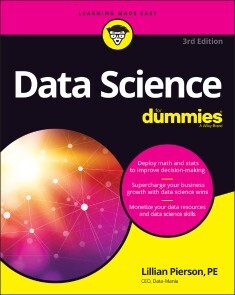
Data Science For Dummies
MONETIZE YOUR COMPANY’S DATA AND DATA SCIENCE EXPERTISE WITHOUT SPENDING A FORTUNE ON HIRING INDEPENDENT STRATEGY CONSULTANTS TO HELPWhat if there was one simple, clear process for ensuring that all your company’s data science projects achieve a high a return on investment? What if you could validate your ideas for future data science projects, and select the one idea that’s most prime for achieving profitability while also moving your company closer to its business vision? There is.INDUSTRY-ACCLAIMED DATA SCIENCE CONSULTANT, LILLIAN PIERSON, SHARES HER PROPRIETARY STAR FRAMEWORK – A SIMPLE, PROVEN PROCESS FOR LEADING PROFIT-FORMING DATA SCIENCE PROJECTS.Not sure what data science is yet? Don’t worry! Parts 1 and 2 of Data Science For Dummies will get all the bases covered for you. And if you’re already a data science expert? Then you really won’t want to miss the data science strategy and data monetization gems that are shared in Part 3 onward throughout this book.Data Science For Dummies demonstrates:* The only process you’ll ever need to lead profitable data science projects* Secret, reverse-engineered data monetization tactics that no one’s talking about* The shocking truth about how simple natural language processing can be* How to beat the crowd of data professionals by cultivating your own unique blend of data science expertise Whether you’re new to the data science field or already a decade in, you’re sure to learn something new and incredibly valuable from Data Science For Dummies. Discover how to generate massive business wins from your company’s data by picking up your copy today.LILLIAN PIERSON is the CEO of Data-Mania, where she supports data professionals in transforming into world-class leaders and entrepreneurs. She has trained well over one million individuals on the topics of AI and data science. Lillian has assisted global leaders in IT, government, media organizations, and nonprofits.INTRODUCTION 1About This Book 3Foolish Assumptions 3Icons Used in This Book 4Beyond the Book 4Where to Go from Here 4PART 1: GETTING STARTED WITH DATA SCIENCE 5CHAPTER 1: WRAPPING YOUR HEAD AROUND DATA SCIENCE 7Seeing Who Can Make Use of Data Science 8Inspecting the Pieces of the Data Science Puzzle 10Collecting, querying, and consuming data 11Applying mathematical modeling to data science tasks 12Deriving insights from statistical methods 12Coding, coding, coding — it’s just part of the game 13Applying data science to a subject area 13Communicating data insights 14Exploring Career Alternatives That Involve Data Science 15The data implementer 16The data leader 16The data entrepreneur 17CHAPTER 2: TAPPING INTO CRITICAL ASPECTS OF DATA ENGINEERING 19Defining Big Data and the Three Vs 19Grappling with data volume 21Handling data velocity 21Dealing with data variety 22Identifying Important Data Sources 23Grasping the Differences among Data Approaches 24Defining data science 25Defining machine learning engineering 26Defining data engineering 26Comparing machine learning engineers, data scientists, and data engineers 27Storing and Processing Data for Data Science 28Storing data and doing data science directly in the cloud 28Storing big data on-premise 32Processing big data in real-time 35PART 2: USING DATA SCIENCE TO EXTRACT MEANING FROM YOUR DATA 37CHAPTER 3: MACHINE LEARNING MEANS USING A MACHINE TO LEARN FROM DATA 39Defining Machine Learning and Its Processes 40Walking through the steps of the machine learning process 40Becoming familiar with machine learning terms 41Considering Learning Styles 42Learning with supervised algorithms 42Learning with unsupervised algorithms 43Learning with reinforcement 43Seeing What You Can Do 43Selecting algorithms based on function 44Using Spark to generate real-time big data analytics 48CHAPTER 4: MATH, PROBABILITY, AND STATISTICAL MODELING 51Exploring Probability and Inferential Statistics 52Probability distributions 53Conditional probability with Naïve Bayes 55Quantifying Correlation 56Calculating correlation with Pearson’s r 56Ranking variable-pairs using Spearman’s rank correlation 58Reducing Data Dimensionality with Linear Algebra 59Decomposing data to reduce dimensionality 59Reducing dimensionality with factor analysis 63Decreasing dimensionality and removing outliers with PCA 64Modeling Decisions with Multiple Criteria Decision-Making 65Turning to traditional MCDM 65Focusing on fuzzy MCDM 67Introducing Regression Methods 67Linear regression 67Logistic regression 69Ordinary least squares (OLS) regression methods 70Detecting Outliers 70Analyzing extreme values 70Detecting outliers with univariate analysis 71Detecting outliers with multivariate analysis 73Introducing Time Series Analysis 73Identifying patterns in time series 74Modeling univariate time series data 75CHAPTER 5: GROUPING YOUR WAY INTO ACCURATE PREDICTIONS 77Starting with Clustering Basics 78Getting to know clustering algorithms 79Examining clustering similarity metrics 81Identifying Clusters in Your Data 82Clustering with the k-means algorithm 82Estimating clusters with kernel density estimation (KDE) 84Clustering with hierarchical algorithms 84Dabbling in the DBScan neighborhood 87Categorizing Data with Decision Tree and Random Forest Algorithms 88Drawing a Line between Clustering and Classification 89Introducing instance-based learning classifiers 90Getting to know classification algorithms 90Making Sense of Data with Nearest Neighbor Analysis 93Classifying Data with Average Nearest Neighbor Algorithms 94Classifying with K-Nearest Neighbor Algorithms 97Understanding how the k-nearest neighbor algorithm works 98Knowing when to use the k-nearest neighbor algorithm 99Exploring common applications of k-nearest neighbour algorithms 100Solving Real-World Problems with Nearest Neighbor Algorithms 100Seeing k-nearest neighbor algorithms in action 101Seeing average nearest neighbor algorithms in action 101CHAPTER 6: CODING UP DATA INSIGHTS AND DECISION ENGINES 103Seeing Where Python and R Fit into Your Data Science Strategy 104Using Python for Data Science 104Sorting out the various Python data types 106Putting loops to good use in Python 109Having fun with functions 110Keeping cool with classes 112Checking out some useful Python libraries 114Using Open Source R for Data Science 120Comprehending R’s basic vocabulary 121Delving into functions and operators 124Iterating in R 127Observing how objects work 129Sorting out R’s popular statistical analysis packages 131Examining packages for visualizing, mapping, and graphing in R 133CHAPTER 7: GENERATING INSIGHTS WITH SOFTWARE APPLICATIONS 137Choosing the Best Tools for Your Data Science Strategy 138Getting a Handle on SQL and Relational Databases 139Investing Some Effort into Database Design 144Defining data types 144Designing constraints properly 145Normalizing your database 145Narrowing the Focus with SQL Functions 147Making Life Easier with Excel 151Using Excel to quickly get to know your data 152Reformatting and summarizing with PivotTables 157Automating Excel tasks with macros 158CHAPTER 8: TELLING POWERFUL STORIES WITH DATA 161Data Visualizations: The Big Three 162Data storytelling for decision makers 162Data showcasing for analysts 163Designing data art for activists 164Designing to Meet the Needs of Your Target Audience 164Step 1: Brainstorm (All about Eve) 165Step 2: Define the purpose 166Step 3: Choose the most functional visualization type for your purpose 166Picking the Most Appropriate Design Style 167Inducing a calculating, exacting response 167Eliciting a strong emotional response 168Selecting the Appropriate Data Graphic Type 170Standard chart graphics 171Comparative graphics 173Statistical plots 176Topology structures 179Spatial plots and maps 180Testing Data Graphics 183Adding Context 184Creating context with data 184Creating context with annotations 185Creating context with graphical elements 186PART 3: TAKING STOCK OF YOUR DATA SCIENCE CAPABILITIES 187CHAPTER 9: DEVELOPING YOUR BUSINESS ACUMEN 189Bridging the Business Gap 189Contrasting business acumen with subject matter expertise 190Defining business acumen 191Traversing the Business Landscape 192Seeing how data roles support the business in making money 192Leveling up your business acumen 195Fortifying your leadership skills 196Surveying Use Cases and Case Studies 197Documentation for data leaders 199Documentation for data implementers 202CHAPTER 10: IMPROVING OPERATIONS 205Establishing Essential Context for Operational Improvements Use Cases 206Exploring Ways That Data Science Is Used to Improve Operations 207Making major improvements to traditional manufacturing operations 208Optimizing business operations with data science 210An AI case study: Automated, personalized, and effective debt collection processes 211Gaining logistical efficiencies with better use of real-time data 216Another AI case study: Real-time optimized logistics routing 217Modernizing media and the press with data science and AI 222Generating content with the click of a button 222Yet another case study: Increasing content generation rates 224CHAPTER 11: MAKING MARKETING IMPROVEMENTS 229Exploring Popular Use Cases for Data Science in Marketing 229Turning Web Analytics into Dollars and Sense 232Getting acquainted with omnichannel analytics 233Mapping your channels 233Building analytics around channel performance 235Scoring your company’s channels 235Building Data Products That Increase Sales-and-Marketing ROI 238Increasing Profit Margins with Marketing Mix Modeling 239Collecting data on the four Ps 240Implementing marketing mix modeling 241Increasing profitability with MMM 243CHAPTER 12: ENABLING IMPROVED DECISION-MAKING 245Improving Decision-Making 245Barking Up the Business Intelligence Tree 247Using Data Analytics to Support Decision-Making 249Types of analytics 252Common challenges in analytics 252Data wrangling 253Increasing Profit Margins with Data Science 254Seeing which kinds of data are useful when using data science for decision support 255Directing improved decision-making for call center agents 257Discovering the tipping point where the old way stops working 262CHAPTER 13: DECREASING LENDING RISK AND FIGHTING FINANCIAL CRIMES 265Decreasing Lending Risk with Clustering and Classification 266Preventing Fraud Via Natural Language Processing (NLP) 267CHAPTER 14: MONETIZING DATA AND DATA SCIENCE EXPERTISE 275Setting the Tone for Data Monetization 275Monetizing Data Science Skills as a Service 278Data preparation services 279Model building services 280Selling Data Products 282Direct Monetization of Data Resources 283Coupling data resources with a service and selling it 283Making money with data partnerships 284Pricing Out Data Privacy 285PART 4: ASSESSING YOUR DATA SCIENCE OPTIONS 289CHAPTER 15: GATHERING IMPORTANT INFORMATION ABOUT YOUR COMPANY 291Unifying Your Data Science Team Under a Single Business Vision 292Framing Data Science around the Company’s Vision, Mission, and Values 294Taking Stock of Data Technologies 296Inventorying Your Company’s Data Resources 298Requesting your data dictionary and inventory 298Confirming what’s officially on file 300Unearthing data silos and data quality issues 300People-Mapping 303Requesting organizational charts 303Surveying the skillsets of relevant personnel 304Avoiding Classic Data Science Project Pitfalls 305Staying focused on the business, not on the tech 305Drafting best practices to protect your data science project 306Tuning In to Your Company’s Data Ethos 306Collecting the official data privacy policy 307Taking AI ethics into account 307Making Information-Gathering Efficient 308CHAPTER 16: NARROWING IN ON THE OPTIMAL DATA SCIENCE USE CASE 311Reviewing the Documentation 312Selecting Your Quick-Win Data Science Use Cases 313Zeroing in on the quick win 313Producing a POTI model 314Picking between Plug-and-Play Assessments 316Carrying out a data skill gap analysis for your company 317Assessing the ethics of your company’s AI projects and products 318Assessing data governance and data privacy policies 323CHAPTER 17: PLANNING FOR FUTURE DATA SCIENCE PROJECT SUCCESS 327Preparing an Implementation Plan 328Supporting Your Data Science Project Plan 335Analyzing your alternatives 335Interviewing intended users and designing accordingly 337POTI modeling the future state 338Executing On Your Data Science Project Plan 339CHAPTER 18: BLAZING A PATH TO DATA SCIENCE CAREER SUCCESS 341Navigating the Data Science Career Matrix 341Landing Your Data Scientist Dream Job 343Leaning into data science implementation 345Acing your accreditations 346Making the grade with coding bootcamps and data science career accelerators 348Networking and building authentic relationships 349Developing your own thought leadership in data science 350Building a public data science project portfolio 351Leading with Data Science 354Starting Up in Data Science 357Choosing a business model for your data science business 357Selecting a data science start-up revenue model 359Taking inspiration from Kam Lee’s success story 361Following in the footsteps of the data science entrepreneurs 364PART 5: THE PART OF TENS 367CHAPTER 19: TEN PHENOMENAL RESOURCES FOR OPEN DATA 369Digging Through data.gov 370Checking Out Canada Open Data 371Diving into data.gov.uk 372Checking Out US Census Bureau Data 373Accessing NASA Data 374Wrangling World Bank Data 375Getting to Know Knoema Data 376Queuing Up with Quandl Data 378Exploring Exversion Data 379Mapping OpenStreetMap Spatial Data 380CHAPTER 20: TEN FREE OR LOW-COST DATA SCIENCE TOOLS AND APPLICATIONS 381Scraping, Collecting, and Handling Data Tools 382Sourcing and aggregating image data with ImageQuilts 382Wrangling data with DataWrangler 383Data-Exploration Tools 384Getting up to speed in Gephi 384Machine learning with the WEKA suite 386Designing Data Visualizations 387Getting Shiny by RStudio 387Mapmaking and spatial data analytics with CARTO 388Talking about Tableau Public 390Using RAWGraphs for web-based data visualization 392Communicating with Infographics 393Making cool infographics with Infogram 394Making cool infographics with Piktochart 395Index 397
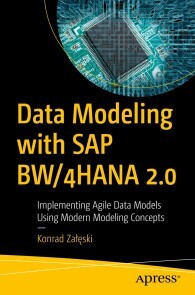
Data Modeling with SAP BW/4HANA 2.0
Gain practical guidance for implementing data models on the SAP BW/4HANA platform using modern modeling concepts. You will walk through the various modeling scenarios such as exposing HANA tables and views through BW/4HANA, creating virtual and hybrid data models, and integrating SAP and non-SAP data into a single data model.Data Modeling with SAP BW/4HANA 2.0 gives you the skills you need to use the new SAP BW/HANA features and objects, covers modern modelling concepts, and equips you with the practical knowledge of how to use the best of the HANA and BW/4HANA worlds.WHAT YOU WILL LEARN* Discover the new modeling features in SAP BW/4HANA* Combine SAP HANA and SAP BW/4HANA artifacts* Leverage virtualization when designing and building data models* Build hybrid data models combining InfoObject, OpenODS, and a field-based approach* Integrate SAP and non-SAP data into single modelWHO THIS BOOK IS FORBI consultants, architects, developers, and analysts working in the SAP BW/4HANA environment.Konrad Załęski graduated from Warsaw University of Technology getting his master’s degree in management. After finishing his studies, he continued his education and completed two postgraduate courses in management information systems (Microsoft) and integrated information systems (SAP).Konrad gained his experience by delivering business intelligence solutions for multiple global corporations. The majority of the projects from his portfolio were implemented on top of the SAP HANA, SAP BW/4HANA, and Microsoft BI platforms. He is also an active contributor and publisher in the SAP community.CHAPTER 1: Modeling objectsSUBTOPIC:1.1. Modern data modeling1.1.1. Overview of SAP BW4HANA modeling concepts1.2. Main SAP HANA Objects used for modelling1.2.1. Calculation View1.2.2. Table Function1.3. Main SAP BW4HANA Objects used for modelling1.3.1. InfoObject1.3.2. Open ODS1.3.3. Advanced DSO1.3.4. Composite Provider1.3.5. QueryCHAPTER 2: PUBLISHING EXTERNAL DATA IN BW4HANASUBTOPIC:2.1. Scenario2.2. Smart Data Acess (SDA)2.3. Creating virtual tables2.4. Publish HANA tables through BW4HANA2.5. Publish HANA views through BW4HANA2.6. Pass input parameters from Query to Calculation View2.7. Pass input parameters from Query to Table Function2.8. SummaryCHAPTER 3: CREATING VIRTUAL BW4HANA MODELSUBTOPIC:3.1. Scenario3.2. Create Master Data OpenODS views3.3. Create Transactional Data OpenODS views3.4. Create Composite Provider consuming OpenODS views3.5. Create Query3.6. SummaryCHAPTER 4. CONVERTING VIRTUAL STRUCTURES INTO PERSISTENT BW4HANA MODELSUBTOPIC:4.1. Scenario4.2. Materialize data model based on OpenODS4.3. SummaryCHAPTER 5: CREATING HYBRID DATA MODEL IN BW4HANASUBTOPIC:5.1. Scenario5.2. Create data model combining OpenODS, InfoObjects and raw fields5.3. SummaryCHAPTER 6: COMBINING SAP AND NON-SAP DATA INTO SINGLE DATA MODELSUBTOPIC:6.1. Scenario6.2. Create view combining SAP and non-SAP data6.3. Create OpenODS views for whole data set6.4. Create Composite Provider6.5. Join additional objects in Composite Provider6.6. Create calculated fields on Composite Provider6.7. Summary

Hands-on Azure Functions with C#
Build serverless solutions using Azure Functions. This book provides you with a deep understanding of Azure Functions so you can build highly scalable and reliable serverless applications.The book starts with an introduction to Azure Functions and demonstrates triggers and bindings with use cases. The process to build an OTP mailer with Queue Storage Trigger and SendGrid output binding is presented, and timer triggers and blob storage binding are covered. Creating custom binding for Azure Functions and building a serverless API using Azure Functions and Azure SQL are discussed. You will know how to build a serverless API using Azure Functions and Azure Cosmos DB, and you will go over enabling application insights and Azure Monitor. Storing function secrets in Azure Key Vault is discussed as well as authentication and authorization using Azure Active Directory. You will learn how to secure your serverless apps using API Management and deploy your Azure Functions using IDEs.Deploying your Azure Functions using CI/CD pipelines is demonstrated along with running Azure Functions in containers. You will learn how to leverage Azure Cognitive Services to build intelligent serverless apps. And the authors introduce you to Azure Durable functions and teach you how to integrate Azure Functions in the logic app workflow. They also discuss best practices and pitfalls to avoid while designing Azure Functions.After reading this book, you will be able to design and deploy Azure Functions and implement solutions to real-world business problems through serverless applications.WHAT WILL YOU LEARN* Monitor and secure Azure Functions* Build and deploy Azure Functions* Enable continuous integration/continuous deployment (CI/CD) DevOps strategies for Azure Functions* Run Azure Functions on Azure Kubernetes ClusterWHO THIS BOOK IS FORExperienced developers, cloud architects, and tech enthusiasts in AzureASHIRWAD SATAPATHI is working as a software developer with a leading IT firm and has expertise in building scalable applications with .NET Core. He has a deep understanding of building full-stack applications using .NET and Azure PaaS and serverless offerings. He is an active blogger in the C# Corner developer community. He was awarded the C# Corner MVP (September 2020) for his remarkable contributions to the developer community.ABHISHEK MISHRA is an architect with a leading software multinational company and has deep expertise in designing and building enterprise-grade Intelligent Azure and .NET-based architectures. He is an expert in .NET full stack, Azure (PaaS, IaaS, serverless), Infrastructure as Code, Azure Machine Learning, Intelligent Azure (Azure Bot Services and Cognitive Services), and Robotics Process Automation. He has a rich 15+ years of experience working across top organizations in the industry. He loves blogging and is an active blogger in the C# Corner developer community. He was awarded the C# Corner MVP (December 2018 and 2019) for his contributions to the developer community.CHAPTER 1: INTRODUCTION TO AZURE FUNCTIONSCHAPTER GOAL: INTRODUCTION TO AZURE FUNCTIONS AND TOPICS COVERED IN THE BOOKNO OF PAGES 6SUB -TOPICS1. Introduction to Azure Functions2. What is serverless ?3. Azure Web Job Vs Azure Functions4. Advantage and Disadvantages5. Hosting Plans for Azure Functions6. Use cases for Azure Functions7. SummaryCHAPTER 2: BUILD YOUR FIRST AZURE FUNCTIONSCHAPTER GOAL: TO SETUP THE ENVIRONMENT AND BUILD YOUR FIRST AZURE FUNCTIONS USING VARIOUS TOOLINGNO OF PAGES: 25SUB - TOPICS1. Building Azure function using Azure Portal2. Installation guide to setup the environment to run Azure function using Azure Functions Runtime Tool3. Build an Azure Functions using Azure Functions Runtime Tool4. Installation guide to setup the environment to run Azure Function in VSCode5. Build an Azure Functions using VSCode and debugging it6. Installation guide to setup the environment to run Azure Functions in Visual Studio 2019 community edition7. Build an Azure Function using Visual Studio 2019 and debugging it locally.8. SummaryCHAPTER 3: WHAT ARE TRIGGERS AND BINDINGS?CHAPTER GOAL: TO INTRODUCE THE CONCEPTS OF TRIGGERS AND BINDINGS AND THEIR USE CASESNO OF PAGES : 15SUB - TOPICS:1. What are Triggers and Bindings ?2. Different triggers and bindings available3. Use cases of some of the Triggers and Bindings4. Build a simple function using a Trigger and Binding using Azure Portal5. SummaryCHAPTER 4: BUILD AN OTP MAILER WITH QUEUE STORAGE TRIGGER AND SENDGRID OUTPUT BINDINGCHAPTER GOAL: TO INTRODUCE THE CONCEPTS QUEUE STORAGE TRIGGER AND SENDGRID OUTPUT BINDING AND THEIR USE CASES BY BUILDING A PROJECTNO OF PAGES: 20SUB - TOPICS:1. Getting Started with Queue Storage Trigger and Use Cases2. Build a sample application with Queue Storage Trigger3. Getting Started with SendGrid output binding and Use Cases4. Build a sample application with SendGrid output binding5. Create a OTP mailer with Queue Storage Trigger and SendGrid output binding6. SummaryCHAPTER 5: BUILD A REPORT GENERATOR WITH TIMER TRIGGER AND BLOB STORAGE BINDINGCHAPTER GOAL: TO INTRODUCE THE CONCEPTS TIMER TRIGGER AND BLOB STORAGE BINDING AND THEIR USE CASES BY BUILDING A PROJECTNO OF PAGES: 20SUB - TOPICS:1. Getting started with Timer Trigger and its use cases2. Build a sample application with Timer trigger3. Getting Started with Blob Storage Binding and its use cases4. Build a sample application with Blob Storage Binding5. Create a Report Generator application with timer trigger and blob storage binding6. SummaryCHAPTER 6: BUILD A TO-DO API WITH HTTP TRIGGER AND TABLE STORAGE BINDINGCHAPTER GOAL: TO INTRODUCE THE CONCEPTS HTTP TRIGGER AND TABLE STORAGE BINDING AND THEIR USE CASES BY BUILDING A PROJECTNO OF PAGES: 35SUB - TOPICS:1. Getting started with HTTP Trigger and its use cases2. Routing in HTTP Triggered Azure Functions3. Build a sample application with HTTP trigger4. Getting Started with Table Storage Binding and its use cases5. Build a sample application with Azure Table Storage Binding6. Create a To-Do API with HTTP trigger and Table Storage binding7. SummaryCHAPTER 7: CREATING CUSTOM BINDING FOR AZURE FUNCTIONCHAPTER GOAL: TO INTRODUCE THE CONCEPTS OF DEPENDENCY INJECTION AND CREATING A CUSTOM BINDING FOR A EXTERNAL SERVICE FOR YOU AZURE FUNCTIONNO OF PAGES: 20SUB - TOPICS:1. Introduction to custom binding2. Use cases for custom binding3. What is dependency injection4. Build a custom binding for Azure Functions5. SummaryCHAPTER 8: BUILDING A SERVERLESS API USING AZURE FUNCTIONS AND AZURE SQLCHAPTER GOAL: UNDERSTAND THE CONCEPTS AND WAYS TO CREATE AN AZURE FUNCTIONS TO CONNECT WITH A AZURE SQL DATABASE AND PERFORM CRUD OPERATIONSNo of pages: 40SUB - TOPICS:1. What is a Serverless API ?2. What is Azure SQL ?3. Create an Azure SQL DB instance and create a table4. Build a HTTP Triggered Azure Functions to perform CRUD operation on the Azure SQL DB using ADO.NET5. SummaryCHAPTER 9: BUILDING A SERVERLESS API USING AZURE FUNCTIONS AND AZURE COSMOS DBCHAPTER GOAL: UNDERSTAND THE CONCEPTS AND WAYS TO CREATE AN AZURE FUNCTIONS TO CONNECT WITH A AZURE COSMOS DB USING BINDINGS AND PERFORM CRUD OPERATIONS AND LEVERAGE THE COSMOS SDK TO INTERACT WITH COSMOS DBNo of pages: 40SUB - TOPICS:1. What is Azure Cosmos DB and its use cases2. Getting started with Azure Cosmos DB Triggers by building a sample application3. Getting started with Azure Cosmos DB Triggers by building a sample application4. Build a HTTP Triggered Azure Function to perform CRUD operation on the Azure Cosmos DB using ADO.NET5. Leverage the Azure Cosmos DB SDK to interact with Cosmos DB from Azure Function6. SummaryCHAPTER 10 : ENABLING APPLICATION INSIGHTS AND AZURE MONITORChapter Goal: Understanding the way to gather telemetry data from your Azure Function to analyze and monitor them.NO OF PAGES: 20SUB - TOPICS:1. Gather and process telemetry data from application insights2. Perform Diagnostics for Azure Functions3. Analyze trends using Azure Monitor and create alerts4. Restrict the number of scaling instances for function app5. SummaryCHAPTER 11: STORING FUNCTION SECRET IN AZURE KEY VAULTCHAPTER GOAL: INTRODUCING A SAFER WAY TO STORE APP SECRETS OF YOUR AZURE FUNCTIONSNO OF PAGES: 20SUB - TOPICS:1. What is Key Vault ?2. Creating a Key Vault in Azure Portal3. Storing keys and secret data in Key Vault4. Fetch app secrets from Azure Key Vault in your azure Function5. SummaryCHAPTER 12: AUTHENTICATION AND AUTHORIZATION USING AZURE ACTIVE DIRECTORYCHAPTER GOAL: A COMPREHENSIVE GUIDE TO ENABLING AAD BASED AUTHENTICATION FOR AZURE FUNCTIONNo of pages: 20SUB - TOPICS:1. Getting started with Azure Active Directory2. What is Authentication and Authorization ?3. Implement Authentication and Authorization for your azure Function using AAD4. SummaryCHAPTER 13: SECURING AZURE FUNCTIONS WITH API MANAGEMENTCHAPTER GOAL: TO UNDERSTAND, HOW TO SECURE YOUR SERVERLESS APIS USING API MANAGEMENTNo of pages: 20SUB - TOPICS:1. What is API Management2. Advantage and Use Cases3. Configure API Management for our Functions4. Demo5. SummaryCHAPTER 14: DEPLOYING YOUR AZURE FUNCTIONS USING IDESCHAPTER GOAL: TO HAVE A UNDERSTANDING ON CREATING RESOURCES IN AZURE TO DEPLOY AZURE FUNCTIONS USING VISUAL STUDIO AND VSCODENo of pages: 20SUB - TOPICS:1. How to deploy your Azure Function using Visual Studio 20192. How to deploy your Azure Function in a Deployment Slot using Visual Studio 20193. How to deploy your Azure Function using VSCode4. SummaryCHAPTER 15: DEPLOYING YOUR AZURE FUNCTIONS USING CI/CD PIPELINES USING AZURE DEVOPSChapter Goal: To understand, how to leverage Azure Devops to give deployments using CI/CD pipelines for your Azure FunctionsNO OF PAGES: 30SUB - TOPICS:1. Introduction to Azure Devops2. Creating a Repository for your Azure Function3. Building a build pipeline for Azure Function and enable CI4. Building a release pipeline for Azure Function and enable CD5. SummaryCHAPTER 16: RUNNING AZURE FUNCTIONS IN CONTAINERSCHAPTER GOAL: RUNNING AZURE FUNCTIONS ON AKSNO OF PAGES: 20SUB - TOPICS:1. Getting started with Containers and AKS2. What is Serverless AKS and KEDA ?3. Deploying your Azure Functions to AKS using KEDA4. Deploying your Azure Function to ACI5. SummaryCHAPTER 17: ADDING COGNITIVE CAPABILITIES TO YOUR AZURE FUNCTIONSCHAPTER GOAL: TO UNDERSTAND, HOW TO LEVERAGE AZURE COGNITIVE SERVICE TO BUILD INTELLIGENT SERVERLESS APPSNO OF PAGES: 30SUB - TOPICS:1. Getting started with Azure Cognitive Services2. Build a severless application to analyze feedbacks using sentiment analysis3. Build a serverless application to classify images using azure vision api4. SummaryCHAPTER 18: INTRODUCTION TO AZURE DURABLE FUNCTIONSCHAPTER GOAL: TO GIVE A BASIC UNDERSTANDING TO THE READER ON BUILDING STATEFUL FUNCTIONSNo of pages: 20SUB - TOPICS:1. Introduction to Azure Durable Functions and use cases2. Advantages and Disadvantages3. Application Patterns4. Build a sample application to demonstrate the capabilities of Azure Durable functions5. SummaryCHAPTER 19: INTEGRATING AZURE FUNCTIONS IN LOGIC APPS WORKFLOWCHAPTER GOAL: TO UNDERSTAND WAYS TO INTEGRATE AZURE FUNCTION IN A LOGIC APP WORKFLOWNO OF PAGES: 20SUB - TOPICS:1. Getting started with Azure Logic Apps2. Build a Serverless application integrating Azure Function in Logic App workflow3. SummaryCHAPTER 20: BEST PRACTICES AND PITFALLS TO AVOIDCHAPTER GOAL: DESIGNING AZURE FUNCTIONS IN A EFFICIENT WAYNO OF PAGES: 15SUB - TOPICS:1. Design Guidelines and Best Practices2. Pitfalls to avoid

Creating Wordpress Online Store and Wordpress Online Magazine
The objective of this work is to develop a Word Press Online Store with Different Ecommerce Plugins and Themes and Word Press Online Magazine with MH Magazine ThemeThe work consists of three parts:i. Part I: Building Personal Websie with online shop the sell Ebooks:The objective of this part is to develop a Ecommerce word press website with all commonly used Plug-ins.First I registered in some free webhost my domain http://hidaia-alassouli.000space.comThen I created the database and installed the word press package.I installed after that all important Plugins for my website. I tested different ecommerce plugin to sell ebooks .The report includes:1- Changing the wordpress theme.2- Creating the frontpage post and the other pages.3- Adding Gallery Plugin.4- Adding yoast.5- Submission the Site to Search Engine and Analyze your Website6- Adding Contact Form Plugin7- Using easyfiledownloads Plugin to sell ebooks8- Using WP-Ecommerce Plugin to sell ebooks9- Using WP Shopping Cart Plugin10- Using Woocommerce Plugin to sell my EbooksI ended up to build my ecommerce shop with woocommerce as it was the most efficient and comfortable.ii. Part II: Building Ecomerce website with mystile theme and woocommerce pluginThe objective of this part is to develop a Ecommerce website with mystyle theme and woocommerce plugin and other commonly used Plug-ins.First I registered in some free webhost my domain http://hedaya-alasooly.000space.comThen I created the database and installed the word press package.I installed after that all important Plugins for my website. The second part of report includes:1- Installing mystyle theme.2- Installing woocommerce plugin Plugin.3- Adding yoast seo Plugin.4- Submission the Site to Search Engine and Analyze your Websiteiii. Part III: Building Online magazine website with MH-Magazine themeThe objective of this part is to develop an online magazine website with MH Magazine theme and other commonly used Plug-ins.First I registered in some free webhost my domain http://anticorruption.000space.com.Then I created the database and installed the word press package.I installed after that all important Plugins for my website. The third part of report includes:1- Installing MH Magazine theme.2- Configuring MH Magazine theme.3- Adding yoast seo Plugin.4- Submission the Site to Search Engine and Analyze your WebsiteI am Dr. Hidaia Mahmoud Mohamed Alassouli. I completed my PhD degree in Electrical Engineering from Czech Technical University by February 2003, and my M. Sc. degree in Electrical Engineering from Bahrain University by June 1995. I completed also one study year of most important courses in telecommunication and computer engineering courses in Islamic university in Gaza. So, I covered most important subjects in Electrical Engineering, Computer Engineering and Telecommunications Engineering during my study. My nationality is Palestinian from gaza strip.I obtained a lot of certified courses in MCSE, SPSS, Cisco (CCNA), A+, Linux.I worked as Electrical, Telecommunicating and Computer Engineer in a lot of institutions. I worked also as a computer networking administrator.I had considerable undergraduate teaching experience in several types of courses in many universities. I handled teaching the most important subjects in Electrical and Telecommunication and Computer Engineering.I could publish a lot of papers a top-tier journals and conference proceedings, besides I published a lot of books in Publishing and Distribution houses.I wrote a lot of important Arabic articles on online news websites. I also have my own magazine website that I publish on it all my articles: http:// www.anticorruption.000space.comMy personal website: www.hidaia-alassouli.000space.comEmail: hidaia_alassouli@hotmail.com

8 Steps to Better Security
HARDEN YOUR BUSINESS AGAINST INTERNAL AND EXTERNAL CYBERSECURITY THREATS WITH A SINGLE ACCESSIBLE RESOURCE.In 8 Steps to Better Security: A Simple Cyber Resilience Guide for Business, cybersecurity researcher and writer Kim Crawley delivers a grounded and practical roadmap to cyber resilience in any organization. Offering you the lessons she learned while working for major tech companies like Sophos, AT&T, BlackBerry Cylance, Tripwire, and Venafi, Crawley condenses the essence of business cybersecurity into eight steps.Written to be accessible to non-technical businesspeople as well as security professionals, and with insights from other security industry leaders, this important book will walk you through how to:* Foster a strong security culture that extends from the custodial team to the C-suite* Build an effective security team, regardless of the size or nature of your business* Comply with regulatory requirements, including general data privacy rules and industry-specific legislation* Test your cybersecurity, including third-party penetration testing and internal red team specialistsPerfect for CISOs, security leaders, non-technical businesspeople, and managers at any level, 8 Steps to Better Security is also a must-have resource for companies of all sizes, and in all industries.KIM CRAWLEY focuses on researching and writing about cybersecurity issues. Her career has included work with Sophos, AT&T Cybersecurity, BlackBerry Cylance, Tripwire, and Venafi. She specializes in all matters red team, blue team, and purple team and is especially fascinated by malware, social engineering, and advanced persistent threats. She runs an online cybersecurity event called DisInfoSec.Foreword xiIntroduction xiiiCHAPTER 1: STEP 1: FOSTER A STRONG SECURITY CULTURE 1Kevin Mitnick, Human Hacker Extraordinaire 3The Importance of a Strong Security Culture 5Hackers Are the Bad Guys, Right? 6What is Security Culture? 7How to Foster a Strong Security Culture 9Security Leaders on Security Culture 12What Makes a Good CISO? 13The Biggest Mistakes Businesses Make When It Comes to Cybersecurity 14The Psychological Phases of a Cybersecurity Professional 15CHAPTER 2: STEP 2: BUILD A SECURITY TEAM 19Why Step 2 is Controversial 20How to Hire the Right Security Team. . .the Right Way 28Security Team Tips from Security Leaders 29The “Culture Fit”—Yuck! 30Cybersecurity Budgets 34Design Your Perfect Security Team 35CHAPTER 3: STEP 3: REGULATORY COMPLIANCE 39What Are Data Breaches, and Why Are They Bad? 40The Scary Truth Found in Data Breach Research 45An Introduction to Common Data Privacy Regulations 49The General Data Protection Regulation 49The California Consumer Privacy Act 50The Health Insurance Portability and Accountability Act 52The Gramm-Leach-Bliley Act 52Payment Card Industry Data Security Standard 53Governance, Risk Management, and Compliance 53More About Risk Management 54Threat Modeling 55CHAPTER 4: STEP 4: FREQUENT SECURITY TESTING 57What is Security Testing? 58Security Testing Types 58Security Audits 58Vulnerability Assessments Versus Penetration Testing 59Red Team Testing 61Bug Bounty Programs 61What’s Security Maturity? 63The Basics of Security Audits and Vulnerability Assessments 64Log Early, Log Often 66Prepare for Vulnerability Assessments and Security Audits 67A Concise Guide to Penetration Testing 69Penetration Testing Based on Network Knowledge 70Penetration Testing Based on Network Aspects 73Security Leaders on Security Maturity 76Security Testing is Crucial 78CHAPTER 5: STEP 5: SECURITY FRAMEWORK APPLICATION 79What is Incident Response? 80Preparation 80Identification or Analysis 82Containment, Mitigation, or Eradication 83Recovery 84Post-incident 86Your Computer Security Incident Response Team 86Cybersecurity Frameworks 89NIST Cybersecurity Framework 89Identify 90Protect 92Detect 95Respond 97Recover 99ISO 27000 Cybersecurity Frameworks 101CIS Controls 102COBIT Cybersecurity Framework 105Security Frameworks and Cloud Security 106CHAPTER 6: STEP 6: CONTROL YOUR DATA ASSETS 109The CIA Triad 110Access Control 112Patch Management 113Physical Security and Your Data 115Malware 116Cryptography Basics 119Bring Your Own Device and Working from Home 123Data Loss Prevention 124Managed Service Providers 126The Dark Web and Your Data 128Security Leaders on Cyber Defense 130Control Your Data 132CHAPTER 7: STEP 7: UNDERSTAND THE HUMAN FACTOR 133Social Engineering 134Phishing 139What Can NFTs and ABA Teach Us About Social Engineering? 141How to Prevent Social Engineering Attacks on Your Business 146UI and UX Design 147Internal Threats 148Hacktivism 152CHAPTER 8: STEP 8: BUILD REDUNDANCY AND RESILIENCE 155Understanding Data and Networks 156Building Capacity and Scalability with the Power of the Cloud 158Back It Up, Back It Up, Back It Up 161RAID 162What Ransomware Taught Business About Backups 164Business Continuity 167Disaster Recovery 168CHAPTER 9: AFTERWORD 173STEP 1 173The Most Notorious Cyberattacker Was Actually a Con Man 174A Strong Security Culture Requires All Hands on Deck 174Hackers Are the Good Guys, Actually 174What Is Security Culture? 175What Makes a Good CISO? 175The Psychological Phases of a Cybersecurity Professional 176Recommended Readings 177STEP 2 178Tackling the Cybersecurity Skills Gap Myth 178Take “Culture Fit” Out of Your Vocabulary 179Your Cybersecurity Budget 180Recommended Readings 180STEP 3 181Data Breaches 181Data Privacy Regulations 182Risk Management 183Recommended Readings 183STEP 4 184Security Audits 184Vulnerability Assessments 185Penetration Testing 185Bug Bounty Programs 185Recommended Reading 186STEP 5 187Incident Response 187Cybersecurity Frameworks 187Recommended Reading 188STEP 6 188The CIA Triad 188Access Control 189Patch Management 189Physical Security 189Malware 189Cryptography 190BYOD and Working from Home 190Data Loss Prevention 191Managed Service Providers 191Recommended Reading 191STEP 7 192Social Engineering 192UI and UX Design 193Internal Threats 193Recommended Readings 194STEP 8 194Cloud Networks 195Data Backups 195Business Continuity and Disaster Recovery 196Recommended Readings 196Keeping Your Business Cyber Secure 197Index 199

CompTIA Cloud+ Study Guide
In the newly revised Third Edition of CompTIA Cloud+ Study Guide: Exam CVO-003, expert IT Ben Piper delivers an industry leading resource for anyone preparing for the CompTIA Cloud+ certification and a career in cloud services. The book introduces candidates to the skills and the competencies critical for success in the field and on the exam.The book breaks down challenging cloud management concepts into intuitive and manageable topics, including cloud architecture and design, cloud security, deployment, operations and support, and cloud troubleshooting. It also offers practical study features, like Exam Essentials and challenging chapter review questions.Written in a concise and straightforward style that will be immediately familiar to the hundreds of thousands of readers who have successfully use other CompTIA study guides to further their careers in IT, the book offers:* Efficient and effective training for a powerful certification that opens new and lucrative career opportunities* Fully updated coverage for the new Cloud+ CV0-003 Exam that includes the latest in cloud architecture and design* Access to the Sybex online learning center, with chapter review questions, full-length practice exams, hundreds of electronic flashcards, and a glossary of key termsPerfect for everyone preparing for the CompTIA Cloud+ Exam CV0-003 certification, this book is an ideal resource for current and aspiring cloud services professionals seeking an efficient and up-to-date resource that will dramatically improve their ability to maintain, secure, and optimize cloud environments.ABOUT THE AUTHORBEN PIPER, is an IT consultant who has created more than 30 educational courses covering cloud technologies, networking, and automation. Learn more about Ben from his website at www.benpiper.com.Introduction xxiiiAssessment Test IviAnswers to Assessment Test lxxviiCHAPTER 1 INTRODUCING CLOUD COMPUTING CONFIGURATIONS AND DEPLOYMENTS 1Introducing Cloud Computing 4Virtualization 7Cloud Service Models 10Cloud Reference Designs and Delivery Models 14Introducing Cloud Concepts and Components 16Connecting the Cloud to the Outside World 18Deciding Whether to Move to the Cloud 18Selecting Cloud Compute Resources 18Hypervisor Affinity Rules 19Validating and Preparing for the Move to the Cloud 19Choosing Elements and Objects in the Cloud 20Internet of Things 21Machine Learning/Artificial Intelligence (AI) 21Creating and Validating a Cloud Deployment 22The Cloud Shared Resource Pooling Model 23Organizational Uses of the Cloud 27Scaling and Architecting Cloud Systems Based on Requirements 29Understanding Cloud Performance 29Delivering High Availability Operations 30Managing and Connecting to Your Cloud Resources 30Is My Data Safe? (Replication and Synchronization) 32Understanding Load Balancers 34Cloud Testing 35Verifying System Requirements 36Correct Scaling for Your Requirements 36Making Sure the Cloud Is Always Available 37Remote Management of VMs 39Monitoring Your Cloud Resources 41Writing It All Down (Documentation) 41Creating Baselines 41Shared Responsibility Model 42Summary 43Exam Essentials 43Written Lab 45Review Questions 46CHAPTER 2 CLOUD DEPLOYMENTS 51Executing a Cloud Deployment 58Understanding Deployment and Change Management 59Cloud Deployment Models 65Network Deployment Considerations 67Service Level Agreements 77Matching Data Center Resources to Cloud Resources 78What Are Available and Proposed Hardware Resources? 78Templates and Images 81Physical Resource High Availability 82Introducing Disaster Recovery 82Physical Hardware Performance Benchmarks 83Cost Savings When Using the Cloud 83Energy Savings in the Cloud 84Shared vs. Dedicated Hardware Resources in a Cloud Data Center 84Microservices 84Configuring and Deploying Storage 86Identifying Storage Configurations 86Storage Provisioning 90Storage Priorities: Understanding Storage Tiers 94Managing and Protecting Your Stored Data 95Storage Security Considerations 102Accessing Your Storage in the Cloud 105Performing a Server Migration 105Different Types of Server Migrations 106Addressing Application Portability 109Workload Migration Common Procedures 110Examining Infrastructure Capable of Supporting a Migration 110Managing User Identities and Roles 111RBAC: Identifying Users and What Their Roles Are 112What Happens When You Authenticate? 113Understanding Federation 113Single Sign-On Systems 113Understanding Infrastructure Services 114Summary 117Exam Essentials 118Written Lab 119Review Questions 120CHAPTER 3 SECURITY IN THE CLOUD 125Cloud Security Compliance and Configurations 128Establishing Your Company’s Security Policies 130Selecting and Applying the Security Policies to Your Cloud Operations 130Some Common Regulatory Requirements 130Encrypting Your Data 134Remote Access Protocols 139Automating Cloud Security 140Security Best Practices 141Access Control 144Accessing Cloud-Based Objects 144Cloud Service Models and Security 146Cloud Deployment Models and Security 147Role-Based Access Control 148Mandatory Access Control 148Discretionary Access Control 148Multifactor Authentication 149Single Sign-On 149Summary 149Exam Essentials 150Written Lab 151Review Questions 153CHAPTER 4 IMPLEMENTING CLOUD SECURITY 157Implementing Security in the Cloud 159Data Classification 159Segmenting Your Deployment 160Implementing Encryption 162Applying Multifactor Authentication 163Regulatory and Compliance Issues During Implementation 164Cloud Access Security Broker 165Automating Cloud Security 165Automation Tools 166Techniques for Implementing Cloud Security 168Security Services 170Summary 173Exam Essentials 174Written Lab 175Review Questions 177CHAPTER 5 MAINTAINING CLOUD OPERATIONS 183Applying Security Patches 187Patching Cloud Resources 187Patching Methodologies 189Patching Order of Operations and Dependencies 193Updating Cloud Elements 193Hotfix 193Patch 194Version Update 194Rollback 195Workflow Automation 195Continuous Integration and Continuous Deployment 196Virtualization Automation Tools and Activities 197Storage Operations 199Types of Backups 199Backup Targets 203Backup and Restore Operations 205Summary 206Exam Essentials 207Written Lab 209Review Questions 210CHAPTER 6 DISASTER RECOVERY, BUSINESS CONTINUITY, AND ONGOING MAINTENANCE 215Implementing a Disaster Recovery and Business Continuity Plan 216Service Provider Responsibilities and Capabilities 217Disaster Recovery Models and Techniques 219Business Continuity 225Establishing a Business Continuity Plan 225Establishing Service Level Agreements 227Cloud Maintenance 228Establishing Maintenance Windows 228Maintenance Interruptions to Operations 229Maintenance Automation Impact and Scope 229Common Maintenance Automation Tasks 229Summary 233Exam Essentials 234Written Lab 235Review Questions 236CHAPTER 7 CLOUD MANAGEMENT 241Cloud Metrics 244Monitoring Your Deployment 246Cloud Support Agreements 250Standard Cloud Maintenance Responsibilities 250Configuration Management Applications and Tools 251Change Management Processes 251Adding and Removing Cloud Resources 252Determining Usage Patterns 252Bursting 252Migrating Between Cloud Providers 252Scaling Resources to Meet Requirements 253Extending the Scope of the Cloud 256Understanding Application Life Cycles 256Organizational Changes 257Managing Account Provisioning 258Account Identification 258Authentication 259Authorization 259Lockout Policies 259Password Complexity 259Account Automation and Orchestration 260Summary 261Exam Essentials 262Written Lab 263Review Questions 264CHAPTER 8 CLOUD MANAGEMENT BASELINES, PERFORMANCE, AND SLAS 269Measuring Your Deployment Against the Baseline 272Object Tracking for Baseline Validation 273Applying Changes to the Cloud to Meet Baseline Requirements 277Changing Operations to Meet Expected Performance/Capacity Requirements 280Cloud Accounting, Chargeback, and Reporting 281Summary 284Exam Essentials 285Written Lab 286Review Questions 287Chapter 9 Troubleshooting 291Incident Management 294Incident Types 294Logging Incidents 298Prioritizing Incidents 298Preparation 299Templates 300Time Synchronization 301Workflow 301Troubleshooting Cloud Capacity Issues 301Capacity Boundaries in the Cloud 301Troubleshooting Automation and Orchestration 304Process and Workflow Issues 305Summary 307Exam Essentials 308Written Lab 309Review Questions 310CHAPTER 10 TROUBLESHOOTING NETWORKING AND SECURITY ISSUES AND UNDERSTANDING METHODOLOGIES 315Troubleshooting Cloud Networking Issues 317Identifying the Common Networking Issues in the Cloud 318Network Troubleshooting and Connectivity Tools 324Remote Access Tools 333Troubleshooting Security Issues 336Account Privilege Escalation 336Network Access Issues 337Authentication 337Authorization 337Federations 338Certificate Configuration Issues 338Device- Hardening Settings 338External Attacks 339Internal Attacks 339Maintain Sufficient Security Controls and Processes 339Network Access Tunneling and Encryption 340Troubleshooting Methodology 340Identifying the Problem 341Establishing a Theory 341Testing the Theory 343Creating and Implementing a Plan of Action 344Verifying the Resolution 344Documenting the Ordeal 344Summary 344Exam Essentials 345Written Lab 346Review Questions 347Index 375

C# Programming for Absolute Beginners
Get started using the C# programming language. Based on the author’s 15 years of experience teaching beginners, this book provides you with a step-by-step introduction to the principles of programming, or rather, how to think like a programmer. The task-solution approach will get you immersed, with minimum theory and maximum action.WHAT YOU WILL LEARN* Understand what programming is all about* Write simple, but non-trivial, programs* Become familiar with basic programming constructs such as statements, types, variables, conditions, and loops* Think like a programmer and combine these programming constructs in new ways* Get to know C# as a modern, mainstream programming language, and Visual Studio as one of the world’s most popular programming toolsWHO THIS BOOK IS FORThose with very little or no experience in computer programming, who know how to use a computer, install a program, and navigate the webRADEK VYSTAVĚL started programming at a young age and has been doing it ever since, as well as sharing it with others. Having worked as both a programming teacher in college and privately, as a programmer, Radek started writing books on programming because many of his students had no previous knowledge of programming and he had difficulty finding a suitable textbook for them. Throughout the years he has gained a unique insight into what resonates when teaching beginners. Chapter 1: Getting ReadyPart I: DataChapter 2: First ProgramChapter 3: OutputsChapter 4: VariablesChapter 5: ObjectsChapter 6: Object and ActionsChapter 7: More on ObjectsPart II. CalculationsChapter 8: InputsChapter 9: NumbersChapter 10: Economic CalculationsChapter 11: Calculations with Dates Chapter 12: Understanding Different Kinds of NumbersChapter 13: Accumulating ValuesPart III: ConditionalsChapter 14: Essential ToolsChapter 15: Starting with ConditionsChapter 16: Practical Conditions Chapter 17: Compound ConditionsChapter 18: Multiple ConditionsChapter 19: Advanced ConditionsPart IV: LoopsChapter 20: First LoopsChapter 21: Improving LoopsChapter 22: Number SeriesChapter 23: Unknown Number of RepetitionsChapter 24: Accumulating Intermediate ResultsChapter 25: Advanced Loops
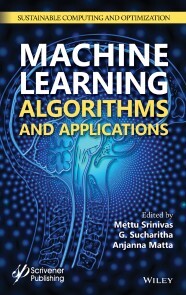
Machine Learning Algorithms and Applications
MACHINE LEARNING ALGORITHMS is for current and ambitious machine learning specialists looking to implement solutions to real-world machine learning problems. It talks entirely about the various applications of machine and deep learning techniques, with each chapter dealing with a novel approach of machine learning architecture for a specific application, and then compares the results with previous algorithms.The book discusses many methods based in different fields, including statistics, pattern recognition, neural networks, artificial intelligence, sentiment analysis, control, and data mining, in order to present a unified treatment of machine learning problems and solutions. All learning algorithms are explained so that the user can easily move from the equations in the book to a computer program.METTU SRINIVAS PhD from the Indian Institute of Technology Hyderabad, and is currently an assistant professor in the Department of Computer Science and Engineering, NIT Warangal, India.G. SUCHARITHA PhD from KL University, Vijayawada and is currently an assistant professor in the Department of Electronics and Communication Engineering at ICFAI Foundation for Higher Education Hyderabad. ANJANNA MATTA PhD from the Indian Institute of Technology Hyderabad and is currently an assistant professor in the Department of Mathematics at ICFAI Foundation for Higher Education Hyderabad. PRASENJIT CHATTERJEE PhD is an associate professor in the Mechanical Engineering Department at MCKV Institute of Engineering, India. Acknowledgments xvPreface xviiPART 1: MACHINE LEARNING FOR INDUSTRIAL APPLICATIONS 11 A LEARNING-BASED VISUALIZATION APPLICATION FOR AIR QUALITY EVALUATION DURING COVID-19 PANDEMIC IN OPEN DATA CENTRIC SERVICES 3Priyank Jain and Gagandeep Kaur1.1 Introduction 41.1.1 Open Government Data Initiative 41.1.2 Air Quality 41.1.3 Impact of Lockdown on Air Quality 51.2 Literature Survey 51.3 Implementation Details 61.3.1 Proposed Methodology 71.3.2 System Specifications 81.3.3 Algorithms 81.3.4 Control Flow 101.4 Results and Discussions 111.5 Conclusion 21References 212 AUTOMATIC COUNTING AND CLASSIFICATION OF SILKWORM EGGS USING DEEP LEARNING 23Shreedhar Rangappa, Ajay A. and G. S. Rajanna2.1 Introduction 232.2 Conventional Silkworm Egg Detection Approaches 242.3 Proposed Method 252.3.1 Model Architecture 26.3.2 Foreground-Background Segmentation 282.3.3 Egg Location Predictor 302.3.4 Predicting Egg Class 312.4 Dataset Generation 352.5 Results 352.6 Conclusion 37Acknowledgment 38References 383 A WIND SPEED PREDICTION SYSTEM USING DEEP NEURAL NETWORKS 41Jaseena K. U. and Binsu C. Kovoor3.1 Introduction 423.2 Methodology 453.2.1 Deep Neural Networks 453.2.2 The Proposed Method 473.2.2.1 Data Acquisition 473.2.2.2 Data Pre-Processing 483.2.2.3 Model Selection and Training 503.2.2.4 Performance Evaluation 513.2.2.5 Visualization 513.3 Results and Discussions 523.3.1 Selection of Parameters 523.3.2 Comparison of Models 533.4 Conclusion 57References 574 RES-SE-NET: BOOSTING PERFORMANCE OF RESNETS BY ENHANCING BRIDGE CONNECTIONS 61Varshaneya V., S. Balasubramanian and Darshan Gera4.1 Introduction 614.2 Related Work 624.3 Preliminaries 634.3.1 ResNet 634.3.2 Squeeze-and-Excitation Block 644.4 Proposed Model 664.4.1 Effect of Bridge Connections in ResNet 664.4.2 Res-SE-Net: Proposed Architecture 674.5 Experiments 684.5.1 Datasets 684.5.2 Experimental Setup 684.6 Results 694.7 Conclusion 73References 745 HITTING THE SUCCESS NOTES OF DEEP LEARNING 77Sakshi Aggarwal, Navjot Singh and K.K. Mishra5.1 Genesis 785.2 The Big Picture: Artificial Neural Network 795.3 Delineating the Cornerstones 805.3.1 Artificial Neural Network vs. Machine Learning 805.3.2 Machine Learning vs. Deep Learning 815.3.3 Artificial Neural Network vs. Deep Learning 815.4 Deep Learning Architectures 825.4.1 Unsupervised Pre-Trained Networks 825.4.2 Convolutional Neural Networks 835.4.3 Recurrent Neural Networks 845.4.4 Recursive Neural Network 855.5 Why is CNN Preferred for Computer Vision Applications? 855.5.1 Convolutional Layer 865.5.2 Nonlinear Layer 865.5.3 Pooling Layer 875.5.4 Fully Connected Layer 875.6 Unravel Deep Learning in Medical Diagnostic Systems 895.7 Challenges and Future Expectations 945.8 Conclusion 94References 956 TWO-STAGE CREDIT SCORING MODEL BASED ON EVOLUTIONARY FEATURE SELECTION AND ENSEMBLE NEURAL NETWORKS 99Diwakar Tripathi, Damodar Reddy Edla, Annushree Bablani and Venkatanareshbabu Kuppili6.1 Introduction 1006.1.1 Motivation 1006.2 Literature Survey 1016.3 Proposed Model for Credit Scoring 1036.3.1 Stage-1: Feature Selection 1046.3.2 Proposed Criteria Function 1056.3.3 Stage-2: Ensemble Classifier 1066.4 Results and Discussion 1076.4.1 Experimental Datasets and Performance Measures 1076.4.2 Classification Results With Feature Selection 1086.5 Conclusion 112References 1137 ENHANCED BLOCK-BASED FEATURE AGGLOMERATION CLUSTERING FOR VIDEO SUMMARIZATION 117Sreeja M. U. and Binsu C. Kovoor7.1 Introduction 1187.2 Related Works 1197.3 Feature Agglomeration Clustering 1227.4 Proposed Methodology 1227.4.1 Pre-Processing 1237.4.2 Modified Block Clustering Using Feature Agglomeration Technique 1257.4.3 Post-Processing and Summary Generation 1277.5 Results and Analysis 1297.5.1 Experimental Setup and Data Sets Used 1297.5.2 Evaluation Metrics 1307.5.3 Evaluation 1317.6 Conclusion 138References 138PART 2: MACHINE LEARNING FOR HEALTHCARE SYSTEMS 1418 CARDIAC ARRHYTHMIA DETECTION AND CLASSIFICATION FROM ECG SIGNALS USING XGBOOST CLASSIFIER 143Saroj Kumar Pandeyz, Rekh Ram Janghel and Vaibhav Gupta8.1 Introduction 1438.2 Materials and Methods 1458.2.1 MIT-BIH Arrhythmia Database 1468.2.2 Signal Pre-Processing 1478.2.3 Feature Extraction 1478.2.4 Classification 1488.2.4.1 XGBoost Classifier 1488.2.4.2 AdaBoost Classifier 1498.3 Results and Discussion 1498.4 Conclusion 155References 1569 GSA-BASED APPROACH FOR GENE SELECTION FROM MICROARRAY GENE EXPRESSION DATA 159Pintu Kumar Ram and Pratyay Kuila9.1 Introduction 1599.2 Related Works 1619.3 An Overview of Gravitational Search Algorithm 1629.4 Proposed Model 1639.4.1 Pre-Processing 1639.4.2 Proposed GSA-Based Feature Selection 1649.5 Simulation Results 1669.5.1 Biological Analysis 1689.6 Conclusion 172References 172PART 3: MACHINE LEARNING FOR SECURITY SYSTEMS 17510 ON FUSION OF NIR AND VW INFORMATION FOR CROSS-SPECTRAL IRIS MATCHING 177Ritesh Vyas, Tirupathiraju Kanumuri, Gyanendra Sheoran and Pawan Dubey10.1 Introduction 17710.1.1 Related Works 17810.2 Preliminary Details 17910.2.1 Fusion 18110.3 Experiments and Results 18210.3.1 Databases 18210.3.2 Experimental Results 18210.3.2.1 Same Spectral Matchings 18310.3.2.2 Cross Spectral Matchings 18410.3.3 Feature-Level Fusion 18610.3.4 Score-Level Fusion 18910.4 Conclusions 190References 19011 FAKE SOCIAL MEDIA PROFILE DETECTION 193Umita Deepak Joshi, Vanshika, Ajay Pratap Singh, Tushar Rajesh Pahuja, Smita Naval and Gaurav Singal11.1 Introduction 19411.2 Related Work 19511.3 Methodology 19711.3.1 Dataset 19711.3.2 Pre-Processing 19811.3.3 Artificial Neural Network 19911.3.4 Random Forest 20211.3.5 Extreme Gradient Boost 20211.3.6 Long Short-Term Memory 20411.4 Experimental Results 20411.5 Conclusion and Future Work 207Acknowledgment 207References 20712 EXTRACTION OF THE FEATURES OF FINGERPRINTS USING CONVENTIONAL METHODS AND CONVOLUTIONAL NEURAL NETWORKS 211E. M. V. Naga Karthik and Madan Gopal12.1 Introduction 21212.2 Related Work 21312.3 Methods and Materials 21512.3.1 Feature Extraction Using SURF 21512.3.2 Feature Extraction Using Conventional Methods 21612.3.2.1 Local Orientation Estimation 21612.3.2.2 Singular Region Detection 21812.3.3 Proposed CNN Architecture 21912.3.4 Dataset 22112.3.5 Computational Environment 22112.4 Results 22212.4.1 Feature Extraction and Visualization 22312.5 Conclusion 226Acknowledgements 226References 22613 FACIAL EXPRESSION RECOGNITION USING FUSION OF DEEP LEARNING AND MULTIPLE FEATURES 229M. Srinivas, Sanjeev Saurav, Akshay Nayak and Murukessan A. P.13.1 Introduction 23013.2 Related Work 23213.3 Proposed Method 23513.3.1 Convolutional Neural Network 23613.3.1.1 Convolution Layer 23613.3.1.2 Pooling Layer 23713.3.1.3 ReLU Layer 23813.3.1.4 Fully Connected Layer 23813.3.2 Histogram of Gradient 23913.3.3 Facial Landmark Detection 24013.3.4 Support Vector Machine 24113.3.5 Model Merging and Learning 24213.4 Experimental Results 24213.4.1 Datasets 24213.5 Conclusion 245Acknowledgement 245References 245PART 4: MACHINE LEARNING FOR CLASSIFICATION AND INFORMATION RETRIEVAL SYSTEMS 24714 ANIMNET: AN ANIMAL CLASSIFICATION NETWORK USING DEEP LEARNING 249Kanak Manjari, Kriti Singhal, Madhushi Verma and Gaurav Singal14.1 Introduction 24914.1.1 Feature Extraction 25014.1.2 Artificial Neural Network 25014.1.3 Transfer Learning 25114.2 Related Work 25214.3 Proposed Methodology 25414.3.1 Dataset Preparation 25414.3.2 Training the Model 25414.4 Results 25814.4.1 Using Pre-Trained Networks 25914.4.2 Using AnimNet 25914.4.3 Test Analysis 26014.5 Conclusion 263References 26415 A HYBRID APPROACH FOR FEATURE EXTRACTION FROM REVIEWS TO PERFORM SENTIMENT ANALYSIS 267Alok Kumar and Renu Jain15.1 Introduction 26815.2 Related Work 26915.3 The Proposed System 27115.3.1 Feedback Collector 27215.3.2 Feedback Pre-Processor 27215.3.3 Feature Selector 27215.3.4 Feature Validator 27415.3.4.1 Removal of Terms From Tentative List of Features on the Basis of Syntactic Knowledge 27415.3.4.2 Removal of Least Significant Terms on the Basis of Contextual Knowledge 27615.3.4.3 Removal of Less Significant Terms on the Basis of Association With Sentiment Words 27715.3.4.4 Removal of Terms Having Similar Sense 27815.3.4.5 Removal of Terms Having Same Root 27915.3.4.6 Identification of Multi-Term Features 27915.3.4.7 Identification of Less Frequent Feature 27915.3.5 Feature Concluder 28115.4 Result Analysis 28215.5 Conclusion 286References 28616 SPARK-ENHANCED DEEP NEURAL NETWORK FRAMEWORK FOR MEDICAL PHRASE EMBEDDING 289Amol P. Bhopale and Ashish Tiwari16.1 Introduction 29016.2 Related Work 29116.3 Proposed Approach 29216.3.1 Phrase Extraction 29216.3.2 Corpus Annotation 29416.3.3 Phrase Embedding 29416.4 Experimental Setup 29716.4.1 Dataset Preparation 29716.4.2 Parameter Setting 29716.5 Results 29816.5.1 Phrase Extraction 29816.5.2 Phrase Embedding 29816.6 Conclusion 303References 30317 IMAGE ANONYMIZATION USING DEEP CONVOLUTIONAL GENERATIVE ADVERSARIAL NETWORK 305Ashish Undirwade and Sujit Das17.1 Introduction 30617.2 Background Information 31017.2.1 Black Box and White Box Attacks 31017.2.2 Model Inversion Attack 31117.2.3 Differential Privacy 31217.2.3.1 Definition 31217.2.4 Generative Adversarial Network 31317.2.5 Earth-Mover (EM) Distance/Wasserstein Metric 31617.2.6 Wasserstein GAN 31717.2.7 Improved Wasserstein GAN (WGAN-GP) 31717.2.8 KL Divergence and JS Divergence 31817.2.9 DCGAN 31917.3 Image Anonymization to Prevent Model Inversion Attack 31917.3.1 Algorithm 32117.3.2 Training 32217.3.3 Noise Amplifier 32317.3.4 Dataset 32417.3.5 Model Architecture 32417.3.6 Working 32517.3.7 Privacy Gain 32517.4 Results and Analysis 32617.5 Conclusion 328References 329Index 331
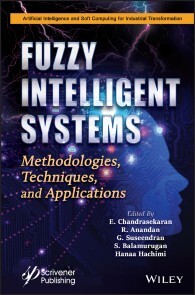
Fuzzy Intelligent Systems
FUZZY INTELLIGENT SYSTEMSA COMPREHENSIVE GUIDE TO EXPERT SYSTEMS AND FUZZY LOGIC THAT IS THE BACKBONE OF ARTIFICIAL INTELLIGENCE.The objective in writing the book is to foster advancements in the field and help disseminate results concerning recent applications and case studies in the areas of fuzzy logic, intelligent systems, and web-based applications among working professionals and those in education and research covering a broad cross section of technical disciplines. Fuzzy Intelligent Systems: Methodologies, Techniques, and Applications comprises state-of-the-art chapters detailing how expert systems are built and how the fuzzy logic resembling human reasoning, powers them. Engineers, both current and future, need systematic training in the analytic theory and rigorous design of fuzzy control systems to keep up with and advance the rapidly evolving field of applied control technologies. As a consequence, expert systems with fuzzy logic capabilities make for a more versatile and innovative handling of problems. This book showcases the combination of fuzzy logic and neural networks known as a neuro-fuzzy system, which results in a hybrid intelligent system by combining a human-like reasoning style of neural networks. AUDIENCEResearchers and students in computer science, Internet of Things, artificial intelligence, machine learning, big data analytics and information and communication technology-related fields. Students will gain a thorough understanding of fuzzy control systems theory by mastering its contents. E. CHANDRESEKARAN, PHD is a Professor of Mathematics at Veltech Rangarajan Dr. Sagunthala R&D Institute of Science and Technology, Chennai India.R. ANANDAN, PHD is a IBMS/390 Mainframe professional, a Chartered Engineer from the Institution of Engineers in India and received a fellowship from Bose Science Society, India. He is currently a Professor in the Department of Computer Science and Engineering, School of Engineering, Vels Institute of Science, Technology & Advanced Studies (VISTAS), Chennai. G. SUSEENDRAN, PHD was an assistant professor in the Department of Information Technology, School of Computing Sciences, Vels Institute of Science, Technology & Advanced Studies (VISTAS), Chennai and passed away as this book was being prepared. S. BALAMURUGAN, PHD is the Director of Research and Development, Intelligent Research Consultancy Services(iRCS), Coimbatore, Tamilnadu, India. He is also Director of the Albert Einstein Engineering and Research Labs (AEER Labs), as well as Vice-Chairman, Renewable Energy Society of India(RESI), India. HANAA HACHIMI, PHD is an associate professor at the Ibn Tofail University, in the National School of Applied Sciences ENSA in Kenitra, Morocco. She is President of the Moroccan Society of Engineering Sciences and Technology (MSEST). Preface xiii1 FUZZY FRACTALS IN CERVICAL CANCER 1T. Sudha and G. Jayalalitha1.1 Introduction 21.1.1 Fuzzy Mathematics 21.1.1.1 Fuzzy Set 21.1.1.2 Fuzzy Logic 21.1.1.3 Fuzzy Matrix 31.1.2 Fractals 31.1.2.1 Fractal Geometry 41.1.3 Fuzzy Fractals 41.1.4 Cervical Cancer 51.2 Methods 71.2.1 Fuzzy Method 71.2.2 Sausage Method 111.3 Maximum Modulus Theorem 151.4 Results 181.4.1 Fuzzy Method 191.4.2 Sausage Method 201.5 Conclusion 21References 232 EMOTION DETECTION IN IOT-BASED E-LEARNING USING CONVOLUTION NEURAL NETWORK 27Latha Parthiban and S. Selvakumara Samy2.1 Introduction 282.2 Related Works 302.3 Proposed Methodology 312.3.1 Students Emotion Recognition Towards the Class 312.3.2 Eye Gaze-Based Student Engagement Recognition 312.3.3 Facial Head Movement-Based Student Engagement Recognition 342.4 Experimental Results 352.4.1 Convolutional Layer 352.4.2 ReLU Layer 352.4.3 Pooling Layer 362.4.4 Fully Connected Layer 362.5 Conclusions 42References 423 FUZZY QUOTIENT-3 CORDIAL LABELING OF SOME TREES OF DIAMETER 5—PART III 45P. Sumathi and J. Suresh Kumar3.1 Introduction 463.2 Related Work 463.3 Definition 473.4 Notations 473.5 Main Results 483.6 Conclusion 71References 714 CLASSIFYING FUZZY MULTI-CRITERION DECISION MAKING AND EVOLUTIONARY ALGORITHM73Kirti Seth and Ashish Seth4.1 Introduction 744.1.1 Classical Optimization Techniques 744.1.2 The Bio-Inspired Techniques Centered on Optimization 754.1.2.1 Swarm Intelligence 774.1.2.2 The Optimization on Ant Colony 784.1.2.3 Particle Swarm Optimization (PSO) 824.1.2.4 Summary of PSO 834.2 Multiple Criteria That is Used for Decision Making (MCDM) 834.2.1 WSM Method 864.2.2 WPM Method 864.2.3 Analytic Hierarchy Process (AHP) 874.2.4 TOPSIS 894.2.5 VIKOR 904.3 Conclusion 91References 915 FUZZY TRI-MAGIC LABELING OF ISOMORPHIC CATERPILLAR GRAPH J62,3,4 OF DIAMETER 5 93P. Sumathi and C. Monigeetha5.1 Introduction 935.2 Main Result 955.3 Conclusion 154References 1546 FUZZY TRI-MAGIC LABELING OF ISOMORPHIC CATERPILLAR GRAPH J6 2,3,5 OF DIAMETER 5 155P. Sumathi and C. Monigeetha6.1 Introduction 1556.2 Main Result 1576.3 Conclusion 215References 2157 CEASELESS RULE-BASED LEARNING METHODOLOGY FOR GENETIC FUZZY RULE-BASED SYSTEMS 217B. Siva Kumar Reddy, R. Balakrishna and R. Anandan7.1 Introduction 2187.1.1 Integration of Evolutionary Algorithms and Fuzzy Logic 2197.1.2 Fuzzy Logic-Aided Evolutionary Algorithm 2207.1.3 Adaptive Genetic Algorithm That Adapt Manage Criteria 2207.1.4 Genetic Algorithm With Fuzzified Genetic Operators 2207.1.5 Genetic Fuzzy Systems 2207.1.6 Genetic Learning Process 2237.2 Existing Technology and its Review 2237.2.1 Techniques for Rule-Based Understanding with Genetic Algorithm 2237.2.2 Strategy A: GA Primarily Based Optimization for Computerized Built FLC 2237.2.3 Strategy B: GA-Based Optimization of Manually Created FLC 2247.2.4 Methods of Hybridization for GFS 2257.2.4.1 The Michigan Strategy—Classifier System 2267.2.4.2 The Pittsburgh Method 2297.3 Research Design 2337.3.1 The Ceaseless Rule Learning Approach (CRL) 2337.3.2 Multistage Processes of Ceaseless Rule Learning 2347.3.3 Other Approaches of Genetic Rule Learning 2367.4 Findings or Result Discussion so for in the Area of GFS Hybridization 2377.5 Conclusion 239References 2408 USING FUZZY TECHNIQUE MANAGEMENT OF CONFIGURATION AND STATUS OF VM FOR TASK DISTRIBUTION IN CLOUD SYSTEM 243Yogesh Shukla, Pankaj Kumar Mishra and Ramakant Bhardwaj8.1 Introduction 2448.2 Literature Review 2448.3 Logic System for Fuzzy 2468.4 Proposed Algorithm 2488.4.1 Architecture of System 2488.4.2 Terminology of Model 2508.4.3 Algorithm Proposed 2528.4.4 Explanations of Proposed Algorithm 2548.5 Results of Simulation 2578.5.1 Cloud System Numerical Model 2578.5.2 Evaluation Terms Definition 2588.5.3 Environment Configurations Simulation 2598.5.4 Outcomes of Simulation 2598.6 Conclusion 260References 2669 THEOREMS ON FUZZY SOFT METRIC SPACES 269Qazi Aftab Kabir, Ramakant Bhardwaj and Ritu Shrivastava9.1 Introduction 2699.2 Preliminaries 2709.3 FSMS 2719.4 Main Results 2739.5 Fuzzy Soft Contractive Type Mappings and Admissible Mappings 278References 28210 SYNCHRONIZATION OF TIME-DELAY CHAOTIC SYSTEM WITH UNCERTAINTIES IN TERMS OF TAKAGI–SUGENO FUZZY SYSTEM 285Sathish Kumar Kumaravel, Suresh Rasappan and Kala Raja Mohan10.1 Introduction 28510.2 Statement of the Problem and Notions 28610.3 Main Result 29110.4 Numerical Illustration 30210.5 Conclusion 312References 31211 TRAPEZOIDAL FUZZY NUMBERS (TRFN) AND ITS APPLICATION IN SOLVING ASSIGNMENT PROBLEM BY HUNGARIAN METHOD: A NEW APPROACH 315Rahul Kar, A.K. Shaw and J. Mishra11.1 Introduction 31611.2 Preliminary 31711.2.1 Definition 31711.2.2 Some Arithmetic Operations of Trapezoidal Fuzzy Number 31811.3 Theoretical Part 31911.3.1 Mathematical Formulation of an Assignment Problem 31911.3.2 Method for Solving an Assignment Problem 32011.3.2.1 Enumeration Method 32011.3.2.2 Regular Simplex Method 32111.3.2.3 Transportation Method 32111.3.2.4 Hungarian Method 32111.3.3 Computational Processor of Hungarian Method (For Minimization Problem) 32311.4 Application With Discussion 32511.5 Conclusion and Further Work 331References 33212 THE CONNECTEDNESS OF FUZZY GRAPH AND THE RESOLVING NUMBER OF FUZZY DIGRAPH 335Mary Jiny D. and R. Shanmugapriya12.1 Introduction 33612.2 Definitions 33612.3 An Algorithm to Find the Super Resolving Matrix 34112.3.1 An Application on Resolving Matrix 34412.3.2 An Algorithm to Find the Fuzzy Connectedness Matrix 34712.4 An Application of the Connectedness of the Modified Fuzzy Graph in Rescuing Human Life From Fire Accident 34912.4.1 Algorithm to Find the Safest and Shortest Path Between Two Landmarks 35212.5 Resolving Number Fuzzy Graph and Fuzzy Digraph 35612.5.1 An Algorithm to Find the Resolving Set of a Fuzzy Digraph 36012.6 Conclusion 362References 36213 A NOTE ON FUZZY EDGE MAGIC TOTAL LABELING GRAPHS 365R. Shanmugapriya and P.K. Hemalatha13.1 Introduction 36513.2 Preliminaries 36613.3 Theorem 36713.3.1 Example 36813.4 Theorem 37013.4.1 Example 37113.4.1.1 Lemma 37413.4.1.2 Lemma 37413.4.1.3 Lemma 37413.5 Theorem 37413.5.1 Example as Shown in Figure 13.5 Star Graph S(1,9) is FEMT Labeling 37413.6 Theorem 37613.7 Theorem 37713.7.1 Example 37813.8 Theorem 38013.9 Theorem 38113.10 Application of Fuzzy Edge Magic Total Labeling 38313.11 Conclusion 385References 38514 THE SYNCHRONIZATION OF IMPULSIVE TIME-DELAY CHAOTIC SYSTEMS WITH UNCERTAINTIES IN TERMS OF TAKAGI–SUGENO FUZZY SYSTEM 387Balaji Dharmalingam, Suresh Rasappan, V. Vijayalakshmi and G. Suseendran14.1 Introduction 38714.2 Problem Description and Preliminaries 38914.2.1 Impulsive Differential Equations 38914.3 The T–S Fuzzy Model 39114.4 Designing of Fuzzy Impulsive Controllers 39314.5 Main Result 39414.6 Numerical Example 40014.7 Conclusion 410References 41015 THEOREMS ON SOFT FUZZY METRIC SPACES BY USING CONTROL FUNCTION 413Sneha A. Khandait, Chitra Singh, Ramakant Bhardwaj and Amit Kumar Mishra15.1 Introduction 41315.2 Preliminaries and Definition 41415.3 Main Results 41515.4 Conclusion 429References 42916 ON SOFT Α(γ,β)-CONTINUOUS FUNCTIONS IN SOFT TOPOLOGICAL SPACES 431N. Kalaivani, E. Chandrasekaran and K. Fayaz Ur Rahman16.1 Introduction 43216.2 Preliminaries 43216.2.1 Outline 43216.2.2 Soft αγ-Open Set 43216.2.3 Soft αγTi Spaces 43416.2.4 Soft (αγ, βs)-Continuous Functions 43616.3 Soft α(γ,β)-Continuous Functions in Soft Topological Spaces 43816.3.1 Outline 43816.3.2 Soft α(γ,β)-Continuous Functions 43816.3.3 Soft α(γ,β)-Open Functions 44416.3.4 Soft α(γ,β)-Closed Functions 44716.3.5 Soft α(γ,β)-Homeomorphism 45016.3.6 Soft (αγ, βs)-Contra Continuous Functions 45016.3.7 Soft α(γ,β)-Contra Continuous Functions 45516.4 Conclusion 459References 459Index 461

Beginning Azure Cognitive Services
Get started with Azure Cognitive Services and its APIs that expose machine learning as a service. This book introduces the suite of Azure Cognitive Services and helps you take advantage of the proven machine learning algorithms that have been developed by experts and made available through Cognitive Services, easily integrating those algorithms into your own applications without having to develop the algorithms from scratch. The book also shows you how to use the algorithms provided by Cognitive Services to accelerate data analysis and development within your organization.The authors begin by introducing the tools and describing the steps needed to invoke libraries to analyze structured and unstructured text, speech, and pictures, and you will learn to create interactive chatbots using the Cognitive Services libraries. Each chapter contains the information you need to implement artificial intelligence (AI) via Azure Cognitive Services in your personal and professional projects.The book also covers ethical considerations that are becoming increasingly of concern when using AI to drive decision making. You will be introduced to tools such as FairLearn and InterpretML that can help you detect bias and understand the results your models are generating.WHAT YOU WILL LEARN* Invoke the Cognitive Services APIs from a variety of languages and apps* Understand common design architectures for AI solutions in Azure* Decrease discrimination and bias when creating an AI-driven solution* Execute the examples within the book and learn how to extend those examples* Implement best practices for leveraging the Vision, Speech, and Language parts of the suite* Test Cognitive Services APIs via the Azure portal and using the Postman API tool* Execute AI from low-code and no-code platforms like Logic Apps and Microsoft’s Power PlatformWHO THIS BOOK IS FORTechnical professionals who are interested in implementing artificial intelligence (AI) in pre-existing apps, expanding their value and skill sets, or learning more about AI for personal projects; for programmers working in languages such as C# and Python; and for those using low- and no-code platforms such as Microsoft Power PlatformALICIA MONIZ is a Microsoft AI MVP, #KafkaOnAzure Evangelista, and active supporter of women in technology. She authors the blog HybridDataLakes.com, focused on cloud data learning resources, and produces content for the YouTube channel, #KafkaOnAzure. She is also on the Leadership Board for the Global AI community and is an organizer for Global AI Bootcamp - Houston Edition, a Microsoft AI-sponsored event. Alicia is active in the Microsoft User Group community and enjoys speaking on AI, SQLServer, #KafkaOnAzure, and personal branding for women in technology topics.MATT GORDON is a Microsoft Data Platform MVP and has worked with SQL Server since 2000. He is the leader of the Lexington, KY Data Technology Group and a frequent domestic and international community speaker. He is an IDERA ACE alumnus and 2021 Friend of Redgate. His original data professional role was in database development, which quickly evolved into query tuning work that further evolved into being a DBA in the healthcare realm. He has supported several critical systems utilizing SQL Server and managed dozens of 24/7/365 SQL Server implementations. Following several years as a consultant, Matt is now the Director of Data and Infrastructure for rev.io, where he is implementing data governance, DevOps, and performance improvements enterprise-wide.IDA BERGUM is a Microsoft Data Platform MVP, and is currently working for Avanade Norway as a Solution Architect for the Data & AI Market Unit as well as leading Avanade's Community of Practice for Power BI globally. Ida has been advising on, architecting, and implementing modern data platform and BI solutions on Azure since she started at Avanade in 2015. She aims at advising and delivering great analytics experiences and data smart solutions for clients while sharing those experiences with the community. Her spare time is spent contributing to Data Platform User Group Norway among others, posting to her Twitter account, and cross-country skiing whenever she gets the opportunity.MIA CHANG works as a Solutions Architect specializing in machine learning for a tech company in Berlin, Germany. She cooperates with the customers on their development projects and delivers architecture leveraging services on the cloud. Her machine learning journey started with her studies in the field of applied mathematics, and computer science focused on algorithm research of strategic board games. During her seven-year professional journey, she has worked as a data scientist, and she has been proficient in the life cycle of ML projects. Apart from the work, Mia is passionate about open source projects and has been awarded the Microsoft AI MVP from 2017 to 2020. Her first book Microsoft AI MVP Book was published in 2019. She also dedicates her time to organizing communities and speaks at meetups and conferences. In addition to tech-related hobbies, she loves gardening, hiking, and traveling.GINGER GRANT is a consultant who shares what she has learned while working with data technology clients by providing training to people around the world. As a Microsoft MVP in Data Platform and a Microsoft Certified Trainer, she is proficient in creating solutions using Power BI and the Microsoft Azure Data Stack components, including Databricks, Data Factory, Data Lakes, Data Analytics, Synapse, and Machine Learning. Ginger co-authored Exam Ref 70-774 Perform Cloud Data Science with Azure Machine Learning and has a number of current exam certifications. When not working, she maintains her blog and spends time on twitter.1. Introducing Cognitive Services2. Prerequisites and Tools3. Vision4. Language in Cognitive Services5. Speech Services6. Power Platform & Cognitive Services7. Chatbots8. Ethics in AI

In-/Near-Memory Computing
THIS BOOK PROVIDES A STRUCTURED INTRODUCTION OF THE KEY CONCEPTS AND TECHNIQUES THAT ENABLE IN-/NEAR-MEMORY COMPUTING. For decades, processing-in-memory or near-memory computing has been attracting growing interest due to its potential to break the memory wall. Near-memory computing moves compute logic near the memory, and thereby reduces data movement. Recent work has also shown that certain memories can morph themselves into compute units by exploiting the physical properties of the memory cells, enabling in-situ computing in the memory array. While in- and near-memory computing can circumvent overheads related to data movement, it comes at the cost of restricted flexibility of data representation and computation, design challenges of compute capable memories, and difficulty in system and software integration. Therefore, wide deployment of in-/near-memory computing cannot be accomplished without techniques that enable efficient mapping of data-intensive applications to such devices, without sacrificing accuracy or increasing hardware costs excessively. This book describes various memory substrates amenable to in- and near-memory computing, architectural approaches for designing efficient and reliable computing devices, and opportunities for in-/near-memory acceleration of different classes of applications.* Preface* Acknowledgments* Introduction* Technology Basics and Taxonomy* Computing with DRAMs* Computing with SRAMs* Computing with Non-Volatile Memories* Domain-Specific Accelerators* Programming Models* Closing Thoughts* Bibliography* Authors' Biographies

Microsoft Office für Senioren - Word, Excel und PowerPoint
Die leicht nachvollziehbare Anleitung für Einsteiger ohne Vorkenntnisse:- Grundlagenwissen mit praktischen Beispielen, Übungen und Tipps- Für die Versionen Microsoft 365 sowie Office 2019, 2016 & 2013Ob im Alltag, im Beruf oder für Ihr Hobby: Entdecken Sie die Möglichkeiten von Word, Excel und PowerPoint! Dieses Buch führt Einsteiger Schritt für Schritt in die Programme von Microsoft Office ein – Vorkenntnisse sind dabei nicht erforderlich. Lernen Sie, wie Sie mit dem Textverarbeitungsprogramm Word u. a. Briefe schreiben und Ihre Texte um Bilder und Tabellen ergänzen. Excel ist der Spezialist für Tabellen: Erstellen Sie im Handumdrehen Adresslisten oder gestalten Sie Ihre persönliche Finanzübersicht. Teil 3 zeigt Ihnen, wie Sie mit PowerPoint und seinen grafischen Fähigkeiten z. B. Fotoalben und individuelle Geburtstagsgrüße als effektvolle Bildschirmpräsentation kreieren, in denen auch Animationen nicht fehlen.Inge Baumeister kennt durch ihre langjährige Erfahrung als Dozentin die typischen Fragen von Anfängern und weiß, wie komplexe Sachverhalte einfach zu erklären sind. Wie in einem Kurs leitet sie ihre Leser durch die unzähligen Möglichkeiten von Word, Excel und PowerPoint und gibt Tipps, die auch Ihre Arbeit erleichtern.Aus dem InhaltWord:- Dokumente erstellen, speichern und drucken- Texte eingeben und formatieren- Rechtschreib- und Grammatikprüfung nutzen- Aufzählungen und Nummerierungen hinzufügen- Bilder und Tabellen einfügen- Das Seitenlayout einrichtenExcel:- Aufbau von Excel-Arbeitsmappen und Tabellen- Text, Zahlen und Datum in Tabellen eingeben- Inhalte übersichtlich gestalten und drucken- Summen und einfache Formeln berechnen- Adressen- und Geburtstagslisten gestalten- Ihre persönliche Finanzübersicht erstellenPowerPoint:- Folien mit Text und Bildelementen gestalten- Vorlagen nutzen und anpassen- Ein Fotoalbum als Präsentation erstellen- Folienübergänge einsetzen- Elemente mit Animationseffekten versehen- Die fertige Präsentation vorführen – u. v. m.!

Monetarisierung von technischen Daten
Die Monetarisierung von Daten ist per se ein sehr junges Thema, zu dem es nur sehr vereinzelt Fallbeispiele gibt. Es fehlt an einer Strategie bzw. einem Konzept, das Führungskräften den Weg in die Monetarisierung von Daten zeigt, insbesondere jenen, die die Digitale Transformation bzw. Industrie 4.0 für sich entdeckt haben oder davon bedroht sind. Weil Maschinendaten meist unstrukturiert und ohne Domänenwissen/Metadaten nicht verwertbar sind, birgt die Monetarisierung von Maschinendaten ein noch nicht abschließend bewertbares Potenzial. Um dieses Potenzial greifbar zu machen, werden in diesem Werk neben Beiträgen aus der Wissenschaft auch Praxisbeispiele aus der Industrie beschrieben. Anhand von unterschiedlichen Beispielen aus diversen Branchen kann der Leser bereits heute Teil einer zukünftigen Datenökonomie werden. Mehrwerte und Nutzen werden konkret beschrieben.
Foundations of Data Intensive Applications
PEEK “UNDER THE HOOD” OF BIG DATA ANALYTICSThe world of big data analytics grows ever more complex. And while many people can work superficially with specific frameworks, far fewer understand the fundamental principles of large-scale, distributed data processing systems and how they operate. In Foundations of Data Intensive Applications: Large Scale Data Analytics under the Hood, renowned big-data experts and computer scientists Drs. Supun Kamburugamuve and Saliya Ekanayake deliver a practical guide to applying the principles of big data to software development for optimal performance. The authors discuss foundational components of large-scale data systems and walk readers through the major software design decisions that define performance, application type, and usability. You???ll learn how to recognize problems in your applications resulting in performance and distributed operation issues, diagnose them, and effectively eliminate them by relying on the bedrock big data principles explained within. Moving beyond individual frameworks and APIs for data processing, this book unlocks the theoretical ideas that operate under the hood of every big data processing system. Ideal for data scientists, data architects, dev-ops engineers, and developers, Foundations of Data Intensive Applications: Large Scale Data Analytics under the Hood shows readers how to:* IDENTIFY THE FOUNDATIONS OF LARGE-SCALE, DISTRIBUTED DATA PROCESSING SYSTEMS##SINGLE_LINE##* MAKE MAJOR SOFTWARE DESIGN DECISIONS THAT OPTIMIZE PERFORMANCE##SINGLE_LINE##* DIAGNOSE PERFORMANCE PROBLEMS AND DISTRIBUTED OPERATION ISSUES##SINGLE_LINE##* UNDERSTAND STATE-OF-THE-ART RESEARCH IN BIG DATA##SINGLE_LINE##* EXPLAIN AND USE THE MAJOR BIG DATA FRAMEWORKS AND UNDERSTAND WHAT UNDERPINS THEM##SINGLE_LINE##* USE BIG DATA ANALYTICS IN THE REAL WORLD TO SOLVE PRACTICAL PROBLEMS##SINGLE_LINE##SUPUN KAMBURUGAMUVE, PHD, is a computer scientist researching and designing large scale data analytics tools. He received his doctorate in Computer Science from Indiana University, Bloomington and architected the data processing systems Twister2 and Cylon.SALIYA EKANAYAKE, PHD, is a Senior Software Engineer at Microsoft working in the intersection of scaling deep learning systems and parallel computing. He is also a research affiliate at Berkeley Lab. He received his doctorate in Computer Science from Indiana University, Bloomington. Introduction xxviiCHAPTER 1 DATA INTENSIVE APPLICATIONS 1Anatomy of a Data-Intensive Application 1A Histogram Example 2Program 2Process Management 3Communication 4Execution 5Data Structures 6Putting It Together 6Application 6Resource Management 6Messaging 7Data Structures 7Tasks and Execution 8Fault Tolerance 8Remote Execution 8Parallel Applications 9Serial Applications 9Lloyd’s K-Means Algorithm 9Parallelizing Algorithms 11Decomposition 11Task Assignment 12Orchestration 12Mapping 13K-MeansAlgorithm 13Parallel and Distributed Computing 15Memory Abstractions 16Shared Memory 16Distributed Memory 18Hybrid (Shared + Distributed) Memory 20Partitioned Global Address Space Memory 21Application Classes and Frameworks 22Parallel Interaction Patterns 22Pleasingly Parallel 23Dataflow 23Iterative 23Irregular 23Data Abstractions 24Data-IntensiveFrameworks 24Components 24Workflows 25An Example 25What Makes It Difficult? 26Developing Applications 27Concurrency 27Data Partitioning 28Debugging 28Diverse Environments 28Computer Networks 29Synchronization 29Thread Synchronization 29Data Synchronization 30Ordering of Events 31Faults 31Consensus 31Summary 32References 32CHAPTER 2 DATA AND STORAGE 35Storage Systems 35Storage for Distributed Systems 36Direct-Attached Storage 37Storage Area Network 37Network-Attached Storage 38DAS or SAN or NAS? 38Storage Abstractions 39Block Storage 39File Systems 40Object Storage 41Data Formats 41XML 42JSON 43CSV 44Apache Parquet 45Apache Avro 47Avro Data Definitions (Schema) 48Code Generation 49Without Code Generation 49Avro File 49Schema Evolution 49Protocol Buffers, Flat Buffers, and Thrift 50Data Replication 51Synchronous and Asynchronous Replication 52Single-Leader and Multileader Replication 52Data Locality 53Disadvantages of Replication 54Data Partitioning 54Vertical Partitioning 55Horizontal Partitioning (Sharding) 55Hybrid Partitioning 56Considerations for Partitioning 57NoSQL Databases 58Data Models 58Key-Value Databases 58Document Databases 59Wide Column Databases 59Graph Databases 59CAP Theorem 60Message Queuing 61Message Processing Guarantees 63Durability of Messages 64Acknowledgments 64Storage First Brokers and Transient Brokers 65Summary 66References 66CHAPTER 3 COMPUTING RESOURCES 69A Demonstration 71Computer Clusters 72Anatomy of a Computer Cluster 73Data Analytics in Clusters 74Dedicated Clusters 76Classic Parallel Systems 76Big Data Systems 77Shared Clusters 79OpenMPI on a Slurm Cluster 79Spark on a Yarn Cluster 80Distributed Application Life Cycle 80Life Cycle Steps 80Step 1: Preparation of the Job Package 81Step 2: Resource Acquisition 81Step 3: Distributing the Application (Job) Artifacts 81Step 4: Bootstrapping the Distributed Environment 82Step 5: Monitoring 82Step 6: Termination 83Computing Resources 83Data Centers 83Physical Machines 85Network 85Virtual Machines 87Containers 87Processor, Random Access Memory, and Cache 88Cache 89Multiple Processors in a Computer 90Nonuniform Memory Access 90Uniform Memory Access 91Hard Disk 92GPUs 92Mapping Resources to Applications 92Cluster Resource Managers 93Kubernetes 94Kubernetes Architecture 94Kubernetes Application Concepts 96Data-Intensive Applications on Kubernetes 96Slurm 98Yarn 99Job Scheduling 99Scheduling Policy 101Objective Functions 101Throughput and Latency 101Priorities 102Lowering Distance Among the Processes 102Data Locality 102Completion Deadline 102Algorithms 103First in First Out 103Gang Scheduling 103List Scheduling 103Backfill Scheduling 104Summary 104References 104CHAPTER 4 DATA STRUCTURES 107Virtual Memory 108Paging and TLB 109Cache 111The Need for Data Structures 112Cache and Memory Layout 112Memory Fragmentation 114Data Transfer 115Data Transfer Between Frameworks 115Cross-Language Data Transfer 115Object and Text Data 116Serialization 116Vectors and Matrices 1171D Vectors 118Matrices 118Row-Major and Column-Major Formats 119N-Dimensional Arrays/Tensors 122NumPy 123Memory Representation 125K-means with NumPy 126Sparse Matrices 127Table 128Table Formats 129Column Data Format 129Row Data Format 130Apache Arrow 130Arrow Data Format 131Primitive Types 131Variable-Length Data 132Arrow Serialization 133Arrow Example 133Pandas DataFrame 134Column vs. Row Tables 136Summary 136References 136CHAPTER 5 PROGRAMMING MODELS 139Introduction 139Parallel Programming Models 140Parallel Process Interaction 140Problem Decomposition 140Data Structures 140Data Structures and Operations 141Data Types 141Local Operations 143Distributed Operations 143Array 144Tensor 145Indexing 145Slicing 146Broadcasting 146Table 146Graph Data 148Message Passing Model 150Model 151Message Passing Frameworks 151Message Passing Interface 151Bulk Synchronous Parallel 153K-Means 154Distributed Data Model 157Eager Model 157Dataflow Model 158Data Frames, Datasets, and Tables 159Input and Output 160Task Graphs (Dataflow Graphs) 160Model 161User Program to Task Graph 161Tasks and Functions 162Source Task 162Compute Task 163Implicit vs. Explicit Parallel Models 163Remote Execution 163Components 164Batch Dataflow 165Data Abstractions 165Table Abstraction 165Matrix/Tensors 165Functions 166Source 166Compute 167Sink 168An Example 168Caching State 169Evaluation Strategy 170Lazy Evaluation 171Eager Evaluation 171Iterative Computations 172DOALL Parallel 172DOACROSS Parallel 172Pipeline Parallel 173Task Graph Models for Iterative Computations 173K-Means Algorithm 174Streaming Dataflow 176Data Abstractions 177Streams 177Distributed Operations 178Streaming Functions 178Sources 178Compute 179Sink 179An Example 179Windowing 180Windowing Strategies 181Operations on Windows 182Handling Late Events 182SQL 182Queries 183Summary 184References 184CHAPTER 6 MESSAGING 187Network Services 188TCP/IP 188RDMA 189Messaging for Data Analytics 189Anatomy of a Message 190Data Packing 190Protocol 191Message Types 192Control Messages 192External Data Sources 192Data Transfer Messages 192Distributed Operations 194How Are They Used? 194Task Graph 194Parallel Processes 195Anatomy of a Distributed Operation 198Data Abstractions 198Distributed Operation API 198Streaming and Batch Operations 199Streaming Operations 199Batch Operations 199Distributed Operations on Arrays 200Broadcast 200Reduce and AllReduce 201Gather and AllGather 202Scatter 203AllToAll 204Optimized Operations 204Broadcast 205Reduce 206AllReduce 206Gather and AllGather Collective Algorithms 208Scatter and AllToAll Collective Algorithms 208Distributed Operations on Tables 209Shuffle 209Partitioning Data 211Handling Large Data 212Fetch-Based Algorithm (Asynchronous Algorithm) 213Distributed Synchronization Algorithm 214GroupBy 214Aggregate 215Join 216Join Algorithms 219Distributed Joins 221Performance of Joins 223More Operations 223Advanced Topics 224Data Packing 224Memory Considerations 224Message Coalescing 224Compression 225Stragglers 225Nonblocking vs. Blocking Operations 225Blocking Operations 226Nonblocking Operations 226Summary 227References 227CHAPTER 7 PARALLEL TASKS 229CPUs 229Cache 229False Sharing 230Vectorization 231Threads and Processes 234Concurrency and Parallelism 234Context Switches and Scheduling 234Mutual Exclusion 235User-Level Threads 236Process Affinity 236NUMA-Aware Programming 237Accelerators 237Task Execution 238Scheduling 240Static Scheduling 240Dynamic Scheduling 240Loosely Synchronous and Asynchronous Execution 241Loosely Synchronous Parallel System 242Asynchronous Parallel System (Fully Distributed) 243Actor Model 244Actor 244Asynchronous Messages 244Actor Frameworks 245Execution Models 245Process Model 246Thread Model 246Remote Execution 246Tasks for Data Analytics 248SPMD and MPMD Execution 248Batch Tasks 249Data Partitions 249Operations 251Task Graph Scheduling 253Threads, CPU Cores, and Partitions 254Data Locality 255Execution 257Streaming Execution 257State 257Immutable Data 258State in Driver 258Distributed State 259Streaming Tasks 259Streams and Data Partitioning 260Partitions 260Operations 261Scheduling 262Uniform Resources 263Resource-Aware Scheduling 264Execution 264Dynamic Scaling 264Back Pressure (Flow Control) 265Rate-Based Flow Control 266Credit-Based Flow Control 266State 267Summary 268References 268CHAPTER 8 CASE STUDIES 271Apache Hadoop 271Programming Model 272Architecture 274Cluster Resource Management 275Apache Spark 275Programming Model 275RDD API 276SQL, DataFrames, and DataSets 277Architecture 278Resource Managers 278Task Schedulers 279Executors 279Communication Operations 280Apache Spark Streaming 280Apache Storm 282Programming Model 282Architecture 284Cluster Resource Managers 285Communication Operations 286Kafka Streams 286Programming Model 286Architecture 287PyTorch 288Programming Model 288Execution 292Cylon 295Programming Model 296Architecture 296Execution 297Communication Operations 298Rapids cuDF 298Programming Model 298Architecture 299Summary 300References 300CHAPTER 9 FAULT TOLERANCE 303Dependable Systems and Failures 303Fault Tolerance is Not Free 304Dependable Systems 305Failures 306Process Failures 306Network Failures 307Node Failures 307Byzantine Faults 307Failure Models 308Failure Detection 308Recovering from Faults 309Recovery Methods 310Stateless Programs 310Batch Systems 311Streaming Systems 311Processing Guarantees 311Role of Cluster Resource Managers 312Checkpointing 313State 313Consistent Global State 313Uncoordinated Checkpointing 314Coordinated Checkpointing 315Chandy-Lamport Algorithm 315Batch Systems 316When to Checkpoint? 317Snapshot Data 318Streaming Systems 319Case Study: Apache Storm 319Message Tracking 320Failure Recovery 321Case Study: Apache Flink 321Checkpointing 322Failure Recovery 324Batch Systems 324Iterative Programs 324Case Study: Apache Spark 325RDD Recomputing 326Checkpointing 326Recovery from Failures 327Summary 327References 327CHAPTER 10 PERFORMANCE AND PRODUCTIVITY 329Performance Metrics 329System Performance Metrics 330Parallel Performance Metrics 330Speedup 330Strong Scaling 331Weak Scaling 332Parallel Efficiency 332Amdahl’s Law 333Gustafson’s Law 334Throughput 334Latency 335Benchmarks 336LINPACK Benchmark 336NAS Parallel Benchmark 336BigDataBench 336TPC Benchmarks 337HiBench 337Performance Factors 337Memory 337Execution 338Distributed Operators 338Disk I/O 339Garbage Collection 339Finding Issues 342Serial Programs 342Profiling 342Scaling 343Strong Scaling 343Weak Scaling 344Debugging Distributed Applications 344Programming Languages 345C/C++ 346Java 346Memory Management 347Data Structures 348Interfacing with Python 348Python 350C/C++ Code integration 350Productivity 351Choice of Frameworks 351Operating Environment 353CPUs and GPUs 353Public Clouds 355Future of Data-Intensive Applications 358Summary 358References 359Index 361