

Allgemein

Practical Rust Web Projects
Go beyond the basics of Rust and build web and serverless cloud applications. The applications explained in this practical book include web sites, RESTful APIs, a real-time web chat application, and frontend application with WebAssembly. Each chapter is organized in the following format: what this kind of application looks like; requirements for the example program; an introduction to the Rust libraries used; step-by-step implementation of the example program, including common pitfalls and best practices; and a brief comparison of libraries and frameworks in the same domain.This book will open your eyes to the world of practical web applications of Rust. After reading the book, you will be able to apply your Rust knowledge to build your own web projects.WHAT YOU WILL LEARN* Build dynamic websites with databases* Build RESTful APIs* Write a WebSocket server that can power a real-time chat app in Rust* Discover the benefits of serverless computing using Amazon Web Service's Rust support* Compile Rust to WebAssembly for high-performance frontend applicationsWHO THIS BOOK IS FORA reader with basic Rust knowledge, wishing to learn more about how to apply Rust in a real-world scenario. A developer who is evaluating the possibility to build their next project in Rust.Shing Lyu is a software engineer who is passionate about open source software. He's been working on Rust professionally at Mozilla, on the Firefox (Gecko) and Servo browser engine project. Currently, he is working at DAZN, a sports streaming platform as a backend developer, with a focus on AWS and serverless technology. Shing has worked for many world famous brands like Mozilla, Booking, and Intel. And, he is also active in the open source community. Being one of the founders of the Taiwan Rust community, he loves to share his enthusiasm for Rust with people.Chapter 1, IntroductionThis chapter gives a short introduction to why Rust is a solid tool for building all kinds of application, and a brief overview of the format and organization of the book.● Introduction● Why Rust?● Who should read this book?● Chapters overviewChapter 2, Developing websitesThis chapter will cover how to use popular web frameworks to build static and dynamic websites. We'll also touch how to build RESTful API and common requirements in web backend programming: database, authentication and authorization● What are we going to build? (A web version of the cat breed dictionary, first a static site and then server-side rendering )● Serving a static website● Generate dynamic content with templates● Fetching data from databases● Authentication and authorization● SummaryChapter 3, REST APIs● What are we going to build? (A web version of the cat breed dictionary, with a single-page app + REST API)● Defining the API with Open API specification● Building a static frontend with AJAX calls● Building a RESTful API● Serialize/Deserialize JSON● SummaryChapter 4, Chatting in realtime with WebSocketThis chapter will discuss how to build a WebSocket server that can power a real-time chat application in Rust● What are we going to build? (A chat app for cats in people can send all kinds of cat noises)● What is WebSocket● Enabling two way communication● Implementing the chat application● SummaryChapter 5, Going serverlessThis chapter will demonstrate the benefit of serverless computing using AWS's experimental Rust support.● What is serverless?● What are we going to build? (Serverless version of Chapter 4)● Pros and cons of serverless● Setting up an AWS account● Building a lambda function with Rust● Exposing the API Gateway● Cleaning it up● SummaryChapter 6, High performance web frontend using WebAssemblyThis chapter will talk about how to compile Rust to WebAssembly and make it work together with JavaScript in the web frontend● What is WebAssembly? (We'll implement the bottleneck of Book 1 Chapter 4 in WebAssembly to speed it up)● What are we going to build?● How to compile Rust to WebAssembly?● Exposing Rust function to JavaScript● Passing native data type between Rust and JavaScript● Manipulating DOM from Rust● SummaryChapter 7, Advanced topicsThis chapter will discuss other more advanced use of Rust. Each section will introduce one application, existing projects for that kind of application and their status. But we'll not go into the detail as the previous chapters.● Web scraping/Web crawling● Browser engine - Servo● Conclusion

MySQL Concurrency
Know how locks work in MySQL and how they relate to transactions. This book explains the major role that locks play in database systems, showing how locks are essential in allowing high-concurrency workloads. You will learn about lock access levels and lock granularities from the user level as well as table locks to record and gap locks. Most importantly, the book covers troubleshooting techniques when locking becomes a pain point.Several of the lock types in MySQL have a duration of a transaction. For this reason, it is important to understand how transactions work. This book covers the basics of transactions as well as transaction isolation levels and how they affect locking. The book is meant to be your go-to resource for solving locking contention and similar problems in high-performance MySQL database applications.Detecting locking issues when they occur is the first key to resolving such issues. MySQL Concurrency provides techniques for detecting locking issues such as contention. The book shows how to analyze locks that are causing contention to see why those locks are in place. A collection of six comprehensive case studies combine locking and transactional theory with realistic lock conflicts. The case studies walk you through the symptoms to look for in order to identify which issue you are facing, the cause of the conflict, its analysis, solution, and how to prevent the issue in the future.WHAT YOU WILL LEARN* Understand which lock types exist in MySQL and how they are used* Choose the best transaction isolation level for a given transaction* Detect and analyze lock contention when it occurs* Reduce locking issues in your applications* Resolve deadlocks between transactions* Resolve InnoDB record-level locking issues* Resolve issues from metadata and schema locksWHO THIS BOOK IS FORDatabase administrators and SQL developers who are familiar with MySQL and want to gain a better understanding of locking and transactions as well as how to work with them. While some experience with MySQL is required, no prior knowledge of locks and transactions is needed.JESPER WISBORG KROGH has worked with MySQL databases since 2006 both as a SQL developer and a database administrator, and for more than eight years as part of the Oracle MySQL Support team. He currently works as a database reliability engineer for Okta. He has spoken at MySQL Connect and Oracle OpenWorld on several occasions. In addition to his books, Jesper regularly blogs on MySQL topics and has authored approximately 800 documents in the Oracle Knowledge Base. He has contributed to the sys schema and four Oracle Certified Professional (OCP) exams for MySQL 5.6–8. Jesper holds a PhD in computational chemistry, lives in Sydney, Australia, and enjoys spending time outdoors walking, traveling, and reading. His areas of expertise include MySQL Cluster, MySQL Enterprise Backup (MEB), performance tuning, and the performance and sys schemas. 1. Introduction2. Monitoring Locks and Mutexes3. Monitoring InnoDB Transactions4. Transactions in the Performance Schema5. Lock Access Levels6. High-Level Lock Types7. InnoDB Locks8. Working with Lock Conflicts9. Reducing Locking Issues10. Indexes and Foreign Keys11. Transactions12. Transaction Isolation Levels13. Case Study: Flush Locks14. Case Study: Metadata and Schema Locks15. Case Study: Record-Level Locks16. Case Study: Deadlocks17. Case Study: Foreign Keys18. Case Study: SemaphoresAppendix A. ReferencesAppendix B. MySQL Shell Module

High Performance SQL Server
Design and configure SQL Server instances and databases in support of high-throughput, mission-critical applications providing consistent response times in the face of variations in numbers of users and query volumes. In this new edition, with over 100 pages of additional content, every original chapter has been updated for SQL Server 2019, and the book also includes two new chapters covering SQL Server on Linux and Intelligent Query Processing.This book shows you how to configure SQL Server and design your databases to support a given instance and workload. You will learn advanced configuration options, in-memory technologies, storage and disk configuration, and more, all aimed toward enabling your desired application performance and throughput.Configuration doesn’t stop with implementation. Workloads change over time, and other impediments can arise to thwart desired performance. HIGH PERFORMANCE SQL SERVER covers monitoring and troubleshooting to aid you in detecting and fixing production performance problems and minimizing application outages. You will learn about a variety of tools, ranging from the traditional wait analysis methodology to the query store or indexing, and you will learn how improving performance is an iterative process.This book is an excellent complement to query performance tuning books and provides the other half of what you need to know by focusing on configuring the instances on which mission-critical queries are executed.WHAT YOU WILL LEARN* Understand SQL Server's database engine and how it processes queries* Configure instances in support of high-throughput applications* Provide consistent response times to varying user numbers and query volumes* Design databases for high-throughput applications with focus on performance* Record performance baselines and monitor SQL Server instances against them* Troubleshot and fix performance problemsWHO THIS BOOK IS FORSQL Server database administrators, developers, and data architects. The book is also of use to system administrators who are managing and are responsible for the physical servers on which SQL Server instances are run.BENJAMIN NEVAREZ is a database professional based in Los Angeles, California who specializes in SQL Server query tuning and optimization. He is the author of four books: SQL Server 2017 on Linux, High Performance SQL Server, SQL Server 2014 Query Tuning & Optimization, and Inside the SQL Server Query Optimizer, and he has co-authored other books, including SQL Server 2012 Internals. Benjamin has been a speaker at many SQL Server conferences and events around the world, including the PASS Summit, SQL Server Connections and SQLBits. His blog can be found at benjaminnevarez.com and he can be reached on twitter at @BenjaminNevarez and on Facebook.PART I. SQL SERVER INTERNALS1. How SQL Server Works2. SQL Server on LinuxPART II. DESIGN AND CONFIGURATION3. SQL Server Configuration4. tempdb Troubleshooting and ConfigurationPART III. MONITORING5. Analyzing Wait Statistics6. The Query StorePART IV. PERFORMANCE TUNING AND TROUBLESHOOTING7. SQL Server In-Memory Technologies8. Performance Troubleshooting9. Indexing10. Intelligent Query Processing11. SQL Server Storage

The Alignment Problem
'Vital reading. This is the book on artificial intelligence we need right now.' Mike Krieger, cofounder of InstagramArtificial intelligence is rapidly dominating every aspect of our modern lives influencing the news we consume, whether we get a mortgage, and even which friends wish us happy birthday. But as algorithms make ever more decisions on our behalf, how do we ensure they do what we want? And fairly?This conundrum - dubbed 'The Alignment Problem' by experts - is the subject of this timely and important book. From the AI program which cheats at computer games to the sexist algorithm behind Google Translate, bestselling author Brian Christian explains how, as AI develops, we rapidly approach a collision between artificial intelligence and ethics. If we stand by, we face a future with unregulated algorithms that propagate our biases - and worse - violate our most sacred values. Urgent and fascinating, this is an accessible primer to the most important issue facing AI researchers today.Brian Christian is the author of the acclaimed bestsellersThe Most Human Human andAlgorithms to Live By, which have been translated into nineteen languages. A visiting scholar at the University of California, Berkeley, he lives in San Francisco.
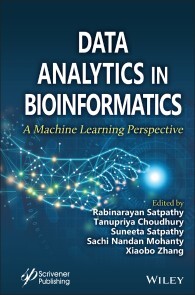
Data Analytics in Bioinformatics
Machine learning techniques are increasingly being used to address problems in computational biology and bioinformatics. Novel machine learning computational techniques to analyze high throughput data in the form of sequences, gene and protein expressions, pathways, and images are becoming vital for understanding diseases and future drug discovery. Machine learning techniques such as Markov models, support vector machines, neural networks, and graphical models have been successful in analyzing life science data because of their capabilities in handling randomness and uncertainty of data noise and in generalization. Machine Learning in Bioinformatics compiles recent approaches in machine learning methods and their applications in addressing contemporary problems in bioinformatics approximating classification and prediction of disease, feature selection, dimensionality reduction, gene selection and classification of microarray data and many more. RABINARAYAN SATPATHY graduated from the National Institute of Technology – Rourkela. He has received 2 PhDs, one in Computational Mathematics from Utkal University and other in Computer Science Engineering from Fakir Mohan University, as well as a DSc in Computational Fluid Dynamics. TANUPRIYA CHOUDHURY earned his PhD in 2016. He has filed 14 patents and received 16 copyrights from MHRD for his own software. He has authored more than 85 research papers. He is also Technical Adviser of Deetya Soft Pvt. Ltd. Noida, IVRGURU Mydigital360, etc. SUNEETA SATPATHY, received her PhD from Utkal University, Bhubaneswar, Odisha, in 2015 with Directorate of Forensic Sciences, Her research interests include computer forensics, cyber security, data fusion, data mining, big data analysis, and decision mining. She has edited several books. SACHI NANDAN MOHANTY, received his PhD from IIT Kharagpur in 2015. His research areas include data mining, big data analysis, cognitive science, fuzzy decision making, brain-computer interface, and computational intelligence. He has authored 3 books as well as edited four, of which several are with the Wiley-Scrivener imprint. XIAOBO ZHANG received his Master of Computer Science, Doctor of Engineering (Control Theory and Control Engineering) and works in the Department of Automation, Guangdong University of Technology, China. He has published more than 30 papers in academic journals as well as edited three books. He has applied for more than 40 invention patents and obtained 6 software copyrights.

Patterns in the Machine
Discover how to apply software engineering patterns to develop more robust firmware faster than traditional embedded development approaches. In the authors’ experience, traditional embedded software projects tend towards monolithic applications that are optimized for their target hardware platforms. This leads to software that is fragile in terms of extensibility and difficult to test without fully integrated software and hardware. Patterns in the Machine focuses on creating loosely coupled implementations that embrace both change and testability.This book illustrates how implementing continuous integration, automated unit testing, platform-independent code, and other best practices that are not typically implemented in the embedded systems world is not just feasible but also practical for today’s embedded projects.After reading this book, you will have a better idea of how to structure your embedded software projects. You will recognize that while writing unit tests, creating simulators, and implementing continuous integration requires time and effort up front, you will be amply rewarded at the end of the project in terms of quality, adaptability, and maintainability of your code.WHAT YOU WILL LEARN* Incorporate automated unit testing into an embedded project* Design and build functional simulators for an embedded project* Write production-quality software when hardware is not available* Use the Data Model architectural pattern to create a highly decoupled design and implementation* Understand the importance of defining the software architecture before implementation starts and how to do it* Discover why documentation is essential for an embedded project* Use finite state machines in embedded projectsWHO THIS BOOK IS FORMid-level or higher embedded systems (firmware) developers, technical leads, software architects, and development managers.John Taylor has been an embedded developer for over 29 years. He has worked as a firmware engineer, technical lead, system engineer, software architect, and software development manager for companies such as Ingersoll Rand, Carrier, Allen-Bradley, Hitachi Telecom, Emerson, and several start-up companies. He has developed firmware for products that include HVAC control systems, telecom SONET nodes, IoT devices, micro code for communication chips, and medical devices. He is the co-author of five US patents and holds a bachelor’s degree in mathematics and computer science.Wayne Taylor has been a technical writer for 25 years. He has worked with companies such as IBM, Novell, Compaq, HP, EMC, SanDisk, and Western Digital. He has documented compilers, LAN driver development, storage system deployment and maintenance, and dozens of low-level and system-management APIs. He also has ten years of experience as a software development manager. He is the co-author of two US patents and holds master’s degrees in English and human factors. He is a co-author of OS/2 and NetWare Programming (Van Nostrand Reinhold, 1995).1: Introduction2: Core Concepts3: Design Theory For Embedded Programming4: Persistent Storage Example5: Software Architecture6: Automated Unit Testing7: Functional Simulator8: Continuous Integration9: Data Model10: Finite State Machines11: Documentation12: File Organization and Naming13: More About Late Bindings14: Main and Initialization15: More Best Practices16: Example Code17: Rules For DevelopmentAppendix A: TerminologyAppendix B: UML Cheat SheetAppendix C: Notation for State MachinesAppendix D: Coding ConventionsAppendix E: Why C++

Delivering Applications with VMware App Volumes 4
Acquire the skills to build an App Volumes environment for a proof of concept, a pilot, or a live production environment. Delivering Applications with VMware App Volumes 4 starts with an in-depth overview of where the solution fits within the market and its key features, introducing you to application layering and VMware App Volumes. Next, it explains how to install the software and use its management consoles to configure App Volumes. You will understand how to build and configure application layers for delivery and will learn to build and configure writeable volumes for user data and user-installed applications.In the advanced management section, you will learn to customize package templates and integrate App Volumes with JMP. Along the way you will understand how to deliver published apps in MS RemoteApp using layered apps for scalability. In the next phase of the book you will install and configure App Volumes for different use cases: VMware Horizon View, VMware ThinApp, Microsoft RDSH, and Citrix Virtual Apps and Desktops.Throughout the chapters, you will be given hints and tips, along with best practices, all seen from the eyes of somebody who works with this technology day in, day out, and in many different types of environments and scenarios.WHAT YOU WILL LEARN* Understand the App Volumes architecture * Master the concept of application layering* Work with App Volumes, application packages, and Writable Volumes WHO THIS BOOK IS FORVMware professionals, system integrators, IT professionals, and consultants.PETER VON OVEN is an experienced technical consultant working closely with customers and partners designing technology solutions, to meet business needs. During his career, Peter has presented at key IT events such as VMworld, IP EXPO, and various VMUGs and CCUG events. He has also worked in senior presales roles and presales management roles for Fujitsu, HP, Citrix, and VMware, and has been awarded VMware vExpert for the last six years in a row. In 2016, Peter founded his own company, Droplet Computing, where he works today as the founder and chief executive officer, helping redefine the way applications are delivered today. He is also an avid author, having now written 13 books and made videos about VMware end-user computing solutions. In his spare time, Peter volunteers as a STEM Ambassador, helping the next generation develop the skills and confidence in building careers in technology.VMware App VolumesChapter 1 INTRODUCING APPLICATION LAYERING AND VMWARE APP VOLUMESCHAPTER GOAL: Introduction to app layering, VMware App Volumes and it’s features and architecture1. Overview of app layering2. Introduction to App Volumes3. App Volumes architecture4. App Volumes featuresNO OF PAGES 20Chapter 2: INSTALLING THE VMWARE APP VOLUMES SOFTWARECHAPTER GOAL: Installing the software and components1. Prerequisites and requirements for installing App Volumes2. Installing the App Volumes Manager3. Installing the App Volumes AgentNO OF PAGES 30Chapter 3: APP VOLUMES MANAGEMENT CONSOLECHAPTER GOAL: Using the management consoles to configure App Volumes1. Initial login and configuration2. Navigating the menu optionsNO OF PAGES 20Chapter 4: CREATING AND PACKAGING APPLICATIONSCHAPTER GOAL: How to build and configure application layers for delivery1. Definition of an App Volumes package2. Creating a provisioning machine – OS optimization tool template3. Creating a package4. Assigning packages5. Package lifecycle managementNO OF PAGES 50Chapter 5: WORKING WITH WRITEABLE VOLUMESCHAPTER GOAL: How to build and configure Writeable volumes for user data and user installed applications1. What is a Writeable Volume?2. Creating a Writeable Volume3. Assigning Writeable Volume to end users and desktops4. Managing Writeable VolumesNO OF PAGES 35Chapter 6: ADVANCED MANAGEMENTCHAPTER GOAL: Configuring the advanced management features of App Volumes1. How to customize package templates2. Advanced agent configurationNO OF PAGES 50Chapter 7: INTEGRATING APP VOLUMES WITH JMPCHAPTER GOAL: Configuring App Volumes to deliver apps with the VMware just in time management platform1. JMP architecture overview2. Configuring App Volumes in the JMP management console3. App Volumes JMP assignmentsNO OF PAGES 20Chapter 8: APP VOLUMES AND MICROSOFT REMOTEAPPCHAPTER GOAL: How to deliver published apps in MS RemoteApp using layered apps for scalability1. Building an application package for RemoteApp2. Configuring the RDSH role3. Creating and configuring RDSH-based packages4. Delivering packages to end usersNO OF PAGES 30Chapter 9: APP VOLUMES INTEGRATION WITH CITRIX VIRTUAL APPSCHAPTER GOAL: How to deliver published apps with Citrix Virtual Apps1. Building an application package for Citrix Virtual Apps2. Configuring the RDSH role for Citrix Virtual Apps3. Configuring RDSH-based packages for Citrix Virtual Apps4. Installing the Citrix Virtual Desktop Agent (VDA)5. Installing the App Volumes Agent6. Creating a Machine Group and Delivery Group7. Testing your applicationsNO OF PAGES 30Chapter 10: APP VOLUMES INTEGRATION WITH VMWARE HORIZON APPSCHAPTER GOAL: How to deliver layered apps with VMware Horizon Apps published apps1. Building an application package for Horizon Apps2. Configuring the RDSH role for Horizon Apps3. Configuring RDSH-based packages for Horizon Apps4. Installing the App Volumes Agent5. Installing the Horizon Agent6. Configuring a Horizon App farm7. Configuring a Horizon App pool8. Assigning packages to the Horizon Apps server9. Testing your applicationsNO OF PAGES 30Chapter 11: APP VOLUMES AND VMWARE VIEW VIRTUAL DESKTOPSCHAPTER GOAL: How to deliver layered apps to virtual desktops delivered by VMware Horizon View1. Building an application package for Horizon View2. Installing the App Volumes Agent3. Installing the Horizon Agent4. Optimizing the image5. Configuring a Horizon desktop pool6. Assigning packages to Horizon View end users7. Testing your applicationsNO OF PAGES 30Chapter 12: APP VOLUMES AND CITRIX VIRTUAL DESKTOPSCHAPTER GOAL: How to deliver layered apps to virtual desktops delivered by Citrix Virtual Desktops1. Building an application package for Citrix Virtual Desktops2. Installing the Citrix Virtual Desktop Agent (VDA3. Optimizing the image4. Creating a Machine Group and Delivery Group5. Testing your applicationsNO OF PAGES 30Chapter 13: DELIVERING THINAPP VIRTUALIZED APPS WITH APP VOLUMESCHAPTER GOAL: How to deliver virtualized and isolated apps as app layers with VMware ThinApp1. Overview of ThinApp app virtualization2. Creating a ThinApp AppStack3. Advanced configuration optionsNO OF PAGES 30Chapter 14: UPGRADING TO APP VOLUMES 4CHAPTER GOAL: How to upgrade from a previous version to the latest version of App Volumes1. Upgrading the App Volumes management console2. Upgrading the App Volumes Agent3. Upgrading AppStacks to App Packages4. MigratingNO OF PAGES 20

Funktionalität und Standardunterstützung von IoT-Software-Plattformen
Derzeit konkurrieren über 450 Anbieter von IoT-Software-Plattformen miteinander, die Komplexität und die unterschiedlichen Eigenschaften dieser Plattformen führen zu einem intransparenten Markt. Folglich stehen Unternehmen, die eine IoT-Anwendung unter Weiternutzung ihrer bestehenden IT-Infrastruktur umsetzen wollen, vor der Herausforderung, die für diesen unternehmensspezifischen Anwendungsfall am besten geeignete IoT-Plattform aus einer Vielzahl von Kandidaten auszuwählen. Vor diesem Hintergrund werden Unternehmen durch das vorliegende Buch in die Lage versetzt, die Funktionalität und Standardunterstützung der am Markt verfügbaren IoT-Plattformen schnell zu verstehen und untereinander zu vergleichen.Sebastian Lempert forscht im Bereich des IoT und hat im März 2020 seine Dissertation zu IoT-Software-Plattformen fertiggestellt.Prof. Dr. Alexander Pflaum erforscht die digitale Transformation von Unternehmen und Branchen, die Auswirkungen der Digitalisierung auf Unternehmen und unternehmensübergreifende Wertschöpfungssysteme sowie die Rolle digitaler Plattformen in Wertschöpfungssystemen. Einleitung und Motivation.- Verwandte Arbeiten.- Methodik.- Einheitliche Beschreibung der Funktionalität und Standardunterstützung von IoT-Software-Plattformen.- Vergleich und Bewertung der Funktionalität und der Standardunterstützung von IoT-Software-Plattformen.- Zusammenfassung und Ausblick.
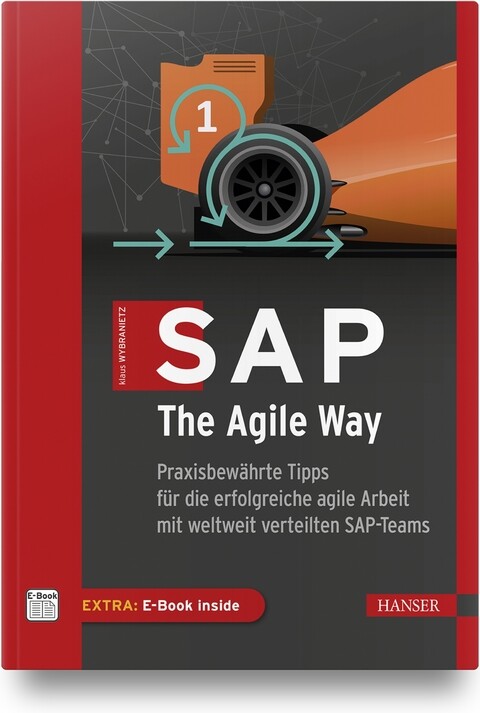
SAP, The Agile Way
Praxisbewährte Tipps für die erfolgreiche agile Arbeit mit weltweit verteilten SAP-Teams.Der weltweit tätige SAP-Berater und Agile Coach Klaus Wybranietz zerlegt in diesem Buch das hartnäckige Vorurteil: »Ja, Scrum ist toll, aber mit SAP funktioniert das nicht.« Er beweist nämlich seit Jahren das Gegenteil: Scrum und SAP können auf einen Nenner gebracht werden – und das sogar sehr erfolgreich. Denn in seinen Projekten für internationale Großkonzerne hat Klaus Wybranietz immer wieder die Erfahrung gemacht: Selbst über den Globus verteilte SAP-Teams können mit Scrum in der halben Zeit dreimal so effektiv sein.In diesem Buch erklärt der Autor die Entwicklungsstufen, über die er SAP-Teams aus dem klassischen Wasserfalldenken heraus und stattdessen hinein in die agile Performance führt. Das fängt beim Teambuilding trotz Superstars an, führt über den Aufbau von gezielten Kompetenzen und hilfreichen Regelwerken bis hin zum Schaffen echter Kundenwerte durch die Anwendung von Kanban-Metriken. Das alles funktioniert seit vielen Jahren auch mit weltweit verteilten SAP-Teams – »Ja, aber …« hat als Argument somit ausgedient.AUS DEM INHALT //- SAP und Scrum – das geht doch nicht?- Die Grundlagen von Scrum- Mit verteilten SAP-Teams remote arbeiten- Mit agilen SAP-Teams starten- Skalierung mit dem Agile Working Model 4 SAP- Praktiken für fortgeschrittene agile SAP-Teams

Pro Cryptography and Cryptanalysis with C++20
Develop strong skills and a passion for writing cryptography algorithms and security schemes/modules using C++ 20 and its new features. You will find the right methods of writing advanced cryptographic algorithms (such as, elliptic curve cryptography algorithms, lattice-based cryptography, searchable encryption, and homomorphic encryption), examine internal cryptographic mechanisms, and discover common ways in which the algorithms could be implemented and used correctly in practice.The authors avoid the complexities of the mathematical background by explaining its mathematical basis in terms that a programmer can easily understand. They show how “bad” cryptography creeps in during implementation and what “good” cryptography should look like. They do so by showing and comparing the advantages and disadvantages based on processing time, execution time, and reliability.WHAT YOU WILL LEARN* Understand where and why cryptography is used and how it gets misused * Discover what modern cryptography algorithms and methods are used for * Design and implement advanced cryptographic mechanisms * See how C++20 and its new features are impacting the future of implementing cryptographic algorithms* Practice the basics of public key cryptography, including ECDSA signatures and more* Find out how most of the algorithms can be brokenWHO THIS BOOK IS FORProfessional programmers, developers, and software engineers who are developing cryptography algorithms and security schemes/modules in C++. Prior C++ programming and IDE experience and some basic experience of cryptography concepts (symmetric and asymmetric) highly recommended.MARIUS IULIAN MIHAILESCU, PHD is CEO at Dapyx Solution Ltd., a company based in Bucharest, Romania and involved in information security- and cryptography-related research projects. He is a lead guest editor for applied cryptography journals and a reviewer for multiple publications with information security and cryptography profiles. He authored and co-authored more than 30 articles in conference proceedings, 25 articles in journals, and three books. For more than six years he has served as a lecturer at well-known national and international universities (University of Bucharest, “Titu Maiorescu” University, Kadir Has University in, Istanbul, Turkey). He has taught courses on programming languages (C#, Java, C++, Haskell), and object-oriented system analysis and design with UML, graphs, databases, cryptography and information security. He served for three years as IT officer at Royal Caribbean Cruises Ltd. where he dealt with IT infrastructure, data security, and satellite communications systems. He received his PhD in 2014 and his thesis was on applied cryptography over biometrics data. He holds two MSc in information security and software engineering.STEFANIA LOREDANA NITA, PHD is a software developer at the Institute of Computer Science of the Romanian Academy and a PhD with her thesis on advanced cryptographic schemes using searchable encryption and homomorphic encryption. She has served more than two years as an assistant lecturer at the University of Bucharest where she taught courses on subjects such as advanced programming techniques, simulation methods, and operating systems. She has authored and co-authored more than 15 workpapers at conferences and journals, and has authored two books on he Haskell programming language. She is a lead guest editor for special issues on information security and cryptography such as Advanced Cryptography and Its Future: Searchable and Homomorphic Encryption. She holds an MSc in software engineering and two BSc in computer science and mathematics.Part I: Foundations1: Introduction2: Cryptography Fundamentals3: Mathematical Background and Its Applicability4: Large Integer Arithmetic5: Floating Point Arithmetic6: New Features in C++207: Secure Coding Guidelines8: Cryptography Libraries in C/C++20Part II: Pro Cryptography9: Elliptic Curve Cryptography10: Lattice-based Cryptography11: earchable Encryption12: Homomorphic Encryption13: (Ring) Learning with Errors Cryptography14: Chaos-based Cryptography15: Big Data Cryptography16:Cloud Computing CryptographyPart III: Pro Cryptanalysis17: Getting Started with Cryptanalysis18: Cryptanalysis Attacks and Techniques19: Linear and Differential Cryptanalysis20: Integral Cryptanalysis21: Brute Force and Buffer Overflow Attacks22: Text Characterization23: Implementation and Practical Approach of Cryptanalysis Methods
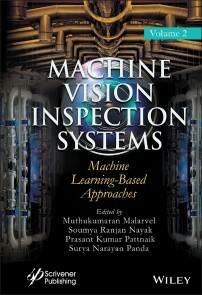
Machine Vision Inspection Systems, Machine Learning-Based Approaches
Machine Vision Inspection Systems (MVIS) is a multidisciplinary research field that emphasizes image processing, machine vision and, pattern recognition for industrial applications. Inspection techniques are generally used in destructive and non-destructive evaluation industry. Now a day's the current research on machine inspection gained more popularity among various researchers, because the manual assessment of the inspection may fail and turn into false assessment due to a large number of examining while inspection process.This volume 2 covers machine learning-based approaches in MVIS applications and it can be employed to a wide diversity of problems particularly in Non-Destructive testing (NDT), presence/absence detection, defect/fault detection (weld, textile, tiles, wood, etc.), automated vision test & measurement, pattern matching, optical character recognition & verification (OCR/OCV), natural language processing, medical diagnosis, etc. This edited book is designed to address various aspects of recent methodologies, concepts, and research plan out to the readers for giving more depth insights for perusing research on machine vision using machine learning-based approaches.MUTHUKUMARAN MALARVEL obtained his PhD in digital image processing and he is currently working as an associate professor in the Department of Computer Science and Engineering at Chitkara University, Punjab, India. His research interests include digital image processing, machine vision systems, image statistical analysis & feature extraction, and machine learning algorithms. SOUMYA RANJAN NAYAK obtained his PhD in computer science and engineering from the Biju Patnaik University of Technology, India. He has more than a decade of teaching and research experience and currently is working as an assistant professor, Amity University, Noida, India. His research interests include image analysis on fractal geometry, color and texture analysis jointly and separately. PRASANT KUMAR PATTNAIK PhD (Computer Science), Fellow IETE, Senior Member IEEE is a Professor at the School of Computer Engineering, KIIT Deemed to be University, Bhubaneswar, India. He has more than a decade of teaching and research experience. His areas of interest include mobile computing, cloud computing, cyber security, intelligent systems and brain computer interface. SURYA NARAYAN Panda is a Professor and Director Research at Chitkara University, Punjab, India. His areas of interest include cybersecurity, networking, advanced computer networks, machine learning, and artificial intelligence. He has developed the prototype of Smart Portable Intensive Care Unit through which the doctor can provide immediate virtual medical assistance to emergency cases in the ambulance. He is currently involved in designing different healthcare devices for real-time issues using AI and ML. Preface xiii1 MACHINE LEARNING-BASED VIRUS TYPE CLASSIFICATION USING TRANSMISSION ELECTRON MICROSCOPY VIRUS IMAGES 1Kalyan Kumar Jena, Sourav Kumar Bhoi, Soumya Ranjan Nayak and Chittaranjan Mallick1.1 Introduction 21.2 Related Works 31.3 Methodology 41.4 Results and Discussion 61.5 Conclusion 16References 162 CAPSULE NETWORKS FOR CHARACTER RECOGNITION IN LOW RESOURCE LANGUAGES 23C. Abeysinghe, I. Perera and D.A. Meedeniya2.1 Introduction 242.2 Background Study 252.2.1 Convolutional Neural Networks 252.2.2 Related Studies on One-Shot Learning 262.2.3 Character Recognition as a One-Shot Task 262.3 System Design 282.3.1 One-Shot Learning Implementation 312.3.2 Optimization and Learning 312.3.3 Dataset 322.3.4 Training Process 322.4 Experiments and Results 332.4.1 N-Way Classification 342.4.2 Within Language Classification 372.4.3 MNIST Classification 392.4.4 Sinhala Language Classification 412.5 Discussion 412.5.1 Study Contributions 412.5.2 Challenges and Future Research Directions 422.5.3 Conclusion 43References 433 AN INNOVATIVE EXTENDED METHOD OF OPTICAL PATTERN RECOGNITION FOR MEDICAL IMAGES WITH FIRM ACCURACY—4F SYSTEM-BASED MEDICAL OPTICAL PATTERN RECOGNITION 47Dhivya Priya E.L., D. Jeyabharathi, K.S. Lavanya, S. Thenmozhi, R. Udaiyakumar and A. Sharmila3.1 Introduction 483.1.1 Fourier Optics 483.2 Optical Signal Processing 503.2.1 Diffraction of Light 503.2.2 Biconvex Lens 513.2.3 4f System 513.2.4 Literature Survey 523.3 Extended Medical Optical Pattern Recognition 553.3.1 Optical Fourier Transform 553.3.2 Fourier Transform Using a Lens 553.3.3 Fourier Transform in the Far Field 563.3.4 Correlator Signal Processing 563.3.5 Image Formation in 4f System 573.3.6 Extended Medical Optical Pattern Recognition 583.4 Initial 4f System 593.4.1 Extended 4f System 593.4.2 Setup of 45 Degree 593.4.3 Database Creation 593.4.4 Superimposition of Diffracted Pattern 603.4.5 Image Plane 603.5 Simulation Output 603.5.1 MATLAB 603.5.2 Sample Input Images 613.5.3 Output Simulation 613.6 Complications in Real Time Implementation 643.6.1 Database Creation 643.6.2 Accuracy 653.6.3 Optical Setup 653.7 Future Enhancements 65References 654 BRAIN TUMOR DIAGNOSTIC SYSTEM— A DEEP LEARNING APPLICATION 69Kalaiselvi, T. and Padmapriya, S.T.4.1 Introduction 694.1.1 Intelligent Systems 694.1.2 Applied Mathematics in Machine Learning 704.1.3 Machine Learning Basics 724.1.4 Machine Learning Algorithms 734.2 Deep Learning 754.2.1 Evolution of Deep Learning 754.2.2 Deep Networks 764.2.3 Convolutional Neural Networks 774.3 Brain Tumor Diagnostic System 804.3.1 Brain Tumor 804.3.2 Methodology 804.3.3 Materials and Metrics 844.3.4 Results and Discussions 854.4 Computer-Aided Diagnostic Tool 864.5 Conclusion and Future Enhancements 87References 885 MACHINE LEARNING FOR OPTICAL CHARACTER RECOGNITION SYSTEM 91Gurwinder Kaur and Tanya Garg5.1 Introduction 915.2 Character Recognition Methods 925.3 Phases of Recognition System 935.3.1 Image Acquisition 935.3.2 Defining ROI 945.3.3 Pre-Processing 945.3.4 Character Segmentation 945.3.5 Skew Detection and Correction 955.3.6 Binarization 955.3.7 Noise Removal 975.3.8 Thinning 975.3.9 Representation 975.3.10 Feature Extraction 985.3.11 Training and Recognition 985.4 Post-Processing 1015.5 Performance Evaluation 1035.5.1 Recognition Rate 1035.5.2 Rejection Rate 1035.5.3 Error Rate 1035.6 Applications of OCR Systems 1045.7 Conclusion and Future Scope 105References 1056 SURFACE DEFECT DETECTION USING SVM-BASED MACHINE VISION SYSTEM WITH OPTIMIZED FEATURE 109Ashok Kumar Patel, Venkata Naresh Mandhala, Dinesh Kumar Anguraj and Soumya Ranjan Nayak6.1 Introduction 1106.2 Methodology 1136.2.1 Data Collection 1136.2.2 Data Pre-Processing 1136.2.3 Feature Extraction 1156.2.4 Feature Optimization 1166.2.5 Model Development 1196.2.6 Performance Evaluation 1206.3 Conclusion 123References 1247 COMPUTATIONAL LINGUISTICS-BASED TAMIL CHARACTER RECOGNITION SYSTEM FOR TEXT TO SPEECH CONVERSION 129Suriya, S., Balaji, M., Gowtham, T.M. and Rahul, Kumar S.7.1 Introduction 1307.2 Literature Survey 1307.3 Proposed Approach 1347.4 Design and Analysis 1347.5 Experimental Setup and Implementation 1367.6 Conclusion 151References 1518 A COMPARATIVE STUDY OF DIFFERENT CLASSIFIERS TO PROPOSE A GONN FOR BREAST CANCER DETECTION 155Ankita Tiwari, Bhawana Sahu, Jagalingam Pushaparaj and Muthukumaran Malarvel8.1 Introduction 1568.2 Methodology 1578.2.1 Dataset 1578.2.2 Linear Regression 1598.2.2.1 Correlation 1608.2.2.2 Covariance 1608.2.3 Classification Algorithm 1618.2.3.1 Support Vector Machine 1618.2.3.2 Random Forest Classifier 1628.2.3.3 K-Nearest Neighbor Classifier 1638.2.3.4 Decision Tree Classifier 1638.2.3.5 Multi-Layered Perceptron 1648.3 Results and Discussion 1658.4 Conclusion 169References 1699 MEXICAN SIGN-LANGUAGE STATIC-ALPHABET RECOGNITION USING 3D AFFINE INVARIANTS 171Guadalupe Carmona-Arroyo, Homero V. Rios-Figueroa and Martha Lorena Avendaño-Garrido9.1 Introduction 1719.2 Pattern Recognition 1759.2.1 3D Affine Invariants 1759.3 Experiments 1779.3.1 Participants 1799.3.2 Data Acquisition 1799.3.3 Data Augmentation 1799.3.4 Feature Extraction 1819.3.5 Classification 1819.4 Results 1829.4.1 Experiment 1 1829.4.2 Experiment 2 1849.4.3 Experiment 3 1849.5 Discussion 1889.6 Conclusion 189Acknowledgments 190References 19010 PERFORMANCE OF STEPPED BAR PLATE-COATED NANOLAYER OF A BOX SOLAR COOKER CONTROL BASED ON ADAPTIVE TREE TRAVERSAL ENERGY AND OSELM 193S. Shanmugan, F.A. Essa, J. Nagaraj and Shilpa Itnal10.1 Introduction 19410.2 Experimental Materials and Methodology 19610.2.1 Furious SiO2/TiO2 Nanoparticle Analysis of SSBC Performance Methods 19610.2.2 Introduction for OSELM by Use of Solar Cooker 19810.2.3 Online Sequential Extreme Learning Machine (OSELM) Approach for Solar Cooker 19910.2.4 OSELM Neural Network Adaptive Controller on Novel Design 19910.2.5 Binary Search Tree Analysis of Solar Cooker 20010.2.6 Tree Traversal of the Solar Cooker 20510.2.7 Simulation Model of Solar Cooker Results 20610.2.8 Program 20710.3 Results and Discussion 21010.4 Conclusion 212References 21411 APPLICATIONS TO RADIOGRAPHY AND THERMOGRAPHY FOR INSPECTION 219Inderjeet Singh Sandhu, Chanchal Kaushik and Mansi Chitkara11.1 Imaging Technology and Recent Advances 22011.2 Radiography and its Role 22011.3 History and Discovery of X-Rays 22111.4 Interaction of X-Rays With Matter 22211.5 Radiographic Image Quality 22211.6 Applications of Radiography 22511.6.1 Computed Radiography (CR)/Digital Radiography (DR) 22511.6.2 Fluoroscopy 22711.6.3 DEXA 22811.6.4 Computed Tomography 22911.6.5 Industrial Radiography 23111.6.6 Thermography 23411.6.7 Veterinary Imaging 23511.6.8 Destructive Testing 23511.6.9 Night Vision 23511.6.10 Conclusion 236References 23612 PREDICTION AND CLASSIFICATION OF BREAST CANCER USING DISCRIMINATIVE LEARNING MODELS AND TECHNIQUES 241M. Pavithra, R. Rajmohan, T. Ananth Kumar and R. Ramya12.1 Breast Cancer Diagnosis 24212.2 Breast Cancer Feature Extraction 24312.3 Machine Learning in Breast Cancer Classification 24512.4 Image Techniques in Breast Cancer Detection 24612.5 Dip-Based Breast Cancer Classification 24812.6 RCNNs in Breast Cancer Prediction 25512.7 Conclusion and Future Work 260References 26113 COMPRESSED MEDICAL IMAGE RETRIEVAL USING DATA MINING AND OPTIMIZED RECURRENT NEURAL NETWORK TECHNIQUES 263Vamsidhar Enireddy, Karthikeyan C., Rajesh Kumar T. and Ashok Bekkanti13.1 Introduction 26413.2 Related Work 26513.2.1 Approaches in Content-Based Image Retrieval (CBIR) 26513.2.2 Medical Image Compression 26613.2.3 Image Retrieval for Compressed Medical Images 26713.2.4 Feature Selection in CBIR 26813.2.5 CBIR Using Neural Network 26813.2.6 Classification of CBIR 26913.3 Methodology 26913.3.1 Huffman Coding 27013.3.2 Haar Wavelet 27113.3.3 Sobel Edge Detector 27313.3.4 Gabor Filter 27313.3.5 Proposed Hybrid CS-PSO Algorithm 27613.4 Results and Discussion 27713.5 Conclusion and Future Enhancement 28213.5.1 Conclusion 28213.5.2 Future Work 283References 28314 A NOVEL DISCRETE FIREFLY ALGORITHM FOR CONSTRAINED MULTI-OBJECTIVE SOFTWARE RELIABILITY ASSESSMENT OF DIGITAL RELAY 287Madhusudana Rao Nalluri, K. Kannan and Diptendu Sinha Roy14.1 Introduction 28814.2 A Brief Review of the Digital Relay Software 29114.3 Formulating the Constrained Multi-Objective Optimization of Software Redundancy Allocation Problem (CMOO-SRAP) 29314.3.1 Mathematical Formulation 29414.4 The Novel Discrete Firefly Algorithm for Constrained Multi-Objective Software Reliability Assessment of Digital Relay 29714.4.1 Basic Firefly Algorithm 29814.4.2 The Modified Discrete Firefly Algorithm 29914.4.2.1 Generating Initial Population 29914.4.2.2 Improving Solutions 29914.4.2.3 Illustrative Example 30114.4.3 Similarity-Based Parent Selection (SBPS) 30314.4.4 Solution Encoding for the CMOO-SRAP for Digital Relay Software 30514.5 Simulation Study and Results 30514.5.1 Simulation Environment 30514.5.2 Simulation Parameters 30614.5.3 Configuration of Solution Vectors for the CMOOSRAP for Digital Relay 30614.5.4 Results and Discussion 30614.6 Conclusion 317References 317Index 323
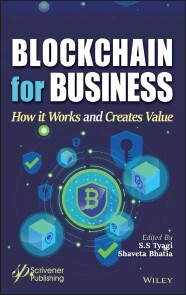
Blockchain for Business
The book focuses on the power of business blockchain. It gives an overview of blockchain in traditional business, marketing, accounting and business intelligence. The book provides a detailed working knowedge of blockchain, user cases of blockchain in business, cryptocurrency and Initial Coin Offering(ICO) along with the risks associated with them. The book also covers the detailed study of decentralization, mining, consensus, smart contracts, concepts and working of distributed ledgers and hyper ledgers as well as many other important concepts. It also details the security and privacy aspects of blockchain.The book is beneficial for readers who are preparing for their business careers, those who are working with small scale businesses and startups, and helpful for business executives, managers, entrepreneurs, bankers, government officials and legal professionals who are looking to blockchain for secure financial transactions. The book will also be beneficial for researchers and students who want to study the latest developments of blockchain.S.S. TYAGI is a Professor of Computer Engineering and Dean at Manav Rachna International Institute of Research & Studies, Faridabad, India. He obtained his PhD from Kururkshetra University in 2010 in Computer Technology. He has more than 28 years of teaching and research experience and has authored many research publications in high indexed journals. SHAVETA BHATIA is Professor of Faculty of Computer Applications, Manav Rachna International Institute of Research & Studies. She has more than 17 years of academic and research experience. She has authored many research papers and published over a span of her teaching career in various reputed journals and conferences. Preface xv1 INTRODUCTION TO BLOCKCHAIN 1Akshay Mudgal1.1 Introduction 11.1.1 Public Blockchain Architecture 51.1.2 Private Blockchain Architecture 51.1.3 Consortium Blockchain Architecture 51.2 The Privacy Challenges of Blockchain 61.3 De-Anonymization 81.3.1 Analysis of Network 91.3.2 Transaction Fingerprinting 91.3.3 DoS Attacks 91.3.4 Sybil Attacks 91.4 Transaction Pattern Exposure 101.4.1 Transaction Graph Analysis 101.4.2 AS-Level Deployment Analysis 101.5 Methodology: Identity Privacy Preservation 101.5.1 Mixing Services 101.5.2 Ring Signature 121.6 Decentralization Challenges Exist in Blockchain 141.7 Conclusion 151.8 Regulatory Challenges 161.9 Obstacles to Blockchain Regulation 161.10 The Current Regulatory Landscape 171.11 The Future of Blockchain Regulation 181.12 Business Model Challenges 191.12.1 Traditional Business Models 191.12.2 Manufacturer 191.12.3 Distributor 201.12.4 Retailer 201.12.5 Franchise 201.13 Utility Token Model 201.13.1 Right 211.13.2 Value Exchange 211.13.3 Toll 211.13.4 Function 211.13.5 Currency 221.13.6 Earning 221.14 Blockchain as a Service 221.15 Securities 231.16 Development Platforms 241.17 Scandals and Public Perceptions 251.17.1 Privacy Limitations 261.17.2 Lack of Regulations and Governance 261.17.3 Cost to Set Up 261.17.4 Huge Consumption of Energy 261.17.5 Public Perception 27References 272 THE SCOPE FOR BLOCKCHAIN ECOSYSTEM 29Manisha Suri2.1 Introduction 302.2 Blockchain as Game Changer for Environment 322.3 Blockchain in Business Ecosystem 382.3.1 Business Ecosystem 392.3.1.1 What Is Business Model? 392.3.1.2 Business Model—Traditional 392.3.2 Are Blockchain Business Models Really Needed? 412.3.2.1 Blockchain Business Model 412.3.2.2 Model 1: Utility Token Model 412.3.2.3 Model 2: BaaS 432.3.2.4 Model 3: Securities 442.3.2.5 Model 4: Development Platforms 452.3.2.6 Model 5: Blockchain-Based Software Products 462.3.2.7 Model 6: Blockchain Professional Services 462.3.2.8 Model 7: Business Model—P2P 472.4 Is Blockchain Business Ecosystem Profitable? 482.5 How Do You “Design” a Business Ecosystem? 492.6 Redesigning Future With Blockchain 532.6.1 Is Earth Prepared for Blockchain? 532.7 Challenges and Opportunities 57References 583 BUSINESS USE CASES OF BLOCKCHAIN TECHNOLOGY 59Vasudha Arora, Shweta Mongia, Sugandha Sharma and Shaveta Malik3.1 Introduction to Cryptocurrency 603.2 What is a Bitcoin? 603.2.1 Bitcoin Transactions and Their Processing 623.2.2 Double Spending Problem 653.2.3 Bitcoin Mining 673.3 Bitcoin ICO 693.3.1 ICO Token 693.3.2 How to Participate in ICO 703.3.3 Types of Tokens 713.4 Advantages and Disadvantages of ICO 723.5 Merchant Acceptance of Bitcoin 73References 754 ETHEREUM 77Shaveta Bhatia and S.S Tyagi4.1 Introduction 784.2 Basic Features of Ethereum 784.3 Difference between Bitcoin and Ethereum 794.4 EVM (Ethereum Virtual Machine) 824.5 Gas 854.5.1 Gas Price Chart 854.6 Applications Built on the Basis of Ethereum 864.7 ETH 874.7.1 Why Users Want to Buy ETH? 874.7.2 How to Buy ETH? 884.7.3 Alternate Way to Buy ETH 884.7.4 Conversion of ETH to US Dollar 894.8 Smart Contracts 904.8.1 Government 904.8.2 Management 914.8.3 Benefits of Smart Contracts 914.8.4 Problems With Smart Contracts 924.8.5 Solution to Overcome This Problem 924.8.6 Languages to Build Smart Contracts 924.9 DApp (Decentralized Application or Smart Contract) 934.9.1 DApp in Ethereum 934.9.2 Applications of DApps 934.10 Conclusion 95References 955 E-WALLET 97Ms. Vishawjyoti5.1 Overview of Wallet Technology 975.2 Types of Wallet 985.2.1 Paper 985.2.2 Physical Bitcoins 995.2.3 Mobile 995.2.4 Web 1005.2.5 Desktop 1005.2.6 Hardware 1005.2.7 Bank 1015.3 Security of Bitcoin Wallets 1015.4 Workings of Wallet Technology 1015.5 Create HD Wallet From Seed 1025.5.1 Initiation 1035.5.2 Steps for Creating an HD Wallet From a 24-Word Seed Phrase Through Particl-qt Tool 1045.5.3 Steps for Encrypting the HD Wallet 1065.5.4 Utilization 1085.5.5 Steps for Generating Address to Access Transactions on the HD Wallet 1085.6 Navigating HD Wallet 1095.7 Conclusion 110References 1106 BLOCKCHAIN AND GOVERNANCE: THEORY, APPLICATIONS AND CHALLENGES 113Bhavya Ahuja Grover, Bhawna Chaudhary, Nikhil Kumar Rajput and Om Dukiya6.1 Introduction 1146.2 Governance: Centralized vs Decentralized 1156.3 Blockchain’s Features Supportive of Decentralization 1176.4 Noteworthy Application Areas for Blockchain-Based Governance 1196.4.1 Public Service Governance 1196.4.2 Knowledge and Shared Governance 1216.4.3 Governance in Supply Chain 1236.4.4 Governance of Foreign Aid 1246.4.5 Environmental Governance 1256.4.6 Corporate Governance 1266.4.7 Economic Governance 1286.5 Scopes and Challenges 1286.6 Conclusion 136References 1377 BLOCKCHAIN-BASED IDENTITY MANAGEMENT 141Abhishek Bhattacharya7.1 Introduction 1417.2 Existing Identity Management Systems and Their Challenges 1427.3 Concept of Decentralized Identifiers 1447.4 The Workflow of Blockchain Identity Management Systems 1457.5 How Does it Contribute to Data Security? 1487.6 Trending Blockchain Identity Management Projects 1507.7 Why and How of Revocation 1527.8 Points to Ponder 1547.8.1 Comparison Between Traditional and Blockchain-Based Identity Management Systems 1567.9 Conclusion 157References 1588 BLOCKCHAIN & IOT: A PARADIGM SHIFT FOR SUPPLY CHAIN MANAGEMENT 159Abhishek Bhattacharya8.1 Introduction 1598.2 Supply Chain Management 1608.2.1 The Aspects of a Supply Chain 1618.2.2 Supply Chain Performance Dimensions 1628.2.3 Supply Chain Migration Towards Digitalization 1638.3 Blockchain and IoT 1648.3.1 What Makes Blockchain Suitable for SCM? 1668.3.1.1 Shared Ledger 1678.3.1.2 Permissions 1688.3.1.3 Consensus 1688.3.1.4 Smart Contracts 1698.3.2 The Role of Blockchain in Achieving the SCM Performance Dimensions 1708.3.3 The Role of IoT in the Implementation of Blockchain Technology 1718.4 Blockchain Technology and IoT Use Cases in Supply Chain Management 1728.5 Benefits and Challenges in Blockchain-Based Supply Chain Management 1738.6 Conclusion 176References 1769 BLOCKCHAIN-ENABLED SUPPLY CHAIN MANAGEMENT SYSTEM 179Sonal Pathak9.1 Introduction 1809.1.1 Supply Chain Management 1809.2 Blockchain Technology 1849.3 Blockchain Technology in Supply Chain Management 1869.4 Elements of Blockchain That Affects Supply Chain 1909.4.1 Bitcoin 1959.5 Challenges in Implementation of Blockchain-Enabled Supply Chain 1979.6 Conclusion 197References 19910 SECURITY CONCERNS OF BLOCKCHAIN 201Neha Jain and Kamiya Chugh10.1 Introduction: Security Concerns of Blockchain 20110.2 Cryptocurrencies Scenarios 20210.3 Privacy Challenges of Blockchain 20310.3.1 Protection Problems in Blockchain 20310.3.2 Privacy-Preserving Mechanisms Analysis 20710.3.3 Data Anonymization-Mixing 20710.4 Decentralization in Blockchain 20810.4.1 Role of Decentralization in Blockchain 20910.4.2 Analysis of PoS and DPoS 21010.4.3 Problems With Decentralization 21010.4.4 Decentralization Recovery Methods 21210.5 Legal and Regulatory Issues in Blockchain 21310.5.1 Legal Value of Blockchain and its Problems 21410.6 Smart Contracts 21810.7 Scandals of Blockchain 22010.7.1 Blockchain Technologies as Stumbling Blocks to Financial Legitimacy 22310.8 Is Blockchain the Rise of Trustless Trust? 22310.8.1 Why Do We Need a System of Trust? 22610.9 Blockchain Model Challenges 227References 22911 ACCEPTANCE AND ADOPTION OF BLOCKCHAIN TECHNOLOGY: AN EXAMINATION OF THE SECURITY & PRIVACY CHALLENGES 231Amandeep Dhaliwal and Sahil Malik11.1 Introduction 23111.1.1 Research Methodology 23311.1.2 Analysis 23311.2 Security Issues of Blockchain 23311.2.1 The Majority Attack (51% Attacks) 23311.2.2 The Fork Problems 23411.2.2.1 Hard Fork 23411.2.2.2 Soft Fork 23511.2.3 Scale of Blockchain 23511.2.4 Time Confirmation of Blockchain Data— Double-Spend Attack/Race Attack 23511.2.5 Current Regulations Problems 23611.2.6 Scalability and Storage Capacity 23611.2.7 DOS Attack/Sybil Attack/Eclipse Attack/Bugs 23711.2.8 Legal Issues 23711.2.9 Security of Wallets 23811.2.10 The Increased Computing Power 23811.3 Privacy Challenges of Bitcoin 23811.3.1 De-Anonymization 23911.3.1.1 Network Analysis 23911.3.1.2 Address Clustering 23911.3.1.3 Transaction Finger Printing 24011.3.2 Transaction Pattern Exposure 24011.3.2.1 Transaction Graph Analysis 24011.3.2.2 Autonomous System-Level Deployment Analysis 24111.4 Blockchain Application-Based Solutions 24111.4.1 Bitcoins 24111.4.2 IoT 24211.4.2.1 MyBit 24211.4.3 Aero Token 24211.4.4 The Chain of Things 24311.4.5 The Modum 24311.4.6 Twin of Things 24311.4.7 The Blockchain of Things 24411.4.8 Blockchain Solutions: Cloud Computing 24411.5 Conclusion and Future Work 245References 24512 DEFICIENCIES IN BLOCKCHAIN TECHNOLOGY AND POTENTIAL AUGMENTATION IN CYBER SECURITY 251Eshan Bajal, Madhulika Bhatia, Lata Nautiyal and Madhurima Hooda12.1 Introduction 25212.2 Security Issues in Blockchain Technology 25212.3 Privacy Challenges 25312.3.1 BGP Hijacking Attack 25512.3.2 BDoS (Blockchain Denial of Service) 25512.3.3 Forcing Other Miners to Stop Mining 25612.4 Decentralization Challenges 25612.5 Regulatory Challenges 26012.5.1 Principles to Follow While Regulating 26212.5.1.1 Flexible to Legal Innovation 26212.5.1.2 Experimentation Should be Encouraged 26312.5.1.3 Focus on the Immediate Implications 26412.5.1.4 Regulators Should Engage in a Transnational Conversation 26412.5.2 Regulatory Strategies 26512.5.2.1 Wait-and-See 26512.5.2.2 Imposing Narrowing and Broadening Guidance 26612.5.2.3 Sandboxing 26612.5.2.4 Issue a New Legislation 26712.5.2.5 Use Blockchain in Regulation 26812.6 Business Model Challenges 26912.7 Scandals and Public Perception 27112.8 Why Blockchain is Trustless 27712.8.1 Trust Mechanism 27812.8.2 Anonymity 27912.8.3 Use in Digital Wallets 27912.8.4 Forgery Resistance 27912.9 Use of Blockchain in Cybersecurity 28012.9.1 Blockchain Database 28112.9.2 DNS Security 28312.9.3 IoT Security 28312.9.4 DDoS Prevention 28612.9.5 CDN (Content Delivery Network) 28612.9.6 SMS Authentication 287References 28813 INTERNET OF THINGS AND BLOCKCHAIN 295Priyanka Sharma13.1 History of ‘Internet of Things’ 29613.2 IoT Devices 29813.3 Sensors and Actuators 30213.4 Cloud and Haze-Based Engineering 30713.5 Blockchain and IoT 31513.6 Edge Computing 32113.7 Contextual Analyses 32413.8 Fate of Blockchain and IoT 332References 33214 BLOCKCHAIN APPLICATIONS 337Boby Singh, Rohit Pahwa, Hari Om Tanwar and Nikita Gupta14.1 Introduction to Blockchain 33714.1.1 Uses of Blockchain in Administration 33914.2 Blockchain in Big Data Predictive Task Automation 34014.2.1 How Can Blockchain Help Big Data? 34114.2.2 Blockchain Use Cases in Big Data 34114.3 Digital Identity Verification 34214.3.1 Why Digital Identity Matters? 34314.3.2 Blockchain (Definition and its Features) 34314.3.3 Why do we Need Blockchain in Digital Identity? 34414.3.4 How Does a Blockchain Works? 34514.3.5 Why is a Blockchain Secure? 34514.3.6 What’s Blockchain Identification Management? 34614.3.7 Advantages 34714.4 Blockchain Government 34814.4.1 Decentralized Government Services 34914.4.2 Liquid Democracy and Random Sample Election 35014.5 Blockchain Science 35114.5.1 FoldingCoin 35114.5.2 GridCoin (GRC) 35214.5.3 Global Public Health 35314.5.4 Bitcoin Genomics 35414.6 Blockchain Health 35514.6.1 Health Coin 35514.6.2 EMR on Blockchain 35514.6.3 Bit Coin Health Notary 35614.7 Blockchain Learning 35714.7.1 Bitcoin MOOCs 35714.7.2 Smart Contract Literacy 35714.7.3 LearnCoin 359References 35915 ADVANCE CONCEPTS OF BLOCKCHAIN 361Raj Kumar15.1 Community Supercomputing 36115.2 Blockchain Genomics 36415.3 Blockchain Learning 36515.4 Community Coin 36615.4.1 Monetary and Non-Monetary Currencies 36715.4.2 Difference Between Monetary and Non-Monetary Assets 36915.4.3 Currency Multiplicity 36915.4.4 List of Some Prominent Alternate Coins is Given Below 37015.5 Demurrage Currencies 371Reading List 371Index 373

Deep Learning with Swift for TensorFlow
ABOUT THIS BOOKDiscover more insight about deep learning algorithms with Swift for TensorFlow. The Swift language was designed by Apple for optimized performance and development whereas TensorFlow library was designed by Google for advanced machine learning research. Swift for TensorFlow is a combination of both with support for modern hardware accelerators and more. This book covers the deep learning concepts from fundamentals to advanced research. It also introduces the Swift language for beginners in programming. This book is well suited for newcomers and experts in programming and deep learning alike. After reading this book you should be able to program various state-of-the-art deep learning algorithms yourself.The book covers foundational concepts of machine learning. It also introduces the mathematics required to understand deep learning. Swift language is introduced such that it allows beginners and researchers to understand programming and easily transit to Swift for TensorFlow, respectively. You will understand the nuts and bolts of building and training neural networks, and build advanced algorithms.WHAT YOU’LL LEARN• Understand deep learning concepts• Program various deep learning algorithms• Run the algorithms in cloudWHO THIS BOOK IS FOR• Newcomers to programming and/or deep learning, and experienced developers.• Experienced deep learning practitioners and researchers who desire to work in user space instead of library space with a same programming language without compromising the speedRahul Bhalley is an independent machine intelligence researcher. He was the co-founder of a short-lived deep learning startup in 2018. He has published research papers in areas such as speech processing and generative modeling. He actively contributes to open source projects related to deep learning on GitHub. He has also worked with Apple's Swift and shares Google's vision of making it easy for others to understand deep learning with Swift.Chapter 1: Machine Learning BasicsChapter 2: Essential MathChapter 3: Differential ProgrammingChapter 4: TensorFlow BasicsChapter 5: Neural NetworksChapter 6: Computer Vision

TensorFlow 2.x in the Colaboratory Cloud
Use TensorFlow 2.x with Google's Colaboratory (Colab) product that offers a free cloud service for Python programmers. Colab is especially well suited as a platform for TensorFlow 2.x deep learning applications. You will learn Colab’s default install of the most current TensorFlow 2.x along with Colab’s easy access to on-demand GPU hardware acceleration in the cloud for fast execution of deep learning models. This book offers you the opportunity to grasp deep learning in an applied manner with the only requirement being an Internet connection. Everything else—Python, TensorFlow 2.x, GPU support, and Jupyter Notebooks—is provided and ready to go from Colab.The book begins with an introduction to TensorFlow 2.x and the Google Colab cloud service. You will learn how to provision a workspace on Google Colab and build a simple neural network application. From there you will progress into TensorFlow datasets and building input pipelines in support of modeling and testing. You will find coverage of deep learning classification and regression, with clear code examples showing how to perform each of those functions. Advanced topics covered in the book include convolutional neural networks and recurrent neural networks.This book contains all the applied math and programming you need to master the content. Examples range from simple to relatively complex when necessary to ensure acquisition of appropriate deep learning concepts and constructs. Examples are carefully explained, concise, accurate, and complete to perfectly complement deep learning skill development. Care is taken to walk you through the foundational principles of deep learning through clear examples written in Python that you can try out and experiment with using Google Colab from the comfort of your own home or office.WHAT YOU WILL LEARN* Be familiar with the basic concepts and constructs of applied deep learning* Create machine learning models with clean and reliable Python code* Work with datasets common to deep learning applications* Prepare data for TensorFlow consumption* Take advantage of Google Colab’s built-in support for deep learning* Execute deep learning experiments using a variety of neural network models* Be able to mount Google Colab directly to your Google Drive account* Visualize training versus test performance to see model fitWHO THIS BOOK IS FORReaders who want to learn the highly popular TensorFlow 2.x deep learning platform, those who wish to master deep learning fundamentals that are sometimes skipped over in the rush to be productive, and those looking to build competency with a modern cloud service tool such as Google ColabDR. DAVID PAPER is a full professor at Utah State University (USU) in the Management Information Systems department. He has over 30 years of higher education teaching experience. At USU, he has over 26 years teaching in the classroom and distance education over satellite. Dr. Paper has taught a variety of classes at the undergraduate, graduate, and doctorate levels, but he specializes in technology education. He has competency in several programming languages, but his focus is currently on deep learning (Python) and database programming (PyMongo). Dr. Paper has published three technical books for industry professionals, including Web Programming for Business: PHP Object-Oriented Programming with Oracle, Data Science Fundamentals for Python and MongoDB (Apress), and Hands-on Scikit-Learn for Machine Learning Applications: Data Science Fundamentals with Python (Apress). He has authored more than 100 academic publications. Besides growing up in family businesses, Dr. Paper has worked for Texas Instruments, DLS, Inc., and the Phoenix Small Business Administration. He has performed IS consulting work for IBM, AT&T, Octel, Utah Department of Transportation, and the Space Dynamics Laboratory. 1. Introduction to Deep Learning2. Build Your First Neural Network with Google Colab3. Working with TensorFlow Data4. Working with Other Data5. Classification6. Regression7. Convolutional Neural Networks8. Automated Text Generation9. Sentiment Analysis10. Time Series Forecasting with RNNs

Hands-on Question Answering Systems with BERT
Get hands-on knowledge of how BERT (Bidirectional Encoder Representations from Transformers) can be used to develop question answering (QA) systems by using natural language processing (NLP) and deep learning.The book begins with an overview of the technology landscape behind BERT. It takes you through the basics of NLP, including natural language understanding with tokenization, stemming, and lemmatization, and bag of words. Next, you’ll look at neural networks for NLP starting with its variants such as recurrent neural networks, encoders and decoders, bi-directional encoders and decoders, and transformer models. Along the way, you’ll cover word embedding and their types along with the basics of BERT.After this solid foundation, you’ll be ready to take a deep dive into BERT algorithms such as masked language models and next sentence prediction. You’ll see different BERT variations followed by a hands-on example of a question answering system.Hands-on Question Answering Systems with BERT is a good starting point for developers and data scientists who want to develop and design NLP systems using BERT. It provides step-by-step guidance for using BERT.WHAT YOU WILL LEARN* Examine the fundamentals of word embeddings* Apply neural networks and BERT for various NLP tasksDevelop a question-answering system from scratch* Train question-answering systems for your own dataWHO THIS BOOK IS FORAI and machine learning developers and natural language processing developers.Navin is the chief architect for HCL DryICE Autonomics. He is an innovator, thought leader, author, and consultant in the areas of AI, machine learning, cloud computing, big data analytics, and software product development. He is responsible for IP development and service delivery in the areas of AI and machine learning, automation, AIOPS, public cloud GCP, AWS, and Microsoft Azure. Navin has authored 15+ books in the areas of cloud computing , cognitive virtual agents, IBM Watson, GCP, containers, and microservices.Amit Agrawal is a senior data scientist and researcher delivering solutions in the fields of AI and machine learning. He is responsible for designing end-to-end solutions and architecture for enterprise products. He has also authored and reviewed books in the area of cognitive virtual assistants.Chapter 1: Introduction to Natural Language ProcessingChapter Goal: To introduce basics of natural language processing1.1 What is natural language processing1.2 What is natural language understanding1.3 Natural language processing tasks1.3.1 Tokenization1.3.2 Stemming and lemmatization1.3.3 Bag of words1.3.4 Word / Sentence vectorizationChapter 2: Introduction to Word EmbeddingsChapter Goal: To introduce the basics of word embeddings3.1 What is word embeddings3.2 Different methods of word embeddings3.2.1 Word2vec3.2.2 Glove3.2.3 Elmo3.2.4 Universal sentence encoders3.2.5 BERT3.3 Bidirectional Encoder Representations from Transformers (BERT)3.3.1 BERT – base3.3.2 BERT - largeChapter 3: BERT Algorithms ExplainedChapter Goal: Details on BERT model algorithms4.1 Masked language model4.2 Next sentence prediction (NSP)4.3 Text classification using BERT4.4 Various types of BERT based models4.4.1 ALBERT4.4.2 ROBERT4.4.3 DistilBERTChapter 4: BERT Model Applications - Question Answering SystemChapter Goal: Details on question answering system5.1 Introduction5.2 Types of QA systems5.3 QA system design using BERT5.4 DrQA system5.5 DeepPavlov QA systemChapter 5: BERT Model Applications - Other tasksChapter Goal: Details on NLP tasks performed by BERT.6.1 Introduction6.2 Other NLP Tasks:6.2.1 Sentiment analysis6.2.2. Named entity recognition6.2.3 Tag generation6.2.4 Classification6.2.5 Text summarization6.2.6 Language translationChapter 6: Future of BERT modelsChapter Goal: Provides an introduction to the new advances in the areas NLP using BERT7.1 BERT - Future capabilities
Intelligent Data Analytics for Terror Threat Prediction
Intelligent data analytics for terror threat prediction is an emerging field of research at the intersection of information science and computer science, bringing with it a new era of tremendous opportunities and challenges due to plenty of easily available criminal data for further analysis.This book provides innovative insights that will help obtain interventions to undertake emerging dynamic scenarios of criminal activities. Furthermore, it presents emerging issues, challenges and management strategies in public safety and crime control development across various domains. The book will play a vital role in improvising human life to a great extent. Researchers and practitioners working in the fields of data mining, machine learning and artificial intelligence will greatly benefit from this book, which will be a good addition to the state-of-the-art approaches collected for intelligent data analytics. It will also be very beneficial for those who are new to the field and need to quickly become acquainted with the best performing methods. With this book they will be able to compare different approaches and carry forward their research in the most important areas of this field, which has a direct impact on the betterment of human life by maintaining the security of our society. No other book is currently on the market which provides such a good collection of state-of-the-art methods for intelligent data analytics-based models for terror threat prediction, as intelligent data analytics is a newly emerging field and research in data mining and machine learning is still in the early stage of development.SUBHENDU KUMAR PANI received his PhD from Utkal University Odisha, India in 2013. He is a professor in the Department of Computer Science & Engineering, Orissa Engineering College (OEC), Bhubaneswar, India. He has published more than 50 articles in international journals, authored 5 books and edited 2 volumes. SANJAY KUMAR SINGH is a professor in the Department of Computer Science and Engineering at the Indian Institute of Technology, Varanasi. He has published more than 130 international publications, 4 edited books and 2 patents. LALIT GARG received his PhD from the University of Ulster, UK in Computing and Information Engineering. He is a senior lecturer in Computer Information Systems, University of Malta, Malta. RAM BILAS PACHORI received his PhD degree in Electrical Engineering from the Indian Institute of Technology (IIT) Kanpur, India in 2008. He is now a professor of Electrical Engineering, IIT Indore, India. He has more than 170 publications which include journal papers, conference papers, books, and book chapters. XIAOBO ZHANG obtained his Master of Computer Science, Doctor of Engineering (Control Theory and Control Engineering) and is now working in the Internet of Things Department of Automation, Guangdong University of Technology, China. He has published more than 30 journal articles, edited 3 books, and has applied for more than 40 invention patents and obtained 6 software copyrights. Preface xv1 RUMOR DETECTION AND TRACING ITS SOURCE TO PREVENT CYBER-CRIMES ON SOCIAL MEDIA 1Ravi Kishore Devarapalli and Anupam Biswas1.1 Introduction 21.2 Social Networks 41.2.1 Types of Social Networks 41.3 What is Cyber-Crime? 71.3.1 Definition 71.3.2 Types of Cyber-Crimes 71.3.2.1 Hacking 71.3.2.2 Cyber Bullying 71.3.2.3 Buying Illegal Things 81.3.2.4 Posting Videos of Criminal Activity 81.3.3 Cyber-Crimes on Social Networks 81.4 Rumor Detection 91.4.1 Models 91.4.1.1 Naïve Bayes Classifier 101.4.1.2 Support Vector Machine 131.4.2 Combating Misinformation on Instagram 141.5 Factors to Detect Rumor Source 151.5.1 Network Structure 151.5.1.1 Network Topology 161.5.1.2 Network Observation 161.5.2 Diffusion Models 181.5.2.1 SI Model 181.5.2.2 SIS Model 191.5.2.3 SIR Model 191.5.2.4 SIRS Model 201.5.3 Centrality Measures 211.5.3.1 Degree Centrality 211.5.3.2 Closeness Centrality 211.5.3.3 Betweenness Centrality 221.6 Source Detection in Network 221.6.1 Single Source Detection 231.6.1.1 Network Observation 231.6.1.2 Query-Based Approach 251.6.1.3 Anti-Rumor-Based Approach 261.6.2 Multiple Source Detection 261.7 Conclusion 27References 282 INTERNET OF THINGS (IOT) AND MACHINE TO MACHINE (M2M) COMMUNICATION TECHNIQUES FOR CYBER CRIME PREDICTION 31Jaiprakash Narain Dwivedi2.1 Introduction 322.2 Advancement of Internet 332.3 Internet of Things (IoT) and Machine to Machine (M2M) Communication 342.4 A Definition of Security Frameworks 382.5 M2M Devices and Smartphone Technology 392.6 Explicit Hazards to M2M Devices Declared by Smartphone Challenges 412.7 Security and Privacy Issues in IoT 432.7.1 Dynamicity and Heterogeneity 432.7.2 Security for Integrated Operational World with Digital World 442.7.3 Information Safety with Equipment Security 442.7.4 Data Source Information 442.7.5 Information Confidentiality 442.7.6 Trust Arrangement 442.8 Protection in Machine to Machine Communication 482.9 Use Cases for M2M Portability 522.10 Conclusion 53References 543 CRIME PREDICTIVE MODEL USING BIG DATA ANALYTICS 57Hemanta Kumar Bhuyan and Subhendu Kumar Pani3.1 Introduction 583.1.1 Geographic Information System (GIS) 593.2 Crime Data Mining 603.2.1 Different Methods for Crime Data Analysis 623.3 Visual Data Analysis 633.4 Technological Analysis 653.4.1 Hadoop and MapReduce 653.4.1.1 Hadoop Distributed File System (HDFS) 653.4.1.2 MapReduce 653.4.2 Hive 673.4.2.1 Analysis of Crime Data using Hive 673.4.2.2 Data Analytic Module With Hive 683.4.3 Sqoop 683.4.3.1 Pre-Processing and Sqoop 683.4.3.2 Data Migration Module With Sqoop 683.4.3.3 Partitioning 683.4.3.4 Bucketing 683.4.3.5 R-Tool Analyse Crime Data 693.4.3.6 Correlation Matrix 693.5 Big Data Framework 693.6 Architecture for Crime Technical Model 723.7 Challenges 733.8 Conclusions 74References 754 THE ROLE OF REMOTE SENSING AND GIS IN MILITARY STRATEGY TO PREVENT TERROR ATTACKS 79Sushobhan Majumdar4.1 Introduction 804.2 Database and Methods 814.3 Discussion and Analysis 824.4 Role of Remote Sensing and GIS 834.5 Cartographic Model 834.5.1 Spatial Data Management 854.5.2 Battlefield Management 854.5.3 Terrain Analysis 864.6 Mapping Techniques Used for Defense Purposes 874.7 Naval Operations 884.7.1 Air Operations 894.7.2 GIS Potential in Military 894.8 Future Sphere of GIS in Military Science 894.8.1 Defense Site Management 904.8.2 Spatial Data Management 904.8.3 Intelligence Capability Approach 904.8.4 Data Converts Into Information 904.8.5 Defense Estate Management 914.9 Terrain Evolution 914.9.1 Problems Regarding the Uses of Remote Sensing and GIS 914.9.2 Recommendations 924.10 Conclusion 92References 935 TEXT MINING FOR SECURE CYBER SPACE 95Supriya Raheja and Geetika Munjal5.1 Introduction 955.2 Literature Review 975.2.1 Text Mining With Latent Semantic Analysis 1005.3 Latent Semantic Analysis 1015.4 Proposed Work 1025.5 Detailed Work Flow of Proposed Approach 1045.5.1 Defining the Stop Words 1065.5.2 Stemming 1075.5.3 Proposed Algorithm: A Hybrid Approach 1095.6 Results and Discussion 1115.6.1 Analysis Using Hybrid Approach 1115.7 Conclusion 115References 1156 ANALYSES ON ARTIFICIAL INTELLIGENCE FRAMEWORK TO DETECT CRIME PATTERN 119R. Arshath Raja, N. Yuvaraj and N.V. Kousik6.1 Introduction 1206.2 Related Works 1216.3 Proposed Clustering for Detecting Crimes 1226.3.1 Data Pre-Processing 1236.3.2 Object-Oriented Model 1246.3.3 MCML Classification 1246.3.4 GAA 1246.3.5 Consensus Clustering 1246.4 Performance Evaluation 1246.4.1 Precision 1256.4.2 Sensitivity 1256.4.3 Specificity 1316.4.4 Accuracy 1316.5 Conclusions 131References 1327 A BIOMETRIC TECHNOLOGY-BASED FRAMEWORK FOR TACKLING AND PREVENTING CRIMES 133Ebrahim A.M. Alrahawe, Vikas T. Humbe and G.N. Shinde7.1 Introduction 1347.2 Biometrics 1357.2.1 Biometric Systems Technologies 1377.2.2 Biometric Recognition Framework 1417.2.3 Biometric Applications/Usages 1427.3 Surveillance Systems (CCTV) 1447.3.1 CCTV Goals 1467.3.2 CCTV Processes 1467.3.3 Fusion of Data From Multiple Cameras 1497.3.4 Expanding the Use of CCTV 1497.3.5 CCTV Effectiveness 1507.3.6 CCTV Limitations 1507.3.7 Privacy and CCTV 1507.4 Legality to Surveillance and Biometrics vs. Privacy and Human Rights 1517.5 Proposed Work (Biometric-Based CCTV System) 1537.5.1 Biometric Surveillance System 1547.5.1.1 System Component and Flow Diagram 1547.5.2 Framework 1567.6 Conclusion 158References 1598 RULE-BASED APPROACH FOR BOTNET BEHAVIOR ANALYSIS 161Supriya Raheja, Geetika Munjal, Jyoti Jangra and Rakesh Garg8.1 Introduction 1618.2 State-of-the-Art 1638.3 Bots and Botnets 1668.3.1 Botnet Life Cycle 1668.3.2 Botnet Detection Techniques 1678.3.3 Communication Architecture 1688.4 Methodology 1718.5 Results and Analysis 1758.6 Conclusion and Future Scope 177References 1779 SECURING BIOMETRIC FRAMEWORK WITH CRYPTANALYSIS 181Abhishek Goel, Siddharth Gautam, Nitin Tyagi, Nikhil Sharma and Martin Sagayam9.1 Introduction 1829.2 Basics of Biometric Systems 1849.2.1 Face 1859.2.2 Hand Geometry 1869.2.3 Fingerprint 1879.2.4 Voice Detection 1879.2.5 Iris 1889.2.6 Signature 1899.2.7 Keystrokes 1899.3 Biometric Variance 1929.3.1 Inconsistent Presentation 1929.3.2 Unreproducible Presentation 1929.3.3 Fault Signal/Representational Accession 1939.4 Performance of Biometric System 1939.5 Justification of Biometric System 1959.5.1 Authentication (“Is this individual really the authenticate user or not?”) 1959.5.2 Recognition (“Is this individual in the database?”) 1969.5.3 Concealing (“Is this a needed person?”) 1969.6 Assaults on a Biometric System 1969.6.1 Zero Effort Attacks 1979.6.2 Adversary Attacks 1989.6.2.1 Circumvention 1989.6.2.2 Coercion 1989.6.2.3 Repudiation 1989.6.2.4 DoB (Denial of Benefit) 1999.6.2.5 Collusion 1999.7 Biometric Cryptanalysis: The Fuzzy Vault Scheme 1999.8 Conclusion & Future Work 203References 20510 THE ROLE OF BIG DATA ANALYSIS IN INCREASING THE CRIME PREDICTION AND PREVENTION RATES 209Galal A. AL-Rummana, Abdulrazzaq H. A. Al-Ahdal and G.N. Shinde10.1 Introduction: An Overview of Big Data and Cyber Crime 21010.2 Techniques for the Analysis of BigData 21110.3 Important Big Data Security Techniques 21610.4 Conclusion 219References 21911 CRIME PATTERN DETECTION USING DATA MINING 221Dipalika Das and Maya Nayak11.1 Introduction 22111.2 Related Work 22211.3 Methods and Procedures 22411.4 System Analysis 22711.5 Analysis Model and Architectural Design 23011.6 Several Criminal Analysis Methods in Use 23311.7 Conclusion and Future Work 235References 23512 ATTACKS AND SECURITY MEASURES IN WIRELESS SENSOR NETWORK 237Nikhil Sharma, Ila Kaushik, Vikash Kumar Agarwal, Bharat Bhushan and Aditya Khamparia12.1 Introduction 23812.2 Layered Architecture of WSN 23912.2.1 Physical Layer 23912.2.2 Data Link Layer 23912.2.3 Network Layer 24012.2.4 Transport Layer 24012.2.5 Application Layer 24112.3 Security Threats on Different Layers in WSN 24112.3.1 Threats on Physical Layer 24112.3.1.1 Eavesdropping Attack 24112.3.1.2 Jamming Attack 24212.3.1.3 Imperil or Compromised Node Attack 24212.3.1.4 Replication Node Attack 24212.3.2 Threats on Data Link Layer 24212.3.2.1 Collision Attack 24312.3.2.2 Denial of Service (DoS) Attack 24312.3.2.3 Intelligent Jamming Attack 24312.3.3 Threats on Network Layer 24312.3.3.1 Sybil Attack 24312.3.3.2 Gray Hole Attack 24312.3.3.3 Sink Hole Attack 24412.3.3.4 Hello Flooding Attack 24412.3.3.5 Spoofing Attack 24412.3.3.6 Replay Attack 24412.3.3.7 Black Hole Attack 24412.3.3.8 Worm Hole Attack 24512.3.4 Threats on Transport Layer 24512.3.4.1 De-Synchronization Attack 24512.3.4.2 Flooding Attack 24512.3.5 Threats on Application Layer 24512.3.5.1 Malicious Code Attack 24512.3.5.2 Attack on Reliability 24612.3.6 Threats on Multiple Layer 24612.3.6.1 Man-in-the-Middle Attack 24612.3.6.2 Jamming Attack 24612.3.6.3 Dos Attack 24612.4 Threats Detection at Various Layers in WSN 24612.4.1 Threat Detection on Physical Layer 24712.4.1.1 Compromised Node Attack 24712.4.1.2 Replication Node Attack 24712.4.2 Threat Detection on Data Link Layer 24712.4.2.1 Denial of Service Attack 24712.4.3 Threat Detection on Network Layer 24812.4.3.1 Black Hole Attack 24812.4.3.2 Worm Hole Attack 24812.4.3.3 Hello Flooding Attack 24912.4.3.4 Sybil Attack 24912.4.3.5 Gray Hole Attack 25012.4.3.6 Sink Hole Attack 25012.4.4 Threat Detection on the Transport Layer 25112.4.4.1 Flooding Attack 25112.4.5 Threat Detection on Multiple Layers 25112.4.5.1 Jamming Attack 25112.5 Various Parameters for Security Data Collection in WSN 25212.5.1 Parameters for Security of Information Collection 25212.5.1.1 Information Grade 25212.5.1.2 Efficacy and Proficiency 25312.5.1.3 Reliability Properties 25312.5.1.4 Information Fidelity 25312.5.1.5 Information Isolation 25412.5.2 Attack Detection Standards in WSN 25412.5.2.1 Precision 25412.5.2.2 Germane 25512.5.2.3 Extensibility 25512.5.2.4 Identifiability 25512.5.2.5 Fault Forbearance 25512.6 Different Security Schemes in WSN 25612.6.1 Clustering-Based Scheme 25612.6.2 Cryptography-Based Scheme 25612.6.3 Cross-Checking-Based Scheme 25612.6.4 Overhearing-Based Scheme 25712.6.5 Acknowledgement-Based Scheme 25712.6.6 Trust-Based Scheme 25712.6.7 Sequence Number Threshold-Based Scheme 25812.6.8 Intrusion Detection System-Based Scheme 25812.6.9 Cross-Layer Collaboration-Based Scheme 25812.7 Conclusion 264References 26413 LARGE SENSING DATA FLOWS USING CRYPTIC TECHNIQUES 269Hemanta Kumar Bhuyan13.1 Introduction 27013.2 Data Flow Management 27113.2.1 Data Flow Processing 27113.2.2 Stream Security 27213.2.3 Data Privacy and Data Reliability 27213.2.3.1 Security Protocol 27213.3 Design of Big Data Stream 27313.3.1 Data Stream System Architecture 27313.3.1.1 Intrusion Detection Systems (IDS) 27413.3.2 Malicious Model 27513.3.3 Threat Approaches for Attack Models 27613.4 Utilization of Security Methods 27713.4.1 System Setup 27813.4.2 Re-Keying 27913.4.3 New Node Authentication 27913.4.4 Cryptic Techniques 28013.5 Analysis of Security on Attack 28013.6 Artificial Intelligence Techniques for Cyber Crimes 28113.6.1 Cyber Crime Activities 28213.6.2 Artificial Intelligence for Intrusion Detection 28213.6.3 Features of an IDPS 28413.7 Conclusions 284References 28514 CYBER-CRIME PREVENTION METHODOLOGY 291Chandra Sekhar Biswal and Subhendu Kumar Pani14.1 Introduction 29214.1.1 Evolution of Cyber Crime 29414.1.2 Cybercrime can be Broadly Defined as Two Types 29614.1.3 Potential Vulnerable Sectors of Cybercrime 29614.2 Credit Card Frauds and Skimming 29714.2.1 Matrimony Fraud 29714.2.2 Juice Jacking 29814.2.3 Technicality Behind Juice Jacking 29914.3 Hacking Over Public WiFi or the MITM Attacks 29914.3.1 Phishing 30014.3.2 Vishing/Smishing 30214.3.3 Session Hijacking 30314.3.4 Weak Session Token Generation/Predictable Session Token Generation 30414.3.5 IP Spoofing 30414.3.6 Cross-Site Scripting (XSS) Attack 30514.4 SQLi Injection 30614.5 Denial of Service Attack 30714.6 Dark Web and Deep Web Technologies 30914.6.1 The Deep Web 30914.6.2 The Dark Web 31014.7 Conclusion 311References 312Index 313
CompTIA Security+ Review Guide
LEARN THE INS AND OUTS OF THE IT SECURITY FIELD AND EFFICIENTLY PREPARE FOR THE COMPTIA SECURITY+ EXAM SY0-601 WITH ONE EASY-TO-FOLLOW RESOURCECompTIA Security+ Review Guide: Exam SY0-601, Fifth Edition helps you to efficiently review for the leading IT security certification—CompTIA Security+ SY0-601. Accomplished author and security expert James Michael Stewart covers each domain in a straightforward and practical way, ensuring that you grasp and understand the objectives as quickly as possible.Whether you’re refreshing your knowledge or doing a last-minute review right before taking the exam, this guide includes access to a companion online test bank that offers hundreds of practice questions, flashcards, and glossary terms.Covering all five domains tested by Exam SY0-601, this guide reviews:* Attacks, Threats, and Vulnerabilities* Architecture and Design* Implementation* Operations and Incident Response* Governance, Risk, and ComplianceThis newly updated Fifth Edition of CompTIA Security+ Review Guide: Exam SY0-601 is not just perfect for anyone hoping to take the SY0-601 Exam, but it is also an excellent resource for those wondering about entering the IT security field.JAMES MICHAEL STEWART holds variety of certifications, including: Security+, Network+, A+, CySA+, PenTest+, CASP+, CTT+, CEH, CHFI, ECSA, ECIH, CND, CEI, CISSP, CISM, and CFR. He has been working with computers and technology for over thirty years. His work focuses on security, certification, and various operating systems. Michael has been teaching job skill and certification courses for over 25 years, such as CISSP, ethical hacking/penetration testing, computer forensics, and Security+. He has taught hundreds of classes, accumulating over 16,000 hours of instruction. His most recent publications include the CISSP Study Guide, 9th Edition. Michael has also contributed to many other security focused materials including exam preparation guides, practice exams, video instruction, and courseware. He has developed certification courseware and training materials as well as presented these materials in the classroom. Michael graduated in 1992 from the University of Texas at Austin. Introduction xixCHAPTER 1 THREATS, ATTACKS, AND VULNERABILITIES 11.1 Compare and contrast different types of social engineering techniques 51.2 Given a scenario, analyze potential indicators to determine the type of attack 201.3 Given a scenario, analyze potential indicators associated with application attacks 371.4 Given a scenario, analyze potential indicators associated with network attacks 571.5 Explain different threat actors, vectors, and intelligence sources 801.6 Explain the security concerns associated with various types of vulnerabilities 911.7 Summarize the techniques used in security assessments 991.8 Explain the techniques used in penetration testing 109Review Questions 118CHAPTER 2 ARCHITECTURE AND DESIGN 1232.1 Explain the importance of security concepts in an enterprise environment 1282.2 Summarize virtualization and cloud computing concepts 1392.3 Summarize secure application development, deployment, and automation concepts 1522.4 Summarize authentication and authorization design concepts 1672.5 Given a scenario, implement cybersecurity resilience 1832.6 Explain the security implications of embedded and specialized systems 1962.7 Explain the importance of physical security controls 2082.8 Summarize the basics of cryptographic concepts 220Review Questions 240CHAPTER 3 IMPLEMENTATION 2453.1 Given a scenario, implement secure protocols 2483.2 Given a scenario, implement host or application security solutions 2623.3 Given a scenario, implement secure network designs 2803.4 Given a scenario, install and configure wireless security settings 3043.5 Given a scenario, implement secure mobile solutions 3153.6 Given a scenario, apply cybersecurity solutions to the cloud 3303.7 Given a scenario, implement identity and account management controls 3363.8 Given a scenario, implement authentication and authorization solutions 3443.9 Given a scenario, implement public key infrastructure 355Review Questions 370CHAPTER 4 OPERATIONS AND INCIDENT RESPONSE 3754.1 Given a scenario, use the appropriate tool to assess organizational security 3774.2 Summarize the importance of policies, processes, and procedures for incident response 3984.3 Given an incident, utilize appropriate data sources to support an investigation 4094.4 Given an incident, apply mitigation techniques or controls to secure an environment 4184.5 Explain the key aspects of digital forensics 422Review Questions 435CHAPTER 5 GOVERNANCE, RISK, AND COMPLIANCE 4415.1 Compare and contrast various types of controls 4435.2 Explain the importance of applicable regulations, standards, or frameworks that impact organizational security posture 4465.3 Explain the importance of policies to organizational security 4565.4 Summarize risk management processes and concepts 4695.5 Explain privacy and sensitive data concepts in relation to security 486Review Questions 494APPENDIX ANSWERS TO REVIEW QUESTIONS 499Chapter 1: Threats, Attacks, and Vulnerabilities 500Chapter 2: Architecture and Design 505Chapter 3: Implementation 508Chapter 4: Operations and Incident Response 511Chapter 5: Governance, Risk, and Compliance 514Index 519
CompTIA Security+ Practice Tests
GET READY FOR A CAREER IN IT SECURITY AND EFFICIENTLY PREPARE FOR THE SY0-601 EXAM WITH A SINGLE, COMPREHENSIVE RESOURCECompTIA Security+ Practice Tests: Exam SY0-601, Second Edition efficiently prepares you for the CompTIA Security+ SY0-601 Exam with one practice exam and domain-by-domain questions. With a total of 1,000 practice questions, you'll be as prepared as possible to take Exam SY0-601.Written by accomplished author and IT security expert David Seidl, the 2nd Edition of CompTIA Security+ Practice Tests includes questions covering all five crucial domains and objectives on the SY0-601 exam:* Attacks, Threats, and Vulnerabilities* Architecture and Design* Implementation* Operations and Incident Response* Governance, Risk, and CompliancePerfect for anyone looking to prepare for the SY0-601 Exam, upgrade their skills by earning a high-level security certification (like CASP+, CISSP, or CISA), as well as anyone hoping to get into the IT security field, CompTIA Security+ Practice Tests allows for efficient and comprehensive preparation and study.ABOUT THE AUTHORDAVID SEIDL, CYSA+, CISSP, GPEN, GCIH, is the co-author of CompTIA Security+ Study Guide: Exam SY0-601, CompTIA CySA+ Study Guide: Exam CS0-002, CompTIA CySA+ Practice Tests: Exam CS0-002, and CompTIA PenTest+ Study Guide: Exam PT0-001. David is Vice President for Information Technology and CIO at Miami University. Previously, he led the University of Notre Dame security team as Director of Information Security and has served in a variety of technical and IT security roles. Introduction xixChapter 1 Threats, Attacks, and Vulnerabilities 1Chapter 2 Architecture and Design 45Chapter 3 Implementation 81Chapter 4 Operations and Incident Response 129Chapter 5 Governance, Risk, and Compliance 159Appendix Answers and Explanations 185Index 299

Microsoft Excel Functions Quick Reference
This condensed syntax reference presents the essential Excel function syntax in a well-organized format that can be used as a quick and handy reference. You can use it to improve your Excel knowledge and increase your productivity. It will help you upgrade the quality of your data analysis, dashboards, models, and templates.The Microsoft Excel Functions Quick Reference helps you set up workbooks, enter data, and format it for easier viewing. It starts by giving an overview of Excel functions explaining the different types of Excel functions available followed by an understanding of string functions and date functions. It then covers time, lookup, aggregate, and logical functions along with practice problems. Further, you will see math functions and information functions in Excel. You will also be able to create sophisticated forecast worksheets, key performance indicators (KPIs), and timelines. Each function in the text is illustrated by helpful, illuminating examples.With this book by your side, you'll always have the answer to your Excel function syntax questions.WHAT YOU WILL LEARN* Work with basic Excel functions* Use the LOOKUP function* Take advantage of new functions in information functions* Create a mega formulaWHO THIS BOOK IS FORAdministrators, analysts, and anyone else working with Microsoft Excel.Mandeep has more than 20 years of experience in administration, operations, software development, and reporting. He mostly works with cross-functional teams in ensuring operational and service excellence. Mandeep has worked with Capgemini for more than ten years and is currently working as a freelancer in conducting various training in MS Office and providing data services.CHAPTER 1 – WHAT IS AN EXCEL FUNCTION?· Excel formula definition· How to use an Excel formula· Different types of Excel functionsCHAPTER 2 –TEXT FUNCTIONS· LEFT· RIGHT· MID· UPPER· LOWER· PROPER· TRIM· LEN· FIND· SEARCH· CONCATENATE/&· VALUE· TEXT· EXACT· REPLACE· SUBSTITUTECHAPTER 3 – DATE FUNCTIONS· TODAY· DAY· MONTH· YEAR· DATE· EDATE· EOMONTH· WEEKDAY· WEEKNUM· DATEVALUE· NETWORKDAYS· DATEDIFCHAPTER 4 – TIME FUNCTIONS· NOW· HOUR· MINUTE· SECOND· TIMEVALUECHAPTER 5 – LOOKUP FUNCTIONS· VLOOKUP· HLOOKUP· MATCH· INDEX· CHOOSECHAPTER 6 – AGGREGATE FUNCTIONS· SUM· SUMIF· SUMIFS· SUMPRODUCT· SUBTOTAL· COUNT· COUNTIF· COUNTIFS· AVERAGE· AVERAGEIF· AVERAGEIFS· AGGREGATECHAPTER 7 – LOGICAL FUNCTIONS· IF· IFS· AND· OR· NOT· IFERROR· IFNA· SWITCHCHAPTER 8 – REFERENCE FUNCTIONS· INDIRECT· ADDRESS· OFFSET· ROW· ROWS· COLUMN· COLUMNSCHAPTER 9 – MATH FUNCTIONS· ABS· INT· TRUNC· ROUND· ODD· EVEN· POWER· PRODUCTCHAPTER 10 – INFORMATION FUNCTIONS· CELL· ISBLANK· ISERROR· ISEVEN· ISODD· ISFORMULA· ISLOGICAL· ISNA· ISNONTEXT· ISNUMBER· ISTEXT· N· TYPECHAPTER 11 – MEGA-FORMULA· What is Mega formula?· How to create a mega formula· ExamplesCHAPTER 12 – ARRAY FORMULA· What is an array formula?· Advantages and disadvantages· ExamplesAppendix A – Formula Reference ready reckoner
Requirements Engineering für Dummies
Für den Erfolg von Softwareprojekten ist es entscheidend, sich erstmal klar zu machen, wozu das System überhaupt dienen soll und wie es dafür beschaffen sein muss. Klingt eigentlich selbstverständlich, und doch scheitern Projekte oft gerade an der Anforderungsanalyse. Das Buch "Requirements Engineering für Dummies" beschreibt verständlich und pragmatisch, wie Sie vorgehen sollten - und zwar sowohl für klassische als auch für agile Projekte. Es liefert Ihnen Techniken, wie Sie Ziele bestimmen und Releases sinnvoll zusammenstellen, wie Sie Anforderungen erheben und verstehen, wie Sie mit Änderungen umgehen und wie Sie Fallstricke vermeiden. Das Buch ist auch geeignet zur Vorbereitung auf die CPRE-FL-Prüfung. Dr. Marcus Winteroll ist Mitglied der oose Innovative Informatik eG, einem Anbieter von Schulungen und Workshops zu Software & Systems Engineering in Hamburg. Als Trainer und Berater beschäftigt er sich mit der Analyse sowie Verbesserung von Geschäfts- und Entwicklungsprozessen. Dazu setzt er auf agile Methoden; aber auch die klassischen Vorgehensweisen sind ihm aus seiner langjährigen Erfahrung als Requirements Engineer, Projektleiter, Prozessmanager, Qualitätssicherer und Entwickler vertraut. Seine gesammelten Erfahrungen teilt er auf Konferenzen und als Autor von Fachartikeln.Über den Autor 13EINLEITUNG 25Über dieses Buch 25Konventionen in diesem Buch 26Was Sie nicht lesen müssen 26Törichte Annahmen über die Leser 26Wie dieses Buch aufgebaut ist 26Teil I: Requirements Engineering verstehen 27Teil II: Vorgehen im Requirements Engineering 27Teil III: Anforderungsanalyse 27Teil IV: Requirements Management 27Teil V: Der Top-Ten-Teil 27Symbole, die in diesem Buch verwendet werden 27Wie es weitergeht 28TEIL I: REQUIREMENTS ENGINEERING VERSTEHEN 29KAPITEL 1 DAS IST REQUIREMENTS ENGINEERING 31Warum uns Requirements Engineering weiterhelfen kann 31Aufgaben im Requirements Engineering 34Wer das Requirements Engineering macht 36Der Requirements Engineer 37Wer sonst noch das Requirements Engineering macht 37Viele Arten von Anforderungen 38Funktionale Anforderungen 38Nichtfunktionale Anforderungen 39Randbedingungen 40Abstraktionsstufen von Anforderungen 41Möglichkeiten der Zertifizierung 42Zertifikate des IREB 43Zertifikate des IIBA 44PMI Professional in Business Analysis (PMI-PBA) 45KAPITEL 2 EINBETTUNG DES REQUIREMENTS ENGINEERING47Das Zusammenspiel mit den übrigen Beteiligten 47Die Kunden des Requirements Engineering 48Wer sonst noch so wichtig ist: die Stakeholder 48Die Basis vieler Anforderungen: die Geschäftsprozesse 49Das Anforderungsdokument: eines für alle? 50Requirements Engineering im klassischen Vorgehen: alles klar 52Was zu erwarten ist 52Was nicht zu erwarten ist 52Requirements Engineering in agilen Projekten: just in time 53Beliebte Missverständnisse beim agilen Requirements Engineering 53Was agiles Vorgehen vom klassischen unterscheidet 54Klassisch, agil, Festpreis, Aufwandspreis –nicht jede Kombination ist sinnvoll 56Klassisch und Festpreis 56Agil und Aufwandspreis 56Agil und Festpreis 57Klassisch und Aufwandspreis 57Alles im Überblick 57KAPITEL 3 FALLSTRICKE59Was wir von den Kunden erwarten dürfen – und sie von uns 59Wer nimmt die Anforderungen auf? 60Der Projektleiter als Requirements Engineer 60Der Product Owner als Requirements Engineer 61Entwickler als Requirements Engineers 61Kunde und Nutzer als Requirements Engineers 62Die richtige Detaillierung von Anforderung 63Umgang mit Änderungen 64Dokumentation von Anforderungen 66TEIL II: VORGEHEN IM REQUIREMENTS ENGINEERING 69KAPITEL 4 VORGEHEN IN KLASSISCHEN PROJEKTEN71Einordnung in den Projektablauf 71Der Ablauf 73KAPITEL 5 VORGEHEN IN AGILEN PROJEKTEN77Direkte Kommunikation statt Dokumentation 78Der Wert gibt den Takt an 79Das Ziel immer vor Augen 80Die Vorbereitungsphase 80Requirements Engineering in Scrum 82Scrum kurz erklärt 82Wo das Requirements Engineering in Scrum stattfindet 84Das Product Backlog weiterentwickeln: Refinement 86Fertig heißt fertig: die Definition of Done 88Welche Rolle für die Anforderungen zuständig ist 89Wenn mehrere Teams an einem System arbeiten 90Fortwährende Analyse statt Änderungsmanagement 91Die Unterschiede zwischen klassischem und agilem Requirements Engineering 92KAPITEL 6 ANPASSUNG DES REQUIREMENTS-ENGINEERING-PROZESSES93Einflussfaktoren 93Facetten des Requirements-Engineering-Prozesses 94Zeitfacette 95Zweckfacette 96Zielfacette 96Konfiguration des Prozesses 97TEIL III: ANFORDERUNGSANALYSE 99KAPITEL 7 AN DIE ANFORDERUNGEN HERANKOMMEN101Stakeholderanalyse 102Stakeholder identifizieren 103Stakeholder verstehen 105Maßnahmen zur Einbindung der Stakeholder 110Zusätzliche Anforderungsquellen 111Anforderungen ermitteln 112Von geheimen und selbstverständlichen Anforderungen: das Kano-Modell 113Wer fragt, gewinnt: die Befragungstechniken 115Anforderungen gemeinsam erheben: Kooperationstechniken 121Schauen Sie genau hin: Beobachtungstechniken 123Systemarchäologie und der Blick zurück: artefaktbasierte Techniken 126Recycling im Requirements Engineering: die Wiederverwendung von Anforderungen 127Seien Sie kreativ: Entwurfs- und Ideenfindungstechniken 128Hypothesen bilden und ausprobieren 133Techniken, die Sie zusätzlich unterstützen 134Welche Technik Ihnen weiterhilft 135Konflikte und der Umgang damit 138Analyse von Konflikten 138Auflösung von Konflikten 139KAPITEL 8 WAS UNS ZU BEGINN KLAR SEIN SOLLTE 145Wohin soll die Reise gehen? Das Ziel klar vor Augen 145Auf die Verpackung kommt es an: der Produktkarton 147Alles auf einem Blick: das Product Vision Board 150Auf die Schnelle: das Fahrstuhlgespräch 152Den Überblick gewinnen 153Den Kontext des Systems verstehen 154Wie das System verwendet werden soll: Anwendungsfälle 156Der Überblick über die ganze Geschichte: Story Map 159Releases schneiden 164Werden Sie zum Minimalisten: das Minimale Marktfähige Release 164Von der Story Map zum Releaseplan 167KAPITEL 9 FUNKTIONALE ANFORDERUNGEN VERSTEHEN UND BESCHREIBEN175Die Systemverwendung mit Anwendungsfällen beschreiben 176Wer das System zu welchem Zweck verwendet: das Anwendungsfalldiagramm 178Anwendungsfälle Schritt für Schritt: Abläufe beschreiben 180Anwendungsfälle mit Anwendungsfällen erweitern 192Die Geschichten der Nutzer: User Stories 196Die Akzeptanzkriterien einer User Story 198Wie kleine User Stories große ersetzen 201Anwendungsfälle oder User Stories? 205Anwendungsfälle klassisch 205Von der Story Map über Anwendungsfälle zu den User Stories 205KAPITEL 10 WEITERE ASPEKTE FUNKTIONALER ANFORDERUNGEN209Fachliche Begriffe begreifen 210Alle wichtigen Begriffe auf einem Blick: das Glossar 210Der Zusammenhang zwischen den fachlichen Gegenständen im Fachklassenmodell 212Das sind ja Zustände 220Die Zustände fachlicher Gegenstände 220Das System bekommt Zustände 225Wie das Geschäft zu regeln ist 232Prototypen 243Die natürliche Sprache 247Man kann nicht alles verstehen 248Tipps zum Umgang mit der Sprache 248Ein Bausatz für Sätze: Satzschablonen 250Die Sprache und nichts als die Sprache 254KAPITEL 11 NICHTFUNKTIONALE ANFORDERUNGEN UND RANDBEDINGUNGEN257Die Bedeutung der nichtfunktionalen Anforderungen 258Nichtfunktionale Anforderungen verstehen 260Nichtfunktionale Anforderungen ermitteln 265Nichtfunktionale Anforderungen in der agilen Entwicklung 270Was schon vorher feststeht: die Randbedingungen 273KAPITEL 12 WER WEIẞ, OB DAS AUCH SO STIMMT – ANFORDERUNGEN PRÜFEN277Was gibt es denn da zu prüfen? 278Vorgehen im klassischen Requirements Engineering 279Qualitätskriterien zur Verifikation und Validierung 279Vorgehen im agilen Requirements Engineering 281Techniken für die Prüfung 282Reviewtechniken 282Explorative Validierungstechniken 284Prinzipien der Überprüfung 286KAPITEL 13 ANFORDERUNGEN FESTHALTEN289Zweck der Dokumentation 289Der richtige Zeitpunkt 292Hilfreiche Regeln 294Arten der Dokumentation 295Dokumente 296Modelle 302Anforderungssammlungen im Requirements-Management-Tool 304Product Backlog 305Story Map 306Formularvorlagen für Anforderungen 306TEIL IV: REQUIREMENTS MANAGEMENT 309KAPITEL 14 ANFORDERUNGEN ORGANISIEREN311Requirements Management im agilen Vorgehen 312Der Lebenszyklus einer Anforderung 314Versionierung 316Attribute einer Anforderung 317Kann man so oder so sehen: Sichtweisen 318Konfigurationen 320KAPITEL 15 IST DAS WIRKLICH WICHTIG? – PRIORISIERUNG VON ANFORDERUNGEN323Was wichtig ist 324Ad-hoc-Priorisierungstechniken 325Priorisierung mittels Stufen 325Ranking 326Top-Ten-Technik 326Kauf dir ein Feature 326Analytische Priorisierungstechniken 327Wiegers’sche Priorisierungsmatrix 327Kano-Modell 330Vorgehen 330KAPITEL 16 DIE ANFORDERUNGEN VERFOLGEN 333Zweck der Verfolgbarkeit 333Verfolgbarkeit darstellen 335Methodisches Verfolgen 338KAPITEL 17 UMGANG MIT ÄNDERUNGEN341Ganz normal und doch unbeliebt 341Der Änderungsprozess und seine Bestandteile 342KAPITEL 18 WERKZEUGE IM REQUIREMENTS ENGINEERING: UNTERSTÜTZUNG UND LAST347Arten von Werkzeugen 348Office-Tools 348Requirements-Management-Tools 349Modellierungstools 350Was schon da ist: Bugtracker und Wiki 351Lowtech-Tools 351Kombinationen von Tools 352Einführung von Werkzeugen 352TEIL V: DER TOP-TEN-TEIL 355KAPITEL 19 ZEHN PRINZIPIEN DES REQUIREMENTS ENGINEERING357Zusammenarbeit: Requirements Engineering allein funktioniert nicht 357Wertorientierung: Anforderungen sind kein Selbstzweck 358Stakeholder: Es geht darum, ihren Bedarf zu erfüllen 358Gemeinsames Verständnis: Die Basis für erfolgreiche Systementwicklung 358Kontext: Notwendig, um Systeme zu verstehen 359Problem, Anforderung, Lösung: Eine untrennbare Verbindung 359Validierung: Ungeprüfte Anforderungen sind nutzlos 360Evolution: Änderungen sind normal 360Innovation: Mehr vom Gleichen reicht nicht 361Systematische und disziplinierte Arbeit: Ohne geht es nicht 361KAPITEL 20 ZEHN BELIEBTE FEHLER IM REQUIREMENTS ENGINEERING 363Die Suche nach dem Schuldigen 363Lösungen beschreiben anstatt Probleme zu verstehen 364Anforderungen einfach vom Altsystem übernehmen 364Die Nutzer beschreiben die Anforderungen 364Wir arbeiten agil und dokumentieren nichts 365Entweder keine oder unverständliche Systemdokumentationen 365User Stories sind allein dazu da, die bestehenden Anforderungen in das Backlog aufzunehmen 365Agil und Modellierung geht nicht zusammen 366Fachleute und Entwickler sprechen nicht miteinander 366Das Requirements Engineering läuft nicht, also brauchen wir ein Tool 366KAPITEL 21 ZEHN ONLINE-QUELLEN369IREB-Lehrpläne, Handbücher und Glossar 369Requirements Engineering Magazine 369Scrum-Guide 369Online Browsing Platform der ISO 370V-Modell 370UML-Spezifikation 370UML-Übersicht 371DMN-Spezifikation 371Übersicht über Requirements-Tools 371Übersicht über UML-Tools 371Stichwortverzeichnis 375

Mobile Device Management in Zeiten von mobilem Arbeiten. Wie Unternehmen mobile Endgeräte erfolgreich in bestehende IT-Infrastrukturen integrieren
In Unternehmen geht der Trend immer mehr zum Homeoffice und Remote Work. Viele Unternehmen erlauben es den Mitarbeitern, private Endgeräte wie Smartphones oder Tablets für Firmenzwecke zu nutzen. Für Unternehmen bedeutet dies jedoch eine Gefährdung ihrer Firmendaten. Mobile Device Management-Systeme können dabei helfen, mögliche Sicherheitslücken zu schließen. Welche technischen Anforderungen stellen Mobile Device Management-Systeme an Unternehmen? Wie sicher ist Mobile Device Management und welche Chancen und Risiken gibt es? Und welche rechtlichen Aspekte müssen Unternehmen beim Verwalten von mobilen Geräten beachten? Der Autor Timmy Lutz klärt die wichtigsten Fragen zum Thema Mobile Device Management. Er nimmt die aktuelle Mobile Device Management Software in den Blick und erläutert, wie Unternehmen das richtige System für sich finden. Dabei gibt er praktische Tipps für eine erfolgreiche Implementierung in Unternehmen. Aus dem Inhalt: - Mobile Security Management; - Bring your own Device; - Betriebssystem; - Firmendaten; - Datensicherheit; - IT-Infrastruktur
CompTIA Security+ Study Guide
LEARN THE KEY OBJECTIVES AND MOST CRUCIAL CONCEPTS COVERED BY THE SECURITY+ EXAM SY0-601 WITH THIS COMPREHENSIVE AND PRACTICAL STUDY GUIDE! AN ONLINE TEST BANK OFFERS 650 PRACTICE QUESTIONS AND FLASHCARDS!The Eighth Edition of the CompTIA Security+ Study Guide Exam SY0-601 efficiently and comprehensively prepares you for the SY0-601 Exam. Accomplished authors and security experts Mike Chapple and David Seidl walk you through the fundamentals of crucial security topics, including the five domains covered by the SY0-601 Exam:* Attacks, Threats, and Vulnerabilities* Architecture and Design* Implementation* Operations and Incident Response* Governance, Risk, and ComplianceThe study guide comes with the Sybex online, interactive learning environment offering 650 practice questions! Includes a pre-assessment test, hundreds of review questions, practice exams, flashcards, and a glossary of key terms. The book is written in a practical and straightforward manner, ensuring you can easily learn and retain the material.Perfect for everyone planning to take the SY0-601 Exam—as well as those who hope to secure a high-level certification like the CASP+, CISSP, or CISA—the study guide also belongs on the bookshelves of everyone who has ever wondered if the field of IT security is right for them. It's a must-have reference!ABOUT THE AUTHORSMIKE CHAPPLE, PHD, SECURITY+, CYSA+, CISSP, is Teaching Professor of IT, Analytics, and Operations at the University of Notre Dame. He's a cybersecurity professional and educator with over 20 years of experience. Mike provides cybersecurity certification resources at his website, CertMike.com. DAVID SEIDL, SECURITY+, CYSA+, CISSP, PENTEST+, is Vice President for Information Technology and CIO at Miami University. David co-led Notre Dame's move to the cloud and has written multiple cybersecurity certification books. Introduction xxvAssessment Test xxxviCHAPTER 1 TODAY’S SECURITY PROFESSIONAL 1Cybersecurity Objectives 2Data Breach Risks 3The DAD Triad 3Breach Impact 5Implementing Security Controls 7Security Control Categories 7Security Control Types 8Data Protection 9Summary 12Exam Essentials 12Review Questions 14CHAPTER 2 CYBERSECURITY THREAT LANDSCAPE 19Exploring Cybersecurity Threats 20Classifying Cybersecurity Threats 20Threat Actors 22Threat Vectors 28Threat Data and Intelligence 30Open Source Intelligence 31Proprietary and Closed-Source Intelligence 33Assessing Threat Intelligence 35Threat Indicator Management and Exchange 36Public and Private Information Sharing Centers 37Conducting Your Own Research 38Summary 38Exam Essentials 39Review Questions 40CHAPTER 3 MALICIOUS CODE 45Malware 46Ransomware 47Trojans 47Worms 48Rootkits 48Backdoors 49Bots 50Keyloggers 52Logic Bombs 53Viruses 53Fileless Viruses 53Spyware 54Potentially Unwanted Programs (PUPs) 55Malicious Code 55Adversarial Artificial Intelligence 57Summary 58Exam Essentials 59Review Questions 61CHAPTER 4 SOCIAL ENGINEERING, PHYSICAL, AND PASSWORD ATTACKS 65Social Engineering 66Social Engineering Techniques 67Influence Campaigns 72Password Attacks 72Physical Attacks 74Summary 76Exam Essentials 76Review Questions 78CHAPTER 5 SECURITY ASSESSMENT AND TESTING 83Vulnerability Management 84Identifying Scan Targets 84Determining Scan Frequency 86Configuring Vulnerability Scans 87Scanner Maintenance 92Vulnerability Scanning Tools 95Reviewing and Interpreting Scan Reports 96Validating Scan Results 106Security Vulnerabilities 107Patch Management 107Legacy Platforms 108Weak Configurations 109Error Messages 110Insecure Protocols 111Weak Encryption 112Penetration Testing 113Adopting the Hacker Mindset 114Reasons for Penetration Testing 115Benefits of Penetration Testing 115Penetration Test Types 116Rules of Engagement 118Reconnaissance 119Running the Test 120Cleaning Up 120Training and Exercises 120Summary 122Exam Essentials 122Review Questions 124CHAPTER 6 SECURE CODING 129Software Assurance Best Practices 130The Software Development Life Cycle 130Software Development Phases 131Software Development Models 133DevSecOps and DevOps 136Designing and Coding for Security 138Secure Coding Practices 138API Security 139Code Review Models 139Software Security Testing 143Analyzing and Testing Code 143Injection Vulnerabilities 144SQL Injection Attacks 145Code Injection Attacks 148Command Injection Attacks 149Exploiting Authentication Vulnerabilities 150Password Authentication 150Session Attacks 151Exploiting Authorization Vulnerabilities 154Insecure Direct Object References 154Directory Traversal 155File Inclusion 156Privilege Escalation 157Exploiting Web Application Vulnerabilities 157Cross-Site Scripting (XSS) 158Request Forgery 160Application Security Controls 161Input Validation 162Web Application Firewalls 163Database Security 163Code Security 166Secure Coding Practices 168Source Code Comments 168Error Handling 168Hard-Coded Credentials 170Memory Management 170Race Conditions 171Unprotected APIs 172Driver Manipulation 172Summary 173Exam Essentials 173Review Questions 175CHAPTER 7 CRYPTOGRAPHY AND THE PUBLIC KEY INFRASTRUCTURE 179An Overview of Cryptography 180Historical Cryptography 181Goals of Cryptography 186Confidentiality 187Integrity 188Authentication 188Nonrepudiation 189Cryptographic Concepts 189Cryptographic Keys 189Ciphers 190Modern Cryptography 191Cryptographic Secrecy 191Symmetric Key Algorithms 192Asymmetric Key Algorithms 193Hashing Algorithms 196Symmetric Cryptography 197Data Encryption Standard 197Triple DES 199Advanced Encryption Standard 200Symmetric Key Management 200Asymmetric Cryptography 203RSA 203Elliptic Curve 204Hash Functions 205SHA 206MD5 207Digital Signatures 207HMAC 208Digital Signature Standard 209Public Key Infrastructure 209Certificates 209Certificate Authorities 211Certificate Generation and Destruction 212Certificate Formats 215Asymmetric Key Management 216Cryptographic Attacks 217Emerging Issues in Cryptography 220Tor and the Dark Web 220Blockchain 220Lightweight Cryptography 221Homomorphic Encryption 221Quantum Computing 222Summary 222Exam Essentials 222Review Questions 224CHAPTER 8 IDENTITY AND ACCESS MANAGEMENT 229Identity 230Authentication and Authorization 231Authentication and Authorization Technologies 232Directory Services 236Authentication Methods 237Multifactor Authentication 237One-Time Passwords 239Biometrics 241Knowledge-Based Authentication 243Managing Authentication 244Accounts 245Account Types 245Account Policies and Controls 245Access Control Schemes 248Filesystem Permissions 249Summary 251Exam Essentials 252Review Questions 253CHAPTER 9 RESILIENCE AND PHYSICAL SECURITY 257Building Cybersecurity Resilience 258Storage Resiliency: Backups and Replication 260Response and Recovery Controls 266Physical Security Controls 269Site Security 269Summary 278Exam Essentials 279Review Questions 281CHAPTER 10 CLOUD AND VIRTUALIZATION SECURITY 285Exploring the Cloud 286Benefits of the Cloud 287Cloud Roles 289Cloud Service Models 289Cloud Deployment Models 293Shared Responsibility Model 295Cloud Standards and Guidelines 298Virtualization 300Hypervisors 300Cloud Infrastructure Components 302Cloud Compute Resources 302Cloud Storage Resources 304Cloud Networking 307Cloud Security Issues 311Availability 311Data Sovereignty 311Virtualization Security 312Application Security 312Governance and Auditing 313Cloud Security Controls 313Cloud Access Security Brokers 314Resource Policies 314Secrets Management 316Summary 316Exam Essentials 316Review Questions 318CHAPTER 11 ENDPOINT SECURITY 323Protecting Endpoints 324Preserving Boot Integrity 325Endpoint Security Tools 326Hardening Endpoints and Systems 332Service Hardening 333Operating System Hardening 335Hardening the Windows Registry 336Configuration, Standards, and Schemas 336Disk Security and Sanitization 338File Manipulation and Other Useful Command-Line Tools 341Scripting, Secure Transport, and Shells 343Securing Embedded and Specialized Systems 344Embedded Systems 345SCADA and ICS 346Securing the Internet of Things 348Specialized Systems 349Communication Considerations 350Security Constraints of Embedded Systems 351Summary 352Exam Essentials 354Review Questions 356CHAPTER 12 NETWORK SECURITY 361Designing Secure Networks 363Network Segmentation 365Network Access Control 366Port Security and Port-Level Protections 367Port Spanning/Port Mirroring 369Virtual Private Network 370Network Appliances and Security Tools 371Network Security, Services, and Management 377Deception and Disruption 382Secure Protocols 383Using Secure Protocols 383Secure Protocols 384Attacking and Assessing Networks 389On-Path Attacks 389Domain Name System Attacks 391Layer 2 Attacks 393Distributed Denial-of-Service Attacks 394Network Reconnaissance and Discovery Tools and Techniques 398Summary 411Exam Essentials 412Review Questions 414CHAPTER 13 WIRELESS AND MOBILE SECURITY 419Building Secure Wireless Networks 420Connectivity Methods 421Wireless Network Models 425Attacks Against Wireless Networks 426Designing a Network 430Controller and Access Point Security 432Wi-Fi Security Standards 433Wireless Authentication 434Managing Secure Mobile Devices 436Mobile Device Deployment Methods 436Mobile Device Management 438Specialized Mobile Device Security Tools 442Summary 442Exam Essentials 443Review Questions 445CHAPTER 14 INCIDENT RESPONSE 449Incident Response 450The Incident Response Process 451Attack Frameworks and Identifying Attacks 457Incident Response Data and Tools 461Security Information and Event Management Systems 462Alerts and Alarms 464Correlation and Analysis 465Rules 465Mitigation and Recovery 473Summary 477Exam Essentials 478Review Questions 480CHAPTER 15 DIGITAL FORENSICS 485Digital Forensic Concepts 486Legal Holds and e-Discovery 487Conducting Digital Forensics 488Acquiring Forensic Data 489Acquisition Tools 493Validating Forensic Data Integrity 496Data Recovery 499Forensic Suites and a Forensic Case Example 499Reporting 504Digital Forensics and Intelligence 504Summary 505Exam Essentials 505Review Questions 507CHAPTER 16 SECURITY POLICIES, STANDARDS, AND COMPLIANCE 511Understanding Policy Documents 512Policies 512Standards 515Procedures 517Guidelines 518Exceptions and Compensating Controls 519Personnel Management 520Least Privilege 520Separation of Duties 521Job Rotation and Mandatory Vacations 521Clean Desk Space 522Onboarding and Offboarding 522Nondisclosure Agreements 522Social Media 522User Training 522Third-Party Risk Management 523Winding Down Vendor Relationships 524Complying with Laws and Regulations 524Adopting Standard Frameworks 525NIST Cybersecurity Framework 525NIST Risk Management Framework 528ISO Standards 529Benchmarks and Secure Configuration Guides 531Security Control Verification and Quality Control 531Summary 533Exam Essentials 534Review Questions 535CHAPTER 17 RISK MANAGEMENT AND PRIVACY 539Analyzing Risk 540Risk Identification 541Risk Calculation 542Risk Assessment 543Managing Risk 547Risk Mitigation 547Risk Avoidance 549Risk Transference 549Risk Acceptance 549Risk Analysis 550Disaster Recovery Planning 552Disaster Types 552Business Impact Analysis 553Privacy 553Sensitive Information Inventory 554Information Classification 554Data Roles and Responsibilities 556Information Lifecycle 557Privacy Enhancing Technologies 557Privacy and Data Breach Notification 558Summary 559Exam Essentials 559Review Questions 560APPENDIX ANSWERS TO REVIEW QUESTIONS 565Chapter 1: Today’s Security Professional 566Chapter 2: Cybersecurity Threat Landscape 567Chapter 3: Malicious Code 569Chapter 4: Social Engineering, Physical, and Password Attacks 572Chapter 5: Security Assessment and Testing 574Chapter 6: Secure Coding 576Chapter 7: Cryptography and the Public Key Infrastructure 578Chapter 8: Identity and Access Management 579Chapter 9: Resilience and Physical Security 582Chapter 10: Cloud and Virtualization Security 584Chapter 11: Endpoint Security 586Chapter 12: Network Security 589Chapter 13: Wireless and Mobile Security 591Chapter 14: Incident Response 594Chapter 15: Digital Forensics 596Chapter 16: Security Policies, Standards, and Compliance 598Chapter 17: Risk Management and Privacy 600Index 603

Convolutional Neural Networks with Swift for Tensorflow
Dive into and apply practical machine learning and dataset categorization techniques while learning Tensorflow and deep learning. This book uses convolutional neural networks to do image recognition all in the familiar and easy to work with Swift language.It begins with a basic machine learning overview and then ramps up to neural networks and convolutions and how they work. Using Swift and Tensorflow, you'll perform data augmentation, build and train large networks, and build networks for mobile devices. You’ll also cover cloud training and the network you build can categorize greyscale data, such as mnist, to large scale modern approaches that can categorize large datasets, such as imagenet.Convolutional Neural Networks with Swift for Tensorflow uses a simple approach that adds progressive layers of complexity until you have arrived at the current state of the art for this field.WHAT YOU'LL LEARN* Categorize and augment datasets* Build and train large networks, including via cloud solutions* Deploy complex systems to mobile devicesWHO THIS BOOK IS FORDevelopers with Swift programming experience who would like to learn convolutional neural networks by example using Swift for Tensorflow as a starting point. BRETT KOONCE is the CTO of Quarkworks, a mobile consulting agency. He's a developer with five years experience creating apps for iOS and Android. His team has worked on dozens of apps that are used by millions of people around the world. Brett knows the pitfalls of development and can help you avoid them. Whether you want to build something from scratch, port your app from iOS to Android (or vice versa) or accelerate your velocity, Brett can help.Chapter 1: MNIST: 1D Neural NetworkChapter 2: MNIST: 2D Neural NetworkChapter 3: CIFAR: 2D Nueral Network with BlocksChapter 4: VGG NetworkChapter 5: Resnet 34Chapter 6: Resnet 50Chapter 7: SqueezeNetChapter 8: MobileNrt v1Chapter 9: MobileNet v2Chapter 10: Evolutionary StrategiesChapter 11: MobileNet v3Chapter 12: Bag of TricksChapter 13: MNIST RevisitedChapter 14: You are Here

Design Patterns in .NET Core 3
Implement design patterns in .NET Core 3 using the latest versions of the C# and F# languages. This book provides a comprehensive overview of the field of design patterns as they are used in today’s developer toolbox. This new edition introduces topics such as Functional Builder, Asynchronous Factory Method, Generic Value Adapter, and new Composite Proxies, including one that attempts to solve the SoA/AoS problem.Using the C# and F# programming languages, DESIGN PATTERNS IN .NET CORE 3 explores the classic design pattern implementations and discusses the applicability and relevance of specific language features for implementing patterns. You will learn by example, reviewing scenarios where patterns are applicable. MVP and patterns expert Dmitri Nesteruk demonstrates possible implementations of patterns, discusses alternatives and pattern inter-relationships, and illustrates the way that a dedicated refactoring tool (ReSharper) can be used to implement design patterns with ease.WHAT YOU WILL LEARN* Become familiar with the latest pattern implementations available in C# 8 and F# 5* Know how to better reason about software architecture* Understand the process of refactoring code to patterns* Refer to researched and proven variations of patterns* Study complete, self-contained examples, including many that cover advanced scenarios* Use the latest implementations of C# and Visual Studio/Rider/ReSharperWHO THIS BOOK IS FORDevelopers who have some experience in the C# language and want to expand their comprehension of the art of programming by leveraging design approaches to solving modern problemsDMITRI NESTERUK is a quantitative analyst, developer, course and book author, and an occasional conference speaker. His interests lie in software development and integration practices in the areas of computation, quantitative finance, and algorithmic trading. His technological interests include C# and C++ programming as well as high-performance computing using technologies such as CUDA and FPGAs. He has been a C# MVP from 2009 to 2018.PART I: INTRODUCTION.-Chapter 1: The SOLID Design PrinciplesChapter 2: The Functional PerspectivePART II: CREATIONAL PATTERNSChapter 3: BuilderChapter 4: FactoriesChapter 5: PrototypeChapter 6: SingletonPART III: STRUCTURAL PATTERNSChapter 7: AdapterChapter 8: BridgeChapter 9: CompositeChapter 10: DecoratorChapter 11: FaçadeChapter 12: FlyweightChapter 13: ProxyPART IV: BEHAVIORAL PATTERNSChapter 14: Chain of ResponsibilityChapter 15: CommandChapter 16: InterpreterChapter 17: IteratorChapter 18: MediatorChapter 19: MementoChapter 20: Null ObjectChapter 21: ObserverChapter 22: StateChapter 23: StrategyChapter 24: Template MethodChapter 25: Visitor