

Computer und IT

Procedural Programming with PostgreSQL PL/pgSQL
Learn the fundamentals of PL/PGSQL, the programming language of PostgreSQL which is most robust Open Source Relational Database. This book provides practical insights into developing database code objects such as functions and procedures, with a focus on effectively handling strings, numbers, and arrays to achieve desired outcomes, and transaction management.The unique approach to handling Triggers in PostgreSQL ensures that both functionality and performance are maintained without compromise. You'll gain proficiency in writing inline/anonymous server-side code within the limitations, along with learning essential debugging and profiling techniques. Additionally, the book delves into statistical analysis of PL/PGSQL code and offers valuable knowledge on managing exceptions while writing code blocks.Finally, you'll explore the installation and configuration of extensions to enhance the performance of stored procedures and functions.WHAT YOU'LL LEARN* Understand the PL/PGSQL concepts* Learn to debug, profile, and optimize PL/PGSQL code* Study linting PL/PGSQL code* Review transaction management within PL/PGSQL code* Work with developer friendly features like operators, casts, and aggregatorsWHO IS THIS BOOK FORApp developers, database migration consultants, and database administrators.BAJI SHAIK is a Senior Database Consultant with AWS Professional Services. He was introduced to databases in 2011 and over the years have worked with Oracle, PostgreSQL, Postgres Advance Server, RedShift, and Greenplum. His background spans a wide depth and breadth of expertise and experience in SQL/NoSQL database technologies. He is a Database Migration Expert and has developed many successful database solutions addressing challenging business requirements for moving databases from on-premises to Amazon RDS and Aurora PostgreSQL/MySQL and worked on tuning the RDS/Aurora PostgreSQL/MySQL databases to perform up to the mark. He is an author, having written several books on PostgreSQL. A few of his recent works include “PostgreSQL Configuration”, “Beginning PostgreSQL on the Cloud”, and “PostgreSQL Development Essentials“. Furthermore, he has delivered several conferences, and workshop sessions and published many blogs within the AWS blog community.DINESH CHEMUDURU is working as Principal Architect (OSS). He also worked at AWS as a database consultant and he has done many database migrations successfully. He contributed to a few Open Source solutions and built extensions around PostgreSQL. He loves to code in Flutter/Golang/C++ and deploys them into Kubernetes.PART ONE:Chapter 1: Introduction to PostgreSQL procedural languagesChapter 2 Introduction to PL/PGSQLChapter 3 Introduction to variablesChapter 4 Variable’s data typesChapter 5 Dealing with StringsChapter 6 Dealing with NumbersChapter 7 Dealing with ArraysChapter 8 Control StatementsChapter 9 ExpressionsChapter 10 SQL ExecutionPART TWO:Chapter 11 Writing FUNCTIONS/PROCEDURESChapter 12 Defining own OPERATORSChapter 13 Writing own CastingChapter 14 AggregatorsChapter 15 Handling ExceptionsChapter 16 TriggersChapter 17 Writing anonymous code blocksChapter 18 Return ValuesChapter 19 ParametersChapter 20 CURSORSPART THREE:Chapter 21 PL/PGSQL essential extensionsChapter 22 plpgsql_check extensionChapter 23 orafce extensionChapter 24 pldbgapi extensionChapter 25 plprofiler extension

Zero Trust Overview and Playbook Introduction
Zero Trust is cybersecurity for the digital era and cloud computing, protecting business assets anywhere on any network. By going beyond traditional network perimeter approaches to security, Zero Trust helps you keep up with ever-evolving threats.The playbook series provides simple, clear, and actionable guidance that fully answers your questions on Zero Trust using current threats, real-world implementation experiences, and open global standards.The Zero Trust playbook series guides you with specific role-by-role actionable information for planning, executing, and operating Zero Trust from the boardroom to technical reality.This first book in the series helps you understand what Zero Trust is, why it’s important for you, and what success looks like. You’ll learn about the driving forces behind Zero Trust – security threats, digital and cloud transformations, business disruptions, business resilience, agility, and adaptability. The six-stage playbook process and real-world examples will guide you through cultural, technical, and other critical elements for success.By the end of this book, you’ll have understood how to start and run your Zero Trust journey with clarity and confidence using this one-of-a-kind series that answers the why, what, and how of Zero Trust!

Essenz der Informatik
Diese erweiterte 2. Auflage richtet sich an die regelmäßigen Benutzer von IT, also Berufstätige sowie Schüler, Studierende und Lehrer. Das Buch beschreibt das relevante Universum der Informatik und der Informationstechnologie, von den grundlegenden Prinzipien bis zur sozialen und gesellschaftspolitischen Bedeutung.Neu und erweitert sind u. a. Themen zu virtuellen Welten, zum Metaversum, zu digitalen Zwillingen sowie zu Aspekten von Verwaltung und Digitalisierung. Anhand zahlreicher Beispiele sowie Illustrationen und Grafiken wird die relevante IT-Umgebung der modernen Nichtfachperson dargestellt. Büroapplikationen, soziale Medien, Spiele und Hardwaretrends sowie die verwendeten Devices werden erklärt und in Zusammenhang gebracht.In einem Kapitel werden die ersten Grundlagen zur Programmierung der sehr populären Blocksprache Scratch gelegt. Zu jedem Kapitel werden zehn Fragen zum Inhalt gestellt, um dem Leser oder der Leserin eine Stütze zum gelesenen Inhalt zu geben und die Kompetenzen zu erweitern.DER INHALT* Ganz kurze Geschichte der IT* Alles ist Zahl* Computer als Hardware* Betriebssystem und Benutzeroberfläche* Netzwerke* Datenorganisation* IT-Entwicklung* IT-Organisation* Programmierung* Applikationen* Cloud-Computing* Sicherheit* Information und Medien* Künstliche Intelligenz* Virtuelle Welten* IT, Digitalisierung und GesellschaftCLAUDIO FRANZETTI hat nach dem Studium der Ingenieurwissenschaften an der ETH Zürich als Forschungsingenieur bei BBC und ABB im Bereich Computational Fluid Dynamics gearbeitet und intensive Erfahrungen in der Simulation auf Großrechnern erlangt. Nach einem Betriebswirtschaftsstudium an der Hochschule St. Gallen hat er im Bereich Finanzen bei Versicherungen und Banken gearbeitet, wo er auch für quantitative Risikoberechnungen und zum Teil für die Gesamt-IT zuständig war. Ganz kurze Geschichte der IT - Alles ist Zahl - Computer als Hardware - Betriebssystem und Benutzeroberfläche - Netzwerke - Datenorganisation - IT-Entwicklung - IT-Organisation - Programmierung - Applikationen - Cloud-Computing - Sicherheit - Information und Medien - Künstliche Intelligenz - Virtuelle Welten - IT, Digitalisierung und Gesellschaft

Build Autonomous Mobile Robot from Scratch using ROS
Start from scratch and build a variety of features for autonomous mobile robots both in simulation and hardware. This book will show you how to simulate an autonomous mobile robot using ROS and then develop its hardware implementation.You'll start by gaining an understanding of the basic theoretical concepts underlying the development of autonomous robots, including history, mathematics, electronics, mechanical aspects, 3D modelling, 3D printing, Linux, and programming. In subsequent chapters, you will learn how to describe kinematics, simulate and visualize the robot, how to interface Arduino with ROS, tele-operate the robot, perform mapping, autonomous navigation, add additional sensors, sensor fusion, laser scan matching, web interface, and more. Not only will you learn theoretical aspects, you’ll also review the hardware realization of mobile robots.Projects start with a very basic two-wheeled mobile robot and progress to complex features such as mapping, navigation, sensor fusion, autodocking, and web interface. Upon completing this book, you’ll have incorporated important robot algorithms including SLAM, Path Finding, Localization, and Kalman Filters – and you will be ready to start designing and building your own autonomous robots.WHAT YOU WILL LEARN* Design and build your customized physical robot with autonomous navigation capability* Create a map of your house using the robot’s lidar scanner* Command the robot to go to any accessible location on the map* Interact with the robot using a mobile app, joystick, keyboard, push-button, or remote computer* Monitor robot updates via LCD, a mobile app, sound, and status LEDs* Automate delivery of small payloads and return to home base* Utilize autodocking to home base for battery charging* Leverage sensor fusion to improve accuracy* Interface with the robot via the Web to monitor and control it remotelyWHO THIS BOOK IS FORComplete beginners who want to build customized robots from scratch. No experience is expected, although basic programming knowledge could be handy.RAJESH SUBRAMANIAN is a robotics engineer by profession and founder of ThunDroids LLP (a robotics manufacturing and service firm). He has more than 7 years of experience in the industry and research area. He holds a post-graduate degree from the University of Queensland, Australia and a research degree from Edith Cowan University, Australia. Rajesh has worked with humanoid service robots, mobile robots, robot arms, and modular robots as part of both industry and academics, and published a research paper on modular robots at the IEEE TENCON 2013 international conference. He also works as a robotics educator and has published courses on autonomous robots.CHAPTER 1: INTRODUCTION TO ROBOTICS· Basic Mathematics for Robotics· Basic Electronics· Basic 3D Modelling and 3D Printing· Basic Linux· Basic Programming· Basic Robotics Algorithms· Robot Navigation Basicso Odometryo Transformso Sensor Datao Mapo SLAMo Localizationo Path planners▪ Global▪ Localo Drive Systems▪ Differential Drive▪ Skid Steer▪ Ackermann▪ Holonomic etc.o Actuator ControlCHAPTER 2: SETTING UP YOUR COMPUTER· Installing Linux· Installing ROS· Installing IDECHAPTER 3: ROS FRAMEWORK· Why ROS· ROS Architecture· ROS Installation· ROS File System· Creating a workspace and building it· Publisher/Subscriber· Services· Actions· Implementing publishers/subscribers, services, and actions using python· Basic ROS commands· Coordinate Transformation (TF)· ROS Debugging Tools· ROS Navigation StackCHAPTER 4: ROBOT SIMULATION· Rviz and Gazebo· Turtlesim – A cute virtual turtleo Simulating turtle in Turtlesimo Controlling turtle in Turtlesim· Turtlebot – Autonomous Mobile Robot o Simulating Turtlebot in Gazeboo Visualizing Turtlebot in Rvizo Controlling Turtlebot· PR2 – Autonomous Mobile Manipulator Roboto Simulating PR2 in Gazebo o Visualizing PR2 in Rvizo Controlling PR2CHAPTER 5: ARDUINO AND ROS· What is Arduino· Basic Arduino Programming· Examples· Interfacing Arduino with ROSCHAPTER 6: BUILDING BUMBLEBOT: A SIMPLE 2-WHEELED ROBOT· Part I – Simulationo Building robot modelo Design robot parts using a 3D modeling softwareo Add the designed parts to URDF fileo Visualize the robot in Rvizo Load the robot into a virtual world in Gazebo simulator o Teleoperate the virtual robot using keyboardo Teleoperate the virtual robot using joysticko Teleoperate the virtual robot using android device· Part II – Hardwareo 3D Print the robot parts o Electronic components o Wiringo Assemblingo Configuring Single Board Computer for autonomous navigation o Configuring Arduino to control peripheralso Interfacing Arduino with ROSo Interfacing Lidar with ROSo Interfacing Motors with ROSo Interfacing Encoders with ROSo Interfacing other electronic devices (LEDs, LCD, Buzzer, Switch, etc) with ROS o Motor gear ratio calculationo Write your own motor controller and ROS interfaceo Differential driver and Odometryo Tele operation using ROSo Odometry correction – rotation and translationCHAPTER 7: ENABLING BUMBLEBOT TO PERFORM MAPPING AND AUTONOMOUS NAVIGATION· Part I – Simulationo Map buildingo Autonomous navigation· Part II – Hardwareo Map buildingo Autonomous navigation· Part III – Navigation TuningCHAPTER 8: ADDITIONAL SENSORS AND SENSOR FUSION IN BUMBLEBOT· Part I – Adding lidar based odometry· Part II – Adding IMU based odometryo IMU Calibrationo Interfacing with ROS· Part III - Sensor fusion for robustness and accuracyCHAPTER 9: AUTONOMOUS DELIVERY USING BUMBLEBOT· Building delivery applications using Python· Defining user interaction· Defining status behaviorsCHAPTER 10: BONUS MATERIALS: WEB INTERFACE AND AUTONOMOUS DOCKING USING BUMBLEBOT· Web interfaceo Building basic web page for robot control using html and javascripto Commanding robot using various controls in the web pageo Monitor status of the robot in the web page· Autonomous Dockingo Camera Calibrationo Camera Interfacing with ROSo AutodockingAudience: Beginner

Official Google Cloud Certified Professional Machine Learning Engineer Study Guide
EXPERT, GUIDANCE FOR THE GOOGLE CLOUD MACHINE LEARNING CERTIFICATION EXAMIn Google Cloud Certified Professional Machine Learning Study Guide, a team of accomplished artificial intelligence (AI) and machine learning (ML) specialists delivers an expert roadmap to AI and ML on the Google Cloud Platform based on new exam curriculum. With Sybex, you’ll prepare faster and smarter for the Google Cloud Certified Professional Machine Learning Engineer exam and get ready to hit the ground running on your first day at your new job as an ML engineer. The book walks readers through the machine learning process from start to finish, starting with data, feature engineering, model training, and deployment on Google Cloud. It also discusses best practices on when to pick a custom model vs AutoML or pretrained models with Vertex AI platform. All technologies such as Tensorflow, Kubeflow, and Vertex AI are presented by way of real-world scenarios to help you apply the theory to practical examples and show you how IT professionals design, build, and operate secure ML cloud environments. The book also shows you how to:* Frame ML problems and architect ML solutions from scratch* Banish test anxiety by verifying and checking your progress with built-in self-assessments and other practical tools* Use the Sybex online practice environment, complete with practice questions and explanations, a glossary, objective maps, and flash cardsA can’t-miss resource for everyone preparing for the Google Cloud Certified Professional Machine Learning certification exam, or for a new career in ML powered by the Google Cloud Platform, this Sybex Study Guide has everything you need to take the next step in your career. ABOUT THE AUTHORSMONA is an AI/ML specialist in the Google Public Sector. She is the author of Natural Language Processing with AWS AI Services and a frequent speaker at cloud computing and machine learning events. She was a Sr. AI/ML specialist SA at AWS before joining Google. She has 14 Certifications and has created courses for AWS AI/ML Certification Speciality Exam readiness. She has authored 17 articles on AI/ML and also co-authored a research paper on CORD-19 Neural Search, which won an award at the AAAI Conference on Artificial Intelligence PRATAP RAMAMURTHY is an AI/ML Specialist Customer Engineer in Google Cloud. Previously, he worked as a Sr. Principal Solution Architect at H2O.ai and before that was a Partner Solution Architect at AWS. He has authored several research papers and holds 3 patents.

Official Google Cloud Certified Professional Machine Learning Engineer Study Guide
EXPERT, GUIDANCE FOR THE GOOGLE CLOUD MACHINE LEARNING CERTIFICATION EXAMIn Google Cloud Certified Professional Machine Learning Study Guide, a team of accomplished artificial intelligence (AI) and machine learning (ML) specialists delivers an expert roadmap to AI and ML on the Google Cloud Platform based on new exam curriculum. With Sybex, you’ll prepare faster and smarter for the Google Cloud Certified Professional Machine Learning Engineer exam and get ready to hit the ground running on your first day at your new job as an ML engineer. The book walks readers through the machine learning process from start to finish, starting with data, feature engineering, model training, and deployment on Google Cloud. It also discusses best practices on when to pick a custom model vs AutoML or pretrained models with Vertex AI platform. All technologies such as Tensorflow, Kubeflow, and Vertex AI are presented by way of real-world scenarios to help you apply the theory to practical examples and show you how IT professionals design, build, and operate secure ML cloud environments. The book also shows you how to:* Frame ML problems and architect ML solutions from scratch* Banish test anxiety by verifying and checking your progress with built-in self-assessments and other practical tools* Use the Sybex online practice environment, complete with practice questions and explanations, a glossary, objective maps, and flash cardsA can’t-miss resource for everyone preparing for the Google Cloud Certified Professional Machine Learning certification exam, or for a new career in ML powered by the Google Cloud Platform, this Sybex Study Guide has everything you need to take the next step in your career. ABOUT THE AUTHORSMONA is an AI/ML specialist in the Google Public Sector. She is the author of Natural Language Processing with AWS AI Services and a frequent speaker at cloud computing and machine learning events. She was a Sr. AI/ML specialist SA at AWS before joining Google. She has 14 Certifications and has created courses for AWS AI/ML Certification Speciality Exam readiness. She has authored 17 articles on AI/ML and also co-authored a research paper on CORD-19 Neural Search, which won an award at the AAAI Conference on Artificial Intelligence PRATAP RAMAMURTHY is an AI/ML Specialist Customer Engineer in Google Cloud. Previously, he worked as a Sr. Principal Solution Architect at H2O.ai and before that was a Partner Solution Architect at AWS. He has authored several research papers and holds 3 patents.

Burp Suite Cookbook
With its many features, easy-to-use interface, and flexibility, Burp Suite is the top choice for professionals looking to strengthen web application and API security.This book offers solutions to challenges related to identifying, testing, and exploiting vulnerabilities in web applications and APIs. It provides guidance on identifying security weaknesses in diverse environments by using different test cases. Once you’ve learned how to configure Burp Suite, the book will demonstrate the effective utilization of its tools, such as Live tasks, Scanner, Intruder, Repeater, and Decoder, enabling you to evaluate the security vulnerability of target applications. Additionally, you’ll explore various Burp extensions and the latest features of Burp Suite, including DOM Invader.By the end of this book, you’ll have acquired the skills needed to confidently use Burp Suite to conduct comprehensive security assessments of web applications and APIs.

Master React in 5 Days
Do you dream of learning React without spending months in endless tutorials? Then this book is for you! In just five days, you will acquire the fundamental skills to start developing exceptional applications using this revolutionary technology. Whether you prefer to follow the book independently or alongside other online resources, it will provide you with a solid foundation to harness the full potential of React.Immerse yourself in an accelerated learning method that will allow you to make giant strides. Chapters are carefully designed to teach you the essential concepts of React, such as components, props, state, events, lifecycle, and hooks, without wasting time on complex explanations. Thanks to a clear and accessible writing style, you'll be able to dive into the intricacies of React from the first page. Code examples are accompanied by detailed explanations, enabling you to quickly grasp the subtleties of this technology. You don't need to be an expert in programming; the book is suitable for all levels, from beginners to more experienced developers looking to get up and running with React.You'll create React applications, reinforcing your understanding and consolidating your skills. You will be amazed at how quickly you progress with this hands-on approach that includes practical exercises to apply what you learn immediately. Don't wait any longer and dive into this exciting adventure right now. Master React in 5 Days will open the doors to a world of endless possibilities in web development.WHAT YOU'LL LEARN* Create React components* Study JavaScript XML (JSX) syntax and handling events* Understand React hooks* Manage lists and states WHO THIS BOOK IS FORProgrammers and web developer students with knowledge of JavaScriptERIC SARRION is a trainer, web developer, and an independent consultant. He has been involved in all kinds of IT projects for over 30 years. He is also a long-time author of web development technologies and is renowned for the clarity of his explanations and examples. He resides in Paris, France.

Machine Readable Me
As we go about our day-to-day lives, digital information about who we are is gathered from all angles via biometric scans, passport applications, and, of course, social media. This data can never fully capture our complex, fluid identities over decades of our lives. Yet, this data populates numerous databases we may not even be aware of that can make life-or-death decisions such as who is allowed access to welfare benefits or who is granted food parcels as they pass war-torn borders.Machine Readable Me considers how and why data that is gathered about us is increasingly limiting what we can and can't do in our lives and, crucially, what the alternatives are.Zara Rahman is a British-Bangladeshi researcher and writer based in Berlin whose interests lie at the intersection of power, technology and justice. For over a decade, she has worked in civil society to support activists from around the world to support context-driven and thoughtful uses of technology and data. She has held fellowships at Stanford University and the Harvard Kennedy School, and is a trustee at Saheli, a charity providing support and refuge to women of colour fleeing domestic abuse.

CompTIA A+ Practice Test Core 2 (220-1102)
The CompTIA A+ Core 2 certification validates the knowledge you need to support common operating systems and software installations. This book tests the skills essential for you to secure computing environments and troubleshoot common computing issues, while adhering to operational procedures through practice questions.Using proven techniques to test a candidate's knowledge of Core 2 (220-1102) exam objectives, this book will ensure that you're well-prepared to pass the exam on your first attempt. The chapters in this book comprise multiple-choice questions at the same level of difficulty as those you’ll find in the official exam. All the questions are broken down into different chapters according to each exam domain, finishing with a 90-question mock exam to prepare you to confidently take the real exam. The chapters are designed in a way to not only test your knowledge, but also your ability to handle pressure during the exam.By the end of this practice test book, you’ll be well-prepared to pass the CompTIA A+ Core 2 exam with confidence.

Fintech and Cryptocurrency
FINTECH AND CRYPTOCURRENCYDIVE INTO THE WORLD OF FINTECH AND CRYPTOCURRENCY THROUGH THE ENGAGING PERSPECTIVES OF THIS DIVERSE GROUP OF AUTHORS AND UNCOVER THE INTRICATE CONNECTIONS BETWEEN TECHNOLOGY, FINANCE, AND CRYPTOCURRENCY THAT MAKE THIS A MUST-HAVE FOR ANYONE INTRIGUED BY THE FUTURE OF DIGITAL SOCIETY.Digital currencies, decentralization of money, and the growth of new technologies like blockchain, the Internet of Things, and machine learning have produced new opportunities and difficulties for banking and finance, as well as users of these services in electronic commerce. New banking and finance technologies may improve operational efficiency, risk management, compliance, and client pleasure, but they can decrease barriers and introduce new concerns, such as cybersecurity risk. Cryptocurrencies with smart contracts for payments and trading, as well as AI systems with adaptive algorithms that allow picture and speech recognition, expert judgement, group categorization, and forecasting in a variety of fields, are instances of increased automation. Simultaneously, the potentials pose risks and raise regulatory concerns. The rise of blockchain technology and its widespread use have had a significant impact on the operation and management of digital systems. At the same time, researchers and practitioners have paid close attention to digital finance. Blockchain’s first applications were limited to the production of digital currency, but it has now been expanded to include financial and commercial applications. Innovative digital finance has had a huge impact on business and society since it has been extensively adopted by businesses and consumers. As a result, the goal of this edited book is to expand and deepen our knowledge of the business possibilities of novel blockchain and digital financial applications. MOHD NAVED, PHD, is an associate professor with a career spanning over a decade in the fields of business analytics, data science, and artificial intelligence. He has over 80 publications in reputed scholarly journals and books, and his research focuses on the applications of these disciplines in various industries. V. AJANTHA DEVI, PHD, is a distinguished researcher and holds the position of Research Head at AP3 Solutions, located in Chennai, Tamil Nadu, India. She earned her Ph.D. from the University of Madras in 2015, marking the inception of her impressive academic journey. She has over 45 papers published in prestigious international journals and conference proceedings, and she has authored, co-authored and edited numerous books. She holds five Australian patents and one Indian patent, and she has won numerous awards. ADITYA KUMAR GUPTA, PHD, is an associate professor at Amity University, Noida, India, with over 20 years of experience in both academia and industry. He is the editor of the Amity Case Research Journal, and he has been a reviewer for many scientific journals. Preface xvii1 EVOLUTION OF FINTECH IN FINANCIAL ERA 1Tanya Kumar and Satveer Kaur1.1 Introduction 11.2 Review of Literature 21.3 Objectives and Research Methodology 41.4 Working of FinTech 41.5 Tools and Techniques used in FinTech 51.6 Future Framework of FinTech 71.7 Evolution of FinTech in Financial World 71.8 Discussion and Conclusion 92 DIGITAL TRANSFORMATION OF FINANCIAL SERVICES IN THE ERA OF FINTECH 13Ayesha Siddiqui, Arti Yadav and Najib H.S. Farhan2.1 Introduction 132.2 Review of Literature 162.3 Digital Transformation: A Conceptual Overview 202.4 FinTech Ecosystem 212.5 Role of Fintech and Digital Transformation with Respect to Financial Services 242.6 Conclusion 273 RESHAPING BANKING WITH DIGITAL TECHNOLOGIES 35Ankita Srivastava and Aishwarya Kumar3.1 Banking and Artificial Intelligence (AI) 353.2 Fintech Evolution 383.3 AI Opportunities in Fintech 403.4 Reshaping the Banking 443.5 Insurance 523.6 Challenges Faced by Fintech in Banking 5353 3.7 Conclusion 544 ADOPTION OF FINTECH: A PARADIGM SHIFT AMONG MILLENNIALS AS A NEXT NORMAL BEHAVIOUR 59Pushpa A., Jaheer Mukthar K. P., Ramya U., Edwin Hernan Ramirez Asis and William Rene Dextre Martinez4.1 Introduction 604.2 Statement of the Problem and Research Questions 754.3 Research Questions and Objectives 764.4 Conceptual Framework and Proposed Model 774.5 Conclusion 835 A COMPREHENSIVE STUDY OF CRYPTOCURRENCIES AS A FINANCIAL ASSET: MAJOR TOPICS AND MARKET TRENDS 91Gioia Arnone and Ajantha Devi Vairamani5.1 Introduction 915.2 Literature Review 925.3 Methodology 955.4 Findings 965.5 Cryptocurrencies as a Major Financial Asset 975.6 What is the Value of Cryptocurrencies? Current Market Trends 985.7 Conclusion 1006 CUSTOMERS' SATISFACTION AND CONTINUANCE INTENTION TO ADOPT FINTECH SERVICES: DEVELOPING COUNTRIES' PERSPECTIVE 105Song Bee Lian and Liew Chee Yoong6.1 Introduction 1066.2 Understanding the Fintech Phenomenon in Developing Countries 1086.3 Literature Review 1096.4 Research Methodology 1156.5 Results 1206.7 Theoretical and Practical Implications 1266.8 Conclusion 1277 FINTECH APPS: AN INTEGRAL TOOL IN TITIVATING BANKING OPERATIONS 137Arun Prakash A., Leelavathi R., Rupashree R. and V.G. Jisha7.1 Introduction 1387.2 Objectives 1427.3 Statement of the Problem 1437.4 Need for the Study 1447.5 Review of Literature 1447.6 Proposed Model 1457.7 Lending APPS 1457.8 Investment Apps 1457.9 Payment Apps 1477.10 Insurance Apps 1487.11 Persuading Factors that Increase the Usage of Fin-Tech Apps 1497.12 Methodology 1507.13 Results and Discussions 1517.14 Multiple Linear Regression 1527.15 Structural Equation Modelling 1547.16 Conclusion 155 References 1558 ANALYTICAL STUDY OF FIN-TECH IN BANKING: A UTILITY MODEL 157Neha Kamboj and Mamta Sharma8.1 Introduction 1588.2 Literature Analysis and Development of Hypothesis 1608.3 Research Design 1638.4 Empirical Results 1658.5 Conclusion 1699 IS DIGITAL CURRENCY A PAYMENT DISRUPTION MECHANISM? 173Vanishree Mysore Ramkrishna and Vyshnavi Loganathan9.1 Introduction 1739.2 Review of Literature 1759.3 Methodology and Sampling 1779.4 Results and Discussion 1799.5 Acceptance of CBDC 1859.6 Conclusion 18810 INVESTOR SENTIMENT DRIVING CRYPTO-TRADE IN INDIA 193Sushant Waghmare and Dipesh Uike10.1 Introduction 19410.2 Review of Literature 19510.3 Research Methodology 20010.4 Data Analysis & Interpretation 20110.5 Conclusions, Suggestions & Recommendations 21411 APPLICATIONS OF DIGITAL TECHNOLOGIES AND ARTIFICIAL INTELLIGENCE IN CRYPTOCURRENCY - A MULTI-DIMENSIONAL PERSPECTIVE 221W. Jaisingh, Preethi N. and R. K. Kavitha11.1 Introduction 22211.2 State-of-the-Art Review 22311.3 Application Areas of Cryptocurrencies 22411.4 Financial Transaction Using Blockchain Technology 22911.5 An Analysis of Cryptocurrency Mining Using a Hybrid Approach 23411.6 Forecasting Cryptocurrency Price Using Convolutional Neural Networks 23711.7 Blockchain Technology and Cryptocurrencies for the Collaborative Economy 24011.8 Conclusions 24312 A STUDY ON THE INFLUENCE OF PERSONALITY ON SAVINGS AND INVESTMENT IN CRYPTOS 251K. Manimekalai, T. Satheeshkumar and G. Manokaran12.1 Introduction 25212.2 Literature Review 25312.3 Objectives of the Research 26012.4 Methodolgy 26012.5 Discussion 26813 DEEP NEURAL NETWORK IN SECURITY: A NOVEL ROBUST CAPTCHA MODEL 277Manasi Chhibber, Rashmi Gandhi, Aakanshi Gupta and Ashok Kumar Yadav13.1 Introduction 27713.2 Literature Review 27913.3 Proposed Approach 28313.3.1 Data Pre-Processing and Exploratory Analysis 28313.4 Results and Discussions 28913.5 Conclusion 30014 CUSTOMER'S PERCEPTION OF VOICE BOT ASSISTANCE IN THE BANKING INDUSTRY IN MALAYSIA 303Manimekalai Jambulingam, Indhumathi Sinnasamy and Magiswary Dorasamy14.1 Introduction 30314.2 Problem Statement 30414.3 What is a Voice Bot? 30514.4 Call to Action 31514.5 Literature Review 31614.6 Research Methodology 31714.7 Descriptive Analysis 31814.8 Discussion and Conclusion 32115 APPLICATION OF TECHNOLOGY ACCEPTANCE MODEL (TAM) IN FINTECH MOBILE APPLICATIONS FOR BANKING 325Tabitha Durai and F. Lallawmawmi15.1 Introduction 32615.2 Methods and Measures 33415.3 Results 33615.4 Discussion 34415.5 Conclusion 34616 UPSURGE OF ROBO ADVISORS: INTEGRATING CUSTOMER ACCEPTANCE 351C. Nagadeepa, Reenu Mohan, Antonio Peregrino Huaman Osorio and Willian Josue Fernandez Celestino16.1 Introduction 35116.2 Chatbots 35516.3 Robo-Advisor 35616.4 Acceptance of Robo-Advisor 37416.5 Conclusion 37917 SUPER APPS: THE NATURAL PROGRESSION IN FIN-TECH 383Kavitha D., Uma Maheswari B. and Sujatha R.17.1 Introduction 38317.2 Journey from an App to a Super App 38517.3 Super App vs. A Vertically Integrated App 38517.4 Architecture and Design of Super Apps 38617.5 Business Models of Super Apps 39017.6 The Super App Market Space and the Business Models 39117.7 Factors Contributing to the Success of Super Apps 39717.8 Super Apps in Fin-Tech and their Role in the Financial Services Segment 40017.9 Role of Super Apps in Financial Inclusion 40317.10 Benefits of Super Apps in the Financial Services Sector 40517.11 Risks due to Super Apps in the Financial System 40617.12 Regulatory Measures to Mitigate the Risks 40817.13 The Future of Super Apps 40817.14 Conclusion 410References 411Index 413

macOS Sonoma For Dummies
MAKE FRIENDS WITH MACOS SONOMA THANKS TO SIMPLE, DUMMIES-STYLE INSTRUCTIONSmacOS Sonoma For Dummies is the go-to guide for finding your way around Apple’s laptop and desktop operating system. For first-time Mac owners and longtime Apple afficionados alike, this book covers the essentials you need to navigate macOS Sonoma with ease. Get a guided tour of the latest updates to macOS widgets, improved video conferencing features, updated privacy and security help, and all the classic features of the software that powers MacBook, iMac, and Mac computers. With easy-to-follow instructions and crystal-clear illustrations, this Dummies guide makes you macOS proficient in no time—even if you’ve never used a Mac computer before.* Learn the ins and outs of macOS Sonoma for desktop and laptop computers* Discover valuable shortcuts, tips, and tricks for troubleshooting* Organize your files and ensure data security* Customize your computer so you can get things done fasterIf you’re looking for a user-friendly tutorial on using macOS Sonoma and making the most of the latest updates, you can’t go wrong with macOS Sonoma For Dummies.GUY HART-DAVIS is the author of more than 100 technical books, including several books in the For Dummies series and many in the Teach Yourself VISUALLY series.

Visual Basic Quickstart Guide
Whether you’re an absolute beginner or an experienced developer looking to learn the Visual Basic language, this book takes a hands-on approach to guide you through the process. From the very first chapters, you'll delve into writing programs, exploring core concepts such as data types, decision branching, and iteration. Additionally, you’ll get to grips with working with data structures, file I/O, and essential object-oriented principles like inheritance and polymorphism.This book goes beyond the basics to equip you with the skills to read and write code across the entire VB family, spanning VB Script, VBA, VB Classic, and VB.NET, enabling you to handle legacy code maintenance with ease.With clear explanations, practical examples, and hands-on exercises, this book empowers you to tackle real-world software development tasks, whether you're enhancing existing projects or embarking on new ones. It addresses common challenges like distinguishing between the variations of the VB programming language to help you choose the right one for your projects.Don't let VB's extensive legacy daunt you; embrace it with this comprehensive guide that equips you with practical, up-to-date coding skills to overcome the challenges presented by Visual Basic's rich history of over two decades.
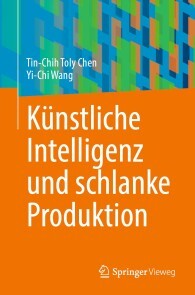
Künstliche Intelligenz und schlanke Produktion
Dieses Buch wendet künstliche Intelligenz auf die schlanke Produktion an und zeigt, wie sich die Vorteile dieser beiden Disziplinen praktisch kombinieren lassen. Die schlanke Produktion hat ihren Ursprung in Japan und ist ein bekanntes Instrument zur Verbesserung der Wettbewerbsfähigkeit der Hersteller. Zu den gängigen Werkzeugen der schlanken Produktion gehören Kanban, Pacemaker, Wertstromkarte, 5s, Just-in-Time und Pull Manufacturing. Lean Manufacturing und das Toyota-Produktionssystem wurden in verschiedenen Fabriken und Lieferketten auf der ganzen Welt erfolgreich eingesetzt. Ein schlankes Fertigungssystem kann nicht nur Verschwendung und Lagerbestände reduzieren, sondern auch unmittelbarer auf Kundenbedürfnisse reagieren. Künstliche Intelligenz ist ein Thema, das in letzter Zeit viel Aufmerksamkeit auf sich gezogen hat. Viele Forscher und praktische Entwickler arbeiten hart daran, künstliche Intelligenz in unserem täglichen Leben anzuwenden, auch in Fabriken. So wurden beispielsweise Fuzzy-Regeln zur Optimierung von Maschineneinstellungen entwickelt. Es wurden bionische Algorithmen vorgeschlagen, um Probleme bei der Produktionsreihenfolge und -planung zu lösen. Technologien des maschinellen Lernens werden eingesetzt, um mögliche Probleme mit der Produktqualität zu erkennen und den Zustand einer Maschine zu diagnostizieren. Dieses Buch ist für Produktionsingenieure, Manager sowie für Studenten und Forscher im Bereich der Fertigungstechnik von Interesse. Kapitel 1. Grundlagen des Lean Management - Kapitel 2. KI in der Fertigung.- Kapitel 3. KI-Anwendungen für das Kaizen-Management - Kapitel 4. KI-Anwendungen für Pull Manufacturing und JIT - Kapitel 5. KI-Anwendungen für das Produktions-Leveling - Kapitel 6. KI-Anwendungen für das Shop Floor Management: 5S, Kanban, SMED.- Kapitel 7. KI-Anwendungen für Value Stream Mapping.
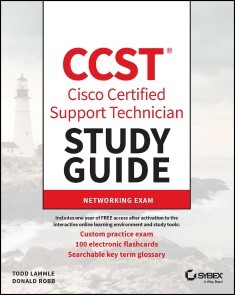
CCST Cisco Certified Support Technician Study Guide
THE IDEAL PREP GUIDE FOR EARNING YOUR CCST NETWORKING CERTIFICATIONCCST Cisco Certified Support Technician Study Guide: Networking Exam is the perfect way to study for your certification as you prepare to start or upskill your IT career. Written by industry expert and Cisco networking guru Todd Lammle, this Sybex Study Guide uses the trusted Sybex approach, providing 100% coverage of CCST Networking exam objectives. You’ll find detailed information and examples for must-know Cisco networking topics, as well as practical insights drawn from real-world scenarios. This Study Guide provides authoritative coverage of key exam topics, including standards and concepts, addressing and subnet formats, endpoints and media types, infrastructure, diagnosing problems, and security. You also get one year of FREE access to a robust set of online learning tools, including a test bank with hundreds of questions, a practice exam, a set of flashcards, and a glossary of important terminology. The CCST Networking certification is an entry point into the Cisco certification program, and a pathway to the higher-level CCNA, so it’s a great place to start as you build a rewarding career!* Study 100% of the topics covered on the Cisco CCST Networking certification exam* Get access to flashcards, practice questions, and more great resources online* Master difficult concepts with real-world examples and clear explanations* Learn about the career paths you can follow and what comes next after the CCSTThis Sybex study guide is perfect for anyone wanting to earn their CCST Networking certification, including entry-level network technicians, networking students, interns, and IT professionals. ABOUT THE AUTHORSTODD LAMMLE is the authority on Cisco certification and internetworking, and is Cisco certified in most Cisco certification categories. He is a world-renowned author, speaker, trainer, and consultant. Todd has published over 130 books, including the very popular CCNA: Cisco Certified Network Associate Study Guide, and over a hundred more from Sybex. He runs an international consulting and training company based in northern Idaho, where he spends his free time in the mountains playing with his golden retrievers. You can reach Todd through his website at www.lammle.com. DONALD ROBB has over 15 years of experience with most areas of IT, including networking, security, collaboration, data center, cloud, SDN, and automation/devops. He’s earned many advanced certifications and specializations. Currently he’s a SDN/Cloud/DevOps SME. Visit his blog at https://www.the-packet-thrower.com and YouTube channel at https://www.youtube.com/c/ThePacketThrower.

Fintech and Cryptocurrency
FINTECH AND CRYPTOCURRENCYDIVE INTO THE WORLD OF FINTECH AND CRYPTOCURRENCY THROUGH THE ENGAGING PERSPECTIVES OF THIS DIVERSE GROUP OF AUTHORS AND UNCOVER THE INTRICATE CONNECTIONS BETWEEN TECHNOLOGY, FINANCE, AND CRYPTOCURRENCY THAT MAKE THIS A MUST-HAVE FOR ANYONE INTRIGUED BY THE FUTURE OF DIGITAL SOCIETY.Digital currencies, decentralization of money, and the growth of new technologies like blockchain, the Internet of Things, and machine learning have produced new opportunities and difficulties for banking and finance, as well as users of these services in electronic commerce. New banking and finance technologies may improve operational efficiency, risk management, compliance, and client pleasure, but they can decrease barriers and introduce new concerns, such as cybersecurity risk. Cryptocurrencies with smart contracts for payments and trading, as well as AI systems with adaptive algorithms that allow picture and speech recognition, expert judgement, group categorization, and forecasting in a variety of fields, are instances of increased automation. Simultaneously, the potentials pose risks and raise regulatory concerns. The rise of blockchain technology and its widespread use have had a significant impact on the operation and management of digital systems. At the same time, researchers and practitioners have paid close attention to digital finance. Blockchain’s first applications were limited to the production of digital currency, but it has now been expanded to include financial and commercial applications. Innovative digital finance has had a huge impact on business and society since it has been extensively adopted by businesses and consumers. As a result, the goal of this edited book is to expand and deepen our knowledge of the business possibilities of novel blockchain and digital financial applications. MOHD NAVED, PHD, is an associate professor with a career spanning over a decade in the fields of business analytics, data science, and artificial intelligence. He has over 80 publications in reputed scholarly journals and books, and his research focuses on the applications of these disciplines in various industries.V. AJANTHA DEVI, PHD, is a distinguished researcher and holds the position of Research Head at AP3 Solutions, located in Chennai, Tamil Nadu, India. She earned her Ph.D. from the University of Madras in 2015, marking the inception of her impressive academic journey. She has over 45 papers published in prestigious international journals and conference proceedings, and she has authored, co-authored and edited numerous books.She holds five Australian patents and one Indian patent, and she has won numerous awards.ADITYA KUMAR GUPTA, PHD, is an associate professor at Amity University, Noida, India, with over 20 years of experience in both academia and industry. He is the editor of the Amity Case Research Journal, and he has been a reviewer for many scientific journals.Preface xvii1 EVOLUTION OF FINTECH IN FINANCIAL ERA 1Tanya Kumar and Satveer Kaur1.1 Introduction 11.2 Review of Literature 21.3 Objectives and Research Methodology 41.4 Working of FinTech 41.5 Tools and Techniques used in FinTech 51.6 Future Framework of FinTech 71.7 Evolution of FinTech in Financial World 71.8 Discussion and Conclusion 9References 9Webliography 112 DIGITAL TRANSFORMATION OF FINANCIAL SERVICES IN THE ERA OF FINTECH 13Ayesha Siddiqui, Arti Yadav and Najib H.S. Farhan2.1 Introduction 132.2 Review of Literature 162.2.1 Studies on FinTech 162.2.2 Studies on Digital Transformation 182.3 Digital Transformation: A Conceptual Overview 202.4 FinTech Ecosystem 212.5 Role of Fintech and Digital Transformation with Respect to Financial Services 242.6 Conclusion 27References 273 RESHAPING BANKING WITH DIGITAL TECHNOLOGIES 35Ankita Srivastava and Aishwarya Kumar3.1 Banking and Artificial Intelligence (AI) 353.1.1 Basic Algorithms and Machine Intellect 373.1.2 Artificial Common Intelligence 373.1.3 Ultra Smart AI 373.2 Fintech Evolution 383.3 AI Opportunities in Fintech 403.3.1 Automation 403.3.1.1 Robotic Process Automation (RPA) 403.3.1.2 iPaaS 413.3.1.3 iSaaS 413.3.1.4 Bots 413.3.1.5 Enterprise Automation 413.3.2 Improved Decision Making 423.3.3 Customization 433.4 Reshaping the Banking 443.4.1 Payments 443.4.2 Lending & AI-Based Credit Analysis 463.4.3 Wealth Management 483.4.3.1 Portfolio Management 483.4.3.2 Compliance Management 493.4.3.3 Robo-Advisory 503.5 Insurance 523.6 Challenges Faced by Fintech in Banking 533.6.1 Regulatory Compliance 533.6.2 Customer Trust 533.6.3 Blockchain Integration 533.7 Conclusion 54References 544 ADOPTION OF FINTECH: A PARADIGM SHIFT AMONG MILLENNIALS AS A NEXT NORMAL BEHAVIOUR 59Pushpa A., Jaheer Mukthar K. P., Ramya U., Edwin Hernan Ramirez Asis and William Rene Dextre Martinez4.1 Introduction 604.1.1 Evolution of Fintech 614.1.2 Technology Innovation in the Financial Sector - Building a Digital Future 634.1.3 Taxonomy of Fintech Business Model 664.1.4 Fintech Ecosystem 694.1.5 Prepositions for Fintech Adoption 724.1.6 Challenges of the Fintech Industry 744.2 Statement of the Problem and Research Questions 754.3 Research Questions and Objectives 764.4 Conceptual Framework and Proposed Model 774.4.1 Conceptual Framework 774.4.2 The TAM Model 774.4.3 Proposed Model and Hypothesis Framed 794.5 Conclusion 83Acknowledgement 83References 835 A COMPREHENSIVE STUDY OF CRYPTOCURRENCIES AS A FINANCIAL ASSET: MAJOR TOPICS AND MARKET TRENDS 91Gioia Arnone and Ajantha Devi Vairamani5.1 Introduction 915.2 Literature Review 925.3 Methodology 955.4 Findings 965.5 Cryptocurrencies as a Major Financial Asset 975.6 What is the Value of Cryptocurrencies? Current Market Trends 985.7 Conclusion 100References 1016 CUSTOMERS’ SATISFACTION AND CONTINUANCE INTENTION TO ADOPT FINTECH SERVICES: DEVELOPING COUNTRIES’ PERSPECTIVE 105Song Bee Lian and Liew Chee Yoong6.1 Introduction 1066.2 Understanding the Fintech Phenomenon in Developing Countries 1086.3 Literature Review 1096.3.1 Technology Acceptance Model (TAM) 1096.3.2 Customer Satisfaction 1106.3.3 Customer Innovativeness 1106.3.4 Hedonic Motivation 1116.3.5 Perceived Usefulness 1116.3.6 Perceived Ease of Use 1126.3.7 System Quality 1136.3.8 Technology Self-Efficacy 1136.3.9 Continuance Intention to Adopt 1146.3.10 Hypothesis Development 1146.3.11 Conceptual Model 1156.4 Research Methodology 1156.4.1 Sample and Data Collection 1156.4.2 Measures of the Constructs 1166.4.3 Validity and Reliability Assessment 1166.5 Results 1206.5.1 Demographic Profile of the Respondent 1206.5.2 Structural Model Assessment 1206.6 Discussion 1226.7 Theoretical and Practical Implications 1266.8 Conclusion 127References 1287 FINTECH APPS: AN INTEGRAL TOOL IN TITIVATING BANKING OPERATIONS 137Arun Prakash A., Leelavathi R., Rupashree R. and V.G. Jisha7.1 Introduction 1387.2 Objectives 1427.3 Statement of the Problem 1437.4 Need for the Study 1447.5 Review of Literature 1447.6 Proposed Model 1457.7 Lending APPS 1457.8 Investment Apps 1457.9 Payment Apps 1477.10 Insurance Apps 1487.11 Persuading Factors that Increase the Usage of Fin-Tech Apps 1497.12 Methodology 1507.13 Results and Discussions 1517.14 Multiple Linear Regression 1527.15 Structural Equation Modelling 1547.16 Conclusion 155References 1558 ANALYTICAL STUDY OF FIN-TECH IN BANKING: A UTILITY MODEL 157Neha Kamboj and Mamta Sharma8.1 Introduction 1588.2 Literature Analysis and Development of Hypothesis 1608.2.1 Perceived Utility (PU) and Willingness to Adopt Fin-Tech (WUF) Services 1618.2.2 Sensible Usability (SU) and Willingness to Use Fin-Tech (WUF) Services 1618.2.3 Customer Belief (CU) and Willingness to Use Fin-Tech (WUF) Services 1628.2.4 Social Implications (SI) and Willingness to Use Fin-Tech (WUF)Services 1628.3 Research Design 1638.4 Empirical Results 1658.4.1 Effect of Perceived Utility of Fin-Tech Services (PU) on the Willingness of Customers to Use Fin-Tech (ICUF) Services 1688.4.2 Effect of Perceived Ease of Use of Fin-Tech Services (PEU) on the Willingness of Customers to Use Fin-Tech (ICUF) Services 1688.4.3 Effect of Customer Belief in Fin-Tech Services (CU) on the Willingness of Customers to Utilize Fin-Tech (ICUF) Services 1688.4.4 Social Influence (SI) Impact on the Willingness of Customers to Utilize Fin-Tech (ICUF) Services 1698.5 Conclusion 169References 1709 IS DIGITAL CURRENCY A PAYMENT DISRUPTION MECHANISM? 173Vanishree Mysore Ramkrishna and Vyshnavi Loganathan9.1 Introduction 1739.2 Review of Literature 1759.3 Methodology and Sampling 1779.4 Results and Discussion 1799.4.1 Financial Literacy & Inclusion 1809.4.2 Infrastructure 1819.4.3 Technical Know-How 1839.4.4 Trust and Belief 1849.5 Acceptance of CBDC 1859.6 Conclusion 188References 19010 INVESTOR SENTIMENT DRIVING CRYPTO-TRADE IN INDIA 193Sushant Waghmare and Dipesh Uike10.1 Introduction 19410.2 Review of Literature 19510.2.1 Finance & Sentiments 19510.2.2 Cryptocurrency 19610.2.3 Addiction or Analysis? 19710.2.4 Fear of Missing Out (FOMO) 19810.3 Research Methodology 20010.3.1 Aim of the Study 20010.3.2 Objectives of the Study 20010.3.3 Sampling Methodology & Data Analysis 20010.3.4 Limitations of the Study 20110.4 Data Analysis & Interpretation 20110.5 Conclusions, Suggestions & Recommendations 214References 21711 APPLICATIONS OF DIGITAL TECHNOLOGIES AND ARTIFICIAL INTELLIGENCE IN CRYPTOCURRENCY - A MULTI-DIMENSIONAL PERSPECTIVE 221W. Jaisingh, Preethi N. and R. K. Kavitha11.1 Introduction 22211.2 State-of-the-Art Review 22311.3 Application Areas of Cryptocurrencies 22411.3.1 Fundraising and Investments 22411.3.2 Freight Transportation and Travel 22611.3.3 Education 22711.3.4 Publication and Advertising as Means of Communication 22711.3.5 E-Commerce and Entertainment 22811.3.6 Real Estate and Stock Market 22811.3.7 Trained Financial Planners 22811.4 Financial Transaction Using Blockchain Technology 22911.4.1 Introduction 22911.4.2 Technology Acceptance Model 23011.4.3 External Constructs 23011.4.3.1 Trust (T) 23011.4.3.2 Support (RS) for Regulatory Standards 23211.4.3.3 Experience (E) 23211.4.3.4 Social Influence (SI) 23311.4.3.5 Design (D) 23311.4.4 Summary 23411.5 An Analysis of Cryptocurrency Mining Using a Hybrid Approach 23411.5.1 Introduction 23411.5.2 Cryptocurrency Mining Strategies 23511.5.3 Summary and Discussion 23611.6 Forecasting Cryptocurrency Price Using Convolutional Neural Networks 23711.6.1 Introduction 23711.6.2 Assistive Technologies in Machine Learning and Deep Learning 23811.6.3 Convolutional Neural Networks with Weighted and Attentive Memory Channels 23811.6.3.1 Attentive Memory Module 23911.6.3.2 Convolution & Pooling Module 23911.6.4 Summary and Discussion 23911.7 Blockchain Technology and Cryptocurrencies for the Collaborative Economy 24011.7.1 Introduction 24011.7.2 Collaborative Economy and Digital Platforms 24111.7.3 Emergence of Collaborative Consumption 24211.7.3.1 Promoting the Diffusion of Collaborative Practices 24211.7.4 Summary 24211.8 Conclusions 243References 24312 A STUDY ON THE INFLUENCE OF PERSONALITY ON SAVINGS AND INVESTMENT IN CRYPTOS 251K. Manimekalai, T. Satheeshkumar and G. Manokaran12.1 Introduction 25212.2 Literature Review 25312.2.1 Openness to Experience 25412.2.2 Conscientiousness 25612.2.3 Extroversion 25712.2.4 Aggreeableness 25812.2.5 Neuroticism 25912.3 Objectives of the Research 26012.4 Methodolgy 26012.5 Discussion 268References 26913 DEEP NEURAL NETWORK IN SECURITY: A NOVEL ROBUST CAPTCHA MODEL 277Manasi Chhibber, Rashmi Gandhi, Aakanshi Gupta and Ashok Kumar Yadav13.1 Introduction 27713.2 Literature Review 27913.2.1 Convolutional Neural Networks 28013.2.2 Transfer Learning 28113.3 Proposed Approach 28313.3.1 Data Pre-Processing and Exploratory Analysis 28313.3.2 Data Acquisition 28313.4 Results and Discussions 28913.4.1 Cnn 28913.4.2 DenseNet 29213.4.3 MobileNet 29513.4.4 Vgg 16 29713.5 Conclusion 300References 30014 CUSTOMER’S PERCEPTION OF VOICE BOT ASSISTANCE IN THE BANKING INDUSTRY IN MALAYSIA 303Manimekalai Jambulingam, Indhumathi Sinnasamy and Magiswary Dorasamy14.1 Introduction 30314.2 Problem Statement 30414.3 What is a Voice Bot? 30514.3.1 Characteristics of a Voice Bot 30714.3.2 Why are Voice Bots Becoming Popular? 30814.3.3 Benefits of a Voice Bot from the Bank’s Perspective 30914.3.4 Benefits of a Voice Bot from the Customer’s Perspective 31114.3.5 Opportunities for Voice Bots in Banking 31214.3.6 Use Cases: Bank Voice Bots Currently Available Around the World 31314.4 Call to Action 31514.5 Literature Review 31614.6 Research Methodology 31714.7 Descriptive Analysis 31814.8 Discussion and Conclusion 321References 32215 APPLICATION OF TECHNOLOGY ACCEPTANCE MODEL (TAM) IN FINTECH MOBILE APPLICATIONS FOR BANKING 325Tabitha Durai and F. Lallawmawmi15.1 Introduction 32615.1.1 Significance of the Study 33115.1.2 Research Objectives 33115.1.3 Hypotheses of the Study 33215.1.3.1 Perceived Usefulness Toward the Usage of Fintech 33215.1.3.2 Brand Image Toward the Usage of Fintech 33315.1.3.3 Perceived Risks Toward the Usage of Fintech 33315.2 Methods and Measures 33415.2.1 Instrument Development 33515.3 Results 33615.3.1 Demographic Profile of the Respondents 33615.3.2 Factors Influencing Fintech under Technology Acceptance Model (TAM) 33815.3.2.1 Prominent Factors under Technology Acceptance Model (TAM) that Influence the Usage of Fintech 34015.3.3 Technology Acceptance Model and the Usage of Fintech 34015.3.3.1 Perceived Usefulness Toward the Usage of Fintech 34015.3.3.2 Brand Image Toward the Usage of Fintech 34215.3.3.3 Perceived Risks Toward the Usage of Fintech 34315.4 Discussion 34415.5 Conclusion 346References 34716 UPSURGE OF ROBO ADVISORS: INTEGRATING CUSTOMER ACCEPTANCE 351C. Nagadeepa, Reenu Mohan, Antonio Peregrino Huaman Osorio and Willian Josue Fernandez Celestino16.1 Introduction 35116.2 Chatbots 35516.2.1 Benefits of Using Chatbots in Banks 35516.3 Robo-Advisor 35616.3.1 Robo-Adviser – A Brief History 35716.3.2 Historic Account of Robo Advisors 35816.3.3 Robo-Advisor Versus FA (Financial Advisor) 35916.3.4 Robo Advisors in Market 35916.3.5 How Robo-Advisors Work? 36416.3.6 Types of Robo-Advisor 36516.3.7 Top Robo-Advisors 36716.3.8 Points to be Consider while Selection of Robo-Advisor 37116.3.9 Benefits of Robo-Advisors 37216.3.10 Limitations of Robo-Advisors 37316.4 Acceptance of Robo-Advisor 37416.4.1 Theoretical Background and Research Propositions 37416.4.2 A Glimpse of Earlier Research Studies 37516.4.3 Methodology and Hypothesis 37616.4.4 Collection of Data 37716.4.5 Hypotheses Testing 37716.5 Conclusion 379References 37917 SUPER APPS: THE NATURAL PROGRESSION IN FIN-TECH 383Kavitha D., Uma Maheswari B. and Sujatha R.17.1 Introduction 38317.2 Journey from an App to a Super App 38517.3 Super App vs. A Vertically Integrated App 38517.4 Architecture and Design of Super Apps 38617.4.1 Monolithic Architecture 38817.4.2 Modular Architecture 38817.4.3 Microservices Architecture 38917.5 Business Models of Super Apps 39017.6 The Super App Market Space and the Business Models 39117.6.1 WeChat 39117.6.2 Alipay 39317.6.3 Grab 39417.6.4 Paytm 39517.6.5 The Latest Entrant: Tata Neu 39617.6.6 Other Players 39617.7 Factors Contributing to the Success of Super Apps 39717.8 Super Apps in Fin-Tech and their Role in the Financial Services Segment 40017.9 Role of Super Apps in Financial Inclusion 40317.10 Benefits of Super Apps in the Financial Services Sector 40517.10.1 Economies of Scale & Cost of Financial Intermediation 40517.10.2 Size & Speed of Product and Service Offerings 40617.10.3 The Power of Data and the Speed of Responsiveness 40617.11 Risks due to Super Apps in the Financial System 40617.11.1 Financial Stability 40717.11.2 Market Concentration 40717.11.3 Dis-Intermediation of Banks from Customer 40817.12 Regulatory Measures to Mitigate the Risks 40817.13 The Future of Super Apps 40817.14 Conclusion 410References 411Index 413

LPI Web Development Essentials Study Guide
PASS THE LPI WEB DEVELOPMENT ESSENTIALS EXAM AND SET YOURSELF UP FOR SUCCESS AT A NEW WEB DEVELOPMENT JOBIn LPI Linux Professional Institute Web Development Essentials Study Guide: Exam 030-100, accomplished IT educator and systems engineer, Audrey O’Shea delivers an easy-to-follow and hands-on roadmap to passing the LPI Web Development Essentials exam and hitting the ground running at a new job as a web developer. In the book, you’ll explore the software development skills, web technologies, HTML, CSS, Node.js, and JavaScript info you need to implement modern applications and solutions in a web environment. You will find:* Introductory coverage of SQL, HTML, JavaScript, CSS, and MongoDB* A heavy emphasis on real-world job skills, as well as the technologies used every day by web developers in the field* Complimentary access to the Sybex interactive online learning environment and test bank, complete with hundreds of practice questions, electronic flashcards, and a searchable glossary of important termsAn essential and practical resource for anyone preparing for the Web Development Essentials certification exam, LPI Linux Professional Institute Web Development Essentials Study Guide: Exam 030-100 is also the ideal book for entry-level software developers seeking knowledge of web development tools and principles. ABOUT THE AUTHORAUDREY O’SHEA currently teaches electronics and information technology at a technical school in upstate New York. She has been working and educating in IT since 1989 and her career has included positions of network administrator, tech support specialist, trainer and consultant. Introduction xviiAssessment Test xxiiiCHAPTER 1 WEB DEVELOPMENT BASICS 1Developer Types 2Creating Software 3Text Editors and IDEs 6Compiled Languages 7Interpreted Languages 8Programming Paradigms 8Maintaining Software 11Version Control Systems 11Software Testing 12Summary 12Exam Essentials 13Review Questions 17CHAPTER 2 CLIENT/SERVER COMPUTING 21Client-Side 23Types of Clients 24Web Browsers 26Server- Side 28Types of Servers 28Popular Server Software 29Popular Web Page–Creating Software 29Summary 31Exam Essentials 31Review Questions 34CHAPTER 3 DATABASE MANAGEMENT SYSTEMS 39Database Structures and Languages 40Database Structures 40Database Languages 43Relational Database Concepts 44Content Maintenance and Delivery 45Summary 47Exam Essentials 47Review Questions 51CHAPTER 4 CLIENT/SERVER COMMUNICATION 55HTTP 56HTTP Client-Side 57HTTP Server-Side 60WebSocket API 61Caches and Cookies 62HTTP Security Concerns 63Summary 63Exam Essentials 64Review Questions 66CHAPTER 5 HTML INTRODUCTION 71What Is HTML? 73The HTML Skeleton 73HTML Syntax 75HTML Head 79Summary 81Exam Essentials 81Review Questions 86CHAPTER 6 CONTENT MARKUP 91The Basics 92Block and Inline Elements 93Block Elements 93Inline Elements 95Hierarchical Structure 96Lists 97Styles 100Semantic and Non-Semantic Elements 100Non-Semantic Elements 100Semantic Structural Elements 100Summary 101Exam Essentials 101Review Questions 111CHAPTER 7 REFERENCES AND EMBEDDED RESOURCES 115Page Anchors 116External Resource Links 117Using Images 118The img Tag and Its Attributes 119Inline or Background Images 120Image Maps 122File Formats 124The Tag 125Summary 126Exam Essentials 126Review Questions 131CHAPTER 8 CREATING HTML FORMS 135Anatomy of an Input Form 136Commonly Used Attributes 137Button Types 142Adding Functionality 143Radio Buttons and Check Boxes 145A Form for Reviews 146Summary 146Exam Essentials 147Review Questions 154CHAPTER 9 INTRODUCING CSS 159Applying Styles to HTML 160The style Attribute 160CSS Rules and Selectors 161The Tag 162CSS Stored in Separate Files 164CSS Accessibility Features 165Summary 166Exam Essentials 166Review Questions 171CHAPTER 10 APPLYING CSS STYLES 175Other Selectors 176CSS Inheritance 180CSS Pseudo- Classes 181CSS Order of Precedence 182Summary 183Exam Essentials 183Review Questions 188CHAPTER 11 CSS STYLING FUNDAMENTALS 193Units of Measure 194Absolute Units 194Relative Units 195Common Properties 196Color 197Background 198Borders 200Font 201Text 202List Style 204Line Height 206Summary 208Exam Essentials 209Review Questions 213CHAPTER 12 CSS LAYOUT AND BOX MODEL 217The CSS Box Model 218CSS Box Model Parts 219Element Dimensions 219CSS Website Layout 221Elements and Their Positions 221Text Flow 221Document Flow 222Other Layout Features 224Summary 226Exam Essentials 227Review Questions 233CHAPTER 13 JAVASCRIPT ESSENTIALS 237JavaScript Statements and Syntax 238Adding Comments 240Inserting JavaScript into HTML 241JavaScript as an External File 242The JavaScript Console 244Summary 245Exam Essentials 246Review Questions 249CHAPTER 14 JAVASCRIPT DATA 253Variables, Constants, and Scope 254Variables 254Constants 255Scope 255Objects and Methods 256Data Types 258Primitive Types 258Arrays 259Strings 260Operators and Precedence 261Data Conversions 263Summary 264Exam Essentials 265Review Questions 269CHAPTER 15 FUNCTIONS AND CONTROL STRUCTURES 273Functions 274Function Syntax 274Starting and Stopping Functions 275Functions and Variables 276Conditional Statements 276Comparison Operators 280Data Coercion 280Truthy and Falsy Values 281Summary 281Exam Essentials 281Review Questions 285CHAPTER 16 THE DOM 291DOM Structure 292DOM Methods and Properties 296Adding and Deleting Classes and Attributes 296Retrieving and Setting Values 297Changing CSS Styling Using the DOM 299DOM Events 300Summary 301Exam Essentials 301Review Questions 305CHAPTER 17 NODEJS BASICS 309What Is Node.js? 310Installing Node.js 311Installing a Node.js Module 312Running a Node.js App 313Summary 313Exam Essentials 314Review Questions 317CHAPTER 18 NODEJS EXPRESS 321Node.js vs. Node.js Express 322Installing Express 322Routing and Serving Files 325User Input and Validation 327Templates 331Template Engines 331HTML Templates 331Security Concerns 333Cross-Site Scripting 333Cross-Site Request Forgery 333Summary 333Exam Essentials 333Review Questions 337CHAPTER 19 MANIPULATING SQLITE WITH NODEJS 341Installing the SQLite Module 342Creating a SQLite Database 342Opening and Closing the Database 343In Terminal 343In NodeJS 344Managing SQLite Data with NodeJS 345Entering Data 346Changing Data 346Running Queries 347Security Concerns 349Summary 349Exam Essentials 350Review Questions 356APPENDIX ANSWERS TO REVIEW QUESTIONS 361Chapter 1: Web Development Basics 362Chapter 2: Client/Server Computing 363Chapter 3: Database Management Systems 365Chapter 4: Client/Server Communication 367Chapter 5: HTML Introduction 369Chapter 6: Content Markup 370Chapter 7: References and Embedded Resources 372Chapter 8: Creating HTML Forms 373Chapter 9: Introducing CSS 375Chapter 10: Applying CSS Styles 376Chapter 11: CSS Styling Fundamentals 378Chapter 12: CSS Layout and Box Model 380Chapter 13: JavaScript Essentials 381Chapter 14: JavaScript Data 383Chapter 15: Functions and Control Structures 384Chapter 16: The DOM 386Chapter 17: NodeJS Basics 388Chapter 18: NodeJS Express 389Chapter 19: Manipulating SQLite with NodeJS 391Index 395

Self-Service AI mit Power BI
In diesem Buch wird erklärt, wie Sie die in Power BI Desktop geladenen Daten durch den Zugriff auf eine Reihe von Funktionen der künstlichen Intelligenz (KI) anreichern können. Diese KI-Funktionen sind in Power BI Desktop integriert und helfen Ihnen, neue Erkenntnisse aus vorhandenen Daten zu gewinnen. Einige der Funktionen sind automatisiert und stehen Ihnen auf Knopfdruck oder durch das Schreiben von Datenanalyseausdrücken (DAX) zur Verfügung. Andere Funktionen sind durch das Schreiben von Code in den Sprachen R, Python oder M verfügbar. Dieses Buch eröffnet Ihnen die gesamte Palette der KI-Funktionen mit klaren Beispielen, die zeigen, wann sie am besten angewendet werden und wie Sie sie auf Ihre eigenen Datensätze anwenden können. Ganz gleich, ob Sie Geschäftsanwender, Analyst oder Datenwissenschaftler sind - Power BI verfügt über KI-Funktionen, die auf Sie zugeschnitten sind. In diesem Buch erfahren Sie, welche Arten von Erkenntnissen Power BI automatisch liefern kann. Sie erfahren, wie Sie die Sprachen R und Python für Statistiken integrieren und nutzen können, wie Sie beim Laden von Daten mit Cognitive Services und Azure Machine Learning Services zusammenarbeiten, wie Sie Ihre Daten durch Fragen in einfachem Englisch erkunden können ... und vieles mehr! Es gibt KI-Funktionen für die Entdeckung Ihrer Daten, die Charakterisierung unerforschter Datensätze und die Erstellung von Was-wäre-wenn-Szenarien.Es gibt viel zu mögen und von diesem Buch zu lernen, ob Sie ein Neuling in Power BI oder ein erfahrener Benutzer sind. Power BI Desktop ist ein frei verfügbares Tool zur Visualisierung und Analyse. Dieses Buch hilft Ihnen, das Beste aus diesem Tool herauszuholen, indem Sie einige seiner neuesten und fortschrittlichsten Funktionen nutzen.WAS SIE LERNEN WERDEN:- Stellen Sie Fragen in natürlicher Sprache und erhalten Sie Antworten aus Ihren Daten- Lassen Sie sich von Power BI erklären, warum sich ein bestimmter Datenpunkt von den anderen unterscheidet- Lassen Sie Power BI die wichtigsten Einflussfaktoren über Datenkategorien anzeigen- Zugriff auf die in der Azure-Cloud verfügbaren Funktionen für künstliche Intelligenz- Gehen Sie denselben Drilldown-Pfad in verschiedenen Teilen Ihrer Hierarchie- Laden Sie Visualisierungen, um Ihre Berichte intelligenter zu gestalten- Simulieren Sie Änderungen an Daten und sehen Sie sofort die Folgen- Kennen Sie Ihre Daten, noch bevor Sie Ihren ersten Bericht erstellen- Erstellen Sie neue Spalten, indem Sie Beispiele für die benötigten Daten angeben- Transformieren und visualisieren Sie Ihre Daten mit Hilfe von R- und Python-SkriptenFÜR WEN DIESES BUCH GEDACHT IST:Für den begeisterten Power BI-Anwender, der modernste Funktionen der künstlichen Intelligenz (KI) einsetzen möchte, um neue Erkenntnisse aus vorhandenen Daten zu gewinnen. Für Endanwender und IT-Fachleute, die sich nicht scheuen, in die neue Welt des maschinellen Lernens einzutauchen, und bereit sind, diesen Schritt zu tun und einen tieferen Blick in ihre Daten zu werfen. Für diejenigen, die von einfachen Berichten und Visualisierungen zu diagnostischen und prädiktiven Analysen übergehen wollen.Markus Ehrenmueller-Jensen ist ein Datenexperte, der seine Karriere als Berater für Business Intelligence-Lösungen auf einem IBM AS/400-System begann, bevor er 2006 in die Welt von Microsofts Data Platform eingeführt wurde. Seitdem hat er Data Warehouses und Business Intelligence-Lösungen für eine Vielzahl von Kunden entwickelt. Sein Portfolio umfasst Schulungen und Workshops, Architekturentwürfe und die Entwicklung von datenorientierten Lösungen. Im Jahr 2018 gründete er Savory Data, ein unabhängiges Beratungsunternehmen.Markus ist als Microsoft Certified Solution Expert (MCSE) für Data Platform und Business Intelligence sowie als Microsoft Certified Trainer (MCT) zertifiziert. Er unterrichtet Datenbanken, Informationsmanagement und Projektmanagement an der HTL Leonding, Österreich. Er ist Mitbegründer von PASS Austria und PUG Austria und Mitorganisator des jährlich stattfindenden SQL Saturday in Wien. Seit 2017 ist er jedes Jahr ein Microsoft Most Valuable Professional (MVP).1. Fragen in natürlicher Sprache stellen2. Die Insights-Funktion3. Entdeckung wichtiger Einflussfaktoren4. Drill-Down und Zerlegung von Hierarchien5. Hinzufügen intelligenter Visualisierungen6. Mit Szenarien experimentieren7. Einen Datensatz charakterisieren8. Spalten aus Beispielen erstellen9. Ausführen von R- und Python-Visualisierungen10. Datenumwandlung mit R und Python11. Ausführen von Machine Learning Modellen in der Azure Cloud

Critical Theory of AI
We live in an age of artificial intelligence. Machines think and act in ever more complex ways, making suggestions and decisions on our behalf. While AI might be seen as practical and profitable, issues of data surveillance, algorithmic control, and sexist and racist bias persist. In this rapidly changing landscape, social analysis of AI risks getting scaled down to issues of ‘ethics’, ‘responsibility’, and ‘fairness’. While these are important issues, they must be addressed not from an ‘AI first’ perspective, but more thoroughly in terms of power and contention.Approaching artificial intelligence from the often overlooked perspective of critical social theory, this book provides a much-needed intervention on how both old and new theories conceptualize the social consequences of AI. Questions are posed about the ideologies driving AI, the mythologies surrounding AI, and the complex relationship between AI and power. Simon Lindgren provides a way of defining AI as an object of social and political critique, and guides the reader through a set of contentious areas where AI and politics intersect. In relation to these topics, critical theories are drawn upon, both as an argument for and an illustration of how AI can be critiqued.Given the opportunities and challenges of AI, this book is a must-read for students and scholars in the humanities, social sciences, and STEM disciplines.SIMON LINDGREN is Professor of Sociology at Umeå University.1. AI and critical theory2. AI assemblage3. Ideology behind AI4. Ideology within AI5. Social machines6. AI at work7. AI subjects8. AI in the loopReferencesIndex

Introduction to Ansible Network Automation
This book provides a comprehensive learning journey aimed at helping you master Ansible and efficiently automate a range of enterprise network devices, such as routers, switches, firewalls, Wireless LAN Controller (WLC), and Linux servers. Introduction to Ansible Network Automation combines the fundamentals of three books into one, covering basics of Linux administration, Ansible concepts, and Ansible network automation.Authors Brendan Choi and Erwin Medina have created a structured learning path that starts with the fundamentals and allows you to progressively enhance your skill sets with each chapter. Part I serves as an Ansible primer, guiding you through Linux basics using WSL on Windows 11 and assisting in the setup of your learning environment. Part II covers essential Ansible concepts through practical lab activities involving four Linux servers. In Part III, you will learn how to apply your Linux skills from Part I and the concepts from Part II to real-world scenarios by creating Ansible automation YAML scripts.What sets this book apart is its unique focus on Ansible and Network Automation, combined with a strong emphasis on understanding Linux. It is specifically designed for novice network automation engineers and students, assuming no prior Linux expertise, and provides first-hand experience starting from scratch. It also offers practical insights by sharing real-life examples of Ansible playbooks derived from production enterprise infrastructure, allowing you to gain an understanding of how Ansible can be effectively applied in real-world enterprise network environments.Upon completion of this book, you will have developed foundational skills in Ansible network automation and general Linux administration, and will understand how to apply this newly acquired knowledge to real-life scenarios.WHAT YOU WILL LEARN* Develop a comprehensive understanding of Ansible and its essential concepts for automating enterprise network devices and applying them to real-world scenarios* Master the basics of Ansible operations within Linux automation and progress to applying Ansible concepts specifically to network device automation* Execute Ansible ad-hoc commands and playbooks for a range of network operational tasks, including configuration management, software and system updates, and upgrades* Work with real-life examples of Ansible playbooks derived from actual enterprise infrastructure, gaining practical experience in writing Ansible YAML scripts* Acquire the skills to automate network operations using Ansible, streamline network management processes, and replace manual-driven tasks with directives in Ansible playbooksWHO IS THIS BOOK FORNetwork, security, UC and systems engineers, as well as technical leaders, IT managers and network students.BRENDAN (BYONG CHOL) CHOI is a highly accomplished tech lead at Secure Agility, with over 19 years of hands-on experience in the ICT industry. He is a certified Cisco, VMware, and Fortinet Engineer, and has worked for renowned enterprises such as Cisco Systems, NTT (Dimension Data), Fujitsu, as well as reputable Australian IT integrators like Telstra and Secure Agility. Brendan specializes in optimizing enterprise IT infrastructure management and enterprise business process optimization, utilizing both open and proprietary tools. He is the author of Python Network Automation: Building an Integrated Virtual Lab as well as Introduction to Python Network Automation: The First Journey. Through these publications, Brendan shared his knowledge with the IT community. He has trained over 200 Network and Systems Engineers on Python and Ansible Network automation and enjoys sharing industry-acquired knowledge through social media, blogging, and his YouTube channel. Brendan's current interests revolve around private cloud, enterprise networking, security, virtualization, and automation technologies. His dedication and passion for enterprise infrastructure management are evident in his commitment to continuous learning, knowledge sharing, and contributing to the ICT industry as a whole.ERWIN MEDINA is an experienced Senior Security and Network Engineer in the ICT industry with over 11 years of experience. He holds certifications in Cisco, Palo Alto, Fortinet, and Juniper technologies. Currently employed at CSIRO, Erwin contributes to the organization's security, network, and system operations and optimization, utilizing both open and proprietary tools. Erwin began his career as a field engineer in telecommunications before transitioning to ICT as a network engineer. Working with diverse networks in customers' production environments, he recognizes the crucial role of automation in simplifying complex network and security challenges. Embracing Ansible as his primary IT tool, Erwin has successfully transitioned away from manual-driven tasks. During his time at Telstra, Erwin had the privilege of being mentored by Brendan for over two years, gaining invaluable experience in leveraging Ansible and Python for enterprise network and security device management. Currently, Erwin applies Ansible in real-production scenarios to drive efficiency and productivity within his organization. He thrives on technical challenges and eagerly adapts to the ever-evolving ICT landscape, actively contributing to his organization's success. Erwin's commitment, expertise, and passion to share his knowledge with others make him a valuable asset in the ICT industry.Part 1: The IntrosChapter 1: Is Ansible good for Network Automation?Chapter 2: Shall We Linux? (Part I)Chapter 3: Shall We Linux? (Part II)Chapter 4: Creating an Ansible Learning EnvironmentPart 2: The ConceptsChapter 5: Data Types and File Formats in AnsibleChapter 6: Ansible Concepts I - SSH and Ad-Hoc CommandsChapter 7: Ansible Concepts II - Practical Application of Ad-Hoc CommandsChapter 8: Ansible Concepts III - Using when, Improving Playbooks, and Targeted NodesChapter 9: Ansible Concepts IV - Git Integration, Tags, File, and Service ManagementChapter 10: Ansible Concepts V - Users, Roles, Host Variables, Templates, and Password VaultChapter 11: Building an Ansible Learning Environment for Network and SecurityPart 3: The PracticalChapter 12: Ansible Practical I - Configuring Cisco Routers and SwitchesChapter 13: Ansible Practical II - Backing Up Cisco Network Device ConfigurationsChapter 14: Ansible Practical III - Developing a Network Configuration Comparison ToolChapter 15: Ansible Practical IV - Upgrading Cisco IOS-XE RoutersChapter 16: Ansible Practical V - Upgrading Cisco Wireless LAN Controllers (WLC)Chapter 17: Ansible Practical VI - Creating User Accounts on Palo Alto and Fortinet FirewallsChapter 18: Ansible Practical VII - Creating Security Policies on Palo Alto and Fortinet FirewallsChapter 19: Ansible Practical VIII - Creating IPsec Tunnels on Palo Alto FirewallsChapter 20: Ansible Practical IX - Creating Object Addresses on Palo Alto FirewallsChapter 21: Ansible Practical X - Upgrading Palo Alto Firewalls

macOS Sonoma For Dummies
MAKE FRIENDS WITH MACOS SONOMA THANKS TO SIMPLE, DUMMIES-STYLE INSTRUCTIONSmacOS Sonoma For Dummies is the go-to guide for finding your way around Apple’s laptop and desktop operating system. For first-time Mac owners and longtime Apple afficionados alike, this book covers the essentials you need to navigate macOS Sonoma with ease. Get a guided tour of the latest updates to macOS widgets, improved video conferencing features, updated privacy and security help, and all the classic features of the software that powers MacBook, iMac, and Mac computers. With easy-to-follow instructions and crystal-clear illustrations, this Dummies guide makes you macOS proficient in no time—even if you’ve never used a Mac computer before.* Learn the ins and outs of macOS Sonoma for desktop and laptop computers* Discover valuable shortcuts, tips, and tricks for troubleshooting* Organize your files and ensure data security* Customize your computer so you can get things done fasterIf you’re looking for a user-friendly tutorial on using macOS Sonoma and making the most of the latest updates, you can’t go wrong with macOS Sonoma For Dummies.GUY HART-DAVIS is the author of more than 100 technical books, including several books in the For Dummies series and many in the Teach Yourself VISUALLY series.
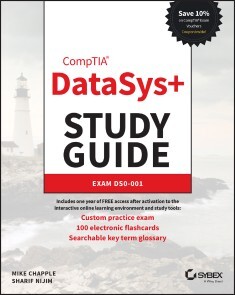
CompTIA DataSys+ Study Guide
YOUR ALL-IN-ONE GUIDE TO PREPARING FOR THE COMPTIA DATASYS+ EXAMIn CompTIA DataSys+ Study Guide: Exam DS0-001, a team of accomplished IT experts delivers a practical and hands-on roadmap to succeeding on the challenging DS0-001 exam and in a new or existing career as a data systems professional. In the book, you’ll explore the essentials of databases, their deployment, management, maintenance, security, and more.Whether you’re preparing for your first attempt at the CompTIA DataSys+ exam or for your first day on the job at a new database-related IT position, this book walks you through the foundational and intermediate skills you need to have to succeed. It covers every objective tested by the DS0-001 and skills commonly required in the real-world.You’ll also find:* Practice test questions that measure your readiness for the real exam and your ability to handle the challenges of a new data systems position* Examples and scenarios drawn from real life, as well as challenging chapter review questions* Complimentary access to Sybex’s interactive online learning environment and test bank, accessible from multiple devices, and including electronic flashcards and a searchable glossaryPerfect for anyone getting ready to write the DS0-001 certification exam, CompTIA DataSys+ Study Guide: Exam DS0-001 is also an essential resource for everyone seeking the foundational knowledge and skills required to move into a database administrator role.ABOUT THE AUTHORSMIKE CHAPPLE, PHD, SECURITY+, CYSA+, CISSP, is Teaching Professor of Information Technology, Analytics, and Operations at Notre Dame’s Mendoza College of Business. He is a bestselling author of over 30 books and serves as the Academic Director of the University’s Master of Science in Business Analytics program. He holds multiple additional certifications, including the CISSP (Certified Information Systems Security Professional), CompTIA Data+, CIPP/US (Certified Information Privacy Professional), CompTIA PenTest+, and CompTIA Security+. Mike provides IT certification resources at his website, CertMike.com. SHARIF NIJIM is an Associate Teaching Professor of IT, Analytics, and Operations at Notre Dame’s Mendoza College of Business, where he also serves as the Academic co-Director of the residential Master of Science in Business Analytics program. Prior to Notre Dame, Sharif co-founded and served on the board of a customer data integration company serving the airline industry. Introduction xxiAssessment Test xxviiiCHAPTER 1 TODAY’S DATA SYSTEMS PROFESSIONAL 1Data Drives the Modern Business 2Data 3Storage 3Computing Power 5Data Systems 5Database Fundamentals 6Database Deployment 7Database Management and Maintenance 8Data and Database Security 8Business Continuity 9Careers in Data Systems 10Summary 11CHAPTER 2 DATABASE FUNDAMENTALS 13Types of Databases 14The Relational Model 14Relational Databases 18Nonrelational Databases 22Linear vs. Nonlinear Format 27NoSQL Database Tools 28Programming and Database Operations 29Object- Relational Mapping 30Process to Gauge Impact 31Summary 33Exam Essentials 34Review Questions 36CHAPTER 3 SQL AND SCRIPTING 41Flavors of SQL 42Data Definition Language 43Data Manipulation Language 46Set- Based Logic 50Transaction Control Languages 54ACID Principles 58SQL 58Programmatic SQL 59SQL and Set-Based Logic 68Automating Operations 72Script Purpose and Runtime Location 74Languages 75Command- Line Scripting 76Summary 77Exam Essentials 79Review Questions 81CHAPTER 4 DATABASE DEPLOYMENT 87Planning and Design 88Requirements Gathering 88Database Architecture 99Schema Design 106Design Documentation 116Implementation, Testing, and Deployment 121Acquisition of Assets 121Phases of Deployment 122Database Connectivity 122Testing 127Database Validation 135Summary 139Exam Essentials 140Review Questions 142CHAPTER 5 DATABASE MANAGEMENT AND MAINTENANCE 147Monitoring and Reporting 148System Alerts and Notifications 149Log Files 157Deadlock Monitoring 158Connections and Sessions 159Maintenance 160Database Stability 160Database Performance 163Database Reliability 168Facilitating Operations 172Data Management Tasks 180Data Management 181Summary 189Exam Essentials 191Review Questions 193CHAPTER 6 GOVERNANCE, SECURITY, AND COMPLIANCE 199Data Governance 200Data Governance Roles 200Access Requirements 201Data Retention 206Identity and Access Management 207Identification, Authentication, and Authorization 207Authentication Techniques 208Password Policies 209Account Types 211Data Security 212Protecting Data at Rest 213Protecting Data in Transit 213Data Loss Prevention 216Data Classification 217Personally Identifiable Information 217Protected Health Information 218Payment Card Information 220Regional Requirements 221Breach Reporting Requirements 222Routine Auditing 223Expired Accounts 223Connection Requests 223SQL Code 224Credential Storage Checks 224Summary 225Exam Essentials 225Review Questions 227CHAPTER 7 DATABASE SECURITY 231Database Infrastructure Security 232Physical Security 232Logical Security 237Database Attacks 242SQL Injection 242Denial of Service 248On- Path Attacks 249Malware 250Phishing 253Password Attacks 255Summary 255Exam Essentials 256Review Questions 258CHAPTER 8 BUSINESS CONTINUITY 265The Nature of Disaster 266Natural Disasters 266Human-Made Disasters 272Disaster Recovery Planning 275Prioritizing Disaster Recovery Efforts 275Disaster Recovery Documentation 277Disaster Recovery Technology 280Disaster Recovery Plan Testing 285Lessons Learned 287Plan Maintenance 288Backup and Restore 288Summary 292Exam Essentials 293Review Questions 294APPENDIX ANSWERS TO REVIEW QUESTIONS 299Chapter 2: Database Fundamentals 300Chapter 3: SQL and Scripting 301Chapter 4: Database Deployment 304Chapter 5: Database Management and Maintenance 309Chapter 6: Governance, Security, and Compliance 312Chapter 7: Database Security 314Chapter 8: Business Continuity 316Index 319

Cybernetical Intelligence
CYBERNETICAL INTELLIGENCEHIGHLY COMPREHENSIVE, DETAILED, AND UP-TO-DATE OVERVIEW OF ARTIFICIAL INTELLIGENCE AND CYBERNETICS, WITH PRACTICAL EXAMPLES AND SUPPLEMENTARY LEARNING RESOURCESCybernetical Intelligence: Engineering Cybernetics with Machine Intelligence is a comprehensive guide to the field of cybernetics and neural networks, as well as the mathematical foundations of these technologies. The book provides a detailed explanation of various types of neural networks, including feedforward networks, recurrent neural networks, and convolutional neural networks as well as their applications to different real-world problems. This groundbreaking book presents a pioneering exploration of machine learning within the framework of cybernetics. It marks a significant milestone in the field’s history, as it is the first book to describe the development of machine learning from a cybernetics perspective. The introduction of the concept of “Cybernetical Intelligence” and the generation of new terminology within this context propel new lines of thought in the historical development of artificial intelligence. With its profound implications and contributions, this book holds immense importance and is poised to become a definitive resource for scholars and researchers in this field of study. Each chapter is specifically designed to introduce the theory with several examples. This comprehensive book includes exercise questions at the end of each chapter, providing readers with valuable opportunities to apply and strengthen their understanding of cybernetical intelligence. To further support the learning journey, solutions to these questions are readily accessible on the book’s companion site. Additionally, the companion site offers programming practice exercises and assignments, enabling readers to delve deeper into the practical aspects of the subject matter. Cybernetical Intelligence includes information on:* The history and development of cybernetics and its influence on the development of neural networks* Developments and innovations in artificial intelligence and machine learning, such as deep reinforcement learning, generative adversarial networks, and transfer learning* Mathematical foundations of artificial intelligence and cybernetics, including linear algebra, calculus, and probability theory* Ethical implications of artificial intelligence and cybernetics as well as responsible and transparent development and deployment of AI systemsPresenting a highly detailed and comprehensive overview of the field, with modern developments thoroughly discussed, Cybernetical Intelligence is an essential textbook that helps students make connections with real-life engineering problems by providing both theory and practice, along with a myriad of helpful learning aids. PROF. DR. KELVIN K. L. WONG, is a distinguished expert in medical image processing and computational science, earning his Ph.D. from The University of Adelaide. With a strong academic background from Nanyang Technological University and The University of Sydney, he has been at the forefront of merging the fields of cybernetics and artificial intelligence (AI). He is renowned for coining the term “Cybernetical Intelligence” and is the inventor and founder of Deep Red AI. Preface xvAbout the Author xixAbout the Companion Website xxi1 ARTIFICIAL INTELLIGENCE AND CYBERNETICAL LEARNING 11.1 Artificial Intelligence Initiative 11.2 Intelligent Automation Initiative 41.2.1 Benefits of IAI 51.3 Artificial Intelligence Versus Intelligent Automation 51.3.1 Process Discovery 61.3.2 Optimization 71.3.3 Analytics and Insight 81.4 The Fourth Industrial Revolution and Artificial Intelligence 91.4.1 Artificial Narrow Intelligence 101.4.2 Artificial General Intelligence 121.4.3 Artificial Super Intelligence 131.5 Pattern Analysis and Cognitive Learning 141.5.1 Machine Learning 151.5.1.1 Parametric Algorithms 161.5.1.2 Nonparametric Algorithms 171.5.2 Deep Learning 201.5.2.1 Convolutional Neural Networks in Advancing Artificial Intelligence 211.5.2.2 Future Advancement in Deep Learning 221.5.3 Cybernetical Learning 231.6 Cybernetical Artificial Intelligence 241.6.1 Artificial Intelligence Control Theory 241.6.2 Information Theory 261.6.3 Cybernetic Systems 271.7 Cybernetical Intelligence Definition 281.8 The Future of Cybernetical Intelligence 30Summary 32Exercise Questions 32Further Reading 332 CYBERNETICAL INTELLIGENT CONTROL 352.1 Control Theory and Feedback Control Systems 352.2 Maxwell’s Analysis of Governors 372.3 Harold Black 392.4 Nyquist and Bode 402.5 Stafford Beer 422.5.1 Cybernetic Control 422.5.2 Viable Systems Model 422.5.3 Cybernetics Models of Management 432.6 James Lovelock 432.6.1 Cybernetic Approach to Ecosystems 432.6.2 Gaia Hypothesis 442.7 Macy Conference 442.8 McCulloch–Pitts 452.9 John von Neumann 472.9.1 Discussions on Self-Replicating Machines 472.9.2 Discussions on Machine Learning 48Summary 48Exercise Questions 49Further Reading 503 THE BASICS OF PERCEPTRON 513.1 The Analogy of Biological and Artificial Neurons 513.1.1 Biological Neurons and Neurodynamics 523.1.2 The Structure of Neural Network 533.1.3 Encoding and Decoding 563.2 Perception and Multilayer Perceptron 573.2.1 Back Propagation Neural Network 593.2.2 Derivative Equations for Backpropagation 593.3 Activation Function 613.3.1 Sigmoid Activation Function 613.3.2 Hyperbolic Tangent Activation Function 623.3.3 Rectified Linear Unit Activation Function 623.3.4 Linear Activation Function 64Summary 65Exercise Questions 67Further Reading 674 THE STRUCTURE OF NEURAL NETWORK 694.1 Layers in Neural Network 694.1.1 Input Layer 694.1.2 Hidden Layer 704.1.3 Neurons 704.1.4 Weights and Biases 714.1.5 Forward Propagation 724.1.6 Backpropagation 724.2 Perceptron and Multilayer Perceptron 734.3 Recurrent Neural Network 754.3.1 Long Short-Term Memory 764.4 Markov Neural Networks 774.4.1 State Transition Function 774.4.2 Observation Function 784.4.3 Policy Function 784.4.4 Loss Function 784.5 Generative Adversarial Network 78Summary 79Exercise Questions 80Further Reading 815 BACKPROPAGATION NEURAL NETWORK 835.1 Backpropagation Neural Network 835.1.1 Forward Propagation 855.2 Gradient Descent 855.2.1 Loss Function 855.2.2 Parameters in Gradient Descent 885.2.3 Gradient in Gradient Descent 885.2.4 Learning Rate in Gradient Descent 895.2.5 Update Rule in Gradient Descent 895.3 Stopping Criteria 895.3.1 Convergence and Stopping Criteria 905.3.2 Local Minimum and Global Minimum 915.4 Resampling Methods 915.4.1 Cross-Validation 935.4.2 Bootstrapping 935.4.3 Monte Carlo Cross-Validation 945.5 Optimizers in Neural Network 945.5.1 Stochastic Gradient Descent 945.5.2 Root Mean Square Propagation 965.5.3 Adaptive Moment Estimation 965.5.4 AdaMax 975.5.5 Momentum Optimization 97Summary 97Exercise Questions 99Further Reading 1006 APPLICATION OF NEURAL NETWORK IN LEARNING AND RECOGNITION 1016.1 Applying Backpropagation to Shape Recognition 1016.2 Softmax Regression 1056.3 K-Binary Classifier 1076.4 Relational Learning via Neural Network 1086.4.1 Graph Neural Network 1096.4.2 Graph Convolutional Network 1116.5 Cybernetics Using Neural Network 1126.6 Structure of Neural Network for Image Processing 1156.7 Transformer Networks 1166.8 Attention Mechanisms 1166.9 Graph Neural Networks 1176.10 Transfer Learning 1186.11 Generalization of Neural Networks 1196.12 Performance Measures 1206.12.1 Confusion Matrix 1206.12.2 Receiver Operating Characteristic 1216.12.3 Area Under the ROC Curve 122Summary 123Exercise Questions 123Further Reading 1247 COMPETITIVE LEARNING AND SELF-ORGANIZING MAP 1257.1 Principal of Competitive Learning 1257.1.1 Step 1: Normalized Input Vector 1287.1.2 Step 2: Find the Winning Neuron 1287.1.3 Step 3: Adjust the Network Weight Vector and Output Results 1297.2 Basic Structure of Self-Organizing Map 1297.2.1 Properties Self-Organizing Map 1307.3 Self-Organizing Mapping Neural Network Algorithm 1317.3.1 Step 1: Initialize Parameter 1327.3.2 Step 2: Select Inputs and Determine Winning Nodes 1327.3.3 Step 3: Affect Neighboring Neurons 1327.3.4 Step 4: Adjust Weights 1337.3.5 Step 5: Judging the End Condition 1337.4 Growing Self-Organizing Map 1337.5 Time Adaptive Self-Organizing Map 1367.5.1 TASOM-Based Algorithms for Real Applications 1387.6 Oriented and Scalable Map 1397.7 Generative Topographic Map 141Summary 145Exercise Questions 146Further Reading 1478 SUPPORT VECTOR MACHINE 1498.1 The Definition of Data Clustering 1498.2 Support Vector and Margin 1528.3 Kernel Function 1558.3.1 Linear Kernel 1558.3.2 Polynomial Kernel 1568.3.3 Radial Basis Function 1578.3.4 Laplace Kernel 1598.3.5 Sigmoid Kernel 1598.4 Linear and Nonlinear Support Vector Machine 1608.5 Hard Margin and Soft Margin in Support Vector Machine 1648.6 I/O of Support Vector Machine 1678.6.1 Training Data 1678.6.2 Feature Matrix and Label Vector 1688.7 Hyperparameters of Support Vector Machine 1698.7.1 The C Hyperparameter 1698.7.2 Kernel Coefficient 1698.7.3 Class Weights 1708.7.4 Convergence Criteria 1708.7.5 Regularization 1718.8 Application of Support Vector Machine 1718.8.1 Classification 1718.8.2 Regression 1738.8.3 Image Classification 1738.8.4 Text Classification 174Summary 174Exercise Questions 175Further Reading 1769 BIO-INSPIRED CYBERNETICAL INTELLIGENCE 1779.1 Genetic Algorithm 1789.2 Ant Colony Optimization 1819.3 Bees Algorithm 1849.4 Artificial Bee Colony Algorithm 1869.5 Cuckoo Search 1899.6 Particle Swarm Optimization 1939.7 Bacterial Foraging Optimization 1969.8 Gray Wolf Optimizer 1979.9 Firefly Algorithm 199Summary 200Exercise Questions 201Further Reading 20210 LIFE-INSPIRED MACHINE INTELLIGENCE AND CYBERNETICS 20310.1 Multi-Agent AI Systems 20310.1.1 Game Theory 20510.1.2 Distributed Multi-Agent Systems 20610.1.3 Multi-Agent Reinforcement Learning 20710.1.4 Evolutionary Computation and Multi-Agent Systems 20910.2 Cellular Automata 21110.3 Discrete Element Method 21210.3.1 Particle-Based Simulation of Biological Cells and Tissues 21410.3.2 Simulation of Microbial Communities and Their Interactions 21510.3.3 Discrete Element Method-Based Modeling of Biological Fluids and Soft Materials 21610.4 Smoothed Particle Hydrodynamics 21810.4.1 SPH-Based Simulations of Biomimetic Fluid Dynamic 21910.4.2 SPH-Based Simulations of Bio-Inspired Engineering Applications 220Summary 221Exercise Questions 222Further Reading 22311 REVISITING CYBERNETICS AND RELATION TO CYBERNETICAL INTELLIGENCE 22511.1 The Concept and Development of Cybernetics 22511.1.1 Attributes of Control Concepts 22511.1.2 Research Objects and Characteristics of Cybernetics 22611.1.3 Development of Cybernetical Intelligence 22711.2 The Fundamental Ideas of Cybernetics 22711.2.1 System Idea 22711.2.2 Information Idea 22911.2.3 Behavioral Idea 23011.2.4 Cybernetical Intelligence Neural Network 23111.3 Cybernetic Expansion into Other Fields of Research 23411.3.1 Social Cybernetics 23411.3.2 Internal Control-Related Theories 23711.3.3 Software Control Theory 23711.3.4 Perceptual Cybernetics 23811.4 Practical Application of Cybernetics 24011.4.1 Research on the Control Mechanism of Neural Networks 24011.4.2 Balance Between Internal Control and Management Power Relations 24011.4.3 Software Markov Adaptive Testing Strategy 24211.4.4 Task Analysis Model 244Summary 245Exercise Questions 246Further Reading 24712 TURING MACHINE 24912.1 Behavior of a Turing Machine 25012.1.1 Computing with Turing Machines 25112.2 Basic Operations of a Turing Machine 25212.2.1 Reading and Writing to the Tape 25312.2.2 Moving the Tape Head 25412.2.3 Changing States 25412.3 Interchangeability of Program and Behavior 25512.4 Computability Theory 25612.4.1 Complexity Theory 25712.5 Automata Theory 25812.6 Philosophical Issues Related to Turing Machines 25912.7 Human and Machine Computations 26012.8 Historical Models of Computability 26112.9 Recursive Functions 26212.10 Turing Machine and Intelligent Control 263Summary 264Exercise Questions 265Further Reading 26513 ENTROPY CONCEPTS IN MACHINE INTELLIGENCE 26713.1 Relative Entropy of Distributions 26813.2 Relative Entropy and Mutual Information 26813.3 Entropy in Performance Evaluation 26913.4 Cross-Entropy Softmax 27113.5 Calculating Cross-Entropy 27213.6 Cross-Entropy as a Loss Function 27313.7 Cross-Entropy and Log Loss 27413.8 Application of Entropy in Intelligent Control 27513.8.1 Entropy-Based Control 27513.8.2 Fuzzy Entropy 27613.8.3 Entropy-Based Control Strategies 27713.8.4 Entropy-Based Decision-Making 278Summary 279Exercise Questions 279Further Reading 28014 SAMPLING METHODS IN CYBERNETICAL INTELLIGENCE 28314.1 Introduction to Sampling Methods 28314.2 Basic Sampling Algorithms 28414.2.1 Importance of Sampling Methods in Machine Intelligence 28614.3 Machine Learning Sampling Methods 28714.3.1 Random Oversampling 28814.3.2 Random Undersampling 29014.3.3 Synthetic Minority Oversampling Technique 29014.3.4 Adaptive Synthetic Sampling 29214.4 Advantages and Disadvantages of Machine Learning Sampling Methods 29314.5 Advanced Sampling Methods in Cybernetical Intelligence 29414.5.1 Ensemble Sampling Method 29514.5.2 Active Learning 29714.5.3 Bayesian Optimization in Sampling 29914.6 Applications of Sampling Methods in Cybernetical Intelligence 30214.6.1 Image Processing and Computer Vision 30214.6.2 Natural Language Processing 30414.6.3 Robotics and Autonomous Systems 30714.7 Challenges and Future Directions 30814.8 Challenges and Limitations of Sampling Methods 30914.9 Emerging Trends and Innovations in Sampling Methods 309Summary 310Exercise Questions 311Further Reading 31215 DYNAMIC SYSTEM CONTROL 31315.1 Linear Systems 31415.2 Nonlinear System 31615.3 Stability Theory 31815.4 Observability and Identification 32015.5 Controllability and Stabilizability 32115.6 Optimal Control 32315.7 Linear Quadratic Regulator Theory 32415.8 Time-Optimal Control 32615.9 Stochastic Systems with Applications 32815.9.1 Stochastic System in Control Systems 32915.9.2 Stochastic System in Robotics and Automation 32915.9.3 Stochastic System in Neural Networks 330Summary 331Exercise Questions 331Further Reading 33216 DEEP LEARNING 33316.1 Neural Network Models in Deep Learning 33516.2 Methods of Deep Learning 33616.2.1 Convolutional Neural Networks 33716.2.2 Recurrent Neural Networks 34016.2.3 Generative Adversarial Networks 34216.2.4 Deep Learning Based Image Segmentation Models 34516.2.5 Variational Auto Encoders 34816.2.6 Transformer Models 35016.2.7 Attention-Based Models 35216.2.8 Meta-Learning Models 35416.2.9 Capsule Networks 35716.3 Deep Learning Frameworks 35816.4 Applications of Deep Learning 35916.4.1 Object Detection 36016.4.2 Intelligent Power Systems 36116.4.3 Intelligent Control 362Summary 362Exercise Questions 363References 364Further Reading 36517 NEURAL ARCHITECTURE SEARCH 36717.1 Neural Architecture Search and Neural Network 36917.2 Reinforcement Learning-Based Neural Architecture Search 37117.3 Evolutionary Algorithms-Based Neural Architecture Search 37417.4 Bayesian Optimization-Based Neural Architecture Search 37617.5 Gradient-Based Neural Architecture Search 37817.6 One-shot Neural Architecture Search 37917.7 Meta-Learning-Based Neural Architecture Search 38117.8 Neural Architecture Search for Specific Domains 38317.8.1 Cybernetical Intelligent Systems: Neural Architecture Search in Real-World 38417.8.2 Neural Architecture Search for Specific Cybernetical Control Tasks 38517.8.3 Neural Architecture Search for Cybernetical Intelligent Systems in Real-World 38617.8.4 Neural Architecture Search for Adaptive Cybernetical Intelligent Systems 38817.9 Comparison of Different Neural Architecture Search Approaches 389Summary 391Exercise Questions 391Further Reading 392Final Notes on Cybernetical Intelligence 393Index 399
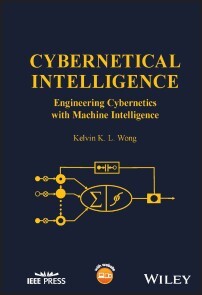
Cybernetical Intelligence
CYBERNETICAL INTELLIGENCEHIGHLY COMPREHENSIVE, DETAILED, AND UP-TO-DATE OVERVIEW OF ARTIFICIAL INTELLIGENCE AND CYBERNETICS, WITH PRACTICAL EXAMPLES AND SUPPLEMENTARY LEARNING RESOURCESCybernetical Intelligence: Engineering Cybernetics with Machine Intelligence is a comprehensive guide to the field of cybernetics and neural networks, as well as the mathematical foundations of these technologies. The book provides a detailed explanation of various types of neural networks, including feedforward networks, recurrent neural networks, and convolutional neural networks as well as their applications to different real-world problems. This groundbreaking book presents a pioneering exploration of machine learning within the framework of cybernetics. It marks a significant milestone in the field’s history, as it is the first book to describe the development of machine learning from a cybernetics perspective. The introduction of the concept of “Cybernetical Intelligence” and the generation of new terminology within this context propel new lines of thought in the historical development of artificial intelligence. With its profound implications and contributions, this book holds immense importance and is poised to become a definitive resource for scholars and researchers in this field of study. Each chapter is specifically designed to introduce the theory with several examples. This comprehensive book includes exercise questions at the end of each chapter, providing readers with valuable opportunities to apply and strengthen their understanding of cybernetical intelligence. To further support the learning journey, solutions to these questions are readily accessible on the book’s companion site. Additionally, the companion site offers programming practice exercises and assignments, enabling readers to delve deeper into the practical aspects of the subject matter. Cybernetical Intelligence includes information on:* The history and development of cybernetics and its influence on the development of neural networks* Developments and innovations in artificial intelligence and machine learning, such as deep reinforcement learning, generative adversarial networks, and transfer learning* Mathematical foundations of artificial intelligence and cybernetics, including linear algebra, calculus, and probability theory* Ethical implications of artificial intelligence and cybernetics as well as responsible and transparent development and deployment of AI systemsPresenting a highly detailed and comprehensive overview of the field, with modern developments thoroughly discussed, Cybernetical Intelligence is an essential textbook that helps students make connections with real-life engineering problems by providing both theory and practice, along with a myriad of helpful learning aids. PROF. DR. KELVIN K. L. WONG, is a distinguished expert in medical image processing and computational science, earning his Ph.D. from The University of Adelaide. With a strong academic background from Nanyang Technological University and The University of Sydney, he has been at the forefront of merging the fields of cybernetics and artificial intelligence (AI). He is renowned for coining the term “Cybernetical Intelligence” and is the inventor and founder of Deep Red AI. Preface xvAbout the Author xixAbout the Companion Website xxi1 ARTIFICIAL INTELLIGENCE AND CYBERNETICAL LEARNING 11.1 Artificial Intelligence Initiative 11.2 Intelligent Automation Initiative 41.2.1 Benefits of IAI 51.3 Artificial Intelligence Versus Intelligent Automation 51.3.1 Process Discovery 61.3.2 Optimization 71.3.3 Analytics and Insight 81.4 The Fourth Industrial Revolution and Artificial Intelligence 91.4.1 Artificial Narrow Intelligence 101.4.2 Artificial General Intelligence 121.4.3 Artificial Super Intelligence 131.5 Pattern Analysis and Cognitive Learning 141.5.1 Machine Learning 151.5.1.1 Parametric Algorithms 161.5.1.2 Nonparametric Algorithms 171.5.2 Deep Learning 201.5.2.1 Convolutional Neural Networks in Advancing Artificial Intelligence 211.5.2.2 Future Advancement in Deep Learning 221.5.3 Cybernetical Learning 231.6 Cybernetical Artificial Intelligence 241.6.1 Artificial Intelligence Control Theory 241.6.2 Information Theory 261.6.3 Cybernetic Systems 271.7 Cybernetical Intelligence Definition 281.8 The Future of Cybernetical Intelligence 30Summary 32Exercise Questions 32Further Reading 332 CYBERNETICAL INTELLIGENT CONTROL 352.1 Control Theory and Feedback Control Systems 352.2 Maxwell’s Analysis of Governors 372.3 Harold Black 392.4 Nyquist and Bode 402.5 Stafford Beer 422.5.1 Cybernetic Control 422.5.2 Viable Systems Model 422.5.3 Cybernetics Models of Management 432.6 James Lovelock 432.6.1 Cybernetic Approach to Ecosystems 432.6.2 Gaia Hypothesis 442.7 Macy Conference 442.8 McCulloch–Pitts 452.9 John von Neumann 472.9.1 Discussions on Self-Replicating Machines 472.9.2 Discussions on Machine Learning 48Summary 48Exercise Questions 49Further Reading 503 THE BASICS OF PERCEPTRON 513.1 The Analogy of Biological and Artificial Neurons 513.1.1 Biological Neurons and Neurodynamics 523.1.2 The Structure of Neural Network 533.1.3 Encoding and Decoding 563.2 Perception and Multilayer Perceptron 573.2.1 Back Propagation Neural Network 593.2.2 Derivative Equations for Backpropagation 593.3 Activation Function 613.3.1 Sigmoid Activation Function 613.3.2 Hyperbolic Tangent Activation Function 623.3.3 Rectified Linear Unit Activation Function 623.3.4 Linear Activation Function 64Summary 65Exercise Questions 67Further Reading 674 THE STRUCTURE OF NEURAL NETWORK 694.1 Layers in Neural Network 694.1.1 Input Layer 694.1.2 Hidden Layer 704.1.3 Neurons 704.1.4 Weights and Biases 714.1.5 Forward Propagation 724.1.6 Backpropagation 724.2 Perceptron and Multilayer Perceptron 734.3 Recurrent Neural Network 754.3.1 Long Short-Term Memory 764.4 Markov Neural Networks 774.4.1 State Transition Function 774.4.2 Observation Function 784.4.3 Policy Function 784.4.4 Loss Function 784.5 Generative Adversarial Network 78Summary 79Exercise Questions 80Further Reading 815 BACKPROPAGATION NEURAL NETWORK 835.1 Backpropagation Neural Network 835.1.1 Forward Propagation 855.2 Gradient Descent 855.2.1 Loss Function 855.2.2 Parameters in Gradient Descent 885.2.3 Gradient in Gradient Descent 885.2.4 Learning Rate in Gradient Descent 895.2.5 Update Rule in Gradient Descent 895.3 Stopping Criteria 895.3.1 Convergence and Stopping Criteria 905.3.2 Local Minimum and Global Minimum 915.4 Resampling Methods 915.4.1 Cross-Validation 935.4.2 Bootstrapping 935.4.3 Monte Carlo Cross-Validation 945.5 Optimizers in Neural Network 945.5.1 Stochastic Gradient Descent 945.5.2 Root Mean Square Propagation 965.5.3 Adaptive Moment Estimation 965.5.4 AdaMax 975.5.5 Momentum Optimization 97Summary 97Exercise Questions 99Further Reading 1006 APPLICATION OF NEURAL NETWORK IN LEARNING AND RECOGNITION 1016.1 Applying Backpropagation to Shape Recognition 1016.2 Softmax Regression 1056.3 K-Binary Classifier 1076.4 Relational Learning via Neural Network 1086.4.1 Graph Neural Network 1096.4.2 Graph Convolutional Network 1116.5 Cybernetics Using Neural Network 1126.6 Structure of Neural Network for Image Processing 1156.7 Transformer Networks 1166.8 Attention Mechanisms 1166.9 Graph Neural Networks 1176.10 Transfer Learning 1186.11 Generalization of Neural Networks 1196.12 Performance Measures 1206.12.1 Confusion Matrix 1206.12.2 Receiver Operating Characteristic 1216.12.3 Area Under the ROC Curve 122Summary 123Exercise Questions 123Further Reading 1247 COMPETITIVE LEARNING AND SELF-ORGANIZING MAP 1257.1 Principal of Competitive Learning 1257.1.1 Step 1: Normalized Input Vector 1287.1.2 Step 2: Find the Winning Neuron 1287.1.3 Step 3: Adjust the Network Weight Vector and Output Results 1297.2 Basic Structure of Self-Organizing Map 1297.2.1 Properties Self-Organizing Map 1307.3 Self-Organizing Mapping Neural Network Algorithm 1317.3.1 Step 1: Initialize Parameter 1327.3.2 Step 2: Select Inputs and Determine Winning Nodes 1327.3.3 Step 3: Affect Neighboring Neurons 1327.3.4 Step 4: Adjust Weights 1337.3.5 Step 5: Judging the End Condition 1337.4 Growing Self-Organizing Map 1337.5 Time Adaptive Self-Organizing Map 1367.5.1 TASOM-Based Algorithms for Real Applications 1387.6 Oriented and Scalable Map 1397.7 Generative Topographic Map 141Summary 145Exercise Questions 146Further Reading 1478 SUPPORT VECTOR MACHINE 1498.1 The Definition of Data Clustering 1498.2 Support Vector and Margin 1528.3 Kernel Function 1558.3.1 Linear Kernel 1558.3.2 Polynomial Kernel 1568.3.3 Radial Basis Function 1578.3.4 Laplace Kernel 1598.3.5 Sigmoid Kernel 1598.4 Linear and Nonlinear Support Vector Machine 1608.5 Hard Margin and Soft Margin in Support Vector Machine 1648.6 I/O of Support Vector Machine 1678.6.1 Training Data 1678.6.2 Feature Matrix and Label Vector 1688.7 Hyperparameters of Support Vector Machine 1698.7.1 The C Hyperparameter 1698.7.2 Kernel Coefficient 1698.7.3 Class Weights 1708.7.4 Convergence Criteria 1708.7.5 Regularization 1718.8 Application of Support Vector Machine 1718.8.1 Classification 1718.8.2 Regression 1738.8.3 Image Classification 1738.8.4 Text Classification 174Summary 174Exercise Questions 175Further Reading 1769 BIO-INSPIRED CYBERNETICAL INTELLIGENCE 1779.1 Genetic Algorithm 1789.2 Ant Colony Optimization 1819.3 Bees Algorithm 1849.4 Artificial Bee Colony Algorithm 1869.5 Cuckoo Search 1899.6 Particle Swarm Optimization 1939.7 Bacterial Foraging Optimization 1969.8 Gray Wolf Optimizer 1979.9 Firefly Algorithm 199Summary 200Exercise Questions 201Further Reading 20210 LIFE-INSPIRED MACHINE INTELLIGENCE AND CYBERNETICS 20310.1 Multi-Agent AI Systems 20310.1.1 Game Theory 20510.1.2 Distributed Multi-Agent Systems 20610.1.3 Multi-Agent Reinforcement Learning 20710.1.4 Evolutionary Computation and Multi-Agent Systems 20910.2 Cellular Automata 21110.3 Discrete Element Method 21210.3.1 Particle-Based Simulation of Biological Cells and Tissues 21410.3.2 Simulation of Microbial Communities and Their Interactions 21510.3.3 Discrete Element Method-Based Modeling of Biological Fluids and Soft Materials 21610.4 Smoothed Particle Hydrodynamics 21810.4.1 SPH-Based Simulations of Biomimetic Fluid Dynamic 21910.4.2 SPH-Based Simulations of Bio-Inspired Engineering Applications 220Summary 221Exercise Questions 222Further Reading 22311 REVISITING CYBERNETICS AND RELATION TO CYBERNETICAL INTELLIGENCE 22511.1 The Concept and Development of Cybernetics 22511.1.1 Attributes of Control Concepts 22511.1.2 Research Objects and Characteristics of Cybernetics 22611.1.3 Development of Cybernetical Intelligence 22711.2 The Fundamental Ideas of Cybernetics 22711.2.1 System Idea 22711.2.2 Information Idea 22911.2.3 Behavioral Idea 23011.2.4 Cybernetical Intelligence Neural Network 23111.3 Cybernetic Expansion into Other Fields of Research 23411.3.1 Social Cybernetics 23411.3.2 Internal Control-Related Theories 23711.3.3 Software Control Theory 23711.3.4 Perceptual Cybernetics 23811.4 Practical Application of Cybernetics 24011.4.1 Research on the Control Mechanism of Neural Networks 24011.4.2 Balance Between Internal Control and Management Power Relations 24011.4.3 Software Markov Adaptive Testing Strategy 24211.4.4 Task Analysis Model 244Summary 245Exercise Questions 246Further Reading 24712 TURING MACHINE 24912.1 Behavior of a Turing Machine 25012.1.1 Computing with Turing Machines 25112.2 Basic Operations of a Turing Machine 25212.2.1 Reading and Writing to the Tape 25312.2.2 Moving the Tape Head 25412.2.3 Changing States 25412.3 Interchangeability of Program and Behavior 25512.4 Computability Theory 25612.4.1 Complexity Theory 25712.5 Automata Theory 25812.6 Philosophical Issues Related to Turing Machines 25912.7 Human and Machine Computations 26012.8 Historical Models of Computability 26112.9 Recursive Functions 26212.10 Turing Machine and Intelligent Control 263Summary 264Exercise Questions 265Further Reading 26513 ENTROPY CONCEPTS IN MACHINE INTELLIGENCE 26713.1 Relative Entropy of Distributions 26813.2 Relative Entropy and Mutual Information 26813.3 Entropy in Performance Evaluation 26913.4 Cross-Entropy Softmax 27113.5 Calculating Cross-Entropy 27213.6 Cross-Entropy as a Loss Function 27313.7 Cross-Entropy and Log Loss 27413.8 Application of Entropy in Intelligent Control 27513.8.1 Entropy-Based Control 27513.8.2 Fuzzy Entropy 27613.8.3 Entropy-Based Control Strategies 27713.8.4 Entropy-Based Decision-Making 278Summary 279Exercise Questions 279Further Reading 28014 SAMPLING METHODS IN CYBERNETICAL INTELLIGENCE 28314.1 Introduction to Sampling Methods 28314.2 Basic Sampling Algorithms 28414.2.1 Importance of Sampling Methods in Machine Intelligence 28614.3 Machine Learning Sampling Methods 28714.3.1 Random Oversampling 28814.3.2 Random Undersampling 29014.3.3 Synthetic Minority Oversampling Technique 29014.3.4 Adaptive Synthetic Sampling 29214.4 Advantages and Disadvantages of Machine Learning Sampling Methods 29314.5 Advanced Sampling Methods in Cybernetical Intelligence 29414.5.1 Ensemble Sampling Method 29514.5.2 Active Learning 29714.5.3 Bayesian Optimization in Sampling 29914.6 Applications of Sampling Methods in Cybernetical Intelligence 30214.6.1 Image Processing and Computer Vision 30214.6.2 Natural Language Processing 30414.6.3 Robotics and Autonomous Systems 30714.7 Challenges and Future Directions 30814.8 Challenges and Limitations of Sampling Methods 30914.9 Emerging Trends and Innovations in Sampling Methods 309Summary 310Exercise Questions 311Further Reading 31215 DYNAMIC SYSTEM CONTROL 31315.1 Linear Systems 31415.2 Nonlinear System 31615.3 Stability Theory 31815.4 Observability and Identification 32015.5 Controllability and Stabilizability 32115.6 Optimal Control 32315.7 Linear Quadratic Regulator Theory 32415.8 Time-Optimal Control 32615.9 Stochastic Systems with Applications 32815.9.1 Stochastic System in Control Systems 32915.9.2 Stochastic System in Robotics and Automation 32915.9.3 Stochastic System in Neural Networks 330Summary 331Exercise Questions 331Further Reading 33216 DEEP LEARNING 33316.1 Neural Network Models in Deep Learning 33516.2 Methods of Deep Learning 33616.2.1 Convolutional Neural Networks 33716.2.2 Recurrent Neural Networks 34016.2.3 Generative Adversarial Networks 34216.2.4 Deep Learning Based Image Segmentation Models 34516.2.5 Variational Auto Encoders 34816.2.6 Transformer Models 35016.2.7 Attention-Based Models 35216.2.8 Meta-Learning Models 35416.2.9 Capsule Networks 35716.3 Deep Learning Frameworks 35816.4 Applications of Deep Learning 35916.4.1 Object Detection 36016.4.2 Intelligent Power Systems 36116.4.3 Intelligent Control 362Summary 362Exercise Questions 363References 364Further Reading 36517 NEURAL ARCHITECTURE SEARCH 36717.1 Neural Architecture Search and Neural Network 36917.2 Reinforcement Learning-Based Neural Architecture Search 37117.3 Evolutionary Algorithms-Based Neural Architecture Search 37417.4 Bayesian Optimization-Based Neural Architecture Search 37617.5 Gradient-Based Neural Architecture Search 37817.6 One-shot Neural Architecture Search 37917.7 Meta-Learning-Based Neural Architecture Search 38117.8 Neural Architecture Search for Specific Domains 38317.8.1 Cybernetical Intelligent Systems: Neural Architecture Search in Real-World 38417.8.2 Neural Architecture Search for Specific Cybernetical Control Tasks 38517.8.3 Neural Architecture Search for Cybernetical Intelligent Systems in Real-World 38617.8.4 Neural Architecture Search for Adaptive Cybernetical Intelligent Systems 38817.9 Comparison of Different Neural Architecture Search Approaches 389Summary 391Exercise Questions 391Further Reading 392Final Notes on Cybernetical Intelligence 393Index 399