

Computer und IT
Werde ein Data Head
Data Science, Machine Learning und Statistik verstehen und datenintensive Jobs meistern. Fundierte Datenkompetenz für den Arbeitsplatz entwickeln – auch ohne Programmierkenntnisse.Dieses Buch ist ein umfassender Leitfaden für das Verständnis von Datenanalyse am Arbeitsplatz. Alex Gutman und Jordan Goldmeier lüften den Vorhang der Data Science und geben Ihnen die Sprache und die Werkzeuge an die Hand, die Sie benötigen, um informiert mitreden zu können, kritisch über die Auswertung von Daten zu sprechen und die richtigen Fragen zu stellen. Dank dieses Buchs kann jede:r ein Data Head werden und aktiv an Data Science, Statistik und Machine Learning teilnehmen – auch ohne einen technischen Background.In diesem unterhaltsamen und gut verständlichen Buch werden die aktuellen, zum Teil komplexen Data-Science- und Statistik-Konzepte anhand einfacher Beispiele und Analogien veranschaulicht. Sie lernen statistisches Denken, das Vermeiden häufiger Fallstricke bei der Interpretation von Daten, und Sie erfahren, was es mit Machine Learning, Textanalyse, Deep Learning und künstlicher Intelligenz wirklich auf sich hat. Wenn Sie in Ihrem Unternehmen konkret mit Daten arbeiten, Führungskraft oder angehender Data Scientist sind, zeigt Ihnen dieses Buch, wie Sie ein echter Data Head werden.Die Autoren:Alex J. Gutman ist Data Scientist, Unternehmenstrainer und Accredited Professional Statistician®. Sein beruflicher Schwerpunkt liegt auf statistischem und maschinellem Lernen, und er verfügt über umfangreiche Erfahrungen als Data Scientist für das US-Verteidigungsministerium und zwei Fortune-50-Unternehmen. Seinen Doktortitel in angewandter Mathematik erhielt er vom Air Force Institute of Technology.Jordan Goldmeier ist ein international anerkannter Analytik- und Datenvisualisierungs-Experte, Autor und Redner. Er wurde sieben Mal mit dem Microsoft Most Valuable Professional Award ausgezeichnet und hat Mitglieder von Pentagon und Fortune-500-Unternehmen in Analytik unterrichtet. Er ist Autor der Bücher Advanced Excel Essentials und Dashboards for Excel.
STM32 - Das umfassende Praxisbuch (2. Auflg.)
ARM-Microcontroller programmieren für Embedded Systems - Das umfassende PraxisbuchMit diesem Buch erhalten Sie einen umfassenden Praxiseinstieg für die Softwareentwicklung für Embedded Systems mit der ARM-Mikrocontrollerfamilie STM32F4xx der Firma STMicroelectronics (STM). Für die Programmierung wird die Sprache C eingesetzt.Der Autor behandelt die wichtigsten Peripherie-Komponenten, dazu gehören digitale und analoge I/O-Ports (GPIOs), Timer und Counter, serielle Schnittstellen (USARTs/UARTs, SPI und I2C), ADCs und DACs, RTC (Echtzeit-Uhr) sowie Direct Memory Access (DMA).Die Programmierung dieser Komponenten zeigt der Autor anhand einfacher praktischer Anwendungsbeispiele wie z.B. die Abfrage von Uhrzeit und Datum von einer externen RTC (über I2C) sowie deren Anzeige über SPI auf einfachen Displays. Dabei entsteht im Verlauf des Buchs eine Bibliothek, deren Funktionen für eigene Projekte auf einfache Weise eingesetzt werden können.Als Entwicklungsumgebung wird STM32CubeIDE von STM verwendet. Außerdem kommt das Evaluierungsboard NUCLEO-64 für den STM32F446 zum Einsatz. Der Autor legt Wert darauf, alles »bare-metal« zu programmieren und verzichtet darauf, die HAL-Bibliothek einzusetzen. Diese Vorgehensweise erleichtert Ihnen auch den Umstieg auf Mikrocontroller anderer Hersteller. Grundlegende Kenntnisse der Programmiersprache C werden vorausgesetzt. Dennoch wird auf einige Aspekte eingegangen, die in der Bare-metal-Programmierung von Mikrocontrollern möglicherweise wichtiger sind als in der Entwicklung herkömmlicher PC-basierter Software.Aus dem Inhalt: Typische GPIO-Anwendungen (Input/Output/Alternative Funktionen)Timer: Systick/Basic/General Purpose/Advanced Control TimerPWM: Dimmen von LEDs mit TimernA/D- und D/A-WandlungSerielle Kommunikation mit UARTs/USARTs/I2C/SPIPorterweiterung mit I2C (PCF8574)/Ansteuerung von LC-Displays7-Segment-Anzeigen über SPI (MAX7219)Einsatz einer externen Echtzeituhr (RTC) DS3231 über I2CAutor: Ralf Jesse ist Diplom-Ingenieur der Elektrotechnik mit mehr als 30 Jahren beruflicher Praxis im Einsatz von Mikroprozessoren und -controllern. Nach ersten Erfahrungen als Entwicklungsingenieur in einem Maschinenbau-Unternehmen folgten mehr als 20 Jahre als Software-Ingenieur in einem großen japanischen Konzern.
STM32
Programmierung der wichtigsten Peripherie-Komponenten des STM32F4xx-Chips Digitale und analoge I/O-Ports (GPIOs), Timer und Counter, serielle Schnittstellen (USARTs/UARTs, SPI und I2C), ADCs und DACs, Direct Memory Access (DMA) Zahlreiche praktische Anwendungsbeispiele Dieses Buch bietet einen umfassenden Praxiseinstieg in die Softwareentwicklung für Embedded Systems mit der ARM-Mikrocontrollerfamilie STM32F4xx der Firma STMicroelectronics (STM). Für die Programmierung wird die Sprache C eingesetzt. Der Autor behandelt die wichtigsten Peripherie-Komponenten, dazu gehören digitale und analoge I/O-Ports (GPIOs), Timer und Counter, serielle Schnittstellen (USARTs/UARTs, SPI und I2C), ADCs und DACs, RTC (Echtzeit-Uhr) sowie Direct Memory Access (DMA). Anhand einfacher Beispiele zeigt der Autor den praktischen Einsatz dieser Komponenten. Hierzu zählen die Abfrage von Uhrzeit und Datum von einer externen RTC (über I2C) sowie deren Anzeige über SPI auf einfachen Displays. Im Verlauf des Buchs entsteht so eine Bibliothek, deren Funktionen für eigene Projekte auf einfache Weise eingesetzt werden können. Die Beispiele werden auf dem Evaluierungsboard NUCLEO-64 mit dem STM32F446 unter Einsatz der STM32CubeIDE-Entwicklungsumgebung entwickelt und getestet. Grundlegende Kenntnisse der Programmiersprache C werden vorausgesetzt. Alle Beispiele folgen dem MISRA-C-Standard, dessen Anwendung in der Automobilindustrie vorgeschrieben ist. Dieser wird in einem separaten Kapitel vorgestellt und sorgt für gut verständlichen und somit leicht zu pflegenden Code. Der Fokus liegt auf der »baremetal«-Programmierung, was den Umstieg auf Mikrocontroller anderer Hersteller erleichtert. Auf den Einsatz der HAL-Bibliothek wird ausdrücklich verzichtet. Aus dem Inhalt: Typische GPIO-Anwendungen (Input/Output/Alternative Funktionen) Timer: Systick/Basic/General Purpose/Advanced Control Timer PWM: Dimmen von LEDs mit Timern A/D- und D/A-Wandlung Serielle Kommunikation mit UARTs/USARTs/I2C/SPI Porterweiterung mit I2C (PCF8574)/Ansteuerung von LC-Displays 7-Segment-Anzeigen über SPI (MAX7219) Einsatz einer externen Echtzeituhr (RTC) DS3231 über I2C Ralf Jesse ist Diplom-Ingenieur der Elektrotechnik mit mehr als 30 Jahren beruflicher Praxis im Einsatz von Mikroprozessoren und -controllern. Nach ersten Erfahrungen als Entwicklungsingenieur in einem Maschinenbau-Unternehmen folgten mehr als 20 Jahre als Software-Ingenieur in einem großen japanischen Konzern.

Software Architecture by Example
Design system solutions using modern architectural patterns and practices. This book discusses methods to keep a system responsive, even when it is being constantly updated, extending a system's functionality without changing the core code, methods of maintaining data history, and designing a distributed transactional system.This book will guide you in understanding how a software solution is designed using different architectural processes and scenarios. Each scenario explains if and why a software solution is required to resolve a given issue, and discusses possible architectural approaches to solve the problem. You will learn specific implementations of software architecture for each case along with different approaches to achieve the solutions. Each chapter is structured as a real-world requirement from a client and describes a process to meet that requirement.After reading this book, you should have a high-level understanding of the architectural patterns used in the book, and you should have a methodology for approaching system design.WHAT YOU WILL LEARN* Understand design principles and considerations for various stages of software development* Translate patterns into code samples* Create a blueprint for approaching system design* Understand architectural patterns: CQRS, event sourcing, distributed systems, distributed transactions, and plug-in architectureWHO THIS BOOK IS FORDevelopers who wish to move into architecture, and junior software architects also will find the book usefulPAUL MICHAELS is the Head of Development at musicMagpie. He started his career as a professional software engineer in 1997. Paul is a regular speaker, published author, and Microsoft MVP. He enjoys programming, playing with new technology, and finding neat solutions to problems. When he's not working, you can find him cycling or walking around The Peak District, playing table tennis, or trying to cook for his wife and two children. You can follow him on twitter @paul_michaels or find him on LinkedIn. He also writes a blog at pmichaels.net.CHAPTER 1: THE TICKET SALES PROBLEMCHAPTER GOAL: DESIGN A SOFTWARE SOLUTION THAT ADDRESSES THE PROBLEM OF SELLING TICKETS FOR EVENTS. TICKET SALES WILL BE INITIALLY LOW, BUT FOR CERTAIN EVENTS THERE WILL BE HUGE SPIKES.NO OF PAGES: 50SUB -TOPICS1. Message queues / pub / sub2. CQRS – which it doesn’t fitCHAPTER 2: THE CASH DESK PROBLEMCHAPTER GOAL: DESIGN A SOLUTION THAT CATERS FOR A SYSTEM TRACKING MONEY IN AND OUT OF A CASH DESK.NO OF PAGES: 50SUB - TOPICS1. Event Sourcing2.CHAPTER 3: THE TRAVEL AGENT PROBLEMCHAPTER GOAL: DESIGN A SOLUTION THAT CATERS FOR A SYSTEM WHEREBY YOU NEED TO INTERFACE WITH MANY DIFFERENT THIRD-PARTY SYSTEMS AND COLLATE THE RESULTS.NO OF PAGES: 50SUB - TOPICS:1. Distributed systems2. Microservices3. Service bus4. Scheduler Agent Supervisor PatternCHAPTER 4: THE SOCIAL MEDIA PROBLEMCHAPTER GOAL: DESIGN A SOLUTION THAT CATERS FOR A SYSTEM WHEREBY A HIGH FREQUENCY OF UPDATES ARE MADE, AND YET THE EXACT ORDER OF THE TRANSACTIONS IS UNIMPORTANT.NO OF PAGES: 50SUB - TOPICS:1. CQRSCHAPTER 5: THE ADMIN APPLICATION PROBLEMCHAPTER GOAL: DESIGN A SOLUTION WHERE A USER IS ABLE TO CONFIGURE THE RULES WITHIN A GIVEN APPLICATION.NO OF PAGES: 501. N-Tier2. Plug-in architectureCHAPTER 6: THE TRAVEL REP PROBLEMCHAPTER GOAL: DESIGN A SOLUTION TO ALLOW AN APPLICATION TO ACCEPT TRAVEL AGENT QUERIES, BUT TO POLL THE SERVER OFFLINENO OF PAGES: 501. Ambassador pattern2. Message Queues

Creating Apps with React Native
Produce high-quality, cross-platform apps with user experiences almost identical to pure native apps. When evaluating cross-platform frameworks, developers make an assumption that quality will be compromised. But that doesn't have to be true. The principles in this book will show you how to meet quality expectations both from engineering and consumer standpoints.You’ll also realize the ideal of a greater front end. That means your whole front-end team, including app side and web side, will be optimized. The shared knowledge base as well as mobilization potential give more flexibility and strength in all front-end facets without the need of increasing team sizes.The market has seen a large amount of high quality React Native apps and successful stories about them. Nevertheless, under optimized apps and unsuccessful stories shadow. The fundamental difference between the two opposing groups is understanding. Discover the critical points in the React and React Native architecture, and develop general best practices that can lead to consistently developing 0 crash, 5 star apps based on an understanding of fundamentals.WHAT YOU'LL LEARN* Measure and define successful app design* Create animation based on user need* Reduce performance bottleneck throughout your appsWHO THIS BOOK IS FORMobile developers who want to expand their front end skill set, and web developers who want to enter mobile development.Muyang (Holmes) He is a software engineer. He spent four years working with Tencent on hyperscale social network products. At the time when this book is written, he is a mobile software engineer with Microsoft. He is an active advocate and a practice leader of using React Native to create 0 crash, 5 star apps (05 apps).Chapter 1 Start thinking in ReactThe hello world app in piecesProps and StatesFunction componentsChapter 2 React ToolsFlexbox – A Practical GuideScrollView and FlatListInheritance v.s. Composition, HOCError handlingState Management, ReduxReact NavigationApp architecture in action – a boilerplateChapter 3 React Native ArchitectureApp initializationUnder the hood of componentsCommunication between JavaScript and NativeChapter 4 Custom NativeCustom native moduleCustom native componentChapter 5 NetworksPromise chainAwait for async eventConnectivityCommon error handlingPutting it all togetherChapter 6 PerformanceHow to measure and what defines successCritical points in RN architectureLong listPerformance bottlenecks in FlatListCommon optimization techniquesCase studiesItem 1Item 2Item 3Chapter 7 AnimationLayout animationValue driven animationGesture driven animationChapter 8 3rd-Party Components

A Complete Guide to Docker for Operations and Development
Harness the power of Docker by containerizing your code with all its libraries and file systems to consistently run anywhere. This book is your source for learning all about Docker operations and development. It’s divided into two units and focuses on the topics that the Docker Certified Associate exam covers.Unit 1 covers the Docker fundamentals, such as Docker Enterprise for Operations, Docker Enterprise for Developers, Swarm, and an introduction to Kubernetes. You will learn how to install Docker Community Edition, Docker Enterprise Edition with Kubernetes and CLI. Also, you will learn the Docker cycle, container lifecycle, develop applications in any language, wrap, build, ship, and deploy them for production. Finally, you will learn how to create a Swarm cluster, deploy an app to it, and manage it with the best practices according to the current technologies.Unit 2 provides quizzes to help you prepare for the certification test. The DCA exam format and the question style has changed since Mirantis acquired Docker. To accommodate this, the quizzes mirror these changes.WHAT YOU’LL LEARN* Understand the difference between containerization and virtualization* Install Docker CE on various platforms and manage the resources* Write Dockerfile, Docker Compose YAML, and Kubernetes manifest YAML files* Compare microservices and monolithic applications * Containerize monolithic applicationsWHO THIS BOOK IS FORSoftware developers, Cloud Architects, and DevOps operation managers.Engy Fouda is an adjunct lecturer at Suny New Paltz University. She also teaches SAS, Docker Fundamentals, Docker for Enterprise Developers, Docker for Enterprise Operations, and Kubernetes at a Microsoft Training Partner, ONLC Training Centers, and at several other venues as a freelance instructor. She is an Apress and Packt Publishing author. Moreover, she has more than 20 years of experience passing technical certificates. All her students always pass the certifications from the first try. She holds two master’s degrees, one in journalism with a Data Science Professional Graduate Certificate from Harvard University, Extension School, and another in computer engineering from Cairo University, Egypt.UNIT 1: DOCKER FUNDAMENTALSChapter 1: IntroductionChapter 2: Installation and ConfigurationChapter 3: Image and Containers Creation, Management, and RegistryChapter 4: NetworkingChapter 5: Storage and VolumesChapter 6: Docker Enterprise Edition/Mirantis Kubernetes Edition installationChapter 7: Universal Control Plane (UCP)Chapter 8: Docker Trusted Registry (DTR)Chapter 9: MicroservicesChapter 10: OrchestrationChapter 11: Security, RBAC, and DCTChapter 12: DCA exam guideUNIT 2: EXAM PREP QUIZZESChapter 13: Orchestration QuizChapter 14: Image Creation, Management, and Registry QuizChapter 15: Installation and Configuration QuizChapter 16: Networking QuizChapter 17: Security QuizChapter 18: Storage and Volumes Quiz

Beginning Ansible Concepts and Application
Learn the concepts and develop the skills to be a true Ansible artist and use it inside and outside the box. This book applies key concepts immediately while building up your Ansible skills layer by layer through easy to grasp examples and engaging projects. You’ll also think about security, why testing is important, and how to use version control safely.As a beginner to Ansible, you'll be guided step-by-step through creating your first Ansible playbook to deploying your first server and writing more complex cross-dependency playbooks. From the first line of code to the last, you'll constantly iterate and simplify your playbooks, iwhile taking on more complex topics as you construct a full Wordpress website stack consisting of a database, web servers, and load balancer. This book will prompt you to think about how these fit together and will explain what to do to ensure maintainability long into the future.Don’t just use Ansible. Completely change how you go about provisioning, configuring, and managing servers, applications, and their dependencies with this powerful, open source automation tool. In exchange for this power and efficiency, Ansible demands a very different way of thinking about resources and how they all fit together. This can be hard to get your head around if you’ve never done it before. Every step of the way, Beginning Ansible Concepts and Application show you best practices so that you can confidently start using Ansible right away.WHAT YOU'LL LEARN* Set up an Ansible environment* Create and run playbooks* Organize groups of variables, vaults, roles, and tasks to ensure your playbooks are scalable* Protect secrets using Ansible Vaults* Automate the build of a Wordpress websiteWHO THIS BOOK IS FORDevelopers looking for a better way to manage their servers other than by logging in and typing commands. Also enthusiasts who want to learn not just how to use Ansible but how to use it correctly and confidently.SHAUN SMITH is a Fellow of the British Computer Society (BCS) and holds degrees in Computer Science and Psychology. He has a wealth of experience across a broad range of technology, which he combines in novel ways to build out industry-leading, scalable and highly-secure solutions to complex problems. He evangelises simple, elegant and secure designs and these days is focusing on making the Internet a safer place to be and up-skilling the next generation.PETER MEMBREY is a Chartered Fellow of the British Computer Society, a Chartered IT Professional and a Chartered Engineer with nearly a quarter of a century in the field. He has a doctorate in engineering and a masters degree in IT specialising in Information Security. He's co-authored over a dozen books, a number of research papers on a variety of topics and has recently been awarded the Distinguished Contributor award by the IEEE Computer Society. Chapter 1 – Setting the SceneFoundations of AnsiblCreate an environmentChallenges to comeChapter 2 – Say Hello to AnsibleIntroduce AnsibleHistoryToolsChapter 3 – Getting Ansible and Setting Up the EnvironmentDownload and set up AnsibleUsing virtual python environmentsUsing VirtualBoxChapter 4 – Your First Steps with AnsiblePlay with AnsibleRevision control and security aspectsPython 2 vs 3Chapter 5 – Run Your First playbookCreate and run your first playbookStructure of a playbookPut servers under source controlChapter 6 – Designing an InventoryUsing localhostInventoriesChapter 7 – Setting Your Sights – Target the Servers You WantSetting up real serversPlaybook skills and inventory skillsWriting the playbookChapter 8 – Batteries Included – The Core ModulesCore modulesInstalling packages, copying config files, and making changes to system configWeb based documentationChapter 9 – Gathering Data and the Power of FactsUsing fact gatheringAutomatic (implicit) fact-gathering for every playbookExplicit fact gatheringStat to gain information on files, directories, and symbolic linksChapter 10 – The Building Blocks of Ansible – RolesChapter 11 – Making Decisions and Controlling FlowConditionalsOptionsincludes and when clausesChapter 12 – Repeating YourselfLoopsSyntaxChapter 13 – Jinja 2 and the Power of TemplatesChapter 14 – Structuring Your Repo for SuccessBasic directory structureOrganize groups of variables, vaults, roles, and tasks to ensure your playbooks are scalableChapter 15 – Locking Away Your SecretsAnsible-vaultsEnvironment specific encrypted storesChapter 16 – Extending the Power of AnsibleCreation of custom modulesModule types (actions, filters, callback to name a few)Hints and tips on when a plugin is the right course of actionChapter 17 – Dynamically Generating Your InventoryInventory, or CMDBInventory sourceSimple web service to pull in the ansible inventory at runtimeMeta groupsChapter 18 – CommunityShare playbooks with like-minded sysadminsAnsible GalaxyChapter 19 - Troubleshooting AnsibleChapter 20 – Other Projects Around AnsiblePOSSIBLE: document interesting projects that make use of Ansible's power, such as ansible-cmdb

Das datengetriebene Unternehmen
Daten stellen inzwischen einen unverzichtbaren Erfolgsfaktor für jedes Unternehmen dar. Der Weg zur datengetriebenen Organisation ist jedoch mit zahlreichen Herausforderungen gepflastert. Dieses Buch zeigt ein Prozessmodell für den Weg zu einem datengetriebenen Unternehmen auf und gibt Empfehlungen zur Gestaltung aller relevanten Handlungsfelder: Welche Strukturen müssen geschaffen werden? Welche Systeme und Prozesse haben sich als vorteilhaft erwiesen? Wie stellen kann die Qualität der Daten sichergestellt werden und welche Voraussetzungen benötigt die datengetriebene Organisation in den Bereichen Governance und Kommunikation? Und nicht zuletzt: Wie können die Mitarbeiter auf dem Weg mitgenommen werden und welche Implikationen hat die datengetriebene Organisation für unsere Unternehmenskultur? Jonas Rashedi zeigt einen Orientierungs- und Handlungsrahmen zur strategischen und operativen Gestaltung der datengetriebenen Organisation auf, losgelöst von aktuellen technischen Lösungen. Weitere Experten geben prägnante Lösungsvorschläge und Best Practices zu besonders relevanten Aspekten ausgewählter Handlungsfelder.
Samsung Galaxy S22 For Dummies
YOUR STEP-BY-STEP ROADMAP TO UNLOCKING THE FULL POTENTIAL OF YOUR NEW GALAXY S22Your new Samsung Galaxy S22 is packed with more features than you can count. So, how should you go about using this fantastic phone to its fullest? With some friendly and expert help from Samsung Galaxy S22 For Dummies!This book on Samsung’s latest version of its flagship smartphone will walk you through every important function and feature on the S22. Want to make a call or send an email? Samsung Galaxy S22 For Dummies will show you how to set up your accounts and contacts to help you stay in touch with your friends and family. More interested in playing some new games or using the latest app? Flip to the chapter on accessing the Google Play Store and grab your favorite downloads.You’ll find step-by-step descriptions, complete with helpful screenshots and pictures, to help you:* Understand the home screen, buttons, and menus of your new phone so you can navigate it with ease* Customize your phone with ringtones, wallpapers, lock screens, and widgets* Improve your productivity with functional apps like Calendar and GPSWhether this is your first Samsung phone, or just the latest in a long line of them, Samsung Galaxy S22 For Dummies is your secret weapon to unlocking the full potential of one of the most powerful smartphones on the market today.BILL HUGHES is an experienced marketing strategy executive with more than two decades of experience in sales, strategic marketing, and business development roles at leading corporations. He graduated with honors with an MBA degree from the Kellogg School of Management. He is the author of all previous editions of Samsung Galaxy S For Dummies.Introduction 1PART 1: GETTING STARTED WITH THE SAMSUNG GALAXY S22 5Chapter 1: Exploring What You Can Do with Your Phone 7Chapter 2: Beginning at the Beginning 17PART 2: COMMUNICATING WITH OTHER PEOPLE 43Chapter 3: Calling People 45Chapter 4: Discovering the Joy of Text 59Chapter 5: Sending and Receiving Email 69Chapter 6: Managing Your Contacts 87PART 3: LIVING ON THE INTERNET 105Chapter 7: You’ve Got the Whole (Web) World in Your Hands 107Chapter 8: Playing in Google’s Play Store 117PART 4: HAVING FUN WITH YOUR PHONE 135Chapter 9: Sharing Pictures 137Chapter 10: Creating Videos 157Chapter 11: Playing Games 167Chapter 12: Playing Music and Videos 179PART 5: GETTING DOWN TO BUSINESS 203Chapter 13: Using the Calendar 205Chapter 14: Mapping Out Where You Want to Be 217Chapter 15: Paying with Samsung Pay 229PART 6: THE PART OF TENS 245Chapter 16: Ten Ways to Make Your Phone Totally Yours 247Chapter 17: Ten (or So) Ways to Make Your Phone Secure 263Chapter 18: Ten Features to Look for Down the Road 285Index 293
CISM Certified Information Security Manager Study Guide
SHARPEN YOUR INFORMATION SECURITY SKILLS AND GRAB AN INVALUABLE NEW CREDENTIAL WITH THIS UNBEATABLE STUDY GUIDEAs cybersecurity becomes an increasingly mission-critical issue, more and more employers and professionals are turning to ISACA's trusted and recognized Certified Information Security Manager qualification as a tried-and-true indicator of information security management expertise.In Wiley's Certified Information Security Manager (CISM) Study Guide, you'll get the information you need to succeed on the demanding CISM exam. You'll also develop the IT security skills and confidence you need to prove yourself where it really counts: on the job.Chapters are organized intuitively and by exam objective so you can easily keep track of what you've covered and what you still need to study. You'll also get access to a pre-assessment, so you can find out where you stand before you take your studies further.Sharpen your skills with Exam Essentials and chapter review questions with detailed explanations in all four of the CISM exam domains: Information Security Governance, Information Security Risk Management, Information Security Program, and Incident Management.In this essential resource, you'll also:* Grab a head start to an in-demand certification used across the information security industry* Expand your career opportunities to include rewarding and challenging new roles only accessible to those with a CISM credential* Access the Sybex online learning center, with chapter review questions, full-length practice exams, hundreds of electronic flashcards, and a glossary of key termsPerfect for anyone prepping for the challenging CISM exam or looking for a new role in the information security field, the Certified Information Security Manager (CISM) Study Guide is an indispensable resource that will put you on the fast track to success on the test and in your next job.ABOUT THE AUTHORMIKE CHAPPLE, PHD, CISM, is Teaching Professor of Information Technology, Analytics, and Operations at Notre Dame’s Mendoza College of Business. He is a bestselling author of over 25 books and serves as the Academic Director of the University’s Master of Science in Business Analytics program. He holds multiple additional certifications, including the CISSP (Certified Information Systems Security Professional), CySA+ (CompTIA Cybersecurity Analyst), CIPP/US (Certified Information Privacy Professional), CompTIA PenTest+, and CompTIA Security+. Mike provides cybersecurity certification resources at his website, CertMike.com Introduction Assessment Test xxiCHAPTER 1 TODAY’S INFORMATION SECURITY MANAGER 1Information Security Objectives 2Role of the Information Security Manager 3Chief Information Security Officer 4Lines of Authority 4Organizing the Security Team 5Roles and Responsibilities 7Information Security Risks 8The DAD Triad 8Incident Impact 9Building an Information Security Strategy 12Threat Research 12SWOT Analysis 13Gap Analysis 13Creating SMART Goals 16Alignment with Business Strategy 16Leadership Support 17Internal and External Influences 17Cybersecurity Responsibilities 18Communication 19Action Plans 19Implementing Security Controls 20Security Control Categories 21Security Control Types 21Data Protection 23Summary 25Exam Essentials 25Review Questions 27CHAPTER 2 INFORMATION SECURITY GOVERNANCE AND COMPLIANCE 31Governance 33Corporate Governance 33Governance, Risk, and Compliance Programs 35Information Security Governance 35Developing Business Cases 36Third- Party Relationships 37Understanding Policy Documents 38Policies 38Standards 40Procedures 42Guidelines 43Exceptions and Compensating Controls 44Developing Policies 45Complying with Laws and Regulations 46Adopting Standard Frameworks 47Cobit 47NIST Cybersecurity Framework 49NIST Risk Management Framework 52ISO Standards 53Benchmarks and Secure Configuration Guides 54Security Control Verification and Quality Control 56Summary 57Exam Essentials 57Review Questions 59CHAPTER 3 INFORMATION RISK MANAGEMENT 63Analyzing Risk 65Risk Identification 66Risk Calculation 67Risk Assessment 68Risk Treatment and Response 72Risk Mitigation 73Risk Avoidance 74Risk Transference 74Risk Acceptance 75Risk Analysis 75Disaster Recovery Planning 78Disaster Types 78Business Impact Analysis 79Privacy 79Sensitive Information Inventory 80Information Classification 80Data Roles and Responsibilities 82Information Lifecycle 83Privacy- Enhancing Technologies 83Privacy and Data Breach Notification 84Summary 84Exam Essentials 85Review Questions 86CHAPTER 4 CYBERSECURITY THREATS 91CHAPTER 5 EXPLORING CYBERSECURITY THREATS 92Classifying Cybersecurity Threats 92Threat Actors 94Threat Vectors 99Threat Data and Intelligence 101Open Source Intelligence 101Proprietary and Closed Source Intelligence 104Assessing Threat Intelligence 105Threat Indicator Management and Exchange 107Public and Private Information Sharing Centers 108Conducting Your Own Research 108Summary 109Exam Essentials 109Review Questions 111Information Security Program Development and Management 115Information Security Programs 117Establishing a New Program 117Maintaining an Existing Program 121Security Awareness and Training 123User Training 123Role- Based Training 124Ongoing Awareness Efforts 124Managing the Information Security Team 125Hiring Team Members 126Developing the Security Team 126Managing the Security Budget 127Organizational Budgeting 127Fiscal Years 127Expense Types 128Budget Monitoring 129Integrating Security with Other Business Functions 130Procurement 130Accounting 133Human Resources 133Information Technology 135Audit 138Summary 139Exam Essentials 139Review Questions 141CHAPTER 6 SECURITY ASSESSMENT AND TESTING 145Vulnerability Management 146Identifying Scan Targets 146Determining Scan Frequency 148Configuring Vulnerability Scans 149Scanner Maintenance 154Vulnerability Scanning Tools 155Reviewing and Interpreting Scan Reports 159Validating Scan Results 160Security Vulnerabilities 161Patch Management 162Legacy Platforms 163Weak Configurations 164Error Messages 164Insecure Protocols 165Weak Encryption 166Penetration Testing 167Adopting the Hacker Mindset 168Reasons for Penetration Testing 169Benefits of Penetration Testing 169Penetration Test Types 170Rules of Engagement 171Reconnaissance 173Running the Test 173Cleaning Up 174Training and Exercises 174Summary 175Exam Essentials 176Review Questions 177CHAPTER 7 CYBERSECURITY TECHNOLOGY 181Endpoint Security 182Malware Prevention 183Endpoint Detection and Response 183Data Loss Prevention 184Change and Configuration Management 185Patch Management 185System Hardening 185Network Security 186Network Segmentation 186Network Device Security 188Network Security Tools 191Cloud Computing Security 195Benefits of the Cloud 196Cloud Roles 198Cloud Service Models 198Cloud Deployment Models 202Shared Responsibility Model 204Cloud Standards and Guidelines 207Cloud Security Issues 208Cloud Security Controls 210Cryptography 212Goals of Cryptography 212Symmetric Key Algorithms 214Asymmetric Cryptography 215Hash Functions 217Digital Signatures 218Digital Certificates 219Certificate Generation and Destruction 220Code Security 223Software Development Life Cycle 223Software Development Phases 224Software Development Models 226DevSecOps and DevOps 229Code Review 230Software Security Testing 232Identity and Access Management 234Identification, Authentication, and Authorization 234Authentication Techniques 235Authentication Errors 237Single- Sign On and Federation 238Provisioning and Deprovisioning 238Account Monitoring 239Summary 240Exam Essentials 241Review Questions 244CHAPTER 8 INCIDENT RESPONSE 249Security Incidents 251Phases of Incident Response 252Preparation 253Detection and Analysis 254Containment, Eradication, and Recovery 255Post- Incident Activity 267Building the Incident Response Plan 269Policy 269Procedures and Playbooks 270Documenting the Incident Response Plan 270Creating an Incident Response Team 272Incident Response Providers 273CSIRT Scope of Control 273Coordination and Information Sharing 273Internal Communications 274External Communications 274Classifying Incidents 274Threat Classification 275Severity Classification 276Conducting Investigations 279Investigation Types 279Evidence 282Plan Training, Testing, and Evaluation 288Summary 289Exam Essentials 290Review Questions 292CHAPTER 9 BUSINESS CONTINUITY AND DISASTER RECOVERY 297Planning for Business Continuity 298Project Scope and Planning 299Organizational Review 300BCP Team Selection 301Resource Requirements 302Legal and Regulatory Requirements 303Business Impact Analysis 304Identifying Priorities 305Risk Identification 306Likelihood Assessment 308Impact Analysis 309Resource Prioritization 310Continuity Planning 310Strategy Development 311Provisions and Processes 311Plan Approval and Implementation 313Plan Approval 313Plan Implementation 314Training and Education 314BCP Documentation 314The Nature of Disaster 318Natural Disasters 319Human- Made Disasters 324System Resilience, High Availability, and Fault Tolerance 327Protecting Hard Drives 328Protecting Servers 329Protecting Power Sources 331Recovery Strategy 331Business Unit and Functional Priorities 332Crisis Management 333Emergency Communications 334Workgroup Recovery 334Alternate Processing Sites 334Database Recovery 338Recovery Plan Development 340Emergency Response 341Personnel and Communications 341Assessment 342Backups and Offsite Storage 342Utilities 345Logistics and Supplies 345Training, Awareness, and Documentation 345Testing and Maintenance 346Read- Through Test 346Structured Walk- Through 346Simulation Test 347Parallel Test 347Full- Interruption Test 347Lessons Learned 347Maintenance 348Summary 349Exam Essentials 349Review Questions 351Appendix Answers to the Review Questions 357Chapter 1: Today’s Information Security Manager 358Chapter 2: Information Security Governance and Compliance 360Chapter 3: Information Risk Management 362Chapter 4: Cybersecurity Threats 363Chapter 5: Information Security Program Development and Management 365Chapter 6: Security Assessment and Testing 368Chapter 7: Cybersecurity Technology 370Chapter 8: Incident Response 372Chapter 9: Business Continuity and Disaster Recovery 374Index 377

Positive Unlabeled Learning
MACHINE LEARNING AND ARTIFICIAL INTELLIGENCE (AI) ARE POWERFUL TOOLS THAT CREATE PREDICTIVE MODELS, EXTRACT INFORMATION, AND HELP MAKE COMPLEX DECISIONS. They do this by examining an enormous quantity of labeled training data to find patterns too complex for human observation. However, in many real-world applications, well-labeled data can be difficult, expensive, or even impossible to obtain. In some cases, such as when identifying rare objects like new archeological sites or secret enemy military facilities in satellite images, acquiring labels could require months of trained human observers at incredible expense. Other times, as when attempting to predict disease infection during a pandemic such as COVID-19, reliable true labels may be nearly impossible to obtain early on due to lack of testing equipment or other factors. In that scenario, identifying even a small amount of truly negative data may be impossible due to the high false negative rate of available tests. In such problems, it is possible to label a small subset of data as belonging to the class of interest though it is impractical to manually label all data not of interest. We are left with a small set of positive labeled data and a large set of unknown and unlabeled data.Readers will explore this Positive and Unlabeled learning (PU learning) problem in depth. The book rigorously defines the PU learning problem, discusses several common assumptions that are frequently made about the problem and their implications, and considers how to evaluate solutions for this problem before describing several of the most popular algorithms to solve this problem. It explores several uses for PU learning including applications in biological/medical, business, security, and signal processing. This book also provides high-level summaries of several related learning problems such as one-class classification, anomaly detection, and noisy learning and their relation to PU learning.* Preface* Acknowledgments* Introduction* Problem Definition* Evaluating the Positive Unlabeled Learning Problem* Solving the PU Learning Problem* Applications* Summary* Bibliography* Authors' Biographies
Operating AI
A HOLISTIC AND REAL-WORLD APPROACH TO OPERATIONALIZING ARTIFICIAL INTELLIGENCE IN YOUR COMPANYIn Operating AI, Director of Technology and Architecture at Ericsson AB, Ulrika Jägare, delivers an eye-opening new discussion of how to introduce your organization to artificial intelligence by balancing data engineering, model development, and AI operations. You'll learn the importance of embracing an AI operational mindset to successfully operate AI and lead AI initiatives through the entire lifecycle, including key areas such as; data mesh, data fabric, aspects of security, data privacy, data rights and IPR related to data and AI models.In the book, you’ll also discover:* How to reduce the risk of entering bias in our artificial intelligence solutions and how to approach explainable AI (XAI)* The importance of efficient and reproduceable data pipelines, including how to manage your company's data* An operational perspective on the development of AI models using the MLOps (Machine Learning Operations) approach, including how to deploy, run and monitor models and ML pipelines in production using CI/CD/CT techniques, that generates value in the real world* Key competences and toolsets in AI development, deployment and operations* What to consider when operating different types of AI business modelsWith a strong emphasis on deployment and operations of trustworthy and reliable AI solutions that operate well in the real world—and not just the lab—Operating AI is a must-read for business leaders looking for ways to operationalize an AI business model that actually makes money, from the concept phase to running in a live production environment.ULRIKA JÄGARE is the MSc. Director of Technology and Architecture at Ericsson AB. She has over 10 years of experience in data, analytics, and machine learning/artificial intelligence and over 20 years’ experience in telecommunications.Foreword xiiIntroduction xvCHAPTER 1 BALANCING THE AI INVESTMENT 1Defining AI and Related Concepts 3Operational Readiness and Why It Matters 8Applying an Operational Mind- set from the Start 12The Operational Challenge 15Strategy, People, and Technology Considerations 19Strategic Success Factors in Operating AI 20People and Mind- sets 23The Technology Perspective 28CHAPTER 2 DATA ENGINEERING FOCUSED ON AI 31Know Your Data 32Know the Data Structure 32Know the Data Records 34Know the Business Data Oddities 35Know the Data Origin 36Know the Data Collection Scope 37The Data Pipeline 38Types of Data Pipeline Solutions 41Data Quality in Data Pipelines 44The Data Quality Approach in AI/ML 45Scaling Data for AI 49Key Capabilities for Scaling Data 51Introducing a Data Mesh 53When You Have No Data 55The Role of a Data Fabric 56Why a Data Fabric Matters in AI/ML 58Key Competences and Skillsets in Data Engineering 60CHAPTER 3 EMBRACING MLOPS 71MLOps as a Concept 72From ML Models to ML Pipelines 76The ML Pipeline 78Adopt a Continuous Learning Approach 84The Maturity of Your AI/ML Capability 86Level 0— Model Focus and No MLOps 88Level 1— Pipelines Rather than Models 89Level 2— Leveraging Continuous Learning 90The Model Training Environment 91Enabling ML Experimentation 92Using a Simulator for Model Training 94Environmental Impact of Training AI Models 96Considering the AI/ML Functional Technology Stack 97Key Competences and Toolsets in MLOps 103Clarifying Similarities and Differences 106MLOps Toolsets 107CHAPTER 4 DEPLOYMENT WITH AI OPERATIONS IN MIND 115Model Serving in Practice 117Feature Stores 118Deploying, Serving, and Inferencing Models at Scale 121The ML Inference Pipeline 123Model Serving Architecture Components 125Considerations Regarding Toolsets for Model Serving 129The Industrialization of AI 129The Importance of a Cultural Shift 139CHAPTER 5 OPERATING AI IS DIFFERENT FROM OPERATING SOFTWARE 143Model Monitoring 144Ensuring Efficient ML Model Monitoring 145Model Scoring in Production 146Retraining in Production Using Continuous Training 151Data Aspects Related to Model Retraining 155Understanding Different Retraining Techniques 156Deployment after Retraining 159Disadvantages of Retraining Models Frequently 159Diagnosing and Managing Model Performance Issues in Operations 161Issues with Data Processing 162Issues with Data Schema Change 163Data Loss at the Source 165Models Are Broken Upstream 166Monitoring Data Quality and Integrity 167Monitoring the Model Calls 167Monitoring the Data Schema 168Detecting Any Missing Data 168Validating the Feature Values 169Monitor the Feature Processing 170Model Monitoring for Stakeholders 171Ensuring Stakeholder Collaboration for Model Success 173Toolsets for Model Monitoring in Production 175CHAPTER 6 AI IS ALL ABOUT TRUST 181Anonymizing Data 182Data Anonymization Techniques 185Pros and Cons of Data Anonymization 187Explainable AI 189Complex AI Models Are Harder to Understand 190What Is Interpretability? 191The Need for Interpretability in Different Phases 192Reducing Bias in Practice 194Rights to the Data and AI Models 199Data Ownership 200Who Owns What in a Trained AI Model? 202Balancing the IP Approach for AI Models 205The Role of AI Model Training 206Addressing IP Ownership in AI Results 207Legal Aspects of AI Techniques 208Operational Governance of Data and AI 210CHAPTER 7 ACHIEVING BUSINESS VALUE FROM AI 215The Challenge of Leveraging Value from AI 216Productivity 216Reliability 217Risk 218People 219Top Management and AI Business Realization 219Measuring AI Business Value 223Measuring AI Value in Nonrevenue Terms 227Operating Different AI Business Models 229Operating Artificial Intelligence as a Service 230Operating Embedded AI Solutions 236Operating a Hybrid AI Business Model 239Index 241
Projektmanagement kurz & gut
Die essenziellen Bestandteile und Anforderungen des Projektmanagements verstehen und Projekte souverän(er) managen* Kompakte Darstellung aller Phasen, Rollen und Bestandteile des Projektmanagements* Denkanstöße und Praxistipps für Projektmanager mit erster Projekterfahrung * Projektmanagement und Agilität im Projektalltag – eine praxisnahe EinordnungWarum sprengen so viele Projekte den angesetzten Zeit- und Kostenrahmen, wo es doch Projektmanagement-Methoden und -Standards wie IPMA, PMI, Scrum, PRINCE2 oder SAFe gibt?Mehr ist häufig zu viel! Die meisten Ansätze sind umfangreich und weisen Projektleiterinnen und Projektleitern eine Vielzahl von Rollen zu. Anstatt das eigene Projekt gedanklich zu durchdringen, bleibt es vielfach beim Abarbeiten von Prozessschritten und Checklisten.Die Autoren von "Projektmanagement kurz & gut" arbeiten die wesentlichen Aspekte und Kernaufgaben des Projektmanagements heraus. Projektleiter, die diese Essenz im Blick haben, können ihr Projekt gezielter und effektiver steuern und bringen Struktur, Klarheit und Ruhe in die Abläufe.Das Taschenbuch behandelt alle Phasen und wesentlichen Aspekte des Projektmanagements wie z.B. Planung, Ressourcen- und Risikomanagement, Softwarequalität und Dokumentation. Es behandelt aber auch Softfaktoren wie den Umgang mit Schwierigkeiten, dem Team und den Stakeholdern. Zudem beleuchtet es das Zusammenspiel von Projektmanagement und agilen Arbeitsweisen.Christoph Bommer ist bei der Yunex Traffic zuständig für das Engineering von Verkehrs- und Tunnelleittechnikprojekten. Er erwarb ein Diplom als Elektroingenieur an der Hochschule für Technik Rapperswil und begann seine berufliche Laufbahn als Softwareentwicklungsingenieur im Telekommunikationsumfeld bei der Siemens AG. Später leitete er verschiedene Entwicklungsprojekte im internationalen Umfeld und führte Softwareentwicklungsabteilungen in der Telekommunikationsbranche wie auch in der Bahnleittechnik. In dieser Zeit befasste er sich intensiv mit der Verbesserung von Entwicklungsprozessen (CMMI). Daniel Brönimann erwarb ein Diplom als Elektroingenieur an der Hochschule für Technik in Rapperswil. Er begann seine berufliche Laufbahn als Softwareentwicklungsingenieur und arbeitete später als Projektleiter bei verschiedensten Softwareprojekten. Dabei kamen sehr unterschiedliche Entwicklungsprozesse zum Einsatz: von schlanken agilen Projekten bis zu stark strukturierten Großprojekten im sicherheitsrelevanten Umfeld. Als Assessor und Certified Senior Project Manager nach IPMA Level B hat er seit vielen Jahren Einblick in die Projektmanagementpraktiken unterschiedlichster Firmen. Heute ist er bei der Siemens Mobility AG als Abteilungsleiter in der Softwareentwicklung tätig und engagiert sich dort unter anderem für die Einführung eines Lean Project Framework. Mehr zu den Autoren finden Sie auch unter: https://pm-essenz.com.
MC Microsoft Certified Azure Data Fundamentals Study Guide
THE MOST AUTHORITATIVE AND COMPLETE STUDY GUIDE FOR PEOPLE BEGINNING TO WORK WITH DATA IN THE AZURE CLOUDIn MC Azure Data Fundamentals Study Guide: Exam DP-900, expert Cloud Solution Architect Jake Switzer delivers a hands-on blueprint to acing the DP-900 Azure data certification. The book prepares you for the test – and for a new career in Azure data analytics, architecture, science, and more – with a laser-focus on the job roles and responsibilities of Azure data professionals. You’ll receive a foundational knowledge of core data concepts, like relational and non-relational data and transactional and analytical data workloads, while diving deep into every competency covered on the DP-900 exam. You’ll also get:* Access to complimentary online study tools, including hundreds of practice exam questions, electronic flashcards, and a searchable glossary* Additional prep assistance with access to Sybex’s superior interactive online learning environment and test bank* Walkthroughs of skills and knowledge that are absolutely necessary for current and aspiring Azure data pros in introductory rolesPerfect for anyone just beginning to work with data in the cloud, MC Azure Data Fundamentals Study Guide: Exam DP-900 is a can’t-miss resource for anyone prepping for the DP-900 exam or considering a new career working with Azure data. ABOUT THE AUTHORJAKE SWITZER is a Cloud Solution Architect at Microsoft specializing in Big Data and Advanced Analytics. He has worked with major athletics customers like the NBA, NFL, MLB, and the USGA on architecting and proving out big data and advanced analytics solutions in Azure. Introduction xxviAssessment Test xviiAnswers to the Assessment Test xxxixCHAPTER 1 CORE DATA CONCEPTS 1Describe Types of Core Data Workloads 2Data Value 3Data Volume 10Data Variety 11Data Velocity 14Describe Data Analytics Core Concepts 21Data Processing Techniques 21Describe Analytics Techniques 32Describe Data Visualization Techniques 34Summary 40Exam Essentials 41Review Questions 44CHAPTER 2 RELATIONAL DATABASES IN AZURE 49Relational Database Features 51Relational Database Design Considerations 51Relational Database Offerings in Azure 61Azure SQL 63Azure Synapse Analytics Dedicated SQL Pools 90Open- Source Databases in Azure 92Management Tasks for Relational Databases in Azure 96Deployment Scripting and Automation 96Migrating to Azure SQL 105Database Security 106Common Connectivity Issues 113Management Tools 115Query Techniques for SQL 119DDL vs. DML Commands 120Query Relational Data in Azure SQL, MySQL, MariaDB, and PostgreSQL 125Summary 129Exam Essentials 130Review Questions 132CHAPTER 3 NONRELATIONAL DATABASES IN AZURE 139Nonrelational Database Features 140Key- Value Store 141Document Database 142Columnar Database 143Graph Database 144Azure Cosmos DB 145High Availability 146Request Units 148Azure Cosmos DB APIs 150Management Tasks for Azure Cosmos DB 154Deployment Options 154Azure Cosmos DB Security 165Azure Cosmos DB Common Connectivity Issues 167Management Tools 169Summary 170Exam Essentials 171Review Questions 174CHAPTER 4 FILE, OBJECT, AND DATA LAKE STORAGE 177File and Object Storage Features 178Azure Storage 179Performance Tiers 180Data Redundancy 181Deploying through the Azure Portal 182Azure Storage Services 187Management Tasks for Azure Storage 198Deployment Scripting and Automation 198Azure Storage Security 201Azure Storage Common Connectivity Issues 212Management Tools 213Summary 217Exam Essentials 218Review Questions 221CHAPTER 5 MODERN DATA WAREHOUSES IN AZURE 225Analytical Workload Features 226Transactional vs. Analytical Workloads 226Data Processing Techniques 229Modern Data Warehouse Components 233Data Modeling Best Practices for Data Warehouses 233Azure Services for Modern Data Warehouses 234End- to- End Analytics with Azure Synapse Analytics 268Deploying an Azure Synapse Analytics Workspace 270Contents xvNavigating the Synapse Studio UI 271Dedicated SQL Pools 275Serverless SQL Pools 287Summary 292Exam Essentials 293Review Questions 295CHAPTER 6 REPORTING WITH POWER BI 301Power BI at a Glance 302Working with Power BI 303Summary 324Exam Essentials 325Review Questions 326Appendix Answers to the Review Questions 329Chapter 1: Core Data Concepts 330Chapter 2: Relational Databases in Azure 331Chapter 3: Nonrelational Databases in Azure 333Chapter 4: File, Object, and Data Lake Storage 334Chapter 5: Modern Data Warehouses in Azure 335Chapter 6: Reporting with Power BI 337Index 339
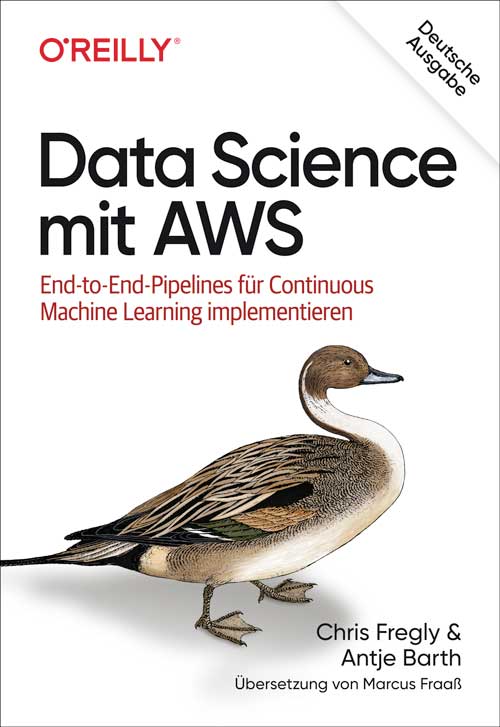
Data Science mit AWS
End-to-End-Pipelines für Continuous Machine Learning implementieren Mit diesem Buch lernen Machine-Learning- und KI-Praktiker:innen, wie sie erfolgreich Data-Science-Projekte mit Amazon Web Services erstellen und in den produktiven Einsatz bringen. Das praxisorientierte Handbuch stellt den KI- und Machine-Learning-Stack von Amazon vor, der Data Science, Data Engineering und Anwendungsentwicklung umfasst. Chris Fregly und Antje Barth zeigen Ihnen, wie Sie ML-Pipelines in der Cloud anlegen und die Ergebnisse innerhalb von Minuten in Anwendungen integrieren. Sie erfahren zudem, wie Sie Kosten senken können und die Performance Ihrer Anwendungen optimieren.Aus dem Inhalt: Wenden Sie den KI- und ML-Stack von Amazon auf reale Use Cases an, insbesondere aus den Bereichen Natural Language Processing, Computer Vision, Betrugserkennung oder dialogfähige GeräteNutzen Sie AutoML, um sich wiederholende Aufgaben mit Amazon SageMaker Autopilot zu automatisierenTauchen Sie tief in den kompletten Lebenszyklus einer NLP-Modellentwicklung auf BERT-Basis ein und lernen Sie dabei, wie Sie Daten einlesen und analysieren sowie Modelle trainieren und deployenBündeln Sie alle Teilschritte eines Workflows zu einer wiederverwendbaren MLOps-PipelineVerwenden Sie Amazon Kinesis und Amazon Managed Streaming for Apache Kafka für Echtzeit-ML, Anomalieerkennung und Streaming-AnalysenProfitieren Sie von bewährten Sicherheitspraktiken für das Identitäts- und Zugriffsmanagement, die Authentifizierung und AutorisierungAutoren: Chris Fregly ist Principal Developer Advocate für KI und Machine Learning bei AWS in San Francisco. Er spricht regelmäßig auf Konferenzen auf der ganzen Welt zu KI und Machine Learning, unter anderem bei der O'Reilly AI Superstream Series. Zuvor hat er PipelineAI gegründet, war Solutions Engineer bei Databricks und Software Engineer bei Netflix. In den letzten zehn Jahren hat er sich auf den Aufbau von KI- und Machine-Learning-Pipelines mit AWS konzentriert. Antje Barth ist Senior Developer Advocate für KI und Machine Learning bei AWS in Düsseldorf. Sie ist Mitbegründerin der Düsseldorfer Gruppe von „Women in Big Data“ und spricht häufig auf KI- und Machine Learning-Konferenzen und Meetups auf der ganzen Welt. Außerdem leitet und kuratiert sie Inhalte für O'Reilly-AI-Superstream-Veranstaltungen. Zuvor war sie als Software Engineer bei Cisco und MapR tätig und beschäftigte sich mit Infrastrukturen für Rechenzentren, Big Data und KI-Anwendungen.Zielgruppe: Data ScientistsData EngineersMachine Learning Engineers

Mastering the Microsoft Kinect
Know how to program the Microsoft Kinect and use the device for applications that interact directly with humans through gestures and motion. This book covers the mathematics and theoretical background needed for depth sensing, motion tracking, and object recognition while maintaining a practical focus on getting things done. You will learn to track the human body in three-dimensional space, analyze the human motion, and remove the background to isolate the person being tracked. You will see how to recognize objects and voice, and transform between the three-dimensional physical space and a computer’s two-dimensional screen.The book is written with real-world applications in mind. It provides step-by-step tutorials and source code for common use cases. The author has worked with startups and Fortune 500 companies, and all of the examples are taken directly from the industry. The book’s practical focus simplifies the core principles, removes the clutter, and allows developers to start writing code right away. Also covered is the use of Azure Cognitive Services on Microsoft’s cloud platform and their use for object and voice recognition, enabling your applications to “see” objects and respond to their environment.WHAT YOU WILL LEARN* Visualize color, depth, and body data* Calculate angles between different body joints* Analyze human motion and create fitness applications* Recognize objects and voice using cloud-powered artificial intelligence* Remove the background from a scene to create virtual worldsWHO THIS BOOK IS FORDevelopers who want to build demanding Kinect apps and games, and those who are looking for a careful balance between theoretical knowledge and practical application that favors the practical. Readers should have a basic knowledge of C# and some familiarity with the Unity3D engine.VANGOS PTERNEAS is a professional software engineer and an award-winning Microsoft Most Valuable Professional. Since 2012, Vangos has been helping Fortune 500 companies and ambitious startups create demanding motion-tracking applications. He is obsessive about analyzing and modeling every aspect of the human motion using computer vision and mathematics. Kinect programming started as a hobby and quickly evolved into a full-time business. Vangos is sharing his passion by regularly publishing articles and open-source projects that help fellow developers understand the fascinating Kinect technology. PART I. MEET THE KINECT1. Mixed Reality and Kinect2. The Developer ToolboxPART II. THE BASICS3. Configuring the Device4. Color Data5. Depth Data6. Body TrackingPART III. THE MAGIC7. Streaming Data in the Background8. Coordinate Mapping9. Augmented Reality – Removing the Background of the Users10. Motion AnalysisPART IV. THE "AZURE" IN KINECT11. Azure Cognitive Services12. Computer Vision and Object Detection

Automotive Cybersecurity
Die aktuellen technologischen Veränderungen, allen voran die Digitalisierung, die Vernetzung von Verkehrssystemen und das Autonome Fahren, schaffen einerseits neue Mobilitätslösungen, andererseits rücken dadurch Fahrzeuge und die Automotive Infrastruktur als zunehmend attraktive Angriffsziele in den Fokus von Hackern und Cyberkriminellen. Die höhere Komplexität elektronischer Systeme hat eine größere Angriffsoberfläche zur Folge. Ein strukturierter und ganzheitlicher Ansatz macht diese Herausforderung beherrschbar. Dieses Buch verschafft dem Leser einen Überblick über die für ein umfassendes Securitykonzept erforderlichen Security-Bausteine. Die detaillierte Darstellung verschiedener Security-Mechanismen beschreibt einerseits wie Fahrzeugsysteme vor bestimmten Angriffen geschützt werden und macht andererseits deutlich, welche Herausforderungen und Abhängigkeiten deren Implementierung in ein Automotive Deeply-Embedded System mit sich bringt. Cybersecurity im Automobilbereich.- Security-Strategie.- Security-Organisation und -Management.- Sicherer Produktlebenszyklus.- Technische Security-Bausteine.- ECU-Schutzkonzepte.- Sichere E/E-Architektur.- Sichere Außenschnittstellen.- Sichere Fahrzeug-Infrastruktur

Theoretische Informatik
Das Buch führt umfassend in das Gebiet der theoretischen Informatik ein und behandelt den Stoffumfang, der für das Bachelor-Studium an Universitäten und Hochschulen in den Fächern Informatik und Informationstechnik benötigt wird. Die Darstellung und das didaktische Konzept verfolgen das Ziel, einen durchweg praxisnahen Zugang zu den mitunter sehr theoretisch geprägten Themen zu schaffen.Theoretische Informatik muss nicht trocken sein! Sie kann Spaß machen und genau dies versucht das Buch zu vermitteln. Die verschiedenen Methoden und Verfahren werden anhand konkreter Beispiele eingeführt und durch zahlreiche Querverbindungen wird gezeigt, wie die fundamentalen Ergebnisse der theoretischen Informatik die moderne Informationstechnologie prägen.Das Buch behandelt die Themengebiete: Logik und Deduktion, Automatentheorie, formale Sprachen, Entscheidbarkeitstheorie, Berechenbarkeitstheorie und Komplexitätstheorie. Die Lehrinhalte aller Kapitel werden durch zahlreiche Übungsaufgaben komplettiert, so dass sich die Lektüre neben der Verwendung als studienbegleitendes Lehrbuch auch bestens zum Selbststudium eignet. Prof. Dr. Dirk W. Hoffmann ist Dozent an der Fakultät für Informatik und Wirtschaftsinformatik der Hochschule Karlsruhe – Technik und Wirtschaft.
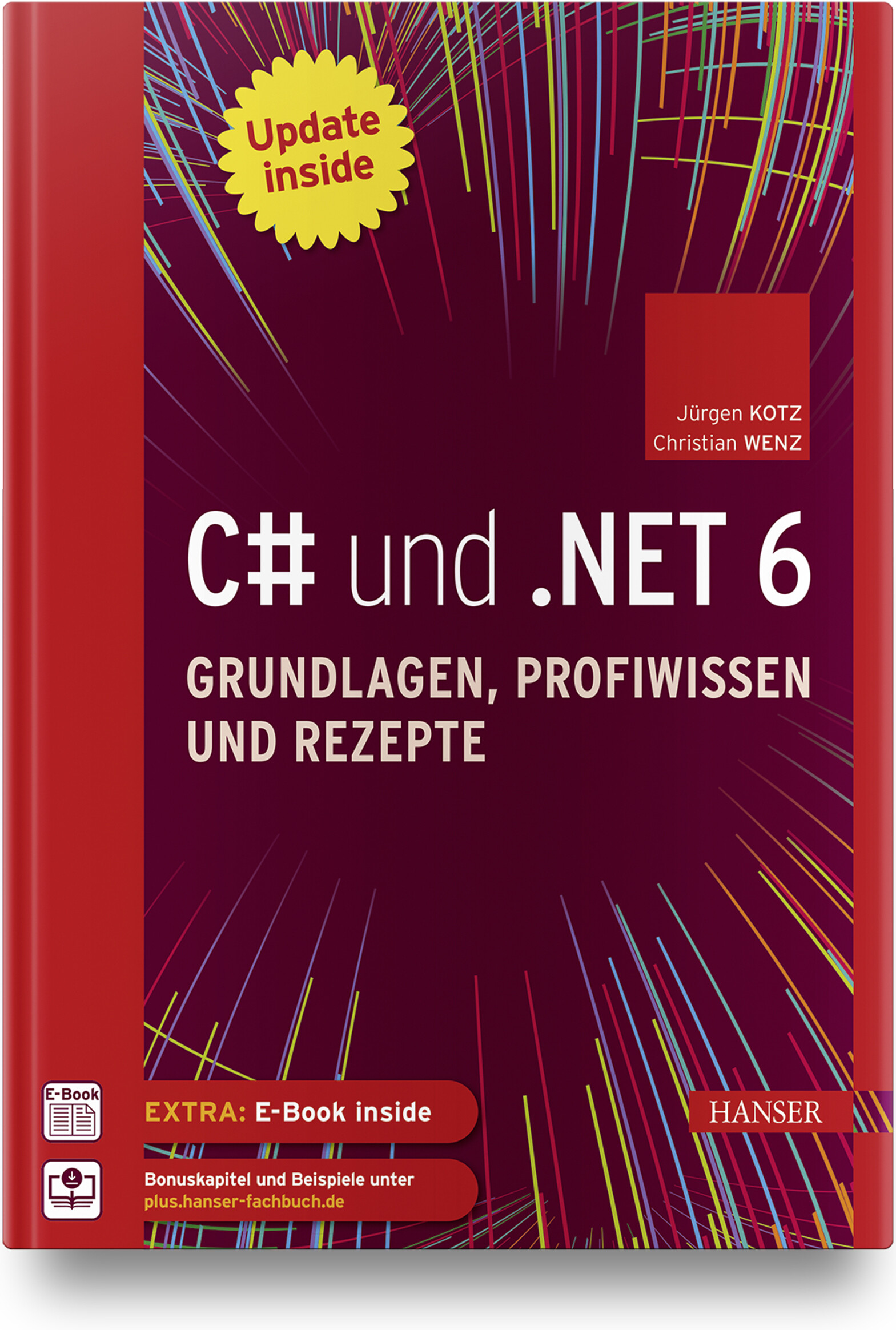
C# und .NET 6 - Grundlagen, Profiwissen und Rezepte
Dieser komplett überarbeitete Klassiker der C#-/.NET-Programmierung bietet Ihnen Know-how und zahlreiche Rezepte, mit denen Sie häufig auftretende Probleme meistern. Einsteiger erhalten ein umfangreiches Tutorial zu den Grundlagen der C# 10-Programmierung mit Visual Studio 2022, dem Profi liefert es fortgeschrittene Programmiertechniken zu allen wesentlichen Einsatzgebieten der Programmierung mit .NET 6. Zum sofortigen Ausprobieren finden Sie am Ende eines jeden Kapitels hochwertige Lösungen für nahezu jedes Problem. Das Buch gliedert sich in einen Grundlagenteil zur Programmierung, eine Einführung in die Desktop-Programmierung (WPF, MAUI (Multi-platform App UI), einen Technologieteil zu fortgeschrittenen Themen sowie einen komplett neuen Teil zur Web-Programmierung (ASP.NET Core, MVC, Razor, Web-API, Blazor). Es ist der ideale Begleiter für Ihre tägliche Arbeit und zugleich – dank der erfrischenden und unterhaltsamen Darstellung – eine spannende Lektüre, die Lust macht, Projekte auch in der Freizeit umzusetzen.Aus dem Inhalt:Grundlagen der SpracheOOP-KonzepteArrays, Strings, FunktionenEinführung in LINQNeuerungen in C#Einführung in WPFWPF Controls, WPF-DatenbindungAsynchrone Programmierung & Task Parallel LibraryDebugging, Fehlersuche und -behandlungEntity Framework CoreWebanwendungen und APIs mit ASP.NET CoreSingle-Page Applications (SPAs mit BlazorAusblick auf .NET MAUI Leseprobe (PDF)Autoren: Jürgen Kotz arbeitet seit über 20 Jahren als freiberuflicher Trainer, Berater, Entwickler und Autor. Mit .NET beschäftigt er sich seit der ersten Beta-Version. Mit seiner Firma PrimeTime Software in München entwickelt er .NET-Projekte und führt Schulungen in diesem Umfeld durch. Seine Hauptthemen sind dabei die Entwicklung von REST- bzw. SOAP-basierten Services und der Datenzugriff mittels Entity Framework. Darüber hinaus hat er zahlreiche Fachbücher und -artikel geschrieben. Christian Wenz arbeitet als Berater, Trainer und Autor mit Schwerpunkt auf Webtechnologien und ist Autor oder Co-Autor von über 100 Computerbüchern. Er schreibt regelmäßig Beiträge für verschiedene IT-Magazine und hält Vorträge auf Konferenzen rund um den Globus. In seiner täglichen Arbeit ist er einer der Gründer der Webagentur Arrabiata Solutions mit Büros in München und London.
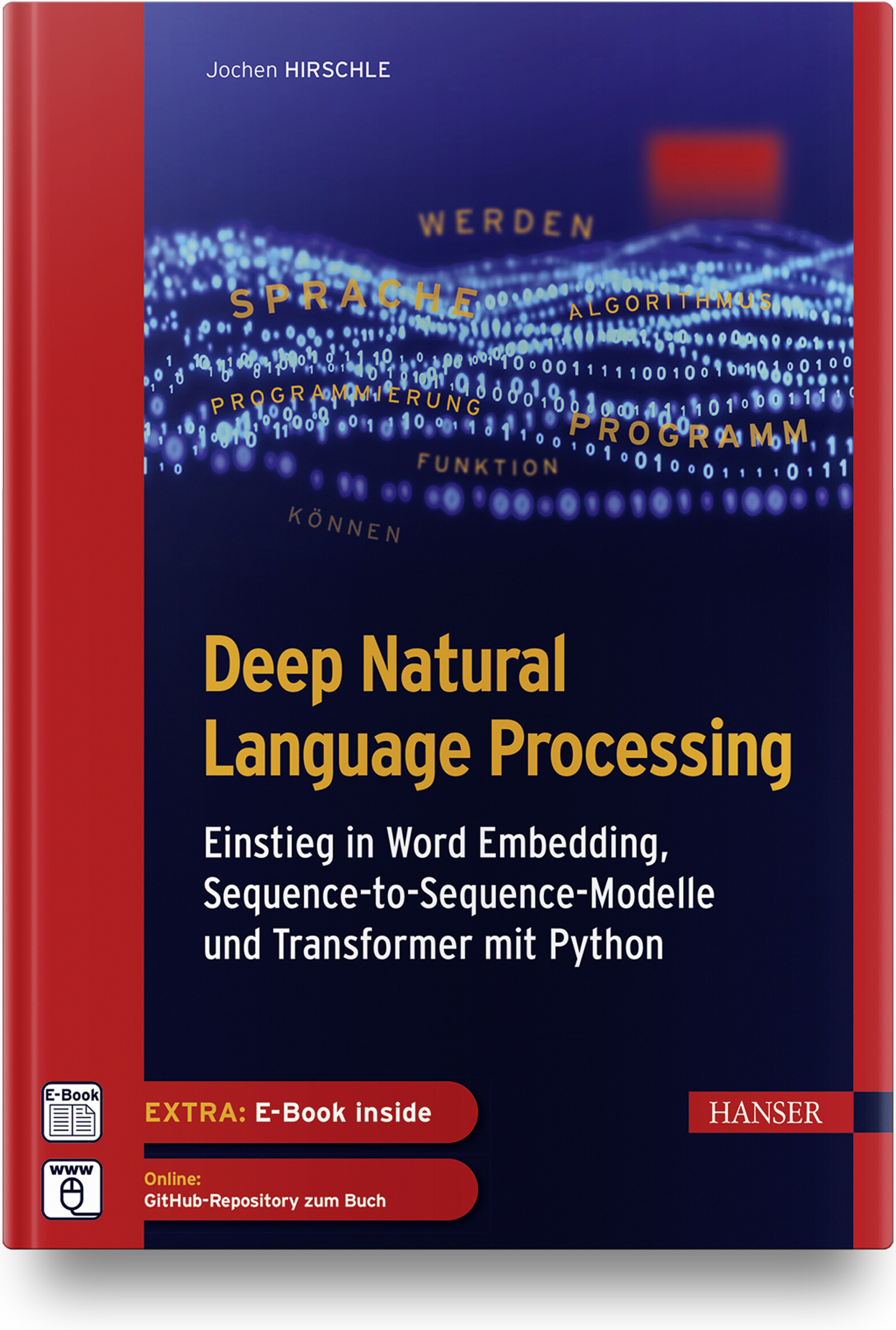
Deep Natural Language Processing
Einstieg in Word Embedding, Sequence-to-Sequence-Modelle und Transformer mit PythonDas Buch bietet eine leicht verständliche Einführung in Machine-Learning-Algorithmen im Allgemeinen und in die Verarbeitung von Textdaten mit Deep-Learning-Verfahren im Besonderen. Es veranschaulicht die theoretischen Konzepte bewährter und neuerer NLP-Ansätze und führt in die praktische Umsetzung ein.Im Fokus stehen insbesondere folgende Verfahren:Vektorisierung von Wörtern mit Word EmbeddingVerarbeitung von Texten mit rekurrenten und konvolutionalen neuronalen Netzen.Aufbau von Sequence-to-Sequence-Modellen zur Übersetzung und für Textzusammenfassungen.Arbeit mit der Transformers-Bibliothek und Hugging Face.Anhand praktischer Anwendungen (Klassizierung von Texten, Rechtschreibkorrektur, Übersetzung, Frage-Antwort-System) wird gezeigt, wie sich Textdaten vorbereiten und effektive Lernmodelle mit Bibliotheken wie Transformers, TensorFlow/Keras und Scikit-Learn aufbauen, trainieren und produktiv einsetzen lassen.Über den Autor:Dr. Jochen Hirschle ist IT-Trainer und Consultant für Machine Learning und Deep Learning in Braunschweig. Er ist erfahrener Programmierer in Python und Java und war als Wissenschaftler und Dozent an den Universitäten in Köln, Innsbruck und Frankfurt tätig. Er kennt die Fallstricke der statistischen Datenanalyse und die Tricks maschinellen Lernens aus seiner langjährigen Praxis und er weiß, wie sich komplexe Sachverhalte einfach erklären lassen.Leseprobe (PDF-Link)


Unity® Virtual Reality Development with VRTK4
Get hands-on practical knowledge of concepts and techniques for VR development using Unity® and VRTK version 4. This book is a step-by-step guide to learning VRTK 4 for developing immersive VR experiences.Unity is a powerful game engine for developing VR experiences. With its built-in support for all major VR headsets, it's the perfect tool for developers to realize their vision in VR. VRTK is a battle-tested VR solution for Unity; VRTK 4, in conjunction with Unity, has changed the dynamics of VR development.This book focuses on creating deep understanding of how advanced VR mechanics and techniques are built and utilized as a part of a VR framework. You will start off by setting up your devices for VR development and learn about the advantages of using VRTK 4 over alternate SDKs. You will learn to setup your very own custom VRTK Rig, find out how to setup various advanced VR mechanics and locomotion techniques, how to create several spatial UI objects, and how to setup Unity 2D UI controls. You will also cover advanced topics such as using angular and linear drives, setting up a VR Simulator to work with a XBox Controller, and realistic physics VR hands.By the end of this book, you will know how to create advanced VR mechanics that can be used within any VR experience, game, or App and deployed across several platforms and hardware.WHAT YOU WILL LEARN* Understand how to develop Immersive VR experiences* Create a VR simulator to test your project* Generate advanced Spatial UI that you can interact with physically using your handsWHO THIS BOOK IS FOR?Unity game developers conversant with Unity's Editor. Basic knowledge of how Unity Prefabs function, how events work in general, and programming logic would be beneficial.CHRISTOPHER COUTINHO is the founder of GameWorks, a Mumbai-based game development studio specializing in VR and virtual product development using Unity® and VRTK 4. GameWorks provides development services to clients in game creation, Unity® tools creation, and VR simulation training development. He is highly active on the VRTKs discord channel. He is also known for his online virtual reality courses using Unity® and VRTK 4 on Udemy that students have highly appreciated.Chapter 1: IntroductionChapter 2: A New Reality Through Virtual RealityChapter 3: Setting Up Your Project for VR DevelopmentChapter 4: Importing VRTK Version 4 Tilia PackagesChapter 5: Setting Up VRTKs Camera RigsChapter 6: Setting Up Interactors and Virtual HandsChapter 7: Configuring Interactor Functionality and Setting Up Velocity TrackersChapter 8: Interactable Game ObjectsChapter 9: Moving Around the Virtual World - TeleportationChapter 10: Seamless LocomotionChapter 11: Arm Swinging MovementChapter 12: Setting Up a Pseudo-BodyChapter 13: Climbing in VRChapter 14: Movement AmplifierChapter 15: Distance GrabbingChapter 16: Snap ZonesChapter 17: Creating Spatial 3D User Interface Game ObjectsChapter 18: Using Unity's UI Controls with VRTKChapter 19: Angular DrivesChapter 20: Linear DrivesChapter 21: Tips, Tricks, and RecipesChapter 22: Mini-Game
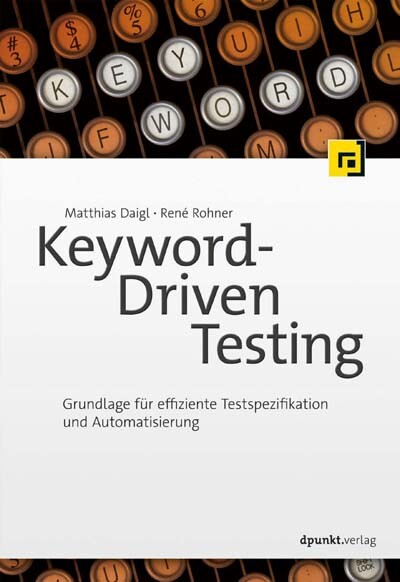
Keyword-Driven Testing
Grundlage für effiziente Testspezifikation und AutomatisierungWirksame und gleichzeitig kosteneffiziente Tests sind ein wesentlicher Erfolgsfaktor beim Softwaretest. Dazu verhilft die Methode »schlüsselwortbasierter Test« oder »Keyword-Driven Testing«, mit der Tests aus wiederverwendbaren Bausteinen zusammengesetzt werden. Diese Bausteine werden dem Team als Test-Know-how zur Verfügung gestellt, das jederzeit abgerufen werden kann. Die Autoren bieten einen fundierten Überblick über die technischen und organisatorischen Aspekte des Keyword-Driven Testing und vermitteln das notwendige Praxiswissen, um Keyword-gesteuerte Tests zu erstellen sowie Keywords auszuwählen und zu strukturieren. Auch auf die Herausforderungen und Werkzeuge für das Keyword-Driven Testing wird eingegangen. Im Einzelnen werden behandelt: Unterschiedliche Ansätze für Keyword-Driven TestingAuswahl und Strukturierung von Keywords sowie QualitätssicherungNormen im Testen und speziell zu KeywordsTestautomatisierungsarchitekturKeyword-Driven Testing FrameworksPraxis mit Robot Framework Verbindung mit Testpraktiken wie Test-Driven, Behavior-Driven oder Acceptance Test-Driven Development Autoren: Matthias Daigl ist Product Owner bei der imbus AG. Er ist als Sprecher auf internationalen Konferenzen unterwegs, arbeitet in Arbeitsgruppen des German Testing Board, des ISTQB® und im Normungsausschuss von DIN und ISO mit, war Editor der Norm ISO/IEC/IEEE 29119-5 „Keyword-Driven Testing“ und ist Autor des Buches „ISO 29119: Die Softwaretest-Normen verstehen und anwenden“. René Rohner ist Product Owner des Value Streams Testautomatisierung sowie Senior Berater mit den Spezialgebieten Keyword-Driven Testing und Testautomatisierung bei der imbus AG. Er ist als Softwareentwickler, Trainer und Chairman of the Board der Robot Framework® Foundation international im Bereich des Keyword-Driven Testing tätig. Nach dem Lesen des Buches haben Sie ein fundiertes Verständnis für die unterschiedlichen Facetten des Keyword-Driven Testing, kennen die Vorteile und Werkzeuge und können so selbst entscheiden, wie Sie Keyword-gesteuerte Tests gestalten und welche der beschriebenen Konzepte Sie in der Praxis einsetzen möchten. Zielgruppe: Testanalyst*innenTestmanager*innenTestautomatisierer*innenQualitätsmanager*innenSoftwareentwickler*innen

Data Science - Analytics and Applications
Organizations have moved already from the rigid structure of classical project management towards the adoption of agile approaches. This holds also true for software development projects, which need to be flexible to adopt to rapid requests of clients as well to reflect changes that are required due to architectural design decisions. With data science having established itself as corner stone within organizations and businesses, it is now imperative to perform this crucial step for analytical business processes as well. The non-deterministic nature of data science and its inherent analytical tasks require an interactive approach towards an evolutionary step-by-step development to realize core essential business applications and use cases.The 4th International Data Science Conference (iDSC) 2021 brought together researchers, scientists, and business experts to discuss means of establishing new ways of embracing agile approaches within the various domains of data science, such as machine learning and AI, data mining, or visualization and communication as well as case studies and best practices from leading research institutions and business companies.The proceedings include all full papers presented in the scientific track and the corresponding German abstracts as well as the short papers from the student track.Among the topics of interest are:* Artificial Intelligence and Machine Learning * Implementation of data mining processes * Agile Data Science and Visualization * Case Studies and Applications for Agile Data Science---Organisationen sind bereits von der starren Struktur des klassischen Projektmanagements zu agilen Ansätzen übergegangen. Dies gilt auch für Softwareentwicklungsprojekte, die flexibel sein müssen, um schnell auf die Wünsche der Kunden reagieren zu können und um Änderungen zu berücksichtigen, die aufgrund von Architekturentscheidungen erforderlich sind. Nachdem sich die Datenwissenschaft als Eckpfeiler in Organisationen und Unternehmen etabliert hat, ist es nun zwingend erforderlich, diesen entscheidenden Schritt auch für analytische Geschäftsprozesse durchzuführen. Die nicht-deterministische Natur der Datenwissenschaft und die ihr innewohnenden analytischen Aufgaben erfordern einen interaktiven Ansatz für eine evolutionäre, schrittweise Entwicklung zur Realisierung der wichtigsten Geschäftsanwendungen und Anwendungsfälle.Die 4. Internationale Konferenz zur Datenwissenschaft (iDSC 2021) brachte Forscher, Wissenschaftler und Wirtschaftsexperten zusammen, um Möglichkeiten zu erörtern, wie neue Wege zur Umsetzung agiler Ansätze in den verschiedenen Bereichen der Datenwissenschaft, wie maschinelles Lernen und KI, Data Mining oder Visualisierung und Kommunikation, sowie Fallstudien und Best Practices von führenden Forschungseinrichtungen und Wirtschaftsunternehmen etabliert werden können.Der Tagungsband umfasst alle im wissenschaftlichen Track vorgestellten Volltexte und die Kurzbeiträge aus dem studentischen Track auf Englisch und die dazugehörigen Abstracts auf Deutsch.Zu den Themen, die sie interessieren, gehören unter anderem:* Künstliche Intelligenz und Maschinelles Lernen * Implementierung von Data-Mining-Prozessen * Agile Datenwissenschaft und Visualisierung * Fallstudien und Anwendungen für Agile DatenwissenschaftPETER HABER is Assistant Professor of Information and Communication Technology, in particular for analog and digital signal processing, and responsible coordinator for system theory and electrical engineering at Salzburg University of Applied Sciences. He is a researcher and project manager, leading and coordinating national and international projects in the field of IT and IT management, while also integrating data science solutions at businesses. Since 2009 he has been a member of the international advisory board for the IATED conferences.THOMAS LAMPOLTSHAMMER is an Assistant Professor for ICT and Deputy Head of the Centre for E-Governance at the Department of E-Governance and Administration, Danube University Krems, Austria. His current research focus is on the domain of data governance, the effects of ICT application in a connected society, and the effects on a data-driven society. He has a substantial background in the design and implementation of expert and decision-making systems, data analytics, and semantic-based reasoning.HELMUT LEOPOLD is the Head of Center for Digital Safety&Security at the AIT Austrian Institute of Technology and is responsible for research areas such as artificial intelligence and cyber security. Prior to AIT, Mr. Leopold was at Alcatel and at Telekom Austria where he played a major role in the digitalization transformation of the organisation. He graduated in computer science from the TU Vienna and holds a PhD from the Lancaster University in England.MANFRED MAYR is the Academic Program Director for “Business Informatics and Digital Transformation” as well department head for IT-Management at Salzburg University of Applied Sciences. He is a lecturer at international conferences and the author of various publications in the field of business informatics and business applications. The digitalisation of ERP applications in the industrial environment is a long-standing and important field of his research. In addition, he has coordinated several national and international research projects.---PETER HABER ist Professor für Informations- und Kommunikationstechnik, insbesondere für analoge und digitale Signalverarbeitung, und verantwortlicher Koordinator für Systemtheorie und Elektrotechnik an der Fachhochschule Salzburg. Er ist Forscher und Projektleiter, leitet und koordiniert nationale und internationale Projekte im Bereich IT und IT-Management und integriert datenwissenschaftliche Lösungen in Unternehmen. Seit 2009 ist er Mitglied des internationalen Beirats für die IATED-Konferenzen.THOMAS LAMPOLTSHAMMER ist Assistenzprofessor für IKT und stellvertretender Leiter des Zentrums für E-Governance am Lehrstuhl für E-Governance und Verwaltung, Donau-Universität Krems, Österreich. Sein aktueller Forschungsschwerpunkt liegt auf dem Gebiet der Datenverwaltung, den Auswirkungen der IKT-Anwendung in einer vernetzten Gesellschaft und den Auswirkungen auf eine datengesteuerte Gesellschaft. Er verfügt über einen substantiellen Hintergrund im Design und in der Implementierung von Experten- und Entscheidungssystemen, Datenanalyse und semantisch-basierter Argumentation.HELMUT LEOPOLD leitet das Center for Digital Safety&Security am AIT Austrian Institute of Technology und ist verantwortlich für Forschungsbereiche wie Künstliche Intelligenz und Cybersecurity. Davor war er bei Alcatel und Telekom Österreich tätig, wo er eine maßgebliche Rolle bei der digitalen Transformation spielte. Er hat Informatik an der TU Wien studiert und an der Lancaster University in England promoviert.MANFRED MAYR ist Akademischer Programmdirektor für "Wirtschaftsinformatik und digitale Transformation" sowie Abteilungsleiter für IT-Management an der Fachhochschule Salzburg. Er ist Vortragender bei internationalen Konferenzen und Autor verschiedener Publikationen im Bereich der Wirtschaftsinformatik und forscht zu betriebswirtschaftlichen Anwendungen der Datenwissenschaft. Die Digitalisierung von ERP-Anwendungen im industriellen Umfeld ist ein langjähriges und wichtiges Feld seiner Forschung. Darüber hinaus hat er mehrere nationale und internationale Forschungsprojekte koordiniert.Die Herausgeber sind die Konferenzvorsitzenden der International Data Science Conference.Preface - An overview of AI solutions “Made in Austria” - Data boost industry-academia link - Research Track - German Abstracts - Full Papers - Peer Reviewed - Industry Track - Abstracts - Provided Papers - Non Reviewed