

Allgemein

Deine agile Reise
Was zählt für dich als Agile Coach wirklich? Wie kannst du mehr Wirkung in der Arbeitswelt entfalten? Finde es heraus!- 99 erkenntnisreiche Selbstcoaching-Übungen mit unterschiedlichem Fokus- die Methoden der Übungen kommen aus den Bereichen Journaling, agilen Methoden und Systemisches Coaching- Gestalte dein Lernbacklog, um deine agile Reise aktiv zu gestaltenDas Arbeitsbuch "Deine Agile Reise" ist eine Kombination aus Selbstcoaching und Training. Es bietet dir die perfekten Mischung aus fachlich fundierten Fakten aus der agilen und systemischen Welt sowie eigenen Erfahrungen, die die Autorin Janna Wurdig ehrlich mit dir teilt. Die Übungen und Aufgaben aus dem Buch führen dich aktiv mit Stift, Papier und Post-its zu neuen Erkenntnissen zu deiner Rolle als Agile Coach.Schnapp dir einen Stift und starte deine agile Reise!Janna Wurdig ist Expertin für Agilität, Teamentwicklung und moderne Arbeitsweisen im digitalen Wandel. Als Agile Coach und Senior Consultant für Future Work bei der esentri AG arbeitet sie gemeinsam mit ihren Kund*innen an Haltung, Fähigkeiten, Werkzeugen und Strukturen, die eine agile, nachhaltige und wertstiftende (Zusammen-)Arbeit ermöglichen. Mit viel Leidenschaft unterstützt sie mutige Entscheidungen, Entwicklung und neues Denken. Hierbei setzt sie auf gemeinsames Wachstum und Potenzialentfaltung. Erfahre mehr: www.deine-agile-reise.de/ueber-mich

Software Transparency
DISCOVER THE NEW CYBERSECURITY LANDSCAPE OF THE INTERCONNECTED SOFTWARE SUPPLY CHAINIn Software Transparency: Supply Chain Security in an Era of a Software-Driven Society, a team of veteran information security professionals delivers an expert treatment of software supply chain security. In the book, you’ll explore real-world examples and guidance on how to defend your own organization against internal and external attacks. It includes coverage of topics including the history of the software transparency movement, software bills of materials, and high assurance attestations. The authors examine the background of attack vectors that are becoming increasingly vulnerable, like mobile and social networks, retail and banking systems, and infrastructure and defense systems. You’ll also discover:* Use cases and practical guidance for both software consumers and suppliers* Discussions of firmware and embedded software, as well as cloud and connected APIs* Strategies for understanding federal and defense software supply chain initiatives related to securityAn essential resource for cybersecurity and application security professionals, Software Transparency will also be of extraordinary benefit to industrial control system, cloud, and mobile security professionals. CHRIS HUGHES is the co-founder and Chief Information Security Officer of Aquia. He is an Adjunct Professor for M.S. Cybersecurity programs at Capitol Technology University and the University of Maryland Global Campus, and a co-host of the Resilient Cyber Podcast. TONY TURNER has 25 years’ experience as a cybersecurity engineer, architect, consultant, executive, and community builder. He is the Founder of Opswright, a software company creating solutions for security engineering in critical infrastructure and leads the OWASP Orlando chapter.

How to Create Explainer Videos
To explain complex context and relations, there is a tool already on each office workplace: PowerPoint. But many users are not aware of what it can really achieve: not only record anything of what one does on the screen - it also can do videos with intricate animations. Elements can be displayed or hidden, created step by step or morph one to another. The audience will focus on the subject, the message is clear and the larger context will be understood. This booklet concentrates on creating videos for teaching and demonstration. No other hard- or software needed. The resulting videos can be stored or shared anywhere you like.Ina Koys is an experienced instructor for Microsoft Office. Many questions are frequently asked in trainings, but seldom covered in books. Now she answers some of them in her originally German "short & spicy" series. A little accent will add to the fun :-)

Navigating the Al Revolution
_NAVIGATING THE AI REVOLUTION: A GUIDE FOR THE UNINITIATED_ is an essential guide to understanding the world of Artificial Intelligence (AI) given the increasing prevalence of mass-adopted AI tools such as ChatGPT. In this book, King provides a comprehensive overview of AI, its history, and its current state of development, in addition to delving into the potential impact of AI on society and the economy, including the opportunities and challenges it presents.Whether you're a business leader, a student, or someone who is simply curious about AI,_ NAVIGATING THE AI REVOLUTION_ is a must-read. With clear explanations and practical recommendations, this book will help you navigate the complex and rapidly evolving world of AI and prepare you for the future.

Transitioning to Microsoft Power Platform
Welcome to this step-by-step guide for Excel users, data analysts, and finance specialists. It is designed to take you through practical report and development scenarios, including both the approach and the technical challenges. This book will equip you with an understanding of the overall Power Platform use case for addressing common business challenges.While Power BI continues to be an excellent tool of choice in the BI space, Power Platform is the real game changer. Using an integrated architecture, a small team of citizen developers can build solutions for all kinds of business problems. For small businesses, Power Platform can be used to build bespoke CRM, Finance, and Warehouse management tools. For large businesses, it can be used to build an integration point for existing systems to simplify reporting, operation, and approval processes.The author has drawn on his15 years of hands-on analytics experience to help you pivot from the traditional Excel-based reporting environment. By using different business scenarios, this book provides you with clear reasons why a skill is important before you start to dive into the scenarios. You will use a fast prototyping approach to continue to build exciting reporting, automation, and application solutions and improve them while you acquire new skill sets. The book helps you get started quickly with Power BI. It covers data visualization, collaboration, and governance practices. You will learn about the most practical SQL challenges. And you will learn how to build applications in PowerApps and Power Automate.The book ends with an integrated solution framework that can be adapted to solve a wide range of complex business problems.WHAT YOU WILL LEARN* Develop reporting solutions and business applications* Understand the Power Platform licensing and development environment* Apply Data ETL and modeling in Power BI* Use Data Storytelling and dashboard design to better visualize data* Carry out data operations with SQL and SharePoint lists* Develop useful applications using Power Apps* Develop automated workflows using Power Automate* Integrate solutions with Power BI, Power Apps, and Power Automate to build enterprise solutionsWHO THIS BOOK IS FORNext-generation data specialists, including Excel-based users who want to learn Power BI and build internal apps; finance specialists who want to take a different approach to traditional accounting reports; and anyone who wants to enhance their skill set for the future job market.DAVID DING is the director and lead consultant of SDInnovation, a consulting company that provides customized decision support and training services to organizations across multiple industries. David is a certified Power BI developer with a master’s degree in data science. Previously, David held multiple senior business and technical positions. This book is part of his personal mission in helping everyone to get better with data.1. Power BI SolutionsGoal: as the introduction chapter, this chapter starts with the most popular tool in Power Platform. It covers the important components relating to the integrated architecture. The same components are also powerful in their own rights in building powerful reports.2. Data VisualisationGoal: After covering the key components of Power BI, this chapter focus on the design and user experience, which is also a key component in a great report.3. Power BI GovernanceGoal: The readers will understand that report governance is an enabler not a restrictor. This chapter break governance into 4 key components and discusses the needs in each area.4. SQL ServerGoal: Most business data stores in SQL Server. SQL is by far the most common data language. The readers will understand the basics of SQL and able to write the most common queries.5. SharePoint ListGoal: The readers will understand how to setup and utilize SharePoint list as a security measure.6. Power Automate SolutionsGoal: The readers will understand the basic concept of Power Automate as well as some practical applications.7. Power Apps SolutionsGoal: PowerApps is another critical component in the book. This chapter will spend considerably more time in explaining the concept and construct. The readers will understand how to build PowerApps and how to integrate it with Power BI and Power Automate.8. Integrated SolutionsGoal: In the final chapter of the book, readers will start to explore the full architecture. How different parts add value to the business application. The readers will understand the full potential of Power Platform. By this stage, the users also have the skillset required to implement such solutions at work.

Pivot for office workers
In today's offices, much time is spent finding and structuring information in given data. Pivot Tables and Charts are the tool of choice to get it done. Their result often looks impressive, making people think it takes tremendous skills setting them up. It doesn’t! They’re easy, if only you know what result you’re looking for. In this booklet you learn everything to transform a simple Excel list to a telling Pivot Table and Chart!Ina Koys is an experienced instructor for Microsoft Office. Many questions are frequently asked in trainings, but seldom covered in books. Now she answers some of them in her originally German "short & spicy" series. A little accent will add to the fun :-)

Queries, VLookup, XLookup, & Co.
Excel can take large data sets. But getting hold of required data can be tricky. Here, different possibilities are explained: The filter and the VLOOKUP() which are often heard of, but not really mastered. But there are more options like the Advanced filter, IF(), Database functions and the new, cutting-edge ones like SWITCH() and the brand new, very convenient XLOOKUP(). All are explained with examples and their specific benefits and downsides.Ina Koys is an experienced instructor for Microsoft Office. Many questions are frequently asked in trainings, but seldom covered in books. Now she answers some of them in her originally German "short & spicy" series. A little accent will add to the fun :-)
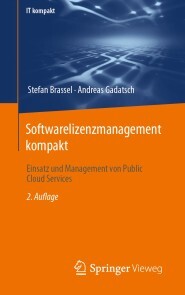
Softwarelizenzmanagement kompakt
DIESES BUCH SETZT SICH MIT DEN VERÄNDERUNGEN IM SOFTWARELIZENZMANAGEMENT AUSEINANDERDie Autoren geben einen Überblick über Neuerungen und Veränderungen im Softwarelizenzmanagement und zeigen, wie sie sich auf das Management von Unternehmen auswirken. Dazu präsentieren sie praxisnahe Ansätze und Handlungsempfehlungen, die auf theoretischen Erkenntnissen basieren.Bisher hat sich die Fachliteratur diesem Thema, wenn überhaupt, nur aus operativer Sicht genähert. Das möchte dieses Werk ändern. Deshalb zielt dieses Buch darauf ab, fachliche Zusammenhänge im Bereich des Softwarelizenzmanagements für Sie nachvollziehbar darzustellen. Daneben gehen Stefan Brassel und Andreas Gadatsch auf aktuelle Marktveränderungen ein und geben konkrete Impulse für das (IT-)Management. Durch diese Herangehensweise gelingt den Autoren ein Brückenschlag zwischen der Theorie und Anwendbarkeit ihrer Feststellungen. Neben zentralen Grundlagen enthält das Buch viele Praxisbeispiele aus dem Softwarelizenzmanagement. Ein wichtiger Schwerpunkt dieses Werks ist außerdem die Transformation von Softwarelizenzen hin zu Public Cloud Services.VON DER THEORIE ZUM FOKUS AUF DIE PRAXISZunächst liegt der Fokus dieses Werks auf der Theorie, doch hier halten sich die Autoren nur kurz auf. Sie erfahren z. B. mehr über die klare Abgrenzung zentraler Begriffe wie „Softwarelizenz“ und „Softwarelizenzmanagement“. Auch die Problematik immaterieller Wirtschaftsgüter sowie deren Nutzungsrechte werden behandelt. Anschließend geht das Buch „Softwarelizenzmanagement kompakt” stärker in die Tiefe und erläutert Themen wie:· Praxis der Softwarelizenzierung am Beispiel Microsoft· Transformation: Von der Software Lizenz zu Public Cloud Services· IT-Assetmanagement von Software und Public Cloud-DienstenAbschließend erhalten Sie Handlungsempfehlungen für das Management sowie für eine evtl. notwendige strategische Neuausrichtung von Unternehmen. Erschienen in der Reihe „IT kompakt“, ermöglicht Ihnen dieses Buch über Softwarelizenzmanagement einen schnellen und vor allen Dingen praxisorientierten Einstieg in die Thematik. Daher eignet es sich optimal für Selbststudium und Lehre. Durch den grundlegenden Fokus auf Veränderungen im Softwaremarkt wurde dieses Werk speziell für diese Zielgruppen verfasst:a) Fachverantwortliche des IT-Lizenzmanagementsb) Führungskräfte in der Unternehmensleitung oder in IT-Abteilungenc) Verantwortliche des Geschäftsprozessmanagementsd) Masterstudierende der BWL, Informatik oder WirtschaftsinformatikDIPL.-KFM. STEFAN BRASSEL, M.A. ist Leiter des Bereiches ‚License & Cloud Technology Consulting’ des zur Bechtle AG gehörenden IT-Systemhauses in Aachen, welches für den Bereich Lizenzberatung, Software Asset Management sowie Public Cloud Technology, als interner Dienstleister für die Bechtle Systemhäuser in Nordrhein Westfalen auftritt.DR. ANDREAS GADATSCH ist Inhaber der Professur für Betriebswirtschaftslehre, insbesondere Wirtschaftsinformatik und Leiter des Masterstudienganges Innovations- und Informationsmanagement im Fachbereich Wirtschaftswissenschaften der Hochschule Bonn-Rhein-Sieg in Sankt Augustin.

Business Capabilities
Geschäftsfähigkeiten als effektives Werkzeug für die Gestaltung von Unternehmens- und IT-ArchitekturenDas Konzept der Business Capabilities zur Beschreibung von Geschäftsfähigkeiten wird seit Langem erfolgreich im Enterprise Architecture Management verwendet. Sie gelten als Bindeglied zwischen Geschäftsprozessmanagement, IT-Architektur und Geschäftsstrategie. Die Möglichkeiten, Capabilities nutzbringend einzusetzen, sind jedoch weitaus größer und bieten sich für viele Aufgaben im Rahmen der Unternehmensentwicklung an.Dieses Buch gibt eine systematische Einführung in die Grundlagen, die Anwendung und die Vorbereitung für den Einsatz von Business Capabilities in der Praxis. Es beschreibt, wofür und wie Capability-Modelle verwendet werden können, und zeigt auf, wie Capabilities modelliert und ihr praktischer Einsatz als Werkzeug im Unternehmen vorbereitet wird. Dabei steht eine leichtgewichtige und zugleich flexible Variante von Capabilities im Fokus, die in Unternehmen als ein zentraler, fachlich orientierter Ordnungsrahmen in verschiedenen Arten von Projekten und regelmäßigen Linienaktivitäten eingesetzt werden kann. Neben der konzeptionellen Definition liegt ein Schwerpunkt auf der Einbettung von Capabilities in den Unternehmenskontext, was anhand mehrerer Fallbeispiele verdeutlicht wird. Der Anhang des Buches enthält u. a. eine Übersicht über Objekt- und Beziehungstypen sowie eine Einordnung ausgewählter Rahmenwerke.Das Buch bietet einen flexiblen Werkzeugkasten mit vielen Beispielen für den Einsatz von Capabilities in unterschiedlichen Anwendungsfällen der Unternehmensentwicklung, aus dem sich Gestaltungs- und Führungsrollen bedienen können, um Verbesserungen zu konzipieren und umzusetzen.Über den Autor:Dr. Wolf Pfannenstiel arbeitete nach Studium und Promotion in Informatik an der TU Berlin zunächst mehrere Jahre als Business-Analyst und Softwareproduktmanager, bevor er sich auf Enterprise Architecture Management spezialisierte. Business Capabilities nutzt er als konzeptionelles Werkzeug seit mehr als 15 Jahren erfolgreich in Projekten verschiedener Art und Branchen. Seit 2015 arbeitet er bei der Innovationeers GmbH als Lösungs- und Enterprise-Architekt und begleitet sowohl die Vorbereitung als auch die Umsetzung von Innovations- und Transformationsvorhaben bei Konzernen und großen Mittelständlern.Zielgruppe:Enterprise-Architekt*innenBusiness AnalystsRequirement EngineersProjektverantwortlicheFührungskräfte/Management

How I Rob Banks
FOLLOW FC AS HE STEALS FROM THE WORLD’S MOST SECURE BANKS AND GOVERNMENT FACILITIES—WITHOUT BREAKING A SINGLE LAWIn How I Rob Banks: And Other Such Places, renowned ethical hacker and social engineer FC delivers a gripping and often hilarious discussion of his work: testing the limits of physical bank security by trying to “steal” money, data, and anything else he can get his hands on. In the book, you’ll explore the secretive world of physical assessments and follow FC as he breaks into banks and secure government locations to identify security flaws and loopholes.The author explains how banks and other secure facilities operate, both digitally and physically, and shows you the tools and techniques he uses to gain access to some of the world’s most locked-down buildings. You’ll also find:* Strategies you can implement immediately to better secure your own company, home, and data against malicious actors* Detailed photos, maps, and drawings to bring to life the unbelievable true stories contained inside* An inside and candid look at a rarely examined industry through the eyes of one of its most respected penetration testersA can’t-miss account of real-life security exploits perfect for infosec pros, including red and blue teamers, pentesters, CIOs, CISSPs, and social engineers, How I Rob Banks also belongs in the hands of anyone who loves a great Ocean’s 11-style story pulled straight from the real world.FC is a renowned ethical hacker and social engineer with over 20 years’ experience working in the field of information security. He has worked for major high street banks in the UK and Europe, FTSE100 companies, several government agencies, and security forces. He’s a frequent speaker at corporate events, security conferences, universities, and schools around the world.

Optimization Techniques in Engineering
OPTIMIZATION TECHNIQUES IN ENGINEERINGTHE BOOK DESCRIBES THE BASIC COMPONENTS OF AN OPTIMIZATION PROBLEM ALONG WITH THE FORMULATION OF DESIGN PROBLEMS AS MATHEMATICAL PROGRAMMING PROBLEMS USING AN OBJECTIVE FUNCTION THAT EXPRESSES THE MAIN AIM OF THE MODEL, AND HOW IT IS TO BE EITHER MINIMIZED OR MAXIMIZED; SUBSEQUENTLY, THE CONCEPT OF OPTIMIZATION AND ITS RELEVANCE TOWARDS AN OPTIMAL SOLUTION IN ENGINEERING APPLICATIONS, IS EXPLAINED.This book aims to present some of the recent developments in the area of optimization theory, methods, and applications in engineering. It focuses on the metaphor of the inspired system and how to configure and apply the various algorithms. The book comprises 30 chapters and is organized into two parts: Part I — Soft Computing and Evolutionary-Based Optimization; and Part II — Decision Science and Simulation-Based Optimization, which contains application-based chapters. Readers and users will find in the book:* An overview and brief background of optimization methods which are used very popularly in almost all applications of science, engineering, technology, and mathematics;* An in-depth treatment of contributions to optimal learning and optimizing engineering systems;* Maps out the relations between optimization and other mathematical topics and disciplines;* A problem-solving approach and a large number of illustrative examples, leading to a step-by-step formulation and solving of optimization problems.AUDIENCEResearchers, industry professionals, academicians, and doctoral scholars in major domains of engineering, production, thermal, electrical, industrial, materials, design, computer engineering, and natural sciences. The book is also suitable for researchers and postgraduate students in mathematics, applied mathematics, and industrial mathematics. ANITA KHOSLA, PHD, is a professor in the Department of Electrical and Electronics Engineering at Manav Rachna International Institute of Research and Studies, University, Faridabad. She is the editor of two books and more than 50 research papers in national, international journals and conferences. PRASENJIT CHATTERJEE, PHD, is a full professor of Mechanical Engineering and Dean (Research and Consultancy) at MCKV Institute of Engineering, West Bengal, India. He has more than 120 research papers in various international journals and peer-reviewed conferences. He has authored and edited more than 22 books on intelligent decision-making, fuzzy computing, supply chain management, optimization techniques, risk management, and sustainability modeling. Dr. Chatterjee is one of the developers of a new multiple-criteria decision-making method called Measurement of Alternatives and Ranking according to Compromise Solution (MARCOS). IKBAL ALI, PHD, is a professor in the Department of Electrical Engineering, Faculty of Engineering & Technology of Jamia Millia Islamia, New Delhi, India. His research work has been widely published and cited in refereed international journals/conferences of repute like IEEE. His research interests are in the fields of power systems, operation, and control; and smart grid technologies. DHEERAJ JOSHI, PHD, is a professor in the Electrical Engineering Department, Delhi Technological University since 2015. He has published more than 200 publications in international/national journals and conferences. His areas of interest are power electronics converters, induction generators in wind energy conversion systems, and electric drives.

Spring 6 Recipes
This in-depth Spring-based Java developer code reference has been updated and now solves many of your Spring Framework 6 problems using reusable, complete and real-world working code examples. SPRING 6 RECIPES (5th Edition) now includes Spring Native which speeds up your Java-based Spring Framework built enterprise, native cloud, web applications and microservices. It also has been updated to now include Spring R2DBC for Reactive Relational Database Connectivity, a specification to integrate SQL databases, like PostgreSQL, MySQL and more, using reactive drivers.Furthermore, this book includes additional coverage of WebFlux for more reactive Spring web applications. Reactive programming allows you to build systems that are resilient to high load, especially common in the more complex enterprise, native cloud applications that Spring Framework lets you build. This updated edition also uses code snippets and examples based on newest available standard long term support release of Java. When you start a new project, you’ll be able to copy the code and configuration files from this book, and then modify them for your specific Spring Framework-based application needs. This can save you a great deal of work over creating a project from scratch.This powerful code reference is a "must have" for your print or digital library. This developer cookbook comes with accompanying source code that is freely available on GitHub under latest Creative Commons open source licensing.WHAT YOU'LL LEARN* Get re-usable code recipes and snippets for core Spring, annotations and other development tools* Dive into Spring Native which merges the popular Spring and GraalVM for increased performance, speed and reliability of your Spring Framework 6 applications* Explore Spring R2BC for reactive relational database connectivity with SQL* Build reactive Spring MVC-based web applications and microservices using WebFlux* Enhance your enterprise or native cloud applications using Spring Transaction Management* Test, secure and deploy your Spring applications using reusable code templates availableWHO THIS BOOK IS FORThis book is for experienced Java programmers, software developers with experience using the Spring Framework.Marten Deinum is a submitter on the open source Spring Framework project. He is also a Java/software consultant working for Conspect. He has developed and architected software, primarily in Java, for small and large companies. He is an enthusiastic open source user and longtime fan, user and advocate of the Spring Framework. He has held a number of positions including Software Engineer, Development Lead, Coach, and also as a Java and Spring Trainer.Daniel Rubio is an independent consultant with over 10 years of experience in enterprise and web-based software. More recently, Daniel is founder and technical lead at MashupSoft.com. He has co-authored the best selling Spring Recipes as well as other books for Apress Media, LLC. Daniel's expertise lies in Java, Spring, Python, Django, JavaScript/CSS and HTML.Josh Long is the Spring Developer Advocate at Pivotal. Josh is a Java Champion, author of 5 books (including O'Reilly's upcoming "Cloud Native Java: Designing Resilient Systems with Spring Boot, Spring Cloud, and Cloud Foundry") and 3 best-selling video trainings (including "Building Microservices with Spring Boot Livelessons" w/ Phil Webb), and an open-source contributor (Spring Boot, Spring Integration, Spring Cloud, Activiti and Vaadin).1. Spring Development Tools2. Spring Core Tasks3. Spring Native: Spring + GraalVM4. Spring MVC5. Spring REST6. Spring MVC - Async Processing7. Spring WebFlux8. Spring Security9. Data Access10. Spring R2DBC11. Spring Transaction Management12. Spring Batch13. Spring with NoSQL14. Spring Java Enterprise Services and Remoting Technologies15. Spring Messaging16. Spring Integration17. Spring TestingA. Spring Deployment to the CloudB. Caching.

Introduction to SparxSystems Enterprise Architect
SparxSystems Enterprise Architect (EA) is a logical choice for many companies and organizations: it combines a broad feature set with an affordable price. However, the robust range of features makes starting to use this fantastic tool a bit intimidating.Enter Michael, a fictional consultant and experienced enterprise architect featured throughout the book to show you how to populate a model with elements and connectors, and how to create diagrams that speak to the audience: management, project managers, internal audit, business stakeholders and IT representatives. As the book progresses Michael's duties continue with more advanced topics including the use of workflow tools such as Kanban boards. You'll even see how to present directly from Enterprise Architect so that latest information can be shown straight from the source!The last days of Michael’s mission are devoted to fine-tuning the enterprise architecture model with the help of tagged values. And to leave the model in the hands of the customer by creating a custom toolbox.WHAT YOU'LL LEARN* Setup EA and populate a model with elements, connectors and diagrams* Review the Big Five of enterprise architect: Model, Packages, Diagrams, Elements, Connectors* Implement evidence-based best practice strategies aligned with overall goalsWHO THIS BOOK IS FORNon-technical users who use EA mainly to document entire landscapes.Peter Doomen has been working as an architect, analyst, consultant, and teacher. He has been using Enterprise Architect since version 4. He has written two other books about the same subject. In daily life, he is fond of champagne and likes to teach about that subject as well. INTRODUCTION TO SPARXSYSTEMS ENTERPRISE ARCHITECTPart I: Getting StartedChapter 1: Setting Up Enterprise Architect* Comparing the different versions of EA* Downloading and setting up EA. * The Big Five of Enterprise Architect: Model, Packages, Diagrams, Elements, ConnectorsChapter 1A: The First Model: Document the Systemplar Enterprise Architecture* Repositories and projects* The model wizard* Case: Two weeks towards a documented enterprise architecture Chapter 2: Working With Elements* Elements and what they represent* Different ways to add elements to the model: one by one, several of the same type, importing* Case: importing the project list into the enterprise architecture* Finding elements in the model and on diagrams. Finding orphans* Deleting elements* Nesting, locking, bookmarking* Element default appearance and auto name counters Chapter 3: Connecting Elements With Connectors* Case: adding business capabilities to the value chain* Quickly adding links with the quick linker and repeat connector* Other ways to add links* Putting elements on the diagram based on links* Styling and hiding connectors* Adding information to connectors: notes, information flows* The relationship matrix and the gap matrixChapter 4: Using Diagrams To Present Information* Case: a business capability model* Manual and autolayout* Copying diagrams* Legends and status colors* Case: a heat map for the software model* Adding elements to the same diagram twice* Showing alternative info and notes* Filtering diagrams* Different views: list, gantt, specification* Special diagrams (packages, graphs)Part II: Presenting and Improving the ModelChapter 5: Workflow Management* Different ways of handling ‘work to do’: bookmarking elements, adding #todo to elements, and setting up a Kanban diagram* Discussions in the EA model* Case: a Kanban diagram for the enterprise architectureChapter 6: Creating Reports and Slideshows* Diagram exports* RTF Reports* Excel exports* A website* Case: a website for the enterprise architecture* Slideshows in the EA user interfaceChapter 7: Tagged Values and Stereotypes* Tagged values: adding, exporting, inheriting applying to multiple items, defining tagged value types* Stereotypes: defining and visualizing them* General types: status, constraint, constraint status, difficulty, priority, test status, requirement, scenario* Case: adding custom information to the enterprise architecture modelChapter 8: Create Your Own Toolbox* Toolbox visibility* A first attempt at creating a toolbox* Adding icons* The order of elements in the toolbox* Default size* Working with metatypes* Adding diagram properties* Shapescripting: the canvas, the structure of a shapescript, some useful commands, limitations* Case: leaving the enterprise architecture model for the architects of the company

Handbook of Software Fault Localization
Handbook of Software Fault LocalizationA COMPREHENSIVE ANALYSIS OF FAULT LOCALIZATION TECHNIQUES AND STRATEGIES In Handbook of Software Fault Localization: Foundations and Advances, distinguished computer scientists Prof. W. Eric Wong and Prof. T.H. Tse deliver a robust treatment of up-to-date techniques, tools, and essential issues in software fault localization. The authors offer collective discussions of fault localization strategies with an emphasis on the most important features of each approach. The book also explores critical aspects of software fault localization, like multiple bugs, successful and failed test cases, coincidental correctness, faults introduced by missing code, the combination of several fault localization techniques, ties within fault localization rankings, concurrency bugs, spreadsheet fault localization, and theoretical studies on fault localization. Readers will benefit from the authors’ straightforward discussions of how to apply cost-effective techniques to a variety of specific environments common in the real world. They will also enjoy the in-depth explorations of recent research directions on this topic. Handbook of Software Fault Localization also includes:* A thorough introduction to the concepts of software testing and debugging, their importance, typical challenges, and the consequences of poor efforts * Comprehensive explorations of traditional fault localization techniques, including program logging, assertions, and breakpoints * Practical discussions of slicing-based, program spectrum-based, and statistics-based techniques * In-depth examinations of machine learning-, data mining-, and model-based techniques for software fault localization Perfect for researchers, professors, and students studying and working in the field, Handbook of Software Fault Localization: Foundations and Advances is also an indispensable resource for software engineers, managers, and software project decision makers responsible for schedule and budget control. W. ERIC WONG, PHD, is a Full Professor, Director of Software Engineering Program, and the Founding Director of Advanced Research Center for Software Testing and Quality Assurance in Computer Science at the University of Texas at Dallas. He is also a Guest Researcher with the US National Institute of Standards and Technology. Professor Wong was the award recipient of the 2014 IEEE Reliability Society Engineer of the Year. In addition, he was the Editor-in-Chief of the IEEE Transactions on Reliability from June 2016 to May 2022. He received his MS and PhD in Computer Science from Purdue University. T.H. TSE received his PhD from London School of Economics, and was a Visiting Fellow at University of Oxford. He is an Honorary Professor in Computer Science with The University of Hong Kong after retiring from full professorship. He is a Steering Committee Chair of the IEEE International Conference on Software Quality, Reliability, and Security; and an Associate Editor of IEEE Transactions on Reliability. He has over 270 publications, including a book with Cambridge University Press. He ranks internationally as no. 2 in metamorphic testing. He was awarded an MBE by Queen Elizabeth II of the United Kingdom. Chapter 1: Software Fault Localization: An Overview of Research, Techniques, and ToolsChapter 2: Traditional Techniques for Software Fault LocalizationChapter 3: Slicing-Based Techniques for Software Fault LocalizationChapter 4: Spectrum-Based Techniques for Software Fault LocalizationChapter 5: Statistics-Based Techniques for Software Fault LocalizationChapter 6: Machine Learning-Based Techniques for Software Fault LocalizationChapter 7: Data Mining-Based Techniques for Software Fault LocalizationChapter 8: Information Retrieval-Based Techniques for Software Fault LocalizationChapter 9: Model-Based Techniques for Software Fault LocalizationChapter 10: Software Fault Localization in SpreadsheetsChapter 11: Theoretical Aspects of Software Fault LocalizationChapter 12: Software Fault Localization for Programs with Multiple BugsChapter 13: Emerging Aspects of Software Fault Localization
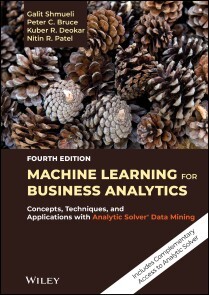
Machine Learning for Business Analytics
MACHINE LEARNING —ALSO KNOWN AS DATA MINING OR PREDICTIVE ANALYTICS— IS A FUNDAMENTAL PART OF DATA SCIENCE. IT IS USED BY ORGANIZATIONS IN A WIDE VARIETY OF ARENAS TO TURN RAW DATA INTO ACTIONABLE INFORMATION.Machine Learning for Business Analytics: Concepts, Techniques, and Applications in Analytic Solver Data Mining provides a comprehensive introduction and an overview of this methodology. The fourth edition of this best-selling textbook covers both statistical and machine learning algorithms for prediction, classification, visualization, dimension reduction, rule mining, recommendations, clustering, text mining, experimentation, time series forecasting and network analytics. Along with hands-on exercises and real-life case studies, it also discusses managerial and ethical issues for responsible use of machine learning techniques.This fourth edition of Machine Learning for Business Analytics also includes:* An expanded chapter focused on discussion of deep learning techniques* A new chapter on experimental feedback techniques including A/B testing, uplift modeling, and reinforcement learning* A new chapter on responsible data science* Updates and new material based on feedback from instructors teaching MBA, Masters in Business Analytics and related programs, undergraduate, diploma and executive courses, and from their students* A full chapter devoted to relevant case studies with more than a dozen cases demonstrating applications for the machine learning techniques* End-of-chapter exercises that help readers gauge and expand their comprehension and competency of the material presented* A companion website with more than two dozen data sets, and instructor materials including exercise solutions, slides, and case solutionsThis textbook is an ideal resource for upper-level undergraduate and graduate level courses in data science, predictive analytics, and business analytics. It is also an excellent reference for analysts, researchers, and data science practitioners working with quantitative data in management, finance, marketing, operations management, information systems, computer science, and information technology.GALIT SHMUELI, PHD, is Distinguished Professor and Institute Director at National Tsing Hua University’s Institute of Service Science. She has designed and instructed business analytics courses since 2004 at University of Maryland, Statistics.com, The Indian School of Business, and National Tsing Hua University, Taiwan. PETER C. BRUCE, is Founder of the Institute for Statistics Education at Statistics.com, and Chief Learning Officer at Elder Research, Inc. KUBER R. DEOKAR, is the Data Science Team Lead at UpThink Experts, India. He is also a faculty member at Statistics.com. NITIN R. PATEL, PHD, is cofounder and lead researcher at Cytel Inc. He was also a co-founder of Tata Consultancy Services. A Fellow of the American Statistical Association, Dr. Patel has served as a visiting professor at the Massachusetts Institute of Technology and at Harvard University. He is a Fellow of the Computer Society of India and was a professor at the Indian Institute of Management, Ahmedabad, for 15 years. Foreword xixPreface to the Fourth Edition xxiAcknowledgments xxvPART I PRELIMINARIESCHAPTER 1 Introduction 3CHAPTER 2 Overview of the Machine Learning Process 15PART II DATA EXPLORATION AND DIMENSION REDUCTIONCHAPTER 3 Data Visualization 59CHAPTER 4 Dimension Reduction 91PART III PERFORMANCE EVALUATIONCHAPTER 5 Evaluating Predictive Performance 115PART IV PREDICTION AND CLASSIFICATION METHODSCHAPTER 6 Multiple Linear Regression 151CHAPTER 7 k-Nearest-Neighbors (k-NN) 169CHAPTER 8 The Naive Bayes Classifier 181CHAPTER 9 Classification and Regression Trees 197CHAPTER 10 Logistic Regression 229CHAPTER 11 Neural Nets 257CHAPTER 12 Discriminant Analysis 283CHAPTER 13 Generating, Comparing, and Combining Multiple Models 303PART V INTERVENTION AND USER FEEDBACKCHAPTER 14 Experiments, Uplift Modeling, and Reinforcement Learning 319PART VI MINING RELATIONSHIPS AMONG RECORDSCHAPTER 15 Association Rules and Collaborative Filtering 341CHAPTER 16 Cluster Analysis 369PART VII FORECASTING TIME SERIESCHAPTER 17 Handling Time Series 401CHAPTER 18 Regression-Based Forecasting 415CHAPTER 19 Smoothing Methods 445PART VIII DATA ANALYTICSCHAPTER 20 Social Network Analytics 467CHAPTER 21 Text Mining 487CHAPTER 22 Responsible Data Science 507PART IX CASESCHAPTER 23 Cases 537References 575Data Files Used in the Book 577Index 579
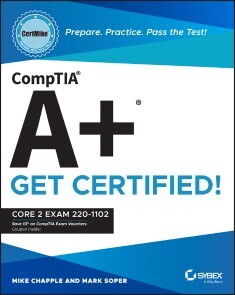
CompTIA A+ CertMike: Prepare. Practice. Pass the Test! Get Certified!
SKIP THE FLUFF AND GET STRAIGHT TO THE ESSENTIALS WITH AN INDISPENSABLE PREP HANDBOOK FOR THE COMPTIA A+ CORE 2 EXAMIn CompTIA A+ CertMike: Prepare. Practice. Pass the Test! Get Certified!Core 2 Exam 220-1102, veteran tech experts and educators Mike Chapple and Mark Soper deliver a hands-on and practical roadmap to taking—and succeeding on—the CompTIA A+ Core 2 exam. You’ll learn how to install, configure, and maintain computer equipment, mobile devices, and software for end users, service components based on customer requirements, understand networking basics, and apply essential cybersecurity methods. Ace the test using the proven CertMike approach:* PREPARE -- CertMike is your personal study coach, guiding you through all the exam objectives and helping you gain an understanding of how they apply to on-the-job tasks!* PRACTICE -- Each chapter includes two multiple choice practice questions. Work through the detailed explanations to evaluate each answer option and understand the reason for the best answer!* PASS -- On exam day, use the critical knowledge you've learned when you’re ready to take the test. You'll feel ready and confident to pass the exam and earn your certification!With a laser-focus on getting you job- and exam-ready, the book skips the fluff and gets right to the point of getting you familiar with IT basics and on the road to an in-demand IT certification and a new career in tech. You’ll also get complimentary access to additional online study tools, complete with a bonus practice exam and audio recordings of the CertMike Exam Essentials. Banish test anxiety and feel ready to pass the test—the first time around!An indispensable resource for anyone preparing for their A+ certification, CompTIA A+ CertMike: Prepare. Practice. Pass the Test! Get Certified! Core 2 Exam 220-1102 is also a must-read for hardware and PC technicians seeking to upgrade their skillset.

Cybersecurity First Principles: A Reboot of Strategy and Tactics
THE FIRST EXPERT DISCUSSION OF THE FOUNDATIONS OF CYBERSECURITYIn Cybersecurity First Principles, Rick Howard, the Chief Security Officer, Chief Analyst, and Senior fellow at The Cyberwire, challenges the conventional wisdom of current cybersecurity best practices, strategy, and tactics and makes the case that the profession needs to get back to first principles. The author convincingly lays out the arguments for the absolute cybersecurity first principle and then discusses the strategies and tactics required to achieve it.In the book, you'll explore:* Infosec history from the 1960s until the early 2020s and why it has largely failed* What the infosec community should be trying to achieve instead* The arguments for the absolute and atomic cybersecurity first principle* The strategies and tactics to adopt that will have the greatest impact in pursuing the ultimate first principle* Case studies through a first principle lens of the 2015 OPM hack, the 2016 DNC Hack, the 2019 Colonial Pipeline hack, and the Netflix Chaos Monkey resilience program* A top to bottom explanation of how to calculate cyber risk for two different kinds of companiesThis book is perfect for cybersecurity professionals at all levels: business executives and senior security professionals, mid-level practitioner veterans, newbies coming out of school as well as career-changers seeking better career opportunities, teachers, and students.RICK HOWARD is the Chief Analyst and Senior Fellow at The CyberWire, the world’s largest cybersecurity podcast network, and the CSO of N2K (The CyberWire’s parent company). He’s been a CSO for Palo Alto Networks, TASC, and a former Commander for the U.S. Army’s Computer Emergency Response Team. He helped found the Cyber Threat Alliance (an ISAO for security vendors) and the Cybersecurity Canon Project (a Rock & Roll Hall of Fame for cybersecurity books).

Designing Ai Companions
Designing AI companions can be a daunting task. In this comprehensive guide, you will find everything you need to know about designing AI companions. From understanding your user’s needs to designing engaging personalities and delightful interactions. The book highlights the research and user testing outcomes as best practices for reducing the complexity of technology and creating trustful connections between human and artificial intelligence. It will help and guide everyone, who is interested in designing new experiences, products, or services with artificial intelligence to design companions that are both personable and helpful by understanding the expressions of emotions and empathy with psychological, cognitive, and social theories.

Mach was mit 3D-Druck! (2. Auflg.)
Entwickle, drucke und baue deine DIY-Objekte Hast du bereits 3D-Druck-Vorlagen nachgedruckt und willst nun selbst kreativ werden? Dann weißt du: Dazu braucht es eine gute Idee – und um diese in die Tat umzusetzen, musst du mehr können als einen 3D-Drucker zu bedienen. Dieses Buch vermittelt dir Fertigkeiten, die echte Erfinder:innen ausmachen. Du erfährst alles, was du wissen musst, um mithilfe von 3D-Druck deine Produktidee zu realisieren.In mehr als 15 Projekten erhältst du Anregungen für originelle 3D-Druck-Kreationen – sei es ein Ventilator, eine Hamburgerpresse oder eine Geige. Die 2. Auflage berücksichtigt den aktuellen Stand der Verbindungstechnik, wie Helicoils und Inserts, und enthält neue Anwendungsbeispiele, zu denen unter anderem ein Nussknacker, ein Brillengestell und ein Gyro-Uhrenbeweger gehören. Zur Weiterbearbeitung der CAD-Modelle sowie zur Erstellung der Druckdaten stehen auf plus.hanser-fachbuch.de die STEP- und STL-Dateien aller Projekte zum Download bereit.Wenn du darauf brennst, mithilfe von 3D-Druck deine eigenen Produktideen zu verwirklichen, dann liefert dir dieses Buch eine Fülle von Inspirationen, die deine Kreativität beflügeln werden, und alle notwendigen Skills, um dein Wunschobjekt zu entwickeln, zu drucken und zu bauen. Autor:Dipl.-Ing. Stephan Regele war sechs Jahre Konstrukteur bei der MAN Druckmaschinen AG. Seit 2002 ist er Inhaber eines Ingenieurbüros in der Nähe von Madrid (www.inotec-sl.net). Zu den Hauptgeschäftsfeldern des Unternehmens zählen Entwicklungsprojekte auf den Gebieten des Betriebsmittel- und Prüfvorrichtungsbaus für die Luftfahr- und Transportindustrie. In seiner Freizeit tüftelt stets an neuen Produktideen, die er mit seinem 3D-Drucker realisieren kann.

Snowflake SnowPro™ Advanced Architect Certification Companion
Master the intricacies of Snowflake and prepare for the SnowPro Advanced Architect Certification exam with this comprehensive study companion. This book provides robust and effective study tools to help you prepare for the exam and is also designed for those who are interested in learning the advanced features of Snowflake. The practical examples and in-depth background on theory in this book help you unleash the power of Snowflake in building a high-performance system. The best practices demonstrated in the book help you use Snowflake more powerfully and effectively as a data warehousing and analytics platform.Reading this book and reviewing the concepts will help you gain the knowledge you need to take the exam. The book guides you through a study of the different domains covered on the exam: Accounts and Security, Snowflake Architecture, Data Engineering, and Performance Optimization. You’ll also be well positioned to apply your newly acquired practical skills to real-world Snowflake solutions. You will have a deep understanding of Snowflake to help you take full advantage of Snowflake’s architecture to deliver value analytics insight to your business.WHAT YOU WILL LEARN* Gain the knowledge you need to prepare for the exam* Review in-depth theory on Snowflake to help you build high-performance systems* Broaden your skills as a data warehouse designer to cover the Snowflake ecosystem* Optimize performance and costs associated with your use of the Snowflake data platform* Share data securely both inside your organization and with external partners* Apply your practical skills to real-world Snowflake solutionsWHO THIS BOOK IS FORAnyone who is planning to take the SnowPro Advanced Architect Certification exam, those who want to move beyond traditional database technologies and build their skills to design and architect solutions using Snowflake services, and veteran database professionals seeking an on-the-job reference to understand one of the newest and fastest-growing technologies in dataRUCHI SONI is a technology leader and multi-cloud enterprise architect. She helps customers accelerate their digital transformation journey to the cloud and build next-generation apps on forward-looking platforms. She is a people person at heart and has the deep industry knowledge and business expertise in architecting, building, and scaling future-ready platforms that are highly available and agile.Ruchi’s name is included in the Snowflake Data Superhero 2023 list (an elite group of only 73 Snowflake experts around the world). She leads the Snowflake Growth Market Practice in a Global Fortune 500 company and spearheads training and certifications, incubates the development of different accelerators, and operationalizes resilient migration factory solutions. She is a TOGAF 9 certified Architect and has completed 15+ vendor certifications, including SnowPro Core and Advance Architect along with different cloud certifications. Outside of work, she is an avid reader and likes to travel and meditate.1. Introduction & Exam Overview2. Snowflake Architecture & Overview3. Kafka Connectors & Client Drivers4. Loading Data into Snowflake5. Unloading Data from Snowflake6. Tables and Views7. Micro-partitions & Clustering8. Cloning9. Secure Data Sharing10. Semi Structured Data11. Time Travel & Fail Safe12. Continuous Data Pipeline13. Data Replication & Failover14. Managing Account & Security15. Query Profile & Tuning16. Performance & Resource Optimization17. Best Practices

Tactical Wireshark
Take a systematic approach at identifying intrusions that range from the most basic to the most sophisticated, using Wireshark, an open source protocol analyzer. This book will show you how to effectively manipulate and monitor different conversations and perform statistical analysis of these conversations to identify the IP and TCP information of interest.Next, you'll be walked through a review of the different methods malware uses, from inception through the spread across and compromise of a network of machines. The process from the initial “click” through intrusion, the characteristics of Command and Control (C2), and the different types of lateral movement will be detailed at the packet level.In the final part of the book, you'll explore the network capture file and identification of data for a potential forensics extraction, including inherent capabilities for the extraction of objects such as file data and other corresponding components in support of a forensics investigation.After completing this book, you will have a complete understanding of the process of carving files from raw PCAP data within the Wireshark tool.WHAT YOU WILL LEARN* Use Wireshark to identify intrusions into a network* Exercise methods to uncover network data even when it is in encrypted form* Analyze malware Command and Control (C2) communications and identify IOCs* Extract data in a forensically sound manner to support investigations* Leverage capture file statistics to reconstruct network eventsWHO THIS BOOK IS FORNetwork analysts, Wireshark analysts, and digital forensic analysts.KEVIN CARDWELL is an Instructor, Curriculum Developer, Technical Editor and Author of Computer Forensics, and Hacking courses. He is the author of the EC Council Certified Penetration Testing Professional, Ethical Hacking Core Skills, Advanced Penetration Testing and ICS/SCADA Security courses. He has presented at the Blackhat USA, Hacker Halted, ISSA and TakeDownCon conferences as well as many others. He has chaired the Cybercrime and Cyberdefense Summit in Oman and was Executive Chairman of the Oil and Gas Cyberdefense Summit. He is the author of Defense and Deception: Confuse and Frustrate the Hackers, Building Virtual Pentesting Labs for Advanced Penetration Testing 1st and 2nd edition, and Backtrack: Testing Wireless Network Security. He holds a BS in Computer Science from National University in California and an MS in Software Engineering from the Southern Methodist University (SMU) in Texas. Chapter 1: Customization of the Wireshark InterfaceCHAPTER GOAL: - LEARN HOW TO EDIT THE COLUMNS OF THE WIRESHARK USER INTERFACE. EXPLORE IMPORTANT ITEMS TO INCLUDE IN THE INTERFACE FOR PERFORMING INTRUSION AND MALWARE ANALYSISNO OF PAGES - 18SUB -TOPICS1. Identifying columns to delete from the default displays2. Adding the source and destination ports for easy traffic analysis3. Specialty column customization for malware analysisIntrusions Chapter 2: Capturing Network TrafficCHAPTER GOAL: SETUP A NETWORK CAPTURE IN WIRESHARKNO OF PAGES: - 24SUB - TOPICS1. Prerequisites for capturing live network data2. Working with Network Interfaces3. Exploring the network capture options4. Filtering While CapturingChapter 3: Interpreting Network ProtocolsCHAPTER GOAL: A DEEP UNDERSTANDING OF THE NETWORK PROTOCOLS AT THE PACKET LEVELNO OF PAGES : 30SUB - TOPICS:1. Investigating IP, the workhorse of the network2. Analyzing ICMP and UDP3. Dissection of TCP traffic4. Reassembly of packets5. Interpreting Name ResolutionChapter 4: Analysis of Network AttacksCHAPTER GOAL: UNDERSTAND THE HACKING MINDSET AND LEVERAGE THAT TO IDENTIFY ATTACKSNO OF PAGES: 30SUB - TOPICS:1. Introducing a Hacking Methodology2. Examination of reconnaissance network traffic artifacts3. Leveraging the statistical properties of the capture file4. Identifying SMB based attacks5. Uncovering HTTP/HTTPS based attack trafficChapter 5: Effective Network Traffic FilteringCHAPTER GOAL: USE OF THE COMPLEX FILTERING CAPABILITY OF WIRESHARK TO EXTRACT ATTACK DATANO OF PAGES: 35SUB - TOPICS:1. Identifying filter components2. Investigating the conversations3. Extracting the packet data4. Building Filter Expressions5. Decrypting HTTPS TrafficChapter 6: Advanced Features of WiresharkCHAPTER GOAL: A FUNDAMENTAL REVIEW AND UNDERSTANDING OF THE ADVANCED FEATURES OF WIRESHARKNO OF PAGES: 35SUB – TOPICS:1. Working with cryptographic information in a packet2. Exploring the protocol dissectors of Wireshark3. Viewing logged anomalies in Wireshark4. Capturing traffic from remote computers5. Command line tool tshark6. Creating Firewall ACL rulesChapter 7: Scripting and interacting with WiresharkCHAPTER GOAL: USING SCRIPTS TO EXTRACT AND ISOLATE DATA OF INTEREST FROM NETWORK CAPTURE FILESNO OF PAGES: 30SUB – TOPICS:1. Lua scripting2. Interaction with Pandas3. Leveraging PySharkMalware Chapter 8: Basic Malware Traffic AnalysisCHAPTER GOAL: DEVELOP AN UNDERSTANDING OF THE DIFFERENT STAGES OF A MALWARE INFECTIONNO OF PAGES: 36SUB – TOPICS:1. Customization of the interface for malware analysis2. Extracting the files3. Recognizing URL/Domains of an infected site4. Determining the connections as part of the infected machine5. Scavenging the infected machine meta data6. Exporting the data objectsChapter 9: Analyzing Encoding, Obfuscated and ICS Malware TrafficCHAPTER GOAL: IDENTIFY THE ENCODING OR OBFUSCATED METHOD IN NETWORK TRAFFICNO OF PAGES: 40SUB – TOPICS:1. Investigation of njRAT2. Analysis of Wanna Cry3. Exploring Cryptolocker4. Dissecting TRITON5. Examining Trickbot6. Understanding exploit kitsChapter 10: Dynamic Malware Network ActivitiesCHAPTER GOAL: REVIEW AND UNDERSTAND MALWARE NETWORK ACTIVITY AS IT HAPPENSNO OF PAGES: 40SUB – TOPICS:1. Setting up network and service simulation2. Monitoring malware communications and connections at run time and beyond3. Detecting network evasion attempts4. Investigating Cobalt Strike Beacons5. Exploring C2 backdoor methods6. Identifying Domain Generation AlgorithmsForensics Chapter 10: Extractions of Forensics Data with WiresharkCHAPTER GOAL: LEARN DIFFERENT METHODS OF EXTRACTING DIFFERENT TYPES OF CASE RELATED AND POTENTIAL FORENSICS EVIDENCENO OF PAGES: 30SUB – TOPICS:1. Interception of telephony data2. Discovering DOS/DDoS3. Analysis of HTTP/HTTPS Tunneling over DNS4. Carving files from network dataChapter 11: NETWORK TRAFFIC FORENSICSCHAPTER GOAL: AN UNDERSTANDING OF EXTRACTION OF POTENTIAL FORENSICS DATANO OF PAGES: 30SUB – TOPICS:1. Isolation of conversations2. Detection of Spoofing, port scanning and SSH attacks3. Reconstruction of timeline network attack data4. Extracting compromise dataChapter 12: ConclusionCHAPTER GOAL: REVIEW AND SUMMARY OF COVERED CONTENTNO OF PAGES: 10

Beginning Java Objects
Learning to design objects effectively with Java is the goal of Beginning Java Objects: From Concepts to Code, Second Edition. Plenty of titles dig into the Java language in massive detail, but this one takes the unique approach of stepping back and looking at fundamental object concepts first. Mastery of Java—from understanding the basic language features to building complete industrial-strength Java applications—emerges only after a thorough tour of thinking in objects.The first edition of _Beginning Java Objects_ has been a bestseller; this second edition includes material on the key features of J2SE 5, conceptual introductions to JDBC and J2EE, and an in-depth treatment of the critical design principles of model-data layer separation and model-view separation.Despite the plethora of beginning Java titles on the market, this book is truly unique in its coverage of three critical topic—sobject concepts, UML modeling, and Java programming—within a single cover. It’s ideal for both individual self-study and as a university-level textbook. Let Beginning Java Objects, Second Edition be your guide!JACQUIE BARKER is a professional software engineer, author, and former adjunct faculty member at both George Mason University in Fairfax, VA and The George Washington University in Washington, DC. With over 30 years of experience as a software developer and project manager, Jacquie has spent the past 15 years focused on object technology, and is proficient as an object modeler and Sun Microsystems Certified Java programmer.Jacquie earned a bachelor of science degree in computer engineering with highest honors from Case Institute of Technology/Case Western Reserve University in Cleveland, Ohio, and a master of science degree in computer science, emphasizing software systems engineering, from the University of California, Los Angeles. She has subsequently pursued postgraduate studies in information technology at George Mason University in Fairfax, VA. Jacquie’s winning formula for teaching object fundamentals continues to receive praise from readers around the world, and her Apress book Beginning Java Objects: From Concepts to Code has been adopted by many universities as a key textbook in their core IT curricula.On a personal note, Jacquie’s passions include her husband Steve and their three cats Walter, Rocky, and Tanner; serving as founder and executive director of Pets Bring Joy, a 501(c)(3) non-profit animal rescue organization (pbj.org); and her recent launch of a pro bono IT consulting service for start-up non profits (probonoit.org).Part I: The ABCs of ObjectsChapter 1: Abstraction and ModelingChapter Goal: Introducing the mechanism of abstraction as a natural way for humans to interpret the world, and how this relates to object modeling in the software realm.Subtopics:• Simplification through abstraction• Generalization through abstraction• Reusing abstractionsChapter 2: Some Java BasicsChapter Goal: Provide the reader with an immediate introduction to Java language fundamentals so that object concepts can be illustrated using Java code examples as soon as we begin introducing them in chapter 3.Subtopics:• Strengths of the Java language• Primitive Java types• The anatomy of a Java program• Mechanics of compiling and running a Java program• Java’s block structured nature• Elements of Java programming styleChapter 3: Objects and ClassesChapter Goal: Explain the basic building blocks of an OO application – classes as mini-abstractions aka templates for creating object instances.Subtopics:• Advantages of an OO approach to software development over a non-OO approach• How classes are used to specify a type of object’s data• How objects are created (instantiated) at run time• The use of reference variables to refer to objects symbolicallyChapter 4: Object InteractionsChapter Goal: Explain how object behaviors are defined as methods within classes, and how objects collaborate by invoking one another’s methods to accomplish the overall mission of the system.Subtopics:• How methods are used to specify an object’s behaviors• The anatomy of a Java method• How objects send messages to one another to accomplish collaboration• How classes use public and private visibility to publicize what services a type of object can perform while hiding both the logic for how the service is accomplished and the internal data structure needed to support the service• The use of constructors to instantiate the state of an object when first instantiatedChapter 5: Relationships Between ObjectsChapter Goal: Explains the notion of a structural relationship between two objects, wherein the data structures of the classes to which they belong are designed to maintain lasting relationships between objects once instantiated. The two main approaches to accomplishing this are (a) encoding associations between two classes of objects as reference variables within their data structures, (b) having one class inherit and extend the capabilities of another.Subtopics:• Types of structural relationships maintained by objects: associations, aggregations, inheritance• The inheritance mechanism, and guidelines for what we can and cannot achieve when deriving new classes via inheritance• Revisiting constructors regarding some complexities that must be understood when inheritance is involvedChapter 6: Collections of ObjectsChapter Goal: Introduce a special category of objects (classes) known as collections, to be used for efficiently managing an indefinite number of objects of the same type.Subtopics:• The properties of three generic collection types: ordered lists, sets, and dictionaries• The specifics of several different commonly-used built-in Java collection types• The concept of Java packages as logical groupings of classes, and the use of import statements• The power of collections in modeling very sophisticated real-world scenarios• Design techniques for programmer-defined collection typesChapter 7: Some Final Object ConceptsChapter Goal: Covers several key but often misunderstood advanced language features that are essential to taking full advantage of Java’s object-oriented nature: polymorphism (how a single line of code representing a method invocation can exhibit a variety of different behaviors at run time); abstract methods, classes, and interfaces; and static features (data/methods belonging to an entire class of objects versus objects individually).Subtopics:• The runtime mechanism of polymorphism• Abstract classes and methods• The incredible power of interfaces in streamlining Java code• Static featuresPart II: Object Modeling 101Chapter 8: The Object Modeling Process in a NutshellChapter Goal: A high-level overview of how to approach the requirements of a system so as to structure it from the ground up to take advantage of all of the strengths of an OO language like Java.Subtopics:• The goals of and philosophy begin object modeling• Flexibility in terms of selecting or devising a modeling methodology• The pros and cons of using object modeling software toolsChapter 9: Formalizing Requirements Through Use CasesChapter Goal: Explains the importance of developing use cases when establishing requirements for an application, to ensure that (a) all categories of intended user are identified, (b) all of the services that each user category will expect the system to provide, and (c) what their expectations are of the desired outcome for each of the service types.Subtopics:• Introduction to use cases• The notion of actors• Involving users in defining use cases• Approaches to documenting/diagramming use casesChapter 10: Modeling the Data Aspects of the SystemChapter Goal: Illustrate the process by which the types of classes, their respective data structures, and their interrelationships can be discovered and rendered graphically using UML notation.Subtopics:• Technique for identifying the appropriate classes and their respective attributes• Technique for determining the structural relationships that exist among these classes• How to graphically portray this information in proper UML notationChapter 11: Modeling the Behavioral Aspects of the SystemChapter Goal: Revisiting the evolving object model of chapter 10 to reflect the services/behaviors/methods required of each identified class to ensure that the overall requirements of the application will be satisfied.Subtopics:• How the behaviors (method execution) of an object affects its state (data)• Developing scenarios for how use cases (defined in chapter 9) might play out• Creating sequence diagrams based on scenarios• Using sequence diagrams to determine methodsChapter 12: Wrapping Up Our Modeling EffortsChapter Goal: This chapter focuses on ways to test a model before coding begins, as well asSubtopics:• Testing the model• Revisiting requirements and adapting the model as necessary• Reusing models in the form of design patternsPart III: Translating an Object Blueprint into Java CodeChapter 13: A Few More Key Java Details (retitled from 2nd edition)Chapter Goal: Covering a variety of important Java topics that were not essential to illustrating the object concepts of Part I per se, but which are nonetheless key to a rounding out a beginning level Java programmer’s facility with the language. I plan on eliminating a few sections from this chapter if I determine that any of the topics covered are *not* essential to understanding the Student Registration System (SRS) code of chapter 14.Subtopics:• Java application architecture, revisited• Nature and purpose of Java Archive (JAR) files• Java documentation comments• Object nature of Strings• Java enums (enumerations)• Object self-referencing via the “this” keyword• The nature of run-time exceptions, how to handle them, and how to define and use custom exception types• Important features of the built-in Object class• Techniques for command line input• Remove: discussion of inner classes (no longer needed since we are eliminating the chapter on the Swing API)• Remove: narrative regarding Java version 5 language enhancementsChapter 14: Transforming Your Model into Java CodeChapter Goal: In this chapter, I pull together all that we’ve covered in Part I of the book to render the UML model created in Part II of the book into a complete, fully functioning model layer for the Student Registration System. This code can be run from the command line, and will be downloadable from the Apress website.Subtopics: How to code …• … associations of varying multiplicities (one-to-one, one-to-many, many-to-many)• … inheritance relationships• … association classes• … reflexive associations• … abstract classes• … metadata• … static attributes and methodsChapter 15: Three Tier Architectures: Considerations for Adding a User Interface and Data Layer to Your ApplicationChapter Goal: Conceptually introduce the notion of model – presentation layer – data layer separation, using pseudocode examples to illustrate how these layers interact with the model layer code of chapter 14.Subtopics:• Overview of the power of model – presentation layer – data layer separation• Concept of operations for the Student Registration System user interface• Detailed walk-through of pseudocode illustrating (a) how the data layer is used to validate and persist model layer logic, (b) how the user interface/presentation layer is used to receive data and operational requests from a user

Kubernetes
Kubernetes einfach und schnell erklärt Alles, was Sie über Kubernetes wissen müssen Für Einsteiger und Admins ohne Kubernetes-Vorkenntnisse Mit zahlreichen Beispielen aus der Praxis Kubernetes hat radikal die Art und Weise verändert, wie Softwareentwicklung und Systemadministration Anwendungen in der Cloud bauen, deployen und warten. Die aktualisierte dritte Auflage dieses Buches zeigt Ihnen, wie dieser beliebte Container-Orchestrierer dabei helfen kann, in Bezug auf Schnelligkeit, Agilität, Zuverlässigkeit und Effizienz in ganz neue Bereiche vorzudringen – egal ob Ihnen verteilte Systeme neu sind oder ob Sie schon längere Zeit Cloud-native Anwendungen deployen. Die Kubernetes-Veteranen Brendan Burns, Joe Beda, Kelsey Hightower und Lachlan Evenson erklären Ihnen, wie sich dieses System in den Lebenszyklus einer verteilten Anwendung einfügt. Sind Sie aus der Softwareentwicklung, Architektur oder Administration, erfahren Sie, wie Sie Tools und APIs einsetzen, um skalierbare, verteilte Systeme zu automatisieren. Aus dem Inhalt: Erstellen Sie ein einfaches Cluster, um zu lernen, wie Kubernetes funktioniert. Tauchen Sie in die Details des Deployments mit Kubernetes ein. Arbeiten Sie mit den spezialisierten Objekten in Kubernetes, wie zum Beispiel DaemonSets, Jobs, ConfigMaps und Secrets. Erfahren Sie mehr über Deployments, die den Lebenszyklus einer vollständigen Anwendung zusammenhalten. Sichern Sie Ihre Deployments ab. Deployen Sie Anwendungen auf mehrere Cluster und greifen Sie auf Kubernetes über Programmiersprachen zu. "Geschrieben von vier der weltweit angesehensten Experten für Cloud-native Systeme, ist ›Kubernetes‹ das Buch der Wahl, um eine solide Grundlage für Kubernetes-Konzepte zu schaffen, mit Beispielen, die Sie dabei unterstützen, Kubernetes selbst zu erkunden." — Liz Rice, Isovalent
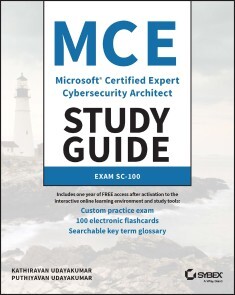
MCE Microsoft Certified Expert Cybersecurity Architect Study Guide
PREP FOR THE SC-100 EXAM LIKE A PRO WITH SYBEX’ LATEST STUDY GUIDEIn the MCE Microsoft Certified Expert Cybersecurity Architect Study Guide: Exam SC-100, a team of dedicated software architects delivers an authoritative and easy-to-follow guide to preparing for the SC-100 Cybersecurity Architect certification exam offered by Microsoft. In the book, you’ll find comprehensive coverage of the objectives tested by the exam, covering the evaluation of Governance Risk Compliance technical and security operations strategies, the design of Zero Trust strategies and architectures, and data and application strategy design. With the information provided by the authors, you’ll be prepared for your first day in a new role as a cybersecurity architect, gaining practical, hands-on skills with modern Azure deployments. You’ll also find:* In-depth discussions of every single objective covered by the SC-100 exam and, by extension, the skills necessary to succeed as a Microsoft cybersecurity architect* Critical information to help you obtain a widely sought-after credential that is increasingly popular across the industry (especially in government roles)* Valuable online study tools, including hundreds of bonus practice exam questions, electronic flashcards, and a searchable glossary of crucial technical termsAn essential roadmap to the SC-100 exam and a new career in cybersecurity architecture on the Microsoft Azure cloud platform, MCE Microsoft Certified Expert Cybersecurity Architect Study Guide: Exam SC-100 is also ideal for anyone seeking to improve their knowledge and understanding of cloud-based management and security. ABOUT THE AUTHORSKATHIRAVAN UDAYAKUMAR is Head of Delivery and Chief Architect for Oracle Digital Technologies (Europe Practice) at Cognizant, covering various elements of technology stack in on-prem and cloud. He has over 18 years of experience in architecture, design, implementation, administration and integration with Green-field IT Systems, ERP, Cloud Platforms and Solutions across various business domains and Industries. He has had a passion for networking since he was an undergraduate and becoming a Cisco Certified Network Associate (CCNA). PUTHIYAVAN UDAYAKUMAR is an infrastructure architect with over 14 years of experience in modernizing and securing IT infrastructure, including the Cloud. He has been writing technical books for more than ten years on various infrastructure and security domains. He has designed, deployed, and secured IT infrastructure out of on-premises and Cloud, including virtual servers, networks, storage, and desktops for various industries, including pharmaceutical, banking, healthcare, aviation, federal entities, etc. He is an open group certified Master certified architect.