

Allgemein
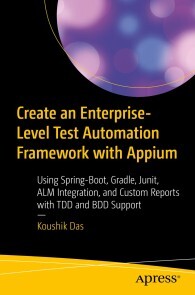
Create an Enterprise-Level Test Automation Framework with Appium
Think from a framework design perspective and move beyond straightforward coding skills. You’ll design an enterprise level test framework that is capable of supporting both TDD and BDD at the same time, using the latest open source tools and coding best practices. Taking a less-is-more approach, superfluous information is excised in favor of sleek and direct instruction and focused coding practices.Your framework will be built with Spring-Boot, Gradle, and Junit. And it will support HP QC integration, Allure (TDD, BDD), Extent (BDD), and customized Pdf reporting (TDD, BDD). Extensive utilities are provided, such as HP ALM integration, device management utilities, email reporting, pdf reporting, OCR utility, Log utility, and more! There’s also a special chapter on internationalization/localization testing in multiple languages. After reading this book, you’ll have full confidence in your ability to build new test automation frameworks for yourself.Though primarily written for software professionals who are in test automation, recent engineering graduates who have programming knowledge and want to prepare for a role in mobile test automation will also find what’s taught here helpful. Test engineers and computer science graduates alike can use what they learn here to become absolute pros in test automation.WHAT YOU'LL LEARN* Design an enterprise level mobile test automation framework capable of supporting both TDD and BDD* Work with the latest open source tools and coding best practices* Build with Spring-Boot, Gradle, and Junit while supporting HP QC integration, Allure, Extent, and customized PDF reportingWHO THIS BOOK IS FORSoftware professionals working in test automation. Recent engineering graduates who have programming knowledge and want to prepare for a role in mobile test automation should also find it helpful.KOUSHIK DAS is an Automation Architect with over 18 years of experience in software development, manual testing, and test automation. He has built automation frameworks for mobile, web, and desktop applications using a variety of tools. Koushik believes in leveraging the power of test automation whenever possible and has recently published a book to help mobile test automation engineers graduate to an architect role. When not testing software, Koushik likes reading, traveling, and playing with his baby daughter.IntroductionChapter 1: Automation Framework OverviewFramework Technology StackFramework Key FeaturesScripting Strategy FollowedAutomation Coding Standards FollowedChapter 2: Creating the Wireframes with Spring-BootBootstrapping with Spring-BootOpening Your Project in IntelliJIntelliJ PluginsDeciding on your Folder StructureChapter 3: Configuring GradlePreparing build.gradlePreparing gradle.propertiesCreating Annotations for Gradle TasksPreparing settings.gradleChapter 4: Creating the Properties FilesCreating Your Properties FilesReading from Properties File with Spring-Boot LibraryReading from Properties File Traditional WayChapter 5: Creating Android, iOS and Web Drivers On DemandCreating Driver with Standard Desired CapabilitiesCreating Driver with Default ServiceCreating Drivers for Grid or Cloud ExecutionQuitting Driver and TeardownChapter 6: Enhancing Framework – Common Mobile ActionsCreating VariablesCoding for Common Screen ActionsChapter 7: Creating Page ObjectsInitializing Page Objects and Workflow ClassDeciding on Locator StrategyWriting Page Object MethodsChapter 8: Writing Your First Test SuiteUsing Various AnnotationsWriting Soft AssertionsPlugging in the Reporting ModuleRunning Test Suite in GradleChapter 9: Importing Test Data From Excel, XML or Other FormatsImporting Test Data from ExcelImporting Test Data From XML and Other FormatsChapter 10: Adding BDD Capabilities with CucumberUsing Spring Runner with CucumberGenerating ExtentReport in Runner ClassWriting Step DefinitionsRunning Test Suite in GradleChapter 11: Adding Allure Reporting for TDD and BDDGenerating Allure ReportViewing Allure ReportChapter 12: Making Extent Report Better and Workable with JunitMaking Extent Report Work with JUnitImproving Extent Report to Print Data-TablesCreating Separate Extent Report for each Test-SuiteChapter 13: Creating a PDF Report with ScreenshotsCreating a PDF Util to Generate reports for each Test SuitePassing Parameters to PDF Util from Test SuiteMerging Multiple PDFsChapter 14: Enhancing Framework – ScreenshotsCreating Screenshot and Saving at Default LocationCreating Screenshot and Saving at Variable LocationCreating Screenshot with Page Object NameChapter 15: Testing Multiple Apps and Versions in Same Test SuiteTesting Multiple Versions of App in Same Test SuiteTesting Multiple Apps in Same Test SuiteBest Practices To FollowChapter 16: Running Scripts or Batch Files From Test SuiteScenarios Where Running Script or Batch Files Are RequiredRunning Script or Batch Files from Test SuiteSome ExamplesChapter 17: API TestingTesting REST API with Web ClientExampleChapter 18: Advanced Topic I – Adding Device Management FunctionsOverviewUnlocking DeviceToggling Wi-FiSetting LanguageSetting Device Date, Time, Timezone and Time FormatReading Device PropertiesEnabling and Disabling App NotificationsChapter 19: Advanced Topic 2 – Integrating with HP ALMUsing ALM 15.x APILogin and AuthenticationCRUD Operations in AboutAppTestSuiteChapter 20: Advanced Topic 3 – Adding Localization Testing CapabilitiesDeciding on Approach Based on RequirementsLocalization Testing in AndroidLocalization Testing in iOSChapter 21: Advanced Topic 4 – Implementing Parallel Test ExecutionManaging multiple SessionsUpdating BaseTest ClassUpdating Test Suites and Step DefinitionsChapter 22: Other UtilitiesOverviewOCR UtilImage Comparison UTILEmail UtilAppendixAudience: Intermediate

Getting Started with Grafana
Begin working with the Grafana data visualization platform. This book is a “how-to manual” for deploying and administering Grafana, creating real-time dashboards and alerts, exploring the data you have, and even synthesizing new data by combining and manipulating data from multiple different sources. You’ll be able to see and manage data on any scale, from your laptop or a Raspberry Pi to a production datacenter or even a multi-region cloud environment!GETTING STARTED WITH GRAFANA takes a hands-on approach. You’ll learn by doing with easy-to-follow examples along with pointers to more resources to help you go deeper. The skills you’ll learn will help you provide business value by monitoring your operations in real time and reacting to changing circumstances as they occur. You’ll be able to derive new insights from your existing data through Grafana’s powerful and beautiful graphing capabilities, and you’ll be able to share your dashboards with colleagues so everyone in your organization can benefit.WHAT YOU WILL LEARN* Connect to data "where it lives” and work with multiple sources of data* Build beautiful and informative dashboards that show real-time status* Deploy Grafana at any scale and manage it efficiently* Integrate with other enterprise systems such as LDAP or Active Directory* Automate creation and deployment of Grafana, dashboards, and alerts* Understand what is available in the Enterprise version of GrafanaWHO THIS BOOK IS FORAnyone who has data that they want to understand visually, IT professionals who work with multiple sources of data on a regular basis and need to make sense of the confusion that this data sprawl causes, and people who learn best by doing and want to get hands-on experience quickly with a project and then grow their knowledgeRONALD MCCOLLAM is a “geek of all trades” with experience ranging from full stack development to IT operations management. He has a strong background in open source software dating back to when a stack of 3.5” Slackware floppies was the easy way to install Linux. When not on the road for work or in his lab building robots that can operate a Ouija board, Ronald resides on his back porch in Somerville, MA with a frosty beverage in hand. IntroductionPART I. GETTING STARTED1. Grafana Cloud2. Working with PanelsPART II. DEPLOYING AND MANAGING GRAFANA3. Deploying Grafana Locally4. Connecting to Data Sources5. User AdministrationPART III. MAKING THINGS USEFUL6. Dashboard Design7. Workflow8. Working with Multiple Data Sources9. Advanced Panels10. Dashboard Variables11. AlertingPART IV. ADVANCED GRAFANA12. Advanced Deployment and Management13. Programmatic Grafana14. Grafana Enterprise

Practical Linux DevOps
Learn, develop and hone your Linux and DevOps skills by building a lab for learning, testing and exploring the latest Linux and open-source technologies. This book helps Linux users and others to master modern DevOps practices using a wide range of software and tools.Having a home or work-based Linux lab is indispensable to anyone looking to experiment with the ever-evolving landscape of new software and DevOps. With open-source tools and readily available hardware, you will end up with a lab you can use to try virtually any modern software, including Chef, Docker, Kubernetes and stalwarts like DNS, Dovecot, and Postfix for email. You'll set up pipelines for software deployment and focus on discrete projects that help you learn through doing. In the end, you'll acquire the skills needed to become better informed, more marketable engineers and developers, and better able to take on a wide array of software projects with confidence.Practical Linux DevOps is the perfect companion for those who want to learn how to build systems with utility and learn about modern hardware and software practices.WHAT YOU'LL LEARN* Set up a Linux-based virtualization environment and workstation* Create a lab network with a fully qualified domain* Build web-based applications with NGINX and LAMP* Use version-control tools like Git* Automate deployments and configurations* Think like a modern DevOps engineerWHO THIS BOOK IS FORNew and modestly experienced users with basic understanding of a basic understanding of Windows or Linux command line, as well aswould-be and current DevOps engineers, and full-stack and other software developers John S. Tonello writes about technology, software, infrastructure-as-code and DevOps, and has spent more than 20 years working in and around the software industry for companies like Tenable, HashiCorp, SUSE, Chef and Puppet. He’s spent more than 25 years building Linux-based environments, and regularly publishes a wide range of how-to guides and blogs about DevOps, Linux, and software-defined infrastructure.1) INTRODUCTION2) GATHER YOUR HARDWARE2.1 The basics: What you’ll need to build your lab2.2 Using new equipment for your lab2.3 Using old PCs and laptops2.4 Raspberry Pis and IoT devices2.5 Building your network2.6 A few words on networking2.7 Optionally install Webmin3) SETTING UP A VIRTUAL ENVIRONMENT3.1 Why it matters3.2 About ProxMox VE3.3 About plain KVM3.4 Graphical deployments vs. the command line3.5 Set up ProxMox VE3.6 Set up Plain KVM3.7 Command line deployments3.8 Conclusion4) SET UP A DNS SERVER4.1 Why it matters4.2 Sketching out your network4.3 Configure your routers and switches4.4 Deploy a VM to host the DNS server4.5 Install bind4.6 Set up your domain master4.7 Set up an optional slave4.8 Enable and start the named service4.9 Graphical deployments and management4.10 Containerize it5) SET UP AN EMAIL SERVER5.1 Why it matters5.2 Deploy a VM to host your mail server5.3 Install Postfix and Dovecot5.4 Configure Postfix5.5 Configure SMTP with Dovecot5.6 Mail server security considerations5.7 Initial email service tests5.8 Set up Thunderbird, Evolution or other graphical email client5.9 Optional SquirrelMail deployment5.10 Containerize it6) SET UP A LAMP WEB SERVER6.1 Why it matters6.2 Deploy an LXC or VM host6.3 Configure the host network and name6.4 Install the web server6.5 Create your first virtual host6.6 Install PHP6.7 Install MariaDB6.8 Install Adminer or PHPMyAdmin to graphically manager MariaDB6.9 Create a single-file PHP app and connect it to a MariaDB database6.10 Containerize it7) WEBSITE ALTERNATIVES7.1 Why it matters7.2 Deploy a different kind of web server7.3 Try python3 http.server7.4 Deploy Wordpress7.5 Configure Wordpress and login7.6 Containerize it8) SERVER MANAGEMENT AND MAINTENANCE8.1 Why it matters8.2 Install Webmin on a new or existing host8.3 Configure Webmin to manage multiple hosts8.4 Backup your servers9) AUTOMATION WITH CHEF AND ANSIBLE9.1 Why it matters9.2 Install Ansible9.3 Install Chef10) THINK DEVOPS10.1 Why it matters10.2 Why containers and microservices are taking over the world10.3 How automation tools like Ansible and Chef make server configuration easier10.4 Why deploying applications in containers is so popular10.5 Taking advantage of these services in your lab11) EXTEND YOUR LAB11.1 Why it matters11.2 Create a Docker host11.3 Create a GitLab host11.4 Deploy Kubernetes with Git-based scripts11.5 Experiment with OpenStack12) RESOURCES12.1 Github repo12.2 Software links12.3 Helpful sites12.4 References to software used

The OTHER Computer History
The author tells his experiences from the early days of computer science until 2004. At that time when it was not recognized what a gigantic transformation it will bring to the history of humanity.The many detailed technical descriptions are loosed with normal human stories. The inevitable upcoming associations which arose while writing led to parables, illusions, and daring theses. But he soon returns to reality. With a laugh, tears, and a blinking eye, he now says to his 'buddies', the computers: Goodbye. We had an excellent time...Reviewed by Foluso Falaye, Citybboks.The OTHER Computer History is mightily educational, immersing, and inspiring as it made me feel like a part of the events and showed me the harsh realities and tough phases that people with dreams and ideas have to go through to achieve great feats. Some companies succeeded, while others failed embarrassingly; ultimately, a new, phenomenal reality was born out of the collective works of different companies and individuals such as Hans Bodmer, who might not be as glorified as the celebrated names, but who were surely important contributors to the creation of world-changing supercomputersHans Bodmer:Born 1939 in Zurich.Public primary and secondary school in Zurich. Apprenticeship as precision mechanic with Philips:Professional career from 1959-2004 in all kinds of jobs in the IT business: Maintenance Engineer, System Programmer, System Analyst, Telecommunication specialist, Marketing Manager.Worked for:L.M. Ericcson- Burroughs- BULL- Control Data- PR1ME- A mayor Swiss financial InstitutionFreelance Author: Poems, Essays, Compositions.Amateur Actor.
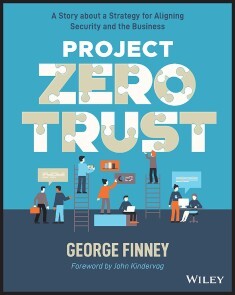
Project Zero Trust
IMPLEMENT ZERO TRUST INITIATIVES EFFICIENTLY AND EFFECTIVELYIn Project Zero Trust: A Story About a Strategy for Aligning Security and the Business, George Finney, Chief Security Officer at Southern Methodist University, delivers an insightful and practical discussion of Zero Trust implementation. Presented in the form of a fictional narrative involving a breach at a company, the book tracks the actions of the company's new IT Security Director.Readers will learn John Kindervag's 5-Step methodology for implementing Zero Trust, the four Zero Trust design principles, and how to limit the impact of a breach. They'll also find:* Concrete strategies for aligning your security practices with the business* Common myths and pitfalls when implementing Zero Trust and how to implement it in a cloud environment* Strategies for preventing breaches that encourage efficiency and cost reduction in your company's security practicesProject Zero Trust is an ideal resource for aspiring technology professionals, as well as experienced IT leaders, network engineers, system admins, and project managers who are interested in or expected to implement zero trust initiatives.GEORGE FINNEY is the Chief Security Officer at Southern Methodist University. He has taught Cybersecurity at SMU and been recognized as one of the top 100 Chief Information Security Officers in the world by CISOs Connect. He has over 20 years’ experience in the industry with startups, global telecommunication firms, and nonprofits. About the Author xiAcknowledgments xiiiForeword xvIntroduction xxiChapter 1: The Case for Zero Trust 1Key Takeaways 10Chapter 2: Zero Trust Is a Strategy 13Key Takeaways 26The Four Zero Trust Design Principles 27The Five-StepZero Trust Design Methodology 27The Zero Trust Implementation Curve 27Chapter 3: Trust Is a Vulnerability 29Key Takeaways 39Chapter 4: The Crown Jewels 43Key Takeaways 54Chapter 5: The Identity Cornerstone 57Key Takeaways 71Chapter 6: Zero Trust DevOps 73Key Takeaways 83Chapter 7: Zero Trust SOC 87Key Takeaways 100Chapter 8: Cloudy with a Chance of Trust 103Key Takeaways 113Chapter 9: A Sustainable Culture 117Key Takeaways 129Chapter 10: The Tabletop Exercise 133Key Takeaways 147Chapter 11: Every Step Matters 151Key Takeaways 159APPENDIX A: ZERO TRUST DESIGN PRINCIPLES AND METHODOLOGY 165The Four Zero Trust Design Principles 165The Five-Step Zero Trust Design Methodology 166APPENDIX B: ZERO TRUST MATURITY MODEL 167APPENDIX C: SAMPLE ZERO TRUST MASTER SCENARIO EVENTS LIST 171APPENDIX D: FOR FURTHER READING 179Standards, Frameworks, and Other Resources 179Case Studies 180Google BeyondCorp Papers 180Books 181Hardening Guides 181Glossary 183Index 191

Pro Database Migration to Azure
Migrate your existing, on-premises applications into the Microsoft Azure cloud platform. This book covers the best practices to plan, implement, and operationalize the migration of a database application from your organization’s data center to Microsoft’s Azure cloud platform.Data modernization and migration is a technologically complex endeavor that can also be taxing from a leadership and operational standpoint. This book covers not only the technology, but also the most important aspects of organization culture, communication, and politics that so frequently derail such projects. You will learn the most important steps to ensuring a successful migration and see battle-tested wisdom from industry veterans. From executive sponsorship, to executing the migration, to the important steps following migration, you will learn how to effectively conduct future migrations and ensure that your team and your database application delivers on the expected business value of the project.This book is unlike any other currently in the market. It takes you through the most critical business and technical considerations and workflows for moving your data and databases into the cloud, with special attention paid to those who are deploying to the Microsoft Data Platform in Azure, especially SQL Server. Although this book focuses on migrating on-premises SQL Server enterprises to hybrid or fully cloud-based Azure SQL Database and Azure SQL Managed Instances, it also cover topics involving migrating non-SQL Server database platforms such as Oracle, MySQL, and PostgreSQL applications to Microsoft Azure.WHAT YOU WILL LEARN* Plan a database migration that ensures smooth project progress, optimal performance, low operating cost, and minimal downtime* Properly analyze and manage non-technical considerations, such as legal compliance, privacy, and team execution* Perform a thorough architectural analysis to select the best Azure services, performance tiers, and cost-containment features* Avoid pitfalls and common reasons for failure relating to corporate culture, intra-office politics, and poor communications* Secure the proper executive champions who can execute the business planning needed for success* Apply proven criteria to determine your future-state architecture and your migration method* Execute your migration using a process proven by the authors over years of successful projectsWHO THIS BOOK IS FORIT leadership, strategic IT decision makers, project owners and managers, and enterprise and application architects. For anyone looking toward cloud migration projects as the next stage of growth in their careers. Also useful for enterprise DBAs and consultants who might be involved in such projects. Readers should have experience and be competent in designing, coding, implementing, and supporting database applications in an on-premises environment.KEVIN KLINE is a noted database expert and software industry veteran. A long-time Microsoft Data Platform MVP and respected community leader in the database industry, Kevin is a founder and former president of the Professional Association for SQL Server, as well as the author of popular IT books such as SQL in a Nutshell. Kevin is a top-rated speaker at industry trade shows worldwide and has a monthly column at Database Trends & Applications magazine (DBTA.com). He tweets at @kekline and blogs regularly. Kevin is a Head Geek at SolarWinds, a leading vendor of management and observability tools for networks, systems, databases, applications, IT team services, and IT security.DENIS MCDOWELL has been designing and implementing technology solutions with Microsoft Data Platform technologies for over 25 years. Denis’ 10 years leading the Application Management practice for a managed services provider and subsequent experience consulting in financial technologies led him to develop broad and deep expertise architecting requirements-driven cloud solutions to meet the business objectives of his customers. Denis is a certified Microsoft Azure Data Platform Engineer and speaks regularly at industry events and conferences around the world. Denis is a consultant at QBE, LLC, a leading management and technology consulting organization for the federal government and defense and intelligence communities and is currently the Principal Cloud Architect for the US.Army’s Enterprise Cloud Management Agency (ECMA).DUSTIN DORSEY has been architecting and managing SQL Server solutions for healthcare companies for well over a decade. While he has built his career in database administration, he has also spent significant time working in development and business intelligence. During this time, Dustin has gained a keen interest and specialization in cost management around the data platform both on-premise and in the cloud that he has used to save organizations millions of dollars. Dustin is an international speaker and can be seen writing articles on popular SQL websites as well as on his own blog at DustinDorsey.com. He is also active in the community both as a local user group leader and event organizer..MATT GORDON is a Microsoft Data Platform MVP and has worked with SQL Server since 2000. He is the leader of the Lexington, KY Data Technology Group and a frequent domestic and international community speaker. He's an IDERA ACE alumnus and 2021 Friend of Redgate. His original data professional role was in database development, which quickly evolved into query tuning work that further evolved into being a DBA in the healthcare realm. He has supported several critical systems utilizing SQL Server and managed dozens of 24/7/365 SQL Server implementations. Following several years as a consultant, he is now the Director of Data and Infrastructure for rev.io, where he is implementing data governance, DevOps, and performance improvements enterprisewide.1. The Azure SQL Data Platform2. Planning Considerations and Analysis3. Budgeting for an Azure Migration4. Azure Cost Management5. Service and Systems Monitoring6. Migrating Data and Code7. Team Success Factors8. Security, Privacy, and Compliance with the Law9. Documenting Data Sources and Metadata in a Data Dictionary10. Moving Your Data to the Cloud11. Data Validation Testing12. Post-Migration Tasks13. Post Mortem

Kanban - mehr als Zettel
- Was hat es mit der Kanban-Methode auf sich? - Worin unterscheiden sich Board, System und Methode? - Wie geht man mit Widerstand bei der Einführung um? - Was passiert, wenn wir die Menge paralleler Arbeit limitieren? - Wer übernimmt die Verantwortung für Dienstleistung und ihre Verbesserung? - Neu in der 2. Auflage: das Thema „Elektronische Werkzeuge“ sowie vertiefende Inhalte - Ihr exklusiver Vorteil: E-Book inside beim Kauf des gedruckten Buches Jan hat ein Problem, denn er steht kurz davor, rauszufliegen. Dabei hat er gerade erst angefangen! Sein Unternehmen ist in einer Krise und schuld daran ist natürlich Jans Abteilung. Keine seiner althergebrachten Techniken funktioniert und die Mitarbeitenden sind an ihrer Belastungsgrenze. Seine Partnerin rät ihm zur Kanban-Methode: Sie soll die Grundlage sein, die Leistung der Abteilung zu verbessern. Eigentlich wäre ihm jeder Strohhalm recht, gleichzeitig fürchtet er den Widerstand seiner Mitarbeitenden und seines Chefs gegen ein evolutionäres Vorgehen. Aber Anja zeigt ihm, wie er diese Widerstände mit der Kanban-Methode bewältigen kann. Er beginnt gemeinsam mit seinen Mitarbeitenden die Methode auszuprobieren und macht nach und nach aus Gegnern Komplizen. Aber können sie damit auch das Unternehmen retten? Florian Eisenberg beschreibt in diesem Business-Roman den Weg eines Abteilungsleiters im Spannungsfeld zwischen Kunden, Mitarbeitenden und Management. Dabei wird deutlich, dass der Einsatz der Kanban-Methode die bestehenden Denkprozesse in Bezug auf das Management immer wieder hinterfragt. WEITERE INHALTE // - Kanban als Management-Methode verstehen - Mit Widerstand umgehen - Kundenbeziehungen gestalten - Evolutionäre Verbesserung implementieren - Kanban-Kadenzen

Impact of Class Assignment on Multinomial Classification Using Multi-Valued Neurons
Multilayer neural networks based on multi-valued neurons (MLMVNs) have been proposed to combine the advantages of complex-valued neural networks with a plain derivative-free learning algorithm. In addition, multi-valued neurons (MVNs) offer a multi-valued threshold logic resulting in the ability to replace multiple conventional output neurons in classification tasks. Therefore, several classes can be assigned to one output neuron. This book introduces a novel approach to assign multiple classes to numerous MVNs in the output layer. It was found that classes that possess similarities should be allocated to the same neuron and arranged adjacent to each other on the unit circle. Since MLMVNs require input data located on the unit circle, two employed transformations are reevaluated. The min-max scaler utilizing the exponential function, and the 2D discrete Fourier transform restricting to the phase information for image recognition. The evaluation was performed on the Sensorless Drive Diagnosis dataset and the Fashion MNIST dataset. JULIAN KNAUP received his B. Sc. in Electrical Engineering and his M. Sc. in Information Technology from the University of Applied Sciences and Arts Ostwestfalen-Lippe. He is currently working on machine learning algorithms at the Institute Industrial IT and researching AI potentials in product creation. 1 Introduction.- 2 Preliminaries.- 3 Scientific State of the Art.- 4 Approach.- 5 Evaluation.- 6 Conclusion and Outlook.
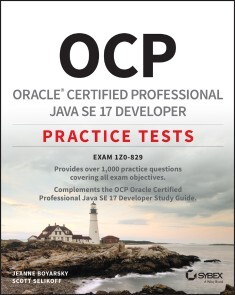
OCP Oracle Certified Professional Java SE 17 Developer Practice Tests
EFFICIENTLY AND EFFECTIVELY PREPARE FOR THE OCP JAVA SE 17 CERTIFICATION EXAMIn OCP Oracle Certified Professional Java SE 17 Developer Practice Tests: Exam 1Z0-829, a team of veteran Java developers helps you gain the confidence and knowledge you need to take the Oracle Certified Professional Java SE 17 Developer exam. Hundreds of domain-by-domain questions accompany complimentary online access to bonus questions, providing you with over 1000 practice questions and answers.You’ll also get:* Access to Sybex's proven online interactive learning environment and test bank* Comprehensive coverage of every domain included on the OCP Java SE 17 Developer exam* Three complete bonus practice exams to help you gain confidence and develop proficiency in Java developmentThis resource is perfect for anyone preparing to take Exam 1Z0-829. It also belongs on the bookshelves of novice and veteran Java programmers hoping to improve their on-the-job coding skills.ABOUT THE AUTHORSJEANNE BOYARSKY is a Java Champion and has worked as a Java developer for a major bank for more than 20 years. She is a senior moderator at CodeRanch, and trains and mentors students of all levels, including the programming department of a FIRST robotics team. SCOTT SELIKOFF has been a professional Java Enterprise architect for over 20 years. He currently works as a Staff Software Engineer at Google, specializing in Architecture and Cloud Services. He is a Leader of the Garden State Java User Group, helping to facilitate discussions and exchange of ideas within the community. Introduction xviiChapter 1 Handling Date, Time, Text, Numeric and Boolean Values 1Chapter 2 Controlling Program Flow 25Chapter 3 Utilizing Java Object-Oriented Approach 45Chapter 4 Handling Exceptions 149Chapter 5 Working with Arrays and Collections 181Chapter 6 Working with Streams and Lambda Expressions 211Chapter 7 Packaging and Deploying Java Code and Use the Java Platform Module System 267Chapter 8 Managing Concurrent Code Execution 295Chapter 9 Using Java I/O API 319Chapter 10 Accessing Databases Using JDBC 339Chapter 11 Implementing Localization 353Chapter 12 Practice Exam 1 365Chapter 13 Practice Exam 2 391Chapter 14 Practice Exam 3 417APPENDIX ANSWERS TO REVIEW QUESTIONS 443Chapter 1: Handling Date, Time, Text, Numeric and Boolean Values 444Chapter 2: Controlling Program Flow 450Chapter 3: Utilizing Java Object-Oriented Approach 455Chapter 4: Handling Exceptions 482Chapter 5: Working with Arrays and Collections 489Chapter 6: Working with Streams and Lambda Expressions 498Chapter 7: Packaging and Deploying Java Code and Use the Java Platform Module System 516Chapter 8: Managing Concurrent Code Execution 524Chapter 9: Using Java I/O API 530Chapter 10: Accessing Databases Using JDBC 535Chapter 11: Implementing Localization 538Chapter 12: Practice Exam 1 541Chapter 13: Practice Exam 2 548Chapter 14: Practice Exam 3 554Index 561

Raspberry Pi Image Processing Programming
Understand the concepts of image processing with Python 3 and create applications using Raspberry Pi 4. This book covers image processing with the latest release of Python 3, using Raspberry Pi OS and Raspberry Pi 4B with the 8 GB RAM model as the preferred computing platform.This second edition begins with the installation of Raspberry Pi OS on the latest model of Raspberry Pi and then introduces Python programming language, IDEs for Python, and digital image processing. It also illustrates the theoretical foundations of Image processing followed by advanced operations in image processing. You'll then review image processing with NumPy, and Matplotlib followed by transformations, interpolation, and measurements of images.Different types of filters such as Kernels convolution filters, low pass filters, high pass filters, and Fourier filters are discussed in a clear, methodical manner. Additionally, the book examines various image processing techniques such as Morphology, Thresholding, and Segmentation, followed by a chapter on live webcam input with OpenCV, an image processing library with Python. The book concludes with an appendix covering a new library for image processing with Python, pgmagik, followed by a few important tips and tricks relevant to RPi.WHAT YOU'LL LEARN* Get started with Raspberry Pi and Python* Understand Image Processing with Pillow* See how image processing is processed using Numpy and Matplotlib* Use Pi camera and webcamWHO THIS BOOK IS FORRaspberry Pi and IoT enthusiasts, and Python and Open Source professionalsASHWIN PAJANKAR earned a Master of Technology in Computer Science Engineering from IIIT Hyderabad and has over 25 years of programming experience. He started his journey in programming and electronics at the tender age of 7 with a MS-DOS computer and BASIC programming language. He is now proficient in Assembly programming, C, C++, Java, Shell Scripting, JavaScript, Go Programming, HTML, and Python. His other technical expertise includes single board computers such as Raspberry Pi and Banana Pro, and microcontroller boards (Arduino), and embedded boards (BBC Micro Bit). He has worked extensively on domains such as Software/Product Testing, Software Automation, Databases, Data Analytics, Computer Vision, and Web Development.Ashwin is currently a freelance online instructor teaching programming and electronics to more than 8200 professionals. He also regularly conducts live programming boot camps for software professionals. His growing Youtube channel has an audience of more than 11000 subscribers. He has published more than 20 books on programming and electronics with many international publications, including Apress and regularly reviews books on programming written by other authors.Chapter 1: Introduction to Single Board Computers and RPiChapter Goal: Brief intro into SBCs and RPiNo of pagesSub -Topics1. SBCs2. Raspberry Pi3. Raspberry Pi Imager and setup4. Configuring the PiChapter 2: Introduction to Python and Digital Image ProcessingChapter Goal: Brief acquaintance with the subject of the bookNo of pages:Sub - Topics:1. History of Python2. Features3. Installation of Python on Raspberry Pi4. IDEs for Python5. Digital Image ProcessingChapter 3: Getting Started with Image ProcessingChapter Goal: Getting to understand the basicsNo of pages:Sub - Topics:1. Image Sources (Standard Image Datasets)2. Various Cameras for RPi3. Pillow Basics4. Tk Basics5. Reading and displaying images with Pillow and Tk6. Image PropertiesChapter 4: Basic Operations on ImagesChapter Goal: Getting to know PillowNo of pages:Sub - Topics:1. Image modulea) Image channelsb) Mode Conversionc) Blendingd) Resizinge) Rotationf) Crop and pasteg) Alpha compositionh) Mandelbrot seti) Noise and gradient2. ImageChops module3. ImageOps moduleChapter 5: Advanced Operations on ImagesChapter Goal: Filtering and Enhancements1. Image filter (will cover more filters in the second edition)2. Image enhancements (will cover additional effects)3. Color quantization4. Histogram and equalizationChapter 6: Scientific PythonChapter Goal: Introduction to the Scientific Python1. The SciPy stack2. NumPy, SciPy, and Matplotlib3. Image Processing with NumPy and MatplotlibChapter 7: Transformations, Interpolation, and MeasurementsChapter Goal: Transformations and Measurements1. Transformations and Interpolationsa) Affine_transformb) Geometric_transformc) Map_coordinatesd) Rotatee) Shiftf) Spline_filterg) Spline_filter1dh) Zoom2. Measurementsa) Center_of_massb) Extremac) Find_objectsd) Histograme) Labelf) Labeled_comprehensiong) Maximumh) Maximum_positioni) Meanj) Mediank) Minimuml) Minimum_positionm) Standard_deviationn) Sum_labelso) Variancep) Watershed_iftChapter 8: Filters and their ApplicationChapter Goal: Study Various types of filters1. Kernels, Convolution, Filters2. Correlation3. Low Pass Filtersa) Blurring Filter (Gaussian, Gaussian 1D, uniform, uniform 1D, percentile, rank)b) Noise Removal (Gaussian, Median, Maximum, Minimum, rank)4. High Pass filtersa) Prewittb) Sobelc) Laplaciand) Gaussian Gradient Magnitudee) Gaussian Laplace5. Fourier FiltersChapter 9: Morphology, Thresholding, and SegmentationChapter Goal: Study operations1. Morphologya) Distance transformb) Structuring Element (generate_binary_structure)c) Binary Morphological Operationsd) Greyscale Morphological Operationse) More Morphological Operations2. Thresholding and SegmentationChapter 10: pgmagikChapter Goal: Learn pgmagic library in detail1. Installation2. Creating images3. Draw text4. Image filter and transformation5. Bezier curve6. Blob7. Circle8. Animation

Pro C# 10 with .NET 6
Welcome to the most comprehensive foundational guide available on the topic of C# coding and .NET. This book goes beyond “do this, to achieve this” to drill down into the core stuff that makes a good developer, great. This expanded 11th edition delivers loads of new content on Entity Framework, Razor Pages, Web APIs and more. You will find the latest C# 10 and .NET 6 features served up with plenty of “behind the curtain” discussion designed to expand developers’ critical thinking skills when it comes to their craft. Coverage of ASP.NET Core, Entity Framework Core, and more sits alongside the latest updates to the new unified .NET platform, from performance improvements to Windows Desktop apps on .NET 6, updates in XAML tooling, and expanded coverage of data files and data handling. Going beyond the latest features in C# 10, all code samples are rewritten for this latest release.Dive in and discover why this essential classic is a favorite of C# developers worldwide. Gain a solid foundation in object-oriented development techniques, attributes and reflection, generics and collections, and numerous advanced topics not found in other texts (such as CIL opcodes and emitting dynamic assemblies). PRO C# 10 WITH .NET 6 will build your coding confidence putting C# into practice, and exploring the .NET universe and its vast potential on your own terms.WHAT YOU WILL LEARN* Explore C# 10 features and updates in records and record structs, global and implicit using directives, file level namespaces, extended property patterns, and more* Develop applications with C# and modern frameworks for services, web, and smart client applications* Hit the ground running with ASP.NET Core web applications using MVC and Razor Pages, including view components, custom tag helpers, custom validation, GDPR support, and areas* Build ASP.NET RESTful services complete with versioning, enhanced swagger, and basic authentication* Embrace Entity Framework Core for building real-world, data-centric applications, with deeply expanded coverage new to this edition including SQL Server temporal table support* Dive into Windows Desktop Apps on .NET 6 using Windows Presentation Foundation* Understand the philosophy behind .NET* Discover the new features in .NET 6, including single file applications, smaller container images, and moreWHO THIS BOOK IS FORDevelopers of any level who want to either learn C# and .NET or want to take their skills to the next level.“Amazing! Provides easy-to-follow explanations and examples. I remember reading the first version of this book; this is a ‘must-have’ for your collection if you are learning .NET!”– Rick McGuire, Senior Application Development Manager, Microsoft“Phil is a journeyman programmer who brings years of experience and a passion for teaching to make this fully revised and modernized ‘classic’ a ‘must-have’. Any developer who wants full-spectrum, up-to-date coverage of both the C# language and how to use it with .NET and ASP.NET Core should get this book.”– Brian A. Randell, Partner, MCW Technologies and Microsoft MVPANDREW TROELSEN has more than 20 years of experience in the software industry. Over this time he has worked as a developer, educator, author, public speaker, and now team lead and lead engineer. He is the author of numerous books in the Microsoft universe. He holds a master of science degree in software engineering (MSSE) from the University of St. Thomas and another in computational linguistics (CLMS) from the University of Washington.PHIL JAPIKSE is an international speaker, Microsoft MVP, ASPInsider, Professional Scrum Trainer, and a passionate member of the developer community. He is the lead director of the Cincinnati .NET User Group and the Cincinnati Software Architect Roundtable, and he founded the CincyDeliver conference, Currently, he works as a Director of Consulting and Enterprise Architect. Follow him on his blog (skimedic.com) or on Twitter @skimedic.Part 1: Introducing C# and .NET 61 Introducing C# and .NET (Core) 62 Building C# ApplicationsPart 2: Core C# Programming3 Core C# Programming Constructs, Part 14 Core C# Programming Constructs, Part 2Part 3: Object Oriented Programming with C#5 Understanding Encapsulation6 Understanding Inheritance and Polymorphism7 Understanding Structured Exception Handling8 Working with Interfaces9 Understanding Object LifetimePart 4: Advanced C# Programming10 Collections and Generics11 Advanced C# Language Features12 Delegates, Events, and Lambda Expressions13 LINQ To Objects14 Processes, AppDomains, and Load Contexts15 Multithreaded, Parallel, and Async ProgrammingPart 5: Programming with .NET Core Assemblies16 Building and Configuring Class Libraries17 Type Reflection, Late Binding, Attributes, and Dynamic Types18 Understanding CIL and the Role of Dynamic AssembliesPart 6: File Handling, Object Serialization, and Data Access19 File I/O and Object Serialization20 Data Access with ADO.NETPart 7: Entity Framework Core21 Introducing Entity Framework Core22 Exploring EF Core23 Build a Data Access Layer with Entity Framework Core24 Test Driving the Autolot Data Access LayerPart 8: Windows Client Development25 Introducing Windows Presentation Foundation and XAML26 WPF Controls, Layouts, Events, and Data Binding27 WPF Graphics Rendering Services28 WPF Resources, Animations, Styles, and Templates29 WPF Notifications, Validations, Commands, and MVVMPart 9: ASP.NET Core30 Introducing ASP.NET Core31 Diving into ASP.NET Core32 RESTful Services with ASP.NET Core33 Web Applications using MVC34 Web Applications using Razor Pages

A Corporate Librarian's Guide to Information Governance and Data Privacy
WITH THE EXPANSION OF TECHNOLOGY AND GOVERNANCE, THE INFORMATION GOVERNANCE INDUSTRY HAS EXPERIENCED DRAMATIC AND OFTEN, SUDDEN CHANGES. Among the most important shifts are the proliferation of data privacy rules and regulations, the exponential growth of data and the need for removing redundant, obsolete, and trivial information and the growing threat of litigation and regulatory fines based on a failure to properly keep records and manage data. At the same time, longstanding information governance standards and best practices exist, which transcend the sudden vicissitudes of the day.This volume focuses on these core IG principles, with an emphasis on how they apply to our target audience, which includes law librarians, legal and research staff and other individuals and departments in both the public and private sectors who engage deeply with regulatory compliance matters.Core topics that will be addressed include:* the importance of implementing and maintaining cohesive records management workflows that implement the classic principles of capturing, checking, recording, consolidation, and review;* the classic records management principles of Accountability, Transparency, Integrity, Protection, Compliance, Accessibility, Retention and Disposition; and* archives Management and the two principles of Providence and Original Order.
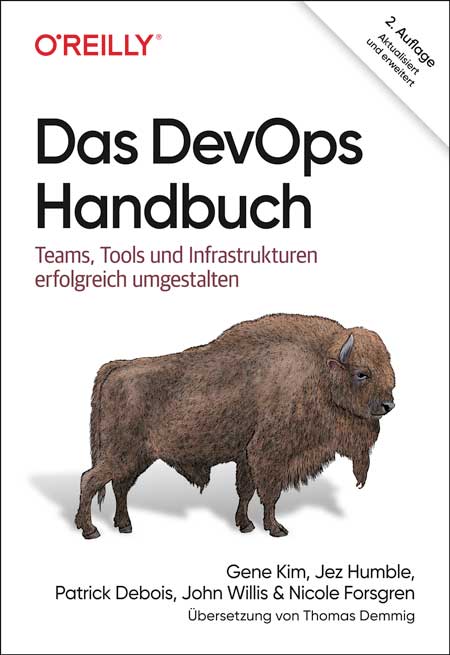
Das DevOps-Handbuch (2. Auflage)
Teams, Tools und Infrastrukturen erfolgreich umgestaltenDie IT ist heute das Herzstück eines jeden Unternehmens, unabhängig vom Geschäftsmodell oder Produkt. DevOps-Praktiken werden daher immer häufiger nicht nur in der IT-Abteilung genutzt, sondern im gesamten Unternehmen eingeführt. Diese Entwicklung veranschaulichen auch die zahlreichen neuen Fallstudien beispielsweise von Adidas oder American Airlines, um die die Neuauflage dieses Standardwerks erweitert wurde.Das DevOps-Handbuch – jetzt aktualisiert und durch neueste Erkenntnisse und Methoden ergänzt – erläutert, wie die DevOps-Philosopie praktisch implementiert wird: Sie lernen konkrete Tools und Techniken kennen, die Ihnen helfen, Software schneller und sicherer zu produzieren. Zudem stellt das Autorenteam Ihnen Maßnahmen vor, die die Zusammenarbeit aller Abteilungen optimieren, die Arbeitskultur verbessern und die Profitabilität Ihres Unternehmens steigern.Die 2. Auflage wurde vollständig aktualisiert und durch die neuesten Forschungsergebnisse und 15 neue Case Studies erweitert.Themen des Buchs sind: Die Drei Wege: Die obersten Prinzipien, von denen alle DevOps-Maßnahmen abgeleitet werdenEinen Ausgangspunkt finden: Eine Strategie für die DevOps-Transformation entwickeln, Wertketten und Veränderungsmuster kennenlernen, Teams schützen und fördernFlow beschleunigen: Den schnellen Fluss der Arbeit von Dev hin zu Ops ermöglichen durch eine optimale Deployment-Pipeline, automatisierte Tests, Continuous Integration und Continuous DeliveryFeedback verstärken: Feedback-Schleifen verkürzen und vertiefen, Telemetriedaten erzeugen und Informationen unternehmensweit sichtbar machenKontinuierliches Lernen ermöglichen: Eine »Just Culture« aufbauen und ausreichend Zeit reservieren, um das firmenweite Lernen zu fördern
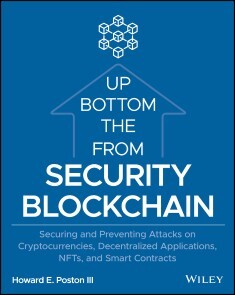
Blockchain Security from the Bottom Up
THE GOLD STANDARD IN UP-TO-DATE BLOCKCHAIN CYBERSECURITY HANDBOOKSIn Blockchain Security from the Bottom Up: Securing and Preventing Attacks on Cryptocurrencies, Decentralized Applications, NFTs, and Smart Contracts, accomplished blockchain and cybersecurity consultant and educator Howard E. Poston delivers an authoritative exploration of blockchain and crypto cybersecurity. In the book, the author shows you exactly how cybersecurity should be baked into the blockchain at every layer of the technology’s ecosystem. You’ll discover how each layer can be attacked and learn how to prevent and respond to those attacks in an environment of constant technological change and evolution. You’ll also find:* Illuminating case studies of real-world attacks and defenses at various layers in the blockchain ecosystem* Thorough introductions to blockchain technology, including its implementations in areas like crypto, NFTs, and smart contracts* Comprehensive explorations of critical blockchain topics, including protocols, consensus, and proof of workA can’t-miss resource for blockchain and cybersecurity professionals seeking to stay on the cutting-edge of a rapidly evolving area, Blockchain Security from the Bottom Up will also earn a place on the bookshelves of software developers working with cryptocurrencies and other blockchain implementations. HOWARD E. POSTON III is an independent blockchain consultant, educator, and content creator who has developed and taught over a dozen courses covering cybersecurity topics. He holds a master’s degree in Cybersecurity from the Air Force Institute of Technology and is a Certified Ethical Hacker. He has developed and facilitated blockchain security courses for major companies.CHAPTER 1 INTRODUCTION TO BLOCKCHAIN SECURITY 1The Goals of Blockchain Technology 2Anonymity 2Decentralization 2Fault Tolerance 2Immutability 3Transparency 3Trustless 3Structure of the Blockchain 3The Blockchain Network 5The Blockchain Node 5A Blockchain Block 6A Blockchain Transaction 7Inside the Blockchain Ecosystem 8Fundamentals 8Primitives 9Data Structures 9Protocols 9Consensus 9Block Creation 10Infrastructure 10Nodes 10Network 11Advanced 11Smart Contracts 11Extensions 11Threat Modeling for the Blockchain 12Threat Modeling with STRIDE 12Spoofing 12Tampering 12Repudiation 13Information Disclosure 13Denial of Service 13Elevation of Privilege 13Applying STRIDE to Blockchain 14Conclusion 14CHAPTER 2 FUNDAMENTALS 15Cryptographic Primitives 15Public Key Cryptography 16Introducing “Hard” Mathematical Problems 16Building Cryptography with “Hard” Problems 18How the Blockchain Uses Public Key Cryptography 19Security Assumptions of Public Key Cryptography 20Attacking Public Key Cryptography 20Hash Functions 25Security Assumptions of Hash Functions 25Additional Security Requirements 27How the Blockchain Uses Hash Functions 28Attacking Hash Functions 31Threat Modeling for Cryptographic Algorithms 32Data Structures 33Transactions 33What’s In a Transaction? 33Inside the Life Cycle of a Transaction 34Attacking Transactions 34Blocks 37Inside a Block 37Attacking Blockchain Blocks 38Threat Modeling for Data Structures 39Conclusion 39CHAPTER 3 PROTOCOLS 43Consensus 43Key Concepts in Blockchain Consensus 44Byzantine Generals Problem 44Security via Scarcity 45The Longest Chain Rule 46Proof of Work 46Introduction to Proof of Work 47Security of Proof of Work 48Proof of Stake 53Introduction to Proof of Stake 53Variants of Proof of Stake 54Security of Proof of Stake 54Threat Modeling for Consensus 59Block Creation 59Stages of Block Creation 60Transaction Transmission 60Block Creator Selection (Consensus) 60Block Building 61Block Transmission 61Block Validation 61Attacking Block Creation 62Denial of Service 62Frontrunning 63SPV Mining 65Threat Modeling for Block Creation 65Conclusion 65CHAPTER 4 INFRASTRUCTURE 67Nodes 67Inside a Blockchain Node 68Attacking Blockchain Nodes 68Blockchain- Specific Malware 69Denial-of-Service Attacks 70Failure to Update 71Malicious Inputs 72Software Misconfigurations 73Threat Modeling for Blockchain Nodes 74Networks 74Attacking the Blockchain Network 75Denial-of-service Attacks 75Eclipse/Routing Attacks 76Sybil Attacks 78Threat Modeling for Blockchain Networks 80Conclusion 80CHAPTER 5 ADVANCED 83Smart Contracts 83Smart Contract Vulnerabilities 84General Programming Vulnerabilities 85Blockchain- Specific Vulnerabilities 94Platform-Specific Vulnerabilities 103Application- Specific Vulnerabilities 119Threat Modeling for Smart Contracts 128Blockchain Extensions 128State Channels 129State Channel Security Considerations 129Sidechains 130Sidechain Security Considerations 131Threat Modeling for Blockchain Extensions 132Conclusion 133CHAPTER 6 CONSIDERATIONS FOR SECURE BLOCKCHAIN DESIGN 137Blockchain Type 137Public vs. Private 138Benefits of Public vs. Private Blockchains 138Open vs. Permissioned 139Benefits of Open vs. Permissioned Blockchains 139Choosing a Blockchain Architecture 140Privacy and Security Enhancements 140Zero-Knowledge Proofs 140Stealth Addresses 141Ring Signatures 141Legal and Regulatory Compliance 142Designing Secure Blockchains for the Future 143Index 145
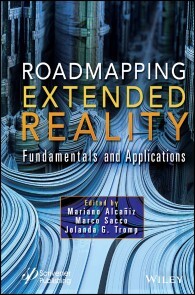
Roadmapping Extended Reality
ROADMAPPING EXTENDED REALITYTHIS BOOK OFFERS A COMPREHENSIVE OVERVIEW OF THE TECHNOLOGICAL ASPECTS OF EXTENDED REALITIES (XR) AND DISCUSSES THE MAIN CHALLENGES AND FUTURE DIRECTIONS IN THE FIELD.This book is important and timely – XR technologies have overcome the 3 main aspects that were holding it back from mainstream adoption: cost, cables, and size. However, there are many aspects of XR technologies that are now going to be explored and developed that still need urgent research in terms of security, privacy, health and safety, long-term effects, addiction risks, and age-related developmental concerns, and the aim of the book is to inform all readers of these open issues and challenges. There are currently a great number of interdisciplinary researchers and developers working in the XR R&D field. Recently, XR technologies moved from the Gartner Hype Cycle onto the Plateau of Productivity on the Gartner Hype Cycle signaling that the fundamental XR technologies are now deemed mature technologies and ready for deployment in a wide variety of application areas. Corroborated by the fact that XR technologies are part of the future Metaverse, a concept that went rapidly mainstream during the time of writing of this book. Roadmapping Extended Reality is divided into two parts: (1) fundamentals and (2) applications. The first part covers the main technological aspects of XR. The chapters in this section review and discuss relevant fundamental concepts of XR, the actual state-of-the-art, and future challenges. The second part of the book focuses on covering a wide range of applications of XR including a future roadmap. All in all, the book offers a snapshot of the state-of-the-art in XR and addresses the needs of a multidisciplinary audience working in both academia and the industry, as well as stakeholders at government agencies and non-profit organizations. AUDIENCEThis book is aimed at academic and industrial developers, exploring and developing applications in the XR, VR, AR, AI, smart IoT, 4th Industrial Revolution space, including those that are solving technology requirements, human factors, evaluation methodology advances, and ROI investigations. MARIANO ALCAÑIZ, PHD, is the founding director of the Immersive Neurotechnologies Lab (LabLENI) as well as a Full Professor of Biomedical Engineering at the Polytechnic University of Valencia, Spain. He has published more than 350 academic papers in interdisciplinary journals such as Scientific Reports and PLoS One, as well as domain-specific journals in the fields of biomedical engineering, computer science, psychology, marketing, management, psychology, and education.MARCO SACCO, PHD, is a Senior Researcher, head of CNR-STIIMA Lecco subsidiary, and head of the division, Enterprise Engineering, and Virtual Applications. President of EuroXR (European Association of Extended Reality). He has more than 160 publications including papers in academic journals and conference proceedings. JOLANDA G. TROMP, PHD, is a consultant to the EuroXR association for the Delphi consensus study; Director Center for Visualization & Simulation (CVS), Duy Tan University, Da Nang, Viet Nam; founding CIO spinout company for Visualization & Simulation, Viet Nam; visiting research professor XR lab Grupo DIANA, University of Malaga, Spain, and XR R&D Study Abroad internships Adjunct Instructor HCI Master and XR curriculum R&D, State University of New York in Oswego, NY, USA, and Duy Tan University, Viet Nam.
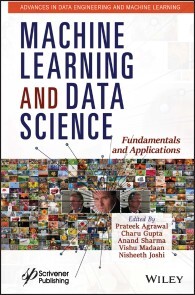
Machine Learning and Data Science
MACHINE LEARNING AND DATA SCIENCEWRITTEN AND EDITED BY A TEAM OF EXPERTS IN THE FIELD, THIS COLLECTION OF PAPERS REFLECTS THE MOST UP-TO-DATE AND COMPREHENSIVE CURRENT STATE OF MACHINE LEARNING AND DATA SCIENCE FOR INDUSTRY, GOVERNMENT, AND ACADEMIA.Machine learning (ML) and data science (DS) are very active topics with an extensive scope, both in terms of theory and applications. They have been established as an important emergent scientific field and paradigm driving research evolution in such disciplines as statistics, computing science and intelligence science, and practical transformation in such domains as science, engineering, the public sector, business, social science, and lifestyle. Simultaneously, their applications provide important challenges that can often be addressed only with innovative machine learning and data science algorithms. These algorithms encompass the larger areas of artificial intelligence, data analytics, machine learning, pattern recognition, natural language understanding, and big data manipulation. They also tackle related new scientific challenges, ranging from data capture, creation, storage, retrieval, sharing, analysis, optimization, and visualization, to integrative analysis across heterogeneous and interdependent complex resources for better decision-making, collaboration, and, ultimately, value creation. PRATEEK AGRAWAL, PHD, completed his BTech in computer science engineering from Uttar Pradesh Technical University, Lucknow, India and MTech from ABV-IIITM, Gwalior, India. He also received his PhD from IKG-Punjab Technical University, Punjab, India. He has more than ten years of research and teaching experience. He has worked as a post-doctoral researcher at the department of ITEC, University of Klagenfurt, Austria and also serves as an associate professor in the school of computer science engineering, Lovely Professional University, India. He has authored more than 50 research papers in various peer reviewed journals and conferences. He is a life member of IET research society. He is a reviewer and editorial member of many journals of high repute. He also served as technical program committee member of many international conferences.CHARU GUPTA, PHD, graduated with her BE and MTech in computer science and engineering, with honors. She completed her doctoral degree at the Department of Computer Science, Banasthali Vidyapith, Rajasthan, India. Presently serving as assistant professor at Bhagwan Parshuram Institute of Technology, she has over 10 years of teaching experience. She is a faculty coordinator (Delhi Section) of Free and Open Source Cell (FOSS cell) from the International Centre for Free and Open Source Software (ICFOSS), Govt. of Kerala, India. She is also the faculty co-ordinator of the e-Yantra Lab setup initiative (eLSI) in collaboration with IIT Bombay in the Department of Computer Science and Engineering, BPIT. She also has numerous papers in scientific and scholarly journals to her credit. VISHU MADAAN, PHD, received her BTech and MTech degrees in computer science engineering from Lovely Professional University, Phagwara, India and earned her PhD in computer science from IKG-Punjab Technical University, Punjab. She is an assistant professor with Lovely Professional University and has more than eight years of teaching and research experience. She has authored more than 30 research articles in peer-reviewed conferences and journals. She is also a member of IEEE and is a reviewer for many international conferences and technical journals. ANAND SHARMA, PHD, received his PhD in engineering from MUST, Lakshmangarh, his MTech from ABV-IIITM, Gwalior and BE from RGPV, Bhopal. He has been working with Mody University of Science and Technology, Lakshmangarh for over 10 years and has more than 14 years of experience of teaching and research. He has pioneered research in the areas of information systems, information security, IoT, knowledge management and machine learning. He is the Vice-Chairman of CSI-Lakshmangarh Chapter and Student Branch Coordinator of CSI-MUST, student branch. He has authored or edited five books and has more than 70 papers in scientific and scholarly journals and conferences. He has organized more than 15 conferences, seminars, and workshops and is serving on the editorial boards of several journals as and is on the program committees of several international conferences. NISHEETH JOSHI, PHD, is an associate professor at Banasthali Vidyapith, India. He did his PhD in the area of natural language processing and is the recipient of the prestigious ISTE-U.P. Government National Award for Outstanding Work Done in Specified Areas of Engineering and Technology. He has authored several papers in scientific and technical journals and conferences. He has also been a mentor and consultant to various start-ups working in the areas of cognitive computing, natural language processing, speech processing, multimodal information retrieval and machine translation. He was also a consultant to C-DAC Pune where he developed the evaluation methodology for the Mantra Machine Translation System. This Machine Translation System is being used by Rajya Sabha, the Upper House of Parliament of India and Department of Official Languages, with the Government of India. In addition, he has two technology transfers and four copyrights to his credit. Preface xiiiBook Description xv1 MACHINE LEARNING: AN INTRODUCTION TO REINFORCEMENT LEARNING 1Sheikh Amir Fayaz, Dr. S Jahangeer Sidiq, Dr. Majid Zaman and Dr. Muheet Ahmed Butt1.1 Introduction 21.2 Reinforcement Learning Paradigm: Characteristics 111.3 Reinforcement Learning Problem 121.4 Applications of Reinforcement Learning 152 DATA ANALYSIS USING MACHINE LEARNING: AN EXPERIMENTAL STUDY ON UFC 23Prashant Varshney, Charu Gupta, Palak Girdhar, Anand Mohan, Prateek Agrawal and Vishu Madaan2.1 Introduction 232.2 Proposed Methodology 252.3 Experimental Evaluation and Visualization 312.4 Conclusion 443 DAWN OF BIG DATA WITH HADOOP AND MACHINE LEARNING 47Balraj Singh and Harsh Kumar Verma3.1 Introduction 483.2 Big Data 483.3 Machine Learning 533.4 Hadoop 553.5 Studies Representing Applications of Machine Learning Techniques with Hadoop 573.6 Conclusion 614 INDUSTRY 4.0: SMART MANUFACTURING IN INDUSTRIES -- THE FUTURE 67Dr. K. Bhavana Raj4.1 Introduction 675 COVID-19 CURVE EXPLORATION USING TIME SERIES DATA FOR INDIA 75Apeksha Rustagi, Divyata, Deepali Virmani, Ashok Kumar, Charu Gupta, Prateek Agrawal and Vishu Madaan5.1 Introduction 765.2 Materials Methods 775.3 Concl usion and Future Work 866 A CASE STUDY ON CLUSTER BASED APPLICATION MAPPING METHOD FOR POWER OPTIMIZATION IN 2D NOC 89Aravindhan Alagarsamy and Sundarakannan Mahilmaran6.1 Introduction 906.2 Concept Graph Theory and NOC 916.3 Related Work 946.4 Proposed Methodology 976.5 Experimental Results and Discussion 1006.6 Conclusion 1057 HEALTHCARE CASE STUDY: COVID-19 DETECTION, PREVENTION MEASURES, AND PREDICTION USING MACHINE LEARNING & DEEP LEARNING ALGORITHMS 109Devesh Kumar Srivastava, Mansi Chouhan and Amit Kumar Sharma7.1 Introduction 1107.2 Literature Review 1117.3 Coronavirus (Covid19) 1127.4 Proposed Working Model 1187.5 Experimental Evaluation 1307.6 Conclusion and Future Work 1328 ANALYSIS AND IMPACT OF CLIMATIC CONDITIONS ON COVID-19 USING MACHINE LEARNING 135Prasenjit Das, Shaily Jain, Shankar Shambhu and Chetan Sharma8.1 Introduction 1368.2 COVID-19 1388.3 Experimental Setup 1418.4 Proposed Methodology 1428.5 Results Discussion 1438.6 Conclusion and Future Work 1439 APPLICATION OF HADOOP IN DATA SCIENCE 147Balraj Singh and Harsh K. Verma9.1 Introduction 1489.2 Hadoop Distributed Processing 1539.3 Using Hadoop with Data Science 1609.4 Conclusion 16410 NETWORKING TECHNOLOGIES AND CHALLENGES FOR GREEN IOT APPLICATIONS IN URBAN CLIMATE 169Saikat Samanta, Achyuth Sarkar and Aditi Sharma10.1 Introduction 17010.2 Background 17010.3 Green Internet of Things 17310.4 Different Energy--Efficient Implementation of Green IOT 17710.5 Recycling Principal for Green IOT 17810.6 Green IOT Architecture of Urban Climate 17910.7 Challenges of Green IOT in Urban Climate 18110.8 Discussion & Future Research Directions 18110.9 Conclusion 18211 ANALYSIS OF HUMAN ACTIVITY RECOGNITION ALGORITHMS USING TRIMMED VIDEO DATASETS 185Disha G. Deotale, Madhushi Verma, P. Suresh, Divya Srivastava, Manish Kumar and Sunil Kumar Jangir11.1 Introduction 18611.2 Contributions in the Field of Activity Recognition from Video Sequences 19011.3 Conclusion 21212 SOLVING DIRECTION SENSE BASED REASONING PROBLEMS USING NATURAL LANGUAGE PROCESSING 215Vishu Madaan, Komal Sood, Prateek Agrawal, Ashok Kumar, Charu Gupta, Anand Sharma and Awadhesh Kumar Shukla12.1 Introduction 21612.2 Methodology 21712.3 Description of Position 22212.4 Results and Discussion 22412.5 Graphical User Interface 22513 DROWSINESS DETECTION USING DIGITAL IMAGE PROCESSING 231G. Ramesh Babu, Chinthagada Naveen Kumar and Maradana Harish13.1 Introduction 23113.2 Literature Review 23213.3 Proposed System 23313.4 The Dataset 23413.5 Working Principle 23513.6 Convolutional Neural Networks 23913.6.1 CNN Design for Decisive State of the Eye 23913.7 Performance Evaluation 24013.8 Conclusion 242References 242Index 245

Cloud Attack Vectors
Cyberattacks continue to increase in volume and sophistication, targeting everything owned, managed, and serviced from the cloud. Today, there is widespread consensus—it is not a matter of if, but rather when an organization will be breached. Threat actors typically target the path of least resistance. With the accelerating adoption of cloud technologies and remote work, the path of least resistance is shifting in substantive ways. In recent years, attackers have realigned their efforts, focusing on remaining undetected, monetization after exploitation, and publicly shaming organizations after a breach.New, innovative, and useful products continue to emerge and offer some cloud protection, but they also have distinct limitations. No single, standalone solution or strategy can effectively protect against all cloud attack vectors or identify all malicious activity. The simple fact is that the cloud is based on a company’s assets being offered as services. As a result, the best security any organization can achieve is to establish controls and procedures in conjunction with services that are licensed in the cloud.Cloud Attack Vectors details the risks associated with cloud deployments, the techniques threat actors leverage, the empirically-tested defensive measures organizations should adopt, and shows how to improve detection of malicious activity.WHAT YOU’LL LEARN* Know the key definitions pertaining to cloud technologies, threats, and cybersecurity solutions* Understand how entitlements, permissions, rights, identities, accounts, credentials, and exploits can be leveraged to breach a cloud environment* Implement defensive and monitoring strategies to mitigate cloud threats, including those unique to cloud and hybrid cloud environments* Develop a comprehensive model for documenting risk, compliance, and reporting based on your cloud implementationWHO THIS BOOK IS FORNew security professionals, entry-level cloud security engineers, managers embarking on digital transformation, and auditors looking to understand security and compliance risks associated with the cloud MOREY J. HABER is Chief Technology Officer at BeyondTrust. He has more than 20 years of IT industry experience and is author of the book Privileged Attack Vectors and Asset Attack Vectors. Morey joined BeyondTrust in 2012 as a part of the eEye Digital Security acquisition. He currently oversees BeyondTrust technology for vulnerability, privileged, and remote access management solutions. In 2004, Morey joined eEye as the Director of Security Engineering and was responsible for strategic business discussions and vulnerability management architectures in Fortune 500 clients. Prior to eEye, he was a Development Manager for Computer Associates, Inc. (CA), responsible for new product beta cycles and named customer accounts. Morey began his career as a Reliability and Maintainability Engineer for a government contractor building flight and training simulators. He earned a Bachelors of Science in Electrical Engineering from the State University of New York at Stony Brook.BRIAN CHAPPELL is Chief Security Strategist for Beyond Trust, EMEA & APAC, and is a multi-skilled individual with a passion for delivering best practice solutions that help customers run their businesses more effectively and securely. His specialties include: cybersecurity solutions, IT strategy and implementation, project management, global IT operations management, sales engineering, software development, and enterprise and solutions architecture.CHRISTOPHER HILLS is a Security Strategist focused on Privileged Access Management (PAM) and Identity and Access Management (IAM). He is Security Strategist for BeyondTrust's Privileged Access Management Solutions, enforcing Privileged Password Management and Privileged Session Management, Privileged Endpoint Management, and Secure Remote Access which utilizes a single pane of glass for all management aspects, including Automated Account Discovery, Privileged Management and Elevation, Audit and Compliance, and Behavior & Reporting. His responsibilities include: IAM/PAM focus, strategy, mentoring, leadership, customer and prospect liaison, thought leadership, background reference, business development, customer-facing GRC, and working closely with global sales and marketing organizations to help support GTM efforts while assisting with critical sales opportunities and key marketing events.FORWARDINTRODUCTIONCHAPTER 1. CLOUD COMPUTINGSoftware as a ServicePlatform as a ServiceInfrastructure as a ServiceFunction as a ServiceX as a ServiceDesktop as a ServiceData Center as a ServiceManaged Software as a ServiceBackend as a ServiceCHAPTER 2. CLOUD PROVIDERSAmazon Web ServicesMicrosoft AzureGoogle Cloud PlatformOracle CloudAlibabaOther ServicesCHAPTER 3. CLOUD DEFINITIONSIdentitiesAccountsEntitlementsPrivilegesRightsPermissionsContainersSegmentationMicrosegmentationInstancesChapter 4. Asset ManagementDiscoveryCHAPTER 5. ATTACK VECTORSEntitlementsVulnerabilitiesHardeningConfigurationsCredentialsS3 BucketsIdentitiesEntitlementsAPIAuthenticationCertificatesPhishingRemote AccessSupply Chain – 3rd Party MSP/MSSPChapter 6. MitigationsHardeningPatch ManagementPAMCIEMCIAMCWPPChapter 7. Regulatory ComplianceSecurity QuestionnairesSOCType IType IIType IIICloud Security AllianceCCMCAIQCIS ControlsPCI DSSISONISTFedRampChapter 8. ArchitecturesZero TrustCloud-NativeHybridEphemeral ImplementationsAccountsInstancesPrivilegesCHAPTER 9. Imposter SyndromeCHAPTER 10. RECOMMENDATIONSCHAPTER 11. CONCLUSION

Linux for Small Business Owners
Learn how you can take complete control and run your small business with powerful, free open source software (FOSS). This book introduces small business owners to the power and security of Linux and other FOSS tools to manage any small business as well as the many advantages it has over expensive, proprietary software. While exploring the reasons for using Free Open Source Software, you'll investigate the assertion that, “The value of any software lies in its usefulness not in its price,” set forth by Linux Torvalds, the creator of Linux.This book examines the use of Linux and also the other Free Open Source Software you need to meet your business challenges including the usual accounting, Email, web browsing, word-processing tasks. You will be introduced to advanced tools such as those that enable you to create audio and video clips you can use to promote your business or that can even be your primary product, such as how-to instruction.Most small business owners perform many tasks including that of administering their computers. This book shows you how to find and install new software you need to run your business and keep it up to date using the tools already provided by Linux and the secure, trusted repositories available online. It also explores how to decide which tasks to do in-house and which you might want to sub out to external resources such as advertising and contact services to attract and keep customers.Linux for Small Business Owners provides some logic, reason, and explanation for each of the steps that are needed and the tools used to implement Linux in your small business.It is a detailed guide to removing Windows from your computers and installing Linux and some commonly used open source software like the LibreOffice suite of programs, accounting, and other software useful to many small businesses. It also provides the information and tools necessary to manage and maintain Linux and applications up-to-date and secure.WHAT YOU'LL LEARN* Understand what the term "free/open source" means and how you can apply it to your business.* Look at the operational and financial advantages of using Free Open Source Software instead of expensive, proprietary software.* See why you will never need to pay for anti-virus and anti-malware software again.* Replace expensive software like Microsoft Office with open source tools such as LibreOffice * Review the factors required to make an informed decision about switching to Linux.* Install new applications, updates to Linux, and the application software.* Explore why backups are critical, how to create them, and how to use them to restore lost data.WHO THIS BOOK IS FORIdeal for small business owners and owner-operated small businesses looking to streamline operations, save money, time and energy managing the common problems associated with using more popular operating systems.DAVID BOTH is an Open Source Software and GNU/Linux advocate, trainer, writer, and speaker. He has been working with Linux and Open Source Software for more than 25 years and has been working with computers for over 50 years. He is a strong proponent of and evangelist for the "Linux Philosophy for System Administrators." David has been in the IT industry for over forty years.David prefers to purchase the components and build his own computers from scratch to ensure that each new computer meets his exacting specifications.He has written articles for magazines including, Linux Magazine, Linux Journal, and OS/2 Magazine back when there was such a thing. His article "Complete Kickstart," co-authored with a colleague at Cisco, was ranked 9th in the Linux Magazine Top Ten Best System Administration Articles list for 2008. He currently writes for OpenSource.com and Enable SysAdmin, both of which are supported by Red Hat. He particularly enjoys learning new things while researching his articles.David has published four books with Apress, “The Linux Philosophy for SysAdmins,” August 2018, and a three volume self-study training course, “Using and Administering Linux — From Zero to SysAdmin,” released in December, 2019David currently lives in Raleigh, NC, with his very supportive wife and a strange rescue dog that is mostly Jack Russell. David also likes reading, travel, the beach, and spending time with his two children, their spouses, and four grand-children.David can be reached at LinuxGeek46@both.org or on Twitter @LinuxGeek46.CYNDI BULKA is a Health Coach and Yoga Specialist and currently owns and operates Zakti Health, a small business offering therapeutic Yoga, Yoga teacher training, Yoga and wellness retreats and health/wellness individual and group coaching programs.Prior to Zakti Health, she was the owner operator of Moving Mantra Yoga Studio in Raleigh, NC. She has been teaching Yoga for more than 25 years. Cyndi has traveled the world to obtain multiple trainings as a teacher, qualifying at the highest recognized level of certification. She obtained her Health Coaching training at Duke University's Integrative Health Center in Durham, NC in 2014.Cyndi is a creative writer and poet, a lover of nature, an avid traveler, dedicated Yogi and passionate teacher. She enjoys hiking, gardening, music festivals and cooking. As the mother of two adult children and one rescue dog, grandmother to 4 precious grandchildren, and dedicated partner to a wonderfully supportive man, she stays happily busy. She currently resides in Raleigh, NC.Cyndi can be reached at cyndi@zaktihealth.com or via her website www.zaktihealth.com1. Using Linux – The Personal Case2. A Bit of History – Becoming Linux3. Using Linux – The Business Case Objectives4. Choosing Hardware5. Take Linux for a Test Drive6. Finding Software7. Making the Decision8. Preparing for the Switch9. Installing Linux10. Getting started11. Easy File Management12. Restoring Your Data13. Software Management14. Backups15. Upgrades16. Printing17. Security18. Automation19. Finding Help20. Where Do I Go from Here?21. Appendix A. About Files22. Appendix B. Introduction to the Command Line
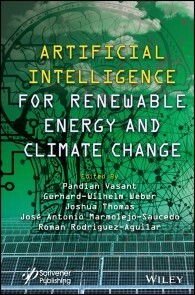
Artificial Intelligence for Renewable Energy and Climate Change
ARTIFICIAL INTELLIGENCE FOR RENEWABLE ENERGY AND CLIMATE CHANGEWRITTEN AND EDITED BY A GLOBAL TEAM OF EXPERTS IN THE FIELD, THIS GROUNDBREAKING NEW VOLUME PRESENTS THE CONCEPTS AND FUNDAMENTALS OF USING ARTIFICIAL INTELLIGENCE IN RENEWABLE ENERGY AND CLIMATE CHANGE, WHILE ALSO COVERING THE PRACTICAL APPLICATIONS THAT CAN BE UTILIZED ACROSS MULTIPLE DISCIPLINES AND INDUSTRIES, FOR THE ENGINEER, THE STUDENT, AND OTHER PROFESSIONALS AND SCIENTISTS.Renewable energy and climate change are two of the most important and difficult issues facing the world today. The state of the art in these areas is changing rapidly, with new techniques and theories coming online seemingly every day. It is important for scientists, engineers, and other professionals working in these areas to stay abreast of developments, advances, and practical applications, and this volume is an outstanding reference and tool for this purpose. The paradigm in renewable energy and climate change shifts constantly. In today’s international and competitive environment, lean and green practices are important determinants to increase performance. Corresponding production philosophies and techniques help companies diminish lead times and costs of manufacturing, improve delivery on time and quality, and at the same time become more ecological by reducing material use and waste, and by recycling and reusing. Those lean and green activities enhance productivity, lower carbon footprint and improve consumer satisfaction, which in reverse makes firms competitive and sustainable. This practical, new groundbreaking volume:* Features coverage on a wide range of topics such as classical and nature-inspired optimization and optimal control, hybrid and stochastic systems* Is ideally designed for engineers, scientists, industrialist, academicians, researchers, computer and information technologists, sustainable developers, managers, environmentalists, government leaders, research officers, policy makers, business leaders and students* Is useful as a practical tool for practitioners in the fields of sustainable and renewable energy sustainability* Includes wide coverage of how artificial intelligence can be used to impact the struggle against global warming and climate changePANDIAN VASANT, PHD, is Editor-in-Chief of the International Journal of Energy Optimization and Engineering and senior research associate at MERLIN Research Centre of Ton Duc Thang University, HCMC, Vietnam. He has 31 years of teaching experience and has co-authored over 300 publications, including research articles in journals, conference proceedings, presentations and book chapters. He has also been a guest editor for various scientific and technical journals.GERHARD-WILHELM WEBER, PHD, is a professor at Poznan University of Technology, Poznan, Poland. He received his PhD in mathematics, and economics / business administration, from RWTH Aachen. He held professorships by proxy at University of Cologne, and TU Chemnitz, Germany. J. JOSHUA THOMAS, PHD, has been a senior lecturer at KDU Penang University College, Malaysia since 2008. He obtained his PhD in intelligent systems techniques in 2015 from University Sains Malaysia, Penang, and is an editorial board member for the International Journal of Energy Optimization and Engineering. He has also published more than 30 papers in leading international conference proceedings and peer reviewed journals. JOSE A. MARMOLEJO SAUCEDO, PHD, is a professor at Pan-American University, Mexico. He received his PhD in operations research at the National Autonomous University of Mexico and has co-authored numerous research articles in scientific and scholarly journals, conference proceedings, presentations, books, and book chapters. ROMAN RODRIGUEZ-AGUILAR, PHD, is a professor in the School of Economic and Business Sciences of the “Universidad Panamericana” in Mexico. He received his PhD at the School of Economics at the National Polytechnic Institute, Mexico and has co-authored multiple research articles in scientific and scholarly journals, conference proceedings, presentations, and book chapters. Preface xvSECTION I: RENEWABLE ENERGY 11 ARTIFICIAL INTELLIGENCE FOR SUSTAINABILITY: OPPORTUNITIES AND CHALLENGES 3Amany Alshawi1.1 Introduction 31.2 History of AI for Sustainability and Smart Energy Practices 41.3 Energy and Resources Scenarios on the Global Scale 51.4 Statistical Basis of AI in Sustainability Practices 61.4.1 General Statistics 61.4.2 Environmental Stress–Based Statistics 81.4.2.1 Climate Change 91.4.2.2 Biodiversity 101.4.2.3 Deforestation 101.4.2.4 Changes in Chemistry of Oceans 101.4.2.5 Nitrogen Cycle 101.4.2.6 Water Crisis 111.4.2.7 Air Pollution 111.5 Major Challenges Faced by AI in Sustainability 111.5.1 Concentration of Wealth 111.5.2 Talent-Related and Business-Related Challenges of AI 121.5.3 Dependence on Machine Learning 141.5.4 Cybersecurity Risks 151.5.5 Carbon Footprint of AI 161.5.6 Issues in Performance Measurement 161.6 Major Opportunities of AI in Sustainability 171.6.1 AI and Water-Related Hazards Management 171.6.2 AI and Smart Cities 181.6.3 AI and Climate Change 211.6.4 AI and Environmental Sustainability 231.6.5 Impacts of AI in Transportation 241.6.6 Opportunities in Disaster Forecasting and Deforestation Forecasting 251.6.7 Opportunities in the Energy Sector 261.7 Conclusion and Future Direction 26References 272 RECENT APPLICATIONS OF MACHINE LEARNING IN SOLAR ENERGY PREDICTION 33N. Kapilan, R.P. Reddy and Vidhya P.2.1 Introduction 342.2 Solar Energy 342.3 AI, ML and DL 362.4 Data Preprocessing Techniques 382.5 Solar Radiation Estimation 382.6 Solar Power Prediction 432.7 Challenges and Opportunities 452.8 Future Research Directions 462.9 Conclusion 46Acknowledgement 47References 473 MATHEMATICAL ANALYSIS ON POWER GENERATION – PART I 53G. Udhaya Sankar, C. Ganesa Moorthy and C.T. Ramasamy3.1 Introduction 543.2 Methodology for Derivations 553.3 Energy Discussions 593.4 Data Analysis 63Acknowledgement 67References 67Supplementary 694 MATHEMATICAL ANALYSIS ON POWER GENERATION – PART II 87G. Udhaya Sankar, C. Ganesa Moorthy and C.T. Ramasamy4.1 Energy Analysis 884.2 Power Efficiency Method 894.3 Data Analysis 91Acknowledgement 96References 97Supplementary - II 1005 SUSTAINABLE ENERGY MATERIALS 117G. Udhaya Sankar5.1 Introduction 1175.2 Different Methods 1195.2.1 Co-Precipitation Method 1195.2.2 Microwave-Assisted Solvothermal Method 1205.2.3 Sol-Gel Method 1205.3 X-R ay Diffraction Analysis 1205.4 FTIR Analysis 1225.5 Raman Analysis 1245.6 UV Analysis 1255.7 SEM Analysis 1275.8 Energy Dispersive X-Ray Analysis 1275.9 Thermoelectric Application 1295.9.1 Thermal Conductivity 1295.9.2 Electrical Conductivity 1315.9.3 Seebeck Coefficient 1315.9.4 Power Factor 1325.9.5 Figure of Merit 1335.10 Limitations and Future Direction 1335.11 Conclusion 133Acknowledgement 134References 1346 SOFT COMPUTING TECHNIQUES FOR MAXIMUM POWER POINT TRACKING IN WIND ENERGY HARVESTING SYSTEM: A SURVEY 137TigiluMitikuDinku, Mukhdeep Singh Manshahia and Karanvir Singh Chahal6.1 Introduction 1376.1.1 Conventional MPPT Control Techniques 1386.2 Other MPPT Control Methods 1426.2.1 Proportional Integral Derivative Controllers 1426.2.2 Fuzzy Logic Controller 1446.2.2.1 Fuzzy Inference System 1506.2.2.2 Advantage and Disadvantages of Fuzzy Logic Controller 1516.2.3 Artificial Neural Network 1516.2.3.1 Biological Neural Networks 1526.2.3.2 Architectures of Artificial Neural Networks 1556.2.3.3 Training of Artificial Neural Networks 1576.2.3.4 Radial Basis Function 1586.2.4 Neuro-Fuzzy Inference Approach 1586.2.4.1 Adaptive Neuro-Fuzzy Approach 1616.2.4.2 Hybrid Training Algorithm 1616.3 Conclusion 167References 167SECTION II: CLIMATE CHANGE 1717 THE CONTRIBUTION OF AI-BASED APPROACHES IN THE DETERMINATION OF CO2 EMISSION GAS AMOUNTS OF VEHICLES, DETERMINATION OF CO2 EMISSION RATES YEARLY OF COUNTRIES, AIR QUALITY MEASUREMENT AND DETERMINATION OF SMART ELECTRIC GRIDS’ STABILITY 173Mesut Toğaçar7.1 Introduction 1747.2 Materials 1777.2.1 Classification of Air Quality Condition in Gas Concentration Measurement 1777.2.2 CO2 Emission of Vehicles 1787.2.3 Countries’ CO2 Emission Amount 1797.2.4 Stability Level in Electric Grids 1797.3 Artificial Intelligence Approaches 1817.3.1 Machine Learning Methods 1827.3.1.1 Support Vector Machine 1837.3.1.2 eXtreme Gradient Boosting (XG Boost) 1847.3.1.3 Gradient Boost 1857.3.1.4 Decision Tree 1867.3.1.5 Random Forest 1867.3.2 Deep Learning Methods 1887.3.2.1 Convolutional Neural Networks 1897.3.2.2 Long Short-Term Memory 1917.3.2.3 Bi-Directional LSTM and CNN 1927.3.2.4 Recurrent Neural Network 1937.3.3 Activation Functions 1957.3.3.1 Rectified Linear Unit 1957.3.3.2 Softmax Function 1967.4 Experimental Analysis 1967.5 Discussion 2107.6 Conclusion 211Funding 212Ethical Approval 212Conflicts of Interest 212References 2128 PERFORMANCE ANALYSIS AND EFFECTS OF DUST & TEMPERATURE ON SOLAR PV MODULE SYSTEM BY USING MULTIVARIATE LINEAR REGRESSION MODEL 217Sumit Sharma, J. Joshua Thomas and Pandian Vasant8.1 Introduction 2188.1.1 Indian Scenario of Renewable Energy 2188.1.2 Solar Radiation at Earth 2208.1.3 Solar Photovoltaic Technologies 2208.1.3.1 Types of SPV Systems 2218.1.3.2 Types of Solar Photovoltaic Cells 2228.1.3.3 Effects of Temperature 2238.1.3.4 Conversion Efficiency 2238.1.4 Losses in PV Systems 2248.1.5 Performance of Solar Power Plants 2248.2 Literature Review 2258.3 Experimental Setup 2288.3.1 Selection of Site and Development of Experimental Facilities 2298.3.2 Methodology 2298.3.3 Experimental Instrumentation 2308.3.3.1 Solar Photovoltaic Modules 2308.3.3.2 PV Grid-Connected Inverter 2328.3.3.3 Pyranometer 2328.3.3.4 Digital Thermometer 2348.3.3.5 Lightning Arrester 2358.3.3.6 Data Acquisition System 2368.3.4 Formula Used and Sample Calculations 2368.3.5 Assumptions and Limitations 2378.4 Results Discussion 2388.4.1 Phases of Data Collection 2388.4.2 Variation in Responses Evaluated During Phase I (From 1 Jan. to 27 Feb.) of Study 2388.4.2.1 Effect of Dust and Ambient Temperature on Conversion Efficiency 2388.4.2.2 Capacity Utilization Factor and Performance Ratio 2418.4.2.3 Evaluation of MLR Model 2428.4.3 Variation in Responses Evaluated During Phase II (From 1 March to 5 April) 2468.4.3.1 Influence of Dust and Ambient Temperature on Conversion Efficiency 2468.4.3.2 Capacity Utilization Factor and Performance Ratio 2468.4.3.3 Evaluation of MLR Model 2468.4.4 Variation in Responses Evaluated During Phase III (18 May to 25 June) 2528.4.4.1 Effect of Dust and Ambient Temperature on Conversion Efficiency 2528.4.4.2 Capacity Utilization Factor and Performance Ratio 2558.4.4.3 Evaluation of MLR Model 2568.4.5 Regression Analysis for the Whole Period 2588.4.6 Best Subsets Regression: Conversion Efficiency v/s Exposure Day, Ambient Temperature 2678.4.7 Regression Outputs Summary 2688.4.8 Comparison Between Measured Efficiency and Predicted Efficiency 2688.4.9 Losses Due to Dust Accumulation 2708.4.10 Economic Analysis 2708.5 Future Research Directions 2718.6 Conclusion 271References 2729 EVALUATION OF IN-HOUSE COMPACT BIOGAS PLANT THEREBY TESTING FOUR-STROKE SINGLE-CYLINDER DIESEL ENGINE 277Pradeep Kumar Meena, Sumit Sharma, Amit Pal and Samsher9.1 Introduction 2789.1.1 Benefits of the Use of Biogas as a Fuel in India 2789.1.2 Biogas Generators in India 2799.1.3 Biogas 2799.1.3.1 Process of Biogas Production 2809.2 Literature Review 2819.2.1 Wastes and Environment 2819.2.2 Economic and Environmental Considerations 2839.2.3 Factor Affecting Yield and Production of Biogas 2859.2.3.1 The Temperature 2859.2.3.2 PH and Buffering Systems 2879.2.3.3 C/N Ratio 2879.2.3.4 Substrate Type 2899.2.3.5 Retention Time 2899.2.3.6 Total Solids 2899.2.4 Advantages of Anaerobic Digestion to Society 2909.2.4.1 Electricity Generation 2909.2.4.2 Fertilizer Production 2909.2.4.3 Pathogen Reduction 2909.3 Methodology 2909.3.1 Set Up of Compact Biogas Plant and Equipments 2909.3.2 Assembling and Fabrication of Biogas Plant 2929.3.3 Design and Technology of Compact Biogas Plant 2949.3.4 Gas Quantity and Quality 2959.3.5 Calculation of Gas Quantity in Gas Holder 2959.4 Analysis of Compact Biogas Plant 2999.4.1 Experiment Result 2999.4.1.1 Testing on 50 Kg Animal Dung Along With 500 Ltrs Water 2999.4.1.2 Testing on Kitchen Waste 3009.4.1.3 Testing on Fruits Waste 3029.4.2 Comparison of Biogas by Different Substrate 3049.4.3 Production of Biogas Per Day at Different Waste 3049.4.4 Variation of PH Value 3079.4.5 Variation of Average pH Value 3079.4.6 Variation of Temperature 3089.4.7 Variation of Average Temperature With Respect to No. of Days for Animal Dung, Kitchen Waste, Fruits Waste and Sugar 3099.4.8 Variation of Biogas Production W.R.T. Quantity of Kitchen Waste and Fruits Waste 3119.5 Analysis of Single-Cylinder Diesel Engine on Dual Fuel 3139.5.1 Testing on 4-Stroke Single-Cylinder Diesel Engine 3139.5.2 Calculation 3169.5.3 Heat Balance Sheet 3229.5.4 Testing Result With Dual Fuel (Biogas and Diesel) on 4-Stroke Single-Cylinder Diesel Engine 3269.5.5 Calculation 3309.5.6 Heat Balance Sheet 3359.6 General Comments 3369.7 Conclusion 3399.8 Future Scope 340References 34010 LOW-TEMPERATURE COMBUSTION TECHNOLOGIES FOR EMISSION REDUCTION IN DIESEL ENGINES 345Amit Jhalani, Sumit Sharma, Pushpendra Kumar Sharma and Digambar SinghAbbreviations 34610.1 Introduction 34610.1.1 Global Scenario of Energy and Emissions 34710.1.2 Diesel Engine Emissions 34810.1.3 Mitigation of NOx and Particulate Matter 35010.1.4 Low-Temperature Combustion Engine Fuels 35010.2 Scope of the Current Article 35110.3 HCCI Technology 35210.3.1 Principle of HCCI 35310.3.2 Performance and Emissions with HCCI 35410.4 Partially Premixed Compression Ignition (PPCI) 35410.5 Exhaust Gas Recirculation (EGR) 35510.6 Reactivity Controlled Compression Ignition (RCCI) 35610.7 LTC Through Fuel Additives 35710.8 Emulsified Fuels (Water-in-Diesel Emulsion Fuel) 35810.8.1 Brake Thermal Efficiency (BTE) 35910.8.2 Nitrogen Oxide (NOx) 35910.8.3 Soot and Particulate Matter (PM) 36010.9 Conclusion and Future Scope 361Acknowledgement 361References 36111 EFFICIENCY OPTIMIZATION OF INDOOR AIR DISINFECTION BY RADIATION EXPOSURE FOR POULTRY BREEDING RATIONAL FOR MICROCLIMATE SYSTEMS MODERNIZATION FOR LIVESTOCK PREMISES 371Dovlatov Igor Mamedjarevich and Yurochka Sergey Sergeevich11.1 Introduction 37211.2 Materials and Methods 37411.3 Results 37911.4 Discussion 38211.5 Conclusions 385References 38612 IMPROVING THE EFFICIENCY OF PHOTOVOLTAIC INSTALLATIONS FOR SUSTAINABLE DEVELOPMENT OF THE URBAN ENVIRONMENT 389Pavel Kuznetsov, Leonid Yuferev and Dmitry Voronin12.1 Introduction 39012.2 Background 39212.3 Main Focus of the Chapter 40212.4 Solutions and Recommendations 417Acknowledgements 417References 41813 MONITORING SYSTEM BASED MICRO-CONTROLLER FOR BIOGAS DIGESTER 423Ahmed Abdelouareth and Mohamed Tamali13.1 Introduction 42313.2 Related Work 42413.3 Methods and Material 42513.3.1 Identification of Needs 42513.3.2 ADOLMS Software Setup 42513.3.3 ADOLMS Sensors 42613.3.4 ADOLMS Hardware Architecture 42813.4 Results 43013.5 Conclusion 432Acknowledgements 433References 43314 GREENHOUSE GAS STATISTICS AND METHODS OF COMBATING CLIMATE CHANGE 435Tatyana G. KrotovaIntroduction 435Methodology 436Findings 436Conclusion 454References 455About the Editors 457Index 459

Kubernetes Application Developer
Write efficient, smart, and optimized code for containerized applications on public and private clouds at a generic level. This book shows you how to set up microservices that are robust, scalable, and capable of running on GKE (Google Kubernetes Service), AKS (Azure Kubernetes Service), ECS (Elastic Container Service), or even on a vanilla K8S cluster.The book covers the nuts and bolts of container orchestration engines (COEs) and explains how to install and configure them. It also covers creation and deployment of a sample application on COEs. You will learn how to integrate different applications such as OAuth and how to test them and secure them using Istio Citadel. You also will be taught how to create HPA rules for microservices and scale only those microservices that require it, making your stack intelligent. In the concluding chapter, the book explains how to build a SaaS solution from scratch, running on the cloud with automated deployments accessed publicly via a secured ingress K8S controller.By the end of the book, you will have a good understanding of developing microservices and how to design and create a software solution on the cloud.WHAT YOU WILL LEARN* Build software on Kubernetes in the most optimized way* Interact with Kubernetes using client SDKs in Python, Go, nodejs, etc.* Create a testing and deployment CI/CD system for software stacks* Secure your application using Istio, without writing code* Access microservices using ingress controllers and scale them using HPA rulesWHO THIS BOOK IS FORSoftware and system engineers and developersPRATEEK KHUSHALANI is a Cloud Architect at Google and works as a full stack developer in developing cloud based accelerators. Prior to Google, he worked as software developer at IBM and worked as an individual contributor on the development of SDN networking of the IBM public cloud. He has worked across industries such as software, retail, and R&D prototypes, with a focus on cloud computing and machine learning. At Google, he contributes to the development of tools which help accelerate customer's migration journey to Google Cloud Platform. Prateek has strong expertise in developing and designing IaaS, PaaS, and SaaS solutions for both public and private clouds. He holds a bachelor's degree from Birla Institute of Technology, Mesra. He is an open-source contributor and is an active writer on tech blogs.•Chapter 1, Cloud Computing and KubernetesChapter Goal:o What is cloud computingo What is Kuberneteso Different distributions of Kuberneteso Setting up a K8S cluster- for workshop purposeso Common commands of K8So Place of Kubernetes from an architecture point of view.•Chapter 2, Creating Applications on KubernetesChapter Goal:o Create an Apache http servero Create a Java Tomcat war-based servero Create a gRPC API servero Create a Rest API servero Differences when creating applications on Kubernetes.o How will the application be actually called in a production based cluster.•Chapter 3, Testing of Applications on KubernetesChapter Goal:o Creating a CI system for testing.o Using of Pytest, go test, behave and other best testing tools based on programming language.o Adding a simple CD system stage.o Coverage of code and mock of applications to replicate real time scenarios.•Chapter 4, Security of ApplicationsChapter Goal:o Creating a book inventory application composed of UI, API and DBo Using cloud services instead of reinventing the wheelo Using and understand Istio for TLS Encryption and monitoring.o Understanding authentication/authorization and RBAC systems.o Leverage all the services available rather than developing things to secure all microservices.•Chapter 5, Networking of ApplicationsChapter Goal:o Understanding the basics of networking in Kubernetes.o How containers/pod reach each other via overlay networking.o Different ways networking is configured in Kubernetes cluster.o Using name-based DNS routing in applications rather than IP’so Understanding load balancers and the features provided by it.o Using Istio to create a service mesh of microservices and see the flow of traffic between them.o Configuring Kubernetes objects such as Ingress, Service, Endpoints.•Chapter 6, Scaling of Software SolutionChapter Goal:o Identify which microservice of the solution is becoming a bottlenecko Creating HPA rules in Kubernetes to scale specific microservice.o Use case and real-world problems and solutions to them via scaling.•Chapter 7, Building a SaaS SolutionChapter Goal:o Start with nothing but a simple k8s cluster.o Create microservice with your own hands one by one.o Identify what all services are required for building a sample SaaS e commerce solution.o Creating/Configuring a UI, API, DB, business logic, monitoring software stack.o Architecting the entire solution.o Bring the stack up and testing it against load and autoscaling the solution to support any number of requests.

Hands-on AIOps
Welcome to your hands-on guide to artificial intelligence for IT operations (AIOps). This book provides in-depth coverage, including operations and technical aspects. The fundamentals of machine learning (ML) and artificial intelligence (AI) that form the core of AIOps are explained as well as the implementation of multiple AIOps uses cases using ML algorithms.The book begins with an overview of AIOps, covering its relevance and benefits in the current IT operations landscape. The authors discuss the evolution of AIOps, its architecture, technologies, AIOps challenges, and various practical use cases to efficiently implement AIOps and continuously improve it. The book provides detailed guidance on the role of AIOps in site reliability engineering (SRE) and DevOps models and explains how AIOps enables key SRE principles.The book provides ready-to-use best practices for implementing AIOps in an enterprise. Each component of AIOps and ML using Python code and templates is explained and shows how ML can be used to deliver AIOps use cases for IT operations.WHAT YOU WILL LEARN* Know what AIOps is and the technologies involved* Understand AIOps relevance through use cases* Understand AIOps enablement in SRE and DevOps* Understand AI and ML technologies and algorithms* Use algorithms to implement AIOps use cases* Use best practices and processes to set up AIOps practices in an enterprise* Know the fundamentals of ML and deep learning* Study a hands-on use case on de-duplication in AIOps* Use regression techniques for automated baselining* Use anomaly detection techniques in AIOpsWHO THIS BOOK IS FORAIOps enthusiasts, monitoring and management consultants, observability engineers, site reliability engineers, infrastructure architects, cloud monitoring consultants, service management experts, DevOps architects, DevOps engineers, and DevSecOps expertsNAVIN SABHARWAL is currently Chief Architect and Head of Strategy for Autonomics, named "DRYiCE" at HCL technologies. He is responsible for innovation, presales, and delivery of award-winning autonomics platforms for HCL technologies. Navin is an innovator, thought leader, author, and a consultant in areas of AI and machine learning (ML), observability, AIOps, DevOps, DevSecOps, engineering, and R&D. He is responsible for IP development & service delivery in the areas of AI and ML, automation products, cloud computing, public cloud AWS, Microsoft Azure, VMWare private cloud, Microsoft private cloud, data center automation, analytics for IT operations, and IT service management.GAURAV BHARDWAJ is a seasoned IT professional and technology evangelist with expertise in service assurance, cloud computing, AI/ML-based software product development, engineering, and data analytics. He has international experience in developing and executing IT automation strategies and solutions that are aligned with business goals as well as heading multi-million USD services globally. Gaurav has a proven track record of achievements in roles of enterprise architect and consultant for large and complex global engagements (includes multiple Fortune 500 companies) leveraging automation as the pivot for business development as well as for transforming legacy environments/platforms into next-generation IT environments powered by cloud-native and containerized apps, SDI, and AIOps and DevOps methodologies.CHAPTER 1: WHAT IS AIOPS, NEED, AND BENEFITSChapter goal: This chapter talks about challenges that IT modernization and business digitalization are posing to IT business and how AIOPs can help in overcoming them as well as sustain and stay relevant in this post-pandemic economy.No of pages 15Sub -topics1. Impact of IT modernization and digitalization2. Challenges with ITOA3. What is artificial intelligence4. AIOPs - AI in information technology5. AIOPs businesses leversCHAPTER 2: AIOPS ARCHITECTURE, METHODOLOGY, CHALLENGESChapter goal: Explain technologies and components involved in AIOPs architecture along with its implementation methodology and challenges.No of pages: 12Sub - Topics1. AIOPs overview2. AIOPs architecture and components3. AIOPs implementation methodology4. AIOPs challengesCHAPTER 3: AIOPS SUPPORTING SITE RELIABILITY ENGINEERING AND DEVOPSChapter goal: Explain the use of AIOPs in SRE in keeping services up and running and the DevOps process of product development to operations.No of pages: 15Sub - Topics:1. Overview of SRE and DevOps model2. AIOPs for diverse personas - SRE & DevOps3. AIOPs for application development life cycle4. Aligning Dev and Ops via AIOPs.5. SRE principles and AIOPs6. AIOPs enabling visibility in SRE and DevOpsCHAPTER 4: FUNDAMENTALS OF MACHINE LEARNING AND AIChapter Goal: Explain the technology and concepts behind artificial intelligence and machine learning.No of pages: 12Sub - Topics:1. What is machine learning2. Why machine learning is important3. Types of machine learning4. Natural language processing5. Machine learning algorithmic tradeoff6. Principles of artificial intelligenceCHAPTER 5: AIOPS USE CASESChapter Goal: Explain practical scenarios or tasks which can be facilitated by AIOPs.No of pages: 8Sub - Topics:Monitoring of software systemsRoot cause analysis with AIOpsSecurity use casesCHAPTER 6: APPLYING MACHINE LEARNING FOR AIOPS:Chapter Goal: Provide No. of pages: 12Sub - Topics:1. Automated baselining2. Deduplication3. Anomaly detection4. ML-driven correlation5. Rule-based correlation6. AIOPs in detect-to-correct value chainCHAPTER 7: SETTING UP OF AIOPSChapter Goal: Provide best practices for AIOPs journey and guidance on setting up of AIOPs practic.No. of pages: 10Sub - Topics:1. AIOPs implementation framework.2. Define roadmap of AIOPs3. Setting up guardrails4. Teams enablement and engagement5. Visibility and governance6. Continous improvementCHAPTER 8: FUTURE OF AIOPSChapter Goal: Provide a blueprint of AIOPs future and its impact on the IT industry.No. of pages: 3Sub - Topics:1. Transition from domain-centric to domain-agnostic AIOPs2. AIOPs holds key To digital business transformation3. Unified Framework - AIOPs with SecOps and DevSecOps.

Machine Learning on Geographical Data Using Python
Get up and running with the basics of geographic information systems (GIS), geospatial analysis, and machine learning on spatial data in Python.This book starts with an introduction to geodata and covers topics such as GIS and common tools, standard formats of geographical data, and an overview of Python tools for geodata. Specifics and difficulties one may encounter when using geographical data are discussed: from coordinate systems and map projections to different geodata formats and types such as points, lines, polygons, and rasters. Analytics operations typically applied to geodata are explained such as clipping, intersecting, buffering, merging, dissolving, and erasing, with implementations in Python. Use cases and examples are included. The book also focuses on applying more advanced machine learning approaches to geographical data and presents interpolation, classification, regression, and clustering via examples and use cases.This book is your go-to resource for machine learning on geodata. It presents the basics of working with spatial data and advanced applications. Examples are presented using code (accessible at github.com/Apress/machine-learning-geographic-data-python) and facilitate learning by application.WHAT YOU WILL LEARN* Understand the fundamental concepts of working with geodata* Work with multiple geographical data types and file formats in Python* Create maps in Python* Apply machine learning on geographical dataWHO THIS BOOK IS FORReaders with a basic understanding of machine learning who wish to extend their skill set to analysis of and machine learning on spatial data while remaining in a common data science Python environmentJOOS KORSTANJE is a data scientist, with over five years of industry experience in developing machine learning tools. He has a double MSc in Applied Data Science and in Environmental Science and has extensive experience working with geodata use cases. He currently works at Disneyland Paris where he develops machine learning for a variety of tools. His experience in writing and teaching have motivated him to write this book on machine learning for geodata with Python. Chapter 1: Introduction to GeodataChapter Goal: Presenting what geodata is, how to represent it, its difficultiesNo of pages 20Sub -Topics1. Geodata definitions2. Geographical Information Systems and common tools3. Standard formats of geographical data4. Overview of Python tools for geodataChapter 2: Coordinate Systems and ProjectionsChapter Goal: Introduce coordinate systems and projectionsNo of pages: 20Sub - Topics1. Geographical coordinates2. Geographical coordinate systems3. Map projections4. Conversions between coordinate systemsChapter 3: Geodata Data Types: Points, Lines, Polygons, RasterChapter Goal: Explain the four main data types in geodataNo of pages : 20Sub - Topics:1. Points2. Lines3. Polygons4. RasterChapter 4: Creating MapsChapter Goal: Learn how to create maps in PythonNo of pages : 20Sub - Topics:1. Discover mapping libraries2. See how to create maps with different data typesChapter 5: Basic Operations 1: Clipping and Intersecting in PythonChapter Goal: Learn clipping and intersecting in PythonNo of pages: 20Sub - Topics:1. What is clipping?2. How to do clipping in Python?3. What is intersecting4. How to do intersecting in Python?Chapter 6: Basic Operations 2: Buffering in PythonChapter Goal: Learn how to create buffers in PythonNo of pages: 20Sub - Topics:1. What are buffers?2. How to create buffers in PythonChapter 7: Basic Operations 3: Merge and Dissolve in PythonChapter Goal: Learn how to merge and dissolve in PythonNo of pages: 20Sub - Topics:1. What is the merge operation?2. How to do the merge operation in Python?3. What is the dissolve operation?4. How to do the dissolve operation in Python?Chapter 8: Basic Operations 4: Erase in PythonChapter Goal: Learn how to do an erase in PythonNo of pages: 20Sub - Topics:1. What is the erase operation?2. How to apply the erase operation in PythonChapter 9: Machine Learning: InterpolationChapter Goal: Learn how to do interpolation PythonNo of pages: 20Sub - Topics:1.What is interpolation?2.How to do interpolation in Python3.Different methods for spatial interpolation in PythonChapter 10: Machine Learning: ClassificationChapter Goal: Learn how to do classification on geodata in PythonNo of pages: 20Sub - Topics:1.What is classification?2.How to do classification on geodata in Python?3.In depth example application of classification on geodata.Chapter 11: Machine Learning: RegressionChapter Goal: Learn how to do regression on geodata in PythonNo of pages: 20Sub - Topics:1.What is regression?2.How to do regression on geodata in Python?3.In depth example application of regression on geodata.Chapter 12: Machine Learning: ClusteringChapter Goal: Learn how to do clustering on geodata in PythonNo of pages: 20Sub - Topics:1.What is clustering?2.How to do clustering on geodata in Python?3.In depth example application of clustering on geodata.Chapter 13: ConclusionChapter Goal: Regroup all the knowledge togetherNo of pages: 10Sub - Topics:1.What have you learned?2.How to combine different practices together3. Other reflections for applying the topics in a real-world use case
Executive's Guide to Cyber Risk
A SOLID, NON-TECHNICAL FOUNDATION TO HELP EXECUTIVES AND BOARD MEMBERS UNDERSTAND CYBER RISKIn the Executive's Guide to Cyber Risk: Securing the Future Today, distinguished information security and data privacy expert Siegfried Moyo delivers an incisive and foundational guidance for executives tasked with making sound decisions regarding cyber risk management. The book offers non-technical, business-side executives with the key information they need to understand the nature of cyber risk and its impact on organizations and their growth.In the book, readers will find:* Strategies for leading with foresight (as opposed to hindsight) while maintaining the company’s vision and objectives* Focused, jargon-free explanations of cyber risk that liken it to any other business risk* Comprehensive discussions of the fundamentals of cyber risk that enable executive leadership to make well-informed choicesPerfect for chief executives in any functional area, the Executive’s Guide to Cyber Risk also belongs in the libraries of board members, directors, managers, and other business leaders seeking to mitigate the risks posed by malicious actors or from the failure of its information systems.ForewordPrefaceAcknowledgmentsAbout the AuthorChapter 1: Cyber Strategy Risk: The Strategy-Centric ApproachChapter 2: Cyber Value Risk: The Value-Centric ApproachChapter 3: Cyber Compliance Risk: The Compliance-Centric ApproachChapter 4: Cyber Culture Risk: The Human-Centric ApproachChapter 5: Cyber Resilience Risk: The Technology-Centric ApproachAppendix AAppendix BAppendix CAppendix DAppendix EIndex

Angewandte Ethik und Technikbewertung
Wie bilde ich mir ein ethisches Urteil, um Konflikten zu begegnen? Was ist Technik und wer ist verantwortlich, wenn sie versagt? Stehen Menschen noch im Mittelpunkt – obwohl oder gerade weil Maschinen immer „smarter“ werden? Fragen wie diese verlangen nach einer übersichtlichen und verständlichen Präsentation ethischer Methoden der Technikbewertung. Dabei rückt vorliegendes Buch die Auseinandersetzung mit den Folgen, Risiken und Nebeneffekten technischen Handelns in den Mittelpunkt. Diese reichen von ökologischen Fragen der Entsorgung über Zweckentfremdung bis hin zur individuellen und kollektiven Verantwortung von Ingenieur*innen. Aufbauend auf Grundlagen der angewandten Ethik wird in Bottom-up- und Top-down-Verfahren die Kasuistik sowie analogisch-vergleichende und logisch-ableitende Urteilsbildung eingeführt. Wesentliche Charakteristika technischen Handelns sowie Akteursrollen werden systematisch vorgestellt. Abbildungen, Beispiele und Aufgaben runden den verständlichen Aufbau ab. Als methodischer Grundriss richtet sich vorliegendes Buch an Ingenieurwissenschaftler*innen, Informatiker*innen und Geisteswissenschaftler*innen im Berufsalltag, aber auch an interessierte Lai*innen, die mehr über ethische Praxis erfahren wollen. Es bildet den zweiten, in sich abgerundeten Teil der Buchreihe Grundlagen der Technikethik.Haben wir die Technik, die wir brauchen, und brauchen wir die Technik, die wir haben?MICHAEL FUNK forscht und lehrt an der Universität Wien in den Bereichen Medien- und Technikphilosophie (Institut für Philosophie) sowie Cooperative Systems (Fakultät für Informatik). Grundlagen angewandter Ethik - Mittelpunkt Mensch – Methodisch-sprachkritische Anthropozentrik und leibliche Orientierung - Technik kritisch analysieren - Individuelle und kollektive Verantwortung