

Allgemein

Getting Started with Ethereum
Get started with blockchain development with this step-by-step guide. This book takes you all the way from installing requisite software through writing, testing, and deploying smart contracts.Getting Started with Ethereum delves into technologies most closely associated with Ethereum, such as IPFS, Filecoin, ENS, Chainlink, Truffle, Ganache, OpenZeppelin, Pinata, Fleek, Infura, Metamask, and Opensea. Author Davi Bauer walks you through project creation, how to compile projects and contracts, configure networks, and deploy smart contracts on blockchains. He then covers smart contracts, including deploying and verifying them. This book approaches blockchain in a way that allows you to focus on the topic that most interests you, covering Ethereum-related technologies broadly and not just focusing on Solidity.This hands-on guide offers a practical rather than conceptual approach get you coding. Upon completing this book, you will be able to confidently develop and deploy smart contracts on blockchains.Source code can be found at https://github.com/Apress/getting-started-ethereum.WHAT YOU WILL LEARN* Understand tokenization of assets, including NFTs, using Ethereum* Host censorship-resistant applications using IPFS* Deploy on second-layer blockchains using Polygon* Deploy smart contracts with multiple technologies around EthereumWHO IS THIS BOOK FOROff-chain developers who want to migrate to on-chain development starting with the Ethereum blockchain and the technologies around it. Prior programming knowledge and conceptual understanding of blockchain is necessary. Davi Pedro Bauer has over 20 years of experience in the IT sector with experience in analysis and systems development. He has been working with agile methods since 2009, where he participated in agile adoption programs in multidisciplinary teams, supporting the implementation of processes and practices such as Scrum and Kanban, as well as the launch of new digital products for web and mobile platforms. Since 2016, he has been studying topics related to Blockchain, such as cryptocurrencies, asset tokenization, smart contracts, and decentralized applications (DApps), and since 2019, he has been working with DevSecOps from code to infrastructure. ● Pre requirements○ Install Blockchain Dev Kit Extension on VS Code■ Installing the extension○ Install Truffle■ Installing Truffle■ Checking Truffle installation○ Install Ganache CLI■ Installing Ganache■ Starting Ganache locally○ Install DockerChapter 1: MetaMask○ Install and Setup MetaMask Wallet■ Installing the wallet■ Configuring the wallet■ Accessing your wallet■ Discovering your wallet addressChapter 2: Infura○ Create an account on Infura■ Creating a new account■ Setting up your Infura projectChapter 3: Solidity○ Get started with Solidity project on VS Code■ Creating a new project■ Compiling the project■ Deploying to development BlockchainChapter 4: ERC20 Tokens○ Write a simple ERC20 token using OpenZeppelin■ Preparing the environment■ Writing the contract■ Setting the Solidity compiler version■ Compiling the contract■ Verifying the result○ Deploy ERC20 token to ganache development Blockchain■ Preparing the migration■ Writing the contract■ Starting the Blockchain■ Configuring the Blockchain network■ Deploying the contract■ Adding the token to a wallet○ Create an ERC20 token with fixed supply■ Creating the project■ Writing the contract■ Starting Ganache development Blockchain■ Migrating the contract■ Configuring MetaMask■ Adding the token■ Transferring tokens between accounts○ Deploy ERC20 token to Testnet using Infura■ Installing the pre-requirements■ Setting up your Infura project■ Setting up your Smart Contract■ Configuring the private key■ Deploying the Smart Contract■ Checking your wallet balance■ Verifying the Smart Contract on Etherscan○ Deploy ERC20 token to Polygon Testnet (Layer 2)■ Installing the pre-requirements■ Adding Polygon Mumbai to MetaMask networks■ Activating the Polygon add-on on Infura■ Setting up your Infura project■ Setting up your Smart Contract■ Configuring the network (using Matic endpoint)■ Configuring the network (using Infura endpoint)■ Configuring the private key■ Deploying the Smart Contract■ Checking your wallet balance■ Verifying the Smart Contract on Polygan Scan○ Deploy ERC20 Token to Polygon Mainnet (Layer 2)■ Adding Polygon Mainnet to MetaMask networks■ Configuring the network (using Infura endpoint)■ Deploying the Smart Contract■ Checking your wallet balance■ Verifying the Smart Contract on polyganscanChapter 5: Unit Tests for Smart Contracts○ Write Unit Tests for ERC20 Smart Contracts■ Creating a new unit test file■ Writing test for the contract total supply■ Writing test asserting for the contract balanceChapter 6: ERC721- Non-Fungible Tokens○ Create your art NFT using Ganache and OpenZeppelin■ Creating the project■ Configuring the wallet■ Configuring the network■ Configuring the solidity compiler■ Configuring the private key■ Creating the badge image■ Adding the badge to your local IPFS■ Pinning the badge to a remote IPFS node■ Creating the badge metadata■ Compiling the Smart Contract■ Migrating the Smart Contract■ Instantiate the Smart Contract■ Awarding badge to a wallet■ Checking badge on Etherscan■ Adding the NFT token to your wallet○ Sell your art NFT on Opensea■ Connecting to OpenSea■ Viewing your badge■ Listing your badge for sale■ Exploring listing detailsChapter 7: Faucets○ Get Test Ether From Faucet on Ropsten Network■ Accessing the faucet■ Waiting for the transaction○ Get Test Ether From Faucet on Rinkeby Testnet■ Preparing for funding■ Funding your wallet■ Checking your wallet○ Get Test MATIC From Faucet on Mumbai Testnet■ Preparing for funding■ Funding your wallet■ Checking your wallet○ Get Test MATIC From Faucet on Mainnet■ Preparing for funding■ Funding your wallet■ Checking your walletChapter 8: IPFS - InterPlanetary File System○ Create Your IPFS Node■ Installing the node■ Configuring the node■ Testing the node■ Exploring your IPFS node○ Add Files to IPFS■ Adding the file■ Viewing the file content on the console■ Checking the file in the web ui■ Viewing the file content in the browser○ Setup IPFS Browser Extension■ Installing the browser extension■ Configuring the node type■ Starting an external node■ Importing a file○ Pin and Unpin IPFS Files on Local Node■ Starting your local node■ Adding file to your node■ Checking the file was added■ Verifying your file was pinned■ Unpinning your file■ Pinning your file manually○ Pin and Unpin Files on Remote Node using Pinata■ Setting up API Keys on Pinata■ Setting up Pinata as a remove service on your terminal■ Adding a new file to your local IPFS node■ Pinning your file to the remote IPFS node■ Unpinning your file from the remote IPFS node○ Host Your Site on IPFS Using Fleek■ Login on Fleek■ Cloning your existing repository■ Installing Fleek■ Initializing Fleek■ Deploying your siteChapter 9: Filecoin○ How to preserve files on Filecoin local node■ Creating the project■ Configuring truffle■ Adding an image to be preserved■ Installing dependencies■ Starting local endpoints■ Preserving files to FilecoinChapter 10: ENS - Ethereum Name Service○ Register your ENS to Receive any Crypto, Token or NFT on Your Wallet■ Searching your domain name■ Request to register■ Managing your registration name■ Checking the name resolutionChapter 11: Chainlink○ Get Crypto Prices Inside Smart Contracts using Chainlink Oracles■ Creating the project■ Creating the Smart Contract■ Creating the migration■ Setting up your Infura project■ Configuring the wallet■ Configuring the network■ Configuring the solidity compiler■ Configuring the private key■ Compiling the Smart Contract■ Deploying the Smart Contract■ Getting the price information from the Smart ContractChapter 12: Nethereum○ Get Ether Balance using Nethereum■ Creating the project■ Installing web3■ Creating the method■ Getting the balance

Learn API Testing
Explore software web application architecture, API testing, coding practices, and the standards for better API test automation development and management. This book focuses on aspiring software testing engineers currently working in API testing, and those starting their journey in the field of software testing.You’ll begin with an introduction to API testing and software web applications involving APIs. The book then moves on to the authentication standards used in the software industry, and the tools, the frameworks, and the libraries used in API testing. As the book progresses, you’ll learn about the test pyramid, how to test an API, what makes a good test script, and various coding guidelines. Finally, you get to write your own API test script.Learn API Testing is your pathway to understanding a typical software web application, its requests and responses, and the properties of a good test script.WHAT YOU’LL LEARN* Examine practices, standards, and guidelines for effective test automation* Work with different tools like RestAssured, Curl, and Postman* Understand API testing paradigm (internal/external APIs, CDCT)* Review a case study on the industrial software API testing process* Organize a test frameworkWHO THIS BOOK IS FORAPI testing aspirants, developers/architects, project managers, and non-technical team members who may want to understand how APIs are being tested.Jagdeep Jain has more than 15 years of experience in Software Quality Assurance and Testing working in various product development software companies. He holds a degree in Computer Science & Engineering. He is a firm believer and advocate of test automation. He has Co-Authored Pro Apache JMeter with Sai Matam.Chapter 1: Introduction to API TestingCHAPTER GOAL: HELP THE READER IDENTIFY THE PURPOSE OF THE BOOK, TARGET AUDIENCE AND SKILLS SET REQUIRED TO PERFORM API TESTINGNO OF PAGES -SUB -TOPICS1. What is API Testing2. Why We Need API Testing3. Types of API Testing4. AdvantagesChapter 2: Software ApplicationCHAPTER GOAL: GAIN KNOWLEDGE ABOUT SOFTWARE WEB APPLICATION STANDARDS WHICH INVOLVES APISNo of pages: -SUB - TOPICS1. REST Client/Server Architecture2. Monolithic Vs. Microservices based web application3. HTTP(s)4. Header(s)5. Request / Response6. Response CodesChapter 3: AuthenticationCHAPTER GOAL: STANDARD AUTHENTICATION USED IN INDUSTRYNo of pages : -SUB - TOPICS:1. Basic Authentication2. Session Based Authentication3. Token / JWT Based Authentication4. OAuth2 Based AuthenticationChapter 4: ToolsCHAPTER GOAL: UNDERSTANDING OF TOOLS USED FOR DOING API TESTINGNO OF PAGES: -SUB - TOPICS:1. Postman2. CURL3. RestAssured4. TestNG5. Log4j6. Java - Spring BootChapter 5: Test PyramidCHAPTER GOAL: TESTING TYPES AND HIERARCHY OF EACH TYPENO OF PAGES: -SUB - TOPICS:1. Black Box Testing2. Grey Box Testing3. Unit Testing4. Components of Test PyramidChapter 6: Testing The API· CHAPTER GOAL: API TESTING PARADIGM (INTERNAL/EXTERNAL APIS., CDCT)NO OF PAGES: -SUB - TOPICS:1. Manual Test Script/ Workflows/ Use Cases2. What to Testa. Schemab. Datac. Data Type3. Coverage Good / Bad4. Headers Testinga. Request Headeri. Correct Headerii. Missing Headeriii. Incorrect Headeriv. Unsupported Typeb. Response Headeri. Supported Typeii. Header Responseiii. Response Codes5. Request Bodya. Format Unsupportedb. Special Charactersc. Too long Stringd. Invalid valuee. Wrong data typef. Empty data/objectg. Required fieldsh. Nulli. Redundant fieldsj. DELETE already deleted entityk. Use PUT in place of POST etc.6. Response Bodya. Actual Data vs. Expected Datab. Limit7. Internal vs. External APIs8. CDCT – Consumer Driver Contract Testing9. Riska. Importance of Negative TestingChapter 7: A Good Test ScriptCHAPTER GOAL: PROPERTIES OF A GOOD TEST SCRIPTNO OF PAGES: -SUB - TOPICS:1. Components of a Good Test Script2. ExampleChapter 8: Coding GuidelinesChapter Goal: Using standard coding guidelines for better test management and review.NO OF PAGES: -SUB - TOPICS:1. Google Best Practices2. Test Naming Conventions3. Method Naming Convention4. OthersChapter 9: Organize Test FrameworkCHAPTER GOAL: ORGANIZE A TEST FRAMEWORK IN A WAY THAT IS USABLE ACROSS ANY TEAM / PROJECTNO OF PAGES: -SUB - TOPICS:1. Maven Project2. Dependencies3. Spring Boot4. Properties File/Environment Based5. End Points6. Authentication7. Request8. Response9. Test Dataa. JSONb. Filec. HashMapd. TestNG data provider10. LoggingChapter 10: First TestCHAPTER GOAL: WRITE FIRST TEST TO GET A FEEL OF API TESTINGNo of pages: -SUB - TOPICS:1. Developing First Test2. Executing First Test3. Check Results4. Check LoggingChapter 11: API DocumentationCHAPTER GOAL: API DOCUMENTATION IS A MANDATORY REQUIREMENT FOR WRITING API TESTS, SWAGGER IS THE TOOL THAT IS BEING USED, WE WILL SEE HOW TO READ THE SWAGGER API DOCUMENTATION FOR BETTER UNDERSTANDING ON THE END POINTS.NO OF PAGES: -SUB - TOPICS:1. Swagger2. Why We Need API Documentation3. Understanding the API DocumentationChapter 12: Case Study – Shopping Cart APIsCHAPTER GOAL: A SAMPLE APPLICATION IS USED TO DEMONSTRATE THE INDUSTRIAL WAY OF DOING API TESTING, THIS IS AN EQUIVALENT TO A WORKSHOP ON DOING API TESTING.NO OF PAGES: -SUB - TOPICS:1. Setting Up Application2. Goal Setting3. Test Environment (Docker Container)4. Test Data Preparation5. Agile Testing6. Shopping Cart API End Points7. Understanding Business Requirements8. Manual Tests Scripts9. Implementing Test Framework10. Writing Test11. Test Suite12. Execution13. Results14. Utilities

Computer Vision Projects with PyTorch
Design and develop end-to-end, production-grade computer vision projects for real-world industry problems. This book discusses computer vision algorithms and their applications using PyTorch.The book begins with the fundamentals of computer vision: convolutional neural nets, RESNET, YOLO, data augmentation, and other regularization techniques used in the industry. And then it gives you a quick overview of the PyTorch libraries used in the book. After that, it takes you through the implementation of image classification problems, object detection techniques, and transfer learning while training and running inference. The book covers image segmentation and an anomaly detection model. And it discusses the fundamentals of video processing for computer vision tasks putting images into videos. The book concludes with an explanation of the complete model building process for deep learning frameworks using optimized techniques with highlights on model AI explainability.After reading this book, you will be able to build your own computer vision projects using transfer learning and PyTorch.WHAT YOU WILL LEARN* Solve problems in computer vision with PyTorch.* Implement transfer learning and perform image classification, object detection, image segmentation, and other computer vision applications* Design and develop production-grade computer vision projects for real-world industry problems* Interpret computer vision models and solve business problemsWHO THIS BOOK IS FORData scientists and machine learning engineers interested in building computer vision projects and solving business problemsAKSHAY R KULKARNI is an AI and machine learning (ML) evangelist and a thought leader. He has consulted for Fortune 500 and global enterprises to drive AI and data science-led strategic transformations. He is currently the manager of data science & AI at Publicis Sapien. He is a Google developer and author of the book Natural Language Processing Recipes (Apress). He is a regular speaker at major AI and data science conferences (including Strata, O’Reilly AI Conf, and GIDS). Akshay is a visiting faculty member for some of the top graduate institutes in India. In 2019, he was featured as one of the top 40 under 40 Data Scientists in India. In his spare time, he enjoys reading, writing, coding, and helping aspiring data scientists. He lives in Bangalore with his family.ADARSHA SHIVANANDA is a senior data scientist on Indegene's product and technology team where he works on building machine learning and artificial intelligence (AI) capabilities for pharma products. He aims to build a pool of exceptional data scientists within and outside of the organization to solve problems through training programs, and always wants to stay ahead of the curve. Previously, he worked with Tredence Analytics and IQVIA. He has worked extensively in the pharma, healthcare, retail, and marketing domains. He lives in Bangalore and loves to read and teach data science.NITIN RANJAN SHARMA is a manager at Novartis, involved in leading a team to develop products using multi-modal techniques. He has been a consultant developing solutions for Fortune 500 companies, involved in solving complex business problems using machine learning and deep learning frameworks. His major focus area and core expertise are computer vision and solving some of the challenging business problems dealing with images and video data. Before Novartis, he was part of the data science team at Publicis Sapient, EY, and TekSystems Global Services. He is a regular speaker at data science communities and meet-ups and also an open-source contributor. He has also been training and mentoring data science enthusiasts.Chapter 1: Building Blocks of Computer VisionChapter Goal: The chapter will start with the basic concepts of Computer Vision. We will cover theoretical aspects that lays the foundation for the upcoming hands-on projects on Computer Vision.No of pages :35Sub -Topics1. Overview of Computer Vision2. Understanding AlexNET, Convolutional Neural Network and receptive fields3. Understanding advanced concepts like RESNETS and inception network4. Discuss how usage of batch normalization, drop outs, data augmentation techniques help solve data insufficiency in deep learning models5. Introduction to PyTorch for Computer Vision modelsChapter 2: Building Image Classification ModelChapter Goal: The chapter will discuss about image classification model along with data augmentation techniques.No of pages: 40Sub - Topics1. Data preparation for image classification problem2. Data augmentation techniques3. Setting up model architecture with explanation4. Train and run inference for the Image Classification model5. Discuss Grouped Convolution, Dilated Convolution and transposed convolution and their applicationChapter 3: Building Object Detection ModelChapter Goal: This chapter will explain the core difference between simple classification model to detecting objects in an image. We will understand optimizing loss function to get the final object localized and detected. The chapter will take through some concepts of the existing models and how to fine tune them.No of pages: 30Sub - Topics:1. Exploring Object Detection concepts like FastRCNN, YOLO2. Explaining annotations and examples of how annotations are used in Object Detection3. Explaining loss function components4. Building Object Detection model, using transfer learning technique5. Running inference on fine-tuned modelChapter 4: Building Image Segmentation ModelChapter Goal: The chapter will define how single or multiple images can be segmented in an image. How a user can define a loss function and develop a model to segregate image outlines.No of pages: 35Sub - Topics:1. Concepts on how segmentation works on Images2. Explaining custom pre trained models3. Defining and explaining loss functions4. Implementing & fine-tuning Image Segmentation modelChapter 5: Image Similarity & Image based SearchChapter Goal: The chapter deals with the explanation of how the image similarity works and how use cases move around this concept.No of pages: 25Sub - Topics:1. Defining Image similarity and anomaly problems for images2. Defining the datasets3. Defining the loss functions and methodologies4. Providing solutions for Detecting Image similaritiesChapter 6: Image Anomaly DetectionChapter Goal: The chapter deals with the explanation of how anomalies from images can be detected and use-cases around it.No of pages: 20Sub - Topics:1. Defining anomaly problems for images2. Defining the datasets3. Defining the loss functions and methodologies4. Detecting anomalies on imagesChapter 7: Video Processing Applications using PyTorchChapter Goal: This chapter deals with various mechanism of video processing techniques. This chapter will help one to deal with untangling the complexities of video with series of images placed in time sequence. Concepts of RNN/LSTM/GRU will be discussed to solve real time use-cases on videos.No of pages: 50Sub - Topics:1. Setting up concepts of time dependent feature set2. Extrapolating images to videos3. Setting up concepts for video processing using Convolutional Neural Networks4. Defining the dataset and the loss function5. Defining the model6. Training the model and run inferenceChapter 8: Super-resolution through Upscaling & GANChapter Goal: This chapter deals with foundations on Generative Adversarial Networks in the field of computer vision. The concepts will be extrapolated with an use-case to how it is being used in super resolution (Enhancing Image Quality)No of pages: 30Sub - Topics:1. Establish the concept of upscaling in images1. Foundations of VAE and GAN in images2. Setting up codes in GAN for super resolution3. Using the concept to understand data augmentation using GANChapter 9: Body Posture DetectionChapter Goal: This chapter will establish the concept of multiple body posture detection. It will have the code encompassed the detection and multiple methods around posture detection applications.No of pages: 30Sub - Topics:1. Discussing top-down and bottom-up approach to detect persons2. Discuss open pose detection model to establish body pose3. Use of segmentation technique to detect body poseChapter 10: Explainable AI for Computer Vision using GRADCAMChapter Goal: This chapter deals with foundations on how a deep learning model results can be explained. An overview of GRADCAM and how the concepts help someone explaining a Computer Vision model will be discussed in abundance.No of pages: 15Sub - Topics:1. Revisit the concepts of explain-able AI2. Deep learning explainers to CV classification model3. Setting up concepts of GRADCAM4. Implementing how Computer Vision models can be interpreted by GRADCAM

450 Keywords Digitalisierung
Von „Big Data“ über die „Künstliche Intelligenz“ bis hin zur „Sozialen Robotik“: Im Kontext der Digitalisierung gibt es unzählige Fachtermini. Das vorliegende Nachschlagewerk ist für alle geeignet, die einen schnellen Einstieg in das Gebiet der Digitalisierung suchen und sich für Fragen der Ethik interessieren. In 350 übersichtlichen Beiträgen werden die Grundlagen und Entwicklungen leicht verständlich erläutert.A.- B.- C.- D.- E.- F.- G.- H.- I - J - K.- L.- M.- N.- O - P.- Q.- R.- S.- T.- U.- V.- W - X - Y - Z.

Neuronale Netze kompakt
Daten sind das neue Gold - und neuronale Netze haben bereits einigen Unternehmen geholfen, diesen Schatz auszugraben. Verschaffen Sie sich mit diesem Buch innerhalb kürzester Zeit einen soliden Überblick über neuronale Netze. Nach der Lektüre dieses Buches kennen Sie den historischen Werdegang dieser leistungsfähigen Approximatoren und Sie sind vertraut mit den aktuell wichtigsten Begriffen. Des Weiteren kennen Sie die Möglichkeiten sowie die Grenzen neuronaler Netze. Dieses Buch richtet sich in erster Linie an Praktiker, die einen schnellen Einstieg in das Thema suchen, ohne parallel einen Hochschulkurs in Mathematik und Statistik zu machen. DR. DANIEL SONNET lehrt an der Hochschule Fresenius in Hamburg die Fächer Mathematik, Statistik und Data Science. Seit über 15 Jahren analysiert er leidenschaftlich Daten für Unternehmen. Die vielfältigen Nutzungsmöglichkeiten sowie die Leistungsfähigkeit neuronaler Netze faszinierten ihn bereits während seines Studiums. Daniel Sonnet gründete zwei datengetriebene Unternehmen und berät Unternehmen zum Einsatz von Methoden des maschinellen Lernens.Der Start – das Perceptron.- Die Weiterentwicklung: Mehrschichtige neuronale Netze.- Heutiger Status Quo: Deep Learning.- Positive Beispiele zum Einsatz neuronaler Netze.- Grenzen neuronaler Netze.-Quickguide: Wie setze ich neuronale Netze ein.

A Government Librarian's Guide to Information Governance and Data Privacy
THIS BOOK PROVIDES A CONCISE AND USABLE OVERVIEW OF THE PRACTICAL IMPLICATIONS OF IMPORTANT PUBLIC SECTOR UNITED STATES FEDERAL, STATE, AND MUNICIPAL LAWS AND STANDARDS RELATED TO INFORMATION GOVERNANCE, AS THEY PERTAIN TO LIBRARIANS, RESEARCH STAFF, UNIVERSITIES, CORPORATE REGULATORY MANAGERS, AND PUBLIC-SECTOR INFORMATION GOVERNANCE PROFESSIONALS. It is the first in a series of two volumes addressing public sector information governance compliance matters from the perspective of our target audience.Topics addressed in the book include:* the evolving role of librarians and the need for librarians and legal researchers to understand the principles of information governance,* the importance of broad-based regulatory IG principles such as the Federal Records Act, the Paperwork Reduction Act of 1980 and 36 CFR Chapter XII, Subchapter B – Records Management, that have been promulgated by various federal government agencies in framing public-sector IG principles,* a survey of interpretive surveys from the Office of Management and Budget (OMB) that further elucidate the core IG principles applicable to public sector stakeholders,* case studies detailing the application of important IG principles by federal agencies and bodies, and* a survey of important IG issues facing state and local governments.

Pro Power BI Dashboard Creation
Produce high-quality, visually attractive analysis quickly and effectively with Microsoft’s key BI tool. This book teaches analysts, managers, power users, and developers how to harness the power of Microsoft’s self-service business intelligence flagship product to deliver compelling and interactive insight with remarkable ease. It then shows you the essential techniques needed to go from source data to dashboards that seize your audience’s attention and provide them with clear and accurate information.As well as producing elegant and visually arresting output, you learn how to enhance the user experience through adding polished interactivity. This book shows you how to make interactive dashboards that allow you to guide users through the meaning of the data that they are exploring. Drill down features are also covered that allow you and your audience to dig deeper and uncover new insights by exploring anomalous and interesting data points.Reading this book builds your skills around creating meaningful and elegant dashboards using a range of compelling visuals. It shows you how to apply simple techniques to convert data into business insight. The book covers tablet and smartphone layouts for delivering business value in today’s highly mobile world. You’ll learn about formatting for effect to make your data tell its story, and you’ll be a master at creating visually arresting output on multiple devices that grabs attention, builds influence, and drives change.WHAT YOU WILL LEARN* Produce designer output that will astound your bosses and peers* Make new insights as you chop and tweak your data as never before* Create high-quality analyses in record time* Create interdependent charts, maps, and tables* Deliver visually stunning information* Drill down through data to provide unique understandings* Outshine competing products and enhance existing skills* Adapt your dashboard delivery to mobile devicesWHO THIS BOOK IS FORFor any Power BI user who wants to strengthen their ability to deliver compelling analytics via Microsoft’s widely adopted analytics platform. For those new to Power BI who want to learn the full extent of what the platform is capable of. For power users such as BI analysts, data architects, IT managers, accountants, and C-suite members who want to drive change in their organizations.ADAM ASPIN is an independent Business Intelligence consultant based in the United Kingdom. He has worked with SQL Server for over 25 years. During this time, he has developed several dozen reporting and analytical systems based on the Microsoft data platform.A graduate of Oxford University, Adam began his career in publishing before moving into IT. Databases soon became a passion, and his experience in this arena ranges from dBase to Oracle, and Access to MySQL, with occasional sorties into the world of DB2. He is, however, most at home in the Microsoft universe when using the Microsoft data and analytics stack—both in Azure and on-premises.Business Intelligence has been Adam’s principal focus for the last 20 years. He has applied his skills for a range of clients in finance, banking, utilities, leisure, luxury goods, and pharmaceuticals. Adam is a frequent contributor to SQLServerCentral.com and Simple-Talk. He is a regular speaker at events such as SQL Saturdays and SQLBits. A fluent French speaker, Adam has worked in France and Switzerland for many years.Adam is the author of SQL Server Data Integration Recipes, Business Intelligence with SQL Server Reporting Services, High Impact Data Visualization in Excel with Power View, 3D Maps and Get and Transform, Data Mashup using Microsoft Excel using Power Query and M, and Pro Power BI Theme Creation—all with Apress.1. Dashboard Basics2. Table Visuals3. Advanced Table Visual Techniques4. Matrix Visuals5. Card Visual Types6. Charts in Power BI Desktop7. Advanced Chart Types8. Formatting Charts9. Other Types of Visuals10. Third Party Visuals11. Drilldown and Drillup12. Maps in Power BI Desktop13. Filtering Data14. Slicers and Cross-Filtering15. Enhancing Dashboards16. Multi-Page Dashboards17. Bookmarks and ButtonsA. Sample DataB. Visualization IconsC. Blank Visual Representations

The Azure Data Lakehouse Toolkit
Design and implement a modern data lakehouse on the Azure Data Platform using Delta Lake, Apache Spark, Azure Databricks, Azure Synapse Analytics, and Snowflake. This book teaches you the intricate details of the Data Lakehouse Paradigm and how to efficiently design a cloud-based data lakehouse using highly performant and cutting-edge Apache Spark capabilities using Azure Databricks, Azure Synapse Analytics, and Snowflake. You will learn to write efficient PySpark code for batch and streaming ELT jobs on Azure. And you will follow along with practical, scenario-based examples showing how to apply the capabilities of Delta Lake and Apache Spark to optimize performance, and secure, share, and manage a high volume, high velocity, and high variety of data in your lakehouse with ease.The patterns of success that you acquire from reading this book will help you hone your skills to build high-performing and scalable ACID-compliant lakehouses using flexible and cost-efficient decoupled storage and compute capabilities. Extensive coverage of Delta Lake ensures that you are aware of and can benefit from all that this new, open source storage layer can offer. In addition to the deep examples on Databricks in the book, there is coverage of alternative platforms such as Synapse Analytics and Snowflake so that you can make the right platform choice for your needs.After reading this book, you will be able to implement Delta Lake capabilities, including Schema Evolution, Change Feed, Live Tables, Sharing, and Clones to enable better business intelligence and advanced analytics on your data within the Azure Data Platform.WHAT YOU WILL LEARN* Implement the Data Lakehouse Paradigm on Microsoft’s Azure cloud platform* Benefit from the new Delta Lake open-source storage layer for data lakehouses * Take advantage of schema evolution, change feeds, live tables, and more* Write functional PySpark code for data lakehouse ELT jobs* Optimize Apache Spark performance through partitioning, indexing, and other tuning options* Choose between alternatives such as Databricks, Synapse Analytics, and SnowflakeWHO THIS BOOK IS FORData, analytics, and AI professionals at all levels, including data architect and data engineer practitioners. Also for data professionals seeking patterns of success by which to remain relevant as they learn to build scalable data lakehouses for their organizations and customers who are migrating into the modern Azure Data Platform.RON C. L’ESTEVE is a professional author, trusted technology leader, and digital innovation strategist residing in Chicago, IL, USA. He is well-known for his impactful books and award-winning article publications about Azure Data & AI Architecture and Engineering. He possesses deep technical skills and experience in designing, implementing, and delivering modern Azure Data & AI projects for numerous clients around the world.Having several Azure Data, AI, and Lakehouse certifications under his belt, Ron has been a go-to technical advisor for some of the largest and most impactful Azure implementation projects on the planet. He has been responsible for scaling key data architectures, defining the road map and strategy for the future of data and business intelligence needs, and challenging customers to grow by thoroughly understanding the fluid business opportunities and enabling change by translating them into high-quality and sustainable technical solutions that solve the most complex challenges and promote digital innovation and transformation.Ron is a gifted presenter and trainer, known for his innate ability to clearly articulate and explain complex topics to audiences of all skill levels. He applies a practical and business-oriented approach by taking transformational ideas from concept to scale. He is a true enabler of positive and impactful change by championing a growth mindset.IntroductionPART I. GETTING STARTED1. The Lakehouse Paradigm2. Mount Lakes to DatabricksPART II. LAKEHOUSE PLATFORMS3. Snowflake Data Warehouse4. Synapse Analytics Serverless Pools5. Databricks SQL AnalyticsPART III. APACHE SPARK6. PySpark7. Extract, Load, Transform JobsPART IV. DELTA LAKE8. Delta Schema Evolution9. Delta Change Feed10. Delta Clones11. Delta Live Tables12. Delta SharingPART V. OPTIMIZING PERFORMANCE13. Dynamic Partition Pruning for Querying Star Schemas14. Z-Ordering and Data Skipping15. Adaptive Query Execution16. Bloom Filter Index17. HyperspacePART VI. LAKEHOUSE CAPABILITIES18. Auto Loader Resource Management19. Advanced Schema Evolution with Auto Loader20. Python Wheels21. Security and Controls22. Unity Catalog

Security Compliance in Model-driven Development of Software Systems in Presence of Long-Term Evolution and Variants
For ensuring a software system's security, it is vital to keep up with changing security precautions, attacks, and mitigations. Although model-based development enables addressing security already at design-time, design models are often inconsistent with the implementation or among themselves. An additional burden are variants of software systems. To ensure security in this context, we present an approach based on continuous automated change propagation, allowing security experts to specify security requirements on the most suitable system representation. We automatically check all system representations against these requirements and provide security-preserving refactorings for preserving security compliance. For both, we show the application to variant-rich software systems. To support legacy systems, we allow to reverse-engineer variability-aware UML models and semi-automatically map existing design models to the implementation. Besides evaluations of the individual contributions, we demonstrate the approach in two open-source case studies, the iTrust electronics health records system and the Eclipse Secure Storage.Since 2016, Sven Matthias Peldszus has been working as a research associate at the University of Koblenz-Landau and joined the Ruhr University Bochum after defending this thesis. His research interests include continuous tracing of non-functional requirements over the entire software life cycle and software quality analysis in variant-rich software systems.Introduction.- Running Example: iTrust.- State of the Art in Secure Software Systems Development.- A Walkthrough of the Proposed Development Approach.- Program Model for Object-oriented Languages.- Model-Synchronization and Tracing.- Application to Legacy Projects using Reverse-Engineering.- Static Security Compliance Checks.- Verification and Enforcement of Security at Run-time.- Specification of Variability throughout Variant-rich Software Systems.- Security in UML Product Lines.- Security Compliance and Restructuring in Variant-rich Software Systems.- The GRaViTY Framework.- Case Studies.- Related Work.- Conclusion.

CI/CD Pipeline Using Jenkins Unleashed
Understand continuous integration (CI), continuous delivery, and continuous deployment (CD) with Jenkins. These processes allow users as well as administrators to catch problems as soon as they get injected into software systems.This book starts with an introduction to Jenkins and covers its architecture and role in CI/CD. The basics are covered, including installing and configuring Jenkins. Tool configuration and plugins are discussed as well as available security measures such as credentials. You will learn what is meant by Job in Jenkins, its types, sections, and much more. You will look at Java API: projects, jobs, configuration. The concluding chapters take you through creating pipelines, their role in managing web apps, and distributed pipelines. The book also covers unit testing using TestNG as well as end-to-end testing using Selenium Python as a part of building a life cycle and setting up Jenkins on different physical and Docker environments as well as Jenkins integration with cloud environments such as AWS. And you will learn how to create reusable libraries for use in Jenkins Pipeline and control Jenkins servers using Jenkins CLI and REST APIs. The new Jenkins Blue Ocean also is covered.The book helps you understand CI/CD implementation using Jenkins from scratch in your projects and prepare for end-to-end DevOps practices.WHAT YOU WILL LEARN* Apply Jenkins to create end-to-end pipelines* Integrate Jenkins with AWS, Docker, Git, and many more tools* Use Selenium automation for end-to-end testing* Create distributed pipelinesWHO IS THIS BOOK FORDevelopers and test automation professionals who are involved in creating CI/CD pipelines as well as prospective DevOps aspirants who want to make their way ahead as professionalsPRANODAY PRAMOD DINGARE is a certified software testing professional with more than 15 years of experience in software testing, including more than 10 years in automation testing. Pranoday has been leading test automation of mobile applications for the last eight years and has been involved in test automation tools evangelism, R&D, proof of concept, and pilot projects. He has worked as a freelance test automation consultant for various startups and mid-sized IT companies from India and abroad. Pranoday's open-source test automation tools have successfully replaced licensed automation tools, leading to major savings. He is responsible for incorporating DevOps practices into test automation processes of organizations by implementing DevOps tools such as Jenkins, Gitlab, Nexus, Docker, etc. He has recently shifted into full-time DevOps profile and has been working as a Lead DevOps professional since last 1 year. He has implemented various DevOps tools like Dockers, Maven, Kubernetese, Git, Nexus, Azure DevOps, AWS, SonarQube, Jenkins etc. and has been instrumental in automating various applications’ build and deployment processes. Pranoday is a tutor who has been involved in software testing and DevOps training for more than nine years, including conducting more than 200 retail and corporate trainings on the latest test automation and DevOps tools. He is a blogger on the latest test automation tools and technologies. Pranoday is passionate about working as a test automation architect, teaching and sharing knowledge about the latest tools and technologies, and helping professionals achieve their dreams.Chapter 1: Understanding CI/CDSub-Topics:• History• What is continuous integration, continuous delivery and deployment• Need of CI/CDChapter 2: Introduction to JenkinsSub-Topics• History of Jenkins• Understanding concept of Jenkins• Understanding architecture of Jenkins• Understanding role of Jenkins in CI/CDChapter 3: Installation of JenkinsSub - Topics:• Hardware/software requirements of Jenkins• Problems and troubleshooting• Installing Jenkins on Windows• Installing Jenkins using .war file• Installing Jenkins using .msi file• Installing Jenkins as a service• Installing Jenkins on Linux environment• Using Jenkins as a Docker Image• Understanding directory structure and different configuration filesChapter 4: Configuring JenkinsSub - Topics:• Maven project configurationo What is Maveno Configuring Maven with Jenkins• Jenkins location• Gitlabsection• Githubsection• Global pipeline libraries• Email notification• Extended email notificationChapter 5:Understanding Global Tool ConfigurationSub - Topics:• Maven configuration• JDK configuration• Gitconfiguration• Ant configuration• Gradle configurationChapter 6: Manage PluginsSub - Topics:• What is plugin• List of widely used Jenkins plugin• How to install new plugin• Commonly faced problems and troubleshootingChapter 7: Managing Security with JenkinsSub - Topics:• Configure global securityo Configure LDAP- What is LDAP- Understanding need of LDAP configuration with Jenkins - How to configure LDAP with Jenkins• Setting up authorizationo Creating different groupso Assigning rights• API Token• What is API token• How to generate API token• SSHserverChapter 8: Manage CredentialsSub - Topics:• What is credentials• Need of creating credentials• How to create different types of credentials:o Basic authentiicationo SSHauthenticationo API tokenChapter 9: Manage UsersSub - Topics:• Creating userso Assigning different rights to the usersChapter 10: Understanding Jobs in JenkinsSub - Topics:• What is job• Understanding Jenkins dashboard• Different types of Jenkins job• Different sections of jobo Trigger o Build stepo Post job• Creating first freestyle job• Checking result of jobChapter 11: Preparing Java API ProjectSub - Topics:• Implementing a JAVA library project• Understanding unit testing• Integrating TestNG unit testing framework• Understanding different build lifecycle phases of API project• Implementing build lifecycle using MavenChapter 12: Creating Freestyle Job to Manage Java API ProjectSub - Topics:• Introduction to Git• Creating Java API code repository on Gitlab• Pushing JAVA API project on Git• Understanding Nexuso What is Nexuso Configuring Nexuso Creating artifact repository on Nexus• Integrating Git and Nexus with Jenkins• Creating self-executed freestyle job to manage releases of Java APIo Configuring SCMo Create a build Stepo Configure post build phaseChapter 13: Creating an Auto-trigger Free Style Job To Manage JAVA API ReleasesSub - Topics:• Configuring SCM• Setting Jenkins to poll SCM• Configuring build step• Configuring JAVA API release notificationsChapter 14: Creating a Pipeline JobSub - Topics:• Understanding pipeline• Understanding declarative pipeline• Understanding scripted pipeline• Understanding basics of Groovy• String interpolation in GroovyChapter 15: Creating Pipeline Job to Manage Web Application ProjectSub - Topics:• Creating sample calculator web application using html, CSS• Introducing UI automation using Selenium Wbdriver• Creating Selenium script to test addition, subtraction operations of calculator web app• Creating regression, smoke test suites• Creating a scripted pipeline to automate build lifecycle of calculator web app• Configuring email notifications to send Selenium script email at the end of job• Creating parameterized pipeline job to run specific Selenium script suites (regression, smoke, etc.)Chapter 16: Triggering Pipeline as Code from GitlabSub - Topics:• Installing Gitlab Jenkins plugin• Creating API token in Gitlab• Configuring Gitlab API token in Jenkins• Creating pipeline as a code (Jenkins file)• Configuring Gitlab project to integrate with Jenkins• Understanding web hook• Creating Jenkins web hook in Gitlab project• Pushing created Jenkins file in Gitlab project• Triggering pipeline on pushing changes in Gitlab projectChapter 17: Understanding Distributed PipelineSub - Topics:• Introduction of distributed pipeline• Understanding architecture of distributed pipeline (master/slave)• Configuring master/slave for distributed pipeline• Creating web app build using distributed pipelineChapter 18: Integrating Jenkins with AWSSub - Topics:• Creating EC2 instance• Pushing web application code in EC2 Code Commit• Writing a pipeline to deploy calculator web app in EC2 instance• Triggering Selenium E2E tests on deployed calculator web appChapter 19: Miscellaneous TopicsSub - Topics:• Jenkins Blue Ocean• Jenkins API
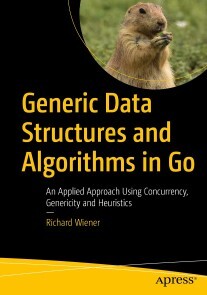
Generic Data Structures and Algorithms in Go
Advance your understanding of generic data structures and algorithms and their applications using Go and the effective use of concurrency. You are invited on a journey that aims to improve your programming and problem-solving skills. This book takes you to the next step by showing how to get your programs to work efficiently as well as correctly.As you explore many data structures and the algorithms and applications associated with them, you'll focus on the trade-offs between speed and storage and the benefits of deploying concurrency when appropriate. This book will demonstrate the huge increases in application performance that are possible. The presentation of classic data structures and techniques of algorithm design (greedy, divide and conquer, branch-and-bound to name a few) provides an essential foundation and toolkit for problem solving. But this book goes further by presenting heuristic algorithms and their implementations for solving computationally intractable combinatoric optimization problems such as the travelling salesperson problem. Simulated annealing and genetic algorithms are among the techniques used.The consistent style of coding used throughout this book exploits Go’s ability to implement abstract, generic and constrained generic data types without the use of classes. Although some familiarity with Go is assumed, this book should advance your ability to use Go to tackle server-side applications, games, machine learning, information retrieval and other application domains where speed and storage efficiency is essential.WHAT YOU'LL LEARN* Explore classical data structures and algorithms aimed at making your applications run faster or require less storage* Use the new generic features of Go to build reusable data structures* Utilize concurrency for maximizing application performance* See the power of heuristic algorithms for computationally intractable problems* Enhance and improve your Go programming skillsWHO THIS BOOK IS FORPracticing Go software developers and students who wish to advance their programming and problem-solving skills and experience the excitement and see the benefits of using generic data structures and algorithms that utilize concurrency whenever possible.RICHARD WIENER, PH.D. authored or co-authored 22 professional, software development and computer-science textbooks published by Wiley, Addison-Wesley, Prentice-Hall, Cambridge University Press and Thompson. Served as founding Editor-in-Chief of the Journal of Object-Oriented Programming for 12 years and later, founding Editor-in-Chief of the Journal of Object Technology for 9 years. Worked as Associate Professor of Computer Science at the University of Colorado, Colorado Springs (UCCS) from 1977-2012. Served as Department Chair during last four years at UCCS. Served as consultant and software developer for IBM, HP, Boeing, Textronix, DEC and many other companies. Presented industry short-courses all over the world from 1980 to 2006. Earned BS and MS in Electrical Engineering from City University of New York and Ph.D. from Polytechnic Institute of New York.1. A Tour Of Generics and Concurrency In Go2. Algorithm Efficiency – Sorting and Searching3. Abstract Data Types: OOP Without Classes in Go4. ADT In Action: Game Of Life5. Stacks6. Queues and Lists7. Hash Tables8. Binary Trees9. Binary Search Tree10. AVL Trees11. Heap Trees12. Red Black Trees13. Expression Trees14. Ecological Simulation With Concurrency15. Dynamic Programming16. Graph Structures17. Travelling Salesperson Problem18. Branch and Bound Solution to TSP19. Simulated Annealing Heuristic Solution to TSP20. Genetic Algorithm for TSP21. Neural Networks and Machine Learning.

Theoretical Cybersecurity
There is a distinct lack of theoretical innovation in the cybersecurity industry. This is not to say that innovation is lacking, as new technologies, services, and solutions (as well as buzzwords) are emerging every day. This book will be the first cybersecurity text aimed at encouraging abstract and intellectual exploration of cybersecurity from the philosophical and speculative perspective. Technological innovation is certainly necessary, as it furthers the purveying of goods and services for cybersecurity producers in addition to securing the attack surface of cybersecurity consumers where able.The issue is that the industry, sector, and even academia are largely technologically focused. There is not enough work done to further the trade—the craft of cybersecurity. This book frames the cause of this and other issues, and what can be done about them. Potential methods and directions are outlined regarding how the industry can evolve to embrace theoretical cybersecurity innovation as it pertains to the art, as much as to the science.To do this, a taxonomy of the cybersecurity body of work is laid out to identify how the influences of the industry’s past and present constrain future innovation. Then, cost-benefit analysis and right-sizing of cybersecurity roles and responsibilities—as well as defensible experimentation concepts—are presented as the foundation for moving beyond some of those constraining factors that limit theoretical cybersecurity innovation. Lastly, examples and case studies demonstrate future-oriented topics for cybersecurity theorization such as game theory, infinite-minded methodologies, and strategic cybersecurity implementations.WHAT YOU’LL LEARN* The current state of the cybersecurity sector and how it constrains theoretical innovationHow to understand attacker and defender cost benefit * The detect, prevent, and accept paradigm* How to build your own cybersecurity box* Supporting cybersecurity innovation through defensible experimentation* How to implement strategic cybersecurity* Infinite vs finite game play in cybersecurityWHO THIS BOOK IS FORThis book is for both practitioners of cybersecurity and those who are required to, or choose to, employ such services, technology, or capabilities.DR. JACOB G. OAKLEY is a cybersecurity author and subject matter expert with 16 years of experience focusing on strategic enterprise-level cybersecurity architectures as well as offensive cybersecurity operations within government and commercial sectors. His previous technical books, Professional Red Teaming, Waging Cyber War, and Cybersecurity for Space, are also published by Apress.MICHAEL BUTLER is a cybersecurity subject matter expert with 12 years of experience focusing on building, developing, and leading teams of ethical hackers. He is a primary instructor and developer of an offensive cloud security course taught both privately and at Blackhat conferences in the United States, Europe, and Asia. He has previously collaborated with Dr. Oakley as the technical reviewer for Professional Red Teaming.WAYNE YORK is a cybersecurity technical editor and subject matter expert with 18 years of experience focusing on offensive cybersecurity operations and program protection within government and commercial sectors. His previous technical edited book is Waging Cyber War by Dr. Oakley, published by Apress.DR. MATTHEW PUCKETT is a mathematics professor and former software engineer. His areas of interest include theology, cognitive science, and artificial intelligence. His hobbies include chess, where he is currently one of the top 300 players in the United States (according to FIDE).DR. J. LOUIS SEWELL is a mathematician trained in Graph Theory. As Technical Fellow of a Huntsville, AL, technology company, he develops enduring solutions to critical infrastructure challenges in government and civilian sectors. Professionally and personally, he has a special interest in artificial intelligence ethics, infinite game dynamics, and the role of personal experience in the philosophy of science.CHAPTER 1. INTRODUCTION TO STRATEGIC CYBERSECURITYDiscuss what strategic cybersecurity isDiscussion on how it is not cybersecurity strategyCHAPTER 2. NO ONE CARES ABOUT CYBERSECURITYReal motivationsConsequencesHow can cybersecurity help them in spite of themselves?CHAPTER 3. COST-BENEFIT & CYBERSECURITYCost-Benefit to the defenderCost-Benefit to the attackerCHAPTER 4. WHAT IS THE BOX THAT IS CYBERSECURITY?Where do we draw the line?What are areas that should be abandonedWhat are areas that should be exploredCHAPTER 5. THE DETECT, PREVENT, ACCEPT PARADIGMOutline the paradigmCase studiesCHAPTER 6. BUILDING YOUR OWN CYBERSECURITY BOXWhat is out of the cyber domain: sim swapping, go daddyWhat is likely to be your attackerWhat is likely to be your lossCHAPTER 7. CYBERSECURITY AS A MATERIALCapability AnalysisSourcingTest and evaluationUtilizationDeprecationFailure analysisCHAPTER 8. CYBERSECURITY AS INFRASTRUCTUREA comparison to electricityHow do we get there and what will it mean?CHAPTER 9. STRATEGIC DEFENSIVE SECURITYDetectIdentifyMonitorHuntCHAPTER 10. STRATEGIC OFFENSIVE SECURITYPenetration testingRed TeamingReverse Red TeamingCHAPTER 11. STRATEGIC ASSURANCEFrameworksAuditingCase studyCHAPTER 12. STRATEGIC CYBERSECURITY IN COMMERCIAL SECTORSThe approachCase studyCHAPTER 13. STRATEGIC CYBERSECURITY IN ACCOUNTABLE SECTORSHealthcare approachCase studyFinancial approachCase studyCHAPTER 14. STRATEGIC MAGICAIMLBlock ChainCHAPTER 15. LOOKING FORWARDWhere is the theory-craft?We need new ideas and paradigms as much as we need new technologyWhy is it difficult for academia to evolve cybersecurity?Especially offensive cybersecurityWhat is wrong with cybersecurity currently in academicsDegree programsUnrealistic expectationsPotential solutionsWhy does industry often lack an academic approach?

Blockchain-Implementierung in eine Automotive Supply Chain
In der Automotive-Branche ist eine schnell agierende und perfekt abgestimmte Supply Chain ein entscheidender Vorteil gegenüber dem Wettbewerb. Durch die Implementierung der Blockchain-Technologie lässt sich die Geschwindigkeits- und Transparenzerhöhung gewährleisten. Dieses essentiell simuliert eine Supply Chain an verschiedenen Instanzen, in der die Blockchain exemplarisch genutzt wird und dadurch die Supply-Chain-Abläufe automatisiert werden.Als Studierende und Absolventen der Universität Duisburg-Essen am Lehrstuhl der Transportsysteme und -logistik im Studiengang der Technischen Logistik haben die Autoren durch das natürliche Interesse an aktuellen Forschungsfeldern wie die Blockchain Technologie die Weichen für darauf aufbauende Abschlussarbeiten in diesem Themenfeld legen können. Unter der Betreuung von DR.-ING. ALEXANDER GOUDZ forsch(t)en sowohl YILMAZ als auch SANCHEZ-GONZALEZ im Rahmen ihrer Masterarbeit zum Thema der Blockchain Technologie weiter, während sich MEYHÖFER mit der Umsetzung der Logistik 4.0 im ÖPNV befasste.

Nachhaltige MITO-Businessmodell-Transformation
Entscheidungen in Unternehmen haben Auswirkungen auf die Gesellschaft und die Umwelt. Unternehmen müssen solche Auswirkungen ernst nehmen und Nachhaltigkeitsthemen in der Organisation und den Geschäftstätigkeiten berücksichtigen sowie geeignete Maßnahmen treffen (Corporate Social Responsibility – CSR). Entsprechend geht dies mit Transformationen einher, die vielfältige Herausforderungen hinsichtlich Bewertung und Entscheidungsfindung mit sich bringen. Dieses Buch beschreibt einen ganzheitlichen Ansatz zur Businessmodell-Nachhaltigkeitsgestaltung mit dem Ziel einer Integration aller Nachhaltigkeitsthemen. Eingesetzt wird das MITO-Methoden-Tool, das sich streng an den Vorgaben der DIN ISO 26000, den dort genannten Kernthemen der Nachhaltigkeit, den Handlungsempfehlungen und auch weiterführenden Nachhaltigkeitsregelwerken orientiert.

Mathematik für Informatiker
Dieses Lehrbuch vermittelt auf anschauliche und anwendungsorientierte Weise die für ein Informatikstudium notwendigen mathematischen Grundlagen. Dabei wird großer Wert auf den Praxisbezug der mathematischen Inhalte gelegt. Es wird jeweils anhand einer konkreten Aufgabenstellung der Informatik das mathematische Handwerkszeug entwickelt, das zur Lösung dieser Aufgabe erforderlich ist. So werden Themen der linearen Algebra im Hinblick auf Anwendungen in der Computergrafik erläutert. Aufgabenstellungen der Zeit- und Kalenderrechnung sowie der Kryptografie dienen zur Veranschaulichung der modularen Arithmetik.Die folgenden mathematischen Gebiete werden abgedeckt: Mengenlehre, Logik, Relationen und Funktionen, Kombinatorik, Graphentheorie, Wahrscheinlichkeitsrechnung, modulare Arithmetik, Grundstrukturen der Algebra, lineare Algebra und analytische Geometrie.Eine große Menge an erprobten Beispielen, Übungsaufgaben und Programmierprojekten trägt zum vertieften Verständnis des Stoffes bei.Für die Neuauflage wurde das bewährte Lehrbuch um ein Kapitel zur Wahrscheinlichkeitsrechnung erweitert.Auf plus.hanser-fachbuch.de finden Sie zu diesem Titel die Lösungen der Aufgaben. Prof. Dr. Rolf Socher ist Professor im Ruhestand. An der Technischen Hochschule Brandenburg hielt er Vorlesungen zur Mathematik, Theoretischen Informatik und Computergrafik.

Scrum mit User Stories
- Erfahren Sie, wie Sie Anforderungen im Sinne des Kunden mit Hilfe von User Stories beschreiben und im Product Backlog verwalten. - Lesen Sie, wie User Stories den Flow eines Scrum-Projekts steuern und das Team bei der Entwicklung werthaltiger Software leiten. - Lernen Sie, wie Sie die Geschäftsregeln einer User Story als Akzeptanztests beschreiben und so die Basis für akzeptanzgetriebene Entwicklung schaffen. - Erlernen Sie die Anwendung von Story Maps als neue Methode zur ganzheitlichen Anforderungsanalyse. - Lernen Sie, wie Sie Scrum in mobilen Arbeitsumgebungen einführen und dem Team über die ersten Hürden hinweghelfen. - Ihr exklusiver Vorteil: E-Book inside beim Kauf des gedruckten Buches Scrum als Framework für die Agile Softwareentwicklung erfreut sich zunehmender Beliebtheit. Kombiniert mit User Stories wird daraus ein unschlagbares Doppel. Scrum definiert mit Hilfe einfacher Regeln und klarer Verantwortlichkeiten einen Rahmen für agile Softwareprojekte. User Stories beschreiben Anforderungen aus Sicht des Anwendenden und liefern einen greifbaren Mehrwert. Dieses Buch erklärt die Grundlagen beider Konzepte und beschreibt, wie Sie User Stories in die Elemente und Abläufe von Scrum einbinden. Angefangen vom Schreiben und Priorisieren eines User-Story-basierten Product Backlog bis hin zur User-Story-getriebenen Sprint- und Releaseplanung lernen Sie alles, was für den erfolgreichen Einsatz von User Stories in Ihrem Scrum-Projekt wichtig ist. Das neue Kapitel „Mobiles Arbeiten“ beschäftigt sich mit den Anforderungen und Möglichkeiten des agilen Arbeitens in mobilen Kontexten. Es beschreibt unsere Erfahrungen beim Arbeiten mit mobilen Scrum-Teams und liefert Tipps und Ideen für das Führen solcher Teams. „Egal, ob man Scrum und User Stories einsetzt oder nicht: Mit diesem Buch lernt wohl jeder noch etwas dazu.“ Steffen Gemkow, ObjectFab AUS DEM INHALT // - Einführung - Beispiel: Scrumcoaches.com - Die Grundlagen von Scrum - User Stories - Agiles Schätzen - Agiles Planen - User Stories für das Product Backlog - User Story Mapping - Sprint-Planung - Sprint-Durchführung - User Stories Akzeptanztesten - Sprint-Retrospektive - Agile Releaseplanung - Mobiles Arbeiten - Verticals – SCRUM@OTTO - Glossar

Makupedia
The universe is a secret mine of twelve energy assets concealed in planetary dimensions Endless resources in search to discover develop and connect our core innate potentials Big data processed on these mines are derived through science equations and formulas From a multidisciplinary complex of objective algorithms to a simple smart code on MindThe World Encyclopedia on Creative Sciences and Mind Computing can only be Makupedia.
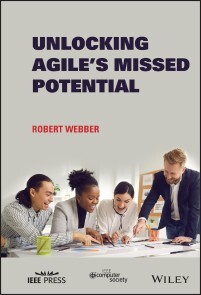
Unlocking Agile's Missed Potential
UNLOCKING AGILE'S MISSED POTENTIALAgile has not delivered on its promises. The business side expected faster time to market, but they still experience the long delays of bloated releases. Engineers thought they would be given time to build the product right the first time, but they are rushed under pressure to deliver new features within impossible schedules. What went wrong?The culprit is feature-based waterfall release planning perpetuated in a vain attempt to achieve business predictability. Agile didn't address the business need for multi-year financial predictability. The Agile community's answer was the naïve response, "The business needs to be more Agile." Waterfall release planning with fixed schedules undercuts a basic tenet of Agile development – the need to adjust content delivered within a timebox to account for evolving requirements and incorporation of feedback. Agile without flexible content is not Agile.This book introduces a novel solution that enables product teams to deliver higher value within shorter cycle times while meeting the predictability needs of the business. Organizations today want product teams that break down walls between product management and engineering to achieve schedule and financial objectives. Until now they haven’t had a way to implement product teams within the rigid constraints of traditional organizational structures.The Investment planning approach described in this book supports small development increments planned and developed by product teams aligned by common schedule and financial goals. It uses Cost of Delay principles to prioritize work with the highest value and shortest cycle times. Investments provide a vehicle for collaboration and innovation and fulfill the promise of highly motivated self-directed Agile development teams.This book is for engineers, product managers and project managers who want to finally do Agile the way it was envisioned. This book is also for leaders who want to build high-performance teams around the inherent motivational environment of Agile when done right.FOREWORD BY STEVE MCCONNELL, AUTHOR OF MORE EFFECTIVE AGILE: A ROADMAP FOR SOFTWARE LEADERS (CONSTRUX PRESS, 2019).ROBERT WEBBER'S executive experience as VPs of engineering and product management and as a CEO, combined with years of consulting with Fortune 500 companies, provide the broad perspective to create a win-win solution for business and product development that finally achieves the promises of Agile development. Organizations can increase R&D ROI by over 25% using existing Agile development capabilities. Break the chains of waterfall planning!Foreword 11Preface 13Introduction 16The Lost Potential of Agile Development 16Missed Business Expectations 18A New Approach to Agile Planning 19Addressing Traditional Software Development Challenges 21Motivation and Innovation 22Your Organization 22CHAPTER 1: THE PERSISTENCE OF WATERFALL PLANNING 23Introduction to AccuWiz 23The New COO 24Product Management 24PMO 25Engineering 25Customer Perspective 26Synopsis 26Summary 27CHAPTER 2 – WHY AGILE HAS STRUGGLED 29Agile Development Fundamentals 30The Agile Revolution 30Scrum 31Kanban 34Barriers to Real Agile 35Schedule Pressure 35The “Motivation” Factor 37The Mythical Product Owner 39Feature Planning 40Agile Scaling Frameworks 41Summary 42CHAPTER 3: EMBRACING SOFTWARE DEVELOPMENT VARIANCE 43The Cone of Uncertainty 43Software Development Estimation Variance Explained 44Making and Meeting Feature Commitments 45How Other Departments Meet Commitments 47Agile Development Implications 48Summary 48CHAPTER 4: COST OF DELAY 49Weighted Shortest Job First (WSJF) 50Cost of Delay Basics 50Example 52WSJF Proof 54CoD and Net Present Value (NPV) Prioritization Methods 56Non-linear Income Profiles 57CoD for Non-Linear Cumulative Income Profiles 58Payback Period CoD Method 58Third-year Income Slope CoD Method 58CoD NPV Method 63CoD Computation Method 64WSJF and Traditional Finance 66ROI 66Investment Rate of Return (IRR) 67WSJF versus ROI Prioritization 67Summary 69CHAPTER 5: INVESTMENT FUNDAMENTALS 70Investments, Initiatives and Programs 70Investment Hierarchy 71AccuWiz Investment Examples 74Portfolio Allocation 75Investment Forecasts 76Development Effort and Cost 76Investment Income Forecasts 78Investment Backlogs 81Investment WIP 82Investment Backlog WIP 82Investment WIP 83Technical Debt Investments 84Summary 86CHAPTER 6: MAXIMIZING INVESTMENT VALUE 87Great Products 87Business Model Value Considerations 89Stakeholder Value Analysis 90Gilb Stakeholder Definition 90Ford’s Big Mistake 92Trucking Fleet Management Example 93Five Whys 95User Scenarios 96Summary 97CHAPTER 7: PLANNING HIGH-VALUE INVESTMENT FEATURES 99Avoiding the Feature Pit 99Feature ROI 100Summary 104CHAPTER 8: RELEASING INVESTMENTS 105Release Opportunity Cost 105Investment Release Bundling 108Investment Pricing 108Lack of Customer Acceptance 110Release Overhead Costs 111Overcoming Modular Release Challenges 113Architecture for Modular Deployment 113Configuration Management 113Release Investment Prioritization 114Reducing Software Inventory Costs 115Summary 118CHAPTER 9: MEETING INVESTMENT TARGETS 120Meeting Commitments 120Investment Teams 120Managing Investment Scope 123Managing Sales Requests 127Summary 129CHAPTER 10: INVESTMENT PLANNING TEMPLATE 130Investment Description 130Proxy Business Case 130Product Stakeholder Analysis 132Customer Product Stakeholders 132Internal Product Stakeholders 132Constraints 132Competition 133Acceptance Criteria 133Go-to-Market Plan 134Pricing Model 134Deployment Model 134Sales Channels 134Investment Targets 134Development Cost 134Cycle Time 134Income Projections 134WSJF 136Assumption Validation 136Summary 138CHAPTER 11: MANAGING THE AGILE ROADMAP 139The Agile Roadmap Management Database 139The Agile Technology Roadmap 141Stages of Technology Acquisition 142Investment Technology Roadmaps 143Summary 143CHAPTER 12: MAXIMIZING INVESTMENT DEVELOPMENT PRODUCTIVITY 145Measuring Software Productivity 145Cost of Quality (CoQ) 146Cost of Quality and Software Productivity 147Sources of Software Rework 149Agile Cost of Quality 150Reducing Agile User Story Rework 152Reducing Agile Defect Rework 153Agile Cost of Quality Example 154Summary 155CHAPTER 13: MOTIVATING AGILE TEAMS 156Background 156Why You’re the Only Smart One in Your Organization 157Consequences and Behavior 158Performance and Organizational Culture 159Behavior and Software Quality 163Intrinsic Motivation 164Agile and Motivation 165Measuring Motivation 167Motivation Advice 169Summary 171CHAPTER 14: INNOVATING WITH INVESTMENTS 173Innovation – A Working Definition 174Investments as an Innovation Vehicle 175Why Your Organization Can’t Innovate 176An Organizational Behavior Model of Innovation 178An Innovation Tale of Two Companies 181Creating a Culture of Innovation 184Summary 188CHAPTER 15: ACCUWIZ GETS IT TOGETHER 189The Founder Meeting 189The Announcement 190Product Stakeholder Analysis 191Creating the Investment Backlog 192Customer Management 195Investment Development 195Project Management 196Managers 197Executive Team 198Innovation is Revived 199Synopsis 199CHAPTER 16: GETTING IT TOGETHER IN YOUR COMPANY: A PRACTICAL GUIDE 200Step 1: Organizational Support 200Influence Strategy 204Step 2: Stakeholder Value Analysis 205Step 3: Stakeholder Research 206Step 4: Stakeholder Interviews 207Step 5: Investments 207User Scenarios 208Feature Definition 209WSJF Screening 209Step 6: Initial Roadmap 210Resource Allocation 211Step 7: Investment Planning 214Agile Roadmap Alignment Meeting 215Program Review 216Step 8: Consequence Alignment 217Summary 220Appendix 1: General Cost of Delay Formula 221Reinertsen WSJF 222Income Curve Approximation 223Summary 225Appendix 2: Investment Income Profile Forecasts 226Appendix 3: Release Cycle Productivity Formula 228Appendix 4: Rework and Productivity 232Appendix 5: Innovation Behavior Survey 233Glossary 238Index 246
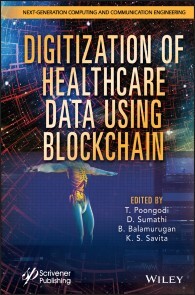
Digitization of Healthcare Data using Blockchain
DIGITIZATION OF HEALTHCARE DATA USING BLOCKCHAINTHE BOOK GIVES A DETAILED DESCRIPTION OF THE INTEGRATION OF BLOCKCHAIN TECHNOLOGY FOR ELECTRONIC HEALTH RECORDS AND PROVIDES THE RESEARCH CHALLENGES TO CONSIDER IN VARIOUS DISCIPLINES SUCH AS SUPPLY CHAIN, DRUG DISCOVERY, AND DATA MANAGEMENT. The aim of the book is to investigate the concepts of blockchain technology and its association with the recent development and advancements in the medical field. Moreover, it focuses on the integration of workflow strategies like NLP, and AI which could be adopted for boosting the clinical documentation and electronic healthcare records (EHR) usage by bringing down the physician EHR data entry. Also, the book covers the usage of smart contracts for securing patient records. Digitization of Healthcare Data Using Blockchain presents the practical implementations that deal with developing a web framework for building highly usable healthcare applications, a simple blockchain-powered EHR system. AUDIENCEResearchers in information technology, artificial intelligence, electronics engineering, medical informatics, as well as policymakers and healthcare providers and management systems. T. POONGODI, PHD, is an associate professor in the Department of Computer Science and Engineering at Galgotias University, Delhi – NCR, India. She has more than 15 years of experience working in teaching and research.D. SUMATHI, PHD, is an associate professor at VIT-AP University, Andhra Pradesh. She has an overall experience of 21 years out of which six years in industry, 15 years in the teaching field. Her research interests include cloud computing, network security, data mining, natural language processing, and theoretical foundations of computer science. B. BALAMURUGAN, PHD, is a professor in the School of Computing Sciences and Engineering at Galgotias University, Greater Noida, India. His contributions focus on engineering education, blockchain, and data sciences. He has published more than 30 books on various technologies and more than 150 research articles in SCI journals, conferences, and book chapters. K. S. SAVITA, PHD, is on the academic staff in the Department of Computer and Information Sciences (CISD), Universiti Teknologi PETRONAS (UTP), Malaysia since 2006. She is accredited by the Malaysia Board of Technologies as Professional Technologist (Ts.) in Information and Computing Technology. Preface xiii1 EVOLUTION OF BLOCKCHAIN TECHNOLOGIES AND ITS FUNDAMENTAL CHARACTERISTICS 1Aradhna Saini, R. Gopal, S. Suganthi and T. Poongodi1.1 An Overview of Blockchain Technology 21.1.1 Evolution of Blockchain Technology 21.1.2 Significant Characteristics of Blockchain Technology 31.2 Blockchain Architecture and Its Components 51.3 Comparative Analysis of Blockchain Categories 81.3.1 Permissionless or Public Blockchain 91.3.2 Permissioned or Private Blockchain 111.3.3 Consortium Blockchain 131.3.4 Hybrid Blockchain 151.4 Blockchain Uses Cases in Healthcare 151.5 Research Opportunities and Challenges of Blockchain Technology in Healthcare 201.6 Conclusion 21References 212 GEOSPATIAL BLOCKCHAIN: PROMISES, CHALLENGES, AND SCENARIOS IN HEALTHCARE 25Janarthanan S., S. Vijayalakshmi, Savita and T. Ganesh Kumar2.1 Introduction 262.1.1 Basics of Blockchain 262.1.2 Promises and Challenges in Blockchain 272.1.3 Comparative Study 282.2 Geospatial Blockchain Analysis Based on Healthcare Industry 292.2.1 Remote Monitoring and Geospatial Healthcare System 302.3 Smart Internet of Things Devices and Systems 322.3.1 Main Challenges and Importance in Smart Convention 332.3.2 Recent Innovations in Healthcare 332.4 Implementation Strategies and Methodologies 342.4.1 Promises and Challenges in Implementation 352.5 Information Security and Privacy Protection in Geospatial Blockchain Healthcare Systems 372.5.1 Security and Privacy Protection Framework 372.5.2 Data Access Control System 372.6 Challenges in Present and Past and Future Directions 402.6.1 Present Challenges in Healthcare 402.6.2 Past Challenges in Healthcare 412.6.3 Future Challenges in Healthcare 422.7 Conclusion 45References 453 ARCHITECTURAL FRAMEWORK OF BLOCKCHAIN TECHNOLOGY IN HEALTHCARE 49Kiran Singh, Nilanjana Pradhan and Shrddha Sagar3.1 Introduction 503.2 Healthcare 513.2.1 Electronic Healthcare 523.2.2 Smart Healthcare 533.3 Blockchain Technology 543.4 Architecture of Smart Healthcare 553.5 Blockchain in Electronic Healthcare 573.6 Architecture for Blockchain 593.7 Distributed System 603.8 Security and Privacy 613.9 Applications of Healthcare Management in Blockchain 643.9.1 The Use of the Blockchain for EMR Data Storage 643.9.2 Blockchains and Data Security are Related 663.9.3 Blockchain for Personal Health Information 663.9.4 Blockchain is a Strong Technology at the Point of Treatment Genomic Analytics 673.10 Applications of IoT in Blockchain 673.11 Challenges 683.12 Conclusion 68References 694 SMART CONTRACT AND DISTRIBUTED LEDGER FOR HEALTHCARE INFORMATICS 73Yogesh Sharma and B. Balamurugan4.1 Introduction 744.1.1 History of Healthcare Informatics 754.2 Introduction of Blockchain Technology 764.2.1 A Blockchain Process 774.3 Types of Blockchains 784.3.1 Public Blockchain 794.3.2 Private Blockchain 794.3.3 Consortium Blockchain 804.4 Blockchain in Healthcare 804.5 Distributed Ledger Technology 824.6 Evolution of Distributed Ledger Technology 824.7 Smart Contract 834.7.1 Limitations of Smart Contract 854.7.2 Smart Contract in Healthcare Informatics 854.8 Distributed Ledger in Healthcare Informatics as Blockchain 864.9 Distributed Ledger Technology in Healthcare Payments 884.10 Conclusion 89References 905 CONSENSUS ALGORITHM FOR HEALTHCARE USING BLOCKCHAIN 93Faizan Salim, John A., Rajesh E. and A. Suresh Kumar5.1 Introduction 945.2 Types of Blockchain 955.3 Blockchain Database 985.4 Consensus Algorithm 985.5 Healthcare System 1005.5.1 Healthcare and Blockchain 1015.5.2 Benefits of Blockchain in Healthcare 1015.6 Algorithms 1035.6.1 Smart Contract 1045.6.2 Algorithm for Fault Tolerance Using Blockchain 1045.6.3 Practical Byzantine Fault Tolerance Algorithm 1065.6.4 Algorithm for Distributed Healthcare Using Blockchain 1085.7 Security for Healthcare System Using Blockchain 1095.7.1 Framework for Security Using Blockchain 1105.8 Issues and Challenges in Healthcare Using Blockchain 1125.9 Future Scope 1145.10 Conclusion 115References 1156 INDUSTRY 4.0 AND SMART HEALTHCARE: AN APPLICATION PERSPECTIVE 117R. Saminathan, S. Saravanan and P. Anbalagan6.1 Introduction 1186.2 Evolution of Industry 4.0 1196.3 Vision and Challenges of Industry 4.0 1206.4 Technologies Used in Fourth Industrial Revolution 1216.5 Blockchain in Industry 4.0 1276.6 Smart Healthcare Design Using Healthcare 4.0 Processes 1296.7 Blockchain Tele-Surgery Framework for Healthcare 4.0 1316.8 Digital Twin Technology in Healthcare Industry 1336.9 Conclusion 134References 1347 BLOCKCHAIN POWERED EHR IN PHARMACEUTICAL INDUSTRY 137Piyush Sexena, Prashant Singh, John A. and Rajesh E.7.1 Introduction 1387.2 Traditional Healthcare System vs Blockchain EHR 1407.3 Working of Blockchain in EHR 1417.4 System Design and Architecture of EHR 1437.5 Blockchain Methodologies for EHR 1467.6 Benefits of Using Blockchain in EHR 1497.7 Challenges Faced by Blockchain in HER 1517.8 Future Scope 1547.9 Conclusion 155References 1568 CONVERGENCE OF IOT AND BLOCKCHAIN IN HEALTHCARE 159Swaroop S. Sonone, Kapil Parihar, Mahipal Singh Sankhla, Rajeev Kumar and Rohit Kumar Verma8.1 Introduction 1608.2 Overview of Convergence 1618.3 Healthcare 1628.4 IoTs and Blockchain Technology 1638.5 IoT Technologies for Healthcare 1638.6 Blockchain in Healthcare 1658.7 Integration for Next-Generation Healthcare 1678.8 Basic Structure of Convergence 1708.9 Challenges 1728.10 Conclusion 174References 1759 DISEASE PREDICTION USING MACHINE LEARNING FOR HEALTHCARE 181S. Vijayalakshmi and Ashutosh Upadhyay9.1 Introduction to Disease Prediction 1829.1.1 Artificial Intelligence in Healthcare 1829.1.2 Data Collection and Information Processing 1839.1.3 Human Living Standard and Possible Diseases 1859.1.4 Importance of Data in Disease Prediction 1859.2 Data Analytics for Disease Prediction 1869.3 Segmentation and Features of Medical Images 1869.4 Prediction Model for Healthcare 1889.5 Introduction to ML 1919.5.1 K-Nearest Neighbor, Artificial Neural Network, CNN, Decision Tree, and Random Forest 1959.6 Prediction Model Study of Different Disease 1989.7 Decision Support System 1999.8 Preventive Measures Based on Predicted Results 1999.9 Conclusions and Future Scope 200References 20010 MANAGING HEALTHCARE DATA USING MACHINE LEARNING AND BLOCKCHAIN TECHNOLOGY 203BKSP Kumar Raju Alluri10.1 Introduction 20310.2 Current Situation of Healthcare 20410.3 Introduction to Blockchain for Healthcare 20610.4 Introduction to ML for Healthcare 21110.4.1 Open Issues in Machine Learning for Healthcare 21310.5 Using ML and Blockchain for Healthcare Management 21410.5.1 Bucket 1: Theory Centric 21510.5.2 Bucket 2: Result Oriented 21910.5.3 Outcomes of the Study 22210.5.4 Why are Most of the Current Blockchain + Healthcare Papers Theory-Based? 22710.6 Conclusion 228References 22811 ADVANCEMENT OF DEEP LEARNING AND BLOCKCHAIN TECHNOLOGY IN HEALTH INFORMATICS 235Anubhav Singh, Mahipal Singh Sankhla, Kapil Parihar and Rajeev Kumar11.1 Introduction 23611.2 Associated Works 23811.2.1 Preliminaries 24011.3 Internet of Things 24011.4 Big Data 24111.5 Deep Learning 24111.5.1 Common Deep Learners 24211.5.1.1 Convolutional Neural Network 24211.5.1.2 Recurrent Neural Networks 24211.5.1.3 Deep Autoencoders 24311.5.1.4 Deep Boltzmann Machine 24311.6 Restricted Boltzmann Machine 24311.7 Profound Conviction Organization 24411.8 Application and Challenges of Deep Learners 24411.8.1 Predictive Healthcare 24411.8.2 Medical Decision Support 24511.8.3 Personalized Treatments 24511.8.4 Difficulties 24611.8.5 Blockchain Technology 24711.8.6 Types of Blockchain 24711.8.7 Challenges of Blockchain in Healthcare 24811.8.8 Interoperability 24811.8.9 Management, Privacy, and Anonymity of Data 24811.8.10 Quality of Service 24911.8.11 Heterogeneous Gadgets and Traffic 24911.8.12 Inertness 24911.8.13 Asset Imperatives and Energy Proficiency 24911.8.14 Storage Capacity and Scalability 25011.8.15 Security 25011.8.16 Data Mining 25011.8.17 System Model 25111.8.18 Attack Model 25111.9 Open Research Issues 25211.10 Conclusion 252References 25312 RESEARCH CHALLENGES AND FUTURE DIRECTIONS IN APPLYING BLOCKCHAIN TECHNOLOGY IN THE HEALTHCARE DOMAIN 257Sneha Chakraverty and Sakshi Bansal12.1 Introduction 25812.2 Healthcare 25912.2.1 Stakeholders of Indian Healthcare Ecosystem 25912.2.2 Major Data Related Challenges in Indian Healthcare System 26012.3 Need of Blockchain in Healthcare Domain 26112.4 Application of Blockchain in Healthcare Domain 26212.5 Methodology 26312.5.1 Review of Literature 26412.5.2 Interviews 26412.6 Challenges 26512.6.1 How to Overcome This Problem 26712.7 Future Directions 26812.8 Conclusion 269References 269Appendix 272Appendix 12.1 272Interview Form 272Appendix 12.2: Response 1 273Interview Form 273Appendix 12.3: Response 2 276Interview Form 276Appendix 12.4: Response 3 278Interview Form 278Appendix 12.5: Response 4 280Interview Form 280Index 285
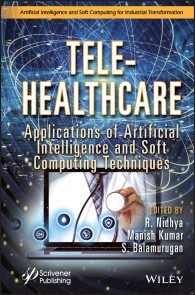
Tele-Healthcare
TELE-HEALTHCARETHIS BOOK ELUCIDATES ALL ASPECTS OF TELE-HEALTHCARE WHICH IS THE APPLICATION OF AI, SOFT COMPUTING, DIGITAL INFORMATION, AND COMMUNICATION TECHNOLOGIES, TO PROVIDE SERVICES REMOTELY AND MANAGE ONE’S HEALTHCARE.Throughout the world, there are huge developing crises with respect to healthcare workforce shortages, as well as a growing burden of chronic diseases. As a result, e-health has become one of the fastest-growing service areas in the medical sector. E-health supports and ensures the availability of proper healthcare, public health, and health education services at a distance and in remote places. For the sector to grow and meet the need of the marketplace, e-health applications have become one of the fastest growing areas of research. However, to grow at a larger scale requires the following:* The availability of user cases for the exact identification of problems that need to be visualized.* A well-supported market that can promote and adopt the e-health care concept. * Development of cost-effectiveness applications and technologies for successful implementation of e-health at a larger scale. This book mainly focuses on these three points for the development and implementation of e-health services globally. In this book the reader will find:* Details of the challenges in promoting and implementing the telehealth industry.* How to expand a globalized agenda of personalized telehealth in integrative medical treatment for disease diagnosis and its industrial transformation.* How to design machine learning techniques for improving the tele-healthcare system.AUDIENCEResearchers and post-graduate students in biomedical engineering, artificial intelligence, and information technology; medical doctors and practitioners and industry experts in the healthcare sector; healthcare sector network administrators. R. NIDHYA, PHD, is an assistant professor in the Department of Computer Science & Engineering, Madanapalle Institute of Technology & Science, affiliated to Jawaharlal Nehru Technical University, Anantapuram, India. She has published many research articles in SCI journals and her research interests include wireless body area networks, network security, and data mining.MANISH KUMAR, PHD, is an assistant professor in the School of Computer Science & Engineering, VIT Chennai. His research interests include soft computing applications for bioinformatics problems and computational intelligence. S. BALAMURUGAN, PHD, is the Director of Research and Development, Intelligent Research Consultancy Services (iRCS), Coimbatore, Tamilnadu, India. He is also Director of the Albert Einstein Engineering and Research Labs (AEER Labs), as well as Vice-Chairman, Renewable Energy Society of India (RESI), India. He has published 45 books, 200+ international journals/ conferences, and 35 patents. Preface xv1 MACHINE LEARNING–ASSISTED REMOTE PATIENT MONITORING WITH DATA ANALYTICS 1Vinutha D. C., Kavyashree and G. T. Raju1.1 Introduction 21.1.1 Traditional Patient Monitoring System 21.1.2 Remote Monitoring System 31.1.3 Challenges in RPM 41.2 Literature Survey 51.2.1 Machine Learning Approaches in Patient Monitoring 71.3 Machine Learning in RPM 81.3.1 Support Vector Machine 91.3.2 Decision Tree 101.3.3 Random Forest 111.3.4 Logistic Regression 111.3.5 Genetic Algorithm 121.3.6 Simple Linear Regression 121.3.7 KNN Algorithm 131.3.8 Naive Bayes Algorithm 141.4 System Architecture 151.4.1 Data Collection 161.4.2 Data Pre-Processing 171.4.3 Apply Machine Learning Algorithm and Prediction 181.5 Results 211.6 Future Enhancement 231.7 Conclusion 24References 242 A SURVEY ON RECENT COMPUTER-AIDED DIAGNOSIS FOR DETECTING DIABETIC RETINOPATHY 27Priyadharsini C., Jagadeesh Kannan R. and Farookh Khadeer Hussain2.1 Introduction 282.2 Diabetic Retinopathy 282.2.1 Features of DR 282.2.2 Stages of DR 292.3 Overview of DL Models 312.3.1 Convolution Neural Network 312.3.2 Autoencoders 322.3.3 Boltzmann Machine and Deep Belief Network 322.4 Data Set 332.5 Performance Metrics 342.6 Literature Survey 362.6.1 Segmentation of Blood Vessels 362.6.2 Optic Disc Feature 492.6.3 Lesion Detections 502.6.3.1 Exudate Detection 502.6.3.2 MA and HM 512.6.4 DR Classification 512.7 Discussion and Future Directions 522.8 Conclusion 53References 533 A NEW IMPROVED CRYPTOGRAPHY METHOD-BASED E-HEALTH APPLICATION IN CLOUD COMPUTING ENVIRONMENT 59Dipesh Kumar, Nirupama Mandal and Yugal Kumar3.1 Introduction 603.1.1 Contribution 613.2 Motivation 623.3 Related Works 623.4 Challenges 643.5 Proposed Work 643.6 Proposed Algorithm for Encryption 663.6.1 Demonstration of Encryption Algorithm 663.6.1.1 When the Number of Columns Selected in the Table is Even 663.6.1.2 When the Number of Columns Selected in the Table is Odd 693.6.2 Flowchart for Encryption 723.7 Algorithm for Decryption 733.7.1 Demonstration of Decryption Algorithm 733.7.1.1 When the Number of Columns Selected in the Table is Even 733.7.1.2 When the Number of Columns Selected in the Table is Odd 753.7.2 Flowchart of Decryption Algorithm 783.8 Experiment and Result 783.9 Conclusion 80References 804 CUTANEOUS DISEASE OPTIMIZATION USING TELEDERMATOLOGY UNDERRESOURCED CLINICS 85Supriya M., Murugan K., Shanmugaraja T. and Venkatesh T.4.1 Introduction 864.2 Materials and Methods 874.2.1 Clinical Setting and Teledermatology Workflow 874.2.2 Study Design, Data Collection, and Analysis 874.3 Proposed System 884.3.1 Teledermatology in an Underresourced Clinic 884.3.2 Teledermatology Consultations from Uninsured Patients 894.3.3 Teledermatology for Patients Lacking Access to Dermatologists 904.3.4 Teledermatologist Management from Nonspecialists 924.3.5 Segment Factors of Referring PCPs and Their Patients 934.3.6 Teledermatology Operational Considerations 944.3.7 Instruction of PCPs 944.4 Challenges 954.5 Results and Discussion 954.5.1 Challenges of Referring to Teledermatology Services 96References 985 COGNITIVE ASSESSMENT BASED ON EYE TRACKING USING DEVICE-EMBEDDED CAMERAS VIA TELE-NEUROPSYCHOLOGY 101Shanmugaraja T., Venkatesh T., Supriya M. and Murugan K.5.1 Introduction 1025.2 Materials and Methods 1025.3 Framework Elements 1025.3.1 Eye Tracker Camera 1025.3.2 Test Construction 1035.3.3 Web Camera 1065.3.4 Camera for Eye Tracking 1065.4 Proposed System 1065.4.1 Camera for Tracking Eye 1065.4.2 Web Camera 1085.4.3 Scoring 1085.4.4 Eye Tracking Camera 1085.4.5 Web Camera Human-Coded Scoring 1085.5 Subjects 1095.5.1 Characteristics of Subject 1095.6 Methodology 1105.6.1 Analysis of Data 1105.7 Results 1105.8 Discussion 1125.9 Conclusion 114References 1156 FUZZY-BASED PATIENT HEALTH MONITORING SYSTEM 117Venkatesh T., Murugan K., Supriya M., Shanmugaraja T. and Rekha Chakravarthi6.1 Introduction 1186.1.1 General Problem 1196.1.2 Existing Patient Monitoring and Diagnosis Systems 1196.1.3 Fuzzy Logic Systems 1206.2 System Design 1226.2.1 Hardware Requirements 1226.2.1.1 Functional Requirements 1236.2.1.2 Nonfunctional Specifications 1256.3 Software Architecture 1256.3.1 The Data Acquisition Unit (DAQ) Application Programmable Interface (API) 1266.3.2 Flowchart—API 1286.3.3 Foreign Tag IDs 1296.3.4 Database Manager 1306.3.5 Database Designing 1306.3.6 The Fuzzy Logic System 1316.3.6.1 Introduction to Fuzzy Logic 1316.3.6.2 The Modified Prior Alerting Score (MPAS) 1326.3.6.3 Structure of the Fuzzy Logic System 1346.3.7 Designing a System in Fuzzy 1356.3.7.1 Input Variables 1356.3.7.2 The Output Variable 1386.4 Results and Discussion 1406.4.1 Hardware Sensors Validation 1406.4.2 Implementations, Testing, and Evaluation of the Fuzzy Logic Engine 1416.4.3 Normal Group (NRM) 1466.4.4 Low Risk Group 1466.4.5 High Risk Group (HRG) 1536.5 Conclusions and Future Work 1556.5.1 Summary and Concluding Remarks 1556.5.2 Future Directions 155References 1557 ARTIFICIAL INTELLIGENCE: A KEY FOR DETECTING COVID-19 USING CHEST RADIOGRAPHY 159C. Vinothini, P. Anitha, Priya J., Abirami A. and Akash S.7.1 Introduction 1607.2 Related Work 1627.2.1 Traditional Approach 1627.2.2 Deep Learning–Based Approach 1637.3 Materials and Methods 1637.3.1 Data Set and Data Pre-Processing 1637.3.2 Proposed Model 1657.4 Experiment and Result 1717.4.1 Experiment Setup 1717.4.2 Comparison with Other Models 1737.5 Results 1747.6 Conclusion 175References 1768 AN EFFICIENT IOT FRAMEWORK FOR PATIENT MONITORING AND PREDICTING HEART DISEASE BASED ON MACHINE LEARNING ALGORITHMS 179Shanthi S., Nidhya R., Uma Perumal and Manish Kumar8.1 Introduction 1808.2 Literature Survey 1828.3 Machine Learning Algorithms 1838.4 Problem Statement 1848.5 Proposed Work 1858.5.1 Data Set Description 1858.5.2 Collection of Values Through Sensor Nodes 1868.5.3 Storage of Data in Cloud 1878.5.4 Prediction with Machine Learning Algorithms 1888.5.4.1 Data Cleaning and Preparation 1888.5.4.2 Data Splitting 1898.5.4.3 Training and Testing 1898.5.5 Machine Learning Algorithms 1898.5.5.1 Naive Bayes Algorithm 1898.5.5.2 Decision Tree Algorithm 1908.5.5.3 K-Neighbors Classifier 1918.5.5.4 Logistic Regression 1928.6 Performance Analysis and Evaluation 1928.7 Conclusion 197References 1979 BABW: BIOMETRIC-BASED AUTHENTICATION USING DWT AND FFNN 201R. Kingsy Grace, M.S. Geetha Devasena and R. Manimegalai9.1 Introduction 2029.2 Literature Survey 2039.3 BABW: Biometric Authentication Using Brain Waves 2089.4 Results and Discussion 2119.5 Conclusion 215References 21610 AUTISM SCREENING TOOLS WITH MACHINE LEARNING AND DEEP LEARNING METHODS: A REVIEW 221Pavithra D., Jayanthi A. N., Nidhya R. and Balamurugan S.10.1 Introduction 22210.2 Autism Screening Methods 22310.2.1 Autism Screening Instrument for Educational Planning—3rd Version 22410.2.2 Quantitative Checklist for Autism in Toddlers 22410.2.3 Autism Behavior Checklist 22410.2.4 Developmental Behavior Checklist-Early Screen 22510.2.5 Childhood Autism Rating Scale Version 2 22510.2.6 Autism Spectrum Screening Questionnaire (ASSQ) 22610.2.7 Early Screening for Autistic Traits 22610.2.8 Autism Spectrum Quotient 22610.2.9 Social Communication Questionnaire 22710.2.10 Child Behavior Check List 22710.2.11 Indian Scale for Assessment of Autism 22710.3 Machine Learning in ASD Screening and Diagnosis 22810.4 DL in ASD Diagnosis 23810.5 Conclusion 242References 24211 DRUG TARGET MODULE MINING USING BIOLOGICAL MULTIFUNCTIONAL SCORE-BASED COCLUSTERING 249R. Gowri and R. Rathipriya11.1 Introduction 24911.2 Literature Study 25011.3 Materials and Methods 25311.3.1 Biological Terminologies 25311.3.2 Functional Coherence 25611.3.3 Biological Significances 25711.3.4 Existing Approach: MR-CoC 25711.4 Proposed Approach: MR-CoCmulti 25811.4.1 Biological Score Measures for DTM 25911.4.2 Multifunctional Score-Based Co-Clustering Approach 25911.5 Experimental Analysis 26411.5.1 Experimental Results 26511.6 Discussion 28011.7 Conclusion 280Acknowledgment 281References 28112 THE ASCENDANT ROLE OF MACHINE LEARNING ALGORITHMS IN THE PREDICTION OF BREAST CANCER AND TREATMENT USING TELEHEALTH 285Jothi K.R., Oswalt Manoj S., Ananya Singhal and Suruchi Parashar12.1 Introduction 28612.1.1 Objective 28712.1.2 Description and Goals 28712.1.2.1 Data Exploration 28812.1.2.2 Data Pre-Processing 28812.1.2.3 Feature Scaling 28812.1.2.4 Model Selection and Evaluation 28812.2 Literature Review 28912.3 Architecture Design and Implementation 30412.4 Results and Discussion 31012.5 Conclusion 31212.6 Future Work 313References 31413 REMOTE PATIENT MONITORING: DATA SHARING AND PREDICTION USING MACHINE LEARNING 317Mohammed Hameed Alhameed, S. Shanthi, Uma Perumal and Fathe Jeribi13.1 Introduction 31813.1.1 Patient Monitoring in Healthcare System 31813.2 Literature Survey 32113.3 Problem Statement 32213.4 Machine Learning 32213.4.1 Introduction 32213.4.2 Cloud Computing 32413.4.3 Design and Architecture 32513.5 Proposed System 32613.6 Results and Discussions 33113.7 Privacy and Security Challenges 33313.8 Conclusions and Future Enhancement 334References 33514 INVESTIGATIONS ON MACHINE LEARNING MODELS TO ENVISAGE CORONAVIRUS IN PATIENTS 339R. Sabitha, J. Shanthini, R.M. Bhavadharini and S. Karthik14.1 Introduction 34014.2 Categories of ML Algorithms in Healthcare 34114.3 Why ML to Fight COVID-19? Tools and Techniques 34314.4 Highlights of ML Algorithms Under Consideration 34414.5 Experimentation and Investigation 34914.6 Comparative Analysis of the Algorithms 35314.7 Scope of Enhancement for Better Investigation 354References 35615 HEALTHCARE INFORMATICS: EMERGING TRENDS, CHALLENGES, AND ANALYSIS OF MEDICAL IMAGING 359G. Karthick and N.S. Nithya15.1 Emerging Trends and Challenges in Healthcare Informatics 36015.1.1 Advanced Technologies in Healthcare Informatics 36015.1.2 Intelligent Smart Healthcare Devices Using IoT With DL 36115.1.3 Cyber Security in Healthcare Informatics 36215.1.4 Trends, Challenges, and Issues in Healthcare IT Analytics 36315.2 Performance Analysis of Medical Image Compression Using Wavelet Functions 36415.2.1 Introduction 36415.2.2 Materials and Methods 36615.2.3 Wavelet Basis Functions 36715.2.3.1 Haar Wavelet 36715.2.3.2 db Wavelet 36815.2.3.3 bior Wavelet 36815.2.3.4 rbio Wavelet 36815.2.3.5 Symlets Wavelet 36915.2.3.6 coif Wavelet 36915.2.3.7 dmey Wavelet 36915.2.3.8 fk Wavelet 36915.2.4 Compression Methods 37015.2.4.1 Embedded Zero-Trees of Wavelet Transform 37015.2.4.2 Set Partitioning in Hierarchical Trees 37015.2.4.3 Adaptively Scanned Wavelet Difference Reduction 37015.2.4.4 Coefficient Thresholding 37115.3 Results and Discussion 37115.3.1 Mean Square Error 37115.3.2 Peak Signal to Noise Ratio 37115.4 Conclusion 38015.4.1 Summary 380References 380Index 383

SQL - kurz & gut (3. Auflg.)
Wenn Sie SQL bei Ihrer täglichen Arbeit als Datenanalyst:in, Data Scientist oder Data Engineer verwenden, ist dieses beliebte Taschenbuch das ideale Nachschlagewerk für Sie. Beschrieben werden die wichtigsten Funktionen von SQL und deren Einsatz in Microsoft SQL Server, MySQL, Oracle Database, PostgreSQL und SQLite. Zahlreiche Beispiele verdeutlichen zudem die vielfältigen Möglichkeiten der Sprache.In dieser aktualisierten und deutlich erweiterten Ausgabe zeigt Alice Zhao, wie diese fünf Datenbankmanagementsysteme die SQL-Syntax für Abfragen und für Änderungen an einer Datenbank implementieren. Sie finden Näheres zu Datentypen und Konvertierungen, zur Syntax regulärer Ausdrücke, zu Fensterfunktionen, Pivoting und Unpivoting und vieles mehr.- Schlagen Sie schnell nach, wie Sie bestimmte Aufgaben mit SQL ausführen- Nutzen Sie die Syntaxbeispiele des Buchs für Ihre eigenen Abfragen- Passen Sie SQL-Abfragen so an, dass sie auf den fünf verbreitetsten Datenbankmanagementsystemen funktionieren- Neu: Verbinden Sie Python und R mit einer relationalen Datenbank- Neu: Erhalten Sie in dem Kapitel »Wie mache ich …?« Antworten auf häufig gestellte Fragen zu SQLZielgruppe:Data ScientistsDatenanalyst*innenalle, die mit Daten und SQL zu tun habenAutorin:Alice Zhao ist Data Scientist und liebt es, komplexe Dinge leicht verständlich zu erklären. Als Senior Data Scientist bei Metis und als Mitbegründerin von Best Fit Analytics hat sie zahlreiche Kurse zu SQL, Python und R gegeben. Ihre sehr gut bewerteten technischen Tutorials auf YouTube sind dafür bekannt, gleichermaßen praktisch, unterhaltsam und visuell ansprechend zu sein.In ihrem Blog „A Dash of Data“ schreibt sie über Analytics und Popkultur. Ihre Arbeit wurde bereits in der Huffington Post, Thrillist und Working Mother veröffentlicht. Sie hat auf einer Vielzahl von Konferenzen über Themen wie Natural Language Processing und Datenvisualisierung gesprochen und hat einen Master of Science in Analytics und einen Bachelor of Science in Elektrotechnik erworben, beide von der Northwestern University.

Getting Started with Open Source Technologies
Using real life examples, learn how open source projects are consumed and explore the nuances within different industries in adopting open source technologies.After gaining a basic understanding of open source and open standards, understand how licensing helps turn community code into an enterprise worthy component. It also helps you understand future governance of the open source software. Once in effect, continuous security becomes a challenge for open source components so we'll examine its ongoing security aspects.This book will also cover different open source domains and industries and discuss how an enterprise can transform itself by applying key open source principles. In the end Getting Started with Open Source Technologies will provide a 360-degree view of open source and show you how to apply it.WHAT YOU'LL LEARN* Understand current trends in open source and why it is relevant today* Gain entry into the open source world to properly license your source code* Review open source usage within different industries and apply the learnings to your enterprises* Evangelize and create advocates in open source communitiesWHO THIS BOOK IS FOREnterprises (Developers/Operators/Management) and academics who want to get a 360-degree view of open source no matter how early or advanced they are in their adoption of any open source technology.SACHIN RATHEE is a Technologist and Business Executive with experience in multiple facets of the software industry. Sachin has led many transformational projects using open source technologies for various enterprises. He is a strong proponent of open source and presented its value in multiple global conferences. Most recently Sachin has been involved in leading the realization of 5G and edge computing use cases in cloud native environments. He holds a Bachelor’s degree in Engineering as well as Master’s in Business Administration.AMOL CHOBE is managing the Solution Architects organization at world's leading enterprise open source software company. Amol brings over 20+ years of experience across numerous industries such as Telecommunications, Financial etc. Amol has been a big advocate of the open source community and has given several presentations around the world focusing on various open source projects. Lately Amol is focusing on adoption of various kinds of everything-as-a-service (XaaS) in rapidly changing markets and an ever-changing technological landscape. He holds a Master's Degree in Computer Engineering.CHAPTER 1:Open source : How we got here( This chapter will cover history , Todays Software and business challenges, How Open source works )Chapter Goal: Provide basic understanding of the Open source world No of pages 15SUB -TOPICS1. How it all started .2. What is really Open source ?3. Where are we now ?CHAPTER 2: Open source and Open standardsCHAPTER GOAL: There are a number of Open standards that coexist with Open source code. Here we look at the relationship between the two.No of pages 15SUB -TOPICS1. What is Open standard with examples2. Comparison on Open source with standards3. How can both coexistCHAPTER 3 : Licensing the Open sourceCHAPTER GOAL: Understanding the ownership of the Open source softwareNo of pages 15SUB -TOPICS1. Understanding various licenses available today2. Pros cons of various licenses3. How to pick the right license for your useCHAPTER 4 : Securing Open SystemsCHAPTER GOAL: Understanding the security challenges of Open source and how to address themNo of pages 15SUB -TOPICS1. Answering the question -- Can Open source be considered secure ?2. Understanding the security aspects of Open source software that you are considering3. Options for securing Open source softwareCHAPTER 5 :Open Source in InfrastructureCHAPTER GOAL: Here we start breaking down the various categories of Open source software available.No of pages 15SUB -TOPICS1. What are the various domains and why we break it down in to such domains2. Understanding the SaaS model and its Open source components.3. Understanding the PaaS model and its Open source components.4. Understanding the IaaS model and its Open source components.CHAPTER 6: Open Source for Emerging TechnologiesCHAPTER GOAL: This chapter provides details on the Infrastructure software available as Open source.No of pages 15SUB -TOPICS1. How to apply Open source infrastructure components to various models2. Cloud infrastructure and management details3. Networking details4. Storage detailsCHAPTER 7: Open source In IndustriesCHAPTER GOAL: This chapter provides details on the application software available as Open source.NO OF PAGES 15SUB -TOPICS1. How to apply Open source applications components to various models2. Integrating applications with different Open source software projects3. Open source applications tooling5. Industry 4.0 / ManufacturingCHAPTER 8: Open source growth and TrendsChapter Goal: Here we discuss how Open source and its culture has driven growth in various companies. We will get views from various industry leaders.No of pages 15SUB -TOPICS1. What is Open Culture2. How companies are adopting Open Culture3. Open Culture success storyCHAPTER 9: Path forward (Cover aspects relating teaching in schools, evangelizing, growing communities )CHAPTER GOAL: Understanding how Open source can be introduced sooner than later into education systemsNo of pages 15SUB -TOPICS1. Barriers to Open source2. Open source in academia3. Supporting Open source communities

Erfolgreich starten mit YouTube
- Videos produzieren, die begeistern- Kanal managen, Reichweite generieren und Geld verdienenDie Social-Media-Plattform YouTube hat sich zur zweitgrößten Suchmaschine im Internet gemausert. Ob Unterhaltung oder Wissenschaft, Kunst, Kultur oder jedes erdenkliche Hobby: Auf YouTube findet sich das geballte Schwarmwissen und die Begeisterung von Generationen. Pro Tag laden Millionen Nutzer Millionen Videos hoch – und einer davon ist Nick Schreger, der Autor dieses Buchs. Was es braucht, um einen YouTube-Kanal zu starten und mit spannenden Inhalten zu füllen, beschreibt er auf lockere, nicht immer ganz ernste Art. Sie erfahren, wie Sie mit relativ einfachen technischen Mitteln gute Videos produzieren, worauf es bei der Themenplanung ankommt und wie Sie Ihren Kanal erfolgreich präsentieren. Auch ambitioniertere Creators kommen dabei nicht zu kurz – ganz wie auf YouTube selbst: In Nicks kreativen Anregungen wird jeder fündig!Aus dem Inhalt:- Stilfindung- Dein Publikum, das unbekannte Wesen- Script vs. Spontanität- So nicht: No-Gos!- Kamera-Einstellungen- Videolicht- Der gute Ton- Das YouTube-Studio- Live-Streaming- Interaktion mit den Zuschauern- Erfolgreiches Selbstmarketing- Begleitende Medien- YouTube-Monetarisierung- Abonnenten – die geheime Währung- Umgang mit KritikDer AutorNick Schreger, Jahrgang 1972, arbeitete nach seiner Berufsausbildung und dem Studium in Sprachwissenschaften als technischer Übersetzer. Als Ausgleich dazu beschäftigte er sich mit verschiedenen Hobbies, machte Musik, Sound-Design für Computerspiele, fotografierte und drehte Dokumentarfilme. Seit 2004 arbeitet er nebenher als Fotograf und Filmemacher und unterhält seit 2016 einen beliebten deutschsprachigen YouTube-Kanal. Nach diversen Auslandsaufenthalten lebt und arbeitet er in der Schweiz.

Code That Fits in Your Head
Heuristik in der Softwareentwicklung. Komplexität reduzieren | Legacy Code beherrschen | Performance optimieren.Techniken und Konzepte für nachhaltige Softwareentwicklung sowie sauberen und wartbaren Code Reduktion von Komplexität, strukturierte Arbeitsabläufe und effiziente Fehlerbehandlung. Mit Auszügen aus einem vollständigen Beispielprojekt inklusive Code zum Download.»Mark Seemann ist dafür bekannt, komplexe Konzepte anschaulich und präzise zu erläutern. In diesem Buch kondensiert er seine weitreichende Erfahrung in der Softwareentwicklung zu praktischen, pragmatischen Techniken für nachhaltigen und gut lesbaren Code. Dieses Buch ist ein Must Read für jeden Programmierer.«– Scott Wlaschin, Autor von »Domain Modeling Made Functional«Dieses Buch ist ein praktischer Leitfaden für das Schreiben von nachhaltigem Programmcode und die Reduktion von Komplexität. So können Sie verhindern, dass Softwareprojekte langfristig außer Kontrolle geraten.Mark Seemann unterstützt seit Jahrzehnten Softwareentwickler-Teams bei der erfolgreichen Umsetzung ihrer Projekte. In diesem Buch begleitet er Sie von den ersten Codezeilen bis zum Deployment und zeigt Ihnen, wie Sie im Entwicklungsprozess effizient und nachhaltig bleiben, wenn Sie neue Funktionalitäten implementieren. Dabei legt er auch Wert auf Fehlerbehandlung und disziplinübergreifende Themen. Er gibt Ihnen wertvolle Hinweise, Techniken und Arbeitsabläufe für alle wichtigen Kernprobleme an die Hand: von der Verwendung von Checklisten bis zur Teamarbeit, von Kapselung bis zur verteilten Programmierung, von API-Design bis zu Unit Testing.Seemann veranschaulicht seine Konzepte anhand von Codebeispielen aus einem vollständigen Projektbeispiel in C#. Der Code ist so geschrieben, dass er gut verständlich für jeden ist, der eine objektorientierte Programmiersprache verwendet, einschließlich Java, C++ und Python. Der gesamte Code steht zur weiteren Erkundung zum Download bereit.Wenn Sie jemals negative Erfahrungen bei der Umsetzung von Softwareprojekten oder mit schlecht wartbarem Legacy Code gemacht haben, wird dieses Praxisbuch Ihnen helfen, solchen Schwierigkeiten ab sofort aus dem Weg zu gehen.Über den Autor:Mark Seemann ist in der Softwareentwicklung tätig und beschäftigt sich mit funktionaler Programmierung, objektorientierter Entwicklung und Softwareentwicklung im Allgemeinen. Er hat bereits zwei Bücher und zahlreiche Artikel und Blogbeiträge zu verwandten Themen veröffentlicht. Obwohl er hauptsächlich als .NET-Entwickler tätig ist, nutzt er eine große Bandbreite von Technologien als Ressource, einschließlich Haskell und verschiedene Design-Pattern-Bücher.