

Security

Securing Cloud Containers
A PRACTICAL AND UP-TO-DATE ROADMAP TO SECURING CLOUD CONTAINERS ON AWS, GCP, AND AZURESecuring Cloud Containers: Building and Running Secure Cloud-Native Applications is a hands-on guide that shows you how to secure containerized applications and cloud infrastructure, including Kubernetes. The authors address the most common obstacles and pain points that security professionals, DevOps engineers, and IT architects encounter in the development of cloud applications, including industry standard compliance and adherence to security best practices. The book provides step-by-step instructions on the strategies and tools you can use to develop secure containers, as well as real-world examples of secure cloud-native applications. After an introduction to containers and Kubernetes, you'll explore the architecture of containerized applications, best practices for container security, security automation tools, the use of artificial intelligence in cloud security, and more. INSIDE THE BOOK:* An in-depth discussion of implementing a Zero Trust model in cloud environments* Additional resources, including a glossary of important cloud and container security terms, recommendations for further reading, and lists of useful platform-specific tools (for Azure, Amazon Web Services, and Google Cloud Platform)* An introduction to SecDevOps in cloud-based containers, including tools and frameworks designed for Azure, GCP, and AWS platformsAn invaluable and practical resource for IT system administrators, cloud engineers, cybersecurity and SecDevOps professionals, and related IT and security practitioners, Securing Cloud Containers is an up-to-date and accurate roadmap to cloud container security that explains the “why” and “how” of securing containers on the AWS, GCP, and Azure platforms. SINA MANAVI is the Global Head of Cloud Security and Compliance at DHL IT Services. ABBAS KUDRATI is Asia’s Chief Identity Security Advisor at Silverfort. He is a former Chief Cybersecurity Advisor at Microsoft Asia and a Professor of Practice in Cybersecurity at LaTrobe University, Australia. MUHAMMAD AIZUDDIN ZALI is a principal architect and team manager at DHL ITS for Secure Public Cloud Services - Container & Kafka Platform team. Foreword xxvIntroduction xxviiCHAPTER 1 INTRODUCTION TO CLOUD-BASED CONTAINERS 1Cloud Café Story 1The Story Continues: The Café’s Expansion 2The Cloud Kitchen Model 3Making Cloud Kitchen a Success 3How Containers Changed the Whole Game Plan 3The New Hub of HiTechville 4The Evolution of Cloud Infrastructure 4The Era of Mainframes 4The Rise of Virtualization 4The Emergence of Cloud Services 5The Shift to Containers 5Introduction to Containers in Cloud Computing 6The Role of Containers in Modern Cloud Computing 6Virtual Machines Versus Containers in Cloud Environments 6Benefits of Using Containers in Cloud 7Popular Cloud Container Technologies 8Overview of Cloud-Native Ecosystem for Containers 11Summary 12CHAPTER 2 CLOUD-NATIVE KUBERNETES: AZURE, GCP, AND AWS 13What Is Kubernetes? 15Managed Kubernetes Services 17Microsoft Azure Kubernetes Services 17Google Kubernetes Engine 18Amazon Elastic Kubernetes Service 19Azure-, GCP-, and AWS-Managed Kubernetes Service Assessment Criteria 21Azure, GCP, and AWS Cloud-Native Container Management Services 23Summary 23CHAPTER 3 UNDERSTANDING THE THREATS AGAINST CLOUD-BASED CONTAINERIZED ENVIRONMENTS 25Initial Stage of Threat Modeling 25The MITRE ATT&CK Framework 26Threat Vectors 27Tactic and Techniques in MITRE ATT&CK 27Cloud Threat Modeling Using MITRE ATT&CK 31Cloud Container Threat Modeling 37Foundations of Cloud Container Threat Modeling 37Kubernetes Control Plane: Securing the Orchestration Core 37Worker Nodes: Securing the Execution Environment 38Cluster Networking: Defending the Communication Fabric 39Workloads: Hardening Containers and Application Logic 40IAM: Enforcing Granular Access Across Layers 41Persistent Storage: Securing Data at Rest 42CI/CD Pipeline Security: Defending the DevOps Chain 42Log Monitoring and Visibility: Detecting What Matters 43Resource Abuse and Resiliency: Planning for the Worst 44Resource Abuse: Unauthorized Exploitation of Cloud Resources 44Resiliency and Business Continuity Planning in Kubernetes 46Compliance and Governance 47Summary 48CHAPTER 4 SECURE CLOUD CONTAINER PLATFORM AND CONTAINER RUNTIME 49Introduction to Cloud-Specific OS and Container Security 49Cloud-Specific OS: A Shifting Paradigm How OS Should Work 50Container Security Architecture 51Host OS Hardening for Container Environments 53Leverage Container-Optimized OSs 53Establish and Maintain Secure Configuration Baselines 54Implement Robust Access Controls and Authentication 55Apply Timely Security Updates and Patches 55Implement Host-Based Security Controls 56Container Runtime Hardening 56Minimal Container Images 56Multistage Build 57Drop Unnecessary Capabilities 57Implement Seccomp Profiles 58Resource Controls 59Use Memory and CPU Limits 60Process and File Restrictions 60Logging and Monitoring 61Regular Security Updates 62Network Security 62Implementing Kubernetes Network Policies (netpol) 64Leveraging Service Mesh for Advanced Secure Communication 64Leveraging Cloud Network Security Groups 66Linux Kernel Security Feature for the Container Platform 67Linux Namespaces, Control Groups, and Capabilities 68OS-Specific Security Capabilities (SELinux, AppArmor) 69Security Best Practices in Cloud Container Stack 70Least Privilege (RBAC) and Resource Limitation for Azure, Gcp, Aws 71Scanning and Verifying Images Using Cloud Services 72Compliance and Governance in Cloud Environments 73Meeting Regulatory Compliance (PCI-DSS, HIPAA) for Containerized Workload 73Tools to Help Meet Compliance 76Cloud-Native Security Benchmarks and Certifications 76Future Trends and Emerging Standards in Cloud-Native Security 78AI and Machine Learning Security Standards 79Automated Compliance and Continuous Assessment 79Summary 81CHAPTER 5 SECURE APPLICATION CONTAINER SECURITY IN THE CLOUD 83Securing Containerized Applications in Cloud Container Platforms 83Shared Responsibility Model 84Image Security 84Network Security 85Threat Intelligence for Cloud-Native Containers 87CI/CD Security in Cloud-Based Container Pipelines 90Shifting Left and Managing Privileges in Azure DevOps, Google Cloud Build, and AWS CodePipeline 91Azure DevOps 91Google Cloud Build 92AWS CodePipeline 93Penetration Testing for Cloud-Based Containers 94Supply Chain Risks and Best Practices in the Cloud 95Securing Container Registries in the Cloud (ACR, ECR, GCR) 97Image Signing and Verification in Cloud Platforms 98Role-Based Access Control in Cloud Supply Chains 99Summary 101CHAPTER 6 SECURE MONITORING IN CLOUD-BASED CONTAINERS 103Introduction to Secure Container Monitoring 103Key Monitoring Enablement Business Goals 104Enabling Cost Efficiency 104Supporting Compliance and Audit Readiness 104Enhancing Incident Response 105Ensuring High Availability 106Continuous Risk Identification and Remediation 106Driving Strategic Decision-Making 108Challenges in Monitoring Cloud-Based Containers 108Ephemeral Workloads 108Distributed Architectures 109Data Volume and Noise 109Security Considerations in Container Monitoring 110Observability in Multitenancy 111Integration with Modern DevOps and SecOps Toolchains 111Lack of Standardization 112Advanced Analytics and Predictive Insights 112Comprehensive Monitoring and Security Architecture for Containerized Workloads 112Comprehensive Visibility Across Layers 115Container-Level Monitoring: Runtime Security and Observability 116Kubernetes Control Plane Monitoring: Orchestration Platform Security 118Infrastructure Monitoring: Host and Cloud Environment Security 119Threat Intelligence Integration: Enriched Detection and Proactive Defense 120Automated Detection and Response 120Application Performance Monitoring and Security 121Compliance and Regulatory Adherence 122Proactive Threat Detection: MITRE ATT&CK Operationalization 123Enhancing Modern Capabilities with Advanced Techniques 123Toward a Secure and Resilient Cloud-Native Future 127Summary 127CHAPTER 7 KUBERNETES ORCHESTRATION SECURITY 129Cloud-Specific Kubernetes Architecture Security 130Control Plane Security 130Worker Node Security 131Shared Security Responsibilities 133Securing the Kubernetes API in Azure, GCP, and AWS 134Securing AKS API 134Securing GKE API 135Securing EKS API 135Best Practices for Securing the Kubernetes API 136Audit Logging and Policy Engine in Cloud Platform 137Implementation Strategies 137Policy Engine 138Integration and Operational Considerations 138AKS Policy Implementation 139GKE Policy Controls 139EKS Policy Framework 140Cross-Platform Policy Considerations 140Advanced Policy Patterns 141Audit Logging 141AKS Audit Logging 142GKE Audit Logging 142EKS Audit Logging 143Cross-Platform Audit Logging Strategies 143Advanced Audit Logging Patterns 144Security Policies and Resource Management for Cloud-Based Kubernetes 144Network Policies and Admission Controllers in Cloud 145Azure Policy Implementation 145Google Kubernetes Engine Policy Control 146AWS Network Policy Implementation 147Network Policy Implementation 147Advanced Implementation Strategies 148Summary 148CHAPTER 8 ZERO TRUST MODEL FOR CLOUD CONTAINER SECURITY 149Zero Trust Concept and Core Principles 150Core Principles of Zero Trust Architecture 151Implementing Zero Trust in Cloud-Based Containers 153IAM in Zero Trust 153Network Segmentation and Micro-Segmentation in Cloud Containers 154Network Segmentation 154Micro-Segmentation 155Continuous Monitoring and Risk-Based Access Decisions in Cloud 155End-to-End Encryption and Data Security in Cloud Containers 156Zero Trust in Kubernetes Security 157Enforcing Kubernetes Security Policies with Zero Trust Principles 157Zero Trust for Service Meshes (Istio, Linkerd) in Cloud-Based Kubernetes 158Secure Access to Cloud-Based Kubernetes Control Planes 160The Importance of Secure Access 160Securing with Private Azure Kubernetes Service Cluster 161Implementing Zero Trust for Multicloud Container Environments 163Zero Trust Framework in Multicloud 163Case Study: Applying Zero Trust in Cloud Container Workloads for a Banking Customer 165Summary 166CHAPTER 9 DEVSECOPS IN CLOUD-BASED CONTAINER PLATFORM 169DevOps to DevSecOps in Azure, GCP, and AWS 170Integrating Security into Cloud CI/CD Pipelines 172SAST and Dependency Analysis in Cloud Environments 175Infrastructure as Code Security for Cloud 177Secrets Management in Cloud-Native DevSecOps 178Continuous Monitoring and Alerts in Cloud-Based DevSecOps 180Cloud-Based DevSecOps Tools and Frameworks 183Azure DevOps 183Google Cloud Build 183AWS CodePipeline 184Cross-Platform DevSecOps Frameworks 184Selecting Cloud-Based DevSecOps Tools and Frameworks 185Summary 185CHAPTER 10 APPLICATION MODERNIZATION WITH CLOUD CONTAINERS 187Analyzing Legacy Architectures 188Microservices Transformation in Practice 188Adopting an API-First Strategy 191Containerization and Orchestration 191Cloud Migration and Modernization Approaches 192Implementing Security Development Operation Practices 192Microservices Architecture 195Netflix’s Journey to Microservices 195Security Challenges in Microservices-Based Applications 197Kubernetes and Service Mesh for Microservices 197Implementing Zero Trust Security in Microservices 198Securing APIs in Cloud-Native Microservices 199Securing APIs in Cloud-Native Microservices 199API Security Challenges in Cloud-Native Environments 200API Gateway Solutions in Each Cloud Provider 200Best Practices for API Security and Rate Limiting 201Security Design Principles for Cloud-Native Apps 202The 12-Factor App as a Cloud-Native Development Guiding Principle 203Runtime Protection and CNAPP Integration 204Application Modernization and Resiliency 205Summary 205CHAPTER 11 COMPLIANCE AND GOVERNANCE IN CLOUD-BASED CONTAINERS 207Understanding the Key Compliance and Governance in Containerized Environments 208General Data Protection Regulation (GDPR) 208Health Insurance Portability and Accountability Act (HIPAA) 208Payment Card Industry Data Security Standard (PCI-DSS) 209System and Organization Controls (SOC 2) 209NIST SP 800-190: Application Container Security Guide 209ISO/IEC 27000 Series 210Iso/iec 27001 210Iso/iec 27017 210Iso/iec 27018 211CIS Kubernetes Benchmark (General) 211CIS AKS Benchmark (Azure Kubernetes Service) 211CIS GKE Benchmark (Google Kubernetes Engine) 212CIS EKS Benchmark (Amazon Elastic Kubernetes Service) 212A Comparison of the Key Compliance Standards and Regulations 212How to Achieve Container Compliance and Governance for AKS, GKE, and EKS 214Identity and Access Management (IAM) 214Authentication and Authorization 215Data Encryption (at Rest and in Transit) 216Logging and Monitoring 218Vulnerability Management 219Network Security 220Policy and Governance 221Incident Response 222Data Residency and Privacy 223Supply Chain Security 224Continuous Compliance and Automation 226Container-Specific Best Practices 227Compliance Dashboard 228Summary 228CHAPTER 12 CASE STUDIES AND REAL-WORLD EXAMPLES IN CLOUD CONTAINER SECURITY 231Case Study 1: Netflix’s Adoption of Cloud Containers Security 232Case Study 2: Capital One’s Adoption of Zero Trust Security for Cloud Containers 235Case Study 3: PayPal’s Adoption of Zero Trust Security for Cloud Containers 238Case Study 4: Uber’s Cloud Container Security Implementation 241Summary 245CHAPTER 13 THE FUTURE OF CLOUD-BASED CONTAINER SECURITY 247The Rise of Advanced Container Orchestration 247Zero Trust and Container Security 248Enhanced Runtime Security and AI Integration 249Evolution of Container Image Security 249Container Security as Code 249Shift-Left Security Paradigm 251Serverless Containers and Security Implications 251Compliance and Regulatory Frameworks 252Blockchain and Container Provenance 252Increased Visibility and Observability 253Quantum Computing and Container Security 253Community-Driven Security Standards 253Business Impact of Container Security Failures 254Organizational Maturity and Operating Models for Container Security 254Talent and Skills Gap in Container Security 255Global Regulations and Data Sovereignty Impact 256Integration with Enterprise Security Ecosystem 256Future Predictions: Autonomous Container Security 256Summary 257CHAPTER 14 SECURITY AUTOMATION AND AI IN CLOUD CONTAINER SECURITY 259Threat Landscape in Container Environments 260Foundations of Security Automation in Container Platforms 260Integrating AI and Machine Learning for Proactive Defense 261Security Orchestration, Automation, and Response in Cloud-Based Containers 261Microsoft Azure Kubernetes Service Integration with SOAR 262Google Kubernetes Engine Integration with SOAR 263Amazon Elastic Kubernetes Service Integration with SOAR 263Enhancing Container Threat Intelligence Feeds with Cloud-Based AI 264Azure Kubernetes Service: Proactive Defense with AI-Enhanced Threat Intelligence 265Google Kubernetes Engine: Threat Intelligence Amplified with Chronicle and AI Correlation 265Amazon EKS: Scaling AI-Driven Threat Intelligence in Hyper-Scale Environments 266Challenges and Considerations 267Ensuring Explainability and Trust in AI Decisions 269Addressing the Skills Gap in AI and Automation 269Best Practices and Automation Strategies 270The Road Ahead: Future of AI and Automation in Container Security 272Strategic Roadmap for Decision-Makers 273Summary 274CHAPTER 15 CLOUD CONTAINER PLATFORM RESILIENCY 275High Availability and Fault Tolerance in Cloud Container Platforms 276Disaster Recovery Strategies for Cloud Container Platform 277Core Components of Modern DR Architecture 278Implementation Strategies and Best Practices 278Advanced Topics in Container DR 279Operational Considerations and Maintenance 279Future Planning 280Security and Compliance in DR Strategies 280Resiliency in Multicloud Container Platform Environments 281Architectural Foundations 282Data Management and Persistence 283Platform Operations and Management 283Security and Compliance 283Cost Management and Resource Optimization 284Disaster Recovery and Business Continuity 284Monitoring and Testing Container Resiliency 285Summary 287APPENDIX A GLOSSARY OF CLOUD AND CONTAINER SECURITY TERMS 289APPENDIX B RESOURCES FOR FURTHER READING ON CLOUD-BASED CONTAINERS 299Foundational Concepts and Containerization Basics 299Cloud-Specific Container Services 300Advanced Container Management and Orchestration 301Books and Articles 302Online Courses and Tutorials 302Security Resources 303APPENDIX C CLOUD-SPECIFIC TOOLS AND PLATFORMS FOR CONTAINER SECURITY 305Microsoft Azure Container Security Tools 305Amazon Web Services (AWS) Container Security Tools 306Google Cloud Platform (GCP) Container Security Tools 308Multicloud and Open-Source Container Security Tools 309Index 311

PHP 8 Objects, Patterns, and Practice: Volume 2
Continue to develop elegant and rock-solid systems using PHP. With a focus on mastering essential development tools and applying best practices, Volume 2 of this 7th edition has been fully updated for PHP 8.3 and the most recent stable iterations of all tools and processes. It includes entirely new chapters covering Docker, Ansible, refactoring tools, and PHP on the command line. The volume also reintroduces a chapter on inline documentation and extends its coverage of continuous integration to include GitHub Actions.This book builds on the solid grounding provided by Volume 1 to cover the tools and practices needed to develop, test, and deploy robust code. You’ll see how to manage multiple developers and releases with git, create development environments, and deploy Composer to leverage thousands of tools and libraries and manage dependencies. You’ll also explore strategies for automated testing and continuous integration and learn essential techniques for deploying your code using Git and Ansible.After reading and using this book, you will have mastered a toolset that can support the entire lifecycle of a PHP project, from the creation of a flexible development environment, through collaboration, the use of standards-based best practice and documentation, to testing and deployment across multiple production servers.YOU WILL LEARN TO:* Master the tools and strategies for testing new code, and techniques for testing legacy projects* Create inline documentation for use by team members, users, and tools such as IDEs* Work with Selenium to test web interfaces* Manage your code and collaborate with your team using Git* Leverage continuous integration to build rock solid systems* Deploy your system and securely manage your project’s configuration with AnsibleWHO THIS BOOK IS FORAnyone with at least a basic knowledge of PHP who wants to learn about the practices and tools) that can make projects safe, elegant and stable.Chapter 1. Good (and Bad) Practice.- Chapter 2. Inline Documentation.- Chapter 3. PHP Standards.- Chapter 4. Refactoring and Standards Tools.- Chapter 5. Using and Creating Components with Composer.- Chapter 6. Version Control with Git.- Chapter 7. Testing.- Chapter 8. Vagrant.- Chapter 9. Docker.- Chapter 10. Ansible.- Chapter 11. PHP on the Command Line.- Chapter 12. Continuous Integration.- Chapter 13. PHP Practice.- Appendix A: A Simple Parser.

CompTIA Cloud+ Study Guide
EFFECTIVELY PREPARE FOR THE UPDATED CLOUD+ CERTIFICATION EXAM WITH ACCURATE AND EXPERT GUIDANCE FROM SYBEXIn the updated fourth edition of CompTIA Cloud+ Study Guide: Exam CV0-004, cloud and DevOps consultant and tech educator Ben Piper walks you through the knowledge and skills you need to succeed on the updated CompTIA Cloud+ certification exam (CV0-004). You'll learn about cloud architecture and design concepts, how to implement and maintain a secure cloud environment, and successfully provision and configure cloud resources.The book explains every objective and topic covered by the CV0-004 exam, effectively measuring your readiness for the test and efficiently preparing you for it.INSIDE THE GUIDE:* One year of complimentary access after activation to the Sybex interactive learning environment and test bank, with practice questions, electronic flashcards, and a key term glossary* Complete coverage of every topic tested by the CV0-004 exam: Cloud architecture, Deployment, Operations, Security, DevOps Fundamentals, and Troubleshooting* Accurate updates consistent with the latest version of the Cloud+ examThe fourth edition of the CompTIA Cloud+ Study Guide is the ideal resource for anyone preparing for the updated Cloud+ CV0-004 exam. It's also an essential read for practicing cloud and networking professionals seeking practical insights into cloud computing, as well as those who want to expand or upgrade their IT skillset.ABOUT THE AUTHORBEN PIPER is an IT Cloud and DevOps consultant and co-author of the bestselling AWS Certified Cloud Practitioner Study Guide: Foundational Exam, first and second editions. He is also the co-author of AWS Certified Solutions Architect Study Guide: Associate Exam, second and third editions, and AWS Certified SysOps Administrator Practice Tests: Associate Exam, and CCNP Enterprise Certification Study Guide. You can contact Ben by visiting his website, benpiper.com. IntroductionAssessment TestAnswers to Assessment TestCHAPTER 1 Introducing Cloud Computing Configurations and DeploymentsCHAPTER 2 Cloud DeploymentsCHAPTER 3 Security in the CloudCHAPTER 4 Implementing Cloud SecurityCHAPTER 5 Maintaining Cloud OperationsCHAPTER 6 Disaster Recovery, Business Continuity, and Ongoing MaintenanceCHAPTER 7 Cloud ManagementCHAPTER 8 Cloud Management Baselines, Performance, and SLAsCHAPTER 9 TroubleshootingCHAPTER 10 Troubleshooting Networking and Security Issues and Understanding MethodologiesAPPENDIX A Answers to Review QuestionsAPPENDIX B Answers to Written LabsIndex

Certified Kubernetes Administrator Study Companion
The Kubernetes landscape is constantly evolving, making it crucial to stay updated on the latest best practices and technologies. Using a structured approach and practical applications, this comprehensive study companion is designed to help individuals prepare for the Certified Kubernetes Administrator (CKA) exam.You’ll start by reviewing a range of essential topics that serve as prerequisites for certification, such as what Kubernetes is, its architecture, and key components like the Control Plane, ApiServer, and ETCD. The book then addresses workloads and scheduling, providing insights into pods, deployments, and various resource management techniques. Additionally, you’ll explore storage management in Kubernetes, detailing persistent volumes, access modes, and storage classes. Networking topics, including pod connectivity, CoreDNS, and network policies are covered as well.Throughout the book, troubleshooting techniques are emphasized, focusing on monitoring cluster components and application performance.Most importantly, the book offers guidance on exam preparation, including patterns, prerequisites, and last-minute tips, along with sample questions to aid your study process. Whether you're new to Kubernetes or actively studying for the CKA certification, this book will serve as your essential resource.WHAT YOU WILL LEARN* Kubernetes fundamentals, including architecture, components, and installation.* In-depth knowledge on workloads and scheduling, covering pods, deployments, and services.* Essential insights into storage management, networking, and cluster architecture.* Troubleshooting techniques for monitoring and resolving issues in Kubernetes environments.* Exam preparation tips, including sample questions and strategies for success.WHO THIS BOOK IS FORCollege students, recent graduates, IT professionals in the Cloud/DevOps domain, individuals transitioning into Cloud/DevOps roles, Kubernetes administrators, and DevOps engineers.PART I: Kubernetes Fundamentals.- Chapter 1: Introduction to Kubernetes.- Chapter 2: Kubernetes Architecture.- Chapter 3: Kubernetes Installation.- PART II: Workloads and Scheduling.- Chapter 4: Pods in Kubernetes.- Chapter 5: ReplicaSets, Replication Controller, and Deployments.- Chapter 6: Services in Kubernetes.- Chapter 7: NameSpaces.- Chapter 8: Daemonset, Cronjob, and job.- Chapter 9: Static Pods and Scheduling.- Chapter 10: Autoscaling in Kubernetes.- Chapter 11: Manifest Management tools.- Chapter 12: Authorization and Authentication.- Chapter 13: Network Policies.- PART III: Storage.- Chapter 14: Kubernetes Installation using KubeAdm.- Chapter 15: Storage in Kubernetes.- PART IV: Services and Networking.- Chapter 16: Kubernetes Networking.- Chapter 17: Operators and Custom Resources.- PART V: Cluster Architecture, Installation, and Configuration.- Chapter 18: Cluster Maintenance.- Chapter 19: Kubernetes version upgrade using kubeadm.- PART VI: Troubleshooting.- Chapter 20: Monitoring, Logging, and Alerting.- Chapter 21: Troubleshooting Application Failure.- Chapter 22: Troubleshooting Control Plane Failure.- Chapter 23: JSONPath.- Appendix: Tips and Tricks.- Sample Questions.

IT-Sicherheitsmanagement
Mit einem durchdachten IT-Sicherheitskonzept zu mehr InformationssicherheitIT-Security-Management praxisnah erläutert: Sicherheitsrichtlinien, IT Compliance, Business Continuity Management, Risikomanagement und Security AuditAufbau eines Information Security Management Systems (ISMS) nach ISO 27001 und BSI-Grundschutz Umfassendes Praxiswissen für IT-Security-Manager Daten werden heutzutage in Public Clouds verlagert und dort verarbeitet, auf Mobiltelefonen gespeichert, über Chat-Apps geteilt oder im Rahmen von Industrie 4.0 in einer Größenordnung erfasst, die bislang kaum denkbar war. IT-Security-Manager müssen die entsprechenden Maßnahmen nicht nur an diese Veränderungen anpassen, sondern auch an die EU-Datenschutz-Grundverordnung, das IT-Sicherheitsgesetz, die Anforderungen von Kunden oder das China Cybersecurity Law. Dieser Praxisleitfaden wird Ihnen als IT-Security-Manager helfen, sich in der riesigen Menge an Einzelthemen und Aufgaben zurechtzufinden. Typische Fragestellungen und Antworten für den Berufsalltag Jedes Kapitel beschreibt ausführlich jeweils einen Bereich der IT-Security. Die notwendigen theoretischen Grundlagen wechseln sich dabei ab mit Tipps aus der Praxis für die Praxis, mit für den Berufsalltag typischen Fragestellungen, vielen konkreten Beispielen und hilfreichen Checklisten. Alle Teilgebiete werden abschließend in einem Kapitel zusammengeführt, das die Einführung und Weiterentwicklung eines IT-Sicherheitsmanagements auf Basis der ISO-27000-Normen-Familie unter Beachtung der datenschutzrechtlichen Bestimmungen der EU-DSGVO behandelt. Praxisleitfaden und Nachschlagewerk So erhalten Sie sowohl einen kompetenten Praxisleitfaden – auch für den Berufseinstieg – als auch ein umfassendes Nachschlagewerk für Ihre tägliche Arbeit. Aus dem Inhalt: Umfang und Aufgabe des IT-Security-ManagementsOrganisation der IT-SecurityIT-ComplianceKundenaudits am Beispiel TISAXVerzahnung von Informationssicherheit und DatenschutzOrganisation von RichtlinienBetrieb der IT-SecurityIT Business Continuity ManagementIT-NotfallmanagementVerfügbarkeitsmanagementTechnische IT-SecurityIT-RisikomanagementSicherheitsmonitoringIT-Security-AuditManagement von Sicherheitsereignissen und IT-ForensikKennzahlenPraxis: Aufbau eines ISMSAwareness und Schulung Thomas W. Haricharbeitet als Leiter der Information Security in einem großen deutschen Industriekonzern. Nebenberuflich ist er als Dozent und IT-Berater tätig. Seine Schwerpunkte liegen in der Erstellung von IT-Sicherheitskonzepten und deren praktischer Umsetzung in einem international geprägten IT-Umfeld.
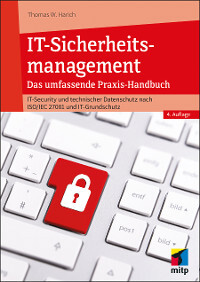
IT-Sicherheitsmanagement
Mit einem durchdachten IT-Sicherheitskonzept zu mehr InformationssicherheitIT-Security-Management praxisnah erläutert: Sicherheitsrichtlinien, IT Compliance, Business Continuity Management, Risikomanagement und Security AuditAufbau eines Information Security Management Systems (ISMS) nach ISO 27001 und BSI-Grundschutz Umfassendes Praxiswissen für IT-Security-Manager Daten werden heutzutage in Public Clouds verlagert und dort verarbeitet, auf Mobiltelefonen gespeichert, über Chat-Apps geteilt oder im Rahmen von Industrie 4.0 in einer Größenordnung erfasst, die bislang kaum denkbar war. IT-Security-Manager müssen die entsprechenden Maßnahmen nicht nur an diese Veränderungen anpassen, sondern auch an die EU-Datenschutz-Grundverordnung, das IT-Sicherheitsgesetz, die Anforderungen von Kunden oder das China Cybersecurity Law. Dieser Praxisleitfaden wird Ihnen als IT-Security-Manager helfen, sich in der riesigen Menge an Einzelthemen und Aufgaben zurechtzufinden. Typische Fragestellungen und Antworten für den Berufsalltag Jedes Kapitel beschreibt ausführlich jeweils einen Bereich der IT-Security. Die notwendigen theoretischen Grundlagen wechseln sich dabei ab mit Tipps aus der Praxis für die Praxis, mit für den Berufsalltag typischen Fragestellungen, vielen konkreten Beispielen und hilfreichen Checklisten. Alle Teilgebiete werden abschließend in einem Kapitel zusammengeführt, das die Einführung und Weiterentwicklung eines IT-Sicherheitsmanagements auf Basis der ISO-27000-Normen-Familie unter Beachtung der datenschutzrechtlichen Bestimmungen der EU-DSGVO behandelt. Praxisleitfaden und Nachschlagewerk So erhalten Sie sowohl einen kompetenten Praxisleitfaden – auch für den Berufseinstieg – als auch ein umfassendes Nachschlagewerk für Ihre tägliche Arbeit. Aus dem Inhalt: Umfang und Aufgabe des IT-Security-ManagementsOrganisation der IT-SecurityIT-ComplianceKundenaudits am Beispiel TISAXVerzahnung von Informationssicherheit und DatenschutzOrganisation von RichtlinienBetrieb der IT-SecurityIT Business Continuity ManagementIT-NotfallmanagementVerfügbarkeitsmanagementTechnische IT-SecurityIT-RisikomanagementSicherheitsmonitoringIT-Security-AuditManagement von Sicherheitsereignissen und IT-ForensikKennzahlenPraxis: Aufbau eines ISMSAwareness und Schulung Thomas W. Haricharbeitet als Leiter der Information Security in einem großen deutschen Industriekonzern. Nebenberuflich ist er als Dozent und IT-Berater tätig. Seine Schwerpunkte liegen in der Erstellung von IT-Sicherheitskonzepten und deren praktischer Umsetzung in einem international geprägten IT-Umfeld.
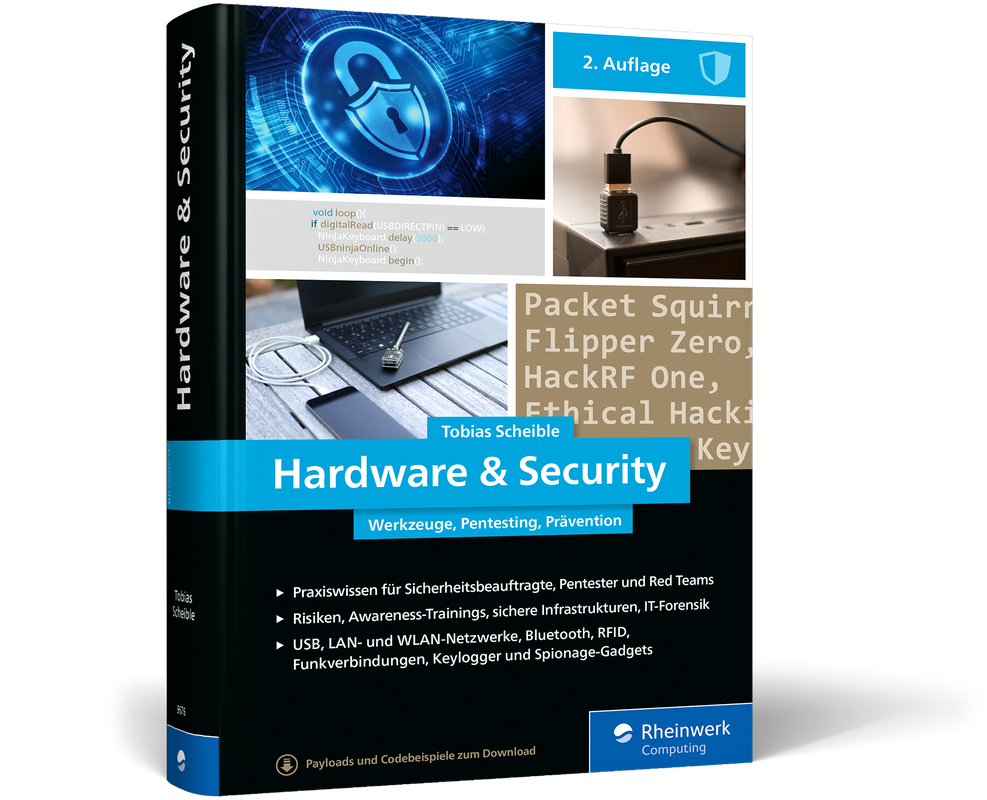
Hardware & Security (2. Auflg.)
Manipulierte USB-Sticks, unscheinbare Keylogger, falsche Access-Points, geklonte RFID-Karten – die Gefahren für Ihre IT-Infrastruktur beschränken sich nicht auf Attacken von Viren und Trojanern. Tobias Scheible zeigt Ihnen in diesem Handbuch, wie Sie Ihre Rechnersysteme und Netzwerke umfassend vor Hardware-Angriffen schützen. Sorgen Sie proaktiv für Sicherheit, indem Sie Ihre Mitarbeiterinnen und Mitarbeiter für die Bedrohungen sensibilisieren und die Werkzeuge der Angreifer detailliert kennenlernen. Denn nur mit einem ganzheitlichen Blick auf die Bedrohungslage gelingt es Ihnen, Industriespionage, Ransomware-Angriffe und andere Attacken richtig zu bekämpfen.Aktuell zu: Rubber Ducky Mark II, MalDuino 3, ESP32-S3 Pendrive, O.MG Plug, O.MG Cabel, O.MG Adapter, O.MG UnBlocker, USBKill Professionell, HackrRF One Porta Pack, XIXEI X7, Packet Squirrel Mark II, LilyGo T-Dongle S3, Flipper Zero und Lilygo T-Embed.Aus dem Inhalt Planung, Durchführung und Auswertung von Penetrationstests: Red Teaming in der Praxis Security Awareness schulen Spionage-Gadgets: GPS-Tracker, Kameras, Aufnahmegeräte, Key- und Screenlogger Angriffe über die USB-Schnittstelle: Rubber Ducky, Digispark, USBKill und mehr WLAN-Verbindungen manipulieren: WiFi Deauther, WiFi Pineapple Kabelgebundene Netzwerke ausspionieren: Throwing Star LAN Tap, Packet Squirrel Funkverbindungen stören: Crazyradio PA, HackRF One, Störsender und mehr RFID-Tags duplizieren und manipulieren: Proxmark, iCopy-X, NFC-Kill Bluetooth tracken und abhören: Bluefruit LE Sniffer, Ubertooth One und BBC micro:Boards Universelle Hacking-Hardware: LilyGo, Raspberry Pi Zero, Flipper Zero und mehr Gefundene Hardware analysieren, Datenspeicher auslesen und Netzwerkverkehr überwachen Angriffsszenarien und LaborumgebungLeseprobe (PDF)

A Practical Guide to Generative AI Using Amazon Bedrock
This comprehensive guide gives you the knowledge and skills you need to excel in Generative AI. From understanding the fundamentals to mastering techniques, this book offers a step-by-step approach to leverage Amazon Bedrock to build, deploy, and secure Generative AI applications.The book presents structured chapters and practical examples to delve into key concepts such as prompt engineering, retrieval-augmented generation, and model evaluation. You will gain profound insights into the Amazon Bedrock platform. The book covers setup, life cycle management, and integration with Amazon SageMaker. The book emphasizes real-world applications, and provides use cases and best practices across industries on topics such as text summarization, image generation, and conversational AI bots. The book tackles vital topics including data privacy, security, responsible AI practices, and guidance on navigating governance and monitoring challenges while ensuring adherence to ethical standards and regulations.The book provides the tools and knowledge needed to excel in the rapidly evolving field of Generative AI. Whether you're a data scientist, AI engineer, or business professional, this book will empower you to harness the full potential of Generative AI and drive innovation in your organization.WHAT YOU WILL LEARN* Understand the fundamentals of Generative AI and Amazon Bedrock* Build Responsible Generative AI applications leveraging Amazon Bedrock* Know techniques and best practices* See real-world applications* Integrate and manage platforms* Handle securty and governance issues* Evaluate and optimze models* Gain future-ready insights* Understand the project life cycle when building Generative AI ApplicationsWHO THIS BOOK IS FORData scientistys, AI/ML engineers and architects, software developers plus AI enthusiasts and studenta and educators, and leaders who want to evangelize within organizatiosChapter 1: Introduction to Generative AI.- Chapter 2: Generative AI with AWS.- Chapter 3: Introduction to Amazon Bedrock.- Chapter 4: Overview of Prompt Engineering and In-Context Learning.- Chapter 5: Overview of Use Cases in this Book.- Chapter 6: Overview of Retrieval-Augmented Generation (RAG).- Chapter 7: Overview of Amazon Bedrock Knowledge Base.- Chapter 8: Overview of Safeguard's Practice.- Chapter 9: Overview of Amazon Bedrock Agents.- Chapter 10: Overview of Model Customization.- Chapter 11: Overview of Model Evaluation.- Chapter 12: Overview of Best Model Selection and Best Practices.- Chapter 13: Overview of Security and Privacy of Amazon Bedrock.- Chapter 14: Overview of GenAIOps.- Chapter 15: Overview of Prompt Management.- Chapter 16: Overview of Prompt Flow. – Chapter 17: Overview of Provisional Throughput. – Chapter 18: Overview of Image Capabilities. – Chapter 19: Overview of Multimodal Capabilities. – Chapter 20: Conclusion.

Migration nach SAP S/4HANA
SAP S/4HANA in der Cloud oder On-Premise? Systemkonvertierung oder Neuimplementierung? Diese 5. Auflage bietet für jedes Szenario die richtige Anleitung. Sie unterstützt Ihr Migrationsprojekt, erklärt Tools wie das SAP S/4HANA Migration Cockpit, KI-Funktionen, RISE with SAP System Transition Workbench und SAP Central Business Configuration. Aus dem Inhalt: Betriebsmodelle und MigrationsszenarienSystemkonvertierung, Neuimplementierung, TransformationRISE with SAPSAP BTPVorbereitung des Umstiegs auf SAP S/4HANASAP ActivateMigration Cockpit und Migration Object ModelerSAP Central Business ConfigurationMaintenance PlannerSoftware Update ManagerDowntime-OptimierungKünstliche Intelligenz Vorwort ... 19 Einleitung ... 21 TEIL I SAP S/4HANA -- die Grundlagen ... 29 1. SAP S/4HANA -- Anforderungen und Leistungen ... 31 1.1 ... Herausforderungen an die Unternehmenswelt der Zukunft ... 32 1.2 ... Das Versprechen von SAP S/4HANA ... 42 2. Was unterscheidet SAP S/4HANA von der klassischen SAP Business Suite? ... 49 2.1 ... Die Schwerpunkte und Zielsetzungen der Lösungen im Vergleich: SAP S/4HANA und der digitale Kern ... 49 2.2 ... Vereinfachungen ... 52 2.3 ... Die Clean-Core-Strategie ... 53 2.4 ... Das Datenmodell und die Datenbank SAP HANA ... 55 2.5 ... Die SAP-Fiori-Benutzeroberflächen ... 63 2.6 ... Schnittstellen ... 70 2.7 ... SAP S/4HANA Embedded Analytics ... 71 3. Cloud, on-premise und hybride Szenarien ... 75 3.1 ... Betriebsmodelle im Überblick ... 76 3.2 ... SAP-S/4HANA-Produktfamilie ... 81 3.3 ... Betriebsmodelle im Vergleich ... 88 3.4 ... RISE with SAP ... 94 3.5 ... SAP Business Technology Platform ... 96 3.6 ... Erweiterbarkeit von SAP S/4HANA ... 116 TEIL II Vorbereitung auf den Umstieg auf SAP S/4HANA ... 129 4. Welche Umstiegsoptionen gibt es? ... 131 4.1 ... Grundsätzliche Vorüberlegungen ... 131 4.2 ... Die drei Szenarien für den Umstieg ... 137 5. Auswahl Ihres Übergangsszenarios ... 159 5.1 ... Die Verfahren und die Auswahlhilfen im Überblick ... 159 5.2 ... Ihre eigene Roadmap erstellen ... 165 5.3 ... Die wichtigsten Kriterien für Ihre Entscheidung ... 182 6. Trial-Systeme und Content zum Ausprobieren ... 187 6.1 ... Das SAP-S/4HANA-Trial-System ... 188 6.2 ... SAP S/4HANA Fully-Activated Appliance ... 190 6.3 ... Lösungsumfang der SAP S/4HANA Fully-Activated Appliance ... 194 6.4 ... SAP Discovery Center und das SAP AppHaus ... 197 TEIL III Migration durch Systemkonvertierung nach dem Brownfield-Ansatz ... 215 7. Vorbereitung der Systemkonvertierung ... 217 7.1 ... Das Systemkonvertierungsprojekt im Überblick ... 218 7.2 ... Systemvoraussetzungen und -prüfungen ... 226 8. Ausführung der Systemkonvertierung ... 267 8.1 ... Den Software Update Manager verwenden ... 267 8.2 ... Aktivitäten nach dem SUM ... 273 8.3 ... Abschätzung und Reduzierung der Downtime ... 287 8.4 ... Konvertierungsziel Hyperscaler ... 295 8.5 ... Erkenntnisse aus bisherigen Kundenprojekten ... 301 TEIL IV Neuimplementierung und Datenmigration nach dem Greenfield-Ansatz ... 305 9. SAP Activate ... 307 9.1 ... Inhalte von SAP Activate ... 308 9.2 ... Phasen von SAP Activate ... 320 9.3 ... SAP-Activate-Roadmaps für die SAP-S/4HANA-Produktfamilie ... 321 10. Installation von SAP S/4HANA in der On-Premise-Version oder in der Private Cloud ... 325 10.1 ... Voraussetzungen und Überblick ... 325 10.2 ... Installation ... 327 11. Einrichtung und Konfiguration von SAP S/4HANA Cloud ... 337 11.1 ... Zielsetzung und Überblick ... 337 11.2 ... Systemlandschaft ... 339 11.3 ... Festlegung des Lösungsumfangs ... 345 11.4 ... Konfigurationsmanagement ... 356 11.5 ... SAP Central Business Configuration mit SAP Activate und SAP Cloud ALM ... 362 12. Planen der Datenmigration ... 365 12.1 ... Datenmigration mit SAP Activate ... 366 12.2 ... Phasen der Datenmigration ... 375 12.3 ... Projektplanung mithilfe von SEAMAP ... 398 12.4 ... Werkzeuge zur Datenmigrationsplanung ... 409 13. SAP S/4HANA Migration Cockpit ... 419 13.1 ... Datenmigration mit dem SAP S/4HANA Migration Cockpit ... 420 13.2 ... Übertragungsoption 1: Daten mithilfe von Staging-Tabellen migrieren ... 426 13.3 ... Übertragungsoption 2: Daten direkt aus dem SAP-System migrieren ... 536 13.4 ... Update und Upgrades in SAP S/4HANA ... 568 13.5 ... Performance-Aspekte ... 571 14. Unterstützende Anwendungen ... 575 14.1 ... Setzen des Migrationsstichtags für Finanzobjekte ... 576 14.2 ... Status der Datenmigration prüfen ... 585 14.3 ... Migrationsobjekte erkunden ... 603 14.4 ... Selektionsprozess analysieren ... 610 15. SAP S/4HANA Migration Object Modeler ... 619 15.1 ... Genereller Aufbau des SAP S/4HANA Migration Object Modelers ... 621 15.2 ... Modellierung für die Datenmigration mit Staging-Tabellen in SAP S/4HANA ... 625 15.3 ... Modellierung für die Datenmigration mit Staging-Tabellen in SAP S/4HANA Cloud ... 671 15.4 ... Modellierung für den direkten Transfer von Daten aus SAP-Systemen in SAP S/4HANA ... 674 15.5 ... Modellierung für die Datenmigration mit dem direkten Transfer aus SAP-Systemen in SAP S/4HANA Cloud ... 695 15.6 ... Fazit und weitere nützliche Informationsquellen ... 703 16. Rapid Data Migration ... 707 16.1 ... Werkzeuge ... 707 16.2 ... Architektur ... 709 16.3 ... Migrations-Content ... 713 16.4 ... Anbindung der Quellsysteme ... 722 16.5 ... Profiling der Daten ... 724 16.6 ... Feld-Mapping ... 728 16.7 ... Werte-Mapping und Umschlüsselungstabellen ... 735 16.8 ... Validierung der Daten ... 742 16.9 ... Daten importieren ... 746 16.10 ... Monitoring ... 748 16.11 ... IDoc-Performance-Optimierung ... 751 17. Vergleich der Datenmigration und Modellierungswerkzeuge ... 755 17.1 ... Vergleich der Datenmigrationswerkzeuge ... 756 17.2 ... Vergleich der Modellierungswerkzeuge ... 764 17.3 ... Fazit ... 768 17.4 ... Schlusswort und Ausblick ... 770 Das Autorenteam ... 771 Index ... 775

Microsoft 365 absichern
»Das Schöne an der Cloud ist, dass man sich nicht mehr selbst um die Sicherheit der Daten kümmern muss.« Ein gefährlicher Irrtum! Zwar stellt Microsoft umfangreiche Sicherheitswerkzeuge zur Verfügung, die Verantwortung für die Absicherung Ihres Tenants liegt jedoch bei Ihnen. In diesem kompakten Guide gibt Ihnen Aaron Siller einen umfassenden Überblick über die Sicherheitstools und -optionen von Microsoft 365 und zeigt Ihnen, wie Sie Zugriffsrechte richtig setzen und Konten professionell absichern. So bleiben Ihre Daten auch in Zukunft geschützt. Aus dem Inhalt: Zero Trust und die Basis Ihrer SicherheitDas Admincenter von Microsoft 365Microsoft Defender XDRZugriffssteuerung und Identity-ManagementEntra ID: Konten und Rechte verwaltenSharePoint und OneDrive: FreigabeverwaltungSPF, DMARC und DKIM für Exchange OnlineTeams: Richtlinien und VorgabenIntune: BYOD und Device ManagementBest Practices und konkrete Vorlagen für mehr Sicherheit
IT-Security - Der praktische Leitfaden
Umsetzbare Sicherheitsstrategien – auch für Unternehmen und Organisationen mit kleinen Budgets - Das komplexe Thema »Informationssicherheit« zugänglich und praxisnah aufbereitet. - Umfassend und kompakt: praktische Anleitungen zum Aufbau eines Informationssicherheitsmanagementsystems (ISMS) - komprimierte Alternative zum IT-Grundschutz Obwohl die Zahl der spektakulären Hacks, Datenleaks und Ransomware-Angriffe zugenommen hat, haben viele Unternehmen immer noch kein ausreichendes Budget für Informationssicherheit. Dieser pragmatische Leitfaden unterstützt Sie dabei, effektive Sicherheitsstrategien zu implementieren – auch wenn Ihre Ressourcen finanziell und personell beschränkt sind. Kompakt beschreibt dieses Handbuch Schritte, Werkzeuge, Prozesse und Ideen, mit denen Sie Ihre Sicherheit ohne hohe Kosten verbessern. Jedes Kapitel enthält Schritt-für-Schritt-Anleitungen zu typischen Security-Themen wie Sicherheitsvorfällen, Netzwerkinfrastruktur, Schwachstellenanalyse, Penetrationstests, Passwortmanagement und mehr. Netzwerk techniker, Systemadministratoren und Sicherheitsexpertinnen lernen, wie sie Frameworks, Tools und Techniken nutzen können, um ein Cybersicherheitsprogramm aufzubauen und zu verbessern. Dieses Buch unterstützt Sie dabei: - Incident Response, Disaster Recovery und physische Sicherheit zu planen und umzusetzen - grundlegende Konzepte für Penetrationstests durch Purple Teaming zu verstehen und anzuwenden - Schwachstellenmanagement mit automatisierten Prozessen und Tools durchzuführen - IDS, IPS, SOC, Logging und Monitoring einzusetzen - Microsoft- und Unix-Systeme, Netzwerkinfrastruktur und Passwortverwaltung besser zu sichern - Ihr Netzwerk mit Segmentierungspraktiken in sicherheitsrelevante Zonen zu unterteilen - Schwachstellen durch sichere Code-Entwicklung zu reduzieren

IT-Security - Der praktische Leitfaden
Umsetzbare Sicherheitsstrategien – auch für Unternehmen und Organisationen mit kleinen BudgetsDas komplexe Thema »Informationssicherheit« wird in diesem praxisnahen Leitfaden verständlich und kompakt aufbereitet. Das Buch bietet eine umfassende, aber schlanke Alternative zum IT-Grundschutz und liefert praktische Anleitungen für den Aufbau eines Informationssicherheitsmanagementsystems (ISMS). Es richtet sich an Netzwerktechniker, Systemadministratoren und Sicherheitsexpertinnen, die trotz begrenzter Ressourcen effektive Sicherheitsstrategien umsetzen möchten. Die kompakten Kapitel behandeln alle relevanten Bereiche – von Logging, Monitoring und Intrusion Detection über Schwachstellenmanagement und Penetrationstests bis hin zu Disaster Recovery, physischer Sicherheit und Mitarbeitendenschulungen – und liefern direkt umsetzbare Lösungen für den Arbeitsalltag.Über die Autoren:Amanda Berlin ist Sicherheitsexpertin und Referentin. Sie ist Principal Detection und Product Manager bei Blumira und leitet ein Forschungs- und Entwicklungsteam, das daran arbeitet, Sicherheitsprobleme schneller zu identifizieren und die Sicherheitslandschaft insgesamt zu verbessern.Lee Brotherston ist gründender Security Engineer bei OpsHelm. Lee hat fast zwei Jahrzehnte im Bereich der Informationssicherheit gearbeitet und war als interner Sicherheitsbeauftragter in vielen Branchen tätig - in verschiedenen Funktionen vom Engineer bis zum IT-Sicherheitsmanager.William F. Reyor III ist Sicherheitsexperte und Director of Security bei Modus Create. Er bekleidete Schlüsselpositionen bei The Walt Disney Company und Raytheon Technologies und war Chief Information Officer an der Fairfield University. Er ist einer der Hauptorganisatoren der Security BSides Connecticut.Richtet sich an: Netzwerktechniker*innenSystemadministrator*innenSicherheitsexpert*innen

Preventing Bluetooth and Wireless Attacks in IoMT Healthcare Systems
A TIMELY TECHNICAL GUIDE TO SECURING NETWORK-CONNECTED MEDICAL DEVICESIn Preventing Bluetooth and Wireless Attacks in IoMT Healthcare Systems, Principal Security Architect for Connection, John Chirillo, delivers a robust and up-to-date discussion of securing network-connected medical devices. The author walks you through available attack vectors, detection and prevention strategies, probable future trends, emerging threats, and legal, regulatory, and ethical considerations that will frequently arise for practitioners working in the area. Following an introduction to the field of Internet of Medical Things devices and their recent evolution, the book provides a detailed and technical series of discussions—including common real-world scenarios, examples, and case studies—on how to prevent both common and unusual attacks against these devices. INSIDE THE BOOK:* Techniques for using recently created tools, including new encryption methods and artificial intelligence, to safeguard healthcare technology* Explorations of how the rise of quantum computing, 5G, and other new or emerging technology might impact medical device security* Examinations of sophisticated techniques used by bad actors to exploit vulnerabilities on Bluetooth and other wireless networksPerfect for cybersecurity professionals, IT specialists in healthcare environments, and IT, cybersecurity, or medical researchers with an interest in protecting sensitive personal data and critical medical infrastructure, Preventing Bluetooth and Wireless Attacks in IoMT Healthcare Systems is a timely and comprehensive guide to securing medical devices. JOHN CHIRILLO is an accomplished, published programmer and author with decades of hands-on experience. He’s a leading expert on medical device security who speaks regularly on regulatory compliance, risk assessment and mitigation, and incident management. Preface xxviiForeword xxixPART I FOUNDATION 1CHAPTER 1 INTRODUCTION TO IOMT IN HEALTHCARE 3What Is IoMT in Healthcare? 4Impact of IoMT on Healthcare 5How IoMT Works in Healthcare and Its Applications 16Challenges and Considerations in IoMT Adoption 17Best Practices for IoMT Security 18Future Trends in IoMT 20Key Takeaways of IoMT in Healthcare 22CHAPTER 2 THE EVOLVING LANDSCAPE OF WIRELESS TECHNOLOGIES IN MEDICAL DEVICES 23Overview of Wireless Technologies in Medical Devices 24Benefits of Wireless Technologies in Medical Devices 29Introduction to Risks in the Applications ofWireless Integration Challenges and Considerations 38Emerging Wireless Trends and Future Directions 40Regulatory Landscape for Wireless Medical Devices 41Best Practices for Wireless Technology Implementation 43Key Takeaways of Wireless Technologies in Healthcare 44CHAPTER 3 INTRODUCTION TO BLUETOOTH AND WI-FI IN HEALTHCARE 46Bluetooth Communication in Healthcare 47Wi-Fi Communication in Healthcare 52Overview of Bluetooth and Wi-Fi Security Risks 58Key Takeaways of Bluetooth and Wi-Fi 64PART II ATTACK VECTORS 65CHAPTER 4 BLUETOOTH VULNERABILITIES, TOOLS, AND MITIGATION PLANNING 67Introduction to Bluetooth Security 68Common Bluetooth Vulnerabilities 71Bluetooth Hacking Tools 82Mitigating Bluetooth Vulnerabilities 101Key Takeaways of Bluetooth Vulnerabilities and Exploits 103CHAPTER 5 WI-FI AND OTHER WIRELESS PROTOCOL VULNERABILITIES 104INTRODUCTION TO WI-FI SECURITY 105Building a Resilient Network Architecture with Segmentation 107Strong Authentication and Access Control 108Wi-Fi 6/6E Security Solutions 110Common Wi-Fi Vulnerabilities with Examples and Case Studies 111Wi-Fi Hacking Tools 120Bettercap 122coWPAtty 125Fern Wi-Fi Cracker 128Hashcat 131Wifite 134Kismet 138Reaver 141Storm 145WiFi Pineapple 146WiFi-Pumpkin 149Wifiphisher 151Wireshark 153Modern Wireless Operational Guide for Healthcare Compliance 156Key Takeaways of Wi-Fi Vulnerabilities and Exploits 159CHAPTER 6 MAN-IN-THE-MIDDLE ATTACKS ON MEDICAL DEVICES 161Understanding Medical Device Man-in-the-Middle Attacks 162Exploits and Other Potential Impacts of MITM Attacks on Medical Devices 167Challenges in Securing Medical Devices 168Mitigation Strategies for Healthcare Organizations 169Implement Robust Device Authentication 171Deploy Network Segmentation and Isolation 174Ensure Regular Updates and Patching 176Deploy Advanced Monitoring and Intrusion Detection 179Conduct Training and Awareness Programs 182Collaborate with Vendors to Enhance Device Security 186Key Benefits of a Comprehensive Mitigation Strategy 190Key Takeaways of Man-in-the-Middle Attacks on Medical Devices 194CHAPTER 7 REPLAY AND SPOOFING ATTACKS IN IOMT 196Understanding Replay Attacks in IoMT 197How Replay Attacks Work in IoMT Systems 197Implications of Replay Attacks in Healthcare 198Use Case of a Replay Attack on an Infusion Pump 199Other Examples of Replay Attacks in IoMT 200Strategies for Mitigation of Replay Attacks 200What Is a Spoofing Attack in IoMT? 202Mitigation Strategies for Spoofing Attacks in IoMT 205Key Takeaways of Replay and Spoofing Attacks in IoMT 206CHAPTER 8 DENIAL OF SERVICE IN WIRELESS MEDICAL NETWORKS 208Understanding DoS Attacks 208Common Types of DoS Attacks, Targets, and Device Impact 209Impact of DoS Attacks on Healthcare Operations 213Common Vulnerabilities That Enable DoS Attacks in Wireless Medical Networks 214Mitigation Strategies for Denial of Service Attacks 217Key Takeaways from DoS in Wireless Medical Networks 224PART III CASE STUDIES AND REAL-WORLD SCENARIOS 227CHAPTER 9 PACEMAKER HACKING 229Understanding Pacemaker Technology and Its Risks and Limitations 230How Does the Heart Normally Function? 230What Is a Pacemaker? 230Understanding Vulnerabilities in Pacemakers in Today’s Connected World 233Real-World Case Studies and Impact 235Strategies and Technologies to Mitigate Pacemaker Cybersecurity Risks 242More on Consequences of Pacemaker Hacking 244Key Takeaways from Pacemaker Hacking 245CHAPTER 10 INSULIN PUMP VULNERABILITIES AND EXPLOITS 247Understanding Insulin Pumps and Their Vulnerabilities 249Implications and Real-World Scenarios of Insulin Pump Exploits 258Education and Training for Patients and Healthcare Providers 261Key Takeaways from Insulin Pump Vulnerabilities and Exploits 261CHAPTER 11 ATTACK VECTOR TRENDS AND HOSPITAL NETWORK BREACHES WITH IOMT DEVICES 263Understanding the IoMT Risk Landscape 264Attack Vector Trends and Landscape 268Malware Analysis for Digital Forensics Investigations 272Key Takeaways from Hospital Network Breaches with IoMT Devices 280CHAPTER 12 WEARABLE MEDICAL DEVICE SECURITY CHALLENGES 282The Rise of Wearable Medical Devices 282Security Challenges of Wearable Medical Devices 283New Trends and Threats in Wearable Device Security 289Proactive Measures for Mitigating Wearable Device Threats 290How AI Can Help 291Key Takeaways from Security Challenges of Wearable Medical Devices 294PART IV DETECTION AND PREVENTION 295CHAPTER 13 INTRUSION DETECTION AND PREVENTION FOR IOMT NETWORKS 297Introduction to Intrusion Detection and PreventionSystems for IoMT 297Understanding IoMT Ecosystems 299What Is Intrusion Detection and Prevention in IoMT Environments? 299Case Study: Implementing IDPS in a Healthcare Environment 302IDPS Solutions 304Best Practices for IoMT IDPS Deployment 331Modern Innovations in IoMT IDS 333Emerging Trends in IoMT IDS 336Key Takeaways from IDPS for IoMT Networks 336CHAPTER 14 MACHINE LEARNING APPROACHES TO WIRELESS ATTACK DETECTION 338Introduction to Machine Learning for WirelessMachine Learning Feature Engineering for Wireless Attack Detection 342Types of Machine Learning Techniques 344Machine Learning Applications in Healthcare and IoMT 350Challenges in Applying ML to Wireless Security in IoMT 352Future Directions of Machine Learning for Attack Detection in Healthcare 356Machine Learning Case Studies in Healthcare 362Key Takeaways from Machine Learning Approaches to Wireless Attack Detection 364CHAPTER 15 SECURE COMMUNICATION PROTOCOLS FOR MEDICAL DEVICES 366Importance of Secure Communication in Medical Devices 366Key Security Requirements for Medical Device Communication 368Secure Communication Protocols for Medical Devices 371Encryption Algorithms and Key Management 373Secure Device Pairing and Onboarding 377Out-of-Band Authentication Methods 377Regulatory Compliance and Standards 379Challenges in Implementing Secure Communication Protocols 381Best Practices for Secure Medical Device Communication 383Emerging Technologies and Future Trends 384Secure Communication Strategies 386Ethical Considerations 387Key Takeaways from Secure Communication Protocols for Medical Devices 389CHAPTER 16 BEST PRACTICES FOR IOMT DEVICE SECURITY 391Endpoint Security Best Practices 392Network Security Best Practices 393Perimeter Security Best Practices 394Cloud Security Best Practices 395Network Segmentation 396Strong Authentication and Access Controls 397Regular Updates and Patching 401AI-Powered Monitoring and Analytics 403Zero Trust Security Model 405Encryption and Data Protection 407Asset Inventory and Management 409Vendor Management and Third-Party Risk Assessment 411Compliance with Regulatory Standards 414Continuous Monitoring and Incident Response 417Employee Training and Awareness 420Secure Device Onboarding and Decommissioning 422Physical Security Measures 425Backup and Recovery 428Secure Communication Protocols 430Data Minimization and Retention Policies 433Cybersecurity Insurance 435Regular Security Audits 436Key Takeaways of Best Practices for IoMT Device Security 438PART V FUTURE TRENDS AND EMERGING THREATS 441CHAPTER 17 5G AND BEYOND AND IMPLICATIONS FOR IOMT SECURITY 443Introduction to 5G and Beyond Technologies 443Impact of 5G on IoMT 445Security Implications for IoMT 447Regulatory Considerations 450Future Research Directions 455Industry Collaboration and Knowledge Sharing 456Key Takeaways of 5G and Beyond and Implications for IoMT Security 458CHAPTER 18 QUANTUM COMPUTING IN MEDICAL DEVICE SECURITY 459Fundamentals of Quantum Computing 459Potential Applications in Medical Device Security 461Challenges Posed by Quantum Computing 462Quantum Attack on IoMT Firmware 463Quantum-Resistant Cryptography for Medical Devices 466Quantum Sensing and Metrology in Medical Devices 467Quantum-Safe Network Protocols for Medical Devices 468Regulatory and Standardization Efforts 469Ethical and Privacy Considerations 470Future Research Directions 472Preparing the Healthcare Industry for the Quantum Era 473Key Takeaways from Quantum Computing in Medical Device Security 475CHAPTER 19 AI-DRIVEN ATTACKS AND DEFENSES IN HEALTHCARE 476Types of AI-Driven Attacks in Healthcare 476Impact of AI-Driven Attacks on Healthcare 478AI-Driven Defenses in Healthcare 480Challenges in Implementing AI-Driven Defenses 484Future Trends in AI-Driven Healthcare Cybersecurity 486Best Practices for Healthcare Organizations 488Key Takeaways from AI-Driven Attacks and Defenses in Healthcare 489PART VI LEGAL AND ETHICAL CONSIDERATIONS 491CHAPTER 20 REGULATORY FRAMEWORKS FOR IOMT SECURITY 493Key Regulatory Bodies and Frameworks 493Legal Considerations 495Ethical Considerations 498Challenges in Regulatory Framework Development 500Best Practices for Regulatory Compliance 502Future Trends in IoMT Security Regulation 504Examples of Benefits from Regulation Implementation 505Recommendations for Stakeholders 507Key Takeaways from Regulatory Frameworks for IoMT Security 509CHAPTER 21 GUIDELINES FOR ETHICAL HACKING IN HEALTHCARE 510Importance of Ethical Hacking in Healthcare 510Scope of Ethical Hacking in Healthcare 512Legal and Regulatory Considerations 513Ethical Boundaries and Guidelines 515Best Practices for Ethical Hacking in Healthcare 516Challenges in Healthcare Ethical Hacking 519Emerging Trends and Future Considerations 520Training and Certification for Healthcare Ethical Hackers 521Case Studies 523Key Takeaways from Ethical Hacking in Healthcare 524Conclusion 525Index 527

Edge Computing
UNDERSTAND THE COMPUTING TECHNOLOGY THAT WILL POWER A CONNECTED FUTUREThe explosive growth of the Internet of Things (IoT) in recent years has revolutionized virtually every area of technology. It has also driven a drastically increased demand for computing power, as traditional cloud computing proved insufficient in terms of bandwidth, latency, and privacy. Edge computing, in which data is processed at the edge of the network, closer to where it’s generated, has emerged as an alternative which meets the new data needs of an increasingly connected world. Edge Computing offers a thorough but accessible overview of this cutting-edge technology. Beginning with the fundamentals of edge computing, including its history, key characteristics, and use cases, it describes the architecture and infrastructure of edge computing and the hardware that enables it. The book also explores edge intelligence, where artificial intelligence is integrated into edge computing to enable smaller, faster, and more autonomous decision-making. The result is an essential tool for any researcher looking to understand this increasingly ubiquitous method for processing data. Edge Computing readers will also find:* Real-world applications and case studies drawn from industries including healthcare and urban development* Detailed discussion of topics including latency, security, privacy, and scalability* A concluding summary of key findings and a look forward at an evolving computing landscapeEdge Computing is ideal for students, professionals, and enthusiasts looking to understand one of technology’s most exciting new paradigms. LANYU XU, PHD, is Assistant Professor in the Department of Computer Science and Engineering, Oakland University, Michigan, where she leads the Edge Intelligence System Laboratory. Her research intersects edge computing and deep learning, emphasizing the development of efficient edge intelligence systems. Her work explores optimization frameworks, intelligent systems, and AI applications to address challenges in efficiency and real-world applicability of edge systems across various domains. WEISONG SHI, PHD, is an Alumni Distinguished Professor and Chair of the Department of Computer and Information Sciences at the University of Delaware, where he leads the Connected and Autonomous Research Laboratory. He is an internationally renowned expert in edge computing, autonomous driving, and connected health. His pioneer paper, “Edge Computing: Vision and Challenges,” has been cited more than 8000 times in eight years. He is an IEEE Fellow.

Mobile Systeme
Konzeption, Entwicklung und Betrieb mobiler Systeme. In Erstauflage aus dem Juni 2025.- Erklärt, wie mobile Systeme von Anfang bis Ende entwickelt und genutzt werden.- Vermittelt fundiert die Grundlagen und bietet praktische Einblicke für Studium und Beruf.- Zeigt Strategien und bewährte Methoden, um erfolgreiche und nachhaltige mobile Systeme zu entwickeln.- Stellt neue Entwicklungen, Trends und Technologien vor, die die mobile Welt in Zukunft verändern werden.„Mobile Systeme – Konzeption, Entwicklung und Betrieb“ ist ein umfassendes Grundlagenwerk, das fundiertes Wissen über mobile Technologien, deren Entwicklung und praktischen Einsatz vermittelt. Es erklärt die technischen Grundlagen ebenso wie fortgeschrittene Anwendungsbereiche und deckt den gesamten Lebenszyklus mobiler Systeme ab. Dabei geht es um Themen wie User Experience Design, Entwicklungsstrategien, Application Management, Green IT, XR-Technologien, Mobile Security und Zukunftsthemen wie das Mobile Metaverse. Das Ziel ist es, Studierende der Informatik, Wirtschaftsinformatik und Medieninformatik sowie IT-Manager:innen mit den Besonderheiten, Chancen und Herausforderungen mobiler Ökosysteme vertraut zu machen. Sie sollen lernen, wie man mobile Technologien gezielt und nachhaltig einsetzt. Das Buch bereitet sie auf die Umsetzung innovativer mobiler Projekte in verschiedenen Branchen vor.AUS DEM INHALT- Mobile Systeme: Komponenten und Basistechnologien- Mobile Geräte: Klassen, Technik und Infrastruktur- Mobile Entwicklungsframeworks: Nativ, Cross-Plattform, Hybrid- Mobile User Experience (UX)- Mobile Application Life Cycle Management (ALM), Mobile Application Management (MAM)- Mobile Security: Risiken und Prävention- Mobile KI- Mobile Business: Geschäftsmodelle und globaler Markt- Mobile XR und Mobile Metaverse- Green IT und Green Coding- Technikfolgenabschätzung und soziokulturelle Implikationen

Abschlüsse in SAP S/4HANA
Nutzen Sie die Stellschrauben für präzise Abschlüsse in SAP S/4HANA! Finanzteams, Projektteams, SAP-Beratung und IT-Management erhalten in diesem Buch fundiertes Wissen für die zuverlässige Durchführung von Periodenabschlüssen. Das Autorenteam beantwortet sowohl technische als auch organisatorische Fragen und gibt anhand von Screenshots und Beispielen einen Einblick in die aktuellen SAP-Funktionen. Von der Anlagenbuchhaltung über die Hauptbuchhaltung bis hin zum Controlling erhalten Sie praxisorientierte Empfehlungen für effiziente Closing-Prozesse. Darüber hinaus erfahren Sie, wie Sie SAP Advanced Financial Closing zur Optimierung einsetzen können. Aus dem Inhalt: Organisationsobjekte und StammdatenAnlagenbuchhaltungDebitorenbuchhaltungKreditorenbuchhaltungHauptbuchhaltungGemeinkostenrechnungProduktkostenrechnungMargenanalyseOptimierung der Abschlussarbeiten Vorwort ... 15 Einleitung ... 19 TEIL I. Grundlagen ... 25 1. Grundlagen der Finanzabschlüsse ... 27 1.1 ... Einführung in SAP S/4HANA Finance ... 27 1.2 ... Einführung in SAP Fiori ... 31 1.3 ... Stichtagsbetrachtung ... 40 1.4 ... Parallele Rechnungslegung mit parallelen Ledgern ... 44 1.5 ... Zusammenfassung und Empfehlungen ... 46 2. Organisationsobjekte für den Abschluss ... 49 2.1 ... Mandant/System ... 50 2.2 ... Ledger ... 53 2.3 ... Rechnungslegungsvorschrift ... 56 2.4 ... Kostenrechnungskreis ... 58 2.5 ... Buchungskreis/Gesellschaft ... 62 2.6 ... Werk ... 67 2.7 ... Kontenplan ... 68 2.8 ... Zusammenfassung und Empfehlungen ... 72 3. Stammdaten für den Abschluss ... 75 3.1 ... Sachkonten/Konzernkontonummer ... 75 3.2 ... Globale Hierarchien verwalten ... 80 3.3 ... Profitcenter und Segment ... 86 3.4 ... Geschäftspartner und Partnergesellschaft ... 91 3.5 ... Zusammenfassung und Empfehlungen ... 95 TEIL II. Periodenabschluss im Finanzwesen ... 97 4. Abschluss in der Anlagenbuchhaltung ... 99 4.1 ... Customizing der Anlagenbuchhaltung ... 99 4.2 ... Abrechnung von Anlagen im Bau (AiB) ... 101 4.3 ... Anlageninventur ... 113 4.4 ... Abschreibungslauf ... 116 4.5 ... Abschreibungen neu rechnen ... 130 4.6 ... Berichtswesen ... 131 4.7 ... Jahreswechsel und Jahresabschluss ... 138 4.8 ... Zusammenfassung und Empfehlungen ... 143 5. Abschluss in der Debitorenbuchhaltung ... 145 5.1 ... Allgemein ... 145 5.2 ... Analyse der offenen Posten ... 147 5.3 ... Mahnen ... 149 5.4 ... Saldenbestätigung ... 156 5.5 ... Verzinsung ... 164 5.6 ... Dauerbuchungen ... 169 5.7 ... Zusammenfassung und Empfehlungen ... 171 6. Abschluss in der Kreditorenbuchhaltung ... 173 6.1 ... Analytische Funktionen ... 174 6.2 ... Saldenbestätigung ... 178 6.3 ... Verzinsung ... 178 6.4 ... Dauerbuchung ... 183 6.5 ... Zahllauf ... 183 6.6 ... Meldung gemäß Außenwirtschaftsverordnung Z5a ... 190 6.7 ... Zusammenfassung und Empfehlungen ... 194 7. Abschluss in der Hauptbuchhaltung ... 197 7.1 ... Periodensteuerung ... 198 7.2 ... Maschinelle Pflege des WE/RE-Verrechnungskontos ... 205 7.3 ... Erweiterte Bewertung in der Finanzbuchhaltung ... 207 7.4 ... Saldovortrag im Hauptbuch ... 224 7.5 ... Dauerbuchungen im Hauptbuch ... 231 7.6 ... SAP S/4HANA Accrual Management ... 235 7.7 ... Zusammenfassende Meldung ... 246 7.8 ... Meldung gemäß Außenwirtschaftsverordnung Z4 ... 249 7.9 ... Saldenbestätigungen im Hauptbuch ... 255 7.10 ... Saldenvalidierung (Balance Validation) ... 256 7.11 ... Zusammenfassung und Empfehlungen ... 262 8. Andere Abschlussschritte im Finanzwesen ... 265 8.1 ... SAP Document and Reporting Compliance ... 265 8.2 ... Finanzdatenkonsistenzanalyse ... 278 8.3 ... Spiegeldarstellung ... 283 8.4 ... Abstimmung der Materialwirtschaft mit dem Hauptbuch ... 294 8.5 ... Audit Journal ... 296 8.6 ... Zusammenfassung und Empfehlungen ... 298 9. Vorbereitungen für den Konzernabschluss ... 301 9.1 ... Meldedaten ... 301 9.2 ... Intercompany-Buchungen ... 310 9.3 ... Intercompany-Abstimmung (Intercompany Matching and Reconciliation) ... 316 9.4 ... Vorbereitungs-Ledger in SAP S/4HANA ... 324 9.5 ... Zusammenfassung und Empfehlungen ... 329 TEIL III. Periodenabschluss im Controlling ... 331 10. Abschluss in der Gemeinkostenrechnung ... 333 10.1 ... Kontierung von Objekten in der Gemeinkostenrechnung ... 334 10.2 ... Manuelle Istbuchungen ... 335 10.3 ... Universelle Verrechnung ... 351 10.4 ... Periodische Umbuchung ... 391 10.5 ... Abgrenzung ... 405 10.6 ... Periodenabschluss von Gemeinkostenaufträgen ... 415 10.7 ... Zusammenfassung und Empfehlungen ... 445 11. Abschluss in der Produktkostenrechnung ... 447 11.1 ... Einführung in die Kostenträgerrechnung ... 447 11.2 ... Kostenrechnungsrelevante Einstellungen für Fertigungsaufträge ... 449 11.3 ... Materialkalkulation überprüfen ... 452 11.4 ... Zuschlagsberechnung für Materialeinzelkosten und teilrückgemeldete Fertigungseinzelkosten ... 457 11.5 ... Ermittlung der Ware in Arbeit für den freigegebenen Fertigungsauftrag ... 464 11.6 ... Abrechnung der Ware in Arbeit ... 470 11.7 ... Zuschlagsberechnung für den vollständig rückgemeldeten Fertigungsauftrag ... 475 11.8 ... Ermittlung der Ware in Arbeit für den gelieferten Fertigungsauftrag ... 477 11.9 ... Abweichungsermittlung für den gelieferten Fertigungsauftrag ... 478 11.10 ... Abrechnung der Istkosten und der Abweichungen ... 484 11.11 ... Zusammenfassung und Empfehlungen ... 490 12. Abschluss in der Margenanalyse ... 493 12.1 ... Einführung in die Margenanalyse ... 493 12.2 ... Werteflüsse in der Margenanalyse ... 494 12.3 ... Kostenstellenverteilung an die Margenanalyse ... 496 12.4 ... Top-down-Verteilung ... 513 12.5 ... Abrechnung von Controlling-Objekten an die Margenanalyse ... 534 12.6 ... Zusammenfassung und Empfehlungen ... 545 TEIL IV. Koordination des Abschlusses ... 547 13. SAP Advanced Financial Closing ... 549 13.1 ... Grundlagen ... 549 13.2 ... Inhaltliche und technische Vorbereitungen ... 552 13.3 ... Abschlussvorlage anlegen ... 556 13.4 ... Abschlussvorlage pflegen ... 573 13.5 ... Abschlussvorlage freigeben und bearbeiten ... 581 13.6 ... Abschluss überwachen ... 588 13.7 ... Zusammenfassung und Empfehlungen ... 594 Anhang ... 597 A ... SAP-Fiori-Apps und Transaktionen ... 597 B ... Wichtige SAP-Hinweise ... 605 C ... Weiterführende Informationsquellen ... 609 Das Autorenteam ... 615 Index ... 617

SAP HANA - Sicherheit und Berechtigungen
Schützen Sie Ihre SAP-HANA-Daten umfassend vor unberechtigten Zugriffen. Dieses Buch zeigt Ihnen, wie Sie für kontinuierliche Systemsicherheit sorgen, ein Rollen- und Berechtigungskonzept erarbeiten und praktisch umsetzen und wie Sie sich auf einen Audit vorbereiten. Inkl. Anleitungen für Berechtigungen in SAP HANA Cloud! Aus dem Inhalt: Berechtigungen und RollenBerechtigungskonzept erstellen und umsetzenUser-AdministrationBerechtigungen optimieren und Fehler analysierenVerschlüsselung und AnonymisierungSicherheitsrelevantes MonitoringDatenschutz und AuditingSAP HANA CloudSAP HANA Extended Application Services Einleitung ... 21 1. Einführung in SAP HANA ... 25 1.1 ... Der technische Aufbau von SAP HANA ... 26 1.2 ... SAP HANA Cockpit ... 33 1.3 ... SAP HANA Database Explorer ... 50 1.4 ... SAP HANA Web-based Development Workbench ... 57 1.5 ... SAP HANA Studio ... 62 1.6 ... hdbsql ... 73 1.7 ... DBA Cockpit ... 77 1.8 ... SAP HANA XS Advanced ... 81 1.9 ... SAP HANA und SAP ERP bzw. SAP S/4HANA ... 86 1.10 ... Leitfäden und SAP-Hinweise zur SAP-HANA-Sicherheit ... 90 2. Netzwerk- und Betriebssystemsicherheit ... 93 2.1 ... Absicherung der Unix-Benutzer ... 93 2.2 ... Schutz von Dateien und Verzeichnissen ... 99 2.3 ... Zugriff auf die Unix-Ebene vom ABAP-Stack aus ... 103 2.4 ... Protokollierung von Aktionen unter Unix ... 108 3. Systemsicherheit in SAP HANA ... 111 3.1 ... Lizenzen verwalten ... 111 3.2 ... Systemparameter pflegen ... 116 3.3 ... Daten verschlüsseln ... 135 3.4 ... Kommunikation verschlüsseln ... 152 3.5 ... Verbindungen zu anderen Systemen -- Remote Sources ... 157 3.6 ... Skripte zur Prüfung der Systemsicherheit ... 171 3.7 ... Alerts ... 178 4. Sicherheit in Multi-Tenant-Datenbanken ... 189 4.1 ... Das Konzept der Tenant-Datenbanken ... 189 4.2 ... Tenant-übergreifende Zugriffe ... 197 4.3 ... Nicht änderbare Parameter in Tenants ... 198 4.4 ... Einschränkung von Funktionen in Tenants ... 199 4.5 ... High Isolation Level für Tenants ... 201 4.6 ... Protokollierung von Änderungen an Tenants ... 205 5. Authentifizierung in SAP HANA ... 207 5.1 ... Authentifizierungsmethoden ... 207 5.2 ... Kennwortrichtlinien ... 221 6. Benutzerverwaltung in SAP HANA ... 239 6.1 ... Der Benutzerstammsatz ... 239 6.2 ... SAP-HANA-XS-Advanced-Benutzer ... 264 6.3 ... SAP-HANA-Standardbenutzer ... 272 6.4 ... Remote-Benutzer ... 278 6.5 ... Benutzergruppen ... 282 7. Das Berechtigungskonzept von SAP HANA ... 291 7.1 ... Konzept der SAP-HANA-Berechtigungen ... 292 7.2 ... System Privileges ... 293 7.3 ... Object Privileges ... 307 7.4 ... Package Privileges ... 320 7.5 ... Analytic Privileges ... 325 7.6 ... Application Privileges ... 326 7.7 ... Berechtigungen weitergeben ... 331 7.8 ... Daten maskieren ... 333 7.9 ... Privileges on Users ... 335 7.10 ... Berechtigungen kopieren ... 335 7.11 ... Berechtigungsfehler analysieren ... 338 7.12 ... Trace von Berechtigungen ... 340 7.13 ... Berechtigungen in SAP HANA XS Advanced ... 352 7.14 ... Berechtigungsverwaltung protokollieren ... 361 8. Das Rollenkonzept von SAP HANA ... 363 8.1 ... Eigenschaften von Rollen ... 363 8.2 ... Runtime-Katalogrollen ... 368 8.3 ... Design-Time-Repository-Rollen (XSC) ... 379 8.4 ... Design-Time-HDI-Rollen (XSA) ... 394 8.5 ... SAP-HANA-Standardrollen ... 406 9. Das SAP-HANA-Berechtigungskonzept analysieren ... 411 9.1 ... Tabellen und Views zur Analyse von Berechtigungen ... 412 9.2 ... Analysen aus Benutzersicht ... 413 9.3 ... Analysen zum Rollenkonzept ... 418 9.4 ... Effektive Berechtigungen auswerten ... 421 9.5 ... Das Skript »HANA_Security_GrantedRolesAndPrivileges« ... 429 9.6 ... Praktische Beispiele für Berechtigungsanalysen ... 431 9.7 ... Automatisierte Analysen mit SAP GRC Access Control ... 439 10. Auditing in SAP HANA ... 443 10.1 ... Auditing in SAP HANA konfigurieren ... 443 10.2 ... Policies einrichten ... 453 10.3 ... Auditing auswerten ... 476 10.4 ... Auditing-Protokolle löschen ... 486 10.5 ... Auditing in SAP HANA XSA ... 487 10.6 ... SAP-Standard-Policies ... 494 10.7 ... Best-Practice-Empfehlungen ... 497 11. Sicherheit und Berechtigungen in SAP HANA Cloud ... 515 11.1 ... Aufbau von SAP HANA Cloud ... 516 11.2 ... Systemsicherheit in der SAP-HANA-Datenbank-Instanz ... 521 11.3 ... Benutzerverwaltung in SAP HANA Cloud ... 527 11.4 ... Das Berechtigungskonzept von SAP HANA Cloud ... 530 11.5 ... Auditing in SAP HANA Cloud ... 534 12. Checklisten zur Analyse der Sicherheit von SAP HANA ... 539 12.1 ... Einführung in SAP HANA ... 539 12.2 ... Netzwerk- und Betriebssystemsicherheit ... 545 12.3 ... Systemsicherheit in SAP HANA ... 550 12.4 ... Sicherheit in Multi-Tenant-Datenbanken ... 560 12.5 ... Authentifizierung in SAP HANA ... 563 12.6 ... Benutzerverwaltung in SAP HANA ... 568 12.7 ... Das Berechtigungskonzept von SAP HANA ... 574 12.8 ... Das Rollenkonzept von SAP HANA ... 582 12.9 ... Das SAP-HANA-Berechtigungskonzept analysieren ... 589 12.10 ... Auditing in SAP HANA ... 591 12.11 ... Sicherheit und Berechtigungen in SAP HANA Cloud ... 596 Anhang ... 601 A ... Sicherheitsrelevante Systemparameter ... 601 B ... Sicherheitsrelevante Views in SAP HANA ... 607 Der Autor ... 613 Index ... 615

Praxisbuch Windows-Sicherheit
Das Lehr- und Experimentierwerk zur Windows-SicherheitsarchitekturDieses Buch ist ein Muss für alle, die die Low-Level-Implementierungen des Windows-Betriebssystems verstehen müssen, um neue Schwachstellen zu entdecken oder sich gegen bekannte zu schützen. Entwickler*innen, DevOps und Sicherheitsforschende finden hier einen unvergleichlichen Einblick in die Schlüsselelemente und Schwachstellen des Betriebssystems, der sogar die offizielle Dokumentation von Microsoft übertrifft. James Forshaw, renommierter Bug Hunter und Sicherheitsexperte, stellt anhand von sorgfältig ausgearbeiteten PowerShell-Beispielen, mit denen experimentiert und modifiziert werden kann, die wichtigsten Themen der Windows-Sicherheit vor. Er deckt dabei alles von der grundlegenden Analyse der Ressourcensicherheit bis hin zu fortgeschrittenen Techniken wie der Verwendung der Netzwerkauthentifizierung ab. Interaktive PowerShell-Beispiele helfen Ihnen, das Systemverhalten aktiv zu testen und zu manipulieren. Sie lernen dabei, wie Windows Dateien und die Registrierung sichern, Zugriff auf eine Ressource gewährt oder die Authentifizierung sowohl lokal als auch über ein Netzwerk implementiert.Es behandelt:Die Sicherheitsarchitektur von Windows, einschließlich des Kernels und der Anwendungen im BenutzermodusDer Windows Security Reference Monitor (SRM), einschließlich Zugriffstoken, Abfrage und Einstellung des Sicherheitsdeskriptors einer Ressource sowie Zugriffskontrolle und AuditingInteraktive Windows-Authentifizierung und Speicherung von Anmeldeinformationen im Security Account Manager (SAM) und Active DirectoryMechanismen von Netzwerk-Authentifizierungsprotokollen, einschließlich NTLM und KerberosÜber den Autor:James Forshaw ist ein renommierter Experte für Computersicherheit im Project-Zero-Team von Google. In seiner mehr als 20-jährigen Erfahrung bei der Analyse und Ausnutzung von Sicherheitsproblemen in Microsoft Windows und anderen Produkten hat er Hunderte Sicherheitslücken in Microsoft-Plattformen entdeckt. Andere zitieren häufig seine Forschungsergebnisse, die er in Blogs, in Vorträgen oder durch neuartige Tools präsentiert, und er hat zahlreiche Forscher in der Branche inspiriert. Wenn er nicht gerade die Sicherheit andere Produkte knackt, arbeitet James als „Abwehrspieler“, berät Teams bei ihrem Sicherheitsdesign und verbessert die Chromium Windows Sandbox, um Milliarden von Nutzern weltweit zu schützen.Richtet sich an:System- und NetzwerkadminsMitarbeitende in der IT-SicherheitProgrammierer*innenStudierende (Informatik, IT-Sicherheit)
CISA Certified Information Systems Auditor Practice Tests
IMPROVE YOUR UNDERSTANDING OF EVERY CISA EXAM DOMAIN AND OBJECTIVES TO FURTHER YOUR CAREER IN INFORMATION SECURITY AUDITINGCISA Certified Information Systems Auditor Practice Tests provides essential and practical exam prep for the popular CISA certification. Hundreds of domain-by-domain practice questions cover all of the tested Certified Information Systems Auditor exam objectives, helping you prepare for the test and for the real-world demands of a career in systems audit, security, and control. Just like the real exams, the practice questions written by veteran information security experts Peter Gregory and Mike Chapple cover the information system auditing process, the governance and management of IT, information systems acquisition, development, and implementation, information systems operations and business resilience, and the protection of information assets. These rigorous and realistic practice questions will get you ready whether this is your first role in the industry or if you are experienced and ready to advance your career. By studying the domain-by-domain questions and well as taking the full chapter practice exams, you'll get help in identifying your subject-matter strengths and weaknesses and be ready to shift from topic to topic in an exam-like setting. In the book, you'll get:* Challenging questions designed to advance your understanding and comprehension of all covered exam domains* Questions as similar as possible to the real CISA exam questions* Complimentary access to online version of the same questions to practice your online test-taking skillsPerfect for everyone studying for the CISA Certified Information Systems Auditor certification exam, this book will also benefit IT security professionals seeking to test and improve their skillset. ABOUT THE AUTHORSPETER H. GREGORY, CISA, CISSP, is a career technologist and cybersecurity leader. He is the retired Senior Director of GRC at GCI Communications, where he leads security policy, control frameworks, business continuity, third-party risk management, privacy, information and AI governance, and law enforcement wiretaps. MIKE CHAPPLE, PHD, CISA, CISSP, is a teaching professor of IT, analytics, and operations at the University of Notre Dame. He is a cybersecurity professional and educator with over 25 years experience including as chief information officer of Brand Institute and an information security researcher with the National Security Agency and the U.S. Air Force. Mike is the author of more than 200 books and video courses and provides cybersecurity certification resources at CertMike.com. Introduction xiChapter 1 The Audit Process 1Chapter 2 Governance and Management of IT 19Chapter 3 IT Life Cycle Management 37Chapter 4 IT Service Management and Continuity 57Chapter 5 Information Asset Protection 73Practice Test 1 89Practice Test 2 119Appendix 151Index 245

Rise of the Machines
EXPERT GUIDE TO CREATE ZERO TRUST DIGITAL ENVIRONMENTS IN AN AI-EVERYWHERE LANDSCAPERise of the Machines: A Project Zero Trust Story is a continuation of the 2023 bestseller Project Zero Trust, picking up where the first book left off and addressing issues not covered in the first installment: artificial intelligence, mergers and acquisitions, antivirus, business continuity, and remote work. Artificial Intelligence is the dominant issue discussed in every chapter, providing a case-study-based approach to applying zero trust principles to all the various aspects of artificial intelligence, from MLOps, used by security teams, to use of GPTs, chatbots, and adversarial AI.AI transforms technology by enabling unprecedented automation and decision-making, but securing it with a Zero Trust approach is essential because AI inherently relies on trusted data and systems, making it a target for manipulation. The book also includes discussion around regulatory issues and the alignment of regulation around Zero Trust practices.Written by George Finney, 2024 recipient of the Baldrige Foundation Leadership Award for Cybersecurity and recognized as one of the top 100 CISOs in the world in 2022, this book provides key insights on:* Appling the four Principles of Zero Trust to AI: Focusing On Business Outcomes, Designing From The Inside Out, Determining Who Or What Needs Access, and Inspecting And Logging All Traffic* Using the five steps of the Zero Trust Methodology to secure AI technologies: Defining Your Protect Surface, Mapping Transaction Flows, Architecting Your Environment, Creating Zero Trust Policies, and Monitoring and Maintaining Your Environment* The evolution of Adversarial AI to scale attacks and how security operations teams can integrate into the Zero Trust strategy to use AI to accelerate defenseRise of the Machines: A Project Zero Trust Story is a timely, essential read for all IT professionals across industries, including network engineers, system administrators, and cloud architects.GEORGE FINNEY is Chief Information Security Officer for the University of Texas System. George is the author of Cybersecurity Canon Hall of Fame winner Project Zero Trust and Well Aware: Master the Nine Cybersecurity Habits to Protect Your Future. He was the 2024 recipient of the Baldrige Foundation Leadership Award for Cybersecurity and was recognized in 2023 as one of the top 100 CISOs in the world. ZACH VINDUSKA is a cybersecurity leader that is passionate about protecting people and organizations from cybercriminals. He is the Chief Information Security Officer for Credera and manages the security and privacy practice and has more than twenty years’ experience leading security and technology teams of all sizes, from start-ups to the Fortune 500. He has led several transformative efforts as well as certification efforts such as SOX, ISO27001 and SOC for both publicly traded and privately held organizations. Zach is an advocate for the education of his fellow CISOs and speaks on the topic at conferences and multiple podcasts including a regular seat on the Technically Minded podcast. He serves on multiple security related boards and councils. Foreword vAbout the Authors viiAcknowledgments ixIntroduction xiChapter 1: AI-pocalypse Now 1Chapter 2: No Artificial Trusts Added 17Chapter 3: Generative AI 31Chapter 4: Arch-AI-tecting Controls 47Chapter 5: Trusty AI Sidekick 65Chapter 6: Smooth AI-operator 79Chapter 7: The Most Important Part of Zero Trust: People 95Chapter 8: AI-dentity Theft 109Chapter 9: Algorithms and Adversaries 123Chapter 10: The End of Trust 139Appendix A The Cast of Characters 153Appendix B Tabletop Exercise: Master Scenario Events List 155Glossary 161Endnotes 169Index 175

CISA Certified Information Systems Auditor Practice Tests
IMPROVE YOUR UNDERSTANDING OF EVERY CISA EXAM DOMAIN AND OBJECTIVES TO FURTHER YOUR CAREER IN INFORMATION SECURITY AUDITINGCISA Certified Information Systems Auditor Practice Tests provides essential and practical exam prep for the popular CISA certification. Hundreds of domain-by-domain practice questions cover all of the tested Certified Information Systems Auditor exam objectives, helping you prepare for the test and for the real-world demands of a career in systems audit, security, and control. Just like the real exams, the practice questions written by veteran information security experts Peter Gregory and Mike Chapple cover the information system auditing process, the governance and management of IT, information systems acquisition, development, and implementation, information systems operations and business resilience, and the protection of information assets. These rigorous and realistic practice questions will get you ready whether this is your first role in the industry or if you are experienced and ready to advance your career. By studying the domain-by-domain questions and well as taking the full chapter practice exams, you'll get help in identifying your subject-matter strengths and weaknesses and be ready to shift from topic to topic in an exam-like setting. In the book, you'll get:* Challenging questions designed to advance your understanding and comprehension of all covered exam domains* Questions as similar as possible to the real CISA exam questions* Complimentary access to online version of the same questions to practice your online test-taking skillsPerfect for everyone studying for the CISA Certified Information Systems Auditor certification exam, this book will also benefit IT security professionals seeking to test and improve their skillset. ABOUT THE AUTHORSPETER H. GREGORY, CISA, CISSP, is a career technologist and cybersecurity leader. He is the retired Senior Director of GRC at GCI Communications, where he leads security policy, control frameworks, business continuity, third-party risk management, privacy, information and AI governance, and law enforcement wiretaps. MIKE CHAPPLE, PHD, CISA, CISSP, is a teaching professor of IT, analytics, and operations at the University of Notre Dame. He is a cybersecurity professional and educator with over 25 years experience including as chief information officer of Brand Institute and an information security researcher with the National Security Agency and the U.S. Air Force. Mike is the author of more than 200 books and video courses and provides cybersecurity certification resources at CertMike.com. Introduction xiChapter 1 The Audit Process 1Chapter 2 Governance and Management of IT 19Chapter 3 IT Life Cycle Management 37Chapter 4 IT Service Management and Continuity 57Chapter 5 Information Asset Protection 73Practice Test 1 89Practice Test 2 119Appendix 151Index 245
Microsoft Fabric
Praxisorientierte Einführung für Data Engineers, Data Scientists, Data Analysts, Studierende, angehende Datenexperten und EntscheidungsträgerVon der Datenspeicherung und -verarbeitung über Data Science bis hin zur Datenvisualisierung mit Power BIZahlreiche Visualisierungen und ein durchgängiges Beispielprojekt erleichtern das Verständnis Microsoft Fabric Schritt für Schritt Mit diesem Buch erhalten Sie eine praxisorientierte Einführung in die einzelnen Komponenten der All-in-One-Datenplattform Microsoft Fabric. Es eignet sich sowohl für Einsteiger als auch für Expertinnen und Experten im Datenbereich. Ein grundlegendes Verständnis von Daten sowie erste Erfahrungen mit Python und SQL sind an einigen Stellen von Vorteil. Praktische Einführung anhand eines durchgehenden Beispielprojekts Anhand eines fiktiven Beispiels wird ein komplettes End-to-End-Datenprojekt in Microsoft Fabric umgesetzt, wobei alle relevanten Schritte - von der Datenanbindung über Datentransformationen bis hin zum finalen Dashboard - detailliert erläutert werden. Sie haben die Möglichkeit, alle Schritte selbst umzusetzen und das komplette Beispielprojekt praktisch nachzuvollziehen. Mit anschaulichen Visualisierungen Alle Komponenten von Microsoft Fabric werden anhand einer Reise durch eine fiktive Datenfabrik veranschaulicht und mit zahlreichen Illustrationen visualisiert. Auf diese Weise werden sowohl grundlegende Konzepte als auch Best Practices für die Umsetzung von Datenprojekten mit Microsoft Fabric leicht verständlich erläutert. Aus dem Inhalt Grundlegende Einführung in die wichtigsten KomponentenArbeitsbereich einrichtenDatenexploration (CSV, Excel, XML, JSON)Datenspeicherung mit OneLakeLakehouse und Warehouse für eine Medaillon-ArchitekturData Engineering und OrchestrierungMachine-Learning-Modell für Data Science erstellenDatenanalyse mit SQLDatenvisualisierung mit Power BIÜberwachungshub und Warnungen Zum Download: Alle notwendigen Dateien für das Beispielprojekt Manuel Hanik verfügt über mehrere Jahre Berufserfahrung in den Bereichen Data Science und Data Engineering, Fabian Hanik in den Bereichen Business Intelligence und Data Analytics. Beide Autoren haben bereits mehrere Datenprojekte in der Finanz- und Automobilbranche sowie im E-Commerce umgesetzt. Mit dem Buch möchten sie Microsoft Fabric auf spielerische und unterhaltsame Weise erklären - unterstützt durch visuelle Elemente und symbolische Eselsbrücken, die dem Leser helfen, die Themen besser zu verstehen und zu verinnerlichen.
Informationssicherheit und Datenschutz - einfach und effektiv (2. Auflg.)
Informationssicherheit und Datenschutz – einfach und effektiv, in 2. Auflage aus dem Mai 2025.Die Bedrohungslage und somit die Herausforderungen für Informationssicherheit und Datenschutz nehmen immer weiter zu. Ein handhabbares wirksames und gleichzeitig entlastendes Instrumentarium ist deshalb für jedes Unternehmen unerlässlich. In diesem Buch werden Ihnen die Normen, gesetzlichen Anforderungen und Umsetzungsempfehlungen für Datenschutz und Informationssicherheit aufgezeigt und Sie erhalten Leitfäden und Hilfestellungen zum Aufbau Ihres Managementsystems.Die ISO 27001 gibt als internationale Norm für Informationssicherheit den Rahmen für das Managementsystem vor. Durch direkt nutzbare lean Best- Practices können Sie einfacher Ihre handhabbare Regulatorik ableiten, die sowohl ISO-27001-konform sind als auch den modernisierten IT-Grundschutz abdecken. Wichtig sind insbesondere die Integration mit dem Datenschutz (EU-DSGVO) sowie die Nutzbarkeit auch für andere Anforderungen und Umsetzungsempfehlungen, wie TISAX oder FAIT.Aus dem Inhalt:Anforderungen an Informationssicherheit und Datenschutz (u.a. ISO 27001, IT-Grundschutz und EU-DSGVO)Integriertes Managementsystem für Informationssicherheit und DatenschutzSchritt-für-Schritt-Leitfaden für den Aufbau des ManagementsystemsBest-Practices wie Schutzbedarfsfeststellung, Risikomanagement, Notfallmanagement, ISMS-Reporting und Sicherheits- und DatenschutzorganisationIntegration von Enterprise Architecture Management, IT-Servicemanagement und Informationssicherheit Vorbereiten für eine ISO-27001-ZertifizierungModernisierten IT-Grundschutz nutzenEnterprise Architecture Management und IT-Servicemanagement als Asset-Lieferant nutzenÜber den Autor Inge Hanschke hat in über 35 Berufsjahren als IT-Managerin bei Anwenderunternehmen, in einem ERP-Produkthaus und bei verschiedenen IT-Dienstleistern die IT strategisch und an den Geschäftsanforderungen ausgerichtet und das IT-Management professionalisiert. Die langjährigen Erfahrungen münden in die Methode zum Lean IT-Management (siehe www. Hanschke-Consulting.com).

Quantencomputing
In Erstauflage aus dem Mai 2025: Grundlagen, Algorithmen, Anwendung. Mit Python-Beispielen zur direkten Umsetzung.Was ist ein Qubit? Können sie wirklich zwei Zustände gleichzeitig annehmen? Und was bedeutet Quantenüberlegenheit? Quantencomputing schafft eine neue Dimension in der Verarbeitung von Informationen und liefert Ansätze für Probleme, die bisher nicht effizient gelöst werden können.In diesem Leitfaden gibt Ihnen Dr. Kaveh Bashiri einen ausführlichen Einblick in die Grundlagen und Anwendungsszenarien des Quantencomputings. Sie lernen zunächst das theoretische Fundament kennen, bevor Sie auf diesem Verständnis bahnbrechende Quantenalgorithmen nachvollziehen. Dabei erwartet Sie ein praxisorientierter Zugang mit vielen Beispielen, die Sie selbst in Qiskit programmieren können.Mehr als Einsen und Nullen. Grundlagen verstehen Qubits, Gatter, Superposition: Die mathematischen Grundlagen des Quantencomputings werden verständlich erklärt und eingeordnet. Auf diesem Fundament starten Sie eigene Programmierexperimente. Mit Qiskit arbeiten Wenn Sie mit Quantencomputern arbeiten wollen, brauchen Sie nicht unbedingt die Ausstattung eines Forschungslabors. Mit Qiskit emulieren Sie die Funktion echter Quantenrechner und probieren Quantenalgorithmen ganz einfach aus. Von der Theorie zur Anwendung Viele Aspekte des Quantencomputings sind noch Zukunftsmusik, und trotzdem ist der Einfluss groß. In einem Ausblick erfahren Sie, welche Auswirkungen die Quantentheorie auf die Informatik hat und wie Sie die Entwicklung von Kryptografie-Algorithmen beeinflusst. Aus dem Inhalt: Hintergründe und Theorie Warum brauchen wir überhaupt Quantencomputer? Mathematische Grundlagen: Lineare Algebra, Dirac-Notation, Wahrscheinlichkeitstheorie Von der klassischen Informatik zu den Quanten Elemente der Quantenmechanik Quantenschaltkreismodelle und Qubits Quantenverschränkungen Algorithmen und Anwendung: Deutsch-Jozsa, Simon, Shor, Grover und mehr Post-Quanten-Kryptografie Über den Autor: Dr. Kaveh Bashiri arbeitet in der IT-Sicherheit und beschäftigt sich hauptsächlich mit kryptografischen Auswirkungen von Quantenalgorithmen sowie mit Post-Quanten-Verfahren.