

Computer und IT

Cloud Debugging and Profiling in Microsoft Azure
Use this collection of best practices and tips for assessing the health of a solution. This book provides detailed techniques and instructions to quickly diagnose aspects of your Azure cloud solutions.The initial chapters of this book introduce you to the many facets of Microsoft Azure, explain why and how building for the cloud differs from on-premise development, and outline the need for a comprehensive strategy to debugging and profiling in Azure. You learn the major types of blades (FaaS, SaaS, PaaS, IaaS), how different views can be created for different scenarios, and you will become familiar with the Favorites section, Cost Management & Billing blade, support, and Cloud Shell. You also will know how to leverage Application Insights for application performance management, in order to achieve a seamless cloud development experience. Application Insights, Log Analytics, and database storage topics are covered. The authors further guide you on identity security with Azure AD and continuous delivery with CI and CD covered in detail along with the capabilities of Azure DevOps. And you are exposed to external tooling and trouble shooting in a production environment.After reading this book, you will be able to apply methods to key Azure services, including App Service (Web Apps, Function Apps,and Logic Apps), Cloud Services, Azure Container Service, Azure Active Directory, Azure Storage, Azure SQL Database, Cosmos DB, Log Analytics, and many more.WHAT YOU WILL LEARN* Debug and manage the performance of your applications* Leverage Application Insights for application performance management* Extend and automate CI/CD with the help of various build tools, including Azure DevOps, TeamCity, and Cake bootstrapperWHO THIS BOOK IS FORApplication developers, designers, and DevOps personnel who want to find a one-stop shop in best practices for managing their application’s performance in the cloud and for debugging the issues accordinglyJEFFREY CHILBERTO is a software consultant specializing in the Microsoft technical stack, including Azure, BizTalk, MVC, WCF, and SQL Server. He has enterprise development experience in a wide range of industries, including banking, telecommunications, and healthcare in the USA, Europe, Australia, and New Zealand.SJOUKJE ZAAL is a managing consultant, Microsoft Cloud architect, and Microsoft Azure MVP with over 15 years of experience providing architecture, development, consultancy, and design expertise. She works at Capgemini, a global leader in consulting, technology services, and digital transformation.GAURAV ARORAA is a serial entrepreneur and startup mentor. He has a MPhil in computer science, and is a Microsoft MVP award recipient. He is a lifetime member of the Computer Society of India (CSI), an advisory member and senior mentor of IndiaMentor, certified as a Scrum trainer/coach, ITIL-F certified, and PRINCE-F and PRINCE-P certified. He is an open source developer, and a contributor to the Microsoft TechNet community. Recently, he was awarded the Icon of the Year for Excellence in Mentoring Technology Startups for the 2018-19 by Radio City, which is a Jagran Initiative, for his extraordinary work during his career of 22 years in the industry and the field of technology mentoring.ED PRICE is Senior Program Manager in Engineering at Microsoft, with an MBA in technology management. He ran Microsoft customer feedback programs for Azure Development and Visual Studio. He also was a technical writer at Microsoft for six years, helped lead TechNet Wiki, and now leads efforts to publish key guidance from AzureCAT (Customer Advisory Team).CHAPTER 1: Building Solutions in the Azure CloudCHAPTER GOAL: The first chapter will introduce the reader to the many facets of Microsoft Azure, why and how building for the cloud differs from on-prem development, and the need for a comprehensive strategy to debugging and profiling in Azure.We will cover the major types of blades (FaaS, SaaS, PaaS, IaaS).NO OF PAGES: 20SUB -TOPICS1. Microsoft Azure overview2. FaaS (Functions as a Service/Code as a Service) – a tour of Azure Functions and Logic Apps3. SaaS (Software as a Service) – Web Apps, Office3654. PaaS (Platform as a Service) – Cloud Services5. IaaS (Infrastructure as a Service) – Virtual Machines, SQL ServerChapter 2: The Azure PortalCHAPTER GOAL: The different Azure blades have many common features. This chapter will explore the Azure portal and some of the common features. The dashboard will be explained and how different views can be created for different scenarios. The Favorites section, the Cost Management & Billing blade, support, and Cloud Shell will all be introduced. The goal of the chapter is to get the reader comfortable with navigating the portal and feeling less overwhelmed, especially if this is the first time they’ve used the portal.NO OF PAGES: 35SUB - TOPICS1. Azure portal – what is a blade?2. Dashboard3. Navigation – favorites, subscription filtering, and searching4. You’re not alone – help and support5. Cost management6. Cloud shellChapter 3: Services in the CloudCHAPTER GOAL: Using examples in Azure Functions and Logic Apps, this chapter will provide an example of building an Azure Function and calling it from a Logic App. The logging and debugging capabilities will be explored in the appropriate blades.NO OF PAGES: 25SUB - TOPICS1. What is serverless?2. Azure Functions* Logic Apps* Using tags for billing Chapter 4: Application Insights and Log AnalyticsCHAPTER GOAL: Using the example built in Chapter 2, we will apply Application Insights and use it to monitor the solution.NO OF PAGES: 20SUB - TOPICS:1. Application Insights overview2. Adding to Azure Functions3. Adding Log Analytics to a Logic AppChapter 5: Databases and StorageCHAPTER GOAL: Building upon chapters 1 and 2, persistent storage will be incorporated into the example. Different implementations will be explored, including Azure SQL Database, Azure Cosmos DB, and Azure Storage Tables.NO OF PAGES: 25SUB - TOPICS:1. Azure SQL Database2. Azure Cosmos DB3. Azure Storage TablesCHAPTER 6: Azure Web AppCHAPTER GOAL: An Azure Web App will now be added to the example, and we’ll expand on the Application Insights capabilities, including custom events.NO OF PAGES: 20SUB – TOPICS:1. Overview of the Web App (functional)2. App Service blade overview – default and adding new graphs3. Diagnose and solve problemsChapter 7: Identity Security with Azure ADCHAPTER GOAL: Azure AD security will be added to the solution. OpenID will be used to secure the Azure Web App. The Logic App and Azure Function will be secured to only be accessible from the Web App (not directly to the user).NO OF PAGES: 20SUB – TOPICS:1. Overview of Azure AD2. Tracking user activity3. AD Connect Health4. AD reportingChapter 8: Continuous DeliveryCHAPTER GOAL: CI, CD will be covered. Capabilities of VSTS (covering Git, TFVC) will be shown, with the help of Build and Deployment. The chapter will focus on getting a better understanding of the state of a solution under change. What is currently deployed and where is it? How does VSTS and the Azure portal relate, and how can you get a complete view of the solution?NO OF PAGES: 25SUB – TOPICS:1. Introduction to VSTS2. Projects and dashboards3. Code – TFVC4. Code – Git5. Work, Wiki, Test – How these can be used to better understand the development process6. Build7. ReleaseChapter 9: External ToolingCHAPTER GOAL: Extend and automate CI, CD with the help of various build tools, viz. VSTS, TeamCity, and Cake bootstrapper.NO OF PAGES: 15SUB – TOPICS:1. Azure portal dashboard – widgets2. VSTS – pluginsChapter 10: Visualizing the Health of a SolutionCHAPTER GOAL: We cover troubleshooting in a production environment.NO OF PAGES: 18SUB – TOPICS:1. Remote combining reports for a complete picture2. Combining reports for a complete picture3. Disaster recovery and versioning of applications in a solution4. Enterprise reporting

Cybersecurity and Decision Makers
Cyber security is a key issue affecting the confidence of Internet users and the sustainability of businesses. It is also a national issue with regards to economic development and resilience. As a concern, cyber risks are not only in the hands of IT security managers, but of everyone, and non-executive directors and managing directors may be held to account in relation to shareholders, customers, suppliers, employees, banks and public authorities. The implementation of a cybersecurity system, including processes, devices and training, is essential to protect a company against theft of strategic and personal data, sabotage and fraud. Cybersecurity and Decision Makers presents a comprehensive overview of cybercrime and best practice to confidently adapt to the digital world; covering areas such as risk mapping, compliance with the General Data Protection Regulation, cyber culture, ethics and crisis management. It is intended for anyone concerned about the protection of their data, as well as decision makers in any organization. Marie de Freminville is a non-executive director and founding partner of Starboard Advisory. She is also a member of the IFA (French Institute of non-executive Directors), HEC Governance and Swiss Association of Women Directors. In addition, de Freminville is an expert in governance, financial performance, risk mapping and data protection.Foreword xiPreface xiiiIntroduction xviiCHAPTER 1. AN INCREASINGLY VULNERABLE WORLD 11.1. The context 11.1.1. Technological disruptions and globalization 11.1.2. Data at the heart of industrial productivity 31.1.3. Cyberspace, an area without boundaries 31.1.4. IT resources 41.2. Cybercrime 41.2.1. The concept of cybercrime 41.2.2. Five types of threats 61.2.3. Five types of attackers 91.3. The cybersecurity market 151.3.1. The size of the market and its evolution 151.3.2. The market by sector of activity 151.3.3. Types of purchases and investments 161.3.4. Geographical distribution 171.4. Cyber incidents 171.4.1. The facts 171.4.2. Testimonials versus silence 241.4.3. Trends 251.4.4. Examples 271.5. Examples of particularly exposed sectors of activity 301.5.1. Cinema 301.5.2. Banks 311.5.3. Health 341.5.4. Tourism and business hotels 351.5.5. Critical national infrastructure 361.6. Responsibilities of officers and directors 37CHAPTER 2. CORPORATE GOVERNANCE AND DIGITAL RESPONSIBILITY 392.1. Corporate governance and stakeholders 392.2. The shareholders 402.2.1. Valuation of the company 412.2.2. Cyber rating agencies 422.2.3. Insider trading 432.2.4. Activist shareholders 442.2.5. The stock exchange authorities 452.2.6. The annual report 452.3. The board of directors472.3.1. The facts 472.3.2. The four missions of the board of directors. 472.3.3. Civil and criminal liability 492.3.4. The board of directors and cybersecurity 502.3.5. The board of directors and data protection 532.3.6. The statutory auditors 542.3.7. The numerical responsibility of the board of directors 552.4. Customers and suppliers 562.5. Operational management 582.5.1. The impacts of digital transformation 582.5.2. The digital strategy 592.5.3. The consequences of poor digital performance 622.5.4. Cybersecurity 632.5.5. Merger and acquisition transactions 652.5.6. Governance and data protection, cybersecurity 66CHAPTER 3. RISK MAPPING 693.1. Cyber-risks 693.2. The context 713.3. Vulnerabilities 723.3.1. Fraud against the president 733.3.2. Supplier fraud 733.3.3. Other economic impacts 743.4. Legal risks 763.4.1. Class actions 763.4.2. Sanctions by the CNIL and the ICO 773.5. The objectives of risk mapping 783.6. The different methods of risk analysis 793.7. Risk assessment (identify) 813.7.1. The main actors 813.7.2. The steps 823.8. Protecting 833.9. Detecting 833.10. Reacting 843.11. Restoring 853.12. Decentralized mapping 853.12.1. The internal threat 853.12.2. Industrial risks 873.12.3. Suppliers, subcontractors and service providers 883.12.4. Connected objects 893.13. Insurance 943.14. Non-compliance risks and ethics 96CHAPTER 4. REGULATIONS 994.1. The context 994.1.1. Complaints filed with the CNIL 1004.1.2. Vectaury 1014.1.3. Optical Center 1024.1.4. Dailymotion 1034.2. The different international regulations (data protection) 1034.2.1. The United States 1044.2.2. China 1044.2.3. Asia 1054.2.4. Europe 1054.3. Cybersecurity regulations, the NIS Directive 1054.4. Sectoral regulations 1064.4.1. The banking industry 1064.4.2. Health 1084.5. The General Data Protection Regulation (GDPR) 1094.5.1. The foundations 1104.5.2. Definition of personal data 1104.5.3. The so-called “sensitive” data 1114.5.4. The principles of the GDPR 1124.5.5. The five actions to be in compliance with the GDPR 1134.5.6. The processing register 1134.5.7. The five actions to be carried out 1134.5.8. Cookies 1164.6. Consequences for the company and the board of directors 117CHAPTER 5. BEST PRACTICES OF THE BOARD OF DIRECTORS 1195.1. Digital skills 1205.2. Situational awareness 1215.2.1. The main issues 1215.2.2. Insurance 1255.3. Internal governance 1265.3.1. The CISO 1265.3.2. The CISO and the company 1275.3.3. Clarifying responsibilities 1315.3.4. Streamlining the supplier portfolio 1335.3.5. Security policies and procedures 1345.3.6. The human being 1375.4. Data protection 1385.4.1. Emails 1395.4.2. The tools 1415.4.3. Double authentication: better, but not 100% reliable 1425.5. Choosing your service providers 1425.6. The budget 1435.7. Cyberculture 1445.8. The dashboard for officers and directors 145CHAPTER 6. RESILIENCE AND CRISIS MANAGEMENT 1476.1. How to ensure resilience? 1476.2. Definition of a CERT 1496.3. Definition of a SOC 1496.4. The role of ENISA 1506.5. The business continuity plan 1506.6. Crisis management 1516.6.1. The preparation 1516.6.2. Exiting the state of sideration 1526.6.3. Ensuring business continuity 1536.6.4. Story of the TV5 Monde attack 1546.6.5. Management of the first few hours 1596.7. Crisis simulation 163Conclusion. The Digital Committee 165APPENDICES 167Appendix 1. Cybersecurity Dashboard 169Appendix 2. Ensuring Cybersecurity in Practice and on a Daily Basis 173Appendix 3. Tools to Identify, Protect, Detect, Train, React and Restore 175Glossary 179References 183Index 187

Das Internet der Dinge und Künstliche Intelligenz als Game Changer
Das Internet der Dinge (IoT) und Künstliche Intelligenz (KI) bieten im Zuge der Digitalisierung große Chancen für innovative Geschäftsmodelle und Produktivitätssteigerungen von Unternehmen. Diese Chancen nutzen gegenwärtig vor allem die großen Digital-Champions und Startups. Umfassend und aktuell greifen die Autoren diese Herausforderung für etablierte Unternehmen auf. Zentrale These des Buches ist, dass diese digitalen Technologien die Spielregeln des Wettbewerbs grundlegend verändern und zu Game Changern werden. Die Autoren belegen dies in vier Blöcken: Im ersten Teil erläutern sie wichtige Begriffe. Im zweiten Teil beschreiben Timothy Kaufmann und Hans-Gerd Servatius die Entwicklung zum neuen Management 4.0-Paradigma und dessen Bausteine. Der dritte Teil beschäftigt sich mit dem Wandel der Informations- und Kommunikationstechnik hin zu einer durch IoT- und KI-Technologien geprägten digitalen Architektur. Der abschließende vierte Teil skizziert die Bausteine einer Innovationspolitik 4.0 für den digitalen Wandel, die den Rahmen für Management- und Architektur-Innovationen liefert.Dank klarer Gliederung, anschaulicher Erläuterung der neuen Konzepte und zahlreicher Beispiele aus der Praxis ist das Buch eine wichtige Orientierungshilfe für alle, die nach erfolgreichen Wegen zu einem Management 4.0 und einer digitalen Architektur suchen.TIMOTHY KAUFMANN arbeitet bei SAP als Business Development Director für neue Technologien. Er ist Mitinitiator der Open Industry 4.0 Alliance.PROF. DR. HANS-GERD SERVATIUS ist geschäftsführender Gesellschafter des Innovationsspezialisten Competivation. Daneben lehrt er an der Universität Stuttgart und der RWTH Aachen. Er ist Autor mehrerer Bücher und zahlreicher Fachartikel.Digitale Technologien verändern den Wettbewerb.- Das neue Management 4.0-Paradigma.- Digitale Geschäftsmodelle gemeinsam mit IoT- und KI-Plattformpartnern.- Integration der Objectives and Key Results (OKR-) Methode in agile Strategie- und Innovationsprozesse.- Digitaler Wandel in einer evolutionären Organisation.- Produktivitätssteigerung mit Künstlicher Intelligenz.- Eine IT-Architektur 4.0 unterstützt IoT und KI.- IoT- und KI-Architekturen.- Datengetriebene Services und die Architektur 4.0.- Geschäftsprozesse und die Architektur 4.0.- Das Wertversprechen und die Architektur 4.0.- IoT- und KI-Innovationsökosysteme und die Architektur 4.0.- Auf dem Weg zu einer Innovationspolitik 4.0.

Mobile Security
Das Buch bietet eine fundierte Einführung in die Chronologie bekannter Angriffe und Verwundbarkeiten auf mobile Systeme und dessen konzeptionelle Einordnung der letzten zwei Dekaden. So erhält der Leser einen einmaligen Überblick über die Vielfältigkeit nachweisbar ausgenutzter Angriffsvektoren auf verschiedenste Komponenten mobiler drahtloser Geräte sowie den teilweise inhärent sicherheitskritischen Aktivitäten moderner mobiler OS. Eine für Laien wie Sicherheitsarchitekten gleichermaßen fesselnde Lektüre, die das Vertrauen in sichere mobile Systeme stark einschränken dürfte.DIRK WESTHOFF kann auf nunmehr 25 Jahre Erfahrung im Bereich der IT-Sicherheit verweisen. Sowohl als Chief-Researcher innerhalb der Europäischen Forschungseinrichtung eines weltweit agierenden Elektronikkonzerns, als auch als Professor für Informationssicherheit an verschiedenen Hochschulen. Er ist Mitautor einer Reihe von Patenten sowie von ca. 90 Veröffentlichungen auf dem Gebiet der IT-Sicherheit.Verwundbarkeit von 802.15.4: PiP-Injektion.- Verwundbarkeit von WLAN: KRACK-Angriff auf WPA2.- Verwundbarkeit von Bluetooth: Blueborne und Co..-Verwundbarkeiten von NFC und durch NFC.- Angriffe über das Baseband.- Android Sicherheitsarchitektur.- Horizontale Rechteausweitung.-Techniken zu Obfuskierung und De-Obfuskierung von Apps.- Apps mit erhöhten Sicherheitsbedarf: Banking App.- Positionsbestimmung durch Swarm-Mapping.- Seitenkanäle zur Überwindung des ‚Air-gap‘.- Ausblick: 5G Sicherheitsarchitektur.- .
Introducing the HTML5 Web Speech API
Leverage the power of HTML5 Web Speech API to quickly add voice capabilities to your websites. This project-oriented book simplifies the process of setting up and manipulating the API in the browser using little more than a text editor or free software.You'll be presented with a starting toolset that you can use to develop future projects, incorporate into your existing workflow and allow you to take your websites to the next level, reducing the reliance on entering choices through a keyboard and making the overall experience easier for customers.This excellent resource is perfect for getting acquainted with creating and manipulating browser-based APIs. You don’t have to convert your whole work process immediately; you can incorporate as little or as much as you want of the API, and build on this as your skills develop. We live in an age where speed and simplicity are of the essence – this book provides a perfect way to add speech capabilities to our websites, directly in the browser and with the minimum of fuss.Introducing the HTML5 Web Speech API is the right choice for developers who want to focus on simplicity to produce properly optimized content in modern browsers using tools already in their possession.WHAT YOU'LL LEARN* Implement the Web Speech API in a project* Explore some of the options for personalizing them for a project* Gain an appreciation of pointers around user experience and how this affects the API* Understand how to manage issues and security when using the API* Work through some example projects, from standalone demos to implementing with other tools or librariesWHO THIS BOOK IS FORWebsite developers who are already familiar with JavaScript, and are keen to learn how to leverage the Web Speech API to quickly add voice-enabled capabilities to a website, using little more than a text editor. It’s ideal for those in agile development teams, where time is of the essence, and the pressure is on to deliver results quickly.ALEX LIBBY is a front end engineer and seasoned computer book author, who hails from England. His passion for all things Open Source dates back to the days of his degree studies, where he first came across web development, and has been hooked ever since. His daily work involves extensive use of JavaScript, HTML and CSS to manipulate existing website content; Alex enjoys tinkering with different open source libraries to see how they work. He has spent a stint maintaining the jQuery Tools library, and enjoys writing about Open Source technologies, principally for front end UI development.1. Getting Started2. Exploring the APIs in More Detail3. Supporting Mobile Devices4. Combining the APIs- Building a ChatBot5. Project- Leaving Review Feedback6. Project- Building Alexa7. Project- Finding a Restaurant8. Project- Finding and Playing Music9. Project- Automating the Purchase ProcessAppendix: API Reference

Der PC als Medienzentrale
Dieses Buch ist ein Kompendium für die Nutzung eines PCs als Medienzentrale. Für verschiedene Betriebssysteme werden Schritt-für-Schritt-Anleitungen zur Verfügung gestellt, die dem Leser zeigen, wie eine Medienzentrale aufgebaut werden kann. Dies beinhaltet u.a. die Themen Multimedia und Fernsehen, produktive Tools, Server, Datenbanken und Spiele.RÜDIGER FOLLMANN studierte Elektrotechnik an der RWTH Aachen. 1995 begann er seine Arbeit als wissenschaftlicher Mitarbeiter im Bereich Messtechnik bei der IMST GmbH - einem Design- und Entwicklungshaus für elektronische Komponenten. Nach seiner Promotion leitete er hier zunächst das Team MMIC-Design, welches sich mit der Entwicklung von GaAs-und SiGe-Schaltungen beschäftigt. Anschließend war er als Teamleiter 'HF-Komponenten' für den Ausbau des Schaltungs-Design-Bereichs verantwortlich.Heute ist Follmann in seiner Funktion als 'Vice President' für die Akquisition von Großprojekten, technische Beratung sowie die Durchführung internationaler Seminare zuständig.Auswahl eines PCs und Zusammenstellen der Komponenten nach Bedarf.-Installation von MacOS (Hackintosh) und Praxistest (iMovie, Fortnite).-Installation und Konfiguration von Ubuntu (Triple Boot mit MacOS und Windows, …).-Netzwerke und Funktionen (SAMBA, Drucken, …).-Spiele und Emulatoren (Wii U, Switch, N64, …).-LINUX nutzen (Programme, Quelltexte, Grundlagen, …).-Fernsehen und Videos (VDR, Kodi, Amazon Prime, Ambilight, …).-Server und Datenbanken (Webseiten, CMS, Philips Hue, DLNA, …).-Textverarbeitung im Vergleich (Office Tools, LaTeX, Microsoft-Programme unter LINUX, …).

eLearning und Mobile Learning - Konzept und Drehbuch
In dem Praxishandbuch beschreibt die Autorin, wie ein Drehbuch nach lernpsychologischen und didaktischen Kriterien erstellt werden kann. Sie stellt Werkzeuge für das Konzipieren und Schreiben vor und evaluiert sie. Das Buch und die begleitende Website bieten zahlreiche Hilfsmittel: u. a. eine Checkliste zur Prüfung des fertigen Drehbuchs und eine Qualitätssicherungsmaßnahme, die Zeit und Kosten spart. Die Neuauflage wurde durchgehend aktualisiert. Für Projektleiter in Multimediaagenturen, Fachleute in Unternehmen sowie (zukünftige) Drehbuchautoren.DANIELA MODLINGER M.A. ist seit 1990 in der Verlags- und Multimedia-Branche tätig. Seit dem Jahr 2000 arbeitet sie als Medienautorin und Beraterin für eLearning-Anwendungen im institutionellen und betrieblichen Bildungswesen und bietet außerdem Inhouse-Schulungen zum Thema „Konzeption und Drehbuchschreiben für eLearning und Mobile Learning“ an. Ihre reiche Praxiserfahrung aus zahlreichen Projekten und ihrer weiterhin aktiven Unterrichtstätigkeit ist in dieses Buch eingeflossen.Wie kommt das Drehbuch vom Film zum eLearning - Wer bezieht Stellung bei der Produktion von eLearning - Briefing – welche Inhalte sollen ins Drehbuch? - Konzeption – wie kommt Struktur in die Inhalte? - Was macht ein gutes eLearning-Drehbuch aus? - Mobile Learning – Konzept und Drehbuch - Wie organisiere ich die Arbeit am Drehbuch? - Woran erkenne ich einen guten Medienautor? - Weiterführende Informationen - Checklisten - Glossar

Deep Learning kompakt für Dummies
Wollen Sie sich über Deep Learning informieren und vielleicht erste kleine Schritte machen, diese Technologie zu nutzen? Dann hilft Ihnen dieses Buch. Die Autoren erklären Ihnen, welchen Einfluss Deep Learning im Alltag hat und in welcher Beziehung es zu maschinellem Lernen steht. Sie sammeln erste eigene Erfahrungen mit vorgegebenen Python-Programmen und verstehen so die Funktionsweise von neuronalen Netzen und wie Bilder klassifiziert und Sprache sowie Text verarbeitet werden. So ist dieses Buch ein schneller erster und verständlicher Einstieg in Deep Learning. John Paul Mueller ist freier Autor und technischer Redakteur. Er hat das Schreiben im Blut. Bis heute hat er 100 Bücher und mehr als 600 Zeitschriftenartikel geschrieben. Seine Themen reichen von Netzwerken bis Haussicherheit und von Datenbankmanagement bis Programmierung.Luca Massaron ist Data Scientist und spezialisiert auf die Aufbereitung und Analyse von Big Data. Er beherrscht die einfachsten und effektivsten Data-Mining- und Maschinelles-Lernen-Techniken und macht so aus Big Data Smart Data. Als Marketing-Consultant und -Forscher hat er seit dem Jahr 2000 mit Data Science zu tun, mit verschiedenen Kunden und in verschiedenen Märkten. Er ist Top-Ten-Kaggle-Data-Scientist.ÜBER DIE AUTOREN9Widmung von John Mueller 9Widmung von Luca Massaron 10Danksagung von John Mueller 10Danksagung von Luca Massaron 10EINFÜHRUNG21Über dieses Buch 21Törichte Annahmen über den Leser 23Symbole, die in diesem Buch verwendet werden 23Weitere Ressourcen 24Wie es weitergeht 24TEIL I: EINFÜHRUNG IN DEEP LEARNING 27KAPITEL 1 EINFÜHRUNG IN DEEP LEARNING29Definition von Deep Learning 30Künstliche Intelligenz als Oberbegriff 30Die Rolle der KI 32Maschinelles Lernen als Teil der KI 35Deep Learning als Form des maschinellen Lernens 37Deep Learning in der Praxis 39Der Prozess des Lernens 39Aufgabenbewältigung mit Deep Learning 39Deep Learning als Bestandteil größerer Anwendungen 40Programmierumgebung für Deep Learning 40Deep Learning: Hype vs Realität 43Ihre ersten Schritte 43Ungeeignete Szenarien für Deep Learning 43KAPITEL 2 MASCHINELLES LERNEN45Definition von maschinellem Lernen 45Funktionsweise von maschinellem Lernen 46Lernen durch unterschiedliche Strategien 47Training, Validierung und Test 49Suche nach Generalisierungen 51Der Einfluss von Bias 51Beachtung der Komplexität des Modells 52Lernstrategien und Arten von Algorithmen 52Fünf wesentliche Strategien 53Verschiedene Arten von Algorithmen 54Sinnvolle Einsatzbereiche für maschinelles Lernen 59Anwendungsszenarien für maschinelles Lernen 59Die Grenzen des maschinellen Lernens 62KAPITEL 3 INSTALLATION UND VERWENDUNG VON PYTHON65Verwendung von Python in diesem Buch 66Installation von Anaconda 66Anaconda von Continuum Analytics 67Installation von Anaconda unter Linux 67Installation von Anaconda unter Mac OS X 68Installation von Anaconda unter Windows 70Jupyter Notebook 72Verwendung von Jupyter Notebook 73Verwendete Datensätze in diesem Buch 79Erstellen einer Anwendung 81Die Arbeit mit Zellen 81Hinzufügen von Dokumentationszellen 82Andere Zellarten 83Einrückung von Codezeilen 83Hinzufügen von Kommentaren 85Weitere Informationen zu Python 88Arbeiten in der Cloud 89Verwendung der Datensätze und Kernels von Kaggle 89Verwendung von Google Colaboratory 89KAPITEL 4 FRAMEWORKS FÜR DEEP LEARNING93Das Framework-Prinzip 94Unterschiede zwischen Frameworks 94Hohe Beliebtheit von Frameworks 95Frameworks speziell für Deep Learning 96Auswahl eines Frameworks 97Einfache Frameworks für Deep Learning 98Kurzvorstellung von TensorFlow 101TEIL II: GRUNDLAGEN VON DEEP LEARNING 113KAPITEL 5 RECHNEN MIT MATRIZEN115Nötige mathematische Grundlagen 116Die Arbeit mit Daten 116Matrixdarstellung von Daten 117Skalar-, Vektor- und Matrixoperationen 118Erzeugung einer Matrix 119Multiplikation von Matrizen 121Fortgeschrittene Matrixoperationen 123Datenanalysen mit Tensoren 125Effektive Nutzung von Vektorisierung 127Der Lernprozess als Optimierung 128Kostenfunktionen 128Minimierung des Fehlers 129Die richtige Richtung 130KAPITEL 6 GRUNDLAGEN DER LINEAREN REGRESSION133Kombination von Variablen 134Die einfache lineare Regression 134Die multiple lineare Regression 135Verwendung des Gradientenabstiegs 137Die lineare Regression in Aktion 138Vermischung von Variablen unterschiedlichen Typs 140Modellierung der Antworten 140Modellierung der Merkmale 141Umgang mit komplexen Zusammenhängen 142Nutzung von Wahrscheinlichkeiten 144Spezifikation einer binären Antwort 144Umwandlung numerischer Schätzungen in Wahrscheinlichkeiten 145Schätzung der richtigen Merkmale 148Irreführende Ergebnisse durch inkompatible Merkmale 148Vermeidung einer Überanpassung durch Merkmalsauswahl und Regularisierung 149Lernen aus einzelnen Beispielen 150Verwendung des Gradientenabstiegs 150Stochastisches Gradientenabstiegsverfahren 151KAPITEL 7 EINFÜHRUNG IN NEURONALE NETZE155Das faszinierende Perzeptron 156Höhen und Tiefen des Perzeptrons 156Die Funktionsweise des Perzeptrons 157Trennbare und nicht trennbare Daten 158Komplexere Lernverfahren und neuronale Netze 160Das Neuron als Grundbaustein 160Vorwärtsausrichtung in Feedforward-Netzen 162Schichten und noch mehr Schichten 164Lernen mittels Rückwärtspropagierung 167Vermeidung von Überanpassung 170KAPITEL 8 ENTWURF EINES EINFACHEN NEURONALEN NETZES173Grundlegende Funktionsweise neuronaler Netze 173Definition der grundlegenden Architektur 175Die wichtigsten Funktionen eines neuronalen Netzes 176Lösen eines einfachen Problems 180Ein Blick ins Innere von neuronalen Netzen 183Auswahl der richtigen Aktivierungsfunktion 183Auswahl eines cleveren Optimierers 185Auswahl einer sinnvollen Lernrate 186KAPITEL 9 DEEP LEARNING IM DETAIL187Daten, Daten, Daten 188Strukturierte und unstrukturierte Daten 188Mooresches Gesetz 189Datenwachstum infolge des mooreschen Gesetzes 191Vorteile durch all die neuen Daten 191Innovationen dank Daten 192Rechtzeitigkeit und Qualität von Daten 192Mehr Tempo bei der Datenverarbeitung 193Nutzung leistungsstarker Hardware 194Weitere Investitionen in Deep Learning 195Neuerungen von Deep Learning 195Immer mehr Schichten 196Bessere Aktivierungsfunktionen 198Regularisierung durch Dropout 199Die Suche nach noch smarteren Lösungen 201Kontinuierliches Lernen (Online Learning) 201Übertragung von Wissen (Transfer Learning) 201Simple Komplettlösungen (End-to-End Learning) 202KAPITEL 10 KONVOLUTIONSNETZE205Bilderkennung mit Konvolutionsnetzen 206Grundsätzlicher Aufbau von digitalen Bildern 206Konvolutionen (Faltungen) 208Funktionsprinzip von Konvolutionen 209Vereinfachtes Pooling 212Beschreibung der LeNet-Architektur 214Erkennung von Kanten und Formen in Bildern 219Visualisierung von Konvolutionen 220Einige erfolgreiche Architekturen 222Übertragung von Wissen (Transfer Learning) 223KAPITEL 11 REKURRENTE NEURONALE NETZE227Einführung in rekurrente neuronale Netze 227Modellierung von Sequenzen durch Erinnerung 228Erkennung und Übersetzung von Sprache 230Korrekte Beschriftung von Bildern 233LSTM-Zellen (Long Short-Term Memory) 234Unterschiedliche »Gedächtnisse« 235Die LSTM-Architektur 235Verschiedene LSTM-Varianten 238Der Aufmerksamkeitsmechanismus 239TEIL III: ANWENDUNG VON DEEP LEARNING 241KAPITEL 12 BILDKLASSIFIKATION 243Herausforderungen bei der Bildklassifikation 244ImageNet und Alternativen 244Erstellen von Zusatzbildern (Image Augmentation) 246Unterscheidung von Verkehrszeichen 249Vorbereitung der Bilddaten 250Durchführen einer Klassifikation 253KAPITEL 13 KOMPLEXE KONVOLUTIONSNETZE259Unterschiedliche Aufgaben beim Erkennen von Objekten im Bild 260Lokalisierung von Objekten 261Klassifikation mehrerer Objekte 262Annotation mehrerer Objekte in Bildern 263Segmentierung von Bildern 264Wahrnehmung von Objekten in ihrer Umgebung 265Funktionsweise von RetinaNet 266Verwendung des Codes von Keras RetinaNet 267Böswillige Angriffe auf DL-Anwendungen 272Heimtückische Pixel 274Hacking mit Stickern und anderen Artefakten 275KAPITEL 14 SPRACHVERARBEITUNG277Verarbeitung von Sprache 278Verstehen durch Tokenisierung 279Zusammenführen aller Texte 281Auswendiglernen von wichtigen Sequenzen 284Semantikanalyse durch Worteinbettungen 284KI für Stimmungsanalysen 289KAPITEL 15 AUTOMATISCH ERZEUGTE MUSIK UND VISUELLE KUNST297Computergenerierte Kunst 298Nachahmung eines künstlerischen Stils 298Statistische Verfahren als Grundlage 300Der Unterschied zwischen Kreativität und Deep Learning 302Imitation eines Künstlers 303Neue Werke im Stile eines bestimmten Malers 303Kombination von Stilen zum Erzeugen neuer Werke 305Überzeugende Imitate mit einem GAN 305Musikkomposition mit Deep Learning 306KAPITEL 16 GENERATIVE ADVERSARIAL NETWORKS309Konkurrierende neuronale Netze 310Wettbewerb als Schlüssel zum Erfolg 310Realistischere Ergebnisse 313Komplexere GANs für anspruchsvollere Aufgaben 320Realistische Imitate von Promigesichtern 321Mehr Bilddetails und Bildübersetzung 321KAPITEL 17 VERSTÄRKENDES LERNEN MIT DEEP LEARNING 323Strategische Spiele mit neuronalen Netzen 324Grundprinzip des verstärkenden Lernens 324Simulierte Spielumgebungen 326Q-learning 330Funktionsweise von AlphaGo 333Eine echte Gewinnerstrategie 335Selbstständiges Lernen in großem Stil 337TEIL IV: DER TOP-TEN-TEIL 339KAPITEL 18 ZEHN ANWENDUNGSSZENARIEN FÜR DEEP LEARNING341Kolorieren von Schwarz-Weiß-Aufnahmen 341Analyse der Körperhaltung in Echtzeit 342Verhaltensanalysen in Echtzeit 343Übersetzung von Sprachen 344Einsparungen mit Solaranlagen 345Computer als Spielgegner 345Erzeugung von Stimmen 346Demografische Analysen 347Kunst basierend auf normalen Fotos 348Vorhersage von Naturkatastrophen 348KAPITEL 19 ZEHN UNVERZICHTBARE TOOLS FÜR DEEP LEARNING351Kompilieren von mathematischen Ausdrücken mit Theano 351Stärkung von TensorFlow mit Keras 352Dynamische Berechnung von Graphen mit Chainer 353Einrichtung einer MATLAB-ähnlichen Umgebung mit Torch 354Dynamische Ausführung von Aufgaben mit PyTorch 354Schnellere DL-Forschung dank CUDA 355Geschäftliche Erfolge mit Deeplearning4j 357Data-Mining mit Neural Designer 358Algorithmentraining mit Microsoft Cognitive Toolkit (CNTK) 359Volle GPU-Leistung mit MXNet 359Stichwortverzeichnis 361
Building React Apps with Server-Side Rendering
Leverage the benefits of both client-side and server-side rendering to get the most out of your React applications. By the end of this book you will be able to build and deploy React applications using the Next.js framework to fully render server-side HTML on every Web page.You'll begin by reviewing JavaScript fundamentals and how they work with the core principles of React. You'll then move on to Next.js, the React framework for server-rendered applications. Using this framework, you will create a fast and secure solutional React application that renders content on the server-side, protects sensitive information, and optimizes response times. Before deploying the application using Docker containers, you'll create automated unit tests to verify that every component is appropriately doing its jobBuilding React Apps with Server-Side Rendering also covers other fun and interesting topics such as Bootstrap 4, JSX (JavaScript XML), adding styling to your React applications, and much more. By the end of this book, you will be able to build and deploy React applications that fully render server-side HTML on every page. In the end you'll have a client-side rendered React application that integrates server-side rendering into it using Next.js framework.WHAT YOU'LL LEARN* Examine fundamental concepts of JavaScript (ES 2015)* Create client-side apps using JavaScript frameworks React and Redux* Add server-side rendering to React apps using the NextJS FrameworkWHO THIS BOOK IS FORWeb developers who have prior experience in working with JavaScript, HTML and CSS, who wish to step up a level and create better web applications using modern JavaScript frameworks like React, Reduct & Next.MOHIT THAKKAR is a Software Engineer with a multinational company. He has published five books and a research paper in the International Journal of Advanced Research in Management, Architecture, Technology and Engineering.Chapter 1, JavaScript FundamentalsChapter Goal:· Introduction to JavaScript· Constants· Variable Declaration· Rest Parameters· Spread Syntax· Destructuring· Control Loops· Type Conversion· Operators· Functions· Closures· Arrays· Classes & Modules· DOM Modification· Error Handling· HTTP Requests· Promises· Form Handling in JSChapter 2, Introducing React.jsChapter Goal:· Installing Node.js· Installing React· Basic Concepts of Reacto Single Page Applicationso Immutabilityo Purityo Compositiono Presentational vs Container Componentso Eventso Form Handling in Reacto Hooks· React Element using JavaScript· React Element using JSX· Stateless & Stateful React Components· Creating Your First React Component· Working with Data· AJAX Calls· Working with the State Object· Styling React Componentso CSS in Reacto SASS in Reacto Styled Components· Babel· WebpackChapter 3, Next.jsChapter Goal:· Introduction to Next.js· Features of Next.js· Getting Started· Routing in Next.js· Dynamic Loading· Adding Multimedia Content· Creating Interactive App using Next.js· Configuring Webpack & Babel· Getting Data from Remote Server· Using Redux with Next.js· Using GraphQL with Next.jsChapter 4, Adding Server-Side Rendering to Your React ApplicationChapter Goal:· Importance of Server-Side Rendering· Building a Simple React App· Using DOM to Post Content· Using React Calls to Post Content· Creating Functional React Component· Passing Props to Functional React Component· Converting Functional Component to Class Component· Using JSX & Next.js for Server-Side Rendering· Adding CSS to Next.js· Integrating Bootstrap 4 to Your AppChapter 5, Unit Testing using JestChapter Goal:· Setting Up Jest· Writing Your First Test Using Jest· Matchers· Using Enzyme to Access React DOM· Testing a React ComponentChapter 6, Deploying Your App to a ServerChapter Goal:· Deployment Basics· Setting up Environment Variables· Introduction to Docker· Creating a Docker Container for Your App· Hosting the Container
Tribe of Hackers Security Leaders
TRIBAL KNOWLEDGE FROM THE BEST IN CYBERSECURITY LEADERSHIPThe Tribe of Hackers series continues, sharing what CISSPs, CISOs, and other security leaders need to know to build solid cybersecurity teams and keep organizations secure. Dozens of experts and influential security specialists reveal their best strategies for building, leading, and managing information security within organizations. Tribe of Hackers Security Leaders follows the same bestselling format as the original Tribe of Hackers, but with a detailed focus on how information security leaders impact organizational security.Information security is becoming more important and more valuable all the time. Security breaches can be costly, even shutting businessesand governments down, so security leadership is a high-stakes game. Leading teams of hackers is not always easy, but the future of your organization may depend on it. In this book, the world’s top security experts answer the questions that Chief Information Security Officers and other security leaders are asking, including:* What’s the most important decision you’ve made or action you’ve taken to enable a business risk?* How do you lead your team to execute and get results?* Do you have a workforce philosophy or unique approach to talent acquisition?* Have you created a cohesive strategy for your information security program or business unit?Anyone in or aspiring to an information security leadership role, whether at a team level or organization-wide, needs to read this book. Tribe of Hackers Security Leaders has the real-world advice and practical guidance you need to advance your cybersecurity leadership career.MARCUS J. CAREY is a cybersecurity researcher and inventor with patents in cryptography and cybersecurity and over 25 years of experience in protecting the public, private, and government sectors. He was the Founder and CEO of Threatcare which was acquired by ReliaQuest. Follow Marcus on Twitter at @marcusjcarey. JENNIFER JIN graduated from The University of Texas at Austin in 2017 and started her first job at Threatcare soon after. She became Threatcare's Head of Communications and Marketing before Threatcare was acquired by ReliaQuest. Jennifer is now the Product Marketing Manager at Mio and is the co-author of Tribe of Hackers. Follow Jennifer on Twitter at @jen_jin. Acknowledgments viiIntroduction viii01 Marcus J. Carey 102 Ian Anderson 603 James Arlen 1404 Mark Arnold 2505 Andrew Bagrin 3106 Zate Berg 3607 Tash Bettridge 4608 Philip Beyer 5009 Kyle Bubp 5810 Joanna Burkey 6411 Bill Burns 7012 Lesley Carhart 7813 Christopher Caruso 8314 Mike Chapple 9115 Steve Christey Coley 9816 Jim Christy 10217 Chris Cochran 11018 Edward Contreras 11419 Dan Cornell 11720 Mary Ann Davidson 12421 Kimber Dowsett 13222 David Evenden 13623 Martin Fisher 14124 Chris Hadnagy 14725 Andrew Hay 15326 Mark Hillick 15727 Terence Jackson 16528 Tanya Janca 16829 David Kennedy 17430 Joe Krull 18031 Robert M. Lee 18832 Rafal Los 19433 Tracy Z. Maleeff 19934 Jeffrey Man 20235 Angela Marafino 20936 James Medlock 21237 Kent Nabors 22138 Charles Nwatu 22839 Greg Ose 23240 Edward Prevost 23941 Ray [REDACTED] 24442 Stephen A. Ridley 24943 David Rook 25544 Marina Segal 25945 Khalil Sehnaoui 26246 Jackie Singh 26747 Dan Tentler 27148 Eugene Teo 27449 Dominique West 27950 Jake Williams 28351 Wirefall 288Appendix: Recommended Reading 293

Cybersecurity for Space
This is the first book of its kind to cover the unique challenges of creating, maintaining, and operating a system that operates in both outer space and cyber space. It covers the impact that cyber threats can have on space systems and how the cybersecurity industry must rise to meet the threats.Space is one of the fastest growing military, government, and industry sectors. Because everything in today’s world exists within or connected to cyberspace, there is a dire need to ensure that cybersecurity is addressed in the burgeoning field of space operations.You will be introduced to the basic concepts involved in operating space systems that include low earth orbit (LEO), geosynchronous orbit (GEO), and others. Using the related high-level constraints, threats, and vectors, you will be able to frame a clear picture of the need and challenges of bringing cybersecurity to bear on satellites, space vehicles, and their related systems.The author, who has spent seven years in the US Marine Corps and was originally involved in satellite communications and later cyber operations, is now a seasoned cybersecurity practitioner currently implementing cybersecurity vision and strategy to a large portfolio of systems and programs, many focused specifically in space. A published academic and experienced professional, he brings a practical, real-world and tempered approach to securing space vehicles and their systems.WHAT YOU WILL LEARN* Understand what constitutes a space system and the challenges unique to operations of all spacecraft* Get introduced to various space vehicles and their unique constraints and challenges* Be aware of the physical and cyber threats to the space vehicle and its ability to fly and orbit* Know the physical and cyber vectors from which threats may manifest* Study the micro- and macro-analysis provided of space system attack scenarios* Be familiar with the high-level problems of cybersecurity in the space domainWHO THIS BOOK IS FORThis book is written for two audiences: those with a background in space operations as well as those in cybersecurity. It offers the guidance needed to understand the unique challenges to space operations that affect the implementation of cybersecurity.DR. JACOB G. OAKLEY spent over seven years in the US Marines and was one of the founding members of the operational arm of the Marine Corps Forces Cyberspace Command at Ft. Meade, Maryland, leaving that unit as the senior Marine Corps operator and a division technical lead. After his enlistment he wrote and taught an advanced computer operations course, eventually returning back to mission support at Ft. Meade. He later left government contracting to do threat emulation and red teaming at a private company for commercial clients, serving as the principal penetration tester and director of penetration testing and cyber operations. He is currently working as a cyber SME for a government customer. He completed his doctorate in IT at Towson University, researching and developing offensive cybersecurity methods, and is the author of Professional Red Teaming: Conducting Successful Cybersecurity Engagements (Apress) as well as Waging Cyber War: Technical Challenges and Operational Constraints (Apress).

Modern Full-Stack Development
Explore what React, Node, TypeScript, Webpack, and Docker have to offer individually, and how they all fit together in modern app development.React is one of the most popular web development tools available today, and Node.js is extremely popular for server-side development. The fact that both utilize JavaScript is a big selling point, but as developers use the language more, they begin to recognize the shortcomings, and that’s where TypeScript comes in and why it’s gaining in popularity quickly. Add Webpack and Docker to the mix, and you’ve got a potent full development stack on which to build applications.You’ll begin by building a solid foundation of knowledge and quickly expand it by constructing two different real-world apps. These aren’t just simple, contrived examples but real apps that you can choose to install on your servers and use for real. By the end, you will have a solid grasp of building apps with React, Node.js, and TypeScript and a good grasp on how Webpack can be used to optimize and organize your code for deployment. You’ll also understand how Docker can be used to run the apps you build in a clear and well-defined way, all of which will be able to springboard you into creating more advanced apps on your own.WHAT YOU'LL LEARN* Get a project started and logically structure it* Construct a user interface with React and Material-UI * Use WebSockets for real-time communication between client and server* Build a REST API with Node and Express as another approach to client-server communication* Package the app with Webpack for optimized delivery* Take a completed app and wrap it up with Docker for easy distribution* Review a host of other ancillary topics including NPM, Semantic versioning, Babel, NoSQL, and moreWHO THIS BOOK IS FORWeb developers with basic knowledge of HTML, JavaScript, CSS, and CLI tools who are interested in and in all aspects of application development, and using TypeScript instead of straight JavaScript.FRANK ZAMMETTI is the author of 12 Apress titles on a variety of web and mobile development topics. He has over 25 years of experience as a developer. You can find him on Twitter @fzammetti.1. Server-Side Action: Node.js and NPM2. A Few More Words: Advanced Node and NPM3. Client-Side Adventures: React4. A Few More Words: Advanced React5. Building a Strong Foundation: TypeScript6. A Few More Words: Advanced TypeScript7. Tying it up in a Bow: Webpack8. Delivering the Goods: MailBag, the Server9. Delivering the Goods: MailBag, the Client10. Time for Fun: BattleJong, the Server11. Tying It Up in a Bow with Webpack12. Bringing the Dev Ship into Harbor With Docker
CCNA Certification Practice Tests
THE DEFINITIVE STUDY GUIDE FOR THE NEW CCNA AND CCNP CERTIFICATIONSCCNA Certification Practice Test: Exam 200-301 is the definitive practice guide for professionals preparing for the new CCNA or CCNP certifications, and for those looking to master the latest technologies in Cisco networking fundamentals. The practice exams, written by 17-year industry professional Jon Buhagiar, explore a broad range of exam objectives essential for passing the certification exam.The CCNA exam provides the certification needed to grow your IT career. Each practice exam in this book is designed to prepare you to pass the CCNA by imparting the skills, knowledge, and practical coursework needed to master all exam topics.This book includes access to six practice tests featuring 1,200 exam questions, as well as two full practice exams. Most importantly, the six practice tests featured in Certification Practice Tests Exam 200-301 cover a variety of topics, including:* Security fundamentals* Automation and programmability* IP services* IP connectivity* Network success* Network fundamentalsIn addition to a plethora of exam topics and plenty of sample questions to prepare you for the CCNA exam, readers will also have access to online test tools featuring additional practice questions and study tools to assist in reinforcing the knowledge you’ve gained with the book.Learn the foundational knowledge you need to pass the CCNA or CCNP and take your career to the next level by preparing with CCNA Certification Practice Tests.ABOUT THE AUTHORJON BUHAGIAR CCNA, MCSA, MCSE, N+, A+, BS/ITM, is Supervisor of Network Operations at Pittsburgh Technical College. In this role, he manages datacenter and network infrastructure operations and IT operations and is involved in project management of projects supporting the quality of education at the college. He also serves as an adjunct instructor in the college’s School of Information Technology department, where he has taught courses for Microsoft and Cisco certification. He has spoken at numerous systems-related conferences, and has authored and edited many Sybex study guide titles. Introduction xvChapter 1 Network Fundamentals (Domain 1) 1Chapter 2 Network Access (Domain 2) 43Chapter 3 IP Connectivity (Domain 3) 87Chapter 4 IP Services (Domain 4) 139Chapter 5 Security Fundamentals (Domain 5) 161Chapter 6 Automation and Programmability (Domain 6) 193Chapter 7 Practice Exam 1 213Chapter 8 Practice Exam 2 235Appendix Answers to Practice Test Questions 255Chapter 1: Network Fundamentals (Domain 1) 256Chapter 2: Network Access (Domain 2) 284Chapter 3: IP Connectivity (Domain 3) 309Chapter 4: IP Services (Domain 4) 342Chapter 5: Security Fundamentals (Domain 5) 355Chapter 6: Automation and Programmability (Domain 6) 375Chapter 7: Practice Exam 1 389Chapter 8: Practice Exam 2 402Index 417
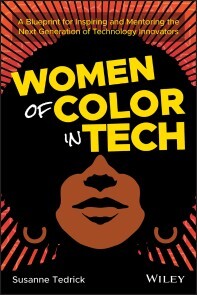
Women of Color in Tech
HIGHLY COMMENDED INTERNATIONAL BUSINESS BOOK FROM THE 2021 BUSINESS BOOK AWARDSNONFICTION BOOK AWARDS SILVER WINNER FROM THE NONFICTION AUTHORS ASSOCIATIONWINNER OF COMPTIA'S 2020 DIVERSITY TECHNOLOGY LEADER SPOTLIGHT AWARDWINNER OF A TECHNOLOGY RISING STAR AWARD FROM THE 2020 WOMEN OF COLOR IN STEM CONFERENCEBREAK THROUGH BARRIERS TO ACHIEVE A REWARDING FUTURE IN TECHWomen of Color in Tech: A Blueprint for Inspiring and Mentoring the Next Generation of Technology Innovators will help you overcome the obstacles that often prevent women of color from pursuing and staying in tech careers. Contrary to popular belief, tech careers are diverse and fun—and they go far beyond just coding. This book will show you that today's tech careers are incredibly dynamic, and you'll learn how your soft skills—communication, public speaking, networking—can help you succeed in tech.This book will guide you through the process of cultivating strong relationships and building a network that will get you were you want to be. You'll learn to identify a strong, knowledgeable support network that you can rely on for guidance or mentorship. This step is crucial in getting young women of color into tech careers and keeping them there.* Build your professional network to get the guidance you need* Find a mentor who understands your goals and your struggles* Overcome negativity and stay motivated through difficult times* Identify and develop the soft skills that you need to get ahead in techRead this book to help bring to life your vision of a future in tech. With practical advice and inspiring stories, you’ll develop the right tools and the right mindset. Whether you're just considering going into tech or you want to take your current career to the next level, Women of Color in Tech will show you how to uncover the resources you need to succeed.SUSANNE TEDRICK is a technical specialist for a leading Fortune 50 technology company. Fiercely committed to increasing participation of women and people of color in STEM educational and professional opportunities, she is a career mentor for the Pathways in Technology Early College High School (P-TECH) Initiative and a volunteer workshop technical assistant for Black Girls Code, a non-profit that empowers girls of color to develop in-demand IT skills and prepare to advance careers in tech. Foreword xxiiiIntroduction xxvCHAPTER 1 THE CURRENT STATE OF WOMEN OF COLOR IN TECH 1The Realities 1What’s Going On? 3Early Childhood 4Primary, Middle, and High School 5College 6The Workplace 8Why You Should Be Here 10My Journey to Tech 10It’s (Slowly) Getting Better 12Support 13Number of Job Opportunities 14Pay 15It’s Fun 15Opportunities to Help Others 16We Need You! 16Tech Career Misconceptions 17Tech Careers Require Constant, Hands-On Programming 18All Tech Careers Require a Four-Year Degree 18All Tech Careers Require Studying Computer Science, Computer Engineering, or Another Specific Field 18All Tech Careers Pay a Ton of Money 19Tech Careers Exist Only at Top Tech Companies 20Tech Careers Are Only for People with Certain Backgrounds, Grades, Etc. 21Creating a Blueprint 25Summary 26CHAPTER 2 THE DIFFERENT FLAVORS OF TECH CAREERS 27Business Analysis 29What They Do 29Top Skills Needed 31Educational Requirements 31For Additional Information 32Consulting 32What They Do 33Top Skills Needed 34Educational Requirements 35For Additional Information 35Computer Networking 36What They Do 37Top Skills 37Educational Requirements 38For Additional Information 38Data Science 39What They Do 40Top Skills 40Educational Requirements 41For Additional Information 41Information Security 42What They Do 42Top Skills 44Educational Requirements 44For Additional Information 45Product Management 45What They Do 46Top Skills 46Educational Requirements 47For Additional Information 47Project Management 47What They Do 48Top Skills 49Educational Requirements 49For Additional Information 50Software Development and Engineering 50What They Do 51Top Skills 52Educational Requirements 53For Additional Information 53Technical Sales 53What They Do 54Top Skills 54Educational Requirements 55For Additional Information 55Technical Support 55What They Do 56Top Skills 56Educational Requirements 57For Additional Information 57User Experience Design 57What They Do 58Top Skills 59Educational Requirements 60For Additional Information 60Web Design 60What They Do 61Top Skills 61Educational Requirements 61For Additional Information 62Where Do You Fit In? 62What Are Your Strengths and Your Weaknesses? 62What Do You Value? 63What Are Your Interests? 65Summary 65CHAPTER 3 INDUSTRY AND OTHER OPTIONS 67Advertising and Marketing 68Civics and Public Interest 69Construction and Manufacturing 71Education 73Finance 75Healthcare 77The US Government 79On Your Own: Entrepreneurism 82What It Takes to Be an Entrepreneur 83Getting Started 84Research Your Market 84Write a (Solid) Business Plan 85Estimate Initial Costs 86Determine Sources of Initial Funding 86Keep Going or Stop? 88Summary 89CHAPTER 4 EMERGING TECHNOLOGIES 91What is an Emerging Technology? 91The Future of Work 92Artificial Intelligence 93The Difference Between Artificial Intelligence, Machine Learning, and Deep Learning 94Why Does It Matter? 95Where Can I Learn More? 96Augmented, Virtual, and Mixed Reality 97Why Does It Matter? 98Where Can I Learn More? 99Blockchain 99Why Does It Matter? 101Where Can I Learn More? 102Cloud Computing 102Service Models 104Deployment Models 106Why Does It Matter? 106Where Can I Learn More? 107Internet of Things 108Why Does It Matter? 109Where Can I Learn More? 1103D Printing 110Why Does It Matter? 111Where Can I Learn More? 112Keeping Up with Technology Trends 112Information Sources 113Tools 114Summary 115CHAPTER 5 BUILDING YOUR NETWORK 117The Importance of Building Your Network 117Where to Network 119Mentoring 121Where to Find Mentors 121Blueprints for a Beneficial Mentoring Relationship 121You’ve Found a Mentor—Now What? 124Listen, This Isn’t Working Out 125You Need a Sponsor, Not a Mentor 126Overcoming Social Anxiety 127Strengthening Your Connections 129Summary 130CHAPTER 6 BUILDING YOUR SKILLS 131Skills Gap Analysis: Where Do You Need to Be? 131Exception 1 133Exception 2 133Formal Education (Is It Worth It?) 133Trade Schools 135Massive Online Open Courses 137Boot Camps 138Hackathons 139Conferences and Seminars 140Internships, Externships, and Co-ops 141Volunteering 143Certifications 144Do You Need Certification? 145How to Pay for Skills Training 146Loans 146Student Loans 146Personal Loans 147Credit and Charge Cards 147Use Credit Responsibly and Sparingly 148Grants and Scholarships 148Tuition Reimbursement 149Deferred Tuition Plans and Income Share Agreements 150Crowdfunding 151Summary 152CHAPTER 7 DEMONSTRATING YOUR SKILLS 153Building Your Resume(s) 153Chronological 154Functional 155Combination 156What Every Resume Must Have 157The Heading 158The Body 158What You Can Leave Out 162First Impressions Matter 165Additional Tips and Resources for Resume Writing 166LinkedIn 169The Difference between LinkedIn and Your Resume 170Creating a LinkedIn Profile 171Essential Elements of a LinkedIn Profile 171Additional LinkedIn Tips 174Writing 175Online Publishing Platforms 175Academic and Professional Journals 176Public Speaking 177Public Speaking Misconceptions 178Public Speaking Basics 178Where to Find Speaking Opportunities 180Other Creative Ways to Show What You Know 181GitHub 181Personal Websites 182Building Your Interviewing Skills 184Becoming a Better Interviewee 185Summary 187CHAPTER 8 JOB OFFERS AND NEGOTIATING COMPENSATION 189A Cautionary Tale (or, Don’t Do This!) 189Understanding Compensation and Salary 191Compensation 191Salary 192The Job Offer Process 193Evaluating a Job Offer 194Do You Like the Job and This Company? 195Are Your “Must Haves” Addressed? 196Is the Salary Offered Fair? 197Why Negotiate Your Job Offer? 199More of What You Want, Now 199Solidify Your Negotiation Skills 199Show Employers You Know Your Value 199There Are Few Downsides to Asking 199You May Not Get as Much Later 200You’ll Hurt Your Finances in the Long Run 201Preparing to Negotiate 201Negotiation Dos and Don’ts 202You Didn’t Negotiate! Is It Too Late? 205Additional Resources 205Final Thoughts—It’s Okay to Want (and Ask for) Money 206Summary 207CHAPTER 9 WHEN TIMES GET TOUGH 209The Need for Grid 209The Problem with “Twice as Good” 212Failure 213Impostor Syndrome 216Bias 218Tokenism and Being “The Only” 221Bullying 222Lack of Support and Help 223The Importance of Mental Health 226Allies and When They Fall Short 228The Need for Allyship 228Allies Are Human 229Summary 230CHAPTER 10 THE IMPORTANCE AND JOY OF GIVING BACK 233Why Give Back 233You Make a Difference 233Helping Others See and Know What’s Possible 234Great Rewards 235Building Relationships 237Coping with a Bad Day 237You’ve Been in Their Shoes 238How to Give Back 239Summary 241Index 243

MySQL 8 Query Performance Tuning
Identify, analyze, and improve poorly performing queries that damage user experience and lead to lost revenue for your business. This book will help you make query tuning an integral part of your daily routine through a multi-step process that includes monitoring of execution times, identifying candidate queries for optimization, analyzing their current performance, and improving them to deliver results faster and with less overhead. Author Jesper Krogh systematically discusses each of these steps along with the data sources and the tools used to perform them.MYSQL 8 QUERY PERFORMANCE TUNING aims to help you improve query performance using a wide range of strategies. You will know how to analyze queries using both the traditional EXPLAIN command as well as the new EXPLAIN ANALYZE tool. You also will see how to use the Visual Explain feature to provide a visually-oriented view of an execution plan. Coverage of indexes includes indexing strategies and index statistics, and you will learn how histograms can be used to provide input on skewed data distributions that the optimizer can use to improve query performance. You will learn about locks, and how to investigate locking issues. And you will come away with an understanding of how the MySQL optimizer works, including the new hash join algorithm, and how to change the optimizer’s behavior when needed to deliver faster execution times. You will gain the tools and skills needed to delight application users and to squeeze the most value from corporate computing resources.WHAT YOU WILL LEARN* Monitor query performance to identify poor performers* Choose queries to optimize that will provide the greatest gain* Analyze queries using tools such as EXPLAIN ANALYZE and Visual Explain* Improve slow queries through a wide range of strategies* Properly deploy indexes and histograms to aid in creating fast execution plans* Understand and analyze locks to resolve contention and increase throughputWHO THIS BOOK IS FORDatabase administrators and SQL developers who are familiar with MySQL and need to participate in query tuning. While some experience with MySQL is required, no prior knowledge of query performance tuning is needed.JESPER WISBORG KROGH has worked with MySQL databases since 2006 both as an SQL developer, a database administrator, and for more than eight years as part of the Oracle MySQL Support team. He has spoken at MySQL Connect and Oracle OpenWorld on several occasions, and addition to his books, he regularly blogs on MySQL topics and has authored around 800 documents in the Oracle Knowledge Base. He has contributed to the sys schema and four Oracle Certified Professional (OCP) exams for MySQL 5.6 to 8.0.He earned a PhD in computational chemistry before changing to work with MySQL and other software development in 2006. Jesper lives in Sydney, Australia, and enjoys spending time outdoors walking, traveling, and reading. His areas of expertise include MySQL Cluster, MySQL Enterprise Backup, performance tuning, and the Performance and sys schemas.PART I. GETTING STARTED1. MySQL Performance Tuning2. Query Tuning Methodology3. Benchmarking with Sysbench4. Test DataPART II. SOURCES OF INFORMATION5. The Performance Schema6. The sys Schema7. The Information Schema8. SHOW Statements9. The Slow Query LogPART III. TOOLS10. MySQL Enterprise Monitor11. MySQL Workbench12. MySQL ShellPART IV. SCHEMA CONSIDERATIONS AND THE QUERY OPTIMIZER13. Data Types14. Indexes15. Index Statistics16. Histograms17. The Query Optimizer18. Locking Theory and MonitoringPART V. QUERY ANALYSIS19. Finding Candidate Queries for Optimization20. Analyzing Queries21. Transactions22. Diagnosing Lock ContentionPART VI. IMPROVING THE QUERIES23. Configuration24. Change the Query Plan25. DDL and Bulk Data Load26. Replication27. Caching

PostgreSQL Configuration
Obtain all the skills you need to configure and manage a PostgreSQL database. In this book you will begin by installing and configuring PostgreSQL on a server by focusing on system-level parameter settings before installation. You will also look at key post-installation steps to avoid issues in the future. The basic configuration of PostgreSQL is tuned for compatibility rather than performance. Keeping this in mind, you will fine-tune your PostgreSQL parameters based on your environment and application behavior. You will then get tips to improve database monitoring and maintenance followed by database security for handling sensitive data in PostgreSQL.Every system containing valuable data needs to be backed-up regularly. PostgreSQL follows a simple back-up procedure and provides fundamental approaches to back up your data. You will go through these approaches and choose the right one based on your environment. Running your application with limited resources can be tricky. To achieve this you will implement a pooling mechanism for your PostgreSQL instances to connect to other databases. Finally, you will take a look at some basic errors faced while working with PostgreSQL and learn to resolve them in the quickest manner.WHAT YOU WILL LEARN* Configure PostgreSQL for performanceMonitor and maintain PostgreSQL instances * Implement a backup strategy for your dataResolve errors faced while using PostgreSQLWHO THIS BOOK IS FORReaders with basic knowledge of PostgreSQL who wish to implement key solutions based on their environment.Baji Shaik is a database administrator and developer. He was introduced to databases in 2011 and over the years, has worked with Oracle, PostgreSQL, Postgres Advance Server, RedShift, and Greenplum. He has a wide range of expertise and experience in SQL/NoSQL databases such as Cassandra and DynamoDB. He is a database migration expert and has developed many successful database solutions addressing challenging business requirements for moving databases from on-premises to AWS Cloud using multiple AWS services. Baji has organized a number of PostgreSQL meet-ups and maintains his own technical blog, where he likes to share his knowledge with the community. He co-authored Beginning PostgreSQL on the Cloud, released in March 2018.CHAPTER 01. INSTALLING POSTGRESQL THE RIGHT WAY! (10 PAGES)There are multiple ways you can install PostgreSQL on a server. This chapter will talk about the best ways to do so, focusing on system-level parameter settings before installation as a prerequisite and also post-installation steps to avoid issues in the future.CHAPTER 02. CONFIGURING YOUR DATABASE FOR PERFORMANCE (20 PAGES)PostgreSQL ships with a basic configuration tuned for wide compatibility rather than performance. Although the default settings of PostgreSQL are viable, it is always recommended to tune some basic parameters based on your environment and application behavior.CHAPTER 03. ENABLE LOGGING OF YOUR DATABASE (15 PAGES)Logging is key when you troubleshoot issues of PostgreSQL for security and performance to find out the trends. Default PostgreSQL configuration comes with very minimal logging and it is not always enough to troubleshoot the issues. So, this chapter will explain how to set logging and consequences of high logging and how to deal with it.CHAPTER 04. MONITORING POSTGRESQL INSTANCES (15 PAGES)Good monitoring is a symbol of a peaceful life for an administrator. If you set up monitoring of your databases to alert you whenever an issue comes up, then you need not worry about keeping an eye at your databases' health. This chapter will show you ways to monitor PostgreSQL instances.CHAPTER 05. EXECUTE MAINTENANCE (15 PAGES)Why do you need maintenance? What would you get from it? when do decide "it's time for maintenance"? How do you do it? Is there any way I can improve my maintenance time? This chapter will shed some light on all these questions.CHAPTER 06. SECURING DATABASES (15 PAGES)Security is one of the major concerns for storing sensitive data. It could be one of the reasons customers change their database engines. So, this chapter will talk about how best you can secure your data in PostgreSQL.CHAPTER 07. BACKUP AND RESTORE BEST PRACTICES (15 PAGES)For critical data systems, backup and restore is a very important consideration. However, it's very important to know what factors you should consider before you implement a backup strategy and how to implement one. This chapter talks about developing backup procedures for critical/non-critical data systems and quick restore procedures as well.CHAPTER 08. HIGH AVAILABILITY PROCEDURES (15 PAGES)You may come across some situations where you cannot make your primary working with-in your affordable time window. What do you do in that scenario? Implementing High Availability is always the best practice for such critical applications. This chapter talks about HA implementation and open source tools that can be used with PostgreSQL to implement the same.CHAPTER 09. IMPLEMENTING POOLER (15 PAGES)While running your application with limited resources, then it is highly recommended to use Pooling to connect the database. Performance of a database depends on the parallel connections that it can allow. Huge connections to a database in parallel degrades the database performance. This chapter will teach you to implement a pooler mechanism for your PostgreSQL instances.CHAPTER 10. BASIC ERRORS AND HANDY QUERIES (15 PAGES)Working with PostgreSQL, there are bound to be some errors you might face that takes a lot of time to resolve. And, some times you might need some queries which are based on catalogs to fetch the information. This chapter talks about some of these errors and their resolution so that it can save some time for administrators followed by handy queries to help them perform their daily duties.

Cognitive Virtual Assistants Using Google Dialogflow
Follow a step-by-step, hands-on approach to building production-ready enterprise cognitive virtual assistants using Google Dialogflow. This book provides an overview of the various cognitive technology choices available and takes a deep dive into cognitive virtual agents for handling complex real-life use cases in various industries such as travel and weather.You’ll delve deeper into the advanced features of cognitive virtual assistants implementing features such as input/output context, follow-up intents, actions and parameters, and handling complex multiple intents. You’ll learn how to integrate with third-party messaging platforms by integrating your cognitive bot with Facebook messenger. You’ll also integrate with third-party APIs to enrich your cognitive bots using webhooks.Cognitive Virtual Assistants Using Google Dialogflow takes the complexity out of the cognitive platform and provides rich guidance which you can use when developing your own cognitive bots. The book covers Google Dialogflow in-depth and starts with the basics, serving as a hands-on guide for developers who are starting out on their journey with Google Dialogflow. All the code presented in the book will be available in the form of scripts and configuration files, which allows you to try out the examples and extend them in interesting ways.WHAT YOU WILL LEARN* Develop cognitive bots with Google Dialogflow technology* Use advanced features to handle complex conversation scenarios* Enrich the bot’s conversations by understanding the sentiment of the user* See best practices for developing cognitive bots* Enhance a cognitive bot by integrating with third-party servicesWHO THIS BOOK IS FORAI and ML developers.Navin Sabharwal is an innovator, thought leader, author, and consultant in the areas of AI, machine learning, cloud computing, big data analytics, and software product development. He is responsible for IP development and service delivery in the areas of AI and machine learning, automation products, GCP, cloud computing, public cloud AWS, and Microsoft Azure. Navin has created niche award-winning products and solutions and has filed numerous patents in diverse fields such as IT services, assessment engines, ranking algorithms, capacity planning engines, and knowledge management.Amit Agrawal is a principal data scientist and researcher delivering solutions in the fields of AI and machine learning. He is responsible for designing end-to-end solutions and architecture for enterprise products.Chapter 1: Introduction to Cognitive Virtual BotChapter Goal: To introduce the basics of Cognitive Virtual Bot1.1 What is Cognitive ChatbotChapter 2: Introduction to Google DialogflowChapter Goal: To introduce the basics of Google Dialogflow2.2 What is Google Dialogflow2.3 Use cases for Google Dialogflow2.4 Bot Frameworks2.5 Building your First Bot using Google DialogflowChapter 3: Advanced Concepts of Google DialogflowChapter Goal: Details how to build a chatbot with Google Dialogflow3.1 Input context and output context3.2 Follow up intents3.3 Multiple responses3.4 Contextual entities3.5 Handling combination of intents and entities3.6 Event creation3.7 Enable fulfillment – webhook and inline editor3.8 Slots3.9 Handling intent conflicts3.10 Showcasing the solutions in various formats like Text, HTML and to integrations such as Google Assistant3.11 Multi-lingual chatbots3.12 Prebuilt agentsChapter 4: Use cases for Cognitive Chatbots using Google DialogflowChapter Goal: Provide different use cases and integrations for Cognitive Chatbots using Google Dialogflow.4.1 Chatbot personality via webhook4.2 Simple and complex dialogflow design for travel use case4.3 Integration with Google weather API.4.4 Additional integrations4.5 Intent Identifications – audio, speech responses and sentiment analysis4.6 Integrate Google Dialogflow with other services to enhance the conversational flow and searchChapter 5: Researches in field of Cognitive Virtual ChatbotsChapter Goal: Provides an introduction to the new researches in the areas of Cognitive Virtual Chatbots5.1 Cognitive Virtual Chatbots - research

Microsoft Exchange Server 2019 - Das Handbuch
Das Standardwerk für Administratoren zur neuen Version* Gewinnen Sie einen tiefgehenden Einblick in den Einsatz von Exchange Server 2019.* Voller praxisnaher Beispiele und unschlagbaren Expertentipps* Für Neueinsteiger, Umsteiger und Profis* Alle wichtigen Themen in einem Buch: Grundlagen, Einrichtung, Verwaltung, Compliance, Sicherheit, Hochverfügbarkeit, Migration und ÜberwachungMit dieser komplett aktualisierten Neuauflage seines bekannten Handbuchs führt Thomas Joos Neueinsteiger und Umsteiger durch alle Aspekte der Arbeit mit Microsoft Exchange Server 2019 – inkl. Office 365-Anbindung.Nach einem Überblick über die Neuerungen installieren und konfigurieren Sie den Server und lernen Konzepte und Werkzeuge zu seiner Administration kennen. Sie verstehen, wie Sie mit Connectoren Nachrichtenflüsse aufbauen, wie die Exchange-Datenbanken arbeiten, wie Sie verschiedenste Clients anbinden, Empfänger, Gruppen und Kontakte verwalten und Teamfähigkeit implementieren. Sie lernen, Compliance-konform zu archivieren sowie Maßnahmen zum Schutz vor Spam, Viren und Datenverlust zu treffen u. v. a. m.■ Überblick, Grundlagen und erste SchritteServerrollen, Edge-Transport, Web-App, ReFS und Database Divergence Detection, Virtualisierung, Exchange Admin Center, Exchange Management Shell, Arbeiten via PowerShell■ Einrichtung und VerwaltungE-Mail-Routing und Connectors, Exchange-Datenbankstruktur, PST-Dateien, Client-Anbindung (Desktop, mobil und Web), Verschlüsselung, Empfänger-, Gruppen- und Kontaktverwaltung, Teamwork mit öffentlichen Ordnern■ ComplianceRichtlinieneinhaltung und Archivierung, Data Loss Prevention (DLP), Verwaltung von Informationen (IRM)■ Sicherheit und HochverfügbarkeitEdge-Transport-Server, Viren- und Spamschutz, Verstehen und Verwalten von Berechtigungen, Datensicherung und Wiederherstellung, Hochverfügbarkeit, Exchange mit Office 365■ Migration, Sprachkommunikation und ÜberwachungMigration und Planung einer Exchange 2019-Infrastruktur, Exchange im Verbund, Überwachung und LeistungsoptimierungThomas Joos ist selbstständiger IT-Consultant und seit über 20 Jahren in der IT-Branche tätig. Er schreibt Fachbücher und berät Unternehmen in den Bereichen Active Directory, Exchange Server und IT-Sicherheit. Durch seinen praxisorientierten und verständlichen Schreibstil sind seine Fachbücher für viele IT-Spezialisten eine wichtige Informationsquelle geworden. Neben vielen erfolgreichen Büchern schreibt er für zahlreiche IT-Publikationen wie z. B. c't, Computerwoche und IT-Administrator sowie LinkedIn. Seinen Blog finden Sie auf http://thomasjoos.wordpress.com.

Essential ASP.NET Web Forms Development
Go from beginner to pro using one of the most effective and widely used technology stacks, Microsoft ASP.NET. Beginning with the basics, you will learn how to create interactive, professional-grade, database-driven web applications in no time, using ASP.NET, C#, SQL, Ajax, and JavaScript.ESSENTIAL ASP.NET WEB FORMS DEVELOPMENT is divided into six learning modules and will take you from soup to nuts with ASP.NET. Part I is an introduction to the major concepts, methodologies, and technologies associated with .NET web application development. You will learn about the client-server model, the .NET Framework, the ASP.NET and C# programming languages, and the Visual Studio integrated development environment. Part II teaches you how to develop a single-page .NET web application and add server and data validation controls, laying the foundation for learning languages in the context of an ASP.NET web application. Part III is all about C# operations and shows you how to perform assignment operations, conversion operations, control operations, string operations, arithmetic operations, date and time operations, array operations, collection operations, and file system operations, as well as create custom C# classes in the context of a .NET web application.In Part IV, you dive into a multiple-page .NET web application and learn how to maintain state between pages and create master pages, themes, and navigation controls. Part V shows you how to connect a .NET web application to a SQL Server database. You will learn to read a database schema, program in the SQL language, utilize data binding, perform single- and multiple-row database table maintenance, and write code behind database operations. And finally, Part VI teaches you how to enhance the interactivity of a .NET web application. You will learn how to generate email messages, make use of basic Ajax controls and the Ajax Control Toolkit, and program in the JavaScript language.WHAT YOU WILL LEARN* Delve into the basics of the client-server model, the .NET Framework, the ASP.NET and C# programming languages, and the Visual Studio integrated development environment* Create a page and add server and data validation controls* Develop basic programming skills in the C# language* Maintain state between pages and create master pages, themes, and navigation controls* Read a database schema, program in the SQL language, utilize data binding, perform single- and multiple-row database table maintenance, and write code behind database operations* Generate email messages, make use of basic Ajax controls and the Ajax Control Toolkit, and program in the JavaScript languageWHO THIS BOOK IS FORAnyone who wants to learn how to build ASP.NET web applications. Basic computer skills and the use of a database management system are recommended.Instructor materials and examples are available.ROBERT E. BEASLEY is Professor of Computing at Franklin College in Franklin, Indiana, USA where he teaches a variety of software engineering courses. He received both his BS and MS degrees from Illinois State University and his PhD from the University of Illinois at Urbana-Champaign. He has been developing software since 1981, has been an active software consultant in both the public and private sectors since 1987 and has been teaching software engineering since 1995. He has authored three books on software engineering, contributed chapters to two books, published over 50 articles in refereed journals and conference proceedings, and delivered numerous speeches and keynote addresses at international conferences.PART I – OVERVIEWChapter 1: Web Application DevelopmentPART II – SINGLE-PAGE WEB APPLICATION DEVELOPMENTChapter 2: Page DevelopmentChapter 3: Basic Server ControlsChapter 4: More Server ControlsChapter 5: Data Validation ControlsPART III – C# PROGRAMMINGChapter 6: Assignment OperationsChapter 7: Conversion OperationsChapter 8: Control OperationsChapter 9: String OperationsChapter 10: Arithmetic OperationsChapter 11: Date and Time OperationsChapter 12: Array OperationsChapter 13: Collection OperationsChapter 14: File System OperationsChapter 15: Custom C# ClassesPART IV – MULTIPLE-PAGE WEB APPLICATION DEVELOPMENTChapter 16: State MaintenanceChapter 17: Master PagesChapter 18: ThemesChapter 19: NavigationPART V – DATABASE CONNECTIVITYChapter 20: Database Design, SQL, and Data BindingChapter 21: Single-Row Database Table MaintenanceChapter 22: Multiple-Row Database Table MaintenanceChapter 23: Code-Behind Database OperationsPART VI – ADDITIONAL FUNCTIONALITYChapter 24: Email MessagingChapter 25: Ajax ProgrammingChapter 26: JavaScript Programming

Living with Computers
The computing technology on which we are now so dependent has risen to its position of ascendency so rapidly that few of us have had the opportunity to take a step back and wonder where we are headed. This book urges us to do so.Taking a big-picture perspective on digital technology, Living with Computers leads the reader on a whistle-stop tour of the history of information and information technology. This journey culminates in a deep exploration into the meaning and role of computers in our lives, and what this experience might possibly mean for the future of human society – and the very existence of humanity itself.In the face of the transformative power of computing, this book provokes us to ask big questions. If computers become integrated into our bodies, merging with the information processing of our very DNA, will computing help to shape the evolution of biological life? If artificial intelligence advances beyond the abilities of the human brain, will this overturn our anthropocentrism and lead to a new view of reality? Will we control the computers of the future, or will they control us?These questions can be discomforting, yet they cannot be ignored. This book argues that it is time to reshape our definition of our species in the context of our interaction with computing. For although such science-fiction scenarios are not likely to happen any time soon – and may, in fact, never happen – it is nevertheless vital to consider these issues now if we wish to have any influence over whatever is to come. So, humans, let’s confront our possible destiny!JAMES W. CORTADA is a Senior Research Fellow at the Charles Babbage Institute at the University of Minnesota. He holds a Ph.D. in modern history and worked at IBM in various positions for 38 years, including in IBM’s management research institute, The IBM Institute for Business Value (IBV). He is the author of over a dozen books on management, andnearly two dozen books on the history of information technology. These include the Springer title From Urban Legends to Political Fact-Checking: Online Scrutiny in America, 1990-2015 (with William Aspray).JAMES W. CORTADA is a Senior Research Fellow at the Charles Babbage Institute at the University of Minnesota. He holds a Ph.D. in modern history and worked at IBM in various sales, consulting, management, and executive positions for 38 years, including in IBM’s management research institute, The IBM Institute for Business Value (IBV). There, he led and participated in over three dozen global studies on the use of information and business managerial practices. He is also the author of over a dozen books on the management of business, information technologies, and management. He also authored nearly two dozen books on the history of information technology, its business practices and industry, and about knowledge management. These include the Springer title From Urban Legends to Political Fact-Checking: Online Scrutiny in America, 1990-2015 (with William Aspray). His articles on the history of information have appeared in many of the “journals of record” for each topic he has studied, including Information and Culture, Library and Information History, Business History Review, IEEE Annals of the History of Computing, Enterprise and Society, and Technology and Culture, among others. He serves on the editorial boards of Information and Culture, Library and Information History, and IEEE Annals of the History of Computing.Introduction: Why Listen to Me? Why You Should Take Seriously Your Own Knowledge of Computers.- What Is Computing?.- How Did We Get Here?.- Early Views of Computing.- How People View Computing Today.- How We Might See the End of the Information Age.- Life in a Post-Information Era.- Is It the End of Our World? How to Think About Implications and Challenges.- How to Live with Computers.
Real-Time IoT Imaging with Deep Neural Networks
This book shows you how to build real-time image processing systems all the way through to house automation. Find out how you can develop a system based on small 32-bit ARM processors that gives you complete control through voice commands.Real-time image processing systems are utilized in a wide variety of applications, such as in traffic monitoring systems, medical image processing, and biometric security systems. In Real-Time IoT Imaging with Deep Neural Networks, you will learn how to make use of the best DNN models to detect object in images using Java and a wrapper for OpenCV. Take a closer look at how Java scripting works on the Raspberry Pi while preparing your Visual Studio code for remote programming. You will also gain insights on image and video scripting. Author Nicolas Modrzyk shows you how to use the Rhasspy voice platform to add a powerful voice assistant and completely run and control your Raspberry Pi from your computer.To get your voice intents for house automation ready, you will explore how Java connects to the MQTT and handles parametrized Rhasspy voice commands. With your voice-controlled system ready for operation, you will be able to perform simple tasks such as detecting cats, people, and coffee pots in your selected environment. Privacy and freedom are essential, so priority is given to using open source software and an on-device voice environment where you have full control of your data and video streams. Your voice commands are your own—and just your own.With recent advancements in the Internet of Things and machine learning, cutting edge image processing systems provide complete process automation. This practical book teaches you to build such a system, giving you complete control with minimal effort.WHAT YOU WILL LEARN:* Show mastery by creating OpenCV filters* Execute a YOLO DNN model for image detection* Apply the best Java scripting on Raspberry Pi 4* Prepare your setup for real-time remote programming* Use the Rhasspy voice platform for handling voice commands and enhancing your house automation setupWHO THIS BOOK IS FOR:Engineers, and Hobbyists wanting to use their favorite JVM to run Object Detection and Networks on a Raspberry PiNicolas Modrzyk has over 15 years of IT experience in Asia, Europe, and the United States. He is currently the CTO of an international consulting company in Tokyo, Japan. An author of four other published books, he mostly focuses on the Clojure language and expressive code. When not bringing new ideas to customers, he spends time with his two fantastic daughters Mei and Manon, and playing live music internationally.CHAPTER 1: TRAINING A DNN NETWORKReaders will use Java for basic functions and develop a custom DNN model. They will learn to their models to detect images and videos* Using JavaCV to run some basic detection* using a YOLO DNN on a picture* using a YOLO DNN on a videoCHAPTER 2: DEVELOPING AND RUNNING ON THE RASPBERRY PIReaders will learn to script Java/Clojure on the Raspberry Pi. They will also learn how image and video scripting can be achieved.* Is the Raspberry Pi fast enough for the JVM?* Preparing visual studio code for remote programming* Clojure scripting on the Raspberry Pi* Image scripting on the Raspberry Pi* Video scripting on the Raspberry Pi CHAPTER 3: SNIPS VOICE PLATFORMReaders will be introduced to the Snips video platform for creating their personal voice assistant. They will also learn more about the Sam CLI for controlling the Raspberry Pi from their computers.* Why Snips?* Preparing the Snips Pi* Connecting using Sam, testing microphone and speaker
MCA Modern Desktop Administrator Study Guide
THE MUST-HAVE PREPARATION GUIDE FOR MCA MODERN DESKTOP CERTIFICATION—COVERS THE NEW EXAM MD-101: MANAGING MODERN DESKTOPS!Microsoft’s Modern Desktop integrates Windows 10, Office 365, and advanced security capabilities. Microsoft 365 Certified Associate (MCA) Modern Desktop certification candidates need to be familiar with Microsoft 365 workloads and demonstrate proficiency in deploying, configuring, and maintaining Windows 10 and non-Windows devices and technologies. The new Exam MD-101: Managing Modern Desktops measures candidate’s ability to deploy and update operating systems, manage policies and profiles, manage and protect devices, and manage apps and data. Candidates are required to know how to perform a range of tasks to pass the exam and earn certification.The MCA Modern Desktop Administrator Study Guide: Exam MD-101 provides in-depth examination of the complexities of Microsoft 365. Focusing on the job role of IT administrators, this clear, authoritative guide covers 100% of the new exam objectives. Real-world examples, detailed explanations, practical exercises, and challenging review questions help readers fully prepare for the exam. Sybex's comprehensive online learning environment—in which candidates can access an assessment test, electronic flash cards, a searchable glossary, and bonus practice exams—is included to provide comprehensive exam preparation. Topics include:* Planning and implementing Windows 10 using dynamic deployment and Windows Autopilot* Upgrading devices to Windows 10 and managing updates and device authentication* Managing access polices, compliance policies, and device and user profiles* Implementing and managing Windows Defender and Intune device enrollment* Deploying and updating applications and implementing Mobile Application Management (MAM)The move to Windows 10 has greatly increased the demand for qualified and certified desktop administrators in corporate and enterprise settings. MCA Modern Desktop Administrator Study Guide: Exam MD-101: Managing Modern Desktops is an invaluable resource for IT professionals seeking MCA certification.ABOUT THE AUTHORWILLIAM PANEK, MCP, MCSE, MCSA, MCTS, MCITP, CCNA, is a Five-Time Microsoft MVP Winner. He has taught at Boston University, Clark University, and the University of Maryland, and presently conducts live online classes for StormWind Studios (www.stormwind.com). Will has been a consultant and trainer for the United States Secret Service, Cisco, the United States Air Force, and the United States Army. He also creates training videos to help students prepare for various Microsoft exams. Introduction xixAssessment Test xxxCHAPTER 1 INSTALLING AND UPDATING WINDOWS 10 1Understanding the Basics 2Windows 10 Features 7Understanding the Windows 10 Architecture 8Preparing to Install Windows 10 9Windows 10 Pro 10Windows 10 Enterprise 11Windows 10 Enterprise E3 and E5 12New Install or Upgrade? 12Disk Partitioning 16Language and Locale 17Installing Windows 10 17Performing a Clean Install of Windows 10 18Performing an Upgrade to Windows 10 26Troubleshooting Installation Problems 31Supporting Multiple-Boot Options 33Using Windows Activation 34Understanding Automated Deployment Options 35An Overview of the Microsoft Deployment Toolkit 36An Overview of Unattended Installation 41An Overview of Windows Deployment Services 43An Overview of the System Preparation Tool and Disk Imaging 46Overview of the Windows Assessment and Deployment Kit 50Summary of Windows 10 Deployment Options 51Deploying Unattended Installations 52Using the System Preparation Tool to Prepare an Installation for Imaging 53Using the Deployment Image Servicing and Management Tool 55Using Windows System Image Manager to Create Answer Files 57Deploying with Windows Autopilot 58Windows Autopilot Requirements 59Windows Autopilot Profiles 61Understanding Windows Updates 62Windows Update Process 64Using Windows Update for Business 64Summary 68Exam Essentials 68Review Questions 70CHAPTER 2 MANAGING AUTHENTICATION 73Active Directory vs. Azure Active Directory 74Understanding Active Directory 74Understanding Azure Active Directory 84Managing Hybrid Networks 110Password Hash Synchronization with Azure AD 111Azure Active Directory Pass-through Authentication 111Federation with Azure AD 112Common Identity Scenarios 115Azure AD Connect 116Implementing Active Directory Federation Services 123What is a Claim? 123AD FS in Windows Server 2016 127Configuring a Web Application Proxy 129Active Directory Federation Services Installation 131Using PowerShell Commands 140Summary 145Exam Essentials 146Review Questions 148CHAPTER 3 MANAGING DEVICES 151Understanding File Systems 152File System Selection 153File System Conversion 155Configuring NTFS 157Configuring Disk Storage 159Basic Storage 159Dynamic Storage 160GUID Partition Table 162Cloud-Based Storage 163Using the Disk Management Utility 167Using the Microsoft Management Console 167Understanding the Disk Management Utility 171Managing Storage 185Managing Dynamic Storage 185Windows 10 Devices in Azure 187Compliance Policies 188Device Configuration Profiles 193Summary 196Exam Essentials 197Review Questions 198CHAPTER 4 PLANNING AND MANAGING MICROSOFT INTUNE 201Managing Devices with Microsoft Intune 202Understanding Microsoft Intune Benefits 204Configuring Intune Subscriptions 205Provisioning User Accounts 207Supporting Applications 222Deploying Applications Using Intune 222Supporting Broadband Connectivity 226Understanding Data Synchronization 227Using Mobile Application Management 229Windows Information Protection 231Understanding Updates 238Deploying Software Updates Using Intune 238Using Intune Compliance Reports 243Using Intune Reports 243PowerShell Commands 244Summary 245Exam Essentials 245Review Questions 247CHAPTER 5 MANAGING SECURITY 251Managing Windows Security 252Windows Defender Security Center 253Configuring Windows Firewall 256Understanding the Windows Defender Firewall Basics 256Windows Firewall with Advanced Security 257Managing Security 263Implementing Azure Windows Defender Advanced Threat Protection 263Understanding Windows Defender Application Guard 265Understanding Windows Defender Credential Guard 271Implementing and Managing WindowsDefender Exploit Guard 273Using Windows Defender Application Control 278Summary 278Exam Essentials 279Review Questions 280CHAPTER 6 CONFIGURING AUDITING 283Monitoring Windows 285Introducing Performance Monitor 285Using Other Performance-Monitoring Tools 294Monitor Cloud-Based Tools 302Monitor Azure Device Security 311Summary 314Exam Essentials 315Review Questions 316APPENDIX ANSWERS TO REVIEW QUESTIONS 321Chapter 1: Installing and Updating Windows 10 322Chapter 2: Managing Authentication 322Chapter 3: Managing Devices 323Chapter 4: Planning and Managing Microsoft Intune 324Chapter 5: Managing Security 325Chapter 6: Configuring Auditing 326Index 327

Driving Networked Service Productivity
Christofer F. Daiberl explores how to enhance the productivity of services delivered by a network of co-providers. Harnessing empirical insights and synthesizing contributions from service design, information systems, and engineering, the author develops a systematic productivity improvement technique. The technique supports practitioners to iteratively discover and seize opportunities to enhance productivity for their own organization, customers, and relevant co-providers. Reflecting on the overall results, five general design principles are proposed that support the development of new artifacts fostering truly productive services in a networked world. Christofer F. Daiberl received his PhD from the Friedrich-Alexander-Universität Erlangen-Nürnberg, where he worked as a Research Associate for Prof. Dr. Kathrin M. Möslein at the Chair of Information Systems – Innovation & Value Creation. The concepts of networked service delivery and networked service productivity.- Approaches for improving productivity from a network perspective.- The networked service productivity improvement technique.- Design principles for improving networked service productivity.

Getting Started with Containers in Azure
Deploy and execute Microsoft Azure container and containerized applications on Azure. This second book in author Shimon Ifrah’s series on containers will help you manage and scale containers along with their applications, tools and services.You’ll start by setting up the Azure environment and quickly work through techniques and methods of managing container images with Azure Container Registry (ACR). As you move forward, deploying containerized applications with Azure container instances and Azure Kubernetes Service is discussed in detail, and in the process, you’ll see how to install Docker container host on Azure Virtual Machine.This is followed by a discussion on security in Azure containers where you’ll learn how to monitor containers and containerized applications backed by illustrative examples. Next, you will review how to scale containers along with methods for backing up and restoring containers and containerized applications on Azure. Towards the end, the book demonstrates troubleshooting applications and Docker container host issues in Azure.Getting Started with Containers in Azure will equip you to deploy, manage and secure containerized applications using Azure tools and services for containers.WHAT YOU’LL LEARN* Explore containers on Microsoft Azure.* Store Docker images on Azure Container Registry* Automate deployment of container services using Azure CLI and Azure Cloud Shell * Use Azure Container Instances (ACI) for smaller deployment WHO THIS BOOK IS FORAzure administrators, developers, and architects who want to get started and learn more about containers and containerized applications on Microsoft Azure.Shimon Ifrah is an IT professional with over years of experience in the design, management, and deployment of information technology systems and networks. In the last few years Shimon has been specializing in cloud computing and containerized applications on Amazon AWS and other public cloud providers. Shimon also holds more than 20 vendor certificates from Microsoft, AWS, VMware, and Cisco. During his career in the IT industry he has worked for some of the largest managed services and technology companies in the world helping them administer systems for the largest enterprises. He is based out of Melbourne, Australia.CHAPTER 1: GET STARTED WITH MICROSOFT AZURECHAPTER GOAL: Setup your Microsoft Azure environmentNo of pages: 40SUB -TOPICS1. Setup you Azure tenant2. Setup Azure Cloud Shell3. Secure your account4. Azure Container Services overviewCHAPTER 2: STORE AND MANAGE DOCKER CONTAINER IMAGES ON AZURE CONTAINER REGISTRY (ACR)CHAPTER GOAL: Learn how to manage Container images with Azure ACRNO OF PAGES: 40SUB - TOPICS1. Setup Microsoft Azure Container Registry (ACR)2. Push Docker images to Azure Container Registry (ACR)3. Pull images from Azure Container Registry (ACR)4. Manage and secure Azure Container Registry (ACR)CHAPTER 3: DEPLOY CONTAINERIZED APPLICATIONS WITH AZURE CONTAINER INSTANCES (ACI)CHAPTER GOAL: Learn how to deploy Containers and Containerized Applications with Azure ACINO OF PAGES: 40SUB - TOPICS:1. Set up Azure Container Instances (ACI)2. Deploy Linux and Windows Containers to ACI3. Scale containerized applications on ACI4. Monitor and Manage containerized applications on ACICHAPTER 4: DEPLOY CONTAINERIZED APPLICATIONS WITH AZURE KUBERNETES SERVICE (AKS)CHAPTER GOAL: Learn how to deploy Containers and Containerized Applications with Azure AKSNO OF PAGES:SUB - TOPICS:1. Getting started with AKS2. Setup and configure AKS Networking3. Deploy Kubernetes Dashboard (Web UI) on AKS4. Manage and Secure AKSCHAPTER 5: DEPLOY DOCKER CONTAINER HOST ON AZURE VIRTUAL MACHINEChapter Goal: Learn how to deploy Containers and Containerized Applications on Azure VMNO OF PAGES: 40SUB - TOPICS:1. Install Docker Container host on Ubuntu Linux VM2. Install Docker Container Host on Windows Server 2019 VM3. Deploy and manage containers on Azure VM (Linux and Windows)CHAPTER 6: SECURE YOUR MICROSOFT AZURE CONTAINERSCHAPTER GOAL: Learn how to secure and protect Containers and Containerized Applications on AzureNO OF PAGES: 40SUB - TOPICS:1. Protect and manage accounts on Microsoft Azure using Azure AD2. Use Azure Security Center and Secure Score to protect you tenant3. Secure your Containers with Azure Firewall and Network Security Groups (NSG)CHAPTER 7: SCALE CONTAINERS AND CONTAINERIZED APPLICATIONS ON AZURECHAPTER GOAL:Learn how to scale Containers and Containerized Applications on AzureNO OF PAGES: 40SUB - TOPICS:1. Scale Azure Kubernetes Service (AKS)2. Scale Azure Container Instances (ACI)3. Scale Azure Container Registry (ACR)4. Scale Azure Web Apps for Containers5. Scale Azure Docker Container host VMCHAPTER 8: MONITOR CONTAINERS AND CONTAINERIZED APPLICATIONS ON AZURECHAPTER GOAL: Learn how to Monitor Containers and Containerized Applications on AzureNO OF PAGES: 40SUB - TOPICS:1. Monitor Azure Kubernetes Service (AKS)2. Monitor Azure Container Instances (ACI)3. Monitor Azure Container Registry (ACR)4. Monitor Azure Web Apps for Containers5. Monitor Azure Docker Container host VMCHAPTER 9: BACKUP AND RESTORE CONTAINERS AND CONTAINERIZED APPLICATIONS ON AZURECHAPTER GOAL: Backup and Restore Containers and Containerized Applications on AzureNO OF PAGES: 40SUB - TOPICS:1. Backup Azure Kubernetes Service (AKS)2. Backup Azure Container Instances (ACI)3. Backup Azure Container Registry (ACR)4. Backup Azure Web Apps for Containers5. Backup Azure Docker Container host VMCHAPTER 10: TROUBLESHOOTING CONTAINERS AND CONTAINERIZED APPLICATIONS ON AZUREChapter Goal: Learn how to Troubleshoot Containers and Containerized Applications issues on AzureNO OF PAGES: 40SUB - TOPICS:1. Troubleshoot Azure Kubernetes Service (AKS)2. Troubleshoot Azure Container Instances (ACI)3. Troubleshoot Azure Container Registry (ACR)4. Troubleshoot Azure Web Apps for Containers5. Troubleshoot Azure Docker Container host VM