

Allgemein

Cyber Security on Azure
Prevent destructive attacks to your Azure public cloud infrastructure, remove vulnerabilities, and instantly report cloud security readiness. This book provides comprehensive guidance from a security insider's perspective.CYBER SECURITY ON AZURE supports cloud security operations and cloud security architects by supplying a path to clearly identify potential vulnerabilities to business assets and reduce security risk in Microsoft Azure subscription. This updated edition explores how to “lean-in” and recognize challenges with IaaS and PaaS for identity, networks, applications, virtual machines, databases, and data encryption to use the variety of Azure security tools. You will dive into Azure Cloud Security to guide cloud operations teams to become more security focused in many areas and laser focused on security configuration. New chapters cover Azure Kubernetes Service and Container security and you will get up and running quickly with an overview of Azure Sentinel SIEM Solution.WHAT YOU'LL LEARN* Understand enterprise privileged identity and security policies* "Shift left" with security controls in Microsoft Azure* Configure intrusion detection and alerts* Reduce security risks using Azure Security ServiceWHO THIS BOOK IS FORIT, cloud, and security administrators in AzureMARSHALL COPELAND is a cloud security architect focused on helping customers “shift left” with cloud security defenses in Azure public cloud using cloud-native services and third-party network security appliances. He uses Infrastructure as Code (IaC) with ARM templates or Terraform HCL to build cloud infrastructure and disaster recovery solutions. Marshall's Azure security design skills include Azure Sentinel, Security Center, Policy, Firewall and ACL networking, and a few open-source solutions such as ELK stack, Wireshark, and Snort. He partners with security operations to guide cloud investigations to enhance “blue team hunting” efficiencies.MATTHEW JACOBS is a system engineer focused on cloud architecture technologies needed to support identity management, security, and collaboration tool sets for small and medium businesses, including enterprise organizations. His work has focused on digital transformation, including on-premise only, hybrid cloud networks, and complete public cloud-only deployment. Matthew brings a hands-on cloud architecture approach for Identity Management (IAM) and enhanced engineering to enable business agility that secures and supports a global remote work force. His current work in the Nashville, Tennessee area includes Fortune 500 media, entertainment, and hospitality companies, and his work history extends into public cloud federal compliance requirements for the banking and healthcare industries.PART I: ZERO TRUST CLOUD SECURITYCHAPTER 1. REDUCE CYBERSECURITY VULNERABILITIES FROM THE IDENTITY LAYERIn this chapter you learn the foundation of Azure active directory and quickly expand on the different capabilities for custom domains to manage Azure Subscriptions and why Identity is the security perimeter in the cloud. Azure directly supports IAM (Identity Access Management), for any size organization as the IT cloud supports secure connection from any device and any location. In this chapter you gain insight into IAM challenges for blue team defense of cyber security attacks.· Azure cloud relations to: Azure Tenant, Azure Subscription, Azure ADo Azure tenant securityo Azure subscription securityo Azure API securityo Azure resource locks· Managing Azure Active Directory: Users, and Groups· Azure Active Directory OAuth, SAML, AD Connect· Security measures:o Azure Application Permission Scopes, consento Configure Multi-Factor Authenticationo Conditional Access Policies· Configure Azure AD Privileged Identity ManagementCHAPTER 2 AZURE NETWORK SECURITY CONFIGURATIONSoftware defined network is titled VNet in Azure and introduces new security challenges for cloud security architect when it comes to isolate data and still allow secure communication from valid users, applications and systems. In this chapter you learn security supported networking in Azure with the guides to present TCP/IP, protocol communication ports and what Azure security services are available to learn about notable tactics, techniques and procedures (TTPs) that can be exploited by Advanced Persistent Threats (APT). You learn VNet recommendations to mitigate misconfigurations and provide detection on Incidents of Compromise (IOC) like forensic evidence of potential intrusions.· Virtual Networks, VNets, Network Peering· NSG, Port vulnerability, OSI / TCP Model· Azure Firewall Configurations· Azure Front Door Service· Application Security Groups· Remote Access ManagementCHAPTER 3 REDUCE CYBERSECURITY VULNERABILITIES FROM IAAS AND DATAOperational frameworks and cyber security frameworks work hand-in-hand to support the business. The framework helps to prepare and enable steps to prevent penetration from globally attacks. In this chapter you learn through examples about advanced persistent threats (APT) using techniques, tactics and procedures to reduce risk to specific threats.· Harden Azure VMs· VM Security· VM Endpoint Security· VM OS security updates· Database configurations (Best Practices)o Authenticationo Auditingo SQL Advanced Threat Protection· Storage Accounts (data access)· Key Management (best practices)· Azure Files authentication· Shared Access Signatures (SAS)· HDInsight SecurityPART II: AZURE CLOUD SECURITY OPERATIONS (RED TEAM / BLUE TEAM)(150 pages)This section of the book is focused on identifying the vulnerabilities from a Red Team perspective (aka Black Hat) and how the Blue Team (White Hat) could defend from the attack. The topics are the same but the Red teams view to help train the Blue teams defense on specific cloud targets. During the chapters in Part II the reader is guided through many attack matrix from https://attack.mitre.org/ and C2Matrix examples of attackers and their attack techniques.CHAPTER 4 CONFIGURE AZURE MONITORING FOR BLUE TEAM HUNTINGIn this chapter readers learn about monitoring the availability of applications and services provide the insight on all Azure services from VM, to containers and cloud services specific to Microsoft Azure. Logs are divided into two functional types, Metrics, and logs. Azure has continued to expand insight by collecting this data and displaying in for alerts and management datapoints to respond appropriately.Data collected includes tenant and subscription data in attrition to all Azure resources. Metrics are near real time data (review using Metrics Explorer), reviews data at a specific point of time. Logs have different properties based on the type of logs. Streamed to an Analytics workspace for Alerting and review information over long periods of time.· Azure Monitor enablement· Logs sources and types of logs· Diagnostic logs & retention· Azure analytics· Privileged Identity Management Configuration· Monitor Privileged Access Best Practices· Manage API access Best Practices· Manage Azure subscription transfers (M&A activities)CHAPTER 5 AZURE SECURITY CENTER CONFIGURATIONAzure Security Center was introduced in the First Editions, and the reader continues their journey with a deep dive on considerations for reducing other security tools. You learn how to ingest log files from Azure environment and auto discover IaaS resources to reduce the “shadow IT” expansion. In this chapter the Cyber Security Kill Chain is front-and-center as you learn to configure alerts on known exploits. Again the reinforcement of the Attack Matrix is used to correlate and guide the Cloud Operations team into Cloud Security Operations.· Configuration cost (consolidation considerations)· Enable security:o Networko VMso Databaseo BLOBs· Data Protection· Configure Alerting· Central policy management with Security Center· Just in Time VM access with Security Center· Azure SentinelCHAPTER 6 AZURE KUBERNETES SERVICE AND CONTAINER SECURITYA NEW chapter in the second edition, takes the reader beyond the introduction to Kubernetes, it guides them on why containers are not secure by default. You learn container weakness and how to mitigate with security controls to secure Azure containers and the Azure Kubernetes Service (AKS).You learn to use Azure Security Center to identify the different Alerts from a Windows OS and Linux OS running in Azure IaaS configuration. Threat protection with Security Center expands the benefits of a cloud-native solution and you learn how using the security controls support your companies Cyber Security Framework.· Container Network Configuration· Authentication· Container isolation· AKS Security focus· Securing the container registry· Container vulnerability managementCHAPTER 7 SECURITY GOVERNANCE OPERATIONSA NEW chapter that uses many exercises to provide Azure Policy definition structure and readers learn how the policies take effect on users based on business rules. The exercises examples help readers evaluate the impact and what the logical evaluation of an Azure policy and how to customize the JSON policy definitions. Additional policies apply directly to Azure Kubernetes Services (AKS), to support the Information Security Officers team goals of improved security controls and reporting.· Azure Policies (overview)o Assignmentso Definitionso Blueprints· Compliance reports· Configure Azure Monitoro Diagnostic loggingo Log retentiono Vulnerability scanning· Data Managemento Classificationo Retentiono SovereigntyAPPENDIX A (10-20 PAGES)· Azure Penetration Testing ConfigurationAPPENDIX B (10-20 PAGES)· Configure an Azure Cloud Cyber Security lab for education

ML.NET Revealed
Get introduced to ML.NET, a new open source, cross-platform machine learning framework from Microsoft that is intended to democratize machine learning and enable as many developers as possible.Dive in to learn how ML.NET is designed to encapsulate complex algorithms, making it easy to consume them in many application settings without having to think about the internal details. You will learn about the features that do the necessary “plumbing” that is required in a variety of machine learning problems, freeing up your time to focus on your applications. You will understand that while the infrastructure pieces may at first appear to be disconnected and haphazard, they are not.Developers who are curious about trying machine learning, yet are shying away from it due to its perceived complexity, will benefit from this book. This introductory guide will help you make sense of it all and inspire you to try out scenarios and code samples that can be used in many real-world situations.WHAT YOU WILL LEARN* Create a machine learning model using only the C# language* Build confidence in your understanding of machine learning algorithms * Painlessly implement algorithms * Begin using the ML.NET library software* Recognize the many opportunities to utilize ML.NET to your advantage* Apply and reuse code samples from the book* Utilize the bonus algorithm selection quick references available onlineWHO THIS BOOK IS FORDevelopers who want to learn how to use and apply machine learning to enrich their applicationsSUDIPTA MUKHERJEE is an electronics engineer by education and a computer scientist by profession. He holds a degree in electronics and communication engineering. He is passionate about data structure, algorithms, text processing, natural language processing tools development, programming languages, and machine learning. He is the author of several technical books. He has presented at @FuConf and other developer events, and he lives in Bangalore with his wife and son.Chapter 01: Meet ML.NETChapter 02: The PipelineChapter 03: Handling DataChapter 04: RegressionsChapter 05: ClassificationsChapter 06: ClusteringChapter 07: Sentiment AnalysisChapter 08: Product RecommendationChapter 09: Anomaly DetectionChapter 10: Object Detection

Why AI/Data Science Projects Fail
RECENT DATA SHOWS THAT 87% OF ARTIFICIAL INTELLIGENCE/BIG DATA PROJECTS DON’T MAKE IT INTO PRODUCTION (VB STAFF, 2019), MEANING THAT MOST PROJECTS ARE NEVER DEPLOYED. THIS BOOK ADDRESSES FIVE COMMON PITFALLS THAT PREVENT PROJECTS FROM REACHING DEPLOYMENT AND PROVIDES TOOLS AND METHODS TO AVOID THOSE PITFALLS. Along the way, stories from actual experience in building and deploying data science projects are shared to illustrate the methods and tools. While the book is primarily for data science practitioners, information for managers of data science practitioners is included in the Tips for Managers sections.* Preface* Introduction and Background* Project Phases and Common Project Pitfalls* Define Phase* Making the Business Case: Assigning Value to Your Project* Acquisition and Exploration of Data Phase* Model-Building Phase* Interpret and Communicate Phase* Deployment Phase* Summary of the five Methods to Avoid Common Pitfalls* References* Author Biography

Künstliche Intelligenz in der Automobilindustrie
Dieses Buch öffnet Ihnen die Augen, wie Künstliche Intelligenz die Automobilindustrie nachhaltig disrumpieren wird. Um diese Disruption zu meistern, müssen Automobilhersteller das volle Potential aus ihren Daten schöpfen, und in der Lage sein, täglich neue Dienste an ihre Kunden auszuspielen. Dieses Buch zeigt die dazu notwendigen Transformationen auf: Vom Aufbau einer tragfähigen Vision bis hin zur technologischen und organisatorischen Umsetzung im Unternehmen. Auf dieser Basis können sich die Automobilhersteller vom Blechbieger zum Techgiganten transformieren. In über 100 Fallbeispielen entlang der automobilen Wertschöpfungskette wird aufgezeigt, wo Künstliche Intelligenz einen Mehrwert liefern kann. Auf das autonome Fahren als wichtiger Enabler wird eingegangen sowie auf die wichtigsten Verfahren der Künstlichen Intelligenz, die für die Automobilindustrie relevant sind. Das Buch richtet sich an Entscheider in der Automobilindustrie, Studierende, Dozenten und alle, diesich ein Bild über eine der vielleicht größten industriellen Transformationen dieses Jahrhunderts machen möchten. Einführung: Die neue Wertschöpfungskette in der Automobilindustrie.- Auskuppeln: Prozesse optimieren mit Daten und künstlicher Intelligenz.- Gang einlegen: Mit KI die Einnahmequellen von morgen erschließen.- Beschleunigen: Die Transformation zum AI-first IT Giganten meistern.- Unter der Haube: Reale Fallbeispiele und Einsichten in den Transformationsalltag.

Applied Data Science Using PySpark
Discover the capabilities of PySpark and its application in the realm of data science. This comprehensive guide with hand-picked examples of daily use cases will walk you through the end-to-end predictive model-building cycle with the latest techniques and tricks of the trade.Applied Data Science Using PySpark is divided unto six sections which walk you through the book. In section 1, you start with the basics of PySpark focusing on data manipulation. We make you comfortable with the language and then build upon it to introduce you to the mathematical functions available off the shelf. In section 2, you will dive into the art of variable selection where we demonstrate various selection techniques available in PySpark. In section 3, we take you on a journey through machine learning algorithms, implementations, and fine-tuning techniques. We will also talk about different validation metrics and how to use them for picking the best models. Sections 4 and 5 go through machine learning pipelines and various methods available to operationalize the model and serve it through Docker/an API. In the final section, you will cover reusable objects for easy experimentation and learn some tricks that can help you optimize your programs and machine learning pipelines.By the end of this book, you will have seen the flexibility and advantages of PySpark in data science applications. This book is recommended to those who want to unleash the power of parallel computing by simultaneously working with big datasets.WHAT YOU WILL LEARN* Build an end-to-end predictive model* Implement multiple variable selection techniques* Operationalize models* Master multiple algorithms and implementations WHO THIS BOOK IS FORData scientists and machine learning and deep learning engineers who want to learn and use PySpark for real-time analysis of streaming data.RAMCHARAN KAKARLA is currently lead data scientist at Comcast residing in Philadelphia. He is a passionate data science and artificial intelligence advocate with five+ years of experience. He holds a master’s degree from Oklahoma State University with specialization in data mining. Prior to OSU, he received his bachelor’s in electrical and electronics engineering from Sastra University in India. He was born and raised in the coastal town of Kakinada, India. He started his career working as a performance engineer with several Fortune 500 clients including State Farm and British Airways. In his current role he is focused on building data science solutions and frameworks leveraging big data. He has published several papers and posters in the field of predictive analytics. He served as SAS Global Ambassador for the year 2015.SUNDAR KRISHNAN is passionate about artificial intelligence and data science with more than five years of industrial experience. He has tremendous experience in building and deploying customer analytics models and designing machine learning workflow automation. Currently, he is associated with Comcast as a lead data scientist. Sundar was born and raised in Tamil Nadu, India and has a bachelor's degree from Government College of Technology, Coimbatore. He completed his master's at Oklahoma State University, Stillwater. In his spare time, he blogs about his data science works on Medium.CHAPTER 1: SETTING UP THE PYSPARK ENVIRONMENTChapter Goal: Introduce readers to the PySpark environment, walk them through steps to setup the environment and execute some basic operationsNumber of pages: 20Subtopics:1. Setting up your environment & data2. Basic operationsCHAPTER 2: BASIC STATISTICS AND VISUALIZATIONSChapter Goal: Introduce readers to predictive model building framework and help them acclimate with basic data operationsNumber of pages: 30Subtopics:1. Basic Statistics2. data manipulations/feature engineering3. Data visualizations4. Model building frameworkCHAPTER 3: VARIABLE SELECTIONChapter Goal: Illustrate the different variable selection techniques to identify the top variables in a dataset and how they can be implemented using PySpark pipelinesNumber of pages: 40Subtopics:1. Principal Component Analysis2. Weight of Evidence & Information Value3. Chi square selector4. Singular Value Decomposition5. Voting based approachCHAPTER 4: INTRODUCTION TO DIFFERENT SUPERVISED MACHINE ALGORITHMS, IMPLEMENTATIONS & FINE-TUNING TECHNIQUESChapter Goal: Explain and demonstrate supervised machine learning techniques and help the readers to understand the challenges, nuances of model fitting with multiple evaluation metricsNumber of pages: 40Subtopics:1. Supervised:· Linear regression· Logistic regression· Decision Trees· Random Forests· Gradient Boosting· Neural Nets· Support Vector Machine· One Vs Rest Classifier· Naive Bayes2. Model hyperparameter tuning:· L1 & L2 regularization· Elastic netCHAPTER 5: MODEL VALIDATION AND SELECTING THE BEST MODELChapter Goal: Illustrate the different techniques used to validate models, demonstrate which technique should be used for a particular model selection task and finally pick the best model out of the candidate modelsNumber of pages: 30Subtopics:1. Model Validation Statistics:· ROC· Accuracy· Precision· Recall· F1 Score· Misclassification· KS· Decile· Lift & Gain· R square· Adjusted R square· Mean squared errorCHAPTER 6: UNSUPERVISED AND RECOMMENDATION ALGORITHMSChapter Goal: The readers explore a different set of algorithms – Unsupervised and recommendation algorithms and the use case of when to apply themNumber of pages: 30Subtopics:1. Unsupervised:· K-Means· Latent Dirichlet Allocation2. Collaborative filtering using Alternating least squaresCHAPTER 7: END TO END MODELING PIPELINESChapter Goal: Exemplify building the automated model framework and introduce reader to a end to end model building pipeline including experimentation and model trackingNumber of pages: 40Subtopics:1. ML FlowCHAPTER 8: PRODUCTIONALIZING A MACHINE LEARNING MODELChapter Goal: Demonstrate multiple model deployment techniques that can fit and serve variety of real-world use casesNumber of pages: 60Subtopics:1. Model Deployment using hdfs object2. Model Deployment using Docker3. Creating a simple Flask APICHAPTER 9: EXPERIMENTATIONSChapter Goal: The purpose of this chapter is to introduce hypothesis testing and use cases, optimizations for experiment-based data science applicationsNumber of pages: 40Subtopics:1. Hypothesis testing2. Sampling techniquesCHAPTER 10: OTHER TIPS: OPTIONALChapter Goal: This bonus chapter is optional and will offer reader some handy tips and tricks of the tradeNumber of pages: 20Subtopics:1. Tips on when to switch between python and PySpark2. Graph networks

Ontologies with Python
Use ontologies in Python, with the Owlready2 module developed for ontology-oriented programming. You will start with an introduction and refresher on Python and OWL ontologies. Then, you will dive straight into how to access, create, and modify ontologies in Python. Next, you will move on to an overview of semantic constructs and class properties followed by how to perform automatic reasoning. You will also learn about annotations, multilingual texts, and how to add Python methods to OWL classes and ontologies. Using medical terminologies as well as direct access to RDF triples is also covered.Python is one of the most used programming languages, especially in the biomedical field, and formal ontologies are also widely used. However, there are limited resources for the use of ontologies in Python. Owlready2, downloaded more than 60,000 times, is a response to this problem, and this book is the first one on the topic of using ontologies with Python.WHAT YOU WILL LEARN* Use Owlready2 to access and modify OWL ontologies in Python* Publish ontologies on dynamic websites* Perform automatic reasoning in PythonUse well-known ontologies, including DBpedia and Gene Ontology, and terminological resources, such as UMLS (Unified Medical Language System)* Integrate Python methods in OWL ontologiesWHO IS THIS BOOK FORBeginner to experienced readers from biomedical sciences and artificial intelligence fields would find the book useful.Lamy Jean-Baptiste is a senior lecturer at Paris 13 University and a member of the LIMICS, a research lab focused on biomedical informatics. He is also the developer of the Owlready2 Python module that allows access to OWL ontologies. He has developed many research prototypes, and one of them (VCM iconic medical language) has been patented in the US, with three licenses sold to industrial partners.Lamy speaks regularly at artificial intelligence and medical informatics conferences, has written over 50 journal papers, and is a moderator on the Owlready forum on Nabbles. He was awarded the best paper award at MEDINFO 2019, the largest international conference in medical informatics.Chapter 1: Introduction1. Who is this book for?2. Why ontologies?3. Why Python?4. Why Owlready?5. Book outline6. AcknowledgementsChapter 2: Python Language: Adopt a Snake!1. Installing Python2. Starting Python3. Syntax4. Main datatypes5. Conditions (if)6. Loops (for)7. Generators8. Functions (def)9. Classes (class)10. Python modules11. Installing Owlready212. SummaryChapter 3: OWL Ontologies1. An ontology... what does it look like?2. Creating ontologies manually with the Protégé editor3. Example: An ontology of bacteria4. Creating a new ontology• Classes• Disjoints• Partitions • Data properties• Object properties• Restrictions• Union, intersection, and complement• Definitions (equivalent to relations)• Individuals• Other constructs5. Automatic reasoning6. Modeling exercises7. SummaryChapter 4: Accessing Ontologies in Python1. Importing Olwready2. Loading an ontology3. Imported ontologies4. Listing the content of the ontology5. Accessing to entities• Individuals• Relations• Classes• Existential restrictions• Properties6. Searching for entities7. Huge ontologies and disk cache8. Namespaces9. Modifying entity rendering as text10. Local directory of ontologies11. Reloading an ontology in the quadstore12. Example: Creating a dynamic website from an ontology13. SummaryChapter 5: Creating and Modifying Ontologies in Python1. Creating an empty ontology 2. Creating classes3. Creating properties4. Creating individuals5. Modifying entities: Relations and existential restrictions6. Creating entities within a namespace7. Renaming entities (refactoring)8. Multiple definitions and forward declarations9. Destroying entities10. Destroying an ontology11. Saving an ontology12. Importing ontologies13. Synchronization14. Example: Populating an ontology from a CSV file15. SummaryChapter 6: Constructs, Restrictions, Class Properties1. Creating constructs2. Accessing constructs parameters3. Restrictions as class properties4. Defined classes5. Example: Creating the ontology of bacteria in Python6. Example: Populating an ontology with defined classes7. SummaryChapter 7: Automatic Reasoning1. Disjoints2. Open-world assumption3. Reasoning in a closed world, or in a local closed world4. Inconsistent classes and inconsistent ontologies5. Restriction and reasoning on numbers and strings6. SWRL rules7. Example: An ontology-based decision support system8. SummaryChapter 8: Annotations, Multilingual Texts and Full Text Search1. Annotating entities2. Multilingual texts3. Annotating constructs4. Annotating properties and relations5. Creating new annotation classes6. Ontology metadata7. Full text search8. Example: Using DBpedia in Python• Loading DBpedia• A search engine for Dbpedia9. SummaryChapter 9: Using Medical Terminologies with PyMedTermino and UMLS1. UMLS2. Importing terminologies from UMLS3. Loading terminologies after initial importation4. Using ICD105. Using SNOMED CT6. Using UMLS unified concepts (CUI)7. Transcoding between terminologies8. Manipulating sets of concepts9. Importing all terminologies in UMLS10. Example: Linking the ontology of bacteria with UMLS11. Example: A multi-terminology browser12. SummaryChapter 10: Mixing Python and OWL1. Adding Python methods to OWL classes2. Associating a Python module to an ontology• Manual import• Automatic import3. Polymorphism with type inference4. Introspection5. Reading restrictions backward6. Example: using Gene Ontology and managing part-of relations7. Example: A “dating site” for proteins8. SummaryChapter 11: Working with RDF Triples and Worlds1. RDF triples2. Manipulating RDF triples with RDFlib3. Performing SPARQL requests4. Accessing RDF triples with Owlready5. Interrogating the SQLite3 database directly6. Creating several, isolated, world7. SummaryAnnex A: Description logicsAnnex B: Notations for formal ontologiesAnnex C: Reference manual

Deep Learning on Windows
Build deep learning and computer vision systems using Python, TensorFlow, Keras, OpenCV, and more, right within the familiar environment of Microsoft Windows. The book starts with an introduction to tools for deep learning and computer vision tasks followed by instructions to install, configure, and troubleshoot them. Here, you will learn how Python can help you build deep learning models on Windows.Moving forward, you will build a deep learning model and understand the internal-workings of a convolutional neural network on Windows. Further, you will go through different ways to visualize the internal-workings of deep learning models along with an understanding of transfer learning where you will learn how to build model architecture and use data augmentations. Next, you will manage and train deep learning models on Windows before deploying your application as a web application. You’ll also do some simple image processing and work with computer vision options that will help you build various applications with deep learning. Finally, you will use generative adversarial networks along with reinforcement learning.After reading Deep Learning on Windows, you will be able to design deep learning models and web applications on the Windows operating system.WHAT YOU WILL LEARN* Understand the basics of Deep Learning and its historyGet Deep Learning tools working on Microsoft Windows* Understand the internal-workings of Deep Learning models by using model visualization techniques, such as the built-in plot_model function of Keras and third-party visualization tools* Understand Transfer Learning and how to utilize it to tackle small datasets* Build robust training scripts to handle long-running training jobs* Convert your Deep Learning model into a web application* Generate handwritten digits and human faces with DCGAN (Deep Convolutional Generative Adversarial Network)* Understand the basics of Reinforcement LearningWHO THIS BOOK IS FORAI developers and enthusiasts wanting to work on the Windows platform.THIMIRA AMARATUNGA is an Inventor, a Senior Software Architect at Pearson PLC Sri Lanka with over 12 years of industry experience, and a researcher in AI, Machine Learning, and Deep Learning in Education and Computer Vision domains.Thimira holds a Master of Science in Computer Science with a Bachelor's degree in Information Technology from the University of Colombo, Sri Lanka. He has filed three patents to date, in the fields of dynamic neural networks and semantics for online learning platforms. Before this, Thimira has published two books on deep learning – ‘Build Deeper: The Deep Learning Beginners’ Guide’ and ‘Build Deeper: The Path to Deep Learning’.Thimira is also the author of Codes of Interest (www.codesofinterest.com), a portal for deep learning and computer vision knowledge, covering everything from concepts to step-by-step tutorials.LinkedIn: www.linkedin.com/in/thimira-amaratungaCHAPTER 1: WHERE TO START YOUR DEEP LEARNINGCHAPTER GOAL: Learn about what tools are available for deep learning and computer vision tasks. Learn about what consideration the reader needs to make about the tools, OS, and hardware.NO OF PAGES: 20SUB - TOPICS1. Can We Build Deep Learning Models on Windows?2. Programming Language – Python3. Package and Environment Management – Anaconda4. Python Utility Libraries for Deep Learning and Computer Vision5. Deep Learning Frameworks6. Computer Vision Libraries7. Optimizers and Accelerators8. What About Hardware?9. Recommended PC Hardware ConfigurationsChapter 2: Setting Up Your ToolsCHAPTER GOAL: Step-by-step instructions on how to install, configure and troubleshoot the required tools.NO OF PAGES: 35SUB - TOPICS:1. Installing Visual Studio with C++ Support2. Installing CMake3. Installing Anaconda Python4. Setting up the Conda Environment and the Python Libraries5. Installing TensorFlow6. Installing Keras multi-backend version7. Installing OpenCV8. Installing Dlib9. Verify Installations10. Optional Steps11. Troubleshooting12. SummaryChapter 3: Building Your First Deep Learning Model In WindowsCHAPTER GOAL: A step-by-step coding guide to building the first ‘hello world’ convolutional neural network image classification model.NO OF PAGES: 20SUB - TOPICS:1. What is the MNIST Dataset?2. The LeNet Model3. Let us Build Our First Model4. Running Our Model5. What Can You Do Next?Chapter 4: Understanding What We BuiltChapter Goal: Learn the internal workings of a convolutional neural network.NO OF PAGES: 20SUB - TOPICS:1. Digital Images2. Convolutions3. Non-Linearity Function4. Pooling5. Classifier (Fully Connected Layer)6. How Does This All Come Together?Chapter 5: Visualizing ModelsCHAPTER GOAL: Understand ways to visualize the internal workings of deep learning models, allowing the reader to use that knowledge to build complex models.No of pages: 20SUB - TOPICS:1. Why Visualizing Models is Useful2. Using the plot_model Function of Keras3. Using Netron to Visualize Model Structures4. Visualizing Convolutional FiltersCHAPTER 6: TRANSFER LEARNINGCHAPTER GOAL: Building deep learning systems that solves a practical problem is usually made hard due to the difficulty of collecting and managing training data. It is usually also hard to determine a model architecture for a given task from scratch. Here, the readers are introduced to the concept of transfer learning, which provides some solutions for those scenarios.NO OF PAGES: 45SUB - TOPICS:1. The Problem with Little Data2. Using Data Augmentations3. Build an Image Classification Model with Data Augmentation4. Bottleneck Features5. Using Bottleneck Features with a Pre-trained VGG16 Model6. Going Further with Model Fine-tuning7. Fine-tuning our VGG16 Model8. Trying out a Deeper Model – InceptionV3Chapter 7: Starting, Stopping. and Resuming LearningCHAPTER GOAL: Training deep learning models takes time: hours, maybe days. It may not be practical to perform the training in one go. This chapter shows ways on how to manage those situations.No of pages: 15SUB - TOPICS:1. Managing Long Running Training Jobs2. Using Model Checkpoints3. Resuming Training from a Checkpoint4. Knowing When to Stop Training5. Building a Robust Training ScriptChapter 8: Deploying Your Application as a Web ApplicationCHAPTER GOAL: Once the reader has built a deep learning model to perform a certain task, they should investigate options for deploying their model. This chapter gives some ideas for model deployment.NO OF PAGES: 20SUB - TOPICS:1. Getting Your Trained Models to Work2. Setting up Flask3. Designing Your Web Application4. Building Your Deep Learning Web Application5. Scaling Up Your Web ApplicationChapter 9: Having Fun with Computer VisionCHAPTER GOAL: A chapter on some basic image processing and computer vision options, techniques, and tricks that would help the reader when building various applications with deep learning.NO OF PAGES: 20SUB - TOPICS:1. What we Need?2. Basics of Working with Images3. Working with Video – Using Webcams4. Working with Video – Using Video Files5. Detecting Faces in Images6. Detecting Faces in Video7. Simple Real-time Deep Learning Object IdentificationChapter 10: Introduction to Generative Adversarial NetworksCHAPTER GOAL: Introducing the idea of Generative Adversarial Networks and their capabilities. Giving a small taste of what they can do with few coding examples.No of pages: 30SUB - TOPICS:1. Can an AI be Creative?2. The Story of the Artist and the Art Critic3. Generative Adversarial Networks4. Generating Handwritten Digits with DCGAN5. Can We Generate Something More Complex?6. What Else Can GANs Do?Chapter 11: Basics of Reinforcement LearningCHAPTER GOAL: Introduce the concept of Reinforcement Learning and how it can be applied to train models to solve problems and introduce the concept of game AI programming.NO OF PAGES: 25SUB - TOPICS:1. What is Reinforcement Learning2. What is OpenAI Gym?3. Setting up OpenAI Gym4. Solving the CartPole Problem5. Solving the MountainCar Problem6. What Can You Do Next?

Machine Learning and AI for Healthcare
This updated second edition offers a guided tour of machine learning algorithms and architecture design. It provides real-world applications of intelligent systems in healthcare and covers the challenges of managing big data.The book has been updated with the latest research in massive data, machine learning, and AI ethics. It covers new topics in managing the complexities of massive data, and provides examples of complex machine learning models. Updated case studies from global healthcare providers showcase the use of big data and AI in the fight against chronic and novel diseases, including COVID-19. The ethical implications of digital healthcare, analytics, and the future of AI in population health management are explored. You will learn how to create a machine learning model, evaluate its performance, and operationalize its outcomes within your organization. Case studies from leading healthcare providers cover scaling global digital services. Techniques are presented to evaluate the efficacy, suitability, and efficiency of AI machine learning applications through case studies and best practice, including the Internet of Things.You will understand how machine learning can be used to develop health intelligence–with the aim of improving patient health, population health, and facilitating significant care-payer cost savings.WHAT YOU WILL LEARN* Understand key machine learning algorithms and their use and implementation within healthcare* Implement machine learning systems, such as speech recognition and enhanced deep learning/AI* Manage the complexities of massive data* Be familiar with AI and healthcare best practices, feedback loops, and intelligent agentsWHO THIS BOOK IS FORHealth care professionals interested in how machine learning can be used to develop health intelligence – with the aim of improving patient health, population health and facilitating significant care-payer cost savings.ARJUN PANESAR is the founder of Diabetes Digital Media (DDM), the world’s largest diabetes community and provider of evidence-based digital health interventions. He holds an honors degree (MEng) in computing and artificial intelligence from Imperial College, London. He has a decade of experience in big data and affecting user outcomes, and leads the development of intelligent, evidence-based digital health interventions that harness the power of big data and machine learning to provide precision patient care to patients, health agencies, and governments worldwide.Arjun’s work has received international recognition and was featured by the BBC, Forbes, New Scientist, and The Times. He has received innovation, business, and technology awards, including being named the top app for prevention of type 2 diabetes.Arjun is an advisor to the Information School, at the University of Sheffield, Fellow to the NHS Innovation Accelerator, and was recognized by Imperial College as an Emerging Leader in 2020 for his contribution and impact to society.Chapter 1: Introduction: Learning for HealthcareChapter Goal: Introduction to book and topics to be coveredNo of pages 10Sub -Topics1. What is AI, data science, machine and deep learning2. The case for learning from data3. Evolution of big data/learning/Analytics 3.04. Practical examples of how data can be used to learn within healthcare settings5. ConclusionChapter 2: Big DataChapter Goal: To understand data required for learning and how to ensure valid data for outcome veracityNo of pages: 35Sub - Topics1. What is data, sources of data and what types of data is there? little vs big data and the advantages/disadvantages with such data sets. Structured vs. unstructured data.2. Massive data - management and complexities3. The key aspects required of data, in particular, validity to ensure that only useful and relevant information4. How to use big data for learning (use cases)5. Turning data into information – how to collect data that can be used to improve health outcomes and examples of how to collect such data6. Challenges faced as part of the use of big data7. Data governanceChapter 3: What is Machine learning?Chapter Goal: To introduce machine learning, identify/demystify types of learning and provide information of popular algorithms and their applicationsNo of pages: 45Sub - Topics:1. Introduction – what is learning?2. Differences/similarities between: what is AI, data science, machine learning, deep learning3. History/evolution of learning4. Learning algorithms – popular types/categories, complex examples of machine learning models, applications and their mathematical basis5. Software(s) used for learning6. Code samplesChapter 4: Machine Learning in HealthcareChapter Goal: A comprehensive understanding of key concepts related to learning systems and the practical application of machine learning within healthcare settingsNo of pages: 50Sub - Topics:1. Understanding Tasks, Performance and Experience to optimize algorithms and outcomes2. Identification of algorithms to be used in healthcare applications for: predictive analysis, perspective analysis, inference, modeling, probability estimation, NLP etc and common uses3. Real-time analysis and analytics4. Machine learning best practices5. Neural networks, ANNs, deep learning6. Code samplesChapter 5: Evaluating Learning for IntelligenceChapter Goal: To understand how to evaluate learning algorithms, how to choose the best evaluation technique/approach for analysisNo of pages: 301. How to evaluate machine learning systems2. Methodologies for evaluating outputs3. Improving your intelligence4. Advanced analytics5. Real-world examples of evaluationsChapter 6: Ethics of intelligenceChapter Goal: To understand the hurdles that must be addressed in AI/machine learning and also overcome on both a micro- and macro-level to enable enhanced health intelligenceNo of pages: 251. The benefits of big data and machine learning2. The disadvantages of big data and machine learning – who owns the data, distributing the data, should patients/people be told what the results are (e.g. data demonstrates risk of cancer)3. Data for good, or data for bad?4. Topics that require addressing in order to ensure ease, efficiency and safety of outputs5. Do we need to govern our intelligence?6. Example: COVID-19 response and data/privacy sharingChapter 7: The Future of HealthcareChapter Goal: Outline the direction of AI and machine/deep learning within healthcare and the future applications of intelligent systemsNo of pages: 301. Evidence-based medicine2. Patient data as the evidence base3. Healthcare disruption fueling innovation4. How generalisations on precise audiences enables personalized medicine5. Impact of data and IoT on realizing personalized medicine6. AI ethics7. ConclusionChapter 8: Case studiesChapter Goal: Real world applications of AI and machine/deep learning in healthcareNo of pages: 501. Real world case studies of organizations implementing machine learning and the challenges, methodologies, algorithms and analytics used to determine optimal performance/outcomes2. COVID-related case studies: how data was used, how rapid interventions were deployed, agile development methodolodies

Cloud-Based Microservices
Use this field guide as you transform your enterprise to combine cloud computing with a microservices architecture.The recent surge in the popularity of microservices in software development is mainly due to the agility it brings and its readiness for the cloud. The move to a microservices architecture on the cloud involves a gradual evolution in software development. Many enterprises are embarking on this journey, and are now looking for architects who are experienced in building microservices-based applications in the cloud.A master architect should be able to understand the business, identify growth hurdles, break a monolith, design microservices, foresee problems, overcome challenges, change processes, decipher CSP services, strategize cloudification, adopt innovations, secure microservices, prototype solutions, and envision the future. CLOUD-BASED MICROSERVICES provides you with the information you need to be successful in such an endeavor.WHAT YOU WILL LEARN* Be familiar with the challenges in microservices architecture and how to overcome them* Plan for a cloud-based architecture* Architect, build, and deploy microservices in the cloud* Know how security, operations, and support change in this architectureWHO THIS BOOK IS FOREngineers, architects, and those in DevSecOps attempting to move their enterprise software to take advantage of microservices and the cloud and be more nimbleCHANDRA RAJASEKHARAIAH has led multi-million dollar enterprise initiatives in cloud-based microservice development. For the past five years, he has also migrated giant enterprise monoliths to microservices-based applications on the cloud. He has more than 20 years of experience in the software engineering industry as a principal, enterprise architect, solutions architect, and software engineer. His experience includes multiple domains—retail, e-commerce, telecommunications, telematics, travel, electronic payments, automobile—and gives him a broad base to draw parallels, abstract problems, and create innovative solutions. He enjoys architecting, delivering, and supporting enterprise products.PREFACEWhat This Book isWhat This Book is NotCHAPTER 1: CASE STUDY: ENERGENCE CO.Managing Production and DistributionHardware and Software InfrastructureMonolithic Software SolutionsGrowth Opportunities and ObjectivesNext StepsFurther Related ReadingSummaryPoints to PonderCHAPTER 2: MICROSERVICES: WHAT AND WHY?OriginsMicroservices Architecture in a NutshellSuccessful Implementation of MicroservicesOrchestration and ChoreographyMicroservices Migration Plan for EnergenceBreaking a Monolith into ModulesBreaking Modules into Sub-modulesEstablishing Microservices ArchitectureAdvantages and Gains with MicroservicesFurther Related ReadingSummaryPoints to PonderCHAPTER 3: ARCHITECTURAL CHALLENGESIdentifying and Classifying ChallengesAC1: Dispersed Business LogicAC2: Lack of Distributed TransactionsOrchestrated DomainsChoreographed DomainsAC3: Inconsistent Dynamic Overall StateChallenges in Exchanging Data between MicroservicesProblems with ShardingAC4: Difficulty in Gathering Composite DataAC5: Difficulty in Debugging Failures and FaultsAC6: The v2 Dread – Difficulty in EvolvingFurther Related ReadingSummaryPoints to PonderCHAPTER 4: OVERCOMING ARCHITECTURAL CHALLENGESService CatalogSagas (Long-Running Transactions)Ignoring ErrorsCompensating Errors InlineCompensating Errors OfflineImplementing SagasMaintaining Global StatesThe Scenario of Dynamic Overall StateIntermittent-Peek OptionAlways-Listening OptionOther Options and Larger QuestionsCentralized ViewObservabilityContract TestingFurther Related ReadingSummaryPoints to PonderCHAPTER 5: PROCESS CHANGESContinuous IntegrationBuild and Integration EnvironmentsAutomated TestingPerformance TestingContinuous DeliveryInfrastructure as CodDevSecOpsFurther Related ReadingSummaryPoints to PonderCHAPTER 6: CLOUDIFICATION – STRATEGYOverall Setup for Microservices in CloudNetworking and ConnectivityRegions and ZonesComputeIntegrationDatabases and Traditional DatastoresSpecial-Purpose DatastoresCost AnalysisSummaryPoints to PonderCHAPTER 7: CLOUDIFICATION – CORE CONCEPTSVirtualization and ContainerizationContainer OrchestrationService MeshesTraffic ControlEstablishing and Securing CommunicationBuilding Overall ObservabilityChallenges and State of the Art of Service MeshesFaaS, aka, ServerlessStorage and Integration ServicesStorage ServicesIntegration ServicesFurther Related ReadingSummaryPoints to PonderCHAPTER 8: SECURING MICROSERVICES ON CLOUDSecuring MicroservicesReducing the Attack SurfaceSecuring ServicesSecuring Outgoing CommunicationSecuring Microservices on CloudAPI Gateways and Load BalancersIAM of CSPsSecuring Inter-Service CommunicationProcessing IntegrityTrusted BinariesTrusted ExecutionAvailabilityDR-Disaster RecoveryMulti-region SolutionsFurther Related ReadingSummaryPoints to PonderCHAPTER 9: MICROSERVICES, HERE AND BEYONDTrendsSupport and OperationsMicroservices on CloudChanging Security LandscapeAlternate ThoughtsMonoliths are Dead, Long Live the MonolithIN CLOSINGBIBLIOGRAPHYAPPENDIXCOMPARING CSPS

Immersive 3D Design Visualization
Discover the methods and techniques required for creating immersive design visualization for industry. This book proposes ways for industry-oriented design visualization from scratch. This includes fundamentals of creative and immersive technology; tools and techniques for architectural visualization; design visualization with Autodesk Maya; PBR integration; and texturing, material design, and integration into UE4 for immersive design visualization.You’ll to dive into design and visualization, from planning to execution. You will start with the basics, such as an introduction to design visualization as well as to the software you will be using. You will next learn to create assets such as virtual worlds and texturing, and integrate them with Unreal Engine 4. Finally, there is a capstone project for you to make your own immersive visualization scene.By the end of the book you’ll be able to create assets for use in industries such as game development, entertainment, architecture, design engineering, and digital education.WHAT YOU WILL LEARN* Gain the fundamentals of immersive design visualization* Master design visualization with Autodesk Maya* Study interactive visualization with UE4* Create your immersive design portfolio WHO THIS BOOK IS FORBeginning-intermediate learners from the fields of animation, visual art, and computer graphics as well as design visualization, game technology, and virtual reality integration.DR. ABHISHEK KUMAR is an assistant professor in the Department of Computer Science at the Institute of Science at Banaras Hindu University. He is an Apple Certified Associate, Adobe Education Trainer, and certified by Autodesk. He is actively involved in course development in animation and design engineering courses for various institutions and universities as they will be a future industry requirement. Dr. Kumar has published a number of research papers indexed in Scopus and Web of Science and covered a wide range of topics in various digital scientific areas (image analysis, visual identity, graphics, digital photography, motion graphics, 3D animation, visual effects, editing, and composition).He holds eight patents in the field of computer science, design and IoT. Dr. Kumar has completed professional studies related to animation, computer graphics, virtual reality, stereoscopy, filmmaking, visual effects, and photography from Norwich University of the Arts, the University of Edinburgh, and Wizcraft MIME and FXPHD, Australia.He is passionate about the media and entertainment industry, and has directed two animation short films. Dr. Kumar has trained more than 50,000 students across the globe from 153 countries (top five: India, Germany, United States, Spain, and Australia). His alumni have worked on movies such as Ra-One, Krissh, Dhoom, Life of Pi, the Avengers series, the Iron Man series, GI Joe 3D, 300, Alvin and the Chipmunks, Prince of Persia, Titanic 3D, the Transformers series, Bahubali 1 and 2, London Has Fallen, Warcraft, Aquaman 3D, Alita, and more.CHAPTER 1: DESIGN FOR CREATIVE AND IMMERSIVE TECHNOLOGY• Scope of this book• Topics covered• Design visualization• Emerging technologies (VR, AR, and MR)CHAPTER 2: TOOLS FOR ARCHITECTURAL VISUALIZATION• MAYA for design visualization• Substance for PBR texturing• Design visualization gamification (UE4)CHAPTER 3: 3D DESIGN WITH AUTODESK MAYA• Basics of modelling• Basics of unwrapping• Basics of Substance PainterCHAPTER 4: INTERACTIVE VISUALIZATION WITH UE4• Interface of UE4• Exploring toolsCHAPTER 5: CREATING VIRTUAL WORLDS• Modelling assetsCHAPTER 6: UNWRAPPING OUR ASSETS• Introduction to unwrapping• Unwrapping assetsCHAPTER 7: LIGHTMAP ANALYSIS AND CORRECTION• Creating Lightmap UVs• Static vs. dynamic lighting• Lightmap analysis, correction, and padding• Shader analysis and tweakingCHAPTER 8: PBR INTEGRATED TEXTURING• Importing and baking maps• Texturing various assetsCHAPTER 9: MATERIAL DESIGN AND INTEGRATION• Exporting for UE4• Importing into UE4• Material setupCHAPTER 10: REAL-TIME/EMISSIVE MATERIALS• Emissive workflow in Substance Painter• Emissive workflow in UE4CHAPTER 11: INTERACTION DESIGN IN VR ENGINE• Importing 3D assets• Object properties editorCHAPTER 12: UNREAL® ENGINE 4 FOR LEVEL DESIGN• Creating level• Documenting problems and errorsCHAPTER 13: DESIGN VISUALIZATION CAPSTONE PROJECT: TESTING AND FIXING ERRORS• Fixing errorsCHAPTER 14: DESIGN VISUALIZATION CAPSTONE PROJECT: AESTHETIC DEVELOPMENT• Completing level design• Lighting our sceneCHAPTER 15: IMMERSIVE DESIGN PORTFOLIO• Cleaning up• Testing with VR headsets• Thoughts and suggestions

Exploring Windows Presentation Foundation
Use the Windows Presentation Foundation (WPF) technology to develop Windows applications using C# and XAML for design. This book will get you through not only the basics, but also some of the more advanced concepts of WPF in .NET 5.The book starts with basic concepts such as window, page, text box, and message box as well as a sequence of common events and event handling in WPF. You will learn how to use various elements in WPF and deal with them in .NET 5. You will understand how to work with files and access them in WPF along with binding and MVVM (Model-View-View-Model). You will learn how to retrieve data from APIs, work in XAML, and understand where design and style properties should be applied in WPF.After reading this book you will be able to work on WPF and apply its concepts in .NET 5, .NET core, and the .NET framework.WHAT YOU WILL LEARN* Understand the basics of WPF: click event, inputs, and general setup* Work with WPF interface events and handling* Know how file handling works in WPF* Retrieve data from APIs in a modern wayWHO THIS BOOK IS FORDevelopers with basic knowledge of C#.TAURIUS LITVINAVICIUS is a businessman and technology expert based in Lithuania who has worked with various organizations in building and implementing projects in software development, sales, and other fields of business. He is responsible for technological improvements, development of new features, and general management. Taurius is also the director at the Conficiens solutio consulting agency where he supervises the development and maintenance of various projects and activities.CHAPTER 1 – GETTING STARTEDChapter goal: Understand the basic concepts of WPF, this will help the reader to easily practice the next concepts.Section 1 - Button and click eventSection 2 – Window and PageSection 3 – Text boxSection 4 – Message boxSection – Quick-exampleSection – Quick-exerciseCHAPTER 2 – EVENTSChapter goal: Understand the most common events and event handling in WPFSection 1 – Application eventsSection 2 – Mouse eventsSection 3 – Keyboard eventsSection 4 – Window eventsSection – Quick-exampleSection – Quick-exerciseCHAPTER 3 – UI ELEMENTSChapter goal: This chapter teaches how to use various elements in WPF, as well as how to deal with them in general.Section 1 – Progress barSection 2 – TabsSection 3 – Radio buttonSection 4 – Check boxSection 5 – SliderSection 6 – ImageSection 7 – Media elementSection 8 – MenuSection 9 – List viewSection 10 – Web browserSection 11 – CanvasSection 12 – Generate elements in C#Section 13 – Background tasksCHAPTER 4 – FILESChapter goal: Understand how to access files and save files in WPFSection 1 – Pick and saveSection – Quick-example (Image auto-resize)Section – Quick-exercise (Assign file name)CHAPTER 5 – BINDINGS AND MVVMChapter goal: Understand the concept of MVVM structure in WPFSection 1 – What is MVVM structure?Section 2 – Element to element bindingSection 3 – Introducing ViewModelSection 4 – Implementing modelsSection – Quick-exampleSection – Quick-exerciseCHAPTER 6 – XAMLChapter goal: Understand where design and style properties should be applied in WPFSection 1 – Window size and sizeSection 2 – Style templateSection – Quick-example (custom message box)Section – Quick-exercise
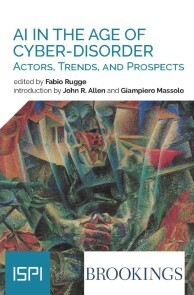
AI In The Age Of Cyber-Disorder
The rise of Artificial Intelligence applications is accelerating the pace and magnitude of the political, securitarian, and ethical challenges we are now struggling to manage in cyberspace and beyond. So far, the relationship between Artificial Intelligence and cyberspace has been investigated mostly in terms of the effects that AI could have on the digital domain, and thus on our societies. What has been explored less is the opposite relationship, namely, how the cyberspace geopolitics can affect AI. Yet, AI applications have so far suffered from growing unrest, disorder, and lack of normative solutions in cyberspace. As such, from algorithm biases, to surveillance and offensive applications, AI could accelerate multiple growing threats and challenges in and through cyberspace. This report by ISPI and The Brookings Institution is an effort to shed light on this less studied, but extremely relevant, relationship.

Handbuch moderner Softwarearchitektur
SOFTWAREARCHITEKTUR ZEITGEMÄSS UND PRAGMATISCH GEPLANT * Architektonische Muster: Das technische Fundament für viele architektonische Entscheidungen * Komponenten: Identifizierung, Kopplung, Kohäsion, Partitionierung und Granularität * Architekturstile wie Microkernel, SOA, Microservices u.v.m. und ihre architektonischen Eigenschaften * Softwarearchitektur als Engineering-Disziplin: mit wiederhol- und messbaren Ergebnissen zu stabilen Architekturen Mark Richards und Neal Ford — Praktiker mit Erfahrung aus erster Hand, die seit Jahren das Thema Softwarearchitektur unterrichten —, betrachten Softwarearchitektur vor dem Hintergrund der Entwicklungen, Innovationen und Herausforderungen des letzten Jahrzehnts. Sie konzentrieren sich auf Architekturprinzipien, die für alle Technologie-Stacks gelten. Angehende und erfahrene Architekten finden in diesem Buch umfassende Informationen zu architektonischen Merkmalen und Architekturstilen, zur Bestimmung von Komponenten, zur Diagrammerstellung und Präsentation, zu evolutionärer Architektur und vielen weiteren Themen. Die Autoren verstehen Softwarearchitektur als Engineering-Disziplin: mit wiederhol- und messbaren Ergebnissen und konkreten Kennzahlen für stabile Softwarearchitekturen.
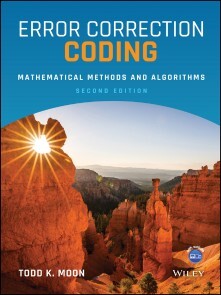
Error Correction Coding
PROVIDING IN-DEPTH TREATMENT OF ERROR CORRECTIONError Correction Coding: Mathematical Methods and Algorithms, 2nd Editionprovides a comprehensive introduction to classical and modern methods of error correction. The presentation provides a clear, practical introduction to using a lab-oriented approach. Readers are encouraged to implement the encoding and decoding algorithms with explicit algorithm statements and the mathematics used in error correction, balanced with an algorithmic development on how to actually do the encoding and decoding. Both block and stream (convolutional) codes are discussed, and the mathematics required to understand them are introduced on a “just-in-time” basis as the reader progresses through the book.The second edition increases the impact and reach of the book, updating it to discuss recent important technological advances. New material includes:* Extensive coverage of LDPC codes, including a variety of decoding algorithms. * A comprehensive introduction to polar codes, including systematic encoding/decoding and list decoding. * An introduction to fountain codes. * Modern applications to systems such as HDTV, DVBT2, and cell phones Error Correction Coding includes extensive program files (for example, C++ code for all LDPC decoders and polar code decoders), laboratory materials for students to implement algorithms, and an updated solutions manual, all of which are perfect to help the reader understand and retain the content.The book covers classical BCH, Reed Solomon, Golay, Reed Muller, Hamming, and convolutional codes which are still component codes in virtually every modern communication system. There are also fulsome discussions of recently developed polar codes and fountain codes that serve to educate the reader on the newest developments in error correction.TODD K. MOON is a Professor in the Electrical and Computer Engineering Department at Utah State University. His research interests include information systems (communications, signal processing, and controls) and the application of principles of mathematics to problems involving the transmission, extraction, modeling, compression, or analysis of signals. He is the author of numerous journal and conference articles and graduate level texts on signal processing and error correction coding. Preface xviiList of Program Files xxiiiList of Laboratory Exercises xxixList of Algorithms xxxiList of Figures xxxiiiList of Tables xliList of Boxes xliiiAbout the Companion Website xlvPART I INTRODUCTION AND FOUNDATIONS 11 A Context for Error Correction Coding 3PART II BLOCK CODES 692 Groups and Vector Spaces 713 Linear Block Codes 934 Cyclic Codes, Rings, and Polynomials 1235 Rudiments of Number Theory and Algebra 1796 BCH and Reed–Solomon Codes: Designer Cyclic Codes 2417 Alternate Decoding Algorithms for Reed–Solomon Codes 2998 Other Important Block Codes 3719 Bounds on Codes 40710 Bursty Channels, Interleavers, and Concatenation 42511 Soft-Decision Decoding Algorithms 439PART III CODES ON GRAPHS 45312 Convolutional Codes 45513 Trellis-Coded Modulation 545PART IV ITERATIVELY DECODED CODES 58914 Turbo Codes 59115 Low-Density Parity-Check Codes: Introduction, Decoding, and Analysis 63716 Low-Density Parity-Check Codes: Designs and Variations 717PART V POLAR CODES 77717 Polar Codes 779PART VI APPLICATIONS 88518 Some Applications of Error Correction in Modern Communication Systems 887PART VII SPACE-TIME CODING 89919 Fading Channels and Space-Time Codes 901Index 939

50 Arten, Nein zu sagen
PFLICHTLEKTÜRE FÜR PRODUCT OWNER UND ALLE, DIE IHR STAKEHOLDER-MANAGEMENT EFFEKTIVER GESTALTEN MÖCHTEN * Einfaches Fünf-Schritte-Modell, um effektiv »Nein« zu sagen * Neun Kategorien mit insgesamt 50 Facetten von Nein * Mit vielen Denkanstöße, praktischen Tipps und Beispielen, in denen die richtige Art und Weise, »Nein« zu sagen, aufgezeigt wird "Nein" zu sagen ist nicht immer einfach und kann nicht immer auf die gleiche Weise erfolgen. Es ist auch nicht immer möglich, "Nein" zu sagen. Doch "Nein" zu sagen, bedeutet auch ein "Ja" zu den richtigen Dingen. Das ist eine Grundkompetenz, um die Effektivität als Product Owner, einer der Schlüsselrollen innerhalb von Scrum, zu steigern. Wie gehen Product Owner mit den Stakeholdern um? Und wie gibt man ein effektives "Nein"? Das Buch gibt Antworten auf diese und verschiedene andere Fragen – und zwar auf 50 verschiedene Arten. Die vielen konkreten Beispiele und Erkenntnisse aus der jahrelangen Erfahrung der Autoren als professionelle Scrum-Trainer und Berater bieten wertvolle Tipps und Handlungsoptionen, um sofort loszulegen.

Pro SQL Server Relational Database Design and Implementation
Learn effective and scalable database design techniques in SQL Server 2019 and other recent SQL Server versions. This book is revised to cover additions to SQL Server that include SQL graph enhancements, in-memory online transaction processing, temporal data storage, row-level security, and other design-related features. This book will help you design OLTP databases that are high-quality, protect the integrity of your data, and perform fast on-premises, in the cloud, or in hybrid configurations.Designing an effective and scalable database using SQL Server is a task requiring skills that have been around for well over 30 years, using technology that is constantly changing. This book covers everything from design logic that business users will understand to the physical implementation of design in a SQL Server database. Grounded in best practices and a solid understanding of the underlying theory, author Louis Davidson shows you how to "get it right" in SQL Server database design and lay a solid groundwork for the future use of valuable business data.WHAT YOU WILL LEARN* Develop conceptual models of client data using interviews and client documentation* Implement designs that work on premises, in the cloud, or in a hybrid approach* Recognize and apply common database design patterns* Normalize data models to enhance integrity and scalability of your databases for the long-term use of valuable data* Translate conceptual models into high-performing SQL Server databases* Secure and protect data integrity as part of meeting regulatory requirements* Create effective indexing to speed query performance* Understand the concepts of concurrencyWHO THIS BOOK IS FORProgrammers and database administrators of all types who want to use SQL Server to store transactional data. The book is especially useful to those wanting to learn the latest database design features in SQL Server 2019 (features that include graph objects, in-memory OLTP, temporal data support, and more). Chapters on fundamental concepts, the language of database modeling, SQL implementation, and the normalization process lay a solid groundwork for readers who are just entering the field of database design. More advanced chapters serve the seasoned veteran by tackling the latest in physical implementation features that SQL Server has to offer. The book has been carefully revised to cover all the design-related features that are new in SQL Server 2019.LOUIS DAVIDSON has been working with databases for more than 20 years as a corporate database developer and architect. He has been a Microsoft MVP for 15 years. And he has completed a sixth edition of his SQL Server database design book (Apress). Louis has been active speaking about database design and implementation at many conferences over the past 17 years, including SQL PASS, SQL Rally, SQL Saturday events, CA World, Music City Data, and the devLink Technical Conference. Louis has worked for the Christian Broadcasting Network (CBN) as a developer, DBA, and data architect for over 21 years. He has a bachelor’s degree in computer science from the University of Tennessee at Chattanooga. For more information, please visit his website at drsql.org.1. The Fundamentals2. Introduction to Requirements3. The Language of Data Modeling4. Conceptual and Logical Data Model Production5. Normalization6. Physical Model Case Study7. Physical Model Implementation8. Data Protection Patterns with Check Constraints and Triggers9. Patterns and Anti-Patterns10. Database Security and Security Patterns11. Data Structures, Indexes, and Their Applications12. Matters of Concurrency13. Coding Architecture14. Appendix A: Scalar Datatype Reference.

Deploy Machine Learning Models to Production
Build and deploy machine learning and deep learning models in production with end-to-end examples.This book begins with a focus on the machine learning model deployment process and its related challenges. Next, it covers the process of building and deploying machine learning models using different web frameworks such as Flask and Streamlit. A chapter on Docker follows and covers how to package and containerize machine learning models. The book also illustrates how to build and train machine learning and deep learning models at scale using Kubernetes.The book is a good starting point for people who want to move to the next level of machine learning by taking pre-built models and deploying them into production. It also offers guidance to those who want to move beyond Jupyter notebooks to training models at scale on cloud environments. All the code presented in the book is available in the form of Python scripts for you to try the examples and extend them in interesting ways.WHAT YOU WILL LEARN* Build, train, and deploy machine learning models at scale using Kubernetes* Containerize any kind of machine learning model and run it on any platform using Docker* Deploy machine learning and deep learning models using Flask and Streamlit frameworksWHO THIS BOOK IS FORData engineers, data scientists, analysts, and machine learning and deep learning engineersPRAMOD SINGH is Manager of Data Science at Bain & Company. Previously, he worked as Sr. Machine Learning Engineer at Walmart Labs and Data Science Manager at Publicis Sapient in India. He has spent over 10 years working in machine learning, deep learning, data engineering, algorithm design, and application development. He has authored three Apress books: Machine Learning with PySpark, Learn PySpark, and Learn TensorFlow 2.0. He is a regular speaker at major conferences such as O’Reilly’s Strata Data, GIDS, and other AI conferences. He is an active mentor and faculty in machine learning and AI at various educational institutes. He lives in Bangalore with his wife and four-year-old son. In his spare time, he enjoys playing guitar, coding, reading, and watching football.Manager of Data Science at Bain & Company. He has over 11 years of experience in the data science field working with multiple product- and service-based organizations. He has been part of numerous ML and AI large-scale projects. He has published three books on large scale data processing and machine learning. He is a regular speaker at major AI conferences.Chapter 1: Configuring Your Deployment EnvironmentChapter goal: This chapter covers the steps right from reading the data, pre-processing, feature engineering, model training and prediction on local as well as on the cloud. This chapter provides the audience with a set of required libraries and code/data download information so that the user can set up their environment appropriately.Sub -Topics• Configuring your development environment• Installing required libraries• Building Python and TensorFlow based modelsChapter 2: Introduction to Model Deployment and ChallengesNo of pages: 20Chapter goal: The chapter showcases what is meant by deployment and what are the challenges associated with it.Sub - Topics• Understanding model deployment• Understanding challenges• Serverless architecture for deploymentChapter 3: Model Deployment Using FlaskNo of pages: 25Chapter goal: This chapter covers the lightweight web framework – Flask for deploying the small and simple machine learning models.Sub - Topics:• What is Flask• Build Python-based model• Deploy machine learning model using FlaskChapter 4: Model Containerization Using DockerNo of pages:30Chapter goal: This chapter is devoted to the understanding of docker platform. It covers all the steps to containerize any model, application using docker.Sub - Topics:• Introduction to Docker• Build a custom Docker image• Run a machine Learning model using DockerChapter 5: Introduction to KubeflowNo of pages:30Chapter goal: This chapter serves as an introduction to our core theme of the book: Build and deploy machine learning models using Kubeflow. The chapter begins with covering various components of Kubeflow and offers information on its advantages over other platformsSub - Topics:• Gentle Introduction to Kubernetes• Introduction to Kubeflow• Kubeflow componentsChapter 6: Model Deployment Using KubeflowNo of pages: 35Chapter goal: This chapter focuses on the industrial implementation of deep learning model in the Google Cloud Platform using Kubeflow. This chapter also demonstrates various techniques like hyperparameter tuning and workflows for training and serving the models for predictionsSub - Topics:• Google Cloud Platform configuration• Hyperparameter tuning of the model• Training and serving model at scaleChapter 7: Model Deployment Using MLflowNo of pages:20Chapter goal: This chapter covers the alternative to Google’s Kubeflow – Spark’s MLflow. It showcases the process of serializing the machine learning model and serving it for predictions using MLflow.Sub - Topics:• Deep learning using MLflow• Model management using MLflow• Model serving using MLflow

Google Data Studio for Beginners
Google Data Studio is becoming a go-to tool in the analytics community. All business roles across the industry benefit from foundational knowledge of this now-essential technology, and Google Data Studio for Beginners is here to provide it. Release your locked-up data and turn it into beautiful, actionable, and shareable reports that can be consumed by experts and novices alike.Authors Grant Kemp and Gerry White begin by walking you through the basics, such how to create simple dashboards and interactive visualizations. As you progress through Google Data Studio for Beginners, you will build up the knowledge necessary to blend multiple data sources and create comprehensive marketing dashboards. Some intermediate features such as calculated fields, cleaning up data, and data blending to build powerhouse reports are featured as well. Presenting your data in client-ready, digestible forms is a key factor that many find to be a roadblock, and this book will help strengthen this essential skill in your organization.Centralizing the power from sources such as Google Analytics, online surveys, and a multitude of other popular data management tools puts you as a business leader and analyzer ahead of the rest. Your team as a whole will benefit from Google Data Studio for Beginners, because by using these tools, teams can collaboratively work on data to build their understanding and turn their data into action. Data Studio is quickly solidifying itself as the industry standard, and you don’t want to miss this essential guide for excelling in it.WHAT YOU WILL LEARN* Combine various data sources to create great looking and actionable visualizations* Reuse and modify other dashboards that have been created by industry pros* Use intermediate features such as calculated fields and data blending to build powerhouse reportsWHO THIS BOOK IS FORUsers looking to learn Google Analytics, SEO professionals, digital marketers, and other business professionals who want to mine their data into an actionable dashboard.GRANT KEMP is a Data Studio specialist who regularly delivers trainings and speaks at conferences and meetups to share the transformative power that Data Studio can offer. He has helped a wide variety of companies from small retailers, to multinationals to start using Data Studio.Grant has over 18 years experience in digital, starting out as a developer and working across multiple verticals including e-commerce, publishing, startups and travel. He has deployed data solutions within a bevy of well-known companies such as Dreams, Gap, Photobox, Missguided, Arsenal Football Club, and Virgin, among others.GERRY WHITE is an experienced digital marketer specializing in SEO and analytics, particularly focused on technical elements of a site performance. He has worked for clients like the BBC, McDonalds, WeightWatchers, BHS, Gordon Ramsey, Premier Inn to name but a few.

Pro Ember Data
Learn how to work with Ember Data efficiently, from APIs, adapters, and serializers to polymorphic relationships, using your existing JavaScript and Ember knowledge. This book will teach you how to adapt Ember Data to fit your custom API.Have a custom API that you aren't sure how to use with Ember Data? Interested in writing your own adapter or serializer? Want to just know more about how Ember Data works? This is the Ember Data book you have been waiting for.Lots of books and tutorials start off teaching Ember with Ember Data. This is great, especially if you are in control of your API, but what if you aren't? You do a little research and start seeing terminology like adapters, serializers, transforms, and snapshots, and quickly become overwhelmed. Maybe you've thought to yourself that Ember isn't for you. Well, if this sounds familiar, then this book is for you.WHAT YOU'LL LEARN* Review the differences between normalization and serialization* Understand how the built-in adapters and serializers in Ember Data work* Customize adapters and serializers to consume any API and write them from scratch* Handle API errors in Ember Data* Work with the Reddit API using Ember Data* Learn how to use polymorphic relationshipsWHO THIS BOOK IS FORAnyone with an interest in learning more about Ember Data and how to adapt it to any API. People who read this book should be familiar with the basics of Ember and JavaScript.DAVID TANG is a Software Engineer from Los Angeles with over 10 years of working experience in web development. His software career has led him to work with companies of all sizes and use many different technologies on both the back-end and front-end for building web applications. Ultimately he found his passion on the front-end in building applications with rich user experiences. He has worked with several JavaScript frameworks, but was drawn to Ember because of the community's values in convention over configuration, developer testing, and the commitment to providing an upgrade path for new major releases. He values the framework's opinionated way of working with APIs and managing data in a client-side JavaScript application with its companion library Ember Data. Since David was introduced to Ember, he has spent a lot of time blogging, teaching, and building applications with Ember and Ember Data. David is also an adjunct faculty member at the University of Southern California, teaching web development courses.* Chapter 1 - Ember Data Overview* Architectural Overview* Model Attributes and Transforms* The APIUsing the Store * Adapters* Relationships* Chapter 2 - Talking to APIs with Adapters* The RESTAdapter* The JSONAPIAdapterThe ActiveModelAdapter * Background Reloading* Chapter 3 - API Response Formats and Serializers* The Job of the Serializer* The JSONSerializer* The RESTSerializer* The JSONAPISerializerThe Base Serializer * Using a Serializer* Chapter 4 - Common Adapter and Serializer Customizations* Changing the RESTful URL Path* Changing the URL for Certain Operations* Mapping Differently Named Payload Keys to Model AttributesMapping Foreign Keys to Relationships * Setting the Primary Key* Normalizing Responses* Normalizing Responses by Store Call* Normalizing Single Resource Objects* Chapter 5 - Writing an Adapter and Serializer from Scratch* Setup* Our Custom Adapter and Serializer* Finding All RecordsFinding a Single Record * Revisiting normalizeResponse()Creating Records * Updating a Record* Deleting a Record* Chapter 6 - Swapping the API with Local Storage* Implementing findAll()* Implementing findRecord()Implementing createRecord() * Implementing updateRecord()* Implementing deleteRecord()* Chapter 7 - Nested Resource URL Paths and Relationship Links* How Relationship Links Work* When APIs Don’t Return Relationship Links* Chapter 8 - Working with Nested Data and Embedded Records* Declaring Attributes Without Transforms* Embedded Records* Chapter 9 - Handling Custom Error Responses* Validation Errors* Controlling the Invalid Status Code* Controlling Error Response PayloadsOther Error Types* Chapter 10 - Testing Adapters and SerializersTesting Adapters * Testing SerializersChapter 11 - Common Customizations with JSON:API* Changing Attribute CasingOverriding a Resource Object’s Type * Overriding HTTP MethodsChapter 12 - Consuming the Reddit API* Setup* The Reddit APIs We Will Use* Fetching Posts in a Subreddit* Fetching a Subreddit’s Details* Chapter 13 - Polymorphic Relationships * Setup* What are Polymorphic Relationships?How do Polymorphic Relationships Work? * Customizing Polymorphic Relationships

C++20 for Lazy Programmers
Ready to learn programming with less effort and more fun? Then do it the lazy way! C++20 for Lazy Programmers uses humor and fun to make you actually willing to read and eager to do the projects as you master the popular and powerful C++ language. Along the way it includes many features from the new C++20 standard, such as ranges, spans, format strings, the “spaceship” operator, and concepts (template parameter requirements), and provides brief introductions to modules and coroutines.With this unique method, you’ll stretch your abilities with a variety of projects, including your own C++ arcade game. You'll construct your own classes, templates, and abstract data types. After reading and using this book you’ll be ready to build real-world C++ applications and game projects on your own.WHAT YOU WILL LEARN:* The brand-new C++20 standard* Programming graphics and games with the SDL library, using SSDL, the "Simple SDL" wrapper library* How to use the most common C++ compilers -- Visual Studio for Windows, and g++ (with Unix or MinGW) -- and their associated debuggers* “Anti-bugging” for easy fixes to common problems * Sound practices for becoming a productive programmer* How to make your own big projects, including a C++-based arcade game * The built-in Standard Template Library (STL) functions and classes for easy and efficient programming* Powerful data types including strings, stacks, vectors, and linked lists -- not by reading about them but by building them -- preparing you further for a career in programmingWHO THIS BOOK IS FORAll who are new to C++, either self-learners or students in college-level courses.WILL BRIGGS, PhD is a professor of computer science at the University of Lynchburg in Virginia. He has 20+ years of experience teaching C++, 12 of them using earlier drafts of this book, and about as many years teaching other languages including C, LISP, Pascal, PHP, PROLOG, and Python. His primary focus is teaching of late while also active in research in artificial intelligence.Introduction 1-11 Getting started 1-91.1 A simple program 1-91.2 Creating an SSDL project 1-121.3 Shapes and the functions that draw them 1-271.4 consts and colors 1-351.5 Text 1-37Prominent examples from this chapter: a drawing of a bug's head; a neatly printed poem.2 Images and sound 2-432.1 Images and changing window characteristics 2-432.2 Multiple images together 2-482.3 Adding transparency with GIMP 2-502.4 Sound 2-54Example: a slide show (Your yard gnome's travel pics).3 Math: types, operations, consts, and math functions 3-563.1 Variables 3-563.2 const, constexpr, constinit 3-573.3 Math operators 3-593.4 Built-in functions and casting 3-62Examples: diver on a diving board; a 5-pointed star.C++20 updates: constexpr, constinit.After this chapter, constexpr/constinit show up in most examples.4 Mouse, and if 4-674.1 Mouse functions 4-674.2 if 4-694.3 Boolean values and variables 4-734.4 A hidden-object game 4-75Example: The hidden-object game.5 Loops and text input 5-795.1 Keyboard input 5-795.2 while and do-while 5-815.3 for loops 5-855.4 chars and cctype 5-905.5 switch 5-94Examples: the Monty Hall problem; menus.6 Algorithms and the development process 6-976.1 Adventures in robotic cooking 6-976.2 Writing a program from start to finish 6-100Example: a bullseye pattern.7 Functions 7-1067.1 Functions that return values 7-1067.2 Functions that return nothing 7-1097.3 Global variables and why they're evil 7-1117.4 How to write a function in four easy steps (and call it in one) 7-1137.5 Why have functions, anyway? 7-117Example: a multi-frame comic (illustrates code reuse).8 Functions (Continued) 8-1268.1 Random numbers 8-1268.2 Boolean functions 8-1318.3 Multiple values provided: using & parameters 8-1338.4 Identifier scope 8-1388.5 A final note on algorithms 8-140Examples: various functions using random number generation.9 Using the debugger 9-1419.1 A flawed program 9-1419.2 Breakpoints and watched variables 9-1459.3 Fixing the stripes 9-1459.4 Going into functions 9-1499.4 Fixing the stars 9-1499.4 Wrap-up 9-1509.4 Other debugging techniques 9-1539.4 More on antibugging 9-156Example: a national flag.10 Arrays and enum class 10-15910.1 Arrays 10-15910.2 Arrays as function parameters 10-16010.3 enum class 10-16610.4 Multidimensional arrays 10-166Examples: monthly temperatures, checkers, tic-tac-toe.C++20 update: using enum class (which significantly improves the usefulness of enum class).11 Animation with structs and sprites 11-17311.1 struct 11-17311.2 Making a movie with struct and while 11-17611.3 Sprites 11-182Examples: bouncing balls; a video aquarium.C++20 update: designated initializers for structs.12 Building your own arcade game: input, collisions, and putting it all together 12-18812.1 Determining input states 12-18812.2 Events 12-19012.3 Cooldowns and lifetimes 12-19112.4 Collisions 12-19412.5 The big game 12-195Examples: an arcade game, and the student's own game.13 Standard I/O and file operations 13-20413.1 Standard I/O programs in Visual C++ and g++ 13-20413.2 File I/O (optional) 13-210Examples: various programs reading/writing text files.Except for Chapter 21 (virtual functions), this and subsequent chapters use standard console I/O, not the SSDL graphics library.If used for a course, this chapter likely ends the first semester, so if students are going into a class with a different textbook, they are ready for the console I/O it will certainly require them to know.14 Character arrays and dynamic memory (pointers) 14-22114.1 Character arrays 14-22114.2 Dynamic allocation of arrays. 14-22414.3 Using the * notation 14-228Examples: C's string functions, written as examples or offered as exercises; code with new and deleteC++20 updates: array size deduction in new expressions.15 Classes: the basics 15-23215.1 Writing classes 15-23215.2 Constructors 15-23515.3 const objects, const member functions... 15-23915.4 ...and const parameters 15-24115.5 Multiple constructors 15-24115.6 Default parameters for code reuse 15-24415.7 Date program (so far) 15-245Examples: the Date class; the student's own Time class.16 Classes, continued 16-24816.1 inline functions for efficiency 16-24816.2 Access functions 16-24916.3 static members, inline, and constexpr/constinit 16-25016.4 Separate compilation and include files 16-25216.5 Multiple-file projects in Microsoft Visual C++ 16-25716.7 Multiple-file projects in g++ 16-25916.8 Final Date program 16-264Examples: the Date class; the student's own Time class, continued.C++20 updates: constexpr/consteval member functions; constexpr/constinit data members and their interaction with static.17 Operators, and destructors 17-26817.1 The basic string class 17-26817.2 Destructors 17-27017.3 == and != operators 17-27117.3 Other comparison operators, using the spaceship operator 17-27117.4 Assignment operators and *this 17-27317.5 Arithmetic operators 17-27517.6 [] and () operators 17-27917.7 >> and

Implementing AI Systems
AI is one of the fastest growing corners of the tech world. But there remains one big problem: many AI projects fail. The fact is that AI is unique among IT projects. The technology requires a different mindset, in terms of understanding probabilities, data structures and complex algorithms. There is also a need to deal with complex issues like ethics and privacy.This is where Implementing AI Systems comes in. You'll learn the step-by-step process for successful implementations of AI, backed up with numerous case studies from top companies. This book puts everything you need to know into one place – that is, it’s the handbook you need for AI. You’ll focus primarily on understanding the core concepts for AI like NLP, Machine Learning, Deep Learning and so on.This book will help you find the right areas to apply AI.WHAT YOU’LL LEARN* Put together an effective data strategy* Create models and how to successfully test them* Evaluate AI tools* Assemble the right team* Scale AI across an organizationWHO THIS BOOK IS FORPrimarily for managers, IT professionals and executives of mid-size and large companies wanting to implement AI in their organization.Tom Taulli has been developing software since the 1980s. In college, he started his first company, which focused on the development of e-learning systems. He created other companies as well, including Hypermart.net that was sold to InfoSpace in 1996. Along the way, Tom has written columns for online publications such as BusinessWeek.com, TechWeb.com, and Bloomberg.com. He also writes posts on Artificial Intelligence for Forbes.com and is the adviser to various companies in the space. You can reach Tom on Twitter (@ttaulli) or through his website (Taulli.com) where he has an online course on AI.Guest Forward (Say from a CEO/founder of an AI company)Introduction (Quick overview of what the book will cover, chapter-by-chapter)Chapter 1: AI Landscape• Look at the growth opportunities and the need for digital transformation. But also highlight the challenges with AI implementations.Chapter 2: Identify The Problem To Be Solved• The problem can be internal (such as with improving operations) or external (helping to provide better customer experiences). This chapter will look at cases where companies have been successful with this.Chapter 3: Data Preparation• This often does not get enough attention. But data preparation is absolutely essential and full of mine fields. There will be a look at how to identify/clean the data, such a with various tools and techniques. This chapter will also describe strategies for data ethics, governance, provenance and compliance.Chapter 4: Building the AI Team• This shows what skillsets are required and how to recruit the right people. There will also be a look at setting up the right incentives, roles and duties.Chapter 5: Creating the Model• This chapter will focus on what algorithms to use, how to select the parameters and how to test/train the models. There will also be coverage on the various types of tools to select and when to create in-house ones.Chapter 6: Deploy The Model• Here there is a look at strategies for having limited releases and rollouts. There will also be a look at different approaches for the design of the UI so as to get better adoption.Chapter 7: Monitoring• This chapter will show how to keep track of the model and know when to make changes/upgrades.Chapter 8: Scaling AI• This has proven to be extremely difficult for organizations. So in this chapter, there will be a look at strategies to show how AI can move the needle.Chapter 9: The Future• Again, there needs to be a different mindset. Thus, for a successful AI implementation, it’s important to look at change management strategies.Chapter 10: The Future• This will be a recap of the main takeaways of the book and also a look at major trends with AI.Appendix A: Resources like blogs, videos and websitesAppendix B: AI Tools (TensorFlow, DataRobot, Microsoft AI Builder, etc)Appendix C: AI Glossary
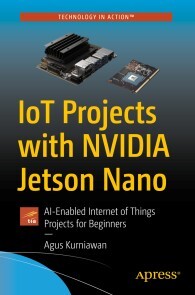
IoT Projects with NVIDIA Jetson Nano
Explore the capabilities of the NVIDIA Jetson Nano, an IoT device designed to perform computations like a computer desktop. This book will show you how to build your first project and optimize your devices, programs, and daily activities with the AI computation abilities of the Jetson Nano.This board consists of CPU Quad-core ARM A57 @ 1.43 GHz and GPU 128-core Maxwell. With this hardware specification, the board can run multiple neural networks in parallel for complex AI applications. With the integrated sensor and actuators, this board enables stronger IoT solutions and provides more advanced capabilities.Discover how develop complex IoT projects with the Jetson Nano today.WHAT YOU’LL LEARN* Set up NVIDIA Jetson Nano device* Build applications like image classification, object detection, segmentation, and speech processing* Use the Jetson Nano to process daily computer activities such as browsing the internet, checking emails, or playing music and videos* Implement machine learning computations into your projectsWHO THIS BOOK IS FORMakers, developers, students, and professional of all levels who are new to the NVIDIA Jetson Nano technology. Agus Kurniawan is a lecturer, IT consultant, and author. He has 15 years of experience in various software and hardware development projects, delivering materials in training and workshops, and technical writing. He has been awarded the Microsoft Most Valuable Professional (MVP) award 16 years in a row.Agus is a lecturer and researcher in the field of networking and security systems at the Faculty of Computer Science, Universitas Indonesia, Indonesia.He can be reached on his Linkedin at @agusk and Twitter at @agusk2010.Chapter 1: Introduction to NVIDIA Jetson NanoChapter goal: to introduce NVIDIA Jetson Nano hardware and software1.1 Introduction1.2 NVIDIA Jetson Nano Hardware Specification1.3 What can we do with NVIDIA Jetson NanoChapter 2: Setting Up and RunningChapter goal: to set up and run NVIDIA Jetson Nano2.1 Introduction2.2 Hardware Preparation2.3 Set up Software2.4 Run NVIDIA Jetson Nano2.5 Configure NVIDIA Jetson Nano Software2.6 Reboot and ShutdownChapter 3: Administering NVIDIA Jetson NanoChapter goal: to administer NVIDIA Jetson Nano3.1 Introduction3.2 Managing Users3.3 Desktop Personalization3.4 Working with Terminal3.7 NVIDIA Jetson Nano Linux Command3.8 Networking3.9 Attaching a Network Module3.10 Connecting to a Network3.10.1 Connecting a Network via Ethernet3.10.2 Connecting a Network via WiFi with3.10.3 Connecting a Network via WiFi USB Dongle3.11 Browsing Internet3.12 SSH3.13 Access Remote Files over SFTP3.14 Update Package Repository3.15 Remote DesktopChapter 4: NVIDIA Jetson Nano ProgrammingChapter goal: to develop programs on NVIDIA Jetson Nano4.1 Introduction4.2 Python4.3 C/C++4.4 Node.js4.5 Web Application with PHPChapter 5: NVIDIA Jetson Nano I/O ProgrammingChapter goal: to develop programs to access NVIDIA Jetson Nano I/O5.1 Introduction5.2 Accessing GPIO5.3 Sensor Programming5.4 Actuator ProgrammingChapter 6: NVIDIA Jetson Nano CamereChapter goal: to work with camera on NVIDIA Jetson Nano board6.1 Introduction6.2 Camera Interfaces and Modules6.3 Set Up Camera Module6.4 Take Picture6.5 Record VideoChapter 7: Deep Learning ComputationChapter goal: to build Deep Learning programs on NVIDIA Jetson Nano I/O7.1 Introduction7.2 A Brief Deploying Deep Review7.3 Jetson Inference7.4 Data Classification7.5 Data Regression

Authentication and Access Control
Cybersecurity is a critical concern for individuals and for organizations of all types and sizes. Authentication and access control are the first line of defense to help protect you from being attacked.This book begins with the theoretical background of cryptography and the foundations of authentication technologies and attack mechanisms. You will learn about the mechanisms that are available to protect computer networks, systems, applications, and general digital technologies.Different methods of authentication are covered, including the most commonly used schemes in password protection: two-factor authentication and multi-factor authentication. You will learn how to securely store passwords to reduce the risk of compromise. Biometric authentication—a mechanism that has gained popularity over recent years—is covered, including its strengths and weaknesses.AUTHENTICATION AND ACCESS CONTROL explains the types of errors that lead to vulnerabilities in authentication mechanisms. To avoid these mistakes, the book explains the essential principles for designing and implementing authentication schemes you can use in real-world situations. Current and future trends in authentication technologies are reviewed.WHAT YOU WILL LEARN* Understand the basic principles of cryptography before digging into the details of authentication mechanisms* Be familiar with the theories behind password generation and the different types of passwords, including graphical and grid-based passwords* Be aware of the problems associated with the use of biometrics, especially with establishing a suitable level of biometric matching or the biometric threshold value* Study examples of multi-factor authentication protocols and be clear on the principles* Know how to establish authentication and how key establishment processes work together despite their differences* Be well versed on the current standards for interoperability and compatibility* Consider future authentication technologies to solve today's problemsWHO THIS BOOK IS FORCybersecurity practitioners and professionals, researchers, and lecturers, as well as undergraduate and postgraduate students looking for supplementary information to expand their knowledge on authentication mechanismsSIRAPAT BOONKRONG has more than 15 fifteen years of experience in the field of information security as a student, researcher, and lecturer. After spending more than 10 years getting his education from high school to PhD in the UK, Sirapat began his career in 2006 as a full-time researcher at the National Electronics and Computer Technology Centre, Thailand. He then moved into full-time teaching at King Mongkut's University of Technology North Bangkok, Thailand and stayed there from 2009 to 2017. Sirapat is currently a full-time lecturer at the School of Information Technology and DIGITECH at Suranaree University of Technology, Thailand. His main teaching and research interests are in cyber security, authentication technologies, and cryptographic protocol design.CHAPTER 1: INTRODUCTION TO CRYPTOGRAPHYCovers basic principles of cryptography which forms a part of authentication mechanisms. This chapter is included in this book because it is necessary to understand basic principles of cryptography prior to getting into the detail of authentication mechanisms.What is “Security”?The CIA ModelPrinciples of CryptographySymmetric CryptographyAsymmetric CryptographyHybrid CryptosystemCryptographic Hash FunctionsDigital SignatureCHAPTER 2: PUBLIC KEY INFRASTRUCTUREIt is not possible to have a book on authentication without mentioning public key infrastructure (PKI), which is the foundation of security mechanisms for transactions on the Internet. The aim of this chapter is the understanding of the process and components, especially certificate authorities and digital certificates, which are necessary in many of today’s authentication technologies.PKI’s Uses and BenefitsPKI FrameworkCertificate ExchangePKI ProcessCHAPTER 3: METHODS AND THREATS OF AUTHENTICATIONBrings the readers into the world of authentication with an introduction to different authentication methods including the widely accepted something-you-know, something-you-have and something-you-are. Unfortunately, they are not without any security problems. The chapter, therefore, provides explanation of potential threats to these authentication technologies, too.What is Authentication?Factors of AuthenticationSomething You KnowSomething You HaveSomething You AreOther Factors of AuthenticationThreats of AuthenticationCHAPTER 4: PASSWORD-BASED AUTHENTICATIONPasswords are the most popular and most commonly used authentication mechanism. It is, therefore, necessary to understand theories behind password generation and different types of passwords, including graphical and grid-based passwords. One of the main aims of this chapter is to explain the problems with traditional passwords and newly studied problem with grid-based passwords. This chapter also discusses the principles of secure password storing methods during which a new and more secure storing scheme is introduced.PasswordsStoring PasswordsDynamic Salt Generation and PlacementGrid-Based PasswordsCHAPTER 5: BIOMETRIC AUTHENTICATIONIn recent years, we have seen that authentication technologies have stepped into the field of biometrics. Biometric authentication is discussed together with how the efficiency of biometric-based authentication methods can be measured. This chapter also touches on the problems of biometrics, especially the suitable level of biometric matching or the biometric threshold value. Finally, a method and an example for finding a suitable biometric threshold is illustrated.What is Biometrics?Biometric AuthenticationPerformance Metrics of Biometric AuthenticationFinding a Biometric ThresholdBiometric Authentication Use CasesCHAPTER 6: MULTI-FACTOR AUTHENTICATIONExplains a mechanism known as multi-factor authentication. It has become a well-known fact that one-factor authentication, especially the password-only authentication method is not adequate enough. Multi-factor authentication is when more than one method or one type of authentication credential is used in the authentication process. It is increasingly used in verifying user’s identity to access information systems with the belief that it provides better security. This chapter provides the explanation of the principles and examples of multi-factor authentication protocols.Issues with Traditional AuthenticationTwo-Factor AuthenticationCommon Authentication FactorsIs Two-Factor Authentication More Secure?Where is Two-Factor Authentication Used?Multi-Factor AuthenticationMulti-Factor Authentication for Internet BankingMulti-Factor Biometric-Based AuthenticationMulti-Factor Authentication EvaluationCHAPTER 7: AUTHENTICATION AND KEY ESTABLISHMENT PROTOCOLSThe aim of this chapter is to establish how authentication and key establishment processes work together despite their differences. Classical authentication and key establishment protocols that applied symmetric cryptography and asymmetric cryptography are discussed in order to point out their weaknesses. Potential solutions and more secure versions of these classic protocols are also provided, not with the expectation that the readers will use them but with the hope that they will understand how vulnerabilities can be spotted and what mechanisms can be used to fix them. Apart from the classical schemes, today’s authentication and key establishment schemes are explained in secure socket layer (SSL) and Kerberos. Moreover, from the lessons learned from the past protocols, principles for designing more secure authentication mechanisms are given.Authentication ProtocolsAndrew Secure RPC ProtocolNeedham-Schroeder ProtocolNeedham-Schroeder Public Key ProtocolSecure Socket Layer (SSL)KerberosDesigning an Authentication ProtocolCHAPTER 8: CURRENT AND FUTURE TRENDS OF AUTHENTICATIONThis chapter attempts to look into the future to see how authentication process will evolve and be developed. Several upcoming processes are: continuous authentication, where users are frequently authenticated during a session; cancellable authentication, where users are not required to enroll their true biometric information; and adaptive multi-factor authentication, which is how authentication factors dynamically change according to different context.What the World is DoingContinuous AuthenticationCancellable AuthenticationAdaptive Multi-Factor Authentication

Cultural Algorithms
A THOROUGH LOOK AT HOW SOCIETIES CAN USE CULTURAL ALGORITHMS TO UNDERSTAND HUMAN SOCIAL EVOLUTION For those working in computational intelligence, developing an understanding of how collective intelligence emerges from the interaction of human agents over time is essential. This book, Cultural Algorithms: Tools to Model Complex Dynamic Social Systems, is the foundation of that study. It showcases how we can use cultural algorithms to organize social structures and develop socio-political systems for sustainable learning in dynamic environments. For such a vast topic, the text covers everything from the history of the development of cultural algorithms from the standpoint of Agent-Based modeling and Complex Systems. Readers will also learn how other nature-inspired algorithms can be expressed in a cultural context and how to use social metrics to assess the performance of various cultural algorithms. In addition to these topics, the book covers topics including: * An overview of the Cultural Algorithms Toolkit (CAT) for prototyping Cultural Algorithms along with CAT Sample Runs * Problem solving using social networks in cultural algorithms with auctions * Multi-layered deep social learning with subcultures * Use of Formal Game Theory to enhance Social Knowledge Distributio in Cultural Algorithms * Cultural Learning as a Thermodynamic Process-the Cultural Engine as a vehicle for sustainable learning * Multi-Objective problem solving in Cultural Algorithms * Case studies on team formations * An exploration of virtual worlds using Cultural Algorithms For industry professionals or new students interested in the foundation of social intelligence, Cultural Algorithms provides an impactful and thorough look how collective intelligence can emerge over time and how human social evolution translates into the modern world. A thorough look at how societies can use cultural algorithms to understand human social evolution For those working in computational intelligence, developing an understanding of how cultural algorithms and social intelligence form the essential framework for the evolution of human social interaction is essential. This book, Cultural Algorithms: Tools to Model Complex Dynamic Social Systems, is the foundation of that study. It showcases how we can use cultural algorithms to organize social structures and develop socio-political systems that work. For such a vast topic, the text covers everything from the history of the development of cultural algorithms and the basic framework with which it was organized. Readers will also learn how other nature-inspired algorithms can be expressed and how to use social metrics to assess the performance of various algorithms. In addition to these topics, the book covers topics including: * The CAT system including the Repast Simphony System and CAT Sample Runs * How to problem solve using social networks in cultural algorithms with auctions * Understanding Common Value Action to enhance Social Knowledge Distribution Systems * Case studies on team formations * An exploration of virtual worlds using cultural algorithms For industry professionals or new students, Cultural Algorithms provides an impactful and thorough look at both social intelligence and how human social evolution translates into the modern world. List of Contributors ix About the Companion Website xi 1 System Design Using Cultural Algorithms 1 Robert G. Reynolds Introduction 1 The Cultural Engine 4 Outline of the Book: Cultural Learning in Dynamic Environments 6 References 10 2 The Cultural Algorithm Toolkit System 11 Thomas Palazzolo CAT Overview 11 Downloading and Running CAT 14 The Repast Simphony System 15 Knowledge Sources 15 Fitness Functions 18 ConesWorld 19 The Logistics Function 23 CAT Sample Runs: ConesWorld 24 CAT Sample Runs: Other Problems 32 Reference 34 3 Social Learning in Cultural Algorithms with Auctions 35 Robert G. Reynolds and Leonard Kinnaird-Heether Introduction 35 Cultural Algorithms 37 Subcultured Multi-Layered, Deep Heterogeneous Networks 40 Auction Mechanisms 42 The Cultural Engine 45 ConesWorld 47 Experimental Framework 50 Results 50 Conclusions 54 References 55 4 Using Common Value Auction in Cultural Algorithm to Enhance Robustness and Resilience of Social Knowledge Distribution Systems 57 Anas AL-Tirawi and Robert G. Reynolds Cultural Algorithms 57 Common Value Auction 62 ConesWorld 64 Dynamic Experimental Framework 66 Results 67 Conclusions and Future Work 73 References 73 5 Optimizing AI Pipelines: A Game-Theoretic Cultural Algorithms Approach 75 Faisal Waris and Robert G. Reynolds Introduction 75 Overview of Cultural Algorithms 77 CA Knowledge Distribution Mechanisms 78 Primer on Game Theory 80 Game- Theoretic Knowledge Distribution 81 Continuous-Action Iterated Prisoner’s Dilemma 82 Test Results: Benchmark Problem 89 Test Results: Computer Vision Pipeline 92 Conclusions 95 References 96 6 Cultural Algorithms for Social Network Analysis: Case Studies in Team Formation 98 Kalyani Selvarajah, Ziad Kobti, and Mehdi Kargar Introduction 98 Application of Social Network 99 Forming Successful Teams 99 Formulating TFP 100 Communication Cost 101 Personnel Cost 101 Distance Cost 102 Workload Balance 102 Why Artificial Intelligence? 103 Cultural Algorithms 103 Forming Teams in Coauthorship Network 104 Individual Representation 105 Fitness Function 107 Belief Space 107 Dataset and Observations 108 Skill Frequency 108 Forming Teams in Health-care Network 108 Individual Representation 113 Fitness Function 114 Dataset and Observation 115 Summary and Conclusion 117 References 117 7 Evolving Emergent Team Strategies in Robotic Soccer using Enhanced Cultural Algorithms 119 Mostafa Z. Ali, Mohammad I. Daoud, Rami Alazrai, and Robert G. Reynolds Introduction 119 Related Work 121 The 2D Soccer Simulation Test Bed 122 Evolution of Team Strategies via Cultural Algorithm 124 Experiments and Analysis of Results 132 Conclusion 138 References 139 8 The Use of Cultural Algorithms to Learn the Impact of Climate on Local Fishing Behavior in Cerro Azul, Peru 143 Khalid Kattan, Robert G. Reynolds, and Samuel Dustin Stanley Introduction 143 An Overview of the Cerro Azul Fishing Dataset 143 Data Mining at the Macro, Meso, and Micro Levels 148 Cultural Algorithms and Multiobjective Optimization 149 The Artisanal Fishing Model 153 The Experimental Results 159 Statistical Validation 163 Conclusions and Future Work 166 References 167 9 CAPSO: A Parallelized Multiobjective Cultural Algorithm Particle Swarm Optimizer 169 Samuel Dustin Stanley, Khalid Kattan, and Robert G. Reynolds Introduction 169 Multiobjective Optimization 170 Cultural Algorithms 171 CAPSO Knowledge Structures 174 Tracking Knowledge Source Progress (Other than Topographic) 176 CAPSO Algorithm Pseudocode 177 Multiple Runs 180 Comparison of Benchmark Problems 180 Overall Summary of Results 192 Other Applications 192 References 193 10 Exploring Virtual Worlds with Cultural Algorithms: Ancient Alpena–Amberley Land Bridge 195 Thomas Palazzolo, Robert G. Reynolds, and Samuel Dustin Stanley Archaeological Challenges 195 Generalized Framework 198 The Land Bridge Hypothesis 199 Origin and Form 204 Putting Data to Work 205 Pathfinding and Planning 215 Identifying Good Locations: The Hotspot Finder 218 Cultural Algorithms 222 Cultural Algorithm Mechanisms 225 The Composition of the Belief Space 226 Future Work 227 Path Planning Strategy 227 Local Tactics 229 Detailed Locational Information 230 Extending the CA 231 Human Presence in the Virtual World 234 Increasing the Complexity 235 Updated Path-Planning Results in Unity 236 The Fully Rendered Land Bridge 237 Pathfinder Mechanisms 239 Results 245 Conclusions 254 References 255 Index 259 DR. ROBERT G. REYNOLDS is a Professor of Computer Science at Wayne State University and a Visiting Research Scientist at the University of Michigan's Museum of Anthropology. In addition to serving as the Computational Intelligence Representative to the IEEE USA Research and Development Committee, he has also been an Associate Editor for eight Intelligent System and IEEE journals.