

Allgemein

IoT Projects with Arduino Nano 33 BLE Sense
Get started with the extremely versatile and powerful Arduino Nano 33 BLE Sense, a smart device based on the nRF52840 from Nordic semiconductors. This book introduces you to developing with the device.You'll learn how to access Arduino I/O such as analog and digital I/O, serial communication, SPI and I2C. The book also covers how to access sensor devices on Arduino Nano 33 BLE Sense, how to interact with other external devices over BLE, and build embedded Artificial Intelligence applications.Arduino Nano 33 BLE Sense consists of multiple built-in sensors such as 9-axis inertial, humidity, temperature, barometric, microphone, gesture, proximity, light color and light intensity sensors. With this book, you'll see how this board supports the Bluetooth Low Energy (BLE) network, enabling interactions with other devices over the network.WHAT YOU’LL LEARN* Prepare and set up Arduino Nano 33 BLE Sense board* Operate Arduino Nano 33 BLE Sense board hardware and software* Develop programs to access Arduino Nano 33 BLE Sense board I/O* Build IoT programs with Arduino Nano 33 BLE Sense boardWHO THIS BOOK IS FORMakers, developers, students, and professionals at any level interested in developing with the Arduino Nano 33 BLE Sense board.Agus Kurniawan is a lecturer, IT consultant, and author. He has 15 years of experience in various software and hardware development projects, delivering materials in training and workshops, and technical writing. He has been awarded the Microsoft Most Valuable Professional (MVP) award 16 years in a row.Agus is a lecturer and researcher in the field of networking and security systems at the Faculty of Computer Science, Universitas Indonesia, Indonesia.He can be reached on his Linkedin at @agusk and Twitter at @agusk2010.Chapter 1: Setting up Development EnvironmentChapter goal: to introduce Arduino Nano 33 BLE Sense and set up development environment1.1 Introduction1.2 Review Arduino Nano 33 BLE Sense Board1.3 Set up Development Environment1.4 Hello Arduino: Blinking ProgramChapter 2: Arduino Nano 33 BLE Sense Board DevelopmentChapter goal: to access Arduino Nano 33 BLE Sense I/O and communication protocol2.1 Introduction2.2 Basic Sketch Programming2.3 Digital I/O2.4 Analog I/O2.5 Serial Communication2.6 PWM2.7 SPI2.8 I2CChapter 3: Sensor ProgrammingChapter goal: to access built-in sensors on Arduino Nano 33 BLE Sense3.1 Introduction3.2 Working with Digital Microphone3.3 Working with Gesture Sensor3.4 Working with Barometer3.5 Working with Temperature and Relative HumidityChapter 4: Bluetooth Low Energy (BLE)Chapter goal: to work with Bluetooth Low Energy (BLE) on Arduino Nano 33 BLE Sense board4.1 Introduction4.2 Setting up Bluetooth Low Energy (BLE)4.3 Demo: Controlling LED with BLEChapter 5: Embedded Artificial IntelligenceChapter goal: to build Embedded Artificial Intelligence on Arduino Nano 33 BLE Sense board5.1 Introduction5.2 Setting up TensorFlow Lite5.3 Demo: Embedded Artificial Intelligence

5G Mobile Core Network
Get up to speed on 5G and prepare for the roll out of the next generation of mobile technology. The book begins with an introduction to 5G and the advanced features of 5G networks, where you’ll see what makes it bigger, better, and faster. You will learn 5G NSA and SA packet core design along with some design challenges, taking a practical approach towards design and deployment. Next, you will understand the testing of the 5G packet core and how to automate it. The book concludes with some advanced service provider strategies, including architectural considerations for service providers to enhance their network and provide services to non-public 5G networks.5G Mobile Core Network is intended for those who wish to understand 5G, and also for those who work extensively in a service provider environment either as operators or as vendors performing activities such as network design, deployment, testing, and automation of the network. By the end of this book you will be able to understand the benefits in terms of CAPEX and OPEX while considering one design over another. Consulting engineers will be able to evaluate the design options in terms of 5G use cases, the scale of deployment, performance, efficiency, latency, and other key considerations.WHAT YOU WILL LEARN* Understand the life cycle of a deployment right from pre-deployment phase to post-deployment phase* See use cases of 5G and the various options to design, implement, and deploy them* Examine the deployment of 5G networks to large-scale service providers* Discover the MVNO/MVNE strategies that a service provider can implement in 5GWHO THIS BOOK IS FORAnyone who is curious about 5G and wants to learn more about the technology.Rajaneesh Shetty works as a service provider solution specialist and has 20+ years of experience in delivery of turn-key end-to-end mobility solutions for large customer accounts. He has proven credentials as a trusted advisory for customer delivery and solution architecture, software management, system architecture, test architecture, product management, and pre-sales for telecom products using state-of-the-art technologies. He has an excellent track record of technical leadership and management. Rajaneesh has also worked across regions with many tier-1 service providers as a trusted advisor for their telecom solutions.Apart from this, below are a few of his achievements:* Co-authored and published a book: 4G: Deployment Strategies and Operational Implications* Has many patents pending approval from the US patent office, primarily in the 5G core network domain* Has many 5G-related white papers published in various forums including the IEEE.org forum* CHAPTER1: 5G OVERVIEW* Introduction to 5G as a technology* Understand the different use cases offered by 5G* Advanced features of 5G including slicing and automation* Changes in 5G for radio , core network etc* Overview of the Network functionsNUMBER OF PAGES: 35* CHAPTER2: MOBILE EDGE COMPUTING IN 5G* Provide the need for distributed architecture* Design principles for edge and centralized data centres* Distributed RAN architecture and principles.* Core network design for the edge data centreNUMBER OF PAGES: 30* CHAPTER3: 5G NSA PACKET CORE DESIGN AND DEPLOYMENT STRATEGIES* Evolution of the network from 4G to 5gNSA* The different deployment options for 5G NSAKey tenets of CUPS architecture * Redundancy in NSA* Design principles for NSAPAGES: 50* CHAPTER4: 5G SA PACKET CORE DESIGN AND DEPLOYMENT STRATEGIES* Evolution of the network from 4G to 5g SA* The different deployment options for 5G SA* Key tenets of SBA architecture* Redundancy in 5G SA core* Design principles for 5G SAPAGES: 50* CHAPTER 5: 5G PACKET CORE TESTING STRATEGIES* Testing strategies for 5G NSA core network* Testing strategies for 5G SA core network* Redundancy testingMonitoring and reporting * Network analytics and other key metricsPAGES: 40* CHAPTER 6: AUTOMATION IN 5G* Deployment workflow* Day 0 and Day1 automation considerations* Day 2 Automation considerations.PAGES: 20* CHAPTER 7: SERVICE PROVIDER STRATEGIES* Migration strategy from 4G to 5G* MVNO / MVNE strategies* Cloud strategy (public/private)* Security considerations.PAGES:40

Microsoft Excel Functions Quick Reference
This condensed syntax reference presents the essential Excel function syntax in a well-organized format that can be used as a quick and handy reference. You can use it to improve your Excel knowledge and increase your productivity. It will help you upgrade the quality of your data analysis, dashboards, models, and templates.The Microsoft Excel Functions Quick Reference helps you set up workbooks, enter data, and format it for easier viewing. It starts by giving an overview of Excel functions explaining the different types of Excel functions available followed by an understanding of string functions and date functions. It then covers time, lookup, aggregate, and logical functions along with practice problems. Further, you will see math functions and information functions in Excel. You will also be able to create sophisticated forecast worksheets, key performance indicators (KPIs), and timelines. Each function in the text is illustrated by helpful, illuminating examples.With this book by your side, you'll always have the answer to your Excel function syntax questions.WHAT YOU WILL LEARN* Work with basic Excel functions* Use the LOOKUP function* Take advantage of new functions in information functions* Create a mega formulaWHO THIS BOOK IS FORAdministrators, analysts, and anyone else working with Microsoft Excel.Mandeep has more than 20 years of experience in administration, operations, software development, and reporting. He mostly works with cross-functional teams in ensuring operational and service excellence. Mandeep has worked with Capgemini for more than ten years and is currently working as a freelancer in conducting various training in MS Office and providing data services.CHAPTER 1 – WHAT IS AN EXCEL FUNCTION?· Excel formula definition· How to use an Excel formula· Different types of Excel functionsCHAPTER 2 –TEXT FUNCTIONS· LEFT· RIGHT· MID· UPPER· LOWER· PROPER· TRIM· LEN· FIND· SEARCH· CONCATENATE/&· VALUE· TEXT· EXACT· REPLACE· SUBSTITUTECHAPTER 3 – DATE FUNCTIONS· TODAY· DAY· MONTH· YEAR· DATE· EDATE· EOMONTH· WEEKDAY· WEEKNUM· DATEVALUE· NETWORKDAYS· DATEDIFCHAPTER 4 – TIME FUNCTIONS· NOW· HOUR· MINUTE· SECOND· TIMEVALUECHAPTER 5 – LOOKUP FUNCTIONS· VLOOKUP· HLOOKUP· MATCH· INDEX· CHOOSECHAPTER 6 – AGGREGATE FUNCTIONS· SUM· SUMIF· SUMIFS· SUMPRODUCT· SUBTOTAL· COUNT· COUNTIF· COUNTIFS· AVERAGE· AVERAGEIF· AVERAGEIFS· AGGREGATECHAPTER 7 – LOGICAL FUNCTIONS· IF· IFS· AND· OR· NOT· IFERROR· IFNA· SWITCHCHAPTER 8 – REFERENCE FUNCTIONS· INDIRECT· ADDRESS· OFFSET· ROW· ROWS· COLUMN· COLUMNSCHAPTER 9 – MATH FUNCTIONS· ABS· INT· TRUNC· ROUND· ODD· EVEN· POWER· PRODUCTCHAPTER 10 – INFORMATION FUNCTIONS· CELL· ISBLANK· ISERROR· ISEVEN· ISODD· ISFORMULA· ISLOGICAL· ISNA· ISNONTEXT· ISNUMBER· ISTEXT· N· TYPECHAPTER 11 – MEGA-FORMULA· What is Mega formula?· How to create a mega formula· ExamplesCHAPTER 12 – ARRAY FORMULA· What is an array formula?· Advantages and disadvantages· ExamplesAppendix A – Formula Reference ready reckoner
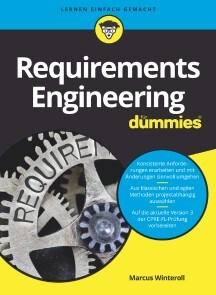
Requirements Engineering für Dummies
Für den Erfolg von Softwareprojekten ist es entscheidend, sich erstmal klar zu machen, wozu das System überhaupt dienen soll und wie es dafür beschaffen sein muss. Klingt eigentlich selbstverständlich, und doch scheitern Projekte oft gerade an der Anforderungsanalyse. Das Buch "Requirements Engineering für Dummies" beschreibt verständlich und pragmatisch, wie Sie vorgehen sollten - und zwar sowohl für klassische als auch für agile Projekte. Es liefert Ihnen Techniken, wie Sie Ziele bestimmen und Releases sinnvoll zusammenstellen, wie Sie Anforderungen erheben und verstehen, wie Sie mit Änderungen umgehen und wie Sie Fallstricke vermeiden. Das Buch ist auch geeignet zur Vorbereitung auf die CPRE-FL-Prüfung. Dr. Marcus Winteroll ist Mitglied der oose Innovative Informatik eG, einem Anbieter von Schulungen und Workshops zu Software & Systems Engineering in Hamburg. Als Trainer und Berater beschäftigt er sich mit der Analyse sowie Verbesserung von Geschäfts- und Entwicklungsprozessen. Dazu setzt er auf agile Methoden; aber auch die klassischen Vorgehensweisen sind ihm aus seiner langjährigen Erfahrung als Requirements Engineer, Projektleiter, Prozessmanager, Qualitätssicherer und Entwickler vertraut. Seine gesammelten Erfahrungen teilt er auf Konferenzen und als Autor von Fachartikeln.Über den Autor 13EINLEITUNG 25Über dieses Buch 25Konventionen in diesem Buch 26Was Sie nicht lesen müssen 26Törichte Annahmen über die Leser 26Wie dieses Buch aufgebaut ist 26Teil I: Requirements Engineering verstehen 27Teil II: Vorgehen im Requirements Engineering 27Teil III: Anforderungsanalyse 27Teil IV: Requirements Management 27Teil V: Der Top-Ten-Teil 27Symbole, die in diesem Buch verwendet werden 27Wie es weitergeht 28TEIL I: REQUIREMENTS ENGINEERING VERSTEHEN 29KAPITEL 1 DAS IST REQUIREMENTS ENGINEERING 31Warum uns Requirements Engineering weiterhelfen kann 31Aufgaben im Requirements Engineering 34Wer das Requirements Engineering macht 36Der Requirements Engineer 37Wer sonst noch das Requirements Engineering macht 37Viele Arten von Anforderungen 38Funktionale Anforderungen 38Nichtfunktionale Anforderungen 39Randbedingungen 40Abstraktionsstufen von Anforderungen 41Möglichkeiten der Zertifizierung 42Zertifikate des IREB 43Zertifikate des IIBA 44PMI Professional in Business Analysis (PMI-PBA) 45KAPITEL 2 EINBETTUNG DES REQUIREMENTS ENGINEERING47Das Zusammenspiel mit den übrigen Beteiligten 47Die Kunden des Requirements Engineering 48Wer sonst noch so wichtig ist: die Stakeholder 48Die Basis vieler Anforderungen: die Geschäftsprozesse 49Das Anforderungsdokument: eines für alle? 50Requirements Engineering im klassischen Vorgehen: alles klar 52Was zu erwarten ist 52Was nicht zu erwarten ist 52Requirements Engineering in agilen Projekten: just in time 53Beliebte Missverständnisse beim agilen Requirements Engineering 53Was agiles Vorgehen vom klassischen unterscheidet 54Klassisch, agil, Festpreis, Aufwandspreis –nicht jede Kombination ist sinnvoll 56Klassisch und Festpreis 56Agil und Aufwandspreis 56Agil und Festpreis 57Klassisch und Aufwandspreis 57Alles im Überblick 57KAPITEL 3 FALLSTRICKE59Was wir von den Kunden erwarten dürfen – und sie von uns 59Wer nimmt die Anforderungen auf? 60Der Projektleiter als Requirements Engineer 60Der Product Owner als Requirements Engineer 61Entwickler als Requirements Engineers 61Kunde und Nutzer als Requirements Engineers 62Die richtige Detaillierung von Anforderung 63Umgang mit Änderungen 64Dokumentation von Anforderungen 66TEIL II: VORGEHEN IM REQUIREMENTS ENGINEERING 69KAPITEL 4 VORGEHEN IN KLASSISCHEN PROJEKTEN71Einordnung in den Projektablauf 71Der Ablauf 73KAPITEL 5 VORGEHEN IN AGILEN PROJEKTEN77Direkte Kommunikation statt Dokumentation 78Der Wert gibt den Takt an 79Das Ziel immer vor Augen 80Die Vorbereitungsphase 80Requirements Engineering in Scrum 82Scrum kurz erklärt 82Wo das Requirements Engineering in Scrum stattfindet 84Das Product Backlog weiterentwickeln: Refinement 86Fertig heißt fertig: die Definition of Done 88Welche Rolle für die Anforderungen zuständig ist 89Wenn mehrere Teams an einem System arbeiten 90Fortwährende Analyse statt Änderungsmanagement 91Die Unterschiede zwischen klassischem und agilem Requirements Engineering 92KAPITEL 6 ANPASSUNG DES REQUIREMENTS-ENGINEERING-PROZESSES93Einflussfaktoren 93Facetten des Requirements-Engineering-Prozesses 94Zeitfacette 95Zweckfacette 96Zielfacette 96Konfiguration des Prozesses 97TEIL III: ANFORDERUNGSANALYSE 99KAPITEL 7 AN DIE ANFORDERUNGEN HERANKOMMEN101Stakeholderanalyse 102Stakeholder identifizieren 103Stakeholder verstehen 105Maßnahmen zur Einbindung der Stakeholder 110Zusätzliche Anforderungsquellen 111Anforderungen ermitteln 112Von geheimen und selbstverständlichen Anforderungen: das Kano-Modell 113Wer fragt, gewinnt: die Befragungstechniken 115Anforderungen gemeinsam erheben: Kooperationstechniken 121Schauen Sie genau hin: Beobachtungstechniken 123Systemarchäologie und der Blick zurück: artefaktbasierte Techniken 126Recycling im Requirements Engineering: die Wiederverwendung von Anforderungen 127Seien Sie kreativ: Entwurfs- und Ideenfindungstechniken 128Hypothesen bilden und ausprobieren 133Techniken, die Sie zusätzlich unterstützen 134Welche Technik Ihnen weiterhilft 135Konflikte und der Umgang damit 138Analyse von Konflikten 138Auflösung von Konflikten 139KAPITEL 8 WAS UNS ZU BEGINN KLAR SEIN SOLLTE 145Wohin soll die Reise gehen? Das Ziel klar vor Augen 145Auf die Verpackung kommt es an: der Produktkarton 147Alles auf einem Blick: das Product Vision Board 150Auf die Schnelle: das Fahrstuhlgespräch 152Den Überblick gewinnen 153Den Kontext des Systems verstehen 154Wie das System verwendet werden soll: Anwendungsfälle 156Der Überblick über die ganze Geschichte: Story Map 159Releases schneiden 164Werden Sie zum Minimalisten: das Minimale Marktfähige Release 164Von der Story Map zum Releaseplan 167KAPITEL 9 FUNKTIONALE ANFORDERUNGEN VERSTEHEN UND BESCHREIBEN175Die Systemverwendung mit Anwendungsfällen beschreiben 176Wer das System zu welchem Zweck verwendet: das Anwendungsfalldiagramm 178Anwendungsfälle Schritt für Schritt: Abläufe beschreiben 180Anwendungsfälle mit Anwendungsfällen erweitern 192Die Geschichten der Nutzer: User Stories 196Die Akzeptanzkriterien einer User Story 198Wie kleine User Stories große ersetzen 201Anwendungsfälle oder User Stories? 205Anwendungsfälle klassisch 205Von der Story Map über Anwendungsfälle zu den User Stories 205KAPITEL 10 WEITERE ASPEKTE FUNKTIONALER ANFORDERUNGEN209Fachliche Begriffe begreifen 210Alle wichtigen Begriffe auf einem Blick: das Glossar 210Der Zusammenhang zwischen den fachlichen Gegenständen im Fachklassenmodell 212Das sind ja Zustände 220Die Zustände fachlicher Gegenstände 220Das System bekommt Zustände 225Wie das Geschäft zu regeln ist 232Prototypen 243Die natürliche Sprache 247Man kann nicht alles verstehen 248Tipps zum Umgang mit der Sprache 248Ein Bausatz für Sätze: Satzschablonen 250Die Sprache und nichts als die Sprache 254KAPITEL 11 NICHTFUNKTIONALE ANFORDERUNGEN UND RANDBEDINGUNGEN257Die Bedeutung der nichtfunktionalen Anforderungen 258Nichtfunktionale Anforderungen verstehen 260Nichtfunktionale Anforderungen ermitteln 265Nichtfunktionale Anforderungen in der agilen Entwicklung 270Was schon vorher feststeht: die Randbedingungen 273KAPITEL 12 WER WEIẞ, OB DAS AUCH SO STIMMT – ANFORDERUNGEN PRÜFEN277Was gibt es denn da zu prüfen? 278Vorgehen im klassischen Requirements Engineering 279Qualitätskriterien zur Verifikation und Validierung 279Vorgehen im agilen Requirements Engineering 281Techniken für die Prüfung 282Reviewtechniken 282Explorative Validierungstechniken 284Prinzipien der Überprüfung 286KAPITEL 13 ANFORDERUNGEN FESTHALTEN289Zweck der Dokumentation 289Der richtige Zeitpunkt 292Hilfreiche Regeln 294Arten der Dokumentation 295Dokumente 296Modelle 302Anforderungssammlungen im Requirements-Management-Tool 304Product Backlog 305Story Map 306Formularvorlagen für Anforderungen 306TEIL IV: REQUIREMENTS MANAGEMENT 309KAPITEL 14 ANFORDERUNGEN ORGANISIEREN311Requirements Management im agilen Vorgehen 312Der Lebenszyklus einer Anforderung 314Versionierung 316Attribute einer Anforderung 317Kann man so oder so sehen: Sichtweisen 318Konfigurationen 320KAPITEL 15 IST DAS WIRKLICH WICHTIG? – PRIORISIERUNG VON ANFORDERUNGEN323Was wichtig ist 324Ad-hoc-Priorisierungstechniken 325Priorisierung mittels Stufen 325Ranking 326Top-Ten-Technik 326Kauf dir ein Feature 326Analytische Priorisierungstechniken 327Wiegers’sche Priorisierungsmatrix 327Kano-Modell 330Vorgehen 330KAPITEL 16 DIE ANFORDERUNGEN VERFOLGEN 333Zweck der Verfolgbarkeit 333Verfolgbarkeit darstellen 335Methodisches Verfolgen 338KAPITEL 17 UMGANG MIT ÄNDERUNGEN341Ganz normal und doch unbeliebt 341Der Änderungsprozess und seine Bestandteile 342KAPITEL 18 WERKZEUGE IM REQUIREMENTS ENGINEERING: UNTERSTÜTZUNG UND LAST347Arten von Werkzeugen 348Office-Tools 348Requirements-Management-Tools 349Modellierungstools 350Was schon da ist: Bugtracker und Wiki 351Lowtech-Tools 351Kombinationen von Tools 352Einführung von Werkzeugen 352TEIL V: DER TOP-TEN-TEIL 355KAPITEL 19 ZEHN PRINZIPIEN DES REQUIREMENTS ENGINEERING357Zusammenarbeit: Requirements Engineering allein funktioniert nicht 357Wertorientierung: Anforderungen sind kein Selbstzweck 358Stakeholder: Es geht darum, ihren Bedarf zu erfüllen 358Gemeinsames Verständnis: Die Basis für erfolgreiche Systementwicklung 358Kontext: Notwendig, um Systeme zu verstehen 359Problem, Anforderung, Lösung: Eine untrennbare Verbindung 359Validierung: Ungeprüfte Anforderungen sind nutzlos 360Evolution: Änderungen sind normal 360Innovation: Mehr vom Gleichen reicht nicht 361Systematische und disziplinierte Arbeit: Ohne geht es nicht 361KAPITEL 20 ZEHN BELIEBTE FEHLER IM REQUIREMENTS ENGINEERING 363Die Suche nach dem Schuldigen 363Lösungen beschreiben anstatt Probleme zu verstehen 364Anforderungen einfach vom Altsystem übernehmen 364Die Nutzer beschreiben die Anforderungen 364Wir arbeiten agil und dokumentieren nichts 365Entweder keine oder unverständliche Systemdokumentationen 365User Stories sind allein dazu da, die bestehenden Anforderungen in das Backlog aufzunehmen 365Agil und Modellierung geht nicht zusammen 366Fachleute und Entwickler sprechen nicht miteinander 366Das Requirements Engineering läuft nicht, also brauchen wir ein Tool 366KAPITEL 21 ZEHN ONLINE-QUELLEN369IREB-Lehrpläne, Handbücher und Glossar 369Requirements Engineering Magazine 369Scrum-Guide 369Online Browsing Platform der ISO 370V-Modell 370UML-Spezifikation 370UML-Übersicht 371DMN-Spezifikation 371Übersicht über Requirements-Tools 371Übersicht über UML-Tools 371Stichwortverzeichnis 375

Mobile Device Management in Zeiten von mobilem Arbeiten. Wie Unternehmen mobile Endgeräte erfolgreich in bestehende IT-Infrastrukturen integrieren
In Unternehmen geht der Trend immer mehr zum Homeoffice und Remote Work. Viele Unternehmen erlauben es den Mitarbeitern, private Endgeräte wie Smartphones oder Tablets für Firmenzwecke zu nutzen. Für Unternehmen bedeutet dies jedoch eine Gefährdung ihrer Firmendaten. Mobile Device Management-Systeme können dabei helfen, mögliche Sicherheitslücken zu schließen. Welche technischen Anforderungen stellen Mobile Device Management-Systeme an Unternehmen? Wie sicher ist Mobile Device Management und welche Chancen und Risiken gibt es? Und welche rechtlichen Aspekte müssen Unternehmen beim Verwalten von mobilen Geräten beachten? Der Autor Timmy Lutz klärt die wichtigsten Fragen zum Thema Mobile Device Management. Er nimmt die aktuelle Mobile Device Management Software in den Blick und erläutert, wie Unternehmen das richtige System für sich finden. Dabei gibt er praktische Tipps für eine erfolgreiche Implementierung in Unternehmen. Aus dem Inhalt: - Mobile Security Management; - Bring your own Device; - Betriebssystem; - Firmendaten; - Datensicherheit; - IT-Infrastruktur
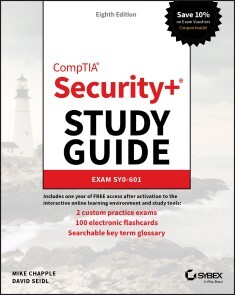
CompTIA Security+ Study Guide
LEARN THE KEY OBJECTIVES AND MOST CRUCIAL CONCEPTS COVERED BY THE SECURITY+ EXAM SY0-601 WITH THIS COMPREHENSIVE AND PRACTICAL STUDY GUIDE! AN ONLINE TEST BANK OFFERS 650 PRACTICE QUESTIONS AND FLASHCARDS!The Eighth Edition of the CompTIA Security+ Study Guide Exam SY0-601 efficiently and comprehensively prepares you for the SY0-601 Exam. Accomplished authors and security experts Mike Chapple and David Seidl walk you through the fundamentals of crucial security topics, including the five domains covered by the SY0-601 Exam:* Attacks, Threats, and Vulnerabilities* Architecture and Design* Implementation* Operations and Incident Response* Governance, Risk, and ComplianceThe study guide comes with the Sybex online, interactive learning environment offering 650 practice questions! Includes a pre-assessment test, hundreds of review questions, practice exams, flashcards, and a glossary of key terms. The book is written in a practical and straightforward manner, ensuring you can easily learn and retain the material.Perfect for everyone planning to take the SY0-601 Exam—as well as those who hope to secure a high-level certification like the CASP+, CISSP, or CISA—the study guide also belongs on the bookshelves of everyone who has ever wondered if the field of IT security is right for them. It's a must-have reference!ABOUT THE AUTHORSMIKE CHAPPLE, PHD, SECURITY+, CYSA+, CISSP, is Teaching Professor of IT, Analytics, and Operations at the University of Notre Dame. He's a cybersecurity professional and educator with over 20 years of experience. Mike provides cybersecurity certification resources at his website, CertMike.com. DAVID SEIDL, SECURITY+, CYSA+, CISSP, PENTEST+, is Vice President for Information Technology and CIO at Miami University. David co-led Notre Dame's move to the cloud and has written multiple cybersecurity certification books. Introduction xxvAssessment Test xxxviCHAPTER 1 TODAY’S SECURITY PROFESSIONAL 1Cybersecurity Objectives 2Data Breach Risks 3The DAD Triad 3Breach Impact 5Implementing Security Controls 7Security Control Categories 7Security Control Types 8Data Protection 9Summary 12Exam Essentials 12Review Questions 14CHAPTER 2 CYBERSECURITY THREAT LANDSCAPE 19Exploring Cybersecurity Threats 20Classifying Cybersecurity Threats 20Threat Actors 22Threat Vectors 28Threat Data and Intelligence 30Open Source Intelligence 31Proprietary and Closed-Source Intelligence 33Assessing Threat Intelligence 35Threat Indicator Management and Exchange 36Public and Private Information Sharing Centers 37Conducting Your Own Research 38Summary 38Exam Essentials 39Review Questions 40CHAPTER 3 MALICIOUS CODE 45Malware 46Ransomware 47Trojans 47Worms 48Rootkits 48Backdoors 49Bots 50Keyloggers 52Logic Bombs 53Viruses 53Fileless Viruses 53Spyware 54Potentially Unwanted Programs (PUPs) 55Malicious Code 55Adversarial Artificial Intelligence 57Summary 58Exam Essentials 59Review Questions 61CHAPTER 4 SOCIAL ENGINEERING, PHYSICAL, AND PASSWORD ATTACKS 65Social Engineering 66Social Engineering Techniques 67Influence Campaigns 72Password Attacks 72Physical Attacks 74Summary 76Exam Essentials 76Review Questions 78CHAPTER 5 SECURITY ASSESSMENT AND TESTING 83Vulnerability Management 84Identifying Scan Targets 84Determining Scan Frequency 86Configuring Vulnerability Scans 87Scanner Maintenance 92Vulnerability Scanning Tools 95Reviewing and Interpreting Scan Reports 96Validating Scan Results 106Security Vulnerabilities 107Patch Management 107Legacy Platforms 108Weak Configurations 109Error Messages 110Insecure Protocols 111Weak Encryption 112Penetration Testing 113Adopting the Hacker Mindset 114Reasons for Penetration Testing 115Benefits of Penetration Testing 115Penetration Test Types 116Rules of Engagement 118Reconnaissance 119Running the Test 120Cleaning Up 120Training and Exercises 120Summary 122Exam Essentials 122Review Questions 124CHAPTER 6 SECURE CODING 129Software Assurance Best Practices 130The Software Development Life Cycle 130Software Development Phases 131Software Development Models 133DevSecOps and DevOps 136Designing and Coding for Security 138Secure Coding Practices 138API Security 139Code Review Models 139Software Security Testing 143Analyzing and Testing Code 143Injection Vulnerabilities 144SQL Injection Attacks 145Code Injection Attacks 148Command Injection Attacks 149Exploiting Authentication Vulnerabilities 150Password Authentication 150Session Attacks 151Exploiting Authorization Vulnerabilities 154Insecure Direct Object References 154Directory Traversal 155File Inclusion 156Privilege Escalation 157Exploiting Web Application Vulnerabilities 157Cross-Site Scripting (XSS) 158Request Forgery 160Application Security Controls 161Input Validation 162Web Application Firewalls 163Database Security 163Code Security 166Secure Coding Practices 168Source Code Comments 168Error Handling 168Hard-Coded Credentials 170Memory Management 170Race Conditions 171Unprotected APIs 172Driver Manipulation 172Summary 173Exam Essentials 173Review Questions 175CHAPTER 7 CRYPTOGRAPHY AND THE PUBLIC KEY INFRASTRUCTURE 179An Overview of Cryptography 180Historical Cryptography 181Goals of Cryptography 186Confidentiality 187Integrity 188Authentication 188Nonrepudiation 189Cryptographic Concepts 189Cryptographic Keys 189Ciphers 190Modern Cryptography 191Cryptographic Secrecy 191Symmetric Key Algorithms 192Asymmetric Key Algorithms 193Hashing Algorithms 196Symmetric Cryptography 197Data Encryption Standard 197Triple DES 199Advanced Encryption Standard 200Symmetric Key Management 200Asymmetric Cryptography 203RSA 203Elliptic Curve 204Hash Functions 205SHA 206MD5 207Digital Signatures 207HMAC 208Digital Signature Standard 209Public Key Infrastructure 209Certificates 209Certificate Authorities 211Certificate Generation and Destruction 212Certificate Formats 215Asymmetric Key Management 216Cryptographic Attacks 217Emerging Issues in Cryptography 220Tor and the Dark Web 220Blockchain 220Lightweight Cryptography 221Homomorphic Encryption 221Quantum Computing 222Summary 222Exam Essentials 222Review Questions 224CHAPTER 8 IDENTITY AND ACCESS MANAGEMENT 229Identity 230Authentication and Authorization 231Authentication and Authorization Technologies 232Directory Services 236Authentication Methods 237Multifactor Authentication 237One-Time Passwords 239Biometrics 241Knowledge-Based Authentication 243Managing Authentication 244Accounts 245Account Types 245Account Policies and Controls 245Access Control Schemes 248Filesystem Permissions 249Summary 251Exam Essentials 252Review Questions 253CHAPTER 9 RESILIENCE AND PHYSICAL SECURITY 257Building Cybersecurity Resilience 258Storage Resiliency: Backups and Replication 260Response and Recovery Controls 266Physical Security Controls 269Site Security 269Summary 278Exam Essentials 279Review Questions 281CHAPTER 10 CLOUD AND VIRTUALIZATION SECURITY 285Exploring the Cloud 286Benefits of the Cloud 287Cloud Roles 289Cloud Service Models 289Cloud Deployment Models 293Shared Responsibility Model 295Cloud Standards and Guidelines 298Virtualization 300Hypervisors 300Cloud Infrastructure Components 302Cloud Compute Resources 302Cloud Storage Resources 304Cloud Networking 307Cloud Security Issues 311Availability 311Data Sovereignty 311Virtualization Security 312Application Security 312Governance and Auditing 313Cloud Security Controls 313Cloud Access Security Brokers 314Resource Policies 314Secrets Management 316Summary 316Exam Essentials 316Review Questions 318CHAPTER 11 ENDPOINT SECURITY 323Protecting Endpoints 324Preserving Boot Integrity 325Endpoint Security Tools 326Hardening Endpoints and Systems 332Service Hardening 333Operating System Hardening 335Hardening the Windows Registry 336Configuration, Standards, and Schemas 336Disk Security and Sanitization 338File Manipulation and Other Useful Command-Line Tools 341Scripting, Secure Transport, and Shells 343Securing Embedded and Specialized Systems 344Embedded Systems 345SCADA and ICS 346Securing the Internet of Things 348Specialized Systems 349Communication Considerations 350Security Constraints of Embedded Systems 351Summary 352Exam Essentials 354Review Questions 356CHAPTER 12 NETWORK SECURITY 361Designing Secure Networks 363Network Segmentation 365Network Access Control 366Port Security and Port-Level Protections 367Port Spanning/Port Mirroring 369Virtual Private Network 370Network Appliances and Security Tools 371Network Security, Services, and Management 377Deception and Disruption 382Secure Protocols 383Using Secure Protocols 383Secure Protocols 384Attacking and Assessing Networks 389On-Path Attacks 389Domain Name System Attacks 391Layer 2 Attacks 393Distributed Denial-of-Service Attacks 394Network Reconnaissance and Discovery Tools and Techniques 398Summary 411Exam Essentials 412Review Questions 414CHAPTER 13 WIRELESS AND MOBILE SECURITY 419Building Secure Wireless Networks 420Connectivity Methods 421Wireless Network Models 425Attacks Against Wireless Networks 426Designing a Network 430Controller and Access Point Security 432Wi-Fi Security Standards 433Wireless Authentication 434Managing Secure Mobile Devices 436Mobile Device Deployment Methods 436Mobile Device Management 438Specialized Mobile Device Security Tools 442Summary 442Exam Essentials 443Review Questions 445CHAPTER 14 INCIDENT RESPONSE 449Incident Response 450The Incident Response Process 451Attack Frameworks and Identifying Attacks 457Incident Response Data and Tools 461Security Information and Event Management Systems 462Alerts and Alarms 464Correlation and Analysis 465Rules 465Mitigation and Recovery 473Summary 477Exam Essentials 478Review Questions 480CHAPTER 15 DIGITAL FORENSICS 485Digital Forensic Concepts 486Legal Holds and e-Discovery 487Conducting Digital Forensics 488Acquiring Forensic Data 489Acquisition Tools 493Validating Forensic Data Integrity 496Data Recovery 499Forensic Suites and a Forensic Case Example 499Reporting 504Digital Forensics and Intelligence 504Summary 505Exam Essentials 505Review Questions 507CHAPTER 16 SECURITY POLICIES, STANDARDS, AND COMPLIANCE 511Understanding Policy Documents 512Policies 512Standards 515Procedures 517Guidelines 518Exceptions and Compensating Controls 519Personnel Management 520Least Privilege 520Separation of Duties 521Job Rotation and Mandatory Vacations 521Clean Desk Space 522Onboarding and Offboarding 522Nondisclosure Agreements 522Social Media 522User Training 522Third-Party Risk Management 523Winding Down Vendor Relationships 524Complying with Laws and Regulations 524Adopting Standard Frameworks 525NIST Cybersecurity Framework 525NIST Risk Management Framework 528ISO Standards 529Benchmarks and Secure Configuration Guides 531Security Control Verification and Quality Control 531Summary 533Exam Essentials 534Review Questions 535CHAPTER 17 RISK MANAGEMENT AND PRIVACY 539Analyzing Risk 540Risk Identification 541Risk Calculation 542Risk Assessment 543Managing Risk 547Risk Mitigation 547Risk Avoidance 549Risk Transference 549Risk Acceptance 549Risk Analysis 550Disaster Recovery Planning 552Disaster Types 552Business Impact Analysis 553Privacy 553Sensitive Information Inventory 554Information Classification 554Data Roles and Responsibilities 556Information Lifecycle 557Privacy Enhancing Technologies 557Privacy and Data Breach Notification 558Summary 559Exam Essentials 559Review Questions 560APPENDIX ANSWERS TO REVIEW QUESTIONS 565Chapter 1: Today’s Security Professional 566Chapter 2: Cybersecurity Threat Landscape 567Chapter 3: Malicious Code 569Chapter 4: Social Engineering, Physical, and Password Attacks 572Chapter 5: Security Assessment and Testing 574Chapter 6: Secure Coding 576Chapter 7: Cryptography and the Public Key Infrastructure 578Chapter 8: Identity and Access Management 579Chapter 9: Resilience and Physical Security 582Chapter 10: Cloud and Virtualization Security 584Chapter 11: Endpoint Security 586Chapter 12: Network Security 589Chapter 13: Wireless and Mobile Security 591Chapter 14: Incident Response 594Chapter 15: Digital Forensics 596Chapter 16: Security Policies, Standards, and Compliance 598Chapter 17: Risk Management and Privacy 600Index 603
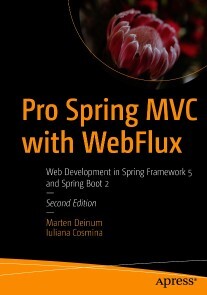
Pro Spring MVC with WebFlux
Explore the designs of the Spring MVC and WebFlux frameworks, and apply similar designs and techniques to your own code. Along with detailed analysis of the code and functionality, this book includes numerous tips and tricks to help you get the most out of Spring MVC, WebFlux, and Java-based web application development in general using Spring. You’ll see how Spring MVC is a modern web application framework built upon the latest Spring Framework 5 and Spring Boot 2. Spring MVC is suitable for building reusable web controller modules that encapsulate rich page navigation rules.Pro Spring MVC with WebFlux takes great care in covering every inch of Spring MVC with WebFlux to give you the complete picture. Along with all the best-known features of these frameworks, you’ll discover some new hidden treasures. You’ll also learn how to correctly and safely extend the frameworks to create customized solutions.This book is for anyone who wishes to write robust, modern, and useful web applications with the Spring Framework. After reading and using this book, you'll become proficient with Spring MVC and be able to apply it to your own Java web applications and microservices.WHAT YOU WILL LEARN* Use Spring MVC with WebFlux to build Java-based web applications* Employ the various Spring MVC architectures* Work with controllers and routing functions* Build microservices and web services using Spring MVC and REST* Create reactive web applications using Spring WebFlux* Secure Spring MVC and Spring WebFlux* Deploy your Spring MVC application to the cloudWho This Book Is ForThose with at least some prior experience with Java web application development. Some previous experience with Spring Boot or the Spring Framework is recommended.MARTEN DEINUM is a submitter on the open source Spring Framework project. He is also a Java/software consultant working for Conspect. He has developed and architected software, primarily in Java, for small and large companies. He is an enthusiastic open source user and longtime fan, user and advocate of the Spring Framework. He has held a number of positions including software engineer, development lead, coach, and also as a Java and Spring trainer.IULIANA COSMINA is currently a software engineer for Cloudsoft Edinburgh. She has been writing Java code since 2002. She has contributed to various types of applications, including experimental search engines, ERPs, track and trace, and banking. During her career, she has been a teacher, a team leader, a software architect, a DevOps professional, and a software manager.She is a Springcertified Professional, as defined by Pivotal, the makers of Spring Framework, Boot, and other tools, and considers Spring the best Java framework to work with.When she is not programming, she spends her time reading, blogging, learning to play piano, traveling, hiking, or biking.1: Setting Up A Local Development Environment2: Spring Framework Fundamentals3: Web Application Architecture4: Spring MVC Architecture5: Implementing Controllers6: Implementing Controllers - Advanced7: REST and AJAX8: Resolving and Implmenting Views9: Introduction to Spring WebFlux10: Building Reactive Applications with Spring WebFlux11: Securing WebFlux Applications12: Spring Security13: Spring Applications in the Cloud

Convolutional Neural Networks with Swift for Tensorflow
Dive into and apply practical machine learning and dataset categorization techniques while learning Tensorflow and deep learning. This book uses convolutional neural networks to do image recognition all in the familiar and easy to work with Swift language.It begins with a basic machine learning overview and then ramps up to neural networks and convolutions and how they work. Using Swift and Tensorflow, you'll perform data augmentation, build and train large networks, and build networks for mobile devices. You’ll also cover cloud training and the network you build can categorize greyscale data, such as mnist, to large scale modern approaches that can categorize large datasets, such as imagenet.Convolutional Neural Networks with Swift for Tensorflow uses a simple approach that adds progressive layers of complexity until you have arrived at the current state of the art for this field.WHAT YOU'LL LEARN* Categorize and augment datasets* Build and train large networks, including via cloud solutions* Deploy complex systems to mobile devicesWHO THIS BOOK IS FORDevelopers with Swift programming experience who would like to learn convolutional neural networks by example using Swift for Tensorflow as a starting point. BRETT KOONCE is the CTO of Quarkworks, a mobile consulting agency. He's a developer with five years experience creating apps for iOS and Android. His team has worked on dozens of apps that are used by millions of people around the world. Brett knows the pitfalls of development and can help you avoid them. Whether you want to build something from scratch, port your app from iOS to Android (or vice versa) or accelerate your velocity, Brett can help.Chapter 1: MNIST: 1D Neural NetworkChapter 2: MNIST: 2D Neural NetworkChapter 3: CIFAR: 2D Nueral Network with BlocksChapter 4: VGG NetworkChapter 5: Resnet 34Chapter 6: Resnet 50Chapter 7: SqueezeNetChapter 8: MobileNrt v1Chapter 9: MobileNet v2Chapter 10: Evolutionary StrategiesChapter 11: MobileNet v3Chapter 12: Bag of TricksChapter 13: MNIST RevisitedChapter 14: You are Here

Design Patterns in .NET Core 3
Implement design patterns in .NET Core 3 using the latest versions of the C# and F# languages. This book provides a comprehensive overview of the field of design patterns as they are used in today’s developer toolbox. This new edition introduces topics such as Functional Builder, Asynchronous Factory Method, Generic Value Adapter, and new Composite Proxies, including one that attempts to solve the SoA/AoS problem.Using the C# and F# programming languages, DESIGN PATTERNS IN .NET CORE 3 explores the classic design pattern implementations and discusses the applicability and relevance of specific language features for implementing patterns. You will learn by example, reviewing scenarios where patterns are applicable. MVP and patterns expert Dmitri Nesteruk demonstrates possible implementations of patterns, discusses alternatives and pattern inter-relationships, and illustrates the way that a dedicated refactoring tool (ReSharper) can be used to implement design patterns with ease.WHAT YOU WILL LEARN* Become familiar with the latest pattern implementations available in C# 8 and F# 5* Know how to better reason about software architecture* Understand the process of refactoring code to patterns* Refer to researched and proven variations of patterns* Study complete, self-contained examples, including many that cover advanced scenarios* Use the latest implementations of C# and Visual Studio/Rider/ReSharperWHO THIS BOOK IS FORDevelopers who have some experience in the C# language and want to expand their comprehension of the art of programming by leveraging design approaches to solving modern problemsDMITRI NESTERUK is a quantitative analyst, developer, course and book author, and an occasional conference speaker. His interests lie in software development and integration practices in the areas of computation, quantitative finance, and algorithmic trading. His technological interests include C# and C++ programming as well as high-performance computing using technologies such as CUDA and FPGAs. He has been a C# MVP from 2009 to 2018.PART I: INTRODUCTION.-Chapter 1: The SOLID Design PrinciplesChapter 2: The Functional PerspectivePART II: CREATIONAL PATTERNSChapter 3: BuilderChapter 4: FactoriesChapter 5: PrototypeChapter 6: SingletonPART III: STRUCTURAL PATTERNSChapter 7: AdapterChapter 8: BridgeChapter 9: CompositeChapter 10: DecoratorChapter 11: FaçadeChapter 12: FlyweightChapter 13: ProxyPART IV: BEHAVIORAL PATTERNSChapter 14: Chain of ResponsibilityChapter 15: CommandChapter 16: InterpreterChapter 17: IteratorChapter 18: MediatorChapter 19: MementoChapter 20: Null ObjectChapter 21: ObserverChapter 22: StateChapter 23: StrategyChapter 24: Template MethodChapter 25: Visitor

Practical Linux with Raspberry Pi OS
Quickly start programming with Linux while learning the Raspberry Pi OS—the Linux distribution designed specifically for low-cost Raspberry Pis. This short guide reviews Linux commands, GUI, and shell scripting in a holistic manner by diving into both advanced and day-to-day tasks using the Raspberry Pi OS.You'll comfortably work with the Linux command prompt, and explore the RPi OS GUI and all its base applications. Then move into writing your own programs with shell-programming and using high-level languages such as C, C++, and Python 3. You’ll also study hardware and GPIO programming. Use Python 3 for GPIO programming to drive LEDs and pushbuttons.Examples are written in Shell, C, C++, and Python 3. Graphical output is displayed in helpful screenshots that capture just what you’ll see when working in this environment. All code examples are well tested on actual Raspberry Pi boards. After reading this book and following the examples, you’ll be able to write programs for demonstration in your academic/industrial research work, business environment, or just your circle of friends for fun!WHAT YOU'LL LEARN* Navigate the core aspects of Linux and programming on a Linux platform* Install Raspberry Pi OS on a Raspberry Pi* Program in Shell, C, C++, and Python* Redirect Io and work with the crontabWHO THIS BOOK IS FORLinux enthusiasts, software engineers, researchers, business analysts, and managers working with the low-cost Raspberry Pi.Ashwin Pajankar holds a Master of Technology from IIIT Hyderabad, and has over 25 years of programming experience. He started his journey in programming and electronics at the tender age of 7 with BASIC programming language and is now proficient in Assembly programming, C, C++, Java, Shell Scripting, and Python. Other technical experience includes single board computers such as Raspberry Pi and Banana Pro, and Arduino.He is currently a freelance online instructor teaching programming bootcamps to more than 60,000 students from tech companies and colleges. His Youtube channel has an audience of 10000 subscribers and he has published more than 15 books on programming and electronics with many international publications.PRACTICAL LINUX WITH RASPBERRY PI OSChapter 1: Introduction to Raspberry PiChapter 2: Getting ReadyChapter 3: Directory Commands and Text EditorsChapter 4: More CommandsChapter 5: Useful Unix Commands and ToolsChapter 6: Shell ScriptingChapter 7: I/O Redirection and CronChapter 8: Introduction to High Level Programming LanguagesChapter 9: Programming with Python 3 GPIOChapter 10: Exploring Raspberry Pi OS GUIAppendix: Additional Tools
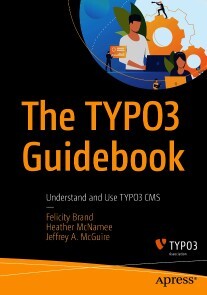
The TYPO3 Guidebook
Learn how to make the most of TYPO3 – the enterprise CMS – to organize information and digital assets, and communicate globally with powerful multi-site and multilingual support. This book will show you how the TYPO3 CMS backend and frontend work from top to bottom.Content management is a core aspect of every company’s communications, whether intranets and internal digital asset repositories or public-facing product pages and online communities. The book starts with four chapters covering how TYPO3 works, giving you a high-level overview of the most important aspects you should know about, including its community and professional ecosystem. If you’ve never seen TYPO3 before, you’ll learn how to make the most of it and what makes TYPO3 different from other content management systems you may have used before.You'll then move on to 10 hands-on guides. These step-by-step tutorials show you how to work with TYPO3 CMS. Each guide is self-contained, introducing a scenario, and showing you how to solve a given problem. The guides include references to documentation, examples, code samples, and everything you need to get the job done.The TYPO3 Guidebook will help you learn how to put your creative ideas online with TYPO3.WHAT YOU'LL LEARN* Scope, plan, design, and build efficient websites and web applications with TYPO3* Determine how TYPO3 can work best for you and how to avoid complications* Implement a project from idea to launch* Manage client expectations and complete TYPO3 projects on time and within budget* Understand TYPO3 terminology in practical terms* Create TYPO3 projects using best practices and configure them efficiently* Build integrations and features using TYPO3 Core APIsWHO THIS BOOK IS FORDecision makers, project managers, consultants and developersFELICITY BRAND, Open Strategy Partners. Felicity has more than ten years of experience as a writer and technical communicator. She spent the ten years before that as a business analyst. She has spent much of her career writing a variety of technical content for internal and external consumption—from online help to manuals, release notes, and in-house product training webinars, to web content and white papers. Felicity has a special knack for designing visuals and illustrations and a passion for clearly communicating technical concepts.HEATHER MCNAMEE, Open Strategy Partners. Heather is a technical communications professional with an M.Sc. in Learning and Technology. By using her marketing skills for good, she enables the right audiences to find, learn, and get the most out of the products they love. She loves working with subject-matter experts to distill their knowledge so newcomers can be successful. Since 2008, she’s developed hundreds of hours of documentation, learning, and certification materials to facilitate open-source technology and product adoption.JEFFREY A. “JAM” MCGUIRE, keynote speaker, Partner at Open Strategy Partners. Jeffrey helps organizations communicate and grow, finding and telling the stories that connect their technologies with the value they deliver. He builds on more than a dozen years of experience and a strong following at the intersection of open source software, business, and culture. His approach to technology marketing—sharing the human context of complex technology solutions, for example, celebrating their creators’ expertise and success—has left its mark in business and open source communities.PART 1: OVERVIEW.1. TYPO3 Showroom2. Designing and Planning with TYPO33. Building and Extending TYPO34.- Managing and Maintaining TYPO3PART 2: HANDS-ON GUIDES5. Guide 1 - Installing TYPO36. Guide 2 - Creating Your First TYPO3 Site7. Guide 3 - Extending TYPO38. Guide 4 - Planning, Building, and Using Content Elements9. Guide 5 - Create Your First Standalone Extension10. Guide 6 - Creating a Password-Protected Members' Area11. Guide 7 - Translating Your Site12. Guide 8 - Configure Content Management Workflow and Permissions13. Guide 9 -Creating a Business around TYPO314. Guide 10 - Debugging and Troubleshooting TYPO315. A Guidebook to Your New TYPO3 HomeAppendix A. GlossaryAppendix B. References
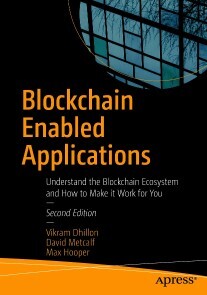
Blockchain Enabled Applications
Learn all about blockchain and its applications in cryptocurrency, healthcare, Internet of Things, finance, decentralized organizations, and more. Featuring case studies and practical insights, this book covers a unique mix of topics and offers insight into how to overcome hurdles that arise as the market and consumers grow accustomed to blockchain-based organizations and services.The book is divided into three major sections. The first section provides a historical background to blockchain technology. You will start with a historical context to financial capital markets when Bitcoin was invented, followed by mining protocols, the need for consensus, hardware mining, etc. Next, a formal introduction to blockchain is provided covering transaction workflow, role of decentralized network, and payment verification. Then, we dive deep into a different implementation of a blockchain: Ethereum. The main technical features, such as Ethereum Virtual Machine, are presented along with the smart contract programming language, Solidity.In this second section, you will look at some modern use cases for blockchain from a decentralized autonomous organization, high-performance computing in Ethereum and off-grid computations, and healthcare and scientific discovery. The final section of the book looks toward the future of blockchain. This is followed by chapters covering the rise of consortia in the blockchain world, the Hyperledger project, particularly the updates since 2018, and a chapter on educational blockchain games. This is followed by updates to EOS.IO, Chain Core, and Quorum, ICOs and a look at the major changes to financial markets brought about by blockchain and decentralized networks.WHAT YOU WILL LEARN* Get an overview of the popular games employed to teach the basic concepts of blockchain and decentralized networks* Be familiar with the rise of blockchain consortiums as well as updates to Hyperledger Project, 2020* Find out about cloud blockchains, including Microsoft Azure and Amazon Webservices, and how to set up test environments* Study machine learning integration in the blockchain and the role of smart contractsWHO THIS BOOK IS FORBlockchain developers interested in keeping up with the newest updates and students looking for a broad overview of this vast ecosystem, plus business executives who want to make informed product decisions about including blockchain as well as policy makers who want a better understanding of the current use casesVIKRAM DHILLON is an internal medicine resident physician at Wayne State University, Detroit Medical Center and a research fellow at the Institute of Simulation and Training, University of Central Florida (UFC). He holds a bachelor of science degree in molecular biology from the University of Central Florida where his main focus was bioinformatics, a Doctor of Osteopathic Medicine, and a doctoral degree from Nova Southeastern University. He has published multiple scientific papers on computational genomics. He has worked as a software and business development coach at the Blackstone Launchpad to mentor young entrepreneurs and startups through the process of building technology products. He was previously funded by the National Science Foundation through the Innovation Corps program to study customer discovery and apply it to commercialize high-risk startup ideas. He is a member of the Linux Foundation and has been involved in open-source projects and initiatives for the past several years. He often speaks at local conferences and meetups about programming, design, security, and entrepreneurship.DAVID METCALF is a serial entrepreneur who has launched multiple successful ventures and spinoff companies. He has reviewed thousands of emerging technology companies as an advisor and investor. He is the Director of the Mixed Emerging Technology Integration Lab at UCF’s Institute for Simulation and Training. His past projects involving XR and IoT span across education, health, space, cyber, and transportation. Current efforts include smart cities, blockchain, and enterprise learning transformation for government and industry. He is the co-editor/author of Voice Technology in Healthcare (2020) and Blockchain in Healthcare (2019) as part of the HIMSS Emerging Technology Series, Blockchain Enabled Applications (2018), Connected Health (2017), HIMSS mHealth Innovation (2014), and the HIMSS best-seller mHealth: From Smartphones to Smart Systems (2012).MAX HOOPER is the chief executive officer of Merging Traffic. He is responsible for the company’s management and growth strategy, serving as the corporate liaison to the financial services industry and various capital formation groups. Prior to starting the company, he was co-founder of Equity Broadcasting Corporation (EBC), a media company that owned and operated more than 100 television stations across the United States. He was responsible for activities in the cable, satellite, investment banking, and technology industries, and during his tenure, it grew to become one of the top 10 largest broadcasting companies in the country. He is a lifelong learner and has earned five doctorate degrees: PhD, DMin, PhD, ThD, and DMin from a variety of institutions. Hooper studied financial technology with cohorts at MIT, and cryptocurrency and business disruption with cohorts at the London School of Economics. As an avid runner, he has completed more than 100 marathons and an additional 20 ultra-marathons, which are 50- or 100-mile runs. He has completed the Grand Slam of Ultra Running. He is committed to his family and is a husband, father to five children, and grandfather to seven grandsons. He is active in many organizations and serves on various boards of directors. He works globally with several ministries and nonprofit aid groups and was honored to speak at the United Nations in New York in 2015.CHAPTER 1: BEHOLD THE DEAMERSChapter Goal: Provide a backdrop for introducing blockhain and the basics of a decentralized appSub -Topics:1. Financial crisis of 2008, the origins of bitcoin2. Basics of private-public keys3. What is a block, how is a block created4. What's a blockchain-enabled application? What is a decentralized application?CHAPTER 2: GOLD RUSH: MINING BITCOINChapter Goal: Provide a technical introduction to mining and the mathematical background to hashes, block headers, and consensusSub -Topics:1. Overview of mining, why is mining necessary for Bitcoin2. What is consensus3. Components of a block and a block header (mining components)4. What are hashes and how are they used in Bitcoin5. Hardware for mining (the gold rush part refers to the arms race that happened in hardware mining field).CHAPTER 3: FOUNDATIONS OF A BLOCKCHAINChapter Goal: Provide a technical introduction to transaction workflow, a blockchain network, simple payment verification, merkel roots, and block identifiersSub -Topics:1. What is a block header (block identifiers)2. How does the network participate3. A transaction workflow4. Unspent transaction outputs, transaction propagation5. Simple payment verification6. Merkel roots, blockchain forksCHAPTER 4: UNPACKING ETHEREUMChapter Goal: Provide a technical introduction to Ethereum, the differences between a Bitcoin blockchain and Ethereum blockchain, internal states, Ethereum Virtual Machine, and dAppsSub -Topics:1. Overview of Ethereum2. Proof of stake3. Accounts and contract model in Ethereum4. Global state, gas, internal storage5. Ethereum Virtual Machine6. Solidity programming language + Smart Contracts7. World Computer Model and components8. Blockchain as a service9. Decentralized apps10. Geth, MistCHAPTER 5: DECENTRALIZED ORGANIZATIONS (DAOS)Chapter Goal: Provide a technical introduction to DAOs and Aragon for setting up a DAO, including updates to new implementations of decentralized organizations in 2020.Sub -Topics:1. What is a DAO2. What is a blockchain organizations/companies3. Aragon-core and Kernel4. How do you make DAOs and other blockchain organizations using Aragon?5. How do you operate DAOs?CHAPTER 6: THE DAO HACKEDChapter Goal: Provide an overview to the vulnerabilities in the original DAO model, the conditions that led up to the hack, and the consequences to security hardening since.Sub -Topics:1. Concept of a DAO building on Vitalik’s concepts2. Slock.it and its involvement in making the DAO3. The Smart Contract for DAO4. The code vulnerability responsible for the hack5. Consequences of the hack6. Ethereum splitting into ETCCHAPTER 7: ETHEREUM TOKENS: HIGH PERFORMANCE COMPUTING (HPC)Chapter Goal: Provide an introduction to token in Ethereum by highlighting applications in HPC. Particularly, focus on Golem, SONM, and iEx.ec grid computing for off-chain computations and conflict resolution.Sub -Topics:1. Why tokens and what’s the value of using tokens2. Introduction to tokens, ERC 20 compatibility3. Token layer and an app layer4. Prototype for tokens and HPC – Ethereum Computation Markets5. Golem network, app registry, transaction framework, use-cases initially, and how the Smart Contract system ties them together6. SONM network and fog computing, use-cases, Smart Contract system, buyer-miner-hub interactions, purchasing computational power, Superglobal architecture, and OS7. iEx.ec, grid computing, sidechains, and how iEx.ec worksCHAPTER 8: BLOCKCHAIN IN HEALTHCAREChapter Goal: Provide an introduction to areas in healthcare where using a blockchain can provide benefit - Patient workflows, insurance claims processing, lightning network, verifiable data auditSub -Topics:1. Payer-provider-patient model, how claims work within this framework, and how will that change in the future2. Patient workflow based on permissions, blockchain-based workflow of a simple EHR, how permissions are passed as a patient moves from a general physician to a specialist3. Show how permissions work in blockchain insurance claims processing4. Waste management in healthcare and claims processing5. Concept of hotswitching, mentioning lightning network6. How can blockchain be used to reduce economic waste7. DeepMind’s Verifiable Data Audit as an alternative to blockchain8. Blockchain to streamline business processesCHAPTER 9: BLOCKCHAIN IN SCIENCEChapter Goal: Provide an introduction to major topics in science where blockchain can be beneficial – Reputation markets, reproducibility crisis, drug tracking, digital clinical trialsSub -Topics:1. Reproducibility crisis in science2. Prediction markets in science – Augur and Gnosis3. Initiatives to fix reproducibility traditionally4. Clinical trials using the blockchain, colored coins to demonstrate workflow5. Reputation systems using Blockchain6. Pharma drug tracking using blockchainCHAPTER 10: BUILDING HEALTHCARE COMPANIES ON BLOCKCHAINChapter Goal: Interview with John Bass on how to build a healthcare company on the blockchain and lessons learned along the way.Sub -Topics:1. The makings of Hashed Health2. Collaborative and consortium models3. Working groups for high-risk, high-reward technologies4. Governance models for Hashed Health consortia5. Member participationCHAPTER 11: RISE OF CONSORTIUMSChapter Goal: Provide an overview of consortium models that have become popular in the blockchain industry, the challenges consortiums hope to solve, and advantages to individual membersSub -Topics:1. Collaborative and consortium models2. Working groups for high-risk, high-reward technologies3. Governance models for Hashed Health consortiaCHAPTER 12: THE HYPERLEDGER PROJECTChapter Goal: Provide a broad overview of the Hyperledger Project and cover the rapid pace of developments since 2018 to the new products launched.Sub -Topics:1. Updates to all the components under Hyperledger umbrella including Fabric and Sawtooth2. New consensus algorithm (PBFT)3. Demo of Hyperledger Fabric Constructor4. Does your business need a blockchain (flowcharts)?5. Security in enterprise-grade Blockchains6. Smart Contracts in FabricCHAPTER 13: RECENT ADVANCES IN BLOCKCHAINChapter Goal: Provide a review of three major networks shaping the future of Blockchain – EOS.io with parallel processing virtual machine, chain-core with asset management, and Ivy Playground and Quorum with private–public transaction interfacesSub -Topics:1. EOS.io, how the tech works, the new advances such as parallel processing of smart contracts and instructions2. Chain Core, managing assets on blockchain, Ivy Playground as the new programming language to manage assets3. Quorum by JP Morgan, how the consensus works, how private transactions work, zero-knowledge proofs, Ethereum Enterprise AllianceCHAPTER 14: BLOCKCHAIN GAMESChapter Goal: Provide a review of the educational games and APIs that have been released to teach the basic concepts of a blockchain networkSub -Topics:1. Components of a blockchain game2. Formal education and training in blockchain3. Formalization of blockchain study with journals and research articles4. Review of major blockchain games (3)CHAPTER 15: CLOUD BLOCKCHAINSChapter Goal: Provide an overview of how to click and deploy a blockchain using cloud services and give a visual tutorial on how to set it upSub -Topics:1. Demo of Hyperledger Fabric Constructor on IBM Bluemix2. Azure blockchain deployment3. Amazon ECS cloud blockchain deployment4. Setting up your own blockchain test-lab and budget itCHAPTER 16: TECHNOLOGICAL REVOLUTIONS AND FINANCIAL CAPITALChapter Goal: Provide an overview of the financial markets and ICOs, focusing particularly on how to set up ICOs, how to manage them, advances to financial regulation technology based on blockchainSub -Topics:1. Dr. Hooper’s chapter focused on ICOs and financial capital markets2. Setting up ICOs, major pitfalls to avoid, and challenges to overcome during an ICO3. Major tech advances in financial markets using blockchain4. Reg TechAFTERWORD – CALL TO ACTION AND THE FUTURE OF BLOCKCHAIN

Data Science - Analytics and Applications
Organisationen sind bereits von der starren Struktur des klassischen Projektmanagements zu agilen Ansätzen übergegangen. Dies gilt auch für Softwareentwicklungsprojekte, die flexibel sein müssen, um schnell auf die Wünsche der Kunden reagieren zu können und um Änderungen zu berücksichtigen, die aufgrund von Architekturentscheidungen erforderlich sind. Nachdem sich die Datenwissenschaft als Eckpfeiler in Organisationen und Unternehmen etabliert hat, ist es nun zwingend erforderlich, diesen entscheidenden Schritt auch für analytische Geschäftsprozesse durchzuführen. Die nicht-deterministische Natur der Datenwissenschaft und die ihr innewohnenden analytischen Aufgaben erfordern einen interaktiven Ansatz für eine evolutionäre, schrittweise Entwicklung zur Realisierung der wichtigsten Geschäftsanwendungen und Anwendungsfälle.Die 3. Internationale Konferenz zur Datenwissenschaft (iDSC 2020) brachte Forscher, Wissenschaftler und Wirtschaftsexperten zusammen, um Möglichkeiten zu erörtern, wie neue Wege zur Umsetzung agiler Ansätze in den verschiedenen Bereichen der Datenwissenschaft, wie maschinelles Lernen und KI, Data Mining oder Visualisierung und Kommunikation, sowie Fallstudien und Best Practices von führenden Forschungseinrichtungen und Wirtschaftsunternehmen etabliert werden können.Der Tagungsband umfasst alle im wissenschaftlichen Track vorgestellten Volltexte und die Kurzbeiträge aus dem studentischen Track.Zu den Themen, die Sie interessieren, gehören unter anderem:* Künstliche Intelligenz und Maschinelles Lernen * Implementierung von Data-Mining-Prozessen * Agile Datenwissenschaft und Visualisierung * Fallstudien und Anwendungen für Agile DatenwissenschaftOrganizations have moved already from the rigid structure of classical project management towards the adoption of agile approaches. This holds also true for software development projects, which need to be flexible to adopt to rapid requests of clients as well to reflect changes that are required due to architectural design decisions. With data science having established itself as corner stone within organizations and businesses, it is now imperative to perform this crucial step for analytical business processes as well. The non-deterministic nature of data science and its inherent analytical tasks require an interactive approach towards an evolutionary step-by-step development to realize core essential business applications and use-cases.The 3rd International Data Science Conference (iDSC 2020) brougt together researchers, scientists, and business experts to discuss means of establishing new ways of embracing agile approaches within the various domains of data science, such as machine learning and AI, data mining, or visualization and communication as well as case studies and best-practices from leading research institutions and business companies.The proceedings include all full papers presented in the scientific track and the short papers from the student track.Among the topics of interest are:* Artificial Intelligence and Machine Learning * Implementation of data mining processes * Agile Data Science and Visualization * Case Studies and Applications for Agile Data SciencePETER HABEr is a Professor of Information and Communication Technology, in particular for analog and digital signal processing, and responsible coordinator for system theory and electrical engineering at Salzburg University of Applied Sciences. He is a researcher and project manager, leading and coordinating national and international projects in the field of IT and IT management, while also integrating data science solutions at businesses. Since 2009 he has been a member of the international advisory board for the IATED conferences.THOMAS LAMPOLTSHAMMER is an Assistant Professor for ICT and Deputy Head of the Centre for E-Governance at the Department of E-Governance and Administration, Danube University Krems, Austria. His current research focus is on the domain of data governance, the effects of ICT application in a connected society, and the effects on a data-driven society. He has a substantial background in the design and implementation of expert and decision-making systems, data analytics, and semantic-based reasoning.MANFRED MAYR is the Academic Program Director for “Business Informatics and Digital Transformation” as well department head for IT-Management at Salzburg University of Applied Sciences. He is a lecturer at international conferences and the author of various publications in the field of business informatics and researches business applications of data science. The digitalisation of ERP applications in the industrial environment is a long-standing and important field of his research. In addition, he has coordinated several national and international research projects.KATHRIN PLANKENSTEINER is the Head of „Data Analytics & Intelligence“ at the research center Digital Factory Vorarlberg, FH Vorarlberg University of Applied Science. She studied technical mathematics and data analysis and holds a PhD in Applied Statistics from the University of Klagenfurt (Austria). Her field of research includes reliability testing and analyzing, lifetime modeling, regression analysis, computational statistics, multivariate data analysis, statistical inference, reasoning, & statistical machine learning.The editors are the conference chairs of the International Data Science Conference.-------PETER HABER ist Professor für Informations- und Kommunikationstechnik, insbesondere für analoge und digitale Signalverarbeitung, und verantwortlicher Koordinator für Systemtheorie und Elektrotechnik an der Fachhochschule Salzburg. Er ist Forscher und Projektleiter, leitet und koordiniert nationale und internationale Projekte im Bereich IT und IT-Management und integriert datenwissenschaftliche Lösungen in Unternehmen. Seit 2009 ist er Mitglied des internationalen Beirats für die IATED-Konferenzen.THOMAS LAMPOLTSHAMMER ist Assistenzprofessor für IKT und stellvertretender Leiter des Zentrums für E-Governance am Lehrstuhl für E-Governance und Verwaltung, Donau-Universität Krems, Österreich. Sein aktueller Forschungsschwerpunkt liegt auf dem Gebiet der Datenverwaltung, den Auswirkungen der IKT-Anwendung in einer vernetzten Gesellschaft und den Auswirkungen auf eine datengesteuerte Gesellschaft. Er verfügt über einen substantiellen Hintergrund im Design und in der Implementierung von Experten- und Entscheidungssystemen, Datenanalyse und semantisch-basierter Argumentation.MANFRED MAYR ist Akademischer Programmdirektor für "Wirtschaftsinformatik und digitale Transformation" sowie Abteilungsleiter für IT-Management an der Fachhochschule Salzburg. Er ist Vortragender bei internationalen Konferenzen und Autor verschiedener Publikationen im Bereich der Wirtschaftsinformatik und forscht zu betriebswirtschaftlichen Anwendungen der Datenwissenschaft. Die Digitalisierung von ERP-Anwendungen im industriellen Umfeld ist ein langjähriges und wichtiges Feld seiner Forschung. Darüber hinaus hat er mehrere nationale und internationale Forschungsprojekte koordiniert.KATHRIN PLANKENSTEINER ist Leiterin der Abteilung "Data Analytics & Intelligence" am Forschungszentrum Digitale Fabrik Vorarlberg, FH Vorarlberg. Sie studierte Technische Mathematik und Datenanalyse und promovierte in Angewandter Statistik an der Universität Klagenfurt (Österreich). Ihr Forschungsgebiet umfasst Zuverlässigkeitstests und -analysen, Lebensdauermodellierung, Regressionsanalyse, rechnergestützte Statistik, multivariate Datenanalyse, statistische Inferenz, logisches Denken und statistisches maschinelles Lernen.Die Herausgeber sind die Konferenzvorsitzenden der International Data Science Conference.Abstracts of Industry Contributions - Non Peer-Reviewed Invited Papers - German Abstracts of Peer-Reviewed Full Papers - Peer-Reviewed Full Papers - Data Science Frameworks - Bayesian Analysis - Optimizing Methods for Data Science - Deep Learning Applications
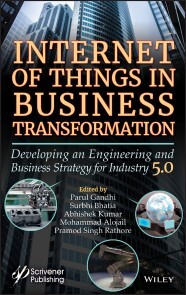
Internet of Things in Business Transformation
The objective of this book is to teach what IoT is, how it works, and how it can be successfully utilized in business. This book helps to develop and implement a powerful IoT strategy for business transformation as well as project execution. Digital change, business creation/change and upgrades in the ways and manners in which we work, live, and engage with our clients and customers, are all enveloped by the Internet of Things which is now named "Industry 5.0" or "Industrial Internet of Things." The sheer number of IoT(a billion+), demonstrates the advent of an advanced business society led by sustainable robotics and business intelligence. This book will be an indispensable asset in helping businesses to understand the new technology and thrive.PARUL GANDHI obtained her PhD in Computer Science and Software Engineering from Guru Jambheshwar University, Hisar, India. She is an associate professor at the Manav Rachna International Institute of Research and Studies (MRIIRS), Faridabad where she also handles the PhD program. She has published more than 30 research papers in reputed journals and conferences. Her research interests include software quality, soft computing, software metrics and component-based software development, data mining, IOT. SURBHI BHATIA obtained her PhD in Computer Science and Engineering from Banasthali Vidypaith, India. She is an assistant professor in the Department of Information Systems, College of Computer Sciences and Information Technology, King Faisal University, Saudi Arabia. She has published seven patents with the Government of India and more than 25 papers in reputed journals and conferences in high indexing databases. She is an active researcher in the field of data mining, machine learning, deep learning and information retrieval. ABHISHEK KUMAR obtained his PhD in Computer Science from the University of Madras. He is an assistant professor in the Department of Computer Science & Engineering, Chitkara University Institute of Engineering and Technology, India. He has more than 60 publications in peer-reviewed journals and has edited more than 15 books. His research areas include AI, image processing, computer vision, data mining, machine learning. MOHAMMAD ALOJAIL obtained his PhD in Information systems from RMIT University, Australia. He is the Chairman of Information System Department, College of Computer Sciences and Information Technology, King Faisal University, Saudi Arabia. He has considerable experience in the field of information systems and has delivered many presentations on leadership and management as well as successfully leading and managing teams to deliver large scale industrial projects. Dr. Alojail has written many scholarly papers in the field of IS and IT outsourcing. PRAMOD SINGH RATHORE is pursuing his Doctorate in Computer Science & Engineering from Bundelkhand University, India. He has been working as an assistant professor at the Computer Science & Engineering Department at Aryabhatt Engineering College and Research Centre, Rajasthan. He has more than 45 publications in peer-reviewed journals. Über die Autorin 9EINFÜHRUNG 19Über dieses Buch 20Konventionen in diesem Buch 20Was Sie nicht lesen müssen 21Törichte Annahmen über die Leser:innen 21Wie dieses Buch aufgebaut ist 22Teil I: Männlich, weiblich, divers – alle Geschlechter ansprechen 22Teil II: Sechs Arten zu gendern 22Teil III: Richtig gendern in jeder Situation 23Teil IV: Der Top-Ten-Teil 23Symbole, die in diesem Buch verwendet werden 23Wie es weitergeht 24TEIL I: MÄNNLICH, WEIBLICH, DIVERS – ALLE GESCHLECHTER ANSPRECHEN 25KAPITEL 1 WAS ES MIT DEM GENDERN AUF SICH HAT27Gendern heißt: Alle Geschlechter gleich ansprechen 27Wie viele Geschlechter gibt es überhaupt? 28Viele Ideen, ein Ziel: So geht Gendern 29Darum ist gendergerechte Sprache wichtig 29Alle mitmeinen? Gar nicht so einfach! 30Das AGG und andere Gesetze 31Finden Sie Ihre Art zu gendern 32Ihre Werte zählen 32Was Ihre Zielgruppe will 33Keine Angst vor Hater:innen 33KAPITEL 2 DIVERS: DAS GESETZ ZUM DRITTEN GESCHLECHT35Wer mit »divers« gemeint ist 35Mit uneindeutigen Geschlechtsmerkmalen geboren 36Transgeschlechtliche Menschen 36So hat sich das Personenstandsgesetz verändert 38Eine dritte Geschlechtsoption – leider nicht für alle 39Die Sache mit der Bürokratie 40Was die Option »divers« für das Gendern bedeutet 41Sprachvarianten, die alle Geschlechter einschließen 41Blick in die Zukunft: ein drittes Pronomen? 42KAPITEL 3 WARUM DAS GENERISCHE MASKULINUM NICHT GESCHLECHTSNEUTRAL IST45Die deutsche Sprache ist männlich dominiert 45Sprachen mit Geschlecht: Genus und Sexus 46Vermeintlich neutral: Das generische Maskulinum 47Frauen fühlen sich nicht angesprochen 48Vom subjektiven Empfinden… 48… und was Studien sagen 49Stereotype spielen auch eine Rolle 50Wie das generische Maskulinum zu Missverständnissen führt 50Die Lösung: Geschlechtergerechte Sprache 51Und ein generisches Femininum? 52Die Sache mit der Lesbarkeit 52TEIL II: SECHS ARTEN ZU GENDERN 55KAPITEL 4 DIE PAARFORM57Immer Hand in Hand 57Das perfekte Match: Paarform und neutral Formulierungen 58Für Sparfüchse: Sparschreibungen gegen Wortwiederholungen 59Die Paarform ist einfach umzusetzen 61Verständlich und lesbar – für alle 61Rechtschreibung und Grammatik? Kein Problem! 61Hier geht es aber nur um Männer und Frauen 62Mitgemeint und mitgenannt – viele Frauen freuen sich! 62Lesbarkeit oder Inklusivität: Das große Dilemma 63Checkliste: Wann die Paarform zu Ihnen passt 64KAPITEL 5 BINNEN-I UND SCHRÄGSTRICH65Die Rentner:innen unter den Arten zu gendern 65Der Schrägstrich verkürzt die Paarform 65Binnen-I: Großbuchstaben statt nerviger Sonderzeichen 66Alte Bekannte lädt man gerne ein 67Das Problem mit der Lesbarkeit 68Vorsicht: Verwechslungsgefahr und Stolperfallen 68Da schwirrt den Leser:innen der Kopf 69Ob sich Binnen-I und Schrägstrich lohnen 70Checkliste: Wann Binnen-I oder Schrägstrich zu Ihnen passen 71KAPITEL 6 NEUTRALE FORMULIERUNGEN73Sagen Sie’s doch mal neutral 73Machen Sie Verb oder Adjektiv zum Substantiv 74-kraft und -schaft anhängen 75Diese Wörter sind sowieso schon neutral 76Es kann so einfach sein 78Sie gendern und keine:r merkt’s 78Stark im Team mit anderen Arten zu gendern 78Doch es lauern Fallstricke 79Ist da wirklich kein Geschlecht? 80Zusammengesetzte Wörter 80Neutral, aber unpersönlich 82Checkliste: Wann neutrale Formulierungen zu Ihnen passen 82KAPITEL 7 STERNCHEN, UNTERSTRICH UND DOPPELPUNKT – DER GENDER-GAP83Mut zur Lücke 83Diese Sonderzeichen dürfen Sie wählen 84Wo die Lücke hingehört – und wo nicht 85Das passiert mit Artikeln und Personalpronomen 86Alle fühlen sich gemeint 87Nichtbinäre Menschen richtig ansprechen 88Experimente mit Pronomen 88Aber nicht alle haben Zugang 89Wo der Gender-Gap an seine Grenzen stößt 89Komplizierte Formulierungen umschiffen 90Checkliste: Wann der Gender-Gap zu Ihnen passt 91KAPITEL 8 DAS PRINZIP DER ROLLENVERTEILUNG 93Mal so, mal so – aber nach Plan 93Aktivieren Sie Ihre Vorstellungskraft 94Was mit dem Plural passiert 95Stolperfallen ade! 96Die Mischung macht’s 97Perfekt als Ergänzung zu Gender-Gap und Co. 97Gute Lesbarkeit hat ihren Preis 98Wer nicht mitspielt 98Vorsicht vor stereotypen Rollenbildern 99Checkliste: Wann das Prinzip der Rollenverteilung zu Ihnen passt 100TEIL III: RICHTIG GENDERN IN JEDER SITUATION 101KAPITEL 9 GENDERN IN STUDIUM UND BERUF103Richtig gendern in Haus- und Abschlussarbeit 103Mitgemeint in der Fußnote 104Wer sucht, der findet: Die Vorgaben Ihrer Hochschule 104Kein Punktabzug für Fehler beim Gendern 106Worauf Sie in Ihrer Arbeit achten sollten 106Geschlechtergerechte Sprache im Berufsalltag 107Gendern als Teil der Corporate Language 108E-Mails und Anrede: So treten Sie niemandem auf die Füße 109Geschlechtergerechte Sprache bindet Kund:innen! 111Alle Geschlechter ansprechen in der Stellenanzeige 112Hier ist Gendern Pflicht: Das Allgemeine Gleichbehandlungsgesetz 113M/W/D/X/Y/Z: So behalten Sie den Durchblick 114KAPITEL 10 GENDERN IM INTERNET 117Gendern und Suchmaschinenoptimierung vereinbaren 117Was Suchmaschinenoptimierung eigentlich ist 118So suchen wir im Web 119Die Suchmaschine austricksen 122SEO für Frauen: So werden Sie online gefunden 123Sie müssen sich nicht als Mann ausgeben 123Nutzer:innen haben die Macht 124Digitale Texte für die Sprachausgabe gendern 125KAPITEL 11 BARRIEREFREI GENDERN – DAMIT ALLE MITKOMMEN127Wann Gendern nicht barrierefrei ist 127Geschlechterinklusiv schreiben für blinde Menschen 129Digitale Texte und die Vorlesefunktion 130Die Sache mit der Blindenschrift 131Gendern in Leichter und Einfacher Sprache 132Leicht für alle 133Das Gendern erklären 134KAPITEL 12 GESCHLECHTERGERECHT SPRECHEN 137Mündlich gendern – kein Problem 137In der Paarform sprechen 138Die Lücke richtig aussprechen 138Die Macht der Gewohnheit bezwingen 139Wie Medien gendern 141Beispiele aus Fernsehen und Radio 141Als Medienmacher:in gendergerecht sprechen 142Mit und über nichtbinäre Menschen sprechen 143TEIL IV: TOP-TEN-TEIL 147KAPITEL 13 ZEHN PUNKTE, DIE ES BEIM GENDERN ZU BEACHTEN GILT149Lesbarkeit geht vor 149Die richtige Art zu gendern gibt es nicht 149Es gibt keine falsche Art zu gendern 150Im ganzen Satz wird’s manchmal schwierig 150Schnelle Hilfe aus dem Genderwörterbuch 151Verzetteln Sie sich nicht 151Treffen Sie eine Entscheidung 151Beachten Sie die Vorgaben 152Zwei oder alle Geschlechter 152Lassen Sie sich nicht verunsichern 153KAPITEL 14 ZEHN WÖRTER, DIE SIE NICHT GENDERN MÜSSEN155Geschlechtsneutrale Substantive 155Verben 155Adjektive 156Verwendete Literatur 157Stichwortverzeichnis 159

A Web-Based Approach to Measure Skill Mismatches and Skills Profiles for a Developing Country:
Several interdisciplinary studies highlight imperfect information as a possible explanation of skill mismatches, which in turn has implications for unemployment and informality rates. Despite information failures and their consequences, countries like Colombia (where informality and unemployment rates are high) lack a proper labour market information system to identify skill mismatches and employer skill requirements. One reason for this absence is the cost of collecting labour market data. Recently, the potential use of online job portals as a source of labour market information has gained the attention of researchers and policymakers, since these portals can provide quick and relatively low-cost data collection. As such, these portals could be of use for Colombia. However, debates continue about the efficacy of this use, particularly concerning the robustness of the collected data. This book implements a novel mixed-methods approach (such as web scraping, text mining, machine learning, etc.) to investigate to what extent a web-based model of skill mismatches can be developed for Colombia. The main contribution of this book is demonstrating that, with the proper techniques, job portals can be a robust source of labour market information. In doing so, it also contributes to current knowledge by developing a conceptual and methodological approach to identify skills, occupations, and skill mismatches using online job advertisements, which would otherwise be too complex to be collected and analysed via other means. By applying this novel methodology, this study provides new empirical data on the extent and nature of skill mismatches in Colombia for a considerable set of non-agricultural occupations in the urban and formal economy. Moreover, this information can be used as a complement to household surveys to monitor potential skill shortages. Thus, the findings are useful for policymakers, statisticians, and education and training providers, among others.

AWS Certified Security Study Guide
GET PREPARED FOR THE AWS CERTIFIED SECURITY SPECIALTY CERTIFICATION WITH THIS EXCELLENT RESOURCEBy earning the AWS Certified Security Specialty certification, IT professionals can gain valuable recognition as cloud security experts. The AWS Certified Security Study Guide: Specialty (SCS-C01) Exam helps cloud security practitioners prepare for success on the certification exam. It’s also an excellent reference for professionals, covering security best practices and the implementation of security features for clients or employers.Architects and engineers with knowledge of cloud computing architectures will find significant value in this book, which offers guidance on primary security threats and defense principles. Amazon Web Services security controls and tools are explained through real-world scenarios. These examples demonstrate how professionals can design, build, and operate secure cloud environments that run modern applications.The study guide serves as a primary source for those who are ready to apply their skills and seek certification. It addresses how cybersecurity can be improved using the AWS cloud and its native security services. Readers will benefit from detailed coverage of AWS Certified Security Specialty Exam topics.* Covers all AWS Certified Security Specialty exam topics* Explains AWS cybersecurity techniques and incident response* Covers logging and monitoring using the Amazon cloud* Examines infrastructure security* Describes access management and data protectionWith a single study resource, you can learn how to enhance security through the automation, troubleshooting, and development integration capabilities available with cloud computing. You will also discover services and tools to develop security plans that work in sync with cloud adoption.ABOUT THE AUTHORSDARIO GOLDFARB is a Security Solutions Architect at Amazon Web Services in Latin America. He has more than 15 years of experience in cybersecurity. ALEXANDRE M.S.P. MORAES is a Director of Teltec, a Brazilian systems integrator that is highly specialized in Network Design, Security Architectures and Cloud Computing. THIAGO MORAIS is the leader of Solutions Architecture teams at Amazon Web Services in Brazil. He has more than 20 years of experience in the IT industry. MAURICIO MUÑOZ is a Sr. Manager of a Specialist Solutions Architects team at Amazon Web Services in Latin America. He's worked in IT for more than 20 years, specializing in Information Security. MARCELLO ZILLO NETO is a Chief Security Advisor and a former Chief Information Security Officer (CISO) in Latin America. He has over 20 years of experience in cybersecurity and incident response. GUSTAVO A. A. SANTANA is the leader of the Specialist and Telecommunications Solutions Architecture teams at Amazon Web Services in Latin America. FERNANDO SAPATA is a Principal Business Development Manager for Serverless at Amazon Web Services in Latin America. He has more than 19 years of experience in the IT industry. Prolog 91. EINLEITUNG 15Veränderung 17Innovationsfähigkeit: Ohne Druck keine Bewegung 23Vier historische technische Revolutionen und ihrWeg zur Akzeptanz innerhalb der Gesellschaft 28Rückkehr zum eigenständigen, selbstermächtigten Menschen 31Mitarbeitende werden immer essenzieller 33Wissen verdoppelt sich, wenn man es teilt 352. MIT NETZWERKFÜHRUNG IN DIE ZUKUNFT 39Unternehmerische Voraussetzungen für das Gelingen von Netzwerken 42Führen in Netzwerken 48Unternehmensnetzwerke 52Inoffizielle Netzwerke 53Unternehmensinterne Netzwerke 54Unternehmensexterne Netzwerke 623. WAS HAT EIN PERÜCKENMACHER MIT STRATEGISCHER NETZWERKFÜHRUNG ZU TUN? 67Hierarchie und Eigenverantwortung 68Der Purpose geht uns alle an 87Serendipität 125Innovative Vernetzungsformate 134Mut zur Lücke 1634. WIE KANN AKTIV AUS TRENDS UND KRISEN GELERNT WERDEN? 167Wie können Vorbehalte abgebaut werden? 171Beispiel Corona – die Krise aktiv nutzen 172Krisen nutzen, um Gewohnheiten zu ändern 1755. WEITERBILDUNG UND PERSONALENTWICKLUNG ALS BEITRAG ZUR VERNETZUNG 183Disruption 1.0 derWeiterbildung 187Die neue Rolle der Personalentwicklung 191Mit dem TEAK®-Konfigurator auf Erfolgskurs 203Was ist Ihr Beitrag? 2366. DIE UNAUFHALTSAME DYNAMIK DES NETZWERKES AM BEISPIEL DER GROUP SCHUMACHER GMBH 2397. DIE NEUE PERSPEKTIVE DER ZUKUNFT – NACHWORT 249Danksagung 253Die Autorin 257Literaturverzeichnis 259Stichwortverzeichnis 269

Deep Reinforcement Learning in Unity
Gain an in-depth overview of reinforcement learning for autonomous agents in game development with Unity.This book starts with an introduction to state-based reinforcement learning algorithms involving Markov models, Bellman equations, and writing custom C# code with the aim of contrasting value and policy-based functions in reinforcement learning. Then, you will move on to path finding and navigation meshes in Unity, setting up the ML Agents Toolkit (including how to install and set up ML agents from the GitHub repository), and installing fundamental machine learning libraries and frameworks (such as Tensorflow). You will learn about: deep learning and work through an introduction to Tensorflow for writing neural networks (including perceptron, convolution, and LSTM networks), Q learning with Unity ML agents, and porting trained neural network models in Unity through the Python-C# API. You will also explore the OpenAI Gym Environment used throughout the book.DEEP REINFORCEMENT LEARNING IN UNITY provides a walk-through of the core fundamentals of deep reinforcement learning algorithms, especially variants of the value estimation, advantage, and policy gradient algorithms (including the differences between on and off policy algorithms in reinforcement learning). These core algorithms include actor critic, proximal policy, and deep deterministic policy gradients and its variants. And you will be able to write custom neural networks using the Tensorflow and Keras frameworks.Deep learning in games makes the agents learn how they can perform better and collect their rewards in adverse environments without user interference. The book provides a thorough overview of integrating ML Agents with Unity for deep reinforcement learning.WHAT YOU WILL LEARN* Understand how deep reinforcement learning works in games* Grasp the fundamentals of deep reinforcement learning * Integrate these fundamentals with the Unity ML Toolkit SDK* Gain insights into practical neural networks for training Agent Brain in the context of Unity ML Agents* Create different models and perform hyper-parameter tuning* Understand the Brain-Academy architecture in Unity ML Agents* Understand the Python-C# API interface during real-time training of neural networks* Grasp the fundamentals of generic neural networks and their variants using Tensorflow* Create simulations and visualize agents playing games in UnityWHO THIS BOOK IS FORReaders with preliminary programming and game development experience in Unity, and those with experience in Python and a general idea of machine learningABHILASH MAJUMDER is a natural language processing research engineer for HSBC (UK/India) and technical mentor for Udactiy (ML). He also has been associated with Unity Technologies and was a speaker at Unite India-18, and has educated close to 1,000 students from EMEA and SEPAC (India) on Unity. He is an ML contributor and curator for Open Source Google Research and Tensorflow, and creator of ML libraries under Python Package Index (Pypi). He is an online educationalist for Udemy and a deep learning mentor for Upgrad.Abhilash was an apprentice/student ambassador for Unity Technologies where he educated corporate employees and students on using general Unity for game development. He was a technical mentor (AI programming) for the Unity Ambassadors Community and Content Production. He has been associated with Unity Technologies for general education, with an emphasis on graphics and machine learning. He is one of the first content creators for Unity Technologies India since 2017.Chapter 1: Introduction to Reinforcement LearningSub -Topics1. Markov Models and State Based Learning2. Bellman Equations3. Creating a Multi Armed Bandit RL simulation.4. Value and Policy iteration.Chapter 2: Pathfinding and NavigationSub - Topics1. Pathfinding in Unity2. Navigation Meshes3. Creating Enemy AIChapter 3: Setting Up ML Agents Toolkit SDKSub - Topics:1. Installing ML Agents2. Configuring Brain Academy3. Linking ML Agents with Tensorflow with Jupyter Notebooks4. Playing with ML agents samplesChapter 4: Understanding Brain Agents and AcademySub - Topics:1. Understanding the architecture of Brain2. Training different Agents with Single Brain3. Generic HyperparametersChapter 5: Deep Reinforcement LearningSub - Topics:1. Fundamentals of Mathematical Machine Learning with Python2. Deep Learning with Keras and Tensorflow3. Deep Reinforcement Learning Algorithms4. Writing neural network for Deep Q learning for Brain5. Hyperparameter Tuning for Optimization6. Memory-based LSTM Network Design with Keras for Brain7. Building an AI Agent for Kart Game Using Trained NetworkChapter 6: Competitive Networks for AI AgentsSub - Topics:1. Cooperative Network and Adversarial Network2. Extended Reinforcement Learning–Deep Policy Gradients3. Simulations Made with Unity ML Agents4. Simulating AI Autonomous Agent for Self-drivingChapter 7: Case Study – Obstacle Tower ChallengeSub - Topics:1. Obstacle Tower Challenge2. Unity ML Agents Challenge3. Research Developments from Unity AI4. Playing with the Open AI Gym Wrapper

Introducing Microsoft Access Using Macro Programming Techniques
Learn Microsoft Access by building a powerful database application from start to finish.Microsoft Access ships with every version of Office, from Office 2019 to Office 365 Home and Personal editions. Most people understand the value of having a reliable contact database, but few realize that Access can be an incredibly valuable data tool and an excellent gateway for learning database development.INTRODUCING MICROSOFT ACCESS USING MACRO PROGRAMMING TECHNIQUES approaches database development from a practical and experiential standpoint. You will learn important data concepts as you journey through each step of creating a database using Access. The example you will build takes advantage of a massive amount of data from an external source of nutritional data (USDA). You will leverage this freely available repository of information in multiple ways, putting Access to the test in creating powerful business solutions that you can then apply to your own data sets. The tables and records in this database will be used to demonstrate key relational principles in Access, including how to use the relationship window to understand the relationships between tables and how to create different objects such as queries, forms, reports, and macros. Using this approach, you will learn how desktop database development can be a powerful solution to meet your business needs.WHAT YOU WILL LEARN* Discover the relational database and how it is different from other databases* Create database tables and establish relationships between them to create a solid relational database system* Understand the concept and importance of referential integrity (RI) in data and databases* Use different types of Access queries to extract the information you need from the database* Show database information in individual, customized windows using Access Forms* Present insightful information about the database using Access Reports* Automate your database solutions with macrosWHO THIS BOOK IS FORAnyone who wants to learn how to build a database using Microsoft Access to create customized solutions. It is also useful for those working in IT managing large contact data sets (healthcare, retail, etc.) who need to learn the basics in order to create a professional database solution. Readers should have access to some version of Microsoft Access in order to perform the exercises in this book.FLAVIO MORGADO is a food engineer with an MSc. degree in food science and technology, a VBA professional developer, and a professor of epidemiology, statistics, and medical informatics at UNIFESO, a health sciences university in Rio de Janeiro, Brazil. Flavio has written more than 30 books, including Programming Excel with VBA (Apress) and Microsoft Word Secrets (Apress), and has translated many technical books. He also loves animals and the exquisite nature of the surrounding rainforest, and when he is not teaching, writing, or developing, he can be found running or riding his mountain bike through the Teresopolis Mountains, followed by his eight dogs, or spending time on the stunningly beautiful beaches of Cabo Frio in Rio de Janeiro.Chapter 1: A Primer on DatabasesChapter 2: Creating and Using Database TablesChapter 3: Creating QueriesChapter 4: Using FormsChapter 5: Using MacrosChapter 6: Using Reports

Beginning T-SQL
Get a performance-oriented introduction to the T-SQL language underlying the Microsoft SQL Server and Azure SQL database engines. This fourth edition is updated to include SQL Notebooks as well as up-to-date syntax and features for T-SQL on-premises and in the Azure cloud. Exercises and examples now include the WideWorldImporters database, the newest sample database from Microsoft for SQL Server. Also new in this edition is coverage of JSON from T-SQL, news about performance enhancements called Intelligent Query Processing, and an appendix on running SQL Server in a container on macOS or Linux.BEGINNING T-SQL starts you on the path to mastering T-SQL with an emphasis on best practices. Using the sound coding techniques taught in this book will lead to excellent performance in the queries that you write in your daily work. Important techniques such as windowing functions are covered to help you write fast-executing queries that solve real business problems.The book begins with an introduction to databases, normalization, and to setting up your learning environment. You will learn about the tools you need to use such as SQL Server Management Studio, Azure Data Studio, and SQL Notebooks. Each subsequent chapter teaches an aspect of T-SQL, building on the skills learned in previous chapters. Exercises in most chapters provide an opportunity for the hands-on practice that leads to true learning and distinguishes the competent professional.A stand-out feature in this book is that most chapters end with a Thinking About Performance section. These sections cover aspects of query performance relative to the content just presented, including the new Intelligent Query Processing features that make queries faster without changing code. They will help you avoid beginner mistakes by knowing about and thinking about performance from day 1.WHAT YOU WILL LEARN* Install a sandboxed SQL Server instance for learning* Understand how relational databases are designed* Create objects such as tables and stored procedures* Query a SQL Server table * Filter and order the results of a query* Query and work with specialized data types such as XML and JSON* Apply modern features such as window functions* Choose correct techniques so that your queries perform wellWHO THIS BOOK IS FORAnyone who wants to learn T-SQL from the beginning or improve their T-SQL skills; those who need T-SQL as an additional skill; and those who write queries such as application developers, database administrators, business intelligence developers, and data scientists. The book is also helpful for anyone who must retrieve data from a SQL Server database.KATHI KELLENBERGER is an editor and DevOps advocate at Redgate Software and a Microsoft Data Platform MVP. She has been working with SQL Server for over 20 years, starting with version 6.5. She has worked as a developer, database administrator, and consultant. Kathi has been involved with almost 20 book projects as an author, co-author, or technical editor, and enjoys presenting at events, webinars, and user groups. When not working, she teaches T-SQL to beginners at a non-profit in St. Louis, Missouri that helps people transition to tech careers.LEE EVEREST is a SQL Server developer who has worked with the product since version 6.5. He has taught part-time at Dallas College North Lake Campus for 18 years, and has had several students move on to companies such as Microsoft, filling roles from support engineer to data scientist to vice president. When Lee isn’t working, he enjoys computers, golf, and fishing.1. Getting Started2. Exploring Database Concepts3. Writing Simple SELECT Queries4. Using Built-In Functions and Expressions5. Joining Tables6. Building on Subqueries, Common Table Expressions, and Unions7. Grouping and Summarizing Data8. Discovering Windowing Functions9. Advanced WHERE Clauses10. Manipulating Data11. Managing Transactions12. Understanding T-SQL Programming Logic13. Implementing Logic in the Database14. Expanding on Data Type Concepts15. Working with XML and JSON16. Writing Advanced Queries17. Where to Go Next?Appendix A: SQL Server for Linux and macOSAppendix B: Using SSMSAppendix C: SQL Notebooks

Manipulationssichere Cloud-Infrastrukturen
Im Rahmen der sich beschleunigenden Digitalisierung wandern sowohl in der Privatwirtschaft als auch den öffentlichen Verwaltungen viele als kritisch bewertete Anwendungen und Dienste in die Cloud. Big Data, Maschinelles Lernen und Künstliche Intelligenz bieten viele Vorteile, werfen aber wachsende Sicherheits- und Datenschutzprobleme auf. Die Sicherheit der informationstechnischen Systeme, einschließlich und insbesondere der Cloud, wird somit zum Dreh- und Angelpunkt einer zuverlässigen, nachhaltigen und sicheren Wirtschaft und Verwaltung.Das vorliegende Buch gibt Antworten auf die von Sicherheitsverantwortlichen und -forschern gleichermaßen gestellte Frage „Wieviel Sicherheit ist genug?“. Dabei werden der rechtliche Rahmen beleuchtet, das Vertrauensdilemma des Cloud Computing herausgearbeitet und die grundsätzlich zur Verfügung stehenden Optionen für Cloud-Sicherheit mit einer Modellierung der Erfolgswahrscheinlichkeit der Angreifer beschrieben und quantitativ analysiert. Es wird gezeigt, wie mit dem Konzept einer manipulationssicheren, versiegelten Verarbeitung der notwendige Durchbruch bezüglich Datenschutz und IT-Sicherheit erzielt werden kann.Mit verschiedenen praktischen Anwendungsfällen der Sealed-Cloud-Technologie wird gezeigt, wie mit solch europäisch implementiertem „Confidential Cloud Computing“ Souveränität in der Datenökonomie gewonnen werden kann.DR. HUBERT A. JÄGER ist Unternehmer und Experte für Innovationen im Bereich der nachhaltigen Digitalisierung. Er baute zusammen mit Dr. Rieken die Uniscon GmbH auf und hält zahlreiche Patente zu unterschiedlichen Themen in der Informationstechnik und Telekommunikation, insbesondere zu Cloud-Sicherheit.DR. RALF O. G. RIEKEN ist Gründer und COO der Uniscon GmbH, einem Anbieter von hochsicheren Cloud-Lösungen. Er hatte zuvor verantwortliche Positionen bei führenden IT- und Netzinfrastrukturlieferanten inne, u.a. im Silicon Valley. Stand der Technik zum Cloud-Computing - Anforderungen geschäftskritischer Anwendungen - Gefühlte und reale Risiken - Überblick zu Konzepten für IT-Sicherheit und Datenschutz in der Cloud - Sealed Processing – ein rein technische Ansatz für Security - Praktische Anwendungen
Digitales Shopfloor Management in SAP-Systemumgebungen
Dieser Ratgeber zeigt Lösungsvarianten sowie Vorgehensmodelle auf und liefert einen schnellen Überblick, Entscheidungshilfen, praxisgerechte Hinweise, Erfahrungshintergrund aus Projekten und Expertenwissen für Ihre Digitalisierungsprojekte in der Fertigung. Erstellen Sie auf Grundlage dieses Buchs eine Roadmap mit den richtigen Prioritäten zur erfolgreichen Digitalisierung Ihrer Produktionsprozesse und verschaffen Sie sich damit Wettbewerbsvorteile in Ihrer Branche.DIPL.-INFORM. MANFRED DIETRICH hat über 20 Jahre Erfahrung in der Beratung von Fertigungsunternehmen und Optimierung von Produktionsabläufen. Mit der deTask CS GmbH (www.detask.de) begleitet er Digitalisierungsvorhaben in der Produktion in unterschiedlichen Branchen der Fertigungsindustrie.Ist-Analyse.-Lösungsbausteine und Varianten.-BI, KI und Cloud.-Erfolgsfaktoren.-Roadmap.

Microsoft Azure Architect Technologies and Design Complete Study Guide
BECOME A PROFICIENT MICROSOFT AZURE SOLUTIONS ARCHITECTAzure certifications are critical to the millions of IT professionals Microsoft has certified as MCSE and MCSA in Windows Server in the last 20 years. All of these professionals need to certify in key Azure exams to stay current and advance in their careers. Exams AZ-303 and AZ-304 are the key solutions architect exams that experienced Windows professionals will find most useful at the intermediate and advanced points of their careers.Microsoft Azure Architect Technologies and Design Complete Study Guide Exams AZ-303 and AZ-304 covers the two critical Microsoft Azure exams that intermediate and advanced Microsoft IT professionals will need to show proficiency as their organizations move to the Azure cloud.* Understand Azure* Set up your Microsoft Cloud network* Solve real-world problems* Get the confidence to pass the examBy learning all of these things plus using the Study Guide review questions and practice exams, the reader will be ready to take the exam and perform the job with confidence.BENJAMIN PERKINS is a Senior Support Escalation Engineer at Microsoft. He’s an expert C# programmer with a focus on modern cloud and web technologies. He has 15+ years of experience in designing, developing, deploying, administering, and managing enterprise IT solutions.WILLIAM PANEK, MCP, MCSE, MCSA, MCTS, MCITP, CCNA, is a Five-Time Microsoft MVP Winner. He has taught at Boston University, Clark University, and the University of Maryland, and presently conducts live online classes for StormWind Studios www.stormwind.com Introduction xxiAssessment Test xxxixCHAPTER 1 GAINING THE AZURE SOLUTIONS ARCHITECT EXPERT CERTIFICATION 1The Journey to Certification 3A Strategy to Pass the Azure Exams 5Use Azure Daily 5Read Azure Articles, Keeping Yourself Current 6Recognize Azure Product Names, Features, and Functionalities 9Strive for a Deep Knowledge of a Few, Some Knowledge of Many, and a Basic Knowledge of All 10An Introduction to “Must-Know” Azure Features 12Azure Active Directory and Security 12Networking 13Azure Virtual Machines 15Azure App Service 16Azure Functions 18API Management 19Azure Monitor 20Azure SQL 22Azure Cosmos DB 24Azure Storage 25Service Bus 28Site Recovery 30Azure Bastion 32Summary 32Exam Essentials 33Key Terms 34Review Questions 35CHAPTER 2 SECURITY AND IDENTITY 39Azure Active Directory 40Add a Custom Domain to Azure Active Directory 44AAD Connect 49Connect Health 51Directory Objects 52Single Sign-On 52B2B Collaboration 53Self-Service Password 54Application Proxy 54Service Level Agreement 56Identity Protection 57Conditional Access 59Multifactor Authentication 66Privileged Identity Management 74Managed Identities 75Azure AD Domain Services 76Role-Based Access Control 78How to Control Who or What Has Access 84How to Provide Permissions to Resources 85How Are the Permissions to Resources Controlled? 87Custom Roles 87Hardware and Network Security 92Microsoft Trust Center 93Security Center 93Azure Network Security 98Application Gateway/WAF 98Azure DDoS Protection 99Azure Confidential Computing 99Azure Security Products and Techniques 102Shared Access Signature 102Azure Key Vault 103Easy Auth 105Summary 106Exam Essentials 106Review Questions 108CHAPTER 3 NETWORKING 111Microsoft’s Global Network 112Overview of Hybrid Networks 114Azure Virtual Network 115Azure Virtual Networking 117Regions 117Key Features and Capabilities 127Network Security 168Traffic Filtering with NSG, ASG, and NVA 169Application Gateway/WAF 174IP Restrictions 180Network Map and Topology 183Using Azure DNS 184Azure-Provided DNS 187Hybrid Azure Networking 190ExpressRoute 190Site-to-Site VPN Gateway 192Additional Azure Networking Products 201Application Gateway 202Hosting Multiple Websites 206Azure Load Balancer 211Azure Front Door 214Azure Content Delivery Network 215Traffic Manager 217Azure Relay/Hybrid Connection Manager 218Key Terms 220Summary 221Exam Essentials 222Review Questions 224CHAPTER 4 COMPUTE 227An Overview of Compute (Hosting Model) 229Cloud Service Models 229How to Choose the Right Hosting Model 231Architectural Styles, Principles, and Patterns 234Azure Compute Best Practices 237Azure Container Instances 239OS Virtualization, Containers, and Images 241Container Groups and Multicontainers 243Azure Virtual Machines 256Creating Azure Virtual Machines 259Managing Azure Virtual Machines 271Azure App Services 298Web Apps 301Web App for Containers (Linux) 306App Service Environments 308Azure WebJobs 309Azure Batch and HPC 312Storage 316Marketplace 316Azure Functions 317Hosting Plans 319Triggers and Bindings 320Runtime Versions 326Supported Programming Languages 326Service Fabric 328Clusters and Nodes 330Architecture 331Best-Practice Scenarios 332Azure Integration 335Azure Kubernetes Service 336Kubernetes vs. AKS 336Clusters, Nodes, and Pods 338Development and Deployment 338Maintaining and Scaling 342Cloud Services 344Windows Virtual Desktop 345Summary 346Key Terms 347Exam Essentials 348Review Questions 350CHAPTER 5 DATA AND STORAGE 355RDBMS, OLTP, OLAP, and ETL 357Big Data/NoSQL 358Choosing the Right Data Storage Solution 359Document Databases 360Key/Value Pairs 361Graph Databases 362Object Storage 363Relational Database Management System 363Search Engine Databases 365Data Analytics/Data Warehouse 365Shared Files 373Azure Data Store 377Azure SQL Database 382Other Azure Data Stores 420Azure Storage 424Zone Replication 434Data Backup, Migration, and Retention 437Securing Azure Data 443Summary 451Exam Essentials 451Key Terms 452Review Questions 454CHAPTER 6 HYBRID, COMPLIANCE, AND MESSAGING 457Hybrid Solutions 458Hybrid Security 459Hybrid Networking 460Hybrid Computing 462Hybrid Data Solutions 463Azure Cloud Compliance Techniques 463Compliance and Governance 464Security 472Resiliency and Reliability 474Privacy 475Security Center 478Microsoft Cloud App Security 483Azure Messaging Services 484Event vs. Messaging 485How to Choose the Right Messaging Service 485Messaging Patterns 487Event Hubs 492Service Bus 496Azure Storage Queue 498Event Grid 499Logic Apps 503Notification Hubs 505Summary 505Exam Essentials 506Key Terms 506Review Questions 508CHAPTER 7 DEVELOPING FOR THE CLOUD 511Architectural Styles, Principles, and Patterns 512Architectural Styles 513Design Principles 515Cloud Design Patterns 517An Introduction to Coding for the Cloud 523Triggering a Background Job 523Connecting to Regional/Global Database Instances 524Working with the Azure Queue Storage SDK 524Forms, Certificate, Windows, MFA, OpenStandard, Managed Identities, and ServicePrinciple Authentication 525Reading Encrypted Data from a Database 531IDEs and Source Code Repositories 533Implementing Security 534Summary 538Exam Essentials 539Key Terms 539Review Questions 540CHAPTER 8 MIGRATE AND DEPLOY 543Migrating to Azure 544Azure Site Recovery 548Azure Migrate 549Migrating Azure Virtual Machines 551Database Migration 558Migrating Azure App Services 565Import/Export 566Moving Resources in Azure 567Moving Azure App Services 568Moving Azure Virtual Machines 569Deploying Application Code and Azure Resources 576Deploying with Visual Studio 578Deploying with ARM Templates 580Working with DevOps 594Learning Azure Automation 600Process Automation 604Configuration Management 605Update Management 606Other Automation Resources 607Summary 608Exam Essentials 608Key Terms 609Review Questions 610CHAPTER 9 MONITOR AND RECOVER 613Monitoring Azure Resources 615Azure Service Health 619Azure Monitor 621Azure Monitoring by Component 634Additional Monitoring Topics 648Recover Azure Resources 649What is BCDR? 650Azure Recovery Services 651Azure Recovery by Product Type 668Summary 677Exam Essentials 678Review Questions 679APPENDIX ANSWERS TO REVIEW QUESTIONS 681Chapter 1: Gaining the Azure Solutions Architect Certification 682Chapter 2: Security and Identity 683Chapter 3: Networking 684Chapter 4: Compute 685Chapter 5: Data and Storage 687Chapter 6: Hybrid, Compliance, and Messaging 688Chapter 7: Developing for the Cloud 688Chapter 8: Migrate and Deploy 689Chapter 9: Monitor and Recover 690Index 693

Data Science Solutions on Azure
Understand and learn the skills needed to use modern tools in Microsoft Azure. This book discusses how to practically apply these tools in the industry, and help drive the transformation of organizations into a knowledge and data-driven entity. It provides an end-to-end understanding of data science life cycle and the techniques to efficiently productionize workloads.The book starts with an introduction to data science and discusses the statistical techniques data scientists should know. You'll then move on to machine learning in Azure where you will review the basics of data preparation and engineering, along with Azure ML service and automated machine learning. You'll also explore Azure Databricks and learn how to deploy, create and manage the same. In the final chapters you'll go through machine learning operations in Azure followed by the practical implementation of artificial intelligence through machine learning.Data Science Solutions on Azure will reveal how the different Azure services work together using real life scenarios and how-to-build solutions in a single comprehensive cloud ecosystem.WHAT YOU'LL LEARN* Understand big data analytics with Spark in Azure Databricks * Integrate with Azure services like Azure Machine Learning and Azure Synaps* Deploy, publish and monitor your data science workloads with MLOps * Review data abstraction, model management and versioning with GitHubWHO THIS BOOK IS FORData Scientists looking to deploy end-to-end solutions on Azure with latest tools and techniques.JULIAN SOH is a cloud solutions architect with Microsoft, focusing in the areas of artificial intelligence, cognitive services, and advanced analytics. Prior to his current role, Julian worked extensively in major public cloud initiatives, such as SaaS (Microsoft Office 365), IaaS/PaaS (Microsoft Azure), and hybrid private-public cloud implementations.PRIYANSHI SINGH is a data scientist by training and a data enthusiast by nature specializing in machine learning techniques applied to predictive analytics, computer vision and natural language processing. She holds a master’s degree in Data Science from New York University and is currently a Cloud Solution Architect at Microsoft helping the public sector to transform citizen services with Artificial Intelligence. She also leads a meetup community based out of New York to help educate public sector employees via hands on labs and discussions. Apart from her passion for learning new technologies and innovating with AI, she is a sports enthusiast, a great badminton player and enjoys playing Billiards. Find her on LinkedIn at https://www.linkedin.com/in/priyanshi-singh5/PART I - INTRODUCTION TO DATA SCIENCE AND ITS RISE TO PROMINENCEChapter 1 Data Science in the modern enterpriseWhat is Data ScienceThe Data Scientists' tools and lingoEthics and ethical AISignificance of Data Science in organizationsCase Studies of applied Data ScienceChapter 2 Most important Statistical Tehniques in Data ScienceTop Statistical Tehniques Data Scientists need to knowSupervised LearningUnsupervised LearningRegression/Classification/ ForecastingBayesian methodTime series analysisLinear regressionSampling methodsReinforcement LearningPART 2 - MACHINE LEARNING IN MICROSOFT AZUREChapter 3 Basics of data preparation and data engineeringIngesting disparate data sourcesPreparing data for analysisData ExplorationFeature EngineeringChapter 4 Introducing Azure Machine LearningAzureML- DataStores/ DatasetsAzure ML Compute/CLusters/inference/batch-realtimeAzure ML Service- Training and BuildingAzure ML Service- DeployingAzure ML Service- PipelinesAzure ML Studio/DesignerAzure Automated Machine Learning (AutoML)Hyperparameter TrainingAzure ML- SecurityCase StudyPART 3 - AZURE DATABRICKSChapter 5 Spark and Big DataSpark and HadoopWhat is Big Data?Why Spark is the platform of choice for Big DataChallenges with Big DataChapter 6 Azure Databricks BasicsWhat is Azure DatabricksAzure Databricks from the Data Engineers' perspectiveAzure Databricks from the Data Scientists' perspectiveChapter 7 Azure DatabricksDeploying the Azure Databricks workspaceCreating and Managing ClustersCreating and managing users and groupsManaging Databricks NotebooksUsing Databricks NotebooksDBFSConnecting to ADLSSample Notebook(s)PART 4 - OPERATIONALIZING DATA SCIENCEChapter 8 Machine Learning OperationsOperationalization concepts and DevOpsMLOps in AzureMLFlow in Azure DatabricksGitChapter 9 Practical MLIntroducing use cases in the different industriesDemocratizing AI through ML

Building Solutions with Microsoft Teams
Explore Microsoft Teams and use its principal tools such as Node.js, npm, Yeoman, Gulp, TypeScript, and React to help you develop for Teams better. This book covers the core components and use cases for Teams apps and guides you through ideas for automation, provisioning, and implementation.Building Solutions with Microsoft Teams starts with an overview of the Microsoft Teams developer platform followed by how to set up your environment for building apps and solutions with Teams. You will then go through various features of conversational bots and learn how to create a bot. You will gain an understanding of the messaging extension and command actions along with tabs for personal, groups, and teams contexts. Moving forward, you will work with SharePoint and Teams together via SharePoint Framework. Finally, you will manage the Teams life cycle and see design guidelines supported by various case studies.After reading this book, you will be able to integrate solutions from Power Apps, Power Automate, Power BI, and Power Virtual agents by using accelerators. You will also be able to leverage your existing skills from SharePoint Framework development.WHAT YOU WILL LEARN* Extend the Teams developer platform capabilities* Understand Microsoft Graph, including lifecycle management, collaboration, calling, and online meetings* Create an app package for your Microsoft Teams app* Connect web services to Microsoft Teams with webhooksWHO THIS BOOK IS FORMicrosoft Teams developers.Jenkins is an Office Development MVP who has been working on SharePoint for more than 16 years, focusing on building custom solutions for Microsoft Teams, SharePoint Framework, Power Platform, Office 365, and SharePoint.He is passionate about SharePoint and actively blogs, organizes events, and speaks at events and international conferences, most recently on the topics of Microsoft Teams, SharePoint Framework (SPFx), Power Apps, Power Automate, and Power Virtual Agents.CHAPTER 1: OVERVIEW: MICROSOFT TEAMS DEVELOPER PLATFORMCHAPTER GOAL: Introduction to Microsoft Teams Developer PlatformNO OF PAGES: 20SUB -TOPICS1. Objectives2. Microsoft Teams Overview3. Key Features of Microsoft Teams4. Teams Architecture5. Teams extensible platform capabilities6. Why do you have to build apps for Teams7. ConclusionCHAPTER 2: BUILDING APPS AND SOLUTIONS WITH MICROSOFT TEAMSCHAPTER GOAL: This chapter covers - setup environment and explains how to create apps for Microsoft Teams using C# on .NET, Nodejs, and Yeoman Generator. Also describes about various contexts and scenarios about teams’ apps line of business.NO OF PAGES: 35SUB - TOPICS:1. Microsoft Teams Developer Platform Overview2. Setup the Development environment for Microsoft Teams3. Register the bot with Microsoft Azure's Bot Framework4. Teams apps in various contexts5. Create an app using yeoman generator6. Use App Studio to create your app7. Create an app package for your Microsoft Teams app8. Create an app using Nodejs9. Create an app using C#10. How to use Adaptive cards in Teams app11. ConclusionCHAPTER 3: INTERACTIVE CONVERSATIONAL BOTSCHAPTER GOAL: This chapter covers various features of conversational bots and explains how to create bot with examples to guide the usersNO OF PAGES: 35SUB - TOPICS1. Overview of bots2. Bots in Microsoft Teams channels and group chats3. Proactive messages from bots4. Exercise 1 - Creating conversational bots for Microsoft Teams5. Exercise 2 - Bots in Microsoft Teams channels and group chats6. Exercise 3 - Proactive messages from bots7. ConclusionCHAPTER 4: MESSAGING EXTENSION AND ACTION COMMENTSCHAPTER GOAL: This chapter covers various features of Messaging extension and explains how to create Messaging extension and command actions with examples to guide the usersNO OF PAGES: 30SUB - TOPICS:1. Overview of message extension2. Microsoft Teams messaging extensions and action commands3. Search command message extensions4. Link unfurling message extensions5. Exercise 1 - Create action command messaging extensions6. Exercise 2 - Create search command messaging extensions7. Exercise 3 - Implement link unfurling messaging extensions8. ConclusionCHAPTER 5: EMBEDDED WEB EXPERIENCES WITH TABSCHAPTER GOAL: This chapter covers various features of tabs and explains how to create tabs for personal, groups and teams contexts with examples to guide the usersNO OF PAGES: 30SUB - TOPICS:1. Overview of Tabs2. Create a custom Microsoft Teams personal tab3. Create a custom Microsoft Teams channel or group tab4. Implement authentication in a custom tab5. Exercise 1 - Create a custom Microsoft Teams personal tab6. Exercise 2 - Create a custom Microsoft Teams channel or group tab7. Exercise 3 - Implement authentication in a custom tab8. ConclusionCHAPTER 6: COLLECT INPUT FROM USER USING TASK MODULESCHAPTER GOAL: This chapter covers various features of task modules and collects input from users and process the inputs with examples to guide the usersNO OF PAGES: 30SUB - TOPICS:1. Overview of Task Modules2. Collecting user input with task modules3. Deep links in task modules using adaptive cards4. Bots using task modules5. Exercise - Collecting user input with task modules6. Exercise 1 - Using adaptive cards and deep links in task7. Exercise 2 - Using task modules with bots8. ConclusionCHAPTER 7: CONNECT WEB SERVICES TO MICROSOFT TEAMS WITH WEBHOOKSCHAPTER GOAL: This chapter covers topics like web services to Microsoft Teams with webhooks and explains how to create incoming webhook and outgoing webhooks with examples to guide the users.NO OF PAGES: 20SUB - TOPICS:1. Overview of Webservices and webhooks2. Connect web services to Microsoft Teams with webhooks3. Create incoming webhooks4. Exercise 1 - Create outgoing webhooks5. Overview of Connectors6. Use Office 365 Connectors in Microsoft Teams7. Exercise 2 - Create incoming webhooks8. Exercise 3 - Create and add Office 365 Connectors to teams9. ConclusionCHAPTER 8: EXTEND YOUR SOLUTION WITH MICROSOFT GRAPHCHAPTER GOAL: This chapter covers the topic, extend your solution with Microsoft Graph components with examples to guide the users.NO OF PAGES: 20SUB - TOPICS:1. Overview of Connectors2. Overview of Graph API3. Teams Graph APIs4. Graph API for Lifecycle Management5. AAD App Setup & App Permission6. Exercise 1 - Quick Start with AAD packaged solution7. Microsoft Graph: Teams app scenarios8. Exercise 2 – Manage Teams and Channel using AppCHAPTER 9: BUILDING TEAMS APPS USING SOLUTION ACCELERATORSCHAPTER GOAL: This chapter covers - Integrate Power Platform, App template and Teams Mobile Platform extensibility with examplesNO OF PAGES: 40SUB - TOPICS:1. Overview of Solution Accelerations2. PowerApps Integration3. Power Virtual Agents Integration4. Power Automate Integration5. Exercise 1 - Make Your PowerApps a Teams App6. App templates for Teams apps7. Exercise 2 - A simple FAQ bot that brings a human in the loop8. Teams Mobile Platform extensibility9. Exercise 3 – Message extension with Mobile extensibility10. ConclusionCHAPTER 10: SHAREPOINT AND TEAMS: BETTER TOGETHERCHAPTER GOAL: This chapter covers the topic SharePoint and teams better together via SharePoint Framework with examples.NO OF PAGES: 20SUB - TOPICS:1. What is SharePoint Framework2. Surfacing SharePoint Framework to Teams3. Package and distribute your SPFX webpart to Teams4. Exercise 1 – Create a SPFx webpart and distribute to Teams5. ConclusionCHAPTER 11: TEAMS LIFECYCLE MANAGEMENT AND DESIGN GUIDELINE FOR APPSCHAPTER GOAL: This chapter covers the topics Teams life cycle management and design guidelines with examples.NO OF PAGES: 30SUB - TOPICS:1. Overview of Deploy the apps2. Run and debug your Microsoft Teams app3. Packaging your app4. Deploy and publish your app5. Design tools and approach6. Best Practices and Examples7. Exercise 1 – Upload an app package to Microsoft Teams8. Exercise 2 – Publish your app to your organization9. Exercise 3 – Publish your app on AppStore10. Conclusion