

Computer und IT

3D Printed Science Projects Volume 1
Create 3D printable models that can help students from kindergarten through grad school learn math, physics, botany, chemistry, engineering and more.This book shows parents and teachers how to use the models inside as starting points for 3D printable explorations. Students can start with these models and vary them for their own explorations. Unlike other sets of models that can just be scaled, these models have the science built-in to allow for more insight into the fundamental concepts.Each of the eight topics is designed to be customized by you to create a wide range of projects suitable for science fairs, extra credit, or classroom demonstrations. Science fair project suggestions and extensive "where to learn more" resources are included, too. You will add another dimension to your textbook understanding of science.FOR THIS NEW EDITION:The second edition of 3D Printed Science Projects is a thorough update of the original, modernizing the 3D printing technology. 3D Printed Science Projects shows you how to create 3D printable models that can help students from kindergarten through grad school learn math, physics, botany, chemistry, engineering and more. Each of the models is created in the free, open source CAD program OpenSCAD, so it can be customized by the reader. This allows the models to be the basis of open-ended STEM projects at a variety of levels.WHAT YOU'LL LEARN* Create (and present the science behind) 3D printed models.* Use a 3D printer to create those models as simply as possible.* Discover new science insights from designing 3D models.WHO THIS BOOK IS FOR3D Printed Science Projects particularly targets the technology-squeamish teacher or parent who want their kids tolearn something from their 3D printer but need help getting started. Kids who love science, homeschoolers (and the grandmas who buy them birthday presents) will be customers.As an engineer and management consultant, JOAN HORVATH has coordinated first-of-a-kind interdisciplinary technical and business projects, helping people with no common vocabulary (startups, universities, small towns, etc). work together. Her experience as a systems engineer has spanned software development, spacecraft flight operations, risk management, and spacecraft/ground system test and contingency planning.As an educator, Joan’s passion is bringing science and technology to the non-specialist in a comprehensible and entertaining way that will stay with the learner for a lifetime.RICH CAMERON is a co-founder of Pasadena-based Nonscriptum LLC. Nonscriptum consults for educational and scientific users in the areas of 3D printing and maker technologies. Rich (known online as “Whosawhatsis”) is an experienced open source developer who has been a key member of the RepRap 3D-printer development community for many years. His designs include the original spring/lever extruder mechanism used on many 3D printers, the RepRap Wallace, and the Deezmaker Bukito portable 3D printer. By building and modifying several of the early open source 3D printers to wrestle unprecedented performance out of them, he has become an expert at maximizing the print quality of filament-based printers. When he's not busy making every aspect of his own 3D printers better, from slicing software to firmware and hardware, he likes to share that knowledge and experience online so that he can help make everyone else’s printers better too.Chapter 1: Math Modeling with 3D Prints.- Chapter 2: Light and Other Waves.- Chapter 3: Gravity.- Chapter 4: Airfoils.- Chapter 5: Simple Machines.- Chapter 6: Plants and Their Ecosystems.- Chapter 7: Molecules.- Chapter 8: Trusses.- Chapter 9: Gears.- Appendix A: Links.

Foundations and Opportunities of Biometrics
Biometrics are used in many situations of our daily lives, but we still don’t fully understand the way they work and what potential lies behind them. This book covers a fascinating and broad area that impacts everyone, not only companies involved in deep-tech. Over the past decades, biometrics have made their way into our daily lives after being first limited to science fiction and later expensive high-tech applications. With the widespread use of smartphones and other technological gadgets we interact with on a daily basis, the ability to collect and use biometric signals has become ubiquitous.This book provides a comprehensive overview of the type of biometric signals that are being used, how they are implemented, and what their limitations are. With technology being more relevant in all aspects of life, it’s more important for people who make decisions in their business to understand the opportunities and limitations of biometric use.This book will guide the readerthrough the history of biometric technology, including initial applications of the technology, and reflect on how pop culture like science fiction media has influenced the way we look at biometrics and shaped our expectations and fears. It also covers real-world applications and how they work. This book provides foundational information that will help readers understand how they can use biometrics in their everyday life and assess their ability to disrupt existing business processes and models.WHAT YOU WILL LEARN:How Biometrics have evolved over time and the main drivers for them being disruptive.The scope and limitations of various types of biometrics.Foundational knowledge to lead the conversation about biometrics within your company.An analysis of BMD sources that remain stable over time.Develop an analytical understanding of accuracy, precision and errors and understand how the various uses of BMD rate within these contexts.WHO THIS BOOK IS FOR:This book is aimed at people who have an interest in technology, but perhaps aren’t very technical themselves. It focuses on business leaders, product managers, product designers, etc. who want to understand the opportunities biometrics offer to their customers and how to implement them in a useful and effective way.Dario Salice is a seasoned professional in the space of Telecommunications, Security, and Online-Identities. While most recently working at Google and then Meta, he provided the right security tools to billions of users to protect their online accounts. I also launched dedicated security programs to protect highly targeted individuals from more sophisticated attacks. Serving as Meta’s representative on the Board of the FIDO Alliance, an industry standards organization working on strong authentication methods, he gained a broader perspective on the global authentication market. Dario's current focus is ramping up an independent boutique consulting service to engage with companies of any size who want to benefit from my insights Part I - Laying the foundationJennifer Bailey-Salice is an author of calculus workbooks at Calculus Workbooks at White Willow Math. For over 20 year, Jennifer Bailey-Salice taught all levels of math from 6th grade through Multi-Variable Calculus. As a classroom teacher and a private tutor, Ms. Bailey-Salice developed an understanding of what students need to know in order to fully understand the topic at hand. While her teaching took her from Atlanta to Spain and then California, she is now settled in Surrey, UK where she hopes to continue helping students succeed atmath.Part I: Laying Down the Foundation.- Chapter 1: The growing Use of Biometrics.- Chapter 2: What are Biometrics?.- Chapter 3: Adversarial Behavior - Attack and Defense.- Part II: Sources of Biometric Signals.- Chapter 4: Physiological Biometrics.- Chapter 5: Facial Recognition.- Chapter 6: Behavioral Biometrics.- Chapter 7: Voice Analysis.- Part III: Critical Analysis.- Chapter 8: How Do We Judge Accuracy?.- Chapter 9: Risks and Responsibilities.- Chapter 10: Usability and Practicality.

Biotech and IoT
Dive into the intricacies of biotech and IoT integration with a meticulously crafted journey through the chapters. This book unveils the synergies between lab-based biotech processes and cloud-connected technologies, promising a paradigm shift in healthcare, agriculture, and beyond.Beginning with an introduction to IoT applications and biotechnological principles, the book navigates historical developments and convergence. Chapters unfold transformation of laboratories into smart spaces, revolutionizing healthcare through remote patient monitoring and personalized medicine. Explore the world of IoT-enabled biomedical devices and their impact, while delving into data management, security challenges, and ethical considerations. The narrative extends to precision agriculture, environmental monitoring, and synergy of biometric security systems with wearable devices. Bioinformatics and cloud analytics take center stage, unraveling their role in the biotech IoT landscape. Finally, gaze into the future, anticipating trends, innovations, and global collaborations, concluding with practical insights for professionals and enthusiasts alike.On completion, you will emerge from this enlightening journey equipped with a deep understanding of the transformative power at the intersection of biotechnology and IoT. Gain insights into the historical context, current applications, and future trends shaping the landscape. Armed with a wealth of technical knowledge, readers will navigate smart laboratories, healthcare revolutions, environmental interventions, and more. This book not only opens doors to the intricacies of biotech IoT but also provides practical guidance for navigating the evolving field.WHAT YOU WILL LEARN* Understand the core principles of IoT and its versatile applications across various fields* Review the integration of IoT in laboratories, witnessing the metamorphosis of traditional labs into intelligent, connected spaces* Explore real-world applications of IoT in healthcare, agriculture, and environmental monitoringWHO THIS BOOK IS FORProfessionals in healthcare, agriculture, or laboratory settings with a foundational knowledge of biotechnology or IoT looking to deepen their understanding of how these technologies converge and impact their respective industries would greatly benefit from this book.DR. ALOK KUMAR SRIVASTAV is an accomplished Assistant Professor in the Department of Health Science at the University of the People, Pasadena, California, USA. His academic background includes a Ph.D., M.Tech, M.Sc. in Bio-Technology, a Post-Doctoral Fellowship (Research) in Bio-Technology from Lincoln University College, Malaysia, and an MBA in Human Resource Management. He is a distinguished figure in Academia and Research, honored with the "International Pride of Educationist Award" at AIT, Thailand in 2022, for pioneering contributions to advancing education in the digital era and receiving a prestigious accolade "Innovative Academic Researcher Award" at HULT, France, UK in 2024 for his exceptional creativity, innovation, and impact in academic research.DR. PRIYANKA DAS serves as an Assistant Professor in the Department of Health Science at the prestigious University of the People in Pasadena, California, USA. She holds a Ph.D., M.Tech, and M.Sc. in Biotechnology along with an MBA in Human Resource Management. Prior to her current position, she was a Post-Doctoral Fellow (Research) in Biotechnology at Lincoln University College, Malaysia. Dr. Priyanka Das is a dedicated scholar, contributing significantly to the field of Biotechnology.ASHISH KUMAR SRIVASTAVA is renowned in the industry for expertise in IoT and smart connected products, with a proven track record of collaborating across functions to develop assets in new products, R&D, and portfolios. As a seasoned manager, Ashish effectively launched smart connected products, providing value in processes, designs, and business models. Leading product development in IoT platforms, Ashish excels in stakeholder alignment and managing client relationships. With extensive experience in IoT and cloud architecture, Ashish has spearheaded the development of innovative solutions in categories such as smart home, security, and sensors. Beyond corporate achievements, Ashish has contributed significantly to community building, mentoring in Intel CAG youth empowerment programs and leading projects in diverse areas such as robotics, embedded systems, and innovation. Ashish is an active participant in Intel College excellence programs, offering hands-on training and workshops on IoT projects. As an accomplished author, Ashish brings a wealth of knowledge and a commitment to advancing technology.Chapter 1: Introduction to Biotechnology and IoT Integration.- Chapter 2: Historical Development and Convergence.- Chapter 3: Smart Laboratories and IoT Transformation.- Chapter 4: Healthcare Revolution.- Chapter 5: Connected Biomedical Devices and Digital Integration.- Chapter 6: Data Management, Security, and Ethical Considerations.- Chapter 7: Precision Agriculture and Environmental Monitoring.- Chapter 8: Biometric Security Systems and Wearable Devices.- Chapter 9: Bioinformatics and Cloud Analytics.- Chapter 10: Future Trends, Innovations, and Global Collaboration.

Spring Boot 3
Ihr umfassender Leitfaden für Spring Boot 3 - Spring Boot von Null auf Hundert - Neuerungen in Spring Boot 3 und Migration von Spring Boot 2 - Beispiele für verschiedenste Anwendungsfälle Entdecken Sie die Leistungsfähigkeit von Spring Boot 3 mit diesem umfassenden Leitfaden. Von den Grundlagen zu Spring Boot 3 über fortgeschrittene Themen wie zum Beispiel reaktive Programmierung bis zu eigenen Erweiterungen von Spring Boot. Was Sie in diesem Buch erwartet: Universelle Zugänglichkeit: Egal, ob Sie gerade erst anfangen oder bereits Erfahrung mit Spring Boot haben, dieses Buch führt Sie durch die Grundlagen bis hin zu fortgeschrittenen Konzepten. Praxisorientierte Lernweise: Nutzen Sie zahlreiche praxisnahe Beispiele, um das Gelernte sofort anzuwenden. Die klare Darstellung und Anwendung in realen Szenarien machen den Lernprozess effektiv und eingängig. Neuerungen in Version 3: Entdecken Sie die spezifischen Features von Spring Boot 3. Die Autoren gehen detailliert auf die neuesten Entwicklungen ein und zeigen, wie Sie das volle Potenzial dieser Version ausschöpfen können. Ob Sie ein erfahrener Entwickler sind oder gerade erst in die Welt von Spring Boot eintauchen – dieses Buch vermittelt Ihnen das notwendige Wissen, um moderne und effiziente Java-Anwendungen zu entwickeln.

CompTIA Network+
Fundiertes und umfassendes Wissen zu Computer-Netzwerken TCP/IP, Drahtlostechnologien, Administration, Fehlersuche, Notfallplan u.v.m. Mit aktuellen Vorbereitungsfragen und Übungen zu jedem Fachgebiet Wegweiser zum Netzwerk-Experten Ohne Netzwerke ist eine moderne Unternehmens-IT nicht mehr realisierbar. Hierfür braucht man Fachleute, die die dafür notwendigen Technologien beherrschen und die entsprechenden Anwendungen einrichten und administrieren, sei es zur Nutzung gemeinsamer Ressourcen, zur Anbindung der Firma ans Internet oder zur Einrichtung einer Kommunikationsinfrastruktur. Netzwerke konfigurieren und Zertifizierung meistern Dieses Buch verfolgt zwei Ziele: Sie lernen grundlegend den Einsatz von Computer-Netzwerken in Unternehmen, damit Sie diese planen, konfigurieren und Ihre Kunden damit arbeiten können. Zugleich bereitet es Sie auf die entsprechende aktuelle Zertifizierung als Techniker oder Technikerin CompTIA-Network+ vor. Verständnis für alle Netzwerk-Wissensgebiete Die Zertifizierung CompTIA Network+ ist in mehrere Wissensgebiete unterteilt. In der aktuellen Fassung der Prüfung N10-009 sind dies: Netzwerkkonzepte Netzwerk-Implementationen Netzwerkbetrieb Netzwerksicherheit Netzwerk-Troubleshooting Markus Kammermann behandelt die genannten Themenbereiche ausführlich und vermittelt Ihnen in diesem Buch die für die Zertifizierung notwendigen Kenntnisse. Im Zentrum steht dabei der Aufbau eines umfassenden Verständnisses für die Thematik IT-Netzwerke. So erhalten Sie die notwendigen Grundlagen, um die Prüfung CompTIA Network+ erfolgreich zu bestehen. Aus dem Inhalt: Netzwerkmodelle und ihr Praxisbezug Grundbegriffe der Telematik Hardware für den Netzwerkaufbau Topologie und Verbindungstypen Die Standards der IEEE-802.x-Reihe Aktuelle Drahtlostechnologien von 802.11ax bis Internet of Things (IoT) Verbindung bis ins Weltall - WAN-Technologien IPv4 und IPv6 Die TCP/IP-Protokoll-Familie Dienstprotokolle von Routing bis Web Administration des Netzwerks Sicherheitsverfahren im Netzwerkverkehr Angriff und Verteidigung in Netzwerken Sicherer Zugang im Homeoffice Netzwerkmanagement und -dokumentation Fehlersuche im Netzwerk Risikomanagement und Notfallplanung Praxisübungen: Einrichtung eines Netzwerks, Einrichtung eines WLANs, Steigerung der Netzeffizienz Übungen für die eigene Praxis Beispielprüfung in vollem Umfang des Examens N10-009MARKUS KAMMERMANN, ausgebildeter ICT-Projektleiter und Erwachsenenausbilder für CompTIA Network+, ist seit mehr als fünfundzwanzig Jahren in der System- und Netzwerktechnik tätig. Er ist Dozent in der höheren beruflichen Bildung und Autor zahlreicher Fachbücher.

Open-Source Security Operations Center (SOC)
A COMPREHENSIVE AND UP-TO-DATE EXPLORATION OF IMPLEMENTING AND MANAGING A SECURITY OPERATIONS CENTER IN AN OPEN-SOURCE ENVIRONMENTIn Open-Source Security Operations Center (SOC): A Complete Guide to Establishing, Managing, and Maintaining a Modern SOC, a team of veteran cybersecurity practitioners delivers a practical and hands-on discussion of how to set up and operate a security operations center (SOC) in a way that integrates and optimizes existing security procedures. You’ll explore how to implement and manage every relevant aspect of cybersecurity, from foundational infrastructure to consumer access points. In the book, the authors explain why industry standards have become necessary and how they have evolved – and will evolve – to support the growing cybersecurity demands in this space. Readers will also find:* A modular design that facilitates use in a variety of classrooms and instructional settings* Detailed discussions of SOC tools used for threat prevention and detection, including vulnerability assessment, behavioral monitoring, and asset discovery* Hands-on exercises, case studies, and end-of-chapter questions to enable learning and retentionPerfect for cybersecurity practitioners and software engineers working in the industry, Open-Source Security Operations Center (SOC) will also prove invaluable to managers, executives, and directors who seek a better technical understanding of how to secure their networks and products. ALFRED BASTA, PHD, CCP (CMMC), CISM, CPENT, LPT, OSCP, PMP, CRTO, CHPSE, CRISC, CISA, CGEIT, CASP+, CYSA+, is a professor of mathematics, cryptography, and information security as well as a professional speaker on internet security, networking, and cryptography. He is a member of many associations, including ISACA, ECE, and the Mathematical Association of America. Dr. Basta’s other publications include Pen Testing from Contract to Report, Computer Security and Penetration Testing, Mathematics for Information Technology, Linux Operations and Administration, and Database Security. In addition, Dr. Basta is the chair of EC-Council’s CPENT Scheme Committee. He has worked as a faculty member and curriculum advisor for programming and cyber security programs at numerous colleges and universities. NADINE BASTA, MSC., CEH, is a professor of computer science, cybersecurity, mathematics, and information technology. Her numerous certifications include CEH, MCSE, MSDBA, CCDP, NCSE, NCTE, and CCA. A security consultant and auditor, she combines strong “in the field” experience with her academic background. She is also the author of Computer Security and Penetration Testing, Mathematics for Information Technology, and Linux Operations and Administration. Nadine has extensive teaching and research experience in computer science and cybersecurity. WAQAR ANWAR is a Cybersecurity Curriculum Specialist with over 10 years of experience in the field. He also develops and delivers training to faculty and staff on cybersecurity topics and conducts research on cybersecurity topics. Mr. Anwar is a frequent speaker at industry conferences. He is also a member of several cybersecurity organizations including SysAdmin, Audit, Network and Security SANS, CYBRARY, and Information Systems Security Association International ISSA. MOHAMMAD ILYAS ESSAR is a Certified OSCP, CRTO, HTB CPTS, CASP+, PENTEST+, and CEH Master. He is currently employed as a Senior Cybersecurity Analyst in Canada. He is highly passionate and dedicated to the field of cybersecurity. With a solid career background in this domain, he brings five years of progressive experience spanning various domains. Ilyas specializes in Red Teaming, offensive security, and penetration testing, consistently achieving exceptional results. Ilyas is constantly driven to excel in his field, actively participating in Capture The Flag (CTF) competitions, where he dedicates a significant portion of his time to honing his skills as a Pentester and Red Teamer. He is also part of Synack Red Team, where he performs bug bounty hunting. Preface xiii1 INTRODUCTION TO SOC ANALYSIS 1Overview of Security Operations Centers (SOCs) 1Importance of SOC Analysis 1Objectives and Scope of the Book 2Structure of the Book 3Challenges in SOC 4SOC Roles and Responsibilities 6SOC Team Structure and Roles 7SOC Models and How to Choose 8Choosing the Right SOC Model 10Evaluate Where You Are 11Define the Business Objectives 12Designing an SOC 13Future Trends and Developments in SOCs 15SOC Challenges and Best Practices 16Best Practices for SOC Management 17Case Studies and Examples of Successful SOCs 18References 192 SOC PILLARS 21Introduction 21Definition of SOC Pillars 21People 22Process 23Technology 25Data 26Importance of SOC Pillars in Cybersecurity 28Levels of SOC Analysts 28Processes 31Event Triage and Categorization/The Cyber Kill Chain in Practice 31Prioritization and Analysis/Know Your Network and All Its Assets 33Remediation and Recovery 34Assessment and Audit 34Threat Intelligence 34Threat Intelligence Types 35Threat Intelligence Approaches 36Threat Intelligence Advantages 36References 363 SECURITY INCIDENT RESPONSE 39The Incident Response Lifecycle 39Incident Handling and Investigation Techniques 40Post-incident Analysis: Learning from Experience to Strengthen Defenses 42The Importance of Information Sharing for Effective Incident Response 44Handling Advanced Persistent Threats and Complex Incidents 47Communication Strategies During and After Incidents 49Cross-functional Coordination in Incident Response 51Leveraging Technical Key Performance Indicators 53Navigating Incident Impacts Through Decisive Prioritization 55Adaptive Access Governance 56Maintaining Response Communications and Integrations 57Incident Response in Diverse IT Environments 58Addressing International and Jurisdictional Challenges in Incident Response 60Mental Health and Stress Management for SOC Analysts and Incident Responders 62Case Studies and Real-World Incident Analysis: A Crucial Practice for Enhancing Incident Response 63Analyzing the 2021 Microsoft Exchange Server Vulnerabilities 64References 644 LOG AND EVENT ANALYSIS 67The Role of Log and Event Analysis in SOCs 67Advanced Log Analysis Techniques 70Detecting Anomalies and Patterns in Event Data 71Integrating Log Analysis with Other SOC Activities 72Enhancing Log Data Security and Integrity 80Reconstructing the Attack Chain 81Leveraging APIs for Advanced Threat Detection 83Cross-platform Log Analysis Challenges and Solutions 88Developing Skills in Log Analysis for SOC Analysts 90Spotting Cloud Cryptojacking 91Integration of Log Analysis with Threat Intelligence Platforms 93Evaluating Log Analysis Tools and Solutions 94Addressing the Volume, Velocity, and Variety of Log Data 95Building a Collaborative Environment for Log Analysis 96Democratized Threat Intelligence 97References 975 NETWORK TRAFFIC ANALYSIS 99Traffic Segmentation and Normalization 99Threat Intelligence Integration 100Contextual Protocol Analysis 103Security Regression Testing 107Network-based Intrusion Detection and Prevention Systems (NIDS/NIPS) 109Vulnerability Validation 113Impact Examination 114Inspecting East–West Traffic 116Analyzing Jarring Signals 122Modeling Protocol Behaviors 125Utilizing Flow Data for Efficient Traffic Analysis 131Constructing an Implementation Roadmap 134Performance Optimization Techniques for Traffic Analysis Tools 134References 1366 ENDPOINT ANALYSIS AND THREAT HUNTING 139Understanding Endpoint Detection and Response Solutions 139Techniques in Malware Analysis and Reverse Engineering 141Data and Asset-Focused Risk Models 144The Role of Behavioral Analytics in Endpoint Security 146Principles for Minimizing Endpoint Attack Surfaces 149Advanced Managed Endpoint Protection Services 154Adapting Monitoring Strategies to Fragmented Cloud Data Visibility 156Responding to Events at Scale 161Case Study: Financial Services Organization 167References 1687 SECURITY INFORMATION AND EVENT MANAGEMENT (SIEM) 169Fundamentals of SIEM Systems 169Distributed Processing 172Next-gen Use Cases 175Accelerated Threat Hunting 176Compliance and Regulatory Reporting with SIEM 178Infrastructure Management 181The Insider Threat Landscape 185SIEM Log Retention Strategies and Best Practices 187Automated Response and Remediation with SIEM 189Threat Hunting with SIEM: Techniques and Tools 191SIEM and the Integration of Threat Intelligence Feeds 193Common SIEM Capability Considerations 197Operational Requirements 199Comparing Commercial SIEM Providers 202Proof of Concept Technical Evaluations 203References 2048 SECURITY ANALYTICS AND MACHINE LEARNING IN SOC 207Behavioral Analytics and UEBA (User and Entity Behavior Analytics) 209Machine Learning Algorithms Used in Security Analytics 211Challenges of Operationalizing Predictive Models 215Custom Machine Learning Models Versus Pre-built Analytics 217Optimizing SOC Processes with Orchestration Playbooks 219Anomaly Detection Techniques and Their Applications in SOC 220Investigative Analysis 223Challenges in Data Normalization and Integration 225References 2289 INCIDENT RESPONSE AUTOMATION AND ORCHESTRATION 231Introduction 231Evaluating the Impact of Automation in SOCs 233The Role of Playbooks in Incident Response Automation 235Threat-Specific Versus Generic Playbooks 237Automated Threat Intelligence Gathering and Application 240Automating Collection from Diverse Sources 241Measuring the Efficiency and Effectiveness of Automated Systems 245Critical Success Factors for High-Performance SOCs 246Improving SOC Performance 247Centralizing Cloud Data and Tooling 251Maintaining Compliance Through Automated Assurance 253Injecting Human-Centered Governance 255References 25610 SOC METRICS AND PERFORMANCE MEASUREMENT 259Introduction 259Core Areas for SOC Metrics 259Advancing Cyber Resilience with Insights 261Performance Measurement 265Utilizing Automation for Real-Time Metrics Tracking 266Anomaly Detection 267Integrating Customer Feedback into Performance Measurement 268Metrics for Evaluating Incident Response Effectiveness 270Assessing SOC Team Well-being and Workload Balance 271Skills Investment Gap Assessment 272Financial Metrics for Evaluating SOC Cost Efficiency and Value 274Metrics for Measuring Compliance and Regulatory Alignment 276Artificial Intelligence and Machine Learning 279Strategies for Addressing Common SOC Performance Challenges 280Future Trends in SOC Metrics and Performance Evaluation 289Unifying Metrics for Holistic SOC Insights 292References 29211 COMPLIANCE AND REGULATORY CONSIDERATIONS IN SOC 295Introduction 295Regulatory Challenges Across Geographies 297Just-in-Time Security Orchestration 298Managing Incident Responses in a Regulatory Environment 303Healthcare Data Breaches 305Financial Services Data Security 306Energy and Utility Incident Response 306Future Trajectories 307Continuous Incident Readiness Assessments 307Integrating Compliance Requirements into SOC Policies and Procedures 308Unified GRC Dashboard Visibility 310Open Banking Third-Party Risk Mitigations 311The Role of SIEM in Achieving and Demonstrating Compliance 313Emerging Technology Compliance Gap Forecasting 316Crown Jewels Risk Assessments 319Navigating International Compliance and Data Sovereignty Laws 321The Impact of Emerging Regulations 322Case Studies: SOC Adaptations 323NIS Directive Response Planning 324References 32612 CLOUD SECURITY AND SOC OPERATIONS 327Introduction 327Cloud Access Security Brokers (CASBs) Integration with SOC 330Continuous Compliance Monitoring 332Container Sandboxing 334Compliance Validation and Drift Detection 336Centralizing IAM Across Hybrid and Multicloud Deployments 337Data and Key Management for Encryption 339Preserving Recoverability and Governance 340Securing Multicloud and Hybrid Cloud Environments 342Establishing a Root of Trust Across Fragmented Cloud Key Infrastructures 343Mapping Dependency Context Across Managed Cloud Services 345Best Practices for Cloud Incident Response Planning 347Remediating Drift through Policy as Code Frameworks 349The Role of APIs in Cloud Security and SOC Operations 352Applying Machine Learning Models to API Data 353Innovating Detection and Response Capabilities Purpose Built for Cloud 355Future Trends in Cloud Security and Implications for SOCs 358References 35913 THREAT INTELLIGENCE AND ADVANCED THREAT HUNTING 361Advanced Threat-hunting Methodologies 364Lifecycle Intelligence for Automated Response 366Operationalizing Threat Intelligence for Proactive Defense 368The Importance of Context in Actionable Threat Intelligence 370Threat Intelligence Sharing Platforms and Alliances 372Estimating Campaign Impacts Optimizing Investment Prioritization 375Applying Generative Analytics for Incident Discovery 377Techniques for Effective Threat Hunting in the Cloud 379Behavioral Analytics for Detecting Insider Threats 382Developing Skills and Competencies in Threat Hunting 384Codify Analytic Techniques Targeting Specific IoCs 388Case Studies: Successful Threat Intelligence and Hunting Operations 390References 39314 EMERGING TRENDS AND THE FUTURE OF SOC ANALYSIS 395Introduction 395Emerging Trends and the Future of SOC Analysis 395The Impact of Cloud Security on SOC Operations 397Predicting Future Directions in SOC Analysis 398The Rise of Security Orchestration, Automation, and Response (SOAR) 400Blockchain Technology for Enhanced Security Measures 403Zero-trust Security Model and SOC Adaptation 406Enhancing SOC Capabilities with Augmented and Virtual Reality 407The Impact of 5G Technology on Cybersecurity Practices 408Post-Quantum Cryptography 411Financial Sector Complexity 414Anatomy of Modern APTs 414Deception Techniques 416The Future Role of Human Analysts in Increasingly Automated SOCs 417Tiered Analyst Workforce 418References 41915 CYBERSECURITY AWARENESS AND TRAINING IN SOC OPERATIONS 421Designing Effective Cybersecurity Training Programs for SOC Teams 423Role of Continuous Education in Enhancing SOC Capabilities 425Case Studies: Impact of Training on Incident Response and Management 426Implementing Continuous Feedback Loops 428The Evolving Role of SOCs 431Gamification for Engagement 433The Impact of Remote Work on Cybersecurity Training and Awareness 437Future Trends in Cybersecurity Training and Awareness for SOCs 439References 441Index 443

CompTIA Network+ (9. Auflg.)
CompTIA Network+. 9. Auflage 2024.Wegweiser zum Netzwerk-ExpertenOhne Netzwerke ist eine moderne Unternehmens-IT nicht mehr realisierbar. Hierfür braucht man Fachleute, die die dafür notwendigen Technologien beherrschen und die entsprechenden Anwendungen einrichten und administrieren, sei es zur Nutzung gemeinsamer Ressourcen, zur Anbindung der Firma ans Internet oder zur Einrichtung einer Kommunikationsinfrastruktur.Netzwerke konfigurieren und Zertifizierung meisternDieses Buch verfolgt zwei Ziele: Sie lernen grundlegend den Einsatz von Computer-Netzwerken in Unternehmen, damit Sie diese planen, konfigurieren und Ihre Kunden damit arbeiten können. Zugleich bereitet es Sie auf die entsprechende aktuelle Zertifizierung als Techniker oder Technikerin CompTIA-Network+ vor.Verständnis für alle Netzwerk-WissensgebieteDie Zertifizierung CompTIA Network+ ist in mehrere Wissensgebiete unterteilt. In der aktuellen Fassung der Prüfung N10-009 sind dies:NetzwerkkonzepteNetzwerk-ImplementationenNetzwerkbetriebNetzwerksicherheitNetzwerk-TroubleshootingMarkus Kammermann behandelt die genannten Themenbereiche ausführlich und vermittelt Ihnen in diesem Buch die für die Zertifizierung notwendigen Kenntnisse. Im Zentrum steht dabei der Aufbau eines umfassenden Verständnisses für die Thematik IT-Netzwerke. So erhalten Sie die notwendigen Grundlagen, um die Prüfung CompTIA Network+ erfolgreich zu bestehen.Aus dem Inhalt:Netzwerkmodelle und ihr PraxisbezugGrundbegriffe der TelematikHardware für den NetzwerkaufbauTopologie und VerbindungstypenDie Standards der IEEE-802.x-ReiheAktuelle Drahtlostechnologien von 802.11ax bis Internet of Things (IoT)Verbindung bis ins Weltall – WAN-TechnologienIPv4 und IPv6Die TCP/IP-Protokoll-FamilieDienstprotokolle von Routing bis WebAdministration des NetzwerksSicherheitsverfahren im NetzwerkverkehrAngriff und Verteidigung in NetzwerkenSicherer Zugang im HomeofficeNetzwerkmanagement und -dokumentationFehlersuche im NetzwerkRisikomanagement und NotfallplanungPraxisübungen: Einrichtung eines Netzwerks, Einrichtung eines WLANs, Steigerung der NetzeffizienzÜbungen für die eigene PraxisBeispielprüfung in vollem Umfang des Examens N10-009Leseprobe (PDF-Link)Über den Autor:Markus Kammermann, ausgebildeter ICT-Projektleiter und Erwachsenenausbilder für CompTIA Network+, ist seit mehr als zwanzig Jahren in der System- und Netzwerktechnik tätig. Er ist Dozent in der höheren beruflichen Bildung und Autor zahlreicher Fachbücher.
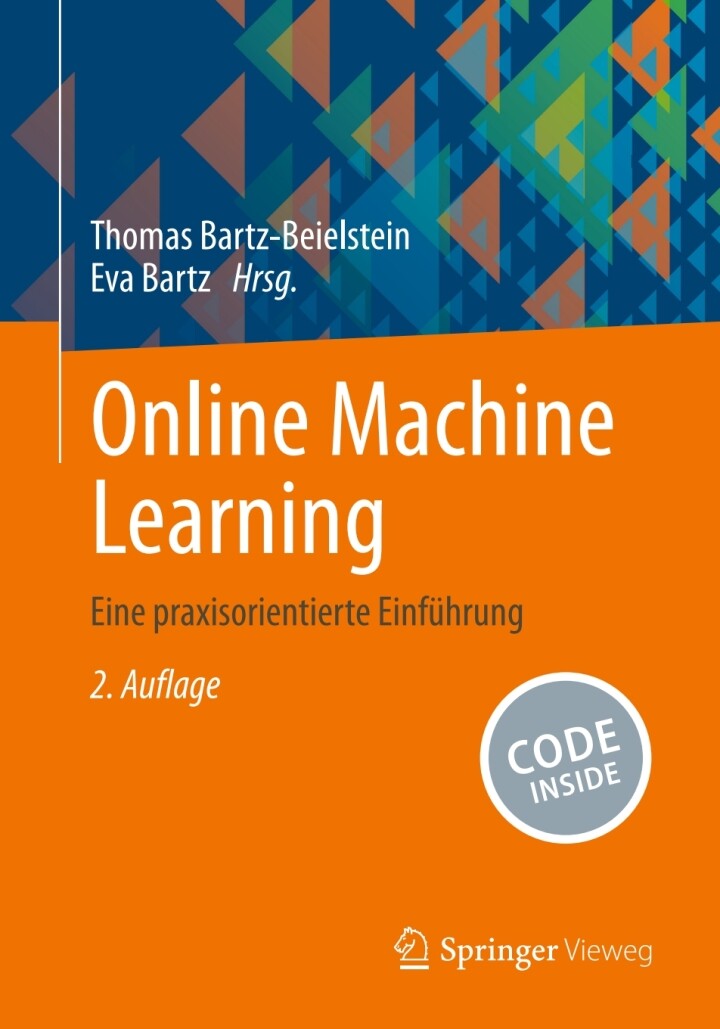
Online Machine Learning (2. Auflg.)
Dieses Buch beschreibt Theorie und Anwendungen aus dem Bereich des Online Maschine Learnings (OML), wobei der Fokus auf Verfahren des überwachten Lernens liegt. Es werden Verfahren zur Drifterkennung und -behandlung beschrieben. Verfahren zur nachträglichen Aktualisierung der Modelle sowie Methoden zur Modellbewertung werden dargestellt. Besondere Anforderungen aus der amtlichen Statistik (unbalancierte Daten, Interpretierbarkeit, etc.) werden berücksichtigt. Aktuelle und mögliche Anwendungen werden aufgelistet. Ein Überblick über die verfügbaren Software-Tools wird gegeben. Anhand von zwei Studien (“simulierten Anwendungen”) werden Vor- und Nachteile des OML-Einsatz in der Praxis experimentell analysiert.Das Buch eignet sich als Handbuch für Experten, Lehrbuch für Anfänger und wissenschaftliche Publikation, da es den neuesten Stand der Forschung wiedergibt. Es kann auch als OML-Consulting dienen, indem Entscheider und Praktiker OML anpassen und für ihre Anwendung einsetzen, um abzuwägen, ob die Vorteile die Kosten aufwiegen. Einleitung: Vom Batch Machine Learning zum Online Machine Learning. Supervised Learning: Klassifikation und Regression. Drifterkennung und -Behandlung. Initiale Auswahl und nachträgliche Aktualisierung von OML Modellen. Evaluation und Performance-Messung. Besondere Anforderungen an OML-Verfahren. Praxisanwendungen. Open-Source-Software für Online Machine Learning. Ein experimenteller Vergleich von Batch- und Online Machine Learning-Algorithmen. Hyperparameter Tuning. Zusammenfassung und Ausblick. PROF. DR. THOMAS BARTZ-BEIELSTEIN ist Experte für KI mit über 30 Jahren Erfahrung. Als Professor für Angewandte Mathematik an der TH Köln und Leiter des Instituts für Data Science, Engineering und Analytics (IDE+A) forscht er in den Bereichen KI, maschinelles Lernen, Simulation und Optimierung.EVA BARTZ ist auf KI und Datenschutz spezialisierte Juristin. Seit 2014 führt sie die angesehene Unternehmensberatung Bartz & Bartz GmbH. Diese bietet KI-basierte Lösungen für die Praxis in industriellen Anwendungen an. Die herausragende Arbeit der Unternehmensberatung führte zur Erstellung einer Expertise für das Statistische Bundesamt, aus der schließlich dieses wegweisende Buch entstand.

Large Language Models Projects
This book offers you a hands-on experience using models from OpenAI and the Hugging Face library. You will use various tools and work on small projects, gradually applying the new knowledge you gain.The book is divided into three parts. Part one covers techniques and libraries. Here, you'll explore different techniques through small examples, preparing to build projects in the next section. You'll learn to use common libraries in the world of Large Language Models. Topics and technologies covered include chatbots, code generation, OpenAI API, Hugging Face, vector databases, LangChain, fine tuning, PEFT fine tuning, soft prompt tuning, LoRA, QLoRA, evaluating models, and Direct Preference Optimization. Part two focuses on projects. You'll create projects, understanding design decisions. Each project may have more than one possible implementation, as there is often not just one good solution. You'll also explore LLMOps-related topics. Part three delves into enterprise solutions. Large Language Models are not a standalone solution; in large corporate environments, they are one piece of the puzzle. You'll explore how to structure solutions capable of transforming organizations with thousands of employees, highlighting the main role that Large Language Models play in these new solutions.This book equips you to confidently navigate and implement Large Language Models, empowering you to tackle diverse challenges in the evolving landscape of language processing.WHAT YOU WILL LEARN* Gain practical experience by working with models from OpenAI and the Hugging Face library* Use essential libraries relevant to Large Language Models, covering topics such as Chatbots, Code Generation, OpenAI API, Hugging Face, and Vector databases* Create and implement projects using LLM while understanding the design decisions involved* Understand the role of Large Language Models in larger corporate settingsWHO THIS BOOK IS FORData analysts, data science, Python developers, and software professionals interested in learning the foundations of NLP, LLMs, and the processes of building modern LLM applications for various tasksPERE MARTRA is a seasoned IT Engineer and AI Enthusiast with years of experience in the financial sector. He is currently pursuing a Master's in Research on Artificial Intelligence. Initially, he delved into the world of AI through his passion for game development. Applying Reinforcement Learning techniques, he infused video game characters with personality and autonomy, sparking his journey into the realm of AI. Today, AI is not just his passion but a pivotal part of his profession. Collaborating with startups on NLP-based solutions, he plays a crucial role in defining technological stacks, architecting solutions, and guiding team inception. As the author of a course on Large Language Models and their applications, available on GitHub, Pere shares his expertise in this cutting-edge field. He serves as a mentor in the TensorFlow Advanced Techniques Specialization at Deeplearning.AI, assisting students in solving problems within their tasks. He holds the distinction of being one of the few TensorFlow Certified Developers in Spain, complementing this achievement with an Azure Data Scientist Associate certification. Follow Pere on Medium, where he writes about AI, emphasizing Large Language Models and deep learning with TensorFlow, contributing valuable insights to TowardsAI.net. Top skills include Keras, Artificial Intelligence (AI), TensorFlow, Generative AI, and Large Language Models (LLM). Connect with Pere on https://www.linkedin.com/in/pere-martra/ for project collaborations or insightful discussions in the dynamic field of AI.Part I: Techniques and Libraries.- Chapter 1. Introduction to Large Language Models with OpenAI.- Chapter 2: Vector Databases and LLMs.- Chapter 3: LangChain & Agents.- Chapter 4: Evaluating Models.- Chapter 5: Fine-Tuning Models.- Part II: Projects.- Chapter 6: Natural Language to SQL.- Chapter 7: Creating and Publishing Your Own LLM.- Part III: Enterprise solutions.- Chapter 8: Architecting an NL2SQL Project for Immense Enterprise Databases.- Chapter 9: Transforming Banks with Customer Embeddings.

AutoCAD 2025 und AutoCAD LT 2025 für Ingenieure und Architekten
Einführung in die wichtigsten Bedienelemente Konstruktionsbeispiele aus Architektur, Handwerk und Technik Zahlreiche Praxisbeispiele und Übungen Praxisnaher Einstieg Dieses Grundlagen- und Lehrbuch zeigt Ihnen anhand konkreter Praxisbeispiele aus Architektur, Handwerk und Technik die Möglichkeiten von AutoCAD 2025 und AutoCAD LT 2025 und bietet insbesondere AutoCAD-Neulingen einen gründlichen und praxisnahen Einstieg in CAD. Alle wichtigen Befehle und Funktionen werden detailliert erklärt. Zahlreiche Übungsaufgaben und Bonusmaterial Sie arbeiten von Anfang an mit typischen Konstruktionsaufgaben aus Studium und Praxis. Zu jedem Kapitel finden Sie Übungen und Testfragen mit Lösungen dazu im Anhang. Alle Konstruktionsbeispiele sowie zusätzliche Übungsaufgaben, 3D-Beispiele, Video-Tutorials, Vorlagen sowie eine Einführung in AutoLISP können von der Webseite des Verlags heruntergeladen werden. Für PC und Mac Alle Funktionen werden anhand der PC-Version ausführlich beschrieben. Während die Befehlsabläufe auf beiden Systemen fast identisch sind, werden die Besonderheiten der zentralen Benutzeroberfläche für den Mac in einem Bonuskapitel zum Download vorgestellt. Aus dem Inhalt: Allgemeine Bedienung mit Multifunktionsleisten, Registern und Paletten Schnelleinstieg ins Zeichnen mit Rasterfang Exaktes Zeichnen mit Koordinaten, Objektfang und Spurlinien Zeichnungsorganisation mit Layern und Vorlagen Texte, Schriftfelder und Tabellen, Verbindung zu Excel Bemaßungsbefehle und Bemaßungsstile, Spezialfälle Parametrische Variantenkonstruktionen, dynamische Blöcke Maßstäbliches Plotten, auch bei verschiedenen Einheiten (mm, cm, m) Zahlreiche Übungsfragen mit Antworten Zeichnen mit LINIE, KREIS, BOGEN, Polylinie, Schraffur und weitere Bearbeiten (VERSETZ, STUTZEN, DEHNEN, STRECKEN, Skalieren und weitere), Anordnungen rechteckig, polar oder entlang Pfaden, Griffe, Eigenschaften-Manager Komplexe Objekte: BLOCK (verwalten mit Palette und Editor), Attribute, externe Referenzen Einführung in 3D-Konstruktion und Volumenkörper Zum Download: 2 Bonuskapitel: 3D-Freiformmodellierung Benutzeranpassungen deutsche Beschreibung der englischen Express Tools Mac-Oberfläche Alle Beispiele und Lösungen Zusätzliche Übungen, 3D-Beispiele und AutoLISP-Anleitung Video-Tutorials Vorlagen Detlef Ridder hat bereits zahlreiche Bücher zu AutoCAD, Inventor, Revit und Archicad veröffentlicht und gibt Schulungen zu diesen Programmen und im Bereich CNC.1

Parallel Programming with C# and .NET
If you need to understand concurrency, this book is your guide to the fundamentals behind the advanced software you seek to implement to achieve highly responsive and scalable code. Support for parallel computation is an essential part of concurrency. Concurrency is an advanced concept and solutions are not straightforward. Many developers have been burned by it and are still being burned by it. This book aims to simplify the concept for C# developers. It tries to simplify the concept using the Task Parallel Library (TPL), Concurrent Collections, Parallel LINQ (PLINQ), Asynchronous Programming Patterns, and related topics.The book starts with an overview of TPL and discusses Tasks. Understanding these areas is necessary to learn the concepts that follow in the book. You will go through special scenarios, such as handling exceptions and cancellations, followed by demonstrations of synchronization techniques and concurrent collections. You will see demonstrations of parallel loops to speed up the computations. And you'll understand PLINQ in detail. Finally, you'll learn how to simplify asynchronous programming with async and await keywords is discussed.The book contains “Q&A sessions”, review questions, and exercises (in .NET 8 and C#12). After reading the book, you will be able to understand advanced concepts in parallel programming and implement them in your code.WHAT YOU WILL LEARN* Understand concurrent and multi-threaded development* Understand how some modern-day C# features can promote parallel programming* Demonstrate the latest patterns for parallel developmentWHO THIS BOOK IS FORDevelopers familiar with C# but are absolute beginners for parallel programming.VASKARAN SARCAR obtained his Master of Engineering degree in Software Engineering from Jadavpur University, Kolkata (India), and an MCA from Vidyasagar University, Midnapore (India). He was a National Gate Scholar (2007-2009) and has over 12 years of experience in education and the IT industry. He devoted his early years (2005-2007) to the teaching profession at various engineering colleges, and later he joined HP India PPS R&D Hub in Bangalore. He worked there until August 2019 and became a Senior Software Engineer and Team Lead. After working for more than ten years at HP, he decided to follow his passion completely. He is now an independent full-time author.Chapter 1: Understanding Tasks.- Chapter 2: Handling Special Scenarios.- Chapter 3: Exploring Synchronization and Concurrent Collections.- Chapter 4: Working on Parallel Loops.- Chapter 5: Parallel LiNQ.- Chapter 6: Simplifying Asynchronous Programs.- Appendix A.- Appendix B.- Appendix C.

AutoCAD 2025 und AutoCAD LT 2025
AutoCAD 2025 und AutoCAD LT 2025 für Ingenieure und Architekten, in Erstauflage aus dem September 2024.Praxisnaher EinstiegDieses Grundlagen- und Lehrbuch zeigt Ihnen anhand konkreter Praxisbeispiele aus Architektur, Handwerk und Technik die Möglichkeiten von AutoCAD 2025 und AutoCAD LT 2025 und bietet insbesondere AutoCAD-Neulingen einen gründlichen und praxisnahen Einstieg in CAD. Alle wichtigen Befehle und Funktionen werden detailliert erklärt.Zahlreiche Übungsaufgaben und BonusmaterialSie arbeiten von Anfang an mit typischen Konstruktionsaufgaben aus Studium und Praxis. Zu jedem Kapitel finden Sie Übungen und Testfragen mit Lösungen dazu im Anhang. Alle Konstruktionsbeispiele sowie zusätzliche Übungsaufgaben, 3D-Beispiele, Video-Tutorials, Vorlagen sowie eine Einführung in AutoLISP können von der Webseite des Verlags heruntergeladen werden.Für PC und MacAlle Funktionen werden anhand der PC-Version ausführlich beschrieben. Während die Befehlsabläufe auf beiden Systemen fast identisch sind, werden die Besonderheiten der zentralen Benutzeroberfläche für den Mac in einem Bonuskapitel zum Download vorgestellt.Aus dem Inhalt:Allgemeine Bedienung mit Multifunktionsleisten, Registern und PalettenSchnelleinstieg ins Zeichnen mit RasterfangExaktes Zeichnen mit Koordinaten, Objektfang und SpurlinienZeichnungsorganisation mit Layern und VorlagenTexte, Schriftfelder und Tabellen, Verbindung zu ExcelBemaßungsbefehle und Bemaßungsstile, SpezialfälleParametrische Variantenkonstruktionen, dynamische BlöckeMaßstäbliches Plotten, auch bei verschiedenen Einheiten (mm, cm, m)Zahlreiche Übungsfragen mit AntwortenZeichnen mit LINIE, KREIS, BOGEN, Polylinie, Schraffur und weitereBearbeiten (VERSETZ, STUTZEN, DEHNEN, STRECKEN, Skalieren und weitere), Anordnungen rechteckig, polar oder entlang Pfaden, Griffe, Eigenschaften-ManagerKomplexe Objekte: BLOCK (verwalten mit Palette und Editor), Attribute, externe Referenzen Einführung in 3D-Konstruktion und VolumenkörperZum Download:2 Bonuskapitel:3D-FreiformmodellierungBenutzeranpassungendeutsche Beschreibung der englischen Express ToolsMac-OberflächeAlle Beispiele und LösungenZusätzliche Übungen, 3D-Beispiele und AutoLISP-AnleitungVideo-TutorialsVorlagenLeseprobe (PDF-Link)Über den Autor:Detlef Ridder hat bereits zahlreiche Bücher zu AutoCAD, Inventor, Revit und Archicad veröffentlicht und gibt Schulungen zu diesen Programmen und im Bereich CNC.1
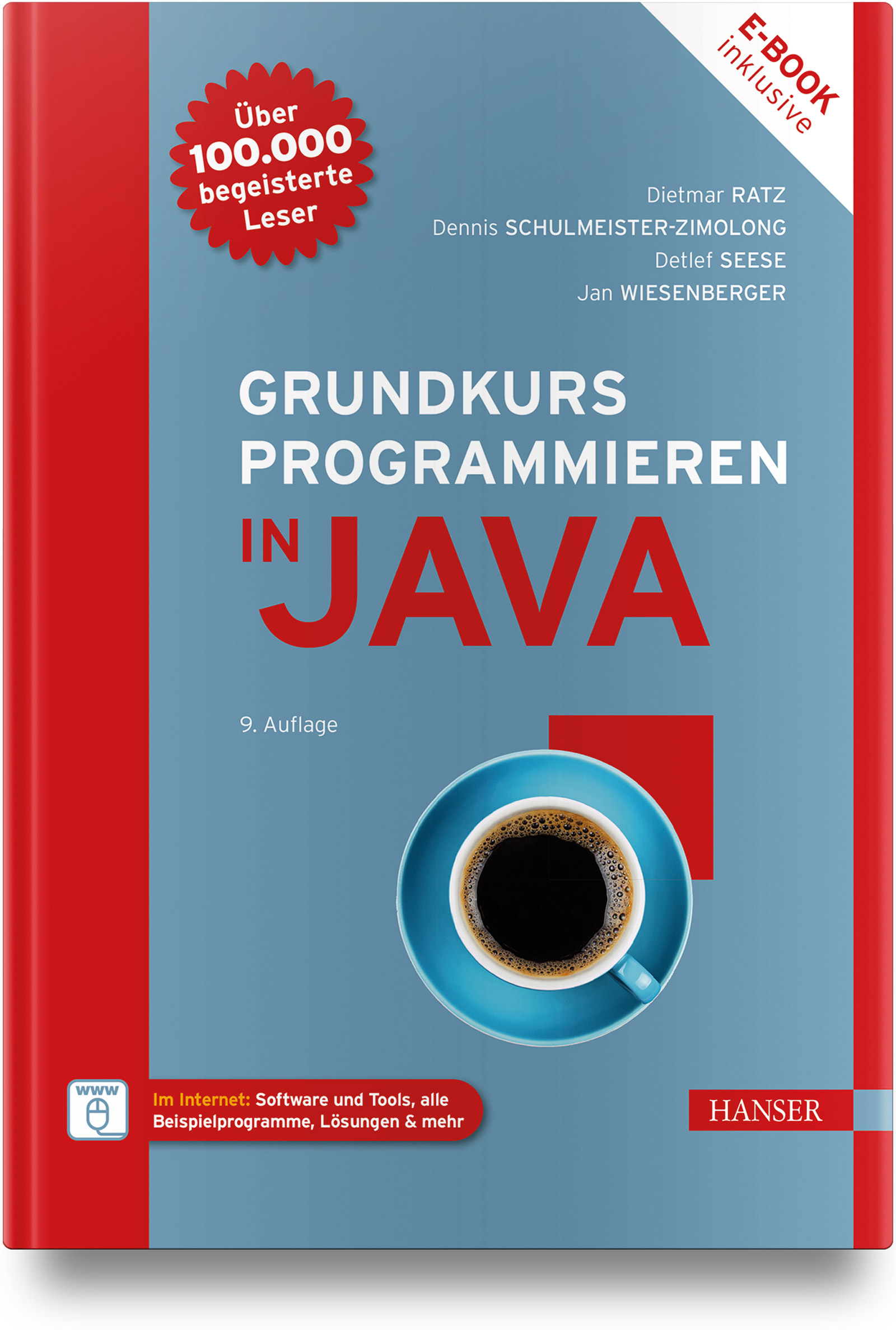
Grundkurs Programmieren in Java (9. Auflage)
Grundkurs Programmieren in Java. 9. Auflage.Mit diesem Lehrbuch können Sie sowohl Java als auch das Programmieren lernen. Es setzt keinerlei Vorkenntnisse aus den Bereichen Programmieren, Programmiersprachen und Informatik voraus. Alle Kapitel sind mit Übungsaufgaben ausgestattet, die Sie zum besseren Verständnis bearbeiten können.Denn: Man lernt eine Sprache nur, wenn man sie auch spricht!Auf rund 800 Seiten finden Sie hier eine umfassende und aktuelle Einführung. Von den Grundlagen der Programmierung und den elementaren Sprachelementen über die Objektorientierung bis hin zu fortgeschrittenen Themen wie Threads, Streams, Entwicklung von verteilten Anwendungen in Netzen sowie Lambda-Ausdrücken lernen Sie alles, was Sie für den erfolgreichen Einstieg in die Programmierung benötigen.Aus dem Inhalt:Einstieg in das Programmieren in JavaObjektorientiertes Programmieren in JavaGrafische Oberflächen in JavaNebenläufige und verteilte AnwendungenLambda-Ausdrücke und funktionale ProgrammierungAbschluss, Ausblick und AnhangLeseprobe (PDF-Link)Über die Autoren:Prof. Dr. Dietmar Ratz ist Studiengangsleiter Wirtschaftsinformatik an der Dualen Hochschule Baden- Württemberg (DHBW) Karlsruhe und lehrt auch am Karlsruher Institut für Technologie (KIT).Dipl.-Wirtsch.-Inf. (DH) Dennis Schulmeister-Zimolong arbeitet als akademischer Mitarbeiter an der Dualen Hochschule Baden-Württemberg (DHBW) Karlsruhe sowie als Produktmanager bei der SOA People AG, Karlsruhe.Prof. Dr. Detlef Seese ist ehemaliger Professor für Angewandte Informatik am Institut für Angewandte Informatik und Formale Beschreibungsverfahren (AIFB) des Karlsruher Instituts für Technologie (KIT).Dipl.-Wirtsch.-Ing. Jan Wiesenberger ist geschäftsführender Vorstand des FZI Forschungszentrums Informatik in Karlsruhe und Hauptgesellschafter des IT-Dienstleisters m+ps.
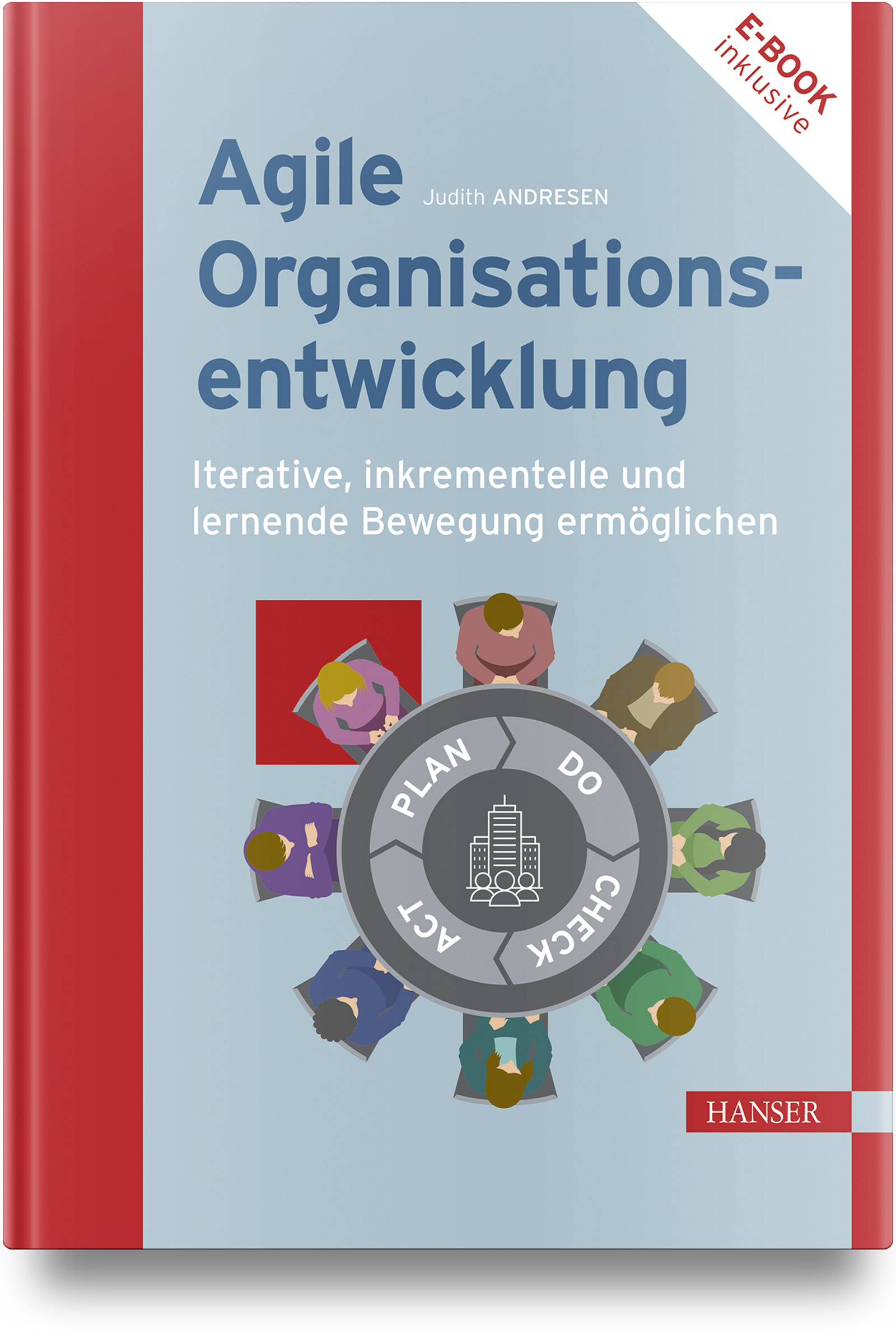
Agile Organisationsentwicklung
Agile Organisationsentwicklung. Iterative, inkrementelle und lernende Bewegung ermöglichen.(Klassische wie systemische) Organisationsentwickler: innen beschreiben Veränderungen mit der Veränderungskurve nach Kübler-Ross und/oder Kotter. Diese beschreiben Veränderungen als unabänderliche Impulse, die mittels geeigneter Kommunikationsmaßnahmen besser „verdaubar“ sind. Wenn aber der Zielraum zu groß und der eigentliche Organisationshebel noch zu unklar sind, helfen Changes nicht. Sie werden scheitern.Erfolgreiche agile Transitionen verändern Werte, Verhalten und Arbeitsumfelder der Beteiligten. Im Sinne Everett Rogers nehmen die Beteiligten also eine Innovation an – oder sie verwerfen diese. Veränderungsprozesse sind zu modellieren, sodass die Organisationen sie gehen können. Stimmt das Veränderungsvorgehen, wird es funktionieren: Neue Prozesse, neue Strukturen und Produktinnovationen werden möglich.Leseprobe (PDF-Link)Über die AutorinJudith Andresen ist agile Coachin und Organisationsentwicklerin, die Teams und Organisationen bei der Einführung agilen Arbeitens, agilen Denkens und Führens unterstützt. Schwerpunktmäßig begleitet sie als agile Organisationsentwicklerin Unternehmen in ihren agilen Transitionen. Sie hält regelmäßig Vorträge über Projektmethoden und Unternehmenskultur und berichtet darüber in ihrem Blog judithandresen.com/blog.Aus dem Inhalt:Agile Organisationen entwickelnAgiles Manifest verstehenDen Veränderungsdruck positiv für sich nutzenChanges, agile Transitionen und organisationelle Experimente aufsetzenErfolgreiche agile Transitionen aufsetzend steuernOrganisationsmuster erkennen und überwindenErfolgreiche Strukturen und Führungssysteme aufsetzenStolperfallen agiler Organisationsentwicklung vermeiden
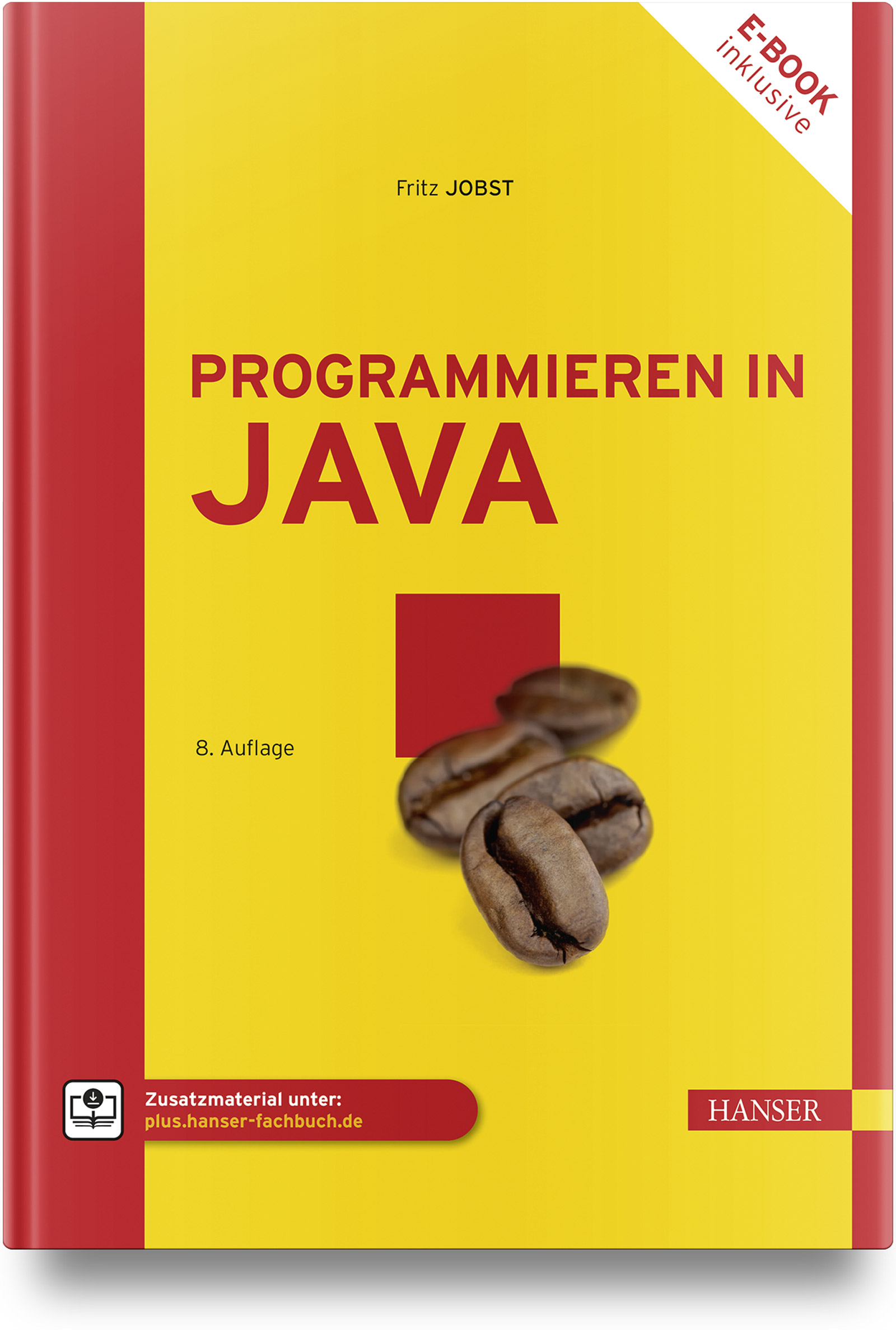
Programmieren in Java (8. Auflage)
Programmieren in Java. Einfach Java lernen. 8. AuflageSie möchten sich Java von Grund auf aneignen? Dieses Standardwerk hat schon Tausende von Einsteigern zu Java-Pro s gemacht. Kompakt, aktuell und präzise bietet es alles, was für die Programmierung in Java wichtig ist.Diese Neuauflage wurde grundlegend überarbeitet. Ihr Fokus richtet sich darauf, Ihnen den Einstieg in die Programmierung mit Java 21 möglichst einfach zu machen. Von Anfang an nutzen wir dafür die leistungsfähige und komfortable Entwicklungsumgebung Eclipse.Von den elementaren Ausdrucksmöglichkeiten in Java und den Grundlagen der Objektorientierung bis hin zur Nebenläu gkeit sowie zur Programmierung in Netzwerken und Anbindung von Datenbanken finden Sie hier alle Themen, die für Einsteiger wichtig sind. Zum Vertiefen des Umgangs mit Entwurfsmustern dient die Programmierung grafischer Benutzeroberflächen.Zahlreiche Beispiele und Aufgaben in allen Kapiteln – von elementaren Übungen bis hin zu kleinen Projektarbeiten – helfen Ihnen, Ihr Wissen praktisch umzusetzen und zu festigen.Aus dem InhaltEinstieg in JavaElemente der ProgrammierungObjektorientierte ProgrammierungGrundlegende KlassenEin-/Ausgabe in JavaNebenläufigkeit in Java: ThreadsGrafikanwendungen in JavaProgrammierung in NetzwerkenAnbindung von Datenbanken mit JDBCBearbeiten von XML in JavaLeseprobe (PDF-Link)Über den AutorProf. Dr. Fritz JOBST lehrte an der OTH Regensburg und hielt u.a. Vorlesungen zur Programmierung in Java und zur Entwicklung von Software mit der Java Enterprise Edition.

Künstliche Intelligenz für Lehrkräfte
Das Buch Künstliche Intelligenz für Lehrkräfte führt die zentralen Ansätze und Gebiete der KI fundiert und insbesondere für Informatiklehrkräfte aufbereitet ein. Es bietet aber auch Lehrkräften mit anderem Hintergrund die Möglichkeit, sich mit den fachlichen Grundlagen von KI auseinanderzusetzen. Behandelte Themen sind insbesondere Problemlösen und Suche, Grundlagen des Maschinellen Lernens, Wissensrepräsentation und Schließen, Künstliche neuronale Netze, Tiefes Lernen, Generative KI und Robotik. In jedem Kapitel wird eine methodische Einführung gegeben, relevante Anwendungsbereiche aufgezeigt und Vorschläge für die konkrete Umsetzung im Unterricht gegeben. Zudem werden interdisziplinäre Bezüge hergestellt und Fragen der Ethik und gesellschaftliche Bezüge diskutiert.Die Herausgebenden und Autor:innen des Buches sind Lehrkräfte an Hochschulen aus den Bereichen Künstliche Intelligenz und Informatikdidaktik. Durch die interdisziplinäre Kooperation bietet das Buch sowohl einen fachlich fundierten Einstieg in das Thema KI als auch einen geeigneten didaktischen Zugang.ULRICH FURBACH ist Professor im Ruhestand für künstliche Intelligenz an der Universität Koblenz. Seine Forschungsgebiete umfassen automatisches Schließen, Agenten und Kognition. Er ist an der TU München habilitiert, hat an der Universität der Bundeswehr promoviert und ist Gründer und Gesellschafter des KI-Unternehmens wizAI solutions GmbH.EMANUEL KITZELMANN ist Professor für Angewandte Künstliche Intelligenz an der TH Brandenburg. Nach seiner Promotion hat er mehrere Jahre als Lehrer für Informatik, Softwareentwicklung und Mathematik am Berufskolleg Ratingen gearbeitet und dort das das Berufliche Gymnasium für Informatik geleitet. Sein Forschungsschwerpunkt ist im Bereich Induktive Programmsynthese – ein Gebiet im Schnittbereich von maschinellem Lernen und Programmierung.TILMAN MICHAELI ist Professor für Didaktik der Informatik an der TU München. Ziel seiner Arbeit ist es, Informatik nicht nur zu erklären, sondern jede und jeden zu befähigen, diedigitale Welt aktiv und kreativ mitzugestalten. Forschungsschwerpunkte sind Data und AI Literacy, Debugging im Unterricht, digitale Bildung sowie Quantencomputing als Thema informatischer Bildung.UTE SCHMID ist Professorin für Kognitive Systeme an der Otto-Friedrich-Universität Bamberg. Seit mehr als zwanzig Jahren lehrt und forscht sie im Bereich Künstliche Intelligenz. Forschungsschwerpunkte sind intepretierbares und erklärbares Maschinelles Lernen sowie KI und Bildung. Seit vielen Jahren bietet sie Workshops zum Thema KI für Kinder und Jugendliche an und engagiert sich in der Lehrkräftefortbildung. Sie leitet den AK KI und Schule des Fachbereichs KI der Gesellschaft für Informatik.Einführung.- Teil 1 Grundlegende Konzepte der KI: Suche im Problemraum.- Lernen aus Daten.- Schließen aus Wissen.- Teil 2 Maschinelles Lernen: Lernen von Entscheidungsbäumen.- Lernen mit neuronalen Netzen.- Analytisches vs. konnektionistisches Paradigma.- Verstärkendes Lernen.- Tiefes Lernen.- Erklärbarkeit.- Generative KI.- Teil 3 Schließen und Planen: Logistikbasierte Wissensverarbeitung.- Schließen im Alltag und unter Unsicherheit.- Teil 4 Spezielle und vertiefende Themen: Robotik.- Teil 5 Reflexion: Natürliche und künstliche Intelligenz.- Wechselwirkungen von KI mit anderen Schulfächern.- Verantwortung.- Glossar.

Digitale Ordnung für Dummies
VEREINFACHEN SIE IHR DIGITALES LEBENMit den Methoden in diesem Buch räumen Sie Ihr persönliches digitales Durcheinander auf. Lernen Sie mithilfe von festen Prinzipien, strukturiert mit Mails, Dateien und Ihrer Nutzeroberfläche umzugehen. Robert Tolksdorf zeigt Ihnen, wie Sie Ihre digitale Welt ordnen und sich damit viel Zeit für umständliche Suchvorgänge ersparen. Räumen Sie Ihre Arbeitsumgebung auf und arbeiten Sie fokussiert, statt sich in einem Fensterdurcheinander zu verlieren. Jenseits Ihrer Desktop-Rechner oder Notebooks mit Windows und MacOS vereinfachen Sie auch den Umgang mit Ihren Mobilgeräten. SIE ERFAHREN* Welche Ordnungsprinzipien Ihnen das Leben erleichtern* Warum gute Ordnerstrukturen und -namen viel Zeit sparen können* Wie Sie fokussiert und ungestört digital arbeitenROBERT TOLKSDORF war bis 2016 Professor für Informatik an der Freien Universität Berlin. Seitdem arbeitet er freiberuflich als Autor. Über den Autor 7Einleitung 15TEIL I: INFORMATIONEN GUT ORGANISIEREN 21Kapitel 1: Zugemailt 23Kapitel 2: Einmal durchwischen – Kein Dateidurcheinander mehr 41Kapitel 3: Dateien auf Mobilgeräten 53Kapitel 4: Programme und Apps durchlüften 61TEIL II: ARBEITSUMGEBUNG ORGANISIEREN 73Kapitel 5: Platzangst auf dem Desktop 75Kapitel 6: Minimalismus beim mobilen Startbildschirm 95Kapitel 7: Fenster ordnen 107Kapitel 8: Browser besser benutzen 133TEIL III: FOKUS GEWINNEN 151Kapitel 9: Ablenkungen vermeiden 153Kapitel 10: Fokussiert auf Mobilgeräten 175TEIL IV: DER TOP-TEN-TEIL 181Kapitel 11: Zehn hervorragende Wege zum Zeitsparen 183Kapitel 12: Zehn schlimme Dinge, die ich in echt gesehen habe 187Danksagung 191Abbildungsverzeichnis 193Stichwortverzeichnis 199

JavaScript für Dummies
SCHRITT FÜR SCHRITT ZU JAVASCRIPTWenn Sie mit JavaScript programmieren lernen möchten, dann greifen Sie zu! Sebastian Springer vermittelt Ihnen in diesem Einstieg das Grundwissen zur Programmierung mit dieser mächtigen Programmiersprache. Sie lernen neben Grundlagen wie Schleifen, Verzweigungen und Co. alle wichtigen Tools, Arbeitsweisen und Besonderheiten der Browser kennen. Doch damit nicht genug: Fortgeschrittene Technologien, wie die asynchrone Programmierung, werden erklärt; außerdem, wie Sie zwischen Frontend und Backend kommunizieren oder mit Nutzern interagieren. Alles garniert mit übungen und Beispiel-Programmen. SIE ERFAHREN* Was es mit Node.js auf sich hat* Wie das Zusammenspiel von JavaScript und HTML und CSS funktioniert* Was Sie über Datentypen, Variable und Konstante wissen sollten* Wie Sie Fehler aufspüren und behebenSEBASTIAN SPRINGER arbeitet als JavaScript Engineer in der Konzeptionierung und Entwicklung professioneller Anwendungen. Er ist außerdem Dozent für JavaScript, Autor mehrerer IT-Fachbücher und Sprecher auf Konferenzen. Er vermittelt sein Wissen besonders einsteigergerecht. Einleitung 23TEIL I: DIE GRUNDLAGEN VON JAVASCRIPT 27Kapitel 1: Auf den Spuren von JavaScript: Zwischen Browser-Zauberei und Server-Magie 29Kapitel 2: Datentypen, Variablen und Konstanten 53Kapitel 3: Operatoren, Bedingungen und Schleifen 83Kapitel 4: Funktionen 107Kapitel 5: Klassen und Arrays 127Kapitel 6: Fehlerbehandlung 163TEIL II: FORTGESCHRITTENE THEMEN 183Kapitel 7: Das JavaScript-Modulsystem 185Kapitel 8: Asynchronität in JavaScript 205Kapitel 9: Generatoren und Iteratoren 227TEIL III: DAS FRONTEND 239Kapitel 10: Arbeiten mit dem DOM 241Kapitel 11: Events 259TEIL IV: DAS ÖKOSYSTEM 279Kapitel 12: Paketmanager 281Kapitel 13: Die passenden Pakete finden 303TEIL V: DAS ZUSAMMENSPIEL ZWISCHEN CLIENT UND SERVER 313Kapitel 14: Mit einem Server kommunizieren 315Kapitel 15: Serverseitiges JavaScript mit Express 335Kapitel 16: Clientseitiges JavaScript mit React 371Kapitel 17: Echtzeit-Kommunikation mit WebSockets 413TEIL VI: DER TOP-TEN-TEIL 429Kapitel 18: Die zehn wichtigsten Bibliotheken und Werkzeuge in JavaScript 431Abbildungsverzeichnis 449Stichwortverzeichnis 453

Online richtig Geld verdienen für Dummies
NUTZEN SIE IHRE CHANCENMit dem richtigen Wissen und einer cleveren Strategie können auch Sie online erfolgreich sein. Dieses Buch ist Ihr perfekter Begleiter, um im Internet Geld zu verdienen – unabhängig davon, ob Sie dies hauptberuflich oder als Nebenerwerb planen. In diesem Buch lernen Sie, wie Sie das Potenzial von E-Commerce, Affiliate-Marketing und Customer-Relationship-Management besser ausschöpfen. Werden Sie ein Profi in SEO und Social-Media-Marketing und erfahren Sie, wie Sie mit gezieltem Content-Marketing Ihre Zielgruppe erreichen und binden. Starten Sie durch und nutzen Sie die Möglichkeiten zu Ihrem Vorteil! SIE ERFAHREN* Wie Sie schnell und unkompliziert über Plattformen Geld verdienen können* Wie Sie Ihre Website und Ihre Social-Media-Kanäle optimal für die Vermarktung nutzen* Wie Sie ein Online-Unternehmen erfolgreich gründen und langfristig führen könnenROUL RADEKE und TOBIAS ZIEGLER sind Unternehmensberater, zertifizierte Coaches, Geschäftsführer mehrerer Online-Unternehmen und vor allem eines: Digital Natives und renommierte Experten im Bereich Online-Geldverdienen. Titelblatt ImpressumÜber die AutorenInhaltsverzeichnisEinführungÜber dieses BuchKonventionen in diesem BuchWas Sie nicht lesen müssen und was Sie unbedingt lesen solltenTörichte Annahmen über die LeserWie dieses Buch aufgebaut istSymbole, die bei der Orientierung helfenWie es weitergehtTeil I: Der digitale Raum: Eine Welt unbegrenzter MöglichkeitenKapitel 1: Auf dem Weg zum erfolgreichen Online-BusinessEntdecken Sie Ihre Potenziale: Wofür brennen Sie?Ihre persönliche SWOT-Analyse: Welche Stärken und Schwächen bringen Sie mit?Weitere MethodenDrei Tipps für EinsteigerDie Hardware: Voraussetzungen für Ihr Online-BusinessChancen und Herausforderungen im Online-BusinessWie umgehen mit Trends und Schnelllebigkeit in der Online-Welt?Kapitel 2: Geld verdienen im Schlaf oder in Aktion? Passive und aktive VerdienstmöglichkeitenKlartext: Was unterscheidet aktives von passivem Einkommen?Passive EinkommensquellenAktive EinkommensquellenAktives und passives Einkommen kombinierenTeil II: Vorbereitung ist alles: Was Sie vor dem Start wissen müssenKapitel 3: Klarheit schaffen: So legen Sie die Grundlagen für Ihr Online-BusinessOnline oder offline – wie groß ist der Unterschied wirklich?Fokussiert bleiben: Ziele klar und wirkungsvoll festlegenGeschäftsmodell wählen – Zeit gegen Geld oder Geld für Produkte?Bestehende Plattformen nutzen oder eigene Webpräsenz aufbauen?Markennamen mit Wirkung: Wie Sie den richtigen Namen für Ihr Unternehmen findenKapitel 4: Ihre Kunden im Fokus: Von der Zielgruppenanalyse zum maßgeschneiderten AngebotDas Spielfeld erkunden: So analysieren Sie Ihr MarktumfeldZielgruppe definieren: Wer sind Ihre Kunden?Die perfekte Nische: Zielgruppenbedürfnisse verstehen und Angebot schärfenPraxisbeispiel für eine gelungene Positionierung: PaarBalance®Kapitel 5: Von der Planung zur Performance: Strategien für Ihr Online-BusinessBudgetierung: Welche Kosten kommen auf Sie zu und wie lassen sich diese stemmen?Strategisches Marketing: Kunden gewinnen und bindenIn vier Schritten zur erfolgreichen WerbestrategieEffizientes Zeitmanagement: Mehr erreichen in weniger ZeitKünstliche Intelligenz als Game-ChangerFür die Zukunft gerüstet: Die passende Wachstumsstrategie entlang Ihrer VisionKapitel 6: Selbstständigkeit im Nebenberuf: Welche rechtlichen Rahmenbedingungen müssen Sie beachten?Grünes Licht vom Chef: Einwilligung des Arbeitgebers für Ihr NebengewerbeRechtliche und steuerliche AspekteVersicherungen: Welche Risiken müssen und welche sollten Sie absichern?Datenschutzgesetze und Aufbewahrungspflicht: Was Sie wissen müssenGlobal tätig: Rechtsgrundlagen für grenzüberschreitende Online-GeschäfteBuchhaltung und Rechnungsstellung einfach und unkompliziert managenTeil III: Die Expressroute: Online Geld verdienen über PlattformenKapitel 7: Überblick über alles Wissenswerte zum Thema PlattformenWas versteht man unter Plattformökonomie?Disruption: Wie Plattformen traditionelle Märkte umwälzenPlattform-Check: So finden Sie die richtige Plattform für Ihr ProjektEntdeckungsreise durch die Top-Plattformen für Online-EinnahmenProfite durch Plattformpräsenz: Strategien für Sichtbarkeit und MonetarisierungRisiken und Fallstricke von PlattformenKapitel 8: Flexible Einkommensquellen: Von Mitfahrgelegenheiten bis ProdukttestsMikrojobs online annehmen und erledigenMitfahrgelegenheiten: Mit dem eigenen Auto Geld verdienenVideos ansehen, KI-Systeme trainieren und an Umfragen teilnehmenProdukttests durchführenKapitel 9: Contentproduktion: Texte, Podcasts und Online-Kurse über Plattformen monetarisierenEigenen Content an fremde Websites verkaufenRadio 2.0: Einen Podcast monetarisierenOnline-Kurse erstellen und Geld verdienenKapitel 10: Gebrauchtes und Selbstgemachtes über Plattformen verkaufenGebrauchtes verkaufen – eBay & Co.Kreative Ideen für den Verkauf auf EtsyTeil IV: Online sichtbar werden: Ihre Präsenz in den sozialen Medien und auf Ihrer eigenen WebsiteKapitel 11: Ohne eigene Website durchstarten: Social Media für die Online-Präsenz nutzenGrundlegendes: Wie Social Media funktioniertInhalte und Interaktion – der Herzschlag von Social MediaSocial Media und Web 2.0: Bahnbrechender Wendepunkt in der digitalen GeschichteFacebook – Das globale DorfInstagram: Visuelle Geschichten erzählenYouTube: Reichweite durch VideoinhalteTikTok: Kurzform-Videos für schnelle TrendsHeute Top, morgen Flop: Wie Sie den Herausforderungen von Social Media begegnen könnenKapitel 12: Ihr digitales Zuhause im Netz: Mit der eigenen Website erfolgreich seinWie funktioniert eine Website und was müssen Sie vor der Einrichtung beachten?Domain, Hosting und CMS als Fundament für Ihre WebsiteSchritt für Schritt zu Ihrer Website: Menüführung, Content und VeröffentlichungAufbau einer WebsiteInhalte erstellen und verwaltenBildmaterial auf der Website einsetzenVeröffentlichung (Launch)ZahlungsmethodenE-Commerce: Einen Online-Shop auf Ihrer Website integrierenMehr Traffic, mehr Erfolg: Wie Sie Ihre Website erfolgreich bewerbenSo bleiben Sie mit Ihrer Website langfristig erfolgreichKapitel 13: Online-Marketing: Schlüsselstrategien für Ihre WebpräsenzContent ist King: Umgarnen Sie Ihre Zielgruppe mit hochwertigen InhaltenOrganische Reichweite mit effektiven SEO-Strategien: So entfaltet Ihr Content sein volles PotenzialSEA: Sofortige Sichtbarkeit mit bezahlter SuchmaschinenwerbungWie kann erfolgreiches SEA-Marketing gelingen?Customer Journey und Benutzererfahrung (UX): Die Kunst der KundenbindungErzählen Sie Ihre Geschichte: Mit Storytelling einen unverwechselbaren USP aufbauenSocial Media als kraftvolles Marketinginstrument nutzenBewegte Bilder, bewegende Ergebnisse: Videoproduktion im Online-MarketingVisuelle Gestaltung: Wie Bildsprache und Logodesign Ihre Marke formenKapitel 14: Von Traffic zu Transaktion: Der digitale VerkaufsprozessBesucher zu Kunden machen: Effiziente KaufabwicklungTraffic generieren, Sichtbarkeit schaffen, Vertrauen aufbauenVom Erstkauf zur Stammkundschaft: CRM-StrategienDigitales Feedback: Die Kunst des RezensionsmanagementsTeil V: Von der Idee zum Imperium: Ein Online-Unternehmen erfolgreich gründen und führenKapitel 15: Ihre Idee auf dem Prüfstand: Der Business-CaseDer Business-Case als Ihre persönliche Kristallkugel für Ihr Online-GeschäftSchritt-für-Schritt-Anleitung für einen Business-CaseAnwendung des Business-Case auf verschiedene GeschäftsmodelleKapitel 16: Unternehmer werden – Mindset, Businessplan und GründungDas richtige Mindset als UnternehmerUnternehmer, Manager und Fachkraft – die richtige Balance findenDer Kompass für Ihr Online-Business: Der BusinessplanStart-up-Launchpad: Rechtsvorschriften bei der Gründung Ihres UnternehmensWelche Vorschriften gelten für Verträge und Angebote?Kapital klug beschaffen: Finanzierungsmöglichkeiten für Ihr Online-UnternehmenKapitel 17: Auf der Erfolgsspur bleiben: Strategien für den Alltag als UnternehmerKonsistenz, Authentizität und ein starkes Netzwerk: Wichtige Faktoren für Ihren langfristigen Online-ErfolgWie Sie Ihren Erfolg richtig messen und bewertenArbeiten auf Autopilot: Unternehmerische Aufgaben clever automatisierenWissen und Können erweiternUnsere Handlungsempfehlungen für die ZukunftTeil VI: Der Top-Ten-TeilKapitel 18: Die zehn häufigsten Fehler beim Online-Geldverdienen1. Unzureichende Marktforschung2. Mangelhafte Zielgruppenanalyse3. Übersehen von SEO und Online-Marketing-Grundlagen4. Fehlende Konsistenz in Content und Marketing5. Unterschätzung der Wichtigkeit von Kundenfeedback6. Unzureichende Investition in Technologie und Tools7. Vernachlässigung der rechtlichen Aspekte8. Falsche Preisstrategie9. Unzureichendes Risikomanagement10. Fehlende AnpassungsfähigkeitKapitel 19: Zehn nützliche Werkzeuge für Ihren Online-Business-Erfolg1. Website-Erstellung2. Content und Design3. Digitales Marketing und SEO4. E-Commerce und Online-Verkauf5. Plattformen für Kurse und Online-Lernen6. Kundenbeziehung und Kundenfeedback7. Performance-Analyse und Datensicherheit8. Zahlungsabwicklung und Finanztransaktionen9. Finanzmanagement, Buchhaltung und Rechnungsstellung10. Projektmanagement und Workflow-OptimierungKapitel 20: Zehn Trends aus der Online-Welt, die in den nächsten Jahren wichtig sind oder werden1. Künstliche Intelligenz: AI und maschinelles Lernen2. Blockchain-Technologie: Sicherheit und Transparenz bei Zahlungen3. Sprachsuche: Neue Dimensionen für SEO durch Siri und Alexa4. Augmented und Virtual Reality (AR & VR): Revolution im Online-Shopping5. Nachhaltigkeit: Ökologische Verantwortung im E-Commerce6. Daten- und Privatsphäre-Schutz als Faktor für den Erfolg im Online-Business7. Personalisierung für verbesserte Kundenerlebnisse8. Social Commerce: Direktverkauf über soziale Netzwerke 9. Automatisierung zur Effizienzsteigerung und Kundenzufriedenheit10. Kreislaufwirtschaft im E-CommerceKapitel 21: Zehn Ideen, um sofort und ohne Vorbereitung online Geld zu verdienenKapitel 22: Zehn Ideen, um nebenberuflich online zu arbeitenKapitel 23: Zehn Ideen, um professionelle Tätigkeiten von zu Hause aus zu erledigenGlossar

Digitales Gold
Entdecke dein digitales Gold - 100 Geschäftsideen, die dein Leben verändern können! Stell dir vor, du hältst den Schlüssel zu deinem eigenen digitalen Imperium in der Hand. In einer Welt, die von der digitalen Revolution erfasst wird, ist es an der Zeit, dein eigenes Online-Business zu starten und deinen Traum von finanzieller Unabhängigkeit zu verwirklichen. In "Digitales Gold" präsentiert Labinot Gashi, ein erfahrener Online-Business-Experte, 100 innovative und erprobte digitale Geschäftsideen, die dir den Weg zum Erfolg ebnen. Egal, ob du gerade erst anfängst oder dein bestehendes Geschäft auf das nächste Level bringen möchtest - dieses Buch ist dein unverzichtbarer Begleiter. Lass dich von bewährten Strategien und inspirierenden Erfolgsgeschichten motivieren. Finde das Geschäftsmodell, das perfekt zu dir passt, und setze deine Ideen Schritt für Schritt um. Jeder Tipp und jede Anleitung ist ein potenzieller Goldschatz, der nur darauf wartet, von dir entdeckt zu werden. Bist du bereit, dein digitales Gold zu finden und deine unternehmerische Zukunft neu zu gestalten? Dein Abenteuer beginnt hier, schnapp dir dein Exemplar und starte noch heute!Labinot Gashi:Labinot Gashi greift auf mehrjährige Erfahrung in den Bereichen Google Ads, Suchmaschinenoptimierung, Remarketing, E-Mail-Marketing, Online-Business Development, Online- Strategie, Conversion-Optimierung, Mobile-Marketing und Display-Marketing, Künstliche Intelligenz zurück. Zusätzlich betreut er unzählige Grosskunden im Bereich Online Marketing, Performance, Business Development und vielen weiteren Bereichen.Labinot Gashi gründete ebenfalls zusammen mit seiner Frau die Luxus Schmuck Marke MUAU (https://www.muau.ch , https://www.muau.com , https:// www.eden-schmuck.ch). Zusätzlich verkauft er mit seiner Marke AURMEL (https://www.aurmel.com) den teuersten GOLD-Honig der Welt. Bereits über 100 Webseiten und Webshops aus den Branchen Luxus, Automobil, Sport, NGO, Fashion, Bildung und viele mehr hat er erstellt und optimiert. Labinot Gashi ist Dozent an unterschiedlichen Fachhochschulen und Universitäten und ist ebenfalls im Verwaltungsrat einer Kinderstiftung (https://www.Kinderstiftung.info).
Grundkurs Programmieren in JAVA
Mit diesem Lehrbuch können Sie sowohl Java als auch das Programmieren lernen. Es setzt keinerlei Vorkenntnisse aus den Bereichen Programmieren, Programmiersprachen und Informatik voraus. Alle Kapitel sind mit Übungsaufgaben ausgestattet, die Sie zum besseren Verständnis bearbeiten können. Denn: Man lernt eine Sprache nur, wenn man sie auch spricht! Auf rund 750 Seiten finden Sie hier eine umfassende und aktuelle Einführung. Von den Grundlagen der Programmierung und den elementaren Sprachelementen über die Objektorientierung bis hin zu Threads und Datenströmen und zur Entwicklung von Anwendungen in Netzen lernen Sie alles, was Sie für den erfolgreichen Einstieg in die Programmierung benötigen. Aus dem InhaltEinstieg in das Programmieren in Java/Objektorientiertes Programmieren in Java/Grafische Oberflächen in Java/Threads, Datenströme und Netzwerkanwendungen/Abschluss, Ausblick und Anhang ExtraE-Book inside. Systemvoraussetzungen für E-Book inside: Internet-Verbindung und Adobe-Reader oder Ebook-Reader bzw. Adobe Digital Editions.

Programmieren in Java
- Von zahlreichen Hochschulen empfohlen: Der Einstieg in die Welt der Java-Programmierung mit diesem kompakten Klassiker! - Besonderen Schwerpunkt legen wir auf Grundlagen. Diese sind auch im Zeitalter leistungsfähiger Hilfsmittel unentbehrlich. - Topaktuell: Lernen Sie die objektorientierte Programmierung auf der Basis von Java 21. - Erhöhen Sie Ihren Lernerfolg mit den zahlreichen Übungsaufgaben. - Ihr exklusiver Vorteil: E-Book inside beim Kauf des gedruckten Buches Sie möchten sich Java von Grund auf aneignen? Dieses Standardwerk hat schon Tausende von Einsteigern zu Java-Pro s gemacht. Kompakt, aktuell und präzise bietet es alles, was für die Programmierung in Java wichtig ist. Diese Neuauflage wurde grundlegend überarbeitet. Ihr Fokus richtet sich darauf, Ihnen den Einstieg in die Programmierung mit Java 21 möglichst einfach zu machen. Von Anfang an nutzen wir dafür die leistungsfähige und komfortable Entwicklungsumgebung Eclipse. Von den elementaren Ausdrucksmöglichkeiten in Java und den Grundlagen der Objektorientierung bis hin zur Nebenläu gkeit sowie zur Programmierung in Netzwerken und Anbindung von Datenbanken finden Sie hier alle Themen, die für Einsteiger wichtig sind. Zum Vertiefen des Umgangs mit Entwurfsmustern dient die Programmierung grafischer Benutzeroberflächen. Zahlreiche Beispiele und Aufgaben in allen Kapiteln – von elementaren Übungen bis hin zu kleinen Projektarbeiten – helfen Ihnen, Ihr Wissen praktisch umzusetzen und zu festigen. AUS DEM INHALT // - Einstieg in Java - Elemente der Programmierung - Objektorientierte Programmierung - Grundlegende Klassen - Ein-/Ausgabe in Java - Nebenläufigkeit in Java: Threads - Grafikanwendungen in Java - Programmierung in Netzwerken - Anbindung von Datenbanken mit JDBC - Bearbeiten von XML in Java

Excel Power Tools & Power BI Desktop: Große Datenmengen abrufen, aufbereiten, analysieren und visualisieren
- Das Praxisbuch zu Power Query, Power Pivot und PivotTable- Anschauliche Anleitungen & praktische Beispiele zum Download Sie benötigen laufend aktuelle Auswertungen von Daten aus externen Quellen? Dann sind die Power Tools von Excel sowie Power BI Desktop, die kostenlose Microsoft Power BI (Business Intelligence)-App, die idealen Werkzeuge für Sie. Vom Import der Daten bis zur Analyse und Visualisierung: Dieses Praxisbuch erklärt mit leicht nachvollziehbaren Anleitungen und praktischen Beispielen, welche Möglichkeiten die einzelnen Tools bieten und wie Sie diese für Ihre Zwecke sinnvoll einsetzen. Die Autorin zeigt detailliert, wie Sie auch große Datenmengen aus externen Quellen abrufen, mit Power Query aufbereiten und in Form von Pivot-Tabellen und -Diagrammen darstellen. Sie erfahren, wie Sie mit Power Pivot Daten aus unterschiedlichen Quellen nutzen, Datenmodelle erstellen sowie weitere Spalten und Kennzahlen mit DAX-Funktionen berechnen. Darüber hinaus lernen Sie Power BI Desktop, welches Sie ergänzend zu den Power Tools verwenden können, mit seinen umfassenden Visualisierungsmöglichkeiten kennen. Entdecken Sie Schritt für Schritt die hilfreichen Funktionen der Power Tools und profitieren Sie von den Anwendertipps der Expertin! Aus dem Inhalt:- Datentabellen mit Excel anlegen und verwalten- Daten aus externen Quellen abrufen, z. B. aus Text- und CSV-Dateien, SQL-Server und Web- Länderspezifische Zahlen konvertieren, weitere Spalten berechnen und Daten gruppieren- Daten aus zwei oder mehr Tabellen zusammenführen- Pivot-Tabellen und Pivot-Diagramme erstellen, Felder anordnen- Berichtslayout sowie Teil- und Gesamtergebnisse darstellen- Power Pivot: Spalten und Kennzahlen (Measures) mit DAX-Funktionen berechnen- Grundlagen der Datenmodellierung- Mit Power BI Desktop Spalten, Tabellen und Kennzahlen berechnen- Interaktive Berichte erstellen und veröffentlichen
Zephyr RTOS Embedded C Programming
These days the term Real-Time Operating System (RTOS) is used when referring to an operating system designed for use in embedded microprocessors or controllers. The “Real Time” part refers to the ability to implement applications that can rapidly responding to external events in a deterministic and predictable manner. RTOS-based applications have to meet strict deadline constraints while meeting the requirements of the application. One way of ensuring that urgent operations are handled reliably is to set task priorities on each task and to assign higher priorities to those tasks that need to respond in a more timely manner.Another feature of real-time applications is the careful design and implementation of the communication and synchronization between the various tasks. The Zephyr RTOS was developed by Wind River Systems, and subsequently open sourced. Its design and implementation are oriented towards the development of time critical IoT (Internet of Things) and IIoT (Industrial Internet of Things) applications, and, consequently it has a rich feature set for building both wireless and wired networking applications. However, with a rich feature set comes a fairly steep learning curve.This book covers the foundations of programming embedded systems applications using Zephyr's Kernel services. After introducing the Zephyr architecture as well as the Zephyr build and configuration processes, the book will focus on multi-tasking and inter-process communication using the Zephyr Kernel Services API. By analogy with embedded Linux programming books, this book will be akin a Linux course that focuses on application development using the Posix API. In this case, however, it will be the Zephyr Kernel Services API that will be the API being used as well as the Posix API features supported by Zephyr.WHAT YOU’LL LEARN* An Overview of the Cortex-M Architecture.* Advanced data structures and algorithms programming (linked lists, circular buffers and lists).* How to build Zephyr Applications, including setting up a Command Line Zephyr Development Environment on Linux.* Task scheduling and pre-emption patterns used in Real Time Operating Systems.* Scheduling, Interrupts and Synchronization, including threads, scheduling, and system threads.* Overview of Symmetric Multiprocessing (SMP) and Zephyr support for SMP. * Memory management, including memory heaps, memory slabs, and memory pools.WHO THIS BOOK IS FOREmbedded Systems programmers, IoT and IIoT developers, researchers, BLE application developers (Industrial Control Systems, Smart Sensors, Medical Devices, Smart Watches, Manufacturing, Robotics). Also of use to undergraduate and masters in computer science and digital electronics courses.Andrew Eliasz is the Founder and Head at Croydon Tutorial College as well as the Director of First Technology Transfer Ltd. First Technology Transfer runs advanced training courses and consults on advanced projects in IT, real time and embedded systems. Most courses are tailored to customers’ needs. Croydon Tutorial College evolved from Carshalton Tutorial College which was established to provide classes, distance level teaching, workshops and personal tuition in computer science, maths, and science subjects at GCSE, A Level, BTEC, undergraduate and masters levels. It has now changed its name and location to Croydon Tutorial College at Weatherill House Croydon. As well as teaching and tutoring they also provide mentoring and help for students having difficulties with assignments and projects (e.g., by suggesting how to add to a project to obtain a better grade, as well as reviewing project content and writing styles).1. Introduction.- 2. A Review of RTOS Fundamentals.- 3. Zephyr RTOS Application Development Environments and Zephyr Application Building Principles.- 4. Zephyr RTOS Multithreading.- 5. Message Queues, Pipes, Mailboxes and Workqueues.- 6. Using Filesystems in Zephyr Applications.- 7. Developing Zephyr BLE Applications.- 8. Zephyr RTOS and Ethernet, WiFi, and TCP/IP.- 9. Understanding and Working with the Device Tree, in general, and SPI and I2C in particular.- 10. Building Zephyr RTOS Applications Using Renode.- 11. Understanding and Using the Zephyr ZBus in Application Development.- 12. Zephyr Wi-Fi.