

Computer und IT
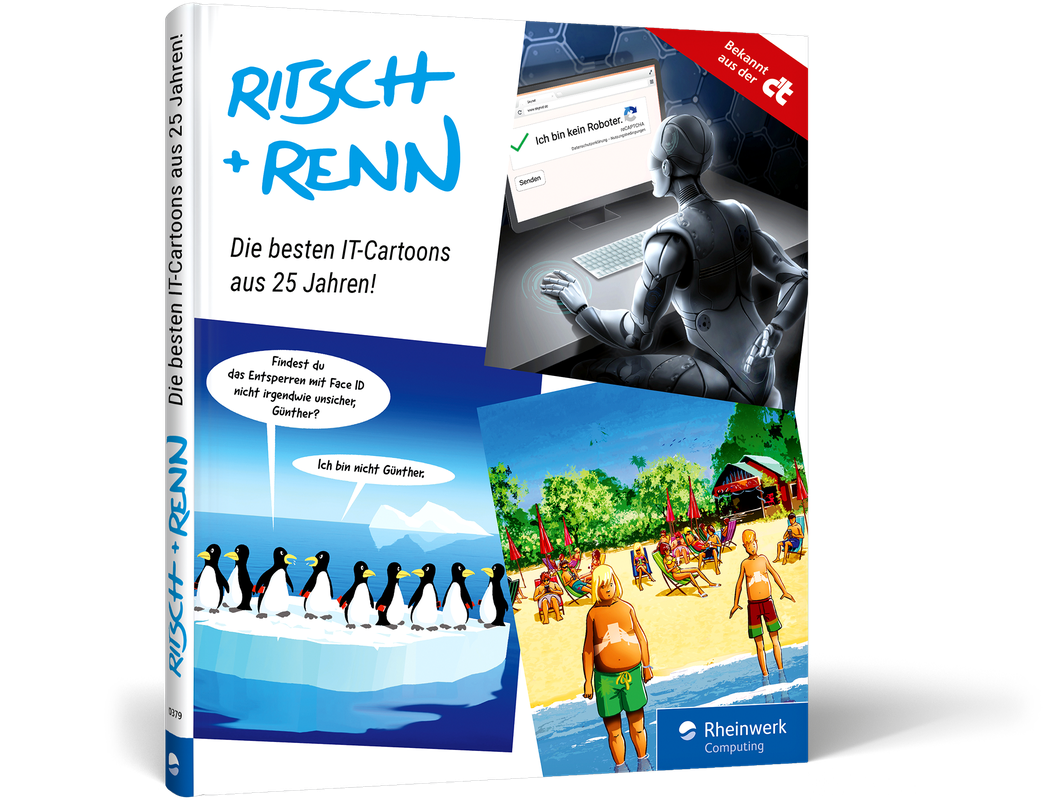
Ritsch + Renn. Die besten IT-Cartoons aus 25 Jahren
Ritsch + Renn. Die besten IT-Cartoons aus 25 Jahren.Die IT-Welt steckt voller Absurditäten: Computer, die mehr Arbeit machen, als sie uns abnehmen, Technik, die nervt, anstatt zu begeistern, und dann noch Smartphones, die fragen, ob man ein Roboter ist. Ritsch und Renn bieten eine kurze Pause vom alltäglichen IT-Wahnsinn und nehmen die Welt der Technik auf humorvolle Weise unter die Lupe. Ob selbstfahrende Autos, die ihre Insassen an der Raststätte vergessen haben, Sticheleien gegen die Verschlimmbesserungen der neuesten Windows-Version oder sogar Gott beim Online-Shopping, all das haben Ritsch und Renn in den „Schlagseiten“ des Computermagazins c't festgehalten. Mal kurios, mal völlig absurd, mal nah an der Realität, aber immer lustig. In diesem Buch finden Sie eine Sammlung der besten Cartoons aus 25 Jahren „Schlagseiten“ mit exklusivem, unveröffentlichtem Material, Skizzen und Hintergrundinfos.Abschalten und loslachen1. Witzig, absurd, einfach zum LachenVon Admins, Windows und überhitzten PCs bis zu Smartphones, Social Media und KI, gibt es kein Thema, zu dem Ritsch und Renn keine Pointe haben.2. 25 Jahre SchlagseitenDie Schlagseiten haben mehr zu bieten als nur witzige Pointen. Die Cartoons von Ritsch und Renn sind auch ein Abbild von 25 Jahren IT-Geschichte.3. Neues unveröffentlichtes MaterialMit Skizzen und Hintergrundinfos geben die beiden Cartoonisten einen spannenden Einblick in ihre Arbeit.25 Jahre Ritsch und RennEine Auswahl der lustigsten WerkeÜber 150 CartoonsZeitreise durch 25 Jahre IT-HumorEin Blick in die WerkstattFür IT-Profis, Nerds und alle, die am digitalen Alltag Spaß habenÜber die Autoren: Harald Ritsch ist ein international erfolgreicher Illustrator. Begonnen hat er mit dem Zeichnen von Comics und Cartoons, einer Leidenschaft, die er heute noch mit seinem Kompagnon Marcus Renn, einem Texter und Konzeptentwickler, begeistert auslebt.Marcus Renn ist ein leidenschaftlicher Ideenentwickler, Texter, Mediendesigner, Humorist und Universitätslektor in Wien.
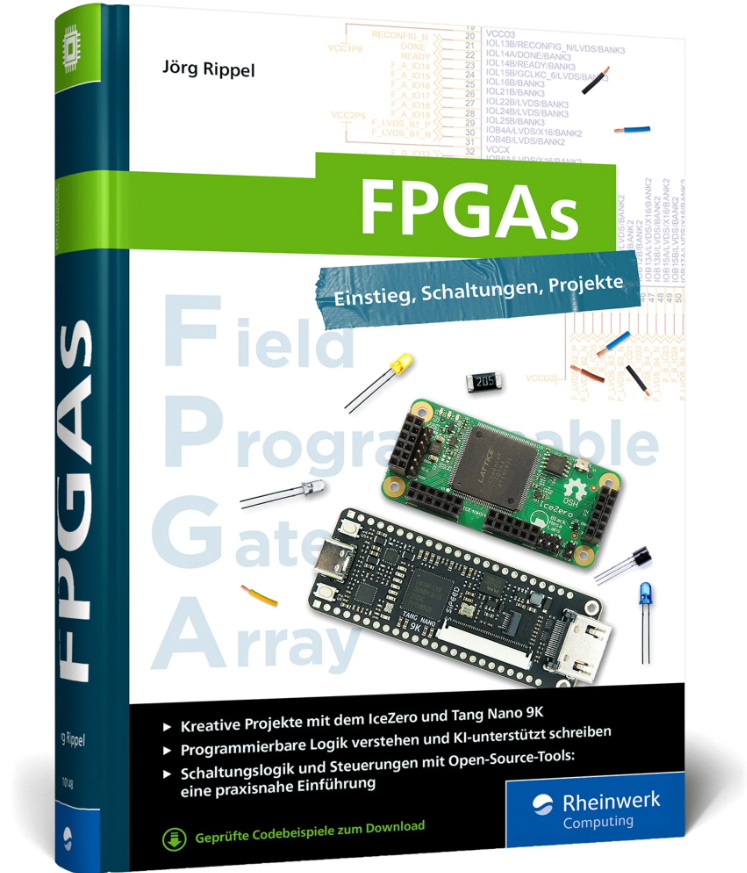
FPGAs - Einstieg, Schaltungen, Projekte
FPGAs. Einstieg, Schaltungen, Projekte.Field Programmable Gate Arrays – kurz FPGAs – sind die ideale Basis für anspruchsvolle Maker-Projekte. Dank effizienter Parallelverarbeitung und hoher Flexibilität lassen sich mit diesen frei programmierbaren Logikbausteinen komplexe digitale Schaltungen mühelos realisieren.In diesem Praxisbuch zeigt Ihnen Jörg Rippel anhand kreativer Beispielprojekte mit den benutzerfreundlichen FPGAs von Lattice und Gowin Semiconductor, wie Sie Ideen schnell umsetzen. Durch den Einsatz einer Chat-KI generieren Sie ohne Vorkenntnisse den benötigten Verilog-Code. Im Handumdrehen basteln Sie Lichteffekte oder Animationsanzeigen, verarbeiten Sensordaten und realisieren Ihr persönliches Traumprojekt.FPGAs für Maker und Kreative1. Alles für den EinstiegDieser Leitfaden stellt Ihnen das IceZero-Board mit dem iCE40HX FPGA von Lattice Semiconductor sowie das Sipeed Tang Nano 9K Board mit dem Gowin GW1NR-9C FPGA im Detail vor. Sie richten sich eine passende Raspberry-Pi-Entwicklungsumgebung mit Open-Source-Toolchain ein und lernen alle Grundlagen für die Arbeit mit programmierbarer Logik.2. Programmieren mit KIDie Hardwarebeschreibungssprache Verilog können Sie in 50 bis 100 Stunden erlernen – oder Sie lassen sich von ChatGPT oder GitHub Copilot für den Einstieg unterstützen. Jörg Rippel zeigt Ihnen, wie Sie künstliche Intelligenz nutzen, um blitzschnell Code zu erstellen, der Ihrem FPGA-Design Leben einhaucht.3. Setzen Sie Ihr Traumprojekt umMit FPGAs können Sie viel mehr machen als nur LEDs blinken lassen. Die vielen Beispielprojekte, Anleitungen, Praxishinweise und Verilog-Codebeispiele helfen Ihnen, um Ihr ganz persönliches Traumprojekt umzusetzen. Mit dabei: Zugriff auf Displays, Sensoren, SPI- und I2C-Schnittstellen, die Arbeit mit Zufallszahlen, Testbenches und Simulationen und einer lizenzfreien Entwicklungsumgebung .Aus dem InhaltGrundlagen der FPGAs und hardwarenahen ProgrammierungEffizientes Pairprogramming mit künstlicher Intelligenz wie ChatGPTPraxisnaher Einstieg: FPGAs programmieren und die Toolchain beherrschenAnbindung und Verarbeitung von Sensordaten über gängige SchnittstellenInteraktive Steuerung und Kommunikation über serielle VerbindungenSteuern von Displays, RGB-LEDs und vielfältigen AusgabenTestbenchsysteme entwickeln zum Simulieren und DebuggenEinrichten der Open-Source-Entwicklungsumgebung auf dem Raspberry PiLeseprobe (PDF-Link)Über den AutorDas Basteln mit elektronischen Geräten gehörte schon immer zu Jörg Rippels Hobbys. Privat beschäftigt er sich gerne mit Mikrocontroller- und Mikrocomputing-Projekten, beruflich hat er mehr als 20 Jahre in verschiedenen IT-Unternehmen und in der Luft- und Raumfahrtindustrie gearbeitet.Als Systemingenieur lag sein Schwerpunkt auf der Zusammenführung und Pflege komplexer Systeme, die aus vielen verschiedenen technischen Bereichen bestehen. Heute lebt er mit seiner Frau im Grünen und schraubt gerne an kreativen Projekten, wobei es auch immer mal wieder Probleme gibt und nicht immer alles beim ersten Versuch funktioniert. Trotzdem – oder gerade deswegen – macht ihm die Arbeit mit Elektronik immer Spaß. Sein Wissen teilt er in Fachbüchern und Beiträgen. Ausbildungen und Studiengänge in Elektronik, Funktechnik und Informatik haben dafür gesorgt, dass er ein breites Wissen zu allerlei elektrischen Geräten hat. Dazu gehören die Erstellung von analogen und digitalen Robotern, der Bau von Computern, das Betreiben von Amateurfunk und Satellitenfunk, das Design von Schaltungen und Platinenlayouts, die Arbeit mit 8- und 32-Bit-Mikrocontrollern und die Programmierung in verschiedenen Sprachen.
Home Assistant (2. Auflg.)
Home Assistant ist Ihr Begleiter auf dem Weg zum eigenen Smart Home. Im Handumdrehen integrieren Sie Geräte und Dienste in Ihr System und automatisieren Schaltungen und Szenen ganz nach Ihren Bedürfnissen. Udo Brandes beschreibt alle Schritte, die Sie für Ihr eigenes Smart Home benötigen, von der Einrichtung über die Verwaltung bis hin zur Automatisierung. So erfahren Sie in übersichtlichen Kapiteln zum Nachschlagen, wie Sie den Home Assistant um Datenbank- und Programmiermöglichkeiten erweitern, mit ESPHome eigene Schalter und Sensoren einbinden und daraus ein Komplettpaket für die Heimautomation schnüren.Neu in der 2. Auflage: Ein Ausblick auf den neue Matter-Standard zur Heimautomation und die Einrichtung einer Home-Assistant-Installation auf Proxmox.Aus dem InhaltDas Setup und der erste Start: das Webinterface von Home AssistantHome Assistant administrierenGeräte, Dienste, EntitätenAutomatisierungen mit Szenen, Skripten und VorlagenDashboards, Apps und externer ZugriffMedien und SprachdiensteBereiche und ZonenWerkzeuge und HelferDatenspeicherung mit MariaDB und InfluxDBSonoff, Tasmota, Shelly, Matter und Tuya integrierenProgrammierung mit Node-REDEigene Geräte mit ESPHome Leseprobe (PDF)Über den Autor:Udo Brandes ist selbständiger Programmierer, IT-Entwickler und Autor. Die Möglichkeiten der Mikrocontrollerprogrammierung sind Zukunftsthemen, die ihn faszinieren und mit deren Chancen und Risiken er sich seit langem intensiv befasst.
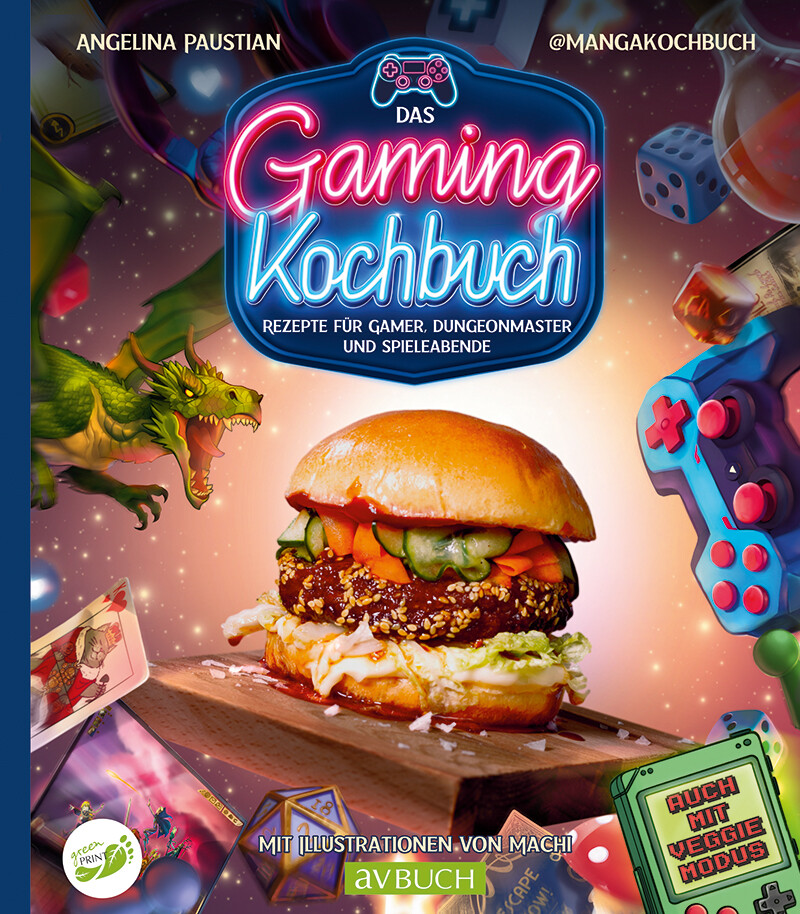
Das Gaming Kochbuch
Die Gaming-Community ist riesig und wächst immer weiter. Die Zahl der Spielenden war noch nie so hoch wie heute. Spieleabende und gemeinsames Zocken sind mittlerweile für viele Menschen zwischen 15 und 45 Jahren ein wichtiger Bestandteil ihrer Freizeitgestaltung. Das Gaming Kochbuch bietet die Möglichkeit, die gemeinschaftlichen Erlebnisse zu erweitern und liefert passende Rezepte für genau diese Gelegenheiten. Es fördert den sozialen Zusammenhalt und stärkt die Bindungen innerhalb der Gaming-Community. Egal, ob der Hunger nach stundenlangen Abenteuern schnell gestillt werden muss oder für eine Spielgruppe köstliche Leckerbissen gezaubert werden sollen. Jede/r findet hier einfache Rezepte, die perfekt zur individuellen Gaming-Klasse passen, rasche Snacks für intensive Ego-Shooter-Sessions, aber auch Inspirationen, um für den Freundeskreis einen epischen Abend vorzubereiten. Vom „Noob“ zum „Pro“: Nicht nur beim Gamen sondern auch beim Kochen!Die AutorinAngelina Paustian ist unsere Japan-Spezialistin und Trendsetterin! Sie hat bereits sechs Kochbücher bei Cadmos veröffentlicht, davon fünf höchst erfolgreiche Manga Kochbücher, die allen Anime- und Manga-Fans leckere japanische Rezepte einfach und authentisch nahebringen. Sie hat in Japan gelebt und Ökotrophologie studiert. Neben Anime und Manga ist auch Gaming in Japan ein großes Thema. Und so kocht sich die Autorin als leidenschaftliche Gamerin auch regelmäßig auf ihren sozialen Medien durch verschiedene Spieltitel. Das Feedback ihrer Follower zum neuen Gaming-Kochbuch ist umwerfend.
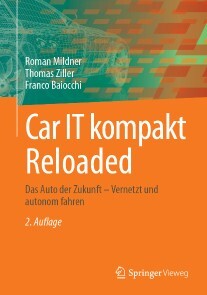
Car IT kompakt Reloaded
Die vielen neuen Funktionen, die im vernetzten Auto Realität werden, finden Sie in diesem Buch übersichtlich beschrieben. Dabei geht es von der Einbindung von Google und Facebook bis hin zu Diensten, die Ihnen helfen Ihren Parkplatz wiederzufinden, per App Ihr Auto einzuparken oder das Sonnendach aus der Ferne zu schließen, wenn es regnet.Als Ziel dieser Entwicklung wird das autonome Fahren definiert inklusive aktueller Entwicklungen, Implementierungsvarianten und den wesentlichen Herausforderungen bezüglich der Sicherheit und Rechtslage. Das Buch gibt darüber hinaus Auskunft zu notwendigen Qualitätsstandards in der Entwicklung komplexer Fahrzeug-IT-Systeme.Zum Abschluss werden die Auswirkungen auf Wirtschaft, Gesellschaft und Politik beschrieben. Dabei werden speziell Fahrzeugnutzer sowie Fahrzeughersteller und ihre Lieferanten berücksichtigt.ROMAN MILDNER ist Berater, Projektmanager und Buchautor für die Themen Projektorganisation und Prozessqualität in der Automobilindustrie.THOMAS ZILLER ist Projektmanager, der zudem sein umfassendes Wissen als Dozent an der Fachhochschule Heilbronn weitergibt.FRANCO BAIOCCHI ist ein Intacs™-zertifizierter Competent Assessor und Projektmanager, der seit 2021 als selbstständiger Berater wirkt.Fahrzeugindustrie zwischen Tradition und Innovation.- Das autonome Fahren.- Das vernetzte Fahrzeug.- Automobile Qualität.- Herausforderung automobiles Projektmanagement.- CORE SPICE.- Automobile Strategie im Fokus.- Automobile Zukunft.

SAP Information Lifecycle Management
Um Daten in den SAP-Systemen DSGVO-konform zu verwalten, kommen Sie an SAP Information Lifecycle Management (SAP ILM) nicht vorbei. Lernen Sie in diesem Buch z. B., wie Sie das Retention Management implementieren und nutzen. Die Autorin macht Sie mit den Kernfunktionen und mit weiteren, ergänzenden Werkzeugen vertraut. Diese zweite Auflage wurde u. a. um Informationen zur Datenvernichtung von Anlagen, dem Information Retrieval Framework und neuen Stammdaten-Sperrfunktionen ergänzt. Aus dem Inhalt: Grundfunktionen von SAP ILMRetention Management und Retention WarehouseVereinfachtes Sperren und LöschenDatenschutz in SAP HCM for SAP S/4HANABerechtigungssteuerungInformation Retrieval FrameworkData Controller Rule FrameworkDatentransparenzLegal Case ManagementSystemstilllegungDaten kundeneigener Anwendungen verwalten Vorwort der »Väter« von SAP ILM ... 17 Vorwort des DSAG-Arbeitskreises Datenarchivierung und ILM ... 19 Vorwort des Finanzvorstands SAP SE zur ersten Auflage ... 20 1. Einführung in SAP Information Lifecycle Management ... 21 1.1 ... Von der Datenarchivierung zu ILM: Wo der Schuh drückte und was Abhilfe schaffte ... 21 1.2 ... Aufbewahrung und rechtliche Rahmenbedingungen ... 28 2. Grundfunktionen von SAP ILM ... 39 2.1 ... Archivierungsobjekt und Datenvernichtungsobjekt ... 40 2.2 ... Das ILM-Objekt ... 40 2.3 ... Das Prüfgebiet -- Ihr Grund zur Definition von Aufbewahrungsregeln ... 46 2.4 ... Regelwerkkategorien ... 63 2.5 ... Regelwerke -- die Schatzkiste mit den Regeln ... 66 2.6 ... Vom WebDAV und der BC-ILM-Zertifizierung zum ILM Store Browser ... 95 2.7 ... Datenvernichtungsfunktionen ... 123 3. Systemeinstellungen ... 177 3.1 ... Benötigte Business Functions ... 177 3.2 ... Benötigte HTTP-Services ... 179 3.3 ... ILM-Rollen und -Transaktionen ... 181 4. Sperren von personenbezogenen Daten vorbereiten ... 183 4.1 ... Wie die DSGVO SAP ILM zur Blütezeit verhalf ... 183 4.2 ... Vereinfachtes Sperren und Löschen personenbezogener Daten: Lösungsübersicht ... 189 4.3 ... Vorbereitungen für das Sperren von Stammdaten in Transaktion SPRO ... 195 4.4 ... Vorbereitungen für das Sperren von Bewegungsdaten in Transaktion SPRO ... 207 4.5 ... Vorbereitungen für das Sperren von Stammdaten in SAP ILM ... 207 4.6 ... Vorbereitungen für das Sperren von Bewegungsdaten in SAP ILM ... 217 4.7 ... Anwendungsregelvarianten ... 222 4.8 ... Vorbereitungen für das Archivieren von Stamm- und Bewegungsdaten ... 229 4.9 ... Vorbereitungen aus der Sicht des abhängigen und führenden Stammdatensystems ... 232 5. Sperren von personenbezogenen Daten durchführen ... 237 5.1 ... Sperren von Bewegungsdaten im Geschäftsprozess ... 237 5.2 ... Anzeige von gesperrten Bewegungsdaten im Geschäftsprozess ... 238 5.3 ... Sperren von Stammdaten im Geschäftsprozess ... 242 5.4 ... Lokaler EoP-Check (Zwischenprüfung ohne Setzen des Sperrkennzeichens) ... 254 5.5 ... Anzeige von gesperrten Stammdaten im Geschäftsprozess ... 256 5.6 ... Entsperren von Stammdaten im Geschäftsprozess ... 262 5.7 ... Mögliche Kombinationen und Reihenfolgen für das Sperren personenbezogener Daten ... 266 5.8 ... Ergänzende Beispiele: das Sperren von Benutzerstammdaten ... 270 6. Zusatzfunktionen im Retention-Management-Szenario ... 275 6.1 ... ILM-Benachrichtigungen ... 275 6.2 ... ILM-Erweiterungen der Archivverwaltung ... 285 6.3 ... ILM Work Center ... 288 6.4 ... ILM Store ... 303 6.5 ... Data Controller Rule Framework ... 318 6.6 ... Legal Case Management ... 344 6.7 ... Information Retrieval Framework ... 359 7. SAP ILM in SAP S/4HANA Cloud Public Edition ... 373 7.1 ... Generelle Unterschiede in SAP S/4HANA Cloud Public Edition ... 373 7.2 ... Benötigte Benutzerrollen und Anwendungskataloge ... 375 7.3 ... Prüfgebiete ... 375 7.4 ... ILM-Objekte ... 381 7.5 ... Regelwerke ... 382 7.6 ... Objektgruppen und Regelgruppen ... 385 7.7 ... Archivierung ... 388 7.8 ... Stammdatensperrung ... 401 7.9 ... ILM-Geschäftsregeln verwalten ... 406 7.10 ... Datenvernichtungsfunktionen ... 407 8. Sperren und Vernichten in SAP HCM for SAP S/4HANA ... 415 8.1 ... Einführung ... 415 8.2 ... Personalnummern nach Austrittsmaßnahme sperren ... 426 8.3 ... Zeitraumabhängige Berechtigungssteuerung in SAP HCM for SAP S/4HANA ... 430 8.4 ... Datenvernichtung in SAP HCM for SAP S/4HANA mit SAP ILM ... 446 8.5 ... Komplettlöschung eines Personalfalls in SAP HCM for SAP S/4HANA ... 514 8.6 ... Weitere vernichtungsrelevante Daten in SAP HCM for SAP S/4HANA ... 526 8.7 ... Überblick über die Funktionen und Transaktionen ... 538 9. Umsetzung eines SAP-ILM-DSGVO-Projekts ... 539 9.1 ... Bestandsaufnahme ... 540 9.2 ... Phasen eines SAP-ILM-DSGVO-Projekts ... 542 9.3 ... Typische Systemlandschaften im SAP-ILM-DSGVO-Projekt ... 577 9.4 ... Typische Anforderungen in einem SAP-ILM-DSGVO-Projekt ... 591 9.5 ... Spezialfälle und wie man sie mit SAP ILM umsetzt ... 605 10. Systemstilllegung mit SAP ILM Retention Warehouse ... 611 10.1 ... Grundlagen und Begriffsklärung ... 611 10.2 ... Systemarchitektur ... 613 10.3 ... Replikation von Daten aus dem Altsystem ins SLT-System ... 616 10.4 ... Archivierung von Daten aus dem Altsystem ... 627 10.5 ... Übernahme der Archivdateien ins RW-System ... 636 10.6 ... Reporting über Daten im RW-System ... 641 11. Den Datenlebenszyklus kundeneigener Entwicklungen mit SAP ILM verwalten ... 657 11.1 ... Entscheidungskriterien für einen ILM-Anschluss ... 657 11.2 ... ILM-Fähigkeit des Archivierungsobjekts ... 661 11.3 ... ILM-Fähigkeit des Archivschreibprogramms ... 664 11.4 ... Das Datenvernichtungsobjekt -- die Alternative zum Archivierungsobjekt ... 671 11.5 ... Ein ILM-Objekt anlegen -- Transaktion IRM_CUST ... 684 Anhang ... 739 A ... Literaturhinweise ... 739 Die Autorin und das Beiträgerteam ... 741 Index ... 745

SAP Build
Automatisieren Sie Prozesse, entwickeln Sie mühelos Apps und erstellen Sie schnell Business Sites mit den neuen Low-Code-Lösungen von SAP Build! Sie erfahren alles über die strategische Nutzung der Tools, effektive Implementierungsstrategien und wertvolle Praxistipps, um Ihre digitale Transformation voranzutreiben. Aus dem Inhalt: Das intelligente UnternehmenZielgruppen und EntwicklungGovernance Erweiterung und Integration mit SAP S/4HANASAP Build Process AutomationSAP Build AppsSAP Build Work ZoneKünstliche IntelligenzSAP Build CodePraktische Anwendungsfälle Liebe Leserin, lieber Leser, ... 4 Einleitung ... 17 Zielgruppe ... 17 Zielsetzung ... 18 Aufbau des Buches ... 18 Danksagungen ... 21 Ausgangslage und Herausforderungen intelligenter Unternehmen ... 23 1. Herausforderungen intelligenter Unternehmen ... 25 1.1 ... Definition: Das intelligente Unternehmen ... 25 1.2 ... Ausgangslage ... 26 1.3 ... Herausforderungen ... 29 1.4 ... Zusammenfassung ... 49 2. Problemlösungen ... 51 2.1 ... Methodische Problemlösung ... 51 2.2 ... Fachliche Problemlösung ... 56 2.3 ... Zusammenfassung ... 61 SAP Build im Kontext des intelligenten Unternehmens ... 63 3. Was ist das Leitbild von SAP Build? ... 65 3.1 ... Ziel ... 65 3.2 ... Sinn und Motivation ... 72 3.3 ... Übersicht der Key Capabilities ... 77 3.4 ... Zusammenfassung ... 111 4. Zielgruppen von SAP Build ... 113 4.1 ... Citizen Developer und Pro Code Developer im Überblick ... 114 4.2 ... SAP Build für Citizen Developer ... 115 4.3 ... SAP Build für Pro Code Developer ... 135 4.4 ... SAP Build für IT-Administrator*innen und Endanwender*innen ... 141 4.5 ... Zusammenfassung ... 142 5. Entwicklung mit SAP Build ... 145 5.1 ... Die Low-Code-Methode ... 145 5.2 ... Das SAP-Build-Portfolio ... 158 5.3 ... Entwicklung von Ende-zu-Ende-Prozessen ... 167 5.4 ... Zusammenfassung ... 199 6. Systeme mit SAP Build erweitern ... 201 6.1 ... Erweiterbarkeit ... 201 6.2 ... Keep the Core Clean ... 208 6.3 ... SAP Build mit Drittanbietern integrieren ... 218 6.4 ... Zusammenfassung ... 221 7. Governance mit SAP Build ... 223 7.1 ... Motivation ... 223 7.2 ... Schatten-IT und ihre Risiken ... 224 7.3 ... Definition und Einordnung ... 226 7.4 ... SAP-Build-Governance-Triade ... 228 7.5 ... Implementierung von SAP-Build-Governance ... 234 7.6 ... Zusammenfassung ... 244 8. KI mit SAP Build ... 245 8.1 ... Motivation ... 246 8.2 ... Generative KI und traditionelle KI ... 247 8.3 ... KI auf der SAP Business Technology Platform ... 250 8.4 ... Beispielhafte Integration von KI in SAP Build ... 254 8.5 ... Ausblick: Generative KI im SAP-Umfeld ... 263 8.6 ... Zusammenfassung ... 266 Key Capabilities von SAP Build ... 267 9. SAP Build Process Automation ... 269 9.1 ... Funktionen ... 270 9.2 ... Hyperautomatisierung ... 281 9.3 ... SAP Signavio in Zusammenhang mit SAP Build Process Automation ... 286 9.4 ... Zusammenfassung ... 288 10. SAP Build Apps ... 291 10.1 ... Beschreibung und Zielsetzung ... 291 10.2 ... Low-Code-Apps entwickeln ... 295 10.3 ... Fusion-Team-Entwicklung ... 328 10.4 ... Zusammenfassung ... 330 11. SAP Build Work Zone ... 331 11.1 ... Häufige Ausgangssituation bei SAP-Kunden ... 332 11.2 ... Zentraler Einstiegspunkt und Portallösungen ... 334 11.3 ... Mobiler Zugang ... 346 11.4 ... Technologie und Architektur ... 348 11.5 ... Integration von Applikationen und Prozessen ... 351 11.6 ... Erweiterbarkeit und Anpassungen ... 354 11.7 ... Vergleich der zentralen Einstiegspunkte ... 359 11.8 ... Zusammenfassung ... 363 Use Cases für verschiedene Geschäftsbereiche ... 365 12. Use Case: Automatisierte Erfassung von Nachhaltigkeitsdaten mit SAP Build für ein CSRD-Reporting ... 367 12.1 ... Nachhaltigkeitsreporting im Allgemeinen ... 368 12.2 ... Scope-3-Emissionen im Rahmen der CSRD verstehen und berichten ... 371 12.3 ... Architektur ... 373 12.4 ... Prozessbeschreibung ... 377 12.5 ... Ergebnisse, Mehrwert und Risiken ... 383 12.6 ... Fazit und Zusammenfassung der erreichten Ziele ... 386 12.7 ... Ausblick und Ausbau des Use Cases ... 387 12.8 ... Zukünftige Entwicklungen und Erweiterungen ... 389 12.9 ... Zusammenfassung ... 391 13. Use Case: Hotdesking mit SAP Build Apps ... 393 13.1 ... Beschreibung der Idee ... 393 13.2 ... Lösungsbeschreibung ... 395 13.3 ... Zusammenfassung ... 436 14. Use Case: Ein zentrales Applikationsportal mit SAP Build ... 437 14.1 ... Die Bedeutung von Portalen in Unternehmen ... 438 14.2 ... Ausgangssituation und Herausforderungen ... 440 14.3 ... Entscheidung für SAP Build Work Zone ... 441 14.4 ... Schritte zur Implementierung ... 445 14.5 ... Ergebnisse und Vorteile ... 468 14.6 ... Zusammenfassung ... 474 15. Use Case: SAP Build im Bereich Human Resources ... 475 15.1 ... Motivation ... 476 15.2 ... Verstehen der HR-Landschaft ... 476 15.3 ... Low-Code im HR-Bereich ... 482 15.4 ... Anwendungsfall: Gehaltsvorschlag ... 484 15.5 ... Weitere Einsatzpotenziale im Kontext HR ... 504 15.6 ... Zusammenfassung ... 507 Umsetzungsempfehlungen und Perspektiven ... 509 16. Empfehlungen für den Einsatz ... 511 16.1 ... Projekt qualifizieren ... 512 16.2 ... Erste Schritte mit SAP Build ... 518 16.3 ... Praktische Umsetzung ... 521 16.4 ... Wartung, Instandhaltung und Erweiterung ... 536 16.5 ... Grenzen von SAP Build ... 540 16.6 ... Fazit ... 543 17. Ausblick: Pro-Code-Entwicklung mit SAP Build ... 545 17.1 ... Grundlagen von SAP Build Code ... 546 17.2 ... Tieferer Einstieg in SAP Build Code ... 549 17.3 ... Einsatzmöglichkeiten ... 552 17.4 ... Zusammenfassung und Ausblick ... 553 1. Das Autorenteam ... 557 Index ... 561

SAP Business Technology Platform
Kennen Sie alle Funktionen der SAP BTP? Mit diesem Buch erhalten Sie eine aktuelle Einführung in Entwicklung, Integration und Administration hybrider Systemlandschaften mit dieser Cloud-Plattform. Sie erfahren, welche Services Ihnen zur Verfügung stehen und für welche Anwendungsfälle Sie sie einsetzen können. Aus dem Inhalt: Das intelligente UnternehmenGeschäftsprozesse erweitern und integrierenDatenbank- und DatenmanagementSAP Business AIAnalyseAnwendungsentwicklungProzesse automatisierenBusiness ServicesAccount-Struktur definieren und verwaltenClean CoreSoftware Lifecycle Management SicherheitUnternehmensarchitektur gestalten Einleitung ... 17 Teil I. Die SAP Business Technology Platform im Kontext des intelligenten Unternehmens ... 21 1. Das intelligente und nachhaltige Unternehmen ... 23 1.1 ... Bausteine eines Unternehmens ... 24 1.2 ... Gründe für die Anpassung der Unternehmensbausteine ... 28 1.3 ... Eigenschaften eines intelligenten Unternehmens ... 34 1.4 ... Zusammenfassung ... 38 2. Die Rolle der SAP Business Technology Platform für Unternehmen ... 39 2.1 ... Anforderungen an die Unternehmens-IT ... 40 2.2 ... Geschäftsprozesse erweitern ... 43 2.3 ... Geschäftsprozesse integrieren ... 54 2.4 ... Geschäftsprozesse optimieren ... 60 2.5 ... Produktiver mit künstlicher Intelligenz ... 65 2.6 ... Wertschöpfung aus Daten ... 72 2.7 ... Zusammenfassung ... 75 3. Funktionsbereiche der SAP Business Technology Platform ... 77 3.1 ... Übersicht der Funktionsbereiche ... 78 3.2 ... Daten und Analyse ... 80 3.3 ... Anwendungsentwicklung ... 88 3.4 ... Automatisierung ... 98 3.5 ... Integration ... 101 3.6 ... Künstliche Intelligenz ... 108 3.7 ... Zusammenfassung ... 115 4. Konzepte der SAP Business Technology Platform ... 117 4.1 ... Administration der SAP BTP ... 118 4.2 ... Booster ... 129 4.3 ... Destinations für den Zugriff auf externe Systeme ... 130 4.4 ... Laufzeitumgebungen ... 132 4.5 ... Multi-Cloud ... 135 4.6 ... Low-Code-/No-Code- und Pro-Code-Entwicklungsansätze ... 136 4.7 ... Offenes und standardisiertes Ökosystem ... 137 4.8 ... Vordefinierter Content und Business Services ... 139 4.9 ... Lizenzierungsmodelle ... 143 4.10 ... Service Level Agreements und Compliance ... 146 4.11 ... SAP Store ... 147 4.12 ... Zusammenfassung ... 148 5. Beispiele zur Nutzung der SAP Business Technology Platform ... 149 5.1 ... Grundlegendes Set-up der SAP BTP zur Anwendungsentwicklung und Erweiterung ... 149 5.2 ... Erweitertes Set-up ... 157 5.3 ... Anwendungsszenario ... 160 5.4 ... Zusammenfassung ... 166 Teil II. Die SAP Business Technology Platform in der Praxis ... 167 6. Administration und Konfiguration der SAP Business Technology Platform ... 169 6.1 ... Tools zur Administration ... 170 6.2 ... Account-Struktur definieren ... 172 6.3 ... Serviceberechtigungen und Servicekontingente definieren ... 178 6.4 ... Nutzungsanalyse der Servicekontingente ... 180 6.5 ... Benutzerkonten ... 181 6.6 ... Subskription mandantenfähiger Anwendungen (SaaS) ... 183 6.7 ... Zusammenfassung ... 185 7. Integration und Zugriff auf Anwendungen und Prozesse ... 187 7.1 ... Integrationsmethodik und -ansätze ... 187 7.2 ... SAP Connectivity Service und Cloud Connector ... 191 7.3 ... Prozessintegration mit Cloud Integration ... 197 7.4 ... Integration Advisor ... 215 7.5 ... API Management ... 217 7.6 ... Graph ... 227 7.7 ... SAP Event Mesh und SAP Advanced Event Mesh ... 228 7.8 ... Zusammenfassung ... 231 8. Daten in der SAP Business Technology Platform verarbeiten ... 233 8.1 ... Entwicklung und Bedeutung von Datenbanken ... 233 8.2 ... Multimodale Datenplattform mit SAP HANA Cloud ... 237 8.3 ... Data Fabric mit SAP Datasphere ... 251 8.4 ... NoSQL-Datenbanken ... 273 8.5 ... Unstrukturierte Daten ... 278 8.6 ... Zusammenfassung ... 281 9. Erweiterungen und Anwendungen programmieren ... 283 9.1 ... Erweiterungsmöglichkeiten von SAP-Anwendungen ... 285 9.2 ... Side-by-Side-Erweiterungsszenarien ... 286 9.3 ... Erweiterungsprojekte konfigurieren ... 288 9.4 ... Entwicklungsumgebungen ... 291 9.5 ... Entwicklungs-Frameworks ... 303 9.6 ... Laufzeitumgebungen ... 309 9.7 ... Services für die Digital Experience ... 315 9.8 ... Zusammenfassung ... 329 10. Arbeitsabläufe digitalisieren und automatisieren ... 331 10.1 ... SAP Build Process Automation ... 331 10.2 ... Geschäftsprozesse erstellen und erweitern ... 335 10.3 ... Formulare und Genehmigungen ... 341 10.4 ... Prozesslogik und Entscheidungen ... 346 10.5 ... Auf Anwendungen zugreifen ... 351 10.6 ... Prozessschritte mit Software-Bots automatisieren ... 353 10.7 ... Dokumente verarbeiten ... 357 10.8 ... Lifecycle und Monitoring von Prozessen ... 359 10.9 ... Vordefinierte Inhalte ... 363 10.10 ... Zusammenfassung ... 364 11. Künstliche Intelligenz ... 367 11.1 ... Allgemeine KI-Tools und -Frameworks ... 368 11.2 ... SAP AI Foundation ... 370 11.3 ... SAP AI Business Services ... 373 11.4 ... KI-Szenarien mit dem SAP AI Launchpad verwalten ... 376 11.5 ... KI-Modelle trainieren und bereitstellen mit SAP AI Core ... 385 11.6 ... Large Language Models für generative AI-Szenarien verwenden ... 408 11.7 ... Maschinelles Lernen mit SAP HANA Cloud ... 413 11.8 ... Zusamenfassung ... 418 12. Betrieb und Software-Lifecycle-Management ... 421 12.1 ... Bereitstellung von Anwendungen oder Prozesserweiterungen ... 422 12.2 ... Multitarget Applications ... 424 12.3 ... Transport von Anwendungen ... 427 12.4 ... Continuous Integration und Continuous Delivery ... 432 12.5 ... Benachrichtigungen und Automatisierung ... 438 12.6 ... Zusammenfassung ... 441 13. Sicherheit auf der SAP Business Technology Platform ... 443 13.1 ... Sichere Anwendungen und Prozesserweiterungen ... 443 13.2 ... Authentifizierung ... 448 13.3 ... Zusammenfassung ... 458 Teil III. Die SAP Business Technology Platform aus Sicht der Unternehmensarchitektur ... 459 14. Gestaltung einer Unternehmensarchitektur ... 461 14.1 ... Ziele einer Unternehmensarchitektur ... 462 14.2 ... Beschreibung einer Unternehmensarchitektur ... 464 14.3 ... Entwicklung einer Unternehmensarchitektur ... 469 14.4 ... Ordnungsrahmen einer Unternehmensarchitektur ... 473 14.5 ... Zusammenfassung ... 476 15. Die SAP Business Technology Platform als Teil der Unternehmensarchitektur ... 477 15.1 ... Architecture Building Blocks der SAP BTP ... 478 15.2 ... Anwendungsszenarien für die Unternehmensarchitektur ... 483 15.3 ... Zusammenfassung ... 496 16. Entwicklung einer Architektur für SAP-BTP-Projekte ... 497 16.1 ... Einführung in die Lean Architecture Development Method ... 497 16.2 ... Zusammenfassung ... 527 Anhang ... 529 A. Glossar ... 529 B. Der Autor ... 539 Index ... 541

FPGAs
Field Programmable Gate Arrays – kurz FPGAs – sind die ideale Basis für anspruchsvolle Maker-Projekte. Dank effizienter Parallelverarbeitung und hoher Flexibilität lassen sich mit diesen frei programmierbaren Logikbausteinen komplexe digitale Schaltungen mühelos realisieren. In diesem Praxisbuch zeigt Ihnen Jörg Rippel anhand kreativer Beispielprojekte mit den benutzerfreundlichen FPGAs von Lattice und Gowin Semiconductor, wie Sie Ideen schnell umsetzen. Durch den Einsatz einer Chat-KI generieren Sie ohne Vorkenntnisse die benötigten Verilog-Codes. Im Handumdrehen basteln Sie Lichteffekte, Animationsanzeigen, verarbeiten Sensordaten und realisieren Ihr persönliches Traumprojekt. Aus dem Inhalt: Grundlagen der FPGAs und hardwarenahen ProgrammierungEffizientes Pairprogramming mit künstlicher Intelligenz wie ChatGPTPraxisnaher Einstieg: FPGAs programmieren und die Toolchain beherrschenAnbindung und Verarbeitung von Sensordaten über gängige SchnittstellenInteraktive Steuerung und Kommunikation über serielle VerbindungenSteuern von Displays, RGB-LEDs und vielfältigen AusgabenTestbenchsysteme entwickeln zum Simulieren und DebuggenEinrichten der Open-Source-Entwicklungsumgebung auf dem Raspberry Pi Materialien zum Buch ... 13 1. Los geht's: FPGAs für Maker und Kreative ... 15 1.1 ... Über dieses Buch: Was Sie lernen werden und was Sie schon können sollten ... 15 1.2 ... Ihr Weg durch dieses Buch ... 18 1.3 ... Was sind FPGAs? ... 20 1.4 ... Sprachen, Tools und Konzepte ... 23 TEIL I. Einstieg in die FPGAProgrammierung ... 27 2. FPGAs verstehen ... 29 2.1 ... Grundlagen und Überblick: Die FPGA-Technologie verstehen ... 30 2.2 ... Die FPGAs, die in diesem Buch verwendet werden ... 59 2.3 ... Was ist der richtige FPGA für Ihr Projekt? ... 68 2.4 ... Andere FPGAs und Regulatorien ... 73 2.5 ... Open-Hardware- und EDU-Boards ... 75 3. Offener Quellcode, offene Hardware ... 85 3.1 ... Kein Ablaufdatum und zeitlos gültig: Open-Source-Software und -Hardware ... 85 3.2 ... Die Open-Source-Toolchain und die Freiheit der Entwicklung ... 87 3.3 ... Das IceZero-Board für den Raspberry Pi ... 88 3.4 ... Der Tang Nano 9K ... 91 3.5 ... Die Vor- und Nachteile der Anschlüsse beider FPGA-Boards ... 92 3.6 ... Die Open-Source-Toolchain für das IceZero- und das Tang-Nano-Board ... 95 3.7 ... Die Hersteller-IDE für den Tang Nano 9K ... 95 3.8 ... Beide FPGAs gleichzeitig am Raspberry Pi nutzen ... 96 4. Software-Entwicklung leicht gemacht ... 99 4.1 ... Die Hardware-Beschreibung mit Verilog ... 100 4.2 ... Hardware-Beschreibung vs. Programmierung ... 101 4.3 ... Die Idee und die FPGAs im Rampenlicht, KI im Support ... 102 4.4 ... Einen FPGA mit Prompts designen ... 111 4.5 ... Tipps und Tricks beim Prompten ... 115 5. Offene Tools und Setup ... 119 5.1 ... Unsere Steuerzentrale: Der Raspberry Pi ... 120 5.2 ... Die Entwicklungsumgebung einrichten ... 125 6. Erste Schritte mit FPGAs und dem Raspberry Pi ... 143 6.1 ... Der iCE40HX auf dem IceZero-Board ... 147 6.2 ... Der Tang Nano 9K ... 158 6.3 ... Sind die Toolchain-Komponenten austauschbar? ... 171 6.4 ... Quellcode-Editoren für Verilog ... 172 6.5 ... Die Ausgabeinformationen der Toolchain verstehen ... 177 7. Die Grundlagen von Verilog ... 183 7.1 ... Aufbau und Struktur ... 183 7.2 ... Ein erstes Code-Beispiel ... 186 7.3 ... Datentypen ... 187 7.4 ... Konstrollstrukturen ... 194 7.5 ... Von der Software zur Hardware: Automatische Codegenerierung für FPGAs ... 196 8. Ablauf eines FPGA-Designs ... 201 8.1 ... Entwicklungsschritte ... 201 8.2 ... Aufbau und Ablauf der FPGA-Projekte in diesem Buch ... 204 TEIL II. Praxis und Projekte ... 207 9. Projekte mit dem IceZero ... 209 9.1 ... I/O: Interaktion mit der Außenwelt ... 210 9.2 ... Einen Takt ausgeben ... 224 9.3 ... Einen Zähler implementieren ... 233 9.4 ... RGB-LEDs ansteuern ... 237 9.5 ... Serielle Daten übertragen ... 252 9.6 ... Web-Control-Server ... 276 9.7 ... Retrospektive: Erlernte Grundlagen ... 283 9.8 ... Mehr zu Testbench-Techniken: Simulation und Test von digitalen Signalverarbeitungssystemen ... 287 9.9 ... Mehr zu Makefiles: Automatisierung ... 293 10. Projekte mit dem Tang Nano 9K ... 295 10.1 ... I/O: Die 48 GPIO-Pins des Tang Nano 9K ... 295 10.2 ... Die Taster des Tang Nano 9K ... 301 10.3 ... Der Takt des Tang Nano 9K ... 301 10.4 ... Der Speicher eines FPGAs ... 301 10.5 ... Eine UART-Schnittstelle ... 310 10.6 ... Ein SPI-LCD ansteuern ... 331 10.7 ... Ein OLED-Display ansteuern ... 337 10.8 ... Ein OLED-Display mit Bildanzeige ... 364 10.9 ... Ein OLED-Display mit Text-Engine ... 370 10.10 ... Ein OLED-Display mit Bargraphen (und die Frage, wann Zufall wirklich zufällig ist) ... 403 10.11 ... Ein OLED-Display mit ADC-Ausgabe ... 427 10.12 ... Einen Servo steuern ... 477 10.13 ... Retrospektive: Wie passt das alles zusammen? ... 483 11. Spezialthemen -- kurz angerissen ... 487 11.1 ... Schleifen ... 487 11.2 ... Generate-Anweisungen ... 490 11.3 ... Pipelining ... 492 11.4 ... Taktdomänen (Clock Domains) ... 496 11.5 ... Crossing Clock Domains ... 499 11.6 ... Die Bezeichnungen »größer« und »breiter« ... 502 11.7 ... Die Simulation stoppen ... 504 11.8 ... IP-Cores ... 505 11.9 ... Grundlagen zu SerDes in FPGA-Systemen ... 507 11.10 ... Phase-Locked Loops (PLL) ... 509 11.11 ... Delay-Locked Loops (DLL) ... 510 11.12 ... Multiplexer und Demultiplexer ... 512 11.13 ... Das Shift-Register ... 513 11.14 ... RISC-V-Softcore-CPU ... 514 11.15 ... Retrospektive: Gut, mal gehört zu haben ... ... 518 12. Die Community und weiterführende Ressourcen ... 519 12.1 ... Machen Sie bei Open-Source-Communitys für Maker mit ... 519 12.2 ... Retro-Messen: Entdecken Sie 8-Bit-Computer und Emulatoren ... 521 12.3 ... Der MEGA65 ... 522 12.4 ... Im Gespräch mit einem FPGA-Entwickler ... 530 13. Ihr Traumprojekt: Legen Sie los! ... 533 Danke und bis bald! ... 535 Index ... 537

Insta it!
Instagram ist eine der wichtigsten Plattformen im Social Media Marketing: Mehr Bekanntheit, höhere Reichweite, mehr Interaktion und Sichtbarkeit für deine Produkte. Die Plattform hat viel zu bieten. Vorausgesetzt, du überzeugst mit Visual Storytelling, einem authentischen Auftritt und dem richtigen Branding. Wie du deine Fotoreihen, Stories und Reels konzipierst, Hashtags geschickt nutzt und mit gutem Content Geschichten erzählst, die überzeugen, all das lernst du im Buch von Anne Grabs. Von E-Commerce bis zu Community findest du für jeden Kommunikationszweck erprobte, praxistaugliche, Content-Strategien und die richtige Ads-Kampagne. Aus dem Inhalt: Instagram-Marketing-Basics: Profil, Algorithmus, Hashtags und DesignDie richtige PositionierungContent-Strategien, die wirkenInstagram Reels, Stories und LiveEffiziente Content-Workflows für InstagramCommunity ManagementInstagram InsightsInstagram-Kampagnen und AdsContent Creation mithilfe von KIErfolg messen mit KPIs Vorwort ... 19 1. Die Macht von Instagram im Marketing-Mix ... 23 1.1 ... Instagram überholt Facebook ... 23 1.2 ... Generation Instagram ... 25 1.3 ... Instagram bringt den höchsten Return on Investment ... 29 1.4 ... Bekannt werden auf Instagram? Alles eine Frage der Verweildauer ... 30 1.5 ... Reichweite, Community, Sales -- so erreichst du deine Ziele auf Instagram ... 32 1.6 ... Erschaffe eine kaufbereite Community ... 39 1.7 ... Sichtbar werden auf Instagram ... 41 1.8 ... Reichweite erhöhen ... 44 1.9 ... Community aufbauen und Engagement steigern ... 46 1.10 ... Conversions erzielen und Sales steigern ... 47 1.11 ... Sieben Tipps für deinen Instagram-Erfolg ... 53 1.12 ... Instagram vs. TikTok: Löst Instagram TikTok in den nächsten Jahren ab? ... 55 2. Meistere den Instagram-Algorithmus ... 57 2.1 ... Der Algorithmus ist dein Freund, nicht dein Feind ... 57 2.2 ... Die Instagram-Kanäle verstehen ... 62 2.3 ... Instagram Reels ... 66 2.4 ... Instagram Feed ... 71 2.5 ... Instagram Stories ... 77 2.6 ... Broadcast Channels ... 86 2.7 ... Instagram Live: wie du mit Lives die Aufmerksamkeit der Follower gewinnst und Verbindung herstellst ... 90 2.8 ... Fünf Dinge, die du sofort tun kannst, um die Reichweite deines Accounts zu steigern ... 91 2.9 ... Instagram Shopping -- der ultimative Booster für mehr Verkäufe ... 92 2.10 ... Instagram Threads ... 97 2.11 ... So landest du mit deinen Inhalten auf der Explore Page ... 100 2.12 ... Die vier häufigsten Instagram-Fehler und was du stattdessen tun solltest ... 104 3. Deine effektive Instagram-Strategie ... 107 3.1 ... In sechs Schritten zur perfekten Instagram-Strategie ... 107 3.2 ... Starte mit den Basics ... 109 3.3 ... So legst du ein Instagram-Audit an ... 115 3.4 ... Profilanalyse ... 118 3.5 ... Instagram-Ziele setzen ... 138 3.6 ... Zielgruppenanalyse ... 145 3.7 ... Konkurrenzanalyse ... 150 4. Positionierung und Branding ... 157 4.1 ... Finde deine Nische ... 157 4.2 ... Was willst du in die Welt bringen? ... 163 4.3 ... Erstelle ein Instagram-Profil, das andere lieben werden ... 167 4.4 ... Von der Positionierung zur Markenidentität -- von Nadja Hossack ... 178 4.5 ... Branding: deine Positionierung in eine auditive und visuelle Bildwelt übersetzen ... 182 5. Direkt loslegen: mit der richtigen Content-Strategie für Instagram ... 207 5.1 ... Die Content-Strategie, mit der Follower zu Kunden werden ... 207 5.2 ... Personal Branding Canvas ... 214 5.3 ... Deine Vision in Aktion: So planst du Content, der wirklich berührt ... 217 5.4 ... Bringe mit Content-Säulen Abwechslung in deinen Content ... 228 5.5 ... Zielgerichtet Content planen ... 255 5.6 ... Schnell und effizient Content produzieren ... 270 5.7 ... Der perfekte Instagram-Post ... 273 6. Emotionales Storytelling ... 285 6.1 ... Vom Storytelling zum Storyselling ... 285 6.2 ... Der richtige Story-Aufbau ... 288 6.3 ... Stories, die verkaufen ... 296 6.4 ... How-to: Instagram Stories erstellen ... 304 6.5 ... Story Branding ... 316 6.6 ... Story-Hacks für mehr Reichweite ... 322 6.7 ... Story-Planung ... 323 7. Reel Up Your Business ... 331 7.1 ... Reels strategisch nutzen ... 332 7.2 ... Reels effektiv planen und zeitsparend umsetzen ... 339 7.3 ... Reels erstellen ... 346 7.4 ... Die Anatomie eines perfekten Reels ... 351 7.5 ... Kreative Reels-Ideen umsetzen ... 369 7.6 ... Nach dem Posten deines Reels ... 383 8. Content Creation mit Canva ... 387 8.1 ... Instagram-Formatgrößen und Design-Vorgaben ... 387 8.2 ... Instagram Content mit Canva erstellen ... 393 8.3 ... Carousel-Posts in Canva erstellen ... 398 8.4 ... Instagram Stories in Canva erstellen ... 402 8.5 ... Fotos und Videos von Canva verwenden ... 413 8.6 ... Einzelposts in Canva erstellen ... 420 8.7 ... Reels mit Canva erstellen ... 422 8.8 ... Fazit ... 427 9. Bildgenerierung mit KI ... 429 9.1 ... Willkommen in der kreativen Revolution ... 429 9.2 ... ChatGPT für Bildideen nutzen ... 431 9.3 ... Die Kunst des Promptings ... 432 9.4 ... DALL-E, Midjourney & Co. -- verschiedene Bildgenerierungsverfahren im Überblick ... 440 9.5 ... Bildgenerierung mit Midjourney ... 444 9.6 ... Bildgenerierung mit Adobe Firefly ... 453 9.7 ... Beachte die Kennzeichnungspflicht für KI-generierte Bilder in Meta ... 458 9.8 ... Fazit ... 459 10. Community-Management ... 461 10.1 ... Community-Management in der Meta Business Suite ... 461 10.2 ... Krisenmanagement auf Instagram ... 462 11. Instagram Ads ... 467 11.1 ... Was kostet Instagram-Werbung? ... 467 11.2 ... Voraussetzungen für das Schalten von Werbeanzeigen auf Instagram ... 468 11.3 ... Werbeanzeigen schalten ... 472 11.4 ... Benutzerdefinierte Zielgruppen ... 483 11.5 ... Influencer Performance Advertising ... 486 11.6 ... Anzeigenerfolg messen ... 488 Die Gastautoren ... 491 Index ... 495

IT-Freelancer
Der Einstieg in die Selbstständigkeit bringt viele Vorteile und auch einige Herausforderungen mit sich – besonders in der IT-Branche ist der Reiz groß, als Consultant flexibel zu arbeiten und sich die spannendsten Projekte herauszusuchen. Willst du den Schritt wagen? Der Start in die ersten Projekte als IT-Freelancer wirkt erstmal überwältigend: Erfülle ich überhaupt alle Voraussetzungen, um loslegen zu können? Was muss ich jetzt ganz konkret wissen? Welche Projekte sind spannend für mich? Und wie akquiriere ich meine ersten Kunden? Antworten auf all diese Fragen liefert Maurice Knopp, der seine langjährige Berufserfahrung als IT-Consultant und Softwareentwickler in diesem Buch teilt. Hier bekommst du praxisorientiert und für den Arbeitsalltag optimiert Tools und Tipps für die Durchführung deines ersten Projekts sowie Hinweise für die nachhaltige Planung deiner Selbstständigkeit in der Zukunft. Starte jetzt in das Abenteuer Freelance! Aus dem Inhalt: Passt die Freiberuflichkeit zu dir? Das Berufsbild des IT-FreiberuflersIT-Projekttypen im ÜberblickSichtbarkeit in BusinessnetzwerkenProjektauswahl und -bewerbungDas Steuer-SetupEinarbeitung – die ersten Wochen im ProjektHardware- und SoftwaresetupWeiterbildung und PersönlichkeitsentwicklungGezielter Einsatz von KI-Tools zur ArbeitserleichterungRechtliches und (Alters-)Vorsorge
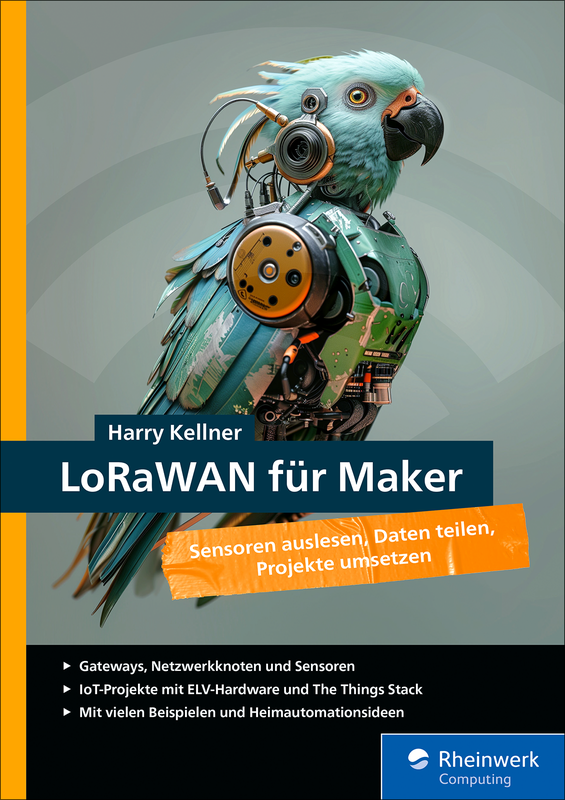
LoRaWAN für Maker
Sensoren auslesen, Daten teilen, Projekte umsetzen. Im heise shop als E-Book erhältlich.Mit LoRaWAN realisieren Sie drahtlose Maker-Projekte, die weder auf Steckdosen noch auf WLAN-Router angewiesen sind. Praxisorientiert lernen Sie dazu in diesem E-Book, wie Sie mithilfe von Hardware von ELV und The Things Stack Sensoren auslesen, Daten sammeln und Aktoren schalten können – und das alles über beeindruckende Reichweiten, die weit über die Möglichkeiten von WLAN und Bluetooth hinausgehen. Harry Kellner begleitet Sie Schritt für Schritt von den Grundlagen bis zur Umsetzung Ihrer eigenen kreativen Projekte. Sie erfahren, wie Sie das Basismodul konfigurieren, Sensoren anschließen und die gesammelten Daten mithilfe von Automatisierungslösungen und Webhooks auswerten und nutzen können. Aus dem Inhalt: LoRa – ein Protokoll erobert die WeltEin passendes Gateway wählenModule und KnotenSensoren für alle AufgabeDas ELV-Modul-SystemThe Thing StackEine eigene Wetterstation aufbauen: Temperatur und Luftfeuchtigkeit messenTüren, Fenster und Briefkästen überwachen

Talk!
Sind Sie es leid, bei öffentlichen Reden anderen den Vortritt zu lassen, weil Sie Angst haben, nervös zu wirken oder sich unsicher zu fühlen? Stellen Sie sich vor, wie es wäre, selbstbewusst und überzeugend zu sprechen und Ihre Ideen klar und wirkungsvoll zu präsentieren. Thomas Pyczak, ein erfahrener Coach, Trainer und Autor, teilt seine tiefen Einblicke und persönlichen Erfahrungen als Chefredakteur und Geschäftsführer, um Ihnen zu helfen, Ihre Sprechängste zu überwinden. Entdecken Sie die Kunst der überzeugenden Rhetorik, basierend auf den Weisheiten antiker griechischer Rhetoriker und den neuesten wissenschaftlichen Erkenntnissen, TED Talks und Business Storytelling. Lernen Sie praktische Tipps und Tricks, die sofort anwendbar sind, um Ihre Präsentationsfähigkeiten zu verbessern. Thomas Pyczak zeigt Ihnen, wie gerade introvertierte Menschen zu herausragenden Rednern werden können. Nehmen Sie Ihre Kommunikationsfähigkeiten in die Hand und lernen Sie, Ihr Publikum zu bewegen und mit Ihren Worten zu überzeugen. Beginnen Sie Ihre Reise zu herausragenden Präsentationsfähigkeiten mit Thomas Pyczak und machen Sie den ersten Schritt zu einem selbstsicheren und überzeugenden Auftreten. Aus dem Inhalt: Recherchieren: die richtigen FragenStoryfizieren: den roten Faden entwickelnTrainieren: die souveräne eigene StimmePräsentieren: ein Gespräch mit dem Publikum führenLernen: nach dem Vortrag ist vor dem VortragChecklisten, Grafiken, Canvases, Worksheets Danke ... 11 Einleitung ... 13 Recherchieren -- Die richtigen Fragen stellen ... 19 Information oder Transformation? -- Wann eine Präsentation Sinn macht -- und wann nicht ... 21 Ich habe unvorsichtigerweise zugesagt -- Die Furcht vor dem Vortrag überwinden ... 25 Die Verwandlungen von Michelle und Barack Obama -- Vortragskunst lässt sich lernen ... 31 Der Norden und der Süden des Temperaments -- Introvertierte und Extravertierte im Rampenlicht ... 36 Auf einem Bierdeckel ist genug Platz -- Inhalt und Message in wenigen Worten vermitteln ... 42 Prompter und Flipcharter -- Themen mithilfe von ChatGPT umreißen und strukturieren ... 47 Die Präsentation dauert ja nur 20 Minuten -- Ein sicheres Gefühl für Länge und Aufwand bekommen ... 53 Flixen mit System -- Eine Route für die Reise des Publikums planen ... 59 Brücke der Empathie -- Dem Publikum ermöglichen, aus einer Position der Stärke heraus zu entscheiden ... 67 Überzeugen ist keine Einbahnstraße -- Andere Standpunkte und Interessen im Blick haben ... 71 Dem Publikum ein Geschenk machen ... anstatt ihm etwas verkaufen zu wollen ... 75 3 Minuten Video reichen -- Die eigene Vortragskompetenz checken ... 79 Storyfizieren -- Den roten Faden entwickeln ... 83 Ohne Angst keine Hoffnung -- Jeder gute Vortrag braucht eine Dimension des Schattens ... 85 Die Welle surfen -- Emotionale Storylines entwickeln ... 88 Vom Ich zum Wir -- Von Aktivisten lernen, auf Augenhöhe zu kommunizieren ... 97 Ausgerechnet Uschi -- Mit einer persönlichen Springboard Story das Publikum in den Vortrag ziehen ... 108 Call-to-Action -- So enden, dass jeder weiß, was zu tun ist ... 112 Chemische Post-its -- Wow-Szenen einbauen, an die sich alle erinnern werden ... 115 Die nervige, dominante Schwester -- Guter Humor, nicht so guter Humor ... 119 Tennisball, Flipchart, Waschmaschine -- Starke Metaphern, Symbole und Requisiten nutzen ... 122 Reden als Baukasten -- Von Wolodymyr Selenskyj lernen ... 127 Alle Elemente des Vortrags auf einen Blick -- Ein Story Canvas erstellen ... 136 10, 20 oder lieber 100? -- Die richtige Zahl an Slides bestimmen ... 140 Wir können nicht gleichzeitig zuhören und lesen -- Slides wie Plakate gestalten, die jeder schnell erfassen kann ... 143 Tschüss Zahlenkolonnen! -- Die Story in den Daten finden und visualisieren ... 152 Hallo Bilder! -- Geschichten in emotionale Fotos übersetzen ... 157 Hallo Bilder, Teil 2! -- Künstliche Intelligenz nutzen, um eine eigene Bildwelt zu generieren ... 162 Stellt euch einen Kreis vor, der ... -- Konzepte und Modelle in Infografiken übersetzen ... 172 Trainieren -- Die souveräne eigene Stimme finden ... 179 200 Stunden üben, 18 Minuten reden -- Wie viel Training brauchen wir wirklich, um gut zu reden? ... 181 Die Magie der menschlichen Stimme ... und ihre Tücken, wenn wir auf der Bühne stehen ... 183 Gelb für Stimme anheben und / für Pause -- Vom Standardtext zum professionellen Vortragsmanuskript ... 186 Der verflixte Pinguin -- Vortragstexte mithilfe von künstlicher Intelligenz feintunen ... 189 100 bis 240 Wörter pro Minute -- Das Sprechtempo finden, bei dem Sie sich wohlfühlen ... 192 Mm ... uh ... äh -- Nervige Störgeräusche in starke Pausen verwandeln ... 199 ¡Bienvenido! Hello! Salut ! -- In einer Fremdsprache präsentieren ... 203 Ein Fenster zu unseren Gedanken -- Hände und Arme natürlich einsetzen ... 207 Fake it till you become it? -- Mit der Körperhaltung das Selbstbewusstsein stärken ... 210 74 % Augenkontakt, keine noninklusive Sprache -- Künstliche Intelligenz als Coach einsetzen ... 215 Ein Bummel durch den Gedächtnispalast -- Die beste Technik, sich einen Vortrag zu merken ... 218 Präsentieren -- Ein Gespräch mit dem Publikum führen ... 223 Die größte Gryffindor-Versammlung -- Zu Fremden sprechen, als wären es gute Freunde ... 225 Die Prinzessin-Diana-Technik -- Das Publikum zu Beginn mit einem Lächeln verzaubern ... 229 Wie Kinder, die etwas Stressiges erlebt haben -- Nervosität entspannt wegatmen ... 232 Ich hatte ein ziemlich mieses Jahr -- Spontan einen Übergang kreieren ... 235 Ich fühlte mich wie ein College-Student -- Die Kunst, Kontakt zum Publikum zu halten ... 237 Es gibt keine falschen Töne -- Wie ein Jazzmusiker spontan auf Änderungen reagieren ... 240 Sie haben keine Ahnung, wovon Sie reden -- Fragen, Kommentare und Q&A-Sessions meistern ... 242 Bekommen wir eigentlich die Folien? -- One Pager, Handouts oder bunte Poster verschicken ... 247 Beantworten die gerade ihre E-Mails? -- 12 Tipps für spannende Onlinevorträge ... 253 Wir bräuchten einen Adapter -- 10 Tipps zu Bühne, Raum und Technik ... 258 Wer sind die eigentlich? -- 12 Tipps, um jeden Vortrag garantiert zu ruinieren ... 263 Lernen -- Ergebnisse und Feedback auswerten ... 271 12-mal gelacht, 7-mal geklatscht -- Den Erfolg Ihres Vortrags sinnvoll messen ... 273 Wieder einmal Zeugnistag -- Aus Publikumsbewertungen lernen, ohne zu explodieren ... 276 Verdächtig, wie sich die Augenbrauen gehoben haben -- Das Video mit Kolleginnen und Freunden analysieren ... 279 Die Punkte verbinden -- Den eigenen Fortschritt dokumentieren ... 281 Das Hochseil existiert nur in deiner Fantasie -- Nachhaltige Desensibilisierung gegen Bühnenangst ... 283 Tägliche Übung macht den Meister -- Jedes Gespräch als Vortragstraining nutzen -- auch das Selbstgespräch ... 286 Keine simple Reform -- tatsächlich eine Revolution -- Überzeugendes Reden von den Klassikern lernen ... 289 Mal schnell die Trends der Branche -- Trainieren, aus dem Stegreif zu reden ... 292 Yes, we can! -- 99 Quick-Tipps von großartigen Rednerinnen und Rednern ... 295 Anhang -- Canvases ... 315 Index ... 319

Typografie
Gute Typografie macht Arbeit, und damit eine ansprechende Schriftgestaltung gelingt, benötigt man fundiertes Wissen. Dieses Lern- und Nachschlagewerk enthält alles, was Sie über Typografie wissen müssen. Schriftwahl, Schriftkombination, die Anordnung von Text auf der Seite, die Mikrotypografie... Ein besonderes Plus ist das Kapitel zur Typografie im Web, auf Tablets und Smartphones. Mit den nötigen Einstellungen in Adobe InDesign, einem Infoteil (DIN-Normen, Formate, Zeichensätze...) und hochwertigen Typobeispielen aus allen Bereichen der Gestaltung. Lassen Sie sich begeistern! Aus dem Inhalt: Das Schriftzeichen: Zeichensatz, Aufbau von Schriftzeichen, Proportional- vs. Monospace-Schriften, Ziffernvarianten, Ligaturen, Zeichenabstände, SchriftgrößeZeilen: Zeilenlänge, Zeilenabstand; Absatz: Absatzanfänge, Initiale, AbsatzproblemeAnforderungen an eine SchriftDer LesevorgangSchriftgeschichte und SchriftklassifikationSchriftwahl und SchriftmischungLayout und Gesamtkomposition: Formatwahl, Satzspiegel, Grundlinienraster, Seitenzahlen, Kolumnentitel, Marginalie, Fußzeile, Überschriften, Infokästen, ZitateText und Bild, Tabellen und FormulareTypografie im Webdesign und bei E-Books: Grundlagen CSS, WebfontsText- und Lesearten, TexthierarchienDetailtypografieTechnik: Font-Formate, Schriftlizenzen, Schriftverwaltung 1. Sehen lernen: Eine Einführung ... 13 1.1 ... Schrift ist überall ... 13 1.2 ... Bekannte Schriften am Beispiel: Arial und Times ... 15 1.3 ... Serifenschrift und Grotesk ... 24 1.4 ... Schrift im Kontext von Wahrnehmung, Kommunikation und Kunst ... 27 2. Das Schriftzeichen ... 57 2.1 ... Der Zeichensatz ... 57 Exkurs: Übersicht Zeichendetails ... 62 Exkurs: Unicode ... 64 2.2 ... Aufbau von Schriftzeichen ... 65 Exkurs: Wichtige Begriffe aus dem Bleisatz ... 72 2.3 ... Schriftschnitte ... 79 2.4 ... Schriftfamilien und Schriftsippen ... 82 2.5 ... Schriftgröße ... 85 2.6 ... Anforderungen an eine Schrift ... 87 3. Wort, Zeile, Absatz ... 91 3.1 ... Vom Zeichen zum Wort ... 91 3.2 ... Die Zeile ... 101 Exkurs: Zeilenlänge am Beispiel ... 102 3.3 ... Der Absatz ... 115 3.4 ... Auszeichnungen ... 130 3.5 ... Satzarten ... 134 3.6 ... Silbentrennung ... 143 3.7 ... Satz-Feineinstellungen ... 152 3.8 ... Lesen ... 155 4. Schriftgeschichte und Schriftklassifikation ... 167 4.1 ... Vom Abbild zum Lautbild ... 167 Exkurs: Von Pflanzenfasern, Tierhäuten und Zellulose ... 172 Exkurs: Die Mayaschrift ... 182 Exkurs: Chinesische Schrift ... 184 4.2 ... Die Evolution der Zeichenformen ... 184 4.3 ... Herausforderung Schriftklassifikation ... 194 4.4 ... Renaissance, Barock und Klassizismus ... 203 Exkurs: Die Schriftentwicklung: Zeitstrahl ... 203 4.5 ... Die Moderne und die serifenbetonten Linear-Antiquas ... 215 4.6 ... Serifenlose Antiquas bzw. Sans-Serifs ... 227 4.7 ... Schreibschriften ... 229 4.8 ... Nicht-lateinische Schriften ... 235 4.9 ... Symbol-Fonts ... 236 4.10 ... Versuch einer Schriftklassifikation nach dem Formprinzip ... 238 5. Layout und Gesamtkomposition ... 251 5.1 ... Form follows Content ... 251 5.2 ... Die Fläche ... 253 5.3 ... Satzspiegel ... 259 5.4 ... Seitenzahlen ... 278 5.5 ... Weitere Elemente einer Seite ... 280 5.6 ... Überschriften und verwandte Textarten ... 285 5.7 ... Gestaltungsraster ... 295 5.8 ... Text- und Bildgestaltung ... 311 Exkurs: Scribbeln ... 319 5.9 ... Negativsatz ... 324 5.10 ... Strukturierende Layoutelemente ... 325 6. Die richtige Schrift ... 347 6.1 ... Text- und Lesearten ... 347 6.2 ... Schriftwahl ... 355 6.3 ... Schriftmischung ... 364 7. Mikrotypografie ... 377 7.1 ... Leerräume ... 378 7.2 ... Anführungszeichen ... 384 7.3 ... Striche ... 388 7.4 ... Mathematische Zeichen ... 392 7.5 ... Ziffernsatz ... 393 7.6 ... Apostroph ... 400 7.7 ... Auslassungszeichen ... 402 7.8 ... Optischer Rand ... 403 Exkurs: GREP ... 405 8. Schrifttechnik ... 421 8.1 ... Font-Formate ... 421 Exkurs: Rasterung ... 424 8.2 ... Schriftverwaltung ... 430 8.3 ... Schriftprobleme ... 439 8.4 ... Einen eigenen Font entwerfen ... 445 Exkurs: Tipps zum Umgang mit Pfaden ... 457 8.5 ... Typografie und KI ... 473 9. Web-Typografie ... 481 9.1 ... Print und digitale Medien ... 481 9.2 ... Schriftdarstellung im Web ... 484 9.3 ... Texte mit CSS und HTML hierarchisieren ... 495 Exkurs: Die Einheiten Pixel, em, rem ... 496 Exkurs: Farbwerte in HTML ... 512 9.4 ... Mikrotypografie im Web ... 520 9.5 ... Responsive Typografie ... 527 Exkurs: Dateireferenzen ... 534 Index ... 549

3D-Druck und allgegenwärtige Fertigung
Dieses Buch bietet einen umfassenden Überblick über die Anwendungen von 3D-Drucktechnologien in der allgegenwärtigen Fertigung (Ubiquitous Manufacturing, UM). UM selbst stellt eine Anwendung des Ubiquitären Computings im Fertigungssektor dar, und dieses Buch zeigt, wie es bequemen, bedarfsgerechten Netzwerkzugang zu einem gemeinsamen Pool konfigurierbarer Fertigungsressourcen, einschließlich Software-Tools, Ausrüstung und Fähigkeiten, bietet.Aufgrund seines Umfangs wird das Buch für Forscher in den Bereichen Fertigung, Maschinenbau, Betriebsmanagement, Produktionssteuerung, Ubiquitäres Computing und Sensortechnologien sowie für praktizierende Manager und Ingenieure von großem Interesse sein.Ubiquitäre Fertigung (UM).- 3D-Druck und UM.- 3D-Druck-basierte UM: Produktionsplanung.- 3D-Druck-basierte UM: Steuerung.- 3D-Druck-basierte UM: Qualitätsmanagement.
Hands-On Object-Oriented Programming
Learn how to easily design and implement a software system using object-oriented programming. Through hands-on activities, this book equips you with the real-world practice needed to master OOP skills that can be applied universally across any programming language.This book is dedicated to bridging the gap between theoretical concepts and practical implementation in software development using OOP. Readers will first understand the importance of OOP in handling software complexities before learning how to model real-world problems through access control, extendible object design, and object relationships. Specifically, the author discusses how to use inheritance, association, and polymorphism concepts for implementing reusable and easy-to-use complex software. More importantly, this book covers design patterns and event-driven programming for learning how to model complex interactions among various objects of the software system to implement various use cases.Unlike existing books on OOP which teach syntax and semantics through standard examples, this book leverages an immersive learning experience through a variety of real-world use cases, applications, games, and system software. While written in C++, the skills can be applied to any OOP language of the reader's preference. The book's last chapters will quickly introduce Python and Solidity languages for learning advanced technologies. By the end, novice and seasoned developers will know how to implement practical and reusable software systems with confidence.WHAT YOU WILL LEARN* Apply OOP concepts through real-time use cases: games, applications software (online shopping, reservations, etc.), system software (protocols, simulators, etc.), and modeling and implementation using C+* Design and implement reusable and extendible software with OOP* Understand the importance of design patterns and learn how to use them for solving real-time issues* Use event-driven programming for implementing complete interactions of complex application software, system software, and simulators* Implement OOP using C++ features and discover Python and Solidity constructs for OOPWHO THIS BOOK IS FORBeginners and intermediate software developers with basic programming knowledge to quickly learn OOP concepts with C++. Advanced users will find it useful for quickly exploring best-design principles, patterns, and event-driven programming for implementing complex software systems.DR. ANIL KUMAR RANGISETTI received his PhD in the field of computer science and engineering from IIT Hyderabad. He has 10 years of teaching and research experience in computer science and engineering. During his career, he worked at prestigious Indian institutions such as IIIT Dharwad, SRM-AP, and GMR, and worked at software development and research labs such as ARICENT, IRL-Delhi. Currently he is working as Assistant Professor in the Department of CSE, IIITDM Kurnool. He trained the students in OOP languages, and how to use advanced simulators (NS-3), Docker, and Networking tools for researching and developing applications at his work places. He guided a significant number of undergraduate and postgraduate students for project works.Broadly, his research interests include Wi-Fi technologies, Next Generation Mobile Networks, SDN, NFV, and Cloud Computing. Besides research activities, he is interested in writing and reviewing books on computer science technologies and programming languages. He published a number of novel research publications with IEEE, Springer, Elsevier, and Wiley in the field of a variety of networking technologies such as LTE, SDN and NFV, and Wi-Fi technologies. He authored a book titled _Advanced Network Simulations Simplified._Chapter 1: Importance of Object Oriented Programming.- Chapter 2: Start Learning OOP Using C++.- Chapter 3: Systematically Starting and Stopping Software Objects.- Chapter 4: Exploring Important C++ Features.- Chapter 5: Quickly and Systematically Model Real-World Problems into Software.- Chapter 6: Quick Software Development using OOP.- Chapter 7: Easy to Use Software Development Using OOP.- Chapter 8: Learning the Design Patterns.- Chapter 9: Learning Event Driven Programming.- Chapter 10: Quick Introduction to Python and Solidity Ways of OOP.

iPhone iOS 18
Die verständliche Anleitung für Ihr Smartphone:- Alle Funktionen & Einstellungen auf einen Blick.- Schritt für Schritt erklärt – mit praktischen Tipps. Mit diesem smarten Praxisbuch gelingt Ihnen der schnelle Einstieg in Ihr iPhone. Lernen Sie das Smartphone mit iOS 18 von Grund auf kennen und sicher beherrschen! Anschauliche Anleitungen, Beispiele und Bilder zeigen Ihnen gut nachvollziehbar, wie Sie Ihr mobiles Gerät optimal handhaben – von der Ersteinrichtung und Personalisierung über die große Funktionsvielfalt bis zu den wichtigsten Anwendungen. Nutzen Sie darüber hinaus die übersichtlichen Spicker-Darstellungen: Damit können Sie jene Bedienungsschritte, die man am häufigsten braucht, aber immer wieder vergisst, auf einen Blick finden und umsetzen. Freuen Sie sich auf viele hilfreiche Tipps und legen Sie ganz einfach los!Aus dem Inhalt:- Alle Bedienelemente des Apple-Betriebssystems iOS 18 auf einen Blick- Ersteinrichtung und Tipps zum Umzug- Apple ID erstellen und nutzen- Die Benutzeroberfläche Ihres iPhones personalisieren- Apps aus dem App Store herunterladen- Kontakte anlegen und im Adressbuch verwalten- Anrufe tätigen und SMS austauschen - Nachrichten über Mail und WhatsApp versenden und empfangen- Uhr, Kalender, Karten und andere praktische Apps nutzen - Fotos sowie Videos aufnehmen, verwalten und teilen- Ins Internet gehen über WLAN und mobile Daten - Updates und Datenschutz

Die Praxis der Digitalen Organisation
Dezentrale Autonome Organisationen (DAOs) sind ein neues Organisationsmodell, das auf der algorithmischen Festschreibung von Regeln in einem blockchainbasierten Softwareprogramm basiert. Ihr Versprechen: Eine alternative Art und Weise des Organisierens zu ermöglichen, die sich durch nichthierarchische („dezentrale“) Zusammenarbeit und umfassende technologische Koordination auszeichnet. Als Musterbeispiel der „Governance durch Algorithmen“ verdeutlichen DAOs, dass in der digitalisierten Gesellschaft immer häufiger Konstellationen auftreten, in denen algorithmische und menschliche Handlungsmacht aufeinandertreffen. In dem vorliegenden Buch wird vor diesem Hintergrund untersucht, wie algorithmische Governance der eingesetzten Softwareprogramme und die Autonomie menschlicher Handelnder in der Organisationspraxis von DAOs zusammenwirken. Zur Beantwortung dieser Frage werden empirische Fallstudien in drei DAO-Softwareprojekten durchgeführt. Die Auswertung ergibt, dass beide ein Spannungsverhältnis konstituieren: So stehen die Mitglieder der Projekte in zahlreichen Situationen des Projektalltags vor der Herausforderung, die algorithmisch festgelegten Regeln und Ressourcen mit menschlichen Strukturierungsleistungen zu vereinen.

SharePoint Online
- Nachschlagewerk für Systemverwalter und professionelle Anwender- Integration in die Power-Plattform sowie in Teams, Loop, Forms, OneNote usw.- Erläuterungen zu SharePoint Premium und SharePoint Embedded Gestalten Sie die Zusammenarbeit in Ihrem Unternehmen strukturierter und effizienter! Dieses Praxisbuch zeigt gut nachvollziehbar, wie Sie SharePoint Online professionell einsetzen und seine Funktionen gezielt für den gewünschten Zweck nutzen. Dirk Larisch führt Sie systematisch ins Thema ein und erläutert, wie Sie Ihre Daten sicher verwalten sowie zur gemeinsamen Bearbeitung freigeben. Sie erfahren, wie Sie von der Vernetzung mit verschiedenen Microsoft-365-Anwendungen profitieren, Ihre Prozesse automatisieren und Webanwendungen optimieren. Schritt für Schritt lernen Sie, die SharePoint-Umgebung mit Leben zu füllen, und mit durch-dachten Suchfunktionen sorgen Sie für das leichte Auffinden Ihrer Daten. Freuen Sie sich auf detaillierte Anleitungen und Beispiele, auf Antworten zu den häufigsten Fragen sowie auf konkrete Lösungsvorschläge, die Sie direkt in die Praxis umsetzen können. So werden Sie zum erfolgreichen SharePoint-Profi.Aus dem Inhalt:- SharePoint als "Schweizer Taschenmesser" - Datenverwaltung in Listen und Bibliotheken - Zusammenarbeit mit Dateien & Dokumenten- Einsatz optimierter Suchfunktionen - SharePoint als Content-Management-System - Webseitengestaltung mit Webparts - Integration in Teams, OneDrive, Loop, OneNote, Forms, Power-Plattform usw. - Automatisierung von Abläufen und Prozessen - Analyse einer SharePoint-Umgebung - Datensicherheit, -sicherung und Compliance - Copilot-Nutzung und -Einsatzmöglichkeiten - Serverkonfiguration, -integration und -administration in Microsoft 365 und - Entra ID/Azure ADDirk Larisch eignete sich bereits seit Anfang der 1980er Jahre autodidaktisch ein enormes Wissen rund um die Computer- und Netzwerktechnik an. Nach seinem Studium der Informatik war er bei verschiedenen Unternehmen in der IT-Leitung und im Management tätig. Mit SharePoint befasst er sich seit über 20 Jahren und hat dazu auch bereits mehrere Bücher und Artikel veröffentlicht. Weitere Themengebiete des auch als Coach und Trainer tätigen Autors sind Netzwerke, Systeme, Programmentwicklung, Datenbanken und Anwendungen der Microsoft-365-Umgebung.
Neue Algorithmen für praktische Probleme
In diesem Sammelband geht es darum, neue Algorithmen aus den Bereichen der Künstlichen Intelligenz (KI) und des Künstlichen Lebens (KL) und deren praktische Anwendung zu zeigen. Der wesentliche Aspekt des Bandes ist, dass in den Beiträgen exemplarisch gezeigt wird, dass und wie diese neuen Algorithmen auf praktische Probleme in sehr verschiedenen Bereichen erfolgreich eingesetzt werden können: Von der Modellierung betrieblicher Abläufe und des Managements bis zur Entscheidungsunterstützung bei der Wahl der Start- und Landebahn eines Flughafens, von der Analyse von Sensordaten bis zur Überwachung, Auswahl und Optimierung technischer Systeme sowie Alternativen für die Bildverarbeitung.

Java Microservices and Containers in the Cloud
Spring Boot helps developers create applications that simply run. When minimal configuration is required to start up an application, even novice Java developers are ready to start. But this simplicity shouldn't constrain developers in addressing more complex enterprise requirements where microservice architecture is concerned. With the need to rapidly deploy, patch, or scale applications, containers provide solutions which can accelerate development, testing as well as production cycles. The cloud helps companies to scale and adapt at speed, accelerate innovation and drive business agility, without heavy upfront IT investment. What if we can equip even a novice developer with all that is required to help enterprises achieve all of this, this book does this and more._Java Microservices and Containers in the Cloud_offers a comprehensive guide to both architecture and programming aspects to Java microservices development, providing a fully hands-on experience. We not only describe various architecture patterns but also provide practical implementations of each pattern through code examples. Despite the focus on architecture, this book is designed to be accessible to novice developers with only basic programming skills, such as writing a "Hello World" program and using Maven to compile and run Java code. It ensures that even such readers can easily comprehend, deploy, and execute the code samples provided in the book. Regardless of your current knowledge or lack thereof in Docker, Kubernetes, and Cloud technologies, this book will empower you to develop programming skills in these areas.There is no restriction on beginners attempting to understand serious and non-trivial architecture constraints. While mastering concurrency and scalability techniques often requires years of experience, this book promises to empower you to write microservices, as well as how to containerize and deploy them in the cloud. If you are a non-programming manager who is not afraid to read code snippets, this book will empower you to navigate the challenges posed by seasoned architects. It will equip you with the necessary understanding of specialized jargon, enabling you to engage in more meaningful discussions and break through barriers when collaborating with programmers, architects and engineers across the table.The code examples provided in the book are intentionally designed to be simple and accessible to all, regardless of your programming background. Even if you are a C# or Python programmer and not familiar with Java, you will find the code examples easy to follow and understand.YOU WILL* Acquire proficiency in both RPC-style and Messaging-style inter-microservice communication* Construct microservices utilizing a combination of SQL (PostgreSQL) and NoSQL (MongoDB) databases* Leverage Liquibase, a database schema version control tool, and administer UI in conjunction with PostgreSQL* Leverage both GraphQL and conventional REST approaches side by side* Gain practical experience in implementing Hexagonal and Onion Architectures through hands-on exercises* Integrate asynchronous processing into your Java applications using powerful APIs such as DeferredResult and CompletableFutureWHO IT'S FOR:Developers, programmers and Architects who want to level up their Java Micoservices and Archtecture knowledge as well as managers who want to brush up on their technical knowledge around the topic.BINILDAS A. CHRISTUDAS is an experienced architect and developer, specializing in building distributed software solutions for the Airlines, Hospitality, and Telecommunications domains ever since the inception of Java. He is currently working in IBS Software, a leader in Airline Cargo software domain as Vice President, heading Technology Services. Binildas is currently engaged in architecting highly resilient and highly available software solutions for some of the world's largest Cruise and Airline companies. He specializes in ensuring data consistency across distributed and decentralized systems, encompassing various scenarios such as cross-region deployments across major public cloud.Binildas is a Mechanical engineer from the College of Engineering, Trivandrum (CET) with a post-graduation in Systems from the Institute of Management Kerala (IMK). Leveraging over 25 years of experience in distributed systems, Binil currently dedicates his focus to architecting Conflict-Free, Replicated, and Eventually Consistent systems thathandle streaming data and big data and is the author of “_Practical Microservices Architectural Patterns_” by Apress and “_Service Oriented Java Business Integration_” by Packt. Binildas was the captain of Kerala University Power Lifting team and was the national champion during his studies. He has been awarded patent for “_A Method and a System for Facilitating Multitenancy of Services_” by the USPTO.Binildas can be contacted through www.linkedin.com/in/binildasca/1: Microservices for the Enterprise.- 2 More Hands-on Microservices .- 3: Onion and Hexagonal Architecture in Practice.- 4: Message Oriented Microservices,- 5: Microservices Integration in Practice.- 6: Production Grade Message Oriented Microservices.- 7: Introducing Docker.- 8: Microservices Containers.- 9: Composing Multi Service Containers.- 10: Microservices with Kubernetes.- 11: Message Oriented Microservices in Kubernetes.- 12:Automating Kubernetes Deployment and Helm Packaging.-13: CI/CD for Microservices in Containers.- 14: Microservices in AWS Elastic Compute Cloud (EC2).-15: Microservices in AWS Elastic Kubernetes Service (EKS).

Numerical Python
Learn how to leverage the scientific computing and data analysis capabilities of Python, its standard library, and popular open-source numerical Python packages like NumPy, SymPy, SciPy, matplotlib, and more. This book demonstrates how to work with mathematical modeling and solve problems with numerical, symbolic, and visualization techniques. It explores applications in science, engineering, data analytics, and more._Numerical Python, Third Edition_, presents many case study examples of applications in fundamental scientific computing disciplines, as well as in data science and statistics. This fully revised edition, updated for each library's latest version, demonstrates Python's power for rapid development and exploratory computing due to its simple and high-level syntax and many powerful libraries and tools for computation and data analysis.After reading this book, readers will be familiar with many computing techniques, including array-based and symbolic computing, visualization and numerical file I/O, equation solving, optimization, interpolation and integration, and domain-specific computational problems, such as differential equation solving, data analysis, statistical modeling, and machine learning.WHAT YOU'LL LEARN* Work with vectors and matrices using NumPy* Review Symbolic computing with SymPy* Plot and visualize data with Matplotlib* Perform data analysis tasks with Pandas and SciPy* Understand statistical modeling and machine learning with statsmodels and scikit-learn* Optimize Python code using Numba and CythonWHO THIS BOOK IS FORDevelopers who want to understand how to use Python and its ecosystem of libraries for scientific computing and data analysis.ROBERT JOHANSSON is an experienced Python programmer and computational scientist with a Ph.D. in Theoretical Physics from Chalmers University of Technology, Sweden. He has worked with scientific computing in academia and industry for over 15 years and participated in open source and proprietary research and development projects. His open-source contributions include work on QuTiP, a popular Python framework for simulating the dynamics of quantum systems, and he has also contributed to several other popular Python libraries in the scientific computing landscape. Robert is passionate about scientific computing and software development, teaching and communicating best practices for combining these fields with optimal outcomes: novel, reproducible, extensible, and impactful computational results.1. Introduction to Computing with Python.- 2. Vectors, Matrices and Multidimensional Arrays.- 3. Symbolic Computing.- 4. Plotting and Visualization.- 5. Equation Solving.- 6. Optimization.- 7. Interpolation.- 8. Integration.- 9. Ordinary Differential Equations.- 10. Sparse Matrices and Graphs.- 11. Partial Differential Equations.- 12. Data Processing and Analysis.- 13. Statistics.- 14. Statistical Modeling.- 15. Machine Learning.- 16. Bayesian Statistics.- 17. Signal and Image Processing.- 18. Data Input and Output.- 19. Code Optimization.- Appendix.

Data Engineering for Machine Learning Pipelines
This book covers modern data engineering functions and important Python libraries, to help you develop state-of-the-art ML pipelines and integration code.The book begins by explaining data analytics and transformation, delving into the Pandas library, its capabilities, and nuances. It then explores emerging libraries such as Polars and CuDF, providing insights into GPU-based computing and cutting-edge data manipulation techniques. The text discusses the importance of data validation in engineering processes, introducing tools such as Great Expectations and Pandera to ensure data quality and reliability. The book delves into API design and development, with a specific focus on leveraging the power of FastAPI. It covers authentication, authorization, and real-world applications, enabling you to construct efficient and secure APIs using FastAPI. Also explored is concurrency in data engineering, examining Dask's capabilities from basic setup to crafting advanced machine learning pipelines. The book includes development and delivery of data engineering pipelines using leading cloud platforms such as AWS, Google Cloud, and Microsoft Azure. The concluding chapters concentrate on real-time and streaming data engineering pipelines, emphasizing Apache Kafka and workflow orchestration in data engineering. Workflow tools such as Airflow and Prefect are introduced to seamlessly manage and automate complex data workflows.What sets this book apart is its blend of theoretical knowledge and practical application, a structured path from basic to advanced concepts, and insights into using state-of-the-art tools. With this book, you gain access to cutting-edge techniques and insights that are reshaping the industry. This book is not just an educational tool. It is a career catalyst, and an investment in your future as a data engineering expert, poised to meet the challenges of today's data-driven world.WHAT YOU WILL LEARN* Elevate your data wrangling jobs by utilizing the power of both CPU and GPU computing, and learn to process data using Pandas 2.0, Polars, and CuDF at unprecedented speeds* Design data validation pipelines, construct efficient data service APIs, develop real-time streaming pipelines and master the art of workflow orchestration to streamline your engineering projects* Leverage concurrent programming to develop machine learning pipelines and get hands-on experience in development and deployment of machine learning pipelines across AWS, GCP, and AzureWHO THIS BOOK IS FORData analysts, data engineers, data scientists, machine learning engineers, and MLOps specialistsPAVAN KUMAR NARAYANAN has an extensive and diverse career in the information technology industry, with a primary focus on the data engineering and machine learning domains. Throughout his professional journey, he has consistently delivered solutions in environments characterized by heterogeneity and complexity. His experience spans a broad spectrum, encompassing traditional data warehousing projects following waterfall methodologies and extending to contemporary integrations that involve APIs and message-based systems. Pavan has made substantial contributions to large-scale data integrations for applications in data science and machine learning. At the forefront of these endeavors, he has played a key role in delivering sophisticated data products and solutions, employing a versatile mix of both traditional and agile approaches. Currently employed with Ether Infinitum LLC, Sheridan, WY, Pavan Kumar Narayanan continues to bring his wealth of experience to the forefront of the data engineering and machine learning landscape.Chapter 1: Data Manipulation and Analytics Using Pandas.- Chapter 2: Data Manipulation Using Polars and CuDF.- Chapter 3: Introduction to Data Validation.- Chapter 4: Data Validation Using Great Expectations.- Chapter 5: Introduction to API Design Using FastAPI.- Chapter 6: Introduction to Concurrency Programming Using Task.- Chapter 7: Dask ML.- Module 5: Data Pipelines in the Cloud.- Chapter 9: Introduction to Microsoft Azure.- Chapter 10: Introduction to Google Cloud.- Chapter 11: Introduction to Streaming Data.- Chapter 12: Introduction to Workflow Management Using Airflow.- Chapter 13: Introduction to Workflow Management Using Prefect.

30 Minuten Web3: KI, Metaverse und Blockchain
Endlich Durchblick bei Web3 Die Blockchain-Technologie hat sich zu einem der wichtigsten Innovationstreiber entwickelt, die nicht nur die Gesellschaft, sondern auch das Internet tiefgreifend verändern wird. Die bahnbrechende Technologie bildet die Grundlage für eine neue Version des World Wide Web: das Web3. Sie schafft sowohl Vertrauen als auch Transparenz. Konzepte wie Dezentralisierung und eine tokenbasierte Ökonomie werden sich auf sämtliche Geschäftsprozesse auswirken und das gesamte Finanz- und Wirtschaftssystem nachhaltig verändern. Angesichts der zunehmenden Integration digitaler Technologien in alle Aspekte unseres Lebens ist es von entscheidender Bedeutung, die Entwicklungen von Blockchain, Web3 und anderen zukunftsweisenden Technologien wie das Metaverse, Künstliche Intelligenz und digitales Eigentum zu verstehen. In 30 Minuten kompakt zusammengefasst liefert das Buch ein fundiertes Verständnis dieser Innovationen, um frühzeitig Chancen zu erkennen, potenzielle Herausforderungen anzugehen und die Entwicklung und Implementierung von Strategien für Firmen aber auch Individuen voranzutreiben.