

Computer und IT

Aesthetics in Digital Photography
Automatically evaluating the aesthetic qualities of a photograph is a current challenge for artificial intelligence technologies, yet it is also an opportunity to open up new economic and social possibilities.Aesthetics in Digital Photography presents theories developed over the last 25 centuries by philosophers and art critics, who have sometimes been governed by the objectivity of perception, and other times, of course, by the subjectivity of human judgement. It explores the advances that have been made in neuro-aesthetics and their current limitations.In the field of photography, this book puts aesthetic hypotheses up against experimental verification, and then critically examines attempts to “scientifically” measure this beauty. Special attention is paid to artificial intelligence techniques, taking advantage of machine learning methods and large databases. Henri Maître is Emeritus Professor at Télécom-Paris in France and was director of research at Télécom-Paris and the LTCI laboratory. He specializes in image processing and pattern recognition.

Business Analysis und Requirements Engineering (3. Auflg.)
Wir alle wollen schlanke, effektive Geschäftsprozesse und optimale IT-Unterstützung. Wir finden für jedes Problem eine Lösung – wenn wir uns nur genau darauf einigen könnten, was unser Problem ist.Das Verstehen von Problemen und das Formulieren von Anforderungen, was wir gerne anders hätten, ist das Thema dieses Buches.Viele verschiedene Begriffe werden dafür verwendet (Business Analysis, Systemanalyse, Requirements Engineering, ...) und viele Berufsbezeichnungen für die Beteiligten.Dieses Buch zeigt einen integrierten Ansatz zum Umgang mit Anforderungen. Es stellt Ihnen Methoden, Notationen und viele pragmatische Tipps (Best Practices) zur Verfügung, mit denen Anforderungen effektiv zwischen Auftraggebern und Auftragnehmern behandelt werden können – von Entdeckungstechniken über Dokumentationstechniken, Prüftechniken bis hin zu Verwaltungstechniken.Die 3. Auflage ist gemäß den überarbeiteten Lehrplänen der IREB (Certified Professional for Requirements Engineering) aktualisiert.Dr. Peter Hruschka ist einer der Prinzipale der Atlantic Systems Guild (www.systemsguild.com). Peter widmet sein Arbeitsleben dem Technologietransfer, insbesondere für große Hardware-/Software-Systeme. Er ist Mitbegründer von arc42 und req42 – der Heimat für pragmatische Softwarearchitektur und agiles Requirements-Engineering. Peter hat mehr als zehn Bücher und zahlreiche Artikel über Software- und System-Engineering veröffentlicht und unterrichtet und berät weltweit. Peter lebt in Aachen.

M (2. Auflage)
M. Daten abfragen und verarbeiten mit Excel und Power BI. In 2., überarbeiteter Auflage. Juli 2023.Copy & Paste war gestern! Wer heute Daten in ein Auswertungsmodell einliest, nutzt am besten eine automatisierte und standardisierte Lösung. Microsoft Excel und Microsoft Power BI Desktop enthalten hierfür den Power Query-Editor, mit dem Sie eine Verbindung zu fast jeder Datenquelle herstellen können.In diesem Buch lernen Sie, dieses vielseitige »Programm im Programm« zu nutzen, um Ihren Datenimport zu automatisieren: Nicht nur das Einlesen, sondern auch die komplexe Datenaufbereitung wird einmalig als Abfrage gespeichert und kann anschließend immer wieder ausgeführt werden. Grundlage ist die Technologie Power Query, die zuerst als Add-In für Excel 2010 entwickelt wurde und nun fester Bestandteil von Excel und Power BI ist.Dank der benutzerfreundlichen Oberfläche des Abfrage-Editors lernen Sie schnell, Daten aus verschiedenen Quellen einzulesen und einfache Transformationen wie Filtern, Gruppieren oder Ersetzen durchzuführen. Für komplexe Transformationen greifen Sie auf die integrierte Abfragesprache zurück, die unter dem Kürzel M bekannt ist (offiziell Power Query Formula Language). Mit präzisen Erklärungen und anschaulichen Beispielen hilft Ihnen dieses Buch, das volle Potenzial von Power Query auszuschöpfen und professionelle Abfragen in M zu schreiben.Aus dem Inhalt:Grundlagen des Power Query-Abfrage-EditorsAbfragen auf Dateien, Datenbanken und Online-QuellenMehrere Datenquellen kombinierenKomplexe Transformationen mit MÜber 400 M-Funktionen anschaulich erklärtM-Funktionen selbst erstellenFehlerbehandlung und -vermeidungVBA-Makros und M-Abfragen kombinierenAbfragen effizienter und schneller machen Ignaz A. Schels ist Trainer, Programmierer und Experte zu den Themen Business Intelligence und Microsoft Office. Er begann seine Laufbahn im Journalismus, wechselte aber schon bald zum Online-Marketing. Bei Amazon arbeitete er bei mehreren Automatisierungsprojekten mit und war zum Schluss als Consultant tätig, bis er sich 2016 selbstständig machte. Seither macht er Trainings zu Excel und Power BI und unterstützt kleine und große Unternehmen bei der Datenanalyse und bei Automatisierungen. Er ist Vater von zwei Söhnen und wohnt in Wolnzach, das zwischen München und Ingolstadt liegt.Leseprobe (PDF-Link)

Datenkompetenz
Durch den digitalen Wandel entstehen immer mehr Daten, die für die Geschäftstätigkeit genutzt werden können. Für Unternehmen ergeben sich damit enorme Chancen und Risiken zugleich. Somit ist es für den zukünftigen Erfolg von Unternehmen entscheidend, wie gut es ihnen gelingt, relevante Daten zu sammeln, diese systematisch auszuwerten, daraus wertvolle Erkenntnisse abzuleiten und diese für die Geschäftstätigkeit zu nutzen.Die zentrale Grundlage dafür ist, dass die Mitarbeitenden des Unternehmens die erforderlichen Kompetenzen für eine erfolgreiche Nutzung von Daten besitzen.Dieses praxisorientierte Handbuch vermittelt alle relevanten Aspekte dazu:- Daten modellieren- Daten sammeln, aufbereiten und speichern- Daten analysieren- Daten visualisieren und präsentieren- Datenqualität gewährleisten- Data Governance umsetzen- Big Data sinnvoll nutzen- Datenschutz und Datensicherheit gewährleistenBei den Autorinnen und Autoren dieses Buches handelt es sich um zehn ausgewiesene Expertinnen und Experten:- Beate Navarro Bullock- Robert Butscher- Andreas Gadatsch- Benedikt Haag- Oliver Hummel- Stefan Karg- Christiana Klingenberg- Oliver Schwarz- Kristin Weber- Roland Zimmermann Prof. Dr. Michael Lang ist Professor für Wirtschaftsinformatik an der Technischen Hochschule Nürnberg. Seine Forschungs- und Lehrschwerpunkte liegen in den Bereichen Digitale Transformation, Business Analytics und IT-Management.

Programmieren mit MATLAB
Die Grundkenntnisse des Programmierens mit MATLAB erlernenDieses Lehrbuch vermittelt die wichtigsten Grundlagen zur Programmierung mit MATLAB für Studierende der Ingenieurwissenschaften. Es beginnt mit der Vorstellung der elementaren Prinzipien der Datenverarbeitung und vermittelt darauf aufbauend die Grundkenntnisse des Programmierens anschaulich mithilfe der in MATLAB integrierten Programmiersprache.Zahlreiche Anwendungen vertiefen das Wissen und führen zusätzlich in numerische Verfahren in MATLAB ein. Wo für spezielle Probleme das Basismodul von MATLAB nicht mehr ausreicht, wird für eine intensivere Nutzung auf die MATLAB-Toolboxen verwiesen, deren Installation zum Verständnis dieses Buches jedoch nicht notwendig ist.Die 7. Auflage wurde komplett überarbeitet, alle Beispiele und Anwendungen sind auf die neueste MATLB-Version R2022b ausgerichtet.Umfangreiches Zusatzmaterial finden Sie online auf der Website zum Buch: www.Stein-Ulrich.de/Matlab und unter plus.hanser-fachbuch.de. Dr. Ulrich Stein ist Professor für Maschinenbauinformatik/Physik/Mathematik im Heinrich Blasius-Institut am Department Maschinenbau und Produktion der HAW Hamburg.

M
InhaltEine ordentliche Datenbasis ist die Grundvoraussetzung für jede Analyse. Lernen Sie, wie Sie hierfür den Abfrage-Editor in Excel, Power BI und Power Query (u.a.) optimal nutzen, um Daten aus verschiedenen Quellen einzulesen und zu modellieren. Das Buch zeigt mit zahlreichen Beispielen, wie Sie unterschiedliche Quelldaten flexibel und automatisiert anpassen, filtern oder zusammenführen. Mit steigendem Schwierigkeitsgrad werden zunächst die Werkzeuge und Techniken der Benutzeroberfläche und später die Feinheiten der zugrundeliegenden Abfragesprache „M“ nahegebracht.Aus dem Inhalt:- Grundlagen des PowerQuery-Abfrage-Editors- Abfragen auf Dateien, Datenbanken und Online-Quellen- Mehrere Datenquellen kombinieren- Komplexe Transformationen mit M- Über 400 M-Funktionen anschaulich erklärt- M-Funktionen selbst erstellen- Fehlerbehandlung und -vermeidung- VBA-Makros und M-Abfragen kombinieren- Abfragen effizienter und schneller machenCopy & Paste war gestern – wer heute Daten in ein Auswertungsmodell einliest, nutzt am besten eine automatisierte und standardisierte Lösung. Microsoft Excel (ab 2016 bzw. v16.0) und Microsoft Power BI Desktop enthalten hierfür den Abfrage-Editor, mit dem Sie eine Verbindung zu fast jeder Datenquelle herstellen können.In diesem Buch lernen Sie, dieses vielseitige „Programm im Programm“ zu nutzen, um Ihren Datenimport zu automatisieren: Nicht nur das Einlesen, sondern auch die komplexe Datenaufbereitung wird einmalig als Abfrage gespeichert und kann anschließend immer wieder ausgeführt werden. Grundlage ist die Technologie Power Query, die zuerst als Add-In für Excel 2010 entwickelt wurde, und nun fester Bestandteil der neuesten Versionen von Excel und Power BI ist.Dank der benutzerfreundlichen Oberfläche des Abfrage-Editors lernen Sie schnell, Daten aus verschiedenen Quellen einzulesen und einfache Transformationen wie Filtern, Gruppieren oder Ersetzen durchzuführen. Für komplexe Transformationen greifen Sie auf die integrierte Abfragesprache zurück, die unter dem Kürzel M bekannt ist (offiziell Power Query Formula Language). Mit präzisen Erklärungen und anschaulichen Beispielen hilft Ihnen dieses Buch, das volle Potenzial von Power Query auszuschöpfen und Abfragen in M zu schreiben wie die Profis.AutorIgnaz A. Schels ist Trainer, Programmierer und Experte zu den Themen Business Intelligence und Microsoft Office. Er begann seine Laufbahn im Journalismus, wechselte aber schon bald zum Online-Marketing. Bei Amazon arbeitete er bei mehreren Automatisierungsprojekten mit und war zum Schluss als Consultant tätig, bis er sich 2016 selbstständig machte.

Scripting
Die Kunst, Probleme in 10 Zeilen zu lösen. Das Praxisbuch für Administratoren und DevOps-Teams. Scripting ist die Kunst, Probleme in wenigen Zeilen zu lösen. Denn viele Aufgaben in der IT erfordern keine komplexen Lösungen in einer Hochsprache – oft reichen ein paar Zeilen Python-, Bash- oder PowerShell-Code.Michael Kofler zeigt Ihnen in diesem Praxisbuch, wie Sie die Macht der Scripting-Umgebungen nutzen. Anhand zahlreicher Praxisbeispiele erfahren Sie, wie Sie Aufgaben automatisieren und wie Ihnen Shell- oder Pythonscripts viel Arbeit abnehmen können. Mit dabei ist ein Überblick über moderne Shell-Werkzeuge und IDEs: Visual Studio Code, Git, SSH und mehr.Für alle SystemeEgal, ob Sie mit Linux, Windows oder dem Mac arbeiten, ob Sie lokale Systeme administrieren oder per SSH auf die Cloud zugreifen: Crashkurse für die Bash/ZSH, PowerShell und Python machen Sie fit fürs Scripting.Keep it simple, Stupid!Wenn Sie schon länger in der IT arbeiten, wissen Sie, dass nichts über das KISS-Prinzip geht. Einfache Scripts zerlegen komplexe Probleme in kleine Schritte und erleichtern die Arbeit in der Systemadministration oder der Softwareentwicklung.Musterlösungen und BeispielscriptsMöchten Sie Markdown-Dokumente automatisiert erstellen oder Script-gestützte Sicherungen durchführen? Webinhalte scrapen oder Ihre Lösungen in Docker-Containern weitergeben? Für viele Szenarien finden Sie Musterlösungen, die Sie als Grundlage für eigene Scripts nutzen können.Aus dem Inhalt:Bash, ZSH und die Linux-ToolboxPowerShell und CmdLetsPython und PipSSH, VSCode, Git, Curl: Werkzeugenkasten für moderne ScriptsScripts automatisch ausführen: Cron und Task SchedulerBackups automatisierenBilder verarbeitenMonitoring: Logging-Dateien auswertenWeb-Scraping und -MiningScripting in der AWS-CloudScripte in Docker-ContainernÜber den Autor:Michael Kofler ist der renommierteste Fachbuchautor im deutschsprachigen Raum und behandelt von Linux über Swift bis zur IT-Security alles, was Sie in der Systemadministration oder der Softwareentwicklung wissen müssen.Leseprobe (PDF-Link)

IT-Handbuch für Fachinformatiker*innen (11. Auflg.)
Der Ausbildungsbegleiter. Standardwerk für die Ausbildung in 11. Auflage.Mit diesem bewährtem Klassiker in elfter Auflage haben Sie das ganze Wissen zur Hand, das Fachinformatikerinnen und Fachinformatiker in ihrer Ausbildung benötigen: Hardware, Betriebssysteme, Programmiergrundlagen, Daten- und Prozessanalyse, Netzwerke, Datenbanken und Multimedia. Aktuell und mit neuen Themen zur Neuordnung der IT-Berufe. Die zahlreichen Prüfungsfragen und Praxisübungen unterstützen Sie beim Lernen und bei der Vorbereitung auf die Abschluss- oder Zwischenprüfung.IT-Grundlagen von A bis ZGrundlagen von IT und Betriebssystemen verstehen:Alles, was Sie über die mathematischen und technischen Voraussetzungen von Computern, Dateiformate und -verwaltung sowie Theorie und Praxis der Betriebssysteme wissen müssen.Programmieren lernen und Datenbanken einsetzen:Legen Sie die theoretischen Grundlagen für die Programmierung eigener Anwendungen und lernen Sie, was es auf sich hat mit Algorithmen, Datenstrukturen, Objektorientierung und Datenbanken.Netzwerktechnik in Theorie und Praxis:Mit der vollständigen Einführung in die Begriffswelt der Netzwerke und TCP/IP, die Einrichtung von Servern unter Windows und Linux sowie den Einsatz von Serverdiensten sind Sie für alle Anwendungsfälle gerüstet.Big Data, Machine Learning und Prozessanalyse:Lernen Sie die Themen Datenanalyse, Machine Learning und Künstliche Intelligenz kennen – nicht nur für den Ausbildungsgang FIDP unverzichtbar. Für die Implementierung kommen praxiserprobte Python-Bibliotheken wie NumPy und Scikit-Learn zum Einsatz.Erstellen und gestalten Sie Websites:Lernen Sie die Grundlagen der Website-Programmierung mit HTML5, CSS3, PHP und JavaScript kennen und erstellen Sie eine REST-API und -Clients. Inklusive Node.js und React.Aus dem InhaltÜberblick IT-AusbildungMathematische und technische GrundlagenHardware und Betriebssysteme, DatenbankenWindows, Linux, macOS – Grundlagen und PraxisNetzwerktechnik und -praxis, IT-SicherheitDatenanalyse, Machine Learning, KIProgrammierung in Java, Python, JavaScript und PHPAlgorithmen und DatenstrukturenProzessanalyseSoftware-EngineeringInternet- und WebtechnologienÜber den Autor:Sascha Kersken arbeitet seit vielen Jahren als Softwareentwickler sowie als Trainer für EDV-Schulungen in den Themengebieten Netzwerke und Internet, interaktive Medien und Programmierung.
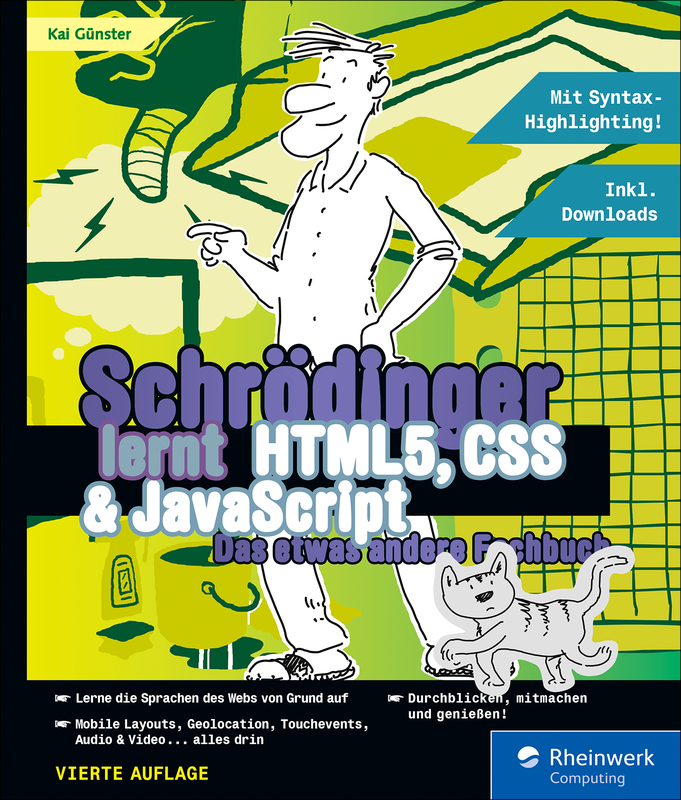
Schrödinger lernt HTML5, CSS und JavaScript (4. Auflg.)
Drei Sprachen in einem Schrödinger-Band! Das etwas andere Fachbuch - 4. aktualisierte Auflage 2023.Eine runde Sache: Schrödinger wird Webentwickler! Zum Glück hat er einen Kumpel, der auf jede Frage eine Antwort weiß, wenn er nur genug Kaffee bekommt. Zusammen lernt ihr HTML, CSS und JavaScript und erstellt die Webauftritte für seine Firma und einen Verein. Mit viel Witz, allen nötigen Erklärungen, Unmengen an Code, Tipps, Übungen und der verdienten Erholung. Von "Hallo Webwelt" über AJAX bis zu Geolocation und TouchScreens: alles auf dem neuesten Stand und, wenn du willst, mit deinem eigenen Webserver. Umwerfende Beispiele, fantastisch illustriert.1. Gründlicher EinstiegSchrödinger ist zwar pfiffig, fängt aber ganz von vorn an zu lernen – und du bist dabei. HTML-Seiten aufbauen, ersten JavaScript-Code schreiben, grafische Gestaltung umsetzen: Alles wird Schritt für Schritt erklärt und ausprobiert.2. Voller Durchblick durch moderne WebstandardsFür Einsteiger und Umsteiger perfekt. Unmengen an Beispielen und Übungen. HTML, CSS und JavaScript von Anfang an – alles in einem Buch und mit farbigem Syntax-Highlighting. Aktuelle Profi-Praxis mit Sinn für guten Code.3. Lernen – Anwenden – WiederholenMit Schrödinger wird immer Hand angelegt. Neue Konzepte und Sprachelemente werden in Ruhe vorgestellt (grün). Dann geht es ab in die Werkstatt (violett), wo ihr Code schreibt oder verbessert. In Schrödingers Wohnzimmer (orange) könnt ihr üben, wiederholen und euch auch etwas Erholung gönnen.Aus dem Inhalt:Ausführlicher Einstieg in HTML, CSS und JavaScriptDesigns umsetzen und gute GUIs erstellenEreignisse behandeln und Funktionen einsetzenServerkommunikation, AJAX und Websockets nutzenMit oder ohne HTML5 und CSS3Karten einbinden und GPS-Daten auswertenZeichnen mit CanvasResponsive Webdesign und ToucheventsWebseiten für einfach alles, was einen Bildschirm hatVideo- und Audiomaterial einbindenÜber den Autor: Kai Günster ist Web- und Softwareentwickler und hat Spaß an immer neuen Details. Er hält HTML5 für die beste Erfindung seit der Laugenbrezel und JavaScript für die Zukunft der GUI-Entwicklung.Leseprobe (PDF-Link)

Pro Spring 6
Master the Spring Framework, its fundamentals and core topics, and share the authors’ insights and real-world experiences. This book goes well beyond the basics: you'll learn how to leverage the latest Spring Framework 6 to build the various tiers and parts of today's modern, complex enterprise Java applications systems, top to bottom, including data access, SQL generation with jOOQ, persistence with Hibernate, transactions, set up security, classic web and presentation tiers and adding in some reactivity. Spring 6 will be based on the latest available Long Term Support (LTS) release, Java 17. So, you will be able to do the following in your Spring applications: use records, use new utility methods in String class; utilize Local-Variable Syntax for Lambda Parameters; Nested Based Access Control, and more. Integrating Spring with the most used frameworks and libraries is covered in this book, such as Testcontainers, Hibernate, jOOQ, Kafka and many others.A full sample application allows you to apply many of the technologies and techniques covered in Pro Spring 6 and see how they work together. This book updates the perennial bestseller with the latest that Spring Framework 6 has to offer. Now in its sixth edition, this popular title is by far the most comprehensive and definitive treatment of Spring available. After reading this book, you'll be armed with the power of Spring to build complex applications, top to bottom. The agile, lightweight, open-source Spring Framework continues to be the de facto leading enterprise Java application development framework for today's Java programmers and developers.WHAT YOU WILL LEARN* What’s new in Spring Framework 6 and how to use it with the latest LTS version of Java, Java 17* How to integrate Spring with the most renowned and practical frameworks and dependencies* How to build complex enterprise cloud-native applications using Spring 6* How to master data access, persistence and transactions* How to use with Spring Batch, Integration and other key Spring projectsTHIS BOOK IS FORExperienced Java and enterprise Java developers and programmers. Some experience with Spring highly recommended.IULIANA COSMINA is a Spring Certified Web Developer and is also Spring Certified Core Spring Professional. She is a Spring certified expert, as defined by Pivotal, the makers of Spring Framework, Boot and other tools. She has authored books with Apress on Core Spring certification and Spring Certified web development. She is a Lead Engineer at Cloudsoft, Edinburgh and is an active coder and software contributor on Apache Brooklyn, GitHub, StackOverflow and more.ROB HARROP is a software consultant specializing in delivering high-performance, highly-scalable enterprise applications. He is an experienced architect with a particular flair for understanding and solving complex design issues. With a thorough knowledge of both Java and .NET, Harrop has successfully deployed projects across both platforms. He also has extensive experience across a variety of sectors, retail and government in particular. Harrop is the author of five books, including Pro Spring, a widely-acclaimed, comprehensive resource on the Spring Framework.CHRIS SCHAEFER is a Principle Software Developer for Spring project at Pivotal, the makers of Spring Framework, Boot and other Spring tools.CLARENCE HO is the Senior Java Architect of a HK-based software consultancy firm, SkywideSoft Technology Limited. Having been worked in the IT field for over 20 years, Clarence had been the team leader of many in-house application development projects, as well as providing consultancy services on enterprise solutions to clients.Chapter 1: Introducing SpringChapter 2: Getting StartedChapter 3: Introducing IoC and DI in SpringChapter 4: Advanced Spring Configuration and Spring BootChapter 5: Spring AOPChapter 6: Spring JDBCChapter 7: Spring with HibernateChapter 8: Spring with JPAChapter 9: Spring Transaction ManagementChapter 10: Spring Data with SQL and NoSQL databasesChapter 11: Validation, Formatting and Type ConversionChapter 12: Task Scheduling - some new things might be needed here.Chapter 13: Spring RemotingChapter 14: Spring Native and Other GoodiesChapter 15: Spring MVCChapter 16: Spring REST SupportChapter 17: Securing Spring Web ApplicationsChapter 18: Monitoring Spring ApplicationsChapter 19: Spring WebSocket SupportChapter 20: Reactive Spring

Advanced Variant Configuration in SAP S/4HANA
Ein Produkt – grenzenlose Möglichkeiten! In diesem Buch zeigen Ihnen die Autoren, wie Sie mit der SAP-Variantenkonfiguration individuelle Kundenwünsche erfüllen. Mit AVC in SAP S/4HANA unterstützen Sie Ihre Prozesse u.a. in Entwicklung, Fertigung und Vertrieb. Sie erfahren, wie Sie bei der Produktmodellierung vorgehen und entdecken die wichtigsten Integrationspunkte z.B. mit Microservices der SAP Business Technology Platform (SAP BTP), SAP Commerce Cloud, SAP CPQ u.v.m. Schauen Sie außerdem anderen Kunden über die Schulter und lernen Best Practices für die Transformation kennen. Aus dem Inhalt: Transformation von LO-VC zu AVCProduktmodellierungBeziehungswissenConstraintsKonfigurierbare StücklisteIntegration von AVCBest Practices Vorwort ... 17 Einleitung ... 21 TEIL I. Grundlagen der Variantenkonfiguration ... 25 1. Produktkonfiguration mit SAP ... 27 1.1 ... Wechsel der Generationen: von SAP ERP zu SAP S/4HANA ... 28 1.2 ... Wechsel der Generationen: von LO-VC zu AVC ... 32 1.3 ... Welche SAP-Konfiguratoren gibt es? ... 40 1.4 ... Produktkonfiguration mit AVC im End-to-End-Prozess ... 42 1.5 ... Beherrschung von Produktvielfalt ... 48 1.6 ... Fertigungsszenarien für konfigurierbare Produkte ... 52 1.7 ... Fazit ... 55 2. Der Weg von LO-VC nach AVC in SAP S/4HANA ... 57 2.1 ... AVC und LO-VC - ein Entweder-oder? ... 57 2.2 ... Wege der Transformation ... 61 2.3 ... Grundlagen der Transformation ... 62 2.4 ... Transition Workspace ... 65 2.5 ... Transition Workbench ... 66 2.6 ... Ergebnisvergleich ... 72 2.7 ... Transfer der Materialvarianten ... 75 2.8 ... Ein beispielhaftes Konzept zum Wechsel von VC auf AVC (Greenfield vs. Brownfield) ... 77 2.9 ... Fazit ... 82 TEIL II. Grundlagen der Modellierung ... 83 3. Ein erstes konfigurierbares Material anlegen ... 85 3.1 ... Grundlagen ... 86 3.2 ... Ein erstes Beispiel ... 89 3.3 ... Der konfigurierbare Materialstamm ... 90 3.4 ... Variantenklasse, Merkmale und Konfigurationsprofil ... 92 3.5 ... Die Bewertungsoberfläche der erweiterten Variantenkonfiguration ... 97 3.6 ... Beziehungswissen für Planung und Fertigung ... 101 3.7 ... Konfiguration und Preise ... 104 3.8 ... Fazit ... 107 4. Stammdaten im Rahmen der Modellierung ... 109 4.1 ... Die Modellierungsumgebung der Variantenkonfiguration ... 109 4.2 ... Die Simulationsumgebung von AVC ... 120 4.3 ... Werkzeuge aus dem Klassensystem ... 131 4.4 ... Materialstamm, Stückliste und Arbeitsplan des konfigurierbaren Materials ... 159 4.5 ... Konfigurationsprofil und Konfigurationsszenarien ... 178 4.6 ... Die Merkmalsgruppen als Oberflächendesign ... 216 4.7 ... Fazit ... 220 5. Die Intelligenz: Beziehungswissen ... 221 5.1 ... Grundlagen ... 221 5.2 ... Variantentabellen ... 248 5.3 ... Beziehungswissen für die interaktive Konfiguration (High-Level-Konfiguration) ... 262 5.4 ... Beziehungswissen für Stückliste und Arbeitsplan (Low-Level-Konfiguration) ... 296 5.5 ... Fazit ... 307 6. Preisfindung ... 309 6.1 ... Preisfindung im Vertrieb ... 310 6.2 ... Preisfindung auf Basis der Kundenauftragskalkulation ... 321 6.3 ... Preisfindung im Einkauf ... 322 6.4 ... Der Microservice zur Preisfindung auf der SAP BTP ... 333 6.5 ... Fazit ... 338 7. Materialvarianten ... 339 7.1 ... Materialstamm ... 340 7.2 ... Stückliste ... 346 7.3 ... Arbeitsplan ... 350 7.4 ... Preisfindung ... 355 7.5 ... Variantenfindung ... 355 7.6 ... Fazit ... 363 TEIL III. Integration ... 365 8. Die Integration der Variantenkonfiguration in Plattformen mittels Wissensbasen und Laufzeitversionen ... 367 8.1 ... Die Architektur ... 367 8.2 ... Stammdaten der Konfigurationsintegration: Wissensbasen und Laufzeitversionen ... 370 8.3 ... Tipps zur Generierung von Wissensbasis-Laufzeitversionen ... 374 8.4 ... Anleitung zur (Re)generierung von Laufzeitversionen ... 396 8.5 ... Nutzung des Konfigurationsmicroservice auf der SAP BTP ... 405 8.6 ... Variantenkonfiguration in SAP Commerce Cloud ... 407 8.7 ... Integrierte Variantenkonfiguration in SAP CPQ ... 411 8.8 ... Fazit ... 418 9. Neue Integrationsaspekte zur Variantenkonfiguration ... 419 9.1 ... Stammdatenverteilung mit Product Data Replication ... 420 9.2 ... Die SAP-Variantenkonfiguration im Zusammenspiel mit Siemens Teamcenter ... 458 9.3 ... Anforderungsmanagement und Dokumentation in der Modellierung - SAP Enterprise Product Development ... 467 9.4 ... Maschinelles Lernen und künstliche Intelligenz für konfigurierbare Produkte ... 472 9.5 ... Integration von AVC und SAP Workflow Management ... 484 9.6 ... 2-Tier-Szenario - systemübergreifende Beschaffung konfigurierter Produkte ... 491 9.7 ... Fazit ... 494 10. Lösungen von SAP-Partnern ... 497 10.1 ... 3D-Konfiguration ... 497 10.2 ... KI-optimierte Bearbeitung von Kundenanfragen ... 511 10.3 ... Variantentabelleninhalte auf der SAP BTP ... 524 10.4 ... Variantenkonfiguration mit Machine Learning ... 534 10.5 ... Hybride Systemkonfiguration, durchgängige Automatisierung und API-basierte Integration mit SAP-Lösungen ... 545 10.6 ... Fazit ... 556 TEIL IV. Best Practices und Möglichkeiten zum Erfahrungsaustausch ... 559 11. Erfahrungsbericht: Transformation von LO-VC nach AVC ... 561 11.1 ... AVC-Vorstudie ... 561 11.2 ... Best-Practice-Transformation - ein Praxisbeispiel ... 568 11.3 ... Fazit ... 576 12. Communitys zur SAP-Variantenkonfiguration ... 577 12.1 ... Die Configuration Workgroup (CWG) ... 578 12.2 ... Die DSAG-Arbeitsgruppe »Variantenkonfiguration« ... 588 12.3 ... SAP AVC Customer Co-Innovation Council ... 592 12.4 ... Fazit ... 593 Das Autorenteam ... 595 Index ... 607

Stammdatenmanagement mit SAP Master Data Governance
Entwickeln Sie eine Stammdatenstrategie mit SAP MDG und optimieren Sie so die Arbeitsabläufe in Ihrem Unternehmen! Neben der Cloud Edition von SAP MDG stellen die Autoren auch die neue Konsolidierungskomponente vor, die die Überführung von Stammdaten in das Geschäftspartner-Modell von SAP S/4HANA stark vereinfacht. Aus dem Inhalt: Projekt aufsetzen und umsetzenGovernance Board einrichtenGeeignete Tools auswählenData Quality ManagementKonsolidierung zum GeschäftspartnerBusiness Rule Framework/BRF+SAP MDG, ConsolidationSAP Business Process ManagementSAP FioriSAP Cloud IntegrationSAP Analytics Cloud Vorwort ... 15 Einleitung ... 17 1. Warum ist Stammdatenmanagement wichtig für Ihre Organisation? ... 23 1.1 ... Bedeutung von Stammdaten für die Organisation ... 25 1.2 ... Welche Stammdaten sind wem wichtig und warum? ... 35 1.3 ... Grundlegende Konzepte des Stammdatenmanagements: Definitionen und Objekte ... 51 2. Einsatz und Design von SAP Master Data Governance ... 77 2.1 ... Zielsetzung und Tools definieren ... 77 2.2 ... Implementierungsszenarien ... 83 2.3 ... Die Stammdatenstrategie ... 97 2.4 ... Bedeutung der Stammdaten-Roadmap ... 116 2.5 ... Wie viel Master Data Governance braucht mein Unternehmen? ... 121 2.6 ... Bedeutung eines guten Datenqualitätsmanagements ... 132 2.7 ... Datenmigration und Datenharmonisierung im Projekt ... 147 2.8 ... Change und Stakeholder-Management im Projekt ... 155 3. SAP Master Data Governance und seine Funktionsweise als Grundlage der Stammdatenstrategie ... 165 3.1 ... SAP Master Data Governance als Kern der Stammdaten-Governance ... 166 3.2 ... Datenmanagement in SAP Master Data Governance ... 174 3.3 ... Änderungsanträge in SAP Master Data Governance ... 194 3.4 ... Datenqualität in SAP Master Data Governance ... 236 3.5 ... Verteilungskonzepte in SAP Master Data Governance ... 243 3.6 ... Benutzerschnittstellen in SAP Master Data Governance ... 253 3.7 ... Benutzermanagement und Bearbeiterermittlung ... 264 3.8 ... Domänenspezifische Eigenschaften ... 267 4. Konsolidierung und Massenverarbeitung mit SAP Master Data Governance ... 273 4.1 ... Datenkonsolidierung im Detail ... 274 4.2 ... Massenverarbeitung ... 284 4.3 ... Wichtige Customizing-Einstellungen ... 291 5. SAP Master Data Governance im Zusammenspiel mit komplementären SAP-Werkzeugen ... 293 5.1 ... SAP Fiori ... 293 5.2 ... SAP Data Services und SAP Information Steward ... 305 5.3 ... SAP Process Orchestration ... 313 5.4 ... SAP Business Process Management ... 319 5.5 ... SAP Business Workflow ... 323 5.6 ... SAP Lumira ... 327 5.7 ... SAP Analytics Cloud ... 333 5.8 ... Im Zusammenspiel zum Erfolg ... 338 6. Ein SAP-Master-Data-Governance-Projekt aufsetzen und umsetzen ... 341 6.1 ... Kernfragen vor dem Projekt und Projektansätze ... 342 6.2 ... Projekte im agilen Umfeld ... 360 6.3 ... Checkliste für die ersten 100 Tage ... 367 6.4 ... Cutover-Management ... 373 6.5 ... Nach dem Projekt ... 378 7. Implementierungsbeispiele für verschiedene Stammdatentypen ... 391 7.1 ... Fallstudie: Materialstammdaten ... 392 7.2 ... Fallstudie: Integration und Stücklistensynchronisation ... 417 7.3 ... Fallstudie: Kundenstammdaten ... 440 7.4 ... Fallstudie: Finanzobjekte ... 463 8. Stammdaten als Resilienz- und Ermöglichungspraxis ... 489 8.1 ... Der Blick zurück ... 489 8.2 ... Beobachtungen der Gegenwart ... 490 8.3 ... Ausblick und Aufruf ... 507 Die Autoren ... 513 Index ... 515

Scripting
Scripting ist die Kunst, Probleme in wenigen Zeilen zu lösen. Denn viele Aufgaben in der IT erfordern keine komplexen Lösungen in einer Hochsprache – oft reichen ein paar Zeilen Python-, Bash- oder PowerShell-Code. Michael Kofler zeigt Ihnen in diesem Praxisbuch, wie Sie die Macht der Scripting-Umgebungen nutzen. Anhand zahlreicher Praxisbeispiele erfahren Sie, wie Sie Aufgaben automatisieren und wie Ihnen Shell- oder Pythonscripts viel Arbeit abnehmen können. Mit dabei ist ein Überblick über moderne Shell-Werkzeuge und IDEs: Visual Studio Code, Git, SSH und mehr. Aus dem Inhalt: Bash, ZSH und die Linux-ToolboxPowerShell und CmdLetsPython und PipSSH, VSCode, Git, Curl: Werkzeugenkasten für moderne ScriptsScripts automatisch ausführen: Cron und Task SchedulerBackups automatisierenBilder verarbeitenMonitoring: Logging-Dateien auswertenWeb-Scraping und -MiningScripting in der AWS-CloudAutomatisierte Builds mit Docker-Containern Vorwort ... 11 TEIL I. Scripting-Sprachen ... 15 1. Scripting: Do one thing ... ... 17 1.1 ... Was heißt Scripting? ... 17 1.2 ... Script-Sprachen ... 20 1.3 ... Die Qual der Wahl ... 24 2. Zehn mal zehn Zeilen ... 27 2.1 ... Markdown-Rechtschreibkorrektur (Bash) ... 27 2.2 ... Bilder nach Aufnahmedatum sortieren (PowerShell) ... 28 2.3 ... JSON-Datei in das XML-Format umwandeln (Python) ... 29 2.4 ... Tägliches Server-Backup (Bash) ... 30 2.5 ... Web Scraping (Python) ... 31 2.6 ... Wetterdaten protokollieren (Python) ... 32 2.7 ... Hyper-V-Aufräumaktion (PowerShell) ... 33 2.8 ... Statistische Auswertung einer Logging-Datei (Bash) ... 34 2.9 ... Datei-Upload in die Cloud (PowerShell) ... 35 2.10 ... Virtuelle Maschinen klonen (Bash) ... 35 3. Bash und Zsh ... 37 3.1 ... Terminal, Shell und Bash ... 37 3.2 ... Installation ... 38 3.3 ... Kommandos interaktiv ausführen ... 42 3.4 ... Zsh als Bash-Alternative ... 45 3.5 ... Das erste Bash-Script ... 47 3.6 ... Kommandos ausführen ... 53 3.7 ... Standardeingabe und Standardausgabe ... 56 3.8 ... Globbing, Brace Extension, Umgang mit Datei- und Verzeichnisnamen ... 59 3.9 ... Variablen ... 63 3.10 ... Zeichenketten ... 69 3.11 ... Verzweigungen ... 77 3.12 ... Schleifen ... 83 3.13 ... Funktionen ... 87 3.14 ... Umgang mit Fehlern ... 88 4. PowerShell ... 91 4.1 ... Installation ... 91 4.2 ... Das Windows-Terminal ... 96 4.3 ... Aufruf von CmdLets und Funktionen ... 98 4.4 ... Kommandos kombinieren ... 105 4.5 ... Das erste Script ... 108 4.6 ... Variablen, Zeichenketten und Objekte ... 114 4.7 ... Arrays und Hashtables ... 125 4.8 ... Ausgabeumleitung ... 128 4.9 ... Schleifen ... 132 4.10 ... Verzweigungen ... 135 4.11 ... Funktionen und Parameter ... 137 4.12 ... Module ... 142 4.13 ... Fehlerabsicherung ... 145 5. Python ... 149 5.1 ... Python installieren ... 150 5.2 ... Python in einem Terminalfenster kennenlernen ... 152 5.3 ... Eigene Scripts programmieren ... 153 5.4 ... Elementare Syntaxregeln ... 155 5.5 ... Zahlen ... 157 5.6 ... Zeichenketten ... 159 5.7 ... Listen ... 166 5.8 ... Tupel, Sets und Dictionaries ... 169 5.9 ... Variablen ... 172 5.10 ... Operatoren ... 176 5.11 ... Verzweigungen (if) ... 178 5.12 ... Schleifen (for und while) ... 180 5.13 ... Funktionen ... 186 5.14 ... Textdateien verarbeiten ... 190 5.15 ... Fehlerabsicherung ... 193 5.16 ... Systemfunktionen ... 194 5.17 ... Module ... 197 5.18 ... Zusatzmodule installieren mit »pip« ... 199 TEIL II. Arbeitstechniken und Werkzeuge ... 205 6. Linux-Toolbox ... 207 6.1 ... Verzeichnisse und Dateien ... 208 6.2 ... Dateien suchen ... 209 6.3 ... Dateien komprimieren und archivieren ... 211 6.4 ... Arbeiten mit root-Rechten ... 213 6.5 ... Prozesse verwalten ... 215 6.6 ... Software-Installation ... 219 6.7 ... Sonstige Kommandos ... 220 7. CmdLets für die PowerShell ... 223 7.1 ... Verzeichnisse und Dateien ... 223 7.2 ... Dateien suchen ... 227 7.3 ... Dateien komprimieren und archivieren ... 231 7.4 ... Prozessverwaltung ... 232 7.5 ... Registrierdatenbank und Systeminformationen ... 236 7.6 ... CmdLet-Ergebnisse verarbeiten ... 239 7.7 ... Sonstige CmdLets ... 244 7.8 ... Zusatzmodule installieren ... 244 7.9 ... Standard-Aliasse ... 247 8. Textauswertung mit Filtern und Pipes ... 249 8.1 ... grep, sort, cut und uniq ... 250 8.2 ... Beispiel: Automatische Coronazahlenauswertung ... 257 8.3 ... Beispiel: ping-Auswertung ... 259 8.4 ... Beispiel: Apache-Log-Analyse ... 260 8.5 ... CSV-Dateien ... 264 9. Reguläre Muster ... 269 9.1 ... Syntaxregeln für reguläre Ausdrücke ... 270 9.2 ... Gruppen und Alternativen ... 272 9.3 ... Reguläre Muster in der Bash (grep, sed) ... 278 9.4 ... Reguläre Muster in der PowerShell ... 283 9.5 ... Reguläre Muster in Python (re-Modul) ... 287 10. JSON, XML und INI ... 291 10.1 ... JSON in der PowerShell ... 291 10.2 ... JSON und Python ... 295 10.3 ... JSON in der Bash ... 299 10.4 ... XML in der PowerShell ... 302 10.5 ... XML und Python ... 306 10.6 ... XML in der Bash ... 310 10.7 ... INI-Dateien ... 312 11. Scripts automatisch ausführen ... 315 11.1 ... Cron ... 315 11.2 ... Beispiel: Webserver-Monitoring ... 319 11.3 ... Windows Task Scheduler ... 321 11.4 ... Beispiel: Währungskurse speichern ... 326 11.5 ... Änderungen im Dateisystem verfolgen ... 327 12. SSH ... 331 12.1 ... SSH-Client und -Server installieren ... 332 12.2 ... Mit SSH arbeiten ... 335 12.3 ... scp und rsync ... 340 12.4 ... SSH-Authentifizierung mit Schlüsseln ... 342 12.5 ... Beispiel: Bilder-Upload auf einen Linux-Webserver ... 345 12.6 ... Beispiel: Auswertung virtueller Maschinen ... 348 13. Visual Studio Code ... 351 13.1 ... Einführung ... 351 13.2 ... Sprachspezifische VSCode-Erweiterungen ... 353 13.3 ... Remote-SSH-Erweiterung ... 355 14. Git ... 359 14.1 ... Git-Crashkurs ... 360 14.2 ... Der richtige Umgang mit Einstellungen und Passwörtern ... 368 14.3 ... Git-Automatisierung ... 371 14.4 ... Git Hooks ... 374 TEIL III. Anwendungen und Beispiele ... 377 15. Backups ... 379 15.1 ... Verzeichnisse auf externen Datenträger synchronisieren ... 379 15.2 ... WordPress-Backup ... 384 15.3 ... SQL-Server-Backup ... 387 16. Bildverarbeitung ... 389 16.1 ... Bilddateien manipulieren ... 389 16.2 ... Fotos nach Aufnahmedatum sortieren ... 394 16.3 ... EXIF-Metadaten in SQL-Kommandos umwandeln ... 397 17. Web Scraping ... 403 17.1 ... Websites mit wget herunterladen ... 405 17.2 ... Web Scraping mit regulären Mustern ... 408 17.3 ... Web Scraping mit Beautiful Soup ... 409 17.4 ... Web Scraping mit Requests-HTML ... 414 17.5 ... Web Scraping mit der PowerShell ... 417 18. REST-APIs nutzen ... 419 18.1 ... curl und wget ... 420 18.2 ... REST-APIs in der PowerShell nutzen ... 425 18.3 ... Beispiel: Aktuelles Wetter ermitteln ... 428 18.4 ... REST-APIs in Python nutzen ... 429 18.5 ... Beispiel: Strompreise ermitteln und grafisch darstellen ... 430 19. Datenbanken ... 435 19.1 ... Datenbanken aktualisieren und warten ... 436 19.2 ... Neuen Kunden-Account einrichten ... 437 19.3 ... EXIF-Metadaten in einer Datenbank speichern ... 440 19.4 ... JSON-Daten in eine Tabelle importieren ... 444 20. Scripting in der Cloud ... 447 20.1 ... AWS CLI ... 447 20.2 ... Beispiel: Verschlüsselte Backup-Dateien in die Cloud hochladen ... 452 20.3 ... AWS-PowerShell-Modul ... 454 20.4 ... Beispiel: GroT1ss e Dateien einer Webseite in die Cloud auslagern ... 457 21. Virtuelle Maschinen ... 461 21.1 ... Virtuelle Maschinen einrichten und ausführen (KVM) ... 461 21.2 ... Netzwerkkonfiguration automatisieren (KVM) ... 464 21.3 ... Hyper-V steuern ... 467 22. Docker und Scripting ... 473 22.1 ... Beispiel: EXIF-Sorter als Docker-Image ... 474 22.2 ... Beispiel: Markdown/Pandoc-Umgebung ... 477 Index ... 485

Schrödinger lernt HTML5, CSS und JavaScript
Der beliebteste Schrödinger-Band in vierter Auflage! Schrödinger braucht Know-how in der Webentwicklung. Zum Glück hat er einen Kumpel, der auf jede Frage eine Antwort weiß, wenn er nur genug Kaffee bekommt. Zusammen lernt ihr HTML, CSS und JavaScript und erstellt Webauftritte für den Verein und für die Firma. Mit viel Witz, der nötigen Theorie, Unmengen an Code, Tipps, Übungen und den verdienten Pausen. Von "Hallo Webwelt" über Maus- und Touchevents bis zum Responsive Webdesign: alles auf dem neuesten Stand und, wenn du willst, mit deinem eigenen Webserver. Umwerfende Beispiele, fantastisch illustriert. Aus dem Inhalt: Ausführlicher Einstieg in HTML, CSS und JavaScriptDesigns umsetzen und gute GUIs erstellenEreignisse behandeln und Funktionen einsetzenServerkommunikation, AJAX und Websockets nutzenMit oder ohne HTML5 und CSS3Karten einbinden und GPS-Daten auswertenZeichnen mit CanvasResponsive Webdesign und ToucheventsWebseiten für einfach alles, was einen Bildschirm hatVideo- und Audiomaterial einbinden Widmung ... 2 An den Leser ... 3 Schrödingers Büro ... 4 Schrödingers Werkstatt ... 6 Schrödingers Wohnzimmer ... 8 Impressum ... 10 Inhaltsverzeichnis ... 12 Vorwort ... 20 1. Fangen wir mit einem Gerüst an -- Aufbau einer Seite und die wichtigsten Elemente ... 21 Die drei ??? -- HTML, CSS und JavaScript ... 22 Der Werkzeugkasten ... 24 Webbrowser ... 25 Editor ... 26 Das erste Dokument ... 27 Markup und Tags ... 29 Struktur einer HTML-Seite ... 31 Attribute, leere Tags und Links ... 33 Links zwischen zwei Seiten -- über den Gartenzaun ... 38 Das Ziel im Auge -- das Attribut target ... 41 Tinks und Largels ... 43 Text war gestern -- Bilder ... 45 Bevor das Bild geladen wurde ... ... 47 ... und hinterher ... 47 Das sollte man im Kopf haben -- mehr vom head ... 50 Andere Länder, andere Zeichen: Character Encoding ... 52 Denk noch mal drüber nach: Übungen ... 56 2. Das World Wide Web, unendliche Weiten -- Serverkommunikation, Adressen, Standards ... 59 Wo finde ich denn nun meine Seite? Von Webservern und DNS ... 60 URLs -- alles an der richtigen Adresse ... 63 Ferngespräch für Herrn Web Server -- HTTP ... 67 Jetzt wird es ernst -- unser eigener Webserver ... 71 Hier geht's weiter für alle Systeme ... 77 Das obligatorische Geschichtskapitel -- die Geschichte des World Wide Web ... 79 Man nehme ein ARPANET und lasse es reifen ... ... 79 ... rühre etwas Hypertext unter ... ... 80 ... und köchle alles, bis es bunt wird ... 82 Das Ende von Mosaic und der erste Browserkrieg ... 83 Microsofts Monopol und der zweite Browserkrieg -- der Rote Panda schlägt zurück ... 86 HTML ist nicht gleich HTML -- eine Sprache, verschiedene Dialekte ... 88 3. Jetzt kommt Farbe ins Spiel -- Einführung in CSS ... 91 Webseiten mit Stil -- Inline Styles und Farben ... 92 Inline ist out -- Stylesheets ... 95 Welches Element hätten's denn gerne? Selektoren nach Tags, IDs und Klassen ... 98 Übungen mit dem Regenbogen ... 106 Drei Farben reichen völlig aus -- das RGB-Modell ... 110 Durchschaut: rgba() und opacity ... 114 Wir halten uns im Hintergrund -- background-image ... 116 Wohin damit? background-repeat, background-position und background-attachment ... 118 Hier war ich doch schon mal -- Pseudoklassen für Links ... 125 Farben und Selektoren: Übungen zum Abschluss ... 127 4. Kaskaden für Bossingen -- CSS-Selektoren und Typografie ... 129 Was heißt jetzt eigentlich Cascading? ... 130 CSS -- den Tätern auf der Spur ... 134 Größe zeigen -- mit font-size ... 138 Ahnenforschung für Anfänger -- Selektoren für Kinder und Nachfahren ... 143 Für Fortgeschrittene: Nachfahren-Selektoren mit mehreren Ebenen ... 148 Seichte Kost, nur die direkten Kinder selektieren ... 149 Von Schriftgrößen und Selektoren: Übungen ... 150 Es muss nicht immer Times New Roman sein -- Schriftarten ... 156 Gutenbergs Erben -- mehr von Schriften und Typografie ... 162 Die Schriftliche Prüfung: Übungen ... 166 5. Ordnung in die Plattensammlung -- Listen und Tabellen ... 169 Besser als Zeilenumbruch: Listen ... 170 Wer braucht da noch PowerPoint? CSS-Styles für Listen ... 176 Definitionssache -- Definition Lists mit dl; ... 179 Eine Liste von Übungen zu Listen ... 182 Die Liste ist nicht genug -- Tabellen ... 185 Was steckt noch drin? Tabellen im Detail ... 189 Auch Tabellen brauchen CSS-Liebe ... 195 Gefängnisreform für größere Zellen -- rowspan und colspan ... 202 Tabellarische Übungen ... 204 6. Von der Wiege bis zur Bahre -- Formulare ... 209 Mehr als nur anfragen: endlich mitreden ... 210 Daten eingeben und zum Server schicken -- einfaches Formular ... 213 Request ist nicht gleich Request -- post und get ... 221 Aber tippen ist anstrengend! Checkboxen und Radiobuttons ... 224 Wer ist denn nun der Auserwählte? Select-Boxen ... 228 Jetzt kommt endlich die Suche! ... 234 Das muss ja nicht jeder sehen -- versteckte Felder ... 237 Jetzt kannst du doch noch Opern quatschen -- Textarea ... 238 Die Spezialisten - Formularfelder für alle Lebenslagen ... 241 Formulare müssen nicht nach Behörde aussehen -- CSS für Forms ... 244 Übungen! Neue Felder, neue Stile ... 249 Alle Dateien laden hoooooch -- File Upload ... 252 7. Von Rändern und Schuhkartons -- Seitenlayout in HTML und CSS ... 255 Die Grundlagen für alles -- Block- und Inline-Elemente ... 256 Das Box-Model -- stapelbares HTML ... 258 Relativ und absolut ... 262 Fünf kleine div-Container ... ... 264 Das Gesetz des Kompasses ... 267 Und weiter geht's mit den fünf divs ... 269 Abstände aus der Nähe betrachtet ... 270 10 Liter HTML in einem 5-Liter-div -- Overflow ... 272 Schrödinger in seinem Element -- Container schubsen ... 274 Genau dort -- absolute Positionierung ... 276 Der StapelzeugTM-Stapelplan ... 278 Mehr zu Positionierung ... 283 Eiskalt berechnet ... 285 Elemente im Fluss -- float und clear ... 287 Floatende Layouts ... 291 Von Boxen und Stapeln ... 292 Und so sieht der Stylesheet am Ende aus: ... 297 Semantik statt div -- dranschreiben, was drinsteckt ... 298 Die CSS-Eigenschaft display -- warum? ... 300 Wer verdeckt wen? z-index ... 303 Das Fenster im Fenster ... 306 8. ENTlich, eine Website! Schrödinger setzt das Gelernte zusammen -- Eine Website von Anfang an ... 309 Eine Website von Anfang an ... 310 Die Seitenstruktur ... 313 Die Organisation des Stylesheets ... 318 Für die Kunst -- die Entengalerie ... 320 Entengalerie plus -- es geht noch cooler ... 326 9. Schöner wohnen mit CSS3 ... 329 Zum Schutz vor blauen Flecken -- runde Ecken ... 330 Rahmenbilder für Bilderrahmen ... 334 Urlaubsfotos aus den 80ern ... 338 Licht und Schatten ... 341 Die Kiste im Licht -- box-shadow ... 347 Schlüsselmomente ... 350 Und es bewegt sich doch ... 355 Und es bewegt sich noch etwas ... 359 Die Farbe des Kaffees ... 362 Gerade war gestern -- CSS-Transformationen ... 364 Jetzt bist du dran mit Drehen und Schieben ... 367 Auf in die dritte Dimension! ... 370 Gemeinsam sehen sie stark aus -- Effekte mit CSS3 ... 372 Wie in der Zeitung -- mehrspaltiges Layout ... 379 Die richtige Textverteilung ... 383 10. Jetzt muss es sich aber endlich bewegen -- JavaScript ... 385 JavaScript, was ist das eigentlich? ... 386 Und wie geht es jetzt? ... 389 Zählen nach Zahlen ... 391 Merk's dir für später -- Variablen ... 395 Übungen zu Variablen ... 400 Zahlentheorie ... 403 Daten rein, Daten raus I: Ausgabe ... 406 Woher weiß ich, wenn ein Fehler auftritt? ... 411 Zeichen, Zeichen, Zeichenkette ... 413 Daten rein, Daten raus II: Eingabe ... 416 Übungen zu Strings und Ausgabe ... 420 Strings besser zusammenbauen ... 424 Wenn ... dann ... ... 426 Variablen, solange wir sie brauchen -- Block-Scope ... 431 Formulare -- bitte geben Sie Ihre Adresse an ... 433 Wenn die Praxis funktioniert, dann fehlt noch die Theorie ... 437 Was? Wie? Wenn? Dann? ... 440 11. Programmieren mit Bausteinen -- Funktionen ... 443 Funktionen fürs Kochrezept ... 444 So funktioniert's mit Funktionen ... 451 Mehr Werte, als man zählen kann -- Arrays ... 455 Eine Übung für zwischendurch ... 461 Von vorne bis hinten mit for ... 463 Parameter-Überschuss ... 468 Parameter für Fortgeschrittene ... 469 Gut verteilt mit dem Spread-Operator ... 471 Einfach mal anders schleifen -- die for-of-Schleife ... 472 Mehr Zuweisung fürs gleiche Geld ... 473 Von Dingen und Zeigern ... 475 Wie funktionieren meine Funktionen? ... 478 Manchmal geht alles schief -- Fehler ... 480 Funktionen, Bürger erster Klasse ... 485 Funktionen in Funktionen in Funktionen ... 492 12. Augen auf, du hast User! -- Eventhandler ... 497 Reaktionsfreudiges JavaScript -- Eventhandler ... 498 Die Events mit der Maus ... 504 Mehr von der Maus ... 507 Das Ziel im Auge -- event.target ... 510 Gezieltes Mausen ... 513 JavaScript im Schaumbad -- blubbernde Events ... 516 Keyboardevents ... 519 Timeout, Formevents und andere ... 522 Übungen! ... 524 13. Gerade stand das da noch nicht -- DOM-Manipulation ... 527 Ein DOM für die HTML-Seite ... 528 Gärtnern für Webentwickler -- das DOM als Baum ... 532 Des Zauberlehrlings Hausaufgabe ... 535 Mal wieder Wiederholungen -- while-Schleifen ... 544 Von einem Element zum anderen -- navigieren im DOM ... 546 Rein, rauf, runter, raus -- Elemente erzeugen, einfügen, entfernen und verschieben ... 550 Attribute und Styles ... 556 Die Meisterprüfung des DOM-Zauberlehrlings ... 558 14. Schrödingers Welt der Programmierung -- Objekte und JSON ... 563 Objektorientierung -- was und warum? ... 564 Objekte für Einsteiger ... 567 Ran an die Eigenschaften ... 570 Und jetzt mit Methoden ... 575 Das Schlüsselwort this und Function Binding ... 577 Was steckt drin? for ... in ... 581 Übungen mit Objekten ... 585 Map macht's leichter ... 587 Konstruktoren und Prototypen ... 588 Vererbung -- und niemand muss dafür sterben ... 591 Übungen zu Prototypen und Vererbung ... 597 Klassen in JavaScript -- ja, die gibt's jetzt ... 601 Alles wird super ... 604 Statische Felder ... 606 15. Halt, hiergeblieben! Cookies, WebStorage und File-API ... 609 Der Griff in die Keksdose ... 610 Cookies ganz korrekt ... 612 Cookies selbst gebacken ... 615 Jetzt wird gebacken ... 616 Daten, so weit das Auge reicht -- Web Storage ... 621 Iterieren über Web Storage ... 623 Das Beispiel am Stück -- und mit Objekt! ... 626 Mehr zu Local Storage -- Events und Limits ... 629 Von Sandbox zu Sandbox ... 630 Die große Datenhalde ... 632 Heute das Dateisystem, morgen die Welt ... 633 Was du schon immer über eine Datei wissen wolltest ... 634 Dateien lesen - der FileReader ... 635 Dateien in der Praxis ... 640 Das switch-Statement ... 645 Dateien und Bäckereien ... 649 Dateiauswahl -- wir können auch anders ... 654 Und wir können auch noch anders -- noch mal Dateiauswahl ... 656 16. Alles kann ein Radio sein, oder ein Fernseher, oder sogar eine Leinwand -- Multimedia ... 661 Bild und Ton im Browser ... 662 Die MIME-Types ... 666 Die Details ... 666 Die Fernbedienung für alles -- audio und video mit JavaScript ... 668 Was alles gehen und schiefgehen kann ... 673 Schrödingers Terassenradio ... 676 Picasso, Monet, Schrödinger -- zeichnen auf dem canvas ... 679 Das JavaScript für die Grundausstattung ... 681 Ein Beispiel macht alles klar -- das erste Rechteck ... 682 Transformationen -- die Leinwand drehen und strecken ... 686 Werkzeug zur Hand, das Diagramm wird transformiert ... 688 Und jetzt mit Tabellen-Daten ... 689 Koordinatenballett ... 692 Kunst und Text ... 694 Auf dem rechten Pfad ... 700 Bild im Bild ... 704 Farbähnliche Dingsdas ... 708 Übungen mit interessanter Überschrift ... 713 Leinwand für Fortgeschrittene ... 717 17. Schrödinger will's wissen -- Ajax ... 719 Was ist Ajax? ... 720 Hallo Server, bitte kommen ... 724 Hol dir die Antwort ... 727 Die königliche POST ist da ... 730 Wie Majestät wünschen ... 733 XmlHttpRequest Level 2 -- jetzt mit Nutzlast ... 739 Der Rest ist wieder Geschichte -- History-API ... 742 Die Sache mit dem Fragment ... 746 Ich darf aber nicht mit Fremden sprechen -- die Same Origin Policy ... 749 Ja wo verbinden sie denn hin? ... 754 Jenseits von AJAX -- Web Sockets ... 756 18. Verwandlungskunst ... 759 Was ist Responsive Design, und wozu ist es gut? ... 760 Jedem seine Styles -- Media Types in CSS2 ... 763 Media Features -- CSS3 schafft neue Möglichkeiten ... 766 Stapelzeug Responsive ... 767 Schritt 1: Zuerst wird die Sidebar umpositioniert ... 770 Schritt 2: Jetzt mit handytauglicher Navigation ... 772 All die vielen Bildschirme! ... 776 Das Kreuz mit den Bildern ... 778 Sture Bilder ... 782 Größer ... größer ... größer ... zu groß! ... 785 Sparsamer laden mit data-Attributen ... 788 HTML im Regal - Grid-Layout ... 792 Was kann so ein Mobildings sonst noch? ... 798 Fingergetatsche ... 798 Wo zum Teufel bin ich? ... 801 Schrödinger unterwegs ... 808 Der Verfolger ... 811 Internationalisierung -- Formatieren für überall ... 813 Internationalisierung -- gut sortiert, und das überall ... 819 19. Der Blick nach vorn -- was geht noch? ... 821 CSS Bibliotheken und Frameworks ... 823 JavaScript-Bibliotheken und neue APIs ... 827 Aber es gibt auch noch andere Ansätze ... 829 Programmieren geht nicht nur im Browser ... 831 Type Script ... 835 Reine Handarbeit macht auch nicht glücklich ... 837 Aber das Wichtigste ... 838 Anhang: Reguläre Ausdrücke und Zeichencodes ... 839 Muster für Zeichenketten ... 840 Reguläre Ausdrücke in JavaScript ... 844 Die wichtigsten Elemente von regulären Ausdrücken, kurz zusammengefasst ... 849 Zeichencodes ... 851 Tabelle 1: ASCII-Codes für keypress ... 852 Tabelle 2: Tastencodes für keyup und keydown ... 853 Index ... 854

Adobe After Effects
Adobe After Effects ist ein komplexes Programm, umso besser, wenn Sie dieses Lern- und Nachschlagewerk immer zur Hand haben. Keying-Effekte, 3D-Animationen, Rendering, Motion Tracking, endlich werden alle Funktionen präzise und verständlich erklärt. Holen Sie alles aus Adobe After Effects heraus und verblüffen Sie mit kinoreifen visuellen Effekten. Sie sind nur noch wenige Seiten vom atemberaubenden Compositing entfernt … Aus dem Inhalt: Arbeitsoberfläche, Werkzeuge, FunktionenKeyframes, Animation, Puppenwerkzeug, Character AnimatorArbeiten mit ExpressionsKeying mit und ohne Green- oder Bluescreen, Keylight, Cycore-EffekteSlow-Motion, ZeitrafferMotion-Tracking, Mocha, 3D-Kamera-Tracker, Verkrümmungsstabilisierung VFXColor Finesse, Malen und RetuschierenTitel und Texte, TextanimationRendertechniken und Media EncoderHDTV, MPEG-2, MPEG-4, H.264Ray-traced-3D-KompositionenIntegration: Cinema 4D, Photoshop, Illustrator, Premiere Pro Vorwort ... 25 TEIL I. Grundlagen ... 27 1. Begriffe und Standards ... 29 1.1 ... Was ist Animation? ... 29 1.2 ... Auflösung ... 32 1.3 ... Fernsehnormen ... 36 1.4 ... HDTV ... 39 1.5 ... Ultra HDTV ... 41 1.6 ... Aufzeichnungsformate ... 42 2. Tour durch das Programm ... 47 2.1 ... Die Benutzeroberfläche im Überblick ... 47 2.2 ... Die Arbeitsoberfläche anpassen ... 52 2.3 ... Schnelles Arbeiten mit eigenen Tastaturbefehlen ... 55 2.4 ... Projektplanung und -organisation ... 57 2.5 ... Projekte anlegen, speichern und öffnen ... 61 2.6 ... Projekteinstellungen ... 65 2.7 ... Ein erstes Projekt ... 68 TEIL II. Vom Rohmaterial bis zur Ausgabe ... 79 3. Rohdaten importieren und verwalten ... 81 3.1 ... Der Importdialog ... 81 3.2 ... Import von Photoshop- und Illustrator-Dateien ... 82 3.3 ... Importvoreinstellungen ... 92 3.4 ... Import von After-Effects-Projekten ... 93 3.5 ... Import von Premiere-Pro-Projekten ... 93 3.6 ... Weitere Importmöglichkeiten ... 95 3.7 ... Videodaten in After Effects ... 98 3.8 ... Importieren von Mediendaten bandloser Formate ... 107 3.9 ... Rohdaten verwalten: Das Projektfenster ... 110 3.10 ... Rohmaterial ersetzen ... 112 3.11 ... Dateien sammeln und Dateien »zerstreuen« ... 117 4. Komposition und Zeitleiste ... 121 4.1 ... Kompositionen: Layout in Raum und Zeit ... 121 4.2 ... Footage einer Komposition hinzufügen ... 126 4.3 ... Das Kompositionsfenster ... 127 4.4 ... Verschachtelte Kompositionen (Nesting) ... 135 4.5 ... Flussdiagramm ... 143 4.6 ... Die Zeitleiste ... 145 5. Ebenen organisieren und bearbeiten ... 157 5.1 ... Ebenen anordnen und ausrichten ... 157 5.2 ... Ebenen bearbeiten ... 165 5.3 ... Trimmen von Ebenen ... 167 5.4 ... Ebenen dehnen und stauchen ... 171 5.5 ... Marken setzen und Responsive Design -- Zeit ... 175 5.6 ... XMP-Metadaten ... 180 5.7 ... Bitte mischen: Füllmethoden ... 184 6. Vorschau ... 191 6.1 ... Caching (globaler Performance Cache) ... 191 6.2 ... Medien-Cache ... 193 6.3 ... Vorschaukonfiguration ... 194 6.4 ... Audiovorschau und Audio synchronisieren ... 197 6.5 ... Vorschau optimieren ... 200 6.6 ... Vorschau auf externen Geräten ... 206 7. Keyframe-Grundlagen ... 209 7.1 ... Setzen von Keyframes ... 209 7.2 ... Ankerpunkte definieren ... 220 7.3 ... Animationsvorgaben ... 225 7.4 ... Der Diagrammeditor ... 228 8. Keyframe-Interpolation ... 235 8.1 ... Zwei Arten der Interpolation ... 235 8.2 ... Räumliche Interpolation und Bewegungspfade ... 236 8.3 ... Zeitliche Interpolation und Geschwindigkeitskurven ... 245 8.4 ... Pfade als Key-Generator ... 264 8.5 ... Keyframes für Schnelle ... 270 8.6 ... Zeitverzerrung ... 273 8.7 ... Parenting: Vererben von Eigenschaften ... 278 8.8 ... Animation mit den Marionettenwerkzeugen ... 282 9. Texte erstellen und animieren ... 293 9.1 ... Texte: Was ist möglich? ... 293 9.2 ... Mit Punkt- und Absatztext arbeiten ... 294 9.3 ... Möglichkeiten der Textanimation ... 303 9.4 ... Arbeiten mit Textanimator-Gruppen ... 304 9.5 ... Mehr Optionen ... 322 9.6 ... Quelltextanimation ... 325 9.7 ... Vorgegebene Textanimationen ... 326 9.8 ... Text und Masken ... 326 10. Rendern und Ausgabe ... 335 10.1 ... Kompression ... 335 10.2 ... Der Rendervorgang ... 338 10.3 ... Rendern in der Praxis: QuickTime-Film ausgeben ... 340 10.4 ... Arbeiten mit der Renderliste ... 346 10.5 ... Ausgabe mit dem Media Encoder ... 354 10.6 ... Ausgabemöglichkeiten ... 360 10.7 ... Netzwerkrendern ... 375 TEIL III. Masken, Effekte und Korrekturen ... 381 11. Masken, Matten und Alphakanäle ... 383 11.1 ... Begriffsdefinitionen ... 383 11.2 ... Matten und ihre Verwendung ... 392 11.3 ... Masken: Schon wieder Pfade ... 396 11.4 ... Masken-Interpolation ... 422 11.5 ... Formebenen ... 430 12. Effekte ... 439 12.1 ... Effekt-Grundlagen ... 440 12.2 ... Effekte miteinander kombinieren ... 447 12.3 ... Arbeiten mit den Cycore Effects ... 463 12.4 ... Keying mit Green- oder Bluescreen ... 491 12.5 ... Keying ohne Green- oder Bluescreen ... 499 13. Farbkorrektur ... 517 13.1 ... Projektfarbtiefe ... 517 13.2 ... Farbmanagement in After Effects ... 519 13.3 ... Luminanzbasierte Farbkorrektur ... 523 13.4 ... Chrominanzbasierte Farbkorrektur ... 527 13.5 ... Lumetri-Scopes und Lumetri-Farbe ... 530 13.6 ... Lookup Tables (LUTs) ... 553 14. Malen und Retuschieren ... 555 14.1 ... Pinsel und Pinselspitzen ... 555 14.2 ... Malstriche bearbeiten ... 561 14.3 ... Radiergummi ... 572 14.4 ... Kopierstempel ... 573 TEIL IV. Fortgeschrittene Funktionen ... 583 15. Motion-Tracking ... 585 15.1 ... Der Motion-Tracker von After Effects ... 585 15.2 ... Adobe Character Animator ... 611 15.3 ... 3D-Kameratracker ... 623 15.4 ... Verkrümmungsstabilisierung ... 631 15.5 ... Mocha ... 635 16. 3D in After Effects ... 647 16.1 ... 3D in einem 2D-Animationsprogramm? ... 647 16.2 ... Licht und Beleuchtung ... 661 16.3 ... Die Kamera: Ein neuer Blickwinkel ... 673 16.4 ... Cinema 4D-Kompositionen ... 686 17. Expressions ... 701 17.1 ... Was sind Expressions? ... 701 17.2 ... Die Sprache der Expressions ... 706 17.3 ... Einheiten und Dimensionen ... 710 17.4 ... Expressions im Einsatz ... 718 17.5 ... Datengesteuerte Animationen ... 733 17.6 ... Essential Graphics ... 744 TEIL V. After Effects im Workflow ... 761 18. Workflow mit Photoshop und Illustrator ... 763 18.1 ... Zusammenarbeit mit Adobe Photoshop ... 763 18.2 ... Zusammenarbeit mit Adobe Illustrator ... 786 19. Video-Workflow ... 793 19.1 ... Zusammenarbeit mit Adobe Premiere Pro ... 793 19.2 ... Adobe Dynamic Link ... 802 19.3 ... Automatic Duck für Apple Final Cut Pro, Apple Motion und Avid ... 807 19.4 ... Zusammenarbeit mit Adobe Animate ... 810 19.5 ... Zusammenarbeit mit Adobe Audition ... 812 20. Integration mit 3D-Applikationen ... 813 20.1 ... Warum externe 3D-Programme nutzen? ... 813 20.2 ... Datenübergabe an After Effects ... 814 20.3 ... Umgang mit 3D-Daten in After Effects ... 817 20.4 ... Die Integration mit Cinema 4D ... 837 Index ... 863

AutoCAD 2024
AutoCAD 2024 und AutoCAD LT 2024 für Ingenieure und Architekten. Das umfassende Praxisbuch.Dieses Grundlagen- und Lehrbuch zeigt Ihnen anhand konkreter Praxisbeispiele aus Architektur, Handwerk und Technik die Möglichkeiten von AutoCAD 2024 und AutoCAD LT 2024 und bietet insbesondere AutoCAD-Neulingen einen gründlichen und praxisnahen Einstieg in CAD.Mit dem Buch und der 30-Tage-Testversion von der Autodesk-Webseite können Sie sofort beginnen und Ihre ersten Zeichnungen erstellen. Sie arbeiten von Anfang an mit typischen Konstruktionsaufgaben aus Studium und Praxis. Zu jedem Kapitel finden Sie Übungsaufgaben, Testfragen und Lösungen.Zahlreiche Befehle werden detailliert erläutert, wie zum Beispiel:Zeichnen mit LINIE, KREIS, BOGEN, Polylinie, Schraffur und weitereBearbeiten (VERSETZ, STUTZEN, DEHNEN, STRECKEN, Skalieren und weitere), Anordnungen rechteckig, polar oder entlang Pfaden, Griffe, Eigenschaften-ManagerKomplexe Objekte: BLOCK, Palette, Editor, Attribute, externe ReferenzenEinführung in 3D-Volumenkörper, Netzkörper und NURBS-Flächen (Freiformmodellierung)Vergleichsfunktion für Zeichnungen und externe ReferenzenBenutzeroberfläche anpassen, Makro-AufzeichnungDeutsche Beschreibung der englischen ExpresstoolsÜber den Autor:Detlef Ridder hat bereits zahlreiche Bücher zu AutoCAD, Inventor, Revit und ArchiCAD veröffentlicht und gibt Schulungen zu diesen Programmen und im Bereich CNC.

Mobile App Development for Businesses
Digitize your business operations both internally and externally with a well-structured app design. Customers today turn to mobile when searching for their future vendor. This book is your step-by-step guide through the process of building mobile apps that will meet your company's needs as well as the needs of your staff. See exactly how applying certain basic principles work and make them serve your goals by troubleshooting common mobile app design, usability, and promotion issues.You'll start by listing the advantages of what makes a mobile app an ideal platform and resource for growing your market and revenue. As many companies burn money on failed mobile app projects, you'll review the best practices on how to outline your app ideas and create a mobile product roadmap. You'll then explore the process of starting mobile app development—from an initial idea to the final product. You’ll look at the setbacks in development that can cost you a successful outcome, and review proven practices and features that lead to success no matter what industry you operate in. You’ll also understand the dynamics of mobile app development, and the best ways to ensure that your mobile app serves your company’s goal for further growth.At the end, you’ll future proof your app and weigh the pros and cons of potentially outsourcing mobile development. Mobile App Development for Businesses puts theory into practical use for developing internal and external mobile apps.WHAT YOU'LL LEARN* Launch and position your app in the market* Develop apps for internal and external audiences* Collect and incorporate user feedback* See why any great business today starts with a solid digital foundationWHO THIS BOOK IS FOREntrepreneurs, business owners, directors, and executives wishing to grow their businesses and expand their reach in the market. Previous technological experience is helpful but not required.MAJA DAKIĆ has logged nearly 15 years in business writing, translation, and sales. She earned a Master of Arts in English from the University of Novi Sad, Serbia. Following her sales and business writing years at different companies, Maja transitioned to the IT sector, where she helped promote companies across the world—landing media placements in local and national platforms. During that time, she gained a unique perspective on what it takes to develop, launch, and sustain successful software solutions and products. Today, she works at Zesium, where she has founded the Zesium blog and serves as Editor-in-Chief. She's a regular contributor to Data Driven Investor and Data Series publications, where she has more than 40 published articles covering various technical topics. CHAPTER 1: WHY DOES YOUR BUSINESS NEED A MOBILE APP?● Why are mobile apps the future of all business?● Reasons to develop a mobile app● Benefits of a mobile apps for your businessCHAPTER 2: HOW TO CHOOSE THE PLATFORM FOR YOUR MOBILE APP?● Pros and cons of native and hybrid mobile apps● Reasons to consider when deciding on the mobile app platform● How to choose the best development company for your mobile appCHAPTER 3: CREATE A MOBILE APP PRODUCT ROADMAP● Turn your idea into actionable milestones● How to write a mobile app product roadmap● Usability issues to avoid in developing mobile appsCHAPTER 4: BALANCE OF FEATURES IN MOBILE DEVELOPMENT● Learn to outline MVP must-haves● The most important design features● What functionalities to include to your mobile app● Why is early testing the best for your project successCHAPTER 5: WHY ARE USERS ESSENTIAL FOR YOUR APP’S LIFE?● How to onboard users to your mobile app● Methods to collect user feedback● How to prioritize feedback and put it into action● The best tools to help you track user satisfactionCHAPTER 6: HOW TO PROMOTE YOUR MOBILE APP IN THE MARKET● The most important steps for mobile app launch● How to prioritize feedback and put it into action● The best tools to help you track user satisfactionCHAPTER 7: OUTSOURCING TO A TECHNICAL PARTNER● Should you outsource your mobile development● Pros and cons of outsourcing mobile development● Things to consider when choosing your technical development partnerCHAPTER 8: TECHNOLOGY USE CASES● How to boost your mobile app● Technologies to implement (AI, AR, gamification etc.)● The best mobile app features per different industry

SAP UI Frameworks for Enterprise Developers
Dive into the world of SAP UIs and begin your journey to becoming a development expert. In this book, you will learn the latest cutting-edge web technologies and gain a comprehensive understanding of the user experience concept that undergirds the SAP Fiori design system. SAP UI Frameworks for Enterprise Developers is filled with hands-on tutorials that will guide you through every step of the development journey, from setting up your coding editor to building your first application using UI5, SAP Fiori Elements, UI5 Web Components, or Fundamental Library Styles. Authors Marius Obert and Volker Buzek understand that staying ahead in the rapidly evolving UI technology landscape can be challenging, so they’ve included insights into upcoming industry-wide trends and future innovations. This book will provide you with the knowledge and skills needed to build intuitive applications with an eye-catching, SAP Fiori-conforming user interface.Don’t miss this opportunity to take your UI development skills to the next level! What You Will Learn * Gain an overview of the technologies that can be used to implement enterprise-ready SAP Fiori UIs ready to be deployed in the cloud as well as on-premises * Discover resources for connecting with domain experts to stay on top your game and learn about innovations in the SAP ecosystem * Survey industry-wide technologies trends, like micro frontends and PWA, and relate these trends to both enterprise software and new projects led by SAP Who This Book Is For This book is intended for anyone interested in building intuitive enterprise user interfaces with modern web technologies in the greater SAP universe. Chapter 1: Introduction to Enterprise User Interfaces.- Chapter 2:The Siblings: OpenUI5 and SAPUI5.- Chapter 3:The Big One: SAP Fiori Elements.- Chapter 4:The Standardized One: UI5 Web Components.- Chapter 5:The Basic One: Fundamentals Library.- Chapter 6: Industry Trends and Their Impact on the SAP Universe.- Chapter 7: Staying on Top of the Ball.
A Practical Guide to SAP Integration Suite
This book covers the basics of SAP’s Integration Suite, including a broad overview of its capabilities, installation, and real-life examples to illustrate how it can be used to integrate, develop, administer, and monitor applications in the cloud. As you progress through the book, you will see how SAP Integration Suite works as an open, enterprise-grade platform that is a fully vendor-managed, multi-cloud offering that will help you expedite your SAP and third-party integration scenarios. The entire value chain is explored in detail, including usage of APIs and runtime control. Author Jaspreet Bagga demonstrates how SAP’s prebuilt integration packages facilitate quicker, more comprehensive integrations, and how they support a variety of integration patterns. You’ll learn how to leverage the platform to enable seamless cloud and on-premises applications connectivity, develop custom scenarios, mix master data, blend business-to-business (B2B) and electronic data interchange (EDI) processes, including trading partner management. Also covered are business-to-government (B2G) scenarios, orchestrating data and pipelines, and mixing event-driven integration. Upon completing this book, you will have a thorough understanding of why SAP Integration Suite is the middleware of SAP’s integration strategy, and be able to effectively use it in your own integration scenarios. What You Will Learn Understand SAP Integration Suite and its core capabilitiesKnow how integration technologies, such as architecture and supplementary intelligent technologies, work within the SAP Integration SuiteDiscover services for pre-packaged accelerators: SAP API Management, the Integration Advisor, and the SAP API Business HubUtilize integration features to link your on-premises or cloud-based systemsUnderstand the capabilities of the newly released Migration Assessment Who This Book Is for Web developers and application leads who want to learn SAP Integration Suite. Chapter 1: Introduction to Integration.- Chapter 2: SAP Integration Suite.- Chapter 3: SAP Cloud Integration: Features and Connectivity.- Chapter 4: SAP Cloud Integration Part I.- Chapter 5: SAP Cloud Integration Part II.- Chapter 6: SAP Cloud Integration: Monitoring and Operations.- Chapter 7: SAP Cloud Integration: Security.

AutoCAD 2024 und AutoCAD LT 2024 für Ingenieure und Architekten
Einführung in die wichtigsten Bedienelemente Konstruktionsbeispiele aus Architektur, Handwerk und Technik Zahlreiche Praxisbeispiele und Übungen Dieses Grundlagen- und Lehrbuch zeigt Ihnen anhand konkreter Praxisbeispiele aus Architektur, Handwerk und Technik die Möglichkeiten von AutoCAD 2024 und AutoCAD LT 2024 und bietet insbesondere AutoCAD-Neulingen einen gründlichen und praxisnahen Einstieg in CAD. Mit dem Buch und der 30-Tage-Testversion von der Autodesk-Webseite können Sie sofort beginnen und Ihre ersten Zeichnungen erstellen. Sie arbeiten von Anfang an mit typischen Konstruktionsaufgaben aus Studium und Praxis, ergänzt durch Übungsaufgaben. Zu jedem Kapitel finden Sie Testfragen mit Lösungen dazu im Anhang. Zahlreiche Befehle werden detailliert erläutert, wie zum Beispiel: Zeichnen mit LINIE, KREIS, BOGEN, Polylinie, Schraffur und weitere Bearbeiten (VERSETZ, STUTZEN, DEHNEN, STRECKEN, Skalieren und weitere), Anordnungen rechteckig, polar oder entlang Pfaden, Griffe, Eigenschaften-Manager Komplexe Objekte: BLOCK, Palette, Editor, Attribute, externe Referenzen Einführung in 3D-Volumenkörper, Netzkörper und NURBS-Flächen (Freiformmodellierung) Vergleichsfunktion für Zeichnungen und externe Referenzen Benutzeroberfläche anpassen, Makro-Aufzeichnung Deutsche Beschreibung der englischen Expresstools Aus dem Inhalt: Allgemeine Bedienung mit Multifunktionsleisten, Registern und Paletten Schnelleinstieg ins Zeichnen mit Rasterfang Exaktes Zeichnen mit Koordinaten, Objektfang und Spurlinien Zeichnungsorganisation mit Layern und Vorlagen Texte, Schriftfelder und Tabellen, Verbindung zu Excel Bemaßungsbefehle und Bemaßungsstile, Spezialfälle Parametrische Variantenkonstruktionen, dynamische Blöcke Zusammenarbeit über Web- und Mobil-App, Ablaufverfolgung mit BAND-Funktion Maßstäbliches Plotten, auch bei verschiedenen Einheiten (mm, cm, m) Zahlreiche Übungsfragen mit Antworten Zum Download: Alle Beispiele zusätzliche Übungen, 3D-Beispiele und AutoLISP-Anleitung Video-Tutorials Vorlagen Für PC und Mac: Alle Funktionen werden anhand der PC-Version ausführlich beschrieben. Dazu werden zusätzlich auch die grundlegenden Abweichungen in der Benutzeroberfläche der Mac-Versionen vorgestellt. Detlef Ridder hat bereits zahlreiche Bücher zu AutoCAD, Inventor, Revit und ArchiCAD veröffentlicht und gibt Schulungen zu diesen Programmen und im Bereich CNC.
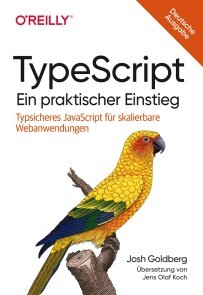
TypeScript - Ein praktischer Einstieg
Ein großartiger Ausgangspunkt für alle, die neu in TypeScript einsteigen!* Vermittelt JavaScript-Entwicklerinnen und -Entwicklern, die keine Vorkenntnisse zu Typisierung und Typsystemen mitbringen, die Grundlagen von TypeScript.* Mit verständlichen, jeweils eigenständigen Codebeispielen, wertvollen Hilfestellungen und Tipps nach dem Motto: aus alt und unsicher (JS) mach neu und sicher (TS).* Gut lesbar, mit viel Humor geschrieben.JavaScript lässt Entwicklerinnen und Entwicklern viele Freiheiten, was im Programmieralltag – insbesondere bei umfangreicher Codebasis – häufig zu Problemen führt. TypeScript wurde entwickelt, um hier Abhilfe zu schaffen, und hat in den letzten Jahren erfolgreich die JavaScript-Welt erobert. Mit einem durchdachten Typsystem unterstützt es ein strukturiertes Programmieren, das Refaktorieren von Code und das Entwickeln skalierender Webanwendungen.Josh Goldberg orientiert sich in seiner Einführung immer am Programmieralltag. Kompakt beschreibt er, wie das Typsystem beschaffen ist, wie es mit JavaScript interagiert und wie Entwicklerinnen und Entwickler ihren Code lesbarer und wartbarer gestalten können. Für Goldberg ist das Typsystem von TypeScript nicht nur ein Mittel, um Fehler zu beseitigen, sondern ein wunderschönes System, mit dem Entwickler festlegen, wie ihr JavaScript funktionieren soll, und das ihnen dabei hilft, sich an diese Vorgaben zu halten.Josh Goldberg ist Softwareberater und Open-Source-Maintainer. Er trägt aktiv zu TypeScript und den Projekten dieses Ökosystems wie typescript-eslint und TypeStat bei. Zuvor war Josh Frontend-Entwickler im Web-Platform-Team von Codecademy, wo er die Verwendung von TypeScript im Unternehmen vorantrieb und half, ein TypeScript-Tutorial zu entwickeln.

Eine Tour durch C++
Der praktische Leitfaden für modernes C++. Eine Übersetzung der 3. Auflage in deutscher Erstauflage aus Juni 2023. Erhältlich als digitale und gedruckte Fassung.Dieses Buch bietet erfahrenen Programmierern einen praktischen Überblick über C++20 nach ISO-Standard und damit ein klares Verständnis für den Einsatz von modernem C++. Anhand vieler Codebeispiele und hilfreicher Praxistipps wird ein Großteil der Hauptfeatures der Sprache sowie der Standardbibliothek behandelt, die für den effektiven Einsatz unverzichtbar sind.Stroustrup stellt die einzelnen Sprachfeatures von C++ vor und zeigt, wie sie im Kontext der unterstützten Programmierstile eingesetzt werden, beispielsweise der objektorientierten oder generischen Programmierung. Seine Tour beginnt mit den Grundlagen und setzt den Fokus anschließend auf fortgeschrittene Techniken, wobei er insbesondere auf die neueren Sprach-features eingeht.Dieses Buch deckt zahlreiche Features ab, die mit C++20 neu eingeführt wurden, darunter Module, Konzepte, Koroutinen und Bereiche. Selbst einige schon jetzt verfügbare Komponenten, die nicht vor C++23 in den Standard integriert werden sollen, werden vorgestellt.Wenn Sie bereits Programmierkenntnisse in C++ oder einer anderen Sprache haben, ist dies die kompakteste und verständlichste Einführung, um die Besonderheiten und Vorteile von modernem C++ kennenzulernen.Aus dem Inhalt:Die Grundlagen: Funktionen, Referenzen, Zeiger und mehrBenutzerdefinierte TypenModularitätFehlerbehandlungKlassenOperationenTemplatesKonzepte und generische ProgrammierungDie StandardbibliothekStrings und reguläre AusdrückeStreamsAlgorithmenBereiche (Ranges)Zeiger und ContainerUtilitiesNumerikNebenläufigkeitZahlreiche Ratschläge für die effektive Programmierung aus den »C++ Core Guidelines«Positiv besprochen auf heise online im Oktober 2023:»Dem mitp-Verlag ist mit der Übersetzung der dritten Auflage des englischen Originals ein lesenswertes Buch gelungen, das sich zudem durch eine sinnvolle didaktische Struktur auszeichnet. Alle Kapitel enden mit einer Liste von Ratschlägen, mit zum Teil kontroversen Empfehlungen, die Leserinnen und Lesern aber in jedem Fall wertvolle Hilfestellung bei der Umsetzung von Programmierarbeiten in der Praxis leisten dürften.«Über den Autor:Bjarne Stroustrup hat C++ entwickelt und die erste Implementierung geschrieben. Derzeit ist er Professor an der Columbia University und hat zuvor bei AT&T Bell Labs an der Texas A&M University sowie bei Morgan Stanley gearbeitet. Dr. Stroustrup erhielt zahlreiche Auszeichnungen, unter anderem den The National Academy of Engineering's Charles Stark Draper Prize for Engineering für die Konzeptionierung und Entwicklung der Programmiersprache C++. Er ist Mitglied der National Academy of Engineering und Fellow von IEEE, ACM, CHM und dem Churchill College Cambridge.Leseprobe (PDF-Link)

Technologies and African Societies in Pandemic Times
Saikou Diallo is a scientist and educator in the domain of innovation and equal access to technology. He is passionate about using technology to connect people on all spectrums and artificial beings.Jean-Jacques Maomra Bogui is Associate Professor at Université Félix Houphouët-Boigny, Côte d’Ivoire. His research interests focus on the uses and appropriation of digital technologies, the internationalization of communications and the analysis of the reception of cultural goods.Julien Atchoua is a psychologist and teacher-researcher in Political Communication at Université Félix Houphouët-Boigny, Côte d’Ivoire. He is also Director at the Centre d’études et de recherches en communication (CERCOM), Abidjan, Côte d’Ivoire.

Aesthetics in Digital Photography
Automatically evaluating the aesthetic qualities of a photograph is a current challenge for artificial intelligence technologies, yet it is also an opportunity to open up new economic and social possibilities.Aesthetics in Digital Photography presents theories developed over the last 25 centuries by philosophers and art critics, who have sometimes been governed by the objectivity of perception, and other times, of course, by the subjectivity of human judgement. It explores the advances that have been made in neuro-aesthetics and their current limitations.In the field of photography, this book puts aesthetic hypotheses up against experimental verification, and then critically examines attempts to “scientifically” measure this beauty. Special attention is paid to artificial intelligence techniques, taking advantage of machine learning methods and large databases. Henri Maître is Emeritus Professor at Télécom-Paris in France and was director of research at Télécom-Paris and the LTCI laboratory. He specializes in image processing and pattern recognition.