

Computer und IT

Modern C Up and Running
Learn how to program in modern C, from the basics through the advanced topics required for proficiency. This book is the fastest path to C fluency for anyone experienced in a general-purpose programming language. From start to finish, code examples highlight the idioms and best practices behind efficient, robust programs in a variety of areas.The book opens with a thorough coverage of syntax, built-in data types and operations, and program structure. C has quirks and presents challenges, which are covered in detail. The coverage of advanced features is what sets this book apart from others. Among the advanced topics covered are floating-point representation in the IEEE 754 standard; embedded assembly language in C code for overflow detection; regular expressions, assertions, and internationalization; WebAssembly through C; and software libraries for C and other clients.Memory efficiency and safety are the two major challenges in C programming, and you’ll explore these challenges through a series of C examples. Arrays and structures, which are the means to high-level data representation, are covered in connection with pointers, which provide efficiency. The book again uses code examples in covering networking and wire-level security; concurrency (multiprocessing and multithreading); instruction-level parallelism; and interprocess communication through shared memory and files, pipes, message queues, and signals.Many books introduce C, but few also explain how to use it properly and optimally. Essential C does just that.WHAT YOU'LL LEARN* Accelerate your path to C mastery with this book for experienced programmers* Refresh your approach to program structure and data types* Dive into aggregates and pointers using modern C language* Revisit storage classes and scope* Dive into concurrency (multiprocessing and multithreading) and instruction-level parallelism* Finish with regular expressions, assertions, signals, locales and moreWHO THIS BOOK IS FORProfessional programmers or software developers who has prior experience with C or in general wanting an accelerated learning guide to modern C programming language.Martin Kalin has a Ph.D. from Northwestern University and is a professor in the College of Computing and Digital Media at DePaul University. He has co-written a series of books on C and C++ and written a book on Java for programmers. He enjoys commercial programming and has co-developed large distributed systems in process scheduling and product configuration.1. Program Structure2. Basic Data Types3. Aggregates and Pointers4. Storage Classes5. Input and Output6. Networking7. Concurrency and Parallelism8. Miscellaneous Topics

Microsoft Exchange Server
Mit diesem umfassenden Leitfaden administrieren Sie den Exchange Server gekonnt und sicher. Von der Auswahl der richtigen Plattform über die Planung der Server-Infrastruktur bis zum Troubleshooting: Erfahren Sie, wie Sie Exchange an die individuellen Ansprüche Ihrer Umgebung anpassen und detailliert konfigurieren. Exchange-MVP Thomas Stensitzki zeigt Ihnen die einzelnen Schritte und gibt Ihnen praxisorientierte Hinweise, mit denen die Exchange-Administration gelingt. Aus dem Inhalt: Exchange Server – Versionen, Funktionsumfang und NeuerungenInstallationsvarianten: Bare Metal, virtualisiert oder in der Cloud?Planung: Migration, Lizenzen, CALs, BerechtigungenInstallationDetaillierte KonfigurationAdministration: Exchange Administrative Center und RBACBetrieb: Wartungsszenarien und SicherheitCompliance: Rights Management, Data Leakage Prevention, Legal HoldExchange Best PracticesChecklisten und Glossar Materialien zum Buch ... 17 Einleitung ... 19 1. Exchange Server -- Vergangenheit und Zukunft ... 21 1.1 ... Exchange Server 4.0 bis Exchange Server 2010 ... 23 1.2 ... Moderne Exchange-Versionen ... 41 1.3 ... Exchange Server 2019 ... 58 1.4 ... Exchange Server vNEXT ... 64 1.5 ... Zusammenfassung ... 67 2. Die Exchange Server-Plattform ... 69 2.1 ... Muss es Exchange Server sein? ... 72 2.2 ... Die richtige Exchange-Architektur ... 73 2.3 ... Die Exchange Server-Postfach-Rolle ... 81 2.4 ... Die Exchange Server-Edge-Transport-Rolle ... 83 2.5 ... Exchange Server auf physischen Systemen ... 89 2.6 ... Exchange Server auf einer Hypervisor-Plattform ... 91 2.7 ... Exchange Server in einer Cloud-Plattform ... 95 2.8 ... Exchange als Software-as-a-Service (SaaS) ... 96 2.9 ... Unified Messaging (UM) ... 100 2.10 ... Active Directory ... 101 2.11 ... Exchange-Clients ... 102 2.12 ... Datensicherung ... 104 2.13 ... Zusammenfassung ... 108 3. Planung der Exchange Server-Plattform ... 111 3.1 ... Exchange Server-Anforderungen ... 111 3.2 ... Die IT-Infrastruktur ... 125 3.3 ... Exchange Server Sizing Calculator ... 144 3.4 ... Mittelständisches Unternehmen -- Varuna Group ... 190 3.5 ... Großunternehmen -- Setebos AG ... 203 3.6 ... Merger & Acquisition ... 216 3.7 ... Exchange Server-Anti-Malware-Lösungen ... 219 3.8 ... Lizenzierung ... 221 3.9 ... Die Deployment-Assistenten ... 224 3.10 ... Die Sicherheit Ihres Arbeitsplatzes ... 226 3.11 ... Zusammenfassung ... 229 4. Installation der Exchange Server-Plattform ... 231 4.1 ... Voraussetzungen ... 232 4.2 ... Vorbereitung des Active Directory ... 242 4.3 ... Die Postfach-Server-Rolle ... 252 4.4 ... Die Edge Transport-Rolle ... 261 4.5 ... Azure AD Connect ... 270 4.6 ... Empfängerverwaltung und letzter Exchange Server ... 289 4.7 ... Zusammenfassung ... 295 5. Konfiguration der Exchange Server-Plattform ... 297 5.1 ... Basis-Konfiguration ... 297 5.2 ... Office Online Server ... 312 5.3 ... Skype for Business ... 315 5.4 ... Unified Messaging ... 322 5.5 ... SharePoint Server ... 326 5.6 ... Exchange Online Hybrid ... 327 5.7 ... Zusammenfassung ... 360 6. Administration der Exchange Server-Plattform ... 363 6.1 ... RBAC ... 364 6.2 ... Exchange Administrative Center ... 367 6.3 ... Exchange Management Shell ... 375 6.4 ... Exchange Online Management Shell ... 382 6.5 ... Admin-Server ... 385 6.6 ... Skript-Server ... 391 6.7 ... Zusammenfassung ... 394 7. Betrieb der Exchange-Plattform ... 395 7.1 ... Inhouse oder Outsourcing des IT-Betriebs? ... 395 7.2 ... Sicherheit ... 397 7.3 ... Sicherheit der E-Mail-Domäne ... 406 7.4 ... Prozesse ... 416 7.5 ... Richtlinien ... 428 7.6 ... Betrieb ... 460 7.7 ... Wartung ... 518 7.8 ... Postfächer verschieben ... 529 7.9 ... Migration der Öffentlichen Ordner ... 535 7.10 ... Troubleshooting ... 542 7.11 ... Wiederherstellung ... 576 7.12 ... Lizenzierung ... 583 7.13 ... Drittanbietersoftware ... 587 7.14 ... Endpunkt-Sicherheitslösungen ... 589 7.15 ... Desired State Configuration ... 591 7.16 ... Überwachung ... 593 7.17 ... Weitere Informationen ... 598 7.18 ... Probleme und Entscheidungsfindung ... 600 7.19 ... Zusammenfassung ... 605 8. Exchange Online ... 607 8.1 ... Was ist Exchange Online? ... 607 8.2 ... Die Unterschiede zu Exchange 2019 ... 612 8.3 ... Exchange Online-Clients ... 622 8.4 ... Die Einrichtung von Exchange Online ... 628 8.5 ... Migration zu Exchange Online ... 646 8.6 ... Exchange Online und Microsoft 365 ... 652 8.7 ... Die Administration von Exchange Online ... 658 8.8 ... Betrieb von Exchange Online ... 673 8.9 ... Security ... 746 8.10 ... Lizenzierung von Exchange Online ... 751 8.11 ... Offboarding ... 761 8.12 ... Schulung und Exchange Online ... 762 8.13 ... Zusammenfassung ... 763 9. Exchange und Compliance ... 765 9.1 ... Begriffsklärung ... 766 9.2 ... Archivierung ... 767 9.3 ... Compliance ... 775 9.4 ... Dokumenten-Management-Systeme ... 793 9.5 ... Zusammenfassung ... 794 10. Best Practices und Beispiele »ungünstiger« Exchange-Implementierungen ... 797 10.1 ... Installation als Einzelserver ... 797 10.2 ... Zusätzliche Windows-Server-Rollen auf einem Exchange Server ... 798 10.3 ... Server mit lokalem Endpunkt-Virenscanner ... 799 10.4 ... Server mit SMTP-Virenscanner ... 801 10.5 ... Virtualisierung von Exchange Server ... 804 10.6 ... Virtualisierung von Festplattenspeicher ... 805 10.7 ... Geteilte IP-Adressen ... 807 10.8 ... Hybridanbindung über Drittanbieter-Gateways ... 808 10.9 ... WAN-Optimizer und andere Gerätschaften ... 809 10.10 ... Router ... 809 10.11 ... Active Directory ... 810 10.12 ... Exchange-Hybrid-Betrieb mit Proxy-Servern ... 813 10.13 ... Zusammenfassung ... 814 11. Quick Guides ... 815 11.1 ... Checkliste für Start-ups ... 816 11.2 ... Checkliste für mittelständische Unternehmen ... 820 11.3 ... Checkliste für Großunternehmen ... 823 11.4 ... Checkliste zur Installation von Exchange Server 2019 ... 825 Nachwort ... 833 Glossar ... 835 Index ... 841

Usability und User Experience Design
Gute Usability und User Experience sind niemals Zufall. Dahinter stecken systematische Prozesse und Know-how aus verschiedenen Disziplinen. Produkte zu schaffen, die Menschen nicht nur leicht und sicher bedienen können, sondern rundum schätzen – wenn das Ihr professionelles Ziel ist, sind Sie hier richtig. Lernen Sie mit diesem Handbuch das Fach gründlich kennen, vertiefen Sie Ihre Expertise oder steigen Sie in eine stärker datengetriebene Arbeitsweise ein. Die Autoren sind erfolgreiche Spezialisten für die Usability und UX technischer Produkte. Sie stellen Ihnen Grundlagen aus Psychologie und Design vor und geben Ihnen ein umfassendes Methodenrepertoire an die Hand. Inklusive praktischer Auswahlhilfe und konkreter Anleitungen. So evaluieren und optimieren Sie Ihre Produkte oder unterstützen Ihre Kunden mit professionellen Usability- und UX-Projekten. Für B2B, B2C, verschiedene Branchen und Budgets haben Sie damit immer eine effiziente Methode parat. Dr. Michaela Kauer-Franz und Dr. Benjamin Franz betreuen auch komplexe Anwendungen und solche mit speziellen Anforderungen wie Medizinprodukte. Profitieren Sie von ihrem Erfahrungsschatz! Aus dem Inhalt: Übersicht über Prozesse und VorgehenDer richtige "Mindset"User Researcher Skills: Beobachten, Fragenstellen, ZuhörenPsychologische GrundlagenNutzer*innen, Kund*innen und wirDesigngrundlagenData Driven UX DesignInhaltspunktLösungen evaluierenEin Glossar mit allen wichtigen Fachbegriffen 1. Für wen ist dieses Buch? Warum und wie sollten Sie das Buch lesen? ... 21 1.1 ... Für wen ist dieses Buch geschrieben? ... 21 1.2 ... Warum sollten Sie dieses Buch lesen? ... 22 1.3 ... Wie sollten Sie dieses Buch lesen? ... 26 1.4 ... Ihre ständigen Begleiter: Unsere drei Beispiele ... 27 2. Die wichtigsten Begriffe und ihre Historie ... 33 2.1 ... Die (Vor-)Geschichte von Usability und User Experience ... 33 2.2 ... Usability und User Experience Design -- die Kernbegriffe ... 40 2.3 ... Das Zusammenspiel von Ergonomie, Usability und User Experience ... 52 3. Usability und User Experience als Erfolgsfaktor herausragender Produkte ... 67 3.1 ... Was ist der Return on Investment (ROI)? ... 68 3.2 ... Metriken für den unternehmerischen Erfolg ... 68 3.3 ... ROI planen statt ROI »entdecken« ... 75 3.4 ... Unterschiede zwischen Metriken für den unternehmerischen Erfolg im B2C- vs. B2B-Bereich ... 78 3.5 ... Was sind typisch erreichbare ROIs durch Usability und User Experience Design? ... 80 3.6 ... Praxisbeispiel: Messung des ROI bei MoveHub ... 83 3.7 ... Praxisbeispiel: Messung des ROI bei BusinessBooster ... 84 3.8 ... Praxisbeispiel: Messung des ROI bei Healthyfy ... 86 4. Wie »mache« ich Usability und User Experience Design? ... 87 4.1 ... Die Norm ISO 9241-210 -- Menschzentrierte Gestaltung interaktiver Systeme ... 88 4.2 ... Design Thinking ... 95 4.3 ... Minimum Viable Product (MVP) -- das kleinste, sinnvolle Produkt ... 108 4.4 ... Double Diamond ... 113 4.5 ... Usability Engineering bei Medizinprodukten nach der Norm IEC 62366-1 ... 117 4.6 ... Gemeinsamkeiten der beschriebenen Verfahren ... 120 5. Data-Driven UX Design ... 127 5.1 ... Das Ziel des Data-Driven UX Design-Prozesses ... 128 5.2 ... Der Data-Driven UX Design-Prozess (3DUX) im Überblick ... 129 5.3 ... Die Flexibilitäts- und Risikomatrix -- oder: Wie viele Daten brauchen Sie wirklich? ... 143 5.4 ... Objektive versus subjektive Daten ... 151 5.5 ... Quantitative versus qualitative Daten ... 154 5.6 ... Daten kritisch bewerten ... 155 5.7 ... Schnelle Hilfestellung zur Einordnung ... 160 6. Ein hilfreiches Mindset für Usability und User Experience Design ... 165 6.1 ... Annahmen vs. Wissen ... 166 6.2 ... Die Nutzer wissen nicht, was sie wollen! ... 182 6.3 ... Die wichtigsten Skills der User Researcher: beobachten, Fragen stellen, zuhören ... 190 6.4 ... Gestaltung als lernbarer Prozess ... 204 6.5 ... Testen und Unternehmenskultur ... 208 7. Grundlagen ... 211 7.1 ... Psychologische Grundlagen -- keine Angst, es geht um Menschen ... 211 7.2 ... Wahrnehmung -- die menschliche Sensorik ... 212 7.3 ... Menschliche Informationsverarbeitung ... 253 7.4 ... Designgrundlagen ... 275 8. Der Data-Driven UX Design-Prozess im Detail -- Vorbereitung ... 343 8.1 ... Die Planung des Data-Driven UX Design-Prozesses ... 344 8.2 ... Integration von Data-Driven UX Design in agile Entwicklungsprojekte ... 353 8.3 ... Den Aufwand von Data-Driven UX Design angemessen auswählen ... 357 9. Der Data-Driven UX Design-Prozess im Detail -- Nutzungskontextanalyse ... 361 9.1 ... Welche Fragen muss die Nutzungskontextanalyse beantworten? ... 362 9.2 ... Was ist überhaupt der Nutzungskontext? ... 364 9.3 ... Methoden der Nutzungskontextanalyse ... 376 9.4 ... Analytische Methoden der Nutzungskontextanalyse ... 423 9.5 ... Praxisbeispiele zur Kontextanalyse ... 443 10. Der Data-Driven UX Design-Prozess im Detail -- Nutzungsanforderungen spezifizieren ... 455 10.1 ... Betrachten Sie Ihre Personas oder Empathy Maps ... 456 10.2 ... Use Cases und User Stories -- wie es nicht geht und wie es doch geht ... 458 10.3 ... Von der User Story zur Anforderung ... 466 10.4 ... Anforderungen formulieren für MoveHub ... 475 10.5 ... Anforderungen formulieren für BusinessBooster ... 477 10.6 ... Anforderungen formulieren für Healthyfy ... 479 11. Der Data-Driven UX Design-Prozess im Detail -- Gestaltungslösungen entwickeln ... 481 11.1 ... Erinnerung: Was ist das Ziel der Gestaltung und wie gehen wir dabei vor? ... 481 11.2 ... Design Research ... 482 11.3 ... Vom Groben zum Feinen ... 486 11.4 ... Grundsätzliche Lösungsmöglichkeiten entwickeln ... 487 11.5 ... Arbeit mit Prototypen ... 491 11.6 ... Wireframes ... 496 11.7 ... Die Qualität von User-Interface-Konzepten mit dem Designgrid prüfen ... 543 11.8 ... Screenflows ... 546 11.9 ... Klickdummys ... 548 11.10 ... Desktop, Mobile oder Smartwatch first? ... 554 11.11 ... Responsive Design ... 559 11.12 ... Visual Design ... 560 11.13 ... Ausflug: Low-Code und No-Code ... 573 11.14 ... Beispiel: Mögliche Design-Steps für MoveHub ... 574 11.15 ... Beispiel: Mögliche Design-Steps für BusinessBooster ... 576 11.16 ... Beispiel: Mögliche Design-Steps für Healthyfy ... 577 12. Der Data-Driven UX Design-Prozess im Detail -- Gestaltungslösungen evaluieren ... 581 12.1 ... Formatives vs. summatives Testen ... 581 12.2 ... Wissenslücken identifizieren ... 586 12.3 ... Nutzerevaluation vs. Expertenevaluation ... 587 12.4 ... Remote vs. vor Ort ... 589 12.5 ... Test-Cases gestalten ... 593 12.6 ... Die vorgestellten Methoden ... 598 12.7 ... Der Usability- und der User Experience-Test ... 599 12.8 ... Usability und User Experience-Sprint ... 609 12.9 ... Rapid User-Tests ... 615 12.10 ... A/B-Testing ... 620 12.11 ... UX-Benchmarking ... 625 12.12 ... 5-Sekunden-Test ... 630 12.13 ... Standardisierte Fragebögen ... 635 12.14 ... Analyse von quantitativen Nutzungsdaten ... 648 12.15 ... Webtracking/Klickanalyse ... 652 12.16 ... Tagebuchstudie ... 653 12.17 ... Card Sorting ... 660 12.18 ... Experten-Review ... 665 12.19 ... Assoziationsraumtest (ARTTest) ... 670 12.20 ... Eyetracking ... 673 12.21 ... Physiologische Messverfahren ... 680 12.22 ... Fehler analysieren mithilfe der Root-Cause-Analyse ... 683 12.23 ... Aus den Daten lernen und begründete Entscheidungen treffen ... 689 12.24 ... Evaluationen in der Medizinprodukteentwicklung ... 692 12.25 ... Beispiel: Evaluationsmethoden für MoveHub ... 693 12.26 ... Beispiel: Evaluationsmethoden für BusinessBooster ... 694 12.27 ... Beispiel: Evaluationsmethoden für Healthyfy ... 697 13. Design, Get Data, Repeat -- wann ist Schluss? ... 699 13.1 ... Den Übergang anhand der Qualität bestimmen ... 700 13.2 ... Den Übergang anhand der Zeit bestimmen ... 702 13.3 ... Nachsteuern ja oder nein? Die Flexibilitäts- und Risikomatrix als Hilfestellung ... 703 13.4 ... Den richtigen Ansatz wählen ... 704 13.5 ... So geht es weiter mit MoveHub, der B2C-Mobilitäts-App für jede Gelegenheit ... 706 13.6 ... So geht es weiter mit BusinessBooster, dem B2B-CRM-BI-Tool für kleine und mittelständische Unternehmen ... 706 13.7 ... So geht es weiter mit Healthyfy, dem Vermittlungsportal für Gesundheitsexperten (B2B- und B2C-Medizinprodukt) ... 707 14. Entscheidungsmatrix für die Methodenauswahl ... 709 14.1 ... Fragestellungen ... 710 15. Wrap-up und Fazit ... 719 15.1 ... Es geht um die Nutzenden ... 719 15.2 ... Usability und User Experience Design ist interdisziplinär ... 720 15.3 ... User Experience designt man nicht, sondern sie wird erlebt ... 720 15.4 ... Der Weg zu einem herausragenden Produkt ist iterativ ... 721 15.5 ... Man fängt zwar irgendwann mit Usability und User Experience Design an, aber man hört nie wieder damit auf ... 721 15.6 ... Gestalten Sie anhand von Daten ... 722 15.7 ... Schlusswort und Aufruf zur Mitgestaltung ... 722 Anhang ... 725 A ... Glossar ... 725 B ... Literaturverzeichnis ... 738 Index ... 746

E-Commerce Manager*in
Als E-Commerce-Manager*in stehen Ihnen alle Wege im Online-Handel offen. Egal ob Sie eher eine operative oder eine strategische Ausrichtung wählen, mit diesem Handbuch legen Sie die Grundlage für eine erfolgreiche Karriere im E-Commerce. Mit dabei sind der Aufbau eines Online-Shops, Usability, UX, Shop-Systeme und Shop-Beurteilungskriterien, Online-Marketing, Kennzahlen und Controlling, Retourenmanagement, Projektmanagement. Inkl. Übungsaufgaben zu allen Teilbereichen. Auch fürs Selbststudium geeignet. Aus dem Inhalt: E-Commerce oder M-CommerceB2B/B2CKäufergruppe, Zielgruppe, Buyers PersonaDer Markt und seine BesonderheitenShopsoftware: Auswahl, Usability, UX, ContentOnline-Marketing: Kundenzentrierung statt ProduktzentrierungProzesse und UnternehmenskommunikationMarkt- & WettbewerbsanalysenRetourenmanagementRelevante Kennzahlen im E-CommerceCustomer Journey: SEO und SEABewertungs-Management inkl. Krisenmanagement Über dieses Buch ... 17 TEIL I Grundlagen des E-Commerce ... 21 1. Historie und Status quo des E-Commerce ... 23 1.1 ... Von den ersten Versandhändlern über das Kataloggeschäft bis zum heutigen E-Commerce ... 23 1.2 ... Die Fehleinschätzungen etablierter Unternehmen im Hinblick auf den E-Commerce ... 26 1.3 ... Das Wesen des Onlinehandels: Geht nicht gibt es (fast) nicht ... 31 1.4 ... Chancen im E-Commerce ... 36 1.5 ... Anteil E-Commerce am Gesamthandelsumsatz ... 38 1.6 ... Wahrnehmung insbesondere aus der Innensicht des Handels ... 42 1.7 ... Aufgaben für E-Commerce-Manager*innen ... 47 2. Natürliche Gegner: online vs. offline? ... 53 2.1 ... Was unterscheidet den E-Commerce von anderem Handel? ... 53 2.2 ... Wo liegen die Unterschiede zwischen B2C- und B2B-E-Commerce? ... 61 2.3 ... Was bedeutet GAFA(M) für den Handel insgesamt? ... 66 2.4 ... M-Commerce als Bindeglied zwischen stationärem und Onlinehandel ... 72 2.5 ... Single-Channel, Multi-Channel, Omni-Channel, Cross-Channel: Wie viele Kanäle sind genug? ... 79 2.6 ... Disruption im Handel: alte Prozesse neu denken ... 88 2.7 ... Übungsaufgaben zu Teil I ... 93 TEIL II Strategien entwickeln im E-Commerce ... 95 3. E-Commerce-spezifisches Kaufverhalten und Zielgruppenanalyse ... 97 3.1 ... Unterscheidung: Käufergruppe, Zielgruppe, Buyers Persona ... 97 3.2 ... Tools, Methoden und Modelle zur Analyse und Zielgruppensegmentierung ... 107 3.3 ... Warum kaufen Menschen online? ... 118 3.4 ... Wie die Plattformökonomie das Kaufverhalten beeinflusst ... 122 4. Der Markt und seine Besonderheiten ... 129 4.1 ... Vorüberlegungen zum Markteintritt ... 129 4.2 ... Timing des Markteintritts ... 136 4.3 ... Marktsegmentierung ... 143 4.4 ... Sortimentsgestaltung und Preisgestaltung ... 151 4.5 ... Beziehungsmarketing vs. Transaktionsmarketing ... 158 4.6 ... Skalierbarkeit von E-Commerce-Unternehmen ... 162 4.7 ... Übungsaufgaben zu Teil II ... 170 TEIL III Der Online-Shop ... 173 5. Entscheidungen rund um den Shop ... 175 5.1 ... Entscheidungskriterien rund um die Shopsoftware ... 175 5.2 ... Schnittstellen, Multi-/Cross-Channel-Verzahnungen ... 185 5.3 ... Warenkorb und Check-out ... 189 5.4 ... Agiles Arbeiten im E-Commerce ... 197 6. Ausgestaltung des Shops -- UX & Content ... 207 6.1 ... Accessibility und Usability als Pflicht ... 207 6.2 ... User Experience (UX) & Joy of Use als Kür: Gestaltung/Design ... 213 6.3 ... Erlernte Positionen im Shop ... 218 6.4 ... Wie misst man Usability? ... 227 6.5 ... Kundenbefragungen (NPS & CSAT) ... 233 6.6 ... Interaktionsmöglichkeiten als Schlüsselfaktor im Service ... 237 6.7 ... Wie sieht ein Content-Prozess aus? ... 242 6.8 ... Was macht einen Anbieter für die Kund*innen vertrauenswürdig? ... 252 6.9 ... Übungsaufgaben zu Teil III ... 255 TEIL IV Gestalten und Analysieren ... 257 7. Kundenzentrierte Gestaltung von Prozessen und Unternehmenskommunikation ... 259 7.1 ... Customer Journey & die Identifizierung von relevanten Touchpoints ... 259 7.2 ... Die Customer Journey ... 266 7.3 ... Buyers Persona in der Kommunikation ... 272 7.4 ... Welche Mehrwerte brauchen die Kund*innen? ... 280 7.5 ... Unterschiedliche Sichtweisen: Kund*innen vs. Händler*innen ... 288 8. Markt- und Wettbewerbsanalysen ... 293 8.1 ... Methoden der Markt- und Wettbewerbsanalysen ... 293 8.2 ... Potenziale im Wettbewerb aufdecken ... 301 8.3 ... Markt-Segmentierung analysieren ... 303 9. Retourenmanagement: Retouren verhindern ... 311 9.1 ... Retouren? Mein gutes Recht! ... 311 9.2 ... Retouren als zeitverzögerte Umsatzbereinigung ... 316 9.3 ... Was bedeuten Alpha-, Beta- und Gamma-Retourenquoten und wofür sind sie Indikatoren? ... 319 9.4 ... Was sind Retourenkosten? ... 323 9.5 ... Präventives Retourenmanagement ... 327 10. Relevante Kennzahlen und deren betriebswirtschaftliche Betrachtung ... 333 10.1 ... Ziele und Zielsysteme entwickeln ... 333 10.2 ... Strategische Planung ... 339 10.3 ... Arten von Kennzahlen ... 343 10.4 ... ROI -- was ist eigentlich rentabel? ... 345 10.5 ... ROMI oder ROAS -- was bringen Marketing und Werbung? ... 348 10.6 ... Alles ist Conversion, und ohne Conversion ist alles nichts ... 350 10.7 ... Was kostet der Kunde, und welchen Wert hat er (CAC, CLV, CLV:CAC-Ratio)? ... 354 10.8 ... Kennzahlen rund um Shop und Warenkorb ... 358 10.9 ... Deckungsbeitrag II im E-Commerce berechnen ... 363 10.10 ... Übungsaufgaben zu Teil IV ... 366 TEIL V Marketing im E-Commerce ... 367 11. Onlinemarketing im E-Commerce ... 369 11.1 ... Social Media ... 369 11.2 ... E-Mail-Marketing und Newsletter ... 377 11.3 ... Social Media: Affiliate- und Influencer-Marketing, Advertising -- was ist wann sinnvoll? ... 385 11.4 ... Regionales Internet-Marketing für den E-Commerce ... 394 12. Erste Touchpoints in der Customer Journey: Suchmaschine, Social Media und mehr ... 401 12.1 ... Social Media als erster Touchpoint in der Customer Journey ... 401 12.2 ... Wie funktionieren Suchmaschinen? ... 412 12.3 ... Die Suchmaschine als »Zero Moment of Truth« und unter Umständen erster bewusster Markenkontakt mit einem Händler ... 420 13. Bewertungs- und Beschwerdemanagement ... 427 13.1 ... Aktives Bewertungsmanagement ... 428 13.2 ... Bewertungen als Beeinflussungsfaktor in der Customer Journey ... 433 13.3 ... Aktives Beschwerdemanagement ... 437 14. Advertising für den E-Commerce: Kundenzentrierung statt Produktzentrierung ... 447 14.1 ... Werbung als Störfaktor ... 447 14.2 ... Display Advertising: Reach-Kampagnen über Display ... 449 14.3 ... Welche Vorteile bietet das Schalten von Suchanzeigen? ... 456 14.4 ... Social Advertising ... 463 15. Nachhaltigkeit im E-Commerce ... 467 15.1 ... Nachhaltigkeitsmanagement als soziale Verantwortung ... 468 15.2 ... Klimaschutz im Onlinehandel ... 469 15.3 ... Der Onlineshop: Auch Technik muss nachhaltig werden ... 470 15.4 ... Lieferung bis an die Haustür: Aber umweltschonend? ... 473 15.5 ... Nachhaltigkeit als Generationenthema? ... 474 15.6 ... Retouren als Nachhaltigkeitsfaktor ... 477 15.7 ... Übungsaufgaben zu Teil V ... 480 A. Lösungen zu den Übungsaufgaben ... 483 A.1 ... Lösungen zu Teil I ... 483 A.2 ... Lösungen zu Teil II ... 484 A.3 ... Lösungen zu Teil III ... 485 A.4 ... Lösungen zu Teil IV ... 486 A.5 ... Lösungen zu Teil V ... 486 Index ... 489

SAP S/4HANA Retail
Lernen Sie die neue SAP-Branchenlösung für den Einzelhandel kennen. Michael Anderer macht Sie mit den Retail-Stammdaten vertraut und erläutert Ihnen die Funktionen und das Customizing von Einkauf, Lagerung und Verkauf. Sie lernen, wie Sie mit SAP S/4HANA Retail Ihre Prozesse abbilden und die neuen Funktionen nutzen. Aus dem Inhalt: User ExperienceSAP FioriIntelligent ReplenishmentEmbedded EWMData GovernanceBeschaffungPoint of SaleSAP Marketing CloudManagement-InformationssystemeSAP Analytics Cloud und Embedded AnalyticsOmni-Channel-Retailing Einleitung ... 17 1. Architektur von SAP S/4HANA Retail ... 21 1.1 ... Von SAP R/3 zu SAP S/4HANA ... 21 1.2 ... Elemente der Architektur von SAP S/4HANA Retail ... 26 1.3 ... Ausblick ... 34 Teil I. Standardprozesse ... 37 2. Stammdaten ... 39 2.1 ... Organisationsstrukturen ... 39 2.2 ... Business Partner ... 46 2.3 ... Materialstammdaten ... 73 2.4 ... Gruppierungsmöglichkeiten in SAP S/4HANA Retail ... 93 2.5 ... Materiallebenszyklus ... 101 2.6 ... Vorlagehandling ... 107 2.7 ... Sortimentierung ... 122 2.8 ... Preise, Konditionen und Handelskalkulation ... 138 2.9 ... Wichtige Transaktionen und SAP-Fiori-Apps ... 146 3. Data Governance und Datenaustausch ... 151 3.1 ... Gestaltungsbereiche des Datenqualitätsmanagements ... 151 3.2 ... Qualitätssicherung von Stammdaten in SAP S/4HANA Retail ... 155 3.3 ... Datenaustausch zwischen Händlern und Lieferanten ... 164 3.4 ... Migration von Stammdaten nach SAP S/4HANA Retail ... 180 4. Beschaffung ... 191 4.1 ... Ablauf des Beschaffungsprozesses ... 191 4.2 ... Beschaffung im Rahmen der Kundenauftragsabwicklung ... 229 4.3 ... Nachrichtensteuerung in der Beschaffung ... 236 4.4 ... SAP Forecasting and Replenishment ... 243 4.5 ... Unified Demand Forecast ... 257 4.6 ... SAP Replenishment Planning ... 274 4.7 ... Veränderung des Beschaffungsprozesses in SAP S/4HANA ... 276 4.8 ... Wichtige Transaktionen ... 279 5. Logistik und Warenverteilung ... 281 5.1 ... Retail- und Logistikprozesse ... 281 5.2 ... Wareneingangsprozess ... 283 5.3 ... Warenausgangsprozess ... 295 5.4 ... Warenverteilung ... 316 5.5 ... Retourenprozess ... 325 5.6 ... Bestand und Inventur ... 328 5.7 ... Chargenabwicklung ... 334 5.8 ... Embedded EWM für SAP S/4HANA Retail ... 337 5.9 ... Wichtige Transaktionen und SAP-Fiori-Apps ... 344 6. Verkaufsprozesse und Point of Sale ... 347 6.1 ... Integration des Points of Sale mit der POS-Schnittstelle ... 348 6.2 ... POS-Datenübertragung und -Audit ... 366 6.3 ... SAP Omnichannel Sales Transfer and Audit ... 386 6.4 ... Fraud Detection ... 387 6.5 ... In-Store Merchandise and Inventory Management ... 391 7. Finanzbuchhaltung in SAP S/4HANA Retail ... 431 7.1 ... Kassenabverkauf an einen unbekannten Kunden ... 432 7.2 ... Verkauf an Kunden per Onlinebestellung ... 438 Teil II. Erweiterte Retail-Prozesse ... 445 8. Aktionen ... 447 8.1 ... Aktionsplanung mit SAP Promotion Management und SAP Marketing Cloud ... 448 8.2 ... Integration von SAP Promotion Management mit SAP S/4HANA Retail und weiteren Umsystemen ... 497 9. Sonderformen der Beschaffung ... 511 9.1 ... Frischeabwicklung ... 511 9.2 ... Beschaffung von Dienstleistungen ... 527 10. Fashion Management ... 531 10.1 ... Retail Loop ... 532 10.2 ... Finanz-, Waren- und Sortimentsplanung ... 536 10.3 ... Aufteiler-Management ... 554 10.4 ... SAP S/4HANA for Fashion and Vertical Business ... 564 10.5 ... In-Season Management ... 569 10.6 ... Wichtige Transaktionen und SAP-Fiori-Apps ... 574 11. Omnichannel Retailing ... 577 11.1 ... Einführung in das Omnichannel Retailing ... 579 11.2 ... SAP Commerce Cloud ... 583 11.3 ... Marketing Automation ... 596 11.4 ... Order Management System ... 597 11.5 ... Integrationsszenarien ... 599 12. Management-Informationssysteme ... 603 12.1 ... Einführung in Management-Informationssysteme ... 604 12.2 ... SAP-Technologien und -Plattformen ... 607 12.3 ... Analysebereiche und Besonderheiten im Handel ... 619 12.4 ... Ausblick ... 626 Anhang ... 629 A ... Glossar ... 629 Die Autoren ... 637 Index ... 641
SAP S/4HANA Cloud
Was bringt SAP S/4HANA Cloud Ihrem Unternehmen? Lernen Sie das Cloud-ERP-System von SAP kennen, von den Kernfunktionen wie Finanzen und Logistik hin zum Reporting mit Embedded Analytics. Erfahren Sie zudem, wie die Implementierung in Ihrem Unternehmen gelingt und welche Möglichkeiten der Integration und Erweiterung es gibt. Aus dem Inhalt: AnwendungsszenarienUser ExperienceGeschäftsprozesseAnalysewerkzeugeIntegrationImplementierung und WartungErweiterbarkeitIntelligente Technologien wie Robotic Process Automation und Internet of ThingsDas intelligente UnternehmenSAP Business Technology PlatformRISE with SAP Vorwort von Thomas Saueressig ... 17 Einleitung ... 21 1. Einführung ... 27 1.1 ... Aktuelle ERP-Herausforderungen ... 27 1.2 ... Ein neues ERP-Paradigma: Cloud-ERP ... 31 1.3 ... SAP-S/4HANA-Cloud-Anwendungsfälle und Geschäftswert ... 37 1.4 ... SAP-S/4HANA-Cloud-Lösungsarchitektur ... 52 1.5 ... Zusammenfassung ... 63 2. Das intelligente Unternehmen ... 65 2.1 ... Vom monolithischen ERP-System zur intelligenten Suite ... 65 2.2 ... Ende-zu-Ende-Geschäftsprozesse ... 76 2.3 ... Industry Cloud ... 81 2.4 ... Geschäftsnetzwerke ... 87 2.5 ... Business Process Intelligence ... 102 2.6 ... Nachhaltigkeitsmanagement ... 108 2.7 ... Experience Management ... 114 2.8 ... SAP Business Technology Platform ... 118 2.9 ... RISE with SAP ... 128 2.10 ... Zusammenfassung ... 139 3. Intelligente Technologien ... 141 3.1 ... Situation Handling ... 142 3.2 ... Robotic Process Automation ... 148 3.3 ... Maschinelles Lernen und Predictive Analytics ... 155 3.4 ... Internet der Dinge ... 160 3.5 ... Intelligente Technologien: ein umfassendes Beispiel ... 165 3.6 ... Zusammenfassung ... 167 4. User Experience ... 169 4.1 ... Designsystem SAP Fiori ... 169 4.2 ... Mobile Benutzererfahrung ... 183 4.3 ... Anpassung der Benutzeroberfläche ... 190 4.4 ... Digitale Assistenten ... 198 4.5 ... Zusammenfassung ... 202 5. Analytics ... 205 5.1 ... Embedded Analytics und Enterprise Analytics ... 205 5.2 ... Embedded Analytics in SAP S/4HANA Cloud ... 214 5.3 ... Architektur und Integration in andere SAP-Analytics-Lösungen ... 233 5.4 ... Zusammenfassung ... 242 6. Die Geschäftsfunktionen ... 245 6.1 ... Bezugsquellenfindung und Beschaffung ... 245 6.2 ... Die Fertigung ... 260 6.3 ... Die Logistik ... 278 6.4 ... Der Vertrieb ... 294 6.5 ... Das Servicemanagement ... 313 6.6 ... Das Instandhaltungsmanagement ... 329 6.7 ... Das Finanzwesen ... 344 6.8 ... Übergreifende Funktionen ... 359 6.9 ... Branchenvarianten ... 400 6.10 ... Zusammenfassung ... 421 7. Globalisierung ... 423 7.1 ... Einleitung ... 423 7.2 ... Globale Steuerverwaltung ... 425 7.3 ... Globale Zahlungen ... 431 7.4 ... Erweiterbarkeit der Lokalisierung ... 432 7.5 ... Zusammenfassung ... 434 8. Erweiterbarkeit ... 435 8.1 ... In-App-/Key-User-Erweiterbarkeit ... 436 8.2 ... Side-by-Side-Erweiterbarkeit ... 445 8.3 ... In-App-Entwicklererweiterbarkeit ... 457 8.4 ... Zusammenfassung ... 465 9. Integration ... 467 9.1 ... Die Integrationsstrategie ... 467 9.2 ... Anwendungsprogrammierschnittstellen und Drittanbieterintegration ... 470 9.3 ... Die Stammdaten ... 476 9.4 ... Zusammenfassung ... 490 10. Einführung von SAP S/4HANA Cloud und Lebenszyklusmanagement ... 491 10.1 ... Einführung im Vergleich zur Implementierung ... 492 10.2 ... SAP-Activate-Methodik ... 494 10.3 ... Die Dreisystemlandschaft von SAP S/4HANA Cloud ... 503 10.4 ... Werkzeugunterstützung für SAP Activate ... 508 10.5 ... Phasen von SAP Activate ... 532 10.6 ... Identity and Access Management ... 544 10.7 ... Datenmigration ... 550 10.8 ... Release Management ... 554 10.9 ... Testmanagement ... 562 10.10 ... Integrierte Lernumgebung und Benutzerhilfe ... 570 10.11 ... Roadmap, Customer Influence und Community ... 575 10.12 ... Angebote für SAP Services and Support ... 584 10.13 ... Kritische Erfolgsfaktoren ... 588 10.14 ... Zusammenfassung ... 591 11. Lernressourcen und Zusammenfassung ... 593 11.1 ... Zusätzliche Lernressourcen ... 593 11.2 ... Zusammenfassung und Ausblick ... 598 Die Autoren ... 601 Index ... 609

TikTok-Marketing
Fehlt TikTok noch in deinem Online-Marketing-Baukasten? Dann ist es Zeit, das zu ändern! In diesem Praxisbuch zeigt Anja Spägele dir, wie du dein Unternehmen erfolgreich auf TikTok positionierst und mit Challenges und viralem Content deine Zielgruppe begeisterst. Lerne Anhand praxisnaher Beispiele, wie du einen TikTok-Kanal konzipierst,die richtige Strategie für dein Unternehmen findest, deinen Content optimierst und deine Views, Watchtime und Kampagnen analysierst. So integrierst du TikTok spielend leicht in deine Online-Marketing-Strategie. Aus dem Inhalt: Die richtige Strategie für dein UnternehmenTikTok-Kanal konzipieren und aufbauenDie verschiedenen Formate im ÜberblickContent erstellen und optimierenEffekte, Sounds und Memes nutzenReichweite steigernChallenges und Influencer-Kampagnen betreuenCommunity-ManagementAdManager, Analytics etc. auswerten und analysieren Bildrechte, Tonrechte, Jugend- und Datenschutz Geleitwort ... 13 1. Einführung ins TikTok-Marketing ... 15 2. #GetToKnowMeBetter -- wie funktioniert TikTok? ... 21 2.1 ... Die Besonderheiten von TikTok ... 23 2.2 ... For You, Watch, Interact -- die Customer Journey auf TikTok ... 32 2.3 ... Warum TikTok die ideale Plattform für Unternehmen und Influencer ist ... 35 2.4 ... Ist TikTok für meine Branche interessant? ... 45 2.5 ... Was du vor deinem Start über TikTok wissen solltest ... 49 3. Mit strategischer Planung zum erfolgreichen TikTok-Kanal ... 51 3.1 ... Lerne die Zielgruppe von TikTok kennen ... 52 3.2 ... Leg deine Zielgruppe bei TikTok fest ... 60 3.3 ... Zieldefinition -- was möchtest du auf TikTok erreichen? ... 65 4. Dein Unternehmensprofil bei TikTok -- erste Schritte ... 71 4.1 ... Privates Konto, Erstellerkonto oder Unternehmenskonto? ... 72 4.2 ... Privates Konto in Unternehmenskonto oder Erstellerkonto umwandeln ... 75 4.3 ... Richte dein Business-Konto richtig ein ... 76 4.4 ... So bekommst du den blauen Haken ... 81 4.5 ... So richtest du eine zweistufige Authentifizierung ein ... 83 5. Das Kanalkonzept ... 85 5.1 ... #ItsAMatch -- der passende Content für dein Unternehmen und deine Zielgruppe ... 86 5.2 ... #TellYourStory -- heb deine Marke erfolgreich hervor ... 102 5.3 ... #BrandIt -- finde dein Markenzeichen ... 113 5.4 ... Praxisbeispiel: Hey Leute, Hausbautipp -- das Branding von @flovombauherrenforum ... 118 6. Influencer bei TikTok ... 121 6.1 ... Wie TikTok Creators an sich bindet ... 123 6.2 ... Influencer Marketing ... 130 7. Optimiere deine Inhalte für den Algorithmus ... 145 7.1 ... Den TikTok-Algorithmus verstehen ... 146 7.2 ... Mit den richtigen Hashtags Sichtbarkeit schaffen ... 148 8. Die verschiedenen TikTok-Formate ... 157 8.1 ... TikTok Live ... 158 8.2 ... Die verschiedenen Formate im Überblick ... 167 8.3 ... Strategische Planung der verschiedenen Formate ... 184 9. Memes bei TikTok ... 197 9.1 ... Was sind Memes? ... 198 9.2 ... Wie werden Memes bei TikTok verwendet? ... 199 9.3 ... Wie kann ich Memes in mein Content Marketing einbauen? ... 202 10. Dein Weg zum erfolgreichen Unternehmensprofil -- Videos erstellen ... 205 10.1 ... Das richtige Set-up ... 206 10.2 ... Video erstellen ... 207 11. TikTok Analytics ... 231 11.1 ... Was ist TikTok Analytics? ... 232 11.2 ... So findest du die Analytics ... 233 11.3 ... Einfach erklärt: TikTok Analytics ... 234 11.4 ... Erfolge messen ... 242 11.5 ... Reporting erstellen ... 245 12. #ReachThemAll -- wie du deine Reichweite steigern kannst ... 247 12.1 ... Welche Arten von Reichweite gibt es? ... 248 12.2 ... Reichweite organisch steigern ... 249 12.3 ... Reichweite kaufen ... 254 13. Werbung auf TikTok ... 257 13.1 ... Kampagne erstellen -- eine Anleitung für den Ads-Manager ... 260 13.2 ... Kampagne planen ... 263 13.3 ... Kampagnen verwalten und optimieren ... 272 13.4 ... Für Experten -- das TikTok Pixel ... 277 13.5 ... Best Practice: Gestalten von Werbevideos ... 281 13.6 ... Weitere Werbemöglichkeiten bei TikTok ... 285 14. Mit Followern kommunizieren -- warum gutes Community Management den Unterschied macht ... 289 14.1 ... Die TikTok-Community ... 290 14.2 ... Community Management ... 295 14.3 ... Community Monitoring ... 303 15. Bonus: Hilfreiche Tipps und Tricks ... 307 15.1 ... Weitere Einsatzmöglichkeiten deines TikTok-Contents ... 307 15.2 ... Nützliche Einstellungen ... 309 15.3 ... Hilfreiche Tools und ihre Einsatzgebiete ... 312 15.4 ... TikTok-Workflow -- alle wichtigen Aufgaben auf einen Blick ... 318 16. #GetItRight -- TikTok aus rechtlicher Sicht ... 325 16.1 ... Private und geschäftliche Nutzung von TikTok ... 325 16.2 ... Welches Recht und welche Regeln gelten bei TikTok? ... 326 16.3 ... Datenschutz ... 327 16.4 ... Jugendschutz (Mitverantwortung für die Plattformen) ... 329 16.5 ... Video- und Bildrechte (Urheberrecht: Bibliotheken, Stockmaterial, Remixes) ... 329 16.6 ... Abbildung von Personen und Sachen ... 335 16.7 ... Aufnahmen von Sachen und Gebäuden ... 339 16.8 ... Influencer und Werbekennzeichnung ... 339 16.9 ... Namens- und Markenrechte ... 343 16.10 ... Gewinnspiele und Wettbewerbe ... 345 16.11 ... Äußerungsrecht und Werbeaussagen ... 347 16.12 ... Haftung für Links, Kommentare und fremde Inhalte ... 348 Index ... 351
Cloud-native Computing
EXPLORE THE CLOUD-NATIVE PARADIGM FOR EVENT-DRIVEN AND SERVICE-ORIENTED APPLICATIONSIn Cloud-Native Computing: How to Design, Develop, and Secure Microservices and Event-Driven Applications, a team of distinguished professionals delivers a comprehensive and insightful treatment of cloud-native computing technologies and tools. With a particular emphasis on the Kubernetes platform, as well as service mesh and API gateway solutions, the book demonstrates the need for reliability assurance in any distributed environment. The authors explain the application engineering and legacy modernization aspects of the technology at length, along with agile programming models. Descriptions of MSA and EDA as tools for accelerating software design and development accompany discussions of how cloud DevOps tools empower continuous integration, delivery, and deployment. Cloud-Native Computing also introduces proven edge devices and clouds used to construct microservices-centric and real-time edge applications. Finally, readers will benefit from:* Thorough introductions to the demystification of digital transformation* Comprehensive explorations of distributed computing in the digital era, as well as reflections on the history and technological development of cloud computing* Practical discussions of cloud-native computing and microservices architecture, as well as event-driven architecture and serverless computing* In-depth examinations of the Akka framework as a tool for concurrent and distributed applications developmentPerfect for graduate and postgraduate students in a variety of IT- and cloud-related specialties, Cloud-Native Computing also belongs in the libraries of IT professionals and business leaders engaged or interested in the application of cloud technologies to various business operations. PETHURU RAJ, PHD, is Chief Architect and Vice-President for the Site Reliability Engineering Division of Reliance Jio Platforms in Bangalore. He has more than twenty-two years’ experience in the IT industry. SKYLAB VANGA works as a hybrid cloud architect at Kyndrl Solution Pvt Ltd. in Bangalore. He has more than thirteen years’ experience in the IT industry. AKSHITA CHAUDHARY has more than four years’ experience working in product-based organizations such as Reliance Jio Platforms Ltd. PrefaceChapter 1 - The Dawning of Digital EraChapter 2 – Leveraging the Cloud-Native Computing Model for the Digital EraChapter 3 - Kubernetes Architecture, Best Practices and PatternsChapter 4 - The Resiliency and Observability Aspects of Cloud-native ApplicationsChapter 5 - Creating Kubernetes Clusters on Private Cloud (VMware vSphere)Chapter 6: Creating Kubernetes Clusters on Public Cloud (Microsoft Azure)Chapter 7: Design, Development and Deployment of Event-driven Microservices PracticallyChapter 8 - Serverless Computing for the Cloud-native EraChapter 9 - Demonstrating a Serverless Application using Knative on a Kubernetes ClusterChapter 10 - Delineating Cloud-native Edge ComputingChapter 11 - Setting up a Kubernetes Cluster using Azure Kubernetes Service (AKS)Chapter 12 - Reliable Cloud-native Applications through Service MeshChapter 13 – Cloud-native Computing: The Security Challenges and the Solution ApproachesChapter 14 – Microservices Security: The Concerns and the Solution ApproachesChapter 15 - Apache Kafka: Setup, Monitor and Secure Kubernetes cluster.
Statistik mit R Schnelleinstieg
* ALLE GRUNDLAGEN FÜR DEN EINSATZ VON R IN STUDIUM UND PRAXIS* DIE GÄNGIGSTEN DATENVISUALISIERUNGEN UND DATENANALYSEVERFAHREN* MIT PRAKTISCHER NACHSCHLAGEHILFE FÜR DIE EINZELNEN VERFAHRENMit diesem Buch gelingt Ihnen der einfache Einstieg in die statistische Analyse mit der Programmiersprache R. Alle Grundlagen werden in 14 Kapiteln anschaulich und leicht nachvollziehbar anhand von praktischen Beispielen erläutert.Der Autor führt Sie Schritt für Schritt in die Datenanalyse mit R ein: von den Grundlagen zu Syntax und Datentypen über die Verwendung der grafischen Benutzungsoberfläche RStudio bis hin zur Erstellung von Diagrammen sowie analytischen Verfahren zum Prüfen von Veränderungen, Unterschieden und Zusammenhängen.Eine praktische Übersicht hilft Ihnen, die passenden Verfahren für jede Aufgabenstellung schnell nachzuschlagen und einfach anzuwenden.Grundlegende Statistik-Kenntnisse werden vorausgesetzt.AUS DEM INHALT:* Alle wesentlichen Grundlagen einfach erläutert* Einführung in RStudio* Deskriptive Statistik von Stichproben* Diagramme für Verteilungen, Veränderungen und Zusammenhänge* Analytische Verfahren zur Beurteilung von* Veränderungen zwischen Zeitpunkten* Unterschiede zwischen Gruppen* Ungerichteten und gerichteten Zusammenhängen* Entscheidungsbaum für die Auswahl der passenden statistischen Tests* R-Code und alle Beispieldatensätze zum DownloadBjörn Walther ist promovierter Wirtschaftswissenschaftler und hat jahrelange Erfahrung im akademischen Bereich, besonders zum Thema Datenanalyse, speziell mit R. Darüber hinaus hat er den größten deutschsprachigen YouTube-Kanal zum Thema programmgestützte statistische Auswertungen u.a. mit R aufgebaut.

iPhone iOS 16 Handbuch - PREMIUM Videobuch
Für alle iPhones geeignetMit jeder neuen iOS-Version wird die Bedienung eines iPhone-Modells noch einfacher und vor allem vielseitiger. Mit der aktuellen Version iOS 16 sind wieder eine Menge nützlicher Funktionen hinzugekommen, die man bereits nach kurzer Eingewöhnungszeit nicht mehr missen möchte. Besonders hervorzuheben ist hier App-Mediathek, mit der das iPhone ohne Ihr Zutun alle installierten Apps automatisch nach Themen und Einsatzhäufigkeit sortiert. Zudem können Widgets nun auf den Homescreen übertragen werden.Zudem wurden Dinge wie Spotlight, Siri, Nachrichten etc. kräftig überarbeitet und bieten noch mehr Funktionen. Via Übersetzen ist es nun ein Einfaches, Texte in andere Sprachen zu übertragen.In diesem Buch finden Sie als iPhone-Nutzer alle Funktionen nachvollziehbar beschrieben. Viele nummerierte Bildschirmfoto, Schritt-für-Schritt-Anleitungen und Lern-Videos helfen Ihnen, sofort alles in die Praxis umzusetzen. Wenn Sie neuer iPhone-Besitzer sind, dann ist das Buch perfekt für Sie.Aus dem Inhalt:Installation und Update auf iOS 16Datenabgleich mit einem Mac- oder Windows-RechnerAlles im Überblick: Widgets, Mitteilungen, Heute-Ansicht, Bildschirmzeit, SperrbildschirmeProduktiv sein mit Erinnerungen, Mail, KalenderNeue Funktionen in Safari, Aktivität, Home, etc.Verbesserungen in der Karten-, Nachrichten- und App-Store-App

Big Data - Big Accountability
Mit dem Phänomen „Big Data“ als Teil einer datengetriebenen Zukunft verbinden sich seit Jahren enorme Hoffnungen und große Ängste. Immer mehr Akteure aus dem privaten und öffentlichen Sektor sammeln und nutzen solche Datenmassen zu vielfältigen Zwecken. Dabei stellt sich aus datenschutzrechtlicher Perspektive die Frage: Ist es möglich, Big-Data-Verfahren im Einklang mit der Datenschutz-Grundverordnung durchzuführen oder bedeutet Big Data zwangsläufig „Small Privacy“? Am Beispiel der Betrugsbekämpfung mit Big Data in der Kraftfahrzeughaftpflichtversicherung analysiert Constantin Herfurth die datenschutzrechtlichen Rahmenbedingungen und entwickelt neue Modelle, um bewährte Datenschutzgrundsätze innovativ anwenden zu können und eine "Big Accountability" zu schaffen. Dabei zeichnet er nicht nur ein differenzierteres Bild von Big Data, sondern zeigt auch Wege für eine datenschutzkonforme Gestaltung auf und regt die Weiterentwicklung bestehender Mechanismen und Instrumente der Datenschutz-Grundverordnung an.CONSTANTIN HERFURTH war als wissenschaftlicher Mitarbeiter mit dem Forschungsschwerpunkt Big Data und Datenschutz von 2016 bis 2018 am Fachgebiet Öffentliches Recht, IT-Recht und Umweltrecht von Prof. Dr. Gerrit Hornung, LL.M. an der Universität Kassel tätig. Seit 2018 arbeitet er als Rechtsanwalt für eine internationale Kanzlei in München und berät zu Datenschutz und Cybersecurity.Einführung.- Versicherungsbetrug in der Kraftfahrzeug-Haftpflichtversicherung.- Bekämpfung von Versicherungsbetrug mittels Big Data.- Rechtsrahmen des europäischen und nationalen Datenschutzrechts.- Anwendungsbereich der Datenschutz-Grundverordnung.- Anforderungen der Datenschutz-Grundverordnung.- Zusammenfassung.
Scrum in der Praxis (3. Auflg.)
Erfahrungen, Problemfelder und ErfolgsfaktorenScrum ist die in Unternehmen am häufigsten verwendete agile Methode. Allerdings bietet Scrum zunächst lediglich ein Rahmenwerk, das durch eigene Ideen und Kreativität ausgefüllt und gestaltet werden muss. Um Scrum effizient anzuwenden, sind umfassende praktische Erfahrungen und ein grundlegendes Verständnis des agilen Wertesystems unabdingbar.Hier hilft dieses Buch: Anhand zahlreicher Praxisbeispiele wird dargestellt, wie Scrum aufgesetzt und durchgeführt werden kann, welche typischen Herausforderungen dabei auftreten und wie diesen entgegnet werden kann. Vorgestellt werden Handlungsalternativen, die dabei helfen, ein Projekt zielgerichtet und schnell auf die Erfolgsspur zu bringen. Auf Basis eines beispielhaften Projekts werden die Schlüsselstellen und konkrete anwendbare Empfehlungen zur Ausgestaltung gegeben.Die 3. Auflage enthält viele weitere Praxistipps und ein neues Kapitel zur Remote-Arbeit mit Scrum. Weiter werden die neuesten Anpassungen des Scrum Guide berücksichtigt.Autoren:Robert Wiechmann unterstützt seit 2008 mit Herzblut Organisationen bei ihrer agilen Transition. Seine Motivation als selbstständiger Berater und Coach ist es seit jeher, die Menschen von einer wert-, menschen- und kundenzentrierten Zusammenarbeit zu begeistern. Wertschätzung und Vertrauen bilden die Basis seiner Arbeit. Neben seiner beratenden und coachenden Tätigkeit ist er unter anderem als Trainer und Moderator tätig. Als Autor und Mitbegründer der agilen Community „Agile by Nature“ leistet er zudem seinen Beitrag, die Idee eines neuen Miteinanders in der Arbeitswelt zu verbreiten.Sven Röpstorff ist Gesellschafter der kommitment GmbH & Co. KG in Hamburg, wo er als Agile Coach, Trainer und Interim Manager tätig ist. Sein Ziel ist die nachhaltige Entwicklung von Organisationen, wobei für ihn immer der Mensch im Mittelpunkt steht. Sven ist stets auf der Suche nach Verbesserungen und neuen Wegen, um Agilität einem immer größer werdenden Publikum auf interessante und spielerische Weise nahezubringen. Seiner Meinung nach kann man agile Vorgehensweisen am besten dadurch veranschaulichen, dass man sie für die Menschen sichtbar, fühlbar, und erlebbar macht. Seine Erfahrungen aus vielen Jahren in unterschiedlichen Rollen und Projekten teilt er als Autor, Konferenzsprecher und Blogger und ist Mitbegründer der „Agile by Nature“ Community.Zielgruppen:Scrum Master, Agile CoachesProjektleiter*innenProduktmanager*innenEntwickler*innenIT-Management
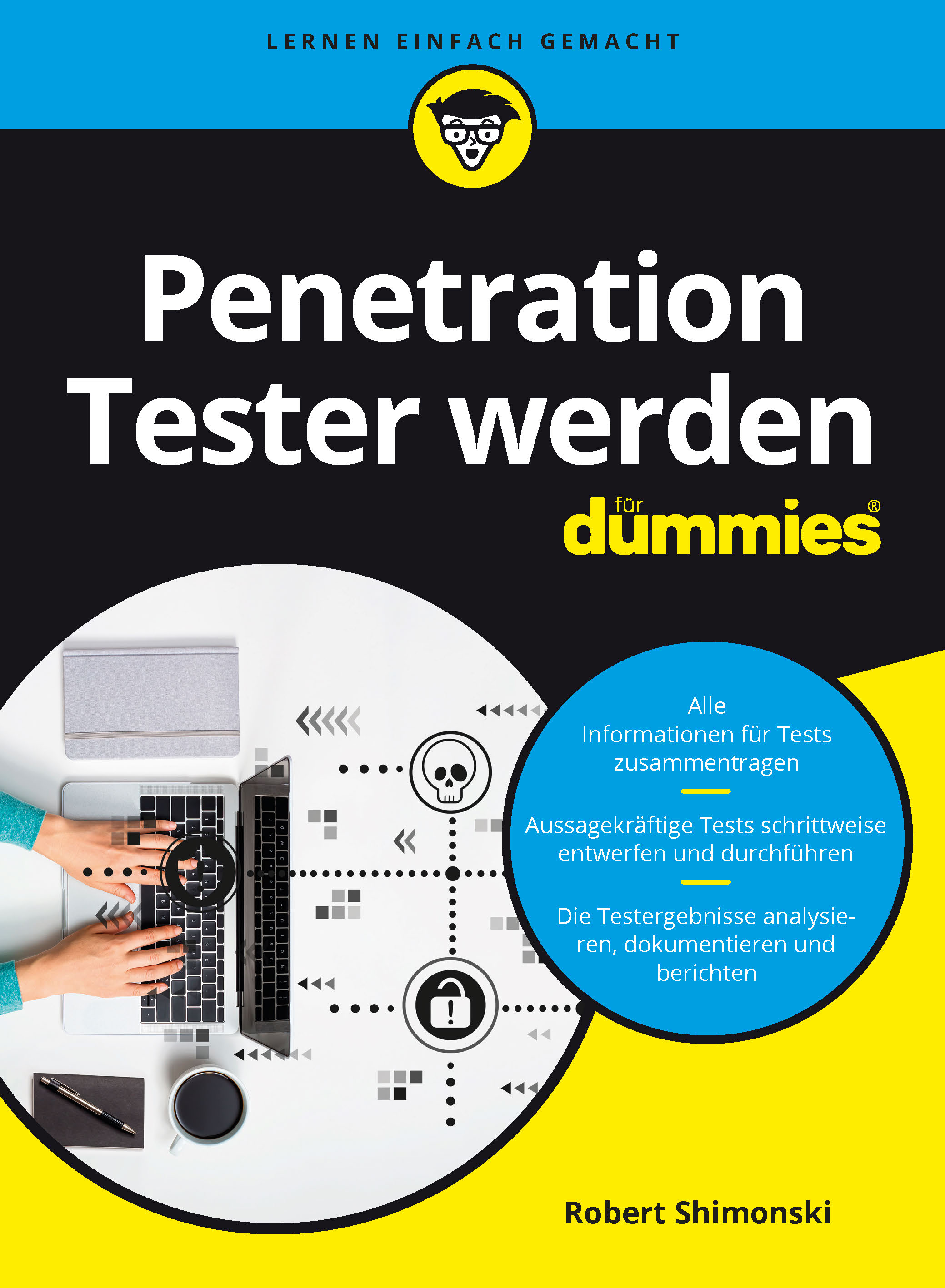
Penetration Tester werden für Dummies
Pentests sind für Unternehmen unverzichtbar geworden, denn nur wer die Schwachstellen kennt, kann auch dagegen vorgehen. Robert Shimonski erklärt Ihnen in diesem Buch alles, was Sie brauchen, um selbst Pentests durchzuführen. Von den nötigen Vorbereitungen über Risikoanalyse und rechtliche Belange bis hin zur eigentlichen Durchführung und späteren Auswertung ist alles dabei. Versetzen Sie sich in Hacker hinein und lernen Sie, wo Unternehmen angreifbar sind. Werden Sie selbst zum Penetration Tester.Autor:Robert Shimonski ist Leiter des Service-Managements bei Northwell Health und ein erfahrener Autor. Er hat bereits über 20 Bücher geschrieben. Seine Themen reichen von Penetration Testing über Netzwerksicherheit bis hin zu digitaler Kriegsführung.Leseprobe (PDF-Link)

Getting Started with the Uno Platform and WinUI 3
Get ready to build applications that can run anywhere using the Uno Platform and WinUI.Modern application development can be an intimidating and complex topic, especially when you are building cross-platform applications that need to support multiple operating systems and form factors. There are so many options when it comes to frameworks and selecting the right one for your enterprise is critical in delivering a successful product to market. For the developer who has zero experience building apps with Xamarin, UWP, WinUI, or the Uno Platform, this book deconstructs those complex concepts into tangible building blocks so that productivity gains are immediately recognized.You will start off learning basic concepts and get a bird's-eye view of the enabling technologies to ensure that you feel comfortable with the tools and terminology. From there, you will learn about some of the more popular options in the .NET ecosystem, understand their attributes and shortcomings, and learn why the Uno Platform is ideal for building a cross-platform application that targets Android, iOS, Windows, WASM (Web Assembly), Linux, and MacOS.Then, you will follow a product release timeline that takes you through building an application, introducing key concepts at every step of the way. Each section of the book is chock full of tips and edge case documentations for the different platforms.WHAT YOU WILL LEARN* Manage multi-targeting solutions: specifically, how to handle the different project heads* Effectively write cross-platform software and handle the edge cases of the different platforms* Understand the fundamentals of working with Uno Platform WinUI apps* Explore enterprise-grade application architecture using MVVM* Understand Dependency Injection and how it applies to application architectureWHO THIS BOOK IS FORDevelopers who understand some basics of C# and object-oriented programmingSKYE HOEFLING is a Lead Software Engineer and works on cross-platform apps for desktop, mobile, and web using Xamarin and .NET technologies. She has been using .NET and Microsoft technologies since 2006 and has a Bachelor of Science degree from Rochester Institute of Technology in Game Design and Development. Skye has a background in enterprise software, building custom web portals for large corporations as well as small projects used by general consumers. She is an active Open Source contributor, a Microsoft MVP in Developer Technologies, and a .NET Foundation Member. You can find her on twitter @SkyeTheDev as well at her software development blog, SkyeTheDev, where you will find a wide range of blogs.Chapter 1: Introduction to Uno PlatformChapter 2: File New ProjectChapter 3: Your First PageChapter 4: Application StylesChapter 5: Platform Specific Code and XAMLChapter 6: Master-Detail Menu and DashboardChapter 7: Custom FontsChapter 8: Model-View-ViewModel (MVVM)Chapter 9: Dependency Injection and LoggingChapter 10: Application NavigationChapter 11: Authentication with Azure Active DirectoryChapter 12: ConvertersChapter 13: Microsoft Graph, Web APIs, and MyFilesPageChapter 14: Microsoft Graph and Dashboard MenuChapter 15: Images and GridViewChapter 16: SelectorsChapter 17: OneDrive NavigationChapter 18: Offline Data AccessChapter 19: Complete App

Enterprise Systems Architecture
Enhance your technical and business skills to better manage your organization’s technology ecosystem. This book aims to explain how to align the technology landscape to service your company’s business operating model.The book begins by exploring different architectural approaches before taking a deep dive into multiple layers of the architectural stack and the methodology of each component. You’ll also learn about the many products delivered by enterprise architecture. To complete the book, author Daljit Banger delves into the various roles and responsibilities of an enterprise architect.After completing Enterprise Systems Architecture, you will understand how to develop an ICT (Information Communication Technology) strategy to meet the needs of your organization.WHAT WILL YOU LEARN* Gain a complete understanding of enterprise architecture* Conceptualize the enterprise ecosystem using the EsA canvas* Master the products and services of an enterprise architecture functionWHO THIS BOOK IS FORArchitects (Enterprise, Solution, or Technical), CTOs, Business Analysts, or any stakeholder in delivering technology services to their organization.DALJIT BANGER has 40 years of solid IT Industry experience, having undertaken assignments in locations across the globe, including the UK, USA, Sweden, Switzerland, Finland, Hong Kong, and Brazil on behalf of large multinational companies.Daljit has successfully managed several large professional teams of Architects, written in several publications and is the author of several freeware software products for Enterprise Architecture.Daljit holds a Master of Science (MSc) Degree and is a Chartered IT Fellow of the British Computer Society and Chairs the British Computer Society Enterprise Architecture Specialist Group.Chapter 1: Architectural Approaches* MODAF (Ministry of Defense Architecture Framework)* DODAF (Department of Defense Architecture Framework)* TOGAF (The Open Group Architecture Framework)* Zachman Framework* Federal Enterprise Architecture* Meta ModelsChapter 2: Layers Expanded and Explores* Layer 0 (Business Operating Model)* Layer 1 (Business Process Later)* Layer 2 (Capabilities and Services)* Layer 3 (Applications)* Layer 4 (Data/Information Services)* Layer 5 (Technological Services)Chapter 3: Products for Delivering the EA.* Background* Contributing Factors* IT Governance * Technical Debt Management Chapter 4: Roles and Responsibilities* Enterprise Architect * Solutions Architect* Technical Architect* Aligning Architect Chapter 5: Developing the ICT Strategy* Simple Strategy Plan * Strategy CycleChapter 6: Final Note

Swift Recipes for iOS Developers
Boost your iOS developer career by learning from real-life examples and start writing code for one of the most successful platforms ever. No matter if you’re an experienced developer or just a beginner, you’ll find something new and something useful for your future projects here.All of the recipes in this book are taken from real-life commercial projects that have been approved by Apple and published on the App Store. You won’t write “Hello, world!” and similar programs. Instead you'll see how to parse different data formats; run JavaScript code right inside your iOS app; and enhance storyboard editor with several simple extensions. You’ll make beautiful modern-looking dialogs with blurs, shadows and rounded corners using only a few lines of code, and safely convert data after analyzing text strings. Go on to animate your layout and get your app shored up to crash as little as possibleEach recipe offers a code snippet to copy and paste to your project as a tool to boost your knowledge, as well as, create plug-and-play features. Each of recipe shows the description for each line of code while explaining the logic of it, contains references to documentation, and gives you an opportunity to modify or write something similar that fits your project better.A good piece of code should not work but also be short, clear, and stable. And that combo will be our priority in these code recipes. Well-written code snippets must run in any environment and be easily transferrable from one project to another. Most of the provided recipes will migrate from one project to another with little to no changes at all, and with years of real-world application have proven themselves to be useful and stable. Dive into the world of iOS development and write clear, functioning, and safe Swift code!WHAT YOU'LL LEARN* Parse, convert, and print Swift data* Develop stunning UIs quickly* Write effective and portable Swift extensions* Make your code cleaner and saferWHO THIS BOOK IS FORBeginners in iOS development who want to improve their skills with real-life examples. Developers switching to mobile development from other areas. All iOS developers looking for code recipes.ALEX NEKRASOV wrote his first line of code 27 years ago when he was 8 years old and could see himself thriving as a software developer ever since. In 2008, he graduated from university with a diploma with honors as a System Engineer. By that point, he had already been working in the IT field for 3 years. In 2013, he wrote his first iOS app and, in 2014, he switched completely to mobile development. Almost 10 years of freelance experience has given Alex an opportunity to work on many interesting projects and earn real-life experience. Alex runs a succesful blog where he writes about mobile development.Chapter 1. IntroductionChapter 2. Working with Data· Conversion between data types· Extracting data from dictionaries· Parsing JSON, XML and other formats· Serialization and deserializationChapter 3. Working with Strings· String and NSString· Analyzing String content· Data verification. Emails and phone numbers· Encoding and decoding Base64· MD5 and other hashesChapter 4. UIKit and Storyboards· Navigation between screens· Popups and dialogs· Maps and navigation· Rounded corners, shadows and other effectsChapter 5. Image Processing· Reading and writing images· Downloading and caching images· Resizing and cropping· Preparing and showing profile picture· Image masks· Effects and filtersChapter 6. Text Editing· Analyzing user input in real time· Formatting users input· Work with emojis· Floating prefix or suffix· Keyboard handlingChapter 7. UI Animations and Effects· Animating views· Parallax effect· Hero animationChapter 8. SwiftUI· Inserting UIKit components· Applying styles with ViewModifier· Creating custom viewsAudience: Beginning
Mastering Windows Server 2022 with Azure Cloud Services
EXTEND YOUR ON-PREMISES WINDOWS SERVER DEPLOYMENTS TO THE CLOUD WITH AZUREIn Mastering Windows Server 2022 with Azure Cloud Services: IaaS, PaaS, and SaaS, 5-time Microsoft MVP Winner William Panek delivers a comprehensive and practical blueprint for planning, implementing, and managing environments that include Azure IaaS-hosted Windows Server-based workloads. You’ll learn to use the expansive, hybrid capabilities of Azure, how to migrate virtual and physical server workloads to Azure IaaS, PaaS, and SaaS, and how to manage and secure Azure virtual machines running Windows Server 2022. This book also offers:* Foundational explanations of core Azure capabilities, including Infrastructure-as-a-Service (IaaS), Platform-as-a-Service (PaaS), and Software-as-a-Service (SaaS)* Explorations of the tools you’ll need to implement Azure solutions, including Windows Admin Center and PowerShell* Examples of implementing identity in Hybrid scenarios, including Azure AD DS on Azure IaaS and managed AD DSPerfect for IT professionals who manage on-premises Windows Server environments, seek to use Azure to manage server workloads, and want to secure virtual machines running on Windows Server 2022, Mastering Windows Server 2022 with Azure Cloud Services: IaaS, PaaS, and SaaS is also a must-read resource for anyone involved in administering or operating Microsoft Azure IaaS workloads. WILLIAM PANEK is a 5-time Microsoft MVP Winner. He has taught at Boston University, Clark University, and the University of Maryland and trained members of the United States Secret Service, Cisco, the United States Air Force, and the United States Army in technology and IT. He also produces training videos to help students prepare for some Microsoft certification exams which can be found at: www.youtube.com/c/williampanek. Introduction xxiCHAPTER 1 UNDERSTANDING WINDOWS SERVER 2022 1Features and Advantages of Windows Server 2022 1Deciding Which Windows Server 2022 Version to Use 6Deciding on the Type of Installation 13Removed Features 17The Bottom Line 20CHAPTER 2 UNDERSTANDING VIRTUALIZATION 21Introduction to Virtualization 21Hyper-V Features 23Hyper-V Architecture 28Hyper-V Operating Systems 29Linux and FreeBSD Image Deployments 29Virtualization in Azure 30The Bottom Line 30CHAPTER 3 INSTALLING AND CONFIGURING HYPER-V 31Hyper-V Installation and Configuration 31Hyper-V Requirements 31Install the Hyper-V Role 32Hyper-V in Server Manager 35Using Hyper-V Manager 35Configure Hyper-V Settings 36Manage Virtual Switches 38Managing Virtual Hard Disks 40Configuring Virtual Machines 45Creating and Managing Virtual Machines 45Linux and FreeBSD Image Deployments 56PowerShell Commands 59The Bottom Line 62CHAPTER 4 INSTALLING WINDOWS SERVER 2022 63Installing the Windows Server 2022 OS 63Installing with the Desktop Experience 63Installing Windows Server 2022 Server Core 68Activating and Servicing Windows 71Key Management Service 71Automatic Virtual Machine Activation 73Active Directory-Based Activation 74Servicing Windows Server 2022 74Configuring Windows Server Updates 75Windows Update 76Using Windows Server Update Services 80Understanding Features On Demand 93The Bottom Line 94CHAPTER 5 UNDERSTANDING IP 97Understanding TCP/IP 97Details of the TCP/IP Model 97How TCP/IP Layers Communicate 98Understanding Port Numbers 98Understanding IP Addressing 100The Hierarchical IP Addressing Scheme 100Understanding Network Classes 101Subnetting a Network 104Implementing Subnetting 105An Easier Way to Apply Subnetting 110Applying Subnetting the Traditional Way 114Working with Classless Inter-Domain Routing 121Supernetting 124Understanding IPv6 124IPv6 History and Need 124New and Improved IPv6 Concepts 125IPv6 Addressing Concepts 127IPv6 Integration/Migration 132The Bottom Line 136CHAPTER 6 IMPLEMENTING DNS 137Introducing DNS 137HOSTS File 138Understanding Servers, Clients, and Resolvers 142Understanding the DNS Process 142Introducing DNS Database Zones 147Understanding Primary Zones 148Understanding Secondary Zones 149Understanding Active Directory Integrated DNS 150Understanding Stub Zones 152GlobalName Zones 153Zone Transfers and Replication 153Advantages of DNS in Windows Server 2022 156Background Zone Loading 157Support for IPv6 Addresses 157Support for Read-Only Domain Controllers 157DNS Socket Pools 158DNS Cache Locking 158Response Rate Limiting 158Unknown Record Support 159IPv6 Root Hints 159DNS Security Extensions 159DNS Devolution 161Record Weighting 161Netmask Ordering 161DnsUpdateProxy Group 161DNS Policies 161Introducing DNS Record Types 162Start of Authority (SOA) Records 162Name Server Records 164Host Record 164Alias Record 165Pointer Record 165Mail Exchanger Record 166Service Record 166Configuring DNS 167Installing DNS 167Load Balancing with Round Robin 168Configuring a Caching-Only Server 168Setting Zone Properties 168Configuring Zones for Dynamic Updates 172Delegating Zones for DNS 173DNS Forwarding 174Manually Creating DNS Records 175DNS Aging and Scavenging 176DNS PowerShell Commands 176The Bottom Line 179CHAPTER 7 UNDERSTANDING ACTIVE DIRECTORY 181Verifying the File System 181Resilient File System (ReFS) 182NTFS 183Verifying Network Connectivity 185Basic Connectivity Tests 185Tools and Techniques for Testing Network Configuration 186Understanding Active Directory 188Domains 188Trees 188Forests 189Understanding Domain and Forest Functionality 189About the Domain Functional Level 190About Forest Functionality 191Planning the Domain Structure 193Installing Active Directory 193Improved Active Directory Features 194Read-Only Domain Controllers 194Active Directory Prerequisites 194The Installation Process 194Installing Additional Domain Controllers by Using Install from Media 201Verifying Active Directory Installation 201Using Event Viewer 201Using Active Directory Administrative Tools 203Testing from Clients 204Creating and Configuring Application Data Partitions 206Creating Application Data Partitions 206Managing Replicas 207Removing Replicas 208Using ntdsutil to Manage Application Data Partitions 208Configuring DNS Integration with Active Directory 210The Bottom Line 211CHAPTER 8 ADMINISTERING ACTIVE DIRECTORY 213Active Directory Overview 213Understanding Active Directory Features 214Understanding Security Principals 215An Overview of OUs 216The Purpose of OUs 217Benefits of OUs 217Planning the OU Structure 217Logical Grouping of Resources 218Understanding OU Inheritance 219Delegating Administrative Control 220Applying Group Policies 221Creating OUs 221Managing OUs 224Moving, Deleting, and Renaming OUs 225Administering Properties of OUs 225Delegating Control of OUs 227Creating and Managing Active Directory Objects 228Overview of Active Directory Objects 229Managing Object Properties 235Understanding Groups 238Filtering and Advanced Active Directory Features 240Moving, Renaming, and Deleting Active Directory Objects 241Resetting an Existing Computer Account 242Understanding Dynamic Access Control 243Managing Security and Permissions 244Publishing Active Directory Objects 245Making Active Directory Objects Available to Users 245Publishing Printers 245Publishing Shared Folders 246PowerShell for Active Directory 247The Bottom Line 248CHAPTER 9 CONFIGURING DHCP 249Understanding DHCP 249Introducing the DORA Process 250Advantages and Disadvantages of DHCP 251Ipconfig Lease Options 252Understanding Scope Details 253Installing and Authorizing DHCP 255Installing DHCP 255Introducing the DHCP Snap-In 256Authorizing DHCP for Active Directory 257Creating and Managing DHCP Scopes 259Creating a New Scope in IPv4 259Creating a New Scope in IPv6 267Changing Scope Properties (IPv4 and IPv6) 269Changing Server Properties 270Managing Reservations and Exclusions 272Setting Scope Options for IPv4 274Activating and Deactivating Scopes 276Creating a Superscope for IPv4 276Creating IPv4 Multicast Scopes 277Integrating Dynamic DNS and IPv4 DHCP 279Using DHCP Failover Architecture 281Working with the DHCP Database Files 281Working with Advanced DHCP Configuration Options 283Implement DHCPv6 283Configure High Availability for DHCP, Including DHCP Failover and Split Scopes 284Configure DHCP Name Protection 286PowerShell Commands 287The Bottom Line 289CHAPTER 10 BUILDING GROUP POLICIES 291Introducing Group Policy 291Understanding Group Policy Settings 292The Security Settings Section of the GPO 295Client-Side Extensions 296Group Policy Objects 296Group Policy Inheritance 297Planning a Group Policy Strategy 298Implementing Group Policy 298Creating GPOs 299Linking Existing GPOs to Active Directory 301Forcing a GPO to Update 302Managing Group Policy 303Managing GPOs 303Security Filtering of a Group Policy 304Delegating Administrative Control of GPOs 306Controlling Inheritance and Filtering Group Policy 307Assigning Script Policies 308Understanding the Loopback Policy 310Managing Network Configuration 310Configuring Network Settings 311Automatically Enrolling User and Computer Certificates in Group Policy 311Redirecting Folders 313Managing GPOs with Windows PowerShell Group Policy Cmdlets 314Item-Level Targeting 315Back Up, Restore, Import, Copy, and Migration Tables 316The Bottom Line 319CHAPTER 11 ADVANCED GROUP POLICY OPTIONS 321Deploying Software Through a GPO 321The Software Management Life Cycle 322The Windows Installer 323Deploying Applications 326Implementing Software Deployment 328Preparing for Software Deployment 328Software Restriction Policies 329Using AppLocker 329Group Policy Slow Link Detection 329Publishing and Assigning Applications 329Applying Software Updates 331Verifying Software Installation 332Configuring Automatic Updates in Group Policy 332Configuring Software Deployment Settings 333The Software Installation Properties Dialog Box 333Removing Programs 335Microsoft Windows Installer Settings 337Troubleshooting Group Policies 337RSoP in Logging Mode 338RSoP in Planning Mode 342Using the gpresult.exe Command 342Using the Group Policy Infrastructure Status Dashboard 343The Bottom Line 343CHAPTER 12 UNDERSTANDING CLOUD CONCEPTS 345Understand Cloud Concepts 345Cloud Advantages 345Understanding CapEx vs. OpEx 346Understanding Different Cloud Concepts 348Understanding the difference between IaaS, PaaS, and SaaS 349Infrastructure as a Service 350Platform as a Service 350Software as a Service 351Compare and Contrast the Service Types 352The Bottom Line 353CHAPTER 13 CONFIGURING AZURE 355Understanding Azure Benefits 355Azure Benefits 355Understanding the Azure Dashboards 357Using the Azure Dashboard 357Configuring the Azure Portal Settings 366The Bottom Line 372CHAPTER 14 UNDERSTANDING AZURE ACTIVE DIRECTORY 373Azure Active Directory 373Understanding Azure AD 373Self-Service Password Reset 392The Bottom Line 394CHAPTER 15 CREATING A HYBRID NETWORK 395Creating a Hybrid Network 395Password Hash Synchronization with Azure AD 396Azure Active Directory Pass-Through Authentication 396Federation with Azure AD 397Common Identity Scenarios 399Azure AD Connect 400Implement Active Directory Federation Services 405What Is a Claim? 406AD FS in Windows Server 2022 409Configuring a Web Application Proxy 411Active Directory Federation Services Installation 413AD FS and AD Connect 421Planning Azure AD Authentication Options 423Azure AD Multi-Factor Authentication 423Azure AD Connect Sync—Understand and Customize Synchronization 426Creating an Azure Recovery Policy 427Model Apps 427Automate Tasks in Recovery Plans 428Run a Test Failover on Recovery Plans 429Create a Recovery Plan 429The Bottom Line 432CHAPTER 16 UNDERSTANDING MICROSOFT ENDPOINT 433Using Microsoft Endpoint Manager 433Understanding AutoPilot 440Autopilot Benefits 441Autopilot Prerequisites 441Deployment Scenarios 443Planning for Secure Applications Data on Devices 446Configuring Managed Apps for Mobile Application Management (MAM) 446Protecting Enterprise Data using Windows Information Protection (WIP) 449The Bottom Line 458CHAPTER 17 CONFIGURING SECURITY 459Managing Windows Security 459Windows Defender Security Center 460Configuring Windows Firewall 463Understanding Windows Firewall Basics 463Windows Firewall with Advanced Security 464Managing Security 469Implementing Azure Windows Defender Advanced Threat Protection 469Understanding Windows Defender Application Guard 471Understanding Windows Defender Credential Guard 476Implementing and Managing Windows Defender Exploit Guard 478Using Windows Defender Application Control 481The Bottom Line 482CHAPTER 18 CREATING AZURE POLICIES 483Azure Devices and Policies 483Compliance Policies 484Device Configuration Profiles 489PowerShell Commands 492The Bottom Line 494Appendix The Bottom Line 495
Programming and GUI Fundamentals
PROGRAMMING AND GUI FUNDAMENTALSDISCOVER THE FOUNDATIONS OF TCL PROGRAMMING AND GUI DEVELOPMENTProgramming and GUI Fundamentals: Tcl-Tk for Electronic Design Automation (EDA), delivers a comprehensive exploration of the major design challenges and potential present in application and tool development with Tcl-Tk. Accessibly written and easy-to-understand, the book can be used by students at a variety of levels, as well as researchers and working professionals. The authors present the fundamental concepts of Tcl programming and graphic user interface (GUI) development using images, and photographs, assisting with concept understanding and retention. They describe real-time system designs and offer students and designers the opportunity to learn about critical concepts in scripting and GUI development. Readers will learn to design their own GUI, place and package widgets on the GUI, and allow EDA professionals, chip designers and students to code and design in TCL-TK. They will also benefit from:* A thorough introduction to scripting languages and wish interpreters, including their fundamental concepts, TCL tips and tricks, and command, variable, and procedure examples* Comprehensive explorations of the TCL data structure, including datatypes, strings and commands, lists and commands, and arrays and commands* Practical discussions of TCL control flow, including conditional commands, multi-condition commands, and loop commands* In-depth examinations of file input/output processing, including TCL file read-write, open and close commands, gets, and puts.Perfect for undergraduate and graduate students studying programming or computer science, as well as professionals working on electronic design automation and chip design, Programming and GUI Fundamentals: Tcl-Tk for Electronic Design Automation (EDA) is also an indispensable resource for programming professionals seeking to upskill. SUMAN LATA TRIPATHI, PHD, is Professor of VLSI Design at Lovely Professional University. She is a Senior Member of the IEEE and obtained her doctorate in Microelectronics and VLSI Design from Motilal Nehru National Institute of Technology, Allahabad, India. ABHISHEK KUMAR, PHD, is Associate Professor at Lovely Professional University. He received his doctorate in VLSI Design for Low Power and Secured Architecture from Lovely Professional University, Punjab, India. JYOTIRMOY PATHAK is Assistant Professor at Lovely Professional University, Punjab India. He has published over 10 research papers, holds 9 patents, and 1 copyright. Author BiographiesChapter 1 - IntroductionChapter 2 – Basic CommandChapter 3 - Program Flow ControlChapter 4 - Tcl Data StructureChapter 5 - Tcl Object-Oriented ProgrammingChapter 6: File ProcessingChapter 7: Toolkit WidgetChapter 8 - Binding Command and Other WidgetChapter 9 - Canvas Widget and Tk CommandsChapter 10 - Tcl-Tk for EDA ToolIndex
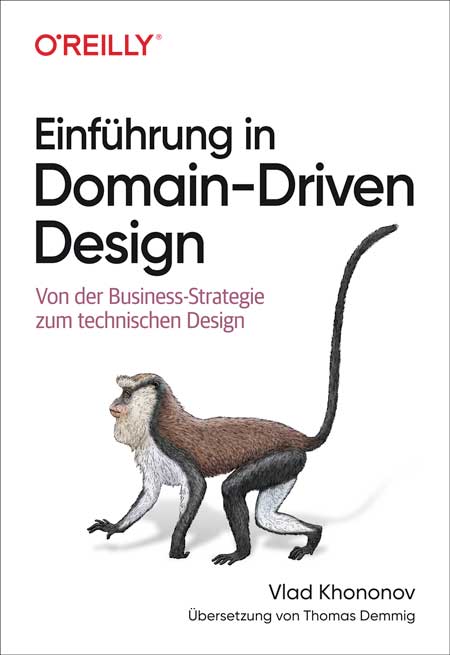
Einführung in Domain-Driven Design
Hands-On DDD: von der Strategie bis zum technischen DesignSoftwareentwicklung ist heutzutage anspruchsvoller denn je: Als Entwicklerin oder Entwickler müssen Sie technologische Trends im Blick behalten, aber genauso die Fachdomänen hinter der Software verstehen. Dieses Praxisbuch beschreibt zentrale Patterns, Prinzipien und Praktiken, mit denen Sie Geschäftsbereiche analysieren, die Business-Strategie verstehen und, was am wichtigsten ist, Ihr Softwaredesign besser an den Geschäftsanforderungen ausrichten.DDD-Experte Vlad Khononov zeigt, wie diese Praktiken helfen, von der Geschäftslogik ausgehend zu einem robusten Softwaredesign und einer zukunftsfähigen Softwarearchitektur zu kommen. Er beschreibt, wie DDD mit anderen Methoden kombiniert werden kann, um geeignete Architekturentscheidungen zu treffen. Das reale Beispiel eines Start-ups, das DDD einführt, bietet dabei viele praxisnahe Einblicke.In diesem Buch erfahren Sie, wie Sie:die Fachdomäne analysieren, um herauszufinden, welche Anforderungen an Ihr Systemdie strategischen und taktischen Werkzeuge von DDD nutzen, um effektive Softwarelösungen zu entwickeln, die diesen Geschäftsanforderungen entsprechenein gemeinsames Verständnis der Fachdomänen entwickelnein System in Bounded Contexts aufgliederndie Arbeit mehrerer Teams koordinierenDDD schrittweise in Brownfield-Projekten einführenAutor:Vlad (Vladik) Khononov ist Softwareentwickler mit über 20 Jahren Branchenerfahrung, in denen er für große und kleine Firmen gearbeitet hat – in unterschiedlichsten Rollen vom Webmaster bis zum Chefarchitekten. Vlad ist zudem als Sprecher, Blogger und Autor unterwegs. Er ist überall auf der Welt aktiv, um zu beraten und über Domain-Driven Design, Microservices und Softwarearchitektur ganz allgemein zu sprechen. Vlad hilft Firmen dabei, aus ihren Fachdomänen Sinn zu ziehen, Legacy-Systeme zu entwirren und komplexe Architekturaufgaben anzugehen. Er lebt im Norden Israels zusammen mit seiner Frau und einer fast vernünftigen Anzahl an Katzen.Zielgruppe:Softwareentwickler*innenSoftwarearchitekt*innenProjektleitung(IT-)Manager*innenLeseprobe (PDF-Link)
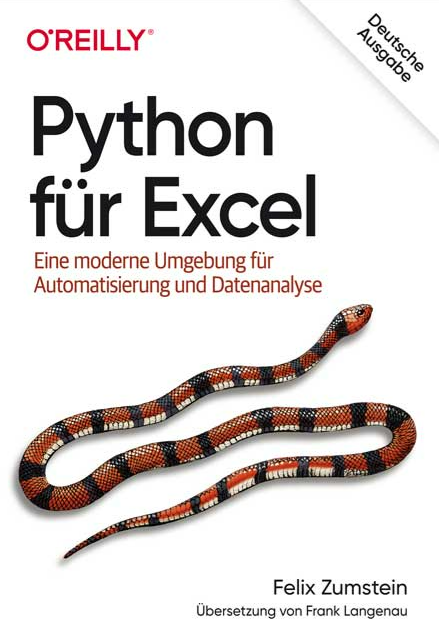
Python für Excel
Befreien Sie sich aus dem Chaos der riesigen Arbeitsmappen, Tausenden von Formeln und hässlichen VBA-HacksExcel ist nach wie vor ein unverzichtbares Analysetool und hat in den letzten Jahren viele neue Funktionen hinzubekommen, doch die Automatisierungssprache VBA hat sich nicht parallel weiterentwickelt. Viele Excel-Poweruser nutzen daher bereits Python, um Routinearbeiten zu automatisieren. Felix Zumstein zeigt in diesem praktischen Leitfaden erfahrenen Excel-Benutzerinnen und -Benutzern, wie sich Python als Skriptsprache für Excel effizient verwenden lässt.Dieses Buch bietet Ihnen einen schnell zugänglichen Einstieg in Python, sodass Sie direkt in die Praxis starten können:Verwenden Sie Python ohne fortgeschrittene ProgrammierkenntnisseArbeiten Sie mit modernen Tools wie Jupyter-Notebooks und Visual Studio CodeNutzen Sie pandas zum Erfassen, Bereinigen und Analysieren von Daten und ersetzen Sie typische Excel-BerechnungenAutomatisieren Sie mühsame Aufgaben wie die Konsolidierung von Excel-Arbeitsmappen und das Erstellen von Excel-BerichtenSetzen Sie xlwings ein, um interaktive Excel-Tools zu erstellen, die Python als Berechnungsmodul verwendenVerbinden Sie Excel mit Datenbanken und CSV-Dateien und rufen Sie mit Python-Code Daten aus Internetquellen abVerwenden Sie Python als Universalwerkzeug, um VBA, Power Query und Power Pivot zu ersetzenAutor:Felix Zumstein ist der Schöpfer und Betreuer von xlwings, einem beliebten Open-Source-Paket, das die Automatisierung von Excel mit Python unter Windows und macOS ermöglicht. Er organisiert auch die xlwings-Treffen in London und New York City, um eine breite Palette innovativer Lösungen für Excel zu fördern.Als CEO von xltrail, einem Versionskontrollsystem für Excel-Dateien, hat er mit Hunderten von Anwendern gesprochen, die Excel für geschäftskritische Aufgaben verwenden, und ist daher mit den typischen Excel-Anwendungsfällen und -Problemen in verschiedenen Branchen bestens vertraut.Zielgruppe:Excel-Praktiker*innenBusiness-Analyst*innenVBA-Entwickler*innenData ScientistsLeseprobe (PDF-Link)

Test Your Skills in C# Programming
Review the fundamental constructs in C# using Q&As and program segments to boost your confidence and gain expertise. This book will help you analyze your programs more efficiently and enhance your programming skills.The book is divided into three parts, where you will learn the fundamentals, object-oriented programming, and some advanced features of C#. In the first part, you will review C# and .NET basics along with the important constructs such as strings, arrays, and structures. In the second part, you'll review the concepts of object-oriented programming in detail. Here, you will go through various program segments in class and objects, inheritance, polymorphism, abstraction, encapsulation, and much more. You will also analyze the output of the given programs with the help of Q&A sections. The uses of interfaces, static class, and exception handling are discussed in the book along with some other important concepts in C#. In the third and last part, you will learn advanced features of C# programming such as delegates, events, lambdas, generics, and multithreading. Here, you'll also cover some of the latest features of C#.After reading this book, you will be able to analyze and apply the basic and frequently used features along with the advanced features of C#.WHAT WILL YOU LEARN* Understand the core and some of the latest features in C#* Review your programming skills along with some of the latest features in C#* Know how object-oriented programming (OOP) is used in C#* Get up and running on the advanced features of C# such as delegates, lambdas, generics, and moreWHO THIS IS BOOK FORProgrammers with basic knowledge of C#VASKARAN SARCAR obtained his Master of Engineering in software engineering from Jadavpur University, Kolkata (India) and an MCA from Vidyasagar University, Midnapore (India). He was a National Gate Scholar (2007-2009) and has more than 12 years of experience in education and the IT industry. Vaskaran devoted his early years (2005-2007) to the teaching profession at various engineering colleges, and later he joined HP India PPS R&D Hub Bangalore. He worked there until August 2019. At the time of his retirement from HP, he was a Senior Software Engineer and Team Lead at HP. To follow his dream and passion, Vaskaran is now an independent full-time author. Other Apress books by him include: _Java Design Patterns Third Edition, _Simple and Efficient Programming in C#, _Design Patterns in C# Second Edition, __Getting Started with Advanced C#, __Interactive Object-Oriented Programming in Java Second Edition,__ __Java Design Patterns Second Edition, __Design Patterns in C#, __Interactive C#, __Interactive Object-Oriented Programming in Java, _Java Design Patterns.PART I FUNDAMENTALSCHAPTER 1: LANGUAGE BASICSCHAPTER GOAL: THIS CHAPTER DISCUSSES THE FOLLOWING TOPICS:The important concepts in .NETThe basic programming constructs in C#.Use of some useful data types including the var type.Use of some useful operators and explicit-casting.Use of the selection statements and case guards.Use of iteration statements.Use of the jump statements.Use of the ternary operator.No of pages: 28SUB - TOPICS NCHAPTER 2: STRING AND ARRAYSCHAPTER GOAL:ONCE YOU FINISH THIS CHAPTER, YOU CAN ANSWER THE FOLLOWING QUESTIONS AND RELATED AREAS:How can you use string datatype in your program?How can you use the common in-built methods from the String class?How a String variable is different from a StringBuilder?How can you convert a string to an int?How can you use nullable reference type in a program?How to create arrays in C#?What are the different types of C# arrays and how to use them?How to use common in-built methods from the System.Array class?How can you iterate over a string or an array?NO OF PAGES 23SUB - TOPICS NACHAPTER 3: ENUMERATION AND STRUCTURESCHAPTER GOAL: This chapter discusses the following topics:The enum fundamentalsFlags enumerationDefaut value expressionsThe struct fundamentalsNon-destructive mutationsNO OF PAGES: 26SUB - TOPICS NAPART II OBJECT-ORIENTED PROGRAMMINGCHAPTER 4: CLASS AND OBJECTSCHAPTER GOAL: This chapter focuses on the following topics:Classes and objects creations.Instance fields and methods.Constructors and their usage.Optional parameters.Object initializers.Nested classes.The uses of private, internal, and public modifiers inside a class.NO OF PAGES: 17SUB - TOPICS NACHAPTER 5: INHERITANCECHAPTER GOAL: This chapter covers the following topics:Inheritance and types.Method and constructor overloading.Method overriding.Use of virtual, override, and new keywords.Use of the sealed keyword.Introductory discussion on covariance and contravarianceNO OF PAGES 33Sub - Topics NAChapter 6: PolymorphismCHAPTER GOAL: This chapter helps you to review:Polymorphism and its benefits.Abstract classes and their uses.Interfaces and their uses.Different types of interfaces.Writing polymorphic codes using abstract classes and interfacesNO OF PAGES: 30SUB - TOPICS NAChapter 7: EncapsulationCHAPTER GOAL: This chapter covers the following topics:What is encapsulation? How is it different from an abstraction?Properties and their usage.Different ways to create a property.The usage of the get and set accessors.Virtual and abstract properties.The discussion of the init accessor.Indexers and their usage.How can the indexers and properties work with an interface?Discussion on different aspects of properties and indexers.NO OF PAGES: 26SUB - TOPICS NAChapter 8: Exception HandlingCHAPTER GOAL: This chapter covers the following topics:Exception and its uses in C# programming.Use of the try, catch, and finally blocks.Use of multiple catch blocks in a program.Use of a general catch block.How to throw and re-throw an exception.Use of exception filters.Custom exception class and its usage.NO OF PAGES: 23SUB - TOPICS NAChapter 9: Useful ConceptsChapter Goal: Q&A and program segments on some useful constructs such as casting and boxing, static class and methods, passing value type by value, passing value type by references(using ref and out keyword), extension methods, and so on.NO OF PAGES: 15-25+SUB - TOPICS NAPart III Advanced Features Chapter 10: DelegatesCHAPTER GOAL: This chapter covers the following topics:Delegates and their usesMulticast delegatesSome commonly used in-built delegatesCovariance and contravariance using delegatesNO OF PAGES: 20SUB - TOPICS NAChapter 11: EventsCHAPTER GOAL: This chapter helps you to review your understanding of events and discusses the following:Events creation and their uses.How to pass the event data.Use of event accessors.Use of interface events (both implicit and explicit).Simplified coding with events.NO OF PAGES: 22SUB - TOPICS NAChapter 12: LambdasCHAPTER GOAL: This chapter focuses on this and covers the following topics:Lambda expressions and their useExpression-bodied membersUse of local variables inside lambda expressions.Event handling using lambda expressions.Use of a static lambda.Understanding natural type.NO OF PAGES: 22SUB - TOPICS NACHAPTER 13: GENERICSCHAPTER GOAL: This chapter focuses on the following topics:The motivation behind generics.The fundamentals of generic programs.Use of generic interfaces.Use of generic constraints.Use of covariance and contravariance using generics.Self-referencing generic type.Experimenting with generic method’s overloading and overriding.Analyzing the static data in the context of generics.NO OF PAGES: 35SUB - TOPICS NACHAPTER 14: MULTITHREADINGChapter Goal: Upon completion of this chapter, you’ll be able to answer the following questions:What are the threads and how can you create them?What is a multithreaded program? How does it differ from a single-threaded application?Why are the ThreadStart and ParameterizedThreadStart delegates important in thread programming?How to block a thread using Sleep or Join methods?How can you use lambda expressions in a multithreaded program?How to use important Thread class members?How a foreground thread is different from a background thread?What is synchronization and why is it needed?How can you implement thread safety in C# using lock statements?How can you implement an alternative approach to lock statements using Monitor’s Entry and Exit Method?What is a deadlock and how can you detect the deadlock in your system?What is the purpose of using the ThreadPool class? What are the associative pros and cons of using it?How to cancel a running thread in the managed environment?And many more.NO OF PAGES: 40SUB - TOPICS NACHAPTER 15: MISCELLANEOUSCHAPTER GOAL: Q&A and program segments on the related latest features that are covered in the previous chapters and any other important topics(if any).NO OF PAGES: 10-20+SUB - TOPICS NA

Data Science and Analytics for SMEs
Master the tricks and techniques of business analytics consulting, specifically applicable to small-to-medium businesses (SMEs). Written to help you hone your business analytics skills, this book applies data science techniques to help solve problems and improve upon many aspects of a business' operations.SMEs are looking for ways to use data science and analytics, and this need is becoming increasingly pressing with the ongoing digital revolution. The topics covered in the books will help to provide the knowledge leverage needed for implementing data science in small business. The demand of small business for data analytics are in conjunction with the growing number of freelance data science consulting opportunities; hence this book will provide insight on how to navigate this new terrain.This book uses a do-it-yourself approach to analytics and introduces tools that are easily available online and are non-programming based. Data science will allow SMEs to understand their customer loyalty, market segmentation, sales and revenue increase etc. more clearly. Data Science and Analytics for SMEs is particularly focused on small businesses and explores the analytics and data that can help them succeed further in their business.WHAT YOU'LL LEARN* Create and measure the success of their analytics project* Start your business analytics consulting career* Use solutions taught in the book in practical uses cases and problems WHO THIS BOOK IS FORBusiness analytics enthusiasts who are not particularly programming inclined, small business owners and data science consultants, data science and business students, and SME (small-to-medium enterprise) analystsAfolabi Ibukun is a Data Scientist and is currently a Senior Lecturer in the Department of Computer and Information Sciences, Covenant University. She holds a B.Sc in Engineering Physics, an M.Sc and Ph.D in Computer Science. Afolabi Ibukun has over 15 years working experience in Computer Science research, teaching and mentoring. Her specific areas of interest are Data & Text Mining, Programming and Business Analytics. She has supervised several undergraduate and postgraduate students and published several articles in international journals and conferences. Afolabi Ibukun is also a Data Science Nigeria Mentor and currently runs a Business Analytics Consulting and Training firm named I&F Networks SolutionsINTRODUCTIONWe introduce data science generally and narrow it down to data science for business which is also referred to as business analytics. We then give a detailed explanation of the process involved in business analytics in form of the business analytics journey. In this journey, we explain what it takes from start to finish to carry out an analytics project in the business world, focusing on small business consulting, even though the process is generic to all types of business, small or large. We also give a description of what small business refers to in this book and the peculiarities of navigating an analytics project in such a terrain. To conclude the chapter, we talk about the types of analytics problems that is common to small business and the tools available to solve these problems given the budget situation of small businesses when it comes to analytics project.· DATA SCIENCE· DATA SCIENCE FOR BUSINESS· BUSINESS ANALYTICS JOURNEY· SMALL AND MEDIUM BUSINESS (SME)· BUSINESS ANALYTICS IN SMALL BUSINESS· TYPES OF ANALYTICS PROBLEMS IN SME· ANALYTICS TOOLS FOR SMES· ROAD MAPS TO THIS BOOK· PROBLEMS· REFERENCESCHAPTER 1: DATA FOR ANALYSIS IN SMALL BUSINESSIn this chapter, we would look at the various sources of data generally and in small business. This chapter is important because the major challenge of consulting for small business is the lack of data or quality data for analysis. This chapter will therefore detail the sources of data for analysis explaining first the type or form that data exists and some general ideas of how to collect such data. It gives an overview on data quality and integrity issues and touches on data literacy. The chapter also includes the typical data preparation procedures for the common types of techniques used in small business analytics and by extension used in this book. To conclude the chapter, we look at data visualization, particularly towards preparing data for various analytics task as explained in section 1.3.· SOURCE OF DATA· DATA QUALITY & INTEGRITY· DATA GOVERNANCE· DATA PREPARATION· DATA VISUALIZATION· PROBLEMS· REFERENCESCHAPTER 2: BUSINESS ANALYTICS CONSULTINGIn this chapter, we will look at business analytics consulting, particularly what the concept implies and how to build such a career path. We will explain the types of business analytics consulting that exist and then narrow it down to how to navigate the world of business analytics consulting for small business. In this chapter, we will look at how to manage a typical analytics project and measure the success of analytics projects. In conclusion, we will discuss issues revolving around how to bill analytics project particularly as a consultant.· BUSINESS ANALYTICS CONSULTING· MANAGING ANALYTICS PROJECT· SUCCESS METRICS IN ANALYTICS PROJECT· BILLING ANALYTICS PROJECT· PROBLEMS· REFERENCESCHAPTER 3: BUSINESS ANALYTICS CONSULTING PHASESIn this chapter we will look at the stages involved business analytics consulting, particularly when the analytics service is offered as a product from either within or outside the business. We will look at the proposal and initial analysis stage which gives direction to the analytics project. Then we look at the details involved in the pre-engagement, engagement and post engagement phase. It is important to know that the stages are presented in a typical or generic way but when implemented, there might be reason to modify or customize them for the application scenario.· PROPOSAL & INITIAL ANALYSIS· PRE- ENGAGEMENT PHASE· ENGAGEMENT PHASE· POST ENGAGEMENT PHASE· PROBLEMS· REFERENCESCHAPTER 4: DESCRIPTIVE ANALYTICS TOOLSThis chapter is focused on the mostly common descriptive analytics tools used in business generally and specifically in small businesses. The chapter will help to use descriptive analytics tools to understand your business and make recommendations that can improve your business profits. For small business, descriptive analytics helps SMEs to make sense of available data in order to monitor business indicators at a glance, helps SME owners to observe sales trends and patterns on an overall basis, as well as deep-dive into product categories and customer groups. It also helps SME’s to plan product strategy, pricing policies that will maximize their projected revenues and derive a lot of valuable insights for getting more customers.· INTRODUCTION· BAR CHART· HISTOGRAM· LINE GRAPHS· SCATTER PLOTS· PACKED BUBBLES CHARTS· HEAT MAPS· GEOGRAPHICAL MAPS· A PRACTICAL BUSINESS PROBLEM I· PROBLEMS· REFERENCESCHAPTER 5: PREDICTION TECHNIQUESIn this chapter, we will explore the popular techniques used for prediction, particularly in retails business. The approach used in explaining these techniques us to use them in solving a business problem. The second business problem to be addressed is the sales prediction problem which is common in retail business. The chapter first explain the fundamental concept of prediction techniques, next we look at how such techniques are evaluated. After this, we describe the business problem we intend solving. We then pick each of the selected techniques one by one and explain the algorithms involved and how they can be used to solve the problem described. The prediction techniques used and compared are the Multiple linear regression, the Regression Trees and the Neural Network. To conclude the chapter, we compare the results of the three algorithms and conclude on the problem in question. In this chapter therefore, the analytics products being offered is to solve sales prediction problem for small retail business.· INTRODUCTION· PRACTICAL BUSINESS PROBLEM II (SALES PREDICTION)· MULTIPLE LINEAR REGRESSION· REGRESSIN TREES· NEURAL NETWORK (PREDICTION)· CONCLUSION ON SALES PREDICTION· PROBLEMS· REFERENCESCHAPTER 6: CLASSIFICATION TECHNIQUESIn this chapter, even though there are several classification techniques, we will explore the popular ones used for classification in the business domain. In doing this, we will use the third business problem centered on customer loyalty comparing neural network, classification tree and random forest algorithms. In solving this problem, we are particular about how to get and retain more customers for our small business. We will also introduce some other classification based techniques such as K-nearest neighbour logistic regression and persuasion modelling. We will use persuasion modelling for the fourth practical business problem. In using these techniques to solve the problem we explain the fundamental concepts in the chosen algorithms and use them to demonstrate how this problems solving process can be adopted in real business scenarios.· CLASSIFICATION MODELS & EVALUATION· PRACTICAL BUSINESS PROBLEM III (CUSTOMER LOYALTY)· NEURAL NETWORK· CLASSIFICATION TREE· RANDOM FOREST & BOOSTED TREES· K NEAREST NEIGHBOUR· LOGISTIC REGRESSION· PROBLEMS· REFERENCESCHAPTER 7: ADVANCED DESCRIPTIVE ANALYTICSThis chapter is focused mainly on advanced descriptive analytics techniques. In this chapter, we will first explain the concept of clustering which is a type of unsupervised learning approach. We will then pick one clustering technique which is the K means clustering. Using the fourth practical business problem, we will explain how we can use the K means clustering technique to solve a real business problem. Next will explain the association rule example and finally Network analysis. We conclude with the fifth business problem which is focused on using network analytics for employee efficiency.· CLUSTERING· K MEANS· PRACTICAL BUSINESS PROBLEM IV (Customer Segmentation)· ASSOCIATION ANALYSIS· NETWORK ANALYSIS· PRACTICAL BUSINESS PROBLEM V (Staff Efficiency)· PROBLEMS· REFERENCESCHAPTER 8: CASE STUDY PART IThis chapter is the beginning part of major consulting case study for this book. We will explain what transpired during a typical business analytics consulting and help to create a road map or an example of how to navigate a business analytics consulting project. We start with a description of the SME Ecommerce environment generally, since this is the business environment of our selected case study, we then talk about the sources of data for analytics peculiar this environment. Next we describe the business to be used as case study briefly, followed by the analytics road map peculiar to consulting for this business. This chapter ends with the results of the initial analysis and pre engagement phase which forms the bases for the detailed analytics and implementation phase in chapter 10.· SME ECORMERCE· INTRODUCTION TO SME CASE STUDY· INITIAL ANALYSIS· ANALYTICS APPROACH· PRE –ENGAGEMENT· PROBLEMS· REFERENCESCHAPTER 9: CASE STUDY PART IIIn this chapter, we will conclude the case study used for illustration of a typical business analytics consulting for an SME by presenting the details of the engagement phase for the case study in question. The post engagement phase is left out as the implementation of the recommendations is determined by the systems and procedures of the business. It is important to note that the consulting steps can be customized for any small business based on the intended problem. The whole steps described in chapter 9 and 10 have been made simple for understanding, though in real life business application there might be need to iterate the process until satisfactory results have been gotten. This is because you constantly need to incorporate feedback from the stakeholders and domain experts.· GOAL 1: INCREASE WEBSITE TRAFFIC· GOAL 2: INCREASE WEBSITE SALES REVENUE· PROBLEMS· REFERENCES

Practical Haskell
Get a practical, hands-on introduction to the Haskell language, its libraries and environment, and to the functional programming paradigm that is fast growing in importance in the software industry. This updated edition includes more modern treatment of Haskell's web framework and APIs.This book contains excellent coverage of the Haskell ecosystem and supporting tools, including Cabal and Stack for managing projects, HUnit and QuickCheck for software testing, WAI and Elm to develop the back end and front end of web applications, Persistent and Esqueleto for database access, and parallel and distributed programming libraries.You’ll see how functional programming is gathering momentum, allowing you to express yourself in a more concise way, reducing boilerplate, and increasing the safety of your code. Haskell is an elegant and noise-free pure functional language with a long history, having a huge number of library contributors and an active community.This makes Haskell the best tool for both learning and applying functional programming, and Practical Haskell, Third Edition takes advantage of this to show off the language and what it can do. Free source code available on the Apress GitHub page for this book.WHAT YOU WILL LEARN* Get started programming with Haskell* Examine the different parts of the language* Gain an overview of the most important libraries and tools in the Haskell ecosystem* Apply functional patterns in real-world scenarios* Understand monads and monad transformers* Proficiently use laziness and resource managementWHO THIS BOOK IS FORExperienced programmers who may be new to the Haskell programming language. However, some prior exposure to Haskell is recommended.ALEJANDRO SERRANO MENA has more than a decade of experience as a developer, trainer, and researcher in functional programming, with an emphasis on Haskell and related languages. He holds a Ph.D. from Utrecht University on the topic of error message customization in compilers. He's an active member of the community, maintaining a few open-source projects, writing books about Haskell, and collaborating on podcasts and conferences.PART I: FIRST STEPS1. Going Functional2. Declaring the Data Model3. Increasing Code Reuse4. Using Containers and Type Classes5. Laziness and Infinite StructuresPART II: DATA MINING6. Knowing Your Clients Using Monads7. More Monads: Now for Recommendations8. Working in Several CoresPART III: RESOURCE HANDLING9. Dealing with Files: IO and Conduit10. Building and Parsing Text11. Safe Database Access12. Web ApplicationsPART IV: DOMAIN SPECIFIC LANGUAGES13. Strong Types14. Interpreting Offers with AttributesPART V: ENGINEERING THE STORE15. Documenting, Testing, and Verifying16. Architecting Your Application17. Looking Further

Produktion und Logistik in der digitalen Transformation
Dieses Buch beschreibt zahlreiche Erfahrungen, die in Produktionsunternehmen und in der Lehre mit der Umsetzung der Digitalisierung gesammelt wurden. Es werden unterschiedliche Entwicklungspfade aufgezeigt, die nicht alle beim Industrie-4.0-Musterunternehmen enden. Einbezogen werden dabei beispielsweise auch die neuen Anforderungen an Mitarbeiter und das Zusammenwirken mit anderen Unternehmen. Reifegradmodelle, Kennzahlensysteme sowie Praxisbeispiele bieten mögliche Wege, um die Digitalisierung in Unternehmen zu analysieren und neue Strategien umzusetzen. Zudem werden Kompromisslösungen und Maßnahmen beschrieben, die Wirtschaftlichkeit, Wettbewerbsfähigkeit und Weiterentwicklung bieten.