

Allgemein

Digitally Hijacked: The Age of Influence
In an age when digital media permeates every aspect of our lives, understanding its influence is more critical than ever. This book serves as a compass, guiding readers through the complexities of our interconnected world. From the moment we wake to a flurry of notifications to the late-night scrolling that often accompanies our downtime, we find ourselves enmeshed in a digital landscape that shapes our perceptions, relationships, and routines. The journey ahead will illuminate the dual-edged nature of technology--its ability to connect and empower as well as its potential to isolate and overwhelm. By examining the algorithms that curate newsfeeds and the social media platforms that redefine communication, this book unpacks the intricacies of modern digital life. But beyond the challenges lie opportunities; this book also highlights the ways in which digital media fosters social activism and creative expression, showcasing the remarkable power of collective voices and innovative ideas. Whether digital natives or just beginning to explore this expansive realm, readers will be equipped by this exploration with insights and tools to navigate the digital age thoughtfully. Discover how to harness technology's potential, ensuring it enriches rather than diminishes our lives. Muhammad Atique holds a PhD in digital governance and is a fellow of the Higher Education Academy (HEA-UK). With over fifteen years of experience in the media industry and academia, he specializes in digital media and culture, and technology adoption. His research provides valuable insights into contemporary media trends and the implications of emerging technologies.

Emerging Technologies in Healthcare 4.0
Delve into the evolution of healthcare technologies, exploring their impact on patient care and management. This book provides a comprehensive exploration of the industrial revolution in healthcare. In this book, you'll cover the fundamentals of artificial intelligence (AI) in healthcare, including an overview of AI and machine learning, applications in healthcare domains, and challenges and opportunities in AI implementation. It progresses to explore integration of AI and IoT in Healthcare 4.0, discussing synergies, real-time data analysis, and future trends in telemedicine. The book also addresses critical aspects such as data security and privacy, focusing on regulations, standards, and strategies for ensuring data protection. Practical applications of AI and IoT in remote patient monitoring, disease diagnosis, and healthcare operations management are thoroughly examined, alongside ethical and legal considerations in Healthcare 4.0. The final chapters offer insights into emerging trends, potential challenges, and recommendations for successfully adopting AI and IoT in healthcare. Readers will gain a comprehensive understanding of how AI and IoT are revolutionizing healthcare, from enhancing patient outcomes and operational efficiencies to navigating the ethical and legal landscapes of data privacy. This book equips healthcare professionals, policymakers, and technology enthusiasts with the knowledge to navigate and leverage the transformative potential of Healthcare 4.0 technologies effectively. What You Will Learn * Explore the integration of AI with IoT Technologies in Healthcare 4.0 * Gain insights into the ethical and legal considerations surrounding AI and IoT implementations in healthcare Discover case studies and practical examples illustrating the transformative impact of AI and IoT on patient care Delve into the evolution of healthcare technologies, exploring their impact on patient care and management. This book provides a comprehensive exploration of the industrial revolution in healthcare. In this book, you'll cover the fundamentals of Artificial Intelligence (AI) in healthcare, including an overview of AI and machine learning, applications in healthcare domains, and challenges and opportunities in AI implementation. It progresses to explore integration of AI and IoT in Healthcare 4.0, discussing synergies, real-time data analysis, and future trends in telemedicine. The book also addresses critical aspects such as data security and privacy, focusing on regulations, standards, and strategies for ensuring data protection. Practical applications of AI and IoT in remote patient monitoring, disease diagnosis, and healthcare operations management are thoroughly examined, alongside ethical and legal considerations in Healthcare 4.0. The final chapters offer insights into emerging trends, potential challenges, and recommendations for successfully adopting AI and IoT in healthcare. Readers will gain a comprehensive understanding of how AI and IoT are revolutionizing healthcare, from enhancing patient outcomes and operational efficiencies to navigating the ethical and legal landscapes of data privacy. This book equips healthcare professionals, policymakers, and technology enthusiasts with knowledge to navigate and leverage transformative potential of Healthcare 4.0 technologies effectively. You Will * Explore the integration of AI with IoT technologies in Healthcare 4.0 * Gain insights into the ethical and legal considerations surrounding AI and IoT implementations in healthcare * Learn about emerging trends and future perspectives in Healthcare 4.0, including the potential challenges and recommendations * Discover case studies and practical examples illustrating the transformative impact of AI and IoT on patient care Who Is This Book For Readers with foundational understanding of healthcare systems and technologies will benefit most from this book. Specifically, a basic knowledge of healthcare operations, medical terminology, and information technology would be advantageous. Familiarity with concepts related to AI and IoT in healthcare, though not mandatory, would also enhance comprehension of the advanced topics covered in the book. Dr. Alok Kumar Srivastav is an accomplished Assistant Professor in the Department of Health Science at the University of the People, Pasadena, California, USA. His academic background includes a Ph.D., M.Tech, M.Sc. in Bio-Technology; a Post-Doctoral Fellowship (Research) in Bio-Technology from Lincoln University College, Malaysia; and an MBA in Human Resource Management. He is a distinguished figure in academia and research, honored with the "International Pride of Educationist Award" at AIT, Thailand, in 2022, for pioneering contributions to advancing education in the digital era and receiving a prestigious accolade "Innovative Academic Researcher Award" at HULT, France, UK in 2024 for his exceptional creativity, innovation, and impact in academic research. Dr. Priyanka Das serves as an Assistant Professor in the Department of Health Science at the prestigious University of the People in Pasadena, California, USA. She holds a Ph.D., M.Tech, and M.Sc. in Biotechnology along with an MBA in Human Resource Management. Prior to her current position, she was a Post-Doctoral Fellow (Research) in Biotechnology at Lincoln University College, Malaysia. Dr. Priyanka Das is a dedicated scholar, contributing significantly to the field of Biotechnology. Chapter 1: Introduction to Healthcare 4.0.- Chapter 2: Fundamentals of Artificial Intelligence (AI) in Healthcare.- Chapter 3: Internet of Things (IoT) in Healthcare.- Chapter 4: Integration of AI and IoT in Healthcare 4.0.- Chapter 5: Data Security and Privacy in Healthcare 4.0.- Chapter 6: AI and IoT in Remote Patient Monitoring.- Chapter 7: AI and IoT in Disease Diagnosis and Management.- Chapter 8: AI and IoT in Healthcare Operations Management.- Chapter 9: Ethical and Legal Considerations in Healthcare 4.0.- Chapter 10: Future Perspectives and Challenges.- Bibliography.

Network Models in Finance
NETWORK MODELS in FINANCE An insightful exploration of the theory and application of networks as applied to investment management Network Models in Finance: Expanding the Tools for Portfolio and Risk Management is a singularly incisive and unique discussion of networks and graph theory as applied to the financial and investment markets. Researchers and authors Gueorgui Konstantinov and Frank Fabozzi walk you through a comprehensive overview of networks in investment management, providing deep insight into their implementation in portfolio and risk management. You’ll discover how to construct diversified and risk-optimized portfolios by linking the price and return movements of different asset classes and factors. You’ll also find out how to better manage risk by properly understanding systematic, counterparty, and systemic risk, and by monitoring changes in the financial system that may indicate a coming financial crisis. Network Models in Finance delivers practical examples of a wide variety of financial data that can be used to visualize, describe, and investigate markets in an entirely new way, and explains the interactions and causal relationships that operate within a network-based framework. This book is a must-read for investors, asset managers, and other finance practitioners with an interest in a largely underexplored area of investing. Expansive overview of theory and practical implementation of networks in investment management Guided by graph theory, Network Models in Finance: Expanding the Tools for Portfolio and Risk Management provides a comprehensive overview of networks in investment management, delivering strong knowledge of various types of networks, important characteristics, estimation, and their implementation in portfolio and risk management. With insights into the complexities of financial markets with respect to how individual entities interact within the financial system, this book enables readers to construct diversified portfolios by understanding the link between price/return movements of different asset classes and factors, perform better risk management through understanding systematic, systemic risk and counterparty risk, and monitor changes in the financial system that indicate a potential financial crisis. With a practitioner-oriented approach, this book includes coverage of: Practical examples of broad financial data to show the vast possibilities to visualize, describe, and investigate markets in a completely new wayInteractions, Causal relationships and optimization within a network-based framework and direct applications of networks compared to traditional methods in financeVarious types of algorithms enhanced by programming language codes that readers can implement and use for their own data Network Models in Finance: Expanding the Tools for Portfolio and Risk Management is an essential read for asset managers and investors seeking to make use of networks in research, trading, and portfolio management. Preface ix Acknowledgments xv About the Authors xvii Part One Chapter 1 Introduction 3 Chapter 2 The Basic Structure of a Network 29 Chapter 3 Network Properties 45 Chapter 4 Network Centrality Metrics 71 Part Two Chapter 5 Network Modeling 95 Chapter 6 Foundations for Building Portfolio Networks – Link Prediction and Association Models 117 Chapter 7 Foundations for Building Portfolio Networks – Statistical and Econometric Models 141 Chapter 8 Building Portfolio Networks – Probabilistic Models 163 Chapter 9 Network Processes in Asset Management 181 Chapter 10 Portfolio Allocation With Networks 227 Part Three Chapter 11 Systematic and Systemic Risk, Spillover, and Contagion 261 Chapter 12 Networks in Risk Management 277 References 313 Index 327 GUEORGUI S. KONSTANTINOV, PHD, has over 17 years’ experience in portfolio management, managing global bond portfolios and currencies for institutional investors and pension funds. He is an advisory board member of the Journal of Portfolio Management and the coauthor of Quantitative Global Bond Portfolio Management. FRANK J. FABOZZI, PHD, is Professor of Practice at John Hopkins University’s Carey Business School. He has authored over 100 books and edited The Handbook of Fixed Income Securities and The Handbook of Mortgage-Backed Securities. He holds the CFA and CPA professional designations.

Applied Satisfiability
Apply satisfiability to a range of difficult problems The Boolean Satisfiability Problem (SAT) is one of the most famous and widely-studied problems in Boolean logic. Optimization versions of this problem include the Maximum Satisfiability Problem (MaxSAT) and its extensions, such as partial MaxSAT and weighted MaxSAT, which assess whether, and to what extent, a solution satisfies a given set of problems. Numerous applications of SAT and MaxSAT have emerged in fields related to logic and computing technology. Applied Satisfiability: Cryptography, Scheduling, and Coalitional Games outlines some of these applications in three specific fields. It offers a huge range of SAT applications and their possible impacts, allowing readers to tackle previously challenging optimization problems with a new selection of tools. Professionals and researchers in this field will find the scope of their computational solutions to otherwise intractable problems vastly increased. Applied Satisfiability readers will also find: Coding and problem-solving skills applicable to a variety of fieldsSpecific experiments and case studies that demonstrate the effectiveness of satisfiability-aided methodsChapters covering topics including cryptographic key recovery, various forms of scheduling, coalition structure generation, and many more Applied Satisfiability is ideal for researchers, graduate students, and practitioners in these fields looking to bring a new skillset to bear in their studies and careers. Xiaojuan Liao, PhD, is an Associate Professor in the College of Computer and Cyber Security, Chengdu University of Technology, Chengdu, China. Miyuki Koshimura, PhD, is an Assistant Professor in the Faculty of Information Science and Electrical Engineering, Kyushu University, Fukuoka, Japan.

The Complete Engineering Manager
Take a 360-degree tour of the engineering manager’s role and responsibilities. This book brings them to life with practical scenarios and references and ensures their relevance to your daily work.From upkeeping technical skills, to managing people and stakeholders, to ensuring timely deliverables, the job of the engineering manager is fast-paced, complex, and often short on learning resources. Fear not, this book has you covered with tips on managing evolving processes, delivering impactful projects in a timely manner, setting goals and priorities among product and technical initiatives, and helping your team focus and deliver.Business priorities are changing at a much faster pace than ever before with new technologies being introduced and adopted regularly. This book will help managers adopt modern practices to meet this moment and aid them in helping engineering teams succeed. _The Complete Engineering Manager_ will leave you with a broader perspective and deeper skill set to apply to engineering management.WHAT YOU WILL LEARN* Employ the SELF framework for self-management and learn to build trust with team members* Manage performance and craft individualized growth plans for employee success* Evolve your team’s development, delivery, and technical processes to improve their efficiency* Drive impact for your organization through prioritization, strategy and value delivery* Adopt modern engineering management practices such as utilizing AIWHO THIS BOOK IS FORNew, aspiring, and experienced engineering managers who are looking for resources to address challenges in their role.Ananth Ramachandran is a seasoned engineering leader who has experience in building happy, productive and high-performing engineering teams. He started his career in a Fortune 500 company as a software engineer and later found his passion in startups and building engineering teams from the ground up. He’s passionate about scaling up people, product and technology strategy and ultimately contributing to an organization’s success.He runs a newsletter for Engineering Managers, techmanagerguide.substack.com, where he writes about day-to-day experiences, challenges, and modern engineering management practices and techniques. He speaks on podcasts and at meetups, and mentors and trains software professionals and aspiring leaders.PART 1: Congratulations, You're an Engineering Manager.- Chapter1: Engineering Manager's Starter Kit.- PART 2: Managing People.- Chapter 2: Self-Management.- Chapter 3: It’s All About Trust.- Chapter 4: Mindful One-on-Ones.- Chapter 5: Managing Performance.- Chapter 6: Working with Your Manager.- PART 3: Managing Processes.- Chapter 7: Evolving Processes and Bringing Change.- Chapter 8: Development and Delivery Processes. Chapter 9: Technical Processes.- PART 4: Mastering Prioritization.- Chapter 10: The Bigger Picture.- Chapter 11: Pragmatic Approach To Prioritization.- Chapter 12: Prioritizing Technical Initiatives.- PART 5: Delivering Impactful Projects.- Chapter 13: Modern Delivery Practices.- Chapter 14: Measuring Delivery Effectiveness.- Chapter 15: Managing Stakeholders, Blockers and Progress.- PART 6: Building High-Performing Teams.- Chapter 16: Make Your Team Great Again.- Chapter 17: Building a Strong Engineering Culture.- Chapter 18: Becoming an Organizational Leader.
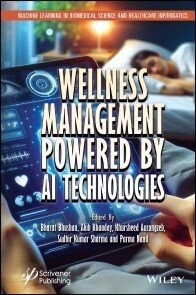
Wellness Management Powered by AI Technologies
THIS BOOK IS AN ESSENTIAL RESOURCE ON THE IMPACT OF AI IN MEDICAL SYSTEMS, HELPING READERS STAY AHEAD IN THE MODERN ERA WITH CUTTING-EDGE SOLUTIONS, KNOWLEDGE, AND REAL-WORLD CASE STUDIES.WELLNESS MANAGEMENT POWERED BY AI TECHNOLOGIES explores the intricate ways machine learning and the Internet of Things (IoT) have been woven into the fabric of healthcare solutions. From smart wearable devices tracking vital signs in real time to ML-driven diagnostic tools providing accurate predictions, readers will gain insights into how these technologies continually reshape healthcare. The book begins by examining the fundamental principles of machine learning and IoT, providing readers with a solid understanding of the underlying concepts. Through clear and concise explanations, readers will grasp the complexities of the algorithms that power predictive analytics, disease detection, and personalized treatment recommendations. In parallel, they will uncover the role of IoT devices in collecting data that fuels these intelligent systems, bridging the gap between patients and practitioners. In the following chapters, readers will delve into real-world case studies and success stories that illustrate the tangible benefits of this dynamic duo. This book is not merely a technical exposition; it serves as a roadmap for healthcare professionals and anyone invested in the future of healthcare. Readers will find the book:* Explores how AI is transforming diagnostics, treatments, and healthcare delivery, offering cutting-edge solutions for modern healthcare challenges;* Provides practical knowledge on implementing AI in healthcare settings, enhancing efficiency and patient outcomes;* Offers authoritative insights into current AI trends and future developments in healthcare;* Features real-world case studies and examples showcasing successful AI integrations in various medical fields.AUDIENCEThis book is a valuable resource for researchers, industry professionals, and engineers from diverse fields such as computer science, artificial intelligence, electronics and electrical engineering, healthcare management, and policymakers. BHARAT BHUSHAN, PHD, is an assistant professor in the Department of Computer Science and Engineering, School of Engineering and Technology, Sharda University, Greater Noida, India. He has published more than 150 research papers, contributed over 30 book chapters, and edited 20 books. AKIB KHANDAY, PHD, is a post-doctoral research fellow in the Department of Computer Science and Software Engineering-CIT, United Arab Emirates University, Abu Dhabi, United Arab Emirates. His research interests include computational social sciences, natural language processing (NLP), and machine/deep learning. KHURSHEED AURANGZEB, PHD, is an associate professor in the Department of Computer Engineering, College of Computer and Information Sciences, King Saud University, Riyadh, Saudi Arabia. Over his 15 years of research, he has been involved in several projects related to machine/deep learning and embedded systems. His research interests focus on computer architecture, signal processing, and wireless sensor networks. SUDHIR KUMAR SHARMA, PHD, is a professor and head of the Department of Computer Science at the Institute of Information Technology & Management, affiliated with GGSIPU, New Delhi, India. His research interests include machine learning, data mining, and security. He has published more than 60 research papers in various international journals and conferences and is the author of seven books in the fields of IoT, wireless sensor networks (WSN), and blockchain. PARMA NAND, PHD, is the dean of the School of Engineering and Technology, Sharda University, Greater Noida, India. His expertise includes wireless and sensor networks, cryptography, algorithms, and computer graphics. He has published more than 85 papers in peer-reviewed journals and filed two patents.

Reinforcement Learning for Cyber Operations
A COMPREHENSIVE AND UP-TO-DATE APPLICATION OF REINFORCEMENT LEARNING CONCEPTS TO OFFENSIVE AND DEFENSIVE CYBERSECURITYIn Reinforcement Learning for Cyber Operations: Applications of Artificial Intelligence for Penetration Testing, a team of distinguished researchers delivers an incisive and practical discussion of reinforcement learning (RL) in cybersecurity that combines intelligence preparation for battle (IPB) concepts with multi-agent techniques. The authors explain how to conduct path analyses within networks, how to use sensor placement to increase the visibility of adversarial tactics and increase cyber defender efficacy, and how to improve your organization’s cyber posture with RL and illuminate the most probable adversarial attack paths in your networks. Containing entirely original research, this book outlines findings and real-world scenarios that have been modeled and tested against custom generated networks, simulated networks, and data. You’ll also find:* A thorough introduction to modeling actions within post-exploitation cybersecurity events, including Markov Decision Processes employing warm-up phases and penalty scaling* Comprehensive explorations of penetration testing automation, including how RL is trained and tested over a standard attack graph construct* Practical discussions of both red and blue team objectives in their efforts to exploit and defend networks, respectively* Complete treatment of how reinforcement learning can be applied to real-world cybersecurity operational scenariosPerfect for practitioners working in cybersecurity, including cyber defenders and planners, network administrators, and information security professionals, Reinforcement Learning for Cyber Operations: Applications of Artificial Intelligence for Penetration Testing will also benefit computer science researchers. DR. ABDUL RAHMAN holds PhDs in physics, math, information technology–cybersecurity and has expertise in cybersecurity, big data, blockchain, and analytics (AI, ML). DR. CHRISTOPHER REDINO holds a PhD in theoretical physics and has extensive data science experience in every part of the AI / ML lifecycle. MR. DHRUV NANDAKUMAR has extensive data science expertise in deep learning. DR. TYLER CODY is an Assistant Research Professor at the Virginia Tech National Security Institute. DR. SACHIN SHETTY is a Professor in the Electrical and Computer Engineering Department at Old Dominion University and the Executive Director of the Center for Secure and Intelligent Critical Systems at the Virginia Modeling, Analysis and Simulation Center. MR. DAN RADKE is an Information Security professional with extensive experience in both offensive and defensive cybersecurity.

Hands-on Deep Learning
This book discusses deep learning, from its fundamental principles to its practical applications, with hands-on exercises and coding. It focuses on deep learning techniques and shows how to apply them across a wide range of practical scenarios.The book begins with an introduction to the core concepts of deep learning. It delves into topics such as transfer learning, multi-task learning, and end-to-end learning, providing insights into various deep learning models and their real-world applications. Next, it covers neural networks, progressing from single-layer perceptrons to multi-layer perceptrons, and solving the complexities of backpropagation and gradient descent. It explains optimizing model performance through effective techniques, addressing key considerations such as hyperparameters, bias, variance, and data division. It also covers convolutional neural networks (CNNs) through two comprehensive chapters, covering the architecture, components, and significance of kernels implementing well-known CNN models such as AlexNet and LeNet. It concludes with exploring autoencoders and generative models such as Hopfield Networks and Boltzmann Machines, applying these techniques to a diverse set of practical applications. These applications include image classification, object detection, sentiment analysis, COVID-19 detection, and ChatGPT.By the end of this book, you will have gained a thorough understanding of deep learning, from its fundamental principles to its innovative applications, enabling you to apply this knowledge to solve a wide range of real-world problems.WHAT YOU WILL LEARN* What are deep neural networks?* What is transfer learning, multi-task learning, and end-to-end learning?* What are hyperparameters, bias, variance, and data division?* What are CNN and RNN?WHO THIS BOOK IS FORMachine learning engineers, data scientists, AI practitioners, software developers, and engineers interested in deep learningHARSH BHASIN is a researcher and practitioner. He has completed his PhD in Diagnosis and Conversion Prediction of Mild Cognitive Impairment Using Machine Learning from Jawaharlal Nehru University, New Delhi. He worked as a Deep Learning consultant for various firms and taught at various Universities, including Jamia Hamdard, and DTU. He is currently associated with Bennett University.Harsh has authored 11 books, including _Programming in C#_ and _Algorithms._ He has authored more than 40 papers that have been published in international conferences and renowned journals, including Alzheimer’s and Dementia, Soft Computing, Springer, BMC Medical Informatics & Decision Making, AI & Society, etc. He is the reviewer of a few renowned journals and has been the editor of a few special issues. He has been a recipient of Visvesvaraya Fellowship, Ministry of Electronics and Information Technology.His areas of expertise include Deep Learning, Algorithms and Medical Imaging. Apart from his professional endeavours, he is deeply interested in Hindi Poetry: the progressive era and Hindustani Classical Music: percussion instruments.Chapter 1: Revisiting Machine Learning.- Chapter 2: Introduction to Deep Learning.- Chapter 3: Neural Networks.- Chapter 4: Training Deep Networks.- Chapter 5: Hyperparameter Tuning.- Chapter 6: Convolutional Neural Networks: Part 1.- Chapter 7: Convolutional Neural Networks : Part 2.- Chapter 8: Transfer Learning.- Chapter 9: Recurrent Neural Networks.- Chapter 10: LSTM and GRU.- Chapter 11: Autoencoders.- Chapter 12: Introduction to Generative Models.- Appendices A-G.

Pro Oracle Database 23ai Administration
Master Oracle Database administration in both on-premises and cloud environments. This new edition covers the tasks you’ll need to perform to keep your databases tuned and performing, and includes new, important innovations with AI Vector Search, JSON Duality Views, and Select AI. Since Oracle Database 23ai offers a choice of platforms with on-premises and cloud, the book also includes administrative tasks specific to cloud environments, including the Oracle Autonomous Database running in the Oracle Cloud Infrastructure. New in this edition is help for DBAs who are becoming involved in data management, and a look at the idea of a converged database and what that means in handling various data types and workloads. The book covers some of the machine learning features now in Oracle and shows how the same SQL that you know for database administration also helps you with data management tasks. The information in this book helps you to apply the right solution at the right time, mitigating risk and making robust choices that protect your data and avoid midnight phone calls.Data management is increasingly a DBA function, and DBAs are often called upon for help in getting data loaded into analytics environments such as a data lakehouse or a data mesh. This book addresses this fast-growing new role for database administrators and helps you build on your existing knowledge to make the transition into a new skill set that is in high demand. You’ll learn how to look at data optimization from the standpoint of data analysis and machine learning so that you can be seen as a key player in preparing your organization’s data for those type of activities. You’ll know how to pull back information from a combination of relational tables and JSON structures. You’ll become familiar with the tools that Oracle Database provides to make analytics easier and more straightforward. And you’ll learn simpler ways to manage time-based tables that eliminate the need for painfully creating triggers to track the history of row changes over time.This book builds your skills as an Oracle Database administrator with the aim of helping you to be seen as a key player in data management as your organization pivots toward cloud computing and a greater use of machine learning and analytics technologies.WHAT YOU WILL LEARN* Configure and manage Oracle 23ai databases both on-premises and in the cloud* Meet your DBA responsibilities in the Oracle Cloud and with Database Cloud Services* Leverage converged database capabilities to manage different workloads, structured and unstructured data* Perform administrative tasks for Autonomous Database dedicated environments* Perform DBA tasks and effectively use data management tools * Migrate from on-premises to the Oracle Cloud Infrastructure* Troubleshoot issues with Oracle 23ai databases and quickly solve performance problems* Architect cloud, on-premises, hybrid, and multi-cloud database environments WHO THIS BOOK IS FOROracle database administrators (DBAs) who want to be current with the new features in Oracle Database 23ai. For any DBA who is tasked with managing Oracle databases in cloud, hybrid cloud, and multi-cloud configurations. Also helpful for data architects who are designing analytic solutions in data lake house and data mesh environments.MICHELLE MALCHER is a senior manager for database product management at Oracle. Her deep technical expertise, from database to security, as well as her senior level contributions as a speaker, author, Oracle ACE director, and customer advisory board participant have aided many corporations in areas such as architecture and risk assessment, purchasing and installation, and ongoing systems oversight. She was a founding board member for FUEL, the Palo Alto Networks User community, as well as a past president and long time volunteer for the Independent Oracle User Group (IOUG). She has built out teams for database security and data services, and enjoys sharing knowledge about data intelligence and providing secure and standardized database environments.DARL KUHN is an Oracle DBA consultant at RMCI. He handles all facets of database administration from design and development to production support. He also teaches advanced database courses at University of Denver. He does volunteer DBA work for the Rocky Mountain Oracle User Group. He has a graduate degree from Colorado State University and lives near Spanish Peaks, Colorado, with his wife, Heidi, and daughters, Brandi and Lisa.1. Installing the Oracle Binaries.- 2. Creating a Database.- 3. Configuring an Efficient Environment.- 4. Tablespaces and Data Files.- 5. Managing Control Files, Online Redo Logs and Archivelogs.- 6. Users and Basic Security.- 7. Tables and Constraints.- 8. Indexes.- 9. Views, Duality Views and Materialized Views.- 10. Data Dictionary Fundamentals.- 11. Large Objects.- 12. Containers and Pluggables.- 13. RMAN Backups and Reporting.- 14. RMAN Restore and Recovery.- 15. External Tables.- 16. Automation and Troubleshooting.- 17. Migration to Multitenant and Fleet Management.- 18. Data Management.

Reinforcement Learning for Cyber Operations
A COMPREHENSIVE AND UP-TO-DATE APPLICATION OF REINFORCEMENT LEARNING CONCEPTS TO OFFENSIVE AND DEFENSIVE CYBERSECURITYIn Reinforcement Learning for Cyber Operations: Applications of Artificial Intelligence for Penetration Testing, a team of distinguished researchers delivers an incisive and practical discussion of reinforcement learning (RL) in cybersecurity that combines intelligence preparation for battle (IPB) concepts with multi-agent techniques. The authors explain how to conduct path analyses within networks, how to use sensor placement to increase the visibility of adversarial tactics and increase cyber defender efficacy, and how to improve your organization’s cyber posture with RL and illuminate the most probable adversarial attack paths in your networks. Containing entirely original research, this book outlines findings and real-world scenarios that have been modeled and tested against custom generated networks, simulated networks, and data. You’ll also find:* A thorough introduction to modeling actions within post-exploitation cybersecurity events, including Markov Decision Processes employing warm-up phases and penalty scaling* Comprehensive explorations of penetration testing automation, including how RL is trained and tested over a standard attack graph construct* Practical discussions of both red and blue team objectives in their efforts to exploit and defend networks, respectively* Complete treatment of how reinforcement learning can be applied to real-world cybersecurity operational scenariosPerfect for practitioners working in cybersecurity, including cyber defenders and planners, network administrators, and information security professionals, Reinforcement Learning for Cyber Operations: Applications of Artificial Intelligence for Penetration Testing will also benefit computer science researchers. DR. ABDUL RAHMAN holds PhDs in physics, math, information technology–cybersecurity and has expertise in cybersecurity, big data, blockchain, and analytics (AI, ML). DR. CHRISTOPHER REDINO holds a PhD in theoretical physics and has extensive data science experience in every part of the AI / ML lifecycle. MR. DHRUV NANDAKUMAR has extensive data science expertise in deep learning. DR. TYLER CODY is an Assistant Research Professor at the Virginia Tech National Security Institute. DR. SACHIN SHETTY is a Professor in the Electrical and Computer Engineering Department at Old Dominion University and the Executive Director of the Center for Secure and Intelligent Critical Systems at the Virginia Modeling, Analysis and Simulation Center. MR. DAN RADKE is an Information Security professional with extensive experience in both offensive and defensive cybersecurity.

Applied Satisfiability
APPLY SATISFIABILITY TO A RANGE OF DIFFICULT PROBLEMSThe Boolean Satisfiability Problem (SAT) is one of the most famous and widely-studied problems in Boolean logic. Optimization versions of this problem include the Maximum Satisfiability Problem (MaxSAT) and its extensions, such as partial MaxSAT and weighted MaxSAT, which assess whether, and to what extent, a solution satisfies a given set of problems. Numerous applications of SAT and MaxSAT have emerged in fields related to logic and computing technology. Applied Satisfiability: Cryptography, Scheduling, and Coalitional Games outlines some of these applications in three specific fields. It offers a huge range of SAT applications and their possible impacts, allowing readers to tackle previously challenging optimization problems with a new selection of tools. Professionals and researchers in this field will find the scope of their computational solutions to otherwise intractable problems vastly increased. Applied Satisfiability readers will also find:* Coding and problem-solving skills applicable to a variety of fields* Specific experiments and case studies that demonstrate the effectiveness of satisfiability-aided methods* Chapters covering topics including cryptographic key recovery, various forms of scheduling, coalition structure generation, and many moreApplied Satisfiability is ideal for researchers, graduate students, and practitioners in these fields looking to bring a new skillset to bear in their studies and careers. XIAOJUAN LIAO, PHD, is an Associate Professor in the College of Computer and Cyber Security, Chengdu University of Technology, Chengdu, China. MIYUKI KOSHIMURA, PHD, is an Assistant Professor in the Faculty of Information Science and Electrical Engineering, Kyushu University, Fukuoka, Japan.

Signals and Systems
INTRODUCTORY COURSE TEXTBOOK ON SIGNALS AND SYSTEMS WITH NUMEROUS EXAMPLES AND CODE SNIPPETS IMPLEMENTED IN PYTHONSupported by code examples, Signals and Systems: Theory and Practical Explorations with Python is a textbook resource for a complete introductory course in systems and signals, enabling readers to run Python programs for convolution, discrete time Fourier transforms and series, sampling, and interpolation for a wide range of functions. Readers are guided step-by-step through basic differential equations, basic linear algebra, and calculus to ensure full comprehension of the exercises. This book is supported by a companion website, hosting interactive material to draw functions, and run programs in Python; it is enriched with audiovisual material via linking to related videos. Links to resources that provide a deeper explanation about the important concepts in the book, such as the systems approach, complex numbers, harmony, the Euler equation, and Hilbert spaces, are also included. Written by two highly qualified academics, topics covered include:* Systems approach for modeling the natural and manmade systems and some application areas* Representation of complex and real signals by basic functions, such as real and complex exponentials, unit step and unit impulse functions* Properties of signals, such as symmetry, harmony, energy, power, continuity and discreteness* Convolution and correlation operations for continuous time and discrete time signals and systems* Representation of systems by impulse response, frequency response, transfer function, block diagram, differential and difference equations * Properties of systems, such as linearity, time invariance, memory, invertibility, stability and causality* Continuous time and discrete time Fourier analysis in Hilbert space and their extension to Laplaca transform and z-transform * Filtering by Linear Time Invariant systems in time and frequency domains, covering low pass, high pass band pass and band reject filters* Sampling theorems for continuous time and discrete time systems, covering A/D and D/A conversion, sampling and interpolationSignals and Systems is an ideal textbook resource for a one semester introductory course on signals and systems for upper level undergraduate and graduate students in computer science, electrical engineering and data science. It is also a useful reference for professionals working in bioinformatics, robotics, remote sensing, and related fields. FATOŞ TUNAY YARMAN VURAL is a Professor in the Department of Computer Engineering at Middle East Technical University, Turkey. She is a Senior Member of the IEEE and received her PhD from Princeton University, USA, in 1981. EMRE AKBAŞ is an Associate Professor in the Department of Computer Engineering at Middle East Technical University, Turkey. Dr. Akbaş received his PhD from the University of Illinois at Urbana-Champaign, USA, in 2011.

Mensch-Computer-Interaktion (3. Auflage)
Jeder hat das schon einmal erlebt: Webseiten, auf denen man die Schrift nicht lesen kann, Informationsterminals, bei denen man nicht erkennt, wo man drücken soll, Programme, die unverständliche Meldungen hervorbringen, kurz: Software, die nicht gebrauchstauglich ist. Dieses Buch enthält Basiswissen, das alle benötigen, die gebrauchstaugliche Software erstellen wollen. Ausgehend von der menschlichen Informationsverarbeitung erläutern die Autoren, wie Benutzungsschnittstellen beschaffen sein müssen und wie bei der Entwicklung von Anwendungen vorzugehen ist, damit Menschen die Software sinnvoll nutzen können. Das Buch berücksichtigt die aktuellen Normen und Vorschriften anhand praktischer Beispiele. Diese dritte erweiterte und komplett überarbeitete Auflage integriert neben aktuellen technologischen Entwicklungen auch die Erfahrungen aus mehr als 20 Jahren Lehre in der Mensch-Computer-Interaktion.Auf der Webseite mci-buch.info sind Lösungen zu den Aufgaben, weitere Beispiele und Übungsaufgaben, inhaltliche Ergänzungen, und weiterführende Links zu finden. Probleme bei der Rechnerbenutzung. Ergonomie in der Mensch-Computer-Interaktion. Die Benutzungsschnittstelle. Entwicklung gebrauchstauglicher Systeme. Physiologie der menschlichen Informationsverarbeitung. Psychologie der menschlichen Informationsverarbeitung. Handlungsprozesse. Standardausgabegeräte. Standardeingabegeräte. Ein- und Ausgabe räumlicher Daten. Nicht visuelle Interaktionsmodalitäten. Gestaltungsprinzipien für Benutzungsschnittstellen. Informationsdarstellung. Visuelle Interaktionselemente. Dialoggestaltung. Benutzerunterstützung. Berücksichtigung spezifischer Benutzerbedürfnisse. DR. ANDREAS M. HEINECKE war bis Ende Februar 2022 hauptamtlich als Professor für interaktive Systeme am Fachbereich Informatik und Kommunikation der Westfälischen Hochschule in Gelsenkirchen tätig. In seinen Lehrveranstaltungen, in der Praxis als Berater und Entwickler sowie in zahlreichen wissenschaftlichen Veröffentlichungen befasst er sich mit Mensch-Computer-Interaktion insbesondere bei multimedialen und mobilen Anwendungen.DR. JENS GERKEN ist seit Juli 2023 Professor für das Fachgebiet Inklusive Mensch-Roboter-Interaktion an der TU Dortmund und beschäftigt sich dort unter anderem mit Fragen der Zugänglichkeit und Barrierefreiheit interaktiver Technologien. Zwischen 2015 und 2023 war er zuvor als Professor für Mensch-Computer-Interaktion am Fachbereich Informatik und Kommunikation der Westfälischen Hochschule in Gelsenkirchen tätig.

Regenerative Zukünfte und künstliche Intelligenz
Der Band basiert auf den 17 Entwicklungszielen (SDGs) der UNO und entwickelt für die Wirtschaft Zukunftsperspektiven zum Zusammenhang von KI und Nachhaltigkeit. Menschen als Subjekt und Objekt von Nachhaltigkeit (Problembeschreibung).- Innovative Lösungen der sozialen Nachhaltigkeitsdimension (Lösungsansätze).- Konzepte zur Erreichung sozialer Entwicklungsziele.- Konkrete Utopien regenerativer Zukünfte 2050 (Schwerpunkt PEOPLE).
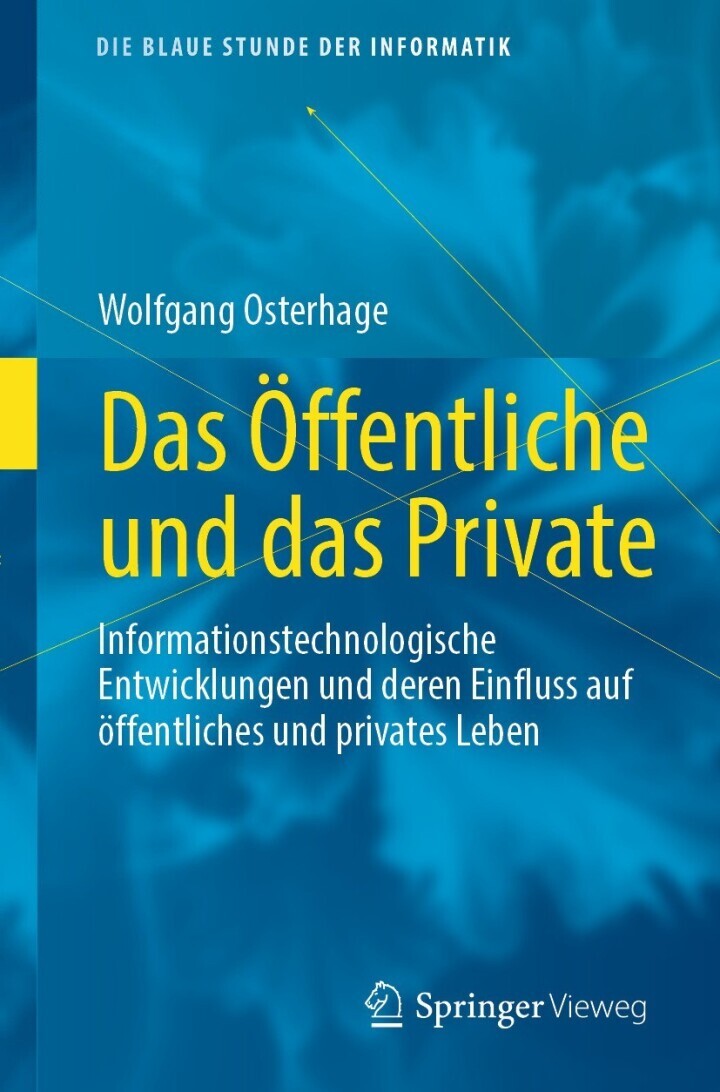
Das Öffentliche und das Private
Technologische Entwicklungen beeinflussen öffentliches Leben in Politik und Wirtschaft, aber auch unser eigenes, privates Dasein. Gewollt oder ungewollt kommen wir täglich – und sogar des Nachts, wenn wir schlafen – mit Technologien in Berührung, die wir selbst nur bedingt kontrollieren können oder wollen. Es gibt keine Lebenslage, in denen eine Berührung mit elektronischen Systemen nicht gegeben ist. Insofern hat die Menschheit ihre informatorische Unschuld für immer verloren, bis hin zum Missbrauch persönlichen Identitäten in sozialen Netzen, in denen ein Leben in Scheinidentitäten stattzufinden scheint. Information und Kommunikation sind Wirtschaftsfaktoren geworden, die am Ende des Industriezeitalters und am Beginn des Wissenszeitalters zu stehen scheinen. Das technisch Hergestellte wird dem Organischen immer ähnlicher. Natur und Maschinen verschmelzen und entziehen sich unserer Kontrolle. Man tut, was dem System nutzt. Das Leben wird zu einer Risiko- und Wahrscheinlichkeitsrechnung, und das Ich nur noch zu einem Interface. Einführung. Technologischer Überblick und Mitspieler (betroffene Lebensbereiche, kommerzielle und öffentliche IT-Anwendungen, private Nutzung). e-commerce (CRM, Wahrheit als Ware). Smart Energy. Soziale Netze. Telematik (Verkehrslenkung, connected car, PAYD, PHYD, Telemedizin, UBI, Telebanking, Wearables etc.). Wissensökonomie / Informationsökonomie. Big Data (FutureIC, Pre-Crime Analytics, Nacktscanner). Das Ende der Kontrolle (Kevin Kelly, Frank Schirrmachers No.2). Sicherheitsaspekte. Die tägliche Begegnung mit dem Roboter. WOLFGANG OSTERHAGE ist Diplom-Ingenieur mit Promotionen in Physik und Informationstechnologie und war lange Jahre als Berater in internationalen Organisationen, der freien Wirtschaft und als Dozent an verschiedenen Institutionen tätig. Er hat eine Vielzahl von Büchern zu physikalischen und IT-Themen veröffentlich. Lebt und arbeitet als freier Autor im Rheinland
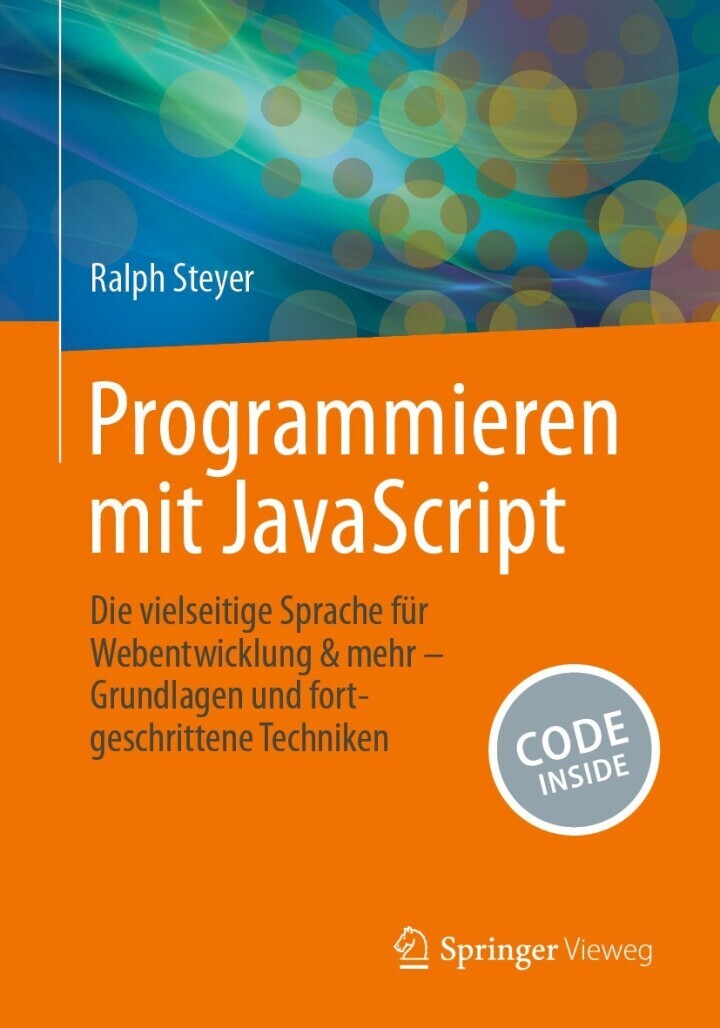
Programmieren mit JavaScript
JavaScript hat sich mittlerweile von einer, am Anfang teils nicht ganz ernst genommenen, Skriptsprache im Browser zu einer der wichtigsten Programmiersprachen überhaupt entwickelt. Im Kern immer noch als die Sprache im Webbrowser schlechthin populär, erobert JavaScript nach und nach immer mehr Anwendungsgebiete. Bei der clientseitigen Webentwicklung gibt es im Grunde keine Alternative zu JavaScript für die Entwicklung interaktiver und dynamischer Webanwendungen. Nahezu alle Frameworks basieren zudem auf JavaScript. Aber auch zur Unterstützung vieler weiterer Arten von Software kann man JavaScript einsetzen bzw. gibt es auf JavaScript aufsetzende Frameworks.Insbesondere boomt aber die serverseitige Entwicklung mit JavaScript. Beispielsweise mit Node.js können Entwickler JavaScript auf Serverseite ausführen, was die Entwicklung von skalierbaren und leistungsstarken Webanwendungen ermöglicht. Node.js wird zudem häufig für die Erstellung von APIs, Echtzeit-Anwendungen und Microservices verwendet.Entdecken Sie in diesem Buch nun die mittlerweile fast grenzenlosen Möglichkeiten von JavaScript. Von den Grundlagen bis hin zu fortgeschrittenen Techniken werden alle Aspekte der Sprache abgedeckt. Tauchen Sie ein in die Welt von JavaScript und erweitern Sie Ihr Wissen mit praxisnahen Beispielen und bewährten Methoden. Egal, ob Sie mit JavaScript beginnen und die Grundlagen erlernen möchten, oder als erfahrene(r) Entwicklerin bzw. Entwickler das Können vertiefen wollen. Hier finden Sie das Wissen und die Werkzeuge, um Ihre JavaScript-Fähigkeiten auf das nächste Level zu bringen. Einleitung. Erste Beispiele – Der Sprung ins kalte Wasser. Versionen von JavaScript und Einbindung in Webseiten. Elementare JavaScript-Grundstrukturen. Kontrollflussanweisungen. Arrays, JSON und andere iterierbare Elemente. Funktionen, Prozeduren und Methoden. Module. Objekte und JavaScript. Eingebaute Objektdeklarationen. Der DOM – das Mysterium der JavaScript-Welt. Ausnahmebehandlung. Asynchrone Programmierung. Erweiterte Techniken. Eine Frage der Qualität. RALPH STEYER wurde in Wiesbaden geboren und hat nach dem Abitur in Frankfurt Mathematik studiert. Seit 1996 arbeitet er selbstständig als Diplom-Mathematiker im Bereich EDV-Schulung, Programmierung und Beratung. Seine Spezialgebiete sind Internetprogrammierung und objektorientierte Software-Entwicklung. Unter anderem unterrichtet er an Hochschulen sowie für verschiedene Schulungsanbieter. Ralph Steyer ist zudem Autor zahlreicher Fachbücher und Videotrainings zu verschiedenen Programmierthemen.

AI Integration in Software Development and Operations
Discover how Artificial Intelligence (AI) is transforming the fields of software development, testing, and IT operations by enhancing efficiency, reducing human error, and accelerating processes. This book showcases the practical applications of AI-driven tools, such as automating coding, testing, and operational tasks, predicting potential issues, and optimizing performance.Aimed at digital leaders, practitioners, and customers, this book provides strategic insights and actionable guidance on how to integrate AI technologies to boost productivity, enhance product quality, and streamline development cycles. It serves as a comprehensive guide for those looking to leverage AI to drive innovation, cut costs, and stay competitive in an ever-evolving technological landscape.You’ll explore how AI can be integrated into software development, testing, and IT operations to improve efficiency, accuracy, and speed. Through real-world use cases, you’ll see how AI-driven tools can automate tasks, reduce human error, and improve processes across the development lifecycle. _AI Integration in Software Development and Operations _offers actionable insights on using AI to accelerate innovation, enhance product quality, and optimize costs in your modern software and IT environments.WHAT YOU WILL LEARN* Review the SDLC lifecycle, DevOps, SRE and accompanying topics* Understand machine learning basics, AI techniques, and data preprocessing for DevOps* Explore how AI integration into all phases of SDLC boosts productivity, increases* effectiveness, and reduces human error* Gain a familiarity with AI tools, their use cases, and the value in integrating themWHO THIS BOOK IS FORSoftware engineers, developers, programmers, DevOps engineers, and AI practitioners who are interested in integrating AI into their DevOps practices.ABHINAV KRISHNA KAISER is a highly accomplished professional working as a partner at a prestigious consulting firm, where he plays a pivotal role in leading digital transformation programs for clients across diverse sectors. He is a part of the Distinguished Member of Technical Staff (DMTS) cadre, which represents a select group of best-in-class technologists. With a proven track record in the industry, Abhinav is recognized for his expertise in guiding organizations through complex and innovative changes to stay ahead of the curve in today's dynamic business environment. He takes charge of spearheading various digital transformation initiatives, demonstrating a keen understanding of the unique challenges and opportunities presented by different industries. His portfolio includes successfully steering multiple digital transformation programs, showcasing his ability to navigate and drive change in organizations of varying sizes and complexities. His hands-on experience in implementing cutting-edge technologies and methodologies has contributed to the enhanced efficiency and competitiveness of his clients.In addition, Abhinav Krishna Kaiser is a multifaceted professional with a prolific career as an accomplished writer. He boasts an impressive literary portfolio comprising six published books, each delving into the intricacies of digital transformation, DevOps, GCP and ITIL. Abhinav's written works serve as authoritative guides, offering valuable insights and practical solutions to professionals navigating the complexities of modern business and technology landscapes. Beyond his contributions in the written domain, Abhinav is a panel speaker, captivating audiences with his expertise at industry conferences and events. His commitment to knowledge-sharing ex-tends to digital platforms, where he actively engages as a YouTuber and blogger. Through these mediums, he imparts knowledge, shares best practices, and explores emerging trends, reaching a wider audience eager to enhance their understanding of digital transformation, DevOps, GCP, and ITIL.VAMSHI MEDA is a seasoned partner at a prominent consulting firm, specializing in guiding organizations through digital transformation initiatives. With a wealth of experience in the field, he serves as a trusted advisor to numerous enterprises, helping them identify opportunities for digital innovation and navigate the complexities of implementation. Vamshi has demonstrated track record of leading complex initiatives in Architecture, Cloud, GenAI, SRE, AIOps, Agile, and DevOps. He has completed CTO certification from Wharton and a bachelor’s degree in computer science, blending technical prowess with business acumen.He is Recognized for spearheading digital transformation initiatives across diverse industries, including Insurance, Capital Markets, Retail, and Healthcare. Skilled in strategic planning, solution implementation, and fostering collaboration to achieve organizational objectives. A decisive leader with a knack for problem-solving and a commitment to excellence. Vamshi is highly regarded as a keynote speaker at industry-leading conferences, where he shares his expertise and insights on driving successful digital transformations.Chapter 1: First Steps in AI and DevOps.- Chapter 2: Double Click on Machine Learning.- Chapter 3: Software Development and AI Augmentation.- Chapter 4: Planning and Requirements Management in Projects.- Chapter 5: Integrating Generative AI in Software Design and Architecture.- Chapter 6: AI Infusion in Software Build and Development.- Chapter 7: Infusing AI into Software Testing.- Chapter 8: AI in Continuous Delivery.- Chapter 9: Operations, Observability and Site Reliability Engineering.
Digital Twins and Cybersecurity
THIS BOOK SERVES AS A COMPREHENSIVE GUIDE TO UNDERSTANDING THE COMPLEX RELATIONSHIP BETWEEN DIGITAL TWINS AND CYBERSECURITY, PROVIDING PRACTICAL STRATEGIES FOR SAFEGUARDING CONNECTED SYSTEMS.This book explores the convergence of digital twins and cybersecurity, offering insights, strategies, and best practices for safeguarding connected systems. It examines the definition, evolution, types, and applications of digital twins across industries like manufacturing, healthcare, and transportation. Highlighting growing digital threats, it underscores the need for robust cybersecurity measures to protect the integrity and confidentiality of digital twin ecosystems. The book analyzes key components and infrastructure of digital twins, including data flow, communication channels, vulnerabilities, and security considerations. It also addresses privacy challenges and explores relevant regulations and compliance requirements. Guiding readers through implementing security measures, it presents a comprehensive cybersecurity framework, covering data protection, encryption, and strategies for ensuring data integrity and confidentiality. It also explores incident response and recovery, secure communication protocols, and the roles of gateways and firewalls. Industry-specific challenges and mitigation strategies are examined through real-world case studies, offering valuable insights and lessons learned. Emerging trends in digital twin technology are thoroughly explored, including the impact of advancements such as AI and quantum computing and their associated cybersecurity challenges and solutions. AUDIENCEThis book is an essential resource for professionals in the fields of cybersecurity and industrial and infrastructure sectors, including manufacturing, healthcare, transportation, and other industries that utilize digital twins. Researchers in computer science, cybersecurity, engineering, and technology, as well as policymakers and regulatory bodies, will also find this book highly useful. PALANICHAMY NAVEEN, PHD, is an assistant professor in the Department of Electrical and Electronics Engineering at KPR Institute of Engineering and Technology, Coimbatore, India, and a visiting researcher at the University of Hradec Králové, Czech Republic. He has authored two books and more than 25 research articles in peer-reviewed journals. His research interests include image processing and machine learning. R. MAHESWAR, PHD, is the director in-charge of the Center for Research and Development, head of the Center for IoT and AI (CITI), and a professor in the Department of Electronics and Communication Engineering at KPR Institute of Engineering and Technology, Coimbatore, India. He has published more than 70 papers in international journals and conferences, authored several books, and is affiliated with many journals in wireless communications. His research interests include wireless sensor networks, IoT, queuing theory, and performance evaluation. U.S. RAGUPATHY, PHD, is a professor in the Department of Electronics and Communication Engineering at KPR Institute of Engineering and Technology, Coimbatore, India. He has published more than 100 papers in international journals and conferences and has organized over 30 national level seminars and conferences. His research areas include image processing, VLSI signal processing, wavelets, and soft computing techniques. He has received multiple awards, including the Best Faculty Award and the Best Researcher Award from Kongu Engineering College.

Learning Algorithms for Internet of Things
The advent of Internet of Things (IoT) has paved the way for sensing the environment and smartly responding. This can be further improved by enabling intelligence to the system with the support of machine learning and deep learning techniques. This book describes learning algorithms that can be applied to IoT-based, real-time applications and improve the utilization of data collected and the overall performance of the system.Many societal challenges and problems can be resolved using a better amalgamation of IoT and learning algorithms. “Smartness” is the buzzword that is realized only with the help of learning algorithms. In addition, it supports researchers with code snippets that focus on the implementation and performance of learning algorithms on IoT based applications such as healthcare, agriculture, transportation, etc. These snippets include Python packages such as Scipy, Scikit-learn, Theano, TensorFlow, Keras, PyTorch, and more._Learning Algorithms for Internet of Things _provides you with an easier way to understand the purpose and application of learning algorithms on IoT.WHAT YOU’LL LEARN* Supervised algorithms such as Regression and Classification.* Unsupervised algorithms, like K-means clustering, KNN, hierarchical clustering, principal component analysis, and more.* Artificial neural networks for IoT (architecture, feedback, feed-forward, unsupervised).* Convolutional neural networks for IoT (general, LeNet, AlexNet, VGGNet, GoogLeNet, etc.).* Optimization methods, such as gradient descent, stochastic gradient descent, Adagrad, AdaDelta, and IoT optimization.WHO THIS BOOK IS FORStudents interested in learning algorithms and their implementations, as well as researchers in IoT looking to extend their work with learning algorithmsDR. G. R. KANAGACHIDAMBARESAN is a Professor in the Department of CSE, Vel Tech Rangarajan Dr. Sagunthala R&D Institute of Science and Technology. His main research interests includes IoT, Expert systems and Sensors. He has published several reputed articles and undertaken several consultancy activities for leading MNC companies. He has also guest edited several special issue volumes and books at Springer and serves on the editorial review board for peer reviewed journals.He is currently working on several government-sponsored research projects like ISRO, DBT and DST. He is a TEC committee member in DBT. He is an ASEM-DUO Fellow and has successfully edited several books in EAI Springer. He is currently the Editor-in-Chief for the Next Generation Computer and Communication Engineering Series (Wiley). He received his B.E degree in Electrical and Electronics Engineering from Anna University in 2010 and M.E. Pervasive Computing Technologies in Anna University in 2012. He has completed his Ph.D. in Anna University Chennai in 2017.DR. N. BHARATHI is an Associate Professor in the Computer Science Engineering Department at SRM Institute of Science and Technology in Chennai, India. Her past experiences are Associate Professor at Saveetha School of Engineering, R&D head at Yalamanchili Manufacturing Private Limited, and Assistant professor in SASTRA deemed university. She has good knowledge to work with IoT and embedded system in addition to computer science engineering concepts.She was awarded with a Ph.D. degree in Computer Science in 2014 from SASTRA Deemed University, with 19+ years of work experience as an academic and industrial experience as R&D head involved in ARM platform boards with software development in Ubuntu OS. She completed her M. Tech in Advanced computing in SASTRA deemed University and done her M.Tech project internship at Center for High Performance Embedded System (CHiPES), Nanyang Technological University (NTU), Singapore. She was completed her B.E. in computer science engineering in 2002 at Shanmugha College of Engineering (Bharathidasan University). She published many research papers in reputed journals and conferences along with book chapters, advised many B.Tech. and M.Tech. students in various domains of computer science engineering and embedded systems and is currently advising four research scholars.Chapter 1: Learning Algorithms for IoT.- Chapter 2: Python Packages for Learning Algorithms.- Chapter 3: Supervised Algorithms.- Chapter 4: Unsupervised Algorithms.- Chapter 5: Reinforcement Algorithms.- Chapter 6: Artificial Neural Networks for IoT.- Chapter 7: Convolutional Neural Networks for IoT.- Chapter 8: LSTM, GAN, and RNN.- Chapter 9: Optimization Methods.

Snowflake Recipes
Explore Snowflake’s core concepts and unique features that differentiates it from industry competitors, such as, Azure Synapse and Google BigQuery. This book provides recipes for architecting and developing modern data pipelines on the Snowflake data platform by employing progressive techniques, agile practices, and repeatable strategies.You’ll walk through step-by-step instructions on ready-to-use recipes covering a wide range of the latest development topics. Then build scalable development pipelines and solve specific scenarios common to all modern data platforms, such as, data masking, object tagging, data monetization, and security best practices. Throughout the book you’ll work with code samples for Amazon Web Services, Microsoft Azure, and Google Cloud Platform. There’s also a chapter devoted to solving machine learning problems with Snowflake.Authors Dillon Dayton and John Eipe are both Snowflake SnowPro Core certified, specializing in data and digital services, and understand the challenges of finding the right solution to complex problems. The recipes in this book are based on real world use cases and examples designed to help you provide quality, performant, and secured data to solve business initiatives.WHAT YOU’LL LEARN* Handle structured and un- structured data in Snowflake.* Apply best practices and different options for data transformation.* Understand data application development. * Implement data sharing, data governance and security.WHO THIS BOOK IS FORData engineers, scientists and analysts moving into Snowflake, looking to build data apps. This book expects basic knowledge in Cloud (AWS or Azure or GCP), SQL and PythonDillon Dayton is a senior consultant for CDW. Over the last 10 years he has performed in a data engineering and architect role with numerous companies across a slew of industries including healthcare, retail, and finance. Dillon is Snowflake SnowPro Core certified and participates in the Snowflake SME program. In his spare time, he enjoys applying his data and engineering background to hobbies like motorsports, gardening, and fishing.John Eipe is a Senior Solutions Specialist for CDW and has over 10 years of experience in various roles from enterprise application development to data engineering. He worked primarily with customers from the ecommerce and insurance domain. John is Snowflake SnowPro Core certified and has been working extensively on Snowflake in the recent years. Apart from work, he enjoys cooking and time with his kids.Chapter 1: Introduction to Snowflake.- Chapter 2: Bringing Your Data into Snowflake.- Chapter 3: Handling Atypical Data.- Chapter 4: Data Security and Privacy.- Chapter 5: Handling Near and Real Time Data.- Chapter 6: Programmable Data Pipelines.- Chapter 7: Data Reusability and Monetization.- Chapter 8: Data Recovery and Protection.- Chapter 9: Applications Integration.- Chapter 10: Machine Learning.

Building Scalable Deep Learning Pipelines on AWS
This book is your comprehensive guide to creating powerful, end-to-end deep learning workflows on Amazon Web Services (AWS). The book explores how to integrate essential big data tools and technologies—such as PySpark, PyTorch, TensorFlow, Airflow, EC2, and S3—to streamline the development, training, and deployment of deep learning models.Starting with the importance of scaling advanced machine learning models, this book leverages AWS's robust infrastructure and comprehensive suite of services. It guides you through the setup and configuration needed to maximize the potential of deep learning technologies. You will gain in-depth knowledge of building deep learning pipelines, including data preprocessing, feature engineering, model training, evaluation, and deployment.The book provides insights into setting up an AWS environment, configuring necessary tools, and using PySpark for distributed data processing. You will also delve into hands-on tutorials for PyTorch and TensorFlow, mastering their roles in building and training neural networks. Additionally, you will learn how Apache Airflow can orchestrate complex workflows and how Amazon S3 and EC2 enhance model deployment at scale.By the end of this book, you will be equipped to tackle real-world challenges and seize opportunities in the rapidly evolving field of deep learning with AWS. You will gain the insights and skills needed to drive innovation and maintain a competitive edge in today’s data-driven landscape.WHAT YOU WILL LEARN* Maximize AWS services for scalable and high-performance deep learning architectures* Harness the capacity of PyTorch and TensorFlow for advanced neural network development* Utilize PySpark for efficient distributed data processing on AWS* Orchestrate complex workflows with Apache Airflow for seamless data processing, model training, and deploymentWHO THIS BOOK IS FORData scientists looking to expand their skill set to include deep learning on AWS, machine learning engineers tasked with designing and deploying machine learning systems who want to incorporate deep learning capabilities into their applications, AI practitioners working across various industries who seek to leverage deep learning for solving complex problems and gaining a competitive advantageABDELAZIZ TESTAS, PHD, is a seasoned data scientist with over a decade of experience in data analysis and machine learning. He earned his PhD in Economics from the University of Leeds in England and holds a master’s degree in the same field from the University of Glasgow in Scotland. Additionally, he has earned several certifications in computer science and data science in the United States.For over 10 years, Abdelaziz served as a Lead Data Scientist at Nielsen, where he played a pivotal role in enhancing the company’s audience measurement capabilities. He was instrumental in planning, initiating, and executing end-to-end data science projects and developing methodologies that advanced Nielsen’s digital ad and content rating products. His expertise in media measurement and data science drove the creation of innovative solutions.Recently, Abdelaziz transitioned to the public sector, joining the State of California's Department of Health Care Access and Information (HCAI). In his new role, he leverages his coding and data science leadership skills to make a meaningful impact, supporting HCAI’s mission to ensure quality, equitable, and affordable health care for all Californians.Abdelaziz is also the author of Distributed Machine Learning with PySpark: Migrating Effortlessly from Pandas and Scikit-Learn (Apress).Chapter 1: Overview of Scalable Deep Learning Pipelines on AWS.- Chapter 2: Setting Up a Deep Learning Environment on AWS.- Chapter 3: Data Preparation with PySpark for Deep Learning.- Chapter 4: Deep Learning with PyTorch for Regression.- Chapter 5: Deep Learning with TensorFlow for Regression.- Chapter 6: Deep Learning with PyTorch for Classification.- Chapter 7: Deep Learning with TensorFlow for Classification.- Chapter 8: Scalable Deep Learning Pipelines with Apache Airflow.- Chapter 9: Techniques for Improving Model Performance.- Chapter 10: Deploying and Monitoring Deep Learning Models.

Mastering Enterprise Solution Modeling
Embark on a journey through the Agile-Enterprise Solution Architecture (A-ESA) framework with this in-depth guide designed to provide a structured approach to IT solution modeling. The modeling approach is based on the principles of simplicity, significance, and systematics. It effectively addresses architectural debt issues in today's agile and large-scale IT solutions. Beginning with a foundational overview of A-ESA model specifications, the book introduces readers to the intent and unique methodologies behind A-ESA. It then delves into practical demonstrations through example solution cases, offering real-world context and insights into various architectural styles. Each chapter builds on this knowledge, covering the governing ideas of the thinking framework and essential topics such as key metrics, and modeling considerations for diverse architectural styles, ensuring a thorough understanding of A-ESA's application in different contexts. The book also emphasizes the link between enterprise architecture (EA) and solution architecture (SA), and the importance of governance and measurement in maintaining the integrity and effectiveness of architectural solutions. Readers will explore critical metrics, governance techniques, and the impact of agile modeling on purpose and architectural leading practices. With practical examples, measurement techniques, and governance strategies, this guide equips readers with the cognitive and practical tools necessary for strategic and effective architectural thinking. Concluding with reflections and future outlooks, this comprehensive guide offers valuable insights for mastering IT solution modeling within the A-ESA framework. You Will: Gain hands-on experience with the Agile-Enterprise Solution Architecture (A-ESA) framework through detailed examples and solution cases that illustrate various architectural styles and modeling techniques.Understand the critical metrics and model mappings necessary for evaluating architectural quality and performance.Develop a deep understanding of the A-ESA architectural thinking, including strategic, enterprise, business, data, and cloud architecture considerations This book is for : IT architects, enterprise architects, and solutions architects. PART I: A-ESA Specification and Demo: Chapter 1: Brief Overview of A-ESA.- Chapter 2: A-ESA Modeling by Example.- PART II: A-ESA Governing Ideas: Chapter 3: A-ESA Thinking Framework.- PART III: A-ESA Essentials: Chapter 4: A-ESA Measurement.- Chapter 5: A-ESA Modeling Styles.- Chapter 6: A-ESA Governance Techniques.- Epilogue.- Appendix I: A-ESA Spec Addendum.- Appendix II: A-ESA Tools.- Appendix III: Modeling Language Comparison.- Appendix IV: ESA Architect’s Roles and Skills.- Appendix V: FAQ about A-ESA.
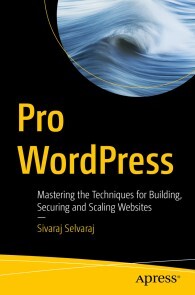
Pro WordPress
_Pro WordPress_ is your ultimate guide to unlocking the full potential of the world's leading content management system. From novice bloggers to seasoned developers, this comprehensive resource offers a step-by-step journey through every aspect of WordPress customization, security and performance optimization.With clear explanations and practical examples, you'll learn how to set up your WordPress environment, choose the right themes and plugins, and customize your site with advanced techniques such as custom post types, widgets, shortcodes, and more. Dive deep into the world of WordPress security and discover how to safeguard your website against cyber threats with strategies like two-factor authentication, secure file permissions, and regular security audits.But that's not all – this book also equips you with the tools and knowledge to optimize your site for lightning-fast performance and high search engine rankings. Learn how to leverage caching mechanisms, minimize HTTP requests, and implement SEO strategies to boost your site's speed and visibility.Whether you're managing a single WordPress site or overseeing a multisite network, you'll find invaluable insights and best practices for scalability and high availability. Real-world case studies provide inspiration and guidance, showcasing successful WordPress implementations and effective strategies for growth.Whether you're a business owner, freelancer, or aspiring web developer, _Pro WordPress_ empowers you to take control of your online presence and build websites that stand out in today's competitive digital landscape. Unlock the full potential of WordPress and elevate your web development skills with this essential resource.YOU WILL LEARN:* The WordPress ecosystem in its entirety, including its history, core features, and community dynamics.* Develop expertise in customizing WordPress themes and plugins using CSS, PHP, and advanced techniques like custom post types and widgets* Implement robust security measures to protect your WordPress site from common vulnerabilities, such as brute force attacks and malicious code injections* Optimize your website's performance through caching mechanisms, image optimization, and other techniques to enhance user experience and SEO rankings* More advanced topics such as managing multisite networks, scalability and high availability to effectively scale your WordPress projects and handle high traffic volumesWHO IS IT FOR:Web designers and developers to business owners looking to develop a webiste of their own as well as bloggers and hobbyists who are looking to design, launch and maintain a website whatever the project.SIVARAJ SELVARAJ work focuses on modern technologies and industry best practices. These topics include frontend development techniques using HTML5, CSS3, and JavaScript frameworks; implementing responsive web design and optimizing user experience across devices; building dynamic web applications with server-side languages such as PHP, WordPress, and Laravel; and Database management and integration using SQL and MySQL databases He loves to share his extensive knowledge and experience to empower readers to tackle complex challenges and create highly functional and visually appealing websites.1: Understanding the WordPress Ecosystem.- 2: Setting Up Your WordPress Environment.- 3: WordPress Customization Fundamentals.- 4: Advanced WordPress Customization Techniques.- 5: Ensuring WordPress Security.- 6: Optimizing WordPress Performance.- 7: WordPress SEO Strategies.- 8: Managing Multisite Networks.- 9: Scalability and High Availability.- 10: Case Studies and Real World Examples.- Conclusion: Becoming a WordPress Pro.- Appendix: Useful Tools and Resources.

Essential Data Analytics, Data Science, and AI
In today’s world, understanding data analytics, data science, and artificial intelligence is not just an advantage but a necessity. This book is your thorough guide to learning these innovative fields, designed to make the learning practical and engaging.The book starts by introducing data analytics, data science, and artificial intelligence. It illustrates real-world applications, and, it addresses the ethical considerations tied to AI. It also explores ways to gain data for practice and real-world scenarios, including the concept of synthetic data. Next, it uncovers Extract, Transform, Load (ETL) processes and explains how to implement them using Python. Further, it covers artificial intelligence and the pivotal role played by machine learning models. It explains feature engineering, the distinction between algorithms and models, and how to harness their power to make predictions. Moving forward, it discusses how to assess machine learning models after their creation, with insights into various evaluation techniques. It emphasizes the crucial aspects of model deployment, including the pros and cons of on-device versus cloud-based solutions. It concludes with real-world examples and encourages embracing AI while dispelling fears, and fostering an appreciation for the transformative potential of these technologies.Whether you’re a beginner or an experienced professional, this book offers valuable insights that will expand your horizons in the world of data and AI.What you will learn:* What are Synthetic data and Telemetry data* How to analyze data using programming languages like Python and Tableau.* What is feature engineering* What are the practical Implications of Artificial IntelligenceWho this book is for:Data analysts, scientists, and engineers seeking to enhance their skills, explore advanced concepts, and stay up-to-date with ethics. Business leaders and decision-makers across industries are interested in understanding the transformative potential and ethical implications of data analytics and AI in their organizations.Maxine Attobrah holds a bachelor’s degree in Electrical Engineering from the University of Massachusetts – Amherst. Maxine’s career began as an Electronic Flight Controls Engineer at a leading global security, defense, and aerospace contractor company, where she was responsible for developing and testing control system software to enhance helicopter piloting. Subsequently, Maxine pursued further education, earning master’s degrees in Electrical & Computer Engineering and Engineering & Technology Innovation Management from Carnegie Mellon University. Maxine started her career after graduating at a major global consulting firm as a Data Scientist and has since transitioned to the role of an AI/ML Engineer. Currently, she serves as a Lead AI/ML Engineer at this firm.This book was prepared by the author in her personal capacity. The views and opinions expressed in this book are those of the author and do not necessarily reflect the official policy, opinion, or position of their present or past employers.Chapter 1: Introduction.- Chapter 2: Obtaining Data.- Chapter 3: ETL Pipeline.- Chapter 4: Exploratory Data Analysis.- Chapter 5: Machine Learning Models.- Chapter 6: Evaluating Models.- Chapter 7: When To Use Machine Learning Models.- Chapter 8: Where Machine Learning Models Live.- Chapter 9: Telemetry.- Chapter 10: Adversaries and Abuse.- Chapter 11: Working With Models.