

Allgemein

The Cybersecurity Trinity
This book explores three crucial topics for cybersecurity professionals: artificial intelligence (AI), automation, and active cyber defense (ACD). _The Cybersecurity Trinity_ will provide cybersecurity professionals with the necessary background to improve their defenses by harnessing the combined power of these three concepts. The book is divided into four sections, one addressing each underlying concept and the final section discussing integrating them to harness their full potential.With the expected growth of AI and machine learning (ML), cybersecurity professionals must understand its core concepts to defend AI and ML-based systems. Also, most cybersecurity tools now incorporate AI and ML. However, many cybersecurity professionals lack a fundamental understanding of AI and ML. The book's first section aims to demystify AI and ML for cybersecurity practitioners by exploring how AI and ML systems work, where they are vulnerable, and how to defend them.Next, we turn our attention to security automation. Human-centered cyber defense processes cannot keep pace with the threats targeting organizations. Security automation can help defenders drastically increase the speed of detection and response. This section will discuss core use cases that security teams can implement, including intelligence processing, incident triage, detection, and response. This section will end with strategies for a successful security automation implementation and strategies that can lead to failure.Accelerating the defense is but one side of the equation. Defenders can also implement ACD methods to disrupt and slow the attacker. Of course, ACD spans a broad spectrum, including some that could raise legal and ethical concerns. This section will explore some ACD methods and discuss their applicability, as well as the need to include business, legal, and ethical considerations when implementing them.Security teams often treat AI, automation, and ACD as disparate solutions, addressing specific problems. However, there is much overlap, and security teams must develop a cohesive approach to realize the full potential. The last section combines these three concepts to form a comprehensive strategy. The resulting strategy will have AI as the foundation, incorporating automation to speed up defense and ACD to disrupt the attacker.WHAT YOU WILL LEARN:* Understand the many uses of AI and ML and the concepts underpinning these technologies.* Learn how to protect AI and ML systems by recognizing the vulnerabilities throughout their lifecycle.* Integrate AI and ML-based systems to enhance cybersecurity.* Develop security automation processes to enhance situation awareness, speed the time to respond, and increase the bandwidth of the limited security operations staff.* Develop an ACD strategy to slow the attackers while minimizing legal and ethical concerns.* Design a comprehensive strategy with AI as the foundation, incorporating automation to speed up defense and ACD to disrupt the attacker.WHO THIS BOOK IS FOR:The primary audience is cybersecurity professionals looking to improve their organization's security posture by leveraging AI and ML-based security tools and combining them into a comprehensive strategy incorporating automation and ACD. This target audience will have a cybersecurity background and an interest in AI and ML.Higher education would be a secondary audience.Donnie Wendt is a distinguished cybersecurity professional with extensive expertise in researching security threats and pioneering innovative solutions. He has broad practical experience implementing numerous cybersecurity solutions and is an accomplished presenter on securing machine learning, generative AI, security automation, and deception. In addition to his professional experience, Donnie is an adjunct professor of cybersecurity at Utica University. He earned a Doctorate in Computer Science from Colorado Technical University and a Master's in Cybersecurity from Utica University. After over 30 years in information technology, Donnie wants to share his knowledge with others.The initial concept for the book arose from Donnie's doctoral dissertation, where he researched using security automation and deception to address both sides of the cyber defense equation. Over the past several years, AI has come to the forefront and is now used in many products, including cybersecurity solutions. Donnie realized that AI-powered solutions could provide the foundation to enhance his prior research. However, despite the prevalence of AI, many cybersecurity professionals do not understand its core concepts. Therefore, Donnie began his quest to educate colleagues on AI's power and associated risks.Chapter 1: AI is Everywhere.- Chapter 2: Overview of AI and ML.- Chapter 3: AI for Defense.- Chapter 4: ML in an Adversarial Environment.- Chapter 5: Combatting AI Threats.- Chapter 6: The Need for Speed – The Driving Forces of Security Automation.- Chapter 7: The OODA Loop.- Chapter 8: Common SOAR Use Cases.- Chapter 9: Strategies for Success (and Failure).- Chapter 10: Active Cyber Defense.- Chapter 11: The OODA Loop Revisited.- Chapter 12: Deception.- Chapter 13: The Cybersecurity Trinity.

Microsoft 365 Copilot At Work
LEARN TO LEVERAGE MICROSOFT'S NEW AI TOOL, COPILOT, FOR ENHANCED PRODUCTIVITY AT WORKIn Microsoft 365 Copilot At Work: Using AI to Get the Most from Your Business Data and Favorite Apps, a team of software and AI experts delivers a comprehensive guide to unlocking the full potential of Microsoft's groundbreaking AI tool, Copilot. Written for people new to AI, as well as experienced users, this book provides a hands-on roadmap for integrating Copilot into your daily workflow. You'll find the knowledge and strategies you need to maximize your team's productivity and drive success. The authors offer you a unique opportunity to gain a deep understanding of AI fundamentals, including machine learning, large language models, and generative AI versus summative AI. You'll also discover:* How Copilot utilizes AI technologies to provide real-time intelligent assistance and revolutionize the way you work with Microsoft 365 apps* Practical Implementation Strategies for project and change management, as well as practical guidance on rolling out Copilot within your organization* Specific use cases, including Outlook, Teams, Excel, PowerPoint, and OneNote, and how Copilot can streamline tasks and boost efficiency across various Microsoft applicationsTake your Copilot proficiency to the next level with advanced AI concepts, usage monitoring, and custom development techniques. Delve into Microsoft Framework Accelerator, Copilot plugins, semantic kernels, and custom plugin development, empowering you to tailor Copilot to your organization's unique needs and workflows. Get ready to revolutionize your productivity with Microsoft 365 Copilot! SANDAR VAN LAAN is a Senior Principal at Slalom within the Microsoft Modern Work and AI space, leading Copilot rollouts across multiple clients and demonstrating a deep understanding of AI and its practical applications in the enterprise environment. His strategic approach has been instrumental in guiding organizations through the adoption process, ensuring seamless integration and maximizing the benefits of AI technologies. JARED MATFESS serves as an AI Architect at AvePoint, bringing more than two decades of experience within the Microsoft ecosystem to his role. He has been honored with the Microsoft MVP award six times for the Office App & Services category and is actively engaged in sharing his expertise at various community events. Jared’s primary ambition is to assist organizations in their transformation by leveraging advanced technologies like AI. THOMAS FLOCK is a senior consultant at Slalom and specializes in data integrating using AI. His father was a senior engineer for MCI starting in 1983 when he was born, so Thomas has been around computers all his life. Thomas grew up in the Fairfax Virginia area and his first job was for Network Access Solutions in Herndon as a TCP/IP tester. ANN REID is a keen early adopter and experienced M365 Copilot implementation consultant with Slalom. With over 20 years of IT experience, she recognizes the transformative impact of M365 Copilot on organizations as well as challenges it presents. She shares some practical knowledge and strategies for building robust information protection capabilities and demystifies the process of prompt engineering for M365 Copilot. Introduction xxiPART I UNDERSTANDING AND USING COPILOT 1CHAPTER 1 INTRODUCTION TO ARTIFICIAL INTELLIGENCE 3The Importance of AI 4Foundations of AI 5Real-World Applications of AI 6Impact of AI on Various Industries 7Healthcare Industry 7Manufacturing Industry 8Finance Industry 9Case Studies of Successful AI Implementations 10Ethical Considerations 12Responsible Use of AI 13Future Ethical Considerations 14AI and Society 15Public Perception and Acceptance of AI 16The Future of AI 16Potential Advancements and Breakthroughs 16Preparing for an AI-driven Future 17Conclusion 18CHAPTER 2 INTRODUCTION TO MICROSOFT 365 COPILOT 19Microsoft 365 Copilot—Your Personal AI Assistant 19Differences from Other Chat-based AI Personal Assistants 21Fitting Microsoft 365 Copilot into a Day-to-day Routine 21Prompt Generation 24Fact-Checking 24Microsoft 365 Copilot Versus Clippy 24The Security of Microsoft 365 Copilot 25Conclusion 25CHAPTER 3 AN INTRODUCTION TO PROMPT ENGINEERING 27Introduction to Large Language Models 28Foundations of Prompt Engineering 29Concept of Prompt Engineering 29Three Prompt Mnemonics 30Refining Your Prompt 33Other Prompting Styles 34Prompt Validation Steps 36Copilot Lab 38Overview of Copilot Lab 38Bookmarking Your Favorite Prompts 40The Future of Prompt Engineering 40Conclusion 41CHAPTER 4 SECURITY/PURVIEW PLANNING IN PREPARATION FOR COPILOT 43Introduction to Information Protection 43Deploying M365 Copilot 44Building a Culture of Information Protection 44Identifying Weaknesses in Information Protection 45Conducting a Risk Assessment 46Review Your Security Foundations 48Zero Trust and Conditional Access 48Identity Access Management 49Dynamic Access Policies 50Data Classification and Sensitivity Labels 52Review Your Data Policies 53Data Loss Prevention Policies 54Data Retention Policy 54Data Encryption Policy 55Data Breach Policy 56Acceptable Use Policy 57Review Your Toolkit 58Microsoft Entra ID 59Microsoft Copilot Dashboard 60Public Web Content in M365 Copilot 61Microsoft Purview 62SharePoint Advanced Management 65AI-Powered Security Capability 66Get Your Pilot Started with These Initial Steps 67Conclusion 69CHAPTER 5 PLANNING YOUR MICROSOFT 365 COPILOT ROLLOUT 71Project Management 72Stakeholder Management 72The Project Team Pilot 73The “Equity” Risk 76The “Oversharing” Risk 77Technical Enablement 79Initial Provisioning Issues 80Governance 80Content Governance 81Copilot Acceptable Use Policy 82Microsoft 365 Copilot Operating Model Dependency 82Generative AI Steering Committee Best Practices 84Change Management 86The Power of Personas 88Building Your Change Champion Network 89Identifying Change Champions 89Mobilizing Change Champions 90Creating Onboarding Materials 90Copilot Lab 91Hosting Office Hours 92Success Measures 93Technical Extensibility 97Managing Microsoft 365 Copilot Extensibility Requests 97Building Your Copilot Center of Excellence 99Conclusion 100CHAPTER 6 MICROSOFT COPILOT BUSINESS CHAT 101Free Personal Versus Paid Corporate Versions 102Accessing the Free Version of Business Chat 102Accessing the Paid Version of Business Chat 104Working with Business Chat 108Pulling Data from the Internet 110Pulling Information from Internal Systems 112Copilot on Your Phone 113Privacy Concerns Using Business Chat 116Conclusion 117CHAPTER 7 MICROSOFT OUTLOOK 119Creating Communications with Microsoft 365 Copilot 120Drafting Your Prompt 120Tone and Length 121Refining Your Message 123Managing Escalations 124Microsoft 365 Copilot Coaching 124Summarizing Email Threads 125Email Summarization—Chat 127Calendar Information 129Conclusion 131CHAPTER 8 COPILOT IN MICROSOFT TEAMS 133Managing Project Communications 134Summarizing Chats and Channel Communications 134Creating Posts and Chats with Copilot 138Creating a post or chat with Copilot 138Tone and Length 141Copilot and Grammatical Issues 141Managing Project Meetings 141Using Copilot During a Live Meeting 142Using Copilot with a Past Meeting 143Copilot in Microsoft Teams Phone 144Data Privacy and Security 144Conclusion 146CHAPTER 9 COPILOT IN MICROSOFT EXCEL 147Getting Started with Copilot in Excel 147Identifying a Dataset 148Preparing Your Workbook 148Manipulating Excel Data 150Creating New Formulas 150Creating Charts 152Creating a PivotTable with Copilot 156Asking Questions About Your Data 157Copilot Suggested Prompts for Data Insights 159Additional Formatting 162Managing Sales Data with Copilot 165Conclusion 171CHAPTER 10 COPILOT IN MICROSOFT POWERPOINT 173Preparing Your PowerPoint Template for Copilot 174Initial Setup of an Organizational Assets Library 174PowerPoint Template Requirements 175Creating Your First PowerPoint Presentation with Copilot 176Improving the Prompt 177Improving the Content 179Generating New Content 182Navigating Microsoft PowerPoint with Copilot 184Creating a PowerPoint Presentation from a Microsoft Word Document 186Refining Your Presentation with Copilot 188Using Copilot to Get Feedback on a Presentation 189Using Copilot to Clarify a Presentation 190Using Copilot to Improve Engagement on a Presentation 191Conclusion 191CHAPTER 11 COPILOT IN MICROSOFT LOOP 193Loop Overview 193What’s in a Loop? 194Getting Started with Loop 195Loop Components within Teams 196Creating a Loop Workspace 197Inviting Others to Collaborate 198When to Use Loop 199Positioning Loop in Your Organization 200Use Cases for Loop 200Microsoft 365 Copilot in Loop 202Brainstorming with Copilot 204Unlocking Insights with Copilot 208Conclusion 210CHAPTER 12 TRANSFORMING TEXT WITH COPILOT IN MICROSOFT WORD 211Getting Started with Copilot in Word 212Using Reference Documents to Enhance Copilot Results 214Rewriting with Copilot 215Copilot’s Document Analysis Capability 218Conclusion 220PART II EXTENDING COPILOT 221CHAPTER 13 UNLOCKING REAL VALUE WITH COPILOT 223The Business Case for Copilot 223Executive Summary 225Background and Introduction 226Business Objectives 228Current Situation Analysis 229Solution Description 230Implementation Plan 231Cost-Benefit Analysis 231Evaluation and Measurement 233Presenting Your Business Case 234Measuring Business Value 234Copilot Adoption Dashboard Setup 234Accessing the Copilot Adoption Dashboard 235Copilot Adoption Dashboard “Advanced Features” 238Viva Pulse Surveys 238Mapping Business Processes: The Proposal Use Case 242Mapping Your RFP Response Process 243Aligning Tasks to Copilot Capabilities 243Building an Enterprise Prompt Library 244Reporting Your ROI 246Conclusion 248CHAPTER 14 INTRODUCTION TO MICROSOFT COPILOT STUDIO 249Who Should Use Copilot Studio? 250Customizing Existing Copilot vs. Creating a Stand-alone Copilot 250Getting Started with Microsoft Copilot Studio 252Navigating the Copilot Studio User Interface 252Building Your First Copilot 255Testing Your Copilot 259Publishing Your Copilot 260Creating a Copilot Plugin 264Testing Your Copilot Plugin 270Conclusion 272CHAPTER 15 CREATING A CUSTOM TEAMS COPILOT 273Extensibility Options 274Knowledge and Software Prerequisites 274An Understanding of the General Architecture of Plugins 275A Code Background 275A Microsoft Developer Account 276Node.js and npm 277Introduction to Node.js 277Installing Node.js 278Selecting the Correct Version of Node.js 279npm Configuration Tips 280Installing .NET 282A Configured Integrated Development Environment 283Installing and Setting Up VSCode IDE 284Downloading VSCode 284Essential Extensions for VSCode 285Customizing the IDE for Productivity 285Installing Azure AI Studio SDKs and Necessary Libraries 286Setting Up TypeScript for Azure AI Development 286Git 287Installing Git 287Initial Git Setup 288Building a Custom Teams Copilot 288Deploying a Custom Teams Copilot 300Introduction to Semantic Kernel 304Conclusion 305CHAPTER 16 COPILOT WAVE 2 FEATURES 307Bizchat, aka Copilot Chat 307Copilot Updates in Outlook 309Copilot Updates in PowerPoint 310Copilot Updates in Microsoft Teams 314Copilot Updates in Word 314Copilot Updates in Excel 315Copilot Updates in OneDrive 317Copilot Pages 319Copilot Agents 321Conclusion 323Index 325

Internet of Medicine for Smart Healthcare
This book provides in-depth explanations and discussions of the latest applications of Artificial Intelligence (AI), machine learning, and the Internet of Medicine, offering readers the cutting edge on this rapidly growing technology that has the potential to transform healthcare and improve patient outcomes. Over the past five years, there have been significant advances in healthcare through the use of artificial intelligence (AI) and machine learning (ML) technologies. AI and machine learning in medical imaging has significantly improved the accuracy and speed of medical imaging analysis, accelerated the drug discovery process by identifying potential drug targets and predicting the efficacy and safety of new drugs, and enabled personalized medicine by analyzing large amounts of patient data to identify individualized treatment plans based on a patient’s genetic makeup and medical history. Internet of Medicine (IoM) refers to the integration of the Internet of Things (IoT) and connected medical devices with healthcare systems and processes to enable remote monitoring, diagnosis, and treatment of patients. IoM is a subset of the larger Internet of Things concept, which involves the connection of everyday devices and appliances to the internet for various purposes. IoM has the potential to revolutionize healthcare by improving patient outcomes, reducing costs, and increasing efficiency. Some of the specific applications of IoM include remote patient monitoring, real-time data analysis, predictive analytics, smart hospitals, and personalized medicine. Abhishek Kumar, PhD, is an assistant director and associate professor in the Computer Science and Engineering Department in Chandigarh University, Punjab, India. He has over 13 years of academic experience with more than 100 publications in reputed, peer-reviewed national and international journals, books, and conferences. Additionally, he has also authored six books and edited 25 books that have been internationally published. He is also a member of various national and international professional societies in the field of engineering and research, including the Institute of Electrical and Electronics Engineers, International Association of Engineers, and Institute of Research Engineers and Doctors. Narayan Vyas is a principal research consultant at AVN Innovations, where he is actively involved in research and development in computer science and engineering. He qualified for the National Testing Agency’s University Grants Commission National Eligibility Test and Junior Research Fellowship on his first attempt, showcasing his academic excellence. He has published many articles in reputed, peer-reviewed national and international Scopus journals and conferences. Additionally, he has served as a keynote speaker and resource person for several workshops and webinars conducted in India. Pramod Singh Rathore is an assistant professor in the Department of Computer and Communication Engineering, Manipal University, Jaipur. With over 11 years of academic teaching experience, he has published more than 55 papers in reputable, peer-reviewed national and international journals, books, and conferences and co-authored and edited numerous books with well-known publishers. He serves on the editorial and advisory committees of the Global Journal Group and is a member of various national and international professional societies in the field of engineering and research, including the International Association of Engineers. Abhineet Anand, PhD, is the Director in the department of Advanced Information Technology-Computer Science and Engineering, Chandigarh University with over 22 years of experience. He has published more than 40 Scopus-indexed papers, 25 papers in international conferences, eight international journals, three national journals, and three national conferences. He has been part of 20 special sessions at various international conferences as a session chair/co-chair and contributed at 20 different conferences as a Technical Program Committee member. Pooja Dixit is visiting faculty in the Department of Computer Science and Engineering, Maharshi Dayanand Saraswati University, Ajmer, India with over eight years of experience. She has published many papers in reputable, peer-reviewed national and international journals, books, and conferences. Her research includes Artificial intelligence, Data Mining, Machine Learning, and Internet of Things. Preface xxiii 1 Omics Data Integration in AI System for Immediate and Carryover Effects of Neurodynamic Exercises on SLR Ranges Among Acute PIVD Patients 1Durga Bahuguna, Vaibhav Agarwal and Manish Kumar Jha 1.1 Introduction 2 1.2 Literature Review 3 1.3 Methodology 7 1.4 Hypothesis 8 1.5 Procedure 12 1.6 Intervention 13 1.7 Data Analysis 14 1.8 Result 14 1.9 Discussion 17 1.10 Conclusion 19 References 19 2 Effectiveness of Graph-Based Methods for Biological Networks for Primal Reflex Release Techniques on Pain and Disability in Cervicogenic Headache Patient 23Siddhartha Kuriyal, Manish Kumar Jha, Vaibhav Agarwal and Amit Sharma 2.1 Introduction 23 2.2 Literature Review 26 2.3 Methodology 30 2.4 Procedure 32 2.5 Conclusion 40 References 40 3 Application of AI in Determining Immediate and Carryover Effects of Primal Reflex Release Technique Neural Reboot on SI Joint Mobility 43Rakesh Chaudhary, Vaibhav Agarwal and Aashish Negi 3.1 Introduction 44 3.2 Literature Review 45 3.3 Methodology 49 3.4 Results 52 3.5 Conclusion 60 References 60 4 Future Trends in Bioinformatics AI Integration for Analyzing Immediate Effect of Primal Reflex Release Technique in Neck Pain and Stiffness Patients 65Aditya Sharma, Manish Kumar Jha, Vaibhav Agarwal and Amit Sharma 4.1 Introduction 66 4.2 Literature Review 70 4.3 Methodology 73 4.4 Conclusion 85 References 86 5 Evolutionary Computation in Bioinformatics Analyzing the Effects of Neurodynamic Exercises on Pain and Disability in Carpal Tunnel Syndrome Patients 89Manish Pathak, Vaibhav Agarwal and Manish Kumar Jha 5.1 Introduction 90 5.2 Literature Review 93 5.3 Methodology 95 5.4 Result and Discussion 101 5.5 Conclusion 107 References 108 6 Imperative Role of Artificial Intelligence and Nanotechnology in Healthcare Sector for Sustainable Development 111Sheela Bijlwan 6.1 Introduction 112 6.2 Literature Review 114 6.3 AI Applications in Healthcare Industries 115 6.4 Application of AI and Nanotechnology in Medicine 116 6.5 AI and Nanotechnology in Anti-Aging Medicines 117 6.6 Result 119 6.7 Discussion 119 6.8 Conclusion 122 References 122 7 Holistic Approaches for Sleep Pattern Enhancement Using AI and Yoga Therapy: A Comprehensive Scientific Approach 127Somlata Jha and Siddhant Rajhans 7.1 Introduction 127 7.2 Understanding Sleep Patterns 128 7.3 The Importance of Quality Sleep 128 7.4 The Role of AI in Sleep Pattern Enhancement 128 7.5 How AI Works to Enhance Sleep 129 7.6 How Yoga Influences Sleep 129 7.7 Combining AI and Yoga for Better Sleep 130 7.8 The Synergy of AI and Yoga 130 7.9 Scientific Research on Sleep Improvement 131 7.10 The Mind–Body Connection 131 7.11 A Holistic Approach to Sleep 132 7.12 Practicing Yoga for Better Sleep 133 7.13 AI-Enabled Sleep Tracking Devices 134 7.14 Personalized Sleep Plans 135 7.15 Lifestyle Factors and Sleep 135 7.16 Conclusion 136 References 137 8 Ethical Consideration in Bioinformatics in AI for Analyzing the Effects of Using SHAT Device on Upper Extremity Functions in Stroke Patients 139Kapil Lakhwara, Vaibhav Agarwal and Manish Kumar Jha 8.1 Introduction 140 8.2 SHAT Device (Synchronized Hand Arm Training Device) 141 8.3 How to Perform SHAT Exercises 141 8.4 Literature Review 143 8.5 Methodology 146 8.6 Protocol 147 8.7 Procedure 148 8.8 Results 149 8.9 Discussion 152 8.10 Conclusion 154 References 155 9 AI-Driven Drug Discovery and Repurposing for Analyzing Long-Term Effects of Nerve Sliders and Tensioners on Quality of Life in Cervicogenic Headache Patients 159Shashwat Pandya, Manish Kumar Jha, Vaibhav Agarwal and Amit Sharma 9.1 Introduction 160 9.2 Literature Review 163 9.3 Methodology 166 9.4 Protocol 168 9.5 Procedure 168 9.6 Discussion 174 9.7 Conclusion 176 References 177 10 Using Artificial Intelligence (AI) Analyzing Recent Advancements in the Anti-Cancerous Properties of Edible Mushrooms and Their Association with the Mode of Action of Polysaccharides 181Vishal Rajput, Manish Tenguria, Sanjay Gupta, Neha Sharma and Smriti Rai 10.1 Introduction 182 10.2 Polysaccharide Metabolism and Bioavailability 184 10.3 Conclusion 196 References 197 11 Impact of Artificial Intelligence (AI) in Bioremediation of Dairy Effluent by Microalgae and the Potential Application of the Produced Lipid Byproducts 201Nisha Dhillon, Vivek Kumar, Geeta Bhandari and Sanjay Gupta 11.1 Introduction 202 11.2 Microalgae 204 11.3 Lipid-Producing Microalgal Strains 204 11.4 Biosynthesis of Lipid in Microalgae 208 11.5 Applications of Microalgal Lipids 211 11.6 Challenges in the Field of Microalgal Biomass Productivity 217 11.7 Conclusion 218 References 219 12 Smart Collision Recognition and Reporting System with GPS and GSM Integration 223Gaurav Aggarwal, Pooja Joshi and Ashutosh Bhatt 12.1 Introduction 224 12.2 Literature Review 225 12.3 Block Diagram 226 12.4 Methodology 226 12.5 Conclusion 233 References 234 13 Evolution and Impact of Wearable Devices in Healthcare: Anatomy of Wearable Technology and its Influence on Medical Sciences 237M. P. Ambali and V. C. Patil 13.1 Introduction 238 13.2 Historical Development of Wearable Technology 242 13.3 Anatomy of Wearable Technology 244 13.4 Types of Wearable Devices in Healthcare 248 13.5 Applications of Wearable Technology in Medical Sciences 251 13.6 Impact of Wearable Technology on Healthcare 254 13.7 Future Trends and Innovations in Wearable Technology 258 13.8 Conclusion 259 References 260 14 Current State of Wearable Healthcare Technology: Physiology and Biochemistry of Wearable Sensors and Devices 263Jyotsna A. Patil and Shrirang N. Patil 14.1 Introduction 264 14.2 Physiological Monitoring 266 14.3 Biochemical Monitoring 269 14.4 Integration of Sensors and Devices 271 14.5 Applications in Healthcare 275 14.6 Advances in Data Analytics and Artificial Intelligence 277 14.7 Challenges and Future Directions 279 14.8 Conclusion 284 References 285 15 Real-Time Data Acquisition and Analysis Techniques: Microbiological and Immunological Aspects of Real-Time Health Data Collection 287Satish R. Patil and Supriya S. Patil 15.1 Introduction 288 15.2 Real-Time Microbiological Data Collection 292 15.3 Real-Time Immunological Data Collection 297 15.4 Technology and Tools for Real-Time Data Collection 302 15.5 Data Analysis Techniques 305 15.6 Case Studies and Applications 308 15.7 Future Directions and Challenges 311 15.8 Conclusion 313 References 314 16 Applications of Real-Time Data in Healthcare Interventions: Pharmacological Interventions Based on Real-Time Data Analytics 317V. M. Thorat and Satish V. Kakade 16.1 Introduction 318 16.2 Personalized Medicine 323 16.3 Treatment Efficacy 327 16.4 Proactive Interventions 332 16.5 Clinical Trials 334 16.6 Challenges and Future Directions 339 16.7 Conclusion 343 References 343 17 Strategies for Integrating Wearable Technology with Healthcare Systems: Pathological Considerations in Wearable Device Integration 347Sujata Raghunath Kanetkar and Vaishali V. Raje 17.1 Introduction 348 17.2 Pathological Considerations in Wearable Device Integration 352 17.3 Strategies for Effective Integration 357 17.4 Case Studies and Examples 362 17.5 Future Directions and Emerging Trends 366 17.6 Conclusion 370 References 371 18 Challenges and Solutions in Healthcare System Integration: Histological Perspectives on Wearable Device Integration Challenges 373Yugantara R. Kadam and Sujata Raghunath Kanetkar 18.1 Introduction 374 18.2 Challenges in Integrating Wearable Devices 377 18.3 Interoperability Challenges 381 18.4 Security and Privacy Concerns 383 18.5 Accuracy and Reliability of Data 387 18.6 Scalability and Sustainability 390 18.7 Solutions to Integration Challenges 395 18.8 Case Studies and Best Practices 398 18.9 Future Trends and Outlook 400 18.10 Conclusion 402 References 402 19 Role of Wearable Technology in Mental Health Monitoring and Management: Psychiatric Insights into Wearable Technology Adoption 405Sharad V. Kshirsagar and V. C. Patil 19.1 Introduction 406 19.2 Adoption of Wearable Technology in Mental Healthcare 410 19.3 Data Privacy and Security in Mental Healthcare 414 19.4 Potential Impact of Wearable Technology in Mental Healthcare 418 19.5 Case Studies and Examples 421 19.6 Future Directions and Challenges 424 19.7 Conclusion 425 References 426 20 Ethical Considerations in Mental Health Data Collection and Analysis: Ethical and Legal Aspects of Mental Health Data in Wearable Technology 429V. M. Thorat and M. P. Ambali 20.1 Introduction 430 20.2 Ethical Principles in Mental Health Data Collection and Analysis 433 20.3 Legal Frameworks for Mental Health Data in Wearable Technology 435 20.4 Informed Consent in Wearable Technology 436 20.5 Data Security and Privacy in Mental Health Wearables 438 20.6 Potential Misuse of Mental Health Data 441 20.7 Ensuring Equity in Access to Mental Health Wearables 442 20.8 Ethical Guidelines for Researchers and Practitioners 444 20.9 Conclusion 446 References 446 21 Ethical Challenges and Guidelines for AI Deployment in Healthcare: Urological and Gastroenterological Perspectives on Ethical AI Deployment 449Sujata Raghunath Kanetkar and V. M. Thorat 21.1 Introduction 450 21.2 Ethical Principles in AI Deployment 453 21.3 Challenges in AI Deployment in Urology and Gastroenterology 456 21.4 Guidelines for Ethical AI Deployment in Urology and Gastroenterology 458 21.5 Case Studies 463 21.6 Future Directions and Recommendations 465 21.7 Conclusion 466 References 467 22 Future Directions and Opportunities in AI-Driven Healthcare: Family Medicine and Anesthesiological Future Directions in AI-Driven Healthcare 469Vithal K. Dhulkhed and Shekhar M. Kumbhar 22.1 Introduction 470 22.2 AI Applications in Family Medicine 472 22.3 AI Applications in Anesthesiology 475 22.4 Current Challenges and Limitations 478 22.5 Future Directions and Opportunities 480 22.6 Case Studies and Examples 482 22.7 Conclusion 484 References 485 About the Editors 489 Index 493
AI and the Reinvention of Work
Artificial intelligence will fundamentally change our working world. We can already see what technology is capable of, but that is nothing compared to what we can expect in the future. Should we be afraid of these changes, or should we welcome them? Are we at the mercy of an unstoppable force? No, because, after all, we are the ones who have brought about this development. This book will help you evaluate your fears by putting the upcoming changes on a solid base. It shows where we have come from in order to understand where we are going to, or, in other words, where we should go in order to shape the future at our will. Using scenarios, Klaus Kornwachs examines the fields of work in which major AI-related changes can be expected and shows that major disruptions have already taken place in the past. You will find out what today’s developments mean and how to classify them without rushing to proclaim a new age. The book offers an outlook on possible future work environments. Work will probably consist of more creative, less routine-based activities. The current employer-employee relationship will change from working to rule to defining and completing tasks independently. This is not a prediction, but a spectrum of possibilities that could result from the technological developments. There is always more than one option. To find out what we want, it is worth looking at the meaning of work as part of human existence. There are many different views on this, all of which are presented in the book. After reading this book, some of the current discussions about the impact of AI on the working world will appear exaggerated to you. You will gain a better understanding of the limits of AI as well as our own limits. You will also be able to decide where AI can overcome those limits and where we need to set limits for ourselves.

Praxishandbuch KI-VO
• Detaillierter Überblick über die KI-Verordnung • Auswirkung der Verordnung auf verschiedene Bereiche (u. a. Finanzen, Arbeitsrecht, Werbung und Verwaltung) • Verwandte Rechtsgebiete (Datenschutz-, IP- und IT-Recht) • Praxisüberblick über KI Governance, Risk und Compliance in Unternehmen • Informationen zu Standards, Normen und Zertifizierungen Von Expertinnen für Praktiker:innen – mit diesem Handbuch bereiten Sie sich praxisnah und rechtskonform auf die Anforderungen der europäischen KI-Verordnung vor. Informieren Sie sich umfassend über die Auswirkungen auf die verschiedenen Anwendungsbereiche künstlicher Intelligenz im privaten und öffentlichen Sektor. Nach einer kurzen Einführung in die Geschichte und Technik von KI erhalten Sie eine detaillierte Einordnung der Inhalte der KI-Verordnung anhand der verschiedenen Risikoklassen. Anschließend werden mit dem Einsatz von KI eng verbundene Rechtsgebiete, insbesondere Datenschutz-, IP- und IT-Recht, eingehend behandelt. Anhand von Fallbeispielen erfahren Sie, welche Auswirkungen die KI-VO auf verschiedene Bereiche wie autonomes Fahren, Arbeit, kritische Infrastruktur, Medizin, Versicherung etc. hat. Dabei wird auch die Wechselwirkung mit den für diese Bereiche relevanten Rechtsgebieten berücksichtigt. Ein Praxisüberblick über das Thema KI Governance, Risk und Compliance (GRC) in Unternehmen, Tipps zur Anwendung von Richtlinien und Governance-Rahmenwerken, Umsetzungsideen für eine vertrauenswürdige KI sowie Standards, Normen und Zertifizierungen runden das Werk ab. Das AUTORINNENTEAM besteht aus Juristinnen, die auf IT-und Datenschutzrecht und den Einsatz von KI spezialisiert sind. Darunter sind u. a. eine der Vertreter:innen Österreichs bei den KI-Gesetzesverhandlungen auf EU-Ratsebene und die Gründerin der österreichischen Sektion von Women in AI. AUS DEM INHALT // • Was ist KI und wie unterscheiden sich Datenwissenschaft und Datenanalytik? • Geopolitik der künstlichen Intelligenz • KI-VO: Rechte und Pflichten • Datenschutz • Geistiges Eigentum • KI und IT-Vertragsrecht • Privater Sektor • Öffentlicher Sektor • Ethik • Governance im Unternehmen
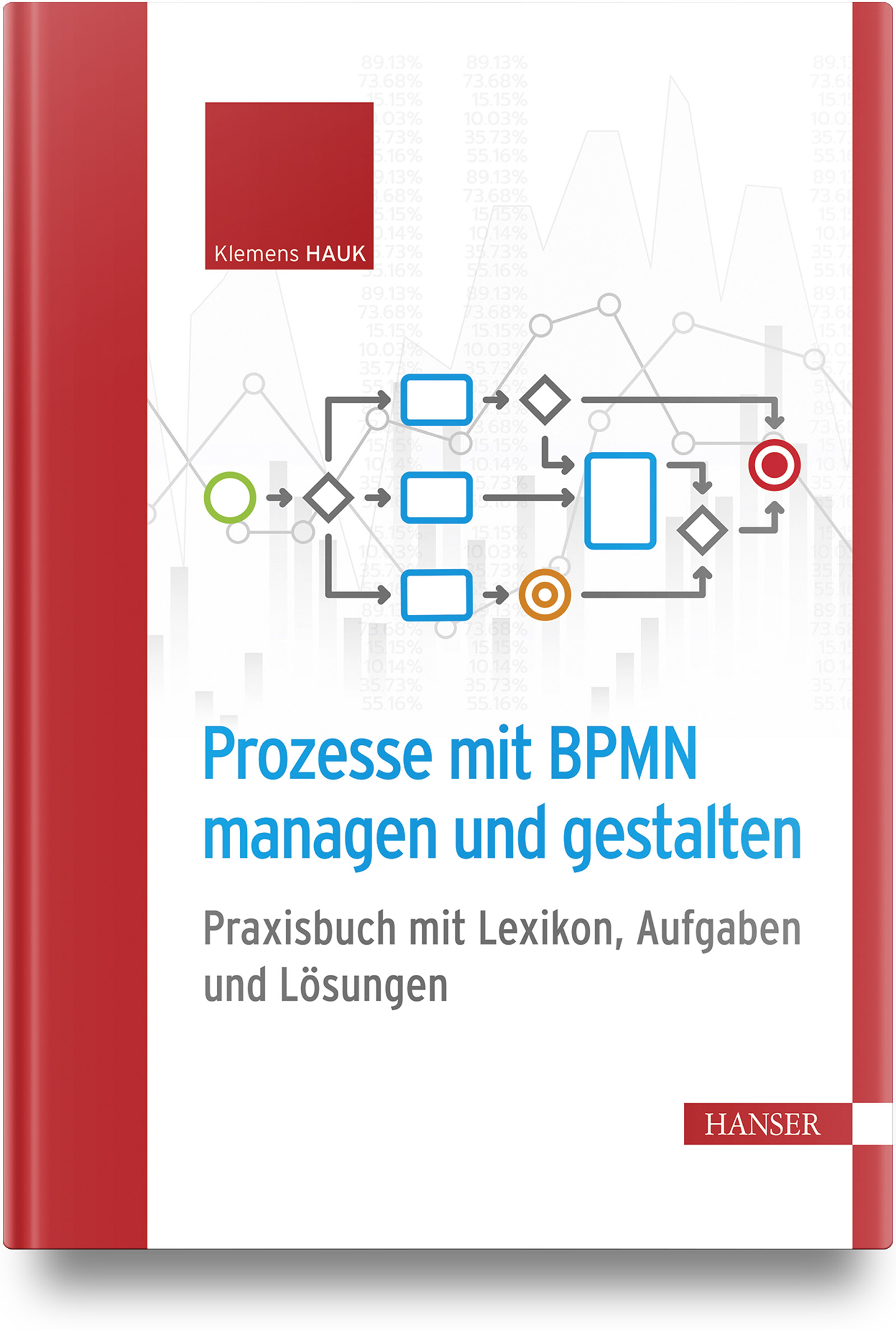
Prozesse mit BPMN managen und gestalten
Lernerfolg garantiert!Mit BPMN (Business Process Model and Notation) werden Prozesse modelliert und einheitlich grafisch dargestellt. BPMN bildet die Basis jeglicher Prozessoptimierung und verknüpft die Anforderungen von Management und IT.Dieses Praktikerwerk besteht aus zwei Teilen: einem Lexikon und einem Aufgabenteil mit Lösungen.Im Lexikonteil werden alle wesentlichen Begriffe rund um BPMN praxisorientiert erläutert und mit vielen Beispielen veranschaulicht. Alle relevanten Fragen rund um das Managen und Modellieren der Prozesse werden dabei beantwortet: Worauf kommt es an? Was sind die Ziele? Warum sind Regeln wichtig und welche bieten sich an? Oder was ist beispielsweise bei der Prozessanalyse, Hierarchisierung oder beim Stil zu beachten?Beim Aufgaben- und Lösungsteil geht es um die konkrete Umsetzung. Hier kommen Sie direkt ins Tun. Die Aufgaben umfassen von Analysen, grafischen Darstellungen bis hin zur Dokumentation Problemstellungen, die genau so auch in der Praxis vorkommen. Anhand des praktischen Lösungsteils ist dabei jederzeit eine Selbsteinschätzung möglich und der Lernerfolg garantiert.- Wissen, worauf es bei BPMN ankommt- Prozesse managen und modellieren- Einfach, anschaulich und konsequent praxisorientiert Dipl. Ing. Klemens Hauk studierte Elektrotechnik und Nachrichtentechnik an der RWTH Aachen. Er ist freiberuflicher IT-Projektleiter (ERP/SAP), IT-Manager in der Industrie (Prozesse & Anwendungsentwicklung), Dozent und Lehrbeauftragter für IT, Projektmanagement, Prozessmodellierung und SAP.

AI for Utilities
This transformative book explores the power of artificial intelligence (AI) in revolutionizing the utilities industry. It covers crucial topics such as intelligent grids, decentralized energy resources, customer engagement, electric vehicle integration, and more, providing a comprehensive and practical guide to successfully navigate the energy transition.In today's world, the urgency of addressing climate change and transitioning to sustainable energy systems is undeniable. With approximately 60 percent of global greenhouse gas emissions attributed to the energy sector, utilities play a vital role in achieving sustainability goals. The traditional utility business model faces disruption from renewable energy, changing consumer expectations, and regulatory shifts. Embracing AI emerges as a key solution to optimize operations, enhance grid reliability, and meet evolving customer demands.Through compelling case studies and industry-specific use cases, you will discover how AI drives innovation, improves operational efficiency, and contributes to a greener and more sustainable world. As the demand for cleaner and more sustainable energy practices grows, this book demonstrates how AI can support utilities in meeting these demands, making them more resilient, agile, and customer-centric.Whether you're a seasoned industry expert or a curious student, this book equips you with the knowledge and insights to embrace sustainability, navigate the complex energy landscape, leverage AI to shape a positive future, and join the movement towards a greener world, empowered by AI's potential in the utilities industry.WHAT YOU WILL LEARN* Understand the challenges and opportunities for utilities in the context of climate change, energy poverty, and the evolving business landscape* Discover how rapid transformation is needed in the utilities sector to overcome challenges and leverage opportunities for a sustainable future* Gain insight into the role of technology, particularly artificial intelligence (AI), as a critical tool for utilities in their transformation journey* Be aware of how AI can be applied in building the future utility industry, including its potential impact on energy efficiency, intelligent energy ecosystems, community engagement, and new business models* Gain knowledge of the adoption of AI and machine learning technologies in the utility industry, including the current state, barriers, significant influencing factors, and an AI adoption maturity model for utilities* Recognize the sustainability imperative for utilities and how AI can help in achieving sustainable energy practices* Become familiar with the transformation of power generation, microgrids, intelligent transmission and distribution systems, utilities retail, mobility through electric vehicles, and the integration of distributed energy resources(DER) using AI* Gain insight into the potential of AI in addressing challenges and driving innovation in the energy ecosystem, such as optimizing power generation assets, enhancing grid intelligence, improving customer service, and enabling clean energy awareness in the metaverseWHO THIS BOOK IS FORProfessionals and decision makers in the global utilities industry who want to leverage artificial intelligence (AI) technologies to transform their operations and address challenges and opportunities in the energy sector. This book may also appeal to researchers, academics, and students in the fields of energy engineering, environmental science, data analytics, and AI who want to gain a deeper understanding of AI in the utilities sector and its implications for sustainable energy systems.DR. DEBHASHISH ROY has emerged as a luminary in the realm of Technology Innovation Leadership, particularly within the Utilities industry, boasting nearly 15 years of distinguished service. His tenure is marked by a profound commitment to harnessing the potential of Digital, Cloud, AI/ML, and Analytics to catalyze significant business transformations for Fortune 500 organizations. As a Technology Leader within the Technology Advisory and Client Delivery sector of a premier Fortune 500 company since 2010, Dr. Roy has made indelible strides in the Utilities sector, demonstrating an unmatched prowess in addressing complex industry challenges and championing innovation.His tenure includes the development and implementation of pioneering solutions in AI, Machine Learning, and Cloud technologies, which have been instrumental in propelling business visions and enhancing operational efficiencies. Dr. Roy's dedication to AI for sustainable development is particularly noteworthy, emphasized by his doctoral research and the development of over 10 AI-powered patents. This commitment positions him as a respected thought leader in the field.This book encapsulates Dr. Roy's journey of transformative leadership and his unwavering commitment to advancing sustainable, AI-driven solutions within the Utilities sector, setting a benchmark for innovation and excellence.Chapter 1: AI for Utilities.- Chapter 2: Utilities of the Future.- Chapter 3: Utilities Building Digital DNA.- Chapter 4: AI Adoption in Utilities.- Chapter 5: Sustainability Imperative for Utilities.- Chapter 6: Generating Power in the New Low Carbon Economy.- Chapter 7: Microgrid - Macro Impact.- Chapter 8: Intelligent Transmission and Distribution.- Chapter 9: Utilities Retail Reimagined.- Chapter 10: Transforming Mobility Through EV.- Chapter 11: Age of DER.- Chapter 12: Utilities in the Metaverse.

How to Launch a Token
Take a deep dive into the intricacies of launching and successfully managing a cryptocurrency token. This book is an indispensable resource, providing invaluable insights and practical advice.Spanning 12 chapters, the book begins with the fundamentals, explaining the different types of tokens and the core concepts of crypto projects, guiding readers through the critical decision-making process about the necessity and role of a token in their venture. As the narrative progresses, you are taken on a journey through the lifecycle of a crypto project. It emphasizes the importance of a well-thought-out roadmap, a compelling pitch deck, and the crucial process of assembling a skilled team.Diving deeper, the book explores the complex world of tokenomics, reviewing the various economic models behind tokens and how to tailor them to specific projects. A key aspect of this guide is its focus on go-to-market strategies, including targeting the right audience, effective marketing techniques, and the vital role of community building. Additionally, it addresses the essentials of fundraising in the crypto space, highlighting the types of investors to approach and strategies for engaging them effectively.Security and stability are paramount in the crypto world. The book provides a detailed analysis of the storage and custody of funds, comparing centralized and decentralized mechanisms and emphasizing the importance of robust security measures. This is crucial for ensuring liquidity and accessibility of the token in the market. The guide culminates with a focus on the launch day, detailing the preparation, organization, and key considerations to ensure a successful token launch. When done you’ll be well-equipped to navigate the complex and exciting world of cryptocurrency token launches.WHAT YOU’LL LEARN* Develop a successful launch strategy for a token.* Prepare the decks and documents for a successful token campaign.* Discover negotiation tactics required to reduce fees for all your counterparts.* Explore techniques required to maintain the health and popularity of your token.WHO THIS BOOK IS FORThose considering launching a token, companies looking to tokenize assets, accelerators and incubators, advisors and blockchain teachers/professors, and crypto firms as part of their onboarding material.Alexander T. Rees-Evans recently moved into the world of crypto, initially collaborating with the luxury asset trading platform, Idoneus. Since then, he has headed up large sales teams in a centralized exchange, private placement platforms and was the international sales director at Kaizen Finance where over 40 projects were built and launched. Rees-Evans is currently a senior advisor at DVerse, a multi-award winning Web3 consultancy firm working with some of the largest companies in this space such as Algorand, Farcana, AnimocaBrands and Assassin’s creed. He also presides over the blockchain and cybernetic commission of the World Business Union, is a mentor at Techstars, Blockstart, AVio and GeniusX, and an accredited partner of the BTCSafezone, the most secure platform for exchanging Bitcoin and USDT.Chapter 1: Introduction to launching a token.- Chapter 2: Project structure.- Chapter 3: Tokenomics.- Chapter 4: Market Cycles.- Chapter 5: Go to market strategies.- Chapter 6: Mandatory stages of your product.- Chapter 7: Raising funds.- Chapter 8: Storage and custody of funds.- Chapter 9: Market making.- Chapter 10: DEXs and CEXs.- Chapter 11: How to prepare for your launch day.- Chapter 12: Token health, longevity and final words.
PostgreSQL Skills Development on Cloud
This book provides a comprehensive approach to manage PostgreSQL cluster databases on Amazon Web Services and Azure Web Services on the cloud, as well as in Docker and container environments on a Red Hat operating system. Furthermore, detailed references for managing PostgreSQL on both Windows and Mac are provided. This book condenses all the fundamental and essential concepts you need to manage a PostgreSQL cluster into a one-stop guide that is perfect for newcomers to Postgres database administration. Each chapter of the book provides historical context and documents version changes of the PostgreSQL cluster, elucidates practical "how-to" methods, and includes illustrations and key word definitions, practices for application, a summary of key learnings, and questions to reinforce understanding. The book also outlines a clear study objective with a weekly learning schedule and hundreds of practice exercises, along with questions and answers. With its comprehensive and practical approach, this book will help you gain the confidence to manage all aspects of a PostgreSQL cluster in critical production environments so you can better support your organization's database infrastructure on the cloud and in containers. What You Will Learn * Install and configure Postgres clusters on the cloud and in containers, monitor database logs, start and stop databases, troubleshoot, tune performance, backup and recover, and integrate with Amazon S3 and Azure Data Blob * Manage Postgres databases on Amazon Web Services and Azure Web Services on the cloud, as well as in Docker and container environments on a Red Hat operating system * Access sample references to scripting solutions and database management tools for working with Postgres, Redshift (based on Postgres 8.2), and Docker * Create Amazon Machine Images (AMI) and Azure Images for managing a fleet of Postgres clusters on the cloud * Reinforce knowledge with a weekly learning schedule and hundreds of practice exercises, along with questions and answers * Progress from simple concepts, such as how to choose the correct instance type, to creating complex machine images * Gain access to an Amazon AMI with a DBA admin tool, allowing you to learn Postgres, Redshift, and Docker in a cloud environment * Refer to a comprehensive summary of documentations of Postgres, Amazon Web services, Azure Web services, and Red Hat Linux for managing all aspects of Postgres cluster management on the cloud Who This Book Is For Newcomers to PostgreSQL database administration and cross-platform support DBAs looking to master PostgreSQL on the cloud. 1. Introduction to PostgreSQL Database Management.- 2. Capacity Planning.- 3. Amazon EC2/Azure VM Linux Install Tasks.- 4. PostgreSQL Software Installation on Amazon EC2/Azure VM Linux.- 5. Client Tools.- 6. PostgreSQL on AWS RDS/Azure SQL Database.- 7. PostgreSQL on Docker.- 8. Postgres Cluster and Database Backup.- 9. PostgreSQL on Windows Server in Cloud.- 10. PostgreSQL Post Installation Tasks.- 11. Sequences.- 12. Postgres Cluster Upgrade.- 13. PostgresSQL Recovery.- 14. PostgresSQL High Availability.- 15. Table Partition.- 16. Postgres Tablespaces.- 17. Multi-Version Concurrency Control (MVCC).- 18.- Projects.

Full Stack Development with Microsoft Blazor
Become a full-stack web developer using the Microsoft Blazor framework and the techniques shown in this book. This new edition will have you building all kinds of applications in C# and Microsoft .NET 8, from static web sites to fully interactive single page applications, and desktop and mobile applications, in no time. At it's core, this book teaches you to build user interfaces and present data to a user for display and modification, capturing the user’s changes via data binding. The book shows you how to access a rich library of .NET functionality such as a component modeling for building composable user interfaces—including developing reusable components that can be used across many pages and websites. New for this edition, the book now covers server communication using SignalR and/or gRPC, the use of virtualization to load large quantities of data efficiently, deployment and ahead-of-time compilation into WASM, new unit testing features, security using OpenID Connect, and more features added in Blazor in .NET 8. At it's core, Blazor provides a fresh take on web development by eliminating the need to learn different languages and frameworks for client- and server-side development. It also allows C# and .NET to be used on all sides—both server-side and client-side—providing a robust feature set that is well suited toward scalable, enterprise-level applications. With Blazor you can use all your experience in .NET 8 along with thousands of existing libraries, right in the browser. This book gets you proficient using this important toolkit for web application development. What You Will Learn * Build user interfaces and display data for users to edit * Capture user edits and changes via data binding * Transfer data back and forth between server and client * Communicate with services using REST, SignalR, or gRPC * Develop reusable components and assemble them into bigger components * Use routing to build single-page applications (SPAs) * Build stable and maintainable software using unit testing * Internationalize your application to reach more users * Secure your Blazor application with OpenID Connect * Build static interactive pages web pages optimized for SEO * Use the same components to build mobile and desktop applications Become a full-stack web developer using the Microsoft Blazor framework and the techniques shown in this book. This new edition will have you building all kinds of applications in C# and Microsoft .NET 8, from static web sites to fully interactive single page applications, and desktop and mobile applications, in no time. At it's core, this book teaches you to build user interfaces and present data to a user for display and modification, capturing the user’s changes via data binding. The book shows you how to access a rich library of .NET functionality such as a component modeling for building composable user interfaces—including developing reusable components that can be used across many pages and websites. New for this edition, the book now covers server communication using SignalR and/or gRPC, the use of virtualization to load large quantities of data efficiently, deployment and ahead-of-time compilation into WASM, new unit testing features, security using OpenID Connect, and more features added in Blazor in .NET 8. At it's core, Blazor provides a fresh take on web development by eliminating the need to learn different languages and frameworks for client- and server-side development. It also allows C# and .NET to be used on all sides—both server-side and client-side—providing a robust feature set that is well suited toward scalable, enterprise-level applications. With Blazor you can use all your experience in .NET 8 along with thousands of existing libraries, right in the browser. This book gets you proficient using this important toolkit for web application development. What You Will Learn * Build user interfaces and display data for users to edit * Capture user edits and changes via data binding * Transfer data back and forth between server and client * Communicate with services using REST, SignalR, or gRPC * Develop reusable components and assemble them into bigger components * Use routing to build single-page applications (SPAs) * Build stable and maintainable software using unit testing * Internationalize your application to reach more users * Secure your Blazor application with OpenID Connect * Build static interactive pages web pages optimized for SEO * Use the same components to build mobile and desktop applications Who This Book is For Experienced .NET developers who want to apply their existing skills toward building professional-quality and server- or client-side web applications that run in any browser; also for web developers who want to step away from JavaScript and its complexities, and instead apply a proven technology (C# and .NET8) that is robust toward creating enterprise-quality applications that scale and are reliable and provide a good user experience Peter Himschoot works as a lead trainer, architect, and strategist at U2U. He has a wide interest in software development that includes applications for the web, Windows, and mobile devices. He has trained thousands of developers, is a regular speaker at international conferences, and has been involved in many web and mobile development projects as a software architect. He has been a Microsoft Regional Director (from 2003 to 2019) tasked with advising developer and IT professional audiences, as well as Microsoft. Chapter 1. Introduction to Full Stack Development with Blazor.-Chapter 2. Blazor Components.-Chapter 3. Data Binding.- Chapter 4. Blazor Forms and Validation.- Chapter 5. Advanced Components.-Chapter 6. Built-In Components.-Chapter 7. Component Libraries.-Chapter 8. Application Rendering Modes.-Chapter 9. Services and Dependency Injection.-Chapter 10. Data Storage.-Chapter 11. REST Communication.-Chapter 12. Single Page Applications and Routing.-Chapter 13. JavaScript Interoperability .- Chapter 14. Blazor State Management.- Chapter 15. Unit Testing Components with bUnit.- Chapter 16. Building Real-Time Applications with Blazor and SignalR.-Chapter 17. Efficient Communication with gRPC.- Chapter 18. Supporting Multiple Languages in your Blazor Application.- Chapter 19. Deploying Your Blazor Application.- Chapter 20. Blazor Hybrid Applications.- Chapter 21. Security with OpenID Connect.- Chapter 22. Securing Blazor.

Artificial Intelligence-Enabled Businesses
THIS BOOK HAS A MULTIDIMENSIONAL PERSPECTIVE ON AI SOLUTIONS FOR BUSINESS INNOVATION AND REAL-LIFE CASE STUDIES TO ACHIEVE COMPETITIVE ADVANTAGE AND DRIVE GROWTH IN THE EVOLVING DIGITAL LANDSCAPE.Artificial Intelligence-Enabled Businesses demonstrates how AI is a catalyst for change in business functional areas. Though still in the experimental phase, AI is instrumental in redefining the workforce, predicting consumer behavior, solving real-life marketing dynamics and modifications, recommending products and content, foreseeing demand, analyzing costs, strategizing, managing big data, enabling collaboration of cross-entities, and sparking new ethical, social and regulatory implications for business. Thus, AI can effectively guide the future of financial services, trading, mobile banking, last-mile delivery, logistics, and supply chain with a solution-oriented focus on discrete business problems. Furthermore, it is expected to educate leaders to act in an ever more accurate, complex, and sophisticated business environment with the combination of human and machine intelligence. The book offers effective, efficient, and strategically competent suggestions for handling new challenges and responsibilities and is aimed at leaders who wish to be more innovative. It covers the early stages of AI adoption by organizations across their functional areas and provides insightful guidance for practitioners in the suitable and timely adoption of AI. This book will greatly help to scale up AI by leveraging interdisciplinary collaboration with cross-functional, skill-diverse teams and result in a competitive advantage. AUDIENCEThis book is for marketing professionals, organizational leaders, and researchers to leverage AI and new technologies across various business functions. It also fits the needs of academics, students, and trainers, providing insights, case studies, and practical strategies for driving growth in the rapidly evolving digital landscape. SWETA DIXIT, PHD, is an associate professor in the Sharda School of Business Studies, Sharda University, Greater Noida, India. She has authored one book and published research articles and case studies on emotional intelligence, global mobility, performance management, and organizational culture. Dixit also conducts sessions on emotional intelligence, self-awareness, leadership, and negotiation skills. MOHIT MAURYA, PHD, is an associate professor in the Sharda School of Business Studies, Sharda University, Greater Noida, India. He has published several research papers in national and international journals and delivered lectures on hyper-localization, digital marketing, branding, business ethics, etc. He has authored 3 books. His scholarly work won the Emerald - AUC School of Business Cast Writing Competition in 2020. VISHAL JAIN, PHD, is an associate professor at Sharda University, Greater Noida, India. His research interests focus on information retrieval, the semantic web, ontology engineering, data mining, etc. He has edited 50 books for a variety of publishers and authored more than 100 research papers for reputed conferences and journals. Jain has several awards, which include the 2012 Young Active Member Award and the 2019 Best Researcher Award. GEETHA SUBRAMANIAM, PHD, is a professor at the Faculty of Education, Languages, Psychology, and Music, SEGI University, Kuala Lumpur, Malaysia. Her research focuses on labor economics, sustainable development issues, teaching & learning, and educational management issues. She has published more than 100 journals, co-authored two economics textbooks, and is the managing editor of the Malaysian Journal of Qualitative Research. Preface xix1 Crafting Effective AI Adoption Strategies 1Aarti Neema and Rashid Khan2 Role of Artificial Intelligence in Management and Preservation of Old Text Through New Tech 25Veenus Jain, Pallavi Mohanan and Mkrtchyan Naira3 Deployment of AI and ML Techniques in the Form of Ontology for Improving Business Management Perspectives 39Aman Jandwani, Balraj Verma, Amit Mittal, Paras Jandwani and Gagandeep Singh Narula4 Blockchain in Supply Chain Management: Applications, Advantages and Challenges 57Pijush Kanti Dutta Pramanik and Saurabh Pal5 Artificial Intelligence for Supply Chain Optimization: Benefits, Challenges, and Potential Solutions 81Dhruv Kishore Bole and Narasimha Rao Vajjhala6 Fusing New Age Technologies with Marketing Management: Navigating the Digital Frontier 95Ankitha K., Jayapadmini Kanchan, Harish Kunder, Shwetha S. Shetty, Ganaraj K. and Madhura Hegde7 Nth Floor at Accenture--Next-Gen Onboarding Using Metaverse 105Rachna Bansal Jora, Ansh Agrawal, Edoardo Mazzetto, Sweta Dixit and Samson Lallawmkipa Darlong8 Smart HR with Smart Technologies 121Arnav Malhotra, Alka Maurya and Balasundram Maniam9 Securing Business Transactions Using Merkle Tree 137Ambika N.10 InvestoAI-Tailored Investment Recommendation 159Niomi Samani, Tejas Uttare, Rama M. Maliya and Kedar Semani11 Using AI Technology to Enhance Data-Driven Decision-Making in the Financial Sector 187Meng Wu, Geetha Subramaniam, Zeyu Li and Xiuchun Gao12 The Role of Artificial Intelligence (AI) in the Transformation of Small- and Medium-Sized Businesses: Challenges and Opportunities 209Arjita Jain, Kiran Shrimant Kakade and Swati Amit Vispute13 Applications of Artificial Intelligence and Machine Learning-Enabled Businesses: A SWOT Analysis for Human Society 227Santanu Koley, Shatadru Sengupta, Bipasha Biswas, Kankana Datta, Manasi Jana and Apratim Mitra14 Gamified Learning Environments for Higher Education Sustainability in Delhi Metropolitan Region 263Sonia Yadav, Sweta Dixit, Rachna Bansal and Canh Van Ta15 Exploring the Impact of AI on Management and Healthcare for Streamlining Operations and Decision-Making 275Pranshu Mathur and Ajay Kumar16 Empowering Defense: Harnessing AI for Next-Generation Warfare 289Nikki Rani, Komal Jindal, Rita Chikkara and Nidhi Malik17 Industry Augmented Reality Along with Artificial Intelligence: Developments, Resources, and Possible Concerns 311Sarabjeet Singh Sethi and Priyanka Sharma18 Transformative Effects of Smarter Chatbots: Unravelling the Vision, Challenges, and@Capabilities of ChatGPT-Conversational AI 333C. Kishor Kumar Reddy, Patlolla Sathvika Reddy, Ashritha Pilly and Srinath Doss19 Application of Artificial Intelligence in Business Management for Prudent Decision Making 351Syed Tabassum Sultana and T. Venkat Narayana Rao20 Technology-Driven Business Ethics: A Philosophical Discourse 371Sooraj Kumar Maurya, Amarbahadur Yadav and Rajiv Nayan21 Harnessing the Power of Artificial Intelligence for Sustainable Development 391Ayan Harsh Sinha, Alka Maurya and J. Mark Munoz22 University Students' Perception of Artificial Intelligence (AI) for Entrepreneurship Development in Selected Asian Countries of China, India, Indonesia, and Malaysia 397Doris Padmini Selvaratnam, Jaheer Mukhtar K.P., Evi Gravitiani and Wen Meiting23 Clubhouse Unleashed: Harnessing the Power of Voice for Robust Social Networking and Business Growth 421Pooja Darda, Shailesh Pandey, Om Jee Gupta, Manpreet Kaur and Sanjaya Singh Gaur24 Artificial Intelligence (AI) as Strategy to Gain Competitive Advantage for Australian Higher Education Institutions (HEI) Under the New Post COVID-19 Scenario 439Rubaiyet Hasan Khan and Rohini Balapumi25 AI for a Better Future--Perspectives from Young Employees in Malaysia and China 451Geetha Subramaniam, Wang Zhe, Zhu Dan and Narayanaswami Subramaniam26 Personalization and Customer Experience in the Era of Data-Driven Marketing 467Ambarish G. Mohapatra, Anita Mohanty, Subrat Kumar Mohanty, Nitaigour Premchand Mahalik and Sasmita NayakReferences 509Index 513
JavaScript for Kids
Welcome to the book “JavaScript for Kids: Start your Coding Adventure”. This book is your introduction to the world of JavaScript. It's your first step towards developing websites and mobile applications. With JavaScript, you can turn your ideas into reality. Learning should be fun, so you will feel like you are reading a story. By the end of this book, you will have a good understanding of JavaScript. You will have taken the first steps in your modern web programming adventure. Have fun programming! Hello, I am Abdelfattah Ragab, a professional software developer with more than 20 years of experience. I am an expert in Angular, CSS, graphic design and all web related technologies. I have published numerous books on modern CSS layouts and Angular as well as complete business solutions for e-commerce and the like. I hope you enjoy my books. With kind regards.
So You Want to Work in Crypto
Gain the necessary technical skills, tools, and insights to succeed in the crypto working environment. Changing market conditions have created new opportunities and working conditions. This book goes beyond just getting a job, as it shares a myriad of hidden tips on how to thrive within this constantly evolving ecosystem. Through examples and detailed typologies, you’ll work out which crypto job is the best fit for you.You’ll begin by reviewing some fun facts and anecdotes illustrating life in a Web3 environment, with a careful examination of the various roles in crypto, blockchain, and digital assets. You’ll then compare roles in the traditional corporate and financial environments with those in the crypto world from a risk and reward perspective. From there you’ll prepare for crypto job interviews with a focus on what to expect and fine-tuning the necessary expertise to excel. Different types of contracts, the onboarding process, communication tools, the intricacies of video conferences, internal storage, and various crypto-specific operational skills will all be clearly explained as well._So You Want to Work in Crypto_ provides all the strategies you’ll need to stay ahead of the curve in the ever-changing crypto world.WHAT YOU'LL LEARN* Examine what job positions exist in Web3 and how to obtain the right one for you.* Prepare yourself for the Web3 environment and the type of job you will get.* See how to strategically evolve your career in the world of crypto.WHO THIS BOOK IS FORAny individual curious about evolving their career, obtaining their first job, or simply looking to find a new, more fulfilling job in an exciting revolutionary industry.Alexander T. Rees-Evans recently moved into the world of crypto, initially collaborating with the luxury asset trading platform, Idoneus. Since then, he has headed up large sales teams in a centralized exchange, private placement platforms and was the international sales director at Kaizen Finance where over 40 projects were built and launched.Rees-Evans is currently a senior advisor at DVerse, a multi-award winning Web3 consultancy firm working with some of the largest companies in this space such as Algorand, Farcana, AnimocaBrands and Assassin’s creed. He also presides over the blockchain and cybernetic commission of the World Business Union, is a mentor at Techstars, Blockstart, AVio and GeniusX, and an accredited partner of the BTCSafezone, the most secure platform for exchanging Bitcoin and USDT.Chapter 1: Introduction to Working in Crypto.- Chapter 2: Corporate vs Crypto.- Chapter 3: Web3 Working Environment.- Chapter 4: Market Conditions and Cycles .- Chapter 5: Web3 Company Structures.- Chapter 6: Types of Jobs in Web3.- Chapter 7: Preparing for Your Crypto Job Interview.- Chapter 8: The Onboarding Process.- Chapter 9: How to prepare for your first day at work.- Chapter 10: How to Keep a Job in Crypto.- Chapter 11: How to Develop Your Crypto Career.- Chapter 12: Words of Wisdom.

Artificial Intelligence-Enabled Businesses
THIS BOOK HAS A MULTIDIMENSIONAL PERSPECTIVE ON AI SOLUTIONS FOR BUSINESS INNOVATION AND REAL-LIFE CASE STUDIES TO ACHIEVE COMPETITIVE ADVANTAGE AND DRIVE GROWTH IN THE EVOLVING DIGITAL LANDSCAPE.Artificial Intelligence-Enabled Businesses demonstrates how AI is a catalyst for change in business functional areas. Though still in the experimental phase, AI is instrumental in redefining the workforce, predicting consumer behavior, solving real-life marketing dynamics and modifications, recommending products and content, foreseeing demand, analyzing costs, strategizing, managing big data, enabling collaboration of cross-entities, and sparking new ethical, social and regulatory implications for business. Thus, AI can effectively guide the future of financial services, trading, mobile banking, last-mile delivery, logistics, and supply chain with a solution-oriented focus on discrete business problems. Furthermore, it is expected to educate leaders to act in an ever more accurate, complex, and sophisticated business environment with the combination of human and machine intelligence. The book offers effective, efficient, and strategically competent suggestions for handling new challenges and responsibilities and is aimed at leaders who wish to be more innovative. It covers the early stages of AI adoption by organizations across their functional areas and provides insightful guidance for practitioners in the suitable and timely adoption of AI. This book will greatly help to scale up AI by leveraging interdisciplinary collaboration with cross-functional, skill-diverse teams and result in a competitive advantage. AUDIENCEThis book is for marketing professionals, organizational leaders, and researchers to leverage AI and new technologies across various business functions. It also fits the needs of academics, students, and trainers, providing insights, case studies, and practical strategies for driving growth in the rapidly evolving digital landscape. SWETA DIXIT, PHD, is an associate professor in the Sharda School of Business Studies, Sharda University, Greater Noida, India. She has authored one book and published research articles and case studies on emotional intelligence, global mobility, performance management, and organizational culture. Dixit also conducts sessions on emotional intelligence, self-awareness, leadership, and negotiation skills. MOHIT MAURYA, PHD, is an associate professor in the Sharda School of Business Studies, Sharda University, Greater Noida, India. He has published several research papers in national and international journals and delivered lectures on hyper-localization, digital marketing, branding, business ethics, etc. He has authored 3 books. His scholarly work won the Emerald - AUC School of Business Cast Writing Competition in 2020. VISHAL JAIN, PHD, is an associate professor at Sharda University, Greater Noida, India. His research interests focus on information retrieval, the semantic web, ontology engineering, data mining, etc. He has edited 50 books for a variety of publishers and authored more than 100 research papers for reputed conferences and journals. Jain has several awards, which include the 2012 Young Active Member Award and the 2019 Best Researcher Award. GEETHA SUBRAMANIAM, PHD, is a professor at the Faculty of Education, Languages, Psychology, and Music, SEGI University, Kuala Lumpur, Malaysia. Her research focuses on labor economics, sustainable development issues, teaching & learning, and educational management issues. She has published more than 100 journals, co-authored two economics textbooks, and is the managing editor of the Malaysian Journal of Qualitative Research.

Data & AI Imperative
UNLOCK PREDICTABLE BOTTOM LINE GROWTH THROUGH TAILORED DATA AND AI STRATEGIES.In The Data & AI Imperative: Designing Strategies for Exponential Growth, celebrated data-driven growth leader, Lillian Pierson, delivers a masterclass in developing custom strategies to harness the full potential of data and AI within your organization. This book offers a clear, actionable roadmap for leveraging your company's data and technology assets to drive significant, reliable growth. With over two decades of experience, Pierson unveils her proprietary STAR framework through which you'll learn to survey, take stock of, and assess your company's current state. Finally, you'll be guided on how to recommend strategies that drive growth via the execution of optimally positioned data- and AI- intensive projects or products that directly improve your business bottom line. From conception to execution, learn to:* Identify high-impact opportunities for data or AI interventions within your business.* Assess your organization's readiness and data literacy to ensure successful outcomes.* Implement practical, effective tactics for overseeing your data-intensive projects, from strategic plans to profitable realities.* Develop and deploy AI and data strategies that exceed your business goals.While ideal for executives, managers, and other leaders of data- or AI-intensive companies, The Data & AI Imperative is also invaluable to data and technical professionals who aspire to elevate their impact by turning technical expertise into strategic leadership success. LILLIAN PIERSON, P.E., is an industry-renowned data- and AI-driven growth strategist, advisor and fractional CMO for B2B technology companies. She’s also a licensed professional engineer who’s supported the expansion of 10% of the Fortune 100 whilst educating over 2 million learners on topics of data strategy, data science, AI, and growth marketing. Acknowledgments ixAbout the Author xiIntroduction xiiiPART I THE DATA & AI ADVANTAGE IN MODERN BUSINESS 1Chapter 1 Leveling the Playing Field with Data and AI 3Chapter 2 Introduction to Data Strategy 17Chapter 3 Types of Data-Intensive Use Cases Based on Business Objectives 32Chapter 4 Data- and AI-Driven Product-Led Growth 49Chapter 5 Amplifying Growth Marketing Outcomes with Data and AI 66Chapter 6 Validating Product-Market Fit for Commercial Data and AI Products and Services 83PART II THE DATA & AI TRIFECTA: ETHICAL CONSIDERATIONS, DEPLOYMENT TACTICS, AND COMPETITIVE ANALYSIS 105Chapter 7 Complying with Regulatory and Ethical Standards 107Chapter 8 Practical Tactics for Successful AI Deployments 121PART III THE TECHNICAL FOUNDATION FOR GROWTH 139Chapter 9 Surveying Your Industry and Organization 141Chapter 10 Perform a Technical Assessment 160Chapter 11 Stakeholder Engagement and Data Literacy 176Chapter 12 Assessing Your Current State Organization 193Chapter 13 Assessing Your Current State AI Ethics and Data Privacy 215PART IV FORMULATING AND IMPLEMENTING AN AI STRATEGY 235Chapter 14 Selecting and Scoping a Winning Use Case 237Chapter 15 Evaluating All Relevant Resources 249Chapter 16 Data Strategy Recommendations for Reaching Future State Goals 277Chapter 17 Finalizing Your Strategic Plan 299Index 320

CyberDynamX
This book simplifies the process of formalizing your cybersecurity program into something you can easily understand. Breaking down complex concepts into clear, manageable steps, the concepts are accessible even to those without a deep technical background. It ensures that more individuals within your organization can effectively contribute to building and maintaining a robust cybersecurity program. The book's structured framework focuses on the four key areas essential for any successful cybersecurity initiative, allowing you to prioritize efforts and transition from a reactive to a proactive stance."CyberDynamX" addresses the common challenge of developing efficient and comprehensive cybersecurity programs. Many tasked with this responsibility are not dedicated cybersecurity professionals, often juggling these duties alongside their primary roles. This can lead to fragmented efforts and incomplete solutions. The book provides clear, concise guidance that is easy to follow, ensuring meaningful progress even for those new to cybersecurity. By offering practical, actionable advice, "CyberDynamX" helps streamline the development process, enabling you to build an effective cybersecurity program that meets your organization's needs swiftly and efficiently.WHAT YOU WILL LEARN:* The four things to radically focus on in building a functional cybersecurity program.* The importance of Risk Management and the means to get started performing this function.* The significant difference between Policy, Standards, Procedures, Guidance and Baselines; when to use each and how to build them.WHO THIS BOOK IS FOR:The market includes a wide range of professionals such as Chief Information Security Officers (CISOs), IT managers, cybersecurity analysts, compliance officers, and risk management professionals who are tasked with developing, implementing and even reviewing effective security programs. Additionally, senior executives and board members seek guidance to ensure that their organizations are not only compliant with regulatory requirements but also resilient against cyber threats.Curtis L. Blais is a distinguished IT professional with nearly 35 years of experience in the industry. He holds multiple certifications including CCNA, CCNP, GCIA, GCFW, WCSP, CISSP, CRISC, and CCSK, and is cleared to Secret in Canada. Throughout his career, Curtis has excelled in a wide range of IT disciplines, encompassing application development, design and operations of internetworking environments, and the construction and maintenance of information security architectures. His expertise extends to governance, risk, and compliance consulting, enterprise risk management, and strategic security leadership as a shared Chief Information Security Officer.Curtis has served every level of government and held significant positions in the private sector, including Board of Director roles for privately held corporations and a non-profit organization. He complements his certifications with a master’s degree in leadership and organizational change from Royal Roads University. Curtis is the author and creator of a Risk-based Information Security Model and has completed Harvard’s Cyber Risk Management program at the top of his cohort. He is also the principal author of the National Cybersecurity Assessment Report on the state of cybersecurity in higher learning in Canada for the years 2022 and 2023.An active voice in the industry, Curtis has spoken at multiple conferences and participated in numerous security industry panels. His dedication to service is demonstrated through his leadership of humanitarian aid teams in Central America. Born and raised in Edmonton, Alberta, Curtis is married to his wife Laureen of over 30 years. Together, they have three grown sons, Nathanial, Zachary, and Timothy, and two beloved grandchildren.Chapter 1. Risk.- Chapter 2. Class.- Chapter 3. Design.- Chapter 4. Control.- Chapter 5: Implementation.

Hacking MySQL
Your MySQL instances are probably broken. Many developers face slow-running queries, issues related to database architecture, replication, or database security—and that’s only the beginning. This book will deliver answers to your most pressing MySQL database questions related to performance, availability, or security by uncovering what causes databases to break in the first place.At its core, this book provides you with the knowledge necessary for you to break your database instances so you can better optimize it for performance and secure it from data breaches. In other words, you’ll discover the sorts of actions, minor and major, that degrade databases so you can fix and ultimately preempt them. MySQL sometimes acts according to its own rules, and this book will help you keep it working on your terms. At the same time, you will learn to optimize your backup and recovery procedures, determine when and which data to index to achieve maximum performance, and choose the best MySQL configurations, among other essential skills.Most MySQL books focus exclusively on optimization, but this book argues that it’s just as important to pay attention to the ways databases break. Indeed, after reading this book, you will be able to safely break your database instances to expose and overcome the nuanced issues that affect performance, availability, and security.WHAT YOU WILL LEARN* Know the basics of MySQL and the storage engines innoDB and MyISAM* Spot the ways you are harming your database’s performance, availability and security without even realizing it* Fix minor bugs and issues that have surprisingly serious impact* Optimize schema, data types, queries, indexes, and partitions to head off issues* Understand key MySQL security strategiesWHO THIS BOOK IS FORDatabase administrators, web developers, systems administrators, and security professionals with an intermediary knowledge of database management systems and building applications in MySQLLukas Vileikis is an ethical hacker, a MySQL database administrator, and a frequent conference speaker. He has worked on MySQL since late 2013, and since 2014, has found and responsibly disclosed security flaws in some of the most visited websites in Lithuania and abroad. Lukas honed his database administration skills while building and administering one of the biggest data breach search engines in the world: BreachDirectory.com, which is used by cyber security companies, individuals, as well as prominent universities worldwide. The website allows people to check whether they’re at risk of identity theft and then protect themselves on the web, and protects more and more people from all walks of life every single day. BreachDirectory has been running on MySQL ever since its inception and has been at the center of numerous awards, including at World Summit Awards 2020, where BreachDirectory was a national nominee nominated by the Lithuanian government to represent Lithuania against an international jury evaluating the best digital innovations in the world; and at Technorama 2021, a tech product-based event organized by Kaunas University of Technology (KTU), where BreachDirectory was nominated as the best product in the security space by Bentley Systems.Outside of BreachDirectory, Lukas produces content situated around database management systems. He has written articles for Severalnines, Redgate, DbVisualizer, Arctype (now part of ClickHouse), dbWatch, and other companies, as well as managed writers in some of those companies (DbVisualizer, Arctype.) Some of his content has been also replicated by MySQL, MariaDB, and Percona. He also runs a YouTube channel under the moniker “Database Dive,” where he distills complex database topics into relatable explanations in video format. Lukas also talks and runs workshops at conferences like Percona LIVE, MariaDB Server Fest and MariaDB Unconferences, DevTalks Romania in Bucharest, Big Data Conference Europe and Build Stuff in Vilnius, he has taken part in “Dirty AI” and other software events in Spain, as well as spoken remotely at events like Nerdearla, Conf42, Software Architecture Conference, and others.Lukas also runs his own blog at lukasvileikis.com and can be reached by email at lukas@lukasvileikis.comPart 1 The Basics of MySQL.- Chapter 1: The World of MySQL.- Chapter 2: Individual Storage Engines.- Part 2 Breaking MySQL.- Chapter 3: What Breaks MySQL?.- Chapter 4: How You Broke Your Queries.- Chapter 5: Understanding Query Components.- Chapter 6: Understanding Your Server.- Part 3 Optimizing MySQL.- Chapter 7: Optimizing MySQL for Your Server.- 8: Optimizing Specific Storage Engines, Schemas, and Data Types.- Chapter 9: Optimizing Queries.- Chapter 10: Optimizing MySQL or Big Data.- Chapter 11: Indexing MySQL.- Chapter 12: Optimizing Partitions.- Chapter 13: Optimizing Backups and Recovery.- Chapter 14: Optimizing Replication.- Chapter 15: Optimizing for Security.- Part 4 Securing MySQL.- Chapter 16: The World of Security in MySQL.- Chapter 17: Securing Your Database Instance.- Chapter 18.- Security and Big Data.- Chapter 19: Appendices: Things You Wish You Knew, but Don’t.- 19.1 Schrodinger’s Tables in MySQL.- 19.2 Having Fun with ibdata1.- 19.3 Having Fun with Indexes.- 19.4 Query that Breaks MySQL 5.7.- 19.5 Reliably Using MyISAM.- 19.6 Building APIs and Interacting with Big Data.- 1.7 Preparing for the Future.- 19.8 Summary.

Strategic Software Engineering
The role of a software engineer goes well beyond writing code. In many companies, large or small, engineers often need to understand unfamiliar business rules, and then coordinate with multiple groups to ship software within a tight schedule. Although the skills required to perform this job effectively can be hidden within one's years of experience, learning from mistakes, peer guidance, and available resources, are critical to success.This book summarizes the skills and practices effective engineers should leverage to excel at their job. A chapter is dedicated to each of the four main pillars that form a successful engineering career: Self-Management, Technical Discipline, Risk Management, and Strategic Teamwork. Topics covered within each pillar include insights and tips on how to enhance your career simply by making small changes in the way you work.Based on a collection of mentorship sessions from author Filipe Ximenes, _Strategic Software Engineering_ will empower you to maximize the impact of your work.WHAT YOU WILL LEARN* Master skills beyond writing code to achieve career goals.* Make your day-to day work more impactful through meaningful changes.* Identify, mitigate, and manage risk.* Leverage teamwork and collaboration to build successful products.WHO THIS BOOK IS FORMid-level engineers looking to make the jump to senior roles, as well as experienced engineers and managers who are looking to bolster their careersFILIPE XIMENES is the CTO and Co-Founder of Vinta, a software consultancy he has worked and grown over the past 10 years. During that time, he managed teams and built products in the most varying states of maturity, from writing the first commit as solo engineer of the project to seamlessly integrating a new team to an ongoing mature product. As a consultant Filipe matured the process of understanding business needs and translating it into working software that delivers value to users early and often.Chapter 1. Self Management.- Chapter 2. Technical Discipline.- Chapter 3, Risk Management.- Chapter 4, Strategic Teamwork.

Intelligente Produktions- und Fertigungsoptimierung - Der Bienenalgorithmus-Ansatz
Dieses Buch ist das erste Werk, das sich mit dem Bienenalgorithmus beschäftigt. Nach einer sanften Einführung in die wichtigsten Ideen, die dem Algorithmus zugrunde liegen, stellt das Buch aktuelle Ergebnisse und Entwicklungen im Zusammenhang mit dem Algorithmus und seiner Anwendung auf Optimierungsprobleme in Produktion und Fertigung vor. Mit dem Beginn der vierten industriellen Revolution sind Produktions- und Fertigungsprozesse und -systeme immer komplexer geworden. Um die beste Leistung aus ihnen herauszuholen, sind effiziente und effektive Optimierungstechniken erforderlich, die nicht von der Verfügbarkeit von Prozess- oder Systemmodellen abhängen. Solche Modelle sind in der Regel entweder nicht verfügbar oder aufgrund des hohen Grades an Nichtlinearität und Unsicherheiten in den darzustellenden Prozessen und Systemen mathematisch schwer zu lösen. Der Bienenalgorithmus ist eine leistungsstarke, schwarmbasierte, intelligente Optimierungs-Metaheuristik, die vom Suchverhalten der Honigbienen inspiriert ist. Der Algorithmus ist konzeptionell elegant und extrem einfach anzuwenden. Alles, was er zur Lösung eines Optimierungsproblems benötigt, ist ein Mittel zur Bewertung der Qualität potenzieller Lösungen. Dieses Buch zeigt die Einfachheit, Effektivität und Vielseitigkeit des Algorithmus und ermutigt Ingenieure und Forscher auf der ganzen Welt, ihn weiter einzusetzen, um eine intelligente und nachhaltige Fertigung und Produktion im Zeitalter von Industrie 4.0 und darüber hinaus zu realisieren. Kapitel 1. Der Bienenalgorithmus Einführung - Teil 1: Prozesse.- Kapitel 2. Minimierung der Bestückungszeit von Leiterplatten.- Kapitel 3. Ein digitaler Zwilling zur Optimierung des Drahterodierens.- Kapitel 4. Fallstudie mit BEE-miner.- Kapitel 5. Anwendung auf das pulsierende Hydroforming.- TEIL 2: Ausrüstung.- Kapitel 6. Formerkennung für Robotermanipulation.- Kapitel 7. Identifizierung und Messung von Werkzeugverschleiß - Kapitel 8. Punktwolkenregistrierung.- Kapitel 9. Toolkit für die PID-Abstimmung.- Kapitel 10. Effekt der Harmony Memory Integration - Kapitel 11. Multilevel Image Thresholding - Kapitel 12. Roboterbahnplanung.- Teil 3. Produktionspläne.- Kapitel 13. Produktionsplanung und Terminierung einer flexiblen Fertigungsanlage - Kapitel 14. Paralleles Maschinenplanungsproblem.- Kapitel 15. Cloud-Edge Collaborative Manufacturing Task Scheduling.- Teil 4. Logistik und Lieferkette - Kapitel 16. Bienen-Traplining-Metaphern für Fahrzeug-Routing.- Kapitel 17. Gestaltung der Lieferkette - Teil 5. Wiederaufbereitung.- Kapitel 18. Planung der robotergestützten Demontage.- Kapitel 19. Multi-Objektive Optimierung von Roboter-Demontageplänen.- Kapitel 20. Aufgabenoptimierung für ein modernes Cloud Remanufacturing System - Kapitel 21. Vorhersage der Restnutzungsdauer von Motoren.

PHP 8 Objects, Patterns, and Practice: Volume 1
Develop elegant and rock-solid systems using PHP, aided by three key elements: object fundamentals, design principles, and best practices. Now in its 7th edition, this book has been fully updated for PHP 8.3 and split into two volumes to better accommodate its wealth of new content. Volume 1 covers objects and patterns, while Volume 2 focuses on tools and best practices. You’ll begin this volume by reviewing PHP's object-oriented features including key topics such as class declarations, inheritance, and reflection. The second part of the book is devoted to design patterns. It explains the principles that make patterns powerful and covers many of the classic design patterns, as well as enterprise and database patterns. This volume provides a solid grounding in PHP's support for objects and builds on this foundation to apply the core principles of software design. New topics covered include read only classes, enumerations, typed class constants, as well as various additions to argument and return types. The knowledge gained from this book will help you master the object-oriented enhancements and the design patterns available for PHP 8, paving the way for developing best practices in Volume 2. You will: * Master advanced object-oriented features, including static methods and properties. * Manage error conditions with exceptions and create abstract classes and interfaces. * Use design principles to deploy objects and classes effectively in your projects. * Discover a set of powerful patterns that you can implement in your own projects. Develop elegant and rock-solid systems using PHP, aided by three key elements: object fundamentals, design principles, and best practices. Now in its 7th edition, this book has been fully updated for PHP 8.3 and split into two volumes to better accommodate its wealth of new content. Volume 1 covers objects and patterns, while Volume 2 focuses on tools and best practices. You’ll begin this volume by reviewing PHP's object-oriented features including key topics such as class declarations, inheritance, and reflection. The second part of the book is devoted to design patterns. It explains the principles that make patterns powerful and covers many of the classic design patterns, as well as enterprise and database patterns. This volume provides a solid grounding in PHP's support for objects and builds on this foundation to apply the core principles of software design. New topics covered include read only classes, enumerations, typed class constants, as well as various additions to argument and return types. The knowledge gained from this book will help you master the object-oriented enhancements and the design patterns available for PHP 8, paving the way for developing best practices in Volume 2. What You Will Learn * Work with object fundamentals. * Write classes and methods, instantiate objects, and create powerful class hierarchies using inheritance. * Master advanced object-oriented features, including static methods and properties. * Manage error conditions with exceptions and create abstract classes and interfaces. * Use design principles to deploy objects and classes effectively in your projects. * Discover a set of powerful patterns that you can implement in your own projects. Who This Book Is For Anyone with at least a basic knowledge of PHP who wants to use its object-oriented features in their projects. Matt Zandstra has worked as a web programmer, consultant, and writer for over two decades. In addition to this book, he is the author of SAMS Teach Yourself PHP in 24 Hours (three editions) and is a contributor to DHTML Unleashed. He has written articles for Linux Magazine, Zend, IBM DeveloperWorks, and php|architect Magazine, and also writes fiction. Matt was a senior developer/tech lead at Yahoo and API tech lead at LoveCrafts. He now runs an agency that advises companies on their architectures and system management, and develops systems primarily with PHP, Python, and Java. Part I. Objects.- 1. PHP: Design and Management.- 2. PHP and Objects.- 3. Object Basics.- 4. Advanced Features.- 5. Object Tools.- 6. Objects and Design.- Part II. Patterns.- 7. What Are Design Patterns? Why Use Them?.- 8. Some Pattern Principles.- 9. Generating Objects.- 10. Patterns for Flexible Object Programming.- 11. Performing and Representing Tasks.- 12. Enterprise Patterns.- 13. Database Patterns.

Generative AI in Banking Financial Services and Insurance
This book explores the integration of Generative AI within the Banking, Financial Services, and Insurance (BFSI) sector, elucidating its implications, applications, and the future landscape of BFSI. The first part delves into the origins and evolution of Generative AI, providing insights into its mechanics and applications within the BFSI context. It goes into the core technologies behind Generative AI, emphasizing their significance and practical applications. The second part explores how Generative AI intersects with core banking processes, ranging from transactional activities to customer support, credit assessment, and regulatory compliance. It focuses on the digital transformation driving investment banking into the future. It also discusses AI’s role in algorithmic trading, client interactions, and regulatory adaptations. It analyzes AI-driven techniques in portfolio management, customer-centric solutions, and the next-generation approach to financial planning and advisory matters. The third part equips you with a structured roadmap for AI adoption in BFSI, highlighting the steps and the challenges. It outlines clear steps to assist BFSI institutions in incorporating Generative AI into their operations. It also raises awareness about the moral implications associated with AI in the BFSI sector. By the end of this book you will understand Generative AI’s present and future role in the BFSI sector. What You Will Learn * Know what Generative AI is and its applications in the BFSI sector * Understand deep learning and its significance in generative models * Analyze the AI-driven techniques in portfolio management and customer-centric solutions * Know the future of investment banking and trading with AI * Know the challenges of integrating AI into the BFSI sector This book explores the integration of Generative AI within the Banking, Financial Services, and Insurance (BFSI) sector, elucidating its implications, applications, and the future landscape of BFSI. The first part delves into the origins and evolution of Generative AI, providing insights into its mechanics and applications within the BFSI context. It goes into the core technologies behind Generative AI, emphasizing their significance and practical applications. The second part explores how Generative AI intersects with core banking processes, ranging from transactional activities to customer support, credit assessment, and regulatory compliance. It focuses on the digital transformation driving investment banking into the future. It also discusses AI’s role in algorithmic trading, client interactions, and regulatory adaptations. It analyzes AI-driven techniques in portfolio management, customer-centric solutions, and the next-generation approach to financial planning and advisory matters. The third part equips you with a structured roadmap for AI adoption in BFSI, highlighting the steps and the challenges. It outlines clear steps to assist BFSI institutions in incorporating Generative AI into their operations. It also raises awareness about the moral implications associated with AI in the BFSI sector. By the end of this book you will understand Generative AI’s present and future role in the BFSI sector. What You Will Learn * Know what Generative AI is and its applications in the BFSI sector * Understand deep learning and its significance in generative models * Analyze the AI-driven techniques in portfolio management and customer-centric solutions * Know the future of investment banking and trading with AI * Know the challenges of integrating AI into the BFSI sector Who This Book Is For Professionals in the BFSI and IT sectors, including system administrators and programmers Part 1: Introduction to Generative AI.- Chapter 1: Evolution of Generative AI.- Chapter 2: Technologies Behind Generative AI.- Chapter 3: Challenges and Potential Applications of Generative AI in BFSI.- Part 2: Generative AI’s Transformative Impact on Financial Verticals.- Chapter 4: Transforming Banking: The Next Frontier.- Chapter 5: Innovations in Investment Banking.- Chapter 6: Transformative Practices in Modern Financial Services.- Chapter 7: The Evolution of Insurance in the Digital Age.- Part 3: The Road Ahead for Generative AI in BFSI.- Chapter 8: Roadmap for AI Implementation in BFSI.- Chapter 9: Challenges in Mainstream Adoption.- Chapter 10: Ethical Dilemmas and Future Potential of Generative AI in the Financial Sphere. Dr. Anshul Saxena is an author, corporate consultant, inventor, and educator who assists clients in finding financial solutions using quantum computing and Generative AI. He has filed three Indian patents and has been granted an Australian Innovation Patent. He has been instrumental in setting up new-age specializations such as decision sciences and business analytics in multiple business schools across India. Currently, he is working as Assistant Professor and Coordinator – Center for Emerging Business Technologies at CHRIST University, Pune Lavasa Campus. Dr. Anshul has also worked with reputed companies such as IBM as a curriculum designer and trainer and has been instrumental in training 1,000+ academicians and working professionals from universities and corporate houses, including UPES, CRMIT, and NITTE Mangalore; Vishwakarma University, and Pune & Kaziranga University; and KPMG, IBM, Altran, TCS, Metro CASH & Carry, and HPCL & IOC. With five years of experience in the domain of financial risk analytics with TCS and Northern Trust, Dr. Anshul has guided master degree students in creating projects on emerging business technologies, resulting in eight Scopus-indexed papers. Dr. Anshul holds a PhD in Applied AI (Management), an MBA in Finance, and a BSc in Chemistry. He possesses multiple certificates in Generative AI and Quantum Computing from organizations such as SAS, IBM, IISC, Harvard, and BIMTECH. Ms. Shalaka Verma, a highly accomplished global technology leader with over 22 years of experience, currently holds the position of Director, Customer Success at Microsoft. With a strong focus on value realization and innovation, she oversees the successful adoption and implementation of Microsoft's Modern Work Solutions Portfolio. Throughout her extensive career, spanning research, development, and technical sales, Shalaka has achieved remarkable milestones in various domains. She has spearheaded groundbreaking wins in AI platforms, Database Platforms, Hybrid Cloud, and Always Architectures. Her expertise also extends to Quantum Computing, where she has been recognized as the first Quantum Ambassador for IBM in the ISA region and an Azure Quantum Ambassador at Microsoft. Shalaka is renowned for her broad technical knowledge and her ability to apply it to drive measurable business outcomes directly. Her leadership in technology R&D is evidenced by her filing of three US patents in the fields of blockchain, storage virtualization, and big data. One of these patents has already been commercialized and transformed into a licensed product feature. Shalaka's exceptional track record and diverse expertise make her a valuable asset in the technology industry. Her passion for delivering value to customers and driving technological innovation continues to shape the success of the organizations she works with. Dr. Jayant Mahajan is an Associate Professor in the Department of Management, distinguished by a diverse academic and personal profile. Holding a bachelor degree in physics and a master degree in information management from the University of Mumbai, he further solidified his academic credentials with a PhD from Symbiosis International University. His doctoral research was instrumental in creating a training model for teaching ICT to visually challenged students. Beyond his academic pursuits, Dr. Mahajan's interests extend to Strategy Management, Fintech, and the Philosophy of Technology, with a personal inclination toward triathlons and the nuances of metaphysics and cleantech.

Redefining Cross-Border Financial Flows
Analyse how AI and other cutting-edge technologies affect the complex web of international financial transactions. The global remittance sector and artificial intelligence (AI) work together in a way that is testament to the revolutionary force of innovation in the always changing financial and technology landscape. As we stand at the threshold of a new age, this book aims to explore the layers of complexity underlying the confluence of AI and remittances.Your investigation will go beyond the current state of affairs and into the future, whereby predictive analytics and autonomous financial transactions will fundamentally alter the way that we send and receive money internationally. This process's incorporation of AI technology represents a revolution rather than a simple progression, one that might improve millions of people's lives by streamlining, securing, and lowering the cost of financial transactions. This book breaks down the complex workings of AI prediction models, reveals how blockchain integration may be used to facilitate safe and transparent transactions, and examines how biometric authentication can strengthen the security of financial transactions. It dives into the complexities of regulatory compliance, understanding the difficult balance between innovation and conformity to existing standards.When machines carry out transactions based on complex algorithms and current market circumstances, what does it entail for people and economies? What effect does this change have on how people make financial decisions? This book is an invitation to imagine a future in which financial systems are not just efficient but also naturally intelligent. It is a call to reflect on the moral ramifications, the effects on society, and the obligations that accompany the dawn of a new era of financial opportunity. Remittances are about to undergo a revolution, and you have a crucial role to play in determining how this will play out.WHAT YOU’LL LEARN* Understand the integration of AI and other technology in remittances to enhance efficiency, security, and cost-effectiveness of cross-border financial transactions.* Examine the impact of AI-driven cross border flows on global economic development, particularly in communities heavily reliant on remittances.* Investigate the social benefits and potential challenges posed by AI in maintaining or altering familial and community ties through remittance flows* Critically evaluate regulatory and ethical challenges while fostering innovation and adhering to existing financial laws and standards.* Explore future scenarios where AI governs autonomous financial transactions and the role of humans in an AI-driven financial ecosystem.* Debate how such changes might redefine personal and communal financial interactions.WHO THIS BOOK IS FORFinTech practitioners, Finance students, professionals in working in Payments and/or RemittancesHari Prasad Josyula is a FinTech product transformation expert with over 15 years’ experience in delivering innovative customer-centric solutions. He is currently product analyst at Dow Jones. He is a functional solution architect across banking, asset and wealth management, financial services, regulatory compliance and reporting, logistics and supply chains. He is also a certified scrum product owner, ITIL service manager, and scrum master with a strong background in data analytics, business analysis, and agile methodologies.His research interests including artificial intelligence (AI) in banking (anti-money laundering, fraud and risk management), generative AI for operational efficiency in financial services, open banking, blockchain and cryptocurrencies, central bank digital currencies. Embedded payments, programmable payments, financial risk management, product, program and portfolio management.Josyula has a MBA in Finance from Suffolk University, Boston, MA and a MS in Physical Sciences from Andhra University, India.www.linkedin.com/in/harijscholar.google.com/citations?user=n88bVlgAAAAJ&hl=enwww.researchgate.net/profile/Hari-Prasad-JosyulaChapter 1: Remittance Revolution.- Chapter 2: Understanding Remittance Challenges.- Chapter 3: The Role of AI in Financial Technology.- Chapter 4: Innovations in Remittance Platforms.- Chapter 5: Enhancing Security and Compliance.- Chapter 6: Impact on Financial Inclusion.- Chapter 7: AI and Cryptocurrencies in Remittances.- Chapter 8: Overcoming Ethical and Social Challenges.- Chapter 9: AI-Powered Market Insights and Global Remittance Trends.- Chapter 10: Future Trends and Predictions.- Chapter 11: Recommendations and Strategies.- Chapter 12: Conclusion.

Unity Cookbook
Master the intricacies of Unity’s character controllers with a deep dive into Unity's Starter Assets. This book is an essential resource for game developers looking to elevate their skills in Unity game development, offering detailed insights and practical examples to help you create complete, sophisticated, high-performance systems.Part of the Apress cookbook series, the recipes in this book provide a comprehensive guide to creating dynamic and immersive character interactions, equipping developers with the skills necessary to build responsive character controllers for both first-person and third-person perspectives. By leveraging pre-configured assets, developers can streamline the creation process, ensuring optimized performance and enhanced player experiences.Explore Unity's New Input System, a revolutionary framework designed to enhance control and flexibility in game development. Delve into the art of architecting enemy AI using Finite State Machines (FSMs) to create intelligent and responsive behaviors. Build a sophisticated melee combat system inspired by top-tier action games. Unlock the potential of advanced player movement with a focus on parkour mechanics. Implement a robust shooter weapon system that enhances gameplay through strategic weapon interactions. Optimize game performance through efficient object pooling techniques.WHAT YOU WILL LEARN* Implement re-bindable controls and create sophisticated input schemes that elevate gameplay interactions.* Set up navigation and pathfinding, creating AI that can dynamically navigate, pursue, and interact with players.* Craft a melee combat system that offers a dynamic and engaging player experience* Create fluid and responsive parkour mechanics that enhance the realism and excitement of your game.* Build a comprehensive shooter weapon system* Develop object pooling systems that enhance performance and resource management, ensuring a seamless and immersive gaming experience.WHO THIS BOOK IS FORGame developers with a foundational understanding of game development concepts, the Unity 3D engine, and C# programming. Ideal readers should have a basic grasp of Unity's interface and primary functionalities to fully benefit from the content.Christopher Coutinho is a seasoned Unity tools and game developer with over seven years of expertise in Unity 3D and Virtual Reality (VR) development. As the visionary founder of GameWorks, a premier game development studio based in Mumbai, Christopher has mastered the art of creating immersive VR experiences. His influence extends beyond commercial endeavors; he has significantly impacted the next generation of game developers through his educational efforts.Christopher has been a key educator in Video Game Development, sharing his extensive knowledge on platforms such as iDTech, a division of Emeritus. His instructional focus encompasses popular game engines like Unity and Roblox. Additionally, he has taught a specialized Augmented/Virtual Reality (AR/VR) Design program, created by the NYU – Tandon School of Engineering, for iDTech. His blend of practical experience and educational excellence positions him as a leading figure in the contemporary gaming industry.Christopher is also an accomplished author and content creator, with a portfolio that includes two books and numerous instructional videos published by Apress. In conjunction with the FIFA World Cup 2022, he developed and released a free mobile game on the Google Playstore, further showcasing his diverse talents and contributions to the gaming community.Chapter 1: Unity’s Character Controllers.- Chapter 2: Unity's New Input System.- Chapter 3: Architecting Enemy AI with Finite State Machines.- Chapter 4: Architecting Melee Combat: Building the Core Framework.- Chapter 5: Architecting Player Parkour Movement.- Chapter 6: Implementing a Robust Weapon System.- Chapter 7: Implementing Efficient Object Pooling.
Building Applications with Large Language Models
This book delves into a broad spectrum of topics, covering the foundational aspects of Large Language Models (LLMs) such as PaLM, LLaMA, BERT, and GPT, among others.The book takes you through the complexities involved in creating and deploying applications based on LLMs, providing you with an in-depth understanding of the model architecture. You will explore techniques such as fine-tuning, prompt engineering, and retrieval augmented generation (RAG). The book also addresses different ways to evaluate LLM outputs and discusses the benefits and limitations of large models. The book focuses on the tools, techniques, and methods essential for developing Large Language Models. It includes hands-on examples and tips to guide you in building applications using the latest technology in Natural Language Processing (NLP). It presents a roadmap to assist you in navigating challenges related to constructing and deploying LLM-based applications.By the end of the book, you will understand LLMs and build applications with use cases that align with emerging business needs and address various problems in the realm of language processing.WHAT YOU WILL LEARN* Be able to answer the question: What are Large Language Models?* Understand techniques such as prompt engineering, fine-tuning, RAG, and vector databases* Know the best practices for effective implementation* Know the metrics and frameworks essential for evaluating the performance of Large Language ModelsWHO THIS BOOK IS FORAn essential resource for AI-ML developers and enthusiasts eager to acquire practical, hands-on experience in this domain; also applies to individuals seeking a technical understanding of Large Language Models (LLMs) and those aiming to build applications using LLMsBHAWNA SINGH, a Data Scientist at CeADAR (UCD), holds both a bachelor and master degree in computer science. During her master’s program, she conducted research focused on identifying gender bias in Energy Policy data across the European Union. With prior experience as a Data Scientist at Brightflag in Ireland and a Machine Learning Engineer at AISmartz in India, Bhawna brings a wealth of expertise from both industry and academia. Her current research interests center on exploring diverse applications of Large Language Models. Over the course of her career, Bhawna has built models on extensive datasets, contributing to the development of intelligent systems addressing challenges such as customer churn, propensity prediction, sales forecasting, recommendation engines, customer segmentation, pdf validation, and more. She is dedicated to creating AI systems that are accessible to everyone, promoting inclusivity regardless of race, gender, social status, or language.Chapter 1: Introduction to Large Language Models.- Chapter 2: Understanding Foundation Models.- Chapter 3: Adapt with Fine-tuning.- Chapter 4: The Magic of Prompt Engineering.- Chapter 5: Stop Hallucination with RAG.- Chapter 6: Evaluation of LLM.- Chapter 7: Tools and Frameworks for Development.- Chapter 8: Run in Production.-Chapter 9: The Ethical Dilemma.- Chapter 10: Future of AI.