

Allgemein

Unsupervised Pattern Discovery in Automotive Time Series
In the last decade unsupervised pattern discovery in time series, i.e. the problem of finding recurrent similar subsequences in long multivariate time series without the need of querying subsequences, has earned more and more attention in research and industry. Pattern discovery was already successfully applied to various areas like seismology, medicine, robotics or music. Until now an application to automotive time series has not been investigated. This dissertation fills this desideratum by studying the special characteristics of vehicle sensor logs and proposing an appropriate approach for pattern discovery. To prove the benefit of pattern discovery methods in automotive applications, the algorithm is applied to construct representative driving cycles.Introduction.- RelatedWork.- Development of Pattern Discovery Algorithms for Automotive Time Series.- Pattern-based Representative Cycles.- Evaluation.- Conclusion.

Beginning gRPC with ASP.NET Core 6
Broaden your developer experience by learning how to use gRPC and ASP.NET Core together on the Microsoft’s developer framework, .NET 6 and discover a new way of developing APIs with gRPC.BEGINNING GRPC WITH ASP.NET CORE 6 is your guide to quickly and efficiently getting down to the business of building gRPC applications in the Microsoft .NET ecosystem. Readers will dive in and build an application using gRPC and the latest technologies such Angular and ASP.NET Core Razor Pages.This book will teach you how to set up an efficient application using industry best practices such as security, monitoring, logging, and more. You will do this by performing Create, Read, Update, and Delete (CRUD) operations on a SQL Server database with Entity Framework Core. From there you will build web applications using Angular and ASP.NET Core Razor pages combined with gRPC APIs.After reading the book, you’ll be able to take advantage of the full range of developer opportunities with gRPC, and come away with any understanding of which usage scenarios are best suited for your projects. And you will possess a solid understanding of the best way to build APIs with ASP.NET Core.WHAT YOU WILL LEARNDiscover the latest .NET 6 framework * Benefit from a new way to design APIs* Build modern web applications* Migrate easily from WCF to gRPC* Become comfortable with latest industry programming standardsWHO THIS BOOK IS FORProfessional developers who are interested in getting started with gRPC and want to learn how to use it to build applications in the .NET ecosystem.ANTHONY GIRETTI, is a senior lead software developer at OneOcean in Montreal Canada. He is a technical leader and four-time Microsoft MVP award recipient. Anthony specializes in web technologies (17 years of experience) and .NET. His expertise in technology and IT, and a heartfelt desire to share his knowledge, motivates him to dive into and embrace any web project, complex or otherwise, in order to help developers achieve their project goals. He invites challenges such as performance constraints, high availability, and optimization with open arms. He is a certified MCSD who is passionate about his craft and always game for learning new technologies.PART I: GETTING STARTED WITH .NET 6CHAPTER 1: WELCOME TO MODERN .NETCHAPTER 2: INTRODUCING ASP.NET CORE 6PART II: GRPC FUNDAMENTALSCHAPTER 3 : UNDERSTANDING THE GRPC SPECIFICATIONCHAPTER 4: PROTBUFSCHAPTER 5: CREATING AN ASP.NET CORE GRPC APPLICATIONCHAPTER 6: API VERSIONINGPART III: GRPC AND ASP.NET CORECHAPTER 7: CREATE A GRPC CLIENTCHAPTER 8: FROM WCF TO GRPCCHAPTER 9: IMPORT AND DISPLAY DATA WITH ASP.NET CORE RAZOR PAGES, HOSTED SERVICES, AND GRPCCHAPTER 10: THE GRPC-WEB SPECIFICATIONCHAPTER 11: CREATE A GRPC-WEB SERVICE FROM A GRPC-SERVICE WITH ASP.NET COREPART IV: GRPC-WEB AND ASP.NET CORECHAPTER 12: IMPORT AND DISPLAY DATA WITH ANGULAR 12 AND GRPC-WEBPART V: SECURITYCHAPTER 13: SECURE YOUR APPLICATION WITH OPENID CONNECT

Untersuchungen zur Datenqualität und Nutzerakzeptanz von Forschungsinformationssystemen
In der vorliegenden Arbeit wird die Datenqualität eines Forschungsinformationssystems (FIS) bzw. deren Einfluss auf die Nutzerakzeptanz ganzheitlich untersucht. Otmane Azeroual entwickelt hierfür ein Konzept bzw. ein Framework zur Überwachung und Verbesserung der Datenqualität, um die Akzeptanz des FIS zu erhöhen.Dr.-Ing. Otmane Azeroual arbeitet seit Dezember 2016 als wissenschaftlicher Mitarbeiter und Projektleiter am DZHW. Nach seinem Studium der Wirtschaftsinformatik an der Hochschule für Technik und Wirtschaft Berlin (HTW) schloss er seine Promotion in Ingenieurinformatik bei Prof. Dr. rer. nat. habil. Gunter Saake am Institut für Technische und Betriebliche Informationssysteme (ITI), Arbeitsgruppe Datenbanken & Software Engineering der Otto-von-Guericke Universität Magdeburg. Seine wissenschaftlichen Forschungsgebiete liegen im Bereich Datenbanken und Informationssysteme, Datenqualitätsmanagement, Business Intelligence, Big Data, Open Data und Künstliche Intelligenz.Einleitung.- Konzeptionelle Grundlagen.- Untersuchung der Datenqualität in FIS.- Ermittlung der Nutzerakzeptanz von FIS.- Proof-of-Concept.- Zusammenfassung und Ausblick.
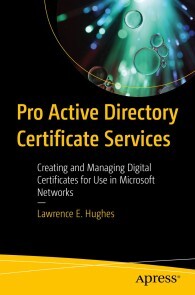
Pro Active Directory Certificate Services
In order to deploy and use Microsoft Certificate Services, you need to understand the fundamentals of cryptography, digital signatures, encryption, TLS, and S/MIME. It is also important to understand the concepts behind public key infrastructure (PKI). This book teaches you all the required background knowledge you need. Then it takes you deeper, step by step, teaching you how to deploy Certificate Services and configure it to issue various digital certificate types, complete with examples of using these certificates with IIS, Outlook, and Windows.Microsoft-based networks—on-premises, hybrid, and cloud-based networks—are used in companies of all sizes. Within them, there are many applications of digital certificates that can be created and managed by Microsoft Certificate Services. As security is more important than ever, and cryptography and PKI are fundamental to so many of these defenses, understanding Microsoft Certificate Services is becoming an increasingly more desirable skill.Most IT workers don’t realize the many uses and purposes of Certificate Services, especially within a corporate or government agency network, and how tightly integrated they are with the Microsoft Windows Domain style of networks and Active Directory (on-premises or cloud-based, including Azure, AWS, and Google Cloud Services). This book will teach you the gamut.You will appreciate the learning approach presented in the book, beginning with the basics (cryptographic primitives such as encryption and message digests), getting into combinations of primitives to accomplish specific things (such as digital signatures and envelopes), and then trying real-word systems based on digital certificates and PKI (such as TLS, S/MIME secure email, cryptographic authentication, and more). The book wraps it all up and teaches you how to deploy Certificate Services and issue the various types of certificates, including how they are used.WHAT YOU WILL LEARN* Understand basic cryptography (symmetric and asymmetric key encryption, message digests, and digital signatures and envelopes)* Know how TLS, S/MIME, and cryptographic authentication work* Discover applications of cryptography related to secure servers with TLS and cryptographic (passwordless) authentication to online services including Windows and secure email* Get to know the common types of digital certificates, how to create and manage them, and examples of their use with IIS, Outlook, etc. WHO THIS BOOK IS FORMicrosoft system and network engineers, security engineers, and CISOs. Readers should have familiarity with Windows Server 2019 (or more recent) and Active Directory.LAWRENCE E. HUGHES is a renowned expert in cryptography and PKI. He previously worked at VeriSign and co-founded and was CTO at CipherTrust (a secure email proxy appliance). He also was employed at Sixscape Communications in Singapore where he was responsible for creating much of their technology. Lawrence founded the US-based company PKIEdu Inc. (Public Key Infrastructure Education) to conduct training and consulting in the area of PKI. He created and taught the courseware at VeriSign (the first leading company in the PKI space) and presented it internationally to affiliates and large customers. He is a security author and was heavily involved in the deployment of several national certification authorities in the UK, Netherlands, and Australia.PART I: FOUNDATIONS IN CRYPTOGRAPHY, DIGITAL CERTIFICATES AND PKIChapter 1-01 – Basic Cryptography – Symmetric Key EncryptionChapter 1-02 – Basic Cryptography – Hash FunctionChapter 1-03 – Basic Cryptography – Asymmetric Key EncryptionChapter 1-04 – Digital Signature and Digital EnvelopeChapter 1-05 – X.509 Digital CertificateChapter 1-06 – PKCS #10 Certificate Signing Request CSR)Chapter 1-07 – Certificate Revocation and RenewalChapter 1-08 – Key ManagementChapter 1-09 – Certificate Management ProtocolsChapter 1-10 – Public Key Infrastructure (PKI)Chapter 1-11 – SSL and TLSChapter 1-12 – S/MIME Secure EmailPART II: DEPLOYING AND USING ACTIVE DIRECTORY CERTIFICATE SERVICESChapter 2-01 – Chapter 13: Deploy Microsoft Certificate ServicesChapter 2-02 – Chapter 14: Issue and Manage TLS Server CertificatesChapter 2-03 – Chapter 15: Issue and Manage TLS Client CertificatesChapter 2-04 – Chapter 16: Issue and Manage S/MIME Secure E-mail CertificatesChapter 2-05 – Chapter 17: Issue and Manage Windows Logon CertificatesChapter 18: Appendix A: Relevant Standards.

Microsoft Azure Virtual Desktop Guide
Modernize your business to make it more agile using Azure Virtual Desktop (AVD). Azure Virtual Desktop is a cloud desktop virtualization platform that securely delivers virtual desktops and remote apps. This book will help you will help you to understand designing, implementing, configuring, and maintaining an Azure Virtual Desktop environment for enterprise and prepare to take the Microsoft AZ-140 certification exam.The book starts with an introduction to Azure Virtual Desktop and its design architecture. You will learn designing Azure Virtual desktop including user identities and profiles. Additionally, you will learn how to implement network for Azure Virtual desktop. Creation and configuration of host pools and session hosts is covered with all steps so that you can understand all options and select appropriate configuration for enterprise deployment. You will also go through session host images creation process and managing the image with image gallery and possible automation options. Managing access and security in AVD is discussed along with the installation, configuration, and management of FSLogix. The book will take you through user experience settings and show you how to configure apps on a session host. You will also learn about disaster recovery and how to automate AVD management tasks. Monitoring and managing performance is included as well as knowing how to use AVD automation to create and delete the host pool and session host.After reading this book, you will understand all aspects of AVD architecture, its implementation, monitoring, and management in preparation to take the AZ-140 exam.WHAT YOU WILL LEARN* Know what is Azure Virtual Desktop (or AVD)Design the Azure Virtual Desktop architecture for enterprise deployment, user identities, and profiles * Plan and implement networking and storage for Azure Virtual Desktop* Create, manage, and automate operating system images with image gallery* Implement FSLogix Profile Containers and FSLogix Cloud Cache* Create and configure host pools and session hosts (all detailed steps)* Install and configure apps on a session host including all app publish options* Plan and implement business continuity and disaster recovery* Implement and manage OneDrive, Teams for a multi-session environment* Monitor and manage performance and health of Azure Virtual desktopWho This Book Is ForIT professional, Cloud administrators, support personnel, developers, DevOps engineers, architect, or consultant learning about designing, implementing, and managing Azure Virtual Desktop to improve knowledge or clear Microsoft AZ-140 exam.ARUN SABALE is a Microsoft Certified Azure architect and Microsoft Certified Modern Desktop Expert. He has blogged on Azure services and automation, PowerShell, ARM, and Terraform. Arun has more than 12 years of experience with PowerShell automation and other Microsoft services and more than 6 years of experience with Azure infra design, deployment, automation, PowerShell, ARM, Terraform, and Azure DevOps. His current role is a combination of Azure design, development, and automation. Arun is the owner and author of PowershellTalk.com blog and regularly writes about Microsoft products and new services.BALU N. ILAG is a Microsoft Certified Trainer (MCT), former Microsoft MVP (2013-2019), and Microsoft Certified Solution Expert (MCSE) for communication. He has been working as a Unified Communication and Collaboration engineer. His role is a combination of product support and customization, implementation, and strategic guidance for enterprise customers. He is fascinated by artificial intelligence (AI) and machine learning (ML) technology. He regularly writes books, blog posts and articles on Microsoft products. He is highly motivated and engaged with the Microsoft Tech community, writing blog posts on Bloguc.com and regularly in discussion on twitter and LinkedIn.CHAPTER 1: INTRODUCTION TO AZURE VIRTUAL DESKTOPIntroductionWhat is Azure Virtual Desktop?CHAPTER 2: DESIGN THE AZURE VIRTUAL DESKTOP ARCHITECTURE· assess existing physical and virtual desktop environments· assess network capacity and speed requirements for Azure Virtual Desktop· recommend an operating system for an Azure Virtual Desktop implementation· plan and configure name resolution for Active Directory (AD) and Azure Active Directory Domain Services (Azure AD DS)· plan a host pools architecture· recommend resource groups, subscriptions, and management groups· configure a location for the Azure Virtual Desktop metadata· calculate and recommend a configuration for performance requirements· calculate and recommend a configuration for Azure Virtual Machine capacity requirementsCHAPTER 3: DESIGN FOR USER IDENTITIES AND PROFILES· select an appropriate licensing model for Azure Virtual Desktop based on requirements· recommend an appropriate storage solution (including Azure NetApp Files versus Azure Files)· plan for Azure Virtual Desktop client deployment· plan for user profiles· recommend a solution for network connectivity· plan for Azure AD Connect for user identitiesCHAPTER 4: IMPLEMENT AND MANAGE NETWORKING FOR AZURE VIRTUAL DESKTOP· implement Azure virtual network connectivity· manage connectivity to the internet and on-premises networks· implement and manage network security· manage Azure Virtual Desktop session hosts by using Azure Bastion· monitor and troubleshoot network connectivityCHAPTER 5: IMPLEMENT AND MANAGE STORAGE FOR AZURE VIRTUAL DESKTOP· configure storage for FSLogix components· configure storage accounts· configure disks· create file sharesCHAPTER 6: CREATE AND CONFIGURE HOST POOLS AND SESSION HOSTS· create a host pool by using the Azure portal· automate creation of Azure Virtual Desktop host and host pools by using PowerShell, Command-Line Interface (CLI), and Azure Resource Manager templates· create a host pool based on Windows client or Windows Server session hosts· configure host pool settings· manage licensing for session hosts that run Windows client or Windows Server· assign users to host pools· apply OS and application updates to a running Azure Virtual Desktop host· apply security and compliance settings to session hostsCHAPTER 7: CREATE AND MANAGE SESSION HOST IMAGES· create a gold image· modify a session host image· install language packs in Azure Virtual Desktop· deploy a session host by using a custom image· plan for image update and management· create and use a Shared Image Gallery· troubleshoot OS issues related to Azure Virtual DesktopCHAPTER 8: MANAGE ACCESS· plan and implement Azure roles and role-based access control (RBAC) for Azure Virtual Desktop· manage roles, groups and rights assignment on Azure Virtual Desktop session hosts· configure user restrictions by using AD group policies and Azure policiesCHAPTER 9: MANAGE SECURITY· plan and implement Conditional Access policies for connections to Azure Virtual Desktop· plan and implement multifactor authentication in Azure Virtual Desktop· manage security by using Azure Security Center· configure Microsoft Defender Antivirus for session hostsCHAPTER 10: IMPLEMENT AND MANAGE FSLOGIX· plan for FSLogix· install and configure FSLogix· configure Profile Containers· configure Cloud Cache· migrate user profiles to FSLogixCHAPTER 11: CONFIGURE USER EXPERIENCE SETTINGS· configure Universal Print· configure user settings through group policies and Endpoint Manager policies· configure persistent and non-persistent desktop environments· configure Remote Desktop Protocol (RDP) properties on a host pool· configure session timeout properties· troubleshoot user profile issues· troubleshoot Azure Virtual Desktop clientsCHAPTER 12: INSTALL AND CONFIGURE APPS ON A SESSION HOST· configure dynamic application delivery by using MSIX App Attach· implement application masking· deploy an application as a RemoteApp· implement and manage OneDrive for Business for a multi-session environment· implement and manage Microsoft Teams AV Redirect· implement and manage browsers and internet access for Azure Virtual Desktop sessions· create and configure an application group· troubleshoot application issues related to Azure Virtual DesktopCHAPTER 13: PLAN AND IMPLEMENT BUSINESS CONTINUITY AND DISASTER RECOVERY· plan and implement a disaster recovery plan for Azure Virtual Desktop· design a backup strategy for Azure Virtual Desktop· configure backup and restore for FSLogix user profiles, personal virtual desktop infrastructures (VDIs), and golden imagesCHAPTER 14: AUTOMATE AZURE VIRTUAL DESKTOP MANAGEMENT TASKS· configure automation for Azure Virtual Desktop· automate management of host pools, session hosts, and user sessions by using PowerShell and Azure Command-Line Interface (CLI)· implement autoscaling in host poolsCHAPTER 15: MONITOR AND MANAGE PERFORMANCE AND HEALTH· monitor Azure Virtual Desktop by using Azure Monitor· monitor Azure Virtual Desktop by using Azure Advisor· customize Azure Monitor workbooks for Azure Virtual Desktop monitoring· optimize session host capacity and performance· manage active sessions and application groups· monitor and optimize autoscaling resultsCHAPTER 16: AZURE VIRTUAL DESKTOP AUTOMATIONAVD automation for create/delete hostpool / sessionhostAVD pooled advance autoscaling logic to start/stop/add new sessionhost in hostpool automatically based on CPU usage
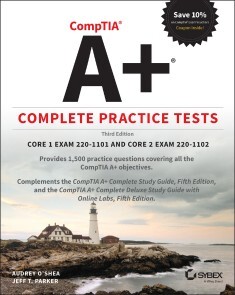
CompTIA A+ Complete Practice Tests
IMPROVE YOUR UNDERSTANDING OF ALL CORE 1 AND CORE 2 A+ EXAM OBJECTIVES AND PREPARE FOR A NEW CAREER AS A COMPUTER TECHNICIANThe Third Edition of the CompTIA A+ Complete Practice Tests: Core 1 Exam 220-1101 and Core 2 Exam 220-1102 offers aspiring and practicing computer technicians essential and practical exam prep material for the industry favorite A+ certification. The hundreds of domain-by-domain practice questions cover all of the A+ exam objectives tested on the Core 1 and Core 2 exams, helping you prepare for success on the tests and in the real world. Just like the real exams, the practice questions contained within this resource cover mobile devices, networking, hardware, virtualization and cloud computing, hardware and network troubleshooting, operating systems, security, software troubleshooting, and operational procedures. These rigorous and realistic practice questions will get you ready for your first role as a computer technician and let you hit the ground running. This comprehensive set includes:* Challenging questions designed to advance your understanding and comprehension of all covered exam domains* Questions similar to those found on the real Core 1 and Core 2 A+ exams* Access to the Sybex online test bank, with hundreds of questions and full-length practice examsPerfect for anyone prepping for the Core 1 and Core 2 A+ exams, CompTIA A+ Complete Practice Tests: Core 1 Exam 220-1101 and Core 2 Exam 220-1102 is also an ideal resource for aspiring and early-career computer technicians who want to improve their understanding of some of the foundational concepts they rely on each day in the field. ABOUT THE AUTHORSAUDREY O’SHEA, A+, ITF+, PROJECT +, NETWORK +, SECURITY+, AND OTHER INDUSTRY CERTIFICATIONS, is a professional educator. After a successful career in information technology, she turned to teaching and has taught courses in computer technology, electrical theory and practice for energy workers, general electronics, and other related fields. She holds a variety of computer industry certifications and is a member of the Phi-Kappa-Phi honor society, and active in helping young women prepare for STEM careers. JEFF T. PARKER, CISSP, Project+, CySA+, is a certified technical trainer and consultant specializing in governance, risk management and compliance. Introduction xiPART I COMPTIA A+ CORE 1 EXAM 220- 1101 1Chapter 1 Mobile Devices 3Chapter 2 Networking 29Chapter 3 Hardware 61Chapter 4 Virtualization and Cloud Computing 115Chapter 5 Hardware and Network Troubleshooting 125PART II COMPTIA A+ CORE 2 EXAM 220- 1102 173Chapter 6 Operating Systems 175Chapter 7 Security 237Chapter 8 Software Troubleshooting 281Chapter 9 Operational Procedures 309Chapter 10 Practice Exam 1 (220- 1101) 339Chapter 11 Practice Exam 2 (220- 1102) 361Appendix Answers to the Review Questions 383Chapter 1: Mobile Devices 384Chapter 2: Networking 397Chapter 3: Hardware 417Chapter 4: Virtualization and Cloud Computing 437Chapter 5: Hardware and Network Troubleshooting 442Chapter 6: Operating Systems 466Chapter 7: Security 510Chapter 8: Software Troubleshooting 540Chapter 9: Operational Procedures 558Chapter 10: Practice Exam 1 (220- 1101) 574Chapter 11: Practice Exam 2 (220- 1102) 588Index 603
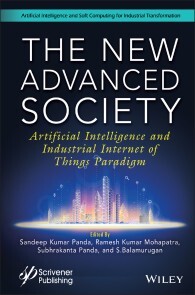
The New Advanced Society
THE NEW ADVANCED SOCIETYINCLUDED IN THIS BOOK ARE THE FUNDAMENTALS OF SOCIETY 5.0, ARTIFICIAL INTELLIGENCE, AND THE INDUSTRIAL INTERNET OF THINGS, FEATURING THEIR WORKING PRINCIPLES AND APPLICATION IN DIFFERENT SECTORS.A 360-degree view of the different dimensions of the digital revolution is presented in this book, including the various industries transforming industrial manufacturing, the security and challenges ahead, and the far-reaching implications for society and the economy. The main objective of this edited book is to cover the impact that the new advanced society has on several platforms such as smart manufacturing systems, where artificial intelligence can be integrated with existing systems to make them smart, new business models and strategies, where anything and everything is possible through the internet and cloud, smart food chain systems, where food products can be delivered to any corner of the world at any time and in any situation, smart transport systems in which robots and self-driven cars are taking the lead, advances in security systems to assure people of their privacy and safety, and smart healthcare systems, where biochips can be incorporated into the human body to predict deadly diseases at early stages. Finally, it can be understood that the social reformation of Society 5.0 will lead to a society where every person leads an active and healthy life. AUDIENCEThe targeted audience for this book includes research scholars and industry engineers in artificial intelligence and information technology, engineering students, cybersecurity experts, government research agencies and policymakers, business leaders, and entrepreneurs. SANDEEP KUMAR PANDA, PHD is an associate professor in the Department of Data Science and Artificial Intelligence at IcfaiTech (Faculty of Science and Technology), ICFAI Foundation for Higher Education, Hyderabad. His research areas include artificial intelligence, IoT, blockchain technology, cloud computing, cryptography, computational intelligence, and software engineering. RAMESH KUMAR MOHAPATRA, PHD is an assistant professor in the Department of Computer Science and Engineering, National Institute of Technology, Rourkela, Odisha, India. His research interests include optical character recognition, document image analysis, video processing, secure computing, and machine learning. SUBHRAKANTA PANDA, PHD is an assistant professor in the Department of Computer Science and Information Systems, BITS-PILANI, Hyderabad Campus, Jawahar Nagar, Hyderabad, India. His research interests include social network analysis, cloud computing, security testing, and blockchain. S. BALAMURUGAN, PHD is the Director of Research and Development, Intelligent Research Consultancy Services (iRCS), Coimbatore, Tamilnadu, India. He is also Director of the Albert Einstein Engineering and Research Labs (AEER Labs), as well as Vice-Chairman, Renewable Energy Society of India (RESI), India. He has published 45 books, 200+ international journals/ conferences, and 35 patents. SANDEEP KUMAR PANDA,PHD is an associate professor in the Department of Data Science and Artificial Intelligence at IcfaiTech (Faculty of Science and Technology), ICFAI Foundation for Higher Education, Hyderabad. His research areas include Artificial Intelligence, IoT, Blockchain Technology, Cloud Computing, Cryptography, Computational Intelligence, and Software Engineering.RAMESH KUMAR MOHAPATRA, PHD is an assistant professor in the Department of Computer Science and Engineering, National Institute of Technology, Rourkela, Odisha, India. His research interests include Optical Character Recognition, Document Image Analysis, Video Processing, Secure Computing, Machine Learning.SUBHRAKANTA PANDA,PHD is an assistant professor in the department of Computer Science and Information Systems, BITS-PILANI, Hyderabad Campus, Jawahar Nagar, Shameerpet Mandal, Hyderabad, INDIA. His research interests include Social Network Analysis, Cloud Computing, Security Testing, Blockchain.S. BALAMURUGAN, PHD is the Director of Research and Development, Intelligent Research Consultancy Services (iRCS), Coimbatore, Tamilnadu, India. He is also Director of the Albert Einstein Engineering and Research Labs (AEER Labs), as well as Vice-Chairman, Renewable Energy Society of India (RESI), India. He has published 45 books, 200+ international journals/ conferences, and 35 patents.Preface xviiAcknowledgments xxiii1 POST PANDEMIC: THE NEW ADVANCED SOCIETY 1Sujata Priyambada Dash1.1 Introduction 11.1.1 Themes 21.1.1.1 Theme: Areas of Management 21.1.1.2 Theme: Financial Institutions Cyber Crime 31.1.1.3 Theme: Economic Notion 41.1.1.4 Theme: Human Depression 61.1.1.5 Theme: Migrant Labor 71.1.1.6 Theme: Digital Transformation (DT) of Educational Institutions 91.1.1.7 School and Colleges Closures 111.2 Conclusions 12References 122 DISTRIBUTED LEDGER TECHNOLOGY IN THE CONSTRUCTION INDUSTRY USING CORDA 15Sandeep Kumar Panda, Shanmukhi Priya Daliyet, Shagun S. Lokre and Vihas Naman2.1 Introduction 162.2 Prerequisites 162.2.1 DLT vs Blockchain 172.3 Key Points of Corda 182.3.1 Some Salient Features of Corda 202.3.2 States 202.3.3 Contract 222.3.3.1 Create and Assign Task (CAT) Contract 222.3.3.2 Request for Cash (RT) Contract 232.3.3.3 Transfer of Cash (TT) Contract 242.3.3.4 Updation of the Task (UOT) Contract 242.3.4 Flows 252.3.4.1 Flow Associated With CAT Contract 252.3.4.2 Flow Associated With RT Contract 262.3.4.3 Flow Associated With TT Contract 262.3.4.4 Flow Associated With UOT Contract 262.4 Implementation 262.4.1 System Overview 272.4.2 Working Flowchart 282.4.3 Experimental Demonstration 292.5 Future Work 352.6 Conclusion 36References 373 IDENTITY AND ACCESS MANAGEMENT FOR INTERNET OF THINGS CLOUD 43Soumya Prakash Otta and Subhrakanta Panda3.1 Introduction 443.2 Internet of Things (IoT) Security 453.2.1 IoT Security Overview 453.2.2 IoT Security Requirements 463.2.3 Securing the IoT Infrastructure 493.3 IoT Cloud 493.3.1 Cloudification of IoT 503.3.2 Commercial IoT Clouds 523.3.3 IAM of IoT Clouds 543.4 IoT Cloud Related Developments 553.5 Proposed Method for IoT Cloud IAM 583.5.1 Distributed Ledger Approach for IoT Security 593.5.2 Blockchain for IoT Security Solution 603.5.3 Proposed Distributed Ledger-Based IoT Cloud IAM 623.6 Conclusion 64References 654 AUTOMATED TSR USING DNN APPROACH FOR INTELLIGENT VEHICLES 67Banhi Sanyal, Piyush R. Biswal, R.K. Mohapatra, Ratnakar Dash and Ankush Agarwalla4.1 Introduction 684.2 Literature Survey 694.3 Neural Network (NN) 704.4 Methodology 714.4.1 System Architecture 714.4.2 Database 714.5 Experiments and Results 714.5.1 FFNN 744.5.2 RNN 764.5.3 CNN 764.5.4 CNN 764.5.5 Pre-Trained Models 794.6 Discussion 794.7 Conclusion 80References 885 HONEYPOT: A TRAP FOR ATTACKERS 91Anjanna Matta, G. Sucharitha, Bandlamudi Greeshmanjali, Manji Prashanth Kumar and Mathi Naga Sarath Kumar5.1 Introduction 925.1.1 Research Honeypots 935.1.2 Production Honeypots 935.2 Method 945.2.1 Low-Interaction Honeypots 945.2.2 Medium-Interaction Honeypots 955.2.3 High-Interaction Honeypots 955.3 Cryptanalysis 965.3.1 System Architecture 965.3.2 Possible Attacks on Honeypot 975.3.3 Advantages of Honeypots 985.3.4 Disadvantages of Honeypots 995.4 Conclusions 99References 1006 EXAMINING SECURITY ASPECT IN INDUSTRIAL-BASED INTERNET OF THINGS 103Rohini Jha6.1 Introduction 1046.2 Process Frame of IoT Before Security 1056.2.1 Cyber Attack 1076.2.2 Security Assessment in IoT 1076.2.2.1 Security in Perception and Network Frame 1086.3 Attacks and Security Assessments in IIoT 1116.3.1 IoT Security Techniques Analysis Based on its Merits 1116.4 Conclusion 116References 1197 A COOPERATIVE NAVIGATION FOR MULTI-ROBOTS IN UNKNOWN ENVIRONMENTS USING HYBRID JAYA-DE ALGORITHM 123D. Chandrasekhar Rao7.1 Introduction 1247.2 Related Works 1267.3 Problem Formulation 1307.4 Multi-Robot Navigation Employing Hybrid Jaya-DE Algorithm 1347.4.1 Basic Jaya Algorithm 1347.5 Hybrid Jaya-DE 1367.5.1 Mutation 1367.5.2 Crossover 1367.5.3 Selection 1377.6 Simulation Analysis and Performance Evaluation of Jaya-DE Algorithm 1397.7 Total Navigation Path Deviation (TNPD) 1477.8 Average Unexplored Goal Distance (AUGD) 1487.9 Conclusion 159References 1598 CATEGORIZATION MODEL FOR PARKINSON’S DISEASE OCCURRENCE AND SEVERITY PREDICTION 163Prashant Kumar Shrivastava, Ashish Chaturvedi, Megha Kamble and Megha Jain8.1 Introduction 1648.2 Applications 1668.2.1 Machine Learning in PD Diagnosis 1668.2.2 Challenges of PD Detection 1698.2.3 Structuring of UPDRS Score 1708.3 Methodology 1738.3.1 Overview of Data Driven Intelligence 1738.3.2 Comparison Between Deep Learning and Traditional Machine 1758.3.3 Deep Learning for PD Diagnosis 1768.3.4 Convolution Neural Network for PD Diagnosis 1768.4 Proposed Models 1788.4.1 Classification of Patient and Healthy Controls 1788.4.2 Severity Score Classification 1818.5 Results and Discussion 1848.5.1 Performance Measures 1858.5.2 Graphical Results 1878.6 Conclusion 187References 1879 AI-BASED SMART AGRICULTURE MONITORING USING GROUND-BASED AND REMOTELY SENSED IMAGES 191Shounak Chakraborty, Nikumani Choudhury and Indrajit Kalita9.1 Introduction 1929.2 Automatic Land-Cover Classification Techniques Using Remotely Sensed Images 1949.3 Deep Learning-Based Agriculture Monitoring 1969.4 Adaptive Approaches for Multi-Modal Classification 1979.4.1 Unsupervised DA 1999.4.2 Semi-Supervised DA 2009.4.3 Active Learning-Based DA 2019.5 System Model 2029.6 IEEE 802.15.4 2049.6.1 802.15.4 MAC 2049.6.2 DSME MAC 2059.6.3 TSCH MAC 2069.7 Analysis of IEEE 802.15.4 for Smart Agriculture 2079.7.1 Effect of Device Specification 2079.7.1.1 Low-Power 2089.7.2 Effect of MAC Protocols 2089.8 Experimental Results 2099.9 Conclusion & Future Directions 212References 21210 CAR BUYING CRITERIA EVALUATION USING MACHINE LEARNING APPROACH 223Samdeep Kumar Panda10.1 Introduction 22410.2 Literature Survey 22510.3 Proposed Method 22610.4 Dataset 22710.5 Exploratory Data Analysis 22710.6 Splitting of Data Into Training Data and Test Data 23010.7 Pre-Processing 23210.8 Training of Our Models 23210.8.1 Gaussian Naïve Bayes 23310.8.2 Decision Tree Classifier 23410.8.3 Tuning the Model 23510.8.4 Karnough Nearest Neighbor Classifier 23610.8.5 Tuning the Model 23710.8.6 Neural Network 23810.8.7 Tuning the Model 23910.9 Result Analysis 24010.9.1 Confusion Matrix 24010.9.2 Gaussian Naïve Bayes 24110.9.3 Decision Tree Classifier 24210.9.4 Karnough Nearest Neighbor Classifier 24210.9.5 Neural Network 24210.9.6 Accuracy Scores 24310.10 Conclusion and Future Work 244References 24411 BIG DATA, ARTIFICIAL INTELLIGENCE AND MACHINE LEARNING: A PARADIGM SHIFT IN ELECTION CAMPAIGNS 247Md. Safiullah and Neha Parveen11.1 Introduction 24811.2 Big Data Reveals the Voters’ Preference 24911.2.1 Use of Software Applications in Election Campaigns 25111.2.1.1 Team Joe App 25211.2.1.2 Trump 2020 25211.2.1.3 Modi App 25311.3 Deep Fakes and Election Campaigns 25411.3.1 Deep Fake in Delhi Elections 25411.4 Social Media Bots 25611.5 Future of Artificial Intelligence and Machine Learning in Election Campaigns 259References 25912 IMPACT OF OPTIMIZED SEGMENT ROUTING IN SOFTWARE DEFINED NETWORK 263Amrutanshu Panigrahi, Bibhuprasad Sahu, Satya Sobhan Panigrahi, Ajay Kumar Jena and Md. Sahil Khan12.1 Introduction 26412.2 Software-Defined Network 26612.3 SDN Architecture 26812.4 Segment Routing 27012.5 Segment Routing in SDN 27212.6 Traffic Engineering in SDN 27412.7 Segment Routing Protocol 27512.8 Simulation and Result 27712.9 Conclusion and Future Work 278References 28313 AN INVESTIGATION INTO COVID-19 PANDEMIC IN INDIA 289Shubhangi V. Urkude, Vijaykumar R. Urkude, S. Vairachilai and Sandeep Kumar Panda13.1 Introduction 28913.1.1 Symptoms of COVID-19 29213.1.2 Precautionary Measures 29213.1.3 Ways of Spreading the Coronavirus 29413.2 Literature Survey 29513.3 Technologies Used to Fight COVID-19 29613.3.1 Robots 29613.3.2 Drone Technology 29713.3.3 Crowd Surveillance 29713.3.4 Spraying the Disinfectant 29813.3.5 Sanitizing the Contaminated Areas 29813.3.6 Monitoring Temperature Using Thermal Camera 29813.3.7 Delivering the Essential Things 29813.3.8 Public Announcement in the Infected Areas 29813.4 Impact of COVID-19 on Business 29913.4.1 Impact on Financial Markets 29913.4.2 Impact on Supply Side 29913.4.3 Impact on Demand Side 30013.4.4 Impact on International Trade 30013.5 Impact of COVID-19 on Indian Economy 30013.6 Data and Result Analysis 30013.7 Conclusion and Future Scope 304References 30414 SKIN CANCER CLASSIFICATION: ANALYSIS OF DIFFERENT CNN MODELS VIA CLASSIFICATION ACCURACY 307Poonam Biswal, Monali Saha, Nishtha Jaiswal and Minakhi Rout14.1 Introduction 30714.2 Literature Survey 30814.3 Methodology 31014.3.1 Dataset Preparation 31014.3.2 Dataset Loading and Data Pre-Processing 31114.3.3 Creating Models 31214.4 Models Used 31214.5 Simulation Results 31314.5.1 Changing Size of MaxPool2D(n,n) 31414.5.2 Changing Size of AveragePool2D(n,n) 31414.5.3 Changing Number of con2d(32n–64n) Layers 31514.5.4 Changing Number of con2d-32*n Layers 31514.5.5 ROC Curves and MSE Curves 31814.6 Conclusion 321References 32115 ROUTE MAPPING OF MULTIPLE HUMANOID ROBOTS USING FIREFLY-BASED ARTIFICIAL POTENTIAL FIELD ALGORITHM IN A CLUTTERED TERRAIN 323Abhishek Kumar Kashyap, Anish Pandey and Dayal R. Parhi15.1 Introduction 32415.2 Design of Proposed Algorithm 32815.2.1 Mechanism of Artificial Potential Field 32815.2.1.1 Potential Field Generated by Attractive Force of Goal 32915.2.1.2 Potential Field Generated by Repulsive Force of Obstacle 33115.2.2 Mechanism of Firefly Algorithm 33215.2.2.1 Architecture of Optimization Problem Based on Firefly Algorithm 33515.2.3 Dining Philosopher Controller 33715.3 Hybridization Process of Proposed Algorithm 33915.4 Execution of Proposed Algorithm in Multiple Humanoid Robots 33915.5 Comparison 34415.6 Conclusion 346References 34616 INNOVATIVE PRACTICES IN EDUCATION SYSTEMS USING ARTIFICIAL INTELLIGENCE FOR ADVANCED SOCIETY 351Vinutha D.C., Kavyashree S., Vijay C.P. and G.T. Raju16.1 Introduction 35216.2 Literature Survey 35316.2.1 AI in Auto-Grading 35416.2.2 AI in Smart Content 35616.2.3 AI in Auto Analysis on Student’s Grade 35616.2.4 AI Extends Free Intelligent Tutoring 35716.2.5 AI in Predicting Student Admission and Drop-Out Rate 35916.3 Proposed System 35916.3.1 Data Collection Module 36016.3.2 Data Pre-Processing Module 36416.3.3 Clustering Module 36416.3.4 Partner Selection Module 36616.4 Results 36816.5 Future Enhancements 37016.6 Conclusion 370References 37117 PSO-BASED HYBRID WEIGHTED K-NEAREST NEIGHBOR ALGORITHM FOR WORKLOAD PREDICTION IN CLOUD INFRASTRUCTURES 373N. Yamuna, J. Antony Vijay and B. Gomathi17.1 Introduction 37417.2 Literature Survey 37517.2.1 Machine Learning 37817.3 Proposed System 37917.3.1 Load Aware Cloud Computing Model 37917.3.2 Wavelet Neural Network 37917.3.3 Evaluation Using LOOCV Model 38017.3.4 k-Nearest Neighbor (k-NN) Algorithm 38117.3.5 Particle Swarm Optimization (PSO) Algorithm 38217.3.6 HWkNN Optimization Algorithm Based on PSO 38317.3.7 PSO-Based HWkNN (PHWkNN) Load Prediction Algorithm 38417.4 Experimental Results 38517.5 Conclusion 390References 39118 AN EXTENSIVE SURVEY ON THE PREDICTION OF BANKRUPTCY 395Sasmita Manjari Nayak and Minakhi Rout18.1 Introduction 39518.2 Literature Survey 39718.2.1 Data Pre-Processing 39718.2.1.1 Balancing of Imbalanced Dataset 39718.2.1.2 Outlier Data Handling 41018.2.2 Classifiers 41818.2.3 Ensemble Models 42218.3 System Architecture and Simulation Results 43818.4 Conclusion 438References 44319 FUTURE OF INDIAN AGRICULTURE USING AI AND MACHINE LEARNING TOOLS AND TECHNIQUES 447Manoj Kumar, Pratibha Maurya and Rinki Verma19.1 Introduction 44819.2 Overview of AI and Machine Learning 45019.3 Review of Literature 45219.4 Application of AI & Machine Learning in Agriculture 45619.5 Current Scenario and Emerging Trends of AI and ML in Indian Agriculture Sector 46019.6 Opportunities for Agricultural Operations in India 46519.7 Conclusion 466References 467Index 473
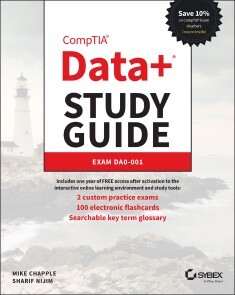
CompTIA Data+ Study Guide
BUILD A SOLID FOUNDATION IN DATA ANALYSIS SKILLS AND PURSUE A COVETED DATA+ CERTIFICATION WITH THIS INTUITIVE STUDY GUIDECompTIA Data+ Study Guide: Exam DA0-001 delivers easily accessible and actionable instruction for achieving data analysis competencies required for the job and on the CompTIA Data+ certification exam. You'll learn to collect, analyze, and report on various types of commonly used data, transforming raw data into usable information for stakeholders and decision makers.With comprehensive coverage of data concepts and environments, data mining, data analysis, visualization, and data governance, quality, and controls, this Study Guide offers:* All the information necessary to succeed on the exam for a widely accepted, entry-level credential that unlocks lucrative new data analytics and data science career opportunities* 100% coverage of objectives for the NEW CompTIA Data+ exam* Access to the Sybex online learning resources, with review questions, full-length practice exam, hundreds of electronic flashcards, and a glossary of key termsIdeal for anyone seeking a new career in data analysis, to improve their current data science skills, or hoping to achieve the coveted CompTIA Data+ certification credential, CompTIA Data+ Study Guide: Exam DA0-001 provides an invaluable head start to beginning or accelerating a career as an in-demand data analyst.ABOUT THE AUTHORSMIKE CHAPPLE, PHD, is Teaching Professor of IT, Analytics, and Operations at the University of Notre Dame. He’s a technology professional and educator with over 20 years of experience. Mike provides certification resources at his website, CertMike.com. SHARIF NIJIM is Assistant Teaching Professor of IT, Analytics, and Operations in the Mendoza College of Business at the University of Notre Dame. He teaches undergraduate and graduate courses on cloud computing, business analytics, and information technology. Introduction xvAssessment Test xxiiCHAPTER 1 TODAY’S DATA ANALYST 1Welcome to the World of Analytics 2Data 2Storage 3Computing Power 4Careers in Analytics 5The Analytics Process 6Data Acquisition 7Cleaning and Manipulation 7Analysis 8Visualization 8Reporting and Communication 8Analytics Techniques 10Descriptive Analytics 10Predictive Analytics 11Prescriptive Analytics 11Machine Learning, Artificial Intelligence, and Deep Learning 11Data Governance 13Analytics Tools 13Summary 15CHAPTER 2 UNDERSTANDING DATA 17Exploring Data Types 18Structured Data Types 20Unstructured Data Types 31Categories of Data 36Common Data Structures 39Structured Data 39Unstructured Data 41Semi-structuredData 42Common File Formats 42Text Files 42JavaScript Object Notation 44Extensible Markup Language (XML) 45HyperText Markup Language (HTML) 47Summary 48Exam Essentials 49Review Questions 51CHAPTER 3 DATABASES AND DATA ACQUISITION 57Exploring Databases 58The Relational Model 59Relational Databases 62Nonrelational Databases 68Database Use Cases 71Online Transactional Processing 71Online Analytical Processing 74Schema Concepts 75Data Acquisition Concepts 81Integration 81Data Collection Methods 83Working with Data 88Data Manipulation 89Query Optimization 96Summary 99Exam Essentials 100Review Questions 101CHAPTER 4 DATA QUALITY 105Data Quality Challenges 106Duplicate Data 106Redundant Data 107Missing Values 110Invalid Data 111Nonparametric data 112Data Outliers 113Specification Mismatch 114Data Type Validation 114Data Manipulation Techniques 116Recoding Data 116Derived Variables 117Data Merge 118Data Blending 119Concatenation 121Data Append 121Imputation 122Reduction 124Aggregation 126Transposition 127Normalization 128Parsing/String Manipulation 130Managing Data Quality 132Circumstances to Check for Quality 132Automated Validation 136Data Quality Dimensions 136Data Quality Rules and Metrics 140Methods to Validate Quality 142Summary 144Exam Essentials 145Review Questions 146CHAPTER 5 DATA ANALYSIS AND STATISTICS 151Fundamentals of Statistics 152Descriptive Statistics 155Measures of Frequency 155Measures of Central Tendency 160Measures of Dispersion 164Measures of Position 173Inferential Statistics 175Confidence Intervals 175Hypothesis Testing 179Simple Linear Regression 186Analysis Techniques 190Determine Type of Analysis 190Types of Analysis 191Exploratory Data Analysis 192Summary 192Exam Essentials 194Review Questions 196CHAPTER 6 DATA ANALYTICS TOOLS 201Spreadsheets 202Microsoft Excel 203Programming Languages 205R 205Python 206Structured Query Language (SQL) 208Statistics Packages 209IBM SPSS 210SAS 211Stata 211Minitab 212Machine Learning 212IBM SPSS Modeler 213RapidMiner 214Analytics Suites 217IBM Cognos 217Power BI 218MicroStrategy 219Domo 220Datorama 221AWS QuickSight 222Tableau 222Qlik 224BusinessObjects 225Summary 225Exam Essentials 225Review Questions 227CHAPTER 7 DATA VISUALIZATION WITH REPORTS AND DASHBOARDS 231Understanding Business Requirements 232Understanding Report Design Elements 235Report Cover Page 236Executive Summary 237Design Elements 239Documentation Elements 244Understanding Dashboard Development Methods 247Consumer Types 247Data Source Considerations 248Data Type Considerations 249Development Process 250Delivery Considerations 250Operational Considerations 252Exploring Visualization Types 252Charts 252Maps 258Waterfall 264Infographic 266Word Cloud 267Comparing Report Types 268Static and Dynamic 268Ad Hoc 269Self-Service (On-Demand) 269Recurring Reports 269Tactical and Research 270Summary 271Exam Essentials 272Review Questions 274CHAPTER 8 DATA GOVERNANCE 279Data Governance Concepts 280Data Governance Roles 281Access Requirements 281Security Requirements 286Storage Environment Requirements 289Use Requirements 291Entity Relationship Requirements 292Data Classification Requirements 292Jurisdiction Requirements 297Breach Reporting Requirements 298Understanding Master Data Management 299Processes 300Circumstances 301Summary 303Exam Essentials 304Review Questions 306APPENDIX ANSWERS TO THE REVIEW QUESTIONS 311Chapter 2: Understanding Data 312Chapter 3: Databases and Data Acquisition 314Chapter 4: Data Quality 315Chapter 5: Data Analysis and Statistics 317Chapter 6: Data Analytics Tools 319Chapter 7: Data Visualization with Reports and Dashboards 322Chapter 8: Data Governance 323Index 327

Windows 10 für Senioren - aktualisierte Neuauflage
Der Lernkurs für Einsteiger ohne Vorkenntnisse:- Alles zu Internet, E-Mails, Dateien, Fotos, Musik und Sicherheit auf über 400 Seiten- Von Dozenten Schritt für Schritt erklärt – leicht verständlich und gut nachvollziehbar- Große Schrift, praktisches Querformat und komplett in Farbe- Aufgebaut wie ein Kurs, mit vielen Bildern, Beispielen, Praxistipps und HilfenDieses Buch bietet nicht nur Senioren, sondern allen Neu-Anwendern einen umfassenden Einstieg in die Benutzung von Windows 10. Schritt für Schritt werden alle wichtigen Techniken zur Bedienung von PC, Laptop und Tablet erklärt. Mit anschaulichen Beispielen und Bildern lernen Sie die wichtigsten Windows-Apps wie z.B. Kontakte, Mail, Fotosoder den Internet-Browser Microsoft Edge kennen und verstehen. Alle Anleitungen sind gut nachvollziehbar erklärt, Computervorkenntnisse sind nicht erforderlich. Dank dem praktischen Querformat legen Sie das Buch vor Ihre Tastatur, beginnen direkt zu üben und können sich über schnelle Lernerfolge freuen! Zur besseren Lesbarkeit wurde eine große Schrift verwendet. Das Buch eignet sich für das Selbststudium bzw. begleitend zum Unterricht.Aus dem Inhalt:- Einstellungen und erster Start von Windows 10- Apps finden, starten und beenden- Die wichtigsten Einstellungen vornehmen und Programme installieren- Bildschirmanzeige vergrößern- Das Internet einrichten- Einen Brief schreiben, gestalten und ausdrucken- Dateien speichern und Ordnung halten- Im Internet surfen und E-Mails versenden- Wetter checken – Reisen buchen – Bewertungen ansehen u. v. m.- Sicherheit im Netz- Kontakte organisieren- Termine im Kalender eintragen - Fotos auf den Computer übertragen, ansehen und bearbeiten- Videos ansehen und Musik hören- Tipps & Tricks zur Problemlösung- Glossar mit ausführlicher Begriffserklärung
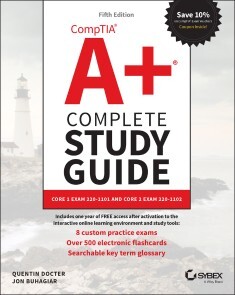
CompTIA A+ Complete Study Guide
The Fifth Edition of the CompTIA A+ Complete Study Guide: Core 1 Exam 220-1101 and Core 2 Exam 220-1102 offers accessible and essential test preparation material for the popular A+ certification. Providing full coverage of all A+ exam objectives and competencies covered on the latest Core 1 and Core 2 exams, the book ensures you'll have the skills and knowledge to confidently succeed on the test and in the field as a new or early-career computer technician. The book presents material on mobile devices, hardware, networking, virtualization and cloud computing, network, hardware, and software troubleshooting, operating systems, security, and operational procedures. Comprehensive discussions of all areas covered by the exams will give you a head start as you begin your career as a computer technician. This new edition also offers:* Accessible and easy-to-follow organization perfect to prepare you for one of the most popular certification exams on the market today* Opportunities to practice skills that are in extraordinary demand in the IT industry* Access to the Sybex online test bank, with chapter review questions, full-length practice exams, hundreds of electronic flashcards, and a glossary of key termsPerfect for anyone prepping for the Core 1 and Core 2 A+ exams, CompTIA A+ Complete Study Guide: Core 1 Exam 220-1101 and Core 2 Exam 220-1102 is a must-have resource for new and early-career computer technicians seeking to improve their skills and increase their efficacy in the field. ABOUT THE AUTHORSQUENTIN DOCTER, A+, Network+, IT Fundamentals+, Cloud Essentials+, is an IT consultant who started in the industry in 1994 working in tech support for Packard Bell. Since then, he’s worked as a tech and network support specialist, trainer, consultant, and webmaster. During his career, he has achieved certifications from CompTIA, Microsoft, Cisco, Novell, and Sun Microsystems. He has written over a dozen books for Sybex, including the CompTIA IT Fundamentals+ Study Guide and the CompTIA Cloud Essentials+ Study Guide.JON BUHAGIAR, A+, Network+, is an information technology professional with two decades of experience in higher education. During the past 22 years he has been responsible for Network Operations at Pittsburgh Technical College and lead several projects, including virtualization (server and desktop), VoIP, Microsoft 365, and many other projects supporting the quality of education at the college. He has achieved several certifications from CompTIA, Cisco, and Microsoft, and taught many of the certification paths. He is the author of several books, including Sybex’s CompTIA Network+ Review Guide.Introduction xxviiAssessment Test lxxxiiPART I 220- 1101 1CHAPTER 1 MOTHERBOARDS, PROCESSORS, AND MEMORY 3Understanding Motherboards 7Motherboard Form Factors 7System Board Components 10Understanding Processors 42CPU Architecture 43CPU Characteristics 45Understanding Memory 49Important Memory Terms 50Types of Memory 54Memory Packaging 59Understanding Cooling Systems 63Fans 63Memory Cooling 66Hard Drive Cooling 67Chipset Cooling 67CPU Cooling 67Summary 71Exam Essentials 71Review Questions 73Performance-Based Question 1 77Performance-Based Question 2 78CHAPTER 2 EXPANSION CARDS, STORAGE DEVICES, AND POWER SUPPLIES 79Installing and Configuring Expansion Cards 81Video 82Multimedia 83Network Interface Card 85Input/Output 87Adapter Configuration 88Understanding Storage Devices 89Hard Disk Drive Systems 90Solid- State Drives 96Raid 104Removable Storage and Media 107Installing, Removing, and Configuring Storage Devices 114Understanding Power Supplies 118Power Supply Input 119Power Supply Output and Ratings 120Power Connectors 121Modular Power Supplies 125Redundant Power Supplies 126Replacing Power Supplies 129AC Adapters as Power Supplies 130Summary 131Exam Essentials 131Review Questions 133Performance-Based Question 137CHAPTER 3 PERIPHERALS, CABLES, AND CONNECTORS 139Understanding Cables and Connectors 140Video Devices 141Audio Devices 154Input and Output Devices 156Storage Devices 159Understanding Cables and Connectors 160Peripheral Cables and Connectors 160Serial Ports 169Video Cables and Connectors 170Hard Drive Cables and Connectors 178Summary 184Exam Essentials 185Review Questions 186Performance-Based Question 190CHAPTER 4 PRINTERS AND MULTIFUNCTION DEVICES 191Understanding Print Technologies and Imaging Processes 193Impact Printers 194Inkjet Printers 196Laser Printers 205Thermal Printers 2173D Printers 218Installing and Maintaining Printers 223Printer Interface Components 224Installing and Sharing Local Printers 229Installing and Sharing Networked Printers 241Performing Printer Maintenance 251Installing Printer Upgrades 257Summary 262Exam Essentials 262Review Questions 264Performance-Based Question 268CHAPTER 5 NETWORKING FUNDAMENTALS 269Understanding Networking Principles 271Network Types 272Primary Network Components 279Network Operating Systems 283Network Resource Access 283Network Topologies 286Rules of Communication 290Identifying Common Network Hardware 295Network Interface Cards 295Cables and Connectors 299Networking Components 314Summary 324Exam Essentials 324Review Questions 327Performance-Based Question 331CHAPTER 6 INTRODUCTION TO TCP/IP 333Understanding TCP/IP 335TCP/IP Structure 336Understanding IP Addressing 346Understanding DHCP and DNS 356IPv6 365Understanding Virtual Networks 368Virtual Local Area Networks 368Virtual Private Networks 370Summary 372Exam Essentials 372Review Questions 374Performance-Based Question 378CHAPTER 7 WIRELESS AND SOHO NETWORKS 379Understanding Wireless Networking Technologies 381802.11 Networking Standards 382Bluetooth Networking 393Long- Range Fixed Wireless 396Radio Frequency Networking Standards 398Installing and Configuring SOHO Networks 402Keys to Planning a Network 402Choosing an Internet Connection 404Choosing Internal Network Connections 418Installing the Network Infrastructure 422Configuring Wireless Routers and Access Points 433Summary 449Exam Essentials 449Review Questions 451Performance-Based Question 455CHAPTER 8 NETWORK SERVICES, VIRTUALIZATION, AND CLOUD COMPUTING 457Understanding Network Services 459Server Roles 460Internet Appliances 473Legacy/Embedded Systems 480Internet of Things Devices 482Understanding Virtualization and Cloud Computing 487Concepts of Cloud Computing 488Concepts of Virtualization 499Summary 515Exam Essentials 516Review Questions 518Performance-Based Question 522CHAPTER 9 LAPTOP AND MOBILE DEVICE HARDWARE 523Working with Laptop and Mobile Device Hardware 526Understanding the Differences between Device Types 526Disassembling and Reassembling Laptops 531Installing and Configuring Laptop Hardware 535Setting Up and Configuring Accessories and Ports 580Summary 584Exam Essentials 585Review Questions 586Performance-Based Question 590CHAPTER 10 MOBILE CONNECTIVITY AND APPLICATION SUPPORT 591Understanding Mobile Connectivity 593Understanding Cellular Networking Standards 595Using Cellular Data Connections 597Establishing Wi- Fi Connectivity 608Establishing Bluetooth Connectivity 622Understanding Mobile App Support 635Understanding Location Services 635Understanding Mobile Device and App Management 641Configuring Mobile Device Synchronization 654Syncing Android Devices 666Summary 668Exam Essentials 668Review Questions 670Performance-Based Question 674CHAPTER 11 TROUBLESHOOTING METHODOLOGY AND RESOLVING CORE HARDWARE PROBLEMS 675Using the Troubleshooting Best Practice Methodology 678Step 1: Identify the Problem 678Step 2: Establish a Theory 683Step 3: Test the Theory 684Step 4: Establish a Plan of Action 687Step 5: Verify Functionality 688Step 6: Document Findings 689Troubleshooting Motherboards, CPUs, RAM, and Power Problems 690Identifying General Hardware Symptoms and Causes 691Identifying BIOS/UEFI and POST Routine Problems 696Identifying Motherboard and CPU Problems 700Identifying Memory Issues 702Identifying Power Supply Problems 705Summary 708Exam Essentials 709Review Questions 711Performance-Based Question 715CHAPTER 12 HARDWARE AND NETWORK TROUBLESHOOTING 717Troubleshooting Storage Drives and RAID Arrays 721Lights and Sounds 722Devices Not Found 723Performance Issues 724S.M.A.R.T. Diagnostics 725RAID Issues 729Optical Drive Issues 730Troubleshooting Video, Projector, and Display Issues 731Video Input Issues 731Video Image Problems 732Other Display Issues 735Troubleshooting Common Mobile Device Issues 737Power and Heat Issues 738Input Problems 741Connectivity Issues 743Physical Damage and Malware 748Troubleshooting Printer Problems 751Impact Printer Problems 752Inkjet Printer Problems 755Laser Printer Problems 759Managing Print Jobs 772Troubleshooting Networking Problems 779Using Network Troubleshooting Tools 779Resolving Connectivity Issues 799Summary 806Exam Essentials 806Review Questions 809Performance-Based Question 813PART II 220- 1102 815CHAPTER 13 OPERATING SYSTEM BASICS 817Understanding Operating Systems 819Operating System Terms and Concepts 821Operating Systems 823Minimum System Requirements 828Understanding Applications 830System Requirements for Applications 830Application Installation 832Security Considerations 835Other Considerations for New Applications 835INTRODUCTION TO WINDOWS 10 836Windows Editions 836Windows Features 840The Windows Interface 851What’s in a Window? 864File Management 867Preparing for the Exam 871Summary 872Exam Essentials 872Review Questions 874Performance- Based Question 878CHAPTER 14 WINDOWS CONFIGURATION 879Interacting with Operating Systems 882Task Manager 882Microsoft Management Console 888Additional Tools 899Control Panel 905Windows Settings 937The Windows Registry 960Disk Management 962Getting Disks Ready to Store Files and Programs 963Checking the Health of Hard Disks and Optimizing Their Performance 969Summary 970Exam Essentials 970Review Questions 972Performance- Based Question 976CHAPTER 15 WINDOWS ADMINISTRATION 977Installing and Upgrading Windows 980Windows Installation Options 982The Installation Process 984The Upgrade Process 1002Repair Installation 1006Recovery Partition 1007Side- by- Side Upgrading Windows 10/11 1007Image Deployment 1008Upgrading Editions of Windows 1008Security and Feature Updates 1008Installation/Upgrade Boot Options 1011Considerations 1012Command- Line Tools 1013Networking in Windows 1030Networking Models 1030User Authentication 1034Establishing a Network Connection 1036Accessing Resources 1041Firewall Settings 1044Client Network Configuration 1046Summary 1050Exam Essentials 1050Review Questions 1052Performance- Based Question 1056CHAPTER 16 WORKING WITH MACOS AND LINUX 1057macOS and Linux 1060Applications on macOS 1061Installing Applications from the App Store 1061Installing Downloadable Applications 1062Managing Applications 1064Creating Shortcuts 1065Best Practices 1065Scheduled Backups 1065Scheduled Disk Maintenance 1068System Updates/App Store 1068Patch Management 1069Driver/Firmware Updates 1070Antivirus/Antimalware Updates 1071Tools 1071System Preferences 1073Features 1082Basic Linux Commands 1087Understanding the Syntax of Shell Commands 1088Discovering and Using Linux Commands 1089Becoming root (Super User) 1091Maintaining the Operating System 1092Managing Processes 1095Directory Navigation 1097Directory Listings 1098Changing Permissions and Ownership 1099Working with Files 1100Working with Directories 1103Networking Utilities 1104Getting Help 1106Linux and Windows 1106Summary 1108Exam Essentials 1109Review Questions 1110Performance- Based Question 1114CHAPTER 17 SECURITY CONCEPTS 1115Physical Security Concepts 1121Access Control Vestibule 1121Badge Reader 1122Video Surveillance 1122Motion Sensors 1123Alarm System 1124Door Locks 1124Equipment Locks 1125Security Guards 1127Fences 1127Bollards 1128Physical Security for Staff 1128Key Fobs 1129Smartcards and RFID Badges 1129Keys 1130Biometrics 1131Lighting 1132Magnetometers 1132Logical Security 1132Principle of Least Privilege 1133Access Control Lists 1133Authentication Factors 1135Multifactor Authentication 1135Mobile Device Management (MDM) 1137Active Directory 1138Malware 1143Ransomware 1144Trojans 1144Keyloggers 1145Rootkits 1145Spyware 1145Cryptominers 1146Viruses 1146Virus Transmission in a Network 1150Botnets 1151Worms 1151Mitigating Software Threats 1151Antivirus 1152Antimalware 1153Recovery Console 1154End- User Education 1154Software Firewalls 1156Reinstalling the OS 1158Social Engineering Attacks, Threats, and Vulnerabilities 1159Phishing 1160Shoulder Surfing 1161Tailgating 1161Impersonation 1162Dumpster Diving 1162Evil Twin 1162Common Security Threats 1163Denial- of- Service Attacks 1163Zero- Day Attacks 1165Spoofing Attacks 1166On- Path Attack (Previously Known as Man- in- the- Middle Attack) 1167Password Attacks 1167Insider Threat 1168SQL Injection 1169Cross- Site Scripting (XSS) 1169Exploits and Vulnerabilities 1170Noncompliant Systems 1170Patching and Updates 1170Operating Systems Life Cycle 1171Unprotected Systems 1171Byod 1171Security Best Practices 1172Data Encryption 1172Setting Strong Passwords 1173Requiring Passwords 1174Password Expiration 1175End- User Best Practices 1176Account Management 1177Disable AutoRun 1181Destruction and Disposal Methods 1183Recycling or Repurposing Best Practices 1183Physical Destruction 1185Summary 1187Exam Essentials 1187Review Questions 1190Performance- Based Question 1194CHAPTER 18 SECURING OPERATING SYSTEMS 1195Working with Windows OS Security Settings 1199Users and Groups 1199User Authentication 1203NTFS vs. Share Permissions 1208Shared Files and Folders 1215System Files and Folders 1218Windows Security Features 1220Web Browser Security 1228Browser Download and Installation 1228Extensions and Plug- ins 1230Credentials Managers 1232Secure Data Transfers 1233Settings 1234Securing a SOHO Network (Wireless) 1239Changing Default Usernames and Passwords 1240Changing the SSID 1240Guest Network Isolation 1240Setting Encryption 1241Disabling SSID Broadcast 1242Wireless MAC Filtering 1242Frequencies 1243Radio Power Levels 1244Antenna and Access Point Placement 1245Assign Static IP Addresses 1245WPS 1246Authentication 1246Securing a SOHO Network (Wired) 1247Changing Default Credentials 1247Upgrading Firmware 1248Filtering 1248DHCP 1252Physical Security 1252Mobile Device Security 1253Screen Locks 1254Remote Wipes and Locator Applications 1256Remote Backup 1258Failed Login Attempts Restrictions 1258Viruses and Malware on Mobile Devices 1259Operating System Updates 1260Full- Device Encryption 1260Multifactor Authentication 1260Authenticator Applications 1261Firewalls 1261Policies and Procedures 1261IoT Considerations 1263Summary 1263Exam Essentials 1264Review Questions 1265Performance-Based Question 1269CHAPTER 19 TROUBLESHOOTING OPERATING SYSTEMS AND SECURITY 1271Troubleshooting Common Microsoft Windows OS Problems 1275Common Symptoms 1275Common Troubleshooting Steps 1297Troubleshooting Security Issues 1309Common Symptoms 1310Browser- Related Symptoms 1315Best Practices for Malware Removal 13181. Identify and Verify Malware Symptoms 13182. Quarantine Infected Systems 13193. Disable System Restore in Windows 13204. Remediate Infected Systems 13215. Schedule Scans and Run Updates 13236. Enable System Restore and Create a Restore Point in Windows 13247. Educate the End User 1325Troubleshooting Mobile OS Issues 1325Application Problems 1325Performance Issues 1327OS Fails to Update 1329Extremely Short Battery Life 1330Connectivity Issues 1331Autorotate Issues 1334Troubleshooting Mobile Security Issues 1335Security Concerns 1336Common Symptoms 1338Summary 1341Exam Essentials 1342Review Questions 1343Performance- Based Question 1346CHAPTER 20 SCRIPTING AND REMOTE ACCESS 1347Scripting 1349Scripting Basics 1351Scripting Languages 1355Scripting Use Cases 1366Script Considerations 1373Remote Access 1375Remote Desktop Protocol 1375Virtual Private Network (VPN) 1376Virtual Network Computing 1379Telnet 1379Secure Shell 1380Remote Monitoring and Management 1381Remote Access Tools 1382Security Considerations 1387Summary 1387Exam Essentials 1388Review Questions 1389Performance- Based Question 1392CHAPTER 21 SAFETY AND ENVIRONMENTAL CONCERNS 1393Understanding Safety Procedures 1395Identifying Potential Safety Hazards 1395Creating a Safe Workplace 1407Understanding Environmental Controls 1417Managing the Physical Environment 1418Handling and Disposing of Computer Equipment 1424Understanding Policies, Licensing, and Privacy 1433Dealing with Prohibited Content/Activity 1434Incident Response 1435Managing Software Licenses 1440Managing Sensitive Information 1443Summary 1446Exam Essentials 1446Review Questions 1448Performance-Based Question 1452CHAPTER 22 DOCUMENTATION AND PROFESSIONALISM 1453Documentation and Support 1457Ticketing Systems 1458Asset Management 1462Common Documentation 1466Knowledge Base/Articles 1475Change Management Best Practices 1476Disaster Prevention and Recovery 1482Data Backups 1483Battery Backup/UPS 1489Power Generators 1490Surge Protection 1491Account Recovery Options 1492Demonstrating Professionalism 1494Professional Appearance 1495Communicating with Customers 1496Using Appropriate Behavior 1500Putting It All in Perspective 1507Summary 1508Exam Essentials 1508Review Questions 1510Performance- Based Question 1514Appendix A Answers to the Review Questions 1515Chapter 1: Motherboards, Processors, and Memory 1516Chapter 2: Expansion Cards, Storage Devices, and Power Supplies 1518Chapter 3: Peripherals, Cables, and Connectors 1520Chapter 4: Printers and Multifunction Devices 1521Chapter 5: Networking Fundamentals 1523Chapter 6: Introduction to TCP/IP 1525Chapter 7: Wireless and SOHO Networks 1527Chapter 8: Network Services, Virtualization, and Cloud Computing 1529Chapter 9: Laptop and Mobile Device Hardware 1531Chapter 10: Mobile Connectivity and Application Support 1533Chapter 11: Troubleshooting Methodology and Resolving Core Hardware Problems 1535Chapter 12: Hardware and Network Troubleshooting 1537Chapter 13: Operating System Basics 1539Chapter 14: Windows Configuration 1540Chapter 15: Windows Administration 1543Chapter 16: Working with macOS and Linux 1545Chapter 17: Security Concepts 1547Chapter 18: Securing Operating Systems 1549Chapter 19: Troubleshooting Operating Systems and Security 1551Chapter 20: Scripting and Remote Access 1554Chapter 21: Safety and Environmental Concerns 1556Chapter 22: Documentation and Professionalism 1558Appendix B Answers to Performance- Based Questions 1561Chapter 1: Motherboards, Processors, and Memory 1562Chapter 2: Expansion Cards, Storage Devices, and Power Supplies 1563Chapter 3: Peripherals, Cables, and Connectors 1563Chapter 4: Printers and Multifunction Devices 1564Chapter 5: Networking Fundamentals 1565Chapter 6: Introduction to TCP/IP 1566Chapter 7: Wireless and SOHO Networks 1566Chapter 8: Network Services, Virtualization, and Cloud Computing 1567Chapter 9: Laptop and Mobile Device Hardware 1568Chapter 10: Mobile Connectivity and Application Support 1568Chapter 11: Troubleshooting Methodology and Resolving Core Hardware Problems 1569Chapter 12: Hardware and Network Troubleshooting 1569Chapter 13: Operating System Basics 1570Chapter 14: Windows Configuration 1570Chapter 15: Windows Administration 1571Chapter 16: Working with macOS and Linux 1575Chapter 17: Security Concepts 1577Chapter 18: Securing Operating Systems 1577Chapter 19: Troubleshooting Operating Systems and Security 1578Chapter 20: Scripting and Remote Access 1578Chapter 21: Safety and Environmental Concerns 1579Chapter 22: Documentation and Professionalism 1579Index 1581Exercise 2.1 Removing an Internal Storage Device 115Exercise 2.2 Installing an Internal Storage Device 116Exercise 2.3 Removing a Power Supply 130Exercise 3.1 Changing the Refresh Rate in Windows 10 143Exercise 3.2 Changing the Settings for Multiple Monitors 148Exercise 4.1 Identifying the Parts of an Inkjet Printer 203Exercise 4.2 Installing a USB Printer in Windows 10 239Exercise 4.3 Installing a TCP/IP Printer in Windows 10 242Exercise 4.4 Determining if Bonjour Is Installed in Windows 244Exercise 4.5 Scanning a Document to Google Drive 250Exercise 4.6 Using an Inkjet Cleaning Solution 255Exercise 4.7 Installing Memory into a Laser Printer 258Exercise 5.1 Pricing Network Cables 313Exercise 7.1 The Cost of Networking 422Exercise 7.2 Installing an Internal NIC in Windows 10 422Exercise 8.1 Configuring Windows 10 to Use a Proxy Server 477Exercise 8.2 Using Google’s Cloud Services 497Exercise 8.3 Enabling Hyper- V in Windows 10 503Exercise 8.4 Installing VirtualBox and Lubuntu on Windows 10 508Exercise 9.1 Removing Speakers from a Laptop 536Exercise 9.2 Removing the Display Assembly 544Exercise 9.3 Removing the Display Panel 546Exercise 9.4 Removing the Motherboard from a Laptop 549Exercise 9.5 Replacing Laptop Memory 553Exercise 9.6 Removing an M 2 SSD from a Laptop 557Exercise 9.7 Removing a Laptop Keyboard 560Exercise 9.8 Disabling a Touchpad in Windows 10 563Exercise 9.9 Removing an Internal Laptop Battery 568Exercise 9.10 Removing the System Fan 572Exercise 9.11 Removing the CPU Heat Sink 573Exercise 9.12 Removing the Wireless NIC 574Exercise 9.13 Removing the CMOS Battery 575Exercise 9.14 Flashing the System BIOS 576Exercise 10.1 Connecting an iPhone to a Wi- Fi Network 609Exercise 10.2 Connecting an Android Phone to a Wi- Fi Network 611Exercise 10.3 Disabling Cellular Use for Data Networking on an iPhone 614Exercise 10.4 Disabling Cellular Use for Data Networking in Android OS 616Exercise 10.5 Setting Up a VPN in Android 619Exercise 10.6 Pairing an Android Device with a Windows Laptop 623Exercise 10.7 Pairing an iPhone with a Vehicle’s Sound System 632Exercise 10.8 Configuring Location Services in iOS 638Exercise 10.9 Email Account Configuration on an iPhone 645Exercise 10.10 Email Account Configuration in Android 648Exercise 10.11 Enabling ActiveSync in iOS 658Exercise 11.1 Troubleshooting Practice 707Exercise 12.1 Using a S M A R T Software Utility in Windows 729Exercise 12.2 Stopping and Restarting the Print Spooler in Windows 10 775Exercise 12.3 Renewing an IP Address in Windows 10 787Exercise 12.4 Renewing an IP Address from the Command Line 789Exercise 12.5 Using the net share Command in Windows 795Exercise 13.1 Changing a Screen Saver in Windows 854Exercise 13.2 Auto- Hiding the Taskbar 856Exercise 13.3 Starting a Program from the Run Window 859Exercise 14.1 Working with Task Manager 887Exercise 14.2 Working with Performance Monitor 896Exercise 14.3 Changing the Time Zone 908Exercise 14.4 Showing Hidden Files and Folders 913Exercise 15.1 Command- Line Directory Management 1015Exercise 15.2 Running chkdsk within Windows 1025Exercise 15.3 Running chkdsk at the Command Line 1026Exercise 16.1 Installing Applications on macOS 1063Exercise 16.2 Uninstalling Applications on macOS 1065Exercise 16.3 Working with Files 1103Exercise 17.1 Testing Your Antimalware 1153Exercise 17.2 Testing Social Engineering 1160Exercise 18.1 Examining a Security Token 1207Exercise 18.2 Examining File Permissions 1214Exercise 18.3 Working with File Hashes 1230Exercise 18.4 Setting the Passcode Lock on an iPhone 1255Exercise 18.5 Setting the Passcode Lock on an Android Phone 1255Exercise 19.1 Reviewing Reliability Monitor 1288Exercise 19.2 Manually Creating a Restore Point in Windows 1304Exercise 20.1 Creating and Running a Windows Batch Script 1356Exercise 20.2 Creating Your First PowerShell Script 1360Exercise 21.1 Finding Trip Hazards 1413Exercise 21.2 Finding MSDSs 1425Exercise 22.1 Understanding Punctuality 1501Exercise 22.2 Surprise Someone 1505

IT-Sicherheit für Dummies
IT-SICHERHEITSICHERHEIT IN DER INFORMATIONSTECHNIKMüssen Sie eine Prüfung zur Informationssicherheit ablegen oder wollen Sie eine Berufslaufbahn in der Informationssicherheit einschlagen? Dieses Buch ist drei Bücher in einem: Es beschreibt für Studierende, Datenschutzbeauftragte und IT-Administratoren gleichermaßen die regulatorischen Vorgaben in Deutschland und der EU. Es geht auf die verschiedenen organisatorischen Aspekte von Informationssicherheit im Unternehmen ein und liefert Ihnen darüber hinaus auch das technische Grundlagenwissen. Die Inhalte werden so präsentiert, dass sie im Wesentlichen ohne spezielles Vorwissen verständlich sind. SIE ERFAHREN* Welche rechtlichen Vorgaben es gibt* Wie Sie IT-Sicherheit im Unternehmen organisieren* Wie Ihnen Verschlüsselung, biometrische Verfahren, Chipkarten und Secure Hardware Token helfen* Wie Sie Daten und Netzwerke sinnvoll absichernMACH DICH SCHLAU:WWW.FUER-DUMMIES.DE PROF. DR. RAINER W. GERLING war Datenschutz- und IT-Sicherheitsbeauftragter der Max-Planck-Gesellschaft.DR.-ING. SEBASTIAN R. GERLING ist Chief Digital Officer der Universität Hamburg und Berater für IT-Sicherheit. Beide schreiben und veröffentlichen zum Thema »Datenschutz und IT-Sicherheit«. Über die Autoren 7EINLEITUNG19Über dieses Buch 19Törichte Annahmen über den Leser 19Was Sie nicht lesen müssen 20Wie dieses Buch aufgebaut ist 20Teil I: Informationssicherheit, IT-Sicherheit und Datenschutz 20Teil II: Rechtliche Anforderungen 21Teil III: Organisation der Informationssicherheit 21Teil IV: Bausteine der technischen IT-Sicherheit 22Teil V: Lösungen und Umsetzungen 22Teil VI: Der Top-Ten-Teil 22Symbole, die in diesem Buch verwendet werden 23Konventionen in diesem Buch 23Wie es weitergeht 24TEIL I: INFORMATIONSSICHERHEIT, IT-SICHERHEIT UND DATENSCHUTZ 25KAPITEL 1: IRRTÜMER UND HÄUFIGE FEHLER27Internet-Sicherheit 27Mobile und Cloud-Sicherheit 29Endgerätesicherheit 31E-Mail-Sicherheit 32KAPITEL 2: GRUNDLAGEN DER INFORMATIONSSICHERHEIT35Was ist Informationssicherheit? 35Was ist IT-Sicherheit? 35Was ist Cybersicherheit? 38Klassische Schutzziele der Informationssicherheit 39Verfügbarkeit 39Integrität 41Vertraulichkeit 42Authentizität 42Verantwortlichkeit 42Benutzbarkeit 43Weitere Schutzziele 44KAPITEL 3: BAUSTEINE DER INFORMATIONSSICHERHEIT 47Risikomanagement 48Meldepflichten bei Vorfällen 51Einhaltung von Sicherheitsstandards 54Nachweis der Einhaltung durch Audits 55KAPITEL 4: DATENSCHUTZ UND TECHNISCH-ORGANISATORISCHE MAẞNAHMEN59TEIL II: RECHTLICHE ANFORDERUNGEN 63KAPITEL 5: DIE DS-GVO UND DAS BDSG65Die acht Gebote des Datenschutzes (BDSG a F.) 65Stand der Technik 67Implementierungskosten 70Gewährleistungsziele des Datenschutzes 73KAPITEL 6: GESETZE ZUR IT-SICHERHEIT75NIS-Richtlinie (EU) 75Rechtsakt zur Cybersicherheit (EU) 77eIDAS-Verordnung (EU) 79Single-Digital-Gateway-(SDG-)Verordnung (EU) 81BSI-Gesetz (D) 81BSI-Kritisverordnung (D) 85Geschäftsgeheimnisgesetz (D) 86Onlinezugangsgesetz (D) 87Sozialgesetzbuch V (D) 88TKG, TMG und TTDSG (D) 92KAPITEL 7: ISO-NORMEN95ISO/IEC 270xx Informationssicherheit 96Anforderungsnormen 98Leitfäden 100ISO/IEC 27701 Datenschutz 102KAPITEL 8: BSI UND GRUNDSCHUTZ105IT-Grundschutz 105BSI-Standards 106IT-Grundschutz-Kompendium 108Standard-Datenschutzmodell und IT-Grundschutz 113Technische Richtlinien des BSI 115KAPITEL 9: WEITERE STANDARDS119Prozessorientierte Standards 119VdS 10000: ISMS für KMU 120ISIS12 wird CISIS12 122TISAX 122Finanzstandards 123Vorgaben für die öffentliche Verwaltung 124Technikorientierte Standards 125Common Criteria 125PCI-DSS 127FIPS 129ITIL 130KAPITEL 10: TECHNISCH-ORGANISATORISCHE MAẞNAHMEN (TOM)131Vertraulichkeit 131Zutrittskontrolle, physische und umgebungsbezogene Sicherheit 132Zugangskontrolle, Zugangssteuerung 133Zugriffskontrolle 134[Trennungskontrolle], Nichtverkettbarkeit 135Pseudonymisierung 137Verschlüsselung, Kryptografie 139Integrität 141Eingabekontrolle 141Digitale Signatur, Hashfunktionen 142Weitergabekontrolle, Kommunikationssicherheit 143Löschkontrolle (»Recht auf Vergessen werden«) 144Verfügbarkeit und Belastbarkeit 145Verfügbarkeitskontrolle und Informationssicherheitsaspektebeim Business Continuity Management 146Auftragskontrolle, Lieferantenbeziehungen 147Überprüfung, Bewertung und Evaluierung der Wirksamkeit der TOM 149TEIL III: ORGANISATION DER INFORMATIONSSICHERHEIT 153KAPITEL 11: ORGANISATION IM UNTERNEHMEN155Verantwortung für die Informationssicherheit 155Organisatorische Strukturen 155Geschäftsleitung 156Chief Information Officer/Chief Digital Officer 156Informationssicherheitsbeauftragter 156IT-Leitung 157Computer Emergency Response Team (CERT) 158Informationssicherheitsausschuss 159Richtlinien und Regeln 159KAPITEL 12: DER DEMING-KREIS (PDCA) UND DIE STÄNDIGE VERBESSERUNG163KAPITEL 13: RISIKOANALYSE UND KRONJUWELEN 165Klassifizierung der Daten 165Klassifizierung der Systeme 166Bedrohungsanalyse 168Metriken und Bewertung 169KAPITEL 14: GRUNDLEGENDE DOKUMENTATION171Asset- und Konfigurationsmanagement 174Nutzermanagement und Zugriffskontrolle 180KAPITEL 15: MELDEPFLICHTEN UND VORFALLSMANAGEMENT185Datenschutzvorfälle 185IT-Sicherheitsvorfälle 187Angriffserkennung 189Security Information and Event Management (SIEM) 190Dokumentation von Vorfällen und Forensik 191Sharing von Threat-Informationen 192KAPITEL 16: AWARENESS UND BESCHÄFTIGTE 197TEIL IV: BAUSTEINE DER TECHNISCHEN IT-SICHERHEIT 201KAPITEL 17: GRUNDLAGEN DER VERSCHLÜSSELUNG203Symmetrische Verschlüsselung 208Betriebsarten der Blockverschlüsselung 210Asymmetrische Verschlüsselung 214Diffie-Hellman-Merkle-Schlüsselaustausch 214Das RSA-Verfahren 215Hybride Verschlüsselung 220Hashfunktionen 221Digitale und elektronische Signaturen 225Elliptische-Kurven-Kryptografie 227DLIES und ECIES 229Vertrauensmodelle 229Persönlicher Kontakt 232Zertifizierungsstellen 233Web of Trust 235Trust on First Use 237Kryptograpische Forschung 237Homomorphe Verschlüsselung 238Post-Quantenkryptografie 240KAPITEL 18: BIOMETRIE243Hautleisten 246Venenmuster 247Iris-Scan 247Gesichtserkennung 247KAPITEL 19: CHIPKARTEN UND SECURE HARDWARE TOKEN249Einmalpasswort-Token 252TEIL V: LÖSUNGEN UND UMSETZUNGEN 255KAPITEL 20: BACKUP & CO 257Datensicherung 258Kontrollfragen 261Aufbewahrungspflichten 262Archivierung 263Redundanz 264KAPITEL 21: NETZWERKSICHERHEIT267Grundlagen 269Sicherheitserweiterungen von Netzwerkprotokollen 270DNS, Anwendungsschicht 270HTTPS, SMTPS, Anwendungsschicht 272TCP und UDP, Transportschicht 272IP und IPsec, Netzwerkschicht 276ARP und 802.1X, Verbindungsschicht 277Netzwerkzugang 278Netzwerksegmentierung 280Denial-of-Service-Angriffe 281Anonymisierung in Netzwerken 283Funknetze 284WLAN 284Bluetooth 286NFC, RFID 288Das sichere Internet der Zukunft 290KAPITEL 22: FIREWALLS291Grundlagen von Firewalls 291Packet Filter 294Stateful Inspection Firewall 294Network Address Translation (NAT) 295Proxy-Server und Application Layer Firewall 296NG Firewall und Deep Packet Inspection 297Firewall in der Cloud 298KAPITEL 23: VERSCHLÜSSELUNG IM EINSATZ 301Daten in Ruhe 301Datenträgerverschlüsselung 304Partitionsverschlüsselung 307Containerverschlüsselung 307Dateiverschlüsselung 308Daten in Bewegung 309Transportverschlüsselung 309E-Mail-Verschlüsselung 311Virtuelle private Netzwerke (VPN) 311KAPITEL 24: MONITORING 319Metriken der IT-Sicherheit 319Angriffserkennungssysteme 322Angriffserkennungssysteme (netzwerkbasiert) 323Angriffserkennungssysteme (hostbasiert) 324Managed Security 325Schadsoftware 326Abwehrstrategien 327Analyse von Schadsoftware 328KAPITEL 25: PATCH MANAGEMENT331KAPITEL 26: ZUGANGSSICHERUNG UND AUTHENTISIERUNG335Passwörter im Unternehmen 335Zwei-Faktor-Authentisierung 338Biometrie 339Single Sign-on 340KAPITEL 27: ANWENDUNGSSICHERHEIT343Chat 343E-Mail 344Verschlüsselung 345Allgemeine Sicherheit 346Videokonferenzen 347Multipoint Control Unit 347Selective Forwarding Unit 348Peer to Peer 348Webanwendungen 349Datenbanken 351Cloud 352Speichern in der Cloud 353Verarbeiten in der Cloud 353Blockchain 354Künstliche Intelligenz 356TEIL VI: DER TOP-TEN-TEIL 359KAPITEL 28: ZEHN MAẞNAHMEN FÜR DEN TECHNISCHEN BASISSCHUTZ361Backup 361Schutz vor Schadsoftware 361Netzwerkschutz 361Firewall 362Patch-Management 362Verschlüsselt speichern 362Verschlüsselt kommunizieren 362Passwort-Management 362Biometrie und Zwei-Faktor-Authentifikation 362Spam-Abwehr 363KAPITEL 29: ZEHN MAẞNAHMEN FÜR DEN ORGANISATORISCHEN ÜBERBAU365Übernahme der Verantwortung 365Leitlinie zur Informationssicherheit 365Richtlinien zur Informationssicherheit 365Definition und Besetzung der Rollen 366Definition der fundamentalen Prozesse 366Risikobetrachtung 366Klassifizierung der Daten und Systeme 366Awareness 366Krisenmanagement 366Regelmäßige Überprüfung 367Literaturverzeichnis 369Abbildungsverzeichnis 373Stichwortverzeichnis 379

R 4 Quick Syntax Reference
This handy reference book detailing the intricacies of R covers version 4.x features, including numerous and significant changes to syntax, strings, reference counting, grid units, and more.Starting with the basic structure of R, the book takes you on a journey through the terminology used in R and the syntax required to make R work. You will find looking up the correct form for an expression quick and easy. Some of the new material includes information on RStudio, S4 syntax, working with character strings, and an example using the Twitter API.With a copy of the R 4 Quick Syntax Reference in hand, you will find that you are able to use the multitude of functions available in R and are even able to write your own functions to explore and analyze data.WHAT YOU WILL LEARN* Discover the modes and classes of R objects and how to use them* Use both packaged and user-created functions in R* Import/export data and create new data objects in R* Create descriptive functions and manipulate objects in R* Take advantage of flow control and conditional statements* Work with packages such as base, stats, and graphicsWHO THIS BOOK IS FORThose with programming experience, either new to R, or those with at least some exposure to R but who are new to the latest version. Margot Tollefson is a self-employed consulting statistician residing in the tiny town of Stratford in the corn and soybean fields of north-central Iowa. She started using the S-Plus language in the early 1990s and was happy to switch to R about ten years ago. Margot enjoys writing her own functions in R - to do plots and simulations, as well as to implement custom modeling and use published statistical methods. She earned her graduate degrees in statistics from Iowa State University in Ames, Iowa.Part 1: R Basics1. Downloading R and Setting Up a File System2. The R Prompt3. Assignments and OperatorsPart 2: Kinds of Objects4. Modes of Objects5. Classes of ObjectsPart 3: Functions6. Packaged Functions7. User Created Functions8. How to Use a FunctionPart 4: I/O and Manipulating Objects9. Importing/Creating Data10. Exporting from R11. Descriptive Functions and Manipulating ObjectsPart 5: Flow control12. Flow Control13. Examples of Flow Control14. The Functions ifelse() and switch()Part 6: Some Common Functions, Packages and Techniques15. Some Common Functions16. The Packages base, stats and graphics17. The Tricks of the Trade

Kubernetes Native Development
Building applications for Kubernetes is both a challenge and an opportunity—a challenge because the options and complexity to develop for Kubernetes are evolving rapidly, an opportunity because, if done right, your applications will go into production quicker, scale easier, and run smoother.This book outlines the impact of Containers and Kubernetes on modern software development and discusses the application frameworks to pick from, how to design an application, and how to develop for and on Kubernetes. You are guided through the application life cycle: development, build, and deployment into the runtime phase. In each phase, you see how it ties to Kubernetes and how to leverage its manifold capabilities. Applications will be more lightweight, easier to maintain, and simpler to operate by just focusing on the business logic.This book provides a strong technical foundation in modern software development and operations. Practical examples show you how to apply the concepts and teach you the full potential of Kubernetes.WHAT YOU WILL LEARN* Get hands-on experience developing, building, and deploying software to Kubernetes* Develop your software to get the best out of Kubernetes* Focus on business logic while leveraging Kubernetes services* Design application components of different granularity from application server-based services to lightweight services* Automate deployments and Day 2 operationsWho This Book Is ForDevelopers who want to close the gap between development and the production environment in order to gain high delivery performance in terms of throughput and stability. This book also targets application operations and DevOps engineers.BENJAMIN SCHMELING is an IT professional with more than 15 years of experience in developing, building, and deploying Java-based software. Today, he works as a solution architect for Red Hat, with a passion for the design and implementation of cloud-native applications running on Kubernetes-based container platforms.MAXIMILIAN DARGATZ has been working in the IT industry for more than 10 years and consults clients on their journey to modernize applications for containers and Kubernetes. He currently works for IBM as a solution architect, working with large German clients on their cloud adoption and how to apply DevOps concepts.Chapter 1: The Impact of Kubernetes on developmentChapter Goal: Understand the foundations of Kubernetes and how it disrupted development and operationsNo of pages 30Sub -Topics* Introduction to Kubernetes* Services provided by Kubernetes (Infrastructure, Cluster, Application, Developer)* Why change development behaviour?* How Kubernetes and DevOps fit togetherChapter 2: Application Design DecisionsChapter Goal: Discuss various design decisions before you start with developmentNo of pages: 40Sub - Topics* Domain Driven Design* Microservices * Choosing the right programming platform (Quarkus, Javascript, Go … (Python :) * Application Deployment Models (App Server, Modular App Server, e.g. Galleon, Bootable Jar, Serverless, Function as a Service)Chapter 3: Developing on and with KubernetesChapter Goal: Learn different development models and optionsNo of pages : 50Sub - Topics:* Local Development, Build and Testing * Hybrid Models (local coding / remote build / remote test, local coding / local build / remote test)* Coding on KubernetesChapter 4: Writing Kubernetes-native ApplicationsChapter Goal: Explain how to leverage Kubernetes API, Resources, CRDsNo of pages: 20Sub - Topics:1. Using the Kubernetes API to make the application control the infrastructure2. Create Custom Resource Definitions to interact with the application3. Use Custom Resource Definitions to store application dataChapter 5: Kubernetes-native CI/CDNo of pages: 30Chapter Goal: How to Leverage Kubernetes for Build (pipelines)* Staging environments * Container Builds * Kubernetes Build Pipelines * Continuous Deployment * GitOpsChapter 6: Reproducible Deployments and Operations to KubernetesNo of pages: 30Chapter Goal: Show different ways of packaging and deploying applications and separating environment-specific configuration* HELM* What are Operators?* Writing your own Operator* Configuration ManagementChapter 7: Running Distributed ApplicationsNo of pages: 30Chapter Goal: Explain the different runtime aspects and how to use application service to shift technical responsibilities to the platform* Composing applications from services* Databases* Leveraging platform services to purify business logic (Service Mesh, Prometheus, EFK)* Kubernetes-native Middleware Chapter 8: Managing the Application LifecycleNo of pages: 20Chapter Goal: Illustrate how to scale an application, release new features, manage traffic and make services more resilient in a distributed environment.* Scaling your application* Serverless / Function as a Service* Canary Releases, Blue/Green Deployment, Dark Releases, A/B Testing* Improving robustness and resiliency

Digital Forensics and Internet of Things
DIGITAL FORENSICS AND INTERNET OF THINGSIT PAYS TO BE AHEAD OF THE CRIMINAL, AND THIS BOOK HELPS ORGANIZATIONS AND PEOPLE TO CREATE A PATH TO ACHIEVE THIS GOAL.The book discusses applications and challenges professionals encounter in the burgeoning field of IoT forensics. IoT forensics attempts to align its workflow to that of any forensics practice—investigators identify, interpret, preserve, analyze and present any relevant data. As with any investigation, a timeline is constructed, and, with the aid of smart devices providing data, investigators might be able to capture much more specific data points than in a traditional crime. However, collecting this data can often be a challenge, as it frequently doesn’t live on the device itself, but rather in the provider’s cloud platform. If you can get the data off the device, you’ll have to employ one of a variety of methods given the diverse nature of IoT devices hardware, software, and firmware. So, while robust and insightful data is available, acquiring it is no small undertaking. DIGITAL FORENSICS AND INTERNET OF THINGS ENCOMPASSES:* State-of-the-art research and standards concerning IoT forensics and traditional digital forensics* Compares and contrasts IoT forensic techniques with those of traditional digital forensics standards* Identifies the driving factors of the slow maturation of IoT forensic standards and possible solutions* Applies recommended standards gathered from IoT forensic literature in hands-on experiments to test their effectiveness across multiple IoT devices* Provides educated recommendations on developing and establishing IoT forensic standards, research, and areas that merit further study.AUDIENCEResearchers and scientists in forensic sciences, computer sciences, electronics engineering, embedded systems, information technology. ANITA GEHLOT, PHD is an associate professor at Lovely Professional University with more than 12 years of experience in academics. She has published more than 70 research papers in refereed journals/conferences and 28 books in the area of Embedded Systems and Internet of Things.RAJESH SINGH, PHD is a professor at Lovely Professional University with more than 16 years of experience in academics. He has published more than 100 research papers in refereed journals/conferences. JASKARAN SINGH, PHD in Forensic Sciences from Amity University Noida, serves as the Head of Department of Forensic Sciences at Lovely Professional University, Punjab, India. He has more than 14 research publications, 13 patents, 3 copyrights, and one edited book to his credit. NEETA RAJ SHARMA, PHD in Biochemistry from Jiwaji University, Gwalior. She is visiting professor at Birmingham City University, UK, and working in association with University of British Columbia, McGill University, Laval University, and University of Victoria in Canada. She has published more than 55 publications, 20 patents, 4 copyrights, and 2 edited books. Preface xiii1 FACE RECOGNITION–BASED SURVEILLANCE SYSTEM: A NEW PARADIGM FOR CRIMINAL PROFILING 1Payal Singh, Sneha Gupta, Vipul Gupta, Piyush Kuchhal and Arpit Jain1.1 Introduction 11.2 Image Processing 61.3 Deep Learning 71.3.1 Neural Network 91.3.2 Application of Neural Network in Face Recognition 101.4 Methodology 101.4.1 Face Recognition 101.4.2 Open CV 111.4.3 Block Diagram 111.4.4 Essentials Needed 121.4.5 Website 121.4.6 Hardware 121.4.7 Procedure 121.5 Conclusion 16References 172 SMART HEALTHCARE MONITORING SYSTEM: AN IOT-BASED APPROACH 19Paranjeet Kaur2.1 Introduction 192.2 Healthcare at Clinics 212.3 Remote Healthcare 212.4 Technological Framework 212.5 Standard UIs, Shows, and User Requirements 232.5.1 Advantages 232.5.2 Application 232.6 Cloud-Based Health Monitoring Using IoT 242.7 Information Acquisition 242.8 The Processing of Cloud 252.9 IoT-Based Health Monitoring Using Raspberry Pi 252.10 IoT-Based Health Monitoring Using RFID 262.10.1 Sensor Layer 272.10.2 Network Layer 282.10.3 Service Layer 282.11 Arduino and IoT-Based Health Monitoring System 282.12 IoT-Based Health Monitoring System Using ECG Signal 292.12.1 System Model 302.12.2 Framework 302.13 IoT-Based Health Monitoring System Using Android App 312.13.1 Transferring the Information to the Cloud 332.13.2 Application Controls 332.14 Conclusion and Future Perspectives 33References 343 DESIGN OF GESTURE-BASED HAND GLOVES USING ARDUINO UNO: A GRACE TO ABLED MANKIND 37Harpreet Singh Bedi, Dekkapati Vinit Raju, Nandyala Meghanath Reddy C. Partha Sai Kumar and Mandla Ravi Varma3.1 Introduction 383.1.1 Block Diagram 383.1.2 The Proposed New Design 393.1.3 Circuit Diagram 403.2 Result and Discussion 403.2.1 Data Analysis 413.3 Conclusion 413.4 Future Scope 42References 424 PLAYING WITH GENES: A PRAGMATIC APPROACH IN GENETIC ENGINEERING 45Prerna Singh and Dolly Sharma4.1 Introduction 464.2 Literature Review 474.3 Methodology 484.3.1 Plasmid Method 484.3.2 The Vector Method 494.3.3 The Biolistic Method 494.4 Food and Agriculture 504.5 Impact on Farmers 534.6 Diseases: Gene Editing and Curing 544.7 Conclusion 564.8 Future Scope 56References 575 DIGITAL INVESTIGATIVE MODEL IN IOT: FORENSIC VIEW 59Suryapratap Ray and Tejasvi Bhatia5.1 Introduction 595.1.1 Artificial Neural Network 605.2 Application of AI for Different Purposes in Forensic Science 615.2.1 Artificial Intelligence for Drug Toxicity and Safety 615.2.2 Crime Scene Reconstruction 625.2.3 Sequence or Pattern Recognition 625.2.4 Repositories Building 635.2.5 Establishment of Connection Among the Investigating Team 635.2.6 Artificial Intelligence and Expert System in Mass Spectrometry 635.2.7 AI in GPS Navigation 655.3 Future of AI 665.4 Challenges While Implementing AI 675.4.1 Unexplainability of AI 675.4.2 AI Anti-Forensics 675.4.3 Connection Interruption Between the Cyber Forensics and AI Communities 675.4.4 Data Analysis and Security 685.4.5 Creativity 685.5 Conclusion 68References 696 INTERNET OF THINGS MOBILITY FORENSICS 73Shipra Rohatgi, Aman Sharma and Bhavya Sharma6.1 Introduction 746.2 Smart Device and IoT 756.3 Relation of Internet of Things with Mobility Forensics 766.3.1 Cyber Attack on IoT Data 776.3.2 Data Recovery from IoT Devices 786.3.3 Scenario-Based Analysis of IoT Data as Evidence 796.4 Mobility Forensics IoT Investigation Model 806.5 Internet of Things Mobility Forensics: A Source of Information 826.6 Drawbacks in IoT Devices Data Extraction 826.7 Future Perspective of Internet of Things Mobility Forensics 846.8 Conclusion 84References 857 A GENERIC DIGITAL SCIENTIFIC EXAMINATION SYSTEM FOR INTERNET OF THINGS 87Shipra Rohatgi and Sakshi Shrivastava7.1 Introduction 887.2 Internet of Things 897.3 IoT Architecture 917.4 Characteristics of IoT 927.5 IoT Security Challenges and Factors of Threat 947.5.1 Effects of IoT Security Breach 957.6 Role of Digital Forensics in Cybercrime Investigation for IoT 967.6.1 IoT in Digital Forensic 967.6.2 Digital Forensics Investigation Framework for IoT Devices 987.6.3 Road Map for Issues in IoT Forensics 997.7 IoT Security Steps 1027.7.1 How to Access IoT Security 1037.8 Conclusion 107References 1088 IOT SENSORS: SECURITY IN NETWORK FORENSICS 111D. Karthika8.1 Introduction 1118.2 Cybersecurity Versus IoT Security and Cyber-Physical Systems 1128.3 The IoT of the Future and the Need to Secure 1148.3.1 The Future—Cognitive Systems and the IoT 1148.4 Security Engineering for IoT Development 1158.5 Building Security Into Design and Development 1158.6 Security in Agile Developments 1168.7 Focusing on the IoT Device in Operation 1178.8 Cryptographic Fundamentals for IoT Security Engineering 1188.8.1 Types and Uses of Cryptographic Primitives in the IoT 1188.8.1.1 Encryption and Decryption 1198.8.1.2 Symmetric Encryption 1208.8.1.3 Asymmetric Encryption 1218.8.1.4 Hashes 1228.8.1.5 Digital Signatures 1238.8.1.6 Symmetric (MACS) 1238.8.1.7 Random Number Generation 1248.8.1.8 Cipher Suites 1258.9 Cloud Security for the IoT 1258.9.1 Asset/Record Organization 1268.9.2 Service Provisioning, Billing, and Entitlement Management 1268.9.3 Real-Rime Monitoring 1268.9.4 Sensor Coordination 1278.9.5 Customer Intelligence and Marketing 1278.9.6 Information Sharing 1278.9.7 Message Transport/Broadcast 1288.10 Conclusion 128References 1299 XILINX FPGA AND XILINX IP CORES: A BOON TO CURB DIGITAL CRIME 131B. Khaleelu Rehman, G. Vallathan, Vetriveeran Rajamani and Salauddin Mohammad9.1 Introduction 1329.2 Literature Review 1329.3 Proposed Work 1329.4 Xilinx IP Core Square Root 1369.5 RTL View of the 8-Bit Multiplier 1409.5.1 Eight-Bit Multiplier Simulation Results Using IP Core 1449.6 RTL View of 8-Bit Down Counter 1459.6.1 Eight-Bit Down Counter Simulation Results 1459.7 Up/Down Counter Simulation Results 1499.8 Square Root Simulation Results 1509.9 Hardware Device Utilization Reports of Binary Down Counter 1549.10 Comparison of Proposed and Existing Work for Binary Up/Down Counter 1569.10.1 Power Analysis of Binary Up/Down Counter 1599.11 Conclusion 160References 16010 HUMAN-ROBOT INTERACTION: AN ARTIFICIAL COGNITION-BASED STUDY FOR CRIMINAL INVESTIGATIONS 163Deepansha Adlakha and Dolly Sharma10.1 Introduction 16410.1.1 Historical Background 16510.2 Methodology 16710.2.1 Deliberative Architecture and Knowledge Model 16710.2.1.1 Natural Mind 16810.2.1.2 Prerequisites for Developing the Mind of the Social Robots 16910.2.1.3 Robot Control Paradigms 16910.3 Architecture Models for Robots 17010.4 Cognitive Architecture 17110.4.1 Taxonomy of Cognitive Architectures 17210.4.1.1 Symbolic Architectures 17210.4.1.2 The Emergent or the Connectionist Architecture 17310.4.1.3 The Hybrid Architecture 17310.4.2 Cognitive Skills 17310.4.2.1 Emotions 17310.4.2.2 Dialogue for Socially Interactive Communication 17510.4.2.3 Memory in Social Robots 17810.4.2.4 Learning 18010.4.2.5 Perception 18110.5 Challenges in the Existing Social Robots and the Future Scopes 18710.5.1 Sensors Technology 18710.5.2 Understanding and Learning from the Operator 18710.5.3 Architectural Design 18810.5.4 Testing Phase 18910.5.5 Credible, Legitimate, and Social Aspects 18910.5.6 Automation in Digital Forensics 19010.6 Conclusion 19010.7 Robots in Future Pandemics 194References 19411 VANET: AN IOT FORENSIC-BASED MODEL FOR MAINTAINING CHAIN OF CUSTODY 199Manoj Sindhwani, Charanjeet Singh and Rajeshwar Singh11.1 Introduction 20011.2 Cluster Performance Parameters 20111.3 Routing Protocols in VANET 20211.3.1 Performance Metrics 20211.3.2 Proposed Cluster Head Selection Algorithm 20311.4 Internet of Vehicles 20511.5 IoT Forensic in Vehicular Ad Hoc Networks 20611.6 Conclusion 207References 20712 COGNITIVE RADIO NETWORKS: A MERIT FOR TELEFORENSICS 211Yogita Thareja, Kamal Kumar Sharma and Parulpreet Singh12.1 Introduction 21212.1.1 Integration of WSN with Psychological Radio 21312.1.2 Characteristics of Cognitive Radio 21412.2 Contribution of Work 21612.2.1 Push-to-Talk 21812.2.2 Digital Forensic–Radio Communication Equipment 21912.2.3 Energy Harvesting Network 22012.2.4 Challenges with the Use of Clusters in Cognitive Radio Networks 22012.3 Conclusion and Future Scope 221Acknowledgement 221References 22213 FINGERPRINT IMAGE IDENTIFICATION SYSTEM: AN ASSET FOR SECURITY OF BANK LOCKERS 227Mahendra, Apoorva, Shyam, Pavan and Harpreet Bedi13.1 Introduction 22713.1.1 Design Analysis 23013.2 Result and Discussion 23113.3 Conclusion 23213.4 Future Scope 234References 23514 IOT FORENSICS: INTERCONNECTION AND SENSING FRAMEWORKS 237Nidhi Sagarwal14.1 Introduction 23714.2 The Need for IoT Forensics 24014.3 Various Types of Evidences Encountered 24214.4 Protocols and Frameworks in IoT Forensics 24214.5 IoT Forensics Process Model 24314.6 Suggestive Solutions 24814.7 Conclusion 249References 24915 IOT FORENSICS: A PERNICIOUS REPERCUSSIONS 255Gift Chimkonda Chichele15.1 Introduction: Challenges in IoT Forensics 25515.2 Scope of the Compromise and Crime Scene Reconstruction 25615.3 Device and Data Proliferation 25615.4 Multiple Data Location and Jurisdiction Challenges 25615.5 Device Type 25715.6 Lack of Training and Weak Knowledge Management 25715.7 Data Encryption 25815.8 Heterogeneous Software and/or Hardware Specifications 25815.9 Privacy and Ethical Considerations by Accessing Personal Data 25815.10 Lack of a Common Forensic Model in IoT Devices 25915.11 Securing the Chain of Custody 25915.12 Lifespan Limitation 25915.13 The Cloud Forensic Problem 25915.14 The Minimum or Maximum Period in Which Data is Stored in the Cloud 26015.15 Evidence Analysis and Correlation 26015.16 Conclusion 260References 262About the Editors 263Index 265

Trustworthy AI
AN ESSENTIAL RESOURCE ON ARTIFICIAL INTELLIGENCE ETHICS FOR BUSINESS LEADERSIn Trustworthy AI, award-winning executive Beena Ammanath offers a practical approach for enterprise leaders to manage business risk in a world where AI is everywhere by understanding the qualities of trustworthy AI and the essential considerations for its ethical use within the organization and in the marketplace. The author draws from her extensive experience across different industries and sectors in data, analytics and AI, the latest research and case studies, and the pressing questions and concerns business leaders have about the ethics of AI.Filled with deep insights and actionable steps for enabling trust across the entire AI lifecycle, the book presents:* In-depth investigations of the key characteristics of trustworthy AI, including transparency, fairness, reliability, privacy, safety, robustness, and more * A close look at the potential pitfalls, challenges, and stakeholder concerns that impact trust in AI application * Best practices, mechanisms, and governance considerations for embedding AI ethics in business processes and decision making Written to inform executives, managers, and other business leaders, Trustworthy AI breaks new ground as an essential resource for all organizations using AI.BEENA AMMANATH is a global thought leader in AI ethics and an award-winning senior technology executive with extensive experience across a variety of industries. She is currently Executive Director of the Global Deloitte AI Institute and Founder of Humans For AI. She has also worked with companies such as General Electric, Bank of America, Hewlett Packard Enterprise, Thomson Reuters, British Telecom, and more. She has served on the boards of several tech startups, nonprofits and universities.HTTP://WWW.BEENAMMANATH.COM/ForewordPrefaceAcknowledgmentsIntroduction1 A Primer on Modern AI2 Fair and Impartial3 Robust and Reliable4 Transparent5 Explainable6 Secure7 Safe8 Privacy9 Accountable10 Responsible11Trustworthy AI in Practice12 Looking ForwardIndex

Modern Parallel Programming with C++ and Assembly Language
Learn the fundamentals of x86 Single instruction multiple data (SIMD) programming using C++ intrinsic functions and x86-64 assembly language. This book emphasizes x86 SIMD programming topics and technologies that are relevant to modern software development in applications which can exploit data level parallelism, important for the processing of big data, large batches of data and related important in data science and much more.Modern Parallel Programming with C++ and Assembly Language is an instructional text that explains x86 SIMD programming using both C++ and assembly language. The book’s content and organization are designed to help you quickly understand and exploit the SIMD capabilities of x86 processors. It also contains an abundance of source code that is structured to accelerate learning and comprehension of essential SIMD programming concepts and algorithms.After reading this book, you will be able to code performance-optimized AVX, AVX2, and AVX-512 algorithms using either C++ intrinsic functions or x86-64 assembly language.WHAT YOU WILL LEARN* Understand the essential details about x86 SIMD architectures and instruction sets including AVX, AVX2, and AVX-512.* Master x86 SIMD data types, arithmetic instructions, and data management operations using both integer and floating-point operands.* Code performance-enhancing functions and algorithms that fully exploit the SIMD capabilities of a modern x86 processor.* Employ C++ intrinsic functions and x86-64 assembly language code to carry out arithmetic calculations using common programming constructs including arrays, matrices, and user-defined data structures.* Harness the x86 SIMD instruction sets to significantly accelerate the performance of computationally intense algorithms in applications such as machine learning, image processing, computer graphics, statistics, and matrix arithmetic.* Apply leading-edge coding strategies and techniques to optimally exploit the x86 SIMD instruction sets for maximum possible performance. WHO THIS BOOK IS FORIntermediate to advanced programmers/developers in general. Readers of this book should have previous programming experience with modern C++ (i.e., ANSI C++11 or later) and Assembly. Some familiarity with Microsoft’s Visual Studio or the GNU toolchain will be helpful. The target audience for Modern X86 SIMD Programming are experienced software developers, programmers and maybe some hobbyists.DANIEL KUSSWURM has over 35 years of professional experience as a software developer, computer scientist, and author. During his career, he has developed innovative software for medical devices, scientific instruments, and image processing applications. On many of these projects, he successfully employed C++ intrinsic functions, x86 assembly language, and SIMD programming techniques to significantly improve the performance of computationally intense algorithms or solve unique programming challenges. His educational background includes a BS in electrical engineering technology from Northern Illinois University along with an MS and PhD in computer science from DePaul University. Daniel Kusswurm is also the author of Modern X86 Assembly Language Programming (ISBN: 978-1484200650), Modern X86 Assembly Language Programming, Second Edition (ISBN: 978-1484240625), and Modern Arm Assembly Language Programming (ISBN: 978 1484262665), all published by Apress.Modern X86 SIMD Programming – Outline Page 1 of 7D. Kusswurm – F:\ModX86SIMD\Outline\ModernX86SIMD_Outline (v1).docxIntroductionThe Introduction presents an overview of the book and includes concise descriptions of each chapter. It also summaries thehardware and software tools required to use the book’s source code.OverviewTarget AudienceChapter DescriptionsSource CodeAdditional ResourcesChapter 1 – SIMD FundamentalsChapter 1 discusses SIMD fundamentals including data types, basic arithmetic, and common data manipulation operations.Understanding of this material is necessary for the reader to successfully comprehend the book’s subsequent chapters.What is SIMD?Simple C++ example (Ch01_01)Brief History of x86 SIMD Instruction Set ExtensionsMMXSSE – SSE4.2AVX, AVX2, and AVX-512SIMD Data TypesFundamental types128b, 256b, 512bInteger typesPacked i8, i16, i32, i64 (signed and unsigned)Floating-point typesPacked f16/b16, f32 and f64Little-endian storageSIMD ArithmeticIntegerAddition and subtractionWraparound vs. saturatedMultiplicationBitwise logicalFloating-pointAddition, subtraction, multiplication, division, sqrtHorizontal addition and subtractionFused multiply-accumulate (FMA)SIMD OperationsIntegerMin & maxComparesShuffles, permutations, and blends Size promotions and reductionsFloating-pointMin & maxComparesShuffles, permutations, and blendsSize promotions and reductionsModern X86 SIMD Programming – Outline Page 2 of 7D. Kusswurm – F:\ModX86SIMD\Outline\ModernX86SIMD_Outline (v1).docxMasked movesConditional execution and merging (AVX-512)SIMD Programming OverviewC++ compiler optionsC++ SIMD intrinsic functionsAssembly language functionsTesting for AVX, AVX2, and AVX-512Chapter 2 – AVX C++ Programming - Part 1Chapter 2 teaches AVX integer arithmetic and other operations using C++ intrinsic functions. It also discusses how to code afew simple image processing algorithms using C++ intrinsic functions and AVX instructions.Basic Integer ArithmeticAddition (Ch02_01)Subtraction (Ch02_02)Multiplication (Ch02_03)Common Integer OperationsBitwise logical operations (Ch02_04)Arithmetic and logical shifts (Ch02_05)Image Processing AlgorithmsPixel minimum and maximum (Ch02_06) Pixel mean (Ch02_07)Chapter 3 – AVX C++ Programming - Part 2Chapter 3 is similar to the previous chapter but emphasizes floating-point instead of integer values. This chapter alsoexplains how to employ C++ intrinsic functions to perform SIMD arithmetic operations using floating-point arrays andmatrices.Basic Floating-Point Arithmetic Addition, subtraction, etc. (Ch03_01)Compares (Ch03_02)Conversions (Ch03_03)Floating-Point ArraysArray mean and standard deviation (Ch03_04, Ch03_05)Array square roots and compares (Ch03_06, Ch03_07)Floating-Point MatricesMatrix column means (Ch03_08, Ch03_09)Chapter 4 – AVX2 C++ Programming - Part 1Chapter 4 describes AVX2 integer programming using C++ intrinsic functions. This chapter also highlights the coding of moresophisticated image processing functions using the AVX2 instruction set.Basic Integer ArithmeticAddition and subtraction (Ch04_01) Pack and unpack operations (Ch04_02)Size promotions (Ch04_03)Image Processing AlgorithmsPixel clipping (Ch04_04)RGB to grayscale (Ch04_05)Modern X86 SIMD Programming – Outline Page 3 of 7D. Kusswurm – F:\ModX86SIMD\Outline\ModernX86SIMD_Outline (v1).docxThresholding (Ch04_06)Pixel conversions (Ch04_07)Chapter 5 – AVX2 C++ Programming - Part 2Chapter 5 explains how to accelerate the performance of commonly used floating-point algorithms using C++ intrinsicfunctions and the AVX2 instruction set. The source code examples in this chapter also demonstrate use of FMA (fusedmultiply-add) arithmetic.Floating-Point ArraysLeast squares with FMA (Ch05_01)Floating-Point MatricesMatrix multiplication (Ch05_02, Ch05_03)Matrix (4x4) multiplication (Ch05_04, Ch05_05)Matrix (4x4) vector multiplication (Ch05_06)Matrix inversion (Ch05_07, Ch05_08)Chapter 6 – AVX2 C++ Programming - Part 3Chapter 6 is a continuation of the previous chapter. It focuses on more advanced algorithms and SIMD programmingtechniques.Signal ProcessingBrief overview of convolution arithmetic1D ConvolutionsVariable and fixed width kernels (Ch06_01, Ch06_02)2D ConvolutionsNon-separable kernel (Ch06_03)Separable kernel (Ch06_04)Chapter 7 – AVX-512 C++ Programming - Part 1Chapter 7 explains AVX-512 integer arithmetic and other operations using C++ intrinsic functions. It also discusses how tocode a few basic image processing algorithms using the AVX-512 instruction set.Integer ArithmeticAddition and subtraction (Ch07_01)Masked arithmetic (Ch07_02)Image ProcessingRGB to grayscale (Ch07_03)Image thresholding (Ch07_04)Image statistics (Ch07_05)Chapter 8 – AVX-512 C++ Programming - Part 2Chapter 8 describes how to code common and advanced floating-point algorithms using C++ intrinsic functions and the AVX512 instruction set.Floating-Point ArithmeticAddition, subtraction, etc. (Ch08_01)Masked operations (Ch08_02)Floating-Point ArraysArray mean and standard deviation (Ch08_03)Modern X86 SIMD Programming – Outline Page 4 of 7D. Kusswurm – F:\ModX86SIMD\Outline\ModernX86SIMD_Outline (v1).docxFloating-Point MatricesCovariance matrix (Ch08_04)Matrix multiplication (Ch08_05, Ch08_06)Matrix (4x4) vector multiplication (Ch08_07)Signal Processing1D convolution using variable and fixed width kernels (Ch08_08)2D convolutions using separable kernel (Ch08_09)Chapter 9 – Supplemental C++ SIMD ProgrammingChapter 9 examines supplemental x86 SIMD programming topics including instruction set detection, how to use SIMD mathlibrary functions, and SIMD operations using text strings.Instruction set detection (Ch09_01)SIMD Math Library FunctionsRectangular to polar coordinate conversions (Ch09_02)Body surface area calculations (Ch09_03)SIMD String OperationsString length (Ch09_04)Chapter 10 – X86 Processor ArchitectureChapter 10 explains x86 processor architecture including data types, register sets, memory addressing modes, and conditioncodes. Knowledge of this material is necessary for the reader to successfully understand the subsequent x86 assemblylanguage programming chapters.Data typesFundamental data typesNumerical data types SIMD data typesStringsInternal architectureGeneral-purpose registersRFLAGS registerMXCSR registerScalar FP and SIMD registersMemory addressingCondition codesChapter 11 – Core Assembly Language Programming – Part 1Chapter 11 teaches fundamental x86-64 assembly language programming and basic instruction use. Understanding of thismaterial is required to comprehend the source code examples in subsequent chapters.Integer ArithmeticAddition and subtraction (Ch11_01)Multiplication (Ch11_02)Division (Ch11_03)Mixed integer types and stack arguments (Ch11_04)Integer OperationsMemory addressing modes (Ch11_05)Simple for-loops (Ch11_06)Modern X86 SIMD Programming – Outline Page 5 of 7D. Kusswurm – F:\ModX86SIMD\Outline\ModernX86SIMD_Outline (v1).docxCompares (Ch11_07)Text StringsString instructions (Ch11_08)Chapter 12 – Core Assembly Language Programming – Part 2Chapter 12 is a continuation of the previous chapter. Topics discussed include scalar floating-point arithmetic, floating-pointarrays, and function calling conventions.Scalar Floating-Point ArithmeticSingle-precision arithmetic (Ch12_01)Double-precision arithmetic (Ch12_02)Compares (Ch12_03)Conversions (Ch12_04)Scalar Floating-Point Arrays Mean, SD (Ch12_05)Function Calling ConventionStack frames (Ch12_06)Using non-volatile general-purpose registers (Ch12_07)Using non-volatile SIMD registers (Ch12_08)Macros for function prologues and epilogues (Ch12_09)Chapter 13 – AVX Assembly Language Programming – Part 1Chapter 13 explains AVX integer arithmetic and other operations using x86-64 assembly language. It also describes how tocode a few simple image processing algorithms using assembly language.Integer ArithmeticAddition and subtraction (Ch13_01)Multiplication (Ch13_02)Common Integer Operations Bitwise logical operations (Ch13_03)Arithmetic and logical shifts (Ch13_04)Image Processing AlgorithmsPixel minimum and maximum (Ch13_05)Pixel mean (Ch13_06)Chapter 14 – AVX Assembly Language Programming – Part 2Chapter 14 is similar to the previous chapter but uses floating-point instead of integer values. This chapter also illustrateshow to employ x86-64 assembly language to perform SIMD arithmetic operations using arrays and matrices.Basic Floating-Point ArithmeticAddition and subtraction, etc. (Ch14_01)Compares and size conversions (Ch14_02)Floating-Point ArraysArray mean and standard deviation (Ch14_03)Array square roots and compares (Ch14_04)Floating-Point MatricesMatrix column means (Ch14_05)Modern X86 SIMD Programming – Outline Page 6 of 7D. Kusswurm – F:\ModX86SIMD\Outline\ModernX86SIMD_Outline (v1).docxChapter 15 – AVX2 Assembly Language Programming – Part 1Chapter 15 describes AVX2 integer programming using x86-64 assembly language. This chapter also highlights the coding ofmore sophisticated image processing functions using the AVX2 instruction set.Integer ArithmeticAddition and subtraction (Ch15_01)Image ProcessingPixel clipping (Ch15_02)RGB to grayscale (Ch15_03)Thresholding (Ch15_04)Pixel conversions (Ch15_05)Chapter 16 – AVX2 Assembly Language Programming – Part 2Chapter 16 explains how to enhance the performance of frequently used floating-point algorithms using x86-64 assemblylanguage and the AVX2 instruction set.Floating-Point ArraysLeast squares with FMA (Ch16_01)Floating-Point MatricesMatrix multiplication (Ch16_02)Matrix (4x4) multiplication (Ch16_03)Matrix (4x4) vector multiplication (Ch16_04)Signal Processing1D convolutions using fixed and variable width kernels (Ch16_05)Chapter 17 – AVX-512 Assembly Language Programming – Part 1Chapter 17 highlights AVX-512 integer arithmetic and other operations using x86-64 assembly language. It also discusseshow to code a few simple image processing algorithms using the AVX-512 instruction set.Integer ArithmeticAddition and subtraction (Ch17_01)Compares, merge masking, and zero-masking (Ch17_02)Image ProcessingPixel clipping (Ch17_03)Image statistics (Ch17_04)Chapter 18 – AVX-512 Assembly Language Programming – Part 2Chapter 18 explains how to code common and advanced floating-point algorithms using x86-64 assembly language and theand the AVX-512 instruction set.Floating-Point ArraysCorrelation coefficient (Ch18_01)Merge and zero masking (Ch18_02)Embedded rounding and broadcasts (Ch18_03)Floating-Point MatricesMatrix (4x4) vector multiplication (Ch18_04)Signal Processing 1D convolutions using fixed and variable width kernels (Ch18_05)Modern X86 SIMD Programming – Outline Page 7 of 7D. Kusswurm – F:\ModX86SIMD\Outline\ModernX86SIMD_Outline (v1).docxAppendix A – Source Code and Development ToolsAppendix A describes how to download, install, and execute the source code. It also includes some brief usage notesregarding Visual Studio and the GNU C++ compiler.Source Code Download InformationSoftware Development ToolsMicrosoft Visual StudioGNU C++ compilerAppendix B – References and Additional ResourcesAppendix B contains a list of references that were consulted during the writing of this book. It also lists supplementalresources that the reader can consult for additional x86 SIMD programming information.X86 SIMD Programming ReferencesAlgorithm ReferencesC++ ReferencesAdditional Resources

Allgemeinbildung Digitalisierung für Dummies
"Die Digitalisierung geht nicht mehr weg." - Ein grundlegendes Verständnis der Prinzipien der Digitalisierung und ihrer wichtigsten Anwendungen ist deshalb die Voraussetzung, um im Beruf und als Privatperson informierte Entscheidungen treffen zu können - ob es nun um Kryptowährungen, New Work oder den Schutz der eigenen Daten in sozialen Medien geht. In diesem Buch wird das Thema Digitalisierung anschaulich und unterhaltsam aufbereitet. Der Fokus liegt auf der fundierten und leicht verdaulichen Vermittlung der Grundlagen, die es Ihnen ermöglicht, nach der Lektüre eigenständig auf dem Laufenden zu bleiben und neue Entwicklungen mit ihren Konsequenzen zu verstehen und einzuordnen. Christina Czeschik ist Ärztin und Medizininformatikerin, freie Autorin und Beraterin zu den Themen "Digitalisierung im Gesundheitswesen" und "Informationssicherheit". Bei Wiley-VCH ist erschienen "Gut gerüstet gegen Überwachung im Web". Sie lebt im Ruhrgebiet.Über die Autorin 9Einführung 19Törichte Annahmen über die Leser 20Wie dieses Buch aufgebaut ist 20Teil I: Was heißt Digitalisierung? 20Teil II: Daten und Algorithmen – die Welt als Einsen und Nullen 20Teil III: Digitalisierung zum Anfassen – Schnittstellen zur physischen Realität 21Teil IV: Digitalisierung in Aktion – Anwendungsbereiche 21Teil V: Digitalisierung und wir – gesellschaftliche Auswirkungen 21Teil VI: Der Top-Ten- Teil 22Symbole, die in diesem Buch verwendet werden 22Wie es weitergeht 22TEIL I: WAS HEIẞT DIGITALISIERUNG? 23KAPITEL 1: DIGITALE WELT – WAS BRINGT UNS DAS? 25Die reale Welt in Zahlen abbilden 27Digitale Abbilder sind unvollständig 28… dürfen es aber auch sein 29Informationen (fast) umsonst übermitteln und vervielfältigen 30Informationen intelligent verarbeiten 30TEIL II: DATEN UND ALGORITHMEN – DIE WELT ALS EINSEN UND NULLEN 33KAPITEL 2: WO WOHNT INFORMATION? 35Information existiert nur auf einem Träger 36Hebel, Walzen, Rechenschieber 36Mechanische Träger sind groß und langsam 40Vom Rauchzeichen zum Telegrafen 40Eine gute Idee: Das Relais 41Logisch: 1 ist NICHT 0 43Ein Saal voller Flipflops 45Hier können Sie Ihre Bits registrieren 47Daten auf der Flucht 50Ein Netzwerk für (fast) alles: Das Internet 52Vom Internet zum World Wide Web 58KAPITEL 3:ALGORITHMEN: MIT DATEN DINGE TUN59Kochrezepte für den Computer 60Englisch: Weltsprache auch für Computer 62In kleinen Schritten zum Erfolg 65Das Problem kenne ich irgendwoher … 66Große Datenmengen: Mehr ist manchmal einfach mehr 67So lernen Maschinen 73Supervised Learning: Die Maschine an die Hand nehmen 75kNN-Algorithmus: In guter Nachbarschaft 76Unsupervised Learning: Auf sich allein gestellt 79k-Means Clustering: Ballungsräume finden 80Das Hirn nachbauen: Künstliche neuronale Netze 82Das neuronale Netz in Aktion 86Schicht um Schicht: Deep Learning 87Starke und schwache künstliche Intelligenz 87Meine Geheimnisse gehören mir: Kryptografie 90Die Blockchain: Revolution oder Betrugsmasche? 92Unkopierbares Geld 94Betrug ist teuer 96Mining: So wird Geld gemacht 99Nützlicher als Bitcoin 99Automatisierung mit Smart Contracts 102Blockchain ohne Geld 106KAPITEL 4: COMPUTER MAL ANDERS: QUANTEN, DNA UND ANDERE109Ternäre Logik: Flip, Flap, Flop 109Biologische Computer 110Quantencomputer und die spukhafte Fernwirkung 113Die Antwort ist 42: Deep Thought 116TEIL III: DIGITALISIERUNG ZUM ANFASSEN – SCHNITTSTELLEN ZUR PHYSISCHEN REALITÄT 119KAPITEL 5: VIRTUAL UND AUGMENTED REALITY 121Virtuelle Realität: Eine Dimension mehr 123Vom Pixel zum Voxel 1233D-Modellierung und –Rendering 125Räumlich sehen, ohne VR-krank zu werden 128Augmented Reality: Die bessere Realität 130KAPITEL 6: INTERNET OF THINGS UND INDUSTRIE 4.0137Sensoren und Aktoren: Wir regeln das 138Kybernetik: Alles ist ein System 139Das hilfreiche Zuhause 140Cyber-Physical Systems: Maschinen im Internet 143KAPITEL 7: ROBOTIK145Wie sehe ich aus? Design eines Roboters 149Die Gesetze der Robotik 151KAPITEL 8: NANOTECHNOLOGIE155Viel Spielraum nach unten 155Maschinen auf Kohlenstoffbasis 158TEIL IV: DIGITALISIERUNG IN AKTION – ANWENDUNGSBEREICHE 161KAPITEL 9: SOZIALE MEDIEN UND NETZWERKE163Smileys, Emoticons, Emojis 164Die Geburt des Blogs 167Vom Onlinetagebuch zum (We)Blog 168Der Aufstieg von Facebook 169Feeds, Likes und Dopamin 171Nichts verpassen: Soziale Netzwerke unterwegs 172Alte und neue soziale Netzwerke 173Triff mich im Livestream 173Werbung in sozialen Netzwerken 176Soziale Netzwerke und Datenschutz 177Dezentrale Netzwerke 179KAPITEL 10: DIGITALES ARBEITEN UND NEW WORK 183Homeoffice und mobiles Arbeiten 183Digitale Nomaden 186New Work oder gar kein Work? 186Decentralized Autonomous Organizations (DAOs) 188Geld, kontrolliert von Algorithmen 189KAPITEL 11: E-COMMERCE, DIGITALE ZAHLUNGSMITTEL UND KRYPTOWÄHRUNGEN191Der Siegeszug von Amazon und eBay 192PayPal und die Kontensperrung 194Kryptowährungen: Ohne Netz und doppelten Boden 194Micropayments: Kleinvieh macht mehr Mist 197KAPITEL 12: DIGITALE GESUNDHEIT203Wertvolles Gut: Gesundheitsdaten 203Telematikinfrastruktur 206Quantified Self: Wer bin ich – und wie kann ich das messen? 210Wir sind Cyborgs 212Schluss mit Wartezimmern? 214KAPITEL 13: SMARTE MOBILITÄT UND AUTONOMES FAHREN217Wissen, wo es langgeht 217Autonome Automobile 220TEIL V: DIGITALISIERUNG UND WIR – GESELLSCHAFTLICHE AUSWIRKUNGEN 227KAPITEL 14: INFORMATIONELLE SELBSTBESTIMMUNG UND ÜBERWACHUNG229Vom Volkszählungsgesetz zur Verfassungsbeschwerde 230Bürger unter Beobachtung 231Post Privacy: Nichts zu verbergen? 232Bitte vergiss mich 233KAPITEL 15: NUDGING UND BEVORMUNDUNG235Nicht schubsen! 235Unter uns Denkfaulen 237Lieber nichts verlieren als etwas gewinnen 238Soziale Einflüsse und Normen 238Falsche Einschätzung von Wahrscheinlichkeiten 239So geht Nudging 240KAPITEL 16: DIGITALE BOHÈME UND DIGITALES PREKARIAT243Selbst und ständig 243Der Mensch als Automat 245Selbstkontrolle, Selbstökonomisierung, Selbstrationalisierung 246KAPITEL 17: INFORMATIONSFLUT UND STÄNDIGE ERREICHBARKEIT 249Ein Online-Brain für die digitale Welt 250Nie wieder Langeweile? 251Langeweile macht kreativ 252Transaktionsgedächtnis: Wissen, wo was steht 253Ihr Smartphone: Risiken und Nebenwirkungen 254KAPITEL 18: DIGITALE HELFER UND VERLUST ZWISCHENMENSCHLICHER KONTAKTE257TEIL VI: DER TOP-TEN- TEIL. 261KAPITEL 19: ZEHN HÖRENSWERTE VORTRÄGE ZUR DIGITALISIERUNG263Hirne hacken: Menschliche Faktoren in der IT-Sicherheit 264Ich sehe, also bin ich … Du 264Embracing Post Privacy 265Bias in Algorithmen 265Digitale Entmündigung 266Hold Steering Wheel! Autopilots and Autonomous Driving 266Quantum Computing: Are we there yet? 266Virtual Reality für Arme 267Computer, Kunst und Kuriositäten 267What the cyberoptimists got wrong – and what to do about it 268Abbildungsverzeichnis 269Stichwortverzeichnis 273

Windows 11 für Senioren
- Texte schreiben, Dateien Speichern, Im Internet surfen, E-Mails versenden, Fotos verwalten.- Schritt für Schritt erklärt, leicht nachvolziehbar, mit viele Bildern und Beispielen.Lernen Sie von Anfang an den sicheren Umgang mit Ihrem PC, Laptop oder Tablet! Mit diesem Handbuch gelingt nicht nur Senioren, sondern allen Computerneulingen der mühelose Einstieg in Windows 11, auch ganz ohne Vorkenntnisse. Anhand leicht nachvollziehbarer Schritt-für-Schritt-Anleitungen sowie mit vielen Beispielen und Bildern erklären die beiden erfahrenen Autorinnen alle notwendigen Techniken, Funktionen und noch vieles mehr. Schon nach kurzer Zeit schreiben und speichern Sie z. B. Briefe, tauschen E-Mails aus, verwalten und bearbeiten Ihre Fotos und surfen im Internet. Legen Sie das Buch mit seinem praktischen Querformat zum Üben vor Ihre Tastatur und freuen Sie sich über schnelle Lernerfolge!Aus dem Inhalt:- Einstellungen und erster Start von Windows 11- Die verschiedenen Apps öffnen und beenden- Einen Brief gestalten und drucken- Dateien speichern und Ordnung halten- Im Internet surfen und E-Mails versenden- Fotos betrachten, bearbeiten und verwalten- Termine eintragen – Erinnerungen erhalten- Bildschirmanzeige individuell anpassen & vergrößern- Glossar mit ausführlichen BegriffserklärungenInge Baumeister und Anja Schmid sind Dozentinnen in der Erwachsenenbildung und haben bereits unzähligen Teilnehmern jeden Alters dabei geholfen, sicher in der Bedienung ihres Computers zu werden. Durch ihre langjährige Erfahrung kennen sie die Fragen und Probleme von Einsteigern und wissen, wie komplexe Sachverhalte einfach zu erklären sind. Die beiden haben bereits zahlreiche Bücher im BILDNER Verlag veröffentlicht.
Adaptive Machine Learning Algorithms with Python
Learn to use adaptive algorithms to solve real-world streaming data problems. This book covers a multitude of data processing challenges, ranging from the simple to the complex. At each step, you will gain insight into real-world use cases, find solutions, explore code used to solve these problems, and create new algorithms for your own use.Authors Chanchal Chatterjee and Vwani P. Roychowdhury begin by introducing a common framework for creating adaptive algorithms, and demonstrating how to use it to address various streaming data issues. Examples range from using matrix functions to solve machine learning and data analysis problems to more critical edge computation problems. They handle time-varying, non-stationary data with minimal compute, memory, latency, and bandwidth.Upon finishing this book, you will have a solid understanding of how to solve adaptive machine learning and data analytics problems and be able to derive new algorithms for your own use cases. You will also come away with solutions to high volume time-varying data with high dimensionality in a low compute, low latency environment.WHAT YOU WILL LEARN* Apply adaptive algorithms to practical applications and examples* Understand the relevant data representation features and computational models for time-varying multi-dimensional data* Derive adaptive algorithms for mean, median, covariance, eigenvectors (PCA) and generalized eigenvectors with experiments on real data* Speed up your algorithms and put them to use on real-world stationary and non-stationary data* Master the applications of adaptive algorithms on critical edge device computation applicationsWHO THIS BOOK IS FORMachine learning engineers, data scientist and architects, software engineers and architects handling edge device computation and data management.CHANCHAL CHATTERJEE, PH.D, has held several leadership roles in machine learning, deep learning and real-time analytics. He is currently leading Machine Learning and Artificial Intelligence at Google Cloud Platform, California, USA. Previously, he was the Chief Architect of EMC CTO Office where he led end-to-end deep learning and machine learning solutions for data centers, smart buildings, and smart manufacturing for leading customers. Chanchal received several awards including an Outstanding paper award from IEEE Neural Network Council for adaptive learning algorithms recommended by MIT professor Marvin Minsky. Chanchal founded two tech startups between 2008-2013. Chanchal has 29 granted or pending patents, and over 30 publications. Chanchal received M.S. and Ph.D. degrees in Electrical and Computer Engineering from Purdue University.Chapter 1. Introducing Data Representation FeaturesSet the context for the reader with important data representation features, present the need for adaptive algorithms to compute them and demonstrate how these algorithms are important in multiple disciplines. Additionally, discuss a common methodology adopted to derive all our algorithms.Sub-topics:1. Data representation features2. Computational models for time-varying multi-dimensional data3. Multi-disciplinary origin of adaptive algorithms4. Common Methodology for Derivations of Algorithms5. Outline of The BookChapter 2. General Theories and NotationsIntroduce the reader to types of data in real-world streaming applications, discuss practical use cases and derive adaptive algorithms for mean, normalized mean, median, and covariances. Support the results with experiments on real data.Sub-topics:1. Introduction2. Stationary and Non-Stationary Sequences3. Use Cases for Algorithms Covered in this Chapter4. Adaptive Mean and Covariance of Nonstationary Sequences5. Adaptive Covariance and Inverses6. Adaptive Normalized Mean Algorithm7. Adaptive Median Algorithm8. Experimental ResultsChapter 3. Square Root and Inverse Square RootIntroduce readers to practical applications of square roots and inverse square roots of streaming data matrices, then present algorithms to compute them. Support the algorithms with real data.Sub-topics:1. Introduction and Use Cases2. Adaptive Square Root Algorithms3. Adaptive Inverse Square Root Algorithms4. Experimental ResultsChapter 4. First Principal EigenvectorIntroduce the reader to adaptive computation of first principal component of streaming data, discuss the use cases with examples, derive ten algorithms with the common methodology adopted here. Demonstrate the algorithms with real-world non-stationary streaming data examples.Sub-topics:1. Introduction and Use Cases2. Algorithms and Objective Functions3. OJA Algorithm4. RQ, OJAN, and LUO Algorithms5. IT and XU Algorithms6. Penalty Function Algorithm7. Augmented Lagrangian Algorithms8. Summary of Algorithms9. Experimental ResultsChapter 5. Principal and Minor EigenvectorsIntroduce the reader to adaptive computation of all principal components, discuss powerful use cases with examples, derive 21 adaptive algorithms and demonstrate the algorithms on real-world time-varying data.Sub-topics:1. Introduction and Use Cases2. Algorithms and Objective Functions3. OJA Algorithms4. XU Algorithms5. PF Algorithms6. AL1 Algorithms7. AL2 Algorithms8. IT Algorithms9. RQ Algorithms10. Summary of Adaptive Eigenvector Algorithms11. Experimental ResultsChapter 6. Accelerated Computation eigenvectorsIntroduce the reader to methods to speed up the adaptive algorithms presented in this book. Help the reader speed up a few algorithms and demonstrate their usefulness and acceleration on real-world stationery and non-stationary data.Sub-topics:1. Introduction2. Gradient Descent Algorithm3. Steepest Descent Algorithm4. Conjugate Direction Algorithm5. Newton-Raphson Algorithm6. Experimental ResultsChapter 7. Generalized EigenvectorsIntroduce the reader to the adaptive computation of generalized eigenvectors of streaming data matrices in real-time applications. Discuss use cases and algorithms and show experimental results on real data.Sub-topics:1. Introduction and Use Cases2. Algorithms and Objective Functions3. OJA GEVD Algorithms4. XU GEVD Algorithms5. PF GEVD Algorithms6. AL1 GEVD Algorithms7. AL2 GEVD Algorithms8. IT GEVD Algorithms9. RQ GEVD Algorithms10. Experimental ResultsChapter 8. Real–World Applications Linear AlgorithmsHelp the reader understand real-world applications of the adaptive algorithms. Demonstrate five important applications of adaptive algorithms on critical edge device computation applications.Sub-topics:1. Detecting Feature Drift2. Adapt to Incoming Data Drift3. Compress High Volume Data4. Detecting Feature Anomalies

Pro Serverless Data Handling with Microsoft Azure
Design and build architectures on the Microsoft Azure platform specifically for data-driven and ETL applications. Modern cloud architectures rely on serverless components more than ever, and this book helps you identify those components of data-driven or ETL applications that can be tackled using the technologies available on the Azure platform. The book shows you which Azure components are best suited to form a strong foundation for data-driven applications in the Microsoft Azure Cloud.If you are a solution architect or a decision maker, the conceptual aspects of this book will help you gain a deeper understanding of the underlying technology and its capabilities. You will understand how to develop using Azure Functions, Azure Data Factory, Logic Apps, and to employ serverless databases in your application to achieve the best scalability and design. If you are a developer, you will benefit from the hands-on approach used throughout this book. Many practical examples and architectures applied in real-world projects will be valuable to you on your path to serverless success.WHAT YOU WILL LEARN* Know what services are available in Microsoft Azure that can deal with large amounts of data* Design modern data applications based on serverless technology in the cloud* Transform and present data without the use of infrastructure* Employ proven design patterns for rapid implementation of serverless data applications* Choose the correct set of development tools for the services you are using* Understand the term "serverless" and how it can be a benefit* Identify scenarios in which serverless is not the best option availableWHO THIS BOOK IS FORArchitects and decision makers who want to understand how modern architectures are designed and how to modernize their applications. The book is aimed at the developer who needs a steppingstone to quickly implement a serverless data application. And the book is for any IT professional who seeks a head start to serverless computing for data-heavy applications on the Azure platform.DR. BENJAMIN KETTNER is co-founder and CTO of ML!PA Consulting GmbH. Since 2020, he has been a Microsoft Data Platform MVP and a Friend of Red Gate. He received his doctorate in applied mathematics at the Free University of Berlin in 2012. At the time of his doctorate, he was a member of the DFG Research Center Matheon-Mathematics for Key Technologies, and a member of the Computational Nano Optics group at the Zuse Institute Berlin.FRANK GEISLER is owner and CEO of GDS Business Intelligence GmbH, a Microsoft Gold Partner in five categories. He is located in Lüdinghausen, in the lovely Münsterland. He is a Data Platform MVP, MCT, MCSE-Business Intelligence, MCSE-Data Platform, MCSE-Azure Solutions Architect, and DevOps Engineer Expert. In his job he is building business intelligence systems based on Microsoft technologies, mainly on SQL Server and Microsoft Azure. He has also a strong focus on Database DevOps.PART I. THE BASICS1. Azure Basics2. Serverless Computing3. Data Driven ApplicationsPART II. HANDS-ON4. Azure Functions5. Logic Apps6. Azure Data Factory7. Database and Storage Options8. IoT Hub, Event Hub, and Streaming Data9. Power BIPART III. DESIGN PRACTICES10. Achieving Resiliency11. Queues, Messages, and Commands12. Processing Streams of Data13. Monitoring Serverless ApplicationsPART IV. PUTTING IT ALL TOGETHER14. Tools and Helpers15. Data Loading Patterns16. Data Storage Patterns17. Architecture for a Modern Data Driven Application

Python for MATLAB Development
MATLAB can run Python code!Python for MATLAB Development shows you how to enhance MATLAB with Python solutions to a vast array of computational problems in science, engineering, optimization, statistics, finance, and simulation. It is three books in one:* A thorough Python tutorial that leverages your existing MATLAB knowledge with a comprehensive collection of MATLAB/Python equivalent expressions* A reference guide to setting up and managing a Python environment that integrates cleanly with MATLAB* A collection of recipes that demonstrate Python solutions invoked directly from MATLABThis book shows how to call Python functions to enhance MATLAB's capabilities. Specifically, you'll see how Python helps MATLAB:* Run faster with numba* Distribute work to a compute cluster with dask* Find symbolic solutions to integrals, derivatives, and series summations with SymPy* Overlay data on maps with Cartopy* Solve mixed-integer linear programming problems with PuLP* Interact with Redis via pyredis, PostgreSQL via psycopg2, and MongoDB via pymongo* Read and write file formats that are not natively understood by MATLAB, such as SQLite, YAML, and iniWHO THIS BOOK IS FORMATLAB developers who are new to Python and other developers with some prior experience with MATLAB, R, IDL, or Mathematica.ALBERT DANIAL is an aerospace engineer with 30 years of experience, currently working for Northrop Grumman near Los Angeles. Before Northrop Grumman, he was a member of the NASTRAN Numerical Methods team at MSC Software and a systems analyst at SPARTA. He has a Bachelor of Aerospace Engineering degree from the Georgia Institute of Technology, and Masters and Ph.D. degrees in Aeronautics and Astronautics from Purdue University. He is the author of cloc, the open source code counter.Al has used MATLAB since 1990 and Python since 2006 for algorithm prototyping, earth science data processing, spacecraft mission planning, optimization, visualization, and countless utilities that simplify daily engineering work. Chapter 1: IntroductionGoal: Describe the book’s goals, what to expect, what benefit to gain.• Learn Python through MATLAB Equivalents• Is Python really free?• What About Toolboxes?• I already know Python. How do I call Python functions in MATLAB?• What you won’t find in this book• Beyond MATLABPart I – Learning Python through MATLAB comparisonsChapter 2: InstallationGoal: Create a working Python installation on the computer with MATLAB• Downloads• Post-Install Checkout• ipython, IDE’s• Python and MATLAB Versions Used in This BookChapter 3: Language BasicsGoal: Learn the basic mechanics of Python• Assignment• Printing• Indentation• Indexing• `for` Loops• `while` Loops• `if` Statements• Functions• Comments• Line Continuation• Exceptions• Modules and PackagesChapter 4: Data ContainersGoal: Learn about lists, dictionaries, etc, and how these compare to MATLAB matrices and cell arrays• NumPy Arrays• Strings• Python Lists and MATLAB Cell Arrays• Python Tuples • Python Sets and MATLAB Set Operations• Python Dictionaries and MATLAB Maps• Structured Data• Tables• Caveat: ```=`'' copies a reference for non-scalars!Chapter 5: Date and TimeGoal: Learn about measuring, storing, and converting temporal values.• Time• Dates• Timezones• Time Conversions to and from `datetime` ObjectsChapter 6: Input and OutputGoal: Learn about reading and writing data, with emphasis on numeric data and scientific file formats like HDF and NetCDF.• Reading and Writing Text Files• Reading and Writing Binary Files• Reading and Writing Pickle Files• Reading and Writing `.mat` files• Command Line Input • Interactive Input• Receiving and Sending over a Network• Interacting with DatabasesChapter 7: Interacting with the File SystemGoal: Show how Python manages file system operations.• Reading Directory Contents• Finding Files• Deleting Files• Creating Directories• Deleting Directories• Walking Directory TreesChapter 8: Interacting with the Operating System and External ExecutablesGoal: Show how to make system calls in Python and how these differ from MATLAB.• Reading, setting environment variables• Calling External Executables• Inspecting the Process Table and Process ResourcesPart II – MATLAB with PythonChapter 9: MATLAB/Python IntegrationGoal: Show how to make system calls in Python and how these differ from MATLAB.• MATLAB’s `py` Module• System calls and File I/O• TCP/IP ExchangeChapter 10: Object Oriented ProgrammingGoal: Demonstrate Python’s OO semantics compared to MATLAB• Classes• Custom Exceptions• Performance ImplicationsChapter 11: NumPy and SciPyGoal: Introduce Python’s numeric and scientific computing capability. This is by far the largest chapter in the book.• NumPy Arrays• Linear Algebra• Sparse Matrices• Interpolation • Curve Fitting• Statistics• Finding Roots• Optimization • Differential Equations• Symbolic Mathematics• Unit SystemsChapter 12: PlottingGoal: Demonstrate how publication-quality plots are produced in Python alongside MATLAB equivalents• Point and Line Plots• Area Plots• Animations• Plotting on Maps• 3D Plots• Making plots in batch modeChapter 13: Tables and DataframesGoal: Show Pandas dataframes in comparison to MATLAB tables (and how the former pre-dates the latter by five years)• Loading tables from files• Table summaries• Cleaning data• Creating tables programmatically• Sorting rows• Table subsets• Iterating over rows• Pivot tables• Adding columns• Deleting columns• Joins across tablesChapter 14: High Performance ComputingGoal: Demonstrate techniques for profiling Python code and making computationally intensive Python code run faster. Significant performance advantages over MATLAB are shown.• Paths to faster Python code• Reference Problems• Reference Hardware and OS• Baseline performance• Profiling Python Code• Vectorization• Cython• Pythran• Numba• Linking to C, C++, Fortran• Distributed memory parallel processingChapter 15: `py` Module ExamplesGoal: A collection of examples that show how Python enables the core MATLAB product to perform tasks that would either require a Toolbox or less-vetted code from the MathWorks’ user contributed FileExchange.• Read a YAML File• Write a YAML File• Compute Laplace Transforms• Interact with Redis• Units• Propagate a satellite’s orbit• Controls• Plotting on mapsChapter 16: Language WartsGoal: Identify MATLAB and Python language ‘features’ that often cause beginners grief.• Dangerous language features• MATLAB• Python• Common Errors
Multimedia Security 1
Today, more than 80% of the data transmitted over networks and archived on our computers, tablets, cell phones or clouds is multimedia data - images, videos, audio, 3D data. The applications of this data range from video games to healthcare, and include computer-aided design, video surveillance and biometrics.It is becoming increasingly urgent to secure this data, not only during transmission and archiving, but also during its retrieval and use. Indeed, in today’s "all-digital" world, it is becoming ever-easier to copy data, view it unrightfully, steal it or falsify it.Multimedia Security 1 analyzes the issues of the authentication of multimedia data, code and the embedding of hidden data, both from the point of view of defense and attack. Regarding the embedding of hidden data, it also covers invisibility, color, tracing and 3D data, as well as the detection of hidden messages in an image by steganalysis. WILLIAM PUECH is Professor of Computer Science at Université de Montpellier, France. His research focuses on image processing and multimedia security in particular, from its theories to its applications.Foreword by Gildas Avoine xiForeword by Cédric Richard xiiiPreface xvilliam PUECHCHAPTER 1 HOW TO RECONSTRUCT THE HISTORY OF A DIGITAL IMAGE, AND OF ITS ALTERATIONS 1Quentin BAMMEY, Miguel COLOM, Thibaud EHRET, Marina GARDELLA, Rafael GROMPONE, Jean-Michel MOREL, Tina NIKOUKHAH and Denis PERRAUD1.1 Introduction 21.1.1 General context 21.1.2 Criminal background 31.1.3 Issues for law enforcement 41.1.4 Current methods and tools of law enforcement 51.1.5 Outline of this chapter 51.2 Describing the image processing chain 81.2.1 Raw image acquisition 81.2.2 Demosaicing 81.2.3 Color correction 101.2.4 JPEG compression 111.3 Traces left on noise by image manipulation 111.3.1 Non-parametric estimation of noise in images 111.3.2 Transformation of noise in the processing chain 131.3.3 Forgery detection through noise analysis 151.4 Demosaicing and its traces 181.4.1 Forgery detection through demosaicing analysis 191.4.2 Detecting the position of the Bayer matrix 201.4.3 Limits of detection demosaicing 231.5 JPEG compression, its traces and the detection of its alterations 231.5.1 The JPEG compression algorithm 231.5.2 Grid detection 251.5.3 Detecting the quantization matrix 271.5.4 Beyond indicators, making decisions with a statistical model 281.6 Internal similarities and manipulations 311.7 Direct detection of image manipulation 331.8 Conclusion 341.9 References 35CHAPTER 2 DEEP NEURAL NETWORK ATTACKS AND DEFENSE: THE CASE OF IMAGE CLASSIFICATION 41Hanwei ZHANG, Teddy FURON, Laurent AMSALEG and Yannis AVRITHIS2.1 Introduction 412.1.1 A bit of history and vocabulary 422.1.2 Machine learning 442.1.3 The classification of images by deep neural networks 462.1.4 Deep Dreams 482.2 Adversarial images: definition 492.3 Attacks: making adversarial images 512.3.1 About white box 522.3.2 Black or gray box 622.4 Defenses 642.4.1 Reactive defenses 642.4.2 Proactive defenses 662.4.3 Obfuscation technique 672.4.4 Defenses: conclusion 682.5 Conclusion 682.6 References 69CHAPTER 3 CODES AND WATERMARKS 77Pascal LEFEVRE, Philippe CARRE and Philippe GABORIT3.1 Introduction 773.2 Study framework: robust watermarking 783.3 Index modulation 813.3.1 LQIM: insertion 813.3.2 LQIM: detection 823.4 Error-correcting codes approach 823.4.1 Generalities 843.4.2 Codes by concatenation 863.4.3 Hamming codes 883.4.4 BCH codes 903.4.5 RS codes 933.5 Contradictory objectives of watermarking: the impact of codes 963.6 Latest developments in the use of correction codes for watermarking 983.7 Illustration of the influence of the type of code, according to the attacks 1023.7.1 JPEG compression 1033.7.2 Additive Gaussian noise 1063.7.3 Saturation 1063.8 Using the rank metric 1083.8.1 Rank metric correcting codes 1093.8.2 Code by rank metric: a robust watermarking method for image cropping 1133.9 Conclusion 1213.10 References 121CHAPTER 4 INVISIBILITY 129Pascal LEFEVRE, Philippe CARRE and David ALLEYSSON4.1 Introduction 1294.2 Color watermarking: an approach history? 1314.2.1 Vector quantization in the RGB space 1324.2.2 Choosing a color direction 1334.3 Quaternionic context for watermarking color images 1354.3.1 Quaternions and color images 1354.3.2 Quaternionic Fourier transforms 1374.4 Psychovisual approach to color watermarking 1394.4.1 Neurogeometry and perception 1394.4.2 Photoreceptor model and trichromatic vision 1414.4.3 Model approximation 1444.4.4 Parameters of the model 1454.4.5 Application to watermarking color images 1464.4.6 Conversions 1474.4.7 Psychovisual algorithm for color images 1484.4.8 Experimental validation of the psychovisual approach for color watermarking 1514.5 Conclusion 1554.6 References 157CHAPTER 5 STEGANOGRAPHY: EMBEDDING DATA INTO MULTIMEDIA CONTENT 161Patrick BAS, Remi COGRANNE and Marc CHAUMONT5.1 Introduction and theoretical foundations 1625.2 Fundamental principles 1635.2.1 Maximization of the size of the embedded message 1635.2.2 Message encoding 1655.2.3 Detectability minimization 1665.3 Digital image steganography: basic methods 1685.3.1 LSB substitution and matching 1685.3.2 Adaptive embedding methods 1695.4 Advanced principles in steganography 1725.4.1 Synchronization of modifications 1735.4.2 Batch steganography 1755.4.3 Steganography of color images 1775.4.4 Use of side information 1785.4.5 Steganography mimicking a statistical model 1805.4.6 Adversarial steganography 1825.5 Conclusion 1865.6 References 186CHAPTER 6 TRAITOR TRACING 189Teddy FURON6.1 Introduction 1896.1.1 The contribution of the cryptography community 1906.1.2 Multimedia content 1916.1.3 Error probabilities 1926.1.4 Collusion strategy 1926.2 The original Tardos code 1946.2.1 Constructing the code 1956.2.2 The collusion strategy and its impact on the pirated series 1956.2.3 Accusation with a simple decoder 1976.2.4 Study of the Tardos code-Škori´c original 1996.2.5 Advantages 2026.2.6 The problems 2046.3 Tardos and his successors 2056.3.1 Length of the code 2056.3.2 Other criteria 2056.3.3 Extensions 2076.4 Research of better score functions 2086.4.1 The optimal score function 2086.4.2 The theory of the compound communication channel 2096.4.3 Adaptive score functions 2116.4.4 Comparison 2136.5 How to find a better threshold 2136.6 Conclusion 2156.7 References 216CHAPTER 7 3D WATERMARKING 219Sebastien BEUGNON, Vincent ITIER and William PUECH7.1 Introduction 2207.2 Preliminaries 2217.2.1 Digital watermarking 2217.2.2 3D objects 2227.3 Synchronization 2247.3.1 Traversal scheduling 2247.3.2 Patch scheduling 2247.3.3 Scheduling based on graphs 2257.4 3D data hiding 2307.4.1 Transformed domains 2317.4.2 Spatial domain 2317.4.3 Other domains 2327.5 Presentation of a high-capacity data hiding method 2337.5.1 Embedding of the message 2347.5.2 Causality issue 2357.6 Improvements 2367.6.1 Error-correcting codes 2367.6.2 Statistical arithmetic coding 2367.6.3 Partitioning and acceleration structures 2377.7 Experimental results 2387.8 Trends in high-capacity 3D data hiding 2407.8.1 Steganalysis 2407.8.2 Security analysis 2417.8.3 3D printing 2427.9 Conclusion 2427.10 References 243CHAPTER 8 STEGANALYSIS: DETECTION OF HIDDEN DATA IN MULTIMEDIA CONTENT 247Remi COGRANNE, Marc CHAUMONT and Patrick BAS8.1 Introduction, challenges and constraints 2478.1.1 The different aims of steganalysis 2488.1.2 Different methods to carry out steganalysis 2498.2 Incompatible signature detection 2508.3 Detection using statistical methods 2528.3.1 Statistical test of χ2 2528.3.2 Likelihood-ratio test 2568.3.3 LSB match detection 2618.4 Supervised learning detection 2638.4.1 Extraction of characteristics in the spatial domain 2648.4.2 Learning how to detect with features 2698.5 Detection by deep neural networks 2708.5.1 Foundation of a deep neural network 2718.5.2 The preprocessing module 2728.6 Current avenues of research 2798.6.1 The problem of Cover-Source mismatch 2798.6.2 The problem with steganalysis in real life 2798.6.3 Reliable steganalysis 2808.6.4 Steganalysis of color images 2808.6.5 Taking into account the adaptivity of steganography 2818.6.6 Grouped steganalysis (batch steganalysis) 2818.6.7 Universal steganalysis 2828.7 Conclusion 2838.8 References 283List of Authors 289Index 293

Hands-on Machine Learning with Python
Here is the perfect comprehensive guide for readers with basic to intermediate level knowledge of machine learning and deep learning. It introduces tools such as NumPy for numerical processing, Pandas for panel data analysis, Matplotlib for visualization, Scikit-learn for machine learning, and Pytorch for deep learning with Python. It also serves as a long-term reference manual for the practitioners who will find solutions to commonly occurring scenarios.The book is divided into three sections. The first section introduces you to number crunching and data analysis tools using Python with in-depth explanation on environment configuration, data loading, numerical processing, data analysis, and visualizations. The second section covers machine learning basics and Scikit-learn library. It also explains supervised learning, unsupervised learning, implementation, and classification of regression algorithms, and ensemble learning methods in an easy manner with theoretical and practical lessons. The third section explains complex neural network architectures with details on internal working and implementation of convolutional neural networks. The final chapter contains a detailed end-to-end solution with neural networks in Pytorch.After completing Hands-on Machine Learning with Python, you will be able to implement machine learning and neural network solutions and extend them to your advantage.WHAT YOU'LL LEARN* Review data structures in NumPy and Pandas * Demonstrate machine learning techniques and algorithm* Understand supervised learning and unsupervised learning * Examine convolutional neural networks and Recurrent neural networks* Get acquainted with scikit-learn and PyTorch* Predict sequences in recurrent neural networks and long short term memoryWHO THIS BOOK IS FORData scientists, machine learning engineers, and software professionals with basic skills in Python programming.Ashwin Pajankar holds a Master of Technology from IIIT Hyderabad, and has over 25 years of programming experience. He started his journey in programming and electronics with BASIC programming language and is now proficient in Assembly programming, C, C++, Java, Shell Scripting, and Python. Other technical experience includes single board computers such as Raspberry Pi and Banana Pro, and Arduino. He is currently a freelance online instructor teaching programming bootcamps to more than 60,000 students from tech companies and colleges. His Youtube channel has an audience of 10000 subscribers and he has published more than 15 books on programming and electronics with many international publications.Aditya Joshi has worked in data science and machine learning engineering roles since the completion of his MS (By Research) from IIIT Hyderabad. He has conducted tutorials, workshops, invited lectures, and full courses for students and professionals who want to move to the field of data science. His past academic research publications include works on natural language processing, specifically fine grain sentiment analysis and code mixed text. He has been the organizing committee member and program committee member of academic conferences on data science and natural language processing.Chapter 1: Getting Started with Python 3 and Jupyter NotebookChapter Goal: Introduce the reader to the basics of Python Programming language, philosophy, and installation. We will also learn how to install it on various platforms. This chapter also introduces the readers to Python programming with Jupyter Notebook. In the end, we will also have a brief overview of the constituent libraries of sciPy stack.No of pages - 30Sub -Topics1. Introduction to the Python programming language2. History of Python3. Python enhancement proposals (PEPs)4. Philosophy of Python5. Real life applications of Python6. Installing Python on various platforms (Windows and Debian Linux Flavors)7. Python modes (Interactive and Script)8. Pip (pip installs python)9. Introduction to the scientific Python ecosystem10. Overview of Jupyter Notebook11. Installation of Jupyter Notebook12. Running code in Jupyter NotebookChapter 2: Getting Started with NumPyChapter Goal: Get started with NumPy Ndarrays and the basics of NumPy library. The chapter covers the instructions for installation and basic usage of NumPy.No of pages: 10Sub - Topics:1. Introduction to NumPy2. Install NumPy with pip33. Indexing and Slicing of ndarrays4. Properties of ndarrays5. Constants in NumPy6. Datatypes in datatypesChapter 3 : Introduction to Data VisualizationChapter goal – In this chapter, we will discuss the various ndarray creation routines available in NumPy. We will also get started with Visualizations with Matplotlib. We will learn how to visualize the various numerical ranges with Matplotlib.No of pages: 15Sub - Topics:1. Ones and zeros2. Matrices3. Introduction to Matplotlib4. Running Matplotlib programs in Jupyter Notebook and the script mode5. Numerical ranges and visualizationsChapter 4 : Introduction to PandasChapter goal – Get started with Pandas data structuresNo of pages: 10Sub - Topics:1. Install Pandas2. What is Pandas3. Introduction to series4. Introduction to dataframesa) Plain Text Fileb) CSVc) Handling excel filed) NumPy file formate) NumPy CSV file readingf) Matplotlib Cbookg) Read CSVh) Read Exceli) Read JSONj) Picklek) Pandas and webl) Read SQLm) ClipboardChapter 5: Introduction to Machine Learning with Scikit-LearnChapter goal – Get acquainted with machine learning basics and scikit-Learn libraryNo of pages: 101. What is machine learning, offline and online processes2. Supervised/unsupervised methods3. Overview of scikit learn library, APIs4. Dataset loading, generated datasetsChapter 6: Preparing Data for Machine LearningChapter Goal: Clean, vectorize and transform dataNo of Pages: 151. Type of data variables2. Vectorization3. Normalization4. Processing text and imagesChapter 7: Supervised Learning Methods - 1Chapter Goal: Learn and implement classification and regression algorithmsNo of Pages: 301. Regression and classification, multiclass, multilabel classification2. K-nearest neighbors3. Linear regression, understanding parameters4. Logistic regression5. Decision treesChapter 8: Tuning Supervised LearnersChapter Goal: Analyzing and improving the performance of supervised learning modelsNo of Pages: 201. Training methodology, evaluation methodology2. Hyperparameter tuning3. Regularization in linear regression4. Regularization in logistic regression5. Regularization in decision trees6. Crossvalidation, K-fold cross validation7. ROC CurveChapter 9: Supervised Learning Methods - 2Chapter Goal: Learn more algorithmsNo of Pages: 151. Naive bayes2. Support vector machines3. Visualization of decision boundariesChapter 10: Ensemble Learning MethodsChapter Goal: Learn the in-depth background of ensemble learning methodsNo of Pages: 101. Bagging vs boosting2. Random forest3. Adaboost4. Gradient boostingChapter 11: Unsupervised Learning MethodsChapter Goal: Detailed theory and practically oriented introduction to dimensionality reduction and clustering algorithmsNo of Pages: 201. Dimensionality reduction2. Principle components analysis3. Clustering4. K-Means method5. Density-based methodChapter 12: Neural Networks and Pytorch BasicsChapter Goal: Understand the basics of neural networks, deep learning, and PytorchNo of Pages: 101. Introduction to Pytorch, tensors2. Tensor operations3. ExercisesChapter 13: Feedforward Neural NetworksChapter Goal: In-depth introduction to basic dense neural networks along with necessary mathematical background and implementation. (chapter might split into two while writing)No of Pages: 201. Perceptron model2. Neural network and activation functions3. Multiclass classification4. Cost functions and gradient descent5. Backpropagation6. Pytorch gradients7. Linear regression with PyTorch8. Basic dense network with PyTorch for regression9. Basic dense network with Pytorch for classificationChapter 14: Convolutional Neural NetworkChapter Goal: Explore details behind CNNs and implement two solutions for image classificationNo of Pages: 201. Dense network for digits classification2. Image filters and kernels3. Convolutional layers4. Pooling layers5. CNN for digits classification6. CNN for image classificationChapter 15: Recurrent Neural NetworkChapter Goal: Understand sequence networks and implement them for forecasting values (or text classification)No of Pages: 151. Introduction to recurrent neural networks2. Vanishing gradient problem3. LSTM4. RNN batches, LSTM5. Text classification Problem (or forecasting problem)Chapter 16: Bringing It All TogetherChapter Goal: Discuss, conceptualize, design, and develop end to endNo of Pages: 201. Project 12. Project 2

Wireshark Fundamentals
Understand the fundamentals of the Wireshark tool that is key for network engineers and network security analysts. This book explains how the Wireshark tool can be used to analyze network traffic and teaches you network protocols and features.Author Vinit Jain walks you through the use of Wireshark to analyze network traffic by expanding each section of a header and examining its value. Performing packet capture and analyzing network traffic can be a complex, time-consuming, and tedious task. With the help of this book, you will use the Wireshark tool to its full potential. You will be able to build a strong foundation and know how Layer 2, 3, and 4 traffic behave, how various routing protocols and the Overlay Protocol function, and you will become familiar with their packet structure.Troubleshooting engineers will learn how to analyze traffic and identify issues in the network related to packet loss, bursty traffic, voice quality issues, etc. The book will help you understand the challenges faced in any network environment and how packet capture tools can be used to identify and isolate those issues.This hands-on guide teaches you how to perform various lab tasks. By the end of the book, you will have in-depth knowledge of the Wireshark tool and its features, including filtering and traffic analysis through graphs. You will know how to analyze traffic, find patterns of offending traffic, and secure your network.WHAT YOU WILL LEARN* Understand the architecture of Wireshark on different operating systems* Analyze Layer 2 and 3 traffic frames* Analyze routing protocol traffic* Troubleshoot using Wireshark GraphsWHO THIS BOOK IS FORNetwork engineers, security specialists, technical support engineers, consultants, and cyber security engineersVINIT JAIN, CCIE No. 22854 (R&S, SP, Security & DC), is a Sr. Technical Leader for Network Engineering at Cisco focusing on architecting network infrastructure for edge computing solutions. Prior to that, he worked as a Network Development Engineer at Amazon as part of Amazon’s backbone network operations team and as a technical leader at Cisco Technical Assistance Center (TAC), providing escalation support in enterprise, service provider, and data center technologies.Vinit is a speaker at various networking forums, including Cisco Live events, NANOG, and CHINOG. He has co-authored several Cisco Press books and video courses with Cisco Press. Vinit holds a Bachelor of Arts degree in Mathematics from Delhi University and also holds a Master of Science in Information Technology. Apart from CCIE, he also holds multiple certifications in programming, database, and system administration and is also a Certified Ethical Hacker. Vinit can be found on twitter @vinugenie.Chapter 1: Introduction to WiresharkCHAPTER GOAL: THE GOAL OF THE CHAPTER IS TO HELP THE READERS UNDERSTAND THE NEED FOR WIRESHARK TOOL AND WHAT ARE THE VARIOUS WAYS TO INSTALL THE TOOL ON DIFFERENT OPERATING SYSTEMS.NO OF PAGES 20-30SUB -TOPICS1. Introduction to Network Traffic Analysisa. Network Sniffing2. Wiresharka. Installing Wireshark3. Setting up Port Mirroringa. SPAN on Cisco IOS/IOS-XEb. SPAN on Cisco Nexusc. Enabling Port Mirroring on Arista EOSd. Enabling Port Mirroring on JunOSChapter 2: Getting Familiar with WiresharkCHAPTER GOAL: THE GOAL OF THIS CHAPTER IS TO FAMILIARIZE THE READERS WITH THE WIRESHARK TOOLS, ITS CAPABILITIES AND HOW IT CAN BE USED IN DIFFERENT SCENARIOS.NO OF PAGES: 40-50Sub - Topics1. Overview of Wireshark Toola. Wireshark Preferences2. Performing Packet Capturea. Dissectorsb. Configuration Profilesc. Filtering with Wireshark3. Wireshark Capture Filesa. PCAP vs. PCAPngb. Splitting Packet Captures into multiple filesc. Merging multiple capture files4. Analyzing packets in Wiresharka. OSI Modelb. Analyzing packetsChapter 3: Analyzing Layer-2 and Layer-3 TrafficCHAPTER GOAL: THE GOAL OF THIS CHAPTER IS TO FAMILIARIZE THE READERS HOW TO ANALYZE LAYER-2 AND LAYER-3 TRAFFIC AND THE VARIOUS FIELDS THAT ONE NEEDS TO LOOK AT WHEN ANALYZING NETWORK TRAFFIC.NO OF PAGES: 60-70SUB - TOPICS1. Layer-2 Framesa. Ethernet Frames2. Layer-3 Packetsa. Address Resolution Protocolb. IPv4 Packetsc. IPv6 Packets3. Analyzing QoS MarkingsChapter 4: Analyzing Layer-4 TrafficCHAPTER GOAL: GOAL OF THIS CHAPTER IS TO HELP THE READERS HOW TO ANALYZE TCP AND UDP TRAFFIC STREAMS AND HOW TO IDENTIFY PACKET LOSS ISSUESNO OF PAGES : 40-50SUB - TOPICS:1. Understanding TCP/IP Modela. Problem of Ownership2. Transmission Control Protocola. TCP Flagsb. TCP 3-way Handshakec. Port Scanningd. Investigating Packet Losse. Troubleshooting with Wireshark Graphsf. TCP Expert3. User Datagram ProtocolChapter 5: Analyzing Routing Protocol TrafficCHAPTER GOAL: GOAL OF THIS CHAPTER IS TO HELP THE READERS GET FAMILIAR WITH VARIOUS ROUTING PROTOCOL PACKET FORMATS AND TO IDENTIFY ANY POSSIBLE ISSUES WITH THOSE PROTOCOLSNO OF PAGES : 40-50SUB - TOPICS:1. Routing Protocols1. OSPF2. EIGRP3. BGP4. PIM2. Analyzing Overlay Traffic1. GRE2. IPSEC3. LISP4. VXLAN