

Allgemein

Snowflake Access Control
Understand the different access control paradigms available in the Snowflake Data Cloud and learn how to implement access control in support of data privacy and compliance with regulations such as GDPR, APPI, CCPA, and SOX. The information in this book will help you and your organization adhere to privacy requirements that are important to consumers and becoming codified in the law. You will learn to protect your valuable data from those who should not see it while making it accessible to the analysts whom you trust to mine the data and create business value for your organization.Snowflake is increasingly the choice for companies looking to move to a data warehousing solution, and security is an increasing concern due to recent high-profile attacks. This book shows how to use Snowflake's wide range of features that support access control, making it easier to protect data access from the data origination point all the way to the presentation and visualization layer. Reading this book helps you embrace the benefits of securing data and provide valuable support for data analysis while also protecting the rights and privacy of the consumers and customers with whom you do business.WHAT YOU WILL LEARN* Identify data that is sensitive and should be restricted* Implement access control in the Snowflake Data Cloud* Choose the right access control paradigm for your organization* Comply with CCPA, GDPR, SOX, APPI, and similar privacy regulations* Take advantage of recognized best practices for role-based access control* Prevent upstream and downstream services from subverting your access control* Benefit from access control features unique to the Snowflake Data CloudWHO THIS BOOK IS FORData engineers, database administrators, and engineering managers who want to improve their access control model; those whose access control model is not meeting privacy and regulatory requirements; those new to Snowflake who want to benefit from access control features that are unique to the platform; technology leaders in organizations that have just gone public and are now required to conform to SOX reporting requirementsJESSICA MEGAN LARSON was born and raised in a small town across the Puget Sound from Seattle, but now calls Oakland, California home. She studied cognitive science with a minor in computer science at University of California Berkeley. She thrives on mentorship, solving data puzzles, and equipping colleagues with new technical skills. Jessica is passionate about helping women and non-binary people find their place in the technology industry. She was the first engineer within the Enterprise Data Warehouse team at Pinterest, and additionally helps to develop fantastic women through Built By Girls. Previously, she wrangled data at Eaze and Flexport. Outside of work, Jessica spends her time soaking up the California sun playing volleyball on the beach or at the park. PART I. BACKGROUND1. What is Access Control?2. Data Types Requiring Access Control3. Data Privacy Laws and Regulatory Drivers4. Permission typesPART II. CREATING ROLES5. Functional Roles - What A Person Does6. Team Roles - Who A Person Is7. Assuming A Primary Role8. Secondary RolesPART III. GRANTING PERMISSIONS TO ROLES9. Role Inheritance10. Account and Database Level Privileges11. Schema-Level Privileges12. Table and View Level Privileges13. Row-Level Permissioning and Fine-Grained Access Control14. Column-Level Permissioning and Data MaskingPART IV. OPERATIONALLY MANAGING ACCESS CONTROL15. Secure Data Sharing16. Separating Production from Development17. Upstream & Downstream Services18. Managing Access Requests
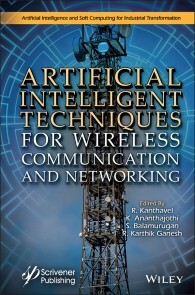
Artificial Intelligent Techniques for Wireless Communication and Networking
ARTIFICIAL INTELLIGENT TECHNIQUES FOR WIRELESS COMMUNICATION AND NETWORKINGTHE 20 CHAPTERS ADDRESS AI PRINCIPLES AND TECHNIQUES USED IN WIRELESS COMMUNICATION AND NETWORKING AND OUTLINE THEIR BENEFIT, FUNCTION, AND FUTURE ROLE IN THE FIELD. Wireless communication and networking based on AI concepts and techniques are explored in this book, specifically focusing on the current research in the field by highlighting empirical results along with theoretical concepts. The possibility of applying AI mechanisms towards security aspects in the communication domain is elaborated; also explored is the application side of integrated technologies that enhance AI-based innovations, insights, intelligent predictions, cost optimization, inventory management, identification processes, classification mechanisms, cooperative spectrum sensing techniques, ad-hoc network architecture, and protocol and simulation-based environments. AUDIENCEResearchers, industry IT engineers, and graduate students working on and implementing AI-based wireless sensor networks, 5G, IoT, deep learning, reinforcement learning, and robotics in WSN, and related technologies. R. KANTHAVEL, PhD is a Professor in the Department of Computer Engineering, King Khalid University Abha, Kingdom of Saudi Arabia. He has published more than 150 research articles in reputed journals and international conferences as well as published 10 engineering books. He specializes in communication systems engineering and information and communication engineering.K. ANANTHAJOTHI, PhD is an assistant professor in the Department of Computer Science and Engineering at Misrimal Navajee Munoth Jain Engineering College, Chennai, India. He has published a book on "Theory of Computation and Python Programming" and holds 2 patents.S. BALAMURUGAN, PhD is the Director of Research and Development, Intelligent Research Consultancy Services (iRCS), Coimbatore, Tamilnadu, India. He is also Director of the Albert Einstein Engineering and Research Labs (AEER Labs), as well as Vice-Chairman, Renewable Energy Society of India (RESI), India. He has published 45 books, 200+ international journals/ conferences, and 35 patents.R. KARTHIK GANESH, PhD is an associate professor in the Department of Computer Science and Engineering, SCAD College of Engineering and Technology, Cheranmahadevi, Tamilnadu, India. His research interests are in wireless communication, video and audio compression, image classification, and ontology techniques.Preface xvii1 COMPREHENSIVE AND SELF-CONTAINED INTRODUCTION TO DEEP REINFORCEMENT LEARNING 1P. Anbalagan, S. Saravanan and R. Saminathan1.1 Introduction 21.2 Comprehensive Study 31.3 Deep Reinforcement Learning: Value-Based and Policy-Based Learning 71.4 Applications and Challenges of Applying Reinforcement Learning to Real-World 91.5 Conclusion 122 IMPACT OF AI IN 5G WIRELESS TECHNOLOGIES AND COMMUNICATION SYSTEMS 15A. Sivasundari and K. Ananthajothi2.1 Introduction 162.2 Integrated Services of AI in 5G and 5G in AI 182.3 Artificial Intelligence and 5G in the Industrial Space 232.4 Future Research and Challenges of Artificial Intelligence in Mobile Networks 252.5 Conclusion 283 ARTIFICIAL INTELLIGENCE REVOLUTION IN LOGISTICS AND SUPPLY CHAIN MANAGEMENT 31P.J. Sathish Kumar, Ratna Kamala Petla, K. Elangovan and P.G. Kuppusamy3.1 Introduction 323.2 Theory--AI in Logistics and Supply Chain Market 353.3 Factors to Propel Business Into the Future Harnessing Automation 403.4 Conclusion 434 AN EMPIRICAL STUDY OF CROP YIELD PREDICTION USING REINFORCEMENT LEARNING 47M. P. Vaishnnave and R. Manivannan4.1 Introduction 474.2 An Overview of Reinforcement Learning in Agriculture 494.3 Reinforcement Learning Startups for Crop Prediction 524.4 Conclusion 575 COST OPTIMIZATION FOR INVENTORY MANAGEMENT IN BLOCKCHAIN AND CLOUD 59C. Govindasamy, A. Antonidoss and A. Pandiaraj5.1 Introduction 605.2 Blockchain: The Future of Inventory Management 625.3 Cost Optimization for Blockchain Inventory Management in Cloud 665.4 Cost Reduction Strategies in Blockchain Inventory Management in Cloud 715.5 Conclusion 726 REVIEW OF DEEP LEARNING ARCHITECTURES USED FOR IDENTIFICATION AND CLASSIFICATION OF PLANT LEAF DISEASES 75G. Gangadevi and C. Jayakumar6.1 Introduction 756.2 Literature Review 766.3 Proposed Idea 826.4 Reference Gap 866.5 Conclusion 877 GENERATING ART AND MUSIC USING DEEP NEURAL NETWORKS 91A. Pandiaraj, S. Lakshmana Prakash, R. Gopal and P. Rajesh Kanna7.1 Introduction 917.2 Related Works 927.3 System Architecture 947.4 System Development 967.5 Algorithm-LSTM 1007.6 Result 1007.7 Conclusions 1018 DEEP LEARNING ERA FOR FUTURE 6G WIRELESS COMMUNICATIONS--THEORY, APPLICATIONS, AND CHALLENGES 105S.K.B. Sangeetha and R. Dhaya8.1 Introduction 1068.2 Study of Wireless Technology 1088.3 Deep Learning Enabled 6G Wireless Communication 1138.4 Applications and Future Research Directions 1179 ROBUST COOPERATIVE SPECTRUM SENSING TECHNIQUES FOR A PRACTICAL FRAMEWORK EMPLOYING COGNITIVE RADIOS IN 5G NETWORKS 121J. Banumathi, S.K.B. Sangeetha and R. Dhaya9.1 Introduction 1229.2 Spectrum Sensing in Cognitive Radio Networks 1229.3 Collaborative Spectrum Sensing for Opportunistic Access in Fading Environments 1249.4 Cooperative Sensing Among Cognitive Radios 1259.5 Cluster-Based Cooperative Spectrum Sensing for Cognitive Radio Systems 1289.6 Spectrum Agile Radios: Utilization and Sensing Architectures 1289.7 Some Fundamental Limits on Cognitive Radio 1309.8 Cooperative Strategies and Capacity Theorems for Relay Networks 1319.9 Research Challenges in Cooperative Communication 1339.10 Conclusion 13510 NATURAL LANGUAGE PROCESSING 139S. Meera and S. Geerthik10.1 Introduction 13910.2 Conclusions 152References 15211 CLASS LEVEL MULTI-FEATURE SEMANTIC SIMILARITY-BASED EFFICIENT MULTIMEDIA BIG DATA RETRIEVAL 155D. Sujatha, M. Subramaniam and A. Kathirvel11.1 Introduction 15611.2 Literature Review 15811.3 Class Level Semantic Similarity-Based Retrieval 15911.4 Results and Discussion 16412 SUPERVISED LEARNING APPROACHES FOR UNDERWATER SCALAR SENSORY DATA MODELING WITH DIURNAL CHANGES 175J.V. Anand, T.R. Ganesh Babu, R. Praveena and K. Vidhya12.1 Introduction 17612.2 Literature Survey 17612.3 Proposed Work 17712.4 Results 18012.5 Conclusion and Future Work 19013 MULTI-LAYER UAV AD HOC NETWORK ARCHITECTURE, PROTOCOL AND SIMULATION 193Kamlesh Lakhwani, Tejpreet Singh and Orchu Aruna13.1 Introduction 19413.2 Background 19613.3 Issues and Gap Identified 19713.4 Main Focus of the Chapter 19813.5 Mobility 19913.6 Routing Protocol 20113.7 High Altitude Platforms (HAPs) 20213.8 Connectivity Graph Metrics 20413.9 Aerial Vehicle Network Simulator (AVENs) 20613.10 Conclusion 20714 ARTIFICIAL INTELLIGENCE IN LOGISTICS AND SUPPLY CHAIN 211Jeyaraju Jayaprakash14.1 Introduction to Logistics and Supply Chain 21214.2 Recent Research Avenues in Supply Chain 21714.3 Importance and Impact of AI 22214.4 Research Gap of AI-Based Supply Chain 22415 HEREDITARY FACTOR-BASED MULTI-FEATURED ALGORITHM FOR EARLY DIABETES DETECTION USING MACHINE LEARNING 235S. Deepajothi, R. Juliana, S.K. Aruna and R. Thiagarajan15.1 Introduction 23615.2 Literature Review 23715.3 Objectives of the Proposed System 24415.4 Proposed System 24515.5 HIVE and R as Evaluation Tools 24615.6 Decision Trees 24715.7 Results and Discussions 25015.8 Conclusion 25216 ADAPTIVE AND INTELLIGENT OPPORTUNISTIC ROUTING USING ENHANCED FEEDBACK MECHANISM 255V. Sharmila, K. Mandal, Shankar Shalani and P. Ezhumalai16.1 Introduction 25516.2 Related Study 25816.3 System Model 25916.4 Experiments and Results 26416.5 Conclusion 26717 ENABLING ARTIFICIAL INTELLIGENCE AND CYBER SECURITY IN SMART MANUFACTURING 269R. Satheesh Kumar, G. Keerthana, L. Murali, S. Chidambaranathan, C.D. Premkumarand R. Mahaveerakannan17.1 Introduction 27017.2 New Development of Artificial Intelligence 27117.3 Artificial Intelligence Facilitates the Development of Intelligent Manufacturing 27117.4 Current Status and Problems of Green Manufacturing 27217.5 Artificial Intelligence for Green Manufacturing 27617.6 Detailed Description of Common Encryption Algorithms 28017.7 Current and Future Works 28217.8 Conclusion 28318 DEEP LEARNING IN 5G NETWORKS 287G. Kavitha, P. Rupa Ezhil Arasi and G. Kalaimani18.1 5G Networks 28718.2 Artificial Intelligence and 5G Networks 29118.3 Deep Learning in 5G Networks 29319 EIDR UMPIRING SECURITY MODELS FOR WIRELESS SENSOR NETWORKS 299A. Kathirvel, S. Navaneethan and M. Subramaniam19.1 Introduction 29919.2 A Review of Various Routing Protocols 30219.3 Scope of Chapter 30719.4 Conclusions and Future Work 31120 ARTIFICIAL INTELLIGENCE IN WIRELESS COMMUNICATION 317Prashant Hemrajani, Vijaypal Singh Dhaka, Manoj Kumar Bohra and Amisha Kirti Gupta20.1 Introduction 31820.2 Artificial Intelligence: A Grand Jewel Mine 31820.3 Wireless Communication: An Overview 32020.4 Wireless Revolution 32020.5 The Present Times 32120.6 Artificial Intelligence in Wireless Communication 32120.7 Artificial Neural Network 32420.8 The Deployment of 5G 32620.9 Looking Into the Features of 5G 32720.10 AI and the Internet of Things (IoT) 32820.11 Artificial Intelligence in Software-Defined Networks (SDN) 32920.12 Artificial Intelligence in Network Function Virtualization 33120.13 Conclusion 332References 332Index 335

Patterns of Software Construction
Master how to implement a repeatable software construction system. This book closely examines how a system is designed to tie a series of activities together that are needed when building software-intensive systems.Software construction and operations don't get enough attention as a repeatable system. The world is stuck in agile backlog grooming sessions, and quality is not increasing. Companies' budgets are shrinking, and teams need a way to get more done with less, consistently. This topic is very relevant to our current economic conditions and continuing globalization trends. A reason we constantly need more hands-on-the-keyboards is because of all the waste created in development cycles. We need more literature on how to "do software" not just write software.These goals are accomplished using the concept of evolutions, much like the Navy SEALS train their team members. For LIFT, the evolutions are: Plan, Build, Test, Release, Operate and Manage. The entire purpose of the book is instructing professionals how to use these distinct evolutions while remaining agile. And then, inside of each evolution, to explicitly break down the inputs to the evolution, outputs and series of activities taking place. Patterns of Software Construction clearly outlines how together this becomes the system.WHAT YOU WILL LEARN* Optimize each evolution of a software delivery cycle* Review best practices of planning, highest return in the build cycle, and ignored practices in test, release, and operate * Apply the highest return techniques during the software build evolutionWHO THIS BOOK IS FORManagers, developers, tech lead, team lead, aspiring engineer, department leaders in corporations, executives, small business owner, IT DirectorStephen Rylander is currently SVP, Global Head of Engineering Company at Donnelley Financial Solutions. He is a software engineer turned technical executive who has seen a variety of industries from music, to ecommerce, to finance and more. He is invested in improving the practice of software delivery, operational platforms and all the people involved in making this happen. He has worked on platforms handling millions of daily transactions and developed digital transformation programs driving financial platforms. He has also had the opportunity to construct platforms with digital investing advice engines and has a history of dealing with scale and delivering results leading local and distributed teams.For fun he used to also run the API Craft Chicago Meetup, help organize Morningstar Tech Talks and has been a member mentor at 1871 - Chicago's Technology & Entrepreneurship Center.Chapter 1: Not a Processo 1.1 Systemo 1.2 The Problemo 1.3 Realityo 1.4 The Solutiono 1.5.The EvolutionsChapter 2 LIFT System EvolutionsChapter 3 Plano 3.1 Plano 3.1 Targeto 3.1 Map it outo 3.1 Development StrategyChapter 4 Buildo 4.1 Anatomy of a Sprinto 4.2 Most Software Looks like this.o 4.3 Non-functional Requirements Pay the Billso 4.4 …Chapter 5 TestChapter 6 ReleaseChapter 7 OperateChapter 8 ManageChapter 9 The Long GameChapter 10 - Summary

Introducing Software Verification with Dafny Language
Get introduced to software verification and proving correctness using the Microsoft Research-backed programming language, Dafny. While some other books on this topic are quite mathematically rigorous, this book will use as little mathematical symbols and rigor as possible, and explain every concept using plain English. It's the perfect primer for software programmers and developers with C# and other programming language skills.Writing correct software can be hard, so you'll learn the concept of computation and software verification. Then, apply these concepts and techniques to confidently write bug-free code that is easy to understand. Source code will be available throughout the book and freely available via GitHub.After reading and using this book you'll be able write correct, big free software source code applicable no matter which platform and programming language you use.WHAT YOU WILL LEARN* Discover the Microsoft Research-backed Dafny programming language* Explore Hoare logic, imperative and functional programs* Work with pre- and post-conditions* Use data types, pattern matching, and classes* Dive into verification examples for potential re-use for your own projectsWHO THIS BOOK IS FORSoftware developers and programmers with at least prior, basic programming experience. No specific language needed. It is also for those with very basic mathematical experience (function, variables).BORO SITNIKOVSKI has over ten years of experience working professionally as a software engineer. He started programming with assembly on an Intel x86 at the age of ten. While in high school, he won several prizes in competitive programming, varying from 4th, 3rd, and 1st place. He is an informatics graduate - his bachelor’s thesis was titled “Programming in Haskell using algebraic data structures”, and his master’s thesis was titled “Formal verification of Instruction Sets in Virtual Machines”. He has also published a few papers on software verification. Other research interests of his include programming languages, mathematics, logic, algorithms, and writing correct software. He is a strong believer in the open-source philosophy and contributes to various open-source projects. In his spare time, he enjoys some time off with his family.Introduction: Languages and SystemsChapter 1: Our First ProgramChapter 2: LogicChapter 3: ComputationChapter 4: Mathematical FoundationsChapter 5: ProofsChapter 6: SpecificationsChapter 7: Mathematical InductionChapter 8: Verification ExercisesChapter 9: Implementing a Formal SystemConclusionBibliographyAppendix A: Gödel’s Theorems

Modellselektion
Die Modellselektion ist der Bereich der Statistik, welcher Wissenschaftlern eine Möglichkeit bietet ein Modell für die Analyse von Rohdaten zu geben. Dabei ist die Wahl eins geeigneten Modells entscheidend, da mit der Wahl eines geeigneten Modells die jeweilige Theorie einer wissenschaftlichen Forschung unterstützt werden kann. In der wissenschaftlichen Praxis stehen hierfür diverse Ansätze zur Verfügung. Die Modellselektion bietet, mit diversen Ansätzen, einen Anhaltspunkt, wie Modelle selektiert werden können, um die vorhandenen Daten zu analysieren und in der Folge die Theorie zu verifizieren bzw. falsifizieren.Hierbei stehen Wissenschaftlern diverse Ansätze und Selektionskriterien zur Verfügung, welche die Wissenschaftler dabei unterstützen können, ein geeignetes Modell für die Analyse der Daten zu selektieren. Die Selektion kann dabei mittels Tests und der Richtung der Modellselektion, mittels diversen mittels Shrinkageansätzen oder auf Basis eines Informationskriteriums erfolgen. Die Wahl eines Informationskriteriums findet in der Folge Anwendung in einer Regressionsanalyse. Dabei stehen dem Wissenschaftler diverse univariate und multivariate Regressionsmodelle zur Verfügung. Falls die Daten von Kollinearität gekennzeichnet sind, sollten Verfahren, wie die Ridge Regression oder die LASSO Regression den linearen Regressionsmodellen bevorzugt werden.

Mastering Snowflake Solutions
Design for large-scale, high-performance queries using Snowflake’s query processing engine to empower data consumers with timely, comprehensive, and secure access to data. This book also helps you protect your most valuable data assets using built-in security features such as end-to-end encryption for data at rest and in transit. It demonstrates key features in Snowflake and shows how to exploit those features to deliver a personalized experience to your customers. It also shows how to ingest the high volumes of both structured and unstructured data that are needed for game-changing business intelligence analysis.MASTERING SNOWFLAKE SOLUTIONS starts with a refresher on Snowflake’s unique architecture before getting into the advanced concepts that make Snowflake the market-leading product it is today. Progressing through each chapter, you will learn how to leverage storage, query processing, cloning, data sharing, and continuous data protection features. This approach allows for greater operational agility in responding to the needs of modern enterprises, for example in supporting agile development techniques via database cloning. The practical examples and in-depth background on theory in this book help you unleash the power of Snowflake in building a high-performance system with little to no administrative overhead. Your result from reading will be a deep understanding of Snowflake that enables taking full advantage of Snowflake’s architecture to deliver value analytics insight to your business.WHAT YOU WILL LEARN* Optimize performance and costs associated with your use of the Snowflake data platform* Enable data security to help in complying with consumer privacy regulations such as CCPA and GDPR* Share data securely both inside your organization and with external partners* Gain visibility to each interaction with your customers using continuous data feeds from Snowpipe* Break down data silos to gain complete visibility your business-critical processes* Transform customer experience and product quality through real-time analyticsWHO THIS BOOK IS FORData engineers, scientists, and architects who have had some exposure to the Snowflake data platform or bring some experience from working with another relational database. This book is for those beginning to struggle with new challenges as their Snowflake environment begins to mature, becoming more complex with ever increasing amounts of data, users, and requirements. New problems require a new approach and this book aims to arm you with the practical knowledge required to take advantage of Snowflake’s unique architecture to get the results you need.ADAM MORTON is a senior data and analytics professional with almost two decades of experience. He has architected, designed, and led the implementation of numerous data warehouse and business intelligence solutions. Adam has extensive experience and certifications across several data analytics platforms ranging from Microsoft SQL Server, Teradata, and Hortonworks, to modern cloud-based tools such as AWS Redshift, Google Big Query, and Snowflake.Having successfully combined his experience with traditional technologies with his knowledge of modern platforms, Adam has accumulated substantial practical expertise in data warehousing and analytics in Snowflake, which he has captured and distilled into this book. Today, Adam runs his own data and analytics consultancy which focuses on helping companies solve problems with data, along with designing and executing modern data strategies to deliver tangible business value. Adam currently lives in Sydney, Australia and is the proud recipient of a Global Talent Visa. 1. Snowflake Architecture2. Data Movement3. Cloning4. Managing Security and User Access Control5. Protecting Data in Snowflake6. Business Continuity and Disaster Recovery7. Data Sharing and the Data Cloud8. Programming9. Advanced Performance Tuning10. Developing Applications in Snowflake

Analytics Optimization with Columnstore Indexes in Microsoft SQL Server
Meet the challenge of storing and accessing analytic data in SQL Server in a fast and performant manner. This book illustrates how columnstore indexes can provide an ideal solution for storing analytic data that leads to faster performing analytic queries and the ability to ask and answer business intelligence questions with alacrity. The book provides a complete walk through of columnstore indexing that encompasses an introduction, best practices, hands-on demonstrations, explanations of common mistakes, and presents a detailed architecture that is suitable for professionals of all skill levels.With little or no knowledge of columnstore indexing you can become proficient with columnstore indexes as used in SQL Server, and apply that knowledge in development, test, and production environments. This book serves as a comprehensive guide to the use of columnstore indexes and provides definitive guidelines. You will learn when columnstore indexes should be used, and the performance gains that you can expect. You will also become familiar with best practices around architecture, implementation, and maintenance. Finally, you will know the limitations and common pitfalls to be aware of and avoid.As analytic data can become quite large, the expense to manage it or migrate it can be high. This book shows that columnstore indexing represents an effective storage solution that saves time, money, and improves performance for any applications that use it. You will see that columnstore indexes are an effective performance solution that is included in all versions of SQL Server, with no additional costs or licensing required.WHAT YOU WILL LEARN* Implement columnstore indexes in SQL Server* Know best practices for the use and maintenance of analytic data in SQL Server* Use metadata to fully understand the size and shape of data stored in columnstore indexes* Employ optimal ways to load, maintain, and delete data from large analytic tables* Know how columnstore compression saves storage, memory, and time* Understand when a columnstore index should be used instead of a rowstore index* Be familiar with advanced features and analyticsWHO THIS BOOK IS FORDatabase developers, administrators, and architects who are responsible for analytic data, especially for those working with very large data sets who are looking for new ways to achieve high performance in their queries, and those with immediate or future challenges to analytic data and query performance who want a methodical and effective solutionEdward Pollack has over 20 years of experience in database and systems administration, architecture, and development, becoming an advocate for designing efficient data structures that can withstand the test of time. He has spoken at many events, such as SQL Saturdays, PASS Community Summit, Dativerse, and at many user groups and is the organizer of SQL Saturday Albany. Edward has authored many articles, as well as the book Dynamic SQL: Applications, Performance, and Security, and a chapter in Expert T-SQL Window Functions in SQL Server.In his free time, Ed enjoys video games, sci-fi & fantasy, traveling and baking. He lives in the sometimes-frozen icescape of Albany, NY with his wife Theresa and sons Nolan and Oliver, and a mountain of (his) video game plushies that help break the fall when tripping on (their) kids’ toys.1. Introduction to Analytic Data in a Transactional Database2. Transactional vs. Analytic Workloads3. What are Columnstore Indexes?4. Columnstore Index Architecture5. Columnstore Compression6. Columnstore Metadata7. Batch Execution8. Bulk Loading Data9. Delete and Update Operations10. Segment and Rowgroup Elimination11. Partitioning12. Non-Clustered Columnstore Indexes on Rowstore Tables13. Non-Clustered Rowstore Indexes on Columnstore Tables14. Columnstore Index Maintenance15. Columnstore Index Performance

Machine Learning for Auditors
Use artificial intelligence (AI) techniques to build tools for auditing your organization. This is a practical book with implementation recipes that demystify AI, ML, and data science and their roles as applied to auditing. You will learn about data analysis techniques that will help you gain insights into your data and become a better data storyteller. The guidance in this book around applying artificial intelligence in support of audit investigations helps you gain credibility and trust with your internal and external clients. A systematic process to verify your findings is also discussed to ensure the accuracy of your findings.MACHINE LEARNING FOR AUDITORS provides an emphasis on domain knowledge over complex data science know how that enables you to think like a data scientist. The book helps you achieve the objectives of safeguarding the confidentiality, integrity, and availability of your organizational assets. Data science does not need to be an intimidating concept for audit managers and directors. With the knowledge in this book, you can leverage simple concepts that are beyond mere buzz words to practice innovation in your team. You can build your credibility and trust with your internal and external clients by understanding the data that drives your organization.WHAT YOU WILL LEARN* Understand the role of auditors as trusted advisors* Perform exploratory data analysis to gain a deeper understanding of your organization* Build machine learning predictive models that detect fraudulent vendor payments and expenses* Integrate data analytics with existing and new technologies* Leverage storytelling to communicate and validate your findings effectively* Apply practical implementation use cases within your organizationWHO THIS BOOK IS FORAI AUDITING is for internal auditors who are looking to use data analytics and data science to better understand their organizational data. It is for auditors interested in implementing predictive and prescriptive analytics in support of better decision making and risk-based testing of your organizational processes.MARIS SEKAR is a professional computer engineer, Certified Information Systems Auditor (ISACA), and Senior Data Scientist (Data Science Council of America). He has a passion for using storytelling to communicate on high-risk items within an organization to enable better decision making and drive operational efficiencies. He has cross-functional work experience in various domains such as risk management, data analysis and strategy, and has functioned as a subject matter expert in organizations such as PricewaterhouseCoopers LLP, Shell Canada Ltd., and TC Energy. Maris’ love for data has motivated him to win awards, write LinkedIn articles, and publish two papers with IEEE on applied machine learning and data science.PART I. TRUSTED ADVISORS1. Three Lines of Defense2. Common Audit Challenges3. Existing Solutions4. Data Analytics5. Analytics Structure & EnvironmentPART II. UNDERSTANDING ARTIFICIAL INTELLIGENCE6. Introduction to AI, Data Science, and Machine Learning7. Myths and Misconceptions8. Trust, but Verify9. Machine Learning Fundamentals10. Data Lakes11. Leveraging the Cloud12. SCADA and Operational TechnologyPART III. STORYTELLING13. What is Storytelling?14. Why Storytelling?15. When to Use Storytelling16. Types of Visualizations17. Effective Stories18. Storytelling Tools19. Storytelling in AuditingPART IV. IMPLEMENTATION RECIPES20. How to Use the Recipes21. Fraud and Anomaly Detection22. Access Management23. Project Management24. Data Exploration25. Vendor Duplicate Payments26. CAATs 2.027. Log Analysis28. Concluding Remarks

Data Science
Dieses Buch entstand aus der Motivation heraus, eines der ersten deutschsprachigen Nachschlagewerke zu entwickeln, in welchem relativ simple Quellcode-Beispiele enthalten sind, um so Lösungsansätze für die (wiederkehrenden) Programmierprobleme in der Datenanalyse weiterzugeben. Dabei ist dieses Werk nicht uneigennützig verfasst worden. Es enthält Lösungswege für immer wiederkehrende Problemstellungen die ich über meinen täglichen Umgang entwickelt habe Zweifellos gehört das Nachschlagen von Lösungsansätzen in Büchern oder im Internet zur normalen Arbeit eines Programmierers. Allerdings ist diese Suche in der Regel ein unstrukturierter und damit, zumindest teilweise, ein zeitaufwendiger Prozess.Unabhängig davon, ob Sie das Buch als Student, Mitarbeiter oder Gründer lesen, hoffe ich, dass Ihnen dieses Nachschlagewerk ein wertvoller Helfer für die ersten Anfänge sein wird. Ich gehe davon aus, dass jede Person die Grundlagen der Datenanalyse mit Hilfe moderner Programmiersprachen erlernen kann.Seit März 2018 forscht und promoviert Herr BENJAMIN M. ABDEL-KARIM im Bereich der künstlichen Intelligenz im Kontext der Wissensextraktion. Das spezielle Augenmerk seiner Forschung sind künstliche neuronale Netze, beispielsweise zur Modellierung komplexer Finanzmarktstrukturen. Zuvor hat er eine klassische Bankausbildung sowie ein Bachelor- und Masterstudium in der Wirtschaftsinformatik absolviert. Seit März 2021 bringt Herr Benjamin M. Abdel-Karim als Berater sein Fachwissen aus Forschung und Entwicklung bei der Unternehmungsberatung Capgemini im Bereich Financial Services mit ein.Data Science - Datenanalyse - Python - Quellcode-Beispiele - Datenauswertung - Datentypen - Datenstrukturen - Kontrollstrukturen - Funktionen -Anwendungsbeispiele Data Science.

Pro ASP.NET Core 6
Professional developers will produce leaner applications for the ASP.NET Core platform using the guidance in this best-selling book, now in its 9th edition and updated for ASP.NET Core for .NET 6. It contains detailed explanations of the ASP.NET Core platform and the application frameworks it supports. This cornerstone guide puts ASP.NET Core for .NET 6 into context and dives deep into the tools and techniques required to build modern, extensible web applications. New features and capabilities such as MVC, Razor Pages, Blazor Server, and Blazor WebAssembly are covered, along with demonstrations of how they are applied.ASP.NET Core for .NET 6 is the latest evolution of Microsoft’s ASP.NET web platform and provides a "host-agnostic" framework and a high-productivity programming model that promotes cleaner code architecture, test-driven development, and powerful extensibility.Author Adam Freeman has thoroughly revised this market-leading book and explains how to get the most from ASP.NET Core for .NET 6. He starts with the nuts-and-bolts topics, teaching you about middleware components, built-in services, request model binding, and more. As you gain knowledge and confidence, he introduces increasingly more complex topics and advanced features, including endpoint routing and dependency injection. He goes in depth to give you the knowledge you need.This book follows the same format and style as the popular previous editions but brings everything up to date for the new ASP.NET Core for .NET 6 release and broadens the focus to include all of the ASP.NET Core platform. You will appreciate the fully worked case study of a functioning ASP.NET Core application that you can use as a template for your own projects.Source code for this book can be found at https://github.com/Apress/pro-asp.net-core-6.WHAT YOU WILL LEARN* Explore the entire ASP.NET Core platform* Apply the new ASP.NET Core for .NET 6 features in your developer environment* See how to create RESTful web services, web applications, and client-side applications* Build on your existing knowledge to get up and running with new programming models quickly and effectivelyWHO THIS BOOK IS FORWeb developers with a basic knowledge of web development and C# who want to incorporate the latest improvements and functionality in ASP.NET Core for .NET 6 into their own projects.ADAM FREEMAN is an experienced IT professional who has held senior positions in a range of companies, most recently serving as chief technology officer and chief operating officer of a global bank. Now retired, he spends his time writing and long-distance running.Part 11. Putting ASP.NET Core into Context2. Getting Started3. Your First ASP.NET Core Application4. Using the Development Tools5. Essential C# Features6. Unit Testing ASP.NET Core Applications7. SportsStore8. SportsStore: Navigation & Cart9. SportsStore: Completing the Cart10. SportsStore: Adminstration11. SportsStore: Security & DeploymentPart 212. Understanding the ASP.NET Core Platform13. Using URL Routing14. Using Dependency Injection15. Using the Platform Features, Part 116. Using the Platform Features, Part 217. Working with DataPart 318. Creating the Example Project19. Creating RESTFul Web Services20. Advanced Web Service Features21. Using Controllers with Views22. Using Controllers with Views, Part 223. Using Razor Pages24. Using View Components25. Using Tag Helpers26. Using the Built-In Tag Helpers27. Using the Forms Tag Helpers28. Using Model Binding29. Using Model Validation30. Using Filters31. Creating Form ApplicationsPart 432. Creating the Example Application33. Using Blazor Server, Part 134. Using Blazor Server Part 235. Advanced Blazor Features36. Blazor Forms and Data37. Blazor Web Assembly38. Using ASP.NET Core Identity39. Applying ASP.NET Core Identity

Azure Virtual Desktop Specialist
Enhance your knowledge and become certified with the Azure Virtual Desktop technology. This book provides the theory, lab exercises, and knowledge checks you need to prepare for the AZ-140 exam.The book starts with an introduction to Azure Virtual Desktop and AZ-140 exam objectives. You will learn the architecture behind Azure Virtual Desktop, including compute, identity, and storage. And you will learn how to implement all of the services that make up the Azure Virtual Desktop platform. Each chapter includes exam and practice questions. The book takes you through the access and security of Azure Virtual Desktop along with its user environment and application. And it teaches you how to monitor and maintain an Azure Virtual Desktop infrastructure.After reading this book, you will be prepared to take the AZ-140 exam.WHAT YOU WILL LEARN* Plan an Azure Virtual Desktop architecture* Install and configure apps on a session host* Plan and implement business continuity and disaster recovery* Understand user environment and applications in Azure Virtual DesktopWHO THIS BOOK IS FORAzure administrators who wish to increase their knowledge and become certified with the Azure Virtual Desktop technologySHABAZ DARR has more than 15 years of experience in the IT industry and more than eight years working with cloud technologies. Currently, he is working as a Senior Infrastructure Specialist for Netcompany. He is a certified Microsoft MVP in Enterprise Mobility, a certified Microsoft trainer with certifications in Azure Virtual Desktop Administrator, Office 365 Identity and Services, Modern Workplace Administrator Associate, and Azure Administrator Associate.CHAPTER 1: EXAM OVERVIEW & INTRODUCTION TO AZURE VIRTUAL DESKTOPCHAPTER GOAL: Introduce Microsoft Certification exams and Azure Virtual DesktopNO OF PAGES: 15SUB -TOPICS1. Prepare for your Microsoft exam and AZ-140 objectives2. Introduction to Azure Virtual DesktopCHAPTER 2: PLAN AN AZURE VIRTUAL DESKTOP ARCHITECTURECHAPTER GOAL: Outline the architecture behind Azure Virtual Desktop, including compute, identity and storage.NO OF PAGES: 35SUB - TOPICS1. Design the Azure Virtual Desktop architecture2. Design for User identities and profiles3. Knowledge CheckCHAPTER 3: IMPLEMENT AN AZURE VIRTUAL DESKTOP INFRASTRUCTURECHAPTER GOAL: Learn how to implement all services that make up the Azure Virtual Desktop platformNO OF PAGES : 45SUB - TOPICS:1. Implement and manage networking for Azure Virtual Desktop2. Implement and manage storage for Azure Virtual Desktop3. Create and configure host pools and session hosts.4. Create and manage session host images5. Knowledge CheckCHAPTER 4: MANAGE ACCESS AND SECURITY TO AZURE VIRTUAL DESKTOPCHAPTER GOAL: Learn how to secure user access and implement additional security within Azure for AVDNO OF PAGES: 35SUB - TOPICS:1. Manage Access to Azure Virtual Desktop2. Manage Security for Azure Virtual Desktop3. Knowledge CheckCHAPTER 5: MANAGE USER ENVIRONMENT AND APPLICATIONS FOR AZURE VIRTUAL DESKTOPCHAPTER GOAL: Learn how to implement and Manage the user experience and deploy applications within Azure Virtual Desktop.NO OF PAGES: 40SUB-TOPICS:1. Implement and manage FSLogix2. Configure user experience settings3. Install and configure apps on a session host4. Knowledge CheckCHAPTER 6: MONITOR AND MAINTAIN AN AZURE VIRTUAL DESKTOP INFRASTRUCTURECHAPTER GOALS: Learn how to monitor and keep an Azure Virtual Desktop Infrastructure fully up-to-dateNO OF PAGES: 45SUB-TOPICS:1. Plan and implement business continuity and disaster recovery2. Automate Azure Virtual desktop management tasks3. Monitor and manage performance tasks4. Knowledge check

Linux System Administration for the 2020s
Build and manage large estates, and use the latest OpenSource management tools to breakdown a problems. This book is divided into 4 parts all focusing on the distinct aspects of Linux system administration.The book begins by reviewing the foundational blocks of Linux and can be used as a brief summary for new users to Linux and the OpenSource world. Moving on to Part 2 you'll start by delving into how practices have changed and how management tooling has evolved over the last decade. You’ll explore new tools to improve the administration experience, estate management and its tools, along with automation and containers of Linux.Part 3 explains how to keep your platform healthy through monitoring, logging, and security. You'll also review advanced tooling and techniques designed to resolve technical issues. The final part explains troubleshooting and advanced administration techniques, and less known methods for resolving stubborn problems.With Linux System Administration for the 2020s you'll learn how to spend less time doing sysadmin work and more time on tasks that push the boundaries of your knowledge.WHAT YOU'LL LEARN* Explore a shift in culture and redeploy rather than fix* Improve administration skills by adopting modern tooling* Avoid bad practices and rethink troubleshooting* Create a platform that requires less human interventionWHO THIS BOOK IS FOREveryone from sysadmins, consultants, architects or hobbyists.Ken Hitchcock currently is a Principal Consultant working for Red Hat, with over twenty years of experience in IT. He has spent the last eleven years predominately focused on Red Hat products, certificating himself as a Red Hat Architect along the way. The last eleven years have been paramount in his understanding of how large Linux estates should be managed and in the spirit of openness, was inspired to share his knowledge and experiences in this book. Originally from Durban South Africa, he now lives in the south of England where he hopes to not only continue inspiring all he meets but also to continue improving himself and the industry he works in.PART ONE: Laying the foundation.- CHAPTER 1: Linux at a Glance.- PART TWO : Strengthening core skills.- CHAPTER 2: New tools to improve the administration experience.- CHAPTER 3: Estate management.- CHAPTER 4: Estate Management Tools.- CHAPTER 5: Automation.- CHAPTER 6: Containers.-PART THREE: Day two practices and keeping the lights on.-CHAPTER 7: Monitoring.-CHAPTER 8: Logging.-CHAPTER 9: Security.-CHAPTER 10: Maintenance tasks and planning.- PART FOUR: See, analyze and act.-CHAPTER 11: Troubleshooting.-CHAPTER 12: Advanced Administration

Azure Arc-enabled Data Services Revealed
Get introduced to Azure Arc-enabled Data Services and the powerful capabilities to deploy and manage local, on-premises, and hybrid cloud data resources using the same centralized management and tooling you get from the Azure cloud. This book shows how you can deploy and manage databases running on SQL Server and Postgres in your corporate data center or any cloud as if they were part of the Azure platform. This second edition has been updated to the latest codebase, allowing you to use this book as your handbook to get started with Azure Arc-enabled Data Services today. Learn how to benefit from Azure's centralized management, the automated rollout of patches and updates, managed backups, and more.This book is the perfect choice for anyone looking for a hybrid or multi-vendor cloud strategy for their data estate. The authors walk you through the possibilities and requirements to get Azure SQL Managed Instance and PostgresSQL Hyperscale deployed outside of Azure, so the services are accessible to companies that cannot move to the cloud or do not want to use the Microsoft cloud exclusively. The technology described in this book will benefit those required to keep sensitive services, such as medical databases, away from the public cloud equally as those who can’t move to a public cloud for other reasons such as infrastructure constraints but still want to benefit from the Azure cloud and the centralized management and tooling that it supports.WHAT YOU WILL LEARN* Understand the fundamentals and architecture of Azure Arc-enabled data services* Build a multi-cloud strategy based on Azure Data Services* Deploy Azure Arc-enabled data services on premises or in any cloud* Deploy Azure Arc-enabled SQL Managed Instance on premises or in any cloud* Deploy Azure Arc-enabled PostgreSQL Hyperscale on premises or in any cloud* Backup and Restore your data that is managed by Azure Arc-enabled data services* Manage Azure-enabled data services running outside of Azure* Monitor Azure-enabled data services through Grafana and Kibana* Monitor Azure-enabled data services running outside of Azure through Azure MonitorWHO THIS BOOK IS FORDatabase administrators and architects who want to manage on-premises or hybrid cloud data resources from the Microsoft Azure cloud. Especially for those wishing to take advantage of cloud technologies while keeping sensitive data on premises and under physical control.BEN WEISSMAN is the owner and founder of Solisyon, a consulting firm based in Germany and focused on business intelligence, business analytics, and data warehousing. He is a Microsoft Data Platform MVP, the first German BimlHero, and has been working with SQL Server since SQL Server 6.5. Ben is also an MCSE, Charter Member of the Microsoft Professional Program for Big Data, Artificial Intelligence, and Data Science, and he is a Certified Data Vault Data Modeler. If he is not currently working with data, he is probably travelling to explore the world.ANTHONY E. NOCENTINO is the Founder and President of Centino Systems as well as a Pluralsight author, a Microsoft Data Platform MVP, and an industry recognized Kubernetes, SQL Server, and Linux expert. In his consulting practice, Anthony designs solutions, deploys the technology, and provides expertise on system performance, architecture, and security. He has bachelor's and master's degrees in computer science, with research publications in machine virtualization, high performance/low latency data access algorithms, and spatial database systems. 1. A Kubernetes Primer2. Azure Arc-Enabled Data Services3. Getting Ready for Deployment4. Installing Kubernetes5. Deploying a Data Controller in Indirect Mode6. Deploying a Data Controller in Direct Mode7. Deploying an Azure Arc-Enabled SQL Managed Instance8. Deploying Azure Arc-Enabled PostgreSQL Hyperscale9. Monitoring and Management
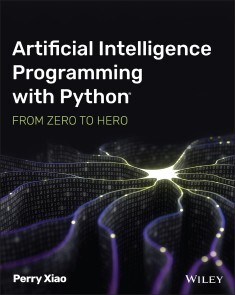
Artificial Intelligence Programming with Python
A HANDS-ON ROADMAP TO USING PYTHON FOR ARTIFICIAL INTELLIGENCE PROGRAMMINGIn Practical Artificial Intelligence Programming with Python: From Zero to Hero, veteran educator and photophysicist Dr. Perry Xiao delivers a thorough introduction to one of the most exciting areas of computer science in modern history. The book demystifies artificial intelligence and teaches readers its fundamentals from scratch in simple and plain language and with illustrative code examples. Divided into three parts, the author explains artificial intelligence generally, machine learning, and deep learning. It tackles a wide variety of useful topics, from classification and regression in machine learning to generative adversarial networks. He also includes:* Fulsome introductions to MATLAB, Python, AI, machine learning, and deep learning* Expansive discussions on supervised and unsupervised machine learning, as well as semi-supervised learning* Practical AI and Python “cheat sheet” quick referencesThis hands-on AI programming guide is perfect for anyone with a basic knowledge of programming—including familiarity with variables, arrays, loops, if-else statements, and file input and output—who seeks to understand foundational concepts in AI and AI development. PERRY XIAO, PHD, is Professor and Course Director of London South Bank University. He holds his doctorate in photophysics and is Director and co-Founder of Biox Systems Ltd., a university spin-out company that designs and manufactures the AquaFlux and Epsilon Permittivity Imaging system.Preface xxiiiPART I INTRODUCTIONCHAPTER 1 INTRODUCTION TO AI 31.1 What Is AI? 31.2 The History of AI 51.3 AI Hypes and AI Winters 91.4 The Types of AI 111.5 Edge AI and Cloud AI 121.6 Key Moments of AI 141.7 The State of AI 171.8 AI Resources 191.9 Summary 211.10 Chapter Review Questions 22CHAPTER 2 AI DEVELOPMENT TOOLS 232.1 AI Hardware Tools 232.2 AI Software Tools 242.3 Introduction to Python 272.4 Python Development Environments 302.4 Getting Started with Python 342.5 AI Datasets 452.6 Python AI Frameworks 472.7 Summary 492.8 Chapter Review Questions 50PART II MACHINE LEARNING AND DEEP LEARNINGCHAPTER 3 MACHINE LEARNING 533.1 Introduction 533.2 Supervised Learning: Classifications 55Scikit-Learn Datasets 56Support Vector Machines 56Naive Bayes 67Linear Discriminant Analysis 69Principal Component Analysis 70Decision Tree 73Random Forest 76K-Nearest Neighbors 77Neural Networks 783.3 Supervised Learning: Regressions 803.4 Unsupervised Learning 89K-means Clustering 893.5 Semi-supervised Learning 913.6 Reinforcement Learning 93Q-Learning 953.7 Ensemble Learning 1023.8 AutoML 1063.9 PyCaret 1093.10 LazyPredict 1113.11 Summary 1153.12 Chapter Review Questions 116CHAPTER 4 DEEP LEARNING 1174.1 Introduction 1174.2 Artificial Neural Networks 1204.3 Convolutional Neural Networks 1254.3.1 LeNet, AlexNet, GoogLeNet 1294.3.2 VGG, ResNet, DenseNet, MobileNet, EffecientNet, and YOLO 1404.3.3 U-Net 1524.3.4 AutoEncoder 1574.3.5 Siamese Neural Networks 1614.3.6 Capsule Networks 1634.3.7 CNN Layers Visualization 1654.4 Recurrent Neural Networks 1734.4.1 Vanilla RNNs 1754.4.2 Long-Short Term Memory 1764.4.3 Natural Language Processing and Python Natural Language Toolkit 1834.5 Transformers 1874.5.1 BERT and ALBERT 1874.5.2 GPT-3 1894.5.3 Switch Transformers 1904.6 Graph Neural Networks 1914.6.1 SuperGLUE 1924.7 Bayesian Neural Networks 1924.8 Meta Learning 1954.9 Summary 1974.10 Chapter Review Questions 197PART III AI APPLICATIONSCHAPTER 5 IMAGE CLASSIFICATION 2015.1 Introduction 2015.2 Classification with Pre-trained Models 2035.3 Classification with Custom Trained Models: Transfer Learning 2095.4 Cancer/Disease Detection 2275.4.1 Skin Cancer Image Classification 2275.4.2 Retinopathy Classification 2295.4.3 Chest X-Ray Classification 2305.4.5 Brain Tumor MRI Image Classification 2315.4.5 RSNA Intracranial Hemorrhage Detection 2315.5 Federated Learning for Image Classification 2325.6 Web-Based Image Classification 2335.6.1 Streamlit Image File Classification 2345.6.2 Streamlit Webcam Image Classification 2425.6.3 Streamlit from GitHub 2485.6.4 Streamlit Deployment 2495.7 Image Processing 2505.7.1 Image Stitching 2505.7.2 Image Inpainting 2535.7.3 Image Coloring 2555.7.4 Image Super Resolution 2565.7.5 Gabor Filter 2575.8 Summary 2625.9 Chapter Review Questions 263CHAPTER 6 FACE DETECTION AND FACE RECOGNITION 2656.1 Introduction 2656.2 Face Detection and Face Landmarks 2666.3 Face Recognition 2796.3.1 Face Recognition with Face_Recognition 2796.3.2 Face Recognition with OpenCV 2856.3.3 GUI-Based Face Recognition System 288Other GUI Development Libraries 3006.3.4 Google FaceNet 3016.4 Age, Gender, and Emotion Detection 3016.4.1 DeepFace 3026.4.2 TCS-HumAIn-2019 3056.5 Face Swap 3096.5.1 Face_Recognition and OpenCV 3106.5.2 Simple_Faceswap 3156.5.3 DeepFaceLab 3226.6 Face Detection Web Apps 3226.7 How to Defeat Face Recognition 3346.8 Summary 3356.9 Chapter Review Questions 336CHAPTER 7 OBJECT DETECTIONS AND IMAGE SEGMENTATIONS 3377.1 Introduction 337R-CNN Family 338YOLO 339SSD 3407.2 Object Detections with Pretrained Models 3417.2.1 Object Detection with OpenCV 3417.2.2 Object Detection with YOLO 3467.2.3 Object Detection with OpenCV and Deep Learning 3517.2.4 Object Detection with TensorFlow, ImageAI, Mask RNN, PixelLib, Gluon 354TensorFlow Object Detection 354ImageAI Object Detection 355MaskRCNN Object Detection 357Gluon Object Detection 3637.2.5 Object Detection with Colab OpenCV 3647.3 Object Detections with Custom Trained Models 3697.3.1 OpenCV 369Step 1 369Step 2 369Step 3 369Step 4 370Step 5 3717.3.2 YOLO 372Step 1 372Step 2 372Step 3 373Step 4 375Step 5 3757.3.3 TensorFlow, Gluon, and ImageAI 376TensorFlow 376Gluon 376ImageAI 3767.4 Object Tracking 3777.4.1 Object Size and Distance Detection 3777.4.2 Object Tracking with OpenCV 382Single Object Tracking with OpenCV 382Multiple Object Tracking with OpenCV 3847.4.2 Object Tracking with YOLOv4 and DeepSORT 3867.4.3 Object Tracking with Gluon 3897.5 Image Segmentation 3897.5.1 Image Semantic Segmentation and Image Instance Segmentation 390PexelLib 390Detectron2 394Gluon CV 3947.5.2 K-means Clustering Image Segmentation 3947.5.3 Watershed Image Segmentation 3967.6 Background Removal 4057.6.1 Background Removal with OpenCV 4057.6.2 Background Removal with PaddlePaddle 4237.6.3 Background Removal with PixelLib 4257.7 Depth Estimation 4267.7.1 Depth Estimation from a Single Image 4267.7.2 Depth Estimation from Stereo Images 4287.8 Augmented Reality 4307.9 Summary 4317.10 Chapter Review Questions 431CHAPTER 8 POSE DETECTION 4338.1 Introduction 4338.2 Hand Gesture Detection 4348.2.1 OpenCV 4348.2.2 TensorFlow.js 4528.3 Sign Language Detection 4538.4 Body Pose Detection 4548.4.1 OpenPose 4548.4.2 OpenCV 4558.4.3 Gluon 4558.4.4 PoseNet 4568.4.5 ML5JS 4578.4.6 MediaPipe 4598.5 Human Activity Recognition 461ActionAI 461Gluon Action Detection 461Accelerometer Data HAR 4618.6 Summary 4648.7 Chapter Review Questions 464CHAPTER 9 GAN AND NEURAL-STYLE TRANSFER 4659.1 Introduction 4659.2 Generative Adversarial Network 4669.2.1 CycleGAN 4679.2.2 StyleGAN 4699.2.3 Pix2Pix 4749.2.4 PULSE 4759.2.5 Image Super-Resolution 4759.2.6 2D to 3D 4789.3 Neural-Style Transfer 4799.4 Adversarial Machine Learning 4849.5 Music Generation 4869.6 Summary 4899.7 Chapter Review Questions 489CHAPTER 10 NATURAL LANGUAGE PROCESSING 49110.1 Introduction 49110.1.1 Natural Language Toolkit 49210.1.2 spaCy 49310.1.3 Gensim 49310.1.4 TextBlob 49410.2 Text Summarization 49410.3 Text Sentiment Analysis 50810.4 Text/Poem Generation 51010.5.1 Text to Speech 51510.5.2 Speech to Text 51710.6 Machine Translation 52210.7 Optical Character Recognition 52310.8 QR Code 52410.9 PDF and DOCX Files 52710.10 Chatbots and Question Answering 53010.10.1 ChatterBot 53010.10.2 Transformers 53210.10.3 J.A.R.V.I.S. 53410.10.4 Chatbot Resources and Examples 54010.11 Summary 54110.12 Chapter Review Questions 542CHAPTER 11 DATA ANALYSIS 54311.1 Introduction 54311.2 Regression 54411.2.1 Linear Regression 54511.2.2 Support Vector Regression 54711.2.3 Partial Least Squares Regression 55411.3 Time-Series Analysis 56311.3.1 Stock Price Data 56311.3.2 Stock Price Prediction 565Streamlit Stock Price Web App 56911.3.4 Seasonal Trend Analysis 57311.3.5 Sound Analysis 57611.4 Predictive Maintenance Analysis 58011.5 Anomaly Detection and Fraud Detection 58411.5.1 Numenta Anomaly Detection 58411.5.2 Textile Defect Detection 58411.5.3 Healthcare Fraud Detection 58411.5.4 Santander Customer Transaction Prediction 58411.6 COVID-19 Data Visualization and Analysis 58511.7 KerasClassifier and KerasRegressor 58811.7.1 KerasClassifier 58911.7.2 KerasRegressor 59311.8 SQL and NoSQL Databases 59911.9 Immutable Database 60811.9.1 Immudb 60811.9.2 Amazon Quantum Ledger Database 60911.10 Summary 61011.11 Chapter Review Questions 610CHAPTER 12 ADVANCED AI COMPUTING 61312.1 Introduction 61312.2 AI with Graphics Processing Unit 61412.3 AI with Tensor Processing Unit 61812.4 AI with Intelligence Processing Unit 62112.5 AI with Cloud Computing 62212.5.1 Amazon AWS 62312.5.2 Microsoft Azure 62412.5.3 Google Cloud Platform 62512.5.4 Comparison of AWS, Azure, and GCP 62512.6 Web-Based AI 62912.6.1 Django 62912.6.2 Flask 62912.6.3 Streamlit 63412.6.4 Other Libraries 63412.7 Packaging the Code 635Pyinstaller 635Nbconvert 635Py2Exe 636Py2app 636Auto-Py-To-Exe 636cx_Freeze 637Cython 638Kubernetes 639Docker 642PIP 64712.8 AI with Edge Computing 64712.8.1 Google Coral 64712.8.2 TinyML 64812.8.3 Raspberry Pi 64912.9 Create a Mobile AI App 65112.10 Quantum AI 65312.11 Summary 65712.12 Chapter Review Questions 657Index 659

Windows 11 Made Easy
Get started with Windows 11. This book shows you how to set up and personalize your PC in order to get the best experience from your documents, photos, and your time online. The book introduces you to the new desktop, start menu, and settings panel. It covers everything that’s been changed, added, or removed.Next, you will learn how to personalize and customize your PC, laptop, and tablet and how to make Windows 11 safer to use for your children and family. The book takes you through how to keep your personal information safe and secure, and how to make sure your precious documents and photos are backed-up with OneDrive.The book shows you how to use accessibility tools to make Windows 11 easier to use, see, hear, and touch, and how to have fun with Android apps and Xbox gaming. You will also learn how to become more productive, how to connect to your college or workplace, and how you can use multiple desktops and snap layouts to get stuff done.After reading this book, you will be able to install, manage, secure, and make the best of Windows 11 for your PC.What Will You Learn* Install and use the Android apps on your PC* Safely back up and safeguard your documents and photos* Maximize battery life on your laptop or tablet* Make Windows 11 easier to see, hear, touch, and useWHO THIS BOOK IS FORAnyone planning to install Windows 11 and customize their PC with the new updatesMIKE HALSEY is a recognized technical expert. He is the author of help and how-to books for Windows 7, 8, and 10, including accessibility, productivity, and troubleshooting. He is also the author of The Green IT Guide (Apress). Mike is well-versed in the problems and issues that PC users experience when setting up, using, and maintaining their PCs and knows how difficult and technical it can appear.He understands that some subjects can be intimidating, so he approaches each subject area in straightforward and easy-to-understand ways. Mike is originally from the UK, but now lives in the south of France with his rescue border collies, Evan and Robbie. You can contact Mike on Twitter @MikeHalsey.CHAPTER 1: FINDING YOUR WAY AROUND WINDOWS 11 (15 PAGES)Introducing Windows 11 and guiding you around what’s new, what’s moved, and what’s important, from the new desktop and Start Menu experience, to the Settings panel, the Microsoft Store now with Android apps, and the apps and tools you’ll want to use.1) Introducing the Windows 11 Desktop and Start Menu2) Configuring and Customizing Settings3) Introducing The Microsoft Store4) Accessing Documents and Photos5) Finding and Running Software and AppsCHAPTER 2: PERSONALIZING WINDOWS 11 (15 PAGES)Everybody wants to be able to personalize and customize their devices, and here we look at the many different ways you can do this with one of the most customizable and flexible operating systems available.1) Customizing How Windows 11 Looks and Feels2) Managing Multiple User-Accounts3) Setting Up Email and Other Accounts4) Managing Child Accounts in Windows 11CHAPTER 3: GETTING ONLINE AND USING THE INTERNET (15 PAGES)Everybody Needs to be online, and in this chapter we’ll look at how to connect to Wi-Fi networks safely and securely, and how to use Microsoft’s Edge web browser to browse the Internet safely and securely.1) Connecting to Wi-Fi Networks2) Getting Started with Microsoft’s Edge Browser3) Customizing and Configuring Edge4) Managing Internet DownloadsCHAPTER 4: USING WINDOWS AND ANDROID APPS (10 PAGES)There are several different ways and different types of apps that you can install in Windows 11, including many Android apps. In this chapter we’ll look at how you can install, manage, and get the best from them, in addition to seeing how you can play Xbox games on your PC.1) Installing and Managing Software on your PC2) Installing and Managing Apps from the Microsoft Store3) Install and Manage Android Apps in Windows 114) Connecting to Xbox Gaming Services and Playing GamesCHAPTER 5: MANAGING FILES, DOCUMENTS AND ONEDRIVE (10 PAGES)Managing and keeping your documents, photos and files safe and organized can be tricky, so here we’ll look at how to manage your files, keep them safely backed up, and how you can make sure they’ll always be secure and in-sync across your PCs.1) Managing Documents, Pictures, Videos, and Music2) Setting Up and Using OneDrive Cloud Storage3) Using Multiple Disks with Files and DocumentsCHAPTER 6: MAKING WINDOWS 11 EASIER TO USE (12 PAGES)There are many ways to make Windows 11 easier to use, and these can benefit anybody from children and older people, to those with color-blindness or dyslexia, shaky hands or a harder to manage disability. Here we look at all the ways to make your PC easier to use.1) Make Windows 11 Easier to Use2) Make Windows 11 Easier to See3) Make Windows 11 Easier to Hear4) Make Windows 11 Easier to TouchCHAPTER 7: BEING MORE PRODUCTIVE WITH WINDOWS 11 (15 PAGES)We all want to get stuff done on our PCs, so in this chapter we’ll examine all the top productivity tips including managing multiple windows, desktops and even monitors, how to print and share files and documents, and how to manage running apps.1) Switching Between Running Apps2) Managing Windows and Using Window Layouts3) Using Multiple Desktops in Windows 114) Searching for Files, Documents and More in Windows 115) Printing Files and Saving Files as PDFs6) Using Multiple Displays with Your PCCHAPTER 8: GETTING WORK DONE (10 PAGES)With more people working from home, you all need to be able to connect to your company or organization’s services and files. Here we show you how to get your home PC working with any business or school system safely and quickly.1) Connect to Your Company, Organization, or School2) Use OneDrive for Business3) Getting Started with Microsoft OfficeCHAPTER 9: MANAGING YOUR PRIVACY AND SECURITY (15 PAGES)We all need to be safe and secure online, and here we’ll examine how to prevent your PC becoming infected with malware, and how to help make sure you don’t fall victim to scammers. Additionally we’ll look at how you secure your own privacy on your PC with the websites and apps you like to use.1) Signing Into Your PC with Windows Hello2) The Windows Security Center3) Managing Privacy and Security Settings4) Top Tips for Security and Staying SafeCHAPTER 10: CONNECTING AND USING PERIPHERALS AND HARDWARE (10 PAGES)If you use any kind of device with your PC, from a printer to Bluetooth headphones or an Xbox controller, you’ll know they don’t always behave themselves. Here we’ll look at how you install and manage all types of devices in Windows 11.1) Adding and Managing Printers2) Adding and Managing Bluetooth Devices3) Connecting to Other Devices in Your Home or Workplace4) Fixing Problems with Hardware PeripheralsCHAPTER 11: KEEPING YOUR PC UPDATED AND RUNNING SMOOTHLY (10 PAGES)We need to keep our PCs up to date with security and stability patches, to keep ourselves and our files safe. Here we’ll look at managing Windows Updates, how to defer ones you don’t want yet, and how to quickly fix any problem that might be caused.1) Installing and Managing Windows Updates2) Deferring and Troubleshooting Updates3) What is the Windows Insider ProgramCHAPTER 12: TOP TIPS FOR GETTING THE VERY BEST FROM WINDOWS 11 (15 PAGES)There is so much you can do to make your experience using Windows 11 better, so here we share our top tips for getting the very best from your Windows 11 PCs.1) Using Keyboard Shortcuts with Windows 112) Getting the Best from Touch and Trackpad Gestures3) Maximize Battery Life on Your Laptop or Tablet4) Repurposing an Old PC To Sell or Donate5) Fixing Common PC Problems

Non-Smooth and Complementarity-Based Distributed Parameter Systems
Many of the most challenging problems in the applied sciences involve non-differentiable structures as well as partial differential operators, thus leading to non-smooth distributed parameter systems. This edited volume aims to establish a theoretical and numerical foundation and develop new algorithmic paradigms for the treatment of non-smooth phenomena and associated parameter influences. Other goals include the realization and further advancement of these concepts in the context of robust and hierarchical optimization, partial differential games, and nonlinear partial differential complementarity problems, as well as their validation in the context of complex applications. Areas for which applications are considered include optimal control of multiphase fluids and of superconductors, image processing, thermoforming, and the formation of rivers and networks. Chapters are written by leading researchers and present results obtained in the first funding phase of the DFG Special Priority Program on Nonsmooth and Complementarity Based Distributed Parameter Systems: Simulation and Hierarchical Optimization that ran from 2016 to 2019. S. Bartels, S. Hertzog, Error Bounds for Discretized Optimal Transport and its Reliable Efficient Numerical Solution.- H. G. Bock, E. Kostina, M. Sauter, J. P. Schlöder, M. Schlöder, Numerical Methods for Diagnosis and Therapy Design of Cerebral Palsy by Bilevel Optimal Control of Constrained Biomechanical Multi-Body Systems.- S. Banholzer, B. Gebken, M. Dellnitz, S. Peitz, S. Volkwein, ROM-Based Multiobjective Optimization of Elliptic PDEs via Numerical Continuation.- S. Dempe, F. Harder, P. Mehlitz, G. Wachsmuth, Analysis and Solution Methods for Bilevel Optimal Control Problems.- M. Herrmann, R. Herzog, S. Schmidt, J. Vidal-Núñez, A Calculus for Non-Smooth Shape Optimization with Applications to Geometric Inverse Problems.- R. Herzog, D. Knees, C. Meyer, M. Sievers, A. Stötzner, S. Thomas, Rate-Independent Systems and Their Viscous Regularizations: Analysis, Simulation, and Optimal Control.- D. Ganhururu, M. Hintermüller, S.-M. Stengl, T. M. Surowiec, Generalized Nash Equilibrium Problems with Partial Differential Operators: Theory, Algorithms, and Risk Aversion.- A. Alphonse, M. Hintermüller, C. N. Rautenberg, Stability and Sensitivity Analysis for Quasi-Variational Inequalities.- C. Gräßle, M. Hintermüller, M.Hinze, T. Keil, Simulation and Control of a Nonsmooth Cahn-Hilliard Navier-Stokes System with Variable Fluid Densities.- C. Kanzow, V. Karl, D.Steck, D. Wachsmuth, Safeguarded Augmented Lagrangian Methods in Banach Spaces.- M. Hahn, C. Kirches, P. Manns, S. Sager, C. Zeile, Decomposition and Approximation for PDE-Constrained Mixed-Integer Optimal Control.- C. Christof, C. Meyer, B. Schweizer, S. Turek, Strong Stationarity for Optimal Control of Variational Inequalities of the Second Kind.- A. Hehl, M. Mohammadi, I. Neitzel, W. Wollner, Optimizing Fracture Propagation Using a Phase-Field Approach.- A. Schiela, M. Stöcklein, Algorithms for Optimal Control of Elastic Contact Problems with Finite Strain.- O. Weiß, A. Walther, S.Schmidt, Algorithms based on Abs-Linearization for Nonsmooth Optimization with PDE Constraints.- V. Schulz, K.Welker, Shape Optimization for Variational Inequalities of Obstacle Type: Regularized and Unregularized Computational Approaches.- J. Becker, A.Schwartz, S.Steffensen, A. Thünen, Extensions of Nash Games in Finite and Infinite Dimensions with Applications.
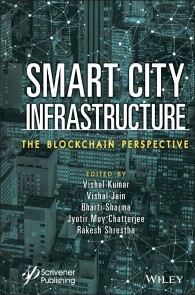
Smart City Infrastructure
SMART CITY INFRASTRUCTURETHE WIDE RANGE OF TOPICS PRESENTED IN THIS BOOK HAVE BEEN CHOSEN TO PROVIDE THE READER WITH A BETTER UNDERSTANDING OF SMART CITIES INTEGRATED WITH AI AND BLOCKCHAIN AND RELATED SECURITY ISSUES. The goal of this book is to provide detailed, in-depth information on the state-of-the-art architecture and infrastructure used to develop smart cities using the Internet of Things (IoT), artificial intelligence (AI), and blockchain security—the key technologies of the fourth industrial revolution. The book outlines the theoretical concepts, experimental studies, and various smart city applications that create value for inhabitants of urban areas. Several issues that have arisen with the advent of smart cities and novel solutions to resolve these issues are presented. The IoT along with the integration of blockchain and AI provides efficient, safe, secure, and transparent ways to solve different types of social, governmental, and demographic issues in the dynamic urban environment. A top-down strategy is adopted to introduce the architecture, infrastructure, features, and security. AUDIENCEThe core audience is researchers in artificial intelligence, information technology, electronic and electrical engineering, systems engineering, industrial engineering as well as government and city planners. VISHAL KUMAR, PHD is an assistant professor in the Department of Computer Science and Engineering at Bipin Tripathi Kumaon Institute of Technology, Dwarahat (an Autonomous Institute of Govt. of Uttarakhand), India.VISHAL JAIN, PHD is an associate professor at the Department of Computer Science and Engineering, School of Engineering and Technology, Sharda University, Greater Noida, UP India. He has more than 450 research citation indices with Google Scholar (h-index score 12 and i-10 index 15). BHARTI SHARMA, PHD is an assistant professor and academic head of the MCA department of DIT University, Dehradun, India. JYOTIR MOY CHATTERJEE is an assistant professor in the Information Technology Department at Lord Buddha Education Foundation (LBEF), Kathmandu, Nepal. He has published more than 60 international research paper publications, three conference papers, three authored books, 10 edited books, 16 book chapters, two Master’s theses converted into books, and one patent. RAKESH SHRESTHA, PHD is a postdoctoral researcher at the Department of Information and Communication Engineering, Yeungnam University, South Korea. Preface xviiAcknowledgment xxi1 DEEP DIVE INTO BLOCKCHAIN TECHNOLOGY: CHARACTERISTICS, SECURITY AND PRIVACY ISSUES, CHALLENGES, AND FUTURE RESEARCH DIRECTIONS 1Bhanu Chander1.1 Introduction 21.2 Blockchain Preliminaries 31.2.1 Functioning of Blockchain 31.2.2 Design of Blockchain 41.2.3 Blockchain Elements 51.3 Key Technologies of Blockchain 71.3.1 Distributed Ledger 71.3.2 Cryptography 81.3.3 Consensus 81.3.4 Smart Contracts 91.3.5 Benchmarks 91.4 Consensus Algorithms of Blockchain 91.4.1 Proof of Work (PoW) 101.4.2 Proof of Stake (PoS) 101.4.3 BFT-Based Consensus Algorithms 111.4.4 Practical Byzantine Fault Tolerance (PBFT) 121.4.5 Sleepy Consensus 121.4.6 Proof of Elapsed Time (PoET) 121.4.7 Proof of Authority (PoA) 131.4.8 Proof of Reputation (PoR) 131.4.9 Deputized Proof of Stake (DPoS) 131.4.10 SCP Design 131.5 Internet of Things and Blockchain 141.5.1 Internet of Things 141.5.2 IoT Blockchain 161.5.3 Up-to-Date Tendency in IoT Blockchain Progress 161.6 Applications of Blockchain in Smart City 181.6.1 Digital Identity 181.6.2 Security of Private Information 191.6.3 Data Storing, Energy Ingesting, Hybrid Development 191.6.4 Citizens Plus Government Frame 201.6.5 Vehicle-Oriented Blockchain Appliances in Smart Cities 201.6.6 Financial Applications 211.7 Security and Privacy Properties of Blockchain 211.7.1 Security and Privacy Necessities of Online Business Transaction 211.7.2 Secrecy of Connections and Data Privacy 231.8 Privacy and Security Practices Employed in Blockchain 241.8.1 Mixing 241.8.2 Anonymous Signatures 251.8.3 Homomorphic Encryption (HE) 251.8.4 Attribute-Based Encryption (ABE) 261.8.5 Secure Multi-Party Computation (MPC) 261.8.6 Non-Interactive Zero-Knowledge (NIZK) 261.8.7 The Trusted Execution Environment (TEE) 271.8.8 Game-Based Smart Contracts (GBSC) 271.9 Challenges of Blockchain 271.9.1 Scalability 271.9.2 Privacy Outflow 281.9.3 Selfish Mining 281.9.4 Security 281.10 Conclusion 29References 292 TOWARD SMART CITIES BASED ON THE INTERNET OF THINGS 33Djamel Saba, Youcef Sahli and Abdelkader Hadidi2.1 Introduction 342.2 Smart City Emergence 362.2.1 A Term Popularized by Private Foundations 362.2.2 Continuation of Ancient Reflections on the City of the Future 372.3 Smart and Sustainable City 382.4 Smart City Areas (Sub-Areas) 402.4.1 Technology and Data 402.4.2 Economy 402.4.3 Population 432.5 IoT 432.5.1 A New Dimension for the Internet and Objects 462.5.2 Issues Raised by the IoT 482.5.2.1 IoT Scale 482.5.2.2 IoT Heterogeneity 482.5.2.3 Physical World Influence on the IoT 512.5.2.4 Security and Privacy 522.5.3 Applications of the IoT That Revolutionize Society 522.5.3.1 IoT in the Field of Health 532.5.3.2 Digital Revolution in Response to Energy Imperatives 532.5.3.3 Home Automation (Connected Home) 542.5.3.4 Connected Industry 542.5.3.5 IoT in Agriculture 552.5.3.6 Smart Retail or Trendy Supermarkets 562.5.3.7 Smart and Connected Cities 572.5.3.8 IoT at the Service of Road Safety 572.5.3.9 Security Systems 592.5.3.10 Waste Management 602.6 Examples of Smart Cities 602.6.1 Barcelona, a Model Smart City 602.6.2 Vienna, the Smartest City in the World 612.7 Smart City Benefits 612.7.1 Security 612.7.2 Optimized Management of Drinking and Wastewater 622.7.3 Better Visibility of Traffic/Infrastructure Issues 642.7.4 Transport 642.8 Analysis and Discussion 652.9 Conclusion and Perspectives 67References 683 INTEGRATION OF BLOCKCHAIN AND ARTIFICIAL INTELLIGENCE IN SMART CITY PERSPECTIVES 77R. Krishnamoorthy, K. Kamala, I. D. Soubache, Mamidala Vijay Karthik and M. Amina Begum3.1 Introduction 783.2 Concept of Smart Cities, Blockchain Technology, and Artificial Intelligence 823.2.1 Concept and Definition of Smart Cities 823.2.1.1 Integration of Smart Cities with New Technologies 833.2.1.2 Development of Smart Cities by Integrated Technologies 853.2.2 Concept of Blockchain Technology 863.2.2.1 Features of Blockchain Technology 873.2.2.2 Framework and Working of Blockchain Technology 883.2.3 Concept and Definition of Artificial Intelligence 893.2.3.1 Classification of Artificial Intelligence– Machine Learning 903.3 Smart Cities Integrated with Blockchain Technology 913.3.1 Applications of Blockchain Technology in Smart City Development 933.3.1.1 Secured Data Transmission 933.3.1.2 Digital Transaction—Smart Contracts 943.3.1.3 Smart Energy Management 943.3.1.4 Modeling of Smart Assets 953.3.1.5 Smart Health System 963.3.1.6 Smart Citizen 963.3.1.7 Improved Safety 963.4 Smart Cities Integrated with Artificial Intelligence 973.4.1 Importance of AI for Developing Smart Cities 983.4.2 Applications of Artificial Intelligence in Smart City Development 993.4.2.1 Smart Transportation System 1003.4.2.2 Smart Surveillance and Monitoring System 1023.4.2.3 Smart Energy Management System 1033.4.2.4 Smart Disposal and Waste Management System 1063.5 Conclusion and Future Work 107References 1084 SMART CITY A CHANGE TO A NEW FUTURE WORLD 113Sonia Singla and Aman Choudhary4.1 Introduction 1134.2 Role in Education 1154.3 Impact of AI on Smart Cities 1164.3.1 Botler AI 1174.3.2 Spot 1174.3.3 Nimb 1174.3.4 Sawdhaan Application 1174.3.5 Basic Use Cases of Traffic AI 1184.4 AI and IoT Support in Agriculture 1194.5 Smart Meter Reading 1204.6 Conclusion 123References 1235 REGISTRATION OF VEHICLES WITH VALIDATION AND OBVIOUS MANNER THROUGH BLOCKCHAIN: SMART CITY APPROACH IN INDUSTRY 5.0 127Rohit Rastogi, Bhuvneshwar Prasad Sharma and Muskan Gupta5.1 Introduction 1285.1.1 Concept of Smart Cities 1285.1.2 Problem of Car Registration and Motivation 1295.1.2.1 Research Objectives 1295.1.2.2 Scope of the Research Work 1295.1.3 5G Technology and Its Implications 1305.1.4 IoT and Its Applications in Transportation 1305.1.5 Usage of AI and ML in IoT and Blockchain 1315.2 Related Work 1315.2.1 Carchain 1325.2.2 Fabcar IBM Blockchain 1325.2.3 Blockchain and Future of Automobiles 1325.2.4 Significance of 5G Technology 1345.3 Presented Methodology 1345.4 Software Requirement Specification 1355.4.1 Product Perspective 1355.4.1.1 Similarities Between Carchain and Our Application 1355.4.1.2 Differences Between Carchain and Our Application 1355.4.2 System Interfaces 1365.4.3 Interfaces (Hardware and Software and Communication) 1365.4.3.1 Hardware Interfaces 1375.4.3.2 Software Interfaces 1375.4.3.3 Communications Interfaces 1385.4.4 Operations (Product Functions, User Characteristics) 1385.4.4.1 Product Functions 1385.4.4.2 User Characteristics 1385.4.5 Use Case, Sequence Diagram 1395.4.5.1 Use Case 1395.4.5.2 Sequence Diagrams 1415.4.5.3 System Design 1425.4.5.4 Architecture Diagrams 1435.5 Software and Hardware Requirements 1505.5.1 Software Requirements 1505.5.2 Hardware Requirements 1515.6 Implementation Details 1515.7 Results and Discussions 1555.8 Novelty and Recommendations 1565.9 Future Research Directions 1575.10 Limitations 1575.11 Conclusions 158References 1596 DESIGNING OF FUZZY CONTROLLER FOR ADAPTIVE CHAIR AND DESK SYSTEM 163Puneet Kundra, Rashmi Vashisth and Ashwani Kumar Dubey6.1 Introduction 1636.2 Time Spent Sitting in Front of Computer Screen 1656.3 Posture 1666.3.1 Need for Correct Posture 1676.3.2 Causes of Sitting in the Wrong Posture 1676.4 Designing of Ergonomic Seat 1676.4.1 Considerate Factors of an Ergonomic Chair and Desk System 1686.5 Fuzzy Control Designing 1706.5.1 Fuzzy Logic Controller Algorithm 1716.5.2 Fuzzy Membership Functions 1726.5.3 Rule Base 1746.5.4 Why Fuzzy Controller? 1766.6 Result of Chair and Desk Control 1776.7 Conclusions and Further Improvements 177References 1817 BLOCKCHAIN TECHNOLOGY DISLOCATES TRADITIONAL PRACTICE THROUGH COST CUTTING IN INTERNATIONAL COMMODITY EXCHANGE 185Arya Kumar7.1 Introduction 1857.1.1 Maintenance of Documents of Supply Chain in Commodity Trading 1877.2 Blockchain Technology 1917.2.1 Smart Contracts 1917.3 Blockchain Solutions 1937.3.1 Monte Carlo Simulation in Blockchain Solution - An Illustration 1947.3.2 Supporting Blockchain Technology in the Food Industry Through Other Applications 1997.4 Conclusion 2007.5 Managerial Implication 2017.6 Future Scope of Study 201References 2028 INTERPLANETARY FILE SYSTEM PROTOCOL–BASED BLOCKCHAIN FRAMEWORK FOR ROUTINE DATA AND SECURITY MANAGEMENT IN SMART FARMING 205Sreethi Thangam M., Janeera D.A., Sherubha P., Sasirekha S.P., J. Geetha Ramani and Ruth Anita Shirley D.8.1 Introduction 2068.1.1 Blockchain Technology for Agriculture 2078.2 Data Management in Smart Farming 2088.2.1 Agricultural Information 2098.2.2 Supply Chain Efficiency 2098.2.3 Quality Management 2108.2.4 Nutritional Value 2108.2.5 Food Safety 2118.2.6 IoT Automation 2118.3 Proposed Smart Farming Framework 2128.3.1 Wireless Sensors 2128.3.2 Communication Channels 2138.3.3 IoT and Cloud Computing 2148.3.4 Blockchain and IPFS Integration 2158.4 Farmers Support System 2178.4.1 Sustainable Farming 2188.5 Results and Discussions 2198.5.1 Benefits and Challenges 2198.6 Conclusion 2218.7 Future Scope 221References 2219 A REVIEW ON BLOCKCHAIN TECHNOLOGY 225Er. Aarti9.1 Introduction 2269.1.1 Characteristics of Blockchain Technology 2279.1.1.1 Decentralization 2289.1.1.2 Transparency 2289.1.1.3 Immutability 2289.2 Related Work 2299.3 Architecture of Blockchain and Its Components 2299.4 Blockchain Taxonomy 2319.4.1 Public Blockchain 2319.4.2 Consortium Blockchain 2319.4.3 Private Blockchain 2329.5 Consensus Algorithms 2339.5.1 Functions of Blockchain Consensus Mechanisms 2339.5.2 Some Approaches to Consensus 2349.5.2.1 Proof of Work (PoW) 2349.5.2.2 Proof of Stake (PoS) 2359.5.2.3 Delegated Proof of Stake (DPoS) 2369.5.2.4 Leased Proof of Stake (LPoS) 2379.5.2.5 Practical Byzantine Fault Tolerance (PBFT) 2379.5.2.6 Proof of Burn (PoB) 2389.5.2.7 Proof of Elapsed Time (PoET) 2399.6 Challenges in Terms of Technologies 2399.7 Major Application Areas 2409.7.1 Finance 2409.7.2 Education 2409.7.3 Secured Connection 2409.7.4 Health 2409.7.5 Insurance 2419.7.6 E-Voting 2419.7.7 Smart Contracts 2419.7.8 Waste and Sanitation 2419.8 Conclusion 242References 24210 TECHNOLOGICAL DIMENSION OF A SMART CITY 247Laxmi Kumari Pathak, Shalini Mahato and Soni Sweta10.1 Introduction 24710.2 Major Advanced Technological Components of ICT in Smart City 24910.2.1 Internet of Things 24910.2.2 Big Data 25010.2.3 Artificial Intelligence 25010.3 Different Dimensions of Smart Cities 25010.4 Issues Related to Smart Cities 25010.5 Conclusion 265References 26611 BLOCKCHAIN—DOES IT UNLEASH THE HITCHED CHAINS OF CONTEMPORARY TECHNOLOGIES 269Abigail Christina Fernandez and Thamarai Selvi Rajukannu11.1 Introduction 27011.2 Historic Culmination of Blockchain 27111.3 The Hustle About Blockchain—Revealed 27211.3.1 How Does It Work? 27311.3.2 Consent in Accordance—Consensus Algorithm 27311.4 The Unique Upfront Statuesque of Blockchain 27511.4.1 Key Elements of Blockchain 27511.4.2 Adversaries Manoeuvred by Blockchain 27611.4.2.1 Double Spending Problem 27611.4.2.2 Selfish Mining and Eclipse Attacks 27611.4.2.3 Smart Contracts 27711.4.3 Breaking the Clutches of Centralized Operations 27711.5 Blockchain Compeers Complexity 27811.6 Paradigm Shift to Deciphering Technologies Adjoining Blockchain 27911.7 Convergence of Blockchain and AI Toward a Sustainable Smart City 28011.8 Business Manifestations of Blockchain 28211.9 Constraints to Adapt to the Resilient Blockchain 28711.10 Conclusion 287References 28812 AN OVERVIEW OF BLOCKCHAIN TECHNOLOGY: ARCHITECTURE AND CONSENSUS PROTOCOLS 293Himanshu Rastogi12.1 Introduction 29412.2 Blockchain Architecture 29512.2.1 Block Structure 29612.2.2 Hashing and Digital Signature 29712.3 Consensus Algorithm 29812.3.1 Compute-Intensive–Based Consensus (CIBC) Protocols 30012.3.1.1 Pure Proof of Work (PoW) 30012.3.1.2 Prime Number Proof of Work(Prime Number PoW) 30012.3.1.3 Delayed Proof of Work (DPoW) 30112.3.2 Capability-Based Consensus Protocols 30212.3.2.1 Proof of Stake (PoS) 30212.3.2.2 Delegated Proof of Stake (DPoS) 30312.3.2.3 Proof of Stake Velocity (PoSV) 30312.3.2.4 Proof of Burn (PoB) 30412.3.2.5 Proof of Space (PoSpace) 30412.3.2.6 Proof of History (PoH) 30512.3.2.7 Proof of Importance (PoI) 30512.3.2.8 Proof of Believability (PoBelievability) 30612.3.2.9 Proof of Authority (PoAuthority) 30712.3.2.10 Proof of Elapsed Time (PoET) 30712.3.2.11 Proof of Activity (PoA) 30812.3.3 Voting-Based Consensus Protocols 30812.3.3.1 Practical Byzantine Fault Tolerance (PBFT) 30912.3.3.2 Delegated Byzantine Fault Tolerance (DBFT) 31012.3.3.3 Federated Byzantine Arrangement (FBA) 31012.3.3.4 Combined Delegated Proof of Stake and Byzantine Fault Tolerance (DPoS+BFT) 31112.4 Conclusion 312References 31213 APPLICABILITY OF UTILIZING BLOCKCHAIN TECHNOLOGY IN SMART CITIES DEVELOPMENT 317Auwal Alhassan Musa, Shashivendra Dulawat, Kabeer Tijjani Saleh and Isyaku Auwalu Alhassan13.1 Introduction 31813.2 Smart Cities Concept 31913.3 Definition of Smart Cities 32013.4 Legal Framework by EU/AIOTI of Smart Cities 32113.5 The Characteristic of Smart Cities 32213.5.1 Climate and Environmentally Friendly 32213.5.2 Livability 32213.5.3 Sustainability 32313.5.4 Efficient Resources Management 32313.5.5 Resilient 32313.5.6 Dynamism 32313.5.7 Mobility 32313.6 Challenges Faced by Smart Cities 32413.6.1 Security Challenge 32413.6.2 Generation of Huge Data 32413.6.3 Concurrent Information Update 32513.6.4 Energy Consumption Challenge 32513.7 Blockchain Technology at Glance 32513.8 Key Drivers to the Implementation of Blockchain Technology for Smart Cities Development 32713.8.1 Internet of Things (IoT) 32813.8.2 Architectural Organization of the Internet of Things 32813.9 Challenges of Utilizing Blockchain in Smart City Development 32913.9.1 Security and Privacy as a Challenge to Blockchain Technology 33013.9.2 Lack of Cooperation 33113.9.3 Lack of Regulatory Clarity and Good Governance 33113.9.4 Energy Consumption and Environmental Cost 33213.10 Solution Offered by Blockchain to Smart Cities Challenges 33213.10.1 Secured Data 33313.10.2 Smart Contract 33313.10.3 Easing the Smart Citizen Involvement 33313.10.4 Ease of Doing Business 33313.10.5 Development of Sustainable Infrastructure 33313.10.6 Transparency in Protection and Security 33413.10.7 Consistency and Auditability of Data Record 33413.10.8 Effective, Efficient Automation Process 33413.10.9 Secure Authentication 33513.10.10 Reliability and Continuity of the Basic Services 33513.10.11 Crisis and Violence Management 33513.11 Conclusion 335References 336About the Editors 341Index 343

Introducing .NET 6
Welcome to .NET 6, Microsoft’s unified framework that converges the best of the modern and traditional .NET Framework. This book will introduce you to the new aspects of Microsoft’s fully supported .NET 6 Framework and will teach you how to get the most out of it. You will learn about the progress to one unified .NET, including MAUI and the revival of desktop development. You will dive into Roslyn, Blazor, CLI, Containers, Cloud, and much more, using a “framework first” learning approach. You will begin by learning what each tool is, its practical uses, and how to apply it and then you will try it out on your own for learning reinforcement. And, of course, there will be plenty of code samples using C# 10.INTRODUCING .NET 6 is aimed at .NET developers, both junior developers and those coming from the .NET framework, who want to understand everything the modern framework has to offer, besides the obvious programming languages. While you will still see a lot of fabulous C# 10 throughout the book, the focus of this learning is all about .NET and its tooling.WHAT YOU WILL LEARN* Become a more versatile developer by knowing the variety of options available to you in the .NET 6 framework and its powerful tooling* Know the different front-end frameworks .NET offers, such as UWP, WPF, and WinForms, and how they stack up to each other* Understand the different communication protocols, such as REST and gRPC, for your back-end services* Discover the secrets of cloud-native development, such as serverless computing with Azure Functions and deploying containers to Azure Container Services* Master the command line, take your skill set to the cloud, and containerize your .NET 6 appWHO THIS BOOK IS FORBoth students and more experienced developers, C# developers who want to learn more about the framework they use, developers who want to be more productive by diving deeper into the tooling that .NET 6 brings to the fold, developers who need to make technical decisions. A working knowledge of C# is recommended to follow the examples used in the book.NICO VERMEIR is an Microsoft MVP in the field of Windows development. He works as a Solution Architect at Inetum-Realdolmen Belgium and spends a lot of time keeping up with the rapidly changing world of technology. He loves talking about and using the newest and experimental technologies in the .NET stack. Nico founded MADN, a user group focusing on front end development in .NET. He regularly presents on the topic of .NET.CHAPTER 1: A TOUR OF.NET 6CHAPTER 2: RUNTIMES AND DESKTOP PACKSCHAPTER 3: COMMAND LINE INTERFACECHAPTER 4: DESKTOP DEVELOPMENTCHAPTER 5: BLAZORCHAPTER 6: MAUICHAPTER 7: ASP.NET CORECHAPTER 8: MICROSOFT AZURECHAPTER 9: APPLICATION ARCHITECTURECHAPTER 10: .NET COMPILER PLATFORMCHAPTER 11: ADVANCED .NET 6
Optimization and Machine Learning
Machine learning and optimization techniques are revolutionizing our world. Other types of information technology have not progressed as rapidly in recent years, in terms of real impact. The aim of this book is to present some of the innovative techniques in the field of optimization and machine learning, and to demonstrate how to apply them in the fields of engineering.Optimization and Machine Learning presents modern advances in the selection, configuration and engineering of algorithms that rely on machine learning and optimization. The first part of the book is dedicated to applications where optimization plays a major role, and the second part describes and implements several applications that are mainly based on machine learning techniques. The methods addressed in these chapters are compared against their competitors, and their effectiveness in their chosen field of application is illustrated. RACHID CHELOUAH has a PhD and a Doctorate of Sciences (Habilitation) from CY Cergy Paris University, France. His main research interests are data science optimization and artificial intelligence methods and their applications in various fields of IT engineering, health, energy and security.PATRICK SIARRY is a Professor in automatics and informatics at Paris-East Creteil University, France. His main research interests are the design of stochastic global optimization heuristics and their applications in various engineering fields. He has coordinated several books in the field of optimization.Introduction xiRachid CHELOUAHPART 1 OPTIMIZATION 1CHAPTER 1 VEHICLE ROUTING PROBLEMS WITH LOADING CONSTRAINTS: AN OVERVIEW OF VARIANTS AND SOLUTION METHODS 3Ines SBAI and Saoussen KRICHEN1.1 Introduction 31.2 The capacitated vehicle routing problem with two-dimensional loading constraints 51.2.1 Solution methods 61.2.2 Problem description 81.2.3 The 2L-CVRP variants 91.2.4 Computational analysis 101.3 The capacitated vehicle routing problem with three-dimensional loading constraints 111.3.1 Solution methods 111.3.2 Problem description 131.3.3 3L-CVRP variants 141.3.4 Computational analysis 161.4 Perspectives on future research 181.5 References 18CHAPTER 2 MAS-AWARE APPROACH FOR QOS-BASED IOT WORKFLOW SCHEDULING IN FOG-CLOUD COMPUTING 25Marwa MOKNI and Sonia YASSA2.1 Introduction 262.2 Related works 272.3 Problem formulation 292.3.1 IoT-workflow modeling 312.3.2 Resources modeling 312.3.3 QoS-based workflow scheduling modeling 312.4 MAS-GA-based approach for IoT workflow scheduling 332.4.1 Architecture model 332.4.2 Multi-agent system model 342.4.3 MAS-based workflow scheduling process 352.5 GA-based workflow scheduling plan 382.5.1 Solution encoding 392.5.2 Fitness function 412.5.3 Mutation operator 412.6 Experimental study and analysis of the results 432.6.1 Experimental results 452.7 Conclusion 512.8 References 51CHAPTER 3 SOLVING FEATURE SELECTION PROBLEMS BUILT ON POPULATION-BASED METAHEURISTIC ALGORITHMS 55Mohamed SASSI3.1 Introduction 563.2 Algorithm inspiration 573.2.1 Wolf pack hierarchy 573.2.2 The four phases of pack hunting 583.3 Mathematical modeling 593.3.1 Pack hierarchy 593.3.2 Four phases of hunt modeling 613.3.3 Research phase – exploration 643.3.4 Attack phase – exploitation 653.3.5 Grey wolf optimization algorithm pseudocode 663.4 Theoretical fundamentals of feature selection 673.4.1 Feature selection definition 673.4.2 Feature selection methods 683.4.3 Filter method 683.4.4 Wrapper method 693.4.5 Binary feature selection movement 693.4.6 Benefits of feature selection for machine learning classification algorithms 703.5 Mathematical modeling of the feature selection optimization problem 703.5.1 Optimization problem definition 713.5.2 Binary discrete search space 713.5.3 Objective functions for the feature selection 723.6 Adaptation of metaheuristics for optimization in a binary search space 763.6.1 Module 𝑀1 773.6.2 Module 𝑀2 783.7 Adaptation of the grey wolf algorithm to feature selection in a binary search space 813.7.1 First algorithm bGWO1 813.7.2 Second algorithm bGWO2 833.7.3 Algorithm 2: first approach of the binary GWO 843.7.4 Algorithm 3: second approach of the binary GWO 853.8 Experimental implementation of bGWO1 and bGWO2 and discussion 863.9 Conclusion 873.10 References 88CHAPTER 4 SOLVING THE MIXED-MODEL ASSEMBLY LINE BALANCING PROBLEM BY USING A HYBRID REACTIVE GREEDY RANDOMIZED ADAPTIVE SEARCH PROCEDURE 91Belkharroubi LAKHDAR and Khadidja YAHYAOUI4.1 Introduction 924.2 Related works from the literature 954.3 Problem description and mathematical formulation 974.3.1 Problem description 974.3.2 Mathematical formulation 984.4 Basic greedy randomized adaptive search procedure 994.5 Reactive greedy randomized adaptive search procedure 1004.6 Hybrid reactive greedy randomized adaptive search procedure for the mixed model assembly line balancing problem type-2 1014.6.1 The proposed construction phase 1024.6.2 The local search phase 1064.7 Experimental examples 1074.7.1 Results and discussion 1114.8 Conclusion 1154.9 References 116PART 2 MACHINE LEARNING 119CHAPTER 5 AN INTERACTIVE ATTENTION NETWORK WITH STACKED ENSEMBLE MACHINE LEARNING MODELS FOR RECOMMENDATIONS 121Ahlem DRIF, SaadEddine SELMANI and Hocine CHERIFI5.1 Introduction 1225.2 Related work 1245.2.1 Attention network mechanism in recommender systems 1245.2.2 Stacked machine learning for optimization 1255.3 Interactive personalized recommender 1265.3.1 Notation 1285.3.2 The interactive attention network recommender 1295.3.3 The stacked content-based filtering recommender 1345.4 Experimental settings 1365.4.1 The datasets 1365.4.2 Evaluation metrics 1375.4.3 Baselines 1395.5 Experiments and discussion 1405.5.1 Hyperparameter analysis 1405.5.2 Performance comparison with the baselines 1435.6 Conclusion 1465.7 References 146CHAPTER 6 A COMPARISON OF MACHINE LEARNING AND DEEP LEARNING MODELS WITH ADVANCED WORD EMBEDDINGS: THE CASE OF INTERNAL AUDIT REPORTS 151Gustavo FLEURY SOARES and Induraj PUDHUPATTU RAMAMURTHY6.1 Introduction 1526.2 Related work 1546.2.1 Word embedding 1566.2.2 Deep learning models 1576.3 Experiments and evaluation 1586.4 Conclusion and future work 1636.5 References 165CHAPTER 7 HYBRID APPROACH BASED ON MULTI-AGENT SYSTEM AND FUZZY LOGIC FOR MOBILE ROBOT AUTONOMOUS NAVIGATION 169Khadidja YAHYAOUI7.1 Introduction 1707.2 Related works 1717.2.1 Classical approaches 1727.2.2 Advanced methods 1737.3 Problem position 1747.4 Developed control architecture 1767.4.1 Agents description 1777.5 Navigation principle by fuzzy logic 1837.5.1 Fuzzy logic overview 1837.5.2 Description of simulated robot 1847.5.3 Strategy of navigation 1857.5.4 Fuzzy controller agent 1867.6 Simulation and results 1947.7 Conclusion 1967.8 References 196CHAPTER 8 INTRUSION DETECTION WITH NEURAL NETWORKS: A TUTORIAL 201Alvise DE’ FAVERI TRON8.1 Introduction 2018.1.1 Intrusion detection systems 2018.1.2 Artificial neural networks 2028.1.3 The NSL-KDD dataset 2028.2 Dataset analysis 2038.2.1 Dataset summary 2038.2.2 Features 2038.2.3 Binary feature distribution 2048.2.4 Categorical features distribution 2078.2.5 Numerical data distribution 2118.2.6 Correlation matrix 2128.3 Data preparation 2138.3.1 Data cleaning 2138.3.2 Categorical columns encoding 2138.3.3 Normalization 2148.4 Feature selection 2178.4.1 Tree-based selection 2178.4.2 Univariate selection 2188.5 Model design 2198.5.1 Project environment 2198.5.2 Building the neural network 2208.5.3 Learning hyperparameters 2208.5.4 Epochs 2208.5.5 Batch size 2218.5.6 Dropout layers 2218.5.7 Activation functions 2228.6 Results comparison 2228.6.1 Evaluation metrics 2228.6.2 Preliminary models 2238.6.3 Adding dropout 2258.6.4 Adding more layers 2268.6.5 Adding feature selection 2278.7 Deployment in a network 2288.7.1 Sensors 2288.7.2 Model choice 2298.7.3 Model deployment 2298.7.4 Model adaptation 2318.8 Future work 2318.9 References 231List of Authors 233Index 235
Machine Learning Paradigm for Internet of Things Applications
MACHINE LEARNING PARADIGM FOR INTERNET OF THINGS APPLICATIONSAS COMPANIES GLOBALLY REALIZE THE REVOLUTIONARY POTENTIAL OF THE IOT, THEY HAVE STARTED FINDING A NUMBER OF OBSTACLES THEY NEED TO ADDRESS TO LEVERAGE IT EFFICIENTLY. MANY BUSINESSES AND INDUSTRIES USE MACHINE LEARNING TO EXPLOIT THE IOT’S POTENTIAL AND THIS BOOK BRINGS CLARITY TO THE ISSUE. Machine learning (ML) is the key tool for fast processing and decision-making applied to smart city applications and next-generation IoT devices, which require ML to satisfy their working objective. Machine learning has become a common subject to all people like engineers, doctors, pharmacy companies, and business people. The book addresses the problem and new algorithms, their accuracy, and their fitness ratio for existing real-time problems. Machine Learning Paradigm for Internet of Thing Applications provides the state-of-the-art applications of machine learning in an IoT environment. The most common use cases for machine learning and IoT data are predictive maintenance, followed by analyzing CCTV surveillance, smart home applications, smart-healthcare, in-store ‘contextualized marketing’, and intelligent transportation systems. Readers will gain an insight into the integration of machine learning with IoT in these various application domains. AUDIENCEScholars and scientists working in artificial intelligence and electronic engineering, industry engineers, software and computer hardware specialists. SHALLI RANI, PHD is an associate professor in the Department of CSE, Chitkara University, Punjab, India. R. MAHESWAR, PHD is the Dean and associate professor, School of EEE, VIT Bhopal University, Madya Pradesh, India. G. R. KANAGACHIDAMBARESAN, PHD associate professor, Department of CSE, Vel Tech Rangarajan Dr. Sagunthala R&D Institute of Science and Technology, Tamil Nadu, India. SACHIN AHUJA, PHD is a professor in the Department of CSE, Chitkara University, Punjab, India. DEEPALI GUPTA, PHD is a professor, Department of CSE, Chitkara University, Punjab, India. Preface xiii1 MACHINE LEARNING CONCEPT–BASED IOT PLATFORMS FOR SMART CITIES’ IMPLEMENTATION AND REQUIREMENTS 1M. Saravanan, J. Ajayan, R. Maheswar, Eswaran Parthasarathy and K. Sumathi1.1 Introduction 21.2 Smart City Structure in India 31.2.1 Bhubaneswar City 31.2.1.1 Specifications 31.2.1.2 Healthcare and Mobility Services 31.2.1.3 Productivity 41.2.2 Smart City in Pune 41.2.2.1 Specifications 51.2.2.2 Transport and Mobility 51.2.2.3 Water and Sewage Management 51.3 Status of Smart Cities in India 51.3.1 Funding Process by Government 61.4 Analysis of Smart City Setup 71.4.1 Physical Infrastructure-Based 71.4.2 Social Infrastructure-Based 71.4.3 Urban Mobility 81.4.4 Solid Waste Management System 81.4.5 Economical-Based Infrastructure 91.4.6 Infrastructure-Based Development 91.4.7 Water Supply System 101.4.8 Sewage Networking 101.5 Ideal Planning for the Sewage Networking Systems 101.5.1 Availability and Ideal Consumption of Resources 101.5.2 Anticipating Future Demand 111.5.3 Transporting Networks to Facilitate 111.5.4 Control Centers for Governing the City 121.5.5 Integrated Command and Control Center 121.6 Heritage of Culture Based on Modern Advancement 131.7 Funding and Business Models to Leverage 141.7.1 Fundings 151.8 Community-Based Development 161.8.1 Smart Medical Care 161.8.2 Smart Safety for The IT 161.8.3 IoT Communication Interface With ML 171.8.4 Machine Learning Algorithms 171.8.5 Smart Community 181.9 Revolutionary Impact With Other Locations 181.10 Finding Balanced City Development 201.11 E-Industry With Enhanced Resources 201.12 Strategy for Development of Smart Cities 211.12.1 Stakeholder Benefits 211.12.2 Urban Integration 221.12.3 Future Scope of City Innovations 221.12.4 Conclusion 23References 242 AN EMPIRICAL STUDY ON PADDY HARVEST AND RICE DEMAND PREDICTION FOR AN OPTIMAL DISTRIBUTION PLAN 27W. H. Rankothge2.1 Introduction 282.2 Background 292.2.1 Prediction of Future Paddy Harvest and Rice Consumption Demand 292.2.2 Rice Distribution 312.3 Methodology 312.3.1 Requirements of the Proposed Platform 322.3.2 Data to Evaluate the ‘isRice” Platform 342.3.3 Implementation of Prediction Modules 342.3.3.1 Recurrent Neural Network 352.3.3.2 Long Short-Term Memory 362.3.3.3 Paddy Harvest Prediction Function 372.3.3.4 Rice Demand Prediction Function 392.3.4 Implementation of Rice Distribution Planning Module 402.3.4.1 Genetic Algorithm–Based Rice Distribution Planning 412.3.5 Front-End Implementation 442.4 Results and Discussion 452.4.1 Paddy Harvest Prediction Function 452.4.2 Rice Demand Prediction Function 462.4.3 Rice Distribution Planning Module 462.5 Conclusion 49References 493 A COLLABORATIVE DATA PUBLISHING MODEL WITH PRIVACY PRESERVATION USING GROUP-BASED CLASSIFICATION AND ANONYMITY 53Carmel Mary Belinda M. J., K. Antonykumar, S. Ravikumar and Yogesh R. Kulkarni3.1 Introduction 543.2 Literature Survey 563.3 Proposed Model 583.4 Results 613.5 Conclusion 64References 644 PRODUCTION MONITORING AND DASHBOARD DESIGN FOR INDUSTRY 4.0 USING SINGLE-BOARD COMPUTER (SBC) 67Dineshbabu V., Arul Kumar V. P. and Gowtham M. S.4.1 Introduction 684.2 Related Works 694.3 Industry 4.0 Production and Dashboard Design 694.4 Results and Discussion 704.5 Conclusion 73References 735 GENERATION OF TWO-DIMENSIONAL TEXT-BASED CAPTCHA USING GRAPHICAL OPERATION 75S. Pradeep Kumar and G. Kalpana5.1 Introduction 755.2 Types of CAPTCHAs 785.2.1 Text-Based CAPTCHA 785.2.2 Image-Based CAPTCHA 805.2.3 Audio-Based CAPTCHA 805.2.4 Video-Based CAPTCHA 815.2.5 Puzzle-Based CAPTCHA 825.3 Related Work 825.4 Proposed Technique 825.5 Text-Based CAPTCHA Scheme 835.6 Breaking Text-Based CAPTCHA’s Scheme 855.6.1 Individual Character-Based Segmentation Method 855.6.2 Character Width-Based Segmentation Method 865.7 Implementation of Text-Based CAPTCHA Using Graphical Operation 875.7.1 Graphical Operation 875.7.2 Two-Dimensional Composite Transformation Calculation 895.8 Graphical Text-Based CAPTCHA in Online Application 915.9 Conclusion and Future Enhancement 93References 946 SMART IOT-ENABLED TRAFFIC SIGN RECOGNITION WITH HIGH ACCURACY (TSR-HA) USING DEEP LEARNING 97Pradeep Kumar S., Jayanthi K. and Selvakumari S.6.1 Introduction 986.1.1 Internet of Things 986.1.2 Deep Learning 986.1.3 Detecting the Traffic Sign With the Mask R-CNN 996.1.3.1 Mask R-Convolutional Neural Network 996.1.3.2 Color Space Conversion 1006.2 Experimental Evaluation 1016.2.1 Implementation Details 1016.2.2 Traffic Sign Classification 1016.2.3 Traffic Sign Detection 1026.2.4 Sample Outputs 1036.2.5 Raspberry Pi 4 Controls Vehicle Using OpenCV 1036.2.5.1 Smart IoT-Enabled Traffic Signs Recognizing With High Accuracy Using Deep Learning 1036.2.6 Python Code 1086.3 Conclusion 109References 1107 OFFLINE AND ONLINE PERFORMANCE EVALUATION METRICS OF RECOMMENDER SYSTEM: A BIRD’S EYE VIEW 113R. Bhuvanya and M. Kavitha7.1 Introduction 1147.1.1 Modules of Recommender System 1147.1.2 Evaluation Structure 1157.1.3 Contribution of the Paper 1157.1.4 Organization of the Paper 1167.2 Evaluation Metrics 1167.2.1 Offline Analytics 1167.2.1.1 Prediction Accuracy Metrics 1167.2.1.2 Decision Support Metrics 1187.2.1.3 Rank Aware Top-N Metrics 1207.2.2 Item and List-Based Metrics 1227.2.2.1 Coverage 1227.2.2.2 Popularity 1237.2.2.3 Personalization 1237.2.2.4 Serendipity 1237.2.2.5 Diversity 1237.2.2.6 Churn 1247.2.2.7 Responsiveness 1247.2.3 User Studies and Online Evaluation 1257.2.3.1 Usage Log 1257.2.3.2 Polls 1267.2.3.3 Lab Experiments 1267.2.3.4 Online A/B Test 1267.3 Related Works 1277.3.1 Categories of Recommendation 1297.3.2 Data Mining Methods of Recommender System 1297.3.2.1 Data Pre-Processing 1297.3.2.2 Data Analysis 1317.4 Experimental Setup 1357.5 Summary and Conclusions 142References 1438 DEEP LEARNING–ENABLED SMART SAFETY PRECAUTIONS AND MEASURES IN PUBLIC GATHERING PLACES FOR COVID-19 USING IOT 147Pradeep Kumar S., Pushpakumar R. and Selvakumari S.8.1 Introduction 1488.2 Prelims 1488.2.1 Digital Image Processing 1488.2.2 Deep Learning 1498.2.3 WSN 1498.2.4 Raspberry Pi 1528.2.5 Thermal Sensor 1528.2.6 Relay 1528.2.7 TensorFlow 1538.2.8 Convolution Neural Network (CNN) 1538.3 Proposed System 1548.4 Math Model 1568.5 Results 1588.6 Conclusion 161References 1619 ROUTE OPTIMIZATION FOR PERISHABLE GOODS TRANSPORTATION SYSTEM 167Kowsalyadevi A. K., Megala M. and Manivannan C.9.1 Introduction 1679.2 Related Works 1689.2.1 Need for Route Optimization 1709.3 Proposed Methodology 1719.4 Proposed Work Implementation 1749.5 Conclusion 178References 17810 FAKE NEWS DETECTION USING MACHINE LEARNING ALGORITHMS 181M. Kavitha, R. Srinivasan and R. Bhuvanya10.1 Introduction 18110.2 Literature Survey 18310.3 Methodology 19310.3.1 Data Retrieval 19510.3.2 Data Pre-Processing 19510.3.3 Data Visualization 19610.3.4 Tokenization 19610.3.5 Feature Extraction 19610.3.6 Machine Learning Algorithms 19710.3.6.1 Logistic Regression 19710.3.6.2 Naïve Bayes 19810.3.6.3 Random Forest 20010.3.6.4 XGBoost 20010.4 Experimental Results 20210.5 Conclusion 203References 20311 OPPORTUNITIES AND CHALLENGES IN MACHINE LEARNING WITH IOT 209Sarvesh Tanwar, Jatin Garg, Medini Gupta and Ajay Rana11.1 Introduction 20911.2 Literature Review 21011.2.1 A Designed Architecture of ML on Big Data 21011.2.2 Machine Learning 21111.2.3 Types of Machine Learning 21211.2.3.1 Supervised Learning 21211.2.3.2 Unsupervised Learning 21511.3 Why Should We Care About Learning Representations? 21711.4 Big Data 21811.5 Data Processing Opportunities and Challenges 21911.5.1 Data Redundancy 21911.5.2 Data Noise 22011.5.3 Heterogeneity of Data 22011.5.4 Discretization of Data 22011.5.5 Data Labeling 22111.5.6 Imbalanced Data 22111.6 Learning Opportunities and Challenges 22111.7 Enabling Machine Learning With IoT 22311.8 Conclusion 224References 22512 MACHINE LEARNING EFFECTS ON UNDERWATER APPLICATIONS AND IOUT 229Mamta Nain, Nitin Goyal and Manni Kumar12.1 Introduction 22912.2 Characteristics of IoUT 23112.3 Architecture of IoUT 23212.3.1 Perceptron Layer 23312.3.2 Network Layer 23412.3.3 Application Layer 23412.4 Challenges in IoUT 23412.5 Applications of IoUT 23512.6 Machine Learning 24012.7 Simulation and Analysis 24112.8 Conclusion 242References 24213 INTERNET OF UNDERWATER THINGS: CHALLENGES, ROUTING PROTOCOLS, AND ML ALGORITHMS 247Monika Chaudhary, Nitin Goyal and Aadil Mushtaq13.1 Introduction 24813.2 Internet of Underwater Things 24813.2.1 Challenges in IoUT 24913.3 Routing Protocols of IoUT 25013.4 Machine Learning in IoUT 25513.4.1 Types of Machine Learning Algorithms 25813.5 Performance Evaluation 25913.6 Conclusion 260References 26014 CHEST X-RAY FOR PNEUMONIA DETECTION 265Sarang Sharma, Sheifali Gupta and Deepali Gupta14.1 Introduction 26614.2 Background 26714.3 Research Methodology 26814.4 Results and Discussion 27114.4.1 Results 27114.4.2 Discussion 27114.5 Conclusion 273Acknowledgment 273References 274Index 275

Exploring Careers in Cybersecurity and Digital Forensics
Exploring Careers in Cybersecurity and Digital Forensics is a one stop shop for students and advisors, providing information about education, certifications, and tools to guide them in making career decisions within the field.Cybersecurity is a fairly new academic discipline and with the continued rise in cyberattacks, the need for technological and non-technological skills in responding to criminal digital behavior, as well as the requirement to respond, investigate, gather and preserve evidence is growing. Exploring Careers in Cybersecurity and Digital Forensics is designed to help students and professionals navigate the unique opportunity that a career in digital forensics and cybersecurity provides. From undergraduate degrees, the job hunt and networking, to certifications and mid-career transitions, this book is a useful tool to students, advisors, and professionals alike. Lucy Tsado and Robert Osgood help students and school administrators understand the opportunity that exists in the cybersecurity and digital forensics field, provide guidance for students and professionals out there looking for alternatives through degrees, and offer solutions to close the cybersecurity skills gap through student recruiting and retention in the field.Lucy K. Tsado, PhD, is an assistant professor in the Department of Sociology, Social Work and Criminal Justice at Lamar University, where she teaches cybersecurity, digital forensics, cybercrime, corrections, criminal justice policy, planning and evaluation, class, race, gender and crime to criminal justice students.Robert Osgood is an engineer, CPA, and a 26-year veteran FBI Computer Forensics Examiner and Technically Trained Special Agent. His specialties include: digital forensics, data intercept, cyber-crime, enterprise criminal organizations, espionage, and counter-terrorism. In the course of his work, he has performed digital forensics research and development and created unique new software tools for digital forensic law enforcement. He also serves as a digital forensics consultant to Probity Inc. working with the Truxton development team. He formed the first FBI computer forensics squad in 2000, served as the Chief of the FBI’s Digital Media Exploitation Unit and was part of the team that executed the first court-authorized digital computer intercept at the FBI. Osgood managed and deployed the Washington, D.C. gunshot detection system.Chapter One: What Is Cybersecurity?Cybersecurity and The Criminal Justice ConnectionThe Evolution of Digital ForensicsChapter Two: The Cybersecurity Skills Gap: An Opportunity for Criminal Justice StudentsCriminal Justice Students and The Infusion of Cyber Forensic SkillsWhat Educators, Advisors, And Career Counselors Need to KnowHow Can A Student Attain A Successful Cybersecurity Career?Chapter Three: It’s All About SkillsDigital Forensics Swim LanesDigital Media ForensicsNetwork ForensicsCloud ForensicsMemory ForensicsMobile Device ForensicsReverse EngineeringWhat Baseline Skills Do I Need to Bring?ProgrammingOperating SystemsNetworkingSoft SkillsWritten Communications SkillsInterviewing SkillsLegal SkillsChain of CustodyOther Legal StuffNon-Examiner Based Analytical SkillsChapter Four: Education and CertificationsCyber Security ProgramsCertificate Programs (Certs)Formal (Academic) EducationUndergraduate ProgramsGraduate ProgramsComponents of An Effective Digital Forensics ProgramOnline ProgramsCostHow to Pick an Institution?The Centers for Academic Excellence (CAE) Designated InstitutionsChapter Five: Cybersecurity Career Opportunities in The Field of Criminal JusticeCurrent Opportunities and Jobs Needing Cybersecurity in Criminal JusticeJobs Within the Federal Government (Public Sector)Jobs Within State and Local Governments (Public Sector).Courts and CorrectionsJobs Within the Private SectorNational Initiative for Cybersecurity Education (NICE) CyberseekNational Institute of Standards and Technology (NIST) Workforce FrameworkOther Important RolesChapter Six: Planning Your Path into The Cybersecurity FieldA Proposed Model for A Successful Cybersecurity Education and Career.EducationTraining and CertificationsOther Activities That Are Important for Students’ SuccessNetworkingConferencesSchool Career Advancement ActivitiesInternshipsApprenticeshipClubs and Social OrganizationsCompetitionsThe Role of Colleges and Their CommunityChapter Seven: Getting the Job and Entering the Digital Forensics FieldSetting Up A Home Digital Forensics LabLooking for The Job Posting.Persistent but Not AnnoyanceThe ResumeConclusion: Career Advancement in CybersecurityRecap of Previous ChaptersQuestions Students Should Ask Themselves Before They Begin A Career/As They Progress Through Their CareerTips for Advancement in The Cybersecurity and Digital Forensics Field.After A Cybersecurity Career, What Next?Retirement: Was It All Worth It?Appendix 1: Complete List of Feeder Roles According to Cyberseek.OrgAppendix 2: Cybersecurity Roles Suitable for Criminal Justice Students Adapted from Cyberseek.OrgAppendix 3: Cybersecurity Roles for Criminal Justice Students. Adapted from The NIST SP 800 181

Mastering Azure API Management
Unsure of how or where to get started with Azure API Management, Microsoft’s managed service for securing, maintaining, and monitoring APIs? Then this guide is for you. Azure API Management integrates services like Azure Kubernetes Services (AKS), Function Apps, Logic Apps, and many others with the cloud and provides users with a single, unified, and well-structured façade in the cloud.MASTERING AZURE API MANAGEMENT is designed to help API developers and cloud engineers learn all aspects of Azure API Management, including security and compliance. It provides a pathway for getting started and learning valuable management and administration skills. You will learn what tools you need to publish a unified API façade towards backend services, independent of where and what they run on.You will begin with an overview of web APIs. You will learn about today’s challenges and how a unified API management approach can help you address them. From there you’ll dive into the key concepts of Azure API Management and be given a practical view and approach of API development in the context of Azure API Management. You'll then review different ways of integrating Azure API Management into your enterprise architecture. From there, you will learn how to optimally maintain and administer Azure API Management to secure your APIs, and learn from them, gaining valuable insights through logging and monitoring.WHAT YOU WILL LEARN* Discover the benefits of an enterprise API platform* Understand the basic concepts of API management in the Microsoft cloud* Develop and publish your APIs in the context of Azure API Management* Onboard users through the developer portal* Help your team or other developers to publish their APIs more efficiently* Integrate Azure API Management securely into your enterprise architecture* Manage and maintain to secure your APIs and gain insightsWHO THIS BOOK IS FORAPI developers, cloud engineers, and Microsoft Azure enthusiasts who want to deep dive into managing an API-centric enterprise architecture with Azure API Management. To get the most out of the book, the reader should have a good understanding of micro services and APIs. Basic coding skills, including some experience with PowerShell and Azure, are also beneficial.SVEN MALVIK is an experienced Azure expert. He specializes in compliance and digital transformation, most recently in the financial industry. He has decades of experience in software development, DevOps, and cloud engineering. Sven is a Microsoft MVP in Azure and a speaker, presenting sessions and tutorials at a number of global conferences, user group meetings, and international companies.PART I: GETTING STARTEDCHAPTER 1: QUICK STARTCHAPTER 2: OVERVIEWPART II: KEY CONCEPTSCHAPTER 3: APIS AND PRODUCTSCHAPTER 4: APIS AND PRODUCTSCHAPTER 5: VERSIONS AND REVISIONSCHAPTER 6: SUBSCRIPTIONSCHAPTER 7: POLICIES AND NAMED VALUESCHAPTER 8: DEVELOPER PORTALPART III: WORKFLOWCHAPTER 9: API DEVELOPMENT IN CONTEXTCHAPTER 10: DEVELOPING POLICIESCHAPTER 11: DEPLOYING APISCHAPTER 12: POWER APPSPART IV: ENTERPRISE INTEGRATIONCHAPTER 13: NETWORKINGCHAPTER 14: SELF-HOSTED API GATEWAYPART V: MAINTENANCECHAPTER 15: SECURITYCHAPTER 16: LOGGING & MONITORINGCHAPTER 17: ADMINISTRATION
The Internet of Medical Things (IoMT)
INTERNET OF MEDICAL THINGS (IOMT)PROVIDING AN ESSENTIAL ADDITION TO THE REFERENCE MATERIAL AVAILABLE IN THE FIELD OF IOMT, THIS TIMELY PUBLICATION COVERS A RANGE OF APPLIED RESEARCH ON HEALTHCARE, BIOMEDICAL DATA MINING, AND THE SECURITY AND PRIVACY OF HEALTH RECORDS.With their ability to collect, analyze and transmit health data, IoMT tools are rapidly changing healthcare delivery. For patients and clinicians, these applications are playing a central part in tracking and preventing chronic illnesses — and they are poised to evolve the future of care. In this book, the authors explore the potential applications of a wave of sensor-based tools—including wearables and stand-alone devices for remote patient monitoring—and the marriage of internet-connected medical devices with patient information that ultimately sets the IoMT ecosystem apart. This book demonstrates the connectivity between medical devices and sensors is streamlining clinical workflow management and leading to an overall improvement in patient care, both inside care facilities and in remote locations. AUDIENCEThis book will be suitable for a wide range of researchers who are interested in acquiring in-depth knowledge on the latest IoMT-based solutions for healthcare-related problems. The book is specifically for those in artificial intelligence, cyber-physical systems, robotics, information technology, safety-critical systems, digital forensics, and application domain communities such as critical infrastructures, smart healthcare, manufacturing, and smart cities. R.J. HEMALATHA, PHD in Electronics Engineering from Sathyabama University, India. She is currently the Head of the Department of Biomedical Engineering, in Vels Institute of Science, Technology & Advanced Studies (VISTAS), Chennai, Tamil Nadu, India. She has published more than 50 research papers in various international journals. D. AKILA, PHD received his degree in Computer Science from Bharathiar University, Tamilnadu, India. She is an associate professor in the Department of Information Technology, School of Computing Sciences, Vels Institute of Science, Technology & Advanced Studies (VISTAS), Chennai, Tamil Nadu, India. She has published more than 25 research papers in various international journals. D. BALAGANESH, PHD is a Dean of Faculty Computer Science and Multimedia, Lincoln University College, Malaysia. ANAND PAUL, PHD is an associate professor in the School of Computer Science and Engineering, Kyungpook National University, South Korea. He received his PhD degree in Electrical Engineering from National Cheng Kung University, Taiwan, R.O.C. in 2010. Preface xv1 IN SILICO MOLECULAR MODELING AND DOCKING ANALYSIS IN LUNG CANCER CELL PROTEINS 1Manisha Sritharan and Asita Elengoe1.1 Introduction 21.2 Methodology 41.2.1 Sequence of Protein 41.2.2 Homology Modeling 41.2.3 Physiochemical Characterization 41.2.4 Determination of Secondary Models 41.2.5 Determination of Stability of Protein Structures 41.2.6 Identification of Active Site 41.2.7 Preparation of Ligand Model 51.2.8 Docking of Target Protein and Phytocompound 51.3 Results and Discussion 51.3.1 Determination of Physiochemical Characters 51.3.2 Prediction of Secondary Structures 71.3.3 Verification of Stability of Protein Structures 71.3.4 Identification of Active Sites 141.3.5 Target Protein-Ligand Docking 141.4 Conclusion 18References 182 MEDICAL DATA CLASSIFICATION IN CLOUD COMPUTING USING SOFT COMPUTING WITH VOTING CLASSIFIER: A REVIEW 23Saurabh Sharma, Harish K. Shakya and Ashish Mishra2.1 Introduction 242.1.1 Security in Medical Big Data Analytics 242.1.1.1 Capture 242.1.1.2 Cleaning 252.1.1.3 Storage 252.1.1.4 Security 262.1.1.5 Stewardship 262.2 Access Control–Based Security 272.2.1 Authentication 272.2.1.1 User Password Authentication 282.2.1.2 Windows-Based User Authentication 282.2.1.3 Directory-Based Authentication 282.2.1.4 Certificate-Based Authentication 282.2.1.5 Smart Card–Based Authentication 292.2.1.6 Biometrics 292.2.1.7 Grid-Based Authentication 292.2.1.8 Knowledge-Based Authentication 292.2.1.9 Machine Authentication 292.2.1.10 One-Time Password (OTP) 302.2.1.11 Authority 302.2.1.12 Global Authorization 302.3 System Model 302.3.1 Role and Purpose of Design 312.3.1.1 Patients 312.3.1.2 Cloud Server 312.3.1.3 Doctor 312.4 Data Classification 322.4.1 Access Control 322.4.2 Content 332.4.3 Storage 332.4.4 Soft Computing Techniques for Data Classification 342.5 Related Work 362.6 Conclusion 42References 433 RESEARCH CHALLENGES IN PRE-COPY VIRTUAL MACHINE MIGRATION IN CLOUD ENVIRONMENT 45Nirmala Devi N. and Vengatesh Kumar S.3.1 Introduction 463.1.1 Cloud Computing 463.1.1.1 Cloud Service Provider 473.1.1.2 Data Storage and Security 473.1.2 Virtualization 483.1.2.1 Virtualization Terminology 493.1.3 Approach to Virtualization 503.1.4 Processor Issues 513.1.5 Memory Management 513.1.6 Benefits of Virtualization 513.1.7 Virtual Machine Migration 513.1.7.1 Pre-Copy 523.1.7.2 Post-Copy 523.1.7.3 Stop and Copy 533.2 Existing Technology and Its Review 543.3 Research Design 563.3.1 Basic Overview of VM Pre-Copy Live Migration 573.3.2 Improved Pre-Copy Approach 583.3.3 Time Series–Based Pre-Copy Approach 603.3.4 Memory-Bound Pre-Copy Live Migration 623.3.5 Three-Phase Optimization Method (TPO) 623.3.6 Multiphase Pre-Copy Strategy 643.4 Results 653.4.1 Finding 653.5 Discussion 693.5.1 Limitation 693.5.2 Future Scope 703.6 Conclusion 70References 714 ESTIMATION AND ANALYSIS OF PREDICTION RATE OF PRE-TRAINED DEEP LEARNING NETWORK IN CLASSIFICATION OF BRAIN TUMOR MRI IMAGES 73Krishnamoorthy Raghavan Narasu, Anima Nanda, Marshiana D., Bestley Joe and Vinoth Kumar4.1 Introduction 744.2 Classes of Brain Tumors 754.3 Literature Survey 764.4 Methodology 784.5 Conclusion 93References 955 AN INTELLIGENT HEALTHCARE MONITORING SYSTEM FOR COMA PATIENTS 99Bethanney Janney J., T. Sudhakar, Sindu Divakaran, Chandana H. and Caroline Chriselda L.5.1 Introduction 1005.2 Related Works 1025.3 Materials and Methods 1045.3.1 Existing System 1045.3.2 Proposed System 1055.3.3 Working 1055.3.4 Module Description 1065.3.4.1 Pulse Sensor 1065.3.4.2 Temperature Sensor 1075.3.4.3 Spirometer 1075.3.4.4 OpenCV (Open Source Computer Vision) 1085.3.4.5 Raspberry Pi 1085.3.4.6 USB Camera 1095.3.4.7 AVR Module 1095.3.4.8 Power Supply 1095.3.4.9 USB to TTL Converter 1105.3.4.10 EEG of Comatose Patients 1105.4 Results and Discussion 1115.5 Conclusion 116References 1176 DEEP LEARNING INTERPRETATION OF BIOMEDICAL DATA 121T.R. Thamizhvani, R. Chandrasekaran and T.R. Ineyathendral6.1 Introduction 1226.2 Deep Learning Models 1256.2.1 Recurrent Neural Networks 1256.2.2 LSTM/GRU Networks 1276.2.3 Convolutional Neural Networks 1286.2.4 Deep Belief Networks 1306.2.5 Deep Stacking Networks 1316.3 Interpretation of Deep Learning With Biomedical Data 1326.4 Conclusion 139References 1407 EVOLUTION OF ELECTRONIC HEALTH RECORDS 143G. Umashankar, Abinaya P., J. Premkumar, T. Sudhakar and S. Krishnakumar7.1 Introduction 1437.2 Traditional Paper Method 1447.3 IoMT 1447.4 Telemedicine and IoMT 1457.4.1 Advantages of Telemedicine 1457.4.2 Drawbacks 1467.4.3 IoMT Advantages with Telemedicine 1467.4.4 Limitations of IoMT With Telemedicine 1477.5 Cyber Security 1477.6 Materials and Methods 1477.6.1 General Method 1477.6.2 Data Security 1487.7 Literature Review 1487.8 Applications of Electronic Health Records 1507.8.1 Clinical Research 1507.8.1.1 Introduction 1507.8.1.2 Data Significance and Evaluation 1517.8.1.3 Conclusion 1517.8.2 Diagnosis and Monitoring 1517.8.2.1 Introduction 1517.8.2.2 Contributions 1527.8.2.3 Applications 1527.8.3 Track Medical Progression 1537.8.3.1 Introduction 1537.8.3.2 Method Used 1537.8.3.3 Conclusion 1547.8.4 Wearable Devices 1547.8.4.1 Introduction 1547.8.4.2 Proposed Method 1557.8.4.3 Conclusion 1557.9 Results and Discussion 1557.10 Challenges Ahead 1577.11 Conclusion 158References 1588 ARCHITECTURE OF IOMT IN HEALTHCARE 161A. Josephin Arockia Dhiyya8.1 Introduction 1618.1.1 On-Body Segment 1628.1.2 In-Home Segment 1628.1.3 Network Segment Layer 1638.1.4 In-Clinic Segment 1638.1.5 In-Hospital Segment 1638.1.6 Future of IoMT? 1648.2 Preferences of the Internet of Things 1658.2.1 Cost Decrease 1658.2.2 Proficiency and Efficiency 1658.2.3 Business Openings 1658.2.4 Client Experience 1668.2.5 Portability and Nimbleness 1668.3 loMT Progress in COVID-19 Situations: Presentation 1678.3.1 The IoMT Environment 1688.3.2 IoMT Pandemic Alleviation Design 1698.3.3 Man-Made Consciousness and Large Information Innovation in IoMT 1708.4 Major Applications of IoMT 171References 1729 PERFORMANCE ASSESSMENT OF IOMT SERVICES AND PROTOCOLS 173A. Keerthana and Karthiga9.1 Introduction 1749.2 IoMT Architecture and Platform 1759.2.1 Architecture 1769.2.2 Devices Integration Layer 1779.3 Types of Protocols 1779.3.1 Internet Protocol for Medical IoT Smart Devices 1779.3.1.1 HTTP 1789.3.1.2 Message Queue Telemetry Transport (MQTT) 1799.3.1.3 Constrained Application Protocol (CoAP) 1809.3.1.4 AMQP: Advanced Message Queuing Protocol (AMQP) 1819.3.1.5 Extensible Message and Presence Protocol (XMPP) 1819.3.1.6 DDS 1839.4 Testing Process in IoMT 1839.5 Issues and Challenges 1859.6 Conclusion 185References 18510 PERFORMANCE EVALUATION OF WEARABLE IOT-ENABLED MESH NETWORK FOR RURAL HEALTH MONITORING 187G. Merlin Sheeba and Y. Bevish Jinila10.1 Introduction 18810.2 Proposed System Framework 19010.2.1 System Description 19010.2.2 Health Monitoring Center 19210.2.2.1 Body Sensor 19210.2.2.2 Wireless Sensor Coordinator/Transceiver 19210.2.2.3 Ontology Information Center 19510.2.2.4 Mesh Backbone-Placement and Routing 19610.3 Experimental Evaluation 20010.4 Performance Evaluation 20110.4.1 Energy Consumption 20110.4.2 Survival Rate 20110.4.3 End-to-End Delay 20210.5 Conclusion 204References 20411 MANAGEMENT OF DIABETES MELLITUS (DM) FOR CHILDREN AND ADULTS BASED ON INTERNET OF THINGS (IOT) 207Krishnakumar S., Umashankar G., Lumen Christy V., Vikas and Hemalatha R.J.11.1 Introduction 20811.1.1 Prevalence 20911.1.2 Management of Diabetes 20911.1.3 Blood Glucose Monitoring 21011.1.4 Continuous Glucose Monitors 21111.1.5 Minimally Invasive Glucose Monitors 21111.1.6 Non-Invasive Glucose Monitors 21111.1.7 Existing System 21111.2 Materials and Methods 21211.2.1 Artificial Neural Network 21211.2.2 Data Acquisition 21311.2.3 Histogram Calculation 21311.2.4 IoT Cloud Computing 21411.2.5 Proposed System 21511.2.6 Advantages 21511.2.7 Disadvantages 21511.2.8 Applications 21611.2.9 Arduino Pro Mini 21611.2.10 LM78XX 21711.2.11 MAX30100 21811.2.12 LM35 Temperature Sensors 21811.3 Results and Discussion 21911.4 Summary 22211.5 Conclusion 222References 22312 WEARABLE HEALTH MONITORING SYSTEMS USING IOMT 225Jaya Rubi and A. Josephin Arockia Dhivya12.1 Introduction 22512.2 IoMT in Developing Wearable Health Surveillance System 22612.2.1 A Wearable Health Monitoring System with Multi-Parameters 22712.2.2 Wearable Input Device for Smart Glasses Based on a Wristband-Type Motion-Aware Touch Panel 22812.2.3 Smart Belt: A Wearable Device for Managing Abdominal Obesity 22812.2.4 Smart Bracelets: Automating the Personal Safety Using Wearable Smart Jewelry 22812.3 Vital Parameters That Can Be Monitored Using Wearable Devices 22912.3.1 Electrocardiogram 23012.3.2 Heart Rate 23112.3.3 Blood Pressure 23212.3.4 Respiration Rate 23212.3.5 Blood Oxygen Saturation 23412.3.6 Blood Glucose 23512.3.7 Skin Perspiration 23612.3.8 Capnography 23812.3.9 Body Temperature 23912.4 Challenges Faced in Customizing Wearable Devices 24012.4.1 Data Privacy 24012.4.2 Data Exchange 24012.4.3 Availability of Resources 24112.4.4 Storage Capacity 24112.4.5 Modeling the Relationship Between Acquired Measurement and Diseases 24212.4.6 Real-Time Processing 24212.4.7 Intelligence in Medical Care 24212.5 Conclusion 243References 24413 FUTURE OF HEALTHCARE: BIOMEDICAL BIG DATA ANALYSIS AND IOMT 247Tamiziniyan G. and Keerthana A.13.1 Introduction 24813.2 Big Data and IoT in Healthcare Industry 25013.3 Biomedical Big Data Types 25113.3.1 Electronic Health Records 25213.3.2 Administrative and Claims Data 25213.3.3 International Patient Disease Registries 25213.3.4 National Health Surveys 25313.3.5 Clinical Research and Trials Data 25413.4 Biomedical Data Acquisition Using IoT 25413.4.1 Wearable Sensor Suit 25413.4.2 Smartphones 25513.4.3 Smart Watches 25513.5 Biomedical Data Management Using IoT 25613.5.1 Apache Spark Framework 25713.5.2 MapReduce 25813.5.3 Apache Hadoop 25813.5.4 Clustering Algorithms 25913.5.5 K-Means Clustering 25913.5.6 Fuzzy C-Means Clustering 26013.5.7 DBSCAN 26113.6 Impact of Big Data and IoMT in Healthcare 26213.7 Discussions and Conclusions 263References 26414 MEDICAL DATA SECURITY USING BLOCKCHAIN WITH SOFT COMPUTING TECHNIQUES: A REVIEW 269Saurabh Sharma, Harish K. Shakya and Ashish Mishra14.1 Introduction 27014.2 Blockchain 27214.2.1 Blockchain Architecture 27214.2.2 Types of Blockchain Architecture 27314.2.3 Blockchain Applications 27414.2.4 General Applications of the Blockchain 27614.3 Blockchain as a Decentralized Security Framework 27714.3.1 Characteristics of Blockchain 27814.3.2 Limitations of Blockchain Technology 28014.4 Existing Healthcare Data Predictive Analytics Using Soft Computing Techniques in Data Science 28114.4.1 Data Science in Healthcare 28114.5 Literature Review: Medical Data Security in Cloud Storage 28114.6 Conclusion 286References 28715 ELECTRONIC HEALTH RECORDS: A TRANSITIONAL VIEW 289Srividhya G.15.1 Introduction 28915.2 Ancient Medical Record, 1600 BC 29015.3 Greek Medical Record 29115.4 Islamic Medical Record 29115.5 European Civilization 29215.6 Swedish Health Record System 29215.7 French and German Contributions 29315.8 American Descriptions 29315.9 Beginning of Electronic Health Recording 29715.10 Conclusion 298References 298Index 301
Industrial Internet of Things (IIoT)
INDUSTRIAL INTERNET OF THINGS (IIOT)THIS BOOK DISCUSSES HOW THE INDUSTRIAL INTERNET WILL BE AUGMENTED THROUGH INCREASED NETWORK AGILITY, INTEGRATED ARTIFICIAL INTELLIGENCE (AI) AND THE CAPACITY TO DEPLOY, AUTOMATE, ORCHESTRATE, AND SECURE DIVERSE USER CASES AT HYPERSCALE.Since the internet of things (IoT) dominates all sectors of technology, from home to industry, automation through IoT devices is changing the processes of our daily lives. For example, more and more businesses are adopting and accepting industrial automation on a large scale, with the market for industrial robots expected to reach $73.5 billion in 2023. The primary reason for adopting IoT industrial automation in businesses is the benefits it provides, including enhanced efficiency, high accuracy, cost-effectiveness, quick process completion, low power consumption, fewer errors, and ease of control. The 15 chapters in the book showcase industrial automation through the IoT by including case studies in the areas of the IIoT, robotic and intelligent systems, and web-based applications which will be of interest to working professionals and those in education and research involved in a broad cross-section of technical disciplines. The volume will help industry leaders by* Advancing hands-on experience working with industrial architecture* Demonstrating the potential of cloud-based Industrial IoT platforms, analytics, and protocols* Putting forward business models revitalizing the workforce with Industry 4.0.AUDIENCEResearchers and scholars in industrial engineering and manufacturing, artificial intelligence, cyber-physical systems, robotics, safety engineering, safety-critical systems, and application domain communities such as aerospace, agriculture, automotive, critical infrastructures, healthcare, manufacturing, retail, smart transports, smart cities, and smart healthcare. R. ANANDAN, PHD completed his degree in Computer Science and Engineering, is an IBMS/390 Mainframe professional, is recognized as a Chartered Engineer from the Institution of Engineers in India, and received a fellowship from Bose Science Society, India. He is a professor in the Department of Computer Science and Engineering, School of Engineering, Vels Institute of Science, Technology & Advanced Studies (VISTAS), Chennai, Tamil Nadu, India. He has published more than 110 research papers in various international journals, authored 9 books in the computer science and engineering disciplines, and has received 13 awards. G. SUSEENDRAN, PHD received his degree in Information Technology-Mathematics from Presidency College, University of Madras, Tamil Nadu, India. He passed away during the production of this book. SOUVIK PAL, PHD is an associate professor in the Department of Computer Science and Engineering at Sister Nivedita University (Techno India Group), Kolkata, India. Dr. Pal received his PhD in the field of computer science and engineering. He is the editor/author of 12 books and has been granted 3 patents. He is the recipient of a Lifetime Achievement Award in 2018. NOOR ZAMAN, PHD completed his degree in IT from University Technology Petronas (UTP) Malaysia. He has authored many research papers in WoS/ISI indexed and impact factor research journals and edited 12 books in computer science. Preface xvii1 A LOOK AT IIOT: THE PERSPECTIVE OF IOT TECHNOLOGY APPLIED IN THE INDUSTRIAL FIELD 1Ana Carolina Borges Monteiro, Reinaldo Padilha França, Rangel Arthur, Yuzo Iano, Andrea Coimbra Segatti, Giulliano Paes Carnielli, Julio Cesar Pereira, Henri Alves de Godoy and Elder Carlos Fernandes1.1 Introduction 21.2 Relationship Between Artificial Intelligence and IoT 51.2.1 AI Concept 61.2.2 IoT Concept 101.3 IoT Ecosystem 151.3.1 Industry 4.0 Concept 181.3.2 Industrial Internet of Things 191.4 Discussion 211.5 Trends 231.6 Conclusions 24References 262 ANALYSIS ON SECURITY IN IOT DEVICES—AN OVERVIEW 31T. Nalini and T. Murali Krishna2.1 Introduction 322.2 Security Properties 332.3 Security Challenges of IoT 342.3.1 Classification of Security Levels 352.3.1.1 At Information Level 362.3.1.2 At Access Level 362.3.1.3 At Functional Level 362.3.2 Classification of IoT Layered Architecture 372.3.2.1 Edge Layer 372.3.2.2 Access Layer 372.3.2.3 Application Layer 372.4 IoT Security Threats 382.4.1 Physical Device Threats 392.4.1.1 Device-Threats 392.4.1.2 Resource Led Constraints 392.4.2 Network-Oriented Communication Assaults 392.4.2.1 Structure 402.4.2.2 Protocol 402.4.3 Data-Based Threats 412.4.3.1 Confidentiality 412.4.3.2 Availability 412.4.3.3 Integrity 422.5 Assaults in IoT Devices 432.5.1 Devices of IoT 432.5.2 Gateways and Networking Devices 442.5.3 Cloud Servers and Control Devices 452.6 Security Analysis of IoT Platforms 462.6.1 ARTIK 462.6.2 GiGA IoT Makers 472.6.3 AWS IoT 472.6.4 Azure IoT 472.6.5 Google Cloud IoT (GC IoT) 482.7 Future Research Approaches 492.7.1 Blockchain Technology 512.7.2 5G Technology 522.7.3 Fog Computing (FC) and Edge Computing (EC) 52References 543 SMART AUTOMATION, SMART ENERGY, AND GRID MANAGEMENT CHALLENGES 59J. Gayathri Monicka and C. Amuthadevi3.1 Introduction 603.2 Internet of Things and Smart Grids 623.2.1 Smart Grid in IoT 633.2.2 IoT Application 643.2.3 Trials and Imminent Investigation Guidelines 663.3 Conceptual Model of Smart Grid 673.4 Building Computerization 713.4.1 Smart Lighting 733.4.2 Smart Parking 733.4.3 Smart Buildings 743.4.4 Smart Grid 753.4.5 Integration IoT in SG 773.5 Challenges and Solutions 813.6 Conclusions 83References 834 INDUSTRIAL AUTOMATION (IIOT) 4.0: AN INSIGHT INTO SAFETY MANAGEMENT 89C. Amuthadevi and J. Gayathri Monicka4.1 Introduction 894.1.1 Fundamental Terms in IIoT 914.1.1.1 Cloud Computing 924.1.1.2 Big Data Analytics 924.1.1.3 Fog/Edge Computing 924.1.1.4 Internet of Things 934.1.1.5 Cyber-Physical-System 944.1.1.6 Artificial Intelligence 954.1.1.7 Machine Learning 954.1.1.8 Machine-to-Machine Communication 994.1.2 Intelligent Analytics 994.1.3 Predictive Maintenance 1004.1.4 Disaster Predication and Safety Management 1014.1.4.1 Natural Disasters 1014.1.4.2 Disaster Lifecycle 1024.1.4.3 Disaster Predication 1034.1.4.4 Safety Management 1044.1.5 Optimization 1054.2 Existing Technology and Its Review 1064.2.1 Survey on Predictive Analysis in Natural Disasters 1064.2.2 Survey on Safety Management and Recovery 1084.2.3 Survey on Optimizing Solutions in Natural Disasters 1094.3 Research Limitation 1104.3.1 Forward-Looking Strategic Vision (FVS) 1104.3.2 Availability of Data 1114.3.3 Load Balancing 1114.3.4 Energy Saving and Optimization 1114.3.5 Cost Benefit Analysis 1124.3.6 Misguidance of Analysis 1124.4 Finding 1134.4.1 Data Driven Reasoning 1134.4.2 Cognitive Ability 1134.4.3 Edge Intelligence 1134.4.4 Effect of ML Algorithms and Optimization 1144.4.5 Security 1144.5 Conclusion and Future Research 1144.5.1 Conclusion 1144.5.2 Future Research 114References 1155 AN INDUSTRIAL PERSPECTIVE ON RESTRUCTURED POWER SYSTEMS USING SOFT COMPUTING TECHNIQUES 119Kuntal Bhattacharjee, Akhilesh Arvind Nimje, Shanker D. Godwal and Sudeep Tanwar5.1 Introduction 1205.2 Fuzzy Logic 1215.2.1 Fuzzy Sets 1215.2.2 Fuzzy Logic Basics 1225.2.3 Fuzzy Logic and Power System 1225.2.4 Fuzzy Logic—Automatic Generation Control 1235.2.5 Fuzzy Microgrid Wind 1235.3 Genetic Algorithm 1235.3.1 Important Aspects of Genetic Algorithm 1245.3.2 Standard Genetic Algorithm 1265.3.3 Genetic Algorithm and Its Application 1275.3.4 Power System and Genetic Algorithm 1275.3.5 Economic Dispatch Using Genetic Algorithm 1285.4 Artificial Neural Network 1285.4.1 The Biological Neuron 1295.4.2 A Formal Definition of Neural Network 1305.4.3 Neural Network Models 1315.4.4 Rosenblatt’s Perceptron 1315.4.5 Feedforward and Recurrent Networks 1325.4.6 Back Propagation Algorithm 1335.4.7 Forward Propagation 1335.4.8 Algorithm 1345.4.9 Recurrent Network 1355.4.10 Examples of Neural Networks 1365.4.10.1 AND Operation 1365.4.10.2 OR Operation 1375.4.10.3 XOR Operation 1375.4.11 Key Components of an Artificial Neuron Network 1385.4.12 Neural Network Training 1415.4.13 Training Types 1425.4.13.1 Supervised Training 1425.4.13.2 Unsupervised Training 1425.4.14 Learning Rates 1425.4.15 Learning Laws 1435.4.16 Restructured Power System 1445.4.17 Advantages of Precise Forecasting of the Price 1455.5 Conclusion 145References 1466 RECENT ADVANCES IN WEARABLE ANTENNAS: A SURVEY 149Harvinder Kaur and Paras Chawla6.1 Introduction 1506.2 Types of Antennas 1536.2.1 Description of Wearable Antennas 1536.2.1.1 Microstrip Patch Antenna 1536.2.1.2 Substrate Integrated Waveguide Antenna 1536.2.1.3 Planar Inverted-F Antenna 1536.2.1.4 Monopole Antenna 1536.2.1.5 Metasurface Loaded Antenna 1546.3 Design of Wearable Antennas 1546.3.1 Effect of Substrate and Ground Geometries on Antenna Design 1546.3.1.1 Conducting Coating on Substrate 1546.3.1.2 Ground Plane With Spiral Metamaterial Meandered Structure 1576.3.1.3 Partial Ground Plane 1586.3.2 Logo Antennas 1596.3.3 Embroidered Antenna 1596.3.4 Wearable Antenna Based on Electromagnetic Band Gap 1606.3.5 Wearable Reconfigurable Antenna 1616.4 Textile Antennas 1626.5 Comparison of Wearable Antenna Designs 1686.6 Fractal Antennas 1686.6.1 Minkowski Fractal Geometries Using Wearable Electro-Textile Antennas 1716.6.2 Antenna Design With Defected Semi-Elliptical Ground Plane 1726.6.3 Double-Fractal Layer Wearable Antenna 1726.6.4 Development of Embroidered Sierpinski Carpet Antenna 1726.7 Future Challenges of Wearable Antenna Designs 1746.8 Conclusion 174References 1757 AN OVERVIEW OF IOT AND ITS APPLICATION WITH MACHINE LEARNING IN DATA CENTER 181Manikandan Ramanathan and Kumar Narayanan7.1 Introduction 1817.1.1 6LoWPAN 1837.1.2 Data Protocols 1857.1.2.1 CoAP 1857.1.2.2 MQTT 1877.1.2.3 Rest APIs 1877.1.3 IoT Components 1897.1.3.1 Hardware 1907.1.3.2 Middleware 1907.1.3.3 Visualization 1917.2 Data Center and Internet of Things 1917.2.1 Modern Data Centers 1917.2.2 Data Storage 1917.2.3 Computing Process 1927.2.3.1 Fog Computing 1927.2.3.2 Edge Computing 1947.2.3.3 Cloud Computing 1947.2.3.4 Distributed Computing 1957.2.3.5 Comparison of Cloud Computing and Fog Computing 1967.3 Machine Learning Models and IoT 1967.3.1 Classifications of Machine Learning Supported in IoT 1977.3.1.1 Supervised Learning 1977.3.1.2 Unsupervised Learning 1987.3.1.3 Reinforcement Learning 1987.3.1.4 Ensemble Learning 1997.3.1.5 Neural Network 1997.4 Challenges in Data Center and IoT 1997.4.1 Major Challenges 1997.5 Conclusion 201References 2018 IMPACT OF IOT TO MEET CHALLENGES IN DRONE DELIVERY SYSTEM 203J. Ranjani, P. Kalaichelvi, V.K.G Kalaiselvi, D. Deepika Sree and K. Swathi8.1 Introduction 2048.1.1 IoT Components 2048.1.2 Main Division to Apply IoT in Aviation 2058.1.3 Required Field of IoT in Aviation 2068.1.3.1 Airports as Smart Cities or Airports as Platforms 2078.1.3.2 Architecture of Multidrone 2088.1.3.3 The Multidrone Design has the Accompanying Prerequisites 2088.2 Literature Survey 2098.3 Smart Airport Architecture 2118.4 Barriers to IoT Implementation 2158.4.1 How is the Internet of Things Converting the Aviation Enterprise? 2168.5 Current Technologies in Aviation Industry 2168.5.1 Methodology or Research Design 2178.6 IoT Adoption Challenges 2188.6.1 Deployment of IoT Applications on BroadScale Includes the Underlying Challenges 2188.7 Transforming Airline Industry With Internet of Things 2198.7.1 How the IoT Is Improving the Aviation Industry 2198.7.1.1 IoT: Game Changer for Aviation Industry 2208.7.2 Applications of AI in the Aviation Industry 2208.7.2.1 Ticketing Systems 2208.7.2.2 Flight Maintenance 2218.7.2.3 Fuel Efficiency 2218.7.2.4 Crew Management 2218.7.2.5 Flight Health Checks and Maintenance 2218.7.2.6 In-Flight Experience Management 2228.7.2.7 Luggage Tracking 2228.7.2.8 Airport Management 2228.7.2.9 Just the Beginning 2228.8 Revolution of Change (Paradigm Shift) 2228.9 The Following Diagram Shows the Design of the Application 2238.10 Discussion, Limitations, Future Research, and Conclusion 2248.10.1 Growth of Aviation IoT Industry 2248.10.2 IoT Applications—Benefits 2258.10.3 Operational Efficiency 2258.10.4 Strategic Differentiation 2258.10.5 New Revenue 2268.11 Present and Future Scopes 2268.11.1 Improving Passenger Experience 2268.11.2 Safety 2278.11.3 Management of Goods and Luggage 2278.11.4 Saving 2278.12 Conclusion 227References 2279 IOT-BASED WATER MANAGEMENT SYSTEM FOR A HEALTHY LIFE 229N. Meenakshi, V. Pandimurugan and S. Rajasoundaran9.1 Introduction 2309.1.1 Human Activities as a Source of Pollutants 2309.2 Water Management Using IoT 2319.2.1 Water Quality Management Based on IoT Framework 2329.3 IoT Characteristics and Measurement Parameters 2339.4 Platforms and Configurations 2359.5 Water Quality Measuring Sensors and Data Analysis 2399.6 Wastewater and Storm Water Monitoring Using IoT 2419.6.1 System Initialization 2419.6.2 Capture and Storage of Information 2419.6.3 Information Modeling 2419.6.4 Visualization and Management of the Information 2439.7 Sensing and Sampling of Water Treatment Using IoT 244References 24610 FUEL COST OPTIMIZATION USING IOT IN AIR TRAVEL 249P. Kalaichelvi, V. Akila, J. Ranjani, S. Sowmiya and C. Divya10.1 Introduction 25010.1.1 Introduction to IoT 25010.1.2 Processing IoT Data 25010.1.3 Advantages of IoT 25110.1.4 Disadvantages of IoT 25110.1.5 IoT Standards 25110.1.6 Lite Operating System (Lite OS) 25110.1.7 Low Range Wide Area Network (LoRaWAN) 25210.2 Emerging Frameworks in IoT 25210.2.1 Amazon Web Service (AWS) 25210.2.2 Azure 25210.2.3 Brillo/Weave Statement 25210.2.4 Calvin 25210.3 Applications of IoT 25310.3.1 Healthcare in IoT 25310.3.2 Smart Construction and Smart Vehicles 25410.3.3 IoT in Agriculture 25410.3.4 IoT in Baggage Tracking 25410.3.5 Luggage Logbook 25410.3.6 Electrical Airline Logbook 25410.4 IoT for Smart Airports 25510.4.1 IoT in Smart Operation in Airline Industries 25710.4.2 Fuel Emissions on Fly 25810.4.3 Important Things in Findings 25810.5 Related Work 25810.6 Existing System and Analysis 26410.6.1 Technology Used in the System 26510.7 Proposed System 26810.8 Components in Fuel Reduction 27610.9 Conclusion 27610.10 Future Enhancements 277References 27711 OBJECT DETECTION IN IOT-BASED SMART REFRIGERATORS USING CNN 281Ashwathan R., Asnath Victy Phamila Y., Geetha S. and Kalaivani K.11.1 Introduction 28211.2 Literature Survey 28311.3 Materials and Methods 28711.3.1 Image Processing 29211.3.2 Product Sensing 29211.3.3 Quality Detection 29311.3.4 Android Application 29311.4 Results and Discussion 29411.5 Conclusion 299References 29912 EFFECTIVE METHODOLOGIES IN PHARMACOVIGILANCE FOR IDENTIFYING ADVERSE DRUG REACTIONS USING IOT 301Latha Parthiban, Maithili Devi Reddy and A. Kumaravel12.1 Introduction 30212.2 Literature Review 30212.3 Data Mining Tasks 30412.3.1 Classification 30512.3.2 Regression 30612.3.3 Clustering 30612.3.4 Summarization 30612.3.5 Dependency Modeling 30612.3.6 Association Rule Discovery 30712.3.7 Outlier Detection 30712.3.8 Prediction 30712.4 Feature Selection Techniques in Data Mining 30812.4.1 GAs for Feature Selection 30812.4.2 GP for Feature Selection 30912.4.3 PSO for Feature Selection 31012.4.4 ACO for Feature Selection 31112.5 Classification With Neural Predictive Classifier 31212.5.1 Neural Predictive Classifier 31312.5.2 MapReduce Function on Neural Class 31712.6 Conclusions 319References 31913 IMPACT OF COVID-19 ON IIOT 321K. Priyadarsini, S. Karthik, K. Malathi and M.V.V Rama Rao13.1 Introduction 32113.1.1 The Use of IoT During COVID-19 32113.1.2 Consumer IoT 32213.1.3 Commercial IoT 32213.1.4 Industrial Internet of Things (IIoT) 32213.1.5 Infrastructure IoT 32213.1.6 Role of IoT in COVID-19 Response 32313.1.7 Telehealth Consultations 32313.1.8 Digital Diagnostics 32313.1.9 Remote Monitoring 32313.1.10 Robot Assistance 32313.2 The Benefits of Industrial IoT 32613.2.1 How IIoT is Being Used 32713.2.2 Remote Monitoring 32713.2.3 Predictive Maintenance 32813.3 The Challenges of Wide-Spread IIoT Implementation 32913.3.1 Health and Safety Monitoring Will Accelerate Automation and Remote Monitoring 33013.3.2 Integrating Sensor and Camera Data Improves Safety and Efficiency 33013.3.3 IIoT-Supported Safety for Customers Reduces Liability for Businesses 33113.3.4 Predictive Maintenance Will Deliver for Organizations That Do the Work 33213.3.5 Building on the Lessons of 2020 33213.4 Effects of COVID-19 on Industrial Manufacturing 33213.4.1 New Challenges for Industrial Manufacturing 33313.4.2 Smarter Manufacturing for Actionable Insights 33313.4.3 A Promising Future for IIoT Adoption 33413.5 Winners and Losers—The Impact on IoT/Connected Applications and Digital Transformation due toCOVID-19 Impact 33513.6 The Impact of COVID-19 on IoT Applications 33713.6.1 Decreased Interest in Consumer IoT Devices 33813.6.2 Remote Asset Access Becomes Important 33813.6.3 Digital Twins Help With Scenario Planning 33913.6.4 New Uses for Drones 33913.6.5 Specific IoT Health Applications Surge 34013.6.6 Track and Trace Solutions Get Used More Extensively 34013.6.7 Smart City Data Platforms Become Key 34013.7 The Impact of COVID-19 on Technology in General 34113.7.1 Ongoing Projects Are Paused 34113.7.2 Some Enterprise Technologies Take Off 34113.7.3 Declining Demand for New Projects/Devices/ Services 34213.7.4 Many Digitalization Initiatives Get Accelerated or Intensified 34213.7.5 The Digital Divide Widens 34313.8 The Impact of COVID-19 on Specific IoT Technologies 34313.8.1 IoT Networks Largely Unaffected 34313.8.2 Technology Roadmaps Get Delayed 34413.9 Coronavirus With IoT, Can Coronavirus Be Restrained? 34413.10 The Potential of IoT in Coronavirus Like Disease Control 34513.11 Conclusion 346References 34614 A COMPREHENSIVE COMPOSITE OF SMART AMBULANCE BOOKING AND TRACKING SYSTEMS USING IOT FOR DIGITAL SERVICES 349Sumanta Chatterjee, Pabitra Kumar Bhunia, Poulami Mondal, Aishwarya Sadhu and Anusua Biswas14.1 Introduction 35014.2 Literature Review 35314.3 Design of Smart Ambulance Booking System Through App 35614.4 Smart Ambulance Booking 35914.4.1 Welcome Page 36014.4.2 Sign Up 36014.4.3 Home Page 36114.4.4 Ambulance Section 36114.4.5 Ambulance Selection Page 36214.4.6 Confirmation of Booking and Tracking 36314.5 Result and Discussion 36314.5.1 How It Works? 36514.6 Conclusion 36514.7 Future Scope 366References 36615 AN EFFICIENT ELDERLY DISEASE PREDICTION AND PRIVACY PRESERVATION USING INTERNET OF THINGS 369Resmi G. Nair and N. Kumar15.1 Introduction 37015.2 Literature Survey 37115.3 Problem Statement 37215.4 Proposed Methodology 37315.4.1 Design a Smart Wearable Device 37315.4.2 Normalization 37415.4.3 Feature Extraction 37715.4.4 Classification 37815.4.5 Polynomial HMAC Algorithm 37915.5 Result and Discussion 38215.5.1 Accuracy 38215.5.2 Positive Predictive Value 38215.5.3 Sensitivity 38315.5.4 Specificity 38315.5.5 False Out 38315.5.6 False Discovery Rate 38315.5.7 Miss Rate 38315.5.8 F-Score 38315.6 Conclusion 390References 390Index 393