

Allgemein

Automatisierter Test numerischer Fehler in Softwaresystemen mit physikbasierten Berechnungen für eingebettete Systeme
Philipp Göttlich stellt ein Konzept zum automatisierten Testen von numerischen Fehlern in Softwaresystemen mit physikbasierten Berechnungen vor und gibt dabei einen weitreichenden Überblick der Arten und Auswirkungen numerischer Fehler. Die wesentlichen Neuerungen des Konzepts spiegeln sich in der optimierungsbasierten Erzeugung geeigneter Testsignale und den Back-to-Back Tests einzelner Entwicklungsartefakte zur präzisen Fehlerlokalisierung wider. Am Beispiel von drei Softwaresystemen eines aktuellen Forschungsprojektes und dem Vergleich mit Referenztests wird die hohe Effizienz des Ansatzes bei der Analyse nachgewiesen. Auch die Erweiterbarkeit des Ansatzes wird im Verlauf der Arbeit demonstriert und dient als Ausgangspunkt für weitere Studien. Grundlagen von Softwaresystemen mit physikbasierten Berechnungen.- Beschreibung und Klassifizierung von Fehlerquellen.- Konzept eines automatisierten Test- und Testsignalgenerierungsansatzes.- Exemplarische Untersuchung des Lösungsansatzes.

Smarte Services mit künstlicher Intelligenz
In diesem Buch erfährt der Leser, wie smarte Services mit künstlicher Intelligenz realisierbar sind und wie eine digitale Transformation gelingt, mit der sich die Kundenorientierung, Wettbewerbsfähigkeit, Widerstandsfähigkeit, Agilität und Nachhaltigkeit von Unternehmen verbessern lässt. Was sind smarte Services und wie sehen sie in der Praxis aus? Was beinhalten die dafür erforderlichen Komponenten Internet of Things, Data Lake und Advanced Analytics? Wofür lässt sich die künstliche Intelligenz einsetzen und wie erfolgt das in der Praxis? Wie entsteht Digital Trust? Wie lässt sich der digitale Reifegrad von Unternehmen ermitteln? Welches Vorgehen hat sich für die digitale Transformation in der Praxis bewährt? Wofür wird ein digitales Ecosystem benötigt und wie kann es aussehen? Was wird unter „New Work“ verstanden? Wie arbeiten datengetriebene Unternehmen und welche Vorteile hat das? Was ist ein Digital Use Case? Wie läuft ein Use-Case-Entwicklungs-Workshop ab? Wie lässt sich ein Digital Use Case strukturiert beschreiben? Welche interessanten, innovativen Beispiele für Digital Use Cases gibt es? Wie erfolgt ein Proof of Concept? Wie lassen sich die Kernprozesse Order to Cash (O2C), Procure to Pay (P2P), Design to Operate (D2O), Recruit to Retire (R2R) und Awareness to Advocacy (A2A) digitalisieren? Welche neuen digitalen Technologien und in ihrem Zusammenhang angewandte Verfahren existieren?DER AUTORDR.-ING. EGMONT FOTH war nach dem Studium der Informationstechnik und einer Promotion in der Nachrichtentechnik in zahlreichen Führungsfunktionen in der Industrie tätig. Seit 2017 hat er bei SPIE, dem unabhängigen europäischen Marktführer für Multitechnik-Dienstleistungen in den Bereichen Energie und Kommunikation, als Mitglied der Geschäftsleitung sowie CIO & CTO für Deutschland und Zentraleuropa den Einkauf, die Informationstechnologie, das Geschäftsprozessmanagement und die Digitalisierung verantwortet. Er ist Autor mehrerer Fachbücher und mehrfacher Preisträger der von Computerwoche und CIO-Magazin organisierten Wahl zum CIO des Jahres. 2017 gewann er mit seinem Team für SPIE den Digital Leader Award in der Kategorie "Spark Collaboration" und 2019 erhielt SPIE für die mit einem umfassenden Digital Ecosystem implementierte Digitalisierungsstrategie als Zweiter in der Kategorie "Strategy" erneut den Digital Leader Award. Eine Kontaktaufnahme mit ihm ist über seine Website www.changeprojekte.de möglich.Einleitung - Smarte Services - Digitale Transformation von Unternehmen - Digital Use Cases - Digitalisierung von Kernprozessen - Neue digitale Technologien und angewandte Verfahren - Schlusswort
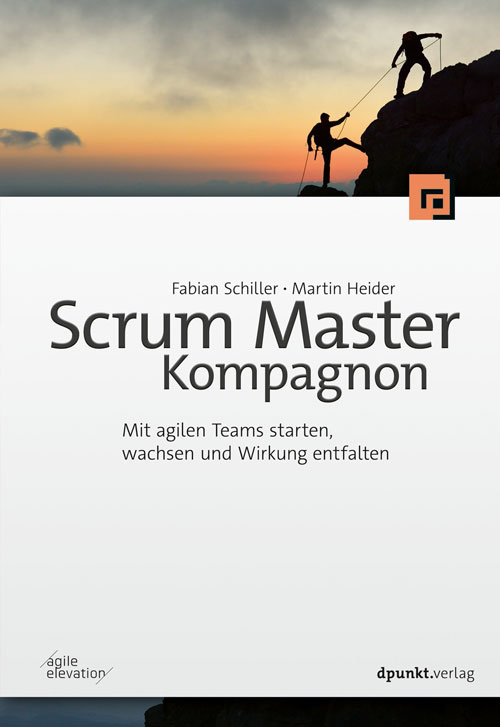
Scrum Master Kompagnon
Mit agilen Teams starten, wachsen und Wirkung entfalten Scrum Master zu sein, ist nicht nur einer der herausforderndsten Jobs der Welt, sondern gleichzeitig einer der spannendsten und interessantesten. Dabei gibt es nicht den einen Tätigkeitsbereich des Scrum Masters, sondern es existieren – je nach Unternehmen und Kontext – viele verschiedene: Aufgaben als Trainer, als Coach, als Moderator, als Teammitglied und als Veränderungskraft in der Organisation. Der Scrum Master Kompagnon setzt den Fokus auf die Kernkompetenz des Scrum Masters: die Begleitung und Unterstützung eines Scrum-Teams. Dabei orientiert sich die Struktur des Buches an den typischen Entwicklungsphasen des Teams und dem Lebenszyklus der Zusammenarbeit zwischen Scrum Master und Team sowie Product Owner und Stakeholdern. Es werden relevante theoretische Modelle und Konzepte vorgestellt, die in den jeweiligen Prozessphasen hilfreich sein können, sowie ganz praktische und durchführbare Interventionen präsentiert.Die Themen im Einzelnen: Verantwortlichkeiten und Wirksamkeit als Scrum MasterGute Rahmenbedingungen für TeamarbeitTeams kennenlernen und startenTeams begleitenTeams verabschiedenOrganisationsstrukturen und -kulturPersönliche WeiterentwicklungZahlreiche Praxisbeispiele und Erfahrungsberichte sowie mehr als 20 konkrete Workshop-Designs machen das Buch zu einem unverzichtbaren Begleiter jedes Scrum Masters. Autor: Martin Heider hat über 10 Jahre Erfahrung in agiler Produktentwicklung in verschiedensten Branchen und Rollen. Er ist Co-Creator verschiedener Community-Intitiativen, wie Agile Coach Camp, Play4Agile, Coach Reflection Day sowie Agile Monday in Nürnberg. Als selbständiger Agile Coach und Trainer begleitet er Organisationen, Teams und Einzelpersonen. Ein besonderes Anliegen ist ihm die Aus- und Weiterbildung von wirkungsvollen Scrum Mastern. So war er bereits 2014 Mitbegründer der ersten berufsbegleitenden Scrum-Master-Ausbildung in Deutschland. Fabian Schiller hat über 10 Jahre Erfahrung in agiler Produktentwicklung in verschiedensten Branchen und Rollen. Derzeit arbeitet er selbständig als Coach und Trainer und berät vom 30 Mann Startup bis zum Großkonzern seine Kunden bei der Weiterentwicklung der Organisation und agiler Methoden. Er ist Sprecher auf nationalen und internationalen Konferenzen und einer der Gründer der CoReDay- (Coach Reflection Day-)Bewegung zur kontinuierlichen Weiterentwicklung von Scrum Mastern und Agile Coaches.Zielgruppe: Scrum MasterAgile CoachesTrainer*innenWorkshop-Leiter*innen
CISSP For Dummies
GET CISSP CERTIFIED, WITH THIS COMPREHENSIVE STUDY PLAN!Revised for the updated 2021 exam, CISSP For Dummies is packed with everything you need to succeed on test day. With deep content review on every domain, plenty of practice questions, and online study tools, this book helps aspiring security professionals unlock the door to success on this high-stakes exam. This book, written by CISSP experts, goes beyond the exam material and includes tips on setting up a 60-day study plan, exam-day advice, and access to an online test bank of questions.Make your test day stress-free with CISSP For Dummies!* Review every last detail you need to pass the CISSP certification exam * Master all 8 test domains, from Security and Risk Management through Software Development Security * Get familiar with the 2021 test outline * Boost your performance with an online test bank, digital flash cards, and test-day tips If you’re a security professional seeking your CISSP certification, this book is your secret weapon as you prepare for the exam.LAWRENCE C. MILLER, CISSP, is a veteran information security professional. He has served as a consultant for multinational corporations and holds many networking certifications.PETER H. GREGORY, CISSP, is a security, risk, and technology director with experience in SAAS, retail, telecommunications, non-profit, manufacturing, healthcare, and beyond. Larry and Peter have been coauthors of CISSP For Dummies for more than 20 years. INTRODUCTION 1About This Book 2Foolish Assumptions 3Icons Used in This Book 3Beyond the Book 4Where to Go from Here 5PART 1: GETTING STARTED WITH CISSP CERTIFICATION 7CHAPTER 1: (ISC)2 AND THE CISSP CERTIFICATION 9About (ISC)2 and the CISSP Certification 9You Must Be This Tall to Ride This Ride (And Other Requirements) 10Preparing for the Exam 12Studying on your own 13Getting hands-on experience 14Getting official (ISC)2 CISSP training 14Attending other training courses or study groups 15Taking practice exams 15Are you ready for the exam? 16Registering for the Exam 16About the CISSP Examination 17After the Examination 20CHAPTER 2: PUTTING YOUR CERTIFICATION TO GOOD USE 23Networking with Other Security Professionals 24Being an Active (ISC)2 Member 25Considering (ISC)2 Volunteer Opportunities 26Writing certification exam questions 27Speaking at events 27Helping at (ISC)2 conferences 27Reading and contributing to (ISC)2 publications 27Supporting the (ISC)2 Center for Cyber Safety and Education 28Participating in bug-bounty programs 28Participating in (ISC)2 focus groups 28Joining the (ISC)2 community 28Getting involved with a CISSP study group 28Helping others learn more about data security 29Becoming an Active Member of Your Local Security Chapter 30Spreading the Good Word about CISSP Certification 31Leading by example 32Using Your CISSP Certification to Be an Agent of Change 32Earning Other Certifications 33Other (ISC)2 certifications 33CISSP concentrations 34Non-(ISC)2 certifications 34Choosing the right certifications 38Finding a mentor, being a mentor 39Building your professional brand 39Pursuing Security Excellence 40PART 2: CERTIFICATION DOMAINS 43CHAPTER 3: SECURITY AND RISK MANAGEMENT 45Understand, Adhere to, and Promote Professional Ethics 45(ISC)2 Code of Professional Ethics 46Organizational code of ethics 47Understand and Apply Security Concepts 49Confidentiality 50Integrity 51Availability 51Authenticity 52Nonrepudiation 52Evaluate and Apply Security Governance Principles 53Alignment of security function to business strategy, goals, mission, and objectives 53Organizational processes 54Organizational roles and responsibilities 56Security control frameworks 57Due care and due diligence 60Determine Compliance and Other Requirements 61Contractual, legal, industry standards, and regulatory requirements 61Privacy requirements 66Understand Legal and Regulatory Issues That Pertain to Information Security 67Cybercrimes and data breaches 67Licensing and intellectual property requirements 82Import/export controls 85Transborder data flow 85Privacy 86Understand Requirements for Investigation Types 93Develop, Document, and Implement Security Policies, Standards, Procedures, and Guidelines 94Policies 95Standards (and baselines) 95Procedures 96Guidelines 96Identify, Analyze, and Prioritize Business Continuity (BC) Requirements 96Business impact analysis 99Develop and document the scope and the plan 107Contribute to and Enforce Personnel Security Policies and Procedures 120Candidate screening and hiring 120Employment agreements and policies 123Onboarding, transfers, and termination processes 123Vendor, consultant, and contractor agreements and controls 124Compliance policy requirements 125Privacy policy requirements 125Understand and Apply Risk Management Concepts 125Identify threats and vulnerabilities 126Risk assessment/analysis 126Risk appetite and risk tolerance 132Risk treatment 133Countermeasure selection and implementation 133Applicable types of controls 135Control assessments (security and privacy) 137Monitoring and measurement 139Reporting 140Continuous improvement 141Risk frameworks 141Understand and Apply Threat Modeling Concepts and Methodologies 143Identifying threats 143Determining and diagramming potential attacks 144Performing reduction analysis 145Remediating threats 145Apply Supply Chain Risk Management (SCRM) Concepts 146Risks associated with hardware, software, and services 147Third-party assessment and monitoring 147Fourth-party risk 147Minimum security requirements 147Service-level agreement requirements 147Establish and Maintain a Security Awareness, Education, and Training Program 148Methods and techniques to present awareness and training 148Periodic content reviews 151Program effectiveness evaluation 151CHAPTER 4: ASSET SECURITY 153Identify and Classify Information and Assets 153Data classification 157Asset classification 161Establish Information and Asset Handling Requirements 162Provision Resources Securely 164Information and asset ownership 164Asset inventory 165Asset management 166Manage Data Life Cycle 167Data roles 168Data collection 168Data location 169Data maintenance 169Data retention 169Data remanence 170Data destruction 171Ensure Appropriate Asset Retention 171End of life 171End of support 172Determine Data Security Controls and Compliance Requirements 172Data states 173Scoping and tailoring 174Standards selection 175Data protection methods 176CHAPTER 5: SECURITY ARCHITECTURE AND ENGINEERING 179Research, Implement, and Manage Engineering Processes Using Secure Design Principles 180Threat modeling 182Least privilege (and need to know) 186Defense in depth 187Secure defaults 188Fail securely 188Separation of duties 189Keep it simple 189Zero trust 189Privacy by design 191Trust but verify 192Shared responsibility 194Understand the Fundamental Concepts of Security Models 196Select Controls Based Upon Systems Security Requirements 199Evaluation criteria 200System certification and accreditation 205Understand Security Capabilities of Information Systems 208Trusted Computing Base 208Trusted Platform Module 209Secure modes of operation 209Open and closed systems 210Memory protection 210Encryption and decryption 210Protection rings 211Security modes 211Recovery procedures 212Assess and Mitigate the Vulnerabilities of Security Architectures, Designs, and Solution Elements 213Client-based systems 214Server-based systems 215Database systems 215Cryptographic systems 216Industrial control systems 217Cloud-based systems 218Distributed systems 220Internet of Things 221Microservices 221Containerization 222Serverless 223Embedded systems 224High-performance computing systems 225Edge computing systems 225Virtualized systems 226Web-based systems 226Mobile systems 228Select and Determine Cryptographic Solutions 228Plaintext and ciphertext 230Encryption and decryption 230End-to-end encryption 230Link encryption 231Putting it all together: The cryptosystem 232Classes of ciphers 233Types of ciphers 234Cryptographic life cycle 237Cryptographic methods 238Public key infrastructure 248Key management practices 248Digital signatures and digital certificates 250Nonrepudiation 250Integrity (hashing) 251Understand Methods of Cryptanalytic Attacks 253Brute force 254Ciphertext only 254Known plaintext 255Frequency analysis 255Chosen ciphertext 255Implementation attacks 255Side channel 255Fault injection 256Timing 256Man in the middle 256Pass the hash 257Kerberos exploitation 257Ransomware 257Apply Security Principles to Site and Facility Design 259Design Site and Facility Security Controls 261Wiring closets, server rooms, and more 264Restricted and work area security 265Utilities and heating, ventilation, and air conditioning 266Environmental issues 267Fire prevention, detection, and suppression 268Power 272CHAPTER 6: COMMUNICATION AND NETWORK SECURITY 275Assess and Implement Secure Design Principles in Network Architectures 275OSI and TCP/IP models 277The OSI Reference Model 278The TCP/IP Model 315Secure Network Components 316Operation of hardware 316Transmission media 317Network access control devices 318Endpoint security 328Implement Secure Communication Channels According to Design 331Voice 331Multimedia collaboration 332Remote access 332Data communications 336Virtualized networks 336Third-party connectivity 338CHAPTER 7: IDENTITY AND ACCESS MANAGEMENT 339Control Physical and Logical Access to Assets 340Information 340Systems and devices 340Facilities 342Applications 342Manage Identification and Authentication of People, Devices, and Services 343Identity management implementation 343Single-/multifactor authentication 343Accountability 358Session management 359Registration, proofing, and establishment of identity 360Federated identity management 361Credential management systems 361Single sign-on 362Just-in-Time 363Federated Identity with a Third-Party Service 363On-premises 365Cloud 365Hybrid 365Implement and Manage Authorization Mechanisms 365Role-based access control 366Rule-based access control 367Mandatory access control 367Discretionary access control 368Attribute-based access control 369Risk-based access control 370Manage the Identity and Access Provisioning Life Cycle 370Implement Authentication Systems 372OpenID Connect/Open Authorization 372Security Assertion Markup Language 372Kerberos 373Radius and Tacacs+ 376CHAPTER 8: SECURITY ASSESSMENT AND TESTING 379Design and Validate Assessment, Test, and Audit Strategies 379Conduct Security Control Testing 381Vulnerability assessment 381Penetration testing 383Log reviews 388Synthetic transactions 389Code review and testing 390Misuse case testing 391Test coverage analysis 392Interface testing 392Breach attack simulations 393Compliance checks 393Collect Security Process Data 393Account management 395Management review and approval 395Key performance and risk indicators 396Backup verification data 397Training and awareness 399Disaster recovery and business continuity 400Analyze Test Output and Generate Reports 400Remediation 401Exception handling 402Ethical disclosure 403Conduct or Facilitate Security Audits 404CHAPTER 9: SECURITY OPERATIONS 407Understand and Comply with Investigations 408Evidence collection and handling 408Reporting and documentation 415Investigative techniques 416Digital forensics tools, tactics, and procedures 418Artifacts 419Conduct Logging and Monitoring Activities 419Intrusion detection and prevention 419Security information and event management 421Security orchestration, automation, and response 421Continuous monitoring 422Egress monitoring 422Log management 423Threat intelligence 423User and entity behavior analysis 424Perform Configuration Management 424Apply Foundational Security Operations Concepts 426Need-to-know and least privilege 427Separation of duties and responsibilities 428Privileged account management 429Job rotation 431Service-level agreements 433Apply Resource Protection 436Media management 436Media protection techniques 438Conduct Incident Management 438Operate and Maintain Detective and Preventative Measures 440Implement and Support Patch and Vulnerability Management 442Understand and Participate in Change Management Processes 443Implement Recovery Strategies 444Backup storage strategies 444Recovery site strategies 445Multiple processing sites 445System resilience, high availability, quality of service, and fault tolerance 445Implement Disaster Recovery Processes 448Response 451Personnel 453Communications 454Assessment 455Restoration 455Training and awareness 456Lessons learned 456Test Disaster Recovery Plans 456Read-through or tabletop 457Walkthrough 457Simulation 458Parallel 459Full interruption (or cutover) 459Participate in Business Continuity Planning and Exercises 460Implement and Manage Physical Security 460Address Personnel Safety and Security Concerns 461CHAPTER 10: SOFTWARE DEVELOPMENT SECURITY 463Understand and Integrate Security in the SoftwareDevelopment Life Cycle 464Development methodologies 464Maturity models 473Operation and maintenance 474Change management 475Integrated product team 476Identify and Apply Security Controls in Software Development Ecosystems 476Programming languages 477Libraries 478Tool sets 478Integrated development environment 480Runtime 480Continuous integration/continuous delivery 481Security orchestration, automation, and response 481Software configuration management 482Code repositories 483Application security testing 484Assess the Effectiveness of Software Security 486Auditing and logging of changes 486Risk analysis and mitigation 487Assess Security Impact of Acquired Software 489Define and Apply Secure Coding Guidelines and Standards 490Security weaknesses and vulnerabilities at the source-code level 491Security of application programming interfaces 492Secure coding practices 493Software-defined security 495PART 3: THE PART OF TENS 497CHAPTER 11: TEN WAYS TO PREPARE FOR THE EXAM 499Know Your Learning Style 499Get a Networking Certification First 500Register Now 500Make a 60-Day Study Plan 500Get Organized and Read 501Join a Study Group 501Take Practice Exams 502Take a CISSP Training Seminar 502Adopt an Exam-Taking Strategy 502Take a Breather 503CHAPTER 12: TEN TEST-DAY TIPS 505Get a Good Night’s Rest 505Dress Comfortably 506Eat a Good Meal 506Arrive Early 506Bring Approved Identification 506Bring Snacks and Drinks 507Bring Prescription and Over-the-Counter Medications 507Leave Your Mobile Devices Behind 507Take Frequent Breaks 507Guess — As a Last Resort 508Glossary 509Index 565

C# 10 Quick Syntax Reference
Discover what's new in C# and .NET for Windows programming. This book is a condensed code and syntax reference to the C# programming language, updated with the latest features of version 10 for .NET 6.You'll review the essential C# 10 and earlier syntax, not previously covered, in a well-organized format that can be used as a handy reference. Specifically, unions, generic attributes, CallerArgumentExpression, params span, Records, Init only setters, Top-level statements, Pattern matching enhancements, Native sized integers, Function pointers and more.You'll find a concise reference to the C# language syntax: short, simple, and focused code examples; a well laid out table of contents; and a comprehensive index allowing easy review. You won’t find any technical jargon, bloated samples, drawn-out history lessons, or witty stories. What you will find is a language reference that is to the point and highly accessible.The book is a must-have for any C# programmer.WHAT YOU WILL LEARN* Employ nullable reference types * Work with ranges and indices * Apply recursive patterns to your applications* Use switch expressions WHO THIS BOOK IS FORThose with some experience in programming, looking for a quick, handy reference. Some C# or .NET recommended but not necessary.Mikael Olsson is a professional web entrepreneur, programmer, and author. He works for an R&D company in Finland, where he specializes in software development. In his spare time he writes books and creates websites that summarize various fields of interest. The books he writes are focused on teaching their subjects in the most efficient way possible, by explaining only what is relevant and practical without any unnecessary repetition or theory. The portal to his online businesses and other websites is siforia.com.1. Hello World2. Compile and Run3. Variables4. Operators5. Strings6. Arrays7. Conditionals8. Loops9. Methods10. Class11. Inheritance12. Redefining Members13. Access Levels14. Static15. Properties16. Indexers17. Interfaces18. Abstract19. Namespaces20. Enum21. Exception Handling22. Operator Overloading23. Custom Conversions24. Struct25. Preprocessors26. Delegates27. Events28. Generics29. Constants30. Asynchronous Methods

Datenrendite
Gegenwärtig gibt es einen starken Hype um die Themen künstliche Intelligenz, Machine Learning und Data Science. Doch wie lassen sich datengetriebene Methoden und Technologien nutzen und in Unternehmen gewinnbringend einsetzen? Dieses Buch zeigt praxisnah und anschaulich, wie mit der richtigen Datenbasis und Datenmodellen der Wert von Daten für Unternehmen erschlossen werden kann. Dabei geht es nicht um technische Details zu Algorithmen und Technologien, sondern um Instrumente und sofort anwendbare Lösungen zur erfolgreichen Projektumsetzung. Jedes Kapitel stellt die jeweilige Zielsetzung vor, vermittelt anschließend alle Inhalte und fasst am Ende – neben einer Checkliste der wichtigsten Maßnahmen – die Aussagen für verschiedene Organisationsformen zusammen. Anhand zahlreicher Beispiele wird gezeigt, wie Struktur und Vorgehen den Anforderungen der komplexen Werkzeuge gerecht werden können.

Roboter- und KI-Ethik
Was ist die Ethik der Roboter? Was ist KI-Ethik? Was sind „moralische Maschinen“? Welchen Gesetzen sollen sie folgen?Haben wir die Roboter, die wir brauchen, und brauchen wir die Roboter, die wir haben?In vorliegendem Buch werden Grundlagen der Ethik im Umgang mit Robotern, Drohnen und KI allgemeinverständlich dargestellt. Hierzu zählt die Unterscheidung von Moral, Ethik und Ethos sowie deren Anwendung auf Menschen und Maschinen. Kriterien, Fehlschlüsse und Robotergesetze werden vorgestellt, wie auch in die umfassende Gegenwartsdebatte übersichtlich eingeführt. Grafiken und Beispiele bieten Orientierung in einem hochaktuellen und komplexen Feld.Als methodische Einführung richtet sich vorliegendes Buch an Ingenieurwissenschaftler*innen, Informatiker*innen und Geisteswissenschaftler*innen im Berufsalltag, aber auch an interessierte Lai*innen, die Grundlagen der Ethik kennen lernen wollen. Es bildet den ersten, in sich abgerundeten Teil der Buchreihe Grundlagen der Technikethik.Mit einem Geleitwort von Yvonne Hofstetter.MICHAEL FUNK forscht und lehrt an der Universität Wien in den Bereichen Medien- und Technikphilosophie (Institut für Philosophie) sowie Cooperative Systems (Fakultät für Informatik). Einleitung: Das Nichttechnische zwischen Künstlicher Intelligenz und (Post-)Digitalisierung - Roboter- und KI-Ethik als philosophische Disziplin (Bedetung 1) - Können und dürfen Maschinen moralisch handeln? (Bedeutng 2) - Können und dürfen Maschinen ethisch argumentieren? (Bedeutung 3) - Welchen Regeln und Gesetzen müssen Maschinen folgen? (Bedetung 4) - Anwendungen
Fundamentals and Methods of Machine and Deep Learning
FUNDAMENTALS AND METHODS OF MACHINE AND DEEP LEARNINGTHE BOOK PROVIDES A PRACTICAL APPROACH BY EXPLAINING THE CONCEPTS OF MACHINE LEARNING AND DEEP LEARNING ALGORITHMS, EVALUATION OF METHODOLOGY ADVANCES, AND ALGORITHM DEMONSTRATIONS WITH APPLICATIONS.Over the past two decades, the field of machine learning and its subfield deep learning have played a main role in software applications development. Also, in recent research studies, they are regarded as one of the disruptive technologies that will transform our future life, business, and the global economy. The recent explosion of digital data in a wide variety of domains, including science, engineering, Internet of Things, biomedical, healthcare, and many business sectors, has declared the era of big data, which cannot be analysed by classical statistics but by the more modern, robust machine learning and deep learning techniques. Since machine learning learns from data rather than by programming hard-coded decision rules, an attempt is being made to use machine learning to make computers that are able to solve problems like human experts in the field. The goal of this book is to present a??practical approach by explaining the concepts of machine learning and deep learning algorithms with applications. Supervised machine learning algorithms, ensemble machine learning algorithms, feature selection, deep learning techniques, and their applications are discussed. Also included in the eighteen chapters is unique information which provides a clear understanding of concepts by using algorithms and case studies illustrated with applications of machine learning and deep learning in different domains, including disease prediction, software defect prediction, online television analysis, medical image processing, etc. Each of the chapters briefly described below provides both a chosen approach and its implementation. AUDIENCEResearchers and engineers in artificial intelligence, computer scientists as well as software developers. PRADEEP SINGH PHD, is an assistant professor in the Department of Computer Science Engineering, National Institute of Technology, Raipur, India. His current research interests include machine learning, deep learning, evolutionary computing, empirical studies on software quality, and software fault prediction models. He has more than 15 years of teaching experience with many publications in reputed international journals, conferences, and book chapters.Preface xix1 SUPERVISED MACHINE LEARNING: ALGORITHMS AND APPLICATIONS 1Shruthi H. Shetty, Sumiksha Shetty, Chandra Singh and Ashwath Rao1.1 History 21.2 Introduction 21.3 Supervised Learning 41.4 Linear Regression (LR) 51.4.1 Learning Model 61.4.2 Predictions With Linear Regression 71.5 Logistic Regression 81.6 Support Vector Machine (SVM) 91.7 Decision Tree 111.8 Machine Learning Applications in Daily Life 121.8.1 Traffic Alerts (Maps) 121.8.2 Social Media (Facebook) 131.8.3 Transportation and Commuting (Uber) 131.8.4 Products Recommendations 131.8.5 Virtual Personal Assistants 131.8.6 Self-Driving Cars 141.8.7 Google Translate 141.8.8 Online Video Streaming (Netflix) 141.8.9 Fraud Detection 141.9 Conclusion 15References 152 ZONOTIC DISEASES DETECTION USING ENSEMBLE MACHINE LEARNING ALGORITHMS 17Bhargavi K.2.1 Introduction 182.2 Bayes Optimal Classifier 192.3 Bootstrap Aggregating (Bagging) 212.4 Bayesian Model Averaging (BMA) 222.5 Bayesian Classifier Combination (BCC) 242.6 Bucket of Models 262.7 Stacking 272.8 Efficiency Analysis 292.9 Conclusion 30References 303 MODEL EVALUATION 33Ravi Shekhar Tiwari3.1 Introduction 343.2 Model Evaluation 343.2.1 Assumptions 363.2.2 Residual 363.2.3 Error Sum of Squares (Sse) 373.2.4 Regression Sum of Squares (Ssr) 373.2.5 Total Sum of Squares (Ssto) 373.3 Metric Used in Regression Model 383.3.1 Mean Absolute Error (Mae) 383.3.2 Mean Square Error (Mse) 393.3.3 Root Mean Square Error (Rmse) 413.3.4 Root Mean Square Logarithm Error (Rmsle) 423.3.5 R-Square (R2) 453.3.5.1 Problem With R-Square (R2) 463.3.6 Adjusted R-Square (R2) 463.3.7 Variance 473.3.8 AIC 483.3.9 BIC 493.3.10 ACP, Press, and R2-Predicted 493.3.11 Solved Examples 513.4 Confusion Metrics 523.4.1 How to Interpret the Confusion Metric? 533.4.2 Accuracy 553.4.2.1 Why Do We Need the Other Metric Along With Accuracy? 563.4.3 True Positive Rate (TPR) 563.4.4 False Negative Rate (FNR) 573.4.5 True Negative Rate (TNR) 573.4.6 False Positive Rate (FPR) 583.4.7 Precision 583.4.8 Recall 593.4.9 Recall-Precision Trade-Off 603.4.10 F1-Score 613.4.11 F-Beta Sore 613.4.12 Thresholding 633.4.13 AUC - ROC 643.4.14 AUC - PRC 653.4.15 Derived Metric From Recall, Precision, and F1-Score 673.4.16 Solved Examples 683.5 Correlation 703.5.1 Pearson Correlation 703.5.2 Spearman Correlation 713.5.3 Kendall’s Rank Correlation 733.5.4 Distance Correlation 743.5.5 Biweight Mid-Correlation 753.5.6 Gamma Correlation 763.5.7 Point Biserial Correlation 773.5.8 Biserial Correlation 783.5.9 Partial Correlation 783.6 Natural Language Processing (NLP) 783.6.1 N-Gram 793.6.2 BELU Score 793.6.2.1 BELU Score With N-Gram 803.6.3 Cosine Similarity 813.6.4 Jaccard Index 833.6.5 ROUGE 843.6.6 NIST 853.6.7 SQUAD 853.6.8 MACRO 863.7 Additional Metrics 863.7.1 Mean Reciprocal Rank (MRR) 863.7.2 Cohen Kappa 873.7.3 Gini Coefficient 873.7.4 Scale-Dependent Errors 873.7.5 Percentage Errors 883.7.6 Scale-Free Errors 883.8 Summary of Metric Derived from Confusion Metric 893.9 Metric Usage 903.10 Pro and Cons of Metrics 943.11 Conclusion 95References 964 ANALYSIS OF M-SEIR AND LSTM MODELS FOR THE PREDICTION OF COVID-19 USING RMSLE 101Archith S., Yukta C., Archana H.R. and Surendra H.H.4.1 Introduction 1014.2 Survey of Models 1034.2.1 SEIR Model 1034.2.2 Modified SEIR Model 1034.2.3 Long Short-Term Memory (LSTM) 1044.3 Methodology 1064.3.1 Modified SEIR 1064.3.2 LSTM Model 1084.3.2.1 Data Pre-Processing 1084.3.2.2 Data Shaping 1094.3.2.3 Model Design 1094.4 Experimental Results 1114.4.1 Modified SEIR Model 1114.4.2 LSTM Model 1134.5 Conclusion 1164.6 Future Work 116References 1185 THE SIGNIFICANCE OF FEATURE SELECTION TECHNIQUES IN MACHINE LEARNING 121N. Bharathi, B.S. Rishiikeshwer, T. Aswin Shriram, B. Santhi and G.R. Brindha5.1 Introduction 1225.2 Significance of Pre-Processing 1225.3 Machine Learning System 1235.3.1 Missing Values 1235.3.2 Outliers 1235.3.3 Model Selection 1245.4 Feature Extraction Methods 1245.4.1 Dimension Reduction 1255.4.1.1 Attribute Subset Selection 1265.4.2 Wavelet Transforms 1275.4.3 Principal Components Analysis 1275.4.4 Clustering 1285.5 Feature Selection 1285.5.1 Filter Methods 1295.5.2 Wrapper Methods 1295.5.3 Embedded Methods 1305.6 Merits and Demerits of Feature Selection 1315.7 Conclusion 131References 1326 USE OF MACHINE LEARNING AND DEEP LEARNING IN HEALTHCARE—A REVIEW ON DISEASE PREDICTION SYSTEM 135Radha R. and Gopalakrishnan R.6.1 Introduction to Healthcare System 1366.2 Causes for the Failure of the Healthcare System 1376.3 Artificial Intelligence and Healthcare System for Predicting Diseases 1386.3.1 Monitoring and Collection of Data 1406.3.2 Storing, Retrieval, and Processing of Data 1416.4 Facts Responsible for Delay in Predicting the Defects 1426.5 Pre-Treatment Analysis and Monitoring 1436.6 Post-Treatment Analysis and Monitoring 1456.7 Application of ML and DL 1456.7.1 ML and DL for Active Aid 1456.7.1.1 Bladder Volume Prediction 1476.7.1.2 Epileptic Seizure Prediction 1486.8 Challenges and Future of Healthcare Systems Based on ML and DL 1486.9 Conclusion 149References 1507 DETECTION OF DIABETIC RETINOPATHY USING ENSEMBLE LEARNING TECHNIQUES 153Anirban Dutta, Parul Agarwal, Anushka Mittal, Shishir Khandelwal and Shikha Mehta7.1 Introduction 1537.2 Related Work 1557.3 Methodology 1557.3.1 Data Pre-Processing 1557.3.2 Feature Extraction 1617.3.2.1 Exudates 1617.3.2.2 Blood Vessels 1617.3.2.3 Microaneurysms 1627.3.2.4 Hemorrhages 1627.3.3 Learning 1637.3.3.1 Support Vector Machines 1637.3.3.2 K-Nearest Neighbors 1637.3.3.3 Random Forest 1647.3.3.4 AdaBoost 1647.3.3.5 Voting Technique 1647.4 Proposed Models 1657.4.1 AdaNaive 1657.4.2 AdaSVM 1667.4.3 AdaForest 1667.5 Experimental Results and Analysis 1677.5.1 Dataset 1677.5.2 Software and Hardware 1677.5.3 Results 1687.6 Conclusion 173References 1748 MACHINE LEARNING AND DEEP LEARNING FOR MEDICAL ANALYSIS—A CASE STUDY ON HEART DISEASE DATA 177Swetha A.M., Santhi B. and Brindha G.R.8.1 Introduction 1788.2 Related Works 1798.3 Data Pre-Processing 1818.3.1 Data Imbalance 1818.4 Feature Selection 1828.4.1 Extra Tree Classifier 1828.4.2 Pearson Correlation 1838.4.3 Forward Stepwise Selection 1838.4.4 Chi-Square Test 1848.5 ML Classifiers Techniques 1848.5.1 Supervised Machine Learning Models 1858.5.1.1 Logistic Regression 1858.5.1.2 SVM 1868.5.1.3 Naive Bayes 1868.5.1.4 Decision Tree 1868.5.1.5 K-Nearest Neighbors (KNN) 1878.5.2 Ensemble Machine Learning Model 1878.5.2.1 Random Forest 1878.5.2.2 AdaBoost 1888.5.2.3 Bagging 1888.5.3 Neural Network Models 1898.5.3.1 Artificial Neural Network (ANN) 1898.5.3.2 Convolutional Neural Network (CNN) 1898.6 Hyperparameter Tuning 1908.6.1 Cross-Validation 1908.7 Dataset Description 1908.7.1 Data Pre-Processing 1938.7.2 Feature Selection 1958.7.3 Model Selection 1968.7.4 Model Evaluation 1978.8 Experiments and Results 1978.8.1 Study 1: Survival Prediction Using All Clinical Features 1988.8.2 Study 2: Survival Prediction Using Age, Ejection Fraction and Serum Creatinine 1988.8.3 Study 3: Survival Prediction Using Time, Ejection Fraction, and Serum Creatinine 1998.8.4 Comparison Between Study 1, Study 2, and Study 3 2038.8.5 Comparative Study on Different Sizes of Data 2048.9 Analysis 2068.10 Conclusion 206References 2079 A NOVEL CONVOLUTIONAL NEURAL NETWORK MODEL TO PREDICT SOFTWARE DEFECTS 211Kumar Rajnish, Vandana Bhattacharjee and Mansi Gupta9.1 Introduction 2129.2 Related Works 2139.2.1 Software Defect Prediction Based on Deep Learning 2139.2.2 Software Defect Prediction Based on Deep Features 2149.2.3 Deep Learning in Software Engineering 2149.3 Theoretical Background 2159.3.1 Software Defect Prediction 2159.3.2 Convolutional Neural Network 2169.4 Experimental Setup 2189.4.1 Data Set Description 2189.4.2 Building Novel Convolutional Neural Network (NCNN) Model 2199.4.3 Evaluation Parameters 2229.4.4 Results and Analysis 2249.5 Conclusion and Future Scope 230References 23310 PREDICTIVE ANALYSIS ON ONLINE TELEVISION VIDEOS USING MACHINE LEARNING ALGORITHMS 237Rebecca Jeyavadhanam B., Ramalingam V.V., Sugumaran V. and Rajkumar D.10.1 Introduction 23810.1.1 Overview of Video Analytics 24110.1.2 Machine Learning Algorithms 24210.1.2.1 Decision Tree C4.5 24310.1.2.2 J48 Graft 24310.1.2.3 Logistic Model Tree 24410.1.2.4 Best First Tree 24410.1.2.5 Reduced Error Pruning Tree 24410.1.2.6 Random Forest 24410.2 Proposed Framework 24510.2.1 Data Collection 24610.2.2 Feature Extraction 24610.2.2.1 Block Intensity Comparison Code 24710.2.2.2 Key Frame Rate 24810.3 Feature Selection 24910.4 Classification 25010.5 Online Incremental Learning 25110.6 Results and Discussion 25310.7 Conclusion 255References 25611 A COMBINATIONAL DEEP LEARNING APPROACH TO VISUALLY EVOKED EEG-BASED IMAGE CLASSIFICATION 259Nandini Kumari, Shamama Anwar and Vandana Bhattacharjee11.1 Introduction 26011.2 Literature Review 26211.3 Methodology 26411.3.1 Dataset Acquisition 26411.3.2 Pre-Processing and Spectrogram Generation 26511.3.3 Classification of EEG Spectrogram Images With Proposed CNN Model 26611.3.4 Classification of EEG Spectrogram Images With Proposed Combinational CNN+LSTM Model 26811.4 Result and Discussion 27011.5 Conclusion 272References 27312 APPLICATION OF MACHINE LEARNING ALGORITHMS WITH BALANCING TECHNIQUES FOR CREDIT CARD FRAUD DETECTION: A COMPARATIVE ANALYSIS 277Shiksha12.1 Introduction 27812.2 Methods and Techniques 28012.2.1 Research Approach 28012.2.2 Dataset Description 28212.2.3 Data Preparation 28312.2.4 Correlation Between Features 28412.2.5 Splitting the Dataset 28512.2.6 Balancing Data 28512.2.6.1 Oversampling of Minority Class 28612.2.6.2 Under-Sampling of Majority Class 28612.2.6.3 Synthetic Minority Over Sampling Technique 28612.2.6.4 Class Weight 28712.2.7 Machine Learning Algorithms (Models) 28812.2.7.1 Logistic Regression 28812.2.7.2 Support Vector Machine 28812.2.7.3 Decision Tree 29012.2.7.4 Random Forest 29212.2.8 Tuning of Hyperparameters 29412.2.9 Performance Evaluation of the Models 29412.3 Results and Discussion 29812.3.1 Results Using Balancing Techniques 29912.3.2 Result Summary 29912.4 Conclusions 30512.4.1 Future Recommendations 305References 30613 CRACK DETECTION IN CIVIL STRUCTURES USING DEEP LEARNING 311Bijimalla Shiva Vamshi Krishna, Rishiikeshwer B.S., J. Sanjay Raju, N. Bharathi, C. Venkatasubramanian and G.R. Brindha13.1 Introduction 31213.2 Related Work 31213.3 Infrared Thermal Imaging Detection Method 31413.4 Crack Detection Using CNN 31413.4.1 Model Creation 31613.4.2 Activation Functions (AF) 31713.4.3 Optimizers 32213.4.4 Transfer Learning 32213.5 Results and Discussion 32213.6 Conclusion 323References 32314 MEASURING URBAN SPRAWL USING MACHINE LEARNING 327Keerti Kulkarni and P. A. Vijaya14.1 Introduction 32714.2 Literature Survey 32814.3 Remotely Sensed Images 32914.4 Feature Selection 33114.4.1 Distance-Based Metric 33114.5 Classification Using Machine Learning Algorithms 33214.5.1 Parametric vs. Non-Parametric Algorithms 33214.5.2 Maximum Likelihood Classifier 33214.5.3 k-Nearest Neighbor Classifiers 33414.5.4 Evaluation of the Classifiers 33414.5.4.1 Precision 33414.5.4.2 Recall 33514.5.4.3 Accuracy 33514.5.4.4 F1-Score 33514.6 Results 33514.7 Discussion and Conclusion 338Acknowledgements 338References 33815 APPLICATION OF DEEP LEARNING ALGORITHMS IN MEDICAL IMAGE PROCESSING: A SURVEY 341Santhi B., Swetha A.M. and Ashutosh A.M.15.1 Introduction 34215.2 Overview of Deep Learning Algorithms 34315.2.1 Supervised Deep Neural Networks 34315.2.1.1 Convolutional Neural Network 34315.2.1.2 Transfer Learning 34415.2.1.3 Recurrent Neural Network 34415.2.2 Unsupervised Learning 34515.2.2.1 Autoencoders 34515.2.2.2 GANs 34515.3 Overview of Medical Images 34615.3.1 MRI Scans 34615.3.2 CT Scans 34715.3.3 X-Ray Scans 34715.3.4 PET Scans 34715.4 Scheme of Medical Image Processing 34815.4.1 Formation of Image 34815.4.2 Image Enhancement 34915.4.3 Image Analysis 34915.4.4 Image Visualization 34915.5 Anatomy-Wise Medical Image Processing With Deep Learning 34915.5.1 Brain Tumor 35215.5.2 Lung Nodule Cancer Detection 35715.5.3 Breast Cancer Segmentation and Detection 36215.5.4 Heart Disease Prediction 36415.5.5 COVID-19 Prediction 37015.6 Conclusion 372References 37216 SIMULATION OF SELF-DRIVING CARS USING DEEP LEARNING 379Rahul M. K., Praveen L. Uppunda, Vinayaka Raju S., Sumukh B. and C. Gururaj16.1 Introduction 38016.2 Methodology 38016.2.1 Behavioral Cloning 38016.2.2 End-to-End Learning 38016.3 Hardware Platform 38116.4 Related Work 38216.5 Pre-Processing 38216.5.1 Lane Feature Extraction 38216.5.1.1 Canny Edge Detector 38316.5.1.2 Hough Transform 38316.5.1.3 Raw Image Without Pre-Processing 38416.6 Model 38416.6.1 CNN Architecture 38516.6.2 Multilayer Perceptron Model 38516.6.3 Regression vs. Classification 38516.6.3.1 Regression 38616.6.3.2 Classification 38616.7 Experiments 38716.8 Results 38716.9 Conclusion 394References 39417 ASSISTIVE TECHNOLOGIES FOR VISUAL, HEARING, AND SPEECH IMPAIRMENTS: MACHINE LEARNING AND DEEP LEARNING SOLUTIONS 397Shahira K. C., Sruthi C. J. and Lijiya A.17.1 Introduction 39717.2 Visual Impairment 39817.2.1 Conventional Assistive Technology for the VIP 39917.2.1.1 Way Finding 39917.2.1.2 Reading Assistance 40217.2.2 The Significance of Computer Vision and Deep Learning in AT of VIP 40317.2.2.1 Navigational Aids 40317.2.2.2 Scene Understanding 40517.2.2.3 Reading Assistance 40617.2.2.4 Wearables 40817.3 Verbal and Hearing Impairment 41017.3.1 Assistive Listening Devices 41017.3.2 Alerting Devices 41117.3.3 Augmentative and Alternative Communication Devices 41117.3.3.1 Sign Language Recognition 41217.3.4 Significance of Machine Learning and Deep Learning in Assistive Communication Technology 41717.4 Conclusion and Future Scope 418References 41818 CASE STUDIES: DEEP LEARNING IN REMOTE SENSING 425Emily Jenifer A. and Sudha N.18.1 Introduction 42618.2 Need for Deep Learning in Remote Sensing 42718.3 Deep Neural Networks for Interpreting Earth Observation Data 42718.3.1 Convolutional Neural Network 42718.3.2 Autoencoder 42818.3.3 Restricted Boltzmann Machine and Deep Belief Network 42918.3.4 Generative Adversarial Network 43018.3.5 Recurrent Neural Network 43118.4 Hybrid Architectures for Multi-Sensor Data Processing 43218.5 Conclusion 434References 434Index 439
Advanced Healthcare Systems
ADVANCED HEALTHCARE SYSTEMSTHIS BOOK OFFERS A COMPLETE PACKAGE INVOLVING THE INCUBATION OF MACHINE LEARNING, AI, AND IOT IN HEALTHCARE THAT IS BENEFICIAL FOR RESEARCHERS, HEALTHCARE PROFESSIONALS, SCIENTISTS, AND TECHNOLOGISTS.The applications and challenges of machine learning and artificial intelligence in the Internet of Things (IoT) for healthcare applications are comprehensively covered in this book. IoT generates big data of varying data quality; intelligent processing and analysis of this big data are the keys to developing smart IoT applications, thereby making space for machine learning (ML) applications. Due to its computational tools that can substitute for human intelligence in the performance of certain tasks, artificial intelligence (AI) makes it possible for machines to learn from experience, adjust to new inputs and perform human-like tasks. Since IoT platforms provide an interface to gather data from various devices, they can easily be deployed into AI/ML systems. The value of AI in this context is its ability to quickly mesh insights from data and automatically identify patterns and detect anomalies in the data that smart sensors and devices generate—information such as temperature, pressure, humidity, air quality, vibration, and sound—that can be really helpful to rapid diagnosis. AUDIENCEThis book will be of interest to researchers in artificial intelligence, the Internet of Things, machine learning as well as information technologists working in the healthcare sector. ROHIT TANWAR, PHD (Kurukshetra University, Kurukshetra, India) is an assistant professor in the School of Computer Science at UPES Dehradun, India.S. BALAMURUGAN, PHD, SMIEEE, ACM Distinguished Speaker, received his PhD from Anna University, India. He has published 57 books, 300+ international journals/conferences, and 100 patents. He is the Director of the Albert Einstein Engineering and Research Labs. He is also the Vice-Chairman of the Renewable Energy Society of India (RESI). He is serving as a research consultant to many companies, startups, SMEs, and MSMEs. He has received numerous awards for research at national and international levels. R. K. SAINI, PHD (DIT University, Dehradun, India) is an assistant professor in the Department of Computer Science & Applications at DIT University, Dehradun (Uttarakhand). VISHAL BHARTI, PHD is a professor in the Department of Computer Science and Engineering, Chandigarh University, India. He has published more than 75 research papers in both national & international journals. PREMKUMAR CHITHALURU, PHD is an assistant professor in the Department of SCS at the University of Petroleum and Energy Studies (UPES), Dehradun, India. Preface xvii1 INTERNET OF MEDICAL THINGS—STATE-OF-THE-ART 1Kishor Joshi and Ruchi Mehrotra1.1 Introduction 21.2 Historical Evolution of IoT to IoMT 21.2.1 IoT and IoMT—Market Size 41.3 Smart Wearable Technology 41.3.1 Consumer Fitness Smart Wearables 41.3.2 Clinical-Grade Wearables 51.4 Smart Pills 71.5 Reduction of Hospital-Acquired Infections 81.5.1 Navigation Apps for Hospitals 81.6 In-Home Segment 81.7 Community Segment 91.8 Telehealth and Remote Patient Monitoring 91.9 IoMT in Healthcare Logistics and Asset Management 121.10 IoMT Use in Monitoring During COVID-19 131.11 Conclusion 14References 152 ISSUES AND CHALLENGES RELATED TO PRIVACY AND SECURITY IN HEALTHCARE USING IOT, FOG, AND CLOUD COMPUTING 21Hritu Raj, Mohit Kumar, Prashant Kumar, Amritpal Singh and Om Prakash Verma2.1 Introduction 222.2 Related Works 232.3 Architecture 252.3.1 Device Layer 252.3.2 Fog Layer 262.3.3 Cloud Layer 262.4 Issues and Challenges 262.5 Conclusion 29References 303 STUDY OF THYROID DISEASE USING MACHINE LEARNING 33Shanu Verma, Rashmi Popli and Harish Kumar3.1 Introduction 343.2 Related Works 343.3 Thyroid Functioning 353.4 Category of Thyroid Cancer 363.5 Machine Learning Approach Toward the Detection of Thyroid Cancer 373.5.1 Decision Tree Algorithm 383.5.2 Support Vector Machines 393.5.3 Random Forest 393.5.4 Logistic Regression 393.5.5 Naïve Bayes 403.6 Conclusion 41References 414 A REVIEW OF VARIOUS SECURITY AND PRIVACY INNOVATIONS FOR IOT APPLICATIONS IN HEALTHCARE 43Abhishek Raghuvanshi, Umesh Kumar Singh and Chirag Joshi4.1 Introduction 444.1.1 Introduction to IoT 444.1.2 Introduction to Vulnerability, Attack, and Threat 454.2 IoT in Healthcare 464.2.1 Confidentiality 464.2.2 Integrity 464.2.3 Authorization 464.2.4 Availability 474.3 Review of Security and Privacy Innovations for IoT Applications in Healthcare, Smart Cities, and Smart Homes 484.4 Conclusion 54References 545 METHODS OF LUNG SEGMENTATION BASED ON CT IMAGES 59Amit Verma and Thipendra P. Singh5.1 Introduction 595.2 Semi-Automated Algorithm for Lung Segmentation 605.2.1 Algorithm for Tracking to Lung Edge 605.2.2 Outlining the Region of Interest in CT Images 625.2.2.1 Locating the Region of Interest 625.2.2.2 Seed Pixels and Searching Outline 625.3 Automated Method for Lung Segmentation 635.3.1 Knowledge-Based Automatic Model for Segmentation 635.3.2 Automatic Method for Segmenting the Lung CT Image 645.4 Advantages of Automatic Lung Segmentation Over Manual and Semi-Automatic Methods 645.5 Conclusion 65References 656 HANDLING UNBALANCED DATA IN CLINICAL IMAGES 69Amit Verma6.1 Introduction 706.2 Handling Imbalance Data 716.2.1 Cluster-Based Under-Sampling Technique 726.2.2 Bootstrap Aggregation (Bagging) 756.3 Conclusion 76References 767 IOT-BASED HEALTH MONITORING SYSTEM FOR SPEECH-IMPAIRED PEOPLE USING ASSISTIVE WEARABLE ACCELEROMETER 81Ishita Banerjee and Madhumathy P.7.1 Introduction 827.2 Literature Survey 847.3 Procedure 867.4 Results 937.5 Conclusion 97References 978 SMART IOT DEVICES FOR THE ELDERLY AND PEOPLE WITH DISABILITIES 101K. N. D. Saile and Kolisetti Navatha8.1 Introduction 1018.2 Need for IoT Devices 1028.3 Where Are the IoT Devices Used? 1038.3.1 Home Automation 1038.3.2 Smart Appliances 1048.3.3 Healthcare 1048.4 Devices in Home Automation 1048.4.1 Automatic Lights Control 1048.4.2 Automated Home Safety and Security 1048.5 Smart Appliances 1058.5.1 Smart Oven 1058.5.2 Smart Assistant 1058.5.3 Smart Washers and Dryers 1068.5.4 Smart Coffee Machines 1068.5.5 Smart Refrigerator 1068.6 Healthcare 1068.6.1 Smart Watches 1078.6.2 Smart Thermometer 1078.6.3 Smart Blood Pressure Monitor 1078.6.4 Smart Glucose Monitors 1078.6.5 Smart Insulin Pump 1088.6.6 Smart Wearable Asthma Monitor 1088.6.7 Assisted Vision Smart Glasses 1098.6.8 Finger Reader 1098.6.9 Braille Smart Watch 1098.6.10 Smart Wand 1098.6.11 Taptilo Braille Device 1108.6.12 Smart Hearing Aid 1108.6.13 E-Alarm 1108.6.14 Spoon Feeding Robot 1108.6.15 Automated Wheel Chair 1108.7 Conclusion 112References 1129 IOT-BASED HEALTH MONITORING AND TRACKING SYSTEM FOR SOLDIERS 115Kavitha N. and Madhumathy P.9.1 Introduction 1169.2 Literature Survey 1179.3 System Requirements 1189.3.1 Software Requirement Specification 1199.3.2 Functional Requirements 1199.4 System Design 1199.4.1 Features 1219.4.1.1 On-Chip Flash Memory 1229.4.1.2 On-Chip Static RAM 1229.4.2 Pin Control Block 1229.4.3 UARTs 1239.4.3.1 Features 1239.4.4 System Control 1239.4.4.1 Crystal Oscillator 1239.4.4.2 Phase-Locked Loop 1249.4.4.3 Reset and Wake-Up Timer 1249.4.4.4 Brown Out Detector 1259.4.4.5 Code Security 1259.4.4.6 External Interrupt Inputs 1259.4.4.7 Memory Mapping Control 1259.4.4.8 Power Control 1269.4.5 Real Monitor 1269.4.5.1 GPS Module 1269.4.6 Temperature Sensor 1279.4.7 Power Supply 1289.4.8 Regulator 1289.4.9 LCD 1289.4.10 Heart Rate Sensor 1299.5 Implementation 1299.5.1 Algorithm 1309.5.2 Hardware Implementation 1309.5.3 Software Implementation 1319.6 Results and Discussions 1339.6.1 Heart Rate 1339.6.2 Temperature Sensor 1359.6.3 Panic Button 1359.6.4 GPS Receiver 1359.7 Conclusion 136References 13610 CLOUD-IOT SECURED PREDICTION SYSTEM FOR PROCESSING AND ANALYSIS OF HEALTHCARE DATA USING MACHINE LEARNING TECHNIQUES 137G. K. Kamalam and S. Anitha10.1 Introduction 13810.2 Literature Survey 13910.3 Medical Data Classification 14110.3.1 Structured Data 14210.3.2 Semi-Structured Data 14210.4 Data Analysis 14210.4.1 Descriptive Analysis 14210.4.2 Diagnostic Analysis 14310.4.3 Predictive Analysis 14310.4.4 Prescriptive Analysis 14310.5 ML Methods Used in Healthcare 14410.5.1 Supervised Learning Technique 14410.5.2 Unsupervised Learning 14510.5.3 Semi-Supervised Learning 14510.5.4 Reinforcement Learning 14510.6 Probability Distributions 14510.6.1 Discrete Probability Distributions 14610.6.1.1 Bernoulli Distribution 14610.6.1.2 Uniform Distribution 14710.6.1.3 Binomial Distribution 14710.6.1.4 Normal Distribution 14810.6.1.5 Poisson Distribution 14810.6.1.6 Exponential Distribution 14910.7 Evaluation Metrics 15010.7.1 Classification Accuracy 15010.7.2 Confusion Matrix 15010.7.3 Logarithmic Loss 15110.7.4 Receiver Operating Characteristic Curve, or ROC Curve 15210.7.5 Area Under Curve (AUC) 15210.7.6 Precision 15310.7.7 Recall 15310.7.8 F1 Score 15310.7.9 Mean Absolute Error 15410.7.10 Mean Squared Error 15410.7.11 Root Mean Squared Error 15510.7.12 Root Mean Squared Logarithmic Error 15510.7.13 R-Squared/Adjusted R-Squared 15610.7.14 Adjusted R-Squared 15610.8 Proposed Methodology 15610.8.1 Neural Network 15810.8.2 Triangular Membership Function 15810.8.3 Data Collection 15910.8.4 Secured Data Storage 15910.8.5 Data Retrieval and Merging 16110.8.6 Data Aggregation 16210.8.7 Data Partition 16210.8.8 Fuzzy Rules for Prediction of Heart Disease 16310.8.9 Fuzzy Rules for Prediction of Diabetes 16410.8.10 Disease Prediction With Severity and Diagnosis 16510.9 Experimental Results 16610.10 Conclusion 169References 16911 CLOUDIOT-DRIVEN HEALTHCARE: REVIEW, ARCHITECTURE, SECURITY IMPLICATIONS, AND OPEN RESEARCH ISSUES 173Junaid Latief Shah, Heena Farooq Bhat and Asif Iqbal Khan11.1 Introduction 17411.2 Background Elements 18011.2.1 Security Comparison Between Traditional and IoT Networks 18511.3 Secure Protocols and Enabling Technologies for CloudIoT Healthcare Applications 18711.3.1 Security Protocols 18711.3.2 Enabling Technologies 18811.4 CloudIoT Health System Framework 19111.4.1 Data Perception/Acquisition 19211.4.2 Data Transmission/Communication 19311.4.3 Cloud Storage and Warehouse 19411.4.4 Data Flow in Healthcare Architecture - A Conceptual Framework 19411.4.5 Design Considerations 19711.5 Security Challenges and Vulnerabilities 19911.5.1 Security Characteristics and Objectives 20011.5.1.1 Confidentiality 20211.5.1.2 Integrity 20211.5.1.3 Availability 20211.5.1.4 Identification and Authentication 20211.5.1.5 Privacy 20311.5.1.6 Light Weight Solutions 20311.5.1.7 Heterogeneity 20311.5.1.8 Policies 20311.5.2 Security Vulnerabilities 20311.5.2.1 IoT Threats and Vulnerabilities 20511.5.2.2 Cloud-Based Threats 20811.6 Security Countermeasures and Considerations 21411.6.1 Security Countermeasures 21411.6.1.1 Security Awareness and Survey 21411.6.1.2 Security Architecture and Framework 21511.6.1.3 Key Management 21611.6.1.4 Authentication 21711.6.1.5 Trust 21811.6.1.6 Cryptography 21911.6.1.7 Device Security 21911.6.1.8 Identity Management 22011.6.1.9 Risk-Based Security/Risk Assessment 22011.6.1.10 Block Chain–Based Security 22011.6.1.11 Automata-Based Security 22011.6.2 Security Considerations 23411.7 Open Research Issues and Security Challenges 23711.7.1 Security Architecture 23711.7.2 Resource Constraints 23811.7.3 Heterogeneous Data and Devices 23811.7.4 Protocol Interoperability 23811.7.5 Trust Management and Governance 23911.7.6 Fault Tolerance 23911.7.7 Next-Generation 5G Protocol 24011.8 Discussion and Analysis 24011.9 Conclusion 241References 24212 A NOVEL USAGE OF ARTIFICIAL INTELLIGENCE AND INTERNET OF THINGS IN REMOTE-BASED HEALTHCARE APPLICATIONS 255V. Arulkumar, D. Mansoor Hussain, S. Sridhar and P. Vivekanandan12.1 Introduction Machine Learning 25612.2 Importance of Machine Learning 25612.2.1 ML vs. Classical Algorithms 25812.2.2 Learning Supervised 25912.2.3 Unsupervised Learning 26112.2.4 Network for Neuralism 26312.2.4.1 Definition of the Neural Network 26312.2.4.2 Neural Network Elements 26312.3 Procedure 26512.3.1 Dataset and Seizure Identification 26512.3.2 System 26512.4 Feature Extraction 26612.5 Experimental Methods 26612.5.1 Stepwise Feature Optimization 26612.5.2 Post-Classification Validation 26812.5.3 Fusion of Classification Methods 26812.6 Experiments 26912.7 Framework for EEG Signal Classification 26912.8 Detection of the Preictal State 27012.9 Determination of the Seizure Prediction Horizon 27112.10 Dynamic Classification Over Time 27212.11 Conclusion 273References 27313 USE OF MACHINE LEARNING IN HEALTHCARE 275V. Lakshman Narayana, R. S. M. Lakshmi Patibandla, B. Tarakeswara Rao and Arepalli Peda Gopi13.1 Introduction 27613.2 Uses of Machine Learning in Pharma and Medicine 27613.2.1 Distinguish Illnesses and Examination 27713.2.2 Drug Discovery and Manufacturing 27713.2.3 Scientific Imaging Analysis 27813.2.4 Twisted Therapy 27813.2.5 AI to Know-Based Social Change 27813.2.6 Perception Wellness Realisms 27913.2.7 Logical Preliminary and Exploration 27913.2.8 Publicly Supported Perceptions Collection 27913.2.9 Better Radiotherapy 28013.2.10 Incidence Forecast 28013.3 The Ongoing Preferences of ML in Human Services 28113.4 The Morals of the Use of Calculations in Medicinal Services 28413.5 Opportunities in Healthcare Quality Improvement 28813.5.1 Variation in Care 28813.5.2 Inappropriate Care 28913.5.3 Prevents Care–Associated Injurious and Death for Carefrontation 28913.5.4 The Fact That People Are Unable to do What They Know Works 28913.5.5 A Waste 29013.6 A Team-Based Care Approach Reduces Waste 29013.7 Conclusion 291References 29214 METHODS OF MRI BRAIN TUMOR SEGMENTATION 295Amit Verma14.1 Introduction 29514.2 Generative and Descriptive Models 29614.2.1 Region-Based Segmentation 30014.2.2 Generative Model With Weighted Aggregation 30014.3 Conclusion 302References 30315 EARLY DETECTION OF TYPE 2 DIABETES MELLITUS USING DEEP NEURAL NETWORK–BASED MODEL 305Varun Sapra and Luxmi Sapra15.1 Introduction 30615.2 Data Set 30715.2.1 Data Insights 30815.3 Feature Engineering 31015.4 Framework for Early Detection of Disease 31215.4.1 Deep Neural Network 31315.5 Result 31415.6 Conclusion 315References 31516 A COMPREHENSIVE ANALYSIS ON MASKED FACE DETECTION ALGORITHMS 319Pranjali Singh, Amitesh Garg and Amritpal Singh16.1 Introduction 32016.2 Literature Review 32116.3 Implementation Approach 32516.3.1 Feature Extraction 32516.3.2 Image Processing 32516.3.3 Image Acquisition 32516.3.4 Classification 32516.3.5 MobileNetV2 32616.3.6 Deep Learning Architecture 32616.3.7 LeNet-5, AlexNet, and ResNet-50 32616.3.8 Data Collection 32616.3.9 Development of Model 32716.3.10 Training of Model 32816.3.11 Model Testing 32816.4 Observation and Analysis 32816.4.1 CNN Algorithm 32816.4.2 SSDNETV2 Algorithm 33016.4.3 SVM 33116.5 Conclusion 332References 33317 IOT-BASED AUTOMATED HEALTHCARE SYSTEM 335Darpan Anand and Aashish Kumar17.1 Introduction 33517.1.1 Software-Defined Network 33617.1.2 Network Function Virtualization 33717.1.3 Sensor Used in IoT Devices 33817.2 SDN-Based IoT Framework 34117.3 Literature Survey 34317.4 Architecture of SDN-IoT for Healthcare System 34417.5 Challenges 34517.6 Conclusion 347References 347Index 351
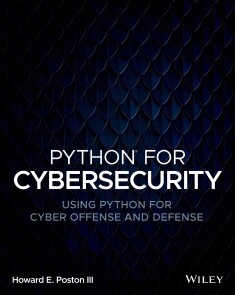
Python for Cybersecurity
DISCOVER AN UP-TO-DATE AND AUTHORITATIVE EXPLORATION OF PYTHON CYBERSECURITY STRATEGIESPython For Cybersecurity: Using Python for Cyber Offense and Defense delivers an intuitive and hands-on explanation of using Python for cybersecurity. It relies on the MITRE ATT&CK framework to structure its exploration of cyberattack techniques, attack defenses, and the key cybersecurity challenges facing network administrators and other stakeholders today.Offering downloadable sample code, the book is written to help you discover how to use Python in a wide variety of cybersecurity situations, including:* Reconnaissance, resource development, initial access, and execution* Persistence, privilege escalation, defense evasion, and credential access* Discovery, lateral movement, collection, and command and control* Exfiltration and impactEach chapter includes discussions of several techniques and sub-techniques that could be used to achieve an attacker's objectives in any of these use cases. The ideal resource for anyone with a professional or personal interest in cybersecurity, Python For Cybersecurity offers in-depth information about a wide variety of attacks and effective, Python-based defenses against them.HOWARD E. POSTON III is a freelance consultant and content creator with a professional focus on blockchain and cybersecurity. He has over ten years’ experience in programming with Python and has developed and taught over a dozen courses teaching cybersecurity. He is a sought-after speaker on blockchain and cybersecurity at international security conferences. Introduction xviiCHAPTER 1 FULFILLING PRE- ATT&CK OBJECTIVES 1Active Scanning 2Scanning Networks with scapy 2Implementing a SYN Scan in scapy 4Performing a DNS Scan in scapy 5Running the Code 5Network Scanning for Defenders 6Monitoring Traffic with scapy 7Building Deceptive Responses 8Running the Code 9Search Open Technical Databases 9Offensive DNS Exploration 10Searching DNS Records 11Performing a DNS Lookup 12Reverse DNS Lookup 12Running the Code 13DNS Exploration for Defenders 13Handling DNS Requests 15Building a DNS Response 15Running the Code 16Summary 17Suggested Exercises 17CHAPTER 2 GAINING INITIAL ACCESS 19Valid Accounts 20Discovering Default Accounts 20Accessing a List of Default Credentials 21Starting SSH Connections in Python 22Performing Telnet Queries in Python 23Running the Code 24Account Monitoring for Defenders 24INTRODUCTION TO WINDOWS EVENT LOGS 25Accessing Event Logs in Python 28Detecting Failed Logon Attempts 28Identifying Unauthorized Access to Default Accounts 30Running the Code 30Replication Through Removable Media 31Exploiting Autorun 31Converting Python Scripts to Windows Executables 32Generating an Autorun File 33Setting Up the Removable Media 34Running the Code 34Detecting Autorun Scripts 34Identifying Removable Drives 35Finding Autorun Scripts 36Detecting Autorun Processes 36Running the Code 36Summary 37Suggested Exercises 37CHAPTER 3 ACHIEVING CODE EXECUTION 39Windows Management Instrumentation 40Executing Code with WMI 40Creating Processes with WMI 41Launching Processes with PowerShell 41Running the Code 42WMI Event Monitoring for Defenders 42WMI in Windows Event Logs 43Accessing WMI Event Logs in Python 45Processing Event Log XML Data 45Running the Code 46Scheduled Task/Job 47Scheduling Malicious Tasks 47Checking for Scheduled Tasks 48Scheduling a Malicious Task 48Running the Code 49Task Scheduling for Defenders 50Querying Scheduled Tasks 51Identifying Suspicious Tasks 52Running the Code 52Summary 53Suggested Exercises 53CHAPTER 4 MAINTAINING PERSISTENCE 55Boot or Logon Autostart Execution 56Exploiting Registry Autorun 56The Windows Registry and Autorun Keys 57Modifying Autorun Keys with Python 60Running the Code 61Registry Monitoring for Defenders 62Querying Windows Registry Keys 63Searching the HKU Hive 64Running the Code 64Hijack Execution Flow 65Modifying the Windows Path 65Accessing the Windows Path 66Modifying the Path 67Running the Code 68Path Management for Defenders 69Detecting Path Modification via Timestamps 69Enabling Audit Events 71Monitoring Audit Logs 73Running the Code 75Summary 76Suggested Exercises 76CHAPTER 5 PERFORMING PRIVILEGE ESCALATION 77Boot or Logon Initialization Scripts 78Creating Malicious Logon Scripts 78Achieving Privilege Escalation with Logon Scripts 79Creating a Logon Script 79Running the Code 79Searching for Logon Scripts 80Identifying Autorun Keys 81Running the Code 81Hijack Execution Flow 81Injecting Malicious Python Libraries 82How Python Finds Libraries 82Creating a Python Library 83Running the Code 83Detecting Suspicious Python Libraries 83Identifying Imports 85Detecting Duplicates 85Running the Code 86Summary 86Suggested Exercises 87CHAPTER 6 EVADING DEFENSES 89Impair Defenses 90Disabling Antivirus 90Disabling Antivirus Autorun 90Terminating Processes 93Creating Decoy Antivirus Processes 94Catching Signals 95Running the Code 95Hide Artifacts 95Concealing Files in Alternate Data Streams 96Exploring Alternate Data Streams 96Alternate Data Streams in Python 97Running the Code 98Detecting Alternate Data Streams 98Walking a Directory with Python 99Using PowerShell to Detect ADS 100Parsing PowerShell Output 101Running the Code 102Summary 102Suggested Exercises 103CHAPTER 7 ACCESSING CREDENTIALS 105Credentials from Password Stores 106Dumping Credentials from Web Browsers 106Accessing the Chrome Master Key 108Querying the Chrome Login Data Database 108Parsing Output and Decrypting Passwords 109Running the Code 109Monitoring Chrome Passwords 110Enabling File Auditing 110Detecting Local State Access Attempts 111Running the Code 113Network Sniffing 114Sniffing Passwords with scapy 114Port- Based Protocol Identification 116Sniffing FTP Passwords 116Extracting SMTP Passwords 117Tracking Telnet Authentication State 119Running the Code 121Creating Deceptive Network Connections 121Creating Decoy Connections 122Running the Code 122Summary 123Suggested Exercises 123CHAPTER 8 PERFORMING DISCOVERY 125Account Discovery 126Collecting User Account Data 126Identifying Administrator Accounts 127Collecting User Account Information 128Accessing Windows Password Policies 128Running the Code 129Monitoring User Accounts 130Monitoring Last Login Times 130Monitoring Administrator Login Attempts 131Running the Code 132File and Directory Discovery 133Identifying Valuable Files and Folders 133Regular Expressions for Data Discovery 135Parsing Different File Formats 135Running the Code 136Creating Honeypot Files and Folders 136Monitoring Decoy Content 136Creating the Decoy Content 137Running the Code 138Summary 138Suggested Exercises 139CHAPTER 9 MOVING LATERALLY 141Remote Services 142Exploiting Windows Admin Shares 142Enabling Full Access to Administrative Shares 143Transferring Files via Administrative Shares 144Executing Commands on Administrative Shares 144Running the Code 144Admin Share Management for Defenders 145Monitoring File Operations 146Detecting Authentication Attempts 147Running the Code 148Use Alternative Authentication Material 148Collecting Web Session Cookies 149Accessing Web Session Cookies 150Running the Code 150Creating Deceptive Web Session Cookies 151Creating Decoy Cookies 151Monitoring Decoy Cookie Usage 153Running the Code 153Summary 154Suggested Exercises 155CHAPTER 10 COLLECTING INTELLIGENCE 157Clipboard Data 158Collecting Data from the Clipboard 158Accessing the Windows Clipboard 159Replacing Clipboard Data 159Running the Code 160Clipboard Management for Defenders 160Monitoring the Clipboard 161Processing Clipboard Messages 161Identifying the Clipboard Owner 161Running the Code 162Email Collection 162Collecting Local Email Data 162Accessing Local Email Caches 163Running the Code 163Protecting Against Email Collection 164Identifying Email Caches 165Searching Archive Files 165Running the Code 166Summary 166Suggested Exercises 166CHAPTER 11 IMPLEMENTING COMMAND AND CONTROL 169Encrypted Channel 170Command and Control Over Encrypted Channels 170Encrypted Channel Client 171Encrypted Channel Server 172Running the Code 173Detecting Encrypted C2 Channels 174Performing Entropy Calculations 175Detecting Encrypted Traffic 175Running the Code 176Protocol Tunneling 176Command and Control via Protocol Tunneling 176Protocol Tunneling Client 177Protocol Tunneling Server 177Running the Code 179Detecting Protocol Tunneling 179Extracting Field Data 181Identifying Encoded Data 181Running the Code 181Summary 182Suggested Exercises 182CHAPTER 12 EXFILTRATING DATA 183Alternative Protocols 184Data Exfiltration Over Alternative Protocols 184Alternative Protocol Client 185Alternative Protocol Server 186Running the Code 188Detecting Alternative Protocols 189Detecting Embedded Data 190Running the Code 191Non- Application Layer Protocols 191Data Exfiltration via Non- Application Layer Protocols 192Non- Application Layer Client 193Non- Application Layer Server 193Running the Code 194Detecting Non- Application Layer Exfiltration 195Identifying Anomalous Type and Code Values 196Running the Code 196Summary 197Suggested Exercises 197CHAPTER 13 ACHIEVING IMPACT 199Data Encrypted for Impact 200Encrypting Data for Impact 200Identifying Files to Encrypt 201Encrypting and Decrypting Files 202Running the Code 202Detecting File Encryption 203Finding Files of Interest 204Calculating File Entropies 204Running the Code 205Account Access Removal 205Removing Access to User Accounts 205Changing Windows Passwords 207Changing Linux Passwords 207Running the Code 207Detecting Account Access Removal 208Detecting Password Changes in Windows 209Detecting Password Changes in Linux 210Running the Code 211Summary 211Suggested Exercises 212Index 213

The Political Philosophy of AI
Political issues people care about such as racism, climate change, and democracy take on new urgency and meaning in the light of technological developments such as AI. How can we talk about the politics of AI while moving beyond mere warnings and easy accusations?This is the first accessible introduction to the political challenges related to AI. Using political philosophy as a unique lens through which to explore key debates in the area, the book shows how various political issues are already impacted by emerging AI technologies: from justice and discrimination to democracy and surveillance. Revealing the inherently political nature of technology, it offers a rich conceptual toolbox that can guide efforts to deal with the challenges raised by what turns out to be not only artificial intelligence but also artificial power.This timely and original book will appeal to students and scholars in philosophy of technology and political philosophy, as well as tech developers, innovation leaders, policy makers, and anyone interested in the impact of technology on society.MARK COECKELBERGH is Professor of Philosophy of Media and Technology at the University of Vienna. Acknowledgements1 Introduction2 Freedom: Manipulation by AI and Robot Slavery3 Equality and Justice: Bias and Discrimination by AI4 Democracy: Echo Chambers and Machine Totalitarianism5 Power: Surveillance and (Self-)disciplining by Data6 What about Non-Humans? Environmental Politics and Posthumanism7 Conclusion: Political TechnologiesReferencesIndex

C++ Software Interoperability for Windows Programmers
Get up-to-speed quickly and connect modern code written in C#, R, and Python to an existing codebase written in C++. This book for practitioners is about software interoperability in a Windows environment from C++ to languages such as C#, R, and Python. Using a series of example projects, the book demonstrates how to connect a simple C++ codebase packaged as a static or dynamic library to modern clients written in C#, R, and Python. The book shows you how to develop the in-between components that allow disparate languages to communicate.This book addresses a fundamental question in software design: given an existing C++ codebase, how does one go about connecting that codebase to clients written in C#, R, and Python? How is the C++ functionality exposed to these clients? One answer may be to rewrite the existing codebase in the target language. This is rarely, if ever, feasible and this book’s goal is to save you the pain and the high cost of throwing out valuable existing code by showing you how to make that older code function alongside and with the more modern languages that are commonly in use today. The knowledge you will gain from reading this book will help you broaden your architectural choices and take advantage of the growing amount of talent around newer languages.WHAT YOU WILL LEARN* Build components that connect C++ to other languages* Translate between the C++ type system and the type systems of C#, R, and Python* Write a managed assembly targeting the .NET framework* Create C++ packages for use in R/Studio* Develop Python modules based on high-performance C++ code* Overcome the difficulties and pitfalls involved in cross-language developmentWHO THIS BOOK IS FORSoftware developers who are looking for ways to extend existing systems written in C++ using modern languages. Readers should have some programming experience, particularly in C++. Readers should also be familiar with common development tools such as Visual Studio, R/Studio, Visual Studio Code, and CodeBlocks.ADAM GLADSTONE is a software developer with more than 20 years of experience in investment banking, building software mostly in C++ and C#. For the last few years, he has been developing data science and machine learning skills, particularly in Python and R after completing a degree in Math & Statistics. He currently works at Virtu Financial Inc. in Madrid as an Analyst Programmer. In his free time, he develops tools for natural language processing.IntroductionPART I. C++1. Preliminaries2. C++ Components and C++ ClientsPART II. C++/CLI AND .NET3. Building a C++/CLI Wrapper4. C# Clients: Consuming the Managed WrapperPART III. R AND RCPP5. Building an R Package6. Exposing Functions using RcppPART IV. PYTHON7. Building a Python Extension Module8. Module Development with Boost and PyBind9. ConclusionPART V. APPENDIXESA. Boost LibrariesB. Cmake
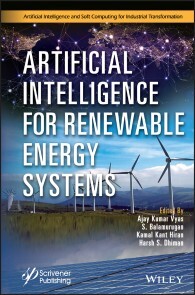
Artificial Intelligence for Renewable Energy Systems
ARTIFICIAL INTELLIGENCE FOR RENEWABLE ENERGY SYSTEMSRENEWABLE ENERGY SYSTEMS, INCLUDING SOLAR, WIND, BIODIESEL, HYBRID ENERGY, AND OTHER RELEVANT TYPES, HAVE NUMEROUS ADVANTAGES COMPARED TO THEIR CONVENTIONAL COUNTERPARTS. THIS BOOK PRESENTS THE APPLICATION OF MACHINE LEARNING AND DEEP LEARNING TECHNIQUES FOR RENEWABLE ENERGY SYSTEM MODELING, FORECASTING, AND OPTIMIZATION FOR EFFICIENT SYSTEM DESIGN.Due to the importance of renewable energy in today’s world, this book was designed to enhance the reader’s knowledge based on current developments in the field. For instance, the extraction and selection of machine learning algorithms for renewable energy systems, forecasting of wind and solar radiation are featured in the book. Also highlighted are intelligent data, renewable energy informatics systems based on supervisory control and data acquisition (SCADA); and intelligent condition monitoring of solar and wind energy systems. Moreover, an AI-based system for real-time decision-making for renewable energy systems is presented; and also demonstrated is the prediction of energy consumption in green buildings using machine learning. The chapter authors also provide both experimental and real datasets with great potential in the renewable energy sector, which apply machine learning (ML) and deep learning (DL) algorithms that will be helpful for economic and environmental forecasting of the renewable energy business. AUDIENCEThe primary target audience includes research scholars, industry engineers, and graduate students working in renewable energy, electrical engineering, machine learning, information & communication technology. AJAY KUMAR VYAS, PHD is an assistant professor at Adani Institute of Infrastructure Engineering, Ahmedabad, India. He has authored several research papers in peer-reviewed international journals and conferences, three books, and two Indian patents.S. BALAMURUGAN, PHD SMIEEE, ACM Distinguished Speaker, received his PhD from Anna University, India. He has published 57 books, 300+ international journals/conferences, and 100 patents. He is the Director of the Albert Einstein Engineering and Research Labs. He is also the Vice-Chairman of the Renewable Energy Society of India (RESI). He is serving as a research consultant to many companies, startups, SMEs, and MSMEs. He has received numerous awards for research at national and international levels. KAMAL KANT HIRAN, PHD is an assistant professor at the School of Engineering, Sir Padampat Singhania University (SPSU), Udaipur, Rajasthan, India, as well as a research fellow at the Aalborg University, Copenhagen, Denmark. He has published more than 35 scientific research papers in SCI/Scopus/Web of Science and IEEE Transactions Journal, conferences, two Indian patents, one Australian patent granted, and nine books. HARSH S. DHIMAN, PHD is an assistant professor in the Department of Electrical Engineering at Adani Institute of Infrastructure Engineering, Ahmedabad, India. He has published 12 SCI-indexed journal articles and two books, and his research interests include hybrid operation of wind farms, hybrid wind forecasting techniques, and anomaly detection in wind turbines. Preface xi1 ANALYSIS OF SIX-PHASE GRID CONNECTED SYNCHRONOUS GENERATOR IN WIND POWER GENERATION 1Arif Iqbal and Girish Kumar Singh1.1 Introduction 21.2 Analytical Modeling of Six-Phase Synchronous Machine 41.2.1 Voltage Equation 51.2.2 Equations of Flux Linkage Per Second 51.3 Linearization of Machine Equations for Stability Analysis 101.4 Dynamic Performance Results 121.5 Stability Analysis Results 151.5.1 Parametric Variation of Stator 161.5.2 Parametric Variation of Field Circuit 191.5.3 Parametric Variation of Damper Winding, Kd221.5.4 Parametric Variation of Damper Winding, Kq241.5.5 Magnetizing Reactance Variation Along q-axis 261.5.6 Variation in Load 281.6 Conclusions 29References 30Appendix 31Symbols Meaning 322 ARTIFICIAL INTELLIGENCE AS A TOOL FOR CONSERVATION AND EFFICIENT UTILIZATION OF RENEWABLE RESOURCE 37Vinay N., Ajay Sudhir Bale, Subhashish Tiwari and Baby Chithra R.2.1 Introduction 382.2 AI in Water Energy 392.2.1 Prediction of Groundwater Level 392.2.2 Rainfall Modeling 462.3 AI in Solar Energy 472.3.1 Solar Power Forecasting 472.4 AI in Wind Energy 532.4.1 Wind Monitoring 532.4.2 Wind Forecasting 542.5 AI in Geothermal Energy 552.6 Conclusion 60References 613 ARTIFICIAL INTELLIGENCE–BASED ENERGY-EFFICIENT CLUSTERING AND ROUTING IN IOT-ASSISTED WIRELESS SENSOR NETWORK 79Nitesh Chouhan3.1 Introduction 803.2 Related Study 813.3 Clustering in WSN 843.4 Research Methodology 853.4.1 Creating Wireless Sensor–Based IoT Environment 853.4.2 Clustering Approach 863.4.3 AI-Based Energy-Aware Routing Protocol 873.5 Conclusion 89References 894 ARTIFICIAL INTELLIGENCE FOR MODELING AND OPTIMIZATION OF THE BIOGAS PRODUCTION 93Narendra Khatri and Kamal Kishore Khatri4.1 Introduction 934.2 Artificial Neural Network 964.2.1 ANN Architecture 964.2.2 Training Algorithms 984.2.3 Performance Parameters for Analysis of the ANN Model 984.2.4 Application of ANN for Biogas Production Modeling 994.3 Evolutionary Algorithms 1034.3.1 Genetic Algorithm 1034.3.2 Ant Colony Optimization 1044.3.3 Particle Swarm Optimization 1064.3.4 Application of Hybrid Models (ANN and Evolutionary Algorithms) for Biogas Production Modeling 1064.4 Conclusion 107References 1115 BATTERY STATE-OF-CHARGE MODELING FOR SOLAR PV ARRAY USING POLYNOMIAL REGRESSION 115Siddhi Vinayak Pandey, Jeet Patel and Harsh S. Dhiman5.1 Introduction 1155.2 Dynamic Battery Modeling 1195.2.1 Proposed Methodology 1205.3 Results and Discussion 1225.4 Conclusion 126References 1276 DEEP LEARNING ALGORITHMS FOR WIND FORECASTING: AN OVERVIEW 129M. Lydia and G. Edwin Prem KumarNomenclature 1296.1 Introduction 1316.2 Models for Wind Forecasting 1336.2.1 Persistence Model 1336.2.2 Point vs. Probabilistic Forecasting 1336.2.3 Multi-Objective Forecasting 1346.2.4 Wind Power Ramp Forecasting 1346.2.5 Interval Forecasting 1346.2.6 Multi-Step Forecasting 1346.3 The Deep Learning Paradigm 1356.3.1 Batch Learning 1366.3.2 Sequential Learning 1366.3.3 Incremental Learning 1366.3.4 Scene Learning 1366.3.5 Transfer Learning 1366.3.6 Neural Structural Learning 1366.3.7 Multi-Task Learning 1376.4 Deep Learning Approaches for Wind Forecasting 1376.4.1 Deep Neural Network 1376.4.2 Long Short-Term Memory 1386.4.3 Extreme Learning Machine 1386.4.4 Gated Recurrent Units 1396.4.5 Autoencoders 1396.4.6 Ensemble Models 1396.4.7 Other Miscellaneous Models 1396.5 Research Challenges 1396.6 Conclusion 141References 1427 DEEP FEATURE SELECTION FOR WIND FORECASTING-I 147C. Ramakrishnan, S. Sridhar, Kusumika Krori Dutta, R. Karthick and C. Janamejaya7.1 Introduction 1487.2 Wind Forecasting System Overview 1527.2.1 Classification of Wind Forecasting 1537.2.2 Wind Forecasting Methods 1537.2.2.1 Physical Method 1547.2.2.2 Statistical Method 1547.2.2.3 Hybrid Method 1557.2.3 Prediction Frameworks 1557.2.3.1 Pre-Processing of Data 1557.2.3.2 Data Feature Analysis 1567.2.3.3 Model Formulation 1567.2.3.4 Optimization of Model Structure 1567.2.3.5 Performance Evaluation of Model 1577.2.3.6 Techniques Based on Methods of Forecasting 1577.3 Current Forecasting and Prediction Methods 1587.3.1 Time Series Method (TSM) 1597.3.2 Persistence Method (PM) 1597.3.3 Artificial Intelligence Method 1607.3.4 Wavelet Neural Network 1617.3.5 Adaptive Neuro-Fuzzy Inference System (ANFIS) 1627.3.6 ANFIS Architecture 1637.3.7 Support Vector Machine (SVM) 1657.3.8 Ensemble Forecasting 1667.4 Deep Learning–Based Wind Forecasting 1667.4.1 Reducing Dimensionality 1687.4.2 Deep Learning Techniques and Their Architectures 1697.4.3 Unsupervised Pre-Trained Networks 1697.4.4 Convolutional Neural Networks 1707.4.5 Recurrent Neural Networks 1707.4.6 Analysis of Support Vector Machine and Decision Tree Analysis (With Computation Time) 1707.4.7 Tree-Based Techniques 1727.5 Case Study 173References 1768 DEEP FEATURE SELECTION FOR WIND FORECASTING-II 181S. Oswalt Manoj, J.P. Ananth, Balan Dhanka and Maharaja Kamatchi8.1 Introduction 1828.1.1 Contributions of the Work 1848.2 Literature Review 1858.3 Long Short-Term Memory Networks 1868.4 Gated Recurrent Unit 1908.5 Bidirectional Long Short-Term Memory Networks 1948.6 Results and Discussion 1968.7 Conclusion and Future Work 197References 1989 DATA FALSIFICATION DETECTION IN AMI: A SECURE PERSPECTIVE ANALYSIS 201Vineeth V.V. and S. Sophia9.1 Introduction 2019.2 Advanced Metering Infrastructure 2029.3 AMI Attack Scenario 2049.4 Data Falsification Attacks 2059.5 Data Falsification Detection 2069.6 Conclusion 207References 20810 FORECASTING OF ELECTRICITY CONSUMPTION FOR G20 MEMBERS USING VARIOUS MACHINE LEARNING TECHNIQUES 211Jaymin Suhagiya, Deep Raval, Siddhi Vinayak Pandey, Jeet Patel, Ayushi Gupta and Akshay Srivastava10.1 Introduction 21110.1.1 Why Electricity Consumption Forecasting Is Required? 21210.1.2 History and Advancement in Forecasting of Electricity Consumption 21210.1.3 Recurrent Neural Networks 21310.1.3.1 Long Short-Term Memory 21410.1.3.2 Gated Recurrent Unit 21410.1.3.3 Convolutional LSTM 21510.1.3.4 Bidirectional Recurrent Neural Networks 21610.1.4 Other Regression Techniques 21610.2 Dataset Preparation 21710.3 Results and Discussions 21810.4 Conclusion 225Acknowledgement 225References 22511 USE OF ARTIFICIAL INTELLIGENCE (AI) IN THE OPTIMIZATION OF PRODUCTION OF BIODIESEL ENERGY 229Manvinder Singh Pahwa, Manish Dadhich, Jaskaran Singh Saini and Dinesh Kumar Saini11.1 Introduction 23011.2 Indian Perspective of Renewable Biofuels 23011.3 Opportunities 23211.4 Relevance of Biodiesel in India Context 23311.5 Proposed Model 23411.6 Conclusion 236References 237Index 239

Beginning Deep Learning with TensorFlow
Incorporate deep learning into your development projects through hands-on coding and the latest versions of deep learning software, such as TensorFlow 2 and Keras. The materials used in this book are based on years of successful online education experience and feedback from thousands of online learners.You’ll start with an introduction to AI, where you’ll learn the history of neural networks and what sets deep learning apart from other varieties of machine learning. Discovery the variety of deep learning frameworks and set-up a deep learning development environment. Next, you’ll jump into simple classification programs for hand-writing analysis. Once you’ve tackled the basics of deep learning, you move on to TensorFlow 2 specifically. Find out what exactly a Tensor is and how to work with MNIST datasets. Finally, you’ll get into the heavy lifting of programming neural networks and working with a wide variety of neural network types such as GANs and RNNs.Deep Learning is a new area of Machine Learning research widely used in popular applications, such as voice assistant and self-driving cars. Work through the hands-on material in this book and become a TensorFlow programmer!WHAT YOU'LL LEARN* Develop using deep learning algorithms* Build deep learning models using TensorFlow 2* Create classification systems and other, practical deep learning applicationsWHO THIS BOOK IS FORStudents, programmers, and researchers with no experience in deep learning who want to build up their basic skillsets. Experienced machine learning programmers and engineers might also find value in updating their skills.LIANGQU LONG is a well-known deep learning educator and engineer in China. He is a successfully published author in the topic area with years of experience in teaching machine learning concepts. His two online video tutorial courses “Deep Learning with PyTorch” and “Deep Learning with TensorFlow 2” have received massive positive comments and allowed him to refine his deep learning teaching methods.XIANGMING ZENG is an experienced data scientist and machine learning practitioner. He has over ten years of experience using machine learning and deep learning models to solve real world problems in both academia and professionally. Xiangming is familiar with deep learning fundamentals and mainstream machine learning libraries such as Tensorflow and scikit-learn.Part 1 Introduction to AI1. Introduction1. Artificial Intelligence2. History of Neural Networks3. Characteristics of Deep Learning4. Applications of Deep Learning5. Deep Learning Frameworks6. Installation of Development Environment2. Regression2.1 Neuron Model2.2 Optimization Methods2.3 Hands-on Linear Models2.4 Linear Regression3. Classification3.1 Hand-writing Digital Picture Dataset3.2 Build a Classification Model3.3 Compute the Error3.4 Is the Problem Solved?3.5 Nonlinear Model3.6 Model Representation Ability3.7 Optimization Method3.8 Hands-on Hand-written Recognition3.9 SummaryPart 2 Tensorflow4. Tensorflow 2 Basics4.1 Datatype4.2 Numerical Precision4.3 What is a Tensor?4.4 Create a Tensor4.5 Applications of Tensors4.6 Indexing and Slicing4.7 Dimension Change4.8 Broadcasting4.9 Mathematical Operations4.10 Hands-on Forward Propagation Algorithm5. Tensorflow 2 Pro5.1 Aggregation and Seperation5.2 Data Statistics5.3 Tensor Comparison5.4 Fill and Copy5.5 Data Clipping5.6 High-level Operations5.7 Load Classic Datasets5.8 Hands-on MNIST Dataset PracticePart 3 Neural Networks6. Neural Network Introduction6.1 Perception Model6.2 Fully-Connected Layers6.3 Neural Networks6.4 Activation Functions6.5 Output Layer6.6 Error Calculation6.7 Neural Network Categories6.8 Hands-on Gas Consuming Prediction7. Backpropagation Algorithm7.1 Derivative and Gradient7.2 Common Properties of Derivatives7.3 Derivatives of Activation Functions7.4 Gradient of Loss Function7.5 Gradient of Fully-Connected Layers7.6 Chain Rule7.7 Back Propagation Algorithm7.8 Hands-on Himmelblau Function Optimization7.9 Hands-on Back Propagation Algorithm8. Keras Basics8.1 Basic Functionality8.2 Model Configuration, Training and Testing8.3 Save and Load Models8.4 Customized Class8.5 Model Zoo8.6 Metrics8.7 Visualization9. Overfitting9.1 Model Capability9.2 Overfitting and Underfitting9.3 Split the Dataset9.4 Model Design9.5 Regularization9.6 Dropout9.7 Data Enhancement9.8 Hands-on OverfittingPart 4 Deep Learning Applications10. Convolutional Neural Network10.1 Problem of Fully-Connected Layers10.2 Convolutional Neural Network10.3 Convolutional Layer10.4 Hands-on LeNet-510.5 Representation Learning10.6 Gradient Propagation10.7 Pooling Layer10.8 BatchNorm Layer10.9 Classical Convolutional Neural Network10.10 Hands-on CIFRA10 and VGG1310.11 Variations of Convolutional Neural Network10.12 Deep Residual Network10.13 DenseNet10.14 Hands-on CIFAR10 and ResNet1811. Recurrent Neural Network11.1 Time Series11.2 Recurrent Neural Network (RNN)11.3 Gradient Propagation11.4 RNN Layer11.5 Hands-on RNN Sentiment Classification11.6 Gradient Vanishing and Exploding11.7 RNN Short Memory11.8 LSTM Principle11.9 LSTM Layer11.10 GRU Basics11.11 Hands-on Sentiment Classification with LSTM/GRU11.12 Pre-trained Word Vectors12. Auto-Encoders12.1 Basics of Auto-Encoders12.2 Hands-on Reconstructing MNIST Pictures12.3 Variations of Auto-Encoders12.4 Variational Auto-Encoders (VAE)12.5 Hands-on VAE13. Generative Adversarial Network (GAN)13.1 Examples of Game Theory13.2 GAN Basics13.3 Hands-on DCGAN13.4 Variants of GAN13.5 Nash Equilibrium13.6 Difficulty of Training GAN13.7 WGAN Principle13.8 Hands-on WGAN-GP14. Reinforcement Learning14.1 Introduction14.2 Reinforcement Learning Problem14.3 Policy Gradient Method14.4 Metric Function Method14.5 Actor-Critic Method14.6 Summary15. Custom Dataset Pipeline15.1 Pokémon Go Dataset15.2 Load Customized Dataset15.3 Hands-on Pokémon Go Dataset15.4 Transfer Learning15.5 Save Model15.6 Model DeploymentAudience: Beginner to Intermediate
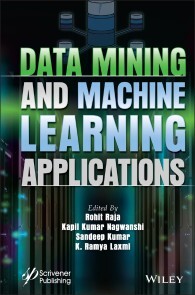
Data Mining and Machine Learning Applications
DATA MINING AND MACHINE LEARNING APPLICATIONSTHE BOOK ELABORATES IN DETAIL ON THE CURRENT NEEDS OF DATA MINING AND MACHINE LEARNING AND PROMOTES MUTUAL UNDERSTANDING AMONG RESEARCH IN DIFFERENT DISCIPLINES, THUS FACILITATING RESEARCH DEVELOPMENT AND COLLABORATION.Data, the latest currency of today’s world, is the new gold. In this new form of gold, the most beautiful jewels are data analytics and machine learning. Data mining and machine learning are considered interdisciplinary fields. Data mining is a subset of data analytics and machine learning involves the use of algorithms that automatically improve through experience based on data. Massive datasets can be classified and clustered to obtain accurate results. The most common technologies used include classification and clustering methods. Accuracy and error rates are calculated for regression and classification and clustering to find actual results through algorithms like support vector machines and neural networks with forward and backward propagation. Applications include fraud detection, image processing, medical diagnosis, weather prediction, e-commerce and so forth. The book features:* A review of the state-of-the-art in data mining and machine learning,* A review and description of the learning methods in human-computer interaction,* Implementation strategies and future research directions used to meet the design and application requirements of several modern and real-time applications for a long time,* The scope and implementation of a majority of data mining and machine learning strategies.* A discussion of real-time problems.AUDIENCE Industry and academic researchers, scientists, and engineers in information technology, data science and machine and deep learning, as well as artificial intelligence more broadly. ROHIT RAJA, PHD is an associate professor in the IT Department, Guru Ghasidas Vishwavidyalaya, Bilaspur (CG), India. He has published more than 80 research papers in peer-reviewed journals as well as 9 patents.KAPIL KUMAR NAGWANSHI, PHD is an associate professor at Mukesh Patel School of Technology Management & Engineering, Shirpur Campus, SVKM’s Narsee Monjee Institute of Management Studies Mumbai, India. SANDEEP KUMAR, PHD is a professor in the Department of Electronics & Communication Engineering, Sreyas Institute of Engineering & Technology, Hyderabad, India. His area of research includes embedded systems, image processing, and biometrics. He has published more than 60 research papers in peer-reviewed journals as well as 6 patents. K. RAMYA LAXMI, PHD is an associate professor in the CSE Department at the Sreyas Institute of Engineering and Technology, Hyderabad. Her research interest covers the fields of data mining and image processing. Preface xvii1 INTRODUCTION TO DATA MINING 1Santosh R. Durugkar, Rohit Raja, Kapil Kumar Nagwanshi and Sandeep Kumar1.1. Introduction 11.1.1 Data Mining 11.2 Knowledge Discovery in Database (KDD) 21.2.1 Importance of Data Mining 31.2.2 Applications of Data Mining 31.2.3 Databases 41.3 Issues in Data Mining 61.4 Data Mining Algorithms 71.5 Data Warehouse 91.6 Data Mining Techniques 101.7 Data Mining Tools 111.7.1 Python for Data Mining 121.7.2 KNIME 131.7.3 Rapid Miner 17References 182 CLASSIFICATION AND MINING BEHAVIOR OF DATA 21Srinivas Konda, Kavitarani Balmuri and Kishore Kumar Mamidala2.1 Introduction 222.2 Main Characteristics of Mining Behavioral Data 232.2.1 Mining Dynamic/Streaming Data 232.2.2 Mining Graph & Network Data 242.2.3 Mining Heterogeneous/Multi-Source Information 252.2.3.1 Multi-Source and Multidimensional Information 262.2.3.2 Multi-Relational Data 262.2.3.3 Background and Connected Data 272.2.3.4 Complex Data, Sequences, and Events 272.2.3.5 Data Protection and Morals 272.2.4 Mining High Dimensional Data 282.2.5 Mining Imbalanced Data 292.2.5.1 The Class Imbalance Issue 292.2.6 Mining Multimedia Data 302.2.6.1 Common Applications Multimedia Data Mining 312.2.6.2 Multimedia Data Mining Utilizations 312.2.6.3 Multimedia Database Management 322.2.7 Mining Scientific Data 342.2.8 Mining Sequential Data 352.2.9 Mining Social Networks 362.2.9.1 Social-Media Data Mining Reasons 392.2.10 Mining Spatial and Temporal Data 402.2.10.1 Utilizations of Spatial and Temporal Data Mining 412.3 Research Method 442.4 Results 482.5 Discussion 492.6 Conclusion 50References 513 A COMPARATIVE OVERVIEW OF HYBRID RECOMMENDER SYSTEMS: REVIEW, CHALLENGES, AND PROSPECTS 57Rakhi Seth and Aakanksha Sharaff3.1 Introduction 583.2 Related Work on Different Recommender System 603.2.1 Challenges in RS 653.2.2 Research Questions and Architecture of This Paper 663.2.3 Background 683.2.3.1 The Architecture of Hybrid Approach 693.2.4 Analysis 783.2.4.1 Evaluation Measures 783.2.5 Materials and Methods 813.2.6 Comparative Analysis With Traditional Recommender System 853.2.7 Practical Implications 853.2.8 Conclusion & Future Work 94References 944 STREAM MINING: INTRODUCTION, TOOLS & TECHNIQUES AND APPLICATIONS 99Naresh Kumar Nagwani4.1 Introduction 1004.2 Data Reduction: Sampling and Sketching 1014.2.1 Sampling 1014.2.2 Sketching 1024.3 Concept Drift 1034.4 Stream Mining Operations 1054.4.1 Clustering 1054.4.2 Classification 1064.4.3 Outlier Detection 1074.4.4 Frequent Itemsets Mining 1084.5 Tools & Techniques 1094.5.1 Implementation in Java 1104.5.2 Implementation in Python 1164.5.3 Implementation in R 1184.6 Applications 1204.6.1 Stock Prediction in Share Market 1204.6.2 Weather Forecasting System 1214.6.3 Finding Trending News and Events 1214.6.4 Analyzing User Behavior in Electronic Commerce Site (Click Stream) 1214.6.5 Pollution Control Systems 1224.7 Conclusion 122References 1225 DATA MINING TOOLS AND TECHNIQUES: CLUSTERING ANALYSIS 125Rohit Miri, Amit Kumar Dewangan, S.R. Tandan, Priya Bhatnagar and Hiral Raja5.1 Introduction 1265.2 Data Mining Task 1295.2.1 Data Summarization 1295.2.2 Data Clustering 1295.2.3 Classification of Data 1295.2.4 Data Regression 1305.2.5 Data Association 1305.3 Data Mining Algorithms and Methodologies 1315.3.1 Data Classification Algorithm 1315.3.2 Predication 1325.3.3 Association Rule 1325.3.4 Neural Network 1325.3.4.1 Data Clustering Algorithm 1335.3.5 In-Depth Study of Gathering Techniques 1345.3.6 Data Partitioning Method 1345.3.7 Hierarchical Method 1345.3.8 Framework-Based Method 1365.3.9 Model-Based Method 1365.3.10 Thickness-Based Method 1365.4 Clustering the Nearest Neighbor 1365.4.1 Fuzzy Clustering 1375.4.2 K-Algorithm Means 1375.5 Data Mining Applications 1385.6 Materials and Strategies for Document Clustering 1405.6.1 Features Generation 1425.7 Discussion and Results 1435.7.1 Discussion 1465.7.2 Conclusion 149References 1496 DATA MINING IMPLEMENTATION PROCESS 151Kamal K. Mehta, Rajesh Tiwari and Nishant Behar6.1 Introduction 1516.2 Data Mining Historical Trends 1526.3 Processes of Data Analysis 1536.3.1 Data Attack 1536.3.2 Data Mixing 1536.3.3 Data Collection 1536.3.4 Data Conversion 1546.3.4.1 Data Mining 1546.3.4.2 Design Evaluation 1546.3.4.3 Data Illustration 1546.3.4.4 Implementation of Data Mining in the Cross-Industry Standard Process 1546.3.5 Business Understanding 1556.3.6 Data Understanding 1566.3.7 Data Preparation 1586.3.8 Modeling 1596.3.9 Evaluation 1606.3.10 Deployment 1616.3.11 Contemporary Developments 1626.3.12 An Assortment of Data Mining 1626.3.12.1 Using Computational & Connectivity Tools 1636.3.12.2 Web Mining 1636.3.12.3 Comparative Statement 1636.3.13 Advantages of Data Mining 1636.3.14 Drawbacks of Data Mining 1656.3.15 Data Mining Applications 1656.3.16 Methodology 1676.3.17 Results 1696.3.18 Conclusion and Future Scope 171References 1727 PREDICTIVE ANALYTICS IN IT SERVICE MANAGEMENT (ITSM) 175Sharon Christa I.L. and Suma V.7.1 Introduction 1767.2 Analytics: An Overview 1787.2.1 Predictive Analytics 1807.3 Significance of Predictive Analytics in ITSM 1817.4 Ticket Analytics: A Case Study 1867.4.1 Input Parameters 1887.4.2 Predictive Modeling 1887.4.3 Random Forest Model 1897.4.4 Performance of the Predictive Model 1917.5 Conclusion 191References 1928 MODIFIED CROSS-SELL MODEL FOR TELECOM SERVICE PROVIDERS USING DATA MINING TECHNIQUES 195K. Ramya Laxmi, Sumit Srivastava, K. Madhuravani, S. Pallavi and Omprakash Dewangan8.1 Introduction 1968.2 Literature Review 1988.3 Methodology and Implementation 2008.3.1 Selection of the Independent Variables 2008.4 Data Partitioning 2038.4.1 Interpreting the Results of Logistic Regression Model 2038.5 Conclusions 204References 2059 INDUCTIVE LEARNING INCLUDING DECISION TREE AND RULE INDUCTION LEARNING 209Raj Kumar Patra, A. Mahendar and G. Madhukar9.1 Introduction 2109.2 The Inductive Learning Algorithm (ILA) 2129.3 Proposed Algorithms 2139.4 Divide & Conquer Algorithm 2149.4.1 Decision Tree 2149.5 Decision Tree Algorithms 2159.5.1 ID3 Algorithm 2159.5.2 Separate and Conquer Algorithm 2179.5.3 RULE EXTRACTOR-1 2269.5.4 Inductive Learning Applications 2269.5.4.1 Education 2269.5.4.2 Making Credit Decisions 2279.5.5 Multidimensional Databases and OLAP 2289.5.6 Fuzzy Choice Trees 2289.5.7 Fuzzy Choice Tree Development From a Multidimensional Database 2299.5.8 Execution and Results 2309.6 Conclusion and Future Work 231References 23210 DATA MINING FOR CYBER-PHYSICAL SYSTEMS 235M. Varaprasad Rao, D. Anji Reddy, Anusha Ampavathi and Shaik Munawar10.1 Introduction 23610.1.1 Models of Cyber-Physical System 23810.1.2 Statistical Model-Based Methodologies 23910.1.3 Spatial-and-Transient Closeness-Based Methodologies 24010.2 Feature Recovering Methodologies 24010.3 CPS vs. IT Systems 24110.4 Collections, Sources, and Generations of Big Data for CPS 24210.4.1 Establishing Conscious Computation and Information Systems 24310.5 Spatial Prediction 24310.5.1 Global Optimization 24410.5.2 Big Data Analysis CPS 24510.5.3 Analysis of Cloud Data 24510.5.4 Analysis of Multi-Cloud Data 24710.6 Clustering of Big Data 24810.7 NoSQL 25110.8 Cyber Security and Privacy Big Data 25110.8.1 Protection of Big Computing and Storage 25210.8.2 Big Data Analytics Protection 25210.8.3 Big Data CPS Applications 25610.9 Smart Grids 25610.10 Military Applications 25810.11 City Management 25910.12 Clinical Applications 26110.13 Calamity Events 26210.14 Data Streams Clustering by Sensors 26310.15 The Flocking Model 26310.16 Calculation Depiction 26410.17 Initialization 26510.18 Representative Maintenance and Clustering 26610.19 Results 26710.20 Conclusion 268References 26911 DEVELOPING DECISION MAKING AND RISK MITIGATION: USING CRISP-DATA MINING 281Vivek Parganiha, Soorya Prakash Shukla and Lokesh Kumar Sharma11.1 Introduction 28211.2 Background 28311.3 Methodology of CRISP-DM 28411.4 Stage One—Determine Business Objectives 28611.4.1 What Are the Ideal Yields of the Venture? 28711.4.2 Evaluate the Current Circumstance 28811.4.3 Realizes Data Mining Goals 28911.5 Stage Two—Data Sympathetic 29011.5.1 Portray Data 29111.5.2 Investigate Facts 29111.5.3 Confirm Data Quality 29211.5.4 Data Excellence Description 29211.6 Stage Three—Data Preparation 29211.6.1 Select Your Data 29411.6.2 The Data Is Processed 29411.6.3 Data Needed to Build 29411.6.4 Combine Information 29511.7 Stage Four—Modeling 29511.7.1 Select Displaying Strategy 29611.7.2 Produce an Investigation Plan 29711.7.3 Fabricate Ideal 29711.7.4 Evaluation Model 29711.8 Stage Five—Evaluation 29811.8.1 Assess Your Outcomes 29911.8.2 Survey Measure 29911.8.3 Decide on the Subsequent Stages 30011.9 Stage Six—Deployment 30011.9.1 Plan Arrangement 30111.9.2 Plan Observing and Support 30111.9.3 Produce the Last Report 30211.9.4 Audit Venture 30211.10 Data on ERP Systems 30211.11 Usage of CRISP-DM Methodology 30411.12 Modeling 30611.12.1 Association Rule Mining (ARM) or Association Analysis 30711.12.2 Classification Algorithms 30711.12.3 Regression Algorithms 30811.12.4 Clustering Algorithms 30811.13 Assessment 31011.14 Distribution 31011.15 Results and Discussion 31011.16 Conclusion 311References 31412 HUMAN–MACHINE INTERACTION AND VISUAL DATA MINING 317Upasana Sinha, Akanksha Gupta, Samera Khan, Shilpa Rani and Swati Jain12.1 Introduction 31812.2 Related Researches 32012.2.1 Data Mining 32312.2.2 Data Visualization 32312.2.3 Visual Learning 32412.3 Visual Genes 32512.4 Visual Hypotheses 32612.5 Visual Strength and Conditioning 32612.6 Visual Optimization 32712.7 The Vis 09 Model 32712.8 Graphic Monitoring and Contact With Human–Computer 32812.9 Mining HCI Information Using Inductive Deduction Viewpoint 33212.10 Visual Data Mining Methodology 33412.11 Machine Learning Algorithms for Hand Gesture Recognition 33812.12 Learning 33812.13 Detection 33912.14 Recognition 34012.15 Proposed Methodology for Hand Gesture Recognition 34012.16 Result 34312.17 Conclusion 343References 34413 MSDTRA: A BOOSTING BASED-TRANSFER LEARNING APPROACH FOR CLASS IMBALANCED SKIN LESION DATASET FOR MELANOMA DETECTION 349Lokesh Singh, Rekh Ram Janghel and Satya Prakash Sahu13.1 Introduction 34913.2 Literature Survey 35213.3 Methods and Material 35313.3.1 Proposed Methodology: Multi Source Dynamic TrAdaBoost Algorithm 35513.4 Experimental Results 35713.5 Libraries Used 35713.6 Comparing Algorithms Based on Decision Boundaries 35713.7 Evaluating Results 35813.8 Conclusion 361References 36114 NEW ALGORITHMS AND TECHNOLOGIES FOR DATA MINING 365Padma Bonde, Latika Pinjarkar, Korhan Cengiz, Aditi Shukla and Maguluri Sudeep Joel14.1 Introduction 36614.2 Machine Learning Algorithms 36814.3 Supervised Learning 36814.4 Unsupervised Learning 36914.5 Semi-Supervised Learning 36914.6 Regression Algorithms 37114.7 Case-Based Algorithms 37114.8 Regularization Algorithms 37214.9 Decision Tree Algorithms 37214.10 Bayesian Algorithms 37314.11 Clustering Algorithms 37414.12 Association Rule Learning Algorithms 37514.13 Artificial Neural Network Algorithms 37514.14 Deep Learning Algorithms 37614.15 Dimensionality Reduction Algorithms 37714.16 Ensemble Algorithms 37714.17 Other Machine Learning Algorithms 37814.18 Data Mining Assignments 37814.19 Data Mining Models 38114.20 Non-Parametric & Parametric Models 38114.21 Flexible vs. Restrictive Methods 38214.22 Unsupervised vs. Supervised Learning 38214.23 Data Mining Methods 38414.24 Proposed Algorithm 38714.24.1 Organization Formation Procedure 38714.25 The Regret of Learning Phase 38814.26 Conclusion 392References 39215 CLASSIFICATION OF EEG SIGNALS FOR DETECTION OF EPILEPTIC SEIZURE USING RESTRICTED BOLTZMANN MACHINE CLASSIFIER 397Sudesh Kumar, Rekh Ram Janghel and Satya Prakash Sahu15.1 Introduction 39815.2 Related Work 40015.3 Material and Methods 40115.3.1 Dataset Description 40115.3.2 Proposed Methodology 40315.3.3 Normalization 40415.3.4 Preprocessing Using PCA 40415.3.5 Restricted Boltzmann Machine (RBM) 40615.3.6 Stochastic Binary Units (Bernoulli Variables) 40715.3.7 Training 40815.3.7.1 Gibbs Sampling 40915.3.7.2 Contrastive Divergence (CD) 40915.4 Experimental Framework 41015.5 Experimental Results and Discussion 41215.5.1 Performance Measurement Criteria 41215.5.2 Experimental Results 41215.6 Discussion 41415.7 Conclusion 418References 41916 AN ENHANCED SECURITY OF WOMEN AND CHILDREN USING MACHINE LEARNING AND DATA MINING TECHNIQUES 423Nanda R. Wagh and Sanjay R. Sutar16.1 Introduction 42416.2 Related Work 42416.2.1 WoSApp 42416.2.2 Abhaya 42516.2.3 Women Empowerment 42516.2.4 Nirbhaya 42516.2.5 Glympse 42616.2.6 Fightback 42616.2.7 Versatile-Based 42616.2.8 RFID 42616.2.9 Self-Preservation Framework for WomenBWith Area Following and SMS Alarming Through GSM Network 42616.2.10 Safe: A Women Security Framework 42716.2.11 Intelligent Safety System For Women Security 42716.2.12 A Mobile-Based Women Safety Application 42716.2.13 Self-Salvation—The Women’s Security Module 42716.3 Issue and Solution 42716.3.1 Inspiration 42716.3.2 Issue Statement and Choice of Solution 42816.4 Selection of Data 42816.5 Pre-Preparation Data 43016.5.1 Simulation 43116.5.2 Assessment 43116.5.3 Forecast 43416.6 Application Development 43616.6.1 Methodology 43616.6.2 AI Model 43716.6.3 Innovations Used The Proposed Application Has Utilized After Technologies 43716.7 Use Case For The Application 43716.7.1 Application Icon 43716.7.2 Enlistment Form 43816.7.3 Login Form 43916.7.4 Misconduct Place Detector 43916.7.5 Help Button 44016.8 Conclusion 443References 44317 CONCLUSION AND FUTURE DIRECTION IN DATA MINING AND MACHINE LEARNING 447Santosh R. Durugkar, Rohit Raja, Kapil Kumar Nagwanshi and Ramakant Chandrakar17.1 Introduction 44817.2 Machine Learning 45117.2.1 Neural Network 45217.2.2 Deep Learning 45217.2.3 Three Activities for Object Recognition 45317.3 Conclusion 457References 457Index 461

Beginning Scala 3
Learn the latest version of Scala through simple, practical examples. This book introduces you to the Scala programming language, its object-oriented and functional programming characteristics, and then guides you through Scala constructs and libraries that allow you to assemble small components into high-performance, scalable systems.Beginning Scala 3 explores new Scala 3 language features such as Top-level declarations, Creator applications, Extension methods to add extra functionality to existing types, and Enums. You will also learn new ways to manipulate types via Union types, intersection, literal, and opaque type aliases. Additionally, you’ll see how Implicits are replaced by given and using clauses.After reading this book, you will understand why Scala is judiciously used for critical business applications by leading companies such as Twitter, LinkedIn, Foursquare, the Guardian, Morgan Stanley, Credit Suisse, UBS, and HSBC – and you will be able to use it in your own projects.WHAT YOU WILL LEARN* Get started with Scala 3 or Scala language programming in general* Understand how to utilitze OOP in Scala* Perform functional programming in Scala* Master the use of Scala collections, traits and implicits* Leverage Java and Scala interopability* Employ Scala for DSL programming* Use patterns and best practices in ScalaWHO THIS BOOK IS FORThose with a background in Java and/or Kotlin who are new to Scala. This book is also for those with some prior Scala experience who want to learn Scala version 3.DAVID POLLAK has been writing commercial software since 1977. He wrote the award-winning Mesa spreadsheet, which in 1992 was the first real-time spreadsheet. Wall Street companies traded billions of dollars a day through Mesa. In 1996, David sold his company to CMP Media and became CTO of CMP Media's NetGuide Live and was one of the first large-scale users of Java and WebLogic to power an Internet site. In 1998, David released Integer, the world's first browser-accessible, multiuser spreadsheet. Since 2000, David has been consulting for companies including Hewlett-Packard, Pretzel Logic/WebGain, BankServ, Twitter, and SAP. David has been using Scala since 2006 and is the lead developer of the Lift Web framework.VISHAL LAYKA is the chief technology officer of Star Protocol. He is involved in the architecture, design, and implementation of distributed business systems, and his focus is on consulting and training with the JVM languages. His language proficiencies include Java, Groovy, Scala, and Haskell. Vishal is also the lead author of Beginning Groovy, Grails, and Griffon (Apress, 2012). When he needs a break from technology, Vishal reads eclectically from calculus to star formation.ANDRES SACCO has been a professional developer since 2007, working with a variety of languages, including Java, Scala, PHP, NodeJs, and Kotlin. Most of his background is in Java and the libraries or frameworks associated with it, but since 2016, he has utilized Scala as well, depending on the situation. He is focused on researching new technologies to improve the performance, stability, and quality of the applications he develops.BEGINNING SCALA 3 (3E)1. Getting started with Scala2. Basics of Scala3. OOP in Scala4. Functional programming in Scala5. Pattern matching6. Scala Collections7. Traits8. Types and Implicits9. Scala and Java Interoperability10. SBT11. Building web applications with Scala12. DSL13. Scala Best practices

Learn JavaFX 17
This unique in-depth tutorial shows you how to start developing rich-client desktop applications using your Java skills and provides comprehensive coverage of JavaFX 17's features. Each chapter starts with an introduction to the topic at hand, followed by a step-by-step discussion of the topic with small snippets of code. The book contains numerous figures aiding readers in visualizing the GUI that is built at every step in the discussion. This book has been revised to include JavaFX 17 and earlier releases since previous edition.It starts with an introduction to JavaFX and its history. It lists the system requirements and the steps to start developing JavaFX applications. It shows you how to create a Hello World application in JavaFX, explaining every line of code in the process. Later in the book, authors Kishori Sharan and Peter Späth discuss advanced topics such as 2D and 3D graphics, charts, FXML, advanced controls, and printing. Some of the advanced controls such as TableView, and WebView are covered at length in separate chapters.This book provides complete and comprehensive coverage of JavaFX 17 features; uses an incremental approach to teach JavaFX, assuming no prior GUI knowledge; includes code snippets, complete programs, and pictures; covers MVC patterns using JavaFX; and covers advanced topics such as FXML, effects, transformations, charts, images, canvas, audio and video, DnD, and more. So, after reading and using this book, you'll come away with a comprehensive introduction to the JavaFX APIs.WHAT YOU WILL LEARN* How to build JavaFX User Interfaces and Java clients* What are properties, bindings, observable collections, stages, scenes; how to use these* How to play with colors, styling nodes and event handling* How to add user interactivity (mouse, keyboard, DnD)* How to do tables, trees and tree tables* How to do 2D shapes, text nodes, 3D shapes* How to apply effects, transformations, animations, images* How to draw; play audio and videoWHO IS THIS BOOK FOR:Developers new to the JavaFX platform. Some prior Java experience is recommended.KISHORI SHARAN has earned a Master of Science in Computer Information Systems degree from Troy State University, Alabama. He is a Sun Certified Java 2 programmer. He has vast experience in providing training to professional developers in Java, JSP, EJB, and Web technology. He possesses over ten years of experience in implementing enterprise level Java application.PETER SPÄTH graduated in 2002 as a physicist and soon afterward became an IT consultant, mainly for Java-related projects. In 2016, he decided to concentrate on writing books on various aspects, but with a main focus on software development. With two books about graphics and sound processing, three books on Android app development, and a beginner’s book on Jakarta EE development, the author continues his effort in writing software development-related literature.Chapter 1. Getting Started with JavaFXChapter 2. Properties and BindingsChapter 3. Observable CollectionsChapter 4. Managing StagesChapter 5. Making ScenesChapter 6. Understanding NodesChapter 7. Playing with ColorsChapter 8. Styling NodesChapter 9. Event HandlingChapter 10. Understanding Layout PanesChapter 11. Model-View-Controller PatternChapter 12. Understanding ControlsChapter 13. Understanding TableViewChapter 14. Understanding TreeViewChapter 15. Understanding TreeTableViewChapter 16. Browsing Web PagesChapter 17. Understanding 2D ShapesChapter 18. Understanding Text NodesChapter 19. Understanding 3D ShapesChapter 20. Applying EffectsChapter 21. Understanding TransformationsChapter 22. Understanding AnimationChapter 24. Understanding ImagesChapter 25. Drawing on a CanvasChapter 26. Understanding Drag-and-DropChapter 27. Understanding Concurrency in JavaFXChapter 28. Playing Audios and VideosChapter 29. Understanding FXMLChapter 30. Printing

Building Offline Applications with Angular
Get a complete overview of offline installable applications. Businesses need reliable applications that enable users to access data and their applications in spite of a bad network connection.Traditional websites work only when connected to the network. With a large number of users depending on mobile phones and tablets for work, social interactions, and media consumption, it’s important that the web applications can work on a weak network connection and even offline.This step-by-step guide shows you how to build an Angular application that considers offline access and uses its ready-made features and configurations. Build Offline Applications with Angular helps bridge the gap between native apps and web applications.WHAT YOU WILL LEARN* Get started with an installable Angular application* Understand the importance of performant, reliable, and offline access of a web application* Discover solutions for building Angular applications for speedy response in low bandwidth scenarios* Use IndexedDB as an offline data store within a browserWHO IS THIS BOOK FORIdeal for beginner-to-intermediate-level readers with basic understanding of JavaScript and Angular.V Keerti Kotaru has been in software development for almost two decades. He helped design and develop scalable, performant, modern software solutions for multiple clients. He holds a master's degree in software systems from the University of St. Thomas, Minneapolis and St. Paul, USA.He is an author of books on Angular, contributes to the developer community by blogging, writing articles and speaking at technology, events. He wrote for Dotnet Curry (DNC Magazine). He presented technology sessions at AngularJS Hyderabad, AngularJS Chicago and Google Developer Groups at Hyderabad including the annual event Dev Fest. He is a three time Microsoft MVP.Chapter 1: Introduction Build Modern Web Application.- Chapter 2: Getting Started.- Chapter 3: Install Angular Application.- Chapter 4: Service Workers.- Chapter 5: Cache Data with Service Workers .- Chapter 6: Upgrade Applications .- Chapter 7: Introduction to IndexedDB.- Chapter 8: Create Entity - Use case.- Chapter 9: Create Data Offline.- Chapter 10: Dexie.JS for IndexedDB.- Addendum.- Reference.

The CISO Evolution
LEARN TO EFFECTIVELY DELIVER BUSINESS ALIGNED CYBERSECURITY OUTCOMESIn The CISO Evolution: Business Knowledge for Cybersecurity Executives, information security experts Matthew K. Sharp and Kyriakos “Rock” Lambros deliver an insightful and practical resource to help cybersecurity professionals develop the skills they need to effectively communicate with senior management and boards. They assert business aligned cybersecurity is crucial and demonstrate how business acumen is being put into action to deliver meaningful business outcomes.The authors use illustrative stories to show professionals how to establish an executive presence and avoid the most common pitfalls experienced by technology experts when speaking and presenting to executives. The book will show you how to:* Inspire trust in senior business leaders by properly aligning and setting expectations around risk appetite and capital allocation * Properly characterize the indispensable role of cybersecurity in your company’s overall strategic plan * Acquire the necessary funding and resources for your company’s cybersecurity program and avoid the stress and anxiety that comes with underfunding Perfect for security and risk professionals, IT auditors, and risk managers looking for effective strategies to communicate cybersecurity concepts and ideas to business professionals without a background in technology. The CISO Evolution is also a must-read resource for business executives, managers, and leaders hoping to improve the quality of dialogue with their cybersecurity leaders.MATTHEW K. SHARP is Chief Information Security Officer of Logicworks. He is responsible for security governance, risk management, strategy, and architecture in a business that provides comprehensive cloud services to help customers successfully onboard and operate complex and compliant workloads on the AWS and Azure public clouds.KYRIAKOS “ROCK” LAMBROS is CEO and Founder of RockCyber, a cybersecurity strategy consulting firm focused on helping firms align cybersecurity to their enterprise business goals. He has extensive experience building security programs and overseeing security architecture, operations, threat intelligence, governance, and risk management.Foreword ixPreface xiAcknowledgments xvIntroduction 1PART I FOUNDATIONAL BUSINESS KNOWLEDGE 7Chapter 1 Financial Principles 9Chapter 2 Business Strategy Tools 29Chapter 3 Business Decisions 55Chapter 4 Value Creation 91Chapter 5 Articulating the Business Case 129PART II COMMUNICATION AND EDUCATION 167Chapter 6 Cybersecurity: A Concern of the Business, Not Just IT 169Chapter 7 Translating Cyber Risk into Business Risk 197Chapter 8 Communication – You Do It Every Day (or Do You?) 239PART III CYBERSECURITY LEADERSHIP 273Chapter 9 Relationship Management 275Chapter 10 Recruiting and Leading High Performing Teams 307Chapter 11 Managing Human Capital 339Chapter 12 Negotiation 367Conclusion 383Index 385

Pivot im Büroalltag
Pivottabellen werden in der Praxis immer wichtiger. Sie sind inzwischen DAS Wunschthema in jedem Excel-Kurs. Viele Nutzer halten die Erstellung für wahres Hexenwerk - völlig zu Unrecht! In diesem Heft lernen Sie alles zur Erstellung aussagekräftiger und übersichtlicher Pivottabellen aus Excel-Daten: Ausgangsbedingungen, Aggregationen, Datenauswahl, Formatierung, Erstellung eigener Gruppen und Felder, sowie die unerreicht flexiblen Pivotdiagramme.Ina Koys ist langjährige Trainerin für MS-Office-Produkte. Viele Fragen werden in den Kursen immer wieder gestellt, aber selten in Fachbüchern behandelt. Einige davon beantwortet sie jetzt in der Reihe "kurz & knackig".

Autonomy and Independence
THIS BOOK LOOKS AT HOW AGETECH CAN SUPPORT THE AUTONOMY AND INDEPENDENCE OF PEOPLE AS THEY GROW OLDER. The authors challenge readers to reflect on the concepts of autonomy and independence not as absolutes but as experiences situated within older adults’ social connections and environments. Eleven personas of people around the world provide the context for readers to consider the influence of culture and values on how we understand autonomy and independence and the potential role of technology-based supports.The global pandemic provides a backdrop for the unprecedentedly rapid adoption of AgeTech, such as information and communication technologies or mobile applications that benefit older adults. Each persona in the book demonstrates the opportunity for AgeTech to facilitate autonomy and independence in supporting one’s identity, decision making, advance care planning, self care, health management, economic and social participation, enjoyment and self fulfillment and mobility in the community. The book features AgeTech from around the world to provide examples of commercially available products as well as research and development within the field. Despite the promise of AgeTech, the book highlights the “digital divide,” where some older people experience inadequate access to technology due to their geographic location, socio-economic status, and age.This book is accessible and relevant to everyday readers. Older adults will recognize themselves or peers in the personas and may glean insight from the solutions. Care partners and service providers will identify with the challenges of the personas. AgeTech entrepreneurs, especially “seniorpreneurs,” will appreciate that their endeavours represent a growing trend. Researchers will be reminded that the most important research questions are those that will enhance the quality of life of older adults and their sense of autonomy and independence, or relational autonomy and interdependence.* Acknowledgments* Abbreviations* Introduction* Part I: Technology for Autonomy and Independence: An Overview* What is Autonomy and Independence in the Context of Aging in an Era of Technology* International Frameworks on Health and Technology* Part II: How Can Technology Support One's Autonomy?* Sense of Self and Identity* Capacity* Advance Care Planning* Risk* Privacy* Part III: How Can Technology Support One's Independence?* Technology to Facilitate Independence in Self Care-ADL and IADL* Technology to Facilitate Independence in Self Care-Health Management* Technology to Facilitate Independence in Activities for Economic and Social Participation* Technology to Facilitate Enjoyment and Self-Fulfillment* Technnology for Independence in Mobility in the Community* Usability of Technologies to Support Independence* Part IV: Challenges and Future Directions* AgeTech for Autonomy and Independence: Challenges and Future Directions* Glossary* References* Authors' Biographies
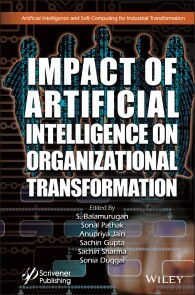
Impact of Artificial Intelligence on Organizational Transformation
IMPACT OF ARTIFICIAL INTELLIGENCE ON ORGANIZATIONAL TRANSFORMATIONDISCUSSES THE IMPACT OF AI ON ORGANIZATIONAL TRANSFORMATION WHICH IS A MIX OF COMPUTATIONAL TECHNIQUES AND MANAGEMENT PRACTICES, WITH IN-DEPTH ANALYSIS ABOUT THE ROLE OF AUTOMATION & DATA MANAGEMENT, AND STRATEGIC MANAGEMENT IN RELATION TO HUMAN CAPITAL, PROCUREMENT & PRODUCTION, FINANCE, AND MARKETING. The impact of AI in restructuring organizational processes is a combination of management practices and computational technology. This book covers the areas like artificial intelligence & its impact on professions, as well as machine learning algorithms and technologies. The context of applications of AI in business process innovation primarily includes new business models, AI readiness and maturity at the organizational, technological, financial, and cultural levels. The book has extensive details on machine learning and the applications such as robotics, blockchain, Internet of Things. Also discussed are the influence of AI on financial strategies and policies, human skills & values, procurement innovation, production innovation, AI in marketing & sales platforms. AUDIENCE Readers include those working in artificial intelligence, business management studies, technology engineers, senior executives, and human resource managers in all types of business. S. BALAMURUGAN, PHD, SMIEEE and ACM Distinguished Speaker, received his PhD from Anna University, India. He has published 57 books, 300+ international journals/conferences, and 100 patents. He is the Director of the Albert Einstein Engineering and Research Labs. He is also the Vice-Chairman of the Renewable Energy Society of India (RESI). He is serving as a research consultant to many companies, startups, SMEs, and MSMEs. He has received numerous awards for research at national and international levels.SONAL PATHAK, PHD is an associate professor at the Manav Rachna International Institute of Research & Studies, Faridabad, Haryana, India. ANUPRIYA JAIN, PHD is an associate professor at the Manav Rachna International Institute of Research & Studies, Faridabad, Haryana, India. SACHIN GUPTA, PHD is at the Department of Business Administration, Mohanlal Sukhadia University, Udaipur, Rajasthan, India. SACHIN SHARMA is an assistant professor at the Manav Rachna International Institute of Research & Studies, Faridabad, Haryana, India. SONIA DUGGAL, PHD is an assistant professor at the Manav Rachna International Institute of Research & Studies, Faridabad, Haryana, India. Foreword xxiiiPreface xxv1 ARTIFICIAL INTELLIGENCE DISRUPTION ON THE BRINK OF REVOLUTIONIZING HR AND MARKETING FUNCTIONS 1Akansha Mer and Amarpreet Singh Virdi1.1 Introduction 21.2 Research Methodology 41.2.1 Research Objectives 41.2.2 Data Collection 41.3 Artificial Intelligence in HRM 41.3.1 Recruitment 51.3.2 Engaging the Applicants and Employees 51.3.3 Orientation and Onboarding 61.3.4 Performance Appraisal 61.3.5 Training 71.3.6 Compensation 71.3.7 Employee Retention 81.4 Artificial Intelligence in Marketing 81.4.1 Creation of Customer Profiles/Market Segmentation 91.4.2 Cognizance of Consumers Purchase Behavior/Intention 101.4.3 Pricing 111.4.4 Content/Product/Service Recommendations/Search Optimization 111.4.5 Sales Prediction Based on Consumer’s Demographics 121.4.6 Virtual Assistants/Real-Time Conversations 121.4.7 Visual Searching 121.4.8 CRM 131.5 Discussion and Findings 131.6 Implication for Managers 141.7 Conclusion 15References 162 RING TRADING TO ALGO TRADING—A PARADIGM SHIFT MADE POSSIBLE BY ARTIFICIAL INTELLIGENCE 21Aditi R. Khandelwal2.1 Introduction 222.2 Ring Trading 222.3 Features of Generation 1: Ring Trading 222.4 Generation 2: Shifting to Online Platform 242.5 Generation 3: Algo Trading 282.6 Artificial Intelligence 292.7 AI Stock Trading 302.8 Algorithmic (Algo Trading) Trading 312.9 Conclusion 31References 323 AI IN HR A FAIRY TALE OF COMBINING PEOPLE, PROCESS, AND TECHNOLOGY IN MANAGING THE HUMAN RESOURCE 33Jyoti Jain and Sachin Gupta3.1 Introduction 343.2 Problem Recognition 353.3 Journey of AI in HR “From Where Till What” 363.4 Work Methodology of AI in HR 393.5 Branches of AI in HR 393.5.1 Machine Learning 393.5.1.1 Variance Detection 393.5.1.2 Background Verification 403.5.1.3 Employees Abrasion/Attrition 403.5.1.4 Personalized Content 403.5.2 Deep Learning 403.5.2.1 Important Use of Deep Learning in HR Context 403.5.3 Natural Language Processing 413.5.4 Recommendation Engines 413.6 Implication Stages of AI in HR 413.6.1 Automate 423.6.2 Augment 423.6.3 Amplify 423.7 Process Model of AI in HR 433.8 Key Roles of AI in HRM 443.9 Broad Area of Uses of AI in HR 453.9.1 Recruitment 463.9.2 Interviews 463.9.3 Reduction in the Human Biases 463.9.4 Retention 473.9.5 AI in Learning and Advancement 473.9.6 Diminish Gender Bias Equality 473.9.7 Candidate Engagement 483.9.8 Prediction 483.9.9 Smart People Analytics 483.9.10 Employee Experience 483.10 Dark Side of AI 503.10.1 Technical Requirements and Acceptance 513.10.2 Cost Involvement 523.10.3 Machine Biases 523.10.4 Job Losses 523.10.5 Emotional Turmoil 533.10.6 Fake Identity 533.10.7 Having an Audit Trail 533.10.8 Question on Decisions 543.11 Conclusion 54References 554 EFFECT OF ARTIFICIAL INTELLIGENCE ON HUMAN RESOURCE PROFESSION: A PARADIGM SHIFT 57Jyoti Dashora and Karunesh Saxena4.1 Introduction 584.2 Evolution of Artificial Intelligence 594.2.1 Phases of Artificial Intelligence 614.3 Changing Role of Human Resource Professionals 614.4 Effect of Artificial Intelligence on Human Resource Profession 634.4.1 Symbiotic Relationship Between Artificial Intelligence and Human Resource Profession 674.5 Limitations of Artificial Intelligence in HRM 684.6 Conclusion 69References 705 ARTIFICIAL INTELLIGENCE IN ANIMAL SURVEILLANCE AND CONSERVATION 73Devendra Kumar and Saha Dev Jakhar5.1 History 745.2 Introduction 745.3 Need of Artificial Intelligence 755.4 Applications of AI in Animal Surveillance and Conservation 765.4.1 In Livestock Monitoring 775.4.1.1 Chip and Sensor (RFID) 785.4.1.2 Microchip (GPS Tracker) 795.4.1.3 Mobile Application 795.4.1.4 Drone With Thermal Camera 795.4.2 In Wildlife Animal Monitoring 805.4.2.1 Motion Sensor Camera 805.4.2.2 GPS Base Animal Tracker 815.4.2.3 Smart Camera (Thermal Camera) 825.4.2.4 Satellite Base Tag (Ringing, Callers) 825.4.2.5 Acoustics/Sound Monitoring 825.4.2.6 Radio Transmitter (Transponder) 835.5 Some Other Tools of Artificial Intelligence 845.5.1 Computer Software and Application 845.5.1.1 Wildbook Comb (Bot) 845.5.1.2 Betty 845.5.1.3 Sensing Clues 845.5.2 Resolve’s Trail Guard 84References 856 IMPACT OF ARTIFICIAL INTELLIGENCE ON DIGITAL MARKETING 87Giuseppe Granata and Vincenzo Palumbo6.1 Introduction 886.2 The Impact That AI Has on Marketing 896.2.1 The Data of Artificial Intelligence in Marketing 906.2.1.1 The Audience: Highly Targeted Marketing Segmentation 926.2.1.2 Journey to: The Customer’s Road 926.2.1.3 Offer to: Advice-Based Behavioral Marketing 926.2.2 Number of Efficiency Powered by the Al Global Consumer Statistics 946.2.3 Cloud Computing: How it Interfaces to Marketing Thanks to Big Data 956.2.4 AI World is Made Also With BOT. Exactly What Are BOT? 986.2.5 The Chatbot: Service Robot as Support of Customer Care 996.3 The Community Regulation “GDPE” and Artificial Intelligence: Here’s How Technology is Governed 1016.4 The Case Study Estée Lauder 1036.5 Conclusion 104References 1057 ROLE OF ARTIFICIAL INTELLIGENCE IN TRANSFORMING THE FACE OF BANKING ORGANIZATIONS 109Shweta Solanki, MeeraMathur and BhumikaRathore7.1 Objectives 1107.2 Introduction 1107.2.1 Three Stages of Artificial Intelligence 1117.2.2 Different Types of Artificial Intelligence 1117.2.3 Trends and Need of Artificial Intelligence in Context of Indian Banking 1117.2.4 Uses and Role of Artificial Intelligence in Banks in the Opinion of 1137.2.5 Importance of Artificial Intelligence in Banking Practices and Operation 1147.2.5.1 Chat Bots 1157.2.5.2 Analytics 1157.2.5.3 Robotics Process Automation 1157.2.5.4 Generating Reports 1157.2.6 Impact of AI in Banking Operations 1167.2.6.1 Front Office Operations/Customer Centric 1167.2.6.2 Middle Office/Operation Centric 1167.2.6.3 Back Office/Decision Centric 1167.2.7 Future of Artificial Intelligence in Banks 1167.3 Existing Technology 1177.4 Methodology 1177.4.1 Search Process 1187.4.2 Selection Criteria and Review Process 1187.5 Findings 1187.6 Conclusion 1197.7 Suggestions 119References 1208 ARTIFICIAL INTELLIGENCE AND ENERGY SECTOR 123Oum Kumari R8.1 Introduction 1238.1.1 Increase in the Emission of Greenhouse Gases 1248.1.2 Increase in the Financial Burden 1248.1.3 Huge Power Deficit 1248.1.4 Water Scarcity 1248.2 Challenges of Indian Power Sector 1258.2.1 Global Warming 1258.2.2 Depletion of Coal 1258.2.3 Huge Financial Stress 1268.2.4 Power Crisis 1268.2.5 Health Issues 1278.2.6 Plant Load Factor 1278.2.7 Transmission and Distribution (T&D) Losses 1288.3 Artificial Intelligence for Energy Solutions 128References 1299 IMPACT OF ARTIFICIAL INTELLIGENCE ON DEVELOPMENT AND GROWTH OF ENTREPRENEURSHIP 131Pooja Meena, Ankita Chaturvedi and Sachin Gupta9.1 Introduction 1329.2 Entrepreneurship 1339.3 Artificial Intelligence 1339.4 Artificial Intelligence and Entrepreneurship 1349.5 Process of Entrepreneurship 1359.5.1 Entrepreneurial Recognition 1359.5.2 Human Capital 1369.5.3 Technology Requirements and Idea Generation 1369.5.4 Opportunity Recognition Phase 1369.5.5 Opportunity Development 1369.5.6 Resource Requirements 1369.5.7 Entrepreneurship 1379.5.8 Financial Resources 1379.5.9 Opportunity Exploitation 1379.5.10 Knowledge Networks 1379.5.11 Validation of the Product 1379.6 The Need of Artificial Intelligence for Business Development 1389.6.1 Consumer Satisfaction 1389.6.2 Cybercrime Protection 1389.6.3 CRMs 1399.6.4 AI-Based Analytics 1399.6.5 Demand and Supply Management 1399.6.6 Improved Maintenance and Better Equipment Safety 1399.6.7 Searching Capable Employees 1409.6.8 Virtual Assistance for Sales 1409.6.9 Improvements With Self-Driven Technologies 1409.7 Some Important Facts About AI 1419.8 Opportunities for Artificial Intelligence in Business 1419.8.1 AI in the Field of Marketing 1419.8.2 For Track Competitors 1429.8.3 Make Less Work of Huge Data 1429.8.4 AI as Customer Support System 1429.8.5 Artificial Intelligence in CRMs 1439.9 Further Research Possibilities 1449.10 Conclusion 144References 14510 AN EXPLORATORY STUDY ON ROLE OF ARTIFICIAL INTELLIGENCE IN OVERCOMING BIASES TO PROMOTE DIVERSITY AND INCLUSION PRACTICES 147Bhumika Rathore, Meeera Mathur and Shweta Solanki10.1 Introduction 14810.1.1 Objectives of the Study 14910.1.2 Background of the Study 14910.1.3 Relevance and Scope of the Study 14910.2 Research Gaps Identified 15010.3 Experiential Framework 15010.3.1 Hypothetical Research Model 15110.3.2 Methodology 15110.3.3 Search Process 15210.3.4 Selection Criteria and Review Process 15210.3.5 Systematic Representation of Literature Review 15310.3.6 Understanding Workforce Diversity 15410.3.7 Benefits and Challenges of Workforce Diversity 15510.3.8 Biases as Obstacles in Diversity and Inclusion Practices 15710.3.9 AI as a Tool to Prevent Bias and Promote D&I Practices 15910.4 Synthesis of the Study 16110.5 Managerial Implications and Conclusion 161References 16311 ARTIFICIAL INTELLIGENCE: REVOLUTIONIZING INDIA BYTE BY BYTE 165Priyanka Jingar, Anju Singh and Sachin Gupta11.1 Introduction 16511.2 Objectives of the Chapter 16611.3 AI for India’s Transformation 16711.4 Economic Impact of Artificial Intelligence 16911.5 Artificial Intelligence and its Impact on Various Sectors 17011.5.1 AI in Healthcare 17111.5.2 AI in Banking and Finance 17211.5.3 Artificial Intelligence in Education 17311.5.4 Artificial Intelligence in Agriculture Sector 17511.5.5 Artificial Intelligence in Smart Cities and Infrastructure 17611.5.6 AI in Smart Mobility and Transportation 17711.6 SWOT Analysis of Artificial Intelligence 17811.6.1 Strength 17811.6.2 Weakness 17911.6.3 Opportunity 17911.6.4 Threat 18011.7 Conclusion 181References 18112 AI: A NEW STRATEGIC METHOD FOR MARKETING AND SALES PLATFORMS 183Ravindar Meena, Ashmi Chhabra, Sachin Gupta and Manoj Gupta12.1 Introduction 18412.2 Objectives of the Chapter 18412.3 Importance of Artificial Intelligence 18512.4 Research Methodology 18612.5 AI: The Ultimate B2B Growth Accelerator 18712.5.1 AI Can Help Get Better Leads 18712.5.2 Predictive Analysis Improves Pitches 18812.5.3 Better Upsell Opportunities 18812.5.4 AI is an Excessive Digital Assistant 18812.5.5 AI and Improved Customer Conversations 18812.6 The Existing Methods of Marketing and Sales 18912.6.1 Being Lazy About Self-Promotion 18912.6.2 Avoiding Networking 18912.6.3 Bridging the New Product Launch Gap 19012.7 AI Will Shape Marketing Strategies of Startup in the Future 19012.7.1 Winning the Loots of Artificial Intelligence 19212.7.2 The Control of Artificial Intelligence and Recorded Data 19212.7.3 Artificial Intelligence the Game Changer for Small Businesses 19212.7.4 AI Selling and Marketing for E-Commerce 19212.7.5 Marketing Computerization to Modified Knowledge 19312.8 Artificial Intelligence is Shaking up the Job Market 19312.9 The Role of Artificial Intelligence and Machine Learning on Marketing 19512.9.1 Traditional and Modern Marketing 19612.10 Conclusion 197References 19813 BRAIN AND BEHAVIOR: BLENDING OF HUMAN AND ARTIFICIAL MINDS TOWARD STRESS RECOGNITION AND INTERVENTION IN ORGANIZATIONAL WELL-BEING 201Manisha D. Solanky and Sachin Gupta13.1 Introduction 20213.2 Research Methodology 20313.3 Fundamentals of Stress 20313.3.1 Stress at Workplace 20513.3.2 Symptoms and Outcome of Stress 20613.4 Embracing AI Opportunity in Stress Management Interventions 20713.5 Existing Technology for Stress Recognition 20813.5.1 Smart Detection Devices 20913.5.2 Stress Detection Through Physiological Signals 20913.5.3 Sensor-Based Detection 21013.5.4 Deep Learning Approaches for Stress Detection 21013.5.5 Stress Detection Through Biofeedback Systems 21013.5.6 Stress Detection Through Virtual Reality 21213.5.7 Stress Detection Through Keyboard Strokes 21313.5.7.1 Chatbots for Depression, Stress, and Anxiety 21313.5.7.2 WYSA Chatbot 21413.5.8 Stress Intervention Based on Human-Technology Interaction 21413.5.8.1 Individual Level of Intervention 21513.5.8.2 Organization Level Intervention 21513.5.8.3 Devices Supporting Stress Interventions 21613.6 Discussion and Findings 21813.7 An AI—Eye to the Future 22013.7.1 Implications to Managers 22013.7.2 Implication to the Entrepreneurs 22113.8 Conclusion 22213.9 Limitations of AI in Human Resource Management 22313.10 Conclusion 223References 22414 ALTERNATIVE FINANCING 229Suhasini Verma14.1 Introduction 22914.1.1 Sources of Funds for Individuals 23014.1.2 Sources of Funds for Organizations 23114.2 Alternative Financing 23114.2.1 Features of Alternative Financing 23114.3 Models of Alternative Financing 23514.3.1 Peer-to-Peer Lending 23514.3.1.1 Peer-to-Peer Lending Types 23514.3.2 Crowdfunding 23614.3.2.1 Equity-Based Crowdfunding 23614.3.2.2 Profit Sharing Crowdfunding 23614.3.2.3 Reward-Based Crowdfunding 23714.3.2.4 Donation-Based Crowdfunding 23714.4 Scope of Alternative Financing in India 23714.5 Alternative Finance as a Tool of Financial Inclusion 24114.6 Regulation of Alternative Finance 241References 242Further Web Links 243Dissertation 24315 APPLICATION OF MACHINE LEARNING IN OPEN GOVERNMENT DATABASE 245Shantanu P. Chakraborty, Parul Dashora and Sachin Gupta15.1 Introduction 24615.2 Literature Review 24615.3 Overview of Open Government Data 24715.4 Open Government Data in India 24815.5 How to Create Value from Data 25115.6 Artificial Intelligence 25115.7 Why AI is Important? 25215.8 Machine Learning 25215.9 Concerns About Machine Learning on Government Database 25415.10 Conclusion 255References 25516 ARTIFICIAL INTELLIGENCE: AN ASSET FOR THE FINANCIAL SECTOR 259Swati Bandi and Anil Kothari16.1 Introduction 25916.1.1 Phase I 1950–1983 Origin of AI and the First Hype Cycle 26016.1.2 II Phase 1983–2010 Reawakening of Artificial Intelligence 26116.1.3 III Phase 2011–2017 AI Domains Competing Humans 26216.1.4 The Present and the Future Phase (2018–2035) 26416.2 Types, Technology, and Application of AI 26516.2.1 Types of Artificial Intelligence 26516.2.2 Artificial Intelligence Technologies 26516.2.3 Applications of Artificial Intelligence 26616.3 Artificial Intelligence and Financial Services 26816.3.1 Artificial Intelligence and Insurance 26916.3.2 Artificial Intelligence and Stock Market 27516.3.2.1 From the History of Stock Exchange to the Development of Algo Trading in India 27616.3.2.2 What is Algorithmic Trading? 27616.3.2.3 Benefits of Algo Trading 27716.3.2.4 Algorithmic Trading Platforms 27716.3.2.5 Algo Trading Strategies 27816.3.2.6 Impact of Artificial Intelligence on Stock Market 28016.3.3 Artificial Intelligence and Mutual Funds 28116.3.3.1 Mutual Funds Use AI in the Following Ways 28216.3.3.2 Quantitative Fund’s Investment Process 28216.3.3.3 Quantitative Fund—Choosing Stocks Strategy 28316.3.3.4 The Other Way Around 28416.4 Conclusion 28416.5 Glossary 285References 286Bibliography 28717 ARTIFICIAL INTELLIGENCE WITH SPECIAL REFERENCE TO BLOCKCHAIN TECHNOLOGY: A FUTURE OF ACCOUNTING 289Ashish Porwal, Ankita Chaturvedi and Sachin Gupta17.1 Introduction 29017.1.1 Artificial Intelligence and Accounting 29017.1.2 Blockchain in Finance and Accounting 29017.2 Objectives 29217.3 Literature Review 29217.3.1 Janling Shi 29217.3.2 Nordgren et al. 29317.3.3 Kiwilinski 29317.3.4 Ahmed Farah 29317.3.5 Odoh Longinus Chukwudi 29417.3.6 Potekhina and Rumkin 29417.4 Research Methodology 29517.5 Usage of Artificial Intelligence in Accounting 29517.6 Usage of Blockchain in Accounting 29717.6.1 Bitcoin 29717.6.2 Interbank Transactions 29817.6.3 Property Registry 29917.7 Impact of AI on the Field of HRM 30017.8 Challenges in Execution 30117.9 Conclusion 301References 30218 AI-IMPLANTED E-LEARNING 4.0: A NEW PARADIGM IN HIGHER EDUCATION 305Garima Kothari and B.L. Verma18.1 Introduction 30618.2 Research Methodology 30718.2.1 Objective 30718.2.2 Research Approach 30718.2.3 Types and Sources of Data 30718.3 Progression of Web and E-Learning 30718.3.1 Some Relevant Definitions Distance Education 30718.3.2 E-Learning 30818.3.3 E-Learning 1.0–4.0 30818.3.3.1 Web 1.0 E-Learning 1.0 (Link to Anything): 1997 to 2003 30818.3.3.2 Web 2.0 E-Learning 2.0 (User Involvement): 2004 to 2006 30818.3.3.3 Web 3.0 E-Learning 3.0 (Existing Data Reconnected): 2007 to 2011 30818.3.3.4 Web 4.0 (Read/Write/Execute/Concurrency From 2012) 30918.4 Artificial Intelligence in Learning 31318.4.1 What is Artificial Intelligence? 31318.4.2 AI En Routed the Learning 31418.4.2.1 Smart Learning Content 31418.4.2.2 Intelligent Tutoring Systems 31518.4.2.3 Virtual Facilitators and Learning Environments 31518.4.2.4 Content Analytics 31518.4.2.5 Paving New Learning Pathways in the Coming Decade 31618.5 Impact of Artificial Intelligence in Education (AIEd) 31618.5.1 Will AI Take Over From Humans? 31618.5.2 AI-Implanted E-Learning 31718.5.2.1 Avatars 31718.5.2.2 Hyper-Reality 31818.5.2.3 The Hyper Class in Virtual Universities 31818.5.2.4 JITAITs 31918.5.3 Recommendations to Help Unleash Intelligence 31918.5.3.1 Pedagogy 32018.5.3.2 Technology 32018.5.3.3 System Change 32118.6 Conclusion 321Concise Summary 322References 32219 ARTIFICIAL INTELLIGENCE IN BANKING INDUSTRY 327GarimaKaneria19.1 Introduction 32719.2 Banking on Artificial Intelligence 32919.3 Role of Artificial Intelligence in Shaping Indian Banking Industry 33019.3.1 Detection of Anti-Money Laundering Pattern 33019.3.2 Chatbots 33019.3.3 Algorithmic Trading 33119.3.4 Fraud Detection 33219.3.5 Customer Suggestions 33219.3.6 Personalized Banking 33219.3.7 Digital Payments 33319.3.8 Robo Advisors 33419.4 Influence of Artificial Intelligence on Indian Banking Industry 33419.5 Reasons Behind Elongated Adoption of Artificial Intelligence in Banking Industry 33619.5.1 Cut-Throat Competition in Banking Sector 33619.5.2 Push for Process-Driven Services 33619.5.3 Introduction of Self-Service at Banks 33619.5.4 Customer Demand for More Customized Solutions 33619.5.5 Creating Operational Efficiencies 33619.5.6 Increasing Employee Productivity 33719.5.7 To Help Focus on Profitability and Compliance 33719.5.8 Use of Robotics Software 33719.5.9 To Reduce Fraud and Risk Associated With Security 33719.5.10 To Manage Large Information and Derive Value Insight 33719.5.11 To Bring in Effective Decision-Making 33819.6 Indian Banks Using Artificial Intelligence 33819.6.1 State Bank of India 33819.6.2 Bank of Baroda 33919.6.3 Allahabad Bank 33919.6.4 Andhra Bank 33919.6.5 YES Bank 33919.6.6 Housing Development Finance Corporation (HDFC) 33919.6.7 Industrial Credit and Investment Corporation of India (ICICI) 34019.6.8 Axis Bank 34019.6.9 Canara Bank 34019.6.10 Punjab National Bank 34019.6.11 IndusInd Bank 34019.6.12 City Union Bank 34119.7 Pros and Cons of Artificial Intelligence in Banking Sector 34119.7.1 Pros 34119.7.1.1 Tracking of Transactional and Other Data Sources 34119.7.1.2 Identification of Pattern Which May Be Eluded by Human Observers 34119.7.1.3 Risk Assessment 34119.7.1.4 Secure and Swift Transaction 34219.7.1.5 Protection of Personal Data 34219.7.1.6 Hedge Fund Trading and Management 34219.7.1.7 Quick Transaction 34219.7.1.8 Reduce Cost and Time 34219.7.1.9 Upgraded Personnel Effectiveness and Customer Observation 34219.7.1.10 Enhanced Banking Services 34319.7.2 Cons 34319.7.2.1 High Cost 34319.7.2.2 Bad Calls 34319.7.2.3 Distribution of Power 34319.7.2.4 Unemployment 34319.8 Intelligent Mobile Applications Drive Growth in Banking 34419.8.1 Investment 34419.8.2 Accounting 34419.8.3 Banking Apps 34519.8.4 Digital Wallet Apps 34519.9 Conclusion 345References 34620 THE POTENTIAL OF ARTIFICIAL INTELLIGENCE IN PUBLIC HEALTHCARE INDUSTRY 349Megha Shrivastava and Devendra Kumar20.1 Introduction 35020.1.1 Drug Discovery 35020.1.1.1 The Main Stages of Drug Discovery Might Take Several Years in Completion 35120.1.1.2 Companies or Startups Used AI Techniques for Drug Discovery 35120.1.2 Medical Imaging 35220.1.2.1 Areas of Medical Imaging 35220.1.2.2 Some Applications for AI in Medical Imaging Are at Present Applied in General Healthcare 35320.1.3 Disease Prevention 35420.1.3.1 Areas of Disease Prevention, Supported by AI System 35420.1.3.2 Some Recent Software Used for Disease Prevention 35420.1.4 Medical Diagnosis 35520.1.4.1 Categories of AI Tools for Disease Diagnosis 35520.1.4.2 Software Developed for Disease Diagnosis 35620.1.4.3 Making Smartphone as Powerful Diagnostic Tools 35720.1.5 Robotic AI 35720.2 The Future of Artificial Intelligence in Healthcare 358References 35921 BANKS TO LEAD DIGITAL TRANSFORMATION WITH ARTIFICIAL INTELLIGENCE 361Lavika Jaroli, Sachin Gupta and Parul Dashora21.1 Artificial Intelligence 36221.1.1 Human Versus Artificial Intelligence 36321.1.2 Difference Between AI, NLP, NN, ML, or DL 36321.1.3 Types of Artificial Intelligence 36521.1.4 Innovations in Indian Banking Through IT 36621.1.5 A Short History of Artificial Intelligence 36621.2 Artificial Intelligence History Timeline 36721.2.1 Objectives 36721.2.2 Scope 36721.2.3 Methodology 36921.3 Why Artificial Intelligence in Banks 36921.4 Goal of Artificial Intelligence 37021.4.1 Innovations in Indian Banking Through IT 37021.4.2 Innovation in Indian Banking Sectors 37021.5 Artificial Intelligences Using by Different Banks 37221.6 Implementation of Artificial Intelligence in Banking 37521.7 Path Ahead Chatbots in Banking 37721.8 Advantage of Artificial Intelligence in Banking Sector 37921.9 Types of Risks and Threats Associated With Banking 38021.10 Nature of Risks in Wireless Banking 38021.11 Advent of Information Technology in Indian Banking Sector 38321.12 Future Scope of AI 38421.13 Conclusion 384References 38422 EFFECTIVENESS OF E-HRM TOOLS USING THE FUNCTIONALITIES OF ARTIFICIAL INTELLIGENCE DURING REMOTE WORKING IN LOCKDOWN PERIOD 387Nidhi Saxena and Aditi R. Khandelwal22.1 Introduction 38822.1.1 Artificial Intelligence in Electronic HR Management 38922.1.1.1 Prospective Employee Engagement and Development 38922.1.1.2 Employee Training 39022.1.1.3 Candidate Selection for Recruitment 39022.1.1.4 Development Needs of Employees 39022.2 Literature Review 39022.3 Objective of the Study 39122.4 Research Methodology 39222.5 Impact and Efficiency of AI-Enabled EHRM Tools in Work From Home Scenario Under Lockdown 39222.6 Conclusion 395Reading List 396Index 399

Can. Trust. Will.
BUILDING A SUCCESSFUL CYBERSECURITY TEAM IS NO LONGER OPTIONAL.Cyberthreats evolve at a staggering pace, and effective cybersecurity operations depend on successful teams. Unfortunately, statistics continue to illustrate that employers are not finding the people they need.The Can. Trust. Will. system guides the C-Suite, HR professionals and talent acquisition to build unbeatable cybersecurity teams through advanced hiring processes and focused on-boarding programs. Additionally, this book details how successful cybersecurity ecosystems are best built and sustained, with expert analysis from high-level government officials, Fortune 500 CSOs and CISOs, risk managers, and even a few techies.Those already in the field (and newbies) will glean invaluable knowledge about how to find their most effective position within a cybersecurity ecosystem. In a tech-driven environment, cybersecurity is fundamentally a human problem: and the first step is to hire for the human element.

Synchronization of Multi-Agent Systems in the Presence of Disturbances and Delays
This monograph explores the synchronization of large-scale, multi-agent dynamical systems in the presence of disturbances, delays, and time-varying networks. Drawing upon their extensive work in this area, the authors provide a thorough treatment of agents with higher-order dynamics, different classes of models for agents, and the underlying networks representing the agents’ actions. The high technical level of their presentation and their rigorous mathematical approach make this a timely and valuable resource that will fill a gap in the existing literature. Divided into two sections, the first part of the book focuses on state synchronization of homogeneous multi-agent systems. The authors consider state synchronization by determining control strategies for both continuous- and discrete-time systems that achieve state synchronization under both full- and partial-state coupling. The chapters that follow examine multi-agent systems with both linear and nonlinear time-varying agents, input-delays for continuous- and discrete-time systems, and communication delays for continuous-time systems. The second part of the book is dedicated to regulated output synchronization of heterogeneous multi-agent systems with linear and nonlinear agents. Both sections of the book include performance considerations in H2- and H-infinity norms in the presence of external disturbances. Research on synchronization of multi-agent systems has been growing in popularity and is highly interdisciplinary, with applications to automobile systems, aerospace systems, multiple-satellite GPS and high-resolution satellite imagery, aircraft formations, highway traffic platooning, industrial process control with multiple processes, and more. Synchronization of Multi-Agent Systems in the Presence of Disturbances and Delays will therefore be of interest to upper-level graduate students, researchers, and engineers in industry working on interconnected dynamical systems. Notation and preliminaries.- Part I Synchronization of homogeneous systems.- Synchronization of continuous-time linear MAS.- Synchronization of discrete-time linear MAS.- Synchronization of linear MAS subject to actuator saturation.- Synchronization of continuous-time MAS with nonlinear time-varying agents.- Synchronization of continuous-time linear MAS with unknown input delay.- Synchronization of discrete-time linear MAS with unknown input delay.- Synchronization of continuous-time linear MAS with unknown communication delay.- Synchronization of discrete-time linear MAS with unknown communication delay.- Synchronization of linear MAS subject to actuator saturation and unknown input delay.- Synchronization of continuous-time linear time-varying MAS.- Synchronization of continuous-time nonlinear time-varying MAS.- H1 and H2 almost synchronization of continuous-time linear MAS.- Part II Synchronization of heterogeneous systems.- Necessary conditions for synchronization of heterogeneous MAS.- Regulated output synchronization of heterogeneous continuous-time linear MAS.- Regulated output synchronization of heterogeneous continuous-time nonlinear MAS.- Regulated output synchronization of heterogeneous continuous-time linear time-varying MAS.- Exact regulated output synchronization for heterogeneous continuous-time MAS in the presence of disturbances and measurement noise with known frequencies.- H1 almost output synchronization for heterogeneous continuous-time MAS.- H2 almost regulated output synchronization for heterogeneous continuous-time MAS.- Almost output synchronization of heterogeneous continuous-time linear MAS with passive agents.- Synchronization of heterogeneous continuous-/and discrete-time linear MAS with introspective agents.- A special coordinate basis (SCB) of linear multivariable systems.- Squaring down of general MIMO systems to invertible uniform rank systems via pre- and/or post-compensators.- Index.- References.