

Computer und IT
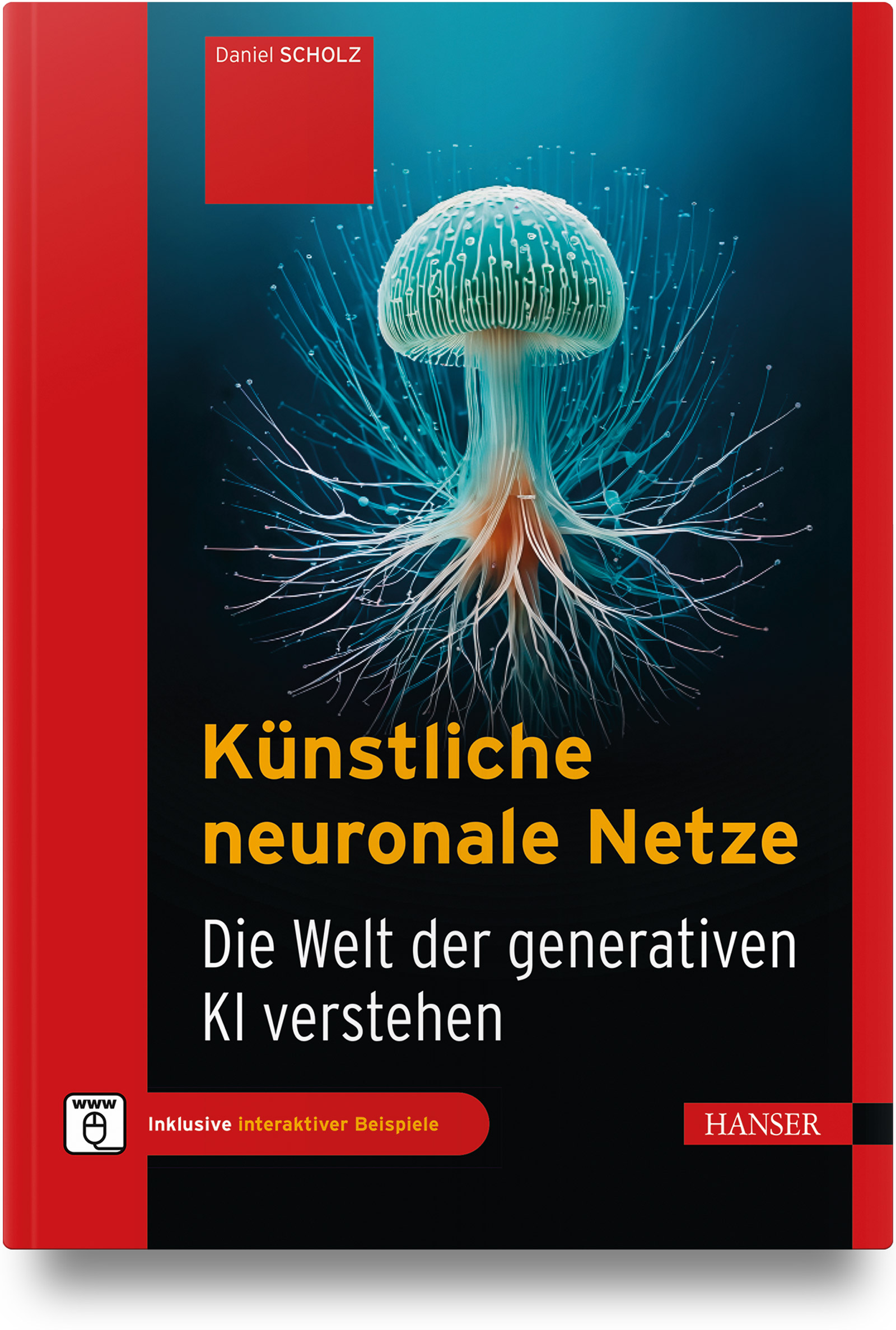
Künstliche neuronale Netze
Künstliche neuronale NetzeDieses Lehrbuch bietet eine verständliche Einführung in die Welt der neuronalen Netze, die für ein breites Publikum zugänglich ist. Es erklärt grundlegende Algorithmen und Verfahren, die neuronale Netze antreiben, ohne tiefere mathematische Vorkenntnisse oder Programmiererfahrung vorauszusetzen.Die Leser:innen lernen, wie einfache neuronale Netzwerke aufgebaut, trainiert und getestet werden. Darauf aufbauend werden fortgeschrittene Themen wie Convolutional Neural Networks (CNNs), Autoencoder, autoregressive Modelle und Diffusionsmodelle erläutert. Zahlreiche praktische Beispiele und leicht nachvollziehbare Erklärungen machen das Werk zu einem praxisnahen Lehrbuch für alle, die sich in dieses zukunftsweisende Thema einarbeiten möchten.Über den Autor:Dr. Daniel Scholz ist in der Weiterbildung KI&Data Science bei einem großen deutschen Automobilhersteller tätig und darüber hinaus aktiv im Bereich der schulischen Lehre und Weiterbildung.

AI for Robotics
This book approaches robotics from a deep learning perspective. Artificial intelligence (AI) has transformed many fields, including robotics. This book shows you how to reimagine decades-old robotics problems as AI problems and is a handbook for solving problems using modern techniques in an era of large foundation models.The book begins with an introduction to general-purpose robotics, how robots are modeled, and how physical intelligence relates to the movement of building artificial general intelligence, while giving you an overview of the current state of the field, its challenges, and where we are headed. The first half of this book delves into defining what the problems in robotics are, how to frame them as AI problems, and the details of how to solve them using modern AI techniques. First, we look at robot perception and sensing to understand how robots perceive their environment, and discuss convolutional networks and vision transformers to solve robotics problems such as segmentation, classification, and detection in two and three dimensions. The book then details how to apply large language and multimodal models for robotics, and how to adapt them to solve reasoning and robot control. Simulation, localization, and mapping and navigation are framed as deep learning problems and discussed with recent research. Lastly, the first part of this book discusses reinforcement learning and control and how robots learn via trial and error and self-play.The second part of this book is concerned with applications of robotics in specialized contexts. You will develop full stack knowledge by applying the techniques discussed in the first part to real-world use cases. Individual chapters discuss the details of building robots for self-driving, industrial manipulation, and humanoid robots. For each application, you will learn how to design these systems, the prevalent algorithms in research and industry, and how to assess trade-offs for performance and reliability. The book concludes with thoughts on operations, infrastructure, and safety for data-driven robotics, and outlooks for the future of robotics and machine learning.In summary, this book offers insights into cutting-edge machine learning techniques applied in robotics, along with the challenges encountered during their implementation and practical strategies for overcoming them.WHAT YOU WILL LEARN* Explore ML applications in robotics, covering perception, control, localization, planning, and end-to-end learning* Delve into system design, and algorithmic and hardware considerations for building efficient ML-integrated robotics systems* Discover robotics applications in self-driving, manufacturing, and humanoids and their practical implementations* Understand how machine learning and robotics benefit current research and organizationsWHO THIS BOOK IS FORSoftware and AI engineers eager to learn about robotics, seasoned robotics and mechanical engineers looking to stay at the cutting edge by integrating modern AI, and investors, executives or decision makers seeking insights into this dynamic fieldALISHBA IMRAN is a machine learning and robotics developer focusing on robot learning for manipulation and perception. She is currently conducting research in reinforcement learning and unsupervised learning with Pieter Abbeel at the Berkeley AI Research Lab. Alishba has worked on perception at Cruise, developed simulation object manipulation methods at NVIDIA, and led efforts to reduce prosthetics costs at SJSU. At Hanson Robotics, she improved manipulation in Sophia the Robot, and at Kindred.AI, she contributed to robots that have picked up over 140 million units in production.KEERTHANA GOPALAKRISHNAN is a senior research scientist at Google Deepmind, working on robot manipulation and the Gemini project. She was educated at Carnegie Mellon University and Indian Institute of Technology. Her research concerns large language models for robotic planning, scaling visual language models for low level control, and cross-embodiment robot learning.Chapter 1: Introduction: General Purpose Robotics.- Chapter 2: Robot Perception: Sensors and Image Processing.- Chapter 3: Robot Perception: 3D Data and Sensor Fusion.- Chapter 4: Foundation Models in Robotics.- Chapter 5: Simulation.- Chapter 6: Mapping, Localization, and Navigation.- Chapter 7: Reinforcement Learning and Control.- Chapter 8: Self Driving Cars.- Chapter 9: Industrial Robotics.- Chapter 10: Humanoid Robotics.- Chapter 11: Data-Driven Robotics in Practice.

Microsoft Fabric
Microsoft Fabric Schritt für SchrittMit diesem Buch erhalten Sie eine praxisorientiere Einführung in die Struktur und Nutzung der einzelnen Komponenten der All-in-One-Datenplattform Microsoft Fabric. Es eignet sich sowohl für Einsteiger als auch für Expertinnen und Experten im Datenbereich. Ein grundlegendes Verständnis von Daten sowie erste Erfahrungen mit Python und SQL sind an einigen Stellen von Vorteil.Praktische Einführung anhand eines durchgehenden BeispielprojektsAnhand eines fiktiven Beispiels wird ein komplettes End-to-End-Datenprojekt in Microsoft Fabric umgesetzt, wobei alle relevanten Schritte – von der Datenanbindung über Datentransformationen bis hin zum finalen Dashboard – detailliert erklärt werden. Sie haben die Möglichkeit, alle Schritte selbst umzusetzen und das komplette Beispielprojekt praktisch nachzuvollziehen.Fundiert und anschaulichAlle Komponenten von Microsoft Fabric werden anhand einer Reise durch eine fiktive Datenfabrik veranschaulicht und mit zahlreichen Illustrationen visualisiert. Auf diese Weise werden sowohl grundlegende Konzepte als auch Best Practices für die Umsetzung von Datenprojekten mit Microsoft Fabric leicht verständlich erläutert.Über die Autoren:Manuel Hanik verfügt über mehrere Jahre Berufserfahrung in den Bereichen Data Science und Data Engineering, Fabian Hanik in den Bereichen Business Intelligence und Data Analytics. Beide Autoren haben bereits mehrere Datenprojekte in der Finanz- und Automobilbranche sowie im E-Commerce umgesetzt. Mit dem Buch möchten sie Microsoft Fabric auf spielerische und unterhaltsame Weise erklären – unterstützt durch visuelle Elemente und symbolische Eselsbrücken, die dem Leser helfen, die Themen besser zu verstehen und zu verinnerlichen.

E-Commerce
Dieses Buch behandelt hauptsächlich den Hintergrund des E-Commerce, das Grundwissen des E-Commerce, die Grundmodelle des E-Commerce, die Grundprinzipien des E-Commerce und die Fälle des E-Commerce. Dieses Buch hat ein theoretisches System des E-Commerce mit klaren Integrationsgrenzen gebildet. Die Einführung der systematischen Theorie wird durch den Hintergrund des E-Commerce geleitet, zentriert sich auf das Modell des E-Commerce, wird mit den Prinzipien des E-Commerce untermauert und mit den neuesten Fällen integriert.Dieses Buch definiert die grundlegenden Konzepte, Modelle und Prinzipien des E-Commerce in Form einer mathematischen Analyse und analysiert die Grundtheorie des E-Commerce aus der Perspektive des mathematischen Modells. Dies ermöglicht den Lesern, ein abstraktes Verständnis der Konnotation und Erweiterung des E-Commerce zu entwickeln. Es etabliert ein Wissenssystem mit dem Hintergrund der sozialen Ökologie, der Ingenieurökologie und der Innovationsökologie, wobei die Modelle des E-Commerce als Kern, die Prinzipien des E-Commerce als Prozess, die Architektur des E-Commerce als Plattform und der Betrieb und das Management des E-Commerce als Mittel zur Integration des Wissens in die Anwendung dienen. Dieses Buch verwendet Fallstudien, um das Wissenssystem, das den E-Commerce betrifft, umfassend zu analysieren und anzuwenden und kombiniert theoretische Forschung mit Ingenieurforschung. Durch dieses Buch können die Leser systematisch alle Arten von Theorien, die den E-Commerce betreffen, meistern.Dieses Buch richtet sich an verschiedene professionelle und diverse Lesergruppen. Es kann als Grundlagenbuch für Studenten verschiedener E-Commerce-bezogener Fachrichtungen verwendet werden.Chapter 1 Hintergrund des E-Commerce.- Chapter 2 Grundkonzepte des E-Commerce.- Chapter 3 Grundmodelle des E-Commerce.- Chapter 4 Architektur des E-Commerce.- Chapter 5 Grundprinzip des E-Commerce.- Chapter 6 Anwendung und Fallstudie des E-Commerce.

UX for AI
LEARN TO RESEARCH, PLAN, DESIGN, AND TEST THE UX OF AI-POWERED PRODUCTSUnlock the future of design with UX for AI—your indispensable guide to not only surviving but thriving in a world powered by artificial intelligence. Whether you're a seasoned UX designer or a budding design student, this book offers a lifeline for navigating the new normal, ensuring you stay relevant, valuable, and indispensable to your organization. In UX for AI: A Framework for Designing AI-Driven Products, Greg Nudelman—a seasoned UX designer and AI strategist—delivers a battle-tested framework that helps you keep your edge, thrive in your design job, and seize the opportunities AI brings to the table. Drawing on insights from 35 real-world AI projects and acknowledging the hard truth that 85% of AI initiatives fail, this book equips you with the practical skills you need to reverse those odds. You'll gain powerful tools to research, plan, design, and test user experiences that seamlessly integrate human-AI interactions. From practical design techniques to proven user research methods, this is the essential guide for anyone determined to create AI products that not only succeed but set new standards of value and impact. INSIDE THE BOOK:* Hands-on exercises: Build your confidence and skills with practice UX design tasks like Digital Twin and Value Matrix, which you can immediately apply to your own AI projects.* Common AI patterns and best practices: Explore design strategies for LLMs (Large Language Models), search engines, copilots, and more.* Proven user research strategies: Learn how to uncover user needs and behaviors in this brave new world of AI-powered design.* Real-world case studies: See how simple, practical UX approaches have prevented multimillion-dollar failures and unlocked unprecedented value.Perfect for any UX designer working with AI-enabled and AI-driven products, UX for AI is also a must-read resource for designers-in-training and design students with an interest in artificial intelligence and contemporary design. GREG NUDELMAN is a UX Designer, strategist, speaker, and author with more than 20 years’ experience helping Fortune 100 clients — including Cisco, IBM, and Intuit — create loyal customers and generate hundreds of millions of dollars in additional valuation. He has worked on 35 AI projects and is currently a Distinguished Designer at Sumo Logic. Introduction xxvHow to Use This Book xxxiPART 1—FRAMING THE PROBLEM 1CHAPTER 1 CASE STUDY: HOW TO COMPLETELY F*CK UP YOUR AI PROJECT 3A Boiling Pot of Spaghetti 3Fail #1: Try to Replace a Trained Expert with AI 4Fail #2: Forget About Cost vs. Benefit 4Fail #3: No ML Training Data? No Problem! 5Fail #4: It Makes No Difference What Question Your AI Model Is Answering 6Fail #5: Don’t Worry About User Research—You Have an SME! 6Final Thoughts 8Reference 9CHAPTER 2 THE IMPORTANCE OF PICKING THE RIGHT USE CASE 11Presuming That AI Will Be Telling Experts How to Do Their Job Is a Red Flag 11Ask a Better Question 12Reference 14CHAPTER 3 STORYBOARDING FOR AI PROJECTS 21Why Bother with a Storyboard? 22How to Create a Storyboard 24Establishing Shot 24Things 25People 26Faces 26Transitions 27Storyboard Conclusion 31Storyboarding for AI 34Final Thoughts 36Design Exercise: Create Your Own Storyboard 36Storyboarding Exercise Example: Death Clock 37References 38CHAPTER 4 DIGITAL TWIN—DIGITAL REPRESENTATION OF THE PHYSICAL COMPONENTS OF YOUR SYSTEM 39Digital Twin of a Wind Turbine Motor 39The Digital Twin Is an Essential Modeling Exercise for Designing AI-Driven Products 43How to Build a Digital Twin: An Example 44Wait, There’s More! 46Design Exercise: Create Your Own Digital Twin 48Reflect 49Design Exercise Example: Life Clock Digital Twin 49CHAPTER 5 VALUE MATRIX—AI ACCURACY IS BULLSHIT. HERE’S WHAT UX MUST DO ABOUT IT 51The Big Secret 51Confusion Matrix: How Can Accurate AI Be Wrong? 53Value Matrix: The AI Tool for the Real World 55Training AI on Real-Life Outcomes to “Think” Like a Human 56One More Example 58Final Thoughts: The Importance of Human Cost/Benefit 58Design Exercise: Create Your Own Value Matrix 59Design Exercise Example: Life Clock Value Matrix 60References 61PART 2—AI DESIGN PATTERNS 67CHAPTER 6 CASE STUDY: WHAT MADE SUMO COPILOT SUCCESSFUL? 69Strong Use Case 69Clear Vision 70Dedicated Full-Screen UI 71AI-Driven Autocomplete 71Next-Steps Suggestions 73Final Words 74References 74CHAPTER 7 UX BEST PRACTICES FOR SAAS COPILOT DESIGN 75The More Important the Task, the More Real Estate Is Required 75Side Panel 75Large Overlay 76Full Page 77Contents xixSaaS Copilot Is Stateful 78Specialized Fine-Tuned ChatGPT Model 78Plug-Ins: Integrated Continuous Learning About Your Specific System 79The IA of the AI Is Straightforward, Focused on Chat 80Promptbooks: No Need to Twist into Pretzels to Write Prompts 82Final Thoughts 82Design Exercise: Create Your Own Mobile Copilot 83Design Exercise Example: Life Clock Copilot 84References 87CHAPTER 8 REPORTING—ONE OF THE MOST IMPORTANT COPILOT USE CASES 89Zoom AI Companion 89Meeting Summary 89Answer Questions About the Meeting 89Set It and Forget It 90UI Modality Switch 90Microsoft Security Copilot 91Executive Summary: A General Report 93Pinboard: A Specialized Report Focused Only on Selected Key Details 93Info for Report: Ignore Automatically vs. Pick Manually? 94Security and Privacy 97Design Exercise: Create Your Own Copilot Report 97Design Exercise Example: Life Clock Copilot Report 98Daily Report 98Weekly Report 99CHAPTER 9 LLM DESIGN PATTERNS 103Restating 105Auto-Complete 106Talk-Back 108Initial Suggestions 108Next Steps 111Regen Tweaks 113Guardrails 113Design Exercise: Try Out the LLM Patterns 116Design Exercise Example: “Life Copilot Plus” 117CHAPTER 10 SEARCH UX REVOLUTION: LLM AI IN SEARCH UIS 121The Current State of Search 121Google Search 121Amazon Search 122The “Mysteries That Are Not Scary” Problem 122Enter LLMs 126Design Exercise: Design Your Own LLM Search UI 130Design Exercise Example: Life Copilot LLM Search 130CHAPTER 11 AI-SEARCH PART 2: “EYE MEAT” AND DOI SORT ALGORITHMS 133What Are Dynamic Dashboards? 133Beware of Bias in AI Recommendations 137DOI: Degree of Interest/Sort Algorithms 138Design Exercise: Create Your Own Dynamic Dashboards and Sort UI 143References 143CHAPTER 12 MODERN INFORMATION ARCHITECTURE FOR AI-FIRST APPLICATIONS 145Design Pattern du Jour: The Canvas 145Is Information Architecture Dead? 146Amazon.com: Conventional Approach 148“AI-Minus”? Homepage 148Conventional Search Results Page 149AI-Plus Item Detail Page 150Conventional Maintenance Pages 151AI-First Amazon.com Redesign 151AI-First Analysis Overview Page 151AI-First Category Analysis Pages 152AI-First LLM Search 155AI-First Item Detail 156AI-First Maintenance Pages 159Long Live Information Architecture! 159CHAPTER 13 FORECASTING WITH LINE GRAPHS 165Linear Regression 166R-Squared 167R vs. R-Squared 169Forecasting with AI 169Nonlinear Regression 170Seasonality 172Contents xxiForecasting an Aggregate Variable 173Final Words 175Design Exercise: Design Your Own Forecasting UI 175Design Exercise Example: Life Clock Forecasting 176References 177CHAPTER 14 DESIGNING FOR ANOMALY DETECTION 179Why Is Detecting Anomalies Important? 179Four Main Anomaly Types 180Point Anomaly 181Change Point Anomaly 185Contextual Anomaly 188Curve Shape Anomalies 192Design Exercise Example: Life Clock Anomaly Detection UI 195References 196Getting Ready for AI-pocalypse: Shorthand UX Design Notation as AI Prompt 197Shorthand UX Design Notation 197Shorthand Notation as AI Prompt to Go Directly to Working Code 198What Is Human Work? 202CHAPTER 15 UX FOR AGENTIC AI 203What Are AI Agents? 203How Do AI Agents Work? 204Use Case: CloudWatch Investigation with AI Agents 205Final Thoughts 209References 211PART 3—RESEARCH FOR AI PROJECTS 213CHAPTER 16 CASE STUDY: MUSE/DISCIPLINED BRAINSTORMING 215Design Idea #1 215Design Idea #2 217Design Idea #3 217Design Idea #4 218Design Idea #5 218But Wait, Did You Catch That? 219Design Exercise: Create Your Novel Designs Using Bookending 221Design Exercise Example: Novel Design Ideas for Life Clock 222References 222CHAPTER 17 THE NEW NORMAL: AI-INCLUSIVE USER-CENTERED DESIGN PROCESS 223In the Beginning … 223The Monkey or the Pedestal? 225A New Way of User-Centered Thinking 226What the Heck Is a Spike? 226What Is the Role of Data? 227Where Is the Customer in All This? 227Why Is This Change Necessary? 227How Does This Affect the Role of UX? 228Does This Mean I Have to Learn About AI So That I Can Ask My Data Science Teammates Good Questions? 229Final Handoff to Dev 229Many More Changes to Come 230Reference 230CHAPTER 18 AI AND UX RESEARCH 235UX Techniques That Will Likely See Full Automation 235Routine Usability Studies 235Routine NPS Studies and Surveys 236Collecting and Organizing the Research Data 236Triangulation of Quantitative and Qualitative Insights 236UX Techniques That Will Be Radically Augmented 236Competitive Analysis 237Identification of Novel Use Cases 237RITE Studies 237UX Techniques That Will Become Increasingly Valuable 237Core Skills 237Workshop Facilitation 238Formative Research, Field Studies, Ethnography, and Direct Observation 238Vision Prototyping 238Augmenting the Executive Strategy 239AI Bullshit 239AI Strategic Analysis Tools That Replace Humans in Coming Up with Novel Ideas and Business Use Cases 239AI Heuristics Analysis Replacing User Research and Design 240AI Acting as “Synthetic Users” for the Purposes of Usability Research 240Build Your Persona Using AI 240Final Words 241References 242Contents xxiiiCHAPTER 19 RITE, THE CORNERSTONE OF YOUR AI RESEARCH 247RITE Study vs. Usability Test 247#1: RITE Studies Form the Core of the Design Process. Usability Tests Are Often Treated as QA 248#2: RITE Studies Demand the Simplest Appropriate Prototypes That Change Rapidly. Usability Tests Often Mean Fancy Rigid Prototypes 249#3: RITE Studies Produce Solutions. Usability Tests Produce Reports 250A Fringe Benefit of RITE Studies 251How to Conduct a RITE Study 252A Few More RITE Rounds 255The RITE Design Evolution 257Dear Future: AI-Assisted RITE Methodology 257Design Exercise: Run Your Own RITE Study 259References 259PART 4—BIAS AND ETHICS 263CHAPTER 20 CASE STUDY: ASKING TOUGH QUESTIONS THROUGH VISION PROTOTYPING 265References 272CHAPTER 21 ALL AI IS BIASED 275What Do You Expect When You Ask for “Biologist”? 275How About “Basketball Player”? 275Third Time’s the Charm: “Depressed Person” 277References 281Chapter 22 AI Ethics 283Chapter 23 UX Is Dead. Long Live UX for AI! 299AI Is Happening for Us, Not to Us 299Staying on the Rollercoaster Is Optional 299“UX Elitism” Is Over 300Designers Are “Ambassadors of Innovation” 300Core Skills Are in Demand 301Combine Low-Fi UX Tools and Sophisticated AI Models 301AI Is a “Wicked Problem” 301AI Is Just Too Important to Be Left to Data Scientists 302The Best AI is Augmented Intelligence 302References 302Index 303

Beginning JavaScript Syntax
This book is a practical and beginner-friendly guide that focuses exclusively on the syntax of JavaScript, the most widely-used programming language for web development today. Designed to be a clear and accessible introduction for new learners, this book will teach you the essential syntax rules and constructs of JavaScript in a structured, easy-to-understand format.With the explosive growth of web applications and the continued dominance of JavaScript in frameworks like Angular, React, and Node.js, learning JavaScript has never been more relevant. For those starting out in web development, this book will provide the essential foundation needed to build more advanced skills. While other beginner guides may try to cover too much too quickly, this book deliberately focuses on core syntax, so you build a solid understanding from the ground up.Understanding syntax is the first step toward becoming a proficient programmer. JavaScript, in particular, is a flexible yet quirky language with its own unique syntax and conventions. For beginners, this can be overwhelming, but this book demystifies the language’s structure and explains how to use JavaScript's syntax to write effective and efficient code. Mastery of syntax is critical for writing clean, readable code, and for avoiding common programming errors.The book covers a range of foundational topics, from understanding basic syntax elements like variables, operators, and data types, to mastering control flow with conditionals and loops, and working with more complex structures like functions, objects, and arrays. It also introduces the modern ES6+ syntax features that are now standard in most JavaScript projects, such as arrow functions, destructuring, and template literals.By the end of this book, you will not only have a strong grasp of JavaScript’s syntax, but also the confidence to write, debug, and maintain your own JavaScript code effectively. Whether you’re an aspiring developer or someone looking to solidify their understanding of JavaScript’s building blocks, this book will serve as a valuable resource in your journey.YOU WILL LEARN:* How to use JavaScript’s core syntax elements, including variables, data types, operators, control flow (conditionals and loops), and functions.* Techniques to debug common JavaScript errors and write clean, readable code* How to use key ES6+ syntax features such as arrow functions, template literals, destructuring assignments, and the spread/rest operators* How to manipulate the DOM, handle user interactions, and manage dataTHIS BOOK IS FOR:Web developers, students, or professionals transitioning into the tech industrySonu Kapoor is a seasoned web developer, technical writer, and recognized expert in JavaScript and Angular. He is a Google Developer Expert (GDE) in Angular, a Microsoft MVP in Developer Technologies, and a member of the exclusive Angular Collaborators program. Previously, he was a Microsoft MVP in ASP.NET for six consecutive years. Sonu actively contributes to the web development community through his articles, international conference talks, and technical podcasts. With a passion for teaching and simplifying complex topics, he has helped countless developers master modern web technologies.Chapter 0 - Introduction.- Chapter 1 - What is Syntax.- Chapter 2 - How JavaScript Works in Web Development.- Chapter 3 - Setting up the Environment.- Chapter 4 - The Evolution of JavaScript.- Chapter 5 - The Role of JavaScript in Modern Web Development.- Chapter 6 - The Role of Transpilers and Polyfills.- Chapter 7 - Debugging JavaScript in the Browser.- Chapter 8 - Building Blocks of JavaScript.- Chapter 9 - Working with Strings and Numbers.- Chapter 10 - Control Flow in JavaScript.- Chapter 11 - Functions and Scope.- Chapter 12 - Objects and Arrays.- Chapter 13 - Error Handling.- Chapter 14 - Working with ES6+ Syntax.

Metaverse-Based Digital Twins
THE BOOK SERVES AS AN ESSENTIAL RESOURCE THAT EXAMINES THE TRANSFORMATIVE POTENTIAL OF THE METAVERSE AND DIGITAL TWIN TECHNOLOGY, HIGHLIGHTING THEIR ROLE IN REVOLUTIONIZING PATIENT CARE.Metaverse-Based Digital Twins: Specialized Healthcare Applications is a comprehensive guide providing knowledge of the metaverse and digital twin concepts and their potential applications in several healthcare domains. The metaverse is an emerging technology that could facilitate the exploration of innovative approaches to patient care and foster their advancement. The novel metaverse-driven digital twin is a cutting-edge instrument for enhancing medical treatment. The Metaverse facilitates sophisticated and improved medical procedures through patient appointments and examinations using augmented reality (AR) and virtual reality (VR) technologies, avatar-based treatment of patients, and use in surgical clinics. This volume will provide an innovative and pioneering exploration of the most recent advancements in metaverse-based digital technology and its implications across multiple domains within the healthcare industry for students pursuing medicine and engineering and established professionals looking to innovate in these fields. Readers will find this book:* Explores recent progress in healthcare administration using Metaverse-based digital twin technology that enables new discoveries in the healthcare industry;* Introduces innovative technology that can effectively tackle the diverse challenges faced in the pharmaceutical and healthcare industries;* Offers a thorough account of current advancements in technology and their ethical and equitable application in the healthcare industry.AUDIENCEComputer scientists, engineers, research scholars, medical practitioners, students, and healthcare managers working with computer interfaces to improve patient care. RISHABHA MALVIYA, PHD, is an associate professor in the Department of Pharmacy in the School of Medical and Allied Sciences, Galgotias University with over 13 years of experience. He has published 58 books and over 150 research papers for national and international journals and serves as an editorial board member and reviewer for over 40 journals. He has also been granted over 20 international patents and has an additional 40 under review. His research interests include formulation optimization, nanoformulation, targeted drug delivery, artificial intelligence in healthcare, localized drug delivery, and characterization of natural polymers as pharmaceutical excipients. SHIVAM RAJPUT is an assistant professor at the IITM College of Pharmacy, Sonipat, Hariyana. He has published three books, eight articles in international journals, and one patent and presented papers at over ten international conferences. His research interests include nanoformulations, cancer nanomedicine, and green nanotechnology for therapeutic applications.

Distributed Time-Sensitive Systems
THE BOOK PROVIDES INVALUABLE INSIGHTS INTO CUTTING-EDGE ADVANCEMENTS ACROSS MULTIPLE SECTORS OF SOCIETY 5.0, WHERE CONTEMPORARY CONCEPTS AND INTERDISCIPLINARY APPLICATIONS EMPOWER YOU TO UNDERSTAND AND ENGAGE WITH THE TRANSFORMATIVE TECHNOLOGIES SHAPING OUR FUTURE. Distributed Time-Sensitive Systems offers a comprehensive array of pioneering advancements across various sectors within Society 5.0, underpinned by cutting-edge technological innovations. This volume delivers an exhaustive selection of contemporary concepts, practical applications, and groundbreaking implementations that stand to enhance diverse facets of societal life. The chapters encompass detailed insights into fields such as image processing, natural language processing, computer vision, sentiment analysis, and voice and gesture recognition and feature interdisciplinary approaches spanning legal frameworks, medical systems, intelligent urban development, integrated cyber-physical systems infrastructure, and advanced agricultural practices. The groundbreaking transformations triggered by the Industry 4.0 paradigm have dramatically reshaped the requirements for control and communication systems in the factory systems of the future. This revolution strongly affects industrial smart and distributed measurement systems, pointing to more integrated and intelligent equipment devoted to deriving accurate measurements. This volume explores critical cybersecurity analysis and future research directions for the Internet of Things, addressing security goals and solutions for IoT use cases. The interdisciplinary nature and focus on pioneering advancements in distributed time-sensitive systems across various sectors within Society 5.0 make this thematic volume a unique and valuable contribution to the current research landscape. AUDIENCEResearchers, engineers, and computer scientists working with integrations for industry in Society 5.0

Datensicherheit
Die 3. Auflage des Buches bietet eine leicht verständliche Einführung in die technische und organisatorische Datensicherheit anhand vieler praktischer Beispiele und Stichpunkte. Es liefert einen Einblick in das für Datenschutzbeauftragte obligatorische technische Wissen. Datensicherheit ist ein untrennbarer Teil des Datenschutzes, der mehr und mehr in unserer Gesellschaft an Bedeutung gewinnt. Er kann nur dann wirksam umgesetzt werden, wenn ein Verständnis für technische Zusammenhänge und Gefährdungen gegeben ist. Dabei erstreckt sich die Datensicherheit auf weit mehr Informationen als nur auf Daten mit Personenbezug. Sie sichert sämtliche Daten und damit den Fortbestand von Unternehmen und Organisationen. Datenschutz und Datensicherheit.- Wie Computer miteinander kommunizieren.- Was Datenbeständen zustoßen kann.- Technische Bedrohungen.- Gefährliche Software.- Gefahren durch mobile Datenträger und Geräte.- Telefonanlage als Gefahrenquelle.- Zerstörung von Daten.- Sicherung von Daten.- Verschlüsselung.- Sicherheit von Webseiten.- Häufige Bedrohungen der IT-Sicherheit.- Identifikation von Computern und IP-Adressen.- Firewalls.- Router.- Konfiguration von Schutzsystemen.- Die Demilitarisierte Zone.- Organisatorischer Datenschutz.

Content Creation mit Künstlicher Intelligenz für Dummies
KREATIV UND EFFIZIENT MIT KÜNSTLICHER INTELLIGENZSchluss mit Kreativblockaden und zeitraubender Routine! Texte formulieren, Mails beantworten oder Bilder, Töne und Videos gestalten – nutzen Sie KI als leistungsstarkes Werkzeug. Rafael Bujotzek verrät, wie Sie durch geschicktes Prompting beeindruckende Ergebnisse erzielen, Reichweite gewinnen und Workflows automatisieren. Entdecken Sie, wie generative KI die Content Creation revolutioniert und für mehr Barrierefreiheit sorgt. Von Content Management mit nützlichen KI-Tools bis zu juristischen Stolperfallen: Dieses Praxisbuch macht Sie ohne Vorkenntnisse startklar für die Content-Produktion. SIE ERFAHREN* Wobei ChatGPT, Copilot, Midjourney und Co. Sie unterstützen können* Was KI-Agenten leisten* Wie Sie mit KI virale Social-Media-Posts und Podcasts starten* Wem Barrierefreiheit nützt* Welche rechtlichen Pflichten Sie beachten müssenRAFAEL BUJOTZEK ist studierter Online-Journalist und hat für namhafte Medienhäuser in Radio, Fernsehen, Print und Online gearbeitet. Mit seinem IT-Unternehmen glisco internet services berät er außerdem seit 2003 Firmen, Verbände und Behörden. Er lehrt an Hochschulen und Universitäten und hält Vorträge als KI-Experte. Einleitung 29TEIL I: KÜNSTLICHE INTELLIGENZ VERSTEHEN: WER SCHREIBT DA? 35Kapitel 1: Generieren mit KI 37Kapitel 2: Was bleibt vom Hype? Goldrausch, Ernüchterung und Zeitenwende 63Kapitel 3: Content: Ein Königreich für Inhalte 71TEIL II: SCHNELL LOSLEGEN: DER WEG ZUR KÜNSTLICHEN INTELLIGENZ 81Kapitel 4: Sicher von Anfang an: Registrierung bei den Diensten 83Kapitel 5: Der erste Kontakt mit ChatGPT und den O-Modellen 105Kapitel 6: Drum prüfe, wer sich ewig bindet: Angebote im Vergleich 125Kapitel 7: Lokaler Anbau statt Massen-KI-Haltung: Eigene Modelle betreiben 151Kapitel 8: Prompting: Zeit für den richtigen Prompt 165TEIL III: PRAKTISCHE ANWENDUNGEN: IT’S TOOL TIME! 175Kapitel 9: Texte auf Knopfdruck aus dem Generator 177Kapitel 10: Bilder: Kunst, Fotografie und Magie mit KI 205Kapitel 11: Töne: Synthetisierte Sprache und klangvolle Musik mit KI 247Kapitel 12: Videos: Bewegtbild und Animation mit KI 277Kapitel 13: Design und Content: Gestalten und Arbeiten mit KI 317TEIL IV: ARBEITSALLTAG MIT KI: INNERHALB BESTEHENDER ANWENDUNGEN 345Kapitel 14: Workflows optimieren und automatisieren 347Kapitel 15: Der Copilot von Microsoft 365Kapitel 16: Surfen und Suchen: KI statt Google und Co 387Kapitel 17: KI-Werkzeuge online finden 403Kapitel 18: Best Practices – die Erfolgsgeschichten 411Kapitel 19: Endlich Barrierefreiheit – Grenzen überwinden mit KI 429TEIL V: RECHT FRAGLICH – WO GEHT ES HIN? 441Kapitel 20: Fallstricke für Juristen und Jurys 443Kapitel 21: Ethik und Verantwortung 465Kapitel 22: Wie es weitergeht 479TEIL VI: DER TOP-TEN-TEIL 483Kapitel 23: Zehn Quellen, um über KI auf dem Laufenden zu bleiben 485Kapitel 24: Zehn (plus eins) KI-Tipps für langweilige Regentage 489Kapitel 25: Zehn unnütze Fakten über Künstliche Intelligenz 493Abbildungsverzeichnis 497Stichwortverzeichnis 501

Generative KI für Dummies
DIE MÖGLICHKEITEN GENERATIVER KI OPTIMAL NUTZENMithilfe von generativer Künstlicher Intelligenz lassen sich Texte, Bilder, Videos, Sprache, Musik, Softwarecodes und auch Kunst und Design erschaffen. Doch wie können Sie die Möglichkeiten generativer KI individuell am besten nutzen? KI-Expertin Pam Baker gibt Ihnen einen guten Überblick und führt Sie in die bekanntesten Tools ein. Das Buch erklärt Ihnen, wie Sie geeignete Plattformen finden, gute Prompts schreiben, KI in Ihren Workflow einbinden und gezielt einsetzen – und entscheiden, wann doch ein wenig Human Touch gebraucht wird. Gut verständlich und praxisnah: der ideale Einstieg in ein Thema, das unsere Arbeitswelt rasant verändert. SIE ERFAHREN* Welche Plattformen sich für welche Zwecke eignen* Wie Sie KI-generierte Texte, Bilder, Videos und Audios erstellen* Wie Sie KI in Ihren Workflow integrieren* Wie es Ihnen gelingt, KI-Inhalte »menschlicher« zu machenPAM BAKER ist eine erfahrene Analystin, Journalistin und Autorin mit Schwerpunkt auf neuen Technologiethemen wie Künstlicher Intelligenz, Datenanalyse und Edge Computing. Sie ist Autorin von ChatGPT für Dummies und Decision Intelligence For Dummies.Über die Autorin 13Einleitung 25TEIL I: DIE GRUNDLAGEN DER GENERATIVEN KI 29Kapitel 1: Generative KI – ein Überblick 31Kapitel 2: Die Kunst des Prompt- Engineerings 47Kapitel 3: Kreative Zusammenarbeit mit GenKI 59Kapitel 4: Die wandelbare Landschaft der GenKI 75Kapitel 5: GenKI in praktischen Szenarien 89TEIL II: KREATIVE INHALTE MIT HILFE VON GENKI ERSTELLEN 101Kapitel 6: Manipulation des GenKI- Modells, um mehr oder bessere Inhalte zu erhalten 103Kapitel 7: Inhalte in Langform erstellen 123Kapitel 8: Inhalte für Nischenthemen anpassen 145Kapitel 9: Kurzinhalte erstellen 159Kapitel 10: Mit GenKI Bilder, Musik und Videos erstellen 183Kapitel 11: Die eigene Arbeit und die Arbeit von GenKI beschleunigen, verbessern und überprüfen 197TEIL III: FORTGESCHRITTENE GENKI- MODELLE UND - TECHNIKEN 217Kapitel 12: Fortgeschrittene Taktiken, um Ihre Inhalte auf die nächste Ebene zu bringen 219Kapitel 13: Spezialisierte GenKI- Tools 229Kapitel 14: Mit GenKI Kreativität und Produktivität steigern 243TEIL IV: AN DER SCHNITTSTELLE VON ETHIK, QUALITÄT UND MENSCHLICHKEIT 263Kapitel 15: Einhaltung verantwortungsvoller KI- Standards bei der Nutzung von GenKI 265Kapitel 16: Das menschliche Element der GenKI enthüllen 281TEIL V: DER TOP- TEN- TEIL 295Kapitel 17: Zehn Möglichkeiten, wie GenKI Ihre Kreativität steigern kann 297Kapitel 18: Zehn Tipps für fortgeschrittenes Prompting 305Abbildungsverzeichnis 311Stichwortverzeichnis 313

Das kreative Volumen
Wie weit kann ein Spiel gehen, um uns in seine Welt eintauchen zu lassen? Das theoretische Modell des Kreativen Volumens betrachtet dazu alle narrativen und ludischen Elemente in ihrer Gesamtheit. Dieses Konzept lässt sich auf das Entwickeln und Erleben von Videospielen anwenden, indem es nicht nur Immersion und Einfühlung, sondern auch die subtile Kunst des Weglassens betont. Das Buch vereint disziplinübergreifende Ansätze, um kreative Prozesse sowohl auf Seiten der Entwickler:innen als auch der Spieler:innen zu fördern. Kern des Modells sind die drei Dimensionen: Kreatives Fundament (durch die Entwickler:innen gestaltete Elemente), Kreatives Potenzial (die schöpferische Interaktion der Spieler:innen) und Kreative Resonanz (Auswirkungen des Spiels über dessen Grenzen hinaus).Es bietet praxisorientierte Leitlinien, wie gestalterische Entscheidungen die emotionale, narrative und soziale Interaktion im Spiel formen können. Es zeigt auf, wie durch bewusste Gestaltung Freiräume für kreative Entfaltung geschaffen und reflektiert werden können und wir somit Spiele zu kulturellen Artefakten und Resonanzräumen entwickeln können. Mit Blick auf die zunehmende Komplexität interaktiver Produkte schafft das kreative Volumen ein Vokabular und einen Rahmen, um Spielentwicklung strategischer, wirkungsvoller und inspirierender zu gestalten. Die Zielgruppe umfasst Game Designer:innen, Entwickler:innen, Künstler:innen und Forscher:innen, die ihr Verständnis von kreativer Interaktivität vertiefen und die gestalterische Praxis auf ein neues Level heben möchten. Begleitmaterial unter https://www.kreatives-volumen.de Das Kreative Volumen.- Das Kreative Volumen.- Entwicklung und Gestaltung: Neun Spielkomponenten im Kontext des kreativen Volumens.- Fallbeispiele.- Ein Leitfaden für Game Designer:innen: Das kreative Volumen als holistischer Designansatz.- Schlussbetrachtungen, transdisziplinäre Anwendung und zukünftige Forschungsfelder.
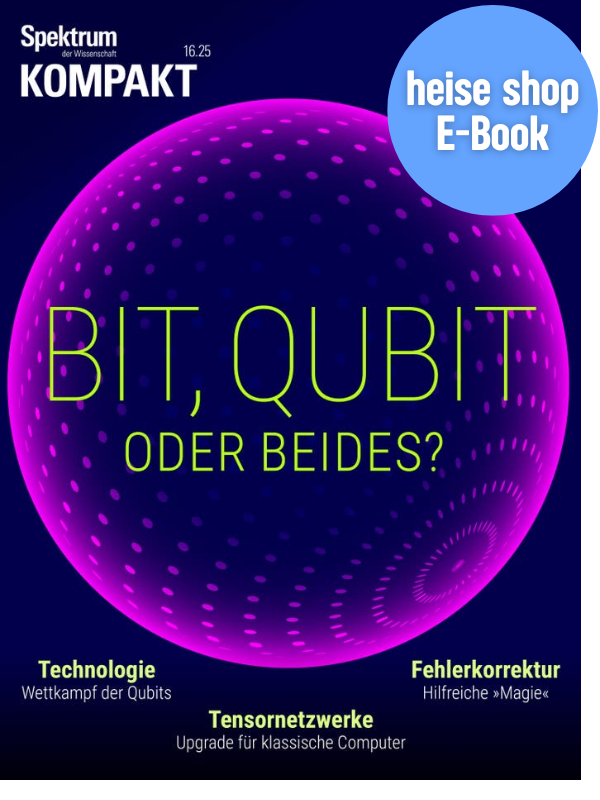
Bit, Qubit oder beides? (Spektrum Kompakt)
Wann werden Quantencomputer einen klaren und praktischen Vorteil gegenüber klassischen Computern haben? Immer wieder versuchen Forschungsgruppen, Aufgaben zu finden, die sich mit einem quantenmechanischen System deutlich schneller lösen lassen als mit einem auf Bits und Bytes basierenden Rechner. Doch die Suche gleicht einem Kopf-an-Kopf-Rennen: Kaum scheinen die Quanten die Nase vorn zu haben, ziehen die klassischen Algorithmen wieder nach. Am Leibniz-Rechenzentrum in Garching bei München geht man deswegen einen anderen Weg. Die Forschenden dort verbinden Supercomputer und Quantenrechner einfach zu einem Hybridsystem und erhalten so das Beste aus beiden Welten. Spannend bleibt auch die Frage, welche Qubit-Technologie sich am Ende durchsetzen wird: supraleitende Schaltkreise neutrale Atome Ionenfallen oder doch etwas ganz anderes? Wir stellen die vielversprechendsten Ansätze mit all ihren Vor- und Nachteilen vor. Und dann geht es auch noch um Magie — aber anders, als Sie jetzt vielleicht denken. Inhalt dieser Ausgabe:Technologische Entwicklung | Wettkampf der Qubits Negative Wahrscheinlichkeiten | »Magie« in Qubits Vielteilchenphysik | Ein Maß für die Nützlichkeit eines Quantencomputers Zusätzliche Dimensionen | Qudits statt Qubits? Quanten-Supercomputer | Das Beste aus zwei Welten Tensornetzwerke | Klassische Computer schlagen zurück

Daten- und Informationsqualität (6. Auflg.)
Dieses Buch war das erste deutsche Buch zum Thema Daten- und Informationsqualität und ist mittlerweile ein Klassiker. Es wurde für die sechste Auflage um neue Inhalte erweitert, aktualisiert und an zahlreichen Stellen überarbeitet. Von Wissenschaftlern und Praktikern geschrieben, präsentiert es den aktuellen Stand aus Forschung und Anwendung und ist somit ein Muss für alle IT-Profis.Zum Inhalt: Informationsqualität Grundlagen Methoden Techniken Management Tools Prozessmodelle Organisation Data Governance Praxisbeispiele PROF. DR. KNUT HILDEBRAND war als Hochschullehrer an der Hochschule Weihenstephan-Triesdorf mit dem Forschungsschwerpunkt Stammdatenqualität und Stammdatenmanagement tätig. Zudem war er Mitglied der Gesellschaft für Informations- und Datenqualität e.V. (DGIQ).DR. MARCUS GEBAUER ist Leiter IT, Digitalisierung und Datenmanagement bei der Mitegro GmbH & Co.KG. Er war Gründungsmitglied und Vorsitzender des Vorstands der Deutschen Gesellschaft für Informations- und Datenqualität e.V. (DGIQ).PROF. MICHAEL MIELKE lehrt Data Science an der FH Kiel und der FOM und ist als Autor für die DIN ISO 8000 tätig. Ferner war er Gründungsmitglied und Präsident der Deutschen Gesellschaft für Informations- und Datenqualität e.V.

Magical Haskell
Discover a unique and fun approach to adopting modern typed functions programming patterns. This book uses playful metaphors and examples to help you learn Haskell through imagination, building on math without relying on imperative crutches or technical complexity. You’ll use math to build completely different Typed Functional patterns from the ground up and understand the link between building Mathematics through Types and constructing Haskell as a programming language.Intended for working with various applications, especially AI-powered apps, the book gently builds up to what are normally considered complex and difficult concepts all without needing a PhD to understand them. Illustrative explanations will guide you to tackle monads, using monad transformer stacks to structure real programs, foldable and traversable structures, as well as other Type classes. This book will also help you structure programs efficiently and apply your own abstractions to real-life problem domains. Next, you’ll explore exciting advancements in AI, including building with OpenAI APIs, creating a terminal chatbot, adding web functionality, and enhancing with retrieval-augmented generation. Finally, you’ll delve into AI multi-agents and future directions using Arrows abstraction, reinforcing Haskell’s design._Magical Haskell_ is a solution for programmers who feel limited by imperative programming languages but are also put off by excessively mathematical approaches.WHAT YOU WILL LEARN* Grasp a solid math foundation without complex technicalities for Types and Typeclasses.* Solve problems via a typed functional approach and understand why it’s superior to what’s available in the imperative language world (“if it compiles, it runs”).* Build your own abstractions to efficiently resolve problems in any given domain.* Develop AI frameworks in Haskell, including chatbots, web functionality, and retrieval-augmented generation.WHO THIS BOOK IS FORHaskell programmers of all levels and those interested in Type Theory.ANTON ANTICH is a serial entrepreneur and AI/Type Theory researcher, who majored initially in physics. In various executive roles, he was instrumental in building Veeam Software from 0 to over 1B USD in annual sales in under ten years – making Veeam the fastest-growing European company ever. Upon exiting Veeam, he invested in and helped scale over 20 startups and in the recent years got back to the roots and is currently building Integrail (https:// integrail.ai) – a no-code Agentic AI platform. Haskell has been an integral part of many of the projects undertaken during Anton’s tenure, and his current startup will use it as an optional backend for AI multi-agent execution..Chapter 1: Wizards, Types, and Functions.- Chapter 2: Type Constructions.- Chapter 3: Very Gentle Type Theory and Category Theory Introduction.- Chapter 4: Basic Typeclasses or “Show me a Monoid”.- Chapter 5: Functor, Bifunctor and Applicative Functor Enter an Elevator.- Chapter 6: O Monad, Help me Compose.- Chapter 7: Input, Transformer Stack, Output.- Chapter 8: Blackjack - Full Haskell Program.- Chapter 9: Let’s AI.- Chapter 10: Terminal AI Chatbot.- Chapter 11: Web-enabled AI Framework.- Chapter 12: Adding RAG (Retrieval Augmented Generation).- Chapter 13: AI Multi-Agents and the Future.

Metaverse-Based Digital Twins
THE BOOK SERVES AS AN ESSENTIAL RESOURCE THAT EXAMINES THE TRANSFORMATIVE POTENTIAL OF THE METAVERSE AND DIGITAL TWIN TECHNOLOGY, HIGHLIGHTING THEIR ROLE IN REVOLUTIONIZING PATIENT CARE.Metaverse-Based Digital Twins: Specialized Healthcare Applications is a comprehensive guide providing knowledge of the metaverse and digital twin concepts and their potential applications in several healthcare domains. The metaverse is an emerging technology that could facilitate the exploration of innovative approaches to patient care and foster their advancement. The novel metaverse-driven digital twin is a cutting-edge instrument for enhancing medical treatment. The Metaverse facilitates sophisticated and improved medical procedures through patient appointments and examinations using augmented reality (AR) and virtual reality (VR) technologies, avatar-based treatment of patients, and use in surgical clinics. This volume will provide an innovative and pioneering exploration of the most recent advancements in metaverse-based digital technology and its implications across multiple domains within the healthcare industry for students pursuing medicine and engineering and established professionals looking to innovate in these fields. Readers will find this book:* Explores recent progress in healthcare administration using Metaverse-based digital twin technology that enables new discoveries in the healthcare industry;* Introduces innovative technology that can effectively tackle the diverse challenges faced in the pharmaceutical and healthcare industries;* Offers a thorough account of current advancements in technology and their ethical and equitable application in the healthcare industry.AUDIENCEComputer scientists, engineers, research scholars, medical practitioners, students, and healthcare managers working with computer interfaces to improve patient care. RISHABHA MALVIYA, PHD, is an associate professor in the Department of Pharmacy in the School of Medical and Allied Sciences, Galgotias University with over 13 years of experience. He has published 58 books and over 150 research papers for national and international journals and serves as an editorial board member and reviewer for over 40 journals. He has also been granted over 20 international patents and has an additional 40 under review. His research interests include formulation optimization, nanoformulation, targeted drug delivery, artificial intelligence in healthcare, localized drug delivery, and characterization of natural polymers as pharmaceutical excipients. SHIVAM RAJPUT is an assistant professor at the IITM College of Pharmacy, Sonipat, Hariyana. He has published three books, eight articles in international journals, and one patent and presented papers at over ten international conferences. His research interests include nanoformulations, cancer nanomedicine, and green nanotechnology for therapeutic applications.

Tiny Machine Learning Quickstart
Be a part of the Tiny Machine Learning (TinyML) revolution in the ever-growing world of IoT. This book examines the concepts, workflows, and tools needed to make your projects smarter, all within the Arduino platform.You’ll start by exploring Machine learning in the context of embedded, resource-constrained devices as opposed to your powerful, gigabyte-RAM computer. You’ll review the unique challenges it poses, but also the limitless possibilities it opens. Next, you’ll work through nine projects that encompass different data types (tabular, time series, audio and images) and tasks (classification and regression). Each project comes with tips and tricks to collect, load, plot and analyse each type of data.Throughout the book, you’ll apply three different approaches to TinyML: traditional algorithms (Decision Tree, Logistic Regression, SVM), Edge Impulse (a no-code online tools), and TensorFlow for Microcontrollers. Each has its strengths and weaknesses, and you will learn how to choose the most appropriate for your use case. _TinyML Quickstart_ will provide a solid reference for all your future projects with minimal cost and effort.WHAT YOU WILL LEARN* Navigate embedded ML challenges* Integrate Python with Arduino for seamless data processing* Implement ML algorithms* Harness the power of Tensorflow for artificial neural networks* Leverage no-code tools like Edge Impulse* Execute real-world projectsWHO THIS BOOK IS FORElectronics hobbyists and developers with a basic understanding of Tensorflow, ML in Python, and Arduino-based programming looking to apply that knowledge with microcontrollers. Previous experience with C++ is helpful but not required.SIMONE SALERNO has been tinkering with microcontrollers for nearly 10 years and is committed to bringing his knowledge of software engineering to the world of Arduino programming. With the advent of Tensorflow for Microcontrollers he began developing leaner, faster alternatives to neural networks for microcontrollers and started porting many traditional ML algorithms such as Decision Tree, Random Forest, and Logistic Regression from Python to self-contained, hardware-independent C++, ready to be deployed to any microcontroller. Today, he continues to focus on the development of TinyML tools and tutorials with his low-code libraries and no-code online platforms like Edge Impulse.Chapter 1: Introduction to Tiny Machine Learning.- Chapter 2: Tabular data classification.- Chapter 3: Tabular data regression.- Chapter 4: Time series classification with Edge Impulse.- Chapter 5: Time series classification without Edge Impulse.- Chapter 6: Audio Wake Word detection with Edge Impulse.- Chapter 7: Object detection with Edge Impulse.- Chapter 8: TensorFlow for Microcontrollers from scratch.

Inclusive By Design
DISCOVER HOW TO INCORPORATE DEI PRINCIPLES INTO YOUR EVERYDAY LIFE AND ENVIRONMENTIn Inclusive By Design: Crafting Products and Services for a More Equitable World, diversity, equity, and inclusion (DEI) strategist and designer Mathieu Aguesse delivers a powerful and practical new playbook for equitable design. He walks you through the concepts and practices that will help you integrate your DEI goals into your community and workplace. You'll learn about the principles that undergird inclusive design, how to apply them in real-world scenarios—from the drawing room to the classroom and boardroom—and how to advocate for systemic change within your environment. You'll also discover:* Engaging case studies that span a wide range of sectors and demographics* Actionable insights and methodologies tailored to help you apply the concepts discussed in the book* Strategies for intentional design that can influence, enhance, and benefit society by implementing DEI principles into everyday practicesPerfect for design professionals, educators, strategists, and corporate and business leaders seeking realistic techniques for incorporating DEI into the real-world, Inclusive By Design is also an essential read for DEI professionals looking for on-the-ground guidance on how to improve the world around them. MATHIEU AGUESSE is an award-winning lecturer at UC Berkeley and MIT, where his groundbreaking courses on Inclusive and Equitable Design have inspired the next generation of leaders and innovators. As a global expert, Mathieu has worked across continents, partnering with hundreds of companies to shape strategies and products that drive sustainability, inclusivity, and societal impact. Renowned for his ability to bridge corporate strategy with pressing global challenges, he has developed multiple design frameworks that leverage Design as a powerful tool to tackle the most urgent issues of our time. He started a company in Silicon Valley in 2018 and as the CEO of Schoolab his work continues to redefine how businesses and institutions can create a more inclusive and equitable world. Introduction xxiCHAPTER 1 THE FUNDAMENTALS OF INCLUSIVE DESIGN 1Understanding Inclusivity in Design 2Solutions Lie with the Problem Creators 3We All Have the Ability to Make a Difference 4The Power of Design and Intention 7The Importance of Diversity, Equity, and Inclusion 9The Immediate Benefits of DEI for Organizations 12Broadening the Audience 15Mitigating Reputational Risks 16Enhancing Business Resilience 17Creating a Competitive Advantage in the Market 17The Long-Term Risks of Growing Inequality: A Path to Societal Collapse 18Historical Lessons on Inequality and Collapse 18The Fall of the Roman Empire 19The French Revolution (1789– 1799) 19The Arab Spring (2010– 2012) 19The Importance of Addressing Inequality to Prevent Societal Collapse in the Context of Climate Change 20Why Design? 21The Foundational Role of Design in Tackling DEI Challenges 21Design as the Beginning of All Creation 22The Pervasiveness of Design 22The Storytelling Power of Design 22Systems Thinking 23Multidisciplinary Integration 24Creating Meaningful Change Through Design 26The Ripple Effect of Intentional Design 26Design as a Personal and Professional Tool 26The Collaborative Nature of Design 27Simplification and Systemic Challenges 27Restless Testing and Feedback Integration 27Diversity of Perspective 28Creating Safe and Inclusive Spaces 28Historical Context and Evolution of Inclusive Design 29Early Beginnings: Universal Design 29The Disability Rights Movement 30Design for All in Europe 31Technological Advancements and Digital Inclusion 32Human-Centered Design 32Modern Inclusive Design 33Notes 33CHAPTER 2 THE INCLUSIVE DESIGN MINDSET 37Developing an Inclusive Lens in Everyday Life 38Understanding Your Role as a Citizen and a Consumer 39Justice and Liberty for All 39Vote with Your Wallet 40Mastering Essential DEI Concepts 42Embracing Diversity’s Full Spectrum 44Transcending Politics: Equality and Inclusive Design 47Understanding Equality Through Wealth Distribution 48Inclusive and Equitable Design Beyond Politics 49A Universal Aspiration and a Strategic Imperative 50Overcoming Bias Through Design 51The Implicit Bias in Generative AI: A Personal Exploration 51Understanding Bias: A Double-Edged Sword 56The Nature and Function of Biases 57The Benefits of Biases 57The Pitfalls of Biases 58Experiments Highlighting Biases 58Biases in Action: The Four-Cards Exercise 59Addressing Biases for Greater Inclusion 60Conclusion 61Beyond Empathy—The Role of Vulnerability 61The Power of Vulnerability to Accelerate Transitions 61Overcoming the Pressure of “What Will People Think?” 63Vulnerability in Leadership 63Vulnerability and Resilience 64A New Norm to Embrace 64A Common Ground for Generations 64Conclusion 65CHAPTER 3 THE IMPORTANCE OF CREATING A NEW NARRATIVE FOR OUR SOCIETY 65The Need for a New Narrative 66Redefining Success: A Personal Journey Toward a New Narrative 67Promoting Visibility of Diversity in Influential Media 68Conclusion 69Notes 70Systempathy—or How to Empathize with People and the System They Live In 71From Intention to Impact: The Systemic Approach to Inclusive Design 72Systemic Thinking: The Foundation of Inclusive Design 72The Inclusive Benefit Matrix 74Universal Design 76Personalized Design 77Reducing Disadvantage 78Empowering Communities 79Connecting the Dots: The Systemic Impact of Inclusive Design 79Defining the Problem: The Foundation of Successful Design 80The Role of Empathy in Inclusive Design 81Understanding Empathy in Design 81The Broader Impact of Empathy 83Essential Tools for Assessing Needs and Challenges 83Anthropology and Ethnography in Design 84Be an Investigator, Not a Judge 85Inclusive Design and the Power of Status 89The Weight of the Past in Inclusive and Equitable Design 91Avoiding Stigmatization in Inclusive Design 95Notes 97CHAPTER 4 STRATEGIES TO CRAFT MORE EQUITABLE SOLUTIONS 99Shifting Perspectives: Reframing to Find Hidden Solutions 100From Pills to Pots: A Case of Problem Reframing in Design 100Framing the Challenge Helps Reduce Biases 102Scaling Perspectives: The Ladder Exercise for Creative Problem Solving 103From Milkshakes to Remittances: Applying “Jobs to Be Done” in Design 106Being Creative—A Pragmatic Exercise 109Finding Solutions in Plain Sight: A Side-Step Approach to Inclusion 109Borrowing the Best: How Cross-Industry Solutions Elevate Inclusive Design 112Four Ways to Make a Difference—The Solution Matrix 115Courageous Conversations: Unlocking Equity in Design and Innovation 117Uncomfortable Conversation with an Equitable Designer 117Brave Conversations for Lasting Change: A Partnership to Empower Black Founders 119Breaking Taboos: Navigating Sensitive Conversations in FemTech Data Security 121Notes 123CHAPTER 5 INCLUSIVE DESIGN IN DIGITAL AND PHYSICAL SPACES 125Think Beyond the Product, Look at the Experience 126Designing for True Inclusion: Addressing Every Touchpoint to Build Equitable Experiences 127Rethinking Shampoo: How Sensory Design Can Break Barriers and Promote Inclusivity 130Inclusive by Design: Starting from the Beginning 131Breaking Barriers: How Thoughtful Onboarding and Distribution Create More Inclusive Access 134The Power of Interfaces: Connecting People Through Thoughtful Design 135Empowering Communities: How Companies Can Redefine Their Role in Society 138Putting Your Product’s Strength at the Service of a Cause 138Leveraging Strengths for Greater Impact: The Writing Assistant and Team Collaboration Platform Projects 140Finding Places to Share the Power to Uplift Underserved Communities 141Introducing Technology at the Same Pace to Avoid Deepening the Gap 142Equitable Deployment of Technology: The Electric School Bus Project 144Bridging the Digital Divide for Small Businesses: The Virtual Assistant Project 145Transforming Technology: The Essential Role of Hardware and Software in Inclusive Design 146Objective: Designing for Cognitive Inclusion 147Bridging the Digital Divide: Integrating Hardware and Software for Inclusive Innovation 148The Challenge: Accessibility Beyond the Screen 149The Solution: Integrating Hardware and Software for Inclusive Design 149The Importance of Ecosystems in Inclusive Innovation 150Notes 150CHAPTER 6 DESIGNING FOR, WITH, AND BY COMMUNITIES 151Community Engagement in All Degrees 152Engaging with Communities: A Powerful Starting Point 154Three Levels of Community Engagement in Design 156Designing for Communities 156Designing with Communities 158Designing by Communities 159Different Paths to Inclusion: Stories of Designing for, with, and by Communities 160Designing for Communities: The World-Renowned OXO Peeler 160Designing with Communities: A Neurodiverse-Friendly Productivity Suite 161Designing by Communities: Empowering Small Business Owners 163Bringing Voices to the Table: The Power and Challenges of True Representation 164Demystifying Community Outreach: Embracing Vulnerability to Build Trust 166The Prototyping Strategy: Making Every Moment Count 167Seeing Through Their Eyes: Using Photo-Elicitation for Deeper Community Insight 169From Overlooked Details to Design Inspiration: Immersing in User Realities 170Accessing Inaccessible Communities 172Ask Local Experts 173Leverage Netnography to Uncover Unique Insights 173Explore Analogous Situations 174Try to Create a Living Lab 174Ethical Considerations and Power Dynamics in Equitable Design 175Transparency and Building Trust 175Inclusion Beyond the Loudest Voices 177Ethical Compensation Without Creating Imbalances 177Bridging Cultural and Social Gaps 178Shared Ownership and Empowerment 178Notes 179CHAPTER 7 IMPLEMENTING INCLUSIVE SOLUTIONS AND THE BUSINESS CASES BEHIND THEM 181Business Cases: Four Ways to Make the Investment Count 182Product Inclusion as a Growth Driver 182From Corporations to SMEs: Expanding Reach with Scalable Solutions 183Inclusive Banking: Expanding Reach and Revenue Through Better Design 183Strengthening Customer Loyalty Through Inclusive Branding 185Expanding Social Media Reach with Inclusive Features 186Expanding the Pool of Partners, Talent, and Stakeholders 188Leveling the Playing Field for Startup Success 188Unlocking Workforce Potential Through Inclusive Job Design 189Rethinking Recruitment: Expanding Talent Pools for Growth 190Redefining Industry Standards to Stand Out 191Setting the Benchmark for Seamless Authentication 192Making Accessibility Mainstream: Panasonic’s Industry-Leading Approach 194Beyond Syntax: Redefining Writing Tools for Inclusive Impact 195Breaking the Mold: A New Approach to Streamlined Content Selection 196Transforming a Commodity: How Inclusive Design Can Revitalize a Notebook Brand 197Minimizing Reputational Risk with Inclusive Design Strategies 199Empowering Consumers Through Ethical Transparency 199The Risks of Overlooking Data Privacy in Sensitive Markets 200Addressing AI Bias to Prevent Reputational Damage 201Steps to Implementation 202Defining a Testing Strategy 202Making Testing Count: A Deep Dive into User Feedback 204Adapting to Company Timelines While Staying Agile 206Aligning Teams for Inclusive Design Implementation 207Notes 208CHAPTER 8 SCALING UP: FROM LOCAL INITIATIVES TO GLOBAL IMPACT 211Orchestrating Change 212Leading with Vulnerability: The Key to Scaling Inclusive Design 212Meet Them Where They Are 213Sometimes a Little Nudge Goes a Long Way 215Aligning Incentives: Building Accountability and Engagement for Inclusive Growth 215Supplier Diversity 219Practical Metrics for Measuring Impact: Ensuring Tangible Outcomes in Inclusive and Equitable Design 220Identifying Easy-to-Measure Metrics 221Long-Term Metrics: Guiding Systemic Change in Inclusive and Equitable Design 229CHAPTER 9 LOCAL VS. GLOBAL AND THE REPLICABILITY PUZZLE 230Focus on Mechanisms, Not Just Contexts 230Adapt to Local Distribution Channels 232Scaling and Additionality 232The Nike Hijab Example 233A Recipe for Scaling 234Prove the Success with Documented Metrics 234Attract Funds and Important Support to Grow 235Work with Community Partners and Users to Build Credibility and Scale 236The Speed Dilemma 237Be Ready for the Unexpected 238Navigating the Challenges of Equity in a Changing World 238Notes 240The Next Generation’s Power: Rethinking Inclusion for a New Era 241The DEI Reckoning: What Went Wrong? 241A Movement That Lost Its Way 242The Real Story Behind the Backlash: Disillusionment, Not Rejection 243The Next Generation and the Crisis They Will Inherit 244Inclusive Design as the Next Phase of Real Change 246The Danger of Monolithic Thinking: Teaching People to Think Independently 248The Next Generation’s Awakening: Recognizing Their Influence in the Corporate World 249From Performative Change to Embedded Inclusion: The Next Chapter 252Notes 252CHAPTER 10 THE FUTURE OF INCLUSIVE DESIGN 255Future Modeling and the Decolonization of Futures 256Decolonizing the Future 257The Role of Design Fiction in Future Modeling 257Why Future Modeling Matters for Inclusion 258Exploring Future Scenarios for Inclusive Design 259The Commons Economy: Cooperative Ownership as the New Standard 259AI as the Ethical Guardian: Bias-Free Decision-Making or Algorithmic Control? 260A Day in This Future 260Switches That Enable This Future 261Critical Question 261Neo-Tribalism: The Fragmentation of Society into Micro-Identities 261A Day in This Future 261Switches That Enable This Future 261Critical Question 262The Post-Diversity Workplace: Hiring for Adaptability, Not Identity 262A Day in This Future 262Switches That Enable This Future 262Critical Question 263The Resilience Index: Measuring Inclusion Like We Measure Carbon 263A Day in This Future 263Switches That Enable This Future 263Critical Question 264How Leaders, Decision-Makers, and Designers Should Use These Scenarios 264Transitioning to Measuring Inclusion—Lessons from Sustainability 266Distributivity: Measuring How Value Is Shared 268How to Measure Distributivity 269Applying Distributivity to the Digital Inclusion for Unbanked Citizens Initiative 270Expanding the Impact Through Distributivity 270Measuring Distributivity: Practical Approaches 271A Simple Formula for Distributivity 272Advanced Methods for Measuring Distributivity 272Additionality: Ensuring True Impact Rather than Displacement 275How to Measure Additionality 276Applying Additionality to a Real-World Example 276Measuring Additionality: Practical Approaches 277Why Additionality Matters 279The Dual Framework: Using Distributivity and Additionality Together 279Why One Metric Alone Is Not Enough 279The Conceptual Matrix 280Real-World Applications 280A Future-Proof Approach to Inclusive Design 280Why Inclusive Design Is the Best Future Strategy 281The Role of Governments, Businesses, and Communities 281A Call to Action: Moving from Reactive to Proactive Approaches 282Conclusion: Designing a Just and Equitable Future 282Notes 283Index 285

Die Geheimnisse von Monkey Island (2. Auflg.)
Die 2., aktualisierte und erweiterte Auflage aus dem April 2025.“Die Geheimnisse von Monkey Island – Auf Kapertour mit Pixel-Piraten!” ist eine Hommage an die Abenteuer von Guybrush Threepwood ™, mächtiger Pirat. Aber es möchte Ihnen auch in vielen Details schildern, wie Monkey Island durch seine einzigartige Erzählkunst zum Meilenstein der Videospielgeschichte wurde. Darüber hinaus bietet es die Gelegenheit, auf die turbulente Historie von LucasArts und Telltale Games zurückzublicken, Rezepte für Voodoo-Grog zu entdecken, interaktive Piratenreggae-Songs zu lernen, auf einer mondänen Party unter 40-jährigen Geeks zu glänzen und Sprüche zu erkunden, die so scharf wie ein Entermesser sind (nützlich für Duelle oder Geburtstagsfeiern).“Macht, was ihr wollt, aber macht coole Sachen!” – George Lucas am 1. Mai 1982.Das war das einzige Ziel, das George Lucas seinen zwanzig jungen, ehrgeizigen, lustigen und schlecht frisierten Game-Designern als Rahmen für die Entwicklung von eigenen Computerspielen setzte. Lucasfilm Games ™ und später LucasArts ™ wurde in der Folgezeit zu einer legendären Spieleschmiede, auch durch die Veröffentlichung von The Secret of Monkey Island ™ im Jahr 1990. Das bekannteste Point’n’Click-Adventure verdankt seinen legendären Ruf seiner herrlich anachronistischen Welt voller bunter Piraten und seinem von Monty Python inspirierten Humor, aber auch schlicht und einfach der Tatsache, dass es ein komplettes Genre revolutioniert hat.Diese überarbeitete Edition enthält zwei neue Bonuskapitel, 36 zusätzliche Bildseiten sowie jede Menge neue Anekdoten und Trivia, die selbst dem Papagei schwindlig machen. Und natürlich kommt auch diese Auflage wieder ganz ohne Grog-Flecken.Aus dem Inhalt: Vorwort von Larry Ahern™: Mäandern auf der Affeninsel Prolog: Das Abenteuer laut LucasArts ™ Einleitung Kapitel 1: Lucasfilm Games ™ Kapitel 2: Von der interaktiven Erzählung zu Point&Click ™ Kapitel 3: Spielmotor SCUMM ™ Kapitel 4: Neuerfindung des Adventures ™ Kapitel 5: The Secret of Monkey Island ™ Kapitel 6: Von Lucasfilm Games ™ zu LucasArts ™ Kapitel 7: Monkey Island 2: LeChuck’s Revenge ™ Kapitel 8: iMUSE™! Interaktive Reggae-Musik, Mann! Kapitel 9: Das Ende einer Ära ™ Kapitel 10: The Curse of Monkey Island ™ Kapitel 11: Curse of Monkey Island: Der Film ™ Kapitel 12: Escape from Monkey Island ™ Kapitel 13: Das Adventure-Game ist tot! ™ Kapitel 14: Telltale Games ™ Kapitel 15: Tales of Monkey Island ™ Kapitel 16: Monkey Island Special Edition ™ Kapitel 17: Leben und Sterben von LucasArts ™ Kapitel 18: Die Geheimnisse von Monkey Island ™ Kapitel 19: Das Erbe von Monkey Island ™ Kapitel 20: Ron Gilbert vs. Disney ™ Kapitel 21: Return to Monkey Island ™ Kapitel 22: Zutritt nur für Mitarbeiter! ™ Anhang 1: Beleidigungsduell Anhang 2: Mojo-Credits Anhang 3: LucasArts-Klassiker Anhang 4: Plank of Love

Combining Expert Knowledge and Deep Learning with Case-Based Reasoning for Predictive Maintenance
If a manufacturing company's main goal is to sell products profitably, protecting production systems from defects is essential and has led to vast documentation and expert knowledge. Industry 4.0 has facilitated access to sensor and operational data across the shop floor, enabling data-driven models that detect faults and predict failures, which are crucial for predictive maintenance to minimize unplanned downtimes and costs. Commonly, a universally applicable machine learning (ML) approach is used without explicitly integrating prior knowledge from sources beyond training data, risking incorrect rediscovery or neglecting already existing knowledge. Integrating expert knowledge with ML can address the scarcity of failure examples and avoid the learning of spurious correlations, though it poses technical challenges when combining Semantic Web-based knowledge graphs with neural networks (NNs) for time series data.For his research, a physical smart factory model with condition monitoring sensors and a knowledge graph was developed. This setup generated the required data for exploring the integration of expert knowledge with (Siamese) NNs for similarity-based fault detection, anomaly detection, and automation of root cause analysis. Patrick Klein applied symbolic and sub-symbolic AI techniques, demonstrating that integrating expert knowledge with NNs enhances prediction performance and confidence in them while reducing the number of learnable parameters and failure examples.Patrick Klein worked as a research assistant at the University of Trier and also briefly in part-time for the Trier branch of the German Research Center for Artificial Intelligence (DFKI) while conducting his doctoral research at the University's Internet of Things Laboratory, focusing on combining expert knowledge with deep learning for predictive maintenance. After completing his PhD thesis, he joined the Predictive Service Center in the R&D department of the technology and global market leader in machine tools, as a Data Scientist/Engineer, developing data-driven solutions for predictive maintenance.Introduction.- Foundations.- Data Generation for AI-based Predictive Maintenance Research.- Semantic Description of a Factory Simulation Environment.- Problem Definition and Introduction of Developed Constructs Used Across Application Scenarios.- Combining a Deep Anomaly Detection with a Semantic Knowledge Graph for Diagnosis.- Infusing Expert Knowledge into a Siamese Neural Network for Encoding Time Series.- Conclusion.

Big Fat Notebook - Alles, was du für Informatik brauchst
Keine Lust auf Informatik? Damit ist jetzt Schluss. Hier kommt dein Starter-Kit fürs Programmieren! Für bessere Noten und den vollen Durchblick! Erfahre alles über ... ... Computersysteme ... Datenanalyse ... Bugs ... Bits und Bytes ... Softwareentwicklung ... Malware ... Algorithmen ... Programmierregeln ... Scratch ... Python ... Webentwicklung, HTML, CSS und vieles mehr. Mit Definitionen, Lerntipps, Übungsseiten, Lösungen und Doodles. Umfassendes Nachschlagewerk und Übungsbuch in Informatik und Programmieren für Schüler*innen bis hin zu Studierenden. Optimal geeignet zur Vertiefung und Auffrischung oder zum Einstieg ins Programmieren und zur Vorbereitung auf Tests. Die außergewöhnliche Gestaltung mit Scribbles und Cartoons sowie witzige Kommentare sorgen für Auflockerung. Nach jedem Kapitel folgt ein Wissensquiz, Multiple-Choice-Test oder ein Lückentext zur Lernkontrolle.

Quantum Leap
Develop a comprehensive understanding of the evolving landscape of digital trade and finance, including the historical context and the transformative impact of technological innovations on traditional practices. This book charts the relentless march of digitalization within these sectors, highlighting how technological innovations have transformed traditional practices that have stood the test of time.After a detailed historical overview, the narrative then delves into an array of recent experiments within the digital trade and finance realms, some of which have unfortunately faltered, offering valuable lessons on the challenges and pitfalls of implementing new technologies. These case studies serve not only as cautionary tales but also as springboards for innovation, illustrating the critical need for adaptability and careful strategic planning in the face of digital evolution.A significant focus of the book is on the concept of Regenerative Finance (ReFi) applied to international trade and trade finance. This emerging paradigm, aimed at restoring and revitalizing ecosystems and communities through financial practices, is presented as a revolutionary goal for the future of trade. By leveraging the power of digital tools and smart markets, ReFi promises to drive sustainability and resilience within global trade systems, aligning economic activities with ecological and social well-being.The book culminates in an exploration of the rise of smart markets—highly efficient, transparent, and participatory trading ecosystems enabled by cutting-edge technologies like blockchain, artificial intelligence, and the Internet of Things (IoT). These digital platforms are redefining the parameters of trade and finance, making transactions faster, safer, and more inclusive. _Quantum Leap_ provides a thorough understanding of the current state of digital trade and finance and offers a visionary outlook on how these sectors can evolve towards more sustainable and regenerative practices.WHAT YOU WILL LEARN* Gain a global perspective on digital trade and finance, understanding the implications for diverse stakeholders including industry professionals, policymakers, and academics, and recognizing the interconnectedness of global trade systems.* Evaluate the role of digital trade and finance in driving sustainability and social impact, exploring ways in which these sectors can contribute to ecological and social well-being, and promoting equitable and sustainable practices.* Reflect on ethical considerations in digital trade and finance, including issues of privacy, security, and equity, and cultivate responsible leadership skills for promoting ethical practices and driving positive change in the industry.* Explore innovative approaches to trade and finance, and envision the future trajectory of these sectors, recognizing the potential for transformative change driven by digital technologies.WHO THIS BOOK IS FORWritten for a diverse audience, from newbies to industry and IT professionalsANDREA FROSININI is a seasoned Trade Finance and Business Development professional, deeply rooted in the quest for innovation and progress within the industry. His career journey has been marked by a continuous pursuit of excellence and an eagerness to embrace and drive change. Recently, he took an exciting leap by joining the Hyperledger community. This strategic move aligns with his commitment to contribute to the modernization of the trade finance sector.Andrea particularly focused on harnessing the potential of blockchain technology. This passion lies in exploring and developing new products that leverage these cutting-edge technologies. He believes that blockchain and DLTs hold the key to unlocking unprecedented efficiency, transparency, and security in trade finance processes. As a professional, Andrea brings to the table a wealth of experience and a keen insight into the complexities of trade finance. He’s driven by the challenge of integrating traditional financial systems with innovative digital solutions, aiming to revolutionize how trade finance operates.VENU BORRA is a passionate and skilled technical architect with expertise in analysis, architecture and development of solutions using Blockchain, Distributed Computing, Artificial Intelligence, Smart Contracts and Digital Assets, IoT. He brings a wealth of insightful experience to the table, navigating the intricate landscapes of DLTs and Blockchain technologies across diverse sectors including Fintech, Trade Finance, Supply chain, Agri-tech, and Health care. Fluent in an array of programming languages such as Solidity, Go-lang, Python, and more, Venu Borra possesses a versatile technical skill set encompassing AI, ML, IoT integration, and DLT.With a career marked by proficiency in analysis, architecture, and solution development, he stands at the forefront of innovation, championing the principles of Self-Sovereign Identity (SSI) and Zero Knowledge. Beyond technical prowess, Venu excels in bridging the gap between business requirements and technical solutions. With a keen focus on collaboration and innovation, Venu fosters a culture of excellence within teams, motivating individuals to surpass corporate objectives and achieve collective goals. Through strategic leadership and a commitment to excellence, he continues to shape the future of blockchain technology.Chapter 1: Gateway to Global Commerce: Unlocking the Secrets of Trade and Supply Chain Finance.- Chapter 2: Letters of Credit: The Lifeline of Global Trade.- Chapter 3: Cashing In on the Opportunity: The Dynamic World of Receivables Finance.- Chapter 4: The Interplay Between Banks and Stakeholders in Trade Finance.- Chapter 5: Empowering SMEs in Trade & Supply Chain Finance.- Chapter 6: Unlocking Value: The Potential of Deep-Tier Supply Chain Finance (DTSCF).- Chapter 7: Merging the Seas: The Imperative of Digital Transformation and Legal and Regulatory Reform.- Chapter 8: Bits, Bytes, and Legal Bites: Navigating the Digital Frontier of Trade Law and Practice.- Chapter 9: Blockchain Breakthrough: Rewiring Trade Finance for the Digital Age.- Chapter 10: Rising Titans, Falling Empires: The Epic Saga of Trade Finance Consortia in the Digital Age.- Chapter 11: Shaping Tomorrow's Markets: The Future of Trade Finance Through Innovations.- Chapter 12: Achieving Financing Resilience and Influence on Trade Finance through DORA.- Chapter 13: Navigating the New Normal: Reinventing Trade Finance with Blockchain, AI, and IoT in a Zero-Trust Era.- Chapter 14: Credit Revolution: The Tokenization Tidal Wave in Global Trade.- Chapter 15: The Nexus of Trade, Environment, and Sustainable Development.- Chapter 16: Pioneering Greener Trade: Practices and Innovations in Sustainable Finance.- Chapter 17: Thriving Together: A Regenerative Power for Small and Mighty Businesses.- Chapter 18: Data-Driven Dynamics: Linking Real-World Insights to Trade FinanceChapter 19: Afterword: Digital Trade as an evolved Digital Governance.

Cybersecurity for Everyone
In a world where cyber threats are growing exponentially in number and complexity, it’s time to ask the tough question: What are we doing wrong? We’ve been tackling cybersecurity the same way for years, yet the bad actors continue to stay ahead. Financial losses mount, and the talent gap in the cybersecurity industry remains a persistent challenge. It’s time to break the cycle.This book takes a bold, fresh look at cybersecurity by shifting the focus away from the technical jargon and putting the spotlight on the people who matter most—you. Whether you’re a student, a professional, a parent, or a business leader, this book is designed to help you understand cybersecurity’s role in everyday life and how you can make a difference. From the classroom to the boardroom, there’s a shared responsibility in keeping our digital world safe.Unlike traditional cybersecurity books filled with complex terminology and tech-heavy concepts, this book humanizes the topic. It provides practical, real-world solutions for protecting yourself, your family, your workplace, and your community. You’ll learn not just the how but also the why—why cybersecurity matters and why it's a people-first issue that concerns all of us, regardless of our background or profession.Whether you’re just starting your cybersecurity journey or you're looking to build a security-first culture within your organization, this book equips you with the knowledge and confidence to make an impact. With a focus on democratizing cybersecurity knowledge, this guide is your call to action, offering accessible insights to foster a more secure digital future for everyone.WHAT YOU WILL LEARN* Protect yourself and the people you care about* Journey into cybersecurity without having to break anything* Educate students about keeping safe in the digital world* Build bridges between the educational and professional worlds* Establish a cybersecurity cultrure as a bsiness leaderWHO THIS BOOK IS FORWhether you’re a student, professional, parent, or business leader, this book is designed to help you understand cybersecurity’s role in everyday life and how you can make a difference. From the classroom to the boardroom, there’s a shared responsibility in keeping our digital world safe.CATHY OLIESLAEGER founded The Triangle Net LLC with the vision of a world where cybersecurity is embedded in society’s educational and organizational practices, where social equality and meritocracy are the norm, and where all misfits are given an opportunity to reach their full potential. The primary and most urgent objective of The Triangle Net is to fight cybercrime as a collective movement that addresses the talent gap. The Mission of The Triangle Net is to make a large-scale and immediate impact on the cybersecurity talent gap through collaboration, structural change, social engagement, and early education. The Triangle Net connects people with opportunities to learn, work and support others in cybersecurity. To raise awareness of the endless opportunities in cybersecurity, Cathy started a podcast called Journey into Cybersecurity. This podcast provides a diverse cast of role models so young people can see them in their shoes. You can’t be what you can’t see.Before becoming an independent Cybersecurity Advisor with a specialization in the Cybersecurity Maturity Model Certification (CMMC) and focus on National Security, Cathy was employed by CyberSaint Security as their Customer Success Director, supporting organizations and cybersecurity consulting firms to strengthen and mature their cybersecurity risk management practices from a reactive compliance-driven project to a proactive forward-looking and risk-based program. She also worked for Agio Inc., Verizon Business, Orange Business Services and Belgacom North America.Cathy is also a founding board member of Tweens & Technology, an NC-based non-profit dedicated to early STEM education. She leads Cybersecurity Day during the annual summer camp hosted in Garner welcoming tweens from less fortunate families.Cathy is an eternal student of everything cyber, recently completing the CCP and CISSP certifications. She completed her Executive MBA with the Jack Welch Management Institute, ISACA’s CISM, CompTIA’s Security+ and Microsoft Security, Compliance and Identity Fundamentals certifications in recent years to prepare herself as a CISO candidate.Cathy lives by the motto taught by Brendon Burchard: Live, Love, Matter.Chapter 1: Start with Why.- Chapter 2: Journey into Cybersecurity.- Chapter 3: Common Misconceptions.- Chapter 4: We’re Losing.- Chapter 5: Safety Tips for You and your Family.- Chapter 6: Plan of Action for Educators.- Chapter 7: Plan of Action for Students.- Chapter 8: Plan of Action for Hiring Managers and HR leaders.- Chapter 9: Plan of Action for Business Leaders.