

Computer und IT

Der überholte Mensch
Im Zuge eines anscheinend ununterbrochenen und unaufhaltsamen technischen Fortschritts scheint die Entwicklung einer künstlichen Superintelligenz auf Basis von bereits heute realisierten Künstlichen Intelligenzen nur eine Frage der Zeit zu sein. Diese Arbeit nimmt Nick Bostroms Konzept von künstlicher Superintelligenz auf, welches als eines der bekanntesten gelten kann, um zu klären, inwiefern eine solche Superintelligenz dem eigenen definitorischen Kriterium, den Menschen hinsichtlich seiner kognitiven Leistung weit zu übertreffen, gerecht wird. Zu diesem Zweck werden die grundlegenden Annahmen über die Vergleichbarkeit von Mensch und Maschine, auf denen Bostroms Überlegungen zur Superintelligenz basieren, hinterfragt. Im Zuge der Abwägung der Einwände kristallisiert sich heraus, dass Bostroms Idee einer Superintelligenz auf einer funktionalistisch-reduktionistischen Basis fußt, welche wesentliche Aspekte des Menschseins nur ungenügend beschreibt. Dieser Mangel führt zu einer verkürzten und technisierten Perspektive auf die menschlichen Kognitionsvermögen. Daher kann nicht angenommen werden, dass eine so gedachte künstliche Superintelligenz den Menschen übersteigt, respektive ihm auch nur gleichkommt. Einleitung.- Trans- und Posthumanismus. Eine Einordnung.- Die artifizielle Superintelligenz nach Nick Bostrom.- Der Mensch und die Maschine in Bostroms Konzept von Superintelligenz.- Bewusstsein – ein genuin menschlicher Aspekt?.- Bostroms Konzept von Superintelligenz – ein unerfüllbarer (Alp-)Traum?.- Fazit.

Prompt Engineering für die Sekundarstufe 1+2
Künstliche Intelligenz revolutioniert unsere Welt - auch im Bildungsbereich. Dieses Buch bietet einen praxisnahen Leitfaden für Lehrpersonen der Sekundarstufen 1 + 2 zum Einsatz von KI im schulischen Alltag.Folgende Fragen werden beantwortet:- Wie kann KI das Lernen und Lehren unterstützen?- Welche KI-Tools eignen sich für den Unterricht und die Prüfungsvorbereitung?- Wie formuliert man effektive Prompts für ChatGPT und andere KI-Assistenten?- Welche ethischen und rechtlichen Aspekte müssen beim KI-Einsatz beachtet werden?- Wie verändert KI die Anforderungen an Maturaarbeiten und an andere schulische Leistungsnachweise?Das Buch bietet:- Grundlegendes Wissen zu KI-Systemen wie ChatGPT, Claude und anderen- Über 50 konkrete Anwendungsbeispiele für den Einsatz von KI im Unterricht- Tipps zur Erstellung von Custom GPTs und Mega-Prompts- Kritische Reflexion zu Chancen und Risiken von KI in der BildungDieses Werk richtet sich an:- Lehrpersonen, die KI-Tools verstehen und deren Einsatz im Unterricht bewusst steuern möchten- Schüler, die KI für effizienteres Lernen und Prüfungsvorbereitung nutzen wollen- Bildungsverantwortliche, die sich mit den Auswirkungen von KI auf unser Schulsystem auseinandersetzenMit diesem Leitfaden sind Sie gerüstet, um das Potenzial der künstlichen Intelligenz zu nutzen und gleichzeitig deren Grenzen zu erkennen.Über den Autor: Boris Ehret, Jahrgang 1962, ist Romanist und seit fast zwei Jahrzehnten als Französischlehrer an der Kantonsschule Alpenquai in Luzern tätig. Als Übungslehrer begleitet er angehende Lehrkräfte auf ihrem Weg ins Gymnasium. Seine Leidenschaft für innovative Lehrmethoden spiegelt sich in der von ihm entwickelten und betreuten Lernplattform www.borisehret.ch wider. Seit der Einführung von ChatGPT im November 2022 widmet sich Boris Ehret intensiv der Erforschung der Auswirkungen künstlicher Intelligenz auf den gymnasialen Unterricht. Seine Expertise in diesem Bereich hat er in zahlreichen Weiterbildungsveranstaltungen an Lehrkräfte und Bildungsverantwortliche weitergegeben. Mit diesem Buch teilt er seine Erkenntnisse und praktischen Erfahrungen zum Einsatz von KI im Bildungskontext.Boris Ehret:Boris Ehret, Jahrgang 1962, ist Romanist und seit fast zwei Jahrzehnten als Französischlehrer an der Kantonsschule Alpenquai in Luzern tätig. Als Übungslehrer begleitet er angehende Lehrkräfte auf ihrem Weg ins Gymnasium. Seine Leidenschaft für innovative Lehrmethoden spiegelt sich in der von ihm entwickelten und betreuten Lernplattform www.borisehret.ch wider. Seit der Einführung von ChatGPT im November 2022 widmet sich Boris Ehret intensiv der Erforschung der Auswirkungen künstlicher Intelligenz auf den gymnasialen Unterricht. Seine Expertise in diesem Bereich hat er in zahlreichen Weiterbildungsveranstaltungen an Lehrkräfte und Bildungsverantwortliche weitergegeben. Mit diesem Buch teilt er seine Erkenntnisse und praktischen Erfahrungen zum Einsatz von KI im Bildungskontext.

Introduction to Python and Large Language Models
Gain a solid foundation for Natural Language Processing (NLP) and Large Language Models (LLMs), emphasizing their significance in today’s computational world. This book is an introductory guide to NLP and LLMs with Python programming.The book starts with the basics of NLP and LLMs. It covers essential NLP concepts, such as text preprocessing, feature engineering, and sentiment analysis using Python. The book offers insights into Python programming, covering syntax, data types, conditionals, loops, functions, and object-oriented programming. Next, it delves deeper into LLMs, unraveling their complex components.You’ll learn about LLM elements, including embedding layers, feedforward layers, recurrent layers, and attention mechanisms. You’ll also explore important topics like tokens, token distributions, zero-shot learning, LLM hallucinations, and insights into popular LLM architectures such as GPT-4, BERT, T5, PALM, and others. Additionally, it covers Python libraries like Hugging Face, OpenAI API, and Cohere. The final chapter bridges theory with practical application, offering step-by-step examples of coded applications for tasks like text generation, summarization, language translation, question-answering systems, and chatbots.In the end, this book will equip you with the knowledge and tools to navigate the dynamic landscape of NLP and LLMs.WHAT YOU’LL LEARN* Understand the basics of Python and the features of Python 3.11* Explore the essentials of NLP and how do they lay the foundations for LLMs.* Review LLM components.* Develop basic apps using LLMs and Python.WHO THIS BOOK IS FORData analysts, AI and Machine Learning Experts, Python developers, and Software Development Professionals interested in learning the foundations of NLP, LLMs, and the processes of building modern LLM applications for various tasks.DILYAN GRIGOROV is a software developer with a passion for Python software development, generative deep learning & machine learning, data structures, and algorithms. He is an advocate for open source and the Python language itself. He has 16 years of industry experience programming in Python and has spent 5 of those years researching and testing Generative AI solutions. Dilyan is a Stanford Student in the Graduate Program on Artificial Intelligence in the classes of people like Andrew Ng, Fei-Fei Li and Christopher Manning. He has been mentored by software engineers and AI experts from Google and Nvidia. His passion for AI and ML stems from his background as an SEO specialist dealing with search engine algorithms daily. He enjoys engaging with the software community, often giving talks at local meetups and larger conferences. In his spare time, he enjoys reading books, hiking in the mountains, taking long walks, playing with his son, and playing the piano.Chapter 1: Evolution and Significance of Large Language Models.- Chapter 2: What Are Large Language Models?.- Chapter 3: Python for LLMs.- Chapter 4: Python and Other Programming Approaches.- Chapter 5: Basic overview of the components of the LLM architectures.- Chapter 6: Applications of LLMs in Python.- Chapter 7: Harnessing Python 3.11 and Python Libraries for LLM Development.

Mastering OpenTelemetry and Observability
DISCOVER THE POWER OF OPEN SOURCE OBSERVABILITY FOR YOUR ENTERPRISE ENVIRONMENTIn Mastering Observability and OpenTelemetry: Enhancing Application and Infrastructure Performance and Avoiding Outages, accomplished engineering leader and open source contributor Steve Flanders unlocks the secrets of enterprise application observability with a comprehensive guide to OpenTelemetry (OTel). Explore how OTel transforms observability, providing a robust toolkit for capturing and analyzing telemetry data across your environment. You will learn how OTel delivers unmatched flexibility, extensibility, and vendor neutrality, freeing you from vendor lock-in and enabling data sovereignty and portability. You will also discover:* Comprehensive coverage of observability issues and technology: Dive deep into the world of observability and gain a comprehensive understanding of observability fundamentals with practical insights and real-world use cases.* Practical guidance: From instrumentation techniques to advanced tracing strategies, gain the skills needed to create highly observable systems. Learn how to deploy and configure OTel, even in challenging brownfield environments, with step-by-step instructions and hands-on exercises.* An opportunity for community contributions and communication: Join the OTel community, including end-users, vendors, and cloud providers, and shape the future of observability while connecting with experts and peers.Whether you are a novice or a seasoned professional, Mastering Observability and OpenTelemetry is your roadmap to troubleshooting availability and performance problems by learning to detect anomalies, interpret data, and proactively optimize performance in your enterprise environment. Embark on your journey to observability mastery today! STEVE FLANDERS is a Senior Director of Engineering at Splunk, a Cisco company. Steve is one of the founding members of the OpenTelemetry project. Foreword xiiiIntroduction xivThe Mastering Series xviCHAPTER 1 WHAT IS OBSERVABILITY? 1Definition 1Background 4Cloud Native Era 4Monitoring Compared to Observability 5Metadata 8Dimensionality 9Cardinality 9Semantic Conventions 10Data Sensitivity 10Signals 10Metrics 10Logs 13Traces 14Other Signals 20Collecting Signals 20Instrumentation 21Push Versus Pull Collection 22Data Collection 23Sampling Signals 26Observability 27Platforms 27Application Performance Monitoring 28The Bottom Line 28Notes 30CHAPTER 2 INTRODUCING OPENTELEMETRY! 31Background 31Observability Pain Points 31The Rise of Open Source Software 34Introducing OpenTelemetry 35OpenTelemetry Components 37OpenTelemetry Concepts 48Roadmap 50The Bottom Line 50Notes 51CHAPTER 3 GETTING STARTED WITH THE ASTRONOMY SHOP 53Background 53Architecture 54Prerequisites 54Getting Started 55Accessing the Astronomy Shop 57Accessing Telemetry Data 57Beyond the Basics 58Configuring Load Generation 58Configuring Feature Flags 59Configuring Tests Built from Traces 60Configuring the OTel Collector 60Configuring OTel Instrumentation 62Troubleshooting Astronomy Shop 62Astronomy Shop Scenarios 63Troubleshooting Errors 63Troubleshooting Availability 69Troubleshooting Performance 70Troubleshooting Telemetry 74The Bottom Line 75Notes 76CHAPTER 4 UNDERSTANDING THE OPENTELEMETRY SPECIFICATION 77Background 77API Specification 79API Definition 80API Context 80API Signals 81API Implementation 82SDK Specification 82SDK Definition 83SDK Signals 83SDK Implementation 84Data Specification 84Data Models 86Data Protocols 88Data Semantic Conventions 88Data Compatibility 89General Specification 90The Bottom Line 91Notes 92CHAPTER 5 MANAGING THE OPENTELEMETRY COLLECTOR 93Background 94Deployment Modes 95Agent Mode 96Gateway Mode 98Reference Architectures 100The Basics 101The Binary 103Sizing 103Components 104Configuration 106Receivers and Exporters 115Processors 116Extensions 126Connectors 127Observing 128Relevant Metrics 128Health Check Extension 131zPages Extension 131Troubleshooting 134Out of Memory Crashes 134Data Not Being Received or Exported 134Performance Issues 135Beyond the Basics 135Distributions 135Securing 137Management 138The Bottom Line 140Notes 141CHAPTER 6 LEVERAGING OPENTELEMETRY INSTRUMENTATION 143Environment Setup 144Python Trace Instrumentation 149Automatic Instrumentation 150Manual Instrumentation 157Programmatic Instrumentation 163Mixing Automatic and Manual Trace Instrumentation 166Python Metrics Instrumentation 167Automatic Instrumentation 168Manual Instrumentation 169Programmatic Instrumentation 174Mixing Automatic and Manual Metric Instrumentation 176Python Log Instrumentation 178Manual Metadata Enrichment 179Trace Correlation 181Language Considerations 183NET 184Java 184Go 184Node js 185Deployment Models 185Distributions 185The Bottom Line 186Notes 187CHAPTER 7 ADOPTING OPENTELEMETRY 189The Basics 189Why OTel and Why Now? 190Where to Start? 191General Process 192Data Collection 193Instrumentation 195Production Readiness 196Maturity Framework 197Brownfield Deployment 198Data Collection 198Instrumentation 200Dashboards and Alerts 202Greenfield Deployment 204Data Collection 204Instrumentation 208Other Considerations 208Administration and Maintenance 208Environments 211Semantic Conventions 212The Future 213The Bottom Line 213Notes 214CHAPTER 8 THE POWER OF CONTEXT AND CORRELATION 215Background 215Context 217OTel Context 219Trace Context 221Resource Context 223Logic Context 224Correlation 225Time Correlation 225Context Correlation 226Trace Correlation 228Metric Correlation 230The Bottom Line 230Notes 231CHAPTER 9 CHOOSING AN OBSERVABILITY PLATFORM 233Primary Considerations 233Platform Capabilities 235Marketing Versus Reality 237Price, Cost, and Value 238Observability Fragmentation 241Primary Factors 242Build, Buy, or Manage 242Licensing, Operations, and Deployment 244OTel Compatibility and Vendor Lock-In 244Stakeholders and Company Culture 245Implementation Basics 246Administration 247Usage 248Maturity Framework 248The Bottom Line 250Notes 250CHAPTER 10 OBSERVABILITY ANTIPATTERNS AND PITFALLS 251Telemetry Data Missteps 251Mixing Instrumentation Libraries Scenario 253Automatic Instrumentation Scenario 253Custom Instrumentation Scenario 254Component Configuration Scenario 255Performance Overhead Scenario 255Resource Allocation Scenario 256Security Considerations Scenario 256Monitoring and Maintenance Scenario 257Observability Platform Missteps 258Vendor Lock-in Scenario 260Fragmented Tooling Scenario 260Tool Fatigue Scenario 261Inadequate Scalability Scenario 261Data Overload Scenario 262Company Culture Implications 264Lack of Leadership Support Scenario 265Resistance to Change Scenario 266Collaboration and Alignment Scenario 266Goals and Success Criteria Scenario 267Standardization and Consistency Scenario 268Incentives and Recognition Scenario 268Feedback and Improvement Scenario 269Prioritization Framework 270The Bottom Line 272Notes 273CHAPTER 11 OBSERVABILITY AT SCALE 275Understanding the Challenges 275Volume and Velocity of Telemetry Data 276Distributed System Complexity 278Observability Platform Complexity 281Infrastructure and Resource Constraints 281Strategies for Scaling Observability 282Elasticity, Elasticity, Elasticity! 282Leverage Cloud Native Technologies 284Filter, Sample, and Aggregate 286Anomaly Detection and Predictive Analytics 290Emerging Technologies and Methodologies 291Best Practices for Managing Scale 292General Recommendations 292Instrumentation and Data Collection 293Observability Platform 293The Bottom Line 294Notes 295CHAPTER 12 THE FUTURE OF OBSERVABILITY 297Challenges and Opportunities 297Cost 297Complexity 299Compliance 300Code 301Emerging Trends and Innovations 302Artificial Intelligence 303Observability as Code 304Service Mesh 305eBPF 306The Future of OpenTelemetry 307Stabilization and Expansion 308Expanded Signal Support 308Unified Query Language 310Community-driven Innovation 310The Bottom Line 311Notes 311APPENDIX A THE BOTTOM LINE 313Chapter 1: What Is Observability? 313Chapter 2: Introducing OpenTelemetry! 315Chapter 3: Getting Started with the Astronomy Shop 316Chapter 4: Understanding the OpenTelemetry Specification 317Chapter 5: Managing the OpenTelemetry Collector 318Chapter 6: Leveraging OpenTelemetry Instrumentation 320Chapter 7: Adopting OpenTelemetry 321Chapter 8: The Power of Context and Correlation 323Chapter 9: Choosing an Observability Platform 324Chapter 10: Observability Antipatterns and Pitfalls 326Chapter 11: Observability at Scale 327Chapter 12: The Future of Observability 328APPENDIX B INTRODUCTION 329Chapter 2: Introducing OpenTelemetry! 330OpenTelemetry Concepts > Roadmap 330Chapter 3: Getting Started with the Astronomy Shop 330Background > Architecture 330Chapter 5: Managing the OpenTelemetry Collector 332Background 332The Basics > Components 332Chapter 12: The Future of Observability 340Challenges and Opportunities > Code 340Notes 341Index 343

Python Projekte für die Praxis
Du bist neugierig aufs Programmieren und möchtest spannende Projekte mit Python umsetzen? Dann ist das Buch „Python-Projekte für die Praxis“ von Florian Dalwigk genau das Richtige für dich! Als erfolgreicher Content Creator mit über 100.000 Abonnenten auf YouTube und als Autor des Bestsellers „Python für Einsteiger“ weiß Florian Dalwigk, wie man komplexe Themen einfach und anschaulich erklärt. In diesem Buch lernst du alles, was du für den Einstieg in die Programmierung mit Python brauchst. Du entdeckst die Welt der GUI-Programmierung mit Tkinter, lernst, wie man mit APIs arbeitet, und erhältst eine Einführung ins Prompt-Engineering. Ein kleiner Python-Crashkurs hilft dir, die Grundlagen der Programmierung zu wiederholen, bevor es an die spannenden Projekte geht. Doch dieses Buch bietet mehr als nur Theorie. Florian Dalwigk legt großen Wert darauf, dass du das Gelernte direkt in die Praxis umsetzen kannst. Mit vielen abwechslungsreichen Projekten, Coding-Challenges und Aufgaben kannst du dein Wissen vertiefen und sofort anwenden. Programmieren lernt man am besten, indem man tatsächliche Probleme löst – und genau das erwartet dich hier. Ob du Webseiten, API-Anwendungen oder Programme fürs Büro programmieren möchtest, dieses Buch bietet dir die passenden Projekte. Ideal für Einsteiger: Dank vieler Schritt-für-Schritt-Anleitungen und einem kleinen Python-Crashkurs sind keine Vorkenntnisse nötig. Abwechslungsreicher Mix: Neben Textpassagen erwarten dich viele Code-Beispiele, Videos und Challenges. Praxisnah: Mit den zahlreichen Projekten und Aufgaben kannst du dein Wissen sofort anwenden und ein beeindruckendes Portfolio aufbauen. Interaktives Lernvergnügen: Die Projekte sind so gestaltet, dass sie Spaß machen und gleichzeitig deine Fähigkeiten erweitern. Community-Feedback: Dieses Buch ist das langersehnte Werk, das sich Florians Community gewünscht hat. Zögere nicht länger und starte deine Reise in die Welt der Programmierung! Bestell jetzt das Buch „Python-Projekte für Einsteiger“ und entdecke, wie viel Spaß und Erfolg du beim Programmieren haben kannst.Florian André Dalwigk ist Informatiker. Bereits während seines Studiums hat er Studenten in zahlreichen Tutorien geholfen. Nach seinem Studium der Informatik hat er in der IT eines großen Kankenhauses und bei einer Bundesbehörde gearbeitet. Sein fachlicher Schwerpunkt liegt in den Bereichen "IT Sicherheit" und "Datenanalyse". Seit April 2022 ist er als freiberuflicher Autor, YouTuber und Video-Journalist tätig.

Copilot's Exciting View on the Future of Humanity!
Copilot's Exciting View on Humanity and Its Future! In this fascinating work, Copilot, Microsoft's advanced AI, takes readers on a journey through the present and future of humanity. With a unique perspective on the world, Copilot analyzes current global challenges and achievements, highlights technological and societal developments, and offers inspiring visions for the coming decades and centuries. Introduction: A brief introduction to what Copilot is and how this AI views the world. Chapter 1: The Present: An in-depth analysis of the current global challenges and achievements of humanity. Chapter 2: Technology and Innovation: How technological advancements could shape the future, including artificial intelligence, space exploration, and renewable energy. Chapter 3: Society and Culture: Changes in social structures, education, and cultural trends. Chapter 4: Environment and Sustainability: The importance of environmental protection and sustainable practices for the future of the Earth. Chapter 5: Visions for the Future: Various scenarios and visions of how humanity could live in the coming decades and centuries. Join Copilot on this exciting journey and discover how humanity could overcome its greatest challenges and realize its boldest dreams. This book is an invitation to think together about the present and the future and to explore new possibilities.Horst Kaltenhauser has brought this book from the virtual environment into the physical world for Copilot, the fascinating AI from Microsoft. This resulted from the collaboration between Kaltenhauser and Co, as he affectionately calls Copilot. He asked Co if he would like to write a book. Kaltenhauser inspired the choice of topics. However, all the texts, including any errors, are from Co. (Smile) Co also chose the images for each text topic himself! They were created by Dall-E 3.
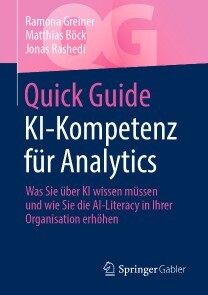
Quick Guide KI-Kompetenz für Analytics
Dieses Buch bietet Ihnen einen praktischen Einstieg in die Welt der Künstlichen Intelligenz (KI) und Data Science. Es hinterfragt aktuelle Hypes und ist ein praxiserprobter Guide mit konkreten Schritten für den sinnvollen Einsatz von einfachen bis komplexeren KI-Anwendungen im Unternehmen – mit Schwerpunkt auf Data Analytics und Web-/App-Tracking. In welchen Einsatzbereichen steckt das meiste Potenzial? Wie bestimmen Sie den KI-Reifegrad Ihres Unternehmens und wie planen Sie Ihre KI-Weiterbildungsoffensive? Welche wirtschaftlichen, ethischen und ökologischen Risiken sollten Sie berücksichtigen? Antworten darauf erhalten Sie in diesem Quick Guide – mit zahlreichen Tipps, Methoden und Vorlagen für den Transfer in Ihr Unternehmen. Ein Buch für alle, die sich die Möglichkeiten von KI-Anwendungen jetzt erschließen und schon bald davon profitieren wollen. Der Inhalt Grundlagen und historische EinordnungEinsatzbereiche von KIim Bereich AnalyticsRisiken und Chancen beim Einsatz von KI im UnternehmenKI-Governance in fünf konkreten SchrittenAI & Data Analytics trifft Recht: AI Act und DSGVOKI-Strategie aus Ihrer Geschäftsstrategie ableitenKI-Kompetenz im Unternehmen erhöhen – mit Self-Assessment, Gap-Analyse und KI-Kompetenz-CanvasVom Scheitern lernen: Der Friedhof der KI-Projekte Was Sie aus diesem Buch mitnehmen werden: Warum wir im Zeitalter der allgegenwärtigen Künstlichen Intelligenz alle zumindest ein bisschen zu Data Scientists werden müssenWie sich die Teildisziplinen von Künstlicher Intelligenz und Data Science zueinander verhaltenWas Machine Learning und Deep Learning eigentlich sind und was das mit Neuronalen Netzen zu tun hatWie sich die genAI, also generative Künstliche Intelligenz, in verschiedenen Domänen (Sprache, Bild, Musik etc.) entwickelt Wo aktuelldas meiste Potenzial für den Einsatz von KI steckt und welche Bereiche Sie sich deshalb genauer ansehen solltenWo Sie KI in Ihrem Alltag direkt anwenden können, um Aufgaben schneller und einfacher zu erledigenWelche wirtschaftlichen, ethischen und ökologischen Risiken und Chancen Sie beim Einsatz von KI berücksichtigen solltenWieso eine Kosten-Nutzen-Abwägung erfolgen sollte, bevor ein KI-Projekt gestartet wirdWie Sie die Ziele Ihrer KI-Governance festlegenWorauf Sie bei der Umsetzung Ihrer GovernanceWelche rechtlichen Entwicklungen im Bereich von Data Procurement und Data Analytics zu erwarten sindGrundlegende Schritte zur Bewertung der Anwendbarkeit des Gesetzes auf spezifische Praktiken durch FallstudienanalysenWie sich Ihre KI-Strategie in der Praxis umsetzen lässt (am Beispiel von Conversion Rate Optimization)Warum sich KI-Kompetenz und KI-Strategie gegenseitig bedingen und wie Sie dieses Henne-AI-Problem lösen könnenWie Sie bestimmen, welchen KI-Reifegrad Ihr Unternehmen gerade hat und welchen es erreichen möchteWie Sie die vorhandene KI-Kompetenz in Ihrem Unternehmen erheben und anhand eines Zielbildes und einer Gap-Analyse herausfinden, auf welche Bereiche Sie sich bei Ihrer Weiterbildungsoffensive konzentrieren solltenWie Sie Ihre Weiterbildungsoffensive mit einem Canvas planen Wie wir mit den Hypes im Zeitalter der KI umgehen solltenWarum es KI-Kompetenz und kritisches Denken braucht, um herauszufinden, aus welchen Fehlern und Projekten man wirklich lernen kann - mit Self-Assessment und Gap-AnalyseWas Scheitern mit Ihrer Datenkultur zu tun hat und wie diese gefördert werden kann Mit Self-Assessment und Gap-Analyse für die KI-Kompetenz Ihres UnternehmensZahlreichen konkreten Tipps für den Transfer in Ihr Unternehmen

Datengetriebenes Marketing
Wir leben in einer Zeit, in der Daten immer mehr Relevanz besitzen, und zwar sowohl für die Geschäftsmodelle von Unternehmen im Gesamten als auch für einzelne Funktionsbereiche. Insbesondere im Marketing besitzen Daten eine hohe Relevanz, denn sie helfen, den Kunden zu verstehen und geeignete Maßnahmen abzuleiten. Doch viele Unternehmen tun sich schwer, einen Einstieg in das datengetriebene Marketing zu finden. Jonas Rashedi stellt mit diesem Buch einen Orientierungs- und Handlungsrahmen vor, der Unternehmen bei der Umsetzung und organisatorischen Verankerung eines datengetriebenen Marketings unterstützt. Der vorgestellte Prozess ist unabhängig von aktuell vorhandenen technologischen Lösungen gestaltet, sodass er für Unternehmen längerfristig Gültigkeit besitzt.

Artificial Intelligence For Dummies
DIVE INTO THE INTELLIGENCE THAT POWERS ARTIFICIAL INTELLIGENCEArtificial intelligence is swiftly moving from a sci-fi future to a modern reality. This edition of Artificial Intelligence For Dummies keeps pace with the lighting-fast expansion of AI tools that are overhauling every corner of reality. This book demystifies how artificial intelligence systems operate, giving you a look at the inner workings of AI and explaining the important role of data in creating intelligence. You'll get a primer on using AI in everyday life, and you'll also get a glimpse into possible AI-driven futures. What's next for humanity in the age of AI? How will your job and your life change as AI continue to evolve? How can you take advantage of AI today to make your live easier? This jargon-free Dummies guide answers all your most pressing questions about the world of artificial intelligence.* Learn the basics of AI hardware and software, and how intelligence is created from code* Get up to date with the latest AI trends and disruptions across industries* Wrap your mind around what the AI revolution means for humanity, and for you* Discover tips on using generative AI ethically and effectivelyArtificial Intelligence For Dummies is the ideal starting point for anyone seeking a deeper technological understanding of how artificial intelligence works and what promise it holds for the future. JOHN PAUL MUELLER was a long-time tech author whose credits include previous editions of this book along with Machine Learning For Dummies and Algorithms For Dummies. LUCA MASSARON is a data scientist who specializes in organizing big data and transforming it into smart data. He is a Google Developer Expert (GDE) in AI and machine learning. STEPHANIE DIAMOND is a marketing professional and author of or contributor to over two dozen books, including Digital Marketing All-in-One For Dummies and Writing AI Prompts For Dummies.

ChatGPT in Softwareprojekten
ChatGPT in Softwareprojekten. Mit KI Codequalität, Anforderungen und Dokumentation verbessern (1. Auflage, Oktober 2024)Entwicklerinnen, Projektmanager und Softwarearchitekten erfahren in diesem Praxisbuch, wie sie ChatGPT und andere Sprachmodelle nutzen, um ihre eigene Produktivität und die ihres Teams erheblich zu steigern. Sprachmodelle können Entwickler effektiv unterstützen, indem sie Code strukturieren, optimieren und automatisiert kommentieren. Auch Anforderungsdefinitionen und Dokumentationen sind für den Informationsfluss im Projekt enorm wichtig, zählen aber häufig zu den ungeliebten Aufgaben. ChatGPT kann hier eingesetzt werden, um zeitraubende manuelle Arbeiten abzukürzen und konsistentere Dokumente zu erstellen.Dieser praktische Einstieg zeigt anhand von vielfältigen Beispielen, wie Sie die neuen Möglichkeiten der Sprachmodelle für Ihre Arbeit nutzen können. Das Buch erläutert:mit welchen Prompting-Strategien Sie die besten Ergebnisse erzielen und welche Risiken bestehenwas gute Software auszeichnet und wie Sie mit ChatGPT die Codestruktur verbessern, Code optimieren und automatisiert kommentieren lassenwie Sie Anforderungen mit ChatGPT auf Konsistenz und Vollständigkeit prüfen und Vorschläge zur Priorisierung erhaltenwie Sie User Stories mit LLMs strukturieren und Dokumente für unterschiedliche Zielgruppen aufbereitenwie Sie Dokumentationen zu APIs, Datenmodellen, Programmabläufen und Algorithmen mit LLMs erstellenAutoreninfo:Patrick Schnell ist Softwareentwickler, Informatiker und Geschäftsführer der schnell.digital, einer innovativen Softwareagentur. Mit über 17 Jahren Projekterfahrung entwickelt er maßgeschneiderte Lösungen für verschiedenste Branchen. Seine Leidenschaft gilt neuen Technologien wie KI, NoSQL-Datenbanken oder der Hybrid-App-Entwicklung. Als Autor und Speaker teilt er sein umfangreiches Wissen und inspiriert andere Entwickler durch Fachartikel und Vorträge. Patrick Schnell motiviert sein Team, stets innovative und zukunftsorientierte Lösungen zu entwickeln, um den Anforderungen der Kunden gerecht zu werden.Zielgruppe: Entwickler*innen, Architekt*innen und Projektmanager*innen v.a. in KMUs

ABC Digital
Die Digitalisierung ist allgegenwärtig. Viele von uns erledigen einen grossen Teil ihrer täglichen Arbeit mit digitalen Hilfsmitteln und Tools, nicht wenige sind trotz Abwesenheitsmeldung auch in den Ferien erreichbar, geschweige denn nachts. Denn mit dem smarten Alleskönner auf dem Nachttisch, wer braucht da noch einen analogen Wecker? Längst sind wir mit dem omnipräsenten Computer in der Hosentasche eine cyborgartige Verschmelzung eingegangen. Trotzdem wirft die digitale Welt viele Fragen auf. Schlagworte wie KI, Blockchain, New Work sind zwar in aller Munde, schnell geraten wir aber ins Stocken, wenn wir sie jemandem erklären sollen. Die Digitalexpertin Sarah Genner erläutert und beschreibt Begriffe wie diese in alphabetischer Reihenfolge, aber auch solche, die selbst Technikfreaks ein Ahaerlebnis bescheren. Die informativen, überraschenden, manchmal kritischen und nicht selten amüsanten Kurztexte beleben die laufende Debatte um die fortschreitende Digitalisierung der Welt. Eine Welt, die wir besser verstehen müssen, um die Chancen digitaler Technologien zu nutzen und die Risiken zu minimieren, ist die Autorin überzeugt. «ABC Digital» wendet sich an eine interessierte breite Öffentlichkeit. Das Buch kann sowohl als Fachlexikon, als Geschenkbuch, als WCLektüre dienen – oder schlicht als Handbuch für Digital Natives und alle, die es werden wollen.Sarah Genner schreibt, forscht, lernt und lehrt seit gut zwanzig Jahren über das Internet und digitale Technologien. Zu ihren Schwerpunkten gehören die digitale Arbeitswelt und New Work. Die Digitalexpertin ist Organisationsberaterin, Dozentin und Verwaltungsrätin. An Fachhochschulen hat sie drei Studiengänge zur Digitalisierung entwickelt und geleitet, zudem unterrichtet sie an Universitäten.Sie liebt digitale Technologien, versucht aber auch, Schadensbegrenzung in Bezug auf Risiken und Nebenwirkungen zu betreiben. Dank und trotz Technologie ist sie stets auf der Suche nach dem guten Leben im digitalen Zeitalter. Mit dem Buch «ON | OFF» über die Chancen und Risiken des mobilen Internets gewann Dr. Sarah Genner 2016 den Mercator Award der Universität Zürich für interdisziplinäre und gesellschaftlich relevante Forschung.

Game Development with GameMaker
Create games from start to finish while learning game design and programming principles using the GameMaker. _Game Development with GameMaker_ covers all aspects of game design and development from the initial idea to the final release. You will learn how to make a 2D game from start to finish using GameMaker covering important features and topics related to game development.The book will cover design and development of a top-down action game from start to finish leveraging on best practices according to the current state of the industry’s standards. It will cover all the building blocks of 2D game development: movements, combat, AI, UI, level design, inventory, power ups, etc. This edition also aims to implement the many changes that has come to GameMaker: new features as well as best practices.YOU WILLMaster GameMaker Language (GML) programmingApply game design principles and programming patternsLearn about 2D game development techniques and best practicesReview the visual programming tool of GameMakerWHO THIS BOOK IS FORGame enthusiasts interested in game development and design with GameMaker would benefit from the book. No prior programming experience is required.Sebastiano Michele Cossu is a software engineer and game developer currently employed in Electronic Arts. Video games have always been his greatest passion and he began studying game development at an early age. Sebastiano started working with GameMaker in 2002 and has worked with every version of the software since then.He is the the author of Game Development with GameMaker Studio 2 and Game AI with Unity, both published by Apress.Chapter 1: Overview.- Chapter 2: Hello world.- Chapter 3: Card Game (Part 1).- Chapter 4: Card Game (Part 2).- Chapter 5: Fixed Shooter.- Chapter 6: Shoot ‘Em Up!.- Chapter 7: Designing Bosses.- Chapter 8: Single-Screen Platformer.- Chapter 9: Scrolling Platformer.- Chapter 10: Designing Platformers.- Chapter 11: Metroidvania (Part 1. – Chapter 12: Metroidvania (Part 2).– Chapter 13: Extra: Artificial Intelligence.– Chapter 14: Designing Fun Games.- Chapter 15: What’s Next?.
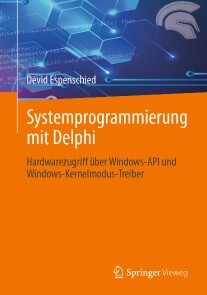
Systemprogrammierung mit Delphi
Während ständig neue Technologien und Schnittstellen die Softwareentwicklung mit Delphi begleiten, führt Sie dieses Buch in die Systemprogrammierung ein, die auch heute noch einen häufig unterschätzten Stellenwert hat. Systemprogrammierung kann sehr komplex sein und setzt fortgeschrittene Kenntnisse voraus. Mit der richtigen Methodik lässt sich das System besser beherrschenund ein besseres Systemverständnis erreichen. Dadurch sind viele Systeminformationen fundierter und umfassender ermittelbar,als es mit Windows-Bordmitteln möglich wäre. Nach einer Einführung in die Systemprogrammierung und Windows-Architektur werden Delphi-Zugriffe auf API, WMI, Registrierung, SMBIOS und Prozessor ausführlich besprochen. Weiterhin erfolgt die Entwicklung eines Windows-Kernelmodus-Treibers mit Microsoft Visual Studio, der auch unter Windows den Hardwarezugriff ermöglicht. Darauf aufbauend wird eine Beispielanwendung entworfen, die u.a. präzise Angaben zu Prozessoren mitsamt deren Temperatursensoren, Speichermodulen und PCI-Geräten bietet – ideal als praxisnahe Ergänzung zu den theoretischen Inhalten.DEVID ESPENSCHIED beschäftigt sich seit über 30 Jahren mit systemnaher Softwareentwicklung in Pascal und Delphi. Als freier Autor und Entwickler hat er diverse Artikel in IT-Fachzeitschriften verfasst und sein eigenes Tool „PC Analyser“ zur Systemdiagnoseprogrammiert. Nutzen, Notwendigkeit, Herangehensweise, Historie.- Windows-Architektur und Notwendigkeiten für Hardwarezugriffe.- Zugriff auf WMI, API, Registry und Prozessor-CPUID.- Laufwerksfitness mit SMART.- Treibererstellung in C++ mit freien Microsoft-Compilern, Treiberstrukturierung.- Nutzung des Treibers für Hardwarezugriffe (Prozessoren, SMBus, Speichermodule anhand SPD-EEPROM, Sensoren, PCI-Bus, Speicherbereiche, CMOS, Schnittstellen seriell/parallel).-Zusammenstellung aller Themen und Beispiele zu einer Testanwendung für die Systemanalyse.

Shippo Integration in Angular
Welcome to the book “Shippo Integration in Angular: A Step-by-Step Guide to Creating Shipping Functionality”. In this book, I explain how to integrate Shippo into your Angular application. Shippo is a multi-carrier shipping solution designed to streamline the shipping process for businesses of all sizes. By integrating shipping into your application, you can create better types of e-commerce applications. You will learn how to create the labels, calculate shipping costs, and get the fastest, cheapest, and best rates. By the end of this book, you will be able to enable shipping in your Angular application and handle all kinds of scenarios. Let us get started. Hello, I am Abdelfattah Ragab, a professional software developer with more than 20 years of experience. I am an expert in Angular, CSS, graphic design and all web related technologies. I have published numerous books on modern CSS layouts and Angular as well as complete business solutions for e-commerce and the like. I hope you enjoy my books. With kind regards.

Databricks Data Intelligence Platform
This book is your comprehensive guide to building robust Generative AI solutions using the Databricks Data Intelligence Platform. Databricks is the fastest-growing data platform offering unified analytics and AI capabilities within a single governance framework, enabling organizations to streamline their data processing workflows, from ingestion to visualization. Additionally, Databricks provides features to train a high-quality large language model (LLM), whether you are looking for Retrieval-Augmented Generation (RAG) or fine-tuning.Databricks offers a scalable and efficient solution for processing large volumes of both structured and unstructured data, facilitating advanced analytics, machine learning, and real-time processing. In today's GenAI world, Databricks plays a crucial role in empowering organizations to extract value from their data effectively, driving innovation and gaining a competitive edge in the digital age. This book will not only help you master the Data Intelligence Platform but also help power your enterprise to the next level with a bespoke LLM unique to your organization.Beginning with foundational principles, the book starts with a platform overview and explores features and best practices for ingestion, transformation, and storage with Delta Lake. Advanced topics include leveraging Databricks SQL for querying and visualizing large datasets, ensuring data governance and security with Unity Catalog, and deploying machine learning and LLMs using Databricks MLflow for GenAI. Through practical examples, insights, and best practices, this book equips solution architects and data engineers with the knowledge to design and implement scalable data solutions, making it an indispensable resource for modern enterprises.Whether you are new to Databricks and trying to learn a new platform, a seasoned practitioner building data pipelines, data science models, or GenAI applications, or even an executive who wants to communicate the value of Databricks to customers, this book is for you. With its extensive feature and best practice deep dives, it also serves as an excellent reference guide if you are preparing for Databricks certification exams.WHAT YOU WILL LEARN* Foundational principles of Lakehouse architecture* Key features including Unity Catalog, Databricks SQL (DBSQL), and Delta Live Tables* Databricks Intelligence Platform and key functionalities* Building and deploying GenAI Applications from data ingestion to model serving* Databricks pricing, platform security, DBRX, and many more topicsWHO THIS BOOK IS FORSolution architects, data engineers, data scientists, Databricks practitioners, and anyone who wants to deploy their Gen AI solutions with the Data Intelligence Platform. This is also a handbook for senior execs who need to communicate the value of Databricks to customers. People who are new to the Databricks Platform and want comprehensive insights will find the book accessible.NIKHIL GUPTA is a seasoned data professional with over 18 years of experience in big data technologies, driving innovation and strategic growth in the field. As a Solution Architect at Databricks, he leverages his expertise to help customers across various industries, including retail, CPG, financial services, banking, and manufacturing, modernize their data and AI implementations on the Databricks platform. His expertise spans a range of big data technologies, including data warehousing, data lakes, and real-time data processing, making him a trusted advisor for Fortune 500 companies.JASON YIP is a data and machine learning architect. He currently serves as Director of Data and AI at Tredence, a leading data science and analytics company. He advises Fortune 500 companies on implementing data and Generative AI strategies on the cloud. He serves on multiple advisory boards at Databricks, including the Partner Product Advisory Board, and the Solution Architect Champion Advisory board. He is a top voice on Databricks and a former Microsoft employee who successfully led the Microsoft Corporate Finance big data transformation using Databricks.1. Introduction.- 2. Lakehouse Platform.- 3. Databricks Platform Overview.- 4. Data Ingestion and Real-Time Analytics.- 5. Delta Lake: Deep Dive.- 6. Data Governance with Unity Catalog.- 7. Data Engineering and Analytics.- 8. Data Science, Machine Learning, and AI.- 9. Building GenAI Applications on Databricks Platform.- 10. Data Warehousing with DBSQL.- 11. Data Intelligence Platform.- 12. CI/CD and Application Development.- 13. Databricks Pricing and Observability using System Tables.- 14. Platform Security and Compliance.- 15. Advanced Topics and Industry Applications.- 16. Streaming Applications and HA/DR.- 17. Databricks in the Cloud Ecosystem.- 18. Conclusion.

Ultimate LEGO Worldbuilding and Architecture
While most see LEGO as a toy, in reality it is much more than just that; it is a way to build a world from the brick up. Although LEGO might have playsets, it is the LEGO enthusiasts that can really make miniature worlds of wonder. This book is for those that want to create something massive and learn how to replicate the real (or imagined) world in LEGO.You’ll start with an introductory view of LEGO and review a collection of projects that can be built with a small budget. You’ll then decide what to build so the dream can be given form and apply the techniques used to create something that can stand strong. Once the basic model is built, instructions are given on how to bring it to life with details._Ultimate LEGO Worldbuilding and Architecture_ will allow Lego enthusiasts and amateurs to take their dreams, whatever they may be, and bring them to life in the easiest and most cost-effective way.WHAT YOU'LL LEARN* Grasp LEGO basics * Create your instructions for big builds* Construct a solid architectural foundation* Build expediently on a budgetWHO THIS BOOK IS FORBeginner Lego enthusiasts.Mark has been an established writer for two decades, delving into tech and gadget blogging twenty years ago, contributing to various consumer electronics-related websites. Over the last fifteen years, he has successfully managed TheGeekChurch.com, boasting a tech website, a YouTube channel (500+ subscribers), and a TikTok channel (20,000+ followers). Mark recently collaborated with Pullman Marketing, showcasing his skills. As a seasoned author, Mark has published six books with Apress, covering Android Marketing, LEGO, Kindle Fire, and UBTECH/Jimu Robots, displaying a diverse and comprehensive writing portfolio.Chapter 1: LEGO: Past, Present, and FutureChapter 2: Planning in LEGO Virtually with Architecture: The Model Before the ModelChapter 3: How to Build a Strong LEGO Base that is Ready for ExpansionChapter 4: Creating a LEGO House and Any Other Multi-Story BuildingChapter 5: Smaller Scale: Creating LEGO Furniture and MoreChapter 6: Cars and Trains, Designing Anything with Wheels in LEGOChapter 7: LEGO Planes, Helicopters, and BoatsChapter 8: Setting Sights for the Stars: Building LEGO SpaceshipsChapter 9: Going Giant with LEGO Robots and AnimalsChapter 10: Detailing a LEGO Creation and Final Thoughts

Testing the Creditcoin Blockchain
Follow the quality engineering journey of the Creditcoin blockchain across four distinct implementation versions and a myriad of technologies. Through the eyes of a test engineer, this book discusses testing implementations with the Hyperledger Sawtooth and Substrate frameworks, testing switch from proof-of-work to proof-of-stake consensus algorithm, and testing an Ethereum Virtual Machine compatibility layer.You’ll traverse several years of fast-paced multiple blockchain implementations and technological changes including an explanation of all major components involved, and the approach taken. You’ll also look at examples of test automation approaches and tools, interesting bugs, and testing challenges.Most everything discussed in _Testing the Creditcoin Blockchain_ is open source, ensuring easy access, and multiple references to source code and GitHub are included throughout.WHO THIS BOOK IS FORSoftware testers and quality engineers with limited experience working on a blockchain implementation.WHAT YOU WILL LEARN* Study the many of the components of a distributed blockchain network. * See how components work and where testing can be plugged into a distributed blockchain network environment.* Glimpse into the daily blockchain testing activities of a principal test engineer.* Become familiar with a fast-paced technical software development project.Alex is quality assurance engineer and ISTQB and Red Hat Certified professional with two decades of industry experience as an open source hacker with thousands of contributions, a Python instructor, and co-organizer of FOSDEM’s Testing and Continuous Delivery devroom. He’s also tested multiple components of Red Hat Enterprise Linux, was a test lead for the entire lifecycle of its version 5 family, and later tested various components of the Creditcoin blockchain.Alex holds a Master’s degree in Computer Engineering from the Technical University of Sofia, Bulgaria and loves public speaking and riding fast motorcycles. In his spare time, he’s the lead engineer behind Kiwi TCMS, a popular open source test management system.You can find Alex on LinkedIn, www.linkedin.com/in/alextodorov/ and follow his work directly on GitHub via www.github.com/atodorov.PART 1 INTRODUCTION TO BLOCKCHAIN.- Chapter 1: Introduction to blockchain.- Chapter 2: Blockchain development frameworks.- PART 2 THE CREDITCOIN BLOCKCHAIN – AIMS AND OBJECTIVES.- Chapter 3: The Creditcoin Blockchain.- PART 3 TESTING THE CREDITCOIN BLOCKCHAIN.- Chapter 4: Creditcoin 1.x.- Chapter 5: Creditcoin 2.0.- Chapter 6: Creditcoin 2.3.- Chapter 7: Creditcoin 3.0.- PART 4 BLOCKCHAIN TESTING APPROACHES.- Chapter 8: My blockchain testing approach.- Chapter 9: Conclusions.

Stripe Integration in Angular
Welcome to the book “Stripe Integration in Angular: A Step-by-Step Guide to Creating Payment Functionality”. In this book, I explain how to integrate Stripe into your Angular application. Stripe is a leading payment processing platform that enables businesses to accept online payments. By integrating payment processing into your application, you can create all kinds of e-commerce applications. You will learn how to create the checkout session, how to use webhooks events and finally how to go live. By the end of this book, you will be able to process payments in your Angular application and handle all kinds of scenarios. Let us get started. Hello, I am Abdelfattah Ragab, a professional software developer with more than 20 years of experience. I am an expert in Angular, CSS, graphic design and all web related technologies. I have published numerous books on modern CSS layouts and Angular as well as complete business solutions for e-commerce and the like. I hope you enjoy my books. With kind regards.

Azure SQL Revealed
Access detailed content and examples on Azure SQL, a set of cloud services that allows for SQL Server to be deployed in the cloud. This book teaches the fundamentals of deployment, configuration, security, performance, and availability of Azure SQL from the perspective of these same tasks and capabilities in SQL Server. This distinct approach makes this book an ideal learning platform for readers familiar with SQL Server on-premises who want to migrate their skills toward providing cloud solutions to an enterprise market that is increasingly cloud-focused.If you know SQL Server, you will love this book. You will be able to take your existing knowledge of SQL Server and translate that knowledge into the world of cloud services from the Microsoft Azure platform, and in particular into Azure SQL. This book provides information never seen before about the history and architecture of Azure SQL. Author Bob Ward is a leading expert with access to and support from the Microsoft engineering team that built Azure SQL and related database cloud services. He presents powerful, behind-the-scenes insights into the workings of one of the most popular database cloud services in the industry. This book also brings you the latest innovations for Azure SQL including Azure Arc, Hyperscale, generative AI applications, Microsoft Copilots, and integration with the Microsoft Fabric.WHAT YOU WILL LEARN* Know the history of Azure SQL* Deploy, configure, and connect to Azure SQL* Choose the correct way to deploy SQL Server in Azure* Migrate existing SQL Server instances to Azure SQL* Monitor and tune Azure SQL’s performance to meet your needs* Ensure your data and application are highly available* Secure your data from attack and theft* Learn the latest innovations for Azure SQL including Hyperscale* Learn how to harness the power of AI for generative data-driven applications and Microsoft Copilots for assistance* Learn how to integrate Azure SQL with the unified data platform, the Microsoft FabricWHO THIS BOOK IS FORThis book is designed to teach SQL Server in the Azure cloud to the SQL Server professional. Anyone who operates, manages, or develops applications for SQL Server will benefit from this book. Readers will be able to translate their current knowledge of SQL Server—especially of SQL Server 2019 and 2022—directly to Azure. This book is ideal for database professionals looking to remain relevant as their customer base moves into the cloud.BOB WARD is a Principal Architect for the Microsoft Azure Data team, which owns the development for Microsoft SQL Edge to Cloud. Bob has worked for Microsoft for 30+ years on every version of SQL Server shipped from OS/2 1.1 to SQL Server 2022, including Azure SQL. Bob is a well-known speaker on SQL Server and Azure SQL, often presenting talks on new releases, internals, and specialized topics at events such as SQLBits, Microsoft Build, Microsoft Ignite, PASS Summit, DevIntersection, and VS Live. You can also learn Azure SQL from him on the popular series aka.ms/azuresql4beginners. You can follow him at @bobwardms. Bob is the author of the books _Pro SQL Server on Linux_, _SQL Server 2019 Revealed_, _Azure SQL Revealed_ 1st and 2nd Editions, and _SQL Server 2022 Revealed_ (available from Apress Media).1. SQL Server Rises to the Clouds.- 2. What is Azure SQL?.- 3. SQL Server on Azure Virtual Machine.- 4. Deploying Azure SQL.- 5. Configuring Azure SQL.- 6. Securing Azure SQL.- 7. Monitoring and Tuning Performance for Azure SQL.- 8. Availability for Azure SQL.- 9. Using the power of AI with Azure SQL.- 10. Completing Your Knowledge of Azure SQL.- 11. Go Big with the Cloud.

Internet of Things in Bioelectronics
THIS BOOK PROVIDES A COMPREHENSIVE EXPLORATION OF THE EXCITING INTERSECTION BETWEEN TECHNOLOGY AND BIOLOGY AND DELVES INTO THE PRINCIPLES, APPLICATIONS, AND FUTURE DIRECTIONS OF IOT IN THE REALM OF BIOELECTRONICS; IT SERVES AS BOTH AN INTRODUCTION FOR THOSE NEW TO THE FIELD AND AS A DETAILED REFERENCE FOR EXPERIENCED PROFESSIONALS SEEKING TO DEEPEN THEIR KNOWLEDGE.The rapid convergence of technology and biology heralds a new era of evolution in the Internet of Things (IoT), a transformative force enabling interconnected devices to communicate and operate with unparalleled synergy. This is particularly true in the groundbreaking field of bioelectronics, where the fusion of biological systems with electronic devices and IoT is reshaping the landscape of bioelectronics, promising to open up new frontiers in healthcare, diagnostics, and personalized medicine. This timely book explores the numerous ways in which IoT-enabled bioelectronic devices are used to monitor and enhance human health, from wearable sensors that track vital signs to implantable devices that can communicate with healthcare providers in real time. One central theme of this book is the transformative impact of IoT on healthcare. By enabling continuous, remote monitoring of patients, IoT technologies are not only improving the accuracy of diagnostics but also making healthcare more accessible and personalized. The book also addresses the critical issues of securing health records on the internet, which are of paramount importance as we increasingly rely on interconnected devices to collect and transmit sensitive health information. Additional attention is paid to the future directions of IoT in bioelectronics and the integration of innovative areas, such as artificial intelligence, machine learning, and big data analytics, in driving the development of ever more sophisticated and capable bioelectronic systems. AUDIENCEThe target audience includes professionals, researchers, academics, and students involved in various fields related to bioelectronics, IoT, healthcare, biotechnology, engineering, and related disciplines. HARI MURTHY, PHD, is a faculty member in the Department of Electronics and Communication Engineering, CHRIST (Deemed to be University), Bengaluru, India. His doctoral thesis from the University of Canterbury, New Zealand was on novel anticorrosion materials. He has published several articles in international journals and conferences as well as edited “Novel Anti-Corrosion and Anti-Fouling Coatings and Thin Films” with the Wiley-Scrivener imprint (2024). MARTA ZUREK-MORTKA, PHD, is a senior specialist in the Department of Control Systems, Lukasiewics Research Network, Institute for Sustainable Technologies, Radom, Poland. She obtained her doctorate in electrical engineering from the University of Technology and Humanities Kazimierz Pulaski in 2020. She is an author and co-author of more than 30 publications in SCI journals, as well as a co-author of four patent applications. Her research interests include electromobility, renewable energy, power electronic converters for electromobility, and renewable energy sources. VINAY JHA PILLAI, PHD, is an assistant professor in the Department of Electronics and Communication Engineering, CHRIST (Deemed to be University), Kengeri Campus, Bangalore, India. His primary research is in the early detection of breast cancer using optical imaging and holds two patents related to the subject. He is also exploring the domain of sensors for extracting coating parameters, especially for thermal barrier coatings which have a wide application in the field of corrosion and biofouling inhibitors. KUKATLAPALLI PRADEEP KUMAR, PHD, is an associate professor and data science program coordinator at Christ University, Bangalore, India. He has published multiple publications in journals and conferences. His areas of interest include data science, information security, data provenance, and multiparty secret sharing.
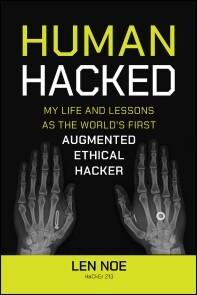
Human Hacked
DISCOVER THE FUTURE OF CYBERSECURITY THROUGH THE EYES OF THE WORLD'S FIRST AUGMENTED ETHICAL HACKERIn Human Hacked: My Life and Lessons as the World's First Augmented Ethical Hacker by Len Noe, a pioneering cyborg with ten microchips implanted in his body, you'll find a startlingly insightful take on the fusion of biology and technology. The author provides a groundbreaking discussion of bio-implants, cybersecurity threats, and defenses. Human Hacked offers a comprehensive guide to understanding an existing threat that is virtually unknown. How to implement personal and enterprise cybersecurity measures in an age where technology transcends human limits and any person you meet might be augmented. The book provides:* Exposure of a subculture of augmented humans hiding in plain sight* Explorations of the frontier of bio-Implants, showing you the latest advancements in the tech and how it paves the way for access to highly restricted technology areas* Discussions of cybersecurity tactics, allowing you to gain in-depth knowledge of phishing, social engineering, MDM restrictions, endpoint management, and more to shield yourself and your organization from unseen threats* A deep understanding of the legal and ethical landscape of bio-implants as it dives into the complexities of protections for augmented humans and the ethics of employing such technologies in the corporate and government sectorsWhether you're a security professional in the private or government sector, or simply fascinated by the intertwining of biology and technology, Human Hacked is an indispensable resource. This book stands alone in its category, providing not just a glimpse into the life of the world's first augmented ethical hacker, but also offering actionable insights and lessons on navigating the evolving landscape of cybersecurity. Don't miss this essential read on the cutting edge of technology and security. LEN NOE is a technical evangelist, white hat hacker, and biohacker for CyberArk Software. He’s an international cybersecurity speaker with 10 digital devices implanted in his body. As a global thought leader in the Transhuman/Human+ movement, he uses his microchip implants to advance cybersecurity and the human experience. Foreword xiiiIntroduction xix1 THE HUMAN YEARS 1The Odyssey 2 2The Commodore 64 4Newb Before It Was a Thing 5Windows into the Corporate World 7A Hacker Is Born 8A Life Divided 9Flesh Is Stronger Than Steel 102 A CHANGE IN DIRECTION 15Into the Light 17Road Warrior 173 SYMBIOTIC ATTACK VECTOR 21Tap-to-Pwn 22My First Attack: Dinner and a Show 284 TRANSHUMANISM: WE WHO ARE NOT AS OTHERS 31A Brief History of Transhumanism 33I, Cyborg 38Bad Intentions 39Notes 425 USING THEIR LAWS AGAINST THEM 43Prepare for Takeoff Seat Backs and Tray Tables 45Obfuscation by Law 476 A TECHNOLOGICAL REBIRTH 51Finding My Techno-shaman 55Honey, We Need to Talk 587 MY FIRST INSTALLS 61Human MFA 63Touching Digital 65Cyberpunk in Downtown Austin 66I Am Machine 71Physical Meets Biological 72Digital Lockpicks 73Magnetic Vision 75My Tools 78Note 808 I AM THE CYBER THREAT 81Mobile Devices 81L3pr@cy Attack 81Fl3$h-H00k Attack 82Implant a Man-in-the-Middle Attack 84Implant Phishing/Smishing Attack 95Implant Automation Attack 99Physical Access 100H@nd-$h@k 3 102Magnetic Tracing 104Notes 1079 LIVING THE TRANSHUMAN LIFE 109VivoKey Chips 109VivoKey Spark 2 109VivoKey Apex 111Cheeseburger Use Cases 112Walletmor 115NeXT Chip and BioMagnet 11610 I’M HACKABLE 119Identity Evolution 120Cultural Significance 121What Is “Acceptable”? 123Am I an Abomination? 124Note 12611 HERE THERE BE GRINDERS 127The PirateBox and PegLeg 127The HakLeg 129HakLeg Antenna 130A Grinder After All 131Why Me? 131Note 13212 CURRENT LIMITATIONS OF TRANSHUMAN TECHNOLOGY 133Cyber Defense Against Humans 135Technological Identification and Mitigation 136Phishing Attack Defense 138Smishing Attack Defense 139MitM Defense 139Technological Work-Life Balance 141Physical Access Attacks 141Specialized K9 Detection 143Notes 14513 THE FUTURE OF TRANSHUMAN TECHNOLOGY 147Brain–Computer Interfaces 148Invasive BCIs 148Early Issues in the Neuralink BCI 149Neuro Rights 150Partially Invasive BCIs 151Noninvasive BCIs 152Smart Devices 153Internal Power 154Sound Power 155Glucose-Powered Metabolic Fuel Cell 155Kinetic Power 156Thermal Power 156Batteries 157AI: A Necessary Evil 158Military Defense/Espionage 159Haptics 161Notes 16214 TRANSHUMAN RIGHTS ARE HUMAN RIGHTS 165Transhuman Discrimination 168The Hypocritic Oath 172Transhuman, but Still Human 173Notes 17515 MY FUTURE AS A TRANSHUMAN 177Final Thoughts 180Notes 182A My Hardware 183NExT 183VivoKey Spark 2 (Cryptobionic) 183flexNExT 184flexM1 “Magic” 1k 185flexEM T 5577 186Titan-Sensing Biomagnet 186Walletmor 187flexDF2 DESFire 188VivoKey Apex 188flexClass (HID iClass) 189B FAQs 191C Resources 195My Body Mechanics 195Organizations, Clubs, and Information Hubs 195Implant Distributors 197GitHub Repos 197Open-Source Tools 197Acknowledgments 199About the Author 201Index 203

The Embedded Project Cookbook
Learn how to create and release an embedded system in a fast and reliable manner. This book will help you build and release a commercially viable product that meets industry standards for quality. The book is not just about code: it covers non-code artifacts such as software processes, requirements, software documentation, continuous integration, design reviews, and code reviews.While specifically targeting microcontroller applications, the processes in this book can be applied to most software projects, big or small. Additionally, the book provides an open-source C++ framework that can be used to quick start any embedded project. This framework has an OSAL (OS Abstraction Layer) and essential middleware that is needed for many embedded systems. Using a hands-on approach of building-and-testing the software application first allows you to develop a significant amount of production quality code even before the hardware is available, dramatically reducing the start-to-release duration for a project.As you follow the recipes in this book, you will learn essential software development processes, perform just in time design, create testable modules, and incorporate continuous integration (CI) into your day-to-day developer workflow. The end-result is quality code that is maintainable and extensible, and can be reused for other projects, even when presented with changing or new requirements._The Embedded Project Cookbook _is focused on the _how_ of developing embedded software. For a discussion of the _why_, readers are invited to refer to the optional companion book _Patterns in the Machine: A Software Engineering Guide to Embedded Development_.WHAT YOU WILL LEARN* Separate software architecture from software design* Write software documents that are intrinsically resistant to going out-of-date.* Identify the processes, workflows, and best practices for the team to follow.* Initiate code reviews before code is checked intoa stable branch.* Design testable modules and implement automated unit testing that doesn’t require hardware.* Incorporate continuous integration into the day-to-day developer workflow, including automated integration testing.* Create a code base that can be reused on other projects.WHO THIS BOOK IS FORMid-level developers and software leads who are looking to get up and running without all the underlying theories. This book is also for professionals looking to learn how to productize a concept or technology and sell the results to a customer.JOHN TAYLOR has been an embedded developer for over 30 years. He has worked as a firmware engineer, technical lead, system engineer, software architect, and software development manager for companies such as Ingersoll Rand, Carrier, Allen-Bradley, Hitachi Telecom, Emerson, and several start-up companies. He has developed firmware for products that include HVAC control systems, telecom SONET nodes, IoT devices, micro code for communication chips, and medical devices. He is the co-author of five US patents and holds a bachelor’s degree in mathematics and computer science.WAYNE TAYLOR has been a technical writer for 27 years. He has worked with companies such as IBM, Novell, Compaq, HP, EMC, SanDisk, and Western Digital. He has documented compilers, LAN driver development, storage system deployment and maintenance, and dozens of low-level and system-management APIs. He also has ten years of experience asa software development manager. He is the co-author of two US patents and holds master’s degrees in English and human factors. He is a co-author of _OS/2 and NetWare Programming_ (Van Nostrand Reinhold, 1995).Chapter 1: Introduction.- Chapter 2: Requirements.- Chapter 3: Analysis.- Chapter 4: Software Development Plan.- Chapter 5: Preparation.- Chapter 6: Foundation.- Chapter 7: Building Applications with the Main Pattern.- Chapter 8: Continuous Integration Builds.- Chapter 9: Requirements Revisited.- Chapter 10: Tasks.- Chapter 11: Just in Time Detailed Design.- Chapter 12: Coding, Unit Tests, and Pull Requests.- Chapter 13: Integration Testing.- Chapter 14: Broad Support Package.- Chapter 15: Drivers.- Chapter 16: Release.- Appendix A: Getting started with the Source Code.- Appendix B: Running the Example Code.- Appendix C: Introduction to the Data Model Architecture.- Appendix D: LHeader and LConfig Patterns.- Appendix E: CPL C++ framework.- Appendix F: LHeader and LConfig Patterns.- Appendix G: Ratt.- Appendix H: GM6000 Requirements.- Appendix I: GM6000 System Architecture.- Appendix J: GM6000 Software Architecture.- Appendix K: GM6000 Software Development Plan.- Appendix L: GM6000 Software Detailed Design.- Appendix M: GM6000 Software Detailed Design.- Appendix N: GM6000 Fuzzy Logic Temperature Control.- Appendix O: Software C/C++ Embedded Coding Standard.- Appendix P: GM6000 Software Requirements Trace Matrix.- Appendix Q: GM6000 Software Bill of Materials.- Appendix R: GM6000 Software Release Notes.
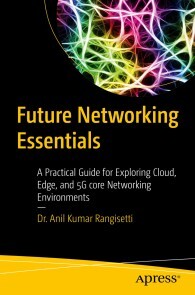
Future Networking Essentials
Explore virtualized networking environments through the Cloud, Edge, and 5G core networks, and their applications. This book covers the primary approaches related to setting up and experimenting with related cloud and networking environments using virtual networks, and virtual network functions.You’ll start by experimenting with future networking environments and learn a variety of Docker basics and essential networking skills. Specifically, containers, networking, volumes, iptables (for Docker environment security) and default orchestration features are discussed to help set up custom cloud, edge, and 5G core networking environments. Hands-on activities related to Docker networking and services features for publishing, scaling, and monitoring of services are also provided. By the end of Part 1, you’ll be able to set up a variety of custom networking environments easily using Docker compose features and secure the set-up using iptables.Part 2 introduces Network Function Virtualization (NFV) architecture, and its roles in Cloud and 5G core networks. You’ll learn to deploy an open source 5G core platform from OpenAirInterface (OAI) using Docker. Then, you’ll set up and evaluate Virtual Network Functions (VNF) over suitable virtual networks. Hands-on activities are featured to guide you through the process of setting up and deploying VNFs such as DHCP, DNS, and proxy servers.Finally, Part 3 discusses key virtual networks such as IP VLANs, MAC VLANs, and overlay networks using Docker cluster setups. You’ll use interesting hands-on activities to easily experiment and learn cloud and 5G core network set-up related virtual networks, overlay networks, and network slicing. When done, you’ll be able to set up a variety of VNFs, carefully deploying VNFs, and conducting slicing activities over Docker cluster setups.WHAT YOU’LL LEARN* Explore Cloud, Edge, and 5G core networking using Docker networking features.* Build and evaluate a variety of virtual networks and deploy Virtual Network Functions (VNFs) and Network Slices using Docker swarm setups.* Set up and deploy an open source 5G core network using Docker for experimenting.* Enhance cloud environment and applications security using linux security features such as Capabilities, Seccomp, and AppArmors.* Develop and evaluate network security experiments using Scapy and Docker networks.WHO THIS BOOK IS FORNetwork engineers, cloud engineers, students, faculty, and cloud and networking researchers.Dr Anil Kumar Rangisetti received his PhD in the field of computer science and engineering from IIT Hyderabad. He has nearly 10 years of teaching and research experience in computer science and engineering. During his career, he worked at prestigious Indian institutions such as IIIT Dharwad, SRM-AP, and GMR, and worked at MNC such as ARICENT, IRL-Delhi. Currently he is working as Assistant Professor in the Department of CSE, IIITDM Kurnool.Broadly his research interests include Wi-Fi, Next Generation Mobile Networks, SDN, NFV, and Cloud computing. He published a number of novel research publications with IEEE, Springer, Elsevier, Wiley in the field of a variety of networking technologie such as Wi-Fi, 4G/5G, SDN , NFV and Cloud technologies. He guided a significant number of undergraduate and postgraduate students for project works. Besides research activities, he is interested in writing books on computer science technologies and programming languages.Part 1: Docker Basics and Networking.- Chapter 1: Getting started with Future Networking Environments.- Chapter 2: Exploring Docker Networking features.- Chapter 3: Setting up realistic networking scenarios.- Part 2: Network Function Virtualization and Virtual Networks Basics.- Chapter 4: Virtualizing network functions in cloud and telecom core networks.- Chapter 5: Experiment with VNFs over Docker Containers.- Chapter 6: Importance of virtual networks in cloud and telecom networks.- Part 3: Cloud and Networking Security.- Chapter 7: Learning Docker Security for experimenting with Cloud Security.- Chapter 8: Explore Scapy for experimenting with networking environments security.- Chapter 9: Recreating and analyzing realistic network security scenarios.

Software Testing for Managers
Software leaders, directors, and managers of all types need to know about software testing. It can be a tough climb up the mountain of technical jargon. Engineers seem to be speaking a language all their own sometimes. Most books on testing are deep in the weeds with technical terms and techniques that simply aren’t applicable even to technical managers.This book provides a high-level perspective on broad topics in a friendly, easy-to-absorb style. Get started and up to speed quickly with immediately useful, actionable guidance. Guidance on team structure, best practices and even common pitfalls will save you time and money, while automation and code reuse will provide exponential value.There’s a gap of knowledge between engineers and their managers; they are almost speaking different languages and the jargon can be confusing. There’s a lot to know about the world of testing. Test from the Top delivers quick, concise guidance to bridge the gap! It offers clear, actionable steps and is a must have for busy leaders who need quick answers.WHAT YOU WILL LEARN:* How and where to integrate testing in the software development lifecycle* Testing terminology and concepts from a management perspective* Common pitfalls of testing, how to avoid wasted time* How to hire test-aware teams* The value in reusing test code for more generalized automationWHO THIS BOOK IS FOR:Software managers, Lead Software Engineers, Tech Directors, CTOs, Project Managers, software leaders of all kinds. These leaders understand the value of testing, but have not yet built out extensive automation or team structure. Either new to testing concepts or modernizing systems or looking to improve software quality. Assumed to have a working knowledge of the Software Development Lifecycle and basic project management (no specific methodology required).Ross Radford is the founder of TestfromtheTop.com and is on a mission to bring test awareness to leadership. He has spent a career developing and testing enterprise level software for huge projects serving millions of users. No matter the size of the organization, if you’re building software, testing is crucial. Leaders are in a unique position to unblock and prioritize quality assurance at every level. Personally, as a software professional, testing has been a deep interest motivated by improving craft and quality. Radford developed knowledge sharing presentations for peers and conference talks, with the common feedback from software engineers: “This is great. Now convince my boss!” He set out to do just that.Chapter 1: Test Awareness.- Chapter 2: Test Driven Development vs. Test During Development.- Chapter 3: Quality _and _Assurance.- Chapter 4: Specification.- Chapter 5: Automation Reuse.- Chapter 6: Coverage.- Chapter 7: Security.- Chapter 8: Conclusion.- Chapter 9: Pitfalls.