

Computer und IT

Machine Learning For Network Traffic and Video Quality Analysis
This book offers both theoretical insights and hands-on experience in understanding and building machine learning-based Network Traffic Monitoring and Analysis (NTMA) and Video Quality Assessment (VQA) applications using JavaScript. JavaScript provides the flexibility to deploy these applications across various devices and web browsers.The book begins by delving into NTMA, explaining fundamental concepts and providing an overview of existing applications and research within this domain. It also goes into the essentials of VQA and offers a survey of the latest developments in VQA algorithms. The book includes a thorough examination of machine learning algorithms that find application in both NTMA and VQA, with a specific emphasis on classification and prediction algorithms such as the Multi-Layer Perceptron and Support Vector Machine. The book also explores the software architecture of the NTMA client-server application. This architecture is meticulously developed using HTML, CSS, Node.js, and JavaScript. Practical aspects of developing the Video Quality Assessment (VQA) model using JavaScript and Java are presented. Lastly, the book provides detailed guidance on implementing a complete system model that seamlessly merges NTMA and VQA into a unified web application, all built upon a client-server paradigm.By the end of the book, you will understand NTMA and VQA concepts and will be able to apply machine learning to both domains and develop and deploy your own NTMA and VQA applications using JavaScript and Node.js.What You Will Learn* What are the fundamental concepts, existing applications, and research on NTMA?* What are the existing software and current research trends in VQA?* Which machine learning algorithms are used in NTMA and VQA?* How do you develop NTMA and VQA web-based applications using JavaScript, HTML, and Node.js?Who This Book Is ForSoftware professionals and machine learning engineers involved in the fields of networking and telecommunicationsDR. TULSI PAWAN FOWDUR received his BEng (Hons) degree in Electronic and Communication Engineering with honors from the University of Mauritius in 2004. He was also the recipient of a Gold medal for having produced the best degree project at the Faculty of Engineering in 2004. In 2005 he obtained a full-time PhD scholarship from the Tertiary Education Commission of Mauritius and was awarded his PhD degree in Electrical and Electronic Engineering in 2010 by the University of Mauritius. He is also a Registered Chartered Engineer of the Engineering Council of the UK, Fellow of the Institute of Telecommunications Professionals of the UK, and a Senior Member of the IEEE. He joined the University of Mauritius as an academic in June 2009 and is presently an Associate Professor at the Department of Electrical and Electronic Engineering of the University of Mauritius. His research interests include mobile and wireless communications, multimedia communications, networking and security, telecommunications applications development, the Internet of Things, and AI. He has published several papers in these areas and is actively involved in research supervision, reviewing papers, and also organizing international conferences.LAVESH BABOORAM received his BEng (Hons) degree in Telecommunications Engineering with Networking with honors from the University of Mauritius in 2021. He was also awarded a Gold medal for having produced the best degree project at the Faculty of Engineering in 2021. Since 2022, he has been an MSc Applied Research student at the University of Mauritius. With in-depth knowledge of telecommunications applications design, analytics, and network infrastructure, he aims to pursue research in networking, multimedia communications, Internet of Things, artificial intelligence, and mobile and wireless communications. He joined Mauritius Telecom in 2022 and is currently working in the Customer Experience and Service Department as a Pre-Registration Trainee Engineer.Chapter 1: Introduction to NTMA and VQA.- Chapter 2: Network Traffic Monitoring and Analysis.- Chapter 3: Video Quality Assessment.- Chapter 4: Machine Learning Techniques for NTMA and VQA.- Chapter 5: NTMA Application with JavaScript.- Chapter 6: Video Quality Assessment Application Development with JavaScript.- Chapter 7: NTMA and VQA Integration.
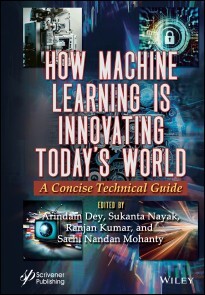
How Machine Learning is Innovating Today's World
PROVIDES A COMPREHENSIVE UNDERSTANDING OF THE LATEST ADVANCEMENTS AND PRACTICAL APPLICATIONS OF MACHINE LEARNING TECHNIQUES.Machine learning (ML), a branch of artificial intelligence, has gained tremendous momentum in recent years, revolutionizing the way we analyze data, make predictions, and solve complex problems. As researchers and practitioners in the field, the editors of this book recognize the importance of disseminating knowledge and fostering collaboration to further advance this dynamic discipline. How Machine Learning is Innovating Today's World is a timely book and presents a diverse collection of 25 chapters that delve into the remarkable ways that ML is transforming various fields and industries.It provides a comprehensive understanding of the practical applications of ML techniques. The wide range of topics include:* An analysis of various tokenization techniques and the sequence-to-sequence model in natural language processing* explores the evaluation of English language readability using ML models* a detailed study of text analysis for information retrieval through natural language processing* the application of reinforcement learning approaches to supply chain management* the performance analysis of converting algorithms to source code using natural language processing in Java* presents an alternate approach to solving differential equations utilizing artificial neural networks with optimization techniques* a comparative study of different techniques of text-to-SQL query conversion* the classification of livestock diseases using ML algorithms* ML in image enhancement techniques* the efficient leader selection for inter-cluster flying ad-hoc networks* a comprehensive survey of applications powered by GPT-3 and DALL-E* recommender systems' domain of application* reviews mood detection, emoji generation, and classification using tokenization and CNN* variations of the exam scheduling problem using graph coloring* the intersection of software engineering and machine learning applications* explores ML strategies for indeterminate information systems in complex bipolar neutrosophic environments* ML applications in healthcare, in battery management systems, and the rise of AI-generated news videos* how to enhance resource management in precision farming through AI-based irrigation optimization.AUDIENCEThe book will be extremely useful to professionals, post-graduate research scholars, policymakers, corporate managers, and anyone with technical interests looking to understand how machine learning and artificial intelligence can benefit their work.ARINDAM DEY, PHD, is an associate professor at the School of Computer Science, VIT-AP University, India. He has published more than 50 research articles in national and international peer-reviewed journals. Dr. Dey has 14 years of teaching and research experience in the areas of optimization and genetic algorithms. SUKANTA NAYAK, PHD, is an assistant professor in the Department of Mathematics, School of Advanced Sciences (SAS) at VIT-AP University, Amaravati, Andhra Pradesh, India. He completed his doctoral research at NIT Rourkela, has authored three books, and published numerous research articles in international journals. RANJAN KUMAR, PHD, is an assistant professor in the Department of Mathematics, School of Advanced Sciences (SAS) at VIT-AP University, Amaravati, Andhra Pradesh, India. He has numerous peer-reviewed research articles to his name and is the recipient of numerous awards and titles including an Honorary Professorship from Cypress International Institute University, Texas, USA. SACHI NANDAN MOHANTY, PHD, is in the School of Computer Science and Engineering (SCOPE) at VIT-AP University, Amaravati, Andhra, Pradesh, India. He has edited 25 books and published 60 international journals of international repute. His research areas include data mining, big data analysis, cognitive science, fuzzy decision-making, brain-computer interface, cognition, and computational intelligence. In 2015, he was awarded the first prize of the Best Thesis Award by the Computer Society of India. Preface xviiPART 1: NATURAL LANGUAGE PROCESSING (NLP) APPLICATIONS 11 A Comprehensive Analysis of Various Tokenization Techniques and Sequence-to-Sequence Model in Natural Language Processing 3Kuldeep Vayadande, Ashutosh M. Kulkarni, Gitanjali Bhimrao Yadav, R. Kumar and Aparna R. Sawant2 A Review on Text Analysis Using NLP 13Kuldeep Vayadande, Preeti A. Bailke, Lokesh Sheshrao Khedekar, R. Kumar and Varsha R. Dange3 Text Generation & Classification in NLP: A Review 25Kuldeep Vayadande, Dattatray Raghunath Kale, Jagannath Nalavade, R. Kumar and Hanmant D. Magar4 Book Genre Prediction Using NLP: A Review 37Kuldeep Vayadande, Preeti Bailke, Ashutosh M. Kulkarni, R. Kumar and Ajit B. Patil5 Mood Detection Using Tokenization: A Review 47Kuldeep Vayadande, Preeti A. Bailke, Lokesh Sheshrao Khedekar, R. Kumar and Varsha R. Dange6 Converting Pseudo Code to Code: A Review 57Kuldeep Vayadande, Preeti A. Bailke, Anita Bapu Dombale, Varsha R. Dange and Ashutosh M. KulkarniPART 2: MACHINE LEARNING APPLICATIONS IN SPECIFIC DOMAINS 697 Evaluating the Readability of English Language Using Machine Learning Models 71Shiplu Das, Abhishikta Bhattacharjee, Gargi Chakraborty and Debarun Joardar8 Machine Learning in Maximizing Cotton Yield with Special Reference to Fertilizer Selection 89G. Hannah Grace and Nivetha Martin9 Machine Learning Approaches to Catalysis 101Sachidananda Nayak and Selvakumar Karuthapandi10 Classification of Livestock Diseases Using Machine Learning Algorithms 127G. Hannah Grace, Nivetha Martin, I. Pradeepa and N. Angel11 Image Enhancement Techniques to Modify an Image with Machine Learning Application 139Shiplu Das, Sohini Sen, Debarun Joardar and Gargi Chakraborty12 Software Engineering in Machine Learning Applications: A Comprehensive Study 159Kuldeep Vayadande, Komal Sunil Munde, Amol A. Bhosle, Aparna R. Sawant and Ashutosh M. Kulkarni13 Machine Learning Applications in Battery Management System 173Ponnaganti Chandana and Ameet Chavan14 ML Applications in Healthcare 201Farooq Shaik, Rajesh Yelchurri, Noman Aasif Gudur and Jatindra Kumar Dash15 Enhancing Resource Management in Precision Farming through AI-Based Irrigation Optimization 221Salina Adinarayana, Matha Govinda Raju, Durga Prasad Srirangam, Devee Siva Prasad, Munaganuri Ravi Kumar and Sai babu veesam16 An In-Depth Review on Machine Learning Infusion in an Agricultural Production System 253Sarthak Dash, Sugyanta Priyadarshini and Sukanya PriyadarshiniPART 3: ARTIFICIAL INTELLIGENCE AND OPTIMIZATION TECHNIQUES 27117 Reinforcement Learning Approach in Supply Chain Management: A Review 273Rajkanwar Singh, Pratik Mandal and Sukanta Nayak18 Alternate Approach to Solve Differential Equations Using Artificial Neural Network with Optimization Technique 303Ramanan R., Sukanta Nayak and Arun Kumar Gupta19 GPT-3- and DALL-E-Powered Applications: A Complete Survey 329Kuldeep Vayadande, Chaitanya B. Pednekar, Priya Anup Khune, Vinay Sudhir Prabhavalkar and Varsha R. Dange20 New Variation of Exam Scheduling Problem Using Graph Coloring 343Angshu Kumar Sinha, Soumyadip Laha, Debarghya Adhikari, Anjan Koner and Neha DeoraPART 4: EMERGING TOPICS IN MACHINE LEARNING 35321 A Comparative Study of Different Techniques of Text-to-SQL Query Converter 355Kuldeep Vayadande, Preeti A. Bailke, Vikas Janu Nandeshwar, R. Kumar and Varsha R. Dange22 Trust-Based Leader Election in Flying Ad-Hoc Network 367Joydeep Kundu, Sahabul Alam and Sukanta Oraw23 A Survey on Domain of Application of Recommender System 375Sudipto Dhar24 New Approach on M/M/c/K Queueing Models via Single Valued Linguistic Neutrosophic Numbers and Perceptionization Using a Non-Linear Programming Technique 383Antony Crispin Sweety C. and Vennila B.25 The Rise of AI-Generated News Videos: A Detailed Review 423Kuldeep Vayadande, Mustansir Bohri, Mohit Chawala, Ashutosh M. Kulkarni and Asif MursalReferences 449Index 453

MLOps with Ray
Understand how to use MLOps as an engineering discipline to help with the challenges of bringing machine learning models to production quickly and consistently. This book will help companies worldwide to adopt and incorporate machine learning into their processes and products to improve their competitiveness.The book delves into this engineering discipline's aspects and components and explores best practices and case studies. Adopting MLOps requires a sound strategy, which the book's early chapters cover in detail. The book also discusses the infrastructure and best practices of Feature Engineering, Model Training, Model Serving, and Machine Learning Observability. Ray, the open source project that provides a unified framework and libraries to scale machine learning workload and the Python application, is introduced, and you will see how it fits into the MLOps technical stack.This book is intended for machine learning practitioners, such as machine learning engineers, and data scientists, who wish to help their company by adopting, building maps, and practicing MLOps.WHAT YOU'LL LEARN* Gain an understanding of the MLOps discipline* Know the MLOps technical stack and its components* Get familiar with the MLOps adoption strategy* Understand feature engineeringWHO THIS BOOK IS FORMachine learning practitioners, data scientists, and software engineers who are focusing on building machine learning systems and infrastructure to bring ML models to productionHIEN LUU is a passionate AI/ML engineering leader who has been leading the Machine Learning platform at DoorDash since 2020. Hien focuses on developing robust and scalable AI/ML infrastructure for real-world applications. He is the author of the book _Beginning Apache Spark 3_ and a speaker at conferences such as MLOps World, QCon (SF, NY, London), GHC 2022, Data+AI Summit, and more.MAX PUMPERLA is a data science professor and software engineer located in Hamburg, Germany. He is an active open source contributor, maintainer of several Python packages, and author of machine learning books. He currently works as a software engineer at Anyscale. As head of product research at Pathmind Inc., he was developing reinforcement learning solutions for industrial applications at scale using Ray RLlib, Serve, and Tune. Max has been a core developer of DL4J at Skymind, and helped grow and extend the Keras ecosystem.ZHE ZHANG has been leading the Ray Engineering team at Anyscale since 2020. Before that, he was at LinkedIn, managing the Big Data/AI Compute team (providing Hadoop/Spark/TensorFlow as services). Zhe has been working on Open Source for about a decade. Zhe is a committer and PMC member of Apache Hadoop; and the lead author of the HDFS Erasure Coding feature, which is a critical part of Apache Hadoop 3.0. In 2020 Zhe was elected as a Member of the Apache Software Foundation.Chapter 1: Introduction to MLOps.- Chapter 2: MLOps Adoption Strategy and Case Studies.- Chapter 3: Feature Engineering Infrastructure.- Chapter 4: Model Training Infrastructure.- Chapter 5: Model Serving.- Chapter 6: Machine Learning Observability.- Chapter 7: Ray Core.- Chapter 8: Ray Air.- Chapter 9: The Future of MLOps.

Responsive Design
Welcome to the book "Responsive Design". In this book, I'll introduce you to all the CSS functions you need to create a responsive design.By responsive design, I mean that the website adapts its styles to the display device. So your application changes its layout, alignment, font size, images and even applies different styles for different screen sizes. For example, on wide screens such as TVs, it will display horizontally, while on mobile devices it will switch to a vertical layout.The functions of Responsive CSS include modern layouts such as Flex. This includes media queries, responsive typography and responsive images.It is not possible to list every single detail of all the features in a book, because then the book would be so extensive and you would get bored reading it. There is a wealth of information everywhere. So I'll keep it simple and tell you what you need for your project and try to get you on the right track.Let's go

PowerShell 7 und Windows PowerShell 5 - das Praxisbuch
- 33 Anwendungsgebiete - 725 Commandlets - 2.089 Code-Beispiele - 28 Jahre Scripting-Erfahrung des Autors - Codebeispiele, PowerShell-Kurzreferenz und Feedbackmöglichkeiten unter www.PowerShell-Schulungen.de/PowerShellBuch - Ihr exklusiver Vorteil: E-Book inside beim Kauf des gedruckten Buches Die Windows PowerShell ist Microsofts mächtige Lösung für kommandozeilenbasierte Administration und Scripting in Windows. Der renommierte .NETund Scripting-Experte Dr. Holger Schwichtenberg bietet Ihnen in dieser aktualisierten Auflage eine umfassende Darstellung der vielfältigen Einsatzmöglichkeiten der PowerShell sowie ergänzender Commandlet- und Klassenbibliotheken. Profitieren Sie von über 2.000 Code-Beispielen für die kommandozeilenbasierte Administration und das Scripting in Windows, Linux und macOS. Diese Auflage behandelt PowerShell 7 bis Version 7.4 und Windows PowerShell 5 bis Version 5.1, kann aber auch für die Vorgängerversionen verwendet werden; die Unterschiede sind im Buch beschrieben. Berücksichtigt werden alle Windows-Versionen ab Windows XP bzw. Windows Server 2003 bis einschließlich der neuesten Version von Windows 11 sowie Windows Server 2022. Das Buch beschreibt auch die Verwendung von PowerShell auf macOS und Linux. AUS DEM INHALT // - Konzepte: Commandlets, Pipelining, Navigationsmodell, Sprachsyntax, Skripte, PowerShell-Werkzeuge, Module, Zugriff auf .NET, COM und WMI, Fernzugriffe, Jobs, Workflows, Desired State Configuration, Fehlersuche, Tricks - Einsatzbeispiele: Dateisystem, Backup, Bitlocker, Dokumente, XML, Datenbanken, Registry, Computerverwaltung, Hard- und Softwareverwaltung, Prozesse, Systemdienste, Netzwerk, Sicherheit, Ereignisse, Leistungsdaten, Active Directory, Gruppenrichtlinien, Hyper-V, IIS, Windows Update, Nano Server, Docker, Microsoft Azure, Azure DevOps, Benutzeroberfläche - Erweiterungen: Installation, eigene Commandlets entwickeln, Module erstellen, Hosting
Nutzwertanalyse der verwalteten Kubernetes Services im Bereich der Hyperscaler (AKS, GKE und EKS)
Diese wissenschaftliche Arbeit beschäftigt sich mit der Frage, welcher verwaltete Kubernetes Service in ausgewählten Funktionen wie CLI-Unterstützung, Spawn-Cluster Zeit, Kubernetes-Versionsunterstützung, Monitoring, rollenbasierte Zugriffssteuerung, Überwachung der Knotenintegrität und Preisgestaltung die höchsten Nutzen erzielen. Der Grund für die Forschungsthesis sind die persönlichen Erfahrungen des Autors, um die Kundenanforderungen und die IT-Kompetenz der Kunden IT-Teams mit den Cloud Providern an erster Linie zu vergleichen und das IT-Team des Kunden und den Kunden selbst auf die passende Cloud-Enterprise-Lösung zu unterstützen.Um diese Forschungsfrage zu beantworten, wurde zuerst eine Literaturrecherche durchgeführt und anschließend die jeweiligen Kubernetes Services als Prototyp bereitgestellt und auf die ausgewählten Funktionen analysiert. Anschließend wurde mittels einer Nutzwertanalyse der Nutzen der einzelnen Funktionen bewertet.

CodeMosaic
This book is a comprehensive guide for those navigating through the complexities of enterprise software development.For fresh graduates, transitioning from college projects to real-world applications can be overwhelming. This book acts as a roadmap, helping you bridge the gap to become industry-ready. It's like an intensive internship in book form, equipping readers with the skills and knowledge needed for modern tech roles.But it's not just for newcomers. Even experienced developers can get caught up in old routines and miss out on new tools and techniques. With the rise of AI and automation tools like ChatGPT and Copilot, the development landscape is rapidly changing. The core of the_ _book revolves around practical application. Using .NET, Angular, and other Microsoft technologies as foundational pillars, you’ll embark on a hands-on journey.From understanding the basics to designing and deploying a full-stack web application, _CodeMosaic_ offers a holistic learning experience. By the end, you won't just be a developer; you'll be well-equipped to tackle the challenges of today's digital world.WHAT YOU'LL LEARN* Review Agile methodologies and Azure DevOps for streamlined project management.* Gain a thorough understanding of smart development from design to deployment.* Master software development with .NET and Angular, along with effective version control using Git.* Enhance your coding and design skills using GitHub Copilot, GPT technologies, and AI-driven prompt engineering.WHO THIS BOOK IS FORExperienced developers looking for new tools and techniques, and recent graduates, transitioning from college projects to real-world applications.Arpit's tech odyssey began as a Digital Specialist Engineer at Infosys, rapidly ascending to a Specialist Programmer role. His fervor for innovation steered him to Kline & Company as a Product Engineer, diving deep into full-stack development. Beyond corporate confines, Arpit's zeal for knowledge dissemination is evident in his writings across tech platforms and his personal blog. His commitment extends to open-source contributions, leaving indelible marks on the tech canvas. His brainchild, DevIncept, an open-source online community, stands testament to his vision, amassing over 9,000 LinkedIn followers. CodeMosaic: Learn AI-Driven Development and Modern Best Practices for Enterprise is Arpit's literary debut, encapsulating his mission to shepherd budding developers through the intricate maze of modern software craftsmanship._Part I: Foundations and Smart Techniques.- _Chapter 1: Embarking on the Digital Odyssey_.- _Chapter 2: Laying the Foundation: Pixels. Logic, and Data Streams_.- _Chapter 3: Git Going: Time-Traveling with Code_.- _Chapter 4: Database Diaries: Chronicles of Structured Memories_.- _Chapter 5: Angular Adventures: Crafting the User's Realm_.- _Chapter 6: .NET Narratives: Weaving the Backend Tapestry_.- _Chapter 7: Data Vistas: Painting with Numbers_.- _Chapter 8: Designing Dreams and Solving Schemes_.- _Chapter 9: Copilot Chronicles: Coding with a Digital Companion.- Chapter 10: ChatGPT Charms: Wielding Words with AI_.- _Chapter 11: Agile Aesthetics and Azure DevOps Dynamics: Introduction to Agile methodologies using Azure Boards_.- Part 2: Crafting the Mosaic.- _Chapter 12: Mosaic Tile 1: Setting up the Stage - Ideation and Boards_.- _Chapter 13: Mosaic Tile 2: Blueprint Bonanza: Designing with Open Tools Designing_.- _Chapter 14: Mosaic Tile 3: Data_.- _Chapter 15: Mosaic Tile 3: Backend Ballet: .NET Core Choreography_.- _Chapter 16: Mosaic Tile 4: Frontend Finesse with Angular_.- _Chapter 17: Mosaic Tile 5: Visionary Vistas: Data Visualization Delight_.- _Chapter 18: Mosaic Tile 6: Integration Ingenuity with Smart Tools: Ensuring system parts communicate efficiently_.- _Chapter 19: Cornerstone: Azure Awe: Smart Deployment Delight_.- _Chapter 20: More on AI Tools: Developer's Magic Wand.

Fundamentals of Software Testing
Software testing has greatly evolved since the first edition of this book in 2011. Testers are now required to work in "agile" teams and focus on automating test cases. It has thus been necessary to update this work, in order to provide fundamental knowledge that testers should have to be effective and efficient in today's world.This book describes the fundamental aspects of testing in the different lifecycles, and how to implement and benefit from reviews and static analysis. Multiple other techniques are approached, such as equivalence partitioning, boundary value analysis, use case testing, decision tables and state transitions.This second edition also covers test management, test progress monitoring and incident management, in order to ensure that the testing information is correctly provided to the stakeholders.This book provides detailed course-study material for the 2023 version of the ISTQB Foundation level syllabus, including sample questions to help prepare for exams.BERNARD HOMÈS, founder of the ISTQB and an IEEE Senior member, has over 40 years of experience in IT and software testing. He headed the design for the Advanced Level syllabus and holds numerous testing certifications. This is his eighth book on software testing, which will once more focus on helping customers to improve the efficiency of their testing processes.Preface xiGlossary xviiCHAPTER 1 FUNDAMENTALS OF TESTING 11.1 What is testing? 11.1.1 Software and systems context 11.1.2 Causes of software defects 31.1.3 Role of testing in software development, maintenance and operations 51.1.4 Tests and quality 51.1.5 Terminology 71.2 What is testing? 81.2.1 Origin of defects 81.2.2 Common goals of testing 91.2.3 Examples of objectives for testing 91.2.4 Test and debugging 101.3 Paradoxes and main principles 111.3.1 Testing identifies the presence of defects 111.3.2 Exhaustive testing is impossible 111.3.3 Early testing 121.3.4 Defect clustering 121.3.5 Pesticide paradox 131.3.6 Testing is context dependent 131.3.7 Absence-of-errors fallacy 141.4 Test activities, testware and test roles 141.4.1 Planning 151.4.2 Monitoring and control 161.4.3 Test analysis and design 171.4.4 Test implementation 201.4.5 Test execution 211.4.6 Reporting 231.4.7 Test completion activities 241.4.8 The value of traceability 251.4.9 Impact of context on the test process 251.5 Roles in testing 261.6 Essential skills and "good practices" in testing 261.6.1 Generic skills 261.6.2 Specific skills 271.6.3 Whole team approach 271.6.4 Independence of testing 281.6.5 Levels of independence 291.6.6 Adapt to objectives 301.6.7 Destructive or constructive? 321.6.8 People skills 321.6.9 Change of perspective 331.7 Testers and code of ethics (FL 1.6) 331.7.1 Public 341.7.2 Client and employer 351.7.3 Product 351.7.4 Judgment 371.7.5 Management 371.7.6 Profession 381.7.7 Colleagues 391.7.8 Self 401.8 Sample exam questions 41CHAPTER 2 TESTING THROUGHOUT THE SOFTWARE LIFE CYCLE 472.1 Testing through the software development life cycle 472.1.1 Sequential models 482.1.2 Iterative models 502.1.3 Incremental model 522.1.4 RAD 542.1.5 Agile models 552.1.6 Selection of a development model 612.1.7 Positioning tests 622.1.8 Test-first and shift-left approaches 632.2 Test levels and test types 642.2.1 Component-level testing or component tests 652.2.2 Integration-level testing or integration tests 662.2.3 System tests 682.2.4 Acceptance tests 702.2.5 Other levels 722.3 Types of tests 722.3.1 Functional tests 732.3.2 Nonfunctional tests 742.3.3 Tests based on the structure or architecture of the software 762.3.4 Tests associated with changes 772.3.5 Comparisons and examples 792.4 Test and maintenance 802.4.1 Maintenance context 812.4.2 Evolutive maintenance 812.4.3 Corrective maintenance 822.4.4 Retirement and replacement 832.4.5 Regression test policies 832.4.6 SLA validation and acceptance 862.5 Oracles 862.5.1 Problems with oracles 872.5.2 Sources of oracles 872.5.3 Oracle usage 882.6 Process improvements 892.6.1 Objectives 892.6.2 Measurements 892.6.3 Retrospectives and improvements 892.7 Specific cases 902.7.1 Performance tests 902.7.2 Maintainability tests 912.8 Sample exam questions 91CHAPTER 3 STATIC TESTING 973.1 Static techniques and the test process 973.2 Review process 1003.2.1 Types of reviews 1013.2.2 Roles and responsibilities during reviews 1063.2.3 Phases of reviews 1093.2.4 Success factors for reviews 1223.2.5 Comparison of the types of reviews 1233.3 Static analysis by tools 1253.3.1 Types of static analysis 1253.3.2 Types of defects that can be identified 1303.3.3 Data flow analysis 1313.4 Added value of static activities 1363.5 Sample exam questions 137CHAPTER 4 TEST DESIGN TECHNIQUES 1414.1 The test development process 1434.1.1 Terminology 1434.1.2 Traceability 1444.2 Categories of test design techniques 1464.2.1 Black box, white box or gray box 1474.2.2 Experience-based techniques 1484.2.3 Test characteristics 1494.2.4 Limitations and assumptions 1494.3 Black-box techniques 1514.3.1 Equivalence partitioning 1524.3.2 Boundary value analysis 1584.3.3 Decision tables 1614.3.4 Other combinational techniques 1664.3.5 State transition testing 1664.3.6 Use case testing 1734.3.7 Limitations and assumptions 1754.4 Structure-based techniques 1754.4.1 Statement testing and coverage 1784.4.2 Decision testing and coverage 1834.4.3 Other structure-based techniques 1864.4.4 MC/DC coverage 1884.4.5 Limitations and assumptions of structure-based testing 1894.4.6 Coverage level and exit criteria 1904.5 Experience-based technique 1904.5.1 Attacks 1914.5.2 Defect taxonomies 1924.5.3 Error guessing and ad hoc testing 1934.5.4 Exploratory testing 1944.5.5 Limitations and assumptions 1954.6 Collaboration-based test approaches 1964.6.1 Collaborative user stories 1964.6.2 Acceptance criteria 1974.6.3 Acceptance test-driven development 1974.7 Choosing test techniques 1984.8 Sample exam questions 200CHAPTER 5 TEST MANAGEMENT 2095.1 Test organization 2095.1.1 Independence levels 2095.1.2 Roles and responsibilities 2125.1.3 Human and contractual aspects 2145.2 Test planning and estimation 2155.2.1 Planning and evaluation activities 2185.2.2 Test planning activities 2295.2.3 Test documentation 2315.2.4 Entry and exit criteria for test activities 2365.3 Test progress monitoring and control (FL 5.3) 2405.4 Reporting 2435.4.1 What to report, to whom and how? 2435.4.2 Statistics and graphs 2455.5 Transverse processes and activities 2485.5.1 Test data definition 2485.5.2 Configuration management (FL 5.4) 2495.5.3 Change management 2505.6 Risk management (FL 5.2) 2505.6.1 Principles of risk management 2515.6.2 Project risks and product risks 2555.6.3 Introduction to risk management 2565.7 Defect management (FL 5.5) 2595.7.1 Introduction to defect management 2605.7.2 Defect identification 2615.7.3 Actions applied to defects 2665.7.4 Defect disposition 2665.8 Sample exam questions 267CHAPTER 6 TOOLS SUPPORT FOR TESTING 2776.1 Types of test tools 2776.1.1 Test tool classification 2786.1.2 Tools supporting test management 2786.1.3 Tools supporting requirement management 2796.1.4 Tools supporting static tests 2796.1.5 Modeling tools 2806.1.6 Tools supporting test design and test data creation 2806.1.7 Tools supporting test execution 2816.1.8 Tools supporting test environment management 2816.1.9 Tools supporting test data comparison 2826.1.10 Tools supporting test coverage measurement 2826.1.11 Other test supporting tools 2826.2 Assumptions and limitations of test tools 2836.2.1 Advantages and risks of the tools 2836.2.2 Specific considerations for some tools 2856.3 Selecting and introducing tools in an organization 2896.3.1 Main principles 2896.3.2 Tool selection process 2906.3.3 Test tool implementation 2936.3.4 To build or to buy test tools? 2946.4 Sample exam questions 295CHAPTER 7 MOCK EXAM 299CHAPTER 8 TEMPLATES AND MODELS 3138.1 Master test plan 3138.2 Test plan 3158.2.1 Test plan as per IEEE 829-1998 3158.2.2 Test plan as per IEEE 829-2008 3158.3 Test design document 3178.3.1 Test design specifications as per IEEE 829-1998 3178.3.2 Test design document as per IEEE 829-2008 3178.4 Test case 3188.4.1 Test case document as per IEEE 829-1998 3188.4.2 Test case document as per IEEE 829-2008 3188.5 Test procedure 3198.5.1 Test procedure document as per IEEE 829-1998 3198.5.2 Test procedure document as per IEEE 829-2008 3198.6 Test log 3208.6.1 Test log as per IEEE 829-1998 3208.6.2 Test log as per IEEE 829-2008 3208.7 Defect report 3208.7.1 Defect report as per IEEE 829-1998 3208.7.2 Defect report as per IEEE 829-2008 3218.8 Test report 3228.8.1 Test report as per IEEE 829-1998 3228.8.2 Interim test report as per IEEE 829-2008 3228.8.3 Level test report as per IEEE 829-2008 3238.8.4 Master test report as per IEEE 829-2008 323CHAPTER 9 ANSWERS TO THE QUESTIONS 3259.1 Answers to the end-of-chapter questions 3259.2 Correct answers to the sample paper questions 327References 329Index 333

Aufmerksamkeit
Das analoge Marketing, zu dessen zentralen Elementen papierbasierte Produktflyer, Werbung über Poster und Plakate oder Unternehmensbroschüren bzw. klassische Pressemeldungen gehören, rückt immer weiter in den Hintergrund. Seit das World Wide Web (kurz www) und die digitalen Medien fester Bestandteil des Unternehmensmarketings geworden sind, haben sie das Zepter übernommen. Unternehmen, die das digitale Marketing vernachlässigen oder gar ignorieren, werden in der heutigen digital dominierten Welt nicht bestehen. Der globale Wettbewerb steigt, die Kunden werden stetig wählerischer und wollen überzeugt werden, bevor sie sich für ein Produkt entscheiden und es kaufen. Dies gilt sowohl für den Geschäftskunden- als auch den Privatkundenbereich. Melanie Garmanzky: Ehemalige Gründerin und Gesellschafterin der Garmanzky WEBconsulting GmbH einem Tochterunternehmen der Engel & Zimmermann AG. Nach meinem Ausstieg aus dem Agenturenleben bin ich mit einem festen Freelancer- und Development-Nearshore-Team im Bereich Online Kommunikation als Freelancerin in Deutschland, Österreich und der Schweiz unterwegs. Ich berate und entwickele seit vielen Jahren mit meinem Team für große Unternehmen sowie Marken (Referenzprojekte auf Anfrage) in allen Fragen rund um IT-Projektmanagement, digitale Transformation, Social-Media-Aktivitäten, Online-Vermarktung, Search Engine Optimization (SEO) sowie bei der Planung und Durchführung der gesamten Online-Kommunikation.

1000 Schnelle Tasten für Windows und Office
Für Windows 11 / Office 2021 & ältere Versionen Praktische Tastenkürzel für Windows, Word,Excel, PowerPoint, Outlook und weitere Programme Mit Shortcuts schneller ans Ziel kommen! Tastenkürzel erleichtern das Arbeiten am PC und Laptop. Befehle, die Sie vielleicht jetzt noch via Maus auswählen und anklicken, können Sie oft deutlich bequemer und schneller über die Tastatur ausführen. Wir stellen Ihnen in diesem Buch alle wichtigen und hilfreichen Tastaturbefehle für Windows und Microsoft Office vor. Besonders praktisch ist die Gliederung der Tastenkombinationen nach Thema bzw. Programm. Zudem lernen Sie, wie Sie ganz einfach eigene Tastenkürzel erstellen – gut nachvollziehbar erklärt! Die gezeigten Shortcuts gelten für Windows 11 und Microsoft Office 2021 sowie für ältere Versionen. Der Großteil der Tastaturbefehle ist versionsunabhängig. Falls Unterschiede zwischen den Versionen bestehen, werden diese hervorgehoben. Tastenkürzel für Windows 11, Windows 10, Windows 8 und Windows 7 sowie für Microsoft Office 2021, 2019, 2016, 2013 und 2010 - Windows - Word - Excel - PowerPoint - Outlook - OneNote - Windows-Apps Rechner, Paint, WordPad - Microsoft Edge und Windows Media Player
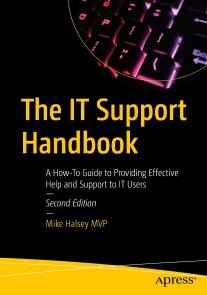
The IT Support Handbook
Become a more effective tech professional by learning how to provide the most useful IT support for your users. You'll learn how to efficiently and effectively deal with any type of problem, including operating systems, software, and hardware. IT support is often complex, time-consuming, and expensive, but it doesn't have to be with the right processes in place.Whether you're an individual, part of an IT support team, or managing staff supporting PC users in their homes, _this book _will help you understand the right way to approach, troubleshoot, and isolate problems so they can be handled efficiently, with the least disruption and cost to your business. Expanded and revised for this second edition, you'll make yourself popular with your colleagues, and keep your clients and users happy and productive.New To This EditionThe world of work has changed, with remote and hybrid working now the new normal and with IT Support departments worldwide having to adapt to this new paradigm. This expanded edition highlights the skills, tools, and structures needed to support businesses of any size in the new normal.WHAT YOU'LL LEARN* Manage reporting, and keep a record of issues that occur* Provide effective remote support for users working from home or elsewhere in the world* Use error and system reporting in Windows to obtain high-quality, relevant information* Spot patterns in user behavior that may be causing difficult-to-diagnose problems* Be familiar with best practices to make you a better support professionalWHO THIS BOOK IS FORIT professionals, IT support (on-site and remote), and system administrators who manage support teams. No prior knowledge is required.MIKE HALSEY is a Microsoft MVP (Most Valuable Professional) awardee, since 2011, and technical expert. As the author of Windows troubleshooting books and training videos since Windows 7 he is well versed in the problems and issues faced by PC users, IT pros, and system administrators when administering and maintaining all aspects of a PC ecosystem. Mike spent many years as a teacher and used this experience to help explain complex subjects in simple and straightforward ways. Originally from the UK, Mike now lives a simpler and less complicated life in the South of France with his three border collies, Evan, Robbie and Téo.Part I: IT Support Fundamentals.- 1. An Introduction to IT Support.- 2. Understanding Your IT System Better.- 3. Understanding Your Users: How Much Do They Know?.- Part II: IT Support Methodology.- 4. Flow Logic and Troubleshooting.- 5. Querying Users Effectively.- 6. Supporting Remote and Hybrid Workers. - 7. Joining The Dots: Finding the Root Cause of an IT Issue.- Part III: Understanding IT System Problems.- 8. How IT Systems are Structured.- 9. The Human Factor.- 10. The Peripheral Problem.- 11. Building and Environmental Factors.- 12. How Climate Change Affects IT Support. - Part IV: Documentation and Reporting.- 13. Why Good Documentation Matters.- 14. Creating Troubleshooting Guides.- 15. Creating and Managing Reporting.- 14. Harnessing System and Error Reporting in Windows.- 17. Obtaining Advanced Error and Status Information on PCs.- Part V: Providing Remote Support.- 18. Remote Support Tools.- 19. Gathering Information Remotely.- 20. Helping Your Users to Help You. – 21. Taking IT Support to the Next Level.

Getting Started with Pester 5
Embark on a transformative journey into the world of Pester and elevate your PowerShell scripting to new heights of robustness, reliability, and efficiency. This comprehensive beginner's guide provides a hands-on approach to PowerShell testing using Pester, empowering you to enhance your code quality with confidence.The book starts with an introduction to Pester, the powerful testing and mocking framework for PowerShell. You'll gain a solid foundation by exploring Pester's fundamental building blocks. The book guides you through the phases of Pester, helping you write your initial Pester code. You will dive into topics such as tags, assertions with Should and parameter filters, and you will explore advanced techniques such as Test Drive and Test Registry.You will discover the art of mocking in Pester and master its advanced testing methodologies. You will gain insights into working without installed modules and seamlessly integrating Pester with Azure DevOps Pipeline for a streamlined testing process.After reading this book, you will have the knowledge and skills to initiate your own exploration into PowerShell testing with Pester. You will transform your scripts into reliable powerhouses, ensuring the resilience and quality of your PowerShell code.WHAT WILL YOU LEARN* Building blocks and phases of Pester* Writing effective Pester tests* Assertions, mocking, and advanced testing techniques* Integration with Azure DevOps* Tags, code coverageWHO THIS BOOK IS FORPowerShell scripters and Pester Framework beginnersOWEN HEAUME is a seasoned PowerShell programmer with a passion for crafting efficient solutions in the dynamic landscapes of Intune and Azure. Having recently embarked on a professional journey in PowerShell programming for a prominent company within their automation team, Owen is dedicated to mastering the intricacies of Pester, Azure DevOps, and adhering to best practices.Owen has published books on deploying applications in Intune using PowerShell, deploying applications in ConfigMgr using PowerShell, and deploying language and regional settings using ConfigMgr. In this book, Owen shares insights gained from real-world experiences, providing readers with practical knowledge and a glimpse into the mind of a multi-faceted professional thriving in the realms of technology.Chapter 1: Unveiling the Power of Pester.- Chapter 2: Mastering Pester Fundamentals.- Chapter 3: Writing Your First Tests.- Chapter 4: Mastering Block Scope in Pester.- Chapter 5: Data-Driven Tests.- Chapter 6: Navigating the Pester Phases: Discovery and Run.- Chapter 7: Test Drive and Test Registry.- Chapter 8: Tags and Invoke-Pester.- Chapter 9: Mocking.- Chapter 10: Code Coverage.- Chapter 11: Integrating Pester with Azure DevOps Pipeline.- Chapter 12: Examples.

The Business of Hacking
There is a plethora of literature on the topic of penetration testing, hacking, and related fields. These books are almost exclusively concerned with the technical execution of penetration testing and occasionally the thought process of the penetration tester themselves. There is little to no literature on the unique challenges presented by creating, developing, and managing a penetration testing team that is both effective and scalable. In addition, there is little to no literature on the subject of developing contractual client relationships, marketing, finding and developing talent, and how to drive penetration test execution to achieve client needs. This book changes all that.The Business of Hacking is a one-of-a-kind book detailing the lessons the authors learned while building penetrating testing teams from the ground up, making them profitable, and constructing management principles that ensure team scalability. You will discover both the challenges you face as you develop your team of offensive security professionals and an understanding of how to overcome them. You will gain an understanding of the client’s requirements, how to meet them, and how to surpass them to provide clients with a uniquely professional experience.The authors have spent combined decades working in various aspects of cybersecurity with a focus on offensive cybersecurity. Their experience spans military, government, and commercial industries with most of that time spent in senior leadership positions.WHAT YOU’LL LEARN* How to handle and ongoing develop client relationships in a high end industry* Team management and how the offensive security industry comes with its own unique challenges. Experience in other industries does not guarantee success in penetration testing.* How to identify, understand, and over-deliver on client expectations.* How to staff and develop talent within the team.* Marketing opportunities and how to use the pentesting team as a wedge for upsell opportunities.* The various structures of services available that they may present to their clients.WHO THIS BOOK IS FORThis book is written for anyone curious who is interested in creating a penetration testing team or business. It is also relevant for anyone currently executing such a business and even for those simply participating in the business.MICHAEL BUTLER is a cybersecurity subject matter expert with 12 years of experience focusing on building, developing, and leading teams of ethical hackers. He is a primary instructor and developer of an offensive cloud security course taught both privately and at Blackhat conferences in the United States, Europe, and Asia. He has previously collaborated with Dr. Oakley as the technical reviewer for Professional Red Teaming and is the co-author of Theoretical Cybersecurity: Principles and Advanced Concepts (Apress, 2022).DR. JACOB G. OAKLEY is a cybersecurity author and subject matter expert with 16 years of experience focusing on strategic enterprise level cybersecurity architectures as well as offensive cybersecurity operations within government and commercial sectors. His previous technical books, Theoretical Cybersecurity, Professional Red Teaming, Waging Cyber War, and Cybersecurity for Space, are also published by Apress. Cybersecurity Engagements, as well as Waging Cyber War: Technical Challenges and Operational Constraints.CHAPTER 1: INTRODUCTION. -CHAPTER 2: THE CAPABILITY.- CHAPTER 3: FINDING AND RETAINING TALENT.- CHAPTER 4: TEAM MANAGEMENT.- CHAPTER 5: OPERATIONAL MANAGEMENT.- CHAPTER 6: DEVELOPING HACKERS.- CHAPTER 7: UNDERSTANDING CLIENTS.- CHAPTER 8: ENGAGEMENT MANAGEMENT AND SECURITY.- CHAPTER 9: EFFECTIVE WEB AND MOBILE APPLICATION TESTING.- CHAPTER 10: EFFECTIVE TESTING IN CLOUD ENVIRONMENTS.- CHAPTER 11: EFFECTIVE NETWORK TESTING.- CHAPTER 12: REPORTING.- CHAPTER 13: THE WEDGE.- CHAPTER 14: THE CYBER ARMS DEALER.- CHAPTER 15: NEW FRONTIERS.- CHAPTER 16: INFINITE COST BENEFIT.

Informatik in Teams
Auf dem 11. Münsteraner Workshop für Schulinformatik werden Erfahrungsberichte, Studien und didaktische Konzepte diskutiert, die Aspekte von Teamarbeit aufgreifen: z.B. Partizipation, Projektmanagement, kollaborative Plattformen, Prozessbegleitung, kooperative Übungen oder Bewertungen.Marco Thomas:Prof. Dr. Marco Thomas leitet den Arbeitsbereich Didaktik der Informatik an der Universität Münster.Michael Weigend:Dr. Michael Weigend ist Diplom-Informatiker, war Informatiklehrer in Witten und ist Dozent an der WWU-IT der Universität Münster.

CompTIA Linux+ Certification Companion
The CompTIA Linux+ Certification" book – the ultimate guide to mastering Linux system administration in preparation for the COMPTIA LINUX+ CERTIFICATION. Whether you're a beginner or an experienced professional, this comprehensive resource is designed to equip you with the knowledge and skills needed to excel in the world of Linux.With its comprehensive coverage, this book delves into essential Linux concepts, commands, and techniques, providing you with a complete reference guide. You'll review how to customize and navigate the shell environment, write powerful scripts, configure user interfaces, perform administrative tasks, configure system services, establish network connections, and secure your system. No stone is left unturned in this in-depth exploration of Linux administration.What sets this book apart is its practical approach. Real-world scenarios and practical applications take center stage, ensuring that you not only understand the theory but also know how to apply it effectively.Troubleshooting common issues becomes second nature as you gain the skills to diagnose and resolve system problems with ease. You'll discover industry best practices and standards, enabling you to optimize systems, implement robust security measures, and adhere to compliance regulations.WHAT YOU WILL LEARN:* Linux operating systems, including installation, configuration, and management of Linux-based servers and systems. * Essential administrative tasks, such as user and group management, file system administration, network configuration, and security implementation.* Insights into troubleshooting common Linux issues, enabling readers to diagnose and resolve system problems effectively. * Practical techniques for identifying and addressing system errors, performance bottlenecks, network connectivity issues, and other challenges that may arise in a Linux environment.* Industry best practices and standards in Linux administration. * System optimization, backup and recovery strategies, security practices, and adherence to compliance regulations.WHO THIS BOOK IS FOR:ADMINISTRATORS: This book serves as an excellent resource for individuals who are new to Linux administration and wish to develop a strong foundation in this field. They may have basic knowledge of Linux concepts or come from related IT roles and seek to expand their skills to include Linux system management.IT PROFESSIONALS TRANSITIONING TO LINUX: Professionals already working in the IT industry, such as system administrators or network engineers, who want to enhance their skill set and broaden their knowledge by incorporating Linux administration into their repertoire. They may have experience with other operating systems and are seeking to acquire Linux-specific skills.EXPERIENCED LINUX ADMINISTRATORS: Seasoned Linux administrators can benefit from this book as well. It serves as a comprehensive reference guide, offering advanced topics, best practices, and insights into the latest trends and developments in the Linux ecosystem. It can be a valuable resource for expanding their expertise and staying up-to-date with industry standards.Secondary or tertiary audiences may include IT managers, system architects, or developers who work closely with Linux systems and wish to gain a deeper understanding of Linux administration. Additionally, students pursuing computer science or IT-related degrees may find the book beneficial for their coursework and career advancement.AHMED SHEIKH is a Fulbright alumnus and has earned a master's degree in electrical engineering from Kansas State University, USA. He is a seasoned IT expert with a specialty in network security planning and skills in cloud computing. Currently, he is a Research Fellow at Energy Systems Research Laboratory.As an experienced IT professional with a passion for Linux, Ahmed Sheikh has spent several years working in various roles, including system administration and network engineering. Throughout his career, he has witnessed the growing demand for Linux expertise and the need for comprehensive resources in the field. This has motivated him to share his knowledge and experience through writing this book.Ahmed's goal is to provide readers with a practical and accessible guide that covers essential concepts, best practices, and real-world examples to help them succeed in their Linux journey. He is excited to contribute to the Linux community and empower individuals with the skills they need to excel in this ever-evolving field.Chapter 1. Introduction to Ethical Hacking.- Chapter 2. Footprinting and Reconnaissance & Scanning Networks.- Chapter 3. Enumeration.- Chapter 4. System Hacking.- Chapter 5. Trojans and Backdoors Viruses and Worms.- Chapter 6. Sniffers & Social Engineering.- Chapter 7. Denial of Service.- Chapter 8. Session Hijacking.- Chapter 9. Hacking Webservers.- Chapter 10. Hacking Web Applications.- Chapter 11. SQL Injection.- Chapter 12. Hacking Wireless Networks.- Chapter 13. Evading IDS, Firewalls, and Honeypots.- Chapter 14. Buffer Overflow.- Chapter 15. Cryptography.- Chapter 16. Penetration Testing.

The Engineering Leadership Playbook
In today's business landscape, software engineering teams must deliver innovation faster than ever. However, outdated management approaches centered on tools and metrics rather than people strangle velocity and creativity. Legacy leaders cling to rigid structures mismatched with market dynamics, draining effort and morale from burnt-out teams.The Engineering Leadership Playbook provides a modern framework to unlock your team's potential through empathy, clarity, and empowerment. Unlike traditional leadership books fixated on delivery metrics, Raphael Neves offers a refreshing people-oriented leadership model tailored to nuances of engineering culture.With 15+ years leading high-growth tech teams, Raphael demystifies how to balance autonomy with alignment, reconstruct feedback models on psychological safety, and sustain excellence amidst uncertainty. You'll learn his proven conflict resolution blueprint for defusing clashes through mutual understanding while tangibly tracking progress. Additionally, his continuous feedback system grounded in evidence spotlights gaps early while accelerating strengths.This playbook moves systematically from foundational concepts like emotional intelligence and leading by example into team development frameworks around high-impact coaching, mentorship, and performance reviews. The method is brought full circle through innovation catalysts that maintain creative momentum at scale.Step-by-step, Raphael unpacks human-centered leadership aligned with accelerating market realities. Apply his engineering management playbook, and your teams will thrive fuelled by vision, trust, and care.WHAT YOU'LL LEARN* A modern, human-centered framework to empower engineering teams through clarity, trust, and purpose.* Techniques to match coaching and mentoring styles to individual motivations and development needs.* A customizable 9-box talent assessment model grounded in objective competency evidence.* Conflict resolution blueprint focused on mutual understanding and win-win integrative solutions.* Methodologies to sustain growth mindsets, celebrate experimentation, and extract learnings from setbacks.* Systems to provide caring yet candid career feedback tailored to team members' personalities.* Frameworks to secure executive buy-in, influence without authority, and craft compelling narratives.* Engineering hiring practices focused on competencies over credentials to diversify innovation perspectives.* Approaches for compassionate yet accountable performance management grounded in structure.* Processes to create mentorship programs for individual learning styles and career ambitions.WHO THIS BOOK IS FORAspiring engineering leaders seeking management fundamentals, new managers transitioning into people leadership, and experienced executives refreshing approaches to performance and innovation. Its practical takeaways scale across software teams from lean startups to large enterprises.Chapter 1: Principles to Become an Effective Engineering Leader.- Chapter 2: Leadership Styles and Situational Leadership.- Chapter 3: Collaboration and Team Dynamics.- Chapter 4: The Art of Mentoring.- Chapter 5: Fostering Growth and Innovation.- Chapter 6: Evaluating and Developing Your Team.

Fog Computing for Intelligent Cloud IoT Systems
FOG COMPUTING FOR INTELLIGENT CLOUD IOT SYSTEMSTHIS BOOK IS A COMPREHENSIVE GUIDE ON FOG COMPUTING AND HOW IT FACILITATES COMPUTING, STORAGE, AND NETWORKING SERVICESFog computing is a decentralized computing structure that connects data, devices, and the cloud. It is an extension of cloud computing and is an essential concept in IoT (Internet of Things), as it reduces the burden of processing in cloud computing. It brings intelligence and processing closer to where the data is created and transmitted to other sources. Fog computing has many benefits, such as reduced latency in processing data, better response time that helps the user’s experience, and security and privacy compliance that assures protecting the vital data in the cloud. It also reduces the cost of bandwidth, because the processing is achieved in the cloud, which reduces network bandwidth usage and increases efficiency as user devices share data in the local processing infrastructure rather than the cloud service. Fog computing has various applications across industries, such as agriculture and farming, the healthcare industry, smart cities, education, and entertainment. For example, in the agriculture industry, a very prominent example is the SWAMP project, which stands for Smart Water Management Platform. With fog computing’s help, SWAMP develops a precision-based smart irrigation system concept used in agriculture, minimizing water wastage. This book is divided into three sections. The first section studies fog computing and machine learning, covering fog computing architecture, application perspective, computational offloading in mobile cloud computing, intelligent Cloud-IoT systems, machine learning fundamentals, and data visualization. The second section focuses on applications and analytics, spanning various applications of fog computing, such as in healthcare, Industry 4.0, cancer cell detection systems, smart farming, and precision farming. This section also covers analytics in fog computing using big data and patient monitoring systems, and the emergence of fog computing concerning applications and potentialities in traditional and digital educational systems. Security aspects in fog computing through blockchain and IoT, and fine-grained access through attribute-based encryption for fog computing are also covered. AUDIENCEThe book will be read by researchers and engineers in computer science, information technology, electronics, and communication specializing in machine learning, deep learning, the cyber world, IoT, and security systems. CHANDAN BANERJEE, PHD, is a professor in the Department of Information Technology, Netaji Subhash Engineering College, West Bengal, India. His research interests include cloud computing, computer networks, fog computing, data structure, and algorithms. With about 35 publications in referred international journals, he serves as a reviewer for many peer-reviewed international journals and international conferences. Banerjee is the recipient of several awards including the top-performing mentor award and the Silver Partner Faculty Recognition award. ANUPAM GHOSH, PHD, is a professor in the Department of Computer Science and Engineering, Netaji Subhash Engineering College, Kolkata, India. He has published more than 100 international papers in reputed international journals and conferences. His fields of interest are mainly AI, machine learning, deep learning, image processing, soft computing, bioinformatics, IoT, and data mining. RAJDEEP CHAKRABORTY, PHD, is an assistant professor in the Department of Computer Science and Engineering, Netaji Subhash Engineering College, Kolkata, India. His fields of interest are mainly in cryptography and computer security. He was awarded the Adarsh Vidya Saraswati Rashtriya Puraskar, National Award of Excellence 2019 conferred by Glacier Journal Research Foundation, AHMED A. ELNGAR, PHD, is an associate professor in the Department of Computer Science and Engineering, University Institute of Engineering, Chandigarh University, Punjab, India. His field of interest focuses on cryptology and computer security. He has several publications in reputed journals along with a book on hardware cryptography. In 2019, Elngar was awarded the Adarsh Vidya Sarawati Rashtriya Puraskar, National Award of Excellence. Preface xviiPART I: STUDY OF FOG COMPUTING AND MACHINE LEARNING 11 Fog Computing: Architecture and Application 3Soumen Swarnakar2 A Comparative Review on Different Techniques of Computation Offloading in Mobile Cloud Computing 33Priyajit Sen, Tamanna Islam, Rajat Pandit and Debabrata Sarddar3 Fog Computing for Intelligent Cloud–IoT System: Optimization of Fog Computing in Industry 4.0 45Mayank Patel, Monika Bhatt and Ankush Patel4 Machine Learning Integration in Agriculture Domain: Concepts and Applications 71Ankur Biswas and Rita Banik5 Role of Intelligent IoT Applications in Fog Computing 99Pawan Whig, Dhaya Sindhu Battina, Srinivas Venkata, Ashima Bhatnagar Bhatia and Yusuf Jibrin Alkali6 SaaS-Based Data Visualization Platform—A Study in COVID-19 Perspective 119S. Majumder, A. Shaw, R. Keshri and A. Chakraborty7 A Complete Study on Machine Learning Algorithms for Medical Data Analysis Inderdeep 137Kaur and Aleem AliPART II: APPLICATIONS AND ANALYTICS 1738 Fog Computing in Healthcare: Application Taxonomy, Challenges and Opportunities 175Subrata Datta and Priyanka Datta9 IoT-Driven Predictive Maintenance Approach in Industry 4.0: A Fiber Bragg Grating (FBG) Sensor Application 203Dipak Ranjan Nayak, Pramod Sharma, Ambarish G. Mohapatra, Narayan Nayak, Bright Keswani and Ashish Khanna10 Fog Computing-Enabled Cancer Cell Detection System Using Convolution Neural Network in Internet of Medical Things 229Soumen Santra, Dipankar Majumdar and Surajit Mandal11 Application of IoT in Smart Farming and Precision Farming: A Review 245Suparna Biswas and Soumik Podder12 Big IoT Data Analytics in Fog Computing 279Manash Kumar Mondal, Riman Mandal and Utpal Biswas13 IOT-Based Patient Monitoring System in Real Time 309Suparna Biswas, Tirtha Chakraborty, Souvik Mitra, Shubham Banerjee, Tuhin Sarkar and Sourav Paul14 Fog Computing and Its Emergence with Reference to Applications and Potentialities in Traditional and Digital Educational Systems: A Scientific Review 331P. K. PaulPART III: SECURITY IN FOG COMPUTING 35515 Blockchain Security for Fog Computing 357Saiyam Varshney and Gur Mauj Saran Srivastava16 Blockchain Security for Fog Computing and Internet of Things 379Awais Khan Jumani, Waqas Ahmed Siddique, Muhammad Farhan Siddiqui and Kanwal17 Fine-Grained Access Through Attribute-Based Encryption for Fog Computing 405Malabika DasReferences 421Index 425

Jump-start Your SOC Analyst Career
The frontlines of cybersecurity operations include many unfilled jobs and exciting career opportunities.A transition to a security operations center (SOC) analyst position could be the start of a new path for you. Learn to actively analyze threats, protect your enterprise from harm, and kick-start your road to cybersecurity success with this one-of-a-kind book.Authors _Tyler E. Wall _and _Jarrett W. Rodrick _carefully and expertly share real-world insights and practical tips in _Jump-start Your SOC Analyst Career_. The lessons revealed equip you for interview preparation, tackling day one on the job, and setting long-term development goals.This book highlights personal stories from five SOC professionals at various career levels with keen advice that is immediately applicable to your own journey. The gems of knowledge shared in this book provide you with a notable advantage for entering this dynamic field of work.The recent surplus in demand for SOC analysts makes _Jump-start Your SOC Analyst Career _a must-have for aspiring tech professionals and long-time veterans alike. Recent industry developments such as using the cloud and security automation are broken down in concise,understandable ways, to name a few. The rapidly changing world of cybersecurity requires innovation and fresh eyes, and this book is your roadmap to success.NEW TO THIS EDITION:This revised edition includes three entirely new chapters: Roadmap to Cybersecurity Success, The SOC Analyst Method, and ChatGPT for SOC Analysts. In addition, new material includes a substantially revised Cloud chapter, revised pre-requisite skills, and minor revisions to all chapters to update data.WHAT YOU WILL LEARN• Understand the demand for SOC analysts• Know how to find a SOC analyst job fast• Be aware of the people you will interact with as a SOC analyst• Be clear on the prerequisite skills needed to be a SOC analyst and what to study• Be familiar with the day-to-day life of a SOC analyst, including the toolsand language used• Discover the rapidly emerging areas of a SOC analyst job: the cloud• and security automation• Explore the career paths of a SOC analyst• Discover background-specific tips for your roadmap to cybersecurity success• Know how to analyze a security event• Know how to apply ChatGPT as a SOC analystWHO THIS BOOK IS FORAnyone interested in starting a career in cybersecurity: recent graduates, IT professionals transitioning into security, veterans, and those who are self-taught.TYLER WALL is CEO of Cyber NOW Education, which specializes in global cybersecurity training and certification that’s accessible and affordable. He is an accomplished security professional with a decade of experience in security operations at some of the world’s largest corporations. Tyler’s education includes: Master of Science in Cybersecurity Management from Purdue University, CISSP, CEH, CSSK, Terraform Associate, CFSR, LRPA, Security+, Network+, and A+. He enjoys spending time with his son and being creative.JARRETT W. RODRICK is the Senior Manager of Security Operations at Omnissa and was formerly the Senior Manager of the Security Operation Center at VMware. He is a retired Cyber Network Defender and Cyber Warfare Specialist from the US Army and has over eleven years of Defensive Cyber Operations experience between US Army Cyber Command and leading world-class security programs at Fortune 100 companies. Jarrett’s education includes a Bachelor of Science in Applied Cybersecurity from SANS Technology Institute and 17 GIAC cyber security certifications. Jarrett lives in Melissa, Texas, and enjoys golfing with his son and board games with his family.Chapter 1: The Demand for Cybersecurity and SOC Analysts.- Chapter 2: Areas of Expertise in Cybersecurity.- Chapter 3: Job Hunting.- Chapter 4: Prerequisite Skills.- Chapter 5: The SOC Analyst.- Chapter 6: SOC in the Clouds.- Chapter 7: SOC Automation.- Chapter 8:ChatGPT for SOC Analysts.- Chapter 9: The SOC Analyst Method.- Chapter 10: Roadmap to Success.- Chapter 11: Real SOC Analyst Stories.

Responsive Layouts
Welcome to the book “Responsive Layouts: Flex, Grid and Multi-Column” In this book I explain the three best-known responsive layouts: the Flexbox, the Grid and the Multi-Column layout. Flexbox is a one-dimensional layout that only works in one dimension at a time, either horizontally or vertically. The grid layout is a two-dimensional layout that distributes the elements horizontally and vertically at the same time. The multi-column layout is a special layout for magazines and newspapers, where the text should flow in columns with spacing, rules, etc. I'll explain all the properties and their values and how they affect the distribution of elements on the screen. So let's get started. Hello, I am Abdelfattah Ragab, a professional software developer with more than 20 years of experience. I am an expert in Angular, CSS, graphic design and all web related technologies. I have published numerous books on modern CSS layouts and Angular as well as complete business solutions for e-commerce and the like. I hope you enjoy my books. With kind regards.

Angular Shopping Store
In this book, you'll learn how to create an online shopping store using the Angular framework. To get your store up and running, you need more than Angular. You need a backend, a database, payment and shipping gateways and much more. This book is only about the frontend part. The goal of this book is to show you in detail how to create the frontend part of your online store. You will create everything from scratch and end up with a complete frontend shopping store. To make things even more interesting, I've created a small Nodejs application to help you with Stripe payments so you can sell items in your store. However, in reality, you need to use webhooks to make sure the money has landed in your Stripe account before you release the product to the customer. All these details are part of full-stack development. Also in this book, we will focus only on the front-end part of the application to strengthen your Angular skills and prepare you for full-stack projects. Hello, I am Abdelfattah Ragab, a professional software developer with more than 20 years of experience. I am an expert in Angular, CSS, graphic design and all web related technologies. I have published numerous books on modern CSS layouts and Angular as well as complete business solutions for e-commerce and the like. I hope you enjoy my books. With kind regards.

Angular Portfolio App Development
In this book you'll learn how to create an online portfolio application with Angular. Building a personal brand is important for your online growth and career. In this book, you'll learn how to create an online portfolio application to showcase your talent to the world and impress your potential employers. We start from scratch and build everything together. By the end of this book, you'll be confident working with Angular and creating an elegant and impressive portfolio to showcase yourself online. We will use the latest Angular technology v19.2, NgRx SignalStore and Modern CSS Layouts. Hello, I am Abdelfattah Ragab, a professional software developer with more than 20 years of experience. I am an expert in Angular, CSS, graphic design and all web related technologies. I have published numerous books on modern CSS layouts and Angular as well as complete business solutions for e-commerce and the like. I hope you enjoy my books. With kind regards.
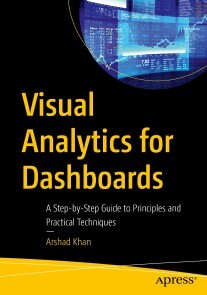
Visual Analytics for Dashboards
This book covers the key principles, best practices, and practical techniques for designing and implementing visually compelling dashboards. It explores the various stages of the dashboard development process, from understanding user needs and defining goals, to selecting appropriate visual encodings, designing effective layouts, and employing interactive elements. It also addresses the critical aspect of data storytelling, examining how narratives and context can be woven into dashboards to deliver impactful insights and engage audiences._Visual Analytics for Dashboards _is designed to cater to a wide range of readers, from beginners looking to grasp the fundamentals of visual analytics, to seasoned professionals seeking to enhance their dashboard design skills. For different types of readers, such as a data analyst, BI professional, data scientist, or simply someone interested in data visualization, this book aims to equip them with the knowledge and tools necessary to create impactful dashboards.WHAT YOU’LL LEARNThe principles of data visualizationHow to create effective dashboardsMeet all the requirements for visual analytics/data visualization/dashboard coursesDeepen understanding of data presentation and analysisHow to use different kinds of tools for data analysis, such as scorecards and key performance indicatorsWHO THIS BOOK IS FORBusiness analysts, data analysts, BI professionals, end-users, executives, developers, as well as students in dashboards, data visualizations, and visual analytics courses.Arshad Khan is a versatile business intelligence/analytics and training professional, with 35+ years of experience, who has led many Tableau and SAP projects. He has consulted for Accenture, PwC, Deloitte, Chevron, Bose Corporation, Daimler Chrysler, Genentech, PepsiCo, Hitachi-America, and many other blue-chip companies.Khan has authored 17 books including six on business intelligence. He has taught many data visualization, dashboards, data analysis, BI, and SAP courses at 9 universities including Golden Gate University, Santa Clara University, and the University of California (Berkeley, Santa Cruz/Silicon Valley, and San Diego Extensions). Mr. Khan has a graduate degree in chemical engineering and an MBA.Chapter 1: Dashboards.- Chapter 2: Scorecards.- Chapter 3: Key performance indicators.- Chapter 4: Dashboard requirements.- Chapter 5: Dashboard design.- Chapter 6: Data visualization.- Chapter 7: Visualization principles.- Chapter 8: Visual communication.- Chapter 9: Understanding and using charts.- Chapter 10: Selecting charts.- Chapter 11: Best Practices and Tips.

Windows Forensics
This book is your comprehensive guide to Windows forensics. It covers the process of conducting or performing a forensic investigation of systems that run on Windows operating systems. It also includes analysis of incident response, recovery, and auditing of equipment used in executing any criminal activity.The book covers Windows registry, architecture, and systems as well as forensic techniques, along with coverage of how to write reports, legal standards, and how to testify. It starts with an introduction to Windows followed by forensic concepts and methods of creating forensic images. You will learn Windows file artefacts along with Windows Registry and Windows Memory forensics. And you will learn to work with PowerShell scripting for forensic applications and Windows email forensics. Microsoft Azure and cloud forensics are discussed and you will learn how to extract from the cloud. By the end of the book you will know data-hiding techniques in Windows and learn about volatility and a Windows Registry cheat sheet.WHAT WILL YOU LEARN* Understand Windows architecture* Recover deleted files from Windows and the recycle bin* Use volatility and PassMark volatility workbench* Utilize Windows PowerShell scripting for forensic applicationsWHO THIS BOOK IS FORWindows administrators, forensics practitioners, and those wanting to enter the field of digital forensicsDR. CHUCK EASTTOM is the author of 39 books, including several on computer security, forensics, and cryptography. He is also an inventor with 25 patents and the author of over 70 research papers. He holds a Doctor of Science in cyber security, a Ph.D. in Nanotechnology, a Ph.D. in computer science, and three master’s degrees.DR. WILLIAM BUTLER is Vice President of Academic Affairs and Executive Director of the Center for Cybersecurity Research and Analysis (CCRA) at Capitol Technology University (Located in Laurel, Maryland). Before this appointment, Bill served as the Chair of Cybersecurity programs for eight years.JESSICA PHELAN is a computer science graduate student at Vanderbilt University. She is currently doing research in natural language processing at the University of Texas at Austin.RAMYA SAI BHAGAVATULA is a Cybersecurity enthusiast and holds a Security+ Certification from CompTIA. She is currently working as an AI Engineer for a medical organization, Baylor Genetics, where she is using her AI expertise to work with genomic data to bring out valuable insights and predictions. She has previously worked for NASA as a Deep Learning Research Intern, where she developed deep learning models to effectively predict severe climate patterns. She was also a lead Data Analyst Intern at an arts organization, Houston Arts Alliance, where she was involved in analyzing in-depth patterns and providing recommendations for their future art grants. Through her dedication to continuous learning and professional development, she pursued her Master's in Data Analytics at UH and is currently pursuing her second Master's in Computer Science at Vanderbilt University. She is also 3x Microsoft Certified in AI and Data Engineering. She aspires for her future career path to involve Cybersecurity, Quantum Computing, and AI. In her free time, she loves to volunteer at local organizationsto raise awareness about Computer Science among underprivileged school students. She has also received the Presidential Volunteer Service Award for her volunteer services.SEAN STEUBER has a BS in Engineering from University of Alabama, an MS in Computer Science from Vanderbilt University, and eight years of professional computer science experience.KARELY RODRIGUEZ is a first-generation DACA recipient and a woman pursuing STEM. She earned a Bachelor’s of Science in Computer Science and minored in Mathematics at the University of Washington and has continued her education in achieving a Masters of Computer Science from Vanderbilt University.VICTORIA INDY BALKISSOON is working in the Naval Enterprise Research Data Science (N.E.R.D.S.) team at NAWCTSD Orlando where she currently works on developing software applications and data science solutions for the US NAVY. She is also currently pursuing a Master’s degree inComputer Science at Vanderbilt University.ZEHRA NASEER has an MS in Ccmputer Science from Vanderbilt University.Chapter 1: Introduction to Windows.- Chapter 2: Forensics Concepts.- Chapter 3: Creating Forensic Images Using OSForensics, FTK Imager, and Autopsy.- Chapter 4: Windows File Artifacts.- Chapter 5: Windows Registry Part 1.- Chapter 6: Windows Registry Part 2.- Chapter 7: Windows Shadow Copy.- Chapter 8: Windows Memory Forensics.- Chapter 9: PowerShell Forensics.- Chapter 10: Web Browser Forensics.- Chapter 11: Windows Email Forensics.- Chapter 12: Microsoft Azure and Cloud Forensics.- Chapter 13: Data-Hiding Techniques in Windows.- Appendix A: Volatility Cheat Sheet.- Appendix B: Windows Registry Cheat Sheet.

Mastering Knowledge Management Using Microsoft Technologies
For companies and individuals already using Microsoft365 and other Microsoft technologies, this book is designed to reveal how to fully utilize these platforms for effective Knowledge Management without needing to rely on additional third-party tools. It addresses a common issue where organizations find themselves with overlapping technology capabilities for managing knowledge. This situation arises because many companies are not fully aware of the capabilities they already possess within their existing Microsoft tools. Knowledge management firms capitalize on this gap by offering white-labeled, branded applications with user-friendly interfaces, selling them to companies that could achieve the same results with what they already own, if only they knew how to use them properly. By mastering the use of Microsoft technologies for Knowledge Management, organizations can save significant amounts of money that would otherwise be spent on unnecessary external solutions.Whether your objective is to optimize Knowledge Management processes or align these tools with your organization's business processes, this book is designed to serve as a valuable resource, offering practical guidance and strategies to empower your endeavors. By the end of this book, readers will be equipped with the knowledge and skills necessary to make informed decisions regarding the utilization of Microsoft technologies for Knowledge Management and organizational design.WHAT YOU WILL LEARN* The components of a Microsoft Knowledge Base* How PowerPlatfom can support Knowledge Management activities* How Microsoft tools fit into the Knowledge Management Landscape* How to integrate AI using Microsoft Co-PilotWHO THIS BOOK IS FORChief Technology Officers, Chief Information Officers, Chief Knowledge Officers, Chief Digital Officers, Directors of Knowledge Management, Knowledge Managers, SharePoint Administrators, Digital Transformation ConsultantsTori Reddy Dodla, Ph.D., a distinguished professional with the title of Knowledge Collaborative Engineer Principal, brings a wealth of expertise and academic rigor to knowledge management. Holding a Ph.D. in Technology, Dr. Dodla has dedicated her career to unraveling the complexities of knowledge management systems. Her research, centered on navigating the risks, rewards, and implementation challenges of knowledge management including Microsoft products has not only advanced the theoretical underpinnings of the field but has also contributed practical insights that have guided organizations toward more effective knowledge strategies.Chapter 1: Microsoft is Good for Knowledge Management.- Chapter 2: The Importance of a Knowledge Base.- Chapter 3: PowerApps for Knowledge Sharing.- Chapter 4: PowerBi for Gamification.- Chapter 5: Integrate AI on PowerPlatform.- Chapter 6: Knowledge Management for Document Management.- Chapter 7: Designing a SharePoint Newsletter.- Chapter 8: Knowledge Management Metrics and Analytics.- Chapter 9: Knowledge Management Challenges and Solutions.