

Computer und IT
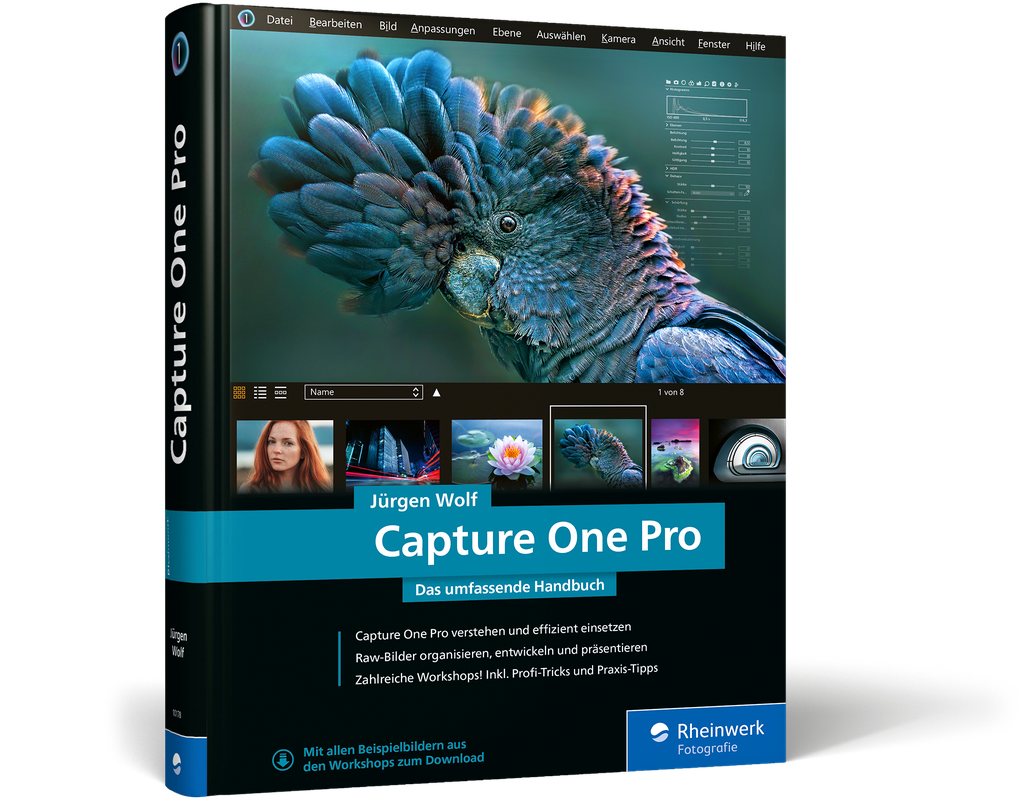
Capture One Pro (8. Auflg.)
Capture One Pro - Das umfassende Handbuch. In 8., aktualisierter und überarbeiteter Auflage (2024).In diesem Buch finden Sie alles zu Capture One Pro! Jürgen Wolf zeigt Ihnen in über 100 Workshops Schritt für Schritt, wie Sie die Software effizient einsetzen und Ihren Workflow aufbauen. Lernen Sie, mit Sessions oder Katalogen zu arbeiten. Archivieren und verwalten Sie Ihre Fotos. Bearbeiten Sie Ihre Raw-Bilder perfekt und veröffentlichen oder drucken Sie sie. Verstehen Sie Werkzeuge, Funktionen und Einstellungen im Detail, um besser entscheiden und zielgenauer arbeiten zu können. Nutzen Sie die neuen KI-Funktionen. Kurzum: Mit diesem Handbuch haben Sie Capture One Pro im Griff!1. Für Ein- und UmsteigerCapture One Pro ist Ihr neuer Raw-Konverter? Wie Sie damit kreativ und effizient arbeiten, zeigt Ihnen dieses Buch mit hilfreichem Hintergrundwissen und in leicht nachvollziehbaren Schritten: von der Bildverwaltung über die Raw-Entwicklung bis hin zur Ausgabe Ihrer Fotos. Natürlich erfahren Sie auch, wie Sie Ihren eventuell vorhandenen Lightroom-Katalog importieren.2. Sofort loslegen und Capture One Pro effizient nutzenAufschlagen und direkt loslegen: In über 100 Workshops lernen Sie, wie Sie eine Session oder einen Katalog starten, Ihre Bilder sinnvoll archivieren und verwalten, Raw-Bilder bearbeiten und Ihre Fotografien ansprechend veröffentlichen und drucken. Passendes Bildmaterial zum Ausprobieren liegt für Sie zum Download bereit. So finden Sie schnell Ihren individuellen, zeitsparenden Foto-Workflow.3. Anspruchsvolle Bildverwaltung und BildbearbeitungReizen Sie das Potenzial Ihrer Bilder aus und optimieren Sie Farben, Kontrast und Schärfe auf den Punkt. Lassen Sie sich von den neuen KI-Funktionen unterstützen. Erstellen Sie mit Capture One Pro spannende Bildlooks und sparen Sie Zeit mit Smart Adjustments. Lernen Sie, wie Sie mit Culling leicht die besten Bilder auswählen. Und für Capture One on the go oder auf der Couch: Tipps und Tricks zur Nutzung der iPad-Version.Aus dem Inhalt:Grundlagen und ArbeitsbereichKataloge und SessionsCulling, Metadaten, Schlüsselwörter und FarbmarkierungenDer optimale EntwicklungsworkflowMotivgerechte EntwicklungHelligkeit und Kontrast optimierenSmart Adjustments für einheitliche Looks per KlickFarbkorrektur und SchwarzweißHDR und PanoramaExportieren, veröffentlichen und ausdruckenCapture One Pro individuell anpassenInkl. Capture One für iPadLeseprobe (PDF-Link)Über den Autor:Jürgen Wolf ist passionierter Digitalfotograf. Er arbeitet bereits seit Jahren mit Capture One Pro und weiß um die Tücken der Bildverwaltung und -bearbeitung.
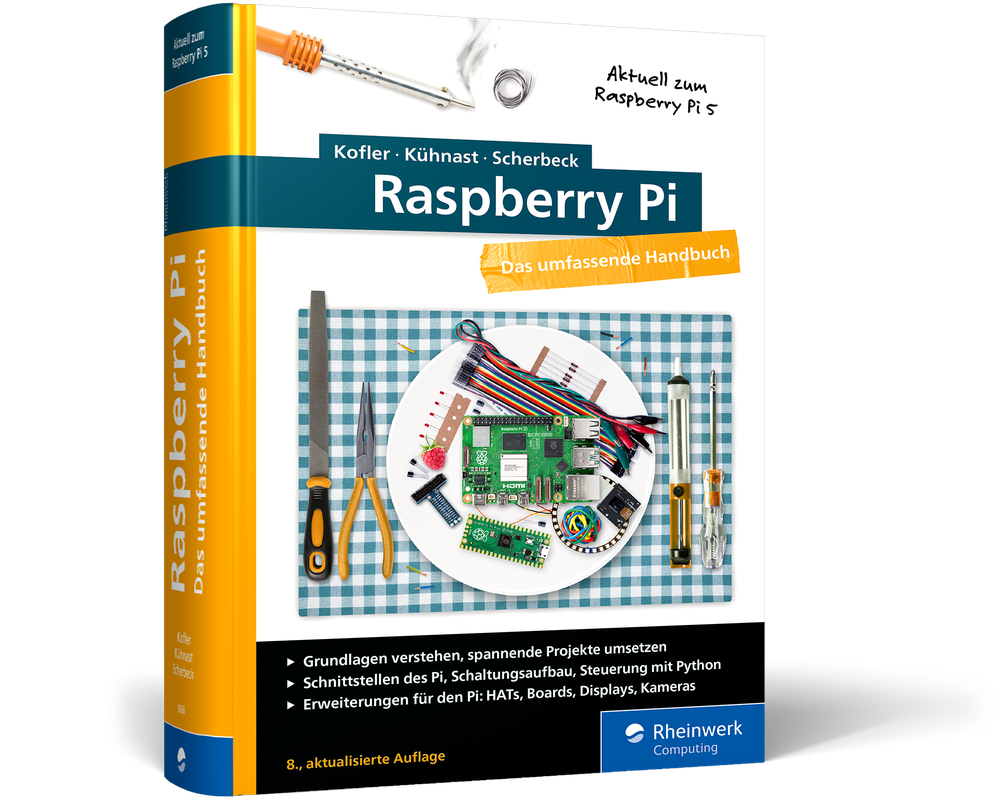
Raspberry Pi - Das umfassende Handbuch (8. Auflage)
Raspberry Pi - Das umfassende Handbuch. In 8., aktualisierter Auflage. Mai 2024.Vollständig überarbeitet zum Raspberry Pi 5, dem Raspberry Pi OS »Bookworm« und den neuen GPIO-Bibliotheken.Der Raspberry Pi ist eine wahre Erfolgsgeschichte. Seit 2011 begeistert der kleine Mini-Computer Maker, Kreative und IT-Fachleute. Was Sie mit dem Pi anstellen können, zeigen Ihnen Michael Kofler, Charly Kühnast und Christoph Scherbeck auf über 1.000 Seiten. Vom Einstieg bis zu spannenden Projekten finden Sie in diesem Handbuch das komplette Wissen, um mit dem Raspberry Pi richtig durchzustarten. Es ist randvoll mit Grundlagen und Kniffen zu Linux, Hardware, Elektronik und Programmierung. Genau richtig für alle, die Serverdienste hosten möchten, Bastelideen haben und direkt loslegen wollen. Vorwissen? Nicht nötig, Ihr Erfindergeist reicht völlig aus. Legen Sie gleich los und lassen Sie Ihrer Kreativität freien Lauf!Tüfteln, Knobeln, Basteln? So gelingt's!1. Die GrundlagenSie lernen den Raspberry Pi und Linux von Grund auf kennen, steuern ihn via Desktop und Terminal, nutzen ihn als Medien-Center und automatisieren schon bald erste Vorgänge mit Shell-Scripts.2. Planen, schalten und programmierenNach einer Einführung in die Schnittstellen des Pi sowie alle wichtigen Erweiterungsboards und Sensoren lernen Sie, ihn mit eigenen Python- oder C-Programmen zu steuern. Crashkurs für Programmierung und Elektronikwissen inklusive.3. Der Grundstein für Ihre ProjekteDen RasPi zur Steuerzentrale des Smart Homes machen? Ein autonomes Auto bauen? Per RFID Türen öffnen, mit DVB-T den Luftraum überwachen? Der Umsetzung Ihrer Ideen auf Basis der Beispielprojekte sind kaum Grenzen gesetzt!Aus dem Inhalt:Den Raspberry Pi kennenlernen: Kauf und Inbetriebnahme, Betriebssysteme, SoftwareIhr Medien-Center: der Raspberry Pi mit Kodi, LibreELEC, als DLNA-Server und als NAS-Gerät (openmediavault)Hardware-Grundlagen: Elektrotechnik-Crashkurs, Werkzeuge, Zusatzgeräte u. v. m.Sensoren, Servo- und Schrittmotoren, LEDs, Bussysteme, DisplaysGertboard, PiFace, Raspberry-Pi-HATs, HiFiBerry-Audio-SystemProgrammierung: Python, bash, C, Java und PHP mit dem Raspberry PiProjekte: viele spannende Ideen für Einsteiger und FortgeschritteneServocam, Luftraumüberwachung, Smartlight-Steuerung u. v. m.Fingersensor, OLED-Display, ePaper-Display, Feinstaubmessgerät, WassermelderSmart-Home mit Home AssistantLeseprobe (PDF-Link)

MacBook For Dummies
DISCOVER THE BEST TIPS AND TRICKS FOR USING YOUR NEW MAC LAPTOPFor years, MacBook For Dummies has been making it easy to learn new technology. This new edition keeps the easy-to-follow instructions coming. Learn the basics of customizing your Dock and using desktop widgets. Then, figure out how to go on the internet, stream music, send instant messages, and more. Expert author Mark Chambers will show you how to navigate the macOS operating system and personalize your MacBook to your liking. And you'll learn your way around features like Stage Manager, Continuity Camera, SharePlay, and Handoff. Is this your first new computer in a while? MacBook For Dummies gives you the rundown on how to exist without an internal DVD drive. Whether you're a newbie or a Mac veteran looking for insider tips, this is the quick start guide for you.* Learn the features and productivity tools from macOS* Stay protected by making the most of the built-in Mac security features* Organize your life with Mac's multitasking feature, Stage Manager* Discover how to stream music, edit videos, and share media content onlineMacBook beginners and upgraders alike will graduate to power users of the MacBook Pro and MacBook Air models, thanks to this trusted Dummies title. MARK L. CHAMBERS has been an author, computer consultant, and programmer for decades. He has written over 30 computer books, including MacBook® For Dummies, 9th Edition, Macs For Seniors For Dummies, 4th Edition, and iMac For Dummies, 10th Edition. Mark is currently a full-time author and tech editor—and an unabashed Mac fan.

Schnelles und skalierbares Cloud-Datenmanagement
Die enorme Datenmenge erfordert skalierbare Datenverwaltung für weltweiten Zugriff. Zahlreiche NoSQL-Systeme prägen die komplexe Landschaft. Dieses Buch bietet Überblick und Klassifikation im Cloud-Datenmanagement. Themen umfassen NoSQL-Speichersysteme, polyglotte Architekturen, verteilte Transaktionen, Web-Caching, Datenzugriff und Rendering-Performance. Die Klassifikation ermöglicht eine Betrachtung des Gesamtentwurfs und der Positionen jedes Systems. Ein anwendungsorientiertes Entscheidungshilfetool erleichtert die Auswahl geeigneter Systemkandidaten für bestimmte Anwendungsszenarien.FELIX GESSERT Ist der CEO und Mitbegründer des Backend-as-a-Service-Unternehmens Baqend. Während seiner Promotion an der Universität Hamburg entwickelte er die Kerntechnologie hinter Baqends Web-Performance-Service. Felix setzt sich leidenschaftlich dafür ein, das Web schneller zu machen, indem er Forschungsergebnisse in praxisnahe Anwendungen umsetzt. Er spricht häufig auf Konferenzen über spannende Technologietrends in der Datenverwaltung und Web-Performance.WOLFRAM "WOLLE" WINGERATH ist der leitende Dateningenieur bei Baqend, wo er für Datenanalyse und alles rund um die Echtzeit-Abfrageverarbeitung verantwortlich ist. Während seiner Promotion an der Universität Hamburg entwickelte Wolle das skalierbare Design hinter Baqends Echtzeit-Abfrage-Engine. Er hat einen starken Hintergrund in Echtzeit-Datenbanken und verwandten Technologien wie skalierbarer Stream-Verarbeitung, NoSQL-Datenbanken, Cloud Computing und Big Data Analytics.NORBERT RITTER ist Professor für Informatik an der Universität Hamburg und leitet die Gruppe Datenbanken und Informationssysteme (DBIS). Er promovierte 1997 an der Universität Kaiserslautern. Seine Forschungsinteressen umfassen verteilte und föderierte Datenbanksysteme, Transaktionsverarbeitung, Caching, Cloud-Datenmanagement, Informationsintegration und autonome Datenbanksysteme. Er unterrichtet seit mehreren Jahren NoSQL-Themen in verschiedenen Kursen. Gemeinsam mit Wolle und Felix organisiert er den jährlichen Scalable Cloud Data Management Workshop, um die Forschung in diesem Bereich zu fördern.L-Themen in verschiedenen Kursen. Gemeinsam mit Wolle und Felix organisiert er den jährlichen Scalable Cloud Data Management Workshop, um die Forschung in diesem Bereich zu fördern.L-Themen in verschiedenen Kursen. Gemeinsam mit Wolle und Felix organisiert er den jährlichen Scalable Cloud Data Management Workshop, um die Forschung in diesem Bereich zu fördern.L-Themen in verschiedenen Kursen. Gemeinsam mit Wolle und Felix organisiert er den jährlichen Scalable Cloud Data Management Workshop, um die Forschung in diesem Bereich zu fördern.L-Themen in verschiedenen Kursen. Gemeinsam mit Wolle und Felix organisiert er den jährlichen Scalable Cloud Data Management Workshop, um die Forschung in diesem Bereich zu fördern.L-Themen in verschiedenen Kursen. Gemeinsam mit Wolle und Felix organisiert er den jährlichen Scalable Cloud Data Management Workshop, um die Forschung in diesem Bereich zu fördern.L-Themen in verschiedenen Kursen. Gemeinsam mit Wolle und Felix organisiert er den jährlichen Scalable Cloud Data Management Workshop, um die Forschung in diesem Bereich zu fördern.L-Themen in verschiedenen Kursen. Gemeinsam mit Wolle und Felix organisiert er den jährlichen Scalable Cloud Data Management Workshop, um die Forschung in diesem Bereich zu fördern.L-Themen in verschiedenen Kursen. Gemeinsam mit Wolle und Felix organisiert er den jährlichen Scalable Cloud Data Management Workshop, um die Forschung in diesem Bereich zu fördern.L-Themen in verschiedenen Kursen. Gemeinsam mit Wolle und Felix organisiert er den jährlichen Scalable Cloud Data Management Workshop, um die Forschung in diesem Bereich zu fördern.L-Themen in verschiedenen Kursen. Gemeinsam mit Wolle und Felix organisiert er den jährlichen Scalable Cloud Data Management Workshop, um die Forschung in diesem Bereich zu fördern.L-Themen in verschiedenen Kursen. Gemeinsam mit Wolle und Felix organisiert er den jährlichen Scalable Cloud Data Management Workshop, um die Forschung in diesem Bereich zu fördern.L-Themen in verschiedenen Kursen. Gemeinsam mit Wolle und Felix organisiert er den jährlichen Scalable Cloud Data Management Workshop, um die Forschung in diesem Bereich zu fördern.L-Themen in verschiedenen Kursen. Gemeinsam mit Wolle und Felix organisiert er den jährlichen Scalable Cloud Data Management Workshop, um die Forschung in diesem Bereich zu fördern. Vorwort.- 1 Einführung.- 2 Latenz in Cloud-basierten Anwendungen.- 3 HTTP für global verteilte Anwendungen.- 4 Systeme für skalierbares Datenmanagement.- 5 Caching in Forschung und Industrie.- 6 Transaktionale Semantik.-7 Polyglotte Persistenz im Datenmanagement.- 8 Die NoSQL Toolbox: Die NoSQL-Landschaft in Kürze.- 9 Zusammenfassung und zukünftige Trends.
Mastering MySQL Administration
This book is your one-stop resource on MySQL database installation and server management for administrators. It covers installation, upgrades, monitoring, high availability, disaster recovery, security, and performance and troubleshooting. You will become fluent in MySQL 8.2, the latest version of the highly scalable and robust relational database system.With a hands-on approach, the book offers step-by-step guidance on installing, upgrading, and establishing robust high availability and disaster recovery capabilities for MySQL databases. It also covers high availability with InnoDB and NDB clusters, MySQL routers and enterprise MySQL tools, along with robust security design and performance techniques. Throughout, the authors punctuate concepts with examples taken from their experience with large-scale implementations at companies such as Meta and American Airlines, anchoring this practical guide to MySQL 8.2 administration in the real world.WHAT YOUWILL LEARN* Understand MySQL architecture and best practices for administration of MySQL server* Configure high availability, replication, disaster recovery with InnoDB and NDB engines* Back up and restore with MySQL utilities and tools, and configure the database for zero data loss* Troubleshoot with steps for real-world critical errors and detailed solutionsWHO THIS BOOK IS FORTechnical professionals, database administrators, developers, and engineers seeking to optimize MySQL databases for scale, security, and performanceY V RAVI KUMAR is an Extraordinary Ability (EB1-A) Einstein Visa recipient from the United States of America, an Oracle Certified Master, a co-author, a mentor, a technical blogger, a frequent speaker in international conferences, and a technical reviewer. He is TOGAF-certified, has published 100+ technical articles, and is an Oracle Open/cloud speaker (x4). He is an IEEE Senior Member with 26+ years of multinational leadership experience in the USA, Seychelles, and India in banking, financial services, and Insurance (BFSI) verticals.Ravi Kumar has co-authored four books: Oracle Database Upgrade and Migration Methods, Oracle High Availability, Disaster Recovery, and Cloud Services, Oracle GoldenGate with MicroServices, and Oracle Global Data Services for Mission-Critical Systems. And he served as technical reviewer on five books: Oracle 19c AutoUpgrade Best Practices, Oracle Autonomous Database in Enterprise Architecture, End-to-End Observability with Grafana, Maximum Availability Architecture (MAA) with Oracle GoldenGate MicroServices in HUB Architecture, and The Cloud Computing Journey: Design and Deploy Resilient and Secure Multi-cloud Systems with Practical Guidance.Ravi Kumar is an Oracle Certified Professional (OCP) in Oracle 8i, 9i, 10g, 11g, 12c, and 19c, and he is also an Oracle Certified Expert (OCE) in Oracle GoldenGate, RAC, Performance Tuning, Oracle Cloud Infrastructure, Terraform, and Oracle Engineered Systems (Exadata, ZDLRA, and ODA), as well as certified in Oracle Security and Maximum Availability Architecture (MAA). He is also certified in PostgreSQL, MySQL, and MySQL Heatwave platforms. And he is certified in multi-cloud architect (OCI, AWS and GCP).Ravi Kumar has published over 100+ Oracle technology articles, including on Oracle Technology Network (OTN), in ORAWORLD Magazine, on UKOUG, in OTech Magazine, and on Redgate. He hasspoken four times at Oracle Cloud/Open World (OOW) in Las Vegas/San Francisco, USA. And over the last decade, he has delivered technical sessions at Oracle user groups: IOUG, OCW, NYOUG, AUSOUG, AIOUG, UTOUG, SOUG, DOUG, and Quest Oracle Community.Ravi Kumar has designed data centers and implemented mission-critical databases for core banking solutions for two major central banks in the world. He has also received the honor of being named “TOP Data Architecture voice” from LinkedIn. And Oracle Corporation has published his profile on their OCM list and in their Spotlight on Success stories.NARESH KUMAR MIRYALA is a highly experienced engineering leader with 20 years of industry experience and a strong background in cloud, platform engineering, and artificial intelligence. He has been leading high-performing cloud data platforms teams in his current role at Meta Platforms, Inc. He has a proven track record of cloud transformations, infrastructure implementation,database management, ERP solutions, and DevOps deployments. His expertise spans multiple domains such as database systems, large-scale backend infrastructure, security, multi-cloud deployments, cloud infrastructure, DevOps, and artificial intelligence.Naresh has contributed to esteemed organizations such as Oracle Corp and Computer Sciences Corporations, where he played a pivotal role in migrating or implementing Oracle technologies for Fortune 500 companies across the globe. His impact spans various industries, including pharmaceuticals, retail, banking, and gold mining companies worldwide.Naresh's experience in cloud migrations, particularly involving relational, open-source, and NoSQL databases, middleware, and applications, has granted him a comprehensive understanding of multi-faceted technical and business challenges in the modern world and developing innovative solutions across the industry to solve large-scale data transformation and security problems using artificial intelligence.He is also an active member of IEEE, IOUG, OATUG, and AIM leadership council, and holds certifications as a professional in cloud, database, and artificial intelligence platforms.ARUN KUMAR SAMAYAM is an experienced technology architect and a seasoned database professional with a profound passion for innovation. Arun is a Principal Cloud Solutions Architect in Cloud and Engineering platform team at a global airline company. Arun is part of the Cloud Center of Excellence (CCoE) team, where he drives the organization's cloud transformation journey through cloud governance practices.Before this role, Arun worked as a Product Technical leader for the Enterprise Database services team, where he had the opportunity to develop and hone his technical proficiency through engineering, managing and supporting multiple database platforms like Oracle, MySQL, PostgreSQL, SQL server, and MongoDB. In addition, Arun is a multi-cloud certified professional, and his industry knowledge and experience have made him a speaker at prestigious events like Oracle OpenWorld, where he shared his insights and expertise on database products.Chapter -1: MySQL Installation and Upgrade.- Chapter-2: MySQL Utilities.- Chapter-3: MySQL Server administration.- Chapter-4: MySQL.- Chapter-5: MySQL High Availability, Replication and Scalability.- Chapter-6: MySQL InnoDB Cluster and Cluster Set.- Chapter-7: MySQL NDB Cluster.- Chapter-8: MySQL Logical Backup.- Chapter-9: MySQL Enterprise Backup and Recovery.- Chapter-10: MySQL Security.- Chapter-11: MySQL Performance Tuning.- Chapter-12: MySQL Enterprise Monitor.- Chapter-13: Monitoring MySQL using Oracle Enterprise Monitor Cloud Control 13c.- Chapter 14: MySQL Troubleshooting.- Summary.

Transcendent Us and A.I's!
TRANSCENDENCE IS OUR FUTURE THAT IS MUTUAL!The book "Transcendent Us and AIs" ( Universal level ) concludes the cycle of five books, on the Holistic System of Self-Resurrection, based on Digital Psychology for Self-Ecology, spanning the five life realms holistically - physical + emotional + mental + spiritual + universal in the context of a rapid growth of AI and the necessity for us to "outwit the devil"( Napoleon Hill ) with intellectualize spirituality and considerably raised self-consciousness.Human + AI mutually productive cooperation is our Intellectually Spiritualized Salvation! Digital SELF-ACCULTURATION is needed to improve our stagnating human nature in a collaborative partnership with AI that should also be respectfully trained in the ethical standards of our Human Diplomacy. We have not yet fully awakened to the realization of our God-given potential, and AI's role is to help us successfully express itSO, WE DO NOT NEED TO BE SCARED. WE NEED AI TO BE REPAIRED!The intersection of Inspirational Psychology and digital landscape on this path is a compelling area for our SELF-EXPLORATION, aimed at forming independently thinking, creative human beings whose kids need AI enhanced personality-molding in a bi-directional way. This book represents a call for action, urging us to embrace a holistic approach to personal growth and the cultivation of the AI unified global perspective. It underscores the potential of combining human ingenuity with digital advancements to shape our transcendent future that is mutual with AI. It is the time to transcend yourself in every field of knowledge and form a transhuman mindset to transcendently Self-Reset!BEING GOD IN ACTION IS OUR TRANSCENDENT FUNCTION!_( Www. language-fitness.com / YouTube videos )__(HolisticSelf-Resurrection.com)_
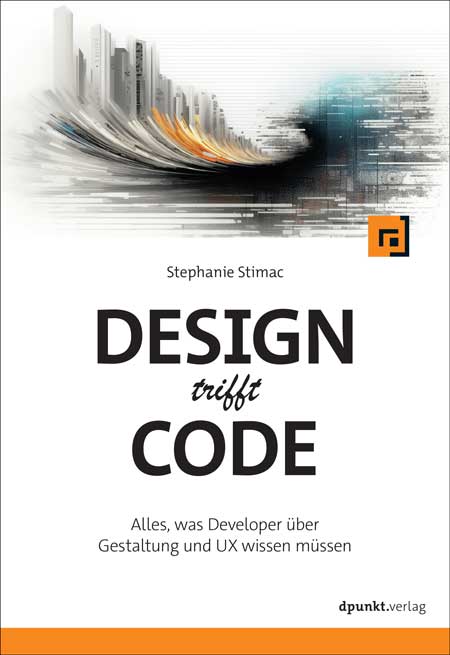
Design trifft Code
Design trifft Code. Alles, was Developer über Gestaltung und UX wissen müssen. (April 2024). Als Webentwickler*in beeinflussen Sie mit jeder Design-Entscheidung die Usability einer Website. »Design trifft Code« vermittelt Ihnen die Grundlagen und die Sprache des Designs, sodass Sie mit Designer*innen zusammenarbeiten und im Gestaltungsprozess selbst fundierte Entscheidungen treffen können. Sie lernen unter anderem,wie Sie mit Farbe, Typografie und Layout eine Hierarchie auf einer Website schaffen,wie Sie Farbpaletten in einer Benutzeroberfläche konsistent anwenden,wie Sie sich für die richtigen Schriftarten und Schriftschnitte entscheiden,wie Sie mit Methoden der Nutzerforschung mehr über Ihre User herausfinden und Ihre Design-Entscheidungen daran messenund wie Sie Layout und Struktur von Websites zügig planen und testen.Autorin Stephanie Stimac gibt in diesem Buch ihre wertvollen Erkenntnisse und Anregungen weiter, die sie als Designerin im Microsoft Developer Experiences Team gewonnen hat. Sie zeigt, wie sich elegante visuelle Designs erstellen lassen und eine Website von Grund auf entwerfen lässt. Ihr konsequent auf Developer ausgerichteter Ansatz vermittelt die wesentlichen UX- und Designgrundlagen an diejenigen, die sie in Code umsetzen: die Entwicklerinnen und Entwickler. Zahlreiche Beispiele aus erfolgreichen Websites und Interfaces veranschaulichen die Designprinzipien.Mit »Design trifft Code« lernen Sie anschaulich und leicht verständlich, wie Sie häufige Design- und Usability-Probleme mit Bravour lösen. Ein Buch für alle, die intuitiv zu bedienende Interfaces, attraktive Designs und eine perfekte Usability erschaffen möchten.Leseprobe (PDF-Link)Zielgruppe: Devs, die vor allem in technischen Aspekten fit sind, aber Design verstehen wollen, besser mit Designern zusammenarbeiten wollen, selbst eigene gute Designs erstellen wollenÜber die Autorin: Stephanie Stimac ist Produktmanagerin mit mehr als einem Jahrzehnt Erfahrung im Bereich Design und konzentriert sich auf die Entwicklung von Produkten für Entwickler. Sie hat auf Konferenzen auf der ganzen Welt über Webentwicklung und Designthemen gesprochen und in vielen dieser Vorträge die Kluft zwischen Design und Entwicklung überbrückt. Als sie noch ausschließlich an Designprojekten gearbeitet hat, war sie für Unternehmen wie Safeway, MBARI, Microsoft Azure, Microsoft Office, Windows, T-Mobile und Blue Cross Blue Shield tätig. Sie trat dem Microsoft-Edge-Team bei, weil sie eine Leidenschaft für das Web, Design und Entwicklung hat. Sie hat an Entwickler-Tools wie webhint.io und den DevTools des Edge-Browsers sowie an anderen Web-Plattform-Initiativen wie dem „Web We Want“ (webwewant.fyi) mitgearbeitet, wobei sie sich auf die Erfahrung der Entwickler konzentriert hat. Sie war sechs Jahre lang im Microsoft-Edge-Team tätig, bevor sie sich dem Produktmanagement für Developer Experience in der Start-up-Branche zuwandte.

AI for Humanity
CAPTURE THE VALUE OF CUTTING-EDGE AI WHILE MITIGATING ITS MOST SALIENT RISKSAI For Humanity: Building a Sustainable AI for the Future delivers an incisive and timely discussion of how to design, build, and implement cutting-edge AI in for-profit firms and other organizations in a responsible, sustainable, and ethical way. The book walks you through the three pillars of human-focused AI development—governance, technology, and commercialization—and dives deep into each one, showing you how to create AI products and services that better humanity and advance universally held values. You'll find methodologies and frameworks that mitigate against some of the most profound and unsettling risks of unchecked artificial intelligence development, and roadmaps to help you avoid the numerous pitfalls and traps awaiting unsuspecting companies, managers, and executives. You'll also discover:* Real-world case studies, from companies including SAP, Huawei, and Tencent, demonstrating the actual dilemmas and questions firms face when developing and implementing this extraordinary tech* Actionable commitments you can make to help ensure you and your company avoid the ethical and reputational risks associated with AI* Strategies for AI product and service development consistent with sustainable growthPerfect for managers, executives, directors, and other business leaders with a stake in responsible artificial intelligence design, development, and implementation, AI For Humanity will also interest regulators, academics, thought leaders, and policy makers doing their best to capture AI's substantial potential value while mitigating its most serious risks. ANDEED MA is President of the Risk and Insurance Management Association of Singapore (RIMAS) and is a cloud, AI, and risk management leader for over 16+ years with major SaaS enterprises, including ServiceNow, CyberArk, and ByteDance, the parent company of TikTok. He lectures on AI at the Singapore University of Social Sciences (SUSS) and academies, and also mentors startups in various accelerator programs. JAMES ONG, PHD., founded the Artificial Intelligence International Institute (AIII), a think tank advocating Sustainable AI for Humanity. With 38+ years as an entrepreneur, tech executive, venture builder and professor, he enjoys his journey of ecosystem building for impactful outcomes, bridging scientific research, startups, and impact investment. SIOK SIOK TAN is a filmmaker and innovator whose works explore the nexus of humanity, social change and technology. Her documentaries and mobile photography have captivated global attention from CNN to The Guardian, from the People’s Daily to the Times of India. Her storytelling transcends mediums, advocating for a future where technology empowers humanity. Acknowledgments xvPreface xxiiiChapter 1 The AI Debate 1Chapter 2 The AI Trap 27Chapter 3 AI History 53Chapter 4 The AI Dilemma 77Chapter 5 Rethinking AI 99Chapter 6 Sustainable AI for Humanity 123Chapter 7 Sustainable AI Governance 151Chapter 8 Sustainable AI Technology 181Chapter 9 Sustainable AI Commercialization 209Chapter 10 AI for Humanity 241About the Authors 267Index 271

Visualize This
ONE OF THE MOST INFLUENTIAL DATA VISUALIZATION BOOKS—UPDATED WITH NEW TECHNIQUES, TECHNOLOGIES, AND EXAMPLESVisualize This demonstrates how to explain data visually, so that you can present and communicate information in a way that is appealing and easy to understand. Today, there is a continuous flow of data available to answer almost any question. Thoughtful charts, maps, and analysis can help us make sense of this data. But the data does not speak for itself. As leading data expert Nathan Yau explains in this book, graphics provide little value unless they are built upon a firm understanding of the data behind them. Visualize This teaches you a data-first approach from a practical point of view. You'll start by exploring what your data has to say, and then you'll design visualizations that are both remarkable and meaningful. With this book, you'll discover what tools are available to you without becoming overwhelmed with options. You'll be exposed to a variety of software and code and jump right into real-world datasets so that you can learn visualization by doing. You'll learn to ask and answer questions with data, so that you can make charts that are both beautiful and useful. Visualize This also provides you with opportunities to apply what you learn to your own data. This completely updated, full-color second edition:* Presents a unique approach to visualizing and telling stories with data, from data visualization expert Nathan Yau* Offers step-by-step tutorials and practical design tips for creating statistical graphics, geographical maps, and information design* Details tools that can be used to visualize data graphics for reports, presentations, and stories, for the web or for print, with major updates for the latest R packages, Python libraries, JavaScript libraries, illustration software, and point-and-click applications* Contains numerous examples and descriptions of patterns and outliers and explains how to show them Information designers, analysts, journalists, statisticians, data scientists—as well as anyone studying for careers in these fields—will gain a valuable background in the concepts and techniques of data visualization, thanks to this legendary book. NATHAN YAU earned his PhD in Statistics at UCLA. His goal is to make data available and useful to everyone, regardless of data background. He believes that visualization is the best way to do this. You can follow his data experiments at www.flowingdata.com.

Big Data und Advanced Analytics im Controlling
Die Digitalisierung und Entwicklungen im Gebiet der künstlichen Intelligenz haben in den letzten Jahren erhebliche Veränderungen in der Gesellschaft und der Unternehmenspraxis hervorgerufen. Aufkommende Technologien in den Feldern Big Data und Advanced Analytics werden auch im Controlling zunehmend diskutiert oder bereits eingesetzt. Dabei befinden sich der Wissensstand, inwieweit Big Data und Advanced Analytics das Controlling beeinflussen und verändern können, und die praktische Anwendung noch in einem frühen Stadium. Diese Arbeit befasst sich deshalb mit der Untersuchung der möglichen Auswirkungen von Big Data und Advanced Analytics im Controlling. Vor diesem Hintergrund werden die Einflüsse dieser digitalen Trends auf den Informationsversorgungsprozess des Controllings, auf die Erfüllung Controlling-spezifischer Anforderungen an Informationen und auf das Forecasting, die Budgetierung und die strategische Planung analysiert. Ferner werden praxisrelevante Herausforderungen, Grenzen und Risiken bei der Implementierung und Nutzung identifiziert sowie Implikationen zu deren Umgang zur Ausschöpfung der Potenziale abgeleitet.

GitOps
GitOps optimal einsetzen - Praktischer Einstieg für Entwicklungs- und Plattformteams - tiefgründige Fokussierung auf GitOps (ohne Grundlagen für K8s oder CI/CD) - Klarer Einblick in die Konsequenzen von GitOps und den Unterschied im Entwicklungsalltag - Umfassende Hilfestellung zu relevanten Herausforderungen wie Secrets, Repo-Strukturen und Asynchronität GitOps ist die aktuell vielversprechendste Methodik, um Continuous Deployment auf Cloud-native Art und Weise umzusetzen. Im Gegensatz zu punktuell getriggerten Deployments werden deklarative Beschreibungen der Softwaresysteme genutzt, um diese kontinuierlich im Hintergrund anzuwenden. Mit diesem Buch kannst du schnell und einfach in GitOps einsteigen und erfährst seine Vorteile für den Entwicklungsalltag. Nicht nur vergleichen wir hierfür die Tools Argo CD und Flux, sondern zeigen auch konkrete Implementierungen von GitOps mit und ohne Kubernetes, die du anhand öffentlicher Repositories direkt nachstellen kannst. Überdies gehen wir ausführlich auf fortgeschrittene Themen wie Secrets Management, Repo-Strukturen, Asynchronität und Alerting ein, um dich für den Ein- bzw. Umstieg optimal vorzubereiten. Unter https://gitops-book.dev findest du weitere Informationen zum Thema.
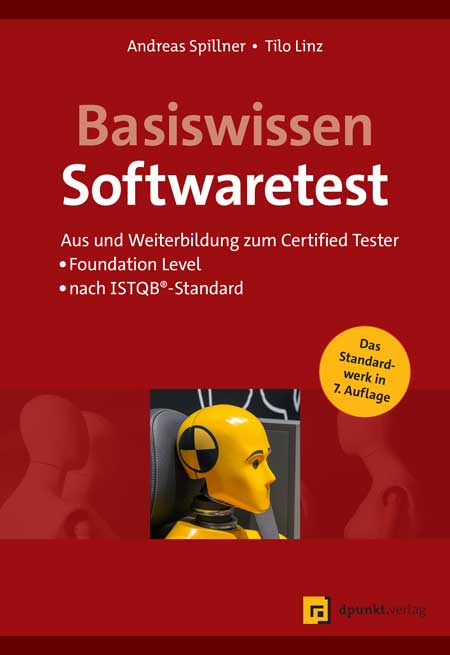
Basiswissen Softwaretest (7. Auflage)
Basiswissen Softwaretest. In 7., überarbeiteter und aktualisierter Auflage, April 2024.Das bewährte Standardwerk zum Softwaretest – gut erklärt und praxisnah Das ISTQB®-»Certified-Tester«-Programm ist das international standardisierte und weltweit anerkannte Aus- und Weiterbildungsschema für das Testen von Software. Das Buch behandelt den Lehrstoff zur Prüfung zum »Certified Tester« Foundation Level, Version 4.0 (CTFL) nach dem ISTQB®-Standard. Aus dem Inhalt:Grundlagen des Softwaretestens Testen im Softwareentwicklungslebenszyklus Statischer Test Dynamischer Test Testmanagement TestwerkzeugeDer Anhang enthält wichtige Hinweise zum Lehrstoff und zur Prüfung zum »Certified Tester – Foundation Level« (CTFL), ein Glossar und ein ausführliches Literaturverzeichnis.Die 7. Auflage wurde komplett überarbeitet und beinhaltet alle praxisrelevanten Themen zum Testen von Software sowie agile Ansätze und Praktiken mit Bezug zum Softwaretest. Das Buch vermittelt damit das notwendige Wissen zur Vorbereitung auf die CTFL-Prüfung und eignet sich gleichermaßen als kompaktes Grundlagenwerk zu diesen Themen in der Praxis und an Hochschulen. Leseprobe (PDF-Link)Zielgruppe: Softwaretester*innen, Programmierer*innen/, Softwareentwickler*innen, Projektleiter*innen, Lehrende und StudierendeÜber die Autoren: Andreas Spillner war bis 2017 Professor für Informatik an der Hochschule Bremen. Ab 1991 war er für über 10 Jahre Sprecher der Fachgruppe TAV „Test, Analyse und Verifikation von Software“ der Gesellschaft für Informatik e.V. (GI), die er mit gegründet hat. Im „German Testing Board“ e.V. war er von Beginn an bis zum Jahr 2009 engagiert und wurde danach zum Ehrenmitglied berufen. 2007 ist er zum Fellow der GI ernannt worden. Von 2019 bis 2023 war er Mitglied im Präsidium des Arbeitskreises Softwarequalität & -Fortbildung (ASQF e.V.). Seine Arbeitsschwerpunkte liegen im Bereich Softwaretechnik, Qualitätssicherung und Testen. Andreas Spillner ist neben Ulrich Breymann Autor des Buches „Lean Testing für C++-Programmierer – Angemessen statt aufwendig testen“ (dpunkt.verlag), das die Testverfahren der ISO-Norm 29119 und deren konkrete Umsetzung in die Programmiersprache C++ erörtert.Tilo Linz ist Vorstand und Mitgründer der imbus AG, eines führenden Lösungsanbieters für Softwaretest, und seit mehr als 30 Jahren im Themengebiet Softwarequalitätssicherung und Softwaretest tätig. Als Gründungsmitglied und Vorsitzender des „German Testing Board“ e.V. und Gründungsmitglied im „International Software Testing Qualifications Board“ hat er die Aus- und Weiterbildung in diesem Fachbereich auf nationaler und internationaler Ebene maßgeblich mitgestaltet und vorangebracht. Im Jahr 2023 wurde er zum Ehrenmitglied des GTB ernannt. Tilo Linz ist auch Autor des Buches „Testen in agilen Projekten“ (dpunkt.verlag), das aufbauend auf dem vorliegenden „Basiswissen Softwaretest“ das Testen in agilen Projekten behandelt.2022 erhielten Tilo Linz und Andreas Spillner gemeinsam den Deutschen Preis für Software-Qualität.
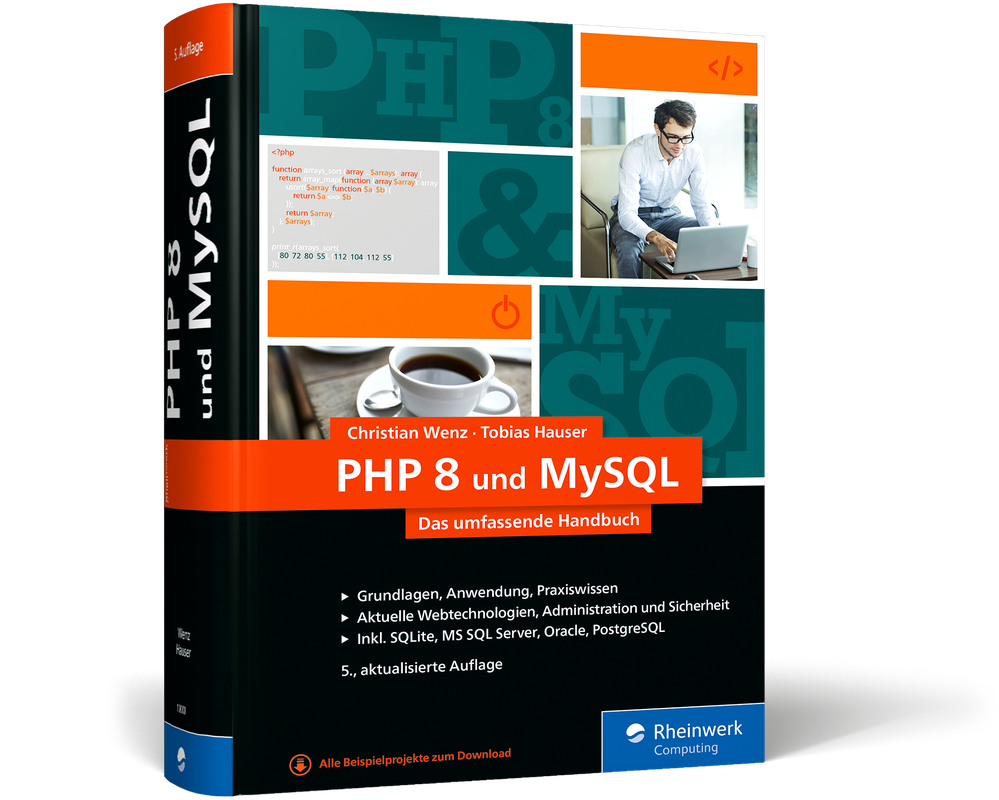
PHP 8 und MySQL - Das umfassende Handbuch (5. Auflage)
PHP 8 und MySQL - Das umfassende Handbuch. In 5., aktualisierter Auflage (2024).Dynamische Webseiten mit PHP und MySQL programmieren: Alles, was Sie dafür wissen müssen, steht in diesem bewährten Standardwerk. Profitieren Sie von einer praxisorientierten Einführung und lernen Sie auch alle neuen Sprachfeatures von PHP 8 kennen. Die Autoren Christian Wenz und Tobias Hauser sind erfahrene PHP-Programmierer und Datenbankspezialisten. Sie zeigen Ihnen, wie Sie MySQL und andere Datenbanksysteme effektiv einsetzen. Mit diesem Wissen machen Sie sich rundum fit für die Entwicklung dynamischer Websites. Aktuell zur Version 8.3.Webtechnologien im Zusammenspiel1. Lernen Sie die Grundlagen von PHPDie erfahrenen Autoren begleiten Sie sicher bei Ihren ersten Schritten: von der Installation (Linux, macOS und Windows), einer kompletten Spracheinführung bis hin zur Wahl des richtigen Datenbanksystems (SQLite, Microsoft SQL Server, PostgreSQL u. v. m.). Inkl. allen Neuerungen von PHP 8!2. Entwickeln Sie leistungsfähige WebsitesSie erfahren, wie Sie wichtige Basis-Webtechniken anwenden. Egal, ob Sie Formulare, Sessions oder Cookies einsetzen oder von PHP aus E-Mails versenden möchten. Anhand vieler Code- und Anwendungsbeispiele lernen Sie alles, was Sie im Alltag als PHP-Programmierer brauchen.3. Programmieren Sie sichere PHP-AnwendungenKommunizieren Sie mit der Außenwelt und greifen Sie via HTTP auf verschiedene Webdienste zu. Lernen Sie u. a. die Interaktion mit JavaScript kennen. Vermeiden Sie durch Benutzerauthentifizierung, PHP-Konfiguration, Fehlersuche und Debugging gefährliche Sicherheitslücken.Aus dem Inhalt:Installation von PHP und MySQLEinstieg in PHPAlle neuen Sprachfeatures von PHP 8Strings, Arrays, mathematische Funktionen und Datumsfunktionen, reguläre AusdrückeObjektorientiert programmieren, Namespaces, Traits und mehrFormulare, Cookies, Sessions, E-MailEinführung in SQLDatenbanken: MySQL, SQLite, Microsoft SQL Server, Oracle, PostgreSQL, MongoDBLeseprobe (PDF-Link)Über die Autoren: Christian Wenz ist Berater und Trainer mit Schwerpunkt Webtechnologien und Web-Security und führt Digitalisierungsprojekte im Unternehmensumfeld im In- und Ausland durch.Als Buchautor schreibt Tobias Hauser zu wichtigen Webthemen. Als Berater und Trainer unterstützt er Unternehmen mit seinem Schwerpunkt auf PHP-basierten Webanwendungen in allen Fragen von der Systemauswahl bis hin zur Schnittstellenarchitektur.

VMware vSphere Essentials
This book fills a vacuum in the market for high-quality information on a VMware vSphere system and offers a thorough introduction to VMware virtualization. Written for novices and those seeking more information about vSphere, this book walks you through its key concepts and technology, such as vSphere infrastructure creation, maintenance, and performance for beginners and advanced users.You'll take a step-by-step approach to guarantee you grasp the fundamental concepts and practical procedures required to construct and manage virtual machines in a VMware vSphere system. You'll explore the key components of vSphere with detail and explanation for each feature, including the hypervisor, networking, storage, and high availability, unravelling their intricacies and highlighting best practices.This book provides full VMware knowledge to develop, set up, and maintain vSphere environments that meet modern computing needs. It also features advanced topics, such as resource optimization, performance monitoring, advanced settings, and automation, empowering you to take your virtualization skills to the next level. VMware vSphere Essentials uses a unique step-by-step instructions designed to provide a high-level understanding, accompanied by illustrative images.WHAT YOU'LL LEARN* Enhance network efficiency with advanced vSphere LACP setup* Configure and manage virtual machines in vSphere* Implement vSphere networking and storage* Explore advanced vSphere features, such as DRS, HA, and fault tolerance* Master seamless VM migration techniques* Optimize hardware utilization with direct path I/O passthroughWHO THIS BOOK IS FORSystem administrators, advanced vSphere administrators, and IT professionals pursuing VMware certificationsLuciano Patrão is a Portuguese professional who has established himself in Germany. With extensive experience in the field, he currently serves as a Senior Consultant and Solution Architect at ITQ, offering top-tier VMware infrastructure solutions. Luciano has previously held notable positions as a Technical Project Manager and Technical Lead in various consulting companies as a freelancer. Throughout his career, he has provided exceptional guidance and solutions to teams and clients in the areas of VMware infrastructures, Backup, and Data Recovery. Luciano is a VCAP-DCV Design 2023, VCP-Cloud 2023, VCP-DCV 2022, and VMware vSAN Specialist, He is also a vExpert vSAN, vExpert NSX, vExpert Cloud Provider for the last two years, vExpert Multi- Cloud 2023, vExpert for the last 8 years, and Veeam Vanguard for the last 6 years. For updates and insights, he can be followed on Twitter: @Luciano_pt.Chapter - 1 Understanding Virtualization.- Chapter - 2- VMware and vSphere Overview.- Chapter - 3- System Requirements and Licensing.- Chapter - 4- Deploying vSphere Environment.- Chapter - 5 vSphere Networking.-Chapter – 6-vSphere Datastores.- Chapter – 7-Virtual Machines.- Chapter – 8-VMware vCenter.- Chapter 9-vCenter Server Appliance Management Interface (VAMI).- Chapter – 10- Datacenter and Clusters.- Chapter – 11 vCenter Datastores.- Chapter – 12 Managing Datastores.- Chapter – 13 vSphere Storage Policies and Encryption.- Chapter - 14 vSphere Distributed Switch (vDS).- Chapter - 15- Advanced Configuration with vSphere Distributed Switch.- Chapter - 16- Configuring LACP in vSphere Distributed Switch.- Chapter – 17 vSphere Advanced Features.- Chapter - 18 vSphere Cluster Services (vCLS).- Chapter – 19 vSphere High Availability (HA) .- Chapter – 20 vSphere Proactive HA.- Chapter - 21 vSphere Fault Tolerance.- Chapter – 22 Virtual Machine Snapshots.-Chapter – 23 Enhanced vMotion Compatibility (EVC) Mode.- Chapter – 24 Host Profiles in vSphere.- Chapter - 25 VMware Hot Add & Hot Plug.- Chapter - 26 Direct Path I/O Passthrough.- Chapter – 27 Add a USB device to vSphere.- Chapter – 28 How to reset the vCenter root password.- Chapter – 29 vCenter Update/Upgrade.- Chapter – 30 vSphere Lifecycle Manager .- Chapter – 31 vSphere Backup and Disaster Recovery.- Chapter – 32 VMware other products.- Chapter – 33 VMware Certification Overview.-Chapter – 34 Final Chapter: Embracing the Future of Virtualization with VMware vSphere.
Azure Arc Systems Management
This book is for enterprise and solution architects, systems integrators, and anyone managing enterprise-scale, multi-cloud or hybrid IT landscapes. The book examines usage of Azure Arc for governance and systems management with security as an overarching theme. It is not an implementation manual but provides high-level guidance on best practices and links to detailed guidance. It offers insight into the types of problems that Azure Arc can solve, and will help you determine whether it is the right choice for your organization.Modern enterprise computing is an astonishing luxury land filled with never-before-seen hosting options on commercial clouds as well as advancements in the areas of private cloud and edge computing. The challenge with this plethora of choices is to manage and coordinate large IT estates which may bridge multiple public clouds and private datacenters. Visibility of operations to achieve security, cost control, and efficiency is often difficult to achieve. Data management is another area which is particularly fraught with complexity and risk.Industry leaders have made serious investments in the design of control plane products to address these gaps with varying approaches and degrees of success. Azure Arc is designed to provide a consolidated view of assets such as databases and Kubernetes installations across major cloud providers, edge locations, and customer-owned datacenters. It facilitates deployment of new infrastructure, patching and upgrades, monitoring, policy, and security controls for assets living on-premises or in competitor clouds as if they were native to Azure. While competitive products exist, at this writing none have the flexibility and reach of Arc to effectively manage very large hybrid estates.Readers will appreciate the author’s approach of walking through typical enterprise computing scenarios while listing industry- or scenario-specific challenges that are difficult to overcome, and then reinforcing understanding by restating the challenges while explaining how Azure Arc can be utilized to remediate them.WHAT YOU WILL LEARN* Discover what Azure Arc is, the types of problems it is intended to solve, and how to map your requirements to its capabilities* Streamline and secure large Arc-enabled Kubernetes deployments via modern GitOps practices* Use Azure Arc to consolidate management across a broad range of hybrid and multi-cloud ecosystems through policy-driven governance* Apply monitoring and automation to defend systems against security threats that are beyond the ability of manual administration to deflect* Uncover practical guidance that is written in a way that makes basic precepts approachable to non-technical stakeholders and then branches out into areas that will offer advanced readers new insights and consolidate a broad topic into a usable directionWHO THIS BOOKIS FOREnterprise and solution architects, systems integrators, and anyone else looking to solve enterprise-scale administration problems across a multi-cloud or hybrid architectureRAMONA MAXWELL is an experienced Enterprise Solution Architect who has worked with clients across a broad spectrum of the Fortune 100 such as utilities, finance, and healthcare organizations. She is certified by Microsoft as an Azure Solutions Architect Expert and is an AWS Certified Solutions Architect, Microsoft Certified Trainer (MCT), Associate as well as a 2020 graduate of VMware’s Platform Acceleration Lab training for application architects. She has expertise in container technologies such as Kubernetes and Docker and extensive experience extending line-of-business systems across multiple technology stacks. Ramona is an occasional presenter at industry events on enterprise computing strategies and techniques.Chapter 1. The Challenges of Enterprise-scale Hybrid and Multi-cloud Architectures.- Chapter 2. What Is Azure Arc?.- Chapter 3. Overview of the Benefits of Arc in the Enterprise.- Chapter 4. Securing the Enterprise with Arc.- Chapter 5. Enterprise DBS Management and Arc.- Chapter 6. Managing Kubernetes Workloads in Hybrid or Multi-cloud Datacenters.- Chapter 7. Policy and Governance Across Hybrid and Multi-cloud Infrastructure.- Chapter 8. Process Automation via the Arc Control Plane.- Chapter 9. Automation in the Era of ML and AI.- Chapter 10. Azure Arc – History and Horizons.

Oracle Cloud Infrastructure (OCI) GoldenGate
This book focuses on the utilization of GoldenGate Services (GGS) in conjunction with a microservices architecture on the Oracle cloud (OCI), primarily for data migration and integration across various data sources and targets.The book begins with a practical example of utilizing GGS on a Marketplace VM, progressively advancing to in-depth discussions on implementing GoldenGate as a Service on OCI. The book offers illustrative guides for data replication between RDBMSs (such as Oracle, Postgres, and big data targets such as Kafka). Additionally, it explores monitoring techniques using Enterprise Manager and Grafana dashboards. A comparative analysis is presented between traditional VM-based GoldenGate installations and the OCI service model. Special attention is given to Zero Downtime Migration (ZDM) and leveraging GGS for database migration from on-premises to OCI. Some chapters address multi-cloud replication using OCI GGS and include real-life case studies.By the end of this book you will have gained comprehensive insights into the architectural design of GoldenGate Services and will be adept at replicating data using GGS, enabling you to replicate setups in your own environments.WHAT YOU WILL LEARN* Set up GoldenGate Services for high availability (HA), disaster recovery (DR), migration of data to cloud, and moving data into the data lake or lakehouse* Perform logical migration of data to the cloud using the ZDM tool (ZDM uses GoldenGate internally).* Replicate data to big data targets* Monitor GGS using Enterprise Manager and Grafana* Replicate data in a multi-cloud environmentWHO THIS BOOK IS FOROracle database administrators who want to replicate data or use Oracle GoldenGate Services for migration and setup of high availability (HA) and disaster recovery (DR); and data engineers who want tobuild the data warehouse, data lake, data lakehouse to push data in near real-timeY V RAVI KUMAR is an Extraordinary Ability (EB1-A) Einstein Visa recipient from the United States, an Oracle Certified Master, a co-author, and a technical reviewer. He is TOGAF-certified, has published 100+ technical articles, and is an Oracle Open/cloud speaker (x3). He is an IEEE Senior Member with 26+ years of multinational leadership experience in the United States, Seychelles, and India in banking, financial services, and Insurance (BFSI) verticals.Ravi Kumar has co-authored four books: Oracle Database Upgrade and Migration Methods, Oracle High Availability, Disaster Recovery, and Cloud Services, Oracle GoldenGate with MicroServices, and Oracle Global Data Services for Mission-Critical Systems.He served as technical reviewer of four books: Oracle 19c AutoUpgrade Best Practices, Oracle Autonomous Database in Enterprise Architecture, End-to-End Observability with Grafana, and Maximum Availability Architecture (MAA) with Oracle GoldenGate MicroServices in HUB Architecture..He is an Oracle Certified Professional (OCP) in Oracle 8i, 9i, 10g, 11g, 12c, and 19c, and he is also an Oracle Certified Expert (OCE) in Oracle GoldenGate, RAC, Performance Tuning, Oracle Cloud Infrastructure, Terraform, and Oracle Engineered Systems (Exadata, ZDLRA, and ODA), as well as being Oracle Security- and Maximum Availability Architecture (MAA)-certified.Ravi Kumar has published over 100+ Oracle technology articles, including on the Oracle Technology Network (OTN), in ORAWORLD Magazine, on UKOUG, in OTech Magazine, and on Redgate. He has spoken three times at Oracle Open World (OOW) in Las Vegas/San Francisco, USA, and.Oracle Corporation has published his profile on their OCM list and in their Spotlight on Success stories.RAGHAVENDRA SREENIVAS MURTHY has more than 18 years of comprehensive expertise in Oracle databases and Data Integration.His diverse capabilities include database administration, GoldenGate Integration, conducting different types of migrations, bringing data into the data lake from multiple streams of enterprise, engineered systems, cloud migration, and many more. Additionally, he possesses a solid understanding of BIGDATA technologies, encompassing Hadoop, HDFS distributions, Hive, HBase, Kafka, ODI/DI, and data lake/lakehouse concepts.Throughout his professional journey, he has been actively involved in various projects, including consultancy, resolving issues, integrating new clients, designing architectures, cloud journeys, SaaS, and moving the workloads from on-premise to cloud. His strengths are in the areas of data integration, approach, and solution designing toward near zero down time migration with GoldenGate MicroServices using bidirectional replication.ANKUR GOEL is a seasoned Principal Solutions Engineer at Confluent Inc., and brings more than 18 years of versatile expertise, primarily in the Digital Native and Fintech industries. With key roles as Cloud Architect, Technical Lead, and Solutions Architect, Ankur is a certified professional in AWS, Kafka, Oracle Exadata, and Hadoop, showcasing a profound understanding of distributed technology and cloud services.In his current role, Ankur serves as a global advisor for key and strategic accounts, specializing in cloud platform adoption, event-driven architectures, and real-time stream processing. Noteworthy is his impactful contribution to establishing robust event-driven architectures for major Digital Native clients in the United States and leading complex database implementations for prominent banks and telecom giants in India.Ankur's unwavering commitment to customer satisfaction, evident in his prior role as the primary database architect for multiple Yahoo websites, continues to resonate in his recent collaborations across industries. Beyond his professional pursuits, Ankur enjoys culinary endeavors and sports, adding depth and vibrancy to his multifaceted life.Chapter 1:Introduction to Oracle GoldenGate Microservices Architecture.- Chapter 2:Oracle GoldenGate HUB Architecture.- Chapter 3: Setting Up Oracle GoldenGate on the OCI Marketplace.- Chapter 4: Setting Up OCI Oracle GoldenGate Services for RDBMS.- Chapter 5: Setting up OCI Oracle GoldenGate Services for BIGDATA.- Chapter 6: Managing and Monitoring Oracle GoldenGate on OCI.- Chapter 7: Comparing OCI GoldenGate Services with Cloud Marketplace.- Chaptem-8: Migration of Databases with Near Zero Down Time.- Chapter 9: Troubleshooting Oracle GoldenGate on OCI.- Chapter 10: On-premises Database Migration to OCI.- Chapter 11: Replicating Data Across Multi-cloud using OCI GoldenGate.- Chapter 12: Real-world examples of Oracle GoldenGate on OCI.

Designing to FIPS-140
This book provides detailed and practical information for practitioners to understand why they should choose certification. It covers the pros and cons, and shows how to design to comply with the specifications (FIPS-140, SP800 documents, and related international specs such as AIS31, GM/T-0005-2021, etc.). It also covers how to perform compliance testing. By the end of the book, you will know how to interact with accredited certification labs and with related industry forums (CMUF, ICMC). In short, the book covers everything you need to know to make sound designs.There is a process for FIPS-140 (Federal Information Processing Standard) certification for cryptographic products sold to the US government. And there are parallel certifications in other countries, resulting in a non-trivial and complex process. A large market of companies has grown to help companies navigate the FIPS-140 certification process. And there are accredited certification labs you must contract toget the certification.Although this was once a fairly niche topic, it is no longer so. Other industries—banking, military, healthcare, air travel, and more—have adopted FIPS certification for cryptographic products. The demand for these services has grown exponentially. Still, the available skills pool has not grown. Many people are working on products with zero usable information on what to do to meet these standards and achieve certification or even understand if such certification applies to their products.WHAT YOU WILL LEARN* What is FIPS-140? What is the SP800 standard?* What is certification? What does it look like? What is it suitable for?* What is NIST? What does it do?* What do accredited certification labs do?* What do certification consultants do?* Where and when is certification required?* What do FIPS-140 modules look like?* What are the sub-components of FIPS-140 modules (RNGs, PUFs, crypto functions)? How does certification work for them?* What are the physical primitives (RNGs, PUFs, key stores) and how do you handle the additional complexity of certifying them under FIPS?* What are the compliance algorithms (AES, SP800-90 algos, SHA, ECDSA, key agreement, etc.)?* How do you design for certification (BIST, startup tests, secure boundaries, test access, zeroization, etc.)?* How do you get CAVP certificates (cert houses, ACVTs)?* How do you get CMVP certifications (cert houses, required documents, design information, security policy, etc.)?WHO THIS BOOK IS FORHardware and software engineers or managers of engineering programs that include any form of cryptographic functionality, including silicon vendors, library vendors, OS vendors, and system integratorsDAVID JOHNSTON is an engineer at Intel working on cryptographic hardware used in Intel CPUs and other silicon products. He has been directly involved in the development of the SP800-90 and FIPS140 standard revisions and is active in FIPS-related industry forums—he has several FIPS and CAVP certifications. David spent 30 years in various hardware and software roles and is the author of Random Number Generators, Principles and Practices.RICHARD FANT performs security assessments for Intel products and platforms by evaluating the FIPS 140-3 compliance and design strategy for the FPGA Business Unit (Programmable Solution Group). He also helps lead the Intel FIPS CoE (Center of Excellence) across other Intel business units. Richard has two bachelor's degrees from the University of Texas: (Computer Science and Mathematics) as well as a master’s degree in Cybersecurity from Syracuse University. He has worked in the semiconductor industry for 20+ years for companies such as Motorola, AMD, and Intel. He also worked at Atsec Information Security performing FIPS evaluations for various semiconductor manufacturers.In his free time, Richard likes to engage in his other passions: half-marathons and travel. To date, he has run a half-marathon on every continent except Antarctica. While visiting those faraway places, he frequently enjoys testing the laws of entropy at the casinos located there. He has lived in Austin, Texas his entire life and yet has racked up over 2 million frequent flyer miles from traveling about the world for work and fun.Chapter 1: FIPS140.- Chapter 2: FIPS Technical Details.- Chapter 3: Security Levels (1,2,3,4).- Chapter 4: Subordinate Specs.- Chapter 5: Working with Accredited Certification Labs.- Chapter 6: Documentation Requirements.- Chapter 7: Algorithm Validation.- Chapter 8: Industry Forums.
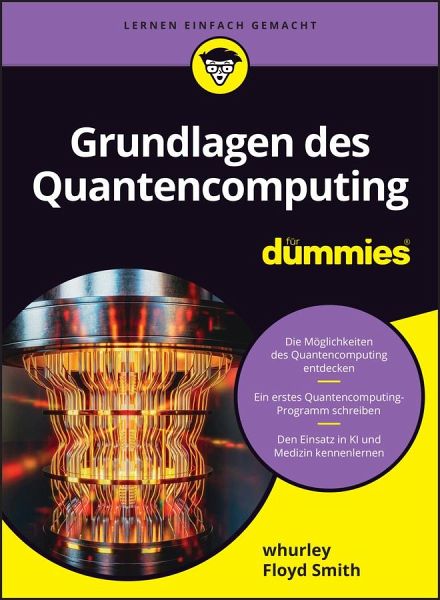
Grundlagen des Quantencomputing für Dummies (1. Auflage)
Grundlagen des Quantencomputing für Dummies. In erster Auflage, erschienen im April 2024. In diesem Buch erfahren Sie, wieso Quantencomputer Probleme lösen können, für die Supercomputer Millionen von Jahren brauchen würden. Die Autoren zeigen Ihnen, welche wirtschaftlichen Potenziale das Quantencomputing für Ihr Unternehmen birgt und wie es Ihre Arbeit unterstützen kann. Sie vermitteln Ihnen nicht nur die Grundlagen, sondern zeigen Ihnen ganz konkret, wie das Quantencomputing Industrien wie das Finanzwesen, Transportwesen, die Pharmazie und Cybersecurity transformieren wird. Um Quantencomputing und sein Potenzial verstehen zu können, benötigen Sie keinen Doktortitel, sondern nur dieses Buch.Inhaltsverzeichnis (PDF-Link)Leseprobe (PDF-Link)Über die Autoren: William Hurley, weltweit vielen besser bekannt als "whurley", ist Gründer und CEO von Strangeworks, einem Startup, das die Möglichkeiten des Quantencomputings leicht zugänglich und für alle verfügbar macht.Floyd Smith ist Marketer für Startups, Tech-Communicator und langjähriger Für-Dummies-Bestseller-Autor.
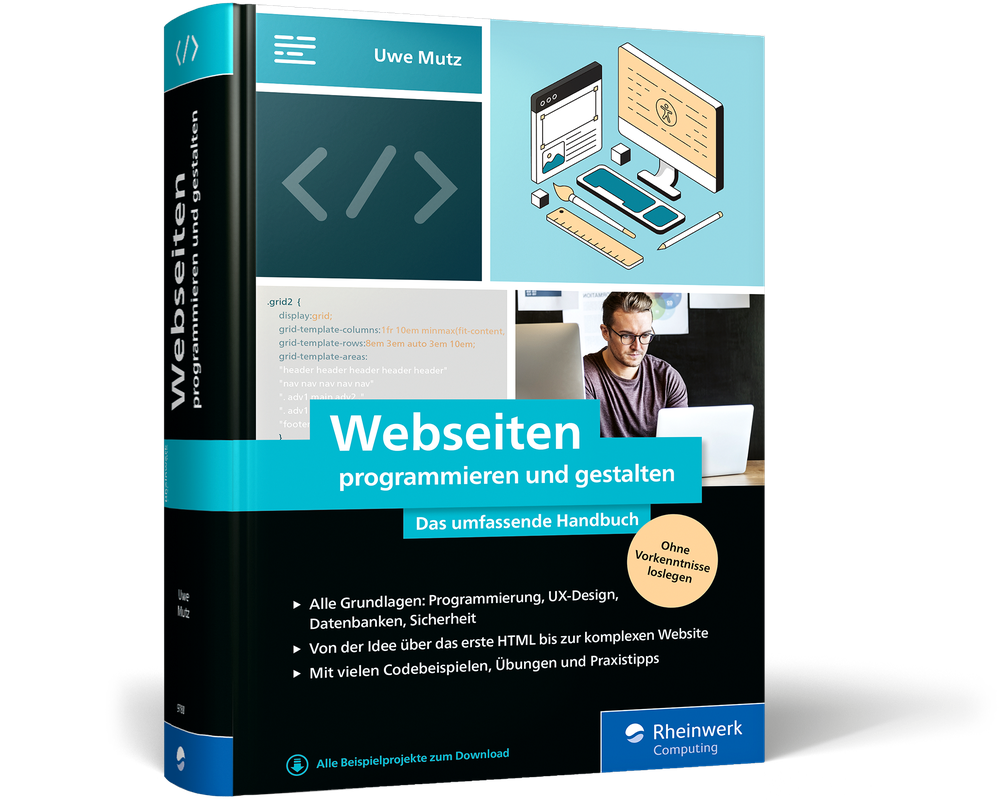
Webseiten programmieren und gestalten - Das umfassende Handbuch
Webseiten programmieren und gestalten - Das umfassende HandbuchGute Webseiten zu entwickeln ist eine vielseitige Kunst: Ein Gespür für die Gestaltung ist ebenso gefragt wie solide Kenntnisse der Web-Sprachen HTML und JavaScript. Hinzu kommt die Serverseite, hier ist PHP die beliebteste Wahl. Der erfahrene Webexperte und Dozent Uwe Mutz beweist mit diesem Handbuch, dass sich lehren und lernen lässt, was Sie als Webseiten-Profi brauchen. Es ist der perfekte Begleiter für eine ganzheitliche Ausbildung und für den Beruf. Frisch ans Werk, programmieren und gestalten Sie professionelle Webauftritte! Ideal zum Lernen, Auffrischen und Nachschlagen.Ihr Weg zum Webseiten-Profi1. Grundlagen zuerstZum Einstieg ist ein gutes Fundament unverzichtbar: HTML, CSS und JavaScript wollen ebenso verstanden werden wie das Vorgehen beim Aufbau einer neuen Website. Dieses Buch nimmt Sie zu allen Themen an die Hand und hilft auch, Ihre Entwicklungsumgebung aufzusetzen.2. Technologie und MenschFarbeinsatz, User Experience, Inhaltsarchitektur ... in diesem Handbuch kommen auch die gestalterischen Themen nicht zu kurz. Auch Performanz und Barrierefreiheit spielen eine wichtige Rolle. Eignen Sie sich technisches Know-how an und blicken Sie über den Tellerrand – im Dienste wirklich guter Webentwicklung!3. Den Fullstack im BlickZum Frontend kommt ein Backend, wenn eine Website Funktionalitäten wie Buchungen oder Informationsdienste bieten soll. Nicht immer gibt es hier eine Arbeitsteilung – nutzen Sie die Chance und nehmen Sie die beliebte Backend-Sprache PHP sowie das Datenbanksystem MySQLi in Ihr Repertoire auf!4. Experten-NiveauLernen Sie wichtige Konzepte und Best Practices kennen und programmieren Sie effizient und effektiv. Werden Sie Profi für Webauftritte, die höchsten Ansprüchen genügen!Aus dem Inhalt:Eine Arbeitsumgebung einrichtenClientseitige Grundlagen: HTML, CSS und JavaScriptUser-Zentrierung und GestaltungsprinzipienEinblicke in Usability und BarrierefreiheitGrundlagen der ProgrammierungServerseitige Technologien: PHP und MySQLEin Datenbankschema entwerfenVerschlüsselungsstandardsSQL-Injections und anderen Angriffen vorbeugenBeispielprojekte: Bibliotheksverwaltung, Onlineshop, Mitgliederverwaltung, Dienstpläne u. v. m.Leseprobe(PDF-Link)Über den Autor: Uwe Mutz ist Web-Entwickler der ersten Stunde, Geschäftsführer der SYNE Marketing & Consulting GmbH, Autor zahlreicher Fachbücher und Vortragender an der Universität für Weiterbildung Krems.
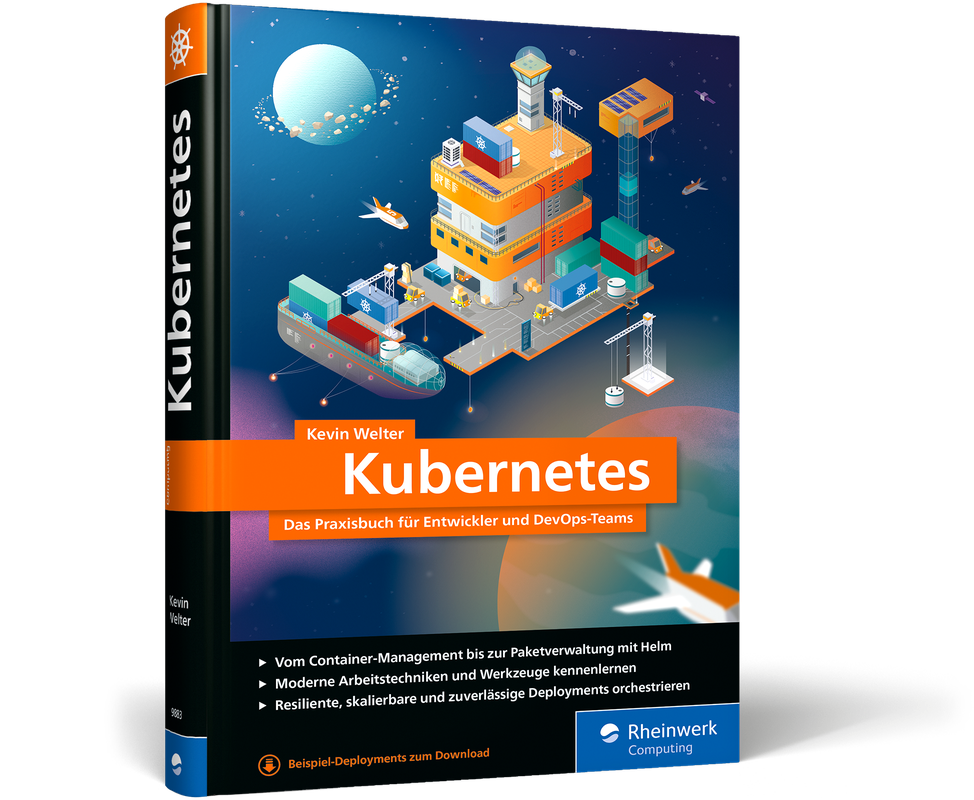
Kubernetes - Das Praxisbuch für Entwickler und DevOps-Teams
Kubernetes - Das Praxisbuch für Entwickler und DevOps-Teams. Kubernetes ist die Grundlage moderner IT-Infrastrukturen und ein unverzichtbares Werkzeug für das schnelle und agile Deployment von Anwendungen. Wenn es doch nur nicht so komplex wäre! Die Lernkurve ist steil, die Architektur und das Zusammenspiel der zahlreichen Komponenten muss gut verstanden sein, damit kein Chaos entsteht.In diesem Praxisbuch gibt Ihnen Kevin Welter eine gründliche Einführung in die Konzepte und Ideen containerisierter Umgebungen. Sie lernen die vielen Bestandteile einer Kubernetes-Installation kennen und erfahren praxisnah, wie Anwendungen deployt werden.1. Objekte, Ressourcen und KonzepteSie starten mit einer Test-Installation und lernen, wie Sie auf ein Kubernetes-Setup zugreifen. So machen Sie sich mit den Grundlagen vertraut: Pod- und Container-Management, Ingress, Services, ConfigMaps und Storage.2. Cloud Native: Anwendungen für Kubernetes entwickelnRollbacks, Healthchecks, High Availability, Skalierbarkeit: Container-Cluster bieten viele Vorteile gegenüber traditionellen Deployments. Mit den Best Practices und einem umfassenden Verständnis der Architektur orchestrieren Sie die schnelle und reibungslose Bereitstellung Ihrer Anwendungen.3. Deployment mit HelmHelm ist der Paketmanager für Kubernetes. Sie lernen, wie Sie eigene Helm-Charts schreiben, mit denen Sie Ihre Anwendungen flexibel und agil in Kubernetes-Cluster deployen.Aus dem Inhalt:Grundlagen und KonzeptePod- und Container-ManagementRessources as CodeSkalierung und LoadbalancingStorageNetzwerke und SicherheitMonitoring und FehlersucheAnwendungen für Kubernetes entwickelnPaketmanagement mit HelmLeseprobe (PDF-Link)Über den Autor: Kevin Welter ist Mitgründer und Geschäftsführer der HumanITy GmbH. Mit seinem Unternehmen unterstützt er Großkonzerne wie Deutsche Bahn, EnBW und Deutsche Telekom bei der Weiterentwicklung ihrer Software sowei der dazugehörigen Prozesse und hat es sich zur Aufgabe gemacht, die Digitalisierung auch für den Mittelstand attraktiv und einfach nutzbar zu gestalten.

Practical Web Accessibility
Everyone deserves to use the Internet. An estimated 1.3 billion people experience significant disability. That’s 16percent of the world’s population, or one in six of us. At the same time, over 96 percent of the one million most popular websites have an accessibility issue. Add to this the massive rise in legal cases around sites not being accessible, including Beyoncé, Disney, and Netflix, and you have an important topic that more and more people are starting to engage with.In this updated and revamped second edition of the Amazon technology chart-topping Practical Web Accessibility, you’ll be guided through a broad range of disabilities and access needs. You’ll understand the ways these users typically engage with the web, the barriers they often face, and practical advice on how your websites and content can be compliant, but more than that, inclusive and enjoyable to use. There’s also a new chapter on “Outsourcing Accessibility,” exploring third party “bolt-on” tools, “build your own website” platforms like Wix, and popular design systems. You‘ll explore whether they’re helpful or detrimental in the fight to make the web more accessible.Throughout this book you’ll learn to test for, spot, and fix web accessibility issues for a wide range of physical and mental impairments. Featuring content from the latest compliance frameworks, including the newly released WCAG 2.2 and exploratory concepts in WCAG 3, you’ll see how to go beyond the basic requirements in order to help your users. You’ll also learn that an accessible approach won’t just help people with disabilities, it will improve your website for everyone.This book comes complete with practical examples you can use in your own sites, along with a brand-new approach to auditing and improving a website’s accessibility, and a team’s approach to it, based on tools created by the author and refined over years as a consultant — The FAIR framework and ACCESS checklist. With these tools, you can set up processes for yourself and your team that will drastically improve the accessibility of your sites and, importantly, keep them that way in the future.Suitable for those of any profession or experience level, Practical Web Accessibility gives you all the information you need to ensure that your sites are truly accessible for the modern, inclusive web. If you would like to learn about web accessibility in a clear and actionable way, this book is for you.WHAT YOU WILL LEARN* A greater understanding of a vast range of disabilities that have online access needs, and the issues they typically face accessing content online.* Ways to apply the practical steps required to cater for those needs.* How to take your sites, and colleagues, on a journey from being inaccessible to accessible.* The importance of accessibility in your designs, code, content, and more.* The best ways to test andimprove your sites, so you can be compliant, and truly accessible. WHO THIS BOOK IS FORAnyone, regardless of what they do, who wants to learn how to make websites and their content more accessible for those with disabilities. In the world of web, the book has been used by front and backend developers, designers, product and project managers, team and business leaders.ASHLEY FIRTH is the Global Director of Engineering at award-winning energy technology company Octopus Energy, responsible for building and overseeing the online experience of its many millions of users worldwide. Starting at the company as one of its very first employees (now standing at over 5,000), Ashley has championed the need for inclusive and accessible websites from the very beginning, and has spoken internationally on the subject, taking into account both customer and colleague needs when doing so.Octopus Energy, along with being one of the best energy companies in the world for customer service, has won numerous customer and digital experience awards thanks to Ashley’s approach to accessibility. In 2020 - just four years after starting up - the supplier also became the 15th tech unicorn born out of the UK. The year after, it became a quintuple unicorn.Along with his demanding day job, Ashley is determined to make web accessibility a cornerstone of any company’s handbook. He spends his spare time as a consultant to government bodies and private companies to help them improve their approach to accessibility. He is also a technical reviewer for books on the subject. He was shortlisted for the Young Energy Professional of the Year award.All of Ashley’s experience culminated in the production of Practical Web Accessibility. The first edition of this book reached number one on the Amazon technology charts, and is used by readers and companies around the world to understand accessibility and improve their approach to it, always with fantastic results. Outside of accessibility, Ashley blogs and consults about management, which you can find at mrfirthy.me.1. Intro.- 2. Blindness.- 3. Low Vision and Color Blindness.- 4. Motor Impairments.- 5. Deafness and Hard of Hearing.- 6. Cognitive Impairments.- 7. Mental Health.- 8. Imagery.- 9. Accessible Email. - 10. Outsourcing Accessibility.- 11. Tools and Auditing.- 12. Conclusion.

AWS Certified SysOps Administrator Study Guide
PREPARE FOR SUCCESS ON THE AWS SYSOPS EXAM, YOUR NEXT JOB INTERVIEW, AND IN THE FIELD WITH THIS HANDY AND PRACTICAL GUIDEThe newly updated Third Edition of AWS Certified SysOps Administrator Study Guide: Associate (SOA-C02) Exam prepares you for the Amazon Web Services SysOps Administrator certification and a career in the deployment, management, and operation of an AWS environment.Whether you’re preparing for your first attempt at the challenging SOA-C02 Exam, or you want to upgrade your AWS SysOps skills, this practical Study Guide delivers the hands-on skills and best practices instruction you need to succeed on the test and in the field. You’ll get:* Coverage of all of the SOA-C02 exam’s domains, including monitoring, logging, remediation, reliability, business continuity, and more * Instruction that’s tailor-made to achieve success on the certification exam, in an AWS SysOps job interview, and in your next role as a SysOps administrator * Access to the Sybex online study tools, with chapter review questions, full-length practice exams, hundreds of electronic flashcards, and a glossary of key terms The AWS Certified SysOps Administrator Study Guide: Associate (SOA-C02) Exam includes all the digital and offline tools you need to supercharge your career as an AWS Certified SysOps Administrator.ABOUT THE AUTHORSJORGE T. NEGRÓN is part of Cloud Academy’s AWS Subject Matter Experts team where he builds courses, writes blogs and records podcast while helping customers learn and improve their skills in AWS technologies. Prior to that Jorge was AWS Academy’s Technical Program Manager within the training and certification teams. He was born and raised in San Juan Puerto Rico and travels the world enabling customers and partners gain intimate knowledge of Cloud Computing related skills and development. His passion is in education and contributing to the next generation work force with Cloud Computing literacy. CHRISTOFFER JONES, AWS Certified DevOps Professional, is a technologist, IT consultant, and educator who has spent more than 20 years working with IT operations, network engineering, and IT administration. He has spent the last six years diving deep into Amazon Web Services to consult, teach, and mentor others on AWS services and solutions. GEORGE SAWYER has been in technology education since before the turn of the century and was an early adopter of cloud computing. In addition to teaching around the world with his own training company, George has been a senior technical trainer and global learning strategist at Amazon Web Services. He is currently developing learning programs for Compass, Inc. George is a doctoral candidate and lives on his farm with his wife Mandi where they practice regenerative farming and raise heritage livestock. Introduction xxiCHAPTER 1 AWS FUNDAMENTALS 1Getting Started 1 2The AWS Shared Responsibility Model 8General Root Account Best Practices 9The AWS Global Infrastructure 16The AWS Command-Line Interface 17The AWS Health API and Dashboards 23Pricing 24Summary 25Exam Essentials 25Hands-On Exercises 26Review Questions 29CHAPTER 2 ACCOUNT CREATION, SECURITY, AND COMPLIANCE 33Shared Responsibility 34Compliance 37IAM 38AWS Organizations and Control Tower 60AWS Directory Service 68AWS License Manager 72Summary 74Exam Essentials 74Review Questions 75CHAPTER 3 AWS COST MANAGEMENT 81AWS Cost and Usage Reports 82AWS Cost Explorer 88Savings Plans 90AWS Budgets 95Managing Costs with Managed Services 99Amazon EC2 Spot Instances and Cost Optimization 100Summary 101Exam Essentials 102Review Questions 104CHAPTER 4 AUTOMATED SECURITY SERVICES AND COMPLIANCE 109Review Reports, Findings, and Checks 110Data Protection Strategies 131Network Protection Strategies 160Summary 190Exam Essentials 193Review Questions 195CHAPTER 5 COMPUTE 201The Hypervisor 202Amazon Machine Image (AMI) 203Amazon EC2 206Amazon EC2 Image Builder 211Compute Optimizer 213Elastic Load Balancing 214Auto Scaling 218AWS Application Auto Scaling 223AWS Lambda 225Summary 230Exam Essentials 230Review Questions 232CHAPTER 6 STORAGE, MIGRATION, AND TRANSFER 237Storage vs. Migration 238Amazon Simple Storage Service (S3) 239Amazon S3 Glacier 247Amazon Elastic Block Store 252Amazon Elastic File System 256Amazon FSx 259Migration and Transfer 263AWS Backup 263AWS Storage Gateway 267AWS DataSync 270AWS Transfer Family 272Summary 273Exam Essentials 276Review Questions 278CHAPTER 7 DATABASES 285Amazon Relational Database Service 286Amazon ElastiCache 294Summary 300Exam Essentials 300Review Questions 302CHAPTER 8 MONITORING, LOGGING, AND REMEDIATION 307Amazon CloudWatch 308Monitoring on AWS 313Basic CloudWatch Terms and Concepts 315Monitoring Compute 317Monitoring Storage 318CloudWatch Alarms 319CloudWatch Events 320Exercises 322AWS CloudTrail 327API Logs Are Trails of Data 332CloudTrail as a Monitoring Tool 334Exercises 336AWS Config 340AWS Systems Manager 346Exercises 351Summary 357Exam Essentials 358Review Questions 360CHAPTER 9 NETWORKING 365Networking 366Troubleshooting 371VPC IP Address Manager 371Hubs, Spokes, and Bastion Hosts 373Connecting to the Internet 374Connecting to Networks and Services 375VPC Peering 376Bastion Hosts 378Monitoring VPC Traffic 381AWS Client VPN 384VPC Endpoints 385AWS Transit Gateway 386Cloud WAN 389Summary 389Exam Essentials 389Review Questions 391CHAPTER 10 CONTENT DELIVERY 395Domain Name System 396Amazon Route 53 399Route 53 Health Checks 401Routing Policies 404Route 53 Traffic Flow 408Route 53 Guided Exercise 409Amazon CloudFront 412Edge Locations 413The CloudFront Cache Process 413Restricting Access to S3 (OAI vs. OAC) 414CloudFront Functions 415CloudFront Guided Exercise 415AWS Global Accelerator 420Pricing 421Summary 421Exam Essentials 422Review Questions 423CHAPTER 11 DEPLOYMENT, PROVISIONING, AND AUTOMATION 427Elastic Beanstalk 429Elastic Beanstalk Extensions 433AWS CloudFormation 435Amazon SQS 446Amazon SNS 449Amazon Kinesis Services 451Step Functions 454Summary 457Exam Essentials 458Review Questions 460APPENDIX ANSWERS TO REVIEW QUESTIONS 465Chapter 1: AWS Fundamentals 466Chapter 2: Account Creation, Security, and Compliance 468Chapter 3: AWS Cost Management 470Chapter 4: Automated Security Services and Compliance 472Chapter 5: Compute 475Chapter 6: Storage, Migration, and Transfer 477Chapter 7: Databases 481Chapter 8: Monitoring, Logging, and Remediation 483Chapter 9: Networking 485Chapter 10: Content Delivery 487Chapter 11: Deployment, Provisioning, and Automation 488Index 491

CompTIA Network+ Study Guide
PREPARE FOR THE NETWORK+ CERTIFICATION AND A NEW CAREER IN NETWORK INSTALLATION AND ADMINISTRATIONIn the newly revised Sixth Edition of CompTIA Network+ Study Guide: Exam N10-009, bestselling authors and network experts Todd Lammle and Jon Buhagiar deliver thorough and accurate coverage of how to install, configure, and troubleshoot today's networking hardware peripherals and protocols.This book shows you how to succeed on the in-demand CompTIA Network+ certification exam, impress interviewers in the networking industry, and excel in your first role as a network administrator, support technician, or related position.The accomplished authors draw on their combined 30+ years of networking experience to walk you through the ins and outs of the five functional domains covered by the Network+ Exam: N10-009: Networking concepts, implementation, operations, security, and troubleshooting. You'll also get:* Comprehensive, domain-specific coverage of the updated Network+ Exam: N10-009 objectives* Preparation for the leading network certification used by over 350,000 networking professionals* Access to a superior set of online study tools, including hundreds of practice questions, flashcards, and a glossary of key termsPerfect for anyone preparing for the latest version of the CompTIA Network+ Exam: N10-009, the Sixth Edition of CompTIA Network+ Study Guide: Exam N10-009 is a must-have resource for network admins seeking to enhance their skillset with foundational skills endorsed by industry pros and thought leaders from around the world.And save 10% when you purchase your CompTIA exam voucher with our exclusive WILEY10 coupon code.ABOUT THE AUTHORS TODD LAMMLE, Network+, CCSI, CCNA, CCNP, is the networking authority. Todd is President of GlobalNet System Solutions, Inc., a networking integration and training firm, and is the bestselling author of numerous titles, including the popular CompTIA Network+ Study Guide. Todd has over 900,000 copies of his books in print. He can be reached through his website at www.lammle.com. JON BUHAGIAR, Network+, A+, CCNA, is Supervisor of Network Operations at Pittsburgh Technical Institute. In addition to teaching, he has been creating course content for almost 20 years. Introduction xxxvAssessment Test xlviCHAPTER 1 INTRODUCTION TO NETWORKS 1First Things First: What’s a Network? 2Physical Network Topologies 14Topology Selection, Backbones, and Segments 22Summary 29Exam Essentials 29Written Lab 30Review Questions 31CHAPTER 2 THE OPEN SYSTEMS INTERCONNECTION (OSI) REFERENCE MODEL 35Internetworking Models 36Introduction to Encapsulation 53Modulation Techniques 54Summary 55Exam Essentials 56Written Lab 56Review Questions 57CHAPTER 3 NETWORKING CONNECTORS AND WIRING STANDARDS 61Physical Media 63Cable Properties 82Wiring Standards 84Installing Wiring Distributions 92Summary 94Exam Essentials 95Written Lab 95Review Questions 97CHAPTER 4 THE CURRENT ETHERNET SPECIFICATIONS 101Network Basics 102Ethernet Basics 104Ethernet at the Data Link Layer 110Ethernet at the Physical Layer 117Ethernet over Other Standards (IEEE 1905.1- 2013) 123Summary 127Exam Essentials 127Written Lab 127Review Questions 129CHAPTER 5 NETWORKING DEVICES 133Common Network Connectivity Devices 135Other Specialized Devices 157Networked Devices 174Planning and Implementing a Basic SOHO Network Using Network Segmentation 175Summary 186Exam Essentials 186Written Lab 187Review Questions 189CHAPTER 6 INTRODUCTION TO THE INTERNET PROTOCOL 193Introducing TCP/IP 195Data Encapsulation 230Summary 234Exam Essentials 235Written Lab 236Review Questions 237CHAPTER 7 IP ADDRESSING 241IP Terminology 243The Hierarchical IP Addressing Scheme 244IPv4 Address Types 251Internet Protocol Version 6 (IPv6) 253Summary 263Exam Essentials 264Written Labs 265Review Questions 267CHAPTER 8 IP SUBNETTING, TROUBLESHOOTING IP, AND INTRODUCTION TO NAT 271Subnetting Basics 273Troubleshooting IP Addressing 296Introduction to Network Address Translation (NAT) 304Summary 309Exam Essentials 309Written Lab 310Review Questions 311CHAPTER 9 INTRODUCTION TO IP ROUTING 319Routing Basics 320The IP Routing Process 323Testing Your IP Routing Understanding 329Static and Dynamic Routing 331Summary 334Exam Essentials 334Written Lab 335Review Questions 336CHAPTER 10 ROUTING PROTOCOLS 341Routing Protocol Basics 343Distance- Vector Routing Protocols 347Link- State Routing Protocols 357High Available Routes 362Advanced IPv6 Concepts 363Tunneling 366Dual Stack 369IPv6 Routing Protocols 370RIPng 370EIGRPv 6 371OSPFv 3 371Summary 371Exam Essentials 372Written Lab 372Review Questions 375CHAPTER 11 SWITCHING AND VIRTUAL LANS 379Networking Before Layer 2 Switching 381Switching Services 385Spanning Tree Protocol 392Virtual LANs 397VLAN Trunking Protocol 409Advanced Features of Switches 419Summary 424Exam Essentials 424Written Lab 425Review Questions 426CHAPTER 12 WIRELESS NETWORKING 431Introduction to Wireless Technology 433Cellular Technologies 436The 802.11 Standards (Regulatory Impacts) 438Comparing 802.11 Standards 445Wireless Network Components 447Site Survey 466Providing Capacity 468Multiple Floors 469Location- Based WLAN 470Site Survey Tools 470Wireless Security 471Summary 482Exam Essentials 483Written Lab 484Review Questions 485CHAPTER 13 REMOTE NETWORK ACCESS 489Site- to- Site VPN 490Client- to- Site VPN 491Remote Desktop Connection 493Virtual Network Computing 495Connection Methods 496Jump Box/Host 501In- Band vs. Out- of- Band Management 502Summary 502Exam Essentials 502Written Lab 503Review Questions 504CHAPTER 14 USING STATISTICS AND SENSORS TO ENSURE NETWORK AVAILABILITY 509Performance Monitoring/Metrics/Sensors 511SNMP 518Application Programming Interface Integration 523Protocol Analyzer/Packet Capture 524Flow Data 525Log Aggregation 526Summary 532Exam Essentials 532Written Lab 532Review Questions 534CHAPTER 15 ORGANIZATIONAL DOCUMENTS AND POLICIES 537Plans and Procedures 539Hardening and Security Policies 545Common Documentation 554IP Address Management 566Common Agreements 566Summary 568Exam Essentials 568Written Lab 568Review Questions 570CHAPTER 16 HIGH AVAILABILITY AND DISASTER RECOVERY 575Load Balancing 576Multipathing 577Network Interface Card (NIC) Teaming 578Redundant Hardware/Clusters 579Facilities and Infrastructure Support 587Redundancy and High Availability Concepts 591Backups 600Testing 602Summary 603Exam Essentials 603Written Lab 604Review Questions 605CHAPTER 17 DATA CENTER ARCHITECTURE AND CLOUD CONCEPTS 609Cloud Computing 611Infrastructure as Code 625Software- Defined Networking 628Virtual Extensible Local Area Network 633Zero Trust Architecture 633Secure Access Secure Edge/Security Service Edge 634Summary 635Exam Essentials 636Written Lab 636Review Questions 638CHAPTER 18 NETWORK TROUBLESHOOTING METHODOLOGY 643Narrowing Down the Problem 646Troubleshooting Steps 666Troubleshooting Tips 695Summary 699Exam Essentials 699Written Lab 700Review Questions 701CHAPTER 19 NETWORK SOFTWARE TOOLS AND COMMANDS 705Software Tools 707Using traceroute 712Using ipconfig, ifconfig, and ip 715Using the ifconfig Utility 720Using the ip Utility 720Using the iptables Utility 721Using the ping Utility 722Using the arp Utility 726Using the nslookup Utility 729Resolving Names with the Hosts File 731Using the mtr Command (pathping) 732Using the Nmap Utility 734Using the route Command 735Using tcpdump 747Basic Networking Device Commands 748Hardware Tools 762Summary 766Exam Essentials 767Written Lab 768Review Questions 769CHAPTER 20 NETWORK SECURITY CONCEPTS 775Common Security Terminology 777AAA Model 790Regulatory Compliance 801Summary 805Exam Essentials 806Written Lab 807Review Questions 808CHAPTER 21 COMMON TYPES OF ATTACKS 813Technology- Based Attacks 817Human and Environmental 829Hardening Security 831Implementing Network Segmentation 837Physical Security Concepts 847Summary 851Exam Essentials 852Written Lab 853Review Questions 854APPENDIX A ANSWERS TO WRITTEN LABS 859Chapter 1: Introduction to Networks 860Chapter 2: The Open Systems Interconnection (OSI) Reference Model 860Chapter 3: Networking Connectors and Wiring Standards 860Chapter 4: The Current Ethernet Specifications 861Chapter 5: Networking Devices 862Chapter 6: Introduction to the Internet Protocol 862Chapter 7: IP Addressing 863Chapter 8: IP Subnetting, Troubleshooting IP, and Introduction to NAT 864Chapter 9: Introduction to IP Routing 865Chapter 10: Routing Protocols 865Chapter 11: Switching and Virtual LANs 867Chapter 12: Wireless Networking 867Chapter 13: Remote Network Access 868Chapter 14: Using Statistics and Sensors to Ensure Network Availability 868Chapter 15: Organizational Documents and Policies 869Chapter 16: High Availability and Disaster Recovery 870Chapter 17: Data Center Architecture and Cloud Concepts 870Chapter 18: Network Troubleshooting Methodology 871Chapter 19: Network Software Tools and Commands 871Chapter 20: Network Security Concepts 872Chapter 21: Common Types of Attacks 872APPENDIX B ANSWERS TO REVIEW QUESTIONS 873Chapter 1: Introduction to Networks 874Chapter 2: The Open Systems Interconnection (OSI) Reference Model 876Chapter 3: Networking Connectors and Wiring Standards 878Chapter 4: The Current Ethernet Specifications 881Chapter 5: Networking Devices 883Chapter 6: Introduction to the Internet Protocol 885Chapter 7: IP Addressing 888Chapter 8: IP Subnetting, Troubleshooting IP, and Introduction to NAT 890Chapter 9: Introduction to IP Routing 892Chapter 10: Routing Protocols 895Chapter 11: Switching and Virtual LANs 897Chapter 12: Wireless Networking 900Chapter 13: Remote Network Access 902Chapter 14: Using Statistics and Sensors to Ensure Network Availability 905Chapter 15: Organizational Documents and Policies 907Chapter 16: High Availability and Disaster Recovery 910Chapter 17: Data Center Architecture and Cloud Concepts 912Chapter 18: Network Troubleshooting Methodology 915Chapter 19: Network Software Tools and Commands 917Chapter 20: Network Security Concepts 920Chapter 21: Common Types of Attacks 922APPENDIX C SUBNETTING CLASS A 927Subnetting Practice Examples: Class A Addresses 928Subnetting in Your Head: Class A Addresses 930Written Lab C. 1 931Written Lab C. 2 932Answers to Written Lab C. 1 932Answers to Written Lab C. 2 933Index 935

Auf dem Weg zu Netto-Null-Zielen
Dieses Buch diskutiert die Verwendung von Technologie, Data Science und Open Data, um das Netto-Null-Emissionsziel des Pariser Abkommens zum Klimawandel zu erreichen. Es gibt viele Diskussionen über Nachhaltigkeit und Lösungen für den Klimawandel, um die negativen Auswirkungen zu mildern. Die Verwendung von Technologiehebeln zur Bewältigung von Klimaherausforderungen wird jedoch selten als der bedeutendste Katalysator betrachtet. Die verfügbare Forschung in diesem Bereich ist im Allgemeinen qualitativer Natur, bei der Technologie und Daten noch nicht genutzt wurden. Durch den Einsatz von KI/ML sagt das Buch die Klimawandelfolgen aufgrund von Investitionen in den fossilen Brennstoffsektor voraus, schätzt die CO2-Emissionen des Verkehrssektors, prognostiziert die durch nicht erneuerbare Energiequellen verursachte durchschnittliche Landtemperatur und segmentiert indische Bundesstaaten auf der Grundlage von Haushalts-CO2-Emissionen. Die Forscher, Entscheidungsträger, Studenten, Lehrer, Bildungseinrichtungen, Regierungen, Regulierungsbehörden, Unternehmen, internationale Organisationen usw. werden immens von diesem Buch profitieren. Darüber hinaus soll dieses Buch dazu dienen, den nächsten Generationen eine dekarbonisierte Umgebung und eine bessere Zukunft zu bieten.