

Computer und IT
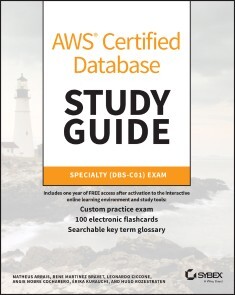
AWS Certified Database Study Guide
VALIDATE YOUR AWS CLOUD DATABASE SKILLS!AWS Certified Database Study Guide: Specialty (DBS-C01) Exam focuses on helping you to understand the basic job role of a database administrator / architect and to prepare for taking the certification exam. This is your opportunity to take the next step in your career by expanding and validating your skills on the AWS Cloud, and performing a database-focused role. AWS is the frontrunner in cloud computing products and services, and this study guide will help you to gain an understanding of core AWS services, uses, and basic AWS database design and deployment best practices. AWS offers more than relational and nonrelation databases, they offer purpose built databases, which allow you to utilize database services prebuilt to meet your business requirements. If you are looking to take the Specialty (DBS-C01) exam, this Study Guide is what you need for comprehensive content and robust study tools that will help you gain the edge on exam day and throughout your career. AWS Certified Database certification offers a great way for IT professionals to achieve industry recognition as cloud experts. This new study guide is perfect for you if you perform a database-focused role and want to pass the DBS-C01 exam to prove your knowledge of how to design and deploy secure and robust database applications on AWS technologies. IT cloud professionals who hold AWS certifications are in great demand, and this certification could take your career to the next level!* Master all the key concepts you need to pass the AWS Certified Database Specialty (DBS-C01) Exam* Further your career by demonstrating your cloud computing expertise and your knowledge of databases and database services* Understand the concept of purpose built databases, allowing you to pick the right tool for the right job.* Review deployment and migration, management and operations, monitoring and troubleshooting, database security, and more* Access the Sybex online learning environment and test bank for interactive study aids and practice questionsReaders will also get one year of FREE access after activation to Sybex’s superior online interactive learning environment and test bank, including hundreds of questions, a practice exam, electronic flashcards, and a glossary of key terms. ABOUT THE AUTHORSMATHEUS ARRAIS is a Senior Partner Solutions Architect at Amazon Web Services. RENE MARTINEZ BRAVET is a Solutions Architect at AWS focused on enterprise and financial services customers. LEONARDO CICCONE is a Senior Database Migration Specialist at Amazon Web Services, with a focus on database migration and modernization. ANGIE NOBRE COCHARERO is the Database Specialist Solution Architect at Amazon Web Services for Latin America. ÉRIKA KURAUCHI is the Specialist Solution Architecture Manager at Amazon Web Services for Latin America. HUGO ROZESTRATEN is a Principal Data Strategy Solutions Architect and author of several AWS blog posts.
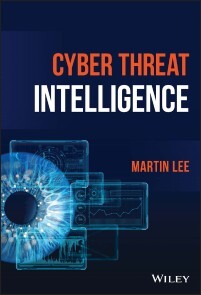
Cyber Threat Intelligence
CYBER THREAT INTELLIGENCE“Martin takes a thorough and focused approach to the processes that rule threat intelligence, but he doesn’t just cover gathering, processing and distributing intelligence. He explains why you should care who is trying to hack you, and what you can do about it when you know.”—SIMON EDWARDS, Security Testing Expert, CEO SE Labs Ltd., Chair AMTSO EFFECTIVE INTRODUCTION TO CYBER THREAT INTELLIGENCE, SUPPLEMENTED WITH DETAILED CASE STUDIES AND AFTER ACTION REPORTS OF INTELLIGENCE ON REAL ATTACKSCyber Threat Intelligence introduces the history, terminology, and techniques to be applied within cyber security, offering an overview of the current state of cyberattacks and stimulating readers to consider their own issues from a threat intelligence point of view. The author takes a systematic, system-agnostic, and holistic view to generating, collecting, and applying threat intelligence. The text covers the threat environment, malicious attacks, collecting, generating, and applying intelligence and attribution, as well as legal and ethical considerations. It ensures readers know what to look out for when considering a potential cyber attack and imparts how to prevent attacks early on, explaining how threat actors can exploit a system’s vulnerabilities. It also includes analysis of large scale attacks such as WannaCry, NotPetya, Solar Winds, VPNFilter, and the Target breach, looking at the real intelligence that was available before and after the attack. Topics covered in Cyber Threat Intelligence include:* The constant change of the threat environment as capabilities, intent, opportunities, and defenses change and evolve* Different business models of threat actors, and how these dictate the choice of victims and the nature of their attacks* Planning and executing a threat intelligence programme to improve an organistation’s cyber security posture* Techniques for attributing attacks and holding perpetrators to account for their actionsCyber Threat Intelligence describes the intelligence techniques and models used in cyber threat intelligence. It provides a survey of ideas, views and concepts, rather than offering a hands-on practical guide. It is intended for anyone who wishes to learn more about the domain, particularly if they wish to develop a career in intelligence, and as a reference for those already working in the area. MARTIN LEE is Technical Lead of Security Research within Talos, Cisco’s threat intelligence and research organization. Martin started his career researching the genetics of human viruses, but soon switched paths to follow a career in IT. With over 20 years of experience within the cyber security industry, he is CISSP certified, a Chartered Engineer, and holds degrees from the Universities of Bristol, Cambridge, Paris-Sud and Oxford. PrefaceAbout the AuthorAbbreviations1. IntroductionDefinitionsHistory of Threat IntelligenceUtility of Threat IntelligenceSummary2. Threat EnvironmentThreatRisk and VulnerabilityThreat ActorsTTPs - Tactics, Techniques and ProceduresVictimologyThreat LandscapeAttack Vectors, Vulnerabilities and ExploitsUntargeted vs Targeted AttacksPersistenceThinking Like a Threat ActorSummary3. Applying IntelligencePlanning Intelligence GatheringThe Intelligence CycleSituational AwarenesssGoal Oriented Security and Threat ModellingStrategic, Operational and Tactical IntelligenceIncident Preparedness and ResponseSummary4. Collecting IntelligenceHierarchy of EvidenceUnderstanding IntelligenceThird Party Intelligence ReportsInternal Incident ReportsActive Intelligence GatheringSummary5. Generating IntelligenceThe Intelligence Cycle in PracticeApplying the Intelligence CycleSources of DataSearching DataThreat HuntingTransforming Data into IntelligenceSharing IntelligenceMeasuring the Effectiveness of Generated IntelligenceSummary6. AttributionHolding Perpetrators to AccountStandards of ProofMechanisms of AttributionAnti-Attribution TechniquesThird Party AttributionUsing AttributionSummary7. ProfessionalismNotions of ProfessionalismDeveloping a New ProfessionBehaving EthicallyLegal and Ethical EnvironmentManaging the UnexpectedContinuous ImprovementSummary8. Future Threats and ConclusionsEmerging TechnologiesEmerging AttacksEmerging WorkforceConclusion9. Case StudiesTarget Compromise 2013WannaCry 2017NotPetya 2017VPNFilter 2018SUNBURST and SUNSPOT 2020Macron Leaks 2017Index
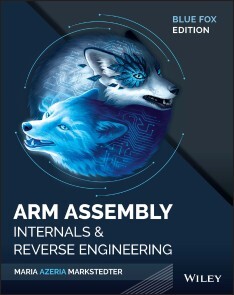
Blue Fox
PROVIDES READERS WITH A SOLID FOUNDATION IN ARM ASSEMBLY INTERNALS AND REVERSE-ENGINEERING FUNDAMENTALS AS THE BASIS FOR ANALYZING AND SECURING BILLIONS OF ARM DEVICESFinding and mitigating security vulnerabilities in Arm devices is the next critical internet security frontier—Arm processors are already in use by more than 90% of all mobile devices, billions of Internet of Things (IoT) devices, and a growing number of current laptops from companies including Microsoft, Lenovo, and Apple. Written by a leading expert on Arm security, Blue Fox: Arm Assembly Internals and Reverse Engineering introduces readers to modern Armv8-A instruction sets and the process of reverse-engineering Arm binaries for security research and defensive purposes. Divided into two sections, the book first provides an overview of the ELF file format and OS internals, followed by Arm architecture fundamentals, and a deep-dive into the A32 and A64 instruction sets. Section Two delves into the process of reverse-engineering itself: setting up an Arm environment, an introduction to static and dynamic analysis tools, and the process of extracting and emulating firmware for analysis. The last chapter provides the reader a glimpse into macOS malware analysis of binaries compiled for the Arm-based M1 SoC. Throughout the book, the reader is given an extensive understanding of Arm instructions and control-flow patterns essential for reverse engineering software compiled for the Arm architecture. Providing an in-depth introduction into reverse-engineering for engineers and security researchers alike, this book:* Offers an introduction to the Arm architecture, covering both AArch32 and AArch64 instruction set states, as well as ELF file format internals* Presents in-depth information on Arm assembly internals for reverse engineers analyzing malware and auditing software for security vulnerabilities, as well as for developers seeking detailed knowledge of the Arm assembly language* Covers the A32/T32 and A64 instruction sets supported by the Armv8-A architecture with a detailed overview of the most common instructions and control flow patterns* Introduces known reverse engineering tools used for static and dynamic binary analysis * Describes the process of disassembling and debugging Arm binaries on Linux, and using common disassembly and debugging tools Blue Fox: Arm Assembly Internals and Reverse Engineering is a vital resource for security researchers and reverse engineers who analyze software applications for Arm-based devices at the assembly level. MARIA MARKSTEDTER is the CEO and founder of Azeria Labs, offering high-quality training courses on Arm reverse engineering and exploitation. She has an extensive educational background, holding a Bachelor’s degree in Corporate Security and a Master’s degree in Enterprise Security, and has collaborated with Arm on exploit mitigation research. Maria’s outstanding contributions to the cybersecurity industry have earned her a place on Forbes’ “30 under 30” list for technology in Europe (2018) and the title of Forbes Person of the Year in Cybersecurity in 2020.
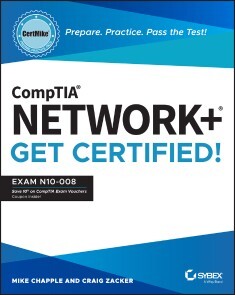
CompTIA Network+ CertMike: Prepare. Practice. Pass the Test! Get Certified!
A LASER-FOCUSED AND JOB-READY BLUEPRINT FOR SUCCESS ON THE COMPTIA NETWORK+ EXAM AND A RUNNING START ON YOUR FIRST (OR NEXT) JOB IN TECHCompTIA Network+ CertMike: Prepare. Practice. Pass the Test! Get Certified! Exam N10-008 delivers a no-nonsense, straight-to-business guide to acing the CompTIA Network+ test on your first attempt. Veteran tech experts and educators Mike Chapple and Craig Zacker walk you through every step you’ll need to take on the N10-008 exam, from networking fundamentals, implementations, and operations to network security and troubleshooting. Ace the test using the proven CertMike approach:* PREPARE -- CertMike is your personal study coach, guiding you through all the exam objectives and helping you gain an understanding of how they apply to on-the-job tasks!* PRACTICE -- Each chapter includes two multiple choice practice questions. Work through the detailed explanations to evaluate each answer option and understand the reason for the best answer!* PASS -- On exam day, use the critical knowledge you've learned when you’re ready to take the test. You'll feel ready and confident to pass the exam and earn your certification!The book skips the fluff and gets right to the point of getting you familiar with network basics and on the road to an in-demand certification and a new career as a network technician or admin. You’ll also get complimentary access to additional Sybex online study tools, including a bonus practice exam and audio recordings of the book’s CertMike Exam Essentials.A can’t-miss roadmap to success on the Network+ exam, CompTIA Network+ CertMike: Prepare. Practice. Pass the Test! Get Certified! Exam N10-008 is the job-focused and practical guide you’ve been looking for to help you hone your networking skills.ABOUT THE AUTHORSMIKE CHAPPLE, PHD is Teaching Professor of Information Technology, Analytics, and Operations at Notre Dame’s Mendoza College of Business. He is a bestselling author of over 25 books and serves as the Academic Director of the University’s Master of Science in Business Analytics program. He holds multiple additional certifications, including the CISSP (Certified Information Systems Security Professional), CySA+ (CompTIA Cybersecurity Analyst), CIPP/US (Certified Information Privacy Professional), CompTIA PenTest+, and CompTIA Security+. Mike provides cybersecurity certification resources at his website, CertMike.com. CRAIG ZACKER is the author or co-author of dozens of books, manuals, articles, and web sites on computer and networking topics.

Outlook 365: als persönliche Assistentin
Nein, Kaffee kochen wird Ihnen Outlook vorläufig nicht. Aber Post sortieren, kennzeichnen, wiederfinden, vielleicht gleich wegwerfen oder zur Wiedervorlage dann präsentieren, wenn Sie das möchten. Außerdem kann es Termine organisieren, Texte übersetzen, Anfahrtsbeschreibungen und Personenfotos zu Kontaktadressen liefern und vieles mehr. Mit Outlook 365 haben Sie immer einen Exchange-Server im Hintergrund, der sich auch in Ihrer Abwesenheit um Ihre Angelegenheiten kümmert. Hier bekommen Sie verschiedene Vorschläge, wie Outlook Ihre Wünsche so ausführen wird, wie Sie sich das wünschen. Neu: Mit ToDo und Loop-Komponenten!Ina Koys ist langjährige Trainerin für MS-Office-Produkte. Viele Fragen werden in den Kursen immer wieder gestellt, aber selten in Fachbüchern behandelt. Einige davon beantwortet sie jetzt in der Reihe "kurz & knackig".

The Absolute Beginner's Guide to HTML and CSS
Written as an illustrated, step-by-step guide for beginners, this book will introduce you to HTML and CSS with lab exercises and examples of code.You'll begin by setting up the development environment such as local web server and html editor. The next few chapters cover web servers, the basics of HTML such as language syntax, tags, and how to write a program. Next, you'll learn how to put together simple web pages demonstrating how the code works and how to use various HTML tags and CSS to style the pages. Finally, the use of CMS to build websites such as Drupal and WordPress and how HTML and CSS fits in. At the end there are reference libraries for both HTML tags and CSS.The Absolute Beginners Guide to HTML and CSS provides you with the tools, confidence, and inspiration to start building web pages and websites. If you are a programmer, developer or a student, or just someone who wants to learn on their own, this book is for you.WHAT YOU'LL LEARN* Understand basic computer programming concepts* See how to use HTML and CSS to build web pages* Apply the syntax of HTML and CSS* See how HTML and CSS fits into CMS systems such as Drupal and WordPressWHO THIS BOOK IS FORSoftware programmers, developers, students, and anyone who wants a quick reference for HTML and CSSWith over 20 years’ experience in the computer industry, Kevin Wilson has made a career out of technology and showing others how to use it. After earning a master's degree in computer science, software engineering, and multimedia systems, Kevin has held various positions in the IT industry including graphic & web design, digital film & photography, programming & software engineering, developing & managing corporate networks, building computer systems, and IT support. He currently teaches computer science at college and works as an IT trainer in England while researching for his PhD.1) WHAT IS HTML?Structure of an HTML FileHTML Element StructureHypertextWhere are the HTML Files Stored?HTML 5What is CSS?What is a URL?Web ServersDevelopment Tools2) GETTING STARTED WITH HTMLSetting UpTags for Formatting TextHeadingsParagraphsBold TextItalic TextAdding ImagesUnderstanding Images DimensionsImage AlignmentAdding TablesAdding LinksUsing Images as LinksAdding ListsUnordered ListOrdered ListCreating FormsInput TypesText FieldsText AreaRadio ButtonsSelect ListsLabelsSubmission Method3) ADDING MULTIMEDIAAdding VideoAdding AudioAdding Image Maps4) INLINE HTML STYLESAdding ColorBackground ColorText ColorFonts5) CASCADING STYLE SHEETSCSS FilesCSS SyntaxType/Element SelectorClass SelectorID SelectorStyling TextStyling LayoutsBlock vs Inline ElementsFloating & Cleared Elements6) ADDING STRUCTUREDesigning a LayoutStyling the Structure with CSS StylesBuilding your Text StylesBuilding the HTML Page7) CMS SYSTEMSWhat are theyHow do they workConnecting to DatabasesWordPress8) HTML COLOR CODES9) HTML TAG REFERENCE LIBRARYBasic StructureText FormattingLinksListsMultimediaTablesForms10) CSS PROPERTY REFERENCE LIBRARY11) COMMON WEB FONTSWeb Safe FontsGoogle Fonts12) COMMON WEB MEASUREMENTSRelative LengthsAbsolute Lengths

Beginning Ethereum Smart Contracts Programming
Use this book to write an Ethereum blockchain smart contract, test it, deploy it, and create a web application to interact with your smart contract. This new edition has been expanded and updated to cover web3.js APIs, additional Consensus Protocols, non-Fungible Tokens (NFTs), developing NFT tokens using ERC-721, and more!BEGINNING ETHEREUM SMART CONTRACTS PROGRAMMING, SECOND EDITION is your fastest and most efficient means of getting started if you are unsure where to begin and how to connect to the Ethereum blockchain. The book begins with a foundational discussion of blockchain and the motivation behind it. From there, you will get up close and personal with the Ethereum blockchain, learning how to use an Ethereum client (geth) to create a private Ethereum blockchain to perform transactions such as sending Ethers to another account on another node.You will learn about smart contracts without having to wade through tons of documentation. Author Lee’s “learn-by-doing” approach will allow you to be productive and feel confident in your ability in no time. The last part of this book covers tokens, a topic that has taken the cryptocurrency market by storm.Sample code in Python, Solidity, and JavaScript is provided in the book and online.WHAT YOU'LL LEARN* Understand the basic premise of blockchain and “record keeping” in a peer-to-peer network* Experience blockchain in action by creating your own blockchain using Python* Know the foundation of smart contracts programming and how to deploy and test smart contracts* Work on a case study to illustrate the use of blockchain* Be familiar with tokens, and how to create and launch your own ICO digital token* Write smart contracts that transact using tokensWHO THIS BOOK IS FORThose who want to get started quickly with Ethereum smart contracts programming. Basic programming knowledge and an understanding of Python or JavaScript is recommended.WEI-MENG LEE is the founder of Developer Learning Solutions, a technology company specializing in hands-on training of blockchain and other emerging technologies. He has many years of training expertise and his courses emphasize a learn-by-doing approach. He is a master at making learning a new programming language or technology less intimidating and fun. He can be found speaking at conferences worldwide such as NDC and he regularly contributes to online and print publications such as DevX.com, MobiForge.com, and CoDe Magazine. He is active on social media on his blog learn2develop.net, on Facebook at DeveloperLearningSolutions, on Twitter @weimenglee, and on LinkedIn at leeweimeng.---NEW Chapter----CHAPTER 1 - TECHNOLOGIES BEHIND BLOCKCHAINBASIC CRYPTOGRAPHYTYPES OF CRYPTOGRAPHIC ALGORITHMSSYMMETRICASYMMETRICHASHINGDIGITAL SIGNATURESUMMARYChapter 2 - Understanding Blockchain---NEW SECTION---CONSENSUS PROTOCOLSPROOF OF STAKE (POS)PROOF OF ELAPSED TIMEPROOF OF SPACE...-----------------Chapter 3 - Implementing Your Own Blockchain using PythonChapter 4 - Connecting to the Ethereum Blockchain using GethChapter 5 - Creating Your Own Private Ethereum Test NetworksChapter 6 - Using the Crypto Wallet - MetaMaskChapter 7 - Getting Started with Solidity Smart ContractsChapter 8 - Testing Smart Contracts using GanacheChapter 9 - Building Decentralized Apps using the web3.js APIsChapter 10 - Handling Smart Contract EventsChapter 11 - Project - Online LotteryChapter 12 - Creating Tokens using ERC-20---REVISED USING OPENZEPPLIN’S CONTRACT------NEW CHAPTERS----CHAPTER 13 - CREATING NON-FUNGIBLE TOKENS USING ERC-721WHAT IS A NFT?STORING DIGITAL ASSETS USING IPFSWHAT IS IPFSUPLOADING A FILE TO IPFSACCESSING A FILE FROM IPFSNFT AND IPFSCREATING THE NFT TOKEN CONTRACTDEPLOYING THE CONTRACTMINTING THE NFT TOKEN CONTRACTGETTING THE OWNER OF THE NFTGETTING THE NAME AND SYMBOL OF NFTFINDING THE BALANCE OF NFT FOR AN ADDRESSGETTING THE OWNER OF THE NFTGETTING THE TOKENURITRANSFERRING A NFTTRANSFERRING OWNERSHIP OF THE NFT CONTRACTCHAPTER 14 – INTRODUCTION TO DEFIWHAT IS DECENTRALIZED FINANCESTABLECOINSTYPES OF STABLECOINSUSDCDAISERVICES IN DEFICOMPONENTS IN DEFIAPPLICATIONS OF DEFI------------------

Microsoft Azure AI Fundamentals Certification Companion
Prepare for the Azure AI Fundamentals certification examination. This book covers the basics of implementing various Azure AI services in your business. The book not only helps you get ready for the AI-900 exam, but also helps you get started in the artificial intelligence (AI) world.The book starts with a short overview of the AI-900 exam and takes you through the exam prerequisites and the structure of the exam. You will then learn basic and advanced AI in Azure. Principles of responsible AI, Azure Machine Learning (ML), Azure Cognitive Services, and Bot Services are covered, followed by a practice test. You will go through ML fundamental concepts, model training, and validation along with case studies and a practice test for better preparation. The book includes the fundamentals of Azure and computer vision cognitive services. Various vision services and face services are demonstrated as well as analyzing image and text using OCR. You will understand concepts of natural language processing (NLP) such as text analysis, language modelling, entity recognition, sentiment analysis, speech recognition, and synthesis and also learn how to leverage Microsoft Azure for NLP.After reading this book, you will be able to implement various Azure AI services and prepare for the Azure AI Fundamentals certification exam, AI-900.WHAT WILL YOU LEARN* Understand AI fundamentals and responsibilities* Know the Microsoft Azure offerings for AI* Understand foundational concepts for ML and Azure offerings for ML* Understand Azure Cognitive Services such as Custom Vision, Face, Form Recognizer, Text-to-Speech, and Image AnalysisWHO THIS BOOK IS FORAzure and AI users working with ML servicesKRUNAL S. TRIVEDI is a Microsoft Certified Trainer and a Microsoft Azure MVP for the past 5 years. He has been providing technical training on a variety of Microsoft and non-Microsoft technologies to IT corporations all over the world for the past 14 years. He is an enthusiastic speaker, trainer, writer, and author. Krunal is actively involved in project architecting, building solutions using modern edge technologies such as React, Angular, Docker, and Microsoft Azure, in addition to training. He has worked on numerous projects and products, from requirement gathering to project deployment using the Agile methodology and DevOps pipeline.CHAPTER 1: AI-900 OVERVIEW OF EXAM PREPARATIONCHAPTER GOAL:The chapter introduces the exam to the learners. The exam object-IVES ARE MADE CLEAR TO THE READERS. READERS GAIN UNDERSTANDING ABOUT EXAM MODULES, MODULE WEIGHTAGE, AND HOW MUCH TO EXPECT FROM EACH MODULE THROUGHOUT THE EXAMINATION. LINKS TO PERTINENT RESOURCES ON MICROSOFT LEARN WOULD BE PROVIDED FOR THE READERS' BENEFIT.NO OF PAGES: 2SUBTOPICS1. Exam Overview2. Who is this exam for – Exam prerequisite3. Modules and weightage in exam4. Module DescriptionCHAPTER 2: FUNDAMENTALS OF ARTIFICIAL INTELLIGENCECHAPTER GOAL:The chapter's objective is to introduce some foundational, high-level elements. These concepts would be explored in depth over the next chapters of the books.NO OF PAGES: 15SUB - TOPICS1. What is Artificial Intelligence?2. Understanding Artificial Intelligence workloads3. Principles of Responsible AI4. Understanding Artificial Intelligence in Microsoft Azure5. AI Services in Microsoft Azure1. Azure Machine Learning2. Azure Cognitive Service3. Azure Bot Service4. Azure Cognitive Search6. Module Review7. Introspective Practice8. Solutions to the practice test9. References: Microsoft LearnCHAPTER 3: MACHINE LEARNING FUNDAMENTAL CONCEPTSCHAPTER GOAL: THIS CHAPTER MAKE READER FAMILIAR TO THE MACHINE LEARNING FUNDAMENTALS INTRODUCING MACHINE LEARNING, TYPES OF MACHINE LEARNING, MODEL TRAINING AND VALIDATION. HERE READERS WILL ALSO GET TO KNOW ABOUT VARIOUS TOOLS USED FOR MACHINE LEARNING.NO OF PAGES: 30SUB - TOPICS:1. What is Machine Learning?2. Describing Core Machine Learning Concepts1. Dataset, Features and Labels2. Machine Learning Algorithms in brief3. Machine Learning Workflow4. Model Evaluation Metrics3. Types of Machine Learning1. Regression2. Classification3. Clustering3. The two importance elements: Model Training and Validation4. Introducing Azure Machine Learning5. Tools for Azure Machine Learning1 Azure Machine Learning Studio2 Azure Machine Learning Designer6 What is Automated Machine Learning?7. Practical Labs:Using Azure Machine Learning Designer to build a regression model Using Azure Machine Learning Designer, create a classification modelUsing Azure Machine Learning Designer to build a clustering model8. Module Review9. Introspective Practice10. Solutions to the practice test11. References: Microsoft LearnCHAPTER 4: COMPUTER VISIONCHAPTER GOAL: THE CHAPTER INTRODUCES READERS TO THE FUNDAMENTALS OF AZURE COGNITIVE SERVICES IN BRIEF, AS WELL AS IN DEPTH KNOWLEDGE OF COMPUTER VISION COGNITIVE SERVICE.NO OF PAGES: 50SUB - TOPICS:1. Getting Started with Azure Cognitive ServiceBenefits of Cognitive ServiceAzure Cognitive Service: SpeechLanguageVisionDecisionOpen AI Service2. What is Computer Vision?3. Computer Vision Core Elements: Image Classification and Object Detection3. Computer Vision Application4. Exploring Various Vision Service1. Computer Vision2. Custom Vision3. Face4. Form Recognizer5. Understanding of OCR6. Practical Labs:* 1. Analysing image with Computer Vision* 2. Training Models with Custom Vision* 3. Using Face Service to analyse faces* 4. Analysing text with Computer Vision Service using OCR7. Introspective Practice Test8. Solutions to the practice test9. References: Microsoft LearnCHAPTER 5: FUNDAMENTALS OF NATURAL LANGUAGE PROCESSINGCHAPTER GOAL: THIS CHAPTER INTRODUCES READERS WITH THE RESPONSIBILITIES OF NATURAL LANGUAGE PROCESSING SUCH AS TEXT ANALYSIS, LANGUAGE MODELLING, ENTITY RECOGNITION, SENTIMENT ANALYSIS, SPEECH RECOGNITION AND SYNTHESIS AND HOW TO LEVERAGE MICROSOFT AZURE FOR NLP.NO. OF PAGES: 501. Getting Started with Natural Language Processing1. What is Natural Language Processing?2. Core NLP Responsibilities1. Text analysis and entity recognition2. Sentiment analysis3. Speech recognition and synthesis4. Machine Translation5. Semantic Language modelling2. AI for Conversational Interactions3. Microsoft Azure for NLP1. Core Azure NLP workloads: Language, Speech and Translator2. Language:1. Language Detection2. Key phrase extraction3. Entity Detection4. Sentiment Analysis5. Question Answering6. Conversational Language Understanding3. Speech:1. Text to speech2. Speech to text3. Speech translation4. Translator1. Text Translation2. Microsoft Azure platform for Conversational AI1. Azure Bot Service3. Practical Labs:* 1. Text analysis with text-analysis-service* 2. Using the Speech service's speech-to-text capabilities to transcribe audible speech to text. * 3. Using the Speech service's text-to-speech capabilities to generate audible speech from text. * 4. Using translator service to convert text* 5. Language Understanding Application Development* 6. Developing a Q&A generator with Azure Bot Service * 7. Provisioning chat bot using Microsoft Azure Bot Service4. Introspective Test5. Solutions to the Practice Test6. References: Microsoft Learn
Data Analytics in the AWS Cloud
A COMPREHENSIVE AND ACCESSIBLE ROADMAP TO PERFORMING DATA ANALYTICS IN THE AWS CLOUDIn Data Analytics in the AWS Cloud: Building a Data Platform for BI and Predictive Analytics on AWS, accomplished software engineer and data architect Joe Minichino delivers an expert blueprint to storing, processing, analyzing data on the Amazon Web Services cloud platform. In the book, you’ll explore every relevant aspect of data analytics—from data engineering to analysis, business intelligence, DevOps, and MLOps—as you discover how to integrate machine learning predictions with analytics engines and visualization tools. You’ll also find:* Real-world use cases of AWS architectures that demystify the applications of data analytics* Accessible introductions to data acquisition, importation, storage, visualization, and reporting* Expert insights into serverless data engineering and how to use it to reduce overhead and costs, improve stability, and simplify maintenanceA can't-miss for data architects, analysts, engineers and technical professionals, Data Analytics in the AWS Cloud will also earn a place on the bookshelves of business leaders seeking a better understanding of data analytics on the AWS cloud platform. GIONATA “JOE” MINICHINO is Principal Software Engineer and Data Architect on the Data & Analytics Team at Teamwork. He specializes in cloud computing, machine/deep learning, and artificial intelligence and designs end-to-end Amazon Web Services pipelines that move large quantities of diverse data for analysis and visualization.
AI for Retail
THE COMING OF THE AI REVOLUTION IN BRICK-AND-MORTAR RETAILIn AI for Retail: A Practical Guide to Modernize Your Retail Business with AI and Automation, Francois Chaubard, AI researcher and retail technology CEO, delivers a practical guide for integrating AI into your brick-and-mortar retail business. In the book, you’ll learn how to make your business more efficient by automating inventory management, supply chain, front-end, merchandising, pricing, loss prevention, e-commerce processes, and more.The author takes you step by step from no AI Strategy at all to implementing a robust AI playbook that will permeate through your entire organization. In this book, you will learn:* How AI works, including key terminology and fundamental AI applications in retail* How AI can be applied to the major functions of retail with detailed P&L analysis of each application* How to implement an AI strategy across your entire business to double or even triple Free Cash FlowAI for Retail is the comprehensive, hands-on blueprint for AI adoption that retail managers, executives, founders, entrepreneurs, board members, and other business leaders have been waiting for.SECTION 1 INTRODUCTION TO THE AI REVOLUTION 111 How Ai Has Revolutionized Many Other Industries over the Last 20 Years 132 The Three Myths of How AI Will Transform Retail 373 How AI Will Automate and Optimize Retail 514 Level- Setting the AI Doomsday- ism 67SECTION 2 AI THEORY 755 What Is AI? 776 From CPUs to GPUs 847 Optimization 888 Measuring AI Performance 949 AI Learning Techniques 10010 Simulators and AI 11111 OODA Loops 11612 Hierarchy of Data Maturity 12013 A “General Theory for Retail AI” 125SECTION 3 APPLICATIONS OF AI IN RETAIL 13714 The Inefficiencies in Retail Today 13915 AI for Merchandising 14316 AI for Inventory, Ordering, and Supply Chain Management 15317 AI for Replenishment and Labor Management 17718 AI for Labor Budgets and Scheduling 19319 AI for E- Commerce and Customer Service 19920 AI for Warehouse and Distribution Centers 21221 AI for Checkout 22722 AI for Pricing and Promotion 25423 Other AI Use Cases 263SECTION 4 IMPLEMENTATION 26924 Create your “AI Strategy and Road Map” 27125 Buying vs. Building AI 28526 How to Run a Proof of Concept Bake- off Effectively 29227 Transitioning to a Fact- based, Data- driven Culture 303About the Author 309Index 311
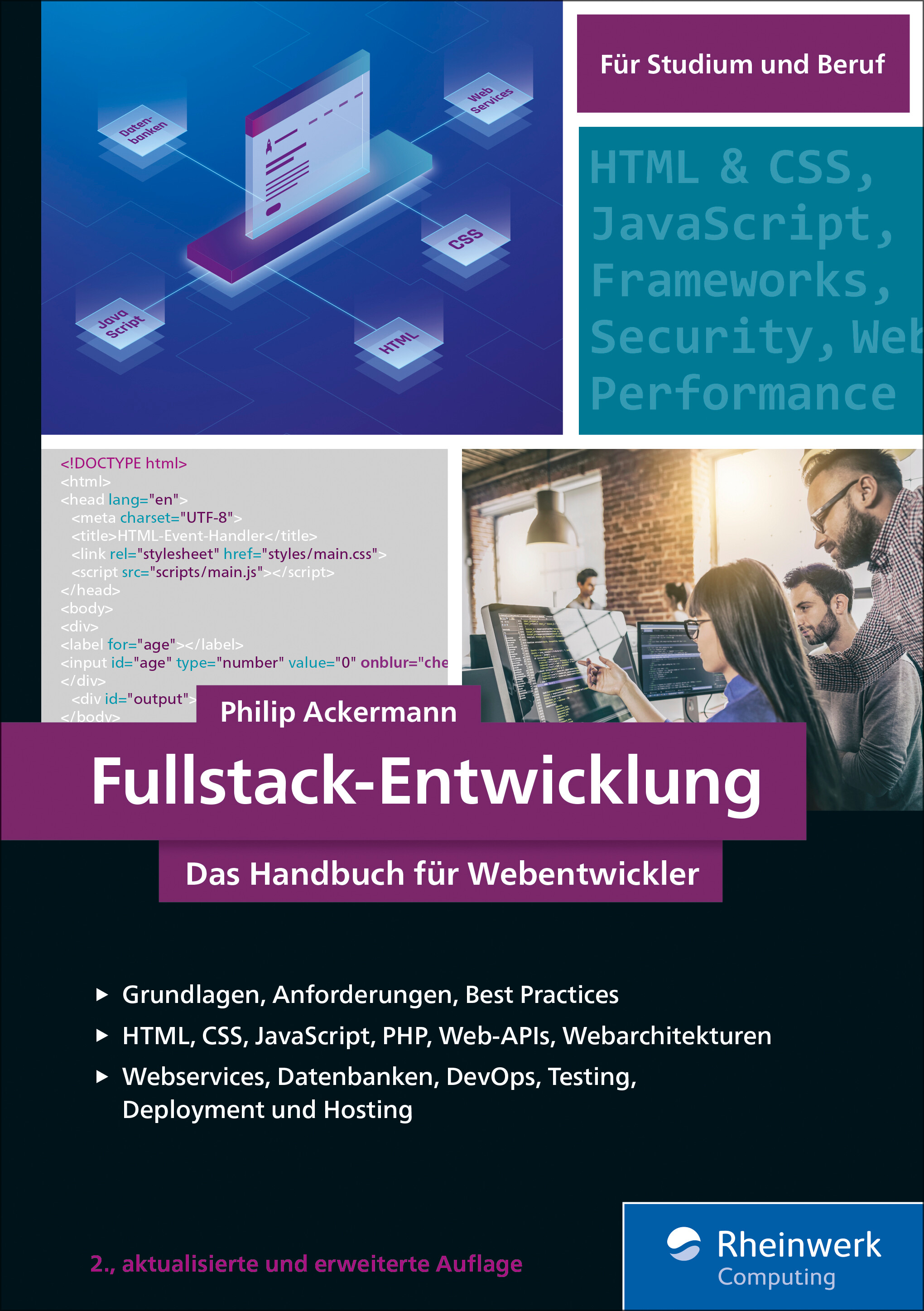
Fullstack-Entwicklung (2. Auflg.)
Das Handbuch für Webentwickler, 2., aktualisierte und erweiterte Auflage April 2023Diese Roadmap zur Webentwicklung hilft Ihnen, in der Flut aus Sprachen, Technologien und Tools der Webentwicklung den Kopf über Wasser zu halten. Sie erfahren, welche Sprache für die jeweilige Aufgabe die richtige ist, und verstehen die Zusammenhänge zwischen den Technologien. Von HTML, CSS, JavaScript und PHP bis zu Webprotokollen, Webarchitektur, Deployment u. v. m. Dieses Standardwerk gibt Ihnen einen umfassenden Überblick über alle relevanten Themen des Webs, vermittelt fundiertes Fachwissen über den gesamten Technologiestack und macht Sie zum mythischen Einhorn unter den Webentwicklern.Aus dem Inhalt:Web-Protokolle und Web-Formate verwendenWebseiten erstellen mit HTML, CSS und JavaScriptWeb Architekturen: MVC, MVP, MVVM, SOA, Microservices, MicrofrontendsProgrammiersprachen und Web-Frameworks einsetzenWebservices implementieren: REST und GraphQLDatenbanken beherrschen: SQL und NoSQLAuthentifizierungsmechanismen verstehenWebprojekte organisieren und verwaltenProjektmanagement und ToolsLeseprobe (PDF-Link)

micro:bit Projects with Python and Single Board Computers
Build different components of larger systems using class sets of micro:bits with Python in a truly collaborative way. First you’ll explore ways to harness the capabilities of the humble micro:bit and learn to creatively overcome some of its limitations; learning practical text-based programming along the way. We’ll then move on to building projects that allow multiple micro:bits, and other microcontroller boards and parts like the Raspberry Pi, to communicate with one another, and coordinate their operations to build larger systems.Rather than just being a guide to learning these skills, this book will include tips and stories about implementing the these ideas in classrooms, Code Clubs, and Maker environments. Practical logistics for preparation and easy set-up, as well as, acceptance criteria and accountability for students and participants is included. These ideas were gained over years of running a Code Club and running Maker workshops and events.You’ll learn about programming collaborative solutions and design logic. Then you’ll scale that logic up to more complex projects. By the end, you’ll have added additional electronic and physical components to projects that interact with the world. You’ll create fun inventions together, using hardware, coding, electronics, physical objects, and e-textiles.WHAT YOU'LL LEARN* Solve problems and create art by modelling solutions and ideas with a combination of Python coding, electronic systems engineering, and creative design.* Navigate the logistical and unique challenges that come with running your own Code Club, Makerspace, or feeding these activities into STEAM design and technology curriculums.* Take new Makers from simply copying and duplicating through to debugging and understanding.WHO THIS BOOK IS FORMakers and instructors interested in starting group projects while learning to code and gain other Maker skills along the way. Essential information is provided in a form that enables beginners and intermediate Makers to get hands-on quickly, but with enough depth to keep building on these projects and pushing the boundaries.MARTIN TAN wrote the first Code Club Moonhack projects in Scratch and Python, used by over 10,000 kids in Australia. He has taken kids to demo robots and coding projects in parliament, delivered training to Code Club Australia, and contributes to various Maker communities online. Martin blogs on Maker topics, runs a Maker store, and works in IT security, contributing to various open source projects and community conferences. Most of his endeavors feed into his hobbies, which also include music, locksport, and various techy pursuits.CHAPTER 1: GETTING STARTED- A quick tale: Years of mistakes - numbers, passwords, computers, accountability, and more- What is your baseline: where are you starting from?- Work out your initial scope: what are your first few milestones?- What will you need? Equipment and other resources.- Find a place: Set up a great space to learn and create!- Another alternative: Make your space portable!- The tech stuff: learn by applying- Chapter 1: recap summaryChapter 1 cheat sheetCHAPTER 2: GETTING OUR HANDS DIRTY WITH MICROPYTHON- A quick tale: Jumping in with our Code Club- What can we do in one hour? Why is one hour a good amount of time to spend on a first project?- A first project: BBC micro:bit emoticon switcher using buttons- Upgrading: Using the built-in sensors- Scaling up: Adding another micro:bit and using radio- Scaling up further: Using a class set of micro:bits- Going further: Using an external components and always adding challenges- Electronics101: Voltage dividers resistors, power smoothing with capacitors, and other electronic idiomsJ- Chapter 2: recap summaryChapter 1 cheat sheetCHAPTER 3: LEARNING MORE ABOUT PYTHON IN GENERAL- A quick tale: Questions teachers ask and weaning off blocks and tablets- Benefits of using Python in getting started- Setting up Python for your school or maker group computers for a kid-friendly environment- Python program structure, loops, input/output: Calculate some numbers- Adding more Python functionality: Importing Flask to make a web interface- Tying it all together: Connecting Python to the Internet and my devices- Python for everyone: The most useful quick Python script uses- Chapter 3: recap summaryChapter 3 cheat sheetCHAPTER 4: GETTING TACTILE WITH PYTHON, E-TEXTILES, COPPER TAPE, PAINT, PENS, AND CROCODILE CLIPS- A quick tale: Keeping it simple to let us build bigger - whack-a-mole, the Curiosity Show, group projects and collaboration in our Code Club- Cardboard, aluminum foil, wires, copper tape, and conductive thread: Where to integrate these into projects- Making a basic circuit and connecting a micro:bit: LEDs are strangely popular, so this project shows how to emulate switches and control LEDs with some Python and a micro:bit and still keep it washable.- Scaling up e-textiles: Connecting projects to collaborate with an e-textiles project.- Audio, visual, and tactile: Adding more input and output to our projects- Case studies: Smart City and robot arena- Chapter 4: recap summaryChapter 4 cheat sheetCHAPTER 5: FREESTYLING WITH PYTHON — GOING OFF-MAP AND GROWING YOUR OWN SKILLS- A quick tale: When progress diverges in a group and everyone progresses in their own pace and direction - our false starts- Finding your own project from start to finish: Keeping track of our skills and finding our strengths and weaknesses, with examples- A first project without exact instructions: An API project in Python with trinket.io- Using diagrams: the self-watering plant project- Scaling up our project: Understanding how things work and adding one thing at a time- Learning how to teach yourself: When you want to add something brand new- Chapter 5: recap summaryChapter 5 cheat sheetChapter 6: Collaboration - Writing Code With Others- A quick tale: Devs and testers activity with Scratch projects- Open Source software: What is Open Source - opportunities for reporting bugs, learning, collaboration, and keeping projects alive- Working online: Communicating efficiently, accurately, and securely with online tools- Keeping others involved: Questions to ask, and verbalizing your thoughts while debugging and helping and teaching others- Pairing up: Using programming language to communicate while programming with a partner- Testing yourself: Creating your own game-writing workshops with what you’ve learnedChapter 6 cheat sheetCHAPTER 7: ELECTRONICS - BASIC SKILLS AND TOOLS, AND SCALING UP FOR GROUPS- A quick tale: Getting the burn for electronic projects- Basic components and what they do: A quick introduction about some common components that will be useful in your first projects- Embedded Python: Looking at MicroPython, CircuitPython, and other alternatives- Communications: Things to know about I2C, SPI, serial, and more- Learning to solder: Purchasing and setting up the tools and skills you need to get started with electronic kits- Microcontroller boards: A quick rundown on the types of microcontroller boards and how to choose the one you need for your project- Setting up a project for a group: Example project you can build and how to scale this for groups- Chapter 7 recap summaryChapter 7 cheat sheetCHAPTER 8: PUTTING IT ALL TOGETHER - SETTING UP A MAKERSPACE OR CODE CLUB- A quick tale: Mistakes we’ve made redux- Useful online tools: Free and pay online tools that are useful for planning and communicating, especially when people require flexibility or are volunteering- Keeping participants accountable: How to track progress and help everyone efficiently without losing your mind- Administrative tasks: Storage and setup of tools and data and dealing with human requirements- Planning: Determining your group capabilities and planning your year, and upcoming events- Challenges: Apart from logistical and administrative issues, there’s some challenges that often come up within maker groups and code clubs.- Exposure: Getting involved in community events, and other groupsChapter 8 recap summaryAudience: Beginner

Customer-Data-Plattformen
Dieses Buch beantwortet grundlegende Fragen zu CDP, gibt einen Überblick über aktuelle CDPs und identifiziert deren Vorteile und Schwachstellen. Zudem setzt es sich mit unterschiedlichen Entwicklungen im Marketingumfeld auseinander, die starke Treiber für den Einsatz einer Customer-Data-Plattform (CDP) sind. Marketing-Entscheider sowie Verantwortliche aus den Bereichen Online-Marketing und E-Commerce erhalten Tipps, wie die passende CDP ausgewählt und implementiert werden kann. Zudem ist dieses Buch interessant für alle Entscheider, die sich damit beschäftigen, wie sie ihren Konsumenten ein besseres Kauferlebnis bieten können. Dabei geht Jonas Rashedi nicht nur auf die technischen Aspekte ein, sondern beleuchtet auch die organisationsbezogenen Voraussetzungen für die erfolgreiche Implementierung und Verwendung einer CDP. Praxisbeispiele veranschaulichen die Inhalte. This book offers an excellent introduction to the CDP category. I recommend it for anyone trying to understand what CDPs do, whether a CDP is right for their company, and how to select the right CDP. David M. Raab, Gründer und CEO des CDP Institutes
Teach Yourself VISUALLY Power BI
A COMPREHENSIVE AND FULLY VISUAL GUIDE TO MICROSOFT POWER BITeach Yourself VISUALLY Power BI collects all the resources you need to master the everyday use of Microsoft's powerful data visualization software and delivers them in a single, easy-to-use volume. Fully illustrated, step-by-step instructions are combined with crystal-clear screenshots that walk you through the basic and advanced functions of Microsoft Power BI.Teach Yourself VISUALLY Power BI offers the best visual learning techniques with complete source material about the interface and substance of Power BI, as well as:* Stepwise guidance on working with, transforming, and processing data sources* Instructions for customizing data visualizations to create informative and presentation-ready charts and graphs* Full-color, two-page tutorials on the more advanced features of Power BI, including app integrations and data access with DAXThe fastest, easiest way for visual learners to get a handle on Microsoft Power BI, Teach Yourself VISUALLY Power BI is a can't-miss resource, loaded with useful tips for newbies and experts alike.
Künstliche Intelligenz für Dummies (2. Auflg.)
Künstliche Intelligenz begegnet uns immer mehr im täglichen Leben. Egal ob intelligente Autos, Roboter, Chatbots oder Systeme, die uns im Schach und Go besiegen, KI wird immer wichtiger. Ralf Otte beschreibt präzise und dennoch einfach diejenigen Algorithmen, die all das ermöglicht haben, erläutert Beispielanwendungen aus der Industrie, erklärt die zugrundeliegende Mathematik und zeigt darüber hinaus klare Grenzen für die Künstliche Intelligenz der nächsten Jahre auf. In dem Buch werden die mathematischen Grundlagen der KI besprochen, sie sind jedoch nicht zwingend notwendig, um die Kernaussage des Buches zu verstehen.Ralf Otte ist Professor am Institut für Automatisierungssysteme an der Technischen Hochschule Ulm und dort auch verantwortlich für das Modul »Künstliche Intelligenz und Softcomputing für Ingenieure«. Er ist auch Autor von Allgemeinbildung Künstliche Intelligenz für Dummies.

Large-Scale Agile Frameworks
Das Buch Large-Scale Agile Frameworks bietet praktische Lösungen für die team- und funktionsübergreifende Priorisierung von Anforderungen und Dokumentation für Unternehmen. Es spiegelt das Zusammenspiel aktueller Technologietrends wie Cloud Computing und organisatorischer Anforderungen an Microservices wider. Organisationen sind zunehmend gefordert, ihre IT-Strategie an den Kundenbedürfnissen nach kundenzentrierten und serviceorientierten Produkten und Dienstleistungen auszurichten.Das Buch analysiert die besonderen Anforderungen an ein differenziertes Software-Dienstleistungsangebot und zeigt, wie agile Prinzipien zur Lösung dieser Probleme wirksam sind. Das Buch hebt auch die Bedeutung einer groß angelegten agilen Entwicklung hervor und bietet Organisationen eine Anleitung zur Transformation ihrer Struktur in Richtung einer agilen Priorisierung. Das Buch behandelt verschiedene geeignete Modelle, Methoden und agile Werkzeuge und gibt Empfehlungen zur funktionsübergreifenden Priorisierung von Anforderungen. Es berücksichtigt auch die Notwendigkeit von IT-Sicherheit und zeigt, wie diese in den gesamten agilen Entwicklungsprozess integriert werden kann.SASCHA BLOCK ist IT-Architekt und verfügt über mehrjährige Praxiserfahrung als Agile Coach in Digitalisierungsprojekten. Als Wirtschaftsinformatiker mit einem Master of Science im Studiengang IT-Management und Consulting an der Universität Hamburg kombiniert der Autor seine wissenschaftsorientierte Herangehensweise mit der Praxiserfahrung in agilen IT-Projekten, um zielgerichtet an innovativen und zukunftsorientierten Lösungen zu arbeiten. Agile Vorgehensmodelle, Konzepte und grundlegende Begriffe - Software-Releases und Release-Management - Wie Sie ein Large-Scale Agile Framework anpassen und in Ihrer Organisation einführen - Einflussfaktoren des Cloud-Trends und der Virtualisierung - Software-Architektur & IT-Security als integraler Bestandteil agiler Praxis - Design Thinking & Prototyping effektiv nutzen - Agile Infrastruktur und Agile Tools - Pragmatische Software-Architektur-Dokumentation - DevOps-Methoden und DevOps-Tools - ISO/IEC 25010 – Kriterien zur Qualität von Software - Datenqualität – Lebenselixier der Digitalisierung

Practical Business Analytics Using R and Python
This book illustrates how data can be useful in solving business problems. It explores various analytics techniques for using data to discover hidden patterns and relationships, predict future outcomes, optimize efficiency and improve the performance of organizations. You’ll learn how to analyze data by applying concepts of statistics, probability theory, and linear algebra. In this new edition, both R and Python are used to demonstrate these analyses. Practical Business Analytics Using R and Python also features new chapters covering databases, SQL, Neural networks, Text Analytics, and Natural Language Processing.Part one begins with an introduction to analytics, the foundations required to perform data analytics, and explains different analytics terms and concepts such as databases and SQL, basic statistics, probability theory, and data exploration. Part two introduces predictive models using statistical machine learning and discusses concepts like regression, classification, and neural networks. Part three covers two of the most popular unsupervised learning techniques, clustering and association mining, as well as text mining and natural language processing (NLP). The book concludes with an overview of big data analytics, R and Python essentials for analytics including libraries such as pandas and NumPy.Upon completing this book, you will understand how to improve business outcomes by leveraging R and Python for data analytics.WHAT YOU WILL LEARN* Master the mathematical foundations required for business analytics* Understand various analytics models and data mining techniques such as regression, supervised machine learning algorithms for modeling, unsupervised modeling techniques, and how to choose the correct algorithm for analysis in any given task* Use R and Python to develop descriptive models, predictive models, and optimize models* Interpret and recommend actions based on analytical model outcomesWHO THIS BOOK IS FORSoftware professionals and developers, managers, and executives who want to understand and learn the fundamentals of analytics using R and Python.DR. UMESH HODEGHATTA RAO is an engineer, a scientist, and an educator. He is currently a faculty member at Northeastern University, MA, USA, specializing in data analytics, AI, machine learning, deep learning, natural language processing (NLP), and cyber security. He has more than 25 years of work experience in technical and senior management positions at AT&T Bell Laboratories, Cisco Systems, McAfee, and Wipro. He was also a faculty member at Kent State University, Kent, Ohio, USA and Xavier Institute of Management, Bhubaneswar, India. He has his master’s degree in Electrical and Computer Engineering (ECE) from Oklahoma State University, USA and a Ph.D. from the Indian Institute of Technology (IIT), Kharagpur. His research interest is applying AI Machine Learning to strengthen an organization’s information security based on his expertise on Information Security and Machine Learning. As a Chief Data Scientist, he is helping business leaders to make informed decisions and recommendations linked to the organization's strategy and financial goals, reflecting an awareness of external dynamics based on a data-driven approach.He has published many journal articles in international journals and conference proceedings. In addition, he has authored books titled "Business Analytics Using R: A Practical Approach" and “The InfoSec Handbook: An Introduction to Information Security” published by Springer Apress, USA. Furthermore, Dr. Hodeghatta has contributed his services to many professional organizations and regulatory bodies. He was an Executive Committee member of IEEE Computer Society (India); Academic advisory member for the Information and Security Audit Association (ISACA), USA; IT advisor for the government of India; Technical Advisory Member of the International Neural Network Society (INNS) India; Advisory member of Task Force on Business Intelligence & Knowledge Management; He is listed in Who’s Who in the World in the year 2012, 2013, 2014, 2015 and 2016. He is also a senior member of the IEEE, USA.UMESHA NAYAK is a director and principal consultant of MUSA Software Engineering Pvt. Ltd. which focuses on systems/process/management consulting. He has 33 years experience, of which 12 years are in providing consulting to IT / manufacturing and other organizations from across the globe. He is a Master of Science in Software Systems; Master of Arts in Economics; CAIIB; Certified Information Systems Auditor (CISA), and Certified Risk and Information Systems Control (CRISC) professional from ISACA, US; PGDFM; Certified Ethical Hacker from EC Council; Certified Lead Auditor for many of the standards; Certified Coach among others. He has worked extensively in banking, software development, product design and development, project management, program management, information technology audits, information application audits, quality assurance, coaching, product reliability, human resource management, and consultancy. He was Vice President and Corporate Executive Council member at Polaris Software Lab, Chennai prior to his current assignment. He has also held various roles like Head of Quality, Head of SEPG and Head of Strategic Practice Unit – Risks & Treasury at Polaris Software Lab. He started his journey with computers in 1981 with ICL mainframes and continued further with minis and PCs. He was one of the founding members of the information systems auditing in the banking industry in India. He has effectively guided many organizations through successful ISO 9001/ISO 27001/CMMI and other certifications and process/product improvements. He has co-authored the open access book The InfoSec Handbook: An Introduction to Information Security, published by Apress.Section 1: Introduction to AnalyticsIn this section, we discuss the necessary foundations required to perform data analytics. We discuss different analytics terms, basics statistics and probability theory, descriptive statistics including various plots, and various measures for evaluating your predictive models.Chapter 1: Business Analytics RevolutionChapter 2: Foundations of Business AnalyticsChapter 3: Structured Query Language (SQL) AnalyticsChapter 4: Business Analytics ProcessChapter 5: Exploratory Data Analysis (EDA)Chapter 6: Evaluating Analytics Model PerformanceSection II: Supervised Learning and Predictive AnalyticsIn this section, we introduce statistical learning models and machine learning models. We present various regression analysis and classification analysis. We also discuss logistic regression and end our discussion by introducing Neural Network and gradient descent algorithms.Chapter 7: Simple Linear RegressionsChapter 8: Multiple Linear RegressionsChapter 9: ClassificationChapter 10: Neural NetworksChapter 11: Logistic RegressionSection III: Time series modelsIn this section, we introduce optimization models and Time series analysis. In time series, we discuss different forecasting models, and in optimization models, we introduce both linear and non-linear optimization models.Chapter 12: Time Series – ForecastingSection IV: Unsupervised model and Text MiningIn this section, we discuss two popular unsupervised models - cluster analysis and relationship data mining techniques. Finally, we end this section by introducing text mining and NLP and briefly introducing big data.Chapter 13: Cluster AnalysisChapter 14: Relationship Data MiningChapter 15: Mining Text and Text AnalyticsChapter 16: Big Data and Big Data AnalyticsSection V: Business Analytics ToolsThis is the last part. In this section weThis section summarizes what we have learned in the earlier section by working on some case studies. We work on practical cases using public datasets using both ‘R’ and ‘Python’.Chapter 17: R programming for AnalyticsChapter 18: Python Programming for Analytics

Besser Schreiben mit KI
KI-Technologie verändert das Schreiben rasant. Angebot: Leser:innen dieses Buchs erhalten automatisch immer die neueste Auflage. Wer sich registriert (Details im Buch, den Link darf ich hier leider nicht angeben), erhält die Updates per E-Mail. Mit KI-Tools kann fast jeder und jede korrekte, handwerklich solide Texte schreiben. Daher wird das Volumen dieser Texte sprunghaft steigen. Stellen Sie sich vor, alle 3000er in den Alpen bekommen einen Lift bis zum Gipfelkreuz. Dann laufen dort plötzlich lauter Turnschuhtouristen herum. Früher traf man so weit oben nur geübte Bergsteiger. Aber die höchsten Gipfel, zu denen keine Bergbahn führt, bleiben den durchtrainierten Alpinisten vorbehalten. Wenn Masse zunimmt wird origineller Inhalt wertvoller. Die Schere wird weiter aufgehen zwischen den fleissigen Büro-Schreiberlingen und denen, die noch wissen, wie ein Katzenklo riecht, wie Waldboden federt oder ein altersschwacher Rasenmäher klingt (und darüber schreiben können). Wer sich (als Texter:in) selbst mutig ins Gewühl stürzt, Augen und Ohren offenhält, leibhaftig in den wilden Wassern der realen Welt herumpaddelt, sich mit ähnlich Gesinnten austauscht und neugierig reflektiert, erlebt genug, um die Inhalte zu produzieren, die sich vom Mittelmass abheben. So jemand kann dann KI-Tools als Ausgangsmaterial nehmen und daraus grosses Kino machen. Dieses Buch ist eine Gemeinschaftsleistung von ChatGPT (die Kiste) und einer menschlichen Intelligenz (Matthias Wiemeyer). Diese Mischung macht den Unterschied. Ich nenne die Kiste «Kiste», damit ich sie nicht so leicht mit einem Menschen verwechsle. Menschen haben Gefühle, Erinnerungen (keine Datenspeicher), einen Körper, sinnliche Erfahrungen und sind analoge biologische «Maschinen». Menschen können sich langweilen, Fehler machen und an ihre Omi denken, wenn sie Veilchenduft riechen. Die Kiste hat Algorithmen und Datenspeicher, ermüdet nicht, erlebt nichts und empfindet nichts. Sie kann eindrucksvolle Tricks, aber sie kann nicht darauf stolz sein. Prompt Engineering Wer lernen will, bessere Texte mit KI zu schreiben, muss vor allem lernen, effektive «Prompts» zu schreiben. Wenn Sie einen «Prompt» schreiben, teilen Sie ChatGPT Ihr Anliegen mit. Denn ohne Anliegen macht die KI gar nichts. Sie gähnt nicht einmal oder dreht Däumchen. Gute Prompts zu schreiben, ist das Hauptanliegen dieses Buchs. Wenn Sie die hier vorgestellten Techniken benutzen, wird das von ChatGPT produzierte Rohmaterial um besser werden.Matthias hat Philosophie und Betriebswirtschaftslehre studiert und bereits vor der Gründung von Google mit Computern experimentiert. Später hat er als Unternehmensberater ein Buch darüber geschrieben, wie Technologie und Menschen gemeinsam Höchstleistungen erbringen. Seit 2011 lebt er vom Schreiben (Schreibszene Schweiz). Matthias ist auch Gründungspartner des Deutsch-Schweizer Medizintechnologie-Startups "Aristra", das Telemedizin und KI für bessere Diagnosen zusammenbringt.

Data Fabric and Data Mesh Approaches with AI
Understand modern data fabric and data mesh concepts using AI-based self-service data discovery and delivery capabilities, a range of intelligent data integration styles, and automated unified data governance—all designed to deliver "data as a product" within hybrid cloud landscapes.This book teaches you how to successfully deploy state-of-the-art data mesh solutions and gain a comprehensive overview on how a data fabric architecture uses artificial intelligence (AI) and machine learning (ML) for automated metadata management and self-service data discovery and consumption. You will learn how data fabric and data mesh relate to other concepts such as data DataOps, MLOps, AIDevOps, and more. Many examples are included to demonstrate how to modernize the consumption of data to enable a shopping-for-data (data as a product) experience.By the end of this book, you will understand the data fabric concept and architecture as it relates to themes such as automated unified data governance and compliance, enterprise information architecture, AI and hybrid cloud landscapes, and intelligent cataloging and metadata management.WHAT YOU WILL LEARN* Discover best practices and methods to successfully implement a data fabric architecture and data mesh solution* Understand key data fabric capabilities, e.g., self-service data discovery, intelligent data integration techniques, intelligent cataloging and metadata management, and trustworthy AI* Recognize the importance of data fabric to accelerate digital transformation and democratize data access* Dive into important data fabric topics, addressing current data fabric challenges* Conceive data fabric and data mesh concepts holistically within an enterprise context* Become acquainted with the business benefits of data fabric and data meshWHO THIS BOOK IS FORAnyone who is interested in deploying modern data fabric architectures and data mesh solutions within an enterprise, including IT and business leaders, data governance and data office professionals, data stewards and engineers, data scientists, and information and data architects. Readers should have a basic understanding of enterprise information architecture.EBERHARD HECHLER is an Executive Architect at the IBM Germany R&D Lab. He is a member of the Data and AI development organization and addresses the broader analytics scope, including machine learning (ML). After more than two years at the IBM Kingston Lab in New York, he worked in software development, performance optimization, IT/solution architecture and design, Hadoop and Spark integration, and mobile device management (MDM).Eberhard worked with Db2 on the MVS platform, focusing on testing and performance measurements. He has worked worldwide with IBM clients from various industries on a vast number of topics such as data and AI, information architectures, and industry solutions. From 2011 to 2014, he was at IBM Singapore, working as the Lead Big Data Architect in the Communications Sector of IBM’s Software Group throughout the Asia-Pacific region.Eberhard has studied in Germany and France, and holds a master’s degree (Dipl.-Math.) in Pure Mathematics and a bachelor’s degree (Dipl.-Ing. (FH)) in Electrical Engineering. He is a member of the IBM Academy of Technology, and has co-authored the following books:: Enterprise MDM, The Art of Enterprise Information Architecture, Beyond Big Data, and Deploying AI in the Enterprise (Apress).MARYELA WEIHRAUCH is an IBM Distinguished Engineer in the Data and AI development group for IBM Z Technical Sales, and is a Customer Success leader. She has extensive experience with relational databases in terms of systems, application, and database design. She is engaged with enterprises across the world and helps them adopt new data and analytics technologies. Her former roles in Db2 for z/OS development have involved determining a Db2 for z/OS strategy for HTAP (Hybrid Transaction and Analytics Processing), including the Db2 Analytics Accelerator strategy and implementation as well as Db2's application enablement strategy.Maryela consults with enterprises around the globe on many data modernization initiatives and leads an effort to develop a methodology to determine the best data architecture for a given application based on data architecture decision criteria.Maryela holds two master's degrees in Computer Science from Technical University Chemnitz, Germany and California State University, Chico, California, USA. She holds a number of patents and is a member of the IBM Academy of Technology. She frequently shares her experience at conferences around the world.YAN (CATHERINE) WU is the Program Director at the IBM Silicon Valley Lab. She is an engineering leader with deep expertise in data governance, artificial intelligence (AI), machine learning (ML), enterprise design thinking, and pragmatic product marketing. She has extensive experience working with large clients to discover use cases for data governance and AI, explore how the latest technologies can be applied to resolve real-world business challenges, and deploy these technologies to accelerate enterprise digital transformation. She has a proven track record in translating customer needs into software solutions while working collaboratively with globally distributed development, design, and offering management teams.Prior to her current position at IBM US, Catherine was the Lab Director of the Data and AI development lab at IBM China. In these roles, Catherine demonstrated her ability to think horizontally and strategically to bring teams together to create innovative solutions for complex problems.Catherine is an ambassador for the Women in Data Science organization (https://www.widsconference.org/). She is passionate about inspiring and educating data scientists worldwide, particularly women in this field. She organized WiDS regional events over the past three years.Catherine holds a master’s degree in Computer Science from National University of Singapore, and a bachelor’s degree in Computer Technology from Tsinghua University.PART I – DATA FABRIC FOUNDATIONChapter 1: Evolution of Data ArchitectureChapter 2: Terminology – Data Fabric and Data MeshChapter 3: Data Fabric and Data Mesh Use Case ScenariosChapter 4: Data Fabric and Data Mesh Business BenefitsPART II – KEY DATA FABRIC CAPABILITIES AND CONCEPTSChapter 5: Key Data Fabric and Data Mesh CapabilitiesChapter 6: Relevant AI and ML ConceptsChapter 7: AI/ML for a Data Fabric and Data MeshChapter 8: AI for Entity ResolutionChapter 9: Data Fabric and Data Mesh for the AI LifecyclePART III – DEPLOYING DATA FABRIC SOLUTIONS IN CONTEXTChapter 10: Data Fabric Architecture PatternsChapter 11: Role of Data Fabric within an Enterprise Architecture\Chapter 12: Data Fabric and Data Mesh in Hybrid Cloud LandscapeChapter 13: Intelligent Cataloging and Metadata ManagementChapter 14: Automated Data Fabric and Data Mesh AspectsChapter 15: Data Governance in the Context of Data Fabric and Data MeshPART IV – CURRENT OFFERINGS AND FUTURE ASPECTSChapter 16: Sample Vendor OfferingsChapter 17: Data Fabric and Data Mesh Research AreasChapter 18: In Summary and OnwardsAbbreviations.

Ermittlung von Fahrwerksbelastungen aus CAN-Daten
In diesem Buch werden Algorithmen entwickelt, mit denen die Fahrwerksbelastungen rechnerisch aus CAN-Daten abgeschätzt werden. Eine gute Übereinstimmung zwischen den berechneten und gemessenen Lastdaten ist nachgewiesen. Diese Algorithmen ermöglichen das dauerhafte Lastkollektiv der Radnabenkräfte und -momente im Fahrbetrieb. Somit wird z. B. eine kostengünstige Lösung zum Belastungsabgleich zwischen dem Fahrzeugdauerlauf- und Prüfstandsversuch für die Betriebsfestigkeit angeboten.Stand der Technik: Dauerhafte Belastungsermittlung im Fahrbetrieb.- Datenaufbereitung.- Ermittlung belastungsrelevanter Parameter.- Ermittlung des niederfrequenten Anteils der Fahrwerksbelastungen.- Ermittlung des hochfrequenten Anteils der Fahrwerksbelastungen.- Validierung der Algorithmen und Ermittlung der Prognosegüte.
Not with a Bug, But with a Sticker
A ROBUST AND ENGAGING ACCOUNT OF THE SINGLE GREATEST THREAT FACED BY AI AND ML SYSTEMSIn Not With A Bug, But With A Sticker: Attacks on Machine Learning Systems and What To Do About Them, a team of distinguished adversarial machine learning researchers deliver a riveting account of the most significant risk to currently deployed artificial intelligence systems: cybersecurity threats. The authors take you on a sweeping tour – from inside secretive government organizations to academic workshops at ski chalets to Google’s cafeteria – recounting how major AI systems remain vulnerable to the exploits of bad actors of all stripes. Based on hundreds of interviews of academic researchers, policy makers, business leaders and national security experts, the authors compile the complex science of attacking AI systems with color and flourish and provide a front row seat to those who championed this change. Grounded in real world examples of previous attacks, you will learn how adversaries can upend the reliability of otherwise robust AI systems with straightforward exploits. The steeplechase to solve this problem has already begun: Nations and organizations are aware that securing AI systems brings forth an indomitable advantage: the prize is not just to keep AI systems safe but also the ability to disrupt the competition’s AI systems. An essential and eye-opening resource for machine learning and software engineers, policy makers and business leaders involved with artificial intelligence, and academics studying topics including cybersecurity and computer science, Not With A Bug, But With A Sticker is a warning—albeit an entertaining and engaging one—we should all heed. How we secure our AI systems will define the next decade. The stakes have never been higher, and public attention and debate on the issue has never been scarcer. The authors are donating the proceeds from this book to two charities: Black in AI and Bountiful Children’s Foundation.
CompTIA ITF+ CertMike: Prepare. Practice. Pass the Test! Get Certified!
THE LEADING, NO-NONSENSE GUIDE TO GET YOU UP TO SPEED ON THE FUNDAMENTALS OF ITIn CompTIA ITF+ CertMike: Prepare. Practice. Pass the Exam! Get Certified! Exam FC0-U61, experienced tech education guru Mike Chapple delivers an essential and efficient guide to acing the ITF+ (IT Fundamentals+) exam administered by CompTIA. In the book, you’ll get access to every objective tested by the foundational exam, including IT concepts and terminology, infrastructure, applications and software, software development, database fundamentals, and security. Ace the test using the proven CertMike approach:* PREPARE -- CertMike is your personal study coach, guiding you through all the exam objectives and helping you gain an understanding of how they apply to on-the-job tasks!* PRACTICE -- Each chapter includes two multiple choice practice questions. Work through the detailed explanations to evaluate each answer option and understand the reason for the best answer!* PASS -- On exam day, use the critical knowledge you've learned when you’re ready to take the test. You'll feel ready and confident to pass the exam and earn your certification!With a laser-focus on getting you job- and exam-ready, the book skips the fluff and gets right to the point of getting you familiar with IT basics and on the road to an in-demand IT certification and a new career in tech. You'll also get complimentary access to additional online study tools, complete with a bonus practice exam and audio recordings of the CertMike Exam Essentials. Banish test anxiety and feel ready to pass the test—the first time around!A must-read guide for anyone considering a career in IT and looking for a resource that assumes no background knowledge or experience, CompTIA ITF+ CertMike: Prepare. Practice. Pass the Test! Get Certified! Exam FC0-U61 is your ticket to basic IT competency and confidence.MIKE CHAPPLE, PHD is Teaching Professor of Information Technology, Analytics, and Operations at Notre Dame’s Mendoza College of Business. He is a bestselling author of over 25 books and serves as the Academic Director of the University’s Master of Science in Business Analytics program. He holds multiple additional certifications, including the CISSP (Certified Information Systems Security Professional), CySA+ (CompTIA Cybersecurity Analyst), CIPP/US (Certified Information Privacy Professional), CompTIA PenTest+, and CompTIA Security+. Mike provides cybersecurity certification resources at his website, CertMike.com.
CompTIA A+ CertMike: Prepare. Practice. Pass the Test! Get Certified!
SKIP THE FLUFF AND GET STRAIGHT TO THE ESSENTIALS WITH AN INDISPENSABLE PREP HANDBOOK FOR THE COMPTIA A+ CORE 1 EXAMIn CompTIA A+ CertMike: Prepare. Practice. Pass the Test! Get Certified!Core 1 Exam 220-1101, veteran tech experts and educators Mike Chapple and Mark Soper deliver a hands-on and practical roadmap to taking—and succeeding on—the CompTIA A+ Core 1 exam. You’ll learn how to install, configure, and maintain computer equipment, mobile devices, and software for end users, service components based on customer requirements, understand networking basics, and apply essential cybersecurity methods. Ace the test using the proven CertMike approach:* PREPARE -- CertMike is your personal study coach, guiding you through all the exam objectives and helping you gain an understanding of how they apply to on-the-job tasks!* PRACTICE -- Each chapter includes two multiple choice practice questions. Work through the detailed explanations to evaluate each answer option and understand the reason for the best answer!* PASS -- On exam day, use the critical knowledge you've learned when you’re ready to take the test. You'll feel ready and confident to pass the exam and earn your certification!With a laser-focus on getting you job- and exam-ready, the book skips the fluff and gets right to the point of getting you familiar with IT basics and on the road to an in-demand IT certification and a new career in tech. You’ll also get complimentary access to additional online study tools, complete with a bonus practice exam and audio recordings of the CertMike Exam Essentials. Banish test anxiety and feel ready to pass the test—the first time around!An indispensable resource for anyone preparing for their A+ certification, CompTIA A+ CertMike: Prepare. Practice. Pass the Test! Get Certified! Core 1 Exam 220-1101 is also a must-read for hardware and PC technicians seeking to upgrade their skillset.

Introducing .NET MAUI
Interested in giving Microsoft’s new Multi-platform App UI (MAUI) a try? This book provides developers with a comprehensive set of tools and hands-on coding to build their own cross-platform applications.The book is a comprehensive end-to-end guide on creating, building, and distributing .NET MAUI applications. As you walk through each new concept, .NET MAUI expert and Microsoft MVP Shaun Lawrence will show the concept's value and uses, and then have you apply it in a build-along application. You will work with this build-along application right up until you are ready to ship it to the relevant stores (e.g., App Store, etc.).The underlying theme through the book is to explain a key concept, show how to implement it directly in order to reinforce your understanding, and then show potential simplifications (e.g., alternative libraries) that can help you reduce the complexities of an applications code base.WHAT YOU WILL LEARN* Create a .NET MAUI application* Apply commonly required techniques* Apply more advanced techniques to make applications stand out* Know what to consider when distributing applications to the relevant stores* Take an application from concept through to productionWHO THIS BOOK IS FORDevelopers who are new to .NET MAUI and cross-platform development. A basic knowledge of C# is required, but no prior knowledge using .NET MAUI is required. Experienced developers also will find the book useful as it covers topics key to modern day development (such as accessibility, performance, and distribution). Xamarin Forms developers will find the book useful as key features new to .NET MAUI that will aid in the migration from Xamarin Forms to .NET MAUI are explained.SHAUN LAWRENCE is an experienced software engineer who has been specializing in building mobile and desktop applications for the past 15 years. He is a recognized Microsoft MVP in Development Technologies with his work helping the community learn and build with Xamarin Forms, the predecessor to .NET MAUI. His recent discovery of the value he can add by sharing his experience with others has thrust him on to the path of wanting to find any way possible to continue it.Shaun actively maintains several open-source projects within the .NET community. A key project for the scope of this book is the .NET MAUI Community Toolkit where he predominantly focuses on building good quality documentation for developers to consume. Shaun lives in the United Kingdom with his wife, two children, and their dog.Part I – Getting to Know .NET MAUIChapter 1: Introduction to .NET MAUIChapter 2: Building Our First applicationChapter 3: The Fundamentals of .NET MAUIPart II – User InterfaceChapter 4: An Architecture to Suit YouChapter 5: User Interface EssentialsChapter 6: Creating Our Own LayoutChapter 7: AccessibilityChapter 8: Advanced UI ConceptsChapter 9: Local DataPart III – Behind the ScenesChapter 10: Remote DataChapter 11: Getting SpecificPart IV – Platform SpecificsChapter 12: TestingChapter 13: Lets Get GraphicalChapter 14: Releasing Our ApplicationChapter 15: Conclusion.