

Allgemein
Solution Architecture Patterns for Enterprise
Gain a deeper understanding of how distributed systems work, as well as which applications and systems are used for specific business domains or industries. This book provides a set of solution architecture patterns that were developed based on the author’s experience building enterprise software systems for hundreds of different organizations across the globe. The architecture diagrams (patterns) and examples allow you to not only grasp the concepts, but to build working projects.Solution Architecture Patterns for Enterprise starts with an introduction to the concepts of enterprise software systems and solution architecture and later moves to individual solution architecture patterns used in real-world enterprises. Subsequent sections cover various industry-specific solution architecture patterns that can be used to build domain-specific software systems. The book concludes with a view of what the future holds for solution architecture, including likely new developments in the field.This book will help enterprise software architects and engineers to design and implement real-world enterprise software systems using best practices and techniques adopted by organizations across the globe. It provides software architecture blueprints to build domain-specific enterprise software systems. If you are working on any digital transformation project or initiative, you will find this book useful, as it provides quick reference on architecture and implementation to get started with your work.WHAT YOU WILL LEARN* Understand the key elements of enterprise software systems and how to design and implement them* Master different approaches to build real-world software applications* Build domain specific enterprise software systems* Use open-source tools to build enterprise software systemsWHO THIS BOOK IS FORSoftware Developers, software architect, solution architects, and enterprise architects.Chanaka Fernando has been working in the enterprise software domain for more than a decade designing, implementing, and supporting large-scale applications and systems across different industries including healthcare, financial services, education, and telecommunications to name a few. He is also the author of the book Designing Microservices Platforms with NATS, published in 2021. He has contributed to several open-source projects as a project lead, developer, and architect while working at WSO2, which is an open-source software company. Chanaka holds a bachelor’s degree from the University of Moratuwa, Sri Lanka in engineering, where he specialized in electronics and telecommunication engineering.Chanaka started a GitHub project to share his experiences, and that repository has gained a lot of traction within the open-source community. That success has motivated him to write a book on the topic, going into greater detail with practical examples.Chapter 1: Introduction to Enterprise Software SystemsChapter Goal: Provides an introduction to the key elements of enterprise software systems and how these systems are built in the real world.● What are enterprises?● How software is used in enterprises?● Characteristics of Enterprise Software Systems● Practical examples of enterprise systemsChapter 2: Introduction to Solution ArchitectureChapter Goal: Introduces the concept of architecture of an enterprise software system and how solution architecture plays a major role in building such systems● What is software architecture?● What in Enterprise architecture and TOGAF?● Key components of solution architecture● Importance of deployment architecture● Why patterns are useful when building solutions for enterprisesChapter 3: The Emerging Field of Solution EngineeringChapter Goal: Provides a detailed view of technical skills and abilities required for a solution architect to become successful in the domain● Key tasks of a solution engineer● How to become a solution architect● Why is solution engineering critical for enterprises?Chapter 4: Building Enterprise Software Systems with Microservices ArchitectureChapter Goal: Provides a set of architecture patterns and examples that can be used to build enterprise software systems following a microservices architecture based approach● Introduction to microservices architecture● Microservices with Service Mesh● Microservices without Service Mesh● Securing Microservices with Open Policy Agent● Governing Microservices with APIsChapter 5: Building Enterprise Software Systems with Hybrid Integration PlatformsChapter Goal: Provides a detailed view of using integration platforms to build enterprise software systems with examples using open source software● Why do you need integration for enterprise software systems?● Why is API Management critical for enterprise software systems?● SOA governance to API Management pattern● API-led connectivity pattern for enterprise● Hybrid Integration pattern with API management● How to use anti-corruption layer pattern to migrate legacy applications in enterpriseChapter 6: Designing Enterprise Platforms with Event-driven Architecture PatternsChapter Goal: Introduce the event-driven architecture and explain how it can be used in designing enterprise software systems● Introduction to event-driven architecture● Kafka based event driven architecture for enterprise● Change Data Capture patternChapter 7: Securing Enterprise Software SystemsChapter Goal: Provides a detailed introduction to security of the enterprise software systems and discusses several approaches to implement security with examples.● Introduction to security of enterprise applications● Centralized identity and access management pattern● Cloud application security pattern● API based security pattern● Security Federation pattern● Microservices security patternChapter 8: Implementing Observability for Enterprise Software SystemsChapter Goal: Discuss the approaches to implement observability and monitoring for enterprise software systems so that failures can be mitigated within given SLAs● What is observability?● Tools available for observability● Log based observability● Agent based observability● Data visualization and monitoringChapter 9: Designing Next-Gen Enterprise Software Systems with Cloud-Native ArchitectureChapter Goal: Introduce the concept of cloud-native architecture and provide details on moving enterprise platforms to cloud-native architecture to get benefitted from the cloud movement● Introducing cloud-native concept● Micro Architecture Pattern● Cloud migration with strangler pattern● Container based deployment pattern● Multi cloud deployment patternChapter 10: How to use Artificial Intelligence and Machine Learning within Enterprise SystemsChapter Goal: Discuss the possibilities of using AI and ML to improve the business impact of enterprise software systems● Introduction to AI and ML● Collecting data to apply AI and ML● Analyzing data with AI and ML● Taking action based on outputChapter 11: Industry Specific Architecture Patterns to Enterprise Software SystemsChapter Goal: Provide details on industry specific solution architecture patterns with examples so that developers and architects can use these as a reference when building enterprise systems● Enterprise platform for transportation industry● Enterprise platform for telecommunication industry● Enterprise platform for retail industry● Enterprise platform for education industry● Enterprise platform for automotive industry● Enterprise platform for healthcare industry● Enterprise platform for energy industry● Enterprise platform for hospitality industryChapter 12: Future Trends for Enterprise Software SystemsChapter Goal: Discuss the new trends in the enterprise software world and how solution architecture patterns can help you to keep up with the changing technology● The cloud movement● The no code and low code platforms● Serverless and SaaS solutions
Beginning SharePoint Communication Sites
Understand SharePoint communication sites and create one on your own using SharePoint Home, available in Microsoft 365. This revised edition covers the new features in SharePoint communication sites and demonstrate how to effectively use them. You will also learn how to create a digital experience using SharePoint communication sites.This updated edition includes a new chapter on information management and governance, along with new topics such as seamless integration between Teams, using Power Automate and SharePoint Communication sites in tandem, and performing project and operations management activities with communication sites.Author Charles Waghmare starts by walking you through SharePoint communication sites and how to create them. Next, you’ll explore various use cases to understand the benefits of communicating through SharePoint communication sites. Further, you will learn collaborative applications like Teams and its integration with SharePoint, followed by details of compliance and governance . You will then integrate communication sites with Microsoft 365 products for better end user collaboration. Finally, you will discover how to perform your day-to-day operations tasks using communication sites.After reading this book, you will be able to create and manage SharePoint communication sites and improve ways to communicate and collaborate within your organization.WHAT YOU WILL LEARN* Create an information and communication strategy for your organization * Explore digital ways of working * Easily collaborate with shared information * Create visually appealing communication sites to manage your day-to-day project work Efficiently manage organizational information with compliance * Create centralized departmental repositories with SharePoint communication sites * Learn to automate internal processes using SharePoint communication and M365 services WHO THIS BOOK IS FORIT workers who use SharePoint and who are involved in internal communication management, evangelism, digital transformation, social media, and intranet design.CHARLES DAVID WAGHMARE has worked for Shell since 2019 as a Business Analyst in the Microsoft 365 space. Before that, he worked at Capgemini for eight years in various roles, including Yammer Community Manager and manager of the Drupal-based Enterprise Knowledge Management system. He also developed a knowledge management platform for the Digital Customer Experience (DCX) organization using SharePoint Online to manage Client references and knowledge assets related to Artificial Intelligence and customer experience (CX), using Microsoft Azure Chatbots to automate processes, develop proactive conversations with users, and create new use cases.Charles has also worked for ATOS (erstwhile SIEMENS Information Systems limited) for five years. During his tenure there, he was Community Manager of SAP-based communities, where he utilized Technoweb 2.0 – a Yammer-like platform and on-premises SharePoint. Also, Charles was global rollout manager for a structured document-management system built in on-premises SharePoint.Charles loves reading motivational books, his favorite being The Monk who sold his Ferrari. He is pursuing an executive MBA degree from SP Jain School of Global Management (graduation March 2023).CHAPTER 1: SHAREPOINT AND COMMUNICATION SITES: AN INTRODUCTION· Introducing SharePoint Online with Modern experience· Advantages and Disadvantages of SharePoint Online with Modern experience· SharePoint Communication sites with new Features· Differences Among the Hub, Communication, and Team Sites· Exploring Communication Sites· Steps to Create SharePoint Communication Sites· SummaryCHAPTER 2: EFFECTIVELY COMMUNICATE AND COLLABORATE USING· Communication and Collaboration· Communication and Collaboration Use New Cases· Execute Campaigns Using Communication Sites· SharePoint Communication Sites for Leadership Communication· SummaryCHAPTER 3: BUILD COLLABORATIVE EXPERIENCES FOR END USERS ................41· Introducing Teams· Why Use Teams?· Teams versus SharePoint· Attaching Files in Teams from SharePoint· SharePoint communication sites and Teams Integration· Difference between Teams SharePoint site and Sharepoint with modern experience· Manually Save Email and Upload it Into a SharePoint Site for email archiving· Map a OneDrive to a SharePoint Library· Use the Open with Explorer Feature in Microsoft Edge· explore Teams and SharePoint communication site files upload functionality· SummaryCHAPTER 4: CREATE DIGITAL INTRANETS· Create Visually Captivating Digital Intranets· Create End User Experiences with Communication Sites· Seven Steps to Building an Intranet Using SharePoint Communication Sites· SummaryCHAPTER 5: INFORMATION MANAGEMENT (IM) COMPLIANCE AND GOVERNANCEWhat is Information management and why governance is necessary· Introduction to IM Life cycle· Perform IM compliance in Sharepoint communication sites· Label records in SharePoint communication sites· Decommission and deactivate SharePoint communication sites· Manage metadata for effective IMCHAPTER 6 INTEGRATING SHAREPOINT COMMUNICATION SITES WITH THE MICROSOFT 365 PRODUCTS· SharePoint Communication Sites with Microsoft Forms· SharePoint Communication Sites and Power Apps .· Microsoft Teams and SharePoint Communication Sites· Power Automate and SharePoint Communication SitesCHAPTER 7: USE COMMUNICATION SITES FOR PROJECT MANAGEMENT· General introduction to Project management methodology· Project management Using SharePoint Communication Siteso Identify the Purpose of Projecto Third Party access for customerso Define the Community Roleso Perform Engagement Activitieso Measure the Success of the Project Outcomeso SummaryCHAPTER 7: OPERATIONS MANAGEMENT USING COMMUNICATION SITES· Understanding Operations Management· Helpful Arguments for Sharing Knowledge related to Operations Management· Constituents of Operations Management· The Operations Management Cycle· Operations Management with SharePoint Communication Sites· Structured Document Management System· Ask Expert: Ask and You Shall Receive· Create an Experience of Operations Management community by Using Features of Communication SitesSummaryCHAPTER 8: CREATE NEW HORIZONS OF DIGITAL COMMUNICATION· Understanding New ways of Digital Communication· Using SharePoint Communication Sites for Digital Communicationo Use Power Automateo Use Teams for User Collaborationo Use Webparts Effectively· Summary

Beginning Ubuntu for Windows and Mac Users
__Completely updated for this exciting third edition, Beginning Ubuntu for Windows and Mac Users will help you start your journey into Free and Open Source Software with Ubuntu 22.04.1 LTS with GNOME 42.This book is a friendly guide to installing and running Ubuntu for people who are already efficient and happy with Windows or macOS computers. It teachers new Ubuntu users how to navigate their new operating system, perform basic tasks and suggests specific applications to handle routine tasks.You'll start by installing Ubuntu and its related “flavors” (Kubuntu, Ubuntu MATE, etc.) and how they differ from each other. The rest of the book breaks down application suggestions by broad categories to fill in gaps in the default installed system, or suggest fun things that the reader might not have even thought of. The command line is handled after you are comfortable with the system and ready for something interesting but different. It's presented as a powerful interface that can either be approached casually as a unique method of interacting with the computer, as an occasional tool to use, or as a fun way to get in touch with an early way of using a computer.A brief look at “power user” topics gives advice on managing running processes, installing alternate desktop software, using virtual desktops and creating virtual machines. It’s a great way to round off the book with starting points for advanced topics that are more specialty topics. An appendix describes the Ubuntu release schedule, naming, and timing.The book is designed to function as a “travel guide” to Ubuntu, offering both a scenic tour through some of the great software in Ubuntu in a practical “here’s what you can do with this” style as well as a comprehensive reference guide that the reader can return to over and over to learn how to accomplish specific tasks.WHAT YOU'LL LEARN* Understand the advantages of Ubuntu and its variants—Kubuntu and Xubuntu* Install Ubuntu on its own or alongside your computer's existing operating system* Search Ubuntu's catalog of thousands of applications* Work with files and disks that were created with Windows and OS X* Run simple, interesting tasks and games using the command line* Customize Ubuntu in powerful ways and get work done with virtual machinesWHO THIS BOOK IS FORBeginning to intermediate computer users with Windows 7 or OS X or later experienceNATHAN HAINES is an author, instructor, speaker, and computer consultant who fell in love with Ubuntu in 2005, and helped found the Ubuntu California Local Community Team to share that excitement with others. As a current leader of Ubuntu California and a member of the Ubuntu Local Community Council, he works to help others share Ubuntu worldwide.When not working with computers, he's more than likely admiring the latest Nintendo hardware, wishing he had more time for retro console and PC gaming, and indulging in linguistic curiosity by studying German or dabbling in Old English or Tolkien's constructed Elvish languages. The queue of scifi and fantasy books on his Kindle is probably growing instead of shrinking, although sometimes camping trips help with that.As a hybrid author who enjoys stiff drinks, moonlit walks on the beach, and five-star reviews on his books, he would love to hear from you at nathan@nhaines.com.CHAPTER 1: INSTALLING UBUNTU* Preparing to Install Ubuntu* Installing Ubuntu* Installing Kubuntu* Installing Xubuntu* Installing Lubuntu* Installing Ubuntu MATE* Installing Ubuntu Unity* Install Ubuntu Server * Install a minimal Ubuntu system * Multiple Operating SystemsCHAPTER 2: GETTING STARTED WITH UBUNTU* Ubuntu Desktop* Installing and Updating Software* Managing User Accounts* Finding Things in Ubuntu Instead of Windows* Finding Things in Ubuntu instead of macOS* Connecting to a Windows Desktop Remotely* Running Windows Applications* Connecting to Windows Shared Folders and Printers* Sharing Files and Printers with Other Computers* Sharing Office Documents with Others* Sharing Photos and Graphics with Others* Formatting Disks to Work with Other Operating SystemsCHAPTER 3: PRODUCTIVITY AT HOME AND WORK* Writing documents Without Distractions using FocusWriter* Managing your Personal Finances Using HomeBank* Managing Your Professional Email, Contacts, and Calendar Using Evolution* Managing your Calendar with Thunderbird using Lightning* Integrating your Online Accounts with Ubuntu* Organizing Your Thoughts with Mind-Mapping Software using Freeplane* Personal Wiki Note Taking Software Using Tomboy* Installing Additional Language Support* Keeping Track of Your Personal Time Management Using Hamster* Organizing Collections of Books, Movies, Games, and More Using Tellico* Managing Your Ebook Library Using Calibre* Printing Labels and Cards Using gLabels* Backing Up and Restoring Personal Files using Backup* Capturing Screenshots and Recording Your Desktop Using Screenshot and KazamCHAPTER 4: ENJOYING MEDIA AND OTHER ENTERTAINMENT* Play DVDs and Media Files* Organize Your CD and Digital Music Collection Using Rhythmbox* Back Up and Create Music CDs Using Brasero* Create Video DVDs using DevedeNG* Organize and Edit Your Photos Using Shotwell* Record and Process Audio Using Audacity* Play MIDI Files* Explore the Universe Using Stellarium* Play Legacy PC Games* Play Commercial Games Using SteamCHAPTER 5: COMMAND-LINE TRICKS AND APPLICATIONS* Introduction to the Command Line* See What’s Running on Your Computers* Multitask on the Command Line* Diagnose a Connection to a Server* View Information About the Operating System* Add New Users via Command Line* Check Your Disk Space* Edit Text Files* Read Email* Browse the Web* IRC* Play Text-Based GamesCHAPTER 6: POWER USER TOOLS* Manage Running Processes* Managing Disks and Thumb Drives* Using Multiple Workspaces* Installing Alternate Desktop Environments* Installing Software from the Command Line* Expand Your Software Options* Creating Application Launchers for Programs* Working with Virtual Machines

Datenbanksysteme für Dummies (3. Auflg.)
Datenbanken sind unverzichtbare Basis fast aller Informationssysteme. Dieses in dritter, erweiterter Auflage vorliegende Buch vermittelt Ihnen das notwendige Grundlagenwissen zu Datenbanksystemen. Dabei werden, nach einem allgemeinen Überblick über die verschiedenen Datenbankmodelle, vor allem der Entwurf und die Implementierung relationaler Datenbanken besprochen. Im Mittelpunkt des praktischen Teils steht die Datenbanksprache SQL, die anhand vieler Beispiele detailliert erläutert wird. Auch auf SQL-spezifische Besonderheiten der verbreiteten Datenbankmanagementsysteme MySQL, Oracle und PostgreSQL wird eingegangen. Mit den zahlreich vorhandenen Übungsaufgaben sowie einer Fallstudie zum Download können Sie Ihren Lernfortschritt überprüfen. Musterlösungen dazu sind vorhanden.Der Inhalt orientiert sich an den Empfehlungen der Gesellschaft für Informatik für das Studienfach Informatik.Wolfgang Gerken war Professor für Wirtschaftsinformatik an der Hochschule für Angewandte Wissenschaften Hamburg. Seine Schwerpunktthemen sind Data Warehousing, Data Mining und Business Intelligence.Einleitung 21TEIL I: EINFÜHRUNG IN DATENBANKSYSTEME 29Kapitel 1: Wofür Datenbanksysteme gut sind 31Kapitel 2: Definition und Architektur von Datenbanksystemen 41Kapitel 3: Überblick über Datenmodelle 51Kapitel 4: Vorgehensweise bei der Datenbankentwicklung 71TEIL II: VON DER AUFGABENSTELLUNG ZUR RELATIONALEN DATENBANK 89Kapitel 5: Semantische Modellierung einer Datenbank 91Kapitel 6: Das relationale Datenbankmodell im Detail 115Kapitel 7: Entwurf und Implementierung des Datenbankschemas 143TEIL III: ZUGRIFF AUF RELATIONALE DATENBANKEN MIT SQL 177Kapitel 8: Die DML-Befehle von SQL 179Kapitel 9: Der SELECT-Befehl im Detail 191TEIL IV: DIE VERWALTUNG EINER RELATIONALEN DATENBANK 225Kapitel 10: Benutzersichten 227Kapitel 11: Datensicherheit und Zugriffsrechte bei Datenbanken 241Kapitel 12: Datenbankoptimierung 251TEIL V: OBJEKTRELATIONALE DATENBANKSYSTEME 271Kapitel 13: Objektorientierung und relationale Datenbanksysteme 273Kapitel 14: Arbeiten mit objektrelationalen Tabellen 285TEIL VI: GRUNDLAGEN ZUR ERSTELLUNG VON DATENBANKANWENDUNGEN 297Kapitel 15: Trigger und Stored Procedures 299Kapitel 16: Programmieren von Datenbankanwendungen 313Kapitel 17: Anwendungsbereiche relationaler Datenbanken 329Kapitel 18: SQL oder nicht SQL 341TEIL VII: DER TOP-10-TEIL 355Kapitel 19: Die 10 größten Fehler beim Entwurf relationaler Datenbanken 357Kapitel 20: Die 10 wichtigsten SQL-Befehle und ihre Varianten 363Kapitel 21: 10 Fragen bei der Entity-Relationship-Modellierung 369Lösungen zu den Übungen 375Literaturverzeichnis 401Abbildungsverzeichnis 405Stichwortverzeichnis 411

Serverless Beyond the Buzzword
Know how Serverless and cloud-native systems work, their benefits and roles in automating and optimizing organizations, and the challenges to be considered. Anyone interested in Serverless architecture will benefit from this book, regardless of their level of technical understanding.This revised and expanded new edition explains many related terms, such as microservices, cloud-native, architecture, several relevant AWS services, and how it all works together to produce cost-effective, scalable solutions in the cloud. The book starts at a high level and gradually gets more in-depth and technical.The less technical decision maker will learn how Serverless can affect finance, security, people, and compliance. The book touches on important decisions, such as selecting and working with external or internal specialists and teams; finding, evaluating, and training them; and the flexibility and dynamics available within digital projects.Deployment automation and DevOps also feature heavily in this book, and you will find real-world use cases and examples of Serverless architecture to get you started. It's worth noting that this book is not a development guide; it gives you a comprehensive understanding of what Serverless is so you can make informed decisions for your organization and projects.WHAT YOU’LL LEARN* Understand Serverless architecture and strategy* Understand modern cloud management strategy, governance, and organizational team structure* Handle budget planning and management* Get started with Serverless architecture design* Gain knowledge of best practices and security, as well as data management and DevOps* Study proactive logging, operations, architecture examples, case studies, and moreWHO THIS BOOK IS FORAnyone interested in a deep understanding of Serverless and how it can impact organizations and projects, regardless of their technical level. Strategic insights are provided for entrepreneurs and executives, planning and team insights for project managers, and technical insights for architects and team leads. Cloud consultants working with enterprises can read everything for a full, in-depth understanding of the topic. Other readers, such as less technical CTOs/CIOs, VPs, entrepreneurs, product owners, project managers, etc., can get what they need from the first 5-7 chapters. More technical readers and those experienced with Serverless can skim through the first 3 chapters and start with the security deep dive in Chapter 4.Thomas Smart has been actively involved with digital projects since 2002. His experience crosses many industries and types and sizes of organisations, giving him a wealth of experience and knowledge to draw upon as part of his consulting services. Since 2020 he has worked as a senior consultant for Sourced Singapore, helping large, regulated enterprises evolve their cloud strategy to productively deliver Serverless applications. This experience has provided many new insights for large enterprises and their unique challenges when adopting modern cloud strategies. About the authorAcknowledgementsPrologueWho is this book for?Technical levels used in this bookWhat will you learn?Amazon Web Services (AWS)Second editionChapter 1: Serverless basicsWhat is Serverless architecture?MicroservicesServerless exampleHistory of ServerlessTypes of projectsKey challengesKey benefitsCommon objectionsPublic case studiesChapter 2: StrategyIntroductionTraditional organization structure vs ServerlessCloud Centre of Excellence (CCoE)Cloud controls as compliance guardrailsSupporting toolsServerless adoption: current stateServerless adoption: desired stateServerless adoption: gap analysisApplication suitability for ServerlessEvent StormingPublic case studiesChapter 3: FinancesTotal Cost of Ownership (TCO)The value of paying for utilizationThe cost to develop ServerlessThe cost of migrating applicationsThe cost of maintenance and operationsEstimating the cloud operational costsCollecting the input data for an estimateCalculating the estimateCost managementCost optimizationChapter 4: SecurityShared responsibilityServerless securityPrinciple of Least PrivilegeIAM Policy tipsSecurity for cloud usersSecurity for microservicesUser input validationStoring credentialsEncryptionProtecting DataSecuring DatabasesPrivacy and GDPRSecurity monitoring with ElectricEyeChapter 5: PeopleServerless rolesServerless roles: Solution ArchitectServerless Roles: Cloud Security EngineerServerless Roles: Deployment Automation EngineerServerless roles: Full Stack DeveloperServerless roles: Database EngineerServerless trainingServerless team structureWorking with Serverless vendorsVetting Serverless capabilitiesChapter 6: DevOps & ToolingWhat is DevOps?Infrastructure as CodeAWS CloudFormationAWS CloudFormation planningTerraformAWS Serverless Application Model (SAM)AWS AmplifyAWS Cloud Development Kit (CDK)CDK technical considerationsServerless FrameworkCode RepositoriesGIT SubmodulesDeveloper ToolingCode quality assuranceChapter 7: DataData is a valuable assetDatabase selectionEvent SourcingData tenancyRelational Database Service (RDS)Redshift ServerlessDynamoDBNoSQLServerless NoSQL databasesManaged NoSQL databasesNoSQL databases comparisonIn-memory databasesAppSyncSimple Storage Solution (S3)Elastic File System (EFS)Chapter 8: Logging & TestingLoggingReactive LoggingProactive LoggingLogging format and contentLog types in the cloudCloud logging servicesCloudWatchExporting logs to S3CloudWatch SubscriptionsManaged services for proactive loggingError MonitoringPerformance OptimisationCost TrackingSecurity MonitoringLogging Best PracticesTestingTesting Challenges in ServerlessTypes of TestsAsynchronous TestingRisk Assessment for TestingTest Pyramid vs Test HoneycombContract Testing for ServerlessDeployment PipelineAWS Testing ServicesChapter 9: ArchitectureChallenges & mitigationsAWS: MicroservicesAWS: Application Programming Interface (API)Design patternsMicroservice example architecturesStateless architectureDecoupling microservicesAWS: DecouplingEvent-driven architectureAsynchronous design patternContainersAWS: EdgeAWS: Internet of Things (IoT)AWS: Managed Machine Learning (ML)AWS: Ledger TechnologyAWS: Call CentreWell-Architected FrameworkServerless tipsChapter 10: Case studiesIntroductionProactive loggingServerless data lakeVideo analysisServerless MinecraftDynamic live streamingSEO-friendly website and CMSVirtual hostTrue Serverless containersEpilogueReferences

Infrastructure Leader's Guide to Google Cloud
Making fast and accurate technology decisions is critical to staying relevant to your customers. And technology needs to add value back to your organization quicker than ever. Google Cloud offers IT leaders the answer to today’s technology challenges. However, to realize its benefits you must navigate your journey without hitting common pitfalls that lead to stalled and unsuccessful cloud adoption.This book distills the lessons learned from guiding and working with hundreds of organizations on their journey to the cloud. Its goal is to give aspiring and current IT leaders the knowledge required to be an infrastructure leader. That is the term author Jeremy Lloyd uses for the person who can lead your organization's Google Cloud adoption strategy.Of course, cloud adoption isn’t a solo endeavor. Jeremy covers the different generations of IT leaders, the team structure, and the skills required for a successful migration to Google Cloud. This book also covers why you should choose Google Cloud, how to build a business case for the cloud, and defining your adoption/migration/modernization strategies and cloud operating model. Finally, the book covers how to empower your developers to deploy cloud-native applications and how to support day two operations once you have moved to Google Cloud.WHAT YOU WILL LEARN* Use Google Cloud to add value to your organization* Define and lead your Google Cloud adoption strategy * Migrate and modernize your workloads* Operate workloads once in Google Cloud and avoid antipatterns* Understand how the infrastructure team can be enablers for cloud-native developmentWHO THIS BOOK IS FORCurrent infrastructure/IT/technology leaders who need guidance for their Google Cloud adoption, migration, and modernization journey; IT managers, IT team leads and IT professionals aspiring to be the next IT leaders who must learn to navigate more than just technical complexity.JEREMY LLOYD has over 20 years of experience in IT. He has spent the last eight years helping organizations worldwide adopt and migrate to the cloud. During this time, he’s guided and advised technology leaders from some of the world’s most well-known companies on their cloud adoption, migration and modernization strategies. In addition, he is a mentor to technology leaders and a speaker at numerous events across the UK and internationally.CHAPTER 1: INTRODUCTIONChapter Goal: Introduce a concept that there are essentially four types of infrastructure leaders as I know them. Let them build a relationship with one of the four which provides them with a lens upon which to view the current state and the path to progress forwards with GCP. Then inform them of the role that an infrastructure leader plays in a GCP adoption and migration strategy. Lay out the challenges they will face adopting GCP/Cloud. Provide guidance on a fundamental shift from a cost centre to a profit centre.No of pages - 12Sub-Topics1. What does an Infrastructure Leader do? Or Who is an Infrastructure Leader?2. Type of Infrastructure Leaders3. Challenges4. Becoming a profit centreCHAPTER 2: ABOUT GOOGLE & GOOGLE CLOUDChapter Goal: Take the reader on a short journey of the history of Google and bring out the narrative around their values and principles and empower them to lead innovation across every sector they touch. Then bring out the core value proposition of Google Cloud itself, underpinned by evidence to backupNo of pages - 28Sub - Topics1. Google short history2. Introducing Google Cloud Platform3. Google Cloud Platform core components4. Why use Google Cloud PlatformCHAPTER 3: FUTURE OF ITChapter Goal: Orient the reader into understanding that their current state has to change. Back up the messaging with trends and data points they can’t refute.No of pages - 3Sub - TopicsCHAPTER 4: THE FOUR STAGES OF GOOGLE CLOUD PLATFORM ADOPTIONChapter Goal: Label and define the four states of GCP/Cloud adoption. Let the reader understand how and where any experience they currently have sits. Help them understand the considerations to going with one strategy over the others.No of pages - 7Sub - Topics1. Shadow IT2. Tactical Adoption3. Strategic Adoption4. Organisation TransformationCHAPTER 5: BUSINESS CASEChapter Goal: Arm the reader with the information they need to write a rapid or detailed business case to justify adoption and migration to GCP. The aim is to make is simple for them to get the right story that will resonate with their organisation.No of pages - 6Sub - Topics1. Rapid Business Case2. Detailed Business Case3. Integrating with an existing business case templateCHAPTER 6: THE CLOUD STRATEGYChapter Goal: Show them the importance of having a well-defined cloud strategy. Then give them almost a blueprint upon which to follow in how to create one.No of pages - 10Sub - Topics1. Version2. Executive Summary3. Current State4. Financial Models5. Alignment to business strategy6. Guiding Principles7. Security8. Compliance9. Risk Management10. Governance11. Ways of Working12. Objectives and Key Results (OKRs)13. Implementation PlanCHAPTER 7: CLOUD OPERATING MODELChapter Goal: With a defined cloud strategy you need the next layer which is to define what your cloud operating model is. This chapter aims to inform what to consider and how their operating model could look and how to ensure it can evolve as the organisation matures with GCP.No of pages - 6Sub - TopicsCHAPTER 8: MIGRATION STRATEGIESChapter Goal: Inform the reader of the industry used migration approaches and Google Cloud’s take on them.No of pages - 3-5Sub - Topics1. Migration Objectives2. Migration Risk management3. Googlers & Office of the CTO4. Partner Ecosystem5. ActionsCHAPTER 9: MODERNISATION STRATEGIESChapter Goal: Inform the reader about modernisation strategies, Google’s tools and some simple methods to help them quickly decide what to modernise.No of pages - 10Sub - Topics1. Modernisation guardrails2. Modernisation roadmap3. Mainframe Modernisation4. Migration Decision Tree5. ActionsCHAPTER 10: ORGANISATIONAL READINESSChapter Goal: Provide the reader with the considerations across key areas that will help them be prepared for cloud adoption/migration.No of pages - 34Sub - Topics1. Paving the roads for cultural change2. Google Cloud Adoption Framework3. Managing The Hype-cycle4. Skillset5. Cloud Adoption Teams (CMO, CCoE etc)6. Building a Cloud Center of Excellence7. Security Readiness8. Governance Readiness9. Operations ReadinessCHAPTER 11: MIGRATION & MODERNISATION TEAM STRUCTURESChapter Goal: Get the reader to understand the people, skills and ways of working that GCP migration and modernisation requiresNo of pages - 2Sub - TopicsCHAPTER 12: MIGRATIONSChapter Goal: Provide guidance across migration assessment, planning and execution. Inform them what good first mover workloads look like.No of pages - 20-22Sub - Topics1. Introducing The Migration Journey2. Assess3. Plan4. Migrate5. OptimiseCHAPTER 13: CLOUD-NATIVE DEVELOPMENTChapter Goal: The infrastructure leader won’t be responsible for cloud-native development but they can/should play a key role in it’s facilitation. It showcases the considerations across new areas that the infrastructure team should be focusing on.No of pages - 20Sub - Topics1. Cloud-Native Advantages2. Containers3. Integrated Development Environment4. Serverless5. BeyondProdCHAPTER 14 : DAY 2 OPERATIONSChapter Goal: Introduce the concept of Day 2 Operations to the reader. Then give them guidance around what the infrastructure team should be thinking about across each of the sub-topics, all staying within a day 2 operations context.No of pages - 60Sub - Topics1. Day 2 Cloud Challenges2. Cloud Foundations3. Landing Zones4. Compute5. Monitoring, Logging And Alerting6. Availability7. Reliability8. Recoverability9. Financial Operations10. Performance11. Security12. Automation13. Governance and Compliance14. Cloud Marketplace15. GCP Managed Services16. Containers17. Data Analytics18. Open Source19. Support20. Day 2 antipatterns21. DevOps/SRE/CRECHAPTER 15: PRODUCTIVITY AND COLLABORATIONChapter Goal: Introduce a Google concept of BeyondCorp and how that ties in with a GCP migration strategy. Introduce Google Workspace and benefits of using it.No of pages - 8Sub - Topics1. BeyondCorp2. Google Workspace

IT-Management
Dieses Buch befasst sich mit der Kunst des IT-Managements. Es wird ein einfacher und robuster Rahmen vorgeschlagen, um die wesentlichen Elemente des IT-Managements zu beschreiben und zu strukturieren. Die Autoren legen besonderes Augenmerk auf didaktische Aspekte, um das Behalten der vorgestellten Modelle zu erleichtern und das Nachdenken über die vorgestellten Themen zu fördern. Dank eines Konzentrats an bewährten Praktiken wird jedes Unternehmen schnell in der Lage sein, sein eigenes IT-Ökosystem aufzubauen.DR. LIONEL PILORGET war in verschiedenen IT-Managementpositionen in der Industrie und im Finanzsektor tätig. Zu seinen vielfältigen Aufgaben gehörten die Umsetzung von Richtlinien und Strategien sowie die Leitung von komplexen, strategischen IT-Projekten. Derzeit ist er Leiter Business Analysen und Projektmanagement bei einer Privatbank in der Schweiz. Ausserdem ist er Dozent für den Masterstudiengang "Wirtschaftsinformatik" an der Fachhochschule Nordwestschweiz FHNW.THOMAS SCHELL hat Informatik studiert und sich auf den Bereich Management von IT-Prozessen, -Services und -Organisationen spezialisiert. Dreimal in seiner Karriere hat er klassische IT-Organisationen zu kundenorientierten IT-Dienstleistern umgestaltet. Nach 25 Jahren in der Schweizer Pharma- und Chemieindustrie ist er heute Dozent für IT Service Management an Fachhochschulen in der Schweiz und in Deutschland. Er unterstützt IT-Organisationen als Berater und Trainer für Best-Practice-Frameworks.
Building Enterprise IoT Solutions with Eclipse IoT Technologies
Build IoT solutions for the enterprise using open-source building blocks from the Eclipse IoT Working Group at the Eclipse Foundation. This book introduces you to key protocols and their implementations, such as CoAP (Eclipse Californium), DDS (Eclipse Cyclone DDS), LwM2M (Eclipse Leshan), and MQTT (Eclipse Paho, Eclipse Mosquitto, and Eclipse Amlen). You will learn about Edge Computing platforms (Eclipse ioFog, Eclipse Kanto), IoT gateways (Eclipse Kura, Eclipse Kapua), and next-generation edge native protocols (Eclipse zenoh).The book also covers production-ready platforms for digital twins (Eclipse Ditto), energy management (Eclipse VOLTTRON), contactless payments (Eclipse Keyple), and much more.Although the book discusses hardware matters, its focus is on software and relevant open standards. The book helps you understand the pros and cons of the technologies available from Eclipse IoT and how they have been used in actual deployments. The examples provided cover a variety of use cases, such as industrial automation, smart agriculture, digital buildings, robotics, and others.The book's contents follow a reference architecture encompassing constrained devices (things), edge devices (gateways, servers), and IoT Cloud platforms. For each of those three pillars, you will learn about relevant open-source components. Usage of code libraries and frameworks is explained through code samples. You will also learn how to deploy and configure platform-type components and how to leverage them. Special attention will be paid to security and edge computing throughout the book.WHAT YOU WILL LEARN* Describe in your own words the main software components required in an IoT architecture* Select the appropriate IoT protocols, components, frameworks, and platforms for a specific project* Evaluate the connectivity options at your disposal and select the most appropriate ones* Explain the value of business models focused on open-source components and deploy such models in your organization* Determine if edge computing is relevant to a project and deploy the relevant components on an edge computing platform* Build Enterprise IoT solutions leveraging an array of open-source components and platforms using popular languages such as C, Java, and RustWHO THIS BOOK IS FORDevelopers new to enterprise IoT who want to learn about fundamental technologies for that market segment and seek an introduction to relevant, open-source building blocks; experienced IoT developers who seek alternatives to the proprietary platforms they are currently using; software architects designing IoT solutions who want to understand open-source technology optionsFRÉDÉRIC DESBIENS manages IoT and Edge Computing programs at the Eclipse Foundation. His job is to help the community innovate by bringing together devices and software. He is a strong supporter of open source. In the past, he worked as a product manager, solutions architect, and developer for companies as diverse as Pivotal, Cisco, and Oracle. He has an MBA in electronic commerce, a BASc in Computer Science and a BEd, all from Université Laval. After work hours, Frédéric likes to read a history book, play video games, or watch anime.PART I. FUNDAMENTALS AND PROTOCOLS.- 1. What is IoT?.- 2. CoAP.- 3. LwM2M.- 4. MQTT.- 5. Sparkplug.- 6. DDS.- 7. zenoh.- PART II. CONSTRAINED DEVICES.- 8. The Hardware.- 9. Connectivity.- 10. Operating Systems.- PART III. EDGE COMPUTING AND IOT PLATFORMS.- 11. Edge Computing.- 12. Applications.- 13. Integration and Data.- 14. Conclusion.
Building Modern Business Applications
Discover a new way of thinking about business applications in light of the massive industry shift toward cloud computing and reactive programming technologies. This book synthesizes technologies and techniques such as event sourcing, command query responsibility segregation (CQRS), property-based testing, and GraphQL into a cohesive guide for modern business applications that benefit every developer.The book begins with a look at the fundamentals of modern business applications. These fundamentals include business rules and the managing of data over time. The benefits of reactive techniques are explained, including how they are fundamentally aligned with what application developers strive to achieve in their work.Author Peter Royal equips you with sound guidance to follow as you evolve your existing systems, as well as examples of how to build those systems using modern techniques in Spring, Java, and PostgreSQL.WHAT YOU WILL LEARN* Architect business applications for cloud-based environments* Design sustainable business applications* Integrate GraphQL best practices into business applications* Use property-based testing to exhaustively test possible system states* Think about business applications in terms of message flows* Relate the benefits of reactive systems to business goals* Model time appropriately for business requirementsWHO THIS BOOK IS FORPracticing software developers who are building business applications, developers who are being asked to deploy into cloud environments that are more volatile than statically provisioned data centers, developers who want to increase the reliability of their systems and are struggling to find the right paradigms and architectures to achieve their goals, developers who see and use capabilities in software in other areas of their lives and want to bring those capabilities into their own work, and developers with experience designing other types of software who want to learn how to design business applicationsPETER ROYAL is a software developer currently residing in Los Angeles, CA. He has been writing software since high school, with his first business application being a calendar tool for his school. Since then, he has written business applications for a variety of industries as a contractor or in-house developer. He enjoys building tools for co-workers and being able to work with colleagues to iterate and customize, with the goal of making tools that are not frustrating to use. He has come to appreciate pragmatic architectures and practices that enable systems to thrive for the long-term. PART I. ON BUSINESS APPLICATIONS1. What Is A Business Application?2. The Status Quo (and How It Can To Be)PART II. DESIGN PREREQUISITES3. What Is A Reactive System?4. Why Build Business Applications as Reactive Systems?5. What Is A Business Rule?6. Managing TimePART III. DESIGN7. Constraints and Principles8. High-Level Data Flow9. Command Processor10. Command Generator11. Event Materializer12. Testing, Monitoring, and Observability13. Required TechnologiesPART IV. IMPLEMENTATION14. Building with Modern Spring, Java, and PostgreSQL15. Expansion Points and Beyond
Everyday Enterprise Architecture
Discover what needs to happen in enterprise-architecture practice—and not just its outcomes, but also the activities from which those outcomes would arise. This book reveals how business and enterprise architects can deliver fast solutions to an always-on-the-go business world.To begin, you'll review a new technique called "context-space mapping," which provides a structured method for sense-making across the entire context of an enterprise. Throughout the book, you'll concentrate on the routine practices_ _that underpin each of the architecture disciplines.Working step-by-step through a real 10-day architecture project, this book explores the activities that underpin the strategy, structures and solutions in the real-time turmoil of an enterprise architect’s everyday work. You'll explore how and why and when the various documents, artefacts and items of ‘theory-stuff’ come into the practice – all those mainstream methods, frameworks, models, metamodels and other information sources.In the end, Everyday Enterprise Architecture will help you develop the skills, judgment, and awareness to keep enhancing the value of your architectural projects.WHAT YOU'LL LEARN* Work on architectures at "business-speed"* Adapt architectures for different tasks* Gather, use, and manage architectural informationWHO THIS BOOK IS FOREnterprise and business architects.Tom Graves has been an independent consultant for more than four decades, in business transformation, enterprise architecture and knowledge management. His clients in Europe, Australasia and the Americas cover a broad range of industries including banking, utilities, manufacturing, logistics, engineering, media telecoms, research, defence and government. He has a special interest in architectures beyond IT, and integration between IT-based and non-IT-based services.Chapter 1: IntroductionCHAPTER GOAL: DESCRIBE THE PURPOSE OF THE BOOK, HOW TO USE IT, AND WHAT THE VARIOUS ELEMENTS ARENO OF PAGES 4SUB -TOPICS1. Main project: How to use architecture ideas and activities to describe what actually happens in a real enterprise-architecture project, and the business-reasons and business-value for each of those activities2. Secondary project: Worked-example3. Application: How to adapt each chapter’s content to our own workChapter 2: Day 1: Get StartedCHAPTER GOAL: SHOW HOW TO GET STARTED ON A PROJECT, AND SUMMARISE HOW THE ALLOCATED TEN DAYS WILL BE USEDNO OF PAGES 16SUB -TOPICS1 Do an initial assessment2 Show how to use the project-diary and other tools3 Show how to do an initial assessment4 Show how to apply any ‘lessons-learned’ in our own projectsChapter 3: Day 2: Purpose, scope and contextCHAPTER GOAL: SET UP AND START THE MAIN AND SECONDARY PROJECTSNO OF PAGES: 16SUB - TOPICS1 Introduce the main project as exploring ‘the architecture of architecture’2 Show how to use the step-by-step action-task sequence3 Introduce the secondary project: customer-breakdown at a bank4 Show how to use the same step-by-step-step sequence for the bank contentChapter 4: Day 3: What’s going on?CHAPTER GOAL: LEARN HOW TO DO AN ARCHITECTURE-ASSESSMENTNO OF PAGES : 18SUB - TOPICS:1 Explore how to do a ‘to-be’ (futures) assessment2 Explore how to do an ‘as-was’ (past) assessment3 Explore how to identify issues that need to be addressed4 Learn how to cope with the challenges and stresses of the workChapter 5: Day 4: What do we want?CHAPTER GOAL: LEARN HOW TO ESTABLISH A BASELINENO OF PAGES: 12SUB - TOPICS:1 Explore how to do an ‘as-is’ (present) assessment2 How to do social-enquiry with stakeholders3 How to tackle the politics of architecture4 Architecture as decision-support for stakeholders, not decision-makingChapter 6: Day 5: What’s the difference?CHAPTER GOAL: HOW TO IDENTIFY GAPS WHERE CHANGE IS NEEDEDNO OF PAGES 14SUB -TOPICS1 Identify and build the skillsets needed for comparison-assessments2 How to do comparisons to identify gaps (including hidden-gaps)3 How to prioritise gaps and derive requirements4 How and why to avoid the temptation to rush to ‘solutions’Chapter 7: Day 6: How do we get from here to there?CHAPTER GOAL: GUIDING THE TRANSITION TO SOLUTION-DESIGNNO OF PAGES 10SUB -TOPICS1 How to identify the roles and specialisms needed for solution-design2 How to identify, work with and hand over to the change-team3 How to refine and simplify change-requirements4 Politics reminder: architecture is decision-support, not decision-makingChapter 8: Day 7: Step-by-step detailsCHAPTER GOAL: LEARN THE RELATIVE ROLES AND RELATIONS BETWEEN ARCHITECTURE AND DESIGNNO OF PAGES 12SUB -TOPICS1 Role of architect as generalist, to connect specialists together2 How to develop and use sense-making skills3 Role of architect to assist in finding missing-detail4 How to identify common missing-detail (system-failure, timescale, decommission)Chapter 9: Day 8: Putting it into practiceCHAPTER GOAL: WHAT TO DO WHEN THE STAKEHOLDERS THEMSELVES ARE THE SOLUTIONSNO OF PAGES 14SUB -TOPICS1 How to design a change-programme for stakeholders2 How to deliver and guide a change-programme for stakeholders3 How to guide stakeholders in sensemaking and decision-making4 Introduce sense-making tools such as context-space mappingChapter 10: Day 9: What did we achieve?CHAPTER GOAL: HOW TO DO AND USE AN AFTER-ACTION REVIEWNO OF PAGES 12SUB -TOPICS1 Purpose and value of an after-action review2 Elements of an after-action review3 How to do and document an after-action review4 How to derive new change-tasks from an after-action reviewChapter 11: Day 10: How To Review and LearnCHAPTER GOAL: HOW TO REVIEW AND LEARN FROM OUR OWN PROJECTSNO OF PAGES 10SUB -TOPICS1 Reprise on how to do and assess an after-action review2 How to derive our own insights from work done with others3 How to apply and test those insights for our own architecture-practice4 How to derive and enact change-tasks for our own continuous-improvementAppendix 1: The architecture information-storesCHAPTER GOAL: HOW TO CAPTURE, RETRIEVE AND REUSE ARCHITECTURAL INFORMATIONNO OF PAGES 6SUB -TOPICS1 Identify types, roles and uses of architecture-information2 Identify how and why to store each type of architectural information3 Identify how to retrieve and reuse each type of architectural information4 Identify how and when to delete architectural informationAppendix 2: More on context-space mappingCHAPTER GOAL: PRESENT CONTEXT-SPACE MAPPING AS A SENSEMAKING TOOL FOR ARCHITECTURENO OF PAGES 18SUB -TOPICS1 Describe purpose and underlying principles for context-space mapping2 Explore how context-space mapping works as a sensemaking method3 Provide detailed worked-examples of context-space mapping4 Show outcomes and value of context-space mapping in sensemakingAppendix 3: ResourcesCHAPTER GOAL: PROVIDE ADDITIONAL SUPPORT FOR THE PRACTICES IN THIS BOOKNO OF PAGES 2SUB -TOPICS1 Example books and other publications2 Websites and other online resources

Pro .NET on Amazon Web Services
This book provides in-depth guidance and best practices for .NET developers new to working with Amazon Web Services. AWS is the world’s most comprehensive and broadly adopted cloud platform, and this book will help you choose from, and use, its extensive collection of cloud services when developing and hosting your .NET applications in the cloud.Pro .NET on Amazon Web Services focuses on the building and deployment of .NET applications on AWS. It demonstrates best practices and provides prescriptive guidance around moving existing .NET Framework, .NET Core, and .NET 5+ applications to AWS. It also offers directions on building new, distributed, and reliable cloud-native applications. You will learn how to take advantage of the various tools available from AWS to build and deploy .NET-based applications. You will also be shown how to take advantage of different AWS services, including various execution platforms and databases that can help your .NET applications to achieve the reliability and scalability that AWS is known for.WHAT YOU WILL LEARN* Develop and deploy Microsoft .NET applications on the Amazon Web Services platform* Take advantage of the various free tools AWS offers for developing and deploying cloud applications* Choose the correct compute service on which to host your application* Choose the right database from the many options that AWS offers* Make AWS service calls from within .NET applications* Secure .NET applications using best practices around AWS Identity and Access Management (IAM)* Migrate existing .NET applications to the AWS platform and take advantage of the services offered* Build modern .NET applications using advanced AWS servicesWHO THIS BOOK IS FOR.NET developers seeking to take advantage of the breadth and depth of functionality in the AWS cloud, as well as developers who, whether new to cloud applications or experienced in the cloud, face challenges in understanding and applying the breadth and depth of services available from AWS when choosing to develop and host their applications. It will also be useful for those interested in extending their application’s functionality through calling AWS services from within their applications, and who want to apply best practices for building and securing modern distributed .NET applications in the Amazon Web Services cloud.BILL PENBERTHY has over 25 years in software development (almost 15 of which is .NET), and brings a pragmatic approach to software development . With much of that time spent in consulting, he has worked on many different projects and used many different designs and approaches. In 2019, he switched to the dark side where he puts his development experience towards being a .NET developer advocate with AWS.STEVE ROBERTS is a Developer Advocate for .NET and PowerShell development at AWS. Based in Seattle, Washington, Steve worked for 8 years as a Senior Development Engineer on the AWS tools for .NET. He was the development lead for the AWS Tools for PowerShell and the AWS Tools for Azure DevOps and contributed to the AWS Toolkits for Visual Studio, and Visual Studio Code, and the AWS SDK for .NET. Prior to joining AWS, Steve had over 20 years’ experience as a developer focused on IDE tools and integrations.PART I. GETTING STARTED1. The Core Essentials2. AWS Tools for .NET3. Additional ToolsPART II. HOSTING YOUR APPLICATIONS4. Virtual Machines5. Containers6. ServerlessPART III. STORING YOUR DATA7. S3 Object Storage8. Microsoft SQL Server9. Other RDS Databases10. NoSQL Databases and AWS11. Purpose-built DatabasesPART IV. MOVING EXISTING APPS TO AWS12. Moving to Virtual Machines.13. Containerizing14. Migrating your Data15. Re-platforming and RefactoringPART V. BUILDING CLOUD NATIVE APPLICATIONS16. Events and Messaging17. Monitoring and Observability
Azure Security For Critical Workloads
This is a crisp, practical, and hands-on guide to moving mission-critical workloads to Azure. This book focuses on the process and technology aspects of Azure security coupled with pattern-oriented, real-world examples. You will implement modernized security controls, catering to the needs of authentication, authorization, and auditing, thereby protecting the confidentiality and integrity of your infrastructure, applications, and data.The book starts with an introduction to the various dimensions of cloud security, including pattern-based security and Azure's defense security architecture. You will then move on to identity and access management with Azure Active Directory. Here, you will learn the AAD security model, application proxy, and explore AAD B2B and B2C for external partners. Network security patterns and infrastructure security patterns are discussed next, followed by application and data security patterns. Finally, you will learn how to set up security policies and work with Azure Monitor and Azure Sentinel, and to create leadership support and training for a rigorous security culture.After completing this book, you will understand and be able to implement reusable patterns for mission critical workloads, standardizing and expediting the move of those workloads to Azure.WHAT WILL YOU LEARN* Understand security boundaries required to implement Azure's defense-in-depth security architecture* Understand Azure Active Directory security model* Master design patterns relating to network, infrastructure, and software* Automate security monitoring with advanced observability and gain practical insights on how this can be implemented with Azure Monitor and Azure SentinelWHO IS THIS BOOK FORDevelopers and IT consultants/architects who are working on Azure.Sagar Lad is a Data Solution Architect working with a leading multinational software company in Netherlands and has deep expertise in implementing Data & Analytics solutions for large enterprises using Cloud and Artificial Intelligence. He is an experienced Azure Platform evangelist with a strong focus on driving cloud adoption for enterprise organizations using Microsoft Cloud Solutions & Offerings with 8+ Years of IT experience. He loves blogging and is an active blogger on Medium, LinkedIn, and the C# Corner developer community. He was awarded the C# Corner MVP in September 2021 for his contributions to the developer community.CHAPTER 1: INTRODUCTION: DIMENSIONS OF CLOUD SECURITYHistory about security and public cloudCloud security boundaries and responsibilitiesPattern-based securityAzure's defence-in-depth security architecture30 pagesCHAPTER 2: IDENTITY AND ACCESS MANAGEMENT WITH AZURE ACTIVE DIRECTORYIdentity protocols and application typesAzure active directory security modelActive directory federation servicesAzure AD Application proxyExploring Azure AD B2B and B2C for external partnersPIM Azure AD Identity protection hybrid implementationSingle sign on with Azure AD60 pagesCHAPTER 3: NETWORK SECURITY PATTERNSSoftware defined networksNetwork topologiesSegmenting subnetsControlling routing behaviourUsing gateways and firewalls30 pagesCHAPTER 4: INFRASTRUCTURE SECURITY PATTERNSPhysical securityBuilt in Azure security controlsAzure tenant securityContainer securitySecuring Azure resources30 pagesCHAPTER 5: APPLICATION AND DATA SECURITY PATTERNSSecuring the application accessData classificationSecuring the data accessData encryption patterns30 pagesCHAPTER 6: SECURITY PROCESSESComplete mediation with threat modellingSecuring the infrastructure and application deploymentSecurity testingKey Management - Vulnerability managementDisaster recovery40 pagesCHAPTER 7: AUTOMATED SECURITY MONITORINGSetting up security policiesAdvanced observabilityAzure MonitorAzure Sentinel30 pagesCHAPTER 8: CREATING A SECURITY CULTURELeadership supportTraining10 pages

MySQL Database Service Revealed
Access all the information you need to begin using the MySQL Database Service (MDS) in the Oracle Cloud Infrastructure (OCI). MDS is Oracle’s new platform as a service (PAAS) offering for open-source database users. This book covers getting started with an account in OCI, gives a brief overview of OCI services available, and provides a short tutorial on MDS. Reading this book helps you take advantage of the powerful OCI features by building your own MySQL database in the cloud.Examples in this book center around running MDS in OCI, and include several of the popular use cases as well as advice on how to implement them. In addition, you will learn more about the related MDS OCI features, such as the high availability features currently available. Finally, you will learn how to back up and restore your data as well as how to get your data into and out of the cloud. The skills you learn in this book will help you get started using MDS and letting Oracle do the heavy lifting of managing MDS operations and implementation.WHAT YOU WILL LEARN* Use Oracle Cloud Infrastructure (OCI)* Deploy MySQL Database Service (MDS) systems in the cloud* Connect your applications to MDS* Back up and recover using the data recovery features of MDS* Employ the newest high availability features of MDSWHO THIS BOOK IS FORSystems engineers, developers, and database professionals who want to learn about the powerful features of the MySQL Database Service (MDS) and how to incorporate cloud-based database storage into their infrastructure and applications. Readers who are new to MySQL will appreciate the tutorial chapter, and those familiar with MySQL will learn the latest features of MDS as well as how to build inexpensive, powerful MySQL database servers in the Oracle Cloud Infrastructure (OCI).CHARLES BELL conducts research in emerging technologies. He is a member of the Oracle MySQL Development team and is one of the principal developers for the MySQL Database Service (MDS) team supporting MySQL as a service in the Oracle Cloud Infrastructure (OCI). He received his Doctor of Philosophy in Engineering from Virginia Commonwealth University in 2005.Dr. Bell is an expert in the database field and has extensive knowledge and experience in software development and systems engineering. His research interests include 3D printers, microcontrollers, database systems, cloud systems, software engineering, Internet of Things, and sensor networks.Dr. Bell lives in a small town in rural Virginia with his loving wife. He spends his limited free time as a practicing Maker, focusing on microcontroller projects and refinement of 3D printers. 1. Getting Started with MySQL in the Cloud2. Oracle Cloud Infrastructure3. A Brief Tutorial of MySQL4. MySQL Database Service5. Backup and Restore6. Point-in-Time Recovery7. Data Import and Export8. High Availability9. OCI Command-Line Interface and Application Programming Interfaces10. Migrating to MDS

Das Standard-Datenschutzmodell (SDM)
Das Standard-Datenschutzmodell (SDM) gilt spätestens seit 2020 deutschlandweit als etabliert, um normative Anforderungen der DSGVO in funktionale Anforderungen an die Praxis der Datenverarbeitungen zu transformieren.Wenn die Juristin zum Beispiel sagt: Diese Daten sind unverzüglich zu löschen! Dann ist aus juristischer Sicht alles Erforderliche gesagt. Für Praktiker*innen, die diese vermeintlich leichte Anforderung umzusetzen haben, können sich Unmengen an komplizierten Fragen stellen: Wie gesichert muss gelöscht werden? Kann man den installierten Löschprogrammen trauen? Wie muss das Löschen von Daten in welcher Auflösung dokumentiert und protokolliert werden? Wer ist eigentlich befugt, zu löschen, auch in den Backup-Dateien? Das SDM hilft, bei solchen Fragestellungen der Umsetzung zu begründeten Entscheidungen zu gelangen, um an ein vollständiges Set von aufeinander abgestimmten, wirksamen Schutzmaßnahmen zu gelangen. Dies ist von zentraler Bedeutung bei der Durchführung von Datenschutz-Prüfungen und -Beratungen, Datenschutz-Folgenabschätzungen und dem Betrieb eines Datenschutz-Managements.MARTIN ROST ist Mitarbeiter des Unabhängigen Landeszentrums für Datenschutz in Schleswig-Holstein und Leiter des „Unterarbeitskreis Standard-Datenschutzmodell“ des „Arbeitskreis Technik“ der Konferenz der Datenschutzbeauftragten des Bundes und der Länder.Was meint „Datenschutz“? - Bedeutung des SDM - Essentials der DSGVO - Was ist eine Verarbeitungstätigkeit? - System der Gewährleistungsziele - Komponenten-Ebenen - Risiken im Datenschutz - Der SDM-Würfel - Ausblick: Datenschutz-Folgenabschätzung und Datenschutzmanagement mit SDM - Referenzen

Anwendungsfelder und Herausforderungen der Künstlichen Intelligenz
Dieses Buch gibt einen Überblick über die historische Entwicklung der Künstlichen Intelligenz und definiert die wichtigsten Begriffe. Dabei werden aktuelle Anwendungsfelder der KI ausführlich dargestellt und Chancen, Risiken und Herausforderungen dieser Entwicklung beleuchtet. Abschließend gehen die Autoren auf Fragen der digitalen Ethik ein.
Collaborative UX Design (2. Auflg.)
UX Design im Fokus der Produktentwicklung. 2. aktualisierte und erweiterte Auflage.Software wird zunehmend in cross-funktionalen Teams konzipiert. Die einzelnen Mitglieder eines zeitlich überdauernd zusammenarbeitenden Teams bringen Expertise aus verschiedenen Bereichen in gemeinsame Workshops zur Produktgestaltung ein.Die Autoren vermitteln kompakt und leicht verständlich ein fundiertes Grundwissen zu kollaborativen Methoden des UX Designs. Sie beschreiben die Auswahl und den Einsatz von disziplinübergreifenden UX-Methoden und illustrieren deren Verzahnung in einem auf Workshops basierenden Vorgehensmodell. Der dargestellte kollaborative Ansatz ist in menschzentrierten Entwicklungsmodellen, Design Thinking und Lean UX verwurzelt und stellt ein agiles, hypothesenbasiertes Vorgehen in den Vordergrund. Die fachliche Darstellung wird anhand eines durchgehenden Praxisprojekts illustriert, bei dem ein Team einen Problemlösungsprozess durchläuft, der im Vorgehensmodell auf acht inhaltlich aufeinander bezogene UX-Workshops abgebildet wird: Scoping, Research, Synthese, Ideation, Konzept, Prototyping, Validierung und zuletzt Roadmap.Auf einer das Buch begleitenden Website finden Sie Vorlagen zur Anwendung der im Buch angesprochenen Methoden sowie ein Glossar.Über die Autoren:Toni Steimle ist Ökonom und leitet mit der Ergosign Switzerland AG einen führenden UX-Design-Dienstleister. Er lehrt an der Hochschule Rapperswil, an der Hochschule Olten und der Universität Basel rund um Themen des User Experience Design. Seine Arbeitsschwerpunkte sind Vorgehensmodelle der Softwareentwicklung, User-Experience-Strategien, Kreativität und digitale Märkte.Dieter Wallach ist promovierter Kognitionswissenschaftler und prägte als UX-Pionier und Hochschullehrer die deutschsprachige User-Experience-Szene mit. Er ist Gründer und Co-Geschäftsführer der Ergosign GmbH. Er erhielt Rufe an die Universität Würzburg und an die Hochschulen Heilbronn, Trier und Kaiserslautern. Dieter Wallach forscht und lehrt als Professor für Human-Computer Interaction und Usability Engineering im Fachbereich Informatik und Mikrosystemtechnik an der Hochschule Kaiserslautern.
PyTorch Recipes
Learn how to use PyTorch to build neural network models using code snippets updated for this second edition. This book includes new chapters covering topics such as distributed PyTorch modeling, deploying PyTorch models in production, and developments around PyTorch with updated code.You'll start by learning how to use tensors to develop and fine-tune neural network models and implement deep learning models such as LSTMs, and RNNs. Next, you'll explore probability distribution concepts using PyTorch, as well as supervised and unsupervised algorithms with PyTorch. This is followed by a deep dive on building models with convolutional neural networks, deep neural networks, and recurrent neural networks using PyTorch. This new edition covers also topics such as Scorch, a compatible module equivalent to the Scikit machine learning library, model quantization to reduce parameter size, and preparing a model for deployment within a production system. Distributed parallel processing for balancing PyTorch workloads, using PyTorch for image processing, audio analysis, and model interpretation are also covered in detail. Each chapter includes recipe code snippets to perform specific activities.By the end of this book, you will be able to confidently build neural network models using PyTorch.WHAT YOU WILL LEARN* Utilize new code snippets and models to train machine learning models using PyTorch* Train deep learning models with fewer and smarter implementations* Explore the PyTorch framework for model explainability and to bring transparency to model interpretation* Build, train, and deploy neural network models designed to scale with PyTorch* Understand best practices for evaluating and fine-tuning models using PyTorch* Use advanced torch features in training deep neural networks* Explore various neural network models using PyTorch* Discover functions compatible with sci-kit learn compatible models* Perform distributed PyTorch training and executionWHO THIS BOOK IS FORMachine learning engineers, data scientists and Python programmers and software developers interested in learning the PyTorch framework.PRADEEPTA MISHRA is the Director of AI, Fosfor at L&T Infotech (LTI), leading a large group of Data Scientists, computational linguistics experts, Machine Learning and Deep Learning experts in building the next-generation product, ‘Leni,’ the world’s first virtual data scientist. He has expertise across core branches of Artificial Intelligence including Autonomous ML and Deep Learning pipelines, ML Ops, Image Processing, Audio Processing, Natural Language Processing (NLP), Natural Language Generation (NLG), design and implementation of expert systems, and personal digital assistants. In 2019 and 2020, he was named one of "India's Top "40Under40DataScientists" by Analytics India Magazine. Two of his books are translated into Chinese and Spanish based on popular demand.He delivered a keynote session at the Global Data Science conference 2018, USA. He has delivered a TEDx talk on "Can Machines Think?", available on the official TEDx YouTube channel. He has mentored more than 2000 data scientists globally. He has delivered 200+ tech talks on data science, ML, DL, NLP, and AI in various Universities, meetups, technical institutions, and community-arranged forums. He is a visiting faculty member to more than 10 universities, where he teaches deep learning and machine learning to professionals, and mentors them in pursuing a rewarding career in Artificial Intelligence.Chapter 1: Introduction to PyTorch, Tensors, and Tensor OperationsChapter Goal: This chapter is to understand what is PyTorch and its basic building blocks.Chapter 2: Probability Distributions Using PyTorchChapter Goal: This chapter aims at covering different distributions compatible with PyTorch for data analysis.Chapter 3: Neural Networks Using PyTorchChapter Goal: This chapter explains the use of PyTorch to develop a neural network model and optimize the model.Chapter 4: Deep Learning (CNN and RNN) Using PyTorchChapter Goal: This chapter explains the use of PyTorch to train deep neural networks for complex datasets.Chapter 5: Language Modeling Using PyTorchChapter Goal: In this chapter, we are going to use torch text for natural language processing, pre-processing, and feature engineering.Chapter 6: Supervised Learning Using PyTorchGoal: This chapter explains how supervised learning algorithms implementation with PyTorch.Chapter 7: Fine Tuning Deep Learning Models using PyTorchGoal: This chapter explains how to Fine Tuning Deep Learning Models using the PyTorch framework.Chapter 8: Distributed PyTorch ModelingChapter Goal: This chapter explains the use of parallel processing using the PyTorch framework.Chapter 9: Model Optimization Using Quantization MethodsChapter Goal: This chapter explains the use of quantization methods to optimize the PyTorch models and hyperparameter tuning with ray tune.Chapter 10: Deploying PyTorch Models in ProductionChapter Goal: In this chapter we are going to use torch serve, to deploy the PyTorch models into production.Chapter 11: PyTorch for AudioChapter Goal: In this chapter torch audio will be used for audio resampling, data augmentation, features extractions, model training, and pipeline development.Chapter 12: PyTorch for ImageChapter Goal: This chapter aims at using Torchvision for image transformations, pre-processing, feature engineering, and model training.Chapter 13: Model Explainability using CaptumChapter Goal: In this chapter, we are going to use the captum library for model interpretability to explain the model as if you are explaining the model to a 5-year-old.Chapter 14: Scikit Learn Model compatibility using SkorchChapter Goal: In this chapter, we are going to use skorch which is a high-level library for PyTorch that provides full sci-kit learn compatibility.

Getting Started with Visual Studio 2022
Learn how to use the features of Visual Studio 2022 and utilize the IDE correctly to make it your one-stop solution for creating quality code. Learn what's new in VS 2022 and explore the existing features of Visual Studio so you can become a more efficient programmer.This revised edition covers the latest features of Visual Studio 2022 and how to use them. The book includes new topics like Subword Navigation, Multi-caret Editing, how to enable Code Cleanup on Save, using breakpoints, and new debugging features such as temporary breakpoints and dependent breakpoints. The book also looks at some of the new Git features such as Multi-repo Support, Comparing Branches, Checkout Commit, and line Staging.Getting Started with Visual Studio 2022 begins with an overview of Visual Studio and explores features such as Visual Studio Live Share, Visual Studio Search, Solution Filters, and Intellicode. The author also provides a look at the different Visual Studio project templates and shows you how to create code snippets, as well as how to manage NuGet and nmp packages. You will also see how to create a cross-platform MAUI application as well as how to use SQLite in an MAUI application. Moving ahead, you will learn how to debug your code using breakpoints to step into specific methods, use data tips, and utilize the Debugger Display attribute. You will then move on to learn unit testing and explore the tools provided by Visual Studio to create and run unit tests. The book also covers source control integration in Visual Studio and how to use GitHub to implement a source control strategy for your projects.WHAT YOU WILL LEARN* Create and use code snippets in Visual Studio 2022* Use the new debugging features in Visual Studio* Utilize diagnostic tools and the Immediate window for code debugging* Generate unit tests with IntelliTest* Harness the new Git features in Visual Studio to make managing source code easier* Work with MAUI appsWHO THIS BOOK IS FORBeginners and software developers working on the .NET stack.DIRK STRAUSS has over 17 years of experience programming with C# and Visual Studio. Working for various companies throughout his career, he has been privileged to work with and learn from some of the most brilliant developers in the industry. He has authored several books on topics ranging from Visual Studio and C# to ASP.NET Core. Passionate about writing code, he loves learning new tech and imparting what he learns to others.CHAPTER 1: GETTING TO KNOW VISUAL STUDIO 2022- Installing Visual Studio- Visual Studio 2022 System Requirements- Visual Studio is 64-bit- Full .NET 6.0 Support- Using Workloads- Exploring the IDE- The Solution Explorer- Toolbox- The Code Editor- New Razor Editor- Hot Reload- Navigating Code- Navigate Forward and Backward Commands- Navigation Bar- Find All References- Find Files Faster- Reference Highlighting- Go To Commands- Go To Definition- Peek Definition- Subword Navigation- Features and Productivity Tips- Track Active Item in Solution Explorer- Hidden Editor Context Menu- Open in File Explorer- Finding Keyboard Shortcut Mappings- Clipboard History- Go To Window- Navigate to Last Edit Location- Multi-caret Editing- Sync Namespaces to Match Your Folder Structure- Paste JSON as Classes- Enable Code Cleanup on Save- Add Missing Using on Paste- Features in Visual Studio 2022- Visual Studio Search- Solution Filters- Visual Studio IntelliCode- Whole Line Completions- Quick Actions- Visual Studio Live ShareCHAPTER 2: WORKING WITH VISUAL STUDIO 2022- Visual Studio Project Types- Various Project Templates - MAUI- Creating a MAUI Application- Consuming REST Services in MAUI- Using SQLite in a MAUI app- Managing NuGet Packages- Using NuGet in Visual Studio- Hosting Your Own NuGet Feeds- Managing nmp Packages- Creating Project Templates- Creating and Using Code Snippets- Creating Code Snippets- Using Bookmarks and Code Shortcuts- Bookmarks- Code Shortcuts- Adding Custom Tokens- The Server Explorer- Running SQL Queries- Visual Studio Windows- C# Interactive- Code Metrics Results- Send Feedback- Personalising Visual Studio- Document Management Customisations- Visual Studio ThemesCHAPTER 3: DEBUGGING YOUR CODE- Working with Breakpoints- Setting a Breakpoint- Conditional Breakpoints and Actions- Temporary Breakpoints- Dependant Breakpoints- Dragging Breakpoints- Force Run to Cursor- Manage Breakpoints with Labels- Exporting Breakpoints- Using DataTips- Visualizing Complex Data Types- Using the Watch Window- The DebuggerDisplay Attribute- Evaluate Functions Without Side Effects- Format Specifiers- Diagnostic Tools- CPU Usage- Memory Usage- The Events View- The Right Tool for the Right Project Type- Immediate Window- Attaching to a Running Process- Attach to a Remote Process- Reattaching to a Process- Remote Debugging- System Requirements- Download and Install Remote Tools- Running Remote Tools- Start Remote DebuggingCHAPTER 4: UNIT TESTING- Creating and Running Unit Tests- Create and Run a Test Playlist- Testing Timeouts- Using Live Unit Tests- Using IntelliTest to Generate Unit Tests- Focus IntelliTest Code Exploration- How to Measure Code Coverage in Visual StudioCHAPTER 5: SOURCE CONTROL- Create a GitHub Account- Create and Clone a Repository- Cloning a Repository- Create a Branch from Your Code- Creating and Handling Pull Requests- Working with Stashes- Multi-repo Support- Git Commit Graph- Compare Branches- Checkout Commit- Multi-repo Branching- Line Staging
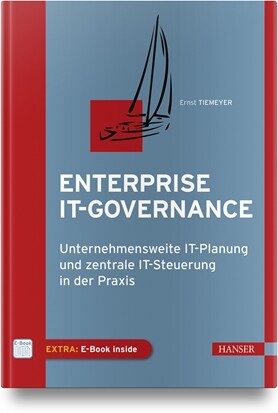
Enterprise IT-Governance
Unternehmensweite IT-Planung und zentrale IT-Steuerung in der PraxisDieses Buch gibt Ihnen eine ganzheitliche und praxisnahe Orientierung zu den vielfältigen aktuellen Herausforderungen und Handlungsfeldern von Enterprise IT-Governance.Einleitend finden Sie eine Einordnung zur Bedeutung von IT-Governance, indem die Anlässe, Herausforderungen und Zielsetzungen angesprochen werden. Weitere Themen sind die Bereitstellung und Nutzung von Frameworks (insbesondere COBIT ) sowie die Organisation und Einführung von IT-Governance in die betriebliche Praxis.Außerdem wird auf wesentliche Handlungsfelder von Enterprise IT-Governance eingegangen:Unternehmensweite IT-StrategieentwicklungEnterprise Architecture ManagementEnterprise IT-PortfoliomanagementIT-Investitions- und -InnovationsmanagementEnterprise IT-Risiko- und Compliance ManagementInsgesamt sind Sie mit Unterstützung der Ausführungen in diesem Buch in der Lage, Strukturen, Verfahren,Projekte und Prozesse zur erfolgreichen Umsetzung von Enterprise IT-Governance zu identifizieren und Roadmaps für Ihre Praxis zu entwickeln. Dabei erschließen Sie wichtige Management- und Governance-Aufgaben und erwerben umfassende Methoden- und Managementkompetenzen zur Gestaltung ganzheitlicher Enterprise IT-Governance-Lösungen.Inhalt:Enterprise IT-Governance – Einordnung, Handlungsfelder, PositionierungOrganisation und Rahmenwerke für die Enterprise IT-GovernanceEnterprise IT-Planungen (Strategien) vereinbaren und erfolgreich umsetzenEnterprise Architecture – EA-Organisation, Planungen und EA-GovernanceDigitale Transformationen planen, umsetzen und steuern IT-Portfoliomanagement und Enterprise IT-Governance – Konzepte und LösungenIT-Investitionsmanagement und wertorientiertes Controlling (Valuemanagement)Enterprise IT-Risiko- und Compliance Management – Prozesse, Anwendungsformen, EinführungAutor:Ernst TiemeyerDipl.-Hdl. Ernst Tiemeyer ist seit mehr als 25 Jahren in leitenden Projektfunktionen sowie als IT-Consultant und im Bildungsbereich bzw. Managementtraining tätig. Schwerpunktmäßig befasst er sich in der Praxis mit Projektmanagement, strategischem IT-Management, Enterprise IT-Architekturmanagement, Enterprise IT-Governance, IT-Controlling sowie BPM. Seine Lehrtätigkeit führt er unter anderem an der EU-FH in Hamburg, am FH Joanneum Kapfenberg/Graz sowie an der FOM (Hochschule für Berufstätige) in verschiedenen Bachelor- und Masterstudiengängen aus.
Intelligent Decision Support Systems for Smart City Applications
INTELLIGENT DECISION SUPPORT SYSTEMS FOR SMART CITY APPLICATIONSTHIS BOOK PROVIDES SMART CITY FRAMEWORKS TO ADDRESS NEW DIFFICULTIES BY ADDING NEW FEATURES AND ALLOWING THE CITY ENVIRONMENT TO REACT TO COLLECTED DATA AND INFORMATION TO INCREASE THE EFFICIENCY AND SUSTAINABILITY OF SERVICES FOR INHABITANTS.Making a smart city is an emerging strategy to mitigate the problems generated by urban population growth and rapid urbanization. This book aims to provide a better understanding of the concept of smart cities and the application of an intelligent decision support system. Based on the analysis of existing information there are eight critical factors of smart city initiatives: management and organization, technology, governance, policy context, people and communities, economy, built infrastructure, and natural environment. This book will focus on the application of the decision support system in managing these eight crucial aspects of smart cities. The intent in writing this book was also to provide a source that covers the stage-by-stage integration of the four key areas involving planning, physical infrastructure, ICT infrastructure, and deploying the smart solutions necessary for city transformation. With this as the motivation, “Decision Support Systems for Smart City Applications” provides the application of an intelligent decision support system for effectively and efficiently managing the transformation process, which can aid various supply chain stakeholders, academic researchers, and related professionals in building smart cities. Various chapters of this book are expected to support practicing managers during the implementation of smart solutions for city transformation. AUDIENCEThis book is aimed at both academics and practitioners alike in the fields of intelligent computing, decision support systems, the manufacturing industry, supply chain managers, stakeholders, policymakers, and other technical and administrative personnel. LOVELEEN GAUR, PHD, a full professor at Amity International Business School, Amity University, Noida is an established researcher and has filed many patents and copyrights in the area of AI/ML/IoT. She has been honored with prestigious national and international awards such as the “Senior Women Educator & Scholar Award” by National Foundation for Entrepreneurship Development on Women’s Day, “Sri Ram Award” by Delhi Management Association (DMA), and “Distinguished Research Award” by Allied Academies, Jacksonville, Florida. VERNIKA AGARWAL, PHD, is an assistant professor (operations research) at Amity International Business School, Amity University, Noida. She has published extensively in international journals. PRASENJIT CHATTERJEE, PHD, is the Dean (Research and Consultancy) at MCKV Institute of Engineering, West Bengal, India. He has over 120 research papers in various international journals and peer-reviewed conferences. He has authored and edited more than 15 books on intelligent decision-making, supply chain management, optimization techniques, risk, and sustainability modeling. He has received numerous awards including Best Track Paper Award, Outstanding Reviewer Award, Best Paper Award, Outstanding Researcher Award, and University Gold Medal. Dr. Chatterjee is the Editor-in-Chief of the Journal of Decision Analytics and Intelligent Computing. Preface xvAcknowledgement xxi1 TECHNO AGRI FOR NEW CITIES BY SMART IRRIGATION 1Rohit Rastogi, Sunil Kumar Prajapati, Shiv Kumar and Satyam Verma1.1 Introduction 21.2 Literature Review 41.3 Components Used 61.4 Proposed System 81.5 Android Mobile Application for Smart Irrigation 111.5.1 Main Page 111.5.2 Snapshot of Working Model (ICs and Working Model) 131.6 Novelty 141.7 Future Research Work 141.8 Limitations 141.9 Conclusions 15References 152 A CASE STUDY OF COMMAND-AND-CONTROL CENTER— A DSS PERSPECTIVE 17Prakash B.R. and Dattasmita H.V.2.1 Introduction 182.1.1 Smart City 182.1.1.1 Characteristics of a Decision Support System 202.1.2 The Critical System 202.1.2.1 Safety Critical System 202.2 Command and Control Center—A Critical System 212.3 Conclusion 31References 323 INVERSE TREE INTERLEAVERS IN UAV COMMUNICATIONS FOR INTERFERENCE MITIGATION 35Manish Yadav, Prateek Raj Gautam and Pramod Kumar Singhal3.1 Introduction 353.2 Background 363.3 The Problem 383.4 Motivation 393.5 Interference Mitigation Using ITI 393.6 Interleavers for Interference Mitigation in UAV Communications 403.7 Inverse Tree Interleavers in UAV Communications 423.8 Decision Support System (DSS) in ITI Allocation 433.9 ITI-Based Clustered Interleaving and DSS for Smart City Framework 443.10 Conclusion 47References 474 INTRODUCTION TO DSS SYSTEM FOR SMART CITIES 53Kuldeep Singh Kaswan, Ravinder Gautam and Jagjit Singh Dhatterwal4.1 Introduction 544.2 Smart City System Architecture 554.2.1 Sensing Plane 554.2.2 Communication Plane 554.2.3 Data Plane 564.2.4 Security Plane 564.3 Types of Network Sensors 574.3.1 Electronic Sensors 574.3.2 Chemical Sensors 574.3.3 Biosensors 574.3.4 Smart Grid Sensors 584.4 Role of Sensors in Smart Cities 584.4.1 Safety and Security Management 584.4.2 Service Delivery and Optimization 584.4.3 Traffic Control and Parking 584.4.4 Smart Building 594.4.5 Public Transport 594.4.6 Environment 594.4.7 Ethical Implications 604.5 Implications of Smart Sensors 604.6 Decision Modeling 604.7 Decision Support Systems (DSS) 634.7.1 Decision Support System Components 634.7.2 DSS Merits and Demerits 634.8 Chandigarh: Becoming a Smart City 644.8.1 Chandigarh City’s SWOT Analysis 644.8.2 Challenges to Become the Smart City for Chandigarh 664.9 A Topology of Smart City Functions 674.9.1 Smart Economy (Competitiveness) 674.9.2 Smart People (Social and Human Capital) 684.9.3 Smart Governance (Participation) 684.9.4 Smart Mobility (Transport and ICT) 694.9.5 Smart Environment (Natural Resources) 704.9.6 Smart Living (Quality of Life) 714.10 Challenges for India’s Smart Cities 714.11 The Government Should Focus on the Following Main Areas for the Country’s Creation of Smart Cities 734.12 Conclusion 74References 755 EVALUATING SOLUTIONS TO OVERCOME BLOCKCHAIN TECHNOLOGY IMPLEMENTATION IN SMART CITY USING A HYBRID FUZZY SWARA-FUZZY WASPAS APPROACH 77Shivam Goyal, Vernika Agarwal and Sanskriti Goel5.1 Introduction 785.2 Research Methodology 795.2.1 Stepwise Weight Assessment Ratio Analysis (SWARA) Method 795.2.2 Weighted Aggregated Sum Product Assessment (WASPAS) Method 815.3 Research Design 845.4 Application of Proposed Methodology 875.5 Conclusion 95References 966 IDENTIFICATION AND ANALYSIS OF CHALLENGES AND THEIR SOLUTION IN IMPLEMENTATION OF DECISION SUPPORT SYSTEM (DSS) IN SMART CITIES 99Shreya Gupta, Shubhanshi Mittal and Vernika Agarwal6.1 Introduction 1006.2 Review of Literature 1016.3 Research Methodology 1046.3.1 Identification of Challengers and Their Solution 1046.3.2 Fuzzy TOPSIS Methodology 1076.4 Case Background 1116.5 Case Description 1126.6 Result Discussion 1136.7 Conclusion 114References 1157 EVALUATION OF CRITERIA FOR IMPLEMENTATION OF CAPABILITIES IN A SMART CITY’S SERVICE SUPPLY CHAIN: A TEACHER TRAINER’S PERSPECTIVE 119Vasundhara Kaul and Arshia Kaul7.1 Introduction 1207.2 Literature Review 1227.2.1 Service Supply Chain 1227.2.2 Education as a Service Supply Chain 1237.2.3 Evaluation of Educational Supply Chain 1237.2.4 Research Gap and Motivation 1247.3 Objectives 1247.4 Problem Definition 1247.5 Numerical Illustration 1267.6 Conclusion 133References 1338 INDUSTRY 5.0: COEXISTENCE OF HUMANS AND MACHINES 137Sandesh Kumar Srivastava, Pallavi Goel, Anisha and Savita Sindhu8.1 Introduction 1388.1.1 Industrial Revolutions 1408.2 Literature Review 1408.2.1 Industry 4.0 Characterization 1408.2.2 Definition of Digitalization 1428.3 Requirement of Fifth Industrial Revolution 1428.4 Journey of Industry 4.0 to Industry 5.0 1448.4.1 Industry 4.0 1458.4.2 Industry 5.0 1468.5 Industrial Revolution: Changes and Advancements 1478.5.1 Big Data 1478.5.2 Changes the Fifth Industry Revolution Might Bring 1488.5.3 Working with Robots 1488.5.4 Impact of Fifth Industrial Revolution on Education 1498.5.5 Problems which the Fifth Industry Revolution Might Generate 1498.5.6 What Might Help to Solve the Problems 1498.5.7 The Role of Ethics in Industry 5.0 1508.6 Conclusion 150References 1519 SMART CHILD SAFETY FRAMEWORK USING INTERNET OF THINGS 153Afzal Hussain, Anisha , Pallavi Murghai Goel and Sudeshna Chakraborty9.1 Introduction 1549.1.1 Literature Background 1549.2 Technology and Sensors Used 1569.2.1 Proposed System Model and Working 1589.2.2 Implementation Phases 1609.3 Advantages 1639.4 Conclusion 1639.5 Future Scope 164References 16410 WATER CONTENT PREDICTION IN SMART AGRICULTURE OF RURAL INDIA USING CNN AND TRANSFER LEARNING APPROACH 167Rohit Prasan Mandal, Deepanshu Dutta, Saranya Bhattacharjee and Subhalaxmi Chakraborty10.1 Introduction 16810.2 Proposed Method 16910.2.1 Corpus Creation 16910.2.2 Data Pre-Processing 17010.2.3 Data Augmentation 17010.2.4 CNN 17110.2.5 Transfer Learning Algorithms 17110.2.5.1 VGG- 16 17210.2.5.2 VGG- 19 17210.2.5.3 Inception V 3 17310.2.5.4 Xception 17410.2.5.5 ResNet 50 17410.3 Results and Discussion 17510.3.1 Comparison of Classifiers 17510.4 Conclusion 186References 18711 COGNITIVENESS OF 5G TECHNOLOGY TOWARD SUSTAINABLE DEVELOPMENT OF SMART CITIES 189Kumari Priyanka, Gnapika Mallavaram, Archit Raj, Devasis Pradhan and Rajeswari11.1 Introduction 18911.2 Literature Review 19011.3 5G: Overview 19111.4 Smart Cities 19211.5 Cognitiveness of 5G Network 19311.5.1 Advancement of Society 19311.5.2 Industry Transformation 19411.5.3 Amalgam of Education and Entertainment 19411.6 Key Features for 5G Toward Sustainable Development of Smart Cities 19411.7 Application Enabled by 5G 19511.8 Sustainable 5G-Green Network 19711.9 Electricity Harvesting for Smart Cities 19811.10 Economic Impact of 5G Toward Sustainable Smart Cities 19911.11 5G Challenges 20011.12 Conclusion 200References 20112 SOCIETY 5.0 AND AUTHENTICITY: LOOKING TO THE FUTURE 205F.-E. Ouboutaib, A. Aitheda and S. Mekkaoui12.1 Introduction 20612.2 Theoretical Framework 20712.2.1 A Brief History of Industry 4.0 20712.2.2 Marketing Authenticity in the Society 5.0 Era: Beyond Industry 4.0 20812.3 Research Design and Methodology 21012.4 Results 21112.4.1 Measurement Model 21112.5 Conclusion 214References 216Appendix 21813 IOT-BASED SMART CITY APPLICATIONS: INFRASTRUCTURE, RESEARCH AND DEVELOPMENT 219Tarush Gupta, Princy Randhawa and Nikhil Vivek Shrivas13.1 Introduction 21913.2 Different Phases of Development 22113.2.1 Investments, Research, and Planning 22113.2.2 Execution and Deployment 22213.2.3 Globalization of IoT-Based Technologies 22313.2.4 Pilot Projects and City Designs 22313.3 Current Scenario 22813.3.1 Achievements and Milestones 22813.3.2 IoT in Smart Cities 23013.4 Conclusion and Future Work 231References 231Index 235

Ansible for VMware by Examples
Learn to use the Ansible open source IT automation tool to automate your VMware infrastructure. This book contains all of the obvious and not-so-obvious best practices of Ansible automation. Each lesson summarizes a specific use case for the modern VMware infrastructure and is focused on a single module from the most important parameter, including live demo of code and real-life usage.You'll configure the Ansible Controller to interact with VMware infrastructure using the “community.VMware” Ansible documentation collection and the appropriate Python libraries. Next, learn how to automate the creation of a virtual machine manually and from a template, start and stop using the shutdown and forced-power off a Virtual Machine, take and delete and snapshot, add a new hard disk and expand a currently attached hard disk, as well as gather information for data centers, clusters, host systems, and virtual machines.By the end of this book, you'll be well-versed in efficiently maintaining a VMware infrastructure with Ansible Automation. You'll also be able to save time and reduce manual errors using simple human-readable automation technology.WHAT YOU'LL LEARN* Automate your VMware infrastructure using Ansible code* Install Ansible in operating systems such as RedHat, Ubuntu, Fedora, etc.* Write and execute your first Ansible Playbook code * Troubleshoot the most common error messagesWHO THIS BOOK IS FORIT professionals of every industry who would like a jargon-free understanding of Ansible technology, including VMware, Linux, and Windows Systems Administrators, DevOps professionals, thought leaders, and infrastructure-as-code enthusiasts.Luca Berton is an Ansible Automation Engineer of Red Hat, based in Brno - Czech Republic. With more than 15 years of experience as a System Administrator, he has strong expertise in Infrastructure Hardening and Automation. Enthusiast of the Open Source supports the community sharing his knowledge in different events of public access. Geek by nature, Linux by choice, Fedora of course.Chapter 1: Ansible For Beginners With ExamplesCHAPTER GOAL: Description of the Ansible Technology and how to write and execute your first Ansible Playbook code.NO OF PAGES: 5 0SUB - TOPICS* What is AnsibleGetting Started * Inventory* Playbook* Variables, Fact and Magic Variables* Vault* Conditional and LoopHandler * Role* Ansible Best PracticesChapter 2: Install AnsibleCHAPTER GOAL: How to install Ansible in the most common Operating System step by stepNO OF PAGES : 20SUB - TOPICS:* ansible community vs ansible-core packages * Ansible installation in RedHat Enterprise Linux (RHEL) 8 * Ansible installation in Ubuntu 22.04 LTS * Ansible installation in Fedora 36 * Ansible installation in CentOS 9 Stream * Ansible installation in Windows * Ansible installation in SUSE SLES (Linux Enterprise Server) 15 Ansible installation with PIPAnsible installation in RedHat Enterprise Linux (RHEL) 9* Ansible installation in Amazon Linux 2 (AWS EC2) * Ansible installation in Debian 11 Chapter 3: Ansible For VMwareCHAPTER GOAL: How to automate your VMware infrastructure using Ansible code and troubleshoot the most common error messagesNO OF PAGES: 70SUB - TOPICS:* Configure Ansible For VMware Configure a Python Virtual Environment for Ansible VMwareAnsible troubleshooting - VMware f ailed to Import PyVmomi * Ansible troubleshooting - VMware Unknown error while connecting to vCenter or ESXi * Ansible troubleshooting - VMware certificate verify failed connecting to vCenter or ESXi* Create a VMware virtual machine * Deploy a VMware virtual machine from a template * Start a VMware virtual machine * Stop a VMware virtual machine * Take a VMware virtual machine snapshot * Delete a VMware virtual machine snapshot * Add a new hard disk to VMware virtual machine * Expand a virtual disk in VMware virtual machine * Gather VMware Hosts information of a cluster* Get VMware virtual machine UUID* Ansible Dynamic Inventory For VMware* Get VMware vSphere Virtual Machine Running Host* Get VMware datastore status* Upload a file to the VMware datastore* Get VMware Guest Tools status* Upgrade VMware Guest Tools* Live Migration of a VMware Virtual Machine using vMotion* Change the boot devices order of a VMware virtual machineChapter 4: Conclusion
Asymmetric Cryptography
Public key cryptography was introduced by Diffie and Hellman in 1976, and it was soon followed by concrete instantiations of public-key encryption and signatures; these led to an entirely new field of research with formal definitions and security models. Since then, impressive tools have been developed with seemingly magical properties, including those that exploit the rich structure of pairings on elliptic curves.Asymmetric Cryptography starts by presenting encryption and signatures, the basic primitives in public-key cryptography. It goes on to explain the notion of provable security, which formally defines what "secure" means in terms of a cryptographic scheme. A selection of famous families of protocols are then described, including zero-knowledge proofs, multi-party computation and key exchange.After a general introduction to pairing-based cryptography, this book presents advanced cryptographic schemes for confidentiality and authentication with additional properties such as anonymous signatures and multi-recipient encryption schemes. Finally, it details the more recent topic of verifiable computation.DAVID POINTCHEVAL obtained a PhD in Computer Science and has since worked on the Cryptography Team at the École Normale Supérieure in France. His research focuses on provable security of cryptographic primitives and protocols.Foreword xiDavid POINTCHEVALCHAPTER 1 PUBLIC-KEY ENCRYPTION AND SECURITY NOTIONS 1Nuttapong ATTRAPADUNG and Takahiro MATSUDA1.1. Basic definitions for PKE 21.1.1. Basic notation 21.1.2. Public-key encryption 21.1.3. IND-CPA and IND-CCA security 21.1.4. Other basic security notions and relations 41.2. Basic PKE schemes 51.2.1. Game-based proofs 51.2.2. ElGamal encryption 61.2.3. Simplified CS encryption 81.2.4. Cramer–Shoup encryption 111.2.5. Other specific PKE schemes 141.3. Generic constructions for IND-CCA secure PKE 161.3.1. Hybrid encryption 171.3.2. Naor–Yung construction and extensions 191.3.3. Fujisaki–Okamoto and other transforms in the RO model 211.3.4. Other generic constructions for IND-CCA secure PKE 231.4. Advanced topics 251.4.1. Intermediate notions related to CCA 251.4.2. IND-CCA security in multi-user setting and tight security 261.4.3. Key-dependent message security 281.4.4. More topics on PKE 301.5. References 31CHAPTER 2 SIGNATURES AND SECURITY NOTIONS 47Marc FISCHLIN2.1. Signature schemes 472.1.1. Definition 472.1.2. Examples of practical schemes 492.2. Unforgeability 512.2.1. Discussion 512.2.2. Existential unforgeability under chosen-message attacks 532.2.3. Unforgeability of practical schemes 542.3. Strong unforgeability 562.3.1. Discussion 562.3.2. Strong existential unforgeability under chosen-message attacks 572.3.3. Strong unforgeability of practical schemes 582.3.4. Building strongly unforgeable schemes 592.4. Summary 602.5. References 60CHAPTER 3 ZERO-KNOWLEDGE PROOFS 63Ivan VISCONTI3.1. Introduction 633.2. Notation 643.3. Classical zero-knowledge proofs 643.3.1. Zero knowledge 653.4. How to build a zero-knowledge proof system 683.4.1 ZK proofs for all NP 703.4.2. Round complexity 713.5. Relaxed security in proof systems 723.5.1. Honest-verifier ZK 723.5.2. Witness hiding/indistinguishability 733.5.3. Σ-Protocols 743.6. Non-black-box zero knowledge 753.7. Advanced notions 753.7.1. Publicly verifiable zero knowledge 763.7.2. Concurrent ZK and more 773.7.3. ZK with stateless players 783.7.4. Delayed-input proof systems 793.8. Conclusion 803.9. References 80CHAPTER 4 SECURE MULTIPARTY COMPUTATION 85Yehuda LINDELL4.1. Introduction 854.1.1. A note on terminology 874.2. Security of MPC 874.2.1. The definitional paradigm 874.2.2. Additional definitional parameters 894.2.3. Adversarial power 894.2.4. Modular sequential and concurrent composition 914.2.5. Important definitional implications 924.2.6. The ideal model and using MPC in practice 924.2.7. Any inputs are allowed 924.2.8. MPC secures the process, but not the output 924.3. Feasibility of MPC 934.4. Techniques 944.4.1. Shamir secret sharing 944.4.2. Honest-majority MPC with secret sharing 954.4.3. Private set intersection 974.4.4. Threshold cryptography 994.4.5. Dishonest-majority MPC 1004.4.6. Efficient and practical MPC 1004.5. MPC use cases 1014.5.1. Boston wage gap (Lapets et al. 2018) 1014.5.2. Advertising conversion (Ion et al. 2017) 1014.5.3. MPC for cryptographic key protection (Unbound Security; Sepior; Curv) 1014.5.4. Government collaboration (Sharemind) 1024.5.5. Privacy-preserving analytics (Duality) 1024.6. Discussion 1024.7. References 103CHAPTER 5 PAIRING-BASED CRYPTOGRAPHY 107Olivier BLAZY5.1. Introduction 1085.1.1. Notations 1085.1.2. Generalities 1085.2. One small step for man, one giant leap for cryptography 1095.2.1. Opening Pandora’s box, demystifying the magic 1105.2.2. A new world of assumptions 1125.3. A new world of cryptographic protocols at your fingertips 1165.3.1. Identity-based encryption made easy 1175.3.2. Efficient deterministic compact signature 1185.4. References 119CHAPTER 6 BROADCAST ENCRYPTION AND TRAITOR TRACING 121Duong HIEU PHAN6.1. Introduction 1216.2. Security notions for broadcast encryption and TT 1236.3. Overview of broadcast encryption and TT 1256.4. Tree-based methods 1296.5. Code-based TT 1326.6. Algebraic schemes 1356.7. Lattice-based approach with post-quantum security 1426.8. References 143CHAPTER 7 ATTRIBUTE-BASED ENCRYPTION 151Romain GAY7.1. Introduction 1517.2. Pairing groups 1527.2.1. Cyclic groups 1527.2.2. Pairing groups 1527.3. Predicate encodings 1537.3.1. Definition 1537.3.2. Constructions 1547.4. Attribute-based encryption 1567.4.1. Definition 1567.4.2. A modular construction 1587.5. References 165CHAPTER 8 ADVANCED SIGNATURES 167Olivier SANDERS8.1. Introduction 1678.2. Some constructions 1698.2.1. The case of scalar messages 1698.2.2. The case of non-scalar messages 1718.3. Applications 1738.3.1. Anonymous credentials 1738.3.2. Group signatures 1768.3.3. Direct anonymous attestations 1808.4. References 184CHAPTER 9 KEY EXCHANGE 187Colin BOYD9.1. Key exchange fundamentals 1879.1.1. Key exchange parties 1889.1.2. Key exchange messages 1899.1.3. Key derivation functions 1899.2. Unauthenticated key exchange 1919.2.1. Formal definitions and security models 1919.2.2. Constructions and examples 1929.3. Authenticated key exchange 1949.3.1. Non-interactive key exchange 1959.3.2. AKE security models 1969.3.3. Constructions and examples 2009.4. Conclusion 2069.5. References 207CHAPTER 10 PASSWORD AUTHENTICATED KEY EXCHANGE: PROTOCOLS AND SECURITY MODELS 213Stanislaw JARECKI10.1. Introduction 21310.2. First PAKE: EKE 21510.3. Game-based model of PAKE security 21810.3.1. The BPR security model 21810.3.2. Implicit versus explicit authentication 22110.3.3. Limitations of the BPR model 22110.3.4. EKE instantiated with Diffie–Hellman KE 22310.3.5. Implementing ideal cipher on arbitrary groups 22410.4. Simulation-based model of PAKE security 22510.4.1. The BMP security model 22510.4.2. Advantages of BMP definition: arbitrary passwords, tight security 22910.4.3. EKE using RO-derived one-time pad encryption 23010.4.4. BMP model for PAKE with explicit authentication (pake-ea) 23110.5. Universally composable model of PAKE security 23210.6. PAKE protocols in the standard model 23610.7. PAKE efficiency optimizations 23910.8. Asymmetric PAKE: PAKE for the client-server setting 24210.9. Threshold PAKE 24410.10. References 246CHAPTER 11 VERIFIABLE COMPUTATION AND SUCCINCT ARGUMENTS FOR NP 257Dario FIORE11.1. Introduction 25711.1.1. Background 25811.2. Preliminaries 25911.3. Verifiable computation 26011.4. Constructing VC 26111.4.1. VC for circuits in three steps 26111.4.2. Succinct non-interactive arguments for non-deterministic computation 26311.4.3. Verifiable computation from SNARG 26411.5. A modular construction of SNARGs 26411.5.1. Algebraic non-interactive linear proofs 26511.5.2. Bilinear groups 26711.5.3. SNARGs from algebraic NILPs with degree-2 verifiers using bilinear groups 26911.6. Constructing algebraic NILPs for arithmetic circuits 27111.6.1. Arithmetic circuits 27111.6.2. Quadratic arithmetic programs 27111.6.3. Algebraic NILP for QAPs 27411.7. Conclusion 27911.8. References 279List of Authors 283Index 285

Sofortiger Überblick in Excel
Häufig dient Excel als Auswertungswerkzeug vorhandener Daten. Wo werden kritische Werte erreicht? Kann man mit einem Blick überschauen, wie Zahlen sich in der Vergangenheit entwickelt haben? Welche Zellen müssen noch ausgefüllt werden? Kann man eine ganze Zeile hervorheben, wenn eine Spalte irgendwo einen wichtigen Inhalt hat? Geht das auch, wenn ich in zwei verschiedenen Zellen nachsehen muss? Wie behalte ich gleichzeitig Anfang und Ende eines Blattes im Blick? Und wie schaffe ich optische Ordnung in einer dicken Arbeitsmappe? Alles Fragen, die hier beantwortet werden.Ina Koys ist langjährige Trainerin für MS-Office-Produkte. Viele Fragen werden in den Kursen immer wieder gestellt, aber selten in Fachbüchern behandelt. Einige davon beantwortet sie jetzt in der Reihe "kurz & knackig".

A Roadmap for Enabling Industry 4.0 by Artificial Intelligence
A ROADMAP FOR ENABLING INDUSTRY 4.0 BY ARTIFICAIAL INTELLIGENCETHE BOOK PRESENTS COMPREHENSIVE AND UP-TO-DATE TECHNOLOGICAL SOLUTIONS TO THE MAIN ASPECTS REGARDING THE APPLICATIONS OF ARTIFICIAL INTELLIGENCE TO INDUSTRY 4.0. The industry 4.0 vision has been discussed for quite a while and the enabling technologies are now mature enough to turn this vision into a grand reality sooner rather than later. The fourth industrial revolution, or Industry 4.0, involves the infusion of technology-enabled deeper and decisive automation into manufacturing processes and activities. Several information and communication technologies (ICT) are being integrated and used towards attaining manufacturing process acceleration and augmentation. This book explores and educates the recent advancements in blockchain technology, artificial intelligence, supply chains in manufacturing, cryptocurrencies, and their crucial impact on realizing the Industry 4.0 goals. The book thus provides a conceptual framework and roadmap for decision-makers for implementing this transformation. AUDIENCEComputer and artificial intelligence scientists, information and communication technology specialists, and engineers in electronics and industrial manufacturing will find this book very useful. JYOTIR MOY CHATTERJEE is an assistant professor in the Information Technology department at Lord Buddha Education Foundation (LBEF), Kathmandu, Nepal. He has published more than 60 research papers in international publications, three conference papers, three authored books, 10 edited books, 16 book chapters, two Master’s theses converted into books, and one patent. HARISH GARG, PHD, is an associate professor at Thapar Institute of Engineering & Technology, Deemed University, Patiala, Punjab, India. His research interests include soft computing, decision-making, aggregation operators, evolutionary algorithm, expert systems, and decision support systems. He has published more than 300 papers published in refereed international journals. Dr. Garg is the Editor-in-Chief of Annals of Optimization Theory and Practice.R N THAKUR, PHD, is a senior lecturer in the Information Technology Department, Lord Buddha Education Foundation (LBEF), Kathmandu, Nepal. He has published about 20 research articles in various journals. Preface xv1 ARTIFICIAL INTELLIGENCE—THE DRIVING FORCE OF INDUSTRY 4.0 1Hesham Magd, Henry Jonathan, Shad Ahmad Khan and Mohamed El Geddawy1.1 Introduction 21.2 Methodology 21.3 Scope of AI in Global Economy and Industry 4.0 31.3.1 Artificial Intelligence—Evolution and Implications 41.3.2 Artificial Intelligence and Industry 4.0—Investments and Returns on Economy 51.3.3 The Driving Forces for Industry 4.0 71.4 Artificial Intelligence—Manufacturing Sector 81.4.1 AI Diversity—Applications to Manufacturing Sector 91.4.2 Future Roadmap of AI—Prospects to Manufacturing Sector in Industry 4.0 121.5 Conclusion 13References 142 INDUSTRY 4.0, INTELLIGENT MANUFACTURING, INTERNET OF THINGS, CLOUD COMPUTING: AN OVERVIEW 17Sachi Pandey, Vijay Laxmi and Rajendra Prasad Mahapatra2.1 Introduction 172.2 Industrial Transformation/Value Chain Transformation 182.2.1 First Scenario: Reducing Waste and Increasing Productivity Using IIoT 192.2.2 Second Scenario: Selling Outcome (User Demand)– Based Services Using IIoT 202.3 IIoT Reference Architecture 202.4 IIoT Technical Concepts 222.5 IIoT and Cloud Computing 262.6 IIoT and Security 27References 293 ARTIFICIAL INTELLIGENCE OF THINGS (AIOT) AND INDUSTRY 4.0– BASED SUPPLY CHAIN (FMCG INDUSTRY) 31Seyyed Esmaeil Najafi, Hamed Nozari and S. A. Edalatpanah3.1 Introduction 323.2 Concepts 333.2.1 Internet of Things 333.2.2 The Industrial Internet of Things (IIoT) 343.2.3 Artificial Intelligence of Things (AIoT) 353.3 AIoT-Based Supply Chain 363.4 Conclusion 40References 404 APPLICATION OF ARTIFICIAL INTELLIGENCE IN FORECASTING THE DEMAND FOR SUPPLY CHAINS CONSIDERING INDUSTRY 4.0 43Alireza Goli, Amir-Mohammad Golmohammadi and S. A. Edalatpanah4.1 Introduction 444.2 Literature Review 454.2.1 Summary of the First Three Industrial Revolutions 454.2.2 Emergence of Industry 4.0 454.2.3 Some of the Challenges of Industry 4.0 474.3 Application of Artificial Intelligence in Supply Chain Demand Forecasting 484.4 Proposed Approach 504.4.1 Mathematical Model 504.4.2 Advantages of the Proposed Model 514.5 Discussion and Conclusion 52References 535 INTEGRATING IOT AND DEEP LEARNING—THE DRIVING FORCE OF INDUSTRY 4.0 57Muhammad Farrukh Shahid, Tariq Jamil Saifullah Khanzada and Muhammad Hassan Tanveer5.1 Motivation and Background 585.2 Bringing Intelligence Into IoT Devices 605.3 The Foundation of CR-IoT Network 625.3.1 Various AI Technique in CR-IoT Network 635.3.2 Artificial Neural Network (ANN) 635.3.3 Metaheuristic Technique 645.3.4 Rule-Based System 645.3.5 Ontology-Based System 655.3.6 Probabilistic Models 655.4 The Principles of Deep Learning and Its Implementation in CR-IoT Network 655.5 Realization of CR-IoT Network in Daily Life Examples 695.6 AI-Enabled Agriculture and Smart Irrigation System—Case Study 705.7 Conclusion 75References 756 A SYSTEMATIC REVIEW ON BLOCKCHAIN SECURITY TECHNOLOGY AND BIG DATA EMPLOYED IN CLOUD ENVIRONMENT 79Mahendra Prasad Nath, Sushree Bibhuprada B. Priyadarshini, Debahuti Mishra and Brojo Kishore Mishra6.1 Introduction 806.2 Overview of Blockchain 836.3 Components of Blockchain 856.3.1 Data Block 856.3.2 Smart Contracts 876.3.3 Consensus Algorithms 876.4 Safety Issues in Blockchain Technology 886.5 Usage of Big Data Framework in Dynamic Supply Chain System 916.6 Machine Learning and Big Data 946.6.1 Overview of Shallow Models 956.6.1.1 Support Vector Machine (SVM) 956.6.1.2 Artificial Neural Network (ANN) 956.6.1.3 K-Nearest Neighbor (KNN) 956.6.1.4 Clustering 966.6.1.5 Decision Tree 966.7 Advantages of Using Big Data for Supply Chain and Blockchain Systems 966.7.1 Replenishment Planning 966.7.2 Optimizing Orders 976.7.3 Arranging and Organizing 976.7.4 Enhanced Demand Structuring 976.7.5 Real-Time Management of the Supply Chain 976.7.6 Enhanced Reaction 986.7.7 Planning and Growth of Inventories 986.8 IoT-Enabled Blockchains 986.8.1 Securing IoT Applications by Utilizing Blockchain 996.8.2 Blockchain Based on Permission 1016.8.3 Blockchain Improvements in IoT 1016.8.3.1 Blockchain Can Store Information Coming from IoT Devices 1016.8.3.2 Secure Data Storage with Blockchain Distribution 1016.8.3.3 Data Encryption via Hash Key and Tested by the Miners 1026.8.3.4 Spoofing Attacks and Data Loss Prevention 1026.8.3.5 Unauthorized Access Prevention Using Blockchain 1036.8.3.6 Exclusion of Centralized Cloud Servers 1036.9 Conclusions 103References 1047 DEEP LEARNING APPROACH TO INDUSTRIAL ENERGY SECTOR AND ENERGY FORECASTING WITH PROPHET 111Yash Gupta, Shilpi Sharma, Naveen Rajan P. and Nadia Mohamed Kunhi7.1 Introduction 1127.2 Related Work 1137.3 Methodology 1147.3.1 Splitting of Data (Test/Train) 1167.3.2 Prophet Model 1167.3.3 Data Cleaning 1197.3.4 Model Implementation 1197.4 Results 1207.4.1 Comparing Forecast to Actuals 1217.4.2 Adding Holidays 1227.4.3 Comparing Forecast to Actuals with the Cleaned Data 1227.5 Conclusion and Future Scope 122References 1258 APPLICATION OF NOVEL AI MECHANISM FOR MINIMIZING PRIVATE DATA RELEASE IN CYBER-PHYSICAL SYSTEMS 127Manas Kumar Yogi and A.S.N. Chakravarthy8.1 Introduction 1288.2 Related Work 1318.3 Proposed Mechanism 1338.4 Experimental Results 1358.5 Future Directions 1378.6 Conclusion 138References 1389 ENVIRONMENTAL AND INDUSTRIAL APPLICATIONS USING INTERNET OF THINGS (IOT) 141Manal Fawzy, Alaa El Din Mahmoud and Ahmed M. Abdelfatah9.1 Introduction 1429.2 IoT-Based Environmental Applications 1469.3 Smart Environmental Monitoring 1479.3.1 Air Quality Assessment 1479.3.2 Water Quality Assessment 1489.3.3 Soil Quality Assessment 1509.3.4 Environmental Health-Related to COVID- 19Monitoring 1509.4 Applications of Sensors Network in Agro-Industrial System 1519.5 Applications of IoT in Industry 1539.5.1 Application of IoT in the Autonomous Field 1539.5.2 Applications of IoT in Software Industries 1559.5.3 Sensors in Industry 1569.6 Challenges of IoT Applications in Environmental and Industrial Applications 1579.7 Conclusions and Recommendations 159Acknowledgments 159References 15910 AN INTRODUCTION TO SECURITY IN INTERNET OF THINGS (IOT) AND BIG DATA 169Sushree Bibhuprada B. Priyadarshini, Suraj Kumar Dash, Amrit Sahani, Brojo Kishore Mishra and Mahendra Prasad Nath10.1 Introduction 17010.2 Allusion Design of IoT 17210.2.1 Stage 1—Edge Tool 17210.2.2 Stage 2—Connectivity 17210.2.3 Stage 3—Fog Computing 17310.2.4 Stage 4—Data Collection 17310.2.5 Stage 5—Data Abstraction 17310.2.6 Stage 6—Applications 17310.2.7 Stage 7—Cooperation and Processes 17410.3 Vulnerabilities of IoT 17410.3.1 The Properties and Relationships of Various IoT Networks 17410.3.2 Device Attacks 17510.3.3 Attacks on Network 17510.3.4 Some Other Issues 17510.3.4.1 Customer Delivery Value 17510.3.4.2 Compatibility Problems With Equipment 17610.3.4.3 Compatibility and Maintenance 17610.3.4.4 Connectivity Issues in the Field of Data 17610.3.4.5 Incorrect Data Collection and Difficulties 17710.3.4.6 Security Concern 17710.3.4.7 Problems in Computer Confidentiality 17710.4 Challenges in Technology 17810.4.1 Skepticism of Consumers 17810.5 Analysis of IoT Security 17910.5.1 Sensing Layer Security Threats 18010.5.1.1 Node Capturing 18010.5.1.2 Malicious Attack by Code Injection 18010.5.1.3 Attack by Fake Data Injection 18010.5.1.4 Sidelines Assaults 18110.5.1.5 Attacks During Booting Process 18110.5.2 Network Layer Safety Issues 18110.5.2.1 Attack on Phishing Page 18110.5.2.2 Attacks on Access 18210.5.2.3 Attacks on Data Transmission 18210.5.2.4 Attacks on Routing 18210.5.3 Middleware Layer Safety Issues 18210.5.3.1 Attack by SQL Injection 18310.5.3.2 Attack by Signature Wrapping 18310.5.3.3 Cloud Attack Injection with Malware 18310.5.3.4 Cloud Flooding Attack 18310.5.4 Gateways Safety Issues 18410.5.4.1 On-Boarding Safely 18410.5.4.2 Additional Interfaces 18410.5.4.3 Encrypting End-to-End 18410.5.5 Application Layer Safety Issues 18510.5.5.1 Theft of Data 18510.5.5.2 Attacks at Interruption in Service 18510.5.5.3 Malicious Code Injection Attack 18510.6 Improvements and Enhancements Needed for IoT Applications in the Future 18610.7 Upcoming Future Research Challenges with Intrusion Detection Systems (IDS) 18910.8 Conclusion 192References 19311 POTENTIAL, SCOPE, AND CHALLENGES OF INDUSTRY 4.0 201Roshan Raman and Aayush Kumar11.1 Introduction 20211.2 Key Aspects for a Successful Production 20211.3 Opportunities with Industry 4.0 20411.4 Issues in Implementation of Industry 4.0 20611.5 Potential Tools Utilized in Industry 4.0 20711.6 Conclusion 210References 21012 INDUSTRY 4.0 AND MANUFACTURING TECHNIQUES: OPPORTUNITIES AND CHALLENGES 215Roshan Raman and Aditya Ranjan12.1 Introduction 21612.2 Changing Market Demands 21712.2.1 Individualization 21812.2.2 Volatility 21812.2.3 Efficiency in Terms of Energy Resources 21812.3 Recent Technological Advancements 21912.4 Industrial Revolution 4.0 22112.5 Challenges to Industry 4.0 22412.6 Conclusion 225References 22613 THE ROLE OF MULTIAGENT SYSTEM IN INDUSTRY 4.0 227Jagjit Singh Dhatterwal, Kuldeep Singh Kaswan and Rudra Pratap Ojha13.1 Introduction 22813.2 Characteristics and Goals of Industry 4.0 Conception 22813.3 Artificial Intelligence 23113.3.1 Knowledge-Based Systems 23213.4 Multiagent Systems 23413.4.1 Agent Architectures 23413.4.2 Jade 23813.4.3 System Requirements Definition 23913.4.4 HMI Development 24013.5 Developing Software of Controllers Multiagent Environment Behavior Patterns 24013.5.1 Agent Supervision 24013.5.2 Documents Dispatching Agents 24113.5.3 Agent Rescheduling 24213.5.4 Agent of Executive 24213.5.5 Primary Roles of High-Availability Agent 24313.6 Conclusion 244References 24414 AN OVERVIEW OF ENHANCING ENCRYPTION STANDARDS FOR MULTIMEDIA IN EXPLAINABLE ARTIFICIAL INTELLIGENCE USING RESIDUE NUMBER SYSTEMS FOR SECURITY 247Akeem Femi Kadri, Micheal Olaolu Arowolo, Ayisat Wuraola Yusuf-Asaju, Kafayat Odunayo Tajudeen and Kazeem Alagbe Gbolagade14.1 Introduction 24814.2 Reviews of Related Works 25014.3 Materials and Methods 25814.3.1 Multimedia 25814.3.2 Artificial Intelligence and Explainable Artificial Intelligence 26114.3.3 Cryptography 26214.3.4 Encryption and Decryption 26514.3.5 Residue Number System 26614.4 Discussion and Conclusion 268References 26815 MARKET TRENDS WITH CRYPTOCURRENCY TRADING IN INDUSTRY 4.0 275Varun Khemka, Sagar Bafna, Ayush Gupta, Somya Goyal and Vivek Kumar Verma15.1 Introduction 27615.2 Industry Overview 27615.2.1 History (From Barter to Cryptocurrency) 27615.2.2 In the Beginning Was Bitcoin 27815.3 Cryptocurrency Market 27915.3.1 Blockchain 27915.3.1.1 Introduction to Blockchain Technology 27915.3.1.2 Mining 28015.3.1.3 From Blockchain to Cryptocurrency 28115.3.2 Introduction to Cryptocurrency Market 28115.3.2.1 What is a Cryptocurrency? 28115.3.2.2 Cryptocurrency Exchanges 28315.4 Cryptocurrency Trading 28315.4.1 Definition 28315.4.2 Advantages 28315.4.3 Disadvantages 28415.5 In-Depth Analysis of Fee Structures and Carbon Footprint in Blockchain 28515.5.1 Need for a Fee-Driven System 28515.5.2 Ethereum Structure 28615.5.3 How is the Gas Fee Calculated? 28715.5.3.1 Why are Ethereum Gas Prices so High? 28715.5.3.2 Carbon Neutrality 28715.6 Conclusion 291References 29216 BLOCKCHAIN AND ITS APPLICATIONS IN INDUSTRY 4.0 295Ajay Sudhir Bale, Tarun Praveen Purohit, Muhammed Furqaan Hashim and Suyog Navale16.1 Introduction 29616.2 About Cryptocurrency 29616.3 History of Blockchain and Cryptocurrency 29816.4 Background of Industrial Revolution 30016.4.1 The First Industrial Revolution 30116.4.2 The Second Industrial Revolution 30116.4.3 The Third Industrial Revolution 30216.4.4 The Fourth Industrial Revolution 30216.5 Trends of Blockchain 30316.6 Applications of Blockchain in Industry 4.0 30416.6.1 Blockchain and the Government 30416.6.2 Blockchain in the Healthcare Sector 30416.6.3 Blockchain in Logistics and Supply Chain 30616.6.4 Blockchain in the Automotive Sector 30716.6.5 Blockchain in the Education Sector 30816.7 Conclusion 309References 310Index 315