

Allgemein

Beyond Accessibility Compliance
Take a deep look at accessibility as it applies to mobile and wearables. This book covers topics within the accessibility domain that are rarely covered or understood, despite the fact that nearly half of the world’s population uses smartphones. Moreover, by 2025, 72% of smartphone users are expected to only use smartphones to access the internet. And yet, accessibility is often an afterthought instead of a core principle of product development. This book changes that.You will begin by exploring the current landscape and policy frameworks, looking at the software product lifecycle and how to embed inclusion from the start. You’ll learn the nuances of mobile accessibility as it applies to mobile devices, wearables, and IoT. From there you’ll move onto automated testing, accessibility and inclusion, and the next frontiers of emerging technology including AR and VR. There will be notes at the end of programming examples to help those in orthogonal roles, such as project management, understand the basics and the language to better communicate with their engineering counterparts.Over 1 billion people in the world live with some form of disability so it's imperative you devise a comprehensive game plan to make your digital products accessible for all. Beyond Accessibility Compliance is your guide to understanding the current landscape of assistive technology and how emerging techniques are changing the way we think about personalization and accessibility.WHAT YOU'LL LEARN* See how people with the most common forms of disabilities use digital products* Review the basics of the product development lifecycle and how to embed accessibility * Explore tangible answers as to how accessibility pertains to unique roles* Understand the difference between compliance and usability* Make data visualizations accessible for blind users* Implement code-level changes to address gaps in accessibility * Build a campus programs and course material inclusive for people with disabilitiesWHO THIS BOOK IS FORCurrent developers, designers, and others building technology products with basic knowledge of front-end development. This book is also suitable for students in computer science, engineering, HCI, and related fields. Sections that are not engineering-specific are applicable to design, user research, communication, and business students who are looking to pursue careers in technology.Sukriti Chadha is a mobile developer turned product manager who currently works at Spotify. She is the only product manager responsible for accessibility across all platforms. Additionally, she works on scalable mobile infrastructure to enable reliable shipping of Spotify’s mobile apps to its over 300 million users globally.Sukriti started as a mobile developer at Yahoo Finance in 2016. When her father lost vision in one of his eyes due to complications from diabetes, it inspired her to patent, launch and open source technology that allows people with visual impairments to use charts and interpret data using music, haptics, and voice synthesis. She also developed a system for haptic navigation for people with hearing impairments.Sukriti is an invited expert at W3C with WCAG (Web Content Accessibility Guidelines), as well as the Mobile Accessibility Task Force, the industry working group that sets the guidelines that are the ISO standard for accessibility and the basis for the Americans with Disabilities Act (ADA). Her work has been presented at several conferences including CSUN (the largest annual accessibility conference), A Future Date Conference, Product-Led Festival, Mobile Growth by Branch.io, and MProduct Con. Her project on automated mobile testing for accessibility also won the Product-Led Alliance award for the most impactful project.Sukriti is an active member of Teach Access, a collaboration of accessibility experts, industry leaders and academics with companies such as Google, Microsoft, Facebook and Wal-Mart to further the understanding of inclusion and accessibility among high-school and college students. As part of this initiative, she regularly collaborates with university professors who have expressed a desire to have a book like this as foundation for their design and CS courses.She has been invited as a judge for innovation awards at CES (Consumer Electronics Show); Remarkable Accelerator, Australia; and Pursuit Hackathon. She also regularly peer reviews academic papers for HCI and accessibility journals including ICETM, Web4All and the 32nd Annual Australian HCI Conference.Sukriti has a Bachelor of Science degree in Electrical Engineering and certificate in Finance from Princeton University. She is also a private pilot and certified yoga instructor.Chapter 1: Introduction - The Billion People Question Motivation, terminology, current landscape and laying the groundwork for positive action 1.1 Motivation 1.2 What is a disability 1.3 What is accessibility? What is inclusion? What is the difference? 1.4 Power in numbers 1.5 The rich history of innovation because of people with disabilities 1.6 Policy and Regulations 1.7 Challenges and Opportunities Chapter 2: Measuring Impact How can we measure the impact of something we haven’t built and vice versa? 2.1 Measuring impact 2.2 Functional needs by type of disability and examples of assistive technologiesChapter 3: Roles and Responsibilities Understanding roles and responsibilities and nuances of non-web platforms 3.1 The Software Product Lifecycle: Embedding inclusion from the start (WIP) ○ User Experience ○ Design ○ Engineering ○ Product Management ○ Customer Experience ○ Data Science ○ Quality Assurance ○ Business stakeholders ○ Legal, Privacy and Security 3.2 Nuances of mobile accessibility 3.2.2 Mobile devices 3.2.3 Wearables 3.2.4 IoT 3.3 The IDE experience 3.4 Incorporation in code reviews 3.5 Web implementation resources Chapter 4: Automated and Manual Testing How automated and manual testing closes the loop on sustainable accessibility efforts ○ 4.1 Automated testing on mobile ○ 4.2 Automated testing on web ○ 4.3 Manual testing checklists and frameworks ○ 4.4 Customer service: How to help customers and escalate critical issues ○ 4.5 Marketing, social media and inclusion Chapter 5: Compliance vs Inclusion Compliance vs inclusion 5.1 Unpacking WCAG guidelines 5.2 When it is okay to deviate from guidelines 5.3 Case study: Accessible Data Visualization for Blind Users Chapter 6: Emerging Technologies ○ 6.1 AI and personalization for accessibility ○ 6.3 Multimodal, multisensory I/O case studies ○ 6.2 How XR (AR, VR and MR) can solve some of the biggest challenges ○ 6.4 Conferences, open source projects and other avenues for innovation Chapter 7 Teaching Accessibility and Inclusion ○ 7.1 Building inclusive course content: leading by example ○ 7.2 UDL (Universal Design for Learning) and applications ○ 7.3 VPATs and what should one look for ○ 7.4 Remote learning practices

Sybex's Study Guide for Snowflake SnowPro Core Certification
PREPARE SMARTER, FASTER, AND BETTER WITH THE PREMIER STUDY GUIDE FOR SNOWFLAKE SNOWPRO CORE CERTIFICATIONSnowflake, a cloud-based data warehousing platform, has steadily gained popularity since its 2014 launch. Snowflake offers several certification exams, of which the SnowPro Core certification is the foundational exam. The SnowPro Core Certification validates an individual's grasp of Snowflake as a cloud data warehouse, its architectural fundamentals, and the ability to design, implement, and maintain secure, scalable Snowflake systems.Sybex’s Study Guide for Snowflake SnowPro Certification delivers comprehensive coverage of every relevant exam topic on the Snowflake SnowPro Core Certification test. Prepare efficiently and effectively for the exam with online practice tests and flashcards, a digital glossary, and concise and easy-to-follow instruction from the subject-matter experts at Sybex. You'll gain the necessary knowledge to help you succeed in the exam and will be able to apply the acquired practical skills to real-world Snowflake solutions.This Study Guide includes:* Comprehensive understanding of Snowflake's unique shared data, multi-cluster architecture* Guidance on loading structured and semi-structured data into Snowflake* Utilizing data sharing, cloning, and time travel features* Managing performance through clustering keys, scaling compute up, down & across* Steps to account management and security configuration including RBAC & MFA* All the info you need to obtain a highly valued credential for a rapidly growing new database software solution* Access to the Sybex online learning center, with chapter review questions, full-length practice exams, hundreds of electronic flashcards, and a glossary of key termsPerfect for anyone considering a new career in cloud-based data warehouse solutions and related fields, Sybex’sStudy Guide for Snowflake SnowPro Certification is also a must-read for veteran database professionals seeking an understanding of one of the newest and fastest-growing niches in data.HAMID MAHMOOD QURESHI is a Senior Cloud and Datawarehouse Professional with two decades of experience architecting, designing, and leading the deployment of many data warehouses and business intelligence solutions. He has substantial experience and qualifications in various data analytics systems, including Teradata, Oracle, Hadoop, and modern cloud-based tools like Snowflake. Having worked extensively with traditional technologies combined with his knowledge of modern platforms, he has accumulated substantial practical expertise in data warehousing and analytics on Snowflake, which he has captured in his publications. Introduction xxiAssessment Test xxxiiiAnswers to Assessment Test xxxviiiCHAPTER 1: INTRODUCTION AND OVERVIEW 1Introducing Snowflake 2Snowflake Journey 3Snowflake Certifications 3Signing Up for a Snowflake Trial 5Summary 13Exam Essentials 14Review Questions 15CHAPTER 2: SNOWFLAKE ARCHITECTURE 17Traditional Database Architectures 18Snowflake’s Hybrid Architecture 19The Three Layers of Snowflake Architecture 20The Database Storage Layer: Micro-Partitions and Clustering 22The Query Processing Layer: The Concept of a VirtualWarehouse 26Configuring a Virtual Warehouse 30Summary 32Exam Essentials 33Review Questions 34CHAPTER 3: INTERFACES AND CONNECTIVITY 39Snowflake Web UI 40Web Interface Components 41Snowflake Partners 46Snowflake Connectors and Drivers 46User Defined Functions 47SnowSQL 47New Snowflake Web Interface 50Summary 53Exam Essentials 53Review Questions 54CHAPTER 4: LOADING DATA 57Data Loading in Snowflake 59Supported File Formats for Loading Data 60Compression 60Encryption 60What Is a Stage? 61External Stage 62Internal Stages 62Data Loading via Internal Stages 64Loading On-premises Data via the Table Stage 64Loading On-premises Data via the User Stage 67Loading On-premises Data via the Named Internal Stage 70Data Ingestion Using the Named External Stage 73Loading Data from Cloud Storage via the External Stage 74Loading Data via the Snowflake Web UI 75Basic Data Transformations While Ingesting 77External Tables 79Semi-Structured Data 81The VARIANT Data Type and Semi-Structured Data 81Loading NDJSON Data 82Loading JSON Data 85Unloading Data from Snowflake 88File Formats Supported for Unloading 89Compression 89Encryption 90Unload Data to an On-premises System via an Internal Stage 90Load Near-Real- Time Streaming Data 91How Snowpipe Works 92Optimizing Data Loading and Unloading 93Bulk Load Optimization 93Optimizing Snowpipe Loads 93Optimizing Data Unloading 93Summary 94Exam Essentials 94Review Questions 95CHAPTER 5 DATA PIPELINES 99Introducing Tasks 100Scheduling a Task 100Connecting Multiple Tasks in a Task Tree 104User-Managed and Serverless Tasks 107Introducing Streams 110Capture Changes Using Streams 110Summary 114Exam Essentials 114Review Questions 115CHAPTER 6 CONTINUOUS DATA PROTECTION 117Components of Continuous Data Protection 118Data Encryption 118Access Control 118Network Policies 119Time Travel 119Fail-safe 119Time Travel and Fail-safe 119Time Travel in Action 122Undrop Using Time Travel 127Time Travel and Fail-Safe Storage Costs 128Temporary Tables 129Transient Tables 129Summary 129Exam Essentials 130Review Questions 131CHAPTER 7 CLONING AND DATA SHARING 133Zero-Copy Cloning 134How Zero-Copy Cloning Works 135Database, Schema, and Table Cloning 138Cloning with Time Travel 142Secure Data Sharing in Snowflake 143Direct Sharing 144Snowflake Data Marketplace 150Data Exchange 151Summary 152Exam Essentials 152Review Questions 154CHAPTER 8 PERFORMANCE 157Snowflake Performance Considerations 158Virtual Warehouse Configuration 160Virtual Warehouse Scaling Up and Down 160Scaling Out Using Multi-cluster Virtual Warehouses 161Caching in Snowflake 164Metadata Cache 165Query Result Cache 166Virtual Warehouse Cache 167Micro-partition Pruning 168Micro-partitions and Data Clustering 169What Happens Behind the Scenes 169Clustering Keys 170Search Optimization 171Materialized Views 171Summary 172Exam Essentials 173Review Questions 175CHAPTER 9 SECURITY 179Data Encryption at Rest 180Key Rotation and Rekeying 181Tri-Secret Secure 181Authentication 181Multifactor Authentication (MFA) 181Key Pair Authentication 183SSO via SAML 2.0 Federated Authentication 183Password Policies 183User Provisioning Through SCIM 184Authorization 184Access Control in Snowflake 185Column-Level Security 188Row-Level Security 188Secure Views and Secure UDFs 189User Access Audit Log 189Network 189Network Policies 189Support for Private Connectivity 190Encryption for All Communication 190Compliance with Standards 190Summary 191Exam Essentials 192Review Questions 194CHAPTER 10 ACCOUNT AND RESOURCE MANAGEMENT 197Resource Monitors 198System Usage and Billing 205The ACCOUNT_USAGE Schema 206The INFORMATION_SCHEMA Schema 209Snowflake Releases 214Phased Release Process for Full Releases 214Summary 214Exam Essentials 215Review Questions 216APPENDIX ANSWERS TO THE REVIEW QUESTIONS 219Chapter 1: Introduction and Overview 220Chapter 2: Snowflake Architecture 220Chapter 3: Interfaces and Connectivity 222Chapter 4: Loading Data 224Chapter 5: Data Pipelines 226Chapter 6: Continuous Data Protection 226Chapter 7: Cloning and Data Sharing 227Chapter 8: Performance 229Chapter 9: Security 231Chapter 10: Account and Resource Management 232Index 235

Winning the National Security AI Competition
In introducing the National Security Commission on AI’s final report, Eric Schmidt, former Google CEO, and Robert Work, former Deputy Secretary of Defense, wrote: “The human talent deficit is the government’s most conspicuous AI deficit and the single greatest inhibitor to buying, building, and fielding AI-enabled technologies for national security purposes.” Drawing upon three decades of leading hundreds of advanced analytics and AI programs and projects in government and industry, Chris Whitlock and Frank Strickland address in this book the primary variable in the talent deficit, i.e., large numbers of qualified AI leaders.The book quickly moves from a case for action to leadership principles and practices for effectively integrating AI into programs and driving results in AI projects. The chapters convey 37 axioms – enduring truths for developing and deploying AI – and over 100 leader practices set among 50 cases and examples, 40 of which focus on AI in national security. Emphasizing its impact and practical nature, LTG (ret.) Ken Tovo, former commander of U.S. Army special forces, characterized the book as “the Ranger Handbook for AI implementation!”Whether you are a senior or mid-level leader who lacks hands-on experience with AI, or an AI practitioner who lacks leadership experience, this book will equip you to lead AI programs, projects, people, and technology. As the Honorable Robert Work wrote in the foreword: “This book is not the last word on leading AI in the national security enterprise, but I believe it is an essential starting point.”YOU WILL:* Review axioms or enduring truths at work in six dimensions of AI: program, budget, project, data science, people, and technology* Apply best practices—such as decision frameworks, processes, checklists—for leading work in each of the six dimensions.* See how the axioms and best practices are contextualized to national security missions.CHRIS WHITLOCK is the co-founder of aiLeaders LLC, a firm dedicated to equipping national security leaders to win the global AI competition. He spent the majority of his 40-year career providing advanced analytics, AI, and management consulting services primarily to national security clients in the Department of Defense, Intelligence Community, and Department of State. Chris helped pioneer the rapid prototyping and integration of advanced algorithms with software applications starting in the early 1990s. In the past 10 years Chris' work has emphasized machine learning and artificial intelligence applications. He led a large market offering in Deloitte Consulting focused on Mission Analytics and AI in addition to leading large programs for cabinet level departments and agencies.Chris co-founded an analytics company, Edge Consulting, personally leading the development of algorithmic approaches to quantify the value of intelligence. After an acquisition by IBM, he served as a Partner in IBM. Chris also was a leader in Booz Allen Hamilton, emphasizing analytics and strategic change. Prior to consulting, Chris served as a military analyst with the Central Intelligence Agency and an Army infantry officer.FRANK STRICKLAND is the co-founder of aiLeaders LLC, a firm dedicated to equipping national security leaders to win the global AI competition. During 22 years of government service, Frank helped lead innovations including: evaluating and transitioning to production the nation’s first long endurance unmanned aerial system; delivering intelligence to the tactical edge using narrow and wide-brand technologies; and agile prototyping of big data analytics. The Director of Central Intelligence awarded Frank the National Intelligence Medal of Achievement in recognition of these accomplishments. Frank was also the National Reconnaissance Office’s (NRO) Legislative Director, and a member of CIA’s Senior Intelligence Service, where he received the NRO’s Medals of Distinguished and Superior Service.In the private sector Frank co-founded Edge Consulting and helped lead Edge's growth resulting in an acquisition by IBM. As a partner in IBM and subsequently Deloitte, Frank led large practices providing AI and analytics solutions and services to national security clients including innovations in massive scale property graphs and agent-based simulation. Frank began his career as a U.S. Marine.FOREWORDINTRODUCTIONCHAPTER 1. THE THREE IMPERATIVES TO DEVELOP AI LEADERSCHAPTER 2. HOW LEADERS SHOULD THINK AND TALK ABOUT AICHAPTER 3. LEADING THE PROGRAMCHAPTER 4. GOVERNMENT PROGRAMMING AND BUDGETING FOR AI LEADERSCHAPTER 5. LEADING THE PROJECTCHAPTER 6. DATA SCIENCE FOR AI LEADERSCHAPTER 7. LEADING THE PEOPLECHAPTER 8. LEADING THE TECHNOLOGYENDNOTESABOUT AI LEADERS

Emerging Metaverse XR and Video Multimedia Technologies
Improve the video multimedia services you work on or develop using tools from video service technologies such as Netflix, Disney+, YouTube, and Skype. This book introduces you to the core technologies that enable Metaverse XR (eXtended Reality) services and advanced video multimedia streaming services.First, you’ll find out about the current and future trends in Metaverse and video streaming services. XR is a combination of technologies that include MR, AR, VR, voice recognition systems, haptic and 3D-motion UIs, as well as head mounted displays) like Microsoft Hololens 2 and Oculus Quest 2. You'll review metaverse services XR applications and learn more about the core XR feature extraction technologies.With XR capabilities mastered, you can move into the main technologies for video streaming services like Netflix, Disney+, and YouTube. You’ll also about video formats, such as H.264, MPEG-4 AVC, H.265, MPEG-5, and MPEG-DASH. As well as online hosting services like content delivery network (CDN), mobile CDN, and Amazon Web Services (AWS). Additional details on content aging and updating operations along with CDN popularity predictions and contents update techniques, such as, Least Recently Used (LRU) and east Frequently Used (LFU) strategies are introduced.All these technologies enable fast, efficient, reliable, and adaptable video streaming services. They also allow for video conferencing services like Zoom, Skype and WebEx. By the time you’ve finished reading, you’ll understand how these technologies converge into the Metaverse and and offer a wide variety of development opportunities for video streaming.WHAT YOU'LL LEARN* Incorporate core AI techniques and extraction XR algorithms* Enable fast, efficient, and reliable video streaming in your product, service, or app* Update content with CDN popularity predictions* Explore the Netflix Open Connect CDN model and characteristics* Understand the operations of modern video and multimedia systems* Become a leader in metaverse and video multimedia services and products.WHO THIS BOOK IS FORDevelopers, product managers, hobbyists, and students interested in learning how Metaverse XR and video streaming work and can be developed.JONG-MOON CHUNG leads the development of South Korea’s largest Metaverse eXtended Reality (XR) flagship project, which is one of the World’s first XR deep digital twin (DT) based emergency training metaverse systems. Before this, he developed South Korea’s first mixed reality (MR) artificial intelligent (AI) disaster training system, which was awarded two of the highest government national awards in 2019 and 2021. He is an expert on real-time video streaming technologies. He is also an expert on cloud technology and edge computing optimization. In addition, he has developed many advanced Metaverse and XR supportive autonomous driving technologies for Hyundai automobiles and smartphone technologies for Samsung (Galaxy), LG (Optimus, V) and Google (Nexus). He is currently the Vice President of the IEEE Consumer Technology Society (CTSoc) and the IEEE Product Safety Engineering Society (PSES), Senior Editor of the IEEE Transactions on Consumer Electronics, Section Editor of the Wiley ETRI Journal, and former Editor (from 2011 to 2021) of the IEEE Transactions on Vehicular Technology.CHAPTER 1. INTRODUCTION TO METAVERSE AND VIDEO STREAMING TECHNOLOGY AND SERVICESŸ Metaverse XR (eXtended Reality) Technology IntroductionŸ Metaverse XR Products and BusinessŸ Video Streaming Technology IntroductionŸ Video Streaming Services and BusinessPART-1: METAVERSE XR TECHNOLOGIESCHAPTER 2. METAVERSE XR COMPONENTSŸ XR, MR (Mixed Reality), AR (Augmented Reality) & VR (Virtual Reality)Ÿ XR System Components & WorkflowŸ STT (Speech to Text) voice recognition technologyŸ Haptic & 3D-Motion UIs (User Interfaces)Ÿ HMDs (Head Mounted Displays)Ÿ Unity and Lua Programming LanguagesŸ XR cloud cooperative computation and offloadingCHAPTER 3. XR FEATURE EXTRACTION TECHNOLOGIES (SIFT, SURF, FAST, BRIEF, ORB, BRISK & AI)Ÿ XR Feature Detection & Description TechnologyŸ XR System Processing & Feature ExtractionŸ SIFT (Scale Invariant Feature Transform)Ÿ SURF (Speed-Up Robust Feature)Ÿ FAST (Features from Accelerated Segment Test)Ÿ BRIEF (Binary Robust Independent Elementary Features)Ÿ ORB (Oriented FAST and Rotated BRIEF)Ÿ BRISK (Binary Robust Invariant Scalable Keypoints)Ÿ AI (Artificial Intelligence) TechnologiesPART-2: VIDEO STREAMING TECHNOLOGIESCHAPTER 4. NETFLIX, DISNEY+, YOUTUBE, AND SKYPE VIDEO TECHNOLOGIESŸ NetflixŸ Disney+Ÿ YouTubeŸ SkypeŸ H.264/MPEG-4 AVCŸ H.265/MPEG-5Ÿ H.266 Future StandardsŸ Futuristic Holography Technologies and Products (WayRay, SeeReal, RealView Imaging)CHAPTER 5. VIDEO STREAMING AND MPEG-DASHŸ Streaming Video Network TechnologyŸ Push vs. Pull Media StreamingŸ Video Frames (I, P, B Frames) & GOP (Group of Pictures)Ÿ HTTP (Hypertext Transfer Protocol)Ÿ MDP (Multimedia Presentation Description)Ÿ MPEG-DASH (Moving Picture Experts Group - Dynamic Adaptive Streaming over HTTP)CHAPTER 6. CDN VIDEO STREAMING TECHNOLOGYŸ CDN (Content Delivery Network) IntroductionŸ CDN MarketŸ CDN Technologies & Hierarchical Content Delivery & Mobile CDNŸ Disney+ CDN StructureŸ Netflix Open Connect CDNŸ CDN AWS (Amazon Web Services) Cloud SupportCHAPTER 7. EMERGING TECHNOLOGIESŸ What’s NextŸ How to Future Proof Your EffortsAudience: Intermediate

Simple and Efficient Programming with C#
Apply skills and approaches to your programming to build a real-world application in C# 11 using the latest editions of Visual Studio, C#, and Microsoft .NET.This revised edition is updated with C#11 and places more emphasis on the newly introduced top-level statements. Additionally, you will find useful techniques and an explanation of the differences between writing code in two different styles. It also covers the new templates introduced in .NET 6, along with usage of .NET 7 in Windows 10 to write code and generate output.Each chapter opens with an introduction and original application written in C# 11 so that you can jump right into coding. From there, you are guided through an expected output and taught best practices along the way. Author Vaskaran Sarcar emphasizes extending and maintaining the same program and he demonstrates examples for different scenarios to make your program more efficient and effective.This book is divided into five parts. The first part starts with a detailed discussion of polymorphism. It then shows you how to make proper use of abstract classes and interfaces, and teaches you to discern which technique to use for a specific scenario. Discussions on code comments teach you how to use them effectively, and why you need to be careful with code comments.In the second part you will learn six design principles, including SOLID and DRY principles. These are the foundation of well-known design patterns, and they establish practices for developing software with considerations for maintaining and extending as a project grows.The third part walks you through methods to make efficient applications. You will learn the common use of factories to separate code from its opposite and the alternative of inheritance using object composition and wrappers. This part also demonstrates the use of template methods, hooks, and facades in programming.Hints show you how professional coders develop an enterprise application.Better handling of exceptions and null values is another integral part of professional programming, which the fourth part explores in detail. This will help you become a more professional programmer.In the final part of the book, you will learn about effective memory management techniques and the use and misuse of design patterns. This part also briefly discusses how to decide between a static method and an instance method and other techniques.After reading this book, you will be able to implement best practices to make your programs more effective and reliable.WHAT WILL YOU LEARN* Analyze alternative solutions before implementation by comparing pros and cons* Make polymorphic code perform better* Know the side effects of bad/redundant comments* Understand the significance of the SOLID and DRY principles* Add features using wrappers* Redefine steps without altering the calling sequence of an algorithm* Use hooks in your application* Convert a complex system into a user-friendly system using facades* Run your application in .NET 6WHO IS THIS BOOK FORDevelopers with a basic knowledge of C#.VASKARAN SARCAR obtained his Master of Engineering degree in software engineering from Jadavpur University, Kolkata (India) and an MCA from Vidyasagar University, Midnapore (India). He was a National Gate Scholar (2007-2009) and has more than 12 years of experience in education and the IT industry. Vaskaran devoted his early years (2005-2007) to teaching at various engineering colleges, and later he joined HP India PPS R&D Hub Bangalore .He worked there until August, 2019. At the time of his retirement from the IT industry, he was Senior Software Engineer and Team Lead at HP. To follow his dream and passion, Vaskaran is now an independent full-time author. Other Apress books written by Vaskaran include: Design Patterns in C# second edition, Getting Started with Advanced C#, Interactive Object-Oriented Programming in Java second edition, Java Design Patterns second edition, Interactive C#, Interactive Object-Oriented Programming inJava, and Java Design Patterns. And other books he authored include: Python Bookcamp (Amazon, 2021), and Operating System: Computer Science Interview Series (Createspace, 2014).Part I: Fundamentals.- Chapter 1: Flexible Code Using Polymorphism.- Chapter 2: Abstract Class or Interface?.- Chapter 3: Wise Use of Code Comments.- Part II: Important Principles.- Chapter 4: Know SOLID Principles.- Chapter 5: Use the DRY Principle.- Part III: Make Efficient Applications.- Chapter 6: Separate Changeable Code Using Factories.- Chapter 7: Add Features Using Wrappers.- Chapter 8: Efficient Templates Using Hooks.- Chapter 9: Simplify Complex Systems Using Facades.- Part IV: Handling Surprises in a Better Way.- Chapter 10: Organizing Exceptions.- Chapter 11: Special Attention to Null Values.- Part V: The Road Ahead.- Chapter 12: Memory Management.- Chapter 13: Analyzing Memory Leaks.- Chapter 14: More Tips.- Appendix A: Winning Notes.- Appendix B: Resources.
A Friendly Guide to Software Development
Software is everywhere, but despite being so common and useful, it remains magical and mysterious to many. Still, more and more people are finding themselves working for tech companies, or with an array of software products, services, and tools. This can segregate those who understand tech from those that don’t. But it doesn’t have to be this way.This book aims to bring these two worlds closer together, allowing people to learn basic concepts of software development in a casual and straight-forward way. Assuming no previous technical knowledge, you’ll embark on a journey where you can understand and build a new software project from scratch until it is an advanced product with multiple users.A Friendly Guide to Software Development makes technical concepts broadly available and easy to understand. Imagine moving from a “traditional” company and suddenly finding yourself in one where software is the main product or is a foundational component to it. One is often left to wade through the infinite concepts while still doing their actual jobs. This book closes that gap. In doing so, you’ll be able to achieve better communication, which will undoubtedly lead to better working relationships, a better working environment, and ultimately better software.WHAT YOU'LL LEARN* See how a new software project is created* Examine the basics of software development and architecture* Know which questions to ask to avoid potential problems and pitfalls* Start using and building software projectsWHO THIS BOOK IS FOR* Those without a traditional technical background people like business and project managers who need to work closely with software developers and teams* People who are interested in building a software system but don’t know where to start.* Programmers who want to jump to development but have no experience in the industry and its common conceptsLETICIA PORTELLA is currently a Software Engineer at Stripe. With a background in Oceanography and having taught herself to code after falling in love with software development Leticia deeply understands how hard it can be for those transitioning into the tech industry without a traditional computer science-background. Since 2017 she has hosted Pizza de Dados, the first data science podcast in Brazil, which educates its listeners through light and upbeat interviews with top Brazilian researchers based all around the world. In her spare time, she teaches online courses and writes articles relating to Software Development, Open Source topics as well as her professional experiences. PART I: GETTING TO KNOW THIS FAMILIAR, UNKNOWN WORLD!CHAPTER 1. INTRODUCTIONCHAPTER 2. THE BIRTH OF A SOFTWARE PROJECTCHAPTER 3. YOU ARE SURROUNDED BY THIS WORLD!PART II: LET’S GET TECHNICAL!CHAPTER 4. WHAT HAPPENS WHEN YOU OPEN A WEBSITECHAPTER 5. FRONT-END -THE TIP OF THE ICEBERGCHAPTER 6. BACK-END – WHAT'S UNDER WATERPART III: WORKING ON SOFTWARE PROJECTSCHAPTER 7. THE BIG QUESTIONS WHILE STARTING A PROJECTCHAPTER 8. HOW DO WE BUILD SOFTWARE?PART IV: WHAT SHOULD YOU CONSIDER WHEN BUILDING SOFTWARECHAPTER 9. BUILDING TODAY, THINKING OF TOMORROWCHAPTER 10. GUARANTEEING SOFTWARE QUALITYCHAPTER 11. WORKING 24/7: MAKING SOFTWARE AVAILABLE AT ALL TIMESCHAPTER 12. A MONSTER BEHIND THE DOOR: TECHNICAL DEBT AND LEGACY CODEPART V: HUMAN ASPECTS OF BUILDING SOFTWARECHAPTER 13. A DEEPER LOOK TO WHAT INFLUENCES SOFTWARE TEAMSCHAPTER 14. THE ROLE OF THE DEVELOPERCHAPTER 15. BUILDING SOFTWARE IS MORE THAN DEVELOPERSGLOSSARYACRONYMS
Pro SQL Server 2022 Administration
Get your daily work done efficiently using this comprehensive guide for SQL Server DBAs that covers all that a practicing database administrator needs to know. Updated for SQL Server 2022, this edition includes coverage of new features, such as Ledger, which provides an immutable record of table history to protect you against malicious data tampering, and integration with cloud providers to support hybrid cloud scenarios. You’ll also find new content on performance optimizations, such as query pan feedback, and security controls, such as new database roles, which are restructured for modern ways of working. Coverage also includes Query Store, installation on Linux, and the use of containerized SQL.PRO SQL SERVER 2022 ADMINISTRATION takes DBAs on a journey that begins with planning their SQL Server deployment and runs through installing and configuring the instance, administering and optimizing database objects, and ensuring that data is secure and highly available. Readers will learn how to perform advanced maintenance and tuning techniques, and discover SQL Server's hybrid cloud functionality.This book teaches you how to make the most of new SQL Server 2022 functionality, including integration for hybrid cloud scenarios. The book promotes best-practice installation, shows how to configure for scalability and high availability, and demonstrates the gamut of database-level maintenance tasks, such as index maintenance, database consistency checks, and table optimizations.WHAT YOU WILL LEARN* Integrate SQL Server with Azure for hybrid cloud scenarios* Audit changes and prevent malicious data changes with SQL Server’s Ledger* Secure and encrypt data to protect against embarrassing data breaches* Ensure 24 x 7 x 365 access through high availability and disaster recovery features in today’s hybrid world* Use Azure tooling, including Arc, to gain insight into and manage your SQL Server enterprise* Install and configure SQL Server on Windows, Linux, and in containers * Perform routine maintenance tasks, such as backups and database consistency checks * Optimize performance and undertake troubleshooting in the Database EngineWHO THIS BOOK IS FORSQL Server DBAs who manage on-premise installations of SQL Server. This book is also useful for DBAs who wish to learn advanced features, such as integration with Azure, Query Store, Extended Events, and Policy-Based Management, or those who need to install SQL Server in a variety of environments.PETER CARTER is a SQL Server expert with over 15 years of experience in developing, administering, and architecting SQL Server platforms and data-tier applications. He was awarded an MCC by Microsoft in 2011 to sit alongside his array of MCTS, MCITP, MCSA, and MCSE certifications in SQL Server from version 2005 onward. Peter has written a number of books across a variety of SQL Server topics, including security, high availability, and automation. PART I: INSTALLATION AND CONFIGURATION1. Planning the Deployment2. GUI Installation3. Server Core Installation4. Installation on Heterogeneous Operating Systems5. Configuring the InstancePART II: DATABASE ADMINISTRATION6. Database Configuration7. Table Optimizations8. Indexes and Statistics9. Database ConsistencyPART III: SECURITY, RESILIENCE, AND SCALING WORKLOADS10. SQL Server Security Model11. Auditing & Ledger12. Encryption13. Backups and Restores14. High Availability and Disaster Recovery Concepts15. Implementing AlwaysOn Availability Groups16. Implementing Log Shipping17. Scaling WorkloadsPART IV: PERFORMANCE AND MAINTENANCE18. SQL Server Metadata19. Locking and Blocking20. Extended Events21. Monitoring & Managing a Hybrid Environment22. Query Store23. Automating Maintenance Routines24. Policy-Based Management25. Resource Governor
Transparency and Interpretability for Learned Representations of Artificial Neural Networks
Artificial intelligence (AI) is a concept, whose meaning and perception has changed considerably over the last decades. Starting off with individual and purely theoretical research efforts in the 1950s, AI has grown into a fully developed research field of modern times and may arguably emerge as one of the most important technological advancements of mankind. Despite these rapid technological advancements, some key questions revolving around the matter of transparency, interpretability and explainability of an AI’s decision-making remain unanswered. Thus, a young research field coined with the general term Explainable AI (XAI) has emerged from increasingly strict requirements for AI to be used in safety critical or ethically sensitive domains. An important research branch of XAI is to develop methods that help to facilitate a deeper understanding for the learned knowledge of artificial neural systems. In this book, a series of scientific studies are presented that shed light on how to adopt an empirical neuroscience inspired approach to investigate a neural network’s learned representation in the same spirit as neuroscientific studies of the brain.RICHARD MEYES is head of the research group “Interpretable Learning Models” at the institute of Technologies and Management of Digital Transformation at the University of Wuppertal. His current research focusses on transparency and interpretability of decision-making processes of artificial neural networks. Introduction.- Background & Foundations.- Methods and Terminology.- Related Work.- Research Studies.- Transfer Studies.- Critical Reflection & Outlook.- Summary.

Neue Möglichkeiten!
Sie arbeiten schon lange mit Excel, könnten aber ein paar frische Inspirationen gebrauchen? Sie hatten vielleicht vor 15 Jahren mal einen Excel-Kurs, fragen sich aber, was diese ganzen neuen Buttons zu bieten haben? Dann ist dieses Buch für Sie! Wir sehen uns hier alle Themen an, die seit 2007 neu dazugekommen sind: Mehrfachoperationen, Blitzvorschau, Bedingte Formatierungen, Sparklines, neue Funktionen und vieles mehr. Alles erklärt an übersichtlichen Beispielen, passend für Durchschnittsnutzer und Kenner.Ina Koys ist langjährige Trainerin für MS-Office-Produkte. Viele Fragen werden in den Kursen immer wieder gestellt, aber selten in Fachbüchern behandelt. Einige davon beantwortet sie jetzt in der Reihe "kurz & knackig".
Advanced Data Analytics Using Python
Understand advanced data analytics concepts such as time series and principal component analysis with ETL, supervised learning, and PySpark using Python. This book covers architectural patterns in data analytics, text and image classification, optimization techniques, natural language processing, and computer vision in the cloud environment.Generic design patterns in Python programming is clearly explained, emphasizing architectural practices such as hot potato anti-patterns. You'll review recent advances in databases such as Neo4j, Elasticsearch, and MongoDB. You'll then study feature engineering in images and texts with implementing business logic and see how to build machine learning and deep learning models using transfer learning.Advanced Analytics with Python, 2nd edition features a chapter on clustering with a neural network, regularization techniques, and algorithmic design patterns in data analytics with reinforcement learning. Finally, the recommender system in PySpark explains how to optimize models for a specific application.WHAT YOU'LL LEARN* Build intelligent systems for enterprise* Review time series analysis, classifications, regression, and clustering* Explore supervised learning, unsupervised learning, reinforcement learning, and transfer learning * Use cloud platforms like GCP and AWS in data analytics* Understand Covers design patterns in PythonWHO THIS BOOK IS FORData scientists and software developers interested in the field of data analytics.SAYAN MUKHOPADHYAY is a data scientist with more than 13 years of experience. He has been associated with companies such as Credit-Suisse, PayPal, CA Technology, CSC, and Mphasis. He has a deep understanding of data analysis applications in domains such as investment banking, online payments, online advertising, IT infrastructure, and retail. His area of expertise is applied high-performance computing in distributed and data-driven environments such as real-time analysis and high-frequency trading.PRATIP SAMANTA is a Principal AI engineer/researcher having more than 11 years of experience. He worked in different software companies and research institutions. He has published conference papers and granted patents in AI and Natural Language Processing. He is also passionate about gardening and teaching.CHAPTER 1: Overview of Python Language1.1 Philosophy of Python programming1.2 Comparison with other languages1.4 Design patterns in Python1.4.1 Structural patterns1.4.2 Behavioral patterns1.4.3 Creational patterns1.5 Why Python is so popular?1.6 Use-case where Python does not fit well1.7 Interfacing Python with other languages1.7.1 Running Stanford NLP Java library in Python1.7.2 Running time series Holt- Winter R module in Python1.7.3 Expose your Python program as service in 2 minutes1.8 Essential architectural pattern in data analytics1. Hot Potato anti pattern2. Data collector as a service3. Bridge & proxy patterns.4. Application layeringCHAPTER 2: ETL with Python2.1 Introduction2.2 Python &Mysql2.3 Python & Neo4j2.4 Python & Elastic Search2.5 Crawling with Beautiful Soup2.6 Crawling using selenium2.7 Regular expressions2.8 Panda framework2.9 Cloud Storages2.9.1 AWS storage2.10.1 GCP storages2.9 Topical crawling2.9.1 Find potential activists for a political party from webCHAPTER 3: Supervised Learning and Unsupervised Learning with Python3.1. Introduction3.2 Correlation analysis3.2.1 Measures of correlation3.2.2 Threshold for correlation3.2.3 Dealing uneven cordiality of features3.3 Principle component analysis3.3.1 Singular value decomposition algorithm3. 3.2 Factor analysis3.3.3 Use case: Measuring impact of change in organization3.4 Mutual information & dealing with categorical data3.4.1 Use case: Measuring most significant features in ad price prediction3.5 Feature engineering in texts and images3.5.1 Classification3. 5.2 Decision tree & entropy gain3. 5.3 Random forest classifier3. 5.4 Naïve bay’s classifier3. 5.5 Support vector machine3. 5.6 Text classification using Python3. 5.7 Image classification using Python3. 5.8 Supervised & unsupervised learning3. 5.9. Semi supervised learning3. 6.1 Regression3. 6.2 Least-square estimation3. 6.3 Logistic regression3. 6.4 Classification using regression3.6.5 Feature scaling3.6.6 Intentionally bias the model to over fit or under fitCHAPTER 4: Clustering with Python4.1 Introduction4.2 Distance measures4.3 Hierarchical clustering4.3.1 Top to bottom algorithm4.3.2 Bottom to top algorithm4.3.3 Dendrogram to cluster4.3.4 Choosing the threshold4.4 K-Mean clustering4.4.1 Algorithm4.4.2 Choosing K4.5 Graph theoretic approach4.6 Measure for good clustering4.7 Find summary of a paragraph4.8 Find faces in imagesCHAPTER 5: Deep Learning & Neural Networks5.1 History5.2 Architecture5.3 Use-case where NN fit well5.4 Back propagation algorithm5.5 Quick tour to other NN algorithms5.6 Regularization techniques5.7 Recurrent neural network5.8 Goal oriented dialog system5. 9.1 Convolution neural network5. 9.2 Fake image detectionIntroduction to reinforcement learning1. Dancing Floor on GCP2. Dialectic LearningCHAPTER 6: Time Series Analysis6.1 Introduction6.2 Smoothing techniques6.3 Autoregressive model6.4 Moving average model6.5 ARMA model6.6 ARIMA model6.7. SARIMA model6.8 Historical practice6.9 Frequency domain analysis in time seriesCHAPTER 7: Analytics in Scale7.1 Introduction7.2 Hadoop architecture7.3 Popular design pattern in MapReduce7.4 Introduction to cloud7.5. Analytics on cloud7.6 Introduction to Spark7.7. Spark architecture- Memory optimization- Problem with memory optimization- Essential parameter in Spark- Naïve Bayes classifier in Spark7.8 A recommendation system in Spark

Pro DAX and Data Modeling in Power BI
Develop powerful data models that bind data from disparate sources into a coherent whole. Then extend your data models using DAX–the query language that underpins Power BI–to create reusable measures to deliver finely-crafted custom calculations in your dashboards.This book starts off teaching you how to define and enhance the core structures of your data model to make it a true semantic layer that transforms complex data into familiar business terms. You’ll learn how to create calculated columns to solve basic analytical challenges. Then you’ll move up to mastering DAX measures to finely slice and dice your data.The book also shows how to handle temporal analysis in Power BI using a Date dimension. You will see how DAX Time Intelligence functions can simplify your analysis of data over time. Finally, the book shows how to extend DAX to filter and calculate datasets and develop DAX table functions and variables to handle complex queries.WHAT YOU WILL LEARN* Create clear and efficient data models that support in-depth analytics* Define core attributes such as data types and standardized formatting consistently throughout a data model* Define cross-filtering settings to enhance the data model* Make use of DAX to create calculated columns and custom tables* Extend your data model with custom calculations and reusable measures using DAX* Perform time-based analysis using a Date dimension and Time Intelligence functionsWHO THIS BOOK IS FOREveryone from the CEO to the Business Intelligence developer and from BI and Data architects and analysts to power users and IT managers can use this book to outshine the competition and create the data framework that they need and interactive dashboards using Power BIADAM ASPIN is an independent Business Intelligence consultant based in the United Kingdom. He has worked with SQL Server for 17 years. During this time, he has developed several dozen reporting and analytical systems based on the Microsoft data and analytics product suite.A graduate of Oxford University, Adam began his career in publishing before moving into IT. Databases soon became a passion, and his experience in this arena ranges from dBase to Oracle, and Access to MySQL, with occasional sorties into the world of DB2. He is, however, most at home in the Microsoft universe when using the Microsoft data and analytics stack–both in Azure and on-premises.Business Intelligence has been Adam's principal focus for the last 20 years. He has applied his skills for a range of clients in the areas of finance, banking, utilities, leisure, luxury goods, and pharmaceuticals.Adam has been a frequent contributor to SQLServerCentral.com and Simple-Talk for several years. He is a regular speaker at events such as SQL Saturdays and SQLBits. A fluent French speaker, Adam has worked in France and Switzerland for many years.Adam is the author of popular Apress books: SQL Server Data Integration Recipes; Business Intelligence with SQL Server Reporting Services; High Impact Data Visualization in Excel with Power View, 3D Maps, Get & Transform, and Power BI; Data Mashup with Microsoft Excel Using Power Query and M; and Pro Power BI Theme Creation.1. Using Power BI Desktop to Create a Data Model2. Extending The Data Model3. The Semantic Layer4. Calculated Columns5. Calculating Across Tables6. DAX Logical Function7. Date and Time Calculations in Columns8. Introduction to Measures9. Filtering Measures10. CALCULATE() Modifiers11. The Filter() Function12. Iterators13. Creating and Applying a Date Dimension14. Time Intelligence15. DAX Variables16. Table Functions17. Extending the Data Model18. Evaluation ContextAppendix A: Sample Data
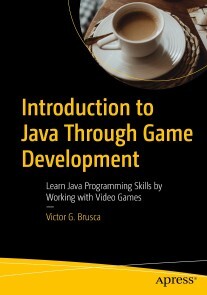
Introduction to Java Through Game Development
Interested in learning how to program with Java? Let’s face it, the best way to learn to program is by writing programs. This can be a daunting proposition with the specter of hours of simple command line example programs hanging over your head. Fear not! Now you can learn to program in Java in a fun way by working on video games.With this book, you’ll get to work with three Java game projects and have access to the complete game code for each project, including a full Java game engine. After completing Introduction to Java through Game Development, you’ll be proficient in Java programming, having worked with the language’s fundamental aspects throughout the text, and will be ready to further your Java and game programming expertise with confidence.WHAT YOU'LL* Master the fundamentals of the Java programming language* Use different data structures like arrays, lists, stacks, and queues* Understand game programming basics including the main game loop* Gain experience working with three different game projects via the book’s coding challenges* Work with the 2D game engine that powers the book's included games and learn to create your own new game projects* Understand advanced Java topics like classes, encapsulation, inheritance, and polymorphism* Work with exceptions and how to use debugging techniques to trace through code* Sharpen your skills with over a dozen coding challenges that test your abilities with a development task on a real game projectWHO THIS BOOK IS FORThis book requires little to no programming experience to understand and benefit from the text.VICTOR BRUSCA is an experienced software developer specializing in building cross-platform applications and APIs. He regards himself as a self-starter with a keen eye for detail, an obsessive protection of systems/data, and a desire to write well-documented, well-encapsulated code. With over 14 years' software development experience, he has been involved in game and game engine projects on J2ME, T-Mobile SideKick, WebOS, Windows Phone, Xbox 360, Android, iOS, and web platforms. Chapter 1: IntroductionSub –topics• Introductiono About this texto Notes on formattingo Notes on conventions• The book’s objectiveso Java fundamental topicso Java advanced topicso Game projects included• Setting up your environmento Checking your Java versiono Installing the latest JDKo Installing the NetBeans IDE o Getting the game projects setup• Checking out the gameso Running pong cloneo Running memory matcho Running the duel• Conclusiono Talking pointso What we coveredChapter 2: What is Java ProgrammingSub – topics• Computers and programmingo Programming computerso Programming languageso Types of programs/programming• The Java programming languageo A very brief historyo The JREo The JDKo Syntax and semantics• Game programmingo Program structureo The game loopo General structure of included games• Conclusiono Talking pointso What we coveredChapter 3: VariablesSub - topics:• Data typeso Basico Advancedo Customo Enumerations• Using variableso Declaring variableso Assigning values to variableso Objects, classes, instanceso Enumerationso Casting• Conclusiono Talking pointso What we coveredChapter 4: Expressions and Flow ControlSub - topics:• Expressionso Numerico Booleano Operator precedence• Flow controlo If, else, else if statementso Switch statementso Try-catch statements• Conclusiono Talking pointso What we coveredChapter 5: Arrays and Data StructuresSub - topics:• Arrayso Declaring arrayso Initializing arrayso Using arrays• Data structureso Listso Dictionarieso Generic vs specialized data structures• Conclusiono Talking pointso What we coveredChapter 6: Looping and IterationSub - topics:• For loopso Basic for loop o For each loop• While loopso Basic while loopo Infinite loopo Main game loop• Conclusiono Talking pointso What we coveredChapter 7: Objects, Classes, and OOPSub - topics:• Introduction to OOPo Classeso Fieldso Methodso Constructorso Static members• Advanced class topicso Accesso Class designo Main game loop• Conclusiono Talking pointso What we coveredChapter 8: Encapsulation, Polymorphism, and InheritanceSub - topics:• Encapsulation• Polymorphism• Inheritance• Importing class libraries• Project structure• Conclusiono Talking pointso What we coveredChapter 9: Debugging TechniquesSub - topics:• Basic debugging o CLI output trace• Advanced debuggingo IDE debugging features• Exceptionso Handling exceptionso Defining your own exceptionso Getting familiar with a stack trace• Conclusiono Talking pointso What we coveredChapter 10: ConclusionSub - topics:• Final thoughts• High level topic review/takeaways/what we covered• Where to go from here• Saying bye

Introducing Cisco Unified Computing System
The Cisco Unified Computing System (UCS) can be found in the majority of data centers across the world. However, getting hands-on practice to learn this infrastructure can be difficult, as many companies will push to have it production-ready as soon as possible. Home-labs are also cost-prohibitive, cumbersome, electricity-hungry, and noisy.So, how do you get hands-on experience? With Unified Computing System Platform Emulator (UCSPE) and this book. UCSPE is free and can run on a laptop. Using it along with this book, you will learn how to set up, manage and troubleshoot a UCS, including the fabric interconnects, chassis and IOMs, and servers through the GUI and the CLI. All from the comfort of your own home. Introducing Cisco Unified Computing System will show you how to set up a UCS (comparing the UCSPE to a real-world deployment), customize the hardware, configure the UCS system, and secure it.You'll start by creating an organization and then the policies to control storage, networking, boot options, maintenance policies, and server pools. Once you have the required policies you'll use them to create service profiles (using the policies) and templates and assign these to the blade and rack-mount servers in the virtual environment. You'll also be looking at real-life scenarios such as upgrades (and downgrades), northbound networking, and Storage Area Networking (SAN) connectivity. Using the GUI and the CLI you'll look at real-world examples that data center engineers may encounter.WHAT YOU'LL LEARN* Set up the Cisco UCSPE on VMWare* Create UCS service profiles* Secure the UCS system* Troubleshoot the UCSWHO THIS BOOK IS FORDatacenter and network engineers and individuals studying for the CCNA and CCNP Cisco data center qualification.STUART FORDHAM, CCIE 49337, is the Network Manager and Infrastructure Team Leader for SmartCommunications SC Ltd, which is the only provider of a cloud-based, next-generation customer communications platform. Stuart has written a series of books on SD-WAN, BGP, MPLS, VPNs, and NAT, as well as a CCNA study guide and a Cisco ACI Cookbook. He lives in the UK with his wife and twin sons.Chapter 1: Setting up UCSPE ( Cisco UCS Platform Emulator)CHAPTER GOAL: TO SET UP UCSPENO OF PAGES 20SUB -TOPICS1. Downloading UCSPE2. Importing UCSPE into VMWare3. Starting UCSPE4. Real-world UCS setupChapter 2: The hardware chapterCHAPTER GOAL: AN EXPLANATION OF THE DIFFERENT HARDWARE THAT MAKES UP A UCS (Cisco Unified Computing System)NO OF PAGES: 20SUB - TOPICS1. The Fabric Interconnect2. Chassis and IOMs3. FEX4. Blade servers5. Rackmount serversChapter 3: Northbound Networking and SANCHAPTER GOAL: TO UNDERSTAND THE UCS IN RELATION TO THE REST OF THE NETWORKNO OF PAGES: 10SUB - TOPICS1. Physical connectivity and port-channels2. VLANsChapter 4: PoliciesCHAPTER GOAL: TO CREATE THE POLICIES WE NEED FOR CHAPTER 4NO OF PAGES : 20SUB - TOPICS:1. Policies2. Storage Policies3. Dynamic vNIC connection policies3. vNIC/vHBA Placementpolicies4. vMedia policies5. Server boot policies6. Maintenance Policies7. Server Pool policies8. Operation policiesChapter 5: Service Profiles and TemplatesCHAPTER GOAL: TO USE THE POLICIES WE HAVE TO CREATE SERVICE PROFILES AND ASSIGN THEM TO OUR SERVERSNO OF PAGES: 30SUB - TOPICS:1. Creating an Organization2. Creating a Service Profile Template3. Creating a Service Profile from a template4. Assigning templatesChapter 6: UCS SecurityCHAPTER GOAL: TO SECURE OUR UCS ENVIRONMENTNO OF PAGES: 20SUB - TOPICS1. AAA2. Hardening the web interface3. Hardening SSHChapter 7: TroubleshootingCHAPTER GOAL: TO SECURE OUR UCS ENVIRONMENTNO OF PAGES: 20SUB - TOPICS1. Error messages2. SNMP3. Call-home

Ambient Intelligence and Internet of Things
AMBIENT INTELLIGENCE AND INTERNET OF THINGSTHE BOOK EXPLORES LONG-TERM IMPLEMENTATION TECHNIQUES AND RESEARCH PATHS OF AMBIENT INTELLIGENCE AND THE INTERNET OF THINGS THAT MEET THE DESIGN AND APPLICATION REQUIREMENTS OF A VARIETY OF MODERN AND REAL-TIME APPLICATIONS.Working environments based on the emerging technologies of ambient intelligence (AmI) and the Internet of Things (IoT) are available for current and future use in the diverse field of applications. The AmI and IoT paradigms aim to help people achieve their daily goals by augmenting physical environments using networks of distributed devices, including sensors, actuators, and computational resources. Because AmI-IoT is the convergence of numerous technologies and associated research fields, it takes significant effort to integrate them to make our lives easier. It is asserted that Am I can successfully analyze the vast amounts of contextual data obtained from such embedded sensors by employing a variety of artificial intelligence (AI) techniques and that it will transparently and proactively change the environment to conform to the requirements of the user. Over time, the long-term research goals and implementation strategies could meet the design and application needs of a wide range of modern and real-time applications.The 13 chapters in Ambient Intelligence and Internet of Things: Convergent Technologies provide a comprehensive knowledge of the fundamental structure of innovative cutting-edge AmI and IoT technologies as well as practical applications.AUDIENCEThe book will appeal to researchers, industry engineers, and students in artificial and ambient intelligence, the Internet of Things, intelligent systems, electronics and communication, electronics instrumentations, and computer science.MD RASHID MAHMOOD, PHD, is a professor in the Department of Electronics and Communication Engineering, Guru Nanak Institutions Technical Campus, Hyderabad, India. He has published 50 research papers in international/national journals as well as 10 patents. ROHIT RAJA, PHD, is an associate professor & Head, IT Department, Guru Ghasidas, Vishwavidyalaya, Bilaspur, (CG), India. He has published 80 research papers in international/national journals as well as 13 patents. HARPREET KAUR, PHD, is an associate professor in the Department of Electronics and Communication Engineering, Guru Nanak Institutions Technical Campus, Hyderabad, India. Her research interests include vehicle detection and tracking in autonomous vehicles, and image processing. SANDEEP KUMAR, PHD, is a professor in the Department of Computer Science and Engineering, Koneru Lakshmaiah Education Foundation, Vaddeswaram, AP, India. He has published 85 research papers in international/national journals as well as 9 patents. KAPIL KUMAR NAGWANSHI, PHD, is an associate professor at SoS E&T, Guru Ghasidas Vishwavidyalaya, Bilaspur, India. He has published more the 25 articles in SCI and Scopus-indexed Journals, and six patents were granted. His area of interest includes AI-ML, computer vision, and IoT. Preface xv1 AMBIENT INTELLIGENCE AND INTERNET OF THINGS: AN OVERVIEW 1Md Rashid Mahmood, Harpreet Kaur, Manpreet Kaur, Rohit Raja and Imran Ahmed Khan1.1 Introduction 21.2 Ambient Intelligent System 51.3 Characteristics of AmI Systems 61.4 Driving Force for Ambient Computing 91.5 Ambient Intelligence Contributing Technologies 91.6 Architecture Overview 111.7 The Internet of Things 141.8 IoT as the New Revolution 141.9 IoT Challenges 161.10 Role of Artificial Intelligence in the Internet of Things (IoT) 181.11 IoT in Various Domains 191.12 Healthcare 201.13 Home Automation 201.14 Smart City 211.15 Security 211.16 Industry 221.17 Education 231.18 Agriculture 241.19 Tourism 261.20 Environment Monitoring 271.21 Manufacturing and Retail 281.22 Logistics 281.23 Conclusion 29References 292 AN OVERVIEW OF INTERNET OF THINGS RELATED PROTOCOLS, TECHNOLOGIES, CHALLENGES AND APPLICATION 33Deevesh Chaudhary and Prakash Chandra Sharma2.1 Introduction 342.1.1 History of IoT 352.1.2 Definition of IoT 362.1.3 Characteristics of IoT 362.2 Messaging Protocols 372.2.1 Constrained Application Protocol 382.2.2 Message Queue Telemetry Transport 392.2.3 Extensible Messaging and Presence Protocol 412.2.4 Advance Message Queuing Protocol (AMQP) 412.3 Enabling Technologies 412.3.1 Wireless Sensor Network 412.3.2 Cloud Computing 422.3.3 Big Data Analytics 432.3.4 Embedded System 432.4 IoT Architecture 442.5 Applications Area 462.6 Challenges and Security Issues 492.7 Conclusion 50References 513 AMBIENT INTELLIGENCE HEALTH SERVICES USING IOT 53Pawan Whig, Ketan Gupta, Nasmin Jiwani and Arun Velu3.1 Introduction 543.2 Background of AML 553.2.1 What is AML? 553.3 AmI Future 583.4 Applications of Ambient Intelligence 603.4.1 Transforming Hospitals and Enhancing Patient Care With the Help of Ambient Intelligence 603.4.2 With Technology, Life After the COVID-19 Pandemic 613.5 Covid-19 633.5.1 Prevention 643.5.2 Symptoms 643.6 Coronavirus Worldwide 653.7 Proposed Framework for COVID- 19 673.8 Hardware and Software 693.8.1 Hardware 693.8.2 Heartbeat Sensor 703.8.3 Principle 703.8.4 Working 703.8.5 Temperature Sensor 713.8.6 Principle 713.8.7 Working 713.8.8 BP Sensor 723.8.9 Principle 723.8.10 Working 723.9 Mini Breadboard 733.10 Node MCU 733.11 Advantages 763.12 Conclusion 76References 764 SECURITY IN AMBIENT INTELLIGENCE AND INTERNET OF THINGS 81Salman Arafath Mohammed and Md Rashid Mahmood4.1 Introduction 824.2 Research Areas 844.3 Security Threats and Requirements 844.3.1 Ad Hoc Network Security Threats and Requirements 854.3.1.1 Availability 864.3.1.2 Confidentiality 864.3.1.3 Integrity 864.3.1.4 Key Management and Authorization 864.3.2 Security Threats and Requirements Due to Sensing Capability in the Network 874.3.2.1 Availability 874.3.2.2 Confidentiality 874.3.2.3 Integrity 874.3.2.4 Key Distribution and Management 874.3.2.5 Resilience to Node Capture 884.3.3 Security Threats and Requirements in AmI and IoT Based on Sensor Network 884.3.3.1 Availability 884.3.3.2 Confidentiality 894.3.3.3 Confidentiality of Location 894.3.3.4 Integrity 894.3.3.5 Nonrepudiation 904.3.3.6 Fabrication 904.3.3.7 Intrusion Detection 904.3.3.8 Confidentiality 914.3.3.9 Trust Management 924.4 Security Threats in Existing Routing Protocols that are Designed With No Focus on Security in AmI and IoT Based on Sensor Networks 924.4.1 Infrastructureless 944.4.1.1 Dissemination-Based Routing 944.4.1.2 Context-Based Routing 984.4.2 Infrastructure-Based 994.4.2.1 Network with Fixed Infrastructure 1004.4.2.2 New Routing Strategy for Wireless Sensor Networks to Ensure Source Location Privacy 1004.5 Protocols Designed for Security Keeping Focus on Security at Design Time for AmI and IoT Based on Sensor Network 1014.5.1 Secure Routing Algorithms 1014.5.1.1 Identity-Based Encryption (I.B.E.) Scheme 1014.5.1.2 Policy-Based Cryptography and Public Encryption with Keyword Search 1024.5.1.3 Secure Content-Based Routing 1024.5.1.4 Secure Content-Based Routing Using Local Key Management Scheme 1034.5.1.5 Trust Framework Using Mobile Traces 1034.5.1.6 Policy-Based Authority Evaluation Scheme 1034.5.1.7 Optimized Millionaire’s Problem 1044.5.1.8 Security in Military Operations 1044.5.1.9 A Security Framework Application Based on Wireless Sensor Networks 1044.5.1.10 Trust Evaluation Using Multifactor Method 1054.5.1.11 Prevention of Spoofing Attacks 1054.5.1.12 QoS Routing Protocol 1064.5.1.13 Network Security Virtualization 1064.5.2 Comparison of Routing Algorithms and Impact on Security 1064.5.3 Inducing Intelligence in IoT Networks Using Artificial Intelligence 1114.5.3.1 Fuzzy Logic- 1 1114.5.3.2 Fuzzy Logic- 2 1124.6 Introducing Hybrid Model in Military Application for Enhanced Security 1134.6.1 Overall System Architecture 1144.6.2 Best Candidate Selection 1144.6.3 Simulation Results in Omnet++ 1154.6 Conclusion 117References 1185 FUTURISTIC AI CONVERGENCE OF MEGATRENDS: IOT AND CLOUD COMPUTING 125Chanki Pandey, Yogesh Kumar Sahu, Nithiyananthan Kannan, Md Rashid Mahmood, Prabira Kumar Sethy and Santi Kumari Behera5.1 Introduction 1265.1.1 Our Contribution 1285.2 Methodology 1295.2.1 Statistical Information 1305.3 Artificial Intelligence of Things 1315.3.1 Application Areas of IoT Technologies 1325.3.1.1 Energy Management 1325.3.1.2 5G/Wireless Systems 1345.3.1.3 Risk Assessment 1365.3.1.4 Smart City 1385.3.1.5 Health Sectors 1395.4 AI Transforming Cloud Computing 1405.4.1 Application Areas of Cloud Computing 1525.4.2 Energy/Resource Management 1545.4.3 Edge Computing 1555.4.4 Distributed Edge Computing and Edge-of-Things (EoT) 1585.4.5 Fog Computing in Cloud Computing 1585.4.6 Soft Computing and Others 1615.5 Conclusion 174References 1746 ANALYSIS OF INTERNET OF THINGS ACCEPTANCE DIMENSIONS IN HOSPITALS 189Subhodeep Mukherjee, Manish Mohan Baral, Venkataiah Chittipaka and Sharad Chandra Srivastava6.1 Introduction 1906.2 Literature Review 1916.2.1 Overview of Internet of Things 1916.2.2 Internet of Things in Healthcare 1916.2.3 Research Hypothesis 1936.2.3.1 Technological Context (TC) 1936.2.3.2 Organizational Context (OC) 1946.2.3.3 Environmental Concerns (EC) 1956.3 Research Methodology 1956.3.1 Demographics of the Respondents 1966.4 Data Analysis 1966.4.1 Reliability and Validity 1966.4.1.1 Cronbach’s Alpha 1966.4.1.2 Composite Reliability 2016.4.2 Exploratory Factor Analysis (EFA) 2016.4.3 Confirmatory Factor Analysis Results 2016.4.3.1 Divergent or Discriminant Validity 2046.4.4 Structural Equation Modeling 2056.5 Discussion 2066.5.1 Technological Context 2066.5.2 Organizational Context 2076.5.3 Environmental Context 2086.6 Conclusion 209References 2097 ROLE OF IOT IN SUSTAINABLE HEALTHCARE SYSTEMS 215Amrita Rai, Ritesh Pratap Singh and Neha Jain7.1 Introduction 2167.2 Basic Structure of IoT Implementation in the Healthcare Field 2177.3 Different Technologies of IoT for the Healthcare Systems 2217.3.1 On the Basis of the Node Identification 2237.3.2 On the Basis of the Communication Method 2237.3.3 Depending on the Location of the Object 2247.4 Applications and Examples of IoT in the Healthcare Systems 2257.4.1 IoT-Based Healthcare System to Encounter COVID-19 Pandemic Situations 2257.4.2 Wearable Devices 2267.4.3 IoT-Enabled Patient Monitoring Devices From Remote Locations 2277.4.3.1 Pulse Rate Sensor 2277.4.3.2 Respiratory Rate Sensors 2297.4.3.3 Body Temperature Sensors 2317.4.3.4 Blood Pressure Sensing 2327.4.3.5 Pulse Oximetry Sensors 2337.5 Companies Associated With IoT and Healthcare Sector Worldwide 2347.6 Conclusion and Future Enhancement in the Healthcare System With IoT 237References 2388 FOG COMPUTING PARADIGM FOR INTERNET OF THINGS APPLICATIONS 243Upendra Verma and Diwakar Bhardwaj8.1 Introduction 2438.2 Challenges 2478.3 Fog Computing: The Emerging Era of Computing Paradigm 2488.3.1 Definition of Fog Computing 2488.3.2 Fog Computing Characteristic 2498.3.3 Comparison Between Cloud and Fog Computing Paradigm 2508.3.4 When to Use Fog Computing 2508.3.5 Fog Computing Architecture for Internet of Things 2518.3.6 Fog Assistance to Address the New IoT Challenges 2528.3.7 Devices Play a Role of Fog Computing Node 2538.4 Related Work 2548.5 Fog Computing Challenges 2548.6 Fog Supported IoT Applications 2628.7 Summary and Conclusion 265References 2659 APPLICATION OF INTERNET OF THINGS IN MARKETING MANAGEMENT 273Arshi Naim, Anandhavalli Muniasamy and Hamed Alqahtani9.1 Introduction 2739.2 Literature Review 2759.2.1 Customer Relationship Management 2769.2.2 Product Life Cycle (PLC) 2779.2.3 Business Process Management (BPM) 2789.2.4 Ambient Intelligence (AmI) 2799.2.5 IoT and CRM Integration 2809.2.6 IoT and BPM Integration 2809.2.7 IoT and Product Life Cycle 2829.2.8 IoT in MMgnt 2829.2.9 Impacts of AmI on Marketing Paradigms 2839.3 Research Methodology 2849.4 Discussion 2849.4.1 Research Proposition 1 2889.4.2 Research Proposition 2 2909.4.3 Research Proposition 3 2919.4.4 Research Proposition 4 2949.4.5 Research Proposition 5 2949.5 Results 2959.4 Conclusions 296References 29710 HEALTHCARE INTERNET OF THINGS: A NEW REVOLUTION 301Manpreet Kaur, M. Sugadev, Harpreet Kaur, Md Rashid Mahmood and Vikas Maheshwari10.1 Introduction 30210.2 Healthcare IoT Architecture (IoT) 30310.3 Healthcare IoT Technologies 30410.3.1 Technology for Identification 30510.3.2 Location Technology 30610.3.2.1 Mobile-Based IoT 30610.3.2.2 Wearable Devices 30810.3.2.3 Ambient-Assisted Living (AAL) 31410.3.3 Communicative Systems 31510.3.3.1 Radiofrequency Identification 31610.3.3.2 Bluetooth 31610.3.3.3 Zigbee 31710.3.3.4 Near Field Communication 31710.3.3.5 Wireless Fidelity (Wi-Fi) 31810.3.3.6 Satellite Communication 31810.4 Community-Based Healthcare Services 31910.5 Cognitive Computation 32110.6 Adverse Drug Reaction 32310.7 Blockchain 32510.8 Child Health Information 32710.9 Growth in Healthcare IoT 32810.10 Benefits of IoT in Healthcare 32810.11 Conclusion 329References 33011 DETECTION-BASED VISUAL OBJECT TRACKING BASED ON ENHANCED YOLO-LITE AND LSTM 339Aayushi Gautam and Sukhwinder Singh11.1 Introduction 34011.2 Related Work 34111.3 Proposed Approach 34311.3.1 Enhanced YOLO-Lite 34411.3.2 Long Short-Term Memory 34611.3.3 Working of Proposed Framework 34711.4 Evaluation Metrics 34911.5 Experimental Results and Discussion 35011.5.1 Implementation Details 35011.5.2 Performance on OTB-2015 35011.5.3 Performance on VOT-2016 35311.5.4 Performance on UAV-123 35411.6 Conclusion 356References 35612 INTRODUCTION TO AMI AND IOT 361Dolly Thankachan12.1 Introduction 36212.1.1 AmI and IoT Characteristics and Definition of Overlaps 36212.1.1.1 Perceptions of “AmI” and the “IoT” 36312.1.2 Prospects and Perils of AmI and the IoT 36412.1.2.1 Assistances and Claim Areas 36412.1.2.2 Intimidations and Contests Relating to AmI and the IoT 36512.2 AmI and the IoT and Environmental and Societal Sustainability: Dangers, Challenges, and Underpinnings 36612.3 Role of AmI and the IoT as New I.C.T.s to Conservational and Social Sustainability 36712.3.1 AmI and the IoT for Environmental Sustainability: Issues, Discernment, and Favoritisms in Tactical Innovation Pursuits 36812.4 The Environmental Influences of AmI and the IoT Technology 36912.4.1 Fundamental Properties 37012.4.2 Boom Properties 37012.4.3 Oblique Outcomes 37112.4.4 Straight Outcome 37212.5 Conclusion 374References 37913 DESIGN OF OPTIMUM CONSTRUCTION SITE MANAGEMENT ARCHITECTURE: A QUALITY PERSPECTIVE USING MACHINE LEARNING APPROACH 383Kundan Meshram13.1 Introduction 38413.2 Literature Review 38613.3 Proposed Construction Management Model Based on Machine Learning 39013.4 Comparative Analysis 39313.5 Conclusion 395References 396Index 399
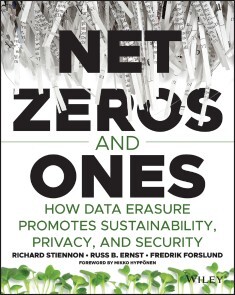
Net Zeros and Ones
DESIGN, IMPLEMENT, AND INTEGRATE A COMPLETE DATA SANITIZATION PROGRAMIn Net Zeros and Ones: How Data Erasure Promotes Sustainability, Privacy, and Security, a well-rounded team of accomplished industry veterans delivers a comprehensive guide to managing permanent and sustainable data erasure while complying with regulatory, legal, and industry requirements. In the book, you’ll discover the why, how, and when of data sanitization, including why it is a crucial component in achieving circularity within IT operations. You will also learn about future-proofing yourself against security breaches and data leaks involving your most sensitive information—all while being served entertaining industry anecdotes and commentary from leading industry personalities. The authors also discuss: Several new standards on data erasure, including the soon-to-be published standards by the IEEE and ISO How data sanitization strengthens a sustainability or Environmental, Social, and Governance (ESG) program How to adhere to data retention policies, litigation holds, and regulatory frameworks that require certain data to be retained for specific timeframes An ideal resource for ESG, data protection, and privacy professionals, Net Zeros and Ones will also earn a place in the libraries of application developers and IT asset managers seeking a one-stop explanation of how data erasure fits into their data and asset management programs. RICHARD STIENNON is a renowned cybersecurity industry analyst. He has held executive roles with Gartner, Webroot Software, Fortinet, and Blancco Technology Group. He was a member of the Technical Advisory Committee of the Responsible Recycling standard. RUSS B. ERNST has over twenty years’ experience in product strategy and management and is frequently sought for comment on issues related to data security in the circular economy. As Chief Technology Officer at Blancco Technology Group, he is responsible for defining, driving and executing the product strategy across the entire Blancco data erasure and device diagnostics product suite. FREDRIK FORSLUND has over 20 years’ experience in the data sanitization industry. He is the Director of the International Data Sanitization Consortium (IDSC) and is a sought-after speaker on topics related to IT security and data protection. ForewordxvIntroductionxixCHAPTER 1 END OF LIFE FOR DATA 11.1 Growth of Data 31.2 Managing Data 41.2.1 Discovery 41.2.2 Classification 51.2.3 Risk 61.3 Data Loss 61.3.1 Accidental 71.3.2 Theft 71.3.3 Dumpster Diving 91.4 Encryption 91.5 Data Discovery 91.6 Regulations 101.7 Security 101.8 Legal Discovery 111.9 Data Sanitization 121.10 Ecological and Economic Considerations 131.10.1 Ecological 131.10.2 Economic 131.11 Summary: Proactive Risk Reduction and Reactive End of Life 14CHAPTER 2 WHERE ARE WE, AND HOW DID WE GET HERE? 152.1 Digital Data Storage 162.2 Erasing Magnetic Media 172.3 History of Data Erasure 172.3.1 The Beginnings of Commercial Data Erasure 192.3.2 Darik’s Boot and Nuke (DBAN) 192.4 Summary 21CHAPTER 3 DATA SANITIZATION TECHNOLOGY 233.1 Shredding 243.2 Degaussing 243.3 Overwriting 253.4 Crypto- Erase 273.5 Erasing Solid- State Drives 283.6 Bad Blocks 293.7 Data Forensics 293.8 Summary 31CHAPTER 4 INFORMATION LIFECYCLE MANAGEMENT 334.1 Information Lifecycle Management vs. Data Lifecycle Management 334.2 Information Lifecycle Management 344.2.1 Lifecycle Stages 344.3 Data Security Lifecycle 354.3.1 Stages for Data Security Lifecycle 364.4 Data Hygiene 364.5 Data Sanitization 374.5.1 Physical Destruction 374.5.2 Cryptographic Erasure 374.5.3 Data Erasure 384.6 Summary 39CHAPTER 5 REGULATORY REQUIREMENTS 415.1 Frameworks 425.1.1 NIST Cybersecurity Framework Applied to Data 425.2 Regulations 435.2.1 GDPR 445.2.1.1 The Right to Erasure 455.2.1.2 Data Retention 515.2.2 HIPAA Security Rule Subpart c 535.2.3 PCI DSS V3.2 Payment Card Industry Requirements 565.2.4 Sarbanes–Oxley 585.2.5 Saudi Arabian Monetary Authority Payment Services Regulations 595.2.6 New York State Cybersecurity Requirements of Financial Services Companies 23 NYCRR 500 595.2.7 Philippines Data Privacy Act 2012 605.2.8 Singapore Personal Data Protection Act 2012 615.2.9 Gramm–Leach–Bliley Act 615.3 Standards 625.3.1 ISO 27000 and Family 625.3.2 NIST SP 800- 88 635.4 Summary 65CHAPTER 6 NEW STANDARDS 676.1 IEEE P2883 Draft Standard for Sanitizing Storage 686.1.1 Data Sanitization 686.1.2 Storage Sanitization 686.1.3 Media Sanitization 686.1.4 Clear 696.1.5 Purge 696.1.6 Destruct 696.2 Updated ISO/IEC CD 27040 Information Technology Security Techniques— Storage Security 706.3 Summary 71CHAPTER 7 ASSET LIFECYCLE MANAGEMENT 737.1 Data Sanitization Program 737.2 Laptops and Desktops 747.3 Servers and Network Gear 767.3.1 Edge Computing 787.4 Mobile Devices 797.4.1 Crypto- Erase 807.4.2 Mobile Phone Processing 807.4.3 Enterprise Data Erasure for Mobile Devices 817.4.3.1 Bring Your Own Device 817.4.3.2 Corporate- Issued Devices 817.5 Internet of Things: Unconventional Computing Devices 827.5.1 Printers and Scanners 827.5.2 Landline Phones 827.5.3 Industrial Control Systems 827.5.4 HVAC Controls 837.5.5 Medical Devices 837.6 Automobiles 837.6.1 Off- Lease Vehicles 847.6.2 Used Vehicle Market 857.6.3 Sanitization of Automobiles 857.7 Summary 86CHAPTER 8 ASSET DISPOSITION 878.1 Contracting and Managing Your ITAD 888.2 ITAD Operations 898.3 Sustainability and Green Tech 918.4 Contribution from R2 918.4.1 Tracking Throughput 918.4.2 Data Security 928.5 e- Stewards Standard for Responsible Recycling and Reuse of Electronic Equipment 928.6 i- SIGMA 938.7 FACTA 938.8 Summary 95CHAPTER 9 STORIES FROM THE FIELD 979.1 3stepIT 989.2 TES – IT Lifecycle Solutions 1019.2.1 Scale of Operations 1039.2.2 Compliance 1049.2.3 Conclusion 1049.3 Ingram Micro 1049.4 Summary 106CHAPTER 10 DATA CENTER OPERATIONS 10910.1 Return Material Allowances 11010.2 NAS 11010.3 Logical Drives 11010.4 Rack- Mounted Hard Drives 11110.5 Summary 112CHAPTER 11 SANITIZING FILES 11311.1 Avoid Confusion with CDR 11311.2 Erasing Files 11411.3 When to Sanitize Files 11511.4 Sanitizing Files 11611.5 Summary 116CHAPTER 12 CLOUD DATA SANITIZATION 11712.1 User Responsibility vs. Cloud Provider Responsibility 11712.2 Attacks Against Cloud Data 11912.3 Cloud Encryption 11912.4 Data Sanitization for the Cloud 12012.5 Summary 121CHAPTER 13 DATA SANITIZATION AND INFORMATION LIFECYCLE MANAGEMENT 12313.1 The Data Sanitization Team 12413.2 Identifying Data 12413.3 Data Sanitization Policy 12413.3.1 Deploy Technology 12513.3.2 Working with DevOps 12513.3.3 Working with Data Security 12513.3.4 Working with the Legal Team 12513.3.5 Changes 12613.4 Summary 126CHAPTER 14 HOW NOT TO DESTROY DATA 12714.1 Drilling 12714.1.1 Nail Gun 12814.1.2 Gun 12814.2 Acids and Other Solvents 12814.3 Heating 12814.4 Incineration 12914.5 Street Rollers 12914.6 Ice Shaving Machines 129CHAPTER 15 THE FUTURE OF DATA SANITIZATION 13115.1 Advances in Solid- State Drives 13215.2 Shingled Magnetic Recording 13315.3 Thermally Assisted Magnetic Recording, Also Known as Heat- Assisted Magnetic Recording 13315.4 Microwave- Assisted Magnetic Recording 13415.5 DNA Data Storage 13515.6 Holographic Storage 13515.7 Quantum Storage 13615.8 NVIDMM 13715.9 Summary 138CHAPTER 16 CONCLUSION 139Appendix Enterprise Data Sanitization Policy 143Introduction 143Intended Audience 143Purpose of Policy 144General Data Hygiene and Data Retention 144Data Spillage 144Handling Files Classified as Confidential 144Data Migration 144End of Life for Classified Virtual Machines 145On Customer’s Demand 145Seven Steps to Creating a Data Sanitization Process 145Step 1: Prioritize and Scope 146Step 2: Orient 146Step 3: Create a Current Profile 146Step 4: Conduct a Risk Assessment 147Step 5: Create a Target Profile 147Step 6: Determine, Analyze, and Prioritize Gaps 147Step 7: Implement Action Plan 147Data Sanitization Defined 147Physical Destruction 148Degaussing 148Pros and Cons of Physical Destruction 148Cryptographic Erasure (Crypto- Erase) 148Pros and Cons of Cryptographic Erasure 149Data Erasure 149Pros and Cons of Data Erasure 150Equipment Details 150Asset Lifecycle Procedures 151Suggested Process, In Short 152Create Contract Language for Third Parties 152Data Erasure Procedures 152Responsibility 152Validation of Data Erasure Software and Equipment 153Personal Computers 153Servers and Server Storage Systems 154Photocopiers, Network Printers, and Fax Machines 154Mobile Phones, Smartphones, and Tablets 154Point- of- Sale Equipment 155Virtual Machines 155Removable Solid- State Memory Devices (USB Flash Drives, SD Cards) 155CDs, DVDs, and Optical Discs 155Backup Tape 155General Requirements for Full Implementation 155Procedure for Partners and Suppliers 155Audit Trail Requirement 156Policy Ownership 156Mandatory Revisions 156Roles and Responsibilities 157CEO 157Board of Directors 157Index 159
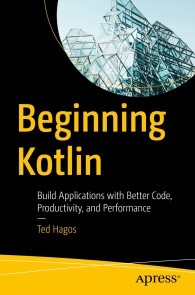
Beginning Kotlin
This book introduces the Kotlin programming skills and techniques necessary for building applications. You'll learn how to migrate your Java programming skills to Kotlin, a Java Virtual Machine (JVM) programming language.The book starts with a quick tour of the Kotlin language and gradually walks you through the language in greater detail over the course of succeeding chapters. You’ll learn Kotlin fundamentals like generics, functional programming, type system, debugging, and unit testing. Additionally, with the book’s freely downloadable online appendices, you’ll discover how to use Kotlin for building Spring Boot applications, data persistence, and microservices.WHAT YOU WILL LEARN* Learn the Kotlin language, its functions, types, collections, generics, classes, and more* Dive into higher-order functions, generics, debugging, and unit testing* Apply the fundamentals of Kotlin to Spring Boot * Add Hibernate to your Spring Boot application for persistence and data accessibility * Take advantage of functional programming available in KotlinWHO THIS BOOK IS FORJava developers who are new to Kotlin and want to leverage Kotlin, particularly for building Spring Boot apps.TED HAGOS is the CTO and Data Protection Officer of RenditionDigital International (RDI), a software development company based out of Dublin. Before he joined RDI, he had various software development roles and also spent time as a trainer at IBM Advanced Career Education, Ateneo ITI, and Asia Pacific College. He spent many years in software development dating back to Turbo C, Clipper, dBase IV, and Visual Basic. Eventually, he found Java and spent many years working with it. Nowadays, he’s busy with full-stack JavaScript, Android, and Spring applications.Part 1: Kotlin1. Setup2. Tour of the Kotlin language3. Functions4. Types5. Higher order functions6. Collections7. Generics8. Classes9. Unit Testing10. Java InteroperabilityPart 2: Spring Boot11. Spring and SpringBoot12. Setup13. Getting started with a projecta. Using the project initializrb. Auto restarting an appc. Views and backing beansd. Views and controller functionse. Servicesf. Posting to a controllerg. Dependency Injection14. Functional Programminga. Overviewb. Function parametersc. Listsd. Filter and flatMape. Reduce and Foldf. Maps15. Hibernatea. Adding the dependenciesb. Entitiesc. Persisting to a database16. Reflectiona. Overviewb. Ins

Building Browser Extensions
Almost all web developers today have plenty of experience with building regular web page apps, but a lot of that knowledge doesn't transfer over when it comes to creating browser extensions. This book provides a complete reference for how to build modern browser extensions.Creating and deploying a browser extension is more like building a mobile app than a website. When you start building an extension you'll often find there are a large number of new concepts and idiosyncrasies to wrangle with. This book reveals how to successfully navigate around these obstacles and how to take advantage of the limited resources available.You'll see how a browser extensions work, their component pieces, and how to build and deploy them. Additionally, you'll review all the tricky bits of extension development that most developers have to learn through trial and error. The current transition from manifest v2 to v3 is of special interest, and an entire chapter will be dedicated to this subject. By the end of this book, you will have a rich understanding of what browser extensions are, how they work, all the pitfalls to avoid, and the most efficient ways of building them.WHAT YOU’LL LEARN* Examine the different components of browser extensions and how they behave* Review common pitfalls developers encounter when building browser extensions and how to avoid them* Develop, deploy, and manage a published browser extension* Build a browser extension using modern JavaScript frameworksWHO THIS BOOK IS FORDevelopers tasked with building a supplementary browser extension to go alongside their existing product. This book also targets people that have at least a basic understanding of the fundamentals of web development and wish to quickly understand how they can roll out a browser extension.Matt Frisbie has worked in web development for over a decade. During that time, he's been a startup co-founder, an engineer at a Big Four tech company, and the first engineer at a Y Combinator startup that would eventually become a billion-dollar company. As a Google software engineer, Matt worked on both the AdSense and Accelerated Mobile Pages (AMP) platforms; his code contributions run on most of the planet's web browsing devices. Prior to this, Matt was the first engineer at DoorDash, where he helped lay the foundation for a company that has become the leader in online food delivery. Matt has written three books, "Professional JavaScript for Web Developers", "Angular 2 Cookbook", and "AngularJS Web Application Development Cookbook", and recorded two video series, "Introduction to Modern Client-Side Programming" and "Learning AngularJS". He speaks at frontend meetups and webcasts, and is a level 1 sommelier. He majored in Computer Engineering at the University of Illinois Urbana-Champaign. Matt's Twitter handle is @mattfriz.Chapter 1:Introduction to Browser ExtensionChapter 2:Components of Browser ExtensionsChapter 3: Crash CourseChapter 4: Extension ArchitectureChapter 5: Extension ManifestsChapter 6:Manifest v2 versus v3Chapter 7: Background ScriptsChapter 8: Popup and Options PagesChapter 9: Content ScriptsChapter 10: Devtools PagesChapter 11: Extension and browser APIsChapter 12: PermissionChapter 13:NetworkingChapter 14:Extension Development and DeploymentChapter 15: Cross-Browser ExtensionsChapter 16: Tooling and Frameworks.
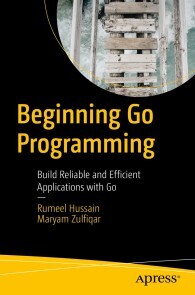
Beginning Go Programming
Understand and write programs in Go, a multi-paradigm language with built-in features for concurrent programming. This book enables developers to build software that is simple, reliable, and efficient. It'll also help beginners to start programming Go-based applications.Beginning Go Programming begins by explaining the programming fundamentals of the Go language, including basic syntax, data type and structures, and the use of functions and methods. Next, it covers string formatting, Unicode data handling, and how to use regular expressions in Go. Further, it discusses how to encode and decode JSON formatted data for Go applications, and how to work with HTTP in Go. It concludes by exploring concurrency and covering the most powerful features of Go, as well as tips and tricks related to it.After reading this book and working through its practical examples, you will be ready to begin programming your own Go-based applications.WHAT YOU WILL LEARN* Understand the fundamentals of the Go programming language* Master the different features of Go and how to implement real-life scenarios using the language* Work with text in Go, such as string formatting and Unicode data handling* Work with HTTP in GoWHO THIS BOOK IS FORProgrammers and developers looking to learn Go programming language concepts for efficient application building.RUMEEL HUSSAIN, has a Bachelors Degree in Computer Science and is presently working as a Senior Blockchain Developer and Senior Tech Evangelist at BNB Chain (UAE), supporting the development and growth of the ecosystem. He is an information technology enthusiast with more than five years of experience leading and implementing blockchain applications and architectures, analyzing and refactoring modern programming languages like Go, troubleshooting cloud infrastructure, and assessing security risks. His current work is focused on leveraging blockchain technology and crypto to achieve the full potential of Web3 applications.MARYAM ZULFIQAR has four years of research experience and has a Masters Degree in Computer Science. She is currently working as a Tech Martian in BNB Chain (Pakistan Region). She also works as a Senior Researcher and Developer. She is passionate about developer education, especially in sharing her knowledge on topics that are "the talk of the town" in the technology field. She has also worked in the capacity of researcher and team lead roles for HEC-funded projects targeted at community growth and welfare.Chapter 1: Introduction to GoChapter Goal: Provides an overview of the Go programming language in terms of its basic features.No of pages:Sub -Topics:● Is GoLang Static-Typed or Compiled?● Is Go Object-Oriented?● Features that make Go lang the premium choice for programming● Features excluded from Go lang● Go programsChapter 2: Go BasicsChapter Goal: This chapter is intended to cover the programming fundamentals of the Go programming language. Covering basic syntax, program structure, data types, data structures, statements, functions, I/O from files, concurrency, and error handling.No of pages:Sub - Topics○ Overview■ Ancestors of Go○ Go Syntax○ Installing Go○ Go playground○ Using IDE for developing Go applications○ Getting started with programming Go applications■ Hello world!■ Different parts of Go programs■ Executing Go program■ Keywords○ Variables■ Variable data types■ Naming conventions■ Declaring variables■ Taking user input● Using scanf● Using scanln● Using bufio■ Math operators and packages● The math package● Dates and times● Operator precedence in Go○ Memory management & reference values■ New vs make● Incorrect memory allocation example● Correct memory allocation example■ Memory deallocation○ Pointers Data Type■ What is a pointer■ Declaring pointers■ Comparison with Java and C-style languages○ Ordered values in arrays and slices■ Arrays in Go● Declaring arrays● Initialising arrays● Accessing array elements● Querying the size of array● Multi-dimensional arrays [not included yet]■ Slices in Go● Defining a slice● The len() and cap() functions● Nil slice● Sub-slicing● append() and copy() functions● Sorting slices○ Maps■ Defining maps■ Adding entries in a map object■ Deleting entries from a map object■ Iterating over stored values in a map object■○ Structs Data Type■ Defining a struct■ Accessing structure members■ Structures as function arguments■ Pointers to structures○ Program flow■ If statement■ Switch statement■ For statement■ Goto statement○ Functions■ Defining a function■ Calling a function■ Returning multiple values from Function■ Function arguments■ Methods○ Read/Write text files■ Write text files■ Read text files○ HTTP Package○ JSON○ Go Recipes: Basics programming fundamentals■ Overview■ Numbers and slice in Go■ Working with maps in Go■ Go error handling■ Defer and panic recovery○ Hands-On challengeChapter 3: Working with TextChapter Goal: In this chapter, we will discuss how to work with text in Go language. Specifically, we will cover the string formatting, Unicode data handling, and how to use regular expressions in Go language.No of pages:Sub -Topics● Go String formatting and working with unicode● Case insensitive comparisons in Go● Regular expressions and reading text files with Go● Hands-On challengeChapter 4: Structs, Methods, and InterfacesChapter Goal: In this chapter, we will provide exercise related to the usage of structs, methods, and interfaces.No of pages:Sub -Topics:● Overview● Go structs, methods and interfaces○ Structs○ Methods○ Interfaces● Empty interface and working with iota in Go○ JSON Encoding/Decoding○ Generics● Hands-on challengeChapter 5: Working with JSONChapter Goal: In this chapter, we will discuss working with JSON, especially, how to encode and decode the JSON formatted data for use in Go applications.No of pages:Sub -Topics:● Overview● Unmarshalling JSON with GO● Parsing complex JSON with Go● Marshalling JSON with Go● Dealing with zero and missing values in Go● Using mapstructure to handle arbitrary JSONChapter 6: HTTPChapter Goal: In this chapter, we cover on how to work with HTTP in Go language. No of pages:Sub -Topics● Overview● HTTP calls in Go● Authentication and Writing an HTTP server in Go● REST with gorilla/mux● Hands-on challengeChapter 7: ConcurrencyChapter Goal: Go has rich support for concurrency using goroutines and channels. In this chapter, we discuss the most powerful feature of the Go Language, i.e., concurrency.No of pages:Sub -Topics● Understanding goroutines○ Converting sequential code to concurrent in Go● Using Goroutines with shared resources○ Seeing how shared resources impact goroutines○ Accessing shared resources using mutual exclusion○ Using atomic counters for modifying shared resources● Synchronizing Goroutines○ Timeouts in Go○ sync.WaitGroup and sync.Once○ Using a pool of goroutines○ sync/atomic● Hands-on ChallengeChapter 8: Tips & TricksChapter Goal: this chapter we cover different tips and tricks related to the Go language.No of pages:Sub -Topics● Alternate ways to import packages○ goimports○ Organization● Custom constructors● Breaking down code into packages● Sets● Dependency package management● Using errors● Quick look at some compiler’s optimizations● Set the build id using git’s SHA● How to see what packages my app imports● Iota: Elegant Constants○ Auto Increment○ Custom Types
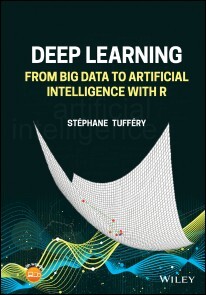
Deep Learning
DEEP LEARNINGA CONCISE AND PRACTICAL EXPLORATION OF KEY TOPICS AND APPLICATIONS IN DATA SCIENCEIn Deep Learning: From Big Data to Artificial Intelligence with R, expert researcher Dr. Stéphane Tufféry delivers an insightful discussion of the applications of deep learning and big data that focuses on practical instructions on various software tools and deep learning methods relying on three major libraries: MXNet, PyTorch, and Keras-TensorFlow. In the book, numerous, up-to-date examples are combined with key topics relevant to modern data scientists, including processing optimization, neural network applications, natural language processing, and image recognition.This is a thoroughly revised and updated edition of a book originally released in French, with new examples and methods included throughout. Classroom-tested and intuitively organized, Deep Learning: From Big Data to Artificial Intelligence with R offers complimentary access to a companion website that provides R and Python source code for the examples offered in the book. Readers will also find:* A thorough introduction to practical deep learning techniques with explanations and examples for various programming libraries* Comprehensive explorations of a variety of applications for deep learning, including image recognition and natural language processing* Discussions of the theory of deep learning, neural networks, and artificial intelligence linked to concrete techniques and strategies commonly used to solve real-world problemsPerfect for graduate students studying data science, big data, deep learning, and artificial intelligence, Deep Learning: From Big Data to Artificial Intelligence with R will also earn a place in the libraries of data science researchers and practicing data scientists.STÉPHANE TUFFÉRY, PHD, is Associate Professor at the University of Rennes 1, France where he teaches courses in data mining, deep learning, and big data methods. He also lectures at the Institute of Actuaries in Paris and has published several books on data mining, deep learning, and big data in English and French. Acknowledgements xiiiIntroduction xv1 FROM BIG DATA TO DEEP LEARNING 11.1 Introduction 11.2 Examples of the Use of Big Data and Deep Learning 61.3 Big Data and Deep Learning for Companies and Organizations 91.3.1 Big Data in Finance 101.3.1.1 Google Trends 101.3.1.2 Google Trends and Stock Prices 111.3.1.3 The quantmod Package for Financial Analysis 111.3.1.4 Google Trends in R 131.3.1.5 Matching Data from quantmod and Google Trends 141.3.2 Big Data and Deep Learning in Insurance 181.3.3 Big Data and Deep Learning in Industry 181.3.4 Big Data and Deep Learning in Scientific Research and Education 201.3.4.1 Big Data in Physics and Astrophysics 201.3.4.2 Big Data in Climatology and Earth Sciences 211.3.4.3 Big Data in Education 211.4 Big Data and Deep Learning for Individuals 211.4.1 Big Data and Deep Learning in Healthcare 211.4.1.1 Connected Health and Telemedicine 211.4.1.2 Geolocation and Health 221.4.1.3 The Google Flu Trends 231.4.1.4 Research in Health and Medicine 261.4.2 Big Data and Deep Learning for Drivers 281.4.3 Big Data and Deep Learning for Citizens 291.4.4 Big Data and Deep Learning in the Police 301.5 Risks in Data Processing 321.5.1 Insufficient Quantity of Training Data 321.5.2 Poor Data Quality 321.5.3 Non-Representative Samples 331.5.4 Missing Values in the Data 331.5.5 Spurious Correlations 341.5.6 Overfitting 351.5.7 Lack of Explainability of Models 351.6 Protection of Personal Data 361.6.1 The Need for Data Protection 361.6.2 Data Anonymization 381.6.3 The General Data Protection Regulation 411.7 Open Data 43Notes 442 PROCESSING OF LARGE VOLUMES OF DATA 492.1 Issues 492.2 The Search for a Parsimonious Model 502.3 Algorithmic Complexity 512.4 Parallel Computing 512.5 Distributed Computing 522.5.1 MapReduce 532.5.2 Hadoop 542.5.3 Computing Tools for Distributed Computing 552.5.4 Column-Oriented Databases 562.5.5 Distributed Architecture and “Analytics" 572.5.6 Spark 582.6 Computer Resources 602.6.1 Minimum Resources 602.6.2 Graphics Processing Units (GPU) and Tensor Processing Units (TPU) 612.6.3 Solutions in the Cloud 622.7 R and Python Software 622.8 Quantum Computing 67Notes 683 REMINDERS OF MACHINE LEARNING 713.1 General 713.2 The Optimization Algorithms 743.3 Complexity Reduction and Penalized Regression 853.4 Ensemble Methods 893.4.1 Bagging 893.4.2 Random Forests 893.4.3 Extra-Trees 913.4.4 Boosting 923.4.5 Gradient Boosting Methods 973.4.6 Synthesis of the Ensemble Methods 1003.5 Support Vector Machines 1003.6 Recommendation Systems 105Notes 1084 NATURAL LANGUAGE PROCESSING 1114.1 From Lexical Statistics to Natural Language Processing 1114.2 Uses of Text Mining and Natural Language Processing 1134.3 The Operations of Textual Analysis 1144.3.1 Textual Data Collection 1154.3.2 Identification of the Language 1154.3.3 Tokenization 1164.3.4 Part-of-Speech Tagging 1174.3.5 Named Entity Recognition 1194.3.6 Coreference Resolution 1244.3.7 Lemmatization 1244.3.8 Stemming 1294.3.9 Simplifications 1294.3.10 Removal of StopWords 1304.4 Vector Representation andWord Embedding 1324.4.1 Vector Representation 1324.4.2 Analysis on the Document-Term Matrix 1334.4.3 TF-IDF Weighting 1424.4.4 Latent Semantic Analysis 1444.4.5 Latent Dirichlet Allocation 1524.4.6 Word Frequency Analysis 1604.4.7 Word2Vec Embedding 1624.4.8 GloVe Embedding 1744.4.9 FastText Embedding 1764.5 Sentiment Analysis 180Notes 1845 SOCIAL NETWORK ANALYSIS 1875.1 Social Networks 1875.2 Characteristics of Graphs 1885.3 Characterization of Social Networks 1895.4 Measures of Influence in a Graph 1905.5 Graphs with R 1915.6 Community Detection 2005.6.1 The Modularity of a Graph 2015.6.2 Community Detection by Divisive Hierarchical Clustering 2025.6.3 Community Detection by Agglomerative Hierarchical Clustering 2035.6.4 Other Methods 2045.6.5 Community Detection with R 2055.7 Research and Analysis on Social Networks 2085.8 The Business Model of Social Networks 2095.9 Digital Advertising 2115.10 Social Network Analysis with R 2125.10.1 Collecting Tweets 2135.10.2 Formatting the Corpus 2155.10.3 Stemming and Lemmatization 2165.10.4 Example 2175.10.5 Clustering of Terms and Documents 2255.10.6 Opinion Scoring 2305.10.7 Graph of Terms with Their Connotation 231Notes 2346 HANDWRITING RECOGNITION 2376.1 Data 2376.2 Issues 2386.3 Data Processing 2386.4 Linear and Quadratic Discriminant Analysis 2436.5 Multinomial Logistic Regression 2456.6 Random Forests 2466.7 Extra-Trees 2476.8 Gradient Boosting 2496.9 Support Vector Machines 2536.10 Single Hidden Layer Perceptron 2586.11 H2O Neural Network 2626.12 Synthesis of “Classical” Methods 267Notes 2687 DEEP LEARNING 2697.1 The Principles of Deep Learning 2697.2 Overview of Deep Neural Networks 2727.3 Recall on Neural Networks and Their Training 2747.4 Difficulties of Gradient Backpropagation 2847.5 The Structure of a Convolutional Neural Network 2867.6 The Convolution Mechanism 2887.7 The Convolution Parameters 2907.8 Batch Normalization 2927.9 Pooling 2937.10 Dilated Convolution 2957.11 Dropout and DropConnect 2957.12 The Architecture of a Convolutional Neural Network 2977.13 Principles of Deep Network Learning for Computer Vision 2997.14 Adaptive Learning Algorithms 3017.15 Progress in Image Recognition 3047.16 Recurrent Neural Networks 3127.17 Capsule Networks 3177.18 Autoencoders 3187.19 Generative Models 3227.19.1 Generative Adversarial Networks 3237.19.2 Variational Autoencoders 3247.20 Other Applications of Deep Learning 3267.20.1 Object Detection 3267.20.2 Autonomous Vehicles 3337.20.3 Analysis of Brain Activity 3347.20.4 Analysis of the Style of a PictorialWork 3367.20.5 Go and Chess Games 3387.20.6 Other Games 340Notes 3418 DEEP LEARNING FOR COMPUTER VISION 3478.1 Deep Learning Libraries 3478.2 MXNet 3498.2.1 General Information about MXNet 3498.2.2 Creating a Convolutional Network with MXNet 3508.2.3 Model Management with MXNet 3618.2.4 CIFAR-10 Image Recognition with MXNet 3628.3 Keras and TensorFlow 3678.3.1 General Information about Keras 3708.3.2 Application of Keras to the MNIST Database 3718.3.3 Application of Pre-Trained Models 3758.3.4 Explain the Prediction of a Computer Vision Model 3798.3.5 Application of Keras to CIFAR-10 Images 3828.3.6 Classifying Cats and Dogs 3938.4 Configuring a Machine’s GPU for Deep Learning 4098.4.1 Checking the Compatibility of the Graphics Card 4108.4.2 NVIDIA Driver Installation 4108.4.3 Installation of Microsoft Visual Studio 4118.4.4 NVIDIA CUDA To34olkit Installation 4118.4.5 Installation of cuDNN 4128.5 Computing in the Cloud 4128.6 PyTorch 4198.6.1 The Python PyTorch Package 4198.6.2 The R torch Package 425Notes 4319 DEEP LEARNING FOR NATURAL LANGUAGE PROCESSING 4339.1 Neural Network Methods for Text Analysis 4339.2 Text Generation Using a Recurrent Neural Network LSTM 4349.3 Text Classification Using a LSTM or GRU Recurrent Neural Network 4409.4 Text Classification Using a H2O Model 4529.5 Application of Convolutional Neural Networks 4569.6 Spam Detection Using a Recurrent Neural Network LSTM 4609.7 Transformer Models, BERT, and Its Successors 461Notes 47910 ARTIFICIAL INTELLIGENCE 48110.1 The Beginnings of Artificial Intelligence 48110.2 Human Intelligence and Artificial Intelligence 48610.3 The Different Forms of Artificial Intelligence 48810.4 Ethical and Societal Issues of Artificial Intelligence 49310.5 Fears and Hopes of Artificial Intelligence 49610.6 Some Dates of Artificial Intelligence 499Notes 502Conclusion 505Note 506Annotated Bibliography 507On Big Data and High Dimensional Statistics 507On Deep Learning 509On Artificial Intelligence 511On the Use of R and Python in Data Science and on Big Data 512Index 515

Deep Learning Approaches for Security Threats in IoT Environments
DEEP LEARNING APPROACHES FOR SECURITY THREATS IN IOT ENVIRONMENTSAN EXPERT DISCUSSION OF THE APPLICATION OF DEEP LEARNING METHODS IN THE IOT SECURITY ENVIRONMENTIn Deep Learning Approaches for Security Threats in IoT Environments, a team of distinguished cybersecurity educators deliver an insightful and robust exploration of how to approach and measure the security of Internet-of-Things (IoT) systems and networks. In this book, readers will examine critical concepts in artificial intelligence (AI) and IoT, and apply effective strategies to help secure and protect IoT networks. The authors discuss supervised, semi-supervised, and unsupervised deep learning techniques, as well as reinforcement and federated learning methods for privacy preservation. This book applies deep learning approaches to IoT networks and solves the security problems that professionals frequently encounter when working in the field of IoT, as well as providing ways in which smart devices can solve cybersecurity issues. Readers will also get access to a companion website with PowerPoint presentations, links to supporting videos, and additional resources. They’ll also find:* A thorough introduction to artificial intelligence and the Internet of Things, including key concepts like deep learning, security, and privacy* Comprehensive discussions of the architectures, protocols, and standards that form the foundation of deep learning for securing modern IoT systems and networks* In-depth examinations of the architectural design of cloud, fog, and edge computing networks* Fulsome presentations of the security requirements, threats, and countermeasures relevant to IoT networksPerfect for professionals working in the AI, cybersecurity, and IoT industries, Deep Learning Approaches for Security Threats in IoT Environments will also earn a place in the libraries of undergraduate and graduate students studying deep learning, cybersecurity, privacy preservation, and the security of IoT networks. MOHAMED ABDEL-BASSET, PHD, is an Associate Professor in the Faculty of Computers and Informatics at Zagazig University, Egypt. He is a Senior Member of the IEEE. NOUR MOUSTAFA, PHD, is a Postgraduate Discipline Coordinator (Cyber) and Senior Lecturer in Cybersecurity and Computing at the School of Engineering and Information Technology at the University of New South Wales, UNSW Canberra, Australia. HOSSAM HAWASH is an Assistant Lecturer in the Department of Computer Science, Faculty of Computers and Informatics at Zagazig University, Egypt. About the Authors xv1 INTRODUCING DEEP LEARNING FOR IOT SECURITY 11.1 Introduction 11.2 Internet of Things (IoT) Architecture 11.2.1 Physical Layer 31.2.2 Network Layer 41.2.3 Application Layer 51.3 Internet of Things’ Vulnerabilities and Attacks 61.3.1 Passive Attacks 61.3.2 Active Attacks 71.4 Artificial Intelligence 111.5 Deep Learning 141.6 Taxonomy of Deep Learning Models 151.6.1 Supervision Criterion 151.6.1.1 Supervised Deep Learning 151.6.1.2 Unsupervised Deep Learning 171.6.1.3 Semi-Supervised Deep Learning 181.6.1.4 Deep Reinforcement Learning 191.6.2 Incrementality Criterion 191.6.2.1 Batch Learning 201.6.2.2 Online Learning 211.6.3 Generalization Criterion 211.6.3.1 Model-Based Learning 221.6.3.2 Instance-Based Learning 221.6.4 Centralization Criterion 221.7 Supplementary Materials 25References 252 DEEP NEURAL NETWORKS 272.1 Introduction 272.2 From Biological Neurons to Artificial Neurons 282.2.1 Biological Neurons 282.2.2 Artificial Neurons 302.3 Artificial Neural Network 312.3.1 Input Layer 342.3.2 Hidden Layer 342.3.3 Output Layer 342.4 Activation Functions 352.4.1 Types of Activation 352.4.1.1 Binary Step Function 352.4.1.2 Linear Activation Function 362.4.1.3 Nonlinear Activation Functions 362.5 The Learning Process of ANN 402.5.1 Forward Propagation 412.5.2 Backpropagation (Gradient Descent) 422.6 Loss Functions 492.6.1 Regression Loss Functions 492.6.1.1 Mean Absolute Error (MAE) Loss 502.6.1.2 Mean Squared Error (MSE) Loss 502.6.1.3 Huber Loss 502.6.1.4 Mean Bias Error (MBE) Loss 512.6.1.5 Mean Squared Logarithmic Error (MSLE) 512.6.2 Classification Loss Functions 522.6.2.1 Binary Cross Entropy (BCE) Loss 522.6.2.2 Categorical Cross Entropy (CCE) Loss 522.6.2.3 Hinge Loss 532.6.2.4 Kullback–Leibler Divergence (KL) Loss 532.7 Supplementary Materials 53References 543 TRAINING DEEP NEURAL NETWORKS 553.1 Introduction 553.2 Gradient Descent Revisited 563.2.1 Gradient Descent 563.2.2 Stochastic Gradient Descent 573.2.3 Mini-batch Gradient Descent 593.3 Gradient Vanishing and Explosion 603.4 Gradient Clipping 613.5 Parameter Initialization 623.5.1 Zero Initialization 623.5.2 Random Initialization 633.5.3 Lecun Initialization 653.5.4 Xavier Initialization 653.5.5 Kaiming (He) Initialization 663.6 Faster Optimizers 673.6.1 Momentum Optimization 673.6.2 Nesterov Accelerated Gradient 693.6.3 AdaGrad 693.6.4 RMSProp 703.6.5 Adam Optimizer 703.7 Model Training Issues 713.7.1 Bias 723.7.2 Variance 723.7.3 Overfitting Issues 723.7.4 Underfitting Issues 733.7.5 Model Capacity 743.8 Supplementary Materials 74References 754 EVALUATING DEEP NEURAL NETWORKS 774.1 Introduction 774.2 Validation Dataset 784.3 Regularization Methods 794.3.1 Early Stopping 794.3.2 L1 and L2 Regularization 804.3.3 Dropout 814.3.4 Max-Norm Regularization 824.3.5 Data Augmentation 824.4 Cross-Validation 834.4.1 Hold-Out Cross-Validation 844.4.2 k-Folds Cross-Validation 854.4.3 Stratified k-Folds’ Cross-Validation 864.4.4 Repeated k-Folds’ Cross-Validation 874.4.5 Leave-One-Out Cross-Validation 884.4.6 Leave-p-Out Cross-Validation 894.4.7 Time Series Cross-Validation 904.4.8 Rolling Cross-Validation 904.4.9 Block Cross-Validation 904.5 Performance Metrics 924.5.1 Regression Metrics 924.5.1.1 Mean Absolute Error (MAE) 924.5.1.2 Root Mean Squared Error (RMSE) 934.5.1.3 Coefficient of Determination (R2) 934.5.1.4 Adjusted R2 944.5.2 Classification Metrics 944.5.2.1 Confusion Matrix 944.5.2.2 Accuracy 964.5.2.3 Precision 964.5.2.4 Recall 974.5.2.5 Precision–Recall Curve 974.5.2.6 F1-Score 974.5.2.7 Beta F1 Score 984.5.2.8 False Positive Rate (FPR) 984.5.2.9 Specificity 994.5.2.10 Receiving Operating Characteristics (ROC) Curve 994.6 Supplementary Materials 99References 1005 CONVOLUTIONAL NEURAL NETWORKS 1035.1 Introduction 1035.2 Shift from Full Connected to Convolutional 1045.3 Basic Architecture 1065.3.1 The Cross-Correlation Operation 1065.3.2 Convolution Operation 1075.3.3 Receptive Field 1085.3.4 Padding and Stride 1095.3.4.1 Padding 1095.3.4.2 Stride 1115.4 Multiple Channels 1135.4.1 Multi-Channel Inputs 1135.4.2 Multi-Channel Output 1145.4.3 Convolutional Kernel 1 × 1 1155.5 Pooling Layers 1165.5.1 Max Pooling 1175.5.2 Average Pooling 1175.6 Normalization Layers 1195.6.1 Batch Normalization 1195.6.2 Layer Normalization 1225.6.3 Instance Normalization 1245.6.4 Group Normalization 1265.6.5 Weight Normalization 1265.7 Convolutional Neural Networks (LeNet) 1275.8 Case Studies 1295.8.1 Handwritten Digit Classification (One Channel Input) 1295.8.2 Dog vs. Cat Image Classification (Multi-Channel Input) 1305.9 Supplementary Materials 130References 1306 DIVE INTO CONVOLUTIONAL NEURAL NETWORKS 1336.1 Introduction 1336.2 One-Dimensional Convolutional Network 1346.2.1 One-Dimensional Convolution 1346.2.2 One-Dimensional Pooling 1356.3 Three-Dimensional Convolutional Network 1366.3.1 Three-Dimensional Convolution 1366.3.2 Three-Dimensional Pooling 1366.4 Transposed Convolution Layer 1376.5 Atrous/Dilated Convolution 1446.6 Separable Convolutions 1456.6.1 Spatially Separable Convolutions 1466.6.2 Depth-wise Separable (DS) Convolutions 1486.7 Grouped Convolution 1506.8 Shuffled Grouped Convolution 1526.9 Supplementary Materials 154References 1547 ADVANCED CONVOLUTIONAL NEURAL NETWORK 1577.1 Introduction 1577.2 AlexNet 1587.3 Block-wise Convolutional Network (VGG) 1597.4 Network in Network 1607.5 Inception Networks 1627.5.1 GoogLeNet 1637.5.2 Inception Network v2 (Inception v2) 1667.5.3 Inception Network v3 (Inception v3) 1707.6 Residual Convolutional Networks 1707.7 Dense Convolutional Networks 1737.8 Temporal Convolutional Network 1767.8.1 One-Dimensional Convolutional Network 1777.8.2 Causal and Dilated Convolution 1807.8.3 Residual Blocks 1857.9 Supplementary Materials 188References 1888 INTRODUCING RECURRENT NEURAL NETWORKS 1898.1 Introduction 1898.2 Recurrent Neural Networks 1908.2.1 Recurrent Neurons 1908.2.2 Memory Cell 1928.2.3 Recurrent Neural Network 1938.3 Different Categories of RNNs 1948.3.1 One-to-One RNN 1958.3.2 One-to-Many RNN 1958.3.3 Many-to-One RNN 1968.3.4 Many-to-Many RNN 1978.4 Backpropagation Through Time 1988.5 Challenges Facing Simple RNNs 2028.5.1 Vanishing Gradient 2028.5.2 Exploding Gradient 2048.5.2.1 Truncated Backpropagation Through Time (TBPTT) 2048.5.2.2 Penalty on the Recurrent Weights Whh2058.5.2.3 Clipping Gradients 2058.6 Case Study: Malware Detection 2058.7 Supplementary Material 206References 2079 DIVE INTO RECURRENT NEURAL NETWORKS 2099.1 Introduction 2099.2 Long Short-Term Memory (LSTM) 2109.2.1 LSTM Gates 2119.2.2 Candidate Memory Cells 2139.2.3 Memory Cell 2149.2.4 Hidden State 2169.3 LSTM with Peephole Connections 2179.4 Gated Recurrent Units (GRU) 2189.4.1 CRU Cell Gates 2189.4.2 Candidate State 2209.4.3 Hidden State 2219.5 ConvLSTM 2229.6 Unidirectional vs. Bidirectional Recurrent Network 2239.7 Deep Recurrent Network 2269.8 Insights 2279.9 Case Study of Malware Detection 2289.10 Supplementary Materials 229References 22910 ATTENTION NEURAL NETWORKS 23110.1 Introduction 23110.2 From Biological to Computerized Attention 23210.2.1 Biological Attention 23210.2.2 Queries, Keys, and Values 23410.3 Attention Pooling: Nadaraya–Watson Kernel Regression 23510.4 Attention-Scoring Functions 23710.4.1 Masked Softmax Operation 23910.4.2 Additive Attention (AA) 23910.4.3 Scaled Dot-Product Attention 24010.5 Multi-Head Attention (MHA) 24010.6 Self-Attention Mechanism 24210.6.1 Self-Attention (SA) Mechanism 24210.6.2 Positional Encoding 24410.7 Transformer Network 24410.8 Supplementary Materials 247References 24711 AUTOENCODER NETWORKS 24911.1 Introduction 24911.2 Introducing Autoencoders 25011.2.1 Definition of Autoencoder 25011.2.2 Structural Design 25311.3 Convolutional Autoencoder 25611.4 Denoising Autoencoder 25811.5 Sparse Autoencoders 26011.6 Contractive Autoencoders 26211.7 Variational Autoencoders 26311.8 Case Study 26811.9 Supplementary Materials 269References 26912 GENERATIVE ADVERSARIAL NETWORKS (GANS) 27112.1 Introduction 27112.2 Foundation of Generative Adversarial Network 27212.3 Deep Convolutional GAN 27912.4 Conditional GAN 28112.5 Supplementary Materials 285References 28513 DIVE INTO GENERATIVE ADVERSARIAL NETWORKS 28713.1 Introduction 28713.2 Wasserstein GAN 28813.2.1 Distance Functions 28913.2.2 Distance Function in GANs 29113.2.3 Wasserstein Loss 29313.3 Least-Squares GAN (LSGAN) 29813.4 Auxiliary Classifier GAN (ACGAN) 30013.5 Supplementary Materials 301References 30114 DISENTANGLED REPRESENTATION GANS 30314.1 Introduction 30314.2 Disentangled Representations 30414.3 InfoGAN 30614.4 StackedGAN 30914.5 Supplementary Materials 316References 31615 INTRODUCING FEDERATED LEARNING FOR INTERNET OF THINGS (IOT) 31715.1 Introduction 31715.2 Federated Learning in the Internet of Things 31915.3 Taxonomic View of Federated Learning 32215.3.1 Network Structure 32215.3.1.1 Centralized Federated Learning 32215.3.1.2 Decentralized Federated Learning 32315.3.1.3 Hierarchical Federated Learning 32415.3.2 Data Partition 32515.3.3 Horizontal Federated Learning 32615.3.4 Vertical Federated Learning 32715.3.5 Federated Transfer Learning 32815.4 Open-Source Frameworks 33015.4.1 TensorFlow Federated 33015.4.2 PySyft and PyGrid 33115.4.3 FedML 33115.4.4 LEAF 33215.4.5 PaddleFL 33215.4.6 Federated AI Technology Enabler (FATE) 33315.4.7 OpenFL 33315.4.8 IBM Federated Learning 33315.4.9 NVIDIA Federated Learning Application Runtime Environment (NVIDIA FLARE) 33415.4.10 Flower 33415.4.11 Sherpa.ai 33515.5 Supplementary Materials 335References 33516 PRIVACY-PRESERVED FEDERATED LEARNING 33716.1 Introduction 33716.2 Statistical Challenges in Federated Learning 33816.2.1 Nonindependent and Identically Distributed (Non-IID) Data 33816.2.1.1 Class Imbalance 33816.2.1.2 Distribution Imbalance 34116.2.1.3 Size Imbalance 34616.2.2 Model Heterogeneity 34616.2.2.1 Extracting the Essence of a Subject 34616.2.3 Block Cycles 34816.3 Security Challenge in Federated Learning 34816.3.1 Untargeted Attacks 34916.3.2 Targeted Attacks 34916.4 Privacy Challenges in Federated Learning 35016.4.1 Secure Aggregation 35116.4.1.1 Homomorphic Encryption (HE) 35116.4.1.2 Secure Multiparty Computation 35216.4.1.3 Blockchain 35216.4.2 Perturbation Method 35316.5 Supplementary Materials 355References 355Index 357

Digital Twin Technology
DIGITAL TWIN TECHNOLOGYTHE BOOK LUCIDLY EXPLAINS THE FUNDAMENTALS OF DIGITAL TWIN TECHNOLOGY ALONG WITH ITS APPLICATIONS AND VARIOUS INDUSTRIAL REAL-WORLD EXAMPLES.Digital twin basically means a replicated model of any object or product in digital form. A digital twin has many advantages as it remains connected with the original object or product it is replicating and receives real-time data. Therefore, the obstacles and issues that could be encountered in a product or object can be known before their actual happening which helps to prevent errors and major losses which otherwise might have been incurred. The various capabilities of digital twin technology make it a powerful tool that can be used to effectively boost various sectors of the healthcare, automotive, and construction industries, among others. Although this technology has been making its way into various sectors, it has not yet received the kind of exposure necessary to increase awareness of its potential in these industries. Therefore, it is critical that a better understanding of digital twin technology is acquired to facilitate growth and to have it implemented in the various sectors so that transformation can be ushered in. Therefore, this book was designed to be a useful resource for those who want to become well acquainted with digital twin technology. AUDIENCEEngineers, researchers, and advanced students in information technology, computer science, and electronics, as well as IT specialists and professionals in various industries such as healthcare, automotive, and transportation. MANISHA VOHRA has a Master of Engineering in electronics and telecommunication and is an independent researcher. She has published various papers in international journals including IEEE Xplore. She has also published various book chapters, authored two books, and edited six books. Preface xv1 OVERVIEW OF DIGITAL TWIN 1Manisha Vohra1.1 A Simplistic Introduction to Digital Twin 11.2 Basic Definition and Explanation of What is Digital Twin 51.3 The History of Digital Twin 71.4 Working 91.5 Features 111.5.1 Replication of Each and Every Aspect of the Original Device or Product 111.5.2 Helps in Product Lifecycle Management 111.5.3 Digital Twin can Prevent Downtime 111.6 Advantages of Digital Twin 111.6.1 Digital Twin is Helpful in Preventing Issues or Errors in the Actual Object, Product or Process 111.6.2 Helps in Well Utilization of Resources 121.6.3 Keeping Vigilance of the Actual Object, Product or Process Through Digital Twin is Possible 121.6.4 Helps in Efficient Handling and Managing of Objects, Device, Equipment, etc. 121.6.5 Reduction in Overall Cost of Manufacturing of Objects, Products, etc. 131.7 Applications 131.8 A Simple Example of Digital Twin Application 131.9 Digital Twin Technology and the Metaverse 141.10 Challenges 151.10.1 Careful Handling of Different Factors Involved in Digital Twin 151.10.2 Expertise Required 151.10.3 Data Security and Privacy 151.11 Conclusion 16References 162 INTRODUCTION, HISTORY, AND CONCEPT OF DIGITAL TWIN 19N. Rajamurugu and M. K. Karthik2.1 Introduction 192.2 History of Digital Twin 212.3 Concept of Digital Twin 232.3.1 DTP 232.3.2 DTI 242.3.3 DTE 242.3.4 Conceptualization 252.3.5 Comparison 252.3.6 Collaboration 252.4 Working Principle 262.5 Characteristics of Digital Twin 272.5.1 Homogenization 272.5.2 Digital Trail 272.5.3 Connectivity 272.6 Advantages 282.6.1 Companies Can Benefit From Digital Twin by Tracking Performance-Related Data 282.6.2 Different Sector’s Progress Can Be Accelerated 282.6.3 Digital Twins Can Be Used for Various Application 282.6.4 Digital Twin Can Help Decide Future Course of Work 282.6.5 Manufacturing Work Can Be Monitored 292.7 Limitations 292.7.1 Data Transmission Could Have Delays and Distortions 292.7.2 Digital Twin Implementation Will Need Required Skills and Sound Knowledge About It 292.8 Example of Digital Twin Application 292.8.1 Digital Twin Application in General Electric (GE) Renewable Energy 292.9 Conclusion 30References 303 AN INSIGHT TO DIGITAL TWIN 33Anant Kumar Patel, Ashish Patel and Kanchan Mona Patel3.1 Introduction 333.2 Understanding Digital Twin 353.3 Digital Twin History 363.4 Essential Aspects From Working Perspectives of Digital Twin 373.5 How Does a Digital Twin Work? 373.6 Insights to Digital Twin Technology Concept 383.6.1 Parts Twins 383.6.2 Product Twins 393.6.3 System Twins 393.6.4 Process Twins 393.7 Types of Digital Twin 393.7.1 Digital Twin Prototype (DTP) 403.7.2 Digital Twin Instance (DTI) 403.7.3 Digital Twin Environment (DTE) 403.8 Traits of Digital Twin 403.8.1 Look Same as the Original Object 403.8.2 Consists Different Details of the Original Object 413.8.3 Behaves Same as the Original Object 413.8.4 Can Predict and Inform in Advance About Problems That Could Occur 413.9 Value of Digital Twin 413.10 Advantages of Digital Twin 423.11 Real-World Examples of Use of Digital Twin 433.12 Conclusion 44References 454 DIGITAL TWIN SOLUTION ARCHITECTURE 47Suhas D. Joshi4.1 Introduction 474.2 Previous Work 484.2.1 How This Work Differs 494.3 Use Cases 504.4 Architecture Considerations 514.5 Understanding the Physical Object 524.5.1 Modeling Considerations 554.6 Digital Twin and IoT 564.7 Digital Twin Solution Architecture 574.7.1 Conceptual Digital Twin Solution Architecture 574.7.2 Infrastructure Platform and IoT Services 574.7.3 Digital Twin Data and Process Model 574.7.4 Digital Twin Services 604.7.5 Digital Twin Applications 614.7.6 Sample Basic Data Flow through Digital Twin 614.7.7 Sample Data Flow for Exception Handling 634.7.8 Sample Data Flow through Digital Twin Applications 634.7.9 Development Considerations 654.8 Database Considerations 664.9 Messaging 674.10 Interfaces 694.11 User Experience 704.12 Cyber Security 704.13 Use Case Coverage 714.14 Future Direction and Trends 734.15 Conclusion 74References 745 ROLE OF DIGITAL TWIN TECHNOLOGY IN MEDICAL SECTOR—TOWARD ENSURING SAFE HEALTHCARE 77S.N. Kumar, A. Lenin Fred, L.R. Jonisha Miriam, Christina Jane I., H. Ajay Kumar, Parasuraman Padmanabhan and Balazs Gulyas5.1 Introduction to Digital Twin 785.2 Generic Applications of Digital Twin 795.3 Digital Twin Applications in Medical Field 835.3.1 Biosignal and Physiological Parameters Analysis for Body Area Network 845.3.2 Medicinal Drug Delivery 855.3.3 Surgical Preplanning 865.3.4 COVID 19 Screening and Diagnosis 875.4 Ongoing and Future Applications of Digital Twin in Healthcare Sector 895.5 Conclusion 89Acknowledgments 90References 906 DIGITAL TWIN AS A REVAMPING TOOL FOR CONSTRUCTION INDUSTRY 97Greeshma A. S. and Philbin M. Philip6.1 Introduction 976.2 Introduction to Digital Twin 996.3 Overview of Digital Twin in Construction 1006.4 The Perks of Digital Twin 1016.5 The Evolution of Digital Twin 1026.6 Application of Digital Twin Technology in Construction Industry 1036.7 Digital Twins Application for Construction Working Personnel Safety 1066.8 Digital Twin Applications in Smart City Construction 1076.9 Discussion 1076.10 Conclusion 108References 1097 DIGITAL TWIN APPLICATIONS AND CHALLENGES IN HEALTHCARE 111Pavithra S., Pavithra D., Vanithamani R. and Judith Justin7.1 Introduction 1117.2 Digital Twin 1127.3 Applications of Digital Twin 1147.3.1 Smart Cities 1147.3.2 Manufacturing Sector 1157.3.3 Healthcare 1157.3.4 Aviation 1157.3.5 The Disney Park 1157.4 Challenges with Digital Twin 1157.5 Digital Twin in Healthcare 1167.5.1 Digital Twin for Hospital Workflow Management 1167.5.2 Digital Twin for a Healthcare Facility 1177.5.3 Digital Twin for Different Medical Product Manufacturing 1187.5.4 Cardiovascular Digital Twin 1187.5.5 Digital Twin Utilization for Supporting Personalized Treatment 1197.5.6 Digital Twin for Multiple Sclerosis (MS) 1197.6 Digital Twin Challenges in Healthcare 1197.6.1 Need of Training and Knowledge 1207.6.2 Cost Factor 1207.6.3 Trust Factor 1207.7 Conclusion 121References 1228 MONITORING STRUCTURAL HEALTH USING DIGITAL TWIN 125Samaya Pillai, Venkatesh Iyengar and Pankaj Pathak8.1 Introduction 1268.1.1 Digital Twin—The Approach and Uses 1268.2 Structural Health Monitoring Systems (SHMS) 1288.2.1 Criticality and Need for SHMS Approach 1288.2.2 Passive and Active SHMS 1298.3 Sensor Technology, Digital Twin (DT) and Structural Health Monitoring Systems (SHMS) 1308.4 Conclusion 135References 1369 ROLE AND ADVANTAGES OF DIGITAL TWIN IN OIL AND GAS INDUSTRY 141Prakash J.9.1 Introduction 1419.2 Digital Twin 1429.3 Evolution of Digital Twin Technology 1449.4 Various Digital Twins that Can Be Built 1459.4.1 Parts Twins 1459.4.2 Product Twins or Asset Twins 1469.4.3 System Twins or Unit Twins 1469.4.4 Process Twins 1469.5 Advantage of Digital Twin 1469.5.1 Paced Prototypin 1479.5.2 Prediction 1479.5.3 Enhanced Maintenance 1479.5.4 Monitoring 1479.5.5 Safety 1479.5.6 Reduced Waste 1479.6 Applications of Digital Twin 1489.6.1 Aerospace 1489.6.2 Power-Generation Equipment 1489.6.3 Structures and Their Systems 1489.6.4 Manufacturing Operations 1499.6.5 Healthcare Services 1499.6.6 Automotive Industry 1499.6.7 Urban Planning and Construction 1499.6.8 Smart Cities 1499.6.9 Industrial Applications 1499.7 Characteristics of Digital Twin 1509.7.1 High-Fidelity 1509.7.2 Lively 1509.7.3 Multidisciplinary 1509.7.4 Homogenization 1509.7.5 Digital Footprint 1519.8 Digital Twin in Oil and Gas Industry 1519.9 Role of Digital Twin in the Various Areas of Oil and Gas Industry 1529.9.1 Planning of Drilling Process 1539.9.2 Performance Monitoring of Oil Field 1539.9.3 Data Analytics and Simulation for Oil Field Production 1539.9.4 Improving Field Personnel and Workforce Safety 1539.9.5 Predictive Maintenance 1539.10 The Advantages of Digital Twin in the Oil and Gas Industry 1549.10.1 Production Efficacy 1549.10.2 Preemptive Maintenance 1549.10.3 Scenario Development 1549.10.4 Different Processes Monitoring 1559.10.5 Compliance Criteria 1559.10.6 Cost Savings 1559.10.7 Workplace Safety 1559.11 Conclusion 155References 15610 DIGITAL TWIN IN SMART CITIES: APPLICATION AND BENEFITS 159Manisha Vohra10.1 Introduction 15910.2 Introduction of Digital Twin in Smart Cities 16210.3 Applications of Digital Twin in Smart Cities 16410.3.1 Traffic Management 16410.3.2 Construction 16510.3.3 Structural Health Monitoring 16610.3.4 Healthcare 16710.3.5 Digital Twin for Drainage System 16810.3.6 Digital Twin for Power Grid 16910.4 Conclusion 169References 17011 DIGITAL TWIN IN PHARMACEUTICAL INDUSTRY 173Anant Kumar Patel, Ashish Patel and Kanchan Mona Patel11.1 Introduction 17311.2 What is Digital Twin? 17511.2.1 Digital Twin Prototype (DTP) 17611.2.2 Digital Twin Instance 17611.2.3 Parts Twins 17711.2.4 Product Twins 17711.2.5 System Twins 17711.2.6 Process Twins 17811.3 Digital Twin in the Pharmaceutical Industry 17811.4 Digital Twin Applications in Pharmaceutical Industry 18011.4.1 Digital Twin of the Pharmaceutical Manufacturing Process 18011.4.2 Digital Twin for Pharmaceutical Supply Chains 18011.5 Examples of Use of Digital Twin in Pharmaceutical Industry 18111.5.1 Digital Twin Simulator for Supporting Scientific Exchange of Views With Expert Physicians 18111.5.2 Digital Twin for Medical Products 18211.5.3 Digital Twin for Pharmaceutical Companies 18211.6 Advantages of Digital Twin in the Pharmaceutical Industry 18211.6.1 Wastage Can Be Reduced 18211.6.2 Cost Savings 18311.6.3 Faster Time to Market 18311.6.4 Smooth Management 18311.6.5 Remote Monitoring 18411.7 Digital Twin in the Pharmaceutical Industry as a Game-Changer 18411.8 Conclusion 184References 18512 DIFFERENT APPLICATIONS AND IMPORTANCE OF DIGITAL TWIN 189R. Suganya, Seyed M. Buhari and S. Rajaram12.1 Introduction 18912.2 History of Digital Twin 19112.3 Applications of Digital Twin 19212.3.1 Agriculture 19312.3.2 Education 19312.3.3 Healthcare 19412.3.4 Manufacturing and Industry 19512.3.5 Automotive Industry 19712.3.6 Security 19812.3.7 Smart Cities 19912.3.8 Weather Forecasting and Meteorology 19912.4 Importance of Digital Twin 19912.5 Challenges 20012.6 Conclusion 200References 20113 DIGITAL TWIN IN DEVELOPMENT OF PRODUCTS 205Pedro Pablo Chambi Condori13.1 Introduction 20613.2 Digital Twin 20713.2.1 Digital Twin Types 21013.3 Different Aspects of an Organization and Digital Twin in Development of Products in Organizations 21013.4 Implications of Digital Twin in Development of Products in Organizations 21413.5 Advantages 21413.5.1 Digital Twin Helps in Decision Making 21413.5.2 Avoiding Downtine 21513.5.3 Maximizing Efficiency 21513.5.4 Cost Savings 21513.5.5 Optimum Use of Resources 21513.6 Conclusion 215References 21614 POSSIBILITIES WITH DIGITAL TWIN 219Vismay Shah and Anilkumar Suthar14.1 Introduction 21914.2 What is Digital Twin Technology? 22014.3 Possibilities With Digital Twin in Aviation Sector 22414.3.1 Aviation Engineering in Combination With Digital Twin 22414.3.2 Concept of Digital Twin for Aviation Components 22514.3.3 How Important is Digital Twin in the Aviation Industry? 22514.4 Possibilities With Digital Twin in Automotive Industry 22614.4.1 Digital Twin in Automotive Industry 22614.5 How Can Digital Twin Help in Improving Supply Chain Management? 22814.6 Discussion 22914.7 Conclusion 229References 22915 DIGITAL TWIN: PROS AND CONS 233Prakash J.15.1 Introduction 23315.2 Introduction to Digital Twin 23415.3 Pros of Digital Twin 23815.3.1 Digital Twin Can Forecast the Problem in Advance Before Its Arrival 23815.3.2 Digital Twin Can Be Used in Monitoring Work 23915.3.3 Reduction in Waste 24015.3.4 Helps Avoid Hazardous Situations at Work 24015.3.5 Increases Speed of Work Completion 24015.4 Cons of Digital Twin 24015.4.1 Deep Knowledge Will Be Needed for Creating and Handling the Digital Twin 24115.4.2 Issues with Sensors Issue Can Affect the Digital Twin 24115.4.3 Security 24115.5 Application Wise Pros of Digital Twin 24115.5.1 Oil and Gas Sector 24215.5.2 Industrial Sector 24215.5.3 Automotive Sector 24215.5.4 Construction Sector 24215.6 Conclusion 243References 243Index 247
Troubleshooting and Supporting Windows 11
Diagnose, troubleshoot and repair any type of problems on your PC from startup and file access to cloud services and the issues caused by hybrid-work. This book contains everything you need to know to keep PC systems running optimally, and to repair problems quickly and efficiently.This book provides a deep dive into the Windows OS, detailing what everything is, and how it works. You will learn about the in-built, additional, and third-party tools and utilities you can use to create reliable, robust and secure PC systems.Further, you will learn how to configure Windows 11 so as to avoid problems occurring, and how to support every type of end user, working from home, or in any part of the world, speaking any language, and taking into account other factors such as ability or personal barriers.You will discover the support tools and support ecosystem you can use to create and manage effective support tracking and remote access. You will discover how to get detailed events and reliability information, and how to manage update channels. You will deep dive into Windows 11 operating system and folder structure and learn app and software troubleshooting, process and service troubleshooting, network and internet troubleshooting and hardware and peripherals troubleshooting.Finally, you will learn more advanced troubleshooting techniques like security and encryption troubleshooting and using PowerShell scripting to repair problems. Further, you will also learn how to manually remove malware and ransomware, registry troubleshooting and startup and repair troubleshooting. By the end, you will know how to troubleshoot complex problems and diagnose hardware problems in a PC. You will be able to troubleshoot and repair any type of problem on a Windows 11 PC.WHAT WILL YOU LEARN* How to support home and hybrid-workers using their own PCs* Using scripting and PowerShell to troubleshoot and repair systems* Managing networking and internet access to minimize downtime* Managing installation and troubleshoot for updates and patchesWHO IS THIS BOOK FORIT Pros and system administrators who have to maintain small or large networks of connected PCs locally at their organization, or with hybrid workers.MIKE HALSEY is a recognized technical expert. He is the author of more than twenty help and how-to books for Windows 7, 8, 10 and 11, including accessibility, productivity, and troubleshooting. He is also the author of The Green IT Guide (Apress). Mike is well-versed in the problems and issues that PC users experience when setting up, using, and maintaining their PCs and knows how difficult and technical it can appear.He understands that some subjects can be intimidating, so he approaches each subject area in straightforward and easy-to-understand ways. Mike is originally from the UK, but now lives in France with his rescue border collies, Evan and Robbie. CHAPTER 1: INTRODUCING TROUBLESHOOTING IN WINDOWS 11 (25 PAGES)Introducing Windows 11 to the reader. Detailing how it differs from Windows 10 and how it is likely to change over its life. Detailing the different editions of the operating system and how these might affect the support provided to home ad hybrid workers, and looking at the key features that make it unique.1) How Windows 11 Came About2) How Windows 11 differs from Windows 103) How Windows 11 is likely to change during its life4) Windows 11 Editions and Channels5) Key Windows 11 Features6) The Windows Insider ProgramCHAPTER 2: TOOLS AND UTILITIES USED THROUGHOUT THIS BOOK (25 PAGES)A high level view of all of the Windows 11 and Microsoft tools and utilities used throughout this book, so as to avoid repetition in later chapters, and to introduce the reader to some of the advanced reporting and troubleshooting systems available to them.1) Settings2) Control Panel3) Windows Tools4) Windows Terminal5) Recovery Console6) Microsoft SysinternalsCHAPTER 3: BUILDING A ROBUST AND SECURE PC ECOSYSTEM (40 PAGES)What is involved in creating a reliable, robust and secure PC system, and PC / cloud ecosystem. Examining how the reader can create PC systems that are resilient, easy to maintain and restore, and secure from both internal and external threats.1) Understanding System Restore2) Creating a Recovery Drive3) File Backup and Restore4) System Backup and Restore5) Group Policy6) Local Security Policy7) Windows and Cloud Security, and Two-Factor Authentication8) The Windows Firewall and Advanced Firewall9) The Windows Security CenterCHAPTER 4: CONFIGURING WINDOWS 11 (20 PAGES)How can Windows 11 be configured and how are end users likely to change settings and configuration options. Where to look for configuration, what to look for, and what is good to change for users across and organization to mitigate the effects of problems later on.1) Settings2) Control Panel3) Group Policy Configuration4) User Accounts and Shell User Folders5) Handling Remote and Hybrid Workers6) Creating Sustainable PC SystemsCHAPTER 5: SUPPORTING LOCAL AND REMOTE PC USERS (20 PAGES)How to support users who can be of any educational background, from or residing in any part of the world, speaking any language, and taking into account other factors such as disability or personal barriers to technology.1) Understanding User Diversity2) Teaching Fundamentals3) Establishing Effective IT Training4) Supporting Home and Hybrid Workers5) Work Folders and Azure ADCHAPTER 6: WINDOWS 11’S SUPPORT TOOLS USERS (25 PAGES)Detailing all of the support tools and utilities in Windows 11, showing how the end user can help you identify the problem, and how you can help teach the end user how to avoid and repair problems that might occur on their systems.1) Taking Screenshots in Windows 112) Steps Recorder3) Quick Assist4) Windows Remote Assistance5) Remote Desktop6) Third-Party Tools for Remote SupportCHAPTER 7: THE METHODOLOGY OF SUPPORTING USERS (30 PAGES)How to set up and manage an effective IT support ecosystem that takes into account the needs of its end users, and how to manage support reporting in a way that will help and not hamper the job.7) Understanding the Support Ecosystem8) Understanding Different Types of PC User9) Managing Accessibility with IT Support10) Setting Up Effective Support Systems11) Creating and Managing Support ReportingPART 2 – TROUBLESHOOTING WINDOWS 11CHAPTER 8: EVENTS AND RELIABILITY TROUBLESHOOTING (40 PAGES)Examining Windows event and resource monitoring, with in-depth looks at all of the available tools, how they can be used, how the greatest amount of information can be gathered from them, and how reporting can take place across a network.1) Reliability History2) Resource Monitor3) Automatic Maintenance4) System Protection and Backup5) The Event Viewer6) Using PowerShell with Events7) The Blue Screen of Death8) System Information and Settings9) Getting System Information for Remote PCs10) Using PowerShell with System InformationCHAPTER 9: INTEGRITY AND UPDATING TROUBLESHOOTING (25 PAGES)Managing the integrity of the core Windows 11 OS files, during updating and over the lifetime of a PC, using tools to repair and replace damaged kernel files, managing problem updates and Feature Packs, and using scripting to repair system files.1) System File Checker and DISM2) Managing Windows Update and Update Channels3) Troubleshooting Windows Update4) Rolling Back and Uninstalling Updates5) Managing Windows Update with PowerShell6) Reset and RepairCHAPTER 10: USER ACCOUNT AND FILE TROUBLESHOOTING (30 PAGES)Managing user account permissions, and file and document permissions and access. How to troubleshoot locked and inaccessible files and folders. Managing and configuring disks, partitions and virtual disks with appropriate access and security permissions.1) Managing User Accounts and Group Policy2) User File and Folder Permissions3) Ownership and Effective Access4) Troubleshooting Accounts with Sysinternals5) Managing Disks, Partitions, and Virtual Hard Disks6) Using PowerShell to Troubleshoot Disks and PartitionsCHAPTER 11: THE WINDOWS 11 FILE AND FOLDER STRUCTURE IN DEPTH (25 PAGES)A deep dive into the Windows 11 file system, examining legacy components, new store folders, and how Windows manages compatibility with legacy software. Looking at temporary and reporting file stores and how they can be effectively managed on a PC.1) Root Windows Files and Folders2) Win32 and Store App Folders3) Windows Operating System Files and Folders4) User Account Folders5) Windows Log Folders and Reading Log Files6) Windows Temporary Folders7) Windows File Types8) Managing Shell User FoldersCHAPTER 12: APPS AND SOFTWARE TROUBLESHOOTING (25 PAGES)Managing the installation and running of legacy and custom apps in the enterprise. Maintaining compatibility with older websites and Intranets needed by companies, and how to manage new store and Android app usage in Windows 11.1) Managing Legacy App Compatibility2) Managing Store and Third-Party Store Apps3) Managing Browser and Intranet Compatibility in Edge4) Mastering the Windows Task Manager5) Removing Troublesome Apps with SysinternalsCHAPTER 13: PROCESS AND SERVICES TROUBLESHOOTING (20 PAGES)Advanced information on how to manage running processes and services (both Microsoft and third-party) in Windows 11. How to troubleshoot hung and misbehaving processes, manage service usage on a PC, and use scripting and additional tools to get further information on processes and services on the PC.1) Managing Running Processes and Services2) Managing Running Processes and Services with PowerShell3) Troubleshooting Processes and Services with SysinternalsCHAPTER 14: NETWORKING AND INTERNET TROUBLESHOOTING (40 PAGES)Configuring networking settings in Windows 11 to aid productivity and keep people working. Manually configuring advanced networking settings required for specialized security and international environments. Using advanced scripting techniques to manage and repair problems with networks and Wi-Fi.1) Configuring Windows Networking Settings2) The Network and Sharing Center3) Managing Wi-Fi Networks4) Obtaining and Setting Advanced Network Configuration5) Troubleshooting and Configuring Networks with Scripting6) Troubleshooting Networks with SysinternalsCHAPTER 15: HARDWARE AND PERIPHERALS TROUBLESHOOTING (40 PAGES)How to manage problems with external and internal peripherals and hardware. Installing and managing legacy hardware required for specific roles. How to configure and maintain UEFI firmware, and understanding the Windows driver store.1) Managing Hardware and Peripheral Problems2) Troubleshooting USB, Bluetooth, and Other External Peripherals3) Managing UEFI Systems4) Managing Printers and Queues5) Windows Device Manager6) Managing Problem and Unknown Devices7) Managing Legacy Hardware and Devices8) The Windows Driver StorePART 3 – ADVANCED TROUBLESHOOTING TECHNIQUESCHAPTER 16: IT SYSTEMS AND THE WIDER WORLD (20 PAGES)Looking at how the world around us can directly and negatively impact our PC systems, especially for remote workers. Looking at the interaction between our PCs and cloud services, and examining how our own PC usage affects, and impacts business and organization sustainability and climate change policies.1) How environmental affect IT systems2) How construction types affect IT systems3) How cloud service considerations affect IT systems4) Our PCs, the Planet, and Climate ChangeCHAPTER 17: SECURITY AND ENCRYPTION TROUBLESHOOTING (15 PAGES)Managing encryption and security on PC systems to ensure data security and compliance with data security and privacy policies of governments around the world. How to use scripting to manage encryption, and how to recover encrypted files and folders when problems arise.1) Managing Bitlocker, TPM and fTPM Security2) The Encrypting File System3) Best Practice Security for Your Organization4) Troubleshooting Encryption with SysinternalsCHAPTER 18: VIRUS AND MALWARE TROUBLESHOOTING (40 PAGES)How to remove malware and viruses from a PC from beginning to end, starting with preventing infection on PCs, to using the in-built and other available tools for malware removal. Also looking at the steps involved in manual removal of malware from an infected PC.1) The Windows Security Center2) Protecting a PC from Ransomware3) Safe Mode and Diagnostic Mode4) Removing Malware Using Windows 11 Tools5) Manual Removal of Malware from a PC6) Third-Party Malware Removal ToolsCHAPTER 19: REGISTRY TROUBLESHOOTING (25 PAGES)A deep dive into the Windows Registry, looking at what changes you may need to make to the Registry and why you might need to. Examining how to connect to and edit the Registries on PCs across a network, and how to understand these complex databases.1) The Registry Editor and Recovery Console2) Registry Keys and Values3) Working with Registry Files4) Editing Other Users’ and PC’s registries5) The Windows Registry in DepthCHAPTER 20: STARTUP AND REPAIR TROUBLESHOOTING (30 PAGES)Repairing any kind of Windows 11 startup problem, from a non-booting PC using Windows 11’s automatic tools, to using scripting to manually repair startup files. Managing and creating multi-boot systems to use different Windows editions, and Linux on a PC.1) Startup Repair and the Recovery Console2) Repairing UEFI Startup Files3) Rebuilding the Boot Partition4) Working with BCDEdit and BootRec5) Managing Multi-Boot SystemsCHAPTER 21: RESEARCHING AND TROUBLESHOOTING DIFFICULT PROBLEMS (20 PAGES)How to get started troubleshooting the most difficult and complex problems. Where to look for help and support, and how to successfully diagnose hardware problems on a PC.1) Getting Started Troubleshooting Complex Problems2) Reading Windows Log and Dump Files3) Minimal Boot and Jump-Starting a PC4) Microsoft Docs and Microsoft Support5) Microsoft and Third-Party Status Websites6) Using Social Media for Troubleshooting7) Additional Sources of Help and SupportCHAPTER 22: INSTALLING AND RESTORING WINDOWS 11 (20 PAGES)How to Troubleshoot and repair problems with Windows installation, annual feature installation, and recovery. How to create custom out-of-box experiences for new PCs and users, and where and how to obtain up-to-date installation media for PCs.1) Troubleshooting Feature Update Failures2) Using Windows Reset3) Creating and Restoring a System Image Backup4) Nondestructively Reinstalling Windows 115) Using Windows SysPrep6) Obtaining Up to Date Windows 11 Installation Media

Applied Recommender Systems with Python
This book will teach you how to build recommender systems with machine learning algorithms using Python. Recommender systems have become an essential part of every internet-based business today.You'll start by learning basic concepts of recommender systems, with an overview of different types of recommender engines and how they function. Next, you will see how to build recommender systems with traditional algorithms such as market basket analysis and content- and knowledge-based recommender systems with NLP. The authors then demonstrate techniques such as collaborative filtering using matrix factorization and hybrid recommender systems that incorporate both content-based and collaborative filtering techniques. This is followed by a tutorial on building machine learning-based recommender systems using clustering and classification algorithms like K-means and random forest. The last chapters cover NLP, deep learning, and graph-based techniques to build a recommender engine. Each chapter includes data preparation, multiple ways to evaluate and optimize the recommender systems, supporting examples, and illustrations.By the end of this book, you will understand and be able to build recommender systems with various tools and techniques with machine learning, deep learning, and graph-based algorithms.WHAT YOU WILL LEARN* Understand and implement different recommender systems techniques with Python* Employ popular methods like content- and knowledge-based, collaborative filtering, market basket analysis, and matrix factorization * Build hybrid recommender systems that incorporate both content-based and collaborative filtering* Leverage machine learning, NLP, and deep learning for building recommender systemsWHO THIS BOOK IS FORData scientists, machine learning engineers, and Python programmers interested in building and implementing recommender systems to solve problems.AKSHAY R KULKARNI is an AI and machine learning evangelist and a thought leader. He has consulted several Fortune 500 and global enterprises to drive AI and data science-led strategic transformations. He is a Google developer, Author, and a regular speaker at major AI and data science conferences including Strata, O’Reilly AI Conf, and GIDS. He is a visiting faculty member for some of the top graduate institutes in India. In 2019, he has been also featured as one of the top 40 under 40 Data Scientists in India. In his spare time, he enjoys reading, writing, coding, and helping aspiring data scientists. He lives in Bangalore with his family.ADARSHA SHIVANANDA is Data science and MLOps Leader. He is working on creating world-class MLOps capabilities to ensure continuous value delivery from AI. He aims to build a pool of exceptional data scientists within and outside of the organization to solve problems through training programs, and always wants to stay ahead of the curve. He has worked extensively in the pharma, healthcare, CPG, retail, and marketing domains. He lives in Bangalore and loves to read and teach data science.ANOOSH KULKARNI is a data scientist and an AI consultant. He has worked with global clients across multiple domains and helped them solve their business problems using machine learning (ML), natural language processing (NLP), and deep learning. Anoosh is passionate about guiding and mentoring people in their data science journey. He leads data science/machine learning meet-ups and helps aspiring data scientists navigate their careers. He also conducts ML/AI workshops at universities and is actively involved in conducting webinars, talks, and sessions on AI and data science. He lives in Bangalore with his family.V ADITHYA KRISHNAN is a data scientist and ML Ops Engineer. He has worked with various global clients across multiple domains and helped them to solve their business problems extensively using advanced Machine learning (ML) applications. He has experience across multiple fields of AI-ML, including, Time-series forecasting, Deep Learning, NLP, ML Operations, Image processing, and data analytics. Presently, he is developing a state-of-the-art value observability suite for models in production, which includes continuous model and data monitoring along with the business value realized. He also published a paper at an IEEE conference, “Deep Learning Based Approach for Range Estimation”, written in collaboration with the DRDO. He lives in Chennai with his family. Chapter 1: Introduction to Recommender SystemsChapter Goal: Introduction of recommender systems, along with a high-level overview of how recommender systems work, what are the different existing types, and how to leverage basic and advanced machine learning techniques to build these systems.No of pages: 25Sub - Topics:1. Intro to recommender system2. How it works3. Types and how they worka. Association rule miningb. Content basedc. Collaborative filteringd. Hybrid systemse. ML Clustering basedf. ML Classification basedg. Deep learning and NLP basedh. Graph basedChapter 2: Association Rule MiningChapter Goal: Building one of the simplest recommender systems from scratch, using association rule mining; also called market basket analysis.No of pages: 20Sub - Topics1 APRIORI2 FP GROWTH3 Advantages and DisadvantagesChapter 3: Content and Knowledge-Based Recommender SystemChapter Goal: Building the content and knowledge-based recommender system from scratch using both product content and demographicsNo of pages: 25Sub - Topics 1 TF-IDF2 BOW3 Transformer based4 Advantages and disadvantagesChapter 4: Collaborative Filtering using KNNChapter Goal: Building the collaborative filtering using KNN from scratch, both item-item and user-user basedNo of pages: 25Sub - Topics:1 KNN – item based2 KNN – user based3 Advantages and disadvantagesChapter 5: Collaborative Filtering Using Matrix Factorization, SVD and ALS.Chapter Goal: Building the collaborative filtering using SVM from scratch, both item-item and user-user basedNo of pages: 25Sub - Topics:1 Latent factors2 SVD3 ALS4 Advantages and disadvantagesChapter 6: Hybrid Recommender SystemChapter Goal: Building the hybrid recommender system (Using both content and collaborative methods) which is widely used in the industryNo of pages: 25Sub - Topics:1 Weighted: a different weight given to the recommenders of each technique used to favor some of them.2 Mixed: a single set of recommenders, without favorites.3 Augmented: suggestions from one system are used as input for the next, and so on until the last one.4 Switching: Choosing a random method5 Advantages and disadvantagesChapter 7: Clustering Algorithm-Based Recommender SystemChapter Goal: Building the clustering model for recommender systems.No of pages: 25Sub - Topics:1 K means clustering2 Hierarchal clustering3 Advantages and disadvantagesChapter 8: Classification Algorithm-Based Recommender SystemChapter Goal: Building the classification model for recommender systems.No of pages: 25Sub - Topics:1 Buying propensity model2 Logistic regression3 Random forest4 SVM5 Advantages and disadvantagesChapter 9: Deep Learning and NLP Based Recommender SystemChapter Goal: Building state of art recommender system using advanced topics like Deep learning along with NLP (Natural Language processing).No of pages: 25Sub - Topics:1 Word embedding’s2 Deep neural networks3 Advantages and disadvantagesChapter 10: Graph-Based Recommender SystemChapter Goal: Implementing graph-based recommender system using Python for computation performanceNo of pages: 25Sub - Topics:1 Generating nodes and edges2 Building algorithm3 Advantages and disadvantagesChapter 11: Emerging Areas and Techniques in Recommender SystemChapter Goal: To get an overview of the new and emerging techniques and the areas of research in Recommender systemsNo of pages: 15Sub - Topics:1 Personalized recommendation engine2 Context-based search engine3 Multi-objective recommendations4 Summary
Methods and Techniques in Deep Learning
METHODS AND TECHNIQUES IN DEEP LEARNINGINTRODUCES MULTIPLE STATE-OF-THE-ART DEEP LEARNING ARCHITECTURES FOR MMWAVE RADAR IN A VARIETY OF ADVANCED APPLICATIONSMethods and Techniques in Deep Learning: Advancements in mmWave Radar Solutions provides a timely and authoritative overview of the use of artificial intelligence (AI)-based processing for various mmWave radar applications. Focusing on practical deep learning techniques, this comprehensive volume explains the fundamentals of deep learning, reviews cutting-edge deep metric learning techniques, describes different typologies of reinforcement learning (RL) algorithms, highlights how domain adaptation (DA) can be used for improving the performance of machine learning (ML) algorithms, and more. Throughout the book, readers are exposed to product-ready deep learning solutions while learning skills that are relevant for building any industrial-grade, sensor-based deep learning solution. A team of authors with more than 70 filed patents and 100 published papers on AI and sensor processing illustrates how deep learning is enabling a range of advanced industrial, consumer, and automotive applications of mmWave radars. In-depth chapters cover topics including multi-modal deep learning approaches, the elemental blocks required to formulate Bayesian deep learning, how domain adaptation (DA) can be used for improving the performance of machine learning algorithms, and geometric deep learning are used for processing point clouds. In addition, the book:* Discusses various advanced applications and how their respective challenges have been addressed using different deep learning architectures and algorithms* Describes deep learning in the context of computer vision, natural language processing, sensor processing, and mmWave radar sensors* Demonstrates how deep parametric learning reduces the number of trainable parameters and improves the data flow* Presents several human-machine interface (HMI) applications such as gesture recognition, human activity classification, human localization and tracking, in-cabin automotive occupancy sensingMethods and Techniques in Deep Learning: Advancements in mmWave Radar Solutions is an invaluable resource for industry professionals, researchers, and graduate students working in systems engineering, signal processing, sensors, data science, and AI. AVIK SANTRA is Head of Advanced Artificial Intelligence at Infineon Technologies, Munich, Germany. SOUVIK HAZRA is a Senior Staff Machine Learning Engineer at Infineon Technologies, Munich, Germany. LORENZO SERVADEI is a Senior Staff Machine Learning Engineer at Infineon Technologies and a Lecturer at The Technical University of Munich (TU München), Germany. THOMAS STADELMAYER is a Staff Machine Learning Engineer at Infineon Technologies, Munich, Germany. MICHAEL STEPHAN is a PhD candidate at Infineon Technologies, Munich, Germany and Friedrich-Alexander-University of Erlangen-Nürnberg, Germany. ANAND DUBEY is a Staff Machine Learning Engineer at Infineon Technologies. PrefaceAcronyms1 Introduction to Radar Processing & Deep Learning 11.1 Basics of Radar Systems 11.1.1 Fundamentals 21.1.2 Signal Modulation 21.2 FMCW Signal Processing 61.2.1 Frequency-Domain Analysis 71.3 Target Detection & Clustering 141.4 Target Tracking 191.4.1 Track Management 211.4.2 Track Filtering 221.5 Target Representation 281.5.1 Image Representation 301.5.2 Point-Cloud Maps 341.6 Target Recognition 361.6.1 Feedforward Network 371.6.2 Convolutional Neural Networks (CNN) 371.6.3 Recurrent Neural Network (RNN) 431.6.4 Autoencoder & Variational Autoencoder 471.6.5 Generative Adversial Network 511.6.6 Transformer 541.7 Training a Neural Network 561.7.1 Forward Pass & Backpropagation 571.7.2 Optimizers 621.7.3 Loss Functions 651.8 Questions to the Reader 66Bibliography 682 Deep Metric Learning 752.1 Introduction 782.2 Pairwise methods 792.2.1 Contrastive Loss 792.2.2 Triplet Loss 802.2.3 Quadruplet Loss 812.2.4 N-Pair Loss 822.2.5 Big Picture 832.3 End-to-end Learning 842.3.1 Cosine Similarity 862.3.2 Euclidean Distance 952.3.3 Big Picture 1002.4 Proxy methods 1032.5 Advanced Methods 1032.5.1 Statistical Distance 1042.5.2 Structured Metric Learning 1082.6 Application Gesture Sensing 1102.6.1 Radar System Design 1112.6.2 Data Set and Preparation 1122.6.3 Architecture and Metric Learning Procedure 1142.6.4 Results 1232.7 Questions to the Reader 129Bibliography 1303 Deep Parametric Learning 1353.1 Introduction 1353.2 Radar Parametric Neural Network 1403.2.1 2D Sinc Filters 1423.2.2 2D Morlet Wavelets 1433.2.3 Adaptive 2D Sinc Filters 1453.2.4 Complex Frequency Extraction Layer 1463.3 Multilevel Wavelet Decomposition Network 1503.4 Application Activity Classification 1533.4.1 Proposed Parametric Networks 1553.4.2 State-of-art Networks 1583.4.3 Results & Discussion 1603.5 Conclusion 1673.6 Question to Readers 168Bibliography 1684 Deep Reinforcement Learning 1734.1 Useful Notation and Equations 1734.1.1 Markov Decision Process 1734.1.2 Solving the Markov Decision Process 1744.1.3 Bellman Equations 1754.2 Introduction 1754.3 On-Policy Reinforcement Learning 1794.4 Off-Policy Reinforcement Learning 1804.5 Model-Based Reinforcement Learning 1804.6 Model-Free Reinforcement Learning 1814.7 Value-Based Reinforcement Learning 1814.8 Policy-Based Reinforcement Learning 1834.9 Online Reinforcement Learning 1834.10 Offline Reinforcement Learning 1844.11 Reinforcement Learning withDiscrete Actions 1844.12 Reinforcement Learning withContinuous Actions 1854.13 Reinforcement Learning Algorithmsfor Radar Applications 1854.14 Application Tracker’s Parameter Optimization 1894.14.1 Motivation 1904.14.2 Background 1924.14.3 Approach 2024.14.4 Experimental 2084.14.5 Outcomes of the proposed Approach 2194.15 Conclusion 2204.16 Questions to the Reader 220Bibliography 2215 Cross-Modal Learning 2295.1 Introduction 2295.2 Self-Supervised Multi-Modal Learning 2335.2.1 Generating Audio Statistics 2335.2.2 Predicting sounds from images 2345.2.3 Audio Features Clustering 2345.2.4 Binary Coding Model 2355.2.5 Training 2355.2.6 Results 2355.3 Joint Embeddings Learning 2375.3.1 Feature Representations 2375.3.2 Joint-Embedding Learning 2385.3.3 Matching & Ranking 2395.3.4 Training Details & Result 2395.3.5 Discussion 2415.4 Multi-Modal Input 2415.4.1 Multi-modal Compact Bilinear Pooling 2425.4.2 VQA Architecture 2435.4.3 Training Details & Result 2455.4.4 Discussion 2455.5 Cross-Modal Learning 2455.5.1 Data Acquisition 2465.5.2 Cross-Modal Learning for Key-Point Detection 2465.5.3 Training Details & Result 2475.5.4 Discussion 2495.6 Application People Counting 2505.6.1 FMCW Radar System Design 2515.6.2 Data Acquisition 2525.6.3 Solution 1 2535.6.4 Solution 2 2625.7 Conclusion 2655.8 Questions to the Reader 265Bibliography 2676 Signal Processing with Deep Learning 2736.1 Introduction 2736.2 Algorithm Unrolling 2746.2.1 Learning Fast Approximations of Sparse Coding 2756.2.2 Learned ISTA in radar processing 2796.3 Physics-inspired Deep Learning 2826.4 Processing-specific Network Architectures 2846.5 Deep Learning-aided Signal Processing 2886.6 Questions to the Reader 297Bibliography 2977 Domain Adaptation 3037.1 Introduction 3037.2 Transfer Learning and Domain Adaptaton 3047.3 Categories of Domain Adaptation 3077.3.1 Common Data Shifts 3077.3.2 Methods of Domain Adaptation 3087.4 Domain Adaptation in Radar Processing 3157.4.1 Domain Adaptation with a different Sensor Type 3167.4.2 Domain Adaptation with different Radar Settings 3187.5 Summary 3317.6 Questions to the Reader 331Bibliography 3328 Bayesian Deep Learning 3398.1 Learning Theory 3418.2 Bayesian Learning 3438.3 Bayesian Approximations 3528.4 Application VRU Classification 3728.4.1 VAE as Bayesian 373xiii8.4.2 Bayesian Metric Learning 3778.4.3 Kalman as Bayesian 3838.4.4 Results 3878.5 Summary 3918.6 Questions to the Reader 393Bibliography 3939 Geometric Deep Learning 3979.1 Representation Learning in Graph Neural Network 3999.1.1 Fundamentals 3999.1.2 Learning Theory 4019.1.3 Embedding Learning 4069.2 Graph Representation Learning 4079.2.1 Convolution GNN 4089.2.2 Recurrent Graph Neural Networks (RGNN) 4099.2.3 Graph Autoencoders (GAE) 4099.2.4 Spatial–Temporal Graph Neural Networks (STGNN) 4109.2.5 Attention GNN 4109.2.6 Message-passing GNN 4119.3 Applications 4139.3.1 Application 1 Long-Range Gesture Recognition 4139.3.2 Application 2 Bayesian Anchor-Free Target Detection 4269.4 Conclusion 4449.5 Questions to the Reader 445Bibliography 446